
TAKING STOCK TOWARDS AFRICA’S RECOVERY


AFRICA: WEATHERING THE STORM, BUT REGULATORY UNCERTAINTY AND POLITICS MAY ERODE GROWTH
EXCHANGE TRADED FUNDS: THE ‘PASSIVE’WAY TO MAKE AFRICA ‘ACTIVE’
AFRICAN EQUITIES OUTPERFORMED AMIDST FISCAL, MONETARY, AND AND POLITICAL UNCERTAINTIES
SOUTH AFRICA’S BANKING SECTOR RESILIENT TO GROWING UNCERTAINTIES




Editorial
EDITORIAL TEAM
Editor Tunde Akodu
Associate Editor Michael Osu
Advertising & Sales
Tola Ketiku
CONTENTS
FEATURED ARTICLES
Cote D’ivoire : Cocoa Price Slump, Social Unrest Weigh On Growth
Ghana’s Mid-Year Review : Fiscal Risk Remains Amid Improved Growth
Mauritius First Half - Year 2017: Economic Review And Outlook
Nigeria Mid-Year review : Monetary Policy at a Crossroads
South Africa’s Economy Remains Poor Amidst Macro Policy and Political Uncertainty
Kenyan Equities Market : Defying The Election's Narrative
Tunisa Stock Market : 2017 Review and Prospects
Zimbabwe Equity Market : 2017 First Half Review & Outlook
SPECIAL FEATURES
South Africa’s Banking Sector Resilient to Growing Uncertainties
Exchange Traded Funds: The ‘Passive’ way to make Africa ‘Active’
Cloud’s astonishing impact on modern IT
SPONSORED FEATURE
Powering Africa: The role of the Overseas Private Investment Corporation, the US Government’s Development Finance Institution
COUNTRY PROFILE
MOROCCO: Economic and Political Overview
ECONOMIC WATCH
What Analysts are Saying about Africa’s Credit Quality and Financial Stability
EXCLUSIVE INTERVIEWS
THEA FOURIE - Senior Economist
JOHN ASHBOURNE - African Economist
SAMIR GADIO - Heads The Africa Strategy Team
PAUL CLARK - Fund Manager
CAVAN OSBORNE - Portfolio Manager
SHARAT DUA - Lead Portfolio Advisor

Welcome to the September 2017 edition of INTO AFRICA, a publication with fresh insight into Africa’s emerging capital markets. This edition reviews Africa’s economies in the first half of 2017, and is aptly timed as it coincides with a recovery in fortunes for the African largest economies-South Africa and Nigeria - hence its title: Taking Stock towards Africa’s Recovery.
The year 2016 was a difficult year for many countries, with the sub-Saharan Africa region growth dipping to 1.4 percent-the lowest level of growth in more than two decades- the IMF reported in its May 217 Regional Economic Outlook for Sub-Saharan Africa. Furthermore, the report stated that a modest recovery in growth of about 2.6 percent is expected in 2017, but this falls short of past trends and is too low to put sub-Saharan Africa back on a path of rising living standards.
In the second quarter (Q2) of 2017, a surge in agriculture has helped lift Africa’s biggest economies out of their slumps, but the recovery may be weak. Gross domestic product (GDP) in Nigeria, advanced for the first time in six quarters in the three months ended June from a year earlier, growing 0.55 percent. In South Africa, GDP expanded 2.5 percent in Q2 from the previous quarter, ending the second recession in almost a decade.
While Africa remains a region with tremendous growth potential, the deterioration in the overall outlook partly reflects insufficient policy adjustment as well as political uncertainties in major economies. In that context, and to reap this potential, strong and sound domestic policy measures are needed to restart the growth engine.
We open the discourse with an exclusive interview session, where we asked THEA FOURIE (Senior Economist, Sub-Saharan Africa, IHS MARKIT, South Africa), JOHN ASHBOURNE (African Economists, Capital Economics, London), and SAMIR GADIO (Head of Africa Strategy, Standard Chartered Bank) to share their views on African economies in the first half of 2017 and outlook for the rest of the year. They concluded that African countries are weathering the economic storm, but highlighted fiscal deficits, commodity price slump and political uncertainty could hinder growth prospect.
In “Cote d’ Ivoire: Cocoa Price Slump, Social Unrest Weigh in Growth”, DANIEL SODIMU (Macroeconomic Analyst, Ecobank, London), review the Ivory Coast economy. In the same context, COURAGE KINGSLEY MARTEL (Senior Economic Analyst, Databank Group, Ghana) looks at Ghanaian economic indicators in “Ghana’s Mid-Year Review: Fiscal Remains Amid Improved Growth”. Looking at Mauritius, BHAVIK DESAI (Head of Research, AXYS Stockbroking, Mauritius) and PRERNA CHEEKHOOREE (Research Analyst, AXYS Stockbroking, Mauritius) evaluate Mauritius’ economy in “Mauritius: First Half-Year 2017 Economic Review and Outlook”. Furthermore, MICHAEL FAMOROTI (Economist, Vetiva Capital Management Limited, Nigeria) provides an economic review of policy action in “Nigeria Mid-Year Review: Monetary Policy at Crossroads”. More so, in “South Africa’s Economy Remains Poor Amidst Macro Policy and Political Uncertainty”, MAMELLO MATIKINCA (Macroeconomic Analyst, First National Bank, South Africa) offers her thought on the South African economic recovery path.
In an exclusive interview segment, PAUL CLARK (Fund Manager, Ashburton Investments, South Africa), CAVAN OSBORNE (Portfolio Manager, Old Mutual, South Africa) and SHARAT DUA (Fund Manager, Charlemagne Capital) talked to us about African equities markets performance, opportunities and associated risks. To find out what the opportunities and challenges are in Kenya, Tunisia and Zimbabwe equity markets read articles by JOY D’SOUZA (Head of Research, ApexAfrica Capital Limited, Kenya), TUNISIE VALUEURS TUNISIA and EFE SECURITIES ZIMBABWE
In the special feature section, ANDREW PARKINSON (Director, Financial Institutions at Fitch Ratings, London) discusses the South Africa’s banking sector in “South Africa’s Banking Sector Resilient to Growing Uncertainties”. NERINA VISSER (Independent ETF Strategist and Advisor) explores the alternative way to tap into Africa’s growth prospect in “Exchange Traded Funds: The ‘Passive’ Way to Make Africa ‘Active”. In addition, the article “Cloud’s Astonishing Impact on Modern IT”, provides an overview of the emergence of cloud computing and its applications. In the same vein, we bring to you a special commentary on powering Africa in “Power Africa: The role of the Overseas Private Investment Corporation, the US Government’s Development Finance Institution”
On final note, in the Economic Watch segment, we bring you a summary of what analysts are saying about Africa’s credit quality and financial stability.
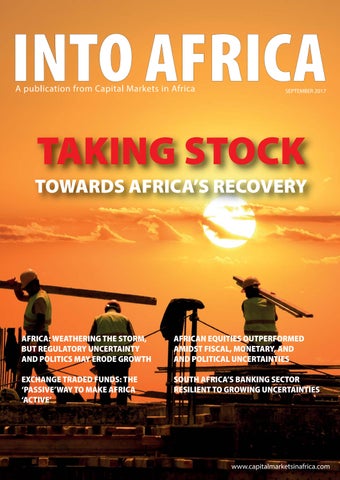
Cover Image : Sundown Workers/ Laborers
Image Source: Stock Image
DISCLAIMER: The contents of this publication are general discussions reflecting the authors’ opinions of the typical issues involved in the respective subject areas and should not be relied upon as detailed or specific advice, or as professional advice of any kind. Whilst every care has been taken in preparing this document, no representation, warranty or undertaking (expressed or implied) is given and no responsibility or liability is accepted by CAPITAL MARKETS IN AFRICA or the authors or authors’ organisations as to the accuracy of the information contained and opinions expressed therein.
Editor
Connect with The Editor on Linkedin. Follow us on twitter @capitaMKTafrica. Subscribe to INTO AFRICA at http://eepurl.com/buHhNv or please send an email to intoafrica@capitalmarketsinafrica.com.
Please visit our website at www.capitalmarketsinafrica.com for the latest news, bespoke analysis, investment events and outlooks.
ENJOY!
AFRICA: WEATHERING THE STORM, BUT REGULATORY UNCERTAINTY AND POLITICS MAY ERODE GROWTH

THEA FOURIE: SENIOR ECONOMIST, SUB-SAHARAN AFRICA AT IHS MARKIT, SOUTH AFRICAN OFFICE. SHE IS RESPONSIBLE FOR ANALYSING AND FORECASTING ECONOMIC DEVELOPMENTS IN SOUTH AFRICA, ANGOLA, ZAMBIA, MOZAMBIQUE, NAMIBIA, COMOROS, MADAGASCAR AND REUNION. SHE HAS OVER 20 YEARS OF EXPERIENCE IN THE FINANCIAL AND CONSULTING INDUSTRY. FOURIE HOLDS A B.ECON (HONS.) DEGREE FROM THE UNIVERSITY OF PRETORIA AND IS FLUENT IN BOTH AFRIKAANS AND ENGLISH.

JOHN ASHBOURNE: AFRICAN ECONOMIST AT THE CAPITAL ECONOMICS COVERING SUBSAHARAN AFRICAN MARKETS. PRIOR TO CAPITAL ECONOMICS, JOHN WAS A SENIOR AFRICA COUNTRY RISK ANALYST AT BUSINESS MONITOR INTERNATIONAL, A DIVISION OF FITCH RATINGS. HE HOLDS A BACHELORS’ DEGREE IN INTERNATIONAL RELATIONS FROM THE UNIVERSITY OF TORONTO AND A MASTER’S DEGREE IN CONTEMPORARY CHINESE STUDIES FROM THE LONDON SCHOOL OF ECONOMICS.
CAPMARKETSINAFRICA: Retrospectively, in your opinion, what are the significant changes you noticed in the first half of 2017 in African economy?
SAMIR GADIO: Sub-Saharan African (SSA) markets were generally well supported in H1-2017 amid favourable external risk conditions and the global search for yield. On the credit side, this is evidenced by the strong oversubscription of SSA Eurobond issuances and tighter spreads over the period. On the FX side, SSA currencies benefited from a soft USD which offset fundamental bottlenecks and idiosyncratic risks. Portfolio flows into select SSA frontier debt markets such as Ghana and Zambia contributed to further compression in local currency bond yields. Against this backdrop, occasional sell-offs were generally seen as a good opportunity to re-enter these markets at more attractive levels. This is evident in the case of the South African rand and local bonds after the country lost investment grade ratings by Fitch and S&P in early April, but also in Ghana’s case after an initial market correction that followed news of wide fiscal slippage in 2016. The other interesting aspect is that most SSA central banks have eased monetary policy and/or maintained accommodative policies, with the exception of Nigeria. As a result, looser liquidity conditions have generally supported yield compression and duration gains. Finally, most key SSA markets have now a funded, precautionary or PSI arrangement with the IMF or are close to reaching a deal, which means that credit differentiation and asset price performance will likely be more a function of reform execution and implementation.
THEA FOURIE: International commodity prices showed a moderate retraction since the second quarter of 2017 after a strong rebound over the 2016-first quarter of 2017 period. The IHS Markit Material Price Index (MPI) fell 4.5% during the four weeks ended 30 June, leaving the index 18.6% below its annual high of mid-February. The sharp overall recovery in international commodity prices lends some support to currencies in the Sub-Saharan Africa region since the onset of 2017 while improved emerging-market sentiment contributed to the currencies’ resilience. Higher export prices and a significant downturn in import demand added to the structural

SAMIR GADIO: HEADS THE AFRICA STRATEGY TEAM, BASED IN LONDON. SAMIR HOLDS A PHD AND MA IN ECONOMICS FROM FORDHAM UNIVERSITY AND A BSC. IN ECONOMICS FROM THE RUSSIAN PEOPLES' FRIENDSHIP UNIVERSITY. HE SPEAKS ENGLISH, FRENCH AND RUSSIAN.
improvement in some macro-economic fundamentals in the region, particularly current account balances for countries adopting remedial policy measures, which reduces the risk of a near term financial crisis.
Economic growth and policy developments remain diverse on the continent nonetheless, with countries continuing to face unique challenges and outcomes.
Room for monetary easing has opened up in the Southern African region. In the aftermath of the severe dry El Nino weather conditions good rainfall improved agricultural prospects in the Southern African region during the 2016/2017 season. The sector’s contribution to overall growth in countries such as Zambia, Mozambique and South Africa become more prominent during 2017, with easing food-price pressures and overall inflationary pressures in the Southern African region. East African countries are nonetheless still facing some severe adverse weather conditions and countries such as Kenya will have to deal with mounting price pressures and political tension as food prices continue to rise. Large public sector infrastructural development programs continue to support growth in East and West African economies.
JOHN ASHBOURNE: I think that there was a significant increase in pessimism towards the region, particularly towards South Africa and Nigeria. Both countries’ economies contracted in Q1 – which came as a surprise to most observers, including my colleagues and I at Capital Economics.
These negative surprises have hit confidence in African economies generally, and raised fears that the region’s economy will struggle in 2017. We think that these fears are somewhat overdone. South Africa’s economy seems to have bounced back pretty strongly in Q2, and we still expect that growth in the country will beat expectations this year. Nigeria’s economy is clearly on the mend, and we think that it returned to growth in Q2.
I have also noticed an increase in focus on political issues in Sub-Saharan Africa’s two largest economies. The succession struggle in South Africa is now in full swing,
and many observers have speculated about threats to the country’s institutions – notably the Reserve Bank. We think that South Africa’s constitutional framework is strong enough to remain solid in the face of any such threats. But the risks to political and institutional stability in Nigeria are probably being underestimated. An open succession struggle there could cause the federal government to grind to a halt. Political tensions are already high, and will rise as we approach the next elections.
CAPMARKETSINAFRICA: What do you think will be the biggest potential challenge for African economy in second half of 2017 and its possibility impact?
THEA FOURIE: The global environment and recent fiscal developments could pose the biggest challenges to the Sub-Saharan African (SSA) region for the remainder of 2017.
Ongoing Fed fund rate increases, with a 25 basis point hike assumed in December - a shift in emerging-market investor sentiment or potential slowdown in China’s economic growth could pose the most significant risk factors in the near term. Although China’s economic activities have started to stabilize, this does not materially change IHS Markit’s outlook of a gradual deceleration in real GDP growth.
Regionally the steep depreciation of most Sub-Saharan countries’ currencies during 2016 and a rising external debt burden increased the overall external debt servicing obligation for many countries. Lower GDP growth and weaker commodity prices, particularly for agricultural products, copper and oil added to the fiscal pressures. Some governments in SSA attempted to strengthen fiscal revenue by broadening and increasing their overall income tax level through higher taxes, introduction of new taxes or cuts to subsidies, pursued arrear accumulation to state contractors and secured additional borrowing to plug fiscal deficits. More countries turned to the International Monetary Fund under Staff Supervised Programs to meet fiscal needs that could provide some policy anchor moving forward. This trend is unlikely to change in the next 6-months, leaving limited room for sovereign risk upgrades. Alternative government income generating options such the sell-off of state assets is highly likely. South Africa and Egypt, both regional leaders, are currently considering this option.
SAMIR GADIO: So far SSA currencies have been supported by a soft USD and generally risk-on conditions. But the external backdrop will likely matter as the Fed embarks on gradual balance sheet reduction and given that the ECB may consider unwinding its quantitative easing programme. These institutions will likely communicate their objectives to market stakeholders to prevent significant disruption and volatility, but investors may be concerned about a less supportive global monetary backdrop going forward.
In East Africa specifically, low market rates and loose
liquidity have so far not resulted in much FX pressure given weak credit growth, but if external risk conditions were to turn, such benign rates and domestic market conditions would provide limited support for currencies in the region. In other markets such as Ghana, foreign participation in local debt has reached historical highs (around USD 5.2bn); recent large inflows have helped stabilise the GHS, but they make it important to anchor foreign investor confidence via renewed fiscal reforms. This is because coupon payments to non-residents are now close to USD 1bn annually (in GHS equivalent terms); these cash flows will need to be largely reinvested onshore to prevent periodic currency pressure.
JOHN ASHBOURNE: Challenges differ across the region. But in a lot of African countries, I think that it will be a struggle to try to regain market confidence and boost investor sentiment. There are plenty of African countries where the economy is already picking up – in Ghana, for instance. And even in the larger economies, the worst is probably behind us – we expect stronger performances in South Africa, Nigeria, and Angola.
Months of headlines about President Jacob Zuma, Nigerian governance, and low commodity prices have all sapped confidence. The actual economic fundamentals are all turning up, but it will take some time for sentiment to catch up.
More broadly, a lot of economies would be at serious risk if commodity prices were to take another hit. The recovery in prices is driving recoveries across the region, and another fall would derail growth. There is also the risk posed by poor weather. Last year’s droughts hit economies from Ethiopia and Zambia to South Africa. Things seem to be improving this year, but they could be fragile. In addition, a sharp rise in food prices in Kenya –which now seems to be fading – illustrates the possible risk.
CAPMARKETSINAFRICA: Do you anticipate that the expected rise in interest rates in developed markets will create a “taper tantrum” causing investors to rush out of African market debt and invest in those developed markets? Which African countries will be losers or gainers?
JOHN ASHBOURNE: In a word, “no”. Evidence so far suggests that the Fed’s moves have had little effect on emerging market economies. Further hikes by the Fed are widely-expected, and we think that they are already priced into the markets. There is little risk of capital flight from the region. After all, most African economies have much better external positions than they did a few years ago.
In fact, with inflation easing in most of Africa’s large economies, we expect that many central banks will be loosening monetary policy over the coming twelve months. The Ghanaian, Zambian, Mozambican, and South African central banks have already begun cutting rates. We expect that the Nigerian authorities will soon
join them in cutting rates.
Looser policy will provide a boost to economic growth across the region, and supports our view that growth will surprise to the upside in most of Africa’s large economies.
SAMIR GADIO: Flows into EM debt funds have at the margin supported demand for non-indexed SSA fixed income markets. If these funds were to face redemptions in the future amid less favourable global risk conditions, this could weigh on the SSA debt markets with the highest foreign participation (Ghana, Zambia). But the normalisation in global monetary conditions is likely to be gradual, so the exogenous risk of outflows may be modest for now. Exiting the less liquid SSA markets may also be complicated by limited fixed income and FX turnover in most countries. However, we are also less likely to experience further inflows given that bond yields have generally declined in frontier SSA. Perhaps the main market that can still attract larger portfolio flows is Nigeria. The launch of the Investors and Exporters FX window in late April, an improvement in FX liquidity from a low base and still extremely attractive domestic yields have generated some moderate buying of local debt by non-residents. But bolder FX reforms and a track record of FX convertibility may be needed to attract larger portfolio inflows.
CAPMARKETSINAFRICA: Given political influence impinging on central bank independence in most African countries, do you think there is a sufficient risk premium embedded in to these markets currently?
SAMIR GADIO: These concerns have generally not prevented SSA central banks from tightening market conditions aggressively in the past, even with a lag, when a hawkish stance was required to support their currencies. As FX conditions have stabilised for now, there has been more room to allow lower T-bill and bond yields in most of frontier SSA. Thus investors may not necessarily focus on the degree of central bank independence per se, but on its ability to defend the exchange rate which is explicitly or implicitly the main monetary and market rate anchor in most African countries.
JOHN ASHBOURNE: The focus on the independence of African central banks seems to have sprung from the recent dispute about the South African Reserve Bank. We doubt that Reserve Bank faces a real threat to its independence. Critics of the institution seem to be isolated, and have already backed down from some of their bolder claims. A forthcoming court case will almost certainly reaffirm the institutions independence. If anything, it was good to see how many politicians and civil society groups jumped to the Reserve Bank’s defence.
Institutional structures elsewhere are less wellstablished. But there is little reason to think that things are getting much worse. If anything, there have been improvements in a few places. Mozambique comes to
mind; the appointment of a new governor there seems to have improved policymaking. And the Central Bank of Nigeria is easing its way towards a more flexible FX policy, which will support economic growth in the country.
CAPMARKETSINAFRICA: To what extent are investors concerned about the ability of African sovereigns to service their debt in current market conditions?
THEA FOURIE: The Sub-Saharan Africa region again received the most downgrades in IHS Markit’s first quarter 2017 Sovereign Risk Service assessment, with remedial policy measures in response to the commodity price crash absent or late in Nigeria, Zambia, and Mozambique. Regional leader South Africa lost its foreign-currency denominated sovereign investment rating during 2016, with prospects of losing its local-currency denominated investment rating towards year-end deemed high. African countries’ higher debt burdens and lower growth profiles combined with very high dependency on commodity-related exports as a primary source of foreign exchange earnings continues to pose a risk to current overall sovereign risk ratings and debt servicing capabilities.
The outlook for key economies in Africa remains difficult, with elevated political uncertainty and weak consumer and business confidence in some. With favourable international commodity price prospects, an improved global growth and trade volumes backdrop and increased IMF policy anchors, debt servicing risks could be mitigated somewhat. However, ongoing efforts to improve public financial management and ensure sustainability of public debt are critical foundations for any resilient recovery. Commodity exporters generally still require sizable adjustment to correct macroeconomic imbalances and these countries will have to focus on measures to strengthen fiscal positions and foreign reserves holdings.
SAMIR GADIO: Most SSA governments’ FCY debt is concessional and/or bilateral and multilateral, although commercial borrowing has gathered pace in recent years. Eurobond coupon and amortisation payments due in H2-2017 and 2018 are relatively manageable for most SSA countries. Thus African sovereigns should be able to service their Eurobonds and default risk may remain limited barring isolated special situations. That said, investors will likely focus on the build-up of other nonconcessional commercial debt, cross-default clauses and contingent liabilities. Looking forward, the steeper SSA Eurobond refinancing profile from the early 2020s makes it key to restoring fiscal sustainability, stabilising public debt levels, and diversifying the revenue and export base in the coming years.
CAPMARKETSINAFRICA: Thank you very much for granting this interview!
COTE D’IVOIRE: COCOA PRICE SLUMP, SOCIAL UNREST WEIGH ON GROWTH
By Daniel Sodimu, Macroeconomic Analyst, Ecobank, London
isks to slow post-war boom
Côte d’Ivoire’s economy has grown at a rapid pace since 2012, after rebounding from the civil war and economic downturn that it faced in 2011. Remarkably, the country attained an average growth rate of 9% from 2012 to 2016, amid the implementation of the government’s National Development Plan (NDP) 2012-2015. This is up significantly from the average growth of 2.2% in the five years before the crisis.
To build on the success of the NDP 2012-2015, President Alassane Ouattara’s government set in motion the NDP 2016-2020. The aim of the new plan is to transform Côte d’Ivoire into an emerging economy with a strong industrial base, increased agricultural output, and reduced poverty by 2020. The plan was met with the support of two IMF programmes, approved in December 2016.
However, a sharp fall in the price of cocoa, the country’s key export crop, and increased tensions over public sector pay threaten to slow Côte d’Ivoire’s recent impressive growth momentum.
International cocoa prices have plummeted 36% since this time last year amid bumper crop harvests in both Côte d’Ivoire and Ghana, who jointly account for around 60% of global cocoa exports. Weaker cocoa export receipts are expected to reduce Côte d’Ivoire’s trade surplus, in 2017. Alongside the continued importation of capital goods for infrastructural development, this will further widen the current account deficit beyond the 2.2% of GDP registered last year.
Furthermore, in May this year, the government decided to pay bonuses (worth 0.6% of GDP) to 8,400 mutinous soldiers in order to end the mutinies they carried out in January and May. In addition, civil servants decided to strike in January this year, demanding the government to increase pensions and social payments, and to pay salary arrears. The government resolved to raise the payments, but did not acknowledge the arrears.
These developments have increased fiscal pressures, prompting the government to reduce the size of its 2017 budget by 10%. However, with this reduction being made partly by cutting the minimum price guaranteed to cocoa farmers by 36%, the potential remains for further flare-ups of socio-economic tensions.
“A sharp fall in the price of cocoa and tensions over public sector pay, slow Côte d’Ivoire’s growth momentum.”
Strategic growth plan under pressure

The effect of prolonged low cocoa prices on the twin deficits would challenge the feasibility of the government’s efforts to maintain its stride in implementing the NDP. This would, in turn, undermine the growth outlook.
Growth in 2016 remained high at 7.5%, albeit slowing from previous years. It was driven largely by strong growth in both the services sector (telecoms, transport, and retail) and industrial sector (construction, mining, energy production, and manufacturing). Growth in these segments of the economy was bolstered by strong levels of public investment, particularly in transport and power supply infrastructure, and increased domestic demand amid rising employment and household incomes.
The pace of economic expansion in 2017 is expected to slow to about 7% due to reduced fiscal spending. Growth is likely to moderate slightly in the telecoms, construction, transport, energy, and retail sectors. The course of cocoa prices in upcoming seasons will remain important to realising the ambitions laid out in the NDP and sustaining growth momentum.
On the social and political sides, tensions surrounding ethno-religious and geographical divisions that led to civil wars in 2002-2004 and 2010-2011 have moderated but not fully dissipated. Furthermore, the pay-related frictions that culminated in the civil servant strike and army mutinies, earlier this year, highlight the potential for further instability. While the likelihood of violence on the scale of another Ivorian civil war remains low, this political risk could unwind some of the post-crisis gains and undermine much needed private sector investment into key growth areas. This is also particularly pertinent given the spectre of two Ivorian civils wars within the last 15 years, and following the withdrawal of the United Nations peacekeeping force in Côte d’Ivoire at end-June 2017 (present since April 2004).
Positives still remain
Over the longer term, sustained growth will depend on Côte d’Ivoire’s ability to transform its economy away from reliance on commodity exports, which currently dominate its export basket. As part of plans to industrialise and capture more of the value chain, the government aims to increase local processing of the country’s main export crop, cocoa. The target is to locally process 50% of total output by 2020, up from one third currently, partly by encouraging FDI into the sector. Moreover, as the third largest economy in West Africa, and the largest in the eight member, francophone Union Economique et Monétaire Ouest Africaine (UEMOA), Côte d’Ivoire has
been a popular FDI destination in recent years. In 2015, cocoa processing plants were opened by Olam International, a top multinational agri-business, and Cémoi, the leading French chocolatier. These factories have an annual production capacity of 75,000 tonnes and 10,000 respectively (against Côte d’Ivoire’s annual cocoa harvest of about 1.5mn-1.8mn tonne).
In addition, recent strengthening of the CFA franc (XOF) is expected to provide some cushioning to current account pressures. Movements in the XOF will continue to mirror those of the euro, to which it is pegged. The EUR – and therefore the XOF – outlook for the rest of 2017 remains positive, following an appreciation of more than 10% against the USD year-to-date. The EUR has been boosted by a string of general election victories by pro-EU candidates within the Eurozone, settling concerns over a rising anti-EU sentiment in the region. Alongside this, recent hawkishness by the ECB has raised expectations that it will soon taper its EUR60 per month asset-purchasing programme and begin tightening interest rates, contributing to a more bullish outlook for the EUR. In contrast, the USD has continued to weaken amid heightened political uncertainty in the US posing questions over President Donald Trump’s ability to enact his proposed fiscal stimulus. The Federal Reserve’s decision to raise its policy rate has thus had a limited impact on the USD. Following these developments, we are likely to see continued XOF strengthening against the USD in H2 2017, notwithstanding increased volatility.
Despite concerns over the strength of the XOF, and its potential impact on member countries’ export competitiveness, the currency is expected to maintain its peg to the EUR for the foreseeable future. This is particularly as the Eurozone remains UEMOA's biggest export market. Furthermore, robust FX reserves at UEMOA’s regional central bank (the BCEAO), and the guarantee of XOF convertibility from France's Treasury affords UEMOA the ability to remain pegged.
Inflation is forecast to remain well below UEMOA’s convergence criteria of 3%, after slowing to 0.7% last year (from 1.2% in 2015). This is largely due to the strength of the XOF (in line with the EUR), increased food supply on the back of clement weather conditions, and the still-low global oil prices. In light of this, the average inflation rate for the first half of 2017 was also recorded at 0.7%.
Moreover, while weaker fiscal receipts have increased the government’s financing requirements, Côte d’Ivoire’s debt profile remains in decent shape, allowing the country scope for borrowing. Côte d'Ivoire's total public debt-to-GDP levels have remained at manageable levels since the USD6.5bn external debt cancellation by the World Bank, IMF, and Paris Club in 2012. Debt was recorded at 48.8% of GDP last year, and will be expected to push beyond 50% of GDP with continued investment and a slight drop off in GDP growth in 2017 and 2018. Debt service-to-revenue levels, expected to reach 15.1% in 2017 from 12% in 2016, still remain below IMF-advised
threshold of 18% for Côte d’Ivoire.
The government’s domestic borrowing costs have risen in line with the BCEAO’s decision to hike its policy rate by 100bp in December, against a backdrop of tightening global credit conditions. Nonetheless, treasury yields in UEMAO are considerably lower than in most other Sub-Saharan African countries (91-day to 1-year T-bills yields are currently 5.7%-6.0%). Furthermore, as the largest and most diversified economy in the union, Côte d’Ivoire maintains lower financing costs than other member countries.
On the external side, a successful, two-tranche Eurobond issue in June 2017, the country’s first since 2015, was oversubscribed by four times for the 16-year USD tranche and seven times for the 8-year EUR tranche. This is despite Côte d’Ivoire’s unflattering history concerning debt repayments, a cumulative 100bp rise in the US Federal Funds Rate since December 2016 (expected to lower investor appetite for higher risk, frontier market debt), and recent public sector pay-related tensions. The issuance shows investors’ positive sentiments over the country’s prospects, alongside their continued demand for high yielding assets.
The Eurobond will help to finance Côte d’Ivoire’s budget, alongside recent funding from multilateral finance agencies. In December 2016, the IMF approved two loans, recently expanded to a joint value of USD899mn, and the African Development Bank approved a loan of USD598mn for transport infrastructure. The World Bank approved a USD100-125mn grant for budget support in April 2017.
Côte d’Ivoire’s history of external debt defaults is a risk to the country’s growth prospects, particularly given its return to international debt markets this year. However, at current levels of debt sustainability, this risk remains low.
“Côte
d’Ivoire’s economy has grown at a rapid pace since 2012, after rebounding from the civil war and economic downturn that it faced in 2011.
Contributor’s Profile
Daniel Sodimu joined Ecobank in October 2015. He works as a macroeconomic analyst on the Economics desk, researching and assessing macroeconomic developments in sub-Saharan Africa markets. He holds an MSc in Economics with reference to Africa from the School of Oriental and African Studies, University of London; and a BA (Hons) in Business Economics from Kingston University.
GHANA’S MIDYEAR REVIEW: FISCAL RISK REMAINS AMID IMPROVED GROWTH
By Courage Kingsley Martey, Senior Economic Analyst, Databank Group, Ghana
evenue shortfalls sustain fiscal risk despite improved GDP growth pulse and Lower inflation expectations
Ghana’s initial projected budget deficit for 2017 (6.5%) hinged on a 33.5% YoY growth in total revenue (Inc. grant) while expenditure growth is limited to13.7%YoY. The fiscal data for the first six months (Jan. – June 2017) however indicated downside risks to revenue as total revenue for the period (GH¢17.47 billion) lagged expectations by 15%. The revenue shortfalls were broad-based as both tax and non-tax revenue turned out lower than expected. We view the revenue shortfalls as mainly reflecting the spillover effects of the challenging operating environment from 2016 which has undermined business profitability and investor confidence.
Expenditure performance for the first half of 2017 was however encouraging as the authorities successfully contained total expenditure for the period (GH¢23.51 billion) below budget limit by 9%. This resulted in a lower budget deficit of 2.7% compared to 3.5% target for the period. We reckon the lower-than expected spending for the quarter was mainly due to the strict enforcement of the Ghana Integrated Financial Management Information System (GIFMIS) at the various phases of the budget execution cycle. Going forward, government would have to sustain the linking of expenditure to revenue performance in order manage the prevailing fiscal risks.
Revised Budget Targets: Government of Ghana seeks to sustain strict expenditure rationalization to manage fiscal risks emanating from revenue shortfalls. In light of the downside risks to revenue performance, the Government of Ghana revised its fiscal targets for 2017 with a 4.1% cut in total revenue (incl. grants) to GH¢43.10 billion. Total expenditure anticipated in 2017 was also slashed by 3.8% to GH¢55.9 billion, translating into a lower budget deficit target of 6.3% of GDP for 2017 compared to an initial target of 6.5%.
It is however worth noting that although overall fiscal deficit is expected to improve slightly lower to 6.3%, the projected primary balance was revised to a surplus of 0.2% of GDP compared to an initial target of +0.4%. While the revised target for primary surplus remains a marked improvement over the deficit recorded in 2016, the latest revision signals a slower-than-expected improvement in Ghana’s debt burden which stood at 72.9% of GDP as at mid-2017.
Deficit Financing: Consistent with government’s preference for domestic sources rather than external
financing.

In line with government intentions, the GH¢5.56 billion ($1.26 billion) budget deficit for the period was broadly financed from domestic sources as the authorities seek to reduce the exchange rate vulnerability of the public debt portfolio. While net domestic borrowing was GH¢5.79 billion ($1.32 billion), external financing resulted in a net borrowing of GH¢76.80 million ($17.45 million).
The domestic borrowing mix for the period also reflects government’s strategy to minimize the potential crowding-out effect. While GH¢14.72 billion ($3.35 billion) was borrowed from Non-bank institutions, a net repayment worth GH¢3.16 billion ($718.00 million) was made to commercial banks. We expect the government to sustain this deficit financing strategy for the remainder of 2017.
Inflation heads southward while growth prospects improves: Monetary policy easing to be sustained. Headline inflation declined consistently from 15.4% in Dec-2016 to 12.1% in June-2017, reflecting subdued pressures from both demand and cost sides while a favourable base effect added further downside drift. We believe the easing cost-side pressures were mainly triggered by the raft of tax reliefs announced in the 2017 budget. We expect inflation to sustain the downward momentum in 2H-2017 as anticipated harvest in Q3-2017 weighs down food inflation while downside risks to global crude oil price limits upside risks to non-food inflation. We therefore maintain our inflation forecast of 10.1% ± 100bps by FY-2017 and expect Ghana to achieve its medium term inflation target of 8% ± 2% by 2018, paving the way for sustained monetary policy easing in 2H-2017. Notwithstanding, the broad expectations of a sustained decline in CPI inflation, persistent threats to fiscal consolidation pose an upside risk to inflation and would require cautious approach to monetary easing in 2H-2017.
Growth momentum picks up on the back of higher oil and gas but non-oil GDP growth remains subdued Growth indicators have turned bullish in the last 6 months on the back of increased hydrocarbon production, higher minerals exports and growth in real private sector credit. Production at the Tweneboa Enyenra Ntomme (TEN) and
Jubilee oil fields remain on track to meet the 2017 targets of 50,000bpd and 68,300bpd respectively while the output from the Sankofa-Gye Nyame (SGN) field takes off in Jul-2017. The renewed downward pressure on global prices for crude oil and cocoa however pose downside risks to export earnings and nominal GDP.
Q1-2017 Real GDP Growth: A recovery aided by the extractive sectors amidst sluggish services sector Ghana’s real GDP growth for the first quarter of 2017 indicates positive prospects of a near-to-medium term return to growth path. Latest GDP data from the Ghana Statistical Service (GSS) showed a 6.6% YoY growth in real GDP growth in Q1-2017, compared to 4.4% in same period 2016.
The growth momentum was supported by an 11.5% surge in industry while agriculture and service sectors expanded by 7.6% and 3.7% respectively. The rebound in industry growth reflects increased oil output from the TEN oil field which supported production at the main Jubilee field. Production data for the 1H-2017 revealed average daily output of 83,900bpd at Jubilee while TEN’s outturn averaged 48,000bpd. This translates into an average daily output of 131,900bpd for 1H-2017 compared to 88,300bpd for FY-2016 and 120,208bpd projected for FY-2017. The Jubilee FPSO is expected to shut down in Q4-2017 (~75 days) for stabilization works on the turret bearing. Although the anticipated shutdown poses a risk to oil output, we expect the start of production from the SGN field in Jul-2017 and increased output from the TEN field to minimize the shortfall risks due to Jubilee’s shutdown.
Against the backdrop of hydrocarbon-led expansion in industry and crops-led growth in the agriculture sector, we maintain our GDP growth forecast of 6.3% ± 50bps for FY-2017.
Monetary conditions improved slightly in 1H-2017 although credit conditions remained tight on account of the weak asset quality of the banking sector. Real growth rate in credit to the private sector turned positive during 1H-2017 after contracting consistently from Mar-2016 to Dec-2016.
cut in monetary policy rate (MPR) to 22.5%. We believe the tight credit condition reflects the high Non-performing Loans (NPLs) in the banking industry (Apr-2017: 19.8%) which continues to sustain high risk premium on loans. We expect the upcoming issuance of an energy bond (through a Special Purpose Vehicle: SPV-ESLA) to lower the NPLs and aid a steeper growth in private sector credit. While the monetary policy easing has been implemented as expected, the credit stance of the banking sector has not recorded the anticipated softening required to support steeper growth in credit in 1H-2017.
Outlook for the 2H-2017: Monetary Policy easing would support loan book expansion as commercial banks’ asset quality is expect to improve
The broad economic outlook for Ghana in the second half of 2017 appears positive in light of the higher crude oil production, declining inflation rate and dovish monetary policy stance which favours GDP growth.
Downside risks to real GDP growth however persists as anticipated shutdown in the main oil filed (Jubilee) in Q4-2017 and ongoing expenditure rationalization pose headwinds to the growth outlook. The new Sankofa-Gye-Nyame oil field which commenced production in Jul-2017 should however minimize the downside risks. Non-oil GDP growth of 3.9% in Q1-2017 (compared to overall growth of 6.6%) indicates fundamental weakness in Ghana’s economy which requires appropriate fiscal and monetary policy stance to support growth in non-oil GDP. Overall, we expect marked improvement in real GDP growth for 2017 to 6.3% ± 50bps (IMF: 5.8%).
Notwithstanding the upturn in real growth in credit to the private sector, credit conditions remained tight as average lending rate for the banking industry inched up to 33.27% in May-2017 compared to 33.17% at FY-2016. The uptick in average lending rate was in contrast to the 140bps decline in average base rate for the industry to 26.6% over the same period, underpinned by the 300bps
Aggressive expansion in the loan books of commercial banks also hinges on an improvement in the asset quality of the banking sector. The higher Non-Performing Loans (NPLs) for the banking sector at 19.8% in Apr-2017 undermines the central bank’s effort to stimulate growth in loan book and economic activity. The government has however appointed transaction advisors for the issuance of a $2.5 billion energy bond which is securitized with the cash flows from the energy sector levies. Proceeds from the bond issue would be used to repay indebtedness of the energy sector to commercial banks, resulting in a reduction in the NPLs and improvement in asset quality to support expansion in credit to support economic activity. Headline inflation remained on a downward path in the 1H-2017 and the broad expectations favour a continued decline in 2H-2017 towards the central bank’s 8% ± 2% by 2018. The risks to non-food inflation appear subdued by the downward pressure on global crude oil price which we expect to translate into lower ex-pump prices to support lower inflation in 2H-2017. We also the onset of the harvest season in Q3-2017 to also exert a downward pressure on food inflation which should combine with lower non-food inflation to suppress headline inflation months ahead.
MAURITIUS FIRST HALFYEAR 2017 ECONOMIC REVIEW AND OUTLOOK
By Bhavik Desai, Head of Research, AXYS Stockbroking, Mauritius
Prerna Cheekhooree, Research Analyst, AXYS Stockbroking, Mauritius
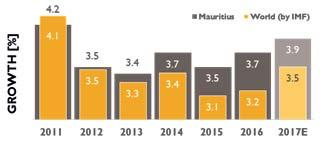
he Mauritian economy has grown at subdued rates in recent years, yet on a brighter note, the rate of growth has experienced a small uptick from 3.5% to 3.7% in 2016 and expected to edge higher to 3.8% in 2017. The National Budget 2017-18 (Budget) marked continuity with recent Government policies and brought added forward guidance through the introduction of a 3Yr-Plan and targets. In addition to major infrastructure projects, Government opted to incentivise an “Innovation” culture and encourage Research & Development in High-Tech fields. The former is poised to provide medium-term stimulus for growth, while a few traditional sectors are expected to experience complex times ahead; but the latter represents a longer-term vision to shift towards a high-value added economy. After the shock 2016 election results in favour of Brexit and Mr Trump, the election of Mr Macron in France has stymied the fears of protectionist policies cropping up. As our main trade partners, the recent upwards revision of growth in France, Germany, Italy & Spain by the IMF bodes well for Mauritian exports & Tourism, while the USA desisting its participation in the Trans-Pacific Partnership (TPP) means exports through the Africa Growth and Opportunity Act (AGOA) are likely to remain unchanged in coming years. One uncertainty remains trade with the UK given the uncertain terms of its departure from the European Union. In terms of macro-fundamentals, Debt-to-GDP Ratio at 66% is approaching uncomfortable levels but we remain most concerned about the Current Account Deficit which might deteriorate should portfolio flows through Mauritius decrease.
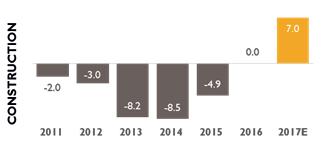
through introduction of a light rail network, and water distribution. Some $3bn are expected to be spent in the upgrades by 2020. Many projects have been previously announced but have taken time to reach fruition most of which are now expected to kick-start in Q4-17. In addition to government projects, several conglomerates have embarked on property development projects on the North, West, South and Centre of the island dubbed “Smart Cities”. We therefore believe the prospects for construction materials/suppliers and builders are upbeat, however, the rate of recovery for the Construction industry which is coming-off a 5 Year-long recession remains below expectations thus far. Only once the large projects are underway will this industry return to the glory days of the noughties.
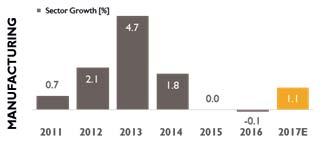
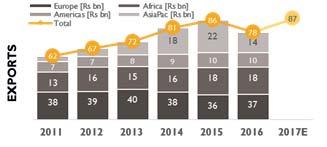
Manufacturing, mainly Textiles, fuelled the island’s high growth rate in the 90s remains the largest component of the economy at 15% which is well-below of both what it used to be and government’s Vision 2030 target of 25%. The erosion of preferential access to select markets and increasing competition from Asian countries has led to difficult operating conditions for manufacturers many of whom have relocated production units within the region. Consequently, a subsidy on air freight was offered to textiles companies last year, having been successful, this Budget has extended the subsidy to all exports. In addition, profits on exports will now be taxed at 3% instead of 15% to boost export manufacturing, but also to incentivise domestic manufacturers to look beyond the limited Mauritian market and also begin selling goods overseas. Domestic manufacturing has lacked impetus which we hope these measures will provide. As an added boost $30M have been earmarked to increase freight handling (both maritime and air) within the port to boost shipping logistics. Over the longer-term, it is a shift of manufacturing towards higher value added products that would do the trick. “Innovation” has thus been another focus of the Budget. The setting up of high-tech manufacturing has thus been incentivised through tax breaks. If companies do elect to set-up plants on the island, the benefits will be reaped only in the long-run. Sugar, once the one and only industry of Mauritius, has reached yet another milestone with the preferential access to the EU coming to an end this October. Sugar
One of the five Budget foci was the enhancement of public infrastructure. Key areas marked for improvement include the road network, public transport
income will therefore experience greater income swings from year to year, yet the Budget has increased export targets in 2020 from 390kt to 475kt which in fact points towards the positive in the end of EU access: Mauritius can refine more sugar if it chooses to do so in coming years.
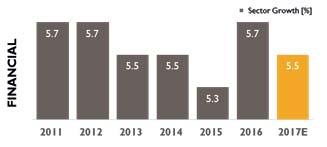
The financial sector – which has been resilient in the wake of the collapse of the BAI Group – remains a key pillars of the Mauritian economy having grown at ~5% in recent years. The change in the terms of the Double Taxation Avoidance Agreement (DTA) with India coupled with increased information sharing required through FATCA and CRS will change the way the ‘Global Business’ operates. After a rush to make the most of the grace period, we expect flows to dwindle and consequently hurt the Current Account Deficit and in turn cause the MUR to weaken and in turn a resurgence of inflation. IFS and CIM Global two large players in the Global Business segment have recently sold their businesses to Sanne and SGG respectively at PE multiples exceeding 12x. These suggest that multi-nationals see potential for growth and sends a positive signal that the segment can be re-oriented. Yet again sticking with the theme of innovation, the Budget aims to establish a framework for the setting up and use of “Fintech” for activities such as peer-to-peer lending and contactless payments. While the next few months might be turbulent for parts of the industry, we believe local players will successfully diversify and expand their business internationally.
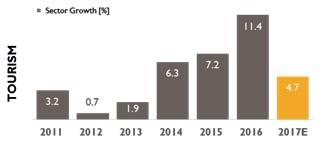
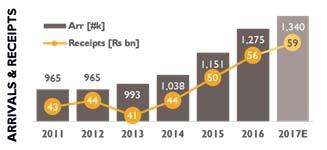
Boosted by enhanced air connectivity, the tourism industry has registered growth rates north of 8% during
the last two years. Arrivals have experienced double digit growth in 2015-16 as reflected in the improved occupancy rates of listed hotel groups. The start of KLM flights from Netherlands later this year is meant to create another European hub in addition to Paris which would further boost our core European market. This might offset if not outweigh the expected dip in UK arrivals following the GBP’s plunge and a weakening of the British economy ahead of Brexit. Government has also taken steps to make Mauritius a hub linking Asia and Africa dubbed the “Asia-Africa Air Corridor”. While this might boost regional tourism to some extent through participating airlines, the main objective would be to boost the overall economy through improved connectivity as a stop-over for business travel. Prospects are thus quite positive given improving connectivity and the EUR’s recent improved of strength.
In essence, there has been incremental change in
prospects for the local economy since the start of the year. The Budget marked continuity and offered added forward visibility through the introduction of a 3Yr-plan. Nonetheless the changes have mostly been positive: First, the results of elections in Europe have boost ed the EUR which generate greater Tourism and Export earnings; Second, the sale of Global Business to Multi-National at high multiples suggests the segment can re-orient operations; Third, the end of sugar quotas brings added freedom to the Sugar industry; Fourth, the government’s major infrastructure projects are expected to start in Q4; Fifth, incentives aimed at providing fresh impetus to manufacturing for exports and establishment of “innovative” areas of manufacturing provide fresh direction to a sector in need.
Contributors’ Profiles

Bhavik Desai joined AXYS in early 2010 to drive innovative local equity research and valuations. He has introduced scientific rigour and logic to the process, and will guide you in your investment decision making process. He will also assist you with securities trading. Prior to joining AXYS, Bhavik worked on the implementation and monitoring of corporate strategies at SAP Labs LLC in California. Bhavik holds a Double Bachelors in Arts in Physics and Astrophysics from the University of California, Berkeley.

Prerna Cheekhooree joined AXYS in early 2016 as a Research Analyst. She is responsible for the analysis of the local Mauritian equity and fixed income markets for the Research Desk. She holds a Masters (Hons.) in Economics with Finance from the University of Edinburgh in Scotland.
NIGERIA MIDYEAR REVIEW: MONETARY POLICY AT A CROSSROADS
By Michael Famoroti, Economist, Vetiva Capital Management Limited, Nigeria
igeria’s recent economic woes can be traced to the oil price crash in the summer of 2014, which was exacerbated by undisciplined fiscal policy and political inertia in 2015. To boost the ailing economy, the Monetary Policy Committee (MPC) of the Central Bank of Nigeria (CBN) moved to ease monetary policy in November 2015 by lowering the monetary policy rate (MPR) and cash reserve ratio (CRR). However, accelerating inflation in 2016 prompted a policy reversal as the MPC tightened twice – March and July – in 2016.
At the time, inflation was being driven by a mix of structural price changes via fuel and electricity tariff hikes, and pass-through from currency depreciation in the black market. The country was operating a de facto fixed exchange rate, leading to a shortage of dollar supply following dwindling oil earnings and capital flight. A botched attempt to float the naira in June 2016 instead led to a devaluation that failed to address underlying problems in the foreign exchange (FX) market.
Even with all this pressure from inflation and currency dynamics, consensus expectation was for looser monetary policy in 2017. This view was premised on a less urgent need to support the naira under a fixed regime and as oil earnings recovered slightly, slowing inflation due to the high base of 2016, and an increased focus on kick starting the economy after the recession in 2016.
Stubborn inflation stumps everyone
Unfortunately, sticky inflation in 2017 makes that a more distant possibility. In December 2016, y/y inflation was 18.6%; by June 2017, it was still as high as 16.1%. But 2017 has also brought positive developments; particularly the marked improvement in the FX market. Whilst the CBN has maintained the dollar peg at the official window, higher oil earnings have emboldened the apex bank to significantly increase dollar sales into the economy through a range of special windows. These increased dollar injections – priced at a premium to the official rate – have buoyed the wider economy. Equally as significant was the decision to create a special market-driven (“Investors & Exporters”) segment, ostensibly targeted at foreign investors and exporters. This “Investors & Exporters” window (NAFEX fixing) has aided price discovery, especially as rates in this market have converged with parallel market levels. FX liquidity notwithstanding, the real economy remains weak – with most growth expected to come from agriculture and oil production – as prices perch high while confidence and investment remain soft.
Naturally, amidst all this, the MPC has, at least till recent, abandoned its easing outlook. Notably, committee votes from January to May were almost unanimous in favour of

maintaining all policy levers to maintain the balance, with only one vote to tighten across three meetings. But in an abrupt turn of events, two of eight attending MPC members voted to ease in July, despite very little change in the inflation-FX-growth matrix. That pivot clouds the outlook for the short to medium-term trajectory of monetary policy in Nigeria. Despite this, there are three key considerations for understanding whether the MPC is likely to stick or twist in loosening monetary policy going into 2018. Once again, I refer to the inflation-FX-growth matric.
Price pressures require hawkish treatment Though slowly down-trending due to base effects, inflation remains high in Nigeria, and monthly inflation is of particular concern as it shows the prevalence of inflationary pressures. Food prices have been the main sore point, and are 13% higher compared to the end of 2016 but emergent widespread pricing pressures are now equally important –stripping out more volatile energy and food prices, monthly inflation still hit 1.5% in June, the highest for a year. Notably, all of this has occurred amidst improved FX liquidity and slight naira appreciation in the black market and “Investors & Exporters” window.
Beyond pressuring consumer wallets, inflation may be having a direct adverse effect on growth. The CBN identified 12% inflation as the level above which inflation begins to stunt economic growth and going by Federal Government forecasts, average inflation should stay above this level till 2020. In light of the core monetary policy mandate of maintaining price stability, strong inflationary pressures of this kind usually demand tight monetary policy. However, primary inflationary pressures in Nigeria have largely been cost-driven, so are less vulnerable to monetary tightening. Moreover, Nigeria’s high long-term inflation is likely a structural feature of the economy, given high and volatile energy and transport costs, as well as rigidity in aggregate supply that arises from inadequate infrastructure.
These considerations weaken the argument for monetary tightening but should be given pause. In a critique of money supply expansion despite high inflation in 2016, Abdul-Ganiyu Garba, a member of the MPC, argued that “The excellent tracking between monthly money supply (M1), exchange rate and inflation in the period (between October 2015 and December 2016) is remarkable. This was why in last personal statement, I cautioned against the usual generalisation that Nigerian inflation is structural.” Ultimately, the sources of long-term inflation are difficult to determine, but we have good reason to keep exploiting the supposed link between monetary policy and inflation in Nigeria.
Easing: an easy way to grow?
The need to prop up economic recovery will remain high on the agenda. 2016 was a particularly bad year for Nigerians as they endured the first recession in 25 years whilst being buffeted by severe currency depreciation and high inflation, both of which depressed real incomes. The supply-side fared little better with every significant sector, bar agriculture, shrinking in 2016. Unsurprisingly, the recovery is slow, though possibly hampered by relatively tight monetary policy. The argument is that high interest rates are crowding out private credit and weighing on borrowers’ costs. Meanwhile, looser monetary policy could help free up liquidity and spur lending to drive economic growth.
Unfortunately, monetary policy transmission in Nigeria is weak, and interest rates are sticky downwards, implying that looser monetary policy is unlikely to lead to consequential changes in bank lending. In addition, this view discounts the importance of a corollary boost to aggregate supply when aggregate demand rises, in order to ensure sustainable growth and prevent further inflation. In this regard, the FX market would be a more potent route to spurring growth given the reliance on imports and exposure to currency risk in the non-oil sector. And as previously suggested, looser monetary policy could unravel some FX gains accrued so far in 2017.
Currency considerations complicate easing agenda
Considering that monetary argument, looser monetary policy may also distort the FX market. Apart from regular dollar sales, CBN Open Market Operations have helped limit excess naira liquidity which would feed through to a weaker currency and higher inflation. Meanwhile, high interest rates should encourage capital inflows or at least deter capital flight from further weakening the naira. This is particularly relevant as the United States Federal Reserve continues its monetary tightening cycle and looks set to unwind its balance sheet in the coming month, both of which would push up global interest rates and likely cause some jitters. The net impact would be increased capital outflows from emerging markets and a stronger dollar.
Monetary policy should adopt narrower focus In the short to medium-term, monetary variables (prices and currency) call for tight monetary policy and a similar argument could be made for boosting economic growth. But in exploring the near-term trajectory of monetary policy, we must keep an eye out on long-term considerations. For example, it is vital that the MPC or CBN maintains credibility with respect to its core mandate of ensuring price stability and this could preclude loosening until inflation decelerates further.
Moving forward, monetary policy would need to fit neatly within broader fiscal and supply-side policy to ensure sustainable economic development. Whilst development finance initiatives and other such as the CBN Anchor Borrowers Programme are laudable, they fail to address structural incentives in the credit market. Put simply, the central bank is no long-term substitute to a functioning fiscal authority or credit market. Finally, near-term decisions must factor in more distant threats: increasing risk of “mop up” liquidity and growing need for bank portfolio diversification.
In some respects, Nigeria’s monetary policy has been overly ambitious in recent times. It is most effective when it focuses on and attempts to influence nominal variables, not real ones. In this regard, inflation and exchange rate considerations call for a more hawkish outlook, despite recent MPC posturing.
Contributor’s Profile
One counter to this point is that even if the CBN eases, Nigeria will remain an attractive destination for capital. Relatively stable oil earnings, a growing economy and comparably high interest rates create the prospect of high returns whilst steady improvement in the FX market has eased fears of trapped capital.
Michael Famoroti is a research analyst and economist at Vetiva Capital Management Limited. He holds a Master’s Degree from the London School of Economics and Political Science, with a focus on microeconomics and development.
SOUTH AFRICA’S ECONOMY REMAINS POOR AMIDST MACRO POLICY AND POLITICAL UNCERTAINTY
By Mamello Matikinca, Macroeconomic Analyst, First National Bank, South Africa
lobal developments remain supportive of the South African economy and domestic financial markets. Real economic activity in the US, Europe and Japan continues to expand noticeably, while China’s growth rate is slowing at a pace that’s dispelling fears of an imminent credit crunch or hard landing. While rising growth and falling unemployment have allowed the Fed to hike rates, the pace of tightening to date has been gradual. As long as the economy doesn’t overheat (the chances of which are small given the relatively strong dollar and low oil price), and the Fed continues to take things easy, there’s little reason to fear a major disruption to the US economic outlook and so global financial markets. This comparatively favourable backdrop serves as a helpful boost to growth in emerging markets through higher trade and capital flows.
While South Africa has received substantial fixed income portfolio inflows (underpinned by falling inflation, still high carry and rising EM risk appetite) from a real economy perspective, the strong link the country has had until now with the global business cycle has broken down. Indeed, despite global growth of around 3% (and climbing), South Africa has now fallen into recession. The dismal 1Q17 performance suggests the current downward phase, which started in 2013, will be prolonged. While there was some benefit from the cyclical rebound in the primary sector – excluding the primary sector real GDP contracted 2.3% - the broad-based contraction in the secondary and tertiary sectors confirmed that domestic demand is weak.
Household consumption expenditure contracted -2.3% q/q led by a pronounced decline in semi and non-durable goods. Expenditure by households will be constrained by weak credit demand, low confidence and high unemployment. However, the moderation in inflation as well as accommodative monetary policy should provide some support to consumer spending. In line with plans to contain spending, government scaled back on expenditure over the quarter, final consumption expenditure by government contracted -0.1% q/q. The collective impact on the economy of various confidence-crushing own goals is certainly starting to show, as business fixed investment continues to contract. Deteriorating business confidence and fiscal consolidation should weigh on fixed investment growth.
The upshot of demand-led growth weakness is that corporate pricing power will remain weak. This, along

with falling food and fuel price inflation should see CPI inflation falling below 5% in 2018. Headline inflation should remain within the target band over the mediumterm. With output below potential (and still a negative output-gap in the medium-term), and with disinflationary pressures deepening the Reserve Bank should have space to ease policy further to support the ailing economy. In the absence of adverse risks, there is scope for another interest rate cut following the 25 basis point reduction in in July. However, the cycle will most likely be very shallow. With high probability of reversal should the need arise.
The economic growth outlook remains poor. There are several key reasons for this. Firstly, the government simply continues to add to macro policy uncertainty. Secondly, confidence-inspiring political leadership remains largely absent. Thirdly, following the cabinet re-shuffle, the level of trust between business and the government is now back at all-time lows. Investment levels are thus likely to remain subdued until a more stable (and clearer) policy environment emerges. Fourthly, medium-term growth prospects will be constrained by on-going delays in 1) the necessary governance changes to lift the performance of SOEs; and 2) the implementation of much needed growth-boosting structural reforms, mainly due to heightened political dysfunction.
The reality is that without buy-in from business into a concise and predictable growth enhancing reform framework, household income growth will remain low, corporate profitability will be weak and government tax revenue receipts will disappoint. This is also an environment where the sovereign rating will be lowered again (local and foreign) – probably around the middle of next year. To overcome this low growth trap domestic political uncertainty needs to subside. The government will have to show firm commitment to fiscal consolidation and the implementation of policies that boost South Africa’s productivity.
Contributors Profile Mamello Matikinca is macroeconomic analyst. Prior to joining FNB she worked as a macroeconomic analyst for the RMB global markets research team. She started her career at the Bureau for Economic Research, working as a trainee Economist. Mamello holds a Bachelor of Commerce Honours Degree (Econometrics) from the University of Johannesburg.
AFRICAN EQUITIES OUTPERFORMED OTHERS AMIDST
FISCAL, MONETARY, AND POLITICAL
UNCERTAINTIES



PAUL CLARK IS A FUND MANAGER AT ASHBURTON INVESTMENTS. HE JOINED ASHBURTON INVESTMENTS SOUTH AFRICA IN 2012 TO SET UP AND MANAGE AN AFRICA FUND FOR THE FIRSTRAND GROUP. PAUL STARTED HIS INVESTMENT CAREER WITH STANDARD CORPORATE AND MERCHANT BANK’S ASSET MANAGEMENT DIVISION. HE HOLDS A BENG DEGREE IN CHEMICAL ENGINEERING FROM THE UNIVERSITY OF STELLENBOSCH AS WELL AS A B.COM DEGREE IN ACCOUNTING FROM THE UNIVERSITY OF THE WITWATERSRAND. PAUL IS A CHARTERED FINANCIAL ANALYST (CFA) CHARTER HOLDER.
CAVAN OSBORNE IS A PORTFOLIO MANAGER AT OLD MUTUAL. HE JOINED OLD MUTUAL INVESTMENT GROUP IN APRIL 2007 AND MANAGES THE OLD MUTUAL PAN AFRICA AND AFRICAN FRONTIERS CAPABILITIES. HE TOOK OVER THE MANAGEMENT OF THE FUNDS IN 2012, HAVING MANAGED THE OLD MUTUAL INDUSTRIAL FUND FOR 5 YEARS. HE HAS 18 YEARS OF EXPERIENCE IN THE INVESTMENT INDUSTRY INCLUDING OLD MUTUAL AND CREDIT SUISSE.
SHARAT DUA JOINED CHARLEMAGNE CAPITAL IN 2007 AFTER FIVE YEARS WORKING AT DELOITTE AS A SENIOR CONSULTANT. AT CHARLEMAGNE, HE IS THE LEAD PORTFOLIO ADVISOR FOR AFRICAN STRATEGIES AND RESEARCHES COMPANIES IN ALL SECTORS ACROSS THE REGION. HE IS A GRADUATE OF OXFORD UNIVERSITY AND HAS BEEN A CFA CHARTERHOLDER SINCE 2006.
CAPMARKETSINAFRICA: How would you describe the African equity markets in the first half of 2017 relative to other emerging equity markets?
PAUL CLARK: African equity markets have performed strongly in 2017 and at the end of July had outperformed both Emerging markets (by 2%) and Frontier markets (by 3%). This is a welcome change after a period of weakness that ended in November 2016 with the full flotation of the Egyptian pound, which had a negative effect on US dollar returns in the month. Since the beginning of the year the MSCI Emerging and Frontiers market index for Africa ex South Africa has gained almost 17%. The weak US dollar has had a positive effect on US dollar returns for some markets, but interestingly (for the index overall) this benefit is mostly offset by the 13% weakness in the Nigerian Naira over the period. The availability of foreign exchange in the special window for investors and exporters introduced by the Central Bank of Nigeria on 24 April led to a strong rally in Nigerian equities. Despite the currency weakness, Nigerian shares have rallied nearly 30% in US dollar terms this year and were the biggest contributor to the index gains. Kenyan shares have had similar returns, but they have a slightly lower weighting in the index, and were therefore the second largest contributor. Due to their weightings, Kenya’s Safaricom (a telco) and Egypt’s Commercial International Bank were the top contributors to the index gains this year. Outside of the index, Zimbabwean shares gained more than 50% as locals sought safety in real assets due to physical US dollar shortages.
CAVAN OSBORNE: Emerging market stock exchanges have enjoyed a strong start in 2017. Over the first six months, the MSCI Emerging Markets Index rose 17%, beating the MSCI Emerging Frontier Markets Africa Index, which is up just over 7%. The MSCI EFM Africa
Index is dominated by companies listed on South Africa’s Johannesburg Stock Exchange and, in particular, Naspers whose main investment is in Chinese internet company Tencent. The best performing stock exchanges in Africa are Nigeria, Ghana and Zimbabwe. While repatriating money from Nigeria has been a problem for over a year, in April a new foreign exchange window was introduced that allows investors to exit at a more market determined exchange rate. This has improved sentiment toward Nigeria and seen stock prices rebound. Repatriation has now become a problem in Zimbabwe, leading to investors buying locally-listed companies as a form of insurance against a possible reintroduction of a local currency (they currently use the US dollar).
SHARAT DUA: African equity markets were largely stable in the first half of 2017, continuing to underperform Global Emerging Markets and Frontier Markets. Political risks remained front of mind with, for example, the build up to elections in Kenya, the ill-health of President Buhari in Nigeria, and the reckless self-preservation of President Zuma in South Africa. After a very difficult few years investing in African equity markets, we are hopeful that things have turned the corner, and see reasons to be positive on all the main markets going forward.
“African equity markets have performed strongly in 2017 and at the end of July had outperformed both Emerging markets (by 2%) and Frontier markets (by 3%).”
CAPMARKETSINAFRICA: In your opinion, which African equity markets seem to be offering solid investment opportunities? What factors are driving this activity?
PAUL CLARK: Despite the strong rallies so far this year, Egypt and Kenya still have more upside. Egypt has the added advantage of a weak currency, which provides a good entry point for foreign investors. The foreign exchange shortages experienced in Nigeria until April have had a negative effect on the economy and even more so on the equity market. This means that despite the strong rally we have seen so far this year, it was off a low base and there are still value opportunities in certain Nigerian equities, especially the banking shares. We expect inflation to ease in many economies where the larger equity markets are and that should ultimately result in lower interest rate regimes. This will see local investors focus more on equities and less on fixed income securities and this will add additional impetus to these markets. The increased appetite for risk that global investors currently have and the search for yield outside of developed markets is adding to the flows into emerging and frontier markets. This should benefit the larger more liquid African markets.
SHARAT DUA: We believe the best opportunities at the moment are in Egypt. After 6 largely “lost” years, the huge devaluation of the Egyptian Pound last November was a game changer. Finally businesses and consumers are able to access $ liquidity, banks are lending again to provide working capital funding, and investment has restarted. The devaluation has been supported by IMF assistance, a meaningful build up in foreign currency reserves, and a series of deep structural reforms, to address some of the imbalances in the economy. We have been impressed with the Government’s attempts to reduce the subsidy bill by withdrawing subsidies on fuel and electricity, while supporting those most in need through cash transfers. Although inflation is high for the time being, it has clear causes, and we believe as interest rates reduce in 2018, we will see significant increases in capital investment. Banks and corporates will see strong growth, and remain attractively valued.
With the Kenyan elections having passed off apparently freely and peacefully, we believe that market can continue its strong recent momentum, as long as long as the Supreme Court upholds the result. Growth should rebound next year following the drought this year, as well as the hoped for amendments to the flawed interest rate capping law.
CAVAN OSBORNE: Over the past two years, a number of African currencies have come under severe pressure. Both the Egyptian pound and the Nigerian naira have lost more than half their value. So, with large currency devaluations, stock market returns over the next year or two are likely to be more about company earnings than movements in exchange rates. Egypt is looking attractive. We expect a period of currency and economic stability after some tough years that included regime changes after the Arab Spring and a large currency devaluation. Egyptian consumers are also in the process of adjusting to higher prices following the cutting of government
subsidies on fuel and food. Once this adjustment is in the base, growth will once again be driven by the factors that make Africa an attractive investment destination: a young and growing population, people moving into the cities, coming off a low base and the introduction of new products and services. Kenya is another country where these factors will provide tailwinds and there is downside risk.
“We believe the best opportunities at the moment are in Egypt. After 6 largely “lost” years, the huge devaluation of the Egyptian Pound last November was a game changer.”
CAPMARKETSINAFRICA: What are the risks associated with investing in African equity markets? How should a fund manager go about identifying then mitigating risks?
CAVAN OSBORNE: When investing in Africa, there are two risks that consume much of our time as analysts. The most important risk to consider is currency risk. Firstly, currencies are highly sensitive to global events. Secondly, and as I’ve already mentioned, there is repatriation risk: can you get your money into or out of the country? The best way to deal with this risk is to avoid investing in countries where you expect repatriation to become a problem or where you expect a major currency devaluation. That said, weak currencies are not all bad news, for instance, exporting companies can offer great investments. While it is possible to hedge the currency using foreign exchange derivatives, this is often very expensive for African currencies.
Political risk is the second consideration and can also be divided into two areas. Conflict and terrorism get a lot of publicity, but do not often have a major impact on long-term stock market performance (unless it gets out of control). The more impactful political risk is changes to the rules – such as hiking tax rates and changes to mining rights and royalty agreements. This risk is not unique to Africa, in fact, Africa is usually a follower. Africa was not the first to introduce plain cigarette packaging or graphic health warnings for tobacco, or the first to increase excise tax on beer when the government was short of cash. This risk is managed by monitoring changes in other countries and listening carefully to the local political speaks.
PAUL CLARK: African markets are less liquid than more developed markets, so fund managers have to match the holdings of their underlying assets with the fund’s investor profile and the fund’s specific redemption regime to mitigate liquidity risk. It is important to manage currency risk when investing from abroad, so investors have to understand the macro economics of the country they intend investing in and take a view on that currency relative to their investing currency. Because currency hedging is quite expensive on the continent, the best way to guard against a weakening currency is to invest in
companies who have a natural hedge, i.e. they have foreign currency revenues and some or all of their costs are in local currency. The diverse nature of the 54 countries in Africa means that political environments vary substantially. Understanding the political risks, and therefore the economic risks that follow from this, is key to investing in the continent’s many stock exchanges. The good news is that these political risks are reducing in aggregate for Africa. An often overlooked risk is that of investing in the listed subsidiaries of multinational companies on the continent. Strategic decisions may not always be made in the best interest of the minority shareholders, e.g. adding new capacity or expanding into a neighbouring country could be affected by the multinational company’s existing footprint. Having said this, multinational companies generally contribute significantly, especially with global skills and knowledge, to their subsidiaries.
SHARAT DUA: The risks of investing in African markets are many, and have been to the fore in recent years – a commodity price slump, irrational exchange rate policy and capital controls, political and regulatory risks, and climate factors have all contributed to the relatively recent poor performance of African stock markets. Investors cannot necessarily mitigate all these risks, but must take into account all the available information and invest prudently on that basis. Invest more in the more diversified economies and in those more likely to allow reforms; invest less in those that seek to impose controls and restrictions.
Ultimately at Charlemagne Capital we are bottom-up stock investors, and therefore the best way to mitigate the risks is to invest in the strongest companies, that will ride through the more volatile periods and emerge in an even better position at the end. For example while we reduced our investments in Nigeria considerably in recent years, we always remained invested in Guaranty Trust Bank, knowing that the strong balance sheet and conservative approach would see them through the uncertain period, and today now that Nigeria is finally showing signs of returning towards orthodoxy, GTB is the leading franchise and most profitable banking group. At times of uncertainty fund managers must stick to fundamentals and focus on those businesses with an edge, whether it is commercial positioning, management quality, and balance sheet or growth opportunities. South Africa is stuck in a low growth trap at present, yet we are invested in several stocks that have even in these times been able to report 15%+ growth in earnings.
“When investing in Africa, there are two risks that consume much of our time as analysts. The most important risk to consider is currency risk and the other is political risk.”
CAPMARKETSINAFRICA: What advice can you offer to fund managers looking at African equity markets, in terms of creating value in their investments? How important is local knowledge, for example?
PAUL CLARK: Investing in African equities is no different from any other market and investors should look for companies with sustainable competitive advantages, good strategies to benefit from the changing environment and strong management teams to implement these. Because these markets are less developed, the opportunity to find undervalued/mispriced shares is much greater than in more well researched markets and investors should be able to add considerable alpha by doing sufficient research. A bottom up approach of looking at share price versus valuation is best suited to this. Clearly this does not mean that one does not consider the specific macro-economic and political environment or the sector dynamics, as these will form a key part of the future growth and company performance. Portfolio managers will also need to do more of their own fundamental company research than may be required in more developed markets. This will require quite a bit of travel to understand local environments and meet management teams of companies.
“After a very difficult few years investing in African equity markets, we are hopeful that things have turned the corner, and see reasons to be positive on all the main markets going forward.”
SHARAT DUA: The most important thing for a fund manager is to know what their approach or strategies is, and stick with it, not try to be all thing to all people. African markets have had a very tough time in recent years, and while I am confident that better returns are just around the corner, the fundamentals of investing in good companies with high quality management, disciplined approach to capital and sound navigation of risks remains key. I don’t think local knowledge in the sense of having teams on the ground is essential, but knowledge of the countries you are investing in, the key economic drivers and risks, and then knowledge of the individual companies is very important. This can be derived through a combination of remote research, business trips and site visits, and a few trusted contacts in each market. I also think that African markets are still immature enough in some ways that international fund managers can add value by influencing the way companies think and engage with the investor community, so this is a responsibility to be taken seriously.
CAPMARKETSINAFRICA: Thank you very much for granting this interview!
KENYAN EQUITIES MARKET: DEFYING THE ELECTION'S NARRATIVE
By Joy D’Souza, Head of Research, ApexAfrica Capital Limited.
hey say its darkest before dawn, but the Kenyan equities market has defied that adage. This is in reference to the sudden surge in trading, weeks before the August 8th General Election that saw the likes of Safaricom, a critical portfolio component for any MSCI benchmark tracking fund, touch an all-time high. In all the past election years, both market turnover and the NSE 20 Share Index took a beating a few months before the election. There’s only one exception to this trend- the 2002 General Elections. This can be explained by the simple fact that the move from single party politics to multi party politics inspired confidence that the economy would thrive.
The year 2017 has plotted a different story from other election years, just like in 2002. Foreign investor activity has been vibrant, representing 70.6% of total trades in the first half. It may be worth mentioning that this figure was much higher at 75.6% in the first four months before local fund managers finally adopted a similar level of optimism and flooded the market in May and June, pushing down the foreign activity level to 57.9% in June and 49.1% in July. The NSE 20 share Index has gained 27.7% ytd while turnover is up 18.4% ytd. For the first time since 2014, there’s a strong possibility that the year will close in the green. How do we explain this strange phenomenon?
First, it is important to note that the last two years have been torrid, much like trudging through a desert with every water spot in sight turning out to be a mirage. The climax of this was in January this year when at some point, the index was at 2,800. Most indications had it that the economy would continue to struggle, with a raging drought engulfing the country and the banking sector crippling under the rate caps. However, foreign funds found some of the counters terribly cheap compared to their wide universe of coverage. Additionally, new frontier and SSA funds that were set up at the beginning of the year were happy to take positions in the usual MSCI culprits, which set off the rally in the big banks (KCB and Equity) and Safaricom.
The market continued to rally and in May, the local fund managers figured that they had warmed their benches long enough and now wanted to be part of the action. Their participation almost doubled, from 26% in April to 43% in May; 45% in Jun and 50.9% in July. The increased participation in July could be attributable to the fact that the local fund managers had been overly underweight in Equities for close to two years.

Additionally, there was optimism that the equities rally would be sustained post elections, whichever government seized the day. Here’s why.
A win for the incumbent (Jubilee) implied elimination of the aspect of uncertainty and thus, it was anticipated that the positivity would persist, but not necessarily resulting in heightened activity. However, a win for the opposition would have supported robust trading and a sustained rallying of the index, inspired by optimism that the new government would be eager to prove itself, and therefore, attempt to deliver on its promises. Either way, the NSE 20 Share Index was expected to remain above the 4,000 level, last seen pre-2016. Of course, all these assumptions were pegged on peaceful elections.
Elections are now a thing of the past. The process was conducted peacefully, with the exception of a few isolated cases of violence. Jubilee seized the day but not without the opposition contesting the results and filing a petition at the supreme court. Even then, the investor’s palate continues to relish portfolio gains owing to sustained rallying of the market, with the NSE 20 Index gaining 5.5% post elections and the likes of Safaricom and Equity Bank accelerating 12.1% and 8.0% respectively within the same period.
Worth noting is also the fact that there is a possibility that the rate cap may be abrogated, with a committee spearheaded by the CBK governor set to submit its recommendations sometime next month. Should this happen, we see an improvement in lending to the private sector which will in turn spur economic growth. Financial intermediation recorded 5.3% growth in the first quarter of this year, compared to 8.2% in 1Q16, with credit to the private sector growing by only 4.5%! We are also hopeful that the rainy season will persist long enough for food prices to continue easing and that inflation will trend downwards, below the upper band of 7.5%.
We are cautiously optimistic of a flourishing second half.
Contributor’s Profile
Joy D’Souza is the Head of Research at ApexAfrica Capital Limited, a subsidiary of AXYS Group- Mauritius. Prior to this role, Joy was a Research Analyst with Kestrel Capital (EA) Limited for five years. She holds a Bachelor of Science in Statistics degree from the University of Nairobi and is working towards the Chartered Financial Analyst (CFA) designation. You can get in touch with her at jdsouza@apexafrica.com.
TUNISIA STOCK MARKET: 2017 REVIEW AND PROSPECTS
By Tunisie Valueurs, Tunisia
ust a reminder of how the year 2017 started: Closing of the year 2016 was good for the reference index (+8%) and market cap was hovering around 19.5 Billion dinars which means a P/E multiple averaging 14x trailing earnings. The question we were all asking at the time was: Are we capable to do better in 2017 ? A legitimate question amid the rising uncertainties on the economic recovery and the liquidity crunch on the market place.
sector being the largest heavyweight in the market accounting for 50% of the index. We have never seen before 2017 the banking stocks making such a record jump in a single move. Six banks have reported strong earnings at 100 Million Tnd or over (each of them). After the big jump, three banks have each a market cap at 1.5 Billion Tnd or more.
The question is: Why all this appetite for banking stocks while the economic recovery is still unsure and liquidity is shrinking? Here is a possible answer:
o Catch up: As at year ending 2016 banks were trading at a P/E multiple below 9x 2016 earnings. The catch up was thus expected given our strong forecast on banking earnings’ growth around 40%.
o More growth anticipated in the coming months: Even 2017 earnings are expected to be strong and could lead to economic recovery in 2018. The reasons of the strong earnings’ growth being:
The answer didn’t take time to come! Unexpectedly, the first half of 2017 has already reported a whooping performance with the reference index gaining an additional +13.6% up to mid-July 2017 while trading volumes were falling down to 5.6 Million Tnd per day versus 7.4mTnd during the same period in 2016. Most of the rise happened in June 2017 (see chart opposite) when the index reached an all time high over 6 000 points. Surprisingly the jump happened during a usually slowmoving month of Ramadan and in summer.
Rising Interest Rates: The base rate (TMM rate) was lifted by the central bank up 75 basis in April and May. The rise will obviously have a positive impact on the banks’ margins with different proportions depending on each bank’s cost of resources. Those banks with lowest cost of resources will benefit the best (UBCI, BIAT and Attijari Bank). And historically the rise in interest rates in Tunisia generally has little or no impact at all on the demand for new loans. Example: In the years 2012-2013 despite the rise in the base rate, new loans continued to grow. We think however, that the impact of the rising interest rates on banks’ Net Banking Income will start in September 2017 then fully in 2018.
When we take a closer look Tunindex’s strong performance was lifted by a particularly strong banking sector (Banking stocks jumped +13% in average in June), the
Investments : Since the year 2014, we have seen the banks particularly active in the government bonds’ market. The banks were buying governments bonds heavily in the market almost doubling the total bonds outstanding on their balance sheet in three years
(between 2013 and 2016 from 4 billion dinars to 8 billion dinars which means 15% of the total loan book). Investment portfolio as a percentage of the Net Banking Income (NBI) grew 6 percentage points to reach 26% of NBI.
And this is a very profitable activity for the banks: margins are comfortable, risk is low and liquidity is high since the
13.6% for the reference index Tunindex. Our strategy to bet on banking stocks and exporting companies paid off. Our only failure derived from the mountain bikes maker Eurocycles (-14%) which suffered a long lasting profit taking in the market.
For the coming months and until the end of the year our preference will continue to go to stocks with high exposure on the export markets (given the considerable FX gains as the Dinar continues to slide) and companies with high cash flows and low financial leverage. « High Cash» stocks are the main preference for investors in times of economic slowdowns. They generally trade at a premium to the market. We therefore continue to pick the «cash cows» like Eurocycles, Lilas, SFBT, STAR.
We also recommend the banking stocks, but we are pure opportunistic in this regard. But given the recent rally of banking stocks in the market, we prefer to « cherry pick» banks with the best fundamentals ( profitability, solvency, asset quality) like UIB and BIAT.
central bank allows their refinancing. But the banks’ primary role is to lend money to clients not to support the State budget even tough the activity is highly profitable. We should also mention here the risk of printing easy money that would fuel inflation even further mainly when the economy is in a bad shape and growth is feeble. We have good reasons to believe, nonetheless, that the banks will not listen to the whistleblowing. They will continue to benefit from the bond trading given the fact that the tensions on the State budget will continue for 2018. In the meantime, their earnings’ growth will be strong.
Our traditional theme of « value stocks » has lost its luster this year. The rising interest rates has pushed for more competition with banks and more and more investors prefer to buy interest bearing instruments. In our opinion, value stocks are good for one specific type of investors: those holding CEA accounts (tax advantage securities account). Among the value stocks we prefer those which pay the highest dividends (dividend yield at 5.5% or more) and stable in the long run like ATL, Attijari Bank, Tunis Ré, CIL, or else Tunisie Leasing which suffered from the crisis but never reduced its dividend payment (these companies have not reduced their dividends since 2010). In terms of earnings’ growth, we think that the leasing sector will continue to be at the forefront in 2017. We look at the strong jump in the disbursed loans by the leasing companies in the first quarter of 2017 (+53%) after an already strong year 2016 and we think that banks have left it to the leasing companies to finance the SMEs. The potential for more growth is big and we think that the leasing companies will continue to benefit in the coming years (see our research on the leasing sector).
Last, the real estate sector and the industries; we will continue to stay away from any company with an exposure on the construction sector. The hard times for construction in Tunisia will stay for a while and we think that timing is not right to invest. Many of these companies also suffer huge FX losses. As far as the car dealers are concerned, we also think to hold on until we have a clear answer whether the government will actually reduce car import quotas for the dealers or not. There is also a rising competition from new comers to the market which is why we prefer to stay prudent despite the attractive valuation of the car dealers’ sector (PER between 9x and 12x) and their high dividend yield.
Which Strategy for the Coming Months
Our recommendation for the best picks this year (2017) has been updated in May. Our portfolio of best picks has reported a 24% performance up to mid-July, against
ZIMBABWE EQUITY MARKET: 2017 FIRST HALF REVIEW & OUTLOOK
By EFE Securities, Zimbabwe
irst Half 2017….
The Zimbabwe Stock Exchange (ZSE) has been on a sustained rally in first half of 2017 (H1) as cash outlook in Zimbabwe’s monetary system remained uncertain prompting locals to seek cover from emergent inflationary pressures in equities. Efforts to quell the cash shortages through bond notes have seemingly failed and have further spooked investors, (mostly domestic) to pursue securities as a hedge in the face of the aforementioned inflationary pressures. The central bank’s decision to cap interest rates has also reduced the allure of money market investments. Despite the complications in the economy, increasing use of plastic money helped prop up formal business, which had suffered from the informalisation of the economy.
Market activity improved in H1 2017 as the value of trades for the half year grew 14% to $115m while, volumes exchanged surged 33% to 687.6m shares spurred by surging local demand. Momentum stocks anchored the activity aggregates, particularly the value of trades where top traded stocks were ECONET, DELTA and INNSCOR as volumes were driven by ZPI and ECONET’s surrogate asset ECONET LA. Consequently, the benchmark Industrial Index charged 35.59% while, the Mining Index put on 17.27%. The period of deflation since dollarization has ebbed off, driving appetite on the ZSE as locals fear an uncertain future.
The June 2017 World Bank Zimbabwe Economic Update (WBZEU) estimates inflation to end 2017 at 3.2%, and swell in 2018 to 9.6%. Moreover, the IMF predicted inflation to end 2017 at 5%. Major factors which could impact inflation are the budget deficit, the unsustainable issuance of treasury bills, which in most cases are being liquidated for RTGS balances, and the need to dis-incentivize a parallel money market for bond notes.
Second Half Outlook.....
With no tangible policy initiatives to stem the challenges in the currencies situation the monetary situation is seen to remain uncertain for the foreseeable future. The recent announcement by the Reserve Bank on the extension of the export incentive programme by a further $300 million to support issuance of more bond notes is set to spur more scepticism in the markets. Local demand for equities will remain sustained in pursuit of a hedge against potential loss of value in the currencies. Over the first half rally, foreign players were largely fleeing from the market in droves though the failing and delayed
remittances have kept the disposal action in check. Old Mutual Plc, one of the two fungible stocks on the local bourse remains and will continue to be one of the highly sought after stocks despite its price on the local market exhibiting a premium of over 50% to the price where the stock trades at in other regional markets. In pursuit of safe hedges, blue chip stocks Delta, Econet, Innscor, BAT, SEEDCO, OLD MUTUAL and NATFOODS will continue to be a haven for investors seeking to preserve value in the face of an uncertain economic outlook. While the heavies have led the way on the market interest is also set to spread to mid-tier stocks favouring those that have managed to turn operations around and carry a formidable investment case. The rising tide on the ZSE is therefore set to continue spurred by the uncertainties in the currency situation.
SOUTH AFRICA’S BANKING SECTOR RESILIENT TO GROWING UNCERTAINTIES
By Andrew Parkinson, Director, Financial Institutions at Fitch Ratings, London
he largest South African banks rated by Fitch (Standard Bank, Nedbank, FirstRand and Absa) are healthy compared to their international counterparts. The banking sector in South Africa plays host to solid franchises, has sound financial metrics and is widely considered to be a developed and well-regulated sector.
However, at the sovereign level, there is ongoing negative investor sentiment regarding political instability, deteriorating governance standards and weak economic performance. Ultimately, it is impossible to separate these factors from the banking sector, given it is intrinsically linked to the sovereign and the domestic environment.
Of particular concern has been the frequent change of finance ministers. There have been five incumbents since the beginning of 2014, including two stints for Pravin Gordhan, an internationally respected appointment, who was brought back in December 2015, having been fired in May 2014, only to be fired again in March 2017, with President Zuma repeatedly accused of “cronyism” by his critics in appointing his cabinet.
In the midst of this political turmoil, the domestic economy has been sluggish to say the least. Real GDP growth fell to just 0.3% in 2016 and Fitch expects it to rise only modestly in 2017 and 2018 to 0.6% and 1.6% respectively. This is well behind the historical rate of growth seen at sovereigns that are similarly rated in the same ‘BB’ category by Fitch of 3.5% based on a 5-year average (South Africa’s 5-year average was 1.6%).
Reports of weak governance at state-owned enterprises (SOEs) have also been a concern, particularly given SOE’s importance to the domestic economy and the sizeable amount of state-guaranteed and nonguaranteed debt that has been accumulated by these entities. There is a risk that governance could deteriorate further following the cabinet reshuffle that saw the end of Gordhan’s second tenure as finance minister earlier this year.
All of these issues culminated in South Africa’s sovereign rating being downgraded to non-investment grade (BB+) by Fitch in April. Political volatility has also driven currency volatility, as investors have pulled back from South African risk.
The South African banks, generally seen as a relative strength of the South African economy, have been conducting stress tests on the impact of a sovereign downgrade to non-investment grade for several months,

but since this has manifested, how are they coping?
The most obvious fall out is for a rise in the cost of funding. We believe that external borrowing will become more expensive as foreign investors demand a greater risk premium. There is the possibility that domestic funding costs will also rise indirectly, exacerbated by the rising interest rate cycle – although there is a modest respite with South Africa surprisingly cutting its interest rate by 25bps to 6.75% in July. Furthermore, any heightened concerns around South Africa could also raise questions over banks’ access to funding, particularly external funding in a stressed scenario. As a result, banks will have to build higher capital buffers to meet elevated risk in their operating environment.
Investors are also concerned about governance issues at the sovereign level creeping into the banking sector. These centre on two main issues - whether state influence and potentially weaker governance at the SOE level will feed through into weaknesses at banks; and will the South African Reserve Bank’s (SARB) prudential regulatory standards be compromised. Although it is not a weakening of standards, we have already seen the National Credit Act (2005) place rate caps on certain products, limiting banks’ ability to correctly price for risk, which is arguably an example of government intervention in the banking sector. More recently, we have seen other instances of government extending its influence into regulatory bodies, with the public protector recommending altering the mandate of the SARB. There have also been murmurings of breaking the dominance of the four largest banks in the domestic market, in order to create competition and broaden ownership among the largest South African banks. The SARB has recently found itself defending its independence once more over the recent July rate cut, which surprised many investors. These are all issues that make investors cautious and could threaten the profitability of South Africa’s lauded financial sector.
“In the midst of this political turmoil, the domestic economy has been sluggish to say the least. Real GDP growth fell to just 0.3% in 2016 and Fitch expects it to rise only modestly in 2017 and 2018 to 0.6% and 1.6% respectively.
On the economic side, clearly the slow GDP growth is detrimental to South African banks. Credit growth has
gradually fallen and this is putting pressure on banks’ ability to grow their bottom lines. This, in turn, makes it increasingly challenging for banks to build core capital to protect themselves from the rising risks around them. In Fitch’s view, banks operating in a weaker operating environment should ideally be building additional capital buffers.
Banks’ response to this could vary. One option may be simply to ride things out and accept that earnings will plateau or even fall. Another option could be to diversify further, though the biggest South African banks are already well diversified. A smaller pipeline could also see banks’ risk appetite shift further down the credit curve in a bid to increase margins, and enter sectors which they have traditionally left to more specialised lenders.
Another, and possibly the most likely option, is that the largest banks will increase their exposure outside of the country. The largest four banking groups are all exposed to various parts of the continent, either directly or indirectly. The Standard Bank Group is already present in 20 African countries. Over the past few years credit growth among these groups has been higher outside of South Africa and this is indicative of the limited growth available domestically, as well as the higher margin (but higher risk) business available on the continent. This is an example where weak domestic economic performance is shaping the risk appetites of South African banking groups.
One of the major concerns surrounding weak domestic growth is on how that impacts borrowers’ ability to service their debts. Banks are highly exposed to retail and small business customers, which tend to be the most vulnerable to economic downturns. A material increase in default rates would have a significant impact on banks’ earnings, again impinging on their ability to generate capital.
Replenishing capital externally may be tricky. Barclays has recently pulled out of South Africa, whilst Old Mutual is separating from Nedbank. Standard Bank Group is 20% owned by Industrial and Commercial Bank of China and Asia may be a possible route for sourcing capital in the future as many European banks pull away from emerging markets.
Despite all these potential issues it is important to remember global investors still see South Africa's banking sector as a bright spot in emerging markets and many believe this will continue to be the case. So why is this?
First and foremost is the market structure of the banking sector. The banking system is highly concentrated with the largest four banks holding over 85% of the market, creating high barriers to entry. This has given the largest four banks strong and defendable franchises, which they are able to utilise to generate strong earnings, a stable funding base and to be selective with credit selection,
knowing that price competition is somewhat limited. This has also resulted in sound asset quality metrics for the largest banks.
Another element in the sector’s favour is the quality of management of the banks, which in our view is as strong as we see in some developed market banking sectors. Strategy is generally consistent and banks have been flexible in reacting to the economic cycle. Banks’ execution has been very strong in what has generally been a challenging environment. Banks generally have robust governance structures in place, including a capable pool of directors, a large number of independent directors and good oversight.
Investors also take comfort in the well-developed regulatory framework implemented by the SARB. Although there have been threats to its independence, as it stands, the SARB is a capable, independent and hands-on regulator and a strength of the banking sector. If that status were to be threatened then this would have a sizeable negative impact on investor sentiment.
Another positive for the banking sector is their lack of reliance on external funding. Banks are funded mainly by customer deposits and in local currency. Longer-term market funding is also mostly in local currency, given deep local capital markets.
Furthermore, the vast majority of their business (in and out of South Africa) is conducted in local currency and therefore the banks have limited need for dollars. As mentioned earlier, the cost of local currency funding is strongly influenced by domestic factors and therefore whilst issues such as a sovereign downgrade affect the cost of banks’ funding, the impact is not as high as it might be in other markets, more reliant on foreign currency business and funding.
In conclusion, the weaker operating environment will catch up with the banking sector and we clearly cannot exempt the banking sector from risks at the sovereign level in terms of political instability and economic weakness. However, what is clear is that the largest banks in South Africa still remain fundamentally strong institutions, with solid qualitative and quantitative rating factors. They are well managed and have clear competitive advantages. As a result, Fitch’s outlook on the bank’s ratings is Stable.
Contributor’s Profile
Andrew Parkinson is a Director in Fitch Ratings’ EMEA Financial Institutions Group, based in London. He covers financial institutions in the Middle East and Sub-Saharan Africa. Prior to joining Fitch in 2011, Andrew spent five years at Ernst & Young, where he was an auditor in their Financial Institutions Group in London.
Andrew has a BSc in Economics from the University of Nottingham. He is a fellow of the Institute of Chartered Accountants.
EXCHANGE TRADED FUNDS: THE ‘PASSIVE’ WAY TO MAKE AFRICA ‘ACTIVE’
By Nerina Visser, Independent ETF Strategist and Advisor.
he notion of the African Renaissance has been around for longer than most people care to remember, to the extent that some thought the much awaited “dawn” would never break. Despite the reservations of some sceptics and cynics, there are numerous signs that the “African Dream” spoken about by Mandela, Nyerere, Touré, Mbeki, Kaunda and many others, is fast becoming a reality. One positive indicator is the shift in focus from foreign direct investment (FDI) to intra-Africa investment (IAI), as the realisation sets in that there are vast amounts of capital already available on the continent, but that much of this lies idle as it is tied up in the pension funds and reserves of governments across Africa.
As much as the pro-FDI protagonists, investment bankers, private equity funds and venture capitalists scramble to secure external capital flows to fund growth on the African continent, there are several initiatives underway to unlock some of the idle capital already present in Africa. Much of this focuses on the facilitation of investment opportunities for both institutional and retail investors, but with the notable difference that the target market is no longer exclusively non-African. The problem is that a cursory glance across the capital markets of Africa, most notably the stock exchanges, highlights the (apparent) dearth of options available to invest and participate in one of the highest growth regions in the world.
The reality however, is not that there are no investable opportunities available in the African growth story, but rather that these cannot be fully accessed via the continent’s stock exchanges. This is most prevalent in the mining and resources sectors – there is a noticeable absence of metals and mining, resources or commodities company listings on the ASEA (African Securities Exchanges Association) equity markets, other than the JSE in South Africa. This is despite the fact that Africa is recognised as one of the richest sources of minerals, precious metals and gems in the world. In fact, one must look much further, to the stock markets of London, Toronto and Australia to find listings of the companies that are involved in mining operations on the African continent.
The reason for this is quite simple: the complexity and capital-intensity of mining and exploration activities limit the range of financing partners available to these companies. They have to turn to the capital markets that understand mining and know how to value and assess it. The markets of London, Toronto and Australia, in addition to that of South Africa, provide both the skill and financial depth that these operations require from investors.

Unfortunately, unless this is changed, Africa runs the risk of being further hampered by a form of neo-colonialism on the continent, again to the detriment of its people.
Although the invested capital flows through to the companies and mining operations in Africa, none of the return on that capital accrues to the local markets. Furthermore, all the spin-off benefits within the financial services industry accrue to the foreign capital market and none to the local market. This is akin to raw materials being exported from Africa, the beneficiation of those materials being undertaken in other markets, only for the final product to be imported back to the country of origin – obviously at a much higher price! Giving investors in Africa direct access to the wealth generated from their own natural and human resources would amount, in a small way, to rolling back the impact of colonisation, without having to “repossess” or take back any assets from existing investment holders.
Investors in Africa often do not have ready access to equity investments representing a large part of their own GDP. As a result, they largely miss out on the opportunity to participate in this aspect of wealth creation. It is extremely difficult to roll back this process by convincing individual companies with operations on the African continent to come and list their equity on African stock exchanges. In addition, many stock exchanges on the African continent are still at a relatively early stage of development, leading to elevated levels of risk, such as liquidity, settlement, custody and access to quality information. This risk applies equally to local and foreign investors in those markets.
Fortunately, we don’t have to be slaves to our past – just because the legacy of our continent was outward looking, doesn’t mean we must continue in that way. In fact, we can change that and refocus on what we can do for ourselves, such as finding better ways to improve the liquidity of our markets. It is thus good to see that not all financial infrastructural development is of the retrograde kind. There are some initiatives that are clearly aimed at facilitating and accelerating intra-African trade and investment.
“The reality however, is not that there are no investable opportunities available in the African growth story, but rather that these cannot be fully accessed via the continent’s stock exchanges.”
One key to unlocking the access to these wealth-generating assets lies in Exchange Traded Products (ETPs) and Global Depository Receipts (GDRs). An Exchange Traded Fund (ETF) is colloquially known as a “passive” investment, as it just tracks, or replicates an index, rather than use active management strategies to construct investment portfolios. But making clever use of these “passive” investment instruments, can play a very “active” role in putting the open-for-investment sign up in Africa.
A first step would be to list ETFs that track international indices in deep, liquid markets, on African stock exchanges, thereby effectively importing liquidity to the local market, and allow local investors to access foreign investments at home, rather than expatriating money to the foreign market for investment. The next step could be to create an ETF that tracks an index of companies (e.g. mining and commodity stocks) that operate on the African continent, but are listed in developed market stock exchanges, once again with sufficient liquidity in the underlying.
By creating such ETFs and making them directly available to investors across the continent’s stock exchanges (i.e. list them on ASEA member exchanges), will provide the opportunity for the entire spectrum of investors – from pension funds to retail investors – to participate in the benefits and wealth created by Africa’s natural resources and growth sectors. This also addresses the crucial topic of financial inclusion to some extent. Bringing financial services to the financially excluded will help to make the most of Africa’s vibrant growth story.
In addition to bringing non-African investment opportunities to these markets, thereby potentially increasing diversification and liquidity, it also opens the opportunity for African investors to invest in the equity of African businesses and operations by bringing these listings “home” to the local capital markets, e.g. African mining stocks listed on developed markets, and companies in the first world who have “globalised” their operations to Africa. As global companies have expanded their footprint into Africa, they too extract value from African growth dynamics to boost their own value proposition, but without leaving behind much benefit beyond the first round of economic injection.
GDRs are essentially single-stock ETFs in that they provide the means to offer direct access to global companies operating in Africa via listings of the GDR on African stock exchanges. Not only does this provide locally relevant opportunities for investors, it also facilitates trading on African stock exchanges and promotes the development of related financial services industries in these markets. This will broaden the investor base for the listed companies and allow a better spread of the wealth generated, without penalising current investors.
Pension funds in Africa have the potential to become prominent continental investors, although it may require
an update to their allowable asset allocation limits and other related regulations. Much of their current asset base is held in sovereign bonds of their own government, which may have been appropriate during a time of double-digit coupons / interest rates and single-digit economic growth rates. However, as the demographic shift on the continent continues toward a younger and more urbanised population, so the risk appetite increases along with its ability to shift asset allocation further along the risky asset curve.
The obsession with liquidity as a pre-requisite for pension fund investment is a moot point, especially in the context of multi-decade investment horizons and the desire for impactful investment to create the future required and desired by the younger members. Pension fund assets can be powerful agents of change, but it requires trustees and fiduciaries with vision and fortitude – to assess investment opportunities from the perspective of the future it can create, rather than the past from which it has come.
Africa has made a key shift in focus – from looking towards the rest of the world for development aid and investment flows, to an intra-Africa focus of how to unlock investment opportunities WITHIN the continent, and building infrastructure (especially of the technological kind) that serves the people of the continent before it serves its former colonial masters. These types of initiatives further serve to develop and deepen the financial markets of the continent, thereby increasing the multiplier effect in economic growth. This shift in mindset offers a win-win solution to investment in and for Africa!
“The
notion of the African Renaissance has been around for longer than most people care to remember, to the extent that some thought the much awaited “dawn” would never break. Despite these reservations, there are numerous signs that the “African
Dream” is fast becoming a reality.”.
Contributor’s Profile
Nerina Visser is an independent ETF Strategist and Advisor, offering consulting services to the investment industry, financial advisors and private individuals with a specialist focus on exchange traded products and benchmark indices. She serves as President on the board of the CFA Institute South Africa Society, as chairperson of the ASISA ETF Standing Committee and as a member of the SWIFT African Advisory Group. She is a regular market commentator on media channels such as CNBC Africa, Moneyweb, Business Day TV, Media24, SABC and SAFM, and a seasoned speaker at conferences, seminars and workshops, in South Africa, throughout Africa and on the global stage.
CLOUD’S ASTONISHING IMPACT ON MODERN IT
By Networks Unlimited, South Africa
“Smartphones are consumers’ supercomputers,” affirms Anton Jacobsz, managing director at Networks Unlimited, a value added distributor of best-of-breed technology across the African continent.
In fact, the IEEE Spectrum (the world’s largest technical professional organisation for the advancement of technology) states that, “from 1969 to 1975, Control Data Corp.’s CDC 7600 was considered the world’s fastest computer, running at 36 megahertz. An iPhone 7, by contrast, runs at 2.33 gigahertz - nearly 100 times as fast as the 7600.”
“Taking this into account, as well as stats that show that smartphone users are growing exponentially worldwidewith South Africa experiencing similar growth - it makes sense that our digital, social and business worlds are colliding in one device and one way of immediate and ease of interaction has become the steep progression of the application programme interface (API),” continues Jacobsz.
According to Sufyan Mkwanda, founder of SM Global Tech, 17.7 million of the 37.2 million local adult population in South Africa makes use of mobile applications or accesses the Internet via their smartphones.
“Apps are hot news,” notes Jacobsz, “and, besides the necessary ease of use and intuitive characteristics that enable smooth interactions and transactions (which result in an excellent consumer experience), it has become a necessity to market apps quickly to your target market or risk getting left behind your competition.”
Simplifying
IT for greater innovation
“Digital disruption is transforming IT,” states Doug Rich, vice president for the EMEA region at HyperGrid. He points out that IT is becoming the bottleneck in delivering applications in a timely manner. And, as a result, many business users have been drawn to public clouds to get instant access to application services – bypassing IT and locking themselves to an expensive service.
HyperGrid, a new kid on the block that quickly grew up into the innovative and wise adult in the cloud environment, delivers a public cloud experience on premises with a full stack solution that provides infrastructure as well as the much-needed application and platform services.
Recognising what this strength could mean for the African organisation, Networks Unlimited created a vendor partnership with HyperGrid, in order to offer the continent an enterprise cloud service company that provides public-cloud services on-premises.
“The solution is known as HyperCloud, and enterprises operating within African countries where we have representation can now accelerate their shift from building IT to consuming IT, while maintaining controls and reducing costs,” says Jacobsz.
Rich explains: “It is the only consumption-based, cloud service for the enterprise on-premises, with integrated governance and control for DevOps management and orchestration for any application on bare-metal, VMs and containers, and on any cloud. You can have your own public cloud within your data centre, based on elastic infrastructure, fabric compute, storage, and networking services. We believe that cloud is a model, not a place. Any company can transform their IT into an agile cloud utility with HyperCloud.
“Many organisations are looking to modernise legacy applications to remove infrastructure dependencies and to take full advantage of the scale and performance of the cloud,” continues Rich. “HyperCloud is a fully managed stack delivered on-premises or as a hosted deployment along with application and platform services across any cloud or infrastructure. HyperCloud requires no upfront CapEx, enabling customers to innovate and reduce cost and complexity.”
New cloud offerings
As adoption and use of public cloud services accelerates, carrier-neutral service providers have moved quickly to create new offerings that benefit hybrid cloud scenarios. Rich highlights: “Typically, these offerings provide a direct interconnection between private infrastructure owned and operated by customers within a carrier-neutral facility, and public cloud services like Amazon Web Services and Microsoft Azure. Direct connection models improve public cloud for enterprises by reducing application latencies and lowering bandwidth costs. However, traditional barriers to public cloud adoption remain in direct connect models.”
He draws attention to the fact that data-intensive applications are often so sensitive to latency that performance suffers significantly on public cloud services. The multi-tenant architecture of public cloud services can introduce overheads, along with unpredictable degradations of service quality.
Together with security and regulatory compliance challenges, these characteristics can make public cloud unsuitable for a large variety of enterprise use cases.
“By and large, the success of public cloud is built upon a fundamental shift of responsibility for infrastructure, from internal IT teams to the external service provider. This transition has enabled IT to focus more on innovation
activities, versus the undifferentiated heavy lifting of maintaining IT infrastructure. The key failing of private cloud solutions is that they still rely on a do-it-yourself approach, leaving responsibility for building and scaling infrastructure with internal IT teams,” Rich adds.
Transforming infrastructure and operations
According to Gartner, worldwide IT-spend is going to increase to $3.5 trillion in 2017, which is a 1.4 percent increase from 2016.2
“Although IT spend shows a relatively small increase, the amount of data created is growing at a tremendous rate,” says Rich.
According to IDC, there will be 180 zettabytes of data (or 180 trillion gigabytes) in 2025, up from less than 10 zettabytes in 2015.3 “Adding another layer of complexity is that service levels are getting more aggressive. Something has to give,” he says. “In order to be effective, IT has to find a way to streamline operations and optimise the usage of on-site resources and dipping into the public cloud arena when it makes sense. This can be a daunting task as IT has a mix of virtualised production applications and then cloud-based applications as well. In order for IT to effectively manage this diverse environment, infrastructure and operations must be transformed.”
Rich particularises that with HyperCloud, the infrastructure is delivered as-a-Service and supports aggressive service levels while the management is executed by HyperGrid experts. “This allows IT to focus higher in the stack. Now, IT can optimise applications, deliver relevant services while supporting changing business and technical requirements. The result is, IT can now deliver on operational excellence. Business owners are no longer required to wait days for the required storage, VMs, and networking. IT can simply allocate the required services.”
He maintains that a key component to operationalising IT is empowering developers and application owners to make requests through a portal and have this request automatically fulfilled. With HyperCloud, he says, all provisioning workflows initiated through the self-service library adhere to IT-defined governance policies –allowing IT to be in full control while maintaining agility.
“Additionally, workloads are not the same. There are VM-based workloads and then cloud-based workloads and some are made up of containers. Managing workloads on-premises and across clouds can be a daunting task. The management layer in HyperCloud provides a single pane of glass to manage workload on-premises, and across public clouds including AWS, Azure, and Google, 18 public clouds in all,” says Rich, emphasising that HyperCloud transforms infrastructure and operations by automating complex processes while enabling management of production and cloud workloads from a simple, centralised user-interface.
2 http://www.gartner.com/newsroom/id/3672818
“The governance policies empower applications and business owners while keeping IT in control, so IT can deliver operational excellence within a framework IT designed,” he adds.
True Cloud
According to a recent survey of CIOs by Harvey-Nash, IT leaders remain overwhelmingly dissatisfied with their private cloud initiatives.
Today, a new model for cloud computing is emerging, so-called True Cloud services.
True Cloud, as explained by Rich, combines the best characteristics of public cloud, together with the benefits of owning a private data centre. “In True Cloud services, customers are given physically isolated infrastructure resources that are owned and operated by the cloud provider. Just like regular public cloud services, customers pay for True Cloud as they consume cloud resources, and have the ability to burst beyond their committed capacity,” he says.
Rich predicts that soon the demand for high-performance computing capacity at the edge of the network is expected to rise, owing to the inexorable increase of Internet of Things (IoT), mobile, and other edge computing devices.
“As this shift happens, the economics and performance characteristics of public cloud services will become undesirable for these use cases. The emergence of True Cloud, along with the expected rise in demand for edge computing use cases, represents an unprecedented opportunity for carrier-neutral service providers to increase their value to customers in the cloud era.”
He list the benefits of this scenario as:
• Dedicated infrastructure just like private cloud;
• True public cloud consumption model supporting on-demand and reserved instances;
• High-performance cloud capacity directly connected to customer’s private data centre infrastructure;
• Lower costs for customers versus traditional public cloud services;
• Increased brand presence and customer relevance for carrier-neutral providers in the cloud era; and
• Fully prepared for anticipated demand in IoT, mobile, and other edge use cases.
Anton Jacobsz confirms that Africa’s carrier neutral providers partnering with HyperGrid can immediately offer True Cloud services in their facilities continent-wide. “This simplifies not only IT but also OpEx and CapEx as it eliminates many of the overhead costs and the complexity of organisations having to build and operate the infrastructure themselves.”
3 https://www.forbes.com/sites/gilpress/2016/08/05/iot-mid-year-update-from-idc-and-other-research-firms/#67976da055c5
POWERING AFRICA: THE ROLE OF THE OVERSEAS PRIVATE INVESTMENT CORPORATION, THE US GOVERNMENT’S DEVELOPMENT FINANCE INSTITUTION
hroughout Sub-Saharan Africa, the Overseas Private Investment Corporation (OPIC) has supported a wide diversity of energy projects, from upstream deals to utility-scale wind, solar, geothermal, hydro and thermal power plants to off-grid solar power generation solutions.
OPIC has been an active partner in the U.S. Power Africa initiative, which leverages technical and legal experts, the private sector, and governments from across the globe to double the number of people in Sub-Saharan Africa who have access to electricity.
To date, OPIC has committed over $2.4 billion in financing and insurance towards 22 Power Africa projects, far surpassing its original pledge of $1.5 billion. These investments will lead to the development of more than 1,750 MW of new power generation in Africa. Both the need for investment to increase access to electricity, and the opportunity for investors is significant in Sub-Saharan Africa. The continent is home to many of the world’s fastest growing economies, as well as about 600 million people – nearly 70 percent of the population –who have no regular or reliable access to electricity.
Most recently, OPIC committed $12.4 million in financing to the Ndugutu hydropower project in Uganda, which will support the construction and development of a 5.9 MW plant that will bring electricity to the rural part of a country where only 18% of the population has access to power.
OPIC has also focused on off-grid energy access in Africa, recognizing its significant development impact, by backing minigrids, pay-as-you-go solar homekits, and solar rooftop projects providing reliable, affordable, and clean solutions. OPIC committed its largest investment to the off-grid power sector in Africa, $30 million, to Txtlight Power Solutions, doing business as Nova Lumos in Nigeria. Nearly 90 million people in that country lack reliable access to electricity, this investment will help Nova Lumos expand its solar homekit business, which provides consumers with a solar panel linked to an indoor battery storage and connection unit that allows them to pay for electricity in small amounts via text message. In addition to providing homes and small businesses with electricity to power lights, cell phone chargers, computers, fans and other household appliances, the rooftop solar homekits will displace the use of dirty and expensive kerosene lamps and diesel generators.
OPIC has also provided funding to financial intermediaries directing downstream loans to renewable energy, including SunFunder, an investment vehicle that will provide financing to companies that manufacture,
distribute and install solar lighting and energy systems in Sub-Saharan Africa and elsewhere in the developing world.
OPIC has a long track record of working in some of the most challenging emerging markets. We are committed to developing creative finance and insurance solutions that alleviate developmental, social and economic hardships, to helping investors address risk, and encouraging flexibility with our products to respond directly to the needs of our clients and partners.
OPIC strives to find ways to support developers and entrepreneurs that have cultivated projects that are creditworthy and impactful. Our mission is especially relevant to projects and sectors where other financing options are absent. In the energy sector, long tenors for repayment are necessary. However, in the case of Sub-Saharan Africa, where commercial financing is not typically available beyond a few years, OPIC and other DFIs must step in. OPIC is able to provide financing with tenors of 20+ years that match the duration of the electricity off-take agreement. Without long-term financing, the transactions would not be possible.
OPIC plays an important role in helping US small- and medium-sized (SME) clients enter and expand in Sub-Saharan Africa and other emerging markets. These developers have limited financing opportunities. If a borrower is unknown to the local banks, the banks’ pricing and collateral requirements can be untenable for the project; and if a project does not meet a minimum deal size, it will not attract international lenders. About two-thirds of OPIC’s energy sector transactions are with US SMEs. As a result, not only are we investing in critical local projects, but also we’re also creating market expansion opportunities for US businesses.
We’ve seen that a large number of US companies and private equity funds are actively engaged in energy investments in Sub-Saharan Africa. OPIC uses its experience and creativity so that difficult deals in challenging markets can be accomplished. OPIC’s expertise is in navigating these markets. We work with sponsors and host governments to ensure that contractual arrangements are internationally bankable and that suitable legal and regulatory frameworks exist for the projects’ success. The structuring of each deal is quite bespoke, so as to mitigate the specific country and market risks.
As we look into the future, we will remain active in the mainstream clean energy generation business – large
scale wind, solar, hydro, etc. – because it is so highly impactful. Lately, we have seen an uptick in the number of countries exploring gas-to-power options, as they recognize the necessity of affordable, baseload power for their electricity users. Not all countries have these options, but host governments are putting national energy strategies in place that take advantage of their country’s available resources and the growing liquefied natural gas (LNG) markets and import opportunities. Whether power generation projects use renewable energy or fossil fuels, OPIC will determine whether our participation is possible and relevant.
We see further growth opportunities in the area of commercial and industrial solar (C&I) in places where the existing grid cannot reliably serve the constant demands of businesses. These projects can move quickly with the right capabilities on the ground, and as long as regulations allow self-generation or net metering. We have developed a flexible financing model that supports business growth in this area, and look forward to employing this with a strong pipeline of projects in the next few years.
Finally, we maintain a keen focus on off-grid opportunities. Not only are these projects critical from a development perspective, seeing how they are game changers that introduce electricity into daily living through lighting, cell phone charging, televisions, refrigerators, etc., but interestingly, off-grid projects are now recognized for a new importance. The lives of women are specifically and greatly improved when they can use electricity for cooking and for running businesses. Supporting women entrepreneurs is a key mission of ours, so providing electricity to this goal is a wonderful intersection of our various objectives.
We see our future energy projects continuing to achieve results for individuals, communities, and the planet. Already, the positive impacts of projects that OPIC supports are concrete and substantial and illustrate what can be achieved when public and private sector resources are jointly mobilized to advance global development.
About OPIC
The Overseas Private Investment Corporation (OPIC) is a self-sustaining U.S. Government agency that helps American businesses invest in emerging markets. Established in 1971, OPIC provides businesses with the tools to manage the risks associated with foreign direct investment, fosters economic development in emerging market countries, and advances U.S. foreign policy and national security priorities. OPIC helps American businesses gain footholds in new markets, catalyzes new revenues and contributes to jobs and growth opportunities both at home and abroad. OPIC fulfills its mission by providing businesses with financing, political risk insurance, advocacy and by partnering with private equity investment fund managers.
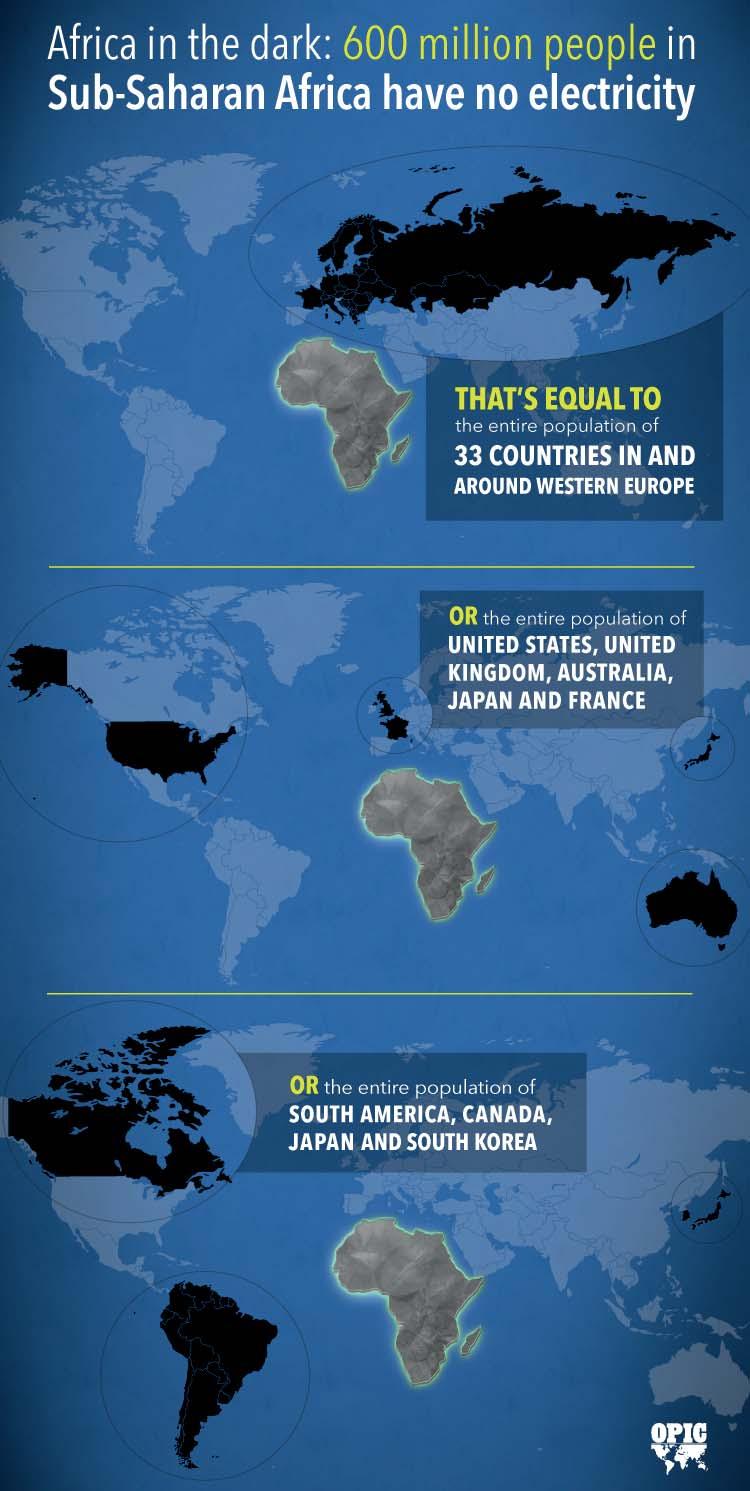
MOROCCO: ECONOMIC AND POLITICAL OVERVIEW COUNTRY
POLITICAL STABILITY
Morocco will continue to benefit from a broader degree of political and social stability than most of its neighbours in North Africa. The king, Mohammed VI, will remain the dominant political figure and the people's spiritual guide (amir al-muminin, or commander of the faithful). Although the roles of parliament and the prime minister have been strengthened by the 2011 constitutional reforms, policy continues to be largely set by the king and his closest advisers, the makhzen. The Economist Intelligence Unit expects broad political support for the king to persist, which will underpin overall stability.
ELECTION WATCH
The moderate Islamist Parti de la justice et du développement (PJD) increased its share of seats in the October 2016 election for the Chamber of Representatives (the lower house) to 125 of a total of 395 seats, from 107 previously the largest representation of any party in Morocco's recent history. Yet the main parliamentary opposition group, the Parti authenticité et modernité, made the largest gains--more than doubling its share to 102 seats, from just 47 previously. However, despite the larger number of seats now held by the PJD and the PAM, there is no clear majority bloc, and parliament remains fragmented.
INTERNATIONAL RELATIONS
Although the EU will remain Morocco's primary market for trade, investment and tourism, medium-term relations will be strained by tensions over Western Sahara, which led the EU to suspend the bilateral agriculture and fisheries accord in December 2015. Nonetheless, Western countries will maintain political support for the kingdom, given its key role in regional counterterrorism efforts and its strategic position as a departure country for migrants coming to Europe. Ties with wealthy Gulf Arab monarchies will remain strong, but financial flows from these countries will slow in the medium term as Gulf states cut back on foreign aid and investment in light of low oil revenue.
POLICY TRENDS
The authorities will work to strengthen the country's economic fundamentals, for example by improving tourism, transport and logistics infrastructure, in order to stabilise annual GDP growth. However, addressing the country's infrastructure shortcomings will prove difficult, as an inefficient bureaucracy and widespread nepotism will slow the execution of projects. The modernisation of the economy will also be hindered by shortages of skilled labour (as efforts to fill skills gaps--including enhanced vocational training--fail to keep pace with economic growth) and the concentration of economic power in the hands of a small elite. In search of faster growth, the government will continue working to boost engagement with developing countries in Sub-Saharan Africa, thereby paving the way for Moroccan companies to expand into new markets for banking, construction, telecommunications and resourceprocessing.
ECONOMIC GROWTH
We forecast that real GDP growth will accelerate to 4% in 2017 but from a low base, after estimated growth of just 1.5% in 2016, as agricultural production returns to normal following a sharp contraction in the 2015/16 season. The economy is sensitive to agriculture, which accounts for 40% of employment and therefore has a major impact on private consumption. We have built moderate annual swings in agricultural output into our current forecast; sharper changes, however--as seen in 2016, when the wheat harvest fell by 70% year on year would cause GDP growth to vary more widely. Overall, we expect relatively steady growth in manufacturing industries, particularly in automotive, aeronautics and electronics, to underpin growth over the forecast period. Tourism will continue to be a key driver of the economy, although it remains vulnerable to external demand and perceptions of regional security. The expansion of other services including finance, trade and telecoms will help to create more stable sources of growth. Electricity production will also expand in 2017-21, driven by major investment in renewables.
INFLATION
Rising global oil prices will create new inflationary pressures in 2017-18 (subsidies were phased out on most refined fuels in 2015). Nonetheless, we expect inflation to remain moderate, at an average of 2.3% in 2017-18, as the government maintains subsidies on basic goods. We then expect price growth to fall to 1.6% in 2019 before rising to an average of 2% in 2020-21, largely in line with fluctuating global oil prices.
EXCHANGE RATES
Bank al-Maghrib (the central bank) currently manages the dirham against a euro-dominated basket of currencies. As the central bank gradually eases this arrangement, expected in 2017, the dirham's fluctuation against the US dollar will begin to diverge slightly from euro-dollar movements. However, our central assumption is that Morocco will not move towards full liberalisation in the forecast period as the authorities seek to limit short-term volatility. The dirham is forecast to weaken to an average of Dh10.2: US$1 in 2017, before strengthening to Dh9.5: US$1 in 2021, still roughly in line with euro-dollar movements.
EXTERNAL SECTOR
The current-account deficit will widen to an annual average of 5.2% of GDP in 2017-18 as recovering global commodity prices boost import costs. Increasing demand for capital goods related to investment in power plants, transport infrastructure and industrial parks will also support steady growth in import spending. Morocco's external performance will continue to be vulnerable to renewed turbulence in Europe, its main foreign market, and agricultural exports remain reliant on volatile weather patterns. Exports will nevertheless increase, owing in part to rising output from the manufacturing sector. Overall, the trade deficit will remain wide, averaging 17.4% of GDP in 2017-21.
WHAT ANALYSTS ARE SAYING ABOUT AFRICA’S CREDIT QUALITY AND FINANCIAL STABILITY
Sovereign credit quality in Sub-Saharan Africa deteriorates.
S&P Global Ratings indicated that the overall sovereign creditworthiness in Sub-Saharan Africa (SSA) has deteriorated since January 2017. It noted that it had upgraded the ratings of Burkina Faso, which was more than offset by the sovereign downgrades of Mozambique, the Republic of Congo and South Africa due to ongoing pressure on public finances and economic activity in these countries. It also revised the outlook on Burkina Faso’s sovereign ratings from 'positive' to 'stable', while it placed the ratings of the Republic of Congo on CreditWatch Negative. As such, it indicated that 10 out of the 17 rated SSA countries carry a 'stable' outlook on their sovereign ratings, five sovereigns have a 'negative' outlook, one has its ratings placed on CreditWatch Negative, while Mozambique does not carry an outlook as its rating is in 'Selective Default'. S&P expected economic conditions for SSA economies to remain challenging in 2017 due to the region's high dependence on oil and commodity exports, despite a modest increase in the price of some export commodities. It said that the average rating of the 17 SSA sovereigns stood at slightly below 'B+' as of June 2017, compared to about 'BB-' in December 2013. It added that the average sovereign rating becomes lower than 'BB-' when the ratings are weighted by nominal GDP, largely due to South Africa, which is rated 'BB+' and accounts for more than one-fourth of the aggregate GDP of the 17 countries. S&P noted that 16 out of the 17 rated sovereigns have a speculative-grade rating, except Botswana which is in the 'A-' category.
Sub-Saharan Africa's recovery from foreign currency shortages to take time
Moody's Investors Service stated that while foreign currency shortages in Sub-Saharan Africa stemming from lower oil and commodity prices are easing, it will take time for sovereigns, banks and non-financial companies to restore their financial health in a report. The report highlighted that falling oil and commodity prices over the past two years have led to foreign currency shortages in numerous Sub-Saharan African countries, with oil exporters hit particularly hard. "The stabilisation in oil and commodity prices over recent months will help to ease the pressure, but any recovery will depend on continued higher prices and could take some time and managing foreign currency shortages will remain a key policy challenge for Sub-Saharan oil exporters, the report emphasized.
Moody’s state that in recent quarters, dollar rationing, currency devaluation and foreign currency borrowing by governments have stemmed the fall in foreign exchange reserves in Angola and Nigeria. But this has been to the
detriment of the non-oil economy, price stability and government balance sheets. Whereas, in Gabon and the Republic of the Congo, which are members of the Central African Monetary and Economic Union (CEMAC) and where access to foreign currency borrowing is limited, the common local currency is pegged to the euro and foreign exchange reserves have collapsed, Moody's expects reserves to continue falling through 2017, but at a much slower rate.
In addition, banks in Angola, Nigeria and the Democratic Republic of the Congo remain the most affected by foreign currency shortages due to their economies' high reliance on dollars. Their foreign currency deposits have been depleted and they have limited capacity to source new foreign funding. The resultant currency devaluations have also eroded banks' loan quality, profitability and capital.
Egypt’s Economic growth at 4.5% in FY2017/18, inflationary pressure to persist
BNP Paribas indicated that macroeconomic conditions in Egypt, especially the external balance and foreign currency reserves, have significantly improved following the liberalization of the exchange rate in November 2016 and the implementation of fiscal reforms. It projected real GDP growth to accelerate from an estimated 3.8% in the fiscal year that ended in June 2017 to 4.5% in FY2017/18. However, it noted that household consumption, a main driver of economic activity, is severely constrained by the increase in domestic prices. It noted that the average inflation rate surged from 10.2% in FY2015/16 to 23.7% in FY2016/2017 as a result of the currency depreciation, limited competition in the retail market, supply constraints, reduction in energy subsidies, and the expansion of money supply. In additional, they expected the inflation rate to average 24.8% in FY2017/18, mainly due to additional subsidy cuts and higher global energy prices. Also, highlighted that the government and the Central Bank of Egypt (CBE) have limited resources to address the inflationary pressures.
Tunisia’s Sovereign ratings downgraded, outlook ‘negative’
Moody's Investors Service downgraded Tunisia’s long-term issuer rating from 'Ba3' to 'B1' and maintained the 'negative' outlook on the rating. It attributed the downgrade to the structural deterioration in Tunisia’s fiscal position, persistent imbalances in the country’s external position, as well as reduced institutional strength and government effectiveness amid delays in the implementation of reforms under the IMF program. It pointed out that the 'negative' outlook on the rating reflects the risk of a sustained decline in foreign currency reserves that could further weigh on the exchange rate
and, in turn, increase the public debt level. It added that the 'negative' outlook takes into account Tunisia's rising funding requirements amid uncertainties about access to external funding, as well as rising contingent liabilities from state-owned banks, the pension system and state-owned enterprises. It noted that the public debt level increased from 50.8% of GDP in 2014 to 61.9% of GDP in 2016 due to a wide primary fiscal deficit in 2016, subdued economic activity and sustained depreciation of the Tunisian dinar, and expected it to exceed 70% of GDP in 2018.
Ethiopia’s Economic growth to support fiscal position in near term
Moody's Investors Service considered that Ethiopia's 'B1' government bond rating and the associated 'stable' outlook are supported by strong domestic economic growth and low debt servicing costs, amid high inflation rates, low GDP per capita levels, a weak institutional framework and limited foreign currency reserves. It added that the country’s vulnerability to political risks, unfavourable weather conditions, and volatile coffee and gold prices represent challenges to the sovereign's credit profile despite the authorities' efforts to diversify the economy. The agency forecast Ethiopia's average annual real GDP growth at about 8% in coming years, which would support the fiscal position. It considered the country’s fiscal strength to be 'moderate', reflecting a low debt burden, favourable debt structure and affordable interest payments, which are offset by low government revenue ratios, large potential contingent liabilities from state-owned enterprises, and a high share of debt in foreign currency. It said that the government's debt level, which reached 27.6% of GDP in 2016, is low relative to peers. But it noted that the debt level has slowly increased in recent years to fund large capital projects, and expected this trend to continue due to large scale infrastructure projects under the country’s Growth and Transformation Plan.
WAEMU banks to face challenges in meeting new capital requirements
Fitch Ratings expected that banks in member countries of the West African Economic and Monetary Union (WAEMU) will face challenges in meeting the new regulatory capital requirements under the Basel II framework that will be phased in starting January 2018. It anticipated that the new rules will move the region's banks closer to international standards and will strengthen their creditworthiness. However, it expected the banks' concentrated exposures to single-name borrowers to remain a weakness.
It noted that banks will have to meet a minimum common equity Tier One capital ratio of 7.5% and a minimum total capital ratio of 11.5%, both inclusive of a 2.5% capital conservation buffer, by the end of 2022. It said that this would constitute a significant increase from the 8% minimum total capital ratio required under the current Basel I framework. Further, the agency expected banks
with a minimum common equity Tier One ratio of less than 7.5% to face dividend restrictions, as banks with the weakest ratios would be forced to retain all their earnings. It anticipated that many banks in the region would not be able to meet the 11.5% minimum total capital ratio. It said that some banks may have to raise equity, merge with stronger banks or change their mix of risk-weighted assets to address these shortfalls. In parallel, Fitch Ratings expected the banks' high exposure to single-name borrowers to undermine their capital adequacy ratios. It said that the banks’ single large exposure limit, which is set at 75% of regulatory capital by the region’s banking regulator La Banque Centrale des Etats de l'Afrique de l'Ouest, is significantly higher than the Basel framework limit of 25%. It considered that the 75% regulatory limit could expose banks to losses from the default of a single borrower. It added that high single-name exposures reflect credit demand from large corporate and public sector companies, the underdevelopment of retail lending, and banks' reluctance to lend to small- and medium-sized enterprises. It did not expect these factors to change significantly in the region in the near term, while it anticipated that banks would find it difficult to reduce their concentration risks.
Nigerian Banking Sector Faces Challenging Environment
The Institute of International Finance indicated that the Nigerian banking sector is constrained by deteriorating asset quality, tight liquidity, declining profitability and stagnant private sector lending. It noted that lending to the private sector posted a double-digit growth rate in 2016, mainly due to the impact of the devaluation of the Nigerian naira on foreign-currency denominated loans. But it considered that the underlying private sector credit growth was subdued. It did not expect any significant recovery in private sector lending prior to 2018 due to the challenging economic environment and relatively tight monetary policy. Also, the IIF anticipated liquidity in the banking sector to remain tight in 2017, given the Central Bank of Nigeria’s efforts to support the naira and rebuild foreign currency reserves. Further, it said that the banks’ non-performing loans (NPL) ratio rose from 5.3% at the end of 2015 to 14% at end-2016 and that the share of restructured loans increased last year due to the economic slowdown and the deprecation of the naira. It noted that entities in the power and hydrocarbon sectors had to restructure their loans, as they were adversely impacted by the decline in oil prices and the weaker naira; while delays in salary payments weighed on the quality of retail loans. It added that authorities announced a new framework that allows asset management companies to purchase NPLs from banks, which would contain the increase in NPLs. The IIF pointed out that the banking system has sufficient buffers to absorb the losses, with a capital adequacy ratio of 13.9% at end-2016. It anticipated the banks' profitability and capital adequacy ratios to remain under pressure amid the challenging operating environment.
NigeriaNIG ALSI35,505-0.9632.1128.6424,54738,24224.185
RwandaRSEASI1250.68-1.55-2.471241293.196
South AfricaJSE ALSI56,5222.3811.597.1948,93656,8978.550
RwandaFranc845.000.502.805.37425.00849.256.035
South AfricaRand13.00-1.39-5.36-11.7312.3114.6512.661
TanzaniaShilling2,243.950.762.892.652,137.002,272.504.592
TunisiaDinar2.462.356.2011.432.152.5813.375
UgandaShilling3,601.77-0.15-0.456.723,372.003,655.411.131
ZambiaKwacha9,1162.7362-8.26-4.348,76610,2758.829
Angola12-Nov-25107.7608.177-0.1530.83186.206109.254USD
Cameroon19-Nov-25118.3656.566-0.1100.523100.807119.358USD
Congo30-Jun-2979.9208.759-1.1839.74763.76681.661USD
Cameroon19-Nov-25118.3656.566-0.1100.523100.807119.358USD
Egypt30-Apr-4098.6316.995-0.2252.57185.88597.909USD
Ethiopia11-Dec-24102.5246.186-0.2841.62587.394102.588USD
Gabon16-Jun-25100.9736.785-0.1931.15681.889102.405USD
Ghana14-Oct-30129.5937.219-0.5033.866106.494129.677USD
Kenya24-Jun-22105.0585.958-0.5292.87591.157105.080USD
Ivory Coast31-Dec-3299.5885.813-0.1881.22488.498101.499USD
Morocco11-Dec-42113.9314.565-0.1181.682100.880117.467USD
Namibia29-Oct-25102.8364.8240.068-0.47998.076107.999USD
Nigeria12-Jul-23106.0295.166-0.3371.59289.886106.140USD
Rwanda02-May-23104.9825.584-0.4011.86395.826105.032USD
Senegal30-Jul-24107.1145.017-0.0790.37096.756107.156USD
South Africa24-Jul-44100.4605.342-0.1291.83291.188114.727USD
Tanzania09-Mar-20104.9385.352-0.1190.113102.708106.272USD
Tunisia19-Sep-27109.6056.907-0.001-0.036106.090110.396USD
Zambia30-Jul-27110.5387.445-0.2701.75889.124110.571USD