AFRICA’S BONDS: COMING OF AGE AFRICA’S BONDS: COMING OF AGE
Featured Articles
Featured Articles
ISSUING EUROBONDS IN AN ECONOMICALLY CHALLENGING ENVIRONMENT
ISSUING EUROBONDS IN AN ECONOMICALLY CHALLENGING ENVIRONMENT
SOUTH AFRICA’S FIXED INCOME STRATEGY
SOUTH AFRICA’S FIXED INCOME STRATEGY
LENDING TO SUBSAHARAN AFRICA: SEEING THE WOOD FOR THE TREES
PORTFOLIO MANAGER’S VIEW: RISKS AND OPPORTUNITIES IN AFRICAN CREDIT
LENDING TO SUBSAHARAN AFRICA: SEEING THE WOOD FOR THE TREES PORTFOLIO MANAGER’S VIEW: RISKS AND OPPORTUNITIES IN AFRICAN CREDIT
AFRICAN CREDIT OUTLOOK: AN ECONOMIST’S PERSPECTIVE
AFRICAN CREDIT OUTLOOK: AN ECONOMIST’S PERSPECTIVE
SETTING A BENCHMARK INDEX FOR AFRICAN FIXED INCOME FUNDS
SETTING A BENCHMARK INDEX FOR AFRICAN FIXED INCOME FUNDS
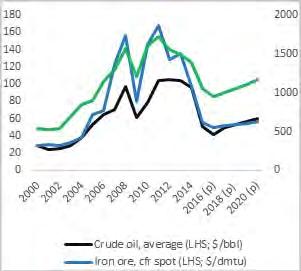
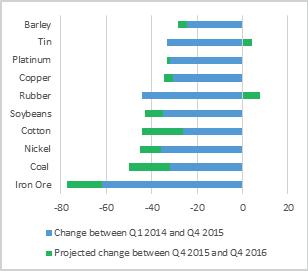
LOW FOR LONGER COMMODITY PRICES TO KEEP PRESSURE ON AFRICAN COMMODITY EXPORTERS
LOW FOR LONGER COMMODITY PRICES TO KEEP PRESSURE ON AFRICAN COMMODITY EXPORTERS
DEMYSTIFYING THE SUKUK SHARI’A COMPLIANT FIXED INCOME CAPITAL MARKETS INSTRUMENTS
DEMYSTIFYING THE SUKUK SHARI’A COMPLIANT FIXED INCOME CAPITAL MARKETS INSTRUMENTS
Exclusive Interview
Exclusive Interview
DR EDOH KOSSI AMENOUNVE | BOURSE RÉGIONALE DES VALEURS MOBILIÈRES BRVM
DR EDOH KOSSI AMENOUNVE | BOURSE RÉGIONALE DES VALEURS MOBILIÈRES BRVM
opportunities in African Credit
Exploring benefits of Bond Issuance in Nigeria
African Credit outlook: An economist’s perspective
Setting a Benchmark Index for African fixed income funds
Low for longer commodity prices to keep pressure on African commodity exporters
Demystifying the Sukuk - Shari’a Compliant Fixed Income Capital Markets Instruments
EXCLUSIVE INTERVIEW
Demutualization: The Key to Improving Africa Stock Market Performance - DR EDOH KOSSI
AMENOUNVE, Chief Executive, Bourse Régionale des Valeurs Mobilières (BRVM)
DISCLAIMER: The contents of this publication are general discussions reflecting the authors’ opinions of the typical issues involved in the respective subject areas and should not be relied upon as detailed or specific advice, or as professional advice of any kind. Whilst every care has been taken in preparing this document, no representation, warranty or undertaking (expressed or implied) is given and no responsibility or liability is accepted by CAPITAL MARKETS IN AFRICA or the authors or authors’ organisations as to the accuracy of the information contained and opinions expressed therein.
. She argues that the Impressive growth in the East African region makes Kenyan equities the continent investment hot spot.
Cavan Osborne, Fund Manager, Old Mutual African Frontiers Fund Africa Emerging: Look for the Signs to Invest Musa Advisors looks at investing in Francophone West African Countries via the regional stock exchange (BVRM) in his article BRVM the Africa Hidden Gems: Overview and Opportunités CFG Capital Markets Research Team, provides a bespoke overview of Morocco’s macroeconomic and equity markets prospects in 2016.
To compliment the viewpoints Randy Ackah-Mensah, Head, Trading & Sales, EDC Stockbrokers Limited, Ghana and Nana Kofi Agyeman Gyamfi, Head of Research, UMB Stockbroker Ghana provide commentaries on Ghana’s stock market outlook and opportunities. While Bhavik Desai, Research Analyst, AXYS Stockbroking, Mauritius and Phenias Mandaza, Head Research, EFE Securities, Zimbabwe look at Opportunities in Mauritius and Zimbabwe’s equity markets respectively in 2016.
In African Fund Manager’s Continental Outlook Andy Gboka, Portfolio Manager, Bellevue Asset Management discusses the investment climate as well as the key elements, drivers and dynamics that should inform a Fund Managers Investment Strategy. In the article Finding Opportunities in Nigeria’s Equity Gloom Tajudeen Ibrahim, Head of Research, Chapel Hill Denham Securities Limited determines that Nigerian equities still offer attractive valuations and Lanre Buluro, Head, Investment Research, Primera Africa Securities Limited thinks Nigerian equities are trading at historic lows, hence an opportunity for long-term investors.
To round off Zack Bezuidenhoudt, Head, Sub Saharan Africa and South Africa, S&P Dow Jones Indices walks us through Developing an Appropriate Benchmark Index for African Equity Fund and Pieter de Wet, Head of Research. Novare Equity Partners examines investing in the African equity markets via the Exchange Traded Funds (ETFs)
Kind regards,
Michael Osu
Associate
Editor
Capital
Markets
in Africa
Connect with the Editor on Linkedin. Follow us on twitter @capitaMKTafrica.
To subscribe to INTO AFRICA, please send an email to intoafrica@capitalmarketsinafrica.com. Don’t forget to visit our website at www.capitalmarketsinafrica.com for the latest news, bespoke analysis, investment events and outlooks. ENJOY!
Editorial
EDITORIAL TEAM
Associate Editor
Michael Osu
Contributing Experts
Tunde Akodu
Michael Osu
Advertising & Sales
Tola Ketiku
CONTENTS
FEATURED ARTICLES
Issuing Eurobonds in an economically challenging environment
South Africa’s Fixed Income Strategy
Lending to Sub-Saharan Africa: seeing the wood for the trees
Ghana’s Treasury Bills and Bond Markets: Overview and Opportunities
Portfolio manager’s view: Risks and opportunities in African Credit
Exploring the benefits of Bond Issuance in Nigeria
African Credit outlook: An economist’s perspective
Setting a Benchmark Index for African fixed income funds
Low for longer commodity prices to keep pressure on African commodity exporters
Demystifying the Sukuk - Shari’a Compliant Fixed Income Capital Markets Instruments
EXCLUSIVE INTERVIEW
Demutualization: The Key to Improving Africa Stock Market Performance - DR EDOH KOSSI AMENOUNVE, Chief Executive, Bourse Régionale des Valeurs Mobilières (BRVM)
Cover Image Buildings and roof tops in the suburb of Braamfontein city Centre, Johannesburg, South Africa. The City has benefited from the issuance of new “Green Bonds” to help the municipality deepen its investment in green and sustainable projects.
Welcome to the June edition of INTO AFRICA, a publication with fresh insight into Africa’s emerging capital markets. This edition focuses on Fixed Income in Africa and titled Africa’s Bonds: Coming of Age. Africa’s fixed income markets have benefitted from tremendous growth dynamics during the past decade, as most of Africa’s sovereign borrowers have managed to strengthen their public finances to levels above the global average. In addition, the asset class is now opening to international investors and is well supported by local institutional investors (insurance and pension funds). While still in its infancy, however, varying levels of liquidity, depth and market capacity present investors with a multifaceted set of risk and reward options that require increasingly intricate and complex analysis.
Emerging markets have struggled over the past 2 years, mainly due to a number of idiosyncratic and macroeconomic factors, such as an amplified concern about China’s ability to manage its economic slowdown, combined with commodity price slumps, triggered by a sell-off in emerging markets bonds. These developments have hit African economies particularly hard, although recently, emerging markets debt has subsequently bounced back sharply. This is attributed to a rebound in commodity prices as well as the dovish actions and rhetoric of central banks across the globe, hence boosting investors’ confidence.
But still, African markets growth fundamentals have not significantly improved and in most cases have deteriorated, so many African countries will rely on both hard-currency debt and local-currency debt as an important source of financing their fiscal deficits. Thus, the African bonds are likely to remain volatile in the near term, but the asset class is becoming more diversified with regards to both the opportunity set and investment approaches as well as offers attractive longer-term opportunities in countries that are implementing meaningful reforms.
We kick off the discourse with a view from Jean-Jacques Essombè and Arnauld Achard in Issuing Eurobonds in an Economically Challenging Environment. They discuss the use of SSA Eurobonds as an effective Debt instrument, their associated risks and the recent protective clauses included in Law for the Bond issuer.
Sinovuyo Mpakama, National Treasury, South Africa provides a perspective from the Issuer on South Africa’s fixed income. He expands on the issuance strategy employed by the South Africa’s National Treasury and hints on a strategy to limit exposure to inflation-linked bonds in order to manage the inflation risk in the debt portfolio.
From an industry viewpoint, Amelia Slocombe of the Loan Market Association delves into some of the key risks and opportunities as well as signs by governments to improve both the regulatory and policy framework to facilitate investment in Lending to Sub-Saharan Africa: seeing the wood for the trees.
Our Feature story is an EXCLUSIVE INTERVIEW with Dr. Edoh Kossi AMENOUNVE, CEO, (BRVM) and the Central Depository/Settlement Bank (DC/BR). Dr Amenounve has led major financial market reforms in Africa and shares with us his views on demutualization and Capital Markets Integration in West Africa.
Courage K Martey and Celeste E. Macauley of DataBank Group, Ghana provide us with Ghana’s Treasury Bills and Bond Markets: Overview and Opportunities and suggest that investors will find significant value in Ghana’s fixed income market while Chuks Izu, Associate, Dunn Loren Merrifield highlights some key benefits and opportunities for Bond Issuers in Exploring the Benefits of Bond Issuance in Nigeria. Also, Stephen Charangwa and Craig Sherman provide their take on risks and opportunities in African credit while Gaimin Nonyane and John Ashbourne give an economist’s perspective on African credit macroeconomics outlook.
No discussion would be complete without a benchmark with which to measure constructs against and provide a reference point for execution. In Setting a Benchmark Index for African fixed income funds Christian Schedling walks us through the Concerto African Benchmark Index. A must read for those keen to identify suitable African local currency bond markets.
Zuzana Brixiova, Moody’s Vice President and Senior Analyst contemplates Moody’s recent rates action on African Countries and discusses the challenges posed by lower commodity prices on their medium-term growth potential in Low for longer commodity prices to keep pressure on African commodity exporters
Finally, Debashis Dey, Partner, White & Chase LLP shares with us his intimate knowledge of sukuk in Demystifying the Sukuk - Shari’a Compliant Fixed Income Capital Markets Instruments and provides us with greater understanding of this financial product and the advantages of tapping into the Sukuk market.
Kind regards,
Michael Osu
Associate
Editor
Capital Markets in Africa michael@capitalmarketsinafrica.com
Connect with the Editor on Linkedin. Follow us on twitter @capitaMKTafrica. To subscribe to INTO AFRICA, please send an email to intoafrica@capitalmarketsinafrica.com
Don’t forget to visit our website at www.capitalmarketsinafrica.com for the latest news, bespoke analysis, investment events and outlooks.
contained and opinions expressed therein.
MANAGING AFRICAN EQUITY
PORTFOLIOS IN A CHALLENGING ENVIRONMENT
ISSUING EUROBONDS IN AN ECONOMICALLY CHALLENGING ENVIRONMENT
Paul Clark, Portfolio Manager, Ashburton Investments
by Jean-Jacques Essombè and Arnauld Achard, Partners at Orrick Herrington & Sutcliffe (Europe) LLP
Eurobond issuance by sub-Saharan (SSA)1 countries has gradually gained popularity since the first issuance of USD 200 million in 2006 by Seychelles. Other SSA countries continued to successfully tap the international capital markets, such as Ghana which issued USD 750 million in 2007 and Gabon which issued USD 1 billion the same year. As bank financing became scarce after the 2008 financial crisis, SSA countries increasingly looked to sustain their financing needs through the international capital markets.
The multiple sovereign issuances that followed have set a benchmark for this type of debt instruments, before corporate Eurobonds which then boomed within the oil and banking sector2. Other types of businesses, such as telecom operators, are expected to follow this path3, as soon as current macroeconomic conditions improve.
Between 2011 and 2015, the total amount of Eurobond issuances amongst SSA countries4 has continually increased on a yearly basis, from USD 1.5 billion in 2011 for 3 countries5, to USD 6.75 billion in 2015 for 7 countries6. This trend includes countries that have benefited from Heavily Indebted Poor Countries (HIPC) and Multilateral Debt Relief Initiative (MDRI) debt relief programs. The main drivers were improved macroeconomic fundamentals in the issuing countries along with a search for yield by investors because of exceptionally loose monetary conditions in advanced economies.
While macroeconomic conditions have recently deteriorated, increasing the risks associated with Eurobonds issuances for bondholders and issuers (I), the legal framework, although stabilized, has room for innovation (II).
I/ Economic risks associated with SSA Eurobonds
Both investors (A) and issuers (B) face certain types of risks associated with Eurobond issuing.
A/ Investor risk: poor macroeconomic conditions
The drop in oil and other commodity prices which started in late 2014, along with the sluggish recovery in Europe, lower growth in China (with whom Africa’s commercial ties significantly increased over the past decades) and recent increase in US Fed’s interest rate, is affecting the
African economies, whose national currencies and debt burden took a serious hit (in particular for countries highly reliant on commodities exportation). The current election process and political instability in certain SSA countries is further affecting investor confidence.
The combination of all these factors had an immediate effect on the Eurobond market: yields skyrocketed, reaching 10.75% for Ghana’s October 2015 issue, 9.5% for Angola and Cameroon in November 2015 and 10.5% for Mozambique in April 20167, reflecting increased investor risk premium associated with these sovereign bonds.
Some SSA countries, such as the Democratic Republic of Congo (DRC), have decided to cancel their Eurobond issuance project in light of the high yields on the capital markets. In the case of DRC, the decision has been taken as multilateral partners such as IMF and ADB proposed financial solutions at concessional yields, which would not have been possible on the capital markets. On the other hand, Kenya, whose macroeconomics are doing relatively well during these harsh times, should be the first SSA country8 to issue Eurobonds this year for USD 600 million. While Nigeria has also announced a potential Eurobond offering this year in order to fund its budgetary deficit, Ghana, looking to finance its infrastructure needs and repay part of its maturing debts has recently seen its 5th Eurobond offering project approved by the IMF.
Investors are aware of the particular debt restructuring history amongst SSA countries, and the need to promote effective policies for maintaining a sustainable debt position9. They often refuse to finance current budgetary deficits by way of Eurobonds and look instead for underlying project financing, such as infrastructure, for which the proceeds are to be used.
On top of these concerns, the actual use of proceeds for the intended purposes is not always guaranteed due to a persistent risk of corruption and money laundering in certain SSA economies, as recently observed with the 2013 Mozambique Eurobond proceeds used to buy military equipment instead of fishing boats10
Yet some African countries, and in particular the Kingdom of Morocco, have benefitted from well-managed
1 In other countries than South-Africa (which already has a well-established access to the international capital markets)
2 Eg. Eurobonds issued by banks in Nigeria, Ghana, Zambia and Kenya
3 Although concerning a South African telecom operator group, MTN (Mauritius) Investments Limited, a company incorporated in Mauritius, successfully issued a USD 750 million, 10-year bond at 4.755% in November 2014, listed on the Irish Stock Exchange and guaranteed by its parent company in South Africa
4 Other than South Africa which we exclude for the purposes of our analysis herein
5 Namibia, Nigeria and Senegal
6 Ivory Coast (in March), Gabon (in June), Zambia (in July), Ghana (in October), Namibia (in October), Angola (in November) and Cameroon (in November).
7 In exchange for the existing USD 850 million notes issued in 2013, the proceeds of which were misused by the government
8 Except for South Africa, which already tapped the market with a USD 1.25 billion Eurobond issuance in April 2016 at 4.875%
9 African Perspectives on Sovereign Debt Restructuring, CIGI Papers, no. 43, September 2014 (https://www.cigionline.org/sites/default/files/no43_web.pdf)
budgetary measures and relatively stable credit ratings, the perceived investor risk thus being very low. For example, in June 2014, the Kingdom of Morocco issued EUR 1 billion worth of 10-year Eurobonds at only 3.5% yield, a better yield that Croatia or other East-European countries at the time.
B/ Issuer risks: vulnerability of most issuing SSA countries
On the issuer side, a number of potential risks are inherent to Eurobond financing. In case of project financing, idle funds carrying costs represent an important risk factor: additional costs are incurred by the issuer when the projects are delayed and the Eurobond proceeds remain unutilized for an extended period of time.
Eurobonds are also subject to bond-specific risks. One of them is the liquidity risk: such risk is higher for bonds with bullet repayments instead of amortizing principle, causing a roll over risk, in particular when the maturity period is short. It may be noted that the majority of SSA Eurobonds have a long-term maturity but provide for bullet principle repayment.
Another bond-specific risk is the interest rate risk, in case of a floating interest rate. This is rarely the case amongst SSA Eurobonds, which generally have a fixed interest rate.
The most important bond-specific risk is the exchange rate risk, as all the SSA Eurobonds are denominated in hard currencies (mostly USD): the risk results from the need to make interest and principle repayments in said currency. This risk has been materialized in 2015 when the USD has significantly gained value against most African currencies, causing an automatic increase in the debt cost, possibly rendering the debt unpayable. Countries using CFA are less vulnerable as the CFA is pegged to the Euro (moreover this risk is basically inexistent for these countries if they issue Eurobonds denominated in Euros). For other countries, risk mitigation may be applied on two levels: either through “natural hedging” which is possible for countries having tax revenues in hard currencies (such as commodity exporters), or through FX derivatives11 (such as futures, options and swaps) provided that there is a liquid market for such FX derivatives for the concerned currency (eg. DRC franc and Ethiopian Birr have no liquid market and no benchmark, rendering any FX derivative effectively unmanageable).
Ideally, FX risk is mitigated by following sound macroeconomic management measures that ensure currency stability. However, in case of external currency shocks and global macroeconomic conditions such as the USD gaining significant value compared to most African currencies and low commodity prices, SSA sovereign bond issuers face increasing external
indebtedness pressure without much room for efficient management.
It should be noted that significant efforts in debt management are being made in SSA countries: for instance the West African Economic and Monetary Union (WAEMU) has recently set up a regional agency, “Agency UMOA Titres”, to support the issuing and management of sovereign bonds.
II/ Legal standards for SSA Eurobonds
Choice of law and jurisdiction are relatively stable amongst SSA Eurobond issuances (A), which also look for better issuer protection clauses (B).
A/ Choice of law and jurisdiction
Choice of law, along with the location of the issuance, determines the issuance regulatory framework. Most Eurobonds are issued by way of private placement, as opposed to public offerings, and subscriptions are reserved to professional investors. This reduces the burden related to disclosure and reporting obligations (although credit ratings are typically required).
Eurobonds can be listed on regulated financial markets by following the listing procedures thereunder. Luxembourg and London Stock Exchanges are commonly used for listing sovereign bonds, although many recent Eurobond listings have been made on the Irish Stock Exchange.
Other European stock exchanges are also to be considered. As a result of the harmonization works related to the European capital markets and investor information requirements, and considering other factors such as Brexit risks, the choice of listing locations may further evolve. We may thus see future listings be directed towards other stable and well established financial marketplaces such as Paris.
Most SSA Eurobonds are currently governed by English law or New York law. While reusing previously implemented bond structures may imply lower legal costs, some issuers, in particular those whose legal system is inspired from French law, may contemplate submitting future issuances to French law. The dematerialized form of bonds required in French law is, for instance, eligible for 144A placement.
Moreover, it should be noted that important French law reforms have either been already adopted (such as contracts law) or are currently underway. In particular, the bond issuing regime is currently being reformed under draft law “Sapin 2” which provides for a modern legal regime in line with the most recent market practice. It shall allow, for privately placed bonds, issuers and investors to freely define the governance of their relationship throughout the duration of the bond, as is current market practice within the international capital
markets. Furthermore, it provides for a simplified regime to manage security interests guaranteeing the bond holders. The French bond issuing legislation reform shall undoubtedly increase the number of operations governed by French law as it is specifically designed to satisfy current market practice in this domain.
In order to ensure impartiality of the ruling court, market practice tends to prefer either arbitration (such as the French ICC) or, more commonly, foreign courts (New York, English courts or other European courts such as the Commercial Court of Paris). The choice of law must be consistent with the choice of jurisdiction.
In case of issuance by a sovereign, the question of immunity is taken into account. Most jurisdictions provide that a sovereign may waive its immunity, allowing its creditors to undertake enforcement measures over its assets under certain conditions.
B/ Protective clauses for the issuer
Following its Communiqué of the Thirtieth Meeting on October 11, 2014, the IMFC, and soon after, the G20 on November 16, 2014, called for the inclusion of modified collective action clauses (CACs) and pari passu clause in sovereign bond issuances as established under the ICMA12. The CACs, essential for allowing the restructuring of bonds, provide for enhanced voting procedures and may include “single-limb” or “two-limb” voting procedures, where, respectively, restructuring can be agreed on the basis of a single vote across all affected instruments with a 75% majority or by observing a series-by-series voting procedure with a global majority of 662/3% together with a series-by-series majority of 50%.
The pari passu clause, on the other hand provides for an equal treatment of creditors and stipulates that bonds shall rank pari passu (equal) with each other and with other unsecured debts. An important disruption in its interpretation under New York law arose from a case before the US Federal Court of Appeals in New York, held in October 2012 against Argentina. In this decision, the Court considered that the pari passu clause imposes a ratable payment of all its debt, including other “external” indebtedness. Following this decision, many international organizations have called for a modified pari passu clause that explicitly excludes the obligation to effect ratable payments with respect to any external indebtedness, thus providing for increased issuer protection from vulture funds.
It has been underlined that most of the recent Eurobond issuances in Africa include both enhanced clauses13
Lastly, on a more general note, it is currently agreed that many SSA countries (with a few exceptions) have relatively low external debt ratios, which leaves room for issuing Eurobonds without changing the composition
thereof, as bonds still account for only a small fraction of most SSA countries’ external debt.
While macroeconomic conditions have recently deteriorated, increasing the risks associated with Eurobonds issuances for bondholders and issuers, the legal framework, although stabilized, has room for innovation
Acknowledgment: The authors would like to thank Cristian Bulgaru, legal practitioner in the Paris office of Orrick, Herrington & Sutcliffe, for his invaluable contribution to this article.
Contributors Profiles
Jean-Jacques Essombè Moussio, partner at Orrick, Herrington & Sutcliffe (Europe) LLP Paris, is a member of the Banking and Finance Group as well as a member of Africa Group. He advises French and international banks and other financial institutions, as well as non-financial clients, on matters involving lending, financing and refinancing, restructuring, banking and financial market regulation (including rules of conduct and post-market activities) and investment fund work.
Arnauld Achard is a partner in the Paris office and a member of the Banking & Finance group. Mr. Achard specialises in Banking & Finance, Securities and Capital Markets. He has deep expertise in areas such as debt securities, derivative instruments, debt-like securities, optimisation products, structured products and securitisation. He also pursues international trade and compliance matters, including matters involving European Union economic sanctions. Over the course of his career, Mr. Achard has built up significant experience in matters concerning Morocco. Notably, he advised the Ministry of Economy and Finance of the Kingdom of Morocco on international debt issuances and hedging policies.
SOUTH AFRICA’S FIXED INCOME STRATEGY
by Sinovuyo Mpakama, Director, Debt Issuance and Management, National Treasury, South Africa
Deep and liquid capital markets
South Africa has a highly liquid and deep bond market. There are approximately 140 issuers with an excess of 1 000 debt instruments in issue1. The sovereign bond curve has relatively large benchmark bonds with a varied maturity profile in issue. As at 31 December 2015, the size of SA’s debt market stood at about R2.2 trillion, with government bonds accounting for about R1.4 trillion2. An amount of R800 billion is split between banks, state-owned companies and corporate issuers. The strength of the market is underpinned by a domestic asset management industry with an estimated R6.3 trillion3 (US$434 billion) in assets under management, with an asset allocation towards bonds at a relatively low level of 14 per cent as at 31 December 20154. This gives credence to the view that there is sufficient scope for a possible increase in allocations towards fixed income instruments by the asset management industry, which would serve as a further anchor to demand for government bonds.
Debt stock managed in prudent manner
Working in conjunction with the World Bank, National Treasury adopted a range of risk guidelines which have the purpose of ensuring the prudent management of the debt portfolio. In deciding which guidelines to focus on as a means to manage risk, the following were identified as factors which could pose as risk to the prudent management of debt: proportion of foreign currency denominated debt; proportion of short term debt (Treasury bills); proportion of long-term debt maturing within five years; proportion of inflation-linked bonds; and the weighted term to maturity of the debt portfolio. The benchmarks adopted are as follows: the maximum permitted exposure to treasury bills is 15 per cent, the portfolio is currently at 12 per cent exposure; the maximum permitted exposure to long-term debt maturing within five years is 25 per cent, the portfolio is currently at 15 per cent exposure; the maximum permitted exposure to inflation-linked bonds is a range of 20 to 25 per cent, the portfolio is currently at 23 per cent; the maximum permitted share to foreign currency denominated debt is 15 per cent, the portfolio is currently at 10 per cent; and the targeted weighted maturity is 14 to 17 years, with the portfolio currently at 15 years.
Risks of non-resident investors exiting mitigated
Non-resident investors hold a relatively high volume of South African government debt as a result of the US Federal Reserve Quantitative Easing programme. This has increased gradually from around 13 per cent in 2008
to around 34.1 per cent on an aggregate basis as at March 2016. In nominal terms, holdings of local government bonds by non-residents increased by an annual average of R50 billion between 2008 and 2014, increasing from R177 billion to R477 billion over that period. As at December 2015 the increase in holdings was just R1.3 billion. Notwithstanding the meager increase, government was able to raise funding of R181.5 billion in the domestic capital markets, which means R180 billion was effectively raised from domestic investors.
The low participation in the domestic capital market by non-residents is as a result of a trend of capital exodus from emerging markets and domestic challenges South Africa faced during the year. The combined result of these events was that yields on domestic debt increased by an average of 100 basis points during 2015. The trend which has been observed empirically in South Africa is that as yields on bonds increase, due perhaps to capital flight to developed markets, the local investors increase their
Table 1: Debt portfolio against risk benchmarks
Source:
Source: National Treasury
participation by making tactical shifts in their asset allocations from other asset classes to bonds. Given that local investors only hold about 14 per cent of their assets in bonds, they have the flexibility to be responsive to market dynamics which make it favourable for them to increase their holdings in bonds. To this end, government is of the firm view that risks of a reduction in capital inflows are mitigated by this trend. In addition, government has existing cash balances of around R200 billion with the commercial banks and the Reserve Bank which could be used as a means of bridging finance in the event of a dry-up in liquidity.
Issuance strategy over the medium term
The issuance strategy employed by National Treasury makes use of a combination of short-term Treasury bills, domestic long-term debt as well as borrowing in the international capital markets. Net issuance in Treasury bills is poised to increase from R13 billion in 2015/16 to an annual average of R27 billion over the next three fiscal years. The increase in net issuance will be used in part to finance loan redemptions over the medium term. The result of this strategy is that the outstanding stock of Treasury bills will be R234.8 billion at the end of 2016/17.
Debt issuance in the domestic long term market will be R174 billion in 2016/17, declining to R160.5 billion by 2018/19. This will be driven by an improvement in the budget balance as a result of faster fiscal consolidation than had originally been planned. The majority of the issuance will be in fixed-rate bonds on the longer end of the yield curve, with only about 20 per cent issued is inflation-linked bonds. This is in line with the strategy to
limit exposure to inflation-linked bonds in order to manage the inflation risk in the debt portfolio.
Debt issuance in the international capital markets is budgeted to be US$4.5 billion over the medium term. Issuance in this market is primarily used to partly finance government’s foreign currency commitments of an estimated US$6.4 billion over the same period. Issuance in the international capital market of US$1 billion equivalent, which had originally been planned for 2015/16, took place in April 2016, as such falls in the fiscal year ending March 2017.
Contributor Profile
Sinovuyo Mpakama is a senior manager responsible for the Debt Issuance and Management unit (long-term funding program of government) in the Asset & Liability Management division of the National Treasury of South Africa. The core functions of the unit entail formulating & executing the funding strategy to finance the borrowing requirement of government, issuing debt in the domestic and international capital markets, as well as executing the investor relations & stakeholder engagement strategy on behalf of the National Treasury. The broader key functions in the ALM division, in addition to funding, include liquidity management (Treasury bill & FX portfolio), market risk, credit risk, sovereign risk, operations as well as the financial and strategic oversight over state-owned companies. He has 8+ years financial markets experience spanning investment research, investment management and public debt management and holds a Bachelor of Commerce (Honours) in Finance from the University of Cape Town. Table 2: Financing of
LENDING TO SUBSAHARAN AFRICA: SEEING THE WOOD FOR THE TREES
by Amelia Slocombe, Director, Loan Market Association, UK
Despite short-term tailwinds buffeting both the local and global economy, Africa is growing. This, coupled with a large, young and dynamic population, an abundance of natural resources and vast (albeit largely untapped) opportunities for investment in infrastructure across a broad range of sectors, has brought about a seemingly never-ending need for investment across the continent.
But is such need reflected by investor appetite?
As with so many things about the extraordinarily diverse continent that is Africa, the picture is not necessarily as clear cut as one might expect.
Syndicated loan volumes down, lender diversification up
The limited statistics available for African syndicated loans would suggest that lending to Sub Saharan Africa (SSA) remains both cautious and subdued, particularly outside the strong investment grade credits and the traditional borrowers of syndicated loans, such as Cocobod, Sonangol and domestic African banks. According to Thomson Reuters, for example, syndicated lending in Africa totalled a mere US$3.23bn in the first quarter of 2016, down 73% compared to the same period in 2015, when volumes reached US$11.84bn. These figures are particularly noteworthy when compared to emerging market syndicated loan volumes more broadly, which, according to Dealogic, were down 34% over a similar period, suggesting that Africa has been affected more than some other developing markets with regards to investors' willingness to lend.
That said, statistics do not always provide the clearest of pictures. Yes, it is correct to say that syndicated loan volumes have declined in SSA so far in 2016 when compared to previous years, but syndicated lending itself is a relatively small part of the wider direct lending market, and the reduction in volumes may therefore be largely attributed to inactivity in the larger, traditional borrowing markets of South Africa and Nigeria. Delving a little deeper, other smaller economies, such as Kenya and countries within Francophone Africa (which use the CFA Franc and are therefore considered to be relatively stable from a currency perspective) may be seen to have benefitted as a result.
In addition, caution demonstrated by Western European banks participating in a more limited number of investment grade deals has resulted in a broadening of the investor base - for example, Chinese banks, local banks and debt funds now play a much greater role. Furthermore, despite the view that enormous pockets of untapped capital continue to lie idle with African pension funds and high net worth individuals, there has already been a marked increase in the number of institutional investors, particularly domestic insurance companies,
entering the African loan market (particularly for longer dated infrastructure projects), with some actively entering/returning to markets that traditional bank players have withdrawn from.
Short-term growth lacking, long-term prospects good
A recent LMA survey on developing markets (published April 2016) highlighted economic slowdown (particularly in the Chinese economy) and commodity price volatility as being the two biggest challenges to growth in developing market jurisdictions. In line with this, the IMF, in its recent Regional Economic Outlook for Sub-Saharan Africa, showed that growth fell to 3.5% in 2015, the lowest level in 15 years.
There is no doubt, that factors such as these have reduced demand for exports and profit for producers/exporters, particularly in the oil sector, which has had a direct impact on the continent's economy as a whole. However, this does not necessarily provide a complete picture, because although net oil exporters, such as Nigeria and Angola, may have suffered, net oil importers or those countries with a wider commodity offering, such as Kenya, Côte d’Ivoire and Senegal, have benefitted.
In addition, although in the near-term, the outlook for the region is less optimistic, the long-term outlook for SSA remains encouraging. For example, simply looking at trade shows that SSA has approximately 50% lower volumes than the global average, demonstrating a great deal more potential for expansion. Whilst obstacles to trade growth (such as poor quality infrastructure, reduced access to credit, insufficient or uncertain rules of law and tariffs) remain, if these could be tackled in the years to come, African countries could massively increase their export volumes, as well as their pool of trading partners. This could also extend to intra-regional trade, for which there is currently a great deal of potential. Coupled with this is Africa's predicted population growth, which is forecast to be 3.7bn by the dawn of the next century. In terms of opportunities, an expansion of the labour force has the potential to result in improved productivity given sufficient investment in infrastructure, education and healthcare. A large youth population also assists from a consumer and manufacturing perspective and brings about an increase in human capital and a rise in savings. Conversely, however, population growth creates its own challenges, notably a need to provide for a larger population (e.g. provision of education and healthcare), create sufficient jobs and ensure that the youth population is equipped with appropriate skills to take advantage of any job creation.
Finally, economic fundamentals are improving for many SSA countries, particularly following the provision of
international debt relief over a decade ago, as a result of which public sector debt to GDP has reduced. This also means that Africa now experiences greater insulation from the global economy and the strengthening US dollar, meaning that the continent is less impacted by developments in both the US and the euro zone.
Political instability falling but remains a concern
Whilst it is impossible to adopt a one-size-fits-all approach to political risk in Africa, since different countries have very different leadership and political regimes, as a general observation, Africa has made significant progress over the course of the last two decades, with continued entrenchment of democratic governance evident in an increasing number of African countries. However, from an investor risk appetite perspective, there is little doubt that more needs to be achieved across the continent as a whole. Whilst certain countries, such as Nigeria, Ghana and Rwanda, are notable examples of political progress, either as a result of peaceful transitions of power, orderly and non-violent successions or decisive and effective acts of leadership, the situation in a number of others remains unclear. Furthermore, against a backdrop of political uncertainty lies a growing youth population that, partly thanks to the power of social media, is demanding greater accountability from its governments. Until there is a greater connect between those who govern and those whom they govern, the potential for political instability remains at the forefront of investors' minds.
Legal risk remains high on the agenda, but risk mitigation tools increasingly available Legal risk remains a fundamental area of risk for those lending into SSA, and the nature of those risks differs depending on the jurisdiction in question. Despite this, some common themes emerge. For example, when attempting to take security or guarantees, local registries are not always accurate or reliable (documents may have been lost or prior charges may exist, but may not have been correctly registered) and guarantees may need to be carefully structured to ensure that they are effective and enforceable. In addition, when attempting to take enforcement action, whilst local jurisdictions may recognise foreign judgements (assuming reciprocal arrangements are in place and the correct procedures are followed) direct enforcement or recognition of the judgement is not always automatic. Finally, particularly in those jurisdictions that recognise the concept of equity (Kenya, Uganda and Zambia, for example) borrowers may seek the use of injunctions to avoid an obligation to pay or to avoid the sale of secured assets. The granting of an injunction may not only result in delay, but also unfair outcomes, and the potential dissipation of secured assets. Whilst detailed due diligence and effective contractual protections assist to circumvent some of these issues, others cannot so easily be mitigated, even in those African countries with an established legal framework.
That said, despite the fact that legal risk is heightened when lending in SSA, additional risk mitigation tools are
now increasingly available, for example via credit derivatives, or the involvement of Export Credit Agencies and Development Finance Institutions. In addition, credit and political risk insurance (which covers the insured against a loss due to civil and political violence such as war, or credit risk) is on the rise.
Pricing looks favourable, but perhaps not for long As far as pricing is concerned, anxieties remain as to the extent to which debt is being priced correctly and, in particular, whether there is enough of a premium being allocated in respect of the various risk factors outlined above. That said, given the low interest rate environment in which many international investors operate, pricing is often a direct result of the global search for yield, enabling developing markets to borrow at lower rates and therefore seize unprecedented opportunities. That said, the true risk of lending is increasingly coming to the fore, and with it comes the expectation that yields may well rise in the near future, with a higher (and perhaps more realistic) risk premium being applied to the cost of borrowing in the coming months.
Conclusion
Investment, whether via equity, lending or the capital markets, offers great opportunities for the continent. Yet if Africa is to develop to its full potential, the key question continues to be ensuring that it retains the flow of finance it needs to fund that development. From a supply perspective, there is plenty of liquidity available with the potential to provide the necessary resource, and, encouragingly, there are also efforts taking place within governments to improve both the regulatory and policy framework to facilitate investment.
Africa is a continent of many variables, hardly surprising given that it is a continent of 54 individual countries, each with its own idiosyncrasies. For an investor who is willing to devote the time to understanding them, as well as the potential rewards and the true risks involved, it would seem that Africa continues to offer unrivalled opportunities.
Contributor’s Profile
Amelia joined the LMA as a lawyer in October 2010 and assists with the Association’s documentation projects, education and training events as well as regulatory and lobbying matters. Amelia was also responsible for editing “The Loan Book”, "Developing Loan Markets" and "the Real Estate Loan Book" which were published in 2011, 2013 and 2014 respectively by the LMA, and wrote the LMA’s Guide to Regulation.
Prior to joining the LMA, Amelia was a banking and finance solicitor at Pinsent Masons LLP, where she acted for numerous domestic and international corporate banks and a variety of UK and international borrowers, focusing on general syndicated finance, leveraged and investment grade acquisition finance and real estate finance. Amelia also spent time on secondment in the FI, NBFI and Insurance teams at Barclays, where she gained experience of cash management, structured finance
EXCLUSIVE INTERVIEW
DEMUTUALIZATION: THE KEY TO IMPROVING AFRICAN STOCK MARKET PERFORMANCE
Dr. Edoh Kossi AMENOUNVE
Chief Executive, Bourse Régionale des Valeurs Mobilières (BRVM) and the Central Depository/Settlement Bank (DC/BR)
Biography
Dr. Edoh Kossi AMENOUNVE holds a PhD in Administration and Finance from Laval University in Canada (1995) after an MBA (1992).
Before taking office as CEO of the Bourse Régionale des Valeurs Mobilières (BRVM) and the Central Depository/Settlement Bank (DC/BR) in October 2012, Mr. Edoh Kossi AMENOUNVE was from September 2003 to September 2012 Secretary General of the Regional Council for Savings and Financial Markets (CREPMF), the financial market regulation authority of the West African Economic and Monetary Union (WAEMU).
Before that, he was CEO of SGI-TOGO, a Brokerage Company of Togo operating in the regional financial market, from 1997 to 2003 and President of the Professional Association of Brokerage Houses of WAEMU (APSGI) from 2000 to 2001. He also created OPTI ASSET Management, a managing company of Undertaking for Collective Investment in Transferable Securities (UCITS) and three mutual funds (FCP).
From 1997 to 2000, he worked toward the installation of the Regional Stock Exchange (BRVM) and the Central Depository / Settlement Bank (DC / BR) as Assistant to the Chairman of the Board and Secretary of the Technical Monitoring Committee.
During his position as Secretary General of the CREPMF, Mr. Edoh Kossi AMENOUNVE led major financial market reforms namely the review of basic texts, reform guarantees and the introduction of notation, the development of the mortgage market and securitization, harmonization of taxation of securities in the WAEMU as well as the introduction of tax incentives and a review of market pricing.
Since March 2015, he has been the Chairman of the West African Capital Markets Integration Council (WACMIC). Mr. AMENOUNVE is a member of ASEA Executive Committee. He is also Head of ASEA Policy & Regulation working Group.
CMinAfrica: Many thanks for speaking to us, to start off, please tell us how long you have been the Director General of BRVM and what have been your biggest achievements and challenges so far.
Dr. AMENOUNVE: I took the position as Director General of BRVM in October 2012. The first action we have taken with the Board of Directors was to define the main strategic actions to improve our market performance.
The biggest challenge for us is to position our market among African Capital Markets. The biggest achievements we have made so far are the transition to continuous trading (in September 2013), the listing of two new companies, the rapid growth of market capitalization (6 to 12 billion USD in 03 years) and value traded (175 to 500 million USD in 3 years).
CMinAfrica: The BRVM’s Capital markets mission is to organize the Securities Market, disseminate market information as well as promote the markets,
what does the Bourse do to meet the objectives of this mission statement in terms of its strategy and development?
Dr. AMENOUNVE: First of all, our strategy consists of promoting the market through awareness and communication focused on accelerating the dissemination of market culture within our Union. So, we organized BRVM Days in WAEMU countries and BRVM Investment Days in Paris, London, New York and Dubai. We had close dialogue with listed companies to invite them to disclose more information to the investors. We concluded strategic partnerships with private equity funds, sovereign funds, market data vendors, chambers of commerce and so one.
CMinAfrica: In 2015, the BRVM composite Index was the African best performer with a return of 17.8% (4.7% in US dollar terms). What do you think accounted for this strong performance even as many other equity markets continued to suffer from the
effects of current volatility and challenges in the global economic outlook?
Dr. AMENOUNVE: For the first time since its creation, BRVM ranks first among the top-performing African stock markets in terms of market all shares index. This performance is related to the rapid economic growth in Côte d’Ivoire during the past 3 years (8 to 9% in average) and to the strength of growth throughout the West African Economic and Monetary Union (WAEMU) (5 to 6% in average).
This position of BRVM is also the result of our regional and international promotion strategy during the last three years. Finally, it can be linked to the advantages stemming from the integration and monetary stability of our region.
CMinAfrica: In September 2014, May 2015 and October 2015, BRVM organized Investment Days in Paris, London and New York respectively. What was the targeted aim and can you share the outcome of these events, please?
Dr. AMENOUNVE: The attraction of international investors towards BRVM and WAEMU is one of our key strategic actions. We seek to have them to increase the efficiency of our market and make it more attractive. Obviously, the outcomes are already there to see with the high level of increase in value traded and holding by international investors.
CMinAfrica: In order to make Exchanges more efficient, there is a clamour towards the demutualization of several African stock exchanges. BRVM is one of these demutualized African exchanges; please can you share your view on the demutualization of exchanges?
Dr. AMENOUNVE: Demutualization is the key to improve the performance of African stock markets. As you have mentioned, BRVM has adopted demutualization since its creation. The stock market environment has changed significantly under the combined effect of technological change and communication, but also of changing economic models. Demutualization can contribute to greater efficiency and improved management.
CMinAfrica: A key hindrance in the development of African capital markets is liquidity, as a result of low IPO’s. Please can you underscore the ways governments and African exchanges can increase the number of IPOs and improve liquidity.
Dr. AMENOUNVE: It is clear today that the number of IPOs in African markets is lower than the potential of which African countries abound. Steps must absolutely be taken to improve this. This could include more privatization, encouraging big private companies to seek listing, encouraging Private Equity Funds to exit from the stock exchange etc.
Demutualization is the key to improving the performance of African stock markets. The stock market environment has changedsignificantly. Demutualization can contribute to greater effiency and improved management.
CMinAfrica: As the current Chairman of the West African Capital Markets Integration Council (WACMIC), please share with our readers any major developments with regards to achieving integration of the markets across the West African region?
Dr. AMENOUNVE: The integration of the West African capital markets is ongoing with several achievements to date. Recall that the ECOWAS Treaty already stated that the region must have an integrated capital market for development.
Let me remind your readers that three major phases will lead to the integration of ECOWAS capital markets: 1) sponsored access has already been achieved between Ghana and Nigeria on July 15, 2015 with one transaction. To date we have registered 7 transactions between the two markets. This first phase is designed to formalize the relationship between brokers that can trade equities on markets other than their own through local brokers; 2) the common passport that will allow qualified brokers to intervene directly on all stock exchanges of ECOWAS through a single license; and finally 3) the common platform of trading symbolized by a single stock exchange order book at the regional level.
It is an irreversible process that can lead to the second largest stock market in Africa after JSE.
CMinAfrica: Given the current volatility and challenges in the global economic outlook as a result of slow growth in China and commodity price slumps what is your outlook for the Region in 2016?
Dr. AMENOUNVE: BRVM will be as resilient as the economies of the WAEMU countries. The GDP growth in our region is expected at 7%. BRVM will continue its growth in terms of market capitalization (15 billion USD), value traded (800 million USD), and new listings (2 to 3 in 2016).
CMinAfrica: Thank you very much for granting the interview.
GHANA’S TREASURY BILLS AND BOND MARKETS: OVERVIEW AND OPPORTUNITIES
by Courage K Martey and Celeste E. Macauley, DataBank Group Ghana
An
Overview
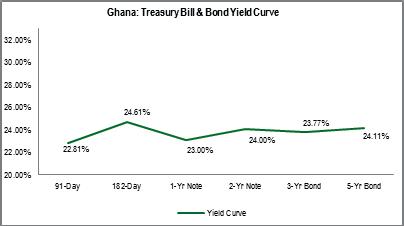
Investor sentiments on Ghana’s Treasury debt market and the inverted shape of the Treasury yield curve is a reflection of a large fiscal imbalance (since the 2012 elections), policy incoherence and its attendant macroeconomic instability.
Following the conclusion of an IMF program in Jul-2012, Ghana’s fiscal authorities adopted a large-scale implementation of the Single Spine Pay Policy which enrolled more than five hundred thousand (500,000) public sector workers onto the pay structure over a 3-year period. The implementation of this new pay policy (with little consideration for prescribed productivity measures) resulted in a significant surge in the government’s expenditure on employees’ compensation to 65% of tax revenue in 2013. The combination of interest commitment and employees’ compensation (both recurrent expenditures) accounted for 95.4% of tax revenue in 2013, creating a substantial funding gap with double digit fiscal deficit for the 3 years to 2014. Consequently, the buildup of wage arrears and other commitments resulted in a high issuance of T-bills and bonds to close the yawning fiscal gap as the decelerating GDP growth over the period lacks the absorptive capacity to support the growing obligations. Ghana’s tax revenue-to-GDP ratio was 17.3% as at the close of 2015, ~300bps below the fiscal sustainability threshold for middle-income countries. This indicates high liquidity risks to government fiscal operations given the high recurrent expenditure.
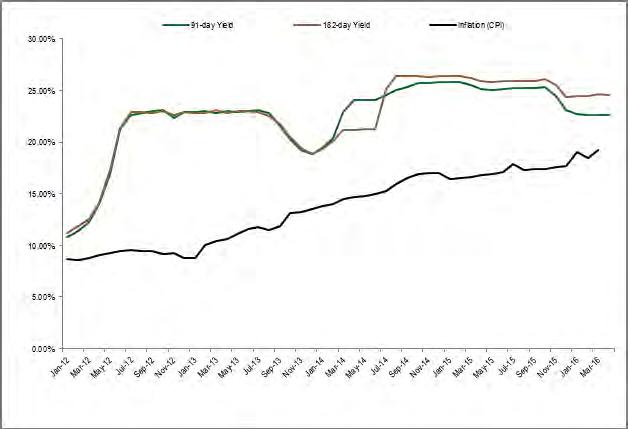
The wide funding gap created by the sharp increase in recurrent fiscal commitments ultimately raised the government of Ghana’s borrowing appetite, resulting in aggressive issuance and uptake of short term debts. Consequently, the yields for Ghana’s Treasury bills (91-day and 182-day securities) have assumed an upward trend with average returns over the past 4-years
Source:
holding above 22%p.a., resulting in an inverted yield curve.
Ghana’s Treasury bills are auctioned weekly (on the last working day of the week), ensuring that the government raises funds to refinance expected maturities on the first working day of the next week. The total value of Treasury bills (91-day & 182-day) outstanding as at the end of Apr-2016 was GH¢16.24 billion (~$4.25 billion) with the 91-day bill accounting for ~54% of the total outstanding bills. The calibration of the issuance calendar in the 2HY-2015 (a new debt management strategy under the ongoing IMF program) culminated in reduced issuance frequency for Ghana’s Treasury Notes (1-Year & 2-Year maturities). While the 1-Year Notes are now auctioned bi-weekly, the 2-Year Notes are auctioned monthly (previously, both were auctioned weekly as the bills). The total value of outstanding Treasury Notes [GH¢3.24 billion (~$847.48 million)] relative to Treasury bills as at the end of Apr-2016 indicates a high dependence on shorter-dated debts, a situation which exposes the government to high refinancing risks.
The elevated macroeconomic uncertainty endured during the 3-years to 2015 has also embedded a short-term investment horizon on the Treasury debt market as investors sought to mitigate the risks of rising inflation and exchange rate instability.
Activity on Ghana’s bonds market was quite shallow between 2013 and 2015 as the macroeconomic uncertainty and the illiquidity of the secondary bonds market weighed down on investor interest in Ghana’s medium term securities. Unlike Treasury bills, the auction of Ghana’s Treasury bonds is usually open to foreign investor participation as government seeks a large pool of funds to support capital expenditure. The currency volatility experienced over the period however dimmed foreign investor appetite for Ghana’s bonds during the 3-years to 2015.
Ghana: Yields for Short-term Treasury Securities
Source: Databank Research, Bank of Ghana
Ghana: Yield Curve for Treasury Securities
Databank Research, Bank of Ghana
The adjustments in the debt issuance calendar and the collaborative launch of an E-bond trading platform (by Bloomberg and the Ghana Fixed Income Market) in the 2HY-2015 have however raised expectations of efficient pricing and improved bonds market liquidity. The downturn in yields for T-bills (from a peak of ~26%) and the relative stability of the Ghana cedi since Oct-2015 have also boosted the appeal of Ghana’s medium term securities. Consequently, portfolio investors are gradually adjusting their investment horizon towards medium term Treasury securities as the higher yields on the bonds market allow investors to minimize the current re-investment risks on the short term debt market.
Against this backdrop, we envision that investors will find significant value in Ghana’s fixed income market over the short to medium term horizon. The following highlights the factors that we believe will augment the debt market’s upside potential:
High interest rate environment augments the appeal of GoG debt at the expense of subdued stock market returns.
Ghana’s equities market has endured a bearish trend for three consecutive years, characterised by illiquidity, negative returns and steady declines across the key market indicators. In Q1-2016, aggregate volume traded on the Ghana Stock Exchange declined by 58% y/y (to 36.92 million shares) while the benchmark GSE Composite Index recorded a loss of 4.16%. The dismal stock market performance is attributable to the effect of sweeping structural and policy laxities which have plagued the local economy since 2014. Currency volatility, unstable power supply and mounting inflation pressures have contributed to the trend of uninspiring financial numbers recorded by many listed companies, thus culminating in the exit of offshore investors from the bourse and dimming the near-term outlook for equity performance. In comparison, short term yields (for both the 91-day and 182-day bills) have hovered around the 22% mark since mid-2012 – one of the highest among comparable SSA treasuries. Medium term (3 and 5 year) GoG bonds have similarly traded between the range of 18% and 30%. In view of the extended downturn in Ghana’s equities market, we expect investors to find attractive investment alternatives in Ghana’s higher-yielding fixed income securities. Aided by the Cedi’s stability and the onset of disinflationary pressures in 2HY-2016, this should result in a significant enhancement in debt market liquidity (observed since 2HY-2015) driven by investors in pursuit of attractive emerging market returns.
Strong government appetite for shorter dated debt securities, coupled with elevated inflation expectations by investors, could effectively fuel a climb in t-bill yields over the short term.
One major component of Ghana’s ongoing IMF program is the zero Central Bank financing of Government’s fiscal deficit. The zero-financing policy – which should help limit the scope for fiscal dominance in Ghana’s monetary policy – seeks to enforce fiscal discipline and curb liquidity-induced upward pressures on inflation. We
reckon this would limit Government’s capacity for exigency funding of its fiscal operations, thus exerting refinancing pressures on the GoG and increasing the risk of fiscal vulnerability [in the absence of escalated efforts to boost revenue mobilization]. In particular, we see this development increasing the likelihood for GoG overdependence on shorter dated securities as election-related expenditure pressures simmer. This will subsequently undermine efforts to narrow the funding gap. We therefore find potential for significant returns in short term primary market maturities as investors capitalize on Government’s elevated liquidity needs to steer yields upward. It is also our view that underlying price inertia from cost-push factors could sustain investor concerns about price stability in the near term. We therefore expect investors’ elevated inflation expectations to be transmitted into yields quoted on the fixed income market.
An improved outlook for sustained Cedi stability and macroeconomic outlook (at least for the next 2 years under the IMF program) is further expected to minimise FX risks faced by offshore investors. Ghana’s foreign exchange market ended the first trimester [Jan-Apr] of 2016 on a positive note, as the Ghana Cedi fully recovered its earlier losses against the dollar to close with a net appreciation of 0.27% [as at 29-Apr-2016]. The local currency’s streak of gains in 2016 extends the pace of currency stability recorded since 2HY-2015, thus pointing to an improved outlook for exchange rates under the ongoing IMF program. A comparative analysis of the Cedi’s performance under the previous IMF program [2009 – 2012] lends credence to our expectations for continued currency stability – and consequently, minimal exchange rate shocks – over the short to medium term horizon. Following the commencement of Ghana’s 3-year Poverty Reduction and Growth Facility, the Ghana Cedi slowed its pace of depreciation from 15.4% in 2009 to 1.3% in 2010 and 8.3% in 2011. Headline inflation similarly retreated from 16% in 2009 to 8.6% in 2010 and 2011, and 8.8% in 2012 while GDP growth quickened from 4% in 2009 to 8% in 2010, 15% in 2011 and 8.8% in 2012. We therefore maintain a positive outlook for fixed income securities underpinned by an improved macroeconomic environment aided by IMF support. We further expect a continuation of the BoG’s monetary tightening and liquidity management efforts to anchor the Cedi’s stability. This would bolster the appeal of medium term securities particularly by offshore investors on account of minimal exchange rate risks to their debt holdings.
PORTFOLIO MANAGER’S VIEW: RISKS AND OPPORTUNITIES IN AFRICAN CREDIT
Stephen Charangwa, Portfolio Manager, Africa Fixed Income ex-South Africa, ALUWANI Capital Partners.
The recovery and stability of oil prices since the January 2016 lows of USD30/ barrel to USD45/ barrel currently has rejuvenated appetite for Africa debt as investors seek yield in a low, and in some cases negative, global yield environment. Spreads, in general, have tightened back to mid-2015 levels, when oil prices were around USD55/ barrel, before the hastened slide in oil compounded by the heightened expectations for the US Fed lift-off. Both events (the oil slide and the US Fed lift-off) saw investors exit riskier assets including emerging markets (EMs). In Africa’s case, due to relatively lesser liquidity than EMs, the market overreaction was also relatively overdone. That presented opportunities and some savvy investors exploited those. The benchmark Standard Bank Africa excluding South Africa (ex SA) (USD) Index, an appropriate proxy/ benchmark for Africa debt (USD), recovered its 2015 (-4.8%) losses by the end of the 1Q 2016. The index was up 6.7% in USD terms at the end of April 2016.
Although most African countries are experiencing economic challenges after the end of the so-called “commodity super-cycle” as China rebalances its economy, the impact is mixed across the continent. In general, most oil exporters, like Nigeria and Angola have suffered the most as dominant oil revenues plummeted whilst net oil importers and less commodity driven economies like Kenya, Ivory Coast and Ethiopia continue to fare better. East Africa as a region is undoubtedly the best performing region on the continent as reforms and policies start to bear fruit. Growth in East is an expected 6.3% in 2016, sustaining those levels for the next three years, compared to 3.7% growth for the continent as a whole, according to the World Bank. Having said that, there are over 20 sovereigns/ issuers in Africa ex SA that have outstanding Eurobonds. The unique idiosyncrasies of each issuer continue to present diversification and alpha opportunities for our Africa listed debt offering. Liquidity is just as important for our clients and Eurobond market provides exactly that. In the local debt markets, Kenya has been exciting. The market is adequately developed, monetary and fiscal policy has been effective resulting in the Kenyan shilling being the relatively the most stable in the region and growth is expected to remain strong.
Contributor’s Profile:
Mr Charangwa is the portfolio Manager for the Africa ex SA Fixed Income Fund at ALUWANI Capital Partners (Pty) Ltd (‘ALUWANI’). With over five years’ investment management experience predominantly in Africa ex-South Africa Fixed Income Markets as well as the Middle East and Frontier Asia (Frontier Fixed Income Markets). Mr Charangwa has become a key contributor in the Africa Fixed Income space, building a strong network across the continent in the process. Prior to that he worked at Quantum Global Investment Management (QGIM) in Zug, Switzerland and as Fixed Income Portfolio Manger at Silk Invest, London, UK. He has a track record of investing in both local and hard currency (USD) debt securities.
Craig
Sherman, Lead Credit Fund Manager, Ashburton Investments
The severe collapse in oil and commodity markets has severely affected the risk appetite for investment in African credit markets. This was clearly evident by the increased borrowing spreads and sharp fall in bond prices experienced by African borrowers peaking in February this year when commodity prices were at their lows. This was highlighted particularly in countries with high reliance on single commodity exports such as Nigeria, Angola and Zambia. However, other commodity importing nations such as Kenya were also impacted by the negative sentiment, indicating a broader African sell-off. In the corporate credit space, we also experienced a high profile default in the form of Afren which suffered difficulties as a result of low oil prices. The knock on effect has been a severe slowdown in financing to oil and gas projects, particularly in West Africa, which had previously made up the majority of syndicated loans made during 2015. The largest source of credit provided to African borrowers by foreign lenders is done through hard currency loans, predominantly in USD. The loss of export revenue as a result in price decreases, lead to increased concerns amongst investors about borrowers’ access to liquidity and their ability to source foreign currency to service their loans. This was clearly evidenced by the large gap in the currency black markets seen in both Nigeria and Angola. All this has led to a more cautious approach by lenders to African credit markets.
Whilst there were many African countries that have suffered as a result of the low commodity and oil prices, there are examples of countries which have benefitted as a result. East African countries such as Kenya and Tanzania who are net importers of oil have continued to enjoy high growth rates despite the slump in commodity prices. This has allowed them to continue to have access to finance, albeit at more expensive rates, and to roll out infrastructure projects to further spur economic growth. One such example is Kenya’s ambitious programme of electrification in which they plan to more than double electricity generation capacity over the next three years. Given the large levels of financing needed, and government’s strong support of the programme this leads to attractive opportunities for lenders to participate with a sound investment case and attractive return profile.
Contributor’s Profile:
Craig is Lead Credit Fund Manager at Ashburton Investments and has over 14 years’ experience in the fixed income and credit markets. Craig started his career in 2001 with RMB as a risk manager on the Global Markets fixed income desk, and traded credit for its international division. In 2009, Craig left RMB to pursue other interests, which included the establishment of the capital markets division for DG Capital, a boutique corporate adviser. In 2011, he founded the Financial Products Division of Etana, a specialist short-term commercial insurer, before joining Ashburton Investments in 2012 with responsibility for its credit investment capability.
Craig has a Bsc (Honours) in Advanced Mathematics of
EXPLORING THE BENEFITS OF BOND ISSUANCE IN NIGERIA
by Chuks Izu, Associate, Dunn Loren Merrifield Limited, Nigeria
Tax Savings Benefit
Issuers of bonds enjoy some tax benefits from the deductible nature of the interest on bonds. On one hand this lowers the issuers’ taxes. On the other hand, dividends paid to equity holders are not tax-deductible and must come from income after-tax. Tax savings, therefore, help further reduce a company’s debt financing cost.
Cheaper Cost Source of Funding
Debt is generally cheaper than equity, because debt is less risky from the investor’s viewpoint. In an event of liquidation, the creditor will rank higher than the shareholder in the priority of claims and bondholders are paid before equity. Therefore this makes debt a less risky investment than equity and hence bondholders demand lower rate of returns than shareholders. Capital market sources of debt tend to be cheaper than direct lending like bank loans because it is a more efficient source of debt. Therefore, by introducing debt in its capital structure through bond issuances, the Issuer’s Weighted Average Cost of Capital (WACC) will reduce up to its optimal capital structure or credit capacity. A further introduction of debt in its capital structure beyond this optimal point will cause the Issuer’s cost of funds to increase as a result of potential credit risk of a highly geared firm.
Increases the Market Value of the Issuer
As a result of the afore-mentioned point, bond issuances increase the market value of the Issuer. The value of a firm is the sum of its discounted future cashflows and there is an inverse relationship between a firm’s value and its cost of capital; the lower the cost of capital, the higher the present value of its future cashflows and the higher the market value of the firm. As such, as the Issuer’s cost of funds or WACC reduces as a result of introducing debt in its capital structure up to its optimal point, the firm’s future cashflows are less discounted and thus the firm’s value is much higher.
Less Accountability Requirements
Issuing bonds as opposed to issuing additional equity saves the Issuer the bottlenecks of greater regulatory requirements, disclosure and accountability and scrutiny. Compared to bondholders, shareholders have more onerous requirements as they are the true owners of the Company and management are obliged to accord them all the rights of a principal as stipulated in a typical Principal-Agent relationship. Bond holders are not entitled to such rights even though they have other monitoring mechanisms like bond covenants.
Information Signalling Bond Issuance announcement is an opportunity for Managers to signal the future cashflow prospect of their firms. Companies will only issue bonds when they are confident that cashflow from the proceeds utilization is sufficient to pay the interest and repay the principal of the bond. As such, the market will take an announcement by a firm to issue bonds as a positive signal of the firm’s future cashflow and thus may react positively to the bond issuance. Based on information asymmetry that exist between managers and investors, when the firm’s asset-in-place is undervalued, managers have the propensity to issue bonds to finance investment or pass up on the investment opportunity by waiting until shares are appropriately valued, rather than use equity to finance such investment opportunities.
Currently, considering the market has seen more of bearish trend and how much of value companies listed on the NSE have shed in the last couple of months, some companies may be undervalued. As such, it may not be appropriate to issue equity as the shares of the Company will be inappropriately priced. Whereas, issuing debt with adequate credit enhancement may be a better option for the Issuer.
Contributor Profile
Chuks is a seasoned financial market analyst with broad experience on fixed income, money market & FX market as well as portfolio management & investment advisory. He currently works as an Associate; Asset Management/Investment Research at Dunn Loren Merrifield. He pioneered the setting up & management of DLM research portal on Thomson Reuters platform, whilst overseeing the domestic platform: A portal currently used by domestic & international risk managers, traders, portfolio/fund managers, regulators, financial consultants & reporters, students amongst others to access qualitative & quantitative reports on the Nigerian financial markets.
Chuks graduated from the prestigious Ahmadu Bello University, Zaria in 2007 where he backed a BSc in Economics with 2nd Class Upper Division. He equally had an MSc in Economics from the prominent University of Lagos, Akoka in 2015. He has attended several courses at FDHL Training Institute on Fundamentals of Financial Markets, Gilts Game (Bonds with simulation) and Zerocs (Money Market/Treasury bills with simulation).
AFRICAN CREDIT OUTLOOK: AN ECONOMIST’S PERSPECTIVE
GAIMIN NONYANE
Head of Economic Research desk and Project Manager for Local Knowledge Africa (LKA; an advisory arm at Ecobank Research) at the pan-African bank, Ecobank Group, based in London. Gaimin joined the bank in November 2012, and helped to launch the bank’s first ever Country Profiles, designed to give investors an insight into the operating environment in Middle Africa. Prior to that, she headed the sub-Saharan Africa desk on macroeconomic and political research at Dun & Bradstreet (D&B) UK Ltd., while also covering some markets in East Asia. Gaimin has an MSc in International Economics and Policy and a BA (Hons) in Economic Studies with Law.
CMinAfrica: What are the key external macro challenges that Africa faced in 2016 and how will it affect African sovereign issuers and borrowers in 2016 and beyond?
GAIMINI: Key external macroeconomic issues include tail risks from 2014-15, specifically, the commodity price slump, which has undermined FX liquidity in African markets, resulting in weaker exchange rates and elevated inflation, prompting central banks to sustain tight policies.
Uncertainty over the US Federal Reserve’s interest rate hike cycle has also contributed to imbalances in African markets - creating volatility in Africa’s FX markets. Indications that the US Fed might raise policy rate again (as was the cases In December 2015) will further undermine capital flows into the African region, and hence FX prospects.
These factors, among other structural problems, have led to a general upward shift in sovereign yield curves in a number of African economies, increasing government’s debt servicing costs while crowding out the private sector. Apart from tapping in domestic markets to finance short term needs, African governments have increasingly turned to the IMF for balance of payments support. Some have introduced FX restrictions, which have tightened the market.
JOHN: Most African economies faced a serious terms of trade shock in 2015 as the price of their exports (mostly commodities) fell sharply. This cut domestic incomes and caused growth to slow.
While some commodity prices have recovered a bit this year, the effects of this economic adjustment are still being felt. In some countries weaker currencies have pushed up inflation. In others, government efforts to hold currencies stable have created strains in the balance of payments. Almost everywhere governments face large fiscal deficits as they struggle to balance the need to expand services with the reality of constrained revenue.
So even while the worst of the external shock is probably
JOHN ASHBOURNE
African Economist at the Capital Economics covering Sub-Saharan African markets. Prior to joining Capital Economics, John was a senior Africa country risk analyst at Business Monitor International, a division of Fitch Ratings. He holds a bachelors’ degree in International Relations from the University of Toronto and a master’s degree in Contemporary Chinese Studies from the London School of Economics.
over, the long-term effects of the adjustment to lower commodity prices will continue to be felt. In Nigeria and Angola, where the authorities have prevented the economy from adjusting to the new reality, the worst is yet to come. For Africa as a whole, we expect that growth will be appreciably slower over the coming years, probably around 3-4%.
As markets realise that Africa faces a sustained period of lower growth, we expect that investor appetite for African debt will cool. The “Africa Rising” narrative set off a boom in African sovereign debt issuances, but this will not be repeated.
With the financing requirement remaining high in many African sovereigns in the months ahead given still weak commodity outlook, T-bill and short term bond issuance will continue presenting some opportunities for investors.
CMinAfrica:What must issuers and borrowers do to overcome these challenges?
GAIMINI: Issuers will now have to accelerate structural reforms to reduce their reliance on commodities, a major source of FX and fiscal risks. Similarly, there is a need to reform their exchange rate policies so that they will be able to absorb shocks, while alleviating pressure on their currencies. Reforming the regulatory environment is also crucial. In addition, it is crucial that proceeds from bonds are invested in productive sectors so that they will be able to generate revenue and help reduce repayment risk for issuers. On the part of borrowers, there is a need to hedge against FX risk, although in African markets, these are usually short term in nature.
JOHN: Individual countries may well outperform – Kenya and Ethiopia, for instance – but we do not believe that the general trend towards structurally lower growth is escapable. States seeking to borrow will have to differentiate themselves from an increasingly tepid growth story rather than jumping on to the “Africa Rising” bandwagon. Sovereigns – and private firms – should highlight the importance of non-commodity growth sectors, like construction, agriculture, and consumer-facing retail.
SETTING A BENCHMARK INDEX FOR AFRICAN FIXED INCOME FUNDS
by Christian Schedling, Managing Partner, Concerto Financial Solutions, Germany
Constructing benchmark indices for financial markets is always a challenge. An index constructed for a particular market will hardly ever suit every investor’s requirement. Equity indices are widely used and it is commonly accepted that companies with the highest market capitalisation art the benchmarks of all stocks traded in a particular market. Fixed Income benchmarks in comparison can be identified by many more parameters each of which need to be carefully considered to represent a market in an index.
In recent years benchmarks have been constructed using the portfolio approach. This means that Securities with similar features are selected and combined into an index that tracks the performance of a market or a sector closely. An alternative approach is a benchmark yield curve used mainly in the government bond market to measure performance.
Benchmark bonds are typically issued at or near fixed maturities such as two, three, five, seven or ten years. In more liquid markets longer maturities are also issued. A benchmark bond by definition is the most liquid bond of a certain maturity and sector. Issuers regularly tap the on-the-run benchmark bond in order to maintain the liquidity. As soon as the time to maturity of a bond diverts from the intended benchmark maturity a new bond is issued and becomes the on-the-run benchmark. Because benchmark bonds are very limited in numbers and only represent the most liquid part of a market. Concerto decided to use the portfolio approach for creating the local currency debt indices for Africa.
The idea behind the Concerto African Benchmark Index was to increase transparency and liquidity in African local currency debt markets by bringing these markets to the attention of local and international investors. Since not all African countries have bond markets liquid or secure enough to be considered as part of a pan African benchmark index a fair, replicable and transparent mechanism was needed to identify suitable candidates. Only countries with sizeable and liquid bond markets with stable and freely convertible currencies that provide the legal framework to protect investor rights and assets and with no or little investor restrictions are qualified for index inclusion.
Because of the lack of an analysis that could be used to identify suitable candidates, Concerto developed a comprehensive country analysis covering the entire African continent and focusing on financial investor’s
needs and preferences1. For every country six main categories (macroeconomics, legal, regulatory and tax, bond market infrastructure, investor base and participation of economic agents) were evaluated. These main categories where subdivided into further categories each of which was scored, weighted and aggregated into an overall country score. Minimum thresholds for the main and the overall score ensured that only the top ten countries2 with the most advanced bond market infrastructure in Africa were included in the first index election.
This analysis has been refined in subsequent years and is updated each year in September. Since inception of the index in 2010 three3 more countries have joined the index. The annual review ensures that recent development in the African countries and their bond markets are appropriately considered and that only bonds from the more liquid and freely tradable segments of African local currency government bond markets are eligible for the index. Countries and bonds that no longer sufficiently meet these requirements are excluded from the index.
Once the countries were identified the next challenge was to select the most liquid bonds in each market. In general the assumption is that fixed income securities with the highest issuance offer a larger tradeable supply and are more liquid than their peers with smaller outstanding amounts. Therefore a minimum size requirement is an appropriate tool to identify these bonds. Since the Pan African Index is a multi-country and multi-currency index the decision was made to set this limit in USD, the currency the index is calculated in. This ensures that the size threshold is comparable across all index countries. The amount chosen to cover a large part of the underlying domestic markets was 25 million USD. This amount was converted into the local currencies of the index countries and the resulting amounts became the minimum size requirement for the bond selection in these markets. Because currencies can appreciate or depreciate over time this limit needs is reviewed at regular intervals. It has turned out to be most practical to decide on an annual basis together with the review process for countries.
In addition to the size limits for each country further inclusion criteria like the age of a bond, the remaining life and the type of bond were set. All securities were categorised and bonds with similar covenants and features were selected into the relevant indices. In the
1
case of the Concerto Pan African Bond Index these were government bonds without optionality, in local currency and with fixed coupons. The remaining life of a bond had to be above one year as bonds with a time to maturity below one year are more likely to behave like money market instruments and tend to be very illiquid. Based on the inclusion rules indices were calculated for every eligible country in local currency and in USD. The constituent bonds of the country indices were weighted according to their market capitalisation and re-balanced on a monthly basis on the last day of every month. Only a regular adjustment of the index composition ensures that all bonds in the index meet the index requirements at all times.
The ten country indices formed the basis for the initial Pan African Index. The task of determining the appropriate weighting methodology was probably the biggest challenge in the construction of this benchmark. Weighting methodologies can include fundamental data like GDP, population and current account balance or can be based on the market value of all bonds or the countries can be equally weighted. Investors looking for different return and/or risk profiles might prefer versions with percentage ceilings for single countries or currency exposures or versions with certain countries excluded. These methods result in considerable different weightings of the countries and therefore result in indices that show different performances.
Chart 1 shows the difference between pan African
indices with the same composition but different weighting schemes. Weightings for countries in the market value weighted index can vary from 0.287% to 31.81%. For the current equal weighted index all countries have a weight of 7.69% or one thirteenth of the total index. This means the smallest country by market capitalisation, Botswana has a weight almost 28 times higher than in the market cap weighted index. Dependent on the size of investments in a fund benchmarked against an equal weighted index this might dry up liquidity in the smaller markets entirely. On the other extreme with the unlimited market values the two biggest constituents account for almost two thirds of the index weights.
At Concerto we decided to apply equal weights for the Pan African Bond Index. The advantage of reducing the weights of the two largest countries outweighs the inflated weights of the smaller countries. Beside the benchmark index Concerto offers a wide range of benchmark and blue-chip indices as well as bespoke solutions. We assist our customers in designing and developing index concepts that result in products that show desired risk and return profiles.
Chart
LOW FOR LONGER COMMODITY PRICES TO KEEP PRESSURE ON AFRICAN COMMODITY EXPORTERS1
by Zuzana Brixiova, Vice President/Senior Analyst, Moody’s Investors Service Ltd
Summary
Sub-Saharan Africa commodity exporters face challenging 12-18 months ahead, as low commodity prices have reduced their economic and fiscal strength, and some sovereigns have encountered liquidity and external pressures. Given the eroded fiscal buffers in number of these sovereigns, the room for countercyclical policy response to stimulate growth and smooth adjustment in 2016 is limited. Moody’s recent rating actions downgrading a number of Sub-Saharan Africa commodity-dependent sovereigns reflect the deteriorating credit quality trend and the impact of changing global environment. On a more positive note, we believe that many of the region’s commodity exporters have strong medium term growth potential, supported by gradual global recovery, infrastructure and mining investments as well as ongoing diversification efforts.
With collapsing commodity prices over the past two years, Sub-Saharan Africa (SSA) commodity exporters have been facing a major shock to their economies. Specifically, the commodity price index fell by about 50% between June 2014 and December 2015, with oil prices falling by two thirds. In 2016, continued slowing growth and rebalancing in China along with elevated supplies imply that prices of industrial metals (iron ore, nickel, copper) will remain lower than last year (exhibit 1). However, oil prices have stabilized in recent months and the modest increase in global growth could support that trend.
SSA commodity exporting countries face a challenging time over the next 12-18 months as stubbornly low commodity prices continue to erode their economic and fiscal strength. Despite efforts to diversify their economies and accumulate buffers, commodity exporters in SSA remain vulnerable to price shocks. By and large, they have achieved only modest progress with export diversification and value addition in their mining sectors, with the exception of Botswana that undertook value addition. They are thus still more susceptible to commodity price shocks than countries in other regions because of their high commodity dependence and narrow export bases. The ongoing collapse in the prices of oil, copper and iron ore, amongst others, has slowed growth significantly, increased fiscal and external imbalances, and weakened currencies.
The average 2015 growth of commodity exporters fell by more than 2 percentage points relative to 2014, excluding Sierra Leone, which was heavily impacted by the Ebola epidemic. In 2015, real GDP growth for the region decelerated to 3.4%, the lowest since 1999, and the IMF projects that it will fall even further to 3% in 2016. A further growth slowdown in 2016 is projected in most of Moody’s rated SSA commodity exporters, with the exception of Botswana and the Republic of the Congo, which are in the early recovery stage of their cycles.
1a. Commodity prices, current US 2000 – 2020(p)
Source: World Bank commodity price database (April 2016) and Moody’s Investor Service. SSA commodity exporters negatively impacted by the shock
Within the SSA region, the slowdown has disproportionally impacted countries that grew rapidly prior to the commodity shock, and where the growth was driven by increased exports. In general, the region’s oil exporters have been impacted more than metals and mining exporters. Among Moody’s-rated SSA commodity exporters, Botswana (A2 stable) has one of the most commodity-dependent economies and was thus particularly vulnerable, followed by oil-exporters such as Angola (B1 negative), the Republic of Congo (B2 negative) and the Republic of Gabon (B1 negative). In Zambia (B3 negative) the copper price shock amplified the electricity shortages that were already putting dent to growth in most sectors, and especially mining.
Looking forward, one of the most important issues facing the region is the extent to which its potential growth is being reduced. The multi-year losses in government and export revenues will take time to replace. Investment rates, as a percentage of GDP, among some of the commodity exporters, have declined in 2015 and are projected to fall further, hampering potential growth. The commodity price shock adds to other long-term factors that have been putting downward pressure on SSA potential growth, such as the decline in global trade and less benign financing conditions on the international capital markets.
Current account and fiscal balances bear the brunt of the commodity shock
With limited integration into global financial markets, the majority of SSA commodity exporters continue to experience most of the impact of the commodity price fall through reduced export revenues and widening trade and current account deficits and in some countries (e.g. Angola, Nigeria) also fiscal balances.
Given the large share of commodity exports in total exports of the region’s commodity exporters, the trade and current account balances in particular are the key transmission channels (exhibit 2). For example, with the exception of Namibia, SSA commodity exporters that Moody’s rates lost at least 15% - and in the case of Angola and Nigeria about 50% - of their 2013 export revenues in terms of GDP in 2014 and 2015 cumulatively due to low prices and curtailed import demand.
Following a deterioration in 2014 and 2015, most SSA commodity exporters are projected to record widening fiscal deficits in 2016, underscoring the importance of adequate sources of deficit financing. Fiscal balances deteriorated in particular in oil exporting countries (or Botswana) where commodity revenues accounted for large share of government revenues (exhibit 2). The widening fiscal deficits and slowing growth have contributed to public debt accumulation.
In several African countries, flexible exchange rates have helped to absorb the commodity price shock, reducing the transmission to current account and fiscal balances. In Zambia and Angola depreciating exchange rates have also amplified the rising borrowing cost and have led to a widening of the real interest-rate-growth differential, a key indicator of debt sustainability. With rising global interest rates and the tightening of domestic monetary policies, Moody’s projects a further increase in this differential in most African commodity-exporting countries. This would make debt sustainability in this group more dependent on sound, growth-supporting fiscal policies.
In sum, in African frontier markets with increased international bond issuance and high share of foreign-currency denominated debt, the debt burden has risen due to several factors including valuation effects. Angola and Zambia are most affected in this regard.
Limited room for counter-cyclical policy
During the commodity boom, several SSA exporters adjusted their fiscal institutions to better manage volatile commodity revenue, by, for example, introducing fiscal rules and sovereign wealth funds. Given the size of the commodity shock, however, at this juncture policymakers in these sovereigns have limited policy buffers to smooth the necessary adjustment paths and even less so to deploy counter-cyclical measures to stimulate growth.
&
While some countries, such as Botswana and Namibia, adopted a counter-cyclical stance in 2015, reduced buffers have limited policymakers’ macroeconomic responses. In 2016, only Botswana plans a counter-cyclical fiscal stance to support growth, while Namibia has already embarked on significant fiscal consolidation to reinforce sustainability. Oil-exporting sovereigns have responded by cutting expenditures and efforts to mobilize non-oil revenues to constrain rising deficits, but the latter efforts will take time to yield results. In most SSA commodity exporters, fiscal responses have been constrained by the reduced buffers such as diminished stabilization funds and pressure to consolidate government finances. Similarly, rising inflation resulting from currency depreciation reduces space for monetary easing to support growth.
Moody’s decision to downgrade several sub-Saharan African commodity exporters, namely oil exporting countries Angola, Gabon, Nigeria, and Republic of Gabon
as well as Zambia (copper producer) reflects their weakening trend growth, widening twin deficits, and rising uncertainty about the capacity of their governments to consolidate their finances.
Negative outlooks on seven of the 17 sovereigns that Moody’s rates in Sub-Saharan Africa reflect the potential for further downgrades in the coming 12-18 months. In contrast, stable outlooks for the Democratic Republic of Congo, Botswana and Namibia reflect Moody’s view that they are better weathering the shock. Specifically, Namibia can draw on a more diversified production base and has already embarked on substantive fiscal consolidation, while Botswana can tap into high reserves generated through its robust sovereign wealth fund.
While Moody’s rating horizon focuses mostly on the next 12-18 months, it also reflects the sovereigns’ longer term prospects. Zambia is one example with strong medium term growth potential: Moody’s expects Zambia’s growth to recover to 5% or more in 2018-2020, with gradually rising copper prices, expanded capacity of mines, and reduced electricity shortages. In general, despite the challenges posed by lower commodity prices in the near-term, most African commodity exporters have good
medium-term growth potential, supported by a gradual global economic recovery, diversification efforts and investment in infrastructure.
Contributor’s Profile
Zuzana Brixiova is Vice President - Senior Analyst at the Moody's Investors Service, Sovereign Risk Group.
Previously, she worked in several international organizations, including as Advisor to the Chief Economist and Vice President at the African Development Bank, Economic Advisor at UNDP Swaziland and IMF Resident Representative in Belarus and Lithuania. She was also the head of the Czech Republic and Estonia unit in OECD’s Economics Department during the global financial crisis.
In 2007/08, she was a Fulbright Scholar at the Addis Ababa University. She has published widely in the areas of open macroeconomics, inclusive growth and regional integration. She holds a Ph.D. in Economics from the University of Minnesota and a B.A. in Finance from the Prague University of Economics.
DEMYSTIFYING THE SUKUK SHARI’A COMPLIANT FIXED INCOME CAPITAL MARKETS INSTRUMENTS
by Debashis Dey, Partner, White & Case LLP.
Generally known by their Arabic name, sukuk (often incorrectly referred to as ‘Islamic bonds’), Shari’a compliant fixed income capital markets instruments have steadily increased their share of global markets over the last decade. Initially developed exclusively in jurisdictions with majority Muslim populations, the global market for sukuk has seen considerable development over the last decade, with a number of high profile corporate issuances and a number of sovereigns tapping the market.
Sukuk issues out of the African continent represent an opportunity to widen the investor base for African credits in the context of tightening external financing conditions. In particular, sukuk are well suited for the financing of infrastructure investment as typically investors are paid using the income from the underlying project. Islamic finance in Africa, particularly Sub-Saharan Africa, remains underdeveloped, but given the current size (and projected expansion) of its Muslim population and the continued growth of Islamic finance activities in the rest of the world, Shari’a compliant fixed income products like Sukuk present interesting opportunities in the region. The development of products like sukuk in Africa can aid the region’s efforts to expand their financial markets by broadening the range of available financing options, extend maturities, and facilitate hedging and risk diversification.
What is a Sukuk?
Sukuk are financial products whose terms and structures comply with Shari’a, with the intention of creating returns similar to those of conventional fixed income instruments like conventional bonds. Unlike a conventional bond (secured or unsecured), which represents the debt obligation of the issuer, a sukuk technically represents an interest in an underlying funding arrangement structured according to Shari’a, entitling the holder to a proportionate share of the returns generated by such arrangement and, at a defined future date, the return of the capital.
Broadly speaking, compliance with Shari’a means: (i) that any profits derived from these funding arrangements must be derived from commercial risk-taking and trading only, (ii) all forms of conventional interest income is prohibited, and (iii) the assets which are subject to the funding arrangement must, themselves, be permissible (halal). The overall risk profile and economic return for the investor is akin to a conventional bond where the bondholder is a debtor of the issuer. Types of Sukuk
The sukuk issued in global capital markets have been predominantly structured as trust certificates, typically governed by English law. Some civil law jurisdictions that do not recognise the concept of trust have sometimes issued sukuk structured as participating notes under domestic legislation similar to that used for asset-backed securities in that particular country.
The most common structures for funding arrangements in the Islamic market include: a sale and leaseback (ijara) structure, a form of trade finance (murabaha) and a joint venture equity investment (musharaka).
Trust certificates
In a typical trust certificate transaction, the entity trying to raise funds (the Obligor) will establish an orphan offshore SPV in a suitable jurisdiction. The SPV issues trust certificates to investors and uses the proceeds to enter into a funding arrangement with the Obligor, and the rights of the SPV as financier are held under an English law trust in favour of the certificate holders.
Alternative civil law structures
The trust certificate structure above requires the concept of a trust to be recognised in the relevant jurisdiction where the Obligor is located. In many jurisdictions, particularly those from the civil law tradition, this is very rarely the case. As such, alternative structures have begun to emerge so as to allow for sukuk transactions to be carried out in accordance with civil laws.
An interesting example of such a trend is exemplified by the Republic of Turkey, which has passed specific legislation to enable the use of the sukuk. This legislation allowed for the formation of asset leasing companies which themselves are a form of SPV regulated by the Capital Markets Board of Turkey. These asset leasing companies are specifically incorporated so as to be able to issue certificates under an ijara structure to investors, thereby allowing the asset leasing companies to purchase assets and lease them back to the Obligor. Effectively, the asset leasing company finances the acquisition of such assets using funds raised by the issuance of certificates and the lease rental payments from the Obligor mirror the profit distributions due under the certificates. The cash flows from the lease rentals, therefore, are used to service such profit distributions to certificate holders.
This model is best compared to loan participation notes (LPNs), which have been in the market for several decades.
Investors’ credit exposure
Despite the fact that the sukuk is issued by an orphan SPV, typically the investor will not be bearing an exposure solely to the credit risk of that SPV. On the contrary, today’s typical sukuk transactions are instead primarily intended to allow the investor to be exposed to the credit risk of the Obligor. However, potential investors need to consider whether the sukuk only gives recourse to the Obligor, or also to a separate segregated estate represented by the assets subject to the funding arrangement underlying the sukuk. In the current sukuk market the answer to this fundamental question sometimes may not be obvious.
Understanding the real nature of the connection between the funding arrangement and the asset to which it relates is central to understanding the economic risk of the sukuk and its risk allocation. It is therefore important for a potential investor to know whether the asset underlying the funding arrangement has been permanently transferred to the SPV. Either the investor will have legal recourse to the underlying asset (what is generally referred to as an asset-backed sukuk) or, alternatively, even though the transfer of the asset may be valid as between the Obligor and the SPV, the investor only has recourse against the Obligor because that transfer is not effective as against third parties or the insolvency estate of the Obligor (what is generally referred to as an asset-based sukuk).
Asset-based vs asset-backed
In an asset-based sukuk structure, the overriding reliance of investors is on the credit strength of the Obligor rather than the underlying assets. This allows the Obligor to simplify its reporting and segregation in relation to the assets as the Obligor knows that the investors are really relying on the Obligor’s credit strength alone.
For example, in an ijarah transaction, where there is a sale by the Obligor of an underlying asset to the SPV that will then be leased to the Obligor, if the sukuk is structured as a typical asset based structure it becomes irrelevant for an investor to fully analyse the sale value of the asset in question or the potential value of the lease if leased to third parties as the investors will rely only on the credit strength of the Obligor as sole or principal lessee of the asset in question.
In an asset-backed sukuk, the profit return and return of capital are ultimately based on the assets themselves. Unlike in an asset-based structure, investors can be expected to want to try to assess the value of the assets (and the related underlying transaction) themselves.
Advantages and disadvantages of sukuk
For a corporate or a sovereign, some key advantages of tapping the sukuk market include:
• There is a potential marketing benefit for issuers active in Islamic markets, should they be seeking investments in those markets.
• The investor base represented by Islamic compliant investors is still largely untapped and there has
traditionally been significant unmet demand for products like sukuk.
• There is potential for crossover into other niche financial markets, such as the broader ethical investment market, that may provide a reputational benefit.
Some disadvantages of the sukuk market include:
• As the key element for attracting investors is the credit standing of the Obligor, it may be difficult to tap this market for corporates or sovereigns with an inadequate credit rating.
• A sukuk whose underlying funding arrangement is based on ijara will necessarily require the Obligor to have at its disposal suitable (halal) income-producing assets on which to base the transaction. In addition, unless the correct mechanics are included within the documentation, the substitution of similar assets into and out of the structure would be impossible. This could limit the Obligor’s ability to sell or deal with the asset during the life of the transaction.
• Unlike the conventional bond market, the standardisation of documents for sukuk issuance has been slow to develop and this can have adverse cost implications.
• From transaction-to-transaction, to the extent that the structure used for the sukuk departs from the typical structures already well recognised in the market, the involvement of the Shari’a scholars is necessarily required. This can add some additional cost and an element of unpredictability to the transaction structuring process.
• As Shari’a scholars have differing views as to how compliant the structures are, there is no absolute unified and settled body of opinion on these issues.
• The tax treatment of sukuk may be dissimilar to conventional bonds in certain jurisdictions.
Contributor’s Profile
Debashis Dey is a Partner at the White & Case LLP Capital Markets Practice. He has more than 20 years of expertise and has extensive experience advising international and domestic investment banks, corporates and governments on capital markets, securitisation and all types of structured finance, including Islamic finance sukuk transactions, regulatory capital transactions, commercial, residential mortgages and consumer finance and other asset classes. His experience includes leading on numerous product innovations in conventional and Islamic finance, including transactions such the first covered bond in the US, the first convertible sukuk structure for Aldar PJSC, ‘first-time’ securitisations in Europe and the Middle East as well as convertible and straight debt issues for corporates in the Reg S and Rule 144A markets.
His transaction experience also covers various jurisdictions, including the GCC (UAE, Qatar, Saudi Arabia), Europe, the US and Asia.