









IMPACTS ON ANGOLA AND MOZAM BIQUE ECONOMIES
IMPACTS ON KENYA, TANZANIA, UGANDA ECONOMIES
THE ECONOMIC RAMIFICATIONS IN SOUTH AFRICA, ZAMBIA



IMPLICATIONS ON AFRICAN BANK ING SECTORS
CONSIDERATIONS FOR AFRICA’S INFRASTRUCTURE INVESTORS
HOW HAS IT AFFECTED AFRICAN TRADE AND ECONOMIES?



Editor Tunde Akodu
Associate Editor
Michael Osu
Feranmi Akodu
Advertising & Sales
Tola Ketiku
FEATURED ARTICLES
COVID-19 Pandemic: Impact on Africa’s Economic Prospects Impacts on Angola and Mozambique Economies
Impact on Kenyan Economy and Financial Markets
Breaking point for the Nigerian Naira Regime SouthAfrica-EconomicRamification
TheFinancialImpactonTanzaninaSectors ImpactsonUgandanMacroeconomic Fundamentals
TheEconomicRamificationsinZambia EffectonSub-SaharanAfricanFXandLocal DebtMarkets
SPECIAL FEATURE
UnderstandingPrivateEquityvaluationsin TumultuosTimes
AfricaShowingEconomic ResilienceInTimes ofGlobalCrisis
COVID-19 Pandemic: ImplicationsonAfricanBankingSectors ConsiderationsforAfrica’sInfrastructure Investors
InsuranceindustryfacesCrossroads PrivateEquityFirmsWillbeLookingtoinvest: IsyourBusinessReady?
HowHasitAffectedAfricanTradeand Economies?
ResilienceofLargeSouthAfricanBanksUnder CurrentStressedConditions
ACatalystForReformsAcrossAfrica TowardsaRedefinitionsofWealth PositiveEconomicImpact...IsThereAny?
TheAfrica-ChinaConnection
FinancialPolicyInterventionsinAfricainThe LightofTheEconomicImpact

Welcome to the May/June 2020 edition of INTO AFRICA, a publication written by the professionals, for professionals, investors, policymakers … We Advance and provide fresh insights into Africa’s emerging markets through renowned thought leadership and peer-to-peer knowledgesharing. This edition is titled: COVID-19 Pandemic: Africa's Share
The Coronavirus disease 2019 (COVID-19), caused by SARS-CoV-2 was declared a pandemic by the World Health Organization (WHO) on March 11, 2020. The disease that first manifested in Wuhan China in December 2019, spread across the globe and fast became an emergency with a massive impact on the world population and economy. According to the WHO, as of June 30, 2020, there were 10,589,199 confirmed COVID-19 cases of which 513,211 had died representing a fatality rate of 4.8 percent. The number of deaths recorded in Africa since the first person tested positive for the coronavirus in February remains low, at just over 10,406 deaths (418,211 confirmed cases). In response to the fast-spreading nature of the disease, amidst no known cure or vaccine, governments across the world instituted a few measures to contain the spread of the pandemic including total lockdowns and travel restrictions. This has forced firms to switch their focus to critical priorities like maintaining their operations, managing volatility and servicing customers.
The sharp global economic downturn brought about by the Covid-19 pandemic will severely affect every region in the world and Africa will not be spared. African countries will be affected through numerous channels, most notably through the trade and tourism channels. Nationwide as well as partial lockdowns will also weigh heavily on consumption expenditure. The recovery for most countries on the continent will be a slow and gradual process. Recently, many countries are now moving to ease restrictions, most remain cautious in the face of so many unknowns about the pandemic. This uncertainty has forced investors and financiers to re-strategies, re-prioritise, and react quickly to a new and evolving environment.
PIETER DU PREEZ (Senior Economist, NKC African Economics South Africa) opens the edition with a stimulating write-up titled “COVID-19 Pandemic Impacts on Africa’s Economic Prospects”, where he projected African economic contraction of 6.9% for 2020. TIAGO DIONISIO (Chief Economist, Eaglestone Advisory), MARYANNES NGANGA (Assistant Investment Analyst, Cytonn Investments Kenya) and LYDIA RANGAPANAIKEN (Sub-Saharan Economist, FCMB Bank (UK) Limited) look at the COVID-19 pandemic effects on Angola and Mozambique, Kenya and Nigeria, respectively.
Besides, ANNABEL BISHOP (Chief Economist, Investec Bank Limited South Africa), OMBENI UHURU (Senior Investment Analyst, Tanzania securities Ltd), CHRISTINE NAMANYA (Head of Macroeconomic Policy Analysis Division, Bank of Uganda) and THEA FOURIE (Senior Economist: Sub-Saharan Africa, IHS Markit Economics) examine economic ramifications of COVID-19 pandemic on South Africa, Tanzania, Uganda and Zambia, respectively. While, SAMIR GADIO (Head, Africa Strategy, Standard Chartered Bank) reviews the Sub-Saharan African FX and local debt markets amidst the COVID-19 pandemic.
More so, SAMIRA MENSAH (Director & Lead Analyst FI S&P Ratings Africa) and CHRISTINE RODRIGUES (Partner, Bowmans South Africa) explore COVID-19 pandemic implication on African banking sectors and Insurance sectors, respectively. Likewise, ROMAIN PY (Head of Investments, African Infrastructure Investment Managers (AIIM)) opines that COVID-19 will potentially turn into an overdue wake-up call to find better ways to finance the African continent’s infrastructure deficit. TONY LEE (Executive, Corporate Commercial, ENSafrica South Africa) states that PE firms will be looking to investment post-COVID-19 and business should be ready. In parallel, SIMON COOK (Partner, Trade & Export Finance, Sullivan, London) and ALEXANDER SWAYNE (Associate, Sullivan, London) examine how COVID-19 pandemic has affected African trades and economies. CORNE CONRADIE (Partner, PwC South Africa) examines the resilience of South African banks.
Cover Image: From pexels.com Man standing in rain with umbrella
As well, ARNAUD LIEGE (Senior Consultant at Africa Practice South Africa) postulates that the COVID-19 pandemic is a catalyst for reforms across the African continent. MOHAMED ANOUAR GADHOUM (Islamic Finance Specialist) redefines wealth amid COVID-19 pandemic and MOHAMED YASSINE KHOUILDI (Project manager in the International Islamic Finance Training Institute (IIFTI)) examines if there are any positive economic impacts of COVID-19 pandemic. Then, IBRAHIM ABDULLAHI ZEIDY (Chief Executive Officer of the COMESA Monetary Institute) presents the interventions made as regards monetary and fiscal policies in some African countries.
Editor
Connect with The Editor on Linkedin. Follow us on twitter @capitaMKTafrica. Subscribe to INTO AFRICA at http://eepurl.com/buHhNv or please send an email to intoafrica@capitalmarketsinafrica.com.
Please visit our website at www.capitalmarketsinafrica.com for the latest news, bespoke analysis, investment events and outlooks.
By Pieter du Preez, Senior Economist, NKC African Economics South Africa
he sharp global economic downturn brought about by the Covid-19 pandemic will severely affect every region in the world and Africa will not be spared. African countries will be affected through numerous channels, most notably through the trade and tourism channels. Nationwide as well as partial lockdowns will also weigh heavily on consumption expenditure. The recovery for most countries on the continent will be a slow and gradual process. Nonetheless, a few countries that recorded exceptional growth rates before the pandemic are expected to bounce back quicker.
The impact on the African economic landscape
We project an African economic contraction of 6.9% for this year. When taking economic momentum into consideration, the impact of Covid-19 and oil price shocks is estimated at -10.0 ppts (2020 growth forecast minus 2019’s estimated growth). Using the same calculation, and comparing the different regions around the globe, Africa is set to be the hardest-hit region, followed by the Eurozone (-9.2 ppts), NAFTA (-8.4) and the Middle East (-7.0).
From this perspective, the regions that will be least affected, according to the current baseline forecasts, are Asia (-5.6) and Oceania (-6.4), although the latter regions are also expected to record deep contractions this year.
From an African regional perspective, the main culprit behind the substantial negative growth is the North. The impact on sub-Saharan Africa’s economic growth will also be significant, with Southern, Central and East Africa in particular seeing a deterioration in economic performance relative to 2019. While West Africa offer some reprieve in this regard, both regions are still expected to take a considerable knock. Although the East is expected to contract only slightly, it is still a far cry from the robust growth rate recorded last year.
The outlook for the powerhouses on the continent has deteriorated sharply in recent months. Nigeria’s (-3.7%) revised outlook stems mainly from lockdowns in key economic hubs. Furthermore, our much lower baseline forecast for Brent

crude oil prices raises the risk that oil production could fall this year. South Africa’s (-9.1%) outlook has deteriorated further due to the economic consequences of severe lockdown restrictions and indications of only a gradual loosening. Media reports have noted how exports from Egypt’s (-7.4%) free-trade zones have shrunk, while companies have also warned that their supply chains have been disrupted by plant closures in China and Italy.
The timeframe of recovery from this economic disaster differs slightly for the three giants. We expect Egypt to recover quicker owing to a strong growth trajectory in pre-coronavirus times, albeit still expected to take at least two years to bounce back. South Africa is not expected to return to a pre-coronavirus GDP per capita level before 2024, largely due to the country’s poor track record in recent years. The slump in oil prices and expectations of a slow and gradual recovery will hurt Nigeria severely. Despite the Nigerian economy gaining some traction before the crisis, we expect the country to only recover by 2024.
We have slashed our oil price forecast by more than 40% for this year – a mighty blow to the oil-dependent Angolan (-9.3%) economy. Any hopes of the country emerging from a four-year recession were completely dashed by current global developments. War-torn Libya (-41.7%) is one of the few countries where the coronavirus is not the biggest threat. However, without a central government with widespread legitimacy, Libya has little chance of containing the spread of the pandemic, especially while the war continues. Even before the Covid-19 and oil price shocks, the outlook for Algeria (-9.6%), which is still struggling to recover from the 2015/16 oil price slump, had been dire. The dual shock will hit Gabon (-6.7%) hard given its dependence on oil export revenues and its fragile economic base. The period of recovery looks almost the same for the other oil-producing peers to that of Nigeria. We expect Gabon and Libya to recover by 2024/25 as well. Algeria’s economic growth trajectory has been lowered substantially and therefore we do not
expect the country to return to pre-coronavirus levels anytime soon.
As a result of the fast growers’ stellar economic performance over the past decade which has translated into a positive output gap, we expect these economies to be more resilient to the current crisis. Except for Kenya and Ethiopia, the two bigger economies of the group, we expect to see the majority of the fast-growing economies to recover within a year or two. Kenya and Ethiopia are forecast to bounce back by 2022 and 2024, respectively.
Côte d’Ivoire (0.1%) boasts one of the more resilient economies on the continent owing to multiple years of strong economic growth. The extension of Ghana’s own partial lockdown has prompted us to lower the growth forecast even further to -1.5% for this year. The government’s response to the pandemic is limited by the lack of fiscal space. Kenya’s economy is seen contracting by 2.0% in 2020. The vibrant services sector will be hamstrung by virus containment efforts, thus curtailing the country’s primary economic growth driver. Ethiopia’s (0.2%) sharp revision from our previous 2020 growth forecast came as a result of contractions in exports, fixed investment and a plunge in private consumption growth. Rwanda’s (+1.3%) manufacturing, trade, and transportation subsectors will be particularly hard hit in 2020, owing to abrupt and widespread disruptions to supply chains. We lowered Senegal’s (-1.5%) economic growth forecast as lower oil prices and the Covid19 pandemic hurt the industrial and tourism sectors.
With the Mauritian (-10.6%) economy highly dependent on tourism, we also expect several economic sectors to suffer, including the manufacturing, transportation, construction, and retail & wholesale sectors. Morocco is forecast to contract by 6.0% this year. The projection for this year reflects muted domestic demand, while the effects of a full lockdown weigh on consumer pockets and force small to medium enterprises to close their doors. In Tunisia (-7.7%), easing monetary policy and countercyclical fiscal policy measures are expected to mitigate some of the negative impact. Supply-chain disruptions are also expected to weigh on growth, while tourism is expected to decline significantly.
Given the big impact of the Covid-19 pandemic and oil price shocks on North African countries, we expect the region to recover slowly. Countries that are tourism dependent like Morocco and Tunisia are projected to suffer in particular. As such, Morocco is expected to recover by 2023, while Tunisia, with a small connection to the oil industry as well, is only expected to bounce back by 2025. The solid growth rates in pre-coronavirus times will aid the Mauritian economy to recover sooner, by 2022/23.
Most countries on the continent are set for economic contractions this year, with some heading towards severe economic downturns. The economic and socio-economic costs related to the Covid-19 pandemic will be astronomical and the recovery period will be slow and gradual for most of these nations. However, countries that have performed well before the crises will be able to shake the shackles off more quickly than the continent’s laggards. Generally speaking, Africa will take longer to bounce back from the economic slump than most other regions in the world, as the continent lacks the necessary resources and fiscal space to act accordingly.
“The outlook for the powerhouses on the continent has deteriorated sharply in recent months. Nigeria’s (-3.7%) revised outlook stems mainly from lockdowns in key economic hubs. South Africa’s (-9.1%) outlook has deteriorated further due to the economic consequences of severe lockdown restrictions and indications of only a gradual loosening. Egypt’s (-7.4%) free-trade zones have shrunk, while companies have also warned that their supply chains have been disrupted by plant closures in China and Italy.”
Contributor’s Profile
Pieter du Preez, Senior Economist for Ghana and Senegal. Pieter joined NKC African Economics in February 2016 as economist/econometrician, focussing on numerous African countries. Pieter has a BCom (Hons) degree in Econometrics from the University of the Free State. Pieter started his career through the cadet graduate programme at the South African Reserve Bank where he also worked in the Macro Models unit in the Research department.
By Tiago Dionisio, Chief Economist, Eaglestone Advisory Portugal
Economic activity in Angola contracted for a fourth straight year in 2019 mainly due to a marked decline in oil and gas production that reflects recent underinvestment in the sector following the sharp fall in oil prices at the end of 2014. Current estimates indicate that real GDP contracted 0.9% in 2019 after falling 2% in the previous year. In particular, activity in the oil and gas sector continued to see a material decline (estimated at 6.6% YoY after already tumbling 9.4% in 2018) while growth in the non-oil sector remained quite modest (forecast of 2% vs. 2.1% in the previous year).

Angola remains highly dependent on the oil sector, as efforts to improve economic diversification are taking time to show a more significant impact. The latest figures show that the oil sector still accounted for more than 30% of the country’s GDP, 96% of its exports (two-thirds of these going to China) and 60% of government proceeds last year. As a result, the return of a lower crude price environment in recent months, if prolonged, will have huge implications for public receipts, external accounts and the Angolan economy in general. On top of this, the oil production cut agreement signed by OPEC and its partners in April 2020 means that Angola will have to reduce its supply until April 2022 from already relatively low levels.
Meanwhile, the Covid-19 pandemic poses yet another major threat to Angola. Although the country faces relatively low infection rates, the pandemic could aggravate its tight situation in terms of public finances and put additional strain on its rather poor health infrastructures. Angola’s high poverty levels
(estimated at 40.6% of the population) and unemployment rate (31.8% in Q4 2019) are also at risk of deteriorating further, putting more pressure on household disposable income and affecting consumer spending while widening inequality.
Overall, a double whammy of low oil prices and Covid-19 means that Angola will (almost) certainly remain in a recession this year, with the risk of real GDP contracting another 3-4%. As pressure on the country’s fiscal and external accounts persist, the central bank is unlikely to be able to lower interest rates anytime soon, even if this was a key measure adopted by most central banks to attenuate the impact from the pandemic.
The government is expected to announce a revised budget for 2020 in the next few weeks where it is anticipated to lower its oil price assumption to a level no greater than US$ 35 per barrel (vs. US$ 55 per barrel in the initial budget). Nevertheless, and despite the efforts to cut (and reprioritize) expenditures and the already announced utilization of US$ 1.5 billion from the Sovereign Wealth Fund to help finance the budget, the government is likely to record a fiscal deficit in 2020. This compares with a fiscal surplus of 1.2% of GDP initially targeted for this year and the positive performance recorded in 2018-19.
Angola’s long-term growth outlook will depend on the implementation of structural reforms that remain critical to reduce the country’s dependency on the oil sector and the size of the public sector. These reforms, which have the backing of the IMF and also include greater exchange rate liberalization, will be crucial to accelerate growth in the non-oil sector as
well as improve governance and the business environment in order to attract more foreign direct investment to the country.
Mozambique is expected to enter a recession in 2020, with the government estimating real GDP to contract 3.3% this year (vs. a previous growth forecast of 2.2%) as a result of the impact that Covid-19 will have on the local economy. Significant disruptions are already impacting the services, transport, agriculture, manufacturing and communications sectors while a much worse external environment is affecting export-oriented sectors, such as mining. Although Mozambique performed relatively well in the last global crisis a decade ago (growing at 6-7% annually), it looks like this time it will be different. The country’s main trading partners (South Africa, India, China and the Euro area) are all being severely affected by the pandemic while the prices of its main exports (aluminium and coal) have plummeted, putting additional pressure on already fragile external accounts.
(2012-21F)
Source: Mozambican authorities and Eaglestone Securities.
The announcement by US oil major ExxonMobil that it was postponing (without deadline) the final investment decision on its LNG project in the Rovuma Basin (in the north of the country) due to the latest crash in energy prices is also likely to affect economic activity while the escalation of military tensions in the northern and central parts of the country could also limit its growth trajectory in 2020.
The 2020 budget figures also reflect the impact of Covid-19 in the country’s public accounts. In particular, the government projects a double-digit decline in public revenues this year (mostly from much lower tax receipts), which, coupled with another strong increase in expenditures (related to higher spending on goods and services and debt payments), will translate into a wider fiscal gap. The budget deficit is expected to reach 7.7% of GDP (vs. 2.1% in 2019) even after including a significant improvement in grants following an abnormally low
contribution in recent years.
The local authorities have taken several measures to try to mitigate the impact of Covid-19, including increasing health spending, strengthen social protection to the most vulnerable and support micro-businesses and SMEs. Mozambique will see the return of direct budget support after this type of financial assistance was interrupted in the last three years (2017-19) in the aftermath of the revelation of previously undisclosed debts in April 2016. The IMF has already injected US$ 309 million in direct financial support to the budget to help mitigate the impact of Covid-19. In total, the country asked for US$ 700 million from international partners to cover the budget deficit, with US$ 400 million going to the social area. Several other partners have also expressed their intention to support the country, including the World Bank, African Development Bank and the European Union.
The Bank of Mozambique also lowered its main policy interest rates and provided additional liquidity in both local and foreign currencies to market participants. Specifically, the central bank (1) reduced reserve requirements in local and foreign currencies, (2) announced a credit line of US$ 500 million in foreign currency for the banking sector and (3) waived the requirement for local banks to build extra provisions in case customers affected by the pandemic need to restructure their loans.
Source: Mozambican authorities.
In conclusion, Mozambique is expected to see some debt service relief from multilaterals and private creditors in the next few months. These are positive news, as it will provide a short-term safety net and allow the local authorities to allocate much-needed funds to combat several areas of the economy more affected by Covid-19. However, these challenging times must not put in jeopardy the progress that the country has recently made in restoring macroeconomic stability and, more importantly, they must not deviate attentions from the need to bring public debt (already exceeding 100% of GDP) to more sustainable levels over the medium-term.
By Maryanne Nganga, Assistant Investment Analyst, Cytonn Investments Kenya
enya reported its first case of the deadly coronavirus (COVID 19) virus on 13th March 2020 and has since then reported over 1,000 confirmed cases. The pandemic is proving to be more than just a health crisis, threatening to bring the economy to its knees, with the country’s business activity declining over the past few months as evidenced by the Country’s Purchasing Managers’ Index (PMI), which indicates the prevailing direction of economic trends in the manufacturing and service sectors which has averaged 36.2 since the onset of the virus compared to a 5-year average of 51.6. A reading of above 50 indicates improvements in the business environment, while a reading below 50 indicates a worsening outlook. Key to note, the April 2020 PMI index came in at 34.8, a 30-month low from 37.5 recorded in March 2020.
Despite the diversification of the Kenyan economy in recent years as indicated in the chart below, it is still heavily reliant on key sectors that have been adversely affected by the pandemic. Below is a graph showing various sectors of the Kenyan economy and their contribution to GDP;
The agricultural industry which employs over 75.0% of the labor force has been adversely affected by the slow demand for major exports such as flowers especially to the European market coupled up with the reduction in air freight volume and canceled shipping vessels. Due to supply chain disruptions that have hit the global markets, Kenya’s manufacturing sector, which heavily relies on intermediate goods from countries such as China has also taken a major hit. The tourism sector on the other hand, which contributed approximately 1.3% to Kenya’s GDP in 2019, is

facing hard times due to lockdowns which have seen a reduction in revenues to the aviation industry as well as the hospitality industry.
The trend has been replicated in all the other sectors. Consequently, this has seen a negative shift in the country’s growth prospects with the Central Bank of Kenya cutting the country’s 2020 economic growth projections to 2.3% from their earlier projections of 3.4% and 6.2% projected in March 2020 and January 2020 respectively, a decline from 5.5% recorded in 2019.
The Coronavirus Pandemic has also had a negative impact on other macroeconomic factors including;
An expected increase in the Fiscal Deficit By the end of March 2020, total revenue collected by the Government stood at Kshs 1.3 tn against a target of Kshs. 1.5 tn, equivalent to a 13.0% underperformance. The president on 25th March announced measures that would help cushion Kenyans against the negative effects of the Coronavirus pandemic. Among these measures included tax reforms captured in the Tax Amendment Bill 2020. Key to note, the tax measures are expected to reduce the Government’s projected revenue by approximately Kshs 122.0 bn. On the expenditure side, the Treasury through the Supplementary Budget Estimates II for the 2019/20 proposed a Kshs 9.7 bn decline in the gross total supplementary budget to Kshs 2,803.1 bn from Kshs 2,812.8 bn. The decline on the expenditure side is very minimal as compared to the revenue side declines and as such the fiscal deficit is now expected to rise to 8.0% of GDP in 2020 from a pre-COVID-19 target of 6.3% of GDP, further thwarting the fiscal consolidation efforts.
rise in Government Borrowing
The rising fiscal deficit is consequently increasing pressure on the government to seek additional borrowing to plug in the financing gap arising from the COVID-19 fiscal measures. On this front the, World Bank has already approved total funding of USD 1.8 bn since the pandemic started to bridge the country’s financing gap. This, however, raises the country’s debt burden with Moody’s predicting
that the debt to GDP ratio might rise to around 70.0% by the end of the next fiscal year 2020/2021, from 62.0% in FY’2018/2019 and consequently raising the cost of debt servicing given that the country’s debt service to revenue ratio is already elevated at 45.2% as at the end of 2019, higher than the recommended threshold of 30.0%. Following the risks on debt sustainability, Moody’s recently downgraded Kenya’s sovereign credit outlook to “negative”, from a previous outlook of “stable” but affirmed the B2 credit rating. The rating agency pointed out that the negative outlook was a result of rising financial risks brought about by the country’s large borrowing requirements especially during this time where the fiscal outlook is deteriorating given the erosion of the revenue base and the high debt and interest burden.
Since the announcement of the first COVID-19 case in Kenya the shilling has depreciated against the dollar by 4.4% to close at Kshs 106.9 as at 29th May 2020, recording an all-time low of Kshs 107.3 against the dollar on April 30th, 2020. The performance has mostly been attributable to the high dollar demand from foreigners exiting the financial market as they directed their funds to safer havens as well as merchandise, and energy sector importers beefing up their hard currency positions amid a slowdown in foreign dollar currency inflows. Kenya’s debt structure has further elevated the currency’s vulnerability to external shocks given that 51.0% of Kenya’s total debt is foreign-denominated. Forex reserves used to support the shilling have also been on a decline recording a 5.3% decline to USD 8.3 bn (5.0months import cover) as at 29th May 2020 from USD 8.8 bn (5.4-months imports cover) in January 2020, mainly attributable to a decline in diaspora remittances, and demand for Kenya’s exports due to lockdowns in major markets. According to the Central Bank projections, diaspora remittances, one of the key sources of the country’s reserves are expected to decline by 12.0% in 2020. On this front, however, the IMF recently approved a USD 7.8 mn Rapid Credit Facility (RCF) leading to a 9.3% rise in forex reserves to USD 8.5 mn from USD 7.8 mn recorded before the funds from the facility were remitted. The IMF disbursement is expected to cushion the shilling from further external volatility.
Since the announcement of the first COVID-19 case within Kenya’s borders, the financial markets
have been adversely affected. The equities market has been on a downward trajectory, with Nairobi All Share Index (NASI) & Nairobi Securities Exchange (NSE 20) indices recording losses of 17.6% and 26.6% YTD, respectively. The confirmation of the virus triggered a massive sell-off due to dampened investor sentiments, especially among foreign investors. On a Year to date basis, foreign investors remained net sellers with a net selling position of USD 201.5 mn, compared to the net buying position of USD 29.3 mn recorded during a similar period in May 2019.
On the fixed income front, there has been a notable decline of activity in the secondary bond market attributable to investor's uncertainty in the country’s growth prospects. The yields on most government papers have readjusted upwards mainly attributable to investors attaching a highrisk premium on the country due to the anticipation of slower economic growth attributable to the Coronavirus pandemic. Key to note, the upward readjustment has persisted despite the Central Bank, cutting the key indicative rate by 1.5% points since the start of the year. The trend has been similar to the international markets, with the yield on the 10-year Kenyan Eurobond issued in 2014, increased to 8.0% in May 2020 from 4.7% recorded in December 2019. The negative investor sentiments have further been fuelled by the recent sovereign credit outlook downgrade by Moody’s to negative, from a previous outlook of stable, as well as the International Monetary Fund (IMF) raising Kenya’s risk of distress to high from moderate.
On a positive note, however, inflation has remained muted, averaging 5.5% since March 2020 and is expected to remain within the government’s range of 2.5%- 7.5%, despite supply-side disruption due to COVID-19 as low demand for commodities compensates for the cost-push inflation, coupled with the low oil prices in the international markets.
Contributor’s Profile:
MaryAnne W. Nganga is a holder of a bachelor’s degree in economics from the University of Nairobi. She currently serves as an Assistant Investment Analyst at Cytonn Investments with a focus on fixed income and analyzing Kenya’s Macroeconomic environment. She has vast knowledge and experience in Portfolio management and specializes in managing Pension Funds among other regulated funds. MaryAnne is also pursuing an ACCA qualification.
By Lydia Rangapanaiken, Sub-Saharan Economist, FCMB Bank (UK) Limited
he virus outbreak to severely damage the economy
At the start of 2020, there was optimism about Nigeria’s economic growth - especially after the GDP expanded by 2.55% over the fourth quarter of 2019. However, the Covid-19 outbreak alongside the slump in oil price, now present what could be the largest economic turmoil in Nigeria, as the shock impacts both the oil and non-oil sector of the economy. This indicates that the country is heading toward a deep recession and we forecast a contraction of 3.1% in GDP this year (cf. Table 1).
As of 01/06/2020, Source: FMDQ, CBN, CSL Research
The Federal Government reacted with a series of fiscal policy measures to tackle the economic impact of the virus outbreak and seems to be taking advantage of the reform opportunities in this crisis, by removing petroleum subsidy, allowing the partial adjustment of the naira and seeking funding from the IMF. Logically, the budgeted estimates for the year were quickly adjusted to reflect the new realities. But, with low fiscal buffers limiting the impact of any potential stimulus, Nigeria appears vulnerable.
By slashing its oil price benchmark from USD57 to USD28 per barrel and revising the production output from 2.18mbpd to 1.90mbpd, the estimate for revenue declined by almost 34% (from NGN8.42tn to NGN5.56tn), whereas expenditure is projected to remain high (at NGN10.81tr from NGN10.59tr previously). Inevitably the fiscal deficit is expected to surge, at around 6.8% of GDP, from 4.6% of GDP pre-covid, and this will translate into

higher borrowing to finance the spending plan.
The pandemic has also created an urgent balance of payment need, amid declining oil prices and remittances. Lower oil-related imports and income outflows are likely to be offset by restrained capital inflows and depressed foreign investors’ interest. In May, the turnover at the Investors’ & Exporters’ (I&E) FX window declined to 0.75bn from 8.15bn in February. Coupled with USD awaiting repatriation, the country’s increasing need for USD is expected to deteriorate its external position.
FX regime to constrain monetary support Dollar accretion remains a key factor to stabilize the Naira, whereas the managed floating regime makes it difficult for the monetary mechanism to be fully effective:
• On one hand, the sharp decline in oil price and expected associated drop in oil production, as well as restrained FX capital inflows and lower foreign investors’ appetite weakened the government’s ammunitions to support the currency.
• On the other hand, to tackle the economic challenges of the coronavirus outbreak, the tools of the Central Bank of Nigeria (CBN) remain limited. Hiking the monetary policy rate, in recognition of increased upside risk to consumer prices and mounting external sector pressures would further constraint economic growth, while a rate-cutting cycle is likely to intensify inflationary pressures and amplify risks to the currency.
Therefore, as we can see on Figure 1, the CBN left its monetary rate at high levels over the past years, and never committed to a decisive monetary easing phase despite a continued fragile economic recovery since the 2015/16 recession.
“Nigeria
is heading toward a deep recession and growth to contract by 3.1%
in 2020”
Previously, high interest rates, though inhibiting credit growth, attracted foreign investors, boosting financial FX inflows and containing the NGN rate. But under the current pandemic situation, the monetary inertia would have mostly deepened the coming recession. Meanwhile, the recent slump in oil price accentuated by the effect of the Covid-19 outbreak evidenced a faster depletion in FX reserves, which consequently increased the currency pressures. As demand for USD surged, the government has been constrained to increase the fixing of all its exchange rates, as shown in Table 2.
investors of CBN’s good faith in supporting the economic recovery, similar to the rate cut of 200bps to 11% in November 2015. At this time, Nigeria was facing a recession following several months of depressed oil price but no more cut was voted afterwards. This year, we might have further cuts to emphasize the CBN’s sensitiveness to prevailing weak economic conditions, but we remain sceptical about the CBN’s dedication to significantly reduce the monetary rate enough to boost economic growth as long as they remain committed to the NGN peg.
We think Nigeria’s political decision of having a managed currency has compromised the CBN monetary flexibility and presents some weaknesses. A decline in oil price and the lack of diversification of the economy emphasise the country over-reliance on oil receipts. This inevitably questions the management of USD funds, supposed to help during hard times. Over the recent crisis, it has resulted in the depletion of FX reserves and has increased pressures to maintain its currency stable. Drilling down further, it raises concerns about the viability of the multiple exchange rates and the sustainability of this FX regime.
Persisting FX pressures to put the Naira into a corner
The multiple exchange rates have been adjusted higher, however, indications to the possibility of further Naira depreciation emerge:
• Under the IMF recommendations, the authorities committed to the unification and flexibility of the market, with the CBN only intervening to smoothen FX fluctuations. This suggests further required adjustments of the foreign exchange rates which signals a weakening Naira.
Pressure points highlighted, over the recent weeks, risk aversion mitigated supported by re-opening economies and the recovery in oil price. It has helped easing pressure on the Naira and, along with the IMF USD3.4bn disbursement, this has even contributed to the increase of FX reserves (+8.6%mom to USD36.4bn as of May). This little window of optimism has incentivised the CBN to showcase a more powerful monetary response to the economic downturn by cutting the monetary rate by 100bps at end-May. Nigeria was one of the exceptions in emerging and frontier markets that have not eased its benchmark policy rate since the Covid-19 outbreak started in March. Consequently, we interpret the move as a proof to reassure
• The IMF endorsement also specifies that the Nigerian government committed to defend the FX reserves by limiting its intervention in the I&E window implying lower dollar sales by the CBN, which preserve the naira’s stability.
• Historical data suggest that the FX reserves’ deterioration is not over yet. In Figure 2, we can see that a comparable major drawdown in oil price took place in 2015. At that time, oil price reached its bottom at USD32 per barrel in January 2016 and triggered the reserves depletion over the eight following months. FX reserves reached their historical bottom of
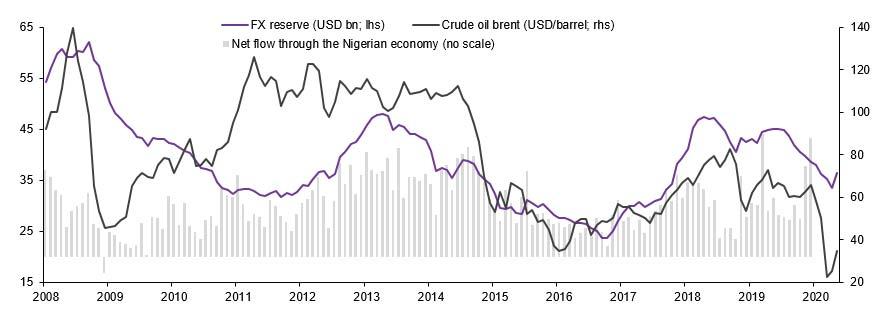
USD23.7bn in October 2016 before recovering. This could point toward subsisting pressures in the months ahead, partly caused by lower net FX flows through the economy.
Currently, the IMF support coupled with higher domestic financing are providing some relief by easing near-term liquidity pressures. However, we think that the discrepancy between the FX regime and the need for economic support due to the recent shock is likely to pose longer-term challenges leading to additional exchange rates adjustments, as USD supply backlogs accumulate.
Despite all this, we expect the FX market regime to remain broadly unchanged, as a reflection of the strong political footprint. Additionally, under the Rapid Financing Instrument, the IMF does not require FX reform implementation – this is probably why Nigeria decided to get financing from the IMF for the first time. Hence, although further rates unification and flexibility are expected, it does not specify unique nor free-floating exchange rate. Finally, the CBN highlighted that the offshore market, through the I&E window, remains a willingbuyer-seller FX system. Under this scheme, the FX rate cannot actually move freely during periods of limited liquidity which implies that the bank retains total control.
Therefore, we only expect the CBN to continue working on the Naira unification by reducing the spreads of the diverse exchange rates and it surely indicates further depreciation through all windows. The CBN’s obstinacy to manage the NGN along with restrained dollar repatriation are expected to have a negative impact on foreign investors’ confi-
dence. Besides increasing pressure on the Naira, we think this FX regime will likely continue to erode external reserves level and certainly jeopardize a healthy post-covid recovery.
“The pandemic has also created an urgent balance of payment need, amid declining oil prices and remittances. Lower
oil-related imports and income outflows
are likely to be
offset by restrained capital inflows and depressed foreign investors’ interest.”
Contributor’s Profile
Lydia Rangapanaiken is an Economist at FCMB UK in London, Lydia covers the fixed income strategy within Sub-Saharan Africa. She specialised on Sub-Saharan African economies with a specific focus on Nigeria, Ghana, Kenya and WAEMU countries, by working as an Economist for Ecobank in London, after starting her career as an Emerging Markets Economist at BNP Paribas Asset Management. She holds a Master degree in Finance from Assas-Sorbonne University (Paris II) and has, since then, built a strong background in financial markets analysis and asset allocation within the developing markets.
By Annabel Bishop, Chief Economist, Investec Bank Limited South Africa
he domestic economy is increasingly expected to see a deep contraction in Q2.20 on the shutdown of much industrial activity in SA to date, as well as on collapsing demand, which negatively impacts the services sector (including retailers), in turn adversely affecting producers. South Africa’s lockdown has been lengthy and severe, causing consternation over the economy and livelihoods. South Africa’s likelihood for a strong recovery in Q3.20 is seen as diminishing given the negative impact Covid-19 has had on economic activity, due to the extreme nature of the lockdown measures, and their length. The very slow reopening process, which has occurred on one level being removed per month (June level 3, May level 4, April level 5), is also quelling business confidence.
Indeed, the lengthy duration of South Africa’s lockdown from 27th March 2020, will see the domestic economy contract by more than the previously estimated economic consensus (Bloomberg) at the end of April, which showed an expected contraction for 2020 of around -5.0% y/y. We previously estimated a contraction for 2020 of -4.8% y/y by mid-April, but on the basis, at that time, that the South African economy would open up more quickly (see the levels of lockdown reduce much more quickly) than has been happening. April experienced the full brunt of level five, resulting in an extreme cessation of most business activity. May has seen the highly restrictive level four, with many businesses/producers still shut, and reduced production for many that are allowed open. A survey from Statistics SA in April (taken between the 13th and 26th) shows that respondents are more concerned about economic collapse than health risks. Of the total respondents, 93.2% indicated that they are extremely concerned or very concerned about economic collapse, and this number is likely to rise in the next survey.
“South Africa’s lockdown has been lengthy and severe, causing consternation over the economy and livelihoods”

The very severe lockdown in Q2.20, will likely see a contraction in the region of -40% qqsaa (quarter on quarter, seasonally adjusted, annualised) in economic activity, and close to 10% y/y. Many companies (especially large ones) do not qualify for the R200bn credit guarantee scheme and these jobs and companies risk not being saved. The longer the lockdown persists, the slower the recovery. SA also risks seeing business failures escalate, and fewer jobs to return to once lockdown is over. This would reduces the chance of recovery for the economy in Q3.20, with an even greater number of corporates in business rescue or closing doors permanently. The economy will also be a lot more vulnerable as it attempts to restart. The longer the lockdowns persist the weaker household and corporate finances become on a macro level. The weaker demand will also be on a full reopening of the economy, as consumers ability to spend will have been eroded. Demand will lag reopening the economy materially. Severely reducing the circulation of money has a severe, lengthy lagged effect.
BankServAfrica reports "the actual real value of transactions in … (the economy) for April was at a level lower than at any time since February 2006. This means the actual value of transactions was the lowest in 14 years". "May numbers will likely be similar, which means the SA economy will have lost the advances it has made over the last 14 years." “This collapse is evident throughout all sectors of the economy as economic role players cannot transact with one another as they did before the crisis hit”, “the economy is doing the same real value of ‘turnover’ that it did 14 years ago. "The disappearing economic transactions in the crisis reflect the massive underlying economic damage the crisis has created". The BankservAfrica Economic Transaction Index (BETI) “captures interbank electronic payment transactions under R5 million to provide almost immediate feedback on the economic performance of most sectors.” A Statistics SA survey in early April showed that only a tiny minority of corporates (8%) said they could survive without turnover for more than three
months, with 30.6% stating (already in early April) that they could not survive a month without turnover. South Africa has seen a quick response to contain Covid-19. The Covid-19 crisis is also seen an extreme lockdown for SA. The longer lockdowns last the worse the recession and rise in unemployment. Most in the private sector will see markedly lower incomes this year compared to last year, not just due to salary or wage cuts, but also due to substantial loss of additional incomes - from lower rental incomes, from lower dividends, lower/no bonuses, freezing of salaries (for some for more than one year in a row now), outright job losses and company failures.
Sharply reduced circulation of money in an economy for a lengthy period sees a materially slower recovery, and risks turning SA’s recession from the normal U shape expected (annual rates of change) to a much more protracted bottom of the U, in an environment where the economic fundamentals were already very weak before SA’s Covid-19 lockdown. Indeed, the overall slow pace of repair to many of South Africa’s fundamentals in recent years risk the recovery from the Covid-19 crisis being very weak, slow and protracted, with political appetite for rapid implementation of all necessary growth enhancing reforms (as per National Treasury’s growth plan) weak. Even global recovery will not be quick.
Subsequent to the (eventual) removal of the lockdown the economy has been in since the 26th March 2020, there is not likely to be a strong rebound (excluding statistical effects). Many reforms are outstanding while ‘populist’ policies and expenditure persist, such as automatic wage progression bonuses and above salary and wage increases for civil servants. South Africa was on a downward growth trend over the 2010s decade, with economic growth dropping from 3.3% y/y in 2011, to 0.2% y/y last year on the severe deterioration in SA’s fundamentals, and the lagged effects of these. SA’s very slow pace of reform continues, particularly in respect to adopting National Treasury’s growth plan. The 2010s also lacked meaningful fiscal consolidation in full , along with over spending and inadequate revenue collection, leading to a series of credit rating downgrades, negatively impacting investor sentiment. Market negative perceived policies and proposals like EWC (expropriation without compensation) and prescribed assets have also afflicted perceived
economic growth prospects, and so perceived returns on investment and investor appetite.
Some necessary progress has certainly been made over the past couple of years, and with an increasing pace in some areas, and even during lockdown, with Eskom a case in point. Eskom has used the lockdown period efficiently to repair design defects at Medupi, conduct maintenance of units and source components locally where possible for repairs. However, there are many structural weaknesses still in South Africa’s economy. Without very substantial structural reforms the domestic economy will fail to recover as the global economy does. South Arica was in an expected three quarters of recession before the Q2.20, as growth remained on a severe downward trend since 2011. South Africa failed to recover to pre 2008/09 growth rates after that Great Recession, and the structural damage to the economy was not dire in the early 2010s yet, although it was beginning.
“South Africa’s likelihood for a strong recovery in Q3.20 is seen as diminishing given the negative impact Covid-19 has had on economic activity, due to the extreme nature of the lockdown measures, and their length.”
Contributor’s Profile
Annabel Bishop joined Investec in 2001, and has worked in the macroeconomic, risk, financial market and econometric, among others, fields for around 25 years. Annabel is the holder of the Sake/Beeld Economist of the Year title for 2010 and has won numerous monthly Reuters Econometer awards, and various Focus Economics (Economic Forecasts from the World’s Leading Economists) categories for correctly forecasting a range of economic variables. She has authored a wide range of in-house and external articles, published both abroad and in South Africa. She has also lectured at Gibbs, the University of Pretoria, Wits, UJ and other academic institutions, and has presented at various national and international conferences.
Black Lives Matter!
By Ombeni Uhuru, Senior Investment Analyst, Tanzania securities Ltd
he Coronavirus first case reported in Tanzania on March 16th, 2020 by the Government of Tanzania. Since the outbreak of this virus, the Government of Tanzania has taken pre-emptive measures to make sure that the country remains stable economically at the same time control the spread of the virus by means of containing and reporting the number of new cases as well as the number of deaths.
The impact on Tanzania’s economy was insignificant during that time because most of the country’s trading affiliates had not imposed strict containment and mitigation measures adopted to limit the spread of Covid-19. It also mirrored the lagged impact of containment and migration measures adopted, as shipment of imports and exports are typically prepared in advance. Reflecting the strengthening of containment measures adopted by trading affiliates to limit the spread of the disease and the impact on some sectors of the economy started to be become much more vivid from April 2020.
Industrial products & construction sector
Coronavirus, referred hereafter as Covid-19, presents a large shock to the global economy in all sectors. The pandemic affects the economy by disrupting supply chains following containment and mitigation procedures adopted to limit the spread of the disease. Most industries reduced production and some of the reduced number of employees to accommodate the demand as well as reduce cost during the pandemic. As the nation’s directive phase towards industrialisation, the impact was vivid since some of the locally produced product became scarce during the period, sugar being one of them. Although manufacturers confirmed that the scarcity was not brought about by low production but market intermediaries who created an artificial demand with the aim of pushing up the prices. The scarcity of sugar could also be justified by the delay in the transportation scheme of the product as most of the ships were banned from offloading at their respective ports. The government through Ministry of agriculture has taken action to ensure the availability of sugar in the country after importing 20,000 tonnes mid-May, from Uganda through Mwanza port.
The construction sector remained active with full government support to implement its infrastructure

projects with precautions among the workers to reduce the spread of the pandemic. We do not expect the negative impact within the construction sector except for the lags in project financing, especially external partners. Also, the effect was resilient in pharmaceutical industries as well as essential consumer goods. We expect an improved performance of the sector, but we remained wary of the further spread of the virus if protective measures will not be taken with people in this sector.
The external sector of the economy is expected to experience challenges induced by Covid-19, particularly in 2020. The annual overall balance of payment (BoP) improved to a surplus of USD 763.8 million in the year ending March 2020, compared to a deficit of USD 648.8 million in the corresponding period in 2019. The current account deficit improved to USD 919.3 million in the year ending March 2020 from a deficit of USD 1,634.4 million in the year to March 2019, while on month-to-month, the deficit was USD 30.8 million in March 2020 compared with USD 227.1 million in the corresponding period in 2019. Nevertheless, in March 2020, services receipts, which include earnings from tourism, declined by 26.4% to USD 232.4 million, partly due to a decline in tourist arrivals associated with measures adopted to limit the spread of Covid-19. Exports of goods and services increased to USD 9,951.1 million in the year ending March 2020 compared with USD 8,747.1 million in March 2019, chiefly owing to the increase in exports of traditional crops, while imports of goods and services increased to USD 10,516.0 million in the year ending March 2020 from USD 10,178.8 million in the year ending March 2019, mainly driven by imports of intermediate and consumer goods. The increase in imports of intermediate goods manifested in the oil import bill, which accounted for about 20.8% of goods import. The import bill of oil rose by 6.5% to USD 1,809.3 million, on account of volume.
The banking sector impact can be traced from the portfolio quality deterioration and reduction of loan disbursement. The banking sector is one of the chief drivers of the economy, failure of the other sectors arguably disturbs the banking sector. Loans
quality started to deteriorate as businesses called in to restructure their repayment thus prompting the Bank of Tanzania to introduce its stimulus package to combat the impact of the Covid-19 to the economy notably decreasing the discount rate to 5% from 7% for commercial banks to get cash from the Bank, statutory minimum reserves (SMR) to 6% from 7% in order to increase liquidity in the banking sector, and loan restructuring process in order to circumvent capital deterioration as a result of an increase in NPL’s ratio. According to BoT Monthly report of April 2020, debt stock decreased to USD 22,386.7 million, a decrease of USD 67.1 million from the preceding month and this was due account of debt repayment. It was also due to depreciation of the currencies in which the debt is denominated against the US dollar, partly linked with the impact of Covid-19.
Bank of Tanzania continues to intensify accommodative monetary policy measures to cushion the economy from the impact of Covid-19. As a result, liquidity in the banking system has remained stable and the growth of money supply been strong.
The halting of air travel to countries has affected the tourism sector, hotels business and other recreation businesses since people from potential tourist countries especially European nations were in lockdown. Also, most of the hotels especially the five stars one suffered a recession for the past two months notably April and May due to the absence of foreigner’s inflow into the country who are their main contributors to hotels’ revenue. As a result, most of hotels and recreation centres were temporarily closed for the period, and some make redundancy to match revenue with operational cost.
The tourism sector in Tanzania employs about 623,000 people engaged in the provision of various services. Coronavirus pandemic aftermath has decimated that number to 146,000 during the period, while total earning from the sector may decline to 598 million USD from 2.6 billion USD. The number of visitors also declined to 437,000 from 1.9 million recorded ends of last year as 13 airlines stopped flying to Tanzania by 25th March 2020. The tourism sector is highly impacted since it is the one which depends on the movements of people.
Recently, recording a sharp decrease of Covid-19 cases in Tanzania, the Government through its Ministry of Tourism has been encouraging foreign tourists and business visitors to fly to Tanzania for
normal holidays and businesses, respectively. Also, foreign visitors landing to Tanzania will not be placed under quarantine upon their arrival but full protective measures against Covid-19 spread will be observed. This measure is expected to revamp the tourism sector in Tanzania which contributes the largest to the country’s earning of foreign currency.
The transportation sector is another sector that has adversely been affected by the Covid-19 pandemic, especially cargo transportation across countries in the East African region. Dar es Salaam port is the most preferred port across East Africa arguably due to the presence of the railway which links to Zambia to South Africa and highway road to Tunduma crossing to Zambia then Congo DR and as well as other corridors especially the one to Rwanda via Rusumo. Mid May, some East African countries closed their borders, the agreement between the countries lead to the reopening of the border and business to continue but with high cautions to avoid the spread across countries. However, the EAC community presidents constantly have had several diplomatic engagements to ensure that their economies are safeguarded Amid this novel coronavirus.
The effect of coronavirus spread in Tanzania marks a critical point in our economy, but we envisage those effects to decline as the spread of Covid-19 starts to diminish across the globe. The Government through the central bank has taken measures to reduce the impact of Covid-19 in the banking sector, through liquidity improvement measures and asset quality management. On the other hand, the government and private sector have collaborated to ensure that PPEs are made available to healthcare workers to prevent them from being infected. The public awareness campaign has led to reduced virus spread and hence it is expected that over time the economy will rebound back to normal.
In addition, The Government has announced re-opening of higher learning institutions, high school students (form six) who are expecting to sit for their National Examination in June 2020, and secondary school effectively from 29th June. However, The Government through its Ministry of Health still reiterated that precaution should be taken at every level to avoid the spread of the pandemic.
By Christine Asiimwe Namanya, Head of Macroeconomic Policy Analysis Division, Bank of Uganda
he Coronavirus disease 2019 (COVID-19), caused by SARS-CoV-2 was declared a pandemic by the World Health Organization (WHO) on March 11, 2020. The disease that first manifested in Wuhan China in December 2019, spread across the globe and fast became an emergency with a massive impact on the world population and economy. According to the WHO, as of May 31 2020, there were 5,965,883 confirmed COVID-19 cases of which 366,409 had died representing a fatality rate of 6.1 percent. In response to the fast spreading nature of the disease, amidst no known cure or vaccine, governments across the world instituted a number of measures to contain the spread of the pandemic including total lockdowns and travel restrictions. The impact of the pandemic therefore can be assessed from the angle of morbidity and mortality of disease and/or containment measures. These measures have led to a reduction in the world economy with the International Monetary Fund (IMF) projecting that global economic activity will contract by 3 percent in 2020.
In Uganda, thus far, the spread of the diseases has been minimal with 446 confirmed cases as at end May 2020. The low cases could be attributed to the lockdown and travel restriction measures instituted by government in March 2020. Notwithstanding the relatively low number of infections, the impact on the economy has been strong and could worsen depending on the severity and duration of the pandemic. To fully appreciate the impact of COVI19 on Uganda’s economy, we consider: the trade and financial linkage of Uganda with the rest of the world and; the domestic channel linked to the morbidity and mortality of the disease as well as containment measures.
Global supply chain disruptions brought about by lockdowns in several economies, weak global demand and, subsequently a projected recession of the global economy have led to a worsening of Uganda’s external sector position and outlook. The pandemic has affected international trade flows, tourism, workers’ remittances, Foreign Direct Investment (FDI) and loan disbursements. Exports

and imports are expected to decline by about 41 percent and 65 percent respectively in the later quarter of financial year (FY) 2019/20. Low demand and limited supply from the manufacturing economies like China coupled with a decline of international oil prices led to lower imports. Persistently low imports will lead to: shortage of commodities resulting in higher prices; closure of import dependent businesses; scarcity of intermediate goods for local manufacturing and; reduced international trade taxes. Imports may pick up in FY 2020/21 as the global economy opens up and supply chains revert to normal levels. Exports will also decline to mirror low demand in Uganda’s major export destinations.
Lower demand for travel coupled with government travel restrictions affected the tourism sector resulting in lower inflows and a worsening current account balance. Tourism receipts are expected to decline by 90 percent in the last quarter of FY2019/20. In addition, the pandemic has affected remittances, a major source of foreign currency for Uganda. Ugandans in the diaspora may be affected by the slowdown in global economic activity that has seen several companies either laying off staff or even winding-up business. Uganda’s current account deficit is therefore expected to deteriorate due to COVID-19.
Uganda’s current account deficit is largely financed by inflows to the financial account, mainly, FDI and external loan disbursements. Unfortunately in the face of the pandemic, FDI and loans disbursements are expected to decline by 80 percent and 21 percent, respectively in the quarter to June 2020. FDI inflows are projected to remain subdued in FY2020/21 while it is anticipated that loan disbursements will pick up as donors provide funding to mitigate the effects of the COVID-19 pandemic. A worsening current account deficit, combined with smaller inflows into the financial account will result in a widening of the balance of payments deficit and consequently a drawdown of the economy’s reserve assets. Reserves are expected to further decline to 3.2 months of future imports by the end of FY2020/21 from 4.0 months in FY2019/20.
Turbulence in the global financial markets and appreciation of the of the US dollar against other major currencies due to the pandemic led to increased dollar demand from the domestic foreign exchange market by offshore investors. This demand led to a depreciation of the Shilling by 6.2 percent between February 2020 and 25th March 2020. The shilling remained relatively stable in April and May 2020 and is highly contingent on external sector developments going forward.
Domestic economic activity is expected to decrease and grow in a range of 2.5-3 percent in FY2019/20 relative to 6.8 percent in FY2018/19. Industry sector will be adversely affected by disruptions in the global supply chain resulting in reduced activity in the manufacturing and construction sub-sectors since most of their inputs are imported. The services sector is also projected to slowdown with significant effects on trade, hotels and accommodation, repairs, transportation, storage, financial and insurance activities mainly caused by a decline in tourism, travel restrictions and supply chain disruptions. Moreover consumer facing sectors have been affected by social distancing measures put in place by government in March 2020. The lockdown instituted has also led to a decline in consumption and investment.
Private sector credit (PSC) has also been affected with the annual PSC growth declining to 9.5 and 9.8 percent in March and April 2020, respectively due to low levels of economic activity. Furthermore, the interaction of the affected sectors such as transport, tourism, and trade with the banking sector, is likely lead to a rise in non- performing loans (NPLs). This will increase the risk averseness of banks and impede PSC growth.
Inflation has remained subdued consistent with the slowdown of economic activity. Headline and core inflation declined to 2.8 percent and 3.2 percent, respectively, in May 2020 which is below the target of 5 percent. The impact on inflation on the COVID on inflation will depend on how fast the exchange rate depreciation passes through to inflation as well as increases in prices due to scarcity of commodities and the rising costs of production. The large negative output gap, subdued global demand and low international oil prices are however, likely to keep inflation low.
Implementation of the fiscal policy stance during COVID-19 has been constrained by lower tax collections due to a decline in domestic consump-
tion and production. The performance of major tax heads specifically, international and indirect taxes were well below the budgeted level in April and May 2020. On the other hand, government recurrent expenditure has increased, reflecting increased health sector fuding and other related expenses to manage the pandemic, and support to the vulnerable population during the lockdown. Accordingly, a COVID-19 related supplementary budget was passed by parliament in April 2020.These changes to fiscal policy stance imply additional financing requirements part of which government has secured financing from the IMF and the World Bank.
Other policy responses designed to mitigate the risks of the COVID-19 include monetary policy easing and putting in place measures to ensure sufficient liquidity in the money market. Furthermore, BoU put in place measures to provide temporary debt relief to borrowers that have been affected by the pandemic, such as loan restructures including extending the moratorium on loan repayment. BoU reduced the Central Bank Rate (CBR) by 2 percentage points since February 2020 and reiterated its commitment to intervene in the foreign exchange market to stabilize the exchange rate in case of volatility caused by uncertainty. All these measures are meant to boost confidence and improve economic activity.
The economy has gradually reopened, most lockdown measures are eased on June 4th, with the exception of the re-opening of schools for students in their final year of study, which will need to wait for another month. As well, international borders and the airport to passengers, shopping arcades, bars, night-clubs, gyms, saunas, swimming pools and hair-salons still remain closed. On 13th June, the Minister of Health revealed that Uganda had entered the third stage of infection of COVID-19 due to an increase in the number of community cases. Government is preparing to have 40,000 hospital beds to treat coronavirus patients.
Contributor’s Profile: Christine Asiimwe Namanya is a Deputy Director in charge of Macroeconomic Policy Analysis in the Economic Research Department at the Bank of Uganda. She holds a Master’s degree in Economic Policy and Planning from Makerere University Kampala and has 13 years’ experience in macroeconomic analysis and policy formulation.
By Thea Fourie, Senior Economist: Sub-Saharan Africa | IHS Markit Economics
Although Zambia had relatively low numbers of actual coronavirus disease 2019 (COVID-19) instances by end-May, economic impacts via channels of transmission through lower copper prices and loss in trade volume flows escalated economic weakness during the first half of 2020. Economic growth is expected to show a sharp contraction during 2020 while fiscal finances are increasingly under strain. Zambia is likely to default on its external debt obligations in the absence of debt restructuring.
As of 27 May, Zambia had 1,057 confirmed coronavirus diseases (COVID-19) cases, 779 people had recovered since February while confirmed deaths stand at 7 over the period. The spread of the COVID-19 disease gained momentum during May, with number of confirmed COVID-19 cases increasing from 167 on 8 May to the most recent number of 1,057.
Despite the recent spike in COVID-19 instances, the Zambian authorities eased lockdown measures on 8 May to limit economic collapse. All businesses (including restaurants, gyms and casinos), except for bars and taverns can reopen. Regional borders remain open besides the temporary closure of Nakunde on the Tanzanian border (10-15 May) for deep sanitization purposes. The Kenneth Kaunda International Airport (LUN) in Lusaka remains the largest operational airport in the country. Some public schools reopened while visas for travel remain suspended.
Lockdown measures during April, albeit less harsh compared to other regional economies such as South Africa, left the Stanbic Bank Purchasing Managers’ Index™ (PMI™) for Zambia, compiled by IHS Markit, under pressure. The April PMI reading showed the sharpest deterioration in business conditions since the survey began over

five years ago. PMI readings above the 50 neutral level signal an improvement in business conditions on the previous month, while readings below the 50 neutral level show a deterioration. Zambia’s PMI reading dropped to 37.3 in April from 44.7 in March. Record PMI falls were recorded for output, new orders and employment during April, while negative sentiment regarding the outlook was observed for the first time in the survey’s history. Company shutdowns as a result of COVID-19 were widely mentioned, with falling demand also reported.
The loss in trade, global and regional supply chain disruptions, weak global commodity prices and limited fiscal space could in IHS Markit’s view deepen the economic contraction in the near term.
The kwacha exchange rate lost 34% of its value against the U.S. Dollar during the first five months of 2020 as the currency tracked the fall in global copper prices and negative emerging market sentiment amid the COVID-19 global activity slump. A sharp reversal in global capital flows to emerging markets added to emerging market currency pressures. Capital flight from Zambia was nonetheless less pronounced. In May, the Monetary Policy Committee of the Bank of Zambia reported that Zambian government securities held
by non-residents represented 14.8% of total government securities marginally down from 14.9% a year ago. Private placements were primarily responsible for the sustained non-resident holdings of government bonds. Nevertheless, Zambia still recorded net overall financial outflows during the first quarter of 2020, echoing weak foreign direct investment inflows and high external debt obligations. A widening trade surplus, realized through a sharp contraction in consumer and investment-related imports, was insufficient to finance these financial outflows and left Zambia’s foreign reserves at 2.0 months of imports of goods and services over the period.
Although Zambia is well accustomed to external shocks disrupting normal economic operations, a spike in COVID-19 cases would significantly challenge the capacity of health and social services to effectively respond because of severe budgetary constraints. Zambia’s finance minister, Bwalya Ng’andu, on 27 March announced the creation of a USD 3.1 million Epidemic Preparedness Fund under the Ministry of Health and a USD35 million COVID-19 Contingency and Response Plan. This amounts to a modest 0.2% of GDP. In a statement released during April 2020 the Zambian government warned however that the revenue shortfall for the 2020 national budget could amount to ZMK14.8 billion (USD808 million) amid weak domestic growth and rising spending pressures. Interest payments remain one of the fastest growing categories in the Zambian budget. For 2020, interest payments will account for 27% of government spending. The steep depreciation in the kwacha exchange rate could nonetheless inflate the cost of government's foreign currency debt repayments and leave current projected interest rate estimates on the low side. To date Zambia has not secured any emergency International Monetary Fund (IMF) funding from the Rapid Credit Facility or the Rapid Financing Instrument (RFI) to meet rising fiscal needs. Instead authorities stated that emergency COVID-19 funding from the World Bank, African Development Bank and Afreximbank will be considered, combined with bilateral discussions with some G20 countries on the postponement or rescheduling of debt service payments.
Zambia’s rising external debt burden and external debt servicing obligations, over reliance on copper and copper related goods as a source of foreign exchange earnings and lack of fiscal discipline have contributed to the country’s escalating
external liquidity needs in recent years. IHS Markit considers the risk of debt default as high in the event of unsuccessful debt rescheduling with both bilateral as well as private lenders.
Zambia’s GDP is expected to contract by 4.0% in 2020. Severe disruptions in consumer and investment spending are assumed during the year with output in the construction, wholesale and retail trade, tourism, manufacturing, electricity and mining expected to remain under severe pressure. A further 50 basis points cut in the policy rate of the Bank of Zambia is assumed. This follows the Central Bank’s cut in the policy rate by 225 basis points to 9.25% in May. IHS Markit is of the view that headline inflation, at 15.7% in April, will remain above the upper end of the inflation target range of 6%-8% for the remainder of 2020. A fall in domestic food prices and weak domestic demand could leave headline inflation at an estimated 10% by end-2020. Risks to the outlook remain high: a second wave of COVID-19 outbreaks in developed economies, fragile US-China trade relations, adverse weather conditions that could result in periodic electricity disruptions in the Zambia economy, rising political uncertainty ahead of the 2021 elections and a severe COVID-19 related health flare-up could further derail near term expectations.
“Although Zambia had relatively low numbers of actual coronavirus disease 2019 (COVID-19) instances by end-May, economic impacts via channels of transmission through lower copper prices and loss in trade volume flows escalated economic weakness during the first half of 2020”
Contributor’s Prolife
Thea Fourie is a sub-Saharan Africa senior economist at IHS Markit, south African office. She is responsible for analysing and forecasting economic developments in South Africa, Angola, Zambia, Mozambique, Namibia, Comoros, Madagascar and reunion. She has over 20 years of experience in the financial and consulting industry. Fourie holds a B.econ (hons.) degree from the University of Pretoria and is fluent in both Afrikaans and English.
By Heleen Goussard, Head of Unlisted Investment Services at RisCura South Africa
t feels as if we woke up one morning and the world was different – but when exactly did it change, and what did we know or should have known at any point in time? Investment managers of illiquid assets need to assess when, to what extent, and how they incorporate the impact of Covid-19 into their valuations.
Like many aspects of this current crisis, there are similarities to the Global Financial Crisis (GFC), when the valuations of illiquid assets were also put under the spotlight. Quite a number of reforms post the GFC was indeed aimed at improving the reporting of the fair value of illiquid investments, and it is in the current crisis that these will be tested. In a time when factors such as climate change and the high level of interdependency of global markets are driving ever-increasing event risk, this issue is only likely to become more and more relevant.
The International Private Equity and Venture Capital Valuations Guidelines (IPEV) board released special guidance on performing valuations at 31 March 2020. The guidelines highlight how far valuation has come since the GFC, but also how the application of fair value standards is complex and subjective and how we are still struggling toward consistent application of these standards.
The guidelines remind valuers that an asset’s value on valuation date is what two market participants will pay for that asset on that date, and that this principle needs to be applied consistently. What valuers and owners of assets find difficult is that this market participant is still subject to the inefficiencies of the market. Although the market participant is independent, informed and lacks special motivation in a transaction, the price the market participant is willing to pay is still informed by market conditions. With the purpose of fair value reporting being the reflection of current market conditions, the reporting standards’ preference is always for market price rather than intrinsic value methodologies. As Warren Buffet famously pointed out, price and value are not necessarily the same thing.
A good example is the difference between market values on 29 February and 31 March 2020. Although the spread of COVID-19 over the world and the resultant economic fall-out now appears inevitable in hindsight, the listed market in South

Africa was showing very little or no negative impact of the coming crisis at 29 February. However, at 31 March, the market had lost 15% in a single month, only to gain back 5% in the next. Movements that can be argued illustrate some of the market inefficiency. With the valuation standards favouring market-based techniques valuers would equally have to price in the apparent overreaction of the market at 31 March only to show a counter intuitive increase of value as the impact of the crisis slowly deepens.
Understanding volatility in private equity
Private equity is typically considered a less volatile asset class than listed equity, but in the current market reality and implementing fair value standards as intended, volatility and a big drop in valuations across the board are hard to escape. The only exception to this rule is when the quality of market information becomes poor, and in this case it does not refer to inefficient pricing, but rather to an inability to observe pricing as, for instance, liquidity in certain instruments dry up. Although fair value measurement is surely flawed in some ways and the reporting standards still a work in progress, applying the standards consistently and impartially builds credibility by not ignoring market realities. This in many ways, for us at RisCura and the industry, is what the guidance issued by most regulators in this time of volatility and crisis has been, a call to keep a cool head and hold the line by applying standards designed to be tested in these conditions.
Contributor’s Proifle:
Heleen Goussard has over 14 years’ experience and heads up the RisCura team who provides unlisted investment services for clients across all alternative asset classes such as Private Equity, Infrastructure and Private Debt. In this role, she provides assurance and advice to investors in alternative assets and alternative asset funds including independent valuation, financial modelling, risk and performance reporting and research. This ensures that institutional investors receive accurate reporting and assessment of returns on investments, which in turn allows them to manage their investments more effectively. She joined RisCura in 2012 and has performed and reviewed over 150 valuations since then. She previously worked as a corporate finance partner at PKF Inc.
By Samira Mensah, Director & Lead Analyst FI S&P Ratings Africa
anks operating across Africa will face challenges for the foreseeable future as they navigate through the ill-effects of the coronavirus pandemic and the collapse of oil prices in 2020. Support from governments could help, but their responses are constrained by limited fiscal space and hinge on sources of external support. On the other hand, central banks have been proactive, swiftly cutting interest rates and injecting liquidity. Some African economies are particularly vulnerable to the current crisis because of their reliance on commodity exports, tourism, and remittances, as well as external financing needs.
We see three main risks for banks as the crisis unfolds:
• Rising economic imbalances,
• Higher credit losses,
• Funding and liquidity gaps.
Rising economic imbalances are hindering credit to the private sector
Credit conditions will remain tight despite central bank cuts in interest rates. That's because their efficacy is largely blunted by weak transmission mechanisms in most African countries, due to low financial intermediation and lack of well-functioning money markets. The pandemic-induced global recession has led to market dislocations and record investment outflows in emerging markets, including in Africa, which has steepened yield curves for government debt and lifted the cost of domestic borrowing against a backdrop of rising financing needs.
South Africa and Egypt are the most vulnerable to investment outflows, with knock-on effects on the exchange rate and foreign exchange reserves, respectively. We expect portfolios flows will likely remain volatile as uncertainties continue to prevail during the rest of the year.
This is notwithstanding our revised assumptions for lower oil prices ($30/barrel in 2020), which could increase the sensitivity of foreign exchange reserves and local currency exchange rates. Risks of currency devaluation could reemerge in Nigeria,

which could weaken banks’ capitalization. Similarly, countries relying on tourism receipts such as Egypt and Tunisia will see their foreign exchanges reserves decrease because of the restrictions on travel and the economic standstill. Economic imbalances stemming from the oil price shock, currency depreciation, and the reliance on portfolio flows for financing exacerbate inherently high credit risks in banking sectors, particularly when foreign currency lending is significant like in Nige ria.
Governments, which generally have limited fiscal flexibility because of large deficits, are still attempting to lessen the impact of the pandemic on their economies. For instance, Morocco and South Africa have announced measures that range from wage subsidies, corporate tax suspension, guarantee loan schemes, social contributions suspension for SMEs, to payment loan holidays to help clients cope with temporary cash flow shortfalls during economic lockdowns. Recent global developments will continue to constrain credit growth in Nigeria, South Africa, Tunisia, and Kenya, to name a few. Lending opportunities to corporates, including SMEs, have been scarce in recent years, largely due to the prolonged effect of the 2016 recession in Nigeria, the introduction of the cap on interest rates in Kenya, and weak economic growth in South Africa. In Morocco, we expect reduced credit volumes as corporates curtail capitalspending plans in 2020. Lower transfers from Moroccan nonresidents, which represent almost 20% of the deposit base, will also tighten banks' lending capacity.
Weaker asset quality will largely stem from households and SMEs
The pandemic will weaken the asset quality of banking systems in Africa and test creditworthiness, but the extent will vary depending on the strengths of each bank's balance sheet, including capitalization. However, we expect retail and SMEs to underperform corporate loans across the systems we rate. In Tunisia, asset quality indicators will markedly deteriorate despite support measures for SMEs, including a payment moratorium. The crisis will have a long-lasting effect on households and SMEs. Transport and export-oriented indus-
tries, upon which the economy is highly dependent, will also suffer because of the recession in Europe, Tunisia's main trading partner. Tourism and hospitality, which represent an important share of the Tunisian and Egyptian economies, will likely be among the most affected sectors because of internal and external restrictions.
In Morocco, vulnerabilities will stem from the construction, steel, automotive, aeronautic and textile industries. Due to the drop in tourism, we expect the hospitality sector to take a hit. Moroccan banks' exposures to the rest of Africa will also lead to additional impairments, particularly in hydrocarbon producing countries.
For South Africa, the strain on asset quality in 2020 will mainly stem from unsecured retail lending and SMEs, amid continued weak economic growth. Household debt is likely to rise and affordability will weaken because of loss of income. Signs of stress will increase in the commercial real estate sector because of the strict economic lockdown and work-from-home measures.
In Nigeria, the main risks relate to the oil sector and any potential depreciation of the naira that might be triggered by reduced availability of foreign currency liquidity. We believe that banks are less willing to extend credit to oil and gas companies downstream because these exposures tend to depend on government subsidies. The upstream sector’s attractiveness will depend on the pace of the recovery of oil prices. More positively, these large borrowers tend to be hedged. Single-name and industry concentrations remain high in Nigeria, with most of the large banks serving the same corporate borrowers.
In Kenya, consumer lending and SMEs will be hit hard, particularly those operating and servicing the tourism sector. We also anticipate some payment arrears, linked to government projects, will lead to additional restructuring.
The crisis has exposed funding and liquidity gaps
Central banks in most African countries have acted as a backstop for banks’ liquidity shortfalls in local currency. However, higher funding costs, the risk of capital outflows, and potentially broader liquidity tensions will characterize the dynamics of funding for African banks. South African banks are the most vulnerable to investment outflows, but their refinancing risks are limited because most of their funding is in local currency, and the central bank
has provided effective support to money market and interbank markets. The lack of large and deep domestic capital markets in Africa is a constraint on funding and liquidity and has pushed Nigerian banks to raise money on the international capital markets.
Central bank intervention is particularly prevalent in countries like Nigeria and Tunisia. Central banks have been injecting liquidity into economies and in turn expect banks to extend credit to the private sector. The Central Bank of Tunisia injected Tunisian dinar (TND) 11.1 billion ($3.88 billion) as of April 1, 2020, in the hope of increased lending stretching banks’ ratio of loans to deposits above 120%. Meanwhile, the Central Bank of Nigeria introduced a minimum ratio of loans to deposits of 65%, forcing banks to lend more while the cash reserve requirement is at a record high of 27.5%. Nonetheless, because of tough operating conditions, we expect banks to use excess liquidity to purchase government securities, for instance, in Egypt and Kenya.
Despite higher credit losses, we expect this crisis to be an earnings rather than a capital event for most systems. Banks' creditworthiness ultimately will remain a function of the pace and shape of the recovery of the economies they serve. Countries that have entered the crisis with structurally weak economies like South Africa will likely face a deeper economic contraction than others, like Morocco or Kenya. Forbearance measures that allow for weaker provisioning may limit credit losses in the short term, but the long-term stress will, over time, mean weaker profitability for banks.
Contributor’s Profile
Samira Mensah is a Director and Lead Analyst for Financial Services Ratings at S&P Global Rating. Based in Johannesburg, she covers financial institutions and sovereign credit ratings on the African continent.
She has been with S&P for 12 years, starting her tenure in London at the start of the global financial crisis and has published credit research on emerging markets and Islamic Finance credit trends. Samira speaks on these topics regularly and gained in-depth knowledge of capital markets with a focus on credit and market risk analysis. Her roots are North African, her husband’s family is from West Africa and her home is South Africa. Born and bred in France, Samira has become a pan African citizen.
By Romain Py, Head of Investments, African Infrastructure Investment Managers (AIIM)
frican governments reacted faster than their European counterparts to COVID-19, imposing sweeping lockdowns and stay-at-home orders. Although some countries are now moving to ease restrictions, most remain cautious in the face of so many unknowns about the pandemic. This uncertainty has forced investors and financiers to re-strategise, re-prioritise and react quickly to a new and evolving environment. Many deals have been postponed or cancelled, though there are signs that transactions are now progressing, and that investors are learning to navigate new logistical, compliance and regulatory challenges.
Most countries in sub-Saharan Africa are likely to see some temporary and long-term adjustments in policy and regulation due to COVID-19, as economic drivers change and attitudes towards foreign investment shift (for both better and worse depending on the context). Regulatory changes motivated by governments’ attempts to manage the crisis are inevitable and investors will need to monitor macroeconomic and political developments closely and plan appropriate risk mitigation. The ability to raise finance from local or international institutions is also likely to be affected, forcing investors to re-evaluate the viability of a transaction and consider difficult scenarios.
The economic impact of COVID-19 on subSaharan Africa
As reported cases of COVID-19 continue to rise across the African continent, governments are struggling to mitigate the economic impacts as sub-Saharan Africa heads towards its first recession in 25 years. The economic impact will depend on the duration and extent of the outbreak, not only in Africa, but also among its trading partners. It will not be homogenous across the continent and will be heightened by the continent’s exposure to China and falling commodity prices. Countries with single export-orientated industries are more at risk, such as the island nations of Seychelles and Mauritius, which are heavily reliant on tourism and expected to be the worst hit with GDP contracting by 6.8% and 10.8% respectively. Africa’s oil exporters, Angola, Congo-Brazzaville, Gabon and Nigeria, will be hard hit by the fall in oil prices

resulting from the demand disruption caused by COVID-19, and the mining economies of DRC and southern Africa will also struggle. Botswana, for example, relies on primary mineral products for more than 60% of export revenues and its GDP is forecast to contract by 5.4%.
More diversified economies in East and West Africa should however prove more resilient, as their growth models are based on domestic consumption, healthy local private sectors, and relatively robust agricultural sectors. Countries like Senegal, Côte d'Ivoire, Rwanda or Uganda are likely to experience 3% GDP growth, vs a GDP contraction of 1.6% for sub-Saharan Africa, with the agriculture sector playing a crucial role as it is typically regarded as an essential service and is less affected by social distancing measures or other government restrictions.
Central banks across the continent have adopted aggressive monetary policy initiatives to boost liquidity in their economies though this is expected to have limited effects, with large parts of many economies having only limited exposure to formal financial services and therefore likely to see limited benefits from central banks measures. To sustain these economies, governments will have to look to fiscal policy, including emergency funds and loans for businesses, as well as lowering or suspending taxes. Most countries, however, went into this crisis with high fiscal deficits and little headroom to increase spending on a sustainable basis, meaning that any such fiscal stimuli will have to be funded by borrowing. Average Debt to GDP for subSaharan Africa is forecast to reach c.56%, up from 50% in 2019, with six countries already having debt-to-GDP levels greater than 100%.
While the IMF, World Bank and other bilateral creditors have mobilised billions of dollars to assist the continent, their efforts might be undermined by Africa’s fragmented debt landscape. Private-sector creditors, as well as China, which is the largest single creditor to sub-Saharan Africa, have expressed misgivings about the idea of blanket debt moratoriums, instead stressing the need for debts to be restructured on a case-by-case basis.
With commercial financial markets tightening and bilateral creditors struggling with their own imminent recessions, access to capital for Africa will become more difficult and expensive.
As many fund managers have done during the pandemic, AIIM has actively engaged with its portfolio company management teams to consider the impacts of COVID-19, assessing business continuity, macroeconomic impacts, liquidity and specific asset risks. Overall, the strong contracted asset base has provided our portfolio with a high degree of resilience and ability to continue operating through the crisis as critical infrastructure in their markets, and its diversification across countries, sectors and mix of contractual and commercial offtake has meant that the portfolio is well positioned to manage the risks posed by the pandemic. As infrastructure investors, AIIM’s investment strategy is based on a long-term hold of the assets, allowing to weather changes in political and economic conditions. With our embedded discipline of scenario-analysis and the need to think and plan ahead, we have structured resilient investments to withstand macro and regulatory headwinds. This is particularly evident for transport assets, where their project finance structures provide for adequate liquidity (c. 5 months on average).
The biggest operational risks across assets relate to the revenue impact from travel shutdowns on GDP linked assets, such as airports and toll roads, and the impact of potential economic slowdown on sales and payments across the BBOXX and IHS Towers’ portfolios. Supply chains have been well managed to date with limited interruptions expected across spares and stock supplies.
Sub-Saharan Africa’s recovery from COVID-19 will be slow, but the 2021 recovery is not expected to be as pronounced as elsewhere in the world. New economic and fiscal challenges are likely to prompt shifts in government policies as well as driving some long-term changes that open up new opportunities for investors, though not all changes will be favourable for investors and there may be a rethink of the privatisation efforts ongoing in many southern and East African countries. Governments will be more reluctant to sell off state-owned enterprises that have served as vehicles for ensuring employment, but the reinvigorated role of multilat-
eral institutions such as the IMF should increase pressure to push ahead, as governments will struggle to afford the burden that often lossmaking public companies place on budgets.
While the impact of the pandemic on African economies is expected to be less than in Europe or North America, it still brings to the forefront of the continent’s need to accelerate its economic diversification efforts. This will take time, as illustrated by the limited progress made to date by oil exporters, despite bold rhetoric, in diversifying their economies since the 2014 oil price crash, and will necessitate both an increased private sector role in the economy, and a reduction in bureaucratic burdens.
The COVID-19 outbreak has highlighted the importance of the digital economy, with central banks encouraging mobile money and other digital payment systems as means of facilitating commerce while maintaining social distancing, and there is also likely to be a renewed focus on agriculture and healthcare. For many years, governments have misallocated public resources and under-invested in healthcare, with expenditures in sub-Saharan Africa around 5% of GDP, roughly half the global average.
COVID-19 will potentially turn into an overdue wake-up call to find better ways to finance the continent’s infrastructure deficit, in particular access to reliable, cheap and clean energy. Given global liquidity constraints however, financing Africa’s energy transition and supporting industrialisation will still require greater private sector involvement, with Public-private partnerships (PPPs) expected to play a key role going forward as governments find themselves unable to fulfil their obligations.
Contributor’s Profile
Romain Py is the Head of Investments at African Infrastructure Investment Managers (AIIM) He has 20 years’ experience in infrastructure with a proven track-record in originating, structuring and executing investments in developed and emerging markets. Prior to joining AIIM in 2014, he worked for JPMorgan, HSBC and Société Générale. Romain is leading AIIM pan-African fund business, notably AIIF3, and represents AIIM as a director on the boards of African Ports & Corridors Holdings, DSM Corridor Group, SEGAP, Albatros Energy Mali, Beyond Energy and AIIM Hydroneo.
By Christine Rodrigues, Partner, Bowmans South Africa
ot since the 9/11 terrorist attacks in the United States has the insurance and reinsurance industry been on the brink of such momentous potential strain as it now faces ahead of the unknown impact of COVID-19.
Reinsurers bore the brunt of the 9/11 risk as the practice among insurers was – and still is – to reinsure for major risks. If required in terms of law (as in South Africa) to retain some of the risk, they retain the bare minimum.
Although the 9/11 attacks occurred in the United States, they affected what cover reinsurers globally were willing to underwrite. As a result, insurers had to amend their policies in order to ensure the underlying policy could be reinsured.
Another consequence of the 2001 terrorist attacks was that the United States passed the Terrorism Risk Insurance Act (TRIA) in 2002 to share losses between the federal government and insurance industry. This legislation became necessary as insurers either started excluding terrorist risk from policies or escalating premiums to the point where consumers could not afford insurance.
Under TRIA, the US Government supports insurance companies once losses exceed USD 200 million. As a result, insurers once again included terrorism insurance as part of their coverage.
These developments underline the massive scale of the losses from 9/11, which were concentrated in business interruption insurance (34% of the losses), property insurance (30%) and liability insurance (23%)1 .
Some of the losses sustained in the United States due to the attack have been quoted as:
• Total insured losses amounting to USD 43.6 billion (in 2015 dollars)2, including property, life and liability insurance claim

costs resulting from the attacks on the World Trade Center, the Pentagon and Pennsylvania.
• CNN quoted over USD 230 billion in other losses, including USD 123 billion in estimated economic loss in the first two to four weeks after the World Trade Center attack, as well as the decline in airline travel over next few years. Furthermore, New York Magazine estimated that 146100 jobs were lost in New York after the attack and 29763 people perished (excluding the hijackers).
Enter 2020 and COVID-19 COVID-19 is a pandemic that in most cases, including South Africa, will not be covered by property and liability insurance.
Current life policies and group insurance policies are likely to cover the deaths of individuals or permanent employees due to COVID-19. Given the unemployment rate in South Africa and the low rate of insurance cover, the majority of South Africans lack such sophisticated cover. Most people only have a funeral policy.
In the non-life sector, if reinsurers are willing to give reinsurance cover, insurers may be able to extend cover to liability and property risks – albeit at a premium (which may be expensive).
Alternatively, as the United States did with TRIA, legislation may be enacted to require Government to create a fund to cover future losses. (Ironically, President Donald Trump on 20 December 2019 signed a federal funding package that includes a seven-year extension of the TRIA, which assists with coverage relating to commercial risks and excludes other types of insurance such as life, health and reinsurance.)
In the case of South Africa, another option is to
extend the mandate of the South African Special Risks Association (SASRIA), which only covers against risks such as civil commotion, public disorder, strikes, riots and terrorism. Under the country’s current insurance framework, here is a glimpse at how the COVID-19 pandemic is likely to affect the insurance industry and its customers.
• Existing individual life policies that provided cover in terms of a pandemic will continue to provide cover. Consumers need to be cautious about cancelling an existing life policy and replacing it with another. Depending on the number of insured lives that will be paid out due to the pandemic, any future pandemic may be excluded for new policies.
• Group policies are renewed on an annual basis, so companies need to be aware that when renewals become due, reinsurers may change their approach. If they no longer want to reinsure pandemic-related deaths, this may result in group policies excluding deaths or disabilities arising from a pandemic.
• Banking institutions, where loans are provided and require insurance policies to be ceded as a form of security, will need to consider what other forms of security may be required to cover risk of default due to pandemics.
• Lending to small businesses and private individuals will need to be reconsidered not only to ensure financial stability in the economy but also to comply with requirements around ‘treating customers fairly’. This is important as insurance policies ceded as security may not cover the risk of default.
• Medical aid premiums are likely to increase, to cover the costs associated with the pandemic.
• Government will need to look at how State-run hospitals, schools and departments should change the way services are offered, what skills are lacking and how infrastructure should be upgraded or modernised to cater for healthcare services in pandemics. This will impact planning for the National Health Insurance scheme.
• Retirement funding will need to be reconsidered, particularly in cases where the
funds of a pension or provident fund are managed by the trustees of the fund. Going forward, trustees of funds will need to consider how investments can be used to mitigate risks to their members. This may require that fund rules are amended.
• Where pension or provident funds procure a policy underwritten by insurers and the insurer undertakes to provide policy benefits for the purpose of funding in whole or in part, the liability of a fund to provide benefits to its members in term of its rules comes into play. Again, where an insurer will no longer provide certain benefits, rules may need to be reviewed.
It is far from clear at this point how the COVID-19 pandemic will reshape the insurance and reinsurance industry. However, there is no doubt that an economy lacking the ability to mitigate its risk through insurance is an extremely vulnerable economy. Some reshaping will certainly be needed.
“Not since the 9/11 terrorist attacks in the United States has the insurance and reinsurance industry been on the brink of such momentous potential strain as it now faces ahead of the unknown impact of COVID-19.”
Contributor’s Profile
Christine Rodrigues, a partner at the Banking and Financial Services Regulatory Practice, Bowmans. She was previously a director at Hogan Lovells South Africa, having established their Insurance Regulatory and Commercial Practice. She has advised most insurers in the market, as well as regulators, brokers and industry associations. Her experience ranges from assisting with licence applications and advising on insurance regulation including specialised matters such as index-based insurance to transactional work such as the transfer of policy portfolios and warranty insurance. Christine has a B.Com Hons and an LLB from Wits University and Unisa respectively.
By Tony Lee, Executive, Corporate Commercial, ENSafrica South Africa
hould you be considering a private equity investor?
Amid a sluggish global economy left in the wake of COVID-19, mergers and acquisitions (M&A) may be an important catalyst to help kick-start the economy and may provide much needed growth and expansion across the global (and, most importantly, local) economy.
Significant amounts of cash on hand (or what is colloquially known as "dry-powder") means that PE firms could soon be actively seeking to acquire distressed assets or non-core businesses that are being disposed of by large companies following a strategic asset shedding in a post COVID-19 world. Given current low trading prices, we may also see take-private transaction activity where public companies are the target.
If you are thinking of selling to a PE firm, it is important that you find the right partner. Different types of PE firms invest in different types of businesses at varying stages of development and life cycles. Some PE firms acquire start-up businesses while others acquire businesses that are in growth or expansion phase. Some specialist PE firms also focus on "private debt" to companies that are in financial difficulty.
What are the private equity firms looking for?
Mid-sized companies (such as family businesses and companies with an annual gross revenue of between ZAR50-million and ZAR1-billion) are a favourite target amongst PE firms because the return on investment in these companies can be significant.
Depending on the PE firm’s investment strategy, it may look to acquire a significant minority interest (anywhere between 20% and 40%), a majoritycontrolling interest on the basis that key manageement remain with some "skin-in-the-game", or the entire business.
Most times the PE firm will become involved in supporting the business by appointing one or more directors to the board to assist management in

developing and executing a business strategy. PE firms pick targets that have the potential to grow and can be sold at a profit so as to provide returns to its investors. Most PE firms have a seven to 10-year investment horizon. Divestments generally occur through disposal of equity or other interests in the business or a listing.
What could you gain by bringing in a PE firm as an equity partner?
Some of the key benefits of an investment by a PE firm include:
• A long term injection of capital.
• Supporting on operational and financial matters.
• Developing a long-term investment and divestment strategy.
PE firms also leverage their portfolio companies to provide networks to assist with key business priorities, such as accessing additional markets and introductions to other strategic partners.
Why could your company be an attractive target to a PE firm?
Middle market M&A can be a major force for accelerating growth in South Africa. Given the geographic diversity of some of the mid-sized companies operating in South Africa and the spectrum of sectors within which they operate, such as transportation, energy, property, fintech, healthcare, education, food, hospitality and financial services, these mid-sized companies present significant investment opportunities for PE firms.
PE firms will be on the lookout for businesses that are well positioned in the market in which they operate, have a defensible business model, a strong management team and are able to generate good cash flows over the medium to long term, as we slowly embark on the road to economic recovery.
Astute PE firms operating in the South African market are going to be waiting and ready to deploy cash to acquire well-priced, mid-sized companies as and when these acquisition opportunities
present themselves as was recently announced by a major South African PE firm that it has raised ZAR5-billion to invest in mid-sized South African companies that have been hit by the economic impact of COVID-19, which new fund will seek out businesses with enterprise values of between ZAR250-million and ZAR4-billion.
Is your business deal ready?
Whatever your motives are, be it to monetise all or a part of your business, part of a succession plan or to access capital, now may be the time to consider a PE firm as a strategic investor. However, before you do, you need to be deal ready. As with most things, preparation is key. By becoming deal-ready you can avoid some of the obstacles and challenges that could impede the success of both deal execution and implementation.
Although the preference is (and the aim should always be) a simple deal, in reality, the M&A transaction process is not simple and often involves a lengthy due diligence investigation and complicated transaction documentation. A PE deal brings its own nuances such as complex tax, financing and other legal structuring.
If you are deal ready and have leveraged outside expertise (such as M&A legal counsel) you can then make informed M&A decisions that are likely to result in a successful and balanced deal with fewer setbacks along the way.
What does the M&A process involve?
Typically, an M&A transaction can be divided into the following five-step process:
• Step 1: early stage negotiations
• Step 2: sign offer letter / non-binding term sheet
• Step 3: buyer starts extensive due diligence (covering legal, tax, financial, operations areas)
• Step 4: negotiate, draft and execute transaction agreements and apply for regulatory approvals
• Step 5: implementation
Most mid-sized companies tend to rely on management to run the M&A process. However, the nuances and technicalities of an M&A transaction require a certain level of expertise and resources. This knowledge should be taken advantage of as opposed to primarily relying on management who may not have the time or technical expertise to successfully execute M&A transactions. Bringing in your external legal counsel at an early stage will help you prepare for and navigate the five-step
M&A process by assisting with preparation or vetting of non-binding term sheets, confidentiality agreements, due diligence questionnaires, sale agreements, shareholder agreements and dealing with regulatory issues.
How do you become deal ready?
Start by first putting together a "teaser". A teaser provides a broad overview of the nature of the business and a financial profile that gives the PE firm just enough information that will get them coming back for more.
Get your financial information in order. The lack of reliable financial data will make the financial due diligence difficult to complete and you could be putting yourself at a disadvantage when it comes to valuation.
Understand the value of your business and be ready to explain the impact of the various economic and socio-economic factors that may have recently impacted the value of the business. You must be able to justify why these short-term factors will not impact the long-term value of the business. Make sure you have all key material contracts and other legal documentation that underpin the business readily available – you will need to make these available as part of the legal due diligence and you will need to understand the consequences of a change of control.
Bring your external legal counsel, bankers, tax advisors and, if required, corporate advisor on board as soon as possible because harnessing this external expertise will ensure that the deal process runs smoothly.
What’s next?
Successful M&A deals require careful planning and patience because it can take anywhere between four and eight months to complete, particularly if regulatory approvals are required to be obtained before the deal can be implemented.
Developing or getting help with valuation, tax, legal and financial matters in advance of seeking a strategic investor, or to make sure that you are not unprepared when a PE firm comes unexpectedly knocking, will ensure that you are ready when an opportunity presents itself.
Do not delay in speaking to your legal counsel and corporate advisor if you are considering doing, or are approached to undertake a M&A transaction. Bringing in the experts early will facilitate the planning of and execution of a smooth deal.
By
ack in February/March 2020, China was in full lockdown as a result of COVID-19 and the virus had taken hold in Europe and elsewhere. The effect of this on global trade generally, and African trade in particular (especially as a result of events in China), was devastating. In this article we will look at how things have developed since then and what the future holds for Africa.
The immediate impact of COVID-19 was that demand for African commodities dried up almost overnight with the lockdowns in China and elsewhere and many export contracts were terminated or suspended (rightly or wrongly) for force majeure on a large scale. Things looked bleak for the continent.
Another significantly adverse effect of COVID-19 has been the delay to the rollout of the African Continental Free Trade Area (ACFTA). ACFTA, which aims to create the largest free-trade zone in the world and promote intra-African trade, was due to be established on 1 July 2020 and no replacement date has been set yet.
Historically, intra-African trade has been low when compared to regional trade in, for example, Europe or Asia, and the UN estimated that ACFTA could significantly increase the volume of intra-African trade as well as significantly help African economies to diversify and generate millions of new jobs. The fact that this postponement is a damaging set-back can be seen when you look at the African economies which have fared better during the outbreak of COVID-19.
Many economies in East and West Africa, for example Rwanda, Ethiopia, Senegal and Côte D’Ivoire, have had their growth forecasts cut but are still expected to grow by around 2.5% to 3.5% in 2020. They are by and large more diverse economies with robust domestic/regional consumption, something ACFTA would promote.
Many others, especially those whose revenues rely on international consumption in one predominant


sector badly affected by COVID-19, have been hit much harder and have had their growth forecasts cut by around 5% to 10%. Examples include the oil based economies of Nigeria, Angola and Equatorial Guinea and those which usually enjoy significant tourism, such as Mauritius and the Seychelles, demand for both of which has fallen significantly. In the medium to long term, ACTFA would have helped a number of the worst hit and the longer it is delayed, the more difficult it will be and the longer recovery will take.
Another problematic aspect of COVID-19 has been the (in some cases dramatic) fall in commodity prices. The obvious example here is how oil prices have plummeted during the pandemic, with the World Bank predicting the average oil price in 2020 to be USD 35 per barrel. A contributing factor has been the severe limitation of travel. It has been widely reported how this has significantly harmed countries such as the US, Russia and Saudi Arabia as well as the oil producing countries in Africa. However, while these non-African countries have the resources and ability to introduce countermeasures to protect their economies, the oil-driven African economies are less able to implement such drastic measures and have fewer alternative revenue streams to fund them. It is not only oil that has been affected, as the halt in general economic activity has also had a knock-on effect on commodities such as zinc and copper which are typically used in industrial processes. The disruption to China, which accounts for over 50% of the global metal demand, has had and is likely to continue to have consequences for global metal prices (the world bank predict a 13% price drop in 2020). Zambia and the DRC (respectively two of the largest copper and mineral exporting countries in the world), for example, will feel the harsh effects of lower copper and other mineral prices for at least the rest of this year and possibly much longer
In more developed nations, we have seen an unprecedented response by governments to “prop-up” economies. These measures have
protected jobs and companies that may, otherwise, not have survived the outbreak of COVID-19. The virus has not (yet) fully established itself on the continent, partly as a result of learning lessons from other countries and in some cases, including Rwanda and Uganda, partly through locking down early and severely. Should African governments have to cope for any significant length of time with very low commodity prices and/or the virus does at some point establish itself on the continent, then there is a real likelihood that they may not be able to adequately fund the protective measures required and healthcare systems may be overwhelmed.
Whilst billions have been made available to Africa to deal with the fallout from COVID-19 by international agencies such as the World Bank/IMF and the EU, there is still a significant hole in the finances of many Africa countries, especially the less wealthy. In some cases, the only way these holes could be filled is through additional sovereign borrowing. Many of these countries are already in financial trouble and the need to incur this additional borrowing, combined with creditors who are resisting blanket debt relief, means that the prospect of sovereign default is becoming increasingly likely as a result of the virus.
It is not, however, all doom and gloom. China has re-opened and is looking to stimulate economic growth and, whilst it may take time, there are signs of an uptick in the demand for commodities. A panellist in a recent webinar suggested that last month China reported positive figures, showing how quickly trade could bounce back. Some lenders have indicated that trade volumes are already increasing (partly down to China) which would suggest that the outlook may not be as bleak as previously thought. This should give some comfort to other trading nations, including Europe/the United States, that they will be able to do the same once their lockdowns are lifted, all of which would be good news for African trade.
Globally, there have also been responses to the pandemic, both on a national and an international scale, in terms of promoting trade. Many financiers and trade groups (for example, ITFA and BAFT) have been pushing a digitisation agenda covering solutions from signing trade documentation electronically to lobbying governments to implement changes in law to facilitate digitised trade.
Unfortunately, many traders in Africa are SMEs and they simply have not had access to the technolo-
gies and legal systems with sufficiently advanced laws to benefit from such programmes. Some commentators believe that the way trade and trade finance is structured may change for good as a result of COVID-19. If this is the case, this would present a huge opportunity to kickstart a technological revolution in Africa. Historically, implementing wide-ranging legal changes in Africa has proved challenging but COVID-19 may prove a useful catalyst both for this and for making the decision to focus minds on technological advances.
There is an opportunity here for Africa to learn from, and take advantage of, the events of 2020. If the continent can move towards greater digitisation, get ACFTA up and running sooner rather than later and implement other measures to promote both the increased diversification of African economies and greater domestic/regional trade on the continent then, in the medium to long term, 2020 may not be seen from an African perspective as an “annus horribilis”.
Trade finance will certainly survive this pandemic and we may find that the way trade is conducted will change for the better as a result of COVID-19 with Africa benefitting from it and taking a large leap forward.
Contributors’ Profile
Simon Cook is a partner in the Trade & Export Finance Group in international law firm Sullivan’s London office. His experience covers a wide variety of finance transactions, including structured trade and commodity finance, supply chain finance and project finance primarily across Africa and the Middle East, where he was based for four years. He acts for lenders (including commercial lenders, multilaterals, DFIs and investment funds) and borrowers across all commodity sectors and for industry bodies such as the International Trade and Forfaiting Association (ITFA) where he is a member of ITFA’s Africa Regional Committee.
Alexander Swayne is an associate in the Trade & Export Finance Group in Sullivan’s London office. He advises a broad range of clients on structured and unstructured trade finance across mainland Europe, CIS, Africa and Asia. Alex also advises on receivables financings, including in relation to payables platforms, as well as working on FinTech and crypto-asset matters. He has also advised on the impact regulatory changes has had on trade finance.
By Corné Conradie, Partner, PwC South Africa
robust and well-regulated banking system contributes to a well-functioning economy. The lending activities of banks support wider economic growth. In the medium to long term, bank lending is needed to support economic growth by funding the real economy through, inter alia, the purchase of property, vehicles, equipment and infrastructure.
The stress being experienced due to the COVID-19 pandemic is different compared to previous stress events such as the 2008 global financial crisis. The 2008 crisis was concentrated in the financial sector and was characterised by high interest rates and inflation - with prime rates that peaked at 15.5% from June to November 2008 and inflation that peaked at 8.7% in May 2009. The South African equity market (as represented by the JSE All Share Index) dropped by 34% between June and October 2008 and only recovered to levels seen in June 2007 by the end of 2009. Over 2009 South African GDP dropped by 1.5%. In contrast the stress caused by COVID-19 is much more widespread with nearly all sectors experiencing strain. Energy, construction, hospitality, transport and financial sectors are expected to be severely impacted. The underlying macroeconomic conditions are also very different. The prime rate is at a level last seen in 1966 and inflation is within the South African Reserve Bank’s target range. The JSE All Share Index showed a similar drop of 33% between the end of December 2019 and 23 March 2020 - being the date South African entered a national lockdown in response to COVID-19. The impact on GDP and subsequent job losses are however, expected to far exceed the levels seen during the 2008 crisis. Initial estimates indicate a record GDP drop and a large increase in unemployment.
Bank risk profiles have also changed dramatically over the last 12 years. At the start of 2008 home loans to individuals made up approximately 38% of all South African bank loans. This has since dropped to 29%. At the same time loans to companies increased from approximately 43% to 49% of all bank loans while unsecured loans to individu-

als increased from approximately 8% to 12% of all bank loans. In terms of growth rates this represents annual growth of 3.9% in home loans compared to growth of 7.6% in company loans and 9.6% growth in unsecured loans to individuals. Nominal GDP growth was 7.2% per annum over the same period which means that loans to companies grew broadly in line with value added to the economy while unsecured lending grew at a much faster pace and home loan lending at a much slower pace. The adoption of the new credit risk provision accounting standard (IFRS 9) in 2018 also means that banks tend to hold more credit risk provisions for the same level of risk as a result of the forward-looking nature of the standard compared to its predecessor. The largest South African banks that provide a full range of lending products to individuals and companies saw an increase in provisions of about 38% due to the move to the new accounting standard.
The risk posed to the South African banking sector by the COVID-19 pandemic is therefore different from the 2008 crisis. Reduced interest rates aimed at supporting the economy will make large loan installments such as those paid on home loans and vehicle loans more affordable. The increased volume of unsecured loans and loans to companies does, however, pose a significant risk since unemployment is expected to increase substantially and many companies and small to mediumsized enterprises are expected to fail. Losses experienced by banks are therefore more likely to be driven by a total loss of income of borrowers instead of affordability issues driven by increased prices and loan installments. The losses and consequences from 2008 cannot be directly used to infer the consequences of the current crisis.
“The stress being experienced due to the COVID-19 pandemic is different compared to previous stress events such as the 2008 global financial crisis.”
The actions of the government, financial institutions, other companies and society will also play a major role in the severity of the stress. Mitigating the impact of reduced economic activity and the inability to do business during the lockdown period is key. The government needs to balance manage ment of health outcomes with growth in the economy. These outcomes should also not be seen in isolation since poverty and lack of economic growth is highly correlated with life expectancy. The negative effects of unemployment and low economic growth will just take longer to emerge and is not as visible as a daily infection and death report. Through payment deferrals, new loans backed by the R200 billion loan guarantee scheme and access to fixed deposits, banks provide additional liquidity to the market. The reduction of the prime rate by 2.75% since January 2020 also reduced installments on variable rate loans. This liquidity can help businesses and individuals survive temporary reductions in income and will allow loan installments to be used in ways that support the economy.
By providing additional liquidity to the market, banks do however, face a greater risk as well. Deposits can often be called on at short notice while loan installments are deferred or repaid over a much longer period. Banks therefore face significant liquidity risks if there is a large-scale withdrawal of deposits by customers. At the same time increased loan defaults that lead to large losses will put further strain on banks. Confidence in the financial system and economy guards against vast depositor withdrawals while stringent regulation and capital requirements mitigate the risk of credit losses and day to day movements in liquidity.
The results of high-level top down stress test forecasting on the biggest full service South African banks have highlighted that these banks are expected to remain resilient through this period of severe stress. These banks account for 91% of all South African bank deposits and 94% of all loans granted by banks. Resilience of these banks are therefore key to ensure the resilience of the South African banking system as a whole. A large increase in credit losses is expected. The increased level of credit losses will be driven by defaults and losses on residential home loans, company loans and retail unsecured loans. Based on the nature of the stress it is expected that unsecured loans will be harder hit by the economic
fallout of the COVID-19 pandemic compared to the 2008 crisis. In contrast residential mortgages are expected to experience increases that are severe but lower than levels observed in 2008. Companies may experience similar strain compared to the 2008 crisis. Both these loan categories benefit from reduced interest rates. The effect on companies are, however, very dependent on the duration of the lockdown, the effectiveness of government interventions, availability of affordable financing and the speed of economic recovery. Increased company failures can, in turn, cause a feedback loop that leads to further losses on retail loans. From a deposit perspective it is expected that financial institution deposits reduce the most followed by public sector and company deposits. This would be driven by lower interest rates, lower economic growth, lower stock market returns caused by a drop in company profitability and lower household disposable income. Retail deposit levels within banks are also expected to drop although reduced interest rates, stable inflation and increased risk aversion will mitigate the negative effects of reduced disposable income.
The exact effects of the COVID-19 pandemic will however only become more apparent over the next year and is very dependent on the degree to which the pandemic is contained without causing largescale economic damage. A quick progression through the lockdown stages will reduce the negative effects while a resurgence of infections and further or prolonged lockdown will exacerbate the large negative impact that is expected. Therefore, only time will reveal the exact impact of this pandemic on the South African banking system.
“A robust and well-regulated banking system contributes to a well-functioning economy. In the medium to long term, bank lending is needed to support economic growth by funding the real economy through, inter alia, the purchase of property, vehicles, equipment and infrastructure.”
By Arnaud Liege, Senior Consultant at Africa Practice South Africa
onstrained by tight fiscal spaces often characterised by large public sector wage bills, declining export revenues and high debt servicing costs, several African economies entered the COVID-19 crisis already wounded. Yet, the impaired economic environment has not prevented some of them from expediting assertive fiscal measures to support jobs and protect corporate value as the continent went into lockdown. Out of the 46 sub-Saharan African countries, 36 implemented a COVID-19 response plan, with ten adopting plans worth between 2% and 10% of their GDP.
In addition, over the past three months, the majority of sub-Saharan African countries have implemented tax relief measures and monetary measures to improve businesses’ liquidity. Out of the 28 African countries that have implemented tax relief measures, 15 have eased corporate income tax payments to support businesses throughout the pandemic. In fewer cases, the informal sector has also benefited from similar measures: around 13 countries have introduced measures to support the payment of utilities for the most vulnerable while 10 have adopted wage subsidies and income support measures. Markets with a low fiscus have had to innovate to mobilise funds. São Tomé and Príncipe is the only African country where a solidarity tax on public servants has been introduced to fund part of the national COVID-19 response.

If most markets’ initial reactions were informed by the speed and scale of the sanitary threat and the resulting livelihood crisis, decisions are now primarily driven by the need to recover and rebuild domestic economies. Going forward, the momentum around debt relief and private sector coalitions to respond to the crisis and address supply chain disruptions will not suffice. Temporary reforms have been essential to cushion the financial burden on the private sector in the long term, but further structural reforms will be unavoidable and, in many countries, had been initiated prior to the pandemic. The drive for reforms is not new to African regulators but part of a broader trend that started in 2013. Since then, the continent has recorded the highest number of regulatory reforms globally. The economic impacts caused by COVID-19 will only accelerate and diversify regulatory shifts.
Many governments, however, might be tempted to interpret the need for structural reform in favour of a renewed localisation, nationalisation and indigenisation drive which could appease the populous while generating much-needed revenue from the increased taxation of non-citizen owned enterprises. As history has taught us, these successes would be short-lived. Instead the continent requires a joint effort to increase regional and continental integration, boost investor confidence, and facilitate private sector action to generate high employment levels and productivity growth.
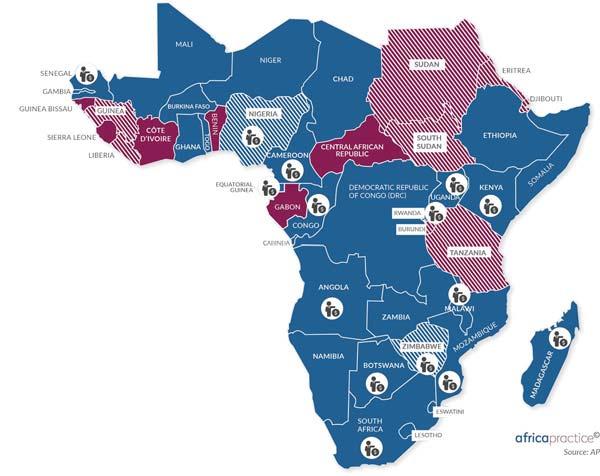
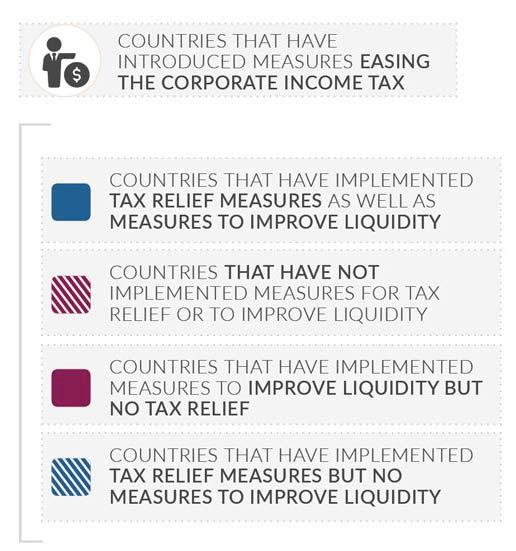
By Mohamed Anouar Gadhoum, Islamic Finance Specialist
efore the Coronavirus (COVID-19), people are focused on money as the whole story of success and wealth. For those who subscribe to this thinking, money defines their values, perspective, and approach to life – all are built based on money and every waking moment is spent chasing money. But now, the wealth structures that many people relied on has collapsed. The pandemic (COVID-19) has changed our world forever and revealed that many people have less than robust lives and a narrow view of wealth. The Panic of Corona may be the element that brings about a major redefinition of wealth.
“Wealth is broader than money” is the new and redefined picture of wealth in mainstream economics, a reality embedded in Islamic economics for more than 1400 years. The generic message in the primary sources of Islamic economics, Holy Quran and Prophetic teaching, is to rebuild the concept of wealth in the society as something beyond physical wealth; so to create a balance between the material and non-material needs; both are thought to mutually be supportive to promote harmony in human actions.
We are created from a combination of dust and divine spirit. As such, we intrinsically are twisted by the demands of the physical, and the spiritual so arises our needs to satisfy mundane as well as spiritual needs that too often are not in sync with each other. Mainstream economics postulate focuses on the mundane needs (or the material aspects) and predominantly ignore the spiritual component because economic thoughts are based on logical deductions from observable facts. The realm of spiritual needs is not legit for the mainstream.
“The pandemic (COVID-19) has changed our world forever and revealed that many people have less than robust lives and a narrow view of wealth.”

However, Islamic economics strives to balance the two to create a harmony between the material and spiritual needs as both are thought to mutually be supportive to create a balance that promotes harmony in human actions. In addition to the material aspect that is very attractive to the worldly nature of man, the Islamic philosophy of wealth includes another form of broadly defined as spiritual-cum-salvation wealth. For instance, Islamic economics’ primary source (Holy Quran) emphasizes that wealth forms the foundation of spirituality through which good deeds from the use of wealth will help to achieve success and that the pleasure of God.
“O ye who believe! Shall I lead you to a bargain that will save you from the grievous penalty? That you believe in Allah and His Messenger, and that you strive in the cause of Allah with your property and yourselves. That will be best for you if you but know”, (Quran, 61:10-11).
Further:
“And it is not your wealth or your children that bring you nearer to us in position, but it is [by being] one who has believed and done righteousness. For them, there will be the double reward for what they did, and they will be in the upper chambers [of Paradise], safe [and secure]”, (Quran, 34:37).
The above verses show spirituality can be reached through a combination of spiritual (Falah) through the use of material wealth. This is not to deny that there are ways of gaining spiritual wealth simply by devotional acts with no expenditures of material wealth. That wealth may be used as a means also to gain the spiritual dimension. Wealth as both physical and spiritual are tied together to seek salvation through seeking both specimens of wealth during one’s lifetime.
The spiritual dimension has to broaden the concept of wealth to be aligned with the moral and ethical values that must be observed in generating wealth,
enabling others to have meaningful wealth (distribution), consuming the wealth, and saving for investments. Such a dimension (spiritual) recalls people the trust to own, create and manage wealth to benefit the human society, so wealth is not allowed to be concentrated in the hands of the few, which tends to lead to more inequality and injustice, thus wealth must flow among the society.
More interestingly as relevant to the current discussion, COVID-19 has shown how elevated is knowledge and intellect as being superior to the material wealth (i.e. money) which fails to save the life of thousands who died due to this Pandemic. The psychology of the fear of Corona brings the EU, for instance, to shut down economies resulting in a massive recession. In addition, urgent calls have been raised from governments and huge amounts of money (material wealth) are allocated to encourage scientific research and to stimulate innovations that could be a remedy to this Pandemic. This may tell the emergence of Intellectual-salvationrelated wealth in mainstream economics, another spiritual form of wealth.
Knowledge from the intellect of man, in all its forms, coupled with a sense of the virtuous application of intellect is also considered as the food of the heart, promoting salvation for man. Such a combination of knowledge and virtue leads to wealth; resolving the scarcity in mankind’s ability to explore and utilize resources for the wellbeing of society subsequently.
Thus, intellect that has the potential to promote knowledge is wealth. The benefits from the application of knowledge elevate man to salvation since the deeds arising from it last beyond one’s lifetime. Intellect created the digital revolution, and this would go on and on benefitting mankind. So, God’s provision of intellect is wealth, and its rightful application leads to salvation, which is spiritual wealth. To the end of wealth management, wealth planners and managers also need knowledge, and this too is wealth apart from physical wealth.
Conclusion
The natural relationship between both the material and spiritual dimensions of wealth is very close. Wealth as understood and accounted for in contemporary secular world sense is physical wealth, which, being self-explanatory, needs no further elaboration. This wealth is recognized as The Provider’s gift to mankind since all physical
wealth was created by the same Provider but given to mankind in different proportions.
One new dimension mainstream economics should consider is the physical wealth and its potential to create spiritual wealth when it is spent in promoting goodness for mankind, be it from the intellectual, virtue, or from use of physical wealth to create a just society. That may well be the purpose of wealth in a canonical sense, so it is okay for mankind to create, accumulate, manage and distribute wealth so long as the purpose of all these actions is to gain God’s pleasure.
Post COVID-19 will usher in a new, interesting world where we will have to dig deep to build true wealth – a wholesome life. The pandemic will end. When it does, let a new, wholesome we rise in true wealth.
Wealth is not regarded as an end per se, but a means to higher values. It should be earned, invested, and spent in the correct and lawful avenues that benefit the individual, his family, and the society as a whole.
“Before the COVID-19, people are focused on money as the whole story of success and wealth. For those who subscribe to this thinking, money defines their values, perspective, and approach to life –all are built based on money and every waking moment is spent chasing money. But now, the wealth structures that many people relied on has collapsed.”
Contributor’s Profile
Dr Gadhoum has a Multi-disciplinary experience and demonstrated history in the Islamic finance industry. He has occupied various positions under different jurisdictions and managed teams and a diverse portfolio of consultancy, FinTech, and capacity building projects.
Dr. Gadhoum is currently a “Shari’ah Board Member” and “Advisor” of Cross-sectorial financial institutions offering Islamic financial products. He holds a Ph.D. in Islamic finance from INCEIF (Malaysia) in addition to a Master's and bachelor’s degree in jurisprudence and its foundations from Sharjah University (UAE).
By Mohamed Yassine Khouildi, Project manager in the International Islamic Finance Training Institute (IIFTI)
ow did a purely health pandemic turn into an economic crisis? And to what extent such a crisis contributes to the best of national economies. There is no doubt that COVID-19 pandemic is causing the ever heaviest economic recession since the second World War II giving its macro implications on the world economy and its related sectors such as Health, Education, Science subsequently.
However, one may ask the question of whether any positive implications of this pandemic on the African economies?
1. Positive impact on Savings: Consumer spending behavior
Through the pandemic, a large number of African household has been contributing significantly to their savings as long as they have a fixed income coming in. However, these households where somehow forced to do so as they were put indirectly into a situation where they should prioritize expenses in terms of purchasing only necessities. Any increase in savings will have a positive impact on investment. In economics, the level of savings equals the level of investment as investments will be financed from these savings. Moreover, the Harrod-Domar Model of economic growth states the level of economic savings is a key factor in determining economic growth rates.
2. Positive impact on Fintech Market: Increase dependency on Fintech
On the other hand, Covid-19 pandemic has been playing am eminent role in the african digital transformation agenda being an accelerator to digitalization. For instance, fintechs, like the rest of the financial industry, have gone into overdrive to respond the over-demanding of technology-based solutions to satisfy financial stakeholders’ needs and to prepare a post-Covid 19 recovery plan subsequently.
According to Deloitte recent report about Beyond Covid-19, a remarkable alliances between fintech startups and financial stakeholders (Banks, insur-

ance, microfinance etc..) are considered as one of the important outcomes of the pandemic.
3. Positive impact on Entrepreneurship
While many sectors are facing critical financial situation resulting to cutting off their man-powers and growth in unemployment rate, entrepreneurship is gaining the attention of many of those recently unemployed who become more and more convinced to self-employment
4. Positive impact on Job market: Towards new job opportunities
The experience of “working from home” during the pandemic has gained a lot of interest and proven that it is not only feasible but cost-effective for companies. Therefore, several Mega Institutions have decided to revise their strategic vision for the next years to fit the new post pandemic ecosystem for one instance, and to maximize their profitability for another instance. Despite home-working can be a smart levy to increase employability, further studies should be performed to address its cons.
“It cannot be denied that this pandemic is causing a remarkable negative impact on the African economies due to the quarantine, border closing, shutting down business temporary and restricted international trade, but it’s important to acknowledge the existing of many advantages at a corporate and personal”
Contributor’s Profile
Mr. Mohamed Yassine Khouildi, Project manager in the International Islamic Finance Training Institute (IIFTI) with more than 2 years of experience in consulting, training, and product development. He holds a Professional Master’s degree of science in Islamic Banking and Finance from the International Islamic University of Malaysia (IIUM) & a bachelor’s degree in Law, economics and management from Paris-Sorbonne University (PSUAD).
By Bowmans’ Africa Insight Team
decelerating super-power means that low-and middle-income countries dependent on trade and tourism with China will feel the sting of the virus, even if COVID-19 infections in those countries do not spike on the global graph.
Beijing’s Belt and Road Initiative has funded a range of infrastructure projects across the Eurasian continent and beyond, from roads and railways to power plants.
Construction on the 2 000km crude-oil pipeline and the almost-complete Lagos-Ibadan railway has ground to a halt, the Chinese workforce not having been on site since just before the Chinese Lunar New Year in February 2020 (Kitimo, 2020).
Africa-China Trade and Commodities
Besides oil, Africa’s other commodities are also closely linked to China’s fortunes. Depreciations in industrial commodities are hitting resourcedependent economies hard.
The Congo’s commodity exports amount to 70% of GDP with exports to China accounting for 50% of total GDP (Smith, 2020).
Copper prices are down by 7% which in turn will lower the value of exports from major suppliersZambia, the Republic of Congo and the Democratic Republic of Congo (SET, 2020).
Africa’s Copperbelt region produces 70% of the world’s cobalt and supplies a large percentage of global demand for lithium and other rare minerals. China is the biggest importer of cobalt and rare minerals, being the world leader in the production of mobile phones, electric car batteries and hi-tech components (Smith, 2019). China also has significant investments in mines in the Copperbelt region, exercising its control over value chains in the mining sector. With the overall downturn in China, investments in these ventures have also slowed.
Chrome, manganese and iron ore make up two thirds of South Africa’s total exports to China. Less
demand for these metals has caused listed shares of mining companies to tumble (Times Live, 2020). Soft commodities such as coffee, tea, rose flowers and cocoa are also suffering due to subdued Chinese demand. The slowdown affects Rwanda, Ghana, Ethiopia, Kenya and the Ivory Coast (Okoth, 2020). South Africa’s fisheries industry took a knock after China stopped all animal imports in January; 95% of the country’s rock lobster harvest is usually sold to China.
According to researchers at SET, the estimated lost revenue of Sub-Saharan exports to China could reach around USD 420 million. Angola, Congo, Sierra Leone, Lesotho and Zambia have been named as the most economically exposed through exports and tourism (SET, 2020).
China’s record of favourable pricing and efficient logistics has made it a critical player in global demand and supply chains. Many African states have become dependent on Chinese imports such as textiles, electronics and household goods.
Kenya’s port of Mombasa has become a regional transport and supply chain hub, receiving goods bound for Uganda, Rwanda, Burundi, Democratic Republic of Congo and South Sudan (Okoth, 2020). Since February 2020, Mombasa has recorded its lowest arrivals of cargo ships to date, with 37 cancellations and a further 104 scheduled dockings still uncertain – most of them from China. This has sent ripple effects across borders and down the supply chain, impacting the rail freight service that operates from the port (Kitimo, 2020).
Thousands of small to medium-sized enterprises on the continent have been forced to shut down after disruptions to supply chains and an inability to store large stocks.
China is Kenya’s biggest source market, accounting for up to 40% of all imports. The Kenya Importers and Small Traders' Association says it has lost USD 300 million since the COVID-19 outbreak (Kitimo, 2020). A fourth of all Ugandan imports
come from China, as well as 60% of all South Africa’s clothing and textiles (Evans and Over, 2020).
Several state-owned Chinese industries are returning to work after COVID-19 cases drastically reduced, but it is privately-owned industries and smaller companies that are really China’s economic engine. They produce toys, textiles and consumer goods and have not regained momentum, with workers still idle due to lack of materials and enduring quarantine measures (Evans and Over, 2020).
The airline industry has been a major COVID-19 casualty, decimating business across the globe due to containment measures. At the start of the outbreak much of the loss was attributed to the diminished Chinese tourist market, but the global spread of the virus, with Europe now the epicentre, has collapsed all demand in the sector.
COVID-19 has erased up to 15% of global airline capacity, prompting all carriers to take drastic measures just to stay afloat (Bloomberg, 2020).
The graph on page 13 indicates airline capacity, illustrating just how much travel has been curtailed in certain regions, mirroring the aviation regulations countries have put in place to stop COVID-19 infection rates.
The following is a list of the draconian measures global airlines are taking:
• Deutsche Lufthansa AG, Europe’s biggest carrier, will ground 700 planes and cancel 95% of seats.
• State-owned Dubai airline, Emirates, will ground most of its passenger fleet, reducing destinations from 145 to 13, and cut wages to half.
• British Airways is set to cut back 75% of operations over the next two months.
• Australia’s carrier, Qantas Airways, will stop all international operations in March, slash domestic operations by 60% and temporarily lay off up to 30 000 staff.
• Delta Airlines in the US is reducing its operations by 70%.
• Abu Dhabi-based Etihad is grounding its Airbus A380 fleet along with an entire premier class of service called 'The Residence.
• Virgin Atlantic is to reduce 80% of its flights and has requested staff take eight weeks of unpaid leave.
• Irish carrier Ryanair has cut capacity by 80% and is considering grounding its entire fleet.
On the African continent, airlines have taken similar measures to avoid bankruptcy. The sector has already lost USD 4.4 billion in revenue since the start of the pandemic. According to data from the International Air Transport Association (IATA), there has been a 20% decline in international bookings and a 15% drop in domestic travel in Africa for March and April 2020 is projected.
South African Airways (SAA) has cancelled all international flights until the end of May 2020 in response to the Government declaring a state of disaster in South Africa as COVID-19 cases surpassed 400. A further 124 regional flights were also grounded (Omarjee, 2020). The beleaguered South African state-owned airline was placed under business rescue in December 2019 to avoid bankruptcy after years of mismanagement and corruption that accumulated a USD 1.6 billion loss. Kenya Airways was also facing a battle for survival before the COVID-19 impact, after years of escalating debt (Kuo, 2020).
Royal Air Maroc, Air Tanzania, Air Mauritius, EgyptAir, RwandAir, SAA and Kenya Airways have all suspended flights to and from China. On the other hand, for Africa’s most profitable carrier, Ethiopian Airlines, it is business as usual for its China routes. The airline countered calls to suspend its 35 weekly flights to China, arguing that the measure would not slow the spread of COVID19 (Logupdate Africa, 2020).
Hand in hand with a collapse of travel go tourism, hospitality, and entertainment. Cancelled national celebrations, sporting events, cultural and religious practices, art, music and literary festivals and conferencing are decimating these industries, which face large-scale job losses.
“Besides oil, Africa’s other commodities are also closely linked to China’s fortunes. Depreciations in industrial commodities are hitting resource dependent economies hard.”
By Samir Gadio, Head, Africa Strategy, Standard Chartered Bank
lobal financial markets and risky assets recovered strongly until early June amid significant monetary support from global central banks, along with fiscal stimulus, after a sharp sell-off on COVID-19-related VAR shocks in March. This resulted in a disconnect between the relief rally in various asset classes (including global equities and oil) and much weaker economic conditions characterised by a global recession, pressured demand and rising unemployment. The Fed FOMC meeting on 10 June effectively froze interest rates near zero for the next two years, but did not endorse yieldcurve control or negative rates, while its economic outlook was relatively more downbeat than the market expected. This resulted in a short-lived global market correction post-FOMC meeting as equities lost ground, USD weakness reversed moderately, and earlier commodity price gains faded.
These periodic market corrections will likely happen until lockdowns are fully exited and risks of a COVID-19 second wave recede, and medium- term economic expectations improve. But they may also present an opportunity to re-enter investment positions on dips, as global liquidity will likely remain supportive, with the Fed and global central banks expanding their balance sheets and pursuing quantitative easing.
Although USD depreciation reversed mildly immediately after the FOMC meeting, its weakening from March-highs initially supported a recovery in EM FX, especially in countries with floating exchange rates. For example, the South African rand (ZAR) gained significantly in May-early June, after spot tested 19 in March-April. USD-ZAR volatility remains largely driven by global factors and is a proxy for risk conditions, while the South African Reserve Bank (SARB) does not intervene in the FX market.
FX performance has been more nuanced on the rest of the continent, with volatility often reflecting the extent of central bank exchange-rate management and tolerance for weaker currencies. As a rule, Sub-Saharan African (SSA) frontier currencies initially lost ground in March, and saw support and, in most cases, relative stability afterwards; this anchored left-hand-side (LHS) positioning in non--

deliverable forwards (NDFs) in selected FX markets. However, most African markets have experienced significant exports shocks, which are probably compounded for oil exporters. Oil importers may face other stress factors, including lower remittances or tourism flows that could pose risks to spot. On a positive note, import demand could be constrained in the short term as economic growth slows. SSA countries have also received significant support from international financial institutions, especially the IMF via its Rapid Credit Facility (RCF) and Rapid Financing Instrument (RFI) tools, which should help moderate or close balance of payments financing gaps.
Uganda has a fully liberalised FX market, with some degree of Bank of Uganda (BoU) intervention to smooth excess volatility. The Ugandan shilling (UGX) initially sold off sharply in March, but recouped it losses afterwards, supported by a softer USD and the BoU’s decision to defer dividend payments by financial institutions. Corporate dividend payments also look subdued, which helped offset typical UGX seasonal pressure in June. Elsewhere in East Africa, the Kenyan shilling (KES) depreciated in late Q1 and April amid global market shocks, but stabilised afterwards, amid a weaker USD. While Kenya has benefited from relatively lower oil prices, contained import demand and the IMF RCF, risks to the KES come from a sharp decline in tourism receipts, and pressured remittances and horticulture exports.
The Zambian kwacha (ZMW) was already under pressure before the COVID-19 crisis and lost c.26% YTD as of early April, but it has also been better anchored in Q2, amid contained demand and some LHS flows from the mining sector or even via regional banks. While the Bank of Zambia may take advantage of this reprieve to purchase USD from the market, its FX reserves remain critically low to smooth a potential new ZMW sell-off amid weak fundamentals. Debt service-related FX outflows could continue to pressure reserves until Zambia restructures its FCY debt.
The Ghanaian cedi (GHS) has seen little volatility in Q2 amid Bank of Ghana (BoG) FX sales and preference for exchange-rate stability, while the sell-off in March was also partly a reversal of sharp gains
after a Eurobond issuance in early February. The Eurobond proceeds and USD 1bn IMF RCF pushed gross FX reserves to record high levels in April (USD 10.3bn), before Ghana receives annual cocoa pre-export financing facility flows in late Q3. The BoG also entered a six-month USD 1bn repo with the Fed. Thus the BoG may have enough ammunition to anchor the GHS ahead of the December elections. However, renewed large BoG deficit financing could pose risks to the GHS. While foreign investor participation in local bonds has declined, it remains significant enough to pressure the GHS if coupons and principal payments are not rolled over. In addition, a new Eurobond issuance seems unlikely before April 2021 at the earliest, as next year’s full budget will only be presented in March since 2020 is an election year. Thus, the risk/reward of long USD-GHS NDF positions may increase later this year, even if the BoG seeks to minimise FX volatility.
In Nigeria, FX convertibility bottlenecks have re-emerged after the Central Bank of Nigeria (CBN) stopped its FX sales in the Investors and Exporters (I&E) window in the third week of March. The CBN initially moved its I&E intervention rate higher, but the current NAFEX fixing of the I&E market (386.7 from 364.7 in early 2020) does not reflect spot levels at which most transactions can be executed; in fact, traded volumes are extremely low. Modest CBN FX supply at retail auctions, limited other LHS FX flows and a lack of FX sales to Bureaux de Change have resulted in a large backlog of unmet FX demand and a substantial parallel-market premium. While most foreign investors exited the market in March before CBN I&E FX sales stopped, there are still residual non-residents’ positions whose proceeds could not be repatriated on time, while some accounts need to hold open-market operation (OMO) bills hedged in NGN-settled futures until maturity.
CBN FX reserves initially recovered from late April on the IMF USD 3.4bn RFI, while other multilateral financing is in the pipeline. But current oil prices remain low, despite a rebound from early-Q2 levels, and could pressure the BoP position. Authorities would likely feel more comfortable in reviving the I&E FX market if oil prices rose further. But a weaker NGN and more liquid FX market would not necessarily translate into renewed portfolio inflows given depressed fixed-income rates and still cautious global investor positioning in emergingmarket and especially frontier-market local debt. Interestingly, USD-NGN NDF outrights compressed significantly from April-highs on improved oil prices, but also little apparent CBN appetite for further currency weakness. Some FX market participants
have, however, started to enter NDF steepeners as cheaper long-dated contracts could make it easier to capture delayed, but likely, further spot adjustment.
On the fixed-income side, yields have generally shifted lower after rising during global market shocks in March. But this rally has been largely driven by local demand, along with central bank easing, liquidity injection and bond buying in select countries. Monetary policy easing has generally supported curve bull steepening; longer bonds could also prove stickier than shorter tenors on likely issuance risks amid higher fiscal deficits. Meanwhile, non-residents unwound large positions in March and, to some extent afterwards, until the flow position stabilised in late May. Foreign investor participation in local debt has fallen to eight- year lows in South Africa (31.5% in May), despite modest foreign buying recently. In frontier SSA, foreign participation in fixed-income is now negligible in Nigeria and has declined in Ghana.
We are still constructive on South African Government Bonds (SAGBs), despite a strong rally since their exclusion from the World Government Bond Index at end-April, and would see dips as an opportunity to re-enter cheaper positions. SARB bond buying may continue in coming months and another rate cut seems likely, while the yield curve remains relatively steep; but larger bond issuance, high fiscal deficit and debt ratios, and weak foreign investor conviction could constrain further significant gains.
Although Nigeria is the second-largest fixedincome market in SSA, it has become uninvestable for foreign investors given FX liquidity issues. OMO yields have also collapsed to single-digits on limited issuance and a CBN bias for lower market rates. Bond yields are unattractive and mostly below inflation, but domestic institutional investors have limited investment alternatives and may be forced to buy longer tenors. In fact, the authorities have been able to raise large amounts at bond auctions, which has at best prevented a faster decline in longer yields. Nevertheless, we are wary of a boom-and-bust yield cycle in Nigeria, as rates will eventually need to adjust to levels that make economic sense for investors, especially if spot is moved higher to attract foreign investors in the future.
Ghana’s fixed-income rates have shifted lower and the curve has bull steepened on local demand. While there is still optically value in longer-dated bond carry amid recent FX stability, we think such positions should be well-timed. Indeed, risks to the
GHS and bond yields could increase again closer to and after the elections in a still-relatively illiquid and crowded market.
In East Africa, we see tentative value in infrastructure bonds, whose yields have declined modestly recently, as spot volatility could be lower relative to peers. But the returns could be moderate by frontier-market standards and the risk/reward may support Kenya’s external bonds from a foreign investor perspective, when adjusting for FX risk and lower fixed-income liquidity onshore. The best strategy will likely be to purchase infrastructure bonds at a yield pick-up in future primary market sales. Domestic investors have been reluctant to get involved in longer tenors in regular bonds, as they are still wary of duration. This bias could persist amid a much larger domestic financing target in FY21 (ends June 2021). In Uganda, rates have fallen on lower T-bill issuance recently and
BoU rate cuts, but risks to issuance could also increase in the medium term, despite contained borrowing plans in the FY21 budget.
Finally, in Zambia, primary and secondary-market yields remain extremely elevated, exceeding 35% on the bid; but bond auction demand has been poor, as local investors prefer the short end. Foreign investors could remain on the sidelines until external debt restructuring is completed and improves prospects of IMF support, but selected non-residents participated in private placements earlier this year.
Contributor’s Profile:
Samir Gadio is the head of the African Strategy team, based in London. Samir holds a PhD and MA in Economics from Fordham University and a BSc in Economics from the Russian Peoples’ Friendship University. He speaks English, French and Russian.
By Joseph Rohm, Managing Director and Portfolio Manager, Adventis South Africa
Africa has done relatively well in keeping the march of the coronavirus in check. Many African governments were aware of the dangers of a pandemic having recently dealt with Ebola and therefore responded quickly to the outbreak of the coronavirus. The number of deaths recorded in Africa since the first person tested positive for the coronavirus in February remains low, at just over 4 230 — tiny set against the almost 400 000 global fatalities.
We have seen the speedy implementation of interest rate cuts, a rapid response in debt markets and a range of fiscal stimulus packages that have limited the economic impact of the coronavirus on the African continent. An overall African stimulus package already made available to assist efforts in fighting the effects of the virus stands at over USD72 billion, roughly 3% of Africa’s GDP.
The IMF’s GDP growth for 2020 in Sub-Saharan Africa (SSA) is forecasted to contract by 1.3%, significantly lower than the -6.1% of advanced economies with larger service sectors whilst the SSA 2021 consensus forecast of 4.1% currently shows Africa is
expected to have a strong v-shaped recovery. African economies are proving to be less volatile than developed markets and offer continued high growth.
The market sell-off in March provided a particularly attractive entry point for both African public equity and African fixed income. African markets trade on historically low valuations. Our Africa Equity Fund focuses on high quality, mostly subsidiaries of multinational companies, and trades on a price earnings ratio of 10.7, dividend yield of 7.0%, and a ROE of 30.8%. Our portfolio companies have strong balance sheets and have all reported resilient results in earnings season. Our Africa Fixed Income Fund has a gross annual yield in USD of +11.3%, which stands out in today's low interest rate world. The debt burden in developed nations is high while Debt to GDP levels are low in Africa. The Africa Income Fund has therefore not experienced and defaults since inception in March 2014.
Africa is experiencing a great economic convergence with the developed world. The threats to developed economies and markets are
increasing daily while Africa, with its youthful population being the economic future of the world, is likely to experience decades of economic growth. We see increasing tension between China and the U.S. around trade deals and global economic positioning, which will result in ongoing developed market volatility. The U.S. dollar looks both expensive and vulnerable as these geopolitical tensions ratchet upwards. In this context global investors are significantly underweighting on Africa exposure and we see the growing relevance of African investments for both performance and diversification purposes.

Joseph Rohm is the Managing Director and Co-Founder of Adventis, which is an Africa focussed investment firm. He has twenty years of investment experience and previously managed the Africa public equity portfolios of Investec, Investec Investment Forum and the Investec Africa Macroeconomic Forum. He holds a BSc (Hons) in Chemical Engineering and a BCom from the University of Cape Town, and an MBA from The Netherlands Business School.
By Ibrahim Abdullahi Zeidy, Chief Executive Officer of the COMESA Monetary Institute
In response to the COVID-19 pandemic, unprecedented government interventions have been witnessed throughout the world. This intervention polices, while heterogeneous across countries and regions, all aim to reduce the population contact rates and thus mitigate the virus transmission. On the other hand, there is an inevitable trade-off between the disease control outcomes and economic consequences, since prolonged government interventions have a large downside impact on the overall economic and social well-being, including escalated unemployment rates and business bankruptcies.
The objective of this paper is to present the interventions made as regards monetary and fiscal policies in some African countries. The first part of the paper discusses the economic policy responses to mitigate the impact of the pandemic. The second part will briefly describe the possible risks which could be incurred in the financial sector due to the pandemic. The third part briefly describes the roles of fiscal and monetary policies in combating the pandemic. The fourth part presents some of the financial interventions at continental, regional and country levels in Africa to mitigate the impact. Finally, key recommendations will be provided for the way forward.
Economic Policy Response
Dell’Ariccia and others at the International Monetary Fund1 in their Blog as part of a special series on the response to the Corona Virus indicated that unlike other economic downturns, the fall of output in this crisis is not driven by demand. It is an unavoidable consequence of measures to limit the spread of the disease. The role of economic policy is hence not to stimulate aggregate demand, at least not right away. Rather, the policy has three objectives:
i. Guarantee the functioning of essential sectors. Resources for COVID-19 testing and treatment must be boosted. Regular

health care, food production and distribution, essential infrastructure, and utilities must be maintained. It may even involve intrusive actions by the government to provide key supplies through recourse to wartime powers with prioritization of public contracts for critical inputs and final goods, conversion of industries, or selective nationalizations. France’s early seizing of medical masks and the activation of the Defense Production Act in the United States to ensure the production of medical equipment illustrate this. Rationing, price controls, and rules against hoarding may also be warranted in situations of extreme shortages.
ii. Provide enough resources for people hit by the crisis. Households who lose their income directly or indirectly because of containment measures will need government support. Support should help people stay at home while keeping their jobs (government-funded sick leave reduces the movement of people, hence the risk of contagion). Unemployment benefits should be expanded and extended. Cash transfers are needed to reach the self-employed and those without jobs.
iii. Prevent excessive economic disruption. Policies need to safeguard the web of relations among workers and employers, producers and consumers, lenders and borrowers, so that business can resume in earnest when the medical emergency abates. Company closures would cause loss of organizational know-how and termination of productive long-term projects. Disruptions in the financial sector would also amplify economic distress. Governments need to provide exceptional support to private firms, including wage subsidies, with appropriate conditions. Large programs of loans and guarantees
have already been put in place (with the risks ultimately borne by taxpayers), and the EU has facilitated direct capital injections into companies by relaxing its stateaid rules. If the crisis worsens, one could imagine the establishment or expansion of large state holding companies to take over distressed private firms, as in the United States and Europe during the Great Depression.
The following are the possible impacts of COVID 19 on the financial sector:3
a. Reduction of bank credit due to both supply and demand factors;
b. Banking sector will likely face elevated credit risk;
c. Reduction in the volume of world trade and trade finance;
d. Increasing risks of SMEs failure;
e. Collapse of borrowers' repayment capacity leading to non-compliance with certain prudential ratios;
f. Increase in non-performing loans leading to a reduction in profitability;
g. Drastic drop in capital flows limiting the possibilities of mobilizing additional resources for public spending and for the private sector;
h. Some banking systems may require recapitalization or restructuring.
Roles of Fiscal and Monetary policies in Combating Negative Impacts of COVID 19
Fiscal Policy has the following three roles in combating the impacts pf COVID 19
• The first is infection fighting, spending as much as needed both to deal with the infection now and to give incentives to firms to produce tests, drugs, and vaccines, so that the pandemic can be both brought and kept under control.
• The second is disaster relief, providing funds to liquidity-constrained households and firms. Many households do not have the cash to survive the next few months without financial help. Many firms do not
have the cash to avoid bankruptcy without some help. Providing financial relief is essential to avoid extreme suffering and permanent damage to the economy.
• The third is the support of aggregate demand, to make sure that the economy operates as close to potential as it can, recognizing that potential is, for the moment, profoundly impaired by the health measures needed to decrease the infection rate.
Monetary Policy has the following roles in combating the effects of COVID 19
• Support liquidity and financing conditions to households, businesses and banks, which will help to preserve the smooth provision of credit to the economy.
• Ensuring that all sectors of the economy can benefit from supportive financing conditions that enable them to absorb the Covid-19 shock.
• Ensure flexibility of regulatory framework in order to overcome financing pressure faced by firms and households while also ensuring financial stability
The Bureau of the Assembly of the Union: Agreed to establish a continental anti-COVID-19 Fund to which member states of the Bureau agreed to immediately contribute US $12, 5 million as seed funding. Member States, the international community and philanthropic entities are urged to contribute to this fund and to allocate $4.5 million to boost the capacity of the Africa CDC. As well, it called on the international community to encourage open trade corridors, especially for pharmaceuticals and other health supplies. In addition, the Union urged the G20 to immediately provide African countries with medical equipment, testing kits, protective gear to combat the COVID-19 pandemic and an effective economic stimulus package that includes relief and deferred payments. Besides, called for the waiver of all interest payments on bilateral and multilateral debt, and the possible extension of the waiver to the medium term, in order to provide immediate fiscal space and liquidity to governments. In parallel, urged the World Bank, International Monetary Fund, African Development Bank
and other regional institutions to use all the instruments available in their arsenal to help mitigate against the scourge and provide relief to vital sectors of African economies and communities.
African Ministers of Finance: The policy Statement co-signed by numerous African finance ministers announced that the continent needs US$100bn to defend healthcare systems and counter the economic shock caused by the disease.
African Development Bank: AfDB has raised an exceptional $3 billion in a three-year bond to help alleviate the economic and social impact the Covid-19 pandemic will have on livelihoods and Africa’s economies. The Fight Covid-19 Social bond, with a three-year maturity, garnered interest from central banks and official institutions, bank treasuries, and asset managers including Socially Responsible Investors, with bids exceeding $4.6 billion.
African Export-Import Bank (Afreximbank): Has announced a US$3bn facility to help its member countries weather the economic and health impacts of Covid-19. As part of its new Pandemic Trade Impact Mitigation Facility (PATIMFA), Afreximbank will provide financial support to more than 50 nations through direct funding, lines of credit, guarantees, cross-currency swaps and other similar instruments.
Economic and Monetary Commission of Central African States (CEMAC): The finance ministers have taken measures. Regarding monetary policy and the financial system, it was decided to approve the use of the envelope of $152.345m made available to the Development Bank of Central African States (BDEAC) by the Central Bank of African States (BEAC), for the financing of public projects relating to the fight against the Covid-19 pandemic and strengthening national health systems. They also recommended to the States to negotiate collectively and to obtain the cancellation of all their external debts to give them budgetary margins allowing them to face at the same time the pandemic of the coronavirus and the revival of their savings on a healthy basis.
Central Bank of West African States (BCEAO): The first three (out of 8) measures taken by the BCEAO include: (i) Increase of countries Central Banks weekly allocation from $680million to $9bn to ensure continued financing of businesses in the Member States; (ii) Inclusion of a of list 1,700
private companies whose effects were not previously accepted in its portfolio. This action will allow banks to access additional resources of $2bn. (iii) Allocation of $50 million to the subsidy fund of the West African Development Bank (BOAD) to allow it to grant an interest rate subsidy and increase the amount of concessional loans it will grant to governments to finance expenditure investments and equipment in the fight against the pandemic.
Many African countries are opting for a combination of emergency fiscal and monetary policy actions with many central banks in the continent taking important actions like cutting interest rates and providing extraordinary liquidity assistance. Some of the policy measures are:
• Bank of Algeria decided to reduce the rate of compulsory reserve of 10 to 8% and to lower by 25 basis points (0.25%), the key rate of the Bank of Algeria to fix it at 3.25% and this from March 15, 2020.
• The government of Cote d’Ivoire announced $200m as a Covid19 response. The establishment of a Fund to boost the economic activities, support affected businesses in order to mitigate jobs cut.
• The Ethiopia government has announced that it has allocated $10 million to the fight against the pandemic and put forward proposals on how G20 countries can help African countries cope with the coronavirus pandemic by calling for a $150 billion aid package (Africa Global COVID-19 Emergency Financing Package), implementing debt reduction and restructuring plans, and provide support to the World Health Organization (WHO) and Africa Centers for Disease Control and Prevention (CDC) to strengthen public health delivery and emergency preparedness on the continent.
• The Equatorial Guinea government committed to contribute $10 million to the special emergency fund.
• The Central Bank of Eswatini announced to reduce the interest rate from 6.5% to 5.5%.
• Central Bank of The Gambia decided to reduce the Policy rate by 0.5 percentage point to 12 percent.
• The Ghanaian government announced $100 million to enhance Ghana’s COVID-19
preparedness and response plan. While the Bank of Ghana’s MPC has decided to lower the Monetary Policy Rate by 150 basis points to 14.5 percent.
• Central Bank of Kenya to help alleviate the adverse effects, the following emergency measures will apply for borrowers whose loan repayments were up to date as at March 2, 2020. Banks will seek to provide relief to borrowers on their personal loans based on their individual circumstances arising from the pandemic.
• Bank of Namibia decided to cut the Repo rate by 100 basis points to 5.25 %.
• The government of Niger announced $1.63m to support the Covid19 response.Z
• The Central Bank of Nigeria (CBN) cut monetary policy rate on May 29 to 12.5%. It had introduced additional measures to combat COVID-19, including: (i) reducing interest rates on all applicable CBN interventions from 9 to 5 percent and introducing a one year moratorium on CBN intervention facilities; (ii) creating a N50 billion ($139 million) targeted credit facility; and (iii) liquidity injection of 3.6 trillion (2.4 percent of GDP) into the banking system, including N100 billion to support the health sector, N2 trillion to the manufacturing sector, and N1.5 trillion to the real sector to impacted industries. Regulatory forbearance was also introduced to restructure loans in impacted sectors.
• The Bank of Mauritius five responses to keep credit flowing to the economy by reduction of the Key Repo Rate (KRR) by 50 basis points to 2.85 per cent per annum. Also, a Special Relief Amount of Rs 5.0 Billion through commercial banks to meet cash flow and working capital requirements.
• Bank Al-Maghrib (Moroccan central bank) announced the following: the implementation of the integrated business support and financing program 20, the fluctuation of dirham from ± 2.5% to ± 5% and decided to reduce the interest rate by 25 percentage points base at 2% and continue to monitor all of these developments very closely. Exemption of Enterprises from paying contribution to the pension fund (CNSS) and Debt moratorium as part of measures to offset economic impact of
Covid19; $1bn to upgrade health infrastructure and assist affected sectors; Hassan II Fund and regions to allocate $261m to address the impact.
• Central Bank of Rwanda announced the following: Lending facility of around $52 million to commercial banks; lowering reserve requirement ratio effective April 1 from 5% to 4% to allow banks more liquidity to support affected businesses; allowing commercial banks to restructure outstanding loans of borrowers facing temporary cash flow challenges arising from the pandemic.
• The Central Bank of Seychelles has announced the following: Foreign exchange reserve will only be used to procure three items – fuel, basic food commodities and medicines; cut the Monetary Policy Rate (MPR) to four per cent from five per cent; and a credit facility of approximately $36 million will be set up to assist commercial banks with emergency relief measures.
• Central Bank of Sierra Leone took the following actions: Lower the Monetary Policy Rate by 150 basis points from 16.5 percent to 15 percent; create a Le500 billion Special Credit Facility to Finance the Production, Procurement and Distribution of Essential Goods and Services. As well, provide foreign exchange resources to ensure the importation of essential commodities.
• South African Reserve Bank undertook the following: Cut interest rate from 6.25% to 5.25%. The government announced a plan $56.27m to support small businesses during the outbreak.
• Central Bank of Tunisia decided to: provide banks with the necessary liquidity to enable them to continue their normal operations; carry-over of credits (principal and interest) due during the period from the 1st March until the end of September 2020; the possibility of granting new funding to beneficiaries of the deferral of deadlines; and the calculation and requirements of the credit / deposit ratio will be more flexible.
• Bank of Uganda took the following actions: Intervene in the foreign exchange market to smoothen out excess volatility arising from the global financial markets; put in a place a mechanism to minimize the likelihood of
sound business going into insolvency due to lack of credit; provide exceptional liquidity assistance for a period of up to one year to financial institutions supervised by Bank of Uganda that may require it.
• Bank of Zambia decided the following: - to increase the limit on agents and corporate wallets: Individuals Tier 1 from 10000 to 20000 per day (K) and maximum 100,000. Individuals Tier 2 from 20,000 to 100,000 per day (k) and maximum 500,000. SMEs and farmers from 250,000 to 1,000,000 per day (K) and maximum 1,000,000; reduce interbank payment and settlement system (ZIPSS) processing fees.
Recommendations for the Way Forward
The following are key recommendation:
Country Level6
(i) Improved regulatory and supervisory environment and better coordination among various regulators in the financial sector during the time of the COVID-19.
(ii) Central banks need to lower the Central Bank Rate to enable commercial banks to access loans at lower rates at Central banks and ultimately lending to private sectors and personal loans at lower lending rates.
(iii) Further lowering the reserve requirement ratio required by Central Banks to boost the liquidity of the commercial banks so that they can have more cash to lend to the private sector.
(iv) Governments through Central Banks to release a Stimulus Fund (lending facility) to Commercial Banks to enable commercial banks to have sufficient funds for lending to the private sector.
(v) Governments to set aside stimulus package for the financial sector in order to bail out financial institutions that may face collapse due to the impact of COVID 19.
(vi) Governments to review fiscal policies impacting negatively on the competitiveness of the financial sector in light of COVID-19.
(vii) Design more incentives that will keep afloat and vibrate the financial sector in light of COVID-19.
(viii) Banks should encourage customers to use digital channels and mobile banking options where possible.
(ix) Businesses should re-forecast trading and cash flows. Revision of assumptions, forecasts, cash flows and downside scenarios will be required to help identify actual and potential financing needs.
(x) Renegotiate external debt payment plans, and conditions to ensure smooth servicing of the debt, including suspension of interest rates payments during the time of the crisis, which are estimated at USD 44 billion for 2020, and possible extensions of repayment periods.
(xi) Negotiations of an ambitious plan for the cancellation of total African external debt ($US236 billion). It is worthwhile to note the call by Ethiopia’s Prime Minister Abiy Ahmed for a $150 billion aid package as part of an Africa Global COVID-19 Emergency Financing Package.
(xii) Support countries in their efforts to improve domestic resources mobilization and fight against illicit financial flows.
Contributor’s Profile:
Mr. Ibrahim Abdullahi Zeidy is the current Director of the COMESA Monetary Institute. He coordinated the setting up of the COMESA Monetary Institute. Previously, he worked as a Senior Monetary Economist at the COMESA Secretariat, in Lusaka, Zambia for 11 years and as a Director of Research in National Bank of Ethiopia which is the country’s Central Bank for 6 years.In both institutions, he worked as a researcher and coordinated research activities. As a Director of COMESA Monetary Institute he also organised many knowledge sharing workshops on monetary and financial integration issues.
In his current role, Mr. Zeidy is responsible for the implementation of the COMESA Monetary Cooperation programme which is aimed at ultimately achieving the COMESA Monetary Union. Mr. Zeidy has M. Phil Degree in Monetary Economics from Glasgow University, with about 30 years of experience on macroeconomic policy and financial sector issues. He participated in many international and regional conference and workshops.