‘From a place of worship to a place of
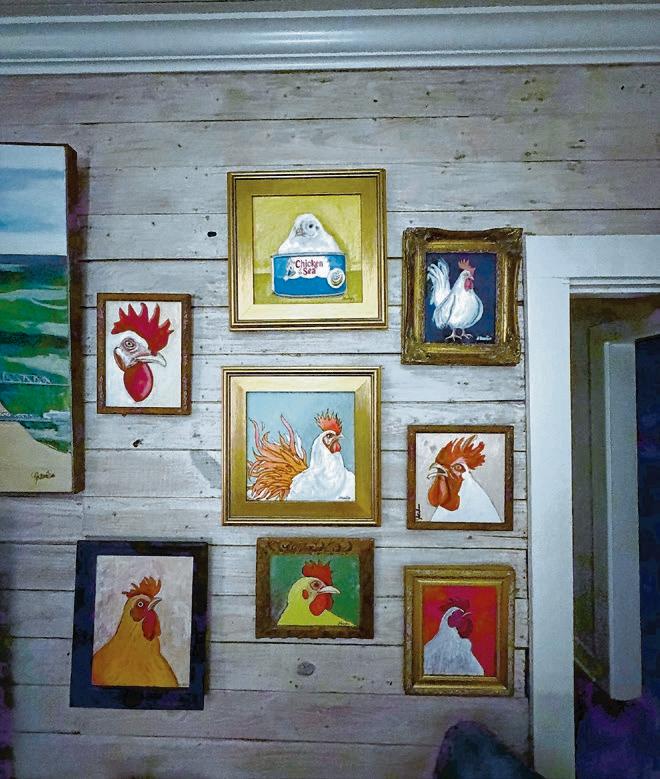
For most of my life, I haven’t hesitated to hang things on the wall. My husband can verify that I’m not good at waiting in most circumstances — and that applies to putting art on walls too. Even so, he hangs art faster than I do.
While I
or
BY JOY HOLDEN Staff writer
Nestled in the East Feliciana woods is a red brick church with white columns built in 1953. However, upon closer inspection, this place for worship is now a place of knowledge, the Clinton branch of the Audubon Regional Library
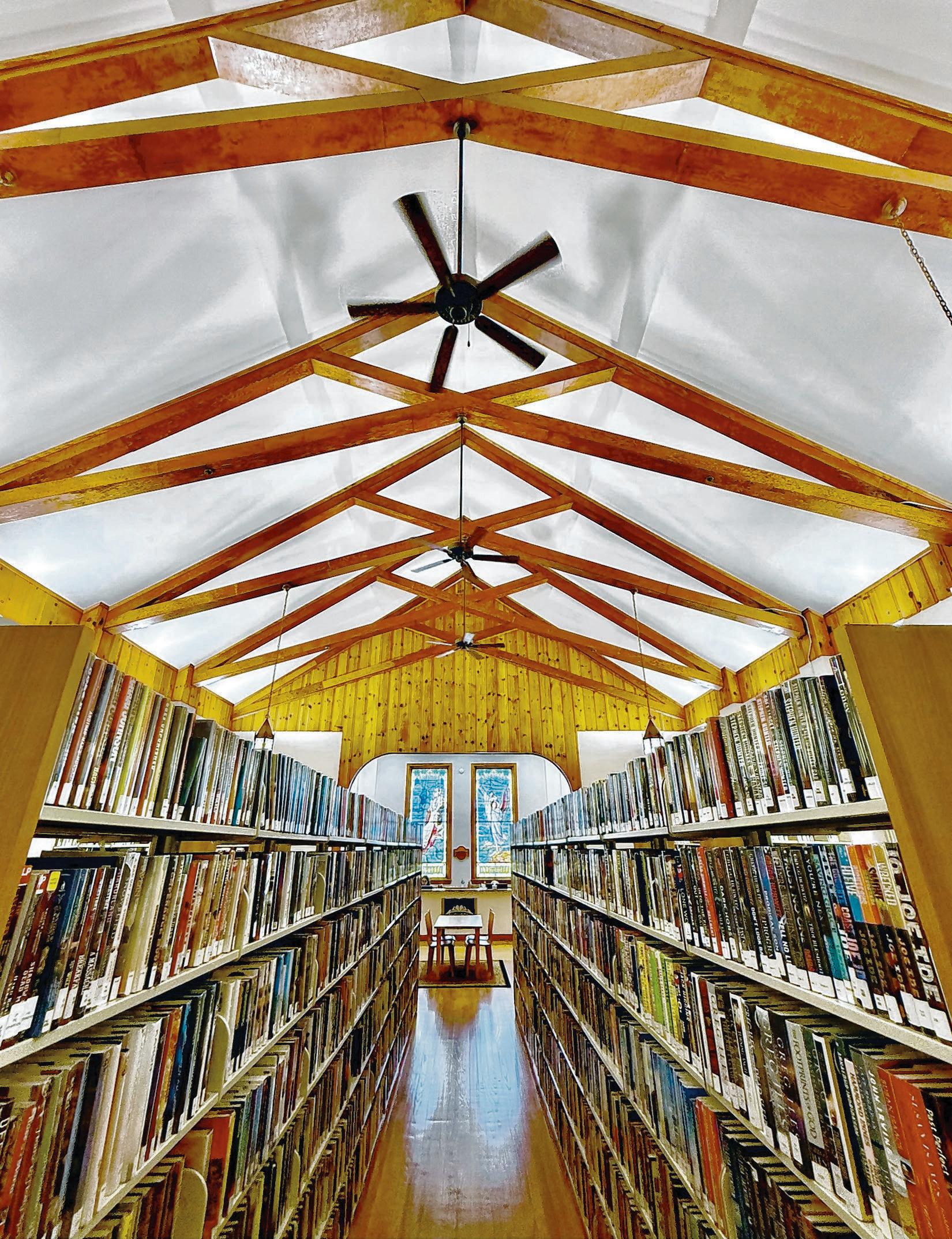
Formerly the Clinton Presbyterian Church on 11023 Bank St., the Audubon Regional Library now is full of shelves and books instead of pews and hymnals. Multiple panes of stunning stained glass line the walls of the library, and original wood floors and wooden trusses still evoke a hallowed atmosphere. Original pendant lights emit a soft glow But on Sundays, the doors are closed. Every other day patrons are free to walk in, use the computers, use the internet, choose and check out books.
Repurposing sacred space
Before inhabiting the former church, the Clinton branch had been located in Lawyers’ Row since 1917. Lawyers’ Row is a strip of white historical buildings behind the parish courthouse, and although the exterior of the former library was beautiful,
historical buildings as much as they can, as opposed to tearing something down and building something brandnew I think it was good that we were able to update the space,” LeGette said.
Clinton Presbyterian Church was founded in 1855 but had moved into the building located on Bank Street in 1953. A strong presence in the community at one time, membership and attendance dwindled over time.
In 2020, the Clinton Presbyterian Church congregation was down to four members, and they were discussing how to responsibly take care of their property and dispense with it.
Presbyterian minister Betsy Irvine was serving there at the time, and she helped them find a solution.
“We didn’t want it to be torn down and become a housing development or turn into an insurance company We wanted something that was somewhat in line with the mission of a church,” Irvine said.
the inside was limited in space.
Aubrey LeGette, a Clinton native and the library branch manager, grew up going to the old location. While historic, the space was cramped and tight, he said. The new location, however has plenty of room for more books, a children’s room and space for programming.
“In Clinton, people like to retain the
Irvine and the church members started having conversations with people in town, and several mentioned that the library was a tiny space. The church and the library board met and the church offered the building and land to the Audubon Regional Library
“We thought it would be a marvelous space for a library It’s close to town You can walk to it It’s big, it’s open. It has lovely property with grass and trees, so you could have a playground,” Irvine said.
After getting the community in
with
Our different approaches to picture hanging have led to more than one, shall we say, conversation. Over the years, we’ve worked through the process. He has learned the wisdom of consulting me before too many nails go in the wall, and I have learned the wisdom of letting some things go. The bottom line, though, is that both of us like our surroundings to feel finished and full of things we believe are beautiful. After our house fire in August, we were able to recover most of our art, thanks to the firefighters who recognized without ever having met us — that the art on the walls mattered to us. They saved many of our treasures. Once the artwork was cleaned and sanitized, we were able to bring it to our rental as work continues on the rebuilding process of our home.
On the first day the artwork arrived, I was not surprised that my husband had hammer and nails in his hands and was getting the pictures up. We don’t expect to be here for very long, but still the pictures are on the walls. For the first time, I gave him free rein to hang the pictures however and wherever he wanted. Their topsy-turviness is endearing and what a difference they’ve made. They brought a familiarity that was almost unsettling at first. Still, the walls did their job and helped hold our story
Hanging the artwork during this tumultuous and uncertain time has reminded me of another period of my life. Years ago, when I was young and living far from home, waiting on the next thing to become clear, I stopped hanging things on the wall. Not intentionally Not as a declaration. I just… didn’t do it. Pictures leaned against dressers. Art lived in closets.
After months of something nagging at me, I realized it was the lack of art on the walls.
Even though I was a baby adult, I had never been someone who didn’t hang pictures on the walls. Bare walls almost felt wrong — like I was pretending not to be where I was. Like I was refusing to admit that this place, however temporary it felt, was still my life.
The feeling began to bother me so much that I mentioned my unease to a friend.
He asked why I hadn’t hung the pictures. I explained that I didn’t know how much longer I would be there and didn’t know if hanging them would be worth the effort.
From there, he asked a simple ques
STAFF PHOTO BY ROBIN MILLER
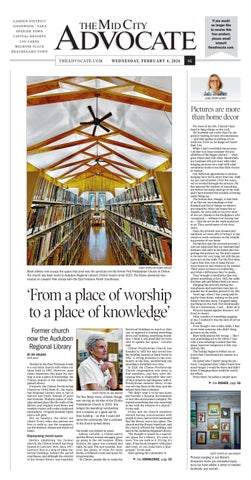
Book shelves now occupy the space that once was the sanctuary for the former First Presbyterian Church of Clinton. The church has been home to Audubon Regional Library’s Clinton branch since 2023. The library previously was located on Lawyers’ Row across from the East Feliciana Parish Courthouse.
ASK THE EXPERTS
Firefly pollinator project underway in Jean Lafitte
BY JOY HOLDEN Staff writer
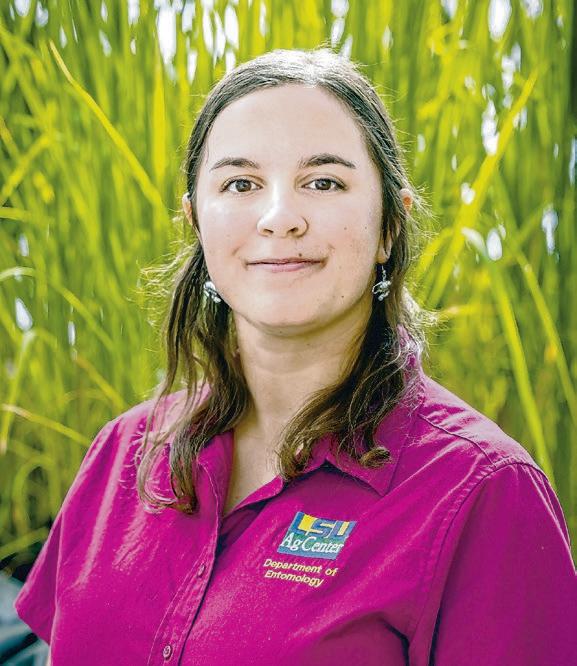
Chalmette native Christine Gambino grew up on a rice farm in Mamou, where she used to see fireflies regularly She left the farm to attend LSU and graduated in 2016 with a degree in horticulture. Since then, she has been working in extension with the LSU AgCenter. She is stationed in the Entomology department at LSU where she is working toward her master’s degree. Gambino and Aaron Ashbrook, another LSU AgCenter entomologist, have been working with the small town of Jean Lafitte, which is located on Bayou Barataria 23 miles south of New Orleans, to restore the firefly population.
How did this fireflies project come about?
The then mayor of Jean Lafitte, Tim Kerner Jr., reached out to me and Aaron as extension personnel within the department. We’ve had a few pollinator projects in our back pocket now In the Wetland Trace, where (Kerner was) growing up, he used to see fireflies all the time, and he had some other city folk around to talk to us about the historic fireflies that were in the area. We were wondering if we could try to get them back because it’s such a loss to their community to have that gone. What actions did your team take?
We surveyed the site for fireflies to see if they even had a baseline population, and we went back multiple times. Sadly, we came up short in that there was no evidence. But there is still a chance. They could be where we didn’t sample. Then we did research on fireflies, because neither me nor Aaron are experts in fireflies. We have those academic resources at our disposal to be able to find out ways to restore their habitat. We really focused on restoring the habitat for the fireflies
KNOWLEDGE
Continued from page 2G
volved and going through the proper channels, the exchange was made, and the church even donated money for repairs and renovations. The church had one stipulation — that a small room be set aside for church history and church objects. Today that small room also functions as an office, but it has a large display case of church photographs, old Bibles and church artifacts
“I’ve always been interested, ever since I graduated from seminary many years ago, in how churches can share space, and how we can make sacred space also community space. It brings me joy to reuse things responsibly, and it’s a win-win for everybody involved,” Irvine said. The library just recently celebrated two years in the location, having opened Dec. 27, 2023.
Preserving the unique beauty of the space was a priority both for the church and for the library Trevor Collings, library director of Audubon Regional Library, has been there for three years and oversaw the renovation. He is proud that the
By Christopher Elliott
to come back. One of the biggest issues with fireflies is what I call the Triple P people, pesticides and population. People are moving into the area and shining their lights, which disrupt the firefly mating patterns, and building houses where the fireflies historically lived. Then, pesticides are impacting them just like they’re impacting our honeybee population. There’s lots of correlations between the two. And their populations are declining because our populations are increasing in the area.
And also in Jean Lafitte, Hurricane Ida came through the area and completely disrupted their whole way of life. We’re also thinking that the wetland area was flooded by this hurricane and could have drawn all the larvae back into the swamp.
How did you create the habitat for the food that the fireflies eat?
Firefly larvae are voracious predators. They actually inject a neurotoxin into their prey that paralyzes them so then they can eat them while they’re still alive. The larvae live in leaf litter areas and areas where there are slugs, snails and all sorts of little insects running around for them to paralyze and eat.
Q&A WITH CHRISTINE GAMBINO ENTOMOLOGIST
The first step we took was to get the community to gather up all the leaf litter that they could and distribute it in specific sites around the Wetland Trace that me and Aaron deemed were less likely to be impacted by floods, yet close enough to the area where we planted all the native plants So when the females are flying around, they’ll be like, “Oh my gosh, this is such a great place to have my babies.”
architectural integrity of the church was maintained through the transition In fact, the library was featured in Library Journal‘s 2024 architectural showcase for renovations of small libraries.
Two reminders of the sacred purpose of the building hang above the circulation desk two Art Nouveau stained glass windows that portray angels and a woman clutching a stone cross among the waves. These windows were gifts from St. Charles Avenue Presbyterian Church in New Orleans.
Sanctuary of knowledge
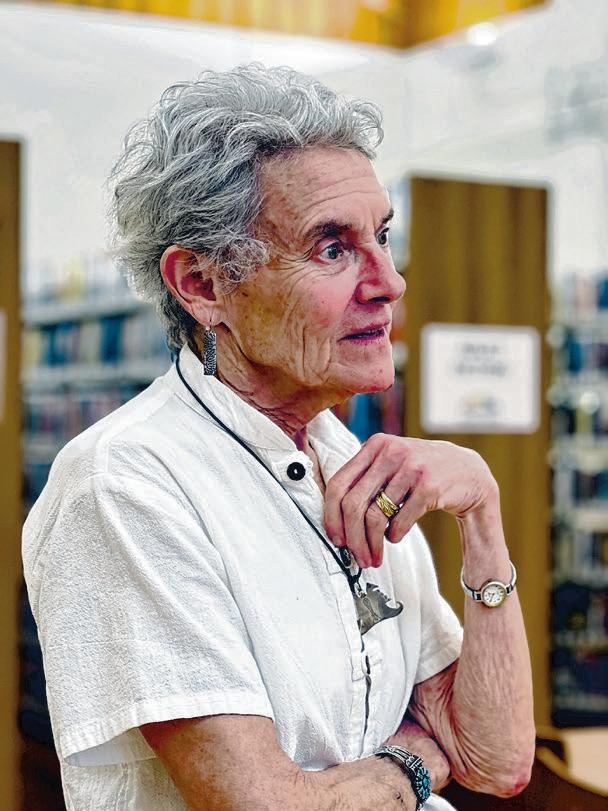
“I think we were able to retain the history but modernize it and create a space that is good for the public,” Collings said. “It’s not a place of worship anymore, but it is a place of knowledge, and I think that’s still honoring the intent.”
Audubon Regional Library is a two-parish library system which includes East Feliciana and St. Helena Parish. Both parishes understood the importance of a library to their communities and partnered together to offer library services for all. The three branches are in Clinton, Jackson and Greensburg.
“I like creating spaces and places that people will be able to use for years to come to help themselves grow and move forward in whatever way they choose. So this is one of my favorite aspects of librarianship,” Collings said.
The Clinton branch has recently made some improvements that will open up more opportunities for the community a new fence, parking lot, playground, sidewalks and a covered outdoor area. Collings and LeGette say the playground ribbon cutting should happen at some time in the next couple of months.
“It seems to have been a popular thing to do. People are very eager for it to open up,” said LeGette.
Collings is looking forward to expanding outdoor programming like movie nights and nature story time. He noted that children’s librarianship is important because it can make a difference in someone’s reading habits and intellect
“However you want to define the problems in the world, in small ways, not always huge ways, libraries are always part of the solution,” Collings said. “I’ve never in my life had trouble going to sleep at night from working in a public library.”
be transferred back to you by the party that took your original payment — in other words, your airline.
It adds, “We do not have visibility of a Travel Provider’s refund process.”
immediately You paid Expe-
dia — not Alaska or EVA Expedia’s terms of service are noncommittal when it comes to airline refunds. It says any refunds will
But the Department of Transportation (DOT) is clear about who’s responsible. Its regulations mandate automatic refunds for cancellations, regardless of cause — no loopholes for “staffing issues.” I think the DOT might hold Expedia responsible, especially if it charged your credit card.
Expedia played a shell game with your money, wasted your time with useless chatbots and ignored paper trails. Come on. You wisely documented every
We established those about seven months ago during the springtime. If there were fireflies in the area, hopefully they would go and have their babies there. Then we worked with a native landscaper’s plant nursery, Sweet Fern Landscapes, and she grew out a long list of plants for us. Her nursery worked with Jean Lafitte to get them transported from St Francisville.
They got those delivered, and the community worked so hard. We planted them around a 1,500-squarefoot area that serpentines along their little bayou, which already has some established native trees in the area. They’re old growth trees that hopefully will support the mating of the lady fireflies.
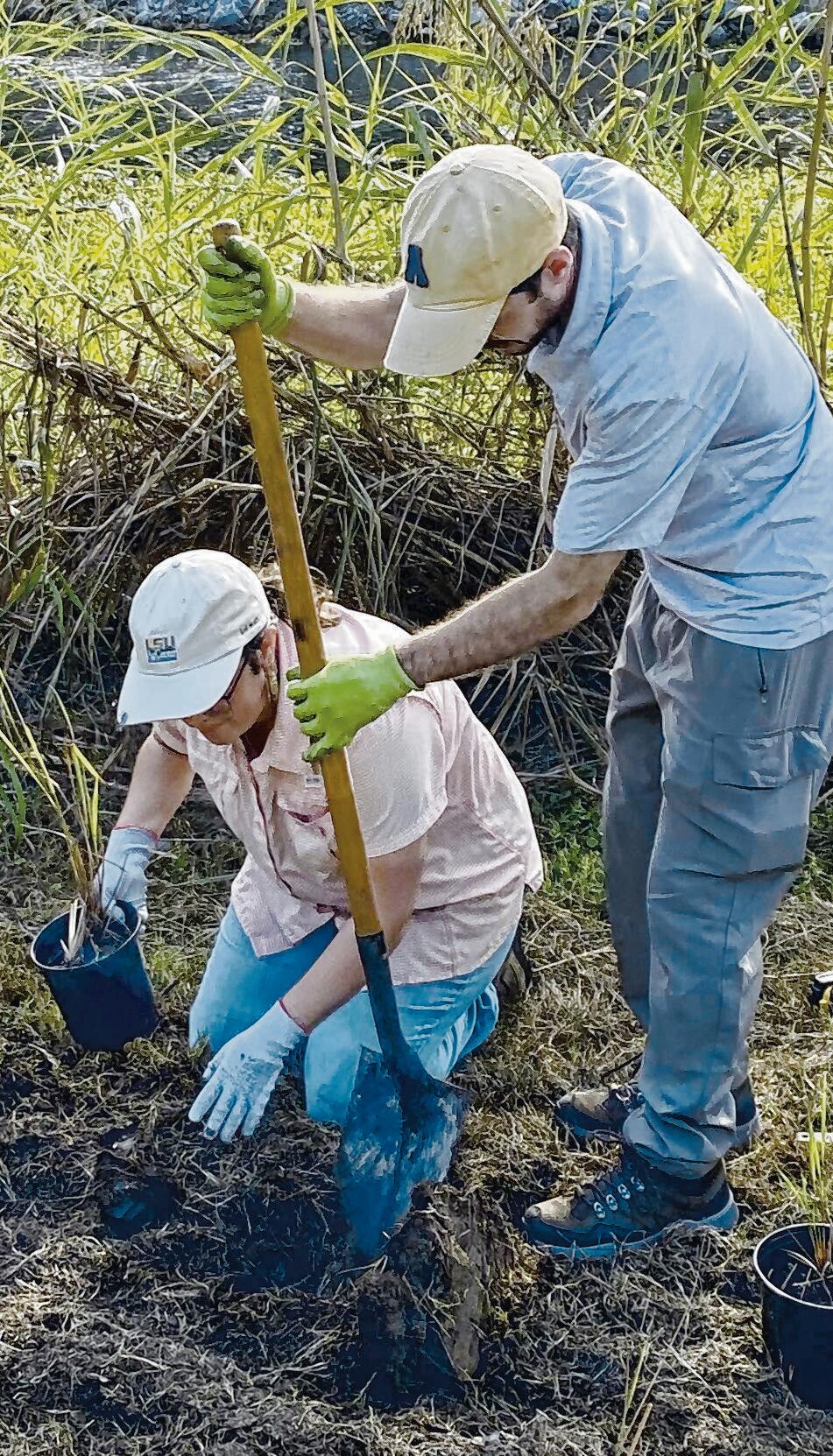
We scheduled a day with the town of Jean Lafitte to plant all these plants, and we had around 30 volunteers come out. The trail maintenance guard, Joe Horne, put fire ant bait out on all of the anthills because fire ants are a very big predator of firefly larvae. Tim Kerner Jr., who won the race for district councilman, was replaced by Mayor Yvette Crain. We have a really good working relationship with her Is your working relationship with Jean Lafitte going to continue?
That is the plan. Me and Aaron will take another trip out there probably in the middle of January Tim Kerner Sr and Jennifer van Bracken, the council member at large of the area, came and supported us as well. They were instrumental in really making this happen and coordinating with the leaf litter folks.
It’s our plan to keep close in touch. Aaron and I got a grant for this through the LSU Student Sustainability Fund, and we were able to hire a student worker Briana Carpenter, to work on this grant with us. Is the Jean Lafitte fireflies project something that can be expanded to other areas? We’re looking to do a project just the same at Burden Botanical Gardens in Baton Rouge, and Briana will take the lead on growing the plants out and surveying the area. In surveying for insects and for fireflies in Jean Lafitte and at Burden, we can compare the two and maybe learn from them.
RISHER
Continued from page 2G
tion.
“How long would you need to live somewhere,” he said, “to have the mindset that you’d hang things on the wall?” I thought for a moment and said, “Two years.”
He nodded. Then he said something that has stuck with me.
“Well then, since you don’t know how long you’re going to live there, assume that it’s two years,” he said, “and hang the pictures.”
So, I did.
And the relief was incredible.
The walls didn’t just change the room. They changed me. Hanging the pictures felt like stepping back into myself like reclaiming a way of living I’d temporarily misplaced. It wasn’t really about commitment to the place. It was more about staying in relationship with my own life.
Right now, in a rental house filled with rental furniture, 67
pictures hang on the walls. (Yes, middle schoolers, it really is 67 pictures.)
My husband and I have taken turns reminding each other that this rental isn’t just a placeholder — it is where we are now If the fire has taught us anything, it is that we can’t wait for certainty
Certainty is an illusion.
My husband knows instinctively what my wobbly season helped me relearn: You don’t postpone living just because the future hasn’t checked in yet. Looking back, that bare-wall season tells me something important.
It wasn’t evidence that I’m cautious or hesitant by nature, because I am not. It was proof of how disorienting that time felt — a moment when my internal compass wavered. For most of us, it’s the small departures from our usual habits that tell the biggest truths.
And now whether it’s a house, a season or a temporary address, I don’t hesitate.
I don’t need certainty to hang the pictures. I just need a wall.
interaction, saved Alaska’s cancellation confirmation and persistently escalated your request. Still, I have three tips for next time: First, demand refunds in writing within 30 days — companies stonewall, hoping you’ll quit. Second, when frontline reps shrug, skip the chat roulette and email Expedia’s executives. I publish their contacts on my consumer advocacy site, Elliott.org, for this exact purpose. Finally, you can contact the DOT when an airline or online agency won’t refund you. Typically, that will get a quick response. By the way, I wanted to commend you on your choice of a vacation destination. Cambodia is rich in culture and history and
one of my favorite places. I hope it was worth the five-hour drive to Seattle to make your flight. I contacted Expedia on your behalf and separately, you also reached out to EVA’s executives, which controlled your ticket. Finally, almost a year after your flight cancellation, you received your $500 refund from EVA While I’m glad EVA finally did the right thing, it should have not taken a year or an advocacy team to fix this mess.
Christopher Elliott is the founder of Elliott Advocacy, a nonprofit organization that helps consumers solve their problems. Email him at chris@elliott.org or get help by contacting at elliottadvocacy.org.
PHOTO PROVIDED BY EDDY PEREZ Christine Gambino, entomologist at LSU AgCenter
Christine Gambino plants native plants to attract fireflies to Jean Lafitte’s Wetland Trace with colleague Aaron Ashbrook.
Travel-friendly family projects keep things crafty
BY MYSCHA THERIAULT Tribune News Service (TNS)
Need a family-friendly art activity conducive to travel? Something you can enjoy, but will also keep the kids entertained during a visit with the grandparents? I’ve field tested the following ideas in a number of settings around the world, and with a wide range of ages to boot.
Bonus? These crafts can be cranked out even in the absence of a formal art supply store That’s right. Using only free items pulled from the recycling and inexpensive supplies from small discount stores, you can create mail art, impromptu party decorations, and more. Try these projects during your next family vacation.
Sculptures
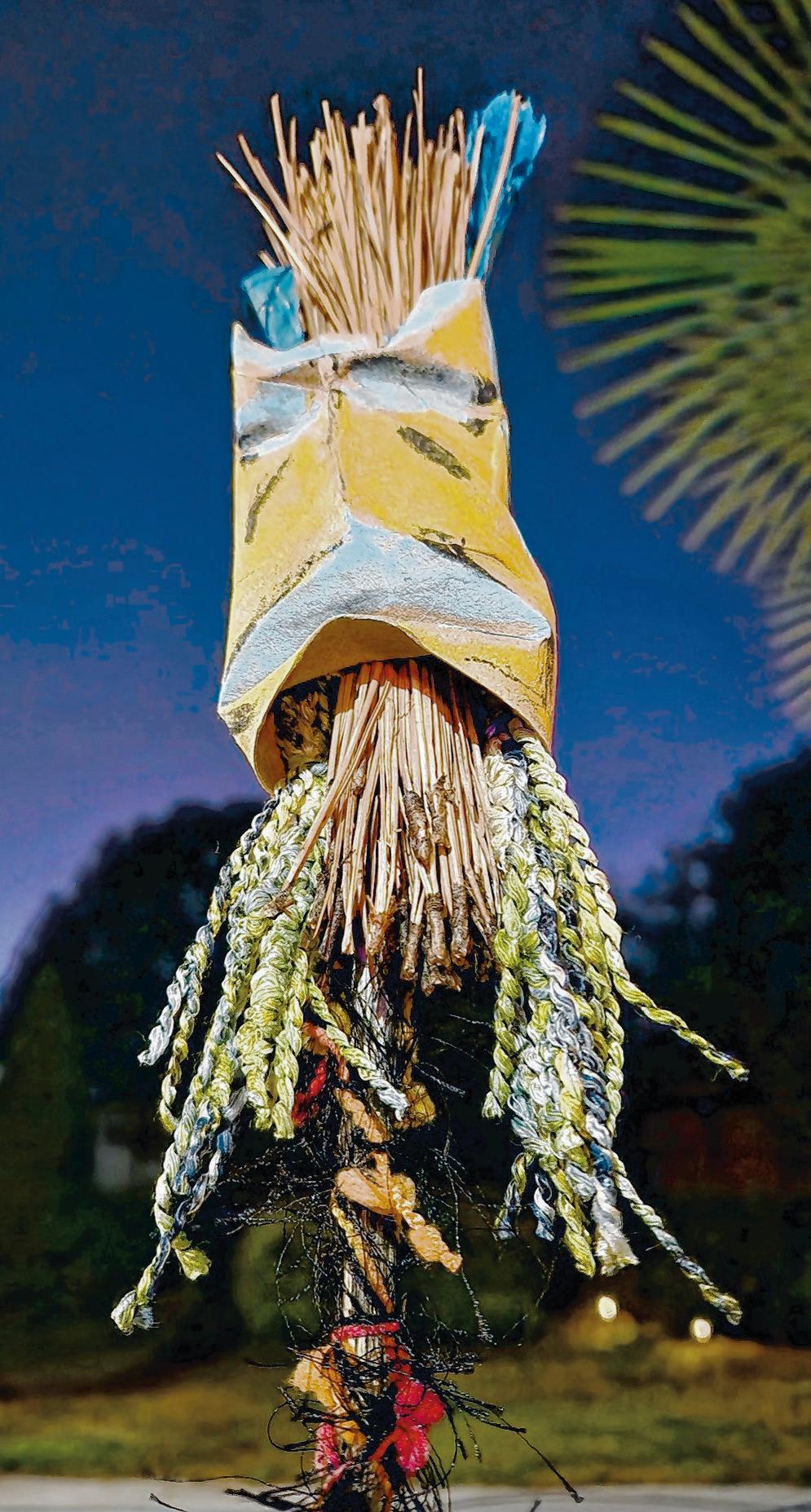
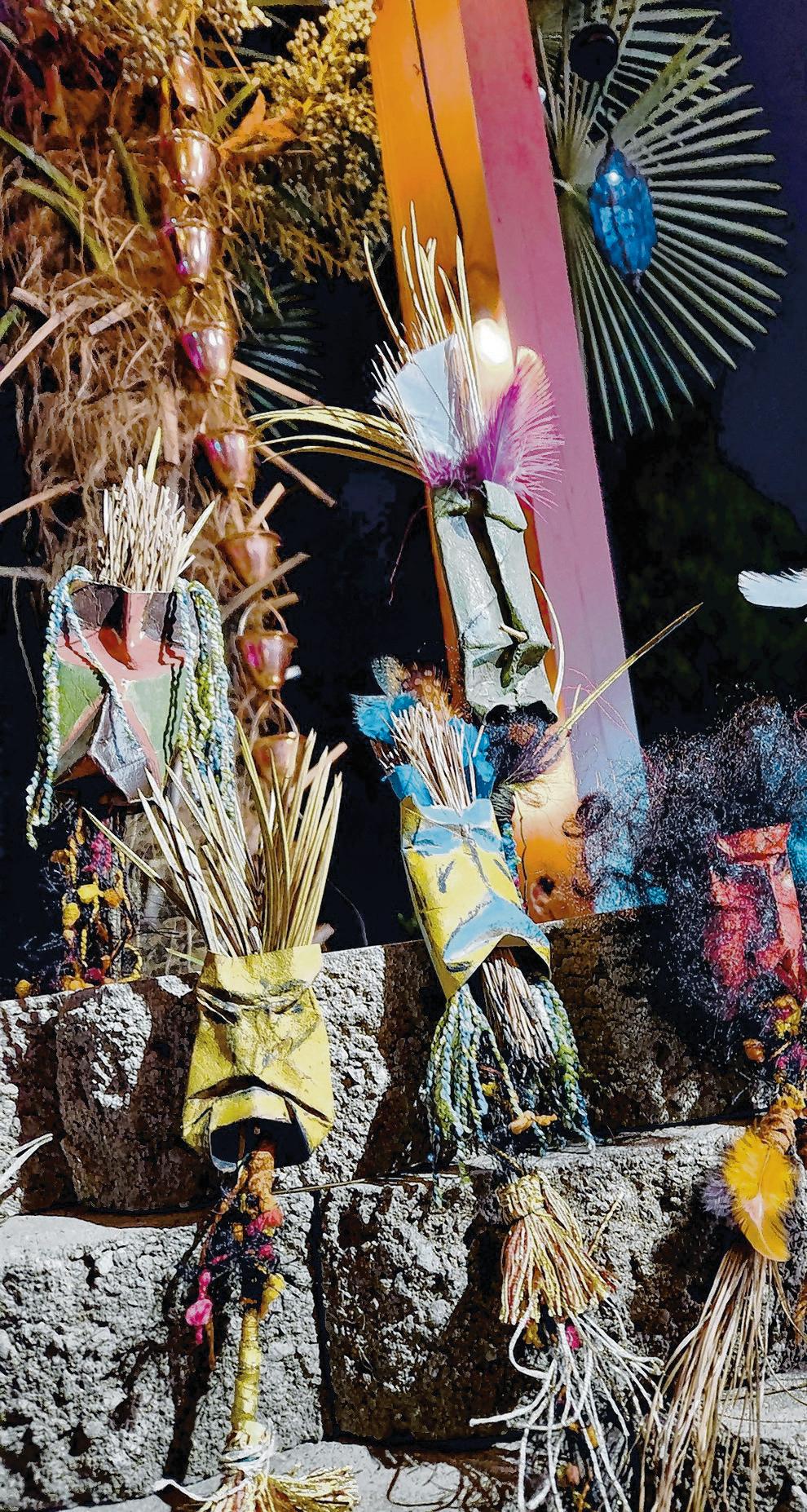
If the word “sculpture” leaves you feeling overwhelmed with visions of wood-carving tools, messy clay, and the mayhem either could cause in the hands of younger artists on family holiday be stressed no more. A phenomenally versatile supply exists right next to your toilet. Yup, those little cardboard tubes at the center of your bathroom tissue rolls are good for more than preschool puppet theater While there is no shortage of repurposing ideas for these things, the one that really caught my eye this past year was mask sculptures. Some of the most inspirational ones out there were created by artist Junior Fritz Jacquet, whose finished faces have provided inspiration for a fair number of teachers, students, and art content creators The more complicated examples will require a fairly deep dive. However, there are simpler approaches which still look amazing, even for young beginners. A simple internet search and one of the empty roll tubes will get you started. From there, you can add embellishments as I did, or simply choose one basic pigment to layer over the cardboard. You can also use a piece of charcoal, or dark colored pastel to add more visual depth to the nooks and crannies. The first time I tried one of these, I had difficulty with some of the tighter folds. During my practice session however, I noticed that after a few scrunches and squishes, I could manage a sculpted face which looked very much like an Easter Island statue or a Polynesian tiki carving. So that’s the direction I took. Frankly, I had a ball. So did several of my friends and neighbors. After producing a few examples on the road, I brought the concept home and hosted a community craft night on the back porch of my favorite watering hole. It was a huge hit
Free supplies included the cardboard tubes, along with sticks, pine needles, and moss from a nature hike. Other items I picked up at a creative reuse center including remnants of upholstery trims, art yarn scraps, partially used tubes
of craft paint, and a couple of costume wigs to cut apart for hair. In towns without a creative reuse center, I have found similar items at thrift and dollar stores. Wrapping sticks with threads, trims, and other bits, then attaching them to finished masks produces a collection of tiki totems you can enjoy in a number of ways. Place a few in a container with greenery to add flair to a tropical cocktail evening, or put a haunted island spin on your next murder mystery dinner party
Prints
While there are several types of printmaking achievable on the road with minimal equipment, I’ve found hand-carved stamps to be the easiest. If you don’t have
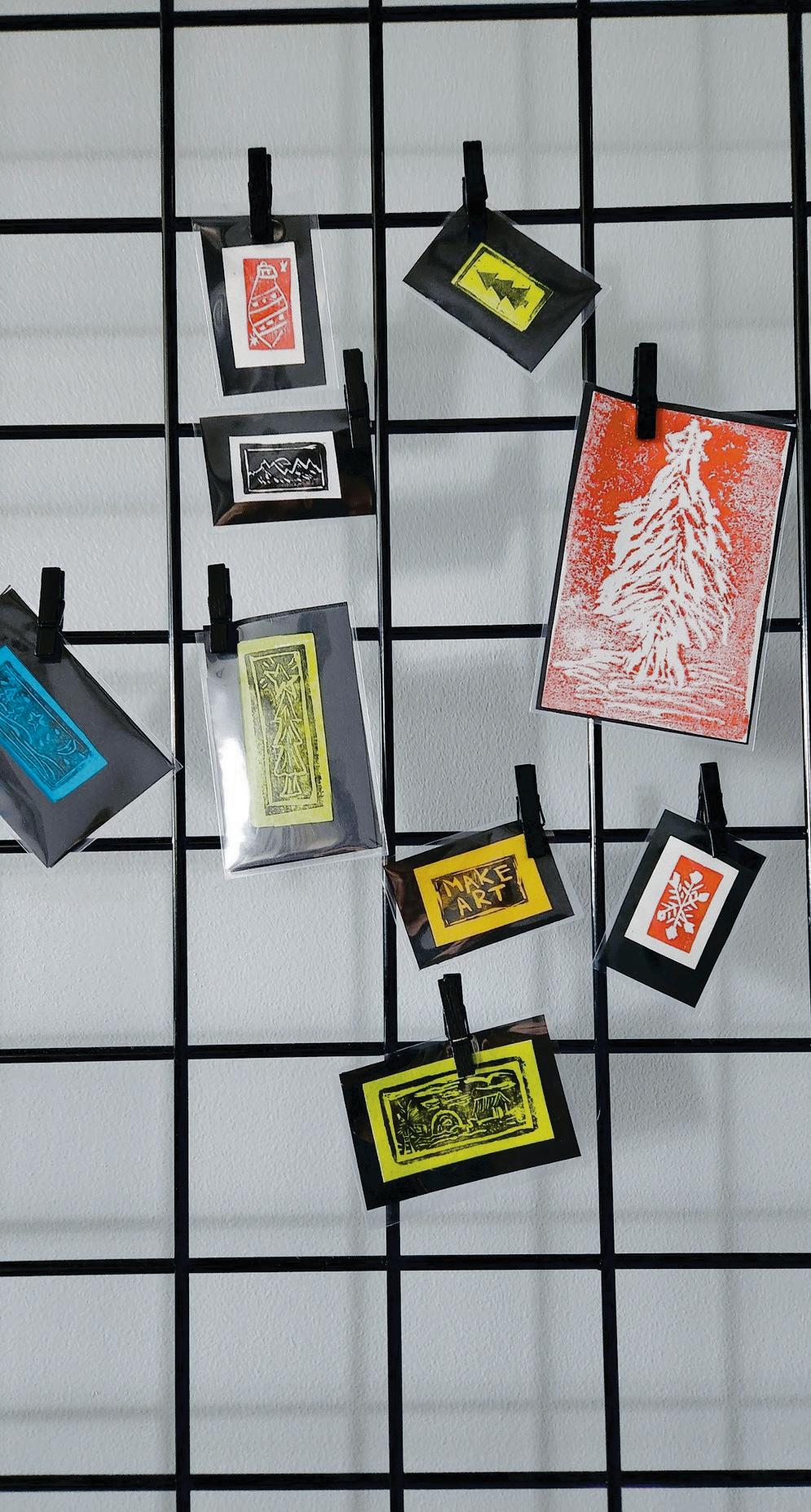
a travel set of linocut blades to carve rubber mats or old vinyl erasers into your scene of choice, one of the most accessible solutions is flat styrofoam packaging and your average ballpoint pen. Simply save and sanitize the foam trays from meat and takeout purchases and slice the curved parts away, leaving only the flat portion. Cut to your desired size, and trace a design into the foam, leaving grooves which will form the details of your print. Be advised that younger hands will be more successful with larger pieces of foam and less detail. The only other supply you need is a moistened ink pad. I have a small one I usually make room for in my luggage, which I store in a leakproof bag. If you’d rather not take
that risk, I have seen these in some fairly small village markets. I’m speaking of the type where they stock everything from basic school supplies to kitchen towels and tea kettles. Ink pads are pretty easy to access. If you run into problems, you can always use craft paint. At this point, you’re basically ready to press your stamp into the pigment and stamp on your paper of choice. Smaller stamps provide a wider range of options for using repurposed paper items. The brown craft paper that comes wrapped around shipped items, bits of business envelopes from the mail, and even empty sections of printed documents can come into play if archival paper isn’t at your disposal. For example, I’ve found that black ink stamped on
brown packing paper with torn edges can look quite striking on a black background. If you’re worried about having limited patterndrawing experience, don’t be. I’ve done pencil-carved foam stamps in remote locations with students as young as seven. Seriously, you’ll be surprised at how rewarding the finished product can be. These pint-sized prints can serve a number of purposes. I’ve personally used them to add dimension to an art journal entry, as handmade gift tags, and to decorate thank you notes. Giving them as a gift? Try adding a backing, or a coordinating mat and frame to elevate the look. They are also fun to have on hand if you happen to stumble upon one of those free tiny art galleries during your adventures.
Postcards
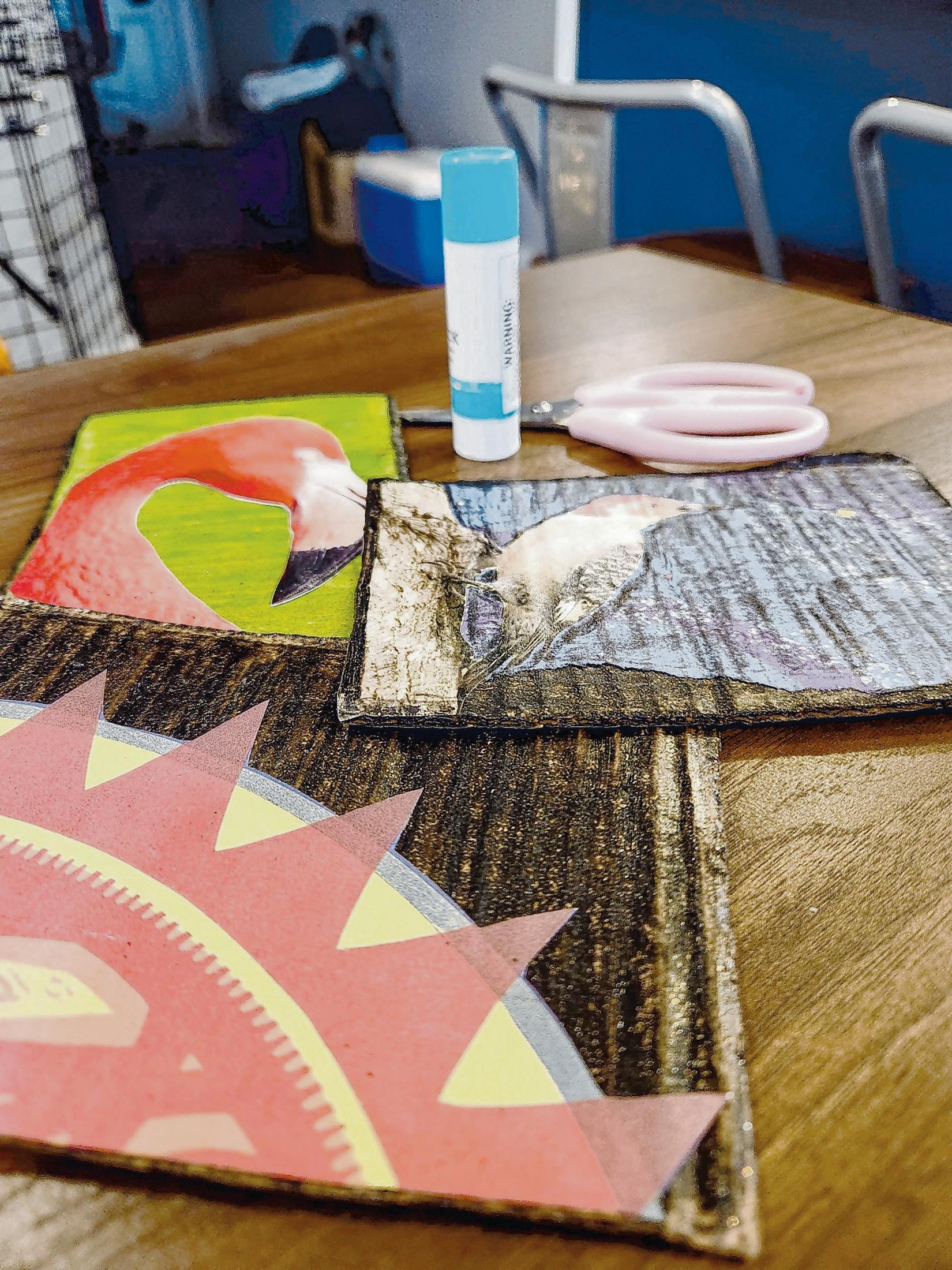
I’ve been making homemade postcards and sending them to friends for a few years now The skill-level barrier for creating them is extremely low, while the freedom to elevate the end product as your artistic talents grow is virtually unlimited. This means that in addition to being quite a bit of fun to do, they are also achievable for travelers of many ages and abilities. The best part? People are legitimately tickled to find these in their mail, no matter how abstract, rustic, or quirky their particular postcard is. There’s a reason ideas and tutorials for mail art and pen-pal clubs have had a resurgence. There’s something heartwarming about getting an item in the post that isn’t a bill or a sale flyer It makes people feel seen. And the more real and vulnerable you are with the postcards you make, the more the people who receive them will feel they can really see you too. While you can certainly spend a small fortune on supplies to start this project, it is absolutely unnecessary In many parts of the world, it isn’t possible to overspend anyway, as supply sources are few and far between. Some of the most basic cards can be created with empty food boxes from the pantry, tourism brochures, and a few readily available basics such as scissors, a glue stick, and some crayons. You’ll also need something to glue on the imaged side of the card you cut from the food box so you can decorate it. Blank index cards are usually my first choice, but do what works for you. From there, just color in a background, cut an interesting image from one of your brochures to collage on top of it, and add your address and message to the plain background of the completed postcard.
Bottom line? There are a number of ways to be creative while traveling, many of which don’t require lugging along a ton of tools and equipment in your pack. With a little ingenuity and a bit of leftover packaging, you can create more art than you might expect.
TNS PHOTOS BY MYSCHA THERIAULT