ATLANTA An injunction barring the enforcement of Florida’s drag-show ban will remain in effect after a federal appeals court ruled Tuesday that the law is likely unconstitutional A three-judge panel for the 11th Circuit Court of Appeals voted 2-1 to back a lower court decision that described Florida’s law, purportedly aimed at protecting children from drag shows, as overly broad and vaguely written The case now returns to the Middle District of Florida, where a federal bench trial can be scheduled.
Attorney Melissa Stewart, who is representing Hamburger Mary’s, a drag-themed casualdining restaurant, said they’re thrilled the First Amendment rights of Floridians will remain protected as the case continues.
“The Court’s opinion recognizes this law for what it is — an egregiously unconstitutional attempt to censor the speech and expression of citizens,” Stewart said. Brian Wright, a spokesman for the Florida governor’s office, called the ruling an overreach by a federal court.
“No one has a constitutional right to perform sexual routines in front of little kids,” Wright said. “We will do everything possible to have this lawless decision overturned.”
The Hamburger Mary’s in Orlando, which filed the lawsuit in 2023, regularly hosted drag shows, including family-friendly performances on Sundays that children were invited to attend. The restaurant closed its downtown location last year but plans to reopen at a new spot in nearby Kissimmee. The restaurant’s owner has said the Florida law violated First Amendment rights by chilling speech.
Pope Leo XIV is back on social media
VATICAN CITY Pope Leo XIV has taken over the Vatican’s official social media handles, with a first Instagram post on Tuesday repeating the first words he said to the world as pope: “Peace be with you all!”
The @Pontifex – Pope Leo XIV post featured some of the photos that have documented the first days of history’s first American pope.
The Vatican said it was archiving the posts from Pope Francis’ 12-year papacy On X, the new account didn’t appear to be active Tuesday
The Vatican launched the @Pontifex handle in 2012 during the pontificate of Pope Benedict XVI. It now comes in a variety of nine languages — English, Spanish, Portuguese, Italian, French, German, Polish, Arabic and Latin and counts a combined 52 million followers
Past popes didn’t actually send the posts, which were curated by the Vatican. The former Cardinal Robert Prevost occasionally posted on X in an account started in 2011. It had been dormant since July 2023 but came back to life earlier this year to share criticism of Trump administration migration policies and comments by Vice President JD Vance.
Nvidia to send 18,000 AI chips to Saudi Arabia
U.S. chip maker Nvidia will partner with Saudi Arabia’s sovereign wealth fund-owned AI startup Humain and will ship 18,000 chips to the Middle Eastern nation to help power a new data center project.
The partnership was revealed Tuesday as part of a White House trip to Saudi Arabia, Qatar and the United Arab Emirates. Saudi Arabia has been working to develop its artificial intelligence capacity and strengthen its cloud computing infrastructure with the help of foreign investment.
“AI, like electricity and internet, is essential infrastructure for every nation,” said Jensen Huang, founder of Nvidia. “Together with Humain, we are building AI infrastructure for the people and companies of Saudi Arabia to realize the bold vision of the Kingdom.”
The cutting-edge Blackwell chips will be used in a 500-megawatt data center in Saudi Arabia, according to remarks at the Saudi-U.S. Investment Forum in Riyadh on Tuesday
a strike targeting what it said was a Hamas ‘command and control center’ located beneath the hospital.
BY MARY CLARE JALONICK Associated Press
WASHINGTON Senate
Democratic Leader Chuck Schumer said Tuesday that he will hold up all Department of Justice nominations on the Senate floor until he gets more answers about the free Air Force
One replacement that
President Donald Trump says would be donated by Qatar
Trump said this week tha t he wants to accept the $400 million plane, and that it would later be donated to a presidential library White House press
work and stressed the importance of following federal laws that govern how a U.S. president can accept gifts from foreign countries.
“We need to look at the constitutionality of it,” said Sen. Shelley Moore Capito, R-W.Va., who said she’d be concerned about possible spying devices installed on the plane
Republican Sen. James Lankford of Oklahoma said that Trump had said he would follow the law, and “that’s the right answer.”
Netanyahu: ‘No way’ Israel halts war Schumer vows to push for answers about Qatar luxury plane
BY MELANIE LIDMAN and ELENA BECATOROS Associated Press
TEL AVIV, Israel Israeli Prime Minister Benjamin Netanyahu says there is “no way” Israel will halt its war in Gaza — where airstrikes on two hospitals Tuesday killed at least eight and wounded dozens even if a deal is reached to release more hostages.
Netanyahu’s comments are likely to complicate talks on a new ceasefire that had seemed to gain momentum after Hamas released the last living American hostage on Monday in a gesture to U.S. President Donald Trump, who is visiting the region but skipping Israel.
They pointed to a potentially widening rift between Netanyahu and Trump, who had expressed hope that the release of Israeli-American soldier Edan Alexander would be a step toward ending the 19-month war
The Israeli military on Tuesday struck what it said was a Hamas “command and control center” located beneath a hospital in the southern Gaza city of Khan Younis The strike on the European hospital was the day’s second strike on a hospital, and left at least six people dead and 40 wounded, according to Gaza’s Health Ministry
The dead were taken to Nasser hospital, which Israel struck earlier in the day, saying militants were operating inside it, without identifying them. Two people were killed in that strike.
In comments released by Netanyahu’s office Tuesday from a visit to wounded soldiers the previous day the prime minister said Israeli forces were just days away from a promised escalation of
force and would enter Gaza “with great strength to complete the mission. It means destroying Hamas.”
Any ceasefire deal reached would be temporary the prime minister said. If Hamas were to say they would release more hostages, “we’ll take them, and then we’ll go in. But there will be no way we will stop the war,” Netanyahu said. “We can make a ceasefire for a certain period of time, but we’re going to the end.”
Hamas has said it will only release the remaining hostages in return for more Palestinian prisoners, a lasting ceasefire and an Israeli withdrawal from Gaza. The dispute over whether to end the conflict has been the main obstacle in negotiations going back more than a year
Israel says 58 hostages remain in captivity, with as many as 23 of them said to be alive, although authorities have expressed concern about the condition of three of them. Many of the 250 hostages taken by Hamas-led militants in the Oct. 7, 2023, attack that started the war were freed in ceasefire deals.
Monday’s release of 21-year-old Alexander resulted from negotiations between Hamas and the Trump administration that appeared to have largely bypassed Israel, which made no concessions for his release.
Alexander, who was 19 when he was taken from an Israeli army base during the 2023 attack, was the first hostage released since Israel shattered an eightweek ceasefire with Hamas in March and unleashed fierce strikes on Gaza that have killed hundreds of Palestinians.
Israel has promised to intensify its offensive, including by seizing Gaza and displacing much of the territory’s population again.
French actor Gérard Depardieu convicted of sexual assault
BY SYLVIE CORBET Associated Press
PARIS French movie star
Gérard Depardieu was convicted Tuesday of sexually assaulting two women on a set and received an 18-month suspended prison sentence in a case that was widely seen as a post#MeToo test for the country’s film industry.
The 76-year-old Depardieu, one of the most prominent figures in French cinema for decades, must also pay both accusers a total of around $32,350 in fines, and the court ordered that his name be listed in the national sex offender database
The actor was convicted of groping a 54-year-old woman responsible for decorating the set and a 34-year-old assistant during the filming of “Les Volets Verts” (“The Green Shutters”) in 2021 Depardieu, who has denied the accusations, did not attend the hearing in Paris. His lawyer said that his client would appeal the decision.
The case offered a fresh assessment of how French society and its filmmakers would handle sexual misconduct allegations against a top actor in the wake of the #MeToo movement.
One of the accusers, the set dresser, said she was
A plaintiff arrives in a Paris court Tuesday before French
“very much satisfied” with the verdict “I’m very moved,” she told reporters. “That’s a victory for me, really, and a big progress, a step forward. I feel justice was made.”
Her lawyer, Carine Durrieu Diebolt, said “it is the victory of two women, and it is the victory of all women beyond this trial.”
“Today we hope to see the end of impunity for an artist in the world of cinema,” Durrieu Diebolt said “I think that with this decision, we can no longer say that he is not a sexual abuser And today, as the Cannes Film Festival opens, I’d like the film world to spare a thought for Gérard Depardieu’s victims.”
A suspended sentence means that Depardieu does not have to go to prison unless he commits another offense. Suspended sentences are common in France for a wide range of crimes.
The court said it took into account Depardieu’s age, his poor health and his criminal record, which included one prior unrelated conviction, although the court offered no details.
Depardieu’s long and storied career — he told the court that he’s made more than 250 films has turned him into a French movie giant. He was nominated for an Oscar in 1991 for his performance as the swordsman and poet Cyrano de Bergerac.
secretary Karoline Leavitt told Fox News on Monday that the details of the donation are still being worked out.
The plan, Schumer said, “is not just naked corruption, it is also a grave national security threat.”
Schumer said he wants answers from Attorney General Pam Bondi and the Trump administration about whether it is investigating activities inside the United States by Qatari foreign agents that could benefit Trump or his business.
He also wants to know if Qatar will be responsible for adding security measures to the plane and how it will be built and paid for.
“The Attorney General must testify before both the House and Senate to explain why gifting Donald Trump a private jet does not violate the emoluments clause — which requires congressional approval or any other ethics laws,” Schumer said.
Democrats have expressed uniform outrage about the potential foreign gift and many Republicans are uneasy about the plan, as well.
Returning to Washington on Monday evening, senators in both parties questioned how the deal would
Republican Sen. Rand Paul of Kentucky said Trump shouldn’t accept the jet. “I don’t think it looks good or smells good,” Paul said. Sen. Josh Hawley, R-Mo., said he’d prefer “a big, beautiful jet made in the United States of America.”
Republican Sen. Markwayne Mullin of Oklahoma was one of the few senators defending the deal. “Why would we care if another country wanted to give the United States a gift?” he asked.
Schumer’s holds mean that the Senate can’t quickly confirm any of Trump’s Justice Department nominees. Many lower level nominations, such as U.S. attorneys, are often approved in groups by voice vote.
Democratic Sens. Chris Murphy of Connecticut, Brian Schatz of Hawaii, Chris Coons of Delaware and Cory Booker of New Jersey also have said they will call for a vote this week to reaffirm the “basic principle” that public servants should not take foreign gifts for personal gain.
Murphy said in a floor speech Tuesday that Trump’s corruption is “wildly public” and that his hope is that “by doing it publicly he can con the American people into thinking it’s not corruption because he’s not hiding it.” Coons raised security concerns.
“The Trojan Horse was a gift, too,” he posted on X.
Schumer
ASSOCIATED PRESS PHOTO By MARIAM DAGGA
Palestinians inspect the site of an Israeli army airstrike on the European hospital in Khan younis, Gaza Strip, on Tuesday. The Israeli military said it had carried out
ASSOCIATED PRESS PHOTO By THOMAS PADILLA
actor Gérard Depardieu was found guilty of sexually assaulting two women who were working on a film with him in 2021.
Jonathan Matessino President, Bank of
Judgereduces Menendez brothers’murdersentences
BY JAIMIE DING Associated Press
LOS ANGELES Erik and Lyle Menendez will have a new shot at freedom after 35 yearsbehind bars for murdering their parents, a judge ruled Friday LosAngeles CountySuperior Court Judge Michael Jesic reduced the brothers’ sentences from life without parole to 50 years to life. They’re now eligible for parole under California’s youthful offenderlaw because they committed the crimeunderthe ageof26. The state paroleboard must still decide whether to release them from prison.
“I’m notsaying they should be released, it’s not for me to decide,” Jesic said. “I do believe they’ve
done enough in the past 35 years, that they should get that chance.”
The brothers did not show anyapparentemotionduring most of the testimony as they appeared via livestreamvideo, but chuckledwhenone of their cousins, Diane Hernandez, told the court that Erik Menendez received A+ grades in all of his classes during his mostrecent semester in college.
ALos Angelesjudge is presiding over the hearing before deciding whether theyshould be released afterserving nearly 30 years in prison forthe double murder of theirparents. He said Tuesdaythat prosecutors must prove that if released, the brothers still pose arisk of committing a
violent crime again. If he shortens their sentences,the brotherswould still need approval from the state’sparole board to get out of prison. They could then potentially go free on time served. They were sentencedin 1996 to life in prison withoutthe possibilityofparolefor murdering their father,Jose Menendez, and mother,Kitty Menendez, in their Beverly Hills homein1989. The brothers were18and 21 at the time of thekillings. While defense attorneys argued the brothers acted out of self-defense after years of sexual abuse by their father, prosecutors said the brothers killed their parents fora multimilliondollarinheritance.
BY LISA MASCARO and KEVIN FREKING Associated Press
WASHINGTON Taxbreaks
tallyingmore than $5 trillion —but also sizable reductions in Medicaid health care,foodstampsfor older Americans and green energy strategies to fight climate change —were facing sharp debate Tuesdayas House Republicans grind through marathonhearings on their “big, beautiful bill.”
Republicans are working to push President Donald Trump’ssignature legislative package througha gauntlet of committees over mounting opposition from Democrats, advocacy groups and even somewary Republicans themselves.
Rightfromthe start,one meeting was immediately disrupted by protesters shouting down what the panel’stop Democrat called “cruel” cutstoMedicaid
“People feel very strong because they know they’re losing their health care,” saidRep. Frank Pallone, D-N.J., on the Energy and Commerce Committee. He asked for the policetorefrain from making arrests, noting that some of the people protesting were disabled. And on it went for hours.
It’sthe biggest political and legislative debate for the Republicans leading Congress since Trump’s first term, setting up acareer-definingclash over the nation’spriorities, all coming at atime of economic unease withTrump’strade war and other uncertainties.
Trump, speaking at aforum in the Middle East, struck an ambitious chord, saying Congress was“on the verge of passing the largest tax cut and regulation cut in American history.”
“If we get that, that will be like arocket ship for our country,” Trump saidin Saudi Arabia.
But to be sure, there are many more steps before the package becomes law
At its core, the goal for GOP lawmakers is to extend
—and enhance —tax cuts approved in 2017,adding thepresident’scampaign promisesfor no taxes on tips,Social Securityincome and car loan interest
There’salso larger standard deduction, $32,000 for couples, aboost tothe Child TaxCredit and apotentially higher cap of $30,000 on stateand local taxdeductions,among others.
That’soffset by $1.9 trillioninsavings largely from therollbackofgreen energy tax credits, fora net tally of $3.7 trillionincosts over the decade, according to the most recent estimates —along with billions more in savings from the safety net cuts
Additionally,the Republicans are boosting spendingontheirGOP priorities, with $350 billion for Trump’smass deportation plans and funding for the Pentagon.
At the same time,the Republicansare seekingto defray the losttax revenue andavoid skyrocketingnationaldeficits by with another GOP goal, which isscaling back federal spending.
The Republicans areproposingcuts of nearly $800 billion over thedecade to theMedicaidhealth care program, whichisused by 70 million Americans;$290 billion to food aid in the Supplemental Nutrition AssistanceProgram,known as SNAP; and others.
Tucked into the package is asmattering of other provisions important tothe White House —including one that wouldallow the Trumpadministration to yank thetax exempt status of groups it says support terrorists, sending achill through civil society organizations who warnit’sa way to punish opponents.
House DemocraticLeader Hakeem Jeffries accused Republicans of “jamming another GOP tax scam” thatbenefits the wealthy at the expense of programs and services used by many Americans
SpeakerMikeJohnson is determined to push the package through theHouse
by Memorial Day,sending it to the Senate, where Republicans are working on their own version and approach.
Johnson and his leadership team have been conferring constantly with Trump at every step
Rep. Jason Smith, the Republican chairofthe Ways and Means tax writing committee,said he metwith Trump on Fridayand went over thetax provisions “line by line.”
“He was veryhappy with what we’re delivering,” Smithsaid.
On Tuesday, the finalthree of 11 House committees working on the package drilled down on some of the largestcomponents.
Tempers flared in the hearing rooms. At one point, Rep. BrettGuthrie, theRepublican chairman of theEnergy andCommerce Committee, banned lawmakers from accusing colleagues of “lying.”
Democrats up posters of constituents with the words “Medicaid Matters.” One, Rep. Marc Veasey,ofTexas, put one on speaker phone to share her story —until her testimony was ruledout of order
Estimatesfromthe nonpartisan Congressional BudgetOffice showthat at least 7.6 million people could lose health insurance with the Medicaid cuts, and potentially more with the changestothe Affordable CareAct. Mostly,the health care changes involve imposing new work requirements for aid recipients.
But Republican Rep. Gary Palmer,ofAlabama, saidhis side is trying to make the healthcare program work betterbyrooting outwaste and inefficiencies.
“We’re trying to save Medicaid,” he said.
As the minority party in Congress, Democrats unable to stopthe bill, are planningtouse theproceduraltools available in to slow down theprocess.
Republicans have dissent within their own ranks over the health care and green energy cuts, whichshows thepressure points ahead
ASSOCIATEDPRESS FILE PHOTO
Speaker of theHouse Mike Johnson, R-Benton, speaks during
at the Capitol on May6inWashington.
FDA, RFKJr. aimtoremove
ingestible fluoride products
BY MATTHEW PERRONE Associated Press
WASHINGTON U.S. health regulators announcedan effort Tuesday to phase out ingestible fluoride supplements sometimes used to strengthen children’steeth, opening anew frontin Health SecretaryRobert F. Kennedy Jr.’seffort against amainstay of dental care.
The Food and Drug Administration said it will conduct ascientific review of the children’sproducts by late October with the aim of removing them from the market.Formally withdrawing medical products requires alengthy rulemaking process that cantake years. Instead, the FDA will ask manufacturers to voluntarily pull their products, according to an administration official.
Fluoride tablets and lozenges are sometimes recommended for children and teens at increased risk of tooth decay or cavities because of low fluoridein their local drinking water Companiesalso sell drops for babies.
FDA Commissioner Marty Makary said the products pose arisk when swallowed because they may interfere with healthy gut bacteria that are critical to digestion, immunity and other key bodily functions. He also referenced studies showing possible associations between excess fluoride intakeand other problems, including decreased IQ.
The nation’sleading dental group said Tuesday the studies “do not in fact demonstrate anyharmful effects” from fluoride at the levelsused by dentists.
“Proposals like this stand to hurt rural America not make themhealthier, AmericanDentalAssociation President Dr.Brett
Kessler said. “More than ever,atthis critical time in Americanhealth care policy,itisvital that we slow down to properly study the fullimplications of actions like this on the health of the nation.”
Officials in Utah —the first U.S. state to ban fluoride from drinking water —recently madefluoride supplements available without aprescription. As more state and local governmentsbegin removing fluoride from their water,the need forsupplemental fluoride is expected to grow
Fluoride strengthens teeth and reducescavities by replacingminerals lost during normal wear and tear,according tothe Centers for Disease Control and Prevention. In 1962, the agency set guidelines for howmuchshould be added to water Kennedy,aformer environmental lawyer,has called fluoride a“dangerous neurotoxin” tied to arange of health dangers.Last month, he announced atask force to scrutinize fluoride’s use, while at thesame time saying he wouldorder the CDC to stop recommending that itbeadded to tap water
Areportlastyearbythe federal government’sNational Toxicology Program concluded that drinking water with more than twice the CDC’srecommended level was associated with lower IQs in kids
Thestudy was based on research conducted in Canada, China, India, Iran, Pakistan and Mexico.
“Ending the useofingestible fluoride is long overdue,”Kennedy said in a statement Tuesday.“This decision brings us one step closer to delivering on President Trump’spromise to Make America Healthy Again.”
An influentialgovernment healthpanel recommends fluoride supplements for children between the ages of sixmonths and 5years if they live in areas with low fluoridation levels.The U.S. PreventativeServices Task Forces judged the recommendation to have “high certainty,” based on the available evidence.
A2010 paper from the ADA recommended supplemental fluoride for children up to 16 yearsold whoare at high risk of cavities. The recommendation was basedonareviewofstudies across different agegroups.
The most commonside effect associated withthe products is spotting or discoloration of the teeth, caused by extra fluoride.
ADA’sKesslersaidthe FDA’s plan “will be particularly harmful to the most vulnerable and thosewho lack accesstocare.”
The FDA regulates most dental products, including fluoride-containing toothpastes, supplements, mouthwashes and rinses.
But in Tuesday’snews release, theFDA said theingestible products targeted by the agency have “never been approved.” The agency’s plan wouldn’taffect toothpastes, mouthwash or fluoride treatments used by adults or those offered in dentists’ offices.
In recent weeksfluoridecontaining productshave increasinglybeen targeted with lawsuits andlegal actions.
TexasAttorney General KenPaxtonannounced an investigationearlythis month into the marketing of fluoride toothpastes by Colgate-Palmoliveand Proctor and Gamble.
Anews release from his office described the companies’promotions as “misleading, deceptiveand dangerous.”
When aLouisianaresidentpassesaway, thetitle to alloftheir assets is frozen.Thisincludesallbankaccounts,investmentaccounts,andrealestate in theirname. None of it canbesolduntil ajudgeordersthe transfer ofthe assetstothesurvivingheirs.
Ausufructisarightthatapersonhasforacertainperiodoftimeontheproperty of anotherperson. Thefeatures of theright of ausufruct vary with the natureofthethingssubjecttoit.Usufructsareoftenestablishedwhensomeonedies.Forexample,amarriedpersonmay,inhisWill,leavehissurviving spouseusufruct of everything he owns when he dies,but thereare certain restrictions andlimitations when establishing ausufruct.The usufructuary mayhavenumerous obligations,suchasanobligationtoprovide security, theresponsibilitytoprovide repairs, thepayment of necessary expenses, taxes,debtsandothercharges
JudgeOKs
BY REBECCA BOONE Associated Press
Afederal judge says President Donald Trumpcan use the AlienEnemies Act to deport Venezuelan citizens who are showntobemembersof the Tren de Aragua gang.
TherulingTuesdayfrom U.S. District Judge StephanieHainesinPennsylvania appears to be thefirst time afederal judgehas signed off on Trump’sproclamation calling Tren de Aragua aforeign terrorist organization andinvoking the 18thcenturywartime law to deport people labeled as being membersofthe gang.
Also Tuesday,another federal judge in the westerndistrict of Texas temporarily barredthe Trump administration from using the AlienEnemiesAct to deport people in that region.
At least threeother federal judges have said Trump was improperly using the AEA to speed deportations of people the administration says are Venezuelan gang members.
Haines, aTrumpappointee, also said the administration hasn’tbeengiving enough notice to people facing removal under the AEA. She ordered the administration to provide at least 21 days notice —far longer than the 12 hours that some deportees have been given.
“This caseposes significantissuesthatare deeply interwoven with the constitutional principles upon which this Nation’sgovernment is founded,”Haines wrote. “Inapproaching these issues, the Court begins by stressing the questionsthatitisnot resolving at this time.”
the Storms with Us! St r Us
The ruling doesn’taddress whetherthe administration can remove people under other immigrationlaws, nor does it address whether Trump can invoke the Alien Enemies Act to deport people who simply migrated to the U.S. andwho aren’t members of aforeign terrorist organization,Haines wrote. She also did not weigh in on whether people suspected of being members of other gangs could be removed under the act. Butshe didsay theAct can be used to remove Venezuelancitizens who are at least 14 years old, who are in the U.S. without legal immigration status, andwho are members of Tren de Aragua. Trump issued aproclamation in March claiming that Tren de Aragua was invading the U.S.
Zelenskyysaid Tuesday that he will be waiting for his Russian counterpart Vladimir Putin, in the Turkish capital this week to conduct face-to-face talksabout the more than 3-year war,amid heavy pressure from the U.S. and European leaders to reach asettlement.
Putin hasn’t yetsaid whether he willbeatthe talks, which U.S. President Donald Trump has urged the two sides to attend as partofWashington’sefforts to stop the fighting.
Zelenskyy told reporters in Kyiv that he will be in Ankara on Thursday to conduct the negotiations He will meet with Turkish President Recep Tayyip Erdogan and the two will wait for Putin to arrive, he said.
Zelenskyy said he would “do everything to agree on aceasefire, because it is with (Putin) that Imust negotiate aceasefire, as only he can decide on it.”
Zelenskyy said that if Putin chooses Istanbul to hold the meeting, then both leaders will travel there from Ankara.
“If Putin does not arrive and plays games, it is the final point that he does not want to end the war,” Zelenskyysaid.
The Ukrainian leader added that if Putin doesn’t show up, European and U.S. leaders should follow through with threats of additional and heavy sanctions against Russia Trump, whoisona fourday Middle East trip, said Tuesday that Secretary of State Marco Rubio would attend thetalks. Special envoySteveWitkoff also is settotakepart,according to aU.S. official, who spoke on condition of anonymity to preview plans that have not been made public.
Washington has been applying strong pressureon both sides to come to the table since Trump took office in January with a promise to end the war Military analysts say that both sides are preparing a spring-summer campaign on the battlefield, wherea war of attrition has killed tens of thousands of soldiers on both sides along the roughly 620-mile front line. The Institute for the Study of War, aWashington-based think tank, said Monday that Russia is “quickly replenishing front-line units with new recruits to maintain the battlefield initiative.” Ball is in Putin’scourt International pressure has been growing to push Ukraine and Russia into finding asettlement.
German Chancellor Friedrich Merz pressed
again for an unconditional 30-day ceasefireashemet his Greek counterpart in Berlin on Tuesday “Weare waitingfor Putin’sagreement,” he said.
“Weagree that, in case thereisnoreal progress this week,wethenwant to push atEuropean level for asignificant tightening of sanctions,” Merz added. He said that “we will focus on further areas, such as theenergysector andthe financial market.”
Merz welcomed Zelenskyy’s readiness to travel personally to Turkey,“but nowitisreally up to Putin to accept this offer of negotiations and agree to aceasefire. Theballisexclusively in Russia ” Putinmay notattendtalks
Ov ern ig ht ,R us sia launched 10 Shahedand decoydronesatUkraine, theUkrainian air force said. It was Russia’ssmallest drone bombardment this year
The Kremlin hasn’tdirectly responded to Zelenskyy’schallenge forPutin to meet himinpersonat the negotiating table.
Kremlin spokesman Dmitry Peskov declined forthe second straight day Tuesday to tell reporters whether Putin willtravel to Istanbul and who else will represent Russiaat the potentialtalks.
“As soon as thepresident considers it necessary,we will make an announcement,” Peskov said.
Russia has said that it will send adelegation to Istanbul without preconditions
Putin‘dragging hisfeet’ Zelenskyy won’tbe meeting with anyRussian officials in Istanbulother than Putin, Mykhailo Podolyak, an advisertoZelenskyy,said Tuesday on aYouTube show run by prominent Russianjournalists in exile.
Lower-level talks would amounttosimply “draggingout” anypeace process, Podolyak said.
European leaders have recently accused Putin of dragging his feet in peace efforts, while he attempts to press his bigger army’s battlefield initiative and capture more Ukrainian land.
Russiaeffectivelyrejected an unconditional 30-day ceasefire, starting Monday,that was demanded by Ukraine and Western European leaders, when it fired more than 100 drones at Ukraine. Putin instead offered direct peace talks.
But thewrangling over whether aceasefire should come before the talks begin has continued.
“Ukraineisreadyfor any format of negotiations with Russia, but aceasefire mustcome first,” Andrii Yermak, the headof Ukraine’spresidential office, said Tuesday
Trumpplans to ease sanctionsonSyria
BY ZEKE MILLER, BASSEM MROUE and AAMER MADHANI
Press
Associated
RIYADH, Saudi Arabia President DonaldTrump said Tuesdaythathewill ease sanctions on Syria and move to normalize relations with its new government to give thecountry “a chance at peace.”
Trumpmade theannouncement shortly before he was set to meet Wednesday in Saudi Arabia with SyrianPresident Ahmad al-Sharaa, the onetime insurgent who last year led theoverthrow of longtime leader BasharAssad.
Trumpsaidthe effort at rapprochement came at theurging of Crown Prince Mohammed bin Salman, the Saudi de facto ruler,and Turkish President Recep Tayyip Erdogan.
“There is anew government that will hopefully succeed,” Trumpsaid of Syria, adding, “I say,good luck, Syria.Showussomething special.”
The developmentswerea major boostfor theSyrian president, who had been imprisoned in Iraq for his role in theinsurgency following the 2003U.S.-ledinvasionof the Arabcountry.Al-Sharaa was named president of Syria in January,a month after astunning offensive by insurgent groups led by al-Sharaa’sHayat Tahrir alSham, or HTS, that stormed Damascus, ending the54year rule of theAssad family
TheU.S. hasbeenweighing how to handle al-Sharaa since he took power in December. Gulf leaders have rallied behind thenew government in Damascus and want Trump to follow believing it is abulwark against Iran’sreturn to influence in Syria, whereit hadhelpedprop up Assad’s government during adecadelong civil war
Then-President Joe Biden left the decision to Trump, whose administration has yettoformally recognize the new Syrian government. Sanctions imposed on Damascus under Assad also remaininplace.
Before Trump spoke, the WhiteHouse saidhehad “agreed to sayhello”tothe Syrianpresident while in Saudi Arabia.
The commentsmarked a striking change in tone from Trumpand put him at odds with longtime U.S. ally Israel,which has been deeply skeptical of al-Sharaa’sextremist past andcautioned against swift recognition of thenew government.
Formerlyknown by the nomdeguerre Abu Mohammedal-Golani, alSharaa joined theranks of al-Qaida insurgents battling U.S. forces in Iraq after the U.S.-led invasion and still faces awarrant forhis arrestonterrorismcharges in Iraq.The U.S.onceoffered $10 millionfor information abouthis whereabouts because of his links to alQaida.
Al-Sharaa came back to hishome countryafter
the conflictbegan in 2011 andled al-Qaida’s branch thatusedtobeknown as the Nusra Front. He later changed thenameofhis
group to HayatTahrir alSham and cut links with alQaida
He is settobecome the first Syrian leader to meet
an American president since Hafez Assad met Bill ClintoninGenevain2000. Syriahas historically had fraught relations with Washingtonsince thedays of the Cold War, when Damascus hadclose links with the Soviet Union and later whenSyria became Iran’s closest ally in the Arab world. The removal of the Assad family could change the track Ibrahim Hamidi, aLondon-basedSyriananalyst, said Trump’splannedmeetingwithal-Sharaa marks a“strategic shift” forthe country “The Syrian-American meetings in Riyadh open thegate forthe twosides to start discussing issues of disagreement between them in apositiveatmosphere,” said Hamidi, editor-in-chief of the Arab magazine Al Majalla. “This is important.”
ASSOCIATED PRESS PHOTOByALEX BRANDON
PresidentDonald Trumpspeaks at the Saudi-U.S.Investment Forum at the King Abdulaziz International Conference Center in Riyadh, SaudiArabia, on Tuesday.
Detectives also determined that Turner had been a student at Grambling State University at the same time the gun was stolen from a vehicle in nearby Ruston Next, with a search warrant for phone records in hand, detectives discovered that a cellphone used by Turner had been in the same area of the gun theft in 2013.
Detectives also determined that the same cellphone was used the following year in the Prescott Road area at the time when the child was killed.
“Homicide detectives considered Rashad Montreal Turner as a suspect in this homicide investigation, but were unable to establish sufficient probable cause at that time to affect an arrest,” the affidavit states Jump to February, when East Baton Rouge sheriff’s detectives contracted with Cybercheck, which provides a tool giving officers a narrative representation around a series of events, making real-time and historical connections using algorithms, open-source intelligence and artificial intelligence.
That technology helped
MEDICAID
Continued from page 1A
Americans in need over illegal immigrants and those who are capable but choose not to work. Our priority remains the same — strengthen and sustain Medicaid for whom the program was intended to serve: expectant mothers, children, people with disabilities and the elderly.”
But Democrats argued the cuts are dangerous.
“The CBO estimates the Republican bill will gut $715 billion from Medicaid, forcing 13.7 million Americans to go without basic health care,” U.S. Rep. Troy A Carter, the New Orleans Democrat who is member of the House Energy Committee, said before heading into what was expected to be a contentious hearing.
“That’s not reform; it’s cruel and unacceptable,” Carter added.
The hearing, which started a few minutes after 2 p.m. Tuesday, quickly became rowdy, with members of the audience disrupting member speeches and being removed from the hearing room, while the Democratic and Republican members bickered.
An effort to shut down the hearing came early but failed on a largely party line, 29-24 vote.
Democrats gave their speeches while holding photos of constituents on Medicaid. The majority refused to allow those constituents to testify at the hearing. Each side entered documents to support their contentions.
Republican members called Democratic members liars. When Democrats got their chance Rep. Marc
tie Turner to another phone number and email account, according to the affidavit. The information more precisely placed Turner at key locations — the 2014 killing on Prescott and the 2013 gun theft in Ruston, detectives reported On Monday Turner was booked into the East Baton Rouge Parish Prison on a first-degree murder count and four counts of attempted first-degree murder Authorities said they didn’t know the suspect’s motive.
Felicia Young, Terrez’s
Veasey, D-Texas, said GOP leadership had lied about their plans to protect Medicaid rolls. Republicans objected, asking to suspend his comments.
“Only the Republicans can say ‘lie.’ I’m going to say the Republicans are misleading,” Carter said in his opening statement. “It’s essential that we overcome this notion that it’s all waste, fraud and abuse. We’remisleadingthe American people by saying, ‘Go home, you won’t be hurt.’”
The legislation, if passed by the House committee, will be merged into a single spending measure that includes much of President Donald Trump’s legislative agenda, which he and GOP leaders have taken to calling the “one, big beautiful” bill. Much of the savings to offset the increased border spending and tax cuts Trump wants come from reducing Medicaid spending.
The Republicans’ Medicaid proposal would require enrollees making more than the federal poverty level — $32,150 for a family of four in Louisiana or about 19% of the state’s population — to start paying copays for each visit. If approved, the legislation also would require states to double-check income eligibility every six months or so and mandate work for all able-bodied and childless adults who get Medicaid
Additionally, the measure would lower to 80% the federal match rate, currently 90%, for those who signed up for Medicaid under the Affordable Care Act, requiring states to pick up those costs. That includes about 500,000 people in Louisiana, which means the reduction would force state government to pick up a significant new share or reduce the
mother, said she is eternally grateful for how the detectives working her son’s case have stayed in contact with her consistently since the night of his killing.
“Without people like them, day in and day out, doing what they were doing, we wouldn’t know,” she said.
But the call she received from the detective Monday night was unlike any she has had in her 11-year wait for justice.
“The detective called me and he said that ‘We have him. We’re arresting him
number of people covered.
New York California and a couple of other blue states use their own money to cover undocumented immigrants with Medicaid. The law already forbids Medicaid coverage for most noncitizens. The proposal would penalize those states.
The bill, properly called a “title” because it is being merged into another bill, also would put a moratorium on “provider taxes” that most states use to come up with their portion of the match rate. The fees also are used in Louisiana to supplement hospitals where most patients are on Medicaid, which pays substantially less than Medicare and private insurance.
The impact on Louisiana is still being calculated, and many of the advocates for the state’s health care providers are keeping quiet until the title is finalized.
Still, the policies being forwarded by the Republicans in the base bill does influence the future of health care in Louisiana, maybe not immediately but within five years, said Jeff Reynolds, executive director of Louisiana Rural Hospital Association.
“Adding work requirements and adding frequency to (eligibility) checks can’t help but lower rolls and increase more people uninsured. That will increase the administrative burden on the state, doing these tasks, while decreasing the rolls means hospitals will have to treat more people without insurance,” Reynolds said. “These changes are nothing new These policies have been talked about in the state Legislature for years. We now have to see how far they go at the federal level.”
right now.’ And when he told me, I just started screaming and praising God,” she said.
At their home in Baker, Young and the rest of her family, including Terrez’s two sisters who survived the shooting, recounted on
Tuesday afternoon the kind of child he was.
Headstrong, mature and wise beyond his age. His family said he quickly learned to walk, speak and even ride his horse, James Brown.
Gralin Young, Terrez’s uncle, said he remembers cutting the boy’s hair, and how it made Terrez mad they wouldn’t let him grow it out.
While he was often called Ray Ray, this maturity also earned the 7-year-old the nickname “little man” from his family
His sisters, Te’lia Coleman and Ty’lia Coleman, agreed the moniker was appropriate.
“He would act like the oldest, even though he was the baby,” Ty’lia Coleman said.
The two girls are now juniors at Southeastern University and just finished their classes for the year Terrez’s graduation from Scotlandville High School would have been this month.
“Instead of graduation, God gave justice,” Felicia
Young said. “But he will still be missed.”
She said despite the years, the family had never lost hope.
“Because I know my God, I know what he told me. He came through, he showed up and showed out. God is good, that’s all I can say,” Felicia Young said.
She said other families that have had a child violently taken from them — especially if the killer has yet to be found — should continue to have hope.
“It goes to show you that justice will prevail We will be ready for those court dates,” said Brenda Young, Terrez’s grandmother “You can do a lot of things and think you’ll get away with it, but not all the time.” Gralin Young agreed that seeing the face of the man accused of killing his nephew will bring him some closure after the past decade of not knowing.
“I’ll be there in that courtroom,” he said, “because I know Ray Ray will be there.”
STAFF PHOTO By HILARy SCHEINUK
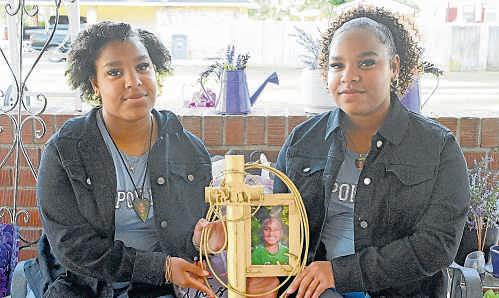
Twins Te’lia Coleman, left, and Ty’lia Coleman hold a photo of their younger brother, Terrez Coleman, who was killed in a 2014 shooting
La.Senatetakes up carinsurance legislation
BY TYLER BRIDGES Staff writer
Why are car insurance rates so high?
State senators battled over that divisive question Tuesday before aSenate committee. Some pressed the pro-industry view that Louisiana’slaws encourage too many lawsuits and big payouts, whileotherspushed the trial lawyers’view that government regulators must force insurancecompanies to direct some their profits to lower rates
The packed committee room —with dozens of people declaring supportor opposition to eachbill— reflected the stakes
“It’sstill the No. 1issue in my district,” saidRep. Jason DeWitt, R-Alexandria, oneofthe representatives who presented abill before the Senate JudiciaryACommittee, reflecting the view of many colleagues.
Each side could claim victories Tuesday
The Senate committee approved three bills sought by insurance and business interests and waspoised to pass two more Tuesday night.
But the committee took up only ahandful of the pro-industry bills that overwhelmingly passedthe House, indicating that the others may die from alack of attention.
The insurance industry and such trade groups as the Louisiana Association for Business and Industry and the Louisiana Motor Transport Association have been fighting the trial lawyers’ lobby foryearsover howto rein in Louisiana’sinsurance rates.
When the House took up and passed 16 bills favored by business interests, the trial lawyers’ advocates put up little opposition.
That changedTuesday in the Senate, when the Judiciary ACommittee heard the House-passed bills
Sen. Jay Luneau, D-Alexandria, hadHouse members and industry representatives squirmingasthey tried to answer his pointed questions while testifyingin favor of those bills
“The goal is to reduce lawsuits by taking away people’srights to sue?” Luneau, atrial attorney,asked DeWitt at one point.
“I’m trying to reducethe number of the people on the road withoutinsurance,” DeWittreplied about his House Bill 434, which would keep injured uninsured driversfrom receiving thefirst $100,000 from any payout, up from $15,000 under current law
“How much is it goingto lower rates?” Luneau asked DeWitt abit later
“It depends on how many bills get across the finish line,” he replied.
Luneau noted that the Legislature in 1996 limited injured drivers without insurance from collecting on
thefirst $15,000 in aclaim, then asked how much that reduced rates.
“I don’tknow,” DeWitt replied.
“It didn’treduce rates a penny,” countered Luneau.
Sen. Gary Carter,D-New Orleans, repeatedlypointed out to DeWitt and other proindustry officials thatthe measures they supported hadnolanguage ensuring the changes wouldactually lower rates.
“If you look at insurance companies,they’re having record profits,” Carter said.
Will Green, LABI’spresidentand CEO, told Carter the legislationwouldlead to fewerlawsuitsand fewerpayouts,translatinginto higher insurance company profits. Louisiana’s insurancecommissioner wouldthen require thecompaniestolower rates, he said.
“Wecan become amore attractive statefor carriers andbusiness,”Green said.
The committee passed DeWitt’sbill, House Bill 431 by Rep. Emily Chenevert, R-BatonRouge, and House Bill 450 by Rep. Michael Melerine, R-Shreveport. Each bill heads to thefullSenate forconsideration.
Chenevert’sbill would bar drivers responsiblefor at least 51% of an accident from receiving adamage awardtocovertheir injuries. Under currentlaw,a driver responsible for,say, 51%ofthe accident can collect apaymentequal to 49% of theoveralldamage award Chenevertsaid 38 other states, including Louisiana’s neighbors, have this law
TomClark, alobbyist for Allstate, said statistics show the problem lies with Louisiana’s legal system, telling thecommittee that Louisianahas twice as many injury claims as Alabama even thoughAlabama has 500,000 moreresidents
Paul Spalitta, president and CEO of S&WFoods in Hammond,said he pays $7,000 ayear in insurance fora truck in Indiana but $28,000 for an identical one in Louisiana.
“It gives you asense of how unfairthe ratesare due to thefrivolous lawsuits and outrageouspayouts,” Spalitta said.
Brian Katz, aNew Orleans
trial lawyer whoispresident of the Louisiana Association for Justice, called Chenevert’sbill “unfair” because it would allowpeople at fault for up to 50% of an accident to avoid having to pay anything It “takes responsibility away from parties that have acted irresponsibility,” Katz said. As expected,threeDemocratsvoted against the three bills. They were Luneau, Carter and Sen. Sam Jenkins, of Shreveport
Also expected, threeRepublicans on the committee voted in favorofthe bills. Theywere Sen. RickEdmonds, R-Baton Rouge; Sen. Beth Mizell, R-Franklinton; and Sen. Alan Seabaugh, RShreveport
In each case, Sen. Greg Miller,R-Norco,the committee chair, cast thedeciding vote.
Millerhas been underattack by conservatives who sayhe’stoo aligned with trial lawyers
Butwhile Miller voted three timeswithbusiness interests, he scheduledon Tuesday only fiveofthe 16 pro-industry bills passed by the Houseand wouldn’t committohearing more of them in the final three weeks of the legislative session.
“Wemay take up some of them,” Millersaidlater in an interview
Insurance Commissioner TimTemple praisedpassage of the three bills by thecommittee but said in an interview, “It’sinthe best interests of the people of Louisiana to have all the insurance reform bills that passed the House to be heardinthe committee.”
TheSenate Insurance Committee plans to hear another contentiousbill Wednesday.House Bill 148 by Rep. Jeff Wiley,R-Gonzales, would allow the insurance commissioner to reject “excessive and discriminatory” rateincreases without relying on hard datafrom insurance actuaries.
Templeargues that would discourage insurancecompanies from operating in Louisiana. Gov.Jeff Landry hasbeen lobbying hard for the bill and has said publicly thathewould blame Temple forhighinsurance rates if it passes, and they don’tdrop.
Email Tyler Bridges at tbridges@theadvocate. com.
cooking for decades
Nutrition scientists say they are perplexed by the backlash.
“Seed oils got abad name for acouple reasons,mostly —Ihate to say it this way but uninformed people on TikTok,” said Dr.Ron Quinton,medicaldirectoratTulane University’sGoldring Center for Culinary Medicine.
Quinton,who spent 40 years as athoracic-cardiovascular surgeonbefore leaving to teach nutrition, said seed oils aren’tthe problem. It’sthat they often wind up on long ingredient lists for packaged foods.
“The real problem isn’tthe seed oils themselves —it’s that theyare oftenusedin ultraprocessed foods.And ultraprocessed foods cause alot of different health problems,” he said.
The extraction process for seed oils involves pressing and heatingthe seed, then refining the oil with certain solvents to make it taste better in aprocessthatis“kind of like percolating coffee,” said Joan King, afoodchemistat the LSU School of Nutrition and Food Sciences.
Soybeans, for example,are pressed into flakes, then heated to destroy an enzyme that interferes with digestion. A compound called hexane is introduced to help purify the oil, removing free fatty acids (which cause asoapy taste), color and soy lecithin(which can cause allergic reactions in some people).
Nearly all oils undergo someform of refinement, which makes them taste better,look better,last longer and allows cooking at relatively high heat points without smoking. The exception is oils that are cold pressed, though those oils are generally notheat stable and may release harmful chemicals at high temperatures during cooking.
Opponents of seed oils have pointed out that hexane,
thechemical solvent used to refine cooking oils, is aneurotoxin. They have also said it is carcinogenic, though it is not recognized as acancer-causingsubstancebythe U.S. Environmental Protection Agency,National Institute for Occupational Safety and Health or the Agencyfor ToxicSubstancesand Disease Registry.
Experts note that hexane allbut entirelyevaporates during therefining process. The amount of hexane present in food-gradeoils is negligible compared to other environmental exposures, like gasoline fumes.
“Once theoil is extracted, it undergoes refining processes involving heat and vacuum(treatment)toremove theremaining hexane,” saidSubramaniam Sathivel, afood scientist at the LSU Department of Biological and AgriculturalEngineering. “Asaresult, the residue of hexane in the oil is typically very low.”
While hexane is aneurotoxin at high exposurelevels, the trace amounts present in refined edibleoils are within safety limits set by
regulatory agencies and are not considered ahealth risk, according to theEnvironmentalProtection Agency and the Centersfor Disease Control and Prevention.
It is also abetteralternativetoanimal fats, which are high in saturated fats, according to scientific literature
“There have been alot of scientific studies, probably about 100, comparing vegetable oils and seed oils with animal fatsources such as butterand lard.Almost every one has shown healthier outcomes with the seed oils,” Quintonsaid.
Catherine Champagne, a nutrition scientist at the LSU Pennington Biomedical Research Center,pointed out that seed oilsare generally healthier thananimal fats because they arehigherin polyunsaturated fats, particularly omega-3and omega-6 fatty acids,which our bodies need but cannot produce on their own.
In contrast, animal fats andcoconutoil aretypically higherinsaturated fats, which can be problematic for people with heart disease or
blood lipid issues.
Champagne, who helped develop thegroundbreak-
ing DASH diet, said she avoids using animal fats because of their documented negative impact on heart health.
“I cook with canolaoil because it has ahigh content of monounsaturated fat— similar to olive oil, both of which are heart healthy.”
The claims that seed oils are inflammatory are also not backed by scientific evidence. Alargeanalysis of studies found no connectionbetween inflammatory markersinthe bloodand seed oils.
Quinton said older studies from the 1970s suggested omega-6fatty acids, which arepresent in seed oils, might cause inflammation because they can metabolize into arachidonic acid, an inflammatory substance. However, he noted thatmorerecent research disproves this concern.
“The amount of omega-6s metabolized into arachidonic acidislimitedbythe body.So the more omega-6s youeat, doesn’t mean themoreara-
chidonic acid,” he said.
“Infact, omega-6 fatty acidsactually reduceheart disease, reduce diabetes, andare healthier than what Iwas taught when Iwas in medical school quite afew years ago.”
Seed oil disclosure is just onepartofthe bill. Other partsofthe bill limit soft drinks forSNAPrecipients, bancertainingredients in ultraprocessed foods from school meals, and require more nutrition education for physicians —the last two of which Quinton said he supports.
Thebill passed through the Senate with the vocal support of Kennedy,Gov.Jeff Landry and Surgeon General Dr.Ralph Abraham. It is now awaiting scheduling forthe House Health and Welfare Committee.
McMath emphasized that theproposed labeling requirementisa tool forconsumer transparency
“It’s notawarning; it’s a simple notification,”said McMath in the meeting.
aSpecial Eventduring the month of March! During this event, we will be offering these FREE services:
•FREE Hearing Consultations
•FREE Video Otoscope Exam: Hearinglossorjust earwax?
•FREE Clean &Check on currenthearing aids
•FREE Baseline Audiogram Assessment
•FREE Familiar Voice Test
•FREE Demo of Audibel’s latest hearing technology!
AreYou or Anyone YouKnow Experiencing the Following?
1. Asking people to speak up or repeat themselves?
2. Turning theTVuploud tounderstandwhat is being said?
3. Ringing or noises in your ears?
Audibelis NOW Offering...
•Hearingaids at NO COST to those who qualify!•
• That’s Right. No Co-Pay!NoExamFee! No AdjustmentFee! If youhavethiscard, youmay qualifyfor free hearing aids! Call today to verifyyour benefits
funding. Including local matches, the projects would have covered$5.5billion in repairsand upgrades
Monterey saw its water system grade from the Louisiana Department of Health drop from an “A” to a“C” thisyear. Thedowngrade came after aswell of customer complaints and high levelsofmanganese, which turns water murky and brown once it reacts with chlorine, which the state requires to purify the water Agroup of residents filed alawsuit this spring against the water system and its operator,JCP Management, acompany linked to State Sen. Glen Womack, R-Harrisonburg.
Womack did not respond to multiple messages seeking comment. Representatives of JCP did not respond to multiple queries
Areview of statedata shows Monterey’ssystem has been flagged for repeated violations and boil advisories.Since the beginning of thisyear,Monterey’swater system has had six boil advisories, along with aviolation for inadequate chlorine and two advisoriesaboutsodium and chloride levels.
One resident, who asked not to be named out of fear of retaliation from elected officials,said she’sspent thousands of dollars replacing appliances rendered defective because of the water “Wehaven’tconsumed the waterfor drinkingin my house in five years,” she said. “I even give my pets bottled water.”
Dozens of residents have compiledtheir complaints in aresident-led online form that volunteers provideto the local government. They sharedreports of ruined clothes from the washer, broken appliances anddead plants.
In December,while Barrington and her husband were traveling in their RV for work, their vacant house flooded.Anabruptpressure change in the house’splumbing lines blew the porcelain top off their toilet, and water poured out. Areportfrom her plumber said the blowout happened after the water system operators repaired a leak on the same block and the pressure ramped up. Barrington said the rust in the water coated her home, leaving it “prettymuch done for.” She and her husband have been living in their RV with their two European basset hounds, Boudreaux and Bonnie. They’re unable to live at their home at the end of Patsy Brown Road with a big, fenced-in yard.
“We’ll probably never be able to live in it again,” she said.
Windfall of cash
State officials have allocated all of the federal money they received to fix up water systems. And since then, state lawmakers have stepped up and
lican who co-chairs the Water Sector Commission that decides howtoallocate the funds, said he’stargeting $100 millionormore this year
But for the state to fix all of its water systems, it likely will takepainful decisions, including raising rates on low-income residentsin townsthat have been losing population for years.
“The Water Sector Program was verysuccessful in addressing alot of those critical projects,” Zeringue said. “It definitely hasn’t solved the problem. There are going to continue to be problems with water systems, especially in rural communities, that the water sector will not be able to get to.”
To get the statemoney, water systemsusually have to provide aplan that shows they’ll be abletopay for upkeep. Often,thatmeans takingthe unpopular stepof raising water rates.
Ryan “Spanky” Meche, mayorofthe townof Church PointinAcadia Parish, went after the grant money and securedseveral million to make upgrades. He recorded apodcast recently to respond to residents’ complaintsabout water issues, saying the “town will go down the drain”without the money,even if it means disruptive construction work and higher rates.
“It’skind of adoubleedged sword,” Meche said in an interview.“The state makes you getinto compliance. But the only way to get into compliance is through grants. The only way to get grants is if youraise rates to make it accessibletoget grants. Youdon’treally have achoice in it.”
Gaspard saidthe Water SectorProgram was a “once in alifetime” injectionthat helped many of thesystems. Butsome can’t accessthe funds,and there aren’t enough other grant programs to go around. His advice to water systems is to decide whether the problems are dire enough to warrant raising ratestopay for them.
‘Ticking time bomb’
StateRep.Daryl Deshotel, R-Marksville, sponsored a bill this legislative session to dedicate theproceeds of anew,statewide telecommunications tax to fund water improvements outside the WaterSector Program Deshotel said onereason he filed thebill was because his communitiesaren’t able to tap into the program because theydidn’tscore highly enough on the Water Sector Commission’srubric. Plus, amassive effort to install broadband across Louisiana is creating new waterissues as providers drill intowater mains.
“These water systems are in prettydire straits,” he said. “Mysystem, believe it or not,gets an ‘A’from the state. The water is brown. Everybody is complaining about the water.”
But Deshotel’sbill raised concerns that the money would notbeallocated based on aspecific set of criteria, like the WaterSector Program. Deshotel recently told the House AppropriationsCommittee he would trytowork out amendments to makeitmorepalatable,
Brenden Gaspardworks as an engineer fordozensof water systems around the state. He said there are a host ofproblems, from high iron levels to capacity problems. Water systems often have to usechlorinefor purification,but some struggle to money “The needs far outweigh the funding available,” he said.
but it’sunclear if the bill will pass through the full Legislature.
Brenda Sampson, mayor of the town of Bunkie in Avoyelles Parish, said her 5,000 residents skewolder, as young people flee for better job prospects. Oneofthe town’s four waterwells is inoperable. If another well goes down, she might not be able to service everyone.
“Wewould have to raise taxes to do anything,” she said. “It would be devastating to ourelderly population.”
In nearby Hessmer,Mayor Robbie Dauzat said every dayhedoesn’thavea major water breakdown, he “thanks God.”
The water is often discolored, andeven though health officials say it’s safe to drink, residentsare rightfully concerned, he said. His town hasasmall taxbase and he’s desperate for any funding he can get, he said.
“Our whole system,” he said, “is just aticking time bombwaiting for something to happen.”
The Monterey Rural Water System is one of hundredsaround the
‘Idol’s’ Foster comes home to Addis Hometown
residents recall his childhood
BY HALEY MILLER Staff writer
After watching the 18-year-old country music artist grow up and get his start in the parish’s dives, festivals and churches, West Baton Rouge Parish is ready to make the homecoming for season 23 “American Idol” finalist John Foster unforgettable.
“We’re all in a room together doing what we can, putting all of our
Brawl erupts inside BR court hallway
Families
of homicide victims, defendant spar
BY QUINN COFFMAN Staff writer
A brawl erupted Tuesday between the two families on either side of a triple-homicide trial outside a courtroom in the 19th Judicial District courthouse.
About 10 a.m., as both families exited the courtroom into the hallway, a woman from one side said something to the other which escalated into a fight, a Sheriff’s Office source said Courtroom sheriff’s deputies and nearby Baton Rouge Police Department officers intervened. The only reported injury was to a 5-year-old relative of Shelita Vallery, one of the homicide victims in the original
ä See BRAWL, page 2B
BR food bank in limbo amid funding cuts
BY ELLYN COUVILLION Staff writer
The Greater Baton Rouge Food Bank, like similar facilities across the country, is still in a wait-and-see mode after U.S. Department of Agriculture funding cuts bit into local food bank supplies earlier this year
There are still too many unknowns, said Mike Manning, president and CEO of the local food bank, which serves 125 agencies helping those in need in the Baton Rouge area.
“We don’t know if more will be cut,” Manning said. “Will there be a new farm bill? How will tariffs affect the farmers?”
Food banks rely on allotted shipments of commodities from the USDA, as well as “bonus” shipments. Some of those bonus food items came through the Commodity Credit Corp., a financial institution of the USDA that helps local food banks buy additional, bonus food Earlier this year, funding for the CCC program was cut, resulting in a $500 million loss in purchasing power for food banks nationwide, Manning said.
“We now know we have lost a sec-
ä See FOOD BANK, page 2B
minds together,” Parish President Jason Manola said. “Our goal is to make this the most special day of John Foster’s life.”
Manola said he expects at least 5,000 people to turn out for the celebration, which includes a parade in Addis and a concert in Plaquemine. (For context, the population of Addis is 7,532.)
Manola estimated more than 12 different government agencies are involved in the extravaganza, from
local police departments to the Louisiana Department of Wildlife and Fisheries. For the community on the west side of the Mississippi River, it is a chance to both root for a hometown hero and celebrate Foster’s years spent in the parish.
“I’m just so happy that America gets to see the John Foster that we’ve always seen for the last 20 years,” Manola said. Many residents loved Foster
long before he received his golden ticket on “American Idol.” He was a model student, graduating co-valedictorian alongside Emrie LeBlanc last year from Brusly High School. He started his music career playing at local bars and events.
Dimaria Christophe, 19, got to know Foster not from the soulful performances on “American Idol” that have earned him a national following but from required classes they shared together growing up.
“We’d just always take class together — like, always,” Christophe
said. In their calculus course, she remembered, another student carried around a container of slime to fidget with. Somehow, that slime ended up in the now rising country music star’s hair
“I didn’t think it was gonna stick the way it did,” Christophe said. “He was stressed out.” They got the slime out with minimal damage, Christophe said, laughing as she told the story It is one of her favorite memories with
Landry, students rally
Event aims to garner support for LA GATOR
BY PATRICK WALL Staff writer
As Gov Jeff Landry fights for state funding to help parents pay for private education, he got an assist Tuesday from hundreds of schoolchildren.
Facing a row of TV cameras, Landry led the private school students in a chant aimed squarely at state lawmakers who have balked at spending the $93.5 million Landry wants for LA GATOR, his program to give families tax-funded tuition grants.
“On the count of three,” he told the students, many of whom had been bused to the state capital from New Orleans, “Say, ‘Please support the GATOR scholarships!’”
Held across the street from the State Capitol in Baton Rouge, the rally was part of a public pressure campaign that Landry and privateeducation advocates are waging against recalcitrant legislators.
Landry also appeared in a television ad, paid for by a billionaire-backed conservative group, that urged voters to tell their state representatives to “fully fund Landry’s plan.”
Tuesday’s event comes as the Lou-
isiana House of Representatives is expected to vote this week on a state budget that includes the full amount Landry requested for LA GATOR. If passed, the budget would move to the Senate, where it could face closer scrutiny including from Senate President Cameron Henry, R-Metairie, who has said he wants to spend no more than $50 million on the program next school year
In a brief interview after the rally Landry said lawmakers who are wary of the program’s cost should speak with families who would benefit from it.
“Those senators that are skeptical, they should talk to the parents that are out here,” he said. “They should talk to the kids.”
Passed with bipartisan support last year, the LA GATOR law gives tax dollars to eligible families to pay for private school tuition and other approved expenses, such as tutoring and special education services.
The program, which launched this year, drew nearly 40,000 applications. How many families actually receive grants will depend on how much money the Legislature puts into the program.
The nearly $94 million Landry requested would fund grants for an estimated 12,000 students, or roughly a third of eligible applicants. But Henry said lawmakers only agreed to spend about half that amount, enough to provide grants for the roughly 6,000 students in the state’s existing school-voucher pro-
gram (That program, which helps low-income families pay for private school, will end after this school year.)
“It will be no more,” Henry said in an interview last month, “because that was the original agreement.”
The rally Tuesday was organized by Louisiana Kids Matter Action Fund, an education advocacy group with ties to Republican megadonor and Landry ally Eddie Rispone, and Americans For Prosperity-Louisiana, a national group that promotes private school vouchers and is affiliated with the conservative billionaire Koch family
The organizers estimated that more than 200 private school students attended the event held during school hours. Most came from Catholic schools in the Archdiocese of New Orleans. Just over 2,000 archdiocese students participate in the school voucher program and have applied to LA GATOR, said RaeNell Houston, the archdiocese’s schools superintendent. She said the grant amount about $7,600 for lower-income families — would cover the full cost of elementary school tuition and most of the $12,000 average tuition for grades eight through 12. Programs like LA GATOR benefit the entire Catholic school system, not just individual recipients, by helping the archdiocese enroll more students, Houston added.
ä See GATOR, page 2B
STAFF PHOTO By HILARy SCHEINUK
Gov. Jeff Landry speaks at a Tuesday rally for LA GATOR, calling for full funding for the program that helps parents pay for private education.
ä See FOSTER, page 2B
Northshore man, momaccused of dogfighting
Officials find 28 malnourished pitbulls
BY BOBWARREN Staff writer
from page1B
AFolsom man and his motherhavebeen arrested and accused of running an operation to train dogs for fighting, according to theSt. Tammany Parish Sheriff’s Office.
to be pitbulls,the Sheriff’s Office said in anews release Tuesday
malControl workers were calledintohelpgather the dogs.
possession of dogs forfighting.
The Sheriff’s Office said anearby resident flagged down deputiesMonday afternoon to report acase of possible animal abuse in the 12000 block of South Hay Hollow Road. Deputies found 28 severely malnourished dogs,whichthe Sheriff’sOffice said appear
Mostofthe dogs showed signs of having been involvedindogfighting, according to the release. Deputies alsofound training equipment andmedication often associated withdogfighting, as well as an illegal machine pistol.
St.Tammany ParishAni-
TheSheriff’sOffice said AustinAlexander, 23, was arrested andwill be booked on 28 counts of dogfighting andtrainingand possession of dogs for fighting.
NatiaAlexander, 45, was arrested andwill be booked on principal to 28 countsof dogfighting and training and
“Dogfighting andtraining dogs to fight is illegal andisa horrific andegregious act of animal cruelty,” SheriffRandy Smith said in the news release. “It will notbetolerated in ourparish and if you are caught fighting dogs or training dogs to fight you will be arrested.”
Denka’scontroversial La.plant suspends production
Future operations reported to be unclear
BY MIKE SMITH Staff writer
Denka’scontroversial plant in St. John the Baptist Parish has suspended productionand is exploring apotentialsale of the site, the company said Tuesday, leavingthe future unclear forafacility that had become aflashpoint in adebate over environmental justice.
The plant, the only one thatmanufactures neoprene in the United States, hadalso takenonpolitical significance,withGov Jeff Landry visiting the site last year to announce the state’slegal support as it faced tightened restrictions under the Biden administration over its emissions of chloroprene,classified as likely cancer-causing.
Pres ide nt Donal d Trump’sadministration has signaled amore friendly approach,but thecompany said it still faced regulatory uncertainty along with alist of other challenges. Thoseissues have included reduced demand for neoprene andcostincreases exacerbatedbyinflation at thesitethatemploys 250 people, located along the border between LaPlace and Reserve.
Thecompany saidnodecision has been madeon apermanent closure,but it informed employeesin aletter that it plannedto “safely transition the facility to amothball status.”
Denka’sboard decided Monday to “suspend production, including neoprene, at DPE’sLaPlace, Louisiana facility,” the companysaid in astatement, referring to itsfull name,DenkaPerformance Elastomer
“The facility hadalready safely ceased production last month as partofregularlyscheduled biannual maintenance,” it said. “No decision wasmaderegarding workforcereductions or anypermanentclosure of the facility.DPE is exploring all available options for the future of the site, including asale of the facility.”
It said thedecision was made “due to significant andongoing economic andother pressures. Those included costsrelatedtopollution controls the Japan-based firm said were not anticipated when the facility was purchased in 2015 from DuPont Specialty Products USALLC.
“The facilityalso faces a sustained slowdowninthe global market demand for neoprene,along with increases inenergy prices, rawmaterials,and repair work that have been exacerbatedbyinflation,” it said. The statement made no specific mention of the tariffsTrump haspursued sincetakingoffice in January and related countermeasures,but noted “rising equipment repair and labor costs, as well as increasingprices for key rawmaterials”as factors
Landryand stateAttorney General Liz Murrill
did notrespond Tuesday to arequest forcomment.A prominent environmental group in St. John welcomed the announcement,but said it was dismayed that Denka blamed tightened restrictionsonchloroprene as among the reasons for the decision.
“Every protection that the community had has been pretty much thrown away,with the state as well as with the federalgovernment,” said Tish Taylor,aleader of Concerned Citizens of St. John. “Sowe know that the environmentalpart of this really had no impact on theirdecision —it’sjust thatthey’re not making enough money.It’s always profit over people, andthat’swhat this is actually about.
Theplant, long located next to Fifth Ward Elementary School, has been responsible for95% of chloroprene emissionsnationwide, accordingtothe EnvironmentalDefense Fund. It is located along the stretch of the Mississippi River between Baton Rouge and New Orleans that activists have labeled “Cancer Alley.”
A2014 report from the Environmental Protection Agency said five census tracts near the plant had the country’shighest risk of cancer because of exposure to airborne emissions
Landryand other supporters of the plant have cited itsimportancetothe economy andthe demand for neoprene, including by the military,asreasons for defending its operations. Murrill has previously called the EPA’stightened
restrictions on the planta politically driven “assault” and contendedtheywere “impossible to comply with.
Denka has said itscosts to reducechloroprene emissionsbymorethan 80% were substantial. It noted thatthe Trumpadministration has committedtorewritingthe Bidenerapollution rule requiring further reductions,but “the outcome is uncertain,” and added that it was “deeply grateful” forLandry’ssupport.
Thenew pollution rule announced last year was lauded by environmental activists andresidents who hadlongfought for cleaner air in their communities.
The EPAchief under former President Joe Biden, Michael Regan, was the first Black man to lead the agency and put afocus on environmental justice even speaking near the Denka plantduring avisit to Louisiana
The agency underBiden andformer President Barack Obama haddefined environmental justice as “the fair treatment and meaningful involvement of all people regardless of race, color,national origin, or income” with respect to environmental laws
Petrochemical companies however harshly criticized therule, saying it would harm economic development, and Denka warned it wouldforce it to idle operations Therule was aimed at reducingemissions of chloroprene, ethylene oxide and fourother likely cancer-causing airpollut-
antsfrommore than 200 chemical plants nationwide, including 51 facilities in Louisiana. Part of it specifically targeted Denka, setting two fenceline monitoring action levels for chloroprene andrequiring compliance within 90 days.Legal challenges resulted.
The EPAhead under Trump, Lee Zeldin, has taken afar more businessfriendly approach in leading thenation’senvironmental regulator.Landry has also pursued amore pro-business approach by the state’senvironmental regulator,the Department of Environmental Quality
State Sen. GregMiller, R-Norco, whosedistrict includes the plant, has been asupporter of Denka and said he was disappointed in the decision.
“I’m very disappointed. It’sdevastatingfor the workers and families,” he said, adding he call company day to discuss but had not hear Sharon Lavigne, of theRise St munity activis said in astatemen “justice doesn’ shutdown.”
“Denka must (new pollution fully remediat and funding tion that puts to work in indust heal, not harm, munity,” shes Staff writers es and Josie tributed to this Email Mike Sm msmith@theadvocate.com.
“Enrollment increases revenue,” shesaid, “and increased revenue increases theresources that we have to serve our families.”
One parent hoping to receive an LA GATOR grant is Brittini Gray, whohas five children at aChristian school in NewOrleans. She said herchildrenhaveexcelled academically since shepulled them out of acharter school two years ago and put them in theGood Shepherd School.
Asingle parent with six children, she could not afford to pay their tuition out of pocket, shesaid. Her children already receive scholarships,but now she’shopingtoreceiveLAGATOR grants
“You’regiving kids the opportunity of alifetime,” she said. “Don’t take it away.”
Email Patrick Wall at patrick.wall@ theadvocate.com.
Foster,she said.
Colton Sarradet, another of Foster’sschool friends, traveled to Hollywood this week to watchthe 18-yearold LSU freshman make the cut for the Top5and Top3 rounds of “American Idol.” He said they have known each other since childhood as familyfriends. They even showed cattle together,he said.
“It’sbeenreallyawesome to watch him go through the rounds of (‘Idol’) after always hearing him sing at bars and hearing him sing to us when we’re just hanging out,” Sarradet wrote in a message, “and take it from there to national television and make it all the way to thetop 3.” He called Foster’svoice “a gift from God.”
Louisiana’sJohn Foster sings‘The Rainbow Connection’ on Monday’s‘AmericanIdol’
guy andyou won’t find another like him,”Sarradet wrote. “He’s as smart as theycomeand hasthe best
heart of anyone you will ever meet.”
The town will celebrate with aparade that will be featuredonnational television for the “American Idol” finale at 7p.m. Sunday The parade will be 5p.m. Wednesday along First Street in Addis. Foster will then travel by boat from the landing on Bayou Road across to the Bayou Plaquemine WaterfrontPark,57845 Foundry St., Plaquemine, where he will hold afree concertexpected tostart at 7:30 p.m.
Therewill be two checkpoint entrances for the miniconcert: oneatthe Foundry Streetentranceand alsoat
the entrancef side.Doorsope cert at 6:30.
haley.miller@ com.
BRAWL
Continued from page1B
trial. The boy was toppled over during the fight and bumped on the head,according to aSheriff’s Office source. He was not struck. Police have not confirmed which side was responsible for initiating the fight, but in total seven women and one man face charges of
FOOD BANK
Continued from page1B
“John Foster is atop notch
simple battery,inciting a riotand child endangerment.
ATaser was pulled by sheriff’s deputies during the altercation but was not used,officials said. The case is relatedto a2024 triple homicide in which Dominik Franklin 20, isaccusedof shooting killing Vallery,40, along with her stepfather, David Celestine, 62, andhis brother,Paul Lewis, 63.
The killings stemmed from afeudbetween the family of Franklin and Vallery,authorities said. Franklin faces three counts of second-degree homicide alongside TyroneEackles, 19, whohas been charged withthree countsofmanslaughter StaffwriterMattBruce contributed to this report.
Email Quinn Coffman at quinn.coffman@ theadvocate.com.
tion of loads from the USDA that would have gone to the people we serve,” Manning said. “Wedon’tknow if more will be cut.” That very uncertainty, he said, “is why food banks are not going off the deep end.” However,the Greater Baton Rouge Food Bank has reduced theamount of food available per person for its client agencies —but the amount is still above the national average. The national average is 13.5 pounds of food per person throughfoodbankdistributions.
“Wewereat25pounds per person, becausewewere very fortunate,”Manning said.“We’ve moved that down to 20 pounds.”
BUSINESS
BRIEFS
Wall Street rises again as S&P 500 erases loss
Most U.S. stocks roseTuesday following an encouragingreport that showed inflation unexpectedlyslowed across the country last month.
The S&P 500climbed, coming offanevenbiggergaintostart the week afterthe UnitedStates and China announced a90-day pause in their trade war to allow fornegotiations. The Dow Jones Industrial Average fell andthe Nasdaq composite jumped as AI and other tech stocks led the way Stocks have been roaring back since the S&P 500 fell nearly 20%below its record last month on hopes that President Donald Trump will ease his stifftariffs on trading partners worldwide before they create arecession and send inflation spiking higher.The S&P 500, which sits at the center of many 401(k) accounts, is back within 4.2% of its all-time high set in February and positive again for the yearsofar On Wall Street, Coinbase Global jumped 24% after the cryptocurrency exchange learned its stock will join the widely followed S&P 500 index nextweek. That means many investment funds will likewise add it before trading begins on Monday Coinbase will replace Discover FinancialServices, which is getting bought by Capital One Financial.
Stocks in theartificial-intelligence industry were also strong. Nvidiarose 5.6% and was the biggest single force pushing upward on the S&P 500. It’spartnering with Saudi Arabia’ssovereign wealth fund-owned AI startup Humain to ship 18,000 chips to the Middle Eastern nation to help power anew data center project.
N.J. says 3M agrees to ‘forever chemical’ deal New Jersey’sattorney general said Tuesday chemical manufacturer 3M agreed to pay up $450 million to resolve lawsuits over natural resource contamination stemming from PFAS —commonly referred to as “forever chemicals.”
The settlement is subjectto court approval and apublic commentperiod, Attorney General Matt Platkin’sofficesaid.
St.Paul, Minnesota-based 3Mis expected to pay $285million this year,with additional amounts payable over the next 25 years. The total amount couldreach $450 million, Platkin’soffice said.
“Corporate polluters must be held accountable when they contaminate our state’swatersupply,” Platkin said in astatement. PFAS, or perfluoroalkyl and polyfluoroalkyl substances, are agroup of chemicalsthathave been around for decades and have now spread into the nation’s air,water and soil.
3M said in 2022 it would end all PFAS manufacturing by theend of this year. In astatement, the company said it’sontrack to do so.
Microsoft to lay off about 3% of workforce
Microsoft began laying off about 6,000workers Tuesday, nearly 3% of itsentireworkforce and its largest job cuts in more than two years as thecompany spends heavily on artificial intelligence.
Hardest hit wasthe tech giant’shome state of Washington, where Microsoft informed state officials it was cutting 1,985 workers tied to its Redmond headquarters.
Microsoft said the layoffs will be across all levels, teams and geographies but the cuts willfocusonreducing the number of managers. Notices to employees began going out on Tuesday
The mass layoffs come just weeks after Microsoft reported strong sales and profits that beat Wall Street expectations forthe January-March quarter,which investors took as adose of relief during aturbulent time for the tech sector and U.S. economy
Microsoft employed 228,000 full-time workers as of last June, the last time it reported its annual headcount. About 55% of those workers were in the U.S.
Economists expect inflationtowarminsummer
BY CHRISTOPHER RUGABER AP economics writer
WASHINGTON Inflationcooledfor the third straightmonth in April even after some of President DonaldTrump’stariffs took effect though economists and many business owners expect inflation will climb bythissummer
Consumer prices rose 2.3% in Aprilfrom ayear ago, the Labor Department said Tuesday, down from 2.4% in March and thesmallest increase in morethan four years. On amonthly basis, prices rose modestly,increasing 0.2% from March to April after falling 0.1% the previous month, the first drop in fiveyears.
Grocery prices dipped0.4% from March to Aprilinwhatwill come as arelief to many people stretching family budgetsfor the basics. It was the biggest decline in food costsathome since September 2020, thegovernment said. Egg prices fell sharply,declining 12.7%, the most in 41 years. Yet they are still 49% higherthana
Groceryprices dipped 0.4% from March to April. Eggprices fell sharply,declining 12.7%, the most in 41 years. yettheyare still 49% higher than ayear ago.
year ago. Overall, the report suggests tariffshaven’t yetimpacted prices for many items. Economists say the impact will more likely be seen by June or July.The 10% tariff on all goods thattook effect April 5 could take twotothree months to
feed into theinflation data. And many companies built stockpiles of products earlierthisyear, enabling them to delay price hikes in hopes that the trade war will cool.
ed, also saw increases. And acategory that includes baby strollers and car seats also got moreexpensive.
Thecost of clothing, which is mostly imported, declined 0.2% from March to April, Tuesday’s report said. Newcar prices were unchanged. And grocery prices fell despitefears that tariffson some goods from Mexico would boost food costs.
“It’searlydaysfor tariff effects,” said Laura Rosner-Warburton, cofounder of MacroPolicy Perspectivesand formerly an economist at theFederal Reserve’sNew York branch.“More will comeinMay, June and July.There are plenty of price increases already scheduled andonthe way.”
Andthere were some earlysigns thatthe dutiesare having an impact. Computer prices rose 0.3% from March to April, acategory that is heavily imported from China and usually sees mild price declines.Sportinggoods andtoys, where many products are import-
Drago’stoopennew restaurant in BR
Louisiana seafoodchain to take space in PerkinsRowe
BYTIMOTHY BOONE Business editor
Drago’sisset to opena new Baton Rouge restaurant in Perkins Rowe this summer,after it closed its first local location in January The restaurant will move into anearly 7,300-square-foot space that previouslyhad been occupied by Kona Grill. Tommy Cvitanovich, Drago’s owner,said the newlocation will be “extra cool” because of all of theeventsthatwillbeheld rightoutside therestaurant in the Perkins Rowe Town Square.
“I am really excited to reopen in Baton Rouge andadd breakfast like ouroriginal Metairie location,” Cvitanovich saidina statement. Drago’sisfamousfor its rich, garlicky charbroiled oysters. After years of eyeing aBaton Rougerestaurant, thechain opened aspot in the former FYE building near the intersection of Interstate 10 andCollege Drive in 2020. The business spent more than$6million to renovate thebuilding. ButinJanuary,Drago’s announced it was being bought out of itslease on the property and was searching for anew location in Baton Rouge. Loft18, a Metairie-based chain of sports bars that offershigh-tech golf simulation bays,isset to open in the former Drago’sspace at theend of the month. Alongwith the originalMetairie location, Drago’shas restaurants in New Orleans, Lake Charles, BossierCity and Jack-
son,Mississippi. The space Drago’sismoving intohas been vacant since April 2019, when KonaGrill was forced to close due to financial struggles Will Chadwick, of Elifin Realty,who represented Perkins Rowe, said Drago’s is ahousehold name thatwill boost the restaurant lineupinthe lifestyle center Perkins Rowe has amix of national eateries, suchasJinya Ramen Bar, Texas de Brazil, Cava andCalifornia Pizza Kitchen, along withlocal operators such as Bin77, Rouj Creole andCaroline’sCookies. New Orleansbased Tacos del Cartel opened aPerkinsRowe locationlast month.
“It’sgreat to geta restaurant operator of that caliber,” he said. “It will be really good for theproperty.”
EmailTimothy Boone at tboone@theadvocate.com.
Still,excluding thevolatile food andenergycategories,coreprices were also muted, rising 2.8% in April compared with ayear ago, the same as in March. On a monthly basis, they increased a mild 0.2%. Economists watch core prices becausetheytypically provide abetter read on where inflation is headed.
Rosner-Warburton noted that someprices fell as business weakened, particularlyintravel. Air fares and hotel prices dropped noticeably last month, contributing to lower inflation, but that may have been driven by adecline in foreign visitors to the U.S. Matt Priest, president andCEO of theFDRA, said that thecost of shipping goodsfrom China likely will rise as many companies scramble to getorders to theU.S during the 90-day window “We’re not out of the inflationary cost woods yet,” he said.
BY MICHELLE CHAPMAN AP business writer
UnitedHealth CEO Andrew Witty is stepping down for personal reasons and the nation’slargest health insurer suspended its full-year financial outlook due to higher-than-expected medical costs. Chairman Stephen Hemsley will become CEO,effective immediately,according to the Minnesota company Hemsley was UnitedHealth Group CEO from 2006 to 2017. He will remain chairman of the company’s board. Witty will serve as asenior adviser to Hemsley It has been apunishing period for UnitedHealth, starting in December when executive Brian Thompson was targeted outside of aNew York City hotel andkilled. While unrelated to the financial operations of the $340 billion health care giant, its shares have tumbled severely since the attack.
“I’m deeply disappointed in and apologize forthe performancesetbacks we have encountered from both external and internal challenges,” Hemsley said during an early Tuesday conference call. “Many of the issues standing in the way of achieving our goals as well as our opportunities are largely within our control. Iam optimistic about our future as these issues are within ourcapacity to resolve. We willapproachthemwith humility,rigor and urgency.”
The 60-year-old Witty joined the company in 2018 after serving about nine yearsasCEO of the British drugmaker GlaxoSmithKline. He was named UnitedHealth’sCEO in February 2021, replacing Dave Wichmann. UnitedHealth became one of the nation’slargest companies under Witty’s leadership. Total revenue topped $400 billion last year,a55% increase from the $257 billion UnitedHealth brought in the year before Witty became CEO. Shares of UnitedHealth rocketed higherunder Witty,too,up60.5% since he took the company’stop job. Yetthere have been several setbacks for UnitedHealth over the past five months as it wrestles with the national attention on Luigi Mangione, who was indicted last month on afederal murder charge in the killing of Thompson.
The casehas capturedthe American imagination, setting off acascade of resentment and online vitriol toward U.S. health insurers while rattling corporate executives concerned about security UnitedHealth cut its 2025 forecast last month following its first quarterly earnings miss in more than adecade. On Tuesday thecompany withdrew that financialforecastentirely,saying that medical costs from new Medicare Advantage members were higher than expected.
Witty
ASSOCIATED PRESS FILE PHOTO
STAFF FILEPHOTO By HILARy SCHEINUK
Drago’sisfamous for its rich, garlicky charbroiled oysters. Along withthe original Metairie location, the chain has restaurants in NewOrleans, Lake Charles, Bossier City and Jackson, Miss., and is reopening soon in Baton Rouge.
Williams,Wilbert
Sacred HeartofJesus Catholic Church,2250 Main Street,Baton Rouge,Louisianaat11am.
Obituaries
Balfantz, Marilyn Marie McCrory
In Loving Memory of Marilyn Marie McCrory Balfantz. Marilyn Marie McCrory Balfantz (September 9, 1950 -May 4, 2025) a lifelong resident of Gonzales, Louisiana,peacefully passed away on May 4, 2025, at the age of 74.A proud graduate of East Ascension High School, Class of 1968, Marilyn was deeply devoted to her family and cherished by all who knew her. She is survived by her three beloved children: Heather McCrory, Haley Buckalew, and Hunter Balfantz. Her legacy lives on through her grandchildren and greatgrandchildren: Lily Buckalew, Madilyn Buckalew, Bree McCrory, Lexie Griffin, Harper Balfantz, Jasper and Wilder Buckalew, and Waylon Gurrola. Marilyn was preceded in death by her loving parents, Loy "Sunny" McCrory and Mary Helen "Sister" McCrory. Family and friends are invited to celebrate her life on Thursday, May 15, 2025, at Ourso Funeral Home, located at 13533 Airline Highway, Gonzales,LA. Visitation will be held from 5:00 p.m. to 8:00 p.m.
Bankston, Dawn Marie Averett
Dawn Averett Bankston, born October 28, 1971,in Baton Rouge, LA and aresidentofZachary,LA, passed away on Monday, May 12, 2025, at the age of 53 at Women's Hospital. She graduated from Ponchatoula High School in 1989 and was Homecoming Queen her senior year. She worked at John H. Carter with over 10 years of service. She thrived in various hobbies including baking, travelling, hiking,and gardening. She made afriend to any stranger that she met. She was survived by her husband of 29 years, Brandon Bankston, and her two children, Brianne and Brennan; her parents, Paul and Phyllis Averett; her two brothers and sisters-in -law, Kelly and Rachael, and Keith and Brandea; and nieces and nephews, Ryleigh, Sydney, Kate, Mc-
Call, and Luke;and her fraternalgrandmother, GladysNezat,and other family members.She was proceeded in death by her fraternal grandfather, Paul Averett Sr.,and maternal grandparents, Helen Raifordand Courtney Raiford. Her visitation is from 12 pm-3 pm with serviceat3 pm on Thursday, May15th, 2025,at Greenoaks Funeral Home, 9595 FloridaBlvd,Baton Rouge, LA 70815. We would like to dedicate aspecial thankyou to Dr. Hawkins and Dr. Ozair, and the wonderfulWomen's Hospital cancer staff. In lieu of flowers, donations may be to the Foundationfor Women's Cancer, https://found ationforwomenscancer.org ,or your favoritecharity
John M. Bossom passed away peacefully in his sleep on May9, 2025.Hewas 93 years of age. Johnwas anative of Louisiana and hadbeen a resident of Denham Springs,Louisiana for more than 50 years. He proudly served his country in the United StatesArmyasa paratrooperinthe 508th Airborne John is precededin death by his belovedwife of 71 years, Mary Elizabeth "Betty"Williams Bossom, who passed just 68 days before him; his parents, Jim and Alberta Dupont Bossom; his sister, Marie Bossom Firmin; hisbrother,Joseph A. Bossom; and his son,Michael Bossom. John is survivedbyhis children,Deridre"Dedye Bossom Caruthers (Jeffrey Caruthers),RandyE Bossom (SandraBossom), and Keith Bossom; and his sister,Jane BossomSteele. He is also survived by seven grandchildrenand seven great-grandchildren. Services and acelebration of life aretobeheld on Thursday, May15th, 2025,at ResthavenFuneral Home in Baton Rouge.Visitation willbefrom12:30to 2:30 with aservice starting at 2:30, and burial to follow Family and friends may signthe online guestbook or leave apersonal note to the family at www.resthav enbatonrouge.com
Bourgeois, Argelie Moran'Gee'
Argelie Moran Bour‐geois,July7,1934 –May 6, 2025. Argelie“Gee” Moran Bourgeois,a resident of St Amant,Louisiana,passed awaypeacefullyonTues‐day,May 6, 2025, at theage of90. Shewas an active member of OurLadyofthe
Holy Rosary Catholic Church formanyyears mostnotably servingasa leaderofthe Bereavement Committee providingfood for familiesinmourning. She wasalsoa member of TOPSLouisiana Charter46 serving as therecords recorder. Argelie wasa tal‐ented seamstress and cook.She enjoyedbeing around herfamilyand had a giggle that couldmake anyone’sday better Argelie wasprecededin death by herhusband of 61 years,MiltonBourgeois; their children,Rocky Paul and RockellMarie;her par‐ents, Albert MoranSr. and UrsuleBourgeois Moran; her brothers,AlexMoran, MorrisMoran,JohnMorin Joseph(J.C.)Moran,Albert Moran Jr.and Andrew Moran;and hersisters, RitaMoran Gautreau,Rena Moran Nigg, andRuth Moran Braud. Sheissur‐vived by herdaughterand son-in-law, Rebecca and Richard Bonneval;grand‐daughterand husband, DarethBonnevalWagues‐packand DalWaguespack; grandsonand wife,Erik Bonnevaland Brandi Brazzel Bonneval; five great-granddaughters, Madisonand Mylie Bon‐neval,and Blythe,Ada,and Camille Waguespack;and her sisters, TheresaMoran Savoy (Joseph) andBernar‐dineMoran.Familyand friends areinvited to at‐tendArgelie’s services on Thursday,May 15, 2025, at Our Lady of theHoly RosaryCatholicChurch 44450 LA-429, St.Amant,LA 70774. Visitation will be from9:00a.m.until the MassofChristian Burial at 11:00 a.m.,celebratedby FatherMatthew Lorrain. Burialwillfollowinthe church cemetery.The fam‐ily wouldliketoextend special thanks to Dr.John Fraiche;Hospice of Baton Rouge nursesHannah, Anyangue, Lisa,and Ms Linda,for theircompassion and care forArgelie and the family. Gee’slegacyof love, faith,and strength willliveoninall who knew her
PatBrooks, 80, passed away peacefullysurrounded by family.BorninToledo,Ohio, Patspent over 30 years serving theCityof Baton Rouge,where her dedication left alasting mark.
Adevoted mother to her daughter Brenna, Patnever missed amilestone and provided constant love and support. Her passions included crocheting,sewing, puzzles, reading, and cheering on LSUathletics—especiallywomen's basketball,softball, and gymnastics. Known for her legendary pumpkin squares and quick wit, she embraced life with warmth and determination
She is survivedbyher husband RoyBrooks Jr.; daughter Brenna Vicedomini and wife Martha; brotherDenisCiaciuch and wife Patsy; cousinKris Rood;and sister-in-law SharonSims.
"Always up for anything," Pat'slovingspirit livesoninall who knew her.
Carbo, Faye Dupre'
Faye Dupre' Carbo, 66, a nativeand resident of Donaldsonville, LA passed away on Monday, May 12, 2025. Faye was aloving wife, mother, granny,sister, aunt,cousin, and friend. Her greatest joy in life was spending time with her family,especially her beloved grandchildren. Faye never missed asingle event, always placing the needs of herlovedones aboveher own. She was well known throughout the community forher skillin sewing and alterations generouslyoffering her talents to so many. Atrue jack of alltrades, there was little Faye couldn't fix or figure out. In the kitchen, she was nothing short of amazing.There was always awarm homecooked meal ready for anyone who walked throughher door. Faye's love,generosity, selflessness and strength willbe remembered and cherishedbyall who knew her She leavesbehindtocherish her memory her devoted husband of forty-six years, Bryan Carbo;four amazing children, Kesslie Carbo(Ryan), KaylaNewman (Jo), Kristie Riviere (Mitch) and Bryan CarboII (Sarah); nine beautiful grandchildren, Alexia, Ashlyn, Joshua, Addison, Anna, Aubrey, Alivia, Buddy and Beau; mother-in-law, Mary Catherine Carbo; threesiblings, June LaTour (George), AnnCassard (Kevin) and Todd Dupre' (Susan) and sister-in-law, Lisa Carbo. She is preceded in death by her parents, Rudolph Henry Sr.and Florence Hebert Dupre'; brother, RudyDupre'; father-in-law, RaymondCarbo and brother-in-law, Mark Carbo. Avisitation willbeheldonThursday, May 15, 2025, at Ascension of Our Lord Catholic Church in Donaldsonville, LA,from 9:30am untilMass of ChristianBurial at 12pm. Officiating theMass will be Fr. MatthewDupre'. Interment willfollow in the church mausoleum.
HymelJr.,Adam Davis'Cocolo'
Adam "Cocolo" Davis Hymel,Jr. enteredeternal lifeonMay 7, 2025. Adam was born in Convent, LA onMay 6, 1928 to thelate AdamDavis Hymeland An‐nette Ballot Hymel. He was precededindeath by his beloved wife of 67 years, Pearl BrignacHymel and siblingsJoyce,Chester, Richard andHillard Hymel and ShirleyHymel Kinler Adamissurvivedbyhis children:Douglas Hymel,
Jerry (Pamela) Hymel, Chester Hymel, Rhonda (Marco) Rios,Marlene (Mike)Yoes, Darlene(Bill) Marquis andSusan (Guy) Stillinger. He wasa beloved grandfatherto10: Douglas (Tabitha)Hymel II, DillonHymel,Jeremy (Danielle)Hymel,Adam McEvoy, Nicole (Marc) Mc‐Closkey,Marc(Rachel) Rios, Michael(Autumn) YoesJr.,Jared Yoes,Zain (Jessica) Stillinger, Andrew (Stevi) Stillinger; and great-grandfather to 14: Abbyand LillyHymel,Is‐abella andRylandHymel, Grace andOliviaMc‐Closkey,Naomi Rios, Mason Yoes,Ty, Jase and Mia Yoes,RileyStillinger and Lyla andLunaStill‐inger.Adamisalsosur‐vived by hisbrother,Curtis Hymel andsisters-in-law, Dorothy Louviere andEs‐therBrignac,and ahostof nieces, nephews, relatives and friends. Adam wasa veteran of theU.S.Navy. He retired from ShellChemical Norco in 1988. He enjoyed fishingathis camp in Cocodrie, baseball, LSU and wasanactivepartici‐pantinthe American Le‐gionfor many years. The familywould like to thank Randy Bergeron andfamily for ministeringthe Holy Eucharist to Adam every Sunday. He wasa resident ofDestrehan,LAfor over 70years.Relatives and friends areinvited to at‐tendvisitationonThurs‐day,May 15thatSt. Michael’s Catholic Church, Convent,LAfrom9-11am withmassand burial fol‐lowing. In lieu of flowers, massespreferred at St Charles Borromeo Catholic Church,Destrehan,La.
Joyce Ann Dugas Joubert,a residentofBaton Rouge,LA, born on March 16, 1932, passed away on Sunday, May4,2025, at the age of 93. Visitation will take place at Resthaven Funeral Home on Friday, May16, 2025, beginning at 5:00 PM until 8:00 PM.Visitationwill continue at St George Catholic Church on Saturday, May17, 2025, beginningat9:30 AM until Mass of Christian Burial at 11:00 AM.Burial to follow at ResthavenGardensof Memory. Familyand friends may sign the online guestbook, leave apersonal note to thefamily, or view thefullobituary at www.resthavenbatonroug e.com.
Miller II, Eddie J. EddieJ.Miller II, age 67, anative of Thibodaux, LA andresident of Gonzales, LA andNapoleonville,LA, passedawayonSunday, May11, 2025. Eddieworked as askilledpipedesigner for aHargrove Engineering andbrought dedication andprecision to his profession. Beyondwork, he wasknown for hisvibrant personality andhis deep love forMardi Gras—especiallythe joyhefound ridingfloatsduringthe sea-
son.Eddiealso hada passion for puzzles,books, andtravel, andwas atrue history buff wholoved learningand sharing stories from thepast.Hewas preceded in death by his parents, Eddieand Phyllis Miller;his brothers, Philip A. Miller,JohnD.Miller, andPhilipL.Miller;his sister-in-law,Tammy A. Miller;his brother-in-law Jimmy Johnston;and his niece, Tiffany Miller. He is survived by his loving siblings, Alison M. Johnston, SueMiller, Jan (Tim) M. Hodge,Tom (Danise) Miller,and Michael W. Miller.Eddiewas also a proudand belovedhonoraryfather to Amanda, Chad, andCheeseball. His warmth,humor, andlove extended to many nieces, nephews, great-nieces, andgreat-nephews,all of whom will miss himdearly Visitation willbeheld on Thursday, May15, 2025, from 5:00 p.m. to 8:00 p.m. Online condolencesmay be shared at www.oursofh.com. Eddie will be remembered for the joyhebrought to others, hislove of tradition,and thelastingconnectionshe made with everyonehe met.
Mary TranchinaMonson passed on Sunday, May 11th, 2025, after livingwith leukemiafor 3years. Mary Preceded in death by her husband Andrew of 48 years. She is survived by her3 children: Patricia Deen (Ken),Kenneth(Lill) andson Andrew. Shewas theloving grandmother of Michelle,Jerome,Aleesha andgreat- grandchildren. From the small town of Bayou Goula,she started working after graduating from WhiteCastleHigh Shehad along career in Hospitality, working at localhotels andrestaurants untilthe Covid pandemic sidelinedher career at 92. Mary wasmost notableas she enjoyedtimeatThe Sheraton Hoteland the Holiday Innwhere they namedthe coffee shop after her. Familyand friends are invited to attenda Funeralservice on Friday, May16th, 2025, at Greenoaks Funeral Home 9595 Florida Blvd., Baton Rouge,LA. 70815 at 10:00 AM.Visitationwill be from 8:30 AM until10:00 AM Burial will follow in Greenoaks Memorial Park. In lieu of flowersdonation canbemade to theAmericanCancerSociety
Bossom,John M.
Monson,Mary Tranchina
Joubert, Joyce AnnDugas
Brooks, Patricia 'Pat'
Ryland, Eddie Wayne
EddieWayne Ryland, born in Cottonport anda residentofDenham Springs, passedawayMay
9, 2025 at the age of 74. Eddie proudly served his country in the United States Army. He made a career as atraveling welder and worked for several pipelines throughout his years. Including Colonial and Dixie Pipeline He was an avidoutdoorsman, and you could often find him fishing, hunting, welding or horseback riding. Eddie also loved watching tv in his free time. His favorite kindof shows were Westerns.He always knew how to make people laugh and you wouldn't get away from him until he gave youone of his famous nicknames. His kind spirit will be missed dearly by all those who knew and loved him. He is survived by his daughters, JenaRoberts(Craig "Jones"), Cara "Boobie" Didier(Jeff "Jeffro"), and Erica "Suckie" Ryland;grandchildren, Shelbi Lynne Roberts, Summer Leigh Didier, Mackenzie "Kiddo" Didier, Cobie "Boog" Roberts, Adam Dwayne King, Jr. and Eric "Bubba" Ryland; sisters, Carolyn Cox and Dot Atkinson, and brother, Roy Ryland. He is preceded in death by his wife, Jean Ryland; parents, Tillman and Ethel Ryland, and brother Ervin "Nub" Ryland.
Visitation willtake place at Seale Funeral Home in Denham Springs on Thursday May 15, 2025 from 5:00 PM-9:00 PM. Visitation will continue on Friday May 16, 2025 from 9:00 AM-11:00 Am with service beginning at 11:00 AM and burial to follow in Evergreen Memorial Park.
Pallbearers willbeCobie Roberts, Adam King, Jr Eric Ryland, Darren Ryland, Caleb Vlahos, Patrick Rimes, and honorary pallbearer, Brian Robinson. Please share your condolences at www.sealefuneral.com
on May9,2025 at home. His wife, Janis, was by his side. Bob was born on December 10, 1945inMemphis,TN. He wasthe only son of the late DorisKleinpeter Turnerand Romuel Brown Turner,Sr. Bobwas raised in Baton Rouge, Louisiana and graduated from Robert E. Lee High School in 1963. He graduatedfromLouisiana State University in 1968 where he was amemberof theSigma AlphaEpsilon fraternity. He servedinthe US Army and was stationed in Korea. He and his wifeare membersofCornerstone UnitedMethodist Church in Newnan, GA. He loved allthingsLSU,golfing,and spending time with his family. He was a beloved husband, father and grandfather"Boompa". Bob is survivedbyhis wifeof56years, Janis Williams Turner;daughters, Alicia Turner(Peter Bodigor) and SherriTurner Ruerup (Jason); sisters, Patricia Turner Taylor (John) and Nancy Turner Perkins (Geary); granddaughter, RavenOceanna Ruff Bob's Celebration of Life willbeheld on June 16, 2025 at Cornerstone United MethodistChurchinNewnan, GA30265. Visitation is from 1:30 to 3:00,followed by his CelebrationofLife. In lieu of flowers, the family requests memorial donations to the American HeartAssociation. Condolences can be expressed to the familyat www.mckoon.com McKoon Funeral Home & Crematory(770) 253-4580
Williams, Burnell
Burnell Williams, affectionatelyknown as "Bootsie", was alovingfather to Donovan D. Williams Sr and Dr. Donelle N. Williams. He diligently served and studied the teachingsofGod as adedicated Jehovah's Witness. Golf was one of his favorite pastimes, as he frequently enjoyed participating in golf tournaments. In addition to his children, he was agrandfather to AsiaM Williams, DejaS.Williams, and DonovanD.Williams Jr.Burnell passedaway at his home on Wednesday, May 7, 2025. He leavesbehind hischildren, grandchildren, brother, sisters, and ahost of lovedones. The family willcontinue to honorand celebratehis life and legacy.A viewing willbeheldatWinnfield Funeral Home on Thursday, May 15 at 9:00 AM with acelebrationoflife immediatelyfollowing
Black Creolesare claiming Pope Leo as oneoftheir own
As an elementary school student at St.Alphonsus in New Orleans’ Irish Channel, Jari Honora was fascinated with history and learning abouthis family lineage. His grandmother,Jo Ann Duncan, reared him.She would drop himoff at the New OrleansPublic Library downtown and pick him up when the library closed. When his grandmother couldn’t take him to thelibrary, he caught the bus.He was such aregular that establishedgenealogists and historiansgot to know the Uptown kid, took him on and providedtutelage Lolita Villavasso Cherrie, founderof the Creole Genealogy Historical Association, has known Honora sincehe starteddoing research at thelibrary. “Heknew so much. He said, ‘I know thehistory and the genealogy of the cityand my people. Just show me where certain things are,’”she told a small group of friends anda few others at aMonday night celebration in Honora’s honor.Librarians andresearchers “were just flabbergasted that this little 10-year-old came and theyhad never seen anything like it,” shesaid.
Those of us who know Honora weren’tsurprised when hequickly dug up the family history of Pope Leo XIV
Those of us who have broken bread with him and talked with him in more intimate settings have watched him snatch aname or apiece of information from aconversation andlaunch into acasual history lesson —without a computer,aphone or notes.
Honora goes deep into genealogy.Far more than an Ancestry.com search.Far deeper thanthe Mormon genealogy database search.
In less than two hours,Honora —one of only five African American certified genealogists in the nation —discovered that the man who had goneby the name Robert Francis Prevost has deep Louisiana Black Creole roots. So deep that we know exactly where thepope’sfamilylived in New Orleans. So deep that though his mother’sChicago birth certificate identifies her as White, most of his mother’ssisters, his aunts, are identified as Creole or mulatto on their birth certificates. So deep that the new pope’sgrandmother wasbaptized in St. Louis Cathedralin Jackson Square in the French Quarter, as an archivist with the Archdiocese of
New Orleans discovered. So deep that in Honora’sestimation, the new pope is quite likely to have ancestors who were enslaved Pope Leois one of us, y’all.
Within 20 minutes of his Facebook post, local news media had reached out to hisFacebook friends, St. Augustine High School classmates and others trying to reach him. That day,hedid six news interviews. Thenextday,hedid 16 interviews. He’s hadcalls each day since. This newspaperwas thefirst news organization to share Honora’snews. The New York Times, CBS, The Associated Press and others followed. Ajournalist from Spainreached out. “He’sour rockstar,” Wanda Rouzan, thefamous “sweetheart of New Orleans” entertainer told me as shetook apicture with Honora while diningatthe Chapter IV restaurant nearNew OrleansCity Hall. Honora wasn’texpecting all the attention.Hewas just doing what he does.
Likeme, Honora is aself-identified Black Creole withthe genealogical prooftoback it up.Mymother’s lineageisCreole and we have Haitian roots. Butdon’tget it twisted. Honora explained that Creole is aculture. It’s notacolor.It’snot an ethnicity or tied to the fineness of one’shair.“There are Black Creoles and White Creoles,” he
said. Since thepope’sLouisiana connectionshave been shared, there are lots of people claiming to be acousin or somekind of relative. While there are somewho have familial connections, Honora said not all Prevost and Martinez families are direct relations. Honora is looking forward to the pope’sAmerican visit, hoping New Orleans makes thetour.“We have to have asecond-line,” he told me. “Wehave to have St.Aug’sband. We have to have thebest gumbo from Dooky Chase for him.” ButisheBlack, Jari? “No,” he told me. “He hasn’tlived aBlack experience.”
As an American and as aLouisianan, I’m claiming thepope. As theproduct of aCatholic upbringing and aSt. Augustine High School education, I’m claiming the pope. As an Uptown baby who grew up in theLower 9th Ward and Gentilly neighborhoods in theculturally rich 7th Ward, I’m claiming the pope. As aBlack Creole with Haitian roots, I’m claimingthe pope. Louisianaissuch agumbo mix of cultures, ethnicities and races that we all should claim the pope.
Welcome to the fold, Brother Pope!
Email Will Sutton at wsutton@ theadvocate.com.
At least six congressional Republicans are demanding aradical fix inthe 2017 tax law targeting residents of high-incomestates. If they don’tget it, they may sinkDonald Trump’stax-and-spending package, his “one big beautiful bill.” And who can blame these reps from New York, New Jersey and California? At issue is the unfair cap on the state and local taxes (SALT) their constituents may deduct fromfederally taxable income
can easily have acombined income of $200,000 —and no one would call them rich given housing prices. In decidedly middle-class Levittown, on Long Island, homeowners typically pay aproperty tax of about $16,000. Then there are state income taxes.
happy” compromise on theSALTdeduction. By that, he meansraising the cap to ameager $30,000.
We’ve gotten anew tidbit of information about efforts by the Biden White House and someinthe press to cover up President Joe Biden’sage-related infirmity.Itcomes from a new book, “2024: How TrumpRetook the White House and the Democrats Lost America,” by reporters Tyler Pager,Josh Dawsey and Isaac Arnsdorf of The NewYork Times,Wall Street Journal and Washington Post, respectively
The authors report that “top White House aides debated having [Biden] undergo acognitive test to prove his fitness fora second term but ultimately decided against the move,” according to areport on the book in The New York Times
The revelation is the latest in aseries of news nuggets aboutthe 82-year-old Biden’ssenescence —stories like White House aides putting tape on the floor so that Biden wouldn’twander off course —thathavebeen includedinnew booksabout the2024 election.More is promised in yetanother book to be published later this month. But the fact is, you already knew about Biden’scognitive decline because you saw it with your own eyes.
There is an inside story of Biden’sdecline and an outside story of Biden’sdecline. The inside story is the effort by the White House staff, plus its Democratic allies, plus its supporters in the press, to conceal Biden’sproblem.The outside story is the manypublic appearances moments of Biden appearing confused, lost or frozen —during which millions of Americans could see forthemselves that the president had aserious problem
Another waytoput it would be to say that the inside story wasthe effort to deny that the outside story existed. That was the strangest thing about the whole situation. Biden’sdecline happened in public. People knew about it. Opinion polls revealed that large numbers of Americans believed Biden wasnot up to the job of president, or at least not up to asecond term in the White House. If it wasasecret, it was the world’s best-knownsecret.
And yet those in the White House denied that there wasaproblem,and their allies outside the White House echoed those denials. And they went beyond simple denial. They also attacked those whosaid Biden had aproblem.Remember “cheapfakes?” That waswhat Biden’s defenders in the Democratic Party and the media called the clear video evidence of Biden’s problem
When Biden drifted away from agroup of leaders at the Normandy anniversary in France; when he appeared lost and had to be guided by former President Barack Obama at aHollywood fundraiser; and when he froze at aJuneteenth event at the White House, the administration accused Republicans of manipulating videos of each moment. And manyinthe press went along with it, as if the GOPwere the problem and not the White House effort to fool the public.
The SALTdeduction, unlimited before 2017, was set at amaximum$10,000 What made it sweet to otherRepublicans wasthat it paid for other tax cuts by milking taxpayers in wealthier Democratic states.And that has made voters in key suburban districtssore. What makes this attackonthe SALT deduction outrageous?For starters, it taxes income that Americanshave already paid in taxes. Secondly,incomes in these states are higher because their everyday costs are higher.Teachers, road workers and other public employees must be paid more justto maintain the living standardsenjoyed elsewhere.
Defendersofthe cap argue piously —and wrongly —that the SALTdeduction is atax break only for rich people It’strue that taxpayers with higher incomes tend to get the most outofthe deduction, but acop married to anurse in New York, New Jersey or California
LETTERS TO
If Washington’sobjective is to raise morerevenue from higher-income Americans, then fine.Justraise the federal tax bracketsfor high incomes everywhere in theU.S The most obnoxious argument for the SALT cap is that it forces “profligate” state governments run by Democrats to restrain their own taxes. What state andlocal governments levy in taxes should be no business of Washington’s. Americansunhappywith their local tax regimes can moveelsewhere, and some do.
Butmanyregard superior education systems and other public amenities worth thehigher taxes. Republicans should note that making it harder to paygood salaries to police is, in essence, aform of defunding thepolice. Raising thecap on this deduction mayrequire Washington lawmakers to find the revenues elsewhere. Well, that’stoo bad House Ways and Means Committee Chair Jason Smith representsthe most rural district in Missouri. It’seasy for himtosay Republicans from high-tax states may have to settle for an “un-
Republican reps from these swing districtsare having none of it,frankly, because their jobs are at stake. They know that the Republican brand has already fallen for their voters, given thetoll tariff chaos has taken on their businesses.
There’sa reason President Donald Trumpretreated on making New York Rep.Elise Stefanik United Nations ambassador.Hedoesn’twant to risk aspecial election that may replace her with aDemocrat. After 2022, Republicans flipped at least four New York districts, without which they wouldn’tnow enjoy aHouse majority New York Republican Nick LaLota spoke for others when he told reporters that theSALTtalks are far apart, on the 25-yard line with 75 yards to go. LaLota’sdistrict covers eastern Long Island. If House Republicans thinkthey can threaten these “SALTCaucus” membersfor killing one of Trump’s top priorities, they need hearing aids. The general election, not primary challenges, is what these politicians should worry about most. Democrats already see opportunity,and the elected Republicans know it.
Froma Harrop is on X, @FromaHarrop. Email her at fharrop@gmail.com.
One example. On June 17, 2024, areporter asked then-White House spokeswoman Karine Jean-Pierre, “There seemstobeasort of rash of videos that have been edited to makethe president appear especially frail or mentally confused. I’mwondering if the White House is especially worried about the fact that this appears to be apattern that we’re seeing more often?”
“Yeah,” said Jean-Pierre. “And Ithink you all have called this the ‘cheapfakes’ video. And that’sexactly what they are. They are cheapfakes video. They are done in bad faith. And someofyour newsorganizations have been very clear,have stressed that the right-wing critics of the president have acredibility problem because the fact-checkers have repeatedly caught them pushing misinformation, disinformation.” In just afew words, Jean-Pierre managed to give apat on the head to those newsorganizations that displayed little curiosity about Biden’scondition but real energy in denouncing those whodid.
And then, just 10 days after that exchange, Biden met Trumpfor the debate in Atlanta. It wasnolonger possible to hide the extent of Biden’ssenility.The inside story failed to suppress the outside story,and Biden wasdoomed as acandidate. Nowwe’re learning moreabout the lengths to which the Biden team and its manyallies in politics and media wenttoconceal the truth. There is likely alot moreyet to discover Byron York is on X, @Bryon York.Email him at byronyork@yorkcomm.com.
Will Sutton
Byron York
Froma Harrop
STAFF PHOTO By BRETTDUKE
JariHonoraisafamily historian at the Historic NewOrleans Collection in New Orleans.
ADVERTISEMENT
When you’re comparingplans ...
Many Americansare fortunate to havedental coverage fortheir entire working life, through employer-provided benefits.Whenthose benefits end with retirement, paying dental bills out-of-pocket can come as a shock, leading people to putoff or even go without care. Simply put —without dentalinsurance, there may be an importantgap in your healthcare coverage.
services. Some plans may limitthe numberof procedures —orpay forpreventive care only.
Look forcoverage with no deductibles. Some plans mayrequire you to payhundredsout of pocket before benefits are paid.
Shop forcoveragewithnoannual maximum on cash benefits. Some planshaveannual maximums of $1,000.
you’ve had quality dental work in thepast, you shouldn’ttakeyourdental health forgranted.Infact, yourodds of having adentalproblem only go up as you age.2
Treatment is expensive— especially theservicespeople over 50 oftenneed.
these national average
MLBlifts banonRose, Jackson, others
Commissioner Manfredsayslifetimepenalty will endatdeath
BY RONALD BLUM AP baseball writer
NEW YORK Pete Rose and Shoe-
less JoeJacksonwerereinstated by baseballcommissioner Rob ManfredonTuesday,making both eligible for the sport’sHall of Fame after their careers were tarnished by sports-gambling scandals.
Rose’spermanent ban was lifted eight months after his death and came aday beforethe Cincinnati
Reds willhonor baseball’scareer hits leader with PeteRose Night Manfred announced Tuesday that he was changing the league’s policy on permanent ineligibility, saying bans would expireatdeath. MLB said 17 individuals hadtheir status changed by the decision, including all eight banned members of the1919 Chicago Black Sox, former Philadelphia Phillies president Williams D. Cox and former New York Giants outfielder Benny Kauff.
Underthe Hall of Fame’s current rules, theearliest Rose or Jackson could be inducted would be in 2028. Rose agreed to apermanentban on Aug. 23, 1989, after an investigation commissioned by Major League Baseballconcluded Rose repeatedly bet on the Reds as a player andmanager of theteam from 1985-87, aviolation of alongstanding MLB rule. Rose first applied for
ä See ROSE, page 3C
SEVENFOR SEVEN
IMaking hismove
Scheffler trending up as PGAChampionship arrivesonThursday
BY DOUG FERGUSON AP golf writer
CHARLOTTE, N.C.
ScottieSchef-
fler practically had thecourseto himself when he arriveda day early at the PGA Championship, atimetoget reacquainted with QuailHollow. He had played it onlyatthe Presidents Cupin 2022 when the holes werea little out of order because of the format Looking for alineoff the teeatthe par-5 seventh, caddie TedScott pointed to a small, black box beyond the bunkers.
Scheffler delivered another beauty
An onlooker peered down the fairway,unable to see the target where theywere aiming.
fthe prayers of every New Orleans Pelicans fan had been answered Monday night, Joe Dumars would have won the NBA draft lottery With that victorywould have come ano-brainer of adecision on what to do with theNo. 1overallpick: draft Duke sensation Cooper Flagg. Or at worst, if the pingpong balls would have fallen the way thepercentages said they would, the Pelicans would have had one of thenext three picks. Rutgers guard Dylan Harper,Rutgers forward Ace BaileyorBaylor guard VJ Edgecombewould have been viable options. Instead, aPelicansteam thatfinished withthe fourth-worst record in the NBA fell three spots and will have the No.7pick at the June 25 event.
So whowill the Pelicans pick at No. 7?
Here’smyranking of seven possible draft prospectsthey may choose. We’ll assume thetop-five guys (Flagg, Harper, Bailey,Edgcombe and Texas guard Tre Johnson) are off the board by thetime the Pelicans are on theclock.
1
KONKNUEPPEL, DUKE: If Ihad to peg a favorite, it would be Knueppel. While Flagggot most of the attention at Duke,
“Just follow the ball, and you’ll seethe blackbox,” Scottreplied with alaugh. Scheffler is starting to look like theNo. 1player he hasbeenfor the lasttwo years, off to aslow startbyhis standardsafter missing nearlytwo months because of afreak hand injury sufferedwhile making ravioli on Christmas. In hislaststarthepicked up hisfirst win of the year in abig way —aneight-shotvictoryat the CJ Cup ByronNelson, the largest margin on the PGATour in nearly five years.
For aguy who tries not to look too far ahead or behind, there was no denying his game was in agood spot going into the PGA Championship.
JEREMIAH FEARS,OKLAHOMA: The 6-foot-4 point guard may not be around at No. 7. Butifheis, he could provide help
there was another freshman whose stock rose this season as theBlue Devils made theFinal Four. Knueppel is an excellent 3-point shooter (41%), and he’d get plenty of good looks playing alongside another member of theDuke brotherhood in Zion Williamson. Knueppel wasnamed MVP of theACC Tournament 2
Poa’slawsuit raises NILquestions
Former LSUguard challenges limitson internationalathletes
BY REED
Staff writer
anew age of collegiate sports. Poa, anative of Australia, is a
collegebasketballplayersubject to U.S. immigration laws that place tight constraints on which off-campus employment opportunities she can pursue. She filed the suit, one of her lawyershas said, so she couldcontest aU.S. Citizenship and Immigration Services (USCIS) decision to deny hera visa that would have eased some of those restrictions —and therefore allow her to profit offher name, image and likeness (NIL) more freely. The filingisbelieved to be the first legal challenge tossed at that policysince the NCAA began allowing its athletes to strikeendorsement deals in 2021.
In January, defendants from USCIS filed amotion to dismiss thelawsuit —the matter at the centerofTuesday’shearing before U.S. District Judge Brian Jackson. “There seemstobeagap,”Jacksonsaid, “that regulators have not addressed, that Congress hasnot addressed,that leavessomeathletes out in the cold.” Amy Maldonado, aMichigan immigrationattorney representingPoa, said Tuesday thatcompensation is a“criticalissue” for international collegiate athletes. Shethen posed thequestion of
ä See POA, page 4C
“I’m showing up coming off of atournamentthatI won,and that’salways agood feeling,” Scheffler said Tuesday.“Youcan definitely ride some of that momentum. WhenIlook back at my career,itwould be silly to say that Idon’t ride some of the momentum from those wins.”
Meanwhile, Rory McIlroy was on atear that took him to victories at Pebble Beach, The Players Championship and then the crown jewel— aMasters greenjacket to finally claim hisplace in history with the career Grand Slam. McIlroy had said before starting thatrun he drew inspiration from Scheffler’s dominance, his nine-win season from 2024 that included aMasters green jacket and Olympic gold medal and all the biggest tournaments in between.
“I’m abig admirerofScottie for alot of different reasons,” McIlroysaidafter winning at Pebble Beach. “But every time I play with himand Iwatch howhe playsand howdisciplined he is, it’s areally cool thing to watch. Just trying to take alittle bit of a leaf out of his book.
Nowitmight be Scheffler’s turn to be inspired. He got the best seat on the 18th green at
ASSOCIATED PRESS FILE PHOTO By STEPHANIE SCARBROUGH
Maryland center DerikQueen drives past Wisconsin guard John Blackwell on Jan. 29 in College Park, Md. The 6-foot-10 Queen hit the game-winning
the Terrapins to the Sweet16inMarch
Former Cincinnati Redsgreat Pete Rosewaves to the crowd during a ceremony to honor the 1976 World Series champions on June 24, 2016.
ASSOCIATED PRESSFILE
PHOTO By JOHN MINCHILLO
STAFF PHOTO By MICHAEL JOHNSON Former LSU playerLast-Tear Poa takesphotos with fans before the Chicago Sky’sexhibitiongame against BrazilonMay 2atthe PMAC.
Pirates ace Skenes joins Team USA for WBC Pittsburgh Pirates ace Paul Skenes announced Tuesday that he will join Team USA when the World Baseball Classic returns next spring.
Time set for LSU-Clemson opener
BY RASHAD MILLIGAN, REED
DARCEY and SCOTT RABALAIS Staff writers
There now is a kickoff time for the LSU football team’s 2025 season opener The Tigers’ first game, on the road at Clemson, will kick off at 6:30 p.m. on ABC on Aug. 30 It marks the first football matchup between the teams since the national championship game in January 2020. Led by Heisman Trophy winner Joe Burrow and standout wide receivers Justin Jefferson and Ja’Marr Chase, LSU won 42-25.
LSU and Clemson have played each other four times. In the battle of the Tigers, LSU has a 3-1 edge over Clemson with the series starting on New Year’s Day 1959
This will be the first matchup between the two schools that isn’t in the postseason. They have played each other in the Sugar Bowl, twice in the Peach Bowl and the national championship game.
This year’s LSU team is led by returning quart erback Garrett Nussmeier In 2024, Nussmeier completed 337 of 525 attempts for 4,052 yards passing, 29 touchdowns and 12 interceptions.
Clemson retained a lot of key players this season including quarterback Cade Klubnik In 2024, Klubnik completed 308 of 486 passes for 3,639 yards passing, 36 touchdowns and six interceptions.
Mulkey adds high schooler
The LSU women’s basketball team picked up a high school commitment Tuesday Meghan Yarnevich, a 6-foot-2 post player from Maryland is set to become the fifth high school recruit signed to what’s already the nation’s top-ranked freshman Class of 2025. She likely also will be the final piece of the overhaul coach Kim Mulkey and her staff are giving their frontcourt.
“Her strength, physical presence, and relentless toughness
will bring a powerful edge to our frontcourt,” Mulkey said in a statement “Meghan’s work ethic perfectly aligns with the culture we continue to build here at LSU, and we can’t wait to see the impact she’ll make on and off the court here in Baton Rouge.”
The Tigers now have four post players on the 2025-26 roster: two freshmen and two transfers.
In November LSU signed Grace Knox, a California forward ranked as ESPN’s seventh-best prospect in the 2025 class.
In April, it inked former Notre Dame forward Kate Koval, a rising sophomore, and ex-East Carolina forward Amiya Joyner, a rising senior
LSU had to replace eight of the 13 players from its 2024-25 roster. So far, it’s added five freshmen and three transfers, including former South Carolina star
MiLaysia Fulwiley Yarnevich signed with Georgia in November, then announced on May 4 that she was backing off
that pledge and reopening her recruitment. She’ll enroll at LSU as a freshman alongside Knox and three top-35 guards: ZaKiyah Johnson, Divine Bourrage and Bella Hines Gymnastics adds from portal
Emily Innes is trading one purpleand-gold leotard for another, leaving Washington to spend her senior season at LSU Innes announced her transfer Monday on her Instagram account.
“I have made the difficult decision to enter the transfer portal for my senior year,” Innes wrote. “I want to thank uw (Washington) for the past three years. To all of the coaching staffs, support staffs, and teammates that I have had throughout my experience, you made my time here memorable and I will cherish that forever
“I have decided to commit to LSU on a full athletic scholarship!!! I am incredibly blessed to have this opportunity and can’t
wait to see what the next year brings!”
A senior for the 2026 season, Innes is the second gymnast to transfer to LSU this month. A week earlier, former Clemson gymnastics recruit Molly Brinkman announced her decision to compete for LSU after the firing in April of coach Amy Smith
A native of Pittsburgh, Innes competed this past season for the Huskies on floor, vault and balance beam.
It is on floor where she has excelled. During the 2025 season, Innes posted eight scores of 9.90 or better, with a season-high 9.925 three times. She won a 2024 NCAA regional floor title with a career-high 9.95.
Brinkman was one of three 2026 LSU gymnasts to win titles this past weekend in the DP Nationals meet in Salt Lake City finishing first on vault. Incoming freshman Nina Ballou won the allaround, while fellow freshman Haley Mustari won bars.
NFL features seven international games
Vikings double dip in Dublin and London
BY ARNIE STAPLETON AP pro football writer
The Minnesota Vikings get a double dip of international play in 2025 with trips to both Ireland and Britain as the NFL features a record seven overseas kickoffs this season, including forays into Germany and Spain.
The Vikings will play the Pittsburgh Steelers at Croke Park in Dublin on Sept 28 in Ireland’s first NFL regular season game, and then they’ll fly over to London to face the Cleveland Browns at Tottenham Hotspur Stadium a week later on Oct. 5.
“Our experiences in London have always been memorable, so to return in 2025 as the first team to play in back-to-back international games in different countries was something we could not pass up,” Vikings owner Mark Wilf said. The Vikings are 8-0 in international games, including 4-0 in the regular season. The Vikings and Browns also played in London in 2017, the last time the Vikings were scheduled to visit Cleveland. That means they’re going to go 24 years between trips to Cleveland, with the next one in 2033.
The matchups were revealed on Tuesday by the NFL as part of a series of announcements of notable games on each of the league’s broadcasters ahead of the full schedule release on Wednesday night.
That’s also when the league will announce the Los Angeles Chargers’ opponent for its first international game of the season in Brazil, on Sept. 5 at Corinthians Stadi-
um in Sao Paulo. That’s where the Philadelphia Eagles began their Super Bowl quest last year with a game against the Green Bay Packers on opening weekend. The Brazilian game will be streamed for free to a worldwide audience exclusively on YouTube and YouTube TV, marking the platform’s debut as a live NFL broadcaster NFL commissioner Roger Goodell and YouTube chief business officer Mary Ellen Coe will announce the Chargers’ opponent Wednesday at YouTube’s 2025 Brandcast upfront event at Lincoln Center in New York.
YouTube and the NFL also announced a multi-year deal for the annual Super Bowl flag football game featuring creators and artists with additional international contests following the success of the inaugural game in February that drew more than 6 million live views.
Other international games
The Denver Broncos visit the New York Jets on Oct. 12 at Tottenham Hotspur Stadium in London; the Los Angeles Rams visit the Jacksonville Jaguars a week later at Wembley Stadium in London; the Atlanta Falcons visit the Indianapolis Colts on Nov. 9 at the Olympic Stadium in Berlin; and the Washington Commanders visit the Miami Dolphins on Nov 16 at Santiago Bernabeu Stadium in Madrid.
This marks the 14th game in London for the Jaguars, as part of the team’s multi-year commitment to playing games in Britain. Overall, the NFL has played 39 regular season games in London.
The six international matchups that were announced will all be on NFL Network and streamed on NFL+.
The Colts-Falcons game in Berlin is the fifth regular season NFL game in Germany Previous games have been played in Munich and Frankfurt. Peter O’Reilly, NFL executive vice president of club business and league events, said the largest-ever slate of international games “underscores our collective commitment to global growth as we continue our journey to becoming a truly global sport.” Also Tuesday, the NFL revealed on “Good Morning America” that the Super Bowl champion Eagles
will play the Packers in Green Bay on Monday Night Football on Nov 10. The rest of the MNF lineup will be announced Wednesday The Week 10 game at Lambeau Field pits the teams at the center of the tush push debate this offseason. Green Bay has proposed a ban on the Eagles’ short-yardage tactic, calling for the NFL to outlaw the quarterback sneak where teammates push
The reigning National League Rookie of the Year — who spent two years at the Air Force Academy before transferring to LSU — is expected to be near the top of the rotation for the Americans, who are coming off a runner-up finish to Japan at the 2023 WBC. Skenes, who turns 23 later this month, was the top pick in the 2023 amateur draft. The 6-foot-6 righthander is 14-7 with a 2.16 ERA in 32 career starts. That includes a 3-4 mark with a 2.63 ERA this season. Skenes and the rest of Team USA will begin pool play in Houston from March 6-11.
Rangers place Seager on 10-day injured list
ARLINGTON, Texas Corey Seager was placed on the 10-day injured list again Tuesday by the Texas Rangers after the two-time World Series MVP shortstop had already missed four of their previous five games because of right hamstring soreness.
Seager is on the IL for the second time this season, with the latest move retroactive to Sunday He had played in only five games since being activated May 3 after missing 10 games with a right hamstring strain. There was no immediate move for right-handed closer Luke Jackson, who was struck on his pitching hand by a 111-mph comebacker liner on the only pitch he threw after coming into the ninth inning of their 2-1 win over Colorado on Monday night.
Yankees place Cabrera on IL with ankle fracture
New York Yankees third baseman Oswaldo Cabrera was placed on the 10-day injured list with a left ankle fracture ahead of Tuesday night’s game against the Seattle Mariners.
In a corresponding move, infielder DJ LeMahieu completed his rehab assignment and was reinstated from the 10-day injured list. In the ninth inning of New York’s 11-5 victory over Seattle on Monday night, Cabrera fractured his left ankle on an awkward slide when he reached back for the plate and scored the Yankees’ final run on Aaron Judge’s sacrifice fly Cabrera is in his fourth MLB season and has become a regular in the Yankees’ lineup. He is hitting .243 this season with one home run and 11 RBIs.
Curry ruled out of Game 5 due to hamstring injury
The Golden State Warriors have officially ruled out Steph Curry from Game 5 of their series with the Minnesota Timberwolves. Golden State must stave off elimination without its two-time MVP superstar in a road environment after losing the last three games since he went down with a hamstring injury in Game 1.
The team’s injury report submitted to the NBA on Tuesday afternoon confirmed what Curry and the Warriors had hinted Monday night after their loss to the Wolves in Game 4. In his postgame press conference, coach Steve Kerr declined to entertain the idea of Curry returning for Game 5. Curry has been on the sidelines of each game since, sitting on the bench and talking with his team during timeouts.
Sinner gets another win in return from doping ban
Top-ranked Jannik Sinner passed a big test in his return from a three-month doping ban, beating accomplished clay-court player Francisco Cerundolo 7-6 (2), 6-3 on Tuesday to reach the Italian Open quarterfinals.
The 18th-ranked Cerundolo has a tour-best 18 wins on clay this year and was coming off a run to the Madrid Open semifinals. Sinner raised questions after a settlement with the World AntiDoping Agency as the three-month suspension conveniently allowed him not to
ASSOCIATED PRESS FILE PHOTO By MATT DUNHAM
STAFF FILE PHOTO By MICHAEL JOHNSON
LSU quarterback Garrett Nussmeier sets up in the pocket against Alabama on Nov. 9 at Tiger Stadium.
LSU notebook
Justin Thomas speaks during a PGA Championship news conference on Tuesday at Quail Hollow in Charlotte, N.C.
He’s finished tied for second or better in three of his past four tournaments.
ASSOCIATED PRESS PHOTO By
MATT yORK
PGA CHAMPIONSHIP
PGA Tour star playing well as he returns to site of first major win
BY STEVE REED AP sportswriter
CHARLOTTE, N.C Justin Thomas has positioned himself to turn back the clock at the PGA Championship.
The resurgent Thomas returns to Quail Hollow this week looking to recapture some of the magic from his first major victory at the 2017 PGA Championship when he posted a two-shot victory over Francesco Molinari, Louis Oosthuizen and Patrick Reed.
The 32-year-old Thomas finally appears to have his game back on track after a years-long slump.
He’s finished tied for second or better in three of his last four tournaments with a combined score of 41-underpar, including a playoff win last month over Andrew Novak at the RBC Heritage that snapped a three-year winless drought on the PGA Tour
The only tournament he hasn’t been competitive in over the last month was the
SCHEFFLER
Continued from page 1C
turn to be inspired. He got the best seat on the 18th green at Augusta National to see McIlroy’s joy since Scheffler helped him into the green jacket.
“It was really cool to see Rory be able to finish that off and to be there for that moment,” Scheffler said. “He’s a good buddy of mine out here, so I was very happy for him. That tournament and having to answer each year — for a guy that’s had one of the best careers in the history of the
Masters. He finished tied for 36th.
Still, it is one of Thomas’ best stretches of golf since 2016-17 when he became the fourth player behind Jack Nicklaus, Tiger Woods and Jordan Spieth to win five times in the same season, including a major, before his 25th birthday
“I’m just more patient, I’d say,” Thomas said of his recent improved play “I don’t feel like I’m forcing the issue as much. Just trying to trust my game and myself quite a bit more. I feel like some of the events maybe earlier this year or last year where I had a chance to win, I just felt like maybe I pressed a little too much.”
While the memory of celebrating his first major on the 18th green at Quail Hollow eight years ago with his father Mike — then a PGA Tour professional at Harmony Landing in Louisville, Kentucky — will forever be etched in his memory, Thomas admitted there’s probably
game for him to sit in here week in, week out and have to be asked about one single golf tournament I’m sure can be a bit frustrating. And I’m sure that’s why there was so much emotion coming out of him.
“It takes a lifetime of work to be able to even have a chance to win major championships, let alone win all four of them.”
They are the star attractions at soggy Quail Hollow and will be grouped together when the 107th PGA Championship starts Thursday, joined by reigning champion Xander Schauffele.
It’s a good thing Scheffler
not much carryover from that to help him this week
That tournament was played during the summer on what he called a “completely different golf course” with Bermuda grass versus overseed.
This one comes in the spring, with a course that will have absorbed several inches of rain by the time golfers tee off on Thursday, likely meaning that an already long course will play even longer.
“As much as I’d like to say (it matters), I think that’s a bit of a stretch,” Thomas said.
However, Thomas said his knowledge of the course and the confidence of knowing he can handle Quail Hollow’s difficult three closing holes known as the “Green Mile” could pay dividends if he’s near the top of the leaderboard Sunday “If I’m coming down the stretch and trying to win the tournament, I can tell myself I’ve literally done this before
arrived early for nine holes Sunday — he was not at the PGA Tour event that week because Quail Hollow has been inundated by more than 3 inches of rain since Friday, with downpours each of the two days of official practice. Scheffler meant to play nine holes on Tuesday He got in only five holes before the sun disappeared, dark clouds moved in and thunder claps arrived, with heavy rain not far behind.
McIlroy was supposed to meet with the media Tuesday afternoon and moved it back to Wednesday because of the weather
That figures to make a
TEE TIMES
here,” Thomas said. “I’ve hit the shots. I’ve made the putts. I’ve handled all of that mentally on this exact golf course in this exact tournament.”
It’s helpful, too, that the weight of a losing streak has been lifted from his shoulders.
The win at Harbour Town last month — his first since the 2022 PGA Championship at Southern Hills — was something he called “the last thing I needed to do for my own well-being” and helped jettison him back into the top 10 in the world, while proving he’s capable of making big shots to close out a win. He nearly pulled off another last week at the Truist Championship but wound up tied for second after a late run at the leaders.
He’s in the right “head space,” and he appears set on reaching bigger goals ahead
“I have a lot of faith and a lot of ability — or trust in my ability,” Thomas said. “I have confidence in, I feel like, what I can do.”
7,626-yard course even longer for a course where the strategy is the same for most players off the tee grab driver and try to keep it in the short grass.
The exceptions are the eighth and 14th holes, both par 4s that are reachable depending on the tees.
“Off the tee, you’re just trying to get the ball in the fairway, really, and get the ball in the fairway probably as far as you can down there, just so you can have a shorter club into the firm greens,” Scheffler said. “I think there will be a lot of strategy going into the greens, just not as much off the tee.”
ROSE
Continued from page 1C
reinstatement in September 1997, but commissioner Bud Selig never ruled on the request Manfred in 2015 rejected a petition for reinstatement, saying “Rose has not presented credible evidence of a reconfigured life.”
Rose died Sept 30 at age 83, and a new petition was filed Jan 8 by Jeffrey Lenkov, a lawyer who represented Rose. Lenkov and Rose’s daughter Fawn had met with Manfred on Dec. 17.
Rose’s supporters have included U.S. President Donald Trump, who has said he intends to pardon Rose posthumously. Manfred discussed Rose with Trump when the pair met in April, but he hasn’t disclosed specifics of their conversation
In a letter to Lenkov, Manfred wrote, “In my view, a determination must be made regarding how the phrase ‘permanently ineligible’ should be interpreted in light of the purposes and policies behind Rule 21, which are to: (1) protect the game from individuals who pose a risk to the integrity of the sport by prohibiting the participation of such individuals; and (2) create a deterrent effect that reduces the likelihood of future violations by others.
“In my view, once an individual has passed away, the purposes of Rule 21 have been served. Obviously, a person no longer with us cannot represent a threat to the integrity of the game Moreover, it is hard to conceive of a penalty that has more deterrent effect than one that lasts a lifetime with no reprieve Therefore, I have concluded that permanent ineligibility ends upon the passing of the disciplined individual, and Mr Rose will be removed from the permanently ineligible list.”
A 17-time All-Star during a playing career from 1963-86, Rose holds the record for hits (4,256), games (3,562), at-bats (14,053), plate appearances (15,890) and singles (3,215) He was the 1963 NL Rookie of the Year, 1973 MVP and 1975 World Series MVP A threetime NL batting champion he broke the prior hits record of 4,191 set by Ty Cobb from 1905-28.
“Pete is one of the greatest players in baseball history, and Reds Country will continue to celebrate him as we always have,” Reds owner Bob Castellini said. “We are especially happy for the Rose family to receive this news and what this decision could mean for them and all of Pete’s fans.”
ASSOCIATED PRESS FILE PHOTO
This undated file photo shows Shoeless Joe Jackson, who played in the major leagues from 1908-20. Jackson is often remembered for his association with the Black Sox Scandal, in which members of the 1919 Chicago White Sox participated in a conspiracy to fix the World Series.
What else needs to happen for Rose or Jackson to reach the Hall of Fame?
Under a rule adopted by the Hall’s board of directors in 1991, anyone on the permanently ineligible list can’t be considered for election to the Hall. Jackson was twice considered on ballots by the Baseball Writers’ Association of America, but received just 0.9% in 1936 and 1% of a nominating vote in 1940. Rose’s reinstatement occurred too late for him to be considered for the BBWAA ballot. If not on the permanently banned list, Rose would have been eligible on the ballots each from 1992 through 2006. He was written in on 41 votes in 1992 and on 243 of 7,232 ballots (3.4%) over the 15 years, votes that were not counted Hall of Fame Chairman of the Board Jane Forbes Clark said in a statement that players affected by Manfred’s ruling Tuesday would be considered.
“The National Baseball Hall of Fame has always maintained that anyone removed from Baseball’s permanently ineligible list will become eligible for Hall of Fame consideration,” she said “Major League Baseball’s decision to remove deceased individuals from the permanently ineligible list will allow for the Hall of Fame candidacy of such individuals to now be considered.”
6:44 a.m.-12:09 p.m. — Davis Thompson, United States; Bud Cauley United States; Nico Echavarria, Colombia.
6:55 a.m.-12:20
p.m. — Dylan Newman, United States Daniel Van Tonder, South Africa; Victor Perez, France. 10th hole-first hole
6:05 a.m.-11:30 a.m. — John Parry England; Justin Hicks, United States; Ryan Fox, New Zealand.
6:16 a.m.-11:41 a.m. — Andre Chi, United States; Patrick Fishburn, United States; Seamus Power, Ireland.
6:27 a.m.-11:52 a.m. — Max McGreevy, United States; Sahith Theegala, United States; Sepp Straka, Austria.
6:38 a.m.-12:03 p.m. — Brooks Koepka, United States; Rickie Fowler, United States; Shane Lowry, Ireland. 6:49 a.m.-12:14 p.m. — Phil Mickelson, United States; Tommy Fleetwood, England; Jason Day, Australia.
7 a.m.-12:25 p.m. Jon Rahm, Spain; Patrick Cantlay, United States; Matt Fitzpatrick, England.
7:22 a.m.-12:47 p.m. — Rory McIlroy, Northern Ireland; Xander Schauffele, United States; Scottie Scheffler, United States.
7:33 a.m.-12:58 p.m. — Tony Finau, United States; Nicolai Hojgaard, Denmark; Max Greyserman, United States.
7:44 a.m.-1:09 p.m. — Andrew Novak, United States; Keegan Bradley United States; Maverick McNealy United States.
7:55 a.m.-1:20 p.m. Akshay Bhatia, United States; Denny McCarthy, United States; Sam Burns, United States.
8:06 a.m.-1:31 p.m. — John Catlin United States; Garrick Higgo, South Africa; Jesse Droemer, United States.
8:17 a.m.-1:42 p.m. — Eugenio Chacarra, Spain; Rupe Taylor, United States; Justin Lower, United States. First hole-10th hole
11:30 a.m.-6:05 a.m. Michael Kartrude, United States; Sami Valimaki, Finland; Jake Knapp, United States.
11:41 a.m.-6:16 a.m. — Erik van Rooyen, South Africa; Michael Block, United States; Mackenzie Hughes Canada.
11:52 a.m.-6:27 a.m. — Lucas Glover, United States; Max Homa, United States; Joaquin Niemann, Chile.
12:03 p.m.-6:38 a.m. — Tyrrell Hatton, England; Will Zalatoris, United States; Adam Scott, Australia.
12:14 p.m.-6:49 a.m. — Justin Thomas, United States; Dustin Johnson, United States; Collin Morikawa, United States.
12:25 p.m.-7 a.m. — Jordan Spieth, United States; Patrick Reed, United States; Ludvig Aberg, Sweden. 12:36 p.m.-7:11 a.m. — Hideki Matsuyama, Japan; Wyndham Clark, United States; Tom Kim, South Korea.
12:47 p.m.-7:22 a.m. — Bryson DeChambeau, United States; Viktor Hovland, Norway; Gary Woodland, United States. 12:58 p.m.-7:33 a.m. — Sergio Garcia, Spain; Daniel Berger, United States; Russell Henley, United States. 1:09 p.m.-7:44 a.m. — Justin Rose, England; Cameron Smith, Australia; Brian Harman, United States
1:20 p.m.-7:55 a.m Brandon Bingaman, United States; Davis Riley United States; Sungjae Im, South Korea. 1:31 p.m.-8:06 a.m. — Takumi Kanaya, Japan; Christiaan Bezuidenhout, South Africa; Tom McKibbin, Northern Ireland. 1:42 p.m.-8:17 a.m. — Keita Nakajima, Japan; Timothy Wiseman, United States; Beau Hossler, United States. 10th hole-first hole 11:25 a.m.-6 a.m. — Keith Mitchell, United States; Bob Sowards, United States; Adam Hadwin, Canada. 11:36 a.m.-6:11 a.m. — Eric Cole, United States; Eric Steger, United States; Cam Davis, Australia 11:47 a.m.-6:22 a.m. — Austin Eckroat, United States; Brian Bergstol, United States; Jacob Bridgeman, United States. 11:58 a.m.-6:33 a.m. — Niklas Norgaard, Denmark; Byeong Hun An, South Korea; J.J. Spaun, United States. 12:09 p.m.-6:44 a.m. — Patrick Rodgers, United States; Nick Taylor, Canada; Dean Burmester, South Africa. 12:20 p.m.-6:55 a.m. — Joe Highsmith, United States; Cameron Young, United States; Aaron Rai, England. 12:31 p.m.-7:06 a.m. — Tom Hoge, United States; Matthieu Pavon, France; Taylor Pendrith, Canada. 12:42 p.m.-7:17 a.m. — Rasmus Neergaard-Petersen, Denmark; Patton Kizzire, United States; Matt McCarty, United States. 12:53 p.m.-7:28 a.m. — Tyler Collet, United States; Jimmy Walker, United States; Richard Bland, England. 1:04 p.m.-7:39 a.m. — Jason Dufner, United States; Michael Thorbjorn-
Jackson was a .356 career hitter who was among the eight Black Sox banned for throwing the 1919 World Series He died in 1951, but he remains one of baseball’s most recognizable names in part for his depiction by Ray Liotta in the 1989 movie “Field of Dreams.”
Without the ban, both players are eligible for the Hall’s Classic Baseball Era, which next meets to consider players in December 2027 and considers those whose greatest contributions to the sport were before 1980. A 10-person historical overview committee selects the eight ballot candidates with the approval of the Hall’s board and the ballot is considered by 16 members at the winter meetings, with a 75% or higher vote needed The committee members include Hall of Fame members, team executives and media/historians
THEVARSITYZONE
BR area ClassC teams eliminated in semifinals
Staff report
SULPHUR Fourth-seeded Ebarb scored five runs in the first,fourth and sixth innings en route to an 18-8 victory over top-seeded Family Christian in aClass Csemifinal game thathelp open the LHSAA baseball tournament Tuesday at McMurry Park.
Another District 7-C team, thirdseeded Maurepas,also lost itsbid to advance to atitle game. No. 2 Harrisonburg beat the Wolves1510 in the other semifinal.
Drew Procell was 3for 4, driving in six runs for Ebarb (16-10) witha three-run double in the first, RBItriple in the fourth and two-run double in the sixth.
Procellalsowas thewinning
pitcher in fiveinnings, allowing six runs on four hits, while strikingout six.
SamStewart led Family Christian (17-15) at theplate, going 3 for 3with two RBIs and twostolen bases. Stewart took the loss in 31⁄3 innings, allowing nine runs on eight hits, strikingout three.
HARRISONBURG 15, MAUREPAS 10:
Trailing 9-5, Harrisonburg used five singles, two walksand an error to score seven runs in the fifth inning to take a12-9 lead.
The Bulldogs (20-2) addedthree more in the sixth for a15-10 Class
Csemifinalwin over No.3 Maurepas (15-15) on Tuesday No. 2Harrisonburg will meet No. 4Ebarb at 11 a.m. Wednesday in theClass CfinalatMcMurry Park.
Maurepas scoredsix runs in the second tolead 9-0 on Noah Dugas’ bases-loaded bunt single and three RBI singles.
Tate Tiffee gotthe winfor Harrisonburg in 51⁄3 inningsofrelief, allowing one run on two hits, striking out five.
Kade Penalber took the loss for Maurepas, in four innings, giving up seven runs on seven hits, striking out four
Carter Pentecost(1-4) led Harrisonburg withthree RBIs. Dominic Stott (3 for 4) also hadtwo RBIs
Bryce Butts, Laine Dupuis and Kaleb Stewart were 2for 5and all of them had two RBIs
Maurepaswas ledbyGibson Hopp (2 for 4with threeRBIs). Dugas was 2for 4with two RBIs
Catholic namesShelton AD
BY ROBIN FAMBROUGH Staff writer
When acoach steps away from a job, it can be emotional.What Matt Shelton is moving toward balances the ledger
NOTEBOOK
andcoach, was moving into the new role of director of advancement in 2025-26.
Marucci WorldSeries Championship.
Wednesdaynight in Boston.
The 44-year-old Sheltonisthe next athletic director at Catholic High. Shelton has been theBears’offensive line coach for six seasons and served as an assistant to current athletic director Ben DiPalma
“I gotmymasters in sports management afew years ago. I’ve learned alot from Ben and JP (Kelly) and Pete Boudreaux (previous ADs) since I’ve been here,” Shelton said. “Over time, Irealized Iwanted to be someone who coached the coaches. My push was to become aleader of leaders.
“Things will look alittle different in the fall. My youngest son (Josh)is happy.Chances are, he’ll getyelled at less by his position coach.” Theschool announcedthatDiPalma, aformer Catholic athlete
The school concluded interviews for the job last week and announced Shelton’shiring on Tuesday.Shelton said he expectstomakefew changes “Thisisincredibly specialand my goalistocontinue the culture that existsand applythe things Ihave learned from those other ADs,” Sheltonsaid.
A1999 Parkview Baptist graduate,Sheltonstarted as anonfaculty coachfor the late KennyGuillot with the Eaglesand spent 10 years as a full-time coach before moving to Catholic KnightshireBlair
Episcopalhired J.T. Blair as itsnew baseball coach. Blair spent last seasonas an assistant coach at Class 5A/Division Inonselect Walker He coached catchers andhitters fora Walkersquad that advanced to the regional playoff round.
Blair also coached the Knights Nation 17-under national team to a
Blair takes over for Travis Bourgeois, whowill nowfocus on his duties as football coach afterwinning nearly 200 games over 11 seasons
Aformer Millsaps College player, Blair earned adegree in Business Economics from Wofford College.
“I’m thrilled to welcome coach J.T.Blair to Episcopal as thenew baseball coach,”athletic director Randy Richard said in anews release. “Hebrings bothexperience anda passiontothe game, making him a great fit for our baseball program andschool community.”
Beckmanshiftsfocus
Brenna Beckman resigned as the girlssoccer coach at Walker but will continuetoteach andcoach girls golf at the school.
The move gives Beckman the chance to watch her daughter Catherine,a formerWalker player,play for LSU Eunice. Beckman coached Walker to itsfirst playoff win and had four players sign with colleges.
LHSAABASEBALLTOURNAMENT
No. 4 Ebarb, 11 a.m., Field40 Select DIVISION I No. 1Catholic vs.No. 3Brother Martin Finals-best of three series Thursday-Sunday, 5:30 p.m. Field 40 DIVISION II No. 1Teurlings Catholic vs.No. 7 E. D. White Finals-best of three series Thursday-Saturday2 p.m. Field 40 DIVISION III No. 2U-High (27-9) vs.No. 4 Catholic-New Iberia Finals-best of three series Thursday-Saturday, 11 a.m. Field 40 DIVISION IV
Semifinals No. 2Vermilion Catholic 9, No. 11 Riverside 8 No. 12 Ouachita Chrisian 12,No. 1Covenant Christian 7 Final No. 12 Ouachita Chrisian vs No. 2Vermilion Catholic 2p.m., Field 40 Class Csemifinals
Ebarb 18, Family Christian 8 Ebarb 520 515 x–18131
scored 31 points, Pascal Siakam added 21 andthe Indiana Pacers advancedtothe Eastern Conference Finals for the second straightyear with a114-105 victory over Cleveland on Tuesday night, eliminating thetop-seeded Cavaliers in five games.
Donovan Mitchell, who missed the second half of Sunday’sgame because of asprained left ankle, led Cleveland with 35 points. Evan Mobley added 24 points and 11 rebounds.
The Cavs swept theirfirstround series against Miami, but were unable to matchupagainst theup-tempo Pacers. It was the second straight series Indiana won in five games.
“The winning team writes the script. Ihave to give our guys credit,theyearned this,” Indiana coach Rick Carlisle said.
“This was one of the best teams in the league. I’m sorry their seasonhad to end like this.Theyhad theperfect season, and we came along and were hot at the right time.
“Wewere not favored in one game.The lowest point spread was 51/2.Thatwas something that fueled ourguys, too.”
Thefourth-seeded Pacers will now awaitthe winner of thematchup betweenthe Boston Celtics andNew York Knicks. New York has a3-1 advantage in theseries with Game5on
The Celticsswept the Pacers last year in the East finals. Indiana had not been to the conference finals in consecutive seasons since2013-14 Indiana ralliedfroma19-point deficit in the first half and took control after halftime as it won all three games at Cleveland’s Rocket Arena It was the first time since a 2005 first-round seriesagainst Boston that the Pacers won threeroad games in aplayoff series.
TheCavs dropped three home gamesina postseason series for the first time Cleveland stormedout to a4425 lead with8:10 remaining in thesecondquarter before Indiana rallied. Haliburton had five of his six 3-pointers in the period as the Pacersgot within 56-52 at halftime Indiana thenshot14of22from the field in the third quarter including four 3-pointers —to go up 85-76 going into the final 12 minutes. It seizedcontrol witha 17-2 run over afive-minute span in the third when Siakam had eight points and Haliburton five. That was part of a29-8spurt that saw the Pacers take a12-point lead late in the third.
Cleveland was just 7of26from the field in the quarter Mitchell’s3-pointer got the Cavswithin106-103 with1:27 remaining, but Indiana closed it out by scoring eight of the final 10 points.
“This first half was not good or fun,” Carlisle said. “Wegot things back on course in the second quarter and then we just kept working the game and wearing themdown.
Shelton
Blair
People lack respectfor thedead
Dear Heloise: Recently someone else wrote to you regarding cemetery thefts, and they mentioned that the cemeteries used stainless steel vases. This thievery is so sad; people are so disrespectful and greedy.Thank you foropening our eyes to this. —N.K., viaemail N.K., actually,they were brass vases that could be detachedfrom the grave marker.It’sunfortunate
that we’velost respect for theproperty of others.
Heloise
TODAYINHISTORY
By The Associated Press
Hints from Heloise
Useit, wear it
Dear Heloise: Thank youtoyour reader who suggested bottle capsfor lotion bottles when the pumpstopsworking. Itook it upa notch— Itried acondiment cap that squirts! It works great and doesn’thave to sit upside down. Take that, manufacturers! Ican now
get all the lotion. —Beverly,in Spokane,Washington Beverly, Ibelieve in the old “use it up and wear it out” philosophy,soitannoys me, too, when Ican’tget all the lotion out of abottle.And here’sa hint for you: Iadd a little water to shampooand conditioner.Myhairdresser suggested this hint because salons do it all the time.It sure stretches out the number of shampoos Iget from one bottle. —Heloise Email heloise@heloise.com.
rice and alittle dollop of the dressing. Theoptions are endless.
Plus, almost every time I order this dish, Ihave leftovers. So I’m getting two meals in one
—Lauren Cheramie, features coordinator
BLT
n Black Cafe,518 S. Pierce St., Lafayette
Black Cafe is one of those quintessential neighborhood spots that offers coffee, sandwiches, cookies conversation —you name it. They’re also the only spot in town that serves Scotch eggs, which is reason enough to go here. On this day,however,I decided to get one of my favorite breakfastfoods, a BLT. Black Cafe has the kind of BLTsandwich that reminds you of home and sets your
BONVIVANT
Continued from page1D
and chef-curated pairings. Only 65 tickets are available, for purchase at tap65.com
Openingnight wine dinner: July 10 at The Mallory, 5747 N. Commerce St.,St.
entire day upfor success I’m afan of this sandwich for the way it kick-starts my morning with perfectly proportioned bites of protein, carbs and roughage, with no sacrifice in taste. Asimple sandwich done well is alwaysagreat option for breakfast or lunch, and that is what you’ll find throughout the menu at Black Cafe.
—JoannaBrown, staff writer
Francisville
Guests will be treated to acocktail hourat6 p.m with live music, complimentary champagne and an exclusivefirst look at the artwork at TheMallory.At 7p.m., guestswill be seated for afour-course dinner from Restaurant 1796 with winepairingsfrom Un-
Brie flambée, boudin pizza
n PizzaByronz, 8210 Village PlazaCourt, Baton Rouge
Istopped intoPizza Byronz for lunch because Iwas craving special pizza, you know, like thefancy kind.Ichose thebrieflambée, which is a thin and crispy pizza with brie, fig sauce, onion and mozzarella. For my husband, Ipicked the“By-oudin” classicpizza, atraditional pie but with aCajun twist.
The brie flambée was aperfect mix of savory tangy and sweet.Cooked to golden, crispy perfection, thepizza checked off my craving for fancy pizza. The “By-oudin” had alittle morespice and salt withits boudin, mozzarella, bacon, onion and red sauce, yet also alittle tinge of sweetness withthe pepper jelly If you’re in themood for afancy or unique pizza, as well as some delicious appetizers, Pizza Byronz will satisfy your cravings.
—Joy Holden, features reporter
corked. Tickets are $115 per person, available for purchase at bontempstix. com/events/art-show-preview-dinner
If you have an upcoming food event or akitchen question, emaillauren. cheramie@theadvocate. com. Cheers!
Today is Wednesday, May 14, the134th day of 2025. There are 231 days left in the year
Todayinhistory:
On May 14, 1804, the Lewis and Clark expedition, organized to explore the Louisiana Territory as well as the Pacific Northwest, began its journey near present-day Hartford, Illinois.
On this date:
In 1607, Jamestown, the first permanent English settlementinNorth America, was established by membersofthe Virginia Company
In 1796, English physician Edward Jenner successfully inoculated 8-year-old James Phipps against smallpox by using cowpox matter.(Smallpox would be declared thefirst fully eradicated human disease in 1980.)
In 1948, theindepen-
dent state of Israel was proclaimed in TelAviv by David Ben-Gurion, who becameits first primeminister
In 1955, representatives from eightCommunist bloc countries, including theSovietUnion, signedthe Warsaw Pact in Poland.(The pact wasdissolved in 1991.)
In 1961, Freedom Rider civil rights activists were attacked by violent mobs in Anniston and Birmingham,Alabama.
In 1973, NASA launched Skylab, the first American space station, from Kennedy Space Center in Florida.
In 2022, an 18-year-old White supremacist wearing body armor opened fire in asupermarket in apredominantly Black neighborhood in Buffalo, New York, killing 10 people before being taken into custody.(The gunman, Payton Gendron, was sentenced to lifeinprison without pa-
in February 2023.)
role
Today’sbirthdays: Baseball Hall of Famer Tony Pérez is 83. Filmmaker George Lucas is 81. Filmmaker Robert Zemeckis is 74. Musician David Byrne is 73. Actor TimRoth is 64. Actor Cate Blanchett is 56. Filmmaker Sofia Coppola is 54. Former NFL running back Frank Gore is 42. Actor
Continued from page1D
STAFF PHOTO By JOyHOLDEN
By-oudin classicpizza from Pizza Byronz, 8210 Village PlazaCourt, Baton Rouge
PROVIDED PHOTO Aclassic BLTonwheat toast from BlackCafe in Lafayette
TAURUS (April 20-May 20) Refuse to let stubbornness set in, which could wreak havoc with others and stand between you and your goals. Be strong, stand firm and get agreements in writing. Put safety first.
GEMINI (May 21-June 20) Keep pushing for what you want. Focus on home improvements, nurturing meaningful relationships and personal growth that helps you achieve your desired happiness.
CANCER (June 21-July 22) Refuse to let anyone pressure you into something you don't want to do. Concentrate on keeping the peace and maintaining security. Avoid joint ventures and shared expenses.
LEO (July 23-Aug. 22) Up your game by keeping your image and appearance current and your body language approachable Get together with an old friend or associate to gain insight into personal prospects.
VIRGO (Aug. 23-Sept. 22) A shift in your surroundings will feed your soul and imagination, giving rise to new and exciting possibilities. Refuse to let emotional interference stifle your dreams.
LIBRA (Sept. 23-Oct. 23) Take pride in your work, and don't be shy about showing off your talents, intelligence and kindness. Expand your plans to meet demands, but don't go over budget.
SCORPIO (Oct. 24-Nov. 22) Guard against anyone interfering in your life, position and plans. Set high standards and
adjust to changes as they occur. Protect against unsavory situations, arguments and injury.
SAGITTARIUS (Nov. 23-Dec. 21) You know the rules, and you have the energy and the willpower to put your plans in motion. Make changes at home that add to your convenience and comfort. A professional upgrade is within reach.
CAPRICORN (Dec. 22-Jan. 19) Keep tabs on your health and financial well-being. Money is available, but it will require time and effort to bring it to fruition. Leave nothing to chance.
AQUARIUS (Jan. 20-Feb. 19) Keep your thoughts and plans to yourself. Someone will be happy to take charge or interfere, given the opportunity. Bring energy and a positive attitude into the mix, and you will gain ground.
PISCES (Feb. 20-March 20) Refrain from sharing your plans until you have everything in place. Your success depends on how you handle others and promote yourself. Go about your business and implement your plans privately.
ARIES (March 21-April 19) Keep an open mind and let your intuition take the lead. Mix business with pleasure, and you'll be surprised by what you achieve. Don't hesitate to travel if it will promote your intentions.
Celebrity Cipher cryptograms are created from quotations by famous people, past and present. Each letter in the cipher stands for another.
TODAy'S CLUE: P EQUALS M
CeLebrItY CIpher
For better or For WorSe peAnUtS
FrAnK And erneSt SALLY Forth
beetLe bAILeY
Mother GooSe And GrIMM
SherMAn’S LAGoon
bIG nAte
Sudoku
InstructIons: Sudoku is anumber-placing puzzle based on a9x9 grid with several given numbers. The object is to place the numbers1 to 9inthe empty squares so that each row, each column and each 3x3 box contains the same number only once. Thedifficulty level of the Sudoku increases from Monday to Sunday.
Yesterday’s PuzzleAnswer
THe wiZard oF id
BLondie
BaBY BLueS
Hi and LoiS
BY PHILLIP ALDER
Corrie ten Boom, whose book “The Hiding Place” chronicles her efforts to save Dutch Jews from the Nazis, said, “When a train goes through a tunnel and it gets dark, you don’t throw away the ticket and jump off. You sit still and trust the engineer.”
At the bridge table, though, sometimes you must jump and trust the theoreticians.
Today we will look at the third bid that changes its meaning in the balancing position. If the dealer opens one of a suit and the next player makes a single jump overcall in a different suit, it is weak. However, if the opening bid is followed by two passes, a single jump overcall in the pass-out seat is intermediate, promising a good six-card suit and 14 to 16 high-cardpoints.South’stwo-spadejump overcall in this deal is textbook.
AfterNorthraisestofourspades,West leads the spade king, cashes the spade ace, and exits with a heart to dummy’s king. How should South continue? At first glance, declarer needs one of the two diamond finesses to work. But the contract is guaranteed with an elimination and endplay. South plays a club to his ace, overtakes the club jack with dummy’s king, ruffs the last club in his hand, and returns to the board with a heart.
ToDAY’s WoRD — uLuLATEs: UL-yoo-lates: Howls, expressing feelings of joy, sorrow or celebration.
Average mark 22 words
Time limit 35 minutes
Can you find 33 or more words in ULULATES?
YEsTERDAY’s WoRD — FRAnTIc
by NEA, Inc., dist. By Andrews McMeel Syndication
Bridge
wuzzles
loCKhorNs
marmaduKe
Bizarro
hagar the horriBle
Pearls Before swiNe
garfield
B.C.
PiCKles hidato
diatelyopenedthere‐after ANYPERSONREQUIRING SPECIALACCOMMODA‐TIONSSHALL NOTIFY RANDYCRAWFORDOF THETYPE(S) OF ACCOM‐MODATION REQUIRED NOTLESSTHANSEVEN (7)DAYSBEFORETHE BID OPENING. Complete BidDocuments forthisproject areavail‐able in electronic form They maybeobtained withoutchargeand with‐outdeposit from FUSION Architects:biddocs@ fusionapc.com. Printed copies arenot available from theDesigner, but arrangements canbe made to obtain them throughmost repro‐graphic firms. Plan hold‐ersare responsiblefor theirown reproduction costs. Questionsabout this procedureshall be directed to theDesigner at FUSION ArchitectAPC 3488 Brentwood Drive, BatonRouge,Louisiana 70809, Attn:Jason Jones. Phone(225) 766-4848. EMail Address: jason@ fusionapc.com. AMandatory Pre-Bid conference andsitevisit is scheduledfor 10:00 a.m. CT on,Tuesday,June 03, 2025, at theGillis Long,Building10, 2nd Floor Conference Room 5445 PointClaireRd. CarvilleLa70721.Atten‐danceatthisConference is mandatory. Prospec‐tive biddersmustattend theentiremandatory Pre-Bidconferencein ordertosubmita bid. TheYCP/JCP pointofcon‐tact is Curtis "Randy Crawford,Email: curtis.r crawford.nfg@army.mil Gillis Long Center,5445 Point Claire Rd,Carville, LA 70721;(225) 319-4698. BIDS SHALLBEACCEPTED ONLY FROM CONTRAC‐TORS THAT ATTEND THE ENTIRE MANDATORYPREBIDCONFERENCE. ANYPERSONREQUIRING SPECIALACCOMMODA‐TIONSSHALL
posted priorto10:00 a.m. CT on Tuesday, June 17, 2025.Hardcopiesofthe contractor’s electroni‐callysubmitted packet must be sent to TheGillis Long Center pointofcon‐tact:Curtis"Randy" Crawford,Email:curtis.r. crawford.nfg@army.mil Gillis Long Center,5445 PointClaireRd, Carville, LA 70721;(225) 319-4698. ContractorsMUSTattend themandatory Pre-Bid conference scheduledfor 10:00 a.m. CT on,Tues‐day, June 03, 2025atthe listed abovelocationin ordertosubmita bid. TheOwnerreservesthe righttoacceptorreject anyand allBidsfor just cause. In accordance with directives andguid‐ance publishedbyFacil‐ityPlanningand Control, theLouisiana Revised Statutes,the provisions andrequirementsof thosestatedinthe ad‐vertisementfor bids and thoserequiredonthe bid form shallnot be waivered.The Louisiana MilitaryDepartment Deputy Director forCon‐tracting andPurchasing andthe StateContract‐ingOfficerdonot pos‐sessauthority to waive anyinformality inciden‐talthereto.The Owner shallincur no obligation to theContractoruntil theContractbetween Ownerand Contractor is fully executed TheLouisiana Military Department is apartici‐pant in theLouisiana Ini‐tiativefor SmallEntre‐preneurships (SE) Pro‐gram (the Hudson Initia‐tive)and theVeteranOwnedand Service-Con‐nected Disabled VeteranOwnedSmall Entrepre‐neurshipsProgram (the VeteranInitiative).Bid‐ders areencouragedto consider participation. 139192-may14-21-28-3t $
No Bidmay be with‐drawnfor aperiodof forty-five (45) days after receiptofBidsexcept under theprovisionsof LA R.S. 38:2214. Electronic BidDocu‐mentsmay be submitted by Contractorstothe LouisianaMilitaryDe‐partment by submitting theirbid alongwiththeir bidsecurityto https:// www.centralauctionh ouse.com.Electronicbids must be submittedsoas to be posted priorto 10:00 a.m. CT on June 20, 2025.Hardcopiesofthe contractor’s electroni‐callysubmitted packet must be sent to Facility EngineersOffice,GillisW Long Center,ATTN:Cur‐tis“Randy” Crawford Building 10, 5445 Point ClairRoad, Carville, LA 70721, telephone225-3194689. ContractorsMUST attend themandatory Pre-Bidconference scheduledfor 10:00 a.m. CT on Thursday,June 5, 2025,atthe listed above location in ordertosub‐mitanelectronicbid TheOwnerreservesthe righttoacceptorreject anyand allBidsfor just cause. In accordance with directives andguid‐ance publishedbyFacil‐ityPlanningand Control, theLouisiana Revised Statutes,the provisions andrequirementsof thosestatedinthe ad‐vertisementfor bids and thoserequiredonthe bid form shallnot be waivered.The Louisiana Military Department Deputy Director forCon‐tracting andPurchasing andthe StateContract‐ingOfficerdonot pos‐sess authoritytowaive anyinformality inciden‐talthereto.The Owner shallincur no obligation to theContractoruntil theContractbetween Ownerand Contractor is fully executed TheLouisiana Military Department is apartici‐pant in theLouisiana Ini‐tiativefor SmallEntre‐preneurships (SE) Pro‐gram (the Hudson Initia‐tive)and theVeteranOwnedand Service-Con‐nected Disabled VeteranOwnedSmall Entrepre‐neurshipsProgram (the VeteranInitiative).Bid‐ders areencouragedto consider participation. 139734-may14-21-28-3t $202.63
517 W 19thSt.,Reserve,LA 70084 forthe Type II-A Processoristechnically complete andacceptable forpublicreview. Thefa‐cility is locatedat517 W 19thSt.,Reserve,St. John theBaptist Parish Stericycle,Inc.proposes
public notice webpage(http:// www.deq.louisiana.gov/ public-notices), viaper‐sonaldelivery, U.S. mail or email. Commentsand requests forpublichear‐ings must be received by 4:30 pm CDT, Wednesday, June 18, 2025. Delivery maybemadetothe drop-box at 602 N. 5thSt. BatonRouge,LA70802. U.S. Mail maybesentto LDEQ,PublicParticipa‐tion Group, P.O. Box4313, BatonRouge,LA708214313, andemailsmay be submittedtoDEQ.PUB LICNOTICES@LA.GOV Personswishing to re‐ceivenoticeofthe final permit action must in‐cludea complete mailing addresswhensubmitting comments Please seeadditionalin‐structions forcomment PUBLIC NOTICE Sealed Bids forthe Water, Fire,and Sewage Line Upgrades,GillisW Long Center,5445Point ClairRoad, Carville, Louisiana70721 will be received at theGillisW Long Center (Conference Room –Building10),5445 PointClair Road,Carville, LA until 10:00 a.m. CT on Friday,June 20,2025 ANYPERSONREQUIRING SPECIALACCOMMODA‐TIONSSHALL NOTIFY CURTIS “RANDY”CRAW‐FORD OF THETYPE(S) OF ACCOMMODATION RE‐QUIRED NOTLESSTHAN SEVEN(7) DAYS BEFORE THEBID OPENING. Complete BidDocuments forthisproject areavail‐able in electronic form They maybeobtained withoutchargeand with‐outdeposit from Forte andTablada.Printed copies arenot available from theDesigner, but arrangements canbe made to obtain them throughmostrepro‐graphic firms. Plan hold‐ersare responsiblefor theirown reproduction costs. Questionsabout this procedureshall be directed to theDesigner at Forteand TabladaInc 9107Interline Avenue BatonRouge,Louisiana 70809. Phone(225)9279321. Attention: GraceK Kennedy,P.E CivilPro‐ject Engineer.E-MailAd‐dress: gkennedy@For teandTablada.com AMandatory Pre-Bid conference andsitevisit is scheduledfor 10:00 a.m. CT on,Thursday June 5, 2025,atGillisW Long Center (Conference Room –Building10),5445 PointClair Road,Carville, Louisiana70721 Atten‐danceatthisConference is mandatory. TheGillis W. Long Center pointof contactisCurtis“Randy” Crawford,Email: curtis.r crawford.nfg@army.mil
8:00 a.m. to 4:30 p.m., Monday throughFriday (exceptholidays).The availableinformation canalsobeaccessed electronically on the Electronic Document Management System (EDMS)onthe DEQpublic websiteatwww.deq louisiana.gov. Additional copies maybe reviewed at theSt. John theBaptist Parish Library -Reserve Branch-Leroy D. Williams Memorial Li‐brary, 1482 Hwy44, Re‐serve, LA 70084; theSt. John theBaptist Parish Council, 1801 W. Airline Hwy.,LaPlace,LA70068; andthe LDEQ Southwest Regional Office,201 EvansRoad, Building 4, Suite420, NewOrleans LA 70123-5230. Inquiriesorrequestsfor additional information regardingthispermitac‐tion should be directed to DinahCador,LDEQ, WastePermits Division P.O. Box4313, Baton Rouge, LA 70821-4313, phone(225) 219-3452. Personswishing to be in‐cluded on theLDEQper‐mitpublicnoticemailing list,wishing to receive thepermitpublicnotices viaemail by subscribing to theLDEQpermits pub‐licnoticeListServer, or forother public partici‐pation relatedquestions should contactthe Public ParticipationGroup in writingatLDEQ, P.O. Box 4313, BatonRouge,LA 70821-4313, by emailat DEQ.PUBLICNOTICES@LA GOVorbyphone at (225) 219-3035. Permit public noticesin‐cludingelectronicaccess to generalinformation from thedraft solid wastepermitapplication canbeviewedatthe LDEQ permitspublicno‐tice webpageathttp:// www.deq.louisiana.gov/ page/the-public-partici Allcorrespondence should specifyAINum‐ber521, Permit Number P-0241-R2,and Activity Number PER20240002. 140784-may14-1t $462
[
25 IanMcNulty picksdishesfroma year in NewOrleans dining youshouldtry in 2025
Ihope you’re hungry.Hereare 25 tastes, snapshot style, of eating around NewOrleans through another busyyear covering this ever-changingdiningscene.
Roastbeefpo-boy Brocato’sKitchen,422 S. BroadSt.
This is not aranking. Instead, theseare dishes experiences and memories that have stayed with me through the year.Manyare from new restaurants from 2024, othersfromrestaurantsI’vebeen revisiting.
Here’s anew restaurant with an old soul,the type NewOrleans needs to freshen the ranks. It’s all about po-boysand plate lunches,and the roast beef is agood intro. Themeatisthin, wavy slices,with adark richnessthatsmacksonthe palate withstock and gleaming gravy. Youcan taste thegarlic and sometimes seeslices of the clovestoo
Cote de boeuf MaMou, 942N.Rampart St
Chef TomBranighan‘s dishes areas intricately detailed andbeautiful as the restaurantheand Molly Wismeier created. It’sone of the best in town. But it wasstraightforward, classic French treatmentofthis regal steak thatIkeep thinking about after my last visit.The cut, all marbled and succulent, is idealfor sharing around the table,aneventhe accompanying potatoes were perfection.
Hamburger RevelCafe& Bar 133N.Carrollton Ave.
Here’s asleeper hit still waiting to be discovered. It’sthe second restaurant from the ownersofLa TiaCantinainMetairie, and goes moreupscale andglobal. ABasque cheesecakefor dessert seems to be streaked with chocolate sauce. But scoopyourspoon through and this reveals itself as mole, the same as fromthe carnitas dumplings, bringingachocolatey-chile savory contrast to the richcake. It’s outstanding. So arethe cocktails; have another with dessert
Icould have included manymore, but youhave to stop somewhere. Ipicked 25 in sync with 2025togiveyou ideas fordining out in the year to come.
Glazed octopus TANA,2919MetairieRoad
TANA is thereincarnation of chef Michael Gulotta‘s one timepop-up on astylish and grand scale forhigh-end Italian cuisine, mixing the simplicity of fresh pasta and robust sauce next to more complexdishes thatbuild layers of flavor. This dish is apicture of composed Italian fine dining. Thethick leg of octopus is crisp on the edge,tender within, glazed with smokedbone marrow overacake made from squidink risotto
Basque cheesecake Aguasanta, 8312 OakSt.
Here’s asleeper hit still waiting to be discovered. It’sthe second restaurantfromthe ownersofLaTia Cantina in Metairie, and goes moreupscale and global. ABasque cheesecake fordessert seems to be streaked with chocolate sauce. But scoop your spoon through and this reveals itself as mole, the same as from the carnitas dumplings, bringinga chocolatey-chile savory contrast to the rich cake.It’soutstanding. So arethe cocktails; have another with dessert
Siciliansashimi
Porgy’sSeafood Market 236N.Carrollton Ave.
Porgy’scombines an old-school fishmonger with amodern seafood deli. I’mconstantly coming here foroysters andfresh fish for home (especially forDIY crudo). Thisdinein dishdemonstrateswhatyou candowith a fish case filled with fresh catches. It’scrudo 101, with just olive oil andsalt,maybe capers and celery,and achanging varietyoffish.Pair with one of the affordable winesbythe glass.
Laziji (dry chili chicken) Miss Shirley’s ChineseRestaurant 3009 MagazineSt.
Here’s adishfor chili lovers,orfor just lovers.Itstartedasaone-off special as the restauranthas brought deeper regional dishes into play, and customers have embracedit. The chicken is choppedintobitsonthe bone,deep fried and thenwok fried and comes an avalanche of toasted redchilies,along with heroicdoses of garlic and ginger.It’sadishI neverwanttostopeating, and one I keep thinking about whenImust
[ what we ate > what we loved- NewOrleans ]
Arestaurantthatfunctions as a mostly Greek delibyday (with asatelliteespresso barfrom Coffee Science too) turns into acasual taverna at night, with table service, reservationsand an expanded menu with moredishes
fit forsharing. That’show we took down this whole fish, with mild, yielding meat stuffed with ouzobraised leeksunder agolden-crisp surfacesparkledwith seasalt
Here’s one of my NewYear’s resolutions: I’m visiting the northshoremoreoften (and the Gulf Coast,and the West Bank,etc.). TheSt. Tammanydining scene is often on my mind, if not often enough on my schedule. This upscale Italian spot has been an anchor of it fordecades now, and areturn visit confirmed its excellentconsistency.Lamb ragu has been in rotation foreverhere–simple, deeply flavored, always satisfying.
Thenew ownersand operators at this Uptown gemhavebeen mixing their own signaturewith its long-standing style. This addition from chef RobMistry tells the tale, an eleganttakeonalocal fish,“scaled” with thin potato slices and dappled with the brinyburst of trout roe. TheVadouvan sauce gives the complexity of curry but with agentler spice thatmakes it agood fit for seafood in particular
fusionfind in eatmentofturkey ry morsels to pull bone. In nice weather antpatio herewith ote: hourschange us via instagram
The signaturedishofthis strip mall Dominican jointstarts with mashed plantain, smooth with olive oil, thick withgarlic and shot through withbitsoffatty fried pork. This is the basisfor anynumberofdishes,though the fat-gleaming crownonthe menu has to be the mofongocon chicharron, cut into thick squares likecracklin’ fused to acakeof tender,roasted pork.
7839 St.Charles Ave.
It wasthe deathoffounder VincentCatalanotto Sr.that broughtbeback to the Vincent’s restaurants overthe summer, to seehow these Creole Italian classics were faring as the next generationtook the helm.This dish wasthis epitome of comfort on aplate,withablend of veal and spinach in fatpasta tubesinan Alfredosauce baked to acreamy texture. The founder’s legacy feels well tended.
Le Ponce, 3133 PoncedeLeonSt.
Good bread, greatprices,early morning hours–it’sa simple recipe fora satisfying starttothe dayand that’sjust whatthis French bakery café from the family behind the adjacentCaféDegas bistro delivers. The build-your-own breakfast sandwiches areeverything they should be,with flaky croissantsor densebaguettesassembled with French ham,smokyandouille and other good fixingstospec. Youcan walk it off with stroll at nearbyCity Park to makeitfull morning.
[ what we ate > what we loved- NewOrleans ]
Friedchicken
Willie Mae’sNOLA, 898Baronne St
This is the new, modern outpost fromthe family behind Willie Mae’s Scotch House(the Treme restaurantthatisstill closed from afire but is slatedtoreturn in 2025). It bringsa differentvibe, and an expanded menu,but there’snodoubt this kitchen revolves around fried chicken.Itmarksthe return of one of thecity’sbestrenditions awet-batter style with an exterior shell thatbreaksintolittle pieces at the bite, with asubtle peppery backbeatwithin.
Vaucroissant
Lagniappe Bakehouse 1825 EuterpeSt.
NewOrleans roots,an artistic aesthetic and culinary precision define this newbakery café in CentralCity. This grab-andgo savory snack is agood introduction, wrapping a link of localVaucressonhot sausage(of Jazz Fest fame) in alattice pastry.Get a coffee too, andsit forabit under the oak out front.
Nariyal fish
Saffron NOLA 4128 MagazineSt.
It is stunning to me thatthis restaurant is approaching its eighth year,because every time Ivisit it seemslikesuch afresh revelation. This is especially so when Ibring first timersistoexperience it.This signatureentrée beautifully demonstrates the synchronicity of Indian cuisine interpreted in New Orleans,withthe spiced seared of the fish, the dollop of creamycurdrice, the biteofthe mangopickle and sauces you’ll want to drag some naanthrough.
Onigirazu
ChiChi’s,4714FreretSt.
Ilove arestaurantthatbringssomething new, and this newhot spotsurely does with Korean fried chicken and this other new addition. Onigirazu is likeJapaneseonigiri rice balls fashioned into asushi sandwich, with the sour rice serving as bread banded together by nori. Ilikethe spicy tuna variety the best,but youcan alsoget thesewith filled with the Korean fried chicken to further mixthingsup.
Pepperoni pizza
NighthawkNapoletana 141Delaronde St
This is the yin to St.Pizza’syang, the Neapolitan counterpointtothe NewYork style pie(yes, it wasagood year forpizza!). Nighthawk’s crust is marked by dark, charedged bubbles,with acrisp crackle and airy textureformed in the wood-fired oven. Every neighborhood needs apizzeria.AlgiersPoint nowhas one I’dcross town to revisit,and, yes, crossthe Mississippi Rivertoo
Adobocracklin’ Southerns, 4620 Veterans Blvd
Thenew brick and mortar forthis food truck phenom gives afixedlocationfor itsbest-inclasscracklin’,which giveanaudible crack over meaty wonksthatburst with fattyflavor This adoboversion, withagarlic-soy flavor and scatterofpeanuts, is one of the subtle Asian touches augmenting the menu.
Glacier51sea bass
Nobu,Caesars Casino,8 CanalSt.
Theglobal brand Nobu is known forcelebrity sightings, foreye-popping prices and for sushi. But it’s the dishes from the kitchen, rather than the sushibar,thatrevealed a restaurantbringing something elsetothe local scene. This fish is truly the Wagyuof sea. Its sweet skin stuck just slightly to the teeth, its whiteflakes separated effortlessly under the fork likewaves,and aflavor bomb of aioli made with yuzu kosho(amix of Japanesecitrus,chile and seasalt) added acid, spice and pop. It’sanexquisitetaste from arestaurantbuilt forindulgence.
Lemoniceboxpie Clancy’s,6100Annunciation St
Muffuletta sticks
AyuBakehouse,801 FrenchmenSt.
This simple twistonalocal flavorisanother compelling creation from thisstandout Marignybakery.Theydon’tlook likemuch, but the textureinthe pull of the bread had me yearning forthe next bite,and each biteisabit differentwiththe mixofItalian meats,olives and cheeseembeddedwithin.
Howtotie the rightbow on ameal thatstarts with aSazerac and movesthrough fried oysterswith Brie and asmoked, fried soft shell crab (topped withmorecrabmeat). Of course this wasatClancy’s,sothe signaturefinale forthis upscale Creole happymeal of adinner would be thelemon iceboxpie, singing with cool, tart flavor. This year saw the passing of longtime proprietor Brad Hollingsworth, but alsothe reassurance that Clancy’s will endureunder the next generation
[ what weate > what we loved- BatonRouge ]
24
Here arethe best things we atelastyearin BatonRouge:arancini, tuna tostadas andmore
The news team has thepleasureofgoing aboutthe BatonRouge area to try all sorts of differentfoods —sharing our favorites each week. Looking back at theyear,hereare the24best thingsweate in BatonRougein2024.
Peppers
If there’sone tapa youmust getfromSolera, it’sthe piquillo peppers. Stuffed with manchegocheeseand drizzled with rosemary-infused honey, the blistered peppersoncrostini areamix between sweet,savory andcreamythatdelightand surprisethe tastebuds
Also to note:the Brussels sprouts at Solera aresome of the best Brussels sprouts I’ve had with piquillo pepper jelly,chorizoand crumbled goat cheese.
Lauren Cheramie, FeaturesCoordinator
Afullrackofribs
TJ Ribs, 2324 S. AcadianThruway
I’mnot surewhattook me so long to visitTJRibs, but for my inaugural visit,ribs seemed likethe only option —and I’mglad of the choice. The restaurantproclaimsthatits ribs aremarinatedfor 24 hoursinasecret seasoningand then slow-cooked in whattheydescribe as a“special oven,” before the ribs arefinished on agrill and lightly glazed with asignaturebarbecue sauce. So tender.So flavorful. Though Idon’teat ribs often, I’ma fan—and knowwhere I’ll head the next timethe mood strikes JanRisher, LouisianaCultureEditor
SamplerPlatter
Jamaican Vibes, 4763 AirlineHighway
After tryingthe sampler platter fromJamaican Vibes, Ifelt likeplanning avacationtoJamaica andspending my wholebudget on food. Everything wascooked and seasoned to perfection. The jerk ribs fell off the bone when pickedup. They were incredibly tender,and the jerkseasoning wassweet,alittle spicyand well balanced. It’samust-try forany fanofpork ribs
Equally tenderwas the filling of the beef patty. The pastry encasing it wasdelightfully flaky. It wasmy first time tryingaJamaican beef patty, but Ican’t imaginetheyget anybetterthan this Javier Gallegos,staff photographer
Cast-ironredfish
LibraryWineand Provisions
7530 S. BurnsideAve., Gonzales
Theambience in theLibrary Wine and Provisionsiscozyyet sophisticated, with velvet seating, dimlighting and agallery wall that features legendary writers. Theinterior alone is reason to visit,but the food is worth it,too Formyentree, Idecided on cast-iron redfish with risotto,spinach, crawfish and aspicy buttersauce. Oh. My.Gosh. Theredfish melted in my mouthwith the buttersauce, and the risotto complementeditperfectly.I can’twait to go back and try something new.
Lauren Cheramie,FeaturesCoordinator
Potdecrème
Beausoleil CoastalCuisine 7731 JeffersonHighway
On some days,you just need alittle extraboost of happy. Occasionally,chocolate is the only fix. Last week,after along morning thatwas spectacularly cappedoff by alobster roll lunch at Beausoleil, Istill felt the needfor chocolate Potdecrème, translatesliterally to “potsof cream,”which doesn’t do this chocolate pudding dessert justice, in my opinion. Beausoleil’s version is aricher chocolate than mostothers I’ve tried—and that wasjustfine by me! JanRisher, Louisiana Culture Editor
Garlic knots
RoccaPizzeria 3897 Government St
CanIjust say: Theseknots arelife-changing?
When Itook my family to Roccafor dinner one evening, everyone kept saying, “Theseare so good. Thegarlic knots areenveloped in chimichurri,fresh herbs and grana,served in asmall cast-iron skillet with whippedprovolone on the side fordipping. Lauren Cheramie,FeaturesCoordinator
PhoCafé
3851 S. Sherwood Forest Blvd
Pho Café specializes in avariety of Vietnamesefare, but forme, the LemongrassChicken ClayPot with rice wonthe day. Served in ahomey, comforting claypot,the dish wasstuffed with savory and sweet chicken, squash, zucchini, bell peppers,onions,celery and rice.The vegetables were cooked to perfection, slightly crispyyet tender,and the chicken wasjuicy and flavorful
The best part of the claypot was the infusionoflemon grassflavor mingled together with the chicken, vegetables and rice.The serving size wasgenerous, and Ihad enough for leftovers.All of this deliciousness and aglassofsweet teamet my lunch cravingsfor about $15 JoyHolden, Features Reporter
Zorba’sisone of thoseplaces in BatonRougethat feels likeahiddengem becauseofthe location and the size of the restaurant. The restaurant’s atmosphereischarming, and the traditional Greek dishes aremouthwatering Thechicken el grecoisexcellent, which features zestyoliveoil and garlic sauce, sautéed mushrooms,tomatoes and Kalamata olives, served with salad, grilled vegetablesand ricepilaf for$17
This wassome of the best chicken I’ve had,and it marinatedsowell withthe olive oiland garlic. Lauren Cheramie,FeaturesCoordinator
[ what weate > what we loved- BatonRouge ]
ElizaRestaurant
It’slisted as an appetizer,but after one bite,you won’t want to sharethis with anyone. Delicate crepes arecoveredwith crawfish tails,aGruyere mornaysauce and asprinklingofchives. It’salightand savory crepe with enough heft from thecrawfish and sauce to makeitameal. Paired with the Eliza housesalad that’sloaded with bacon and parmigiano reggiano cheese and apeppercorn dressing, it’sameal worth indulging in.
Jennifer Brown,Senior Editor
J.
OMG.Thatwas the first word out of my mouth after Itried the fire-grilled artichokes at J. Alexander’s,along with wide eyes and asmile. Paired with arémoulade sauce, the artichokes were charred to perfection and drizzled with butterand herbs.The sauce—typically made with acombination of mayonnaise, Dijon mustard, lemon juice, garlic, paprika, salt and more— wasanexcellentdippingvesselfor each pieceofthe warm artichoke. After the dish wasfinished, our waitress broughtwarm towels to the table to clean our fingers. It’sthe little things. Ican’tsay enough nice adjectives about this starter
Lauren Cheramie, FeaturesCoordinator
At the bar Pelican to Mars,Mid CityBakery frequently pops-up,Christmas decor is out and vibes aregood. MidCityBakery wasn’tpartofthe plan thatnight, but theymorethan made up for it.It’snostalgicbut betterthan the original. Their takeonLittle Debbie’soatmeal cremepies brings all the gooeycreaminessofthe source material but with bolderflavorsand spices.Nowonder they’ve been dubbed“Big Debs.”
Serena Puang,staff writer
Thetuna tostadas at thePatio arethe best thing I’ve eatenthis year.The dish is basically atuna-based sushi roll deconstructed and reformulatedonatortilla with cheese, pico de gallo and housemade gochujang aioli. It is an immaculately constructed tostada thatstays crunchyand doesn’tfall apart while youeat it Thetuna tostadas arefusion food at its best, and theyliveinmymind rent free.
Serena Puang,staff writer
The first thing Ithoughtwhen Iwalked into Bin 77 is thatsomething smells good. The second thing:I wish Ihad areservation. My 7:30 p.m. dinner turned into 9:15 p.m. with the lineahead of me, but the steak and Gruyereflatbread morethan made up forit. The grilled tenderloin pairsperfectlywiththe cheeseand arugulasothatit’snot toooverpowering, and the diversityofflavorson the platemakeitsothatyou cansavor every last bite.It’slikethe best parts of eating apizza with the vibes of aslightly elevated restaurantwith live music. It wasworth the wait
writer
Puang,staff
Serena
Loaded Grits
Magpie
TheBayou Lafourche at Frank’sRestaurantis likeseveral meals rolled into one There’sthe omelet withgreen onions and mushrooms,which could be good by itself.But when the omeletiswrapped around acrabcake, this makes it luxurious,and the smoked tasso cream sauce ties it all together. All thisand a side of biscuits to sopupthe extrasauce?No wonder Frank’shas been around for60years.
Serena Puang,staff writer
[ what we ate > what we loved- Acadiana ]
Jambon Beurre
Wild Child Wines
210E.VermilionSt.
Wild Child Wines,locatedin downtown Lafayette,has been serving up natural wines and unique pantry items—liketinned fish from around the world —since 2020.Thisyear theyexpanded the shoptoprovide in-housesourdoughbaked goodsand a Frid lunch tha air erfectly
Meet with an Install Designer Completethe In-Home Assessment -Location of generator -Sizerequired -How it works -How install happens -Qualify for financing -Answer questions