
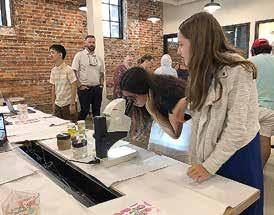
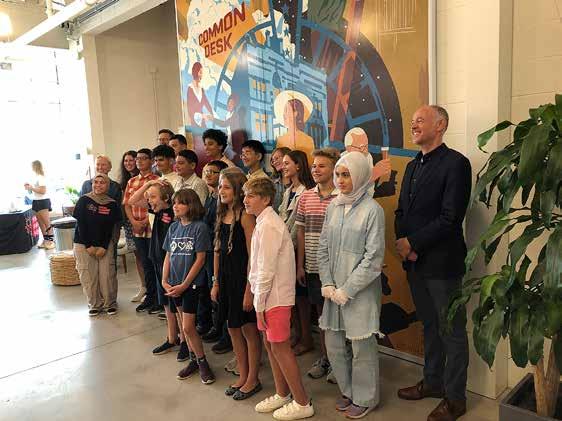
Environmental education programs for young people is a subject dear to my heart, and is one of our themes this issue. In recent months I’ve had the opportunity to visit multiple events showcasing educational opportunities for the young, and I find it so inspiring. I’ve attended both an Open House and a Youth Summit that allowed students of Young Scientist Academy to present their research to family and friends. Young Scientist Academy was started as a way to teach young students how to do real-world research. Instead of repeating the same science experiments a school class may perform annually, these youngsters are learning STEM, coding in Python, and doing original measurements of things as disparate as water quality, tree canopies, fast fashion, light pollution, urban flooding, air quality and even jellyfish. They then present their findings at our local City Council and County Commissioners’ meetings!
Students at Friends School of Wilmington are able to use their beautiful new Longleaf Center for Environmental Learning, while programs such as the Northwest Youth Corps offers youngsters the chance to learn outdoor skills they might use in future careers. I salute the educators who are making such a difference.
Also in this issue, we feature local aspects of the Blue Economy—which I sometimes think of as the “Ocean Economy.” Research at the Center for Marine Science helps oyster farmers develop techniques to keep their oysters viable; a local fisherman’s wife has developed a support network for families of commercial fishermen, and UNCW faculty and students have developed the world’s first Blue Economy Index.
We round out the issue with the subjects of herbalism, art and the environment, and gardening news. We hope you enjoy this issue.
— Valerie L. Robertson Editor
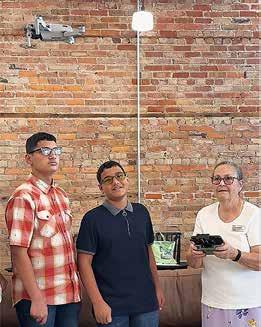
At this year’s Young Scientist Academy community Open House, YSA regional director Lauren Tippett was kind enough to capture a video of my inaugural lesson in how to fly a drone. I was very nervous about doing this indoors, for fear it would get away from me! My able flight instructors were Akram (14 years old), Bashar (15), Ammar (17), Luai (12) and Bilal (14).
3 Friends School of Wilmington: Envisioning New Connections Within our Community
5 Wilmington’s Young Scientist Academy Trains and Advocates For Scientists of the Future
7 Living Sustainably for Families with Children
8 Youth and Climate
10 My Time in the Northwest Youth Corps
11 Megan Waldrep Creates Community for Partners of Commercial Fishermen
12 Center for Marine Science Hatchery Research Benefits
Local Oyster Farmers
15 UNCW Creates BLUEECO, the First Blue Economy Index
18 Gardening News
19 Herbalism 101: Local Lessons in Herbalism and the 2nd Annual Herbal Conference
21 Cape Fear Women’s Birding Festival Returns in January
24 Crossword
27 Green News
Front Cover:
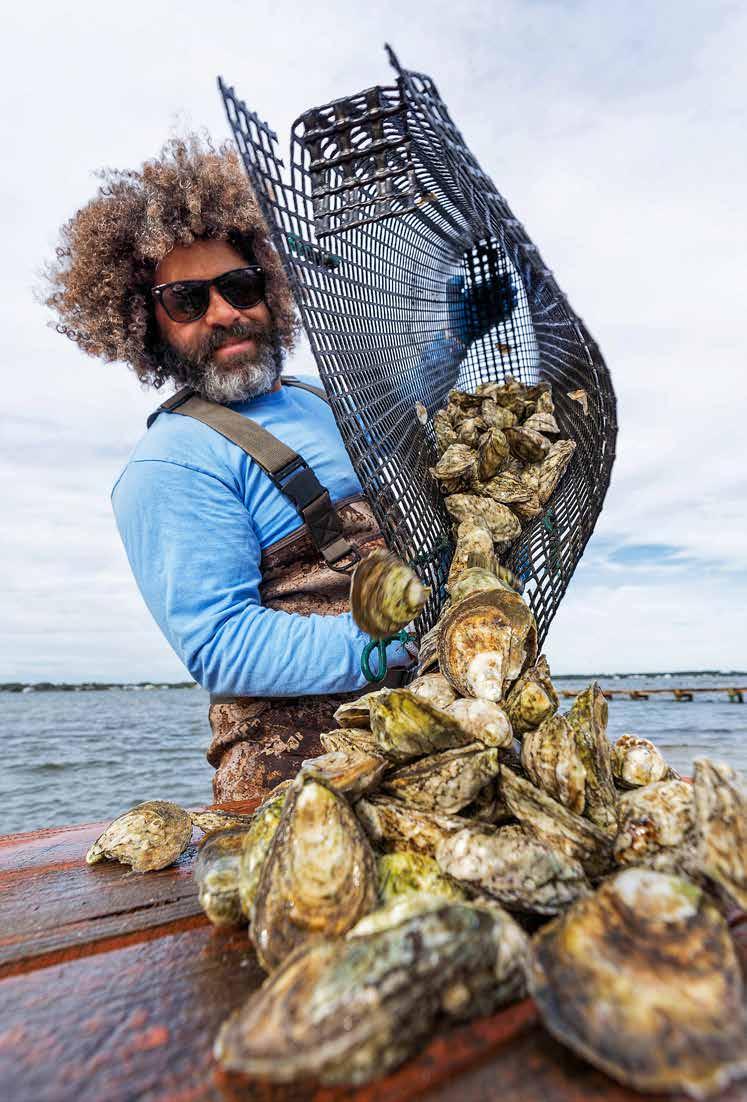
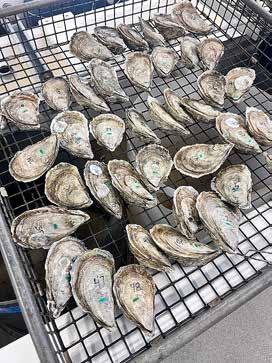
Ryan Bethea is the Owner of Oysters Carolina. Bethea is known for his famous salty oysters called “Native Sons,” and he takes a lot of pride in providing people with fresh, local oysters that are always harvested on the day they are eaten. Visitors can see his farm in action through a Shellfish Farm Tour as part of the NC Oyster Trail.
The NC Oyster Trail is a grassroots effort from people who love our state’s oysters. Visit www.nccoast.org to learn more.
“How to Operate an Oyster Farm in North Carolina” is the title of a five-minute video of Bethea talking about oyster farming, available on PBS UNC-TV Science, Season 3, Episode 388: pbs.org/video/how-to-operate-an-oyster-farm-in-north-carolina-eff7gh. cover photo by Justin Case Conder
Cape Fear’s Going Green is a quarterly publication promoting eco-friendly resources and lifestyles in the Lower Cape Fear River Basin.
Publisher & Editor in Chief: Valerie Robertson
Contributing Editor: Shelby Flores
Eugene Contributing Editor: Mary Robertson
Advisors & Editorial Contributors: Rhianna Beaupré, McKenzie Byron, Justin Case Conder, Michaela Donato, Maya Dulli-Ray, Shelby Flores, Wendy Gabriel, Albury Higgs, Sally Smits Masten, Beth Saile, Lauren Tippett, Kathryn Sisler Waple and Philip S. Wenz.
2010 YWCA Women of Achievement Award for the Environment
Sister City: Eugene, Oregon (Voted “Greenest City” 2006 by The Green Guide)
Cape Fear’s Going Green Going Green Publications P. O. Box 3164 • Wilmington, NC 28406 (910) 547-4390 publisher@goinggreenpublications.com www.goinggreenpublications.com
Advertising information: Email advertising@goinggreenpublications.com.
Cape Fear’s Going Green is distributed for free throughout Brunswick, Columbus, New Hanover, Onslow and Pender counties. A partial map of locations appears at https://arcg.is/1WWi0y. If you have a business and would like to receive multiple copies for the public, please contact us. The views and opinions expressed in articles in this magazine are those of the authors and do not necessarily reflect the official position of this publication.
by Beth Saile
At Friends School of Wilmington, environmental education coordinator Karen Linehan is dreaming of the possibilities for new partnerships with the Wilmington community.
Friends School of Wilmington, which is currently celebrating its 30th anniversary, serves preschool through middle school students, and is rooted in Quaker values. These values are often seen in the acronym SPICES—which stands for simplicity, peace, integrity, community, equality and stewardship.
For Karen Linehan, that involves thinking of their school’s mission as three concentric rings—the center is the school; the middle ring, their immediate neighbors; and the outer ring is the bigger community of southeast North Carolina.
“We believe we need to give back to the community,” Linehan says. “We must ask ourselves, what is our unique offer to
the Wilmington community? How can we serve our students, teachers and families, as well as our neighbors and the greater community around us?”
One standout way that Friends School is serving the community is through their Longleaf Center for Environmental Learning. Purchased in 2021 and located on 2.7 acres right next to the school, it’s a former family farm turned environmental learning space. “Friends School loved the property and always wanted to have green space adjacent to the school,” Linehan says. When the family was selling the property, developers had taken a look and plans were on the horizon for trees to come down and townhomes or condos to go up. Former head of school Brenda Esch worked closely with the family to complete the purchase with the intention to preserve the property.
Although the cottage on the property was nearly uninhabitable when the property was purchased, a local builder assessed
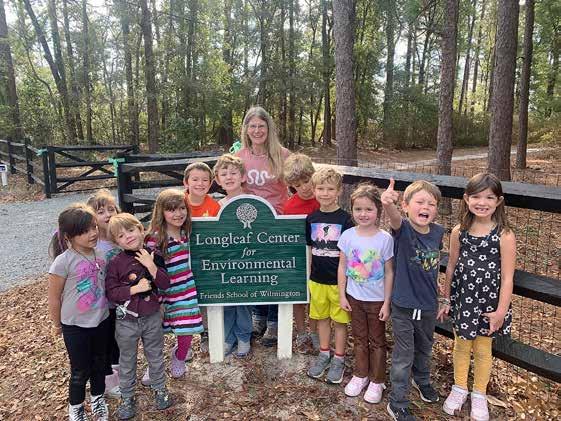
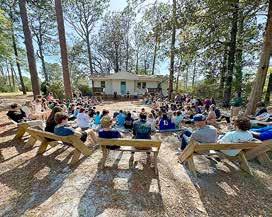
learning opportunities have always been an integral part of instruction at Friends School of Wilmington. Their new Longleaf Center for Environmental Learning creates additional space for instruction in the outdoors.
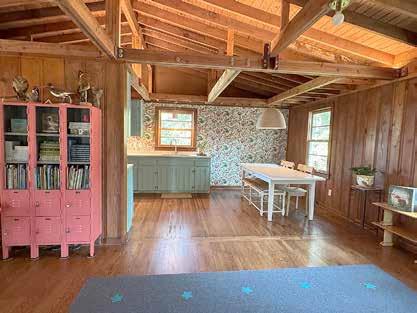
it and said the building had excellent integrity and encouraged Friends School to renovate it. With the help of generous donations, Friends School gutted the building, removed the low ceiling to reveal the gorgeous tongue and groove woodwork, then built a new roof. Linehan says they collaborated with Big Sky Design to envision possibilities for the building. Big Sky Design consulted for building ideas and salvaging the original cabinetry and helped create cozy and flexible learning spaces. The school also added large decks in the front and the back of the building to be used for outdoor learning. “We loved being able to save that building,” Linehan says.
Another standout piece of architecture in the building is the wallpaper. “Our school has a relationship with an amazing artist, Dr. Susy Paisley, who’s a conservation biologist from England,” says Linehan. Paisley’s son went to Friends School when the cottage was being renovated, and Linehan knew that Paisley was a creator of beautiful wall coverings based on ecology. The cottage’s walls are decorated in her “Carolina Parakeet” design, which features the now-extinct Carolina parakeet, yellowbellied sapsuckers, monarch butterflies, painted buntings, and carnivorous plants such as Venus flytraps and pitcher plants.
(continued on page 4)
Friends School... (continued from page 3)
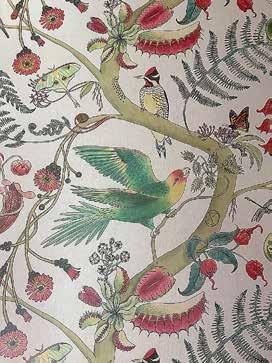
photo contributed by Friends School of Wilmington Wallpaper designed by Dr. Susy Paisley was used to decorate the cottage walls. Paisley’s “Carolina Parakeet” line features endangered and extinct flora and fauna of North Carolina.
The wallpaper is also a unique teaching component of the building’s interior, as it’s used as a reference in integrated lessons about art and ecology.
It was also important for Friends School to learn about the past ecology of the area in hopes of restoring it as much as they could. To help with that, Friends
School invited Dr. John Taggart, emeritus professor of environmental science at the University of North Carolina Wilmington (UNCW), to take a soil core and tell them more about the original ecology. He says that the property was originally dominated by longleaf and loblolly pines, live oaks and other hardwoods, with an understory of trees and shrubs like American holly, wax myrtle, sweet bay and yaupon, plus patches of muscadine grape and partridge berry. “[The] combination of sand ridge and coastal fringe evergreen forest serves as a beautiful setting for local classes and a reminder of original local habitats,” he says.
Now, the Longleaf Center is used for many purposes, like education, yoga classes and board meetings. The center is a flexible workspace, designed to be used for all these purposes in a single day.
A major focus for Linehan is collaborative partnerships within the community to help them reach their mission. One such partnership is with UNCW’s Environmental Education class, taught by Dr. Troy Frensley. Graduate students in this class develop an environmental education lesson, then teach the lesson to students at Friends School. (Disclaimer: The author of this article participated in that program in Spring 2024.) Another partnership is with Cape Fear Audubon, who generously loaned educational materials to Friends School
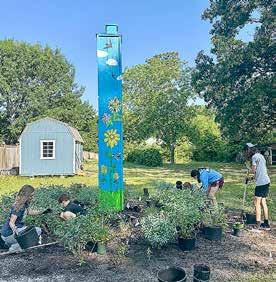
County Cooperative Extension, Alliance for Cape Fear Trees and Friends of the Arboretum.
and recently helped install a Chimney Swift Tower in partnership with NC Wildlife Federation with funding provided by Duke Energy and Women’s Impact Network. In Fall 2024, Friends School established a powerful community collaboration called the Native Tree Nursery, an idea sparked by parent, Jen Biringer, with support from New Hanover
In the backyard behind the education center, Linehan says that the school is currently developing infrastructure and acquiring funding to build an urban farm. “We feel very inspired by the work of David Brenner, who started Willowdale Urban Farm in Wilmington,” Linehan says. “We feel led to use this land to grow food for the food-insecure in our area.” She’s seen how Willowdale Farm has helped others at local food pantries and believes that middle school students at Friends School will be wonderful ambassadors for this program as they will grow, sort and deliver food to those in need.
Linehan hopes that the school can continue to develop more programs for the public and create more partnerships. “We’re asking lots of questions and seeking guidance and wisdom as we consider how best to share this property,” she says.
Beth Saile is a current graduate student at UNCW, pursuing both her M.S. in Environmental Education and her graduate certificate in GIS. She will graduate in December 2025. She is also pursuing her North Carolina Environmental Education Certification. She enjoys hiking, writing, music, and spending time with her daughter, Luna.
by Maya Dulli-Ray
The K–12 curriculum is becoming increasingly advanced every day, with new technologies being developed and standards being raised for students; however, the resources to implement these changes are not readily available. This is especially true for underfunded schools in lower-income areas. This is also where the disconnect is; we are expecting more and more from these students every day, but aren’t giving them the opportunities to learn these advanced skills. According to the Young Scientist Academy (YSA) website, Dr. Rob Condon was inspired to do something because “he realized that the standard science curriculum prioritized memorization over problem-solving.” In response to this need, in 2017, “Dr. Rob” founded Young Scientist Academy, with its primary goal of providing these students with the resources and guidance they needed to explore more complex projects in Science, Technology, Engineering and Mathematics (STEM).
Condon created this to be a charitable and non-profit program, simply wanting to help children explore their skills. He has more than 20 years of global teaching and research experience through multiple entities and is focused on marine sciences and environmentalism, giving him the expertise to lead YSA to what it is today.
The program started small, as most do, and according to the YSA website, they started, “only serving about 10 students per week.” Through this, it would entail a group of students either on Zoom or in a small classroom setting, where YSA members would host a presentation with the ability for students to interact hands-on with the topic being discussed. Through these engagements with students in various schools, they were able to grow their program and launch their first TechSTEM program, which enabled school curricula to incorporate YSA. With more engagement and success seen through the students, they were able to produce their first big-name project of launching
a weather balloon. This opened doors for both the program and the students, and from there, “YSA young scientists have taken on an assortment of projects with real-world impact, from ionic thrusters to greenspace and heat maps.” And today, YSA engages with over 350 students each week during the school year.
YSA’s outreach and success continue to grow over the years, with more and younger students participating in projects regularly deemed for skilled and trained adults. Not only did they continue to grow as a program, but they also expanded their outreach geographically to Moldova in 2023 through the NC–Moldova Bilateral Partnership that has been around since 1999. According to the Secretary of State, “The North Carolina–Moldova Partnership for Peace program is based upon an agreement to link these two states together to better facilitate cooperation in the areas of civil emergency operations, expansion of markets, cultural, scientific and academic
exchanges, and the coordination of humanitarian efforts of many governmental and non-governmental organizations.”
They found out about this partnership during the COVID-19 pandemic because they had gone virtual with YSA programs and opened them up to everybody. This
(continued on page 6)
Scientist Academy... (continued from page 5)
is when a young student named Madalina Rusu joined one of the coding Zoom classes, but her location was listed as MD, which staff believed at the time meant she was in Maryland. They came to find out that it was the country of Moldova from which she was joining the Zoom, which piqued YSA’s interest. They were able to call and talk with her and her family, and learned that the state of North Carolina is in a government partnership with the country of Moldova. Through her and her parents, Condon was able to begin building the bridge to Moldova for YSA programs. Today, as stated by Lauren Tippett, the regional director of YSA, “we’re actually in the process right now of having a formal non-profit established in Moldova, so it’s like a subsection of YSA will be in Moldova as well,” allowing the program to continue growing and reaching every young student it can, not just in the U.S. or North Carolina.
This program has been groundbreaking when it comes to discovering the abilities of these young children, because it is generally assumed that children lack the maturity to be granted a seat at the table when real-world topics enter the room. However, the mission of YSA was to find out what would happen if we did allow
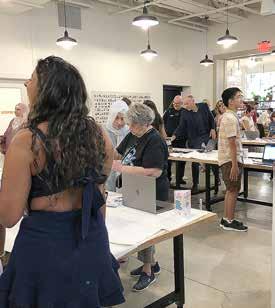
them at the table, and it has shown great success. Tippett exclaims, “If you give them the resources, they can do much more than just a science fair, which has its place in STEM education, but we do real fullscale research projects with our students. We’re launching weather balloons, we’re Python coding, heat maps.” The list went on before she stated, “We’re doing all sorts of things with 11-year-olds, with middle, elementary and high school students.”
It is clear this program ranges far and wide and with great achievements, but what do they have to offer the children exactly? They have a few different avenues through which they reach students and work with them, one being going into schools in the Cape Fear area or elsewhere in North Carolina. They do this by acting as a guest speaker who gives a presentation or teaches a hands-on lesson for the students while also building connections with those students and teachers. Tippett says, “[This] has been an integral part of their learning, to have an adult who’s so trustworthy. They are then more open to problem-solving because the things that we’re doing are not the typical ‘memorize this concept and regurgitate it to me.’ You have to be vulnerable; you have to problem-solve.”
YSA also works with other non-profits in the Wilmington and North Carolina area, especially with displaced youth and Title 1 students. Along with this outreach, YSA also offers summer programs for local students and virtual online programs for children from farther away. A large part of the success of this program is that it also inspires these students to want to learn. One of the counties that YSA works with is Duplin County, where, like many public schools across the country, it is very common for kids to skip class, but a teacher at one of the Duplin schools told Tippett, “I overheard my students saying I can’t miss this day because YSA comes on that day.”
Tippett goes on to say, “That’s the power of the relationship as well as just the excitement of sciences that we’re increasing retention or attendance of the students at school for all of their classes.” The power this program has built and given to
these students has only become clearer over the years, with new students coming and more staying.
One of the more outstanding experiences in the program that Tippett relayed to us was about a young girl and student who is a student from Syria, who lived in Lebanon before coming to the U.S. “Hala is an incredibly remarkable student because she’s just so happy and optimistic and excited to learn and so, so engaged,” something you may not expect from a young foreigner. She also describes Hala as someone who might be intimidated by a situation, but you would never be able to tell. “She came into our programs, I would say about a year ago, and started learning English when she came to America. Not six months later—we often will have our students present their research—she went on stage in front of an audience of about 75 people—her peers, people she didn’t know, teachers, our sponsors—and presented on water quality in Syria, Lebanon and North Carolina.”
As you can see, these students are making and will continue to make incredible revelations and projects in the STEM world, and arguably should have a seat at the table or a voice in real-world issues and important conversations. These young students are not only incredibly smart, but they also have the world at their fingertips, and this program helps them find out what that means. They are not just excited to learn; they are excited to continue learning, growing and developing in a safe place that allows them to make mistakes in order to figure out solutions for themselves. Children are much smarter than we give them credit for being; we just need to give them the tools to show it.
To learn more information on programs and curriculum activities of the Young Scientist Academy, you can visit www.youngscientistacademy.org, which includes links to some of the individual research projects the students performed. Maya Dulli-Ray is a UNCW senior who is interning for Cape Fear’s Going Green magazine and is passionate about writing about the environment.
Beth Saile writes our series on ideas for family-friendly activities that promote eco-friendly living. For continuity, we are running both her summer and fall editions in this issue. Look for her winter ideas in our next issue.
by Beth Saile
Summer has arrived! Kids are finally out of school and will be eager for fun times with friends and family.
For the past two issues, I’ve been writing about the challenges parents deal with when thinking about the impacts that climate change might have on their children’s futures. I’ve been sharing ideas for families trying to plan activities with their children that are both fun and ecofriendly. I’ve used a lot of these ideas with my seven-year-old daughter, Luna, who has given them a thumbs up, and I hope your kids will do the same!
One thing I do want to stress before I begin, though, is that your sustainability practice will be unique to you, and that’s okay. Our individual finances, time constraints, family obligations, and abilities and disabilities will influence what we are able to do. I strongly encourage a “take what works for you and leave the rest” approach to these tips.
With the increased use of pools, waterslides and gardening, what better time than summer to talk to your kids about saving water? You can use this time to talk to them about how important it is to turn off their faucet. You can also use the online Water Footprint Calculator, watercalculator.org, with your kids to find out your family’s water footprint.1 It certainly is eyeopening and will give you and your family individualized tips on how to save water in your household.
Another way to conserve water is in your yard and garden. Native plants, adapted to our local ecosystem, use less water than exotic plants or monoculture lawns. 2 Consider adding some to your yard this summer. Ours includes black-
eyed susan, coreopsis, sawtooth blackberries and muhly grass. Each year we’re working on incorporating more natives into our yard.
When going to the beach, remember to bring multiple-use containers for your food and your stainless-steel water bottle. Choose a regular cooler instead of foam—those are terrible for the environment. Some companies make reef-safe sunscreen, which allegedly contributes less to coral bleaching. While more
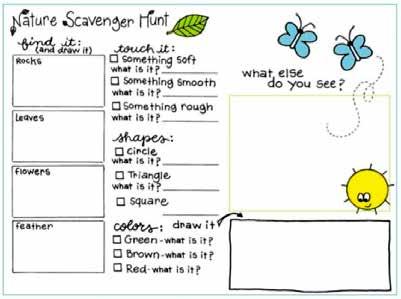
design by Morgan Wendy Gabriel A Nature Scavenger Hunt is a fun way to encourage children—and adults—to look more closely at the nature around them.
research is needed on this topic, it’s generally agreed that the chemicals oxybenzone and octinoxate are two chemicals to avoid in sunscreen. 3 Make sure the kiddos pay attention to signage pointing out the location of sea turtle nests and other areas to avoid!
Make sure your kids are playing outside this summer as much as possible. Often during the school year kids sit in front of screens, and that’s not just at home—it happens at school as well. Have some digital detox days for the kids to run around outside. Besides the beach, plan some family trips to the park. And why not return to the family board game nights so many of us had as kids? Our family has a National Parks version of Monopoly Jr. that my daughter loves. Make it a goal to spend one night a week unplugging and turning off technology. That’s good for the environment, too!
iNaturalist, an online community for sharing and identifying observations of plants and animals, makes a great free app called Seek. Seek is like a digital scavenger hunt. You can use the app to identify plants or animals in the area, and the app also provides challenges, such as finding certain species in a certain amount of time. Luna and I have spent several hours at the park and in our backyard looking for different plants and bugs, in particular.
This next topic may get some pushback, but consider other activities than fireworks on the Fourth of July and other celebrations. Some alternatives are biodegradable glitter, bubbles, etc. Fireworks aren’t recyclable 4 and contribute to air pollution, and the sound truly can disturb pets and those with conditions such as post-traumatic stress disorder. To make your Fourth of July celebration as sustainable as possible, you could have a potluck with reusable dishes and cutlery, and cloth napkins. It’s also helpful to know that charcoal grills are less environmentally friendly than gas grills, as they create more greenhouse gases. You can, however, buy chemical-free charcoal, and some companies try to engage in sustainable harvesting practices. This isn’t a perfect solution, but is definitely better than the alternative.
If your kids are younger, how about an outdoor scavenger hunt? This can be done either in your backyard or at a park or nature preserve (though you’ll want to stress the importance of not trampling the flora off-trail). Everyone gets a list of natural objects they need to find (rocks, plants, bugs, etc.). You could even make it a beach scavenger hunt. Just make sure you aren’t picking plants or disturbing animal habitats. Family camping at Carolina Beach State Park can be fun, too. (continued on page 8)
“...[hope] doesn’t work. [What] we need more than hope, is action. Once we start
to act, hope is everywhere.”
— Greta Thunberg, at age 16 Climate Activist and Nobel Prize Nominee
It seems many people—some intentionally—missed the significance of the global Youth Climate Strike that took place on Friday, March 15, 2019.
The strike was the lightning-fast culmination of a remarkable series of events inspired, initially, by a lone Swedish schoolgirl named Greta Thunberg. Just seven months before the worldwide demonstration there was no movement, no protest—just Greta, an Asperger’safflicted teenager who had fallen into a deep depression precipitated by her worry about climate change and her future. She educated herself on the subject, and the more she learned, the more she became convinced that society’s response to this very real crisis was wholly inadequate. Then she pulled herself out of her funk and took action.
On August 20, 2018, Greta cut school and, carrying a large, homemade sign that
read “Strike for Climate,” plunked herself down on the sidewalk across the street from Sweden’s Parliament building.
Within days, other students joined her. Within weeks, the normally shy adolescent was addressing groups in Stockholm, asking members of her young audiences to record her speeches on their cell phones and send them to their friends. The videos went viral, and seven months later the international strike, coordinated by young volunteers using social media, was joined by about one million children in some 2,000 towns spread across every continent.
Along the way, Greta had an opportunity to harangue the billionaires at the Davos, Switzerland, World Economic Forum saying, “Our house is on fire…I don’t want you to feel hopeful. I want you to panic. I want you to feel the fear I feel every day, then I want you to act.” She concluded with, “Either we choose to go on as a civilization, or we don’t.”
Those dismissive of the strikes, which amount to students playing hooky so they can participate in climate-action rallies and marches, fall into two camps: the usual suspects who maintain that climate change isn’t real, isn’t caused by humans, cost too much to fix and so on; and those who are sympathetic to the strikers but
(continued from page 7)
It is worth mentioning that by the end of summer, your kids have probably outgrown a lot of their warm-weather clothes. Consider donating to a local thrift store—there are a few in town that benefit good causes.
Lastly, a great way for the family to spend time together is to volunteer. There are plenty of activities in our area—beach cleanups, tree planting, citizen science— it’s all here in the Cape Fear region. Our website (GoingGreenPublications.com) has a great calendar of events and there’s sure to be something for everyone.
I hope this article has given you and your family some great ideas for how to have a busy, fun-filled and green summer! Enjoy!
Sources:
1 watercalculator.org
2 www.audubon.org/content/ why-native-plants-matter
3 www.rei.com/learn/expert-advice/what-isreef-safe-sunscreen.html
4 recyclecoach.com/blog/ how-to-safely-dispose-of-fireworks
5 www.sustainablerookie. com/homeandlifestyle/ sustainable-bucket-list-spring
Beth Saile is a current graduate student at UNCW, pursuing both her M.S. in Environmental Education and her graduate certificate in GIS. She will graduate in December 2025. She is also pursuing her North Carolina Environmental Education Certification. She enjoys hiking, writing, music, and spending time with her daughter, Luna.
believe marches and demonstrations are mere feel-good exercises that accomplish nothing in the world of realpolitik.
The first group’s “critiques” have dissed the children themselves. The gist of one online rant I found, paraphrased, was, “What boy wouldn’t want an excuse to cut school, hang out with the girls, and impress them with a couple of clichés about global warming?” In other words, hormonal teenagers are too stupid to understand the implications and warnings of climate science.
Often, variants of this insult are accompanied by the admonition that the kids should be “getting an education”—to which Thunberg and those she’s inspired answer, “We think organizing against an existential threat—and figuring out how to make our voices heard—is teaching us some important lessons.”
But perhaps those who think the protests are a waste of time are, in their own way, more cynical than the climate crisis deniers. What they are missing is that nonviolent mass action—marches, strikes, sit-ins—are one of the prime instruments of social change. American women weren’t granted the right to vote because one day men had nothing better to do than amend the Constitution. That right was won by years of marches, protests and all manner of social agitation.
The same is true for many, if not most significant advances in the human condition. When asked whom she looked to for inspiration, Thurnberg cited Rosa Parks.
The real significance of the global youth strike is this: soon, Thunberg’s generation will come into power and will, in her phrase, change “everything” at our ecological house.
© Philip S. Wenz, 2025 Philip S. Wenz studies environmental trends and developments.
Note: After 18.5 years of publishing his column under the name “Your Ecological House,” Wenz is now starting a new series entitled “Your Environment.” We hope you enjoy it. Visit his blog at firebirdjournal.com.
by Beth Saile
Parenting children today can be difficult and stressful for many reasons—not least of all knowing that our kids will be facing a lot of environmental changes in the future. As an environmentalist and the parent of a seven-year-old daughter, I’ve come to terms with the fact that it can be hard to navigate both raising my child and living sustainably—the two don’t often overlap. But our children are the future stewards of our environment, and with that in mind, I’ve committed to raising my daughter to respect the environment and “go green” as much as possible.
For the next four issues of Cape Fear’s Going Green, I’ll be presenting seasonal suggestions and activities that are both eco- and kid friendly. I hope you’ll use these tips to enjoy a fun, healthy and sustainable fall.
So much waste can be created with our kids’ school lunches, but we can avoid that waste with a few simple swaps. Buying bulk (when we can) cuts down on food packaging, cost and emissions from unnecessary grocery store trips. I purchased bamboo utensil sets, which can be taken to school or work, and brought home to be washed. I also switched to reusable food wraps (look for ones made of beeswax) and reusable storage bags and containers. It should never be necessary to buy single-use plastic bags again.
Some of our local markets close for the winter season, so fall may be your last chance to visit them for a while. We minimize waste and pollution by buying locally, and taking your child to the farmer’s market is a perfect way to help teach them where our food comes from.
At home, there are plenty of ecofriendly activities to keep us busy during the fall. Although we keep a compost pile in our yard year-round, this is the time of year that we really start building it up to create the soil we’ll use for our spring garden. We don’t use any fancy bins or equipment to make a compost pile—we simply start our pile in the corner of our yard, add water and turn it with a pitchfork every couple of days. This can be labor-intensive,
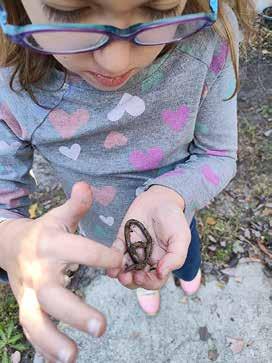
so my daughter can’t fully participate, but she enjoys helping me and learning what items can be composted—though she’s sometimes more interested in how many worms she can find in the pile!
Speaking of the yard, it wouldn’t be fall without raking leaves into a pile and jumping in them. However, when you’re done, leave the leaves there! They’re a wonderful natural mulch that is rich in organic matter and can protect winter plants. Just make sure you mow the leaves a few times without your collection attachment on so that the layer is thin and lets light through as too thick of a layer can have the opposite effect.1
Consider visiting a thrift or consignment shop for fall kids’ clothing and even Halloween costumes. While you’re at it, take some time to go through your and your kids’ summer wardrobe—chances are, they’ve outgrown a lot! Consider donating those warm-weather clothes to a locally-owned shelter or thrift store that benefits our community. It also reduces textile waste, which is a large and growing problem. We also visit the library once a week—I can’t remember the last time we purchased a new book.
When it comes to decorating for the fall holidays, say no to faux décor from the craft store. At our house, we like to get creative with real materials. We decorate with pumpkins, hay bales, pinecones and gourds. Our decorations might not be picture-perfect, but we enjoy our family time making them together. It barely costs us anything, and we can compost or reuse a good bit of what we make after the season is done. We like to use the whole pumpkin too—roasted pumpkin seeds with sea salt are a delicious fall snack. In the U.S., most pumpkins end up in the landfill after Halloween instead of being eaten or composted,2 so we feel good about not contributing to that waste.
Finally, just getting out into nature with our kids can be a wonderful bonding experience, and there’s no better time to do it than in the fall. The Cape Fear area has so many beautiful natural areas, like Abbey Nature Preserve, Pages Creek and
Carolina Beach State Park. Take your child out for a walk and talk with them about the plants and animals they see, and the changes they’re observing in nature. I ask my daughter to describe what she can see, hear and smell in the different natural areas we visit, and to point out any changes she notices since the last time we’ve been there. I’ve also begun to teach her how to identify several plants that are native to our area, and she’s excited when she can do so.
Even when you can’t get out of the house, you can still open the windows, unplug, and enjoy the beautiful cooler weather before winter comes. Happy fall!
Sources:
1 www.hortmag.com/smart-gardening/awarning-when-using-fallen-leaves-as-mulch 2 www.sciencealert.com/an-astonishing-number-of-pumpkins-are-wasted-for-halloweeneach-year
Beth Saile is a current graduate student at UNCW, pursuing both her M.S. in Environmental Education and her graduate certificate in GIS. She will graduate in December 2025. She is also pursuing her North Carolina Environmental Education Certification. She enjoys hiking, writing, music, and spending time with her daughter, Luna.
by Michaela Donato
This spring, the author worked as a team member of the Northwest Youth Corps, the conservation corps in the Pacific Northwest that engages nearly 1,000 young people each year in Oregon, Washington and Idaho. Donato and her fellow Youth Corps participants lived in tents in Oregon while helping the community, gaining work experience and learning new in-demand skills.
My first week of work in the Northwest Youth Corps (NYC) was trail work. We cleared trails and made drains. Until this point I did not know just how much work goes into trail maintenance—how without even knowing it I had been walking over drains and trail work without care. It was eye-opening, and I learned a lot about tools and the proper ways to use them. (I am still working on proper posture.)
The second week we worked at Schwarz Park and at Pine Meadows Campground near Cottage Grove, Oregon. Both were so beautiful, but we got rain on the last week there, which made it less comfortable to work, as we were removing blackberry bushes in a heavy downpour. On the bright side, we were given a tour of their dam and after all that rain we certainly appreciated the amount of work involved in maintaining a dam.
Our next project was more trail work at Silver Falls State Park. I finally learned proper form when I used the pickmatic digging tool to drain water off the trails. We also reburied a drainage pipe. It took a long time because of all the foot traffic—we paused work whenever people were using the trail so they could pass. After the trail maintenance we worked on a rock wall and I learned how to mortar. My favorite part of it was detail work; it was a lot like painting. When we finished, we put a red rock in the wall that our project partner, John, the park ranger, gave us. He was so good to us during our time with him, and when our time with him ended he and a senior park ranger told us how important is the work we had done. They said that the work on the wall would be part of their park’s long history of working with NYC and that this legacy would live on for centuries. It was very humbling, and I am so grateful that I was a part of it.
Our next project was in a small town that had had a bad fire a few years back. Our job was to remove invasive plants such as blackberry, English ivy and gorse to make more room to give new pine saplings a chance to grow. The work was hard but very rewarding. All the landowners were so grateful and kind.
One woman told us how much it meant to her, that because of us her property was beautiful again. I had never felt as good about myself as I did then. I finally made a difference.
Our final project was on the border of Oregon and Washington. In one of their parks, we repaired a trail that was damaged. We also worked at their plant nursery, removing weeds from nursery plots to make room for new trees, and planting trees ourselves. I learned so much about plants and electric tools. I also learned more about myself: I am capable of more than I realized.
The time I spent at NYC was lifechanging and it taught me so much that I will need to build a future. Unfortunately after all the funding cuts that this administration has made, I am not sure how many young people will have the opportunity that I had. It was an honor to serve my community and I will always be grateful for it. Thank you, Northwest Youth Corps. Headquartered in Eugene, Oregon, the Northwest Youth Corps is the largest conservation corps in the Pacific Northwest. It provides education and job-training experience that helps young people develop work skills. Their programs include residential conservation crews for both youth and young adults, local community crews, community wildfire protection crews, an internship program for college-aged participants, and a fully accredited high school. Learn more about their programs at www.nwyouthcorps.org/.
Michaela Donato worked as a blue crew member of the Northwest Youth Corps from March 5 to May 16, 2025. She loves animals and nature, and looks forward to future job opportunities working outdoors.
by Maya Dulli-Ray
In 2015, Megan Waldrep, a former journalist, was working as an editor in Santa Barbara when Chris Dabney, a commercial fisherman, changed her life. They met, started dating, and fell in love, but Waldrep couldn’t have known what she was getting herself into at the time. Dabney was living in Washington State, and they had a long-distance relationship for close to nine months before she experienced the first fishing trip of their relationship.
“One day, he said when he came to visit, ‘Well, I’m gonna go to Alaska to fish sockeye salmon in Bristol Bay for three months,’” said Waldrep. This was the first time the reality of dating a commercial fisherman struck her. She had to determine whether the obstacles that would be thrown at her would be worth it for this relationship. Luckily, they were.
Dating a commercial fisherman, as their partners know well, brings about months of anxiety while their fishermen are away. Ranging from their overall physical safety, to finances, to relationship anxiety as they are gone for months with little to no communication, many worry about loyalty as well. Safety remains as the main concern for these partners as it is one of the most dangerous careers, but as Waldrep states, “When you’re with your fisherman further down the road and you’re building a life together, then one of the main concerns is finances… because prices fluctuate all the time, seafood does not get the same price every season.”
Waldrep relayed her memories of growing up as a military kid and “seeing all the partners go through the sacrifices of having to stay home, take care of the children, manage the home, and also worry about if their partner is going to be alive when they get back.” After being reminded of the hard times her family and others had experienced, she decided she needed to find out more about what dating a commercial fisherman entailed. This was the first time Waldrep searched
for answers on the Internet, but when she looked up “How to date a commercial fisherman?” nothing came up.
“There was maybe a blog post or two about dating a sports fisherman,” said Waldrep, but it was clear to her at this time there was not yet a place or community that gave the support she was looking for, and so she decided to build one herself.
As a former journalist of twelve years, she had been publishing her own writing on her blog. She decided to write the first Partners of Commercial Fishermen (POCF) blog post, titled “Nine things to know when dating a commercial fisherman,” and this would become the start of her forming a global community. At the time, Waldrep didn’t expect anything to come of it; it was more of a public service announcement and personal outlet. However, to her surprise, women from all over the world wrote to her saying they could relate to everything she wrote.
“It made me feel amazing because I felt like I wasn’t alone,” Waldrep shared.
She didn’t have family or friends who understood what sort of lifestyle she had just taken on and all of the anxiety that comes with it, but by creating this online community, she built a support system not only for herself but for hundreds of other women who go through the same things every single day. The community grew from blog posts to interviewing other POCF members and telling their stories, to a podcast, and even to a private membership community on social media. Both Waldrep’s blog and podcast are called “Partners of Commercial Fishermen.”
“It was the act of writing that was the therapy part, and then the best gift of all was the connection,” Waldrep says as she speaks to the impact this community has had on her.
From learning about the similar struggles other partners have had in their relationships, and growing a global support system for them, Waldrep plans to take this project even further. Her podcast, Partners of Commercial Fishermen, dis-
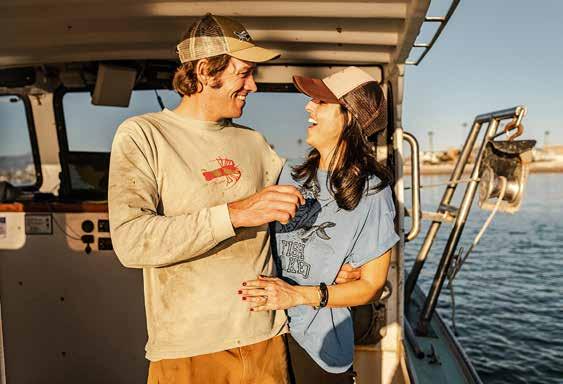
Megan Waldrep shares a sweet moment with her husband, Chris Dabney—the inspiration for her Partners of Commercial Fishermen project. (continued on page 12)
by Maya Dulli-Ray
The University of North Carolina Wilmington (UNCW) is geographically located near the ocean, so students, faculty and visiting researchers can explore and study marine life right at its doorstep. Fortunately, in the late ’90s, the school was able to obtain enough funding from the state of North Carolina to build an entirely separate center for marine sciences located on the edge of the intercoastal waterway to grant the closest access to the marine ecosystem that students and researchers would be studying.
According to the UNCW website, “The original $17.5 million UNCW Center for Marine Science was completed in 2000 with a total of 75,000 square feet of net indoor space.” This center houses classrooms, labs, aquariums, a greenhouse and a dock with direct water access. The Center for Marine Science was created to facilitate, “a variety of fields such as oceanography, coastal and wetland studies, estuarine science, marine physiology and genetics,
of Commercial Fishermen... (continued from page 11)
cusses in more depth the everyday struggles of these families. She has also brought a few patrons of the community onto the podcast to discuss similar experiences and different perspectives.
Waldrep plans to have a recurring retreat for POCF women, starting in 2026. She feels the retreat will provide a well-deserved vacation away from the stressors of everyday life in the fishing community and bring the community closer together. She states, “I finally met some of the women at a conference in Seattle, Washington… And to actually hug these women and actually talk to them face to face was so cool, and it wasn’t like we had to explain ourselves… We were instantly in conversation because we totally got it.”
For members of the public who are not directly tied to the commercial fishing industry, Waldrep hopes they will sup -
port local U.S. fisheries, which are highly regulated to ensure healthy fisheries and healthy catching habits. “When you buy local wild-caught seafood, you’re not only supporting community members, but you’re supporting positive fishing practices,” says Waldrep. She explains that purchasing imported seafood means supporting fisheries that may do extensive damage to the environment because they are unregulated, and, in some cases, the people working in those fisheries are treated like “sweatshops for seafood.”
Waldrep notes that, “We are at the highest level of having healthy fisheries in the world, and so if you want to bring that into what you’re eating… buying U.S. wild-caught seafood is one of the healthiest ways.”
As for the POCF community itself, Waldrep hopes it continues to grow. She
fisheries, aquaculture, marine biotechnology, marine policy and education, and other aspects of marine biology, marine and atmospheric chemistry, marine geology, environmental studies/sciences and physical oceanography.”
It wasn’t until the summer of 2010 that “the $4.3 million 11,000-square-foot Shellfish Research Hatchery was completed,” per the UNCW website. The shellfish being studied included mollusks, scallops, oysters and more. However, the hatchery’s main focus today is oyster farming for both research and commercial purposes. The two go hand-in-hand because the team researches ways to keep the oysters adapting genetically to the changing environment, while also teaching oyster farmers how to get the biggest and best crop and what species will be most resilient.
One way they are conducting this research is determining how to help the farmers with their oysters’ mortality rates, (continued on page 13)
plans to create more podcasts, retreats and conferences where members can connect and feel supported. Waldrep has put her heart and soul into this project and states: “I want this to exist long after I’m gone. I want this to be a pillar in the world that all women and partners can find their safe haven… It’s like the lighthouse and the port in the storm.”
If you are a part of the POCF community or just want to learn more about it, you can listen to Waldrep’s podcast, read her blog and learn more about her retreat and other of her projects at meganwaldrep.com.
Maya Dulli-Ray is a UNCW student going into her senior year as a communication studies major, along with a journalism minor. She has a passion for environmental activism and specifically writing about it for her community.
because, according to Hatchery Director Ami Wilbur, “anywhere from 80 to 90 percent of the animals die, and we’re not quite sure why… so we’re working with colleagues at NC State and Chapel Hill and Duke to try to address this problem.”
To do this, the researchers essentially use natural selection by nurturing the Shellfish Hatchery... (continued from page 12)
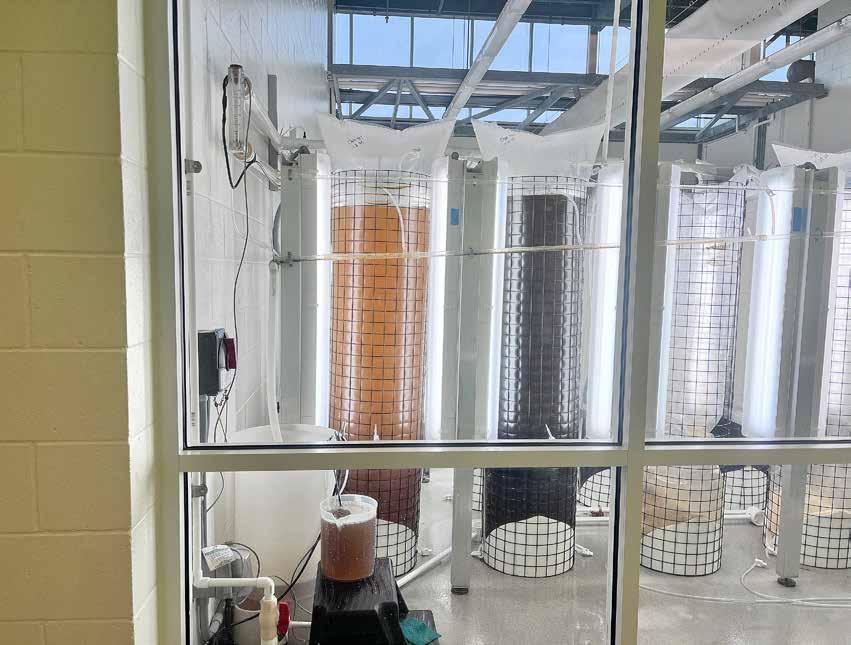
animals that survive a generation, and then those will be the parents to the next generation, and so on. They begin in the research building with the resources and facilities to house the infant oysters, and during this stage, they keep hundreds of infants in buckets of natural water where they are fed and cared for around
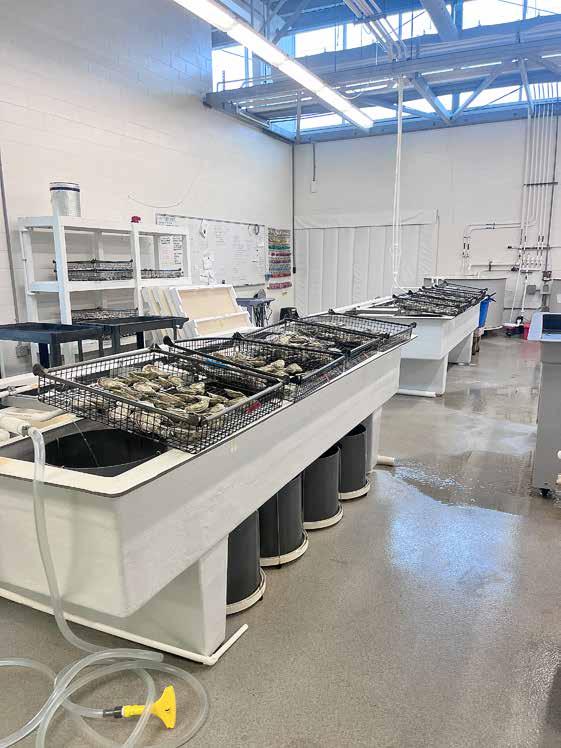
the clock. After they reach the optimum size, the team then moves the oysters to the farm, which is located at the Marine Science Center’s dock right below the facility.
Here, they behave just how wild oysters would, besides the researchers consistently checking on them; and therefore, “it’s a very natural product, and while they’re out there on the farm, they’re filtering out the excess phytoplankton that often is associated with their coastal ecosystems… so they filter the water, they clean the water, just like they do when they’re on the reef,” says Wilbur. After 18 months, the oysters are then brought back from the farm to the research facility, where the research team is able to choose the biggest and prettiest oysters out of the bunch, based on feedback and input from the oyster farmers, and breed those together to form the next generation. Once that generation is fully grown, they repeat the same process, and after 14 years of doing this, they have been very successful. According to Wilbur, “They’re 25–50% larger at 18 months than when we started.”
Even though they have shown this much success, there is always more work to be done. This research is especially important for the fishermen who are eager to get more information on how to farm since they are battling the commercial fishing stress of needing the biggest and best oysters to sell.
“Our role is… addressing questions that the farmers can’t do for themselves because of time, energy, and we can afford to fail—they can’t,” Wilbur states. A symbiotic relationship exists between the fishermen and researchers. The hatchery performs cycles of trial and error, and with every new finding, the oyster fishermen begin to test them out on their farms. Every success of the hatchery is a success for the fishermen.
In addition to the commercial innovations developed by the hatchery, oysters and other shellfish on their own are very important to our ecosystems and our waterways because they clean and filter our
(continued on page 14)
Shellfish Hatchery... (continued from page 13)
water, meaning that we can drink, eat and swim more safely. As Wilbur states, “We think that shellfish farming in itself is a very sustainable food production process in the sense that it doesn’t require any manipulation of the environment [or] hormones,” meaning they don’t truly change the DNA of the species—they simply cross-breed. “We don’t do anything other than make a bunch of little oysters and we put them out in natural water so that the farm-raised oysters are eating exactly what the wild oysters do.”
By helping grow the knowledge bases we have on shellfish and how to farm and grow them without causing a great deal of harm to the ecosystem, the hatchery is boosting and supporting North Carolina’s blue economy. Teaching the farmers how to grow their oysters and other shellfish rather than harvesting from wild reefs makes a tremendous difference in the reef ecosystems, where wild oysters face a much more tumultuous environment than in the farms where they are cared for. Wilbur notes that what appeals to her
about shellfish farming is that “this is a way to not only provide food for people, but also to preserve those wild reefs that have enough to deal with.”
Learn more about the research performed at the Center for Marine Science at uncw.edu/research/major-programs/ shellfish-hatchery.
Maya Dulli-Ray is a student at University of North Carolina Wilmington. She wrote this while interning with Cape Fear’s Going Green, focusing on the Blue Economy.
by Maya Dulli-Ray
Locals, newcomers and anyone who spends time in Coastal Carolina knows that much of our economy relies on our proximity to oceanfront and on the ocean itself. The ocean brings in tourism, which creates jobs. Tourism allows more companies to begin building business here, which drives additional tourism. The ocean
When we talk about an “economic index,” we are referencing what the business world knows as “indicators.” These indicators are graphs of key statistics that apply to a certain category of companies. For this instance, the Blue Eco Index teams states that their index is composed of “the largest companies that operate in the oceans while maintaining strict adherence to their environmental impact.” The statistics that this team is looking for are aspects such as: Are they keeping carbon emissions low? Is their chemical waste being disposed of properly? Are they actively using environmentallyfriendly resources? All of these aspects and more are compiled into a list, and with that list, the team then compiles the companies that are abiding by these “rules.” Those companies that are complying will then be put into the index, where businesspeople can keep track of the companies’ continued success or failure to keep these aspects going.
This is how all economic indices work; a list of desired features or aspects of companies is created, and from that, the companies with those desired features are sorted through until whoever created the index has their desired list. From this, the business world and everyday people can use the resulting graphs to see the success or failure of these companies, which are described by these indices. As the UNCW Blue Eco index team describes, indices also “give investors access to the growing impact of economic development around the oceans as there continues to be a population shift toward coastal communities.”
also provides many of us with food. This all corresponds with the ocean’s economy, and without the ocean, these would all disappear. So, how do we measure the success of the ocean’s economy—the Blue Economy?
Diane Durrance, director of the Center for Innovation and Entrepreneurship (CIE) at University of North Carolina (UNCW), collaborated with Richard Keary, former Wall Street equity trader and economic businessman, on what the ocean economy truly is and how they could measure it. They started by forming a definition, based on The World Bank’s definition of the blue economy, which is “sustainable use of ocean resources.” To build on this definition and find a way to measure the Blue Economy, they collaborated with people from scientific, academic and business backgrounds to find a solution to measure the blue economy. By combining the data and information the CIE already had with Keary’s skills with economic tools, they created what is called an index. An index can measure the growth or decline of anything, but it is most often used to measure economic assets and categorize them so they can be compared with other companies, programs or businesses.
To identify companies that would be viable for this index, they selected optimal keywords which they used in a keyword search. This gave them a compiled list of around 3000 companies. From there, they narrowed the search by organizing the companies based on their environmental scores and revenue from just ocean activity. This narrowed search gave them about 600 companies that fit their description, and about 100 of them are measured in the index every year based on which of the companies have the most success.
As this project started with UNCW resources, UNCW owns the intellectual property of the Blue Economy Index, which allowed academics to join the program. Combining an experienced index creator and the resources that a classroom and students can provide, they created the very first ocean-related environmental index. The Blue Economy Index, officially
under the ticker BLUEECO, is published today on Bloomberg.
UNCW’s business department began collaborating with the CIE, and gave students the chance to work on the project. Two professors, Dr. Watson and Dr. Shackley, created a curriculum for a Blue Economy Index course for undergrads and got interested students involved.
The students were very intrigued and eager to help, which sparked the idea that this could become an ongoing class and a project meant to be passed along to a new batch of students each semester. This is exactly what they achieved when the business school and these professors crafted a course designed to collect data, analyze it, and put it into the index to keep it going throughout the years. Today, Dr. Miran Hossain teaches the Blue Economy Index course at UNCW, and he helped design this course to maintain the index while also teaching business students how to use real-life skills before they leave the classroom.
Dr. Hossain, Dr. Shackley, Dr. Watson, and all others involved in this project designed the course based on two goals: first, to understand the Blue Economy Index and sustain it, and second, to help students apply their skills to create indices in general. One important aspect of the course is that it goes well beyond the classroom. Dr. Hossain states, “Students work with real data, develop professional-grade analytics, and produce monthly reports and index fact sheets—just as they would in the financial industry.”
To the professors’ and Keary’s surprise, the students were even more motivated by learning about the Blue Economy than they were by learning about how to create an index.
According to the World Bank, the blue economy is the “sustainable use of ocean resources for economic growth, improved livelihoods and jobs while preserving the health of ocean ecosystem.” (continued on page 16)
(continued from page 15)
“They were really more concerned about the social aspect of taking care of the blue economy than about how they build an index… [and] that drives their motivation to make sure everything is great with the index.” Keary states.
The students’ involvement and passion and the professors’ work in advising combine to create a profitable and eventually investable index that works in real time with real companies.
Investors need to see a three-year track record before the majority of them will show interest in indexes, and the blue economy is a very new index and is only about two years old. For this reason, the Blue Economy resides in the classroom and the university for now. However, the Blue-Economy Index is outperforming the Global-Economy Index consistently, which has $7 trillion in investment, so just imagine what the Blue Economy Index could do with the same. However, they have had multiple conversations with early investors and hope to get the ball rolling because, with the funding needed, they
can continue to grow the index and begin to commercialize it to the public. “We have a story to tell, we just need a bigger microphone to tell it so we can reach a broader group of people,” says Keary.
This project is ahead of its time and ahead of the available research on the blue economy, but Keary spoke about the benefits it can offer to entrepreneurs, even before it gets commercialized into a real index. This Blue Economy is something the founders are trying to promote as a beacon for entrepreneurs to “come to Wilmington to build your blue economy company, build a solution that helps with climate change, build a coalition that helps us get cleaner water, it helps take care of our fisheries, and whatever other problems that are out there that you want to solve, come here and build it and solve it because we have all these resources,” states Keary.
The index overall isn’t necessarily useful in the average person’s everyday life; however, according to Keary, “It’s more about awareness of what’s happen-
ing in your community,” because, “for Wilmington, we are the blue economy… We rely on the ocean here in Wilmington for our livelihoods.” The index keeps track of what companies are doing well for the community, which can be important information for people in Wilmington. However, Keary also talks about the importance of the index for entrepreneurs, as it is something people looking to start a business or grow their current businesses would find very useful. Another way to stay up to date is by reading the environmental news, especially that which concerns laws in our city. Keary also urges citizens to stay up to date on local legislature, as there has been quite a bit of recent legislation that has negatively impacted the Blue Economy in Wilmington specifically.
One way to help the Blue Economy continue to grow is to go out and do the “dirty” work—cleaning the beaches, and keeping plastic out of the ocean. This all helps our Blue Economy, even if the effort seems small. “And that comes from our
(continued on page 17)
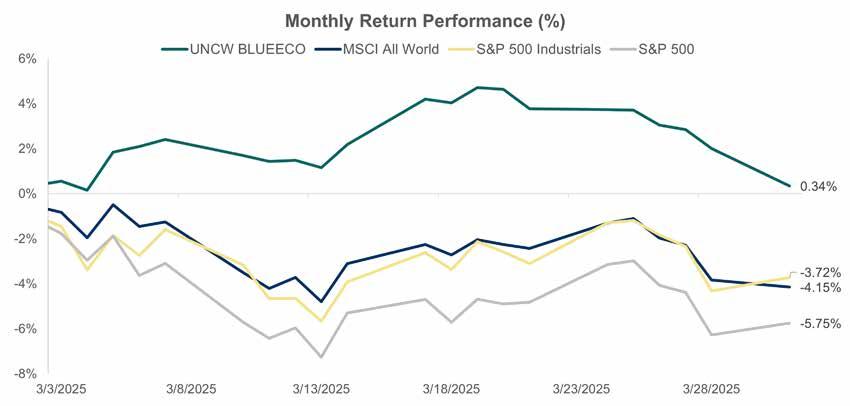
graph from UNCW Blue Economy Index
This data analysis graph shows BLUEECO’s success in March of 2025 compared to broader market indices. It shows the 0.3% positive return the BLUEECO Index had despite the widespread market declines in comparison to the three other markets, which remained in the negative range during March.
Green Drinks Wilmington, NC is on winter break, but plans to resume meeting in January 2026. Organizers are looking for volunteers to help support and grow the 2026 season!
Green Drinks is an international organization, now active in 449 cities worldwide. Every month people who work in or have an interest in the environmental field meet up at informal sessions known as Green Drinks. It’s a great way of catching up with people you know, learning local news and making new contacts.
This past year, Wilmington’s Green Drinks events have been held the last Tuesday of the month from 6–8 p.m. at Waterline Brewery. Typically there’s a short presentation from one or more local environmental organizations, with most of the time devoted to casual conversation and networking. These events offer a space for the local sustainability community to network, collaborate and discuss a different sustainability topic each month. (A list of past event topics can be viewed at www.greendrinks.org/NC/Wilmington.) A goal of this event is to bring together likeminded individuals to foster connections and drive change. Some people report they’ve even succeeded in getting leads for job opportunities.
In preparation for the coming year, organizers are looking for volunteers to help keep Green Drinks thriving as their current
BLUEECO... (continued from page 16)
local people saying, hey, this matters,” says Keary.
To learn more about the Blue Economy Index and how you can help the project grow, you can visit https://uncw.edu/ research/centers/innovation-entrepreneurship/events-programs/programs/ blue-economy.
Maya Dulli-Ray is a student at UNCW studying communication and specializing in environmental journalism. She is passionate about ocean conservation and preservation specifically.
leadership is moving out of WIlmington. Opportunities include organizing speakers and monthly topics, creating and sharing marketing content, supporting the monthly events, and even helping expand Green Drinks beyond its current format. If you’re passionate about sustainability and community, this is a great way to get involved.
Visit greendrinks.org to learn more about Green Drinks worldwide; email greendrinkswilmingtonnc@gmail.com to learn more about the local group.
Want to help plan this year’s Earth Day Festival? The Wilmington Earth Day Alliance is seeking additional board members! The Alliance exists for the purpose of organizing Wilmington’s annual Earth Day Festival. Our local festival has been running since 1990, and is organized by a Board and volunteers from the community. The Alliance would like to add board members to help them grow the festival and organize fundraisers, typically held February through April.
Board members meet monthly through much of the year, and more frequently in the weeks leading up to the Festival, which will be April 18 in 2026. Most board members help with a specific need, such as: planning and running fundraisers, coordinating beer sponsors, lining up sponsorships, obtaining raffle prize donations, social media coordination/ advertising, coordinating volunteers, or coordinating musical entertainment. To learn more, email wilmingtonearthday@ gmail.com or call (910)798-7130.
An announcement from Skywatch:
One of our first response volunteers, Morgan, recently went out to rescue [a] downed Osprey on Pages Creek. As is often the case with Osprey this year, this juvenile was severely starved.
We are searching for more folks to join our first response team for the season. Right now, we specifically need volunteers local to the Surf City and Carolina Beach areas. Our first responders capture birds in need of help that are called into our hotline. These volunteers are not afraid to get muddy or dirty, get scratched, problem-solve on the go or think outside the box to get a bird. We are also always in need of local transporters, who act as our ambulance drivers and drive already captured/contained birds to the rescue when citizens cannot.
Both positions are flexible with no set schedule, and both are much-needed at the moment. Volunteers are added to a group chat and respond to requests for rescues/rides as they are available. If we receive enough interest, we can host an upcoming capture class to teach new volunteers how to rescue and handle different types of birds (raptors, shorebirds, waterfowl, and more).
Please email us at if interested! Our address is info@skywatchbirdrescue.org.
Note: Skywatch is a 501(c)3 nonprofit, all-volunteer and donation-funded organization that rescues and provides sanctuary for injured, orphaned and misplaced wild, exotic and domestic birds in North Carolina. They are currently in great need of monetary donations, which can be offered in a variety of ways at linktr.ee/skywatchbirds.
Many young people under the age of 18 are looking for meaningful ways they can volunteer. If your organization offers opportunities for teenagers (or even younger), send us your information and we’ll add you to our list.
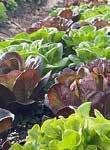
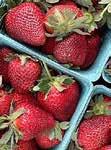
Join a network of passionate gardeners dedicated to learning, sharing researchbased information, and enriching the Brunswick County community through horticulture. Applications are now open for the 2026 Extension Master GardenerSM (EMG) Volunteer Training Program.
The eight-week course prepares participants to become certified EMG volunteers who support NC State Extension’s mission of public outreach and education. Trainees explore topics such as soils, plant nutri-
tion, turf, insects, plant diseases, native and woody plants, food production and landscape design—while learning how to apply and share sustainable gardening practices.
The program includes approximately 75 hours of in-person instruction, weekly assignments, quizzes, an open-book exam and an intern project that puts new knowledge into practice. Instruction is led by Extension staff and subject-matter experts. Prospective students begin with
Master GardenerSM volunteers support the mission of North Carolina Cooperative Extension by educating residents about safe, effective and sustainable gardening practices that grow healthy people, gardens, landscapes and communities. Their vision is a healthier world through environmental stewardship. There are 73 Local EMG programs based in Extension centers across 78 of North Carolina’s 100 counties.
Brunswick County
January 13–March 10, 2026 • Tuesdays & Fridays 9:30a–12p
Classes will be held at the Brunswick County Cooperative Extension Office, 25 Referendum Drive, Building N, in Bolivia, NC. Visit brunswick.ces.ncsu.edu or call Kelly Vendetti at (303) 547-6275 or email her at communications@bcmastergardenerva.org.
January 14–March 10, 2026 • Wednesdays 9 a.m.–12 p.m.
Classes will be held Wednesdays at the N.C. Cooperative Extension, Pender County Center at 801 S Walker St in Burgaw, NC. Application is due December 1, 2025. (910) 259-1235.
Starting August 2026 • Day and time to be determined
The New Hanover County Cooperative Extension operates out of the New Hanover County Arboretum, 6206 Oleander Drive in Wilmington, NC. Announcements regarding the EMG Program will be shared on their official webpage: newhanover.ces.ncsu.edu/horticulture-4/ extension-master-gardener-volunteer-program, or call (910) 798-7660.



an interview and an application to the local county program.
“I came to grow my knowledge, but I ended up growing so much more—skills, friendships, and confidence. The Master Gardener program was hands-on, inspiring, and full of practical wisdom. It’s the best thing I’ve ever done with a pair of garden gloves on.” —Ken, MG Class of 2025
Graduates become part of an active volunteer network that supports the Brunswick County Botanical Garden, hosts plant sales and public workshops and engages in community partnerships such as Habitat for Humanity and school outreach programs.
Master Gardener volunteers make a lasting difference by:
• Teaching sustainable gardening practices
• Helping residents solve landscaping and gardening challenges
• Promoting environmental stewardship and water quality protection
For more information or to apply, visit brunswick.ces.ncsu.edu. Learn more about the Brunswick County Extension Master Gardener Volunteers Association, at bcmastergardenerva.org.
The Extension Master GardenerSM Volunteer Association of Brunswick County is a 501(c)(3) nonprofit that supports volunteer education, fosters camaraderie, and provides skilled volunteers for Cooperative Extension projects. Events include plant sales and public workshops. Proceeds support educational programs and the Brunswick County Botanical Gardens.
Wilmington Vegan is a local group that organizes casual all-vegan potlucks and occasional gatherings called “carrot mobs” at local vegan-friendly restaurants. Members connect on the “Wilmington Vegan” Facebook page to share information about local offerings, which is where you can learn about local events such as this year’s ThanksLiving Potluck and Christmas Eve Vegan Potluck. Get acquainted, eat some great food, and perhaps even volunteer one of your skills, to help the group grow.
by Kathryn SIsler Waple
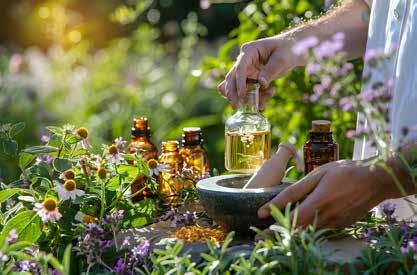
Are you interested in learning more about herbalism and the Southeastern North Carolina Herbal Conference? It’s happening on November 15–16, 2025 in Burgaw, NC! Participants have the opportunity to study locally with amazing herbalists who live far away, like keynote presenters 7Song and Esme Addison, as well as Robin Rose Bennett and CoreyPine Shane. Presenters are gathering from as far away as New York, Georgia and Tennessee. We have comprehensive topics for all levels of herbalism, from people who are interested in learning about making their own herbal extracts, to experienced herbalists wanting to learn more about clinical herbalism.
To answer a few common questions for the herbal curious, the term “herbs” defines a class of plants that die back each year and do not have woody parts that remain dormant. Another definition is any “plant with leaves, seeds or flowers used for food, medicine or perfume.”
“Herbalism” according to the Oxford English Dictionary is “the study or practice of the medicinal or therapeutic use of plants, now especially as a form of alternative medicine.” The funny part about that is, it has only been the last couple of hundred years that herbalism has been a minority form of healthcare and not the dominant one! In many places of the world, herbalism is STILL the main form of healthcare.
What does the study of herbalism offer people in the modern day and age? Herbalism is our ancestral birthright, plants are our first teachers, and lived experience is the deepest experience. Part of this tradition is the gratitude for the teachers and the ones who came before us and reminded us about the relationship all humans have with plants. Where would you start if you were looking for the very beginning? The Kitchen!
Did you know that most, if not all, of the seasonings you use in your food are herbs, and many, if not most of them, have medicinal qualities? Have a dry, itchy cough? Try some thyme tea. Bad breath scaring away family and friends? Munch on some parsley. Upset tummy? Mint will help you feel all right!
One of the biggest benefits to herbalism as a lifestyle and form of healthcare is that it is PREVENTATIVE healthcare. How we nourish our bodies (or don’t) influences the balance or dis-ease we experience in life. Folk Herbalism at its core is a slow, gentle process of helping your body return to a state of balance. This slow gentle process starts with the foods we eat and how we use herbs in the kitchen.
There are many traditions of herbalism, and this author has not been able to find evidence of a culture that does not have some form of herbal practice as part of the culinary experience. There are some traditions that are more well-documented and with an unbroken tradition, and some that have survived inten -
tional efforts to wipe them out. The main tradition that is most familiar to many people is that of Traditional Chinese Medicine, which has thousands of years of documentation and history of use, and continues to thrive as an effective means of well-being. Ayurveda, originating from India, is another well-known tradition with a strong history of use and knowledge.
Folk Herbalism is a catch-all phrase that refers to any traditional form of working with plant medicine. The main plants used are often food-like, nourishing and without strong or dangerous side effects. One of these well-known folk traditions is the Wise Woman Tradition. This tradition blends the commonplace, kitchen use of herbs with the intuitive sacred practice of healing. It is described eloquently by the author’s first teacher, Corinna Wood, as:
A worldview. It’s a doorway—which leads to a paradigm shift. To a way of seeing through a lens that is earth-based and woman-centered.
Many women experience a deep resonance—a cellular memory of a way of life and a belief system that embraces a spiral that includes both light and dark, without hierarchy.
We honor our natural cycles—our ebbs and flows. Just as the natural cycles of our world continuously move through day and night, from dark moon to full moon, from winter to summer, from youth to old age and death.
We understand our bodies as sacred and we trust that as a source of inner guidance. As we turn our attention away from fixing or “cleansing” ourselves, we move towards nourishing ourselves— physically, emotionally and spiritually—such that our bodies and minds respond by moving towards optimal health.
—Corinna Wood
Other traditions include the Heroic Tradition, which uses purges, fasts and other harsh treatments to tackle disease; the
(continued on page 20)

(continued from page 19)
Scientific Tradition, which focuses on standardized “active” ingredients and concentrated extracts as the main premise of this methodology; Empirical Herbalism; Vitalism; and Energetic Herbalism, to name a few.
The biggest takeaway is that working with plants for healing and wholeness is our birthright. Plants are sentient beings who have been there for humans during the course of our whole evolution. There are even examples of orangutans in the wild using plants to heal wounds and digestive upset!

There are many ways to get started with herbalism today! Take a look at your culinary herbs and spices. Which are your favorites? Do a quick Internet search—did anything pop up? (Watch out for AI misinformation!) Are there any plants that you can’t help but notice when you go outside or look out your window? The plants you are already drawn to, whether in foods or the ones that catch your eye, all have something to teach you and there is no reason to wait to get to know them better!
If you are looking for in-person classes, there are so many more options now then there were even ten years ago. Kristy Pace (Sacred Wild Roots), Bridger Hahn (Bridger’s Botanics), Jill Hari (Catalyst Ayurveda), Jenni Robinson (Folklife Microfarm) and this author (Seagate School of Holistic Herbalism) are a few teachers in the Wilmington area who offer in-person learning opportunities from a variety of perspectives. AND coming up November
2026, volunteers are hard at work on the third annual Southeastern North Carolina Herbal Conference, which will feature national and world-famous herbalists coming together for a weekend of learning right here in Burgaw, North Carolina at Old River Farms. This Conference is a great opportunity to meet other herbalists in the area, learn about a wide variety of traditions and practices in one weekend and visit beautiful Old River Farms!
Kathryn Sisler Waple is a local herbalist and the founder and director of the Southeastern North Carolina Herbal Conference and the Seagate School of Holistic Herbalism. For more information about the annual conference, visit sencherbalconference.com.
Have you ever tried a CSA? The Community-Supported Agriculture (CSA) model is a marketing model whereby local farmers offer unique farm products to buyers who will subscribe to receive a weekly or monthly box of fruits, vegetables, fresh flowers, eggs, meats, cheeses or any assortment of local farm products. Through the use of CSAs, customers can develop a caring relationship with a local farm, just by purchasing farm products in advance. Numerous local farmers nationwide and in North Carolina offer this mutually beneficial service. In some cases, multiple farms come together to aggregate their product through multi-farm CSAs.
— NC State University
The Nursery at Herbs | Natives | & so much more
"We grow using organic & permaculture practices on a century farm."
340 Goodman Rd NE, Leland, NC Open Year-Round Mon-Sat 9am-4pm 910.253.5964 | www.SheltonHerbFarm.com
Registration is now open for the second annual Cape Fear Women’s Birding Festival, to be held January 16–18, 2026.
The Cape Fear Women’s Birding Festival was created to bring together women birders in a safe and supportive environment. It was designed for women birding enthusiasts, by women birding enthusiasts. The goal is to provide a space for beginning birders to develop field identification and bird photography skills, and to allow women birders of all skill levels to meet each other, share information, discuss equipment and trips and explore the diverse and majestic avian ecology of the lower Cape Fear region.
Headquarters for the Festival will once again be the Shell Island Resort in Wrightsville Beach, North Carolina, with field trips to Airlie Gardens, Carolina Beach State Park, Carolina Beach Lake, Masonboro Island, Johnny Mercer’s Pier and Greenfield Lake. Last year’s event drew participants from as far away as Utah, Colorado and Minnesota, although most were residents of Southeastern states.
Whether you are a seasoned birder or a newcomer to the world of birding there is a place for you at the Cape Fear Women’s Birding Festival. Visit www.cfwomensbirdingfestival.com to learn more about the festival or to reserve your spot.
The Festival is a Cool Wilmington production.
The Town of Leland is making progress toward the creation of its first-ever nature preserve, a major investment in conservation, recreation and the well-being of the community. This aspirational initiative is intended to provide residents and visitors with a lasting space to connect with nature, enjoy outdoor activities and experience the beauty and history of the area. The land is planned to remain in its natural state in the short term and will be improved over time to include hiking trails, wildlife observation opportunities and environmental education programs.
The preserve will be anchored by a recent acquisition of 533 acres of forested land near the intersection of Highway 87 and Colon Mintz Road along the Batarora Branch waterway, which ultimately flows into the northwest Cape Fear River. This purchase will bring the total acreage the Town owns in the area to 999.96 acres.
Learn more on the town’s website: www.townofleland.com.
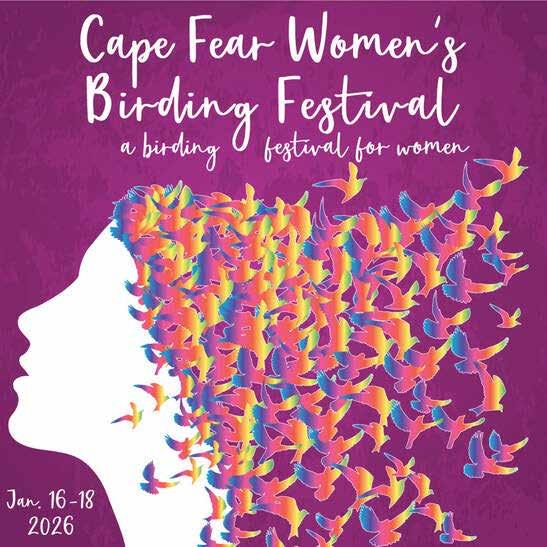
Save the date, for the first ever Wilmington Community Science Festival!
This festival will be at the Davis Center, 1101 Manly Avenue, Wilmington on Saturday, March 28, 2026 from 10 a.m. to 2 p.m.
The festival will be dedicated to getting community members actively involved in local community science projects such as those offered by eBird, iNaturalist and other community science and citizen science apps. Learn how to get
involved, how to use tools and find out about opportunities to register for upcoming trainings.
The event is being organized jointly by the NC Aquarium at Fort Fisher, Savannah Lytle and Cape Fear’s Going Green magazine. It will be free for all to attend.
For more information as details become available, check the Cape Fear’s Going Green online calendar of events: goinggreenpublications.com/calendar.

Wild Meadow Farm is offering its first free nature walk of the winter season on Sunday, November 30. Their walks are led by Chris and are usually two hours long, and less than a mile in length. He’ll be making observations and discussing them along the way.
Wild Meadow Farm is a regenerative agriculture and ecological education project in Eastern Columbus County, North Carolina, established in 2018. They currently farm about two acres out of the 18 the farm sits on. The rest of the land is managed as an ecological preserve and botanical sanctuary. Their land adjoins the Green Swamp, so they have many of the same native plants you might see there.
Farm owners Chris and Maria believe that building wildlife habitat and encouraging biodiversity is beneficial to our agricultural processes. In addition to vegetables, mushrooms, honeybees, chickens and medicinal herbs, they also provide talks and walks to educate others on the unique ecology of our area.
If you’d like to attend the nature walk, please email WildMeadowFarmNC@gmail.com and they will provide you with the address. Learn more about the farm itself at www.WildMeadowFarmNC.com or www.instagram.com/ WildMeadowFarmNC.
“A good little bookstore… is a laboratory for our coming together.”
Ross Gay
“I love walking into a bookstore. It's like all my friends are sitting on shelves, waving their pages at me.”
Tahereh Mafi
Keep North Carolina Beautiful operates a financial grant process annually that is open to any 501(c)3 organization in the state of North Carolina that educates our state’s youth with regard to the environment and sustainability.
The grants are for outdoor classroom learning projects that enhance the beautification of campuses throughout North Carolina, along with replenishment and recycling projects that educate the youth of North Carolina on the impacts of preserving and enhancing our state’s environmental sustainability.
While most of these “Window of Opportunity” (WOO) Grants will be awarded at $1,000 each, a few exceptional requests may be awarded up to $2,500. Application deadline is December 15, 2025. Learn more at www.keepncbeautiful.org/ window-of-opportunity-grant.
Trade in old field guides and books about nature in this fun monthly book swap hosted by Wild Bird & Garden! Every second Friday, bring a book that you are ready to part with and swap it for a new adventure. “We hope to see folks bond over their favorite bird and nature guides through these monthly swaps,” says store owner Jill Peleuses.
Wild Bird & Garden’s one and only location is in Hanover Center, 3501 Oleander Drive in Wilmington. (Ask about their thirdWednesday puzzle swaps!) Details are at wildbirdandgarden.com.
Your support helps us keep the magazine free to the public. Please consider a donation on our Givebutter page: givebutter.com/4oS4Y6 or click on the Donate tab on GoingGreenPublications.com. Thank you!
by Rhianna Beaupré
“From Mountains to Sea” is the upcoming exhibit at Cameron Art Museum, launching November 7, 2025. With FlowILM moving from an annual to biannual art event that explores the relationship between organisms, environments, creativity and technology, this new exhibit works to bridge the missing gap in the art and environmental community on an off year.
The exhibit explores the connection between North Carolina’s natural world and art through a wide variety of contemporary styles and media that span from digital projection and animation to foundobject assemblage sculpture. Many of the artists have personal experience living through hurricanes, floods and wildfires. The artists’ work moves to spark hope and healing after catastrophe, including to the recent natural disaster Hurricane Helene. Artists from Western North Carolina who respond directly to Helene include Julyan Davis, Erika Diamond, Bill Green and Selene Plum. The work of artists John Beerman, Elizabeth Bradford, Susan Brenner, Patrick Dougherty, Gene Felice, Greg Lindquist, Jason Mitcham, Ana Vizcarra Rankin, Thomas Sayre and others reflects and explores the natural world we live in. The artists connect themes of hope, healing, grief and memory.
We wouldn’t be here without our advertisers, and you could become one of them!
Would you like to reach consumers interested in sustainable lifestyles?
Contact us today to learn more: (910)547-4390 or advertising@goinggreenpublications.com.
“From Mountains to Sea” will be on display at the Cameron Museum of Art, 3201 So. 17th Street, Wilmington through May 10, 2026. Visit cameronartmuseum.org for details.
FlowILM will return to the museum in October 2026. The brainchild of UNCW’s Gene Felice, the FlowILM series is produced by UNCW’s Coaction Lab and hosted by the Cameron Museum of Art, FlowILM is a one-of-a-kind multi-sensory community art event that uses images, videos, dance, music and other sound in an outdoor setting, with the museum grounds and buildings as backdrop. For details or to view images from previous
FlowILM events, see flowilm.com. A short documentary depicting FlowILM 2022, created by Bradley Pierce and produced by the UNCW Office of University Relations, can be viewed at www.youtube.com/ watch?v=tFlN5bdOt_A.
is the deadline for the Spring issue of Going Green. Call (910) 547-4390 for Advertising Rates or Editorial Guidelines.
All the words in the crossword can be found somewhere in the pages of this issue. The answer key appears on page 26.
11/10/25, 9:03 AM
Crossword - Crossword Labs
Across
5. An acronym for a project started by Megan Waldrep.
6. Obscure the light from or to another celestial body.
10. A refusal to work as a form of protest.
11. An extinct species of parrot, native to the eastern United States.
12. To shop for or buy used goods.
13. The study or practice of the medicinal and therapeutic use of plants.
15. The sustainable use of ocean and coastal resources for economic growth, improved livelihoods, and jobs, while preserving the ocean's health.
Down
1. Decayed organic material used as a plant fertilizer.
2. Able to perceive or feel things.
3. An edible soft fruit consisting of soft purpleblack drupelets.
4. Microscopic, single-celled, plant-like organisms in the water.
7. Where a large body of water meets the land.
8. An invertebrate of a large phylum which includes snails.
9. A chemical compound used as a UV filter in sunscreens.
14. The name of a 2024 hurricane that devastated Western North Carolina.
Crossword by Shelby Flores.
Get There Greener 2025 took place again this past October. From October 1 through 31 people logged any trips they made with alternate transportation, as a chance to win prizes and help the environment by using less in the way of fossil fuels.
Get There Greener is an annual sustainable transportation challenge offered each October by the Wilmington Urban Area Metropolitan Planning Organization (WMPO), the regional transportation planning agency for the lower Cape Fear region of North Carolina. The challenge encourages participants to log their miles traveled by carpool, public transportation, bicycling, walking or teleworking—any activity that replaces what would normally be a drive-alone trip.
Logging miles automatically entered participants into prize drawings for gift cards and other goodies donated by local businesses. This year, $1,200 worth of prizes were awarded to participants! Together, folks logged nearly 4,300 miles, saving 3,786.97 pounds of C02 emissions. Every mile made a difference!
The WMPO appreciates everyone’s efforts to mitigate traffic congestion in our region and citizen support of sustainable transportation alternatives. Visit wmpo.org for information or for announcements of future events.
As discussions are underway about whether to dredge the Cape Fear River additionally in order to accommodate larger ships, local environmentalists have concerns about whether the economic benefits would offset the financial and ecological harm that would be caused.
The U. S. Army Corps of Engineers (USACE) offered a comment period on a Draft Environmental Impact Statement (EIS).
Staff of the Southern Environmental Law Center (SELC) submitted a letter on behalf of state and local organizations raising numerous concerns about the Draft EIS for the Port project. The letter was an extensively researched 36-page document. SELC submitted the comments on behalf of Audubon North Carolina, Cape Fear River Watch, Center for Biological Diversity, CleanAIRE NC, Defenders of Wildlife, League of Women Voters of Lower Cape Fear, North Carolina Coastal Federation, North Carolina Conservation Network, North Carolina NAACP and North Carolina Sierra Club.
The North Carolina Department of Environmental Quality (DEQ) Division of Coastal Management then held a public hearing on November 17 to determine whether the proposal to deepen and widen the Cape Fear River is consistent
with the state’s coastal management program. It was attended by a standingroom-only crowd.
The deadline for submitting written comments to NCDEQ has been extended to December 20, 2025. Comments should be emailed to: Federalconsistencycomments@deq.nc.gov. Please write “Federal Consistency: USACE Wilmington Harbor 403 Navigation Project ” in the subject line.
The North Carolina Coastal Federation website has information on the proposed Port of WIlmington expansion: links to the text of the Draft EIS as well as a “Get the Facts” tab with suggested talking points for those who might wish to comment: nccoast.org/port.
The North Carolina Coastal Federation maintains shell recycling drop-off sites at their three regional offices and in the following counties: Brunswick, Carteret, Craven, Dare, New Hanover, Onslow, Orange, Pamlico, Pender and Wake. Explore the map on their website, at www. nccoast.org/oysters/recycle-oyster-shells, or call them at (252) 393-8185 to find a shell recycling site near you.

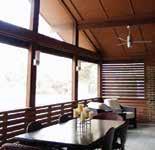
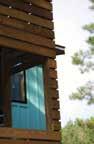
Answer Key for the Crossword on page 24.
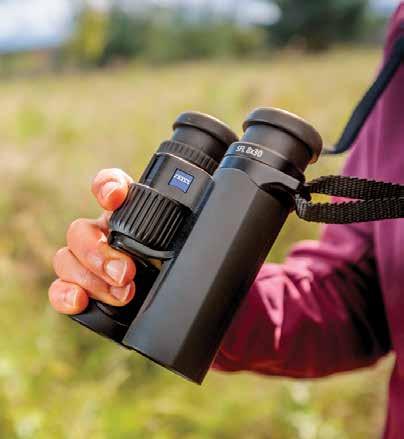
by Shannon Bradburn
Brie Arthur, author of The Foodscape Revolution: Finding a Better Way to Make Space for Food and Beauty in Your Garden, spoke at the New Hanover County Arboretum on February 5. She came bearing some startling news: most of the food we eat has to travel halfway around the world before it ever reaches our grocery store. The transport cost of food alone is over five tons of greenhouse gases annually, which is about 11% of the total greenhouse gases produced for us to eat three meals a day.
What can we do? We have to eat, and ideally we eat three times a day. Well, that is where Brie Arthur comes in. Foodscaping is the practice of planting edible plants with your native plants and ornamentals. This creates a more diverse ecosystem where the plants are less likely to be affected by disease and pests. You also gain more from your garden than just pretty flowers though we cannot overlook the importance of pollinators. But, guess what? Pollinators like edible plant flowers too.
Madelyn Wampler, New Hanover County’s first Sustainability Manager, has created a report entitled New Hanover County 2025 Sustainability Assessment, which she presented to the county’s Board of Commissioners on November 17, 2025. The first of its kind for the county, this report is a comprehensive snapshot of where we are now, and is intended to inform future policy and help New Hanover County move forward with more clarity and coordination. The report is available online at nhcgov.com/Sustainability, as is a YouTube link to Wampler’s presentation to the county commissioners.
New Hanover County selected Wampler a year ago to serve as its first Sustainability Manager, tasked with advancing the county’s resilience and sustainability goals. She has more than a decade of experience in sustainability and environmental policy, with a focus on coastal resilience, policy development and green building practices.
Foodscaping is a concept that can be completed virtually anywhere. If you live in a place with an HOA you typically are not allowed to have a “vegetable garden” in your front yard. This is because most people in the U.S. have a very outdated
The North Carolina Aquarium at Fort Fisher starts its $65 million renovation early in 2026. The renovation will make this the largest aquarium in the state, and will include what will be the largest shark habitat in the state. The date the facility will be closed to the public has yet to be announced. While closed, staff will offer a variety of outreach experiences throughout our area. See ncaquariums.com.
idea of what a garden is and how to maintain it. We have all seen the wayward raised beds surrounded by lumber. That is not foodscaping that is really just frustration waiting to happen.
Foodscaping is taking the space you already have and utilizing it. Let’s say you have some shrubs in your front yard with mulch in between. If you remove that unnecessary mulch space and instead plant a nice ground-covering edible—such as strawberries you are not only saving money on mulch, you are adding a very pretty ground cover with a nice flower to your yard. Oh, and let’s not forget the yummy strawberries that you will now have.
Sandbar Ecological Advising (SEA) was founded by Dr. Marae West, CEO, who—along with her father, Dr. Niels Lindquist—recognized a growing need for expert ecological guidance in naturebased solutions. With extensive experience in estuarine ecology, oyster restoration, sea-level rise and marsh bird conservation, Marae and Niels bring a unique combination of scientific expertise and practical knowledge in living shoreline design and implementation.
Sandbar Ecological Advising supports ecological stewardship by helping communities and organizations restore ecosystems, protect biodiversity, and implement effective nature-based solutions. SEA transforms long-term ecological datasets into actionable insights by advising on appropriate analyses, performing data
Brie Arthur discusses the practicality of utilizing space. She expxlains that the most underutilized space in any yard or garden is the edge. This is your ideal place to help with pest management and contribute to reducing your carbon footprint. Edge plants include garlic, arugula, potatoes, and much more. You can plant these in the space between a walkway and grass no more edging or weed control for your walkway. You can plant these beside your house, garage, or where your garden meets the lawn space. Not only are edge plants easy to grow, they also are deterrents for deer, rabbits, moles, and voles. You will be protecting your other
Former Going Green intern Shelby Diehl Flores is now Southeast Forestry Communications Specialist for the National Wildlife Federation’s South Central Region. One of her ongoing projects is writing blog entries for the National Wildlife Federation. Recent topics have included restoration of longleaf pine forest, the role of prescribed burns, managing and harvesting pine straw for wildlife, and information on how longleaf pine needles support the Lumbee people.
Flores’ articles are available online at blog.nwf.org/authors/shelby-diehl.
plants, using less chemical repellents, and providing food for you and your family and neighbors.
analysis, and preparing manuscript-ready documents that clearly communicate methods and results. In addition, SEA creates engaging science communication materials—including data visualizations, articles, flyers, and brochures—to make complex ecological information accessible and actionable for diverse audiences. “We have a wonderful team of subject matter experts ready to take on exciting and challenging work, helping clients turn scientific research into practical, real-world impact.”
Foodscaping not only offers you a way to reduce the transport cost of food, it also provides you with an easy way to teach children about gardening. We, as a society, have reached a point where gardening is no longer a task that is passed down from generation to generation. Most children do not know where their food comes from. Actually, most college students do not know where their food comes from. Nor do they know the first thing about planting. If edible plants are integrated into areas where children and others have readily available access like public parks, schools, churches, government buildings it would be very hard for the next generation not to soak up a little bit of knowledge about growing their own food. But this will only become a reality if we as the general gardening public make foodscaping a social norm.
For more information, see sandbarecologicaladvising.com or contact Dr. West at Maraewest@sandbarecologicaladvising.com.
• Want to learn more about native plants?
• Go on plant walks with knowledgable experts?
• Meet folks who share your interest?
Learn more about Brie Arthur at www. briegrows.com.
Shannon Bradburn is a senior at UNCW who loves to hike, study plants, and play outside.
The North Carolina Native Plant Society offers plant walks, workshops and other plant-related activities. To receive the schedule of events, go to www. ncwildflower.org to join the state-wide NC Native Plant Society. Based on your address, you will automatically be assigned to a local chapter. Those in the SE portion of the state automatically become members of the SE Coastal Area Chapter. For more information, email cewinterbauer39@gmail.com.
welcome guest contributors. Write for our contributor guidelines. editor@ goinggreenpublications.com.
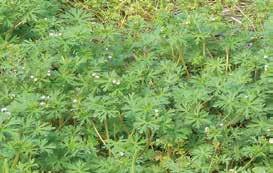

Going Green has been fortunate this year to have the help of another fine intern, this time from UNCW’s Creative Writing Department. In addition, interns from previous semesters (and years!) continue to help us, whether by writing articles, staffing our table at events, organizing our Environmental Book Club activities or any of those dreaded “other duties as assigned.” We hope you’ll look for their work in this and future issues of Going Green. (Hint: check the author bio at the end of each submission.)
Rhianna Beaupré is a senior at the University of North Carolina Wilmington majoring in both creative writing and Spanish, as well as working towards her publishing certificate. Originally from Colorado, Rhianna spent her childhood growing up alongside wildlife in the mountains. She enjoys writing poetry rooted in nature, as well as writing fiction. She hopes to one day be a published author and work within the publishing industry.
Read It Online
ALL our current and back issues are available online! Go to our home page, www.goinggreenpublications.com, and click on any of the covers to pull up the most recent issues or our recipe booklet. Select the green “VIEW ARCHIVE” button to view our entire catalog of issues.
In the Community
Pick up a free copy at one of the locations listed below or at inperson meetings of various environmental groups.
Arboretum/New Hanover County Extension Service, Aunt Kerry’s Pet Stop, Lovey’s Market, Old Books on Front Street, Pomegranate Books, Tidal Creek Co-op, UNCW, Shelton Herb Farm, area public library branches (in New Hanover, Pender and Brunswick Counties) and many area Food Lion and Harris Teeter locations. See https:// arcg.is/1WWi0y for online map.
Subscribe
For the price of postage and packaging, you can receive the next four issues in your own mailbox. Mail a check payable to “Going Green Publications” in the amount of $24 to P. O. Box 3164, Wilmington, NC 28406.
Back issues of Cape Fear’s Going Green are available by calling us at (910) 547-4390.
Sign up for our email list to be alerted when each new issue becomes available. Email us at publisher@goinggreenpublications.com.

drinking water in our community is the heart and sou Whole Water Solutions. We pro bottled water quality drinking w at your tap affordably, so you c feel good about the water you'r drinking and the plastic waste you're avoiding
sink RO system with inst