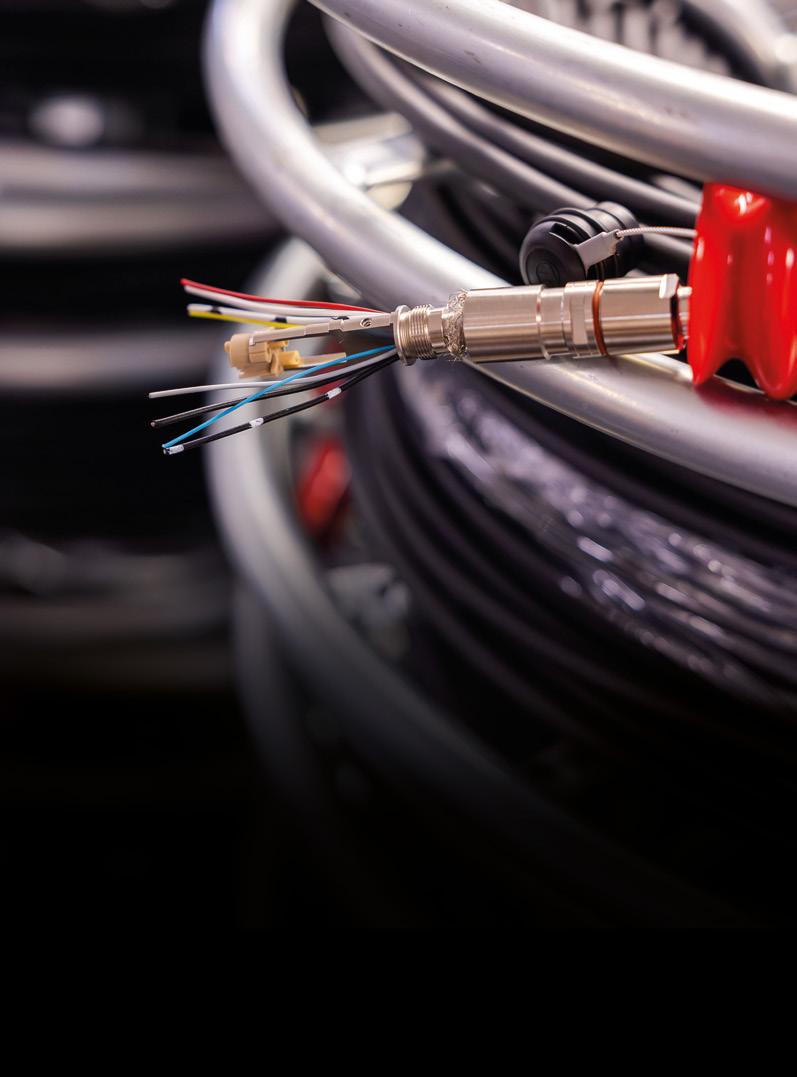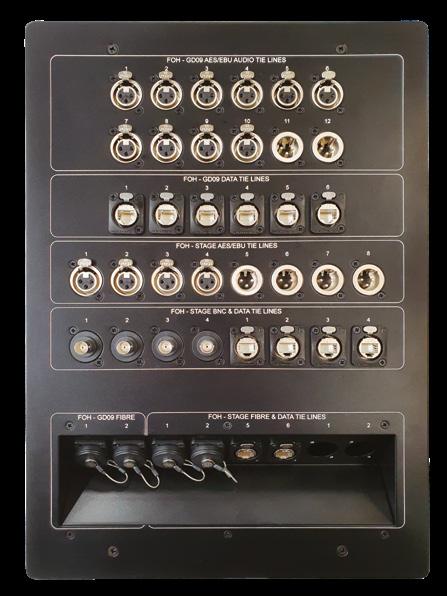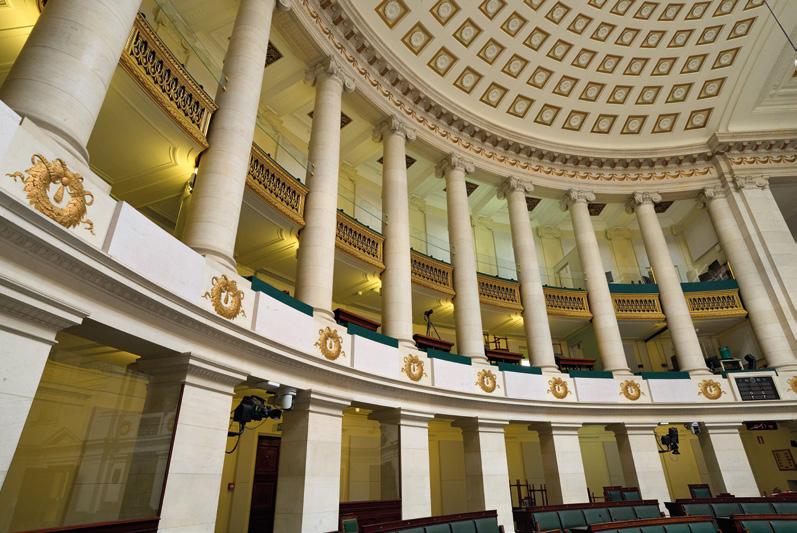
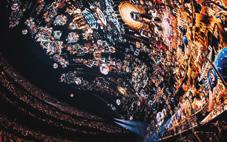

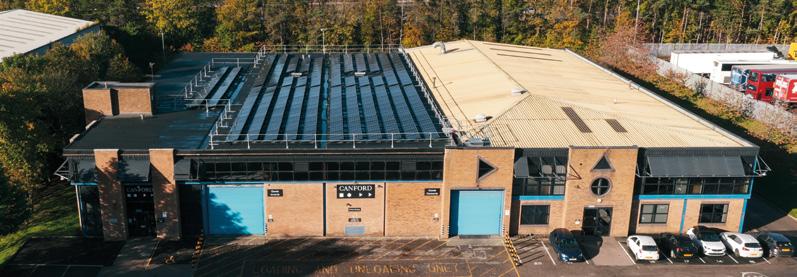
Photo credit: Amptec



This year marks a truly special milestone – 50 years of Canford. Reaching half a century is not only a moment to celebrate, but also to reflect on the remarkable journey that has brought us here. From our beginnings in 1976 as a small team with a shared passion for audio engineering, to becoming a trusted name recognised across the global broadcast and live events industries, Canford’s story has always been about innovation, collaboration, and a commitment to doing things the right way.
YEARS OF CANFORD
YEARS OF CANFORD
YEARS OF CANFORD
Over the decades, we’ve seen huge changes in technology, customer expectations, and the way our industry works. Yet through it all, one thing has remained constant - our dedication to supporting fellow industry professionals. Whether it’s designing and manufacturing our own products, distributing trusted brands, or offering the
technical expertise that underpins every project, we’ve always aimed to provide solutions that people can rely on.
This special 50th anniversary edition of Source Material celebrates not only our history but also the people behind it – our customers, colleagues, and partners who’ve helped shape Canford into what it is today. It’s also a reminder that our story is far from over.
As we look ahead, we remain focused on the same principles that have guided us since the beginning –listening, adapting, and innovating to meet the needs of a constantly evolving industry.
To everyone who’s been part of our journey so far, thank you. Here’s to the next 50 years of Canford.

Alan Wilson, CEO, Canford Audio

60 Raising the Standard in Commercial Audio: Cloud Electronics CS-S Series Speakers.
Do More with DM3: The Compact Console that Redefines Versatility.
ELC LIGHTING: DMX for the Engineer.
Austrian Audio OC-S10 — A New Reference for Modern Studios. 70 Linearizing Microphones: CORE+ by DPA.
From Spectrum to Sound: The Technologies Powering Wireless Audio.
RØDE: From Audio Innovators to Creator Tech Powerhouse.

Power with Intelligence: HEDBOX Redefines On-Set Energy with the NINA Series.
Andy Dixon Joins Canare to Drive UK Business Growth.
USB-C Cable Solutions from Lindy One Connector. Infinite Possibilities.
Mackie – Thirty Years of Innovation.
Zurich Extreme Sportsman Makes History: First Ever Kitesurf Crossing from China to Taiwan.
SKB Cases: Protection Without Compromise.
Reaching a 50 year milestone is no small achievement, and at Canford Audio it’s a moment we’re all immensely proud of. In 1976, with little more than a vision, a £2,000 bank loan, and a £1,000 overdraft, a young sound engineer named Iain Elliott set out to change the audio industry. What began as a small, independent PA hire company in the North East of England has grown into one of the most respected names globally in professional audio and broadcast equipment. Our journey has been shaped by innovation, resilience, and the dedication of our people. This anniversary isn’t just about looking back at what we’ve built and achieved over the last 50 years, it’s also about recognising the trust of our customers, the talent of our colleagues, and the values that continue to drive us forward as a business. We thought we’d take a look back at how it all started, and all the events that have taken place since then to get us to where we are today.
By Ben Hardy, Marketing Manager at Canford
Early Years: 1974 – 1980s
Fresh out of university in 1974, Iain Elliott worked at Metro Radio for 2 years and he quickly spotted a gap in the market – there was no dedicated supplier for the fast-growing commercial radio industry. Two years later, Canford Audio Limited was born.
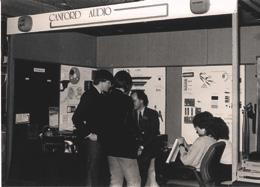
The company’s very first job was to supply a sound system for Seaburn Hall on July 1st, 1976. This was the modest start of something much larger, and by 1979, Canford was exhibiting at its first ever trade show at London’s Connaught Room, with a stand borrowed from the radio station and homemade graphics.
Growth soon followed. The team upgraded from a small storage shed in Corbridge to larger office space in Stargate, Ryton. Then in 1981, Canford launched the first edition of its catalogue, which soon became known across the industry as “The Industry Bible”. At its peak, 26,000 copies were printed, with the final edition tipping the scales at an impressive 2kg!
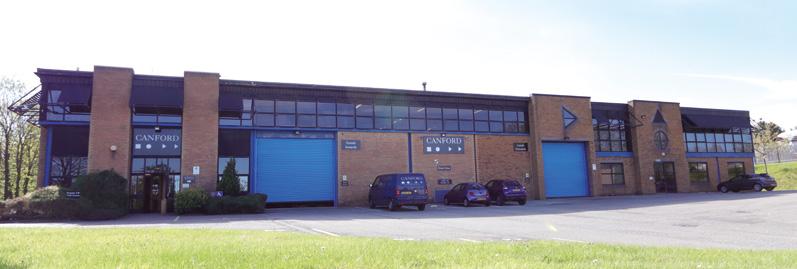
By the company’s 10th anniversary in 1986, turnover had reached £1.5 million. Canford celebrated a decade of operation by acquiring the established Technical Projects intercom range, now known as Tecpro. With continued growth and expansion, space was tight and the move to a new HQ in Washington soon followed in 1987.
Expansion and Innovation: 1990s – 2000s
A landmark moment came in 1992 as Canford won the contract to become a primary supplier to the BBC for broadcast equipment. This was a huge moment for Canford and cemented the company’s reputation as a highly trusted and respected supplier. The partnership not only brought prestige, but also stability as the BBC went on to become Canford’s biggest customer and continues to be to this day.
After continued growth in the years that followed work began on extending the existing building in 1994. By 1995, the building work was complete, effectively doubling the size of the Washington HQ.
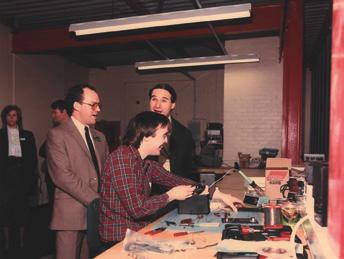

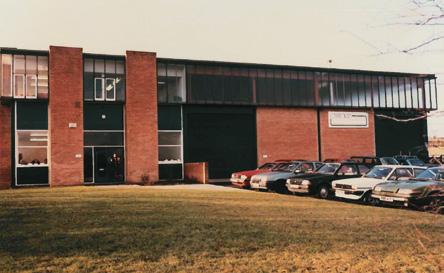
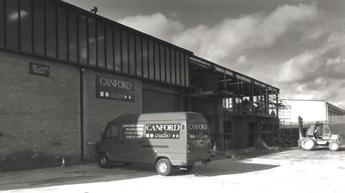
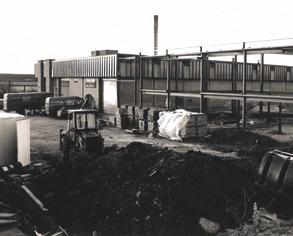
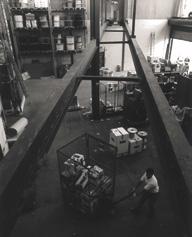
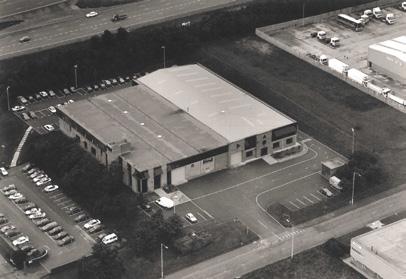
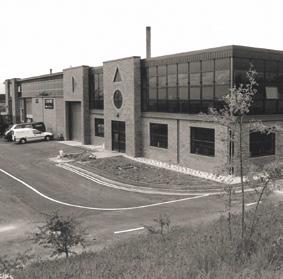
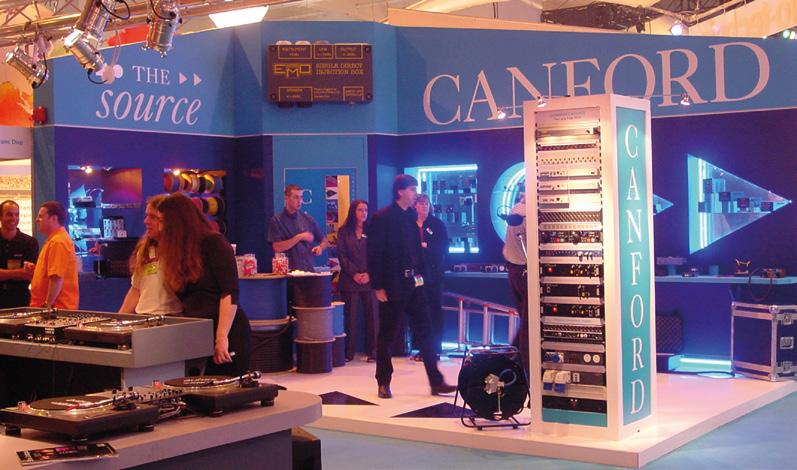
In 1996, Canford acquired NEAL, a respected manufacturer of professional audio recording equipment. Used by law enforcement organisations worldwide, NEAL’s specialist expertise in voice recording systems complemented Canford’s growing product portfolio, strengthening its position in the industry and broadening the solutions offered to customers.
1998 became a pivotal moment in Canford’s history, as it marked the launch of the company’s first ever website. In an effort to embrace the digital age, Canford recognised the need to offer what would essentially end up being a digital version of the existing printed catalogue. This move gave customers a new way to order items from Canford, whilst also providing Canford themselves with a new route to market.
The 90s was rounded off by another huge part of Canford’s history –the acquisition of Swift Precision Engineering in April 1999, along with its manufacturing site on the Isle of Portland, Dorset. This move raised a few eyebrows at the time given that Swift’s latest figures suggested it was on a downward trend, however Iain
Elliott saw this as a major opportunity to increase Canford’s manufacturing capability and explore new markets further afield. Today, the Portland site remains an essential part of Canford’s infrastructure handling a vast range of standard custom metalwork.
The 00s also saw the addition of 2 more recognisable Canford brands – EMO in 2000, and Panamic in 2007. The acquisition of both these companies completed the Canford Group as we know it today consisting of Tecpro, NEAL, EMO and Panamic.
The new decade brought with it fresh directions. In 2012, Canford made the difficult decision to retire its iconic catalogue to focus fully on its growing online presence. With the greater reliance from customers on online functionality, the company believed this was the right decision to develop the website further and established itself as a reliable online source. The move also reinforced Canford’s commitment to introduce greener and more sustainable practices.
In 2015, Canford expanded its international function further by opening its Dubai office. This marked a huge step forward for the business in the wake of its 40th anniversary. Canford had been exporting products to the region for over 20 years, and with business growing in the area a decision was made to provide partner support on a local level.
Back in the UK, 2016 marked a double milestone - the launch of a new production workshop, home to the innovative Cable Cell, as well as the 40th anniversary, celebrated with a week of activities, prizes, and celebrations for staff. That same year, Canford also began offering a fibre termination service, setting the stage for the next era of connectivity.

At its peak, 26,000 copies were printed, with the final edition tipping the scales at an impressive 2kg!
New Horizons: 2019-Present
In 2019, Canford transitioned into an Employee Ownership Trust (EOT). This bold step was more than just a change in structure; it was a commitment to the people who had built and sustained the business over decades. By placing the future of the company in the hands of its employees, Canford ensured that decisions would always reflect the values, expertise and dedication of those who know it best. For founder Iain Elliott, this move also carries a personal significance. Iain was determined that Canford should remain in the North East of England, the region where it all began. The shift to employee ownership safeguarded Canford’s independence, reinforced its culture of collaboration and shared responsibility, and empowered its workforce to carry the business confidently into the future. Sadly, in December 2021, Iain Elliott passed away at his Northumberland home following a short battle with cancer. Tributes to Iain and his family rang out across the industry, recognising his achievements at Canford and the contributions he made to the world of broadcast and pro audio.
From a small PA hire in Sunderland to a global name in professional audio, Canford’s journey has always been guided by innovation and a deep commitment to its customers and people. Reaching 50 years is not only a moment to celebrate the past, but also to look ahead with confidence. As new technologies shape the way the world connects and communicates, Canford remains focused on delivering reliable solutions, sustainable practices and unmatched expertise. The tools and markets may evolve, but the spirit of Canford will continue to drive the business into the next half century and beyond.
1976
The company’s very rst job was to supply a sound system on 1st July.
1979
Canford exhibits at its rst trade show.
1987
Canford moves to a new HQ in Washington.
1988
Canford France opens.
1994 - 1995
Extension of the building.
1997
Canford celebrate 21st anniversary.
1999
Acquisition of Swift Precision Engineering.
2006
Canford celebrate 30th Anniversary.
2015
Opening of the Dubai o ce.
2017
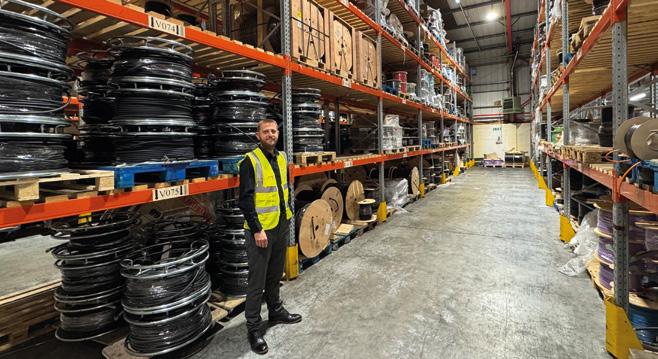
Warehouse expansion.
2019
Canford transitioned into an Employee Ownership Trust (EOT).
2022
Canford connect brand launched.
2026
Canford celebrate 50th anniversary. 1 0 s 2 0 s 00 s 8 0 s 9 0 s 7 0 s
1974
Iain Elliott spots a gap in the marketthere was no dedicated supplier for the fast-growing commercial radio industry.
1981
Canford launched the rst edition of its catalogue.
1986
Acquisition of Technical Projects (tecpro) and celebrate the 10th anniversary.
1992
BBC contract.
1996
Acquisition of NEAL.
1998
Canford launch the website.
2000
Acquisition of EMO.
2007
Acquisition of Panamic.
2012
Canford made the di cult decision to retire its iconic catalogue.
2016
Canford celebrate the 40th anniversary with the launch of the new bre department and production workshop, home to the innovative Cable Cell.
2020
Fibre expansion.
2024
2021
Iain Elliott sadly passed away.
Solar Panel project complete.
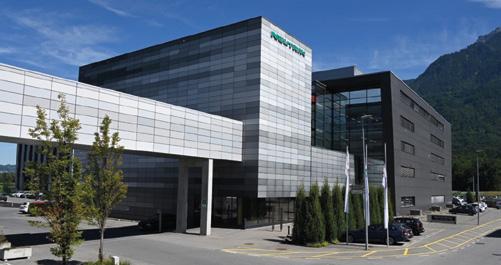
Neutrik and Canford Audio: two instantly recognisable stalwarts of pro audio and broadcast engineering supply chains. Two companies, that in 50 years have grown in tandem, their fortunes and development often complementary and mutually assured. Yet, after half a century, it is not so widely remembered just how much of a shared experience their origin stories actually are.
As Neutrik moves to the close of its 50th anniversary celebrations and Canford’s are about to begin, we look back to a frenetic and innovative foundational past and forward to an ever more rapidly expanding innovative future, involving levels of technological and engineering development that we could barely have imagined in 1975 - 1976.
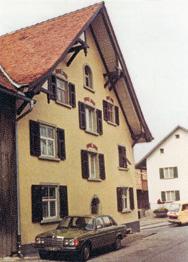
At the same time as Iain Elliott, founder of Canford Audio and the man who led the company for some 45 years, was a young broadcast engineer on the launch team for one of the first independent commercial radio stations in the UK in 1974, Bernard Weingartner, was working as a design engineer at AKG Vienna. While working on signature models like the C-414, he noticed a growing preference amongst professional engineers for the XLR type connector, as a more robust solution, far better suited to the every day stresses of production studio applications. He also noted that there were no European based companies making these connectors. The rest, as they say, is Neutrik history. Just a year later, in a farmhouse barn in Liechtenstein with its first
employee, fellow design engineer Werner Bachmann, Weingartner’s newly formed Neutrik AG company began not only manufacturing XLR connectors but innovating patented improvements in their design and manufacturing. Replacing fidgety assembly screws with a threaded rear cover and three-sided stress relief, these rapidly started gaining widespread popularity, making life far easier for cable assemblers and application engineers everywhere. Before long Neutrik had an order from a national European broadcaster for 5,000 of its new XLR connectors, in part to upgrade its significant stock of AKG microphones.
In the UK AKG’s distributor, Eardley Electronics Ltd, took on the UK sales and distribution for Neutrik’s new XLR connector series in 1976. As
AKG distributor, Peter Eardley, had done business with Iain Elliott when he was engineering studio facilities for the nascent Metro Radio back in 1974. Now that same engineer had set up his own broadcast supply company.
Canford Audio arose out of Iain Elliott’s realisation, while working at Metro, that there might be a market in supplying “bits and pieces for radio stations” to people like himself – a broadcast audio one-stop shop; and having set up the shop in the small town of Ryton in Tyne and Wear, that was rapidly proving to be the case. Canford Audio was going to go on to play a major role with Eardley Electronics, in establishing and growing markets for Neutrik AG’s burgeoning product portfolio in the UK. In 1977 the range expanded to include chassis connectors, once more innovating improved design features and reducing engineering complexities to enable far greater ease of use, manufacturing and assembly. By 1984 the new X-Series had eliminated all the screws in the connector design, in another industry first. At the same time the company expanded its portfolio to include measuring equipment with the introduction of the Audio Tracer compact frequency chart recorder in 1977, and later the AudioGraph ink-pen recorder, A1 and A2 analysers, and the pocket-sized Minirator generator and Minilyzer analyser. These developments effectively formed an electro-acoustic division within the company.
applications across a multiplicity of manufacturing, construction, commercial and civic industrial sectors. However, the prospect of Neutrik AG, a Swiss registered entity, buying out a UK business presented a number of legal and regulatory hurdles that would have made the acquisition a protracted affair. So in a gentlemen’s agreement between Bernard Weingartner and Iain Elliott, Canford facilitated the purchase for the board of Neutrik AG. This subsequently resulted in the formation of Neutrik (UK) Ltd., Neutrik AG’s first overseas subsidiary, developing and manufacturing existing and new audio measuring and test systems as Neutrik Test Instruments, and later introducing production lines for Neutrik connector lines on-site.
“Canford has worked closely with Neutrik for almost our entire existence and we will continue to do so. Many Canford products that we manufacture here at Washington use Neutrik connectors”.
Alan Wilson - Canford CEO
In 1986 that line of expansion led to Neutrik being interested in acquiring a UK specialist electronics company based in Cowes on the Isle of Wight. Technical Projects’ business was the manufacturing of audio / noise measuring systems for a range of
Meanwhile Canford introduced what was to be its most famous and widely appreciated marketing strategy with the launch in 1981 of its famous catalogue. Officially titled ‘The Source’ but more affectionately termed the Big Blue Book, it became an indispensable tool throughout the TV and radio broadcast, film and audio and video production industries. Over almost 30 years and 44 editions, the catalogue grew from 24 to 1,500 pages and a major sales and marketing channel for Neutrik products in the UK; its pages a source of promotion for an ever increasing number of Neutrik innovations and industry firsts. These included entirely new product types like the speakON – introduced in 1987 to provide new levels of safety, reliability and performance in the connectivity of power amplification
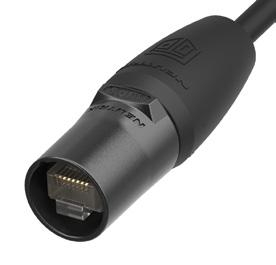
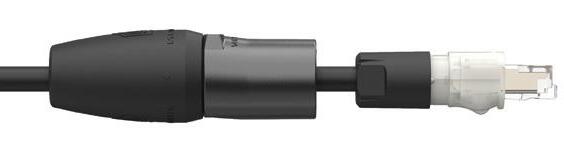
and loudspeaker systems, required under an EU Low Voltage Directive, not provided by existing banana plug and ¼ inch jack solutions. The design went beyond new specification requirements providing a twist-locking mechanism and solderless terminations within a near-indestructible form factor. Also highly innovative was the introduction, in 1992, of the Combo. Placing a ¼ inch jack insert within a female XLR receptacle, it inaugurated yet another new connectivity standard, enabling the use of older or semi-pro kit within a pro-audio setup. But it was perhaps the introduction, in 1996, of the twist locking AC powerCON connector, with its pre-mating ground before power connectivity feature that represented the most universally significant innovation, representing a hugely significant improvement in single phase mains power supply connectivity for all forms of mobile and event production applications; and many other wide-ranging industry field applications. And in 2001 Neutrik focussed its innovative design and manufacturing skills on the ever expanding requirement for IP connectivity in the field with the introduction of its etherCON product, providing XLR levels of rugged and reliable connectivity of RJ-45 terminated Cat-5 / Cat-6 cabling.
These and many subsequent product innovations – several of them award winning – have grown to become discrete product categories, including in the field of fibre optic transmission where the company’s opticalCON and FIBERFOX product series are breaking new ground in harsh environment AV network applications. Today you won’t find these in the Canford catalogue
but on their hugely expansive website directory. This however is not the only Canford product on which you will find Neutrik products. Canford Audio itself is a Neutrik customer, employing Neutrik connectivity solutions in much of its own extensive manufacturing output of cable and devices; including products often designed by itself to provide industry solutions not available from other manufacturers.
“Canford has worked closely with Neutrik for almost our entire existence and we will continue to do so. Many Canford products that we manufacture here at Washington use Neutrik connectors,” says Alan Wilson, Canford’s CEO, “the reason for this is the quality and reliability that you get with Neutrik. It is a well-known
and respected name in the broadcast market that we both operate in so, it has become a perfect partnership stretching for almost 50 years!”
As the two companies celebrate their respective 50th anniversaries, they remain closely associated. Mark Perrins, Managing Director of Neutrik (UK) Ltd, puts it concisely, “As Neutrik celebrates its first 50 years and Canford Audio looks towards marking their same event, it provides a great opportunity to reflect on the very close and longstanding relationship the two companies have always enjoyed. In particular to recognise their hard work in convincing the market and supporting our early sales success. Neutrik has relied heavily on the strong relationship and continued
efforts of Canford to spread the word and incorporate Neutrik connectors as its ‘go to’ solution for its customers. The continuing relationship of two very strong brands in the professional audio, video and lighting and broadcast markets is a testament to the quality of product and service offered, and a great example of continued cooperation through the best and worst of times. We look forward with great hope to the next 50 years of this great partnership in our industry.”


By Ben Hardy, Marketing Manager at Canford
As Canford celebrates its 50th anniversary, it’s not only a time to look back at the milestones that have defined our journey, but also to recognise one of the most significant steps in our recent history – becoming an Employee Ownership Trust (EOT).
In 2019, Canford Audio joined a growing number of forward-thinking UK businesses choosing to secure their long-term future through employee ownership. The move ensured that the company’s independence, values, and culture would remain firmly in the hands of the people who make it what it is: its employees.
For Canford, employee ownership wasn’t just a financial or structural decision, it was a natural evolution of a philosophy that has always placed people at the heart of the business. From its earliest days, Canford has been defined by a sense of shared purpose. Engineers, designers, warehouse teams, salespeople, and managers are all working together with a common goal – to support the professionals within our industry.
Under the EOT model, every employee is a beneficiary of the trust that owns the company on their
behalf. This means the success of the business directly benefits the people who contribute to it every day.
“The transition to employee ownership was about securing Canford’s independence and ensuring the business continues to be run with the same integrity and commitment to quality that it always has,” explains CEO Alan Wilson. “It reinforces the idea that our people aren’t just working for Canford – they are Canford.”
That sense of collective ownership has only strengthened the company’s culture. It has encouraged even greater collaboration, transparency, and pride across every department. From developing new products and refining customer service, to investing in training and sustainable operations, decisions are shaped by a long-term mindset, and focused on stewardship rather than short-term gain.
Employee ownership has also proven to be a powerful differentiator in attracting and retaining talent. In an industry where expertise and consistency are key, the EOT structure helps ensure that knowledge stays within the company and that everyone is invested in maintaining the highest standards of service and craftsmanship.
As Canford marks 50 years in business, the EOT stands as both a tribute to the company’s founders and a promise to its future. It safeguards the independence that has always defined Canford while empowering a new generation to take the business forward with confidence.
50 years on, Canford remains as committed as ever to its customers, partners and people. Employee ownership simply puts that commitment into the company’s DNA, ensuring that every achievement, every innovation, and every success is shared by those who made it happen.

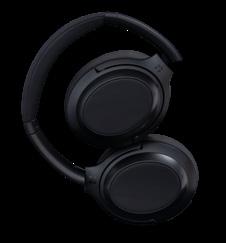
DMH720-ANC HEADPHONES - PRECISION LISTENING MEETS TOTAL ISOLATION
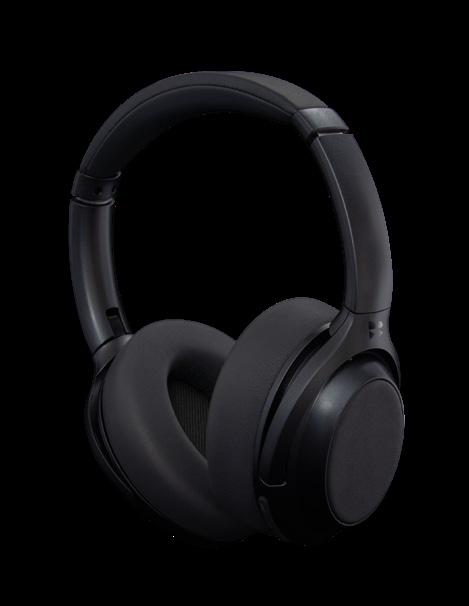
• Active Noise Cancelling (ANC) - Enjoy immersive sound with ANC automatically enabled when powered on.
• Extended Playtime - Up to 30 hours of ANC listening on a single charge.
• Fast Charging - Fully charges in under 2.5 hours via USB-C.
• Comfort-Fit Design - Lightweight circumneutral (over-ear) earcups and soft padding for long listening sessions.
• Precision Audio Performance - 40mm dynamic drivers delivering a balanced 20Hz–20kHz frequency response.
• Reliable Monitoring Quality - 32Ω impedance and 97dB sensitivity for accurate sound reproduction.
• Long Standby Time - Up to 280 hours when not in use.
• Versatile Connectivity - Includes 3.5mm audio cable, ¼” jack adapter, and USB-C to USB-A charging cable.
• Convenient Portability - Supplied with a protective carry case for storage and transport.
• Lightweight Build - Only 245g for all-day comfort.
We’re a proud British company with heritage dating back to 1969, specialising in professional audio equipment
Amplifiers
Audio Monitors
Audio Signal Management
Clocks & Synchronisation
Commentary
Mixing
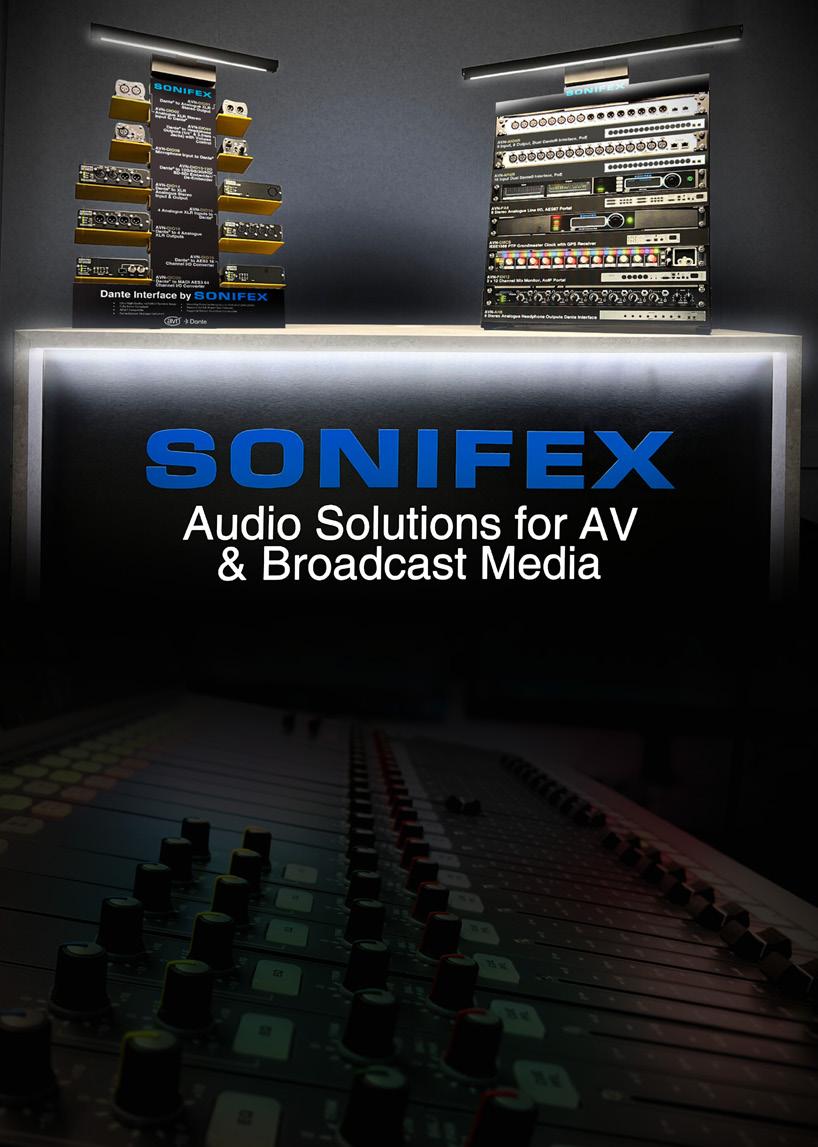
Dante Convertors
Embedders & De-Embedders
GPIO & Control
IP Streamers
Logging
RAVENNA AoIP

Passive Interfaces
Radio & Sound Cards
LED Studio Signs
Silence Detectors
Talkback IFB & Intercom
Telephony

By Gareth Laughton & Eamonn Heffernan at Sonifex
When Canford opened its doors five decades ago, it set out to be more than a supplier - it rapidly became a steady, trusted partner to engineers, installers, and broadcasters across the UK and beyond. As a testament to their success, the Canford catalogue quickly became one of the most popular go-to publications in the industry.
At Sonifex, we’re proud to have stood alongside Canford for most of that journey, supplying products and collaborating closely on projects to bring dependable, practical solutions to customers. That steady presence, responsiveness, and the hard work of their distribution team have made it possible for both companies to deliver products and projects reliably, on time, and to specification.
Shared history, complementary strengths
Sonifex began with a simple brief: to design and build high-quality, ultrareliable, professional audio products to solve real-world problems. Durability, transparent audio performance, and intuitive operation remain at the heart
of our design brief from day one. Canford complements that approach by curating the right solutions, backed by expert advice, consistent stock management, and reliable logistics. Their distribution team deserves special mention for their diligence in proposing the right products, often with tight deadlines, removing the risk for integrators, and keeping installations on time and within budget.
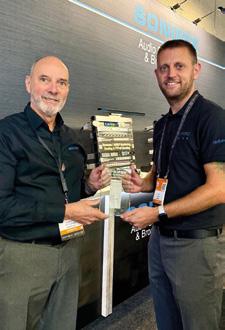
In September, at the IBC show in Amsterdam, UK North Sales Manager, Eamonn Heffernan presented Alan Wilson, CEO of Canford, with the ‘UK Distributor of the Year’ award for 2024/2025 as a token of our gratitude for Canford’s continued sales and support of Sonifex products.
Sonifex past, present & future Innovation runs through Sonifex’s DNA. From NAB cartridge machines with servo-controlled pinch systems in the 1980s to high-tech floppy disk cart players in the 1990s. With a continued focus on radio studios, the lineup included call handling products such as the highly successful HY02 telephone hybrid units (1989), HDX2000 hard-disk automation playout systems (1994), and the Sovereign analogue broadcast consoles (1995). Later milestones include the Courier portable PCMCIA/flashcard recorder (1997), the renowned Redbox audio interface family (from 1999), Net-Log 24/7 audio loggers (2001), S2 mixing desks, and D:Scribe transcription system (2004), and the Reference Monitor range (2008–09). Throughout these developments, Canford has been a valuable ally, helping Sonifex reach studios and users in the UK and in many countries around the world via its huge customer base. The 2010’s saw the rise in demand for AoIP products, with Dante and RAVENNA solutions reshaping the market by bringing broadcast, AV, and related industries closer together - opening new opportunities and increasing competition. New AoIP solutions keep the hardware market evolving. At Sonifex, we remain project-focused and customer-driven, and proud that Canford continues to be a key distribution partner.
Having worked with Canford for many years, Eamonn praised the company, saying, “Dealing with Canford for so long has been a real pleasure. Like Sonifex, Canford has many longserving staff members that we’ve got to know quite well over the years. We sincerely hope the special relationship we enjoy continues to grow for many years to come”.
Navigating new workflows together
The next chapter in Pro AV and broadcast will be defined by cloud workflows, remote production, and tighter IP integration. Sonifex and Canford are already working to make
that transition manageable: products designed for interoperability, and a distribution partner ready to support. By combining Sonifex’s engineering focus with Canford’s steady logistics and practical systems expertise, customers can adopt new workflows with minimal disruption.
To mark Canford’s 50 years, we celebrate a partnership that’s more than commercial - it’s built on shared commitment and everyday reliability. Here’s to the next 50 years of working together: practical engineering, dependable distribution, and the people who make it happen.
“Dealing with Canford for so long has been a real pleasure. Like Sonifex, Canford has many long-serving staff members that we’ve got to know quite well over the years. We sincerely hope the special relationship we enjoy continues to grow for many years to come”.
Eamonn Heffernan - Sonifex UK North Sales Manager

As Radio Design Labs (RDL) joins in celebrating the 50th anniversary of Canford Audio, we reflect not only on the milestones of a trusted partner, but also on the shared journey of innovation, reliability, and service that has defined our relationship. For decades, RDL has proudly contributed to the professional and commercial audio landscape with products that embody the spirit of American engineering and global performance standards.
If you are new to RDL, we are a U.S.-based manufacturer dedicated to high-performance audio products for commercial AV installations. From our headquarters in Prescott, Arizona, we have been designing and building solutions trusted by integrators, consultants, and engineers worldwide for nearly four decades. Our commitment to quality, versatility, and ease of integration has made RDL a preferred brand for projects ranging from corporate boardrooms and educational campuses to broadcast studios and transport infrastructure.
Solutions Engineered for AV Professionals
At RDL, we understand that reliable AV systems begin with dependable building blocks. Our product portfolio is designed to address real-world challenges in system design, offering flexibility, scalability, and intuitive
deployment. Key product lines include:
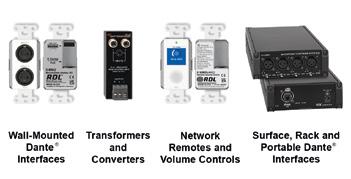
• Dante® Network Products
The world leader in Dante interfaces for connecting mic-level, linelevel, Bluetooth, and Format-A products to Dante networks - plus Dante-enabled mixers, amplifiers, and volume controls.
• Format-A® Audio Distribution
A streamlined solution for distributing audio and power over standard CATx cable - ideal for decentralised installations and cost-effective system designs.
• Stick-On, TX and Rack-Up Modules
Professional grade compact and rackmount products designed to mix, preamplify, amplify, convert, detect, control and distribute.
• Wall-Mounted Controls, Indicators and Connection Plates
Elegant and functional wall plates for audio I/O, control, and user interaction, designed for seamless integration into modern spaces.
RDL products are trusted in missioncritical systems worldwide and are used in traditional market segments including corporate, education, hospitality, healthcare, entertainment, broadcast, houses of worship, transportation, municipal and the broader public sector.
As AV systems continue to advance, so do the demands for greater
flexibility, seamless interoperability, and remote management capabilities. Alongside our dedication to innovation, we remain deeply committed to supporting our global customer base. To better serve our European partners, RDL is introducing a new line of European format Dante interfaces. These additions reflect our ongoing effort to meet regional needs while maintaining the high standards our customers expect.
We also prioritise installer-friendly design: intuitive connectors, clear labelling, and reliable, robust construction to help reduce installation time and minimise on-site troubleshooting.
• D-NVC2 Dante / AES67 Network Volume Control
Universal rotary encoder volume control that provides volume control and muting on one or two network audio channels. One stereo or one or two mono audio channels may be routed to the D-NVC2, then out to a network destination, such as a power amplifier. This volume control is compatible with any Dante stream, regardless of the manufacturer.
• RU-NMP44 Network Mixing Processor - 4x4
Distributes four Dante channels to six virtual audio mixers for controlling up to six zones. Four mixer outputs feed Dante network channels, two feed
balanced line-level outputs. It features high-pass filtering, individual level adjustment and adjustable ducking per mixer, four system presets for routing, mixing and levels. It’s compatible with optional RDL Network Remote Controls and is configured with RDL’s Console Software.
• D-BTN21 Bluetooth® Audio Dante Network Interface
Single-gang form factor with stereo or mono-summed output to two Dante/AES67 channels. Supports front-panel or remote pairing via RDL Console Software. Networkcontrollable functions include pairing, source selection, and level adjustment. Bluetooth metadata (track title and artist) is multicast over the network.
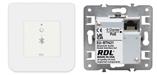
• EU-BTN21 Bluetooth® Audio Dante Network Interface Offers the same functionality as the
D-BTN21 in a European modular format, designed to fit standard 60mm deep EU junction boxes. Includes a pre-installed white faceplate laminate, white cover plate, and field-replaceable black laminate for flexible aesthetics.
Our longstanding relationship with Canford Audio has been instrumental in bringing RDL products to AV professionals across the UK and beyond. Canford’s technical insight, customer service excellence, and deep market understanding have helped us support integrators with the tools they need to deliver outstanding results.
Together, we’ve empowered countless AV professionals to build systems that sound better, work smarter, and last longer.
As Canford Audio celebrates 50 years of excellence, we honor their legacy and look forward to
continuing our partnership in the years ahead. Their success is a testament to the values we share: integrity, innovation, and a relentless focus on customer satisfaction.
The future of AV is dynamic, and RDL is committed to staying ahead - investing in new technologies, expanding our product lines, and listening closely to the needs of our customers. Whether supporting hybrid workspaces, enhancing public safety communications, or enabling immersive learning environments, RDL is ready to meet tomorrow’s challenges.
To all those who have supported RDL and Canford Audio over the years - thank you. Your trust and collaboration inspire us to keep pushing boundaries and delivering solutions that make a difference.
Here’s to 50 years of excellenceand many more to come.
Lande Rack Cabinets, established in 2012, are the largest manufacturer of 19” rack cabinets in Turkey, producing over 1,000 units per day and exporting globally from their 20,000 sqm state-of-the-art facility.
The partnership with Canford Audio – a UK distributor for Lande – has been going strong for nearly a decade, beginning back in 2013.
Through Canford, Lande offers PROline wall cabinets, SAFEbox IP55-rated cabinets, IP65-rated floor-standing cabinets, DYNAmic floor-standing server cabinets, and
soundproof acoustic cabinets, along with a full range of accessories. These products complement Canford’s extensive range of 19” connector panels, power distribution units, and cables, all manufactured at Canford’s Washington and Portland sites.
The partnership has provided solutions for a wide variety of applications, including broadcast studio installations, sports stadium projects, theatre installations, music festivals, wind farm sites, industrial environments, and standard office IT installations.
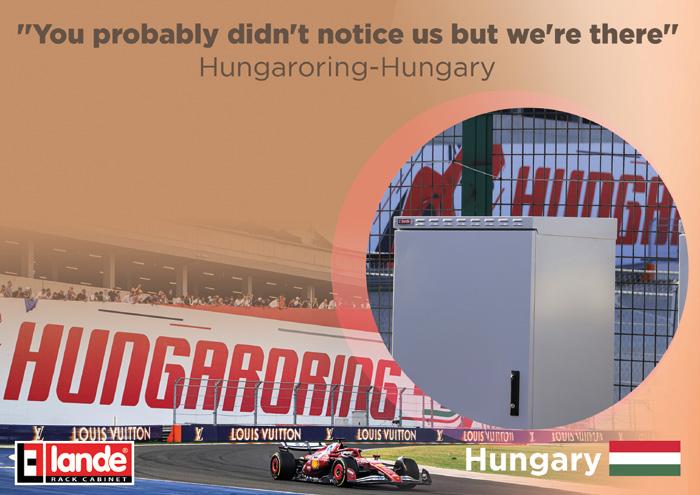
A standout product is the SAFEbox
IP55 range – the most sought-after in the lineup – which has been installed in numerous sports stadiums, including Premier League venues. These cabinets are also used in the German Bundesliga for goal-line technology, all supplied by Canford.
Lande Rack Cabinets are recognised throughout the industry for their innovative, high-quality products. Combined with Canford’s industryleading customer service, they provide the ideal solution for thousands of customers worldwide.
By Ben Hardy, Marketing Manager at Canford
2025 has been a landmark year for Canford as we’ve taken to the road meeting customers, partners and future industry professionals across the UK and beyond. From trade shows to career fairs, our team has been out in full force showcasing our latest products, sharing expertise and strengthening relationships throughout the broadcast, audio and AV industries.
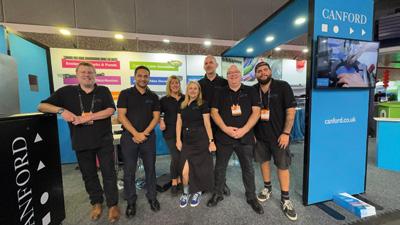
Our busy calendar kicked off in February when we attended the Kepier School Careers Fair, engaging with students keen to explore careers in engineering, manufacturing and many more career opportunities Canford has to offer. Inspiring the next generation of talent is something we’re incredibly passionate about, and it was fantastic to see such enthusiasm from young people in the North East. March saw the start of the Broadcast Technology Roadshow, with events in Newcastle and Glasgow. These intimate, regional events gave us a great opportunity to connect with engineers, integrators and technical teams in their local areas, bringing Canford’s expertise directly to them.
The spring period was particularly eventful, as May brought a trio of major exhibitions. We kicked off with PLASA Focus Leeds, where we met with professionals from the live events and AV sectors to discuss the latest trends and innovations. Then, in the same week, we headed down to London for MPTS (Media Production & Technology Show) – one of the UK’s leading broadcast and production gatherings – before jetting off to Broadcast Asia in Singapore to meet international clients and partners. It was an exciting month of global engagement, reinforcing Canford’s role as a trusted supplier worldwide.
In June, we continued the Broadcast Technology Roadshow with a stop in Coventry, as well as attending the Park View School Careers Fair, where we once again had the pleasure of inspiring students to consider
careers in technology and manufacturing.
As autumn arrived, we were back in exhibition mode. September saw us at both PLASA Show London and IBC (International Broadcasting Convention) in Amsterdam – two of the biggest events in our industry calendar. These shows were the perfect platform to demonstrate Canford’s latest product developments – such as the Canford Dante Enabled Diecast Speaker, network with long-time customers, and discover the innovations shaping the future of broadcast and AV technology.
Finally, we wrapped up the Broadcast Technology Roadshow in October, with successful events in Oxford and London, connecting with technical professionals and end users eager to learn more about our expanding product range and bespoke solutions.
From classrooms to international exhibition halls, 2025 has been all about connection – sharing knowledge, building relationships and showcasing the quality and expertise that define Canford. As we look ahead to 2026, we’re excited to continue meeting the people who make our industry so dynamic.
By Ben Hardy, Marketing Manager at Canford

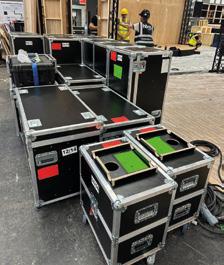
Here at Canford Audio, exhibitions play a vital role in how we engage with our customers, showcase our latest innovations, and strengthen our presence in the pro audio and broadcast industries. With events taking place across the globe, the logistics of transporting equipment, stands and materials can be a complex and time-sensitive challenge. For many years, we have relied heavily on our primary logistics partner Think Expo Logistics to ensure that everything arrives safely, securely and on time. Their support over the years has been instrumental to the success of our exhibition strategy and schedule. Exhibition schedules are rarely straightforward. Tight deadlines, multiple international destinations and last minute changes often mean there is very little room for error. Thanks to Think Expo Logistics’ extensive experience and flexibility, our products are transported quickly and efficiently between shows, whether by road, sea or air. Their ability to work to extremely short timeframes gives us the confidence to focus on what we do best –connecting with our customers and presenting new solutions, knowing that the logistics are in safe hands.
What truly sets Think apart though, is not only their reliability, but their commitment to sustainability. With sustainability targets and aspirations of our own, it’s essential that the companies we partner with share the same ambitions. As an industry, logistics can be quite wasteful, but Think takes proactive steps to reduce environmental impact. They work closely with their partners to reuse stands, equipment, and materials wherever possible, and to recycle at every opportunity. This approach closely aligns with Canford’s own values, where sustainability and responsible business practices remain a key focus for our future.
Importantly, Think Expo Logistics is a carbon-neutral business. They offset all the carbon generated by each and every shipment, and they go one step further by planting a tree for every transport arranged. Their sister company, Think Greener Travel, extends this environmentally conscious approach into business travel, offering group hotel bookings with a “green twist”. Every overnight stay is carbonoffset and matched with another tree planted, helping us all reduce the environmental impact of our exhibition programme even further.


For Canford Audio, working with a logistics partner that not only delivers on efficiency and reliability but also shares our values is essential. The partnership with Think Expo Logistics ensures that our exhibitions run smoothly while contributing positively to the wider goal of reducing our environmental footprint.
For more information about their services, you can contact them on 01243 908 075 or via email at hello@thinkexpologistics.com and hello@thinkgreenertravel.com.
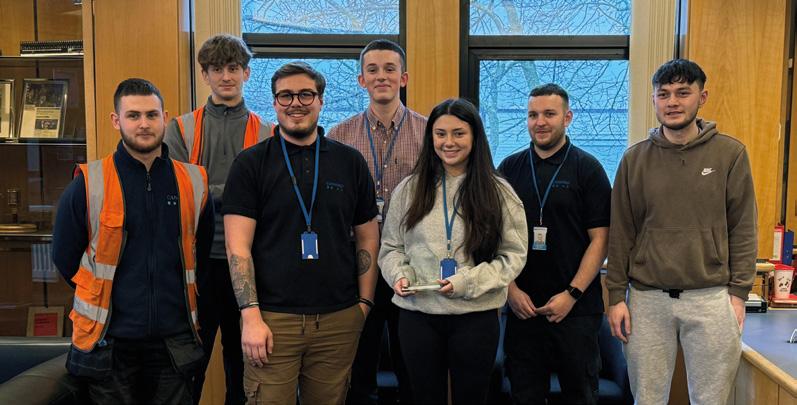
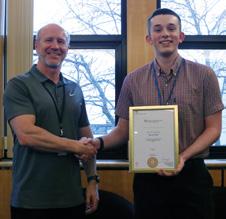
Back in February 2025, Canford Audio was named SME Apprenticeship Employer of the Year, a national recognition of our long-standing commitment to developing young talent and nurturing skills across the business. The award celebrates organisations that demonstrate outstanding support, progression and opportunity for apprentices, and at Canford, apprenticeships have always been at the heart of how we grow our people.
From the earliest days, Canford has recognised the value of investing in new generations of talent. Our CEO, Alan, began his career as an apprentice
By Ben Hardy, Marketing Manager at Canford
– a tradition that continues to shape the business today. Many of our team members started as apprentices and have since progressed into senior and specialist roles across departments.
Throughout Canford’s history, we’ve had more than 50 apprentices through our doors. In recent years, our apprenticeship programme has seen people complete their course and continue in full time employment with Canford in departments like Engineering, Production, Manufacturing, Sales, Warehouse, Site Services and Purchasing. They’re part of a wider community of
apprentices past and present that are all contributing to the business’s ongoing success and innovation.
Anna Roxburgh, Key Accounts Manager in our International Sales department, had the following to say:
“The support provided by Canford whilst completing my apprenticeship was exceptional by opening new and exciting opportunities, as well as offering guidance and feedback to allow me to develop my skills. After completing my apprenticeship, the support from Canford remains as they continue to invest in my growth by setting training plans tailored to improving my skills further, providing regular feedback and encouragement. The support I have around me allows me to build on my confidence and motivation. I am glad I get to work in this sort of environment and being part of a team who provides such support”.
2025 also saw Production Technician Apprentice, Lucas, successfully complete his Level 3 Engineering Apprenticeship, marking a key milestone in his professional development here at Canford. The four-year apprenticeship programme provided Lucas with a mix of practical, hands-on learning and academic study at a level equivalent to A-levels. Throughout this time, he gained experience in designing, building, servicing, and repairing engineering products and systems, gradually developing the skills and confidence required for a career as an Engineering Technician.
The apprenticeship concluded with a rigorous End Point Assessment (EPA), including a portfolio of work, a professional discussion, and an employer reference - all of which Lucas completed to a high standard. Reflecting on his journey, Lucas said: “Canford has supported my journey by always giving me the time to help complete any work and providing support throughout to help me achieve my goals.” We are incredibly proud of his achievement and look forward to seeing his continued growth and
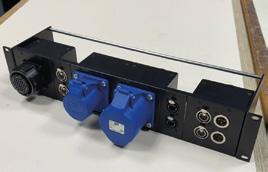
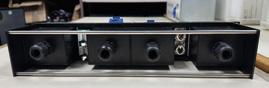
contributions within the engineering team. Congratulations, Lucas! 2025 has also been an incredibly successful one for Caprice, Production Engineer at our Portland facility. Caprice has made an exceptional contribution to Canford through the development of a brand-new product, originally conceived as part of her HNC in Manufacturing Management course. While Canford already offered a modular panel range, its existing frame design provided limited spacing for connections and required a lengthy manufacturing process, resulting in higher labour time and increased cost. Caprice recognised an opportunity to improve both usability and efficiency and designed an alternative solution that offers greater flexibility while being significantly quicker and more cost-effective to produce. Her concept impressed the business so much that Canford has now taken the design into full production and added it to our portfolio.

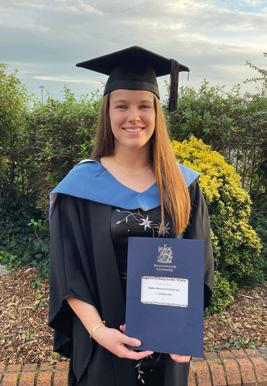
Alongside this achievement, Caprice completed her HNC at Poole and Bournemouth College with a distinction in June. Her ability to balance academic study with hands-on innovation within the business is a testament to her drive, capability and commitment to continuous improvement. We are incredibly proud to celebrate her success and to see her work already making a tangible impact for our customers.
Founder of Canford, Iain Elliott, once emphasised the crucial role that apprenticeships have played in Canford’s journey:
“The strength of the business – and I know it’s so often said – but it’s the people you have and their abilities.
For me in particular, it’s recognising young talent.”
“The strength of the business – and I know it’s so often said – but it’s the people you have and their abilities. For me in particular, it’s recognising young talent. We’ve had young people since day one with the Youth Opportunities Programme, but now we’ve got proper apprenticeships and placement schemes, and we have done for a long time. When we look at the number of people who have come through Canford, they may have stayed for a two week placement, they may have stayed for longer, or they may have come
Iain Elliott
and stayed for life. We have all sorts, and we work at different levels”.
This approach to nurturing talent ensures that apprentices are not only learning technical skills, but also developing the confidence, creativity and teamwork that define the Canford culture.
The award is a testament to the dedication of both our apprentices and the teams who support them – from managers and mentors to training partners and colleagues who share
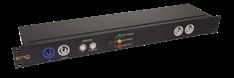
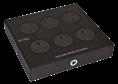
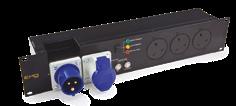
Robust: 16A and 32A, 1U or 2U rackmounting panels engineered by Canford to stand up to the rigours of the road.
Safe: Overcurrent protection and locking connectors ensure safe, reliable performance.
Versatile: CEE Form, UK 13A, PowerCON, PowerCON TRUE 1, and IEC Connector Combinations.
their knowledge every day. It recognises the collective effort that goes into creating an environment where people can thrive and build rewarding careers in the audio industry.
As Canford continues to grow, our commitment to developing people at every stage of their career remains stronger than ever. Apprenticeships give us the opportunity to bring in fresh ideas, build vital skills and ensure the long-term success of our business and our industry.
Winning the SME Apprenticeship Employer of the Year Award is a moment of pride, and a reflection of the belief that’s guided Canford since the very beginning: when you invest in people, you invest in the future.

By Beth Routledge, HR Manager at Canford
The Wellbeing Committee has been busy behind the scenes this year, continuing our commitment to supporting the health and wellbeing of everyone at Canford Audio Limited. Here are some of the highlights so far:

In February, we had a fantastic evening at the Better Health at Work Awards ceremony, where we proudly collected our Bronze Award. To our surprise and delight, we were also presented with a special recognition award for “Best Team.” Both trophies now take pride of place in our reception area for all to see. With this success behind us, we’re now aiming for Silver Award status, and we’re hopeful of reaching this milestone by the end of the year.
We were fortunate to welcome Hanan Fischer from Sunderland GP Alliance, who delivered an engaging session on Men’s Health. The session covered signs and symptoms, prevention, screening, and where to access support. Colleagues found the discussion valuable and appreciated
the opportunity to share stories and connect with one another.
We also hosted 50:50, who ran a thought-provoking Lunch and Learn session on Equality, Diversity, and Inclusion. The session explored recent updates to the Equality Act, their practical implications, and how we can continue to build a respectful and inclusive culture at Canford.
Our fundraising efforts have been both meaningful and fun. In support of our nominated charity, Dementia UK, we held a “Guess the Baby” competition, where employees brought in their childhood photos. It sparked plenty of laughter (and some good-natured teasing about retro hairstyles!).
In addition, our teams donated an incredible 64 Easter eggs to Grace House North East, who partnered with the Salvation Army to share them with children who might otherwise have gone without.
Of course, no year at Canford would be complete without our much-loved Fish and Chip Day and Ice Cream Day! These events are a great chance for colleagues to step away from their workstations, enjoy some tasty treats, and catch up with one another.

Looking ahead, the rest of 2025 will remain focused on keeping staff wellbeing at the heart of everything we do, while continuing to give back to our communities, raise awareness of important topics, and of course, have some fun along the way. It’s all about balance!

By Paul Power, Technical Support Engineer at Canford

Headphones are convenient as they can be used in a number of different situations, on the go, in quiet areas where you don’t want to disturb others, to quickly check audio quality, or just for pleasure. Headphone monitoring is very different to monitoring over loudspeakers in a good room, but headphone development has come a long way to improving on this.
Headphones come in two main designs, open back and closed back, however manufacturers vary their headphone designs depending on price point and desired sound signature, varying parts like:
• Earcup design and materials
• Earpad design and materials, which include circumaural earpads which surround the ear, supra-aural which rest on the ear and insert type earbuds which aren’t usually used in pro audio applications.
• Impedance and sensitivity
Driving Seat
The vital part of a headphone is the transducer which turns the electrical signals into sound waves and comes in three main designs:
• Dynamic
• Planar magnetic
• Electrostatic.
Dynamic drivers, or moving coil drivers, first designed in the 1920’s are made up of a small stiff cone connected to a coil of copper wire around a powerful magnet so that when an electrical current moves in the coil it creates a magnetic field causing the cone to move back and forth.
Planar magnetic driver designs were first developed by a startup company, Magnepan, in 1969, initially as a speaker driver, but used in the 1970s by Yamaha in their headphone branded as Orthodynamic. They are like dynamic drivers, the main difference being that the diaphragm has wires embedded in it which are sandwiched between two arrays of magnets. An electrical current going through this generates an electromagnetic field, making the
diaphragm move back and forth. This type of driver uses large magnets so headphones using this type of driver are heavier than those with dynamic drivers.
Electrostatic drivers work on the principle of static energy. The patent for them was first filed in 1953 and then first used in headphones in 1959 by Stax who are still the main player regarding electrostatic headphones. Electrostatic drivers are constructed of a very thin diaphragm suspended between two metal plates which are perforated to allow airflow, one plate being positively charged and the other negatively charged; when an electrical signal is applied to the plates this causes the diaphragm to move back and forth pushing air through the perforations.
Dynamic drivers are the most commonly used in headphones as they are cheap to manufacture, easy to power and are described as having fast, punchy dynamic bass response. However, since not all parts of the diaphragm move at the same time, this can cause non linearities and distortion. Planar magnetic drivers are similar in design to dynamic drivers and are as capable of producing detailed bass response as the dynamic drivers, but as there is an equal distribution of vibrations across the diaphragm, they are less prone to causing distortion. Electrostatic headphones are known for providing greater detail and top end extension, but these types of headphones require a matching power supply to power the drivers, increasing their cost compared to the dynamic drivers. The enclosure in which the drivers are housed have an impact on the sound they reproduce. There are two main types of headphone enclosure: open back and closed back.
Closed back headphones, when worn correctly, create a seal which provides good isolation from environmental sound and resist transferring sound to the surrounding environment; however, low frequency energy that would usually escape is sealed in and this can lead to listeners experiencing a slight pressure and a fullness in the ear because of bone conducted sound. This is what is called the occlusion effect. Bone conducted sounds entering the ear canal through vibrations can boost frequencies below 1000Hz by up to 40dB; as a result the user’s voice sounds boomy or hollow. There could be more going on than just the occlusion effect, as strong internal reflections in closed back headphones
could be moving the ear away from its natural operating point, ultimately modifying the sound presented by the headphone. This can mean that the headphone becomes uncomfortable to use over long listening sessions; the listeners may then be tempted to increase the volume level to make up for the uneven frequency balance, or the sound image becomes more ‘in head’ because of smearing due to the time delayed reflections interfering with the direct sound.
Optimal bass response requires a good seal between the earpiece and the listener’s ear to avoid leakage. Loss of bass response in headphones can be observed, for example due to small gaps as a result of poor fit of an earpiece because of glasses or hair. On the other hand, to alleviate the occlusion effect a large open area is required to allow some energy to dissipate rather than being reflected back to the eardrum.
It’s easy to think that open back headphones let all the sound escape, but this is not the case, since the sound leaving the ear canal sees a different acoustic impedance which includes any absorptive material; the size of the gaps in the earpiece mean that some sound will be reflected back into the ear canal, varying with frequency. As a result, designing open back headphones is a balancing act, providing enough open space on the earcup to dissipate energy, but at the same time providing enough resistance to create optimal bass response. The solution to this is to add acoustically resistant material that can convert the sound energy to heat, reducing reflections and allowing some energy to escape, while still providing enough resistance to allow a build-up of pressure to preserve good bass response.
Open back headphones are reported to be more transparent, natural
in sound presentation and are generally preferred when mixing using headphones, as they provide a soundstage closer to using speakers; however open back headphones are also used in applications like virtual reality, augmented reality and spatial audio. Not all open back headphones are created equal and just adding vented earpieces doesn’t automatically alleviate the previous issues. In the same way that there are different sound signatures between closed back headphones, not all open back headphones provide the same degree of openness.
To quantify the performance of headphones during development, measurements are made to BS EN IEC 60268-7: 2025 which include frequency response, total harmonic distortion, sensitivity and impedance. As highlighted above it is necessary to balance the degree of how open a headphone is with the need to preserve some closed aspects to support optimal bass response.
“Openness” is determined by how much energy is reflected back from the headphone to the eardrum, but there is no standard measurement to quantify openness objectively. Research into measurement techniques is evolving and several measurement metrics have been proposed. Execution of these measurements is not straightforward and research continues in order that openness can be quantified and headphones can be optimised and compared.
By Marc Hak, CEO and Co-founder GetyourStudio
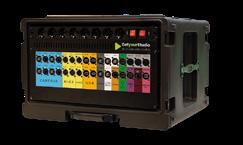
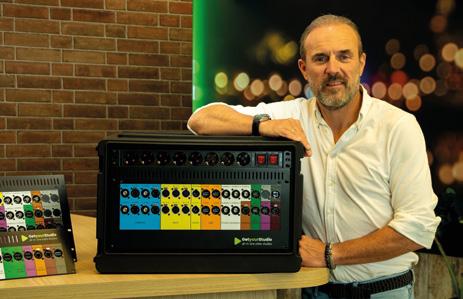
GetyourStudio develops corporate in-house video studios – systems that can be operated by a single person with no technical background. Designed for webinars, e-learning, talk shows, product demos, and internal communication, whether live or recorded. Equipped with smart, intuitive video control software, these studios can be up and running within days, without complex implementation. With our solutions, we make professional video production accessible to every organisation.
At the heart of GetyourStudio are our Studio-in-a-Box systems: BASIC, PRO and PRO XL. The challenge in developing these systems was to combine standardisation with flexibility and future-readiness. Our goal was to create scalable systems that could be easily expanded and operated by non-technical staff.
For a key part of our Studioin-a-Box, we partnered with Canford. We already knew Canford from previous years, when we occasionally sourced AV components from them. When looking for a reliable partner for
the design and production of our backplates, Canford proved to be the perfect choice. Their flexibility in handling varying production volumes, combined with their complete service – from assembly to screen printing – allowed us to move quickly and achieve a highquality result. The first production runs required some adjustments, but together we refined the design into a robust and professional product that fully meets our vision.
GetyourStudio has now been
successfully rolled out across mainland Europe and is expanding further into the UK, supported by endorsements from Canon UK and Canon Europe. A great example is Jupiter Asset Management in London, which now produces all its corporate video content in-house using our technology, at significantly lower cost. We look forward to the future with confidence and expect to scale up production further in the coming years, continuing our collaboration with Canford as a trusted partner.

By Aj McQuillan – Commercial Director, Bubblebee Industries
Bubblebee Industries unveils The Sidekick Broadcast Earpiece — the next evolution in discreet, high-clarity communication. Designed for the demands of professional broadcast, and now available with custom-fit earpieces created using Bubblebee’s game-changing Ear Scanning App.
At Bubblebee Industries, our development philosophy is simple: create sound solutions that enhance communication and comfort without compromise. For over a decade, our products have been trusted by sound professionals worldwide — from field recordists and ENG crews to major broadcasters — because we design with one clear goal: to make your job easier and your sound clearer.
Now, we’re proud to introduce our latest innovation: The Sidekick Broadcast Earpiece — a new evolution in discreet communication technology that sets a higher standard for clarity, comfort, and reliability in live production environments.
Purpose-built for Broadcast Professionals
The Sidekick Broadcast Earpiece builds on the proven success of The Sidekick 3, a favourite among sound mixers, camera operators, and live presenters
for its invisible profile, feather-light weight, and crystal-clear delivery. The Broadcast edition takes everything we’ve learned and pushes it further.
reproduction while maintaining our signature ultra-low profile. Its high-definition micro-driver sits comfortably in the ear canal,
“The Bubblebee Ear Scanning App replaces messy impression kits with precision digital scans — redefining comfort and accuracy.”
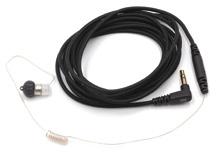
Designed for demanding broadcast environments, it features a reengineered driver housing that delivers exceptionally natural speech
allowing for hours of wear with minimal fatigue — essential for long days on location or in the studio.
The cable has also been refined to endure daily professional use, remaining flexible and invisible even under stage lighting or camera scrutiny. Every detail — from the connector interface to the strain relief — has been tested and perfected to meet the exacting standards of modern production teams.
To give every user the perfect fit, Bubblebee has developed something truly game-changing: the Bubblebee Ear Scanning App. This technology replaces messy, uncomfortable impression kits and audiologist visits by capturing a precise 3D model of the ear digitally.
The moulds are available in transparent, beige, and a variety of special finishes or colours, allowing users to tailor their earpieces to suit different production environments or personal preferences. Each pair is precision-made to deliver a secure, comfortable fit and consistent acoustic performance — no matter how long the day runs.
-35dB or 85dB Filtered
Comfort and clarity are only part of the story — safety and situational awareness matter too. The standard custom mould attenuates external sound by -35dB, providing strong isolation in noisy environments such as live arenas, OB trucks, or busy event venues.
For those who need to remain aware of their surroundings, the mould can be ordered with a HOCKS filter. This intelligent acoustic filter limits external ambience to 85dB, preserving natural awareness without overexposure to loud environments. It’s the ideal solution for professionals working in dynamic or high-noise settings where both protection and awareness are vital.
Since its introduction, The Sidekick range has been about more than discreet monitoring — it’s about enabling clear communication in the toughest conditions. The Sidekick Broadcast Earpiece continues that legacy, combining cutting-edge micro-acoustics with the comfort and practicality professionals expect from Bubblebee Industries.
From newsroom floors to red carpets, from live sports to highpressure studio productions, Sidekick users trust that their earpiece will deliver consistent, natural sound while remaining virtually invisible on camera. The Broadcast model strengthens that trust with greater robustness, improved intelligibility, and seamless compatibility across the Sidekick ecosystem.
As an authorised agent for Bubblebee products, Canford can now provide broadcast professionals with a complete solution tailored precisely to individual needs. Together, we’re not just improving communication — we’re redefining what it means to hear and be heard in professional environments.
The Sidekick Broadcast Earpiece embodies Bubblebee’s core development values: if a product doesn’t bring something new or make your work better, it doesn’t make it to production. With its innovative engineering, custom-fit options, and the power of Bubblebee’s digital Ear Scanning App now in professional hands, this release marks an exciting step forward in the pursuit of perfect comfort, clarity, and communication.
“The Sidekick Broadcast Earpiece delivers clarity and comfort professionals can rely on, all day, every day.”
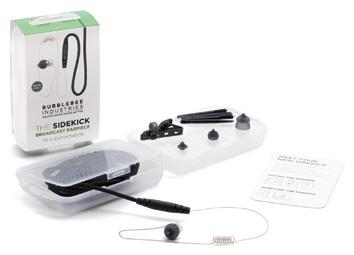
The Sidekick Broadcast Earpiece and accessories are available through Canford, an authorised Bubblebee Industries partner. Learn more at bubblebeeindustries.com and canford.co.uk.
By

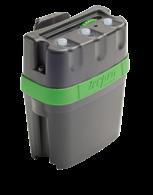
Tecpro beltpacks have been a familiar sight across theatres, broadcast facilities and live event venues since the early 1980s. The original Series 1 models established a reliable platform, while the later Series 2 units introduced rigid ABS housings that balanced robustness with reduced weight and cost. Both ranges remain in service today, reflecting the durability and practicality of their designs. It is against this backdrop that the BP167 was developed – not as a replacement for the established ranges, but as a specialist evolution. Built around the same proven electronics as the Series 2 beltpacks, the BP167 encloses those circuits in a fully sealed aluminium case with
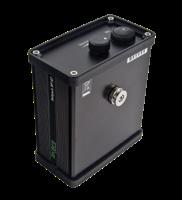
stainless steel hardware, designed specifically for offshore and wetweather use. Where the ABS housings of the Series 2 focused on durability through practicality, the BP167 focuses on resilience through environmental protection.
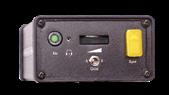
Every design decision reflects the demands of challenging conditions. A glove-friendly rotary control and a prominent mic switch - offering both latching and push-to-talk modes - allow operation even when dexterity is limited. Visual and audible confirmations ensure operators know the mic state. The absence of a daisy-chain connector, common in standard beltpacks, helps prevent water ingress, while the belt clip is secured via a stainless-steel mushroom anchor point to withstand physical strain. Although developed for offshore and maritime operations, the
BP167 is equally suited to outdoor events where weather conditions can be unpredictable. IP67 protection ensures that rain, spray, or even brief immersion does not compromise operation, making the unit as reliable at a festival site as it is on an ROV (remotely operated vehicle)
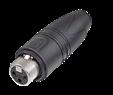
To maintain the IP67 rating throughout the system, the BP167 uses IP-rated Neutrik components. The body of the beltpack features the NC3FXX-HD-D Series XLR connector for system link, providing a secure, weather-resistant connection and ensuring that both the headset and system mating cables preserve the same level of environmental protection. Internally, the BP167 shares the same electronics platform as Series 2 beltpacks, providing compatibility with existing Tecpro systems. Adjustments to sidetone and audio alert levels are accessible internally, preserving the sealed nature of the enclosure while ensuring consistent performance over time.
In this regard, Tecpro continues to hold a unique position. Its products remain a trusted standard in the UK, where generations of technicians have relied on their durability and performance. The same qualities that make Tecpro effective in theatres and studios extend to live event sites across Europe and offshore installations. Systems built decades ago continue to function alongside newer devices such as the BP167, demonstrating Tecpro’s philosophy of cost-effective resilience applied to new environmental challenges. By combining proven electronics, robust environmental protection,
and compatibility with established systems, the BP167 ensures that reliable communication can be maintained in the most demanding conditions, sustaining a legacy that has lasted for over 40 years.
A typical Tecpro deployment relies on a clear logic of power and termination. Each intercom ring requires a system master station and/or power supply to provide both power and the necessary termination for all connected devices, capable of supporting more than 20 beltpacks per ring. System cabling attenuation, based on 0.5mm² (20 AWG) cable, at a threshold of more than half the supply voltage, allows
infrastructure to span kilometres in length, assuming that intermediate nodes or patching points are kept to a minimum. The total number of connected user stations dictates the requirement for additional available current, and in some cases, isolatorcoupled terminations are necessary to preserve signal stability and overall system performance. Additional master stations or power supplies can be added to expand the system, with care taken to avoid double termination by using isolators such as the BA905 to maintain system integrity. Localised 24V DC power supplies can also be incorporated for high-demand units, such as loudspeaker stations, with inline diodes providing protection against short circuits and ensuring reliable overall system operation.

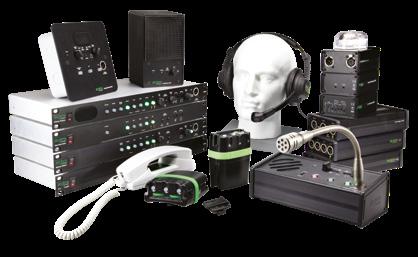
Comfortable: Lightweight design and clear, intelligible audio for fatigue-free communication.
Reliable: Easy to operate, universal power supply (for world-wide use), and renowned for toughness and durability.
Versatile: Connect between two and hundreds of users on up to two independent intercom rings.

By Charles Phelps, Technical Support Engineer

To support Stride deployment requirements, many productions make use of PTPv2-enabled switches from manufacturers such as Netgear, Cisco or Luminex, which offer powerful and flexible solutions. However, these options often require configuration and management expertise that may not always be available on-site. With this in mind, Green-GO introduces the SW6 to provide a streamlined alternative: a compact 6-port PoE+ switch with PowerCON loop-
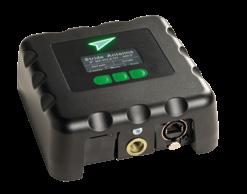
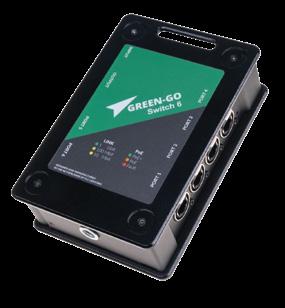
through, preconfigured for AV and PTPv2 compliance. With no front-end management or user configuration required, the SW6 offers a true plugand-play topology, ensuring compliance and stability even in environments where network setup cannot be accessed or confidently deployed.

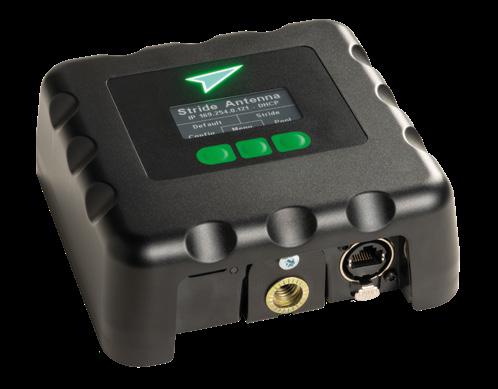
When deploying the Stride Antenna, its monitoring mode can be used to visualise the local DECT spectrum, providing insight into potential interference and reflections within the intended coverage area. This allows antenna placement to be verified in advance, helping to mitigate issues caused by reflective surfaces, oxidised paints, or nearby metallic structures. The “doughnut”-shaped radiation pattern of the Stride Antenna should also be considered during placement, as careful orientation can help reject unavoidable localised interference while maximising usable coverage.
https://manual. greengoconnect.com/ en/guides/wireless
In combination, the SW6 and Stride Antenna form a robust deployment framework: the SW6 ensures effortless, compliant backbone connectivity, and the Stride provides visibility and control over RF conditions in the field. Together, they simplify deployment while supporting the stability and reliability required for seamless, production-grade communications.
Since the release of Green-GO version 5, scripting has become a powerful tool, offering users the freedom to create bespoke functionality without waiting on firmware revisions or direct developer intervention. Built as a streamlined, event-driven language – a derivative of Python – Green-GO scripting allows users to react to system events, modify device properties, and redefine the user experience in real time. Scripts can monitor and manipulate up to 64 simultaneous events, with a built-in safety mechanism that gracefully reverts to normal operation if a low-priority script fails, ensuring creative flexibility without compromising reliability.
Interface control is equally versatile. Calling ui.clear(i) within a ui.draw(i) event wipes the indexed display, ready for repopulation with new elements such as lines, rectangles, or text. Each ui.draw# command is typically followed by defined parameters and payload. Objects such as device, group, channel, and ui serve as exposed interfaces into the Green-GO ecosystem, each capable of being read or rewritten during runtime, enabling adjustments to routing and system behaviour.
Functions, variables, and constants give further structure to scripting logic. Functions can be defined using the function #() syntax, allowing repeated
or conditional behaviour to be encapsulated cleanly for reuse across multiple events. Variables – both local and global – can be declared freely, storing numerical or text data for tracking states or intermediate calculations, while constants provide stable, non-rewritable reference values to ensure clarity and consistency throughout a script.
Channel modes form another crucial part of interactive behaviour. Within scripting, each channel can be addressed directly to manage talk, listen, and call states. For example, setting channel.talk(i) engages talk mode on a specific channel, while listening for channel.listen(i) or channel.call(i) events allows precise control over monitoring and signalling behaviours. These modes can be combined with UI feedback to give operators clear visual and tactile cues, reinforcing communication status across complex networked systems.
Ultimately, Green-GO scripting bridges the gap between user creativity and system capability. It allows operators to build adaptive workflows that reflect their environment – from subtle interface tweaks to fully responsive intercom logic – all without touching firmware. If you want it, script it.
https://manual. greengoconnect.com/en/
Green-GO is a cost-effective, multi-award-winning digital intercom system that transmits audio over an existing Ethernet network; no special wiring needed! Its proprietary design allows for scalability from a small, deployable application up to incredibly complex communication systems ideal for major live events, multifunction performance venues, and broadcast operations, but can be used almost anywhere.
• Reliable: No central matrix, which eliminates a potential single point of failure (whilst also providing a substantial cost saving.)
• Scalable: Start simple and build your way toward an incredibly complex system of up to 400 groups and 3000 users.
• Versatile: Wired and wireless, powered over Ethernet, and packaged with highly configurable, proprietary software which allows for an almost limitless range of possibilities.
Canford has been the sole UK and Ireland distributor of Green-GO since 2016
By Márcio Leiria, Marketing and Creative Manager at Ampetronic | Listen Technologies
As someone who works at the intersection of creativity and technology, I’ve always believed that good design should be invisible. It should simply work, quietly improving lives without demanding attention. That’s exactly what accessibility should feel like. Seamless. Empowering. Uncomplicated.
At Ampetronic | Listen Technologies, we’ve spent years helping people hear better in public spaces. But with the launch of Auri™, we’re entering a new era. One where accessibility is not just about compliance, but about experience. One where AI and Auracast™ come together to make sound more personal, more flexible and more inclusive than ever before.
Listening Shouldn’t Be a Luxury
Whether you’re in a theatre, a classroom or an airport, being able to hear clearly is essential. Yet for
millions of people, background noise, poor acoustics or hearing loss make that difficult, with over 430 million people worldwide currently requiring rehabilitation for disabling hearing loss. That number is projected to rise to more than 700 million by 2050, according to the World Health Organization. Traditional solutions have helped, but they often rely on specialist equipment, complex installations or limited compatibility.
Auri™ changes that. It’s a complete system that allows venues to broadcast high-quality audio to both dedicated

receivers and personal devices. That means people can use their own smartphones, hearing aids or earbuds to tune in. No need to borrow equipment. No need to feel singled out. Just clear sound, delivered directly. This is what Auracast™ enables. It’s a new Bluetooth® technology that lets users choose audio streams in public spaces, much like selecting a Wi-Fi network. And Auri™ is built to support it fully. It’s designed to work today, and to grow with the technology tomorrow.



AI Makes It Smarter. And More Human.
What excites me most is how artificial intelligence is starting to shape the future of accessibility. AI isn’t just about automation or data. It’s about understanding people better.
Imagine a system that learns your preferences. That knows which announcements you want to hear, and which ones you don’t. That adjusts volume based on your environment, or helps you find the right audio stream in a busy space. These are the kinds of experiences AI can help create.
In our work, AI also helps us design better. It allows us to test how people interact with our materials, understand what they need, and make sure our messaging is clear and inclusive. It’s not replacing creativity. It’s enhancing it.
When we talk about accessibility, we’re not just talking about technology. We’re talking about people. About making sure everyone feels welcome, informed and included.
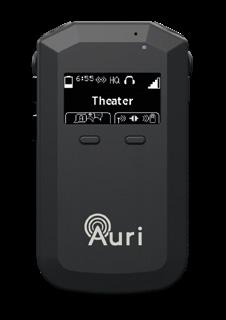
That’s why we’ve been careful to design Auri™ in a way that’s intuitive and flexible. It’s not just for one type of user. It’s for anyone who wants to hear better. Whether they bring their own device or use one of ours, the experience should be simple and empowering.
We’ve also made sure that venues can install Auri™ now and be ready for the future. As more devices become Auracast™ enabled, the system will support them automatically. That means less hardware, fewer barriers and more freedom for users.
One of the most powerful things about Auri™ is that it helps venues prepare for what’s coming. Accessibility standards are evolving. Expectations are rising. And people are bringing their own technology into every space they enter. By installing Auri™, venues aren’t just meeting today’s needs.
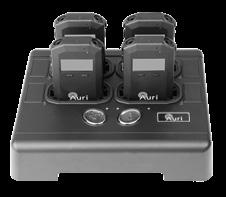
They’re investing in a future where audio is flexible, inclusive and user driven. They’re creating environments where people can connect, participate and belong.
And from a creative perspective, that’s a message worth sharing. It’s not about selling a product. It’s about telling a story of progress. Of empathy. Of design that puts people first.
Accessibility isn’t just a technical challenge. It’s a creative one. It asks us to think differently. To design for everyone. To make the invisible visible.
With Auri™ and AI, we’re not just improving sound. We’re improving connection. We’re helping people feel part of the moment, wherever they are. And that, to me, is what good design is all about.
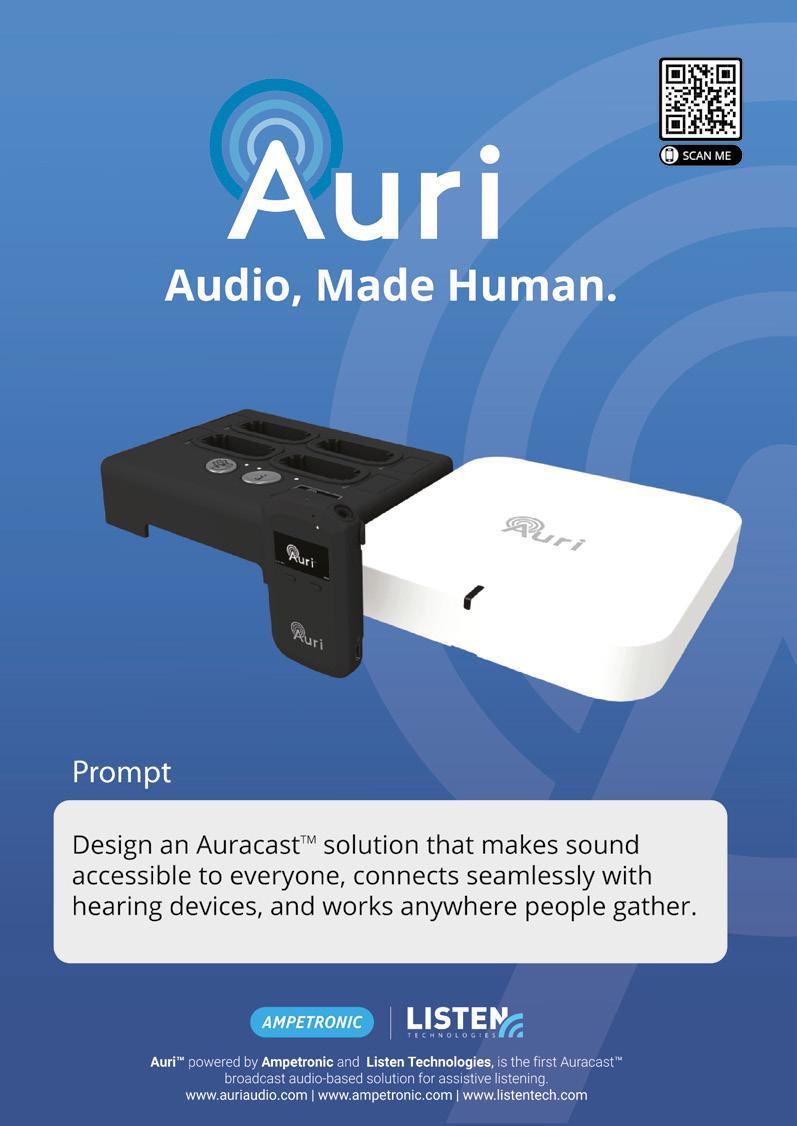
Delivering choice and flexibility to suit multiple scenarios and budgets, TSL’s solutions enable users to design their workflow with their choice of technology
For almost forty years, TSL has been a constant presence in the world’s most demanding productions. From Audio Monitoring Units (‘AMUs’) to Power Distribution Units (‘PDUs’) combined with a broad range of control, orchestration and monitoring capabilities and HMI panels, including giving the media technology world the eponymous TSL-Tally and UMD protocols, TSL has long been a brand broadcasters know they can rely on deliver.
With the increasing convergence between broadcast and AV workflows and use cases, TSL’s solutions are increasingly accessible to a new generation of users to provide the same confidence once reserved for Tier-1 broadcasters in delivering interoperable, flexible solutions that meet their needs.
Corporate studios, streamers, esports, theatres, government chambers and even financial institutions are producing high-quality, multi-camera content every day and many venues are implementing immersive, live experiences to attract customers. Their standards have risen in parallel to their globally reached and scaling audiences — and so now expect
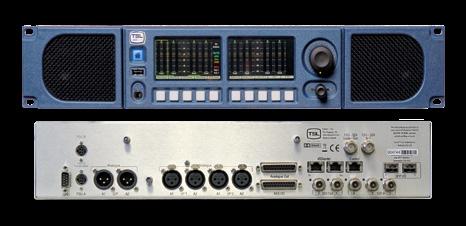
the same rock-solid reliability and performance broadcasters have relied on for decades.
That’s where TSL comes in.
Behind every facility, whether on premise or remote, there are data centres or smaller-scale racks of equipment. From offices to remote transmission sites and teleports, every event, production, performance, communication feed and live stream requires one constant: power. Without it, everything stops.
Alongside a range of resiliencyenhancing, horizontal and vertical, essential PDUs, TSL’s PD14PMiD Intelligent, Managed Power Distribution range keeps operations alive with 14 fused outlets, options for dual A/B inlets with automatic changeover (built-in ATS), and programmable sequential start-up to protect against overloads, all in a 1RU form with
options for 20A or 32A total load. Fully CE-certified and UL compliant, PD14PMiD meets the latest safety and compliance standards, while the latest firmware adds simpler logins, enhanced SNMP reporting and earth-leakage monitoring for smarter oversight of critical systems.
From data centres to OB trucks and hybrid control rooms, TSL’s PDUs quietly keep multi-vendor racks stable, turning complex installations into predictable, manageable infrastructure — and protecting against downtime and costly callouts.
With vendor-agnostic remote control and monitoring capabilities, these units enable IT and engineering teams to centralise their power management and target cost savings and sustainability gains.
Tier-4 certified facilities such as Sony Pictures Networks India rely on this technology to maintain 24/7 continuity.
We Enable — From Corporate Offices to Concert Halls to Stadia Corporate, cultural and entertainment event spaces are leading the broadcastAV technology convergence.
At the Royal Opera House in London, TSL technology supports the venue’s UHD/ HDR media upgrade, helping crews switch seamlessly between recording, live relay, and cinema workflows. In Prague, the Czech Philharmonic modernised its 140-year-old Dvořák Hall into a stateof-the-art digital performance venue, using TSL Hummingbird to unify tally, routing, and multiviewer workflows — enabling global streaming without compromising artistic heritage, while at the Sphere in Las Vegas our technology solved a complex video routing and live event operational interface headache.
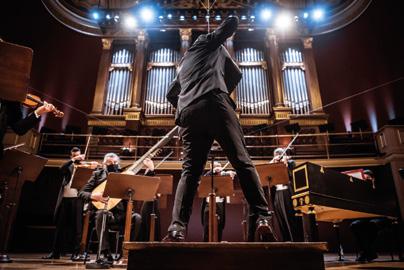
isn’t theoretical any more — it’s happening everywhere and TSL is an enabler for users in all environments.
Whether involved in live broadcast, playout, transmission QC or live arena events, everyone agrees that clarity, consistency and control in audio are non-negotiable.
The same technology is transforming other sectors too. A Fortune 500 financial firm recently outfitted its master control room with MPA1MIX-NET-V-R units, bringing broadcastgrade monitoring to corporate production. Across government and intelligence facilities, universities, and live performance venues, AV teams are embracing the same precision and usability that broadcast engineers have trusted for decades
Across industries, the definition of “professional” has changed. Whether you’re mixing a concert, producing a boardroom webcast, or streaming a government debate, expectations are identical: clear audio, constant power, and total control confidence.
For corporate clients we have integrated with AV technologies such as Q-SYS, IHSE and BrightSign while enabling control of NDI, SDI and ST 2110 sources and endpoints from multiple vendors through a single operator interface.
And in sport, to add to a wide portfolio of clients across all the major North American sports leagues, a major UK Premier League club recently installed TSL control in its in-house stadium studio — a clear sign that broadcast-grade tools are now being adopted in professional sports environments where flexibility and reliability are equally vital.
Whether it’s an orchestra, an arena, a football club, or a global bank, the message is the same: the convergence of AV and broadcast
From the compact MPA1-MIX-NETV-R and MPA1-SOLO-SDI through to the flagship PAM range, featuring PAM2-12G for UHD, and the new PAM-NET, with 2022-7 support, TSL’s audio monitoring range supports every role in the chain — from operators needing fast “hear-and-identify” feedback to engineers requiring detailed loudness, metadata and Dolby QC. In large-scale productions, these tools form a multi-level architecture. F&F Productions’ GTX21 — one of the newest UHD HDR trucks serving U.S. sports — uses PAM2-IP units for Dolby and Dante QC, MPA1MIX-MADI-V units for operator-level monitoring, and MPA1-MIX-DANTE-V for Dante sources. The result is reliable, scalable audio confidence in a fast-paced, complex workflow.
Backed by decades of live broadcast experience, TSL designs solutions that make complex systems simple, ensure absolute accuracy, and perform without compromise.
From the control room to the concert hall, from financial hubs to sports arenas, TSL is powering a new era of broadcast and AV media workflows.
TSL – We Listen, We Enable, We Empower. Discover more at TSLproducts.com
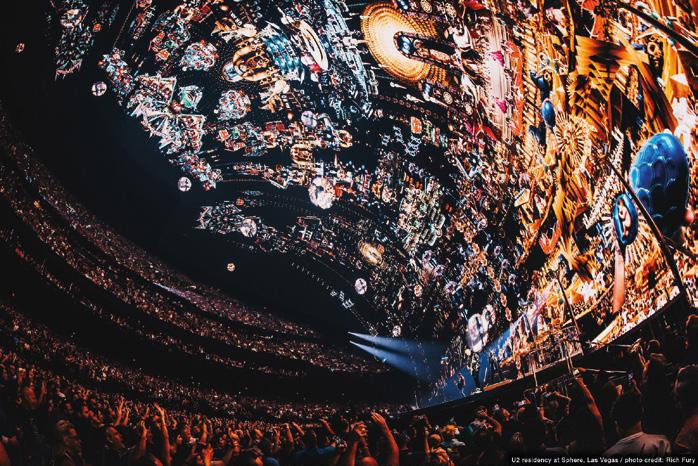



































































The Chamber of Representatives, located within the neoclassical Palace of the Nation in Brussels, has stood as the heart of Belgian democracy since the eighteenth century. Its architectural and historical significance makes it a space of national importance. However, the very features that give the Chamber its grandeur, its dome, marble surfaces, and ornamental finishes also present serious challenges for speech intelligibility.
In a room where clarity of speech is essential for democratic debate, the acoustic shortcomings of the space had long been a concern. Over the years, various sound reinforcement systems were introduced with limited success. The primary problem persisted: poor intelligibility, especially due to the uncontrolled reflections generated by the overhead dome.
To address these issues, the Belgian government launched a public tender for acoustic solutions aimed at improving speech intelligibility while preserving the building’s historical aesthetics. Amptec took responsibility for coordinating the entire process, overseeing design integration and delivery.
Amptec partnered with Artnovion on the development and supply of the acoustic treatment, drawing on Artnovion’s engineering and custom manufacturing capabilities. Their approach started with an extensive evaluation of different treatment options, supported by detailed simulations. The analysis identified a frequency range where intelligibility was most affected. As a result, the final solution combined Helmholtz resonators tuned to those specific frequencies with
broadband absorbers to address more general reverberation issues. The goal was to restore speech clarity without compromising the character of the space.

Amptec began by conducting a full technical analysis, including 3D modelling of the space and acoustic simulations. These studies confirmed that the dome was the principal source of reflections disrupting clarity. Reverberation times and STI values highlighted specific problems in the mid to high frequency range.
Adapting without compromise. Installing acoustic panels can be challenging, especially in spaces where damaging the mounting surface is not an option.
The first phase focused on the periphery of the central hall, specifically the balconies.
Given the architectural constraints, standard panel installation was not an option. Artnovion developed a custom solution with a focus on sound absorption. After the installation of the new sound system, part of the treatment was aimed at the 250Hz–500Hz range. Faced with both acoustic and architectural challenges, three different types of semi-curved panels were developed: a broadband absorber, a perforated Helmholtz absorber, and a customprinted panel replicating the texture of the original marble. Achieving a visual match required Amptec to go through a careful process of capturing high-resolution photographs of the curved marble façades, which Artnovion tested and refined through multiple iterations across countries to ensure consistent colour matching.
The second phase focused on the centre of the space, where a dome concentrated reflections that, combined with the strategic placement of the loudspeakers, allowed for targeted acoustic intervention. As depicted, domes present a unique acoustic challenge by concentrating sound reflections
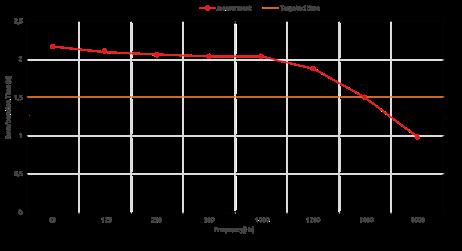
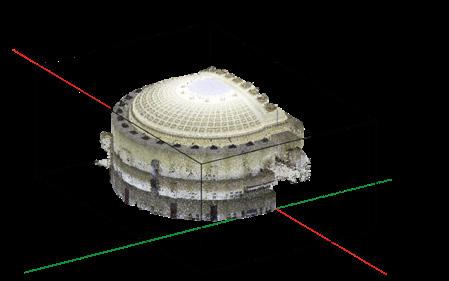
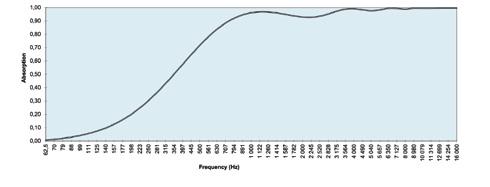
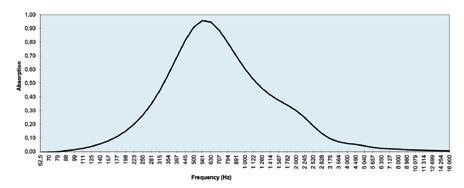
at specific points rather than dispersing them uniformly. This leads to acoustic hotspots and irregular sound pressure distribution, which can compromise speech clarity and overall sound performance. Covering it entirely was not feasible due to heritage and visual impact concerns, and a simple suspended cloud (although very efficient) would have introduced unnecessary visual noise. This presented an opportunity to create a central chandelier that also served an acoustic function. Amptec
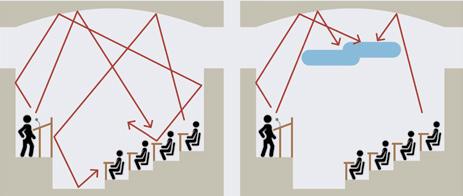
conceived and delivered the cloud installation, coordinating with multiple partners to achieve the technical
integration which included Artnovion, who ran simulations to validate the acoustic capabilities of the Chandelier.
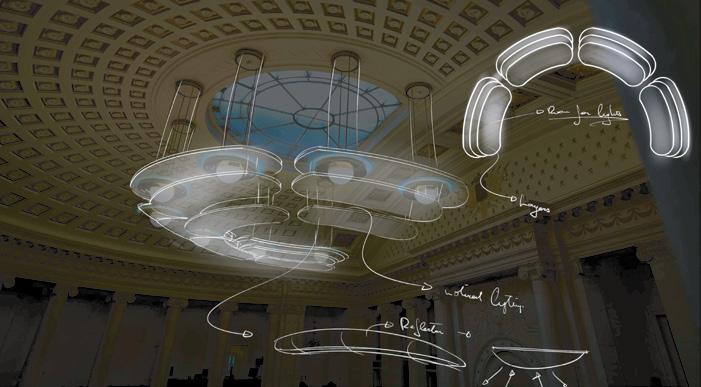

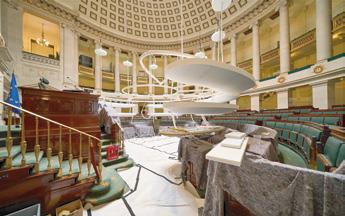
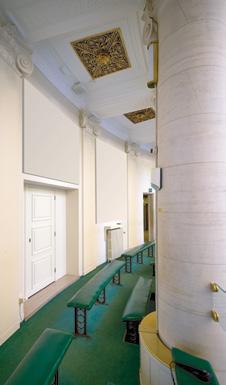
The building’s historical significance and its function as a public venue meant that multiple safety regulations had to be observed during the development of the solutions. Firerated materials were an essential requirement for this project.
During installation, an Artnovion team was present to guarantee the physical integrity of the supplied panels and provide targeted on site support.
After the complete installation, new acoustic measurements were taken and the true impact was clear. As the graph below illustrates the reverberation time (T60, Sabine) across octave band frequencies before and after the acoustic treatment of the space. Prior to intervention, reverberation times consistently exceeded recommended limits, particularly in the low and midfrequency ranges, reaching values above 2.0 seconds. This indicated a space with excessive reverberation, compromising both speech intelligibility and acoustic clarity.
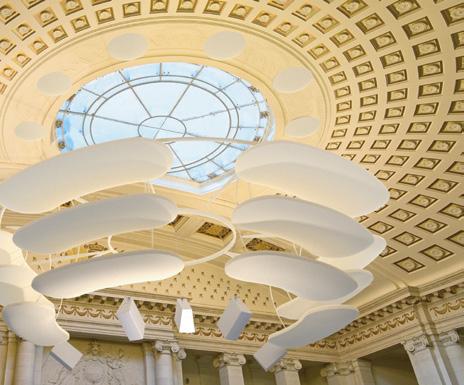
Following the implementation of Artnovion’s acoustic solutions and the jointly developed central chandelier, measured post-treatment results show a substantial reduction (almost 20%) in reverberation time across the entire frequency spectrum (even better than the simulation). Most critically, the measured results fall consistently within the target reverberation zone, defined by the shaded areas in the graph. This not only validates the effectiveness of the acoustic treatment but also highlights the precision of Artnovion’s modelling tools.
This outcome highlights the effectiveness of the collaborative approach between Amptec and Artnovion in improving complex acoustic environments through a combination of engineering, tailored design, technical analysis, and on site execution. The close alignment between predicted and measured results reinforces the reliability of the approach and Artnovion’s capacity to deliver effective, customised solutions.
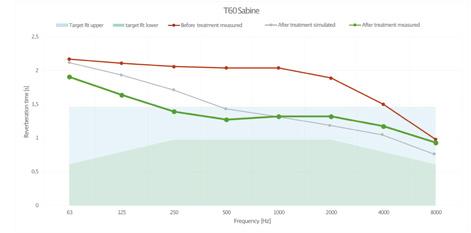
The Da Vinci Science Center in Allentown, Pennsylvania—working with Roto as the exhibit designbuild partner—sought a cutting-edge audiovisual (AV) system capable of routing high-resolution video and clear audio across multiple floors. With the help of integration specialists at Theme Park AV, the center installed MuxLab’s 500759-TX-DANTE transmitters and receivers. This solution seamlessly connected various video sources to multiple displays while integrating audio into the center’s existing Dante-enabled sound system.
Da Vinci Science Center required an AV system that would support 4K video in different areas, offer intuitive controls for staff presentations and demonstrations, and enable flexible connectivity for external devices such as laptops. Additionally, the center needed to route Dante audio through its speaker system with minimal complexity. Because it frequently hosts live events and educational sessions, the project demanded a reliable solution with low maintenance requirements to minimize downtime.
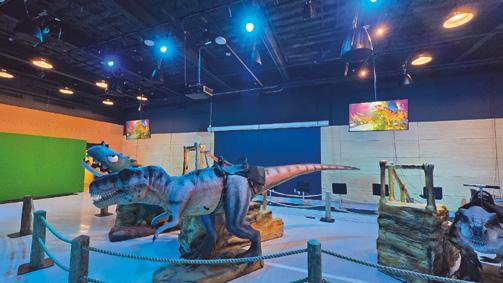
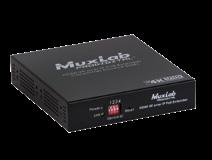
Theme Park AV selected MuxLab’s 500759-TXDANTE transmitters and receivers because they can transmit both HDMI video and Dante audio over a single
Ethernet infrastructure. This all-inone approach eliminated the need for separate signal paths, streamlining the installation process and reducing cable clutter. Power over Ethernet (PoE) further simplified deployment by removing the need for additional power sources and enabling easy relocation or expansion of devices.
“No other solution offered the capability to transmit audio and video over one cable while allowing independent separation of signals,” explains the Theme Park AV team. “That streamlined operation makes for a clutter-free installation and an exceptional user experience”.
Alcorn McBride show controller, enabling convenient routing and control via a touch panel or an iPad. This userfriendly interface simplifies day-today operations, ensuring that presentations and events run smoothly.
managed separately. MuxLab’s unique feature set delivered the simplicity and convenience that the Da Vinci Science Center and Roto required. By combining audio and video over one Ethernet cable, the system maintains a clean, organised installation that is easy to operate and upgrade.
The center’s setup also includes and destinations. On the audio side, a Symetrix DSP integrates with an
Since installation, the center has reported no service tickets, highlighting the system’s stability and ease of use. Staff can effortlessly switch between input sources and direct content to different displays. In addition, the portable stage boxes allow for quick set-ups during live events, ensuring presenters and visitors enjoy a seamless, highquality multimedia experience.
Before finalizing MuxLab, Theme Park AV explored other solutions but found that none could carry HDMI video and Dante audio over a single cable while allowing the signals to be
With over two decades of industry experience, Theme Park AV specializes in designing user-friendly, feature-rich, and cost-effective audio, video, and show control solutions. Catering to themed entertainment and public venues, the company blends engineering expertise with a passion for innovation to deliver installations that enhance both operational efficiency and the overall visitor experience.


www.themeparkav.com info@themeparkav.com +1 (865) 409-5989
“I’ve been using MuxLab products for over 20 years, and they’ve consistently proven to be reliable for AV distribution. It’s impressive how they continuously innovate, introducing new technology that not only meets client needs but also empowers integrators to develop creative, tailored solutions”.
Jesus Solis - Owner, Audiovisual & Show Control Engineer for Theme Park AV

MuxLab offers a complete line of AV over IP solutions Visit our website to see the complete line.


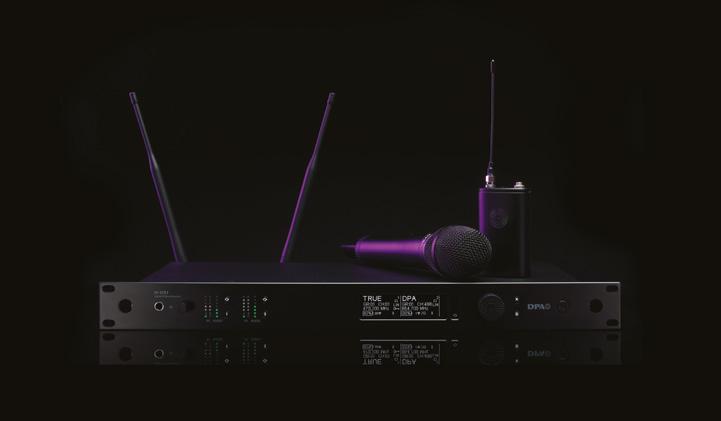
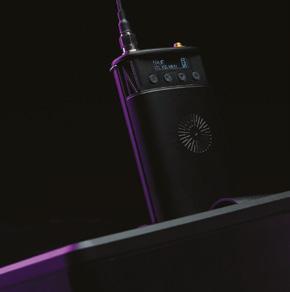

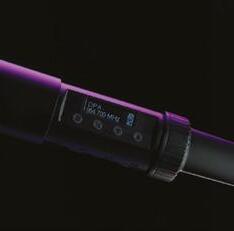
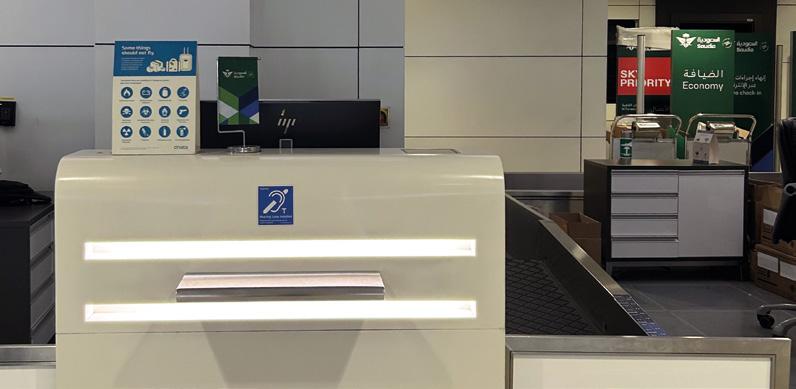
Hearing loop systems designed by assistive listening specialist, Contacta, feature in what could be a record-breaking installation programme at the world’s busiest airport for international passenger traffic.
More than 500 systems at locations throughout Dubai International (DXB) have been installed, making communication clearer for passengers who use a T-coil enabled hearing aid or cochlear implant. In 2024, the airport welcomed 92.3 million passengers, the highest number in its history. With inclusivity at the heart of the guest experience, Dubai International approached Contacta’s partner and leading supplier of assistive listening solutions in the Middle East,
Topland, to introduce accessible and inclusive solutions to make travel easier for guests with hearing loss.
The project supports Dubai International’s commitment to ensuring that every guest, regardless of ability, can navigate the terminals with ease, dignity and confidence. It is also in line with Dubai’s Universal Design Code which aims to ensure buildings and transportation are accessible to everyone according to their need.
“This has been one of the most significant overseas projects our products have been used in,” said Ran Meyrav, Head of Business Development at Contacta. “We’ve followed Topland’s lead and worked in partnership with their team, giving advice and direction to deliver the best outcomes for passengers with hearing loss, right across the airport, giving them access to clear sound without the background noise that’s unavoidable in a space that welcomes 90+ million passengers a year.”
With three terminals, each featuring a number of information desks, check-in counters, shops, lounges, food outlets, and currency exchange counters, Topland, together with the Contacta Business Development Team, were tasked with designing 520 hearing loop installations.
A survey of all the interaction points was carried out, and recommendations and specifications were developed for each one.
The counters varied in design, but common to all of them was the limited space available. Contacta’s IL-K200 under the counter loop system with halo microphone
in a 24 hour operation like an airport, energy saving is key and our systems ‘sleep’ until they detect speech within the microphone’s range, reducing energy consumption by around 80%.”
With more than 1.5 billion people worldwide living with some degree of hearing loss, and that number expected to rise to 2.5 billion by 2050 according to the World Health Organisation, accessible communication systems are becoming essential in global transport hubs.

“We cooperated closely with Dubai Airports in developing staff training. Together, we created awareness among key stakeholders throughout the airport and conducted trials at the important touch points in each terminal for the staff and passengers to get acquainted with the technology.”
Andy
Faulkner - Topland’s CEO
offered a compact solution, leaving counters clear for transactions. The IL-K200 also allowed for flexible positioning of the loop aerial, something that was crucial as not all the counters were easily accessible.
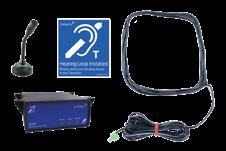
“The IL-K200, like all of our one to one hearing loops, has continuous self-testing to ensure performance is to the correct standard,” continued Ran. “With 520 systems running
The hearing loops rollout is part of Dubai Airports’ We All Meet the World Differently platform, a long-term commitment to improving accessibility across DXB through both infrastructure enhancements and frontline staff training.
“We wanted staff on the ground to be prepared before we started the installations,” said Topland’s CEO, Andy Faulkner.
“We cooperated closely with Dubai Airports in developing staff training. Together, we created awareness among key stakeholders throughout the airport and conducted trials at the important touch points in each terminal for the staff and passengers to get acquainted with the technology.”

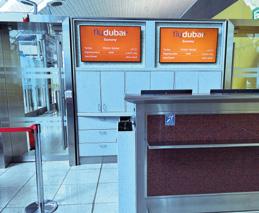
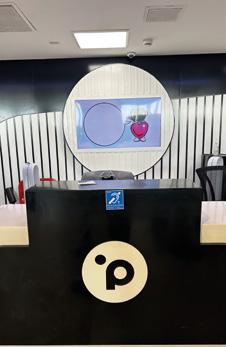
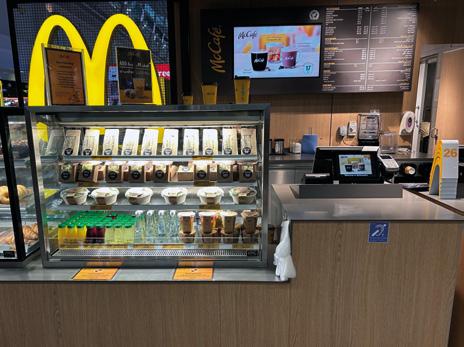
Between November and December 2024, the team installed 520 Contacta counter hearing loop systems. Engineers had to work around check-in counters, customs and boarding gates, coffee shops, food counters, and retail till points during what was a very busy holiday period.
“In an airport there are practically no quiet hours, so our team had to work quickly and precisely to cause minimal disturbance,” added Andy. “The beauty of Contacta’s under the counter hearing loops is that they not only provide excellent sound quality for hearing aid users, but they are straightforward to install, require minimal staff training and no additional actions to operate the system.”
Dubai International has three terminals across 7,200 acres meaning Topland’s engineers
covered considerable distances in the course of the project. Their daily step count was in the high thousands, the record being 35,000.
The engineers were also subject to stringent security checks every time they had to go in or out of airside locations.
The quality of Contacta’s products, combined with Topland’s experience and attention to detail, has made for a successful outcome that the airport has widely publicised.
“This comprehensive hearing loop installation demonstrates our commitment to practical accessibility solutions that make a real difference to our guests’ experience,” said Majed Al Joker, Chief Operating Officer at Dubai Airports.
“Working with partners like Topland and Contacta, we’ve been

able to implement cutting-edge assistive technology across every touchpoint in our terminals.”
A Contacta hearing loop system was also chosen to replace an existing hearing loop in one of the Business Class Lounges.
The next stage of the project will see Topland supplying Contacta portable hearing loops for locations at the airport where fixed loops couldn’t be installed.
“It has been satisfying to be a part of this project, and to see it come to fruition over the last two years, from planning through to commissioning,” concluded Ran. “We are delighted to know that our technology will contribute to making travel more comfortable and enjoyable for people with hearing loss.”

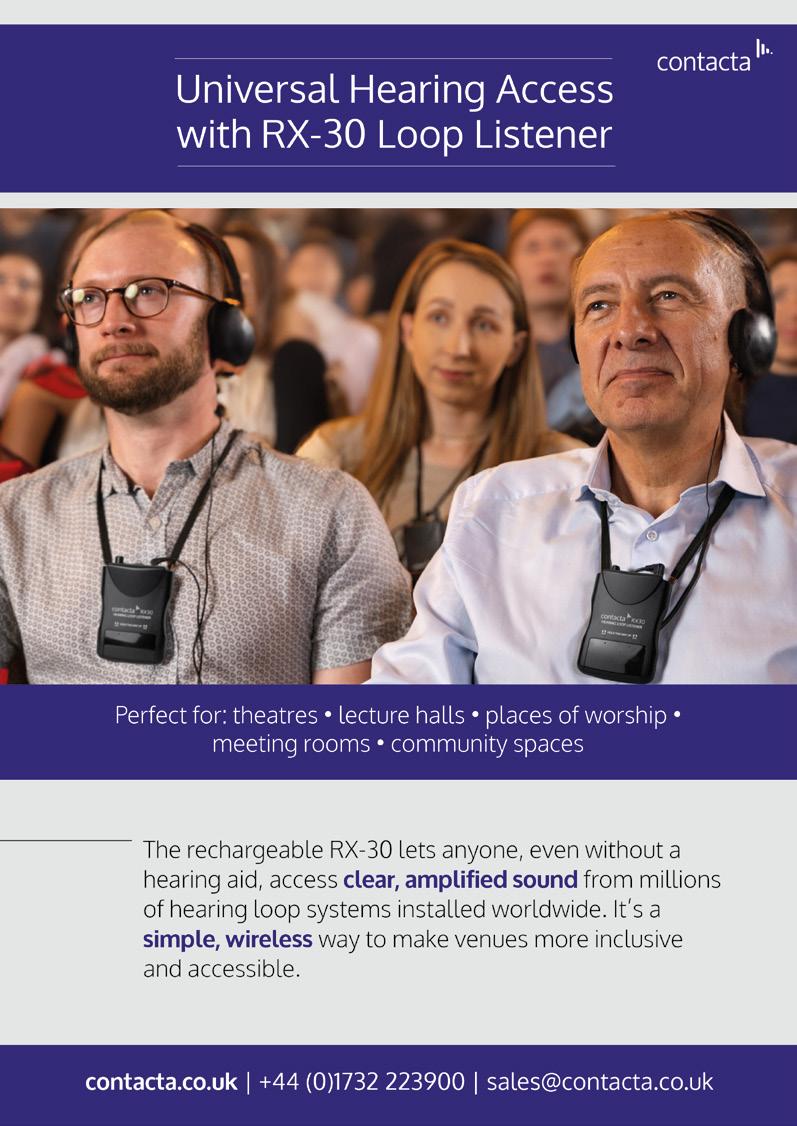

Solving tricky issues with quick, reliable troubleshooting, these are an essential inclusion in every installer’s toolkit or spares box. Over our 25 years of audio installations, we’ve been faced with requirements that had no cost effective off-the-shelf solution, so we made our own. These widgets saved us so much time and made our installs so much easier to plan and execute, we decided to share our experience.
The DACS Install range initially includes passive mixing, splitting, transformer isolation, and routing widgets. The small clearly marked PCBs, with Phoenix type connectors, are all less than 50mm x 50mm. They fit into project boxes, US, UK and European 1 gang power backboxes behind audio connector panels, and they also have mounting holes for a DIN rail clip. The use of Phoenix type connectors means that all pins can easily be tested for continuity or cables simply removed/replugged to check signal flow; no soldering, and you can at once see what’s connected to what. Commercial installs are mostly mono, and music sources stereo. To give us a properly mixed mono output, and the option of effective and high-
quality transformer isolation, we developed the MIX and the BALTIC
The MIX has two balanced inputs mixed to one balanced output (or two unbalanced stereo ins to one stereo out); we tend to use MIX close to the system hub.
The BALTIC uses our highperformance custom transformer and a balanced stereo in is mixed to a transformer isolated mono out. We fit BALTICs as a matter of course for DJ and other inputs to the system, and have installed well over 100 in the past few years. Often with more than 50m of Starquad cable to the system hub, we never have hum/buzz/pickup and its performance, particularly with high level bass, means it always sounds great.
The SPLIT takes one balanced input to four balanced outs. This means that each split feed can be checked and is easy to follow. This is a simple and economical way of feeding multichannel ‘dumb’ amplifiers that have no internal routing or feeding multiple smart amplifiers.
The RJ45 LINK 02 sends 4 balanced audio channels down CAT5/6. One of these at each end and you have a robust and economical transmission solution. We recommend screened CAT5/6 cable – the Audio 0V is connected to the CAT5/6 screen.
“Where have they been all my life!” said one installer/integrator!

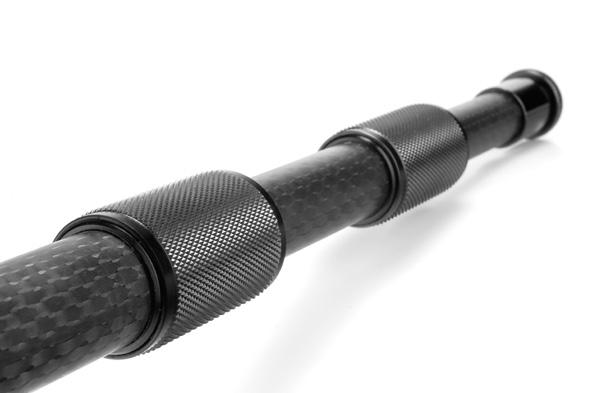

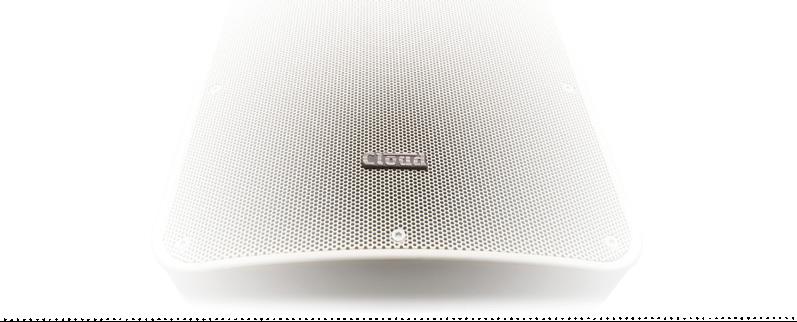
In the competitive world of commercial audio, loudspeakers face a tricky balancing act: they must sound great in a wide range of environments, deliver consistent audio regardless of input, and withstand years of continuous use without faltering. Cloud Electronics, a company with a long-standing reputation for designing reliable and installer-friendly products, addresses these challenges with its CS-S Speaker Series.
The CS-S Series isn’t just a product line, it’s a system-wide solution that combines high performance, unique interchangeable design and bespoke accessories. This allows easy installation and consistent audio performance over time, paired with IP66 outdoor protection.
At the heart of the CS-S Series is Cloud’s dedication to delivering clear, consistent sound reproduction.
Whether used in a sports hall, a hotel lobby, or a busy outdoor courtyard, these speakers are engineered to produce a “Frontof-house” sound, optimally tuned to deliver vocal intelligibility in any application or environment. They suit foreground and background music reproduction alongside musical instrument applications.
The series is available in three sizes, 8”, 10” and 12”. Installers can specify the right speaker for the room size and acoustic demands. Each speaker has been tuned for balanced sound - highs that are crisp without being harsh, mids that carry speech naturally, and lows that are warm yet controlled. Wide, even coverage reduces the number of units
required in a given space, cutting down installation time and overall system cost. For venues with complex layouts, this consistency also means that customers or guests will experience the same sound quality wherever they stand.
The CS-S Series is unique with its interchangeable rear modules. Cloud has considered the varied demands of different applications and ensured the speaker range can deliver regardless of the requirements.
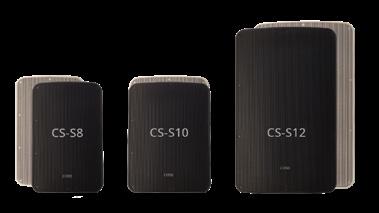
The rear modules are uniformly sized to fit the three models:
• CS-S# - Passive (Low Z)
• CS-S#T - 100V Line (High -Z)
• CS-S#A - Active Analogue*
• CS-S#AD - Active Dante™*
* The Active and Active Dante™ modules are custom built and installed to demand in Sheffield UK.
Treating accessories as integral rather than afterthoughts, Cloud has provided bespoke brackets and IP66 plates to ensure the speaker is flexible and well equipped.
• Bespoke Brackets: Designed alongside the speakers, their selfsupporting & clamping design ensures installation is safe, while the manual locking anti-theft mechanism secures the speaker alongside an additional safety leash.
• IP66 Plate: This covers the rear of the 8”, 10” & 12” cabinets to protect the Passive and 100V Line modules with IP66 Certification.
The CS-S Series doesn’t just perform well acoustically - it’s designed for quick and easy installation.
The speakers can be mounted on bespoke brackets or a pole mount. Installation of both can be completed prior to the introduction of the speaker. This ensures safe installation in hard-to-reach or precarious locations. Once the mount is installed, the speaker is self-supported, allowing
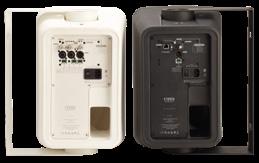
adjustments to be made before the unit is manually locked and secured.
The CS-S Series are built for versatility. Here are just a few scenarios where these speakers excel:
• Retail Environments: Crisp sound for background music that enhances customer experience without overwhelming conversation.
• Hospitality: Hotels, restaurants, and bars benefit from even sound coverage, ensuring that every guest enjoys the same ambience.
• Outdoor Spaces: IP66 plates allow both Passive modules to operate safely and effectively outside.
• Corporate Offices: Clear speech reproduction makes them ideal for paging and conferencing, while background music creates a welcoming atmosphere.
• Leisure Facilities: Controlled dispersion and accessory options enable installation across a range of applications with flexible audio delivery whatever the requirement.
• Education: In classrooms and lecture halls, intelligibility is paramount— something the CS-S Series is designed to deliver with ease.
Because the line includes multiple driver sizes, integrators can mix and match models within a single facility, tailoring the system to each room’s needs while maintaining consistent sonic character.
Cloud Electronics has always prioritized sonic quality, reliability, ease of installation, efficiency and user satisfaction. The CS-S Series is a clear embodiment of these values.
The range offers a flexible, robust solution that can be deployed quickly and confidently. For end users, it means reliable, greatsounding systems for their customers, employees and visitors to experience for years to come.
In the crowded field of commercial loudspeakers, the Cloud CS-S Series is unique: sonically impressive, installation-friendly, flexible and discreet. Supported by a thoughtful suite of accessories and backed by Cloud’s reputation for reliability, these ceiling speakers are a compelling choice for projects across retail, hospitality, corporate, leisure, education and beyond.
For integrators seeking a speaker line that can handle diverse applications while making installation straightforward, the CS-S Series is more than just another option— it’s a dependable workhorse with the finesse to deliver audio excellence where it counts.
The full suite of CS-S Series products and Accessories are available to purchase through Canford Audio Ltd.
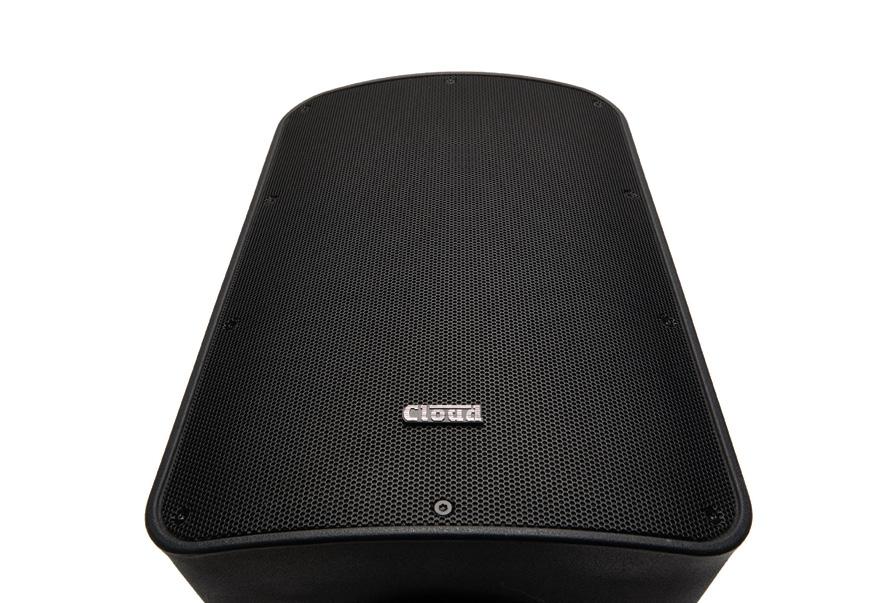
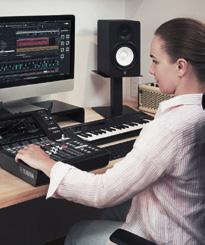

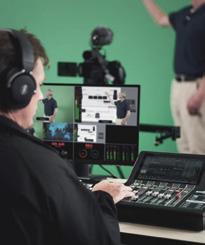
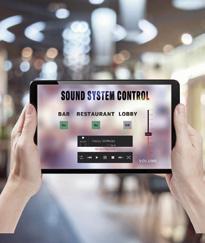

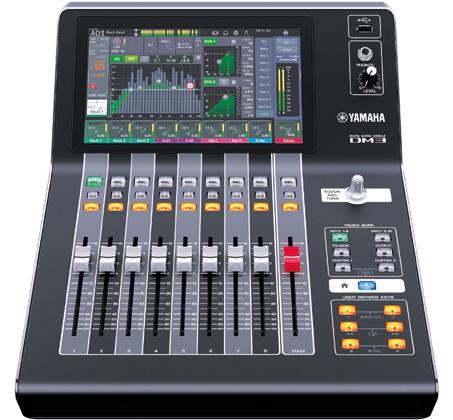

In an industry where sound quality, reliability, and flexibility are non-negotiable, the Yamaha DM3 digital mixing console has earned a reputation as the smallformat mixer that delivers big-league performance. Whether on tour, in a theatre control booth, or at the heart of a home studio, the DM3 empowers users to do more.
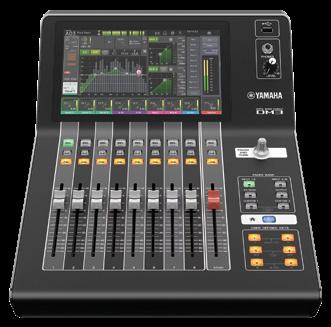
Built on Yamaha’s legacy of digital innovation — stretching back to the groundbreaking DMP7 in 1987 — the DM3 represents decades of refinement and expertise. Designed by the same team behind the flagship RIVAGE PM and DM7 consoles used on the world’s biggest stages, it brings that heritage of sonic excellence into a compact, professional package.
At just 6.5kg, the DM3 is deceptively compact. Yet beneath its sleek surface lies serious power: 16 mic/line inputs, 6 mix buses, 2
FX engines, and pristine 96kHz processing - all controlled through a responsive 9-inch touchscreen and single “Touch & Turn” encoder. The streamlined interface embodies Yamaha’s “less is more” philosophy, offering fast, intuitive workflow that’s both accessible and rewarding.
From intimate venues to broadcast rigs, the DM3’s portability and professional-grade audio have opened doors for users who once thought compact meant compromise. It’s the perfect bridge between creativity and convenience.
Trusted in the Field — and on the Road
The DM3’s real-world versatility sets it apart. When Status Quo’s long-time engineer Andy May needed a compact solution for Francis Rossi’s Tunes & Chat tour, his trusted PM5D was simply too large and heavy. The DM3 offered the perfect alternative - delivering Yamaha’s renowned sound and reliability in a form that travelled easily from theatre to theatre.
Its intuitive workflow and 96kHz processing gave Andy everything needed to manage live sound, playback, and chat segments - a lighter, smarter setup that never compromised on performance.
Francis Rossi has since added a DM3 to his home studio, joining a growing list of well-known artists and producers who’ve adopted it as their compact console of choice. From writing sessions to pre-production,
“Built on Yamaha’s pro-audio legacy, the DM3 digital mixer delivers studio-quality sound in a lightweight, portable design. With 96kHz processing, Dante connectivity, Automix, and seamless studio integration, it’s the compact console trusted by engineers, producers, and artists who expect professional results anywhere they perform.”. it’s fast becoming the go-to mixer for those who want Yamaha quality in a streamlined format.
Across the UK and Europe, production companies have embraced the DM3 for theatre shows, corporate events, and houses of worship. With Dante connectivity (on the DM3 model), it integrates seamlessly into networked systems, making it a smart, scalable choice for AV professionals. Built for reliability, it’s ready to travel, perform, and deliver night after night - a true “heavy hitter in disguise.”
What defines the DM3 is its ability to do more in every situation. A recent firmware update introduced Automix, making an already capable mixer even smarter. Automix automatically balances multiple microphone levels - a gamechanger for panels, presentations, or theatre shows where an operator might not be available. It quietly does the hard work, keeping speech clear and consistent.
Then there’s QuickPro Presetsdeveloped with top professionals
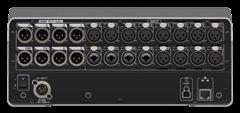
to deliver polished results for microphones, instruments, and outboard gear. They save time and let users focus on performance, not setup.
Studio-Ready. StageReady. Stream-Ready.
In today’s hybrid world of performance and content creation, the DM3 stands apart. Its 18×18 USB audio interface and dedicated DAW Remote mode make it a powerful hub for recording, mixing, and streaming. Whether tracking into Cubase, live-streaming a concert, or producing a podcast, users benefit from pristine sound and ergonomic control.
With software like Cubase AI and VST Rack Elements included, the DM3 blurs the line between console and creative workstation - giving artists and engineers the flexibility to take their sound from stage to studio seamlessly.
A Legacy of Sound. A Future of Possibility.
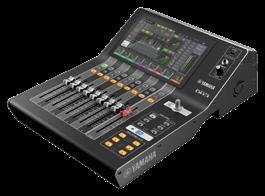
For 50 years, Canford Audio has been synonymous with innovation and reliability - values that align perfectly with the DM3’s DNA. As Canford celebrates this milestone, it feels only fitting to spotlight a product that reflects the same enduring spirit: forward-thinking design, technical excellence, and the pursuit of sound that moves people.
In short, the DM3 isn’t just a mixer. It’s a creative companion for those who demand more - and expect their tools to keep up.
Do More. Yamaha DM3.
The DM3 is more than a compact console - it’s a statement of what’s possible when technology and practicality meet. It embodies Yamaha’s commitment to empowering creators and performers with tools that inspire confidence and deliver professional results every time.
Discover the Yamaha DM3 digital mixer - compact, powerful, and professional. 96kHz sound, Dante connectivity, and flexibility to Do More anywhere.

In professional lighting environments, effective testing and reliable infrastructure are essential for optimising performance and ensuring stability. Productions are increasingly built on complex networks where dozens, sometimes hundreds, of fixtures must perform in precise synchrony. ELC Lighting has become a trusted backbone for these systems, providing robust data distribution across multiple universes with builtin resilience. When paired with the FixtureTester app, the result is a workflow that not only carries lighting data with confidence but also validates that every fixture responds exactly as intended.
At the heart of FixtureTester is a simple yet powerful capability: confirming that fixtures behave predictably before a show begins. In large setups, even one mispatched unit can consume valuable time and disrupt the creative process. FixtureTester allows technicians to isolate and test fixtures in a controlled environment, catching issues before they appear on stage. This proactive
approach turns what is often reactive troubleshooting into preparation, giving crews assurance that the rig will perform without surprises.
Modern lighting systems, however, are not only about sending DMX values downstream. Fixtures today are capable of two-way communication through RDM, reporting their status and accepting configuration changes directly over the same network. While this is an advantage, it can also introduce complexity when multiple devices are talking at once or parameters are unclear. FixtureTester provides a structured way to manage this communication, keeping information flow clear and predictable. For technicians, this means less time chasing conflicting data and more time confirming that devices are ready for operation.
This process depends on the infrastructure underneath, and that is where ELC Lighting plays its part. Designed for high-capacity distribution, ELC equipment handles the transport of DMX and RDM traffic across large
installations, ensuring that data moves smoothly and without corruption. In practice, ELC functions like the central nervous system of a production, carrying high volumes of information across multiple universes with minimal latency. FixtureTester complements this by checking that the endpoints of this network – the fixtures themselves – are interpreting and responding correctly. Together, they form an ecosystem where both the transport layer and the device layer are validated.
Reliability in live production is not optional. Shows cannot pause for errors to be tracked down or signals to be rerouted. This is why redundancy and preparation are so critical. FixtureTester reduces the risk of failure by identifying problems before cues are run, while ELC Lighting provides the safety nets required to keep data flowing even if a connection or device fails. This combination of foresight and resilience means crews can trust the system to perform under pressure, knowing there are multiple layers of protection in place.
Another defining factor in contemporary productions is the role of timing. Lighting is often tied directly to music, video, or time-coded effects, where split-second accuracy makes the difference between immersion and distraction. Even small delays or mismatches can break synchronisation.
ELC Lighting hardware is engineered to maintain precise timing across its network, ensuring that control signals arrive when they are needed. FixtureTester adds an additional layer of assurance, validating that fixtures are responding in step with the system. The result is tightly synchronised effects that match creative intent, from pixel-mapped video sequences to time-coded lighting accents.
The benefit of integrating FixtureTester with ELC Lighting lies not just in what
each does individually, but in how they work together to form a complete system. One validates the fixture layer, the other ensures reliable distribution, and both contribute to overall stability. By combining them, technicians can identify potential bottlenecks before they affect rehearsals, confirm timing before errors become visible, and catch misconfigurations before they compromise a production.
This approach reflects a broader shift in professional lighting. As systems grow more complex and fixtures become more intelligent, the margin for error narrows. Just as IT networks rely on monitoring, redundancy, and timing to maintain service, lighting networks now require the same level of discipline. The stakes, however, extend beyond technical operation:
when fixtures misbehave, it is not only a system failure but a creative disruption that breaks the flow of a performance. By uniting structured testing with robust distribution, FixtureTester and ELC Lighting provide a safeguard for both the technical and artistic goals of a production.
Ultimately, the combination of FixtureTester and ELC Lighting represents a modern solution for managing complexity in demanding environments. It delivers the tools to validate, the infrastructure to distribute, and the resilience to endure. In live production, where reliability, precision, and confidence are everything, this partnership ensures that what was designed in pre-production is what the audience sees on stage.


When a company known for marrying heritage capsules with modern technologies releases a flagship, engineers listen!
The Austrian Audio OC-S10 arrives as a purpose-built reference microphone that pushes several practical buttons at once: an ultra-low noise floor, an unusually flexible polar-pattern architecture, and a dual-output design that encourages parallel workflows. It’s not a nostalgic reissue — it’s a toolbox for contemporary tracking and hybrid production.
What you get (key specifications)
• Transducer: dual-diaphragm CKR12 large-diaphragm ceramic capsule.
• Polar patterns: Omni, Wide cardioid, Cardioid, Hypercardioid, Figure-of-Eight; plus any “individual” mode via dual outputs.
• Frequency response: 20 Hz – 22 kHz.
• Sensitivity: 14 mV/Pa; Equivalent noise level: 8 dB(A).
• Max SPL: 147 dB (157 dB with pad).
• Pad: 0 / −10 dB / −20 dB.
• Low-cut: 0 Hz, 40 Hz (2nd order), 80 Hz (2nd order), 160 Hz (1st order down to 80 Hz then 2nd order below)
• Output: dual full size XLR, output impedance ~108 Ω; requires 48 V phantom power.
• Custom spider-style shockmount and a magnetic attached metal foam pop filter
Design philosophy — what makes it different
Two ideas distinguish the OC-S10. First, the CKR12 capsule and “open acoustics” front-end prioritize an unobstructed, transparent capture that reveals source detail rather than imposing a character. Second, the dual-output/dual-diaphragm arrangement lets you record both
mic in a way that minimizes structureborne noise — critical in both studio vocals and sensitive acoustic recordings where even subtle floor rumble can compromise takes. The metal-foam pop filter is an innovation in itself. It attaches magnetically to the shock mount and it is equally well thoughtout: it tames plosives without altering any sound detail because of the acoustical characteristics of the metal foam. These accessories reflect the company’s focus on practical studio ergonomics, not just headline specs.
“Not just a mic — it’s a system for capture and post-processing that lets you shape what you record on a whole new level in post-production.”.
membranes simultaneously. This gives the opportunity to adjust in the polar pattern in up to five frequency bands after the recording. Add to it the “PolarDesigner” plugin, and what you have is not just a mic — it’s a system for capture and post-processing that lets you shape what you record on a whole new level in post-production.
To complete the package, Austrian Audio provides a custom spider-style shockmount and a magnetic pop filter. The spider mount suspends the
Practical specs that matter in the studio
In addition to its sound signature two studio realities often decide whether a mic becomes daily-driver material: noise floor and dynamic headroom. With an equivalent noise of 8 dB(A) and a 147 dB max SPL (extendable up to 157 dB SPL with enabled pad), the OC-S10 handles whisper-quiet classical detail and loud transient sources without impairing the signal. The selectable low-cut slopes and −10/−20 dB pads

make it simple to integrate into a range of rigs and mic positions. For engineers who switch between delicate acoustic work and aggressive pop production, that combination is persuasive.
Case study A — Lead vocal (commercial pop / producer workflow)
A pop producer tracked a lead vocal with the OC-S10 into a clean preamp. The front XLR captured the direct signal, but the second output is captured as well. In post, the producer blended the two feeds: the front provided breath and microdynamics for presence, while the rear allowed for as much “room” as necessary. The mic’s well balanced high frequencies allowed subtle compressing without the need of intense de-essing.
Case Study B — Using PolarDesigner in Post with the OC-S10 (film score recording)
A film scoring session recording a solo violin in a hall. The engineer uses OC-S10 in dual-output mode, with
one diaphragm facing the violin, the other facing the hall. No particular concern about choosing “room or source” up front — both are captured.
• Later, in post, the mic requires more warmth and ambience for the film’s emotional moment, but also clear focus on the solo. Using PolarDesigner, the engineer increases the proportion of the proximity effect shaping the low frequencies, shifts to a tighter super-cardioid polar pattern in mid frequencies (for clarity), and possibly reduces and avoids harsh reflections by choosing cardioid in the high frequencies.
• The terminator algorithm helps to add acoustic focus on the desired signal.
• The end result: more control, less compromises during tracking; the blend of room and source can be adjusted over time or across versions (theatrical mix, trailer, etc.) without having to re-record.
This kind of workflow saves setup time, reduces mic repositioning (which is often painful, especially for delicate or expensive sources), and allows creative flexibility during mixing.
The OC-S10 isn’t an impulse buy for hobbyists. It sits at the high end of the market (street price places it in the flagship tier), but for professionals who value capture-time flexibility, reference transparency, and dual-path experimentation, it’s compelling. If your work crosses genres — from intimate acoustic sessions to loud contemporary production — the OC-S10 rewards investment with time saved at the mic and creative options in the DAW.
In short: Austrian Audio didn’t merely make a “great condenser” — they designed a modern reference instrument that anticipates the way engineers actually work today: record more, choose later, and keep the source honest.

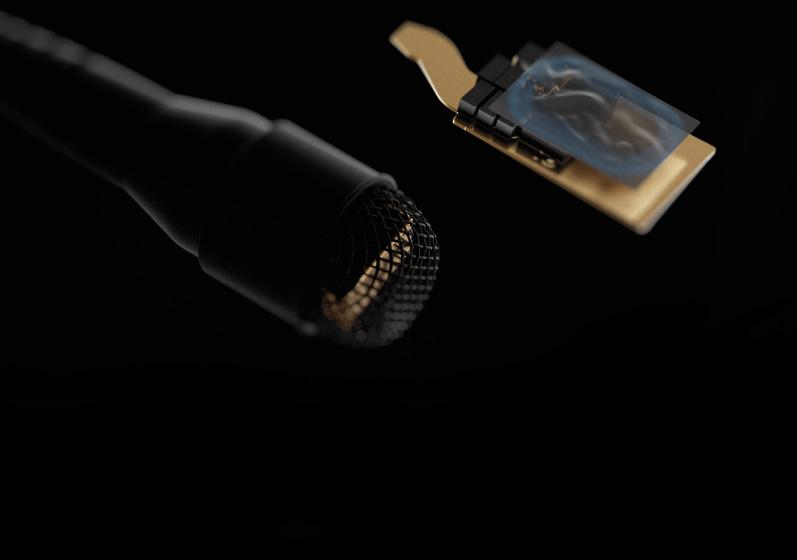
By Eddy Bøgh Brixen and Toni Torras Rosell, DPA Microphones
CORE+ by DPA is a powerful technology at the heart of DPA miniature microphones. It aims to provide consistent, high-quality audio at all sound levels—from a whisper to a scream.
Microphones are straightforward yet important components. Simply put: Microphones feature a transducer that converts pressure variations in the air into an electrical output, typically a voltage that can be recorded, amplified, transmitted, or analyzed, among other things.
First developed more than 150 years ago, microphone transducer principles have evolved over time. Remarkably, several of these principles continue to coexist across different industries today. In professional audio, both dynamic and condenser microphones have strong points. However, electret condenser microphones (ECMs) are preferred for a wide range of applications. This is largely due to the miniaturization of the transducer, which makes them ideal for film,
broadcasting, live performance, communication, surveillance, and more. Despite their small footprint, condenser microphones are recognised for their frequency response, dynamic range and, to a certain extent, low noise and distortion. Achieving a dynamic range above 100dB is not unusual, but it must be balanced against various inherent limitations.
All microphones produce some level of noise because of the current running through the circuitry. Thermal noise is also an issue as increased temperatures cause higher noise. Additionally, noise is caused by the presence of air molecules inside the microphone capsule bombarding the diaphragm and generating
acoustic self-noise. Ultimately, selfnoise determines the “bottom” of a microphone’s dynamic range. The basic nature of the noise in microphones is referred to as white noise, which derives from comparing audio to light. Just as white light encompasses the entire spectrum of visible light, white noise contains an equal amount of energy at all audible frequencies. While the signal contains no discernible tones, the character of the noise may differ depending on the frequency distribution. When amplified, it sometimes sounds smooth and at other times, it sounds crackly. Additionally, depending on the type of microphone and design, the noise sometimes sounds darker or lighter.
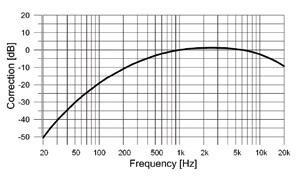
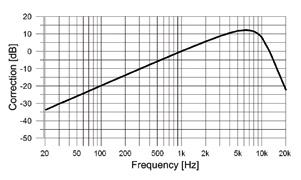
Figure 1: Weighting curves for the measurement of self-noise in microphones. The A-weighting is used with RMS detection (a) and the CCIR-curve is used with quasi-peak detection (b)
Self-noise is expressed as an equivalent sound pressure level (SPL).
Example: A microphone with a selfnoise of 22dB(A) — “A” denotes A-weighting — produces the same output as a sound source at 22dB(A) SPL. If the sensitivity is 20mV/Pa, the microphone output would be approximately 5μV(A), even if there is no sound source (Figure 1).
Alternatively, noise can be measured using peak values with a different weighting filter (for instance, CCIR weighting). However, the A-weighted noise level serves as the baseline for calculating a microphone’s dynamic range. All condenser microphones implement an impedance converter, which functions as an internal preamp. While not very complex, the design is vital to the overall performance of the microphone.
Distortion refers to any alteration of an audio signal’s waveform as it passes from an input to an output. It can result from nonlinearities (nonlinear distortion) or changes in magnitude and phase in a linear system (linear distortion).
While intentional modifications (e.g., equalization or bandwidth limitations)
technically cause distortion, it is unintended distortion caused by system limitations and nonlinear behavior that impacts the perceived sound quality. Even air impacts distortion in extreme conditions. At very high SPLs, nonlinearities arise because the positive waveforms travel faster than negative ones. For instance, this means that a pure tone will transform into a sawtooth waveform when propagating in air at extremely loud SPLs, which introduces new harmonic components.
A key component of a condenser microphone is the diaphragm, which is positioned in front of a back plate, separated by approximately 10μm to 100μm. At high SPL, there is a limit to the diaphragm’s movement, both when pushed in toward the back plate and also with regard to how “stretchable” it is in either direction.
impedance of the transducer into a relatively low impedance, for longer cable runs. Miniature microphones are also supplied by an unbalanced power supply. These electronic designs can cause nonlinear behavior. Achieving a wide dynamic range with minimal distortion requires careful attention to the acoustical, mechanical, and electronic design aspects.
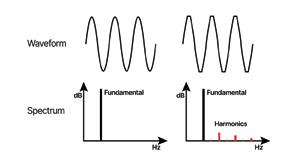
Figure 2: Illustrates the presence of higher harmonic components when a microphone is nonlinear.
As mentioned, condenser microphones also require an electronic interstage that converts the high
According to the International Electrotechnical Commission (IEC) standards [1, 2], the amplitude nonlinearity is expressed by three measures: total harmonic distortion (THD), nth-order distortion, and second-order difference frequency distortion.
THD: A pure since wave contains only one frequency. When distorted (typically by clipping), it produces additional frequencies at integer multiples of the original tone, known as harmonics. For example, a 1kHz signal might produce harmonics at 2kHz, 3kHz, 4kHz, and more, usually at decreasing levels. Symmetrical clipping tends to produce primarily odd harmonics generated: third, fifth, seventh, and so forth.
THD is defined as the ratio of the Root Mean Square (RMS) sum of the harmonic components in the output voltage to the total RMS output voltage of the microphone [2], which is typically expressed as a percentage. As a rule of thumb, THD should ideally be kept below 1%, meaning the unwanted frequency components are at least 40dB below the fundamental frequency. THD is the portion of harmonics that occur due to nonlinearity, for instance clipping (Figure 2).
In practice, measuring THD acoustically requires the generation of very loud SPLs, which is a challenge not easy to circumvent since loudspeakers exhibit typically greater levels of distortion than microphones. In any case, the measured THD
can be influenced by the system’s noise floor, particularly when the microphone under test is still very linear at high SPLs. Therefore, the result is often denoted as THD+N (total harmonic distortion plus noise).
Distortion of the nth order:
In principle, this is the same as THD, except that harmonics are individually measured and quantified. The third harmonic is sometimes of particular interest, especially in cases of symmetrical clipping, because it represents the highest level of all harmonics generated.
Difference frequency distortion: For this measurement, two differentfrequency pure tones are applied at identical levels. The IEC defines frequency spacing as 80Hz (e.g., between 1000Hz and 1080Hz), though measurements can also be conducted over a broader frequency range, if needed. As a result, the sum and the difference of the distortion of the original frequencies are generated. These frequency components are measured and quantified as a percentage of the fundamental frequencies.
It must be noted that it’s absolutely fine to apply a standardised methodology for quantifying
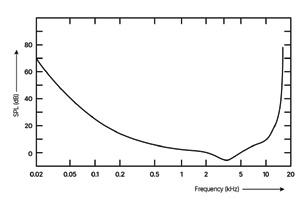
indicates the sound threshold of people with normal hearing. Humans can’t hear sound below the threshold and do not hear low-level low frequencies very well.
distortion. However, the standards only consider a small selection of possible forms of distortion. In reality, signals are far more complex, and so are the distortion components.
To determine what is audible, we must look to psychoacoustic research [3, 4, 5]. Detailed here are some phenomena that influence perceived sound quality.
Threshold of hearing: The human hearing system has a naturally lower limit, which varies with frequency. At low frequencies, the threshold is rather high, while around 2kHz to 4kHz, the threshold is low (Figure 3).
Masking: When the ear is exposed to sound energy in a specific frequency range, surrounding frequencies are masked. This masking primarily works toward higher frequencies. As a result, the primary sound energy shadows some of the harmonic components generated by distortion, which causes them to become inaudible (Figure 4).
By contrast, the frequency components below the masking frequencies become the most audible. This is also related to the fact that some tones are not necessarily musical
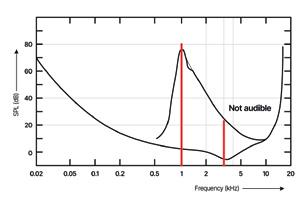
and are therefore perceived as more annoying. In addition to the distortion caused by audio equipment, the ear itself generates distortion, which typically occurs at high levels.
In general, it is accepted that distortion below 1% is regarded as inaudible at normal listening levels. Some manufacturers state the minimum SPL to achieve 1% THD, others 0.5% THD.
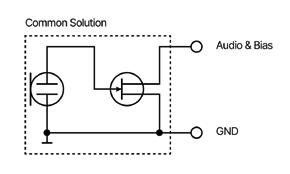
Figure 5: Common solution for miniature microphones, the electret element and the FET.
What Microphones with CORE+ by DPA Can Do DPA Microphones continually pushes the boundaries of technology because innovation is the driving force that brings the industry forward. Before CORE+ by DPA was introduced, the sonic quality of DPA microphones was already high, but research showed that there was still room for improvement.
In recent years, the entire pro audio sound chain has improved — from the microphone at the beginning all the way to the speakers at the end. Innovations in technology mean that the sound that reaches the public’s ears is generally of much higher quality. This is due, in large part, to the improvements in wireless transmitters and the digitization of wireless systems. In fact, today’s high-quality wireless transmitters and receivers are so good they can handle dynamic ranges higher than some professional microphones can deliver.
CORE+, and the earlier developed CORE technology, improves how the impedance converter (preamplifier) interprets the minuscule diaphragm movement within the capsule and converts it into an electrical signal. This has made it possible to transform the sound without changing the legacy characteristics of DPA’s miniature microphones.
Microphone elements produce a signal depending on the acoustic input, which cannot drive long cables and standard post-processing systems. Instead, a buffer is needed. The solution is using a field-effect transistor (FET), which is the most straightforward circuitry available inside the miniature microphone housing (Figure 5).
nonlinear dynamic range and some distortion, which vary by brand and model. [6].
• Some transmitters contain a built-in correction network for the linearization of the FET, but most do not.
• The original CORE technology eliminates the nonlinearity caused by electronics, which has led to a dramatic reduction of distortion. For distortion reduction at all levels, the 1% THD is attained at a 14dB higher level, extending with the same amount of dynamic range.
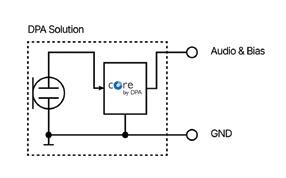
The FET exhibits the necessary, extremely high input impedance and relatively low output impedance, while the audio signal from the electret element controls the current through the FET. Controlling the current through a FET is a little like squeezing a water hose: if you tighten the grip, less water passes; if you press it too hard, the water stops running (for FETs, this is called the “cut-off mode”). The simple FET circuitry works relatively well if the cut-off mode is not reached. However, it has two disadvantages:
Figure 6: DPA miniature microphones with the original CORE by DPA technology ensure a high degree of linearity and low distortion.
• The current through the FET (the microphone’s output) is not a completely linear function of the signal input. The result is a
Using a simple FET as the impedance converter has an issue: When the sound pressure on the microphone diaphragm increases (positive pressure), output decreases (goes negative) due to the bias voltage’s polarity. However, audio standards state that microphones should produce a positive voltage in response to positive pressure at the front of the diaphragm. Some manufacturers correct this by reversing the transmission system’s polarity [7].
With the original CORE by DPA technology, the performance of
DPA miniature and subminiature microphones was improved through these features (Figure 6):
• Positive output for positive-going sound pressure (i.e., in-phase).
• Fully compensated electronics provide the lowest distortion possible at all levels (until CORE+).
• Each microphone is trimmed to maximum performance and does not need a specific brand transmitter for better performance.
• By miniaturizing the advanced electronic circuitry, CORE by DPA technology can be contained even in the small 3mm capsule housing of the subminiature microphones.
When CORE+ by DPA was introduced, the focus turned to analyzing the nature of diaphragm distortion caused by nonlinear displacement, which provided an opportunity for correction. Diaphragm displacement is very subtle. At 94dB SPL (1Pa), the air particle displacement is less than 1μm (Figure 7). The diaphragm is slightly reluctant to follow due to its acoustic impedance, so displacement is just a fraction of the particle displacement. The effect of the correction of the nonlinearities results in an unmeasurable distortion from the level of the self-noise up to a few decibels below the clipping point.
CORE technology enhances performance in a conventional way, essentially shifting the THD curve toward higher SPLs by 14dB, which directly enhances the dynamic range of the microphone by the same amount (Figure 8). CORE+ goes way beyond convention, removing any trace of distortion from the microphone output, until the clipping point is reached (Figure 9).
While the performance of a DPA 4061 CORE microphone is remarkable considering the small dimensions of
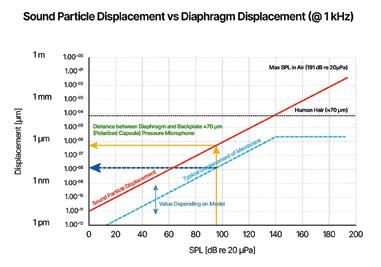
Figure 7: Air particle displacement in a diaphragm as a function of SPL in a soundwave at 1kHz. The typical displacement of the diaphragm at max SPL is in the micrometer range.
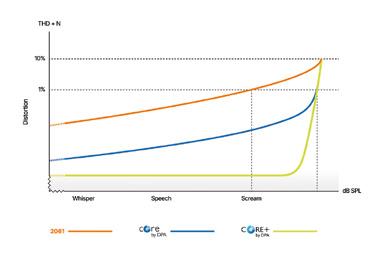
Figure 8: The conceptual difference between the THD performance of DPA miniature microphones. The orange curve shows the distortion of a 5mm miniature microphone. The blue curve shows the (14dB) general reduction of distortion with the original CORE by DPA. The yellow curve shows the low (unmeasurable) distortion when CORE+ is applied.
the capsule, the output spectrum of the 4061 with CORE+ remains distortion-free even at 133dB SPL. In other words, THD calculations of CORE+ microphones are the result of the ratio between the energy of the system’s noise floor at the harmonic components and the total energy of
the output signal mainly dominated by the fundamental component. This is why the THD curve of CORE+ microphones is flat before the microphones reach a clipping point. Measuring only the distortion of the microphone in a test environment and not the one created by the sound
systems at high SPLs is a complicated task, since a microphone is typically more linear. That is why the noise floor observed in the output spectrum of the microphones features the actual signal-to-noise ratio of the system in combination with the signal processing required to remove the nonlinearities of the measurement system.
The microphone may work perfectly when the supplied bias voltage meets the requirement. It should be noted that the magnitude of the bias voltage determines the possible level of the audio signal, which can never exceed the operating voltage. To achieve an audio signal of a given amplitude, a sufficient operating bias voltage (typically 5V to 7V) should be available.
A microphone with DC voltage that is too low might result in asymmetrical clipping of the audio signal above a certain level (Figure 10). The result: The lower the DC voltage, the more distortion at increased levels. If the available bias voltage is 3V or 4V, the microphone still works, but the acoustical input must be reduced and kept 6dB to 10dB below maximum SPL to avoid distortion.
CORE+ is DPA’s latest patent-pending technological invention and extends DPA’s CORE technology. Where CORE by DPA provides a linearization of the electronics, CORE+ linearizes the diaphragm output at the SPL range close to the clipping point. The effect is an unmeasurable THD in the upper part of the dynamic range. CORE+ does not raise the maximum SPL but makes the upper range as clean as already found at lower ranges. aX
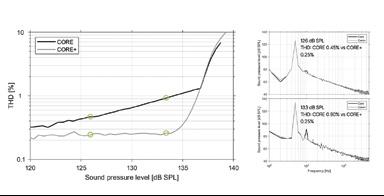
Figure 9: THD measurement of a 4061 Microphone with CORE and CORE+ excited at 500Hz, along with examples of the output spectrum of the microphones measured at 126dB SPL and 133dB SPL.
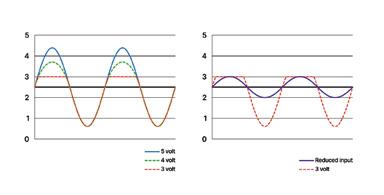
Figure 10: Output as a function of operating bias voltage (3V to 5V). At max specified SPL, distortion is introduced when the bias voltage is reduced below 5V (a). At max possible SPL, reduced input (b).
References
[1] IEC 60.268 Sound System Equipment, part 2: Explanation of general terms and calculation methods.
[2] IEC 60.268 Sound System Equipment, part 4: Microphones.
[3] E. R. Geddes and L. W. Lee, “Auditory Perception of Nonlinear Distortion — Theory,” Audio Engineering Society (AES) 115th Convention, Paper 5890, 2003.
[4] ] E. R. Geddes and L. W. Lee, “Auditory Perception of Nonlinear Distortion,” Audio Engineering Society (AES) 115th Convention, Paper 5891, 2003.
[5] F. E. Toole, Sound Reproduction - The Acoustics of Loudspeakers and Rooms, Focal Press, 2008, ISBN 978-0-240-520094.
[6] DPA Microphones Mic University, “How to ensure optimum performance of miniature DPA microphones for wireless,” DPA Microphones, 2025. www.dpamicrophones.com/mic-university/audio-production/how-to-ensure-optimum-performance-ofminiature-dpa-mics-for-wireless
[7] DPA Microphones Mic University, “The polarity of wireless belt-pack systems,” DPA Microphones, 2025. www.dpamicrophones.com/mic-university/technology/the-polarity-of-wireless-belt-pack-systems

By Charles Phelps, Technical Support Engineer at Canford
In an increasingly wireless world, audio rarely follows a simple path from source to listener. Instead, it must navigate contested spectrum, unpredictable interference, and strict bandwidth and latency constraints. The challenge is not merely to transmit, but to coordinate, ensuring sound arrives intact, on time and as intended. Different technologies approach this task in different ways, each delicately negotiating the balance between physics, protocol and purpose.
Wi-Fi forms the general-purpose backbone for the everyday connectivity that underpins much of our daily lives. Operating across the 2.4, 5 and now 6 GHz bands, client devices rely on carriersense multiple access with collision avoidance (CSMA/CA) to “listen before talking,” while access points use OFDMA and multi-user MIMO to divide spectrum efficiently. Audio traffic is prioritised through Wi-Fi Multimedia (WMM), yet spectrum and jitter persist in dense
deployments. Typical one-way latency can be as low as 20 milliseconds in lightly loaded environments but often rises to 50-200 milliseconds under heavy congestion. With the potential for tens of thousands of endpoints competing for spectrum, Wi-Fi remains ubiquitous and flexible – indispensable for domestic communication, provided deployments are guided by careful planning and QoS configuration.
Where Wi-Fi adapts, Bluetooth
LE Auracast embraces a broadcast model that delivers audio to many listeners simultaneously, rather than relying on one-to-one pairing. It hops pseudo-randomly across 40 BLE channels, dynamically avoiding interference, while isochronous channels keep receivers synchronised. Latency typically falls between 20 and 50 milliseconds – fast enough for listening assistance, personal devices, and shared venue experiences. The model is inherently scalable, as a single Auracast transmitter can reach hundreds of listeners in
a venue without pairing or setup. Recently adopted for listening assistance solutions with dedicated receivers, Auracast’s growing presence in personal and clinical technologies points to exciting potential for wider implementation in everyday audio environments.
DECT introduces deterministic scheduling to this orchestration. Within the 1.9 GHz band, each region-dependent carrier is divided into predictable 10 millisecond frames, each containing 24 slots, with dedicated uplink and downlink windows. Devices transmit only in their assigned slots, hopping carriers when interference is detected. This fixed scheduling approach minimises collisions and delivers latency below 10 milliseconds. Though scalability is modest, it remains a dependable solution for enterprise telephony, intercoms and conferencing. Stepping into larger-scale coordination, LTE commands entire cells through centralised resource
allocation, with base stations assigning physical resource blocks on millisecond timescales. VoLTE streams traverse guaranteed-bit-rate bearers, while seamless handovers and channel hopping maintain continuity under heavy load. Latency typically ranges from 20 to 100 milliseconds. With macro cells covering hundreds of metres and supporting thousands of active sessions, LTE combines wide coverage with deterministic quality of service for large-scale audio deployments. Extensions such as private LTE and CBRS bring these same carrier-grade assurances into enterprise and event environments, expanding the appeal of LTE for large-scale audio distribution. At peak precision sit professional UHF and VHF radio systems,
designed for environments where every millisecond counts. Generally operating in reserved bands between 470 and 865 MHz, these systems employ dynamic frequency scanning, adaptive channel switching, and antenna diversity to maintain stability. Digital enhancements such as encryption, pilot-tone tracking, and predictive hopping drive latency below 5 milliseconds. Not built for scale, these systems focus on uncompromising reliability, delivering flawless performance for a handful of channels in theatres, studios and live events.
Across all these approaches, wireless audio transport can be understood as a form of spectrum routing. Familiar strategies such as contention management, scheduled access,
channel aggregation and redundancy, are applied to the unique demands of sound. Taken together, these technologies reveal wireless audio as more than a matter of transmission: it is a process of routing, prioritising, scheduling and adapting. Flowing seamlessly from source to listener, scaling from a single performer to an auditorium, it maintains clarity, reliability, and perfect synchronisation. By understanding how each technology plays its role, we transform a chaotic spectrum into a harmonious experience. The result is not just audio that travels, but audio that arrives exactly as intended.
• Dante enabled for network audio
• Diecast aluminium for durability and better bass
• Simple controls with 2 operation modes
• Compact & affordable

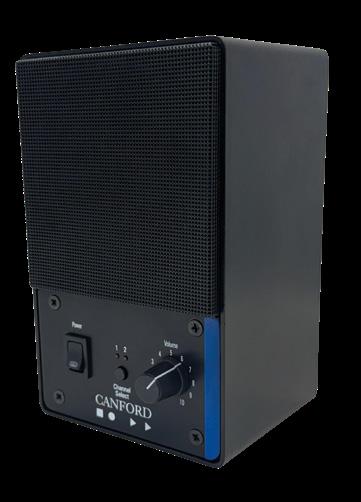
Over the past three decades, RØDE has evolved from a boutique Australian microphone company into a global force in content creation technology. From humble beginnings in Sydney to worldwide influence across podcasting, filmmaking, streaming, and broadcasting, RØDE’s journey reflects a company that understands not just audio—but the changing needs of modern creators.
Founded by Peter Freedman in 1990, RØDE’s early mission was clear: deliver professional audio tools without the prohibitive price tags. The company’s first major success came with the NT1, a large-diaphragm condenser microphone offering high-fidelity sound with extremely low self-noise. Its clean and natural sound signature quickly earned it a place in professional and home studios around the world. Today, its successor—the NT1 Signature Series—carries forward that legacy with modern refinements. Featuring the same iconic capsule design, the NT1 Signature delivers incredibly low self-noise (4dBA), a wide 20Hz–20kHz frequency response, and exceptional detail, making it ideal for vocals, instruments, and voice-over work. It remains one of the quietest studio condenser microphones in the world, a testament to RØDE’s commitment to excellence.
This early success cemented RØDE’s reputation for quality, affordability, and innovation— values that continue to define the brand today. The company’s focus on delivering pro-level equipment accessible to creators at all levels has shaped its approach ever since.
As content creation shifted beyond traditional studios and into the wild, RØDE responded by expanding its lineup to meet the demands of a new generation of creators. These users—ranging from solo podcasters and filmmakers to live streamers and educators—needed gear that combined high-end audio performance with simplicity, flexibility, and portability.
RØDE answered with products that required no steep learning curve, yet delivered professional results in any environment. Whether recording on a laptop, camera, or smartphone, creators found they could trust RØDE to capture crisp, clear audio without needing a full studio setup. This democratization of quality audio technology opened doors for millions of creators worldwide.
Today, RØDE is no longer just a microphone company—it’s a full creator technology brand. The
company now offers a broad ecosystem of accessories and software, designed to work together seamlessly.
From boom arms, shock mounts, and studio interfaces, to software tools like RØDE Connect and RØDE UNIFY, the ecosystem allows creators to build flexible, highquality audio workflows—whether in a bedroom studio or on the go. This holistic approach supports creators throughout every step of their production process.
RØDE’s transformation from a microphone maker to a comprehensive content creator tech brand is driven by one principle: empowering creators with tools that deliver professional results— without complexity. Whether you’re podcasting at home, filming in the field, or streaming to global audiences, RØDE’s products ensure creators sound their best.
In an age where content is currency, RØDE are the voice of today’s creative generation.
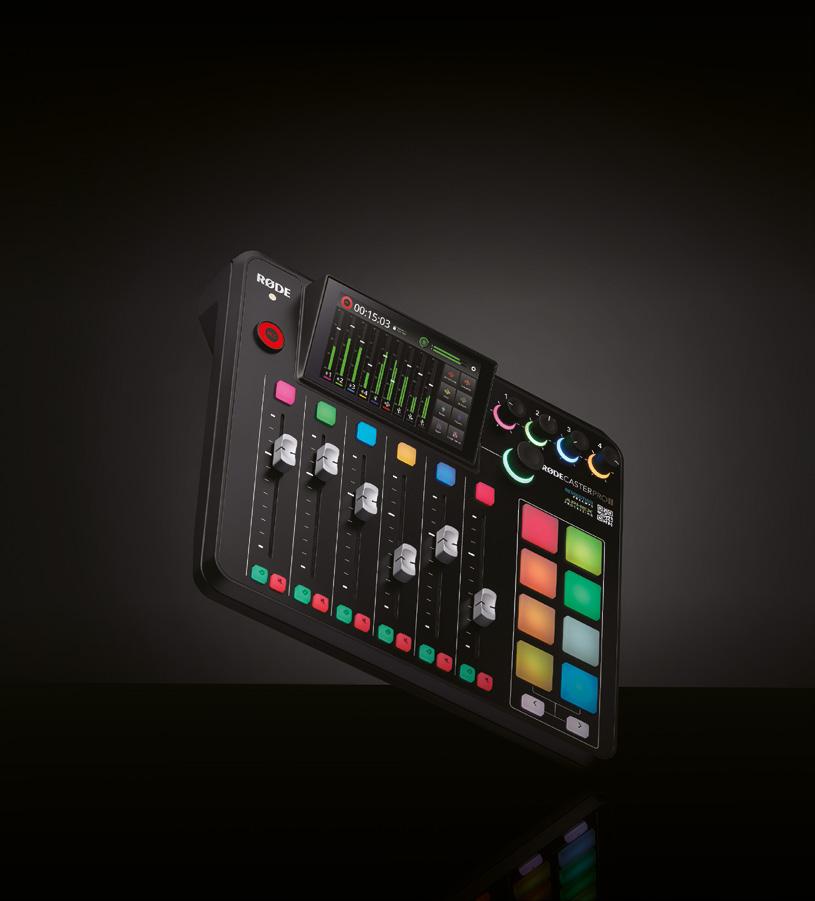
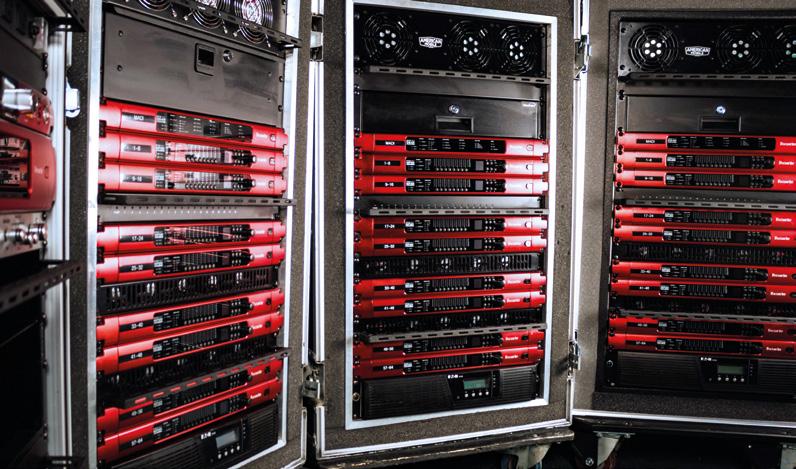
In the world of professional sound, every detail matters — from the subtle warmth of a preamp to the precision of a networked audio system that connects hundreds of channels with zero compromise. 2025 marks 40 years of Focusrite, a name that has always been synonymous with sonic excellence, and nowhere is that legacy more evident than in our flagship Red and RedNet ranges.
They are the backbone of world-class studios, post-production facilities, and broadcast environments across the globe — the invisible infrastructure behind some of the most critical recordings, live productions, and ground breaking immersive experiences.
The Red Range: Pure Performance, Refined
Red interfaces were designed with one goal in mind: to deliver the highest performance possible in a studio environment.
Each unit offers exceptional conversion quality, ultra-low latency Thunderbolt™ performance, and seamless integration with Pro Tools | HD and Dante audio-over-IP networks. The result is an interface that can bridge any workflow — analogue or digital, studio or networked — with the pristine fidelity Focusrite has always stood for. Every Red interface is built to handle the demands of modern production:
multiple high-quality mic preamps with variable impedance, ultra-clean gain structures, and transparent AD/ DA conversion that captures every nuance of your sound. It’s the perfect centrepiece for hybrid setups, where Thunderbolt and Dante work hand in hand to keep sessions flowing — no matter how complex.
RedNet: Audio Over IP Without Limits
While Red defines the control room, RedNet defines the network.
RedNet is Focusrite’s modular, Dantebased audio-over-IP platform — a scalable, flexible, and reliable solution for moving studio-quality audio
anywhere it needs to go. Whether in a multi-room post-production house, a live sound venue, or a broadcast facility, RedNet delivers seamless integration across hundreds of channels with nearzero latency and total redundancy.
From analogue I/O and mic preamps to AES, MADI, and PCIe connectivity, RedNet modules form a complete ecosystem — one that replaces complex cabling with the simplicity of standard Ethernet. Audio distribution, routing, and control become intuitive and effortless through RedNet Control, our comprehensive software suite that brings an entire network to your fingertips.
The world’s leading broadcasters, film studios, and touring productions rely on Red and RedNet because of one thing above all: trust. Every product in the range is engineered to perform flawlessly in mission-critical environments, with redundant power and network options, robust metal chassis, and consistent firmware support to ensure stability over the long term.
As the industry embraces more hybrid and IP-based workflows, Focusrite remains committed to driving innovation at every level, continuing to expand the RedNet ecosystem with new modules and features that meet the evolving needs of professionals — from immersive audio and spatial mixing to broadcast-ready redundancy and interoperability with leading Dante-enabled systems.
Focusrite’s latest RedNet release is the RedNet TNX: a portable Dante interface that delivers high resolution audio with 128x128 channels at 24-bit/192kHz straight out of the box, and expandable
to 256x256 channels at 24-bit/96kHz with Dante Ready. All of this is achieved via a single Thunderbolt connection for the ultimate powerful, versatile audio workflow.
Focusrite believe great sound should never be limited by technology — it should be enabled by it. That belief drives every decision made, every product designed, and enabled
by every audio professional using the products day in day out.
The Red and RedNet ranges are the embodiment of that philosophy: the finest analogue engineering, the most advanced digital connectivity, and the reliability professionals demand — all working together to deliver the ultimate audio experience.
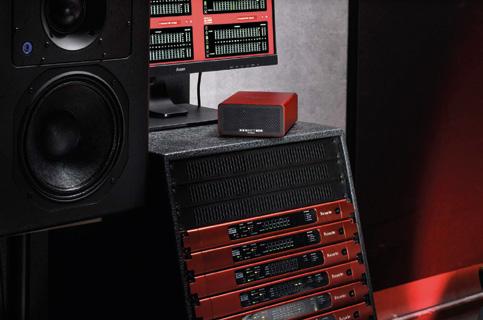
Network interfaces that connect analogue audio in and out of Dante networks are commonplace now. We all need them at some point and sometimes, in areas where audio quality is not important, the cheap and cheerful ones are all that is required. In broadcast and live events however, ‘cheap and cheerful’ are words that send fear into the most hardened of audio engineers. Generally, in situations where quality, reliability and flexibility are everything, you want to look towards a product that offers more. The Glensound DARK22M offers more - significantly more.
The basic specification of the DARK22M is simple enough. With two analogue inputs and two analogue outputs presented as fullsize 3-pin XLRs, the mic inputs are independently selectable mic/48V/line. So, the DARK22M is more like 2 x 1 channel interfaces as each side can be configured separately. A dynamic mic input on input 1 and a phantom power mic on input 2? No problem.
Typically, with low channel count units, devices are fairly basic, and in the Dante world this would mean the basic Ultimo module, and the associated limitations of a 100MB network interface. This is fine on entry level units, but as we have suggested, the DARK22M is not an entry level unit. The DARK22M features the full fat Brooklyn 3 module, with 1GB network interface and its ability to happily act as the master clock on a large network. Although it is low channel count, it has high specification networking not normally found at this level.
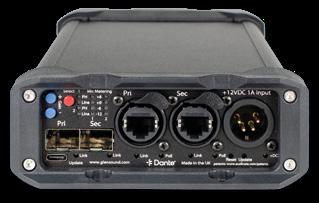
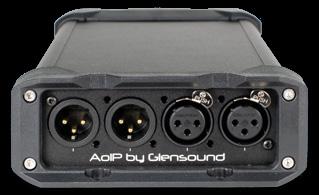
The input type and gain level can be set directly
on the unit itself. The DARK22M is also part of GlenController, the Glensound remote control app. This means input type, input gain, and level monitoring is available via remote control. The DARK22M uses UDP for remote control and the command list is available. This means if you are using a dedicated control app that can generate UDP commands (and most can) then your choice of remote will also be able to control the DARK22M.
Where the DARK22M really sets itself apart is in audio performance. It started life as the DARK8MAI – an 8-channel mic amp, which means that the resources of the DARK8MAI are still available –namely an 8-channel analogue to digital converter. Glensound’s design engineer Alex Clarke was able to
A graduated compressor, that is much subtler than a hard limiter, but with the benefit that it will prevent the input from clipping. Further DSP is available for a wideband compressor, a high pass or low pass filter, mixing the inputs to one output, for example. These are not standard features but can be customised on order dependent on your particular requirements. Network options on the DARK22M are also very powerful. There are primary and secondary ports on copper RJ45 sockets, and primary and secondary ports via your choice of SFP fibre modules. The SFP ports allow all choices of single mode, multi-mode, or single fibre bi-directional modules. These can be configured in redundant mode, or a switched mode, basically turning
to-analogue converter. The addition of USB-C really adds useful options.
The flexibility of the DARK22M concludes with the mechanical design. It is in a very strong casing, with custom designed front and rear bumpers. This allows for flush mounting under a desk or the side of a rack, cable tying for an emergency job, or simply removing them and rack mounting up to 3 together in a 1U 19” rack.
The Glensound DARK22M. A simple unit at first glance but look further and you find one of the most powerful and best sounding network interfaces available. It’s the new standard reference by which all others will be judged.
“The Glensound DARK22M. A simple unit at first glance but look further and you find one of the most powerful and best sounding network interfaces available. It’s the new standard reference by which all others will be judged.”
utilise these ADC channels in a rather clever way. By sending each input equally across 4 x ADC inputs, then combining them in the ADC, then dividing by 4, you end up with the same level, but the noise cancels out, resulting in a much improved signal-to-noise ratio and dynamic range. This has resulted in the mic inputs on the DARK22M being just about the cleanest and brightest of any network mic amp available.
As a DSP device, further dynamics are available. By default, it includes Glensound’s well known Referee compressor system. This is a compressor curve that only affects the audio input just prior to clipping.
the connections into a 4-port switch that can be used for daisy chaining other network devices. Power supply is also well catered for with PoE available on both copper ports or a locking USB-C, allowing the use of USB-C battery packs or plug top supplies. There is management of power allowing silent switching between the different power options.
The USB-C port also introduces USB audio. The DARK22M is also a bidirectional USB-to-Dante converter too. This will happen in parallel to the analogue audio connections. It can also be set as a bi-directional USB-

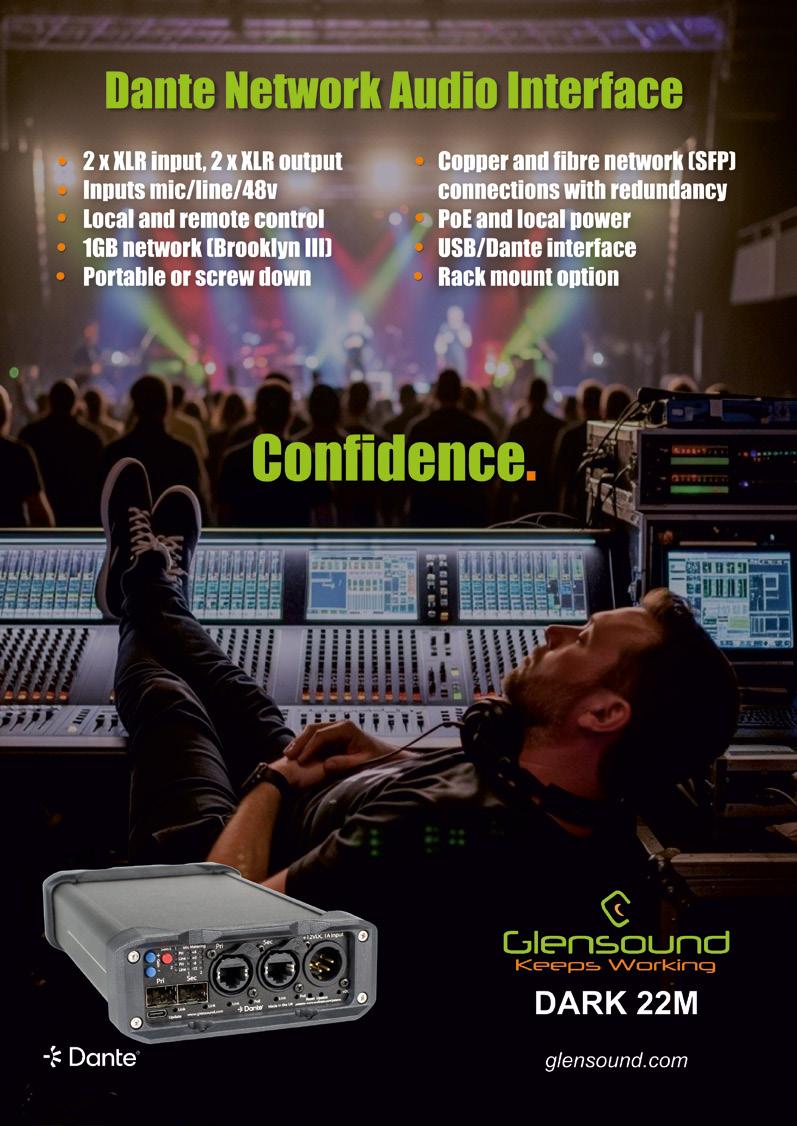
Easy cleaning. Easy maintenance. When the show must go on, trust opticalCON.
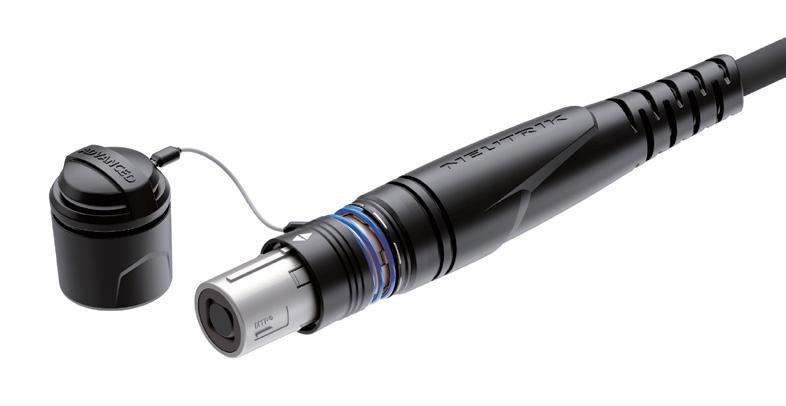
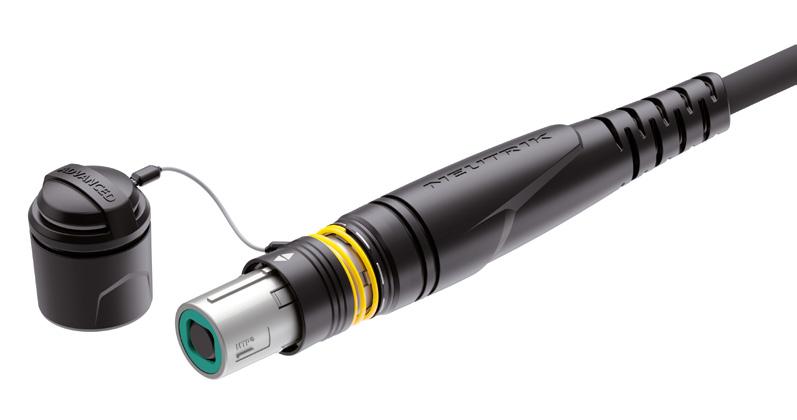
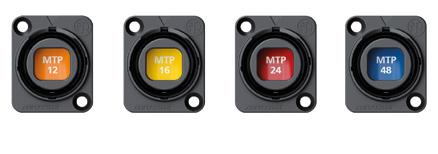
Reliable, ruggedised fiber optic solution. Available in 12-channel, 16-channel, 24-channel & 48-channel

SKB Cases has earned a global reputation for building rugged, reliable cases designed to safeguard valuable equipment under the harshest conditions. The brand’s success is not built on slogans but on decades of engineering expertise and real-world performance in fields where failure is not an option—defense, aerospace, industry, music, film, and photography.
At the heart of SKB’s lineup are two core product families: the iSeries and the R-Series While they differ in construction, both share a single mission— deliver maximum protection and minimize risk of damage.
The iSeries is SKB’s flagship line, engineered for professionals who demand absolute confidence during transport and storage. These cases are produced using injection molding, a process where polypropylene resin is injected into a steel mold under high pressure. This method ensures precise tolerances and exceptional structural strength. Every iSeries case is:
• IP67 certified – fully waterproof and dustproof
• Tested to military standard MIL-C-4150J
• Equipped with an automatic pressure equalization valve
• Fitted with TSA-approved trigger latches for secure travel
• Built with stainless-steel hinges and a durable rubber gasket seal
Interiors can be configured with cubed foam, padded dividers, or custom CNC-milled inserts, allowing each case to be tailored to its contents. The result is a versatile solution ideal for transporting cameras, drones, measuring instruments, firearms, and sensitive electronics.
The iSeries is trusted by:
• Film and photography professionals requiring secure, organised storage
• High-tech engineers and field technicians
• Defense and aerospace teams transporting precision instruments and sensors
In short, the iSeries is a modular,
professional-grade system that blends precision with durability.
While the iSeries focuses on precision and fit, the R-Series is built for brute endurance. These cases are manufactured using rotational molding—a process where resin is heated and rotated within a mold, creating a thick, uniform wall structure with rounded corners that absorb shock and impact.
The R-Series is designed for extreme conditions:
• Resistant to severe weather, saltwater, and heavy handling
• Certified to military transport standards for drop, vibration, and stacking tests
• Outfitted with heavy-duty latches, steel pins, and stackable rib designs This series is favored in applications where gear faces rough treatment, including:
• Military and defense operations requiring rugged field cases
• Aerospace and offshore industries where exposure is inevitable
• Industrial project teams handling bulky or irregular equipment
The R-Series is not refined—it’s built to endure. A workhorse engineered for environments where other cases fail.
SKB doesn’t just manufacture cases— it delivers purpose-built solutions for specific industries. Each product reflects the demands of its sector.
SKB provides cases that meet strict military specifications such as MILSTD-810, protecting communication systems, weapons, drones, sensors, and radar units. Equipped with pressure valves and airtight seals, they’re ideal for air transport and mission-critical operations. iSeries cases protect precision instruments, while R-Series cases handle heavy, mission-ready gear.
In high-tech industries, SKB cases safeguard calibration tools, measuring devices, and prototypes. With CNC-cut
foam interiors, equipment fits perfectly and remains stable under vibration. They are also widely used as service kits and training cases for technical systems, ensuring field teams can transport tools securely and efficiently.
SKB’s origins lie in the music industry. Their instrument cases for guitars, keyboards, brass, and drums are trusted worldwide by touring professionals. In addition, SKB’s rack mount systems protect amplifiers, mixers, and audio processors, available with optional shock absorption for road use.
Filmmakers, photographers, and drone operators rely on SKB’s iSeries for camera bodies, lenses, and accessories. With configurable interiors and TSA locks, these cases combine protection
with travel convenience, ensuring equipment arrives ready to shoot.
SKB’s firearm and bow cases meet strict transport regulations and offer secure, padded interiors for rifles, pistols, and archery equipment. Their robust construction ensures safe transport under all conditions.
SKB’s strength lies not in marketing claims but in engineering discipline. The iSeries delivers precision protection for sensitive gear, while the R-Series is built to withstand the most punishing environments. Together, they form the backbone of a portfolio trusted from concert stages to battlefields, film sets to factory floors.
SKB proves that real protection isn’t a promise—it’s a design principle.
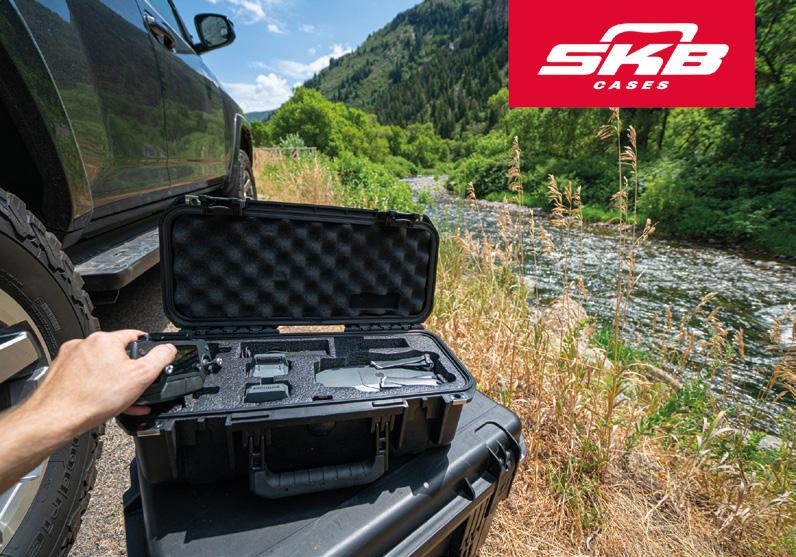

In the high-stakes world of film and television production, one thing remains constant: power is everything. Cameras, monitors, transmitters, lights, recorders — every piece of equipment depends on stable, reliable energy. As production moves further toward mobile and compact setups, filmmakers need smarter, lighter, and more adaptable power solutions. Enter HEDBOX, a European power systems manufacturer that’s quietly reshaping the conversation around professional battery design.
Founded with an emphasis on European engineering discipline and practical innovation, HEDBOX has become known for its robust, affordable, and forward-thinking approach to power management. With the R&D (research & development) department located in Switzerland, the HEDBOX team has an innovative approach to battery and power management product design.
The NINA Series: Compact, Smart, and Studio-Ready
The company’s latest innovation — the NINA Series — embodies everything that defines the modern production environment: compactness, intelligence, and versatility. Available in two versions, the NINA M (99 Wh) and NINA L (148 Wh), these mini V-Mount (and Gold Mount) batteries bring high performance to a smaller, travel-friendly form factor.
At first glance, the NINA line looks sleek and minimal, but it’s the inside that makes it exceptional. HEDBOX has equipped these batteries with a high-contrast OLED display, offering real-time data on battery capacity, remaining operational time, battery cycle usage. This feature alone elevates the experience — no more guessing how much juice you have left when the camera’s power readout lags behind.
Perhaps even more distinctive is the IDR (Identificational Display Ring), a luminous ring that functions as a Low
Capacity Alarm (LCA). As capacity drops below 20%, the ring flashes a clear red warning — a small but powerful cue that can prevent lost takes or unexpected shutdowns during critical moments on set.
Where the NINA series truly shines is in its versatility. By integrating additional connections on both sides of the battery, the NINA M battery incorporates a D-Tap DC
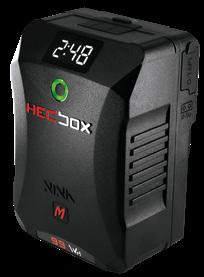
Power output. This feature enables the battery to deliver dual power outputs of 16.8V, 135W/8A each. Additionally, it includes an extra USB-A port with power outputs of 5V/3A, 9V/2A, and 12V/2A. Furthermore, a USB-C port is capable of supporting 5V/3A, 9V/3A, 12V/3A, 15V/3A, and 20V/3.25A (65W).
Both USB outputs are compatible with various charging protocols such as PD3.0/QC2.0/QC3.0/PPS/AFC/ FCP/SCP/DCP-1.5A/APPLE-2.4A.
This versatile configuration enables users to power other accessories using a single battery.
The USB-C port can also act as an input, enabling fast recharging from standard USB-C PD adapters. For travel shooters, documentary filmmakers, and crews working offgrid, this flexibility can be a lifesaver.
The NINA M, at just under 100Wh, falls below the air-travel limit for carry-on lithium-ion batteries, making it ideal for international productions. The NINA L offers extended runtime for higher-draw cameras and accessories, while maintaining a compact, lightweight design that fits easily into any rig configuration.
All HEDBOX warehouses around the world are trained and certified according to the latest IATA guidelines. This enables safe packaging and preparation for the transport of all our products worldwide via air, road and sea.
HEDBOX batteries undergo drop testing from 1.78 meters, significantly above the industry standard, to simulate real-world scenarios such as crane operation or on-set handling. Independent test certificates and video documentation validate
structural integrity even after impact.
• Test Height: 178 cm
• Result: Fully functional, no electrical or mechanical failures post-impact
All HEDBOX professional batteries use a flame-retardant ABS composite polymer, developed and refined through 16 years of material engineering.
Key material properties:
• Flame-retardant and thermally stable
• Reinforced molecular lattice for exceptional toughness
• High impact resistance and dimensional stability under temperature fluctuations
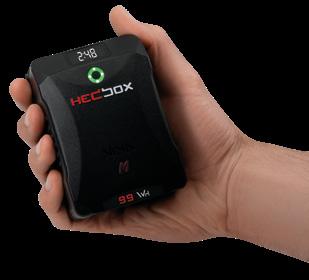
Inside each battery, every individual cell is enclosed within a reinforced ABS honeycomb structure. This design isolates cells to:
• Prevent stress propagation from shock or vibration
• Maintain pack integrity after drops
• Ensure optimal heat dissipation
With thoughtful engineering, global accessibility, and a keen eye for what filmmakers actually need, HEDBOX is positioning itself as more than a power supplier - it’s becoming a creative enabler. After all, the best battery is the one you never have to think about - because it just keeps the story rolling.
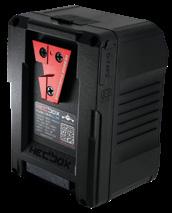
Canare is pleased to announce the appointment of Andy Dixon, who joined the business on 1st October 2024 as UK Business Development Manager. Andy’s arrival marks an important step in strengthening the long-lasting partnership between Canare and Canford, with a focus on expanding Canare’s presence and support within the UK broadcast and media production markets.
With over 15 years of experience in the broadcast industry, Andy brings an extensive technical background spanning camera channels, RF systems, audio, box lenses and complex outside broadcast operations. His career has taken him from hands-on prep and engineering through to managing largescale live deployments for some of the world’s most recognised broadcasters and major sporting and cultural events. Before joining Canare, Andy spent a significant period at Presteigne Broadcast Hire, where he supported and delivered broadcast solutions for organisations including Sky Sports, MUTV, BBC, BBC Scotland, NEP Visions, Telegenic, CTV, Cloudbass, Timeline and many others. His work in RF and OB support included high-profile productions such as:
• HRH Queen Elizabeth II’s State Funeral coverage for BBC Scotland, managing 16 RF links.
• The Boat Race, building, testing and deploying full RF racks and on-board camera systems.
• British Touring Cars, Glastonbury, Festival of Speed, Eastbourne Tennis and more.
• International experience including the State Funeral of Lee Kuan Yew in Singapore with MediaCorp State TV.
• Opening Ceremony of Diriyah Gate in Saudi Arabia, coordinating multiple RF camera systems for indoor and outdoor live coverage.
Prior to his time at Presteigne, Andy served as Technical Services Manager at Gearhouse Manchester, and originally trained and worked as a TV Engineer – giving him a deep understanding of both the practical workflows and the operational pressures faced by broadcasters, rental houses and OB teams.
Driving Forward the CanareCanford Partnership
Andy’s focus will be on strengthening relationships, expanding market awareness and ensuring that customers across the UK have direct access to Canare’s connectivity solutions, supported through collaboration with Canford’s worldwide reach and supply capabilities.
“The Canare and Canford partnership is already well-established,” Andy said. “My goal is to push that relationship further by ensuring we’re not only supporting the industry with quality products, but also providing guidance, technical expertise and confidence to engineers on the ground.”
With his hands-on industry experience and network across broadcast operations, OB providers and media production houses, Andy brings a valuable understanding of what customers need – from reliability in the field to technical trust behind the scenes.
Canare welcomes Andy to the team and looks forward to the growth and innovation his expertise will help deliver across the UK broadcast sector.
Canare SMPTE Hybrid Fibre – Designed for Long Life and Easy Maintenance
Canare’s SMPTE hybrid fibre camera cables are widely recognised for their reliability in demanding production environments. One standout feature is the removable centre strength member, which allows engineers to open the cable core and clean the fibre channels without damaging the cable structure.
Why it matters:
• Maintains optical performance over time, even after outdoor or harsh location usage
• Allows removal of dust, moisture or debris that can affect return loss or signal quality
• Helps extend cable lifetime – reducing replacement and maintenance costs
• Keeps cables compliant with SMPTE 311M, EBU and broadcasting standards
By making internal cleaning and inspection straightforward, Canare helps crews keep their hybrid fibre systems performing at a consistently high level – especially important for OB trucks, studio camera chains and long-distance venue runs where uptime is critical.
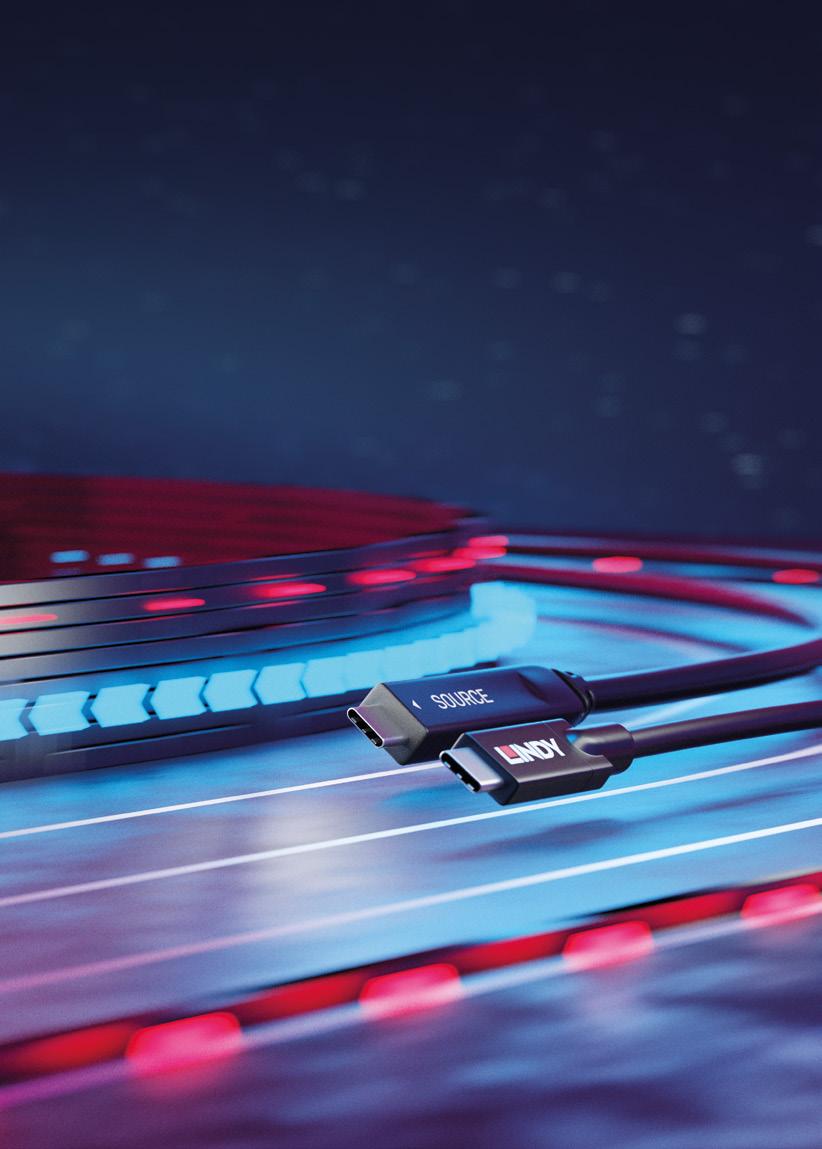
ahead of tomorrow’s. From everyday charging to high-speed data transfer and professional AV integration, Lindy USB-C cables deliver reliability and performance you can trust.
For years, consumers juggled multiple connectors—USB-A, Micro-B, Mini-B, HDMI®, DisplayPortTM, and more. Each had its own purpose, and cables often became a source of frustration. USB-C changed that. By combining charging, data, and video
Not all USB-C cables are created equal. At Lindy, we pride ourselves on producing cables that go beyond the basics. Each cable in our range is:
• Engineered for reliability – designed to withstand everyday use in both consumer and professional environments.
• Tested for performance – ensuring compliance
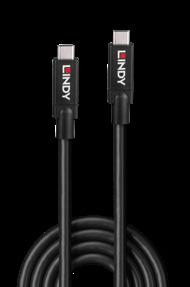
the most complete on the market. It’s designed to cover every use case, from the simplest charging needs to the most advanced professional applications.
2.5W basic charging cables for small devices, through fastcharging 60W cables for tablets and phones, all the way up to 100W and 240W solutions for laptops and high-powered devices. Whatever the device, there’s a Lindy cable to keep it running.
• Data Transfer
Options range from USB 2.0 cables for everyday peripherals to USB4 cables supporting 40Gbps for the fastest storage and docking connections. Whether transferring a few documents or working with large media files, our range has it covered.
• Video & AV
USB-C isn’t just for IT—it’s now central to AV setups. Our range includes USB-C to HDMI® and DisplayPortTM adapters and cables, enabling highresolution output for everything from home offices to control rooms and professional AV environments.
• Specialist Solutions
Sometimes, one size doesn’t fit all. That’s why Lindy offers angled USB-C connectors for tight
spaces, extra-durable cables for demanding environments, and even eco-friendly options made with recycled materials (GRS certified).
Why Choose Lindy?
For over nine decades, Lindy has been at the forefront of connectivity solutions. Trusted globally by IT professionals, AV integrators, and everyday consumers alike, our reputation is built on quality, reliability, and innovation.
Choosing Lindy USB-C cables means choosing:
• Confidence that your devices will charge safely and efficiently.
• The reassurance of cables tested to perform at the highest levels.
• A wide choice to meet every need, from personal gadgets to enterprise-level deployments.
The Universal Choice
USB-C has simplified the way we connect, but not every cable delivers the same experience. With Lindy, you get more than just a cable, you get a solution designed to keep your devices running smoothly, your data moving quickly, and your video streaming seamlessly.
When it comes to USB-C, the choice is simple. Choose Lindy.
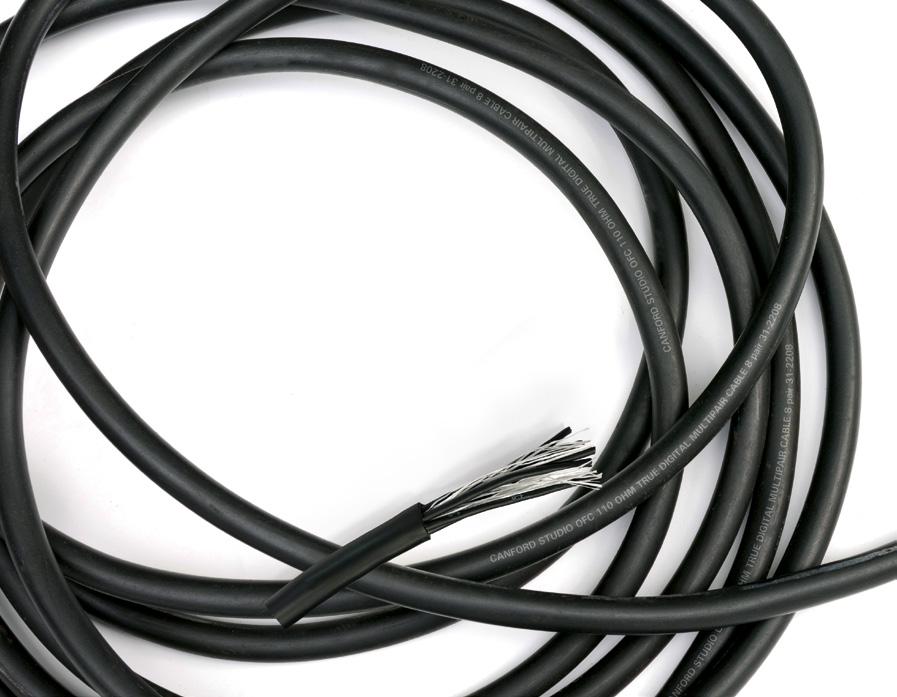
Canford & EMO OFC 110 Ohm digital cables with individually jacketed pairs for maximum performance and durability.
Canford: Studio-grade, flexible, clean signal, easy to install.
EMO: Tour-tough, rugged build for demanding environments.
Reliable. Robust. Ready for any setup.

For over three decades, Mackie has been the name behind the sound of countless stages and studios. Born in the Pacific Northwest of the USA in 1989, Mackie helped redefine what pro audio could be–breaking down barriers and proving that great sound can be accessible at any price point. What started with compact mixers has evolved into a global ecosystem of mixers, loudspeakers, and creator tools trusted by musicians, producers, podcasters, and performers everywhere.
Origins: The Birth of a No-Nonsense Sound Revolution
When founder Greg Mackie set out to build his first mixer, he wasn’t trying to make something fancy, he was trying to make something better. Something rugged, great-sounding, and accessible for the working musician.
From there, Mackie took the pro audio world by storm. From the iconic SRM active loudspeakers to the innovative DL series digital mixing desks, Mackie gear has been a fixture across venues and studios alike.
mixing desk, means that, for the first time, the portable PA system is now complete. Mackie is ensuring that All Systems Go, literally anywhere.
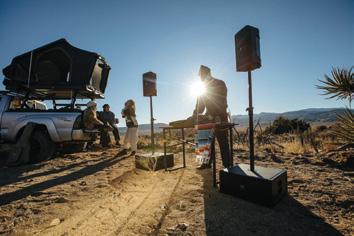
Sound Reinforcement. Reinvented.
The result? The LM-1602 – a compact 16 channel line mixer, perfect for live performing keyboard players, and project studio work. Clean, simple, and built like a tank, it set a new benchmark for affordable, professional sound. This success paved the way for the CR-1604, a small-format analog mixer that would become a modern classic. With pristine sound, smart routing, and road-ready construction, the CR-1604 redefined what an accessible professional mixer could be and put Mackie on the map.
When it comes to live sound, Mackie has always led from the front. The original SRM Series powered a generation of artists with legendary durability and clarity. Today, that legacy continues with the Thump, and SRM Flex families; portable systems designed for modern performers.
The Thump GO takes that versatility anywhere. With Bluetooth® streaming, app-based control, and an ultra-efficient rechargeable battery that delivers up to 12 hours of charge, Thump GO can take your sound literally anywhere. Pairing that with all-new ThumpSub GO portable subwoofer, and the ProFX10 GO portable
In the studio, Mackie delivers transparent audio for creators at every level. The Onyx Series mixing desks combine world-class preamps with 24-bit/192kHz conversion, and zerolatency monitoring, whilst Mackie’s Big Knob monitor controller has evolved with the Big Knob Studio and Studio Plus lines. Now featuring the same 60dB Onyx mic preamps, and 24-bit/192kHz A/D/A conversion, Big Knob continues to be a centrepiece of studios of all shapes and sizes.
For over thirty years, Mackie has empowered creators to take control of their sound, and the next thirty will be no different. Wherever creativity happens, Mackie is there – mixing, amplifying, streaming, and recording the sounds that shape our world.
Mackie. Sound Like You Mean It.
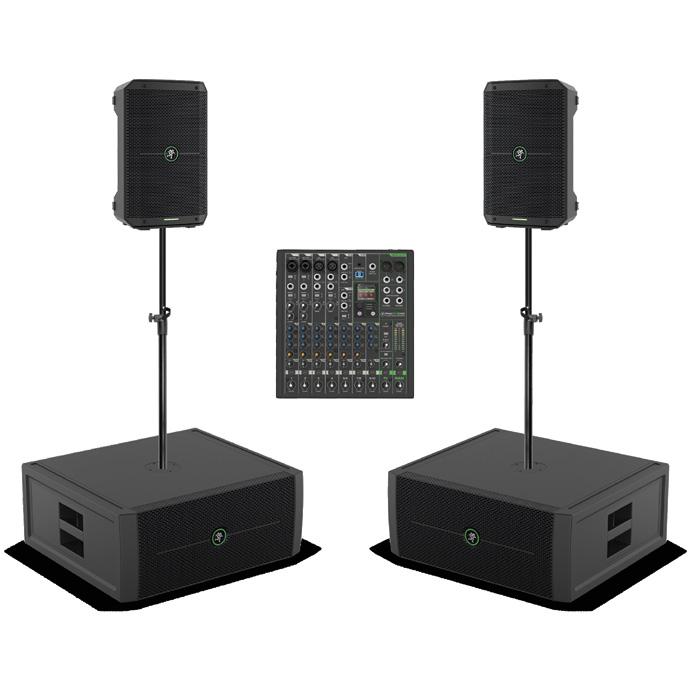
This bundle is a complete Mackie battery-powered portable PA system, including two Thump GO loudspeakers, two ThumpSub GO subwoofers, ProFX10 GO mixer and rechargeable batteries.
FEATURES:
• Complete battery-powered portable PA system
• 2 Thump GO battery-powered loudspeakers
• 2 ThumpSub GO battery-powered subwoofers
• ProFX10 GO battery-powered mixer
• 2 SPM400 speaker poles
• Rechargeable batteries included
• Optional spare batteries sold separately
• Custom bags sold separately
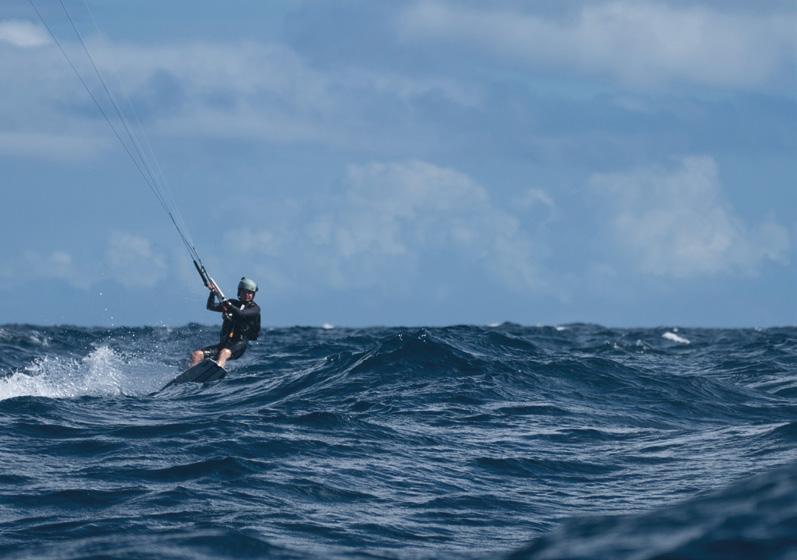
Dr. Geza Scholtz (43), a dentist and extreme sports enthusiast from Zurich, has achieved a world first. He is the first person ever to kitesurf across the politically sensitive Taiwan Strait. This extraordinary feat took over two years of meticulous planning, international coordination, and intense physical and mental preparation.
for the
The team spent a week and a half preparing on the Matsu Islands. Together, they waited for the perfect weather window to cross the Taiwan Strait with steady winds and safe sea conditions. In a small coffee shop on the island of Nangan, Geza and his team analyzed weather data daily across multiple platforms until the ideal window finally emerged.
Quote from Geza Scholtz: “Aside from the political situation
and the physical challenge, it’s the weather that worries me the most.”
During the summer, the southern winds in the Taiwan Strait are particularly strong. A drift into the open Chinese Sea could have been life-threatening. To avoid this risk, the team chose a starting point south of the Matsu Islands, within Taiwanese territorial waters.
At 3 a.m., the escort boat set off toward the Chinese border. When the navigation system indicated they had crossed the border and their phones showed the message “Welcome to China,” the political tension of the mission became very real.
The early morning conditions were initially ideal: moderate waves and a steady breeze. Despite severe nausea, Geza Scholtz jumped into the water with determination and began the journey.
A historic comparison comes to mind: In 1984, windsurfing pioneer Arnaud de Rosnay disappeared without a trace during a similar attempt across the Taiwan Strait. For Scholtz, this became a motivation:
Quote from Geza Scholtz: “That’s exactly what drove me.”
The first 30 kilometers already pushed Scholtz to his limits: severe seasickness, loss of concentration, and rough waves. But he found his rhythm and kept going.
Around the halfway point, the forecasted weather change hit. The waves grew larger, the wind picked up noticeably, and the kite was pushed to its limits. The pace had to be reduced — but abandoning the mission was never an option.
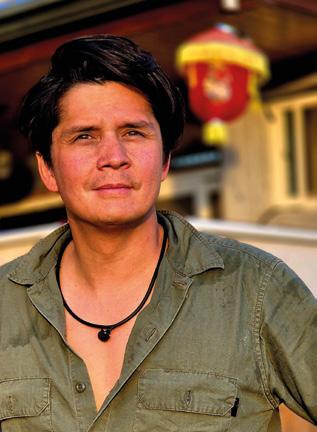
Quote from Geza Scholtz: “We slowed down, but we didn’t give up.”
The planned route was a straight line of about 150 kilometers, with an estimated time of 10 to 12 hours. In reality, Scholtz covered over 165 kilometers in 10 hours — facing wind speeds of up to 28 knots and wave heights of over three meters.
Personal Motivation and a Message to the Youth
For Geza Scholtz, this project is about much more than setting a sports record:
Quote from Geza Scholtz: “I want to show that life doesn’t happen on screens — it happens outside. I hope my project inspires young people in particular to believe in their dreams, to plan them, and to make them a reality.”
After over ten hours on the water, Scholtz reached the coast of Taiwan exhausted but safe. The crew was proud, relieved, and already buzzing with ideas for future expeditions.
A particularly emotional moment:
Although his brother André couldn’t be part of this crossing, he followed the entire route live via GPS tracker. The Scholtz brothers have already shared numerous kite adventures across several continents
situations where being waterproof, robust and easy to handle is vital. The special features of this microphone model were particularly convincing, such as the IPX-7 waterproof rating and the extremely robust cable, which gave additional confidence in the reliability of the microphone.
“I hope my project inspires young people in particular to believe in their dreams, to plan them, and to make them a reality.”
Geza Scholtz
— including two failed attempts in 2010 and 2011 to cross the Bering Strait between America and Russia.
Together, Geza and his brother run a dental practice in Zurich’s Seefeld district with around 15 employees.
technical challenge in production
Björn Detre, who was responsible for the video production and in terms of sound he decided for the VT506WA NECKLACE as it is specially designed for production
Credits:
Idea, concept, execution, production, and record holder: Geza Scholtz
Film and video: Björn Detre – www.detre-film.ch
Used lavalier microphone: www.vt-switzerland.com
Instagram: www.instagram. com/gezainzurich
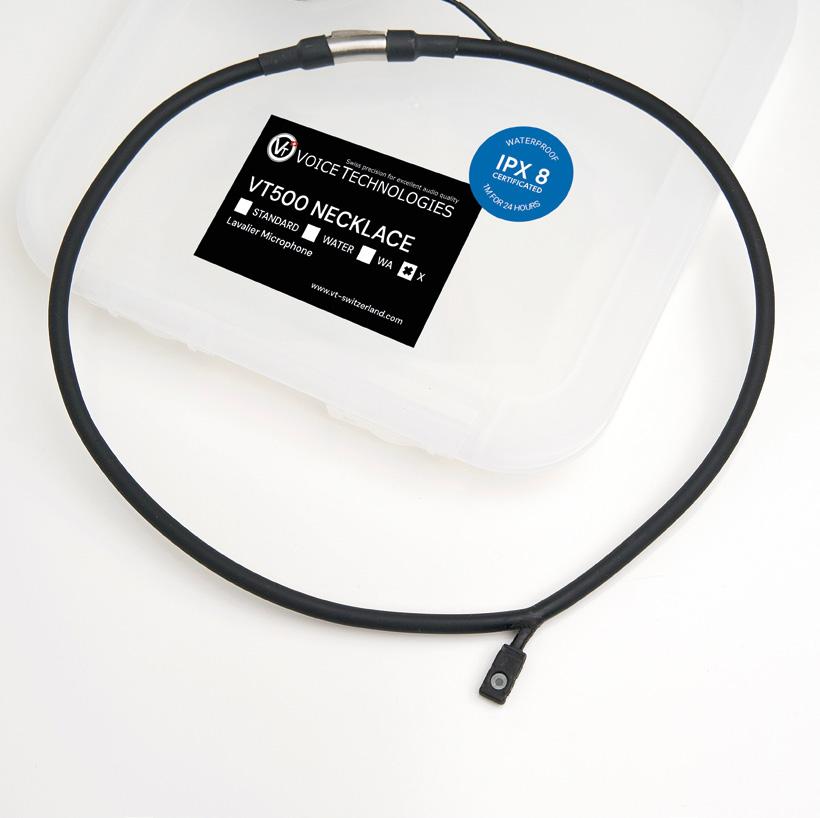
• TERMINATION SERVICE • CABLES • CONNECTORS • INTERFACES •
Industry leading, rapid response fibre termination service offering ready-made or fully custom fibre assemblies using a variety of cable and connectors. Our highly trained, qualified specialists go above and beyond to ensure that each cable surpasses the industry standards for insertion loss, geometric inspection, and return loss, accepting only the very best cables.
Qualified: Fully qualified termination of LEMO, Neutrik, Fibreco HMA, and other industry standard connectors.
Quality: Tested to IEC and Telcordia standards for complete geometry inspection, accepting only the very best.
Quick: Rapid response service where speed is of the essence.