


Inthisissue:
Bill s-2 WIPCECONFERENCE nationaltrcday
Whether you ’ re interested in poli (the drama, the intrigue!), looking ways to dismantle settler-colon hetero-patriarchy, or just confu about what politicians ACTUALLY all day, The Rundown is here for yo With each season, IYR’s Centre Indigenous Policy and Research bring you a new edition of T Rundown recapping everything y need to know about what’s going on Canadian policy when it comes Indigenous rights, community, a reconciliation.

In our 2025 Wrap-Up edition, bring you highlights and updates policy and advocacy happenin across the last year!


> NATIONAL DAY FOR TRUTH & RECONCILIATON: On September 30, communities across the country marked National Day for Truth & Reconciliation (Orange Shirt Day) with ceremonies, reflections, and educational events honouring the lives lost or traumatically impacted by the residential school system. This year, the national commemoration included Remembering the Children, a gathering on Parliament Hill hosted by the National Centre for Truth and Reconciliation (NCTR) in partnership with APTN and CBC/Radio-Canada. The event featured powerful testimony from Survivors Lucien Wabanonik, Charlotte Nolin, Richard Kistabish and Reepa Evic-Carleton, as well as performances by First Nations, Inuit and Métis artists. Attendees placed pairs of traditional shoes at the front of the stage in honour of missing children, while APTN dedicated 24 hours of special programming to uplift Survivor voices and advance truth-telling.
“ As we continue to live with the legacy of residential schools, we are reminded that reconciliation is not a single event, it is a commitment to learning, listening and building a better future together.
-Stephanie Scott
”

> FEDERAL ‘INDIAN HOSPITALS’ CLASS-ACTION SETTLEMENT: In June, the federal court approved a class-action settlement for survivors of federally run “Indian hospitals,” which operated from 1936 to 1981, and were sites of widespread abuse and mistreatment. The settlement provides compensation ranging from $10,000 to $200,000, along with $150 million for a healing fund and $235.5 million for research and education on the history of these hospitals. Survivors like Ann Hardy have spoken about the trauma of fear, isolation, and abuse that shaped their lives, making this settlement a long-overdue step towards accountability.
> SIXTIES SCOOP CLASS ACTION LAWSUIT: In May, a group of Métis and non-status survivors of the ’60s Scoop won an important legal challenge against the federal government. A Federal Court judge recognized that Canada had a responsibility to protect children who were adopted under the Adopt Indian Métis (AIM) Program in Saskatchewan because they helped fund the program. The decision comes as a major milestone for AIM program survivors but drew strong criticism from Métis leaders for excluding thousands of others affected outside of the AIM program. Leaders like David Chartrand of the Manitoba Métis Federation expressed frustration that many other Mètis and non-status survivors have been left without justice. The Otipemisiwak Métis Government called the ruling “painful” and emphasized that the ‘60s Scoop impacted Métis families across borders.
IN
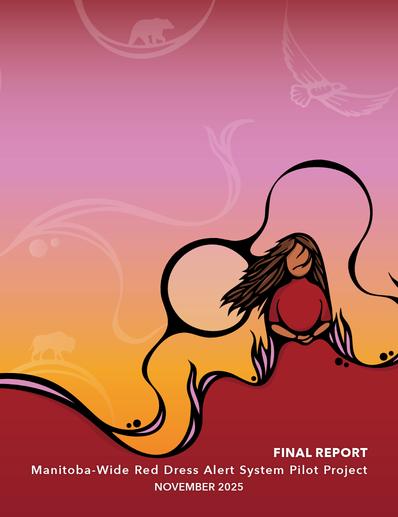
A November report from Giganawenimaanaanig (the Indigenous-led committee responsible for designing Manitoba’s Red Dress Alert) has called for the system to be implemented no later than June 2026. Drawing on insights from 43 community engagement sessions across the province, the report stresses the urgent need for an alert system that can quickly mobilize resources and responders in the critical hours after an Indigenous woman, girl, Two-Spirit, or gender-diverse person goes missing. The report stresses that culturally safe governance, Indigenous languages, and wraparound supports are essential to ensuring trust and safety.
Giganawenimaanaanig urges all levels of government to adopt provincial Red Dress Alert legislation without delay, framing the system as not only an alert mechanism but a traumainformed safety framework.
Check it out:
> TRUST-BASED MENTAL HEALTH PROJECT: Lakehead University’s Christopher Mushquash (Anishinaabe, Fort William First Nation) is co-leading a Canada-wide initiative to improve Indigenous youth mental health, backed by a new $10.8 million investment from the Canadian Institutes of Health Research, awarded in September 2025. The four-year project brings together First Nations, Métis, and Inuit youth, Elders, families, and knowledge holders to shape services rooted in trust, culture, and lived experience. With 175 partners, the network aims to transform policy, research, and services, enabling Indigenous youth to lead the way in mental wellness.
“This is an incredible opportunity for our network to help close critical gaps by cultivating a trust-based, collaborative learning environment across Canada
-Dr. Christopher Mushquash
”
> ITK ANNOUNCES INUIT NUNANGAT UNIVERSITY MAIN CAMPUS LOCATION: Inuit Tapiriit Kanatami (ITK) announced that Arviat, Nunavut, will be the home of the main campus of Inuit Nunangat University. This follows a site-selection process conducted throughout 2025 that assessed factors including availability of Inuit-owned land, infrastructure capacity, transportation access, partnerships, Inuktut fluency, and community readiness. Nunavut Tunngavik Incorporated (NTI) committed $50 million to the construction of the main campus, building on an earlier $2 million pledge, and provided additional funding for student housing and programming through the Nunavut Agreement Implementation Contract. Located in the Kivalliq region, Arviat is Nunavut’s third-largest community and has one of the highest youth populations in the country. The university is expected to open in 2030, serving approximately 100 students and 80 faculty and staff, with onsite housing for up to 75% of students and staff.
“
” For generations, Arviat has traditionally passed on our language, culture, experience of harvesting, survival and sewing to survive the harsh climate we live in, which is training and learning in itself. We are proud to share and showcase that, and so much more, by being the home of Inuit Nunangat University
-Joe Savikataaq Jr., Arviat Mayor
> MI’KMAW COMMUNITY FISHING SELF-REGULATION: Eight Mi’kmaw communities in Nova Scotia are leading a new path in self-determination by launching their own Treaty Right Protected (TRP) management plan for the commercial elver fishery, developed in May 2025. The initiative is grounded in Mi’kmaw law, conservation, and community engagement. Coordinated through the Kwilmu’kw Maw-klusuaqn Negotiation Office, the plan secured nearly 20% of the 2025 quota and prioritizes sustainable harvesting. While some Mi’kmaw fishers continue to operate independently of federal regulation, all are united to provide for their families through rightful access to the fishery.
> INIDIGENOUS YOUTH FIGHT BILL C-5: In June, Indigenous youth mobilized in powerful ways to oppose Ontario’s Bill-5 and the federal Bill C-5. They organized rallies, land-based actions, and a historic 700-kilometre walk from Timmins to Queens Park (in downtown Toronto). Through street protests, sacred fire gatherings, digital storytelling, and regional coalitions like Youth Rising Together and Okiniwak, young leaders challenged legislation that potentially threatens Indigenous rights, treaty relationships, and environmental protections.
Checkout“HereWeStand”ayouth-ledlanddefenseand storytellingprojectlaunchedbyAttawapiskatfilmmakerJeronimo Kataquapit.Throughpowerfulvideo,dronefootage,andon-thelandaction,theprojectchallengesnarrativesthatnorthern Indigenousterritoriesare“unused”andamplifiesyouthvoices resistingBillC-5andlarge-scaleresourcedevelopment.

> EXPOSING RACISM IN HEALTHCARE: Ashley Wilkinson, a PhD candidate at UNBC and research coordinator at Lakehead University, is gathering the stories of Black and Indigenous people in Prince George, Calgary, Thunder Bay, and soon Toronto, to document experiences in the healthcare system. Wilkinson ensures reciprocity by offering tobacco, meals, and honoraria, and is committed to presenting results in accessible ways so that participants see their voices guiding the path forward. Her goal is to make visible how deeply racism runs in health care and to push for real systemic change led by those most affected. Her work began in Summer 2025, and as of January 2026, her research is still ongoing.
> INDIGIQUUER PRIDE BEADWORK: For Pride Month 2025, Tłıcho Dene Indigiqueer artist Keira Ash was named Artist of the Month by the Land and Water Boards of the Mackenzie Valley. Their featured work is a beautiful, beaded flower incorporating colours from 2SLGBTQIIA+ flags, which was created to cover a whiskey logo on a hat they received shortly after becoming sober. The project is a deeply meaningful symbol of queer Indigenous pride and healing. Ash is based in Yellowknife and began beading in 2021 after attending a workshop and has since grown into a celebrated artist. The Pride-inspired collection was recently featured at an Indigenous pop-up, and they continue to create pieces that uplift Indigiqueer youth and honour community visibility.

CONFERENCE: In November, more than 3,800 Indigenous scholars, educators, and knowledge holders from around the world came together in Aotearoa for the World Indigenous Peoples’ Conference on Education (WIPCE). Hosted by Auckland University of Technology, the event opened with a powerful pōwhiri led by Ngāti Whātua Ōrākei, and was the largest academic conference ever hosted in the country. The co-chair of the event, Meihana Durie, called it “ a pivotal moment” for both Indigenous education and Indigenous rights, globally. The event is an exciting platform created by and for Indigenous Peoples from around the world to share knowledge and strengthen solidarity.
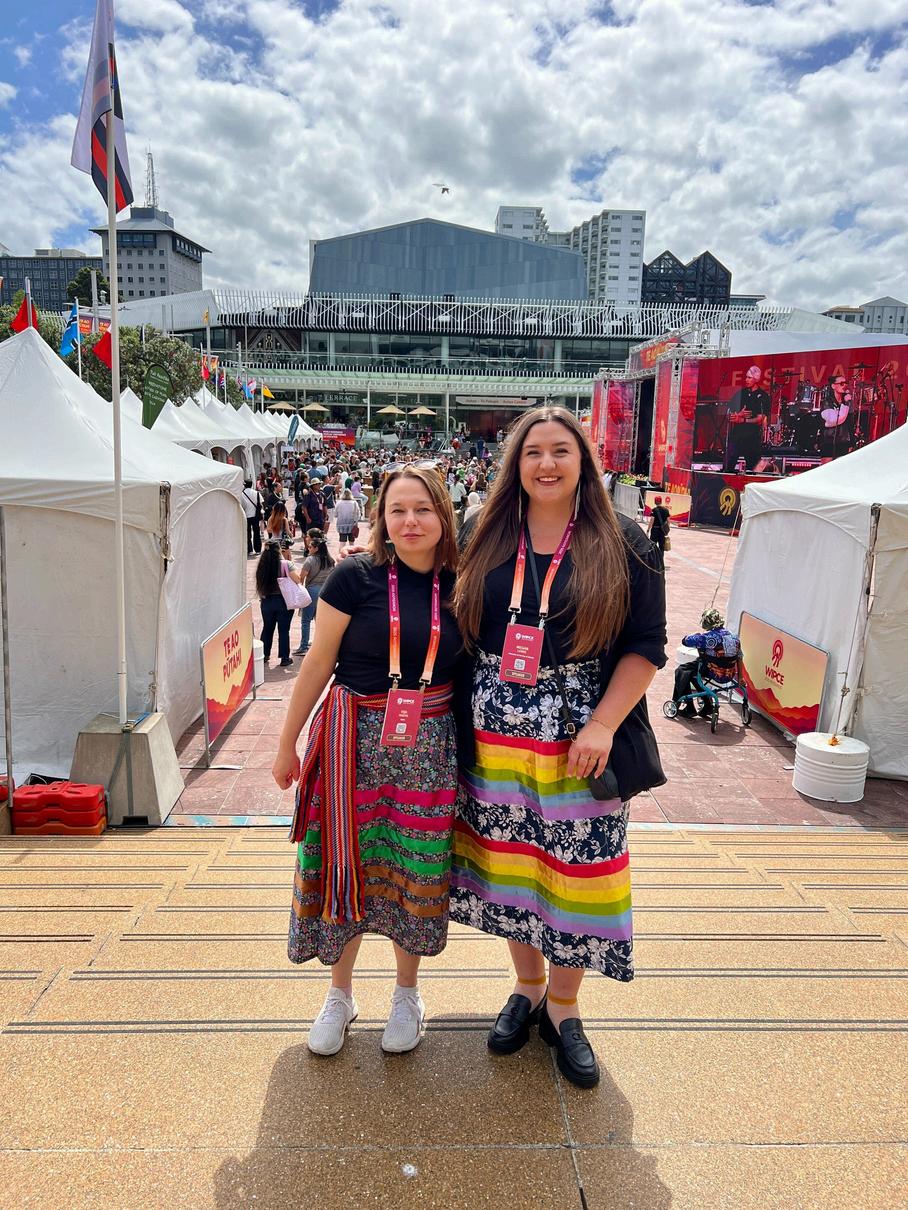
Check us out! Our very own Megan Lewis (CIPR Director) and Tija Hauta (CIPR Research Manager) attended WIPCE 2025 and presented our Indigenous Youth Reconciliation Barometer project
>FIRST INDIGENOUS MINISTER OF INDIGENOUS SERVICES CANADA: In the April 2025 federal election, 12 Indigenous MPs were elected to Parliament. In a historic first, Mandy GullMasty (of Waswanipi Cree Nation) was sworn in as the first Indigenous person to lead Indigenous Services Canada, the department responsible for delivering services to First Nations, Inuit, and Métis communities. A former Grand Chief of the Cree Nation of Eeyou Istchee, Gull-Masty joins the new cabinet alongside two other Indigenous MPs Rebecca Chartrand (Churchill–Keewatinook Aski) and Métis MP Buckley Belanger (Desnethé—Missinippi—Churchill River).
Check out this post from our Instagram page to learn more about your new MPs!
> INTRODUCTION OF BILL S-2: On May 29, the Minister of Indigenous Affairs announced Bill S-2 in the Senate, which aims to address longstanding inequities with registration and band membership in the Indian Act. Bill S-2 replaces the previous Bill C-38: An Act to amend the Indian Act (new registration entitlements), which was introduced in 2022 but didn't move forward before Parliament was dissolved in March 2025. The Senate bill sets out to fix long-standing issues in the Indian Act by restoring status to those affected by past policies, reconnecting people to their original bands, and removing outdated language in the text of the law itself. As of December 10, 2025, Bill S-2 has passed through the Senate and has completed the first reading in the House of Commons.
>FEDERAL BUDGET 2025: On November 4, the new federal government released Budget 2025, which is now moving to the fall each year, with spring economic updates to follow. The government says this shift, and a new “Capital Budgeting Framework,” is meant to bring more transparency by separating everyday operating costs from long-term investments (e.g., housing, water systems, and infrastructure). The budget included several important commitments to Indigenous communities: renewed funding to end long-term drinking water advisories, $2.8 billion for urban, rural and northern Indigenous housing, increased infrastructure investments through the Canada Infrastructure Bank, and a new $1 billion Arctic Infrastructure Fund. Budget 2025 also restates several previous commitments (such as Jordan’s Principle, Indigenous child and family supports, and education funding) that currently expire in 2026, with the government saying it intends to “modernize” these programs rather than end them.
In September, Prime Minister Mark Carney announced the 11 members of the new Indigenous Advisory Council (IAC), which will guide the work of Canada’s recently created Major Projects Office. The IAC comprises leaders from First Nations, Inuit, Métis, and Modern Treaty communities, including Kluane Adamek, Chief Darcy Bear, JP Gladu, Chief Terry Paul, Crystal Smith, and others from across the country. While Ottawa points to this as a step toward partnership, questions remain about how quickly projects will be implemented and how meaningful consultation will be carried out on the ground.
The controversial bill, which passed this summer, grants the federal cabinet new powers to expedite “national interest” projects, such as pipelines or mines, by streamlining existing environmental reviews, permitting, and other regulatory processes.
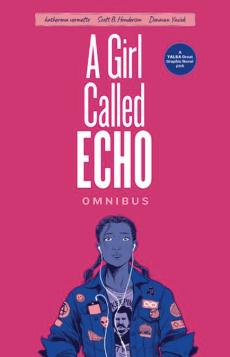
> A Girl Called Echo by Katherene Vermette explores Métis identity through the eyes of a Métis teen who is pulled into pivotal moments in her people’s past. The book blends time travel, graphic storytelling, and lived experience in a powerful retelling of Métis history.
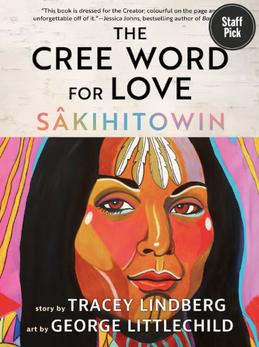
> The Cree Word for Love: Sâkihitowin by Tracey Lindberg and George Littlechild is a beautiful collaboration of story and art that explores love beyond Western definitions. The book invites readers to reflect on love as obligation, connection, and relational accountability within Cree ways of knowing.

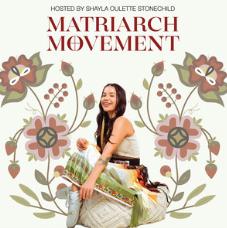
> Matriarch Movement by Shayla Oulette Stonechild offers thoughtful conversations that centre Indigenous voices, experiences, and leadership from across Turtle Island and beyond. The show uplifts matriarchal wisdom, Two-Spirit voices, and community-rooted work in language, sustainability, and cultural reclamation.
> Auntie Up by Karyn Pugliese, Kim Wheeler, Tanya Talaga, and Jolene Banning is a unapologetic, truth-telling podcast in which Indigenous women bring traditional knowledge to conversations about culture, community, and current issues across Turtle Island.