


Inthisissue:
trcday WIPCEConference
Whether you ’ re interested in poli (the drama, the intrigue!), looking ways to dismantle settler-colon hetero-patriarchy, or just confu about what politicians ACTUALLY all day, The Rundown is here for yo With each season, IYR’s Centre Indigenous Policy and Research bring you a new edition of T Rundown recapping everything y need to know about what’s going on Canadian policy when it comes Indigenous rights, community, a reconciliation. In our Fall 2025 edition, we bring y highlights and updates on policy a advocacy happenings across country.





> NATIONAL DAY FOR TRUTH & RECONCILIATON: On September 30, communities across the country marked National Day for Truth & Reconciliation (Orange Shirt Day) with ceremonies, reflections, and educational events honouring the lives lost or traumatically impacted by the residential school system. This year, the national commemoration included Remembering the Children, a gathering on Parliament Hill hosted by the National Centre for Truth and Reconciliation (NCTR) in partnership with APTN and CBC/Radio-Canada. The event featured powerful testimony from Survivors Lucien Wabanonik, Charlotte Nolin, Richard Kistabish and Reepa Evic-Carleton, as well as performances by First Nations, Inuit and Métis artists. Attendees placed pairs of traditional shoes at the front of the stage in honour of missing children, while APTN dedicated 24 hours of special programming to uplift Survivor voices and advance truth-telling.
“ As we continue to live with the legacy of residential schools, we are reminded that reconciliation is not a single event, it is a commitment to learning, listening and building a better future together.
-Stephanie Scott
”

IN
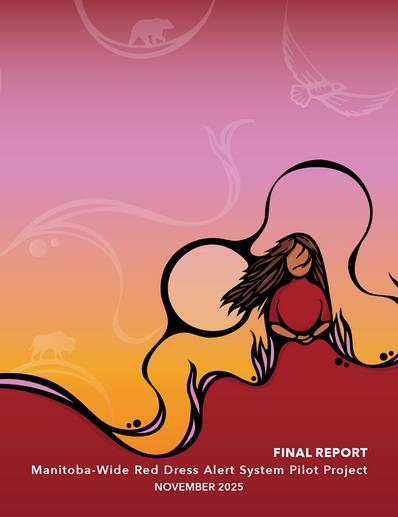
A November report from Giganawenimaanaanig (the Indigenous-led committee responsible for designing Manitoba’s Red Dress Alert) has called for the system to be implemented no later than June 2026. Drawing on insights from 43 community engagement sessions across the province, the report stresses the urgent need for an alert system that can quickly mobilize resources and responders in the critical hours after an Indigenous woman, girl, Two-Spirit, or gender-diverse person goes missing. The report stresses that culturally safe governance, Indigenous languages, and wraparound supports are essential to ensuring trust and safety.
Giganawenimaanaanig urges all levels of government to adopt provincial Red Dress Alert legislation without delay, framing the system as not only an alert mechanism but a traumainformed safety framework.
Check it out:

> REBUILDING INDIGENOUS LAW AT THE UNIVERSITY OF VICTORIA: The University of Victoria has launched Next Steps: Rebuilding Indigenous Law, a new research initiative that will help five Indigenous communities revitalize and rebuild their legal systems. The project begins with Secwépemc Nation researchers Racelle Kooy, Sunny LeBourdais, and Bonnie Leonard, who are drawing on oral teachings, community knowledge, and historical records to teach Secwépemc legal principles related to trade, economy, and social relations. Led by UVic law professor Val Napoleon and supported by a $10 million investment from the Law Foundation of B.C., the initiative aims to develop full examples of Indigenous legal orders that Canada can learn from and expand to questions of governance, accountability, relationships, and responsibilities to land and water.
“That’s really the purpose of law. It’s to serve and challenge people - to look at how are we solving the issues of today.
-Racelle Kooy, Associate Research Director
”
> INDIGENOUS-LED CONSERVATION IN THE NORTHWEST TERRITORIES: Federal, territorial and Indigenous leaders gathered in Yellowknife to launch NWT: Our Land for the Future, an Indigenous-led conservation agreement supported by $300 million in federal funding. The partnership will unite 21 Indigenous governments across the territory and will protect nearly 380,000 square kilometres of land and water. Guided by Dene, Métis and Inuvialuit leadership, the funding will flow through the new NWT: Our Land for the Future Trust to support Guardian programs, stewardship, new protected areas, eco-tourism and cultural and land-based initiatives. Leaders described the agreement as a generational investment in Northern communities, strengthening Indigenous stewardship, culture and conservation-based job opportunities.
“This document we signed today has been a long time in the making. It reflects years of collaboration and commitment from Indigenous leaders across the North. It reflects our shared understanding that Indigenous people have always been the stewards of the land. And it’s time for that responsibility to be recognized and supported.
-Chief Ernest Betsina, Yellowknives Dene First Nation
”

> ITK SHORTLISTS 8 COMMUNITIES FOR INUIT NUNANGAT UNIVERSITY MAIN CAMPUS: In October, Inuit Tapiriit Kanatami (ITK) took a major step toward establishing Inuit Nunangat University by shortlisting eight potential host communities. These potential locations are Inuvik, Rankin Inlet, Arviat, Iqaluit, Cambridge Bay, Puvirnituq, Kuujjuaq and Nain. Each community will now confirm its interest before advancing discussions with ITK on capacity and needs. Local leaders highlighted strong infrastructure, Inuktitut language use, transportation links, and the economic and cultural benefits of hosting the main campus. The final site is expected to be selected before the end of 2025, with infrastructure planning beginning in 2026 and the university aiming to open in 2030. The university will work to expand access to post-secondary education closer to home and grounded in Inuit worldviews.
“
” The project would be a “win-win” for the community, bringing in business and helping local enterprises.
-Joe Savikataaq Jr., Arviat Mayor
> MMF LAUNCHES LAWSUIT OVER RED RIVER MÉTIS EXCLUSION FROM SIXTIES SCOOP
SETTLEMENT: The Manitoba Métis Federation (MMF) has filed a lawsuit against the provincial and federal governments, saying that Manitoba and Canada participated in the “intentional destruction” of Red River Métis culture through the Sixties Scoop and then failed to address the harms caused in compensation processes. The claim argues that thousands of Red River Métis children were removed from their families between the 1950s and 1990s and placed in non-Indigenous homes, resulting in profound losses of language, culture, and identity. The MMF says the 2017 federal Sixties Scoop settlement excluded many Métis and non-status Indigenous survivors. The lawsuit requests that the government acknowledge the harm it caused and pay damages to restore, protect, and preserve Red River Métis rights.
“
” More than eight years later, no level of government has addressed the harms that were suffered by the Red River Métis as a consequence of the Sixties Scoop. [it reads in the lawsuit..]

> GLOBAL GATHERING OF INDIGENOUS LEGAL LEADERS: Schulich School of Law professor
Naiomi Metallic participated in the first-ever International Indigenous Judges Conference in Hamilton, New Zealand, a gathering bringing together Indigenous judges, scholars and legal practitioners from around the world. Co-convened by Justice Joseph Williams of the New Zealand Supreme Court and Justice Michelle O’Bonsawin of the Supreme Court of Canada, the conference explored shared challenges and pathways to advancing Indigenous law. Metallic delivered a keynote on Indigenous constitutionalism and emphasized the value of connecting with Indigenous legal experts globally to exchange insights rooted in culture, lived experience and community legal traditions. The event will next be held in Canada in 2027, thereby strengthening long-term relationships and collaboration among international Indigenous justice systems.
“
” We were able to compare experiences from our own justice systems through the lens of our cultures and lived realities...I’m looking forward to building on these relationships and learning how we can support one another in the future.
- Professor Naiomi Metallic, Schulich School of Law


CONFERENCE: In November, more than 3,800 Indigenous scholars, educators, and knowledge holders from around the world came together in Aotearoa for the World Indigenous Peoples’ Conference on Education (WIPCE). Hosted by Auckland University of Technology, the event opened with a powerful pōwhiri led by Ngāti Whātua Ōrākei, and was the largest academic conference ever hosted in the country. The co-chair of the event, Meihana Durie, called it “ a pivotal moment” for both Indigenous education and Indigenous rights, globally. The event is an exciting platform created by and for Indigenous Peoples from around the world to share knowledge and strengthen solidarity.
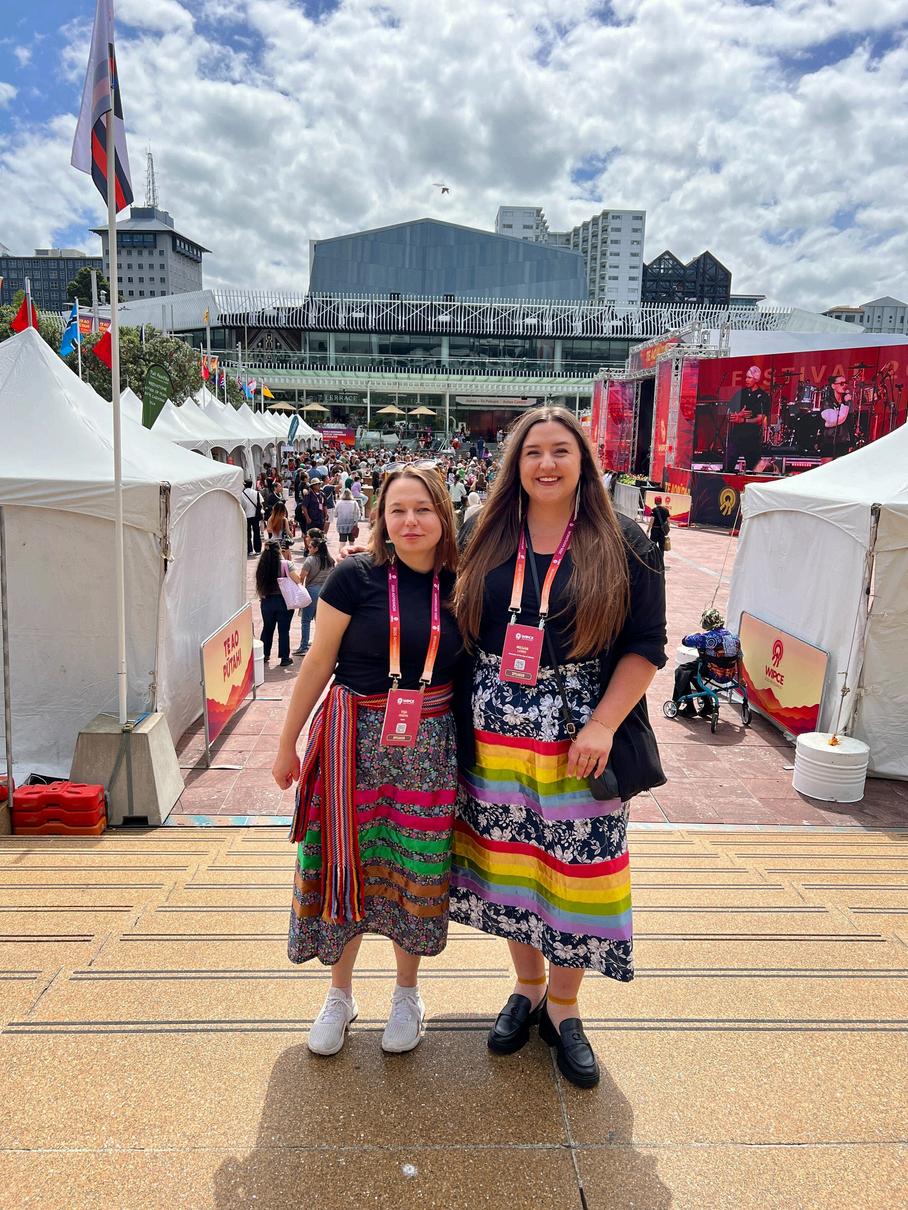
Check us out! Our very own Megan Lewis (CIPR Director) and Tija Hauta (CIPR Research Manager) attended WIPCE 2025 and presented our Indigenous Youth Reconciliation Barometer project
>FEDERAL BUDGET 2025: On November 4, the new federal government released Budget 2025, which is now moving to the fall each year, with spring economic updates to follow. The government says this shift, and a new “Capital Budgeting Framework,” is meant to bring more transparency by separating everyday operating costs from long-term investments (e.g., housing, water systems, and infrastructure). The budget included several important commitments to Indigenous communities: renewed funding to end long-term drinking water advisories, $2.8 billion for urban, rural and northern Indigenous housing, increased infrastructure investments through the Canada Infrastructure Bank, and a new $1 billion Arctic Infrastructure Fund. Budget 2025 also restates several previous commitments (such as Jordan’s Principle, Indigenous child and family supports, and education funding) that currently expire in 2026, with the government saying it intends to “modernize” these programs rather than end them.
>INDIGENOUS ADVISORY COUNCIL ANNOUNCED: In September, the federal government released the official membership of the new Indigenous Advisory Council (IAC). This key body will guide the work of the recently launched Major Projects Office (MPO). The MPO was created under Bill C-5, the Building Canada Act, which was designed to fast-track large infrastructure projects, such as those in energy and transportation. The IAC is made up of 11 First Nations, Inuit, Métis, and Modern Treaty representatives from across the country, including leaders such as Kluane Adamek (Kluane First Nation), Chief Terry Paul (Membertou), and Crystal Smith (Haisla Nation). Their role is to ensure Indigenous perspectives, equity opportunities, and stewardship responsibilities shape how projects are selected, approved, and built.
Indigenous Advisory Council Members:
Kluane Adamek, Kluane First Nation, Yukon
Chief Darcy Bear, Whitecap Dakota First Nation, Saskatchewan
Vanessa Doig, Makivvik, Nunavik, Northern Québec
JP Gladu, Bingwi Neyaashi Anishinaabek, Ontario
Victoria LaBillois, Listuguj Mi’gmaq First Nation, Québec
Grand Chief Trevor Mercredi, Beaver First Nation (Treaty 8), Alberta
Chief Terry Paul, Membertou First Nation, Nova Scotia
Lorne Pelletier, Manitoba Métis Federation, Manitoba
Christy Sinclair, Nunavut Tunngavik Inc., Nunavut
Crystal Smith, Haisla Nation, British Columbia
Matt Vermette, Métis Nation-Saskatchewan
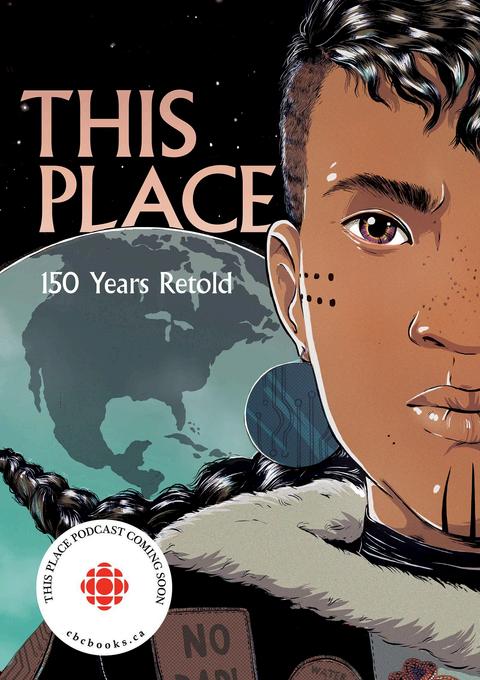
>This Place: 150 Years Retold is a powerful graphic anthology that brings together Indigenous writers and artists to re-tell 100 years of history through Indigenous perspectives. Blending vivid artwork with bold storytelling, it highlights resistance, resurgence, and the lived experiences of Indigenous Peoples across the last century.
>From the Rez to the Runway: Forging My Path in Fashion is a memoir about growing up on Nipissing First Nation and carving out a place for himself in the global fashion world. Blending humour, honesty, and cultural reflection, Allaire traces his path from powwow regalia to the pages of Vogue, revealing both the glamour and the gatekeeping of the industry.




>The Auntie’s Dandelion is a warm, insightful podcast that centres Indigenous resurgence, storytelling, and the voices of community knowledge-keepers. Hosted by engaging Aunties, each episode blends humour, honesty, and cultural teachings while exploring healing, identity, and what it means to carry traditional roots forward.
>Unreserved is a compelling podcast that brings listeners intimate conversations about Indigenous life, culture, and contemporary issues across the country. Hosted by Rosanna Deerchild, the show features a wide range of fascinating guests such as Indigenous artists, leaders, and knowledge keepers.