The paper created EXCLUSIVELY for farm families and rural residents of east central Alberta


The paper created EXCLUSIVELY for farm families and rural residents of east central Alberta
A new era of farming is taking flight as spraying drones give farmers another tool for protecting the crops.
On June 30, Health Canada approved the use of remotely piloted aircraft systems (RPAS), commonly known as drones, to apply pesticides already approved for conventional aerial spraying.
The technology allows farmers to make more targeted applications by flying lower and slower than traditional aircraft, while helping reduce fuel use and any operational challenges.
Traditional aerial spraying can often be affected by weather conditions, including wind that may lead to spray drift and uneven coverage. Drones offer a more flexible option, allowing operators to reach areas that may be difficult to access with conventional equipment.
Health Canada said drone pesticide applications do not present additional health or environmental risks compared with traditional aerial spraying when used under approved requirements.
The policy change follows collaboration between Health Canada, Agriculture and Agri-Food Canada, and brings Canada in line with countries such as Australia and Japan where drone spraying is already being used.
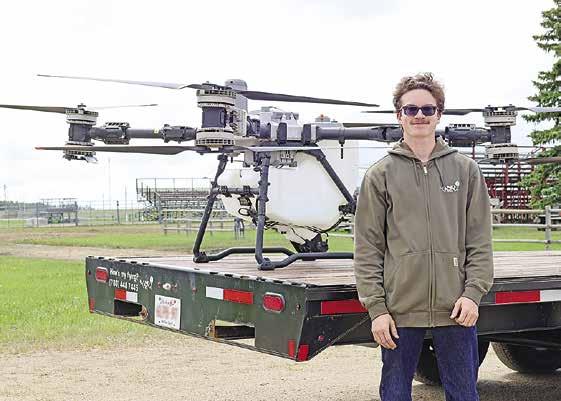
Operators must still follow federal and provincial regulations, including getting the required drone certification and training.
As technology continues to advance, spraying drones could become another
helping farmers work more efficiently and protect their crops.

By Adan Shaikh
Heavy rainfall means more mosquitoes, so even on the days when one might get a break from the rain, one risks getting eaten alive by a swarm of mosquitoes.
With Camrose County’s summer season averaging only about 100 days, most people are eager to enjoy every sunny moment, whether that means gardening, a family barbecue, a hike or a relaxing day at the lake. With almost every spot abuzz withmosquitoes, a quick walk outside can have even the most outdoorsy person changing their plans and rushing back indoors.
Over the past month, several local stores experienced shortages of mosquito repellent and citronella, leaving many residents wondering: how does one become mosquito repellent themselves?
These tricks may not make someone completely immune to mosquitoes, but they can help make them a bit more resistible at least.
• Wearing light-coloured clothing can help. Mosquitoes use body heat and sweat to track their targets, and lighter colours absorb less heat. Covering up with lightcoloured, long-sleeved
clothes can provide some protection.
• Don’t be sweet. Avoid sweet-smelling perfumes, lotions and other products because, like their human friends, mosquitoes also seem to have a sweet tooth.
• Avoid peak times. Mosquitoes are most active around dawn and dusk, so planning outdoor activities for mid-morning or midday can help reduce the number of bites.
• Use a fan. Mosquitoes are not strong flyers, and even a small fan while sitting outside can disrupt their flight and make it harder for them to land.
• Wear mosquito repellent, if you can find any. Although stores have started restocking, for a short time finding mosquito spray in Camrose area became almost as difficult as avoiding the mosquitoes themselves. If this year has taught residents anything, it is to always keep an extra bottle on hand.
With an average lifespan of only about a week, hopefully these tiny summer pests will soon disappear. Until then, people may have to keep swatting away and enjoying the outdoors when they can.

Adan Shaikh, Camrose Booster
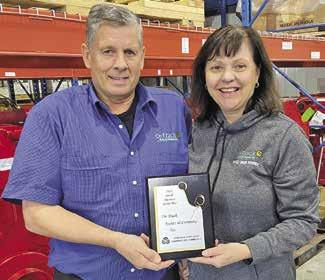
Welcome Camrose & District have announced the winners of this year’s Good Neighbour Campaign. This year’s winner in the County was Rick Feschuk, nominated by his neighbour Lorrie Wilson. Lorrie shared that she nominated Rick because he is always eager to help and be there for his community. He welcomes the new neighbours and introduces them to the rest of the neighbourhood and often visits neighbours to check in and make sure everyone is doing well. She shared that in the 16 years that she has known him, she has watched him show up for every single person in their community over and over again. From left, Lorrie, Rick and Sara Brisson from Camrose and District Family and Community Support Services.
By Nadine Leming
With record-breaking rain in the region in June, not only has it affected fields and farming activities, it has taken a toll on gravel roads across the County.
With more potential rain in the forecast, it’s important to remain mindful that many gravel roads continue to be softer and prone to potholes and rutting especially in low-lying areas or on roads with higher traffic volumes.
The County’s Public Works crews have been actively keeping an eye on road conditions and will begin grading and performing repairs as soon as conditions allow. Crews are pausing grading until conditions improve to prevent further damage and ensure long-term stability.
As drivers travel through the County, they may find rough sections, standing water or washouts. Drivers are encouraged to slow down and give themselves plenty of extra time while practicing caution on gravel roads.
Local residents are strongly encouraged to obey all traffic signs and road closures and not to drive around barricades. These safety measures have been taken to protect everyone on the road.
The County is asking for patience as their crews work to monitor roads and will be getting roads back into shape as soon as possible. With the number of road closures, the County is experiencing a shortage of their standard road closed barricades.
Drivers may come across some roads barricaded with a variety of different styles of barriers. If a road has been barricaded, it is to be considered closed. The County requests residents to not drive around or move these barricades for safety reasons.
Currently, Range Road 180 between Township Roads 462 and 464, as well as Range Road 193 between Highway 13 and Township Road 464 have been reopened. With many roads still closed as of press time, residents can go to the County’s website at www.county.camrose. ab.ca to find the most recent updates on road conditions.














































































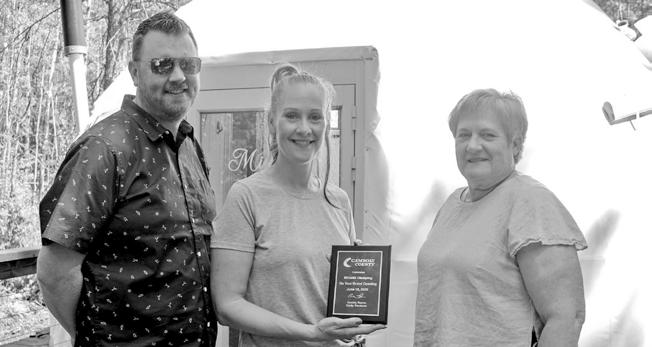
Camrose County is pleased to welcome Ministik Glamping, a new tourism business located near Miquelon Lake.
The project began in 2023, with the first glamping dome opening to guests in 2025. Since then, the site has expanded to include additional guest amenities, and the owners are already planning future growth with more unique accommodations.
Camrose County Reeve Cindy Trautman was pleased to participate in the grand opening and celebrate this new investment in the County ’s tourism sector
Congratulations to the owners of Ministik Glamping on bringing their vision to life. We wish them continued success as they grow their business and welcome visitors to Camrose County




By Nadine Leming
At the June 23 regular meeting, Councillor Grant Bailey moved and Council approved the updated Intermunicipal Collaboration Framework (ICF) with the Village of Rosalind. This replaces the old bylaw and with the new agreement, it combines recent provincial legislative updates ensuring compliance, while protecting the ongoing collaboration and joint service plans between each municipality.
Anjah Howard, planning and development manager, reported there was an application to redistrict Lot 2, Block 1, Plan 0820374 (Pt NW 18-47-19-W4) from A-Agricultural to CR1 Small Lot Country Residential.
Councillor Marty Maxwell moved that Council give first reading to Bylaw 1589 to begin the public consultation process and
allow the application to proceed to a public hearing before Council considers the bylaw for further readings. The motion was carried.
Two policies were updated after Teresa Gratrix, County CAO, presented the amendments to Policy 5.03 (Public Access to Documents) and Policy 7.05 (Staff Recruitment). Councillor Marty Maxwell moved that Council approve amendments to Policy 5.03. The motion was carried.
Councillor Carl Bergstrom moved that Council approve amendments to Policy 7.05. These amendments update the County’s policies to meet provincial privacy standards, simplifying the public request process, and outlining current staff roles. The motion was carried.
Gratrix also shared with Council that the Battle River Railway has requested a letter of endorsement to assist in securing match-
ing funds to obtain a zero-emission battery electric locomotive and associated solar energy installations. Councillor Doug Lyseng moved that Administration send the letter of support and was approved by Council.
Each councillor has an opportunity to serve an eight-month term as Deputy Reeve during their time on council. Councillor Bergstrom was elected to serve as the next Deputy Reeve. In this role, the deputy supports the Reeve by chairing meetings and carrying out Reeve duties when required.
The Reeve and Councillors shared updates of their activities, committees and events attended on behalf of the County.
They also shared feedback from residents. Some of that feedback included concerns related to localized flooding due to the recent rain in June.
By Nadine Leming
The last regular council meeting was on June 23 with several items on the agenda including reviewing the City of Camrose utility master plan and its effect on County agreements.
Teresa Gratrix, County CAO; Anjah Howard, planning and development manager and Curtis Smith, public works assistant manager attended a virtual open house regarding proposed changes to the City of Camrose’s utility master plans. The open house specifically covered the water distribution master plan, sanitary sewer master plan and storm water master plan.
Each of these plans had not been reviewed for roughly 20 years with the most impactful change to the plan being to the reduction in population estimates for the city.
The latest population projections are based on 0.9 per cent until 2048 which would lead to a population of about 24,477. These new estimates substantially change the need of updating the existing infrastructure needed to support new growth and is reflected in the new master plan.














The City of Camrose’s master plan has always included expansion of infrastructure into the county and is reflected in the Intermunicipal Development Plan (IDP) which includes several Coordinated Service Areas.
The County will align their community design to the City’s design, the City will provide servicing (water, sewer, storm), and developers will contribute to a section of the Off-Site Levies (OSLs) when they capitalize on infrastructure improvements from the City. Once the master plans are finalized, the City will update the OSL bylaw due to the downward adjustments to the growth projections and the infrastructure optimizations made in the transportation master plan.
There is an anticipated reduction in overall OSL fees in the upcoming bylaw. Since the County already has a joint OSL bylaw in place, it will need



















Submitted
The Bawlf Senior Citizens Society hosted its annual Ladies’ Floor Curling Bonspiel on May 13. In the spirit of a Hawaiian theme, the ladies wore grass skirts, leis and colourful tops. Teams from as far as Mundare and St. Paul participated, while lots of friendly competition and fun was had by all. The top four teams were awarded cash prizes. The Sedgewick team won first place. The Daysland team came in second place, Bawlf team was third and St. Paul team was fourth. Pictured above is the Sedgewick team.
to be revised as part of this broader process.
The master plans directly inform OSL bylaw amendments by establishing the required services and target areas for development. This new revision of







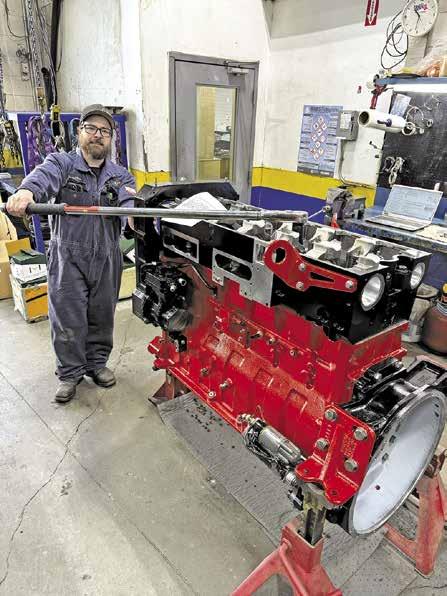

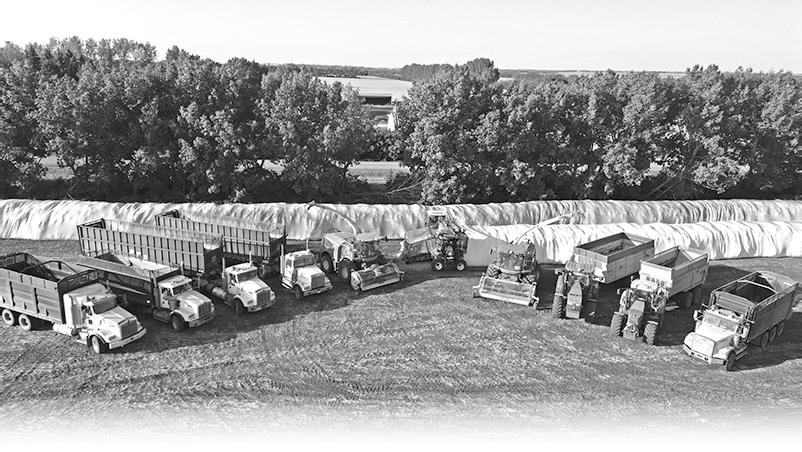















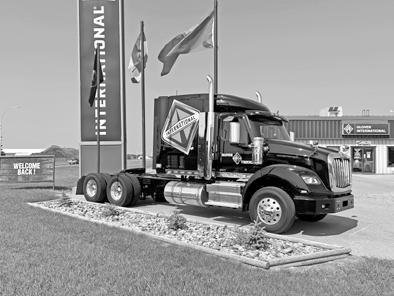

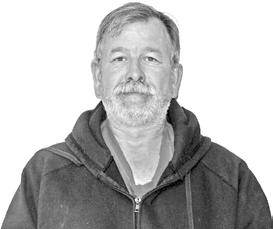


























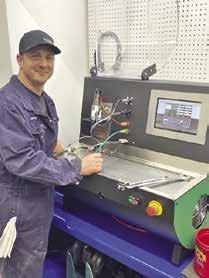
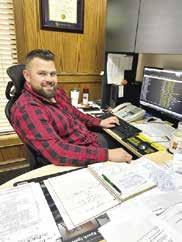
The entire team at the Camrose branch of Agriterra Equipment take this opportunit y to wish Phil nothing but the best in his well-deser ved retirement . With proverbial big shoes to fill to replac e Phil, who was broadly respec ted for his indu stry knowledge and at tention to client ne eds, we have turned to Tyler Kines as Phil ’s replacement. Tyler may already be known to you as a former or present Agriterra customer. He has been one of our Technical Suppor t Specialists for multiple years, bringing education and value to ever y sale in this hi-tech and rapidly evolving world. ler is no stranger to the AG indu stry. He grew up on a thre e- generation farm in the Rollyview area. This land continues to be home for Tyler and Laura and their young daughter where he remains ac tively involved in their cow/calf and mixed grain farm operation.


We welcome Tyler’s clear understanding of the needs of sophisticated farmers, in this evolving era. With his impressive knowledge of how technology can assist in the business of farming, and excellent, broad, product knowledge, he is uniquely qualified to bring instant value to exis ting and new clients. Tyler will primarily represent Agriterra cu stomers who generally reside no rth of Camrose. His usual area of sales and service will ex tend to Highway 2 to the we st , and up in the Highway 16 area of east central Alberta. If you we re a former client of Phil ’s , know that yo u will be in good
working for your benefit. Reach Tyler dire ct by







Axle Trailer TOOLS & MISCELLANEOUS • Dewalt 12” Planer
4” Jointer Planer
Miter Saw
2 T Engine Hoist
Acetylene Cutting Torch

Metro News
Agriculture is changing rapidly as producers adopt new technology to meet the demands of a growing population and a changing climate. The United Nations projects the global population will reach 9.7 billion by 2050, increasing pressure on farmers to produce more food while using fewer resources.
Technology is helping bridge that gap and these are some of the innovations that are being used:
Internet of Things (IoT) sensors monitor soil moisture, temperature and nutrient levels in real time, allowing farmers to apply water and fertilizer only where needed.
Labour shortages have accelerated the use of robotics and automation. GPS-guided tractors, drones and harvesting robots can improve efficiency, reduce soil compaction and identify crop stress before it is visible.
Biotechnology is also reshaping agriculture. Gene-editing tools such as CRISPR are being used to develop crops that are more resilient to drought, poor soil conditions and other environmental stresses while improving yields.
Vertical farming and controlled-environment agriculture, including hydroponic and aeroponic systems, allow producers to grow more food in smaller spaces while maintaining precise control over growing conditions.






























Alberta’s strength has always been its ability to help everyday families while building a better future for everyone. This week, that commitment was on full display as United Conservatives delivered real relief to household budgets, making it easier to see a healthcare professional, and celebrating our students who are leading the country in school achievement. Our government remains focused on making life more affordable and ensuring Alberta stays the best place to live, work, and raise a family. From the gas pump to our classrooms, Alberta is winning.
High global energy prices continue to make life expensive for families in Alberta and across the country – especially at the gas pump. To help fight these costs, our government is stepping up with a $100 fuel tax rebate. We believe this money belongs in the pockets of hard-working Albertans, which is why roughly 3.4 million people will be eligible for this payment. While other governments add new costs, United Conservatives are using Alberta’s strong financial position to shield families from high prices. We’ll always make sure life remains affordable here in Alberta while keeping the economy moving forward.
Our government is working to ensure you can access healthcare quickly, affordably, and

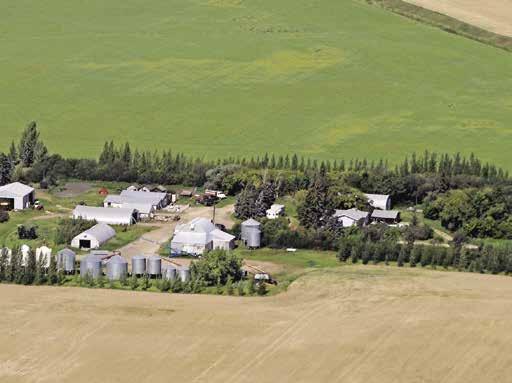
The farm appearing in this photograph is located in the Camrose trading area. If you recognize it as yours, come to the Camrose Booster, 4925-48 Street, Camrose. You will be presented with a free 8” x 10” colour enlargement of the photo.
• This week’s prize must be claimed by August 4, 2026

when your family needs it most. That’s why we’ve signed a major new deal with Alberta’s pharmacists to expand local care. Pharmacists are often the first people Albertans turn to for medical advice. By funding more services and clinics in local pharmacies, we’re making it easier to see a healthcare professional and reducing wait times. Most importantly, this deal ensures important health services are available directly in your community, expanding coverage for seniors and low-income families so that excellent care is always just around the corner. By bringing treatment straight to the neighbourhood storefront, we’re treating patients with the speed and respect they deserve.
While we work to make life more affordable and improve our healthcare system, we’re also preparing Alberta for the future by ensuring students have the skills and opportunities they need to succeed. Our education system sets a high standard, and Alberta students continue to rise to the challenge. The latest national test results confirm what Albertans have always known: our students are leading the country, ranking first for science, second in reading, and third in math. These outstanding results reflect the hard work of Alberta students, the dedication of teachers, and




By
a school system focused on building fundamental skills. By prioritizing core learning and rejecting ideological distractions, United Conservatives are giving the next generation the tools they need to succeed in any path they choose. Alberta’s success in the classroom is helping make our province an education powerhouse and strengthening our ability to attract jobs, investment, and opportunity from across Canada and around the world.
Whether it’s helping families keep more money in their pockets, ensuring you can see a healthcare professional close to home, or preparing students for success, Alberta is demonstrating what can be achieved when a government focuses on results. United Conservatives will never stop fighting for practical solutions that protect your household budget, strengthen local services, and create opportunities for everyone who calls Alberta home. The future of our province is bright, and we’re proud to keep building an Alberta that is strong, prosperous, and second to none.