

15-year-old AACC grad just finished high school.


'Diary of Anne Frank' comes to Kauffman Theater on Nov. 4.
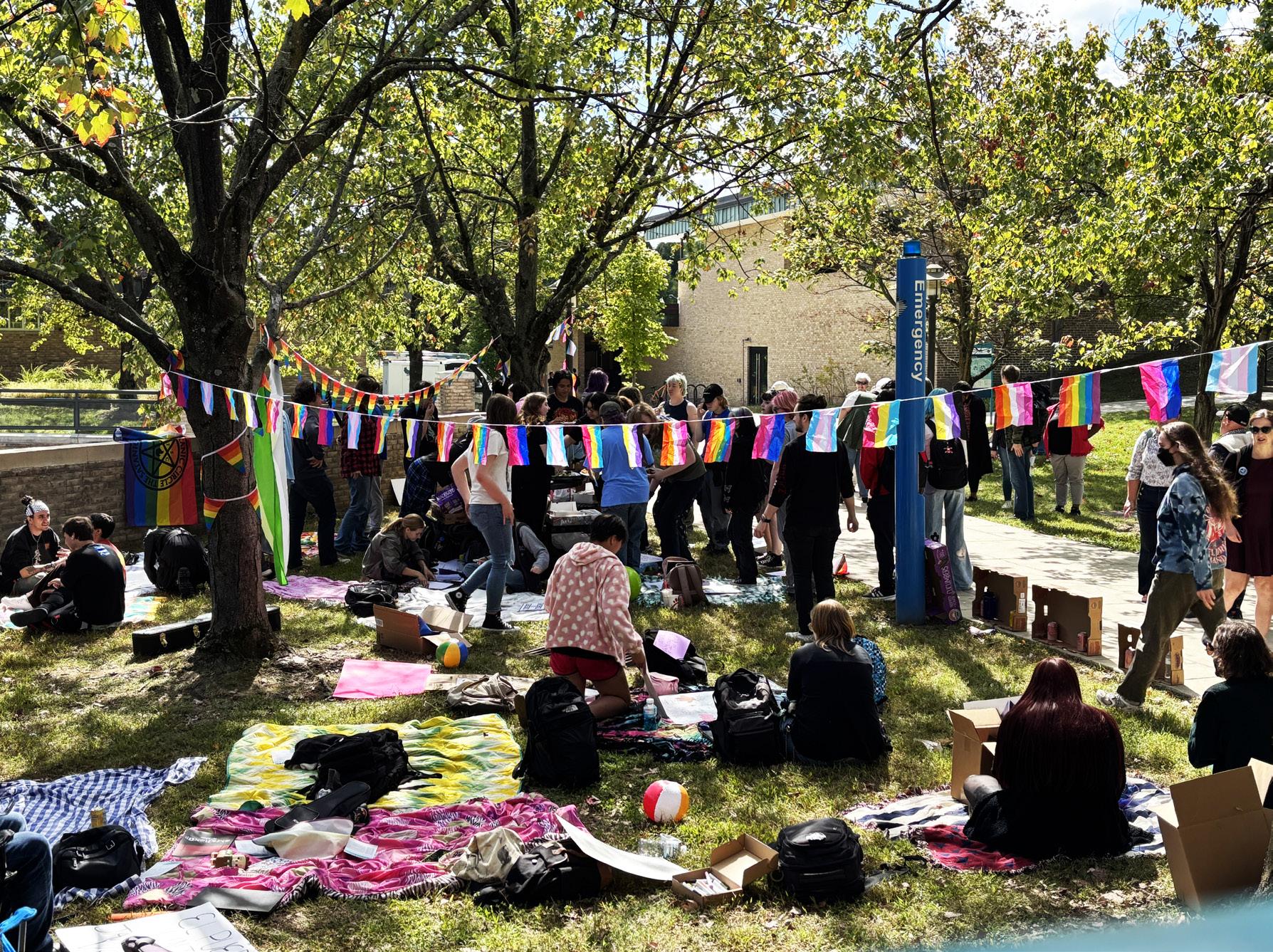
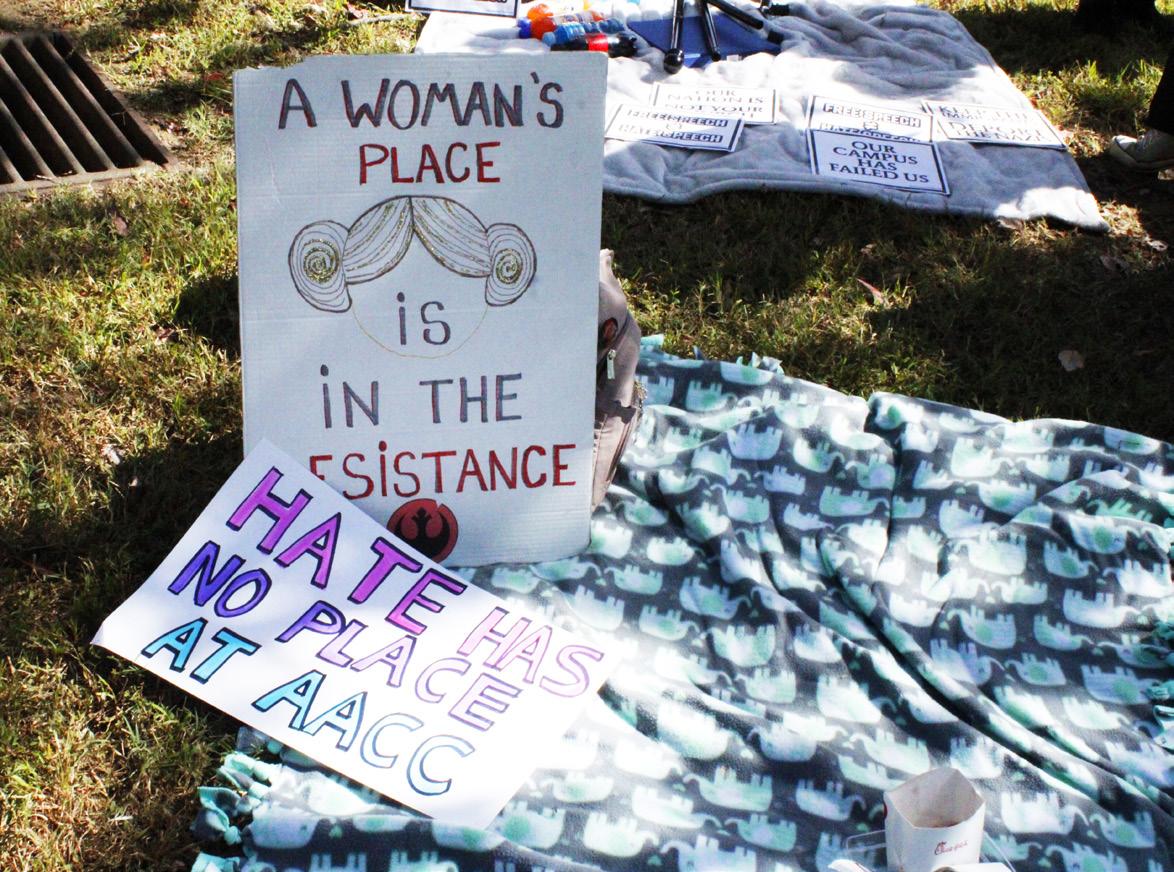
Students hold a sit-in near Careers after a group of religious extremists rallied on campus earlier in the week.
Photo by Natalia Lara
15-year-old AACC grad just finished high school.
'Diary of Anne Frank' comes to Kauffman Theater on Nov. 4.
Students hold a sit-in near Careers after a group of religious extremists rallied on campus earlier in the week.
Photo by Natalia Lara
Students at an early October Student Government Association town hall questioned why the college allowed an extremist group to speak on campus on Sept. 30.
Mary Bachkosky, a legal studies professor, said a public college like AACC must allow any group on campus because the First Amendment protects speech—even hate speech.
“So hate speech is protected until it becomes an illegal action,” Bachkosky told about 30 students, faculty
A former editor of AACC’s student newspaper has won a Pinnacle Award for a story about a professor who was suspended after a student filed a restraining order against him.
Tomi Brunton, who served as editor-in-chief of Campus Current during the 2023-2024 school year,
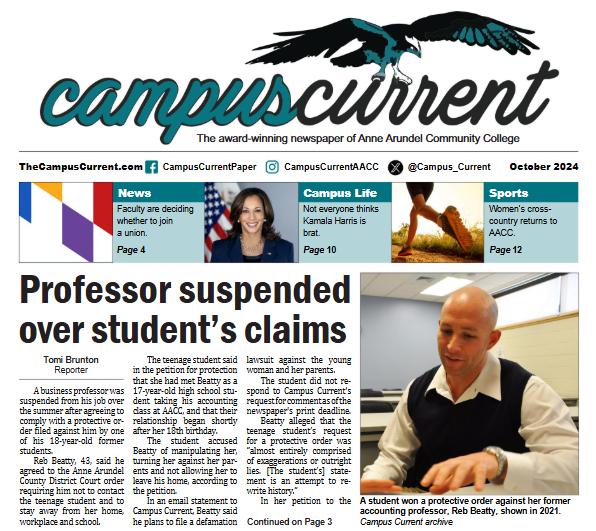
wrote the article, “Professor suspended over student’s claims,” which appeared on the front page of the newspaper’s October 2024 edition.
“It was a complicated and intense story to report, but that made it all the more fulfilling,” said Brunton, who became a newspaper con-
tributor and the managing editor of AACC’s student arts journal, Amaranth, during the 2024-2025 school year.
Brunton studied court documents filed by the student, who alleged she met business professor Reb Beatty when she took his class as a high school student dual-enrolled at AACC. She
said she later moved into Beatty’s house but fled, accusing Beatty of manipulating her, turning her against her parents and preventing her from leaving, according to court documents.
Brunton also interviewed Beatty via email
Continued on Page 3
and staff in the Health and Life Sciences Building. “It’s protected, really.”
The students were reacting to a September rally outside of Careers by nine members of a Virginia church, Key of David. The members held signs reading “Jesus or hellfire,” “Homos are rapists” and “Feminists are whores,” yelling at students who walked by.
The ralliers were not AACC students.
“If a student club were to do the same rhetoric, would they have, like, the same cam-
Continued on Page 3
Xavier Johnson Reporter
Recent bomb threats at Towson University and Morgan State University have led some AACC students to decide not to attend them.
The most recent incidents were on Oct. 13, when
Towson evacuated its student union shortly before 11:30 a.m. after receiving a bomb threat. Around the same time, Morgan State cleared its Earl S. Richardson Library as police searched the building floor by floor.
Towson’s student union reopened around 1 p.m. after
investigators determined there was no danger.
“I was thinking about applying to Morgan, knowing that it’s a great liberal arts school,” first-year journalism student Athena Dyer said. “But then with the safe-
Continued on Page 3
Editorial
Editor-in-Chief
Amanda Lewis
Reporters
Jorja Clark
Athena Dyer
Xavier Johnson
Asher Jones
Nessa Kilson
Natalia Lara
Genesis Portillo
Cleric Rutherford
Nick Taylor
Will Waldon
Photography Editor
Nick Taylor
Webmaster
Nadir Douglas
Photographers on
People often talk about putting the “thanks” back into Thanksgiving, and we think that’s a great idea. Another great idea is to put the “giving” back into Thanksgiving.
Students don’t have a ton of spare cash to donate to worthy causes during this season of thanks and giving. But that doesn’t mean we shouldn’t give anything.
It’s all too common to think of Thanksgiving as just a meal. This year, make it more than that. Take time to reflect on what you’re thankful for, and then craft a plan to use your blessings to give to others.
For example, you might not always consider how lucky you are to have a big Thanksgiving dinner to look forward to, or to know that you have plenty of food every day. Not everyone has that. Some people—even some of your classmates—go hungry because their families can’t afford as much as yours can.
So how about donating something to the campus food pantry? It could be a box of stuffing, a can of corn or the ingredients for your favorite Thanksgiving side dish.
Or it could be something that doesn’t involve food at

all. You could volunteer your time as a way of giving. If you’ve noticed a classmate struggling in one of your classes, you could offer to study together or be an unofficial tutor.
You could join a campus club that focuses on service. Or look for a local nonprofit, like a pet shelter, another food bank, a senior center or a public library, and offer to spend even a couple of hours a week helping out.
You don’t need money to make a difference. Even small gestures, like holding the door open, checking in on
a friend, smiling at a stranger or offering a compliment, can brighten someone’s day. Helping others isn’t just kind. It’s actually good for you. Volunteering releases feel-good chemicals in your brain and lowers stress, according to a pile of studies on giving back. People who help others regularly report being happier and more satisfied with their lives.
Those studies also show that giving your time can help you make friends, strengthen existing relationships, build empathy and feel more connected to your community—
on campus and off.
Volunteering is also good for your future. When it’s time to apply for an internship or a job, potential employers will notice if you’ve taken the initiative to make your community a better place. And what looks better on a resume than the teamwork and problem-solving skills you gain from volunteering, like teamwork and problem-solving?
This Thanksgiving, be thankful that you can give something to someone who needs it. Giving, it turns out, is a gift you give yourself.
Natalia Lara Reporter
I was 14 when I first saw my body. Not just a simple glance in the mirror, but an in-depth self-analysis.
I looked at the folds on my stomach, how my thighs shook when I walked, how my arms jiggled when I waved goodbye to my friends, and how my cheeks puffed up when I smiled.
It didn’t matter that I was a growing girl, that I was only 14 and my body was shifting and rearranging in ways I couldn’t even name. All that mattered was that I didn’t look like the girls on TikTok. Whether we like it or not, thin is most definitely back. With the rise in Ozempic use among not only celebrities but also everyday people, it’s becoming more and more expected that we should be slim.
Every time I opened TikTok, I was bombarded by
ultra-thin “Pilates princesses” who ate tiny servings of food and looked amazing. As a 14-year-old, there was nothing I wanted more than that. Soon, my For You page was flooded with young girls posting tiny portions of food with no nutritional value.
I saw videos of K-pop idols who were clearly malnourished, recipes for low-calorie meals, the best exercises for a slim waist and photos of celebrities getting thinner by the day.
At first, I thought how crazy it was. But five years later, I noticed myself taking on these habits. By the middle of this year, I had lost so much weight that friends said they were concerned. But that didn’t matter once I started getting comments on Instagram about how pretty and skinny I was.
I eventually realized that no matter how many people called me skinny, I was never going to be thin enough to

fit the standard that my sick brain wanted.
Then I realized that’s OK. I don’t need to fit someone else’s standards. Your weight doesn’t dictate whether you are worthy.
In the past few months, I’ve been trying to heal my relationship with food, social media and my body.
While every day is a struggle, learning to differentiate real life from the artificial world of social media makes recovery possible.
A lot of people with eating disorders don't think they can recover until they are underweight or until they feel “worthy” enough. But if I can do it, so can you.
Continued from Page 1
pus rules applied to them or the government laws?” Charlemagne DeBarber, president of the newly formed Satanic College Club, asked.
The church's leader said he and his followers frequently protest on college campuses. Students who stopped by called the demonstrators’ message “extremist” and “immoral.”
In response, a few dozen students held a peaceful, four-hour sit-in with signs, music, dancing and food out-
side of Careers on Oct. 2.
“This is how you want to do it,” part-time student Casian Holly said. “You create a presence, a safe space, where students walking by can ask and get more information, if they want or just enjoy the good vibes without having to have all of the angry shouting and fighting.”
At the town hall, Melissa Beardmore, vice president for learning resources management, said administrators are considering designating free-speech areas,
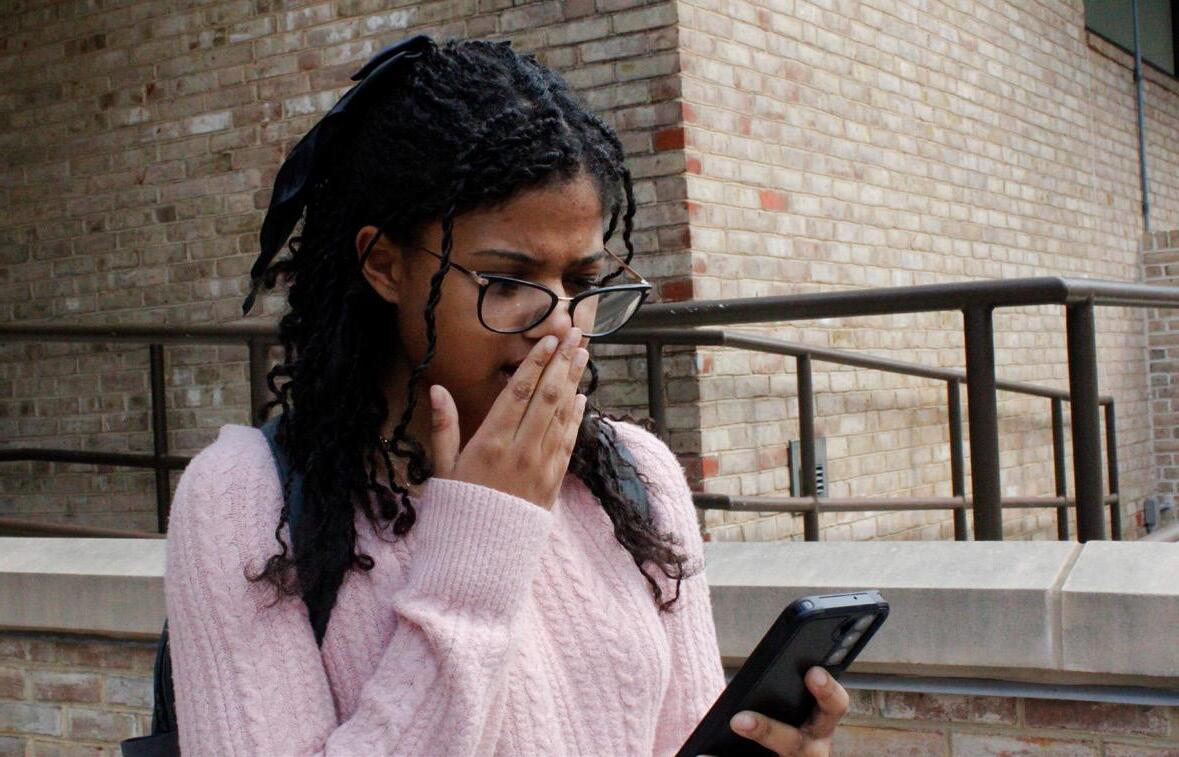
Former Campus Current Editor-in-Chief Tomi Brunton wins a student journalism award for a 2024 story.
limiting amplifier volume and possibly banning megaphones.
Still, Beardmore said, “I don’t want to promise too much.”
Some students suggested administrators notify them directly if other groups come to campus.
“It would be nice to be notified that they’re going to be outside,” student Effie Gentry said. “It would help students quickly be aware of what’s happening in the areas we primarily use, so they can avoid it if they want.”
“I think that would be really helpful to a lot of the student body,” Gentry added.
Jorja Clark, Asher Jones,
contributed to this story.
Continued from Page 1
and attempted to reach the student, who did not return calls.
Before publishing the article, Brunton and the newspaper’s faculty adviser, journalism professor Sharon O’Malley, consulted with a lawyer from the Student Press Law Center, who advised them to stick to public
ty concerns, I decided to take a different route.”
Continued from Page 1 E. Presley said that while most bomb threats turn out to be hoaxes, they still have real emotional and social impacts on students.
Although AACC has not reported any bomb threats on campus, some students said the news hit close to home. Approximately 128 AACC students transferred to Towson in 2024, and six graduates moved on to Morgan State, according to AACC.
“I was planning to transfer to either Towson or Morgan next year, but hearing about the bomb threats really made me think twice,” first-year computer science student Jerrold Mathis said. “It’s scary to imagine that something like that could happen on a college campus, so I’ve started considering other schools just to feel safer.”
AACC Police Capt. David
“The vast majority of bomb threats we see are hoaxes,” said Presley, who said AACC has not had any bomb threats in the 11 years he has worked here. “Most of the time, the goal is simply to cause disruption or chaos. Still, each threat is investigated thoroughly, and depending on how it’s reported, it can result in both state and federal charges.”
The United Negro College Fund has estimated that more than 75 institutions have reported bomb threats since 2022, canceling upward of 77 days of classes in 18 states and Washington, D.C.
Historically black colleges and universities “are
being targeted at a rate higher than any other category of higher education institutions,” Lodriguez V. Murray, senior vice president for public policy and government affairs at UNCF, told HBCU News. “No student should ever fear for their life on a college campus.”
Presley added that even false threats can create widespread fear and uncertainty, especially among students planning their next steps in education.
“It’s understandable that students would be concerned,” he said. “But it’s important to remember that these situations are extremely rare, and campuses like Towson and Morgan work closely with law enforcement to keep students safe.”
Presley also encouraged
documents when citing accusations and to quote Beatty only when he referred to himself and not to the student.
The article won third place for breaking news in the Pinnacle competition, which draws thousands of entries from colleges and universities all over the country. Brunton competed in the community college category.
The Pinnacle Awards, sponsored by the College Media Association, and the Pacemaker, from Associated Collegiate Press, are widely recognized as the “Pulitzer Prizes of college journalism,” O’Malley said.
This is Campus Current’s second Pinnacle. The newspaper has been a Pacemaker finalist twice.
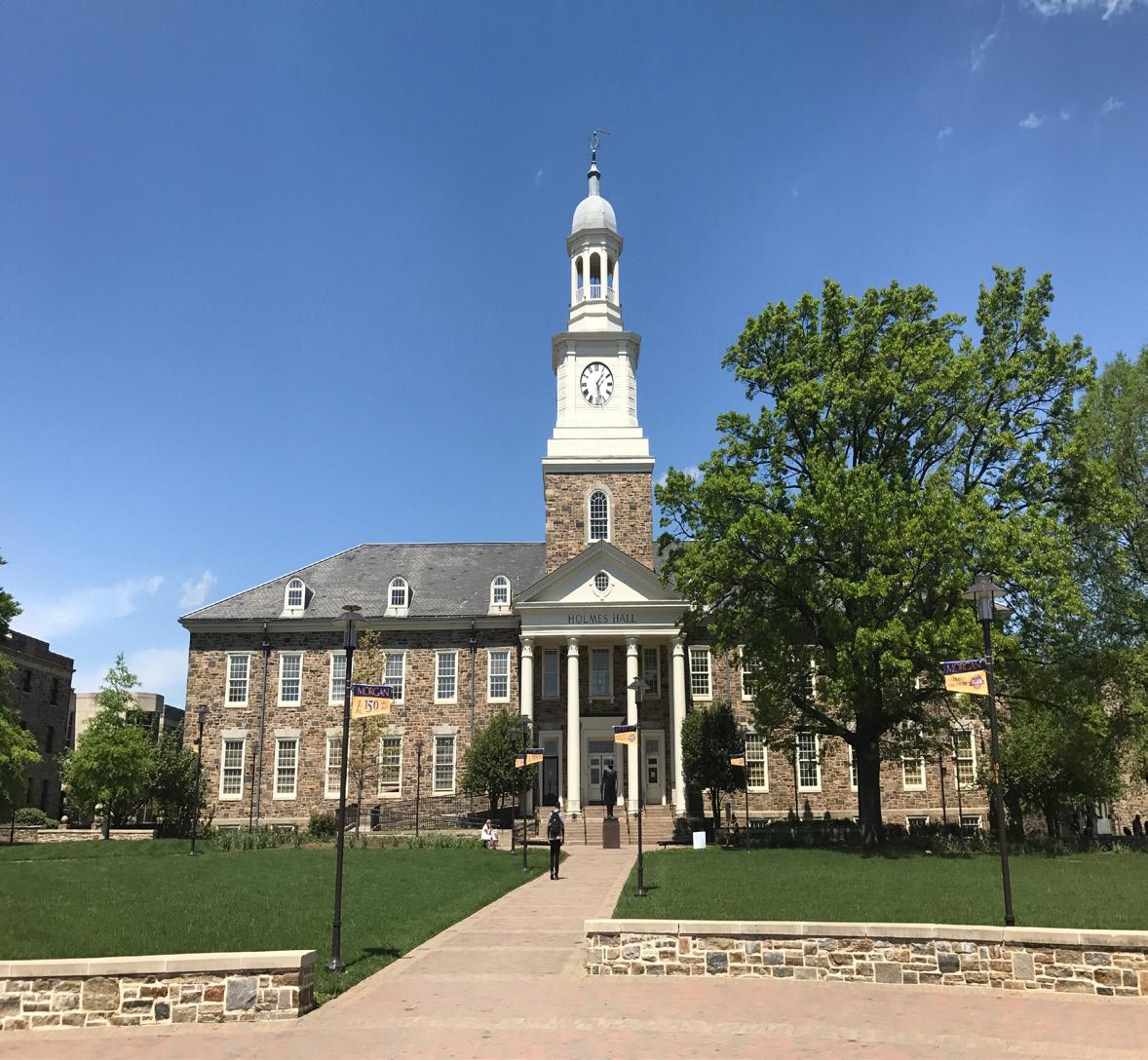
Morgan State University in Baltimore had two bomb threats in September.
Wikimedia Commons photo
AACC students to take bomb threats they see on social media seriously and report them to police.
“If students see or hear something suspicious, they should report it immediately even if they think it’s a joke,” Presley said. “It’s always better to be safe.”
Presley emphasized
that AACC is one of the safest campuses in Maryland and continues to coordinate with state and federal agencies on emergency preparedness.
For students like Mathis, though, the concern lingers.
“College should be a place to learn and grow, not to worry about safety,” he said.
Cleric Rutherford Reporter
The economy, high taxes and housing costs are the biggest concerns of Anne Arundel County residents, according to an October AACC survey.
Political science professor Dan Nataf, with AACC’s Center for the Study of Local Issues, found that 26% of adults in the county list jobs, high cost of living and business closings as their greatest worries. Additionally, 16% said loss of jobs or income because of changes in the federal government keep
them awake at night.
“We’ve seen the concerns over economic conditions get greater through the Trump term,” Nataf said. “So when there’s employment ambiguity at the federal level, it trickles down to uncertainty at the local level, because we’re in it.”
Last semester’s survey had the numbers at 25% and 23%, respectively. More than 1,480 county residents responded to the fall survey.
Residents who answered the poll ranked high taxes as their second-greatest concern. Overdevelopment and overpopulation came

in third, tied with housing costs.
More than 490 AACC students also participated in the poll. Their top concern, like those in the county, is the economy—specifically jobs and the high cost of living, followed by housing costs.
“This is a short- and long-term thing,” Nataf said. “They want to feel that there is both kind of employment in the short term while they’re students and, you know, maybe doing parttime things and whatever, and then kind of career paths in the long term.”
Cleric Rutherford Reporter
AACC’s Student Government Association on Oct. 10 approved the campus chapter of Turning Point USA as an official student club.
Turning Point USA is a national organization founded by the late Charlie Kirk, a conservative activist who was assassinated on Sept. 10 in Utah. The group has more
Amanda Lewis Editor-in-Chief
AACC students said in October that it’s possible for liberals and conservatives to be friends.
In an informal poll of 50 students on the Quad, 47 said they don’t let their political stances get in the way of friendships, but three said they cannot be friends with people with conflicting ideals, especially if the differences are extreme.
“My best friend is a Republican … and we don’t try to offend each other, but we’re proud of what we believe in,” second-year psychology student Joshua Thomason said.
Kyrie Walker, a sec-
ond-year general studies student, said he wouldn’t end a friendship over politics.
“Everybody has different viewpoints and opinions,” Walker said. “So I feel like, if you can put your viewpoints to the side, I mean, it’s not that hard for everybody to have a different opinion. So not everybody’s, I think, the same. So I think everybody can just get along. Everybody has different opinions.”
But some students said they wouldn’t be friends with people with different political views.
“I fundamentally don’t think I could be friends with a conservative,” Jay Agunbiade, a second-year pre-law student, said. “Being friends
with one, just with how strong my values are, and me being a person of color, a queer person … I just don’t think I could find myself at least having a lasting friendship with that person.”
Mackenzie Bridgeman, a second-year cyber security student, agreed.
“If I was to be friends with a conservative, I would have to be ignoring a lot of my core values, which are, you know, respect and love for queer people, people of color, marginalized people who are being victimized by most communities that are supported by conservative and alt-right communities,” Bridgeman said. “So it feels like almost a violation of my beliefs.”
than 800 college chapters across the country.
“I’m glad that [the SGA is] … letting everyone have a voice on campus,” Starr Busey, one of the AACC club’s creators, said.
Turning Point USA’s appearance on campus has met with controversy.
SGA President Chris Chambers said SGA can officially recognize any club that has 10 student members, a
faculty or staff adviser and a constitution.
“We looked through the history of the SGA for a bit [and] we couldn’t find any clubs that have been denied,” Chambers, a second-year engineering student, said.
Chambers added, “I have no feelings about Turning Point at AACC right now. Just we’ll see what they do in the future, you know?”

Jorja Clark Reporter
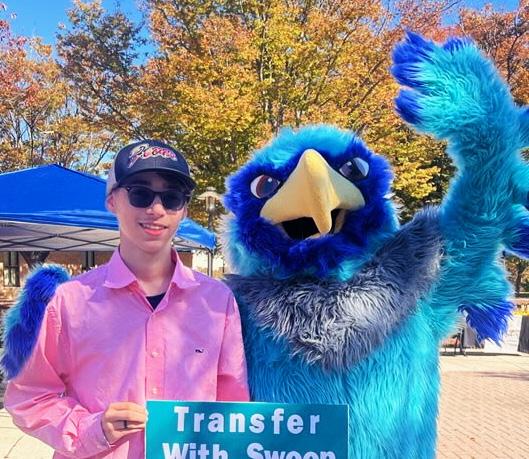
A 15-year-old transfer studies student is planning to graduate from AACC in December, six months after he got his high school diploma.
Ethen Daugherty, a June graduate of Penn Foster and The Mandala School, is finishing his final class at AACC, an eight-week section of English 102.
“I mean, it’s definitely not common, but it’s not like the rarest thing, right?” Ethen, who lives in Glen Burnie, said. “As of late, people have been doing it more often, but it’s definitely not like everyone’s doing it, right?”
Ethen said he started taking science classes at AACC when he was 12.
“We always knew he was ahead in public school, like, anytime he took the test, he was always grade levels ahead,” Michelle Daugherty, Ethen’s mother, said.
But Ethen, who said he tested at a 12th-grade level when he was in sixth grade and described himself as “socially behind,” said his old charter school refused to let him skip any grades. So that year, his parents moved him into private schools and dual-enrolled him at AACC.
“I have to explain every time I meet someone and talk about school, yeah, so it’s a little awkward when, like, people are in high school and I’m like, I’m almost done with my associate’s,” Ethen said.
Daugherty said the family faced a few challenges along Ethen’s journey to ear-
ly graduation.
“How do we help professors understand, yes, you have a 12-year-old in your class and he needs to be treated just like every other student in your class?” she said.
He admitted: “It’s a lot,” noting that he often focused on homework even when he was with friends. “I kind of took the work with me and got it done while other stuff was happening,” Ethen said.
Ethen said he plans to go to a four-year university to study engineering and forensics, but not just yet.
“I’m thinking I might take a small break, slow down on the education a little bit, work on some other stuff, learning to drive, getting a job or internship somewhere,” Ethen said.
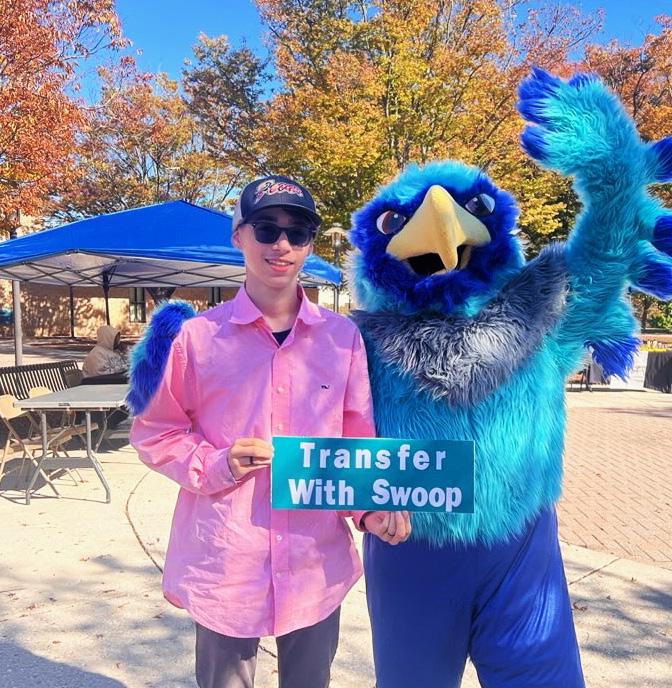
15-year-old Ethen Daugherty, posing with AACC's mascot, Swoop, started taking AACC classes at age 12 and will earn his associate degree this semester.
“There are a lot of offers coming in,” said Michelle Daugherty, who noted Ethen got a partial scholarship offer from Stevenson University in Owings Mills. Daugherty called her son’s accomplishments “huge. … We’re both [parents] very proud. I know he doesn’t always seem to be as proud of his accomplishments as we are [but] he’s meeting the goal every time.”
Nicholas Taylor Photographer
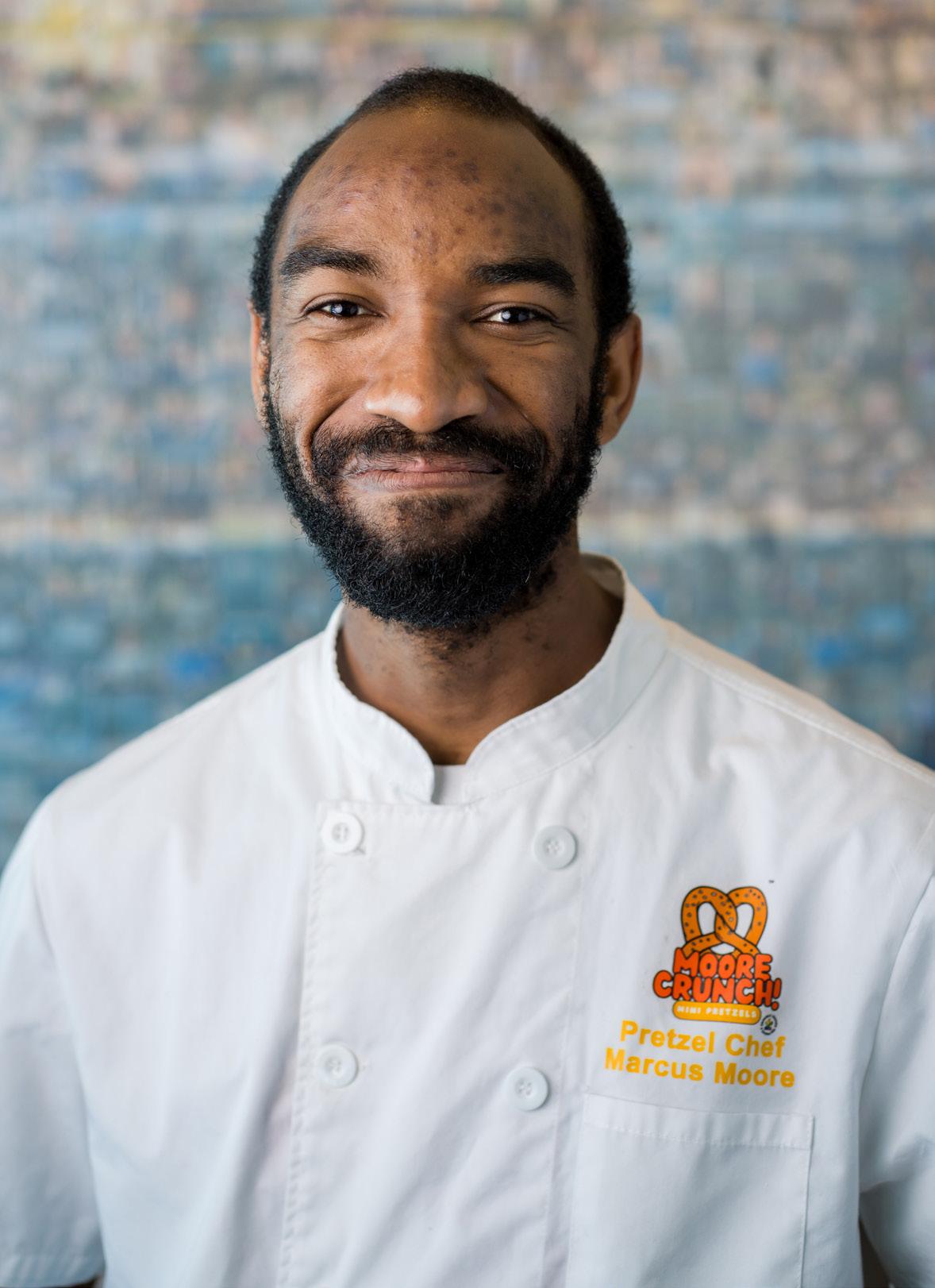
An autistic entrepreneur is selling five flavors of extra-crunchy pretzels in the AACC bookstore.
Moore Crunch is a Baltimore-based pretzel company founded and managed by Marcus Moore, whose difficulties navigating life with autism inspired him to start the business.
“It’s more than pretzels to me,” Moore said, “but I love inspiring others and just meeting great people and just like showing like, never give up.”
Moore began selling his pretzels at the AACC bookstore earlier this year with approval from the store’s manager.
“I loved the idea of being able to help him expand his business and get more eyes on his product,” manager Sarah Preis said. “I think that what he’s doing is amazing.”
Moore said his crippling anxiety and a fear of being unable to take care of himself without his parents was a major motivation for the company’s founding.
“I was wondering what’s going to happen when my parents are not around,” Moore said. “And that’s like, you know, let’s go for pretzels.”
With the support of his mother, Kathy Watson, Moore began the business small by testing different flavors, Watson said.
“Marcus inspires me ev-
ery day,” Watson said.
Watson stressed the importance of Moore’s being the person responsible for the company’s success and not her or Moore’s father.
“I didn’t want people to think that we were doing everything for him,” Watson said. “So a lot of things, I step back on.”
Moore’s product comes in five flavors, including Buffalo, cinnamon sugar, ranch, sour cream and onion, and Maryland crab.
Preis said all five of Moore’s flavors are delicious and have been selling well.
“I don’t think you can go wrong with any of them,” Preis said. “That cinnamon crunch … I just sold my last bag today. It’s out, so I got to get more.”
by Sean Urbantke, the AACC theater coordinator.
AACC’s theater program will put on a stage adaptation of “The Diary of Anne Frank” at the Robert E. Kauffman Theater in November.
The play is based on the writings of a 13-year-old Jewish girl whose family went into hiding from the Nazis in Amsterdam.
“So it chronicles her experiences and her feelings and thoughts growing up almost two years … trapped in hiding with … eight people total, her own family, another family … a dentist who joined them in desperation … and the folks who helped them,” Erin Bone Steel, the director, said.
The play will have 13 cast members, including students and members of the community, and incorporates a mix of historical recordings, new material and a multi-level set designed
The original playwrights, Frances Goodrich and Albert Hackett, won the Pulitzer Prize in 1956 after the play opened on Broadway in 1955. Wendy Kesselman, an American playwright, readapted it in 2016.
“And so they went about the process of adapting this within a decade of the close of the war,” Bone Steel said. “But they were very worried that American audiences and Broadway audiences would be turned off if the family felt too Jewish or too alien to what they thought was the mainstream American ideal.”
Kesselman, however, decided not to “sugarcoat some of these things,” Bone Steel said.
Kaitlyn Carter, a second-year law student, will play Anne Frank.
“A lot of people just see, like, the hardships they went through, and all the strug-
gle,” Carter said. “And I think that this is a good enlightenment into who they were. They were just a family. They were just two families in this attic, just trying to live their lives.”
Carter has been doing theater since fourth grade.
“I love the self expression of it all and just being able, I think, every time I play a character, [to] take a part of that character with me. It develops my personality,” Carter said.
Bone Steel agreed.
“A lot of people already know how the story of Anne Frank ends,” Bone Steel said, tearing up. And it feels like a tragic ending. It is a tragic ending.”
Still, Bone Steel said, the reason to watch the play is “not two hours of doom and gloom and misery. It’s these people who are profoundly hopeful. They are finding a reason to go on, and they’re finding a reason to hope in

An actor prepares for a role in an upcoming production of “The Diary of Anne Frank.”
the tiniest little things that keep them going. It celebrates both the legacy and the power of the written
word that lives after us.” Showtimes are Nov. 7, 8, 14 and 15 at 7:30 p.m., and Nov. 9 and 16 at 2 p.m.
Natalia Lara Reporter
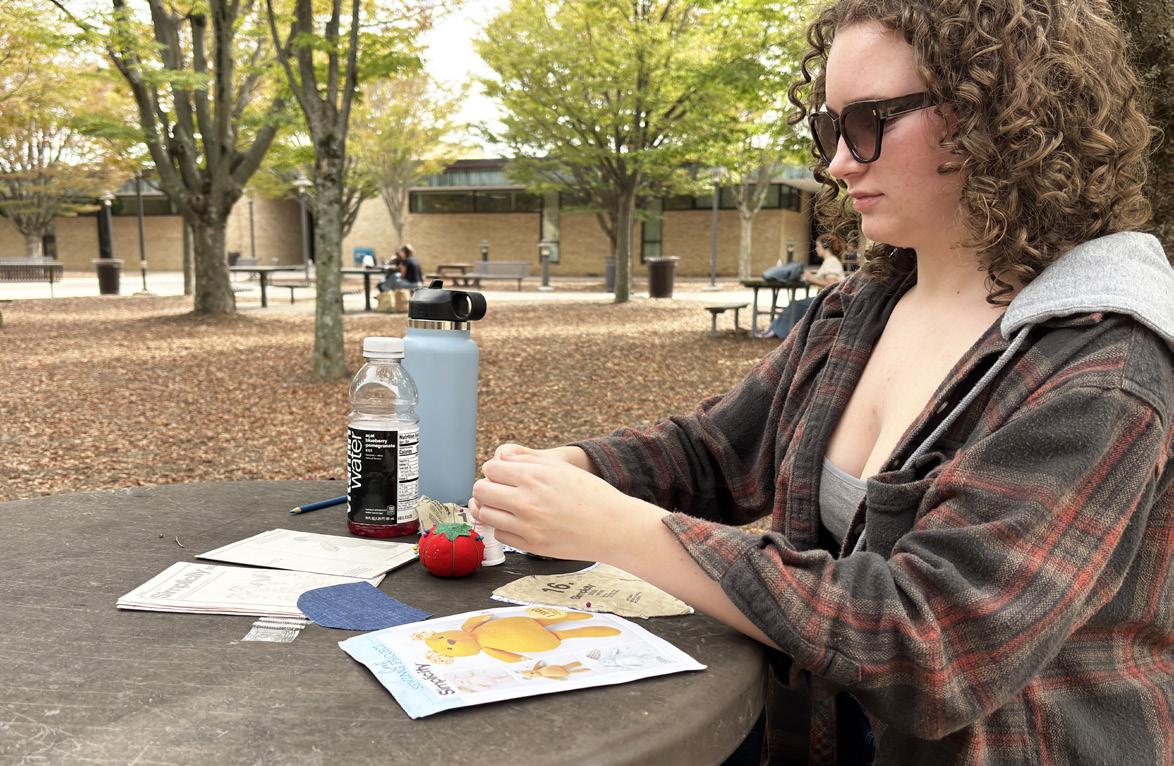
Students interested in sewing, crocheting, knitting, macrame and embroidery are joining a new student Fiber Arts Club.
Club President Isabella Milani said she wants to bring the AACC community together, one thread at a time.
“I think art clubs are really important in general, because people getting to learn how to express themselves and their own creativity is important, especially when
you’re getting older,” Milani, a first-year environmental science major, said.
Fiber arts refers to artwork created from textiles like yarn, fabric or thread. Club members will work on quilts, sewing and knitting projects during meetings, Milani said.
“I do believe that the act of making something by hand in community with other people is an unbelievable learning opportunity,” faculty adviser Hannah Bredar said. “In many ways, it kind of exemplifies what the community college is for.”

Milani said she had hoped to find a community of like-minded people at AACC who shared her interest in sewing, only to end up disappointed.
“I was really excited about getting to know the community and stuff in the school, so I started looking at clubs, and I wasn’t really interested in anything, so I was like, hey, I’ll make my own,” Milani said.
Milani said she wants this club to be a community for students to learn from each other, create art side by side, collaborate and meet
people with similar interests.
She said she plans to hold weekly, hour-long meetings for students to craft together. Club members also might join campus pop-ups to display their creations.
“I’m just so delighted
that there’s more student energy around those projects,” Bredar said.
Milani said she wants to help keep this art form alive.
“Taking things from the older generation and passing it down, I think it’s really important,” Milani said.
A club revolving around a religion known as Satanism has started at AACC.
The club’s officers said they hope to create a safe space for students who choose to practice the often-persecuted religion.
“Satanists are one of the least-accepted and understood religions in America,” said Charlemagne DeBarber, the club's president. “With the presence of other religious groups on campus, we felt that it made sense to provide community to the Satanists on campus as well.”
Those who practice Sa-
Natalia Lara Reporter
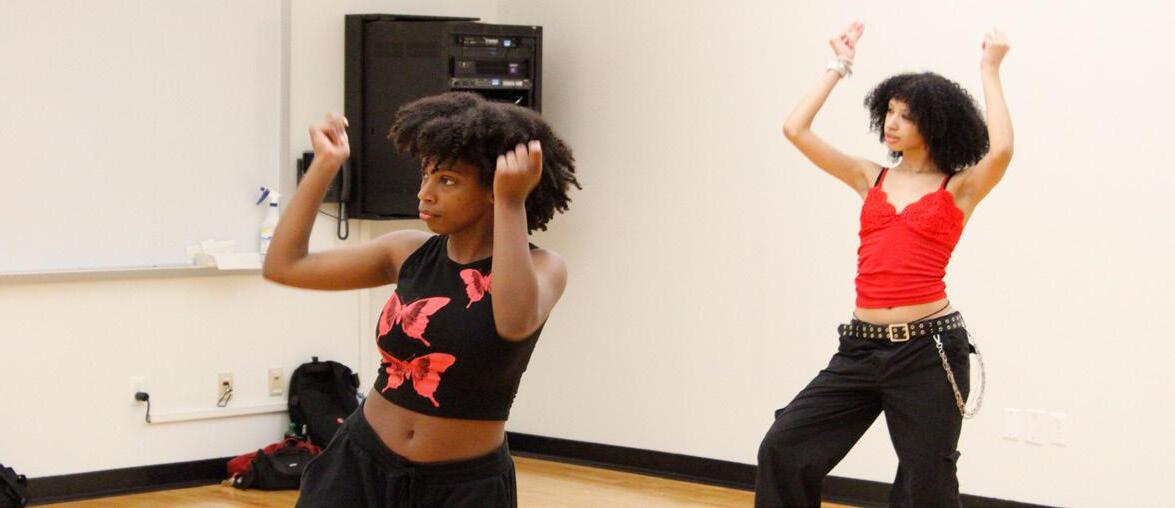
Students are learning K-pop moves from the leaders of a new campus dance club.
K-pop Dance Club President Mikylah Gonzalez said she wants to give K-pop fans on campus a place to connect.
“We live in a place where ... there’s not many places for K-pop fans to connect, rather than, like, a big city,” Gonzalez, a second-year transfer studies student, said. “So
we wanted to bring a space where the K-pop community can talk about certain topics and have fun and go to different events together and stuff like that.”
K-pop is short for Korean pop music, a genre that has gained popularity across the globe over the past decade.
The genre is heavily stylized, with a focus on visual aesthetics like music videos and choreography.
Club member Joanna Agunbiade joined the group after seeing a flyer in Careers.
She said she uses the club to bond with other fans and also for the health benefits of dancing.
“It gets me to exercise and actually be active, while also having fun," Agunbiade, a second-year pre-law student, said.
Vice President Lakota Clavin said she wants to give people the space to dance with no judgment.
“I think it’s an opportunity for people who might not be as confident to go to a dance company, to come to a
tanism do not worship the devil but focus on self-advocacy and activism, DeBarber, a second-year computer science student, said.
The Student Government Association approved the Satanic College Club as an official student organization this fall.
“We do not believe in a literal Satan or God,” DeBarber said. “Instead, we worship ourselves, choosing who we believe deserves our time and respect, while taking care of our own physical and mental health.”
The club’s vice president, first-year cybersecurity student Sasha Kotanko, explained the club’s goal is to
“promote activism, individuality, self, love and whatnot, and to stand against hate groups.”
Club members participated in an anti-hate sit-in outside Careers in early October.
“I think the name of it seems scary or unusual,” club adviser and English professor Sage Perkins said, “but it’s really not. It’s such a welcoming, open place to be who you are, whoever that is.”
Club members asked that students learn about the club before writing it off.
“Don’t take it at face value,” Kotanko said. "Try to genuinely hear what we have to say.”
little space with a few people that also like the same music to come and dance,” Clavin, a first-year dance student, said.
Gonzalez said she wants the dancers to eventually learn the choreography for a full song, with the goal of showcasing a full dance.
The club holds hour-long practices every Wednesday in CALT 103 at 11 a.m. Club
leaders teach the dancers choreography to different song choruses and offer time to socialize.
“I think it’s important because it’s always nice to have a creative space where you can also exercise and just have a place where you can feel comfortable with yourself and around other people,” Gonzalez said.
Matthew Walker Reporter
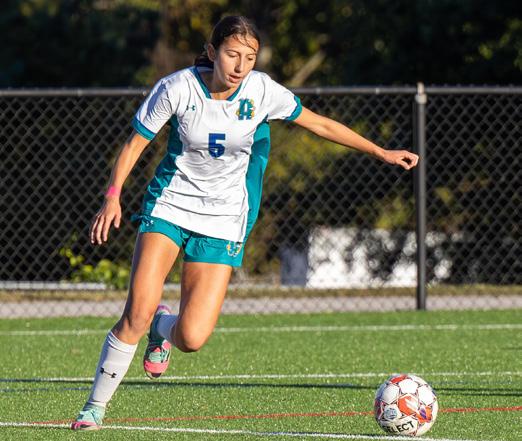
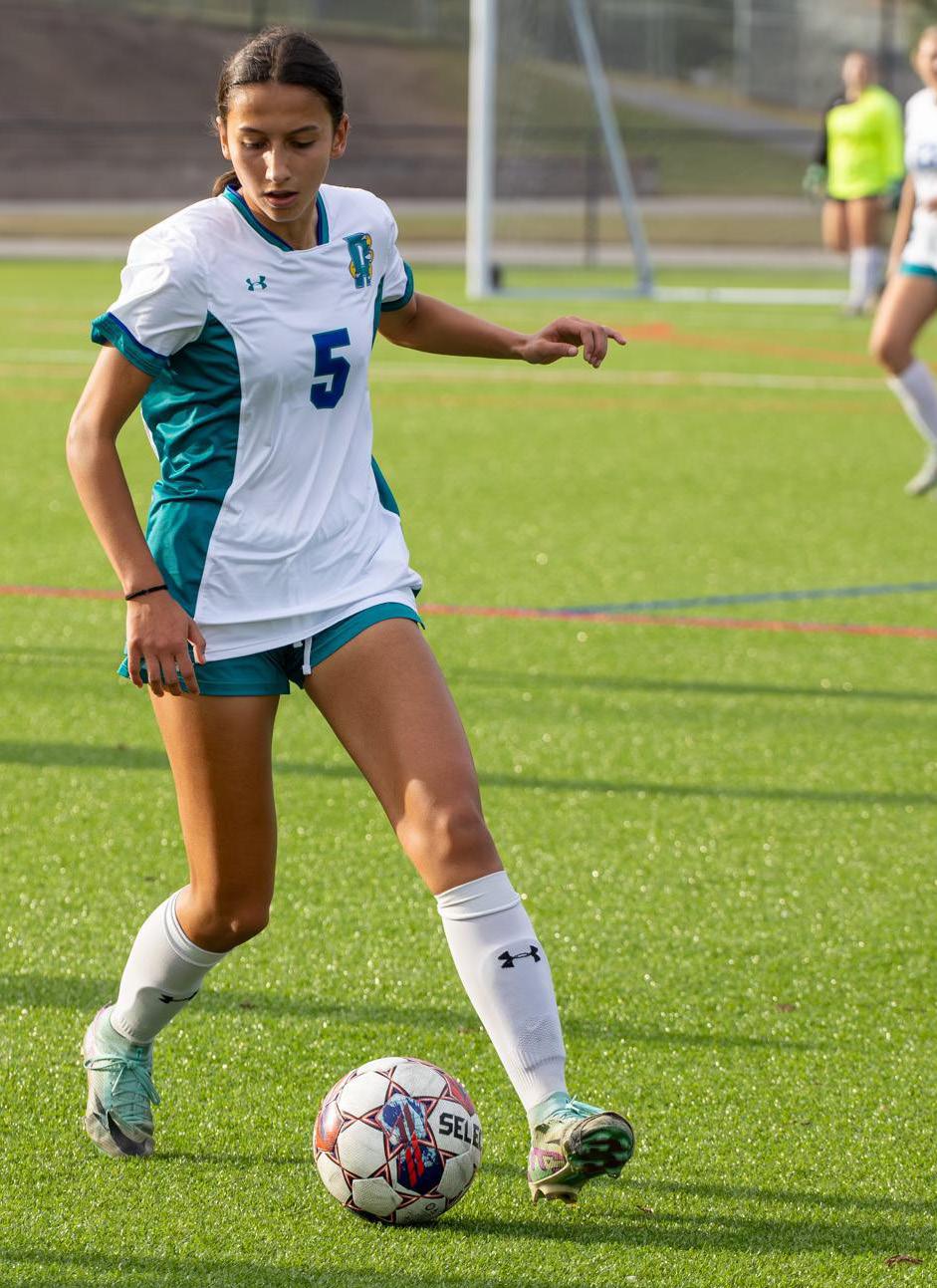
An AACC soccer player has scored 43 goals and made 25 assists since she started her college sports career in fall 2024.
As of press time on Oct. 23, Emma Miga, a striker, had accumulated 111 goal contributions—which is calculated by giving two points for each goal scored and one point for each assist, showing the player’s overall impact on the team’s offense.
“I’ve been here since 2000 and to my knowledge, we have not had anybody … to accumulate 100 points in their career,” women’s soccer head coach Jim Griffiths said. “She’s a great soccer player.”
The team boasted a strong 12-4 regular season record and a 10-1 conference record in the regular season.
“Reaching 100 points was an exciting experience,” Miga, a second-year mechanical engineering student, said. “I was grateful that all the time and hard work I have put into this sport was starting to really show. And reaching this milestone reminded me of why I put so much effort into the sport.”
Still, Miga added, she wasn’t aware she had reached the 100-point milestone until someone told her after she had achieved it.
“I actually didn’t even know I was close to hitting 100 points, let alone know
Matthew Walker Reporter
An assistant who worked with the Riverhawks women’s basketball team from 2019 to 2023 returned to AACC this semester to become head coach.
Jessica Mathes, who has worked as a high school coach and athletic director, also accepted a full-time job here as a budget and operations director for AACC Athletics.
“I’m excited about bringing my passion to AACC, and I’m excited about the players
being able to do something that they really enjoy doing,”
Mathes said. “You only get a small window of opportunity to do something that you’re really passionate about, so I’m just excited for them.”
Mathes replaced former head coach Lionel Makell. Athletic director Duane Herr said Makell left AACC after “some struggles over the last couple years.”
Herr added: “Recruitment [was] not necessarily where we would have hoped it to be, and then when we moved to Division II, it added anoth-
er layer of challenge to our schedule, and we were just trying to find some ways to spark some growth and interest and go a different direction with the program.”
The team finished last season with two wins and 19 losses.
“We had a pretty challenging year last year, and I think at the end, both parties kind of agreed that [it] might have been time for something new,” Herr said.
Herr said it was difficult to part ways with Makell. “The decision wasn’t an easy one to
Matthew Walker
Reporter
The Riverhawks’ basketball season kicked off with a couple of scrimmages on Oct. 18 ahead of the first men’s game on Nov. 1 and the women’s on Nov. 4.
“I’m hoping they’ll win a lot of games and we’ll go into the playoffs deeper than what we did last year,” said Joe Snowden, who has been head coach of men’s basketball since 2007.
Snowden’s team finished last year’s regular season with three wins and 20
losses. The squad faced challenges with a “lack of bench strength,” Snowden said.
This year Snowden said he hopes to win many games with the players’ speed and agility. “We’re not as tall as [the] majority of the teams, but we are fast,” Snowden said. “That’s our strength.”
The men’s roster includes two returners and nine newcomers.
Returning guard Ryan
Stacy said his goal is “to win.
… Last year we fell short, like, a lot, so this year [we want] to try to win games with a new team and just do a lot better
than what we did.”
However, his coach has his eyes firmly set on the national title.
“The goal is always a national title. Always, always a national title,” Snowden said.
However, newcomer Jaylen Marbley said he hopes to “build chemistry with this team. You know, it’s my first year here, and [I] just [want] to have a fun time.”
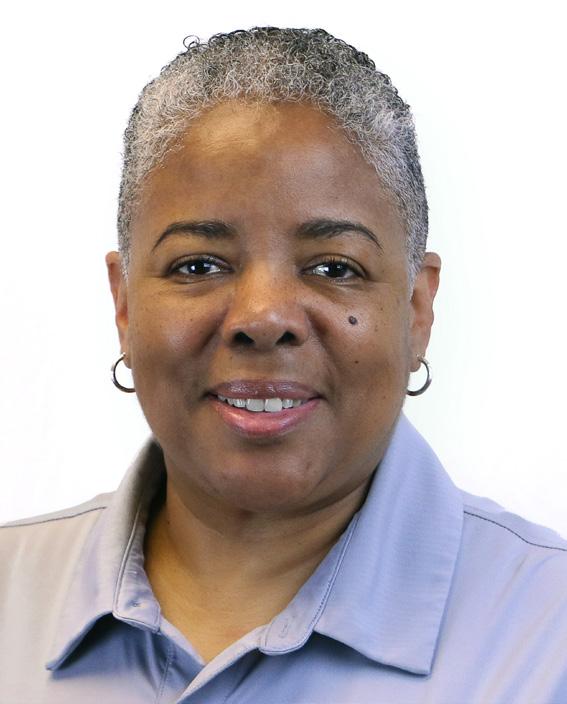
The women’s team started small, with two returners.
“The attitude is very positive, very positive,” women’s head coach Jessica Mathes said. “They’re very motivat-
that I would be able to reach 100 points [after] that game,” Miga said.
The National Junior College Athletic Association named Miga as the Region 20 DII Women’s Soccer Co-Player of the Month for games in August and September.
“She’s been one of a handful of players the last couple years who have been the catalysts for our ascension,” Griffiths said.
In 2023, before Miga joined the Riverhawks, the team had eight wins, five losses and three ties. During her first season in 2024, the Riverhawks won 14 games, lost three and drew one.
“Her presence makes others better,” Griffiths said, “both every day at practice and in games.
make … in any way.”
“Makell made a lasting impact [during] his time here,” Herr said. “He brought a level of character development, leadership, team bonding, what he did on and off the floor, the expectations he had, the type of culture he built, where everybody competed all the time. There was no quit ever. It was a tremendous effort.”
Mathes said she hopes to “create a culture of family, of hard work and determination. I believe that as long as I treat the players and my staff with

The women’s basketball team welcomes back two returning players from last season.
ed. They’re determined to get started in the season, so a lot of hard work that they’re ready for.”
Forward Reona Robinson, a second-year kinesiology student, agreed.
“[We’re] picking each other up,” she said, “staying together, being in unison,
playing as one.”
Another returner, Kaylee Motsinger, a guard, said she is “feeling pretty good” about this season.
“I feel like we got a good team this season, definitely a lot of consistency and speed,” Motsinger, a second-year psychology student, said.