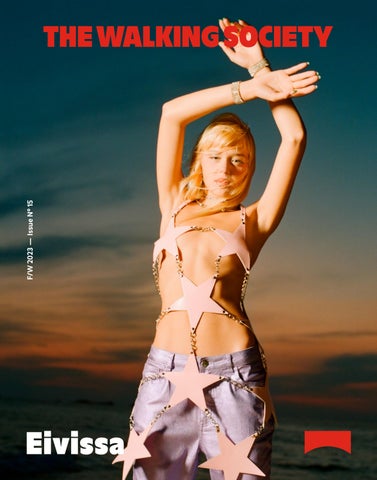
Eivissa
F/W 2023 ––Issue Nº 15
2
WALKING means travelling—moving from one place to another. Advancing, exploring, and innovating. The Walking Society is a virtual community open to everyone from all social, cultural, economic, and geographical backgrounds. Individually and collectively, TWS champions imagination and energy, offering valuable ideas and solutions to better the world. Simply and honestly.
CAMPER means “peasant” in Mallorquin. Our brand values and aesthetics are influenced by the simplicity of the rural world combined with the history, culture, and landscape of the Mediterranean. Our respect for the arts, tradition, and craftsmanship anchors our promise to deliver original and functional high-quality products with aesthetic appeal and an innovative spirit. We seek a more human approach to doing business, striving to promote cultural diversity while preserving local heritage.
EIVISSA is one of the most famous and infamous islands in the Mediterranean. First, as a trading port for pre-Roman maritime civilisations and, for the last fifty years, as a hot tourist destination for absolutely everyone.
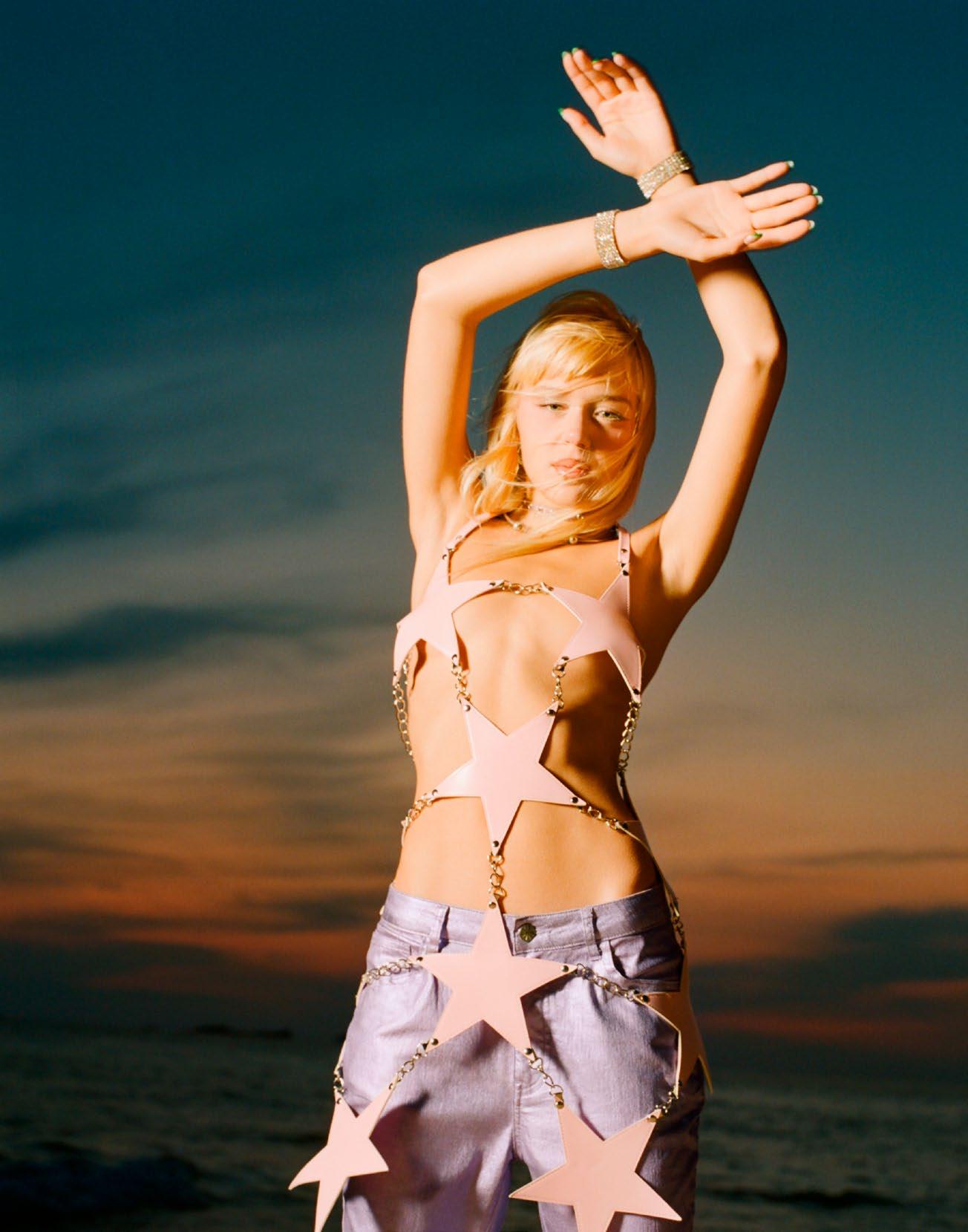
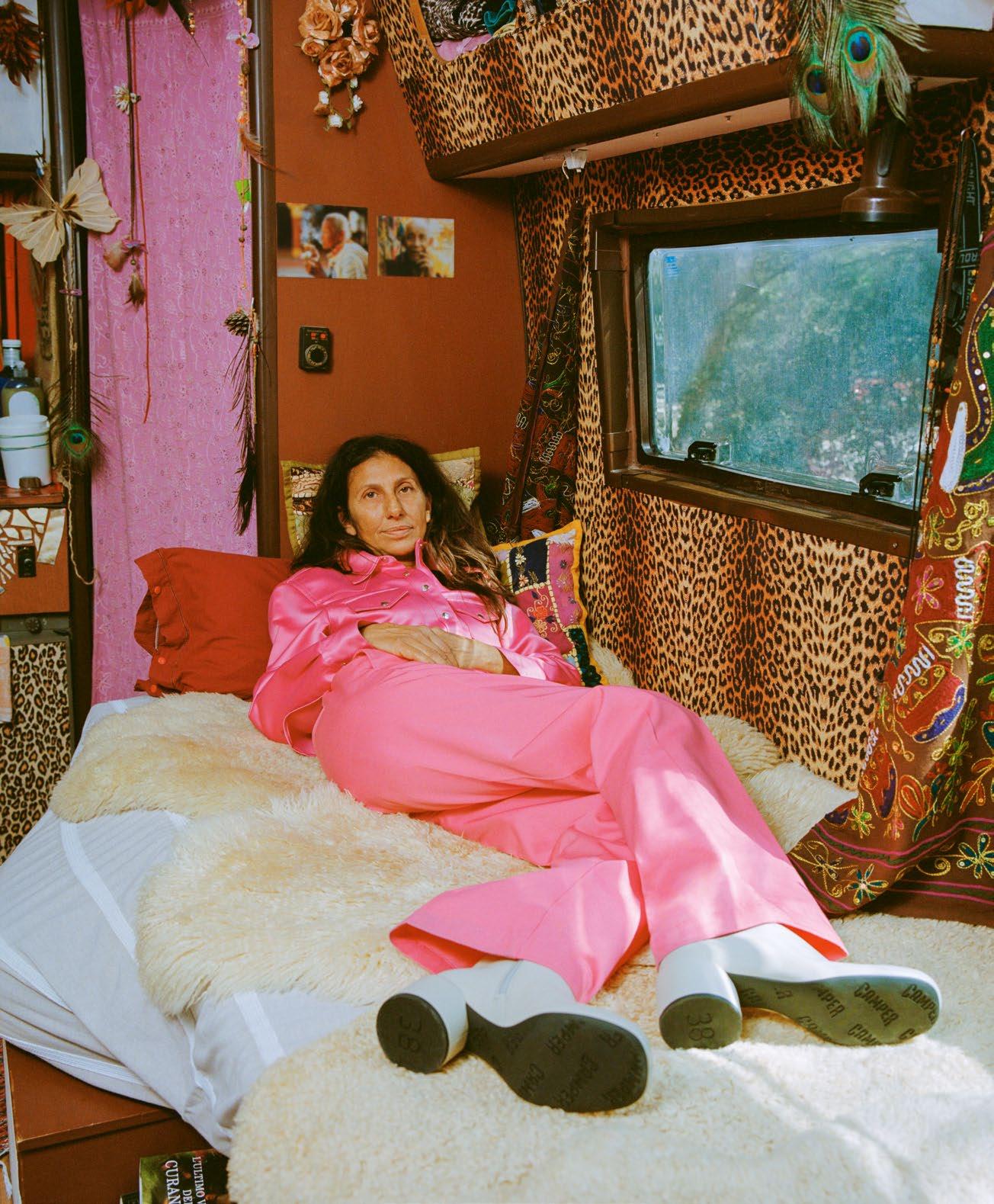
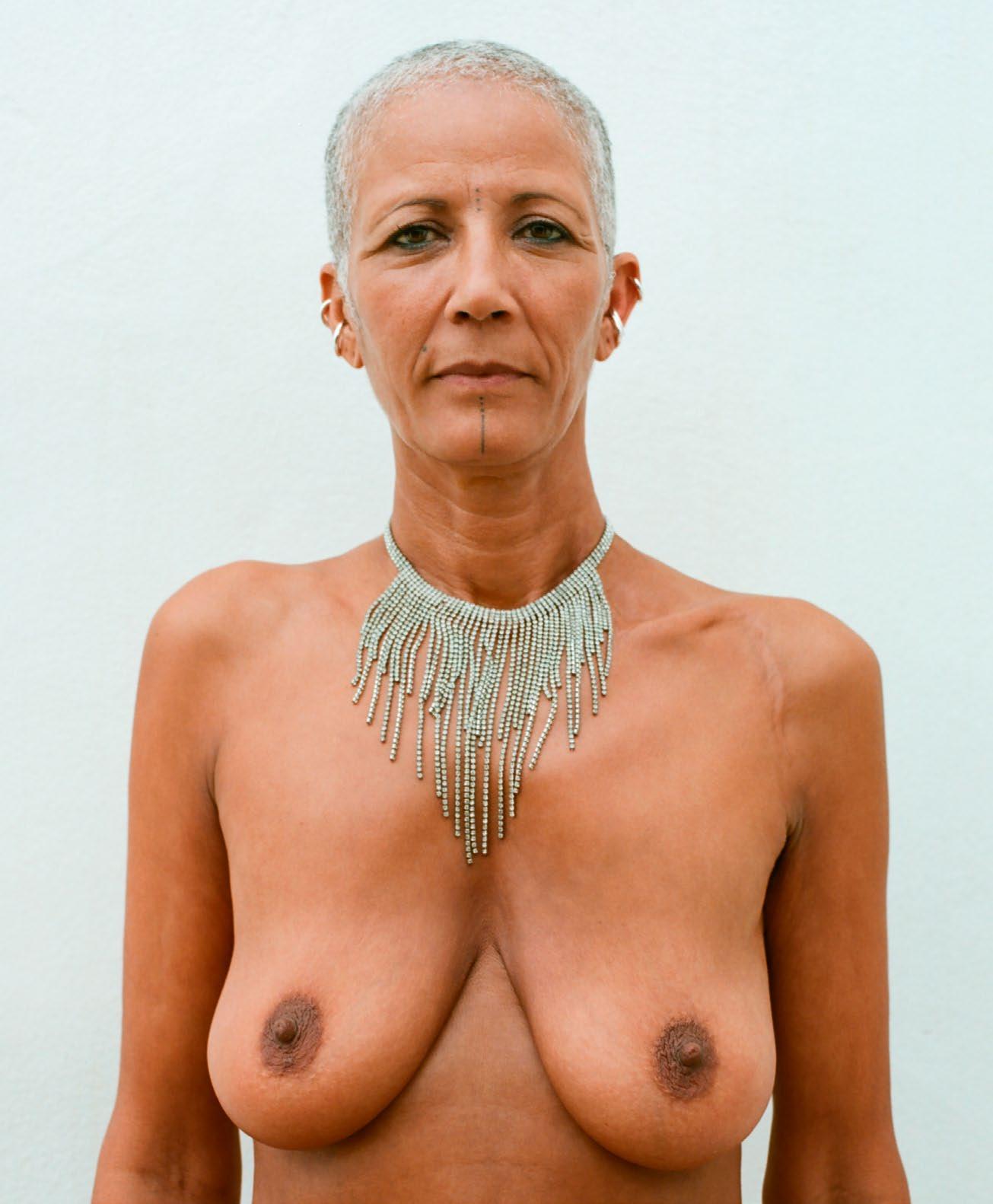
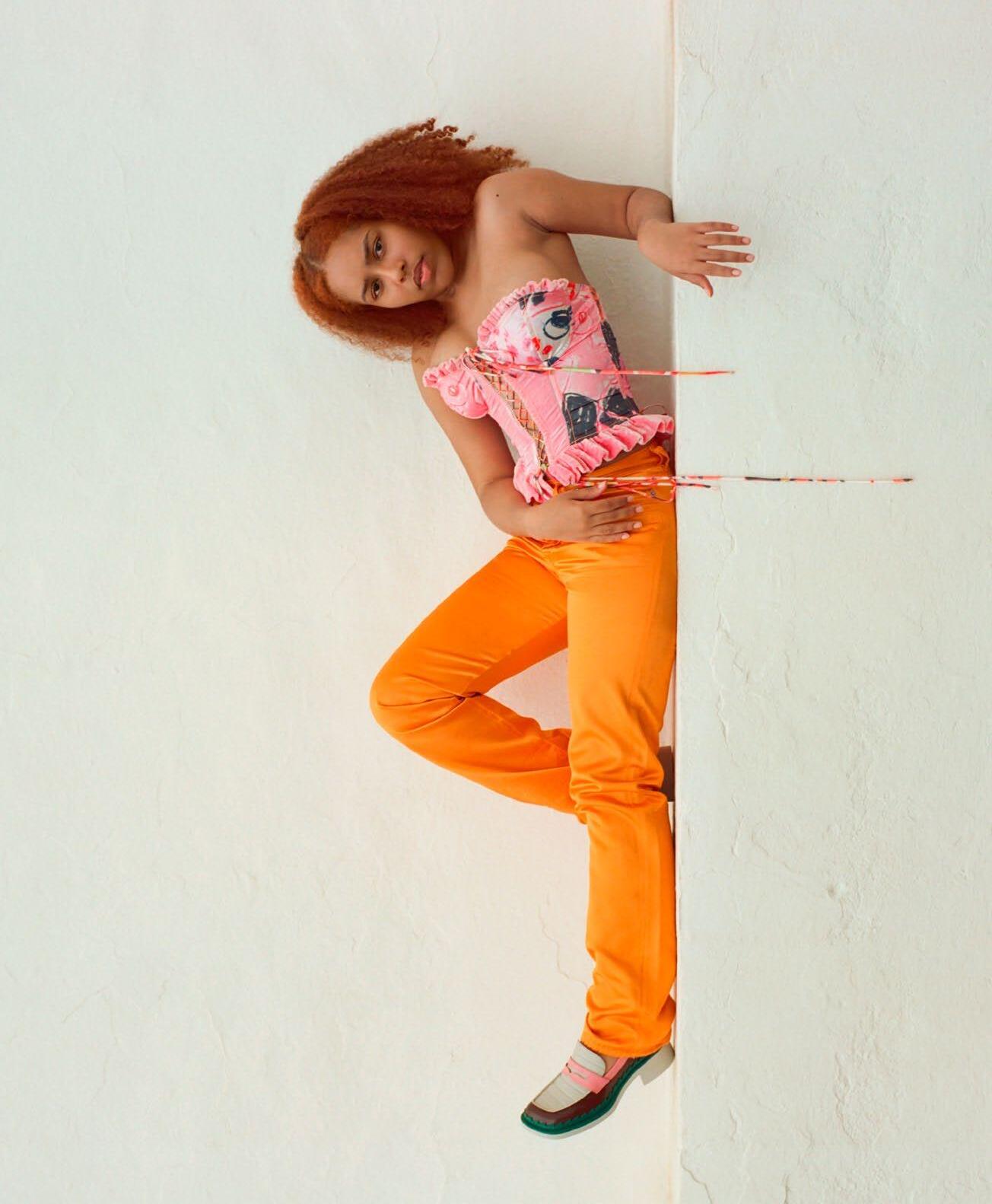
THE WALKING SOCIETY The fifteenth issue of The Walking Society travels around La Isla Blanca , where we meet the souls searching for a balance between tradition and modernity.
WALK,
P.21
In conversation with the founder of the contemporary art fair that aims to bring more culture to the island.
P.28
Club culture is one of the key ingredients of Eivissa life, starting late at night until (at least) the first light of dawn.
P.41
It is 1971 and Eivissa has been chosen as the location for a great architectural congress. A story of imagination and experimentation.
P.48
The traditional Eivissenc dance, which involves elaborate costumes and choreography both sensual and acrobatic, is kept alive today by the island’s enthusiasts.
P.85
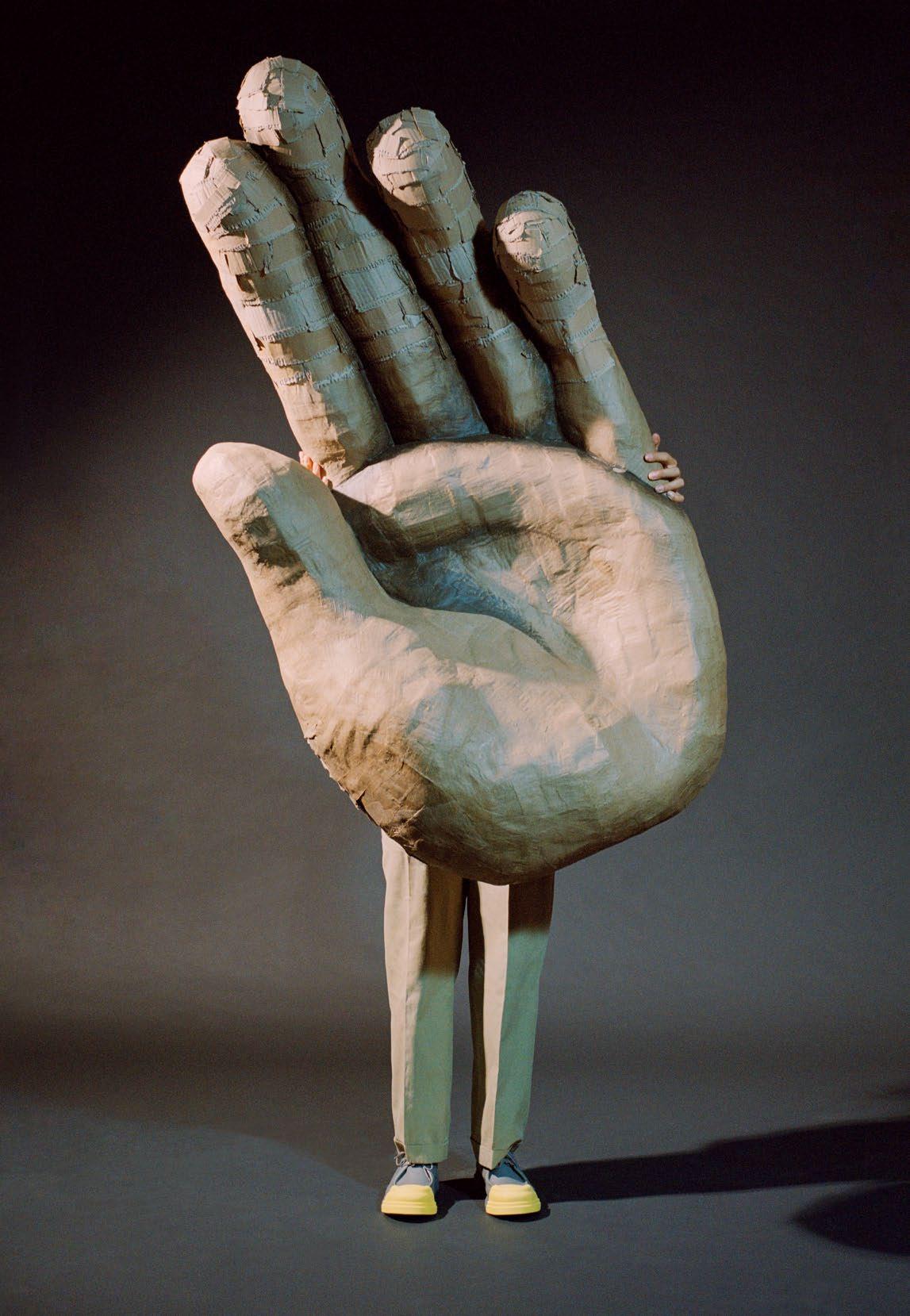
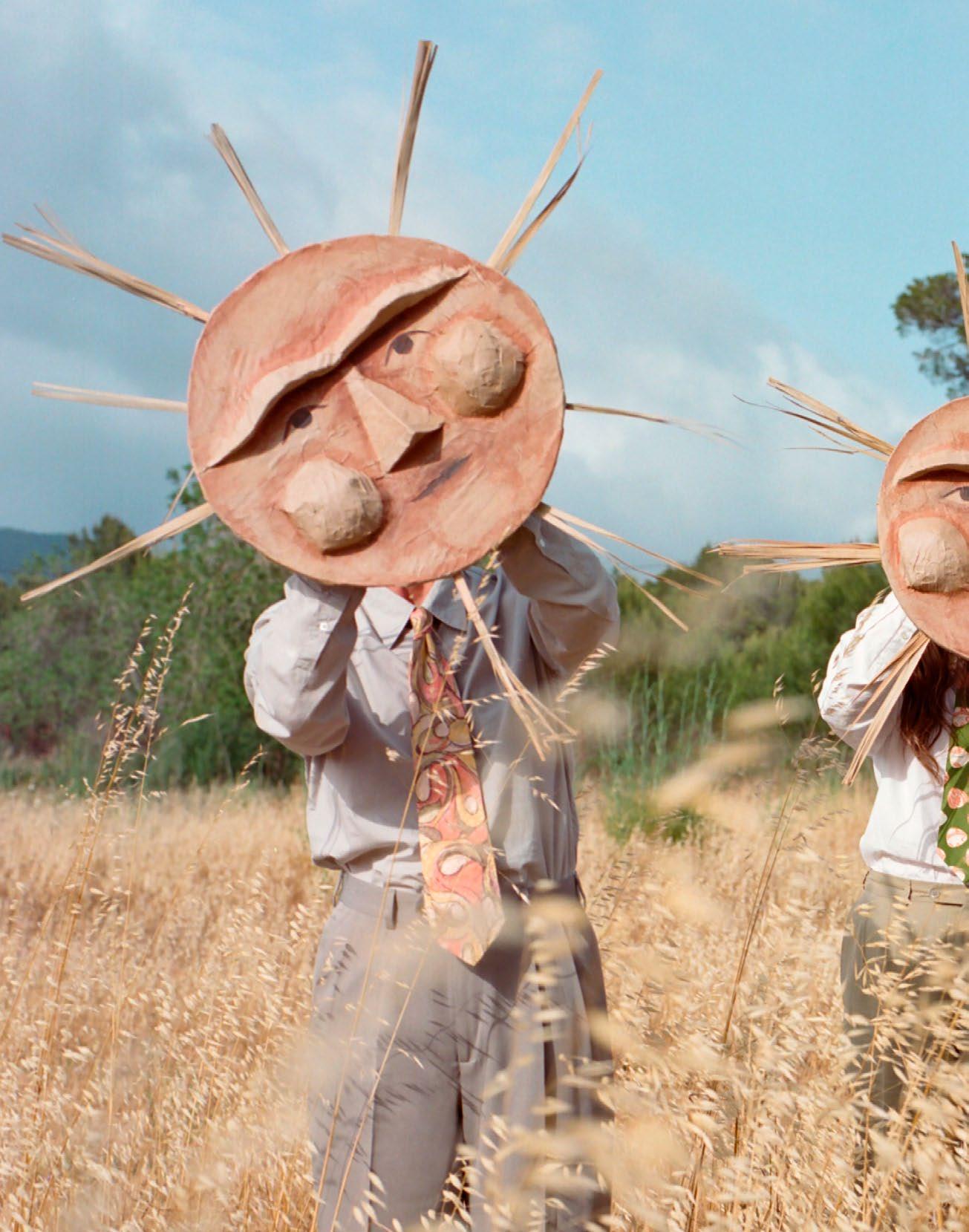
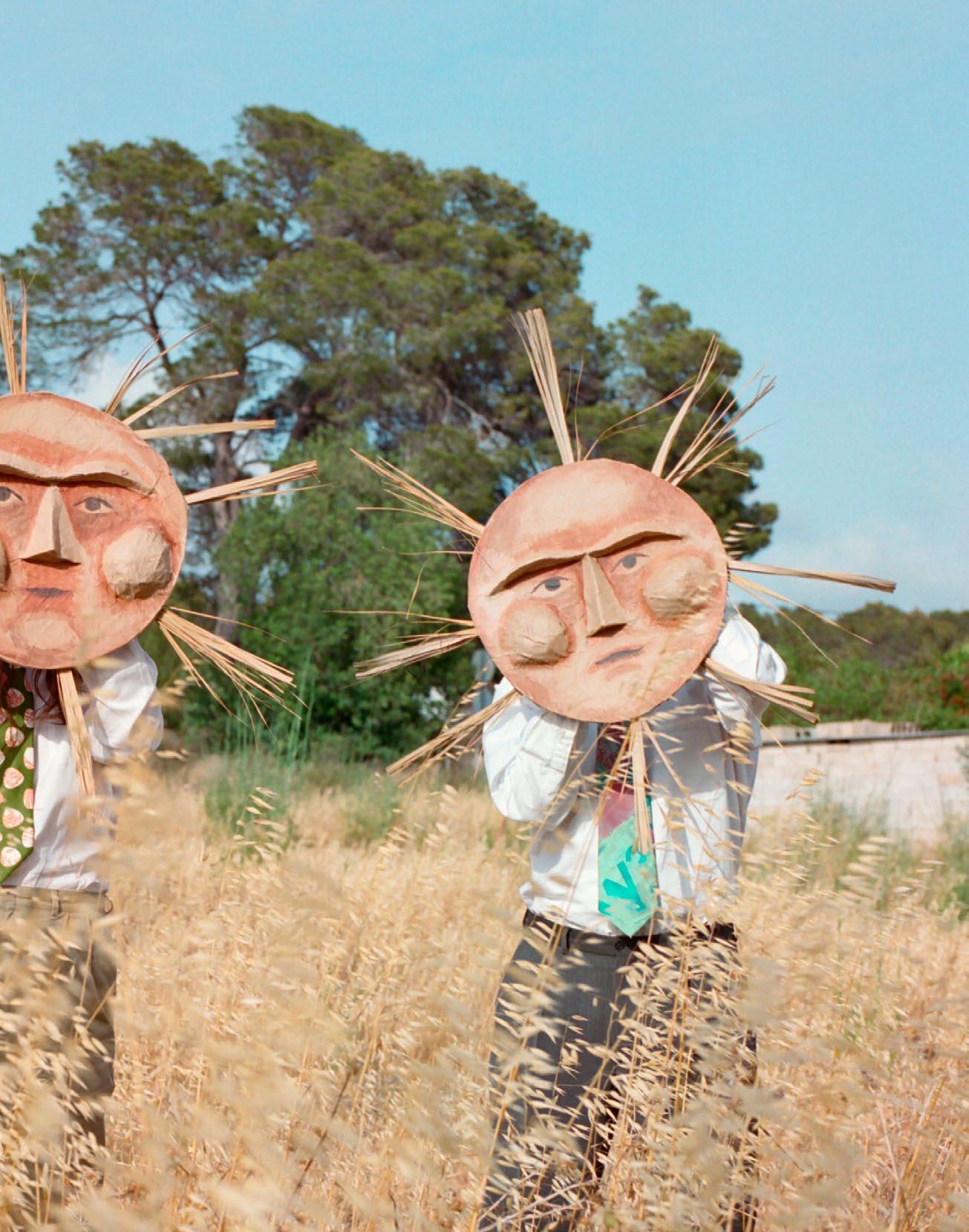
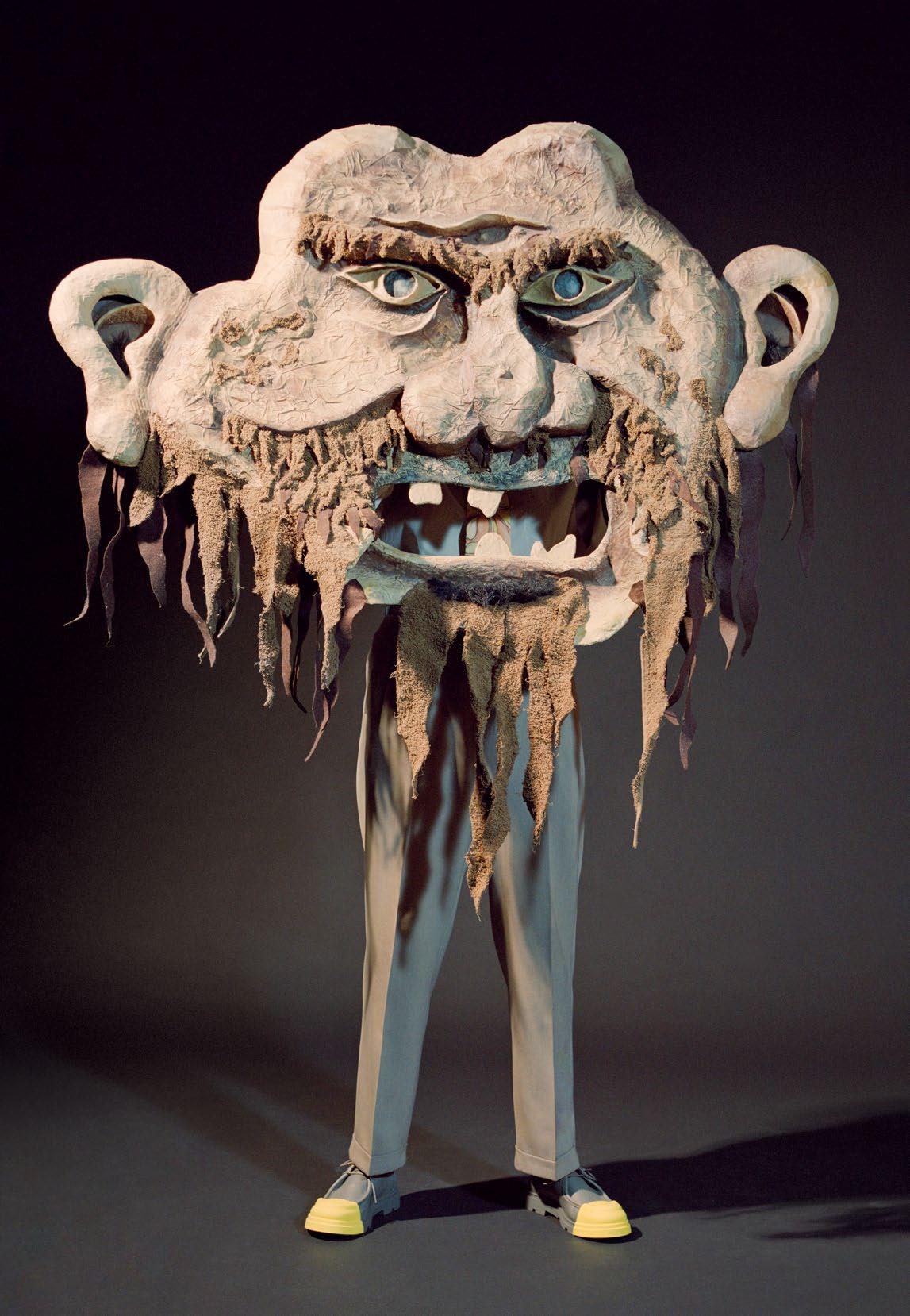
Papier-mâché masks, cabezudos, and other ritual traditions of the Balearic Islands: meet Joanna Hruby and her theatre company.
P.96
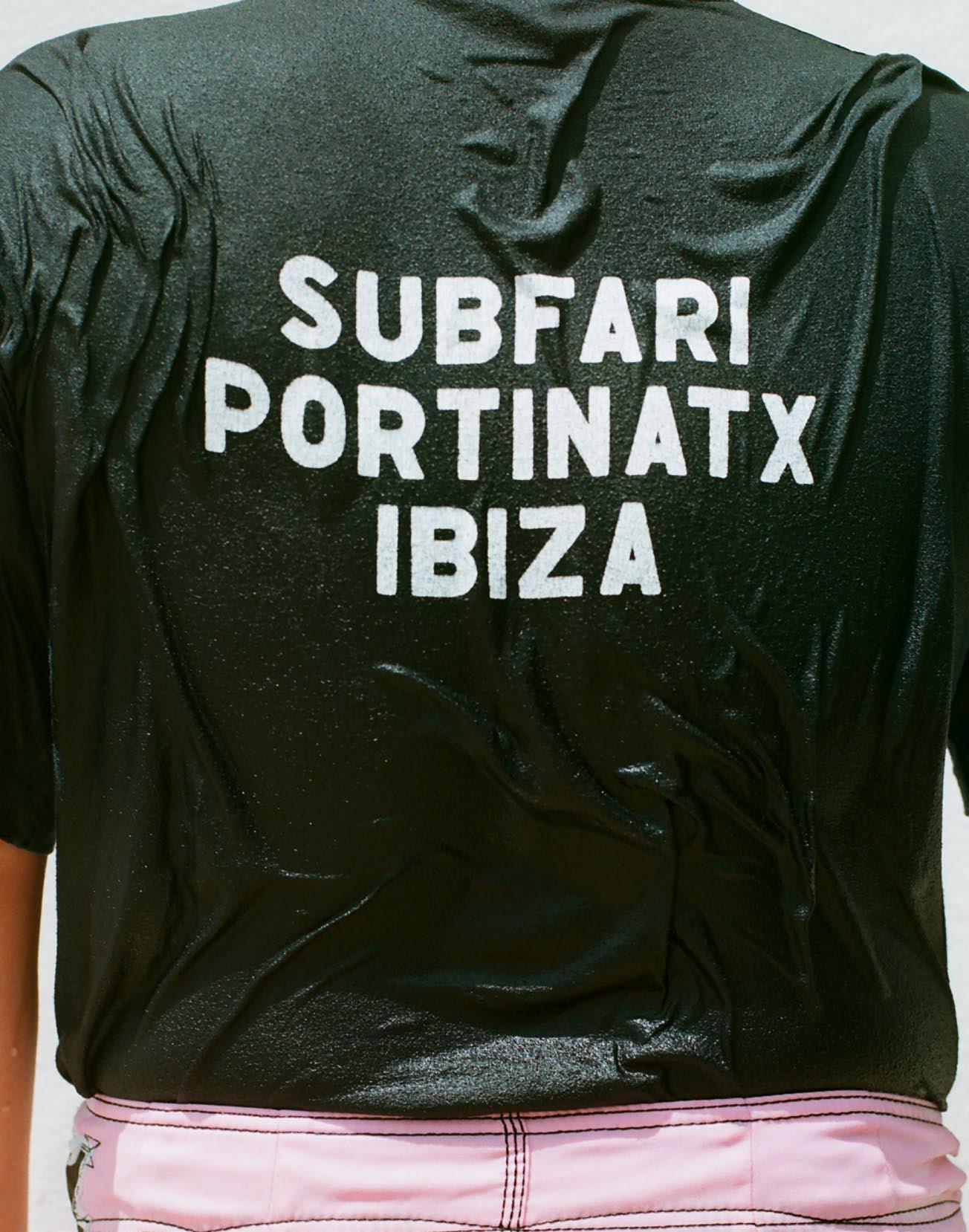
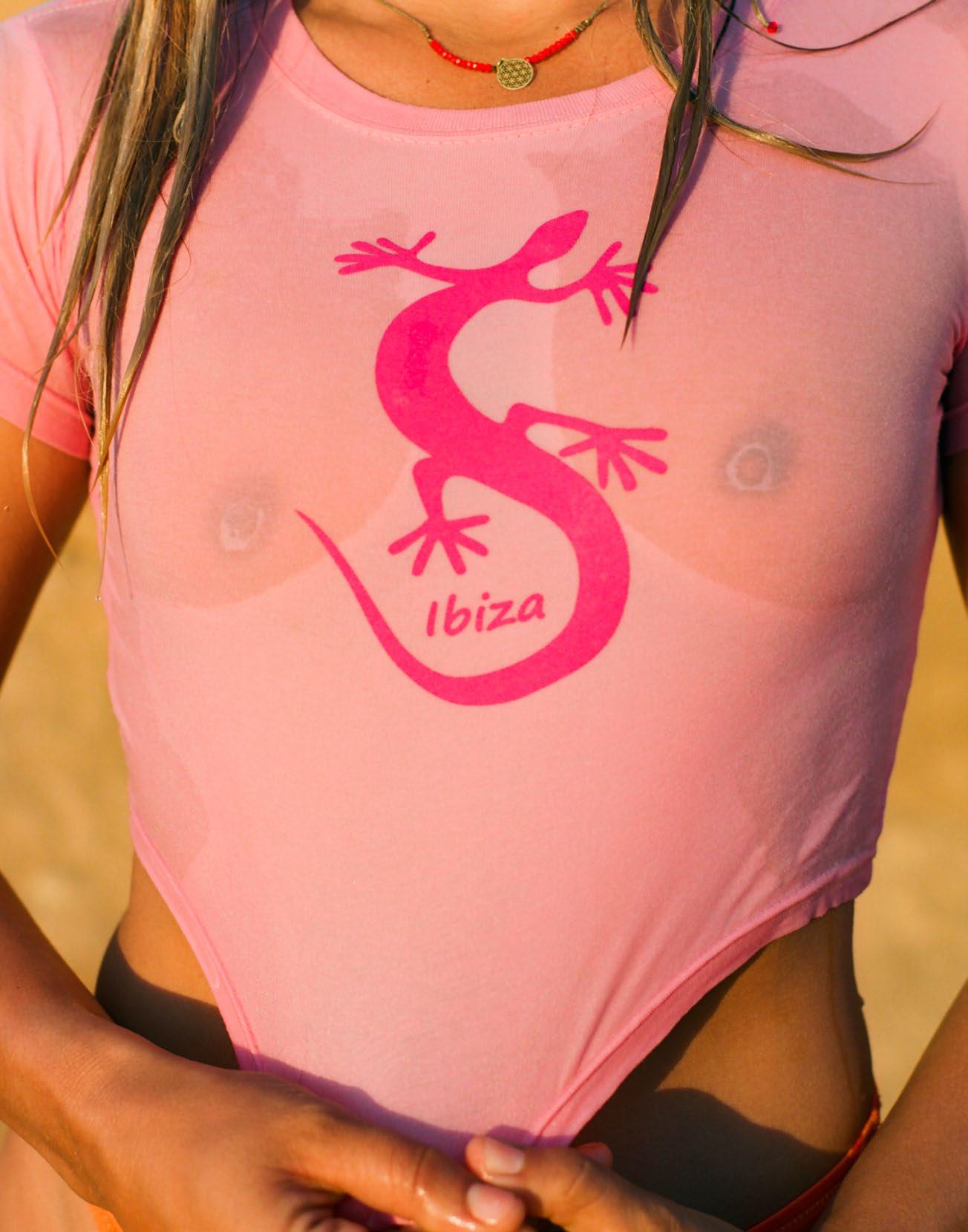
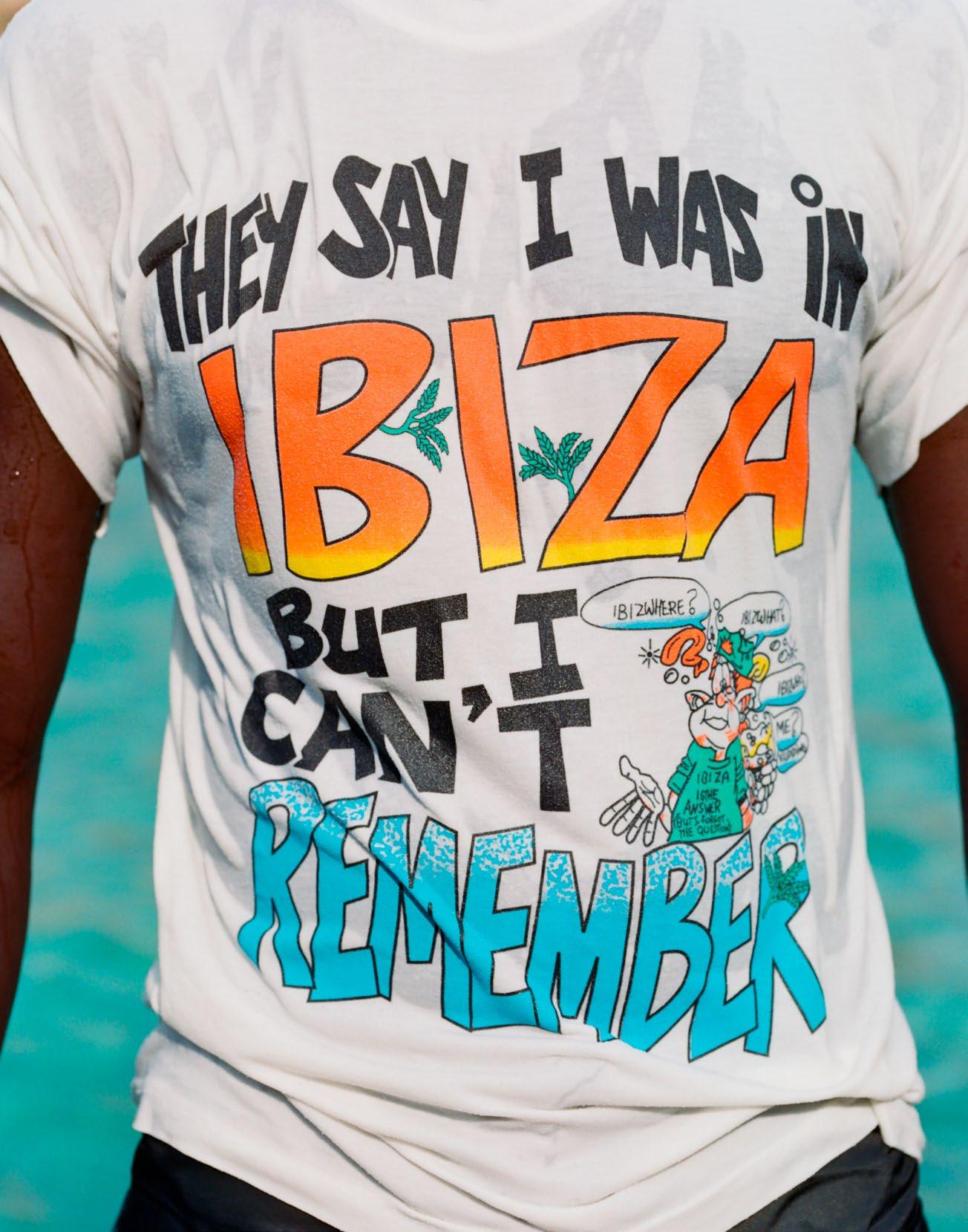
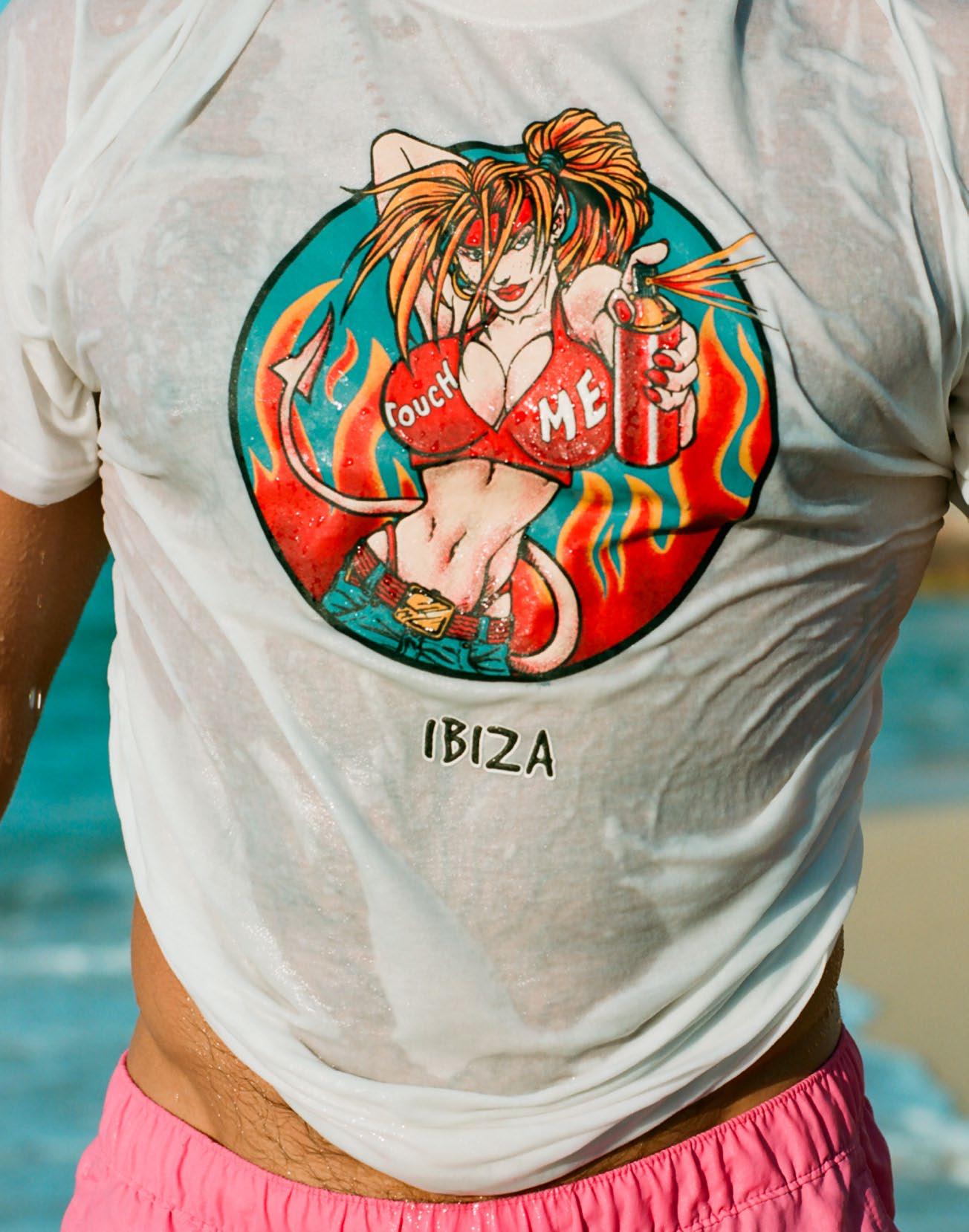
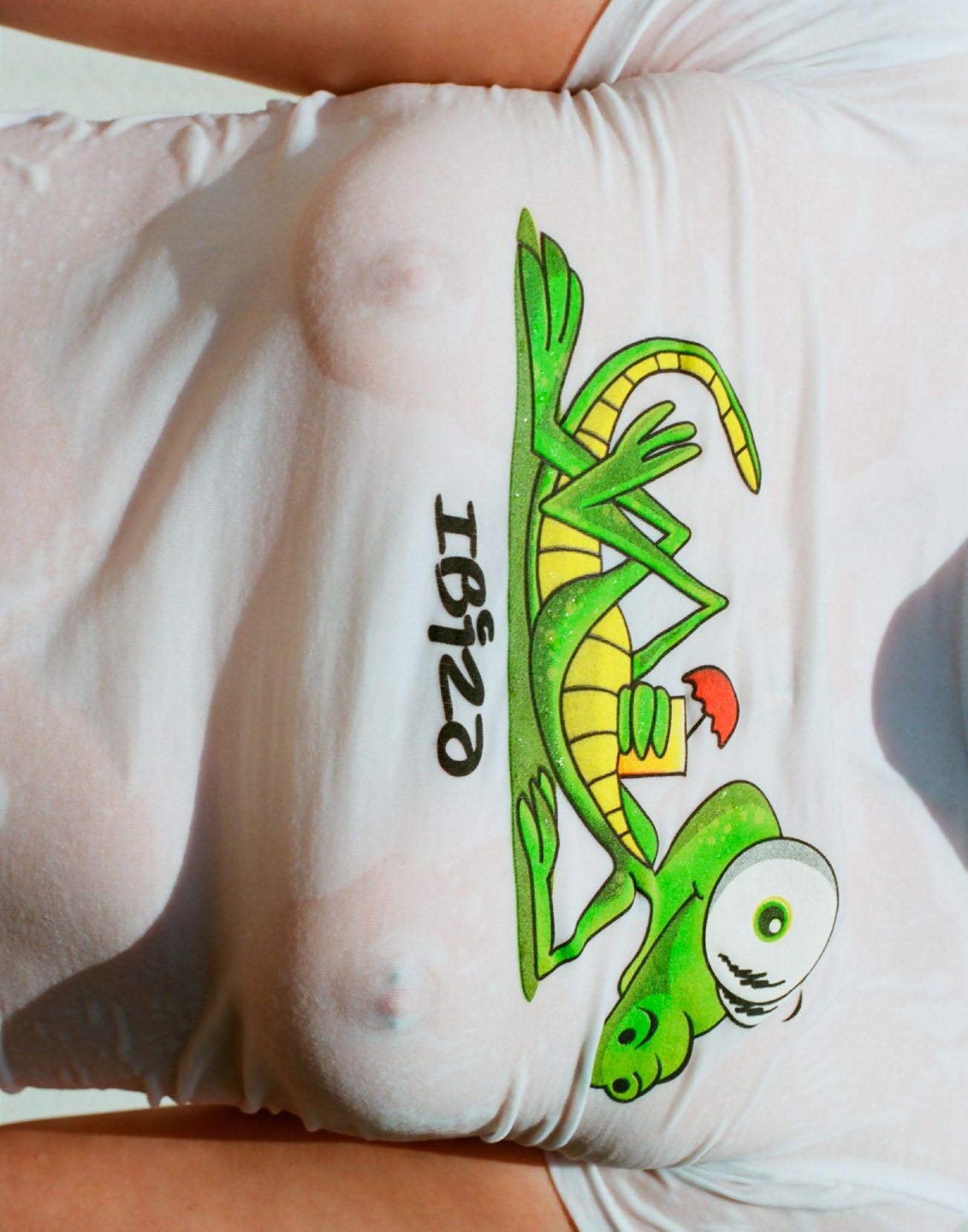
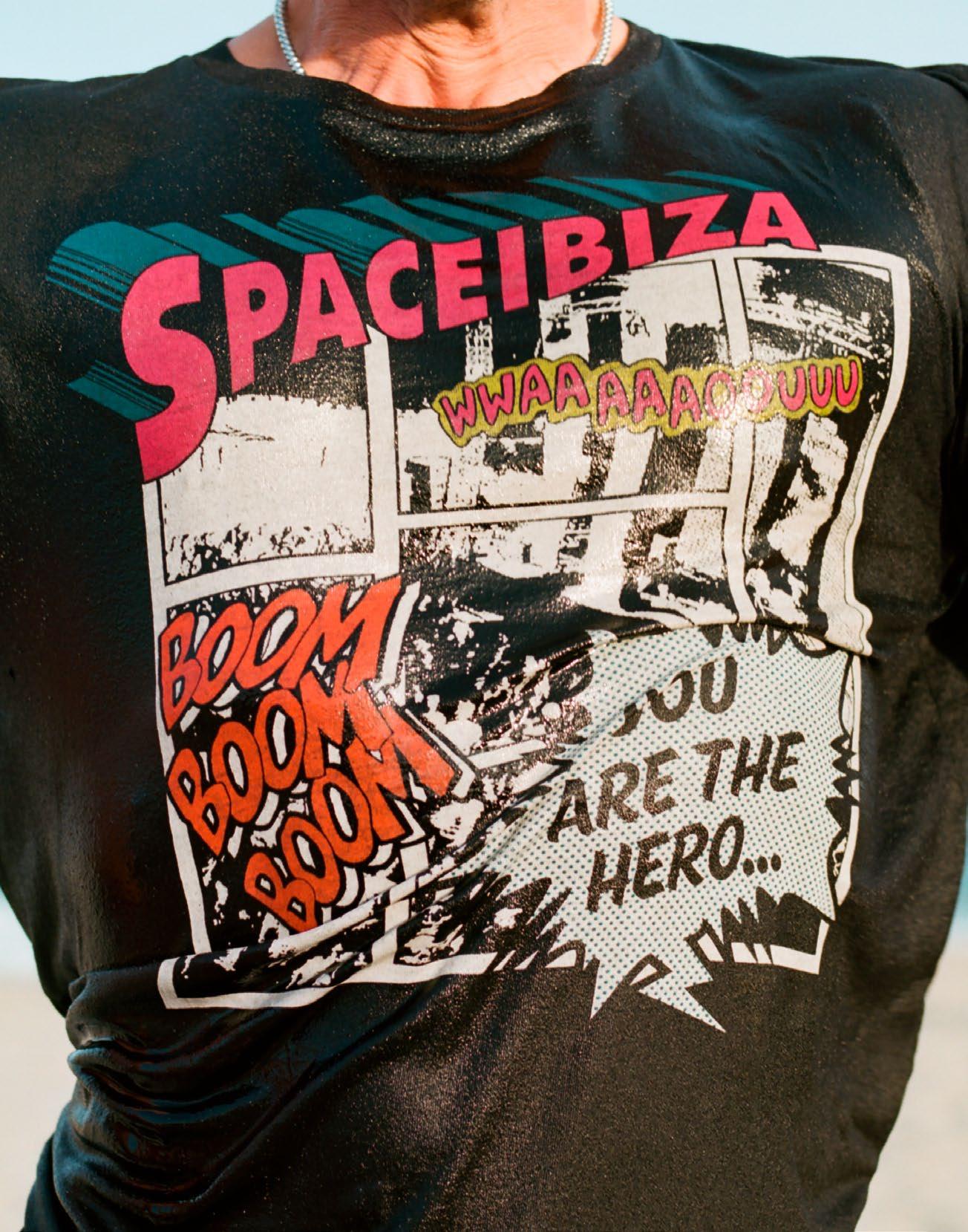
Eivissa is one of the most popular tourist spots in the Mediterranean. Souvenir snaps of T-shirts from the island, past and present.
P.105
Eivissa has always been associated with mystery and spirituality thanks to the small island of Es Vedrà, which is swathed in legend.
P.112
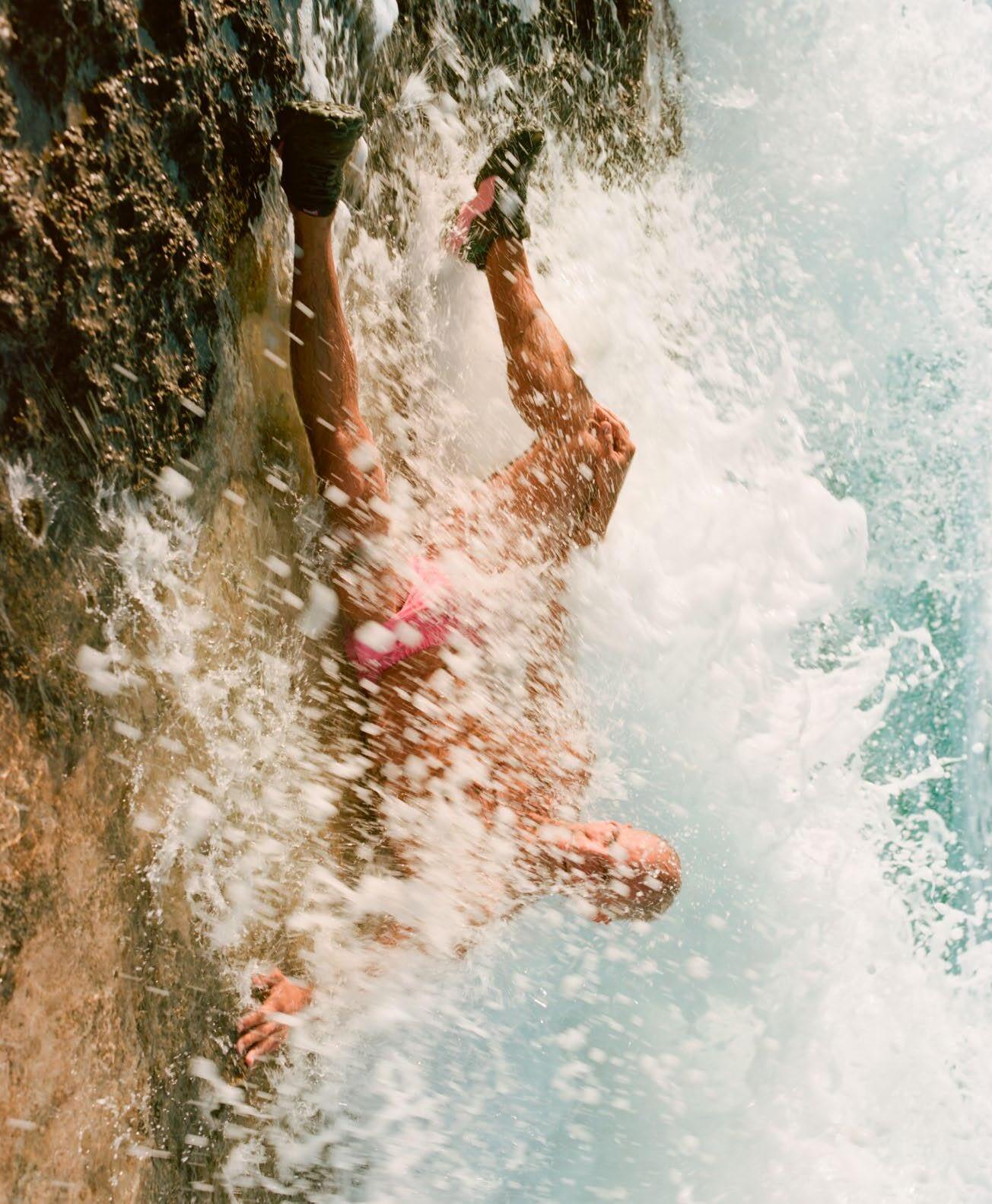
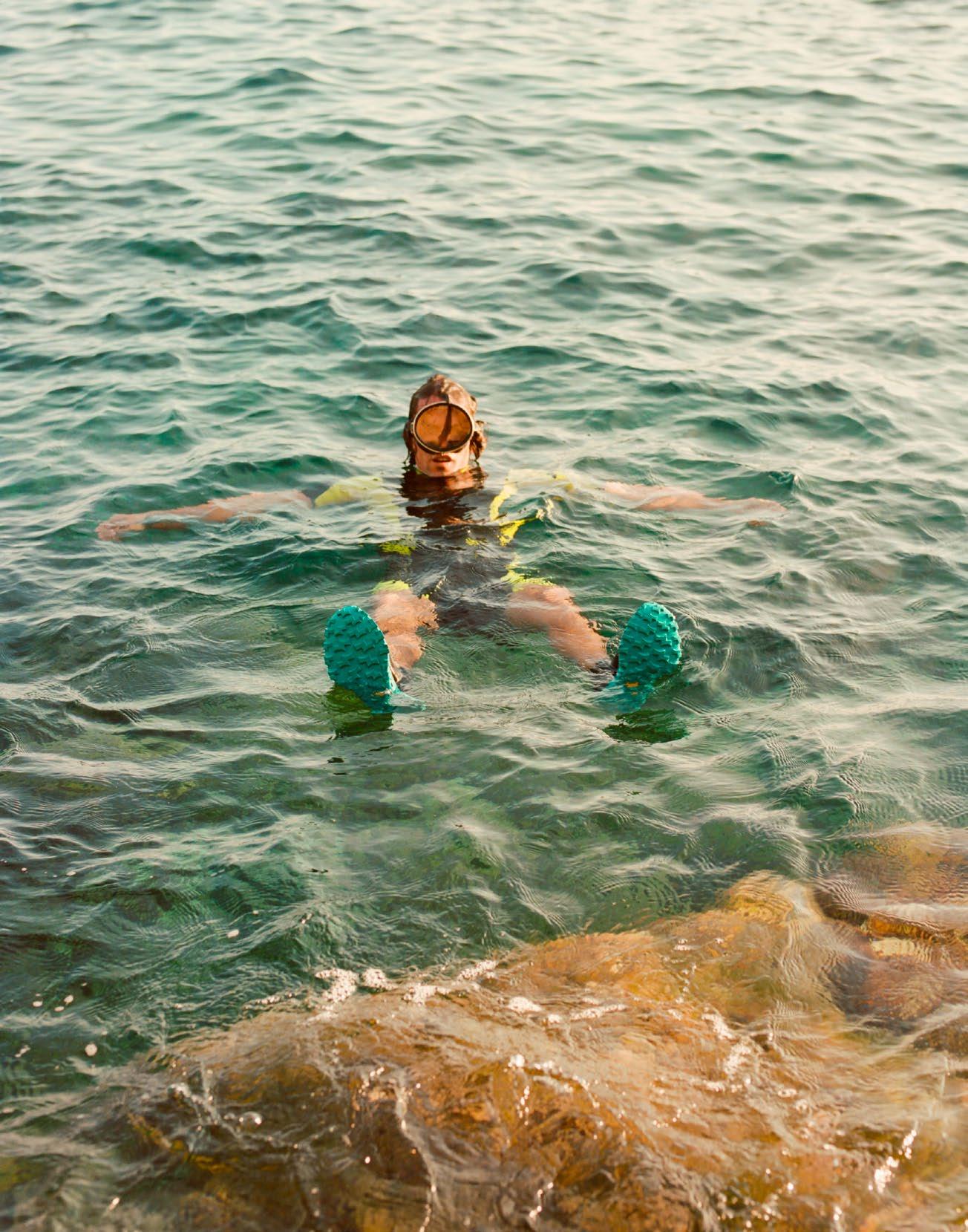
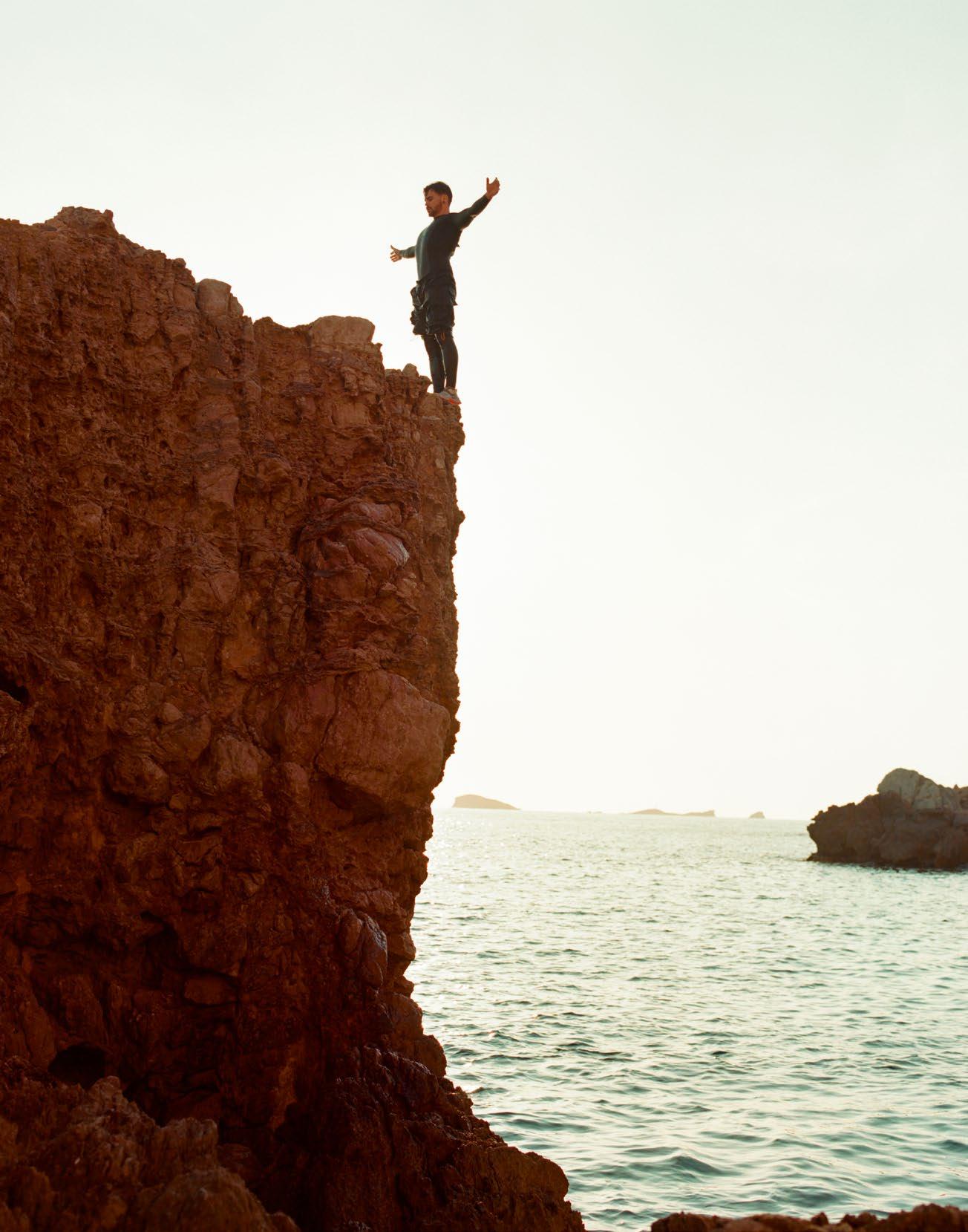
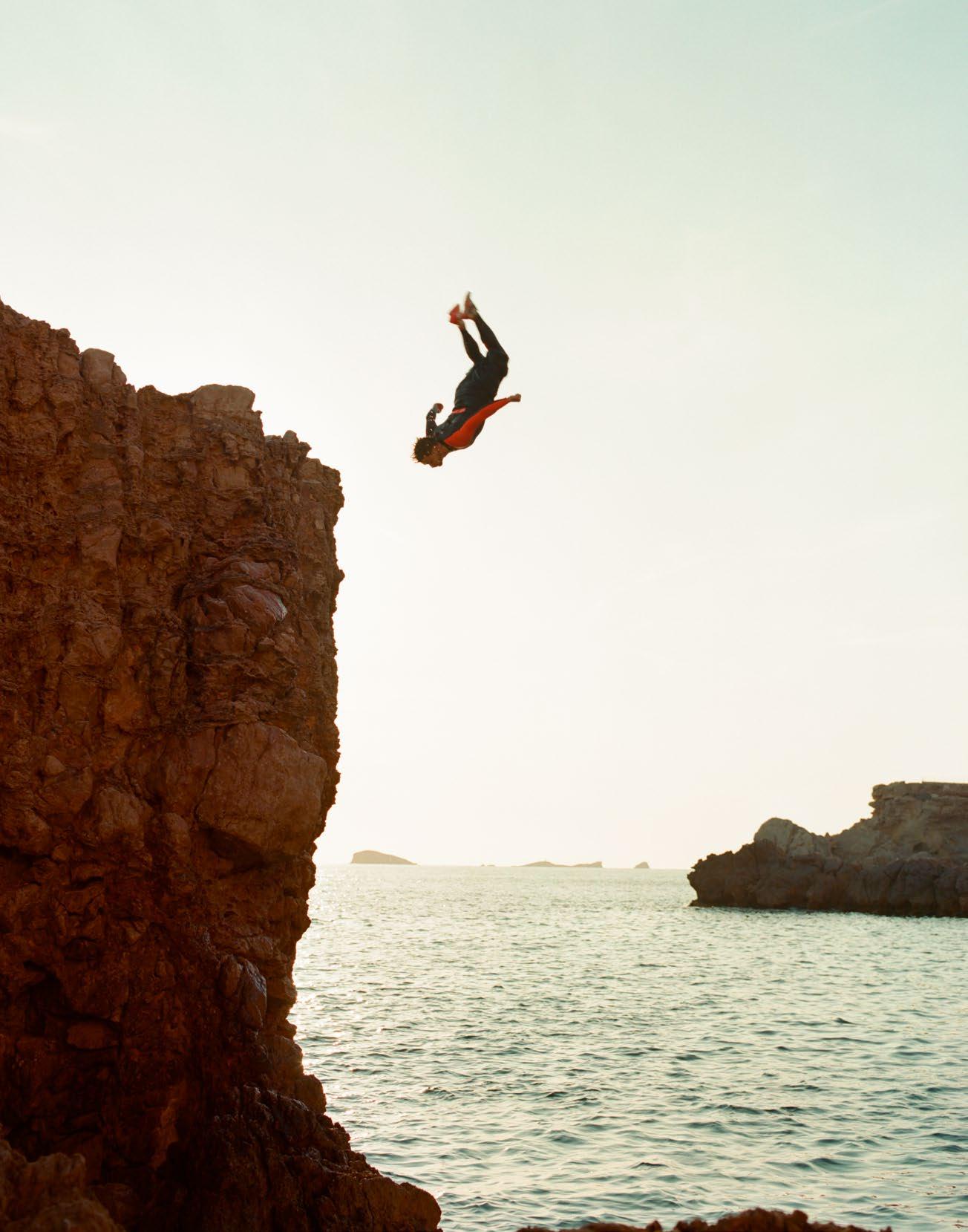
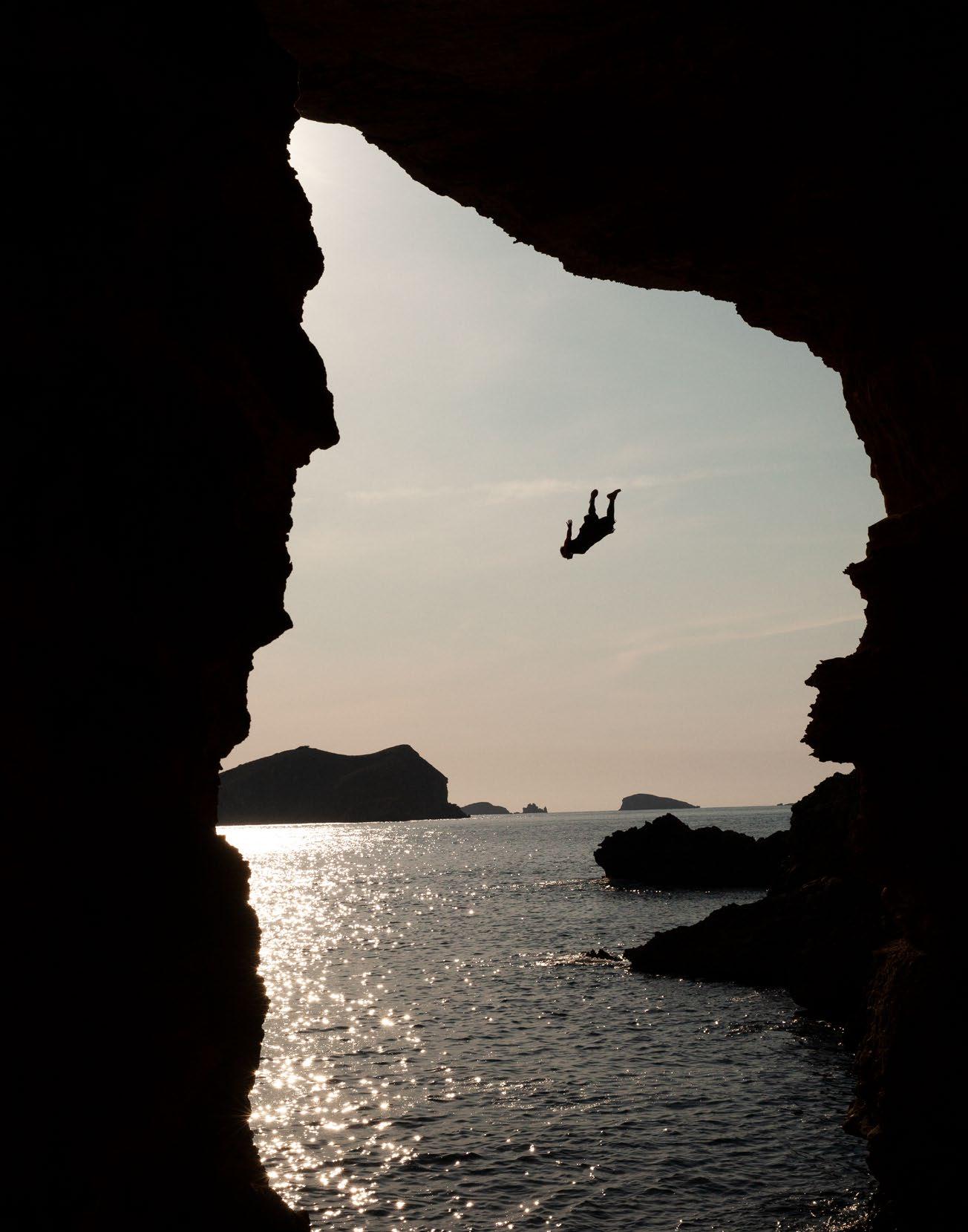
An afternoon at Sa Figuera Borda, where the island’s teenagers dive from dizzying heights into the crystal clear water.
P.57
A day with the Eivissa icon and king of vintage, who owns one of the most famous shops in Dalt Vila.
P.70
Legend has it that Nostradamus identified Eivissa as the only place that could survive the apocalypse.
P.125
Eivissa has always been a buen retiro for the jewellery designer and creative director of the internationally renowned Repossi brand.
P.132
Eivissa’s nightlife is also characterised by its iconic flyers and posters, designed by artists since the 1970s. An aesthetic trip through the history of clubbing.
Eivissa is a whole special universe in just under 600 square kilometres. The island is a kaleidoscope of colours, scents, and emotions. It contains multitudes: characters, lifestyles, languages, and poetic expressions. In a way, it is a microcosm of all the Mediterranean characteristics, so different and eclectic, blended together.
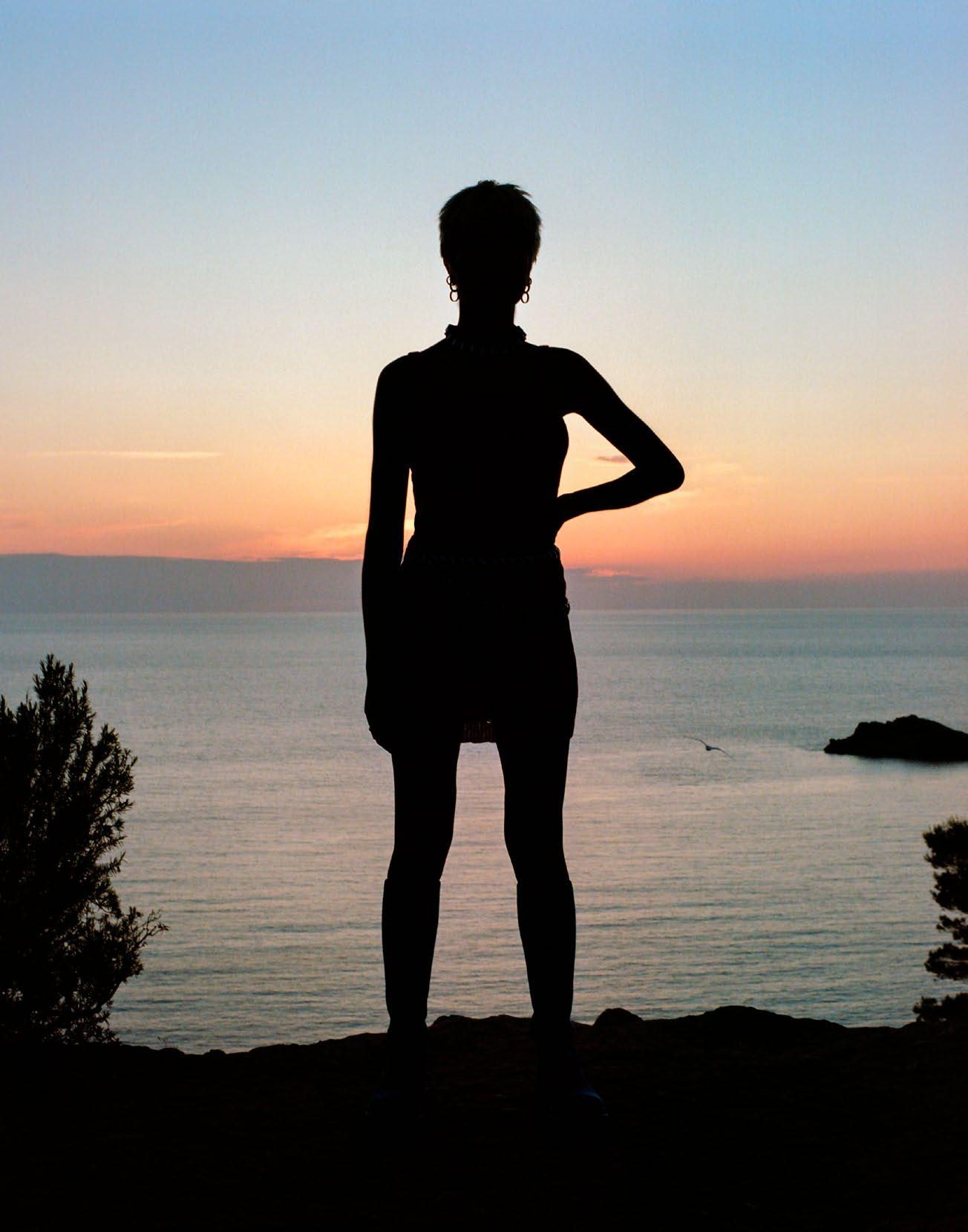
Let’s start with the geography. Inland, olive trees grow in wellspaced rows on the red soil, rich in iron minerals, typical of the island. White houses are nestled among blooming oleanders. These casas payesas have given Eivissa the nickname La Isla Blanca. They have dry-stone walls separating the properties from the road, cisterns collecting rainwater, and easily accessible rooftops for everyone. The rugged coastline is home to hidden bays and coves with turquoise waters to swim in. Above, pine forests loom over the sea. Cicadas lull the sunny mornings, protected by the ever-present breeze, a blessing that keeps the climate milder even in the hottest months.
At night, while driving along the roads that connect one village to another, you might see beams of light moving in the sky. These are not apparitions but signs of the vibrant nightlife that animates the island. The clubbing season transforms Eivissa: music enthusiasts from around the world flow into the island between May and October and then leave after the closing parties, like a tide. Much of the economy relies on this influx, but when the tourists retreat, Eivissa reveals its best side. During these months, which are often cooler than the mainland, you can enjoy the island’s greatest treasure: its space.
At this time, it is easier to encounter all the other communities that inhabit Eivissa. The hippies, old and young, can be found on Saturdays at the market of Sant Jordi, near the airport, amidst trinkets, memorabilia, and assorted curiosities, or at Bar Anita, a historic meeting place for over fifty years. In communal houses well hidden in the vegetation, you might be invited by chance,
following a rumour from a friend of a friend, and receive a warm and unwavering welcome. Then there are the yoga enthusiasts and retreats promising healing journeys and resets for the body, soul, and mind. And the seasonal workers, many of whom are Italian or Argentinian, who work in bars, clubs, and restaurants from spring to autumn.
Lastly, the Eivissencs, who go to church on Sundays in Santa Gertrudis, drive taxis from the airport to the hotels, hold the reins of foreign productions, and know every beach, clearing, and forest on the island. During official festivities, they take it upon themselves to keep the soul of their complex island alive, and thanks to them, for almost a century, new elements have been added to their diverse traditional tapestry without losing its fundamental essence.
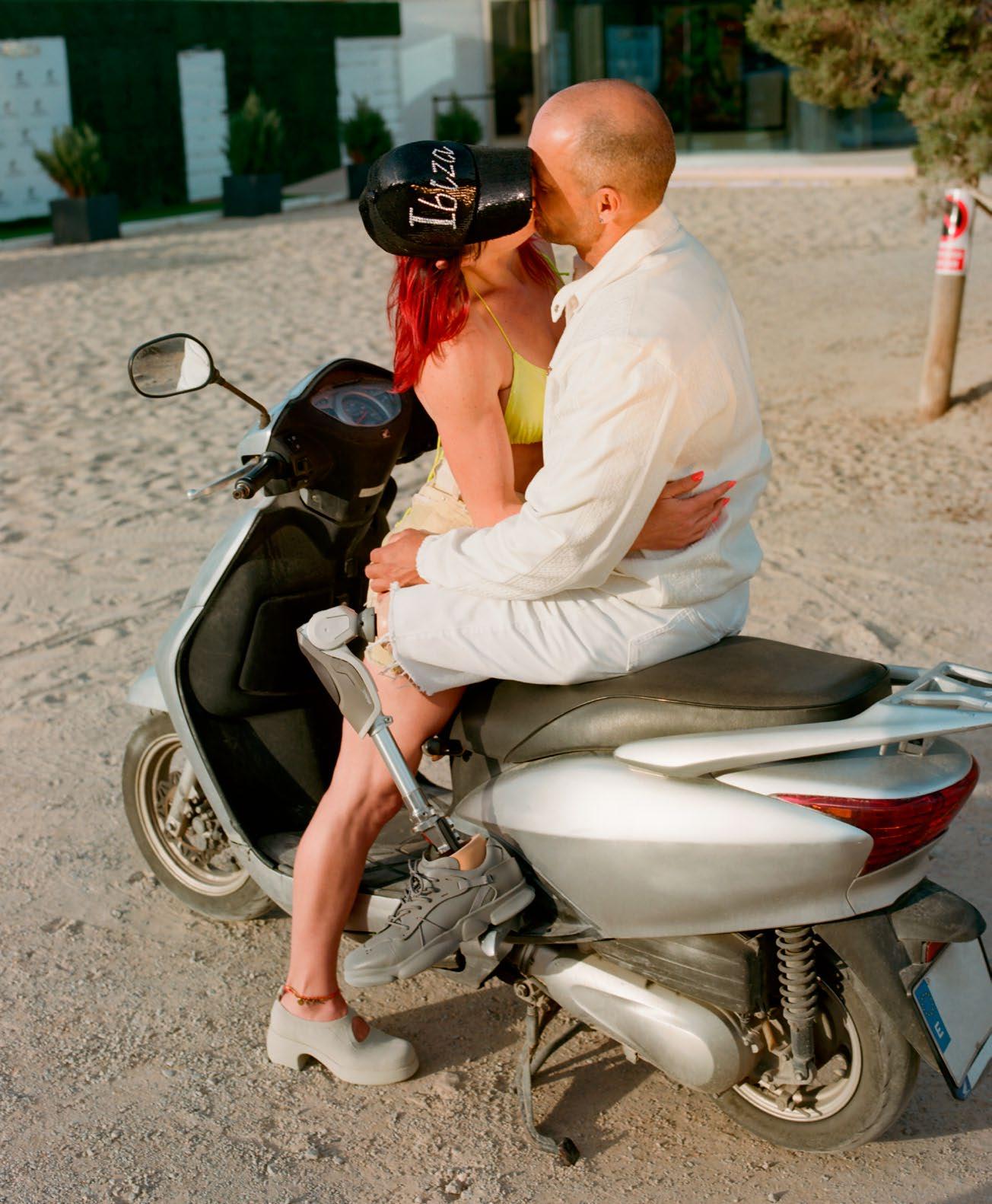
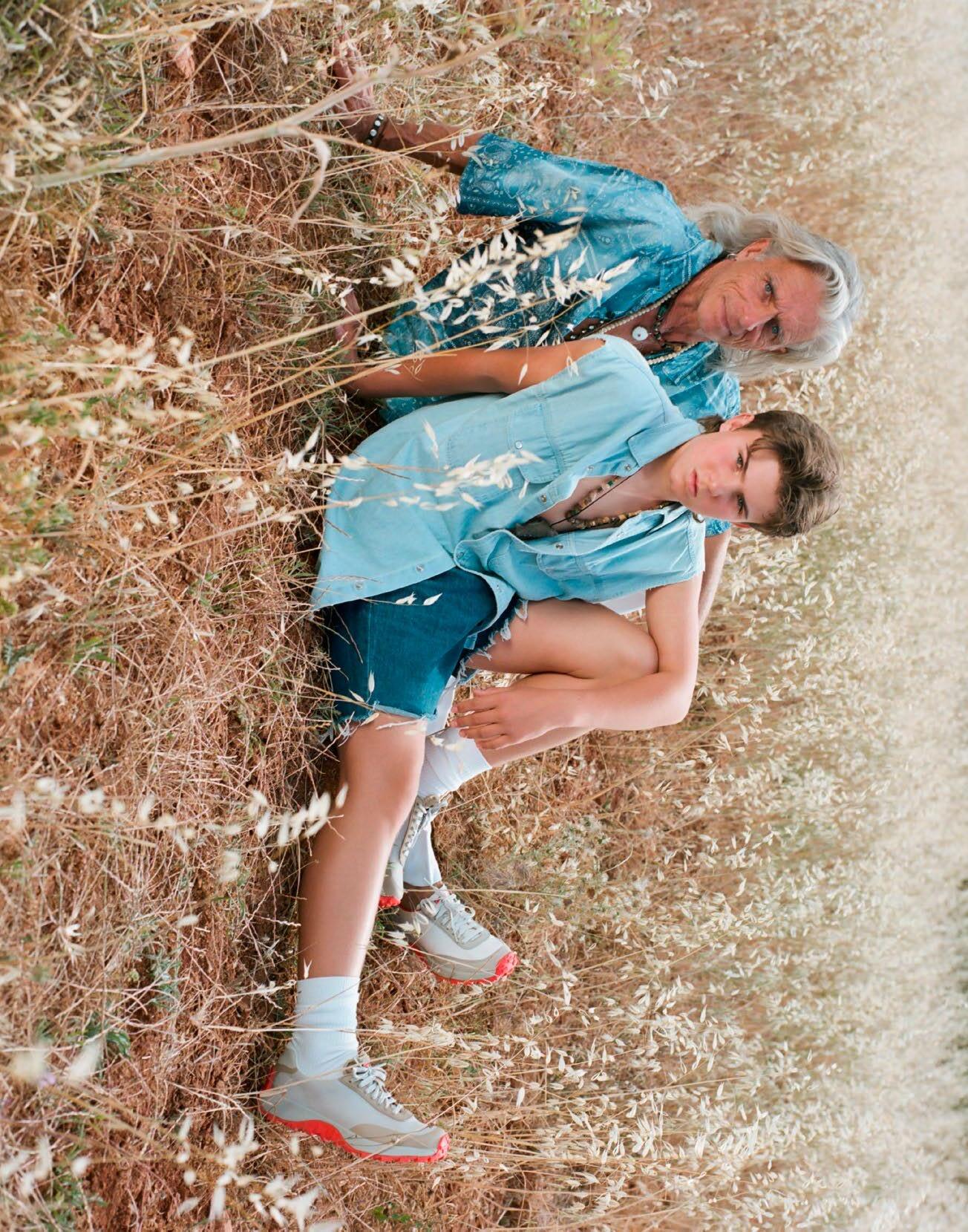
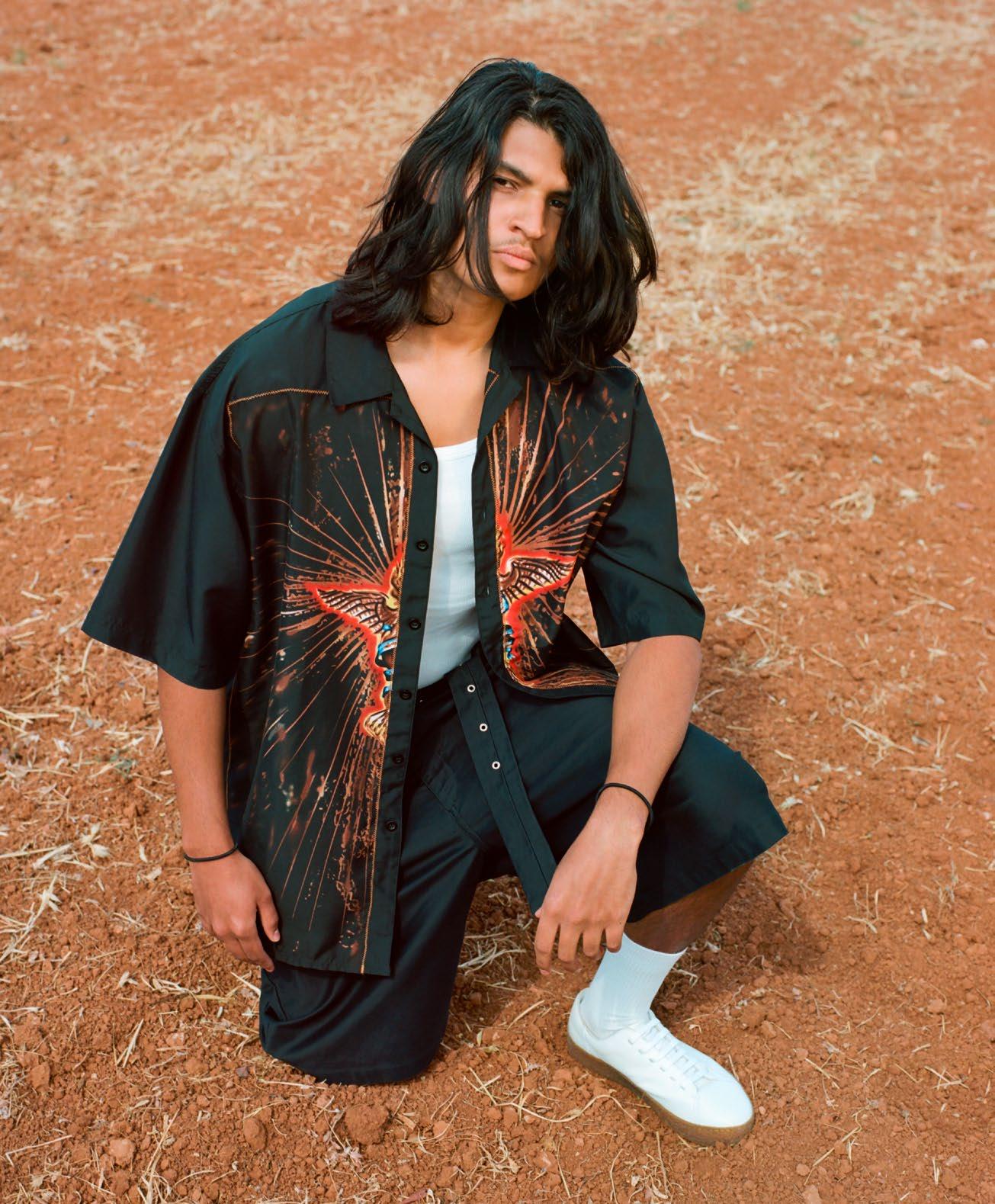
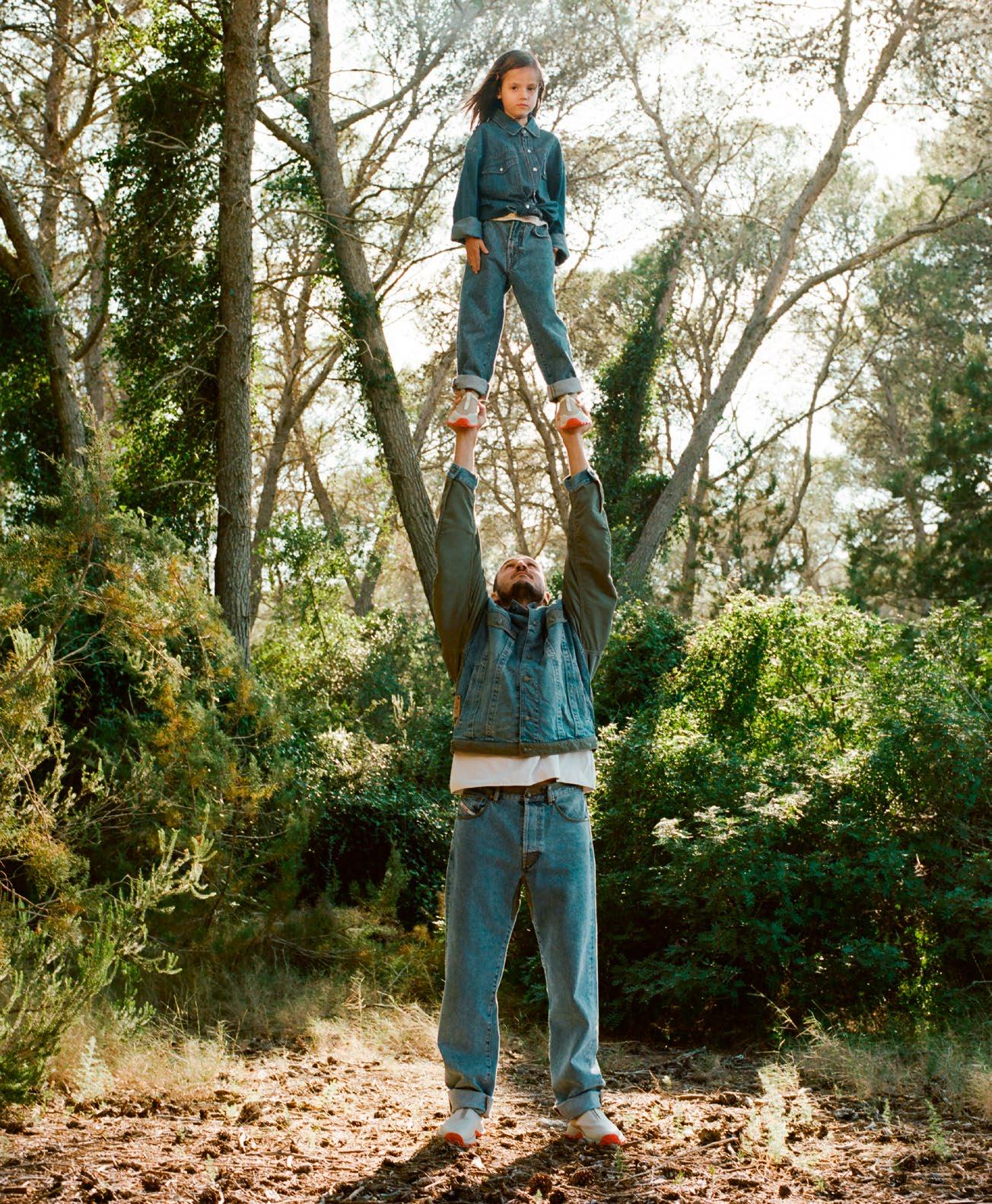
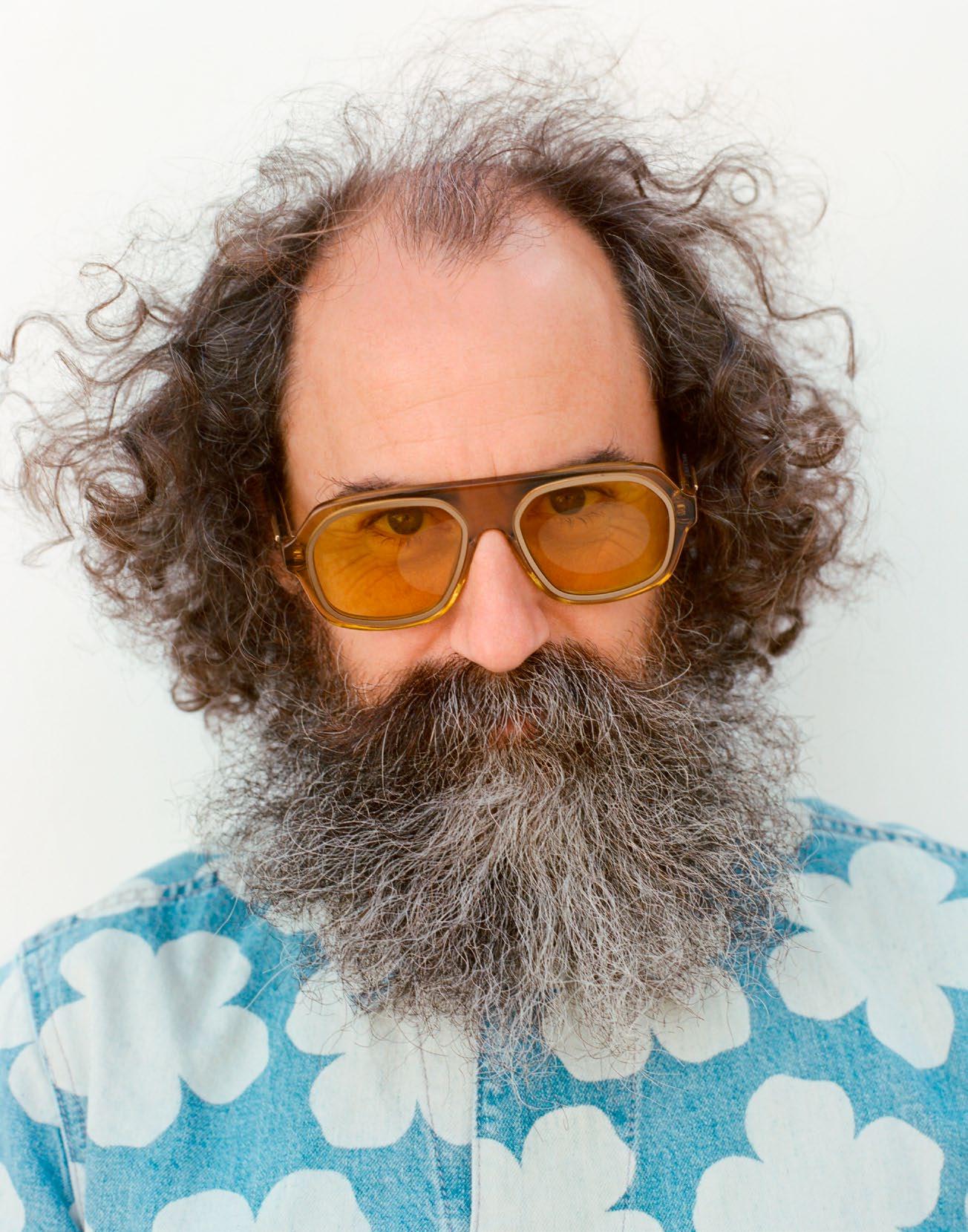
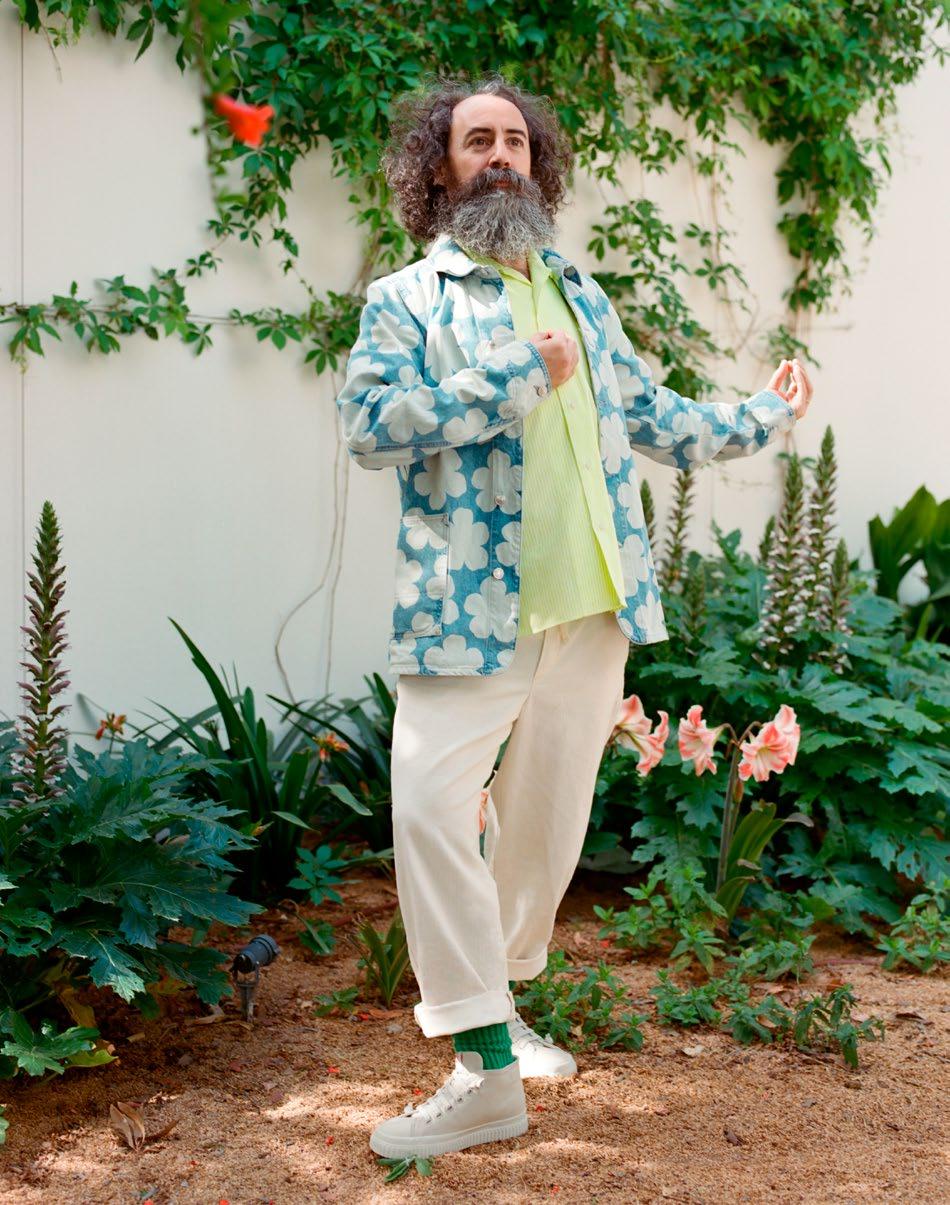
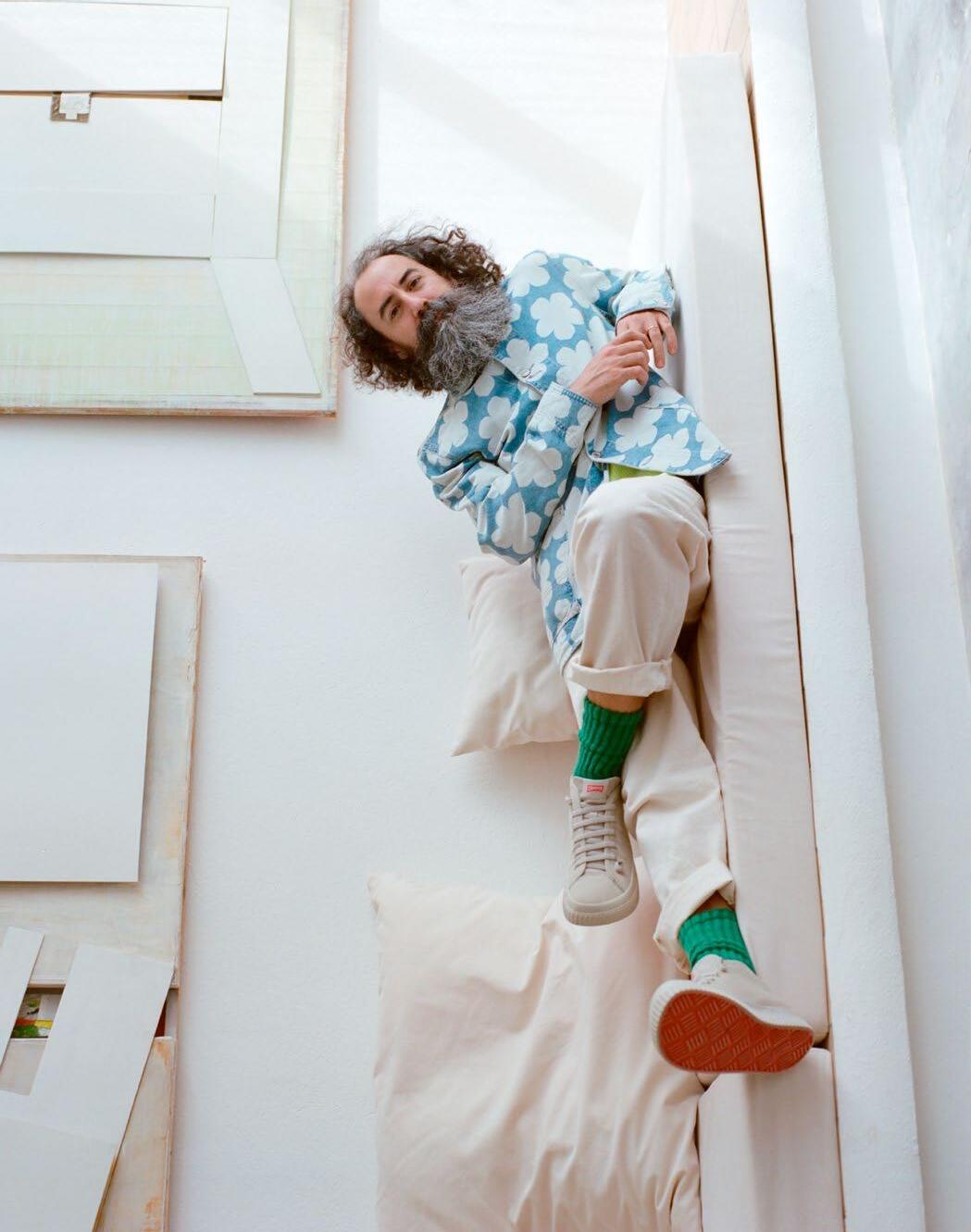
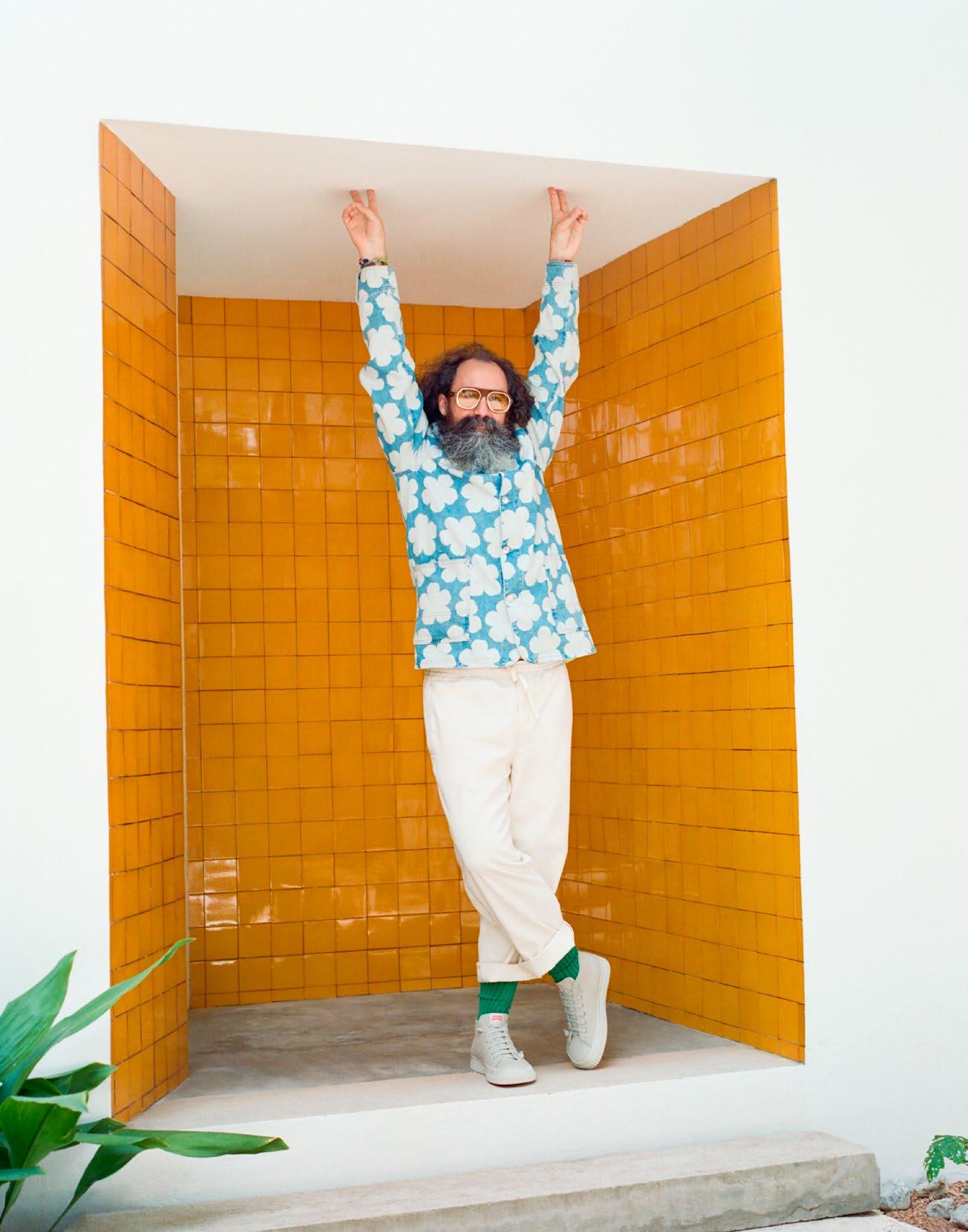
For three generations, Sergio Sancho’s roots have been deeply embedded in the dry soil of central Spain, in the Meseta of Madrid. But when we meet in Eivissa, he seems completely at home on this magnetic island known for its creative atmosphere. He is sporting a colourful jacket, a wild beard, and curly hair that frames his face. In 2022, Sergio founded Contemporary Art Now, a new fair in Eivissa that aims to merge the art scene with the relaxed, unpretentious attitude of the Mediterranean.
He divides his time between the island and the mainland where, almost ten years ago, he opened a street art fair in Madrid: UVNT Art Fair. But Sergio is not an unapproachable fair director. He is warm and affable, talking for hours about the projects he is working on and those he is still dreaming about. His goal is to create a network that effectively communicates and promotes the small Eivissenc galleries. We meet at Estudi Tur Costa, one of these very spaces. Designed by German-American architect Erwin Broner, one of the founders of the Ibiza 59 group, the gallery was also the studio of artist Rafael Tur Costa until 2020.
You had a whole life before Eivissa. Can you tell us what it was like and what you did?
At first, I worked in advertising in Madrid, where I spent fifteen years moving between different agencies. I had an administrative role, nothing creative. It’s strange to talk about it because everyone assumes I’m a creative, but I wasn’t. I didn’t study advertising; instead, I did business administration, focusing on areas like marketing. At one point, I found myself in a small boutique agency, and we shared a space with an art gallery where artist Julio Falagán was exhibiting. I was 25 at the time and immediately felt a connection with him and purchased one of his pieces. It was the first piece of art I ever bought. Then, alongside my advertising career, I became interested in the art scene. I began exploring other artists and acquiring more artworks.
How did you find your bearings in the vast world of art?
Facebook and Instagram played a crucial role. In Spain, the genre of art that intrigued me the most, street art, didn’t have much visibility in galleries. Yes, there were notable Spanish street artists, but many of them were working outside of Spain. I started researching more and more through Facebook and Instagram, using these platforms to stay well informed. I also travelled to exhibitions and fairs. I observed these things happening elsewhere and realised that no one was doing it here. There came a moment when I recognised the need for a fair in Spain to showcase this art movement and I decided to establish it in Madrid. I named it UVNT Art Fair. In the first year, I divided my time between the advertising agency and the fair, but eventually, I decided to focus solely on art. We are now in the seventh edition of the fair.
You are self-taught, but such a large project needs collaborators. How did you find the right people?
A year earlier, in Paris, I had attended the Urban Art Fair, which featured a significant number of street art galleries. Through correspondence, networking, and discussions about artworks, I had already established connections with many people. At first, it involved collecting and documenting works to discover galleries from all around the world. One encounter proved to be pivotal: I found a Dutch gallery at the Urban Art Fair in Paris and together we hosted Banksy’s first solo exhibition in Spain, as part of my new fair in Madrid. We inaugurated with seventeen galleries and a solo Banksy show with eight of his works. Everyone was there when we opened: television stations, newspapers… Everyone was talking about Banksy coming to Spain and I believe it helped spread the word about the fair that year.
There were three or four of us for that first edition. Everyone worked freelance, including a production person I had already collaborated with, someone responsible for the relationship with the galleries, and somebody in charge of public relations. As the fair evolved and grew, I realised that there was a risk of becoming too pigeonholed. At the end of the day, you are missing out on a lot if you only focus on “urban art”. So, we started introducing more galleries and styles, inviting new
artists. And I discovered these interesting new movements that didn’t necessarily have anything to do with street art.
In 2020, I came here for the opening of an exhibition by Rafa Macarrón at the La Nave Salinas Foundation. All the clubs were closed because of the pandemic, and I noticed a remarkable turnout of collectors, culture enthusiasts, and people who just wanted to know what was happening on the island. I realised that there were hardly any cultural projects here, as most of the focus was on the music. Many people had relocated here after the pandemic and there was a lack of artistic attractions. I began to think that it would be a good idea to organise a fair in Eivissa and, thanks to a local entrepreneur, I discovered that the city council was looking for cultural projects to bring to the island. They proposed my Madrid fair, but I wanted to create a new project because, for better or worse, the UVNT brand was already clearly defined. That’s when I established CAN, Contemporary Art Now. CAN always shows the “now”, the latest trends, whatever is happening among the younger generation.
CAN operates on an invitation-only basis. We launched the fair in 2022 and it was an incredible success. It became clear how much people really needed a project like this. And now we are seeking to create a network that connects all the cultural happenings on the island and brings visibility to small, independent galleries.
From all over the world. We had galleries from Tokyo, New York, Seoul, and Los Angeles at the first edition. And Europe, of course, which accounted for sixty percent. In total, there were 37 galleries, with only 6 from Spain. I think it’s more interesting to give the fair an international dimension.
Above all, I would like it to be a sustainable project; I’m not interested in it getting big. I would prefer it to remain a boutique-style fair, where participants are carefully chosen and it grows little by little. I would like other projects to join as well. We are an attraction, of course, but we should also stimulate the development of the cultural fabric on the island. We would love Eivissa to become an important destination on the international art circuit, which typically slows down in summer, and I would like to offer a slightly more fun side. I have always thought the art world was too tense, but I believe that art is about having fun and enjoying life. I think CAN’s success stems from the fact that people feel very at home because our formula is so relaxed: we only open in the evenings, from 5 to 9, and we want to continue to run this fair as if it were an art festival. What I would really like is to spread art across the island, into the streets. And I think there is great potential to harness Eivissa’s music and clubbing culture.
How is life in Eivissa different from life in one of Europe’s largest cities?
Life here has a slower pace. I am good in cities, but only for short periods of time. I find myself wanting to spend more and more time in Eivissa because, while I like being in fastpaced places, I also need spaces like this, where I have the freedom to think.
What is your relationship with the Mediterranean? Your hometown of Madrid is very far from the sea, yet you have come to this island. What drew you here? Is the sea now an important part of your life?
I was born in Madrid and come from three generations of madrileños, a very rare thing to find nowadays. My wife is from Galicia, which gives me a certain connection with the sea, and my father often travelled to Mallorca for work. But when I first came to Eivissa at twenty-five, I immediately felt its magic. Naturally, my inclination to relax and have fun also played a role. I think a lot of people come here for the island’s legendary parties and the music. But the longer you spend here, the more you absorb its beauty and tranquillity. That is when you truly understand what the island has to offer. You learn to appreciate the horizon, which you don’t usually see in Madrid or other big cities.
Despite its global fame, Eivissa has maintained a strong identity and a sense of vastness, as you mentioned. How do you think this balance is achieved?
I believe the locals are very resilient. Eivissa still has its own identity because the inhabitants fight to preserve their traditions. And whenever an outsider, for example, buys a typical Eivissa house (a casa payesa) and converts it into a glass construction, it becomes a real topic of conversation with people making their voices heard. Even the younger generations are preserving and redeveloping these traditions to ensure they don’t get lost. Because this authenticity helps to preserve the island.
”I believe the locals are very resilient. Eivissa still has its own identity because the inhabitants fight to preserve their traditions. Even the younger generations ensure they don’t get lost. Because this authenticity is the essence of the island.”
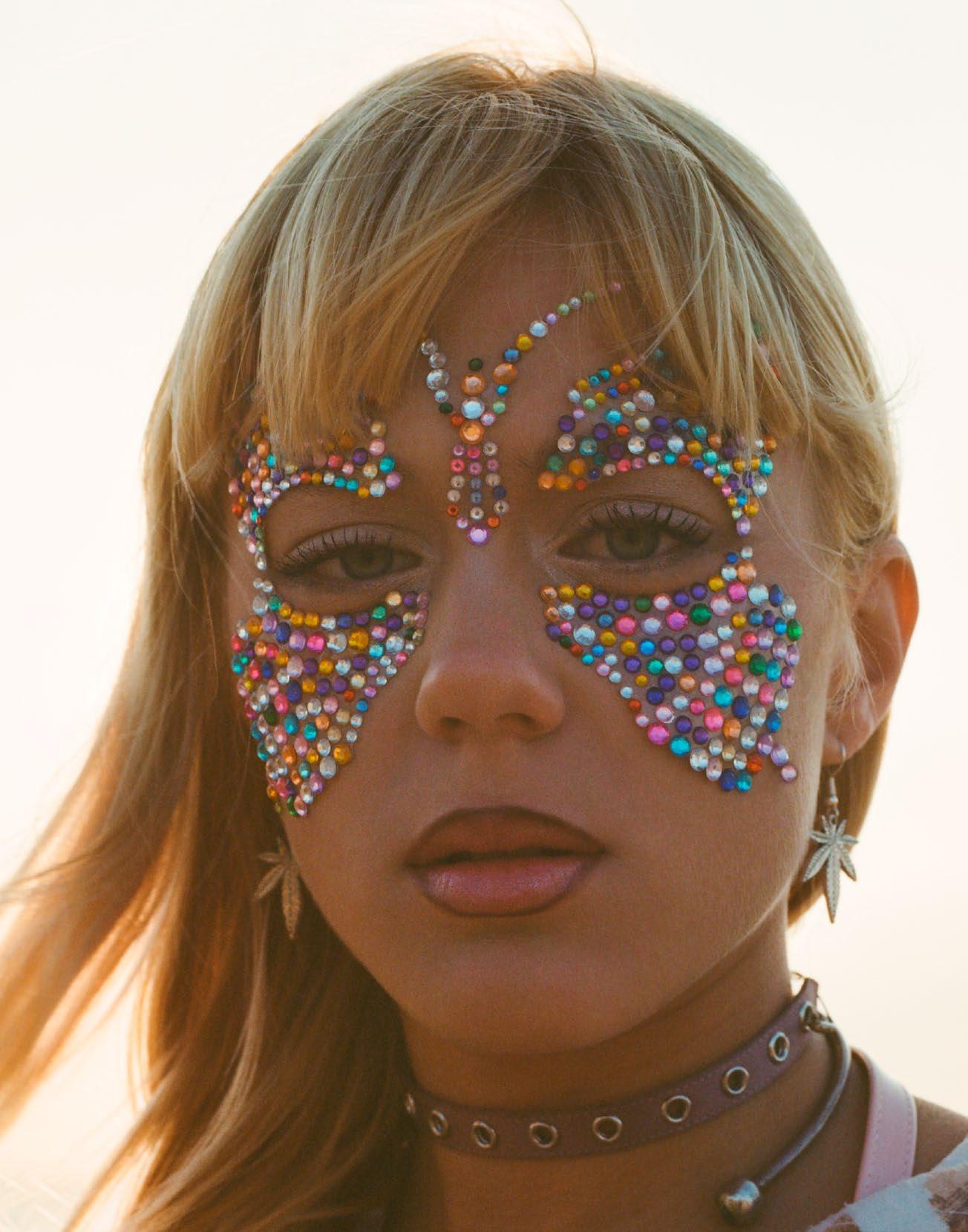
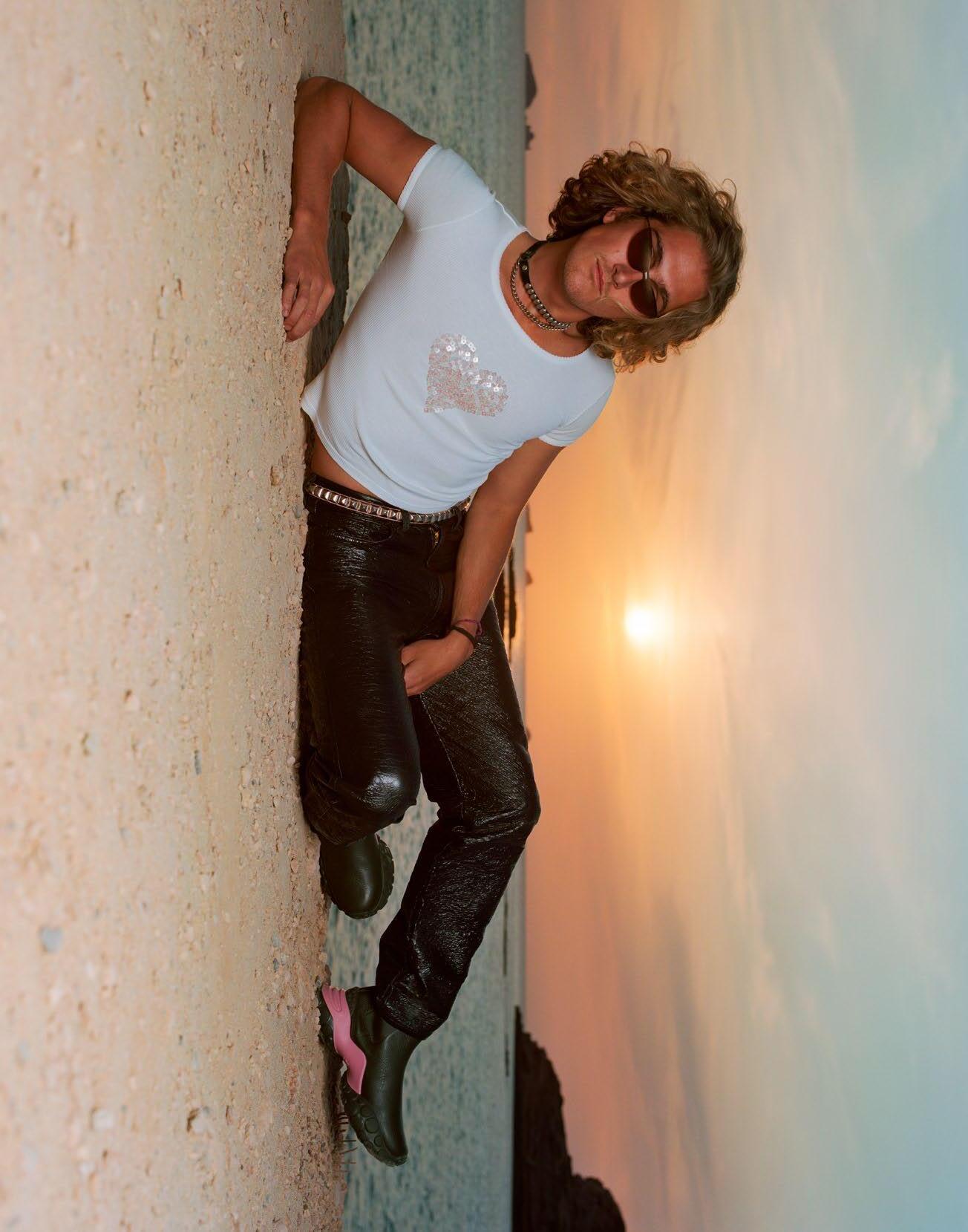
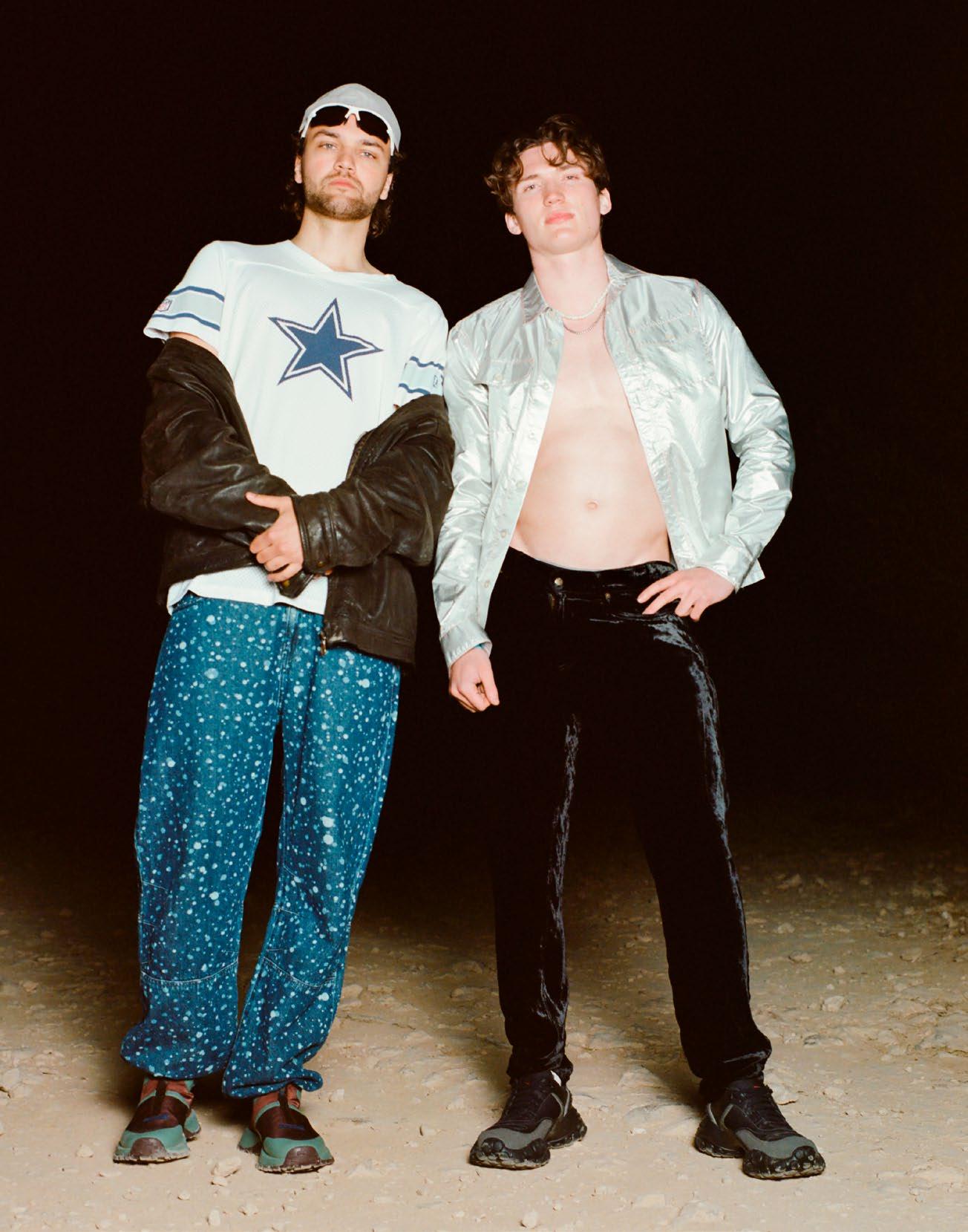
The population of Eivissa fluctuates between 100,000 and 200,000, but it is difficult to determine the precise number of permanent residents. During the summer months, the island sees a surge in visitors: the peak is estimated to reach close to one million people. While the island’s natural beauty is undoubtedly a key factor in its allure, it is the vibrant nightlife and clubs that captivate many tourists. What were once old fincas from the seventies and eighties are now historic clubs spruced up beyond recognition. Today they look more like spaceships, bursting with special effects for a spectacle within a spectacle every night. It is impossible to do things by halves here: dancing starts well past midnight, continues as darkness surrenders to the first rays of light, and, in some cases, only finishes late the following day. Dawn lights the way home among awakening nature. Young people adorned with light and colour shimmer with energy that pulsates off them like an aura. All as the sun gently warms the first waves of the morning.


In 1975, Spain threw off the yoke of Francisco Franco’s fascist military dictatorship, becoming the last European country to do so after the end of World War II. This transition came just a year after Portugal’s counterpart junta was dismantled following the Carnation Revolution. It is remarkable that all this happened less than 50 years ago. Franco seized power in the 1930s and remained the sole caudillo until the mid-1970s. During those decades, the only permitted political party was the Falange Española, civil liberties were severely curtailed, censorship prevailed, and Castilian was enforced as the country’s sole language.
By the 1960s, the dictatorship’s iron repression of dissent and unorthodox customs was waning in some regions of Spain. Eivissa, in particular, began to attract hippies from all over the world, igniting cultural trends that would transcend Spanish borders. One notable example is the seventh edition of the International Council of Societies of Industrial Design (ICSID), held on the island in 1971. This congress explored experimental forms of architecture, and art.
The organisation—now renamed the World Design Organisation—held itinerant congresses in different countries, fostering connections between professionals from different nations and promoting an internationalist view of design with a strong humanitarian spirit. The Eivissenc edition boasted an ambitious title: ‘La utopía es posible’ (Utopia is possible).
The chosen location was Port de Sant Miquel in the north of the island, not far from Portinatx, Benirrás, and other cales barely frequented at the time, deep coves that offered seclusion and tranquillity. The possible utopia materialised in a structure known as the ‘Instant City’, designed by José Miguel de Prada Poole to house students participating in the International Council who had not found accommodation in the nearby hotels. The original idea for the Instant City did not come from the architect who later put his name to it, but from two architecture students from the Polytechnic University of Madrid, Carlos Ferrater and Fernando Bendito. Luis Racionero then joined them in writing the manifesto, which was a call to action, inviting designers from all over the world to join this Instant City. It stated: “The people, the youth of the New Culture will meet in Eivissa to be together, to listen to music, to dance, and to build the space in which we will live for a few days. We ask designers from the world over to help us create the instant city that our minds will shape over those several
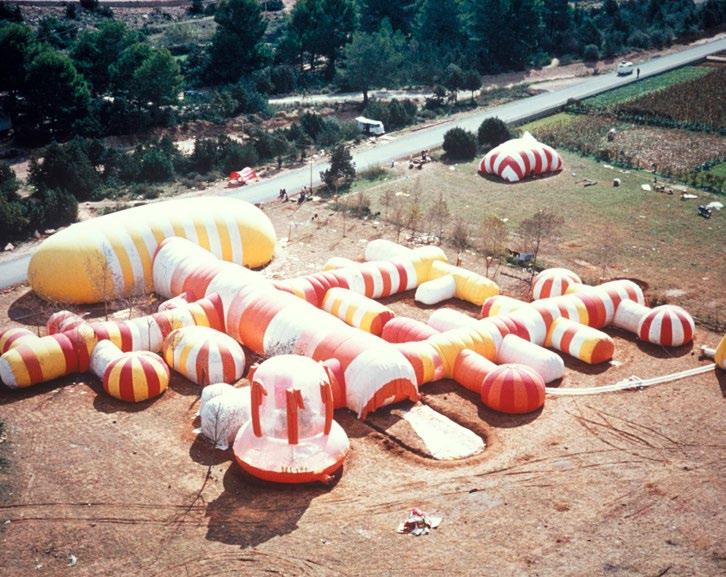
days. In an event centred around environmental design, behaviour and form can come together over a week of design, construction, music, mime, fair, festival, and improvisation.”
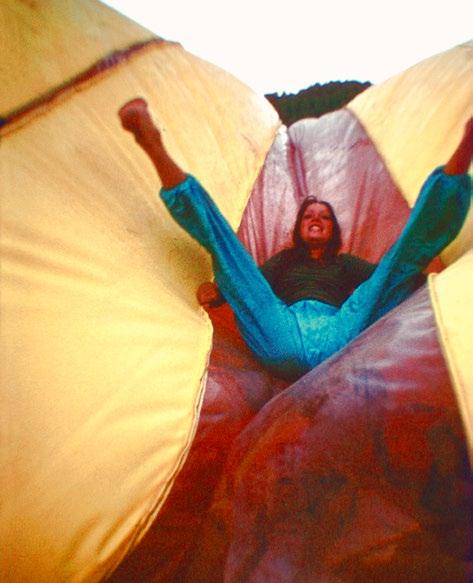
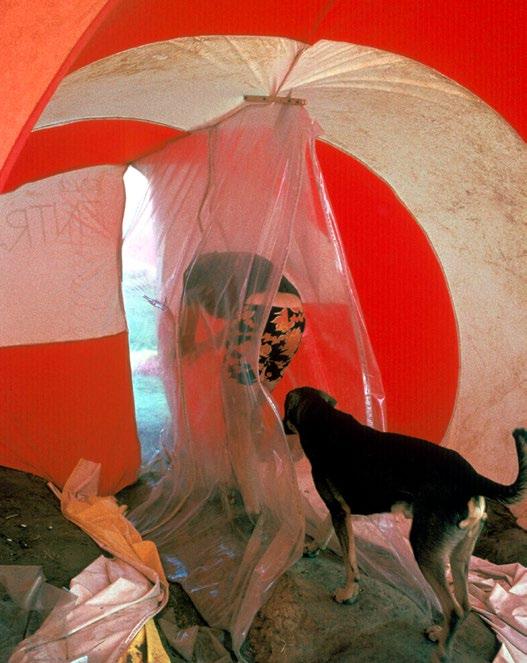
The manifesto travelled around the world and the response far exceeded the students’ expectations. They sought help from Prada Poole, who then designed the project. He described it as: “a city of freedom but not anarchic because the greatest freedom is always found within a higher order.” So, what did this Instant City entail? One need only look at the photos to grasp the revolutionary scope of Prada Poole’s experiment. From an aerial view, it resembles an anthill of inflatable PVC modules in various colours, interconnected by corridors and with the theoretical potential for infinite expansion. A labyrinth of communal spaces and pathways that employed two geometric shapes repeatedly: the sphere and the cylinder.
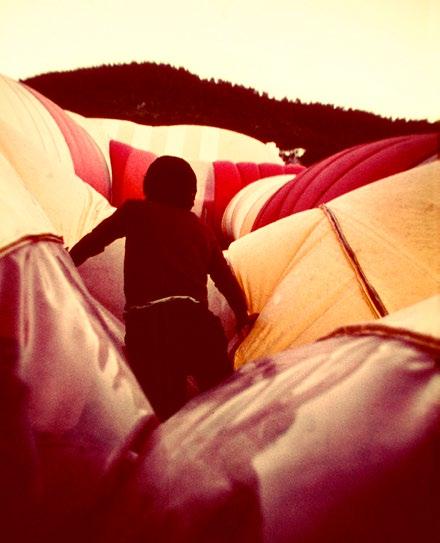
Prada Poole’s architectural utopia represented a profound shift for Spanish architecture and beyond. It encompassed an intricately designed and transient structure that offered the opportunity for groundbreaking experimentation with pneumatic and flexible structures. On a more philosophical level, José Miguel de Prada Poole found the existing urban configuration of the time to be excessively rigid. He argued that cities had become static and outdated, unable to adapt to the needs of the 1970s, which were vastly different from those of a few decades earlier. And his Instant City was a perfect architectural response: it represented a model for a new transitional city that could expand or contract as required, without solid buildings standing in the way of change.
The response from Europe was overwhelmingly positive.
The Instant City garnered significant attention in underground publications, and extensive coverage in the esteemed AD newspaper in December 1971: “The Instant City cannot be judged a success or a failure, since as a people-centred environment, it is what its inhabitants made of it. The city was comprised of people who knew each other
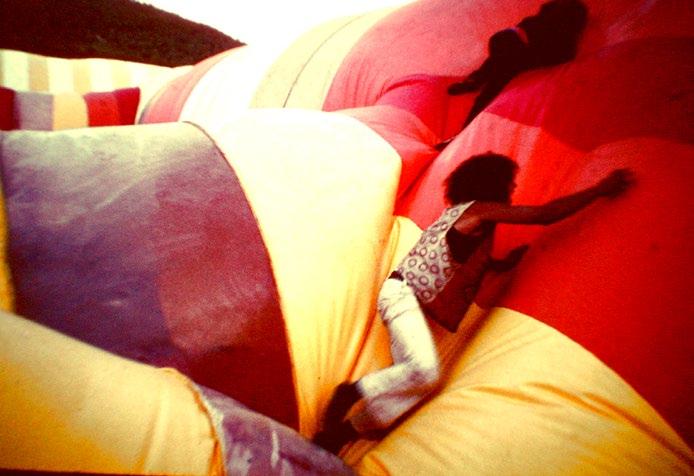
and the activities they did with or without each other,” the article reads. The Finnish press elaborated further in January 1972, stating: “In Instant City, people connect with each other. They form friendships. The intention was to create an environment that existed not as an encouragement to social relationships, but as a response to them.”
Many of the participants in Instant City, which would eventually hold as many as 500 people, were associated with the hippy movement, which was beginning to decline in those years. The experience held immense significance for Spain’s cultural development. For a nation still struggling under dictatorship, the congress and the realisation of this utopia served as vital signs of hope for the future. The concept of the Instant City then moved, while remaining within Spanish territory, from Eivissa to Navarre. During the Encuentros de Arte de Pamplona, in the summer of 1972, Prada Poole was
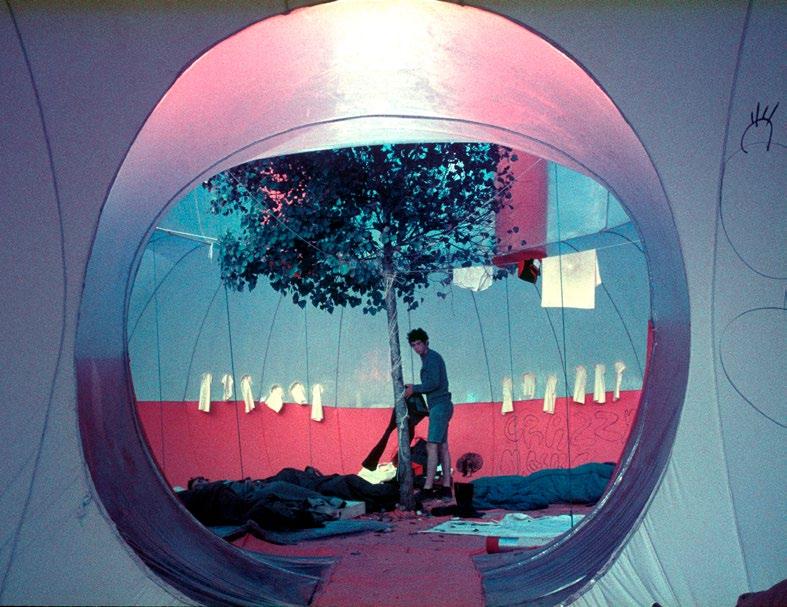
again called upon to create a pneumatic structure for the festival’s activities. This time, he conceived eleven domes with a diameter of twenty-five metres and a height of twelve metres, spanning a total of five thousand square metres. It was a further development of Eivissa’s Instant City concept, with each dome designed in different colours to immerse the inhabitants in a sensory realm that differed from space to space with the strong smell of plastic diluted by different fragrances in each room.
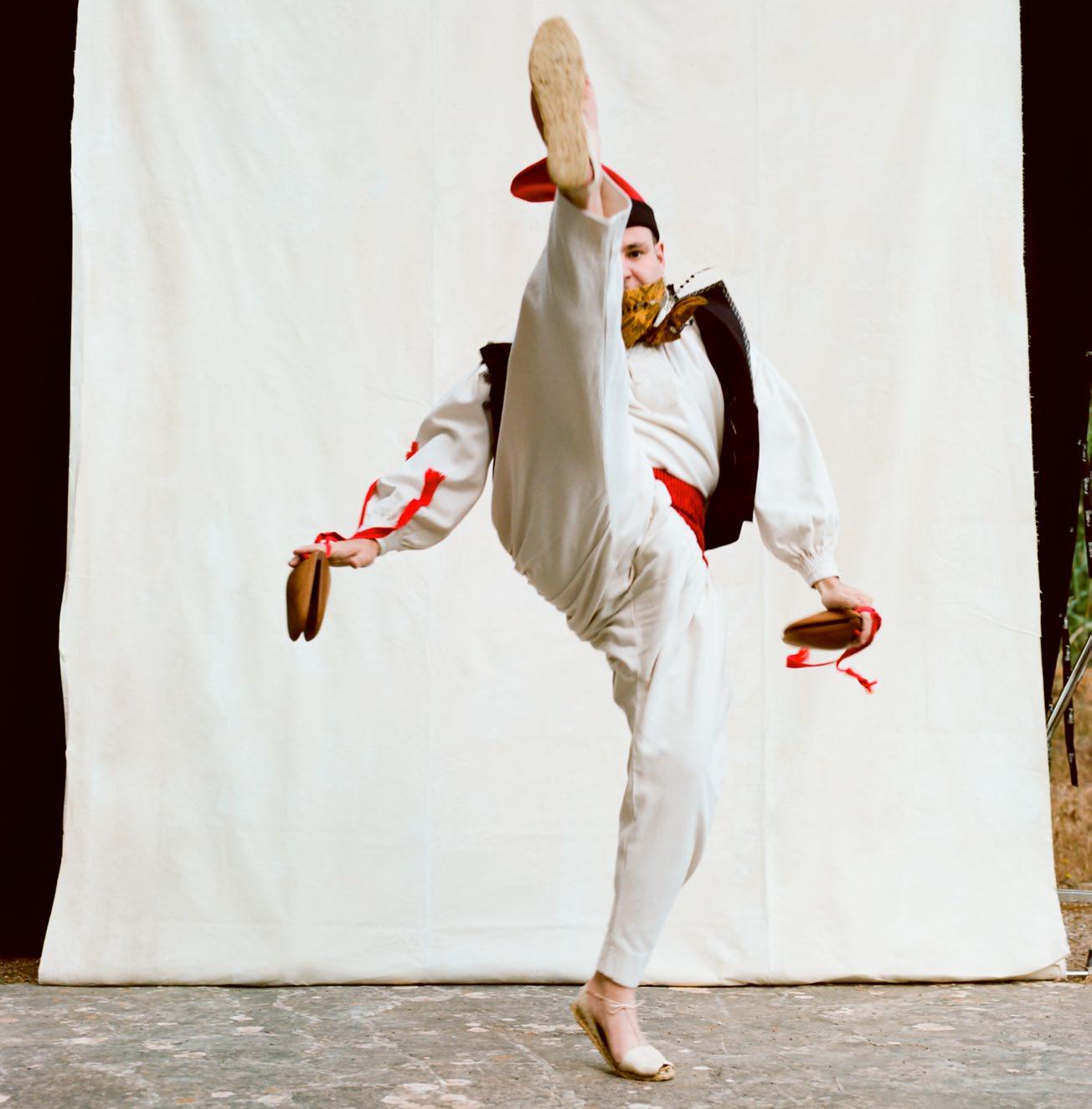
A man meticulously dressed in white and black cotton garments with red accessories holds two castanets in his hands, which he plays to the rhythm of a flute. He is dancing with great leaps, even flinging one leg over his head. On his feet, he wears rope shoes called espardeñas. Opposite him, a woman moves with small, nimble steps that contrast with his. Her trajectory traces a figure of eight. Their elaborate attire is embellished with jewellery, particularly on the women. As a sign of opulence, they wear up to 24 rings and a typical Eivissenc necklace, called an emprendada, made of gold, silver, and coral. This is the ball pagès, a traditional dance from Eivissa and the Pityusic Islands more generally. The dance symbolises a ritual of seduction, but the island’s elders tell us that it’s not actually that old: its origins “only” date back to the 19th century.
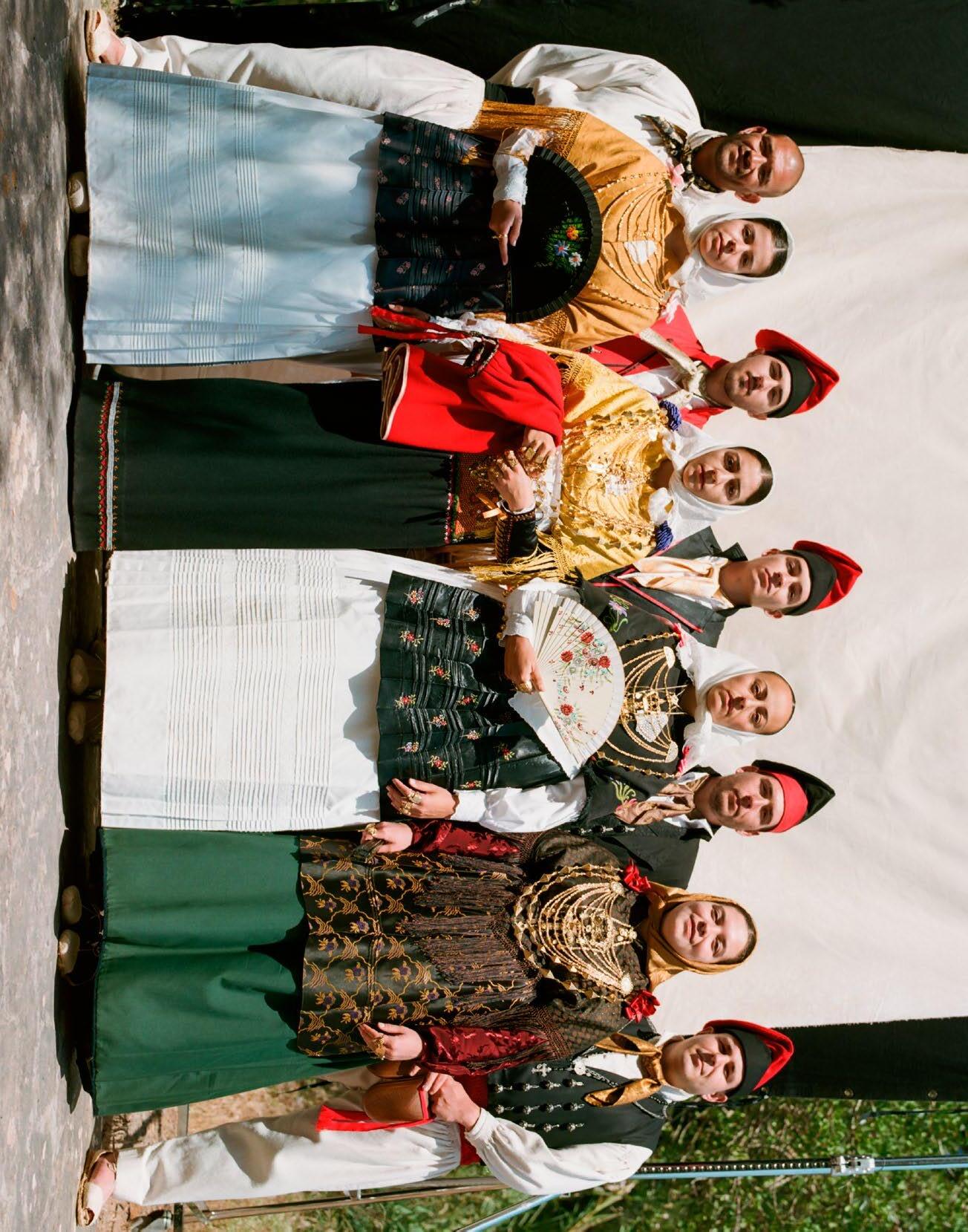
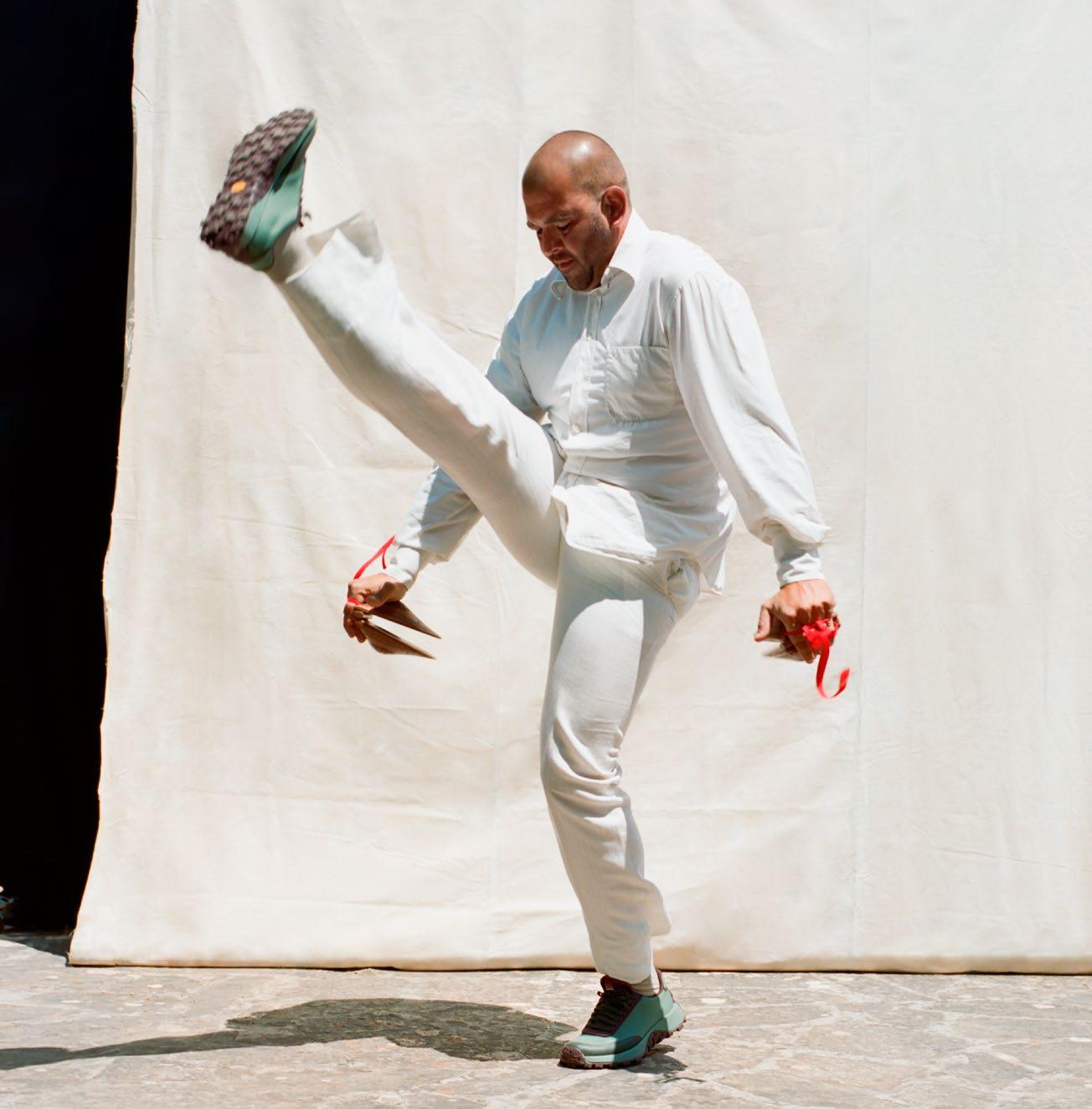
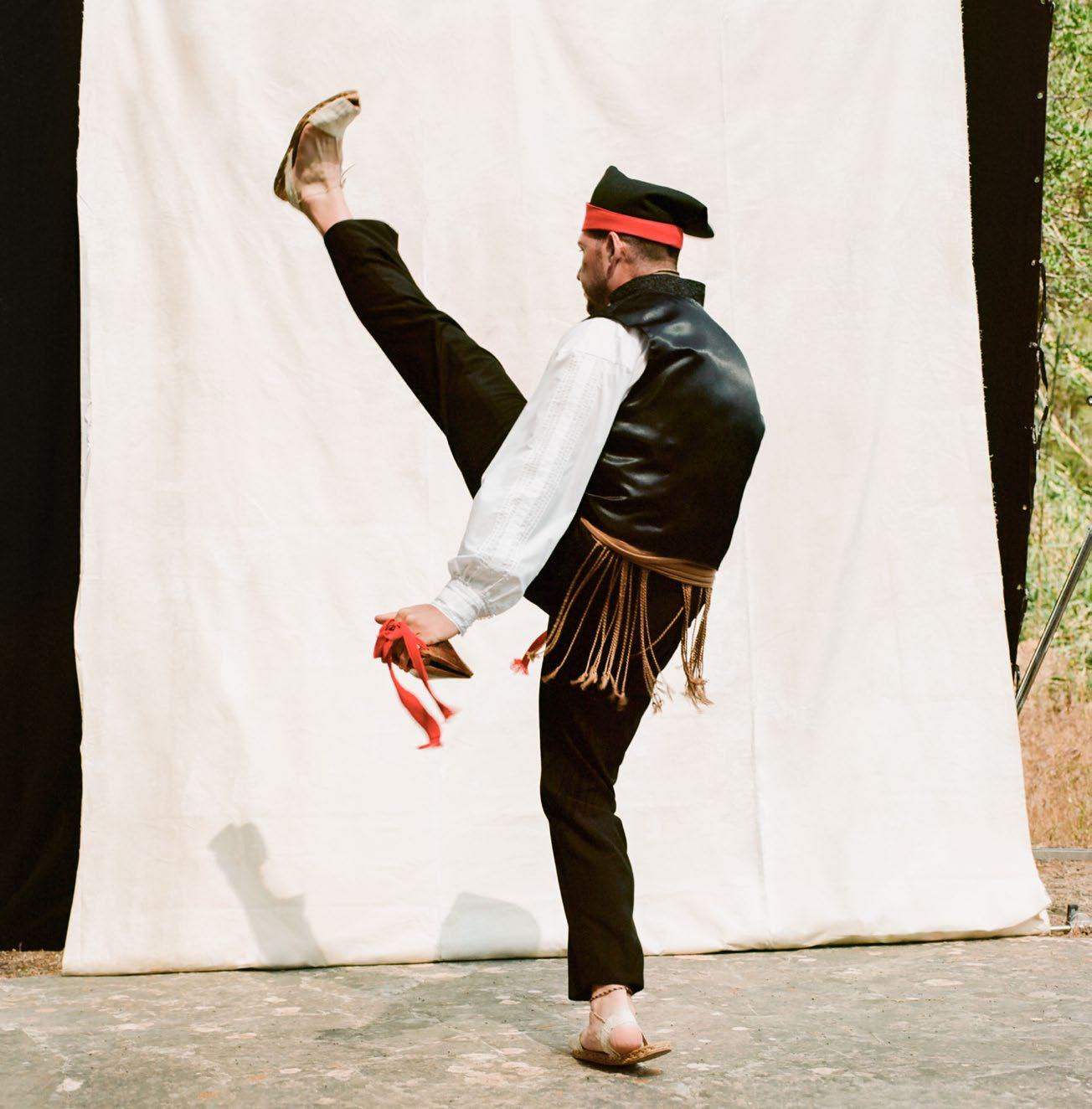
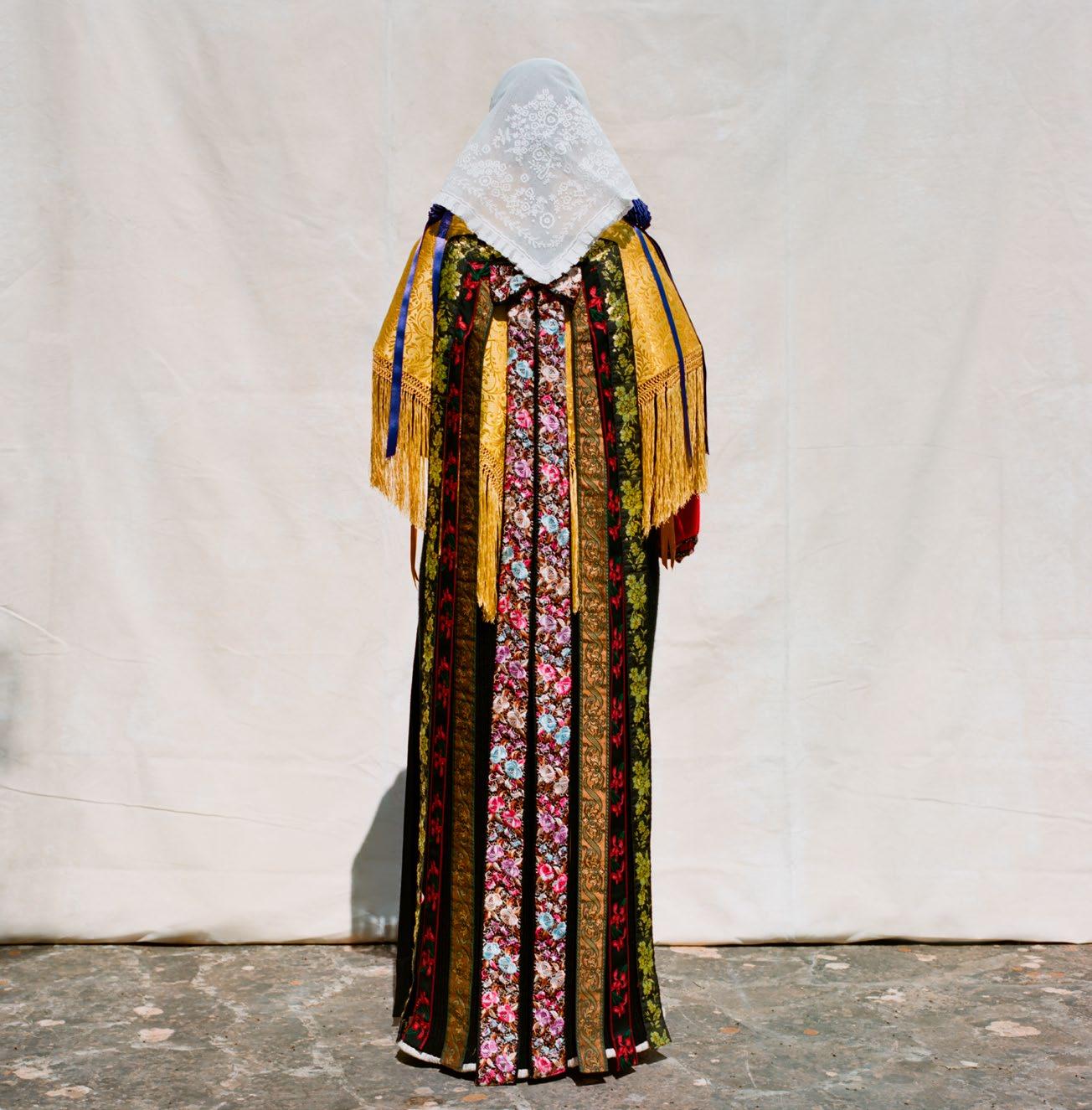
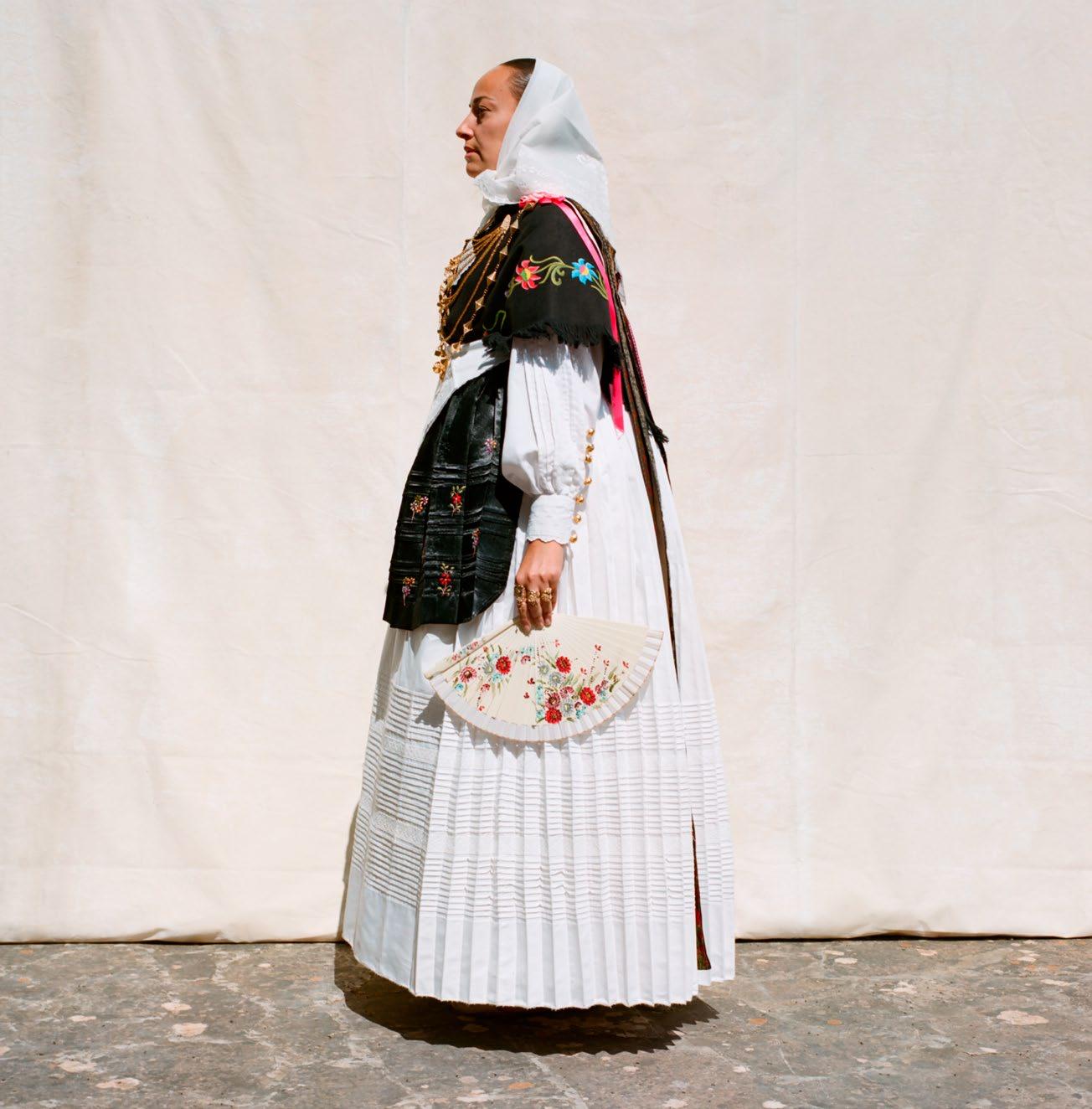
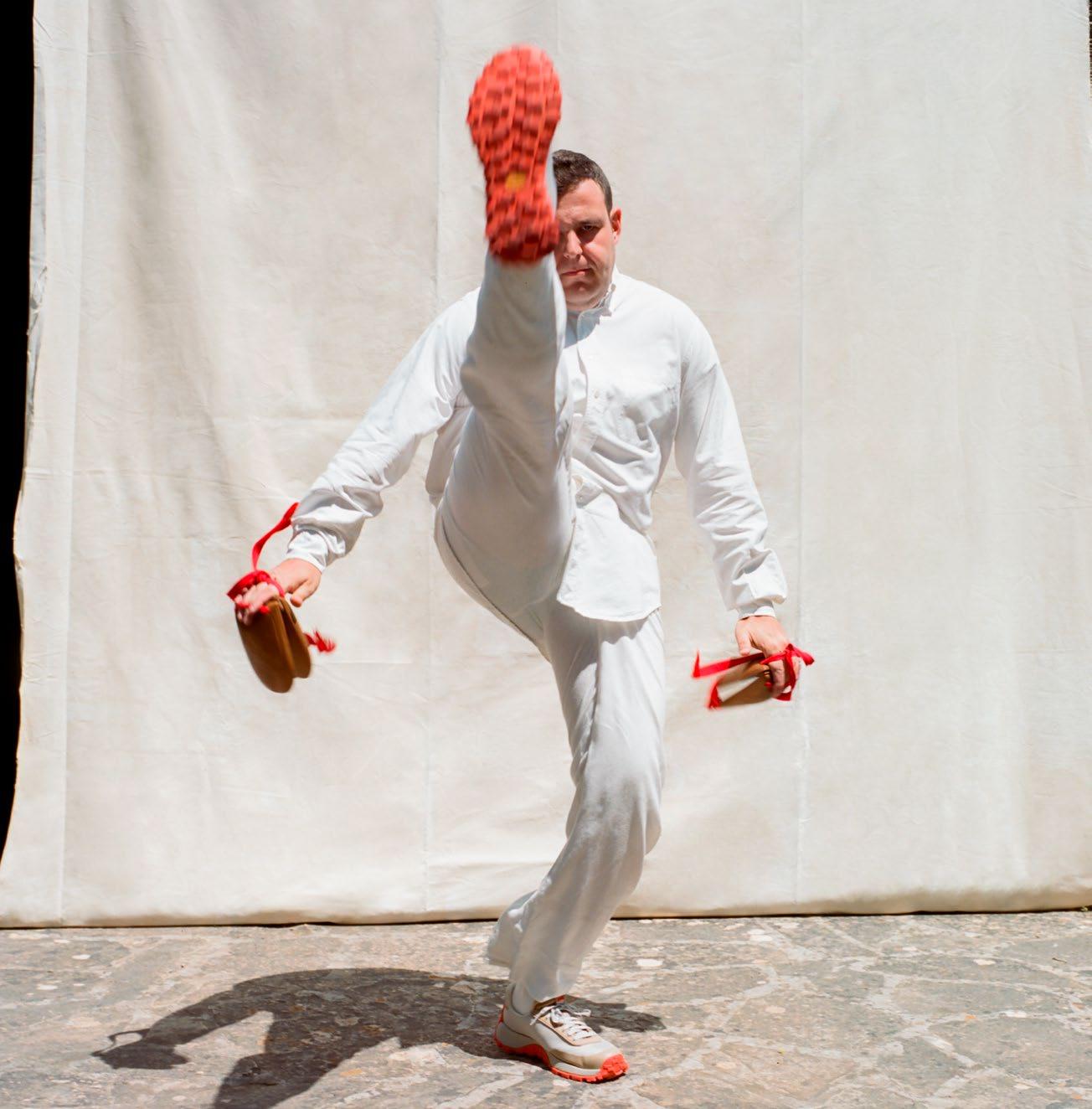
There are four distinct types of ball pagès: sa curta, the shortest; sa llarga, which is livelier with more leaping; sa filera, which involves one man and three women; and finally, ses nou rodades, where the dancers trace nine circles with their movements.
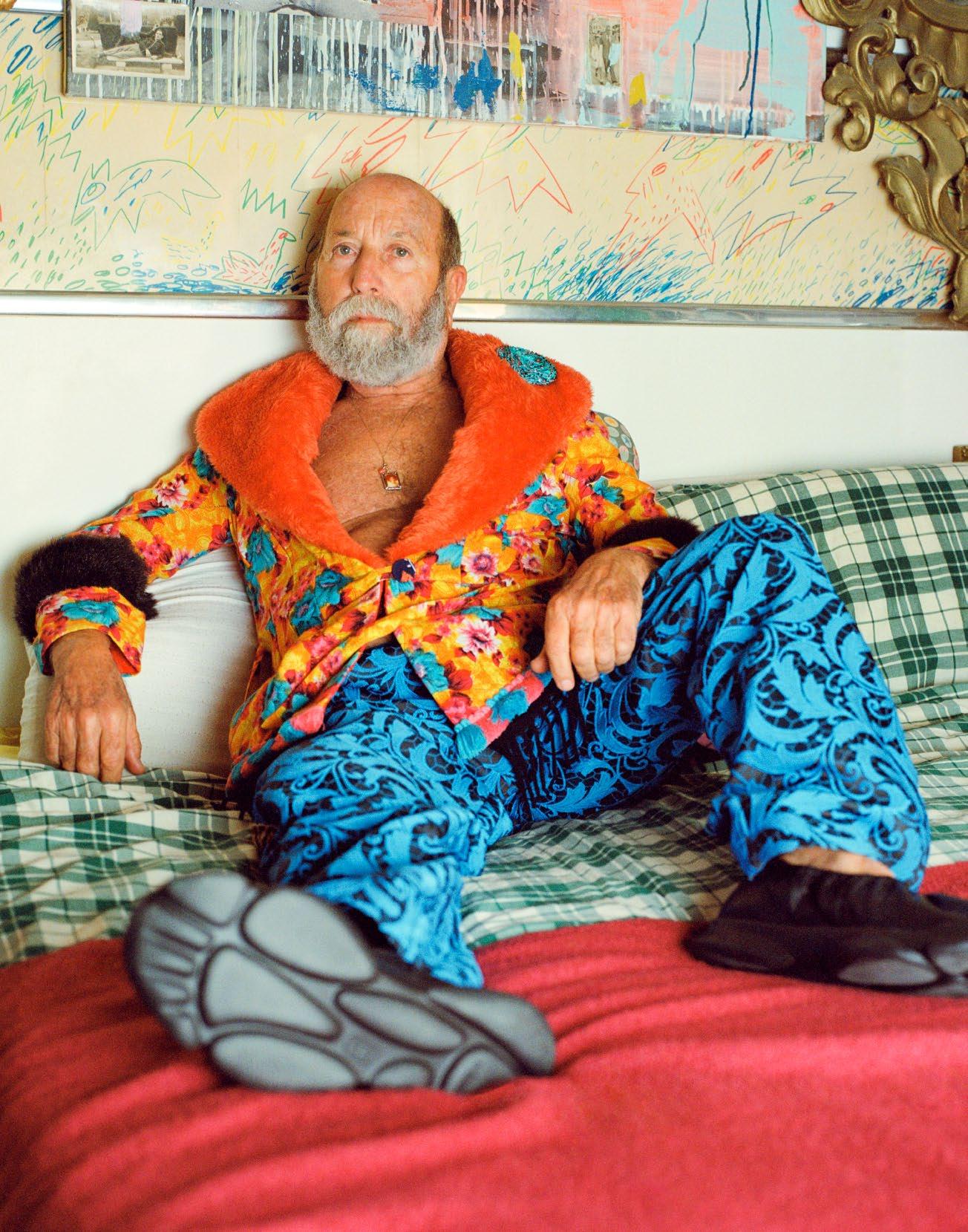
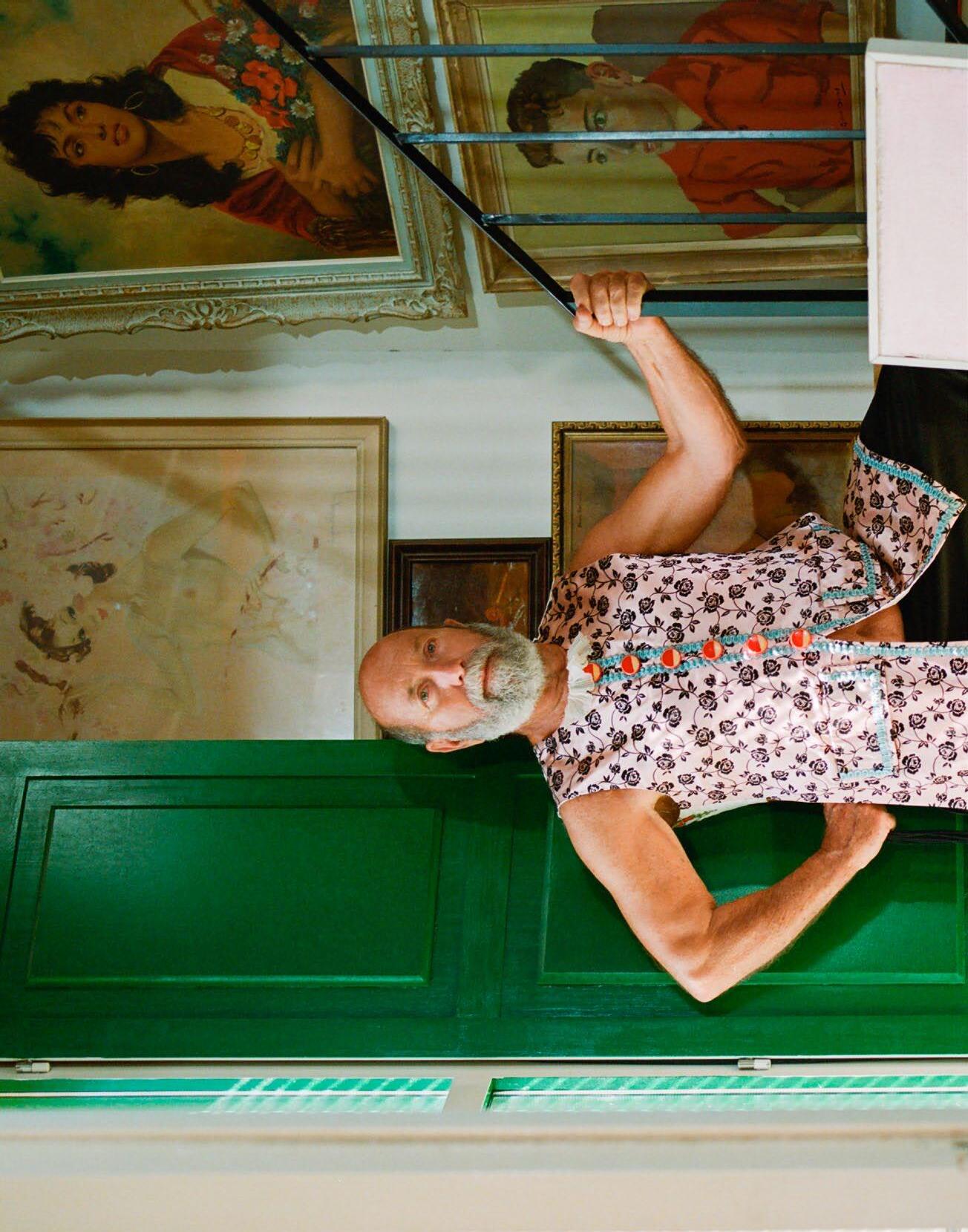
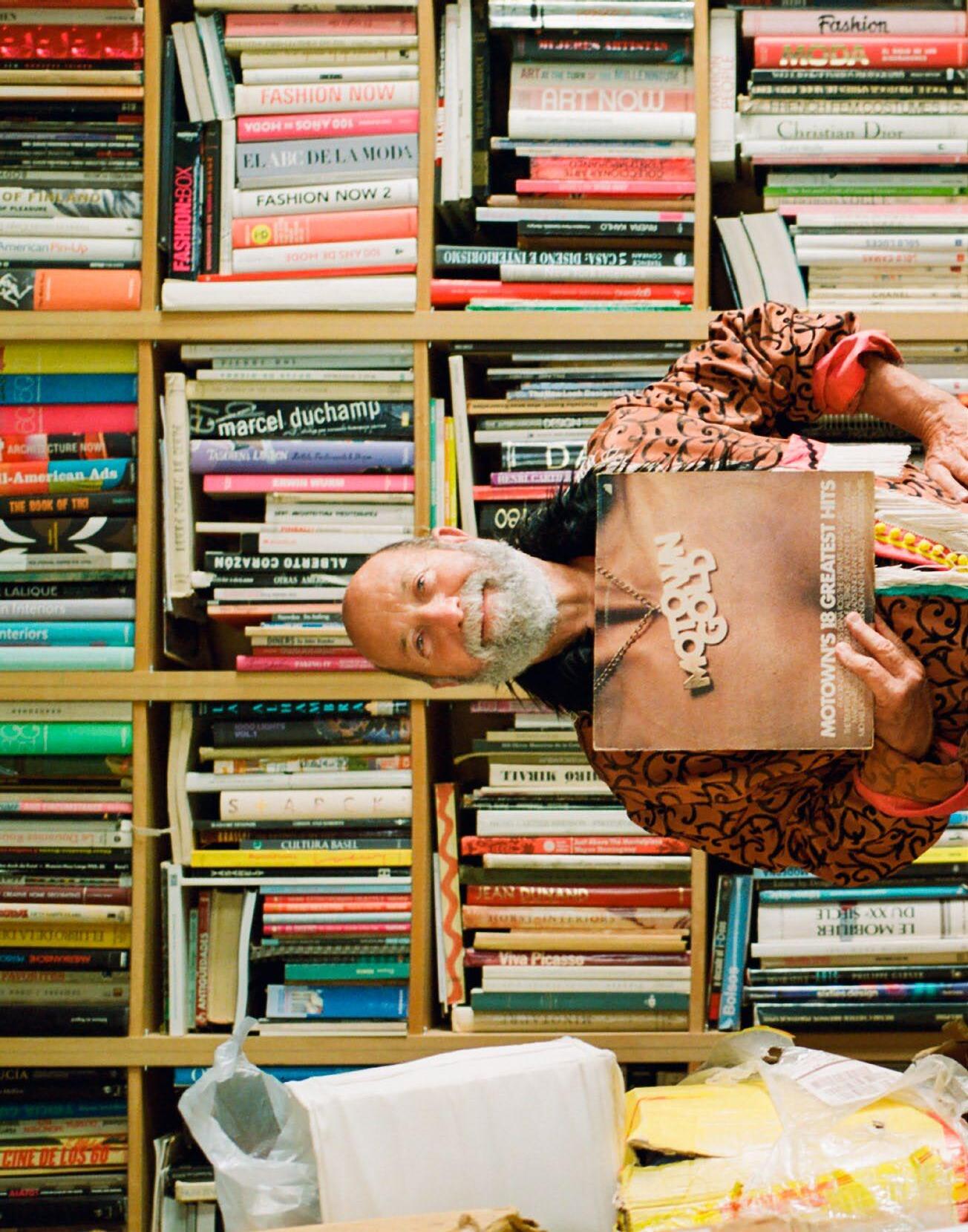
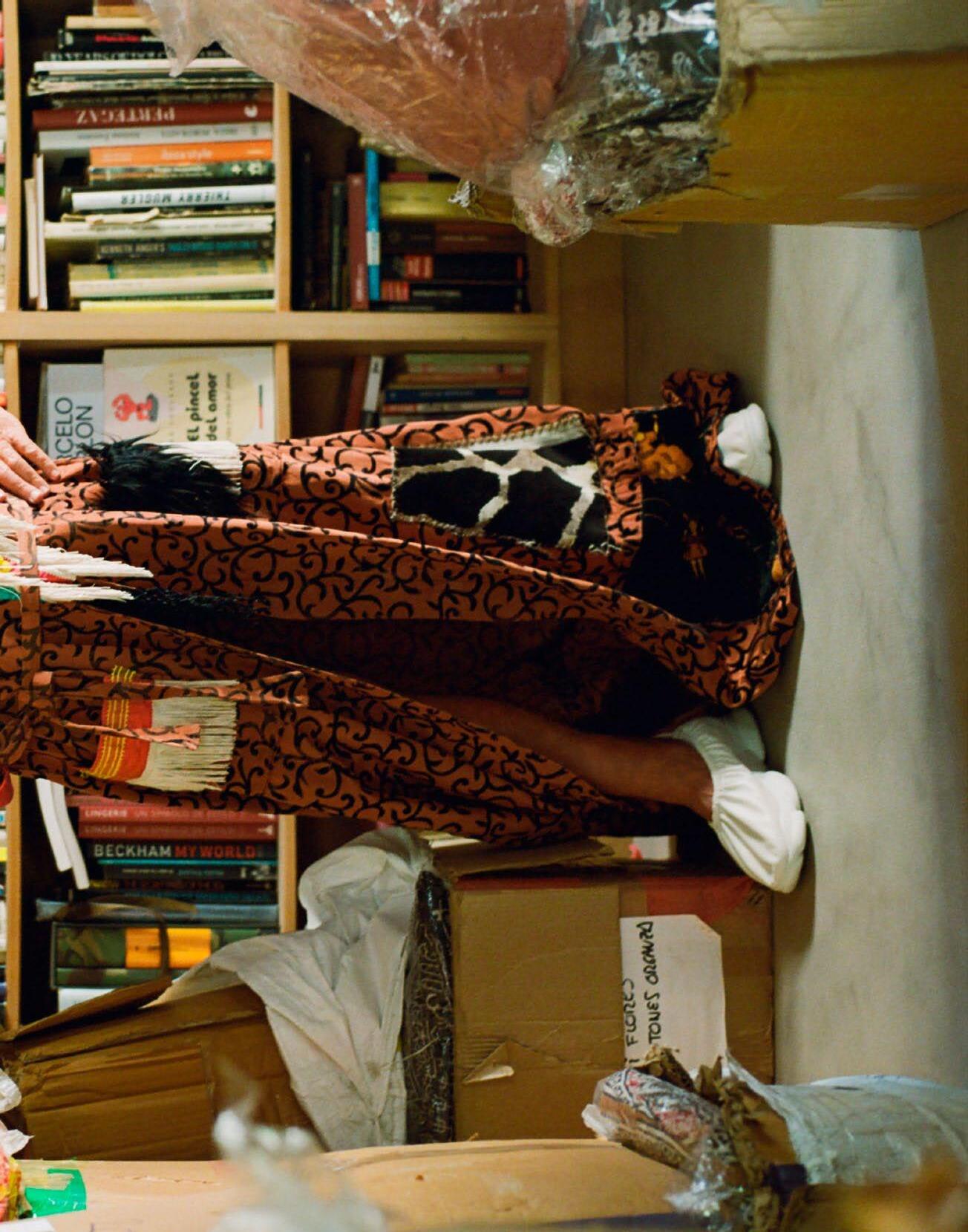
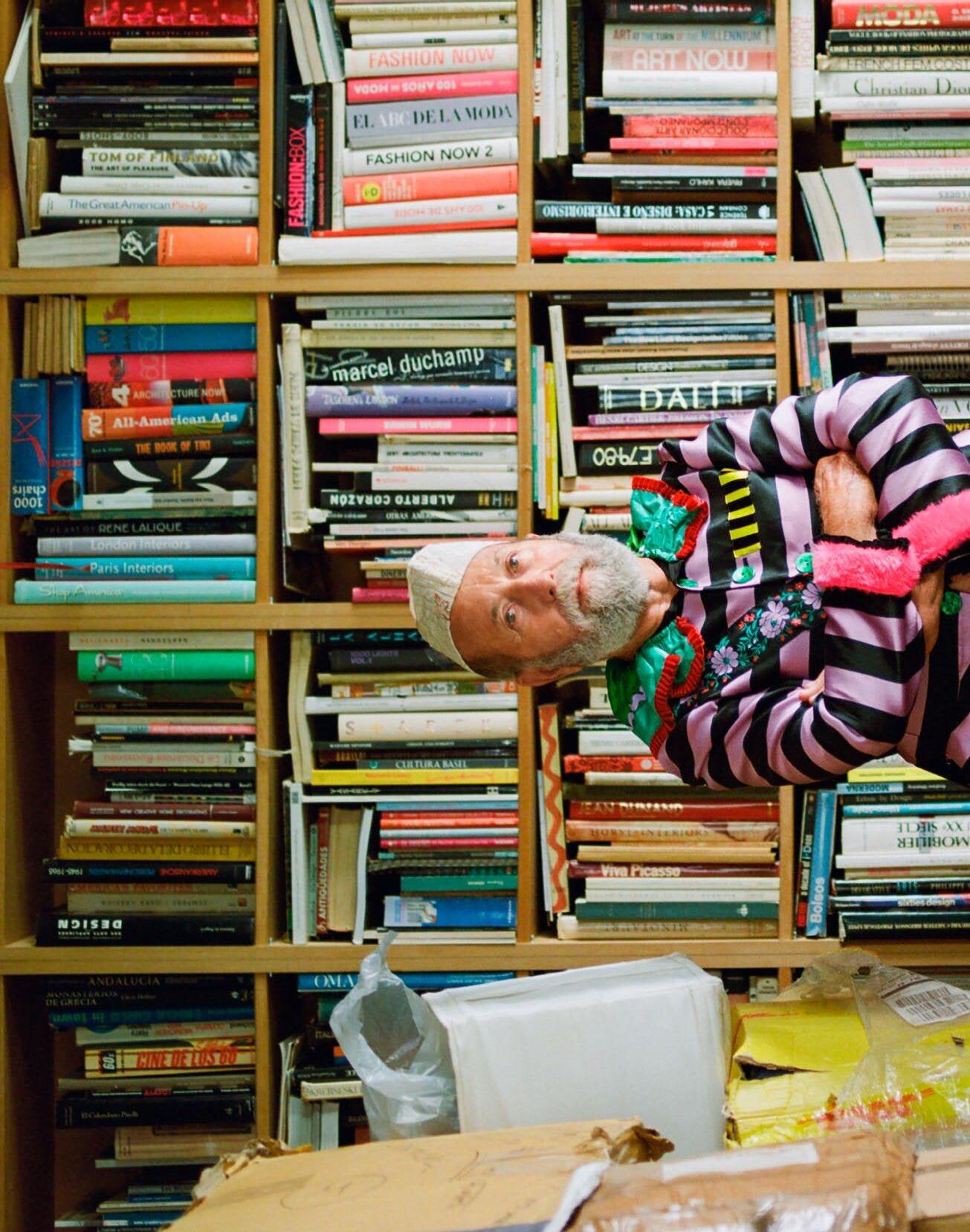
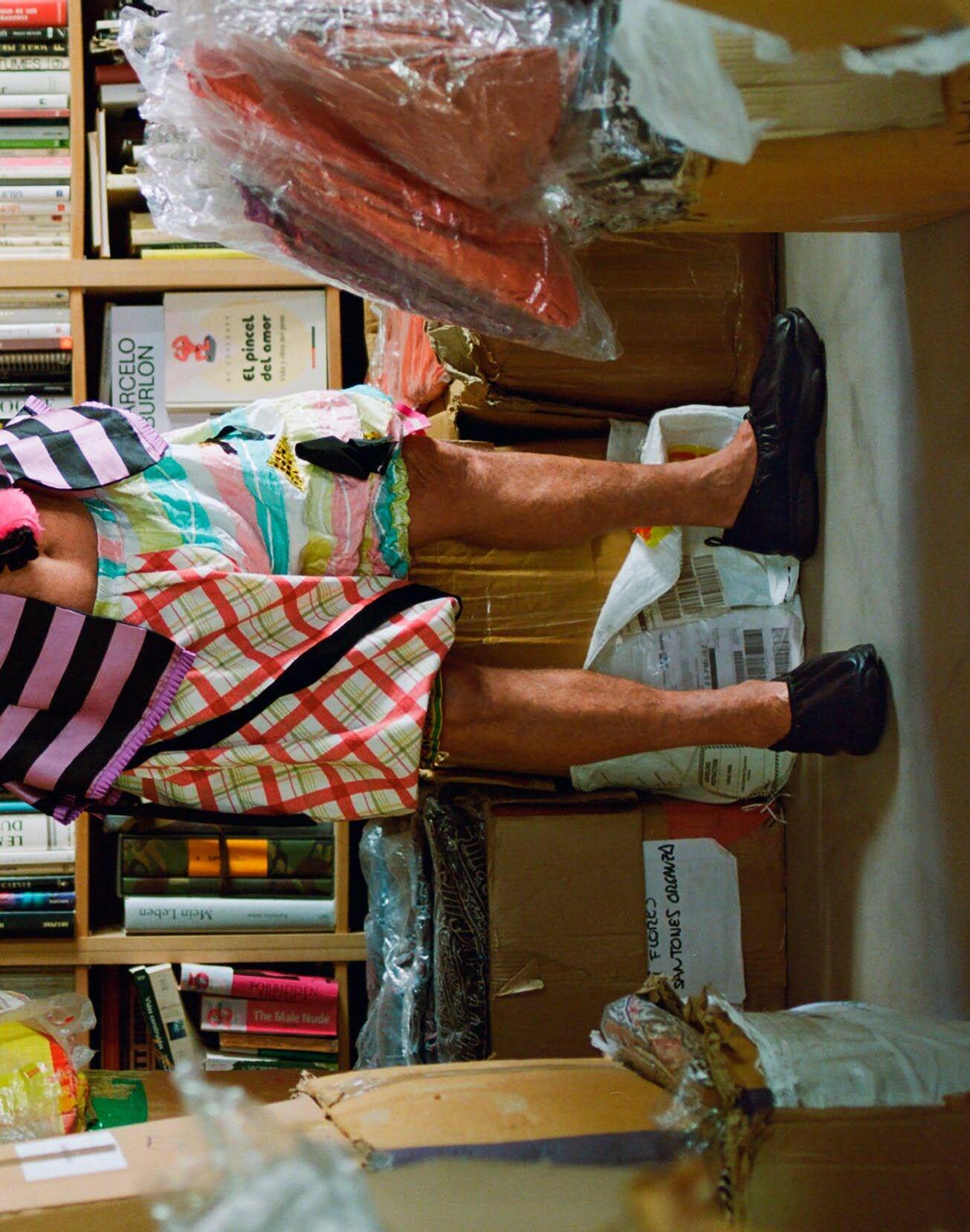
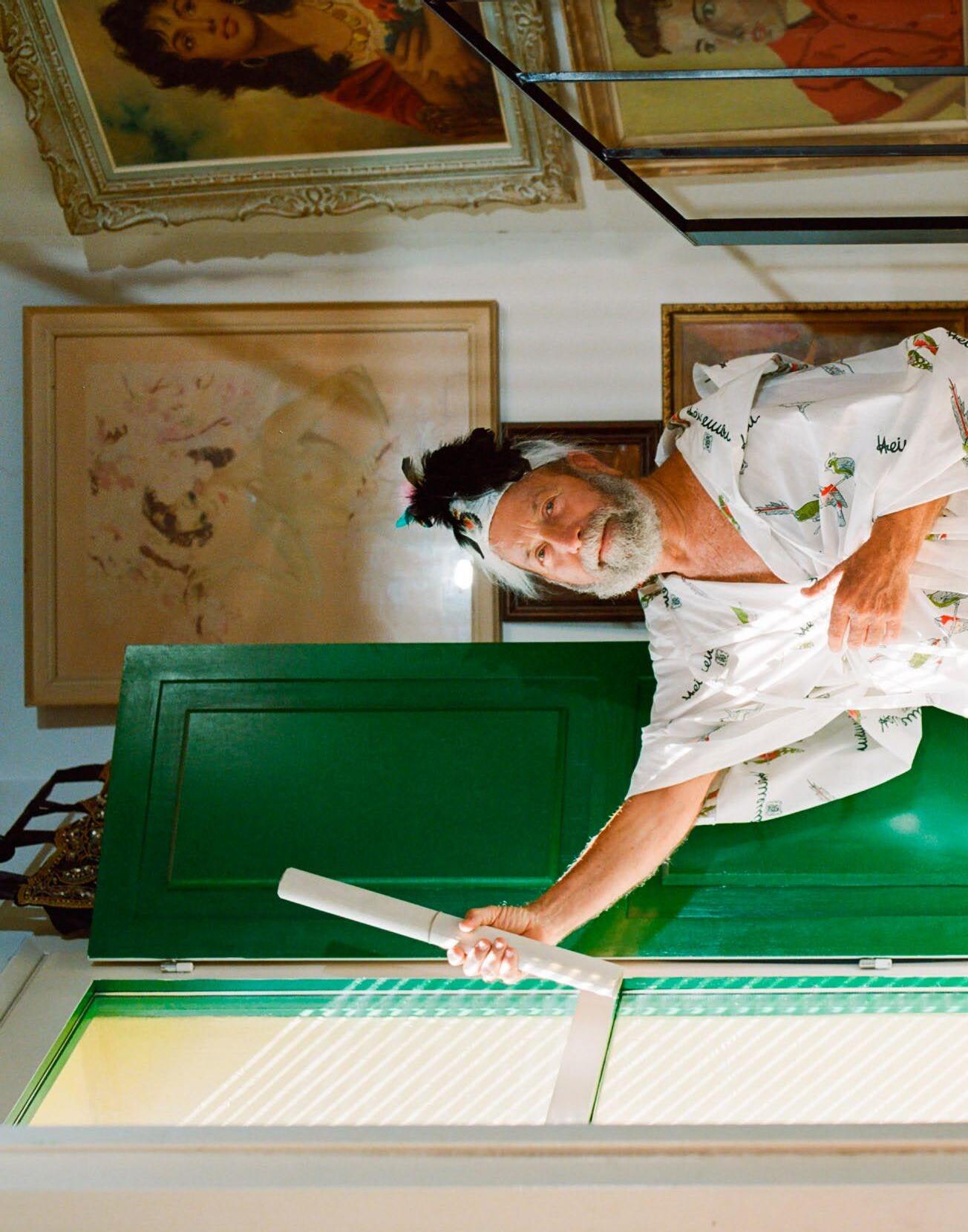
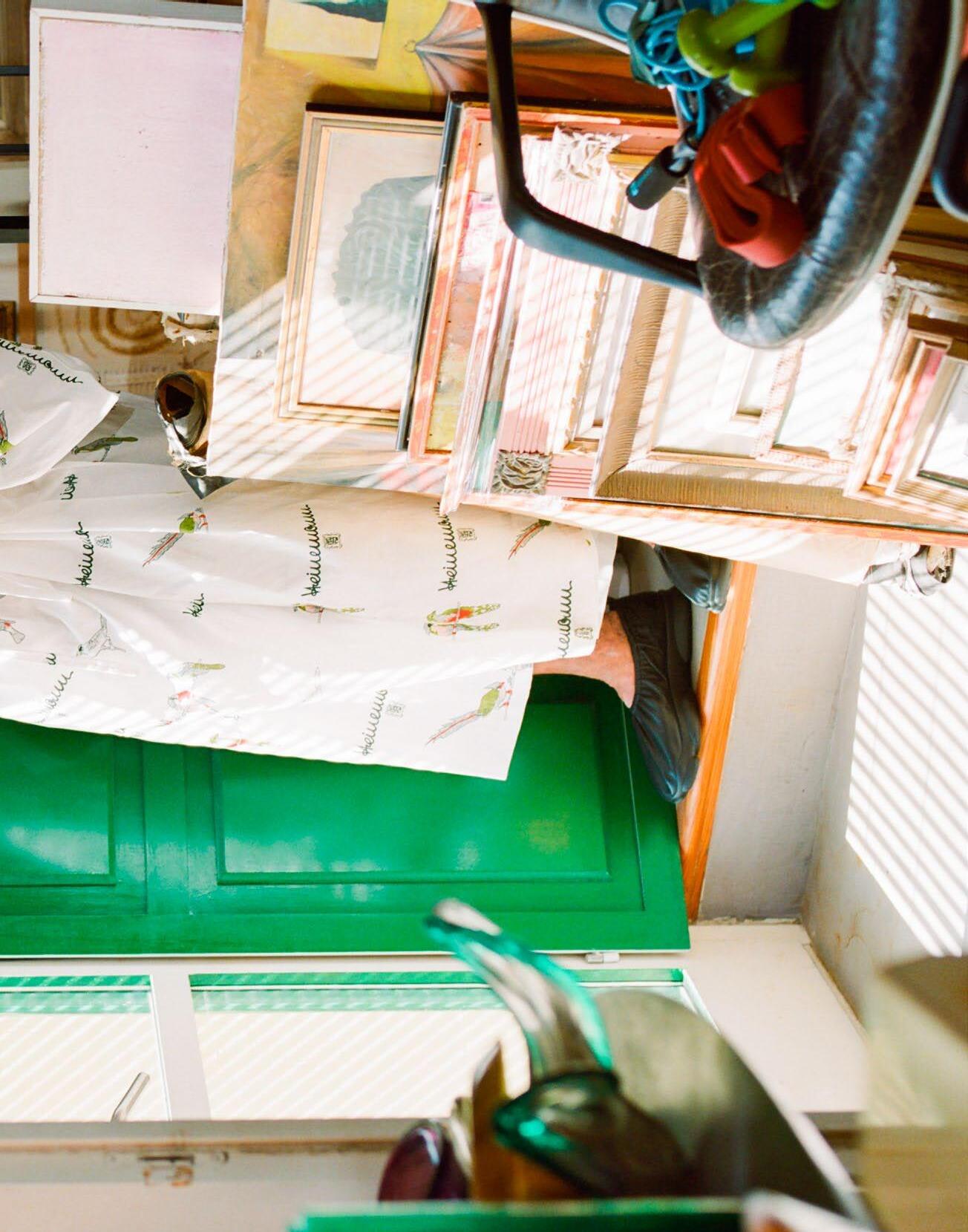
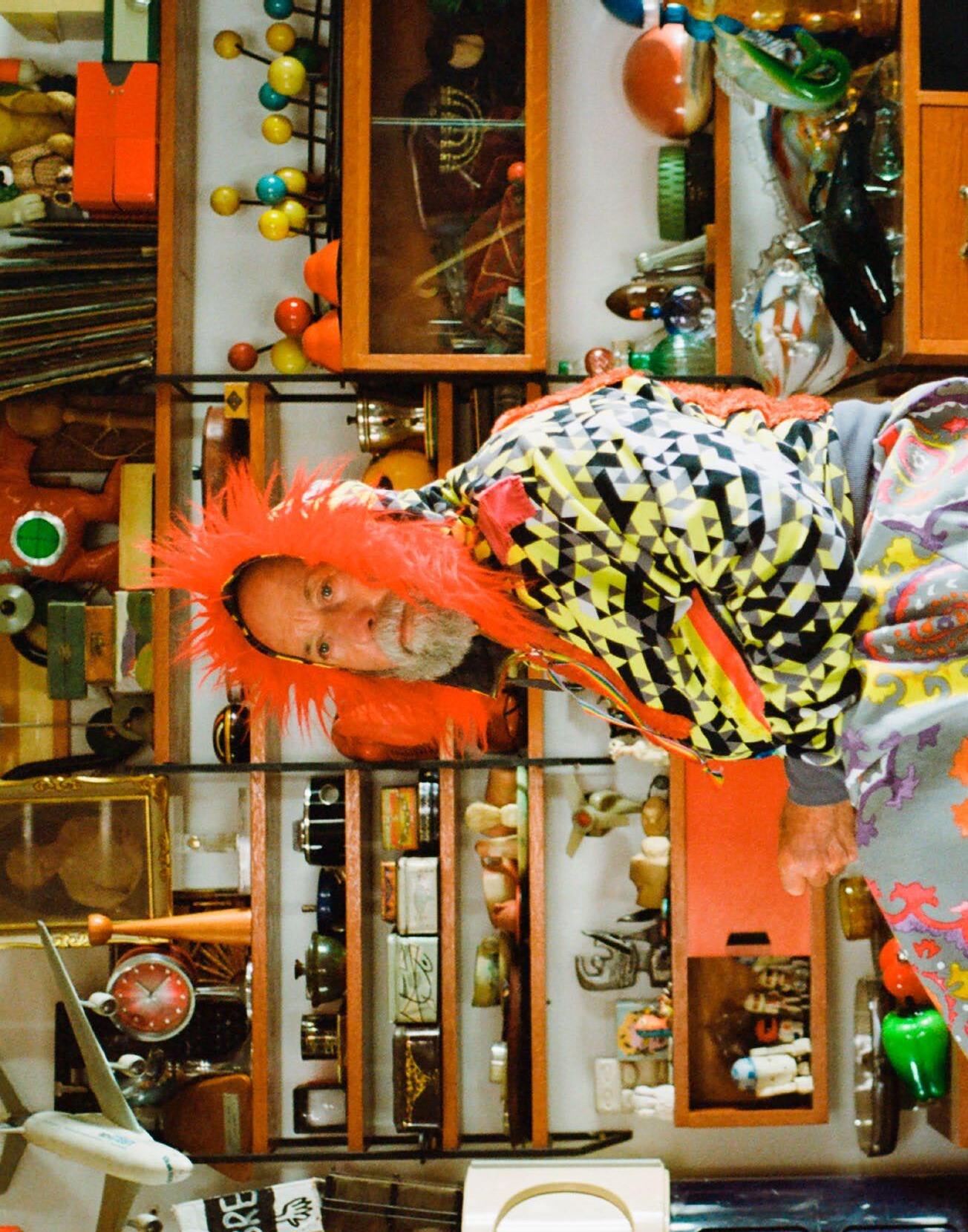
IF YOU MENTION VICENTE HERNÁNDEZ ZARAGOZA’S NAME TO ANYONE ON THE STREETS OF EIVISSA’S OLD TOWN, KNOWN BY ITS CATALAN NAME OF DALT VILA, NOT MANY PEOPLE WILL KNOW WHO YOU ARE TALKING ABOUT. BUT TRY HIS ALIAS, VICENTE GANESHA, AND YOU’LL SEE REALISATION DAWN ON THE FACES OF THOSE WHO LIVE IN THESE WHITE ALLEYS: “VICENTE, OF COURSE, HE’S AN INSTITUTION.”
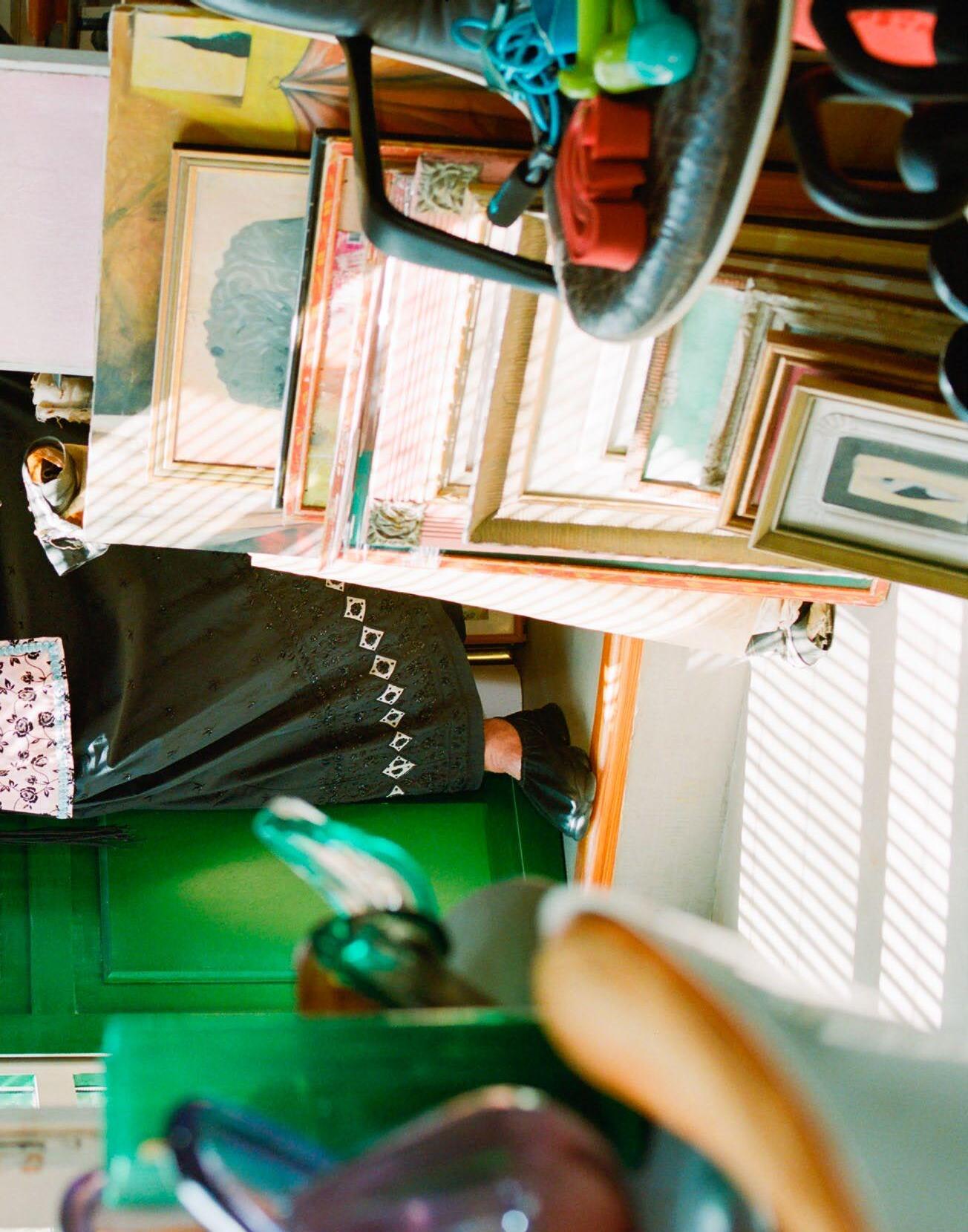
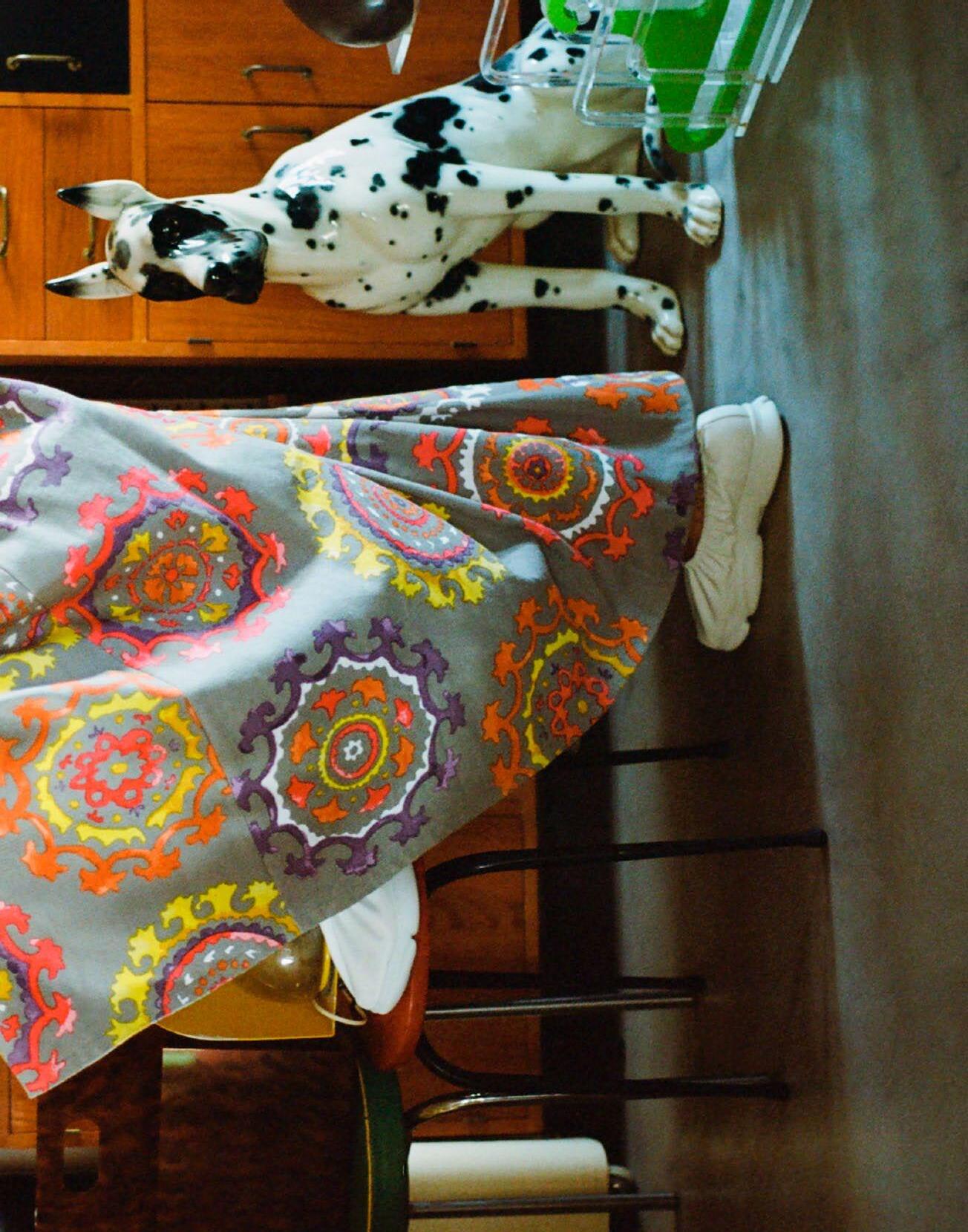
SINCE ITS DOORS OPENED IN 1991, HIS HIGH-END VINTAGE CLOTHING SHOP HAS BECOME ONE OF THE MOST RENOWNED FASHION BOUTIQUES IN EIVISSA TOWN AND ON THE ISLAND ITSELF. ALONGSIDE UPSCALE PIECES, VICENTE ALSO SELLS HIS OWN COLLECTION, MADE ENTIRELY IN INDIA. VICENTE FIRST VISITED INDIA IN 1982, ELEVEN YEARS AFTER HE SET FOOT ON EIVISSA FROM A SMALL PUEBLO ON THE COSTA BLANCA. HE COLLECTS UNIQUE PIECES, BUT ABOVE ALL, HE COLLECTS MEMORIES AND ANECDOTES, FROM VISITING CELEBRITIES, SUCH AS CLAUDIA SCHIFFER, VALENTINO GARAVANI, AND GIORGIO ARMANI, FOR EXAMPLE. NOW IN HIS SEVENTIES, VICENTE STILL BOASTS A HANDSOME PHYSIQUE AND A SHARP TONGUE. A BOUGAINVILLEA CLIMBS THE TWO FLOORS OF THE BUILDING THAT HOUSES HIS SHOP AT GROUND LEVEL AND HIS PRIVATE RESIDENCE ON THE UPPER FLOORS. MUCH LIKE THE SHOP, HIS HOUSE IS AN EXTRAORDINARY WUNDERKAMMER OF OBJECTS, CLOTHES, PAINTINGS, BOOKS, AND PRINTS FROM EVERY ERA.
HOW DID THIS LONG-STANDING CLOTHING VENTURE BEGIN?
I came to Eivissa in 1971, and five years later, a friend and I opened a multi-brand store. Business was good; we were selling various high-fashion brands but then we lost everything and I had to start from scratch, with no money. In 1991, I managed to open a second-hand store. This marked the beginning of the second chapter, so to speak. My fashion journey spanned from 1976 to 1991, and then from 1991 to the present.
WHERE DOES YOUR PASSION FOR COLLECTING AND SELLING CLOTHES COME FROM?
I wouldn’t necessarily call myself a collector or a fetishist. I like finding things, saving them, and putting them back on the market. I learned by studying because there was no Google or internet back then. But I was deeply interested in it all: I read books, talked to people, and listened. I was a sponge, not only for information, but also for aesthetic sensations. I am self-taught.
HOW DID YOUR LIFE CHANGE WHEN YOU CAME TO EIVISSA?
It changed significantly. During the Franco regime in Spain, we had limited exposure to foreigners. When they started arriving in the seventies, it was like discovering a whole world out there. I was a teenager living near Alicante and I asked my father for a passport. He gave me permission because that was how it was done back then; you needed your father’s permission. I immediately left for Paris. Then after Paris, I came here. I was twenty years old. I had no idea what Eivissa was: it was simply an island to me back then. I wasn’t aware of the movement happening here. I had seen a film about Eivissa, and it opened my eyes to this free little island. It occurred to me that I could move here and live with very little.
Second-hand gave me more opportunities to capitalise on the fashion knowledge I already had. I could delve into the past and create a timeline of clothing styles. I knew that certain items would still hold value, even if they weren’t branded, because of the materials, colours, and shapes.
I named my first shop The End, after the song by The Doors. For this new shop,
I chose Ganesha because he is the deity of luck. And I needed luck because I had already failed once. I worked hard to be independent and not rely on others or ask for anything. I didn’t have big ambitions, just the one: I wanted my own home, however small or far away.
IS IT CHALLENGING TO LIVE RIGHT ABOVE YOUR SHOP?
I never thought I’d have an apartment above my shop. I asked the municipality if I could build the house and they gave me permission. I planted the bougainvillea in 1993 and that, the house, and the shop all grew together. It wasn’t something I planned, but life is like a jigsaw puzzle, everything is interconnected. When we think we are changing our destiny, it is destiny that is changing us.
WHAT DOES WEALTH MEAN TO YOU?
For me, taking a ferry to Formentera is far better than staying on a borrowed yacht with other people and not being able to move independently. I have never been interested in wealth. Independence is the greatest form of wealth, in my opinion. Having freedom and not having to ask.
YOU ARE AN INSTITUTION IN EIVISSA. DO YOU BEHAVE DIFFERENTLY WHEN YOU ARE ALONE COMPARED TO WHEN YOU ARE WITH PEOPLE?
When I’m alone I’m more authentic and true to myself. I’m more natural. I engage in a few activities I enjoy: reading, walking, and contemplating. I am a simple person with a multitude of ideas. My head is full of curiosity and desire. I feel very young, still, in my head.
It has undergone huge changes. Life on the whole island has changed. But I’m not complaining, because I don’t know a better place than this. I do sometimes wonder whether, if I came now, knowing what I know now, I would choose to stay. This is not the Eivissa I knew when I first got here. Back then, dogs populated the streets, people walked barefoot, people were beautiful, they were poor, they had no money. People are more beautiful when they don’t have too much money. Everything was accessible, nowhere was off-limits. There was no AIDS. There was no money-fuelled stupidity. Instead, there was beauty, music, and drugs. A sense of hedonism. Beauty permeated everything.
WHAT ABOUT THE PEOPLE?
People don’t communicate like they used to. People follow me on Instagram and think they know me. That’s a good thing in some ways because it means I sell more. But it comes with problems too: people come, they buy, they say thank you, and they leave. They don’t talk to you anymore. Life has less emotion. You can’t go to the disco and dance if you’re glued to your phone.
WHAT DO YOU STILL LIKE ABOUT EIVISSA?
My work and the lifestyle that still exists here. The climate, the beaches, the sea. The light, the nature. In a sense, Eivissa remains unchanged. Only the people and their philosophy have changed.
WHICH ARTISTS HAVE INFLUENCED YOUR LIFE?
Jean Cocteau, above all. My aesthetics were shaped by his films and poems.
DO YOU STILL GO TO INDIA A LOT?
Yes, for at least a month every year.
WHAT IS YOUR RELATIONSHIP WITH THE MEDITERRANEAN?
It’s the only place for me. The Mediterranean is everything. I have always lived here, I still want to live here, and I want to die here. It is the cradle of an entire civilisation, from Athens to Beirut.
WHAT DO YOU LOVE MOST ABOUT THIS SEA AND THESE COASTLINES?
The nature, vegetation, food, and the emotion. Living in the sun. The philosophy. Respect. The Mediterranean is everything. Our story comes from here.
ARE YOU STILL PASSIONATE ABOUT TRADE AND THE PHILOSOPHY BEHIND IT?
Whenever I travel to a new city, I visit the markets. I can’t say I’ve seen a city if I haven’t seen its markets. Trade is the oldest profession in the world, after all, and it forms the foundation of our identity. Trade is the bedrock of the Mediterranean.
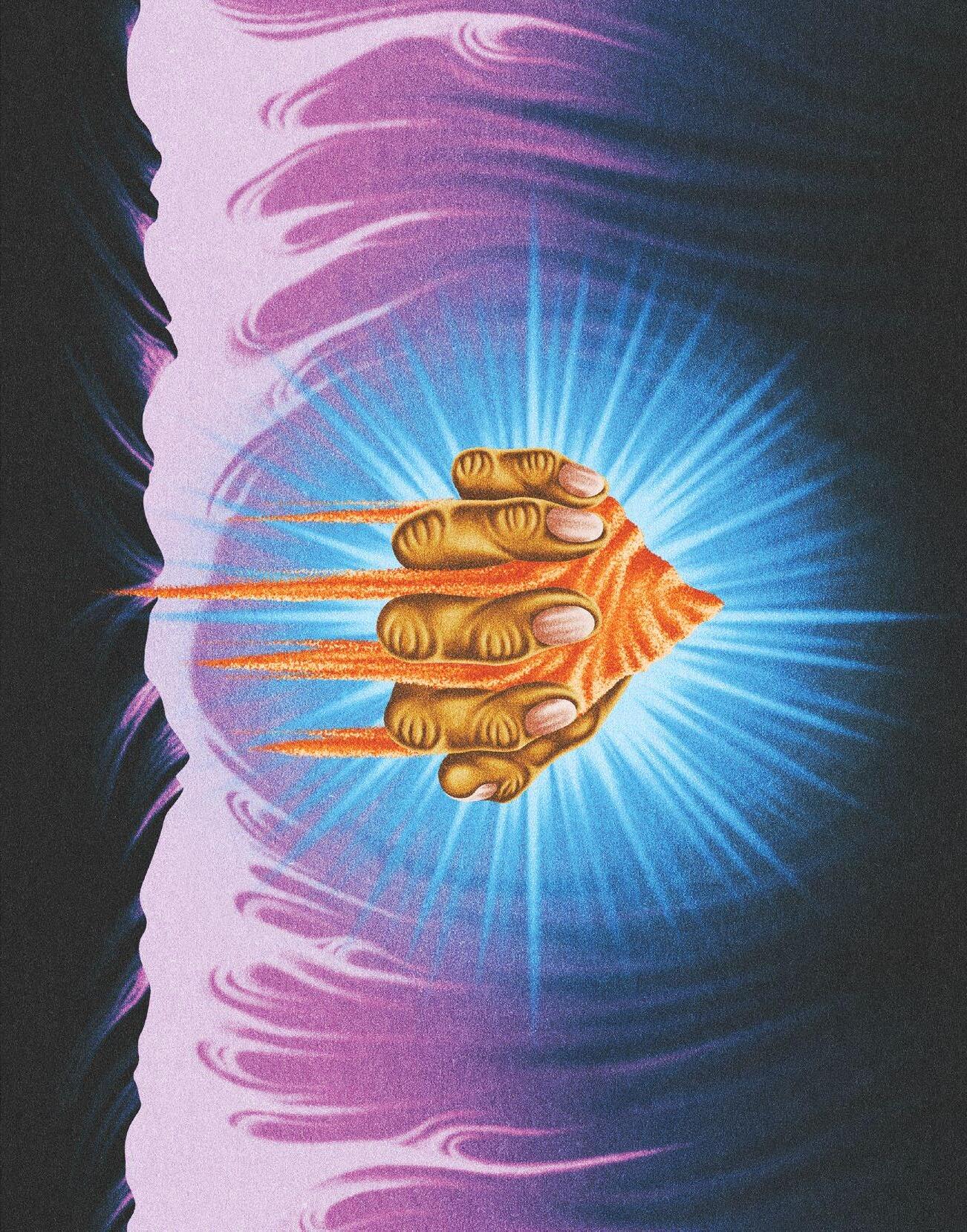
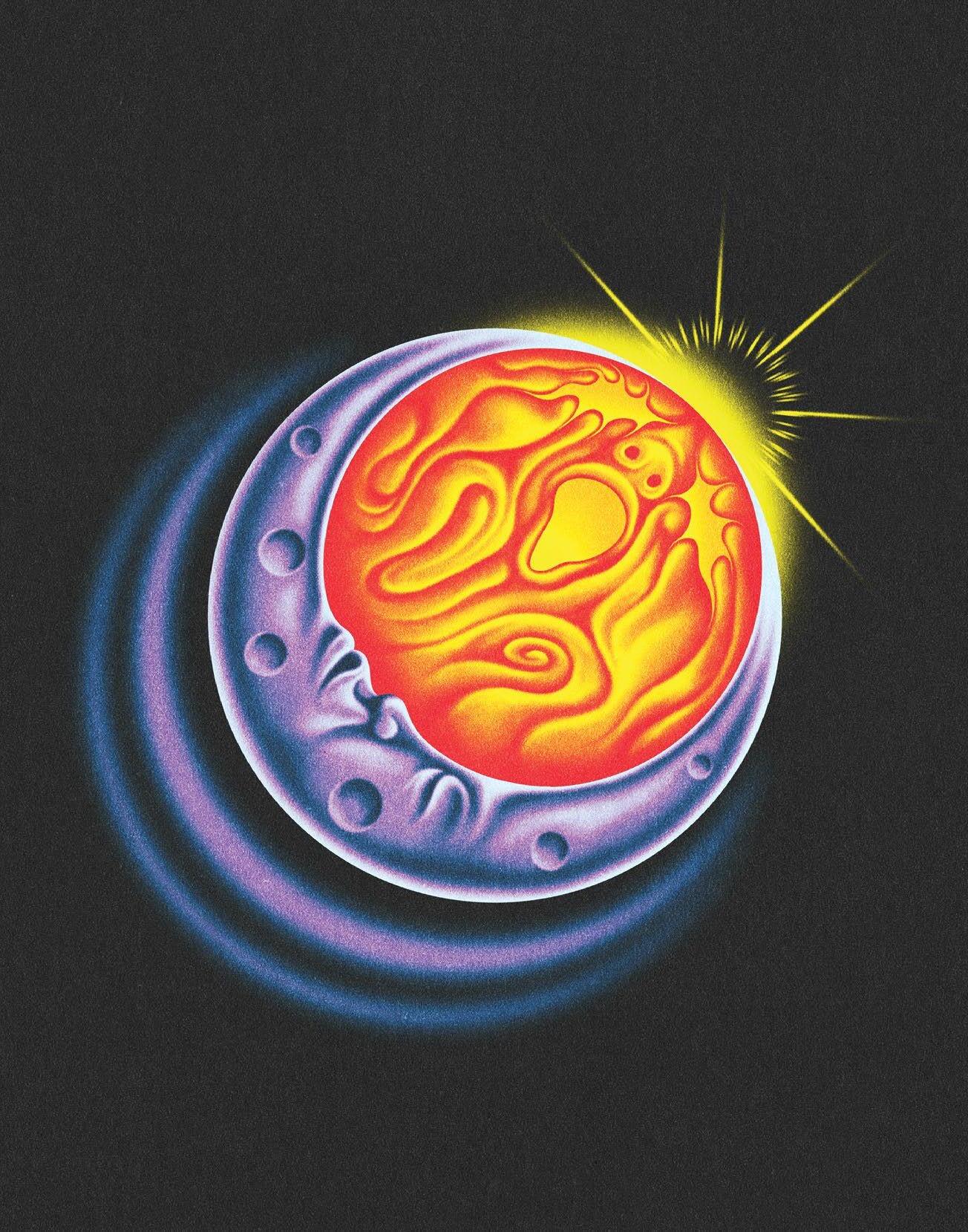
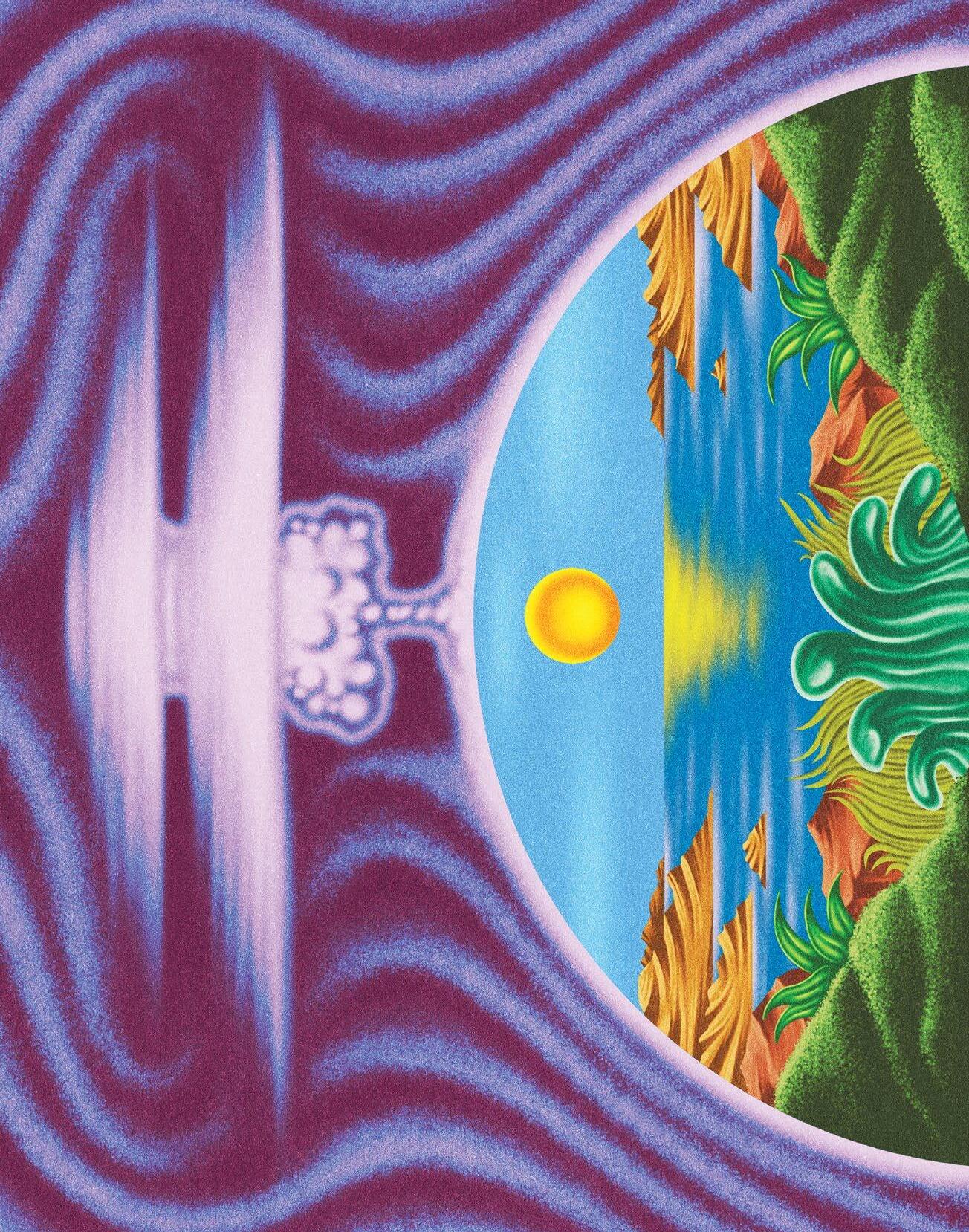
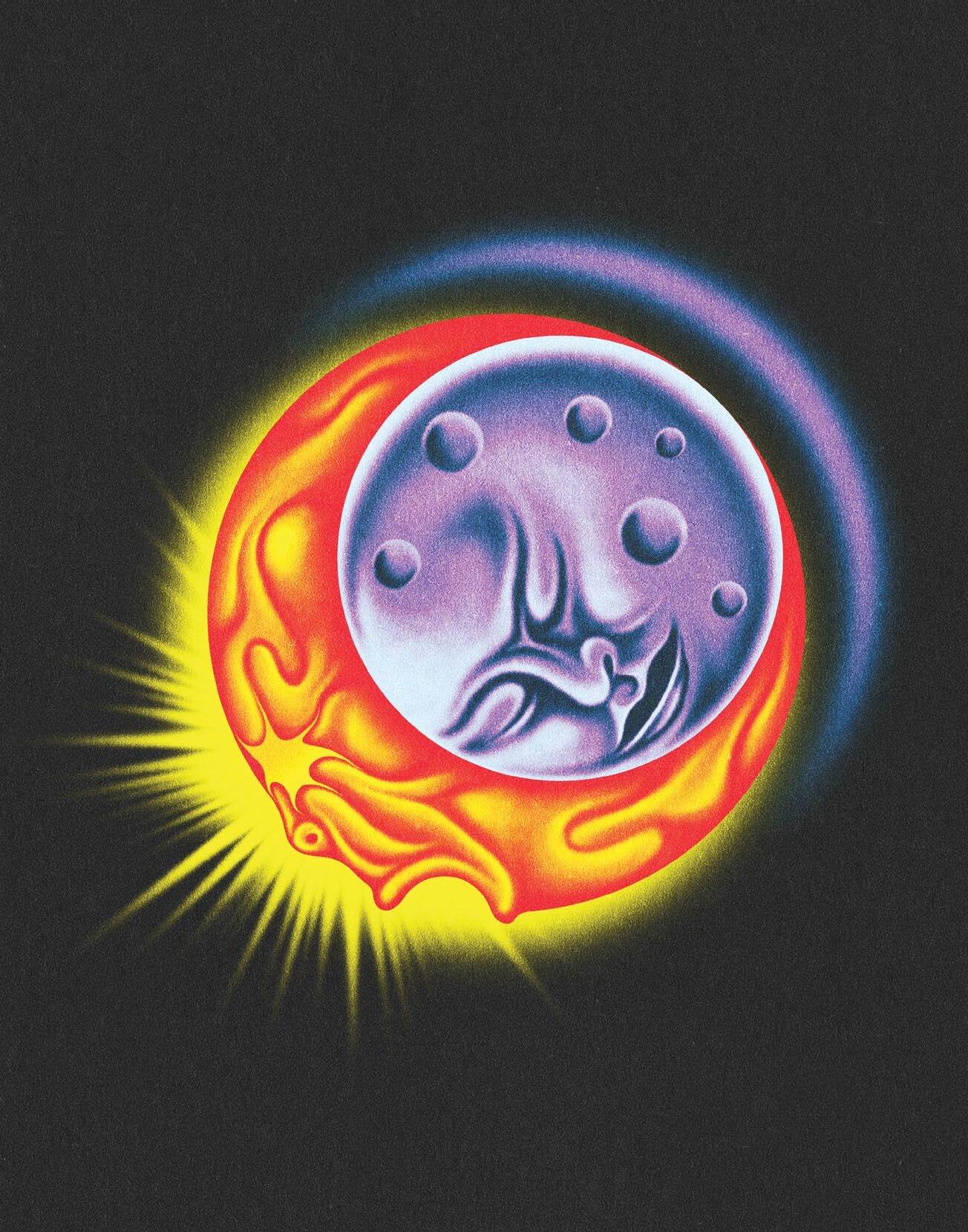
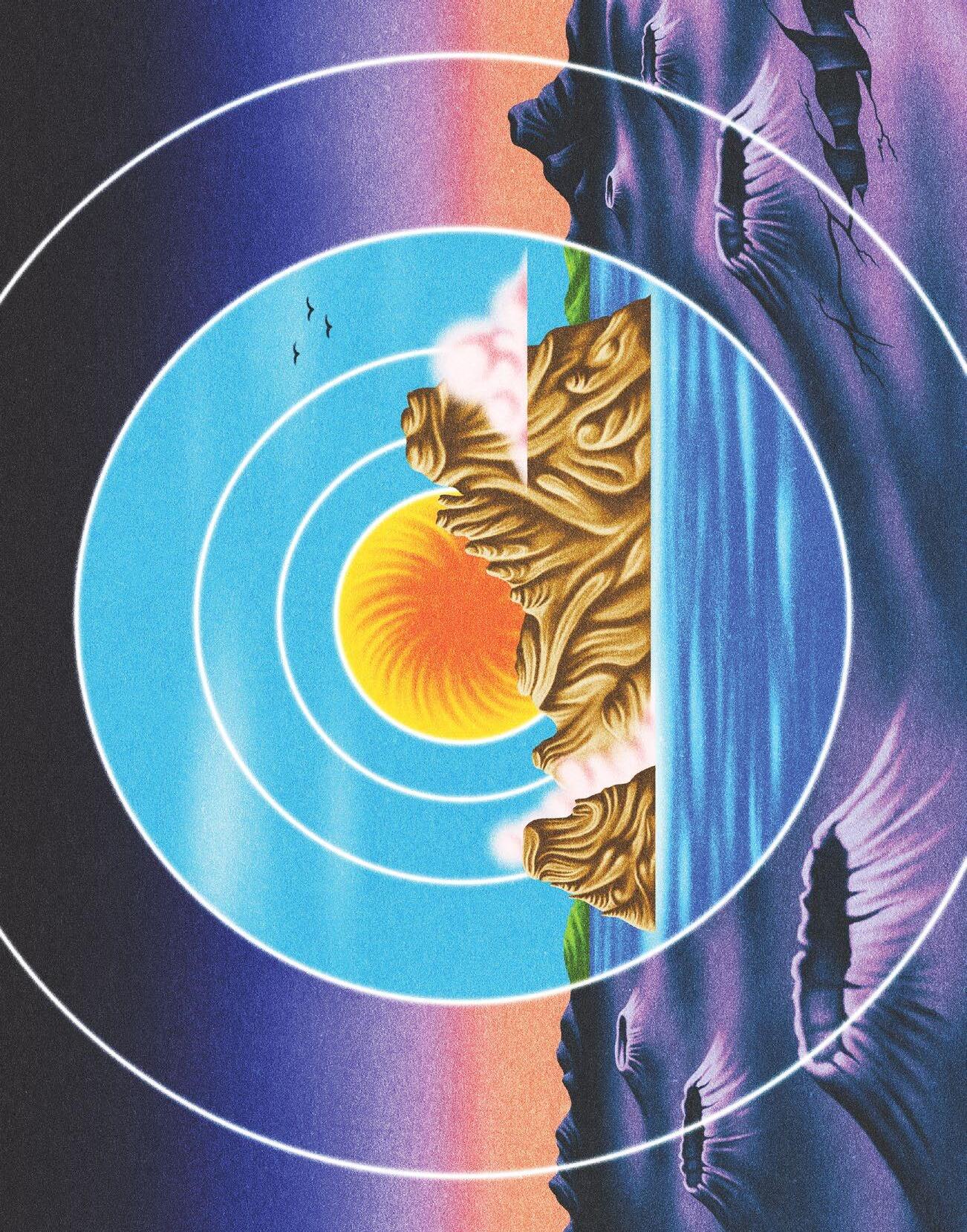
For many, an island like Eivissa serves as a sanctuary from the constraints of an old patriarchal world built upon labour, consumption, and ancient dogmatic norms. The hippy movement emerged partly as a rejection of all this, and Eivissa warmly welcomed those seeking refuge. To this day, the island remains a sanctuary, offering music, psychedelia, and nocturnal escapades on the one hand, and serenity, nature, and beauty on the other. In recent years, some have even sought to transform Eivissa into a refuge for the impending apocalypse. For nearly a decade
rumours have been circulating that the seer Nostradamus predicted in one of his prophecies that La Isla Blanca would be among the few places to survive a nuclear catastrophe. Despite no specific mention of Eivissa in the writings of the Provençal soothsayer and astrologer, the municipality of Sant Joan de Labritja decided to leverage this idea to promote tourism. Could Eivissa be the ultimate place to experience the end of the world? Perhaps. And spending time here in all the years leading up to it wouldn’t be so bad either.
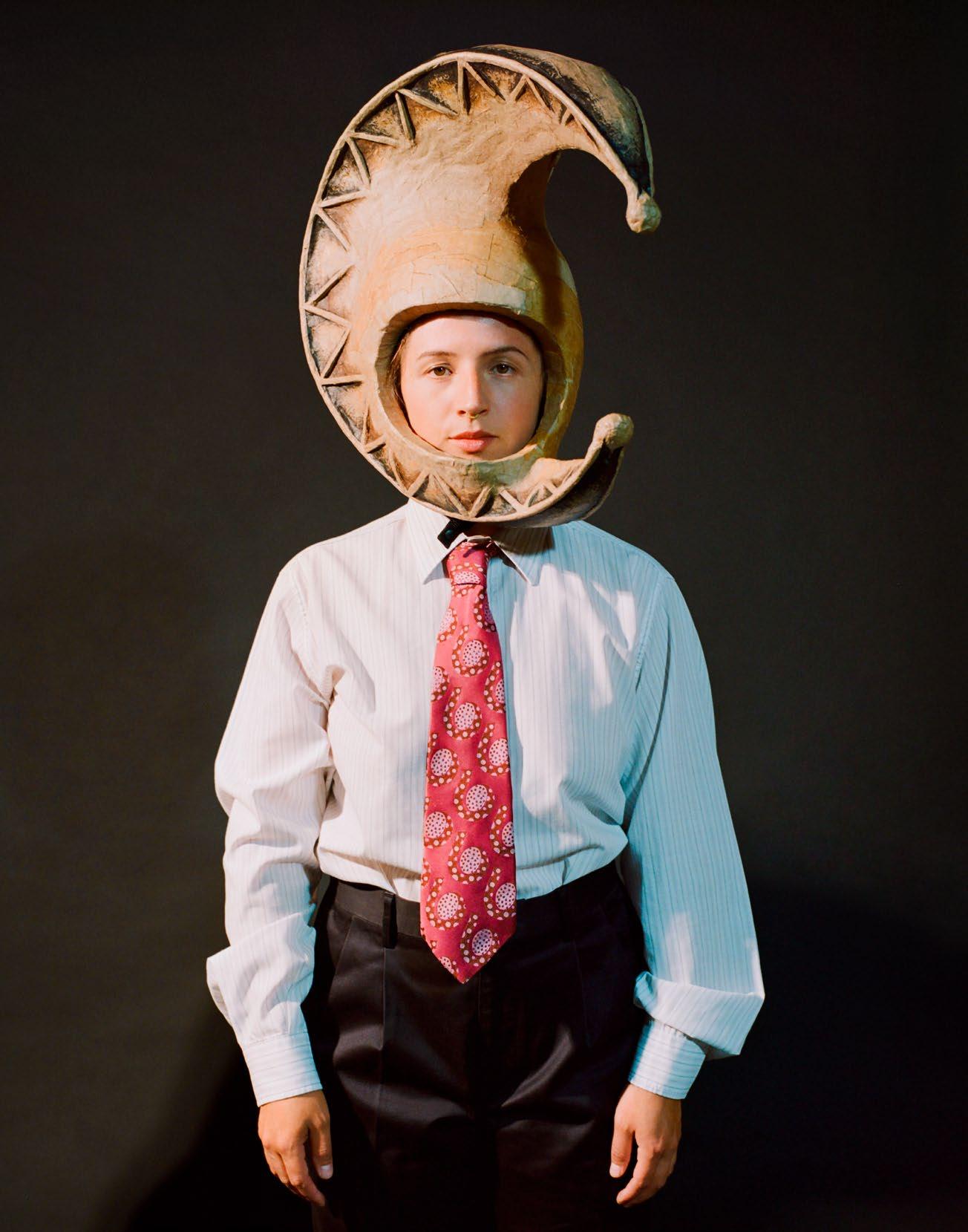
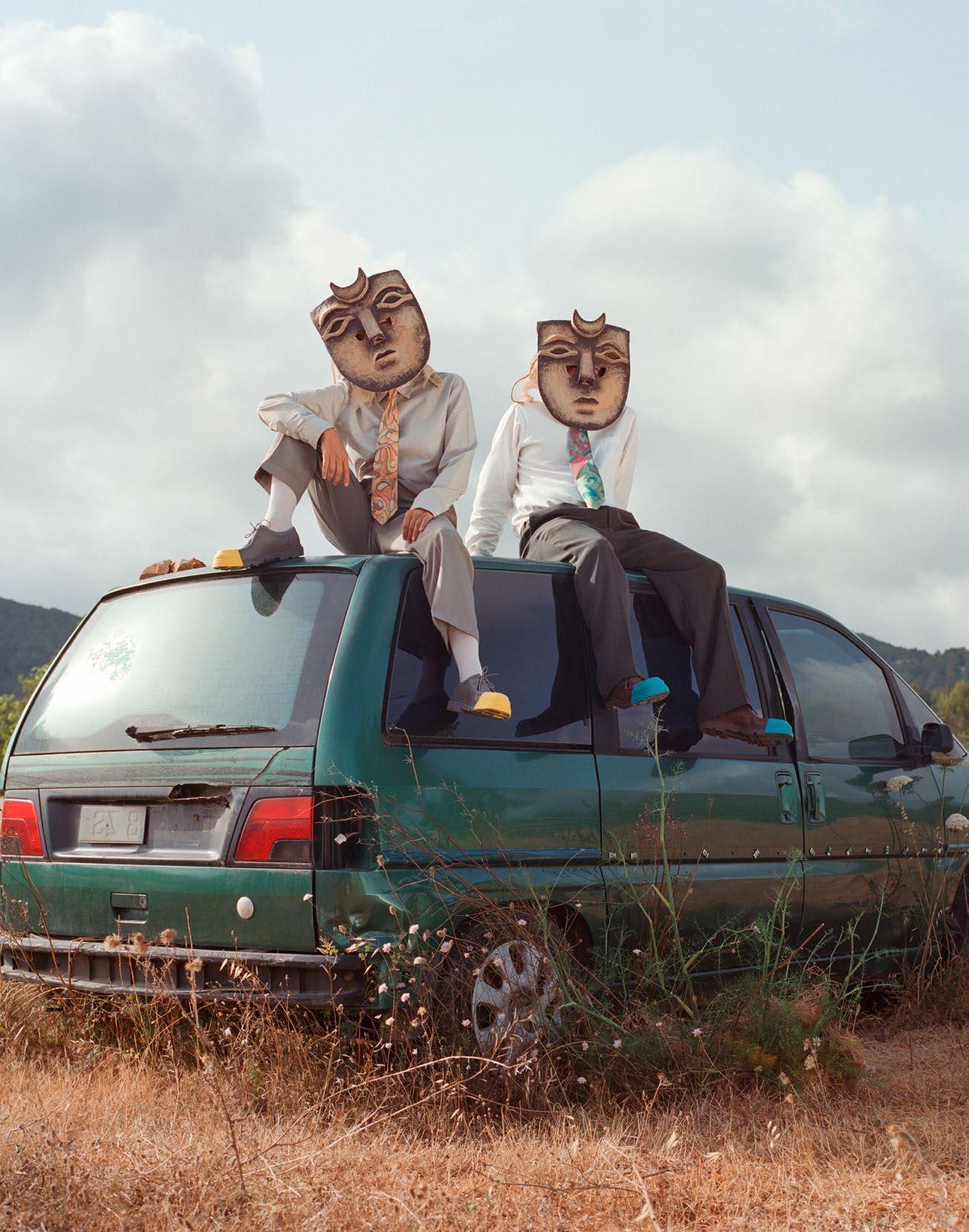
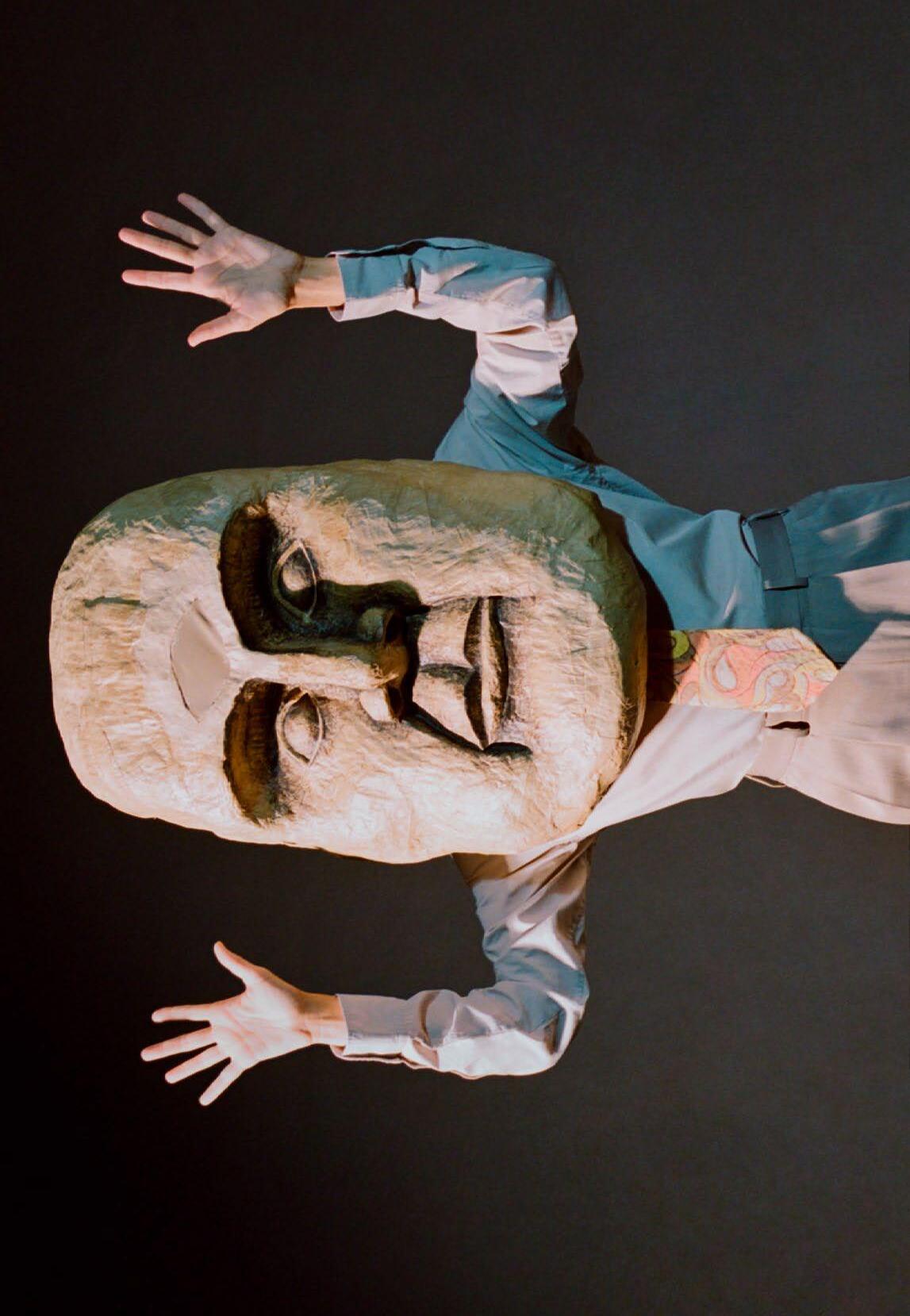
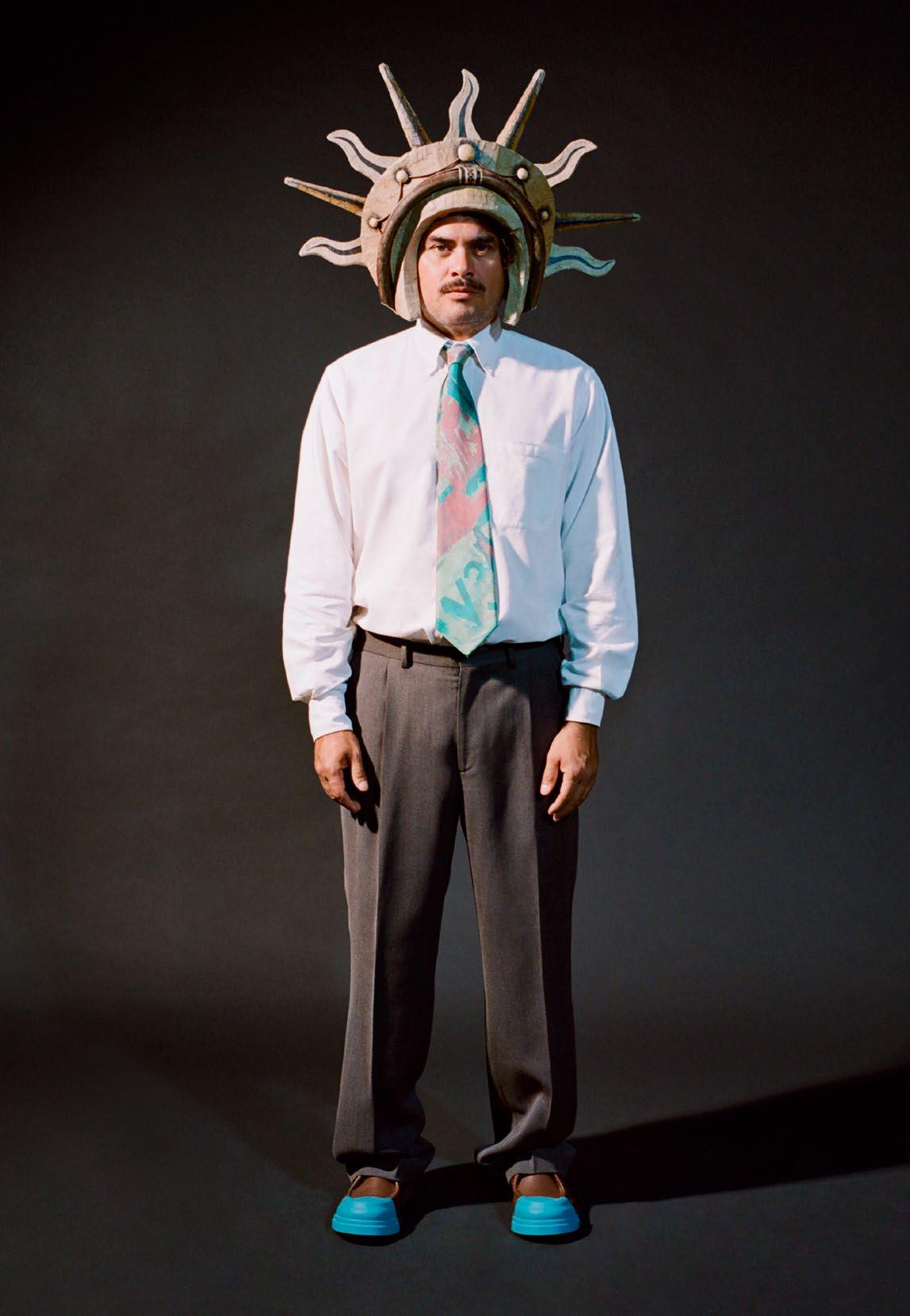
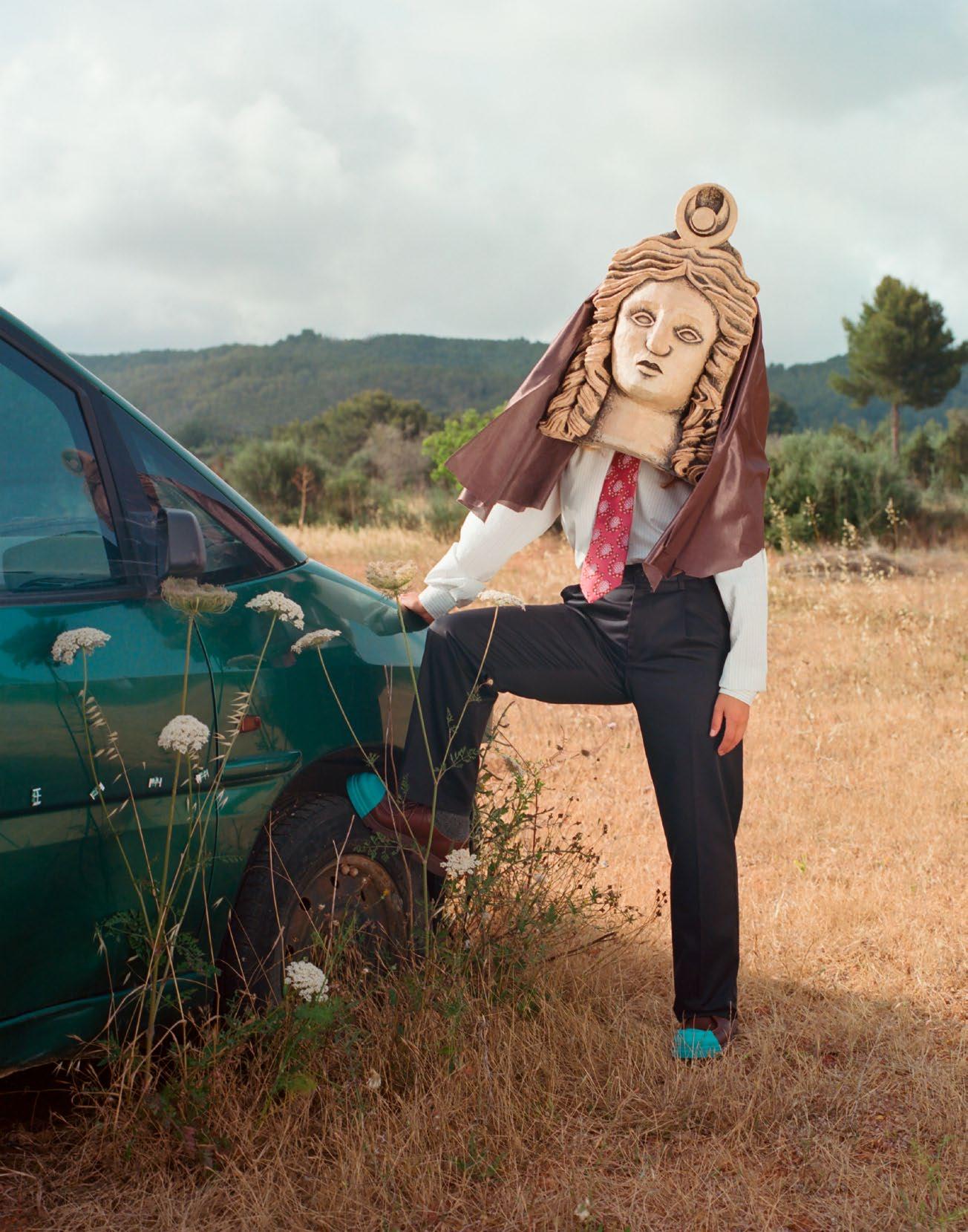
Joanna Hruby was only six years old the first time she visited Eivissa. It would take another fourteen years before she returned to the island, and during this second visit, she felt an extraordinary connection. Joanna was born and raised in London, where she studied puppet theatre. Today, in Eivissa, she is the founder of Theatre of the Ancients, a theatre and performance company specialising in telling the island’s stories with puppets and giant masks. Her studio is in the centre of Eivissa, surrounded by red earth, olive groves, and the silence of the deserted streets. The white building opens onto a plot with loquats, more olive trees, and yuccas, alongside a few old cars from the 1970s and 1990s. Stepping inside, we are greeted by huge papier-mâché goat heads, supported by a wooden frame. They are the goats of Es Vedrà, explains Joanna, the only mammals to have ever inhabited the cliffs of the rocky island. More pointed snouts belong to podencos, the indigenous dog breed, and then there are the representations of the goddess Tanit, believed to be the protector of Eivissa. The cabezudos, Joanna explains, are giant-scale representations that have a long-standing tradition here on the Balearic Islands, particularly in Mallorca. With these giant heads, her company creates choreographies, dances, and processions that celebrate the myths and folklore of Eivissa.
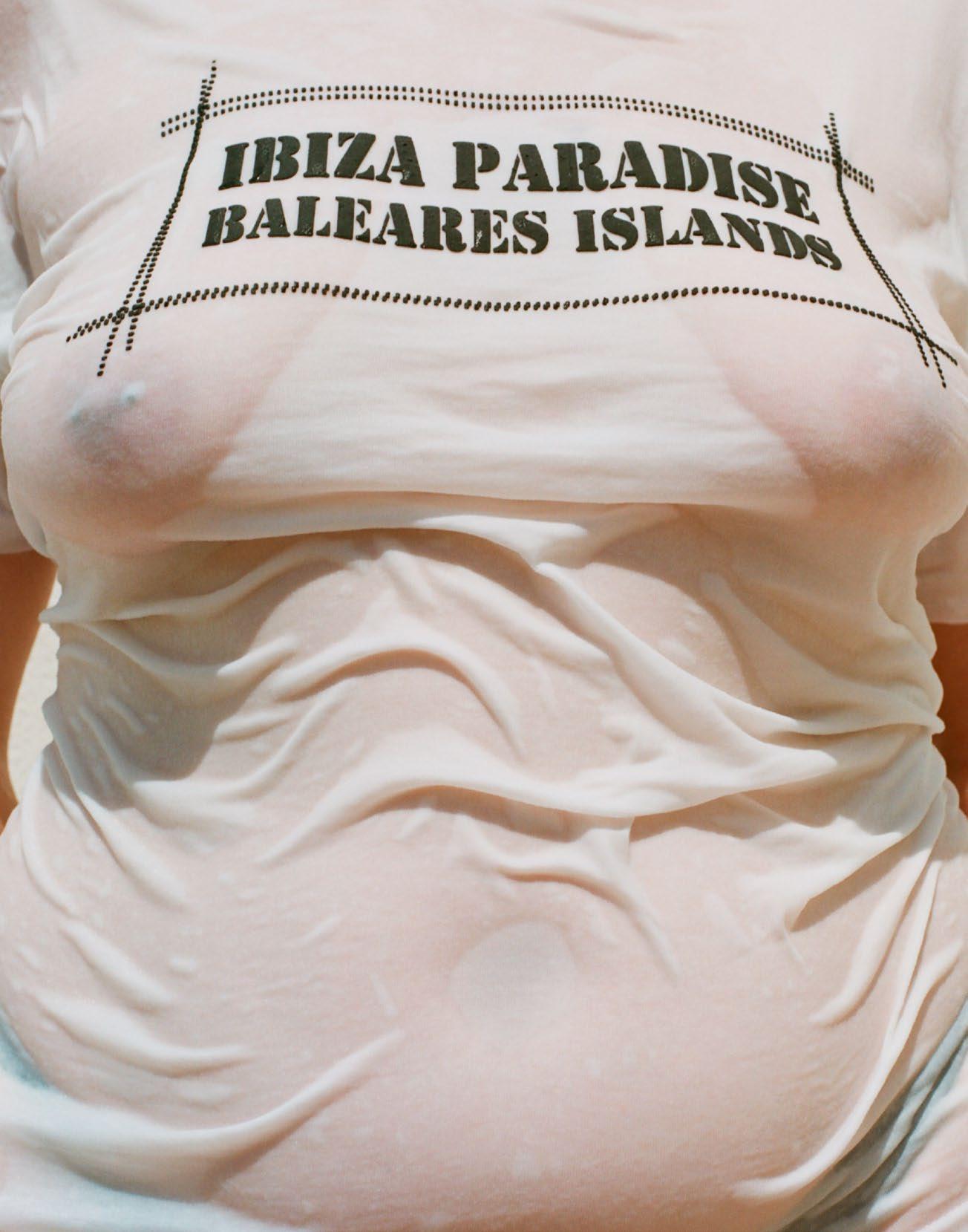
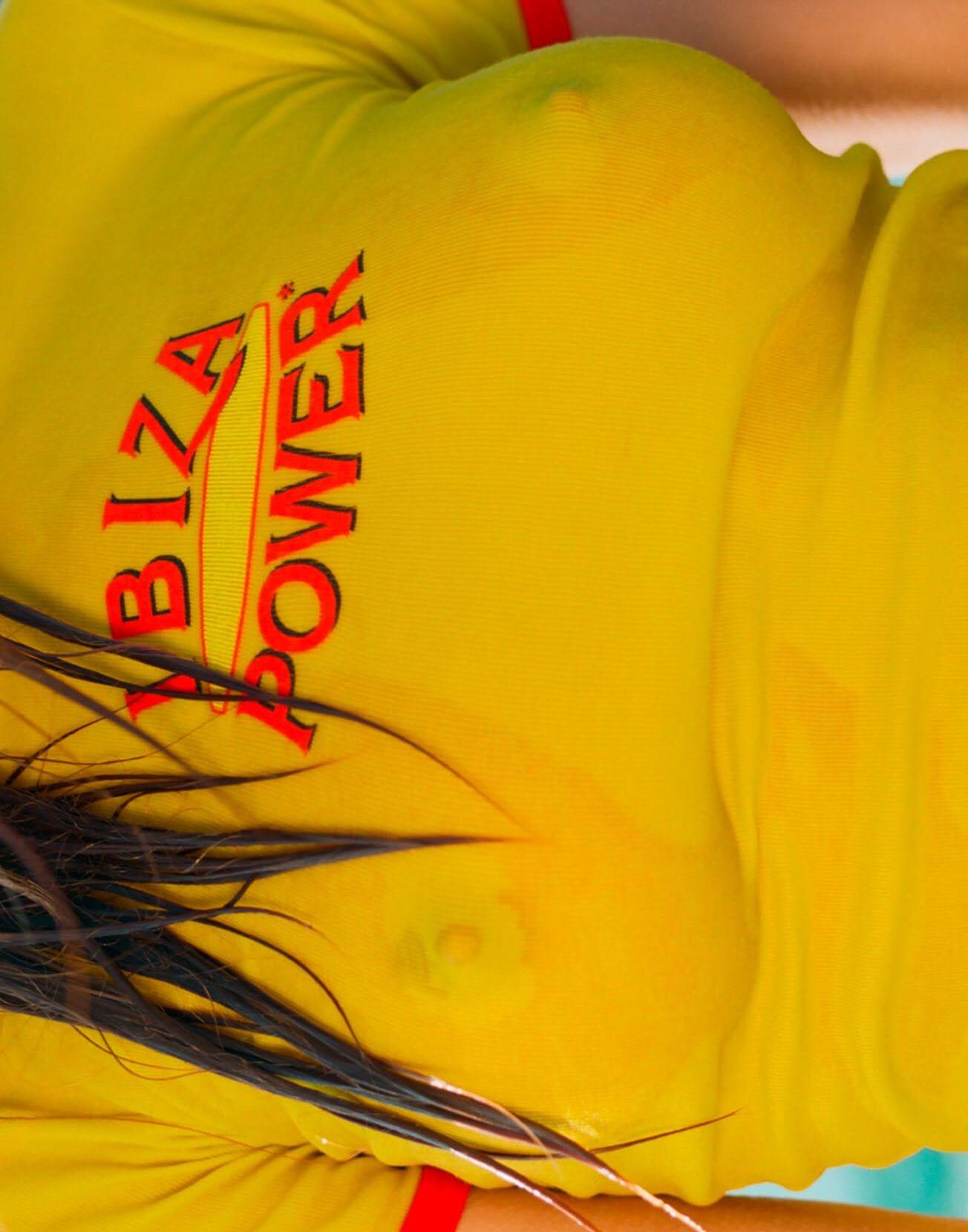
Like most Mediterranean islands, Eivissa did not enjoy a prosperous economy until the 1960s, when mass tourism arrived and changed everything. This population boom even sparked internal tensions due to the scarcity of resources on the island, prompting many Eivissencs to emigrate to Cuba and North Africa. Initially, Eivissa attracted hippies and other youth subcultures before it began to draw a wider European audience. Over time, tourism became the island’s primary economic driver, fuelled in part by its music scene. Despite a downturn during the pandemic, numbers have now reached an all-time high. And with tourism comes a booming market for souvenirs and cheap and cheerful trinkets which reflect the essence of the place in their own way. We picked out a few vintage and contemporary T-shirts for this photo series.
How many meanings does the word ‘magic’ have? Adverts designed to attract tourists claim that “Eivissa is magic”. Those same tourists repeat the phrase as they gaze at the sun setting over Cala Comte. It is whispered in the discos, as revellers emerge bathed in the first light of dawn, by swimmers in the secluded coves to the north of the island, and by the hippies and shamans who have been coming to this island since the early 1960s. But then there’s the nonmetaphorical, more literal, and mysterious form of magic associated with Eivissa, and by all accounts, the island has always been steeped in it.
It is not merely a recent marketing strategy or a new age gimmick of potions and moon phases. The glow of spirituality shines through in the etymology associated with the name ‘Eivissa’. Some theories trace its origins to the Egyptian deity Bes, known for protecting his worshippers from poisonous animals. At the time, before the introduction of foreign species, there were no snakes on Eivissa. This unique characteristic led the Carthaginians, who used the island as a strategic port for their Mediterranean trade routes, to regard it as a blessed island. The aura of magic, mystery, and mysticism that surrounds Eivissa,
however, is primarily attributed to the islet of Es Vedrà in the southwest of the island, which manifests in surprising and very different ways.
One of the oldest and most intriguing stories comes from Homer’s Odyssey. According to the epic poem, Odysseus decides to sail back to his native Ithaca after his stay in Circe’s palace. Before departing, Circe warns him of the dangers he will encounter during his voyage. The first, and most famous in popular mythology, is with the Sirens, hybrid bird-woman creatures that lure sailors with their sweet voices. Odysseus is given precise instructions: he must plug his ears with beeswax and be tied to the ship’s mast to avoid succumbing to their hypnotic song by jumping into the sea. Men who are bewitched by the Sirens are doomed never to return, and as Homer tells us, the rocks inhabited by these creatures are covered with skeletons and corpses. Luckily, this is not the case today, but it is widely believed that the islet of Es Vedrà was the cursed rock and home to the Sirens.
This mountain emerging from the sea is more than 400 metres high. It is part of the Cala d’Hort nature reserve and, geologically speaking, is a limestone island formed in the Mesozoic like all the Balearic Islands. The islet is uninhabited, home only to a species of lizard and birds that nest among its jagged rocks. To be historically precise, however, one person once settled there. His name was Francisco Palau y Quer, a Carmelite friar who in 1855 was exiled from Barcelona to
Eivissa for political reasons. He rowed out to Es Vedrà and lived alone in a cave there for a time, devoting himself to meditation and prayer. Legend has it that he survived on the drops of rainwater that filtered through the walls of his shelter. During his stay, Francisco had several mystical visions that he documented in his writings, My Relations with the Church. These visions included encounters with imposing celestial youths spreading love. Curiously, in one of his writings, the friar also describes having witnessed luminous spectacles that were later interpreted as unidentified flying objects.
For UFO enthusiasts, Es Vedrà is one of the most interesting places in Europe. Dozens of sightings have been reported, one of which stands out in particular. On 11 November 1979, a plane travelling from Mallorca to Tenerife was flying over the islet when, according to the pilot’s account, it encountered a circular, luminous object that emitted strong flashes of light and moved at speeds beyond the capability of any means known to humankind. The plane was forced to land at Valencia’s Manises airport, and the phenomenon remains unexplained to this day.
Among fishermen, there is an enduring legend that Es Vedrà is a powerful, magnetic pole capable of disrupting compasses and navigational instruments. A story similar to the tale of the famous Bermuda Triangle but easily refuted.
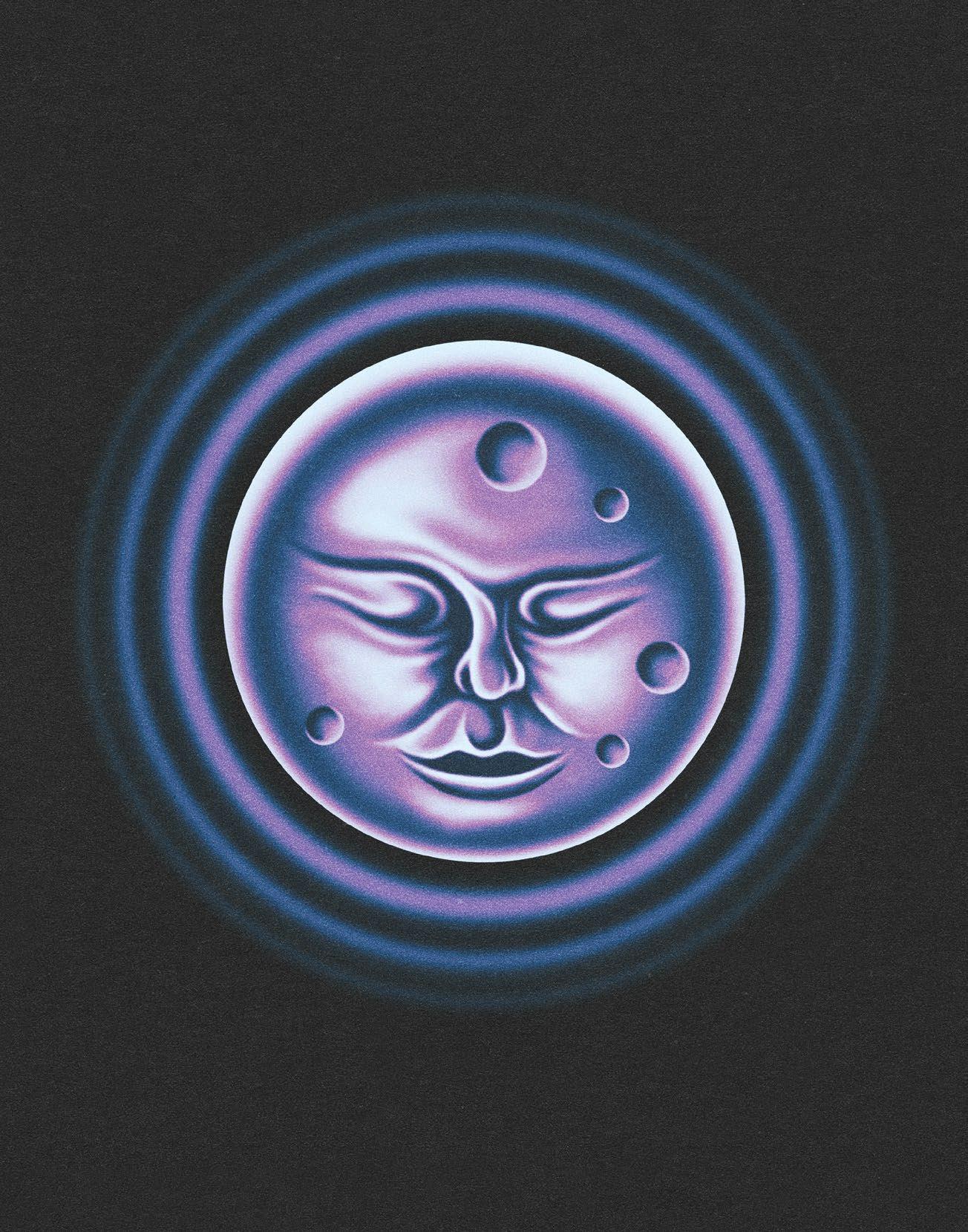
Another captivating legend has it that the islet is the birthplace of Tanit, the Phoenician lunar goddess of dance and fertility, and protector of Eivissa. Today, the face of the goddess adorns thousands of statuettes sold as souvenirs, but hundreds of years before Christianity, Tanit was of great importance in the Phoenician pantheon. In 1907, the rock sanctuary of Culleram was discovered here, where worshippers left votive terracottas as offerings to Tanit. On a more mundane note, in present-day Eivissa, Tanit’s name is associated with bathing establishments, restaurants, and hotels.
Finally, other minor deities populate Eivissenc mythology: such as the fameliars, mischievous elves believed to be born from a flower that only grows on the eve of Sant Joan under the old bridge in Santa Eulària. More naughty than evil, these fameliars incessantly request “comida o trabajo” (food or work). Folk wisdom advises keeping them busy. In the centre of Santa Eulària, you can find sculptures of several fameliars crafted by Andreu Morenu. While these sculptures won’t demand anything, their presence serves as a reminder of traditional Eivissa.
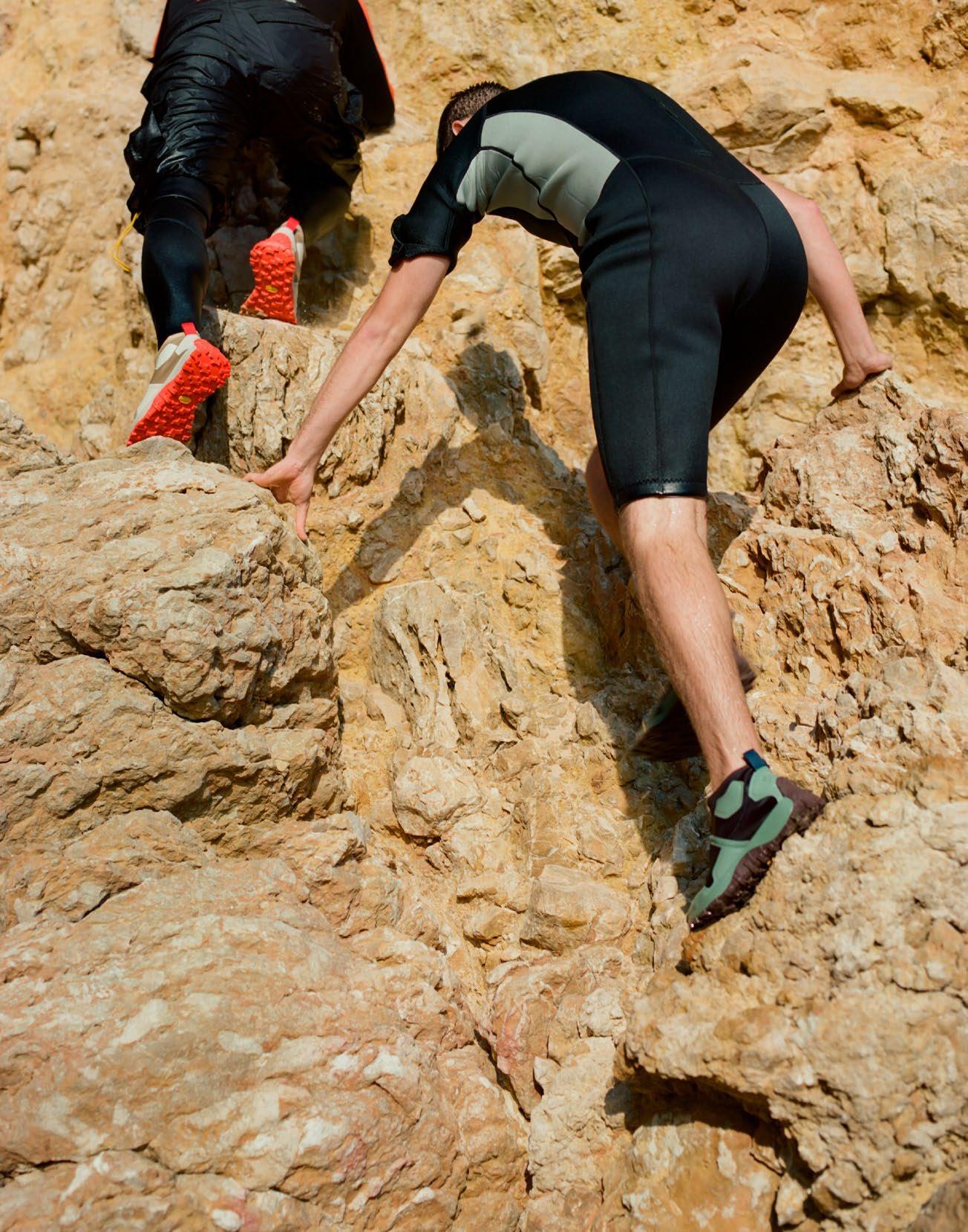
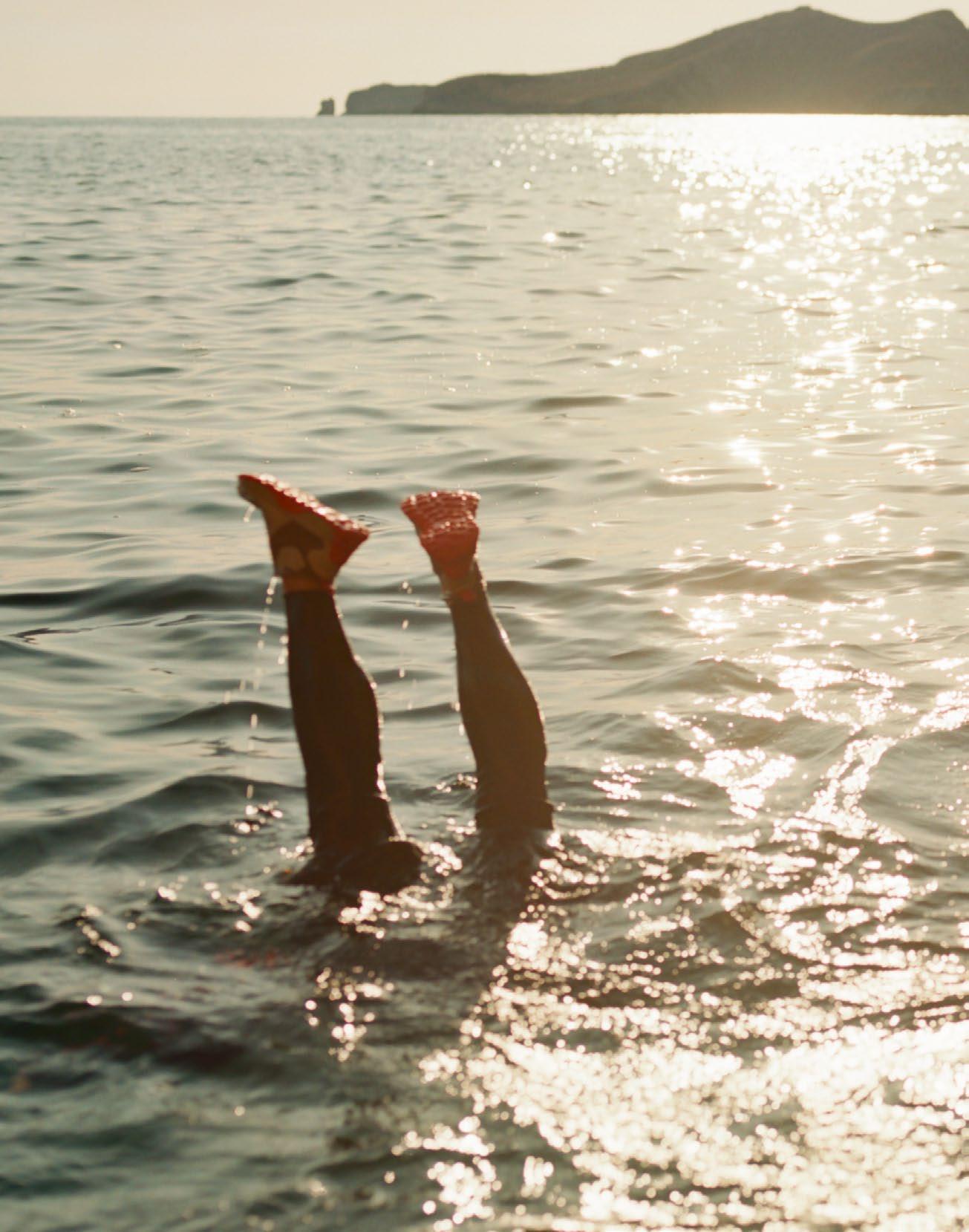
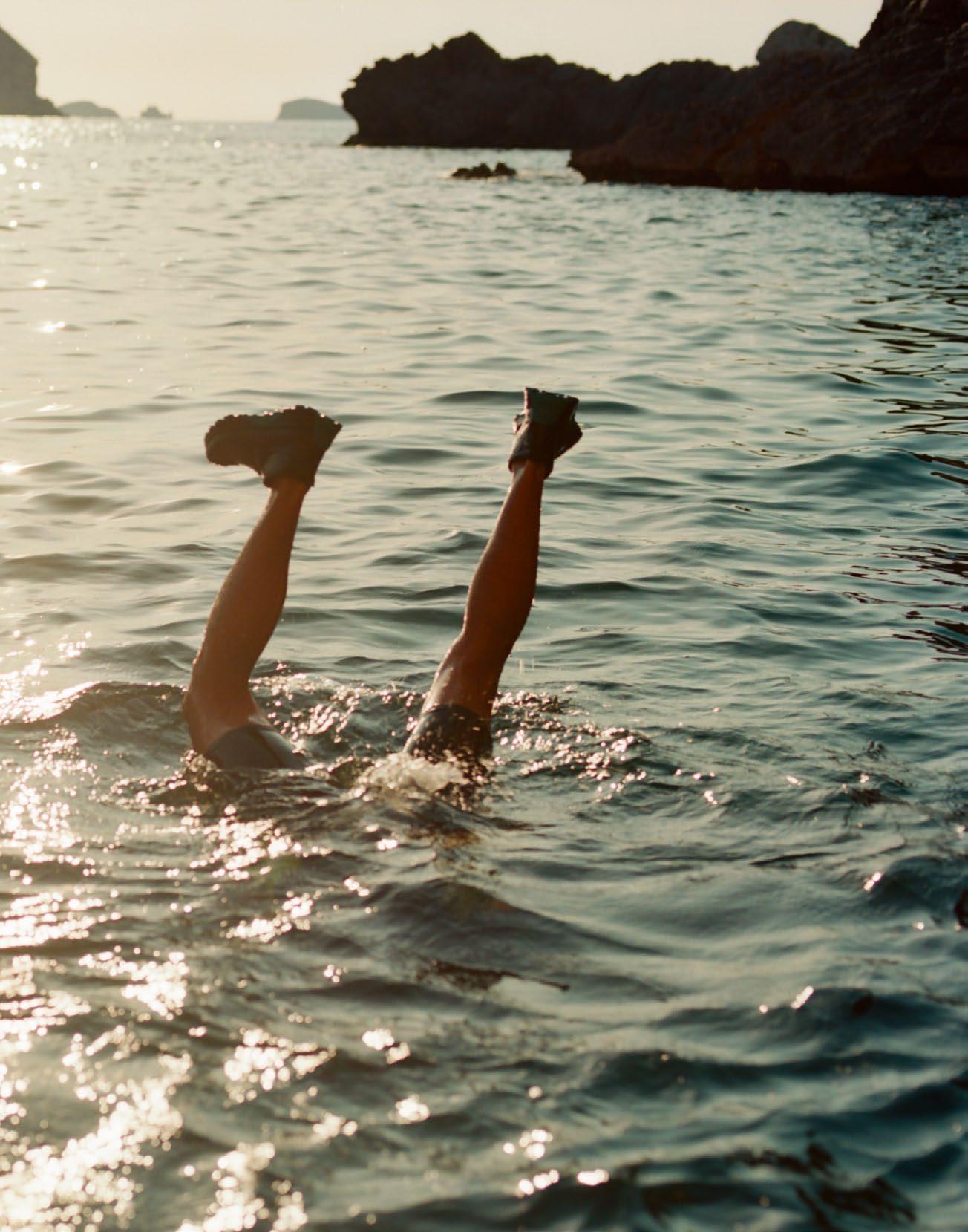
To get to Sa Figuera Borda, head past the crowded car park of Cala Comte, where lines of parked cars are gathering dust. Keep going until the fields gradually reappear, strewn with hay bales and wild fennel that towers as tall as children or roadside sentinels. The sea abruptly appears as the island ends, fifteen metres below. The horizon expands. Red rock lies beneath the first layer of sandy dust. Tourists navigate down a steep ladder to sit in the bay below and immerse themselves in the water. The Eivissenc kids remain perched at the top, gazing into the abyss. They teeter on the edge, suspended between solid rock and nothingness. Before taking the plunge, they throw a rock for safety or superstition, by now a ritual. Then they announce their impending leap with a countdown. One at a time. Tres, dos, un. They push off with their legs, their shadows lifting from the ground, disappearing into the air. They curve in on themselves. From above, they vanish from sight. Two seconds pass before the sound of their bodies entering the water reaches our ears.

Getting real with
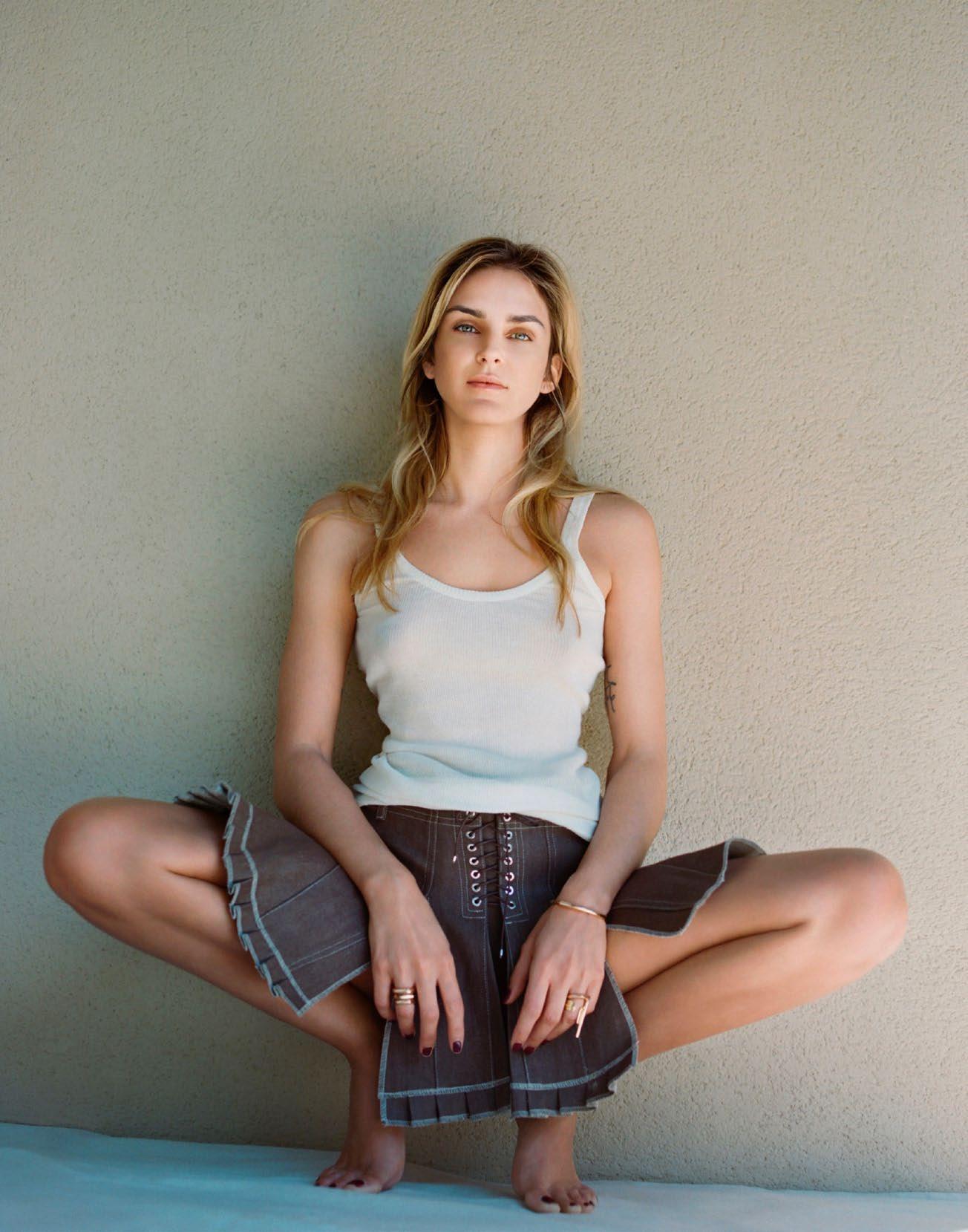
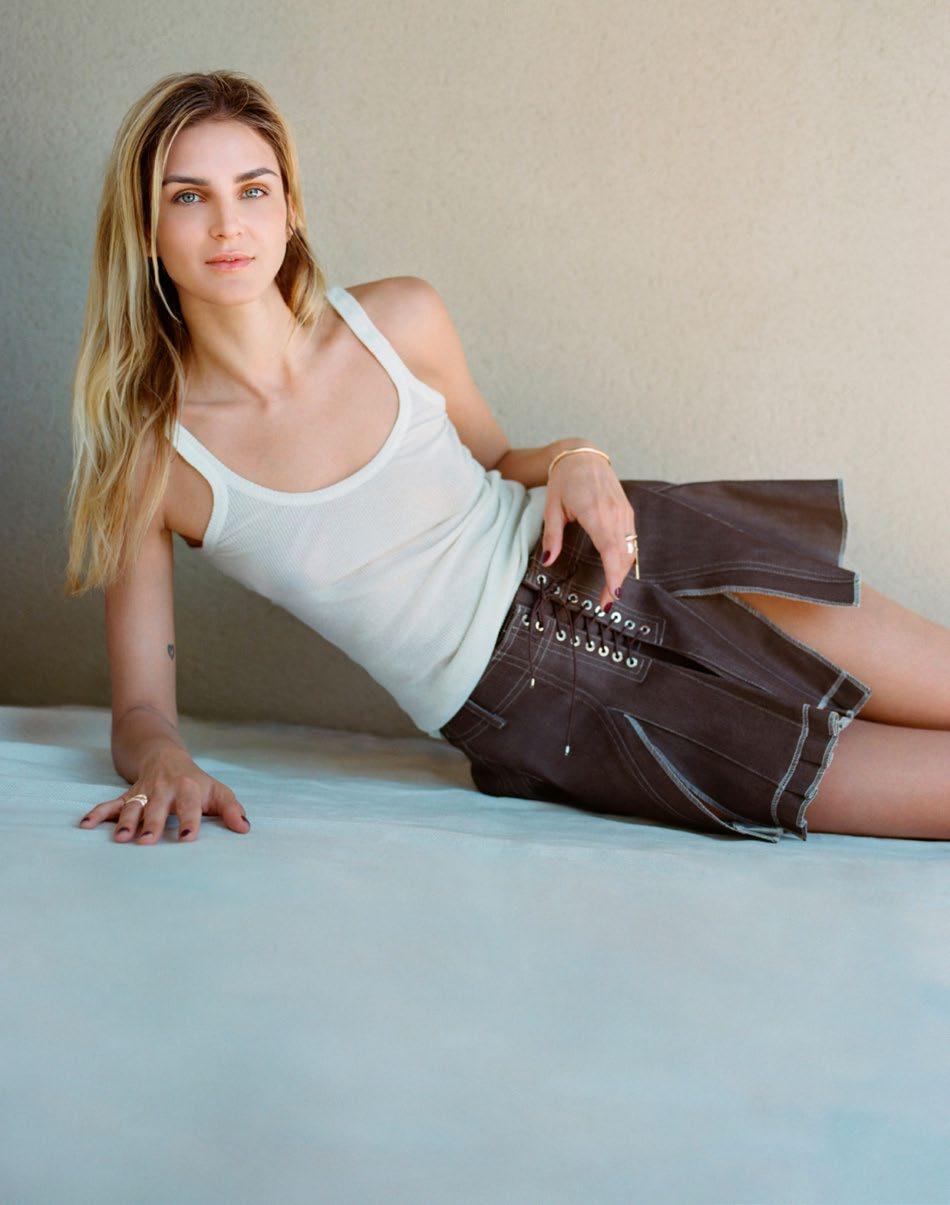
From the house where we meet Gaia Repossi, all we can hear is the sea. There are other houses nearby, nestled in the coniferous forest. A swimming pool is shaded by a pine tree. Far below, the wind stirs small waves that lap the sandy shore of Cala Molí in the southwest of the island. Gaia moves languidly in the lazy afternoon. The serene seclusion of the terrace perfectly embodies what she seeks from Eivissa.
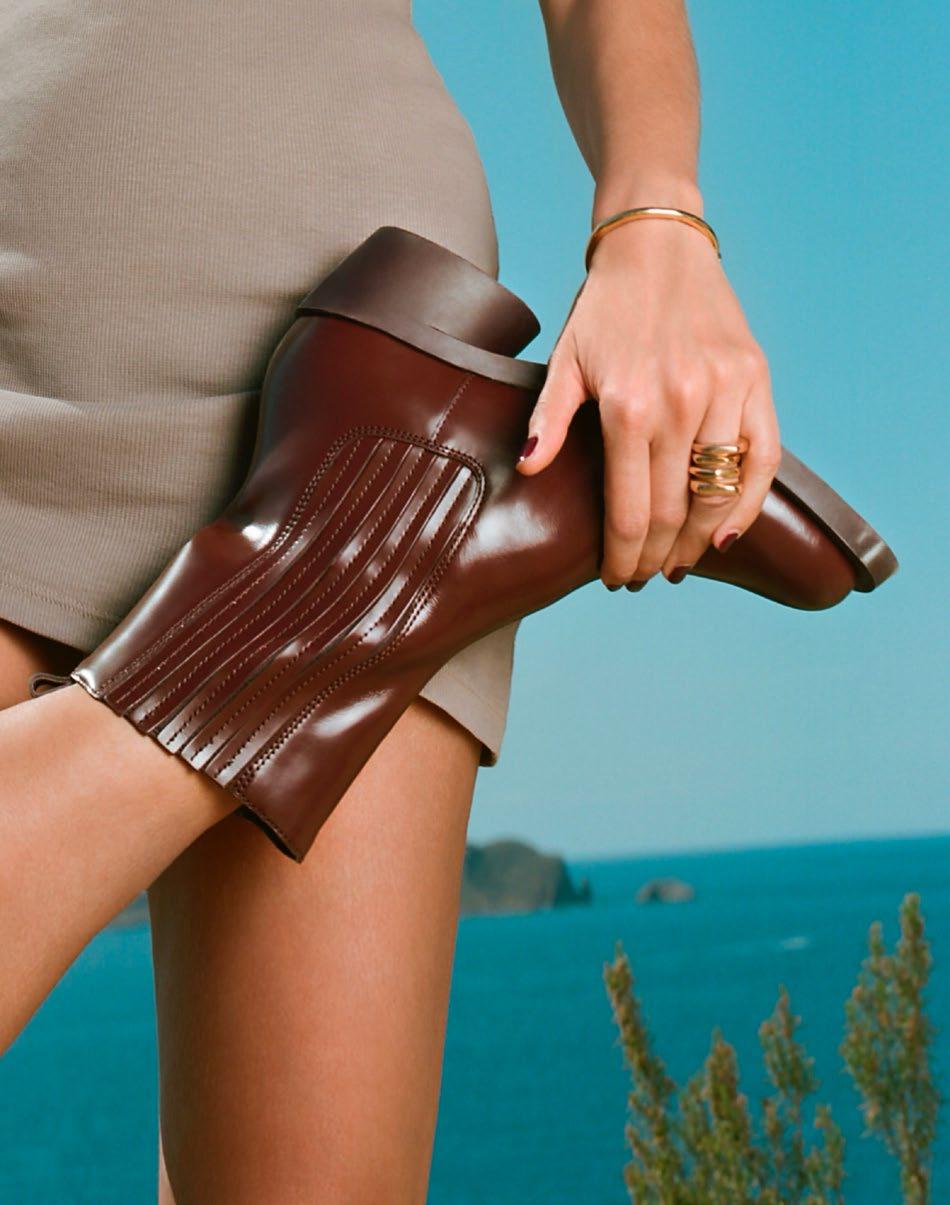
Gaia has been the creative director of Repossi, one of the world’s most influential Italian high jewellery brands, since she was just 21 years old. That was sixteen years ago. Repossi was founded in the 1920s by Gaia’s grandfather, Costantino, and expanded by her father Alberto. In 2015, the company was partially acquired by LVMH. The following year, Repossi opened a flagship store on Place Vendôme in Paris. Between France and the United States, Eivissa provides a cherished sanctuary for Gaia.
The boundaries between your family brand and your social networks are becoming increasingly blurred these days. Who is the real Gaia Repossi?
I am Gaia Repossi; I work in the same profession as my father and grandfather before me. I represent the third generation. I’ve been doing this job for sixteen years, but, in truth, I was born into it. It wasn’t my first passion though I have a keen interest in design, breaking codes, and proposing new things. Jewellery is still an untapped territory for that kind of approach. You were born in 1986 and you have just turned 37. When you were younger, was this the path you envisioned, or did you want no part in the world of jewellery?
I wanted nothing to do with it. I didn’t consider it an intellectually or artistically stimulating environment; I found it superficial. Back in the nineties and even into the early 2000s, cool people didn’t wear jewellery. A few rhinestones and that was it. I saw jewellery as a red carpet accessory, completely disconnected from design or antique jewels, which instead represented a form of identity—a lost language. However, I was genuinely interested in fashion. Growing up on the French Riviera, I didn’t have much fashion around me. But our offices were in Paris and I was intrigued by that world. I studied painting and later archaeology while assisting my father in the Paris offices. And over time, I began to contemplate how I would do things if I were in charge...
When did you decide to give it a go?
I started testing the waters and offering some advice when I was 18 or 19, while I was still in college. My father was highly intelligent and respectful, allowing me a lot of space to express myself. I chose to study archaeology in Paris so that I could work at the office and attend university at the same time. I took trips to India, where I discovered nomadic jewellery, among other things. Ethnic jewellery has always captivated me and that’s when jewellery began to take on its own identity, sparking creative ideas within me.
How did you go about incorporating diverse cultures into jewellery?
Take punk, for example. I really like punk jewellery, which draws inspiration from African adornment. I then transform this inspiration into an extremely refined product while maintaining a certain positioning. I also really like stacking, which is a traditional African custom.
What challenges do you face when translating your inspiration into contemporary jewellery?
While ethnic designs strongly influence me, jewellery today is not like sculpture or painting, where you can express yourself freely and create something abstract. Instead, a flawless object is meticulously crafted according to technical drawings in collaboration with goldsmiths. The goal is to create a new classic, which is incredibly difficult: to give a product a sense of timelessness. But it can be done by honouring the traditions of the past and by combining them with a more modern design concept.
How does a piece of jewellery enhance or alter a person’s identity?
Looking back through history, jewellery has served as a language for tribes, civilizations, men, and women. In a contemporary context, it should primarily feel like something that belongs to you.
Considering the relationship between fashion, luxury, and speed, jewellery seems to exist on a slower spectrum, in part, due to its longevity. What are your thoughts on this?
It’s a slow industry in general: very much slow fashion. But it’s an industry so used to being slow that it is often excessively so, almost on principle. Jewellery plays on desirability: people want to buy these objects as an investment or perhaps it’s love at first sight. However, being too slow can hinder its appeal. While it is crucial to stand against fast fashion and overconsumption, it is equally important to maintain a creative rhythm that meets the demands of the present day.
What does the term “ethics” mean in jewellery?
Fashion is a mess, although attempts are being made to address the issue. It will take time for these large conglomerates to find solutions as they have acted too late. Customers, on the other hand, already possess a more advanced understanding of quality and sustainability. One advantage for the jewellery sector is that it falls into the slow fashion category, a less environmentally destructive market segment that allows for controlled production and smaller volumes.
And what about “beauty”?
Sometimes when you see a piece of jewellery alone, not being worn, it can look unremarkable. Many pieces are designed to amaze and take on a new dimension when worn. They move with the body.
In 2021, you created a collection inspired by the jewellery of photographer Robert Mapplethorpe. How did that come about?
I bought one of his photographs—the image of a palm tree—at an exhibition curated by Sofia Coppola and we have been incorporating his photos into branding, invites, and campaigns ever since. As a result, we reach out to the Mapplethorpe Foundation once or twice a year to get the rights to the photographs. At one point, the foundation suggested a collaboration and I gladly agreed! I travelled to New York for a meeting to explore their archives and then visited the Getty Museum in Los Angeles, which houses hundreds of Mapplethorpe objects. I compiled a 50-page dossier outlining all the concepts and the head of the foundation expressed an interest in meeting me. In the end, we created twenty pieces based on my selection. I followed two general directions: one replicated pieces I admired, while the other reinterpreted them.
The collection received excellent press coverage.
It was an incredible project that I immediately took very seriously. His pieces are often very figurative, whereas I typically lean towards more abstract designs. However, I was genuinely drawn to his photography, particularly for its rigidity.
Let’s discuss communication. How did you develop this unique approach to communication within traditional jewellery?
I wanted to bridge the gap between jewellery and fashion with a simple trick. I questioned why jewellery wasn’t part of today’s general dress code. In fashion editorials, it was always portrayed separately, associated with galas and formal gowns. There were no everyday pieces.
You have become a brand in your own right. How do you feel about having more followers than the family brand?
Repossi hasn’t yet established a presence in the world of influencers. I personally enjoy it. I was a little shy, but now I understand it to some extent, though it took me a while.
Having grown up on the French Riviera, how has the sea influenced your way of living and being?
At first, very little. After my adolescence, I immediately moved to Paris and later lived in America. I immersed myself in work and had no interest in calm and tranquillity. However, during the pandemic, I had a moment of self-awareness. Since Repossi joined LVMH, my role has become more defined and organised. As a small maison, we had to manage everything, so it was primarily my father and me. Now, at 37 years old, I realise I have given so much. I still work hard, but I have also learned to manage my time better.
When did you discover Eivissa?
A long time ago. I first visited when I was 17 or maybe 16.
Did you come for the music and the parties?
No, I was drawn to the sea. The island represents an escape for me. Beyond the parties, what I really like is the free spirit that thrives here. Unlike the Côte d’Azur, which is quintessentially French, with a focus on “dressing for dinner”, Eivissa is much freer. It reminds me more of places that I’ve found in Jamaica or Thailand. I don’t believe that many Mediterranean islands offer this level of freedom. I feel like I can hide here, surrounded by genuine friends. Plus, I’ve been practising yoga for 16 years and that slightly more spiritual energy can be felt here on the island.
What is your relationship with the sea?
I grew up swimming, and the sea gives me an instant sense of peace.
Did you spend the pandemic here?
Partly. When travel became possible again, I returned to places I missed the most, such as India and Japan. But Eivissa has remained a haven for me to escape to and disconnect— a place where I feel truly at home.
Are there things you are still learning?
Certainly. We have a collection of jewellery books in the studio, and I open them from time to time and always discover something new. A few months ago, we launched an earring inspired by an African piece I found at an antique dealer. Later, while leafing through the books, I stumbled across an almost identical design.
”Eivissa represents an escape for me. Beyond the parties, what I really like is the free spirit that thrives here. It reminds me more of places that I’ve found in Jamaica or Thailand. I don’t believe that many Mediterranean islands offer this level of freedom.”

The history of clubbing in Eivissa encompasses more than just music. It is complex, varied, and layered, interwoven with economics and anthropology. Different subcultures have animated nights here on the island, leaving their mark musically and visually through their striking artwork.
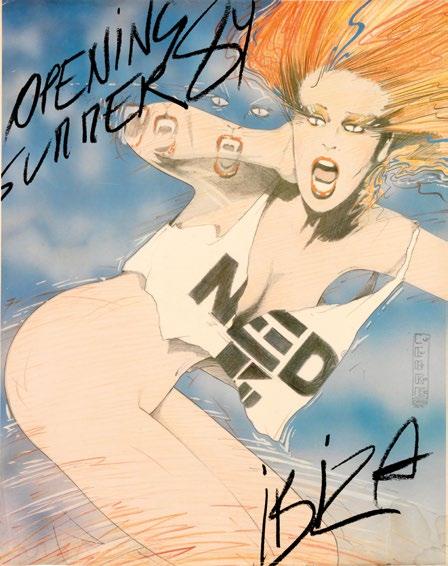
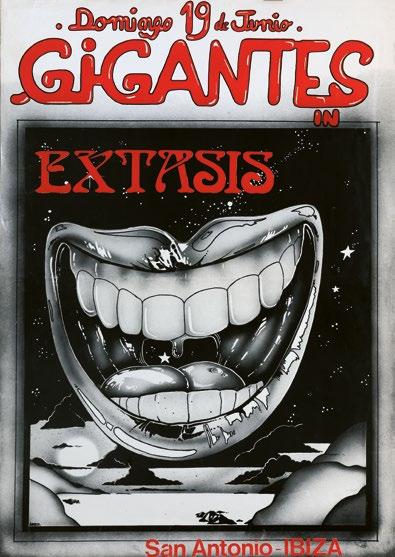
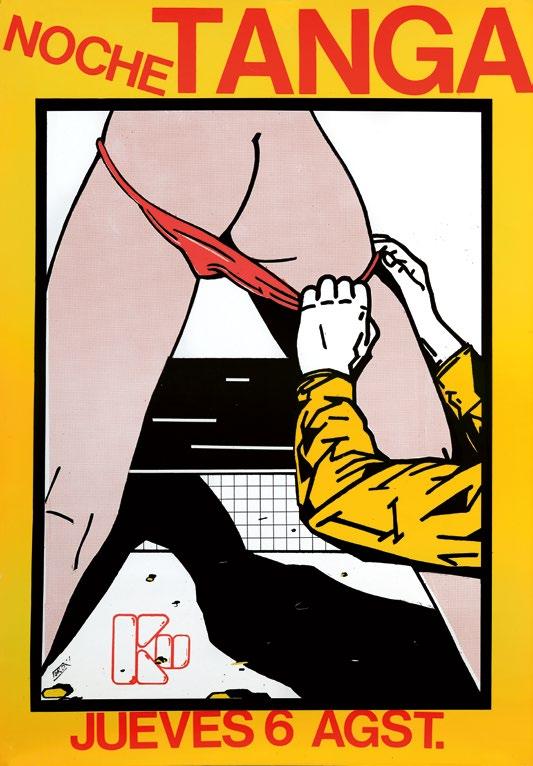
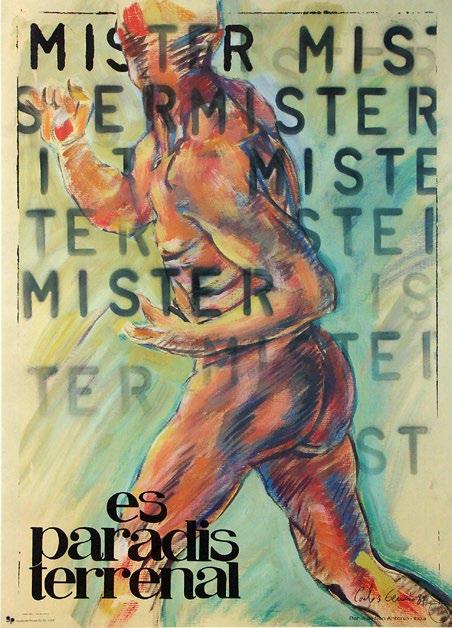
There is a collector who has built an archive of posters that spans decades: his name is Pep Pilot. Today, Pep is in his sixties but he has been intimately familiar with the history of Eivissa’s nightlife since the 1970s. In the old days, parties were not as frequent as they are now, when there is something happening every night. This meant that the posters had a longer life and a more significant impact, their echo resonating from pueblo to pueblo. The people who designed these posters are artists in their own right. The golden era of Eivissa nightlife saw the rise of renowned names such as Yves Uro, Rom Ero, and Carlos Díaz Genicio. Pep Pilot’s collection ranges from the iconic hippy parties at Pacha, which today go by the name of Flower Power, to the legendary KU in San Rafael, now known as Privilege. It also includes lost gems like Es Paradis Terrenal and the renowned Space. Each night had a motif, be it a playful costume theme or something more serious, like Pacha’s project to finance the planting of 1000 trees on the island.
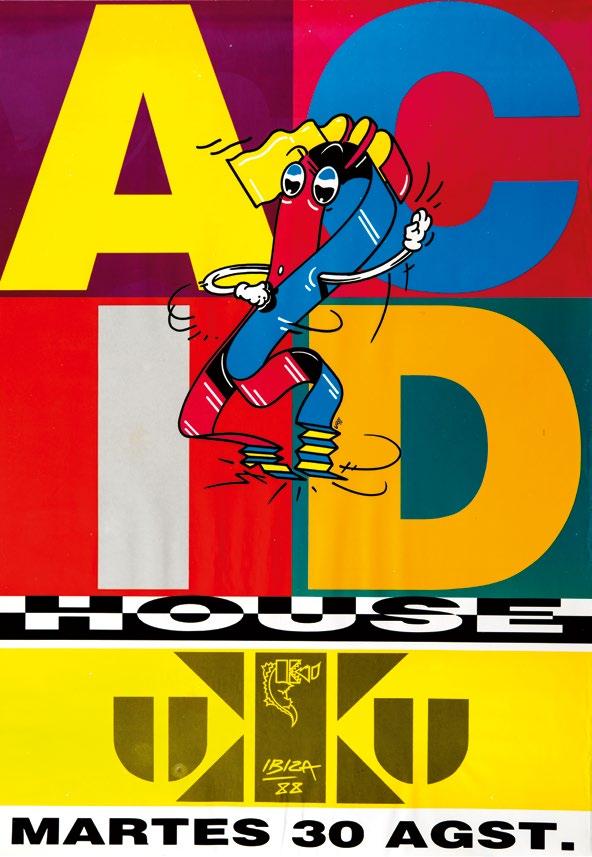
Yves Uro, Acid House, 1988 (drawing)
Yves Uro, Opening Summer, 1984 (drawing)
Yves Uro, Extasis, 1977 (drawing)
Yves Uro, Noche Tanga, 1981 (drawing)
Yves Uro, KU, 1988 (drawing)
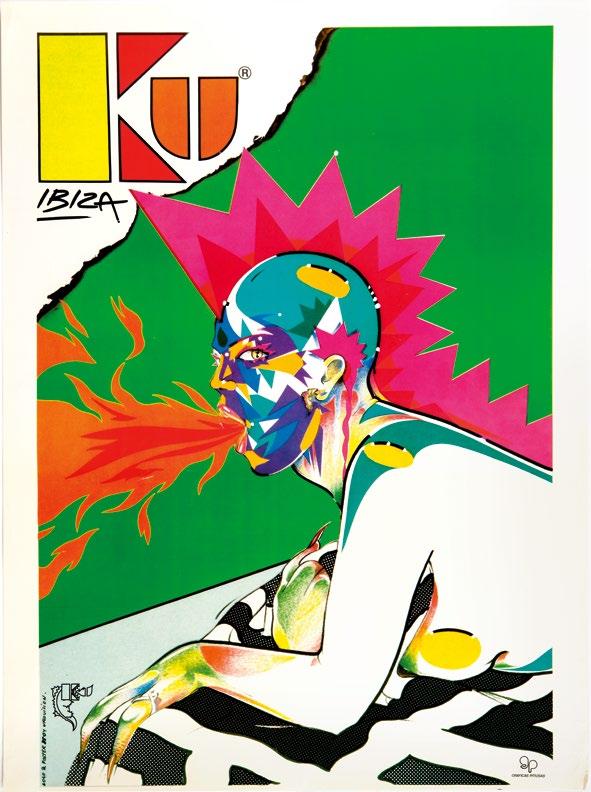
Yves Uro, Miss Tanga, 1988 (drawing)

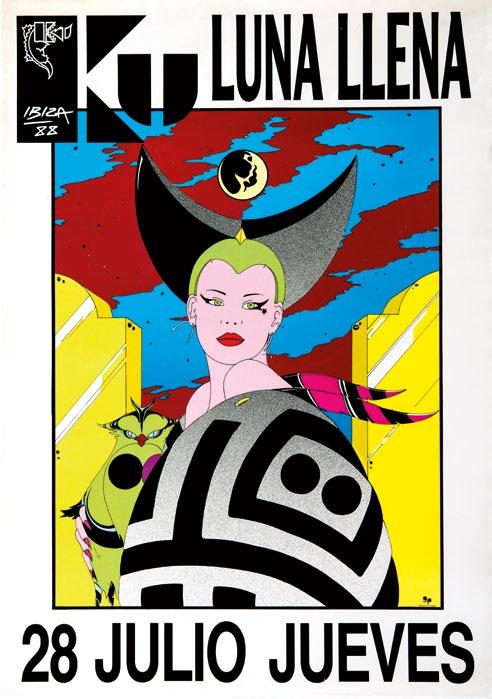
Yves Uro, Luna, 1988 (drawing)
Perhaps the most legendary artist in the history of Eivissa’s clubbing posters, Yves Uro was born in 1954 and passed away prematurely in 1995 in Paris. He primarily collaborated with KU and occasionally other clubs and discos, designing around 400 posters. His style was characterised by drawings rich in realism and detail, evidently inspired by science fiction. Allusions to surrealism and other artistic movements were frequent. His work has been immortalised in the volume Urovision, edited by his sister Catherine Uro, and published by British publisher IDEA.
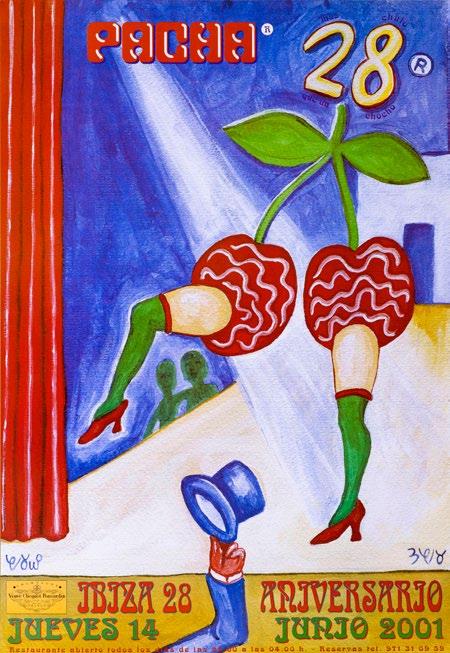
Rom Ero, Acuarius, 1991 (drawing)
Rom Ero, Erotic Dreams, 1995 (collage)
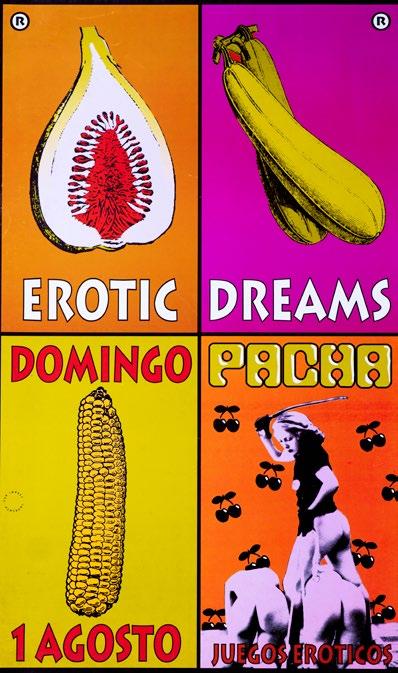
Rom Ero, 28 Aniversario, 2001 (acrylic)
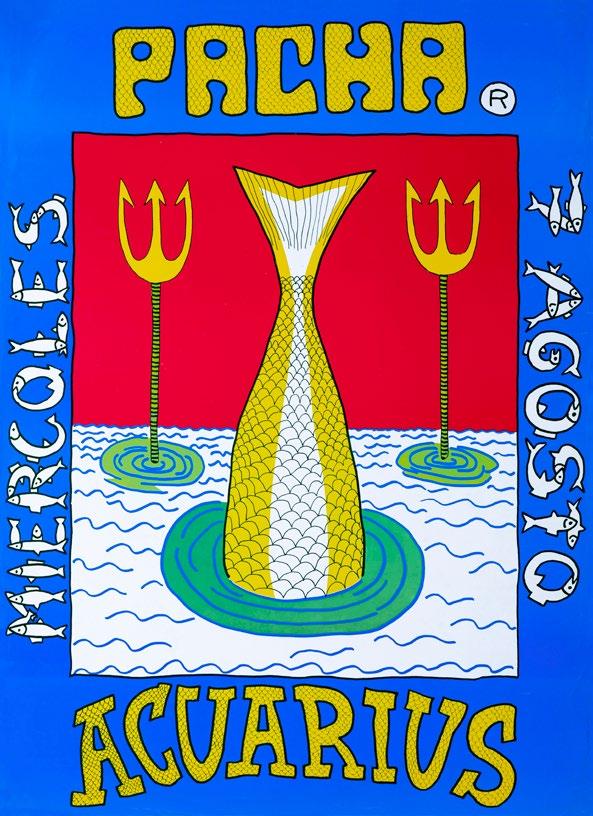
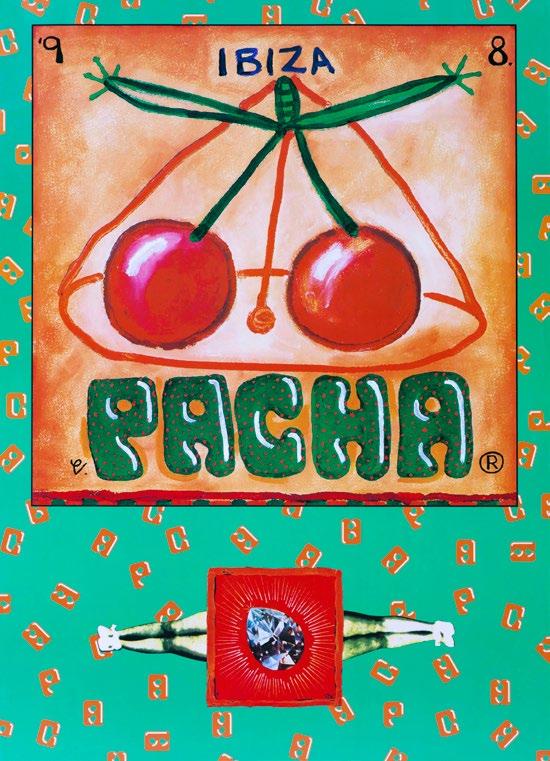
Rom Ero, Cherrys & Diamond, 1989 (acrylic and collage)
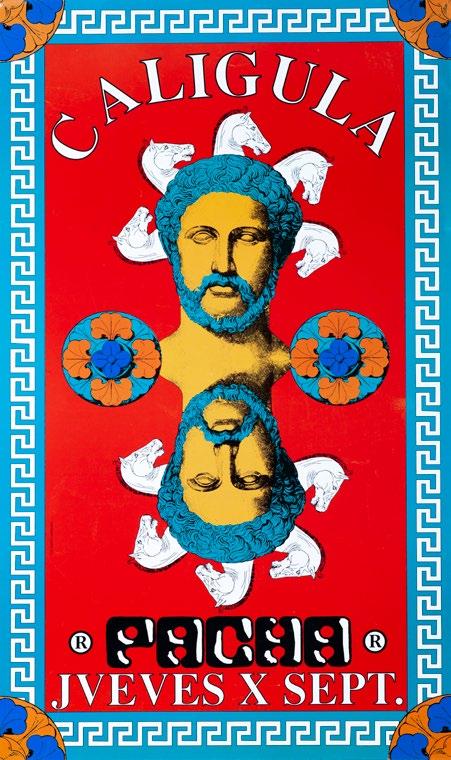
Rom Ero, Caligula, 1993 (collage)
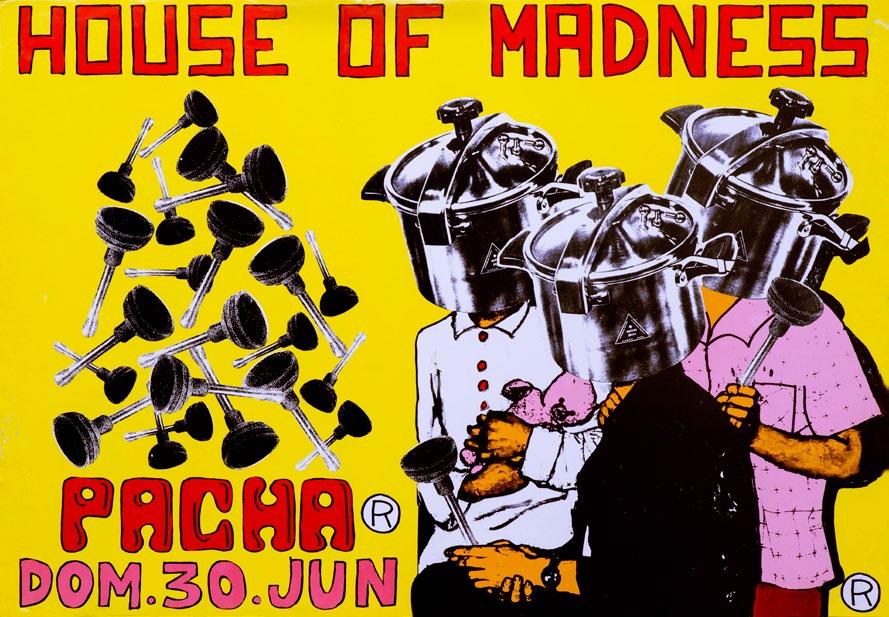
Rom Ero, House Of Madness, 1991 (acrylic and collage)
Originally from Granada, Rom Ero began designing posters in Eivissa in 1989. Parallel to his illustration work, he has always maintained an active role as an eclectic visual artist. His collaboration with Pacha began after the former club manager acquired one of his paintings at an exhibition in Eivissa in 1988. The famous Flower Power logo, depicting a stylised eye, is one of his. In the golden years of clubbing, he worked extensively with collage, which he cut and pasted by hand, as well as painting, before the age of computers. He was also involved in decorating the club as head of a team of collaborators.
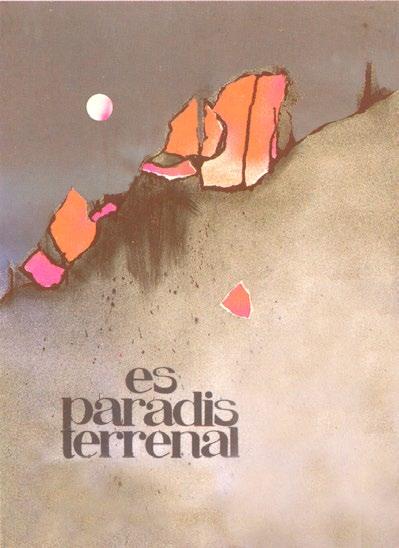
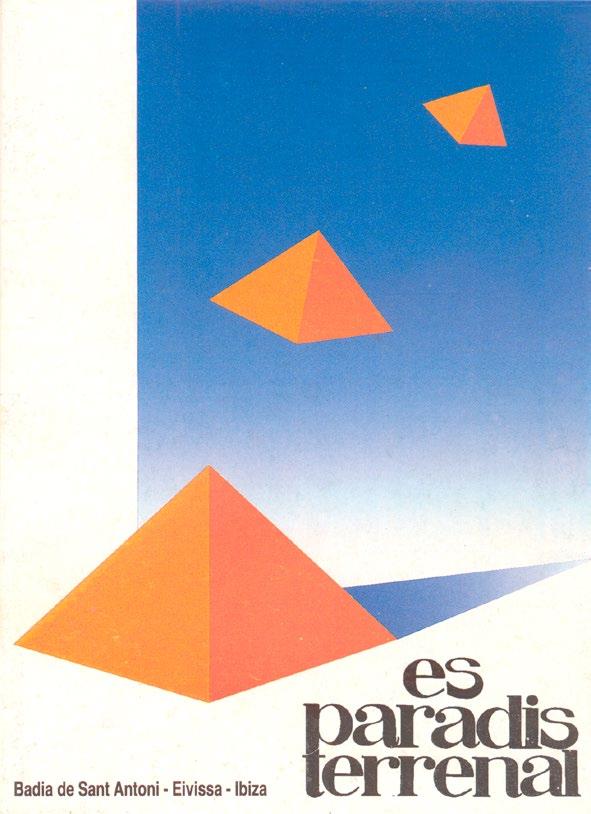
Carlos Díaz Genicio wanted to do for Es Paradis Terrenal what Toulouse-Lautrec had done for the Moulin Rouge decades earlier in Paris. Born in Asturias, he relocated to Eivissa in the 1970s. His breakthrough came in the 1980s when he designed posters for Es Paradis Terrenal, then considered one of the most extraordinary clubs in the world. Carlos also worked for Es Paradis as the art director for the organisation of parties, personally handcrafting each design until 1995. His style is futuristic and revolutionary in its ability to integrate drawing with the emerging possibilities offered by the computer graphics of the time.
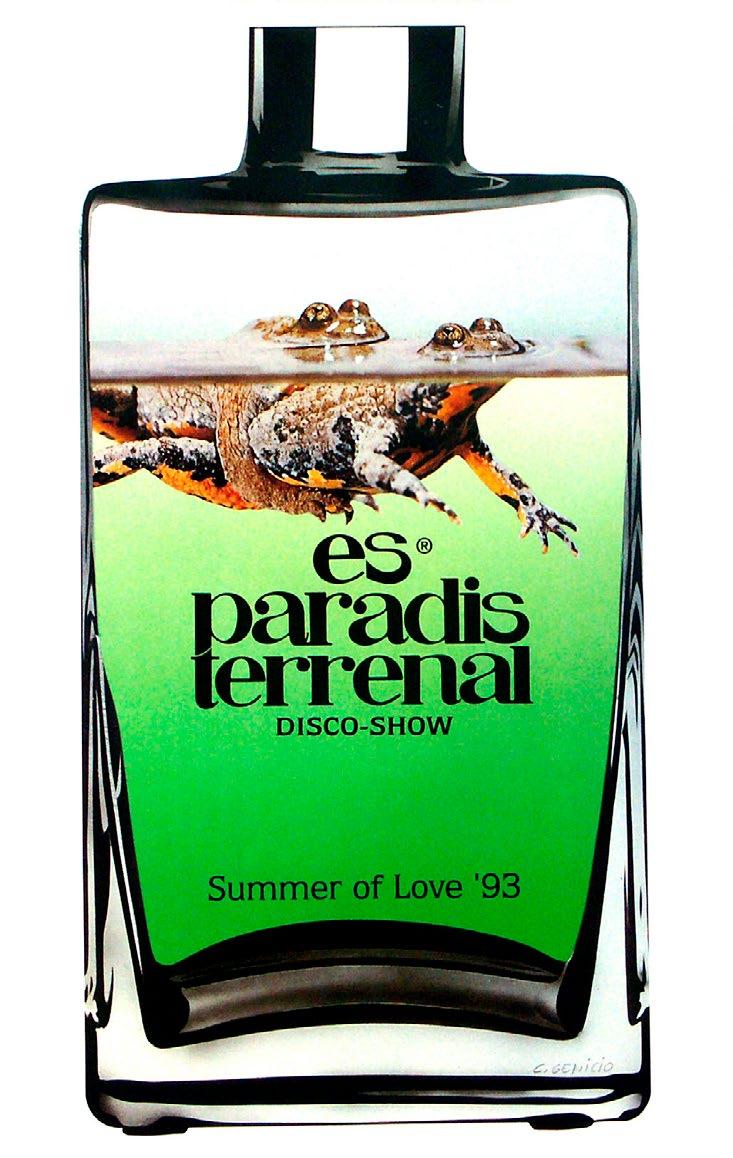
Carlos Díaz Genicio, Summer of Love, 1993 (airbrush and collage on cardboard)
Carlos Díaz Genicio, Night of Sant Joan, 1987 (acrylic on paper)
Carlos Díaz Genicio, Pyramids, 1995 (airbrush)
Carlos Díaz Genicio, Mister, 1989 (acrylic on paper)
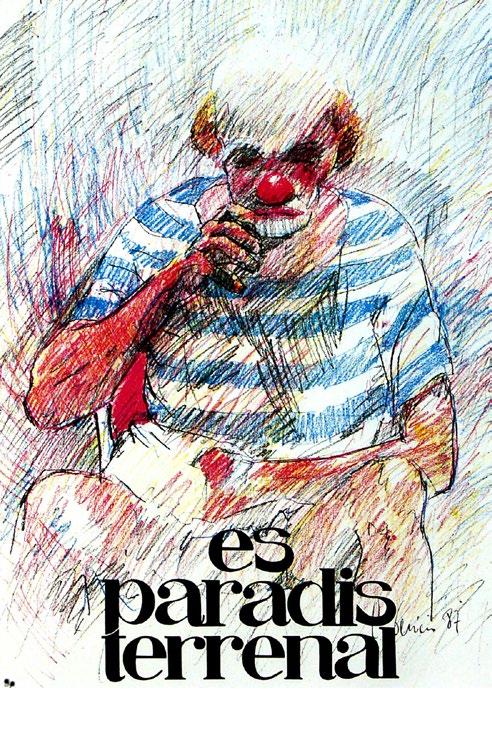
Carlos Díaz Genicio, Circus, 1989 (color pencils)



Edition & Creation
Alla Carta Studio
Brand Creative Director
Achilles Ion Gabriel
Brand Director
Gloria Rodríguez
Photography
Stevie & Mada
Styling
Francesca Izzi
Illustrations
Jo Minor
Copywriting
Davide Coppo
Production
Hotel Production
Special thanks to
Antonio Cobo
Guillermo Clavel Marì
Thomas Derville at L’attitude Productions
Estudi Tur Costa
Ilaria Norsa
Pep Pilot
Asja Piombino
Paulo Vieira
Image credits
© Stevie & Mada
© Jo Minor: pp. 71-83
© Prada Poole Archive: pp. 42-47
© The Estate of Yves Uro / Yves Uro / Catherine Uro: pp. 134-135
© Rom Ero: pp. 136-137
© Carlos Díaz Genicio: pp. 138-139
Images courtesy of Repossi: pp. 124-131
Print House
Artes Gráficas Palermo, Madrid
ISSN: 2660-8758
Legal Deposit: PM 0911-2021
Printed in Spain
Alcudia Design S.L.U.
Mallorca
camper.com © Camper, 2023
Join The Walking Society