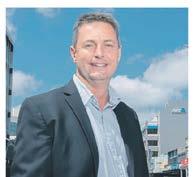
Veteran local body politician Dave Macpherson is back on the rails.
Page 3
MIKE’S THE MAN
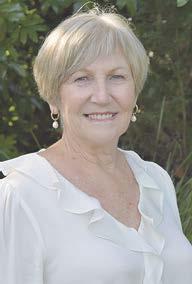
Mike Hanaray is no longer an unsung hero, he has the award to show for it. Page 7
PASIFIKA ON THE UP
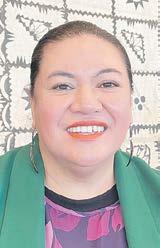
Rachel Afeaki-Taumoepeau has a plan and she reveals it.
Page 12
OUT AND ABOUT
Our photographers captured people doing business around the region. Pages 14, 15
Mahuta’s memories
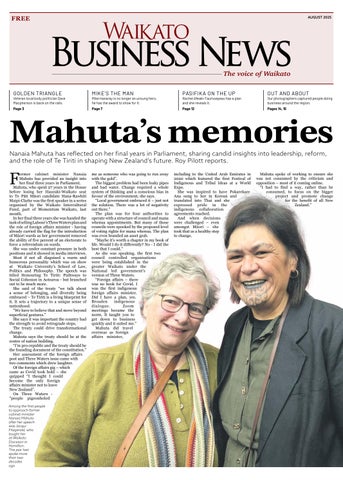
Nanaia Mahuta has reflected on her final years in Parliament, sharing candid insights into leadership, reform, and the role of Te Tiriti in shaping New Zealand’s future. Roy Pilott reports.
Former cabinet minister Nanaia
Mahuta has provided an insight into her final three years in Parliament.
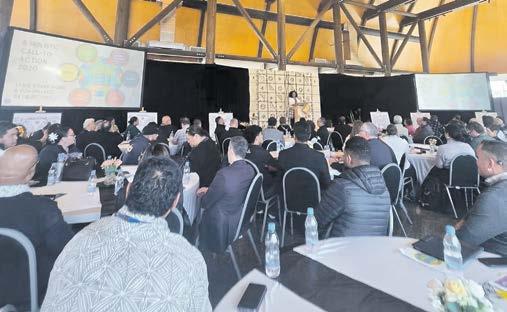
Mahuta, who spent 27 years in the House before losing her Hauraki-Waikato seat to Te Pāti Māori candidate Hana-Rawhiti Maipi-Clarke was the first speaker in a series organised by the Waikato Intercultural Fund, part of Momentum Waikato, last month.
In her final three years she was handed the task of selling Labour’s Three Waters plan and the role of foreign affairs minister - having already carried the flag for the introduction of Māori wards as her government removed the ability of five percent of an electorate to force a referendum on wards.
She was under constant pressure in both positions and it showed in media interviews.
Most if not all disguised a warm and humorous personality which was on show at Waikato University’s School of Law, Politics and Philosophy. The speech was titled Honouring Te Tiriti: Pathways to Social Cohesion in Aotearoa - but branched out to be much more.
She said of the treaty “we talk about a sense of belonging, and diversity being embraced – Te Tiriti is a living blueprint for it. It sets a trajectory to a unique sense of nationhood.
“We have to believe that and move beyond superficial gestures.”
She says it was important the country had the strength to avoid retrograde steps.
The treaty could drive transformational change.
Mahuta says the treaty should be at the centre of nation building.
“I’m pro-republic and the treaty should be the founding document of the constitution.”
Her assessment of the foreign affairs post and Three Waters issue came with two comments which drew laughter.
Of the foreign affairs gig – which came as Covid took hold – she quipped “I thought I could become the only foreign affairs minister not to leave New Zealand”.
On Three Waters“people pigeonholed
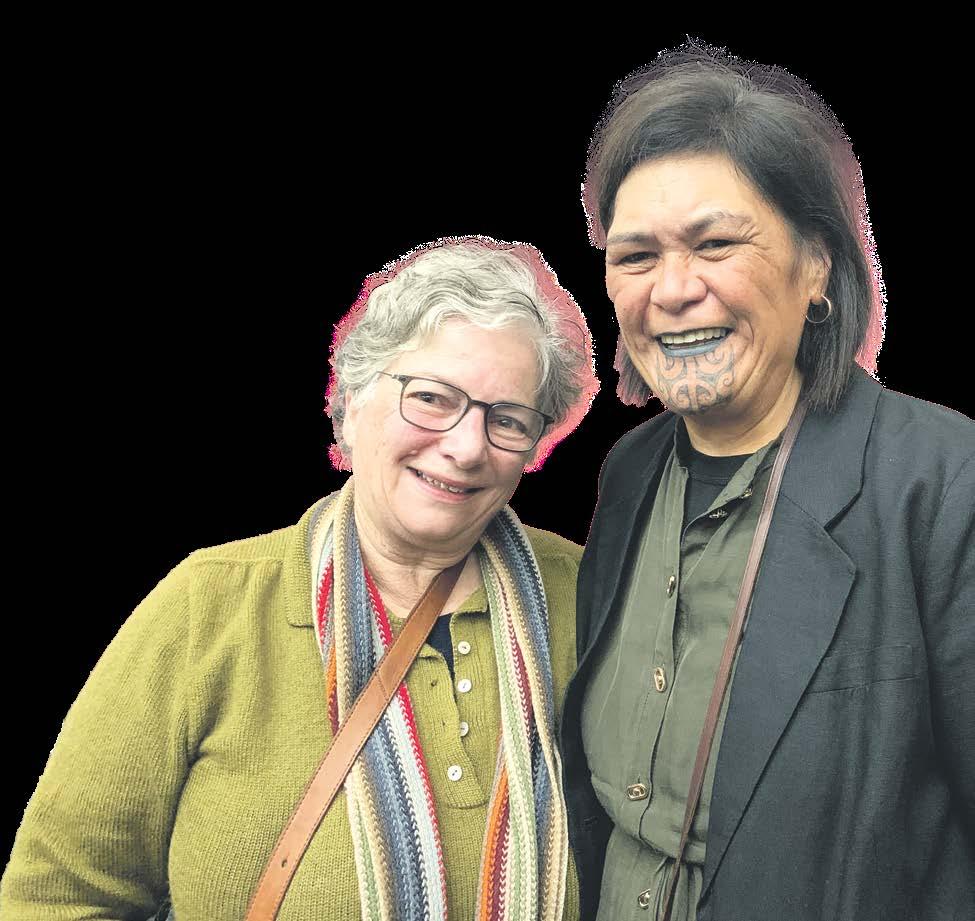
Among the first people to approach former cabinet minister Nanaia Mahuta after her speech was Jacqui Fitzgerald, who taught her at Waikato Diocesan in Hamilton. The pair last spoke more than two decades ago
me as someone who was going to run away with the gold”.
The biggest problem had been leaky pipes and bad water. Change required a whole system of thinking and a conscious bias in favour of the environment, she says.
“Local government embraced it – just not the solution. There was a lot of negativity out there.”
The plan was for four authorities to operate with a structure of council and mana whenua appointments. But many of those councils were spooked by the proposed level of voting rights for mana whenua. The plan was even branded an asset grab.
“Maybe it’s worth a chapter in my book of life. Would I do it differently? No - I did the best that I could.”
As she was speaking, the first two council controlled organisations were being established in the greater Waikato under the National led government’s version of Three Waters.
“Foreign affairs – there was no book for Covid. I was the first indigenous foreign affairs minister. Did I have a plan, yes. Broaden indigenous dialogue. Zoom meetings became the norm. It taught you to get down to business quickly and it suited me.”
Mahuta did travel overseas as foreign affairs minister,
including to the United Arab Emirates in 2020 which featured the first Festival of Indigenous and Tribal Ideas at a World Expo.
She was inspired to have Pokarekare Ana sung to her in Korean and translated into Thai and she expressed pride in the indigenous collaboration agreements reached.
And when decisions were challenged – even amongst Māori – she took that as a healthy step to change.
Mahuta spoke of working to ensure she was not consumed by the criticism and opposition – most of it coming online.
“I had to find a way, rather than be consumed, to focus on the bigger project and promote change for the benefit of all New Zealand.”
CONTACTS
News/Editorial
Roy Pilott editor@goodlocal.nz 027 450 0115
Mary Anne Gill maryanne@goodlocal.nz 021 705 213
Viv Posselt viv@goodlocal.nz 027 233 7686
Chris Gardner chris@goodlocal.nz 027 231 7007
Advertising Director
Janine Davy janine@goodlocal.nz 027 287 0005
Owner/Publisher
David Mackenzie david@goodlocal.nz
Office/Accounts admin@goodlocal.nz 07 827 0005
Readers’ contributions of articles and letters are welcome. Publication of contributions are entirely at the discretion of editorial staff and may be edited. Contributions will only be considered for publication when accompanied by the author’s full name, residential address, and telephone number. Opinions expressed are not necessarily those of the publishers. Waikato Business News is published by Good Local Media Limited.
Good Local Media expands
Good Local Media Ltd has acquired the Bay of Plenty Business News from founder Alan Neben.
and feature writer David Porter as editor of the paper.
districts and the Waikato Regional Council elections.
If not satisfied with the response, the complaint may be referred to the Media Council P O Box 10879, The Terrace, Wellington 6143. Or use the online complaint form at www.mediacouncil.org.nz Please include copies of the article and all correspondence with the publication. Also publishers
The monthly newspaper was originally a sister publication to Waikato Business News.
This adds a fifth masthead to our stable of newspapers which includes weekly community papers in Cambridge, Te Awamutu and the King Country.
We are also pleased to announce the appointment of longtime Bay of Plenty Business News columnist
Letters…
Candidate responds
Our expanded team will work together to redesign and reposition The News to meet our readers’ evolving needs for factual, useful and entertaining business information.
Meanwhile Good Local Media has always placed local body politics in the A-category of importance.
Good Local Media will keep you updated on Hamilton, Waikato, Waipā, Ōtorohanga and Waitomo
Some points to consider about the heavy hitters. Hon Tim Macindoe, at 64, will hit retirement age early in his tenure, if elected mayor. Sarah Thomson, pursuing a growth strategy that leaves a lot of older voters cold, is unelectable. (Waikato Business News, July 2025)
As my name is bandied, I would submit to you my position as a candidate for mayor. At age 60, I follow in the footsteps of a new generation of centre left late middle-aged politicians around the world, proving an alternative to alt-right and woke. Mark Carney, prime minister of Canada, Kamala Harris, Democrat Presidential contender and former vicepresident, both 60 years old; not to mention the surprise socialist pick for potential New York City mayor.
This newspaper is subject to NZ Media Council procedures. A complaint must first be directed in writing, within one month of publication, to the editor’s email address.
The true Left Wing candidate this election, I am punching for an overturn of policy direction. If elected, I will replace CEO Lance Verhoort with Anjum Rahman. Finance chairperson Maxine van Oosten, who I have campaigned under at the Trade Union Centre, will be my first choice for deputy mayor, if I am fortunate enough to be elected. Unruly councillors will be out by lunchtime under my watch.
Roger Stratford Hamilton
Roy Pilott, Mary Anne Gill, Viv Posselt, Chris Gardner and Jesse Wood – whose combined experience of local body elections goes back to the 1970s - are being joined by regular columnists and former Fieldays president Peter Carr to make up the Good Local election team.
David Mackenzie, Good Local Media Ltd
Publisher and Director
Briefs…
Green rating
Maersk’s integrated cold chain facility at the Ruakura Superhub in Hamilton has become the first cold storage facility in New Zealand to achieve the highest sustainability standard in commercial construction, a Six Star Green Star NZ Design and As-Built rating by the New Zealand Green Building Council.
Tutor honoured
Public relations professionals last month paid tribute to Waikato University associate professor Margalit Toledano, who retired after a career spanning 37 years, for her outstanding contribution to the industry. Her work has explored critical topics including professional ethics, community resilience in times of disaster, activism, and vaccine rhetoric. Most recently, she submitted a book chapter on crisis leadership, focusing on Dame Jacinda Ardern’s response to the Christchurch mosque attacks.
Artist wins
Hamilton artist Zena Elliott has taken out the top prize in the prestigious National Contemporary Art Award with a bold representation of cultural heritage and marginalised communities in contemporary society. The winning artwork, titled The Silence Forced Upon Us Is Louder Than the Crown’s Declarations of Partnership and Fairness, is on display at Waikato Museum (Te Whare Taonga) until mid November.
Tyre initiative
Hamiltonians can now drop off their old clean tyres (without their rims) to the Lincoln Street Resource Recovery Centre for free. Hamilton City Council has joined the national Tyrewise initiative, which allows up to five tyres to be disposed of at registered businesses and organisations across the country for free. Tyrewise is a Ministry for the Environment-accredited scheme for tyre disposal.
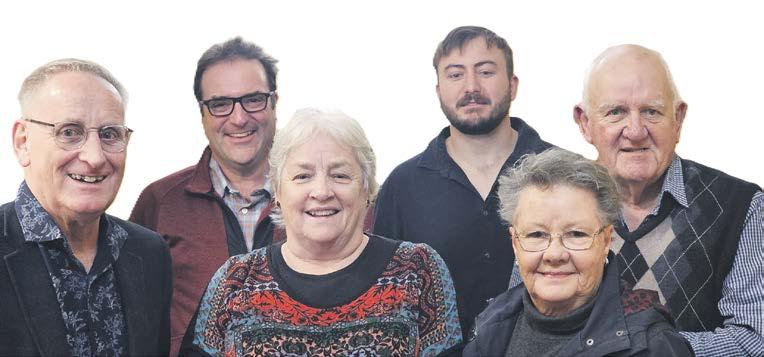
Good Local Media journalists will be following the elections. Pictured from left are Roy Pilott, Chris Gardner, Mary Anne Gill, Jesse Wood, Viv Posselt and Peter Carr.
David Mackenzie
All yellow
Businesses throughout Waikato and Bay of Plenty will this month support the one in three New Zealanders affected by cancer by painting the regions yellow. The fundraising challenge culminates in Daffodil Day on August 29. In the lead up, the Cancer Society wants businesses to create or promote something yellow - cupcakes, clothing, cars, calendars, candles – and then donate a portion of those yellow-inspired sales to the Cancer Society.
Bridges award
Two Hamilton bridges - Te Ara Pekapeka and Taurapa – that connect the city with a new growth area south, have won international awards which recognise individuals and projects of distinction. The bridges involved the community, councillors, mana whenua and the government, said mayor Paula Southgate.
Councils unite
Seven councils involved in the Waikato approach to managing water services have signed a shareholders’ agreement, marking a major milestone in regional collaboration on water services. The new entity, Waikato Waters Ltd, is jointly owned by the Waitomo, Ōtorohanga, Waipā, Hauraki, MatamataPiako, South Waikato, and Taupō district councils. It will be responsible for delivering drinking water and wastewater services across their communities, in line with the Government’s Local Water Done Well mandate.
Medical boost
A new medical school in Hamilton is expected to bolster the number of medical professionals in the central North Island. Based at the University of Waikato’s Hamilton campus in three years, the school will prioritise clinical placements in regional communities. The university will work with communities and primary healthcare providers to finalise where clinical placements will take place.
Golden triangle rail push
A former Waikato politician who helped bring the Hamilton-toAuckland Te Huia train to life now has his sights set on Tauranga.
Senior writer Mary Anne Gill finds out whether the Golden Triangle rail link is gaining traction.
Dave Macpherson was chairing Hamilton City Council’s transport committee when he began campaigning for a Hamilton-to-Auckland train service.
Nearly two decades later, Te Huia is running - thanks in part to his persistence, New Zealand First leader Winston Peters, and former Waikato Regional Council chair Russ Rimmington.
Now 72 and retired from local politics, Macpherson has relocated to Dunedin but remains deeply invested in the future of passenger rail, particularly a service linking the Golden Triangle: Auckland, Waikato, and Bay of Plenty.
“At the end of the day it will need to be a government decision,” he tells The News but if there is anyone able to lobby other politicians, it is Macpherson who is now part of The Future is Rail, New Zealand’s national passenger rail advocacy group.
Last month, the group backed a Green Party proposal to establish a passenger rail service connecting Auckland, Hamilton, and Tauranga - a corridor that serves nearly half of New Zealand’s population.
Group chair Roger Blakely said the proposal is both logical and vital.
“By linking Auckland, Hamilton, and Tauranga via the existing rail corridor, the train would serve up to 2.5 million people. It’s time to connect our country’s most significant economic and population centres with modern, efficient transport.”
The proposed service would complement and extend the existing Te Huia train, which connects Hamilton and Auckland seven days a week. Sundays were added last month following a 42 per cent increase in the Saturday services and an increase in total passenger numbers by 16 per cent.
The full 225km journey would take about two and a half hours with infrastructure upgrades, including new passing loops and double tracking through Whangamarino Swamp near Mercer.
Future plans would need to include more trains and station refurbishments in Tauranga, Morrinsville, and Matamata.
One of the biggest challenges is the Kaimai Tunnel - New Zealand’s longest railway tunnel at 8.9km. Opened to passenger traffic in 1979, it operated intermittently until 2001. Today, more than 20 freight trains pass through daily, transporting timber, dairy, and manufactured goods to and from the Port of Tauranga via the Mount Maunganui Branch Line.
Following a 2012 incident where contractors were exposed to toxic fumes, gas monitoring systems were upgraded.
Macpherson compares the situation to the Otira Tunnel under the Southern Alps, where a fan system extracts fumes after trains pass through.
The windows of
TranzAlpine’s observation cars are closed for the trip through the tunnel.
“Rail is making a comeback,” says Macpherson who recently helped gather 12,610 signatures to restore the long-retired Southerner train service from Invercargill to Christchurch.
He believes rail transcends politics. Macpherson stood twice for New Zealand Alliance and is a staunch advocate for the left, openly supporting the Labour Party during its tenure. But in
Peters, a big fan of rail and now the Minister of Rail in the Coalition Government, he has found a soul mate.
“New Zealand First has a rail renaissance in the front of their minds and see it as an election winner and they’re right too.”
It was Peters’ backing which got Te Huia on the lines and last month he praised the expansion into Sunday services and KiwiRail’s management of the service.
“There is a growing public demand for passenger
rail,” says Macpherson who reveals 22 per cent of Te Huia’s passengers are from Auckland.
In addition to his advocacy work for the Southerner, he points to upgrades for the Capital Connection and Wairarapa rail services.
“Investing in passenger rail has wide and growing support from across the political spectrum, and this (Golden Triangle) project is a perfect opportunity to deliver what New Zealanders are asking for,” he says.
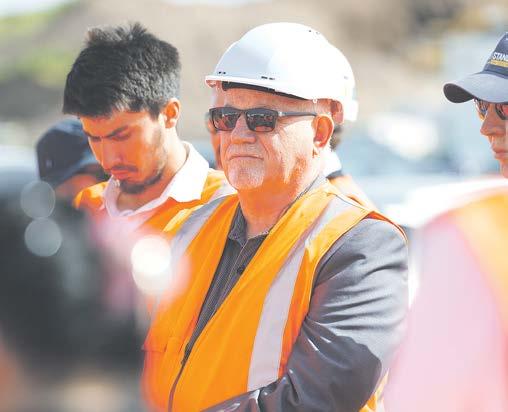
Dave Macpherson, pictured at the Rotokauri Transport Hub opening in 2019, may have retired from politics, but his passion for passenger rail is still full steam ahead.
Photo: Mike Walen
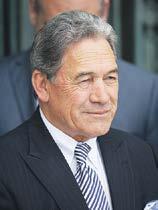
Winston Peters Te Huia train runs between Auckland and Hamilton.
Photo: Supplied
HBHS WHARE AKO
Mismanagement, not depreciation
B y MARK FLYGER
Hamilton City Council’s financial position is undeniably precarious. But according to councillor Sarah Thomson - now campaigning for both re-election and the mayoralty - the real culprit isn’t overspending or poor planning, but depreciation.
In a recent interview, Thomson called depreciation the “biggest additional cost pressure” facing council, blaming unpredictable asset revaluations for stalling growth. While this may sound plausible, it dangerously misrepresents the true drivers of Hamilton’s financial distress.
Depreciation is a non-cash accounting cost that spreads the expense of capital assetsroads, pipes, libraries, playgrounds - over their useful life. If an asset lasts 10 years, onetenth of its cost is recognised annually. This reflects wear and tear and ensures replacement costs are accounted for gradually. It’s not new spending, nor a surprise bill - it’s a planned recognition of existing commitments.
Yes, asset revaluations can increase depreciation, but they simply reflect inflation. The real issue isn’t depreciation - it’s council’s persistent failure to balance its books.
Last year, Hamilton ran a $34.8 million deficit. This structural imbalance has become routine under Thomson’s tenure, with council increasingly relying on borrowing to fund not just infrastructure, but basic operations. Rates revenue is no longer used to repay debt or invest in growth — it’s used to plug holes.
Thomson claims growth is the problem. But the real issue is how we plan for it and how we fund it. A clear example is the proposed wastewater plant near the Peacock development. Council has already spent millions piping waste across town to Te Rapa, when better planning could have kept it local
and cost-effective.
Saying depreciation “halts projects in their tracks” is misleading. What halts projects is a reluctance to make tough financial decisions — to prioritise spending, cut inefficiencies, and stick to realistic budgets. Deferring projects and underfunding depreciation leads to asset failure and future fiscal shocks. In fact, failing to fund depreciation properly results in potholes, broken footpaths, and worn-out public amenities — the very things Thomson says she wants to improve.
Thomson supports debt-financing major infrastructure, yet under her leadership, borrowing has extended to operational needs. The balance sheet is drained — not by depreciation, but by fiscal mismanagement and an addiction to spending beyond our means.
In 2024, S&P Global Ratings downgraded Hamilton City Council’s credit rating from AAto A+, citing ballooning debt and weakening financial management. The warning signs are clear - not buried in depreciation schedules.
Thomson’s claim that depreciation is the primary problem isn’t just inaccurate - it’s a distraction. Hamilton’s ratepayers deserve honest leadership, not accounting sleight of hand. The city’s books must be balanced, debt controlled, and infrastructure funded through sustainable planning.
Let’s stop blaming the mirror for the reflection. Depreciation is a reality - not a rogue variable. What’s truly wreaking havoc is years of deficits, missed opportunities to rein in spending, and a reluctance to lead with financial discipline.
Mark Flyger is a candidate for Hamilton City Council’s west ward He is chief financial officer at Modern Transport Group of Companies This column has been abridged.
Succession planning
B y DAVID CHRISTIANSEN
At Momentum Waikato we grow endowment funds that provide perpetual support for local charities and communities, to realise our goal of ‘A better Waikato, for everyone, forever’.
‘Forever’ is quite a long time, and the ultimate long-term view when it comes to succession planning.
It is not just businesses, farms or families that need to plan beyond their current people’s lifetimes - incorporated societies and charitable trusts, sometimes decades old, often struggle to see how their mission can be continued into the future.
Under the new Incorporated Societies Act passed in 2022, all existing incorporated societies must re-register by 5 April 2026. This comes with new requirements, which are generally reasonable, but may add more complexity and responsibility than some are willing to take on, such as new rules on dispute resolution and membership management.
If a society’s registration lapses next April, it will no longer be a legal entity, which will expose its committee and members to personal liability for its debts and other obligations, and possibly lose them control of its assets.
Faced with this, some societies’ committees may decide they cannot continue, especially if they are also facing other challenges such as a dwindling and ageing membership or rising operational costs.
These same challenges have also been affecting charitable trusts for some years. Similar law changes a decade ago requiring greater accountability by trustees prompted an uptick in the already growing flow of trusts closing down.
Whether it’s caused by increased legal responsibilities or a lack of successors, a committee disestablishing its trust or incorporated society needs to ask itself – how can its capital and other assets be used to continue its purpose after the legal entity is gone?
Answering that question is one of the key roles for community foundations like Momentum Waikato – through receiving trust and society transfers or ‘re-settlements’.
What happens is, through a Deed of Gift, the expiring organisation’s realised capital becomes a ‘community fund’ endowment at Momentum Waikato, which will grow its income and therefore grant-making capacity faster than the entity’s own previous investments, due to the scale of our total portfolio.
For a closing-down trust that has existed to make charitable grants, Momentum Waikato then simply continues that purpose.
For an incorporated society coming to an end, transferring its assets to open a new Fund at Momentum will generate perpetual income that can then be granted out for whatever charitable purpose the outgoing board chooses, such as maintaining the community infrastructure it created, or resourcing a similar group’s activity, or providing scholarships or other support to now-former members. Therefore, if you are on a committee of a trust or society struggling to continue, Momentum Waikato can be your society or trust’s succession plan.
David Christiansen is Executive Officer at Momentum Waikato.
Hugo Shaw Drive, Cambridge
Berm blitz sparks student backlash
Waikato University students cried foul about parking tickets issued by Hamilton City Council for parking on berms near campus. Mary Anne Gill finds out what happened when they complained.
Students fined for parking on berms in a Hamilton East suburban block were surprised to find $70 refunds in their bank accounts last month.
Hamilton City Council had issued the fines using its license plate recognition (LPR) technology, rather than ticketing vehicles on foot.
The enforcement followed complaints from residents about cars parking on grassed berms - an
offence citywide.
Transport head Gordon Naidoo says parking on berms can damage underground assets like cables and pipes, obstruct rubbish collection, and disrupt residents who maintain the berms.
Over the past decade, developers have built multi-unit housing under residential intensification rules, often with limited parking.
With those properties came students with cars and nowhere to park them other than on the road.
A recent policy change means developers are no longer required to provide extra parking in these zones, aiming to reduce reliance on private vehicles.
However, many students come from out of town and rely on cars. Waikato University actively markets itself in regions like Bay of Plenty, Taranaki, and Gisborne - areas not well served by public transport. For these students, cars are a lifeline to home.
Waikato University’s Campus Operations and Risk director Lynn Bourne says parking information is shared during orientation.
“This information is provided as a courtesy and is not at the request of Hamilton City Council,” she says.
The Waikato Students’ Union, which describes itself as the
students’ voice on campus, did not respond to a request for comment.
Mayoral candidate Sarah Thomson welcomed the refunds, saying she was pleased the enforcement was not a revenue grab. She called for the council to issue warnings first and improve communication with students.
She cited a student who had parked on the berm for nearly three years without issue, only to receive a $70 fine - her entire day’s earnings from a part-time job.
“The fine was a big, unexpected cost and really stressful,” Thomson says.
Naidoo says that’s now the council’s approach. The first LPR
sweep in the area issued 88 tickets - 68 for berm parking, mostly on May Street. Thirteen warnings were issued for first offences. A follow-up visit resulted in 16 more fines. All up the fines totalled more than $7000.
The LPR car can only issue tickets, not warnings.
Berm tickets are usually issued by a parking warden on foot so the offending can be assessed.
“Council’s approach is always to educate and inform first,” says Naidoo.
“We proactively refunded drivers who had already paid these tickets without disputing the fine and had not already had a previous warning.”
Those with a previous warning for parking on the berm got refunds.
“We acknowledge there is more we can do to educate students directly and are looking at how we can better target those living in the university area,” he says.
Hamilton City Council’s LPR vehicles monitor parking compliance by scanning license plates.
The system identifies vehicles parked illegally - on footpaths, cycle lanes, or in no-stopping zones - and integrates with payby-plate systems to track parking duration.
WAIKATO BUSINESS AWARDS
Drivers have taken to parking their cars vertically on the berms in May Street.
Photo: Mary Anne Gill
Signs like this one in the central business district were not displayed in streets around Waikato University.
New Zealand Golden Visa Shines Brightly
New Zealand’s Active Investor Plus (AIP) visa, also known as the “Golden Visa”, has undergone a resurgence in popularity since the new settings came into effect on 1 April 2025. Designed to attract high-value investor migrants who actively contribute to New Zealand’s economic development, the AIP visa is now delivering on expectations.
The AIP provides two investment pathways: the Growth category, requiring a minimum $5 million investment over three years into NZ Trade & Enterprise approved businesses and managed funds which invest in businesses; and the Balanced category, requiring $10 million investment over five years, allowing for a broader mix of investments including bonds, listed equities, philanthropy, limited property options, as well as Growth category investments.
As of 20 July 2025, Immigration New Zealand (INZ) has received 236 AIP applications, with 184 applications in the Growth category and 52 in the Balanced category. These numbers reflect a potential minimum investment of NZD $1.43 billion, and a significant injection of capital into the New Zealand economy. To date 133 applications have been approved in principle, and 20 applicants have transferred investment funds totaling NZ$120 million and have already been issued their resident visas. The average processing time to approval in principle is just 14 working days (we have also seen approvals in just 3 days), which is testament to the efficient processing and priority INZ is affording AIP applications.
Applicants are from 21 countries with the USA (105 applications) being the main source country, followed by China (33), Hong Kong (27), Germany (19) and Singapore (11).
Several factors are contributing to the early success of the AIP. These include the ongoing global uncertainty and conflicts, the streamlined application process, flexible residency requirements, and the permanent residency outcome on completion of the investment
period together with the lack of comparable investor visa options from other countries. Interestingly, the majority of Pathways’ AIP clients to date are actively managing their own investments, or are working as investment managers, which further evidences the global attractiveness of the AIP.
Looking ahead, however, there are challenges the AIP will need to navigate. Ensuring that investments translate into tangible economic benefits will require careful coordination and collaboration between government agencies and the private sector. Most importantly there is the need to identify and structure high-quality investment opportunities that align with New Zealand’s strategic priorities and that these are safeguarded and maximized for both the AIP applicant, and for New Zealand. The opportunity for infrastructure investment is obvious and while this is likely to require a longer time-frame AIP applicants may well be amenable to this. There are also options for establishing regional investment hubs, enhancing investor education and support, and fostering publicprivate partnerships that connect investors with scalable ventures. The AIP is very much NZ’s flagship visa policy and to maintain momentum and to ensure long-term success the policy must be continuously refined in response situations as these arise, and to continue to be given priority processing focus by INZ.
In conclusion, the Active Investor Plus visa is proving to be a powerful tool for New Zealand’s economic growth and engagement. With continued leadership, foresight and collaboration, New Zealand can now realise the potential of its own “golden visa” to build a more prosperous, innovative, and globally connected future.
NB: Richard Howard, Pathways MD, will be travelling to New York, Los Angeles & San Francisco with NZTE and the Minister of Immigration, Hon Erica Stanford, in September to promote the AIP visa.
Building careers in tourism
By NICOLA GREENWELL
When you ask a parent what career they hope their child will pursue, you’ll often hear “doctor”, “lawyer” or “engineer”. While noble professions, it’s time to shine a light on the visitor sector – vital to our region’s future.
Too often, tourism, retail and hospitality are seen as temporary jobs – something to do while studying for a “real career”. This perception sells short an industry rich with opportunity, growth, and reward.
In Waikato, we see how the visitor economy powers our place. From the barista at Hayes Common to the guides welcoming guests at Hobbiton Movie Set and Hamilton Gardens to the event operations team at Claudelands; these roles contribute to exceptional experiences that bring people back.
Behind these experiences lies a broader ecosystem of professionals; a dynamic industry relying on the talents of marketers crafting compelling campaigns, communications specialists managing brand perception, human resource teams recruiting and supporting talent, and business analysts measuring performance to guide strategy. These roles are critical to the ongoing success and growth of the visitor economy, proving tourism is a serious and rewarding career.
The industry needs more people – young people – to see tourism as a serious and exciting career choice. Part of the challenge is perception: the idea these are low-skilled or dead-end jobs. The reality couldn’t be more different. The skills required – emotional intelligence, cultural awareness, adaptability, teamwork, and communication – are futureproof and transferable for continued growth within the sector.
The rewards are real. Ask the young local
EMPLOYMENT LAW
who started a social club at her workplace, fell in love with events and now leads a team of regional tourism and event marketers. Or the tourism graduate who began working in motel reception and now works in regional development for the visitor sector. These are careers with progression, meaning, and connection.
The return of flights from Australia, hotel developments, and major attractions like the Waikato Regional Theatre signal a growing demand for people who can deliver top-tier visitor experiences. Whether it’s through accommodation, tourism, events, or hospitality, this sector is filled with possibilities.
We can’t underestimate the deeper value of working in this industry. Creating memorable moments, sharing our stories, manaakitanga, and helping others discover what makes our place special – it’s deeply human work. A career in tourism is about more than service; it’s about connection and pride of place.
It’s time we reframe how we speak about tourism careers. Schools, universities, parents, and industry all play a role in promoting clear pathways – from secondary school training to on-the-job learning, apprenticeships, tertiary education and management roles. The visitor economy deserves to be recognised as the legitimate, respected career it is.
Let’s show the next generation they don’t have to leave Waikato to have a world-class career. The path to success starts with welcoming someone to your hometown – and reminding them, and yourself, why Waikato is such a great place to visit, work and live. Nicola Greenwell is general manager of Hamilton and Waikato Tourism.
Exit negotiations a step too far?
By ANDREA TWADDLE
In the raft of employment law changes being proposed by the current government is a less known Bill that proposes to allow employers to initiate exit negotiations with an employee and be protected from the termination proposal being referred to in any subsequent employment claim.
Currently:
• Where an employee is given no option but to resign, or where the employer follows a course of conduct with the deliberate and dominant purpose of coercing an employee’s resignation, an employee may raise a constructive dismissal claim.
relationship. However, faced with an employer proposing a termination and with no effective recourse unless the employer has missed a procedural step, it is difficult to see what bargaining power the employee will have, or how a damaged employment relationship will continue constructively after an employer’s unsuccessful protected negotiation.
• Employers and employees can only have without prejudice negotiations where there is a live dispute between them. This enables confidential discussions to try to resolve the dispute, that can’t be referred to in later employment litigation.
The Employment Relations (Termination of Employment by Agreement) Amendment Bill would remove the requirement for an existing dispute before exit negotiations can be initiated. Provided conditions set out in the Bill are met, including compensation being offered, employees would not be able to later raise a claim regarding any offer made and evidence of exit negotiations could not be referred to.
The Bill refers to compensation including ‘a monetary sum, a reference or other mutually agreed conditions’.
In effect, an employee could lose their ability to raise a constructive dismissal claim, without any money being offered and without the employer having good reason for the termination.
The Bill is proposed as enabling employers and employees to agree to end the employment
On the face of it, the Bill appears to be inconsistent with the principle of good faith, which is at the heart of the Employment Relations Act. Good faith means that employers and employees communicate early and responsively to maintain a productive working relationship and employer consultation on proposals affecting ongoing employment. In doing so, parties have trust and confidence in each other, and issues get addressed through fair process.
As an ACT Party Private Members Bill, there is no policy analysis, making the Select Committee process a significant opportunity for discussion on its merits.
The New Zealand National – ACT New Zealand Coalition Agreement committed to considering how personal grievances can be simplified. However, there is public criticism that the Bill steps beyond simplifying the process by creating an ‘opt out’ regime from fundamental principles of good faith, justification and fair process in employment law. The Select Committee reports on the Bill in October. There will be close interest on whether it will continue to be supported by all Coalition partners to introduce it into New Zealand employment law.
Andrea Twaddle is a director of DTI Lawyers. She is an experienced lawyer specialising in sports and employment law and independent investigations.
Accountants strengthen Waikato
Hamilton accountant
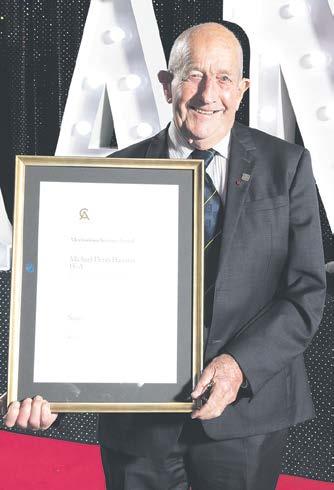
Mike Hanaray was officially recognised as an unsung hero last month when he received a Meritorious Service Award from Chartered Accountants Australia and New Zealand.
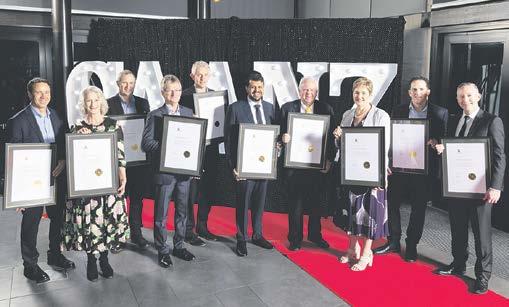
Now retired but busier than ever, Hanaray welcomed 10 new Waikato fellows during the ceremony, where his own honour drew warm applause.
Fellowships recognise chartered accountants for outstanding achievement and contributions to the profession, business, and wider community. The Meritorious Service Award acknowledges exceptional members who give their time and expertise back to the profession through mentorship and leadership. These recipients are often unsung.
The evening also celebrated new members and recognised milestones of 25, 40, and 50 years of service.
Hanaray, also a papal
knight for his services to the Hamilton Catholic Diocese, was born in Lower Hutt in 1941 and all five of his siblings spent time in seminaries or religious institutes. He became a chartered accountant in 1966 and a Fellow in 1996.
His contribution to Hamilton and the Waikato has been extensive since 1989 when he joined the Waikato committee.
Today he chairs the Waikato Fellowship Committee which includes undertaking ceremonial duties at the annual Waikato Gala celebration dinner, providing personalised speeches to each of the Fellowship recipients. He is a ‘go to’ for many accountants.
Hanaray worked in public practice for many years following his initial roles in audit, and then a number of years in commerce, primarily within the dairy industry, where he held senior accounting, finance and management positions.
Fellowships were presented at the night to:
John Adams is currently a director of KPMG Hamilton and has had more than 20 years’ experience in tax and trustee law advising on business structuring, trusts and companies, and specialising in the agribusiness, food retail and property sectors.
Rachel Balm is the director of Accountants NZ with offices in Hamilton and Taumarunui. She has 30 years’ experience as a chartered accountant, mentoring aspiring chartered accountants and is an active philanthropist supporting many community based charitable causes
Ralph Blackburn is the managing director of R and R Blackburn Consulting providing virtual chief financial officer/ chief executive services to growing, small and mediumsized entities. He led major governance reforms in regional tennis as is chair of Eastlink Community Hub.
David Bluett is the director of DB Chartered Accountants which he founded in 2006. He is former chair and longservicing board member of Hamilton City Netball Club where he led strategic planning, fund raising and board development for longterm community impact. He is also treasurer of Volunteering Waikato.
Perry Kendall is the financial controller at RD1, the farm source business unit of Fonterra. He is a committed volunteer of the Northern United Football Club and contributed to enhancing the club’s financial sustainability including relationships with granting bodies and sponsors and the diversity of its impact on the community.
Sanjil Mistry is the founder and managing director of Pragma Homes and is not only a chartered accountant but also of the New Zealand Law Society having studied law and accounting at Waikato University. He is a long standing supporter of many Hamilton services, schools and sporting organisations.
Lynette Pearks has had a distinguished career in tax, finance and governance associated with several leading firms and is currently a director of Braithwaite and Pearks providing chief financial officer and advisory services to Waikato businesses and organisation. She is a board member of Hospice Waikato Community Trust and was a board member of Waikato Diocesan School for Girls.
Peter Rogers has been a partner at Finn and Partners for 26 years. He has extensive experience in the education, health, and
charitable sectors, with more than 40 years’ experience years in governance roles for medium sized companies, providing strategic and business advisory services, restructuring businesses and setting them up for success. He has held many directorships over the years.
Brendon Stone is Porter Group chief financial officer and held senior finance roles at Affco and KPMG in the Cook Islands. He is a board member of Capital Security Bank and a life member and board member of the Hamilton Suburbs Community Sports Club.
He has been on the Waikato Volleyball Association since 2001 and chaired Hukanui Primary School board of trustees.
Matt White is a partner at PWC with international experience in Indonesia, Switzerland, Papua New Guinea and New Zealand. He led the audit of one of PwC’s largest global clients while based in Switzerland bringing a strong commercial and global perspective to his work. He chairs the Cancer Society’s Waikato-Bay of Plenty division and is former deputy chair of Export NZ’s Waikato Advisory board.
New fellows, from left: John Adams, Rachel Balme, Ralph Blackburn, David Bluett, Perry Kendall, Sanjil Mistry, Peter Rogers, Lynette Perks, Brendon Stone, Matt White.
Photo: Stephen Barker.
Mike Hanary with his Meritorious Service Award.
Photo: Stephen Barker
Investing - Commercial vs Residential
Investing in a commercial property is worth considering as an alternative to buying a residential property, but there are risks and rewards attached with both. I have been involved in both residential and commercial investment – in small amounts, but its taught me some valuable lessons. The following is premised by ‘often’:
Residential
Positives
• Much easier to get into, with banks generally lending between 70%90% of a property’s value.
• Mortgage borrowing rates can be 1% or more lower than commercial rates.
When vacant, they can be much easier to re-tenant and when necessary, reducing the asking rental is a quick and effective way to do this. New Zealand has a housing shortage currently.
• Depending on the price bracket they are in, particularly at the entry level, they can be easier to sell in a timely manner, due to a larger buyer pool.
• Overall and in my experience, the capital gains have often been greater than in commercial However
The net return in the vast majority of instances, is much lower than commercial, once items such as rates, insurance and property management costs are deducted.
• They often require more regular maintenance, due to increased tenant wear and tear.
• Items such as grounds maintenance and repair of minor fixtures/fittings may well be items that a Landlord remains responsible for.
• There can be a higher turnover of tenancies, as fixed term 12 month or periodic tenancies are the norm. Tenants only need to provide 21 days’ notice to vacate a periodic tenancy.
Commercial
Positives
• While capital gains may be lower than residential, they provide higher net returns, 5%-8% not being uncommon. Tenants are required to pay rates, insurance, maintenance and property management (which are covered by the tenant in commercial leases).
• Wear and Tear is often less, due to less hours of occupation and a Tenants desire to provide a desirable workplace for staff, as well as a professional image for their clients and customers.
• Tenants are required to look after and maintain the Landlord’s fixtures, fittings and chattels, while also having a ‘make good’
requirement at the end of their leases.
• The terms of leases are negotiated in good faith between a Landlord and Tenant, and therefore often longer, with fixed 3 to 6 years, plus a right or renewal, not being uncommon. Tenants are bound by their lease term and must additionally provide 3 months’ notice prior to their renewal date.
However
• More difficult to get into, requiring greater equity and cashflow. Banks often only lend 40%-60% of a property’s value.
• Mortgage borrowing rates will be higher than residential. However, if you are able to borrow against equity in residential assets, then this can often negate that issue and allow residential rates to be applied.
Commercial property can take longer to re-tenant, as the premises needs to fit the requirements/ location etc of an incoming tenant. In my experience, simply reducing the asking rental rarely provides a quick solution.
• They can take longer to resell, but depending on the price bracket, desirability and asset type (retail, office, industrial etc) this will vary. Overall, commercial carries more risk than residential, but when tenanted can provide a less hasslefree investment with higher returns –but it’s probably not somewhere to go if you’re a highly geared investor.
The one bit of advice I would give anyone before even considering getting into either residential or commercial investment, is talk to a mortgage broker – it’s a mistake I have made previously but won’t make again. They know how to package a deal and can give you guidance on what you can or can’t afford in a timely manner.
This column should not be construed in any way as financial advice but purely reflects my experience as both a residential and commercial investor – I maintain a small portfolio in both sectors, hopefully benefitting from the best of both worlds.
Mike Neale, Managing Director, NAI Harcourts Hamilton
Traffic cone deluge
By DAVID PORTER
It would be churlish not to mention that the government has been making attempts to improve the state of the national highways under its care.
Like many, I have observed evidence of roadside activity on our highways. This has been accompanied, of course, as always, by impressive arrays of – usually orange – road cones signalling roadside works activity.
But as Transport minister Simeon Brown revealed in a release late last year, the challenges the government faces are huge. According to Brown late last year, the New Zealand Transport Agency (NZTA) spent a staggering $786 million of taxpayers’ money on road cones and temporary traffic management (TTM) over the previous three years.
And of course, those proliferating cones are only one part of a vast empire of conic endeavour. Aside from governmentadministered highways, virtually every local body in New Zealand, and the various local and regional service providers that maintain everything, have its own set of cones to warn that potentially risky activity is afoot.
Averting risk
I am not saying that the public does not need to be alerted that potentially dangerous work is in progress. I am suggesting that perhaps - as the increasing public clamour on this subject suggests – they may be exceeding the basic needs of alerting passing motorists.
We can leave to one side the fact that this activity is seldom difficult for drivers and pedestrian passers-by to notice, since it invariably involves difficult to pass parked
HEALTH IN BUSINESS
vehicles and several workers wearing hazard jackets.
More worrying, given it is usually extremely obvious that hazards are involved, is what has been an increasing trend. The effected areas are not only “fenced” off by lines of road cones. But the cones themselves seem to be placed increasingly near each other.
It is no longer sufficient to place cones a few metres apart, thus discouraging any drivers who might wish to indulge in difficult and unlikely attempts to cross into the hazard area. I increasingly have seen rows of cones that were barely a foot or so apart.
In my estimation their placement would defeat the skills of a circus trick cyclist who might wish to race zig zaggedly down the line of cones on a bicycle.
As Brown put it: “Maintaining our road, water and electrical infrastructure is essential, and some level of TTM is unavoidable. But the current approach is out of control.
Excessive use of road cones and temporary speed limit reductions - sometimes left in place when work is complete - simply increases cost, forces people to slow down, and frustrates drivers.”
According to Brown, further work was underway to provide public reporting and benchmarking of expenditure for local councils, in addition to the reporting made by NZTA. I look forward with interest to seeing the results of this additional monitoring. David Porter is an experienced journalist and a former foreign correspondent.
Unsung role beyond clinics
By JUSTIN BUTCHER
In the first two columns of this series, I focused on the pressures facing rural general practice and the importance of workforce in sustaining a strong health system. This final piece steps back to look at what Pinnacle is, and the essential role we play as a Primary Health Organisation (PHO).
Like many PHOs, Pinnacle is a quiet achiever. Most people have little reason to know we exist. That’s ok - we’re not here to grab headlines, we’re here to hold things together.
Managing the contract between Health New Zealand and our network of general practices is probably one of the more visible things we do. While ‘transactional’ the role we play in primary care funding matters, especially when we negotiate it each year. But it is just one of a hundred plus things we do. More fundamentally our work is about supporting people – and our network of general practices – to thrive.
While general practices are focused on delivering care to individuals, we’re focused on population health. We monitor the health of our enrolled population (nearly half a million people across the Midlands) and use our unique skills in clinical leadership, data and analytics to respond to trends, gaps, and changing needs. This has real impact. For example, during Covid-19 immunisation efforts we used geographically mapped immunisation data to guide outreach to areas of greatest need, working especially through partnerships with Māori providers and community outreach.
Day to day, we support general practices
with their strategic plans, adapt models of care, recruit staff, develop their workforce, implement new services, adopt new technologies and respond to key changes in the system such as key changes in information technology systems, screening programmes or prescribing regulations. We design new services that bring care closer to home like marae clinics, point of care diagnostics and expanded primary care roles. As I’ve written before, this work matters most in rural areas where challenges are greater and resources thinner.
Pinnacle plays a key role in integrating primary and secondary care. We work hard to ensure care is delivered in the right place, by the right people, and reducing unnecessary hospital visits. Our expertise blends clinical insight, community connection and digital innovation – which may sound like a collection of buzzwords but are capabilities that don’t sit naturally elsewhere in the system.
Health reforms introduced in 2022 delivered uncertainty about the future of PHOs. Our place in the system is no longer well defined and we’re awaiting policy decisions. We’ve been advocating for clear direction, because we know our role is essential. In my opinion it isn’t about if PHOs have a future, it is about realising how much harder that future would be without them.
Justin Butcher is the CEO of Pinnacle Midlands Health Network, and a critical care flight paramedic with road, air and most recently frontline primary care.
Asking big, settling down
Kiwis still crave the dream of homeownership, but when it comes to pricing, sellers might be aiming a little too high. New data reveals where expectations outpace reality - and where vendors are pleasantly surprised, reports David Porter.
New Zealanders still have home ownership in their DNA.
But whether vendors’ pricing aligned with market expectations varied significantly across the country.
In regions like Bay of Plenty and Waikato, sellers were asking more than buyers were willing to pay.
According to Vanessa Williams, marketing and
media general manager Vanessa Williams at realestate.co.nz - the industry’s longest-standing property website - there was evidence that sellers often have higher expectations for sale prices than buyers do.
Between January 1, 2024, and May 31, 2025, eight of realestate.co.nz’s 19 regions recorded higher average selling prices than asking prices.
However, Bay of Plenty and Waikato were among the more optimistic than realistic regions.
Bay of Plenty homes sold for an average of $876,578 - $6058 below the asking price - while Waikato homes sold for $774,268, falling short by $8399.
Realestate.co.nz is the major online marketing platform created several years ago and co-owned by the Real Estate Institute of New Zealand (REINZ) and
several major New Zealand real estate companies.
The analysis, which compared the asking and selling prices of more than 53,000 residential homes listed and sold on realestate. co.nz showed that by the time a home sold, people were getting more than their final asking price.
During this period, New Zealand homeowners asked for an average of $894,915 for their properties, but achieved an average selling price of $898,845, putting an
extra $3930 in their pockets, according the the analysis.
Williams said sellers were meeting the market and exceeding their own expectations.
“The last 18 months have been tough for sellers, but we are seeing that by the time their home sells, vendors are getting realistic with their price expectations. This seems to be having a surprisingly positive outcome, as they are ending up with slightly more than they bargained for.”
“While we always want to see a deal taking place, the property market only functions when buyers and sellers are prepared to negotiate and make sacrifices,” said Williams.
“With more properties on the market and prices holding steady, successful transactions often come down to pricing that both parties can agree upon and open negotiation.”
Sellers in Wellington had the biggest positive variance between asking and selling
prices, with vendors getting, on average, $17,185 more for their homes than what they originally asked for.
Canterbury followed suit with an average of $13,721 more in the hand for vendors.
Meanwhile, Coromandel stood out as the region where vendors received notably less than their expectations. While New Zealand has the largest home ownership ratio in the world, its current level is still estimated by online sources at around 64.5 percent of housing stock.
Vanessa Williams
Feed your culture
Rodney Stirling
By PHIL MACKAY
First Kmart, now Temu. It’s never been easier to buy cheap stuff than right now.
Rodney Stirling
Build trust fast: get on camera
By JOSH MOORE
But do cheap things actually cost less over time, or represent value for money; or is it a false economy? A relatively quick Google or AI search would suggest not. Unsurprisingly, most cheap goods don’t last well, and so investing in quality products with a longer useful life generally provides better value for money in the long run.
We see a similar thing play out with design fees in the Architecture, Engineering and Construction sector. Again, it is typically a false economy when clients accept a ‘cheap’ fee or try to delay or minimise the involvement of design consultants. Unfortunately, no-one wins when the outcome is additional re-work or extra costs during the construction phase of a project.
Thinking again about business in general, in financially constrained times there is extra impetus to be certain that spending is providing good value. Equally, efforts to reduce costs need to be focused where they will have the greatest effect.
My view remains that businesses are better focusing a limited budget on a few highquality investments, rather than scattering spending across a greater number of lowquality products or services.
That concept, as described by its originator, Chris Baca, was to ‘Feed Your Culture’.
Chris is a skateboarder and specialty coffee enthusiast, and co-owner of Cat & Cloud Coffee in Santa Cruz, CA. As an active participant in both skateboarding and coffee sub-cultures, Chris saw a lot of artisans and innovators, creating original products and contributing to their culture and industry. But for every original creation, there were multiple ‘knock-off’ copies produced cheaply
It’s perhaps unrealistic, however, to expect that we always choose to buy the more expensive or high-quality option, as businesses or as individuals. Rather than advocate for just buying less stuff (also a good idea), I’d like to share a concept that I came across some years ago.
Chris advocated that, while lots of young skateboarders or baristas probably couldn’t afford premium products in every sphere of their lives, they should prioritise supporting those artisans and creators who were contributing to the sub-cultures they loved.
Our team is Consistent, Reliable, Professional & Considerate
In today’s digital world, trust is one of the most valuable currencies in businessand one of the fastest ways to build it is by putting yourself on camera.
Social media is filled with polished designs, slick animations, and carefully curated content.
But what if you want to be top of mind for your audience, and grow in awareness and trust, what really cuts through the noise is video - specifically, when you speak directly
Friends, clients, and even acquaintances mentioned the videos and commented on the growth. They were watching. They remembered.
That’s the power of showing up on video. It creates awareness and builds credibility, more than you may realise.
And this strategy isn’t limited to business owners. If you lead a charity or are running for local council roles in the upcoming
So, at a time when many businesses are operating in a challenging environment, my challenge to you is to think about whether your own spending is ‘feeding your culture’. If you are a business producing a premium product or service, do you intentionally support other businesses who share your values? Are you willing to spend a little more to support a local business producing a quality product and contributing to the local community and economy?
Visit them before they do.
That local café, restaurant, or retailer you would be disappointed to see go out of business?
Phil Mackay is Business Development Manager at Hamilton-based PAUA, Procuta Associates Urban + Architecture.
Talking to the camera helps people get a feel for who you are, as well as what you do. So, here’s a practical challenge: This week, film a short video and post it on LinkedIn. It
Just share what you’re working on, something you’re excited about, or even a challenge you’re navigating. Be real, be
I’ve found that my natural tendency is to want everything to be perfect - but that mindset often gets in the way of taking
When we’re willing to embrace imperfect action, we make far more progress than if we let perfectionism keep delaying us from
Certified Contractor
In an age of digital distance, the most human thing you can do is let people see and hear from you.
HTC SuperfloorTM
Show up, speak up, and start building trust - one video at a time.
Josh Moore is the Managing Director at Hamilton digital marketing agency Duoplus.
Our team is Consistent, Reliable, Professional & Considerate
Our team is Consistent, Reliable, Professional & Considerate
Our team is Consistent, Reliable, Professional & Considerate
Braemar Charitable Trust has more than doubled the number of free community surgeries it delivered in the past year, marking a significant milestone in its mission to improve health equity and access across the Waikato region.
In the financial year ending March 31, the trust enabled 159 free surgeries - an increase of 124 per cent compared to the previous year. While the trust spent $88,000 on associated costs, it estimates the real value of the procedures to be closer to $500,000.
Chair Vicky McLennan says the results reflect the trust’s strong vision and effective management, supported by clinicians, hospital staff, volunteers, donors, and funders.
“The trust is driven to advance healthcare equity and access and to improve health outcomes in our communities.”
Braemar Charitable Trust owns Braemar Hospital, one of New Zealand’s largest private hospitals, and funds a range of charitable initiatives including scholarships, medical research, and health sector capability building.
“We’re in a unique position to combine donated skills and funding with the ownership of Braemar Hospital to help us achieve that,” she said.
Key highlights from the year:
• 159 free surgeries delivered, up 124% year-on-year
• $230,000 spent on charitable activities
• $318,000 pledged in multi-year funding
• 712 hours donated by clinicians and staff
• 162% increase in referrals to the free surgery programme
• Four scholarships awarded to Waikato University students.
“I was at the first of our Saturday free community surgery days late last year, and the gratitude from patients and their families was humbling,” she said.
Surgeons and anaesthetists credentialled at Braemar Hospital donate their time, while the trust covers costs for nursing, medication, and consumables. The hospital provides these at cost.
In a new initiative, the trust has launched an online “shop” where donors can fund specific surgeries for patients in need. Already in the first two months of 2025, the
trust has spent $20,000 on 37 free surgeries and procedures.
Another another full day of free surgeries takes place next month with referrals from GPs, specialists, nurse practitioners,
dentists and community groups.
The Trust has also secured three-year funding from the Clare Foundation to provide complex dental treatment for women in six regional women’s refuges and
for recent refugees in Hamilton. Other funders, including the DV Bryant Trust and the Glenice and John Gallagher Foundation, are supporting refugee dental care and professional development for GPs.
Care through connection
A Hamilton retirement village has won a major award for showing that your golden years don’t have to be a bore.
Awatere Village, located between Milne Park and the Waikato River in Beerescourt, received an Excellence Award at the Property Council New Zealand Awards for its multi-year redevelopment project.
The transformation of the original site into a modern, vibrant village includes 131 independent living apartments and a 91-bed care centre.
The addition of a café, cinema, bowling green, edible gardens, and walking tracks helped secure the win.
Judges praised the village’s thoughtfully designed community spaces that keep residents active, engaged, and connected.
“Awatere isn’t just a
village – it’s a home, a neighbourhood, and a community,” said Andrew Buckingham, chief property officer at Oceania Healthcare, owners of villages across
New Zealand.
“This award recognises design that puts people, connection, and nature at the heart of retirement living.”
The project was
completed during the Covid pandemic and represented a significant investment in Hamilton’s aged care infrastructure, said Buckingham.
Hamilton Businesses Encouraged to
T‘Paint
It
Yellow’ for Da odil Day
his August,, businesses across Hamilton and the wider Waikato are being encouraged to go bold in yellow — all in support of a brighter future for those affected by cancer.
Paint It Yellow is a region-wide initiative that brings business and community spirit together in the lead-up to Daffodil Day on Friday 29 August. The concept is simple: do something yellow, donate a portion of sales, and challenge others to do the same. From decorating your premises, selling yellow-themed products, or hosting a team morning tea — every effort helps fund vital cancer support services and research across the region.
“Paint It Yellow is a powerful way for businesses to increase their impact and contribute to something local,” says Tracey Wood, Cancer Society Waikato/Bay of Plenty Partnership Lead.
Participating businesses are encouraged to spread the positivity and challenge others in their networks to ‘out-yellow’ them in a bit of friendly, feel-good competition. It’s a chance to boost team spirit, engage customers, and give back to the local community.
Also on board is the Waikato Chamber of Commerce. Commercial Manager Jenny MacGregor says, “The Chamber is proud to support the initiative, and we are challenging other Chambers across the Waikato and Bay of Plenty to volunteer as collectors on Daffodil Day. In conjunction with Union Square, we’re also painting it yellow by selling yellow-glazed donuts to the Union Square tenant community. We all know someone who has been affected by cancer, and our team is committed to doing our part to help raise funds through Paint it Yellow and active volunteering.”
The Cancer Society provides a full support pack to help businesses get involved, including posters, digital assets, and inspiration for yellowthemed fundraising ideas. Funds raised help the Cancer Society provide free services like transport to treatment, accommodation at the Cancer Society’s Lions Lodge in Hamilton, and wrap-around support from experienced cancer care navigators.
“These services are not directly goverment funded and rely on the generosity of the local community.”
Sign your business up to Paint It Yellow and help support the 1 in 3 with cancer in the Waikato. Contact supportus@cancersociety.org.nz and register your business.
To register or access resources to Paint It Yellow this August, email supportus@cancersociety.org.nz or visit daffodilday.org.nz for other ways you can get involved. daffodilday.org.nz
Vicky McLennan, Braemar Charitable Trust chair.
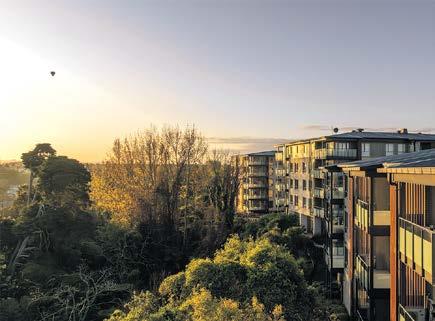
The sun rises on Awatere Village in Hamilton as a balloon floats over the Waikato River. Photo: supplied
Waikato Pasifika powers progress
Waikato Pasifika leaders have begun a second fiveyear economic development mission, reports senior writer Chris Gardner.
Uplifting economic empowerment is a key focus of the revised Waikato Pacific Action Plan Fono, which aims to strengthen a digitally connected Pasifika business ecosystem in the region.
At a recent meeting held at K’aute Pasifika Trust’s Fale in Hamilton, Pacific leaders voted to adopt a robust, data-driven approach to economic development.
The meeting was part of a wider community discussion led by plan co-lead Rachel Afeaki-Taumoepeau, covering five key pillars: culture and language, community, education, environment, and health.
Afeaki-Taumoepeau, who also chairs the Waikato Pacific Business Network, said the plan signals a clear intent to uplift the region’s Pasifika communities.
“This action plan is here to signal intent,” she says.
“It’s important for the wider community to recognise the strength of Waikato Pasifika. This action plan is here to signal intent.”
Originally developed in response to the Covid pandemic in 2020 the plan has now been refreshed to reflect current needs.
Economic development initiatives have been split into two streams: business and housing.
All economic development objectives aligned to and delivered by the Waikato Pacific Business Network were achieved, she says.
The network has:
• Conducted a stocktake of the current Pasifika business landscape in the region
• Engaged with the Young Enterprise Scheme and other youth-focused initiatives
• Identified social procurement opportunities in the Waikato
• Developed a programme to transition sole traders to limited liability companies
• Created financial literacy
and numeracy support for Pasifika business owners
• Launched a support programme to grow entrepreneurship and side businesses
• Validated the opportunity for a Waikato Pacific
Youth Business Expo
• Engaged with regional employers to improve recruitment policies for Pasifika workers.
A Pacific Housing Trust has also been established to support home ownership and housing stability.
“Equipping our Pacific families with financial literacy and then strategic partnerships to house our Pacific families. Much progress has been made, yet so much more to do,” she says.
“We can’t do this on our own. We are here to inform, we are here to shift, and we are here to showcase.”
Waikato Pacific Business Network launched in 2018 with the vision to build more sustainable and profitable Pacific owned businesses while developing Pacific professionals in the Waikato region.
Lynette Reed, founder and managing director of Hybridges and a board member of the Chiefs, facilitated the discussions. She was invited by AfeakiTaumoepeau after the two met at a conference.
“This is the first region
that has an action plan from a Pasifika perspective,” says Reed.
“They are really proactive here, and work together, there’s no egos. It is always about the people. When you strip that back it’s about the community.”
New Zealand Treasury Pacific capability chief advisor Su’a Kevin Thomsen told the gathering the Pacific population was the third fastest growing. Pacific people make up nearly 30 per cent of Waikato’s population.
The median income for Pacific workers in the Waikato was $40,300, up 32 per cent from 2018, compared to $35,200 for all Pacific workers nationally, up 45 per cent from 2018.
Twenty one percent of Pacific owned businesses in Hamilton are in rental, hiring and real estate. Thirteen percent are in construction. Eleven per cent are in professional, scientific, and technical services.
Pasifika-owned businesses in Hamilton inject an estimated $8 million annually into the national economy.
He told the gathering his father told him success is only possible because of the prayers and blessings that stand behind you.
Among those attending the meeting was deputy leader of the opposition Carmel Sepuloni and representatives from Hamilton West National MP Tama Potaka’s office.
“It was great to see Pacific leaders within their spheres of influence rise to the occasion,” AfeakiTaumoepeau says.
“In regards to outcomes, there is much to celebrated, Waikato Pacific are more visible, united, and determined to succeed contributing to the Mighty Waikato Story. Waikato Pacific is a growing population, and our region needs to be ready.”
Hano’s half century
The guardian of Tainui Kāwhia Incorporation’s forest Hano Ormsby has retired after more than 60 years in the forestry industry.
Ormsby, 77, completed his service as the iwi owned enterprise’s forestry manager, but his involvement in the forest stretches further back to the 1960s when the Forestry Service first planted the sand dunes in pinus radiata.
“On board the first tractor delivering the seedlings was Hano, aged about 12 or 13, and so began Hano’s life in the forestry industry,” said Tainui Kāwhia Incorporation chair Wayne Brewer.
The 1,000-hectare pine forest was established by the Crown in the early 1960s to prevent Kāwhia’s encroachment by black sand and purchased by Tainui Kāwhia Incorporated before the first harvest in the late 1990s.
Born and raised in Kāwhia, Ormsby joined the Forestry Service in 1964 and worked in forests across the North Island planting, pruning and logging. He returned to Kāwhia in 1974. His half century at the township’s forest was recognised last year with the presentation of a pounamu taonga by Brewer.
“Hano’s contribution to not only the forest but the Kāwhia community as a whole has been enormous,” Brewer said.
His ingenuity led to the invention of a patented single-stile ladder which won him a Fieldays Innovation Award 30 years
than 60
ago.
“I decided I needed a good ladder with the best way to get up a tree,” Orsmby said.
“It had a single pole with alternative rungs on either side which you could lock yourself into.”
“The incorporation is extremely grateful for the huge role Hano has played in the success of the forest.
From sand dune to a productive forest which will continue for generations,” Brewer said.
“It’s the best thing I have ever done,” Ormsby said of his retirement. “I am going to enjoy my golden years.”
Up to 200 hectares of the mature section of the forest are expected to be logged this year, with Ormsby’s son Malcolm assuming his father’s role.
Another 200 hectares expected to be harvested within five years.
About 60 per cent of the logged output is supplied to the New Zealand market.
Tainui Kāwhia Incorporated, alongside Manulife Morrison Forest, Tainui Group Holdings and Waipā Forest Management, contributes to an estimated 32 logging truck movements per day. - Chris Gardner
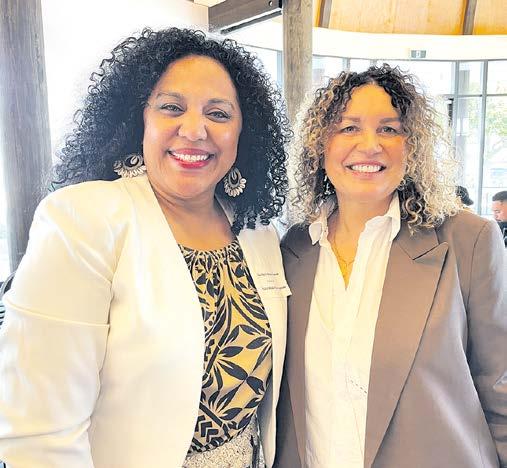
Waikato Pacific Business Network chair Rachel Afeaki-Taumoepeau, left, with Waikato Pacific Action Plan Fono education advocate Margaret Paiti. Photo: Chris Gardner
Lynette Reed
Waikato Pacific Business Network chair Rachel Afeaki-Taumoepeau addresses the large gathering at K’aute Pasifika Trust’s Fale in Hamilton.
Photo: Chris Gardner
Tainui Kāwhia Incorporation forestry manager Hano Ormsby has retired after more
years in the industry.
Photo: Chris Gardner
Getting employment help – whom to choose
When things go wrong in a workplace, too often there is not enough education on both sides on how to work through it in a fair, equitable manner. And often, many choose not to ‘bother’ if they have limited funds. Yet, there are options to look at.
In New Zealand, both lawyers and employment advocates can represent employees and employers in employment-related matters, such as personal grievances, mediation, or disputes.
While they can appear to offer similar services, there are key differences in their qualifications, regulation, and the types of support they can provide.
Understanding these differences can help you choose the right person for your employment issue.
Lawyers are legally trained professionals who hold a law degree, have been admitted to the bar in New Zealand and are regulated by the New Zealand Law Society.
Lawyers must also have professional indemnity insurance.
Employment advocates, on the other hand, are not legally required to have a law degree or formal legal qualifications. Many however, are highly experienced in employment relations or HR and often have specialist knowledge in the area. They are not regulated by a professional body (unless they choose to belong to one), and there is no mandatory code of conduct or insurance requirement.
Both lawyers and employment advocates can:
• Represent clients in mediation (through MBIE’s Employment Mediation Services)
• Advise on employment agreements
• Assist with personal grievances and disciplinary processes
• Represent clients at the Employment Relations Authority (ERA) or Employment Court. However, lawyers are the only ones who represent clients in higher courts beyond the Employment Court, and can at times offer more comprehensive legal analysis, especially for complex or multifaceted cases.
Employment advocates are seen as the more affordable option. Many offer ‘no win, no fee’ arrangements, which can be appealing to individuals with limited funds. They may also provide quicker access to advice and support in
“While they can appear to o er similar services, there are key di erences in their quali cations, regulation, and the types of support they can provide. Understanding these di erences can help you choose the right person for your employment issue.”
straightforward cases. Lawyers typically charge higher fees, but this reflects their training, regulatory oversight, and the depth of their legal services. Some law firms may offer fixed-fee packages or limited-scope services for specific tasks to keep costs manageable.
So how do you choose if you have a workplace issue you believe needs expert help?
If the matter is relatively straightforward (e.g. an unfair dismissal or wage dispute) then choose an employment advocate, especially if you’re looking for a practical and costeffective solution and you’re comfortable with less formal representation. But
a lawyer would be potentially the right solution if the case is complex or involves overlapping areas of law or you potentially need representation beyond the ERA (e.g. in the High Court). Either way, both employment advocates and lawyers play valuable roles in the employment law landscape. If you’re unsure, start with a free consultation - many offer initial advice for free, and you can discuss what the cost (or not) is likely to be there. Ultimately, your choice should depend on the complexity of your case, your budget, and your comfort with the person’s experience and credentials. Always check references or reviews before getting anyone to represent you.
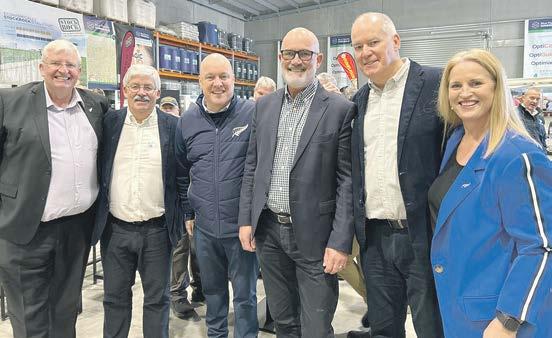
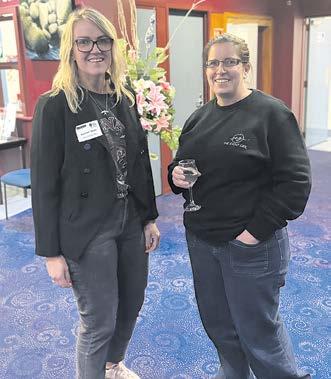
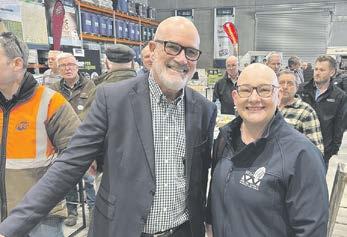
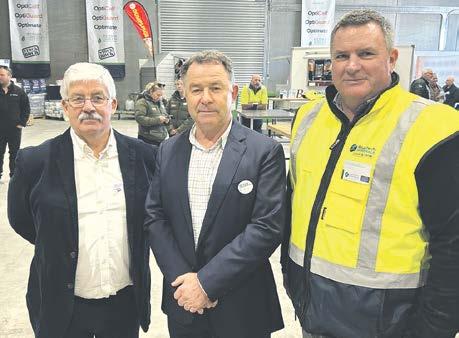
Out and about…
Another busy month around the Waikato and our people were there there to capture the
Getting to know you
Blue Pacific Minerals are New Zealand’s largest processor and distributor of zeolite and perlite ore for domestic, commercial, agricultural and industrial applications throughout Australia, Asia and South Pacific regions. As well as processing locally sourced raw materials, it also imports industrial minerals for local clients and offer custom processing facilities. Last month the Tokoroa-based company hosted prime minister Christopher Luxon and Waikato Chamber of Commerce.
Future proofing business
Waikato Chamber of Commerce held a business networking event at the Plaza Theatre in Putāruru last month about future-proofing your business: cash flow, capital and confidence. Guest speakers were business cash flow and resilience specialist Mel Curwood and chartered accountant Debbie Gisby who shared practical strategies and real-world advice with South Waikato businesses.
RIGHT: From left: Kiani Tuhua (Waikato Chamber), Mel Curwood (Mel Curwood Consulting), Debbie Gisby (Graham Brown & Co) and Don Good (Waikato Chamber).
BELOW LEFT: From left: Rachael Beale (The Pressie Box), Rebekah Garner (The Event Girl)
BELOW CENTRE: From left: Jordy Dixon and Amelia Paget (Hodderville Farms)
BELOW RIGHT: From left: Ankit Choudhary (Two Degrees Mobile), Scott Walker (Cheal Consultants Limited), Anthony Moss (Cheal Consultants Limited).
From left: Scott Ratuki (Tompkins Wake), Kelvyn Eglington (Craigs Investment Partners), Peter Nation (Waikato Chamber), Karen Bennett (Waikato Regional Council), Steve Gow (South Waikato District Council)
From left: John Wilkinson (ASB Bank), Pamela Storey (Waikato Regional Council).
From left: Peter Nation, Don Good, Christopher Luxon, John Wilkinson (ASB Bank), Rob Finlayson (Waikato Chamber) Taupō MP Louise Upston.
From left: Don Good, Steve Gow (South Waikato District Council), Mike Prendergast (Blue Pacific Minerals).
Out and about…
Fundraising efforts
Tim van de Molen and Barbara Kuriger were all in attendance.
Breeding industry awards
The glitz, glamour and glory did not disappoint at the New Zealand Thoroughbred
Association for its national awards last month where there were celebrations for 24 individual group one winners, combined with a couple of group one humans. Waikato Stud was named New Zealand Breeder of the Year for a remarkable 11th time after another season of outstanding results.
And also…
RIGHT: A cultural show was held as part of the Waikato Pacific Action Plan Fono launch in Hamilton last month.
Photo: Chris Gardner.
BELOW RIGHT: It was an historic day for the Waikato region last month when the shareholders councils’ mayors signed the Waikato Waters Limited Shareholders’ Agreement seeing the Council Controlled Organisation brought to life. The new entity is jointly owned by Waitomo, Ōtorohanga, Waipā, Hauraki, Matamata-Piako, South Waikato and Taupō district councils. Pictured are the mayors and senior staff. Photo: Supplied
LEFT: Ebbett Group’s Mike Nicholas, right, hands over the keys to a 2022 Seat Tarraco 4 x 4 SUV seven-seater to 24-7 Youth Work’s Allysia Kraakman whose work takes her to hundreds of locations around the Waikato every year. The sponsorship supports her leadership and coordination work when she is on the road for 48 weeks a year. Photo:
Supplied
Prime Minister Christopher Luxon was guest of honour at a Taupō electorate fundraising dinner at Lake Karāpiro last month. MPs Louise Upston,
From left: Scott Dixon, Ebbett Toyota business manager and Ōhaupō dairy farmer Andrew Reymer with Luxon.
From left: Mike and Nicola Pettit, Gary and Trina White of Waikato Construction Management and Waipā deputy mayor Liz Stolwyk with prime minister Christopher Luxon.
Waikato MP Tim van de Molen launches the National Party fundraiser at Lake Karāpiro.
Breeders’
White Robe Lodge’s Jack Stewart, left, with Matt Ballesty of New Zealand Thoroughbred Racing, was recognised with the Mary Lynne Ryan Young Achiever Award highlighting his growing impact on New Zealand’s breeding and racing landscape. Photo: Christine Cornege
The Centaine Award for champion New Zealand-based sire by total progeny earnings worldwide went to Little Avondale Stud’s Per Incanto. Pictured with the trophy is Little Avondale’s Sam Williams, right, with Mark Chittick of Waikato Stud finally handing over the trophy having held it since 2015 with Savabeel.
Photo: Christine Cornege
It was a huge surprise for master of ceremonies Steve Davis when the bloodstock auctioneer was named Personality of the Year in recognition of a lifetime of contribution to the New Zealand thoroughbred breeding industry. Fellow MC Emily Bosson chats to him at the awards. Photo: Christine Cornege
PURPOSE-BUILT. FOR GALLAGHER INSURANCE
Gallagher Insurance is one of the world’s top three insurance brokerage and risk management companies, providing services in more than 130 countries.
Previously known as Crombie Lockwood in New Zealand, Gallagher Insurance have around 160,000 clients. Providing business, rural, personal and life insurance, their team of 1,000 broking professionals cover 30 offices around the country. Based in Hamilton since 1986, the company has a long history in the Waikato and support several community initiatives, including Magic Netball, and Waikato Rugby.
Partnering with Fosters, Gallagher Insurance recently renovated their Hamilton office – the main objective being to create a modern
Looking for a purpose-built solution? Let’s work together.
workspace that aligned with their evolving younger team demographic.
“We sought to create an environment that encouraged collaboration and supported diverse meeting and working spaces within an open plan setting” said Simon Lockwood, Regional Branch Director.
“We chose Fosters for this project due to their extensive experience in reshaping Hamilton, and our longstanding relationship as insurance brokers of the Foster Group.”
According to Simon, the Fosters team added significant value to the projectthrough exceptional communication and a no-surprises policy.
Fosters exceeded our expectations with their professionalism, empathy, consideration, and innovation.
Simon Lockwood Gallagher Insurance
“We found Fosters to be transparent and open to discussions, often suggesting improvements. We worked together to overcome unexpected challenges that always pop up with projects of this size” he said.
“Fosters’ ability to deliver projects on time and on budget while understanding the human aspect of change stands out. Their confidence in communicating with our team was invaluable, and it translated into our team’s appreciation of the project’s outcome.
“In my view, Fosters exceeded our expectations with their professionalism, empathy, consideration, and innovation. They truly delivered a purpose-built solution that supports our business’s future growth and success.”