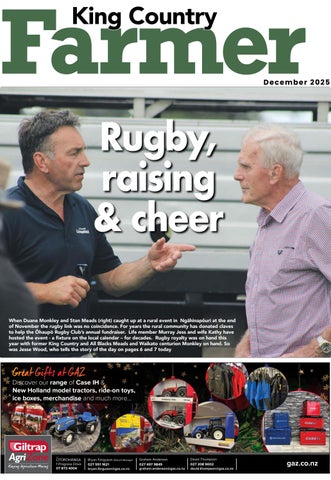
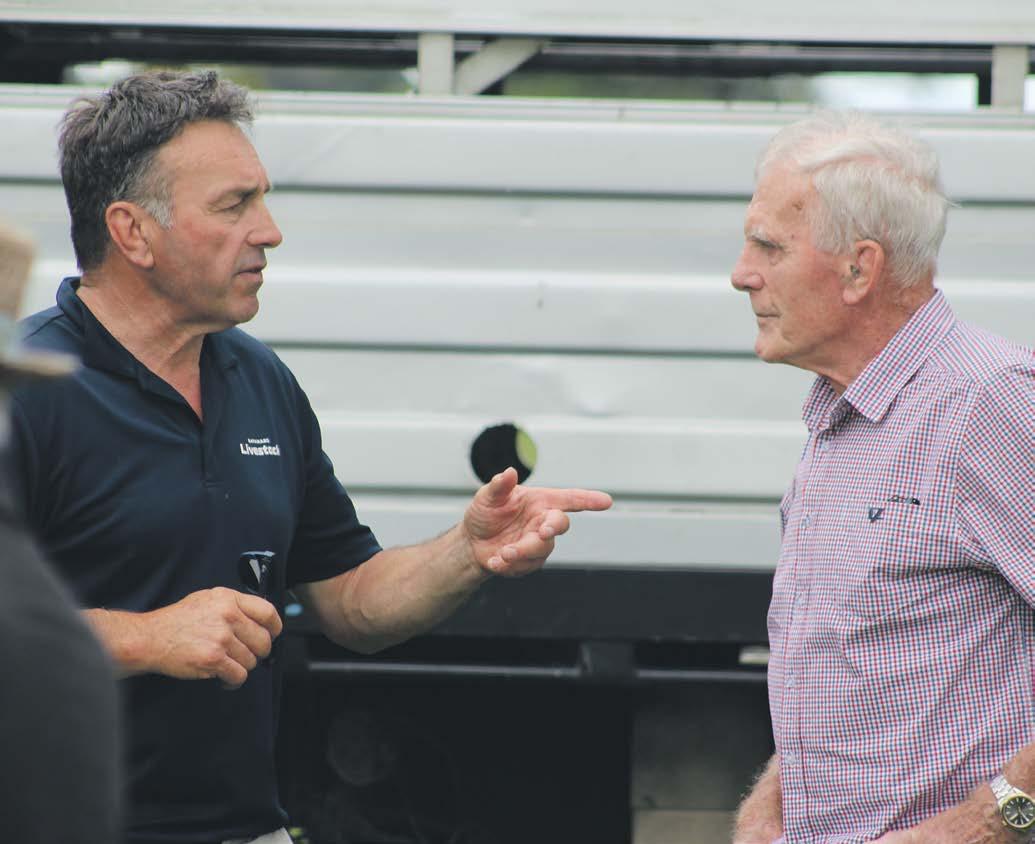
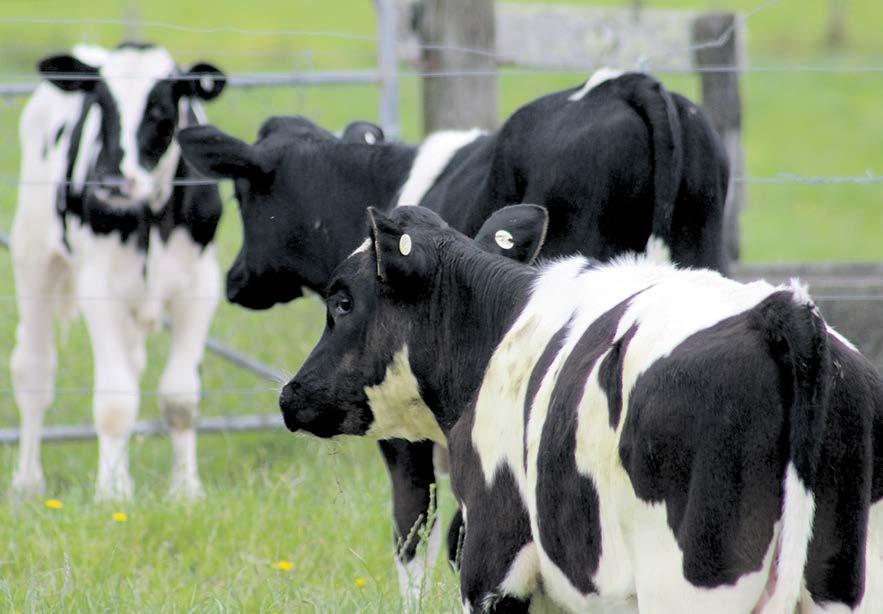
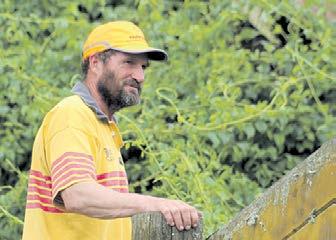
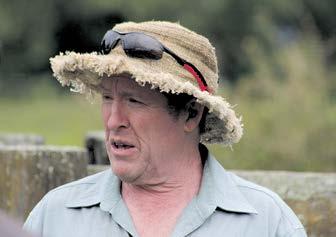
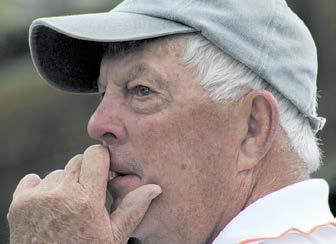
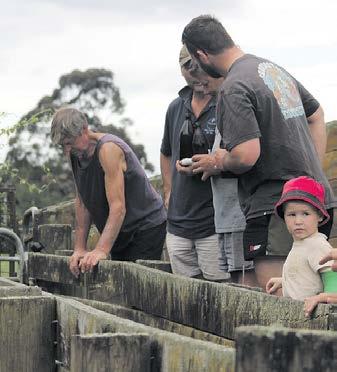
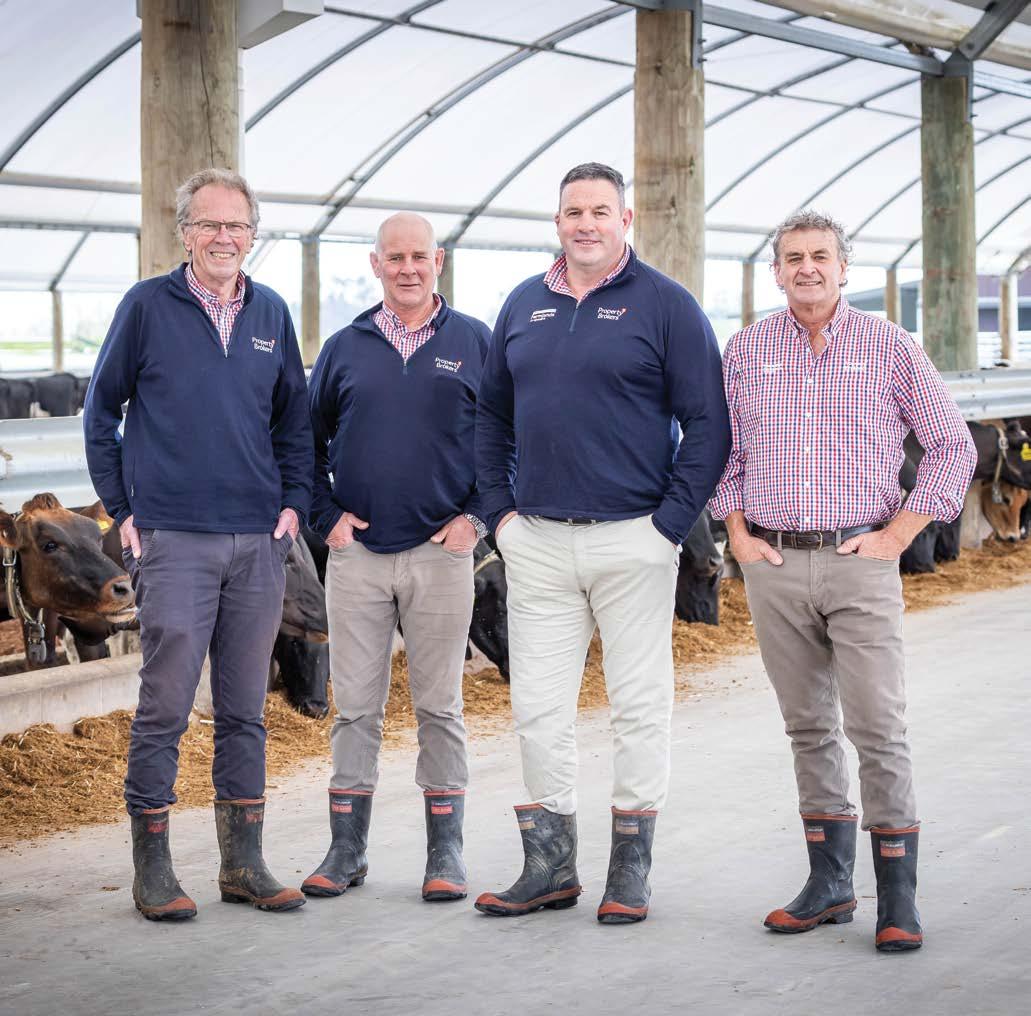
When Duane Monkley and Stan Meads (right) caught up at a rural event in Ngāhinapōuri at the end of November the rugby link was no coincidence. For years the rural community has donated claves to help the Ōhaupō Rugby Club’s annual fundraiser. Life member Murray Jess and wife Kathy have hosted the event - a fixture on the local calendar – for decades. Rugby royalty was on hand this year with former King Country and All Blacks Meads and Waikato centurion Monkley on hand. So was Jesse Wood, who tells the story of the day on pages 6 and 7 today
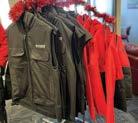
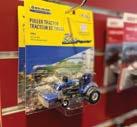
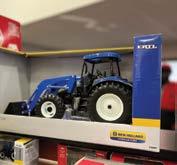
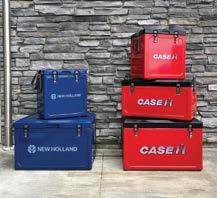
Discover our range of Case IH & New Holland model tractors, ride-on toys, ice boxes, merchandise and much more... Great
• Quality, professional advice to farmers and businesses
• Expert taxation and business structure planning
• Family trust management
• Friendly, personalised service Contact us for a FREE NO OBLIGATION INTERVIEW to discuss your financial requirements
• Commercial law including sale & purchase of businesses
• Commercial leases
• Company law
• Conveyancing Rural, residential & subdivisions
• Estate planning
• Rural law
• Trust law
• Wills & estate administration
• Wind farming
127 Rora Street, PO Box 412, Te Kūiti, 3941 P 07 878 1011 W www.lbllaw.co.nz
E sam@lbllaw.co.nz • katie@lbllaw.co.nz
CONTACTS
News/Editorial
Roy Pilott editor@goodlocal.nz
027 450 0115
Mary Anne Gill maryanne@goodlocal.nz
viv@goodlocal.nz
chris@goodlocal.nz
Davy janine@goodlocal.nz
027 287 0005
Owner/Publisher
David Mackenzie david@goodlocal.nz
Office/Missed Deliveries
07 827 0005 admin@goodlocal.nz
Kirby leads Rural Women
Rural Women New Zealand has marked its centennial year with the appointment of Sandra Kirby as its new chief executive. Mary Anne Gill reports.
An organisation that supports and connects rural women, their families and communities has celebrated its 100th birthday with a new chief executive at the helm.
Sandra Kirby brings more than two decades of leadership experience to Rural Women New Zealand across member organisations and the not for profit sector, having previously served as chief executive of Physiotherapy New Zealand and Arthritis New Zealand.
National president Sandra Matthews says her appointment comes at a pivotal time.
“She brings extensive experience from her previous roles, and a career dedicated to service and improving the lives of others.
“It’s been a huge year for Rural Women New Zealand, celebrating our centennial and growing our national office. Now we have Sandra as our chief executive, I can’t wait to see what we achieve for rural women and communities across Aotearoa.”
Kirby began her role last month and said she looked forward to building on the legacy that supports future generations of rural women.
Kirkby’s career reflects a commitment to public health and community wellbeing, spanning initiatives from alcohol harm reduction strategies to consumer based health services.
“Raising awareness of public health issues and advocating for change have been a strong thread throughout my career,” she says.
“I love driving for change and am driven by my desire to improve the health of all New Zealanders.”
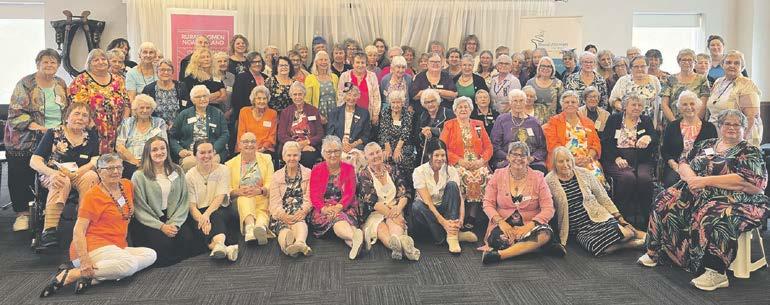
Meanwhile past and present members had a celebratory centenary event at Zenders in Hamilton last month reflecting on the organisation’s century of service.
“A hundred years of scones, stories, service, and unwavering support for rural communities,” former president Fiona Gower says.
The event highlighted the organisation’s grassroots beginnings in 1925 and its enduring commitment to “Service Simply Given,” from supporting communities after natural disasters to empowering rural entrepreneurs through the Activator programme.
Keynote speaker Katey Milne, a scholarship recipient now
completing medical training at the University of Auckland and due to start her placement at Whangārei Hospital soon, spoke of the life changing impact of Rural Women’s support.
“I am a product of many, many people - including Rural Women New Zealand - investing in rural communities and rural healthcare going forward,” she says.
Milne, originally from Northland, shared her love of rural life and the heartbreak of seeing how location, birth circumstances, ethniticy and even gender can shape health
outcomes.
Board member Nicole Oliver closed the event by celebrating a century of leadership and advocacy, noting that strong rural women continue to uplift their communities into the next hundred years.
Kirby’s appointment signals both continuity and renewal, she says.
“With a legacy of service behind it and a new chief executive at the helm, the organisation is poised to strengthen its voice for rural women and communities across Aotearoa.”
DISHER CONTRACTING
Members past and present gathered in Hamilton to celebrate 100 years of service and advocacy.
Photo: Supplied
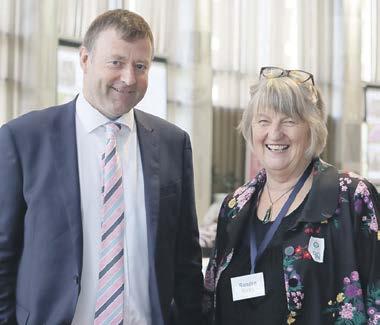
New Rural Women New Zealand chief executive Sandra Kirby at a Beehive function with Mark Patterson, the minister for Rural Communities.
Photo: Supplied.
Briefs…
Feds’ view
Separating rural and provincial governance from urban councils is the simplest and most effective way to streamline local government, Federated Farmers says. Local government spokesperson Sandra Faulkner gave “top marks” to the government for kicking off the conversation about cutting back costs, duplication “and decisionmaking roadblocks that plague our current 78 councils”.
Soil trials
Cambridge husband-andwife Michelle and Frank Lachmann trialled their award-winning Herbi’s
All Natural living soil with growers and gardeners in Waikato and Bay of Plenty in spring. Early company testing showed improvements in plant and pasture health within the same season, while eliminating the need for synthetic fertilisers.
Booked in
Overcrowding should be thing of the past at Tongariro National Park huts thanks to a new booking system. The Department of Conservation says visitors will now know they have a secured bed for the night after a day naturing in the national park. Tongariro Principal Ranger Heritage and Visitors Stu Smith says the change will bring certainty for visitors. “Some people love a last-minute mission into Tongariro National Park, but it’s never fun if you end up with 30 other people stacked in like sardines, or you’re forced to sleep outside in the rain without a tent.”
Water checks
Waikato Regional Council’s monitoring of rivers, lakes and coastal sites to ensure they are safe for recreational activities come as Earth Sciences New Zealand (ESNZ) predicts a warm and wet summer. The annual programme involves mostly weekly collecting and testing of samples for levels of E. coli and cyanobacteria.
Land value: ‘positive’ signs
Waikato and King Country farmers have cause to value their land. As Jon Rawlinson discovered, the local rural property market appears strong heading into 2026.
Farmers aren’t just in the food business — they’re in the real estate game too.
Profitability is crucial, but land represents the largest share of a farm’s assets and provides invaluable collateral.
Assessing this value - lock, stock and barrel - is the remit of experts such as Rabobank senior manager for rural valuations, Mindy James.
The OCR (Official Cash Rate) has been reduced again by the Reserve Bank and the job market appears to be stabilising, but could this just be a false dawn?
“I would say these are positive
indicators,” James says.
“The rural property market in the greater Waikato and King Country regions significantly strengthened in spring, driven by rising commodity prices and falling interest rates. So, the rural sector really is pumping.”
Some recent data showing that on average across the country residential house prices have dropped has caused alarm bells to ring – confidence is an important bellwether of what’s to come.
“Averages can make a liar of everyone,” James says. “We do a farmer confidence survey every year… it’s the highest it’s been for a
Deutz Agrotron 105
FL&PTO, 50kph, tidy unit, aircon works well.
$29,900 +GST
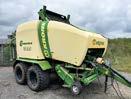
Krone Combi Baler
CF155XC, just traded, straight out of work. Done 38,000 bales.
$39,900 +GST
Fella 671 Rake
Very tidy and well maintained small twin rotor rake. $17,900 +GST
New Holland TD5.90
Very tidy ROPS tractor on nearly new tyres, only 2570 hrs.
$45,000 +GST
long time.”
Focused on the Waikato, King Country and Upper North Island, James is on the ground assessing values on a case-by-case basis. It’s from this vantage point that she draws her conclusions.
In particular, dairy is experiencing a moment in the sun.
“Early signs of recovery have materialised. The spring land market is showing strong momentum with value levels up 5–10 per cent in key dairy areas,” James says.
“Dairy remains a standout, buoyed by increased confidence, Fonterra’s Farmgate Milk Price and the proposed sale of its global consumer brands.”
In addition to numerous other factors, quality farm buildings are a definite bonus.
“Sometimes people only want to know how much a farm produces, but this season people have been paying top dollar for really wellpresented properties with very good housing.”
Corks (or milk bottle tops) may well be popping across the Waikato, but it appears sheep and beef farms have some catching up to do.
“Sheep and beef sales in the King Country remain low in volume,” James says.
“Farms suitable for dairy support and close to urban areas are selling more readily but they remain below previous peaks when
forestry demand was at its highest, approximately five years ago.”
However, strong lamb and beef prices are yet to be reflected in land values, James says, so there is some cause for cautious optimism for these farmers too.
Unlike in the residential market, summer isn’t the hot time for farm sales, spring is when most of the ‘horse trading’ is done. Looking back on a successful spring, farmers should now be able to look forward to a profitable New Year. It won’t be rich pickings for all, but if not there will be reasons.
“I think if something doesn’t sell, it shouldn’t be because of a lack of buyers, more likely it will be because they’ve priced it wrong,” says James.
“That’s why good, accurate valuations really do matter.”
By Garry Reymer, Waipā-King Country regional councillor
I said repeatedly on the campaign trail that if I did a good job, I would be a one term councillor. I have always been an advocate for a restructure but never in my wildest dreams imagined it could be a matter of months before I was handed my notice. The government announced last week that it wants to abolish regional councils and instead have the region’s mayors form a board to decide how our district and regional councils could structure their business and operations. It’s hoped this would drive efficiencies, improve productivity and reduce overall rates.
This is a major overhaul of local government and not just a scrapping of the Waikato Regional Council as the headline suggests. In my opinion this will ultimately deliver unitary councils or territory authorities.
Ratepayers will need to think long and hard and provide feedback at every step if we want to get outcomes that will improve how we fund, structure and provide services.
In particular, we need to think about urban and rural needs and how these are best controlled.
Where the urban population is probably not as concerned about issues of drainage, the rural community has little concern for public transport.
Do we need to take Hamilton and Cambridge out of the rest of the Waikato to form a council of its own?
Do we want just one big council that covers from Pokeno across to the
Coromandel, down to Taupo, across the King Country to Mokau then up the coast to Port Waikato? Or should we have three - east and west of the Waikato River with the Hamilton-Cambridge urban centres the third.
Once that is decided, you need to turn your focus to what functions stay inside council control and what central government takes over. Waikato water done well has already been set up, shifting a lot of debt off the council balance sheets. Roading is another major asset - should that be put into a separate entity with public transport?
Transport is the biggest single cost at WRC and a major expense for all district councils. Could NZTA take this back off councils?
Issues of drainage and flood protection could be put back under the care of farmer controlled boards as they were before the regional councils were set up. Most of that infrastructure has stood the test of time which indicates this is well within the capabilities of a local farmer board.
Once you strip out those major assets and cost centres you can have a council focussed on the likes of Civil Defence, consents, parks, museums and pools. None of this is to suggest I have the answers - I don’t. But I want to highlight the complexity of the change ahead and ask that you stay informed and have your say. I can assure you that your current regional councillors will be vocal and provide the necessary leadership on the debate going forward.
Fagan rocks on…
By Jon Rawlinson
King Country’s shearers are proving once again that the region breeds champions.
At the Wagga Wagga Speed Shear in New South Wales, Te Kūiti’s Jack Fagan won the men’s event, Piopio’s Sacha Bond claimed the women’s title and Kāwhia’s Arahia Tuwhangai the Woolhandlers’ Quick Throw.
“I actually can’t quite explain how much I love speed shearing,” Fagan said. “It’s the one thing on Earth that makes me feel like an absolute rock star.”
Bond and Fagan will represent the Wagga Wagga Speed Shear in Wales next year.
Originally from Palmerston North, Bond is now based in New South Wales.
Fagan’s latest performance adds to an impressive track record. In November, he secured two other major speed shear wins prior to heading to New South Wales. He also defended his Corriedale Shearing Championships Open title at the Royal New Zealand Show in Christchurch.
He won the Rakaia Speed Shear and the Waiau Speed Shear in the same weekend.
“So, including the Corriedales I won the treble which was awesome.”
Also known as the Canterbury Shears, the Corriedales is the third of five PGG National Shearing Circuit events in the 2025–26 season.
The event had more on the line than most.
“I got 11 points for the National Circuit and the NZ Shears Circuit, which is good because the most you can get is 12,” said Fagan. “In a sense, it doesn’t matter if you qualify first or 12th – as long as you’re in that top group you have a shot at one of the big semi-finals at Golden Shears or New Zealand Shears. Win either of those circuit events and you’re going to become a New Zealand team member.”
Another King Country competitor, Piopio’s Tia Manson, claimed accolades in Christchurch, winning the Corriedales’ Woolhandling senior final.
After managing merinos in Alexandra and wrangling romneys in Waimate during the National Shearing Circuit’s first two rounds, the corriedales required shearers tackle a different breed again.
“It’s unique because it’s the only Corriedale competition in the country, so no one gets any practice on the sheep,” Fagan said. “I’ve learnt which combs run very well down at Christchurch – that’s where experience comes into it.”
The National Shearing Circuit now moves north for the Rangitikei Shears in Marton (February) and the Pahiatua Shears (March). The top 12 shearers, based on points over the five rounds, will then compete on the eve of the Golden Shears in Masterton, March 4–7.
There will still be much left to play for beyond the Golden Shears with another international series against Wales and the New Zealand Shearing Championships in Te Kūiti (April) topping off the 2025–26 season.
•
•
•
• Results guaranteed
•
•
• Fully automated
•
•
•
•
•
• Latest in electronic technology , wireless & alert systems
•
• Servicing the Waikato, Bay of Plenty, Taranaki & Gisborne
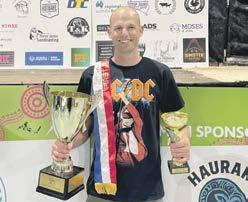
Jack Fagan following his speed shear win in Wagga Wagga, NSW. Photo Shearing Sports NZ
Training tomorrow’s leaders
Fonterra is stepping up its support for people aged 16-20 keen to join the dairy industry.
Together with Growing Future Farmers (GFF), a national charitable trust, the co-op has created a new two-year programme that blends hands-on farm training with classroom learning.
The pilot kicks off in Waikato and Bay of Plenty early next year giving students real on-farm experience with Fonterra farmer trainers while working towards an NZQA qualification.
Anne Douglas, Fonterra’s Farm Source group director says the programme is about more than skills.
“The mentorship provided by Fonterra farmers will be hugely valuable in helping students build confidence, skills and a strong support network. This wrap-around support for young people entering the industry is central to creating a strong and sustainable co-operative for future generations.”
Growing Future Farmers chief executive Wendy Paul - who spent 18 years at Fonterra - calls the partnership a personal milestone.
“During my time at Fonterra, I saw first-hand the passion of the co-op’s farmer shareholders and the challenges they face in finding and developing great people.”
The GFF approach combines practical farm work, academic learning, and pastoral care to prepare young people for success.
Paul says succession planning and resourcing future farms are top priorities, and this programme helps address those needs.
Fonterra farmer and GFF trustee Jo Johnstone says her experience as a farmer trainer in the sheep and beef programme has been rewarding.
“By investing in the next generation, we’re growing resilient, communityminded, environmentally aware young people who will keep our rural communities thriving and our primary sector strong.
“Graduates will not only be productive employees but the future farm owners, managers, sharemilkers, contract milkers and industry leaders who will strengthen the long-term sustainability of the co-op.” – Mary Anne Gill
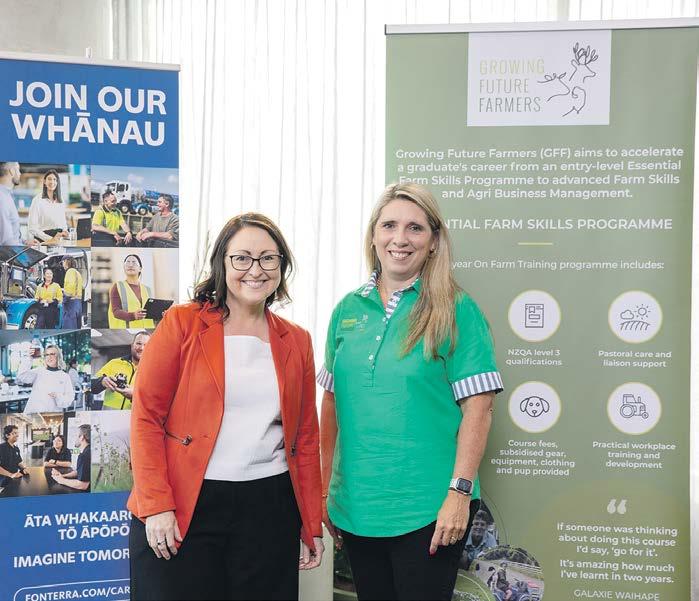
Anne Douglas, left, Farm Source group director and Growing Future Farmers chief executive Wendy Paul.
Rugby’s rural tradition
Generations of local farmers have rallied behind the Ōhaupō Rugby Sports Club, donating calves for its annual fundraiser. Jesse Wood dropped in on this year’s event, which helps keep the club ticking over during the quiet season.
For over half a century, the 137-year-old Ōhaupō Rugby Sports Club has enjoyed unwavering support from its rural neighbours, stretching from Hamilton’s outskirts through Waipā and into King Country.
Each year, the club hosts its calf rearers’ day – a tradition that not only brings the community together but also generates vital funds to cover costs when the bar isn’t pulling in revenue.
Insurance, power and general upkeep don’t come cheap, and this initiative helps bridge the gap.
For the past 44 years, life member Murray Jess and his wife Kathy have opened their Ngāhinapōuri property to host the event, turning it into a fixture on the local calendar. Their hospitality has helped the day grow into one of the club’s most successful fundraisers.
“This year was another fantastic turnout,” says club president and life member
Campbell Thomas.
“We had 23 calves on the day, another three waiting in the wings, plus a few extra donations.”
The event isn’t just about fundraising – it’s a chance for farmers to unwind after a busy spring, catch up with friends, and enjoy good food and refreshments.
Some farmers even graze the donated calves for a couple of years until they’re ready for sale at around two and a half years old.
This year, the club welcomed new donors Dan Evans and family, along with Brian Gordon.
Rugby royalty was on hand to celebrate the occasion, with former King Country and All Blacks legend Stan Meads and Waikato centurion Duane Monkley joining in to witness the community spirit.
Fellow life member Brian Matthews says this year’s roundup was one of the most successful yet. He also
SPECIALISTS IN AGRICULTURAL CONTRACTING
The calf rearers’ day is a great initiative to raise funds to keep the club running in the summer months.
Photo: Jesse Wood
reflected on how far the event has come since its early days.
“Dad was president of the club at the time.
We used to just pick up bobby calves and take them into the Frankton sales. But then we realised we could make more out of it if they were weaners,” Matthews says.
“It’s very good and it’s grown.”
Thomas says farmers used to have bobby calf pens on the roadside so stock trucks could take them straight to the sales.
“You could put a rugby club flag on your pen and that day’s calves, would go to the rugby club,” Thomas says.
“Some farmers forgot to change their flag and the whole season’s proceeds
would go to the rugby club on the odd occasion.”
These days, Perez Livestock picks the calves up from the donors personally. They’re then taken to be weighed at the Jess’ stockyards.
Rearers head along to the weigh-in and can guess the weight of an average calf.
Longtime supporter Matt O’Connor guessed one right on the dot at 150kg.
The heaviest calf was about 230kg, donated by Julene and Malcolm Fisher –also a life member.
“When I first attended, the event was held in Murray’s round haybarn by his yards after the weigh in,” Thomas says.
“Then probably 15 years ago, we upgraded and went up to Murray and Kathy’s house afterwards.
“That raised the standard a bit and people would be kicked out at 10pmsometimes they carried on a bit long - lots of old tales and catch ups.”
It’s not often farmers leave empty handed either, with many sponsors onboard to supply prizes.
“Murray and I are probably the oldest ones in the club.
We took four calves to the Parrott family at Ngaroma [the week after the event],” Matthews says.
“They’ll rear them those calves for a couple of years, then put them into a sale. Some might go to the works. It just depends on what the price is at the time.
“We took them some beer, a few rolls of steak and some prizes from the day.
“The club appreciates
what they’re doing for us.”
The Parrott family previously turned $2000 worth of calves into more than $10,000, a great contribution to the club.
“…it’s such good money for the rugby club. It’s a good start for the season to have that money in the kitty,” one of the organisers, Andrew Young, said.
“When you think about how much money we get each year from this, over 50 years, imagine how much us farmers have donated to the club. Without this [initiative] it’s a lot harder.”
With another successful collection this year, even during hard financial times, the future of the sports club is looking bright as 140 years of being the focal point of the Ōhaupō community beckons.
Sheep Farmers
Romney rams now
Ōhaupō Rugby Sports Club president Campbell Thomas is heavily involved in the event.
Photo: Jesse Wood
The event has been held at Murray (pictured) and Kathy Jess’ place for 44 years. Photo: Jesse Wood
Farmer and passionate club member Andrew Young has been involved for many years. Photo: Jesse Wood
Bloodsuckers with a purpose
New Zealand’s only medical leech breeding and supply business – based in Te Miro just outside Cambridge –sold recently in a transaction that feels uniquely made to measure. Viv Posselt explains.
A niche enterprise - vital to the country’s surgical community - has begun a new chapter under the stewardship of two Waikato veterinarians.
The medical leech business was started by Maria and Robert Lupton 36 years ago.
They came to it by chance when the family discovered eels and leeches in dune lakes on a farm north of Dargaville. At the same time, an Auckland Zoo scientist was up there looking for leeches for his creepy-crawly exhibition.
The Lupton children lent a hand, and when the family ended up sending leeches to the zoo, a newspaper article on them was spotted by a Middlemore surgeon who was seeking help for a patient. He rang the zoo and was referred to the Luptons; they sent him leeches that successfully remedied the problem … and so the business began.
It was small at first, requiring loads of research and some measure of trial and error. They moved to the Waikato and built it into the country’s only medical leech breeding and supply business, sending thousands of the slippery critters via courier to multiple plastic surgery units around the country.
The numbers fluctuate, but when The News spoke to the Luptons last year, they had about 50,000 leeches of varying ages in their shed.
In October, the all-important enterprise passed into the hands of new owners Rachel and Richard Munn - a superbly qualified pair of veterinarians working primarily in the field of research.
The sale has been over two years in the making. In 2023, when the Luptons made the decision to sell and retire, they knew it might take time… not because potential buyers might find the little blood-suckers an unusual commodity, but because it was essential that whoever bought it was aware of the business’s critical importance to the country’s medical experts.
“It needed to be the right buyers, people who understood the social responsibility that goes with being the only leech supplier in the country,” Maria says.
“We had to know they recognised the commitment around delivering the leeches, to guarantee that plastic surgeons could get what they needed when it was needed,” Robert says.
“Richard and Rachel are the perfect fit. We’re very pleased … and we’ve offered ourselves to them in an advisory capacity if needed.”
Leeches have been used medicinally for thousands of years. They are used today to help prevent a post-operative condition called venous congestion, which occurs when the blood pools and stagnates in veins cut during surgery. As the leeches feed on areas of damaged tissue, they reduce the risk of blood clotting, allowing time for new, healthy tissue to grow. Each bite provides its own shot of natural anaesthetic that numbs the area.
Continued next page
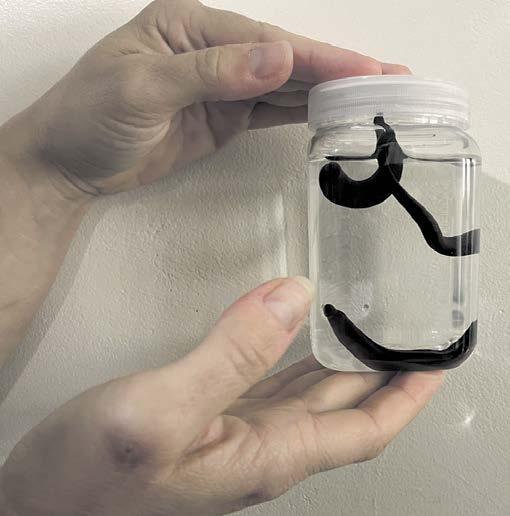
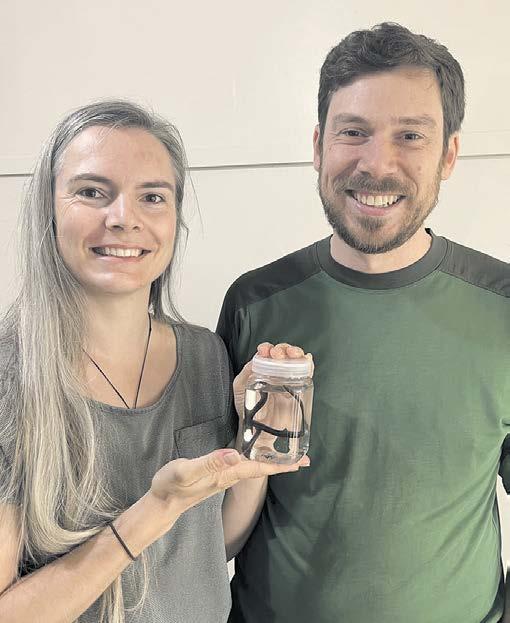
Rachel Munn holds up a jar of life-giving leeches, aka Richardsoniasnus mauianus.
Photo: Viv Posselt
While the Luptons were pondering a leech-free future, the Morrinsville-based Munns were weighing up ‘what next’.
Rachel was keen on lifestyle block living when an entomologist friend sent her a link to the advertised leech business. She passed it on to Richard. At that stage, the Luptons had both their farm and the leech business up for sale together, which put it out of the reach of the Munns, but when the Luptons sold their farm separately earlier this year, the leech business stood alone and the Munns took a punt.
“It really piqued our interest,” Richard says.
“Our accountants and bankers didn’t initially know how to value it, but they were up for the challenge and so were we.”
The Munns work in the veterinary environment. Neither are familiar with the medical use of leeches on animals, but both are knee-deep into research and says that once they’re bedded in, they may well look at it.
After qualifying at Massey University, Richard completed his veterinary clinical pharmacology residency at the University of Melbourne, is a PhD and registered specialist. He is general manager/lead scientist at Cognosco, Anexa Veterinary Services in Morrinsville.
Rachel is a veterinary technologist and animal scientist, currently juggling her work as a veterinary research technician with caring for the couple’s three daughters, Eva, Amy and Olivia.
They’ve learned fast that weekends away might be interrupted by medical emergencies requiring the swift delivery of leeches for a range of accidents and plastic surgeries.
The first call came on Labour Weekend, just as they planned an outing. “We had to turn back, collect the leeches and get them couriered away,” Richard said. “It was a bit of a baptism of fire.”
That will be their future, the Luptons remind them. The need is ever-present, and when it arises, no break-away is assured.
Feds name 12 pests of Christmas
Federated Farmers has launched a campaign, swapping The Twelve Days of Christmas for The Twelve Pests of Christmas.
Richard Dawkins, Federated Farmers’ spokesperson on pest issues, says the ais to raise awareness of New Zealand’s growing pest problem and spurring some action.
The Feds are calling for a national pest strategy that unites all the main players under one co-ordinated plan.
“Sure, we’re taking a cheeky and playful tone with our messaging, but this is a serious issue that needs some urgent attention from the Beehive.
“These pests and weeds aren’t just a minor nuisance; they’re an economic and environmental crisis causing serious problems for farmers and conservationists.
“They’re spreading disease, destroying native forests, killing native birds, chewing through farmer’s pasture, and in some
Federated Farmers has booked a billboard near the Beehive and will feature a new pest each day in the lead-up to Christmas.
“Pests are costing farmers hundreds of millions of dollars every year in lost pasture, damaged fences and stock losses - but there is a large cost to indigenous biodiversity too.
“Responsibility is scattered across DOC, regional councils, MPI, OSPRI and others, but there is no single lead agency with overall responsibility - so we keep going backwards.
Dawkins says most urban New Zealanders would be horrified if they saw the true scale of the pest problem facing farmers and conservationists.
Pigs are one of the 12 pests others include wilding pines, possums, feral deer, feral goats, wild cats, wallabies, rabbits, ducks, koi carp, rats and Canada geese.
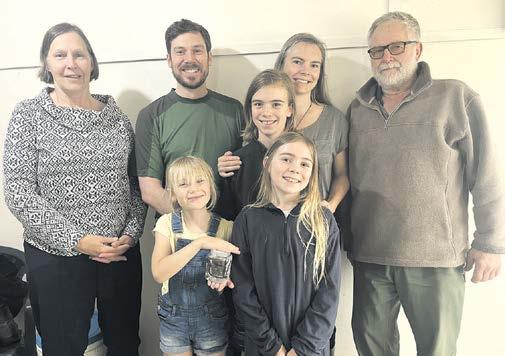
The leech farm’s former owners, Maria and Robert Lupton, flank the new owners, Rachel and Richard Munn with their daughters, Eva, 11, Amy, 10, and Olivia, 8.
Photo: Viv Posselt
Veterinary researchers Rachel and Richard Munn took over the leech business in October.
Photo: Viv Posselt
Sign of the times – Federated Farmers’ bill board in Wellington.
Comvita fields a new team
Honey giant Comvita is navigating tough financial restructuring after shareholders rejected the company’s plan, reports David Porter
Bay of Plenty honey producer Comvita is entering a period of significant restructuring after failing to secure shareholder support for a refinancing proposal from investor Florenz.
Despite strong backing from Comvita chief executive Karl Gradon, the vote last month did not pass, leaving the company to pursue alternative recapitalisation options.
Before the vote, Gradon told The News Comvita had long been woven into the Bay of Plenty community, and that emotive connection made the reality of restructuring even harder.
“And that brings us to reality - the company must face up to significant financial restructuring. We need to act.”
In the wake of the decision, Comvita has moved quickly to strengthen its leadership team.
Mandy Tomkins-Dancey has been appointed permanent chief financial officer, alongside Ben Duncan as chief operating officer and Nikki Leske as chief people
and culture officer.
The company says these appointments provide a solid base for its ongoing reset.
The board has advised the New Zealand Stock Exchange that Comvita continues to trade modestly ahead of budget and remains confident of returning to profitability in the 2026 financial year, subject to successful trading execution and market conditions.
Earnings are expected to be weighted toward major sales events in the coming quarters.
Gradon acknowledges the challenges facing the business, noting that the mānuka honey sector has been under extreme pressure from oversupply, a key factor in Comvita’s current position.
“We’ve got to acknowledge there’s no sugar coating this,” he says.
Comvita has tightened inventory management, reducing holdings to below $85 million at the end of October 2025, down from $135.8 million a year earlier.
At the same time, the company is accelerating
GRASS HARVESTING
its global innovation programme, with new launches in digestive health, eyecare, immunity, and premium gifting ranges supporting diversification in core markets.
The board says constructive talks with banking partners are continuing, with further
Karl Gradon
Comvita at Auckland Airport
Citygate store in Hong Kong
Paddocks to power
The New Zealand National Fieldays Society, Waipā Networks and two leading universities have launched a three-year PhD project to strengthen rural resilience by reimagining how farms generate, use, and share electricity.
The project will integrate renewable energy into farm operations, electrify activities, and develop a farmer-tofarmer trading system.
Funded by the Ministry of Business, Innovation and Employment, it combines academic research with industry expertise to strengthen rural power
networks.
With growing pressure from decarbonisation and energy security, farms are well placed to lead New Zealand’s energy transition.
On-farm generation, storage, and electrified equipment are now costeffective, while innovations like agrivoltaics and floating solar expand opportunities. Localised energy trading through mini-markets could lower costs, reduce losses, diversify income, and improve resilience during high demand or disasters. Waipā Networks plays a role by providing
What is good faith in employment
we please put a space between paragraphs, it
infrastructure and expertise.
Also, a couple of changes to punctuation to make this sound a bit smoother, (sorry, our fault). The sentence beginning “Processes not only improve your chances of resolving a costly dispute. Following…
Chief executive Sean Horgan said the partnership will help communities support each other through smarter energy systems, with findings shared at Fieldays to reach over 100,000 visitors.
Rather than a full stop at the end of dispute can we put a comma and lower case f for Following, so it becomes one sentence.
Society chief executive Richard Lindroos said the initiative will deliver practical insights for managing energy at Fieldays and Mystery Creek Events Centre, creating models that can be replicated nationwide.
of Wellington, and Lincoln University, Waipā Networks, and Mystery Creek. The site’s high electricity demand during Fieldays and its Civil Defence role make it an ideal testbed for scalable rural energy models.
Can we make the word Court have a small letter also.
The PhD student will study across four phases, working with Te Herenga Waka – Victoria University
And then in the bottom paragraph …best suit your needs and your life. So… - can we do the same as above to make it one sentence, …your life, so…
The project will trial local energy markets and build a cloud-based platform for real-time operations, including demand response and dispatch based on weather and price signals. For the Society, this research offers a roadmap to cut costs, improve resilience, and lead sustainable rural electrification.
Employers must act in good faith when making decisions that might affect employees. Acting in good faith is about good, consultative decision-making. It is about the process that the employer chooses to follow to engage and consult with affected employees, to genuinely consider feedback, and how the proposals and outcomes are communicated to employees. The duty “cuts both ways”, for both employers and employees. That is amplified by the similar obligation to be open and communicative to build and maintain a constructive employment relationship. Within a well-considered framework, employers can make effective and robust decisions about their businesses and staff and minimise the chances of successful employment claims against them. Employees can fully and fairly participate in processes that affect them, and can raise legal claims for breach in procedural fairness.
If you are thinking about your good faith obligations or are considering whether to embark on or participate in an employment decision-making process, give Your Lawyers a call for a consultation on your rights and obligations.
Jadin Hooper
Lights on inside the pavilion at Mystery Creek Events Centre during Fieldays 2025.