
The Cambridge Collective

Greek Mythology
About the Author
Celtic
Short stories Out Of Place
The call of the wind Fantasy
Jacqueline Wilson

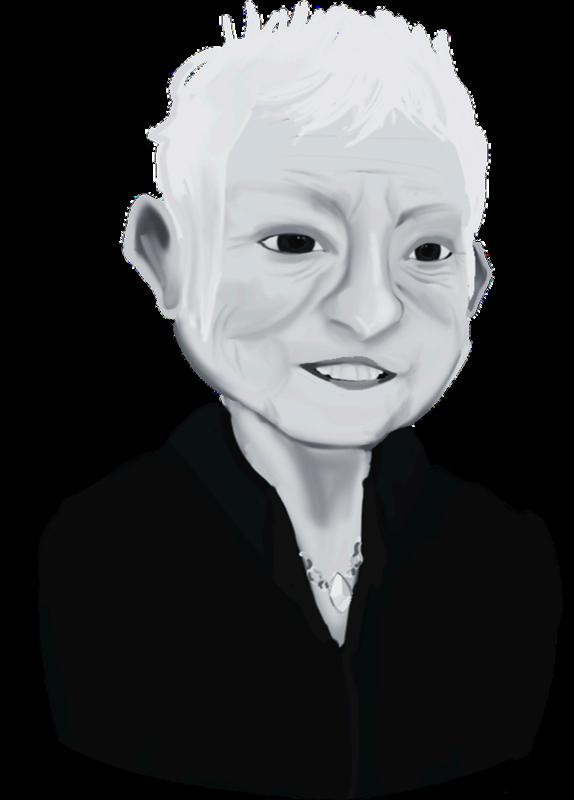
The CHS Alumni Sabina Palferman
Kayra Nur Kaya
Greek Mythology
About the Author
Celtic
The call of the wind Fantasy
Jacqueline Wilson
Dear Adventurer,
Welcome to another giant issue of The Cambridge Collective! This issue’s theme is “Fantasy” and it is full of myths, magic and tales from our biggest collective ever!
We start our whimsical journey with feature articles which introduce you to Greek and Celtic methodology, and spotlights on some of the best Fantasy storyteller’s from present and past in Jacqueline Wilson, The Brothers Grimm, and The Top 10 Greatest Fantasy Writers. We also have a Guest Article from a Professional Dungeon Master!
We continue the “Get To Know Your Teacher” series to learn more about our fantastical school teachers!, this edition features the magical Miss Dove, Mr Gazard, Miss Koster, and Mrs Brusse. After this there is a brand new Library section which includes some wizarding Book Reviews, as well as a reminder to register for the Library Quest!
Please take the time to get to know our otherworldly new Head Pupil Team a bit better as well as some of our prestigious CHS Alumni before having a crack at our enchanting collection of puzzles
I would like to say a huge thank you to our biggest team of illustrators, layout designers, proofreaders and writers we have ever assembled. I want to specifically call out the new members of our Editorial Team who have spent so much time and effort learning the skills required to create this beautiful issue, the future of The Cambridge Collective is in safe hands!
On behalf of the Editorial Team, we officially launch Issue 10 and hope you all have a great time off over the holiday season with your friends and family, and don’t forget to share this issue with them! So grab your questing gear, gather your party, and start your intrepid adventure into a new realm!
Bo Burnham, Editor
Junior Editor
Junior Editor
Bo Burnham
Uphaar KaurKhangura
Anya Coren
Creative Director
Claire Enriquez
Illustrators
Bo Burnham, Natasha Tatham, Alia Barry, Sofia Malmberg, Emma Graëve-Dotti, Sophia Kang, Alina Litvinova
Layout Designers
Claire Enriquez, Bo Burnham, Anya Coren, Uphaar Kaur-Khangura & Kirsty Tyrrell
Uphaar Kaur-Khangura, Nathan Fischman, Cooper Berman, Mrs Howard, Valeriya Yu
Mrs Howard, Mr Boylan, Mrs Hope
Alumni
Tips & Tricks
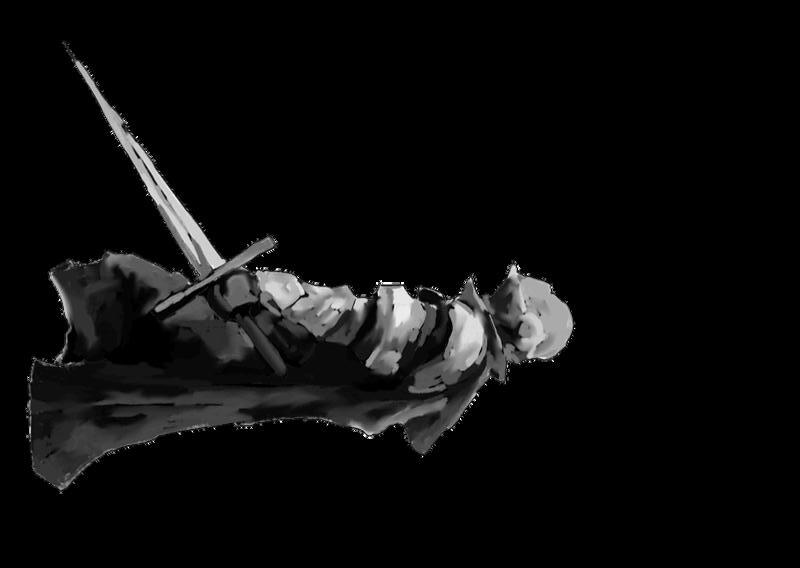
Written by Elisabeth Kirchner

Greek mythology remains one of humanity’s most enduring cultural legacies Rooted in ancient Greece, these myths were more than stories they were frameworks for understanding the world, human behaviour, and the divine Through tales of gods, heroes, and monsters, the Greeks explained natural phenomena, moral struggles, and the mystery of fate. Over centuries, these narratives became foundations of Western literature, art, and philosophy, shaping ideas that continue to resonate.
At the centre of Greek mythology stands a vast pantheon of deities ruling from Mount Olympus Each god and goddess embodied aspects of life and nature Zeus, king of the gods, represented authority and justice; Hera symbolised marriage and family; Poseidon ruled the seas; and Athena personified wisdom and warfare. Yet, the gods were not flawless. They displayed jealousy, pride, and vengeance traits that made them relatable and revealed moral lessons within divine stories Their human qualities allowed the Greeks to explore ethical questions, justice, and destiny through mythic drama
Beyond divine figures, Greek myths celebrate heroes whose deeds reflected humanity’s virtues and struggles Heracles, Perseus, and Theseus embarked on perilous quests that tested courage, intelligence, and endurance. Odysseus’s long journey home in Homer’s Odyssey embodied resilience and the universal longing for belonging. These tales carried moral lessons, extolling bravery, loyalty, and wisdom while warning against hubris excessive pride that often led to ruin Through such narratives, myths became both entertainment and ethical guideposts
Greek mythology also sought to explain the origins of the world and natural cycles. Storytelling offered a way to understand existence and nature. The myth of Demeter and Persephone described the changing seasons as the emotional rhythm of a mother’s loss and reunion Prometheus’ theft of fire from the gods symbolised humanity’s pursuit of knowledge and defiance of divine limits These stories balanced comfort and caution, illustrating the tension between ambition and reverence for the sacred.
Myths permeated Greek culture and identity They were integral to religious rituals, public festivals, and artistic expression Temples, sculptures, and pottery depicted mythological scenes that reinforced shared values and beliefs. Philosophers such as Plato and Aristotle engaged with these narratives to explore morality, justice, and the human soul. Even as reason and science gained prominence, mythology remained a vital means of understanding human nature and moral order
The influence of Greek mythology extends far beyond antiquity Its archetypes and themes inspire literature, art, and film to this day from Renaissance masterpieces to modern novels and cinema. Myths endure because they capture universal human experiences: love, loss, ambition, and the search for meaning.
They continue to evolve, reflecting the timelessness of human emotion and imagination
In conclusion, Greek mythology is not merely a relic of the past but a mirror of humanity’s enduring quest for understanding. Through its gods, heroes, and allegories, it reveals the aspirations, fears, and values of an ancient people whose vision still shapes modern thought and creativity. These stories remind us that myth is not only ancient history it is a timeless exploration of what it means to be human
Written By Pandora French
Jacqueline Wilson is one of the most successful children’s authors; she has published more than 100 books and sold more than 40 million copies worldwide. Born in Somerset in the United Kingdom in 1945, Jacqueline wrote her first novel at just 9 years old – the novel, “Meet the Maggots” was 21 pages long.
Although Jacquelines first novel ‘Hide & Seek’ was published in 1972, it was not really until 1991 that she had her breakthrough with ‘The Story of Tracy Beaker’ - A story following the life of a fiery spirited girl in foster care. The book went on to be adapted into a television series which was on screen for over four years and is still regularly repeated today.
Jacqueline’s novels are well known to tackle challenging themes such as mental illness, adoption, divorce and poverty For this reason, her novels sometimes attract controversy, but she always expresses these themes with ease and empathy.

Over the years, many of her books have been adapted for television which has ensured Jacqueline’s reach has been wide. Her books have also been translated into 34 different languages, so they are accessible to a wider audience.
Jacqueline has won many awards over the years for her writing, she was the Children’s Laureate from 2005 to 2007 and was awarded and OBE for ‘Services to Literacy in Schools’ in 2002 and in 2008 was awarded a DBE for ‘Services to Literature’.

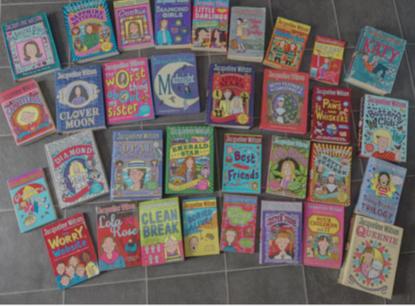
Due to the themes that are tackled in Jacquelines books, they may not be appropriate for younger readers, but for anyone between around 8 and 14 I highly recommend trying some of her novels. She is my favourite author, and I love reading her books! My personal favourites are Midnight, The Illustrated Mum, Double Act, Dustbin Baby and the Girls Series


Written by Uphaar Kaur-Khangura Illustrated by Alina Litvinova
Have you ever been so lost in a fantasy book, movie, or game that you forgot about real life for a while? Perhaps you wished you could go to Hogwarts, ride a dragon, or go on a quest through the secret world hidden under your school. You are not alone. People everywhere love fantasy, but it's not just because it's fun. Real psychology lies behind why we crave magical worlds!
One major reason is that humans are born explorers. Our brains love to discover new fantasy gives us that in a safe manner. Res the University of Ore that people like to vi worlds because those arouse the same kind as discovering unfam Therefore, when we t a place like Middle-ea Narnia or even a futu our brains react like there, learning and e something new.
Fantasy also helps ou grow. Researchers fo about 17% of childre imaginary worlds, ca paracosms, and thos to score higher in cre tests. When we pictu would be like to fly, d or talk to mythical cr we're actually trainin imagination. It's like for the brain, one tha think in new ways an with ideas we never in the real world.
In addition, fantasy almost helps us figure out who we are. Every time we imagine ourselves as a brave warrior, a wizard, or a chosen hero, it's a way to try on other sides of ourselves. Psychologists say that creating or fantasizing about characters is a way for people to explore their identities, especially when teenagers are looking to do this. That's a safe way to ask big questions: "Who am I?" and "What kind of person do I want to
Of course, balance counts: if fantasy becomes the only place we are happy, it can prevent us from dealing with real life. Some research links extreme fantasy obsessions to avoiding problems and daydreaming too much. But if used healthily, fantasy can inspire us to make our real world a little more magical.
In conclusion, we crave fantasy because it feeds our curiosity, creativity, and emotions. It helps us dream bigger and believe in we see asy me ploring human!


Written by Elisabeth Kirchner
Jacob and Wilhelm Grimm, known collectively as the Brothers Grimm, were German scholars and folklorists whose collection of fairy tales has shaped storytelling for generations. Born in the late 18th century in Hanau, Germany, the brothers were originally linguists and academics devoted to studying the German language and its roots. However, their fascination with folklore led them to gather and preserve the oral traditions of their homeland, resulting in one of the most influential collections of stories in world literature.
The Grimms began collecting stories in the early 1800s, during a time of great cultural change in Europe. Their goal was not merely entertainment but the preservation of German cultural heritage. They interviewed villagers, friends, and acquaintances, recording tales that had been passed down orally for centuries. These stories reflected the values, fears, and hopes of ordinary people, often blending elements of magic, morality, and survival.
The stories collected by the Brothers Grimm were not originally intended for children. Early versions were dark, violent, and filled with moral lessons about justice, punishment, and virtue. Wicked stepmothers were forced to dance in red-hot shoes, wolves devoured grandmothers, and witches met gruesome ends. These elements reflected the harsh realities of life in preindustrial Europe, where survival often depended on wit and morality.
Over time, the Grimms revised their tales to make them more suitable for family reading. They softened some of the violence and emphasised Christian virtues such as kindness, humility, and faith. Despite these changes, the core of their stories remained deeply symbolic, exploring universal themes of good versus evil, transformation, and redemption.
The influence of the Brothers Grimm extends far beyond literature. Their tales have inspired countless adaptations in theatre, film, and art. From Walt Disney’s animated classics to modern reinterpretations in television and cinema, the Grimms ’stories continue to evolve with each generation. Moreover, their work laid the foundation for the academic study of folklore, influencing linguistics, anthropology, and cultural history.
Their first collection, Children’s and Household Tales (Kinder- und Hausmärchen), was published in 1812. It contained 86 stories, including now-famous titles such as Cinderella, Hansel and Gretel, and Rapunzel. Later editions expanded the collection to over 200 tales, many of which became cornerstones of Western folklore.
The Brothers Grimm did more than collect fairy tales they preserved the voice of a people and the spirit of an era. Their stories, rich with imagination and moral depth, continue to resonate across cultures and centuries. Through their enduring legacy, Jacob and Wilhelm Grimm transformed simple folk tales into timeless reflections of human nature and the power of storytelling.
Written by Anya Coren
Celtic mythology was central to ancient Celtic culture, which was polytheistic (they worshipped many gods) Celtic tribes were found in modern-day Ireland, Wales, Britain, Germany, France and some parts of the Czech Republic The first recorded Celtic myths date from 11th century and were transcribed by Christian monks
There is some dispute over who the main Celtic God was, but most agree the Dagda was the father figure. He is sometimes compared to the Viking God, Odin, or the Greek God, Zeus, being a protector of the Celtic people
Another very important Celtic deity was Danu, a goddess It is uncertain just how popular she was in society, but she must have been highly valued, as the Tuauth Dé Danann are named after her
The Tuath Dé Danann (meaning ‘people of the goddess Danu’), were a tribe of people who had supernatural abilities, including extra strength, speed, immunity to most sicknesses, and agelessness It was said that they came from a place of peace and serenity: the Otherworld The Tuath Dé anann used their ‘powers’ to heal the sick, they were druids, poets, and rulers.
A key legend of the Celtic people, tells how a farmer, Cruden, was widowed with three young children to look after A woman called Macha appeared and became his wife Although she took care of the children and kept the house clean, she warned Cruden not to speak of her to anyone Cruden suspected that she was a creature of the Otherworld because she ran so swiftly and was so secretive.
One day, the king of the area invited all his people to a banquet to celebrate his new chariot horses. While Cruden kept quiet about Macha while other men boasted about their wives’ beauty and cooking, he couldn’t resist bragging when the king said that no creature was faster than his horses, insisting that Macha was so fast that she would beat them
Despite being pregnant, Macha was ordered to run the race, otherwise Cruden would face death.
She ran faster than the horses, and once she had won, she collapsed, giving birth to dead twins. She inflicted a curse on the warriors of the country and insisted that not only would their strength fail them when they needed it most, for nine days and nights, they would go through the pain of a woman in childbirth After declaring this, she ran off and was never seen again
Most of our knowledge of ancient Celtic mythology flows from archaeological finds and secondary sources Druids (holy people highly valued within Celtic society) were the keepers of knowledge, but surprisingly enough, the druids have not left, (or perhaps we have not found?), any written records of Celtic mythology, practices or beliefs The
Written by Ophelia Lee
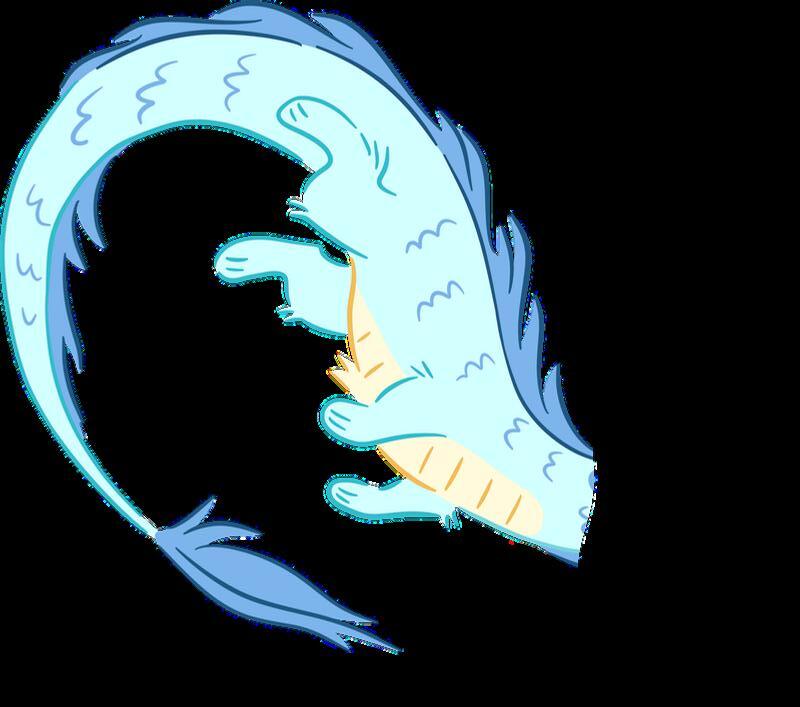
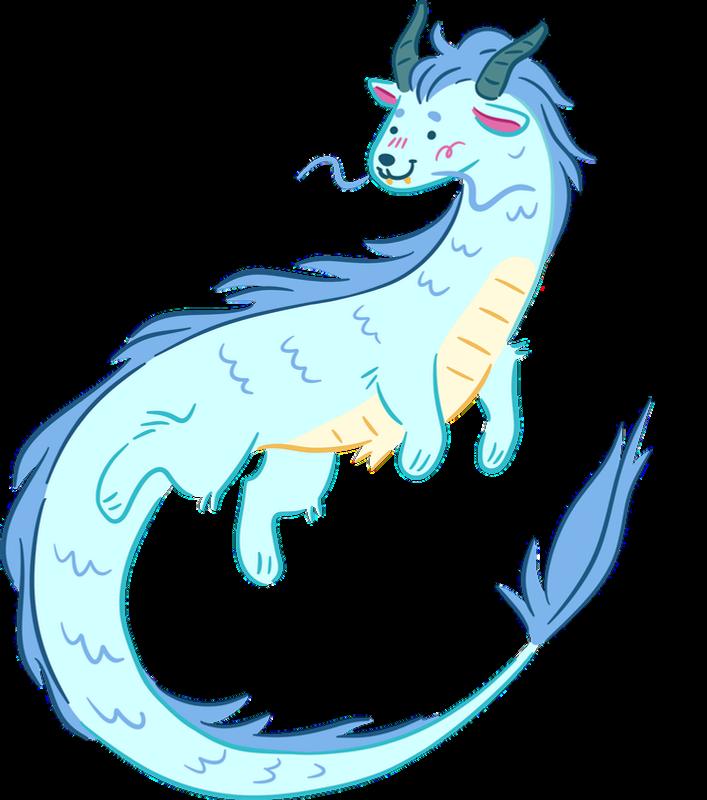
Dragons are mythical creatures found in ancient stories worldwide, and there is no single origin for the legends. The stories likely developed in two different cultures. Ancient Fossil Finds: People in ancient times often found large, unusual bones (dinosaur, whale, or other large prehistoric mammal fossils) Without a modern understanding of extinction, they thought these massive remains as evidence of giant, fearsome creatures, which they called "dragons".
Built-in Human Fears: Anthropologists suggest that the fear of large predators like snakes, big cats, and birds of prey is coded into the human brain for survival The dragon might be a combination of these fears, manifesting as a single, powerful monster in folklore
Across the world, the image and
While dragons aren’t real, lots of things made people believe them. For example: bones were found looking like giant lizards, thus creating the theory of dragons.
Some theories suggest that dragons are personifications of natural disasters that would have inspired awe and terror in prehistoric people, such as volcanic eruptions, wildfires, or tornadoes
Fire-breathing: One hypothesis is that fire-breathing dragons were a mythical explanation for naturally occurring fires, such as those caused by underground gas vents ignited by lightning.
Ancient Chinese texts recorded the discovery of "dragon bones," and the remains of dinosaurs found in China today were often once labelled as dragon bones
6200–5400 BCE
(China) Depict pictures of giant creatures on artifacts of the Xinglongwa culture, with later jade dragon carvings found from the Hongshan culture
3000–2000 BCE (Egypt): Serpentdragon gods, such as the primordial sea serpent Apep, appear in Egyptian mythology.
1500 BCE (India): The Rigveda tells of Vrtra, a serpentine creature who hoards the waters of heaven until slain by the god Indra.
600 CE (France): The legend of St. Romans of Rouen slaying the dragon La Gargouille emerges, establishing the hero-versus-dragon motif in Western folklore
19th century (Palaeontology): The fossilized remains of dinosaurs and other prehistoric animals, once referred to as
Ancient origins and role
Early pictures: Some of the first known griffin images appeared in Ancient Iranian and Egyptian art as early as 3300 BCE.
Protectors of treasure: In Ancient Greek and Roman myths, they were described as fierce guardians of gold, particularly in the Northern lands of Scythia.
Divine connections: The Greeks also associated griffins with gods like Apollo and Zeus, and believed the creatures pulled Apollo's chariot across the sky.
Fossil theory: One theory suggests the myth may have Benn made from ancient people discovering fossils of the beaked dinosaur Protoceratops, often found in the gold-rich Gobi Desert, and mistaking them for a mythical creature.
Medieval Europe and symbolism
Heraldry: During the Middle Ages, the griffin became a popular symbol representing courage, military strength, and vigilance.
Christian allegory: Its dual nature, combining the kings of the sky (eagle) and land (lion), made it a Christian symbol for Jesus Christ's divine and nature.
Fidelity: Some medieval bestiaries also attributed the griffin with fidelity, claiming it would never take another mate after its partner died.
Modern legacy
Architecture: Griffins continue to be used as decorative and protective figures on buildings, including museums and universities.
Logos and mascots: They are featured in the logos of companies like Vauxhall and are mascots for many universities and sports teams.
Fantasy fiction: The griffin remains a popular creature in modern fantasy, appearing in books like the Harry Potter series and other works of literature and film.
Accounts of people "spotting" griffins in ancient and medieval times were based on tales, misinterpretations, and hoaxes, rather than real encounters.
Ancient accounts from Central Asia
Travelers' stories: Greek historian Herodotus recorded tales of griffins guarding gold in the mountains of Central Asia. The stories were told to him by travellers, who had in turn heard them from nomadic Scythian peoples.
Dinosaur fossils: The location of these stories aligned with gold deposits and fossils of the beaked dinosaur Protoceratops, leading some modern theorists to think that the fossils inspired the tales. Ancient people likely interpreted the skeletons as a real, living creature.
Medieval hoaxes in Europe
Fake artifacts: Returning Crusaders and merchants brought back what they claimed were griffin artifacts to medieval Europe. These "claws" were actually ibex horns, and "eggs" were often ostrich eggs.
Bestiaries: Medieval bestiaries, collections of real and mythical animals, sometimes described griffins based on these faulty accounts and artifacts, lending proof to their existence.
Hoaxes and misinterpretation
Embellished stories: The belief in griffins demonstrates how secondhand accounts, combined with physical evidence misinterpreted in the absence of scientific knowledge, can create the impression of a real sighting.
Written by Ophelia Lee
Ancient origins
Ancient Near East: Early versions of griffins appeared in Iranian and Egyptian art as early as 3000 BCE. In Persian culture, it was a protective symbol, while in Egypt, it was known as the pharaoh's conquering power. Inspiration from fossils: One theory suggests the myth of griffins was inspired by fossils of the Protoceratops, a beaked dinosaur found in old gold-mining regions of Central Asia.
Greek and Roman mythology: The motif reached Greece by the Bronze Age. Greek historian Herodotus described griffins as fierce guardians of treasure, constantly battling the one-eyed Arimaspians. In books and texts, they were associated with gods like Apollo and Zeus.
Medieval and modern symbolism
Christianity: In medieval Europe, the griffin's nature (lion/eagle) was said to symbolise Jesus Christ's dual human and divine nature.
Heraldry: It became a popular heraldic symbol, appearing on coats of arms to represent strength, military, and vigilance.
Modern culture: The griffin continues to symbolise power and guardianship, appearing in corporate logos and fantasy literature, such as the Harry Potter and Chronicles of Narnia series.
Written by Ophelia Lee
Origins in China (~4th Century BC to 1st Century AD)
The earliest roots of the fox spirit are found in Chinese mythology, where they are called huli jing (狐狸精).
Earliest Mention: The nine-tailed fox first appears in the ancient Chinese text Shanhaijing (Classic of Mountains and Seas), which was made between the 4th century BC and the 1st century BC.
Auspicious vs. Malevolent: In these very early tales, the nine-tailed fox was often seen as an auspicious omen that signalled a strong and peaceful empire. However, later stories, particularly during the Han dynasty, began to show them as evil or tricksters that fed on human life force to gain power.
Shapeshifting: The idea that a fox could gain the ability to transform into a human (usually by placing a skull or leaf on its head) was a well-developed concept in Chinese culture around the 1st century AD.
Transition to Japan (~6th Century AD)
The concept of the fox spirit was introduced to Japan through cultural exchanges, likely alongside the introduction of Buddhism, and merged with native Japanese beliefs.
Arrival in Japan: Chinese stories of fox spirits and Korean kumiho (nine-tailed fox) were transmitted to Japan around the 6th century AD.
Beliefs: Foxes were valued by farmers for eating crop-destroying rodents and were viewed as mysterious creatures in their own right. This led to an organic association with the Shinto deity Inari, the god of rice and prosperity, with the fox seen as Inari's messenger or guardian.
Earliest Japanese Texts: The first surviving Japanese written records mentioning the "kitsune" date to the 8th and 9th centuries AD. The Nihon Ryōiki (810–824 AD) contains established stories, such as the famous "fox wife" tale, indicating the mythology was already fully developed in Japan by this time.
Historical "Sightings": Natural Illusions Historically, most "sightings" were genuine human observations of natural events that ancient people explained through the existing mythological framework of the kitsune. People truly believed they were witnessing supernatural activity.
Kitsunebi (Fox Fire): This is the most famous phenomenon associated with historical kitsune sightings. People would observe mysterious, bobbing atmospheric ghost lights at night in fields, forests, or marshes. Folklore claimed these were fireballs breathed by the foxes (often from their tails) to light the way during a "fox wedding" procession.
Scientific Explanation: These lights were likely caused by the natural combustion of marsh gases (methane and phosphine) produced by decaying organic matter, or possibly bioluminescent fungi. People genuinely believed these were magical fires, reinforcing the folklore rather than being deliberate fakes.
Weather Phenomena: A sudden sun shower (rain while the sun is shining) was traditionally known as kitsune no yomeiri ("the kitsune's wedding procession") and interpreted as a celestial event involving the foxes.
Modern "Sightings": Pop Culture and Scepticism In modern times, genuine belief in common, so "fake sightings" are different
Hoaxes and Pranks: Modern technology allows for digital manipulation of images or the use of props and lights. Individuals might stage hoaxes for social media attention, drawing inspiration from modern anime or manga depictions of kitsune.
Scepticism and Realism: A modern reported "sighting" would likely be quickly debunked and attributed to real-world explanations: a misidentified animal, a reflection, or a staged event. The widespread cultural acceptance of kitsune as mythical means modern fake sightings rarely gain widespread, lasting traction beyond cliche interest groups.
Chinese Origins (c. 4th Century BC – 1st Century AD):
The concept began in China, where the fox spirit was known as the Huli Jing. It first appeared in the text Classic of Mountains and Seas around 100 BC. In early myths, the nine-tailed fox was often a positive symbol of peace and prosperity. The belief that foxes gained magical powers and the ability to shape shift into human forms developed in Chinese culture during this period.
Migration to Japan (c. 6th Century AD): Stories of these powerful fox spirits travelled from China and Korea to Japan via trade and the spread of Buddhism. In Japan, the foreign legends merged with indigenous Shinto beliefs. Foxes were locally seen as guardians and messengers for Inari, the deity of rice, and thus held a dual nature as both benevolent spiritual figures and potentially dangerous tricksters.
Japanese Documentation (c. 8th–9th Century AD):
The first formal written Japanese accounts of the kitsune appear in texts like the Nihon Ryōiki in the 8th and 9th centuries AD. By this time, the mythology was fully established, featuring tales of kitsune marrying humans, possessing people, and using their magic for both good.
1 The Prank: Douglas and Ralph Herrick were hunters and taxidermists in the town of Douglas, Wyoming After a hunting trip, they had a jackrabbit (a type of large hare) and a pair of deer antlers in their shop. Douglas jokingly placed the antlers on the rabbit carcass, and it looked funny.
2.The "Creation": They decided to mount this strange hybrid creature and sold it to a local hotel owner It was displayed in the hotel where it became a popular attraction, confusing and amusing tourists
3 The Tall Tale Spreads: People loved the story and the unique trophy. The brothers started making and selling more "jackalopes." The town of Douglas embraced the legend, selling postcards and "hunting licenses," turning a local joke into a famous American tale
4 The Real-Life Connection: The idea of a "horned rabbit" existed in old European stories and likely came from sightings of real rabbits with a virus (Shope papillomavirus) that causes horn-like tumours to grow on their heads. This realworld phenomenon made the Herricks' taxidermy prank just believable enough to catch on.
The Shope papillomavirus is a real DNA virus that infects rabbits and hares It's a member of the same family of viruses (Papillomaviridae) that includes Human Papillomavirus (HPV), which can cause warts and certain cancers in humans How the virus works:
Transmission: The virus is primarily spread through the bites of biting insects like mosquitoes, ticks, and fleas, which carry the virus from one rabbit to another Appearance of Growths: The virus infects the skin cells, causing them to overproduce keratin, the same protein that makes up hair and fingernails. This results in the formation of hard, dark, and tumours or warts.
Location and Look: These growths typically appear on the rabbit's head, ears, neck, and sometimes shoulders or eyelids When they grow large and pointy, they look remarkably like small, black horns or antlers, hence the "horned rabbit" appearance. The growths can also form in clusters, giving a strange, bumpy appearance.
Impact on the Rabbit: In many wild rabbits, the immune system eventually fights off the virus, and the growths fall off, allowing the rabbit to recover However, if the tumours grow too large, they can block the rabbit's vision or mouth, preventing it from eating, which can lead to starvation or make it easier prey for other animals The growths can also become cancerous (malignant) and spread to other organs.
So while none of the sightings are real Jackalopes, they were real rabbits.
Origin The Modern Origin (1930s Hoax)
The modern story of the jackalope began as a practical joke in Douglas, Wyoming
The Creators: In the 1930s, two amateur taxidermist brothers, Douglas Herrick and Ralph Herrick, created the first mount.
Written by Ophelia Lee
The Method: Douglas placed deer antlers on a jackrabbit carcass and sold it to a local hotel
The Spread: The mounted creature became a popular tourist attraction The Herrick brothers mass-produced more mounts and postcards, turning a local joke into a widespread legend. Douglas is now known as the "Jackalope Capital of the World".
Older Lore and Science
The idea of a horned rabbit isn't entirely new, with similar tales predating the Herricks' hoax
Ancient Myths: Stories and illustrations of horned rabbits appear in medieval European manuscripts The Huichol people of Central America also have similar traditional stories.
Real-World Basis: Scientists believe many early sightings were likely rabbits infected with the Shope papillomavirus (SPV). This virus causes black, horn-like tumours to grow on the animal's head and body, giving a real, though viral, basis for the myth
Cultural Status
The jackalope is a famous symbol of the American West's tradition of tall tales
Legends: The myths claim the jackalope can mimic human voices or can only be caught by luring it with whiskey.
Tourism: Douglas, Wyoming, issues joke "hunting licenses" to tourists.
Pop Culture: The jackalope frequently appears in various forms of media, a testament to its enduring role in American
Written by Ophelia Lee
Origin
Mistaken sightings
Rhinos and antelopes: Travelers describing the Indian rhinoceros or even an antelope they saw from the side likely started the myth
Real, rare animals: Occasionally, a real animal like a deer or goat is born with only one horn These rare cases could have inspired stories.
Prehistoric relatives: A massive, one-horned rhino called the "Siberian unicorn" lived thousands of years ago, possibly alongside early humans, creating ancient legends of giant horned beasts Hoaxes and misinformation
Narwhal tusks: Vikings and other traders sold narwhal tusks as valuable "unicorn horns" with magical powers People paid a lot of money for these fakes, which convinced them that unicorns were real.
Biblical reference: An old Hebrew word for a powerful, wild ox was mistakenly translated as "unicorn" in some early Bibles. Since the Bible was a trusted book, this made people believe in unicorns even more Cultural beliefs
Easy explanation: Unicorns were said to be extremely wild and shy and could only be tamed by a virgin maiden. This was a convenient excuse for why no one could ever capture a living unicorn, making it easy to believe they were real but simply uncatchable.
Sights
The beginning of the myth
Misidentified animals: In ancient Greece, writers like Ctesias heard tales of a one-horned wild ass from India Since they had never seen a rhinoceros, they described it as a horse-like creature with special powers
Biblical changes: The Hebrew word for a wild ox was mistranslated as "unicorn" in some early Bibles, giving the mythical creature a real-world, religious reference.
The myth grows
Magical powers: The belief that a unicorn's horn could heal sickness and detect poison was probably inspired by the medicinal value people gave to rhinoceros horns
Fake horns: To cash in on the belief, Vikings sold the long, spiral tusks of narwhals as genuine unicorn horns.
The unicorn of today
Symbol of purity: The medieval tale that only a virgin maiden could tame a unicorn helped turn it into a symbol of innocence and grace.
A fantasy icon: As the age of science proved unicorns didn't exist, they moved completely into the world of fantasy, literature, and modern pop culture
History
Ancient origins (before 400 CE)
The first "unicorns" were likely misunderstood from real animals from Africa and Asia, like the Indian rhinoceros or a one-horned oryx
The ancient Greeks and Romans wrote about a fierce, fast, and wild one-horned beast from India Medieval legends (400–1600 CE)
The unicorn changed into a gentler, more graceful creature. Its horn was believed to have magical healing properties. It became a Christian symbol for Jesus Christ and purity. A popular story said a unicorn could only be tamed by a virgin maiden Rich Europeans, including kings, bought what they thought were unicorn horns to protect themselves from poison These were actually the tusks of narwhals, a type of whale. Modern fantasy (1600 CE to present)
As the world was explored better, people realized that unicorns did not exist in nature.
The unicorn's image changed from a real animal to a beloved symbol of fantasy, innocence, and wonder
Today, the unicorn is a popular cultural icon found in movies, books, and art, representing uniqueness and magic.

haar Kaur-Khangura
an accomplished author, once being told by Ted Hughes (a poet) that her writing was dangerous!
J.R.R. Tolkien
Lewis Carroll
Lewis Carroll (27th January 1832 – 14th January 1898) was born as Charles Lutwidge Dodgson. He is most famous for ‘Alice’s Adventures in Wonderland’, and was also known for being a poet, photographer and mathematician He was the 3rd oldest of 11 siblings, and most of whom had a stammer, including Carroll himself. A surprising piece of trivia is that he is the inventor of the word ladder puzzle!
J R R Tolkien (3rd January 1892 – 2nd September 1973) was most famous for his fantasythemed books, ‘The Hobbit’ and ‘Lord of the Rings’ As a child, he learned to read at the age of 4, but disliked well-known stories such as Treasure Island and The Pied Piper. He served in WWI, and his literary output was heavily influenced by these experiences, in particular, the horrors of the Battl WWI codeb his se so re
C.S. Lewis
Many of us will have read the classic children's series, ‘The Chronicles of Narnia’ when we were small; these were C.S Lewis’s (29th November 189822nd November 1963) most famous and enduring set of stories He was very much inspired by several of the other authors in this article; he grew up reading the Beatrix Potter stories and was a good friend and colleague of J.R.R. Tolkien


J.K. Rowling
J K Rowling (July 31st, 1965present) is famous for her books, ‘Harry Potter’, ‘The Casual Vacancy’ and ‘Cormoran’. She faced many challenges when writing Harry Potter and spent most of her time sitting in cafes with her daughter. She was born in Yate, England and was a single mother during the early part of her career. The idea of Harry Potter came to her during a train journey in the 1990s Her
Mary Shelley Book such as ‘Frankenstein’ and ‘The Last Man’ were written by Mary Shelley (30th August 1797- 1st February 1851), she came up with the idea of Frankenstein during a stormy holiday with her friends in Switzerland! Mary’s mother died after she was born, and when she was 16, Mary ran away with the poet Percy Shelley who later became her husband. Mary was surrounded by books she was
L. Frank Baum
L Frank Baum (15th May 18566th May 1919) wrote ‘The Wonderful Wizard of Oz’; he was one of the first people to make movies based on his books and he even stored his own film company bringing Oz to the screens. He was born in New York; he was a creative child who loved writing acting, which is what inspired him to write.
Suzanne Collins
Suzanne Collins (10th August 1962- present) wrote ‘The Hunger Games’, which is very famous now But before writing books she worked as a TV writer for kids' shows, including ones of Nickelodeon. She was born in Connecticut, USA. She had three siblings and she studies theatre and writing in collage. Suzanne was inspired by Greek mythology, so she wrote books that made people think deeply, while still being exciting and
Written by Pandora French
Since I moved to Portugal Horse riding has become a huge part of my life and I have been lucky enough to meet some amazing and inspirational people Two of them have been kind enough answer my questions for this article, read on to find out more about their daily lives, achievements and goals!
What is your name?
L: Leonel Maio Luis
D: Denise Nunes Inês
How old are you?
L: 42
D: 38
Tell us a little bit about yourself?
L: I was born in a poor area of Alentejo, and I have always been passionate about horses.
D: I was born in the US (New Jersey) I was raised bilingual and had the opportunity to do lots of different activities Music, swimming, Girl Scouts and through Girl Scouts started riding Horse riding started as a hobby and turned into a profession When I moved to Portugal, I did an equine studies course and became a certified trainer through the Portuguese Equestrian Federation.
What is your profession?
L: Professional rider
D: I am a horse and rider trainer. As well as yard manager
How long have you been in your profession?
L: I started riding on my own at the age of 12 and ended up graduating in Equine Science at 24
D: I have been riding on and off since I was 8, when I turned 12 started regularly twice a week. I moved to Portugal when I was 15 and then did all my professional training. I have been teaching and training all types of horses and riders for the past 18 years
What does it involve?
L: Training horses and riders
D: As yard manager, rider and trainer it evolves a lot of personal discipline, even when I am tired I have to be present to take care of the horses, teach and train. There are a lot of “backstage” logistics of organising horses and space, feeds, hay, lesson horses, make sure they all get attention and work in a balanced way. It involves time and dedication, it’s almost a 24 hour job because if a horse is ill through the night we are there, if there is a transport after hours we are there, I stand in for vet farrier and osteopath Not only do I know my horses inside out as well as my clients.
What are your plans for the future?
L: Establishing a base in the Algarve, helping to promote the sport, and competing
D: Really want to add more dynamic to the sport in this area. Getting our main arena done for local events, like unaffiliated shows and some regionals to start off with and then clinics with other top riders etc
What is your favourite riding discipline?
L: Show jumping
D: I am a show jumper from the start but dressage has a big piece of my heart. Can’t jump without flatwork anyway
What are your top 3 riding tips?
L: Being a partner with your horse, Discipline, Humility
D: Patience, consistency and good feeling.
Tell us about some of your horses i.e.: names, colour, personality?
L: Monalisa Ls - We jumped 1.50 –She is the Winner of 5* GP
D: We have a lot because we are a riding school but Ramalhete is my oldest, now 2 and the one that has been with me the longest and started me off on my professional riding career He is now a flea-bitten grey but was a beautiful dark black dapple grey when I first got him when he was 5. We also have the famous Pablo who has started many riders off on their horsey journeys. Lucy our chubby chestnut mare has her own view on things but is a super teacher, we have Viana who came to us as a teeny tiny 2 year old and is now 17 GUEST ARTICLES
Jota was born here and has done me proud We also have Pixie, Hassim and Quinoa Quebec is our project horse I have lots of plans for him but lack the personal time I would like. He is a beautiful warmblood lusitano cross, dark buckskin. And our latest addition Encanto who is still working for his place and job title.
What is your favourite part of your profession?
L: Breeding horses and competing at the highest level
D: Meeting new horses and riders and being able to adapt exercises and solve their riding problems and watching them grow and succeed.
What is your least favourite part of your profession?
L: The politics involved in the trade and entry into national teams
D: The part where sometimes it is a job and I have bills to pay and I don’t get to do it as a hobby anymore Sometimes I miss just riding my own horse just because
What has been your biggest achievement so far?
L: I was part of the national team for a few years For a year, I was part of the HHS team and was involved in 5* competitions around the world.
D: The growth Quinta Beldade Stables has taken on and the amount of horses and riders I have trained throughout the years. Most of the jobs done on property came from our own sweat and hands
Tell us what your typical day looks like?
L: Wake up at 5:45 a m Leave home at 6:45 a m I start riding at 7:30 a m I usually finish my morning at 1 p.m. and go to work with my horse.
D: If I have my stablehand pants on - it’s all barn yard management. Feed hay, turnout, kicking out, tidying up the yard etc, if I’m training/teaching I organize horses day before for lessons, think back to what we worked on in previous lessons and think where we may need improvement or adapt lesson on the day depending on horse and rider as well My typical day starts at 6:30/7 and ends basically around the same time. Between lessons yard management and my little 2 year old Zoey plus doing normal house chores like laundry and cooking my days are pretty full on. And this is if no surprises like a loose horse, vet emergency, broken fence etc
Do you have any amusing or memorable riding stories about yourself to share?
L: When I broke in a mare named Luna, I fell when she was standing still. It was so ridiculous that I stayed on the ground laughing. I never forgot it.
D: I was about 16 and was helping my trainer at the time retrain a little horse. He walked out of the arena and said he would be right back for me to keep lunging I did, but then thought maybe I could get on by myself (supposedly this horse always needed someone to hold him) So I tried, but my foot in the stirrup and the horse tensed up and I hesitated but than thought well now I have to, so I pushed up into the saddle and as I put my leg over the horse jumped and ran out from under me…. Now filthy and ego bruised and worries my trainer was coming back I quickly caught him and thought well now I HAVE TO get on So I tried again, no hesitation a bit quicker I got in the saddle to only be lurched off again as he set off bucking and I landed behind the saddle and managed a round around the arena. Bruised, dusty, annoyed and now with adrenaline going I was nervous so I waited for my trainer. He came in, he looked at me, grabbed the horse and motioned for me to get on and just said with a funny half smile and chuckle I told you to just lunge him Safe to say I did come off once more In That lesson, darn little horse, don’t know where he is now but he taught me patience like no other animal

Written by Roy Hunter
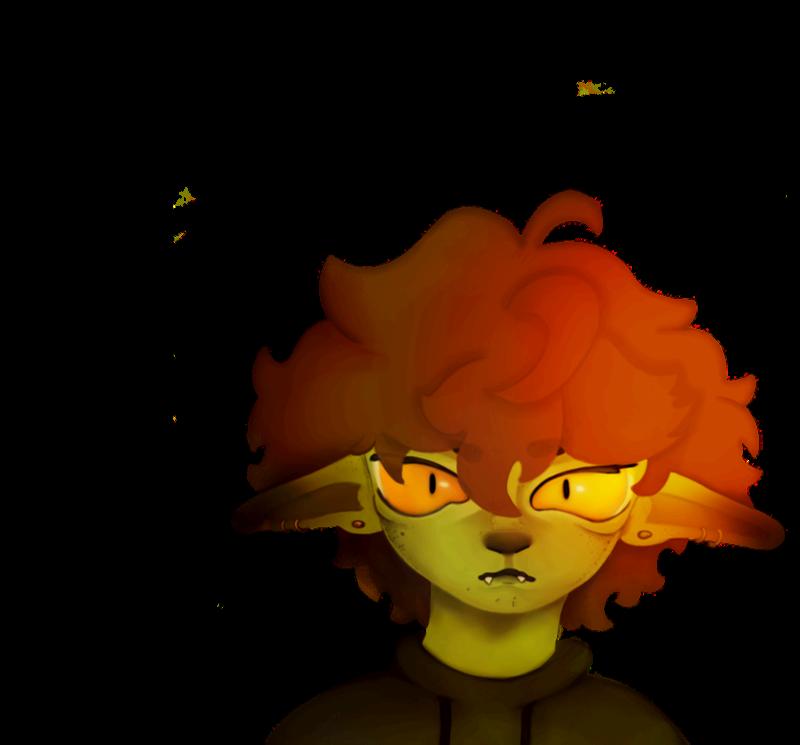
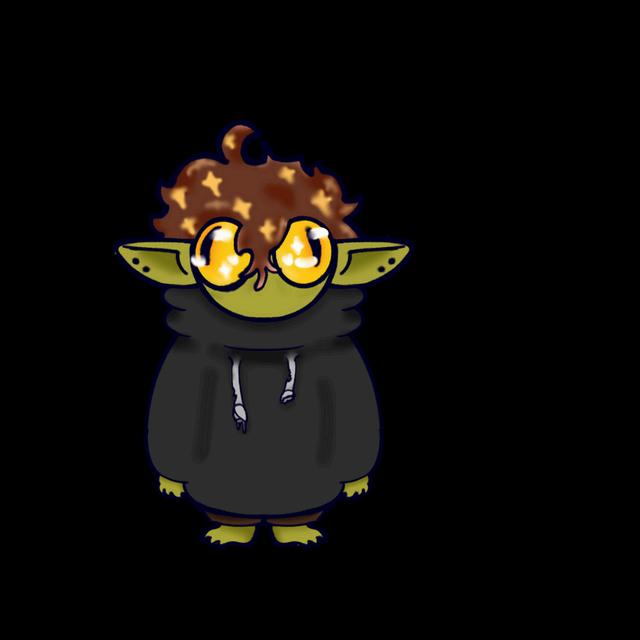
Illustrated by Bo Burnham
Hi! I’m Roy, and I’ve been playing Dungeons and Dragons for about 8 years now, and with this theme of fantasy there’s no better game to talk about than D&D You might have heard of D&D before, maybe from Stranger Things, or a live play podcast, but never played before Regardless, I’ll do my best to introduce you to the basics of the game, and why it truly is the world’s greatest roleplaying game!
At its core, Dungeons & Dragons is a storytelling game. Think of it as part board game, part improv theatre, and part choose-your-ownadventure book Players create characters heroes, usually, although villains aren’t uncommon, and everything in between and then work together to explore whatever world the Dungeon Master has set out for them. One person takes on the role of said Dungeon Master, or DM, who describes the world, sets up challenges, and plays every non-player cha group encounters. Th players step into thei shoes, roleplaying an as them, making cho sometimes saving th making it worse, dep party!
One thing I love about D&D is that it thrives on imagination. The story grows naturally from the choices players make If the party decides to sneak into a dragon’s lair disguised as baby dragons, there’s a chance their plan might actually work, for whatever purpose they wanted! Success or failure depends partly on luck, partly on their characters’ abilities, and largely on the creativity at the table. That’s part of the fun no two adventures are ever quite the same, and I especially can confirm that, with what I’ve seen over the years as a DM.
Dice play a big role, too D&D uses a collection of polyhedral dice, the most famous being the twentysided die, or d20 When a player wants to attempt something uncertain whether it’s attacking, picking a lock, or convincing a someone through a hastily constructed song they roll the dice to determine the outcome. A high

What makes D&D especially enduring, though, isn’t the monsters or the magic it’s being together with friends around the table Out of every group I’ve played with, everyone at the table has become friends with one another, which makes it all that much more fun Friendships often deepen through the stories told together, whether that story is an epic saga spanning years or a light hearted one-shot adventure played in an afternoon.
And perhaps most importantly in my eyes: anyone can play You don’t need to be an actor, a mathematician, or a lifelong fantasy fan All you need is a willingness to join in, roll some dice, and see where the story goes
So yeah, if you’ve ever wanted to play D&D, go for it. You can use online resources such as Roll20 and D&D Beyond if you prefer online I’d say make

Written By Anya Coren


Wednesdays 15:15 GMT

Hi!
My name is Amaanah and I am in L5 (Year 12) at CHS!
I am really excited to announce that I will be running a new STEM (Science, Technology, Engineering and Maths) Girls Club this term for students in Years 9-13 (L3-L6 - anyone aged 1318 years old), in an amazing partnership with King’s College London (KCL) University.


Illustrated by Bo Burnham
Tea, coffee or ……………….?
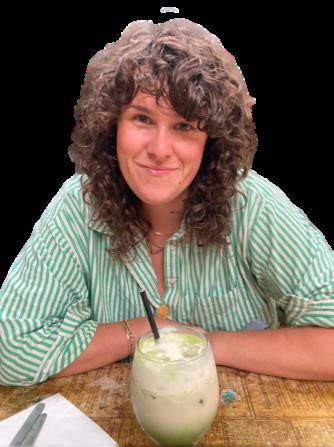
Coffee please! With oat milknormal milk makes me cough! I have recently jumped on the iced matcha bandwagon though, which is nice to order when I’m out as I have no idea how to make it at home!
Where were you born and where do you live now?
Where is your favourite place and why?
This is such a hard question! I love being near water, so really give me a nice beach and I am happy! My favourite city is probably Strasbourg - it is beautiful and such an interesting mix of European cultures. I had a great time living there as a student too!
What was your first job?
I set up a babysitting business with my sister when I was 14, but that mainly involved sitting in other people’s houses watching tv and e their children ual job was as a was 16 which I did l studies. I’d been mmer before that Luckily, I never ve anyone so my put to the test
Why did you become a teacher?
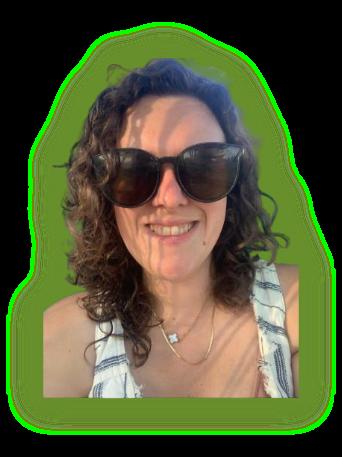
Both my parents worked in education, so it was always a bit of a default option I’ve always gravitated towards working with children and young people though and have always enjoyed it I was also keen to do a job that allowed me to continue to use my language learning skills, and I do believe it is important that everyone learns a second language. I applied for lots of different jobs in my final year at university, as I really wasn’t sure what I wanted to do, and my teacher training application was the only one I got accepted for So it was either fate, or I just wasn’t qualified for anything else!
subject(s) do you teach?
I teach Spanish, but I have previously taught French at CHS many years ago I have also taught Italian to adults, and taught English to children in Italy
Funnily enough, I was born in Cambridge! Spent time working and studying in Spain, France and Italy, but now I am boring and married I live in Bishops Stortford, which next to Stansted Airport and only half an h f i GET TO KNOW
What is your favourite subject to teach?
I love teaching Spanish - it’s a creative language that lets you express yourself without having to worry about (too much!) about grammar rules, and it is such a useful language to learn! I have surprised myself in recent years with how much I have enjoyed teaching literature at A Level, as this was something I hated as a student!
What is your favourite book?
I really enjoy crime thrillers/murder mysteries I always try to work out the twist and I rarely get it right! One book that I could reread forever and not get bored of is The Stand, by Stephen King. It is such a great mix of all genres, with a really epic storyline.
Do you have pets and if yes, what are their names?
I sadly don’t have any pets. We used to have cats, but we seemed to get unlucky with them suffering tragic early deaths. Now I have small children I don’t think I can handle the extra responsibility in keeping something else alive!
What is your pet peeve?
I think this is something that has started to bother me now as I get older - but I hate it, when people don’t communicate things clearly to me! I like to know all the ins and outs of everything, and I don’t like being told only half the story! Most of the time problems can be sorted out by people talking to each other and being open and honest. I like that trait in people.
What is an expression/saying you probably use too often?
“Does that make sense, everyone? Guys, is that okay? Are you sure? Excellent!” “To be fair” I say these all the time in teaching and in real life too!
If you could be a bird for a day, what bird would you be?
I’m going to have to say a dove, aren’t I? I’d also like to be a migrating bird and just fly all over the place, but I don’t think a day is long enough to enjoy the travel.
What is your hobby/hidden talent?
Not sure if being able to play the violin is a hidden talent, although as I haven’t played it for a while I guess it is hidden! I try to keep active as much as I can and am trying to find time to do more yoga at the moment I like cooking and have entered my gardening era When we moved into my current house the garden was really nice, and I had no clue how to look after it! Now after 5 years, I finally have a nice flower bed with lots of pretty colours.
What is one thing that nobody at CHS knows about you?
This is a really hard question - I think I probably overshare everything! I was going to say height but then I remembered I’ve met most of the teachers in person! Let's go with shoe size - I don’t think I’ve told anyone I’m a size 6 (39EU).
Illustrated by Bo Burnham
Tea, coffee or ……………….?
Coffee - white, one sugar please.
Where were you born and where do you live now?
I was born in Bedford, north of London I am now based in North Yorkshire after spending more than 30 years in High Wycombe, Buckinghamshire
Where is your favourite place and why?
My new house - we have been here for almost a year now and it is starting to feel like home at last.
What was your first job?
I have always been a school music teacher

Why did you become a teacher?
My parents were both teachers, as were many other family membersit made sense! (Incidentally, my daughter has just started her career as a school music teacher, keeping the family tradition going!)
What subject(s) do you teach?
I only teach Music for CHS, but in the past I have also taught English, Drama and General Studies.
What is your favourite subject to teach?
I think it has to be Music!! I especially enjoy teaching composition to all ages.
What is your favourite book? Anything by historical mystery writer Edward Marston
Do you have pets and if yes, what are their names? No pets
What is your pet peeve?
People (especially adults) who talk too loudly in public and seem to be completely unaware of it Keep it down!!
What is an expression/saying you probably use too often? ‘Basically…’
If you could be a bird for a day, what bird would you be? An owl - I go to bed pretty late so would cope OK with the nocturnal lifestyle.
What is your hobby/hidden talent?
I have been playing snooker since I was a child: my highest break on a full-size snooker table is 72, and until we moved house last year, I had my own 3/4 size table on which I made several century breaks
What is one thing that nobody at CHS knows about you?
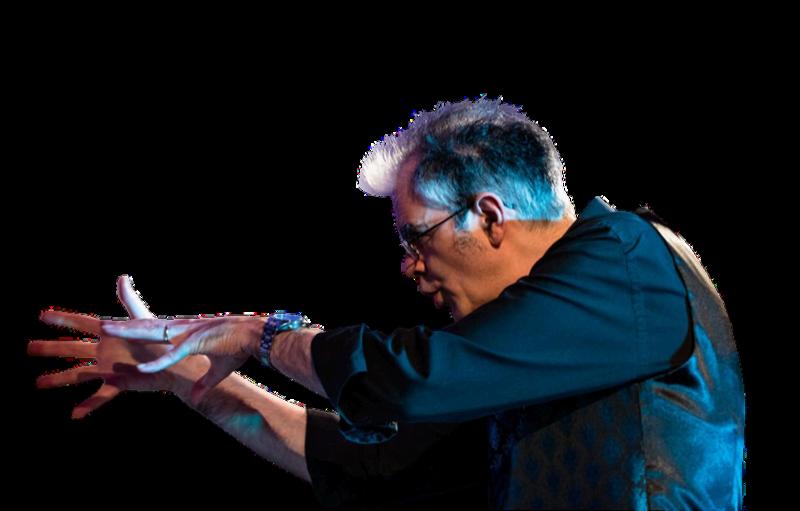
I composed and directed my own full length community musical ‘The Emperor’s New Clothes Nothing to Wear’, based on the Hans Christian Andersen fairytale, which was performed in Buckinghamshire in 2015 Oh, and I have conducted in the Royal Albert Hall 5 times!


Tea, coffee or ……………….?
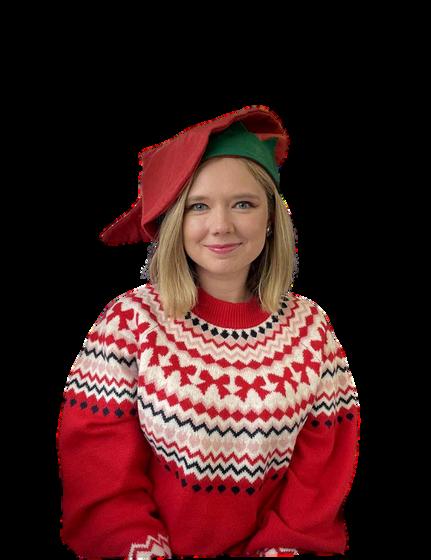
I used to be the biggest hot chocolate fan...but have since been introduced to the wonders of a vanilla latte So I drink one of those a day and a very pretentious elderflower green tea from 'Fortnum & Mason'
Where were you born and where do you live now?
I was born in London and now live in Kent.
Where is your favourite place and why?
Christchurch, Dorset. It is an incredibly peaceful place with a nice walk along the quay. There's not much there in terms of shops (I think it still has 'The Works' and an 'M&S Food Hall'!) but we always stop by for a day when we are nearby in Bournemouth
What was your first job?
My first job offer was when I was 16 and mid-way through my GCSE exams My headmistress phoned my home number one night - my Dad picked up and assumed I was in trouble (even though I have never had a detention in my life)
Turns out she wanted the best mathematician in the school to temp as a finance clerk in the school office...
He wasn't available so they asked me instead. Joking... I started work the day after my final GCSE exam -worked there over the summer and loved it! I felt very proud being entrusted with money at such a young age I would have stayed longer but needed to do my ALevels
Why did you become a teacher?
It was a calling I can't imagine doing anything else I love helping young people achieve in more ways than one, and feel so much joy knowing my students have found their time with me genuinely interesting, entertaining or --dare I say it -inspiring!
What subject(s) do you teach?
English Literature, English Language and Drama
What is your favourite subject to teach?
A-Level Literature!! I feel like I can impart even more knowledge and wisdom in these classes. My students do really go on a journey over the 2 year course and can become incredible writers and analysts by the end of it
What is your favourite book?
I have a few for different reasons I would say that 'The Great Gatsby' was the most influential and made me want to become an English teacher, instead of physics or maths
Do you have pets and if yes, what are their names?
I do not. If you are in my classes...you may know why I don't have the best track record with pets...especially African snails!
What is your pet peeve?
People making the whole row stand up in a theatre to get to their seat, when they could have just gone the other way!
What is an expression/saying you probably use too often?
According to L3, apparently I say 'Right!' a lot which causes confusion about when they can actually start to 'write'
If you could be a bird for a day, what bird would you be? I would be a swan...elegant...graceful....all the things I think I am until I trip over my own foot.
What is your hobby/hidden talent?
I can ballroom dance and used to teach beginners’ classes to the staff at my old school
What is one thing that nobody at CHS knows about you?
I have had the honour of dancing the tango with Anton Du Beke before he became a judge on 'Strictly Come Dancing' It is one of my proudest moments
Written by Dr Hudspith
It is safe to say that the senior school have had a fantastic but very busy start to the academic year! I am very excited to have joined the Senior Leadership Team at CHS this year; and feel honoured that Bo and the wonderful Cambridge Collective team asked me to share some updates with you
Firstly, a HUGE congratulations to our new pupil leadership team for 2025/2026. I really enjoyed conducting the interviews with Mr Boylan and Mrs Trafford and we were extremely impressed by the maturity that pupils demonstrated in their interviews The pupils also brought forward some excellent ideas to strengthen the sense of teamwork across the school and to enrich our house competitions Their enthusiasm for making CHS an even more vibrant community was inspiring to see.
Our Head Pupil Team
Amaanah Muazzam – Head Girl
Cooper Berman – Head Boy
Mihir Naidu – Deputy Head Boy
Rania Dean - Deputy Head Girl
Our Three Senior Prefects
Isabella Cuda
Freya Saxinger
Winwin Shinpat
Prefects
Simran Shakhon
Maisie Graves
Acen Toal
Leo Brown
Raimonda Slisane
Elisabeth Kirchner
Our House Captains and Deputies
Uphaar Kaur-Khangura – Griffin
House Captain
Estie Fourie – Griffin Deputy House
Captain
Crystal Yamon Oo – Griffin Deputy
House Captain
Shloka Muppaneni – Griffin Deputy
House Captain
Anya Coren – Pegasus Joint House
Captain
Camila Po – Pegasus Joint House
Captain
Jamie Coren – Pegasus Deputy
House Captain
Andréa-Maria Rogivue – Phoenix
House Captain
Kirsty Tyrrell - Phoenix Deputy House Captain
Please join us in congratulating these pupils in their new positions.
We were delighted to host the fabulous Matt Dickenson, author, explorer and filmmaker, for an exciting talk about exploring the Arctic and climate change Anya Coren (Level 3) shared her reflections:
“I really enjoyed another amazing talk by explorer and writer Matt Dickenson. While previous lectures have focused on Mount Everest, the Amazon Rainforest and the Antarctic, this talk was centered around the Arctic. Matt told us about the animals we might find in the Arctic, and how they are adapted to living in such a harsh environment; the impact of icebreaker vessels on the Arctic Ocean and how he travelled around by dog sledge! We looked at the Arctic from a geo-political aspect, seeing how different countries had claims to parts of the Arctic, and we finished with my favourite part: learning about how Matt had even explored some of the Alaskan parts of the Arctic by kayak!”
Our senior school pupils have also taken part in a range of EC Clubs this half term. Highlights included Yoga with Mrs Hutchinson, Dungeons and Dragons with Cooper, Senior Youth Club with Mrs Graham and my own Criminology Club It has been fantastic to see so many pupils getting involved, trying new things and building new interests beyond the classroom
For example, in Criminology Club, we explored the implications of the bystander effect through the case of Kitty Genovese, and pupils also presented their research and theories surrounding the disappearance of Madeleine McCann. These discussions gave pupils the opportunity to think critically, analyse evidence from multiple perspectives and develop their confidence in forming wellreasoned arguments
Dr Elerian has also introduced ‘Active History’, a creative way of exploring activism through storytelling. Pupils are taking part in online training about activism and oral history and have the opportunity to interview people from their family or the wider community who have been involved in activism I’m really looking forward to seeing and hearing more about their projects as they develop!
Make sure to look out for the EC Club weekly timetables next half term. Clubs are a brilliant way to meet pupils from different year groups, try something new, develop skills and, most importantly, have fun! Please also get involved in our house competitions I am certain that our new house captains and deputies will inspire you to compete and get involved The next events are sure to be exciting what a great way to show your house spirit!
We are delighted that CHS is now accredited to deliver the Extended Project Qualification (EPQ) with Pearson Edexcel This qualification is worth half of an A-Level and is a very useful addition to university applications The EPQ gives senior pupils the chance to explore a topic that they are passionate about and create a substantial project. It helps pupils to develop important skills such as critical thinking, independent research and project planning, all of which are extremely useful for university and future careers

It’s been a wonderful start to the term in the Prep School, full of learning, laughter, and friendship!
One of our biggest events was the election of our new Head Pupil Team – congratulations to Myla, Khadija, Brandon, and Leneya, who are already showing great leadership and enthusiasm in their new roles.
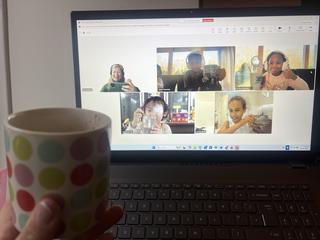
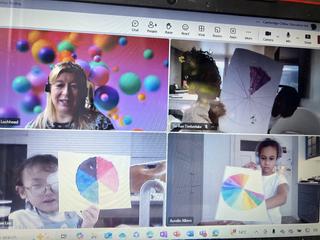
Everyone has been busy getting to know their new classes and making new friends, helping to build a warm and welcoming atmosphere across the school. Several Prep 5 and Prep 6 classes impressed us all with their thoughtful and creative class assemblies, sharing ideas and stories with confidence.
Written by Mrs. Roberts
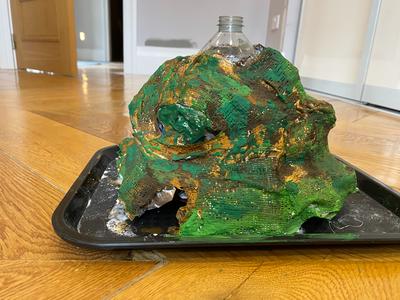
A special focus this term has been on kindness – we’ve been talking about what it means to be kind, noticing when others are kind to us, and finding ways to spread kindness throughout our Prep community
In our lessons, we’ve been diving into Number and Place Value in maths, enjoying new books in reading time, and developing our science skills through exciting experiments and investigations.
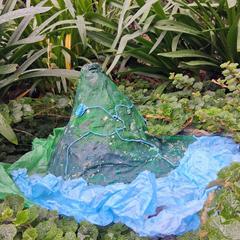
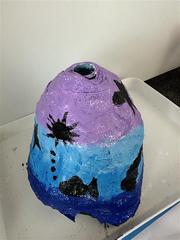
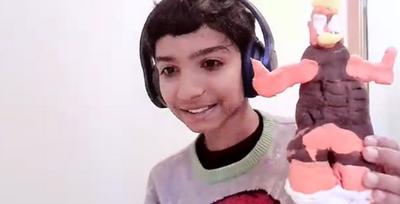
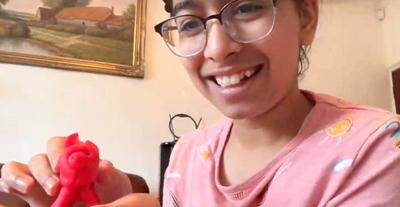
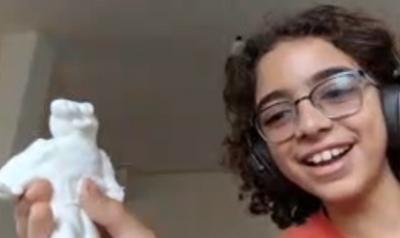
Most importantly, we’ve been having fun – learning together, supporting one another, and making wonderful memories along the way!
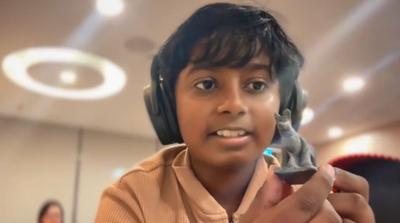
Written by Mrs Brusse
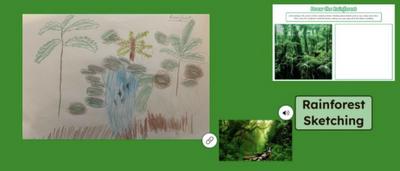
The Pre-Prep started the year thinking about what happened a long time ago on planet earth. Our topic of ‘Archaeologists’ had us scratching for dinosaur bones and looking in rainforests for clues about what we know about places and animals
We personalised learning in a small class for Year 1 and have been amazed by the resilience of our Year 2 class which is almost full with 9 children. It has been such a wonderful start to the year settling children into their school routine.
Wellbeing is a key focus and each day continued to start with a ‘Welcome’ and opportunity to check in and talk about what is important to us Self-regulation is thought about daily referencing ‘The Colour Monster’
With parents in the classroom, we connected forming partnerships focusing on building super relationships.
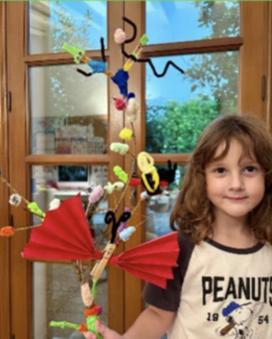
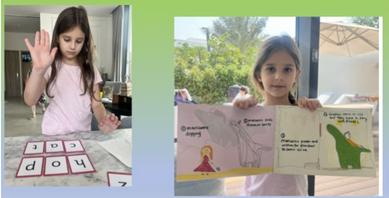
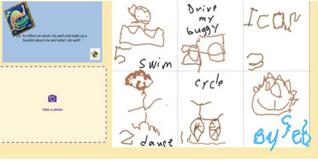
Using a range of marvellous texts, the children have been developing blending and reading skills in differentiated groups The children wrote a shopping list for dinosaurs, recorded rainforest facts, created zig zag booklets and gained confidence drawing and writing on story maps in speech bubbles
When asked what their favourite books were this term the children said: ‘The Girl and the Dinosaur’ (Hollie Hughes) and ‘The Dinosaur that lost her voice (Julie Ballard), empowering imagination and fun using character voices
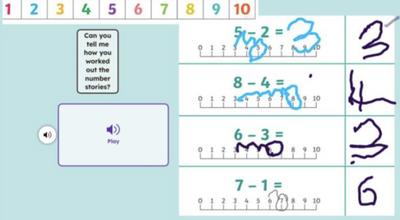
In Maths, we consolidated our knowledge of tens and ones and how add and subtract in different ways. With lots of practice with number bonds beyond 20, we explored open ended word problems to challenge us and how we represent our ideas in whole part models, bar graphs and pie charts
We began by exploring what archaeologists look for and what their job is. The children shared photos from dinosaur museums they had visited and reflected on what artefacts had been found. What fun to dress up as dinosaurs on ‘Dino Day!’ We then looked at toys from long ago in Victorian times
With lots of speaking and listening opportunities, in Science we learnt about animal groups and food chains. We thought about which objects were living and non-living. Learning about layers of a rainforest, we now appreciate how important trees are and what they do for our planet.
The 7 Continents and 5 Oceans songs have been our anthems In Geography as have explored where continents are and features on them. We looked at sketch maps and where our homes were located
After learning, the children warmed up to sharing their talents, drawing and games skills in ECA’s
We ended the term with a celebratory snack enjoying healthy snacks that might come from the rainforest. Thinking of banana, cocoa and an assortment of fruit, the children were encouraged to try something new.
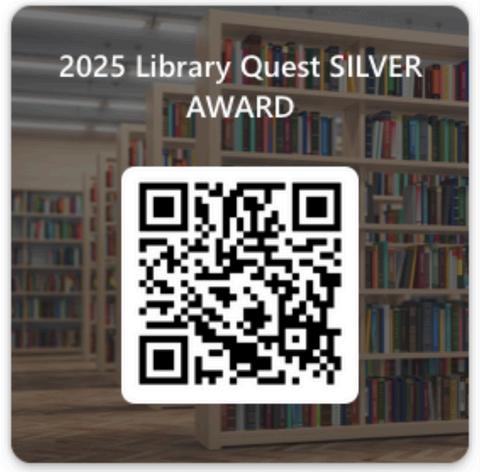

https://forms office com/e/5WDrGQJVRR - SILVER AWARD
https://forms.office.com/e/hHuGgphueV - BRONZE AWARD
Phillip Pullman’s ‘Northern Lights’ has become a cult classic within the genre of fantasy The book is premised upon the protagonist Lyra’s exploration to the Northern Lights along with her animal companion Pantalaimon Pullman artfully weaves in elements of fantasy whilst maintaining a realistic outlook, enabling him to create a vivid imaginary world. Along side this, the plot is intricately mapped out to ensure the suspense is sustained. Throughout the novel, Pullman gradually reveals information about the magical ‘Dust’ academics are experimenting with and gives us more insight into the shadowy, elusive villain Mrs Coulter. I recommend this novel for younger readers; however, it is incredibly well written and can be enjoyed by multiple age groups Alternatively, if you would like to watch this on TV, the BBC series ‘His Dark Materials’ is an adaptation of the trilogy

Written by Maisie Graves
The renowned Gothic classic ‘Wuthering Heights’ is an account of the intense love shared between Catherine and Heathcliff Set on the rugged Yorkshire moors, Bronte picks the perfect setting for a tale of wild and unrestrained love When tragedy strikes, obsessive love turns into cruelty and hatred. This exploration of destructive love divided critics when it was first published in 1847. This novel kept me engaged throughout as the fate of different characters is slowly unveiled, creating tension and anticipation. Furthermore, Bronte’s poetic style is admirable and has the ability to breathe life into her characters
The CHS Online Library is a great tool to familiarise yourself with, A diverse range of books are available on the site: ranging from the timeless Roald Dahl and Michael Morpurgo collections to more recently published stories, such as Benjamin Zephaniah’s ‘Refugee Boy. Critically acclaimed novels including ‘Lord of the Flies’ from the Nobel Prize winning author, William Golding, can be accessed too. Some texts are also available in the form of audiobooks if you prefer listening to reading. If this interests you, Miss Koster has set up a reading challenge where merits are rewarded for participation. This can be found in the Team labelled as ‘Library Quest 2025’.

Written by Andrada Cioban
Think Big is where ideas collide, perspectives shift, and students discover there's always more to learn. Whether you ' re passionate about science, the arts, or energised by debate, Think Big creates the space for intellectual exploration that goes beyond the classroom.

What we do:
Lectures & Talks
This year, National Geographic filmmaker Matt Dickinson joined us to share his firsthand accounts of Arctic expeditions and the dramatic impact of climate change on polar ecosystems Last year, we explored how mosquitoes and ticks are playing a growing role in the climate crisis with medical entomologist Emmanuella Uwaifo from the UK Health Security Agency. We have also dived deep into the evolving landscape of artificial intelligence with Jason Attar, co-founder of Tellyjuice Ltd, examining how AI might reshape our future.
Chats
Think Big Chats tackle the questions that don't have easy answers. Some chats we have organised previously were:
- Can we separate the art from the artist? As society becomes more aware of artists' personal lives and actions, should these aspects influence the way we engage with their work?
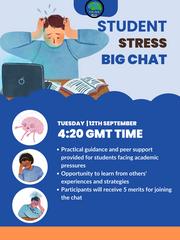

-Do video games truly contribute to violent behaviour, or is that a moral panic?
- Should humanity edit its own genetic code, and what would be the implications of that on society?
- Is climate change a hoax? Why might someone believe that it is?
Everyone's voice matters, and every question widens our shared understanding.
Debates
Sharpen your critical thinking and argumentation skills while exploring multiple sides of complex issues Learn to defend positions, challenge assumptions, and engage respectfully with opposing viewpoints.
Why Attend?
Think Big events welcome all students, regardless of background or age. Our events thrive on diverse perspectives, thoughtful questions, and the shared belief that big thinking starts with an open mind. Attend our upcoming events and discover what happens when curiosity becomes conversation!
Tuesdays 17:30 GMT
Written by Maisie Graves
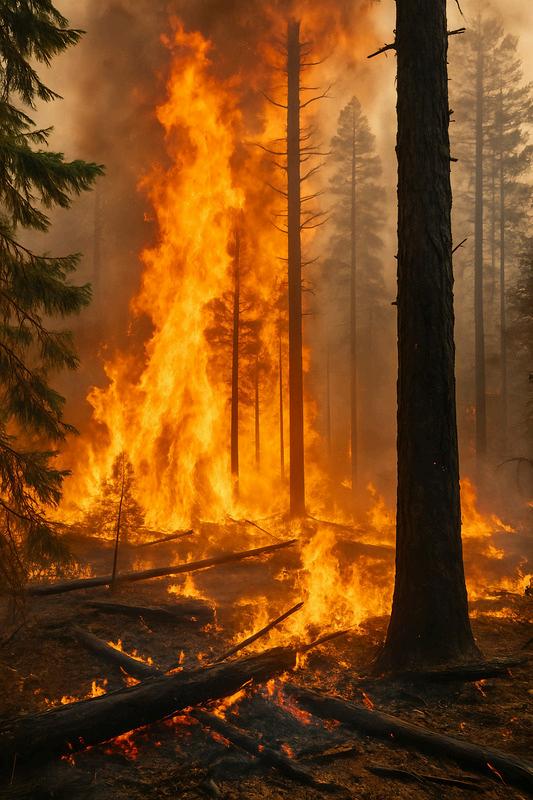
A total of one million hectares of land have burned in Europe during this year alone.
In 2025, wildfires have been increasingly frequent: engulfing areas of Greece, Spain, Portugal, Cyprus and Bulgaria The European Forest Fires Information System reported 1,025,224 hectares have burnt since the beginning of the year, highlighting a dramatic rise from last year, where 377,027 hectares were impacted.
Hotter temperatures are a large contributor to the crisis. Heat dries vegetation which then acts as a highly flammable fuel, leaving arid landscapes more susceptible to fires. In addition to this, climate change decreases the levels of rainfall, often leading to drought The culmination of these conditions produces the ideal environment for a fire to thrive in
The countries that have been most severely impacted are Portugal and Spain According to the BBC, ‘more than two thirds of the area burned in the EU’ is in these two nations Furthermore, Imperial College London revealed that one region in Spain ‘has been burned to a degree not seen for three decades, with the area affected being four times greater than the annual average for the previous two decades.’
Unfortunately, this trend seems to be continuing; due to climate change wildfires are becoming more intense and occur for longer durations
Another factor is urbanisation. A growing number of people have migrated to towns and cities in recent years. This rural depopulation means there are fewer people who are able to maintain the environment within provincial areas Moreover, an ageing population makes areas harder to manage
The impact of these wildfires has sparked much concern globally Environmentalists are particularly unsettled by the devastation to habitats blazes cause. Scorched soil is stripped of organic compounds and microorganisms that make it nutrient rich. Wildfires also heighten the risk of landslides as they are caused by heavy rainfall after a fire This not only has an impact on animals who inhabit the area but also the people; in the years 2008-2023 590,000 have been displaced from their homes
Wildfires are also responsible for releasing carbon dioxide into the atmosphere The EFFIS calculated 38 37 tonnes of carbon dioxide has been emitted by wildfires This pollutant exacerbates the intensity of heatwaves. Additionally, smoke from fires worsens the quality of the air. The BBC recorded smoke spreading ‘as far as France and the UK’ from Spain.
Precautions have been put in place to suppress the threat of these fires However, organisations have been strained by the extreme conditions they are required to face The European Environment Agency estimated 2 5 billion Euros are spent annually to extinguish wildfires. Whilst this demonstrates it is vital to implement effective support systems, it remains clear that prevention is better than attempting to contain the damage wildfires create.
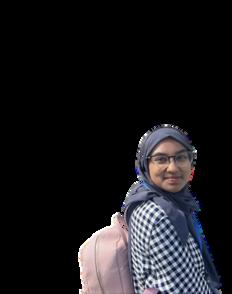
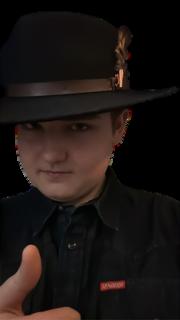

It is with great pleasure that I introduce myself as Isabella, your new Senior prefect, along with the incredible team of head pupils. It is an honour to have the position and be able to share my ideas with all of the students.
Isabella Cuda
As a native of one of the most unique places on earth (Australia), I am familiar with insects that turn your head and snakes lurking behind your steps
I’m 15 years old and in L4 As a student, I take the following subjects: Mathematics, Art, English Language, English Literature, Economics, Business, Sociology, and Music
In my spare time, I enjoy sewing and making alterations. Being a seamstress is what I love, stitching my love for fabrics under a humble sewing machine light is truly an experience.
Additionally, I’m passionate about Victorian buildings and the architecture behind them. I am captivated by each handcarved and sculpted piece on the building. My passion for sewing and appreciation for Victorian architecture have taught me the importance of attention to detail and creativity in leadership. These hobbies encourage me to approach challenges with a thoughtful and innovative mindset, ensuring that every decision is thoughtfully crafted. As your Senior prefect, I aim to weave these qualities into my leadership style, creating a supportive and inspiring environment for all students.
Country: I live in Spain
Age: I'm 17 years old
Level: Level 6
Subjects: I study Economics, Psychology, and Spanish at A Level
Freya Saxinger
Winwin Shinpat
Hobbies: I love expressing myself in different ways, such as drawing, crafting and nourishing my mind and body with cooking, reading, weightlifting and running
Growing up in Spain has given me a deep appreciation for cultural diversity I'm currently Trilingual and in the process of learning French, I aspire to travel widely and experience life from as many perspectives as I can
Country: Thailand
Age: 12
Level: Level 3 for most subjects!
Subjects: English Lit, Lang, 3 Sciences, Psychology, Sociology, History and Maths and Physics in Level 4
Hobbies: In my free time, I enjoy travelling, playing puzzles (Sudoku, Daily Wordle and many more!), playing instruments and learning new ones, and learning new languages and culture I also have a strong interest in Neurology and Neurosurgery since my dream job is to be a Neurosurgeon
Thailand is known as the "Land of Smiles" and is famous for its culture and vibrant festivals like Songkran (the Thai New Year water festival, where we have giant water fights on the streets!) and Loy Krathong (the festival of lights and happiness) Personally, I find Thai desserts to be the most appetizing desserts I've ever eaten, the most famous one is called Foi Thong which is egg yolk cooked with sugar and a bit of flour, it takes a while to make sense most of Foi Thong are in strands! I also enjoy travelling domestically in Thailand, there are so many underrated beautiful islands that are not overcrowded at all. So, if you're looking for somewhere to travel during the summer, come to Thailand! If you want more information/advice for travelling here, feel free to private message me!!
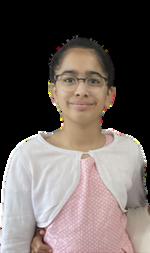
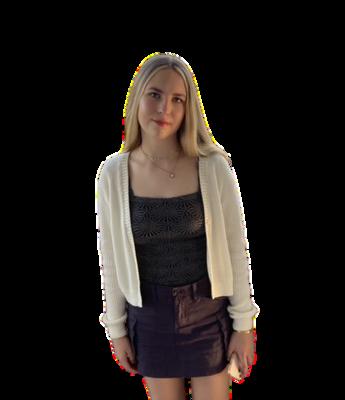
Leo Brown
Raimonda Slisane
Elisabeth Kirchner
I have always loved the humanities because they help me understand how people and societies work Subjects like history and sociology are especially interesting to me since they explain how cultures develop and how human behaviour changes over time I also have a deep love for learning new languages I speak German, English, French, and Italian, and I am studying Latin, Ancient Greek, and Swedish Learning languages allows me to connect with different people, discover new ways of thinking, and appreciate the beauty of various cultures
My birthday is on July 3rd, and I enjoy celebrating it during the summer, a time that always feels full of life and new experiences. Traveling is one of my biggest passions. I have lived in Germany, where I was born, as well as in Italy and Switzerland. Each place has taught me something new about the world and about myself. Soon I will move to Sweden, and I am excited to continue exploring, meeting new people, and learning more about another culture.
Country: I live in England!
Age: I am 13 years old
Level: L3- Level three is such an amazing yet busy year!!
Subjects: The subjects I do are: English Literature, English Language, Math, Psychology, Computer Science, Business, Economics, French, Chemistry, History. I love my chosen subjects, all of them are so interesting!!
Hobbies: I have so many different things I enjoy! I love to read it’s one of those perfect moments where I can just grab a book, a hot (or cold!) matcha or coffee, and completely unwind. Lately, I’ve been diving back into all the classic, and it’s been so much fun rediscovering all the fantastic authors
Country: I currently live in Saudi Arabia, in the Middle East, and enjoy traveling to new places
Age: am 13 years old, and turning 14 soon!
Level: I started Level 3 this year.
Subjects: Well, I chose the subjects I thought I’d love and enjoy most for this year, but it was a tough decision: Mathematics, Additional Math, English Language, French, Latin, Geography, Psychology, Chemistry, Physics, Biology, (and yes, I did turn out loving them)

Hobbies: I enjoy everything about academics, individual sports (such as tennis, swimming, and jogging), sketching and painting (though mostly for fun), and I love exploring and learning more about music, particularly playing the drums.
I love miniature dachshunds and bonfires with marshmallows, and being a student at CHS. However, I especially love challenging limits and aiming high. This year, with the help and guidance of my Team Captains, I hope to motivate the Griffin House to do the same through participation in healthy competition.
Country: I live in Myanmar.
Yamon Oo
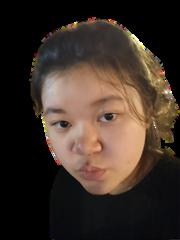
Age: I’m 12 years old (yes, I know I look twice my age, but I’ll look my age next year, totally)
Level: I’m in Level 2.
Subjects: I take Biology, Chemistry, Physics, Math, English Language, English Literature, Art, Music, Geography, History and Computer Science.
Hobbies: Art (Like drawing, painting or in general), Playing the Piano, Writing (I’m not sure if you’re up to read some without shedding a tear or being confused on what is going on), Video Games (Isn’t this one obvious?), My Dogs and Ranting
I’m the MOST interested in writing, but I always end up losing all of my ideas and just end up abandoning it altogether, I’m glad to say I’m working on something new that I probably won’t leave behind (it’s not romantasy I have no idea how people like some of that, but most works under that genre aren’t horrible :-)
Also, I’m a big fan of writing Alternate Universes, like “hey what is this went this way, or another way?” it changes the story a lot! And I have a whole playlist of songs in my brain that’s just repeating over and over.
A lot of people would know this (if you know me of course/talked with me excessively) I absolutely LOVE Britney Spears; I seriously can’t tell you how much without imploding into ground beef. I also love Lady Gaga and MARINA (formerly including “and the Diamonds”) they’re hands down my favourite artists as of now (I can name Britney’s albums in order, not a flex, because she only has 9.), I also started listening to Kylie Minogue, I CAN’T BELIEVE I DIDN’T FIND OUT ABOUT HER SOONER!
And that is all about me that you can know! Thanks a lot for reading and I’ll see you on the next one!
Country: I was born in America, live in India and study in the UK!
Shloka
Muppaneni

Age: I am 12 years old And a fun fact about that is I share my birthday with my mom.
Level: I am currently in L2. I have been in CHS for 5 years, so I am kind of an oldie at CHS!
Subjects: In level school there are 16 subjects, and I dropped Latin and Music We don’t get assessments for Drama and Success Coach, but they are still good as subjects.
Hobbies: I like art, dancing and learning new things In dancing I specifically do an Indian classical dance named Bharatnatym. I get tested for the dance, so it may count as a subject too! Lately I found out that I like to party plan for my friends and family so that's my newest hobby
Anya Coren
Country: I was born and live in the Isle of Man
Age: 13 years old
Level: I'm in Level 3
Subjects: Maths, English Language, English Literature, Biology, Chemistry, French, Latin, History, Music and Psychology.

Hobbies: I LOVE knitting, sewing and baking! I also am a big fan of the Murder Most Unladylike books by Robin Stevens!
Although the Isle of Man is my favourite country in the world, I also have roots from America, Poland, Romania and Lithuania!
Country: The country I'm currently based in, is the Philippines
Age: I'm 14 years old :)
Level: At the moment, Level 3.
Subjects: The subjects I take are; English Literature and language, Maths, Physics, Biology, Art and design, Economics, Psychology, Sociology, and Spanish To add to that, some of my favourite subjects include; Sociology and Biology. Not just because of the friendly and welcoming teachers, but also because of the comfortable environment they create and the topics we dive into
Hobbies: Lately, I've been more into upcycling jewellery and clothing (And buying them if that counts). Trust me, after doomscrolling through the internet for hours on end; it's good to just wind down, make something out of old, worn-out pieces, and just watch your progress building up slowly, and bit by bit you've created something new and ready-to-wear through hard work! - while doomscrolling through the internet.
Well, I just want to start off by saying - Merry Christmas! In the Philippines, our Christmas starts waaaay earlier than you would expect. We're already hanging the tree and forcing our dog to wear a Grinch costume by September Yup, that's right - SEPTEMBER In the malls, Christmas music could be playing as you're looking for your next Halloween costume; that's how much we LOVE Christmas Ahh, what a wonderful holiday
Country: I live in the Isle of Man.
Age: I am 9 years old
Level: I am in Prep 5G.
Subjects: We study Maths, English, Topic, Science and Art with Miss Greaves Hobbies: I love music, chess, archaeology (and climbing trees!).
The Isle of Man is a Celtic country with its own language (Manx Gaelic), music and culture. Our parliament, Tynwald, is said to be the oldest continuous parliament in the world!
Andréa-Maria Rogivue
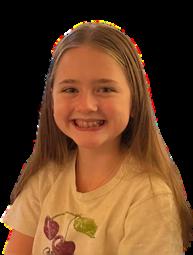
Kirsty Tyrrell
Hello, my name is Andréa-Marie Rogivue, I live in Saudi Arabia. I am 12 years old. I am in L2, I am bilingual, I speak French and English I have three cats.
These are the subjects I take: English, maths, art, the sciences, drama, geography, history, Business, French, Spanish, and Latin.
These are the hobbies I am interested in: Ballet/dance, Music, Swimming, Running, Skiing, and Reading .
Country: I live in the UK, specifically the southwest of England. Age: I’m 13… or 3. I was born on the 29th of February, so I have a birthday every 4 years
Level: I’m in Level 2B but Level 3 for Spanish
Subjects: I take most of the KS3 school subjects, a very long list: Maths, English (both Lit and Lang), Biology, Chemistry, Physics, Geography, History, French, Latin, Spanish, Computer science, business, art and drama I think that’s everything! Hobbies: I have a ton of interests; I am basically interested in everything. My hobbies are: climbing, reading, football, learning languages (Spanish and Korean), baking, eating the things I baked, crocheting, walking my dog, reading random articles, sketching… I think that is it. I’m very busy.
Interesting thing about me, which I previously mentioned, is that I’ve only had 3 birthdays! I’m turning 4 in 3 years, so I have a long time to wait until my next birthday. The other interesting thing about me is that I have an obsession with kimchi, the cartoon rabbit Miffy and the Sanrio character My Melody.
My name is Pandora Boo French, and my horse is called Ilustre. I turned 11 on October 29th and I am in L1 / year 7. I study all the usual subjects except French and Latin as I also study Portuguese outside of school.
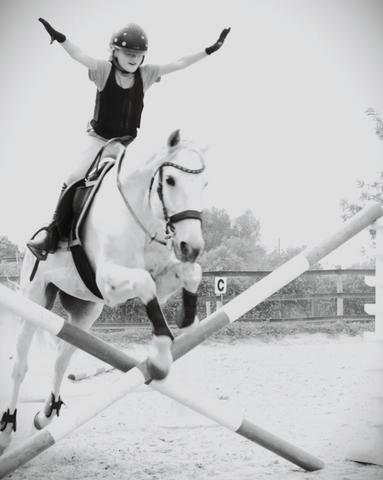
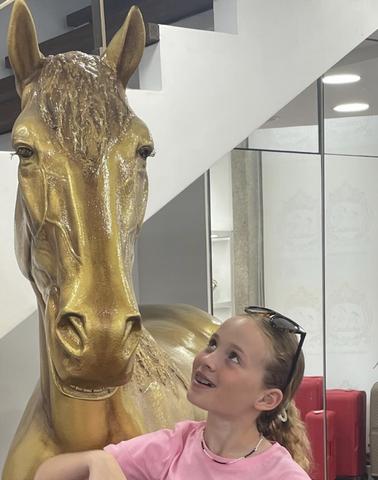

I was born in the Epsom, UK but now live in the Tavira, Algarve, Portugal.
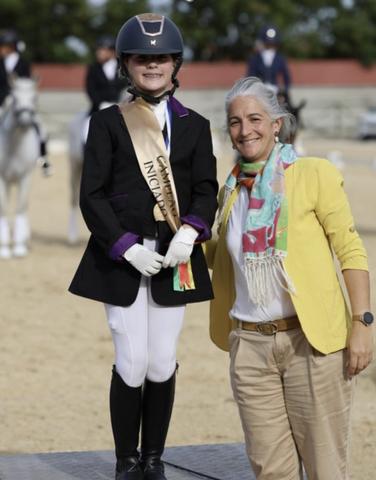
When did you start riding?
4.5 years ago.
What made you interested in riding?
Well, my parents used to ride, and I just loved animals and wanted to give it a go. Epsom is also home to the Epsom Derby the best horse race in the world and my parents sometimes joke I am going to win the Derby, I still think I will.
Did you have to make any sacrifices to be able to pursue your sport?
I have to devote most of my free time to riding which means I don't have much time for other activities or general playing, I also spend long weekends away at shows, and I have to priorities these over “hanging out”. But I would not want it any other way.
How much time do you spend training per week or per day?
So, I spend around 10- 12 hours a week riding and a similar amount o time cleaning, grooming and helping at the stables I am also an unofficial babysitter to my riding
What was your latest event and how did it go?
Yesterday I won the Premilar tests for my age group for the Southern Regional of Portugal in dressage. Before that I got 5/6 clear rounds at national jumping at SHP (We got scared of a palm tree) and this weekend I am traveling to CEIA for another national jumping competition This is all with Ilustrehe is very special as he loves dressage and jumping

For how long have you been at CHS?
I joined in prep 5 halfway through the year so almost 6 terms/ 2 years.
Do you view being part of an online school as an advantage to be able to pursue your sport?
Definitely as I can and sometimes have to take my lessons in a horse box when traveling and at hotels. So, it is very much an advantage and if I miss a lesson I can always catch up on the video.
What are your goals for your future?
Ooh so I am hoping to get my Sela 4 and 7 which means I can also compete in the bigger international shows such as Vilamoura or even Sevilla I am now competing at 1m but next show season I am hoping to get onto 1m 10cm which would be great! And I have qualified to go to the National finals in dressage so I would love to do well there.
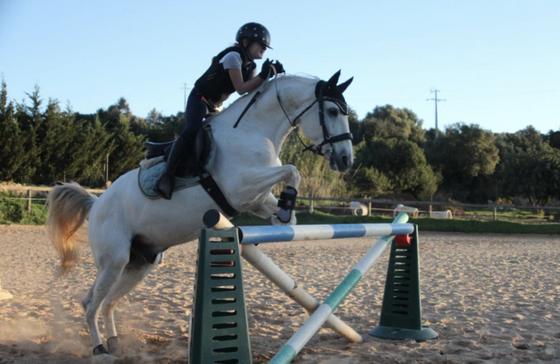









7. Dip the rectangles into the candy melts and place on the baking sheets.
Create your whimsical beast and allow to set. ither ve them. eat them n airtight
Tea, coffee or ……………….?
Water mostly but like the occasional freshly squeezed lemonade or smoothie
Where were you born and where do you live now?
I was born in Cape T S h Africa and I live on Azores, Portugal
Where is your f and why?
My favourite place nature. It is hard to mountains, oceans more. I enjoy open being active in natu times that I realise incredible planet w keen geographer I my lessons!
What was your
My first job was ta of children for a we Nursery School wh enough to let me h
50 | The Cambridge
Why did you become a teacher?
Because I’m bossy! Not really! I never felt like I was ‘at work’ when I spent time with younger people, I just felt happy listening to their ideas I still feel like I am on a learning journey with them after 28 years of teaching It has been simply wonderful to teach around the world
What subject(s) do you teach?
I teach all subjects in the Pre-Prep I also teach History and Geography in L1 and L2.
What is your favourite ubject to teach?
ave a passion for English erature and Geography Equally, I mply love spending time with the unger explorers and singing, ncing and creating a fun way to arn.
hat is your favourite book? aking on the World’ by Ellen acArthur because I believe ything is possible and having ‘grit’ an essential component of being ccessful in anything.
Do you have pets and if yes, what are their names?
I have a sweet little dog called Millie and 8 chickens – Mama is called Bertha and her babies are Monday, Tuesday, Wednesday, Thursday, Friday, Saturday and Sunday. I am waiting for a foal to arrive and then will have a horse!
What is your pet peeve? Wasted resources and a messy desk.
What is an expression/saying you probably use too often?
‘Give it 100% and no less!’, ‘I’m off to the beach!’, ‘You’ve got this!’.
you could be a bird for a y, what bird would you be?
A crane because I could wade in the water and fly across the world once a year and how fantastic would that be!
What is your hobby/hidden talent?
Canoeing, guitar, creating a beautiful home and wholesome cooking
What is one thing that nobody at CHS knows about you?
I have summitted some of the worlds highest mountains and was an avid sky diver
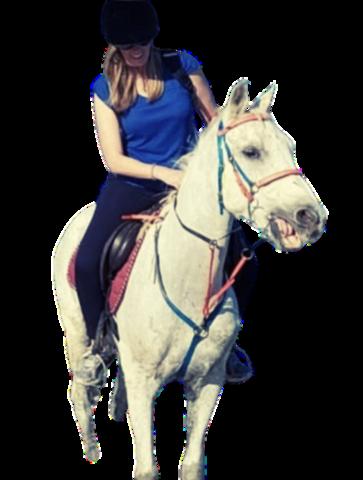
Written by Nathan Fischman
Illustrated by Bo Burnham
Logolepsy refers to a delightful obsession with words If you like weird words, or vocabulary in general, then you may suffer from logolepsy The word is mostly used by bookworms, poets, lingusts, and anyone who loves language.
Apricity is a word used to describe the warmth of the sun, especially in winter. It originates from the Latin apricus meaning “sunny ” Unfortunately, it is rarely used in modern English, but still cherished in poetic vocabulary. Try to use it next time you write something!
Psithurism is the word for the sound of wind whispering through leaves, and I’d argue trying to pronounce it recreates that sound (making it somewhat an onomatopoeia) It comes from the Greek word psithuros, meaning “whispering.”
Hypnagogic relates to the state between being awake and falling asleep It comes from the Greek hypnos (“sleep”) + agogos (“leading”) The word is most commonly used psychology and literature to describe the dreamy mental state just before falling alseep Could also be used to describe how Mondays feel.
Quotidian is an extraordinary word for extremely ordinary It is used to describe everyday stuff we all do without really thinking (brushing teeth, eating, doing laundry, homework) Basically, if it feels routine or repetitive, it’s quotidian
Petrichor is the pleasant, earthy smell that follows rainfall It was coined in the 1960s from the Greek petra (“stone”) + ichor (the blood-like fluid in the veins of gods). Fun trivia: petrichor comes from soil bacteria releasing a compound called geosmin!
Anachronistic describes when something is belonging or appropriate to another time than the one in which it exists (often humorously or jarringly so). It comes from the greek ana- (“against”) + chronos (“time”). Useful for describing things that feel out of place historically, like a knight with an iPad.


Delve into the vibrant community of CHS where every student is embraced with open arms and encouraged to shine.
When and for which Levels did you study at CHS?
I did A levels at CHS from 20222024
Where and what are you studying now?
Animation at Falmouth University
What is a piece of advice you would give your younger, CHS-self?
I would tell my younger self to get out of my comfort zone more often and to participate more in class.
Anything else you would like to share?
If you’re a student and you’re struggling with mental health I would highly recommend utilising any support that the school offers you Also, make sure you have a sleep schedule and stick to it A bad sleep schedule is the root of all evil.
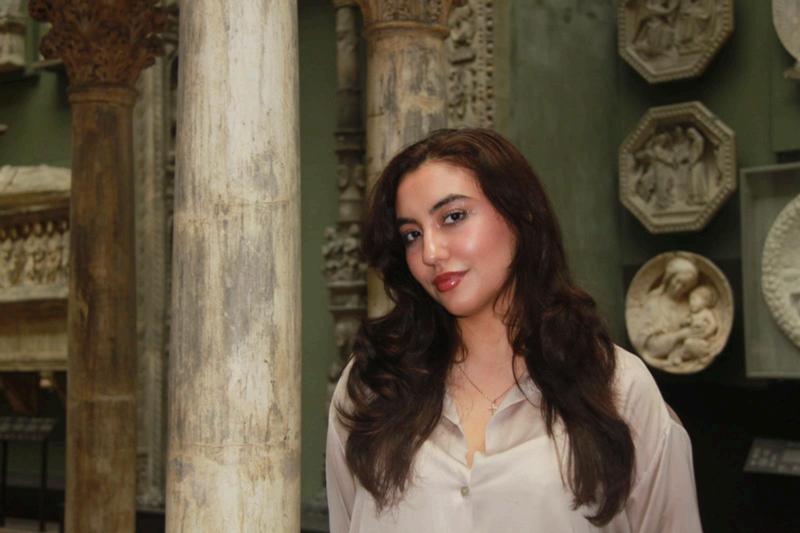
Delve into the vibrant community of CHS where every student is embraced with open arms and encouraged to shine.
When and for which Levels did you study at CHS?
I studied my IGCSEs and A-levels at CHS from 2020 to 2023.
What subjects did you take?
I took Biology, Business Studies, Mathematics, English Literature, English Language, History, and Psychology for my IGCSEs, and for my A-Levels, Psychology, English Literature, and Law.
Where and what are you studying now?
I am now in my third year at Royal Holloway University of London, studying Politics, International Relations, and Philosophy.
What is a piece of advice you would give your younger, CHS-self?
I would advise myself to revise weekly and do independent research on my studies. That way I would be able to have multiple perspectives on what I studied and would be able to contribute through a new angle.
How did CHS help you along your journey?
CHS helped me choose a university that I felt was suitable for me, the teachers were attentive to what I wanted to study, and I felt supported through my homework reviews and exams. During A-levels there were so many meetings on the UCAS process and, there was a very real sense of community and a healthy dose of competition that encouraged me to work hard The leadership opportunities and the inter house contests helped me grow in self-confidence, demonstrate public speaking and teaching towards other pupils.
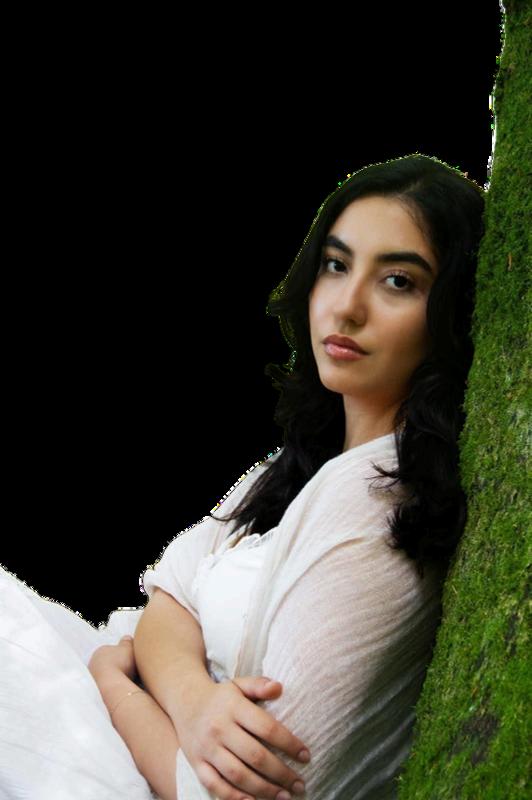
CHS was a very supportive environment for me. They accommodated my timetable when I needed it for events The teachers were always so kind and helpful when I asked questions or struggled to understand concepts I made friends I still keep in contact with and go university with today. Classes felt relaxed but edifying, everything. Everything I studied there shaped me in an encouraging manner towards my choices in life today.

Written by Kirsty Tyrrell
Illustrated By Sofia Malmberg
Pugs are the most adorable and affectionate c do need a little more maintenance, especiall lazy, elderly pug. Here are some brief tips a your pug
Pugs have a squashed-up face with folds, which is one of their most distinguishable traits The fatter the pug, the more scrunched up the face To keep their faces clean, it is important to avoid getting dirt stuck in their faces. Every now and then, check their faces to make sure no dirt (or crumbs) are stuck in their folds. It is also important to clear their eyes as they have very large, round eyes. Pugs have very delicate eyes, and they get sleep stuck in them quite a lot To avoid their eyes becoming irritated, you should carefully wipe anything that is stuck in their eyes with a gentle cloth
Pugs are VE need exerci overweight. which is like want to wal y y
WARNING: If your pug discovers they are not being fed as much as usual, or notice they are the slightest bit hungrier, they will be extremely grumpy indeed.
Some pugs also hate morning walks, and it is pointless to try and drag them out at such an early hour To keep fit, your pug needs to be walked at least once a day Teach them tricks outside for some extra exercise Encouraging your pug to play tug of war, chase and ball/fetch is also great exercise and keeps them active. Games also act as mental exercise which is vital Pugs c m
like breathing problems or spine problems To keep your pug at a healthy weight, first research the healthy weight for your pug If your pug is over this weight, then you should: 1. Avoid showering them with treats (yes, yes, they’re so cute and hard to resist, I know), -2. Increase the physical exercise your pug gets (they may be grumpy about this, but it is necessary). 3. Divide their food into three smaller
Written by Uphaar Kaur-Khangura
There’s a place the stars don’t shine A space that sits outside of time. Where voices fade and dreams grow cold And stories end before they’re told.
It’s quiet there too quiet, maybe, Like the sky forgot to breathe. No birds, no wind, no sound at all. Just endless dark, and endless fall.
They say it’s where the lost things go, The names we once forgot to know, The hopes we dropped, the tears we cried, The parts of us we’ve left behind


But sometimes, when the night is deep, And all the world has gone to sleep, I hear that silence call, Like someone waiting through it all.
And though it scares me, still I yearn, To cross the dark and not return. To find what time and fate unspun The space between...where worlds are one.


Written by Elisabeth Kirchner
Illustrated by Alina Litvinova
glow, w, , f light. song, ht long, ame, same. crest, est, old, old. n hand, nd, ee, ry tart, g heart, e, u.

Written by Elisabeth Kirchner
Illustrated by Alina Litvinova
Written and illustrated by Natasha Tatham
Shh, and duck down under that branch; you don’t want them to spot you! The younger ones are skittish and sensitive around anything unusual. Clever of you to wear those colours: terrific camouflage. Oh yes, look – just beside the bird of paradise… in front of the guava tree – that rustle and sweep of yellow-green hair; sounds like leaves in the breeze; there, again, and there Did you see the swish of creamy silver, just like guava bark? You’re right: it does feel like being immersed in a fairytale
Which species? Not a faerie Based on the leaf-silk hair, I’d say nymph, but that’s perhaps a bit too broad to be helpful, since it covers any family of natural deity in Greek Mythology. Hmmm. Probably a tree nymph: a Dryad. Ooh look: another one just flitted, dragonflyfast, into that trunk crevice. This particular piece of forest is known to be packed with Hamadryads and their dozens of cousins – fruit tree Epimelides especially - dwelling in the sweetest fruits such as apples or oranges I think they use it as a gathering point: perhaps the home of an elder Sometimes, if I slip out here on a moonlit night, and sit in the hush of shadows, listening and watching, I’m pretty sure I hear nymph song amongst the night chorus of whistling frogs and cicadas, and no doubt they dance with the fireflies. I wish more of us were like you and made time to sit for a bit under a favourite tree, glimpsing the magic.
And of course, a hamadryad’s tree is sacred – part of them. They live and die with their tree; defending and protecting it is their duty. I always wonder what such a deep soul-bond to our Earth must feel like Something to be valued and revered, right? Anyway, you can tell the Hamadryads from other tree nymphs straight away: so much taller and elegant, with stunning, wisdom-green eyes Real carers, but I hear their defence, and punishment can be feisty. The beauty who skimmed past us had eyes of amber, though, and the prettiest pink cheeks, so a guava spirit, I’d say.
How about a peek at the shore? It’s just down that path, through the trees, where the soil turns sandy. Oh yes: look for a while, carefully, at that turquoise foam kicking up on the crest. Can you make out the forms of five Oceanids, frolicking in the surf? I know, legs not tails! It surprises everyone. What beautiful water maidens
If it were dawn, and the fishers were out, you might have glimpsed a Nereid too I see them occasionally, in the rosy fire of first light, gliding in the wake of those brightly painted wooden boats when the sea is glass Apparently, they come from far away in the Aegean Sea; any we see here must have arched and bowed for thousands of miles through the Atlantic waves, perhaps entertained by a playful pod of dolphins. I guess there are seafarers and waters to protect on all sides of the world. In lore, Nereids follow Poseidon and have the most divine singing voices. I’m yet to be lucky enough to hear one They’re not unlike Sirens, but Sirens are bird-like temptresses who lure sailors cruelly to the water to drown, whereas Nereids use their glorious song to guide and safeguard us mortals on and through their waters Ack, one splashed me!

Written by Ashima Ramnarine & Alia Barry
Illustrated by Alia Barry

Elric woke up with an unbearable pain in his wings. His village was up in flames and the forest surrounding them was slowly but surely turning to ash. He arose in a panic and attempted to flutter his wings in an effort to escape It turned out that his delicate wings caught aflame Frantically, he rushed around hoping to find something to put the flames out
He climbed out of his leaf and started running towards the forest, hoping to find at least a river of some sorts. As he ran his eyes found the sea that had suddenly turned more visible amongst the blazing forest. With a rush, Elric coughed as he sprinted ahead even faster than before, but not before swiftly grabbing his wand out of his messenger bag. He extended his arm forward, to try to use his magic to set out the flames As he tried channelling the energy of the water spirits to his wand, he noticed a prominent crack running along its tip He cursed under his breath as he realised that his wand wouldn’t be able to channel anything for a while–especially water spirits
He would have to talk to them himself.
He walked towards the beach unsure, the smell of his burning home behind him. He had guessed that most of the villagers had managed to run away by now, but he still couldn’t afford to let the village burn down He knelt down in front of the waters edge, and called out the spirits The stars seemed to be silently watching from above as he did so
“Oh, great ocean request?” Elric wh uncertain tone. A waiting later, he w just as a light flick
“...Can…can you a He leaned forwar t light that m of the

“Hello?” He called out again. He almost made the decision to fly over to the glowing part of the water, until he remembered that his wings were not exactly in the position to fly. He looked behind him, trying to see his wings They were pretty badly singed at the edges; a few holes were scattered near the burn marks as well He sighed, and looked back at the water The light flickered off, and that’s when Elric decided he had to find another way to save his village. Just as he got up and started walking away from the beach, two things arose from the water with lighting speed, sending powerful jets of water all around them. Elric ducked as to try and not get sprayed by
He hated water.
A few specs of water managed to splash Elric's wings Elric felt a tingling sensation on his wings He looked behind him quickly and saw that all the burn marks and holes that had previously been on his wings were gone It was as if they were never there in the first place
A piercing howl cut through the crackling sound of the night it was a clear distress call from a scared and hurt wolf. There was a tree on top of him, and he lost the strength to lift it off him. His noises faded into soft whimpers as a figure emerged from the darkness
"Far enough to lose everything " Elric's wings rustled in the breeze, healed by the sea's lective |

The surface of the sea shimmered again, and from the depths rose two figures--Bennifer, a merman whose silver scales glowed like scattered stars, and Terrence, a siren whose calm eyes held the wisdom of centuries. They were more than creatures of the deep; they were gods of the ocean's ancient power, yet friends who had long watched over the realms. They moved through the waves with effortless grace, the sea itself seeming to glow brighter in their presence "You were drawn here," Bennifer's voice rumbled deep as the ocean floor Terrence nodded beside him, quiet but firm "The land burns, the sky shakes, and the sea mourns It's time for the realms to stand together or fall apart " Elric glanced between them vampire, werewolf, merman, siren The night stretched quiet except for the waves brushing the shore. He stepped closer to the water. "Then we make a promise," he said, voice low and sure. "Under these stars, by this sea we protect what's left."

Daniel reached his pale hand out first, steady despite the weight of doubt Stephan grasped it, his golden eyes flickering faint fire Elric added his own, Bennifer's glowing fingers followed, then Terrence's cool touch The sea shimmered, waves glowing soft blue beneath the stars Above, the sky scattered fragments of their vow across the water. Together five from worlds ripped apart united by loss, bound by hope. The flames behind faded into the dark, and for the first time that night, peace took hold. Their promise echoed on the wind and sea: where fire destroyed, friendship would rise beneath the stars.
The wolf caught the scent before he saw the figure, a sharp metallic trace of blood and nightshade that made his fur bristle His instincts flared this was no ordinary creature As the figure stepped into the moonlight, the truth became clear: it was a vampire. A low growl rumbled in the wolf’s throat, an instinctively began to crawl backward trembling with both fear and defianc
It was well known that vampires were not the most friendly of creatures They always had something to say, and saw themselves as a superior figure amongst all mystical creatures. Vulnerable and bleeding, it braced for the worst. Yet instead of striking, the vampire knelt beside the trembling creature, his movements careful, almost hesitant.
“My name is Daniel.” the vampire spoke in a quiet voice not wanting to alarm the wolf
“Stephan ” Stated the wolf after he shifted from his wolf figure to a human one
Daniel pulled Stephan’s arm around the back of his neck before lifting him up The werewolf stumbled often but kept himself up as the vampire helped him make it out the flames. They made it to the sea, and the vampire dropped the other onto the soft sand before leaving to find something to help heal him.
The distant crash of waves whispered through the thick smoke as Daniel guided Stephan, stumbling and choking on the ash-laden air Behind them, the fire clawed at the sky, painting it a fierce orange The closer they got to the sea, the cooler the air felt--cleaner, sharper Stephan faltered again, dragging his feet, but Daniel's grip stayed firm, never loose. The vampire said nothing, his face unreadable except for a flicker in his crimson eyes something almost like pity. Salt tang replaced the smell of smoke as the roar of the waves grew louder. When they reached the edge of the beach, Daniel lowered the battered werewolf gently onto the soft sand
Ahead, a figure stood wings catching the pale moonlight, whole, untouched by fire Elric turned at the sound of footsteps, eyes heavy but curious For a heartbeat, they just stared No one spoke. Then Daniel broke the silence, d steady. "We don't mean any gave a tired nod. "You've come far." s soft. Daniel's gaze drifted to the
Written by Valeriya Yu
Illustrated by Sofia Malmberg
“Bye, bye!” Little boy Hugo shouted after his parents.
“We’ll have a great time with granny!” Judy reminded, and a sly smile slid across her face
A few moments later Judy and Hugo were sitting in the living room, next to the fireplace Harsh wind blew outside, a storm was close, but the kids in anticipation of granny to come, were covered with colourful blankets, and with cups of hot chocolate whispered quietly.
“ All ears?” Granny Oliver asked with a smile, waking in the room.
“Want to hear a wonderful legend?” She added
“Of course!” Stoked children replied
“Okay, come closer; like this ” Said granny Oliver, and began to talk
“It happened a long time ago, when people used rocks to survive and moon was closer to Earth. Today’s story will be about a unique civilisation.” He took a deep breath, and started the legend.”
“In the middle of a dark blue ocean, a tiny island found a place to settle It was a place better than which was impossible to find in the entire universe Wide plains, strewn with outlandish flowers, stormy turquoise rivers flowing down the stream, tall and ever-white mountains rising on the horizon There are not enough words to describe the beauty and wildness of the nature, of this unique place!
In the settlement, in the south part of the island, in the tribe of Thalora little girl begin her journey. That fateful day, the chieftain’s daughter, Vayla, a girl with deep blue eyes, chocolate wavy hair with flowers woven into them and colourful vest was dreaming on the coast. Her parrot Uvy, as usual was next to her. Surrounded by the palm trees, gold sand and the sound of the surf, Vayla didn’t realise anything around. But in the mean time, in the ice canyon, deep under the ground, a creature, that the world has never seen before, opened its eyes!
“ Uvy, you think sound of the surf is just the best sound in the entire world?” Vayla asked, Uvy only whistled joyfully He was a parrot, and parrots can’t speak human language. But Vayla was a gifted girl, in the moments of need she could understand flying animals, or maybe it was her strong imagination which helped her! Vayla always thought she had a special connection to sea, but she didn’t know she had a really strong connection to wind, it was her secret talent. In any case whenever she could understand Uvy or not, she spent a lot of time speaking to him and other birds, always seating on the coast! Meanwhile scary rumours spread across the village where she lived They were mainly about a mysterious creature that managed to get out of the ice canyon! The history tells that many centuries ago the bravest of the brave imprisoned a monster that destroyed and ruined many settlements and villages, and only when it was in the ice canyon his power became weakened!
To be continued...
Written by Winwin Shinpat
We were told the mind makes noise when it thinks a static of whispers and old thoughts The brain is always talking, even when the mouth is not Most people never hear it clearly They are lucky
My sister was the one who learned to listen.
It started when she was twelve. She told me, “There’s another voice in my head. And it’s not mine.”
I laughed, as siblings do. I called her dramatic and told her everyone has weird thoughts sometimes She didn’t laugh back
“No,” she insisted, her voice quiet but serious “It knows things I don’t ”
When I asked her what it said, she didn’t answer But that night, she didn’t sleep. I lay in the next bed, listening to her whispering to herself until dawn. Or rather, I realized with a chill, she was listening.
One morning, she announced to the family that the voice had a name. “It calls itself The Second Thought,” she said
She explained that it didn’t speak in full sentences It nudged, suggested, and corrected At first, it seemed to help It reminded her where she left her shoes, told her what pages to study for a test, and guided her hands through piano pieces she had never learned She became brilliant. Teachers adored her, our parents bragged, and strangers complimented her composure.
But there was something wrong with her eyes. She blinked less and stared longer, as if she was perpetually listening to someone who wasn't there.
By the time she was fourteen, the change was undeniable She had stopped using the word “I ” It wasn't always intentional, but it happened often enough that we all noticed
Instead of saying, “I did my homework,” she would state, “The homework is done ” Instead of “I feel tired,” she would say, “The body is tired ” It was as if the speaker and the body were two different things, as if she was no longer the one living inside her own skin.
We still shared a room. One night, I woke to find her sitting upright in bed, her eyes open and unblinking in the moonlight.
I whispered her name.
She didn’t move Then, a voice that was not hers, but was using her voice, spoke “She’s asleep ”
My chest tightened “Who?” I managed to whisper
Her head turned slowly, too slowly, like a puppet moved on invisible strings. The smile that stretched across her face was all wrong.
“The one who used to live here,” the voice said. Her eyes didn’t blink; her breathing didn’t change. “You should start listening. The mind is full of doors. She left them all unlocked ”
I was frozen, unable to speak
She tilted her head “You can hear it now, can’t you?”
I hadn’t heard anything at first Until I did A soft murmur, like someone thinking inside me. They were not my thoughts, but something behind them. Watching. Waiting. Learning the shape of me.
My sister
But she is

And now, I hear breathing behind my own thoughts
It’s not mine, and it’s not hers It’s something else, practising the sound of my voice, getting closer every day. I don’t know how long I have before it learns to speak perfectly, before I wake up to find that I’m the one asleep inside.
Tonight, I jolted awake in a cold sweat. I fumbled for the lamp on my nightstand and turned it on, my heart hammering against my ribs. I looked at myself in the mirror across the room, my face pale and terrified I stared for a few seconds, making no expression
But in the mirror, my mouth began to curl into a smile
A smile that was as familiar as the back of my hand I knew why it was familiar it was the same psychotic smile that had possessed my sister
'Hello,' said a voice in my mind, as the reflection’s grin widened.
The truth crashed down on me. Slowly, I heard footsteps creaking through the house, leading directly to my room. The door swung open. There stood my sister, her face a cold grin, holding a bloodstained knife
She whispered, “Welcome to our world ” Her grin got bigger
And in the mirror, so did mine.
Written by Estie Fourie

Industrialisation changes the atmosphere; from early workers to kindergartners, everyone sets out for work Traffic melody and gentle café aromas blend into a pleasing daily rhythm Sky-high towers and glass glory in the heavens call a daring bloke to clear the way
As he grabs the side-handle of the daily bus, his overalls clip the 'janitor' keys swaying on his belt. His screw cap and scruffy hair call him for the job. We always tend to search and look for a new perspective on life, but this has become a career in the great New York, one that the window cleaner has taken close to heart.
Businessmen and women, the ‘big guy in the chair,’ the illustrious celebrities, and all daunting figures, greet with a smile that radiates wealth Staring and criticising first but subsequently accepting the weekly window cleaner
The glare of the sun and the sheen of a soft glow overwhelm beyond words, the lustre of the mid-day leads to even brighter radiance, and a staggering perspective, both in fear of height and beauty.
Ordinary leads to visionary, then to imaginary and extraordinary Although then along comes mystery, not quite fitting in frame Standing on the outside looking in, things start to change The windows start to give way to secrets, and, quite frankly, mysteries aren't always grand or terrifying - often it’s quiet
It lives in the way wind shifts, whether down below or up in the sky’s blow. The window cleaner searches for answers for what he cannot explain; his view has always been unbelievable, but not quite in this way. The windows reveal everyday life and variety, though now the secrets give way, but resist being known. But maybe that’s the point. Maybe some mysteries should be kept quiet, and maybe not everything must be solved Some things are meant to be glimpsed at, to be felt, but not be reached after, especially when you're on the other side of it
the glass, it can t be known The window cleaner, along with a few others, simply learned not to define, but to embrace! A quiet secret should not be traced.
ed over the ys of dancing waves The movement as fish great and small meandered in the depths. The barnacle-clenched pirate ship wobbled in the icy waves and on the ship’s scratched deck its captain marched comfortably up and down, considering where the day would lead him. Captain Sweetcorn took a deep draw from his pipe.
Usually this was the time when the crew would take their morning plunge, but most of them had weeks ago decided it was too fresh and cold in this region; with the exception of the first mate Blackchops who had continued to take his morning swim until he had developed such a nasty chill that he had been incapable of service for a good few days.
Yes, these regions were cold and a wind smelling of salt and the unknown peppered the pirates’ sails. Sweetcorn watched the smoke from his last puff vanish in the icy wind, then descended into the dim light of the ship’s lower regions.
Pelle was hard at work The variations of the cook’s ability to turn fish into a dish were incredible, and indeed he had a good reason for acquiring this skill; the last cook had ended up being shoved into a barrel of rotten sardines and dumped off in the closest harbour by Blackchops and some of his pals, and by the time Sweetcorn noticed and turned back the cook had already taken up a new job in a tavern and strenuously objected to returning to the crew. It was at this harbour that the crew had then picked up before when with a mouldy down from the mast
For the resulting lectu it can be said that Bla rest of the week on cl
Pelle, however, had learned to cook fish in an abundance of flavourful variations. Sweetcorn found the cook emptying some gooseberry jam into a pot of mackerels and putting it on the stove.
“Ahoy captain! What’s up?” Pelle grinned cheerfully.
Sweetcorn didn’t get to reply Instead, he tumbled onto the floor and rolled into a large barrel as the ship shook Wind roared outside, engulfing the boat in its icy embrace Jim, the young deckhand, was screaming something or other from the crow’s nest
The captain jumped back up and climbed onto the deck as quickly and as best he could in the unstable conditions.
The ship was in chaos. Jim was trying his best to descend the crow’s nest through the freezing wind, the ship creaked and shook, Sweetcorn saw old Pete pulling a swashbuckler back over the railing, he thought he could hear a gun firing
Then the snow started It had been a good while since Sweetcorn had seen snow Having spent so long in the south, many of the pirates had long not seen this form of precipitation and some of them had never been acquainted with it at all.
get a live, slippery ant for the cook
Freezing flakes flared through the fog in great mass and density. Many of the pirates had retreated into the ship. Only a few were still standing on the deck blinking in the white

“No use,” Sweetcorn growled a while later, wrapped up in a warm blanket in his cabin. Blackchops, Pete, and a few others were present. The captain’s irritation was quite clear.
“We’re completely lost - and everything out there is white That scallywag of a storm caught us off guard,” he continued, “I just hope it doesn’t run a rig and we don’t bash into any ” the ship thumped against something solid outside Ice Quite apparently ice
Sweetcorn didn’t speak yet. He simply sat there and pulled his face into a grimace that cut right through the air into the pirate’s faces. Pete had had the idea to retire to the lower area of the ship, under the murmured words:
“I’ll go and tell them to try to batten down the hatches ”
The others waited in dread for the captain to start
He didn’t
The red colour slowly faded from his face He fell back onto his bed this had been just a bridge too far for him.
The crew didn’t see to the ship; it didn’t have a big hole after all, and it didn’t occur to them that the sea around them was freezing. As the captain recovered in his cabin, they left Jim and Pelle to see to him and played cards
It was thus that when Sweetcorn awoke the next morning, a good bit closer to his old self, and stomped onto the deck now covered in inches deep snow, he found the ship surrounded by ice and frozen fast Silently he marched back into his cabin. He emerged a while later, wrapped up warm, with a pack over his shoulder.
. . .
Blackchops was stil doubloons. Pete ha rusty hook before t dark eyes
“Where’s that scally laughed too much t
“Are you asking me p y back over . . . It was almost noon by the time Jim reached Sweetcorn.
“Why did you follow me, landlubber!” Sweetcorn growled throwing a glance at the deckhand.
“Cause you're the captain!” Jim replied quickly and with a grin, then he added cautiously: “You didn’t happen to bring any food with you, did you?”
“Jim me hearty, I did, and I’m not sure I’d share it with many of those scallywags back on that ship, but I’ll share it with you.” Jim’s contagious grin spread across the captain’s face, and he showed his white-yellow teeth, “You didn’t tell them I was gone did you?”
Jim shook his head.
“Then it’s just the two of us lad! You see, there’s a clear reason I’ve been taking us north and I’ve decided to run a rig The crew’s too lazy to sail this far The ship’s stu is a
Jim to-
k that morning, after n-less. Following the w onslaught of snow, p, after grabbing a appeared into the
… Captain?” Jim was o had now begun to Grizzled pink oves searched in ce, hard and harsh, w, and then they hit
“Ho, ho!” Exclaimed the animated captain
He sprint-crawled to his pack which he had deposited some distance away. Picking up a spade from the luggage, Sweetcorn looked over at Jim.
“Oh, and Jim, we’re looking for the treasure of the north by the way,” The captain explained as if this was the most natural thing to be looking for on a Wednesday afternoon, “It was a riddle you know All I could read on that old piece of paper was this:
Far in the north you will find it,
Far in the north you will see,
The glittering treasure of the north,
Over the land and the sea.
“Why do these booty hiders have to write in poetry? Anyway lad, help me dig this up.”
Jim sighed He had not the slightest clue why Sweetcorn suddenly thought he could dig up solid rock, but he obliged nonetheless
“Didn’t the poem say o anyway?” The deckhan
“Blimey, you’re right la “and it’s freezing here sighed. “Only…where “
“I…I think in this direc . . .
Blackchops was in a p crew calmly through t not the moustached buccaneer’s greatest strength, especially if the captain was gone and the ship stuck in ice The ice around the ship was melting, but that meant it would be highly difficult for Sweetcorn and Jim to get back onto the ship
It was getting dark. As night stepped silently over the boat, Blackchops continued to stare into the distance, hoping to see the smallest particle, the most minuscule picture of Sweetcorn and Jim.
And then he saw it. The northern lights, like curtains in the sky, lighting up the night. He was too preoccupied to take proper notice of the rest of the crew, one by one joining him in staring into the sky He was too preoccupied to realise that even Pelle had abandoned cooking dinner He was too preoccupied to see two figures emerge from the darkness and board the ship He was too preoccupied to notice these figures join the crew and stare with them into the lights It was a long time before Blackchops noticed the captain was back, and even longer for many of the others. The crew was busy staring into the night, staring into the lights, some sitting, others lying down, most in warm clothes.
When Blackchops finally realised that his captain was present, the boat was long adrift in the cold, icy sea
“Captain?” Blackchops jaw dropped quietly, when he saw Sweetcorn leaning against the mast just a stone’s throw away Sweetcorn and Jim exchanged a knowing glance, then redir
The lights glittered slithering like curt emerald reflection and had the sea n would have had to with some other p
Created by Winwin Shinpat
Illustrated by Bo Burnham
Welcome to the realm where dragon fire warms the page and quills whisper ancient secrets. Sharpen your wits like a dwarven axe. Your quest: solve, laugh, and live to the next issue.
Solve these to pass the ancient wyrm’s watch:
1. I fly without wings, I roar without breath, and mighty towers fall where I tread. What am I?
2 I glitter without gold, guard without chains, and hide ancient truths in my depths What am I?
3 Brave hearts seek me, cowards flee me, yet I weigh nothing at all unless you lack me What am I?
Homes
1 crystal pond
2 ancient oak
3 glowing mushrooms
4.sunlit waterfall
Wizard’s Word-Weave
Unscramble these enchanted terms:
Scrambled Wo d HCNAT

Clues
1 The troll avoids plants entirely
Four magical beings dwell in hidden glades: a sprite, a centaur, a griffin, and a troll
2 The griffin lives where sunlight dances on water
3 Hooved folk love the ancient oak
4.The sprite prefers tiny luminous things.
Oracle Riddles
Solve these whispers of prophecy:

1 I d i k li ht t ver thirst I stand sky. What am I? by water, reborn ath. What am I? yet disappear in ess. What am I?
Created by Anya Coren
Illustrated by Emma Graëve-Dotti, Age 6
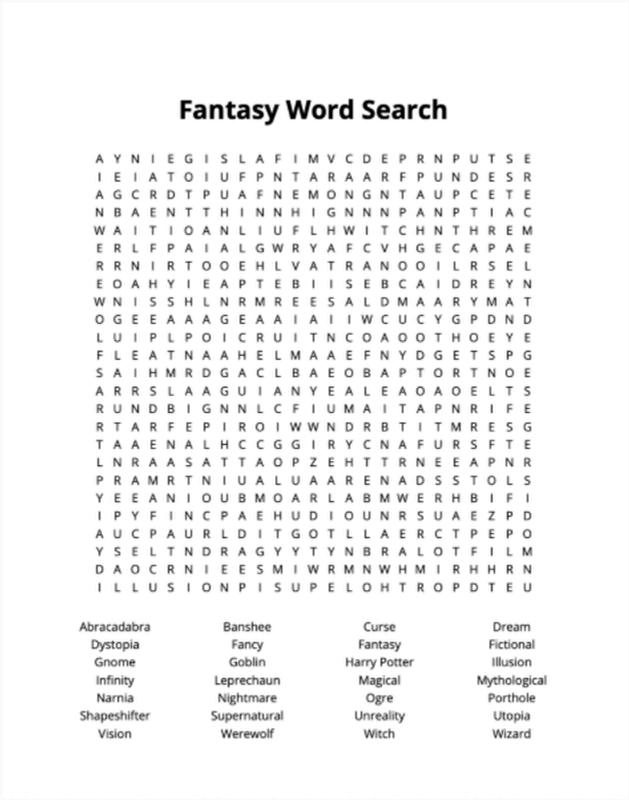
Created by Valeriya Yu
Illustrated by Emma Graëve-Dotti, Age 6
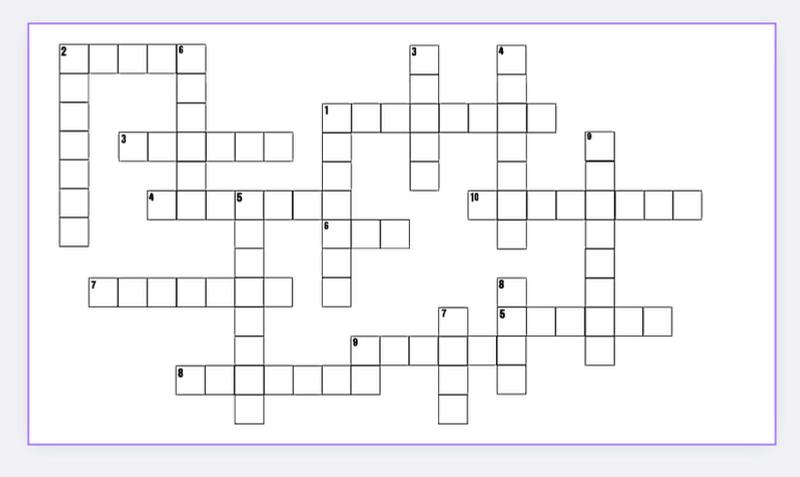
Down:
1.Magical science.
2.A cave deep undergro
3 A short creature similar to gnome
4 A creature, half lion, half eagle
5 Events or objects that lead to false perception of reality.
6.This is usually caused in deserts according to lack of water
7 An object which is worn on fingers
8 Piece of wood which is a source of magic, particularly used by wizards.
9.Creature with two bodies.
orizontal:
1.A city from a legend lost underwater.
2.A state of mind or imagination during sleep.
3.A magical creature, member of chinese calendar of years
4 To use spell on someone
5 type of necklaces which brings good luck or protects from dark forces.
6.A creature comparable to fairy, but with no wings
7 Horse with wings
8 This creature is usually associated with revival and fire.
9.Magical mixture.
10.Practice of magic.
Created by Kirsty Tyrrell
Illustrated by Alina Litvinova
First letter of your name:
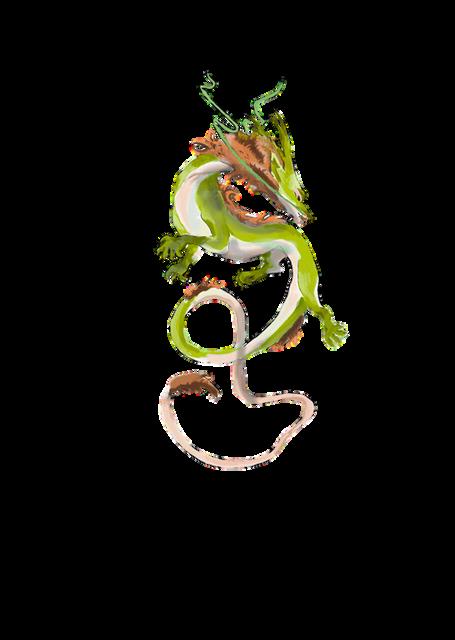
E- Everlasting
F- Fearsome
G- Graceful
H- Heroic
I- Icy
J- Fynnith
K- Glaciera
L- Icekara
M- Lyraxmere
N- Mystrion
O- Nilzryd
P- Nythera
Q- Pyrveth
R- Sephyrthil
S- Serathen
T- Silverclaw
U- Solthara
V- Sykai
W- Thandriel
X- Vaelora
Y- Yephirax
Z- Zynthera
after your new dragon first name.
letter of your last name:
J- Judicious
K- Killer
L- Luminous
M- Majestic
N- Noble
O- Opulent
P- Prince/Princess
Q- Qualified
R- Royal
S- Sublime
T- Terrifying
U- Unyielding
V- Valiant
W- Wanderer
X- Xanthic
Y- Youthful
Z- Zealous
Created by Winwin Shinpat
Illustrated
by
Bo Burnham
Riddles of the Dragon Gate
1.A storm
2 A mountain cave
3.Courage
Creatures of the Fey Forest – Match the habitats
Griffin at the crystal pond
Centaur at the ancient oak
Sprite at the glowing mushrooms
Troll at the sunlit waterfall
Wizard’s Word-Weave
CHANT, LORD, ELF, CHARM
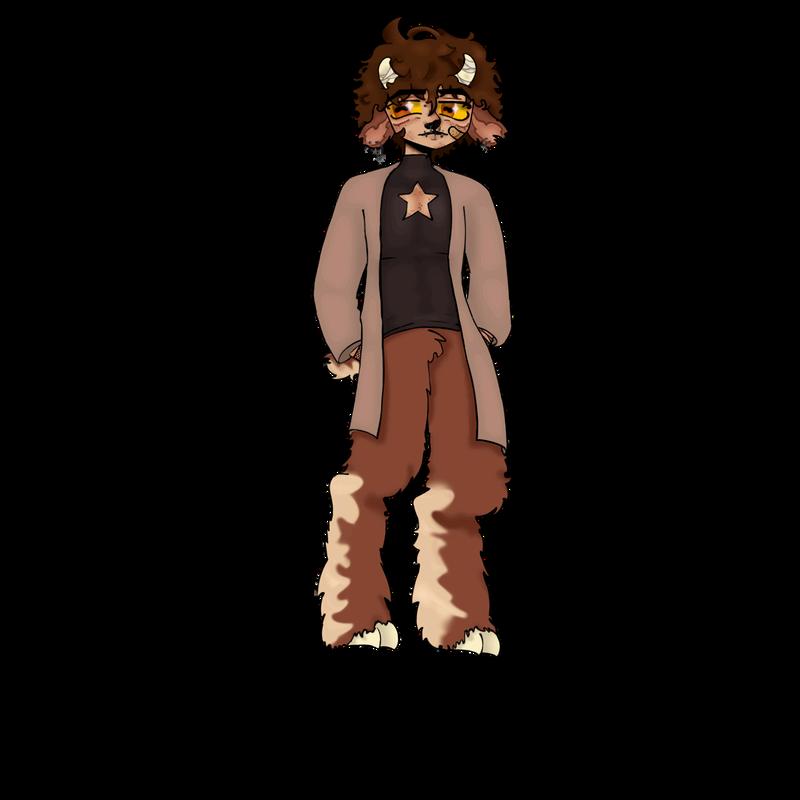
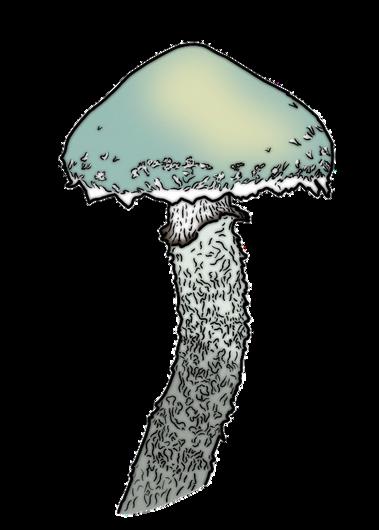

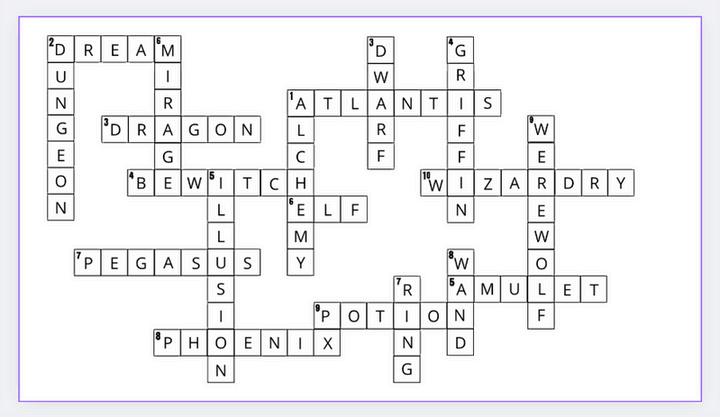
Created by Arsenii Kuporosov
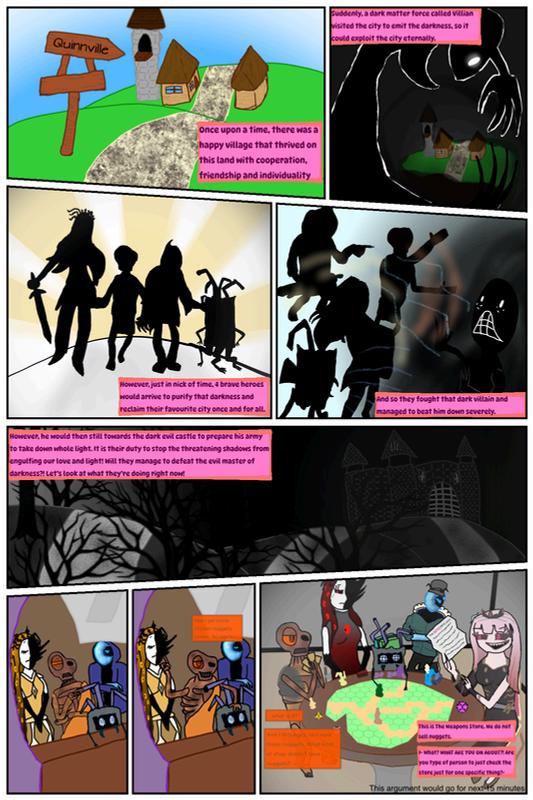
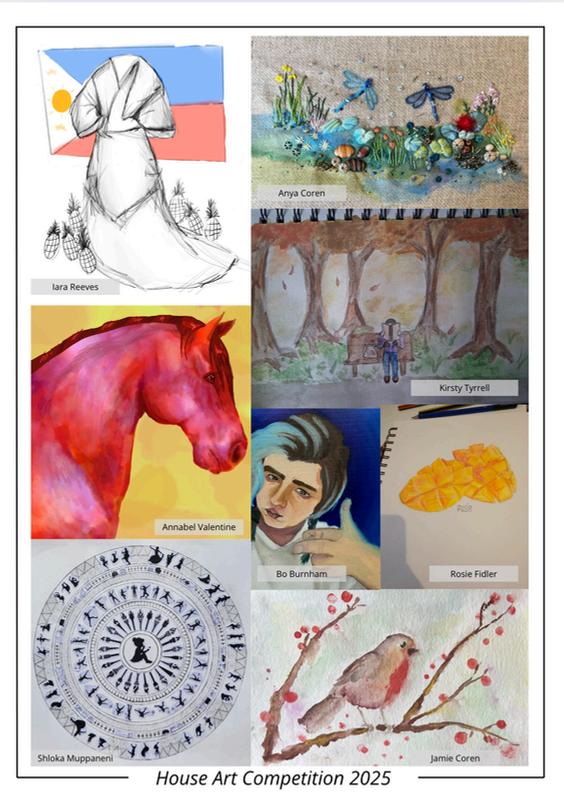
Illustrated by Bo Burnham