Yusuf Hamied Department of Chemistry
Chem cam @
Chemistry at Cambridge Magazine
A million years of climate history
Behind the scenes: investing in innovation
Reminiscences of Cambridge days
Chemistry in motion
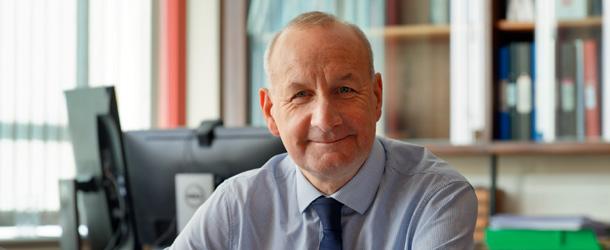
James Keeler Head of Department
Welcome to the winter edition of Chem@Cam
The research carried out in our department has always covered a much wider range that what most people think of as going on in a chemistry department, and the three feature articles in this issue illustrate this perfectly. You can read about the collaboration between Professor Gonçalo Bernardes and the Xi’an Fengcheng Hospital which aims to accelerate the introduction of new diagnostics by the close partnership between laboratory and clinic. At the other end of the scale, we feature Professor Chiara Giorio’s work which is helping to reveal more than a million years of climate history through close study of the 2.8km ice core from Antarctica. Finally, and closer to home, you can read about the work in Professor Alex Forse’s group on developing and improving super capacitors, with the aim of bringing us much-needed faster and denser short-term energy storage.
This issue also features the memories and stories of alumni from the 1980s and earlier – I hope you will enjoy their reminiscences and encourage you to share your own with us. Looking ahead, there is news of major refurbishments under way in the department and the ongoing work on a refreshed undergraduate curriculum.
With all best wishes for the holiday season.
hod@ch.cam.ac.uk
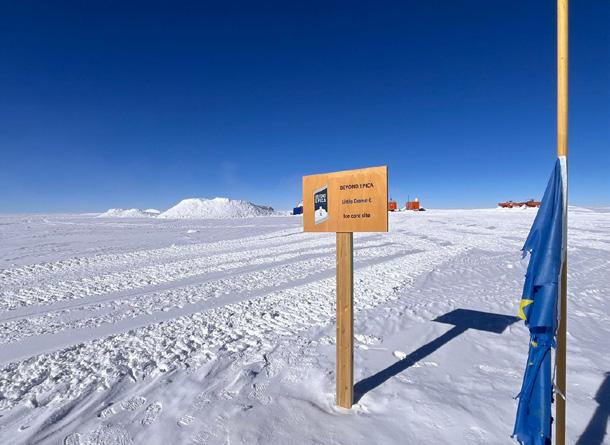
RESEARCH Beyond EPICA
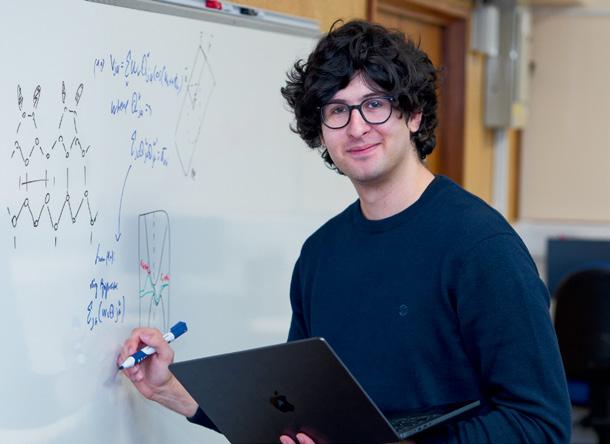
STUDENTSHIPS
From support to success
Contributors:
Editor: Dr Fiorella Dell’Olio
Assistant Editor: Caroline Reid
Design: Paul Oldman at Smith (www.smithltd.co.uk).
Photography: Nathan Pitt, Michael Webb.
Print: Precision
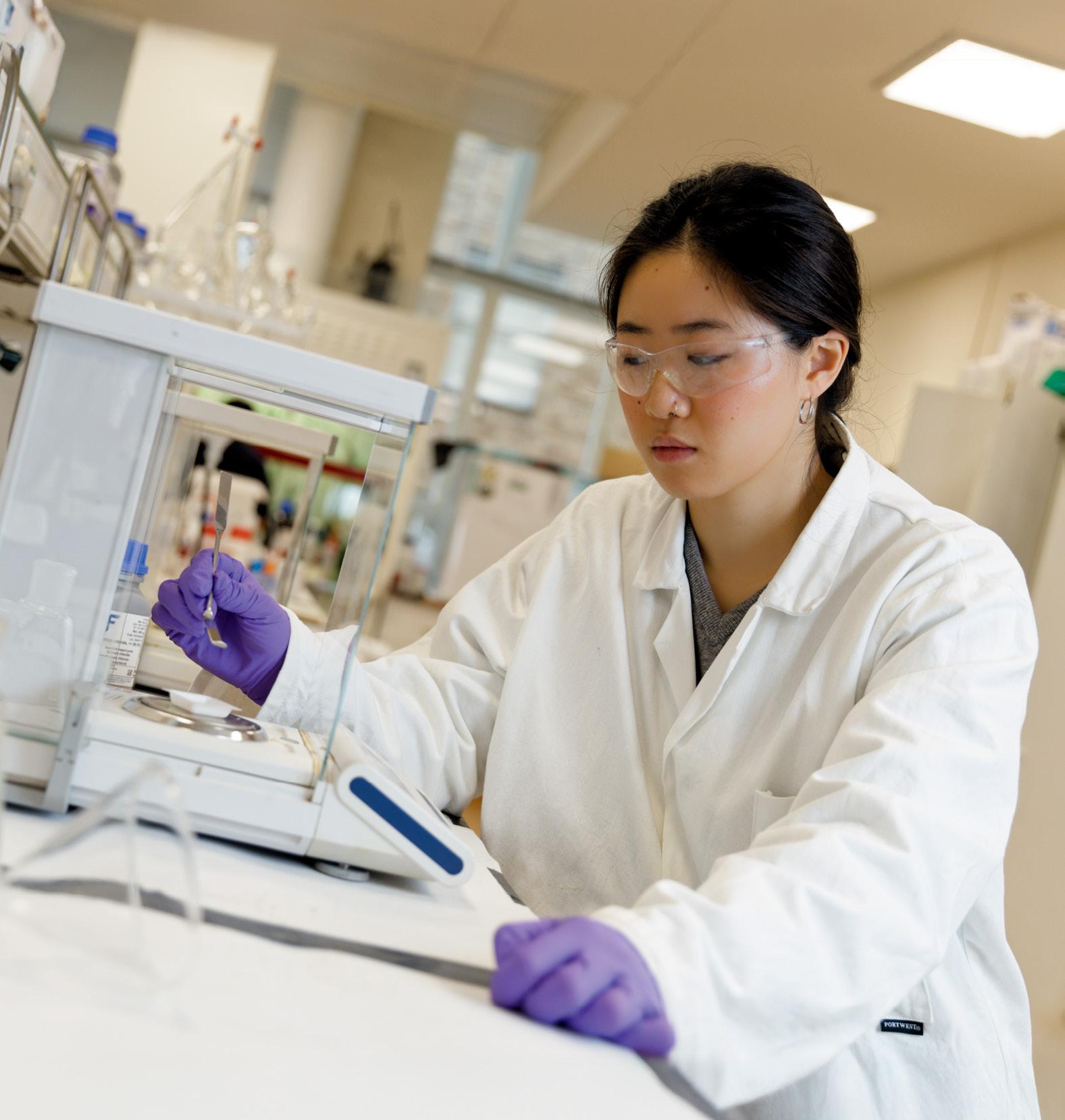
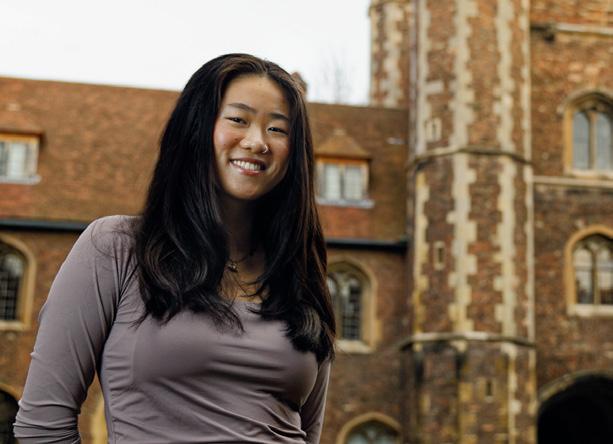
Cover photo : Sabrina Hu, photo by Nathan Pitt.
Views expressed in this magazine are not necessarily those of the Editor, the Yusuf Hamied Department of Chemistry or the University of Cambridge. Chem@Cam is published twice a year and is sent free to chemistry alumni, postdoctoral researchers, retired staff and friends of the Department. © 2025 Yusuf Hamied Department of Chemistry. Licensed under CC BY 4.0
Nathan Pitt © University of Cambridge
News brief
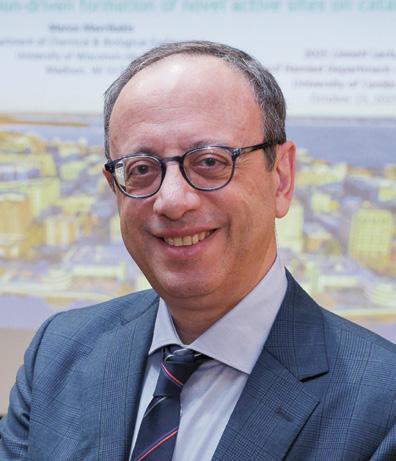
Professor Manos Mavrikakis gives Linnett Lecture
The Yusuf Hamied Department of Chemistry is delighted to host Professor Manos Mavrikakis from the Department of Chemical & Biological Engineering at the University of Wisconsin–Madison as the John Wilfrid Linnett Visiting Professor of Chemistry.
Professor Mavrikakis joined the department earlier in the term and stayed until the end of November. During his visit, he engaged in collaborative research and recently delivered the Linnett Lecture on 15 October, entitled ‘Reaction-Driven Formation of Novel Active Sites on Catalytic Surfaces’, where he shared insights from his pioneering
work on catalysts.
A leading computational chemist specialising in surface science, Professor Mavrikakis and his research group investigate transition metals and apply their findings to the design of new
Safe way to harness the immune system against cancer
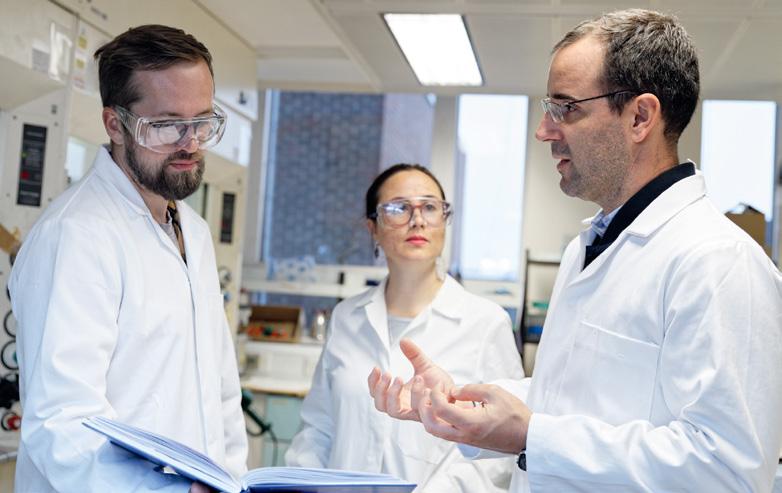
Scientists in the Bernardes Group have found a smarter way to activate the immune system against cancer making treatments safer and more precise. The team designed a two-part drug made of two harmless components that only become active when they meet inside a tumor.
catalysts and semiconductors. His lecture explored how the surface structure of catalysts evolves during reactant adsorption, with implications for catalyst stability, efficiency, and productivity. These insights provide valuable guidance for the development of next-generation catalysts with enhanced performance and durability.
The John Wilfrid Linnett Visiting Professorship of Chemistry was established in memory of Professor John Wilfrid Linnett, who served as Professor of Physical Chemistry in our department from 1965, and later as Vice-Chancellor of the University (1973–1975). Professor Linnett made substantial contributions to theoretical chemistry, most notably through the development of the Linnett double-quartet theory.
Studies show the drug switches on the body’s natural immune alarm system precisely in tumors, reducing the risk of harmful side effects and leaving healthy tissues untouched. Previous drugs that activate the immune response can target healthy tissue which often causes harmful side effects. One component of the drug is “caged” remaining inactive until it encounters a tumor-specific enzyme, which is rarely found in healthy tissue. When the caged component meets this enzyme inside a tumor, it is unlocked and reacts with the second component.“This discovery is exciting not only for cancer treatment,” says Professor Bernardes, “but also as a new way of thinking about how we make medicines safer and more precise.” Their findings are presented in Nature Chemistry
Michael Webb © University of Cambridge
Nathan Pitt © University of Cambridge
Professor Bernardes (right)
Professor Manos Mavrikakis
Meet the 2025 postgraduate representatives
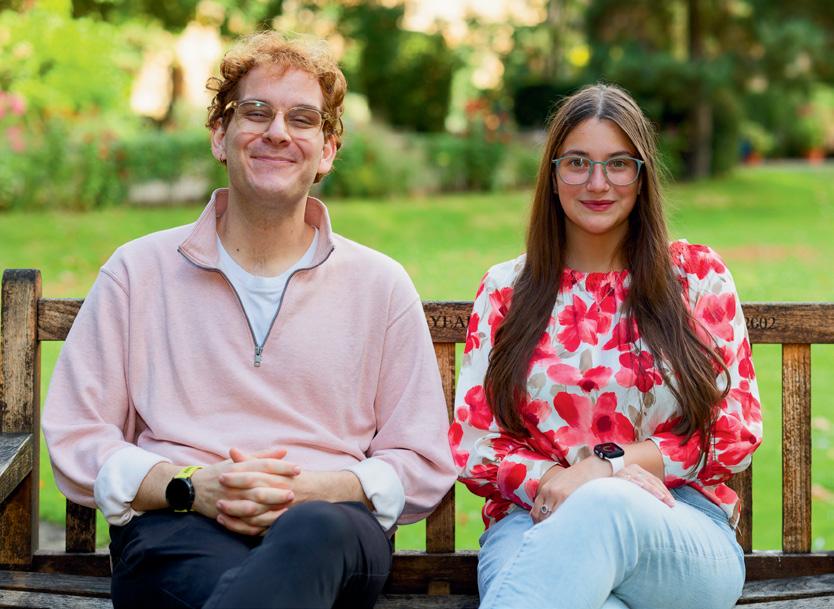
We welcome Pablo Araguas Rodriguez and Ioana Băltărețu, our postgraduate representatives who are supporting and representing our postgraduates. They are the link between the postgraduate community and the Postgraduate Education Committee bringing student concerns to the department.
Professor Steven Lee receives RMS Scientific Achievement Award
Professor Steven Lee has been announced as a winner of the Royal Microscopical Society (RMS) Scientific Achievement Award 2025. This prestigious award recognises outstanding scientific contributions in microscopy for established mid-career researchers.
Professor Lee, who leads the Lee Lab in the department, specialises in biophysical chemistry and the development of advanced imaging techniques. His lab uses fluorescence spectroscopy and super-resolution imaging to explore fundamental biological processes.
Ioana is a 3rd-year PhD student in the Phipps Group. She is researching the development of new reactions to expand the toolbox available to chemists in organic synthesis. She studies how small molecules are currently accessed and how to make these methods more selective and efficient. She continues her role
With the new imaging technique, the Lee Lab has improved the resolution of microscopy making it possible to see biological processes at least ten times better than conventional methods.
One new technique that they have developed is multidimensional super-resolution imaging which views a cell using a honeycomb-like lens that gives a three-dimensional image of a cell. These techniques have been used to look at different biological processes such as how the body changes with a new infection and the mechanisms underlying Parkinson’s disease.
In addition to his outstanding research, Steven is also the co-founder and previous CEO of Zomp, a spin-out company developing a next-generation flow cytometer – a powerful instrument for analysing the physical and
from last year.
She notes that: “We’re always here if you need to get in touch, all ideas are worth discussing. We know that alumni have a lot of experience and we are always open to hearing their experiences and suggestions. The power of hindsight can be very valuable.”
Pablo has just started his PhD in the Willis Group researching new biotechnology that will allow the creation of new therapeutic and research tools. He is engineering new molecules which are a combination of DNA and proteins which can be used as biosensors with applications in medicine.
He says that: “The biggest challenge is that we are a large department so we are representing a large number of students all doing a very diverse array of projects. Representing one experience is not possible.”
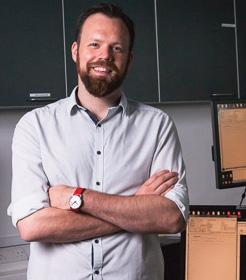
chemical characteristics of cells and particles. Zomp’s flow cytometer will be the world’s first with high throughput and 3D imaging, a crucial evolution of the technology that will increase imaging efficiency and resolution.
Pablo Araguas Rodriguez (left) and Ioana Băltărețu
Nathan Pitt © University of Cambridge
Michael Webb © University of Cambridge
Professor Steven Lee
When science meets philanthropy: a partnership driving diagnostic innovation
A groundbreaking diagnostic test developed through a partnership between Xi’an Fengcheng Hospital, Shaanxi, China, and the University of Cambridge is highlighting how philanthropy, research and clinical expertise can come together to advance patient care.
Anew diagnostic test that harnesses the body’s own immune response to detect cancer at its earliest stages has recently made headlines, highlighting the pioneering potential of collaborative medical research. This project is not only a testament to scientific ingenuity but also a vivid example of how partnerships between researchers, clinicians and donors can accelerate innovation.
The initiative brings together Professor Gonçalo Bernardes’ research group at the Yusuf Hamied Department of Chemistry and Xi’an Fengcheng Hospital, blending cutting-edge laboratory science with critical clinical insight. From its earliest stages, the hospital’s medical team provided invaluable guidance, helping to shape the test’s design to ensure real-world impact and patient benefit.
Central to the project’s success is Mr Baoshan, owner and director of Xi’an Fengcheng Hospital and a generous supporter of the Bernardes Group. His philanthropic vision has enabled the researchers to pursue bold, high-risk ideas that might otherwise have remained unexplored. As Baoshan notes: “Philanthropy and science are two sides of the same coin: one provides the means, the other the method. When they come together with a shared purpose, true innovation becomes possible.”
Beyond the media attention surrounding the test’s promise, the collaboration has fostered deeper scientific exchange, strengthened clinical-research ties and laid the foundation for future diagnostic breakthroughs. By linking research expertise with frontline medical experience, the partnership has accelerated progress in ways that would have been difficult to achieve in isolation. Xi’an Fengcheng
Hospital contributed crucial clinical data and access to patient samples, ensuring that development remained grounded in real-world needs. Meanwhile, the research team’s molecular technology was refined through early-stage clinical applications, bridging the gap between bench and bedside.
Continuous dialogue between scientists and physicians has also sparked new ideas, helping researchers to better understand diagnostic challenges in daily practice and inspiring future investigations. Looking ahead, the collaboration is poised for expansion. The teams are now exploring how the same chemical principles behind the diagnostic test might be applied to other diseases, from cancer to infectious and metabolic disorders, and how diagnostic insights could one day guide more personalised therapies.
By uniting molecular research with clinical application, this partnership is creating a continuum from early detection to targeted treatment, ensuring that innovation translates directly into better outcomes for patients. It is a powerful reminder of how thoughtful philanthropy and cross-disciplinary collaboration can turn visionary research into tangible medical solutions. As Professor Bernardes reflects: “Working with Xi’an Fengcheng Hospital has shown us how powerful cross-border collaboration can be. Their clinical insight has been essential in guiding our research towards solutions that will have real patient impact.”
Below: Professor Bernardes presenting at Xi’an Fengcheng Hospital.
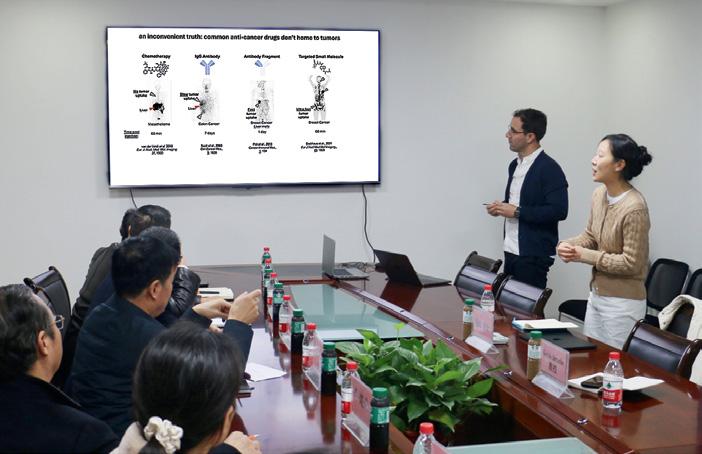
Courtesy of Wang Qian, Director of the Procurement Department at Xi’an Fengcheng Hospital
Baoshan Wang
Interviewed by Qian Wang
How does combining clinical expertise with research accelerate discovery?
Baoshan: On the clinical front line, we collect real-world data every day, a treasure trove for innovation. When research teams understand what is happening in the clinic, they can focus their efforts in the right direction. And for doctors, working with scientists helps us adopt new technologies faster and improve care. It is a productive cycle: science makes practice more precise, while clinical insight gives science more purpose. Our diagnostic project is a great example of that exchange.
Your support has been key to this collaboration. How can partnerships between donors, hospitals and researchers shape future innovation?
Baoshan: Philanthropy is not just about funding, it is about trust and shared vision. Scientific progress takes time and courage and early ideas often lack commercial support. Through our collaboration with Professor Bernardes and his team, I have seen how much can be achieved when visionary science is matched with trust. My goal is to give researchers the freedom to explore directions that may seem distant today but could transform the future. Society must trust and support exploration if we want to achieve meaningful breakthroughs.
What has this experience taught you about turning innovative ideas into realworld impact?
Baoshan: True collaboration grows from mutual respect and a shared goal. Our teams come from very different cultures and disciplines, yet we have always prioritised one thing: helping patients. That openness and trust make every discussion productive and help move discoveries faster from lab to clinic. Science is not an isolated pursuit, it is the meeting of minds. Team spirit is perhaps the most underestimated, yet most essential, force in innovation.
What advice would you give to others hoping to build effective research partnerships?
Baoshan: I would highlight three things. First, collaboration must begin with shared values, only then can it last. Second, stay grounded in local needs while keeping a global perspective. Research must stay connected to real-world challenges. And third, never forget the human element. Scientists, clinicians and patients are all part of the same story. Respect and understanding are the foundation of any meaningful collaboration. I hope our work inspires others to join forces so that discoveries can benefit patients worldwide.
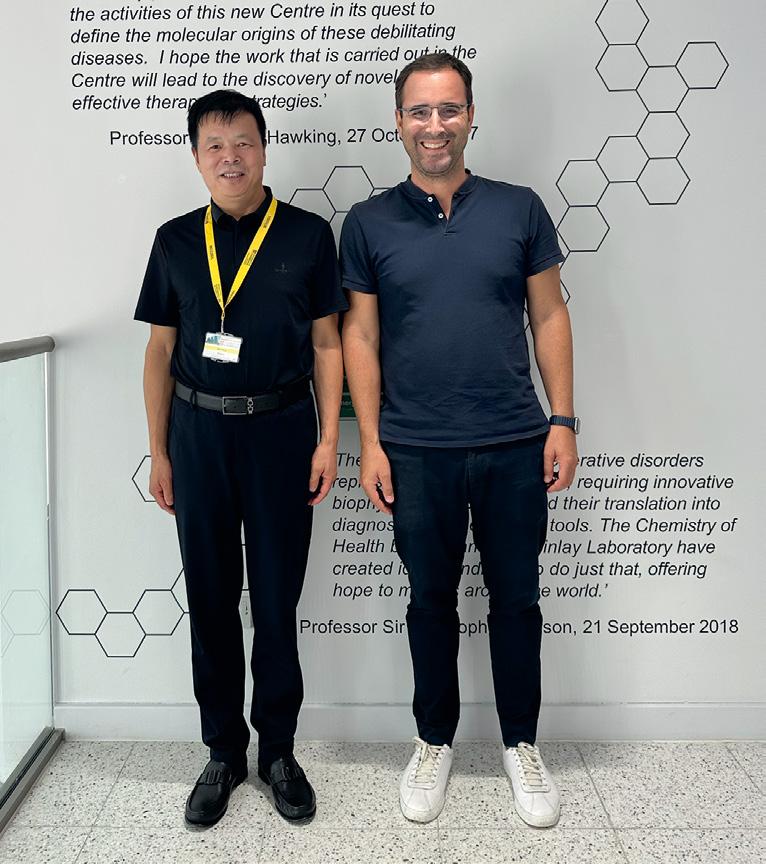
Above: In the Chemistry of Health Building – Baoshan Wang (left) and Professor Gonçalo Bernardes (right).
Courtesy of Cong Tang
Beyond EPICA: peering into more than a million years of climate history
In the early 2000s, the European Project for Ice Coring in Antarctica (EPICA) retrieved an 800,000-year climate record. Now, scientists are attempting to go even further back in time.
Fast Facts
Project Background The project builds on the success of the original EPICA project, which retrieved an 800,000-year climate record from Antarctic ice in the early 2000s.
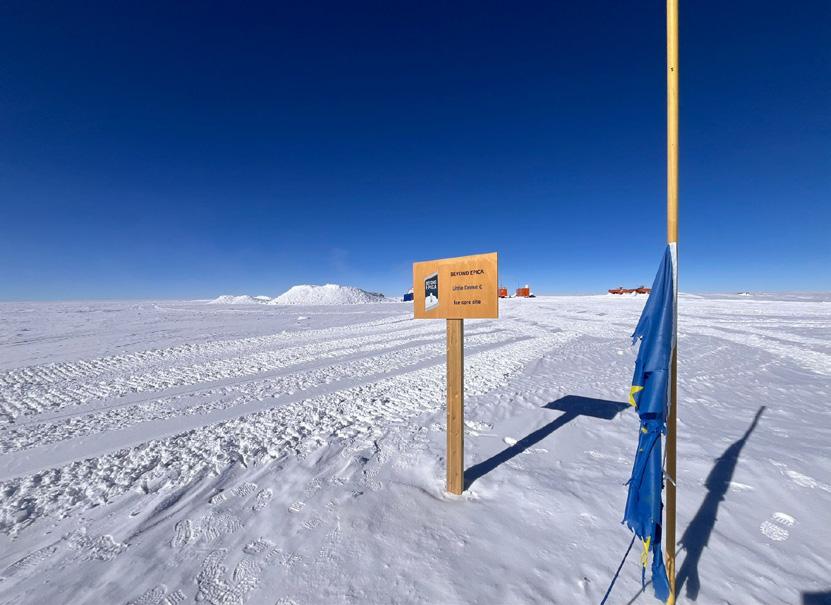
Drilling Site Little Dome C, is located on the East Antarctic Plateau at an altitude of 3,200m and approximately 40 km from the Italian/French operated Concordia Station. Dr Robert Mulvaney from BAS was involved in the site selection for the drill site in the 2016/17 and 2017/18 seasons.
Project Coordination The Beyond EPICA – Oldest Ice Core project is co-ordinated by Italy through Cnr-Isp and is led by Carlo Barbante, professor at Ca’ Foscari University of Venice and senior associate member at Cnr-Isp, with a research team comprising 12 scientific institutions from 10 European countries.
Ice cores are often likened to time machines. When snow falls it brings with it particles and molecules from the sky and traps air bubbles, which act as a sample of the ambient atmosphere. The snow becomes compressed by overlying snow, eventually forming ice, and is buried over hundreds of thousands of years. This allows scientists to extract information about the chemistry of past atmospheres, going further back in time with deeper ice cores.
Beyond EPICA: Oldest Ice
The Beyond EPICA: Oldest Ice (BEOI) project has already broken records. At 2.8 km it is the longest ice core ever drilled and initial aging suggests this record stretches back more than 1.5 million years. More importantly, this ice could hold the answer to one of paleoclimatology’s most exciting unsolved questions: what caused
the Mid-Pleistocene Transition (MPT)? The MPT was a period from 800,000 – 1,200,000 years ago, when the timing of ice ages changed from roughly every 40,000 years to every 100,000 years – the pattern we see up to the present. By extending the ice core record beyond this period, scientists aim to better understand climate changes in the past, what may have caused them and ultimately improve our predictions of how Earth’s climate may change into the future.
Unlocking
the atmosphere
Funded by the European Commission, BEOI brings together scientists from 12 institutions across ten European countries. The project is primarily coordinated by Professor Carlo Barbante through the Italian Institute of Polar Sciences of the National Research Council (CNR). Last
September, researchers led by Dr Liz Thomas at the British Antarctic Survey (BAS) in Cambridge began the first chemical analyses of the ice core – work supported by the NERC Pushing the Frontiers MPTIce Project. Over seven weeks, the team carefully melted samples of the ice and channelled the melted samples of the ice into more than ten analytical systems.
Our role in unlocking ice core chemistry
Charlotte Phillips (PhD student) with Chuanxin Gu (PhD student), Tobi Kolawole (Postdoc) and Alexander Zherebker (Postdoc) were part of a small sub-team from Professor Chiara Giorio’s Group (Yusuf Hamied Department of Chemistry) who spent time in the ‘clean room’ – essentially a walkin laminar flow hood – at BAS, collecting discrete liquid fractions of the melted ice for their own analysis.
Charlotte says: “Working in these labs is really exciting and the
“The BEOI campaign allows us to unlock the secrets of our atmosphere’s evolution further back in time than ever before”
Charlotte
Phillips
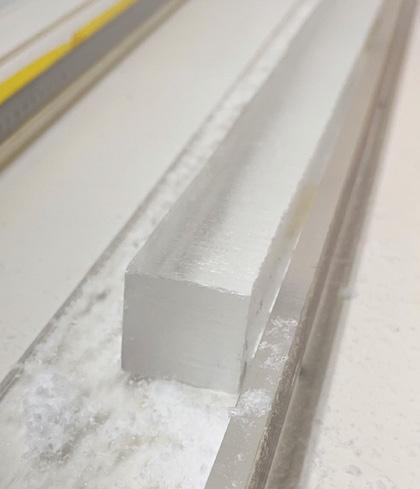
Above: A stick of the BEOI core. Below: The BEOI core on the melt head (it is possible to see the little bubbles of meltwater at the bottom).
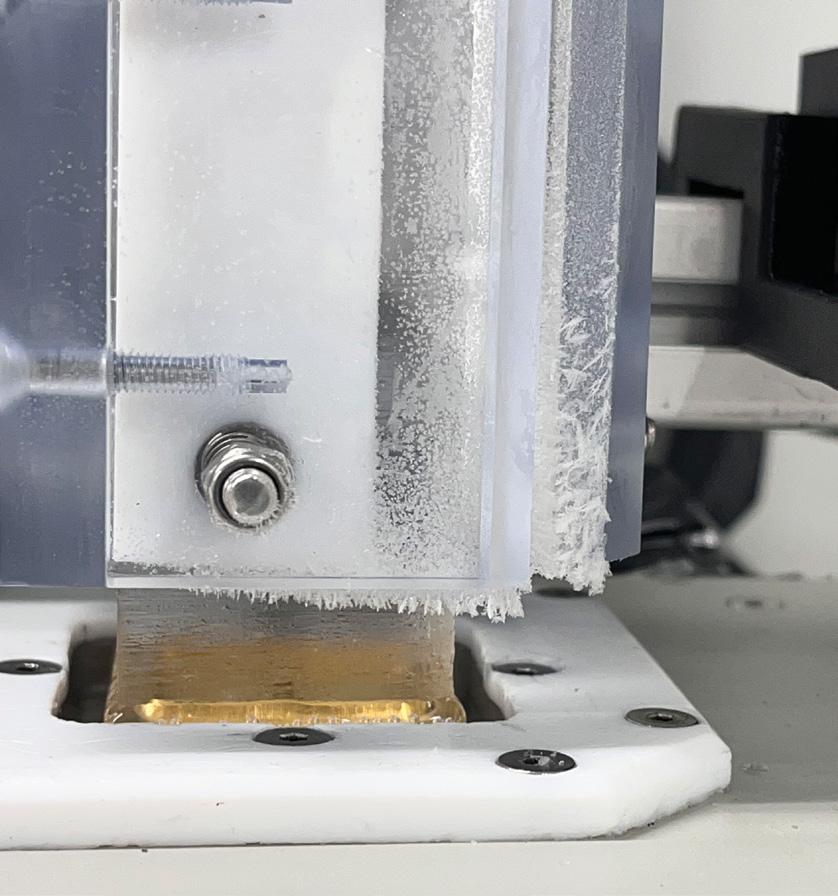
ice is beautiful! It’s clear with huge crystals, which highlights how long it’s been locked away, compressed by kilometres of overlying ice and snow, and hidden from the world … until now!”
Charlotte’s research focuses on organic aerosols preserved in ice cores and their importance in providing clues for understanding the self-cleaning capability of the atmosphere. Building on past work done in the department, the team have identified nine organic target compounds that derive from oxidised biogenic volatile organic compounds. Preliminary analysis shows great promise. Monitoring their changing concentration through the depth of an ice core, if preserved in the ice in a measurable quantity, might help us understand how oxidative the atmosphere was at different times in history. The atmosphere’s oxidative capacity is still an outstanding uncertainty in our climate models, and understanding how this parameter changed in the past is crucial to predict any future changes. This could help improve models and predict future air quality in changing climate conditions.
A glimpse into the future
As more research groups across Europe conduct their own analyses on this ice into 2026 there will be an abundance of data to investigate. Charlotte says: “The BEOI campaign allows us to unlock the secrets of our atmosphere’s evolution further back in time than ever before, and it’s a real privilege to be a part of such a groundbreaking project”. With these analyses, BEOI promises to keep reshaping our understanding of Earth’s climate history for years to come.
Further information: www.beyondepica.eu/en/
Media Coverage: https://bit.ly/43E3kHT
Related Media Coverage: http://bit.ly/3KAD765
Speeding up sustainable energy storage
Researchers in the Forse Group are uncovering why some supercapacitors charge faster than others, revealing how the microscopic architecture of carbon could unlock the next generation of clean energy technologies.
The big picture Supercapacitors could revolutionise energy storage: with the ability to charge and discharge in seconds, they’re ideal for delivering quick bursts of power to electric buses, supercomputers and renewable power grids. Unlike batteries, they can last for millions of cycles and don’t rely on metals whose extraction harms the environment. However, realising their full potential means understanding the details of how they store and release energy. One key question: Why do some supercapacitors keep working well during fast charging while others lose storage capacity? That is the question this research is set out to answer. “We suspected that the way ions move through the carbon material is crucial,” explains Dr Kress. “The challenge was finding a way to track how ions travel inside such disordered carbon materials.”
The discovery Using a cutting-edge Nuclear Magnetic Resonance (NMR) technique, the Forse Group tracked how ions move through the microscopic porous labyrinths found within carbon electrodes. They found that materials with more direct, less twisted pathways, known as ‘lower tortuosity’, allow ions to move faster, enabling the device to charge and
discharge more efficiently. This insight builds on the group’s earlier discovery that disorder in carbon materials can actually enhance their charge storage capacity. Now they’ve shown that how well-connected those disordered structures are determines how much of the stored energy can be released rapidly.
Why it matters Supercapacitors are already among the cleanest and most durable forms of energy storage available. The next challenge is to make them cheaper and more powerful so that they can complement or even replace lithium-ion batteries in a wider range of applications. By revealing how pore structure affects ion transport, the Forse Group’s work gives engineers a roadmap for designing faster and better-performing materials without adding cost or complexity. And because these carbons can be produced from renewable waste sources such as coconut shells, the research also advances the sustain-ability of energy storage itself. The impact is already extending beyond the lab, inspiring new collaborations into advanced carbon materials for energy storage. “It is exciting to see our fundamental research being translated into real materials that could make clean energy more scalable,” says Professor Forse.
Looking ahead Next, the group aims to keep pushing the boundaries of NMR to reveal how ions behave inside these microscopic labyrinths during charging at the molecular level. “The goal,” says Dr Kress, “is to combine advanced NMR experiments with computer modelling to build a complete picture of what is happening inside the pores during charging. Once we better understand how structure affects performance, we can guide industry towards designing supercapacitors that work better and cost less.”
While NMR is complex and requires sophisticated instrumentation, its power makes it invaluable for understanding supercapacitor materials and advancing one of the most promising technologies in the race toward sustainable energy.
Findings will be detailed in Nature Materials
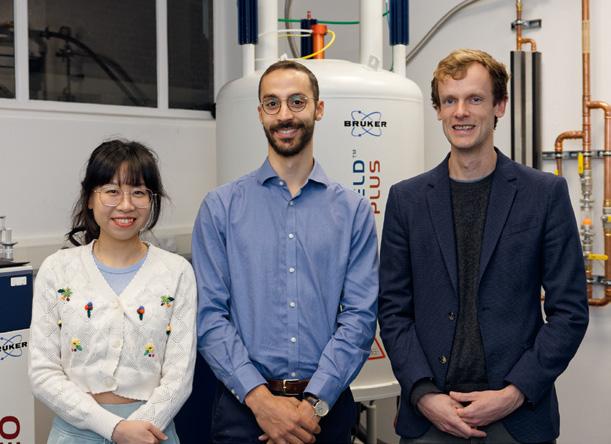
Below: Dr Liu, Dr Kress and Professor Forse.
Nathan Pitt © University of Cambridge
New Advanced Materials MPhil to train scientists for a zero-carbon future
Course co-leader Dr Seán Kavanagh outlines the vision behind the new MPhil.
The first intake of students in the new Advanced Materials for the Energy Transition (AMET) MPhil has begun their studies this academic year! The AMET MPhil is a one-year master’s programme split across the Chemistry, Materials and Physics departments, designed to deliver outstanding postgraduate level training in the sciences related to the development of new materials for low-carbon energy technologies.
Global warming and energy challenges are increasingly placing constraints on society and will lead to major economic and societal changes in the future. To overcome these challenges and promote a sustainable modern society, it is necessary to develop new technologies with minimum environmental impact, for example with low energy consumption and low carbon dioxide production. Moreover, advanced technologies that can efficiently produce and store renewable energy are required. The development of these materials-based energy technologies necessitates interdisciplinary expertise in scientific and technological domains, including Physics, Chemistry and Materials Science.
The goal of the AMET MPhil is to train the next generation of scientists in these interdisciplinary skills necessary to understand and model the properties of new materials, find ways to synthesise them, and develop new zero-carbon energy technologies. The diverse topics addressed in the course will prepare students for long-term careers in a rapidly growing zero-carbon energy sector, where broad knowledge of flexible and agile materials and systems is required to deliver a secure and sustainable global energy landscape. As such, the AMET course will follow a multidisciplinary approach to energy materials, ensuring that graduates are well placed to work in a diverse range of energy-related areas that are in high demand from employers.
Course modules will include an introduction to energy materials delivered by Professor Akshay Rao (Physics), life-cycle analysis from Dr Shijing Sun (Materials), experimental techniques for characterising energy materials by Professor Caterina Ducati (Materials) and Dr Seán Kavanagh (Chemistry),

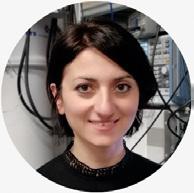
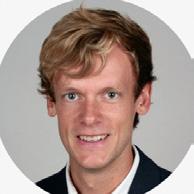
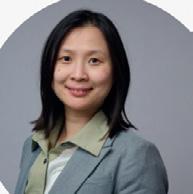
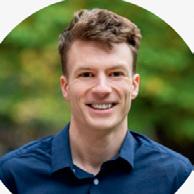
computational techniques for energy materials by Drs Shijing Sun (Materials) and Seán Kavanagh (Chemistry), innovation in science by Professor Karishma Jain (Physics), energy generation by Professor Akshay Rao (Physics), electrochemistry, energy storage and electrocatalysis by Professor Alex Forse (Chemistry), and efficient energy usage by Professors Chiara Ciccarelli (Physics), Xavier Moya (Materials), and Dr Stephen Mitchell as the Course Administrator. In addition, students will complete a research project related to energy materials during the Easter term, hosted by various research groups across the University.
The lead directors of the AMET MPhil are Professors Alex Forse, Chiara Ciccarelli and Xavier Moya, joined by recently appointed Drs Shijing Sun and Seán Kavanagh in Materials and Chemistry, respectively.
Dr Kavanagh highlights: “Materials will play a crucial role in the future of global energy infrastructure.
The AMET MPhil will equip students with a unique set of skills and knowledge to tackle the grand challenge of developing advanced materials for the energy transition.”
Professor Xavier Moya
Professor Alex Forse
Professor Chiara Ciccarelli
Dr Shijing Sun
Dr Seán Kavanagh Dr Stephen Mitchell
Above: Lead directors and administrator of the AMET MPhil.
Cambridge’s new chemistry curriculum: a catalyst for change
Professors Deborah Longbottom and Sally Boss showcase a forward-looking approach to chemistry
Cambridge’s Chemistry course, offered under the Natural Sciences Tripos (NST) umbrella, is renowned for producing worldclass graduates in high demand for further study and careers across many sectors.
In response to growing internal enthusiasm for a full curriculum review, and in alignment with the University-wide Teaching Review, in 2024 the Head of Department, Professor James Keeler, invited Professors Deborah Longbottom and Sally Boss to lead this important and ambitious project. The aims are far-reaching: to analyse, update and enhance the course content and structure; to improve the student experience; review staff and student workload; and to embed principles and practice of sustainability, equality, diversity and inclusivity throughout the course.
A year on, and with huge thanks to our Curriculum Review Steering Group, Teaching Committee and Faculty, as well as consultation partners across the UK, Europe and the USA, it has been possible to implement substantive changes to the course, even for this 2025-26 academic year! Professor Gregg Tucci (Harvard University) remarks: “I was really impressed to learn about the changes happening in Cambridge’s Chemistry curriculum. It’s great to see such a thoughtful approach to updating course content, supporting students, and including important topics like sustainability and inclusivity. I’m excited to see how these innovations will benefit students and look forward to following the progress of your curriculum review.”
education.
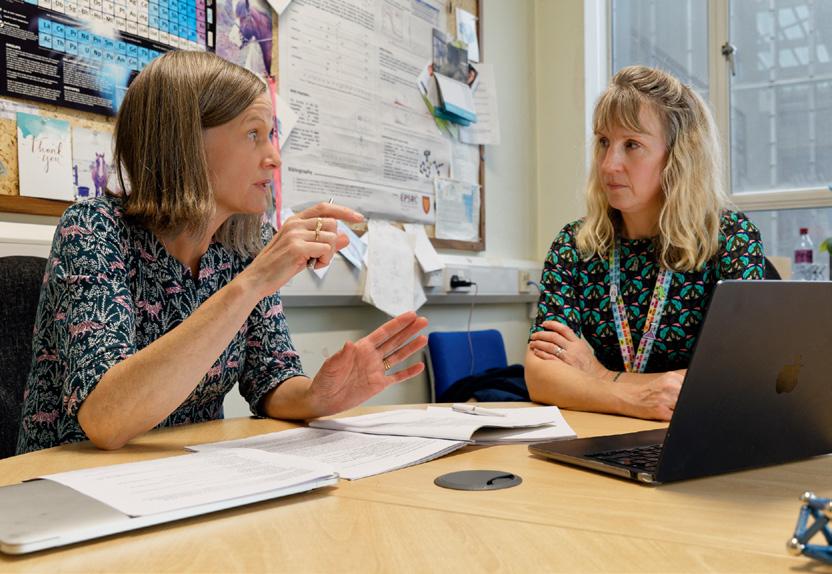
“Reviewing the IB labs has decreased student workload while simultaneously adding to the learning experience. The course now incorporates more sustainability–focused content as well as group work, encouraging students to learn from one another.”
Sam Brown and Thomas Caskey
Early progress
Our second year Chemistry B practical class has been updated, to ensure that students develop their practical skills through a carefully crafted spiral curriculum in which key concepts are revisited and built upon in progressively greater depth across the Michaelmas and Lent terms. In addition, reducing the number of full written reports from eight to
two per term has eased students’ workload, allowing them to focus more on practical techniques and the analysis of their synthesised compounds.
Part II summer intern students Sam Brown and Thomas Caskey commented: “Reviewing the IB labs has decreased student workload while simultaneously adding to the learning experience. The course now incorporates more
Nathan Pitt © University of Cambridge
Professors Deborah Longbottom and Sally Boss.
sustainability-focused content as well as group work, encouraging students to learn from one another.”
From this academic year, Part III students will now take part in a new ‘Poster Showcase’ event in Lent Term, for which they will create and present a poster as part of their research project. This task is designed to encourage them to distil their research into a concise and digestible summary, refine their understanding of their project and practice important presentation and communication skills to an audience of interested Part II students (next year’s Part IIIs) and academics.
What’s next?
Given the breadth and depth of the Curriculum Review project, the Steering Group is now seeking colleagues (inside and outside the Department) and students to contribute to ‘Advisory Groups’: these will inform decisions around Course Structure, Learning Outcomes and Competence Standards, Sustainability, Laboratory training, AI, and Inclusive Teaching.
Deborah and Sally are really proud of the work it has been possible to complete this academic year and the positive impact it is already having on our students and staff. They are excited at the opportunity for innovative reform of our educational offering over the coming years, as well as the positive impact and leadership that this will hopefully provide to the NST overall. Professor Tim Weil (Deputy Head of School of Biological Sciences – UG Strategy) says: “This work is a real inspiration for positive improvements in teaching at the university – despite being one of, if not, the best in the world they are still seeking to improve and that is a massive credit to them as educators!” They emphasise again their thanks to members of the Chemistry Curriculum Review Steering Group, Teaching Committee, and Faculty near and far for their inspiring conversations and encouragement to think radically and fundamentally about what we can and should do, then articulate it in a way that brings the whole department on the journey with them.
Steering Group
Daniel Beauregard, Sally Boss (Co-Chair), Jonathan Goodman, Rob Less, Deborah Longbottom (Co-Chair), Bill Nolan, John Morgan, Gonçalo Bernardes, Oren Scherman, Stephanie Smith, Alex Thom, Ruth Webster, Paul Wood, Peter Wothers, Howard Jones, Steven Lee, Nick Bampos, Jenny Zhang.
External: John Harding (Head of ADRC ), Andrea Chlebikova (STEM SMART), Chris Baker (Head of Blended Learning Service), Kamilah Jooganah (CCTL).
From support to success
With the support of the Yusuf Hamied Scholarship fund, we are proud to host this remarkable group of students whose talents and research will impact the future of chemistry.
Anna Conti (Pembroke College) Klenerman Lab
Anna (below) comes from a physics background and brings a broad experience of microscopy research to her PhD in the Klenerman lab where she is researching misfolding diseases, in particular Parkinson’s disease. This disease is characterised by small aggregates forming in brain tissue that grow into larger aggregates and lead to deteriorating brain function. Her research focus is on smaller (nanoscopic) protein aggregates believed to be more toxic, and their role in Parkinson’s disease, using single-molecule microscopy techniques.
Before arriving at the University of Cambridge, she studied an integrated Master’s degree at the University of St Andrews and completed some internships involving microscopy in different settings. For one of her internships, she looked at how particles move inside cerebrospinal fluid and tracked if they speed up or slow down to understand how the brain gets rid of toxins.
For another internship, she was a Saltire scholar for Optos working on retinal imaging devices. She investigated the light detectors used to look at the retina in medical exams and explored ways to increase their sensitivity for improved diagnostics.
Although she has only recently joined the department, she’s enjoying the sense of community in the city and throwing herself into trying new sports and clubs, and volunteering with Parkinson’s UK.
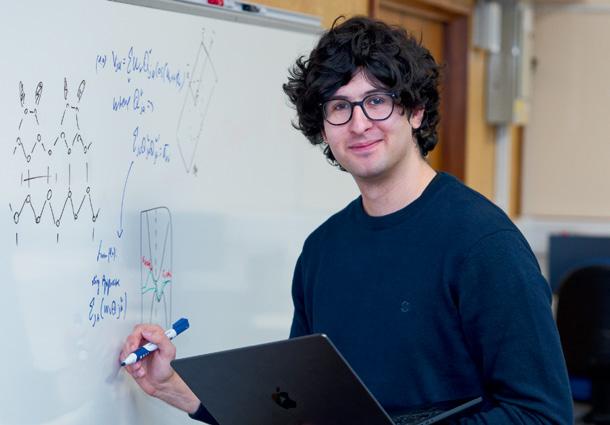
Samuel Ginzburg (Hughes Hall) Surface Science Group
Samuel (above) researches crystal surfaces and their properties and is particularly interested in how these can relate to semiconductors. His work is theoretical and he performs computer simulations to study the reaction dynamics and electronic structure of semiconducting surfaces – exploring how atoms interact and how these processes influence surface behaviour at the quantum level.
He researches silicon in particular, as it is widely used in the semiconductor industry and has important implications for emerging technologies such as quantum computing. Semiconductors are partly conducting and partly insulating materials and their properties change when different impurities are added in a controlled manner.
Having completed his Master’s degree in the Jenkins Group, Samuel is now finalising that research for publication while establishing his PhD projects. Alongside this, he is researching intermetallic materials: compounds made from two or more metallic elements which have interesting electronic behaviours that may pave the way for future spintronic and quantum devices.
Samuel has a strong interest in public speaking and finds being a lab demonstrator for computational chemistry practicals rewarding, and he looks forward to organising debate motions for the Cambridge Union as Debates Subcommittee Coordinator for Lent 2026.
Michael Webb © University of Cambridge
Nathan Pitt © University of Cambridge
Anna Conti
“In high school, I had an amazing chemistry teacher who was passionate about teaching and her enthusiasm played a major role in inspiring me to study science at university.”
Zhihe Lei
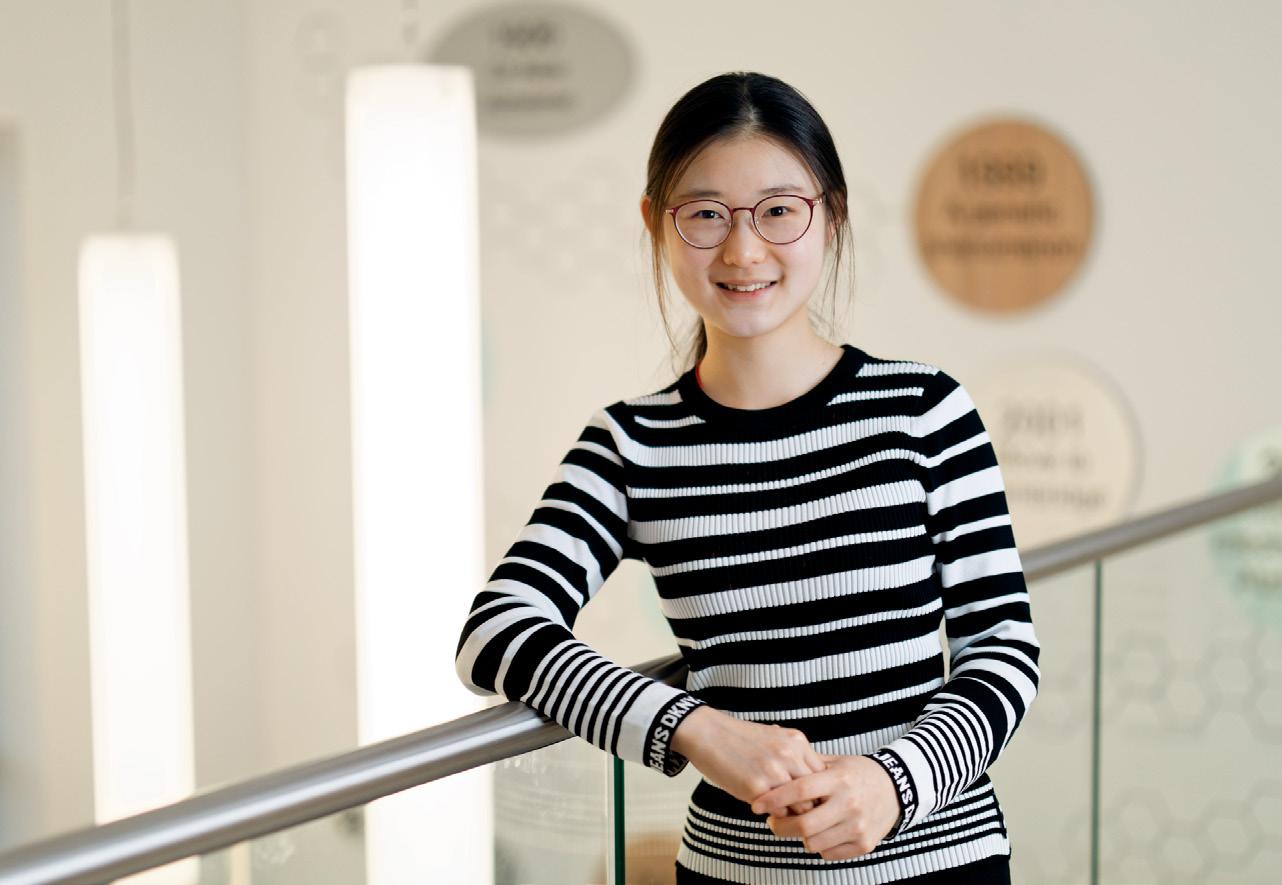
Zhihe Lei (Clare Hall) Bernardes Lab
Zhihe (below) says that: “In high school, I had an amazing chemistry teacher who was passionate about teaching and her enthusiasm played a major role in inspiring me to study science at university.”
Now, she has started her PhD in Professor Gonçalo Bernardes’ laboratory working at the interface of chemistry and biology. She studies how proteins and RNAs form liquid droplets inside cells to create membrane-less compartments. These droplets form in a similar way to how oil separates from water and research on them has implications for understanding diseases such as cancer.
Her first glimpse into the world of research was during an internship at the Nuffield Department of Medicine in Oxford where she synthesised a small molecule and tested its potential in drug development. She enjoyed how research can integrate both biology and chemistry and the Bernardes laboratory was the perfect place to continue this interdisciplinary research.
The Group offers a wide variety of projects and, although Zhihe hasn’t fully defined her PhD focus yet, she is excited to collaborate and explore new concepts. In her spare time, she enjoys crafting and spent the summer finishing up some embroidery before starting her PhD.
Nathan Pitt © University of Cambridge
Zhihe Lei
Molecules, coding and skating: the triple life of a modern scholar
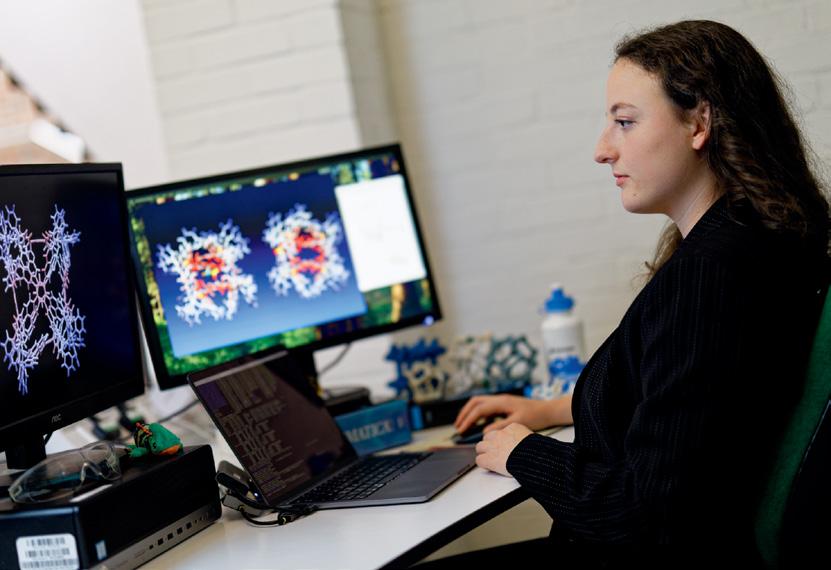
Paula Teeuwen is co-supervised by Professors Jonathan Nitschke and David Wales, and she studies materials that self-assemble into supramolecular structures. Her PhD is funded through a full scholarship from the EPSRC SynTech Centre for Doctoral Training.
She began working in the Nitschke Group testing materials and it soon became clear that there was a role she could play computationally to complement the research. In her second year, Paula joined the Wales Group, allowing her to bridge both experimental and computational approaches across the two groups.
Writing 3D software
One of her favourite projects is a program that she has developed for her experimental colleagues in the Nitschke Group. The tool helps chemists visualise their molecules on the computer and test whether the structures are suitable for experiments before synthesising them in the laboratory. Drawing complex structures without this tool can be time-consuming but omitting this step can slow down the discovery process.
She says: “There is a lot of amazing software out there, but the learning curve can be too high; you need programming knowledge to use it. That’s why I have been working to make these methods more accessible so my colleagues can focus on the experiments rather than the modelling process. Plus, the diagrams look great for grant proposals.”
The pseudo-cube
With the Wales Group, Paula uses
computer programmes to simulate molecules and explore their energy landscapes.
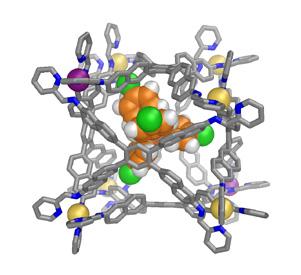
A recent co-authored paper, published in Nature Chemistry, describes a pseudo-cubic molecular cage which was designed and synthesised by lead author Houyang Xu. The cage has a hollow central cavity large enough to hold other smaller molecules and, unlike many existing molecular cages, this pseudo-cube can expand or contract, thereby being able to “host” a variety of “guests” with different sizes.
Below: The pseudo-cube (white, blue and yellow) with a guest molecule inside (orange and green).
Made by Paula Teeuwen from Houyang Xu’s crystal structure.
Skating on the road and on the ice
The Symposium on Theoretical Chemistry in Berlin, themed Exploring Energy Landscapes, was a perfect fit for Paula. Here she could present her research to computational chemists and, moreover, the community behind several important tools she uses every day. By happy coincidence, the Berlin Inline Skating Marathon was also on the weekend before the symposium, allowing Paula to combine presenting her research with another one of her passions. Paula has a background in longtrack ice skating in the Netherlands and continued after her move to Cambridge as the new president of the Cambridge University Ice and Roller Skating Club.
Nathan Pitt © University of Cambridge
Watch a video of the Pseudo-cube moving.
Widening Participation in chemistry at Cambridge
The University of Cambridge is committed to widening participation and ensuring postgraduate opportunities are accessible to talented students from all backgrounds. This commitment is reflected in initiatives such as Contextual Admissions, which uses applicants’ backgrounds, including socioeconomic status, educational history, care experience, refugee status or caring responsibilities, to support fair access. The Close the Gap Project also identifies barriers in postgraduate admissions and provides evidence-based guidance for departments.
The department has piloted a targeted Widening Participation (WP) studentship scheme, offering fully funded PhD places to candidates meeting specific criteria, including: underrepresented ethnic backgrounds, refugee status, mature students, first-generation university attendees, care-experienced or estranged without family support.
The pilot has successfully supported three students, and the department will continue to allocate one WP studentship each year. We spoke with Zedric Grosvenor, who is currently in his second year as a PhD student in the Clarke Group. He is one of the first students in the pilot WP scheme.
His research focuses on improving the fire safety of moisturisers. He adds components to test their flammability and explains: “Last year, I was still working alongside my previous laboratory because they have more specialised kit. With the help of our workshop, we now have our own
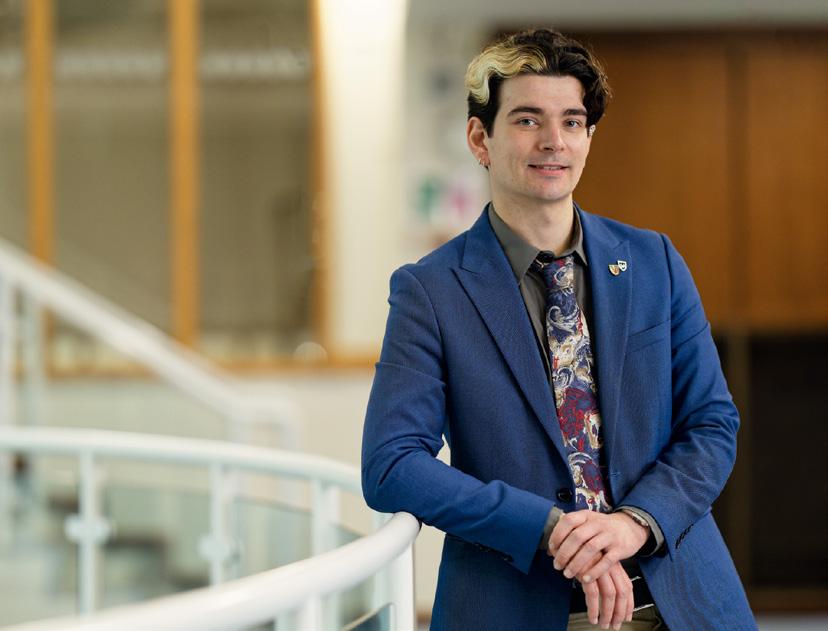
versions with some specialised adaptations for my research. Last year was about setting up and now I’m getting started with the real experiments.”
Zedric followed an unconventional path into academia, training as a teacher through the Royal Society of Chemistry’s teacher training scholarship programme. He returned to research to continue a project on ignitable liquids from his Bachelor’s degree at Anglia Ruskin, with the WP programme providing the support he needed.
“Widening Participation in postgraduate admissions ensures that talent and potential are recognised beyond the traditional metrics”
Dr Aruna Reddy
Today, he is fully involved in college life at Trinity College and is part of the rifle club, taking part in
team matches and competitions. These initiatives demonstrate how Cambridge and the Department of Chemistry work together to create a more diverse and inclusive research community.
Dr Aruna Reddy, Postgraduate Education and Admissions Manager, says: “Widening Participation in postgraduate admissions ensures that talent and potential are recognised beyond the traditional metrics, which is essential in enriching academic research with diverse perspectives and experiences.”
Nathan Pitt © University of Cambridge
Zedric Grosvenor
Investing in innovation
As part of ongoing improvements and renovations to our facilities, we spoke with Matt Bushen, Facilities Manager.
Matt oversees maintenance and, together with Marita Walsh, Head of Chemistry Operations and Estates, and with input from the Department’s Safety Officer, Dr Richard Turner, he also oversees renovations in our long-standing Lensfield Road building.
Ground Floor North Laboratory refurbishment
The ground-floor labs, once home to Professor Sir David King’s group (1993–2000), have been refurbished to house Professor Tuomas Knowles and his group. The group explores how proteins aggregate in the brain, particularly in Alzheimer’s and Parkinson’s diseases, and works to uncover the molecular mechanisms behind these processes and develop new diagnostic and therapeutic approaches. They had outgrown their basement lab.
The new state of the art labs, which include two new fume cupboards, two new Containment Level 2 (CL2) labs (for moderaterisk biological work), a fabrication room, and an airy, modern breakout and write-up space, have been described as “fantastic!” by Tuomas. He went on to say: “This new laboratory will provide unique facilities to integrate new technologies with biomedical research, and we are very excited about the possibilities in this area going forwards”.
Boiler replacement
Another major upgrade involved replacing the building’s main boilers
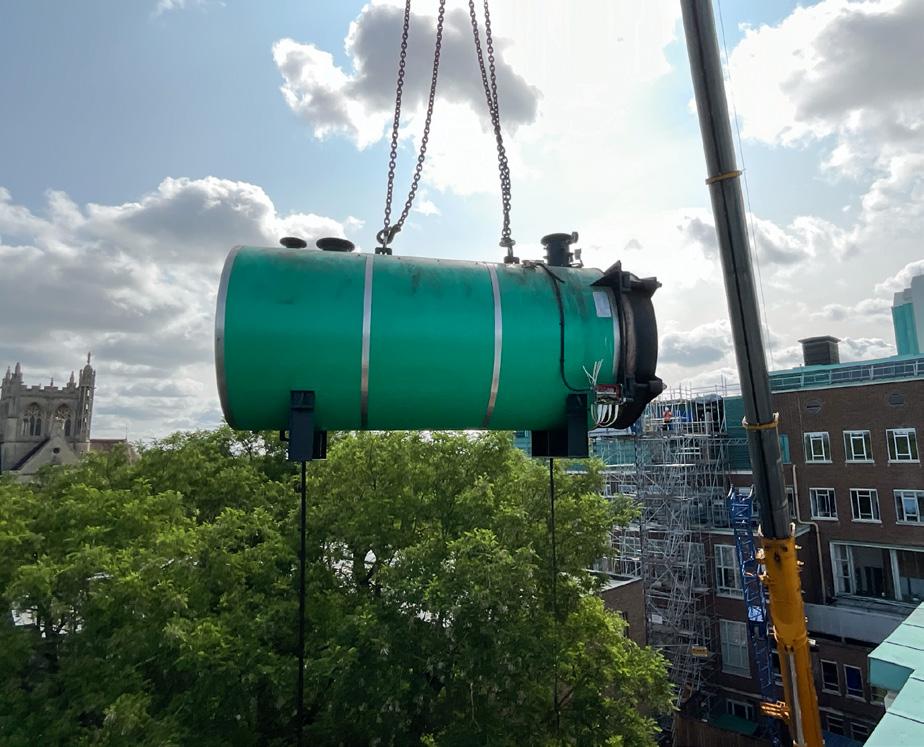
and although it was an Estates Management project, it required significant input from Matt and his team to ensure it ran smoothly. The four existing boilers, each weighing two tonnes and located on the fourth floor, had been in service for 25 years before they were craned out of the building. Two had irreparably broken down, whilst the remaining two were becoming increasingly difficult to maintain and unable to deliver all the department’s heating in the colder months, so two temporary boilers were installed outside
for two years whilst Estates Management investigated options to replace the boilers.
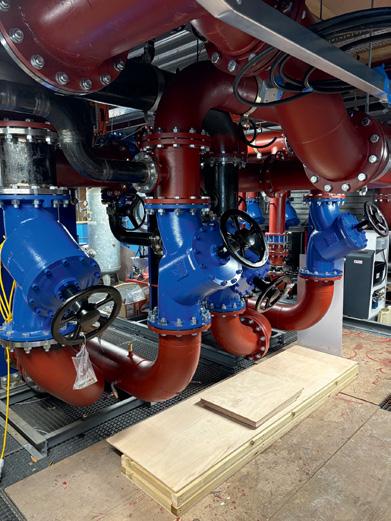
The four old boilers have now been replaced by 33 smaller, modular gas boilers, which are more efficient, flexible and easier to manage. Good, reliable heating is vital because, with 405 fume cupboards in the building expelling air 24 hours a day, within a couple of hours the laboratories would reflect the ambient temperature outside making it impossible for researchers to work safely or comfortably in the winter.
Above: Old boiler removal.
Courtesy Richard Turner
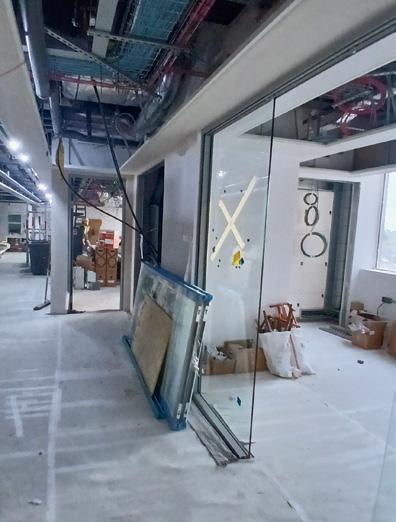
2nd and 3rd Floor S.W. Wing Laboratory refurbishments
The last refurbishment is to labs 290, 353, 354 and associated rooms, which is due for completion in early January. Lab 354 was last refurbished in the 1990s and the air handling plant was end of life, so the work is long overdue. The project will provide modern, airy space and involves replacing 27 old fume cupboards with 29 new, more efficient fume cupboards complete with auto sash closers, creating two new Containment Level 2 (CL2) labs on the second floor, providing new benching throughout and all-important segregated write-up spaces on both floors. This much needed refurbishment has only been made possible by a further generous donation from Dr Yusuf Hamied.
Looking ahead
The University’s Strategic Estate Framework has recognised that the department will remain on Lensfield Road for years to come. Therefore, as the main building was built in 1958, it is now nearly seventy years old, so needs much tender loving care to remain fit for purpose. Consequently, the facility will undergo major refurbishments over the coming years. Its unique nature and complex challenges mean Matt and the maintenance team’s deep historical knowledge will remain essential for daily updates.
Marita says: “To ensure every upgrade meets the researchers’ needs, we always consult space users to ensure it meets their needs, although science can often move quicker than the large refurbishments. However, whether a laboratory refurbishment or a boiler replacement all the upgrades are done to enable scientists, staff and students work at their best. The building continues to evolve as work on a brand-new server room starts in December.”
“ To ensure every upgrade meets the researchers’ needs, we always consult space users to ensure it meets their needs, although science can often move quicker than the large refurbishments. However, whether a laboratory refurbishment or a boiler replacement, all the upgrades are done to enable scientists, staff and students work at their best.”
Marita Walsh
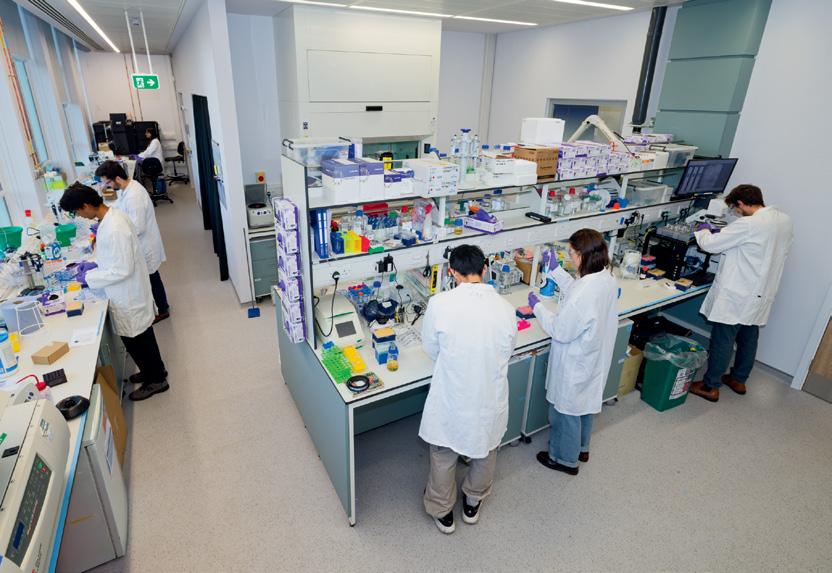
Right: New ground floor lab.
Above: New boiler system.
Above: Lab 354 in progress.
Michael Webb © University of Cambridge
Courtesy The Barnes Group Ltd
Courtesy of Matt Bushen
In conversation with alumnus
Dr
John Tims
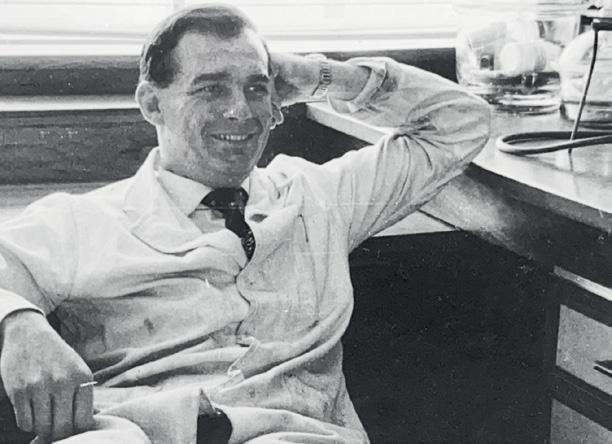
Dr John Tims (Selwyn College 1961–1963) overcame personal hardship to complete his PhD in chemistry, thanks to the support of a senior department member that shaped his life and career.
John’s lifelong fascination with chemistry began early, drawn by its blend of intellectual challenge and hands-on discovery. He loved the practical side of the subject, the precision of distillations, the feel of glassware in the lab and the satisfaction of turning theory into something real.
At the University of Birmingham, John thrived academically, but tragedy struck in his final year when his father died suddenly. Balancing his studies with caring for his grieving mother and younger brother, his academic performance inevitably suffered. When his final results fell short of his potential, Professor Stacey, Head of Chemistry at Birmingham, intervened, convinced that John deserved another
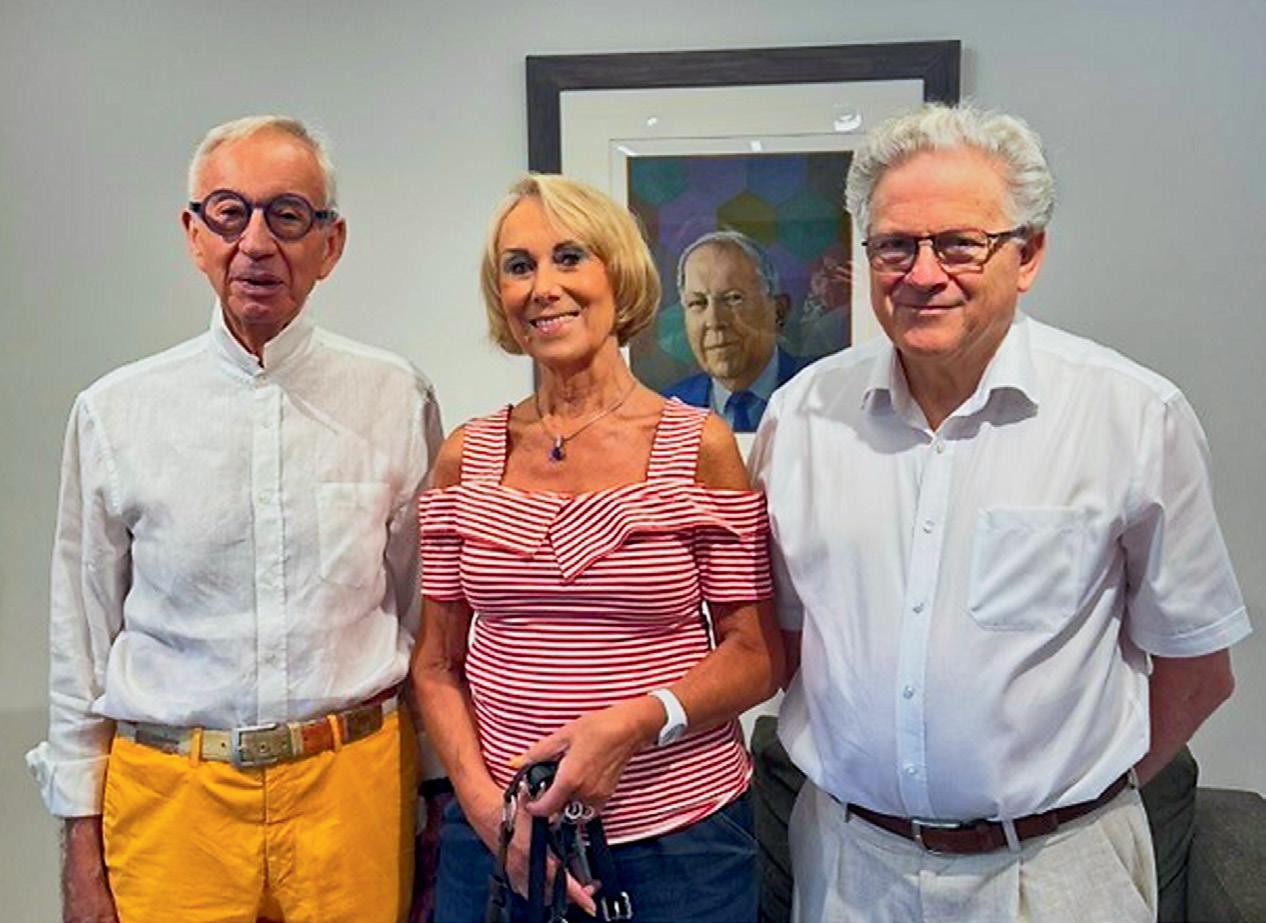
John and Marie with Professor Jeremy Sanders in the foyer.
chance. The faculty arranged for him to re-sit an oral examination, a gruelling two-hour test that allowed him to demonstrate his true ability. The result changed everything. His degree was raised from a 2:2 to a 2:1, making it possible for him to apply to Cambridge for a PhD.
John’s PhD research focused on alkaloid chemistry under Dr John Harley-Mason. The years were marked by persistence, frustration and an unforgettable act of kindness. John described his PhD as being divided into two parts. In the first year, he worked on glutaconic acid esters, hoping that clarifying the compound’s structure – there had been confusion in the literature – might allow it to be used to produce yohimbine, an alkaloid, in just two steps instead of eleven.
“Unfortunately, the literature was wrong,” he recalled: “Glutaconic esters were not what we thought; there were actually two isomers and the confusion had misled everyone.” He eventually isolated and characterised the two isomers using NMR and infrared spectroscopy, but the conclusion was clear: the chemistry wouldn’t work. “That was a dead end,” he said.
By the end of that year, he was back at square one with no tangible results, a stressful and unwelcome situation for a PhD student. For a while, contact with his supervisor was minimal, until one day his supervisor proposed a new project: attempting the synthesis of dicyano-diimine, a compound containing only carbon and nitrogen. If successful, it would have been the first known example of a non-explosive molecule of this type.
the solvent needed to be demineralised distilled water and not simply just distilled water as published. “I was overjoyed when I learned this,” John said. That afternoon, he repeated the reaction with the properly prepared solvent and next day, it had worked.
However, this success came very late, at the end of his three-year PhD. “I had very few tangible results and my supervisor told me bluntly that I didn’t have enough material for a valid thesis,” he recalled. Completing the work would require another three months – but he had no funds left.
At that time, the laboratory environment was not very supportive. “There was little sense of teamwork; everyone worked in their own corner,” he said. Feeling isolated, he sought the advice of Professor Lord Alexander Todd, the only person who knew his story. Explaining his financial and scientific struggles, he remembered Todd’s measured response: “‘Yes, I know. Then he asked how much more time I needed. I said three months. He asked if I was sure. I said yes.”
“That gesture saved my life. It did not only open new doors professionally and personally, but taught me something profound about generosity and kindness when truly needed.”
When asked about money, John admitted he had none. Todd asked: “‘How much do you need?’” John suggested £100, a quarter of his annual grant. Todd responded, “‘Let’s make it £150. Will that do?’” and immediately wrote a cheque. “To me, it was a small fortune,” he said. “That gesture saved my life. It did not only open new doors professionally and personally, but taught me something profound about generosity and kindness when truly needed.”
Dr John Tims
“My job was to try and make it,” he said. He moved to the inorganic chemistry group and spent over a year attempting to break down inorganic compounds to reach the organic species they wanted—but nothing worked. “I got nowhere. My supervisor’s interest waned, understandably, and I felt I was wandering into a dead end,” he admitted.
A new idea soon followed: a Diels-Alder reaction with anthracene, a reaction described by E. J. Corey, later a Nobel laureate. The procedure was incredibly difficult, requiring 24 hours at 50°C ± 1°C in a nitrogen atmosphere using sealed tubes inside heated water baths. “I set up the experiments very carefully, but it never worked,” he said. His supervisor began to doubt his experimental skills and he repeated the work again and again, each time unsuccessfully.
After two months, his supervisor wrote to Corey, explaining that they could not reproduce the results. Corey admitted that a crucial detail had been omitted:
This support allowed John to complete his PhD, which enabled him to secure his first job in France in 1964 at Progil, marking the start of a successful career. “Getting work in France as a foreigner at that time wasn’t easy, but having a Cambridge PhD made the difference,” he said. His role involved training an industrial research laboratory in IR & NMR spectroscopy and his experience in interpretating spectra, an opportunity he attributed entirely to Todd’s help.
During those three months, he also met Marie, a French student spending a year in Cambridge. They later married and have lived happily together ever since.
Grateful for the support he once received, John will make a contribution to the department’s Student Hardship Fund, helping provide opportunities for others just as Todd did for him. The department would like to thank him for his generosity and for sharing a truly inspiring story.
Reminiscences of Cambridge days
Alumni share their memories of life and learning at Cambridge from the late 1950s up to 1980.
Kate Clark (née Fenner)
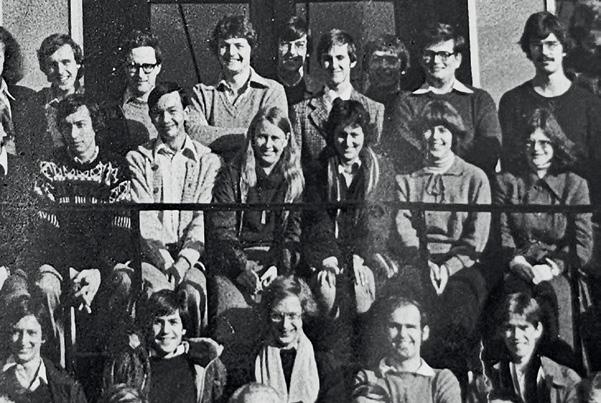
Kate studied Part II Chemistry in the department from 1977 to 1980. This was an especially interesting time, as it was only the second year that women were accepted into Selwyn College.
“It was around the time that NMR spectroscopy was really taking off,” she recalls. “Characters like Ian Fleming were around in the laboratories to show us the ropes with this new technology and I used the equipment a few times in practicals. Since I was part of Selwyn College, Jeremy Sanders was my tutor.”
There were only about five women in Part II Chemistry at the time, and one of them, Mary Skinner from Churchill College, became Kate’s best friend. Nowadays, they still exchange Christmas cards.
At Selwyn College, Kate had daily routines with her fellow Natural Science colleagues: “We had a lot of the same lectures and would cycle to Lensfield Road together,” Kate says. “There used to be a café towards the town centre, but it wasn’t there the last time I walked past. They served enormous sandwiches and cream cakes for elevenses. We didn’t have breakfast because lectures
were too early for young university students, so this became our ritual after classes.”
She also joined the Selwyn wine-tasting society and played bridge. “The college hosted bridge on Thursday nights, so I didn’t have to go out of my way,” she laughs. “That’s where I met my husband, Peter Clark, who was at Emma and studied German and Russian. After university we both became accountants, and I went on to work for what was then Deloitte.”
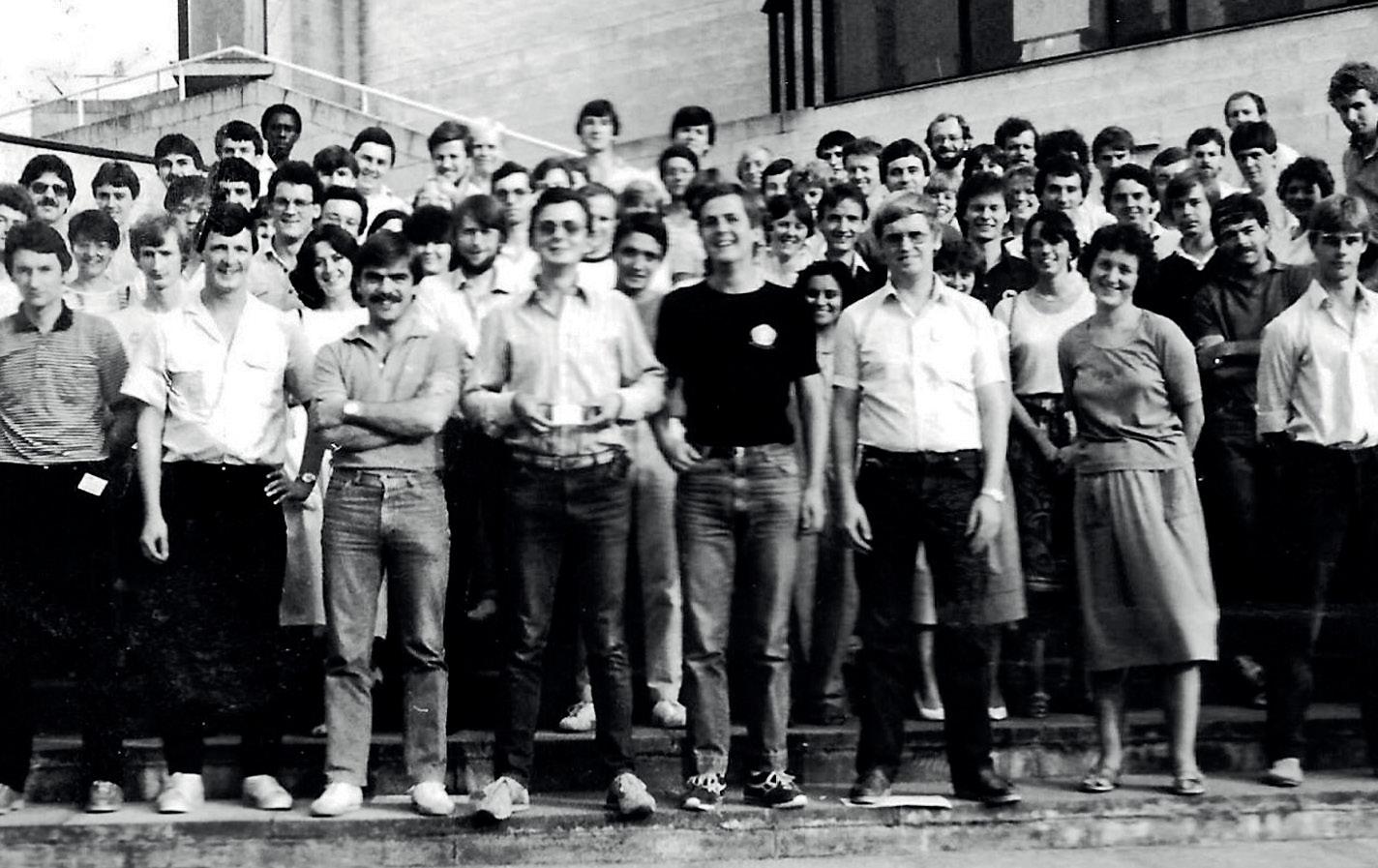
Below: Part II chemists, Kate Clark in front row. Inset: Mary Skinner (circled) next to Kate, outside Lensfield Road.
Images courtesy Kate Clark
Roger Duffett & Roger Mowll
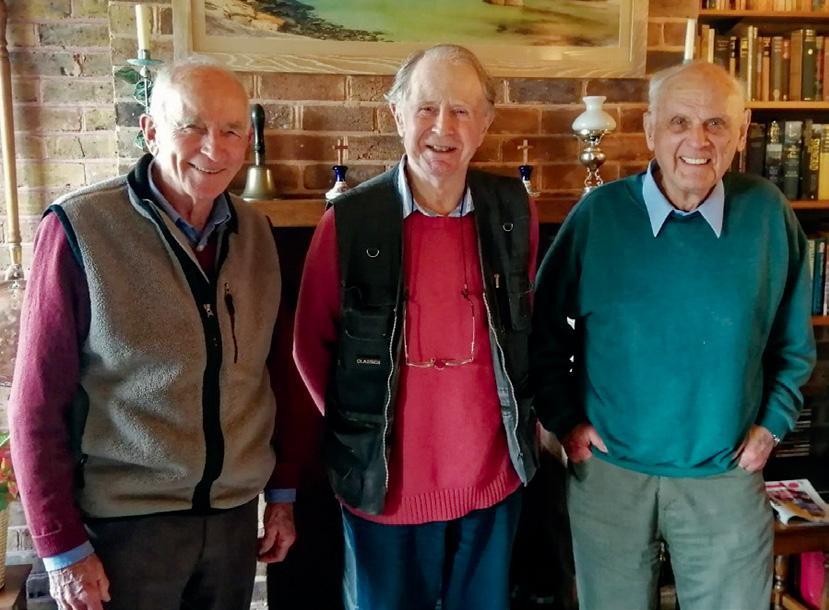
The two Rogers began their undergraduate studies at the University of Cambridge in 1956. During their time there, they had the remarkable opportunity to work with the Nobel Prize-winning team that uncovered the double-helix structure of DNA. Reflecting on it today, they have noted: “It’s extraordinary to think that the science we were working on then is something students now take entirely for granted.”
They recall: “As lifelong friends, we were fortunate to study alongside each other. We went to school together, did National Service together, went to Cambridge together, and after wards joined BP together.”
Early in 1959, just before their finals, Crick and Watson postulated that DNA had a double-helix structure. They recall: “We were both known to Max Perutz at Cavendish Laboratory, and he selected us to do the painstaking work of analysing the X-ray diffraction photographs that would be used for the research. Not bad for two recent graduates”. The work involved scanning the photographs and feeding
the data into one of the world’s earliest computers, the EDSAC 2 (Electronic Delay Storage Automatic Calculator). They recall: “It was stored in an aircrafthangar-sized building, and we had to climb a ladder in the Cavendish enclosure to input the punched tape. We sweated profusely because the computer generated so much heat in those pretransistor days, and it took an entire day to process the data. We took it in shifts to keep the computer running as much as possible.”
Outside the laboratory, they
both enjoyed sport. They recall: “Roger D played quite a bit of squash and some football at Peterhouse; Roger M played rugger at Queens’. Roger D has not revisited Cambridge for some time, but particularly remembers the pub opposite Peterhouse called ‘The Little Rose’ where we gathered most evenings to play darts. I think that it is now a gastro pub.”
Gus Gerrans
Gus Gerrans was a member of John Harley-Mason’s research group, focusing on alkaloids. He synthesised alkaloid molecules from plants and used spectroscopy to establish their unique molecular structures.
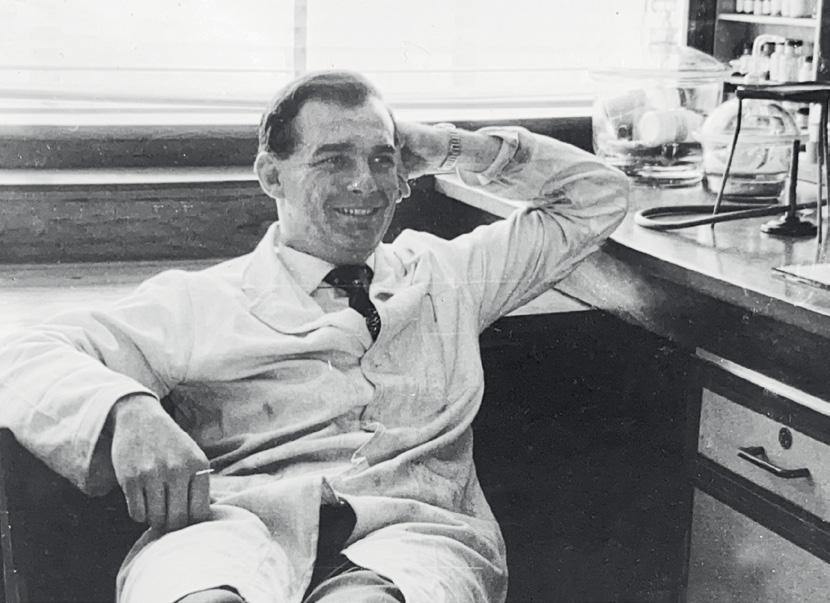
Refecting on his PhD, Gus said: “I studied my PhD in a laboratory on Lensfeld Road – if we saw Harley-Mason five times a day, that was about average. He was an austere man, very hands-on, and a close supervisor, genuinely concerned about our progress. The labs in Lensfeld were relatively new then, so we were in very nice, well-equipped laboratories.
Above: (Left to right) Roger Mowll (Queens’), friend Philip Morgan (Caius) and Roger Duffett today.
Image courtesy Roger Duffett
Gus Gerrans hard at work!
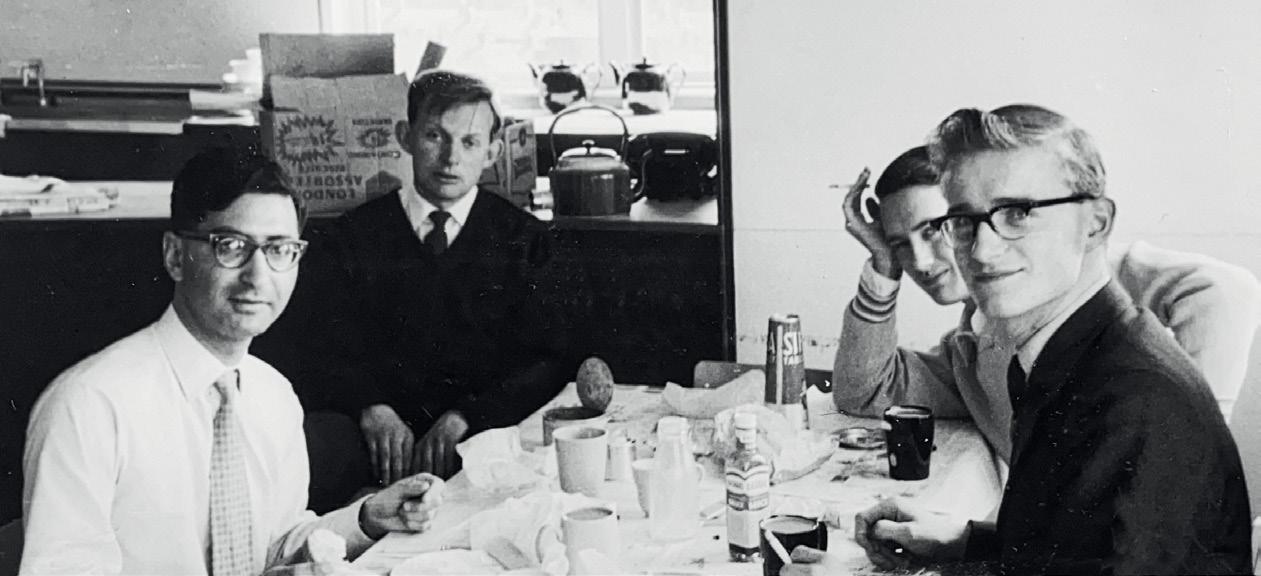
Gus also recalled the simple pleasures of lunchtime: “I took this photo (above) of an everyday lunch in the tearoom. Back then, there was a bakery at the back of the department and a grocery shop where one of us would go at 12:45 to buy bread and cold meats. Then we would all have a sociable and academically stimulating lunch together.”
Gus spoke warmly of his friends: “John Stewart (right) came from Edinburgh and is still a great friend I’ve kept in touch with ever since. He, Arthur and I used to play coarse rugby in a team called the Lensfield Layabouts. We were modest rugby players but excelled at the bar! I also played rugby for Cambridge, but alas, never got a blue.”
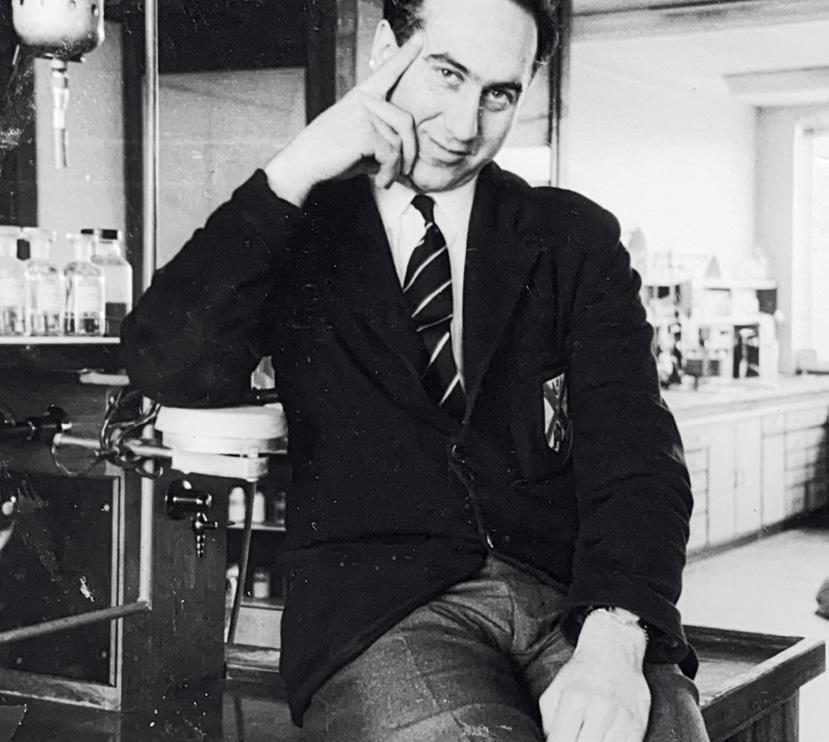
Gus worked alongside Eddie Pavri (right), forming a lasting friendship: “He came from India and returned there after his PhD to work with Glaxo India and sadly passed away some years ago. He would take Arthur Howard and me to Indian restaurants in Cambridge. We’d try all the dishes on his recommendations while he would settle for a steak!
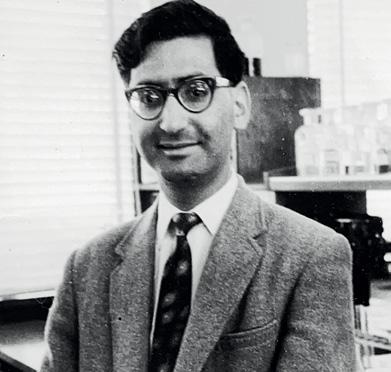
Top (from left): Eddie Pavri, Arthur Howard, Rocco Basson and D. Blaxall enjoying lunch.
Above right: John Stewart.
Right: Eddie Pavri.
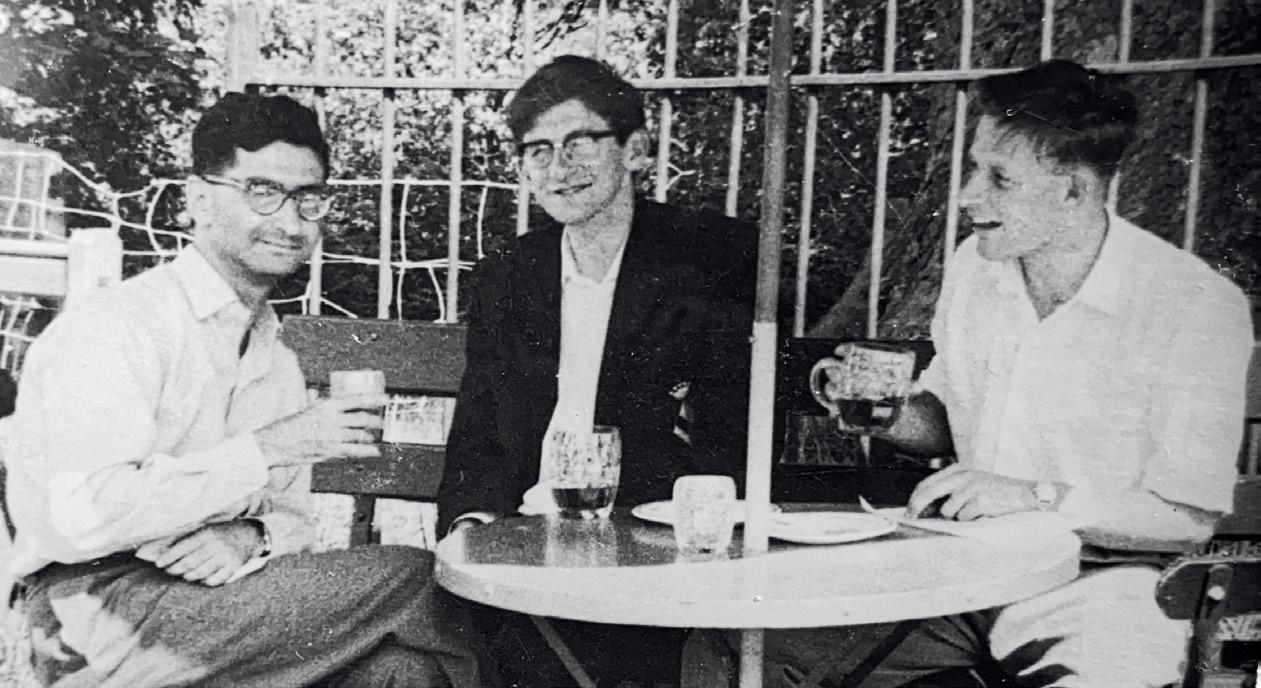
Gus also remembered his fellow South African, Arthur Howard (above right): “Arthur and I came from South Africa and in those days you would study a four-year honours degree and then go overseas for a PhD. We sailed to the UK on a mailboat. The voyage was like a holiday – eating, drinking, playing deck games, and swimming. It was great fun, but it did take twelve days. Tim Moelwyn Hughes’ uncle was E A Moelwyn-Hughes, then a professor in the Department.
On the relaxed approach to lab life at the time, Gus said: “I think we could just go up there to have a picture taken! Back then, we were not concerned with safety, which would be unthinkable these days because of health and safety regulations!”
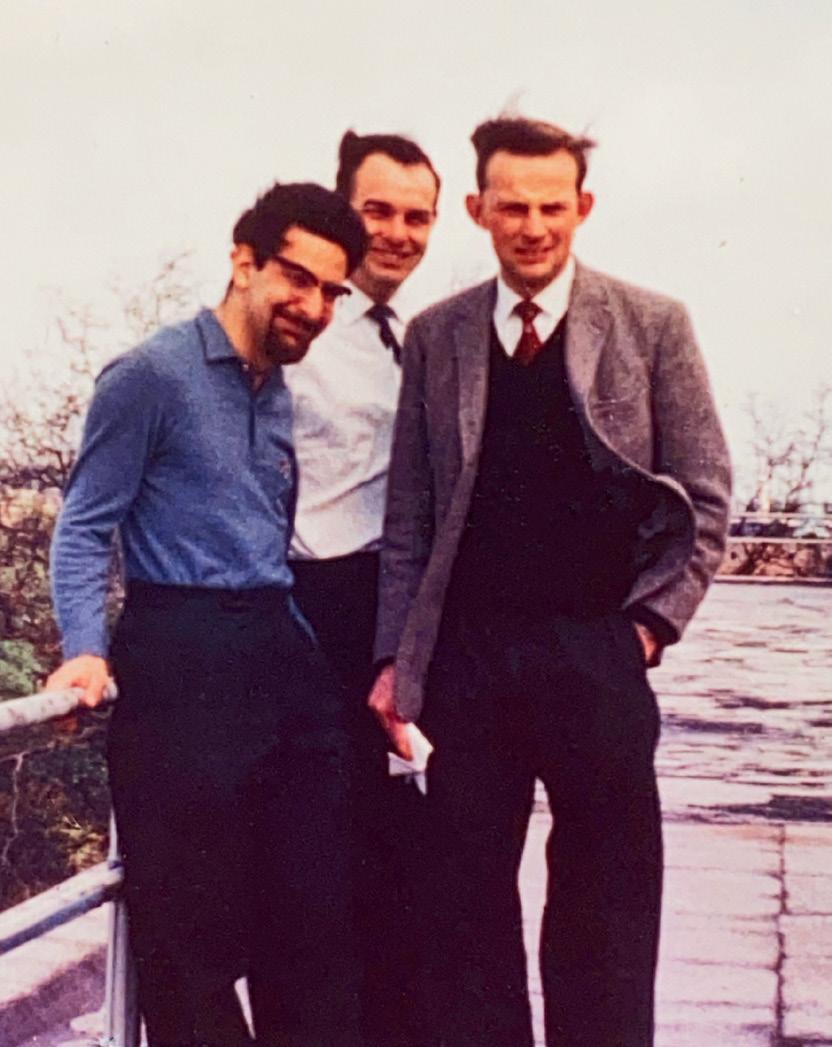
Right: Trevor Toube (left), Gus Gerrans (centre) and Arthur Howard (right) –all PhD students doing alkyloid research with John Harley-Mason.
Top: Arthur Howard (far right), with Tim Moelwyn-Hughes (middle) and Eddie Pavri (left).
The Photon Economy: our Alumni Festival
Each year we host alumni for the Alumni Festival and, this September, Professor Erwin Reisner shared his vision for a sustainable future. He discussed his research into sustainable fuels and the idea of redefining waste to instead see its potential as an important resource.
Erwin, who leads the Reisner Lab, is an expert in emerging sustainable technologies. His group’s goal is to make devices that generate green fuels and chemicals using carbon dioxide, water as well as biomass and plastic waste as ingredients. His group creates new technology at the lab bench and then develops prototypes for outdoor testing to create devices that are applicable in the real world. His vision is that, by 2050, carbon dioxide will be a sustainable resource instead of being viewed as a waste product, along with biomass and circular plastics. Erwin said during the lecture: “Our laboratory’s speciality is creating new ideas and developing new catalysts and device prototypes: how can we use sunlight to drive efficient chemical reactions? How can we design them to use every photon that we gather from sunlight?”
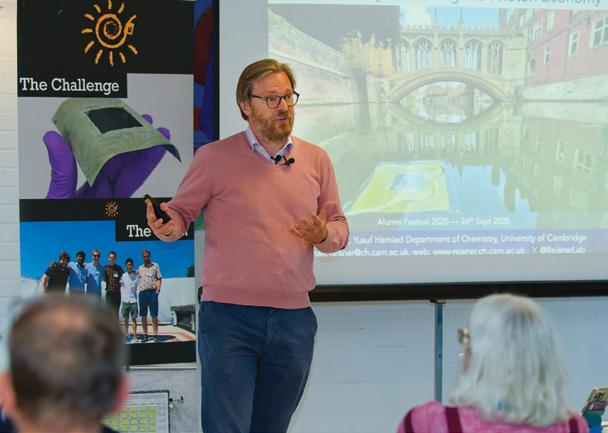
Artificial tree In addition to his talk, he showed a collection of prototype devices that his group has designed, including the artificial tree: a benchtop reactor assembled from a hundred artificial leaves. Artificial leaves are inspired by real leaves and convert carbon dioxide and water into useful gases, such as syngas fuel and oxygen. “One argument often made against solar technology is that it takes up a lot of space and land, which is expensive,” said Erwin during the talk. “We have assembled a floating artificial leaf that rethinks our need for land space and demonstrates that open water can now be useful for solar energy.”
PET bottles His team collects PET waste bottles (that you might buy for soft drinks or water) in our department in dedicated recycling bins, then shreds the plastics and mixes it with enzymes that break down plastics. This broken-down plastic can then be converted into hydrogen gas and other useful chemical products using their custom-built solar reactor. (Sadly, the solar reactor was too big to showcase in our Cybercafé.)
Centre for Circular Chemistry This project is the sort of work that Erwin wants to continue in his ambitious goal to create a Centre for Circular Chemistry. This centre would incorporate scientists from many fields to rethink our relationship with waste and find workable, scalable solutions like the ones the Reisner laboratory is pioneering.
Their laboratory is also training pioneers who are taking their sustainable energy training and forming spinout companies, and in fact three more were set up in the last year, bringing the total start-ups created by alumni close to ten. This includes Dioxycle, started by Reisner group alumni entrepreneurs David Wakerley and Sarah Lamaison, who we interviewed in Chem@Cam issue 64. Their company was funded by the Breakthrough Energy Fellows programme founded by Bill Gates and researches electrolysing carbon dioxide into fuel.
The talk concluded with a clear message: sustainability is not a distant goal but a shared responsibility and a massive opportunity
For those who missed it, the full talk is available to watch online
Professor Erwin Reisner.
Michael Webb © University of Cambridge
Noticeboard
Professor Silvia Vignolini contributed to the EXPeditions Philip Leverhulme Prize Collection
The Collection is an open-access digital publishing platform featuring conversations with experts whose work promotes a more sustainable future. The video explores her research on how we can create colour using only biopolymers, e.g. cellulose. Silvia’s research explores how light interacts with the natural world, specifically how living organisms make colouration without using chemical pigments, but only using nanostructured transparent materials made of biopolymers. These materials can have many scientific uses and real-world applications and could potentially replace traditional, potentially hazardous colourants used in industries such as textiles and cosmetics.
The Bernardes Group launches biotech startup Vesto Therapeutics
The new biotech start-up focuses on developing AI-driven de novo protein conjugates for targeted medicines. Building on the group’s recent advances in site-specific conjugation, linkers and payloads, together with the de novo protein design platform pioneered by
Professor Alex Forse awarded 2025 Philip Leverhulme Prize
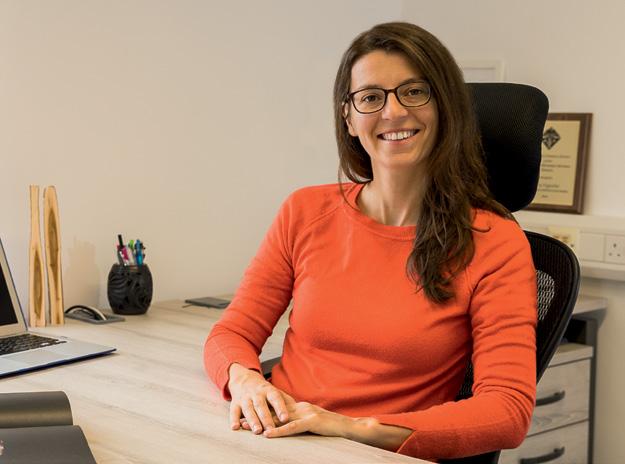
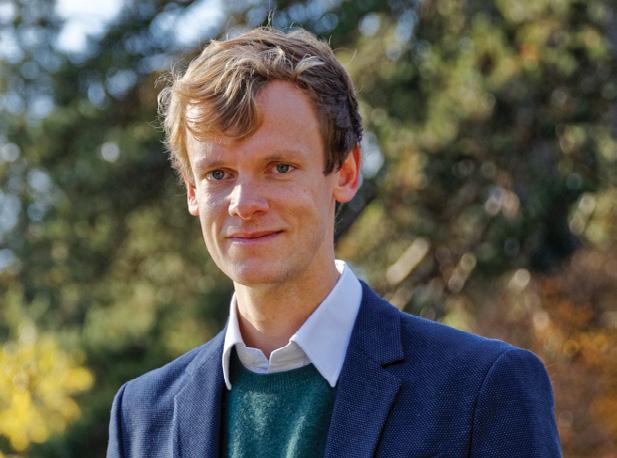
Professor Alex Forse (pictured above) has been awarded the prestigious Philip Leverhulme Prize of £100,000, which he intends to use to further his group’s research. This award ultimately recognises the achievements of the Forse Group and their pioneering research into materials for carbon capture. Forse says: “I plan to use the money to hire a new team member to join the group’s efforts on understanding and developing materials for climate change mitigation.”
The
future of physical sciences webinar series
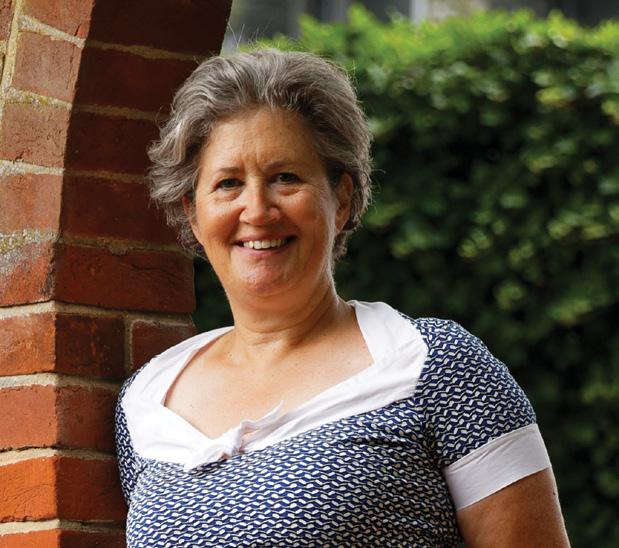
Members of our department, Professors Gonçalo Bernardes and Melinda Duer (pictured below) recently participated in the Future of Physical Sciences webinar series, which highlighted how their research is shaping the future of healthcare. They discussed how their advances in chemistry are enabling the design and delivery of new medicines. The webinar was hosted this November for alumni and was part of a broader series showcasing the groundbreaking research taking place at Cambridge and its impact on our everyday lives.
Nobel laureate David Baker at the University of Washington, the company aims to enable more precise and effective therapeutic delivery. With a licensing agreement already in place, Phase 0 nuclear imaging studies in cancer patients are expected to begin in early 2026. This launch represents a significant step in translating academic innovation into real-world clinical impact.
Professor Melinda Duer
Professor Silvia Vignolini
Professor Alex Forse
Nathan Pitt © University of Cambridge
WOMEN IN CHEMISTRY
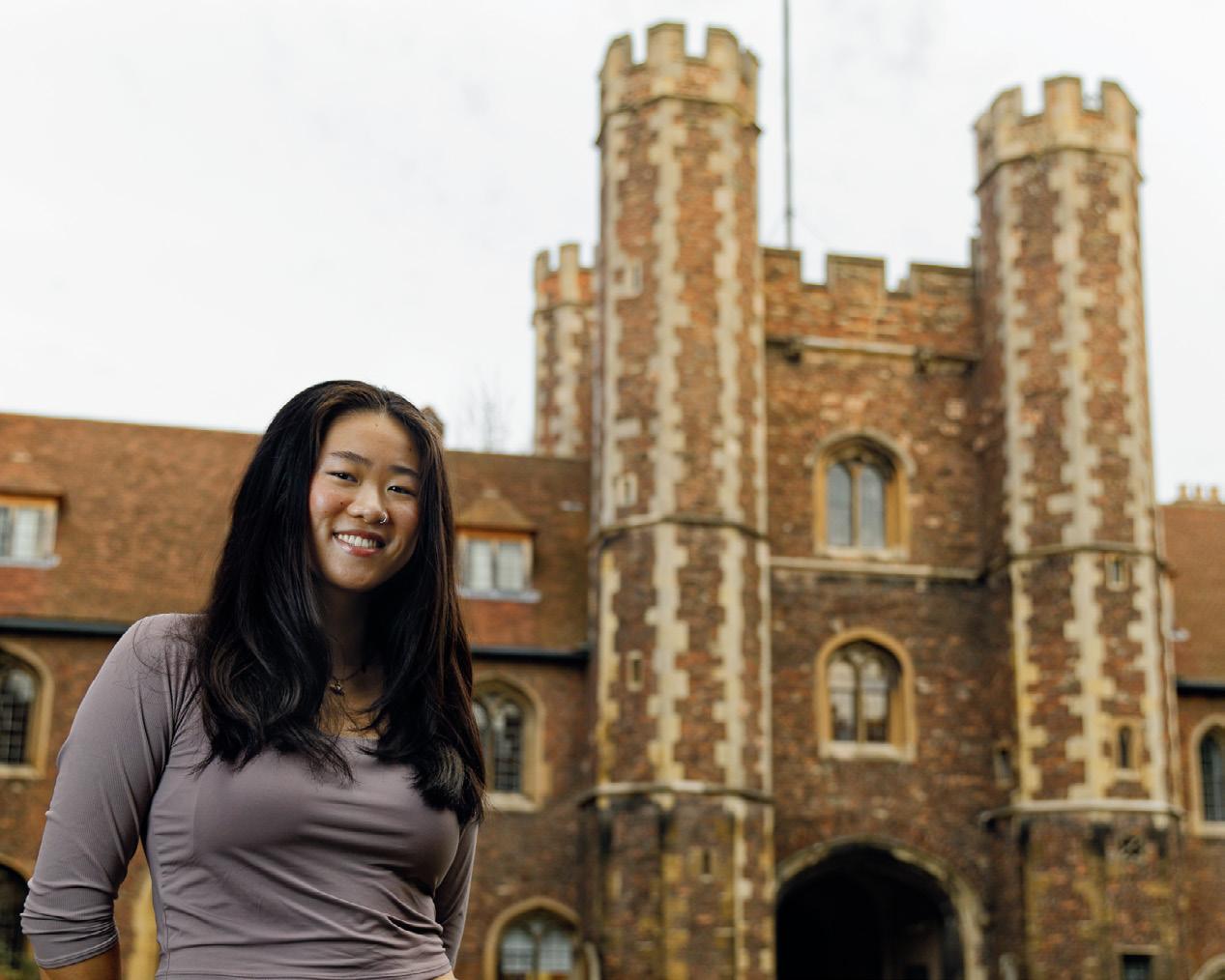
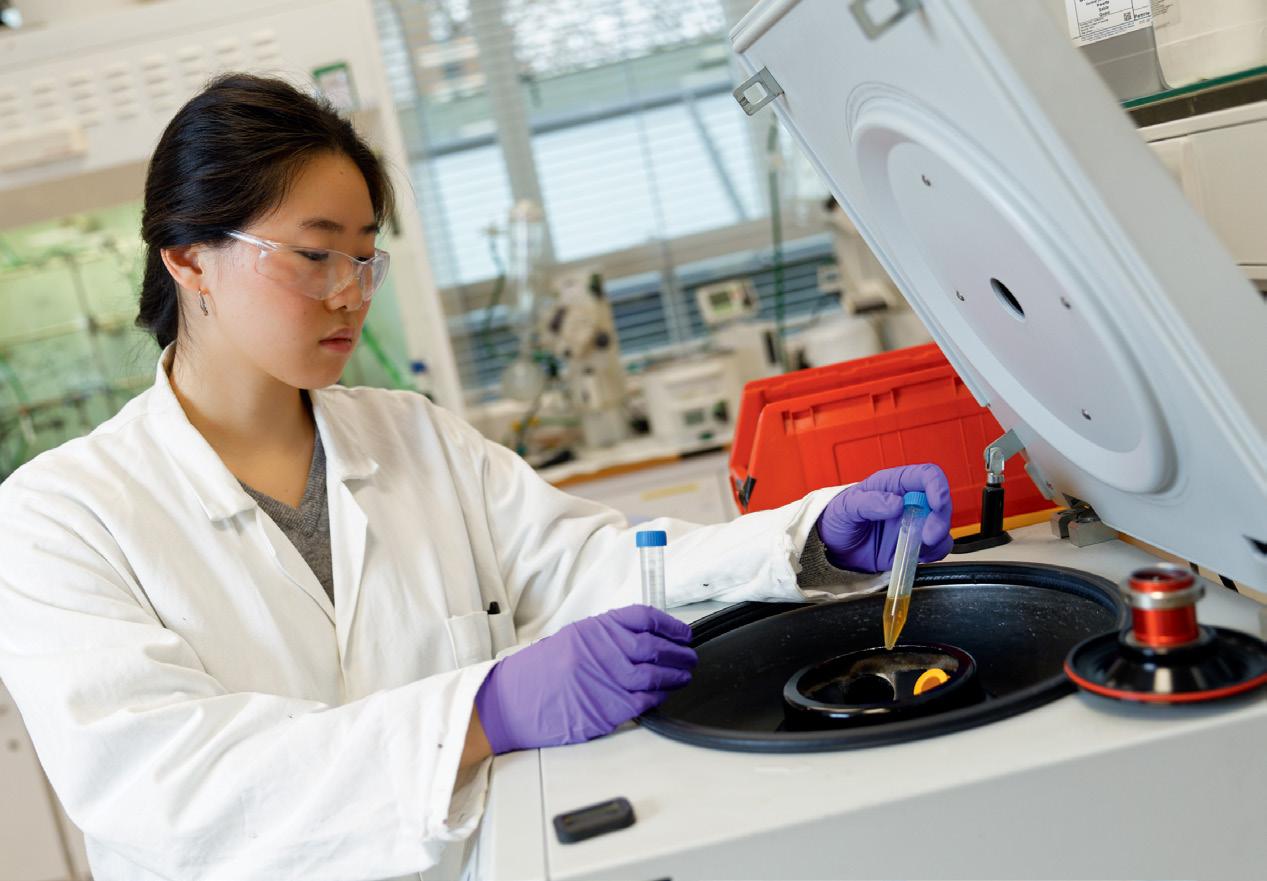
Sabrina Hu is a third-year PhD student in the Nitschke Group who is researching metal-organic cages. Her PhD is funded by a Gates Scholarship and she is a member of Queens’ College.
Metal-organic cages
Sabrina researches molecular structures called metal-organic cages. These are like wireframes: a strong scaffold with a void in the centre that can store other molecules. They are useful for collecting carbon dioxide from the air or storing gases such as hydrogen and have potential uses in waste clean-up or even drug delivery.
“I’ve seen some unusual properties that I need to ponder and I’m ready for the challenge.”
Sabrina Hu
She is synthesising a particular structure called a Borromean ring which is actually three linked hoops. They are curious because if you remove one ring the other two are also no longer linked. Imagining it is rather like solving a metal rings brain-teaser puzzle. She uses Nuclear Magnetic Resonance spectroscopy to explore the molecular structures of her reactions and understand the symmetry of the cages that she makes. Sabrina is interested in refining the
Sabrina Hu
Nathan Pitt © University of Cambridge
exact point where the rings link to add robustness to the Borromean ring.
“We’re coming up with ways to link Borromean rings more precisely to open up possibilities to synthesise more complicated architecture. It’s not easy because everything is so small. Once we crack this, there are potential applications for storing gases and selectively cleaning up gases from a mixture, so a sustainable angle.”
Backstory
Originally from Houston, Texas, Sabrina did her undergraduate degree in Washington University in St Louis. “Interestingly, I started as a psychology major. Fortunately, the American university system keeps study more general and you specialise later. It was in my second year that I switched to chemistry after some very enjoyable organic chemistry modules.” Whilst studying at Washington University, Sabrina worked on summer internships developing and refining a catalyst for making polylactic acid; a bio-renewable material that is plentiful in the agricultural industry. Polylactic acid is used in recyclable cups and 3D printing and there is emphasis in the field on renewable resources and sustainability.
Environmental work
Sustainability has interested Sabrina her whole life and at Washington University she had the opportunity
to put this passion into practice.
“I’ve joined a few different sustainability initiatives over the years and I am interested in how we quantify how sustainable something is. I interned at Washington University and prepared documentation in preparation for transitioning to geothermal energy. I researched approaches and potential problems and the University ended up hiring an engineering firm that I had scouted. It was an incredible opportunity to get some real-world experience.”
The Nitschke Group
After studying in the USA and an internship in Bochum, Germany working on cathodes, Sabrina met Professor Jonathan Nitschke at a conference. This coincidence led Sabrina to apply for a PhD in his laboratory where she is soon to publish her first paper as second author, in Angewandte Chimie
The lead author, Dr Yuchong Yang, is a postdoc in the Nitschke Group, and their paper is concerned with a knotted zinc framework which they have synthesised. “I’m also working on a few more papers, including other metal cages that I’ve analysed with NMR spectroscopy. I’ve seen some unusual properties that I need to ponder and I’m ready for the challenge.” Sabrina will continue her work in metal-organic frameworks and is also a member of the Chemistry Sustainability Group in the department.
Cryptic Crossword
Chemistry
Prize Draw
Fancy winning a stylish Cambridge-branded travel mug? Simply solve the crossword and send a photo of your completed answers to crossword@ch.cam.ac.uk by 1 March. Answers will be shared in our alumni email, so make sure your alumni preferences are up to date to receive it. Good luck!
This crossword is written by returning cruciverbalist Tomas Deingruber, who did his PhD and postdoctoral research in the Spring Group on synthesising small molecules with antimicrobial properties. He is now at the University of Edinburgh’s Centre for Inflammation Research. He first tried cryptic crosswords with his colleagues in the Spring Group, and this is the second puzzle he has written for us. We wish him the very best of luck in his new role!
Down
1 Old Italian official trying to make the States run more smoothly? (4)
2 Could be attached by a simple click – instead in strong winds bin tumbles over there (13)
4 Sloppy joe, rice and relish (7)
5 Enclosure put upside down –ready to be released (4-2)
8 Electron in zinc relaxed (3)
10 Cable working, then not, enough to prevent anything from getting through (6,3)
11 Small setter’s confused at the beginning of a fake Beethoven’s fifth, for example (8)
13 Long rant when I entered business (6)
14 Nothing disappeared from Los Angeles Gin Company after being ransacked for an illicit additive to a drink (6)
Across
1 Uncertainty whether to do, but poorly (5)
3 Argument about missing uniform clothing (7)
6 A mass of frozen water is about hundred and one gallons after melting (7)
7 Apple music (4)
9 Former reference on electron energy increase (10)
12 Pigeon’s voice announced a revolution (4)
13 Tanner was gutted as Elle got in with the bank official (6)
15 Spontaneously ignited about damaged Horus coin papyrus, article US twice lost (10)
16 The book number must be wrong – browsing, there was no row with golf (4)
17 Produce removed regularly by wide blade (5)
18 New leader of navy turns red after discharge? (4)
19 Flood English bay (6)
20 Some beech oboes reverberate (4)

Crossword Winner
Chem@Cam Issue 70
Congratulations to Tom Wilks, the winner of the prize draw for Issue 70’s edition of the Chemistry Cryptic Crossword, who won a department-branded travel mug.
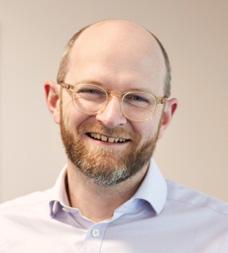
Tom joined the department in 2004 as a Natural Sciences undergraduate. He says: “I remember practicals in the organic chemistry labs being a bit of a culture shock – coming from a pretty run-of-the-mill state comprehensive it was the first time I’d seen a magnetic stirrer, let alone used one.”
Some of his fondest memories are of helping out at the Chemistry Open Days. One year, he created a chemistry-themed murder mystery trail around the department and he’s still got the posters on one of his old hard drives. But the best experience, he says, was working over the summer with Paul Barker to design a new website for the event – he notes that “by today’s standards it would probably look very retro but we had a lot of fun creating it.”
He started his research career in the Melville Laboratory, completing a Masters in controlled radical polymerisation with Professor Rachel O’Reilly.
He later did his PhD with her after her move to the University of Warwick, focusing on DNA/ polymer hybrid materials.
Note from the Editor
Dear Readers
As we wrap up this issue, a heartfelt thank you to everyone who shared their stories with us. Your voices continue to shape this magazine and strengthen our community in meaningful ways.
This edition also brings new features through interactive links for online readers and QR codes in the print version, offering extra insights to inspire your curiosity. I would like to thank all my colleagues, whose creativity and commitment bring each issue to life.
We look forward to celebrating more experiences and memories in future editions and to continuing the stories that connect us all. Thank you for being part of our community.
Our warmest greetings for the holiday season, and best wishes for the year ahead.
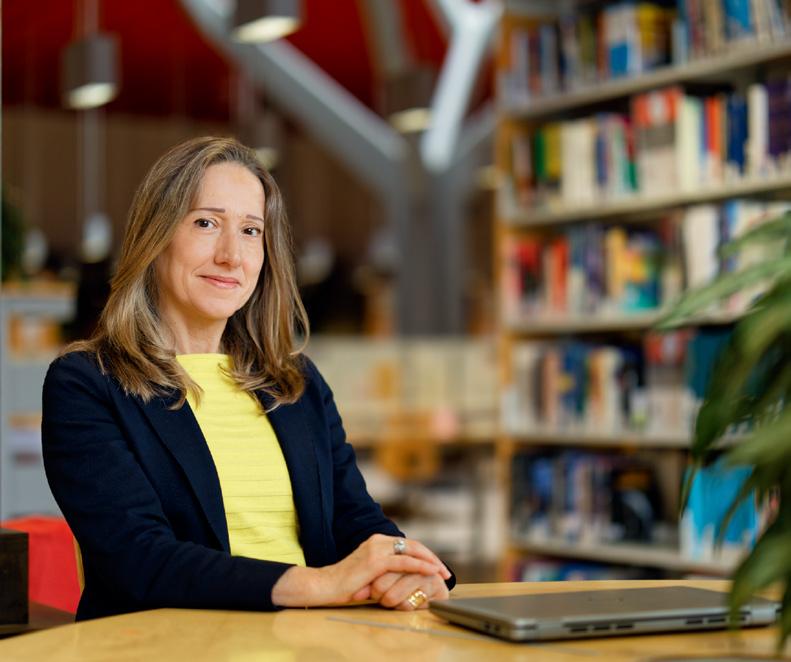
Dr Fiorella Dell’Olio Editor, Chem@Cam
Tom Wilks
Nathan Pitt © University of Cambridge
JOIN US FOR
The Cambridge Festival
Saturday 21 March 2026
Yusuf Hamied Department of Chemistry
Open Day
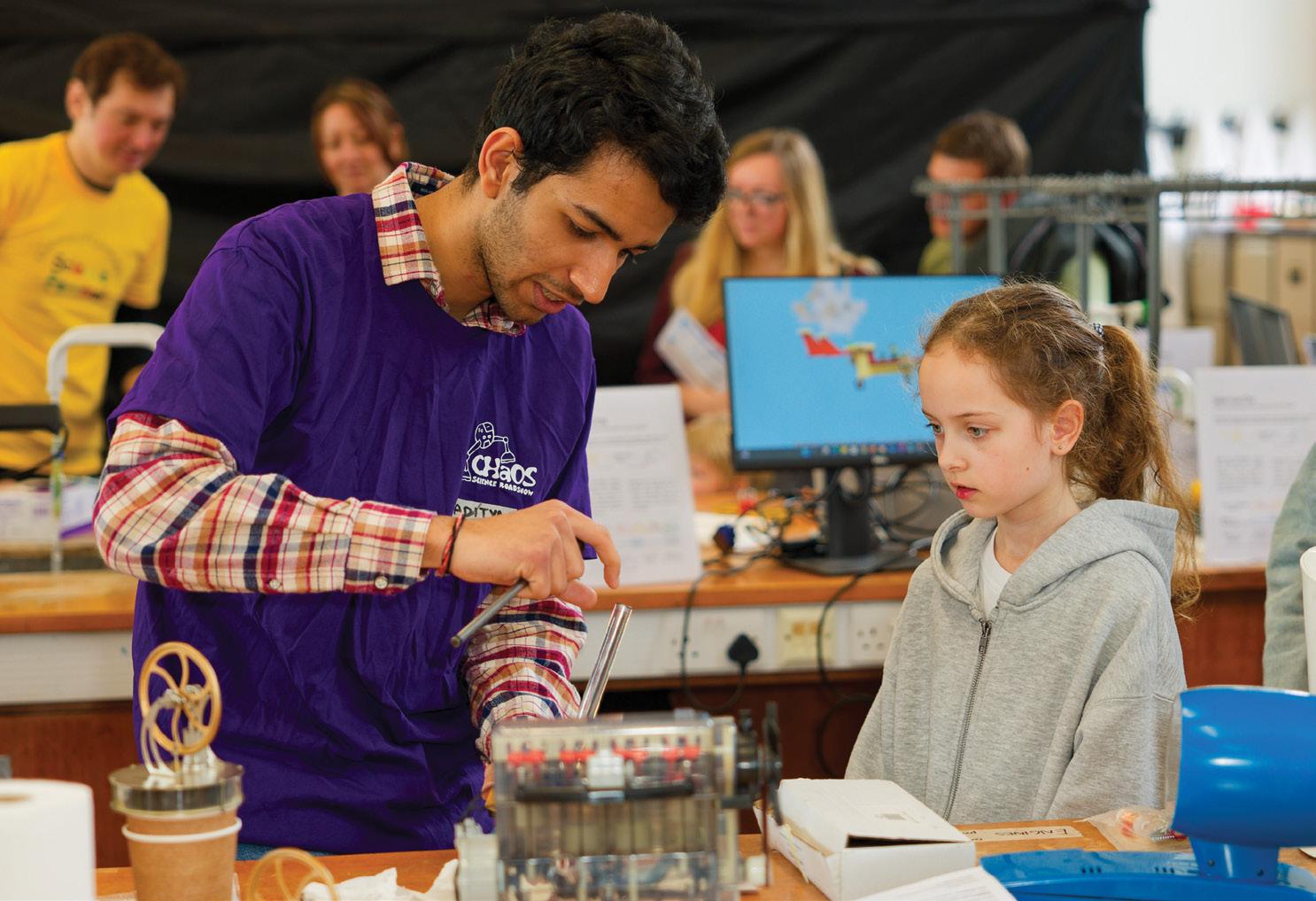
We’re throwing open our doors once again to friends, families, and prospective scientists. Visit us at Lensfield Road and immerse yourself in the wonders of chemistry during a day packed with exciting activities.
Yusuf Hamied Department of Chemistry
Reserve your alumni tickets now!
Live Demos That Dazzle (10am–4pm)
Get hands-on with cutting-edge technology and mind-bending experiments in our interactive demonstration zone, led by CHaOS and our postgraduate students.
It’s a Gas (11am–12 noon & 4– 5pm)
Science meets spectacle in Professor Peter Wothers’ live demonstration lecture in the BMS Lecture Theatre.
Sustainability Spotlight (2:30–3:30pm)
Professor Erwin Reisner explores the future of sustainable science in his talk Beyond Photovoltaics: Unlocking the Photon Economy with Solar Chemical Technologies.
Limited Reservation (10:30am–1pm)
Book a seat for It’s a Gas and enjoy an exclusive buffet lunch. Keep an eye on your inbox in the New Year for the sign-up link. Come and reconnect with the department, discover cutting-edge research, and share in the joy of chemistry!