Kris Lev-Twombly | President and CEO kris@ymcasofca.org
Dan Crocker | Director of Association Resources dan@ymcasofca org
Elizabeth Ernster | Director of Communications and Development, elizabeth@ymcasofca.org
Megan Pierce | Communications and Engagement Manager, megan@ymcasofca.org Quarterly Magazine Volume II Issue IV
Christina Marcellus | Director of Public Policy christina@capitoladvisors org
Board of Directors
Vince Iuculano, Chair YMCA of the Foothills
Curt Skotnicki, Incoming Chair YMCA of Greater Whittier
Kristen Lyons, Immediate Past Chair Shasta Family YMCA
Matthew Henry, Secretary Sonoma County Family YMCA
Margo Byrne, Treasurer Channel Islands YMCA
Ronnie Stone, Public Policy Chair Southeast Ventura County YMCA
Dan Chapman, Member-at-Large YMCA of San Joaquin County
Paula Simonds, Member-at-Large Family YMCA of the Desert
www.ymcasofca.org
@CaliforniaStateAllianceofYMCAs
Letter from the CEO
Every quarter, this magazine reminds me just how far the Y reaches beyond its walls. Across California, Ys are creating belonging and opportunity in ways that are as diverse as the communities they serve, from youth sports in South Whittier, to intergenerational maker spaces in Santa Monica, to college-pathway programs in Santa Maria, to new community campuses rising in Anaheim, to youth experiencing homelessness finding safety and support in the Channel Islands region.
What these stories share is a common thread: the Y shows up wherever people gather, learn, and seek connection. Our impact is measured not just in buildings, but in presence, partnership, and the everyday work of strengthening community.
The statewide data in this issue underscores that responsibility. More than 2.2 million Californians are connected to their local Y. Over 590,000 children are in before and afterschool programs, and more than 142,000 are gaining essential water safety skills.
Collectively, Ys are investing over $831 million annually in mission-driven programs, supported by more than $415 million in charitable giving, a testament to the trust our communities place in us.
Through the Alliance, we continue to champion this work at scale, securing and re-granting critical public and private funding, advancing policy solutions that protect and uplift youth, and supporting Y leaders to thrive.
Thank you for all you do to make this movement stronger.
In partnership, President &
CEO
Removing Barriers, Creating Belonging
A Community-Based Approach to Youth Sports in South Whittier
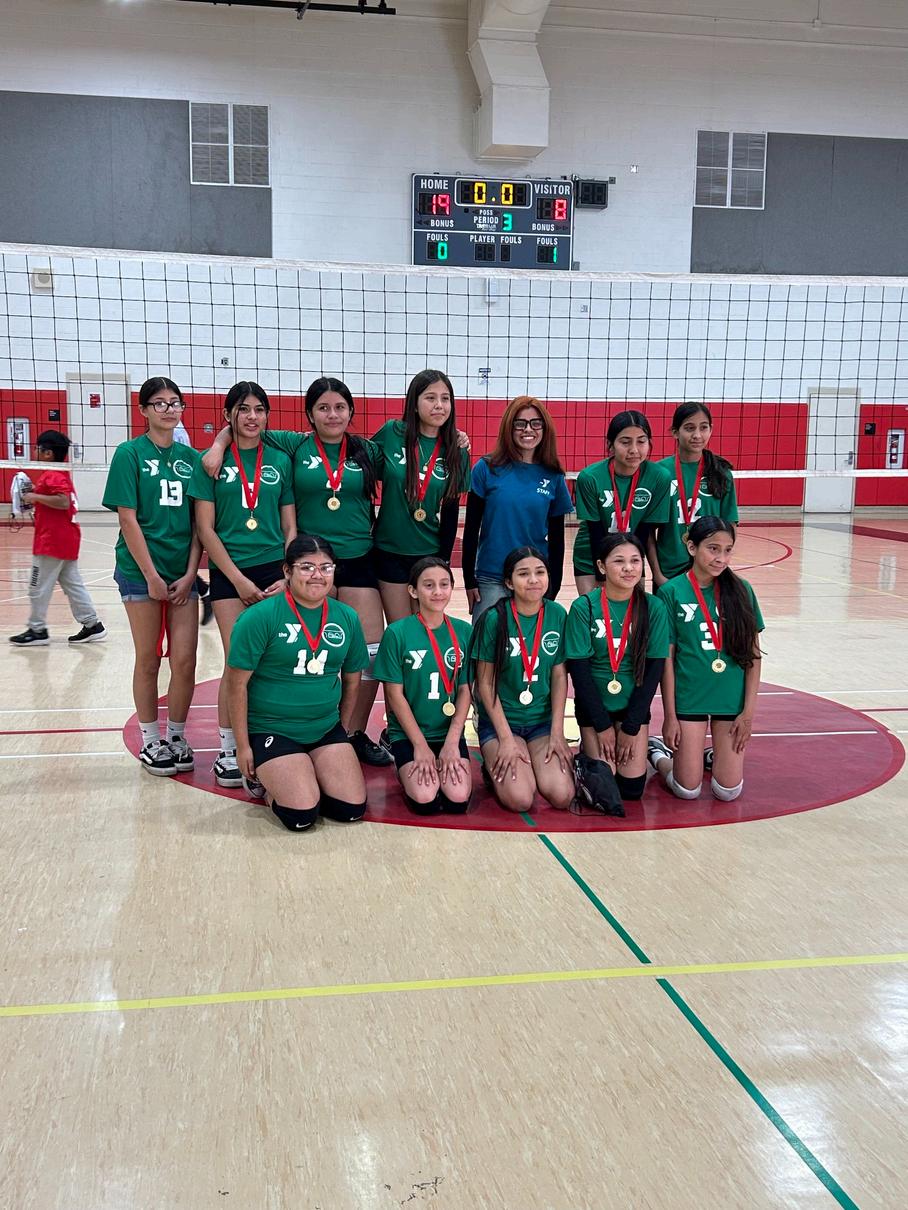
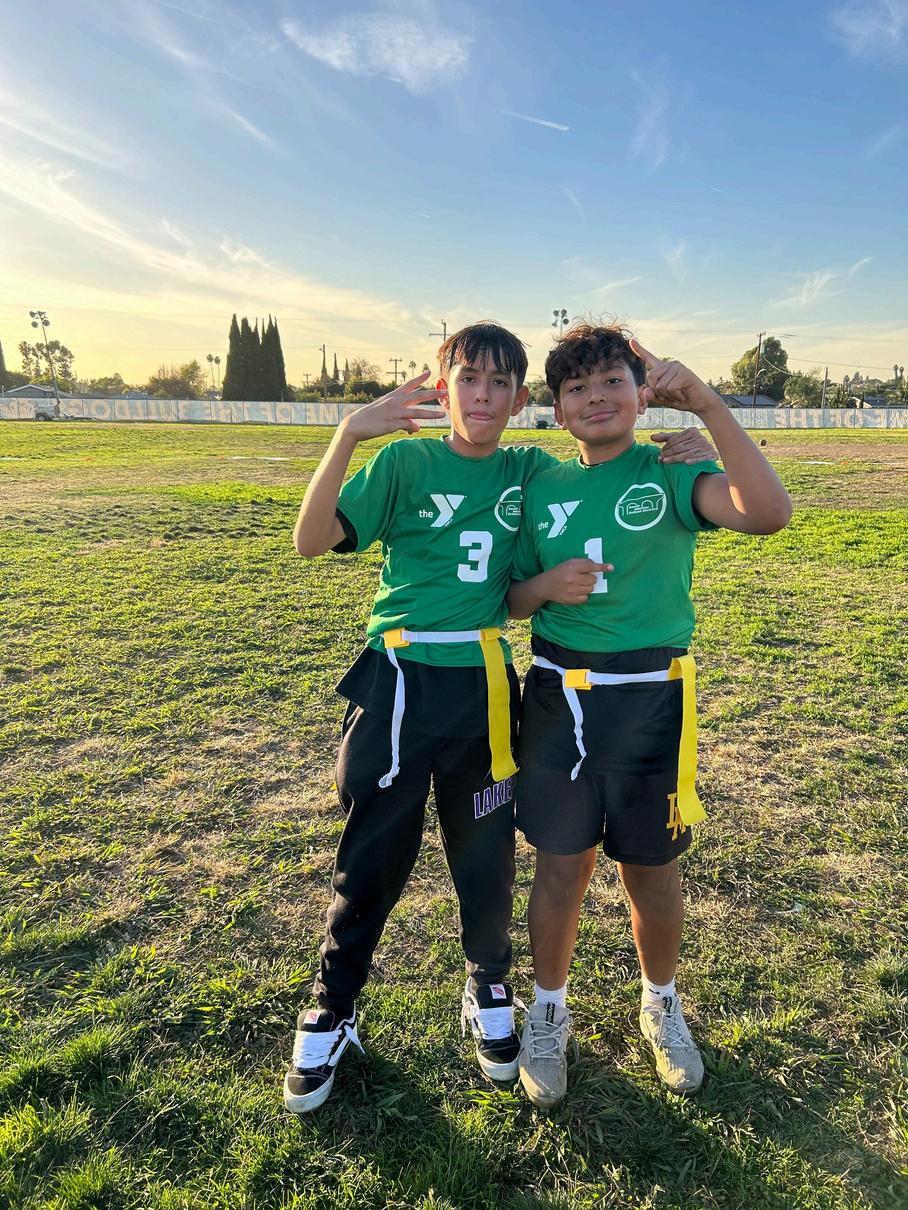
In communities like South Whittier, access to youth sports has long depended on whether a family can afford registration fees and arrange transportation. For many working parents, both are out of reach. As a result, children have often gone without structured, safe places to play and belong.
That’s beginning to change.
When the YMCA of Greater Whittier launched an on-campus youth sports program in Fall 2024, many students were stepping onto a field for the first time. “I asked one of the kids, ‘What’s your favorite football team?’” said Coach Gabriel. “And he said, ‘Football? What is
that?’ It’s a moment I’ll never forget. With support from Ballmer Group, through the California State Alliance of YMCAs, this program was designed to remove the most common barriers to participation: cost, transportation, and access to equipment.
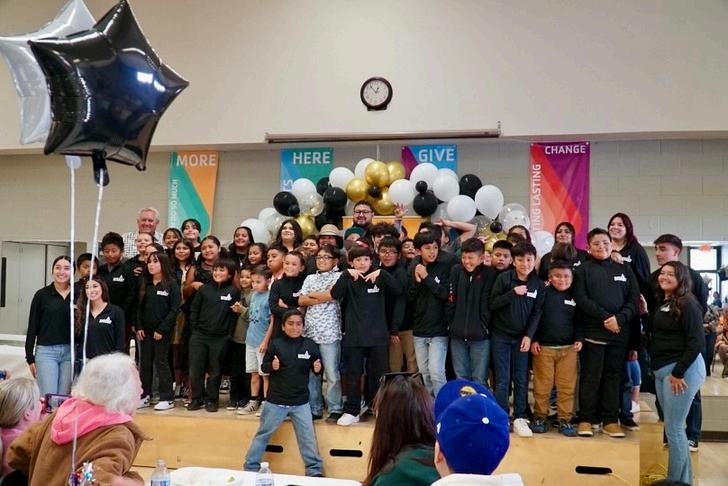
By partnering with local schools, the YMCA created a sustainable model that allows students to join practices right after school, directly on campus. Games are held on weekends to encourage family involvement, and all gear is provided. The result has been rapid, visible growth. What began with 240 student athletes has now more than doubled, with over 500 youth participating in just one year. “We’ve had
Made
a lot of parents come up and say, ‘Thank you. Without this, they wouldn’t be able to play any sport,’” said Aaron, the YMCA’s Athletic Director. “Just having a place where they can be safe and play sports is really good.”
Coach Nicole sees the impact every day. “Most of the kids have shorts and regular tennis shoes,” she said. “So families don’t have to worry about buying cleats or expensive equipment. We also pay for licensed refs. They’re getting legit referees. And we provide protective equipment, mouthpieces, shin guards, and volleyball knee pads.”
Aaron shared, “Families are sta involved and asking for more. Par reach out all the time: ‘When does sport start? When does that one be They want their kids involved.”
For the YMCA coaches and staff, these moments are meaningful. “When I go home at the end of the day, I did something positive,” said Anthony, a coordinator. “I know I impacted kids who need it.”
The program is now a vital part of the afterschool ecosystem in South Whittier, strengthening school partnerships offering working families a consistent, high-quality for youth development. And for many families, it is the affordable opportunity to access sports at all.
“Youth sports revenue is on the rise, but participation the decline,” said Gina Lopez, Executive Director Whittier YMCA. “It’s becoming more and more inaccessible. have three kids. Just signing them up cost me $700. boy in this program has five siblings. Their bill probably be over $1,300. There’s no way they could that.”
Thanks to this program, that cost barrier no longer stands in the way. The YMCA of Greater Whittier’s South Whittier Sports Program is more than a league. It is a growing model of community-based impact, rooted in partnership, built on access, and sustained by investment. With continued support, its reach will only grow so that more kids across California get what every child deserves: a place to play and a reason to belong.
To learn more, visit: www.ymcasofca.org/impactstories
REIMAGINING SPACESFORALL
For generations, the YMCA has been more than a gym. It has been a place where a child finds their first mentor, where neighbors cheer from the sidelines, where strangers become friends. It has been a safe and welcoming space where people play, learn, and
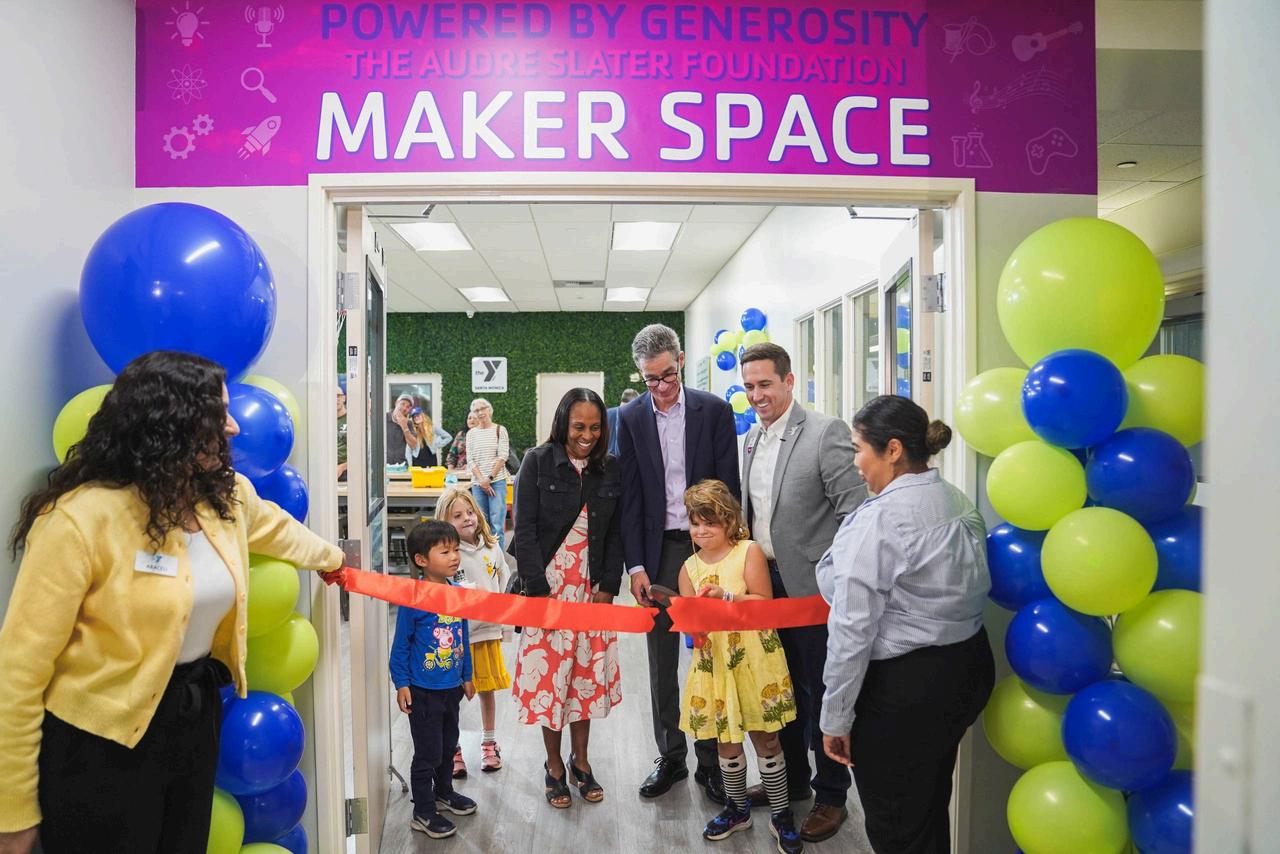
continues at the Family YMCA through Maker Space, a creative environment imagination, community, and opportunity take root.
the vision for the both ambitious in the YMCA’s built to spark empower learning by welcome people of all shared experience of emerged is not with tools, but a relationships form, and generations come together with purpose.
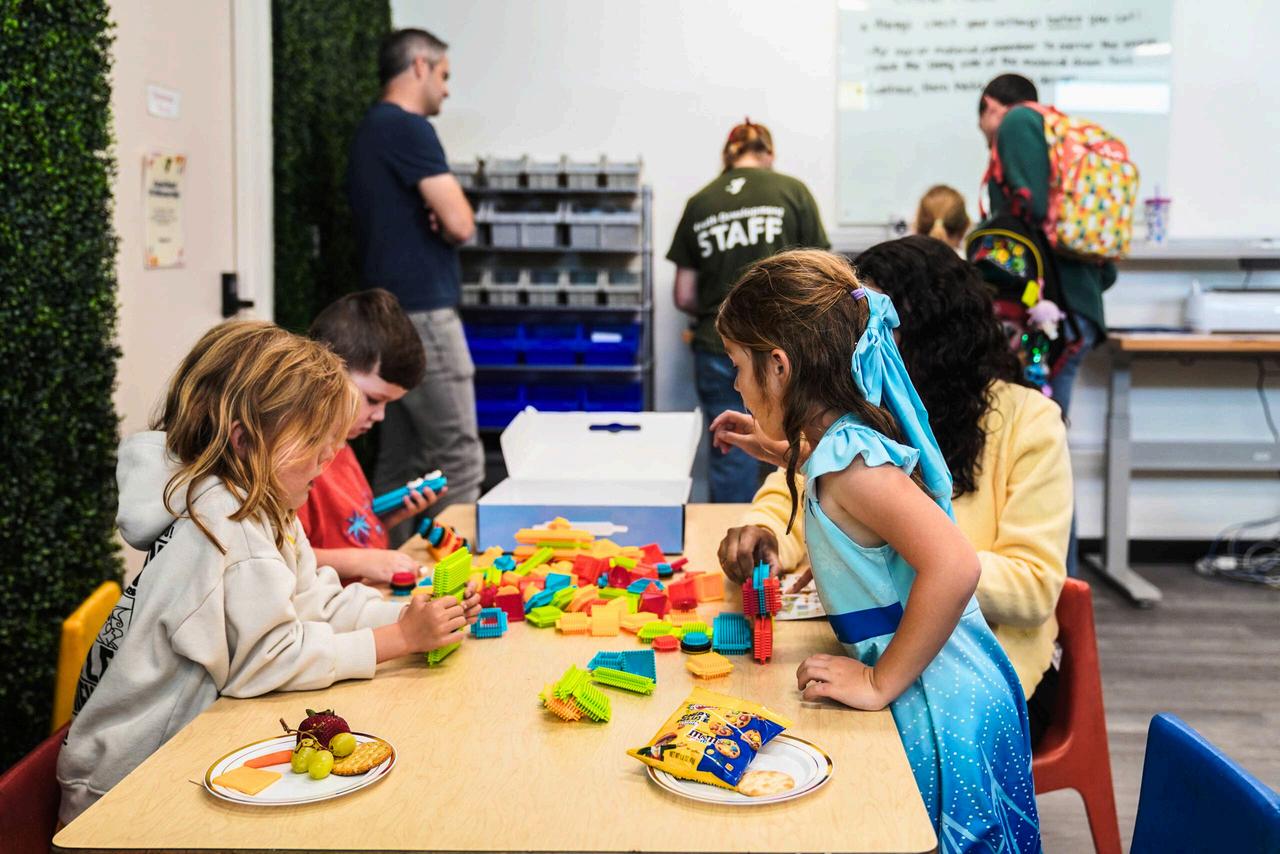
Already, more than 200 summer campers and 60 afterschool students have used the Maker Space to design keychains, craft personal projects, and build a mini-golf course. These projects are not just fun. They are opportunities for discovery and teamwork.
Supported by the Audre Slater Foundation, the Maker Space reflects a shared belief in access and the power of community. It is helping to ensure that every child, teen, and adult has a place where they can explore their creativity and be part of something larger than themselves.
Multigenerational spaces like this are more important than ever. They offer natural opportunities for connection and mentorship. Older adults share their knowledge. Young people bring new ideas. Together, they build trust, empathy, and a deeper sense of belonging.
Looking ahead, the YMCA plans to grow the Maker Space into a true community hub. Future plans include intergenerational workshops, college internships, music partnerships, and expanded STEAM opportunities.
In Santa Monica and across California, YMCAs are proving that when we invest in places where people can connect, we are not only building programs We are building stronger, more vibrant communities where everyone has the chance to thrive
To learn more, visit: www.ymcasm.org
RISEUP:
Pathways to Higher Education at Santa Maria Valley YMCA
Santa Maria and the nearby Guadalupe are among California’s most productive farming regions. Families here work long hours in agriculture, food processing, and service industries. Many students are first-generation Americans and the first in their families to consider higher education. For these young people, financial challenges and family responsibilities often mean staying close to home after high school.
REACHING STUDENTS EARLY
Santa Maria Valley YMCA’s RiseUP program addresses this reality by reaching students early. Each three-year cohort includes 55 students, hand-selected in partnership with local educators beginning in 3rd grade. These students, who often come from a socio-economically challenged demographic, embark on a journey of career exploration, mentorship, and skill-building that prepares them for the future.
RiseUP students take part in hands-on projects that spark confidence and creativity. They explore coding, 3D printing, and STEM activities and meet professionals in healthcare, aerospace, and public service. Through the Write Brain project, they even author and publish their own books, an achievement that shows them their voices matter. Each experience broadens their view of what’s possible.
Photos provided by Santa Maria Valley YMCA
Central to RiseUP is its partnership with Allan Hancock College. Through Bulldog Bound, students are guaranteed two years of tuition-free education while continuing to live at home, often the only realistic option for local families. With Hancock now adding a four-year degree, a bachelor’s is within reach without leaving the community. For families in Santa Maria and Guadalupe, that changes the equation for higher education.
Changing What’s Possible
The program also strengthens fundamentals. Students improve in literacy and math and learn water safety through swim lessons, often their very first time in a pool. By graduation, participants have gained skills, confidence, and direction, setting them up to thrive in high school and beyond.
“College used to feel impossible. Now my son talks about what he wants to study, and he knows he can do it here.”
With strong partners like Allan Hancock College, Santa Maria Valley YMCA is removing barriers and helping the next generation rise up to their full potential, right here at home.
To learn more about Santa Maria Valley YMCA visit: www.smvymca.org
Creating a Place for All
A new Anaheim Family YMCA home for connection, belonging, and community growth
For the first time in nearly 30 years, the Anaheim Family YMCA is bringing a full-service membership experience back to the heart of Anaheim. With this development, the Y will be reigniting a legacy of connection and belonging. More than a facility, this expanded campus represents a long-awaited homecoming for the many families who rely on the Y as a place to play and to find community. With room to welcome more than 7,000 additional participants and 2,000 members, the Y’s new chapter is rooted in one purpose: creating a place where everyone belongs.
For 115 years, the Anaheim Family YMCA has stood alongside the community by partnering with local leaders and showing up where support is needed most. Now, the Y has the rare opportunity to build on that history by creating a physical gathering place that brings people of every age, background, and experience together. This expansion is not just about square footage. It is about addressing real community needs and ensuring that every neighbor has access to safe, inclusive spaces.
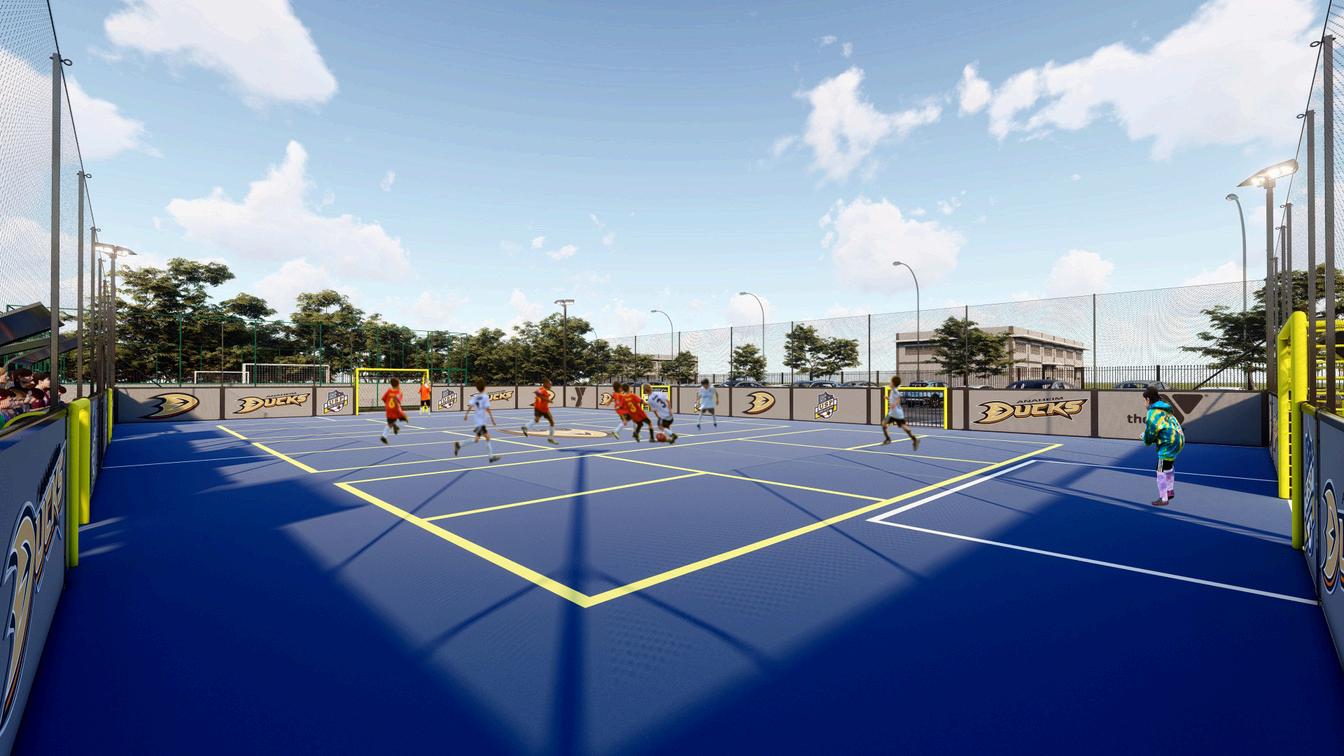
The journey began with a successful Phase One campaign that brought a four-acre Community Sports Center to life. Built in partnership with the City of Anaheim, the center includes six lighted turf soccer arenas, expanded parking, restrooms, and foundational campus infrastructure that is all on land leased to the Y for the next 100 years. Families immediately embraced the new space, filling it with energy, connection, and the kind of everyday moments that strengthen communities.
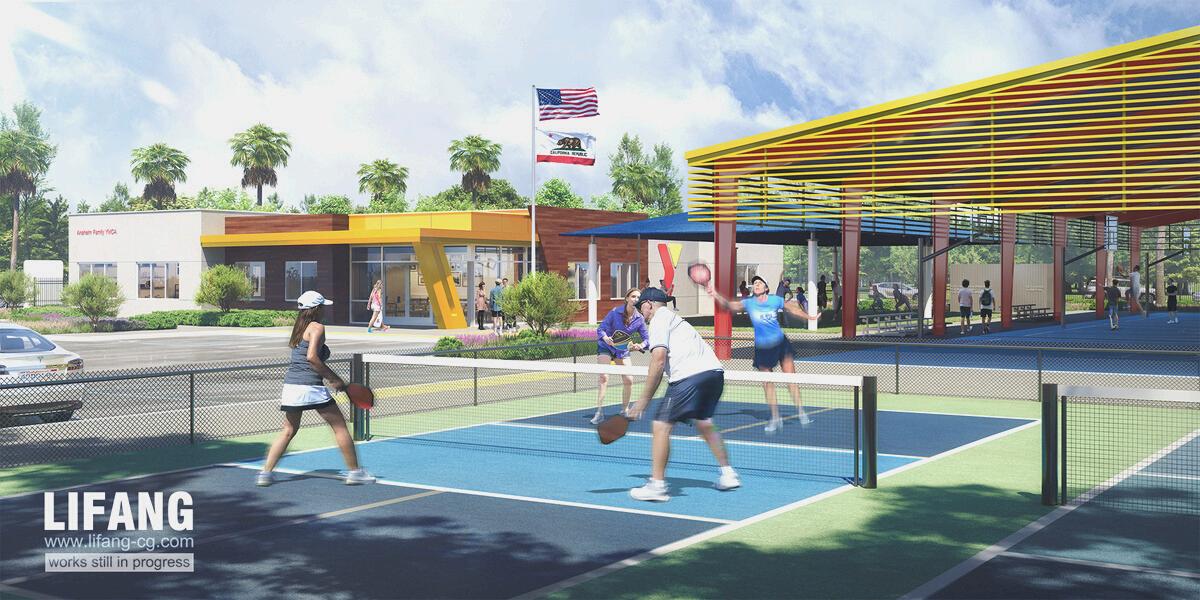
In 2022, the Anaheim Family YMCA embarked on Phase Two which entailed an even more ambitious effort made possible through the generosity of elected officials, private foundations, and unprecedented individual giving. With more than $7.5 million raised to date, the Y is moving forward with the construction of a three-court multipurpose Airnasium built for youth sports, teen nights, multicultural festivals, and large community gatherings. Twelve additional Pickleball courts will expand opportunities for active living for adults and seniors, making the Y a regional hub for one of the nation’s fastest-growing sports.
And in partnership with the Anaheim Ducks / YMCA Street Hockey League, a state-of-the-art outdoor street hockey arena will offer young athletes new ways to learn teamwork, leadership, and confidence.
Rounding out Phase Two will be 48 additional parking stalls and a two-sided digital sign to help neighbors stay connected to programs, events, and celebrations happening at the Y. A final third phase will add to the campus a 6,500-square-foot program center with offices, a front desk, multipurpose rooms, concessions, a childwatch space, an e-sports room and a 4,500-square room
Today, people travel from across the region to participate in the lifechanging programs offered by the Anaheim Family YMCA. With this expansion, the Y is creating space for even more families to gather, more youth to discover their potential, and more community members to find the support they deserve. The next chapter of the Y in Anaheim is one shaped by community, strengthened by partnership, and powered by the belief that everyone deserves a place to belong. And it is only the beginning.
“This expanded campus represents a long-awaited homecoming for the many families, youth, and neighbors who rely on the Y as a place to learn, play, and find community.”
That’s a Wrap!
New Bills to Be Aware of and How
to Leverage the “Off-Season”
With the Legislature officially adjourned and the Governor wrapping up bill signings, the curtain has closed on another busy year at the Capitol. While lawmakers head back to their districts, the work of advocacy doesn’t stop, it simply shifts gears. This is the time for YMCAs to take stock of new laws that will shape our programs and communities in the year ahead, and to use the “offseason” to build relationships, share local impact stories, and lay the groundwork for next year’s policy priorities.
This year, student safety emerged as a clear legislative priority, reflecting California’s commitment to protecting young people in every setting where they learn and grow. Several newly signed bills strengthen prevention and response efforts around sexual assault and abuse, ensuring schools and youth-serving organizations have stronger safeguards, training, and reporting protocols in place. Lawmakers also took steps to keep students safe in the digital age, addressing the risks posed by
artificial intelligence, deepfakes, and online exploitation. And in recognition of California’s diversity, new measures reinforce that schools are safe havens for all children, limiting immigration enforcement actions on campuses. A few bills in particular stand out, namely SB 848, SB 98 and several bills regulating AI and social media.
SB 848 by Senator Sasha Renée Pérez (DAlhambra) requires all schools by July 1, 2026, to adopt written policies that promote safe environments for pupils that include clear standards for professional boundaries between employees, contractors, volunteers, and students, and must explicitly prohibit inappropriate electronic and social media communications. If you work with your local districts to provide on-campus services, the new policies might include members of your workforce.
SB 98, also by Senator Pérez, requires when a school safety plan is next reviewed on or before March 1, 2026, it include procedures to notify parents and guardians, teachers, administrators, and other school personnel when the school confirms the presence of immigration enforcement on the school site. The statute is in place until January 1, 2031, at which point these provisions will sunset. Again, for YMCAs operating programs in neighborhood schools, the safety plans might also include provisions on how to alert outside program operators of the presence of immigration enforcement.
“It’s easy to think advocacy happens in the Capitol, but the truth is, it starts in every YMCA and every neighborhood we serve.”
The Governor also signed a suite of bills aimed at keeping kids safe online. SB 243 (Padilla, D-San Diego) requires operators of companion chatbot platforms (like ChatGPT) to do several things if it knows a user is a minor, including disclosing that the user is interacting with AI, providing notification at least every three hours that reminds the user to take a break, and instituting reasonable measures to prevent chatbots from producing visual material of sexually explicit conduct or directly stating that the minor should engage in sexually explicit conduct. AB 56 (Bauer-Kahan, D-Orinda), meanwhile, requires platforms like Tik Tok and Instagram to display to children mental health warning labels about the harms associated with social media when the child logs onto the platform, and again after extended use.
Platforms have until 2027 to come into compliance with this new law. For anybody working with young people, it’s important to know how Sacramento is looking to keep them safe, especially as the kids you work with every day are coming to you for answers and guidance. Expect this issue to keep coming up over the next many (many, many, many) years.
This is just a small snapshot of bills that were signed into law this year. The Alliance will provide YMCA teams a more comprehensive breakdown of all new laws that will be on the books in 2026.
The legislative offseason is a great time to reach out to the district offices of your elected officials while they’re back home. The Legislature reconvenes on January 5, and we anticipate several major priorities to resurface, including child protection, rising costs of insurance, workforce development and other issues important to the work of YMCAs. It’s a great practice to go into a year like that with established relationships with folks who will be making the decisions.
Christina Marcellus Director of Public Policy California
State Alliance of YMCAs
Meeting the Moment
Inside the Channel Islands YMCA’s Youth & Family Services and the leadership guiding its impact
Across California, the number of youth experiencing homelessness continues to rise. According to data from the California Department of Education, more than 230,000 students were identified as homeless during the 2024-25 school year. That marks a 9.3 percent increase from the previous year (California Department of Education, 2025). Many of these youth are not visible in traditional ways.
“You don’t often see youth on the streets the way you may see adults experiencing homelessness,” says Amy Tovias, Operations Director for Youth & Family Services (YFS) at the Channel Islands YMCA. “But it’s happening.”
For the past several years, Amy has played a key role in leading the Channel Islands YMCA’s response to this growing crisis. With a background in criminal justice and a master’s degree in early childhood mental health, she came to the Y drawn by its deep commitment to young people. “Youth are really the heart and soul of the work that I do,” Tovias says. Today, as Operations Director, Amy oversees a continuum of care
that includes shelter, transitional housing, crisis response, mental health services, and case management. Channel Islands YMCA Youth & Family Services supports more than 450 youth each year, meeting them where they are and offering safety, consistency, and trust in moments that matter most.
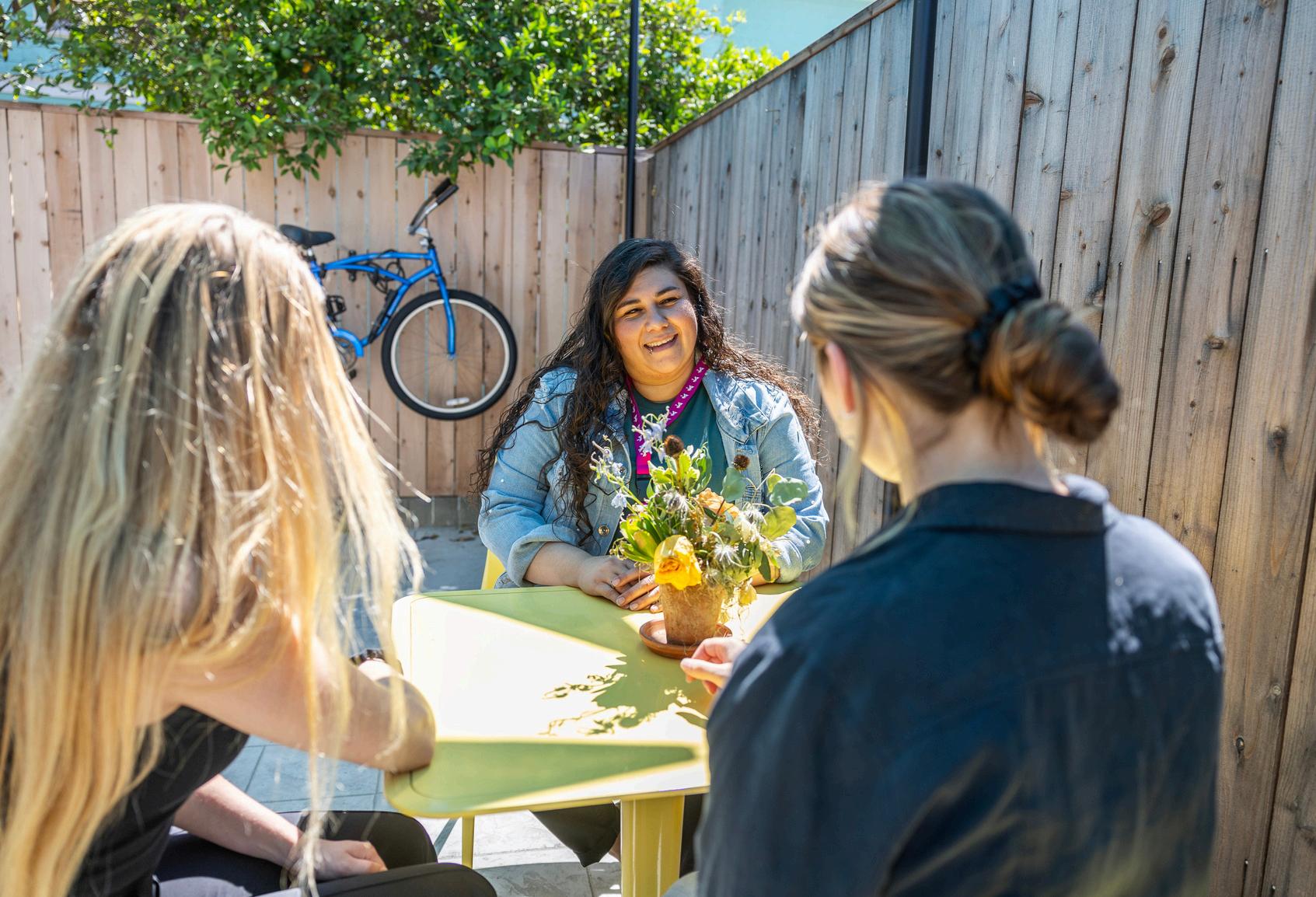
At the Y, the mission is to respond to this crisis not only with shelter but with connection. Programs span the age range from 12 to 24. Whether a youth needs a shower, a place to charge their phone, or long-term housing support, YFS staff are there to help. Channel Islands YMCA remains deeply rooted in relationship-based care. “We always ask: what do you need, and how can we meet that need? Not: do you fit into what we’re offering?” Amy says.
That approach builds trust. It also gives youth something many have never had, the ability to choose. “Even just giving them two options can be meaningful. For a lot of the youth we serve, they’ve never had a say in where they go or what comes next.”
This model also relies on collaboration. Staff
Photos provided by Amy Tovias, Channel Islands YMCA
work alongside probation officers, schools, social workers. In a landscape of disappearing services, Channel Islands YMCA remains.
Over the last five years, YFS has expanded significantly. They opened a dedicated Navigation Center for young adults launched The Lyons House, a transitional housing program for youth exiting foster But expansion alone isn’t the goal.
Amy Tovias YFS Operations Director
Today, Amy and her team are focused on depth, making sure the programs are stable, staff are supported, and the care provided remains responsive to what youth actually need. “We’ve grown a lot,” she says. “Now we’re continuing to make sure we’re doing it really well.”
“Amy truly is a Cause Driven Leader who recognizes the importance of community and accessibility. She is deeply appreciated.”
-Margo
Byrne, President & CEO, Channel Islands YMCA
Thanks to Amy’s steady leadership as well as the support of the Channel Islands YMCA, the Youth & Family Services branch is known across the community as a place where young people can find safety, support, and connection. It is a reputation earned through consistent care and a commitment to showing up in every moment, but especially when it matters most.
To learn more about the Channel Islands YMCA visit: www.ciymca.org
Dan Chapman LEADERSHIP IN FOCUS
A Conversation with the Chief Executive Officer of the YMCA of San Joaquin County
What first brought you to the Y?
In my previous job in the Athletics Department at the University of the Pacific, one of my colleagues, Jeremy Neisser, was a board member of our YMCA and informed me they were looking for a new CEO back in 2019. I had worked in the nonprofit industry before, and this position sounded very intriguing to me.
Looking back, is there a moment or project that stands out as especially meaningful?
Nine months after I started, the COVID pandemic hit our world and, like everyone else, we had no idea what to expect. One year later, in March 2021, things slowly began to open up. Our YMCA reached out to our families and worked with local partners to let them know we were here to support them. It was a very slow process, but by the summer of that year, it was quite clear families wanted their children to get back out there and be involved. Since then, our organization has thrived, and the number of youth and families we are serving in our after-school and sports programs continues to grow. We are now recognized as a premier leader serving our community.
How do you approach building strong partnerships and meeting the unique needs of your community?
We had to prove ourselves and work on our reputation. Our Y had some challenges in years past, so it was critical that we improve things. With board leadership and a dedicated staff, we have done that. Our community has rallied behind us and now looks to us to fill many needs.
What inspires you most about leading the YMCA of San Joaquin County?
First and foremost, it starts with the kids. It's impossible to do what we do without having a passion for young people. Secondly, it's our staff. The hard work and dedication they exhibit in their jobs are so inspiring to me. They make me so proud each and every day.
A YMCA BEYOND WALLS
A Y Beyond Walls is a YMCA whose mission extends beyond a physical facility. Instead of relying on a traditional building to connect with families, it brings programs, services, and support directly into the community, into schools, parks, housing developments, churches, and anywhere people gather.
The YMCA of San Joaquin County is a powerful example of this approach. The Y has built a reputation by showing up, consistently, creatively, and compassionately, in the places where children and families already are. Through strong partnerships with schools, local organizations, and local leaders, they’ve earned deep trust and become a reliable community resource.
In every sense, the YMCA of San Joaquin County is a Y Beyond Walls, proving that impact isn’t measured by square footage, but by presence, relationships, and the lives changed along the way.
To learn more visit: www.ymcasjc.org
Impact at a Glance:
By the numbers, the Y continues to play a vital role in building stronger communities across California. Through meaningful engagement, critical programming, and a growing membership, the Y remains a trusted partner for communities statewide.
See the Impact:
2,226,282
YMCA members and program participants across California.
590,776
Children participating in before and afterschool programming statewide.
142,410
Children engaged in aquatics activities to prevent drowning.
1,914
Collaborations with schools, government entities, and foundations.
55,000+
Full- and part-time YMCA employees.
Member Associations
Central Coast YMCA
Channel Islands YMCA
Corona-Norco Family YMCA
Family YMCA of the Desert
Golden State YMCA
Santa Maria Valley YMCA
Santa Monica Family YMCA
Shasta Family YMCA
Siskiyou Family YMCA
Sonoma County Family YMCA
Southeast Ventura County YMCA
West End YMCA
YMCA of Anaheim
YMCA of Glendale
YMCA of Greater Long Beach
YMCA of Greater Whittier
YMCA of Orange County
YMCA of San Joaquin County
YMCA of Superior California
YMCA of the East Bay
YMCA of the East Valley
YMCA of the Foothills
YMCA of West San Gabriel Valley
FINANCIAL OVERVIEW:
The California State Alliance of YMCAs made significant contributions to support local Ys across the state
Lastyear,ourimpactincluded:
$23,464,150 in private foundation grants secured and distributed to YMCAs in California.
$1,085,000 in funding secured for 17 YMCAs in California.
5,000+ in direct staff hours provided in support of local Y programs and initiatives
$831.3M
Operating Revenue
Total investment in programs, services, and mission-driven initiatives across the state to strengthen communities.
$415.5M
Annual Charitable Support
Fueling essential programs, outreach, and financial assistance across California to ensure everyone has access to the Y.
CONNECTED FOR COMMUNITIES
The California State Alliance of YMCAs represents the collective strength of YMCAs across California, advocating for policies and fostering partnerships that benefit communities statewide. Our membership and governing board consist of YMCA CEOs and executive leaders, committed to advancing our mission. The Alliance serves as the unified voice of YMCAs in shaping public policy, a platform for achieving lasting community impact, and the central hub for statewide collaboration. Together, we are deeply connected to communities and committed to building a stronger California
2025 - A YEAR OF RESILIENCE AND RECOVERY
Vince Iuculano, CEO Board Chair
YMCA of the Foothills
Dear California State Alliance of YMCA’s,
Across our great state, the California State Alliance of YMCAs stands as a unified force committed to strengthening the foundations of community. As Chairman, I am continually inspired by the impact we achieve when our YMCA associations come together with a shared purpose: to ensure that all Californians, regardless of age, background, or circumstance, have access to opportunities that support their health, well-being, and personal growth.
The power of our Alliance is in collaboration and mutual support –and that was on full display in January of this year as Y’s from across the state came to the aid of the fire victims from the Eaton and Palisades Fires. The outpouring of support and love for those communities from our Ys left a deep and positive impact on those who needed it. And, as the Y does, we have continued to walk along their side in recovery and long-term support.
As chairman, I have the honor of watching our CEOs from across the state bring the concerns of local communities to the state level, ensuring that decision-makers understand the real challenges, and the real solutions, present in neighborhoods across California. By working as one, we have amplified our voice on statewide issues ranging from youth development and watersafety education to affordable childcare, public health, and equitable access to physical and mental wellness programs. Our collective approach to advocacy has allowed us to champion policies that strengthen families, support working parents, and help young people thrive.
Equally important are the partnerships we cultivate with school districts, health systems, local governments, community-based organizations, and philanthropic leaders, which have delivered life changing results for our participants and beneficiaries. These partnerships allow us to expand our reach far beyond the walls of our facilities. Whether we are delivering ELOP offerings to the most underserved students, supporting senior health initiatives, responding to community emergencies, or creating safe spaces for teens, we are able to do more because we do it together.
The California State Alliance of YMCAs reflects the best of who we are: collaborative, community-driven, and committed to the wellbeing of all. I am proud of the work we lead statewide, and I look forward to continuing to build partnerships that help every community grow stronger in 2026.