
a partnership that pays

Earn even more for offering your clients California’s most comprehensive access to doctors and hospitals:
Full Network PPO
• Blue Shield
HMO offerings from
• Blue Shield
• Kaiser Permanente
• Sharp Health Plan
CCSB offers 4-tier selection
Single bill
CCSB offers more Blue Shield Plans
Some Key Rules:
EARN EXTRA WHEN YOU SELL NEW SMALL GROUPS
/ 6+ Groups)
- 100 $ 8,000 / $12,000
- 50 $ 4,000 / $6,000 11 - 25 $ 2,000 / $3,000 5 - 10 $ 1,000 / $1,500
Contact your local Covered California for Small Business sales representative to learn why we’re growing and how we can help build your business! An increasing number of agents and their clients are glad they did.
1. Applies to new to Covered California for Small Business (CCSB) groups with initial effective dates of 07/1/25, 08/1/25, 09/1/25, 10/1/25, 11/1/25, 12/1/25 and 1/1/26
2. Agency must submit minimum of three groups to qualify for bonus program
3. Bonuses will be calculated on number of subscribers (employees) in effect for the first effective month of the policy as determined by CCSB.
4. No pro-ration of target values will take place.
5. Business written through partnering General Agencies qualifies.
6. Covered California will issue the second bonus (6+ groups) incentive payment forty-five (45) days following the conclusion of the incentive program so long as qualifying groups satisfy the ninety (90) day requirement outlined in Section (E)(2)(c) of Exhibit F of the Agency Agreement. For a complete list of the program rules go to: https://www.coveredca.com/forsmallbusiness/agents/Exhibit_F_Rev_5_2025.pdf

a toll especially for employees who are spending more time on screens.
Ultra dynamic Transitions® lenses are ideal for modern work environments, helping employees recover faster from visual disturbances so they can stay focused longer.
Why it matters to employees1:
• 71% say eye fatigue/light sensitivity affects their performance
• 42% report productivity loss due to light sensitivity
• 68% struggle with bright or changing light
U L TR A D YNAMIC LIGHT INTELLIGENT LENSES

This season, make sure your vision plans include premium, ultra dynamic Transitions® lenses that deliver real value—better vision, better well-being, better results.


Thank you
Looking back on 2025, our team appreciates how we have connected with our subscribers and provided educational resources to help them grow. Cal Broker has had an influence, and we appreciate your feedback on our articles and the support you provide for our advertisers.
As publisher, I want to thank the members of our team as they have done good work, and their efforts are why Cal Broker has grown and accomplished success in 2025.
Zulma Mazariegos worked in our insurance agency when Cal Broker sold four years ago. Zulma helped transition magazine production to our new team. Zulma continues to champion the management of all aspects of the magazine as she takes the content from authors and advertisers and develops the plan for all Cal Broker media from the monthly magazine to the weekly newsletters. Zulma worked this past year to train and support our new team members. The new team is small but mighty as Zulma works hard to manage the process to produce the digital monthly magazine and then surround the magazine with three monthly newsletters and coordinate content placement with our website.
Peter Kozlowski worked on magazine design this year and just recently moved to our insurance agency, as he joined the Medicare team. Peter brought us a consistency in magazine design that we appreciate. From magazine covers to the layout and placement of artwork, each month we enjoyed his diligence and eye for the ideal visual impact. Gabriela joined the team at the end of 2024 and helped to support production efforts. Now full time, Gabriela leads the video process for the articles we produce in the Read – Watch – Listen optional format. Her technical skills have expanded since coming to Cal Broker after completing her college degree in communications. She is moving into more of the production steps as she learns all aspects of the magazine’s production.
2026
In 2026, we plan to continue to work on articles you can learn from and use in your daily practice to retain and grow your business. This remains our mission and purpose. Please send us article ideas and topics, respond to our polls and surveys to provide us with the feedback we need to get your ideas implemented, and connect with our advertisers as they aim to support you.
NEW items for 2026 include a new media product — The Broker Resource Guide—for subscribers who want to get their services and products in front of our 220,000 subscribers. Using Cal Broker’s digital media, The Broker Resource Guide will offer subscribers the option to communicate their services/products to other subscribers, or to shop for solutions for their agency and clients. This resource guide will provide our subscribers the ability to freely shop the digital content or place their service or product at a price point in the guide that is within most marketing budgets.
We plan to launch The Broker Resource Guide in the first quarter of 2026.
Poll and Surveys
As we connect with subscribers to learn what they want more of, please review our polls and surveys. We look to provide subscribers with the content and solutions they need to do the work they perform for their clients. For 2026, we look to be more interactive with our subscribers. We believe each of you have opinions and concerns about our industry, along with ideas about what you need from insurance carriers and professional associations, in addition to your desire to be involved in how our industry is impacted by California and national legislation.
Click here to take the California Broker Magazine Broker Survey
Far too many changes are happening in our industry that have a significant impact on life and health insurance professionals.
When commissions are eliminated or significantly reduced, there is an impact on clients. An organized response that factors in the fiduciary responsibility a broker has with the liability of representing an insurance product no longer offered through brokers. We need to look at other states, like Idaho, for example, to learn what is possible in these situations. Mostly, more insurance professionals need to get involved before more changes take place. Without any response, the harmful trends we see from insurance carriers and health care providers will continue. In 2026, consider what you can do to get more actively involved in the industry.
For life and health insurance professionals, we understand your impact on clients. At Cal Broker, we will feature more content about how to work closely with professional associations to support the development of a collaborative industry plan. Cal Broker can then join the associations to communicate the plan. With 220,000 subscribers, we will reach everyone licensed to do business in CA.
We will publish efforts to encourage a joint and collective response that will be consistently and professionally implemented, and Cal Broker will look to be part of this effort.
When brokers come together on messaging their values from a coordinated position, the communication goal will be enhanced. Cal Broker speaks to the independent insurance professionals who assist their clients daily, as advocates for their clients to help them navigate the insurance industry. Cal Broker will help reach as many brokers with this message as possible.
To start, we can communicate the broker’s role as client advocate and do the work required to help clients select and use their insurance benefits.
Cal Broker will work to support NAIFA, NABIP, HAFA, and all other insurance associations who have a common agenda to support the local independent insurance professional.

TABLE of CONTENTS
Cal Broker’s commitment is to be the leading source of news and information for California brokers and agents operating in the health, life, and annuity industry. We are committed to connecting Life and Health insurance professionals to valuable resources and solutions they can provide to their insurance clients.
4
PUBLISHER’S NOTE
By Phil Calhoun
14
CALIFORNIA POSITIVE
California Towns with Holiday Spirit
From the sunny coast to the snowy High Sierra, California delivers plenty of holiday charm, especially in historic towns and villages. Think old-fashioned carriage rides in the Gold Country, karaoke events (and visits from a certain jolly VIP) in an alpine resort, and gawking at gussied up, spirited neighborhoods. Here are some of our favorite holiday events and settings in California, listed north to south.
By Visit California
16
ARAG
The Hidden Strain:
How Silent Caregiving Impacts the Workplace
As we step into 2026, the ripple effects of economic uncertainty and shifting workplace norms continue to reshape how we live and work. Rising healthcare premiums, mounting personal debt, and a polarized political landscape have created a challenging environment for both employers and employees.
By Lisa Wolf
18
DENTAL BENEFITS
Oral Health: A Key to Your Child’s Overall Wellness
During Cold and Flu Season
Throughout the year, children may develop six to 10 colds, and many will get sick with the flu, especially during the winter months. Frequent handwashing, a balanced diet, and plenty of sleep are all vital to protect your child from illness, but maintaining good oral health is just as important for their overall wellness.
By Roosevelt Allen, DDS, MAGD, ABGD
20
TECHNOLOGY
Your Clients Need Videos
Most of us would rather watch a quick video rather than pour over a detailed set of written information and instructions. Creating marketing videos for brokers involves several key steps. Since there are many platforms utilizing videos to fight for attention, it’s important to hone this tool to gain the most success possible with these tips.
By
California Broker Magazine
22
MEDICARE ADVOCATES
NAIFA Adds New Medicare Collective
The landscape of Medicare is changing rapidly, making it more important than ever for agents to have powerful advocates fighting for their ability to serve their clients. NAIFA has partnered with several leading FMOs to offer an exclusive discounted membership rate to join the Medicare Collective (MC) and receive valuable membership benefits.
By NAIFA
24
HEALTH & WELLNESS
From Strain to Strength:
Unlocking the Power of Vision Care at Work
Eye health is a critical driver of employee productivity and overall wellbeing—yet it remains one of the most overlooked elements in workplace health strategies. Recent data from Versant Health’s Fourth Annual Vision Wellness Study and the 2025 Transitions Optical Workplace Wellness Survey highlight both the urgency—and opportunity—for brokers to help employers elevate vision care from a “nice-to-have” to a core component of wholeperson health.
By
Jonathan Ormsby, Senior Manager, U.S. Managed Care for Transitions Optical

HEALTH & WELLNESS
Start Now:
Why the Holidays are the Perfect Time for Starting New Health Habits Research shows 80% of grand health-related New Year’s resolutions have failed or been forgotten before March of the same year. However, smaller, more realistic changes are what stick in the long term, especially when implemented during the holidays instead of waiting for January. When you model proactive, realistic, sustainable habits, you become healthier, which in turn allows you to serve your clients and community far more effectively.
By Megan Wroe, MS, RD, CNE, CLEC
28
COMMISSION PLANNING
The Hidden Strain:
How Silent Caregiving Impacts the Workplace
As we step into 2026, the ripple effects of economic uncertainty and shifting workplace norms continue to reshape how we live and work. Rising healthcare premiums, mounting personal debt, and a polarized political landscape have created a challenging environment for both employers and employees.
By Phil Calhoun and David Ethington


Phil Calhoun health Broker PuBlishing, llC publisher@calbrokermag.com
Zulma maZariegos Zulma@calbrokermag.com
TO PRODUCTION DIRECTOR gaBriela PereZ Gabriela@calbrokermag.com
DIGITAL DIRECTOR Carmen PonCe Carmen@calbrokermag.com
CIRCULATION Zulma@calbrokermag.com
220,000 subscribers 15,000 monthly website visits
ADVERTISING
health Broker PuBlishing 14771 Plaza Drive Suite C Tustin, CA 92780 714-664-0311 publisher@calbrokermag.com
Print Issue: U.S.: $30/issue Send change of address notification at least 20 days prior to effective date; include old/ new address to:
HealtH Broker PuBlisHing 14771 Plaza Drive, Suite C Tustin, CA 92780 714-664-0311
©2025 by Health Broker Publishing. All rights reserved. No part of this publication should be reproduced without consent of the publisher.
Industry News
2025 Employer Health Benefits Survey OVERVIEW:
This is the 27th annual Employer Health Benefits Survey. As in years past, the survey examines trends in employer-sponsored health coverage, including premiums, employee contributions, cost-sharing provisions, offer rates, wellness programs, and employer practices. This year we asked employers detailed questions about their provider networks, approaches to primary care, menopause support benefits, and coverage for GLP-1 agonists for weight loss, as well as which overall factors they believe have contributed to premium growth. The 2025 survey includes 1,862 interviews with non-federal public and private firms.
Annual premiums for employer-sponsored family health coverage reached $26,993 this year, 6% higher than in 2024. On average, workers contributed $6,850 toward the cost of family coverage. The average deductible among covered workers in a plan with a general annual deductible was $1,886 for single coverage.
READ FULL ARTICLE →
Life Insurance New Premium Up 16% in the Third Quarter, LIMRA Reports
By Staff Reports
Life insurance new annualized premium increased 16% year over year to $4.3 billion in the third quarter, according to LIMRA’s preliminary individual life insurance sales results, which represent 80% of the U.S. market.
The number of policies sold rose 10% in the third quarter. In the first nine months of 2025, new annualized premium totaled $12.8 billion, up 13% over the prior year. Policy count rose 6% during that time.
“It was another strong quarter for individual life insurance sales. All product lines except for fixed universal life recorded positive premium and policy sales growth. Importantly, the growth was widespread with two-thirds of participating carriers reporting premium growth and more than half posting higher year-over-year-policy sales,” said Sean Grindall, senior vice president and head of Life & Annuities, LIMRA and LOMA. “LIMRA expects this sales trend to continue through the end of 2025 with sales growth moderating over the next few years.”
READ FULL ARTICLE →
Star Ratings Stabilizing, But Health Plans Should Be Ready For Changes
By Jeff Lagasse
Expected drop in next year’s star ratings will be due to the health equity index that includes social risk factors in CMS calculations.
Medicare Advantage star ratings were released in October, and while health plans have seen ratings dip across the industry over the past three years, this year shows signs of stability despite continuing uncertainty.
Plans need to be nimble in an ever-changing environment, according to Marge Ciancetta, product manager at Cotiviti. The average plan score moved only slightly from last year – from 3.63 to 3.65 – indicating that stars are settling down.
READ FULL ARTICLE →
Voluntary Benefits Improve Employee Morale, Retention, and Performance
By Joel Kranc
Benefits programs are being used to improve employee satisfaction, retention and performance, according to a new report from the Employee Benefit Research Institute.
The report, Expanding the Benefits Horizon: How Employers View Voluntary Offerings, reports that improving worker morale is the top-cited reason organizations offer employee benefits, as 85% of organizations say they see a positive impact on employee satisfaction as a result. Nearly three quarters of employers also see an impact on recruiting, retention and employee performance, while 70% see a positive impact on employee health.
READ FULL ARTICLE →
Tips To Outsmart 6 Types of Holiday Scams
By Anastacia Grenda
Having your identity stolen or bank account drained during the holidays? Bah! Humbug! Unfortunately, scammers don’t take time off during this season; while you’re hunting for gifts, they’re hunting for you. Cybercrime jumps nearly 30% during holidays thanks to a surge in online shopping and busy, distracted consumers.
The best way to avoid a lump of coal in your accounts? Knowing these common types of scams and how to avoid them. Here’s how you can safeguard yourself with some smart strategies and Norton’s high-tech security tools.
READ FULL ARTICLE →
New Law Repeals the 20Hour Prelicensing Requirements for Insurance Producers
California Department of Insurance
On October 10, 2025, Governor Newsom signed AB 943 (Rodriquez, Chapter 566, Statutes of 2025)
Prelicensing Education. Effective January 1, 2026, this law repeals the requirement for insurance producer license applicants to complete the 20 hours of prelicensing education from California Insurance Code section 1749. This change affects individuals who are applying for the following insurance producer licenses: property, casualty, commercial lines, personal lines, limited line automobile, life, and accident and health or sickness.
READ PRESS RELEASE →
U.S. Individual Health Insurance MarketIndustry Analysis and Forecast 2032 Report
The U.S. individual health insurance market is poised for a 6.05% CAGR surge by 2032.
• Strategic planners gain insights into a market growing from $1.92B to $2.91B by 2032.
• Comprehensive analysis of market trends, drivers, and opportunities.
• South region leads enrollment; West region projected for highest growth.
• Key players: Elevance Health, Cigna, Health Care Service Corporation.
This pivotal report, published in April 2025, spans over 180 pages, equipping decision-makers with data to navigate the evolving health insurance landscape.
READ FULL ARTICLE →
Stopgap Funding Bill Halts $536B Medicare Cut
By Alan Condon
The stopgap spending bill signed Nov. 12 by President Donald Trump halts a looming $536 billion Medicare cut and temporarily extends several key health programs, avoiding deeper disruptions from the now-ended government shutdown.
The legislation keeps most federal agencies funded through Jan. 30 and fully funds the Department of Agriculture, the FDA and the VA through the end of the fiscal year, according to Politico. HHS is among those operating under temporary funding until the end of January.
READ FULL ARTICLE →
Rising Employee Health Costs Becomes Top Priority for Hospitals in 2025:
Report
By Jakob Emerson
Managing rising health benefits costs has surpassed talent retention as the top strategic priority for health systems in 2025, according to Aon’s twentieth annual Benefits Survey of Hospitals.
The report includes insights from 155 health systems, representing more than 1,500 hospitals and 3.6 million employees nationwide.
Ten notes:
1. In 2025, 93% of health systems identified cost management as their primary concern, with median per employee per year spend rising 9.2% due to inflation, high-cost therapies and the growing complexity of chronic conditions.
READ FULL ARTICLE →
The Benefits of Individual Coverage Health Reimbursement Arrangement (ICHRA) for Employers and Employees
By NABIP
In this episode of Healthcare Happy Hour, David Saltzman interviews Ray Seaver, CEO of Zizzl Health, discussing the innovative Individual Coverage Health Reimbursement Arrangement (ICHRA) model. They explore how ICHRAs provide employers with a flexible way to offer health insurance, addressing key pain points such as affordability and employee satisfaction. The conversation delves into the employee experience, the importance of decision support tools, and the unique advantages of Zizzl Health’s approach. They also touch on regulatory challenges, compensation models for advisors, and future trends in the ICHRA landscape.
Takeaways
• ICHRAs offer a budget-friendly alternative for employers.
• Employees appreciate the choice and flexibility of ICHRAs.
• Decision support tools help employees navigate health insurance options.
• ICHRAs can lead to higher employee satisfaction and retention.
• Employers can manage healthcare costs more predictably with ICHRAs.
• HR departments are adapting to the ICHRA model.
• Consultants have control over their compensation in ICHRAs.
• ICHRAs are subject to ERISA regulations and compliance requirements.
• Zizzl Health focuses on technology and support for both employees and employers.
• The future of ICHRAs includes more innovative product offerings.
READ FULL ARTICLE →
CMS: Medicare Part B premiums set to rise in 2026
By Paige Minemyer
Medicare beneficiaries are set to see their Part B premiums rise significantly next year, according to an announcement from the Trump administration.
The Centers for Medicare & Medicaid Services (CMS) revealed late Friday that total monthly premiums for Part B will be $202.90. By comparison, the premium for 2025 was $185.
In addition, the deductible in Part B will rise to $283, up from $257 in 2025.
The CMS said in the announcement that the increase accounts for “projected price changes and assumed utilization increases that are consistent with historical experience.” The agency said actions taken to reduce spending around skin substitutes in the Physician Fee Schedule averted an additional $11 premium increase.
READ FULL ARTICLE →
CMS Advances Interoperability Initiative, Showcases Early Look at National Provider Directory
By Emma Beavins
The Centers for Medicare & Medicaid Services (CMS) hosted health tech leaders at a Health Tech Ecosystem Connectathon event in Washington, D.C., Thursday to showcase progress on its interoperability pledge.
In late July, the CMS and the White House jointly announced a new focus on driving healthcare interoperability and getting health data into Medicare patients’ hands. The push for innovative products that ease health data transfer stems not from regulation, but from voluntary commitments made by industry to uphold new standards set out by the CMS.
The announcement was sprawling and included several spokes: a new CMS Interoperability Framework and a Health Tech Ecosystem that committed to working on conversational AI, modern digital identity verification and diabetes apps.
The CMS also committed to improving Medicare beneficiaries’ digital experience with CMS websites.
READ FULL ARTICLE →

2025 DECEMBER EVENTS
Dec 4 @ 11am – 7pm EPI: One Big Holiday Party - @ San Diego, CA
Dec 9 @ 4pm – 7pm CAHIP: Conejo Valley Year End Social - @ Studio City, CA
Dec 10 @ 11am – 1pm EPI: Conejo Valley Year End Social - @ Westlake Village, CA
Dec 10 @ 4pm – 6pm CAHIP: Ugly Sweater Party and Charity Event - @ Camarillo, CA
Dec 10 @ 5:30pm – 8pm CAHIP: Tacos and Tequila: A Membership Appreciation Event - @ San Diego, CA
Dec 11 @ 11:30am - 3:30pm WIFS: Holiday Potluck for WIFS Members - @ Sherman Oaks, CA
Dec 11 @ 5pm - 8pm CAHIP: Golden Gate Holiday Party - @ Emeryville, CA
Dec 18 @ 5pm - 8pm CAHIP: River Oak Center for Children Toy Drive & Wrapping Event - @ Sacramento, California
VIRTUAL EVENTS
Dec 3 @ 9am - 10pm NAIFA: Business Planning with Life and Disability Insurance - Webinar
Dec 4 @ 4pm - 4:45pm NABIP: President’s Pitstop with Susan Rider - Zoom
Dec 9 @ 9am - 10pm NAIFA: Advanced Roth IRA Strategies - Webinar
Dec 10 @ 12pm - 1pm NABIP: Command the Shield: The Cino Security Intellegence Series - Webinar
Dec 17 @ 5pm - 6pm NABIP: LPRT Masterclass - Happy Hour - Zoom
Dec 18 @ 9am - 10am NAIFA: Decades at the Top: Mark Curtis on Success, Teams, and the Future of Wealth Management - Zoom
Dec 18 @ 12pm - 1pm NABIP: New Member Orientation - Webinar
SAVE THE DATE
Jan 14 @ 9am - 9:45am NABIP: State of NAIFA Q1 2026 - Zoom
Jan 29 @ 10am – 11:30am CAHIP: How To Win More Clients in 2026: A Sales Acceleration Session with Todd Hartley - Webinar
BROKER RESOURCES
Helping our brokers stay ahead of the curve with the latest news, events, trainings, and insights.
Commission Solutions: 2025 Webinars
Covered California: Great Benefits With Great Management Tools
CRC Benefits: Webinars
IEHP: Broker Resource Center
Pinnacle: We Simplify Health Benefits Administration
Sutter Health Plan: 2025 Health Topics
READ, LISTEN, WATCH: Industry News to Grow Your Business
Stay connected with the voices shaping California’s insurance industry.
Listen to expert interviews on Spotify and watch full conversations on Vimeo.

California Towns with Holiday Spirit
By Visit California

California Towns with Holiday Spirit
Visit these merry spots that put on a seasonal show in winter
From the sunny coast to the snowy High Sierra, California delivers plenty of holiday charm, especially in historic towns and villages. Think old-fashioned carriage rides in the Gold Country, karaoke events (and visits from a certain jolly VIP) in an alpine resort, and gawking at gussied up, spirited neighborhoods. Here are some of our favorite holiday events and settings in California, listed north to south. Sneak away now—or add them to next year’s holiday-travel wish list.
1. Redding (Shasta Cascade)
For an exhilarating outdoor holiday experience, wander through more than 10 acres of twinkling light displays at Redding Garden of Lights in Turtle Bay Exploration Park, a short walk from Redding’s Sundial Bridge. Enjoy holiday-themed drinks and food when you’re not taking in the wildlife and plant-themed exhibits or shopping for gifts in the Turtle Bay Exploration Park’s gift shop. A firepit, s’mores, and holiday-song singalongs add to the festive spirit.
The Shasta Cascade region has another great holiday-spirit bridge: the 1901 Lewiston Bridge gets illuminated for the holiday season, and the initial lighting ceremony—always the Saturday after Thanksgiving— includes fireworks too. Wander the Trinity County downtown this time of year for more Hallmark-movie-level ambience.
2. Mendocino (North Coast)
Want a break from the holiday crush? Rediscover the magic of a simple Christmas in the village of Mendocino. There are no chain stores here, and many of the shimmering historic buildings are filled with local crafts and art, or are doing business just as they have for the past century or longer (see the elegant MacCallum House Inn). Just north of town, the Mendocino Coast Botanical Gardens comes alive on weekends with music and lighted displays—from sailing ships to jellyfish—during its Festival of Lights. And in Fort Bragg, about 15 minutes north of town, hop aboard the Christmas Tree edition of the Skunk Train to visit the world’s largest Christmas tree and meet Santa Mr. Skunk at his workshop. This special tour of the redwoods comes with seasonal treats and strolling musicians.
3. Nevada City (Gold Country)
Experience Christmas past during the historic town of Nevada City’s Victorian-style celebration. Looking like a scene that could have sprung forth from a Charles Dickens novel, the town’s narrow, hilly streets, lit by glowing gas lamps and set against a backdrop of towering pines, can almost make you lose all sense of time. Carolers in period dress, brass bands, and bagpipers fill the streets of this picture-perfect town, where the award-winning holiday movie The Christmas Card was shot. Munch on roasted chestnuts while enjoying a carriage ride past historic buildings with twinkling white lights. For another unforgettable Gold Country experience, drive about 10 minutes to Grass Valley, where the Cornish Christmas Celebration commemorates the town’s historical ties with western England. Expect musicians, jugglers, and traditional cloggers
4. Windsor (San Francisco Bay Area)
Sixty-five miles north of San Francisco, this charming Sonoma County town pulls out all the stops every holiday season for its Charlie Brown Christmas Tree Grove, held in Windsor Town Green. It’s a true group effort—students, families, and various local service organizations and businesses all contribute to the display of 200 individually lighted and decorated trees that line the green’s walkways. Streaming holiday music and additional overhead lighting round out a scene perfect for celebrating the holidays and shopping at Old Downtown Windsor.
5. Petaluma (San Francisco Bay Area)
Some 25 miles south of Windsor, the Sonoma County town of Petaluma kicks off the Christmas season with an annual Santa’s Riverboat Arrival & Small Business Saturday. Held the first Saturday after Thanksgiving, the event begins with crowds gathering along the banks of the Petaluma River as Santa and Mrs. Claus chug into view. When their tugboat reaches the Turning-Basin, it makes a celebratory loop before they disembark and head to their Christmas “parlor,” where children and families can pose for photos with them. After, head downtown, where the annual Small Business Saturday will be in full swing with holiday sales, perfect for crossing names off your list.
Later, take part in such events and activities as the Lighted Boat Parade, outdoor ice skating, and the Festival of Trees, which typically runs for two days in mid-December. The latter features 60-plus trees elaborately decorated by local businesses, nonprofits, and families, as well as a marketplace, live entertainment, and a visit from Santa.
6. Livermore (San Francisco Bay Area)
This Bay Area town is pulling out all the stops this season—2025’s Holly Jolly Happenings include the free Holly Jolly Trolley (typically early December through early January) and the Deck the Halls Downtown program for businesses to decorate their storefronts. Visitors can also enjoy the Holiday Village at Carnegie Park (Dec. 5) and the annual Sights & Sounds Holiday Parade & Tree Lighting (Dec. 6). Roaming carolers on Dec. 5 and other select days will also add festive cheer.
Longtime annual events will be continuing this year as well: Experience the Lights of Livermore Holiday Tour, which begins with a wine tasting at Concannon Vineyard. The outing includes an open-air ride (bundle up!) on the Livermore Wine Trolley that will take you along festively decorated streets and past the city of Livermore’s most elaborate light displays. The one-hour tour, one of the Tri-Valley’s favorite holiday activities, also includes food options and a photo-op stop at the town’s “snow house.”
7. Mammoth Lakes (High Sierra)
Talk about a winter wonderland. Hit the slopes for world-class skiing and snowboarding at Mammoth Mountain, then get into the holiday spirit at The Village at Mammoth, where the kids canvisit Santa Claus and you can belt out classic carols during araoke events. And the Christmas lights you’ve seen elsewhere are nothing like the annual fireworks and torchlight parade during Mammoth Lakes’ Night of Lights, put on by the Canyon Lodge.
8. Fresno (Central Valley)
If Paris is “The City of Light,” then Fresno is the city of Christmas lights, thanks to the two miles of decorations along Van Ness Boulevard—better known as Christmas Tree Lane. In December, millions of bulbs glisten from 300 trees and 140 lavishly decorated homes in the Fig Garden neighborhood. There are toy soldiers and angels, elves and reindeer, and all kinds of animated scenes and music. Sometimes certain days are designated for walking and others for driving, so check the Christmas Tree Lane website in advance for the day that suits your style. (Ed. note: for 2025, the Christmas Tree Lane Walk Nights have been suspended.)
When Mountain communities might say “let it snow,” but in Newport Beach the mantra is “let it glow.”
9. Kernville (Central Valley)
The holiday celebrations in the charming Central Valley town of Kernville kick off in late November with a Hot Rod Toy Drive, a tree lighting at nightfall, and the first of a series of Santa in the Park events, which continue on every Saturday through the end of the year (photo with Santa optional). Other holiday activities include multiple Elf on the Shelf Scavenger Hunts and a candlelight vigil stroll with the Kern River Chorus.
10. San Luis Obispo (Central Coast)
Take a stroll along this San Luis Obispo County downtown district during the holiday season and you’ll see what community and yuletide spirit look like. Dozens of local businesses, boutiques, and shops band together to create the town’s annual holiday happening, and the result is entire blocks draped in lights, both inside and out. It makes for a great family night out, wandering the shimmering byways and ducking into local businesses for a meal, drink, or hot cocoa. One standout: The folks at the famously photo-worthy Madonna Inn (just outside downtown) meet the heightened holiday expectations with gusto; their over-the-top Christmas decor, a true feast for the eyes, is put on display from late November through the end of the year.
11.Solvang (Central Coast)
The annual Solvang Julefest brings Old World traditions to today’s Santa Barbara wine country. With authentic Danish-style buildings and windmills for a backdrop, costumed carolers, bands, and equestrians take to the streets of Solvang for the Julefest Parade. You can sample local varietals (as well as craft beers) during the two-day Julefest Wine & Beer Walk, and finish your gift shopping—and get great deals—during the the Shop, Mingle & Jingle event. There’s also a living nativity reenactment. It all comes to a dramatic end with the annual Christmas Tree Burn, a bonfire outside Old Mission Santa Inés in early January.
12. Big Bear Lake (Inland Empire)
With holiday lights aglow in the village and snow falling on the pines, Big Bear Lake transforms into a classic Christmas escape just a couple hours from Los Angeles. Typically within a week of Thanksgiving, the Big Bear Christmas Tree Lighting takes place with a special appearance by Santa and Mrs. Claus, and carolers joined by The Marvelettes and other guest vocalists. Throughout the holiday season, the Village is decorated with twinkling lights, and seven carved bears and other charming creatures of the wild are scattered throughout the grounds, making for some startling discoveries (and memorable photo ops). Also not to be missed: Lake Arrowhead’s Skypark at Santa’s Village, where you can breakfast with Santa, go ice skating, and ride the Northwoods Express mini train— just 25 miles away.
13. Temecula Valley (Inland Empire)
For the entire month of December, this wine country destination in Southern California celebrates the holiday season with its Temecula Chilled event. Come to be dazzled by the holiday lighting competition in Old Town Temecula, enjoy specially themed “chilled” drinks, eats, and treats throughout the valley, and trace some figure eights in festive outdoor ice-skating rinks. While in town, Old Town Temecula is also the perfect place to cross some names off your gift-giving list with its olive oils, lavender bath products, and locally harvested spice selections.
14. Newport Beach (Orange County)
Mountain communities might say “let it snow,” but in Newport Beach the mantra is “let it glow.” That’s because some 100 brightly decorated sailboats, yachts, and even kayaks cruise along the waterfront during the Newport Beach Christmas Boat Parade, an event that dates back more than 100 years. (For an on-the-water perspective, take a Parade of Lights Dinner Cruise.) The boat parade takes place over five nights. Can’t make it? You can still catch Newport Beach at its most radiant on boat tours that pass illuminated estates and other buildings on the shoreline—what locals call the “Ring of Lights.”
15. Dana Point Harbor (Orange County)
Though holiday cheer might not seem the most natural fit in the Dolphin and Whale Watching Capital of the World, Dana Point Harbor puts forth a healthy dose of the stuff with a magnificent light display from mid-November through early January. Themed light exhibits include Candy Cane Lane and the romantic “Merry Kiss Me” arch. Starting in early December, little revelers in Dana Point can take a boat ride with Santa aboard one of the wharf’s whale-watching vessels.
16. Julian (San Diego County)
A hint of wintry chill, the warm glow of fireplaces. It must be Christmastime in Julian, the historic gold-mining town in the pineforested mountains northeast of San Diego. On the Saturday after Thanksgiving, the annual Country Christmas celebration kicks off with the lighting of the town’s 80-foot-tall living Christmas tree. Festivities continue throughout the season. Head to Julian Tea and Cottage Arts for Victorian Christmas teas, or visit festively decorated houses on a home tour where you might just find quilts and other locally made crafts for sale.
More big-city sparklers
California’s cities have their own seasonal charms. Browse upscale stores like Tiffany and Co. and Neiman Marcus, then ice skate beneath the shimmering Christmas tree at San Francisco’s landmark Union Square. In the state capital, Old Sacramento has a towering tree, and presents the Theatre of Lights, which brings to life the classic 1823 poem, “A Visit from St. Nicholas.” In Los Angeles, it’s only natural that a place called Candy Cane Lane, in Woodland Hills, has well-tended homes festooned with decorations, and in Torrance, visitors during the entire month of December can drive through the fanciful Sleepy Hollow Holiday Lights Extravaganza. In December, San Diego boats get dressed up for the San Diego Bay Parade of Lights. And if you want to see more than 10 million lights in one of the best Christmas displays in the country, head to the Inland Empire city of Riverside to visit the dazzling Festival of Lights at Mission Inn Hotel & Spa.
Source: www.visitcalifornia.com/experience/california-towns-holiday-spirit/
The Hidden Strain: How Silent Caregiving Impacts the Workplace
By Lisa Wolf Director of People & Culture at ARAG Legal Insurance

As we step into 2026, the ripple effects of economic uncertainty and shifting workplace norms continue to reshape how we live and work. Rising healthcare premiums, mounting personal debt, and a polarized political landscape have created a challenging environment for both employers and employees.
Amid this turbulence, a quieter reality persists—one that rarely makes headlines but deeply affects millions: silent caregiving.
Caregiving is on the rise
According to the latest AARP/National Alliance for Caregiving report, nearly 63 million Americans are caregivers in 2025–—a massive 50% increase since 2015. Across the U.S., one in four adults provide care, and 29% are a part of the “sandwich generation,” supporting both children and aging adults. And 70% of caregivers are employed but face struggles at work like disruptions and lack of access to supportive benefits.
Now consider a silent caregiver—someone quietly bearing the mental, physical, and financial tolls of providing care, often without acknowledgment or support. For employers, this silence can be costly, leading to reduced productivity, increased absenteeism, and missed opportunities to provide meaningful support.
Why employees stay silent
The decision to remain quiet about caregiving responsibilities is rarely simple. For many, it is shaped by personal identity, cultural expectations, and workplace dynamics. Understanding these factors is essential to addressing the silent caregiver trend and building more inclusive support systems.
1. Identity and cultural expectations
Many silent caregivers don’t identify with the label. Supporting an aging parent or helping a spouse through recovery is simply fulfilling their role as a child, partner, or parent. This mindset is especially prevalent in cultures or families where caregiving is considered a natural duty rather than a distinct role.
As a result, employees may not seek help or engage with resources designed for caregivers. If they don’t see themselves as caregivers, they’re unlikely to explore benefits or workplace accommodations that could ease their burden.
2. Fear of career repercussions
Even when employees acknowledge their caregiving role, many hesitate to disclose it at work, fearing it may raise doubts about their availability, reliability or readiness for leadership roles.
These concerns are valid. According to the Society for Human Resources Management 42% of individuals surveyed said caregiving responsibilities impacted their career growth.
3. Lack of inclusive workplace culture
Workplace culture heavily influences whether employees feel safe disclosing caregiving responsibilities. In organizations where caregiving isn’t openly discussed or supported, silence becomes the default. Employees may have seen others penalized for requesting flexibility or feel that their struggles won’t be understood or accommodated.
This is especially true in environments that equate long hours with dedication. Without visible policies, role models or leadership support, caregiver employees are left to manage alone.
4. Emotional and psychological barriers
Silent caregivers often grapple with guilt, shame, and the pressure to do it all. Asking for help may feel like admitting failure or burdening others. Some worry they’ll be seen as unreliable. These emotional barriers are compounded by the lack of language and frameworks to describe their experience. Unlike parental leave or mental health support, caregiving lacks a clear narrative in many workplaces.
“
By positioning caregiving as both a human and business issue, you reinforce your role as a strategic partner in building resilient, inclusive workplaces.”
Impact on work and well-being
Silent caregiving is closely tied to broader issues of worklife balance and well-being. As employees juggle caregiving with full-time jobs, the strain on their time, energy, and emotional health becomes increasingly unmanageable. This hidden burden not only affects individuals but also teams and organizations. Modern work culture often celebrates availability, but for silent caregivers, these expectations can be overwhelming. When caregiving duties collide with demanding work schedules, the result is chronic stress, burnout, and exhaustion.
Silent caregivers may feel anxious that they’re not doing enough either at home or at work–and feel isolated from colleagues who may not understand their situation. Studies show caregivers are more likely to experience depression, anxiety, and sleep disruption. Yet, many don’t access mental health resources or EAPs because they don’t identify as caregivers–or because they fear the consequences of doing so.
Helping employers support silent caregivers
Silent caregiving isn’t just a personal challenge—it’s a business risk. When employees quietly manage caregiving duties, stress, and distraction increase. For brokers, this presents an opportunity to guide employers toward smarter benefit strategies that support both people and performance.
Encourage employers to move beyond siloed solutions to more integrated benefits. For example, consider complementary offerings such as:
• Caregiving coordination platforms that help employees manage complex care needs and offer personalized guidance.
• Legal insurance that provides estate planning, elder law advice, and powers of attorney, among other things.
• Mental health support services that help employees navigate the emotional toll of caregiving.
Flexibility is critical for caregivers. Consider remote or hybrid work options, adjusted hours, compressed work weeks or job-sharing arrangements for high-demand roles. These policies can be framed as risk mitigation tools, reducing burnout and preserving productivity.
Similarly, explore caregiving-specific leave options. As you help your clients evaluate their benefits package, advise them to consider adding paid or unpaid caregiving leave, assist them with structuring leave to accommodate intermittent or long-term care needs, and ensure compliance with FMLA and state-specific caregiving laws.
To identify caregiving-related stress points, help your clients analyze their claims data, EAP usage, and absenteeism trends. This can guide benefit plan adjustments, targeted wellness programs, and ROI tracking for caregiving support investments.
Finally, continue to encourage culture-driven communication. Silent caregivers often stay quiet because of the stigma. But you can help employers launch internal campaigns to normalize caregiving conversations, train managers to respond empathetically to caregiving disclosures, and include caregiving in DEI and wellness initiatives.
By positioning caregiving as both a human and business issue, you reinforce your role as a strategic partner in building resilient, inclusive workplaces. It goes beyond adding benefits to recognizing the invisible burden many employees carry and responding with empathy, flexibility, and strategic foresight. When brokers and employers collaborate with this awareness, they can build cultures that value the whole person, not just the worker.

Lisa Wolf is Director of People & Culture at ARAG Legal Insurance. With 20+ years of HR experience, Lisa oversees talent acquisition, organizational design and effectiveness, performance management, employee relations, compensation and benefits, succession management and team member learning and development. Lisa is fiercely dedicated to creating and protecting cultures where team members and organizations thrive. Lisa.Wolf@ARAGlegal.com
Oral health: A key to your child’s overall wellness during cold and flu season

By Roosevelt Allen DDS,MAGD, ABGD
The changing seasons often bring a wave of sniffles and sneezes as viruses are on the move. This makes it challenging for kids to stay healthy as their immune systems are still developing, leaving them vulnerable to germs. Throughout the year, children may develop six to 10 colds, and many will get sick with the flu, especially during the winter months. Frequent handwashing, a balanced diet, and plenty of sleep are all vital to protect your child from illness, but maintaining good oral health is just as important for their overall wellness.
The connection between oral and overall health
Taking care of your child’s teeth, gums, and mouth goes beyond preventing cavities. The mouth is the gateway to the rest of the body, and dental health can have a significant effect on the entire system. Growing research shows a link between chronic oral infections and a wide range of serious conditions, including respiratory illnesses, diabetes and heart disease, to name a few.
While the long-term consequences of poor mouth health may not emerge until adulthood, it could influence your child’s overall development and growth. For example, the pain and discomfort from untreated cavities might make it difficult for a child to sleep, chew certain foods, or concentrate in school. Children may also experience anxiety and social isolation when dealing with self-esteem and confidence issues because of the appearance of their teeth. Good oral health benefits kids in many ways. Taking care of your child’s teeth from the start will set the foundation for a healthy future.
How oral health impacts your child’s immunity
The mouth is full of mostly harmless bacteria, however, they may cause problems under certain conditions. Poor oral hygiene, such as infrequent brushing and flossing, can disrupt the balance of germs, increasing the risk of tooth decay, gum disease, and other infections in the mouth.
When the body’s natural defenses constantly fight off infection in the mouth, it weakens the immune system, leaving less energy to defend against viruses and diseases.
Children with low immunity are more susceptible to frequent sicknesses, so when they do get sick, it may take longer to recover, causing them to miss school and other activities. It’s estimated that unplanned dental care results in an estimated 34 million hours of missed school annually for students across all grade levels.
While oral bacteria don’t directly cause body-wide illnesses, like colds, the flu or COVID-19, understanding this connection and establishing good dental habits will help your child have the best chance of staying healthy.
Sharing
isn’t caring when it comes to oral bacteria
Living under the same roof means sharing more than just space—you also pass around a lot of bacteria from your mouth, which can cause dental problems if hygiene is neglected.
One study found that we share up to a third of our oral bacteria with the people in our household. This transmission occurs through spores lingering in the air and shared diets, creating similar environments in the mouth that encourage the growth of the same bacterial strains.
They also circulate through direct contact with another person’s saliva. Kissing, sharing utensils, and taking bites from the same food can spread the germs that collect along the gumline and get stuck in your teeth.
These findings show how common—and easy—it is for viruses to be passed between family members and highlight why good dental health is crucial for everyone in the household.

Oral health tips to help your child stay well this cold and flu season
Cold and flu season is a tough time for kids—and parents— but by following these oral health tips, you’ll help keep your child’s smile healthy and immune system strong.
• Teach good habits for healthy teeth. It’s vital to show children how to care for their teeth and gums properly as oral hygiene plays an essential role in preventing infections that weaken the immune system. Encourage brushing twice a day, two minutes each time, with fluoride toothpaste and flossing daily to remove food particles and plaque, supervising if needed.
• Be a role model for oral health.
Maintaining a healthy mouth is a key part of total wellness at any age, but children rely first on their parents and guardians to manage their dental care. Make oral hygiene a family activity by regularly brushing, flossing, and visiting the dentist together. By setting an example for oral health, you’ll contribute to a stronger immune system for the entire family.
• Think twice before sharing food and drinks. Avoid sharing forks, spoons, cups, and straws to minimize the spread of oral bacteria, even if everyone in your family is well. Children’s developing immune systems make them more susceptible to the harmful bacteria that cause cavities, gingivitis, and other infections, like colds and the flu.
• Practice proper toothbrush care. Use separate toothbrushes for each family member to prevent the spread of germs. After brushing, thoroughly rinse toothbrushes with tap water after every use, storing them upright in a cup or holder to air dry faster and help kill bacteria. Try to make sure sick children keep their toothbrushes away from others to prevent accidental contact. When they’re feeling better, replace their toothbrush to prevent reinfection.
While you can’t protect your kids from all harmful germs and bacteria, especially during cold and flu season, these steps will go a long way in helping you and your loved ones maintain good oral—and overall—health.
“Taking care of your child’s teeth from the start will set the foundation for a healthy future.”



Roosevelt Allen, DDS, MAGD, ABGD, is chief dental officer at United Concordia Dental in Camp Hill, Pa., where he leads the dental solutions partner’s oral and overall health efforts and oversees its professional affairs, dental directors, and clinical and dental policy.
SOURCES: www.webmd.com/cold-and-flu/common_cold_overview www.aapd.org/globalassets/naaval-school-days-lost-2018.pdf www.nature.com/articles/s41586-022-05620-1
Your Clients Need Videos
By California Broker Magazine

When was the last time you met with your client’s employees to have an open enrollment meeting? Your “new to Medicare” clients need to understand several parts of Medicare: what’s covered, what’s not covered and the cost factors of Medicare coverage. How much time do you spend repeating these facts over and over to new clients each month? How often do you introduce clients to information such as: How can they search for a doctor? How to look up their plan coverage, co-pay, and deductibles? How to find an in-network urgent care facility? Or, how to get a referral to a specialist?
They say a picture is worth a thousand words. If that’s true, a video must be worth an entire library. Rasmussen University reports that there are four learning preferences: visual learners, auditory learners, kinesthetic learners, and reading/writing learners. It’s important to note that written instructions only engage one of the four learning styles, whereas a video engages the three most prevalent learning styles. With a video, a visual learner can see your directions on-screen, an auditory learner can hear your instructions, while a kinesthetic learner can learn by doing the task as you show them on screen.
Employees are 75% more likely to watch a video than read health plan documents, emails, or other written sources. Sixty-nine percent of employees say they would rather learn about their benefits, a new skill, from a video than a written document. These data points are compel ling on their own, but consider the context your employees grew up in. If you have people under 40 on your team, they grew up in an era where YouTube is a far more dominant medium than the local newspaper.
Younger people today spend more time watching videos on TikTok than they do reading books or magazines. Video has become their dominant medium for consuming information. The average attention span of a millennial is about 90 seconds and by 2030, they will make up 90% of the workforce.
It’s not just millennials who prefer video. Most of us would rather watch a quick video rather than pour over a detailed set of written information and instructions. Viewers remember 95% of a video’s message compared with just 10% when reading text.
So, what will you do with this information?
Creating marketing videos for brokers involves several key steps. Since there are many platforms utilizing videos to fight for attention, it’s important to hone this tool to gain the most success possible with these tips:
•Define Your Audience: Understand who your target audience is—individuals, families, or businesses. Tailor your message to their specific needs and pain points.
•Craft Compelling Content: Create engaging and informative content that highlights the benefits of your health insurance plans. Focus on how your offerings solve problems and improve lives.
•Keep it Simple and Clear: Health insurance can be complex, so simplify your message. Use plain language and avoid complex industry jargon. Clearly explain key terms and concepts.
•Showcase Testimonials: Include testimonials from satisfied clients to build trust and credibility. Real-life success stories can resonate with your audience and demonstrate the value of your services.
•Visual Appeal: Use high-quality visuals, such as graphics, animations, and video footage, to make your videos visually appealing. Keep the design clean and professional.
•Highlight USPs: Highlight the unique selling points (USPs) of your health insurance plans. Whether it's comprehensive coverage, competitive pricing, or exceptional customer service, make sure these stand out in your videos.
"With a video, a visual learner can see your directions on-screen, an auditory learner can hear your instructions, while a kinesthetic learner can learn by doing the task as you show them on screen."
•Call to Action (CTA): Clearly state what action you want viewers to take after watching the video. Whether it’s contacting you for a quote, visiting your website, or signing up for a consultation, it makes it easy for them to take the next step.
•Optimize for Platforms: Tailor your videos for different platforms. For example, create shorter, attention-grabbing clips for social media platforms like Facebook and Instagram, while longer, more in-depth videos may work better on your website or YouTube channel.
•Compliance: Ensure that your videos comply with regulations and guidelines set by regulatory bodies governing the insurance industry. This includes disclosing important information and disclaimers where necessary.
•Track and Analyze: Monitor the performance of your videos using analytics tools. Track metrics such as views, engagement, and conversion rates to measure the effectiveness of your marketing efforts and adjust as needed.

NAIFA Adds New Medicare Collective
By NAIFA

What is NAIFA’s Medicare Collective?
The Medicare Collective is designed to support insurance and financial professionals specializing in Medicare and healthcare solutions. Providing resources, advocacy, and education to help you navigate the complexities of healthcare-related products and regulations.
The landscape of Medicare is changing rapidly, making it more important than ever for agents to have powerful advocates fighting for their ability to serve their clients. NAIFA has partnered with several leading FMOs to offer an exclusive discounted membership rate to join the Medicare Collective (MC) and receive valuable membership benefits.
Key Benefits of Membership:
• Advocacy in Action Center – NAIFA’s Advocacy in Action Center is a world-class advocacy hub that powers our grassroots political engagement. From this portal, members can access the issues we monitor at the state, federal, and regulatory levels. This system also provides seamless access for our members to their elected representatives in Washington and their State Capitals, along with recommended messaging.
• Consumer Action Center –NAIFA now offers non-members and consumers the opportunity to have their voices heard on critical policy priorities for the financial services industry, utilizing our newly-launched Consumer Action Center.
• Grassroots Training – NAIFA’s ranks are full of seasoned grassroots advocates who have deep personal relationships with their lawmakers and are trusted policy advisors, not just financial services. This is no mere stroke of fortune, but rather a result of our careful focus on creating grassroots advocates. Our highly customized Financial Security Advocate Academy provides detailed guidance and examples of what it takes to shape policy.
• Advocacy Events – It’s not enough to say you have an army; you must show you mean business. That is why NAIFA holds several key events, including its annual Congressional Conference in Washington, D.C., Legislative Days in State Capitals across the country, and specialized fly-ins to bring key constituencies to carry critical messages to lawmakers and regulators alike.
• Advocacy Communication – It has long been said that “hope is not a strategy.” Agents cannot afford to sit by idly and hope that good laws pass, bad laws die, and smart regulations are adopted. They have to be engaged and informed. That is why NAIFA provides its members with key information and updates through its Advocacy in Action blog, monthly GovTalk newsletter, and special member action alerts.
• Medicare Collective Content & Representation –Members of the Medicare Collective will be represented by company personnel on the Collective’s advisory board and receive current and regular updates on key Medicare content.
• Educational Webinars on Medicare – NAIFA provides a wide range of content relevant to the financial services industry, including on Medicare subjects.
Additional benefits of membership can be found at: https://belong.naifa.org/benefits
It has long been said that “hope is not a strategy.” Agents cannot afford to sit by idly and hope that good laws pass, bad laws die, and smart regulations are adopted. They have to be engaged and informed.
Political Involvement
• Thanks to CAHIP PAC funds, we are able to attend events and network with legislators that support the role of agents in California healthcare.
• We have 125 monthly CAHIP PAC contributors and growing.
• We are your voice on legislative matters in Sacramento! We engage in continuous dialogue with legislators to address priorities and advocate for policies impacting the health insurance industry.
• We collaborate with NABIP on federal legislative discussions, working directly with members of Congress to address national health insurance issues impacting our industry.
Education
• Statewide throughout our local chapters, we offer over 40 CE credits on a variety of topics, such as: Mental Health Matters, Harnessing AI Tools, Legislative Updates, and more. We have adapted to the current world, offering many of these CEs virtually.
Social Events
• We offer various social events with networking & professional development opportunities.
Community Involvement
• We support local charities with fundraisers and donations. We function as a foundation with 501(c)(3) status and rally to help our own and others in need.

Annual Events
• We host the CAHIP Innovation Expo in the first quarter each year, bringing together a dynamic group of health insurance professionals and industry leaders while highlighting vendors and creative measures in our industry.
• CAHIP hosts an annual Sacramento Capitol Summit and Advocacy Day, where members engage directly with legislators to advocate on behalf of our industry.
Opportunities to Get Involved
• We function with lay leadership and active Boards of Directors at all three levels of service (local, state, and national).
• Leadership training is applicable to board service within our association and beyond.



From Strain to Strength: Unlocking the Power of Vision Care at Work
By Jonathan Orsby Senior Manager, U.S. Managed Care for Transitions Optical

Eye health is a critical driver of employee productivity and overall well-being—yet it remains one of the most overlooked elements in workplace health strategies.
Recent data from Versant Health’s Fourth Annual Vision Wellness Study and the 2025 Transitions Optical Workplace Wellness Survey highlight both the urgency—and opportunity—for brokers to help employers elevate vision care from a “nice-to-have” to a core component of whole-person health.
A Growing Strain on Vision— and Productivity
Employees are staring at screens longer than ever—and it is taking a toll.
• 71% say eye strain directly impacts their work performance, and nearly half struggle to focus or feel less productive (2025 Transitions Workplace Wellness Survey).
• Three in four adults experience disruptions in daily life due to eye issues like difficulty reading, driving at night, or using screens (Versant Health’s 4th Annual Wellness Study draws on data from 3,045 U.S. adults and 42 in-depth interviews with consumers, eye care professionals, brokers, health plan executives, and HR leaders).
• 92% of employees report symptoms like light sensitivity, tired or dry eyes, headaches or blurred vision by day’s end (2025 Transitions Workplace Wellness Survey).
Despite these realities, more than half of Americans delay eye exams because they do not view them as urgent (Versant Health’s 4th Annual Vision Wellness Study). Three in five are more likely to take time off for a dental visit than for an eye appointment, and only one in three say eye health is ever discussed at work (2025 Transitions Workplace Wellness Survey).
For brokers, this disconnect represents both a challenge and an opportunity: to help employers recognize that vision care is not just a benefit—it is a business strategy that supports employee health and focus.
The Light Challenge—and the Coverage Opportunity
In today’s digital, hybrid workplaces, 68% of employees say bright or changing light conditions interfere with their work. Fortunately, innovation is meeting the moment. Transitions® GEN S™ lenses, available through Versant Health vision care plans, automatically adapt to changing light, darkening when outdoors and returning to clear when indoors, offering ultimate light protection by blocking 100% UVA and UVB rays and filtering blue-violet light indoors and outdoors (Block 100% UVA & UVB rays, darken outdoors & filters up to 32% of blue-violet light indoors & up to 85% outdoors.
Nearly 70% of employees say they would choose Transitions® lenses if fully covered

Blue-violet light is measured between 400nm and 455 nm (ISOTR20772:2018) across colors on polycarbonate & CR39 lenses).
Beyond visual comfort, advanced lens technologies like Transitions® GEN S™ lenses boost engagement with vision benefits. Nearly 70% of employees say they would choose Transitions® lenses if fully covered. (2025 Transitions Workplace Wellness Survey)
For brokers and benefits advisors, this presents a clear value proposition: when premium options are visible and affordable, employees are more likely to use their benefits—leading to healthier eyes, higher satisfaction, and greater ROI for employers.
Understanding & Overcoming Barries to Eyecare
Even with access to coverage, many employees underestimate the importance of routine eye exams. Two-thirds of Americans believe worsening vision is just part of aging, and more than 60% prioritize other aspects of health (Versant Health’s 4th Annual Vision Wellness Study).
• Awareness also remains low about what comprehensive eye exams can uncover:
• Only 55% know the difference between a basic vision screening and a comprehensive exam.
• Fewer than one third of those surveyed know eye exams can detect diabetes.
• Just one in four realize they can identify hypertension and other chronic diseases (Versant Health’s 4th Annual Vision Wellness Study).
Education can help close that gap. Nearly 90% of people say they would be more likely to schedule an eye exam if they knew it could detect serious conditions early (Versant Health’s 4th Annual Vision Wellness Study). That is a key message for brokers and carriers to emphasize—vision care is not just about seeing better; it is about living healthier.
1. Reframe vision care as whole-person care. Connect the dots between eye health and overall well-being in communications. Highlight how comprehensive exams detect chronic conditions early and protect long-term health.
2. Simplify benefit education. Sixty-one percent of consumers say clearer explanations of how their plan works would make them more likely to enroll. Use infographics, brief videos and visual examples to demystify coverage tiers, lens options and out-of-pocket costs.
3. Offer plan designs that reward proactive care. Consider benefits that fully cover annual exams, premium lenses and preventive services. These not only encourage early action but also differentiate employers in a competitive talent market.
4. Leverage interactive tools and digital engagement. Tools like the Transitions Light Quiz and Virtual Try-On make it easy for employees to visualize lens options and understand their value. Cost calculators can also help demonstrate savings and encourage enrollment.
5. Empower HR partners with resources.
Employees want support from their employers: 52% say they would like educational materials on digital eye strain, and nearly half want an annual overview of their benefits (2025 Transitions Workplace Wellness Survey). Providing HR teams with ready-to-share templates, quizzes, and reminders can make this outreach seamless
As the connection between health and productivity grows clearer, brokers have a unique opportunity to help employers unlock the full value of vision benefits. Vision care is not just a “perk”—it is a proven lever for wellness and engagement.
By helping employers communicate the full-health impact of vision care—and by advocating for comprehensive coverage that includes premium lenses and preventive exams—brokers can position themselves as trusted partners in workforce well-being.

Jonathan Ormsby, is Senior Manager –U.S. Managed Care for Transitions Optical jormsby@transitions.com www.transitions.com
Start Now: Why the Holidays are the Perfect Time for Starting New Health Habits
By Megan Wroe MS,RD,CNE,CLEC

If only I had a nickel for every time I heard “I’ll start in the new year” during the holiday season! As if January holds the magic key to suddenly having the time, motivation, and energy to implement radically new habits. In reality, waiting for the new year to create grand health resolutions gives us a free pass to do all the “naughty” lifestyle things throughout the holidays and then sets us up for the failure-cycle in the following year. In fact, research shows 80% of health-related resolutions have failed or been forgotten before March of the same year. Why is this? It’s because small, realistically implemented changes are what stick successfully in the long term, but these super tiny goals often don’t feel awesome enough to count as a new year lifestyle change, so we overreach.
Studies from the National Institutes of Health, Stanford Behavior Design Lab, and lifestyle medicine research consistently show:
• Ambitious goals fail 70–80% of the time because they activate threat and avoidance centers in the brain.
• Small, highly realistic goals succeed 3–5x more often because they reduce resistance and increase self-efficacy (the belief that you are capable of change).
• Consistency in very small actions rewires the brain toward habits that last months or years, not just days.
In essence, small goals do not just feel easier—they are truly neurologically more effective. As brokers working directly with Medicare recipients, business owners, and families, you already understand the importance of preventive care because you see the downstream costs of unmanaged chronic disease every day. But here’s an angle you should also consider: your own health is part of the continuum of the health equation too. When you model proactive, realistic, sustainable habits, you become healthier, which in turn allows you to serve your clients and community far more effectively.
So, my challenge to you—even if you don’t read the rest of this article—is this: don’t wait for January. Instead, choose right now— the busiest, most chaotic season of the year—as the perfect place to practice itty bitty, teeny tiny, health habits so that you know if they survived the holidays, those habits are here to stay. And then preach your wisdom—tell your clients about your experience and encourage them to do the same.
The Six Pillars of Lifestyle Medicine
If you have no idea what type of habit would be considered a healthy change, start with the basics of what is considered wellrounded well-being. The American College of Lifestyle Medicine outlines six wellness pillars that influence most of our long-term health outcomes:
1. Nutrition
2. Physical Activity
3. Restorative Sleep
4. Stress Management
5. Social Connection
6. Avoiding Risky Substances
These aren’t exactly mind-blowing new concepts, but what might be new to you is how to approach them. Most new year resolutions in the above categories sound like “I will exercise every single day,” or “I will completely cut out sugar,” or “I will meditate for 30 minutes every morning.” While admirable, this is going from 0 to 100 too quickly. Here are some examples of small, bite-sized goals that can be started during the holidays to build momentum toward bigger and more impactful changes:
1. Nutrition: Add One Colorful Plant a Day
Add one colorful plant to one meal each day. This could be berries on oatmeal, spinach in eggs, roasted vegetables at dinner, or a handful of cherry tomatoes with lunch. You’re adding antioxidants to your system, you’re teaching your brain that color is a normal and expected part of every meal, and you’re using an ‘addition-based’ approach rather than one of restriction.
2. Physical Activity: Walk for Five Minutes After One Meal Daily
A simple five-minute post-meal walk is one of the most effective, underrated lifestyle tools available. Research in the journal Sports Medicine shows that short “movement snacks” after eating significantly improve post-meal blood sugar, support metabolic health, and reduce fatigue. A walk can be done anywhere at all and usually someone will want to join you too! Raining and can’t get outside? Find some stairs or do 20 squats!
3. Restorative Sleep: Move Bedtime Earlier by Ten Minutes
Struggles with sleep spike during the holidays, so many people simply give up on a routine. Rather than implement a hard bedtime rule, aim for 10 minutes earlier than your norm each night. This micro-change improves sleep quality and circadian rhythm regulation without triggering resistance. Research from the American Academy of Sleep Medicine shows that even a modest improvement in sleep duration reduces daytime fatigue, errors, blood pressure, and cravings.
4. Stress Management: One Exhale Breath Break
A cortisol stress spike can be combated simply with deep breaths that tell the nervous system you are OK. Try one 30-second exhale breath each day. Lengthening the exhale activates the vagus nerve, shifting the body out of stress mode and into a calm, restorative state. You can do this anywhere, and it only takes 30 seconds.
5. Social Connection: One Gratitude Text a Week
Loneliness is now recognized as a significant health risk, increasing cardiovascular disease risk by as much as 29% (aka a pack of cigarettes). Meaningful connections can be hard in this season of back-to-back gatherings and online shopping. So, try this instead: send one genuine message of appreciation each week to someone in your life. Expressing gratitude to someone rather than simply on paper in a journal strengthens relational bonds, boosts mood, improves immune function, and enhances overall well-being.
6. Avoiding Risky Substances: Hydrate Before Your Drink Alcohol
Rather than committing to total abstinence (which is fantastic for some but may be unrealistic for many during the holidays), try the addition-approach and focus on adding hydration first. This means you drink one full glass of water before your first alcoholic beverage and drink half a glass of water before subsequent beverages. This simple step slows drinking pace, improves hydration status, reduces next-day fatigue, and supports metabolic health.

Once you identify as someone who prioritizes health, especially in the holidays, future changes come more easily.
The greatest message you can send to clients (and yourself) is this:
Don’t wait for January. Start with one tiny step today. Small, consistent actions create momentum, and momentum becomes identity. Once you identify as someone who prioritizes health, especially in the holidays, future changes come more easily.
Looking Ahead: Our Anti-Inflammatory Masterclass Series Launches in January
If you or your clients are ready to take a deeper dive into lifestyle prevention and actionable steps, our St. Jude Wellness Center is launching our annual Anti-Inflammatory Masterclass Series in January. This program blends evidence-based education with practical strategies to help participants build sustainable habits that support longevity, energy, and metabolic health. It’s an excellent option for Medicare recipients, employers, or anyone looking for a structured, supportive path to better wellness. Individuals can register on our Programs & Events page. If employers or groups are interested in private versions of the course, reach out to me to discuss options as I am always happy to modify in order to bring education to the community.


Megan Wroe, MS, RD, CNE, CLEC, is a registered dietitian and Manager of St. Jude Wellness Center, an integrated program of Providence St. Jude Medical Center. She leads a multidisciplinary team providing nutrition, fitness, mind-body therapies, and preventive wellness services that support the hospital’s mission of whole-person care. Megan partners with community organizations and insurance professionals to advance preventive health strategies that help reduce chronic disease risk, promote healthy aging, and improve quality of life for Medicare and senior populations. From single offering services and packages, to virtual comprehensive programs for larger employee populations, the wellness center team will create a wellness package based on the health needs and interests of your clients and groups. Learn more about the St. Jude Wellness Center and their upcoming programs online.
Providence St. Jude Medical Center megan.wroe@stjoe.org www.stjudewellnesscenter.org
SOURCES:
Click here for link to Anti-Inflammatory Masterclass Series: www.stjudewellnesscenter.org/
History of Health Commission Planning –Reflections on the past 10 years

By Phil Calhoun and David Ethinggton
In the past, most brokers focused on growing their commissions and gave little thought to protecting what they grew. Today, brokers have evolved to understand that their book of business has value. With this understanding, at some point, they give thought to the risks of losing their hard-earned commissions—especially when they realize the carriers in general are not friendly when one passes away, or for any reason one does not renew their license, or fails to recertify. Ten years ago, information about health commission protection was in its infancy. Carriers often had no tools to help brokers transfer commissions between one broker to another broker in a retirement planning effort or to prepare for a broker’s death or disability. The broker of record change was often not a planning method but more a tool to “take over” a group benefits case. No planning process focused on sound business methods to help brokers prepare for retirement or exciting business was available.
After much education and frank observation of the unfair practice carriers have used to prevent commission transfer under any circumstance, today many carriers have welcomed a logical and sound business planning process. With the focus on first protecting commissions while active, to arranging the future sale of commissions to a buyer, most carriers do provide options.
History of Valuation
For most solo brokers, the value of their gross annual commissions is what another broker would pay to purchase their book of business. On the other hand, the value of a business in most industries is based on several financial performance factors. From reviewing current year financials, and then the past three or more years, a valuation is developed. Some consideration is given to projections on both increased revenue and reduced expenses, which yield greater profit margins and impact the value of the business.
This valuation process works for agencies but does not fit solo brokers. These valuation factors are focused on projections for future revenue growth as well as enhanced profitability. These factors do not apply to solo broker agencies. Complex financial analysis is a fit for a larger agency, as there is room to add more employees, streamline expenses, sell new lines of insurance, improve technology, and more. For solo brokers, the valuation is a multiple of gross revenue. The actual value of a book of business can increase based on retention history, type of carrier, and the impact of commission reduction or elimination of commission payments and contracting with the seller to stay engaged over a year or two to help enhance a successful transition to the buyer. The most desirable books receive an enhancement in value expressed in a higher payout either over time or as a bonus when annual gross revenue meets targets.
Our Early Experience
Lee was active as a subagent, and he chose to move to semi-retirement. He had both group and Medicare commissions. Lee worked with our team for over 10 years. He retired from his main job as a stockbroker about five years after starting part time with our agency. Lee was strong on the phone and knew the pain points of people with health insurance.
As Lee moved intosemi-retirement, we worked together to develop a plan to protect his commissions. He wanted his wife to be paid should something happen to him. Lee was healthy and at 74 they started to travel often.
Lee and I worked out an agreement to cover his commission. His wife would receive his commission split over time should Lee pass away.
On one of his trips, Lee was lifting a trailer onto a hitch on his SUV when his back was injured. The pain did not stop. A few medical visits did not help, and, after an X-ray and MRI, was diagnosed with bone cancer. Lee fought hard and had highs followed by many lows. Lee passed, and with the agreement to follow, we started paying his wife for several years, which she appreciated.
On one of his trips, Lee was lifting a trailer onto a hitch on his SUV when his back was injured. The pain did not stop. A few medical visits did not help, and, after an X-ray and MRI, was diagnosed with bone cancer. Lee fought hard and had highs followed by many lows. Lee passed, and with the agreement to follow, we started paying his wife for several years, which she appreciated.
This experience led us to provide the same protection agreements with our other subagents. Scott had our agreement which was similar to Lee’s. Scott moved to Oregon, and we assisted Scott who became ill and passed. Scott’s clients and commissions were transferred to our agency, and we used our experience with Lee to protect his commissions. Scott’s wife is—to this day—still getting paid out.
These experiences led us to educate brokers about how the commission protection process worked and how they need a plan to protect their commissions as well.
Our work became a passion as we learned about brokers who had no plan in place and lost all their commissions. We began an education campaign to help brokers develop a plan. Our philosophy is to help brokers stay active with a commission protection plan in place.
In all our plans, we include a purchase agreement which is defined and agreed to well before the sale.
In 2020, I authored the book guide for Health Brokers which continues to be available for brokers to learn about commission planning.
A few years ago, we started working with a select number of brokers who learned about our work in commission planning articles on topics related to Baby Boomers and Exit Planning. This led to our free 15-minute phone call consultations to answer planning questions. We have worked with over 1,000 brokers to help educate them on commission planning with our calls, webinars, and articles.
In 2025, we implemented a training program to address the reality of boomers leaving the business. Our article on “How to Be a Successor for a Boomer Broker” led to the start of our Preferred Successor Buyer. The demand for this planning education is significant, and we realized our process worked for most situations. We saw too many attempts to plan fail, and errors that could have been prevented. Planning would have helped avoid these problems. This led to training brokers through the Preferred Successor Buyer program to find brokers in need of planning work. Our goal was a successful outcome. We collaborate with brokers to position them as the successor for an active broker, and eventually the buyer. The process works for all involved and our fees are competitive.

In January, we will open this training again. For 2026, our educational programs will include webinars, booths at local CAHIP chapter meetings in Southern California, and in-person meetings.
Our schedule is available here www.commission.solutions/2026-webinars

Phil Calhoun is the owner and publisher of California Broker Magazine. Phil also is a leader in coaching health insurance professionals. He is an active member of several insurance associations including the California Association of Health Insurance Professionals (CAHIP) and local chapters in Orange County, Los Angeles, San Diego and Inland Empire Health Insurance Professionals. He attends many state and local California chapter meetings.
Phil’s book, “The Health Broker’s Guide: To Protect Grow and Sell Commissions” is available free at www.healthbrokersguide.com
Phil offers complementary 15-minute coaching sessions to help brokers get answers to questions about how to protect, grow and sell their health commissions.
To schedule a FREE phone call “Click Here” phil@commission.solutions
714-664-0311

David Ethington is VP of the Medicare Division and director of Broker Relations with Commission Solutions, part of Integrity Advisors. His work has excelled due to his commitment to providing the best service to both health clients and health brokers. David respects the hard work it takes to build a book of business and enjoys working with retiring brokers and their families. David has participated in the commission protection process for seven years. He’s also involved in acquisitions, especially in the broker relationship transfer of commissions. David lives in Orange County with his wife and their cats.He is an avid runner and completes several long-distance events annually.
To schedule a FREE phone call “Click Here” david@commission.solutions
714-664-0605
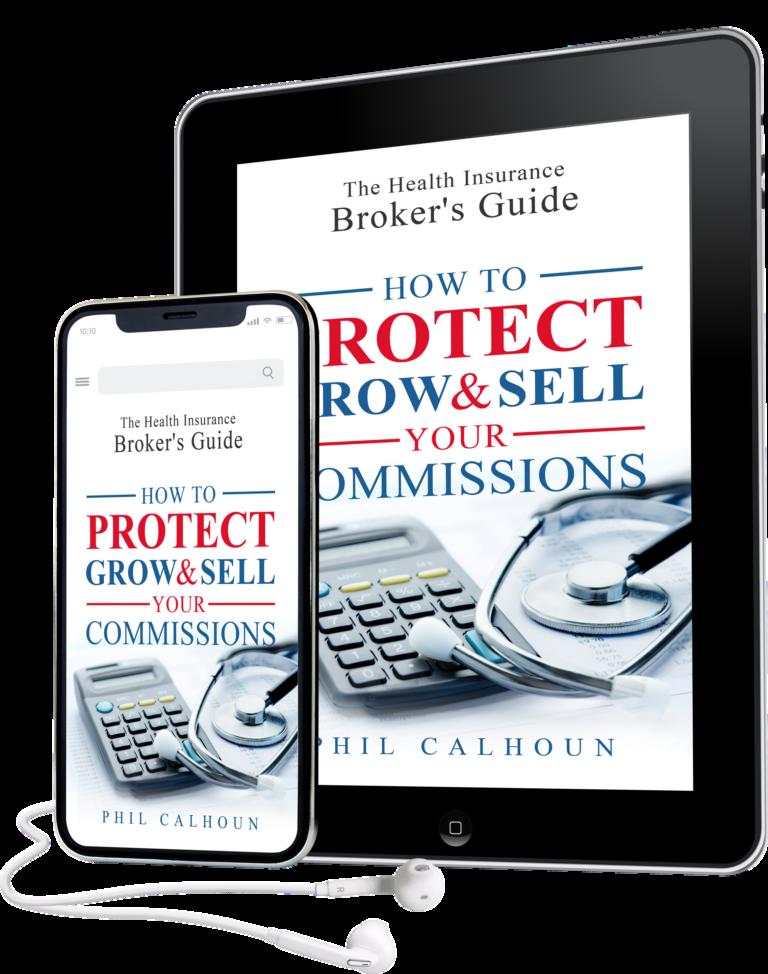


Our goal is education. In the past year alone, we’ ve provided more than 1,500 f ree books to brokers nationwide professionals just like you who understand the impor tance of protecting the business they ’ ve built.
Take action now to protect your commission.
Any health broker without a formal, compliant protection strategy is at 100% risk of losing their commissions if they become unable to stay cer tif ied or licensed.
Critical Facts Ever y Broker Should Know:
Carriers will not assist your survivors or loved ones in accessing your commissions if you pass away or become unable to remain active.
Only brokers with a carrier-driven, compliant succession plan can ensure their commissions are protected and transferable, guaranteeing their loved ones continue to be paid
Our Commission Protection Plan is the industr y ’s leading solution for active brokers, FMOs, General Agencies, and solo practitioners Whether for yourself, your par tners, or subagents, commission planning is essential for long-term security