There are days in motherhood, and family life, that don’t look like much.
They aren’t marked by milestones or celebrations. There are no photos taken, no big moments to remember. Just the quiet rhythm of ordinary life: packing lunches, driving carpool, folding laundry, answering the same questions again and again.
It’s easy to believe these days don’t matter.
But I’ve started to wonder if these are the days that matter most.
The days that don’t look important are often the ones where connection quietly grows. Trust is built in small, late-night conversations, where laughter happens without planning, where children feel safe simply because you are there, and where learning happens through quiet observation. These moments are the backdrop of childhood, the steady thread that holds everything else together.
We spend so much time looking ahead
to the big moments: performances, graduations, state championships, that we can sometimes miss the beauty of what is happening right now.
But I’m realizing that one day, these ordinary days will be the ones we long for. My family room wall is marked with the words, “These are the good old days.” And they truly are: the messy kitchen, the crowded car, the bedtime routines that feel never-ending, the kitchen dance parties, the family text threads. These are the days that shape a family.
Within this issue, we’ve gathered stories, ideas, and inspiration for families in every season — each one a reminder that meaning is often found in the ordinary.
Because the truth is, the days that don’t look important are often the ones that are.
xo
Publisher & Editor in Chief EMILY BUCKLEY
Copy Editor TARA BONE
Cover Photography
KYLEE ANN MAUGHAN
Layout Design
ELISE CREATES, LLC
Contributing Writers MARK ANDERSON
LAUREN BERTOLDO BETH BLAKE
TARA BONE
EMILY BUCKLEY
VALERIE DAINES
CHELSEA PETERSEN, LMFT-CEFT
ANNA SADLER
FRANK SCHOFIELD
SPENCER YOUNG
HAILEY WESTENSKOW
MARYBETH WILSON, FNP-BC DISCOUNT TIRE
Please send all editorial correspondence to info@cachevalleyfamilymagazine.com or by mail to PO Box 6831, North Logan, UT 84341. All correspondence is sent on a non-confidential basis and Cache Valley Family Magazine shall be free to reproduce, publish, edit and/or use any such communications. All materials become property of Cache Valley Family Magazine.
PHONE NUMBER (435) 764-0962
MAILING ADDRESS PO Box 6831 North Logan, UT 84341
EMAIL
info@cachevalleyfamilymagazine.com
WEBSITE cachevalleyfamilymagazine.com
FACEBOOK /cachevalleyfamilymagazine
YOUTUBE /cachevalleyfamilymag
INSTAGRAM @cachevalleyfamilymag
TO ADVERTISE call (435) 764-0962 or email ads@cachevalleyfamilymagazine.com
BEST-IN-CLASS YOUTH SPOTLIGHT
Live Like Luke ... pg 7
PEOPLE OF CACHE VALLEY
More Than Drivers: The Heart Behind Cache County's School Busses ... pg 10
EDUCATION UPDATE
Cache County School District:
America 250:
How Our Schools Are Celebrating the Big Anniversary ... pg 20
Logan City School District:
The Superpower That Matters Most ... pg 21
COVER STORY
The Mother Behind Mebie Baby: How Audrey Thompson Built a Beloved Children's Brand From the Heart of Motherhood — Right Here in Cache Valley
Why Am I So Tired? Understanding Fatigue in Women ...
Conserving Water in Cache Valley: Use Less Water, Grow More ... pg 14 Spring in Cache Valley: Is Your Vehicle Ready for the Season Ahead? ... pg 17
Navigating the Journey: Practical Tips for Dementia Caregivers ... pg 18
Build a Family Reading Tradition
Some of the best childhood memories begin with the words “Once upon a time...”
This spring, start a new tradition with books your whole family will love—from picture books and middle-grade favorites to inspiring reads for teens and parents.
Find your next family favorite at The Book Table, Cache Valley’s hometown bookstore.
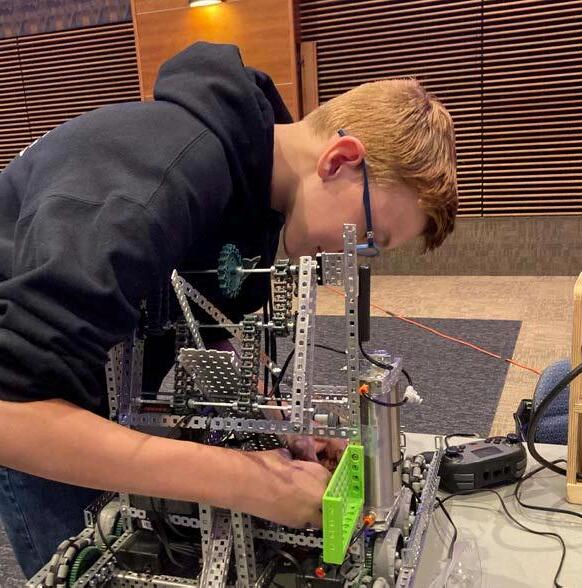
At just 16 years old, Luke Allsop was building an impressive resume. On the surface he was a passionate learner with a goal to study engineering and was well on his way as a 4.0 student studying AP calculus, AP physics, and attending Bridgerland Technical College (BTECH). He was a national champion on Green Canyon High School’s 2024 FFA Rangeland Management team and loved being part of the school’s robotics team. But that’s not the whole story. Luke worked hard to overcome challenges and invested in his relationships, becoming a treasured son, brother, and friend. He’s described by those who knew him as inquisitive, patient, determined, creative, funny, steadfast, kind, and a night owl who loved to cook. Though Luke’s life was unexpectedly cut short in December 2025, passing away just days before his 17th birthday, his life inspires and causes reflection on what matters most and how we can all live like Luke.
Luke was born January 7, 2009, to Ken
Live Like Luke
TARA BONE contributing writer
and Kristen Allsop who had waited years for their second child. He was adored by big sister Ella and started life the way he’d live every day of his life: overcoming obstacles. Luke was born with club feet and Marfan Syndrome, a condition of the connective tissues with an enlarged aortic artery. He underwent surgeries on his feet in his younger years but according to Kristen, he didn’t complain or let anything hold him back. He loved building Legos, creating, and playing with friends in his Hyrum neighborhood. He had early aspirations to be an engineer but had unexpected challenges learning how to read. After years of frustration, Kristen says they learned he had a form of dyslexia and reading was extremely difficult for him. “But Luke was really good at not getting discouraged,” Kristen said. “He was very determined and had a high level of tolerance for his frustration. I remember being very worried that at some point he would get made fun of, but friends never made fun of him. I think it’s in part because he just kept in the game. He didn’t let it bother him and that is a characteristic that we learned from him — when we have challenges in life not to give up.”
And Luke never gave up. Instead, his reading challenges seemed to fuel his passion for learning. After third grade, Luke and his family moved to Amalga where he spent hours with headphones on, listening to audio books on his iPad — which Kristen calls a best friend — while doing chores around their home and outside on his grandparents’ farm. He loved to learn and share facts about animals and later physics.
An ongoing series of articles written about teens who are excelling in their unique areas of interest and talent.
Kristin Lee, Luke’s teacher at Green Canyon for multiple classes every year in high school, recalls that they’d joke about Luke pulling 14-hour days at school. He’d arrive early in the morning for a BTECH class and stay after school for extracurricular activities and another BTECH coding class. Luke had set goals to complete the 900- and 600-hour courses and had completed a course at BTECH the previous summer. Ms. Lee says Luke enjoyed being at school and there were many things that made him special.
“Luke is one of the most incredible students I’ve ever worked with,” she said. “He had big hurdles to overcome that would have shut down anyone else, but that wasn’t Luke. I think the mental capacity it took for him to succeed is amazing and he still had a happy and humble attitude.”
...continued on next page
Luke Allsop, March 2024 on a family trip
Luke competing with the Green Canyon robotics team at Utah State, January 2025
continued from previous page...
Ms. Lee says there are many positive things she could share about Luke, but who he was came down to two things: He was passionate and humble. She recalls that his classmates didn’t know he’d won awards until it was announced at school, and he helped other students but never made anyone feel bad. She adds that he was calm and funny too, and that everybody recognized his kindness.
Ms. Lee says Luke’s impact in her classes was great and his absence is felt deeply.
“After Christmas break, we were reading a short story and a science term came up that I didn’t know what it meant and a student said quietly, ‘Luke would have known.’ We were all missing him. It was a big moment; his absence was going to be big for us and we remember him fondly,” she said.
An unexpected impact Luke had on students according to Ms. Lee is people who didn’t know him, say they wish they would have known him or took
time to know him better. She says it’s been a lesson in recognizing there are remarkable people all around us if we take time to invest in relationships.
Though Luke had many friends, close relationships didn’t stop with his peers. According to his dad, Ken, Luke was close with each of his five sisters and his brother, always showing kindness
and patience. His mom Kristen adds, with five sisters he “put up with a lot of shenanigans.”
When his family remembers Luke, it’s apparent he was adored. He spent hours on his beloved 3D printer with his little brother Joseph — who Luke affectionately called Joooooo-ey — making items to sell at Smithfield
The Allsop Family, August 1, 2025
Library’s youth market. Luke had even used his 3D printer recently to create a part needed for the drip system he was helping install on their family farm. Whatever they were making, Joseph loved being Luke’s 3D printer apprentice and roommate. His sister Lucy recalls games they played in the basement and that when Luke played, everyone played. Another sister, Velva, remembers him listening to scriptures without headphones at 5 a.m. She says what she learned from Luke is “even when you have trials or hardships don’t let them get it in your way, and make sure to have the Lord in your life, and it will be OK.” Luke and his sister Rosie liked to spend time outside together, doing chores or paddling on a nearby pond. With fondness, she remembers how he coaxed her into waking up at 4 a.m. to help him catch up on homework. This included baking a pie for him to take to a class. Luke was very persuasive. Velva shares that whenever they wanted something from their mom — like staying up late — they just had Luke ask.
Luke was not a typical teenage boy. Kristen remembers when she got flustered about chores he’d respond with “oh dear, oh dear,” and would often add “it’s going to be OK mom.” He loved to cook, often making breakfast and baking his “famous Luke brownies.” He even cooked turkeys for some Thanksgiving dinners. His sisters loved his homemade french fries, and both parents recall a dinner when Luke decided to make hamburgers, including buns from scratch and homemade fries. Ken adds that though he used about “80 dishes,” his culinary creations usually turned out. Kristen says he made everything “bigger and better.”
Luke loved ice sports and to ski. He was excited to hit the slopes with friends during ski season because he had his driver’s license. He was quiet, but not afraid to get out of his comfort zone. Kristen recalls attending a youth dance and encouraging Luke and other boys in their group to ask a girl to dance. Luke was the only one to ask someone to dance, and Kristen even “snuck” a picture of the moment.
Most recently in his efforts of persuasion, Luke was trying to talk Ken into taking a family cruise. They’d taken a family cruise a few years earlier and loved it. Ken was considering going in December, but between school and other responsibilities, decided to wait. Since Luke’s passing, Ken has a new focus. “In hindsight, had I known what the future events would have been, I would have said, let’s forget school and book a cruise,” Ken said. “You feel like if you take a break or spend a few bucks everything’s gonna fall apart. There’s a lot of things in life that are important, and a lot of the practical things are important, they really are, just don’t leave for tomorrow what you can do today.”
Luke’s life points to something simple and important: Don’t wait for later. Take the trip. Make the call. Be there for your people. And when things get hard, don’t give up — keep going. That’s what Luke did every day, and it’s a life lesson worth holding on to and worth remembering to live like Luke.
More Than Drivers: The Heart Behind Cache County’s School Buses
Since 1939, the school bus, with its classic bumblebee-yellow color and retractable stop sign, has been a familiar sight in American communities during the school year. In Cache Valley, school bus drivers are trusted by thousands of parents and guardians to transport their children safely each day. What may be less recognized is that these drivers often serve as protectors, entertainers, teachers, listeners, and sometimes even best friends.
“For many students, bus drivers are the first school employees they see in the morning and the last ones they see after school,” said Frank
BETH BLAKE contributing writer
Schofield, superintendent of Logan City Schools. “Those positive interactions can influence students’ relationships, their attitudes about school, and the lens through which they view the rest of their day.”
For Valerie Jones, a typical day, one she describes as “a blast,” begins early with a thorough inspection of her bus before warming it up for the morning route. All school bus drivers in Cache Valley are employed by the Cache County School District, but they also transport students in the Logan School District. Valerie’s route includes elementary, middle school, and some high school students.
She looks forward to greeting the kids each day and has come to know many of them well enough to sense how they’re doing the moment they step onto the bus. After dropping off middle and high school students, she often has a brief break before heading out again for her elementary routes. Once her morning routes are complete, Valerie shifts gears, literally and figuratively, and spends a few hours working on her own education. Currently studying nutrition, she enjoys telling her students that she has homework too. By afternoon, she’s back behind the wheel, bringing students safely home.
Greg Despain, Cache County School District bus driver Valerie Jones, Cache County School District bus driver
PEOPLE OF CACHE VALLEY
Valerie has intentionally created an environment where students feel seen, accepted, and safe. She greets them by name, wears funny hats, and stays attuned to the child who might need someone to talk to.
“They will tell you things they might not tell anyone else,” Valerie said. “I spend two hours a day with these kids. Some of them don’t have anyone else to talk to.”
Recently, she asked a student what the best part of his day was. His answer came quickly and enthusiastically: the bus ride home.
“That told me he feels comfortable on the bus,” Valerie said. “It’s one of his safe places.”
Creating that sense of safety requires vigilance. Bus drivers must constantly monitor for reckless behavior, bullying, and rule-breaking to ensure a positive environment for all.
Another driver, Greg Despain, admits he doesn’t enjoy disciplining students, but understands its importance. When necessary, he involves parents to address concerns. After one such situation, Greg developed a simple system to communicate with parents at bus stops: a thumbs up, sideways, or down to indicate how the day’s ride went.
Before long, the students caught on, and many began striving for a daily thumbs up.
This year, Greg has five sets of twins on his route. While others marvel at his ability to tell them apart, Greg credits his attention to their individual personalities, allowing him to greet each child by name.
For Greg, one of the highlights of the job is occasionally driving his grandson, Keoni. Another is the
PROGRAM START DATES:
April 21, 2026 — Nail Tech
May 12, 2026 — Master Aesthetics
June 2, 2026 — Cosmetology
June 2, 2026 — Master Barbering.
daily gratitude he receives from both students and parents.
“It can be challenging, but it’s also rewarding,” Greg said. “Some of the kids ask me how long I get to be their bus driver. When I tell them, ‘For a long time,’ they say, ‘Oh great!’”
Earlier this week, Valerie and her colleague Jessica Zilles reflected on the rewards of their profession. With permission, Valerie shared part of a message Jessica sent:
“I could tell you many reasons why I drive a 40-foot-long icebox on wheels, constantly checking my dashboard and mirrors,” Jessica wrote. “Some days it feels like there are 1,000 kids behind me, and ‘ Hey, Hey, We’re the Monkees ’ is stuck in my head all afternoon. But the truth is, I’m honored to drive this big orange bus, packed with the most precious
Somewhere between the morning alarm and the moment your head hits the pillow, many women find themselves asking the question: Why am I so tired?
Women are world-class jugglers. Careers, families, relationships, community, and the endless list of invisible tasks that keep life running smoothly often land on their shoulders. It’s no surprise that fatigue can sneak in. But persistent fatigue isn’t always the result of a busy life. Sometimes, the body is quietly waving a flag, asking for attention.
The truth is the sources of fatigue in women can be complex. Sleep, that magical nightly reset button, is one of the biggest players. Restorative sleep is the foundation of good health, yet many factors can rob women of the rest they need. Busy schedules often crowd out the recommended seven hours of sleep per night.
Even when time allows, interruptions are common. Nighttime awakenings from pets, children, or a snoring partner can fragment sleep. Hormonal fluctuations may also trigger night sweats or hot flashes. Over time, these disruptions can accumulate and lead to a condition known as sleep debt.
Sleep debt is the cumulative effect of not getting enough sleep. Each night you fall short, the deficit adds up. Over time, this can lead to fatigue, trouble concentrating, mood changes, decreased immune function, hormonal disruption, weight gain, and even cardiovascular
Why Am I So Tired? Understanding Fatigue in Women
MARYBETH WILSON, FNP-BC women’s health, Canyon Medical Group
disease. The only way to repay sleep debt is by consistently getting adequate, restorative sleep.
Simple Ways to Improve Sleep
• The first step in improving sleep is simply prioritizing it. Commonsense habits make a difference:
• Aim for a consistent bedtime and at least seven hours of sleep.
• Spend 10 minutes winding down before bed (warm shower, stretching, or meditation).
• Keep bedrooms cool, dark, and quiet.
• “Put screens to bed” — they interfere with falling asleep and sleep quality.
• If you can’t sleep, do something in low light until sleepy again.
Even with good sleep habits, some people continue to struggle. It’s reasonable to seek guidance from a healthcare provider at any point, but certain symptoms deserve particular attention. Waking up exhausted, morning headaches, or a partner reporting loud snoring may signal sleep apnea. Night sweats, anxiety, pain, or restless legs can also disrupt sleep and may require treatment. In some cases, medications or approaches like cognitive behavioral therapy for insomnia may be recommended.
Other Causes of Fatigue to Consider
Beyond sleep, other factors can contribute to fatigue. Vitamin and nutrient levels are important considerations for women. Many are at
risk for anemia due to chronic blood loss from menstruation. Ferritin is an early marker of iron deficiency, and emerging research suggests women often feel best when ferritin levels are higher than the minimum threshold for anemia. Iron supplementation can be helpful, but should only be started if blood tests confirm a deficiency.
Vitamin D deficiency is another common contributor to fatigue, especially during the winter months.
In addition to vitamin deficiencies, several medical conditions can affect energy levels. Thyroid disorders often cause noticeable changes in energy. Hormonal fluctuations in estrogen and progesterone can also impact sleep, mood, and overall vitality, particularly during the menstrual cycle, postpartum period, or menopause.
Fatigue in women is rarely caused by a single factor. More often, it reflects a combination of sleep habits, nutrient levels, hormonal changes, and underlying health conditions. The good news is that many of these contributors are identifiable and treatable. By prioritizing sleep, paying attention to nutrition, and seeking medical guidance when needed, women can begin to restore the steady, sustainable energy they need to care for themselves — and the many people who rely on them.
Conserving Water in Cache Valley: Use Less Water, Grow More
If you hadn’t noticed, there’s been a lot of talk in the news lately about water. More specifically: lack of water. Most of the state of Utah and surrounding areas have much lower snowpack than usual, and it has raised concerns about water shortages this summer. Fortunately, Cache Valley is in better shape than nearly every other area in the state, but we still need to be conscious of our water use. In many communities in the valley, there will be restrictions this year.
Lawns and landscaping use a large amount of water, and using our water resources wisely can really help our communities and contribute to refilling the Great Salt Lake. If you want to make a difference this year by
MARK ANDERSON owner, Anderson's Seed and Garden
using less water, follow these simple suggestions.
Start by performing a watering assessment in your own yard. Where are you using the most water: turf maintenance, landscape maintenance, or your vegetable garden? Then determine what easy steps you can take to save water. A drip system uses 90% less water than a sprinkler. A soaker hose uses 70% less water than a sprinkler. Using a smart timer instead of a clock-based one can reduce water use by 25–50%. Add some of those numbers up, and you could watch your total water use drop anywhere from 50–70%.
Replacing sprinklers with drip lines or
soakers is easy and doesn’t cost a lot. Many smart timers are inexpensive and can be run from anywhere with a wireless connection and a smartphone. These are simple solutions that really drive water-wise practices.
Homeowners are constantly looking for ways to maintain a beautiful lawn while using less water, and new turfgrass varieties are making that easier than ever. Modern cultivars like dwarf turf-type fescue and rye grasses deliver the lush look people love while requiring significantly less water and maintenance. These new, improved grasses now look and feel like Kentucky bluegrass but perform better. Benefits include:
• Insect and disease resistance
• Dark green color from early spring through late fall
• Excellent drought tolerance
• Staying green with up to 50% less water
These varieties provide the classic lawn look with much greater water efficiency. It’s also much easier than you might think to replace old turf grasses or incorporate new varieties into your mature lawn. I’ve replanted 2,000 square feet of turf in my own yard, by myself, in one afternoon. It also doesn’t cost as much as you might expect. The cost to replace your park strip is less than the cost of the water you will save in one season to keep it green.
The Cache Water District is even doing a promotion this year to help homeowners replace their old turf, especially park strips, with new and improved, drought-tolerant grasses. You can find more information about their turf replacement program at
Healthy soil is the foundation of a healthy lawn and yard. Applying a soil conditioner like HuMic helps soil absorb and retain more water while also breaking down thatch and dead grass. Moisture-management products like Back to Green or Hydretain help lawns use water more efficiently by increasing water absorption and improving soil moisture retention. These products can reduce water use by up to 50%, with results lasting about 90 days. Just two applications per year can significantly reduce irrigation needs.
Last year, I applied Hydretain in early May, before I even turned on my sprinklers. It doubled the time my turf could go between watering, and I only watered three times before the middle of June. An additional application in July helped reduce my watering through the summer by 30% during the three hottest, driest months of the year.
root development in both new and established lawns. Regular applications of fertilizer promote vigorous growth and improved drought resistance. For early spring, I recommend a slowrelease nitrogen fertilizer with high potassium (like 23-3-16) and some iron to promote new root development, encourage early spring greening, and support vigorous new growth. Timely applications of the right fertilizer improve the lawn’s ability to resist drought stress.
By combining smart watering practices, improved grass varieties, HuMic, proper fertilization, and moisturemanagement products, homeowners can maintain a vibrant lawn that stays greener longer and performs better through Utah’s hot, dry summers — while conserving water.
Let’s each do our part and find ways to keep our valley green and beautiful
Your Seeds Early!
• Seed prices haven’t increased.
• Supply is excellent but demand is high.
• Get your seeds early before the long lines in March.
• There are more fruit trees than ever before, but they’ll go quickly.
• Some plants are difficult to find with limited availability.
Glabe and Josh Stock
Spring in Cache Valley: Is Your Vehicle Ready for the Season Ahead?
Winter has faded and spring has arrived. Spring in Cache Valley brings a welcome change of pace, and a perfect opportunity to check in on your vehicle. Months of cold temperatures, snow, ice, and rough road conditions can take a toll in ways that aren’t always immediately visible. A little preventative maintenance now can help ensure a smoother, safer, and more cost-effective driving season ahead.
Winter Wear and Tear
Cache Valley winters are tough on vehicles. Potholes, caused by freeze-thaw cycles, can impact your alignment and even damage your tires or suspension. If your steering wheel feels off-center or your vehicle pulls to one side, it may be time for an alignment check.
Your tires also endure a lot during winter driving. Snow, slush, and icy roads can wear down tread faster than expected. As spring approaches, checking your tire tread depth is essential for maintaining traction, especially with spring rain in the forecast.
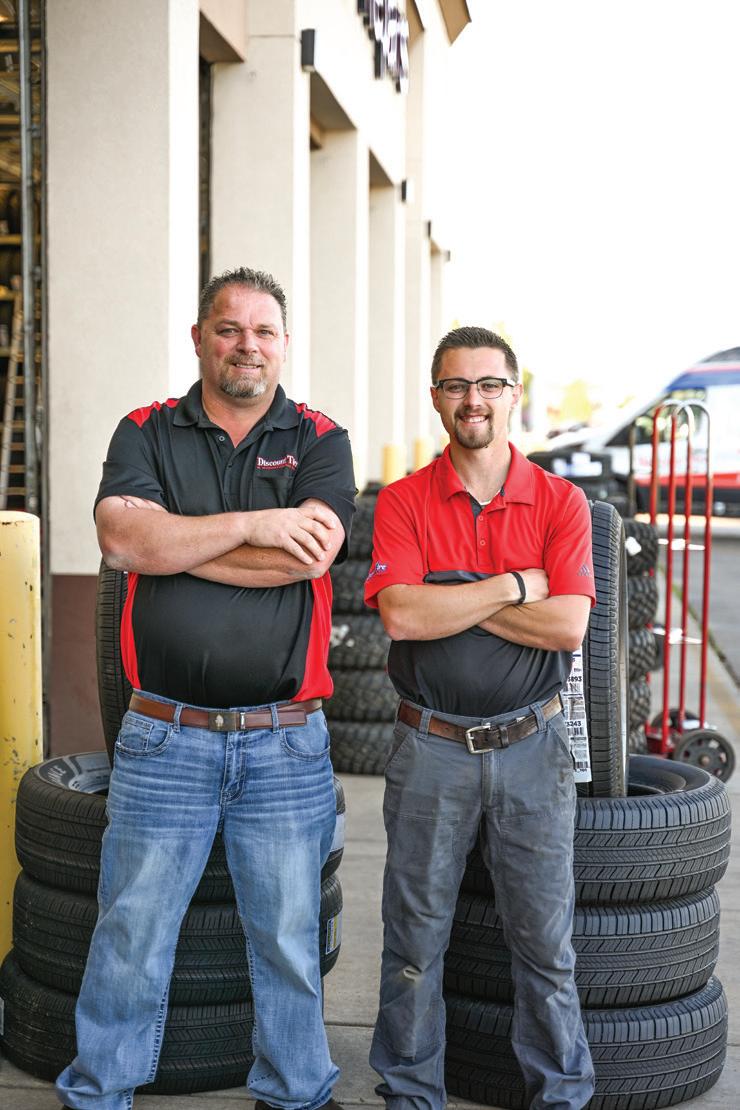
COURTESY OF DISCOUNT TIRE
Brake Performance Matters
Winter conditions often mean more frequent braking, whether navigating slick roads or stop-and-go traffic. This added strain can accelerate brake wear. If you notice squeaking, grinding, or reduced responsiveness, it’s worth having your brakes inspected to ensure they’re still performing safely.
Suspension Stress from Rough Roads
Those same potholes and uneven surfaces can also affect your suspension system. A rough or bouncy ride, or unusual noises when driving over bumps, may indicate that components like shocks or struts have taken a hit over the winter months.
Get Ready for Spring and Summer Road Trips
With warmer weather comes more travel, whether it’s weekend getaways, family road trips, or simply more time on the road. Making sure your tires are properly inflated, balanced, and in good condition can improve fuel efficiency, extend tire life, and give you peace of mind as you head out.
Preventative Maintenance Pays Off
Taking care of small issues now can prevent bigger, more expensive problems later. Routine inspections, especially of your tires, alignment, brakes, and suspension, can help you avoid unexpected breakdowns and keep your vehicle running at its best.
Spring is all about fresh starts, and your vehicle deserves one too. A quick check today can make all the difference for a safe and smooth season ahead.
Navigating the Journey: Practical Tips for Dementia Caregivers
ANNA SADLER program coordinator, The Alzheimer’s Disease and Dementia Research Center, Utah State University
Caring for a loved one with dementia is a journey marked by profound love, but also by significant challenges. It can often feel overwhelming, emotionally draining, and isolating. As the condition progresses, many caregivers find themselves searching for a roadmap, not just for their loved one’s health, but for their own wellbeing.
To help navigate these complexities, here are a few essential tips for those providing care, followed by information on a local resource here in Cache Valley designed to support you every step of the way.
Focus on Communication, Not Correction
As memory impairment progresses, correcting a loved one can lead to frustration and agitation for both parties. Instead of pointing out a memory lapse, try to meet them where they are. If they are confused about the time or place, focus on the feeling behind their words rather than the facts.
Prioritize Micro-Self-Care
Caregiver burnout is a real and present risk. You don’t always need an entire day off to recharge. Practicing microself-care, taking five minutes of deep
breathing, walking around the block, or enjoying a cup of coffee or tea in silence, can help maintain your emotional resilience.
Simplify the Environment
Large crowds, loud noises, or cluttered spaces can be overstimulating for someone with dementia. Reducing background noise and keeping daily routines consistent can help minimize sundowning and anxiety, creating a calmer atmosphere for everyone in the home.
Build Your Support Team Early
Many caregivers wait until they are in a crisis to seek help. Building a care team
— which may include family members, professional counselors, and medical specialists — is more effective when done proactively.
A Local Lifeline: The USU Dementia Caregiver Clinic
Recognizing that families need more than just medical advice, Utah State University (USU) has launched the Dementia Caregiver Clinic. This program is a collaboration between USU’s Alzheimer’s Disease and Dementia Research Center (ADRC) and the Sorenson Legacy Foundation Center for Clinical Excellence (SCCE).
“The goal in creating this clinic is to ensure that people in Northern Utah and in rural areas have access to education, services, and support,”
Beth Fauth, director of the ADRC, said.
Because dementia affects every aspect of life, the clinic offers a well-rounded team of professionals, including specialists in:
• Mental health and behavior support
• Audiology and speech-language pathology
• Financial counseling
The clinic bridges the gap for those in Cache, Rich, and Box Elder counties by offering free initial consultations, with telehealth options available for those living further away. While the clinic does not provide formal diagnoses, it offers cognitive screenings and personalized care plans to help families understand what to expect and how to manage their loved one’s unique needs.
Get Connected
Dementia Caregiver Clinic
• FREE consultation with experts from mental health, speech and language pathology, audiology, and more!
• Education, resources, and supports that best fit you and your loved one’s needs.
• Ease the burden placed on caregivers.
No one should have to navigate dementia alone. Whether you are looking for practical tools or emotional support, help is available.
To schedule a consultation: Visit cehs.usu.edu/scce/services/ dementia-caregiver-clinic
Learn about research and resources: The ADRC is committed to building a collaborative infrastructure for dementia research and best practices in care.
• Get involved in the research registry by visiting cehs.usu.edu/adrc/research/registry
• Become a dementia resource ambassador by visiting cehs.usu.edu/adrc/ambassadors/
America 250: How Our Schools Are Celebrating the Big Anniversary
SPENCER YOUNG
Cache County School District, communications intern
As America’s 250th birthday approaches, our schools are already getting involved in the celebration. From dressing up as historical figures to creating video presentations about the American Revolution, there are so many ways our students are celebrating this important milestone in the making.
“We hope our students will gain a greater understanding of our nation’s history and the significant events that helped to form this great nation,” says Andrew Clark, who has been involved in coordinating America 250 efforts across the district. “We hope that our students will be more engaged with their communities as they celebrate America 250 .”
This year, our district brought together a team of 5th-grade teachers to develop a curriculum for elementary classrooms to help history come alive. Interactive activities included interviewing significant figures in our nation’s founding, such as Thomas Jefferson, Benjamin Franklin, and John Adams.
These kinds of landmark events don’t come around very often, so we’re doing our best to make the most of it. We want all of our students, and the larger community, to remember this anniversary for years to come. That’s why we’re going the extra mile in the classroom to make learning about history both fun and educational.
Recently, the Utah State Board of Education adopted a resolution to commemorate the United States'
250th anniversary, which reaffirms its “commitment to the foundational principles of the Declaration of Independence and the U.S. Constitution.” Students across the state were also encouraged to participate in an essay and art contest, responding to the question “What does America mean to you?”
The America 250 program describes this celebration as “an opportunity to pause and reflect on our nation’s past, honor the contributions of all Americans, and look ahead toward the future we want to create for the next generation and beyond.”
We’re joining the nationwide efforts to
celebrate every American, both past and present, who has contributed to making our country a better place. Because that’s what America 250 is really all about — the people.
We encourage everyone to get involved in their local community and learn about the events taking place leading up to July 4th. There will be so many great opportunities to spend time with family and friends across the valley over the next few months!
Check your city's website to see what events are happening near you, and visit america250.org for more information about the celebration as a whole.
CCSD Students learning about the American Revolution
The Superpower That Matters Most
FRANK SCHOFIELD Logan City School District Superintendent
One of my favorite superheroes will always be Superman. His physical abilities and intelligence are impressive, but his most defining trait is the kind and respectful way he treats others. Superman is an example of the reality that how we treat others is just as important — if not more so — than what we know or are otherwise able to do. The opposite of this is exemplified in the character of Lex Luthor, who was a genius, but whose treatment of others makes him a villain.
One of the key attributes that motivates us to treat others as Superman would, instead of Lex Luthor, is empathy. Empathy includes valuing other perspectives and people and treating them with compassion. It is a foundation for acting ethically, for healthy relationships, and for professional success. It’s also key to preventing bullying and many other forms of cruelty.
We live in a society where it can feel like we are surrounded by ever-louder voices of conflict. Conflicts between nations, political parties, neighbors, and even family members can create so much uncertainty and despair that we
feel overwhelmed. Living in that reality makes it increasingly important that we develop — and help our children develop — skills like empathy that promote effective relationships and help rebuild them when they are damaged. Helping children develop empathy is key to their emotional well-being and their ability to navigate healthy relationships in the future.
Empathy is defined as the ability to “understand, share, and vicariously experience the feelings, thoughts, and perspectives of another person,” making a deliberate effort to comprehend their emotions. The “Making Caring Common Project,” an initiative of the Harvard Graduate School of Education, lists several ideas parents can use to help their children develop empathy: Empathize with your child and model empathy for others
Children learn empathy both from watching us and from experiencing our empathy for them. When we empathize with our children, they develop trusting, secure attachments with us. This includes tuning in to their physical and emotional needs, understanding and respecting their individual personalities, taking a genuine interest in their lives, and guiding them toward activities that reflect who they are.
Children also learn empathy by watching those we notice and appreciate. They’ll notice if we treat a server in a restaurant or a mail carrier as if they’re invisible. On the positive side, they’ll notice if we welcome a new family in our child’s school or express concern about another child who is experiencing challenges.
Make caring for others a priority and set high ethical expectations
If children are to value others’ perspectives and show compassion, it’s important they hear from their parents that caring about others is a top priority — just as important as their own happiness.
Provide opportunities for children to practice empathy
Children are born with the capacity for empathy, but it needs to be nurtured. Regularly considering other people’s perspectives helps make empathy a natural reflex and helps children grow in their ability to understand others. Help children develop self-control and manage feelings effectively
Often when children don’t express empathy, it’s not because they don’t have it, but because something is blocking it. The ability to care for others can be overwhelmed by anger, shame, envy, or other strong emotions. Helping children manage these feelings — as well as stereotypes and prejudices — is often what “releases” their empathy.
As a young boy, I wanted to be like Superman so I could fly. As a young father, I wanted to be like Superman so I could physically protect my family. Now, I recognize that the best way I can be like Superman — and protect my family emotionally — is to strengthen my sense of empathy and teach that to my children. As children and caregivers work on these behaviors together, children are more likely to strengthen their own sense of empathy for others. As they do, they will enjoy the positive relationships that empathy can promote — relationships that help strengthen their homes and communities.
Gathering Gardeners: The Cache Valley Garden Club
HAILEY WESTENSKOW contributing writer
Three years ago, strangers walked into a room for a club that didn’t exist yet. Last week, Dave Marcyes observed the same room as a record high of 91 people joined for the monthly Cache Valley Garden Club meeting.
A decade before the first meeting, Dave moved to Cache Valley from Spokane, Washington, and immediately began the search for a garden club like the one he had been involved in before.
“I needed to be with my people,” Dave, founder and president of the Cache Valley Garden Club, said. He found, however, that a garden club did not yet exist in Cache Valley
“So, I waited and waited,” he said. “Finally, I thought, I guess I have to be the one to do this.” He rented out a booth at the Cache Valley Home and Garden Show and handed out flyers for a club that didn’t even exist yet. He discovered that he was not alone in his search for a gathering of gardeners when a shocking 85 individuals showed up to the first meeting, eager to participate and learn from others who also loved gardening.
Since then, on the first Thursday of every month, the Cache Garden Club meets at the Logan Library, with a speaker selected to instruct on a new topic. They’ve covered a full spectrum of topics from worms, terrariums, bees, and sprinklers. Of course, the highlight every year are the summer garden tours, where the club and the public are invited to tour some of the most stunning gardens and yards across Cache Valley.
Helen Kirkman, the club’s event planner, leads the team responsible for finding those speakers and organizing the tours. When she saw Dave’s first booth at the Home and Garden Show, she was elated for what it meant for Cache Valley and leapt at the opportunity to help organize garden tours. “I would watch garden tours in other cities and on PBS and think, this is wonderful,” she said. “But then I would come home to Cache Valley, in the high desert, and think, I can’t do any of that here.” She had long waited for the opportunity to see what could be accomplished in our climate.
Helen was surprised to learn that by accepting the role of event planner, she would not only oversee the tours but also coordinate meetings and speakers. She finds these individuals by word of mouth, magazines, and networking with everyone she talks to. She shared that as an experienced gardener, “We think we’ve heard it all, and there’s always something after each meeting that makes you think, ‘how did I not know this?’” There is something to learn every month for every level of gardener. If you ask Helen or Dave what drives the club, though, neither of their answers would include gardening. According to Dave, when looking around at the chaos of the world we live in, his true intention behind the Cache Garden Club was to create a space where individuals gather and feel welcomed.
“There are people [in our community] that aren’t coming out of their basements,” he said. “There are people that are afraid to go out. I knew somebody had to create a place for them.”
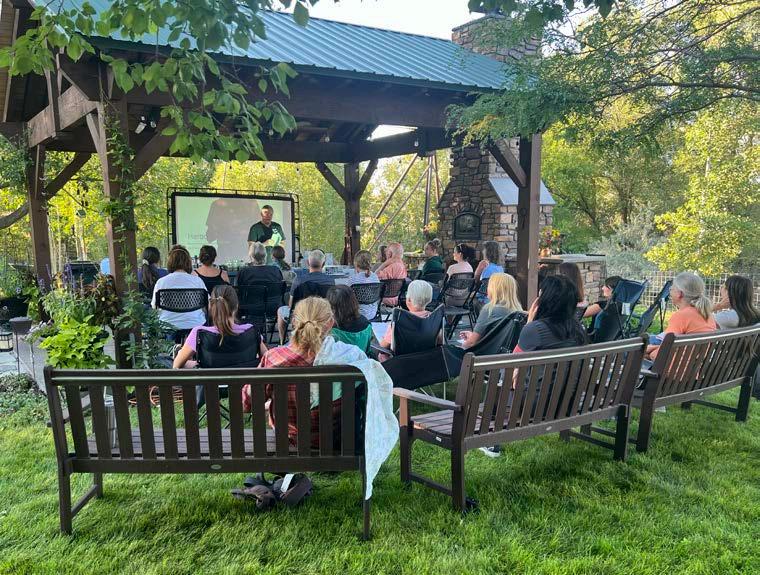
The Cache Valley Garden Club at one of their monthly meetings
Cache Valley Garden Club's booth at the Gardener's Market
He said club participants all come from different backgrounds and belief systems and would typically conflict or avoid one another. “In that room, they love each other. They’re laughing, they’re hugging — zero animosity of any kind.”
Donya Harvey is a special example of the respite the Garden Club provides. A passionate gardener, Donya was a founding member of the club. “[She] was with me from day one,” Dave said. “She was my right-hand man. She hosted meetings in her home and gave endlessly to the club. Many had no idea that she was in the final battles of ovarian cancer. Toward the last six months of her life, she was still helping, making flyers and stuff from her bed, all the way until the day she died,” Dave said tearfully.
At Doyna’s funeral, a family member mentioned that participating in the Garden Club is what kept her sane amidst her struggles. “It kept her going through the third bout of chemo, it kept
her wanting to live,” Dave said. “It’s a place where people are able to come and just take a breath and have fun.”
One member had to be persuaded to come at first. “She said, ‘I don’t need a meeting, I don’t need people. I’m happy just to stay home and play in my yard,’” Helen said. After a few months, that same woman joined the planning committee, now runs the club’s monthly inspiration table, and has had her yard featured on the summer garden tour two years running.
For anyone who thinks gardening isn’t for them, Helen offers a gentle rebuttal: “[Gardening] satisfies something in you to create. The beauty, the sense of accomplishment — these are needs that we all have, and a lot of us don’t know that yet.”
The Garden Club welcomes all levels of gardeners, from those with acres of garden beds to apartment dwellers with a single houseplant. May’s meeting will focus on container gardening — proof that even a window box counts.
The Cache Garden Club meets on the first Thursday of every month at the Logan Library at 6 p.m. Annual membership is $30, but walk-ins are always welcome, with no commitment required.
“We gardeners need to be with our people,” Dave said. “We now have a
One of Cache Valley's beautiful gardens
The Mother Behind Mebie Baby
HOW AUDREY THOMPSON BUILT A BELOVED
CHILDREN’S BRAND FROM THE HEART OF MOTHERHOOD — RIGHT HERE IN CACHE VALLEY
EMILY BUCKLEY editor in chief
In a season of life filled with young children, busy schedules, and big dreams, Paradise mother, Audrey Thompson, has built something both beautiful and deeply personal right from the heart of Cache Valley.
Audrey is a mother of three and describes her life simply and joyfully. “I enjoy baking, entertaining, decorating, and spending time with family and friends,” she said. Together with her husband, Scott, and their
children, Brody (11), Emmie (9), and Wyatt (4), their days are full. From camping and snowmobiling to skiing and traveling, the Thompsons embrace every opportunity to be together. With her husband running his family business, Pallets of Utah, life is full. Exactly the way they like it.
Cache Valley has always been home for Audrey. Born and raised here, she never had any desire to leave. She grew up on a small family farm established in the late 1800s,
a heritage that quietly echoes in the grounded, home-centered values she carries into her work today.
That work, now known as Mebie Baby, began in the earliest days of motherhood. Like so many moms, Audrey found herself searching for
baby products that felt both practical and beautiful, and coming up short.
“When I had my first children, I wanted to create something unique for babies and kids that I couldn’t find in stores,” she said. “I began by making swaddles with fun prints and baby
“Motherhoodhas been the heartbeat of Mebie Baby from the very beginning.”
zippers made from unique fabrics.” What started as a simple idea quickly became something more demanding. The early days of the business required significant sacrifice.
“It was very time consuming,” Audrey said. “I invested all of my money and time into building the business from scratch. My older kids were practically raised at the office and warehouse.”
Even in those challenging years, there was purpose. She hopes her children carry forward what they witnessed: dedication, persistence, and a willingness to build something from the ground up.
There was a moment when all that effort began to shift into momentum.
“When items started selling out faster than we could stock them, I realized my hard work was finally paying off,” she said.
continued on next page...
...continued from previous page
Still, success for Audrey has never been just about growth, it has always been rooted in motherhood.
“Motherhood has been the heartbeat of Mebie Baby from the very beginning,” she said. “As a mom, I realized how much I wanted simple, stylish baby essentials that fit into everyday life.”
That vision has shaped not only the function of her products, but their aesthetic as well. With a strong interest in interior design, Audrey creates baby items that feel at home in modern spaces — pieces that blend seamlessly into family life while still being soft, comfortable, and practical for children.
“I’m passionate about designing products that are both comfortable and stylish,” she said. “All while also incorporating great patterns for children.”
Balancing a growing business with motherhood hasn’t always been easy.
“It’s not always easy to wear multiple hats and juggle everything simultaneously,” she said. “However, I find fulfillment in creating products for babies and kids in their daily lives. While my work brings me joy, my primary focus remains on my family.”
That perspective is at the core of everything she creates. Mebie Baby is not just a brand, it’s an extension of the life she’s living.
“I hope parents feel comfort, both for themselves and their baby,” Audrey said. “Motherhood can feel overwhelming at times, and ultimately, I want them to feel supported. Mebie Baby is on their team, making everyday moments a little sweeter and more peaceful.”
As the company has grown, so have the moments that remind her why she started.
“It has been rewarding watching our products come to life in the real world,” she said. From being invited to shows, to sending products to celebrities and influencers, to seeing items stocked in boutiques … the milestones have been exciting … but
“Go for it, and don’t give up … you absolutely can build something amazing while still being a parent.”
it’s the everyday moments that mean the most.
“I love the simple joy of spotting kids out and about using our products. It’s that personal connection, knowing a family chose our pieces for their daily life.”
Through it all, Cache Valley has remained central to the story.
“Building Mebie Baby right here in Cache Valley has meant everything to me,” Audrey said. “It’s given the brand a true sense of home and community.”
Her team, many of them local, are an essential part of that story, and Audrey is quick to express her gratitude. The support of the community continues to shape the business in meaningful ways.
Looking ahead, Audrey’s vision remains both grounded and hopeful.
“We’re constantly coming up with new designs and products,” she said. “I am excited to see what the future holds and where we’ll expand our store presence.”
And for other mothers who may be quietly holding onto an idea of their own, Audrey offers simple but powerful advice: “Go for it, and don’t give up. Whether your idea feels small, like launching a little side project from home or something much bigger, you absolutely can build something amazing while still being a parent and having time for your family.”
In many ways, that belief is exactly what Mebie Baby represents: a reminder that meaningful work and meaningful motherhood don’t have to be separate things. Sometimes, they grow together.
Only Young Skin Care has the OneTwo punch to help get you ready for: Swimsuit, Wedding, Reunion, or whatever season you have ahead that requires you to slip into that more revealing outfit.
It all starts with a medical prescription to that shot you have likely heard so much about, Semaglutide, and ends with the proven body contouring results of CoolSculpting. It’s a one-two punch that is proven to be both safe and effective, and doctor approved.
SEMAGLUTIDE
Semaglutide is a once a week shot that is self-administered at home. A medication that has been used for over 20 years to help diabetics, has proven effective in helping people lose up to 20 pounds. In fact, the makers of the diabetic version of this shot have also FDA approved the shot for weight loss and marketed it under their own brand names. But you don’t have to pay those high prices for their version because we have it available for our patients in a compounded form through our local pharmacy.
COOLSCULPTING ELITE
A procedure that literally freezes and kills the treated fat cells, with little to no down-time or discomfort. It is scientifically proven that when subjected to certain temperatures for a specific time, fat cells just die. Once dead, the body flushes those dead cells out through your own lymphatic system. Best of all, the treatment can be focused on your most troubling areas like your love handles or stubborn belly fat.
How to Save Big on Your Next Hawaiian Adventure
A trip to Hawaii is a dream vacation for many, but it doesn’t have to break the bank. With a little planning and a few smart travel strategies, you and your family can experience the beauty of the islands while keeping your budget in check. Here are some of the best ways to save money on your next Hawaiian adventure.
LAUREN BERTOLDO @jetsetterpointcollector
Use Travel Points and Miles
One of the best ways to save on a Hawaiian vacation is by using credit card points and airline miles. Many travel cards allow you to transfer points to hotel and airline partners. Cards with “flexible currency” let you shop for the best deal instead of being
limited to one airline or hotel brand.
For example:
• Chase Ultimate Rewards points can transfer to United, Southwest, and Air Canada.
• American Airlines miles often have great redemption options to Hawaii.
• Southwest points are popular for flights from the West Coast and, when combined with the Companion Pass, can offer significant savings.
Flights to Hawaii can often cost $600–$1,000 per ticket but using points can reduce that cost dramatically. Our family of seven flew roundtrip to Kauai for just $78.40!
Travel During Shoulder Season
Hawaii prices vary greatly depending on the time of year. To save money, consider visiting during the shoulder seasons:
• Mid-April to early June
• September to early December
...continued on next page
Bertoldo family in Hawaii
continued from previous page...
Flights and hotel prices are typically lower, and the islands are less crowded.
Book Flights Early (or Watch for Deals)
Airfare to Hawaii can fluctuate quite a bit. The ideal booking window is usually two to six months in advance. You can set alerts using tools like
Google Flights to monitor price drops or follow accounts like Flights from Home on Instagram.
If your travel dates are flexible, you’ll often find even better deals.
Stay with Hotel Points
Hotel prices in Hawaii can be extremely high, but points can make a significant difference.
Some great options include:
• Hyatt points for properties like the Hyatt Regency Maui
• Hilton honors points for properties like the Grand Wailea (American Express Membership Rewards transfer 1:2 to Hilton, meaning 150,000 MR becomes 300,000 Hilton points)
With points, you can sometimes stay at luxury resorts for 30,000–40,000 points per night instead of paying $500+ in cash.
Skip Expensive Tours — or Book Them with Points
Hawaii’s natural beauty is one of its greatest (and free!) attractions. Some budget-friendly activities include:
• Snorkeling at public beaches
• Hiking scenic trails
• Visiting waterfalls
• Watching the sunset on the beach
• Exploring local towns and markets
Traditional luaus can be expensive, but The Smith Family Luau on Kauai offers show-only tickets for around $30 per person instead of $125+. For a family of seven, that adds up to major savings.
You can also use credit card points to book excursions and tours.
Rent a Car with Points or Discounts
Rental cars in Hawaii can be pricey, but there are ways to save:
• Use credit card travel portals
• Check Costco Travel
• Apply discount codes or loyalty programs
If you’re staying in a walkable area like Waikiki, you may be able to skip a rental altogether — and save on expensive nightly parking fees.
If you don’t have points to use, consider autoslash.com . It searches multiple companies and loyalty programs to help you find the best deal.
Pack Smart
Everyday items can be expensive in Hawaii, so plan and pack essentials like:
• Reef-safe sunscreen
• Snorkel gear
• Beach towels
• Reusable water bottles
Also pack in carry-on luggage to avoid baggage fees
Plan Ahead
The biggest way to save money on a Hawaiian vacation is to plan early. Flights, hotels, and rental cars are almost always more affordable when booked in advance.
With a little strategy, especially using points and miles, you can enjoy an incredible Hawaiian getaway without overspending.
Final Tip
The key to travel hacking is earning flexible points and transferring them to the right airline or hotel partners. With a little planning, a Hawaiian vacation could be within reach for a fraction of the cost.
For more tips or help getting started, follow @jetsetterpointcollector on Instagram.
COWBOY EXPERIENCE
Located in the hills of Cache Valley, we offer a one-of-a-kind horseback riding experience! Ride through beautiful open pastures and alongside our iconic Highland cattle while enjoying the freedom to roam and experience the cowboy lifestyle. This isn’t your typical nose-to-tail trail ride - riders have room to explore and, if they’re up for it, even try running their horse! More information on our website!
Why Spring Is the Perfect Time for a Family Reset: A Therapist’s Guide to Reconnecting After Winter
CHELSEA PETERSEN licensed marriage and family therapist, Cache Valley Counseling
After months of colder weather, busy schedules, and long stretches indoors, spring has a way of bringing fresh energy into our lives. The days get longer, the sun returns, and many of us feel a natural urge to open the windows, clear out clutter, and start fresh. While most families focus on spring cleaning their homes, this season can also be a powerful opportunity to reset emotionally and relationally.
During the winter months, many families fall into survival mode. Between school pressures, work demands, shorter days, and limited time outside, routines can become rigid and stress levels can quietly build. Parents feel stretched thin,
kids may feel restless, and connection sometimes takes a back seat to simply getting through the week.
Spring offers a natural pause, a chance to step back, check in with each other, and reconnect before the pace of summer activities begins.
Here are a few ways families can use the spring season as a reset for emotional wellness and connection.
Get Outside Together
One of the simplest ways to reconnect as a family is to step outside together. Research consistently shows that time in nature helps regulate mood, reduce stress, and improve overall mental health. Fresh air and sunlight can boost energy levels, improve sleep, and help
both children and adults feel more balanced.
For families, outdoor time also removes many of the distractions that get in the way of connection indoors. Phones are less present, the pace slows down, and conversations tend to happen more naturally.
This doesn’t require a big outing or elaborate plan. Some of the most meaningful moments come from simple activities like:
• Walking the dog together
• Riding bikes around the neighborhood
• Visiting a local park
• Doing yard work side by side
The goal isn’t productivity. It’s presence.
Revisit Your Family Rhythm
Spring can also be a good time to reassess the rhythm of family life.
Many families unintentionally overcommit themselves. Between sports, extracurricular activities, work obligations, and social events, the family calendar fills quickly. While these activities can be meaningful, too many commitments can leave everyone feeling rushed, stressed, and disconnected.
Take a moment to step back and ask a few questions together:
continued on next page...
...continued from previous page
• What parts of our schedule feel energizing?
• What parts feel overwhelming?
• Is there anything we could simplify this season?
These conversations allow families to make small adjustments that protect time for rest, connection, and fun. Sometimes, simply freeing up one evening a week can make a noticeable difference in how a household feels.
Create a Simple Family Check-In
Spring is also a great time to introduce a short weekly check-in with your family.
This doesn’t need to feel formal or serious. It can happen during dinner, on a walk, or even during a weekend breakfast. The goal is simply to create space where everyone can share what’s going well and what feels challenging.
A simple structure might look like this:
• One thing that went well this week
• One thing that felt difficult
• One thing you’re looking forward to
These conversations help family members feel heard and supported. They also give parents a better understanding of what their children may be experiencing emotionally.
Over time, these small check-ins build trust and strengthen communication within the family.
Focus on Small Moments of Connection
Families sometimes feel pressure to create big experiences in order to feel close. Vacations, elaborate activities, or perfectly planned outings can all be wonderful — but they are not what truly build connection.
Connection is usually found in the everyday moments. It might be laughing together in the car, cooking dinner as a team, or spending ten minutes talking before bedtime. These small interactions build emotional
safety and remind family members that they belong to something supportive and caring.
Spring offers a natural invitation to notice and nurture these moments.
The changing seasons remind us that growth happens gradually. Just as the world outside slowly shifts from winter to spring, families also benefit from gentle resets and new beginnings.
You don’t need to overhaul your entire routine to strengthen your family’s connection. Often, the most meaningful changes come from small shifts: spending time outside together, simplifying your schedule, checking in emotionally, and being present in everyday moments.
Spring is not just a time for cleaning out closets, it can also be a season for reconnecting with the people who matter most.
And, sometimes, a simple conversation or shared walk in the sunshine is all it takes to start fresh.
Keeping kids healthy and happy.
Our skilled doctors help kids throughout their childhood get better faster so they can enjoy it.
› Asthma
Accepting New Patients
Call or scan the QR code to schedule. 435-716-1940
Budge Clinic Pediatrics 1350 North 500 East Logan, Utah 84341
› Bullying and school problems
› Dermatology
› Ear infections
› Immunizations / vaccinations
› Mental / behavioral health
› Newborn care
› Nutrition and obesity
› Sick visits
› Physicals
› Well-child visit
10 Important Manners to Teach Your Child Before Age 10
Some of the most important lessons we teach our children won’t show up on a report card. They’re found in the quiet, everyday moments: how to greet someone, how to include others, how to say thank you, and how to make people feel seen.
These simple habits shape not only how others experience them, but also who they become. At the core, good manners aren’t about perfection or formality, they’re about raising children who move through the world with confidence, awareness, and kindness.
1. Notice those who are alone
EMILY BUCKLEY editor in chief
This simple act of inclusion is one of the most powerful ways to show kindness.
2. Stand when greeting others. Make eye contact. Teach your child to look people in the eye. One helpful tip is to have them notice eye color. Encourage them to introduce themselves and ask for others’ names.
3. Give a genuine compliment. Focus on character and effort rather than appearance. Teach them to say things like, “I admire how kind you are.” “You’re really thoughtful, I noticed how you
really good listener.” Encourage sincerity, specificity, and kindness.
4. Receive compliments gracefully.
Instead of deflecting, a simple “thank you” shows confidence and appreciation.
5. Express gratitude thoughtfully. Teach your child to write a thankyou note for gifts or acts of kindness. Promptness matters. Handwritten is best, but even a text is better than nothing. Also, remember to thank a host before leaving an event.
Be aware of body language.
A FRESH START BEGINS AT HOME
Spring is a season of fresh starts, new routines, and gathering with the people who matter most. At OLO Builders, we design homes that grow with your family and the moments that make life meaningful.
With thoughtful personalization, an efficient 130-day build time, and a 10-year builder warranty, your home is built with intention from the very start.
Because when a home is designed around what matters most, it doesn’t just look right — it feels right.
Cache Valley’s Semi-Custom Home Builder 130-Day Build Time | 10-Year Builder Warranty Peter Dettore - 435.232.0533 olobuilders.com
Help them understand that posture, facial expressions, and gestures communicate before words are even spoken.
7. Learn the art of conversation. Practice at the dinner table or in the car. Ask questions, listen, and respond thoughtfully. (A helpful tip: Put the phones away.)
8. Use “power words” regularly. Words like please, thank you, and excuse me are small but powerful ways to show respect.
9. Practice proper table manners. Pass food politely, use utensils correctly, and always thank the person who prepared the meal.
10. Understand the purpose of etiquette.
Good manners aren’t about being fancy, they’re about treating others with dignity, respect, and kindness.
Cache Valley Parks Bucket List
VALERIE DAINES contributing writer
Having lived in several different places, I can say the number of parks in Cache Valley is something truly special. Not only are there so many to choose from, but they’re also beautifully maintained. My kids and I love to “park hop” in the spring and summer, trying out as many as we can, and we never get tired of it! My personal favorite is Merlin Olsen Park in Logan, especially the fun creek that’s always a hit with families.
Each park in the valley offers something a little
HYDE PARK
Ɍ Lee Park
Ɍ City Office Park
Ɍ Lion’s Park (Upper, Middle, and Lower)
Ɍ 600 South Park
Ɍ Small Park
HYRUM
Ɍ City Square
Ɍ East Park
Ɍ Pride Park
Ɍ AJ Petersen Park
Ɍ Blacksmith Fork Park
Ɍ Salt Hollow Park
Ɍ Hyrum State Park
Ɍ Ridgeline Park Community
Playground
LEWISTON
different. Whether you’re looking for wide-open fields, playgrounds, shady picnic spots, or walking paths, there’s a park that’s just right for your family.
Now that spring is here, take a look at this growing list of parks throughout the valley. Pack a lunch, invite some friends, and enjoy the simple pleasures these spaces in our community provide. Make it a bucket list and see how many you and your family can visit this spring and summer!
Ɍ Lewiston City Park
Ɍ Cub River Sports Complex
LOGAN
Ɍ Adams Park
Ɍ Boulevard Parkway
Ɍ Bridger Park
Ɍ Bridgerland Park
Ɍ Brookside Park
Ɍ Canal Corner
Ɍ Canyon Entrance / Canyon Road Park
Ɍ Denzil Stewart Nature Park
Ɍ Devere & Velda Harris Park and Nature Preserve
Ɍ Don Reese Park
Ɍ Eliason Park
Ɍ Fairview Park
Ɍ Garff Wayside Gardens
Ɍ Hyrum Gibbons / Mt. Logan Park
Ɍ Jen Johansen Park
Ɍ Jones Neighborhood Park
Ɍ Kilowatt Park
Ɍ Logan Meadows Park
Ɍ Lundstrom Park
Ɍ Majestic Park
Ɍ Merlin Olsen Central Park
Ɍ Morningside Park
Ɍ Ray Hugie Hydro Park
Ɍ Rendezvous Park
Ɍ Second Dam
Ɍ Soccer Park Complex
Ɍ Sumac Park
Ɍ Trapper Park
LOGAN (cont.)
Ɍ Whittier Center Adventure Playground
Ɍ Willard R. Dahle Memorial Park
Ɍ Willow Park
MENDON
Ɍ Pioneer Park
Ɍ Taylor Park
Ɍ Mendon Square Field
MILLVILLE
Ɍ Millville City Park / South Park
NIBLEY
Ɍ Virgil Gibbons Heritage Park
Ɍ Firefly Park
Ɍ Elkhorn Park
Ɍ Anhder Park
Ɍ Meadow View
NORTH LOGAN
Ɍ Elk Ridge Park
Ɍ King Nature Park
PROVIDENCE
Ɍ Alma Leonhardt Park
Ɍ Braegger Park
Ɍ Brookside Park
Ɍ Cattle Corral Park
Ɍ Hampshire Park
Ɍ Hillcrest Park
Ɍ Jay’s Well Park
Ɍ Meadowridge Park
Ɍ Uptown Park
Ɍ Von Baer Park
Ɍ Zollinger Park
RICHMOND
Ɍ Richmond City Park
Ɍ White Pine Park
RIVER HEIGHTS
Ɍ Ryan’s Place
SMITHFIELD
Ɍ Mack Park
Ɍ Central Park
Ɍ Forrester Acres Park
Ɍ Kid’s Corner Playground
WELLSVILLE
Ɍ Wellsville City Park
Visit the city websites for park locations and amenities available.
THEATRE KIDS CAMP
$150
JUNE 22-26
JUNE 29-JULY 3 Ages4-7
FROM 9:30-11:30 AM DAILY FOR EACH SESSION AT CACHE THEATRE ACADEMY (NORTH LOGAN)
LITTLE ONE’S IMAGINATION TAKE CENTER STAGE AT OUR FUN THEATRE CAMP
Are You 45 or Older? It’s Time to Get Screened.
Colonoscopy or at-home FIT tests can catch cancer early.
Colorectal cancer is rising among adults under 50, but early screening can detect it—or prevent it entirely. Talk with your care team about whether a colonoscopy or simple FIT test is right for you. Early screening leads to earlier detection, better outcomes, and a stronger path to long term health. Screening
Explore the Ocean Blue Explore the ocean with singing, musical games, instruments, movement, rhythms, and crafts. Don’t miss this chance to discover the beauty and mystery of the ocean while building your musical skills, developing friendships and having a blast!
CAMP I: June 8-12, 2026; 9 a.m. - Noon, Ages 4 - 6 (by September 1)
CAMP II: June 8-12, 2026; 1 p.m. - 4 p.m., Ages 5 - 7 (by September 1)
• Tuition: $85 per child, includes t-shirt
• Location: Wilson Elementary School
CAMP III: June 8-12, 2026; 9 a.m. - 2:30 p.m., Ages 8 - 12 (by September 1)
• Tuition: $120 per child, includes t-shirt
• Location: USU Fine Arts Center
10% Early Registration Discount through May 15. Enter the code EARLY at checkout.
SPORTS ACADEMY
sportsacademy.com
Summer Registration begins April 13
Summer Camps: Keep kids active and healthy during this weeklong camp!
Four one-week camps, 9 a.m. to 3:30 p.m. $275 per camp. Ages 5-12.
Summer Swim School: Learn to swim with the best instruction in the valley. Classes begin June 1. Two-week sessions, Monday-Thursday, 40-minute classes.
Tennis Classes and Camps: Professional tennis instruction from the valley’s top coaches and players. All ages and ability levels! Classes begin June 1.
Tumbling Classes: Flip and tumble to new heights with classes for all ages and abilities. Classes begin June 1.
COLOR ME MINE
logan.colormemine.com
435-890-8505
$125 per session, 10% off for additional siblings.
Six Sessions for Kids ages 6-12. Each week has a choice of times with either 9 a.m. – Noon or 1 p.m. – 4 p.m. All camps run Monday-Thursday. Campers will paint pottery pieces, create with clay, make crafts, and have a snack each day.
June 8-11, Theme: Pool Party/Celebrate Summer
June 15-18, Theme: Grow Here
June 22-25, Theme: Movie Night
July 6-9, Theme: Christmas in July
July 13-16, Theme: Under the Sea
July 20-23, Theme: Desserts
Teen Camps: Ages 12+, 1 p.m. – 4 p.m.
June 22-25 or July 13-16
Call 435-890-8505 to reserve your spot. Please visit logan.colormemine.com for more information.
Tueller School of Dance
521 1/2 N Main • Logan, Utah
The first and last dancing school your dancer will ever need.
We’re proud to have been teaching dancers in Cache Valley for over 55 years. We o er Ballet, Contemporary, Tap, Jazz + Hip Hop for ages 3 and up. Competitive and Recreational classes available.
tuellerdance.com
CACHE VALLEY FUN PARK
cachevalleyfunpark.com
cachevalleyfunpark@gmail.com
435-792-4000
Summer camps at the FUNNEST place in town! Our camps are the perfect way to beat the summer doldrums! Your kids will experience activities full of fun and learning. No vegging out in front of the TV … just FUN times and happy memories. All camps includes daily lunch and arcade credits.
Flashpointe Camp: June 1-5 / June 15 – 19 / July 6 – 10 / July 20 – 24
Fun Times Camp: June 8 – 12 / July 13 – 17 / July 27 – July 31
Science and Engineering: June 22 –27 / August 3 – 7
Camp Director: Kayla Barney, USU graduate in education and current educator.
MOUNTAIN PEAK VOLLEYBALL mtnpeakvolleyball.com
Summer Camps: Youth volleyball camps for ages 4 to 18 for all skill levels begin in June! We offer camps from June through August. Receive quality instruction from our Mountain Peak coaching staff.
Outdoor Volleyball: Get outside and play under the sunshine. Our grass and sand volleyball clinics begin in late May and end in early August. Tournaments are offered on select weekends in collaboration with Logan City and Nibley City.
Fall League: Practice and competition in a league format for K through 12th graders begin in August! Our recreation and competitive leagues are split into 1st-3rd grade, 4th-6th grade, 7th-9th grade, and 8th-12th grade. Both north and south practice options are available.
Boys & Girls Club Tryouts: Tryouts for all U13-U18boys (all levels) and nationallevel U14-U18 girls will be mid-July. Check the website for more information!
SUMMER SING CAMP summersingcamp.com
Confidence • Friendship • Real Vocal Skills
Summer Sing Camp is a small-group singing experience where girls sing music they love and learn how to perform with expression and presence.
Guided by Dani Macfarlane’s Singer’s SuperPowers method, singers build healthy vocal technique in a fun, encouraging environment designed for real growth.
Perfect for girls ages 7-15 who love to sing or are interested in musical theater and performing.
Two Summer Sessions
• June 8–18
• August 10–20
Small groups for personalized coaching. Final showcase performance for families. Providence Home Studio. Limited spots available. Email DaniMacfarlaneVocalStudio@gmail.com with any questions.
NORA ECCLES HARRISON MUSEUM OF ART AT UTAH STATE UNIVERSITY
usu.edu/artmuseum/education/ community-family
NEHMA invites youth ages 5–12 to join our summer camp focused on creativity and experimentation. Whether exploring new materials or playing team games, participants will develop skills, confidence, and curiosity while having fun. Registration is now open!
There are three sessions to choose from. Each camp is Monday through Thursday from 9 a.m. to 3 p.m.
• June 22-25
• July 13-16
• August 3-6
MANNY MARTINS SOCCER CAMPS AT UTAH STATE UNIVERSITY
mannymartinssports.com
Skills • Character • Fun
Kids Camp (Coed ages 6-14):
• June 22-25
• July 20-23
Overnight Elite Camp (Girls ages 14-18):
• June 26-28
CACHE THEATER COMPANY cachetheatre.com/academy
Come and experience the captivating world of performing arts with Cache Theatre Company. Discover our incredible 2026 Summer Camps.
Mini Camp: Aladdin themed Kids Camp for ages 4-7. $150. 9:30-11:300 at Cache Theatre Academy in North Logan.
• June 8-12
• June 22-26
• June 29-July 3
Shrek Jr.: for ages 8-18 at Logan High School. Two-week intensive summer theatre camp. $275. Multiple dates available in June and July.
PICKLEVILLE CAMP
picklevillecamp.com
Join Pickleville Playhouse's cast and directing team for an insanely fun week of singing, dancing, and acting — culminating in an end-of-week performance and pizza party! All campers receive a Pickleville Camp t-shirt and a complimentary ticket to attend either of Pickleville's exciting 2026 summer productions!
DATES:
• July 20-24
(Logan: Ages 7-18)
• July 27-31 or August 3-7
(Bear Lake: ages 7-18)
DISCOUNT:
Get $50 OFF registration before June 1 with promo code: CVFMAG
SPRINGTIME AT THE SPORTSMAN
Check out our spring collection of men's and women's clothing and footwear from Birkenstock, Chaco, Kuhl, Flylow, True Grit, Stio and many more.
PHOENIX FEATHER CAMP
phoenixfeathercamp.com
The Best Harry Potter Camp on Earth!
Phoenix Feather Camp is an awardwinning, one-of-a-kind summer reading camp! From our experiments during Potions week to our live snakes and owls during our Magical Creatures week, our students don’t just read the Harry Potter story, they live it — one magical week at a time!
June 8, 2026 - July 2, 2026
Camp runs for 4 weeks, Monday –Thursday. Two sessions to choose from: 9 a.m. to Noon or 1 p.m. to 4 p.m.
LYRIC REP THEATER CAMP usu.edu/lyricrep/camp/
Step into Willy Wonka’s world of pure imagination to create original theatre inspired by Charlie and the Chocolate Factory
SESSION 1: June 16-19 (ages 12-18).
Performance: June 20 at 7 p.m.
SESSION 2: June 23-26 (ages 6-11).
Performance: June 27 at 1 p.m.
Cost: $150. Limited spots available!
CACHE VALLEY CIVIC BALLET SCHOOL cvcballet.org
435-753-3633
The Cache Valley Civic Ballet-School offers qualified training in classical ballet to community members of all ages and skill levels. The five-week summer semester runs from June 15 to July 16. Ages 3 and up. Visit our website for a complete list of classes.
Summer Intensive: August 3-14.
HIGH POINT TUMBLING sportsacademy.com
435-753-7500
521 1/2 N Main Tueller School
Tueller School of Dance
521 1/2 N Main • Logan, Utah
The first and last dancing your dancer will
TUELLER SCHOOL OF DANCE
tuellerdance.com
435-752-9154
We’re proud to have been teaching dancers over 55 years. We o er Ballet, Contemporary, ages 3 and up. Competitive and Recreational
We’re proud to have been teaching dancers in Cache Valley for over 55 years. We o er Ballet, Contemporary, Tap, Jazz + Hip Hop for ages 3 and up. Competitive and Recreational classes available.
Ongoing, year-round tumbling and gymnastics classes for toddlers through competitive teams. Check our website for the current schedule.
tuellerdance@gmail.com The first and last dancing school your dancer will ever need.
tuellerdance.com
Join us for our fun Summer Technique Workshops! Offering classes for ages 3 and up. This is a great time to get little ones started and for experienced dancers to improve their turns, leaps, tricks, and overall dance technique. See our schedule and classes on our website or email us at tuellerdance@gmail.com for more info. Come dance with us!
tuellerdance.com • tuellerdance@gmail.com
CHERISH EVERY GIG G L E , E VERY TOOTHY GRIN!
But did you know that early orthodontic evaluations are crucial to building a foundation for a lifetime of oral health & beautiful smiles?
At TFO Smiles, we specialize in Pediatric Oral Evaluations for many reasons.
Guidance for Growing Smiles
Identify issues with baby and permanent teeth.
Preventative Care
Early detection of crowded teeth, crossbites, or bite problems.
Improved Oral Health
Monitor growing airways and mouths. Build good oral habits.
Positive Confidence
Creating healthy, aligned smiles boosts your child’s self-esteem.