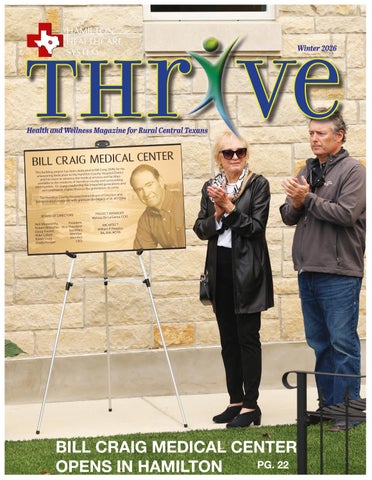
Health and Wellness Magazine for Rural Central Texans
MEET THE NEW MAGAZINE CREW
“Effective with this issue, THRIVE magazine will be published by the Texan News Service at Tarleton State University. After five years of publication by the Hamilton Herald News, the TNS assumed publishing responsibilites in September 2025. The Texan News Service is the student-run newsroom at Tarleton State. We are grateful to the Herald News for passing the torch and excited about growing our partnership with the Hamilton Healthcare System and the local community.”
-Austin Lewter, Faculty Adviser
6
THRIVE is a high quality bi-annual magazine dedicated to Health and Wellness for people in Rural Central Texas. We strive to give our readers and advertisers the best possible service. Our rate card is applied equally to all. This magazine reserves the right to reject any advertisement at the discretion of the publisher. The advertiser shall defend and indemnify and hold harmless THRIVE against any claim of liability or loss asserted or established against it by reason. The company’s liability for major errors lessening the value of an advertisement shall be limited to any advertisement or any part thereof submitted by or published at discretion of the advertiser. The company’s liability for major errors lessening the value of an advertisement shall be limited to the advertisement as it shall elect.
and Wellness Magazine for Rural Central Texans
EDITORS
Mackenzie Johnson
Colton Bradberry
Caroline Crain
MARKETING DIRECTOR
Helena Knutson
ART DIRECTOR
Lindsey Hughes
WRITERS
Ashtyn Hansard
Brenna Dempsey
Andrew Utterback
Gavin Patrick
Bethany Kilpatrick
Brooklyn McKinney
Kellan Byars
Micaela Sullivan
Avery Harr
PUBLISHER-IN-RESIDENCE
Austin Lewter, Facutly Adviser
Hamilton County Healthcare has built a legacy over the years
When it comes to medicine, there have been major advancements over the past years. Whether it’s new technology, diagnoses or procedures, the medical field has improved immensely.
Hamilton, Texas’ General Hospital has been around for almost 70
years, its first patient being admitted on Sept. 1, 1958.
In 1982, Harris Methodist Hospital, located in Fort Worth, Texas, bought shares of the Hamilton General Hospital. Unfortunately, Harris Methodist had to close the doors to the hospital on Sept. 30, 1987.
On Sept. 12, 1988, the doors
reopened after the Hamilton community came together and raised $250,000 to ensure that Hamilton had its hospital. After some legislation and elections passed in 1990, Hamilton General Hospital became Hamilton County Hospital District.
In 2004, a 39,000 square foot replacement facility was built for the
ASHTYN HANSARD
The Bill Craig Medical Center opened in Hamilton earlier this fall.
(Courtesy photo)
hospital, containing 34 beds and costing $7.5 million. The first patient in this new facility was admitted on Jan. 12, 2005.
Also in 2004, Hamilton Healthcare System [HHS] expanded to have their own fitness center and opened their own Wellness Center, featuring a community fitness center, cardiac and pulmonary rehabilitation, physical therapy and a heated salt-water fitness pool, in 2008.
On Oct. 1, 2008, HHS purchased the Hico Clinic in Hico, Texas, and also purchased the Mills County Rural Health Clinic located in Goldthwaite, Texas.
In 2018, Hamilton General Hospital converted to a 25 bed critical access hospital and re-started the swing bed program.
The Grand Opening of HHS’ newest addition, the Bill Craig Medical Center, was held on Oct. 28, 2025. This medical center focuses on added or expanded specialty services.
Dr. Lee, the chief of staff at HHS, opened the ceremony by saying, “This facility is a symbol of our community’s resilience…This facility will serve as a catalyst for continued expansion of high-quality medical services to patients, families and the regional communities we serve in Central Texas.”
Dr. James R. “Randy” Lee joined the Hamilton General Hospital in 1997 after finishing his medical education and training. With the help of another family practice doctor, the Family Practice Associates partnership with Hamilton General Hospital began, igniting the growth into a health care system..
While HHS has made many medical advancements and expansions such as new service lines including orthopedics, diabetes care and wound care. They have also worked hard at advancing their equipment to ensure the best of care.
Debbie Martin, the chief nursing officer for HHS, has been working for this hospital system since the early 1980s.
Over her time at HHS, she’s seen a lot of advancements happen within the four walls of the hospital, specifically ones that ensure better help for the patients.
“From that time, the hospital, with the support of the community, has grown. Nurses now have IV pumps to count drips per minute, and we have PT, OT and respiratory therapy 24/7,” Martin said. “We have a CT scan, an MRI and multiple physicians---unlike the one physician we had back in those days---plus a surgeon and an orthopedic surgeon. We are also mentoring nursing students.”
When it comes to patient care, Martin gives her thanks for these advancements.
“So many improvements and advances in medicine have made this hospital a hometown hospital dedicat-
ed to meeting the healthcare needs of our patients with compassion and personalized care,” Martin said.
Along with advances in medical equipment, Martin believes that the HHS nursing staff will only become better as time passes.
“We have the most dependable, caring, educated nurses that truly know how to support and advocate for their patients. I think they will only continue to grow and be stronger, grasping change and innovation,” Martin said.
While having a nursing staff is incredibly important, another part of HHS that they pride themselves in is their radiology department.
In the late 1970s, the Hamilton General Hospital only had one visiting radiologist that only came once a week to read all the scans needed for patients. Now, they have exams that can be sent digitally and read in less than an hour.
In 1998, the first CT machine was purchased. It was moved to the new hospital in 2005 and replaced with a 6 slice in 2008. In 2017 HHS upgraded to a 64 slice CT. Ultrasound and MRI services in early years were provided through a mobile service only 1 day per week. In 2015 ultrasound was brought in-house full-time and in 2018 a new MRI was installed onsite. In 2019 mammography was upgraded to the latest 3D technology.
As medical equipment keeps moving forward and advancing at Hamilton General Hospital, Paul Radle, Radiology Director for HHS, is considering ways to use new technology to improve their system.
“Currently, we have AI being used in some radiographic exams with MRI and CT planning. We also hope that AI will be a future standard for interpreting exams that will be overread by a radiologist,” Radle said.
Radle believes that while medical advancements and new buildings help push the boundaries of medicine, the real heart of HHS is the community of Hamilton, Texas.
“When the old Hamilton General Hospital was being torn down, there were people that donated a lot of their time,” Radle said. “There was a sense of loss, but the new building could not have existed without community support.”
Martin also believes that community is a big part of HHS, specifically late board member Bill Craig, whose name has been marked on the new Bill Craig Medical Center.
“He was selfless in giving and supporting this hospital for many years,” Martin said. “As a board member, he knew that to continue to grow and offer services, we needed a new building. Even now, he is still supporting us from above.”
HHS has come a long way since its doors first opened. Through thick and thin, Hamilton Healthcare System continues to strive for excellence and put its patients first.
Members of the Hamilton Pickelball Club take to the court in a recent practice. Founded two years ago, the the club fosters an appreciation for the sport that is growing in popularity across the nation.
(Courtesy photo)
Hamilton joins the pickleball movement
KELLAN BYARS
While it may seem that retirees, college students and busy professionals have little in common, in Hamilton County and beyond there is at least one shared interest. They’re all discovering the addictive appeal of pickleball – a sport that’s sweeping small towns and large cities alike.
Part tennis, part badminton and part pingpong, pickleball was created to be a fun, low-impact sport that anyone can play. Across the United States, players of all ages are picking up paddles and discovering how addictive the sport can be.
In Hamilton specifically, a small church gym has become the town’s pickleball hub, offering lessons, casual games and a welcoming space for anyone willing to try.
Founded two years ago by Dave
Rodriguez and his wife Carol, both with a background in tennis, the Hamilton Pickleball Club
began when they noticed the sport’s growing popularity, and realized no one had started a club in Hamilton. What began as a small experiment quickly turned into a community hub for players of all ages and skill levels.
“Any person can learn it if you can hold a paddle in your hand and hit a ball,” said Rodriguez.
Pickleball isn’t just a small-town sport. It was first played around 1965 by Joel Pritchard as a backyard game at his summer home in Washington.
The sport gained traction in retirement homes in the early 2000s because of its low impact and accessibility to people of all fitness levels. During the pandemic, pickleball received widespread media coverage and player numbers boomed. In a
matter of weeks, people of all ages were playing the game.
Social media platforms started showing celebrity endorsements, and every other scroll on TikTok featured something about pickleball. Even if you didn’t play, you probably knew the game. Its rise, however, wasn’t just a trend.
Pickleball is easy to learn and easy on the body, making it accessible to anyone willing to give it a try. With a smaller court, slower-moving ball and lighter paddle, players can enjoy the game without sprinting long distances or making quick, stressful movements.
This protects joints while keeping the game active and engaging. Pickleball shouldn’t be underestimated, though. It provides a fullbody workout and improves handeye coordination, agility and overall fitness.
By combining the fast-paced fun
FUN & GAMES
of tennis with the accessibility of a backyard game, pickleball makes it easy for beginners to pick up while still challenging for experienced players.
“This is a game that anybody or any age, even if you have no aspirations or history in sports you can play,” Rodriguez explained.
The game itself is simple. Players use paddles to hit a perforated plastic ball over a net, aiming to land it in their opponent’s court without it being returned. It can be played one-on-one or in teams of two.
Points are scored only by the serving team, and matches are typically played to 11, win by two. The “kitchen,” a no-volley zone near the net, adds an extra strategic element, forcing players to think carefully about placement, timing and teamwork.
The Hamilton Pickleball Club initially received funding for equipment through a partnership with Hamilton Healthcare System. They secured gym space at a local Lutheran church, meeting three nights a week and offered free lessons with voluntary donations helping to cover utilities.
The club’s inclusivity is central to its success. Players range from college students in their 20s to retirees in their 70s. Sessions are structured so that advanced and beginner players can switch courts and mix together, keeping games challenging and fun for everyone.
Family Nurse Practitioner Kaleb Davis found out about the club simply by hearing them play when walking around the Family Life Center at the Lutheran Church and instantly fell in love with the sport. Now, his whole family is involved in the club.
“When first starting out in this league, I was the youngest by about 30 years. Being able to connect with people who lived in a much different world than the one we live in now
(Courtesy photo)
has been life-giving,” Davis said.
Members come from all walks of life, from college students to doctors. David McFadden, a wellknown oral surgeon with his own private court, travels from Dallas to play in Hamilton several nights a week.
New residents from multiple cities outside of Hamilton, already familiar with pickleball, have also joined, further enriching the club’s community. Membership is growing, and the club is excited to have them.
“At one time, I think we had 26 or 28 members, and right now we have about 12 or 14 that are very active,” Rodriguez said. “So for a small community, this is really great.”
Beyond its physical benefits, pickleball has become a popular social event in Hamilton. The club fosters a sense of community where players of all ages come together not just to compete but to share experiences, form friendships and support one another.
The club also mixes younger and older players into a mashup of skill levels to create a competitive but still lighthearted and fun environment.
“We now operate three days a week … and we just buy the equipment and play there. So it’s been great,” Rodriguez said.
This combination of social interaction, inclusivity and fun reflects the national appeal of pickleball through a small-town lens. In Hamilton, as across the United States, the game isn’t just about scoring points – it’s about connecting with neighbors, making friends and enjoying an active lifestyle together.
Davis explained that the club is not just a sport. It is somewhere that young people can learn from older generations and experience valuable lessons.
“As the population gets older, I think we have a tendency to be too busy for connection. Those people that have experienced life before us have valuable information and insight,” Davis said.
Pickleball’s rapid rise across the United States shows no signs of slowing, and Hamilton is a perfect example of why. The town’s club demonstrates how the sport can bring together people of all ages and backgrounds, offering a fun, low-impact way to stay active while fostering a strong sense of community.
From college students to retirees, players are drawn not just by the game itself but by the friendships and shared enjoyment that come with it.
As more towns embrace pickleball, Hamilton’s club shows the sport’s inclusive spirit and wide appeal. Whether someone is stepping onto a court for the first time or returning as an experienced player, pickleball offers something for everyone – a mix of fun, fitness and connection that has turned this once-obscure pastime into a beloved and enduring sensation.
Pickeball has gained popularity in Hamilton.
A clearer vision Smith brings cutting edge optometry to Hamilton
CAROLINE CRAIN
Aman pushes open the glass door of the new specialty clinic on Hamilton’s Main Street and makes his way to the receptionist’s desk. His face carries a quiet relief.
For more than 10 years, he has driven over an hour to Temple for something as routine as an eye exam. The trips cost him time, gas and energy, yet they were unavoidable. Because until now, there was no local option.
This morning is different. He tells the receptionist he lives just a block away and that he’s ready to make the switch. With a new eye care clinic in town, the burden of the road finally lifts. For him, and for countless others in Hamilton and the surrounding communities, the specialty isn’t just a service. It’s accessibility, convenience and care closer to home.
Central Texas Eye Care is the first of five specialties to move into the Bill Craig Medical Center, part of Hamilton Healthcare System’s long-term plan to bring a full range of health care services closer to residents in rural Central Texas.
“It’s a milestone in making comprehensive health care more accessible to our community,” Melissa De La Garza, Chief Operating Officer at Hamilton General Hospital, said.
At the center of this milestone is Dr. Matthew Smith, the optometrist now leading the department. Smith began seeing patients on Aug. 18, bringing with him both experience from a larger health care setting and a deep conviction about the importance of treating patients as more than a chart or diagnosis.
“You’re not just a pair of eyeballs. You’re a human being with thoughts and feelings and a sacred trust that you have to hold,” Smith said.
For Smith, that trust is personal.
Before entering the field, Smith initially planned to become a physician assistant. That changed after his wife scheduled him an eye exam—an appointment that unexpectedly set the course for his career.
The experience sparked his interest in eye care, leading him to apply to the Kentucky College of Optometry, located in the
Dr. Matthew Smith with a patient at his office in Hamilton. Central Texas Eye Care offers a full array of optometry serices in Hamilton.
valley of the Appalachian Mountains. There, surrounded by small communities not unlike Hamilton, he found a deep appreciation for the role of local healthcare in rural life.
After earning his credentials, he spent several years at a clinic where the pace was fast and the patient load high, sometimes 20 to 30 appointments a day. Moving to Hamilton meant a shift: fewer patients per
(Courtesy photo)
day, but more time to connect with each one. It’s a shift he has embraced.
“For me, the local aspect is one of the main things I like about this job,” Smith said. “It has that hometown feel.”
Smith sees optometry as more than prescribing glasses or contacts. Routine eye exams, he explains, often reveal bigger health concerns like diabetes, high blood pressure or
SPECIALISTS
neurological conditions.
In a rural community where patients may not always have regular access to specialists, the exam chair can serve as an early warning system. That’s one reason he feels strongly about being in Hamilton.
“You’re taking care of the whole person,” Smith said. “Sometimes the first sign of a systemic condition shows up in the eye. If you’re listening carefully and looking closely, you can make a difference far beyond vision.”
The difference for Hamilton is not just medical, it’s practical. Until this year, the closest options for eye care were at least 30 to 45 minutes away. For patients managing glaucoma, macular degeneration or other conditions requiring regular follow-ups, the travel time often meant delays or missed appointments.
“My hopes are that we are able to keep people local and keep them from having to travel 30 minutes or 45 minutes away,” Sammy Reyes, manager at Central Texas Eye Care said. “That’s really what I hope to establish, just to get more people local.”
The new clinic is equipped with state-ofthe-art technology, rivaling what patients might expect in a larger city. Machines like the optical coherence tomography machine, the visual field analyzer and the Optos retinal camera allow Smith to evaluate complex conditions with precision.
But for Smith, technology is only half of the equation. The real impact comes from how that technology is used, paired with time, attention and compassion.
Smith knows rural patients often carry a history of making do, putting off appointments or driving long distances just to keep up with care. Being able to offer the same caliber of service in Hamilton removes barriers that many had accepted as a way of life.
“Care should be accessible,” Smith said. “If people have to drive an hour for a routine exam, that’s a burden. If we can lift that burden, it changes the way they approach their health.”
The story of Hamilton’s new specialty clinic stretches back several years. In
2019, the health care system acquired a private practice in Goldthwaite that had been built by the late Dr. Melanie Bartek.
Even after Bartek’s cancer and passing, Hamilton maintained Goldthwaite’s services, keeping her patients connected to care.
What began as a continuation of Bartek’s practice has now grown into something larger: a specialty service that not only honors her work but also sets Hamilton Healthcare System on a path toward a broader range of care. The Bill Craig Medical Center houses the first of five planned specialties, with ophthalmology also expected to join the list next year.
For Hamilton Healthcare System, the recruitment of Smith is both a practical
step and a symbol of intent that the system is investing in top talent to serve rural Central Texas.
“Our goal is to make eye care a priority and to help the community in any way we can,” De La Garza said.
Back on Main Street, patients are already making that switch, from hours on the highway to minutes from home. For them, the opening of Central Texas Eye Care isn’t just another clinic. It’s a sign that Hamilton Healthcare System is growing with them, bringing specialties once out of reach directly to their community.
And to Smith, it’s the start of something bigger.
“You’re not just taking care of eyes,” Smith said. “You’re taking care of people.”
Central Texas Eye Care employs state of the art diagnostic technology.
(Courtesy photo)
HHS hosts annual health fair
The Hamilton Healthcare System hosted its annual Hamilton Community Health and Wellness Fair on Nov. 20.
Annually, the event corelates with National Rural Health Day, the third Thursday in November.
This year’s event was held at the Hamilton Public Library. Organizers offered low-cost lab work, flu vaccines and a variety of health screenings.
Attendees visited over 50 tables featuring Hamilton Healthcare System services such as cardiac rehab, diabetes education, physical therapy and radiology, as well as 25 to 30 community health vendors providing information on transportation, hospice, nursing homes, pharmacies and other local resources.
Available services included a $50 wellness panel featuring lipid, metabolic and blood testing (CMP, CBC, A1c, TSH), along with flu vaccinations and other wellness resources.
The fair also featured a coloring contest for elementary students, with artwork displayed at the library and prizes awarded. Open to all, the annual event serves as a cornerstone for health education and community connection in the Hamilton area.
(Courtesy photo)
Stay Financially Fit!
Breaking the silence around men’s mental health MAN UP!
COLTON BRADBERRY
November was Men’s Health Awareness Month, a time dedicated to highlighting the issues that impact men’s physical and mental well-being. The initiative encourages men to take a proactive role in their health by learning about early detection, prevention and the importance of regular medical care.
While discussions around health often focus on diet or exercise, Men’s Health Awareness Month pushes the conversation further. It draws attention to conditions such as prostate cancer, testicular cancer, heart disease and depression; issues that affect men across all ages and backgrounds. By promoting awareness, the campaign aims to break long-standing stigmas that discourage men from seeking help or opening up about their health.
According to the Centers for Disease Control and Prevention, men are less likely than women to schedule regular doctor visits or seek preventive screenings. Many health concerns, such as high blood pressure or diabetes, develop silently over time and can be managed effectively if detected early.
“Men’s Health Month is a valuable reminder that early detection and preventive care truly make a difference in long-term health outcomes,” said Dr. Wesley Phillips,
a family medicine physician at Mid-State Health Center. “By staying proactive, whether it’s through regular checkups, screenings or conversations about mental health, men can take meaningful steps toward living longer, healthier lives.”
Mental health is also a key focus of the month. Studies show that men are significantly less likely to seek therapy or counseling, even when dealing with stress, anxiety or depression. Social expectations to appear strong or unaffected can prevent men from expressing what they are feeling, which may lead to long-term mental health challenges.
“It’s not just our physical health that men tend to be less attentive to than women; it’s also our mental and emotional health,” said Dr. Patrick Bigaouette, a psychiatrist with Mayo Clinic Health System. “Some men can see mental health needs as a sign of weakness and avoid seeking help, and it’s important to know that the opposite is true and that many men are dealing with similar issues. You’re not alone.”
Beyond mental health and screenings, doctors say that having an ongoing relationship with a primary care provider plays a crucial role in building long-term health habits. Regular visits make it easier to spot trends, address concerns early and have meaningful conversations tailored to the patient’s health history.
“Just as you would look for assistance regarding investments from a well-experienced financial adviser, you should seek expert guidance regarding your long-term health and well-being,” said Dr. Trevor Rich, a family medicine physician at Mayo Clinic Health System. “Seeing a primary care provider who already knows your health history allows you to focus on and invest more time discussing the future.”
Campaigns like No Shave November and Movember have helped bring men’s health issues into the spotlight. Participants grow facial hair throughout the month as a visible symbol of support and to raise funds for causes such as cancer research and suicide prevention.
Beyond awareness efforts, Men’s Health Awareness Month reminds everyone that lifestyle choices play a major role in long-term wellness. Balanced nutrition, physical activity, adequate sleep and stress management are essential for healthy living. Building and maintaining these habits can help prevent common conditions like obesity, high cholesterol and heart disease.
Families, friends and communities also play a critical role in men’s health. Encouragement and support from loved ones often make the difference in whether someone decides to seek help or adopt healthier routines.
Small steps, like getting a checkup, talking openly and eating better, can help men build a longer, healthier life.
Breast Cancer Awareness lunch Held in Hamilton
Hamilton Healthcare System’s Breast Cancer Awareness Luncheon has now become an annual community tradition. Its second luncheon, held on Oct. 21, 2025 at the Hamilton Public Library’s community room, aimed to provide public and community education about breast cancer, screening and risk factors.
This year’s speakers included Hamilton Healthcare System general surgeon Dr. Ryan Adams, who discussed breast cancer
services and surgical options available at Hamilton General Hospital, and visiting specialist Dr. Carlos Encarnacion of Texas Oncology, who focused on understanding personal risk factors and developing individualized screening plans. Attendees enjoyed a beautifully decorated lunch while hearing directly from physicians with the goal of improving health outcomes through education and early detection.
The event also highlighted the hospital’s commitment to advanced screen-
HHS Auxiliary team members presenting check to Mammography Technologist Nina Hooper and COO Melissa DeLaGarza.
ing through innovative mammography equipment, including the Tyrer-Cuzick risk assessment tool, which calculates an individualized risk score for developing breast cancer, made possible by funding and support from the Hamilton General Hospital Auxiliary.
(Courtesy photo)
Additionally, the Hamilton General Hospital Healthcare Foundation has supported the purchase of 3D mammography equipment with donations in recent years, helping ensure the community has access to the latest in breast cancer screening technology.
Three local specialists who make an impact in rural healthcare
BETHANY KILPATRICK
Hamilton Healthcare System prides itself on providing the finest services to the members of its community by providing top-tier specialists.
General surgeon Dr. Ryan Adams, orthopedic surgeon Dr. Keith Ellison, and interventional pain management specialist Dr. William Moore know what it means to put their patients first and provide the best care possible.
Dr. Moore, a husband and father of three, is originally from Laredo, Texas, and has been practicing since 2006, spending the past five years in Hamilton.
Neck and back pain, as well as diseases of the spine, are the most common types of cases Dr. Moore treats. Treating chronic pain that occurs after previous operations is also something Dr. Moore is no stranger to.
According to Dr. Moore, chronic pain is “pain that persists for more than six months without an otherwise treatable cause.”
Offering treatment for patients suffering from these conditions within a reasonable distance is a priority for both the Hamilton Healthcare System and Dr. Moore himself.
“I have patients who physically hurt when they ride in a car,” Dr. Moore said. “For them to have to travel can be excruciating, and it is a blessing to be able to come to a place nearby.”
Treatments Dr. Moore performs include injections in the spine, nerve ablations, joint injections and minimally invasive surgeries.
“I enjoy the scientific aspect of treating patients and the technical aspect,” Dr. Moore said. “Whether it’s surgery, spinal injections or looking at MRIs, I get to tie that back to the patient’s complaint.”
In addition to procedures, Dr. Moore elaborates on the importance of medicine and the technicality behind it.
“Medicine is very much an art,” Dr. Moore said. “One aspect to it is science, but the art happens to be interpreting what the patient is telling you and how that equals the images and labs you get.”While some may think of surgeons as performing dramatic miracles, Dr. Moore focuses on using his expertise to make everyday life more manageable for his patients, in turn producing meaningful results.
“Often, patients will have a spinal condition that prevents them from walking,” Dr. Moore said. “Or they can walk for only five minutes before they have to sit. If I can get them to walk an hour, then I’ve dramatically improved their quality of life.”
While Dr. Moore focuses on lessening pain for his patients, Dr. Ellison provides his medical expertise to those who fall victim to sticks and stones.
Dr. Ellison, originally from Houston, Texas, is a father to twins and has been practicing in Hamilton for eight years.
Fracture care is the primary focus of Dr. Ellison. Knee and shoulder arthroscopies, knee and shoulder replacements and carpal tunnels are the most common procedures he performs.
Orthopedists’ schedules start to fill up when kids return to school, football season begins and the weather cools for outdoor activities.
While the injuries Dr. Ellison treats are common, addressing them and remaining active is vital.
“Mobility is very important for everybody,” Dr. Ellison said. “It’s good to be able to be independent, to be able to take care of yourself and take care of your daily activi-
DR. KEITH ELLISON
DR. WILLIAM MOORE
DR. RYAN ADAMS
(Courtesy photo)
ties, whether it’s your work or home life.”
Having access to medical assistance in a rural community is important not only to patients but to Dr. Ellison as well.
“Our therapy here is close to home, so you do not have to travel far,” Dr. Ellison said. “It makes getting therapy a lot easier and more convenient.”
Like Dr. Ellison and Dr. Moore, Dr. Adams is also committed to serving his patients with care and accessibility.
Originally from California, he is a husband, father and grandfather who fell in love with Texas while completing his residency at Baylor Scott and White Medical Center in Temple.
Growing up in a rural community led to his desire to practice in a rural community.
In addition to operating in Hamilton, Dr. Adams splits his time between Hamilton Healthcare System and Texas Health Harris Methodist Hospital in Stephenville.
“When I got into medicine, I always knew that I wanted to practice in a rural community or a community hospital setting,” Dr. Adams said. “In 2019, I started at Hamilton and have really enjoyed developing my practice there. I find it very rewarding to practice in this area.”
Dr. Adams’ day begins with his first procedure of the day at 7 a.m. precisely.
“I usually will operate an average of six or seven scheduled surgeries,” Dr. Adams said. “Then I will frequently get phone calls from either the emergency department or the other doctors at the hospital if they have patients with needs.”
Ensuring his patients’ needs are met both before and
after surgery is a top priority for Dr. Adams.
“Before surgery, we talk about the plan for surgery and what to expect,” Dr. Adams said. “Then I also see patients after surgery where I can do a check-up, make sure they are doing okay and help them in the recovery period after surgery. That is what a typical day is.”
Dr. Adams’ expertise makes him capable of providing a variety of operations and treatments to his patients.
“I do a broad range of general surgery, from minimally invasive and laparoscopic surgery to open conventional surgery, a lot of endoscopy, as well as colonoscopies,” Dr. Adams said. “I treat a broad range of diseases and surgical needs, mostly in the abdomen. I also do a lot of advanced surgery for skin grafting and larger skin problems.”
Seeing patients return to the normal routine of their lives makes Dr. Adams’ long days worthwhile.
“One thing that does make it very fulfilling is when I can help a patient regain their health and restore their ability to work and their enjoyment with their family and help them do the things they love again,” Dr. Adams said.
The team at Hamilton Healthcare System takes their role in the community seriously, striving for excellence in every aspect of care.
“Hamilton Hospital is great,” Dr. Adams said.
HHS has the right specialists for you
While the Bill Craig Medical Center houses many specialties under its newly constructed roof, the addition of visiting healthcare providers brings even more expertise directly to Hamilton and the surrounding communities, advancing the center’s mission of providing quality, convenient care close to home.
Among these visiting specialists are Dr. Charles Shoultz III and Dr. Donald Cross, both interventional cardiologists; Dr. Carlos A. Encarnación, a medical oncologist and internist; Dr. Tyler Stewart, a urologist; Dr. Bohn Young, a podiatrist specializing in foot and ankle care and Dr. Russell Rowe, a dermatologist providing procedural, surgical and cosmetic care.
Ascension Providence Urology
Achildhood spent watching his father care for patients as a urologist inspired Dr. Tyler Stewart to make an impact of his own in the field, driven to improve the lives of those in a community. Now, Stewart is a board-certified urologist serving the Waco and Hamilton communities through Ascension Providence. He completed his medical degree at the University of Texas Health Science Center in San Antonio, where he also did his internship in general surgery and his urologic surgery residency.
I see a lot of interesting problems and a lot of really sensitive problems, as well as a lot of really cool technologies and treatments available. Every patient, every day, is new.”
No matter the case, Stewart strives to ensure every patient feels heard and valued at the end of day.
“I hope they feel like they were heard, I hope they feel like they were valued and I hope they feel like I have their best interest at heart,” he said. “There’s a lot of things that we can fix and make better. And unfortunately, there’s some things that we can’t do. But as long as my patients feel like they were told the truth—as long as they feel like they can trust what I had to say and they can trust that I have their best interests at heart—I am pleased. That’s my hope for them.”
Heart of Texas Foot Care Center
Dr. Bohn Young is a seasoned podiatry physician who brings several decades of experience to patients at the Heart of Texas Foot Care Center in Brownwood – and to his visiting role at Hamilton Healthcare System. He is passionate about helping people stay active and mobile, no matter their age or foot health concerns.
“I find the relationships with my patients and their families very meaningful,” Stewart said. “I cherish my patients that I’ve known for several years now and their family who come with them to their appointments. It’s nice to get to know them and see them as friends or family of the sort. You get to be a part of their lives and they get to be a part of your day.”
Stewart is trained in open, endoscopic, laparoscopic and robotic surgery, offering a comprehensive range of urologic care for men, women and pediatric patients. His hospital affiliations include Ascension Providence in Waco and Hamilton General Hospital, allowing him to provide expert care close to home.
“I get to do a nice mix of surgery and clinic patient care,” Stewart said. “I get to take care of all sorts of patients, all different backgrounds and all different ages.
Young earned his Doctor of Podiatric Medicine degree from the Dr. William M. Scholl College of Podiatric Medicine in 1997. He provides comprehensive podiatry care, from general foot pain and diabetic foot care to more complex issues like ingrown toenails, foot deformities and preventive orthotics.
“I treat a lot of diabetic, heel pain, ingrown toenails and bunions,” Young said. “I prevent a lot of my diabetic patients from losing toes, feet or legs. I’m helping the community stay on their feet so they can do their job and support their families.”
Affiliated with both Hendrick Medical Center in Brownwood and Hamilton General Hospital, Young brings expert foot and ankle care to the Central Texas region. Through his work, he aims not only to resolve immediate foot problems but also to prevent long-term complications and support his patients’ overall health.
“I’ve been practicing for 27 years,” Young said. “I
DR. TYLER STEWART
DR. BOHN YOUNG
SPECIALISTS
enjoy making patients feel better, and I’m interested in helping the patient have less pain and allow them to function better. My philosophy is I treat every patient like it’s my mom. When they’re in that chair, I’m going to treat them right.”
Realskin Dermatology
Aveteran with more than two decades of service in the U.S. Army, Dr. Russell Rowe is a board-certified dermatologist and fellowship-trained procedural specialist with a deep commitment to serving rural and Central Texas communities.
Rowe earned his medical degree from Baylor College of Medicine in 1993. After completing an internship at Tripler Army Medical Center and a residency in dermatology through the Walter Reed National Military Medical Center, he transitioned into a civilian career, bringing his military discipline and compassion to RealSkin Dermatology.
“I was a military physician who was board certified in family medicine for 16 years and decided that after two tours in Iraq, four ships to Afghanistan, multiple trips to sub-Saharan Africa, Eastern Europe, Central and South America in support of our troops and in support of the Special Operations in the 101st Airborne Division, I wanted to go back and be a doctor again,” Rowe said. “I had always been fascinated with the fact that dermatology encompasses medical diseases, surgical cures, cosmetic treatments and physics with laser treatments.”
Rowe practices a broad scope of dermatology, including procedural and surgical dermatology, aesthetic treatments, skin cancer screening and management and general dermatology for patients of all ages. He is a Fellow of the American Academy of Dermatology, a Diplomate of the American Board of Dermatology and a member of the American Society of Mohs Surgery.
Rowe is committed to providing care to rural patients in partnership with rural hospitals, but above all else— no matter where they fall on the map—he is passionate about providing quality healthcare and seeing how it benefits his patients.
“I have a selfless servant heart,” Rowe said. “I believe in helping other people, and I believe in providing the best of my abilities to others. So the best health care that I can provide, I do that each and every time. And
seeing the smile on the patient’s face—seeing the joy or gratitude for us coming closer to their home—is worth it. I enjoy people and I enjoy helping them have a better healthy environment and better healthy skin in the harsh Texas sun.”
Texas Oncology
Although Dr. Carlos Encarnación spends many of his days in Waco as a board-certified medical oncologist and internist—and as the area medical director for Texas Oncology’s Waco locations—the select days he practices in Hamilton are ones he values deeply. With advanced training in cancer risk assessment, genetics and medical oncology, he brings decades of experience delivered with compassionate, evidence-based expertise – a commitment to patients that motivates him every day.
DR. RUSSELL ROWE
DR. CARLOS ENCARNACIÓN
“One of the things that I find the most meaningful is the way I see how people face challenging diagnoses,” Encarnación said. “Despite being in practice for so many years, I still learn from them. The changes in how we treat cancer have been substantial. So things that I did not consider possible when I started practice, we can do now; but no matter the type of diagnosis, seeing a patient’s strength of character is always very impressive. It teaches you something every day.”
Encarnación completed his medical degree at the University of Puerto Rico School of Medicine, followed by internship, residency and service as chief resident at the Veterans Administration Hospital in San Juan. He completed his fellowship in medical oncology at The University of Texas Health Science Center in San Antonio and pursued intensive training in cancer risk assessment and genetics at City of Hope National Medical Center.
His clinical interests include breast cancer, clinical genetics and the management of high-risk patients. He participates actively in the US Oncology Network and the Texas Oncology Genetic Risk Evaluation and Testing program, and he previously served on the Texas Oncology Board of Directors while chairing multiple hospital committees.
Because oncology can feel overwhelming for patients and families, Encarnación places great emphasis on clear communication and shared decision-making. He aims not only to provide an accurate diagnosis, but to help each patient understand their options so they can confidently choose the care path that aligns with their goals.
“I want to make sure people know that we are devoted to answering all of our patients’ questions,” Encarnación said. “I want to make sure that every time a patient walks out of my clinic, they have all their questions answered so that whatever decision they have to make, they can make with the right information.”
Waco Cardiology Associates
Dr. Charles Shoultz III is an integral Hamilton Healthcare System visiting cardiology specialist devoted to serving patients in the community. He complet-
ed his internship and residency in internal medicine at the Mayo Graduate School of Medicine in Rochester, Minnesota, followed by fellowships in cardiology and interventional cardiology at Emory University School of Medicine in Atlanta, Georgia.
Dr. Shoultz’s clinical interests include complex coronary interventions such as angioplasty, coronary atherectomy, laser angioplasty, intracoronary stent placement and intravascular ultrasound. He also provides specialized care for heart failure, including acute and chronic management and post-transplantation follow-up, as well as comprehensive evaluation and treatment of peripheral vascular disease.
He is affiliated with several regional hospitals, including Ascension Providence Health Center and Baylor Scott & White Medical Center–Hillcrest in Waco, Parkview Regional Hospital in Mexia, Coryell Memorial Hospital in Gatesville and Hamilton General Hospital. Dr. Shoultz is a member of the Texas Medical Association, McLennan County Medical Association and a Fellow of the American College of Cardiology.
Dr. Donald Cross is an interventional cardiologist who brings advanced training and a broad range of cardiovascular expertise to his visits with Hamilton Healthcare System. He completed his internal medicine training at Emory University Hospital in Atlanta, Georgia, followed by residency in internal medicine and a fellowship in cardiovascular disease at Scott & White Hospital/Texas A&M College of Medicine in Temple, Texas. He went on to complete an additional fellowship in interventional cardiology at Scott & White, further refining his skills in complex cardiac procedures.
Dr. Cross’ clinical interests include complex and highrisk coronary interventions, including the treatment of chronic total occlusions, as well as comprehensive care for peripheral vascular disease. His approach combines evidence-based treatment with a focus on improving long-term cardiovascular outcomes.
He maintains hospital affiliations with Baylor Scott & White – Hillcrest and Providence Health Center in Waco, as well as Coryell Memorial Hospital in Gatesville, Falls Community Hospital in Marlin and Parkview Regional Hospital in Mexia.
DR. CHARLES SHOULTZ III
DR. DONALD CROSS
Mindfull nutrition habits pay dividends for longterm health
AVERY HARR
As more people in Texas seek simple ways to improve their health, Hamilton residents can start adopting new nutrition trends that emphasize balance, mindfulness and community. These habits, ranging from plant-based meals and gut-friendly foods to creative hydration and smart supplementation, are all about feeling good rather than following fads. Here are some of the most popular trends making their way into many kitchens, cafés and dinner tables in Hamilton and beyond.
Mindful eating
Mindful eating, which involves slowing down, enjoying every bite and paying close attention to what’s on our plates, is one of the most significant changes we can make for healthier living. It’s more about noticing flavors, textures and feelings of fullness than counting calories.
Eating without distractions, such as turning off the TV, can improve digestion and increase meal enjoyment.
Hamilton-friendly tip: Take a friend over for a leisurely meal at your house or at a neighborhood café where the conversation is just as important as the food.
Plant-forward meals
Plant-forward eating is becoming more popular nationwide. Putting more grains, beans and vegetables in the middle of the plate and keeping meat on the side does not imply giving up meat. This method keeps meals vibrant and inventive while increasing fiber and promoting heart health.
Hamilton-friendly tip: Plan a meal around a seasonal vegetable you don’t usually buy, such as beets, okra or squash, next time you’re at the farmers’ market.
Hydration with a twist
Though hydration trends are changing, water will always be the preferred beverage. Sparkling water, fruit or herb-infused water and even low-sugar electrolyte mixes are being tried. Hydration has been associated with improved energy, sharper thinking and easier digestion in addition to quenching thirst.
Hamilton-friendly tip: Before you go to the garden or a ballgame, put some cucumber, lemon or even a sprig of mint in your water bottle.
Protein all day long
Instead of eating most of our protein at dinnertime, a rising trend is to spread protein evenly throughout the day. This helps maintain steady energy levels and supports muscles and metabolism. It’s easy to do with quick swaps like adding Greek yogurt to breakfast, hummus with veggies at snack time or beans in a salad at lunch.
Hamilton-friendly tip: Try a protein-rich snack like roasted chickpeas or a boiled egg before heading out for errands or community events.
Fermented and gut-friendly foods
Gut health is one of the buzziest topics in nutrition right now. Foods like sauerkraut, kimchi, kombucha and kefir are packed with probiotics that support digestion and immunity. If those sound too adventurous, even a simple bowl of Greek yogurt with fruit can provide the same benefits in a more familiar way.
Hamilton-friendly tip: Mix local honey into plain yogurt and top it with berries for a gut-friendly treat.
Gentle intermittent fasting
Though it doesn’t have to be drastic, intermittent fasting has been featured in many health headlines. Avoiding
late-night snacks and allowing your body more time to rest between dinner and breakfast is the most basic form. A 12-hour window, such as eating breakfast at 7 a.m. and dinner by 7 p.m., is helpful for many people’s digestion and sleep quality.
Hamilton-friendly tip: Consider eating dinner a little earlier and using the additional time to relax with a book, a walk or a chat.
Cooking with flavorful oils and spices
Healthy fats like olive oil and avocado oil are replacing heavier options like butter, and spices are getting more attention than salt. Turmeric, garlic, rosemary and paprika aren’t just tasty; they’re full of antioxidants and anti-inflammatory compounds.
Hamilton-friendly tip: Roast vegetables with olive oil, garlic and rosemary instead of reaching for butter. It’s flavorful, heart-healthy and simple.
Smart supplementation
A growing number of people are selecting customized supplements based on what their bodies truly require rather than stockpiling every vitamin available. Working with a physician or pharmacist to address specific needs like calcium, vitamin D or omega-3 fatty acids is the trend toward smarter, more targeted supplementation.
Hamilton-friendly tip: Consult your neighborhood
pharmacist about supplements that might fit your needs and whether a simple blood test could help you make decisions.
Food as community
Perhaps the most meaningful trend is one that isn’t about nutrients at all – it’s about connection. Across the country, people are building stronger ties through shared meals, recipe swaps and cooking together. Food is more than fuel, it’s a way to stay connected. Whether at church luncheons, neighborhood cookouts or casual family dinners, eating together encourages healthier habits and a stronger sense of belonging.
Hamilton-friendly tip: Start a recipe swap among friends or neighbors where everyone brings a favorite dish with the recipe printed out to share. It’s a fun way to inspire new meal ideas.
Hamilton’s takeaway
Trendy nutrition doesn’t have to be complicated or expensive. These habits, mindful meals, plant-forward plates, creative hydration and gut-friendly foods are all about simple changes that fit into everyday life. At the end of the day, health isn’t about chasing fads.
It’s about finding habits that feel good, taste good and can stick around for the long run.
Friends, family and community members celebrated the opening of the Bill Craig Medical Center Oct. 28 with Hamilton Healthcare System. Dr. Shalor Craig had the honors of cutting the ribbon
(THRIVE photo by Lindsey Hughes)
Honoring the legacy of Bill Craig
Through the leadership of Bill Craig and the dedication of the Hamilton General Hospital Board, a vision for stronger rural healthcare has become reality.
MACKENIZE JOHNSON
Sandwiched between the city limits of Hico and Evant, Hamilton stands as a city known for its historic downtown of decorated storefronts, sweeping farm and ranch lands and, in the most recent decades, a booming healthcare system.
Alongside this growing healthcare system is a large team of people devoted not only to the flourishing of that system, but to the county in which it serves. From the concrete poured into a parking lot to the bricks placed in a rising building, it takes many hands to create a successful community – and the legendary hands of Bill Craig are among those responsible for Hamilton’s success in many
facets, with his impact taking deep root in the growth of its esteemed healthcare system and, now, the Bill Craig Medical Center.
While Hamilton knows what it’s like to provide quality healthcare, there was a time when its resources reflected those of many rural communities, modest and limited in reach.
In 1955, the growing need for a hospital was recognized, and Hamilton General Hospital was established a few years later. However, rising capital needs in those early years caused the hospital to change hands, and for a time, it—along with its clinical and EMS services—was inoperable. In response, a group of citizens rallied together to serve on a temporary board, forming a nonprofit corporation to raise $250,000 to bring the facility back into operation by 1998 – done so in the short time frame of a year due to state regulations and short-term waivers.
Bill Craig, a local veterinarian in Hamilton and future president of the hospital board, was an integral part of that early mission, with his wife, Karen Craig, serving as a firsthand witness to his drive in helping lead it.
“One of the first things I noticed about Bill that was evident to me was his real pride in his heritage and in Hamilton and Hamilton County,” Karen said. “It was very obvious when I first met him that he was really sincerely interested in what was best for the county – whether it’s schools, parks, hospitals or church buildings.”
Karen and Bill met during their final year at Texas Tech University in 1971. After graduation, Bill attended the Texas A&M School of Veterinary Medicine while Karen moved to Houston for work. They married in 1974 and returned to Bill’s hometown of Hamilton a year later, where he practiced at the Hamilton County Veterinary Clinic and Karen worked as a real estate broker.
“He valued his hometown and was always very medically oriented,” Karen said. “He was an economics major with a medical background, but as a fourth-generation Hamiltonian, also had a family history of wanting to provide health care for Hamilton.”
While Bill was instrumental in reopening Hamilton General Hospital’s doors in 1988, both he and his father, along with many others, played a role in carrying that momentum forward and opening the very doors walked through today – Hamilton’s current hospital facility. A local rancher, Ed Craig sold stock to help raise the capital needed for the project, and many who purchased shares later donated them back to support the hospital’s completion.
As a founding board member following the hospital district’s creation in 1990, Bill helped guide the decision to build a new facility altogether, one that would best meet the needs of Hamilton. That choice set the course for what now serves the community well beyond the hospital itself: the Family Practice Rural Health Clinic, Hamilton Wellness Center, Hico Clinic, Family Practice Clinic of Mills County and a state-of-the-art EMS service.
“What we have now is because of all the citizens here,” Karen said. “It’s not just Bill’s age group, but it’s also our son’s age group, and Bill’s dad and even his dad. It takes a lot of moving parts – good administration, boards that pick out good administrators, and it takes a lot of community support.”
During those formative years of reopening Hamilton Hospital and later building a new one, Karen and Bill’s son, Shalor Craig—now a family medicine doctor practicing at the Family Practice Rural Health Clinic in Hamilton and the Hico Clinic—witnessed the dedication and countless hours his father poured into the effort.
“He always felt strongly that Hamilton needed a hospital, and he always had a vision to grow it,” Shalor said. “A lot of people would probably be satisfied with things being like they were when the hospital was reopened. But he wasn’t satisfied to leave things the way they were and wanted to keep making the hospital system bigger
The late Bill Craig served tirelessly as the president of the Hospital Board and played an integral role in reopening the hospital’s doors in 1988.
and better.”
The 21st century marked unprecedented decades of growth with the addition of the new hospital, clinics and expansion of EMS services that now serve five counties, but Bill didn’t want it to stop there and started setting his eyes on creating a brand new specialty medical center – what is now known as today as the Bill Craig Medical Center.
With plans beginning prior to COVID, Bill, who by then had been elected to president of the board, and others started scraping together a plan to provide Hamilton with a facility that will house a variety of specialty medical practices, fulfilling the mission to make rural healthcare even more accessible and continue boost the city’s economy, as Hamilton Healthcare System is the largest employer for Hamilton.
“He could see economically what was good for the community,” Karen said. “And he could see what the lack of healthcare would do to the economy of a town and tried to be very informed about rural health. One of his things was if you’re not moving forward, you’re falling be-
Courtesy photo)
hind. The chance to go forward, to move forward with medicine, takes risks. He had a very positive outlook and would tell you there were several times they had to roll the dice.”
While laying the framework for a new medical center—or any of the other projects the hospital board has undertaken—is far from easy, Bill handled the work with determination, a quality impossible not to be influenced by.
“You wouldn’t have met anyone that would work harder than him,” Shalor said. “People realized he expected them to work hard, but not any harder than he was gonna work. And that definitely made an impact on me – the value of having to work hard to get things done. He was so committed to the hospital and trying to do good for the community, even if it wasn’t particularly easy.”
While plans for the medical center were taking shape, tragedy struck when Bill passed away in 2021 as the result of a team roping accident on his ranch.
Still, as a man whose reach had long extended across the Hamilton community, Bill’s influence carried on. The plans for the medical center didn’t fade but instead took on new meaning—and a new name—built on the same purpose and vision he helped set in motion.
Ground for the Bill Craig Medical Center officially broke in January of 2024,
with the grand opening taking place less than a year later on Oct. 28, 2025.
Located just a block and a half from Hamilton General Hospital, where surgical procedures continue to be performed, the Bill Craig Medical Center offers a variety of specialty medical services under one roof. The facility includes the new service of eye care, general and orthopedic care, pain management and physical therapy, and it also hosts visiting specialists in cardiology, urology, dermatology, podiatry and oncology.
“The opening gives me pride because I know how passionate he was about health care here,” Karen said. “And he wanted a building, particularly this one, to be up on the highway so anybody that drove
through Hamilton saw this facility and understood that there was a campus back behind it.”
When Bill passed away, Karen was elected to serve out the remainder of his term on the board, a position that came naturally to her. She has since been elected to the board two more times and still holds the membership today.
Neil Muxworthy, who had served on the board since 1997, worked alongside Bill for more than 24 years and took on the role of board president in May 2022.
It was important to Karen and Muxworthy, as well as countless others, that the medical center mirrored Bill’s and the board’s mission in a way that brought the community closer together.
“The new facility is a
testament to what Hamilton can achieve when we come together,” Muxworthy said. “It reflects decades of commitment. Every time someone walks through those doors, they will see Bill’s name and be reminded of the value of community service.”
As a member of the board for thirty years, Bill set an example of community service that is both unforgettable and accessible for others to carry on.
“Bill, along with others, wanted to serve the community,” Muxworthy said. “He knew firsthand the importance of reliable medical care. He understood that for a rural community like ours, a strong local hospital meant more than convenience – it meant survival. He viewed the hospital as part of Hamil-
From left, Nolan, Kellan, Bill, Carter and Shalor Craig celebrating Bill’s birthday at Circle T Crossfire Cafe.
(Courtesy photo)
ton’s foundation, much like our school and churches, and he gave much of his time and effort to promote it.”
Beyond his efforts to ensure Hamilton had modern, accessible healthcare, Bill was involved in nearly every aspect of the community where he could make a positive difference. From serving on the city council to help establish a new park, to donating to the public library and First Baptist Church, to supporting the local school board through Karen’s long-held position on it, Bill’s impact on the community is nearly impossible to quantify.
“He just was a tireless worker, and he brought that to his efforts for the hospital and the board and much more,” Karen said.
“He was just really sincere with the purest of motives interested in Hamilton and wanting the best for Hamilton. He wanted the quality of life to be good for people in Hamilton County, and I hope that people will continue to work to fulfill that for all of us. It’s been a long process, but we’re enjoying the fruits of their efforts now. And they’ll keep growing – it doesn’t stop here.”
Bill was a family man in every sense of the word —
one who not only cared for his own family, but for the families of every Hamilton County resident and beyond. And while his influence will surely be remembered for years to come through the name stamped on the front of the Bill Craig Medical Center, his true legacy — the kind so broad and expansive it can’t be measured — will continue to ripple through the community for decades.
And as a Hamilton resident who gave everything he had toward the betterment of the community, that legacy is one that would be fulfilled even if Bill believed his impact
might never be recognized or noticeable through the stone walls and sleek windows of a medical center.
“Bill’s influence is visible every day, whether in the sight of an ambulance passing by or in the patients walking into the clinic, hospital or wellness center, his fingerprints are there,” Muxworthy said.
“Bill never sought the spotlight, but he supported every major step the hospital system has taken. His legacy isn’t just the name on the building – it lives in the health and wellbeing of everyone who walks through its doors.”
The newly opened Bill Craig Medical Center at 805 East Main Street in Hamilton.
(Courtesy photo)
A paw-sitive influence
Pets bring comfort to campus, community
BROOKLYN MCKINNEY
Many people struggling with mental health seek help through counselors, therapists or medications. However, in some cases, comfort can come in the form of a fourlegged friend.
For example, the Tarleton State University campus in Stephenville is generally known for being animal friendly, so it’s not abnormal to approach someone walking their dog and ask if you can pet them. A simple interaction with a furry bundle of joy could mean the difference between a good and a bad day.
Since Jodi Weyers has partnered with Tarleton’s Student Resources department to bring her golden retriever Dallie onto the campus to work as a therapy dog, this reality has been true for many people.
“When I hear a student say, ‘My day was not going well, but now it is because Dallie’s here,’ or ‘I got out of bed today just to come to the student center and see Dallie,’ – that reiterates that what we’re doing is meaningful,” Weyers said.
Dallie has been trained by the Alliance of Therapy Dogs (ATD) to provide comfort and emotional support to the people around her. Before coming to Tarleton, she also worked with the elderly in different assisted living facilities around the town of Stephenville.
As a mother of two college students, Weyers finds purpose in making sure the students of her community will always have a furry companion waiting for them.
“Dogs are proven to lower blood pressure, lower cholesterol, lower triglycerides and proven to decrease the feeling of loneliness,” Weyers said. “And so, in the age of social media, where we seemingly have thousands of friends but we might only have one, or no friends in some cases, that feeling of loneliness is something I’m trying to eliminate.”
In addition to individual appointments, Dallie has also visited many groups, such as Tarleton’s volleyball team and the College of Business. Her presence on campus seems to bring everyone together.
“I’ve always loved to connect people, and so it’s been neat for me to see the common ground of having Dallie. And then when they’re loving on Dallie, they just happen to be there at the same time, so hopefully they walk away with a new friend,” Weyers said.
Whether it’s for a busy college student, a recovering
hospital patient or a senior in assisted living, therapy animals are here to help reduce negative emotions such as anxiety or loneliness, promoting healing.
While Dallie is trained for comfort and emotional support as a therapy dog, she does not have the proper training to assist someone with a disability.
For deaf students like Grace Soechting, her service animal, Birdie, plays a key role in her everyday life.
“She’s been a great emotional support, and she’s helped me with hearing different sounds,” Soechting said. “Like someone knocking on the door, she’ll let me know. She’s my ears, and she understands what’s going on.”
Birdie, a black lab pitbull mix, has been with Soechting for three years. One day, she visited an animal shelter with her mom and formed an instant connection with Birdie.
“We looked at all the different dogs and played with them, and she was just special. I don’t know why, but I just thought she was special. So I just knew she was the one for me,” Soechting said.
Soechting has done a great job adjusting to campus life as a wildlife major and president of the ASL (American Sign Language) Club thanks to Birdie. Soechting took steps to ensure that Birdie adapted just as well.
“At first, she was really nervous, and then I just got her used to the environment. I would take her out with me everywhere as much as I could,” Soechting said. “We go to different dog parks, meet with different people in different classrooms and everything, so she improved a lot.”
Tarleton nursing students Paige Luzander (left) and Kenlee Ponivas with with Dallie the therapy dog. (Courtesy photo)
TARLETON
While service animals are trained to handle disabilities and therefore granted access to public spaces under the ADA, an emotional support animal is not.
However, Emotional Support Animals (ESAs) are still important and may be a good solution for anyone struggling with their mental health.
Abigal Durham, a wildlife major at Tarleton State University, has had her orange domestic medium hair cat, Felix Theodore Durham III, for three years. She got him from PetSmart before her freshman year at Tarleton to support her through her college journey.
“It’s helped me so much because I’m a very physical touch person. And if I just need to come home and hug someone, I have Felix to hug,” Durham said.
For an animal to be certified as an ESA, the owner has to receive a note from their doctor or therapist in addition to filling out other documents.
“I struggle with depression and anxiety a lot, but I’ve also never been alive without a cat. I’ve always had a cat in my household, and I know that cats are very helpful to me. And so I didn’t know how I was going to react to living without a cat,” Durham said.
Whether an animal is trained for therapy, service work or is just there to offer emotional support, everyone can agree that they help us feel a little less alone.
In fact, according to a 2023 poll conducted by the American Psychiatric Association (APA), 69% of pet owners claim that their animals have provided them with companionship that helped relieve their stress and anxiety.
Therapy dogs like Dallie, who have made a positive impact in their communities by visiting assisted living facilities and college campuses, have proven this statistic to be true.
For disabled pet owners with service animals like Birdie, the benefits are not only mental but also physical. Even for those who lack the resources or time to adopt an animal at home, volunteering with other animals at local shelters or other nonprofit organizations could hold similar benefits.
And these opportunities are not exclusive to Tarleton Students or the Stephenville community; they extend throughout Central Texas, including right here in Hamilton.
Some great options local to the Hamilton area are the Central Texas Wildlife Institute’s Baraboo Roadside Rescue Retirement Ranch or Hamilton County Animal AdvoCATes.
Diving into diabetes
ANDREW UTTERBACK
About 1 in 10 Americans has diabetes – just over 38 million people, according to the Centers for Disease Control and Prevention. Diabetes, a condition that affects how the body processes insulin, is one of the most common chronic diseases and is being diagnosed more frequently than ever.
Despite being so common, questions like “What is it like to live with diabetes?”, “Is there a cure?” and “What even is insulin?” still arise.
Cole Webber is a student at WyoTech pursuing his ASE certification who has firsthand experience with what living with the condition entails. He has had type 1 diabetes since he was 8 years old and said his condition actually helps him live a healthier life.
After Webber’s diagnosis at 8 years old — a lot later than most type 1 cases — he said it didn’t necessarily impact him all that much.
“Being 8 years old, I couldn’t eat all the candy I wanted on Halloween anymore,” Webber said.
“It wasn’t necessarily awful. As a kid, I had to go to the nurse every time I wanted a snack or when my blood sugar was dropping in class. They were just minor inconveniences.”
Webber said once he started working a more physically intensive job, watching his blood sugar became even more important.
“I got a job at 16. It wasn’t crazy labor intensive, but I was in a warehouse doing electronic work,” he said. “I would get so locked in on work, I would stop paying attention. So my blood sugar would start to drop, plus the fumes made the symptoms a lot more noticeable.”
Webber compared it to a roller
coaster, with his blood sugar spiking high before dropping back down, though new technology has made it easier to live with.
“I do have an Omnipod, which is a tubeless insulin (the hormone that regulates blood sugar) pump, and that has made my life much less inconvenient as opposed to the insulin pens, which I had for the first four years of being diabetic,” he said. “I’ve had CGMs, which are continuous glucose monitors. There’s a little probe that goes right into your skin with a little sensor on it, and it just measures your blood sugar level.”
He said watching your blood sugar is the key.
“You have to pay attention when you’re diabetic. If you don’t pay attention, it can cause problems,” Webber said. “Whenever my blood sugar gets high, it hurts. It’s physically painful and mentally painful. It feels like I have the flu whenever my blood sugar gets really high. It’s just all about paying attention and being aware of your body.”
Webber said part of how he watches his blood sugar is by eating well and exercising. Essentially, the healthier his lifestyle is, the less he has to worry about his diabetes.
Krista Lindley, diabetes care coordinator at Hamilton General Hospital, confirmed this.
“When you eat excess carbohydrates, particularly processed carbohydrates, your blood sugar is going to go up, and if you don’t have enough insulin production or if you are insulin resistant, it’s harder to bring those blood sugars down,” Lindley said. “So, if you eat smart by following a carb-controlled meal plan and choosing high-fiber, high-quality carbohydrates, that is going to benefit both types of diabetes.”
Lindley said she recommends this
KRISTA LINDLEY, MS, RD, LD, CDCES
diet in general, not just for those with diabetes.
“I think following a diabetic diet is good for everybody. It means high fiber, low amounts of processed foods, low amounts of sugary foods and lots of vegetables. This is not just going to delay or prevent a possible type 2 diabetes diagnosis, but it’s going to help all kinds of health conditions,” she said. “It’s going to help quality of life long term, so I don’t think there’s anything wrong with eating like you have diabetes, even if you don’t.”
Genetics play a role in whether or not a person will contract specifically type 2 diabetes, but Lindley says diet plays a large role in prevention.
“I like to say that lifestyle factors trump genetics nine out of ten times,” she said. “Nothing is guaranteed, I see people come in and they have insulin resistance even though they don’t have a lot of weight to lose and they follow a pretty general healthy lifestyle. So nothing’s one hundred percent, but diet and lifestyle help a lot.”
Webber said he is optimistic about the future of diabetes stem cell research, which aims to one day cure the condition. In the meantime, he said the rapidly advancing diabetes technology makes it a lot easier to live with.
Hamilton ISD health office helps students build healthy, lifelong habits
BRENNA DEMPSEY
The Hamilton ISD School Health Office and Nutrition Services are important to the well-being of students on campus.
Hamilton ISD is a place for students to learn and grow, but this is not limited to what is in a textbook. Nurse Shannan Roberts and nurse aide Heather Hansard are there to teach students how to develop and maintain lifelong healthy behaviors.
At the start of the school year, they offer immunizations and make sure students are able to go to school happy and healthy.
While there is rarely a slow day, on the days that things aren’t so busy, they offer health screenings for hearing, vision and scoliosis to students of all ages.
“When there aren’t other things happening—no student in here or an emergency on campus somewhere— we’re doing screenings and looking over immunization records, data entries and other things like that,” Roberts said.
Keeping up to date and organized helps the Health Office handle things quickly and efficiently.
They provide nutrition counseling to students and encourage them to make healthier choices, like reminding them that drinking soda does not keep them hydrated like water does.
Keeping track of students with special dietary needs helps prevent accidental allergic reactions. They are intentional about the foods served, and while the campus isn’t entirely nut-free, no cafeteria meals contain nuts.
Teachers work closely with the Health Office and Nutrition Services to stay informed about students’ allergies, helping prevent accidental exposure. This collaboration ensures that students remain healthy and safe on campus.
The Health Office also carries rescue medication like EpiPens and Narcan in case of an emergency. Roberts trains all the employees on how and when to use these rescue medications.
They help manage student medications for various conditions like ADHD and some chronic conditions like cystic fibrosis, diabetes and asthma. Roberts and Hansard either administer care to students at school or they work to make sure the paperwork and safety measures
are in place for them to manage it themselves. This allows students to stay in class and learn to the best of their ability.
“That’s really the goal, when you’ve got someone with a chronic condition at school, you’re trying to level the playing field so that they’re not out of the classroom too much and missing things that the general education students are getting,” Roberts said.
They also train people on how to treat daily and recurring chronic conditions. Unlicensed Diabetic Care Assistants (UDCA) are available on campus and know how to help students who need assistance.
UDCAs undergo all the required training to know how to properly care for a diabetic student. They learn to perform duties such as checking blood glucose levels, administering insulin and glucagon and recognizing and responding to symptoms of high and low blood sugar.
The Health Office helps students stay healthy physically, but also does its part to help them mentally by bringing a feeling of comfort to both the student and their families.
“Having a chronic condition like diabetes or even a food allergy can be really scary for these kiddos, because what if they have an emergency and no one’s around or
HISD nurse Shannan Roberts maintains the School Health Office where they support the entire student body with full range of health services.
(Courtesy photo)
WELLNESS
what if they get a hold of something they’re not supposed to? Just knowing that there’s a trained person on the campus that can help navigate that stuff gives them a sense of peace,” Roberts said.
The Health Office also offers general care for the students for bumps, cuts, breaks and bruises. They educate the teachers on basic first aid to be able to help them with minor issues.
“We’re here to try to keep kids in the classroom as much as possible. We try to enable the teachers to do some of the basic first aid, like Band-Aids, itch wipes for bug stings and things like that in the classroom, and then they come here to us for bigger stuff,” Roberts said.
While mental health care typically comes from the school counselors, there are times when the departments overlap.
“A lot of mental health concerns show up as physical issues. We might see someone with a stomachache or a headache, and something doesn’t seem right. After some investigation, we might find out they were teased, upset about a test grade, or something similar,” Roberts said.
In these cases, there is no physical treatment they can provide, so they offer encouragement and reassurance, speaking from a genuine place and creating a safe space for students – a perspective and front-row seat that is
Nurse aid Heather Hansard manages the health records for the office.
deeply valued.
“The teachers have the kids for their year, and then they move along. But since we’re here for the whole campus, we see them all throughout and so we see some kids and think, ‘Oh my gosh, look how much they have grown up,’” Hansard said.
(Courtesy photo)
COPD patients bound for healing with Pulmonary Rehab
GAVIN PATRICK
Rural residents with chronic obstructive pulmonary disease (COPD) have faced barriers to getting proper treatment for as long as the condition has been recognized.
Not only are they more likely to develop the disease, they are less likely to live a longer, healthier life due to a lack of medical resources.
Hamilton Healthcare System is a leader among rural Texas hospitals in fighting to close those gaps with urban cities, despite being at a disadvantage themselves.
COPD is a chronic progressive lung disease that limits airflow and causes difficulty breathing. People aged 40 or older with long-term exposure to lung irritants are those most likely to develop COPD.
A 2021 study from the National Library of Medicine surveyed 71 rural primary care providers in the western United States. Only 66% were content with their ability to prevent COPD exacerbations, and 55% were not satisfied with their access to pulmonologists.
Hamilton General Hospital is among the many rural hospitals without a pulmonologist on hand. However, it does have a team of three cardiopulmonary clinicians who are passionate about giving COPD patients the treatment they deserve.
Clay Wagner, the Director of Cardiopulmonary Ser-
vices at Hamilton General Hospital, has been a respiratory therapist for 42 years. The number one goal of the cardiopulmonary program, he said, is patient care; meaning, they don’t so much treat the disease – they treat the patient.
“One of the things we try to make sure as a team [is] that the patient is comfortable and they enjoy themselves,” Wagner said. “Because if they don’t enjoy themselves at these sessions, they’re not going to come back.”
Hamilton General Hospital holds pulmonary rehab sessions twice a week. Patients learn how to manage their COPD daily with nutrition guidelines and anxiety reduction and work to have stronger lungs with breathing exercises, moderate weightlifting and cardio fitness. The emphasis on each aspect is customized for every patient. Common breathing exercises for COPD are diaphragmatic breathing and pursed lip breathing. But Hamilton’s program has a different exercise that combines the two as well, which is perhaps the most fun.
“We give each patient their own little cheap harmonica… and we teach them breathing control exercises with the harmonica therapy,” Wagner said. “And they love it. The patients think that’s about one of the best things [they] come across.”
The reason harmonica playing helps COPD patients in
particular is that it relieves their air trap – their inability to exhale all their air. COPD’ers often can’t inhale deeply either, partly due to a mental block they’ve developed over time.
However, when patients take part in these pulmonary sessions, it helps them get over their fear of not being able to catch their breath, and the upbeat nature of the sessions helps them get into a positive mindset.
“When they’re in here and you cut up with them and get to talking to them, they forget that they’re actually exercising,” Jamie Whitehead, a cardiopulmonary nurse at Hamilton General Hospital, said. “They’re able to go longer and longer and do more, and they’re actually building muscle and able to breathe better because they’re not concentrating on it.”
Once a COPD patient is entrenched in Hamilton General Hospital’s pulmonary rehab program, they usually don’t regret it, and their quality of life improves. But a big challenge is actually getting there to begin with.
Many elderly patients are either unwilling or unable to drive long distances, and rideshare options in the Hamilton area are limited. As a result, some people with COPD aren’t able to visit the hospital as often as needed or make the trip to see a pulmonologist out of town, which can mean an additional hour of travel.
Affordability is another major concern. Libby Skaggs, a cardiopulmonary nurse at Hamilton General Hospital, recalled one patient who stopped taking her prescribed COPD inhaler after discovering it cost $1,000 a month. For many Hamilton residents, even with Medicare supplement plans, the cost of care can still be difficult to manage.
According to Skaggs, the clinic offers multiple options to work with patients that may need financial assistance.
Life Trax is a medically supervised exercise and does require a physician referral to join but provides a good alternative to help patients stay active. Many patients join Life Trax even after completing Pulmonary Rehabilitation.
The assistance program also works to find financial aid for patients and still grants them access to the clinic and emergency room.
Another limitation is that pulmonary patients are only allowed a lifetime of 72 visits. If a patient reaches that mark and still needs care, they can work with the program to potentially get qualified to come back.
“At the end of the program, we want you to return to as normal of a life as you possibly can and be as healthy as you possibly can and [learn] ways to continue [our teachings] at home without us being there,” Whitehead said.
“Because we can only be with you for so long.”
Other services Hamilton General Hospital has that pertain to COPD include the Scheduled Outpatient Procedures Department (SOP), which treats outpatients with
antibiotics through injections and infusions.
Chronic Care Management helps keep patients out of the hospital by coordinating their healthcare needs with their primary care provider ahead of time. The hospital also provides smoking cessation programs with counseling, cardiac rehab and Swing-Bed Care for long-term hospital stays.
“Hamilton County has one of the most robust rural health care systems that I’ve ever seen,” Skaggs said.
“It’s really amazing. [Patients] only need to go to a city, really, for advanced care. … Other than that, we can pretty much do everything that they need here.”
Despite financial challenges and the natural risks for lung disease that exist in a rural community, Hamilton’s cardiopulmonary team is committed to making their program a productive and enjoyable experience.
“At graduation, when they’re doing 10 minutes and 35 watts of resistance, it’s a miracle to see that somebody had started off at 35 seconds… and at the end of the program, they’re doing six machines at 10 minutes apiece,” Whitehead said. “It’s neat to watch them grow.”
From left, Libby Skaggs RN, Clay Wagner RT and Jamie Whitehead RN are dedicated to patient success at HHS Pulmonary Rehab Clinic.
(Courtesy photo)
Move Better, Feel Better
Simple Mobility Moves to Prep Your Body and Prevent Soreness
MOBILITY MATTERS
A short mobility routine before exercise can improve performance, increase range of motion, and reduce post-workout soreness. These six simple stretches target the hips, quads, glutes, and hamstrings—key areas for runners, athletes, and everyday movers alike.
1. Lateral Lunge Stretch
Targets: Hips, inner thighs, adductors
Step into a wide lateral lunge, keeping the opposite leg straight. This movement opens the hips and groin, improving mobility for cutting, sprinting, and quick changes of direction while easing tightness.
2.
AVERY HARR
Targets: Quadriceps, knees
Pull your heel toward your glute while standing tall. Loosening the quads helps protect the knees and prevents stiffness after running, lifting, or intense lower-body workouts.
3. Standing Figure-Four Hip Stretch
Targets: Glutes, piriformis
Cross one ankle over the opposite knee and sink back into a seated position. This stretch relieves deep hip tension and improves overall lower-body mobility.
4. Hamstring Reach
Targets: Hamstrings, lower back
With one leg extended, hinge forward at the waist. This stretch lengthens the back of the legs, helping prevent soreness and improve stride
length and flexibility.
5. Knee-to-Chest Mobility Pull
Targets: Hip flexors, glutes
Pull one knee toward your chest in a controlled motion. This dynamic stretch activates key muscles used in running, jumping, and explosive movements.
6. Straight-Leg Kick (Dynamic Hamstring Kick)
Targets: Hamstrings, hips
Perform a straight-leg kick through a comfortable range of motion. This dynamic movement warms the hamstrings, boosts flexibility, and primes the body for athletic performance.
Standing Quad Stretch
Located in Hico, Touchstone Ranch Recovery Centers offers comprehensive in-patient drug and rehab.that includes equine therapy.
Touchstone Ranch Recovery Center MAKES Lasting Impact
Touchstone Ranch Recovery Center (TRRC) is an addiction recovery center in Erath County, Texas. TRRC specializes in the long-term recovery of their patients, achieving this through equine therapies, detoxification and drug treatment.
The focus at Touchstone is compassion, empowerment and healing for clients through 30, 45, 60 or 90 day treatment tracks set in a serene environment on a beautiful ranch property.
Debra K. Knauss, RN, LCDC, is the owner and CEO of TRRC. She has more than 40 years of experience in nursing and behavioral health care and has owned Touchstone for 11 years. She and her son, Brandon Knauss, have been preferred interventionists for “Dr.
Phil” and “The Doctors” and starred on the TLC show “Cracking Addiction.”
Other connections and relationships Touchstone has include Tarleton State University and Daniel Amen with the Amen Clinic, one of the world’s most renowned neurosurgeons.
Equine therapy is a significant part of Touchstone’s program and is subcontracted through Tarleton State University. The Amen Clinic invited Touchstone to be a strategic partner, allowing TRRC to offer clients SPECT scans and identify potential brain injuries.
Their journey with addiction recovery is deeply personal, stemming from Brandon’s struggle with substance abuse, a struggle that never caused his mother
LINDSEY HUGHES
(Courtesy photo)
to give up on him. She credits him as the reason she is where she is today and in the field she now serves.
“It has kind of come full circle. It doesn’t seem like work because I absolutely love it, but it is the hardest work I’ve ever done,” Debra said.
When she first acquired TRRC 11 years ago, Debra said she never would have guessed she was an entrepreneur. Through the development of the business, however, she has come to see how promising the future of Touchstone is.
She wants the future of the ranch to include more activities, such as a track, swimming pool and a fishing pond, as well as an eventual expansion into the DFW area, something that she says could allow them to reach many more people.
While her tasks as CEO take up a lot of her time, she is constantly on the Touchstone campus interacting with clients and helping with the day-to-day. Past clients have even commented on Debra’s dedication to being present in the business.
“One gentleman that had been in four programs said that this was the first program he had ever seen a CEO or owner on campus,” Debra said. “I want to make sure that we are not just another program.”
For this reason, Debra ensures all of her employees are held to high standards. According to her, employees can make or break not only a client’s experience at TRRC but also their recovery.
Patient, compassionate and nonjudgemental staff are a necessity, and Debra takes it upon herself to ensure that anyone working on the ranch embodies all of these traits. The two things that she says she values most in any employee at Touchstone is work ethic and being “good to the core.”
“I believe in the Golden Rule of treating others the way you would want to be treated. If I wouldn’t check into treatment myself in this program, then I need to change something to make it better,” Debra said.
The success of TRRC is undeniable. As of May 2022, the center reported a 95% completion rate among the last 579 clients admitted at that time. This is an impressive accomplishment both on and off paper, but Debra doesn’t measure success by numbers alone; she measures it through every individual who leaves and continues down a better, healthier path.
Kim Nichols, one of Debra’s longest-standing employees, shares that same philosophy. As director of dietary, client services and RA supervision, her roles span many facets of the center. Among her most important responsibilities are ensuring that clients have healthy, delicious meals each day and that they have what they need to feel safe and supported.
That is one huge way that Touchstone differs from
Touchstone Ranch owner Debra K. Knauss and Tarleton president James Hurley at a recent Texan football game.
(Courtesy photo)
other centers – their pride in providing the clients with food that is far from the average cafeteria food. Healthy, delicious meals that feel homecooked can contribute greatly to patients’ comfortability, which in turn contributes to recovery. A healthy mind is hard to accomplish without having healthy food going into the body.
Similarly to Debra’s story, Nichols was also inspired to join the field by her son, who is also recovering. She has an understanding of how hard substance abuse disorder truly is, and because of that personal connection, she is compassionate and empathetic in her work at Touchstone.
“I wanted to do something where I could save lives… It’s a very rewarding job, and it’s probably the only job I’ve had in all of my years that I truly love,” Nichols said.
That alone speaks volumes about the environment TRRC has nurtured, one in which not only patients thrive, but staff do as well.
Touchstone Ranch Recovery Center is changing lives one recovery at a time, and with an amazing team of people behind the program, you can expect them to continue making a lasting impact on many, many lives in the years to come.
WINTERTIME RECIPE GOODNESS
The winter season is one filled with cooler weather, sweaters, laughter and warm, cozy food. It is that type of season that you smell in Hobby Lobby, often pumpkin spice or some type of cinnamon.
Fall is a season of cooler weather, cozy sweaters, laughter and comforting food. It’s the kind of season you can smell in stores like Hobby Lobby – often pumpkin spice or a hint of cinnamon in the air.
Here are three fall recipes that bring the warmth, comfort and a touch of love you can only find in the season of fall to your own table.
Chicken pot pie
Fall would not be complete without a chicken pot pie. With lots of veggies and chicken, Charlyne Mattox’s recipe on “Country Living” achieves the perfect pot pie. For Mattox’s recipe, you will need the following ingredients:
1 Tbsp. olive oil
1 1/2 lb. bone-in skin-on chicken thighs
Kosher salt and freshly ground black pepper
1/2 yellow onion
2 chopped carrots
2 chopped celery stalks
1 tsp. fresh thyme
1/4 cup all-purpose flour
2 cups chicken stock
1/4 cup dry white wine
1 cup frozen peas
1/4 cup fresh flat-leaf parsley
1 (14-ounce) package all-butter puff pastry
1 large beaten egg
You will start by preheating the oven to 425°F. Heat a large cast-iron skillet over medium-high heat. Add oil and season chicken with salt and pepper. Cook skin side down until golden brown and crisp for about 6 to 8 minutes. Flip chicken and transfer skillet to the oven. Cook until the thickest part of the thigh reaches 165°F on an instant-read thermometer for about 12 to 14 minutes. Transfer the chicken to a cutting board, discard the skin and bones and chop the meat. Then you will place the skillet over medium-high heat. Add onion, carrots, celery and thyme and season with salt and pepper. Cook, stirring occasionally, until the vegetables are crisp-tender, about 3 to 4 minutes. Add the flour and cook, stirring, for 30 seconds. Slowly stir in the stock and wine, then bring to a boil. Reduce to a simmer and cook, stirring occasionally, until thickened, about 4 to 6 minutes. Remove
from heat, then stir in the chicken, peas and parsley. Next, cut the puff pastry into a circle about 1 inch larger than the outside rim of the cast-iron pie plate. (You may need to roll the dough on a lightly floured surface to reach the right size.) Place the pie plate on a rimmed baking sheet, transfer the filling to the plate and top with the puff pastry, crimping the edges. Brush the pastry with egg and bake until golden brown, puffed and cooked through for 20 to 25 minutes.
This recipe feeds four to six servings, leaving everyone with a sense of home and family.
Fall isn’t all about pumpkin spice and cinnamon, but it wouldn’t feel complete without them – and these simple, comforting recipes make sure you don’t miss that cozy feeling.
Pumpkin bread
Warm and sweet, pumpkin bread is one of the many fall delights that are easy to make. Jennifer Segal’s “Once Upon a Chef” pumpkin bread recipe is an easy—yet delicious—one to make at home.
First, gather your ingredients:
2 cups all-purpose flour, spooned and leveled
½ teaspoon salt
1 teaspoon baking soda
½ teaspoon baking powder
1 teaspoon ground cloves
1 teaspoon ground cinnamon
1 teaspoon ground nutmeg
1½ sticks (¾ cup) unsalted butter, softened
2 cups sugar
2 large eggs
1 (15-ounce) can 100% pure pumpkin
You want to start by preheating your oven to 350°F, then grease two 8 x 4-inch loaf pans with butter and dust with flour. Then, in a medium bowl, you want to combine the flour, salt, baking soda, baking powder, cloves, cinnamon and nutmeg. Whisk until well combined; set aside.
After doing that, in a large bowl of an electric mixer, beat the butter and sugar on medium speed until well combined. Add the eggs one at a time, mixing well after each addition. Continue beating for a few minutes until the mixture is very light and fluffy. After you beat in the pumpkin, the mixture may look grainy or slightly curdled – that’s perfectly okay.
Adding onto that, you want to then add the flour mixture and mix on low speed until combined.
Finally, divide the batter evenly between the prepared pans and bake for 65 to 75 minutes, or until a tester inserted in the center comes out clean. Let the loaves cool in the pans for about 10 minutes, then transfer them to a wire rack to cool completely.
Segal’s recipe definitely does not disappoint, with loaves that are fluffy and perfectly sweet with the smell of fall in the air.
Stuffed butternut squash
A warm recipe that screams fall without pumpkin spice or cinnamon, Ree Drummond’s recipe on “The Pioneer Woman” gives an easy butternut squash recipe without having to peel or cut it up.
For Drummond’s recipe, you will need the following ingredients:
2 Tbsp. olive oil
2 medium butternut squash halved and seeded
Kosher salt and black pepper
1 lb. spicy breakfast sausage
4 minced garlic cloves
1 small red onion fine diced
6 oz. cremini mushrooms trimmed and chopped
2 Tbsp. chopped fresh sage
1 cup chiffonade kale (from 3 to 4 large leaves)
1 (8.5-oz.) bag microwaveable brown rice
1 cup grated Gruyère (about 4 oz.)
1/4 cup chopped fresh parsley
1/4 cup freshly grated parmesan cheese
Start by preheating the oven to 400°F. Then line a rimmed sheet pan with parchment paper. After that, you want to oil and season the squash with a generous pinch of salt and pepper. Place the squash cut side-down on
the prepared sheet pan. Pierce the outside of the skin with a sharp paring knife several times. Roast for 40 to 45 minutes, or until the squash is tender.
While the squash roasts, brown the sausage in a large skillet over medium-high heat, crumbling it as it cooks for 5 to 6 minutes. After removing it to a bowl, add the garlic, onion, mushrooms and sage to the skillet. Cook, stirring occasionally, until the mushrooms release their moisture and the onions soften, about 5 to 6 minutes. Add the kale and brown rice, season generously with salt and pepper, and stir until heated through. Transfer the mixture to the bowl with the sausage, then add the Gruyère and 2 tablespoons of parsley. Stir to combine.
Lastly, remove the squash from the oven. Using a spoon, scrape a bit of the flesh from the neck of each half to create a small trench, adding the scooped-out flesh to the seed cavity. Spoon the filling mixture into the squash halves, filling both the seed well and neck. Return to the oven and bake for 10 to 12 minutes, until the cheese is melted and the filling is heated through.
Finally, serve hot, topped with the parmesan and remaining parsley.