




























Like a river, a business must keep flowing forward or it risks becoming stagnant. It must continually evolve, adapt to change, improve, and grow or it will become static and complacent.
I recently read a powerful book by Dr. Benjamin Hardy and Blake Erickson where they share insights from more than 45 years of working with some of the most driven, disciplined, and daring individuals in the world. These were founders, visionaries, and leaders who once experienced rapid growth, took bold risks, embraced innovation, and achieved tremendous success. They defied the odds, but then something happened.
After reaching a certain level of success, they became comfortable. Their focus moved from scaling to sustaining, from creating to maintaining, and from exponential growth to small, incremental improvements. And in that transition from momentum to maintenance that their dreams slowly began to fade.
As strategy expert Richard Koch wisely said, “Success, not failure, most urgently requires change. Follow the path of natural selection—if it isn’t broken, do fix it.”
As BWI begins its 68th year in business in 2026, our philosophy and focus remain centered on delivering exceptional customer service, adding value to our industry’s supply chain, and creating meaningful value for both our customers and supplier partners. While it might be easy to rest on our past accomplishments and become complacent, doing so would be an injustice not only to those we serve, but also to BWI’s team members and the local communities where we operate.
One of the ways BWI continually enhances its processes and improves efficiency while keeping our top priority of customer service front and center is by actively soliciting ideas from our customers, team members, and supplier partners. These ideas are then brought to our monthly Information Technology Steering Committee (ITSC), where they are evaluated, prioritized, and explored for implementation.
The ITSC includes representatives from across the organization, including Sales & Marketing, Operations, Finance, Information Technology, and Purchasing. They even let me attend. This crossfunctional group ensures that ideas are reviewed from multiple perspectives so we can deliver solutions that truly add value.
I’d like to share a sampling of five projects that are currently in the testing phase or very close to being deployed into production. Please note that this list is only a sample and not an exhaustive overview of all the initiatives currently underway.
√ Customer Inventory System — BWI is developing a mobile app and web interface to give customers greater control over their inventory management. Currently in the testing phase with select customers, this platform represents a significant step forward in delivering real-time, on the go inventory visibility.
√ Purchasing Dashboard — Maintaining the right inventory at the right time is central to BWI’s commitment to customer service. A newly developed dashboard gives the purchasing team at-a-glance access to core daily metrics with real time updates, with the goal of improving inventory fill rates, reducing lead times, and increasing inventory turns.
√ LTL Freight Integration — While BWI delivers approximately 87% of warehouse orders via company trucks, the remaining 13% rely on common carriers. A new integration with a logistics partner now automatically identifies the most competitive freight rates, working seamlessly within BWI’s IBM hosted ERP system. The platform also supports manual quote entry, driver notes, and piece counts adjustments ultimately driving better service and cost savings for our customers.
√ Transfer Tracking for Transportation — To streamline the movement of products between BWI warehouses, a newly integrated Hub system provides easy, centralized tracking of all internal transfers. The result is faster delivery to receiving locations, a significant reduction in administrative time and more accurate tracking of transfers.
√ Smart Purchase Order Management — An enhancement to the current purchase order management process that allows buyers to defer items they don’t currently need by setting a future review date, automatically returning those items to the recommendations routine when the time comes. Dates can also be shifted in bulk by item or vendor for added efficiencies.
Again, this is a very short list of enhancements that are either recently deployed or in testing phase to improve efficiency and customer satisfaction. We have 28 short-term projects and 13 long-term projects identified and will be working to roll out improvements to our sales, marketing, accounting and operations departments.
BWI realizes artificial intelligence will be critical to operational efficiency, growth, strategic decision making, augmenting talent and maintaining a competitive advantage. Currently, BWI uses AI in our marketing department, information technology department, accounting department and purchasing department. We also recognize the significant opportunity to further expand the use of AI within our Sales and Customer Service.
As we move into 2026, we’re focused on our primary goal—helping our customers be successful. We know for BWI to be successful, our customers must be successful. We want to make sure we help your business meet the challenges of today and tomorrow. We will be with you every step of the way with the products, services and solutions you need.
Thank you for being part of BWI’s business journey for the past 68 years. We are excited about what the future holds for all of us. While no one has a crystal ball to predict exactly what lies ahead for our industry, I remain very bullish and optimistic about the future of the professional pest control, turf and landscape, nursery and ornamental, animal health and lawn and garden industries.
On behalf of the BWI team and the Bunch family, we THANK YOU for your support, trust and partnership. Here’s to many more years of shared success!
President and CEO BWI Companies, Inc.
This isn’t just protection—it’s domination. Backed by science and built for hard work, new Endure ® Gold Killer Fly & Mosquito Control is the one that works—made to annihilate flies, ticks, and mosquitoes. One spray, no mercy.

DISRUPTIVE PROTECTION
An Advancement in Fly Control to Keep Horses Happy and Healthy
NEW-TO-HORSE INGREDIENTS The Only EPA-Approved Fly Spray with Acetamiprid and Etofenprox Killing Power

FIELD-TESTED
KILLS PESTS FAST
Rapid Knockdown of Biting & Nuisance Flies Kills Bloodsucking Mosquitoes & Ticks
LONG-LASTING PROTECTION
Up To 14 Days of Fly Control and 7 Days of Mosquito Control
SYNERGISTIC CONTROL With Six Combined Active Ingredients
Every thing for the Ride™
SCAN TO LEARN MORE









By Lisa Thompson
When Kenny Crenshaw graduated from Mississippi State University in 1984 with a degree in agriculture, his goal was simple: become a farmer.
But the timing couldn’t have been worse.
The agricultural economy of the early 1980s was in crisis. Farms were failing across the country, land was difficult to obtain, and breaking into the industry without family property was nearly impossible. For many young graduates with agricultural ambitions, the path forward looked uncertain.
Instead of abandoning the career path he had dreamed of, Crenshaw adjusted his definition of farming.
“I wanted to farm,” he said. “So I decided I’d just farm one yard at a time.”
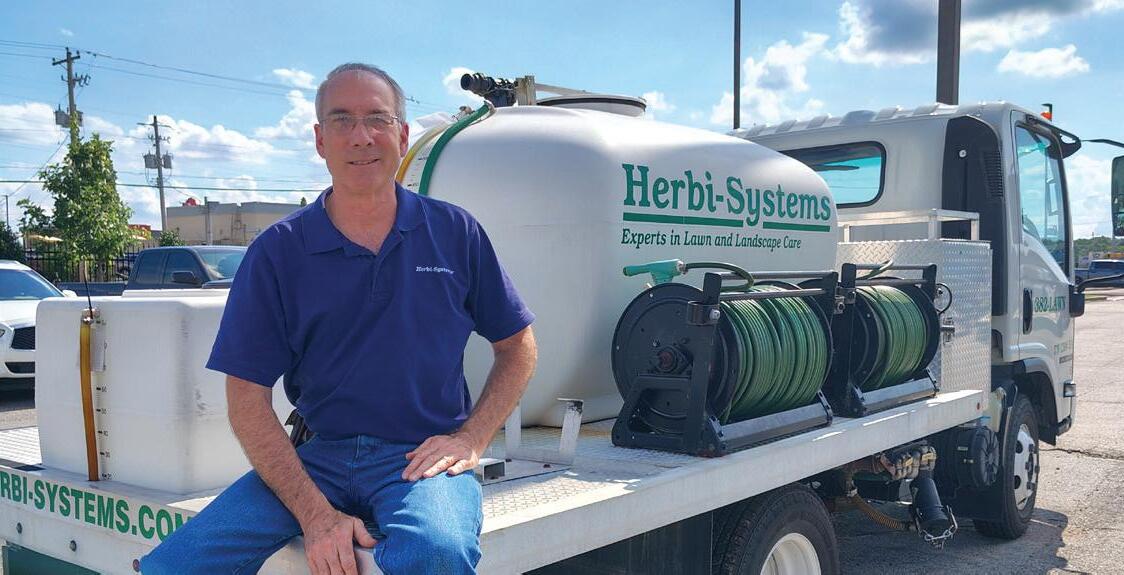
That idea became the foundation for Herbi-Systems, a Memphis-based lawn and landscape care company that has spent more than four decades helping homeowners, businesses and municipalities maintain healthy turf and landscapes across the Mid-South.
Entrepreneurship and a love of the outdoors had been part of Crenshaw’s life long before he launched the company. By the age of 12, he was already operating his own lawn mower repair shop. After high school, he attended Northwest Junior College in Senatobia, Mississippi, on a rodeo scholarship before transferring to Mississippi State University, where he earned a bachelor’s degree in Agricultural Engineering Technology and Business while competing on the university’s rodeo team. In 1984, he qualified for the College National Finals Rodeo in Bozeman, Montana, and later competed as a semi-professional in the International Professional Rodeo Association.
That combination of grit, independence and agricultural knowledge helped prepare him for life as an entrepreneur. While in college, Crenshaw worked mowing lawns for a local pest control company. After graduation, he partnered with the company’s owner, Bob Taylor, to launch a new lawn care venture in Memphis. The company, Herbi-Systems, began in 1984 with Crenshaw as its only employee and a single used Ford truck he purchased for $4,500.
From those modest beginnings, the company steadily expanded. Today, Herbi-Systems serves more than 11,000 customers throughout the Memphis metropolitan area, including communities such as Collierville, Germantown, Bartlett and Arlington. What began with one truck has grown into a fleet of roughly 50 service vehicles, with
employees managing thousands of residential and commercial properties across the region.

Along the way, the company has expanded far beyond basic lawn care. Herbi-Systems provides fertilization and weed control programs, aeration and overseeding, tree and shrub care, disease and insect management, and irrigation maintenance and repair for residential and commercial properties.
But for Crenshaw, the science behind turf management still connects back to the agricultural roots that first drew him to the profession.
“At the end of the day, we’re still practicing agriculture,” he said. “We’re just doing it in someone’s front yard instead of on a farm.”
That agricultural mindset has shaped the company’s growth over the years. In addition to residential and commercial lawn care, HerbiSystems also manages vegetation for municipal parks, athletic fields and other public spaces. The company performs specialized vegetation management for cities and counties as well, maintaining thousands of miles of roadside and right-of-way areas where safety, visibility and consistent vegetation control are essential.
The company’s steady growth has made it the largest locally owned lawn care company in the Greater Memphis area. Along the way, Herbi-Systems has built a reputation for technical expertise, dependable service and a strong connection to the community it serves.
Crenshaw’s leadership has also earned recognition beyond the lawn care industry. The National Federation of Independent Business named him Tennessee’s Small Business Champion in 2009, recognizing his advocacy and support for independent businesses. The Bartlett Area Chamber of Commerce honored him as Entrepreneur of the Year in 2012 and has also recognized Herbi-Systems with Barty Awards for marketing and customer service.
Herbi-Systems has also been named a Top 5 Finalist in the Memphis Business Journal Small Business Awards, highlighting the company’s role in shaping the regional economy.
Crenshaw has also served in several leadership roles within his industry and community. In 2012, Tennessee Governor Bill Haslam appointed him to the state Pest Control Board, where he advised the Commissioner of Agriculture on pest control industry issues and helped certify professionals seeking licensing. He was reappointed to the board in 2016.
An active supporter of industry organizations, Crenshaw has served with groups including the Memphis Association of Turf and Ornamental Managers, the Tennessee Vegetation Management Association and the Mississippi Vegetation Management Association. He has also been a long-time member of the National Federation of Independent Business, helping advocate for policies that support small businesses.
Despite the company’s growth and recognition, Crenshaw says his dayto-day role has evolved into something quite different from what he imagined when he first started the business.
“Most of what I do now are the things nobody else has a job description for,” he said with a laugh. “Insurance issues, legal questions, financial decisions, big-picture direction.”
While the responsibilities have changed, the company’s priorities have remained the same. HerbiSystems has built its reputation on consistent service, technical expertise and long-term relationships with customers.
“This business is built on trust,” Crenshaw said. “People are trusting you with their property and their landscape. If you take care of people and do what you say you’re going to do, they remember that.”
Those same principles extend to the company’s relationships with suppliers. One of the longest and most important partnerships HerbiSystems maintains is with BWI Companies, a relationship that dates back more than three decades.
Crenshaw estimates Herbi-Systems has been purchasing products from BWI for roughly 35 years. During that time, the distributor has helped the company maintain reliable access to the materials needed to serve its growing customer base.
“We buy a lot of product,” Crenshaw said. “So we need suppliers who can get us what we need and get it to us quickly and we demand the lowest price.”
One of the advantages he sees in working with BWI is the wide product selection and distribution network.
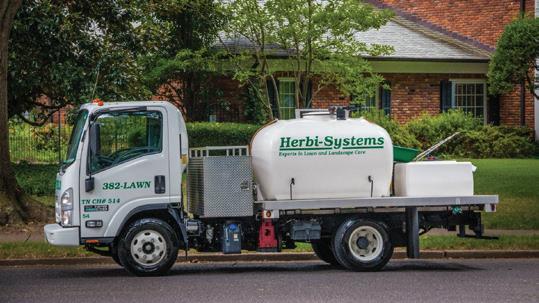
Companies like Herbi-Systems must manage a large variety of turf environments, from residential lawns to municipal properties and large public spaces. Having access to a broad inventory of products allows them to select the right solutions for each situation.
“They’ve got a very wide product line,” Crenshaw said. “A lot of times another supplier might have something, but it’s sitting in a warehouse halfway across the country. BWI works with us and keeps a lot of what we need close to home.”
In many cases, large orders can be delivered directly to Herbi-Systems’ facility, allowing the company to keep
operations moving during busy seasons. The presence of a BWI warehouse in Memphis and regular delivery routes helps ensure technicians have the materials they need when they need them.
“We try to buy everything we can from BWI,” Crenshaw said. “They’ve done a good job for us for a long time.”
More than four decades after launching Herbi-Systems, Crenshaw still views the company through the same agricultural lens that inspired him as a college graduate. Instead of acres of crops, the company manages thousands of lawns, landscapes and public spaces throughout the Memphis region.
And while the scale of the operation has grown dramatically since those early days, the philosophy behind it has remained remarkably simple.
“I wanted to farm,” Crenshaw said. “Turns out I just ended up farming yards.”
For the customers and communities served by HerbiSystems, that approach has produced decades of healthy turf—and a company that continues to grow one yard at a time.


Introducing Envu® Horizon Rewards. Our new loyalty program is built to support you with year-round rewards and savings on Envu products. And not only can you earn through purchases, but you’ll also gain access to Horizon Advantage promotional offers, Horizon Learning opportunities and homeowner marketing materials to help grow your business.
Scan the QR code and start earning on eligible 2026 purchases.


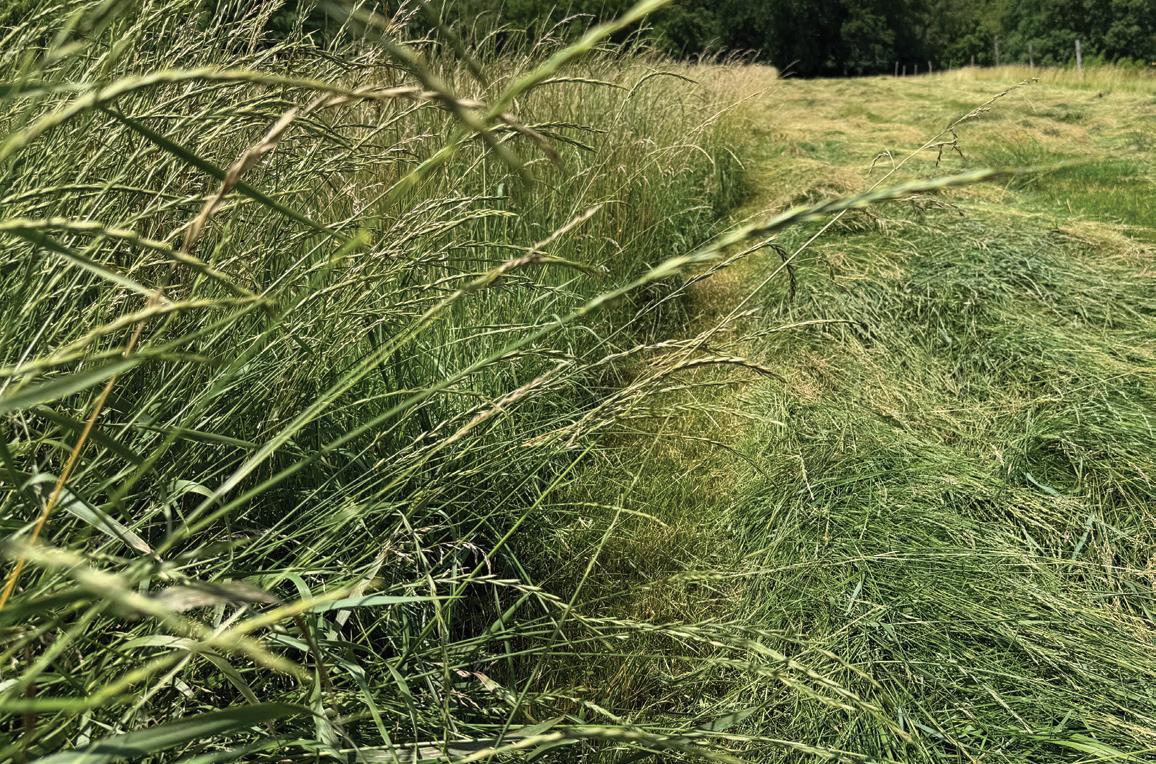



White clover has long been recognized as one of the most valuable components of a productive pasture system—and today, its importance is greater than ever. From lowering fertilizer costs to improving animal performance and pasture profitability, white clover continues to deliver measurable returns when it is allowed to thrive alongside cool-season grasses.
One of white clover’s most well-known advantages is its ability to fix atmospheric nitrogen and make it available to companion grasses. Research shows that white clover can fix up to 150 pounds of nitrogen per acre per year, depending on growing conditions.
When nitrogen fertilizer prices fluctuate, natural nitrogen becomes increasingly valuable. At a nitrogen cost of $0.55 per pound, just 100 pounds of nitrogen fixed by white clover represents $55 per acre annually, with even greater value at higher fixation levels or fertilizer prices. This contribution alone can significantly reduce fertilizer needs while supporting consistent forage growth.
White clover also helps improve forage quality across the pasture. Compared to perennial grasses, legumes like white clover are generally higher in crude protein, digestibility, and key minerals. Because legumes are digested more rapidly, cattle tend to consume more forage—and higherquality forage—which can translate directly into improved animal performance.
In multiyear grazing trials dating back to 2009, stocker cattle grazing endophyte-infected tall fescue pastures with white clover showed improved gains compared to pastures without white clover. Average daily gains increased by around 50% compared to grass-only pastures fertilized with nitrogen. These results highlight the economic impact of including white clover in the forage mix rather than relying solely on synthetic nitrogen.
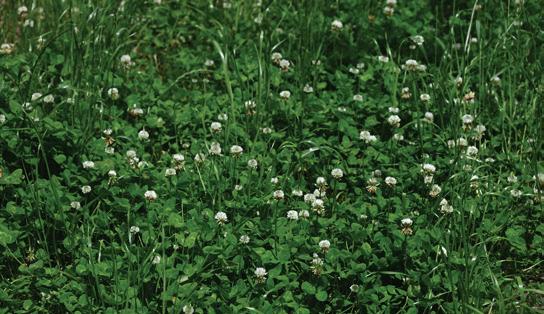
The benefits of white clover extend beyond weight gain. Improved forage quality also supports reproductive performance in cow-calf systems. Research conducted in Illinois and Indiana found that pastures with a significant white clover presence increased conception rates by around 25% compared to cows grazing tall fescue alone.
White clover also helps reduce the risk of grass tetany. Because white clovers contain higher levels of magnesium than grasses, they can help offset magnesium deficiencies that occur during early spring grazing.
Despite its value, white clover often declines when broadleaf weeds invade a pasture. Weeds compete directly with desirable forage, reducing overall productivity by up to 1 to 1.5 pounds of forage for every pound of weed growth over the season. In severe cases, weeds can also interfere with grazing efficiency and pasture utilization.
Historically, effective broadleaf weed control meant sacrificing white clover. Many traditional herbicides removed both weeds and legumes, forcing producers to choose between clean pastures and the benefits of white clover.
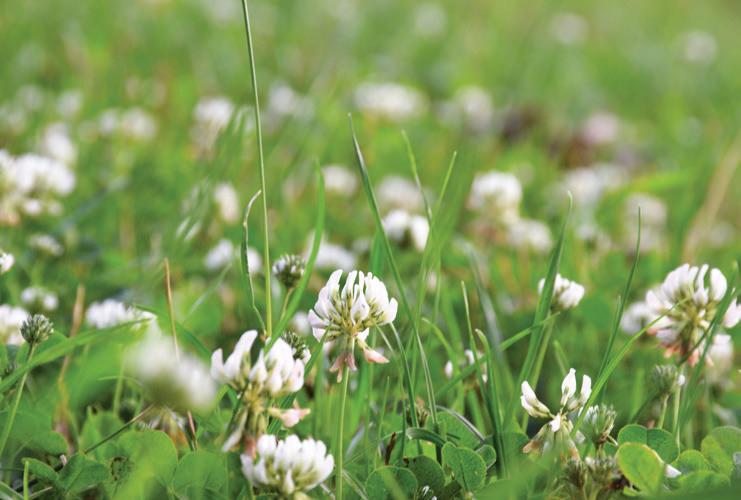
Research shows that when broadleaf weeds are controlled while preserving white clover, forage production and utilization potential increase significantly. For example, in 2019 Missouri trials, white clover pastures treated for weeds produced 21% more forage than untreated pastures, with higher utilization and less unproductive weed biomass at season’s end.
The takeaway is clear: white clover delivers the greatest return potential when it is protected.
Today, producers no longer must choose between effective weed control and preserving white clover. NovaGraz™ herbicide is the only broadly effective pasture herbicide that controls a wide spectrum of
troublesome broadleaf weeds while preserving white clover and annual lespedeza.
Years of research show NovaGraz delivers cleaner pastures with minimal long-term impact on white clover stands, allowing producers to maintain the nitrogen fixation, forage quality, and animal performance benefits that white clover provides.
With NovaGraz, pasture managers can protect one of their most valuable forage assets—white clover—while keeping weed pressure in check, maximizing productivity and profitability potential acre after acre. Learn more about NovaGraz and the data behind these results at NovaGraz.us/ByTheNumbers.
White clover and annual lespedeza may exhibit some initial injury (such as lodging and loss of vigor) but recover. NovaGraz™ is a trademark of Corteva Agriscience and its affiliated companies. NovaGraz™ is not registered for sale or use in all states. Contact your state pesticide regulatory agency to determine if a product is registered for sale or use in your state. Always read and follow label directions.
4% DISCOUNT
BACCTO RETAIL PRODUCTS
PREMIUM POTTING SOIL
BACCTO LITE
VEGGIE MIX
THE COW
GARDEN SOIL
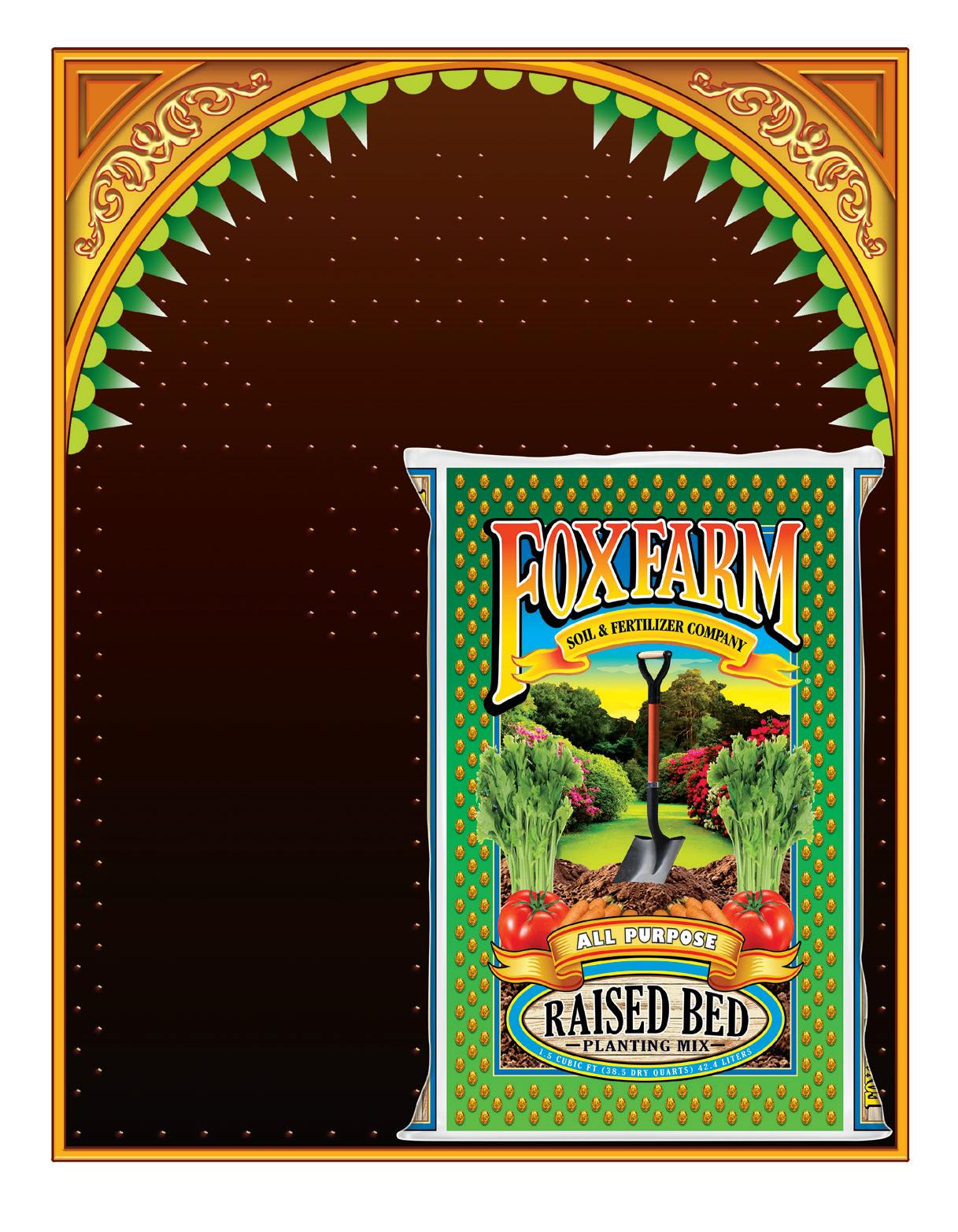
ORGANIC COMPOST RAISED GARDEN BED SOIL
(+a portion of every bag purchased is donated to the AMERICAN ASSOCIATION FOR CANCER RESEARCH)
4% DISCOUNT
BACCTO GROWER PRODUCTS
PRO PLANTING MIX*
PRO GROWER’S MIX*
PRO GROWER’S MIX-3.8 BALE
TREE SHRUB & PERENNIAL
HIGH DENSITY*
BARK 2000*
HIGH POROSITY*
*loose fill & bulk bags
2% DISCOUNT
GARDEN MAGIC PRODUCTS COMPOST & MANURE TOPSOIL
+ CONTACT YOUR BWI SALES REP TO PLACE YOUR ORDERS OR IF YOU NEED MORE INFORMATION.
PROGRAM ORDER DATES
MAR 15-JUNE 15, 2026
PRODUCT MUST BE SHIPPED BY JUNE 30, 2026
JAN 1, 2026 PRICE SHEET DEALER DROP SHIP PROGRAM
NET 90 DELAYED PAYMENT TERMS
WANT PRODUCT SPECIFIC PALLET STANDS, BANNERS, or CO-OP ADVERTISING INFO, CONTACT TOM ROTH - troth@michiganpeat.com

























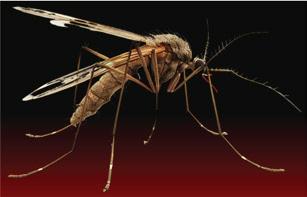




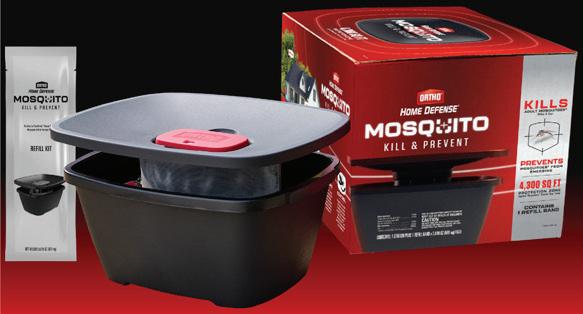

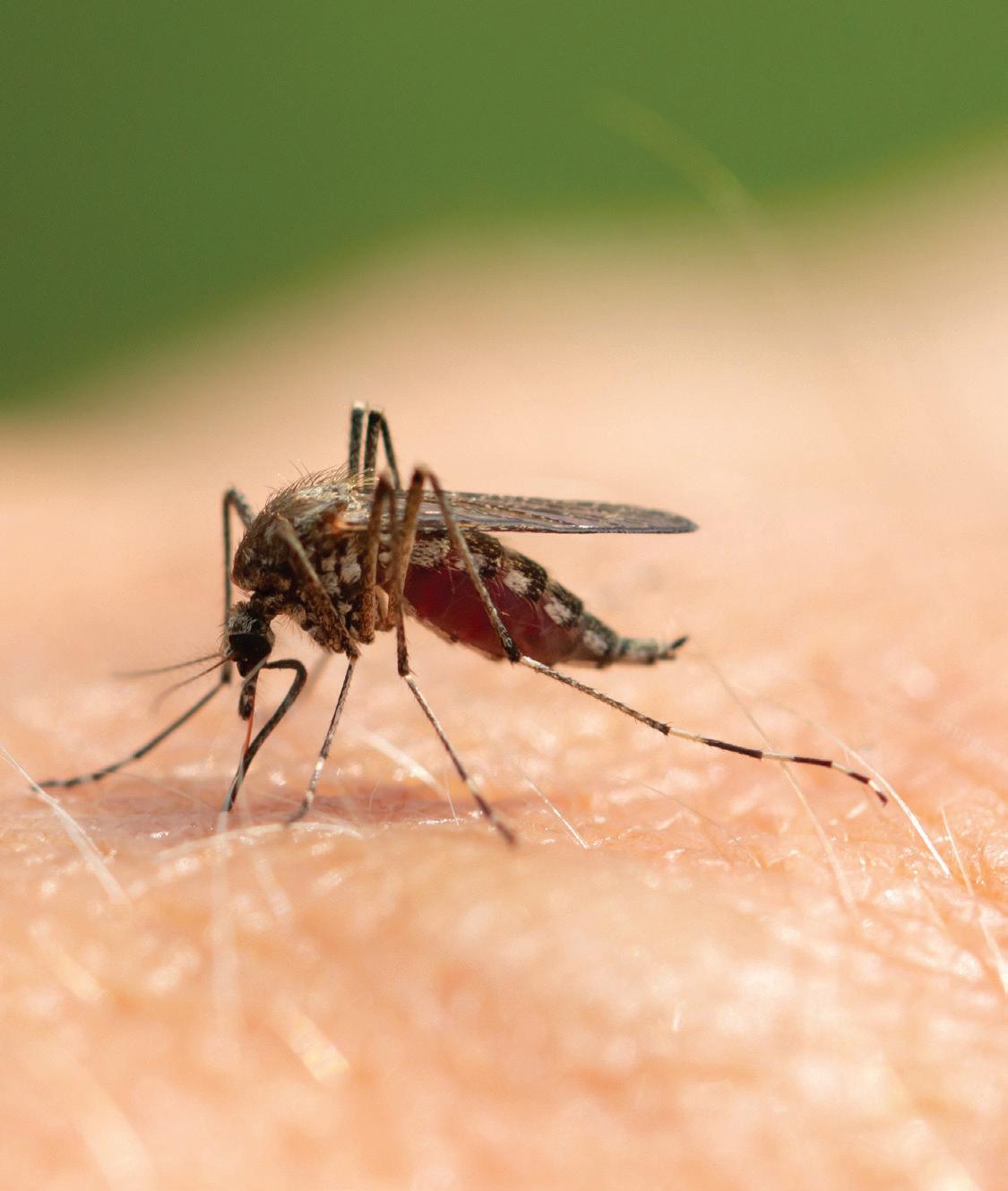
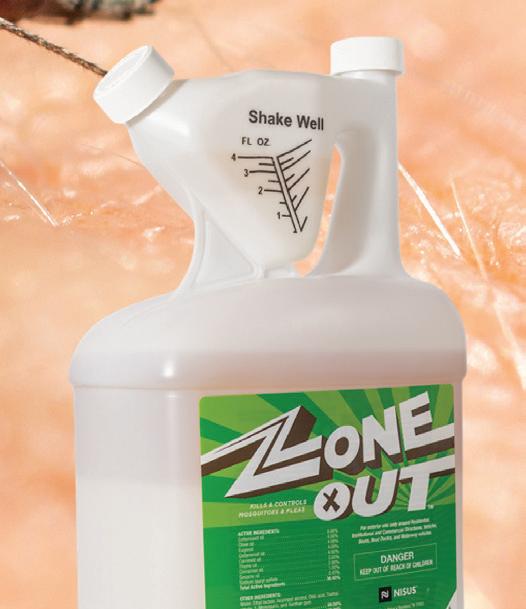
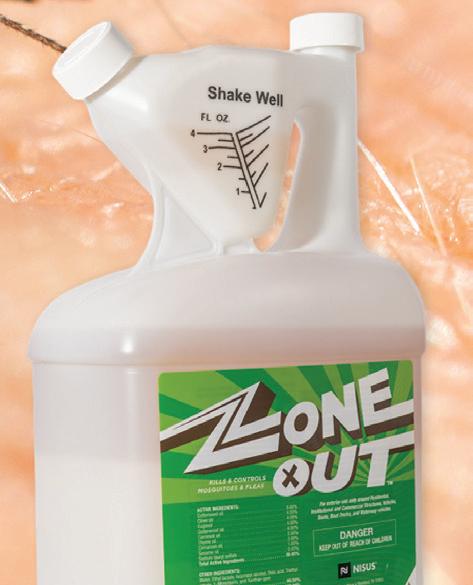
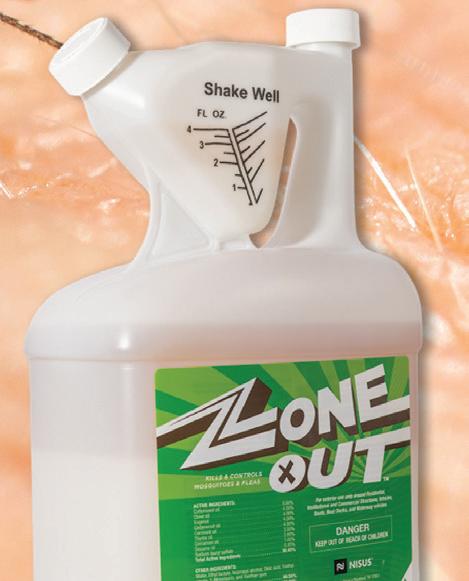
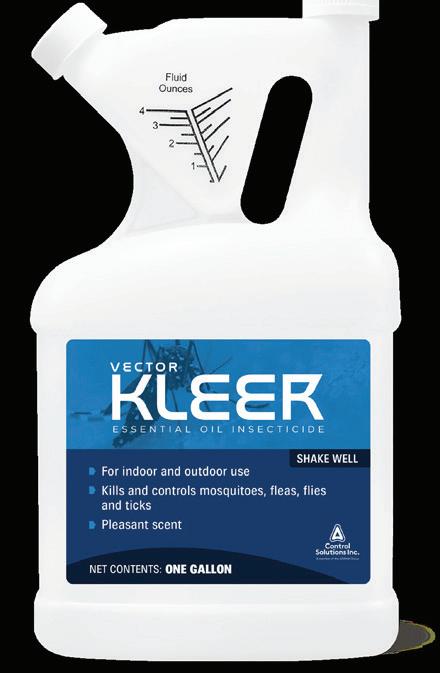
Zone Out™ is a 25(b) mosquito & flea concentrate that helps you get control. Zone Out is easy to mix and resuspend, giving you the results you need without hassle in the field.
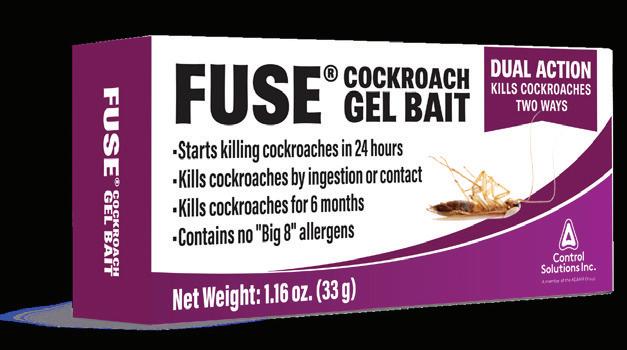
Kills & controls mosquitoes & fleas.






By Lisa Thompson
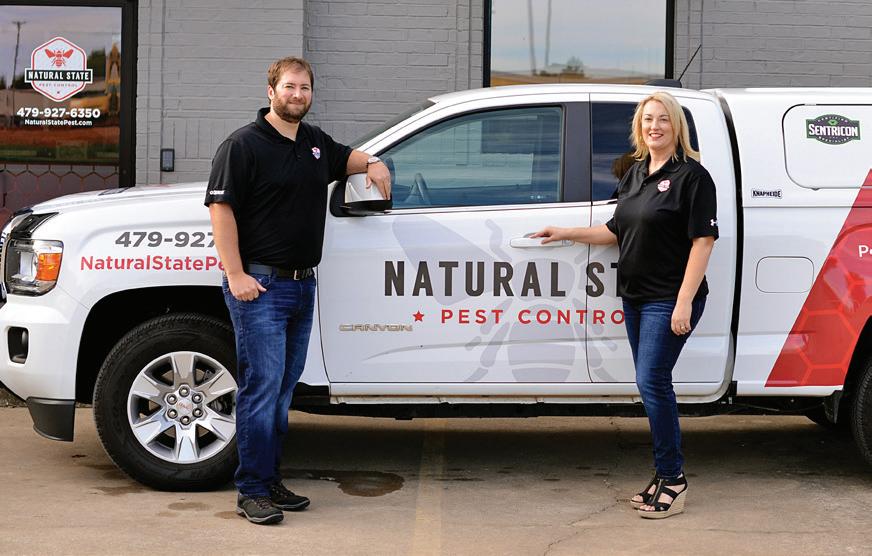
At first glance, pest control might not seem like a glamorous industry. But for Trent and Amanda Ragar, owners of Natural State Pest Control, it’s about much more than killing bugs—it’s about people, relationships, and building a business that satisfies a need.
“We Kill Bugs. We Help People. Period,” Trent says.
It’s a slogan that captures the company’s dual mission: deliver top-tier pest control while making a tangible difference for clients, employees, and the community.
Trent’s story is the kind of entrepreneurial journey that reads like a blueprint for persistence and vision. At 23, he started Scotts Lawn Service with a single truck and a big dream. Over the next 11 years, he grew the business to $4 million in revenue before selling it in October 2016. But Trent wasn’t ready to slow down. The very next day, he launched Natural State Pest Control, carrying forward everything he had learned and pouring his energy into this new venture. By 2022, the company had already grown past $4 million in revenue to exceed the former lawn care company, a trajectory that reflects his relentless drive and operational expertise.
The transition from lawn care to pest control wasn’t seamless, as Trent inherited a team of experienced lawn technicians who had to become pest control experts almost overnight. “We focused on our people first,” he says. “If we took care of our team, they would take care of our clients. That mindset made all the difference.” He invested heavily in training and mentorship, turning a team of lawn pros into industry-leading pest control specialists. The company’s culture— centered on respect, support, and opportunity—helped fuel this transformation. Annual fishing retreats, family dinners, and promotions from within reinforce the feeling that employees are not just staff, but family.
This people-first philosophy doesn’t stop at employees. Trent’s team treats every customer interaction as an opportunity to deliver exceptional service, earning Natural State Pest Control comparisons to the “Chick-fil-A of pest control.” They serve single-family homes, commercial properties ranging from local businesses to Fortune 500 companies, and multi-family housing. They also handle termite control, operating as the largest certified
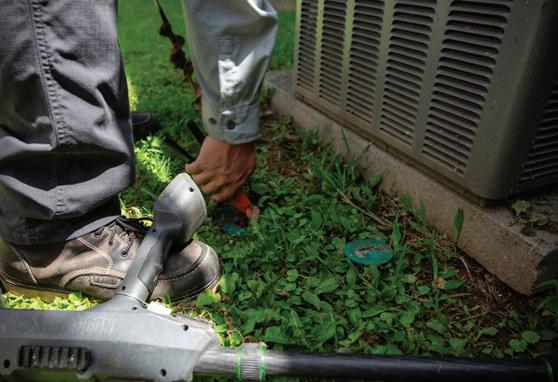

independent Sentricon System installer in Arkansas and the fifth largest across North Texas and Arkansas. “Sentricon baits are safer and more effective than the old chemical sprays,” Trent explains. “It’s about giving customers peace of mind and quality service.”
As the company expanded, Trent knew he needed partners who could keep up with growth—and that’s where BWI came in. “We needed a supplier who could scale with us,” he says. “Reliability, communication, and understanding the demands of a fast-growing pest and lawn operation were key.” BWI quickly became more than just a supplier; they became a partner. From ensuring that the right products and equipment were always in stock to responding to last-minute order adjustments, BWI helped keep operations running smoothly. “There’s no single moment that stands out—it’s the consistency that counts,” Trent says. “Every time we’ve needed them, they’ve been there, making complicated things simple.”
That consistency has allowed Trent and his team to focus on execution rather than logistics. Managing a growing staff, a large customer base, and seasonal demand requires every system and partnership to work seamlessly. BWI provides that backbone.
“Their support allows us to maintain highquality service while continuing to grow,” Trent said. “When you can rely on a partner like that, it gives you the freedom to focus on your people and your customers.”
Community engagement is another area where Trent’s philosophy and company shines. Beyond their daily operations, the team at Natural State Pest Control gives back in meaningful ways. Their 12 Days of Pestmas program has provided over $100,000 in free services to local families during the holidays. Trent himself supports initiatives like Project RED Friday, Feed My Starving Children, and Lowell, AR

the Susan G. Komen Breast Cancer Foundation. “We see our business as a platform to serve others,” he says. “It’s about more than revenue—it’s about making a difference.”
Despite its rapid growth, the company hasn’t lost sight of its goals. In 2024, they launched a dedicated lawn care division, which has quickly taken off. To support expansion, a new 12,500-square-foot facility is under construction to house the lawn care, sales, and marketing teams. Trent and Amanda’s 2026 revenue goal for the pest control business is $10 million, with plans to eventually expand outside Northwest Arkansas and Fort Smith, potentially reaching Central Arkansas.
Trent’s success comes not only from vision but from deep industry knowledge. He has been in the pest control and lawn care industry since 2005 and is Quality Pro Certified, holding Arkansas State Plant Board certifications.
“Experience matters,” he said. “Knowing the industry inside and out allows you to make smart decisions, serve customers effectively, and guide your team with confidence.”
The guiding principles behind Natural State Pest Control are summed up in a simple acronym: B.E.S.T.—Bold, Excellence, Serve, Trust. These values inform every decision, from hiring to daily operations. Boldness encourages innovation, excellence demands high
standards, service drives community engagement, and trust ensures integrity in every interaction. “Our team knows what these values mean in practice,” Trent says. “We live them every day.”
For Trent, the most rewarding aspect of running Natural State Pest Control isn’t the awards or the revenue milestones—it’s the people. “We love our team. Our team loves our clients. When you love what you do and who you do it with, growing a business becomes a passion instead of a job.” That passion, coupled with strong partnerships like BWI, has enabled the company to achieve remarkable growth while maintaining a culture of care and excellence.
In Northwest Arkansas, Natural State Pest Control isn’t just about pest control—it’s about building trust, supporting a team, and giving back to the community. For Trent Ragar, every aspect of the business—from employee engagement to supplier partnerships to customer service—is an opportunity to reinforce that philosophy. “At the end of the day, it’s all about people,” he says. “If you take care of your team and your partners, and if you serve your customers with integrity, success follows.”
And with BWI standing alongside them, Trent and his team are poised to keep building, growing, and serving for years to come. In this industry, relationships matter, and Natural State Pest Control has proven that with the right people and the right partners, you can do more than control pests—you can build a legacy.














Target mosquitoes with control that’s trusted around pets and people.

Sensitive areas demand precise protection. With targeted control from Envu,® you hit mosquitoes — and only mosquitoes — with a clean strike that delivers maximum control with minimal environmental impact. Provide peace of mind to your customers with a targeted approach that offers control where it matters and precision when it counts.
Uses mosquito behavior to spread control to breeding sites, providing continuous control with no drift.
Botanical-based solution eliminates mosquitoes within 24 hours* while remaining safe for people, pets and pollinators.
Extend your precision. Earn year round rewards on eligible Barricor purchases with Envu Horizon Rewards. Sign up today at envuhorizon.com.

For many pest control companies, mosquito service has shifted from a seasonal add-on to an increasingly important revenue stream, with demand rising over the past year and driving greater operational focus. At the same time, customer expectations and regulatory pressures are shifting. Homeowners and property managers are increasingly asking about alternatives or complementary approaches to traditional control methods. Communities are more aware of pollinator protection and environmental impact. Regulators demand drift reduction and responsible product stewardship. Meanwhile, insecticide resistance — particularly to pyrethroids — continues to challenge long-standing adulticide programs. As resistance pressure grows and expectations evolve, sustainable mosquito programs increasingly require the incorporation of diversified tools and strategies. Integrated mosquito management is no longer theoretical — it is operationally necessary.
In response, Envu® continues to expand its mosquito control portfolio with technologies designed to strengthen integrated programs. The In2Care® Mosquito Station represents a targeted system that uses mosquito biology to deliver effective control while limiting environmental exposure. In the United States, In2Care is the only EPA-registered auto-dissemination mosquito control product. By using oviposition activity to transfer active ingredients, it provides an additional tool that can be incorporated into comprehensive mosquito management programs. The system is well suited for environments where container-breeding mosquitoes are prevalent, including residential neighborhoods, parks, athletic fields, hospitals, zoos and golf courses. These settings often contain cryptic water sources that make thorough inspection and treatment challenging. Technicians encounter this reality during routine service visits. Container-breeding species such as Aedes aegypti and A. albopictus develop in small, overlooked habitats — plant saucers, tarps, toys, corrugated drains, clogged gutters and discarded containers. Even with careful inspections, it is rarely possible to identify and eliminate every water-holding site.
The In2Care Mosquito Station was developed specifically to address this limitation by using mosquito behavior to deliver control agents into sites technicians cannot easily access.
The In2Care Mosquito Station was refined through behavioral research to mimic preferred oviposition sites. Its dark container, sheltered circumferential entry gap, and internal configuration create visual and environmental cues attractive to gravid females. A yeast-based attractant enhances site suitability. When a gravid female enters the station, she lands on a treated gauze held in place by an internal floater ring. This gauze transfers two active ingredients:
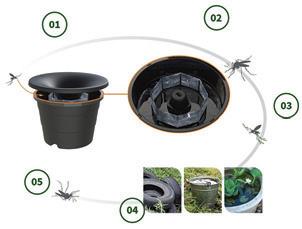
• Pyriproxyfen (PPF) — an insect growth regulator that prevents larvae from developing into adults. Effective at very low concentrations (≈10 ppb).
• Beauveria bassiana — a naturally occurring fungus that infects adult mosquitoes and reduces survival over time. A contaminated female may lay eggs inside the station, where the PPF-treated water prevents adult emergence. However, the real strength of the system lies in what happens next. Aedes mosquitoes exhibit skip oviposition behavior, distributing small batches of eggs across multiple containers rather than depositing them all in one site. After leaving the station, a contaminated female visits additional breeding habitats, transferring small quantities of PPF as she moves. Importantly, Aedes mosquitoes do not disperse far from the stations, as they have limited flight ranges and typically remain near the property where they emerge. This localized movement concentrates oviposition activity within a confined area, helping keep auto-dissemination focused inside the treated zone. Over time, repeated visits by multiple contaminated females lead to accumulation of PPF in these breeding sites, progressively converting them into larval sinks where developing mosquitoes fail to emerge as adults.
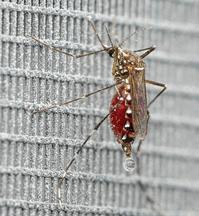

Traditional larval control relies on source reduction and direct larvicide treatment. While essential, these approaches depend on locating breeding sites. When habitats are missed, mosquito populations can rebound quickly. Even small volumes of water — as little as a teaspoon — can produce dozens of mosquitoes within days, leading to renewed pressure and customer complaints. This is particularly problematic with Aedes mosquitoes, which exploit small, cryptic water sources such as bottle caps, plant saucers, clogged gutters and leaf axils.
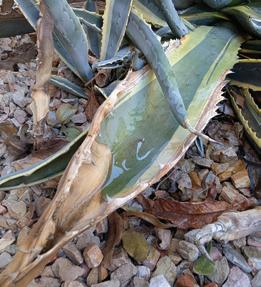

Auto-dissemination addresses this gap by leveraging mosquito behavior rather than relying exclusively on technician detection. Contaminated females transport PPF into cryptic oviposition sites that would otherwise remain untreated, extending suppression beyond visible habitats.
Laboratory and field research in North America and Asia support the In2Care® Mosquito Station’s biological and operational performance. Field trials in Florida documented attraction of gravid Aedes mosquitoes, confirmation of egg sink function and transfer of PPF to surrounding containers. Over six-month programs treated sites demonstrated significant reductions in egg counts as well as larval and adult populations compared to conventional control approaches.
Research in California demonstrated complete emergence inhibition of Aedes aegypti and Culex quinquefasciatus in treated reservoirs, confirming effective PPF transfer. This indicates that while primarily designed for Aedes, the system can also contribute to control of Culex species under suitable environmental conditions. Studies conducted in Australia further demonstrated reduced adult survival following exposure to Beauveria bassiana, supporting the system’s dual mode of action. Collectively, these findings confirm that auto-dissemination functions under diverse environmental conditions and contributes to measurable suppression when deployed according to label guidance.
While auto-dissemination drives the biological mechanism, measurable field results depend on proper deployment and servicing. Recommended density is approximately one station per 400 square feet of yard area — typically two to three stations for an average residential property. Stations should be distributed across the property and positioned in shaded, protected areas where gravid females are likely to search for oviposition sites. Routine servicing is equally important. Stations operate continuously between visits, and service
intervals of four to six weeks allow for replacement of the attractant and treated gauze, as well as refreshing the water reservoir to maintain consistent performance. Early-season deployment further strengthens results. Placing stations before peak mosquito activity can suppress initial population buildup and help limit seasonal growth.
Even with proactive deployment and proper density, external mosquito pressure may still occur — particularly in areas with significant Culex activity, where adults disperse from larger unmanaged breeding sites such as storm drains or irrigation systems. In these situations, supplemental barrier treatments may occasionally be warranted to manage incoming adults while In2Care continues suppressing local reproduction within the serviced area.
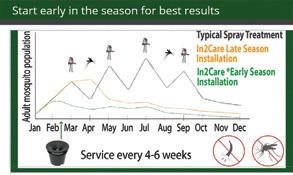
The In2Care Mosquito Stations can be incorporated into broader mosquito management programs that include Barricor® Essential Mosquito Control. This product is a contact insecticide formulated with plant-derived essential oils. When applied to shaded foliage and mosquito resting areas according to label directions, it provides adult control and does not affect bees or butterflies, supporting environmentally responsible service programs. Together, the In2Care Mosquito Station and Barricor Essential Mosquito Control create a complementary, integrated approach. In2Care suppresses immature stages through auto-dissemination while also contributing to adult population reduction. Barricor Essential Mosquito Control provides additional adult suppression when mosquito pressure is elevated.
For Pest Management Professionals (PMPs) seeking a targeted, behavior-based mosquito management tool supported by laboratory and field research, In2Care provides a practical and effective addition to integrated programs.
Behavior-driven control: Delivers active ingredients into hidden, hard-to-treat breeding sites through mosquito activity.
Dual action: Larval suppression (pyriproxyfen) + adult reduction (Beauveria bassiana)
24/7 performance: Continuous suppression between four- to six-week service visits.
Reduces broadcast sprays: Can lower liquid application frequency during mosquito season.
Low non-target impact: Active ingredients remain contained, limiting exposure to beneficial insects when used as directed.
Scientifically validated: Supported by laboratory and field research demonstrating measurable population suppression.










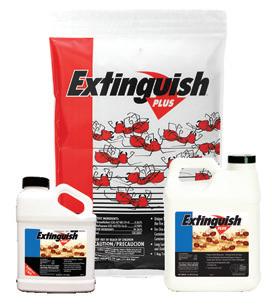
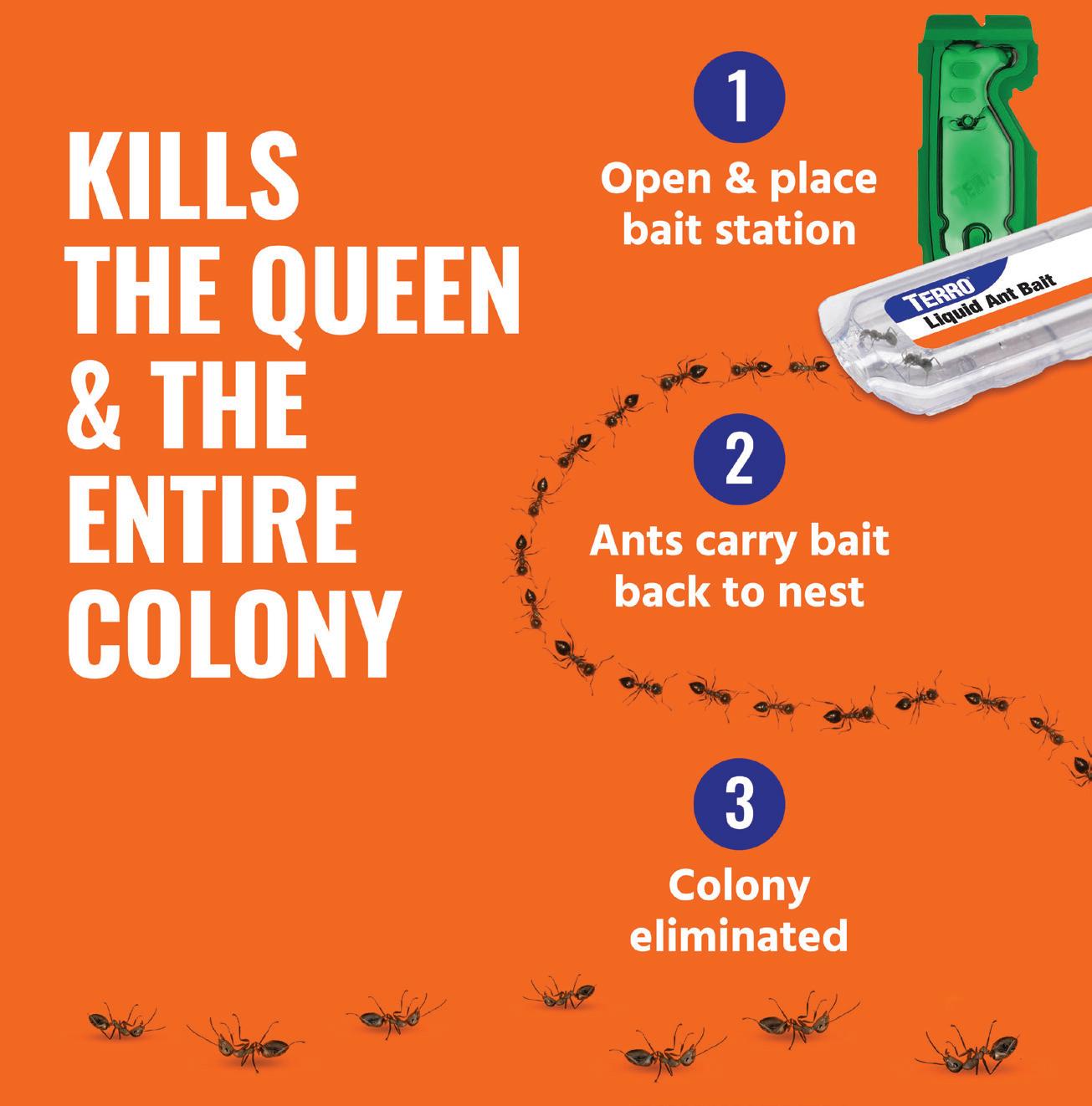
• Combines the knockdown of an adulticide (Hydramethylnon) and the long-lasting control of an insect growth regulator (IGR) (S)-methoprene
• Stops young colonies from developing into problem colonies
• Destroys visible and hidden colonies
• Approved for use on residential turf and landscapes, commercial nurseries, pasture land and around saplings and non-fruit bearing trees
To learn more about Extinguish® Plus Fire Ant Bait and to find a list of regional sales representatives near you, visit CentralAntControl.com or call 800.347.8272.


5
don ’ t throw away your profits . nutricote ® control - released fertilizer consistently produces plants that maintain a high level of quality and longer shelf life . multiple trials in a variety of plants show that nutricote reduces shrink . less plant loss , more money for you .






By Lisa Thompson
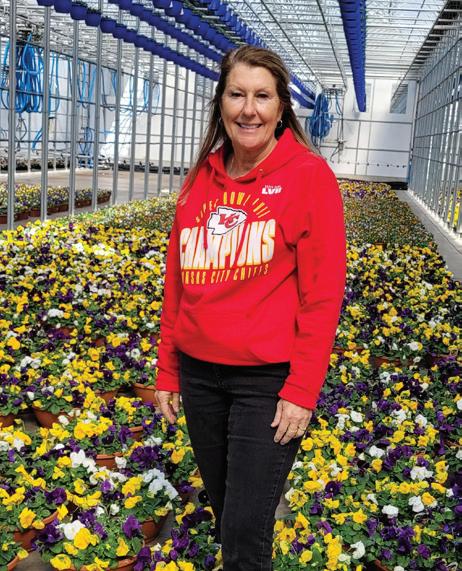
For Amy Morris, the greenhouse industry has never been just a profession—it has been a lifelong way of life.
Morris grew up surrounded by plants, greenhouses and the steady rhythm of seasonal production. Today, after more than 40 years in the business, she helps lead Hoffmann Heimos Greenhouse, a company that has grown from a modest family produce stand into one of the Midwest’s largest greenhouse operations.
The roots of the business date back to 1951, when Morris’s parents, Norwin and Shirley Heimos, opened a small storefront selling fruits, vegetables and a handful of flowers in the St. Louis area. What began as a simple market quickly evolved as Morris’s father recognized the potential for greenhouse-grown plants. A few years after the business began, he built the company’s first Quonset-style greenhouse, expanding production into bedding plants, floral crops and seasonal favorites such as garden mums
and poinsettias. Over time, he continued constructing greenhouses himself, steadily building the operation piece by piece.
That willingness to innovate laid the foundation for decades of growth.
A major milestone came in 1973 when the family purchased a production facility in Sunset Hills on Eddie and Park Road in St. Louis. Less than a decade later, the company expanded again, acquiring its Millstadt, Illinois location. The Millstadt property would eventually become the centerpiece of the company’s growing operations.
Today, Hoffmann Heimos Greenhouse manages roughly 100 acres of production, including about 50 acres of greenhouse space and another 50 acres dedicated to outdoor growing. The operation produces a wide range of crops throughout the year, including spring annuals, bedding plants, fall mums and poinsettias. Over time, the company has become one of the largest poinsettia growers in the St. Louis region, producing up to two million plants each season.
Plants grown at the facilities are shipped to retailers across a broad geographic footprint, reaching markets as far north as Wisconsin, south to Texas and east to Virginia. Even plants purchased locally in grocery stores or garden centers often begin their journey inside the company’s greenhouses.
Despite the scale of the operation today, the spirit of the family business remains intact. Morris is one of nine children, and growing up in a large family meant everyone had a role to play as the business expanded.
“I’ve been involved since I was young,” she said. “Several of my siblings still work in the company today, and we even have some nieces and nephews involved now.”
That multi-generational involvement has helped preserve the company’s strong sense of identity and shared purpose.
“It really is a family thing,” Morris said.
That family-oriented culture also played an important role during a significant transition for the company in recent years. The business was approached by the Hoffmann family about joining their growing network of horticultural companies, ultimately resulting in the formation of Hoffmann Heimos Greenhouse.
While the name reflects the partnership, Morris said the day-today operations of the business have remained largely unchanged.
“The Hoffmann family really appreciates companies that have deep roots and strong family traditions,” she said. “They don’t want to disrupt
what’s already working.”
Instead, the approach has been to support the existing team while allowing them to continue operating the business as they always have.
“They’ve been very respectful of the history and the culture,” Morris said. “They pretty much let us continue running the business the way we know works.”
Running a greenhouse operation of this scale requires reliable partnerships with suppliers who understand the unique demands of the horticulture industry. For Hoffmann Heimos Greenhouse, one of those longstanding partners has been BWI.
fungicides, herbicides, insecticides and plant growth regulators.
Morris’s connection with the company stretches back decades—long enough that she remembers working with her very first BWI sales representative early in her career.
“I’ve known Ralph since I was young,” she said. “He was actually my first salesperson.”
Over the years, that relationship has continued with other members of the BWI team.
“We’ve been buying from BWI since the 1990s,” Morris said.
Today, the company relies on BWI for a wide range of greenhouse supplies essential to daily operations. The bulk of those purchases include growing media and soil supplies, along with greenhouse plastics, weed barrier and production chemicals such as
Equipment and infrastructure supplies also play an important role. Circulating fans, heaters and greenhouse coverings are all items the company sources through BWI.
“One thing I really like is that they offer bulk buys and special deals,” Morris said. “If you need several fans or heaters, you can get a better price when you purchase them together.”
In addition to production supplies, BWI also helps support the company’s smaller retail efforts. While Hoffmann Heimos no longer operates a fullscale garden center, the company maintains a small roadside stand in Lenzburg, Illinois, along with seasonal pop-up sales in the greater St. Louis area.
Those outlets allow the company to connect directly with local consumers while continuing to focus primarily on large-scale growing operations.
Even with the complexity of a large production business, Morris says the most rewarding part of the industry remains the people.
“There are so many things I enjoy,” she said. “The people in this industry are wonderful.”
She also finds satisfaction in seeing the finished product reach customers and bring beauty into homes and communities.
“It’s rewarding to produce great crops and see customers happy with them,” she said.
Morris credits much of the company’s success to the team that works behind the scenes to keep operations running smoothly.
“I’m fortunate to work with an amazing group of people,” she said. “They’re smart, capable and great team players.”
Beyond the business itself, Morris remains actively involved in the broader horticulture industry. Over the years, she has served on the board of AmericanHort and currently participates in the Horticultural Research Institute, which focuses on advancing research and innovation
within the industry. She also works with initiatives that connect college students to careers in horticulture.
In recognition of her leadership and contributions to the field, Morris received the industry’s Leadership Award in 2018.
Another highlight of the company’s operations is hosting North America’s largest poinsettia trial. Each November, breeders, brokers and horticulture professionals from around the world gather to evaluate new varieties and share insights about the upcoming season.
While the company’s roots stretch back more than seven decades, Morris and her team remain focused on the future.
“We’re always looking for ways to grow and expand,” she said.
One of the key priorities moving forward is investing in automation and efficiency improvements that can help the business continue to scale while meeting increasing demand.
At the same time, the values established by Morris’s parents continue to guide the company.
“We’re still a family-core business,” she said. “Customers come first, and we want to make sure everything we do is done right.”
Those values extend to the company’s relationships with suppliers and partners as well.
“If I ever have an issue or need something quickly, I can call BWI,” Morris said. “And if my rep can’t get to it right away, there are others right there helping as well. Having that kind of support really makes a difference.”
For Morris, the business ultimately comes down to something simple: nurturing plants and sharing their beauty with others. Even after decades in the industry, she still finds joy in the work.
“Plants don’t know holidays, and they don’t know weekends,” she said with a laugh. “But there’s something special about growing them.”
After more than seventy years— and several generations—the legacy planted by her parents continues to grow.




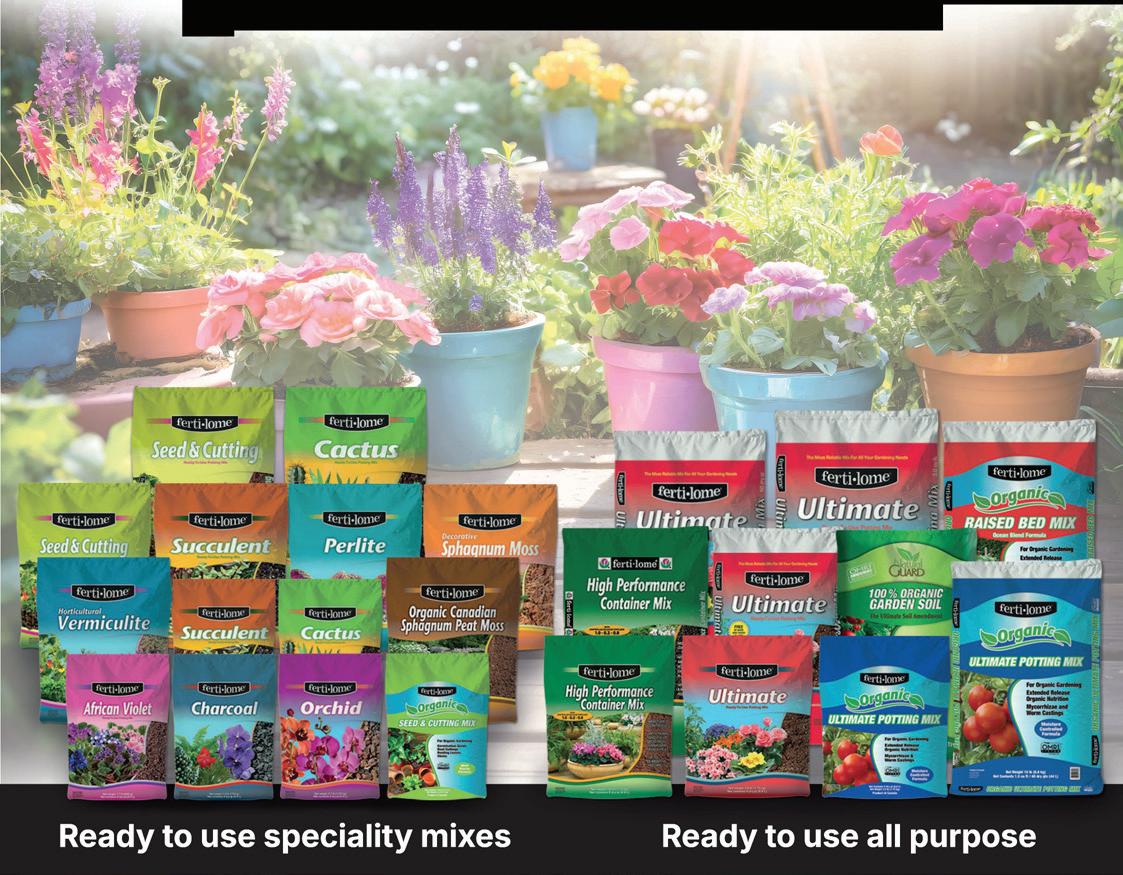
The ULTIMATE LINE of potting mixes, peat moss & soil amendements !













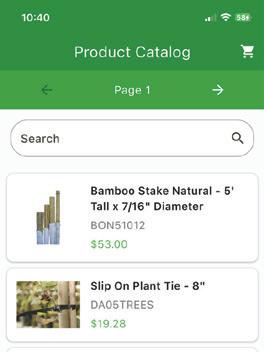

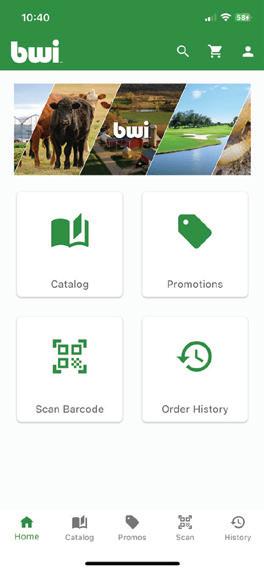
Order product anytime and anywhere, right from the palm of your hand!
Features:
• View purchase history, pricing, and current open orders.
• Website and mobile app order interchangeability makes things even easier.
• With the same login information, you can start, finish, or edit orders via the mobile app, website, or a combination of the two.













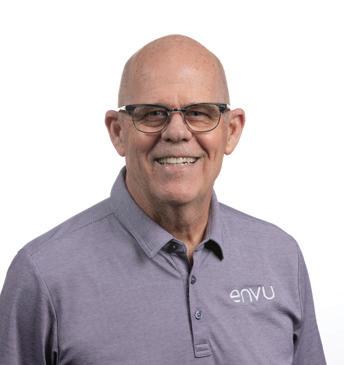
By: Steve Larson, Envu Greenhouse & Nursery Crop Specialist
Growers and integrated pest management managers face numerous challenges on a daily, monthly, and yearly basis. Because of these challenges, they’re often encouraged to consider low cost post-patent products to help reduce upfront purchasing costs and confront razor-thin margins. However, while there may be initial cost savings, relying too heavily on post-patent products can potentially cost growers in the long run. The lowest upfront cost may not always be the lowest overall cost. In an industry where every dollar and hour counts, growers should fully understand potential consequences of low cost alternatives.
Companies steeped in research and development like Envu®, Corteva™, BASF® and Syngenta® invest heavily in testing new products across diverse crops, climates, and pest pressures. Branded, R&D-based products undergo
rigorous formulation development to ensure consistent quality—factors like stability, particle size, surfactants, and release characteristics directly affect performance and plant safety. Generic products often use similar active ingredients, but sometimes they lack the formulation precision and consistency of branded products. This can sometimes lead to unpredictable and suboptimal results.
Companies that bring new technologies to the industry invest heavily in future innovation, dedicating significant portions of their budget to research and development. The discovery and development of new active ingredients significantly improves resistance management by providing rotational tools not previously available, benefitting the whole industry. Post-patent products replicate existing products and active ingredients yet dedicate little investment in development and less in basic research.
Reliance on generic products can undermine the innovation pipeline. Growers who want quality, reliable products to manage the inevitable issues of pesticide resistance should consider supporting companies who support the innovation they will need years into the future.
In addition to tackling weeds, insects and diseases, growers care about stewardship and sustainability. Companies who invest significantly in obtaining and maintaining registrations specific to their markets, in complex regulatory frameworks, work to minimize the impacts their products have on the broader ecosystems to ensure that growers will have the tools they need in the future. This also encompasses investment in education for growers and IPM managers, which enriches the community and complements existing products. Lastly, supporting brands and companies that focus on stewardship increases the longevity of trusted products, particularly as it relates to resistance management.
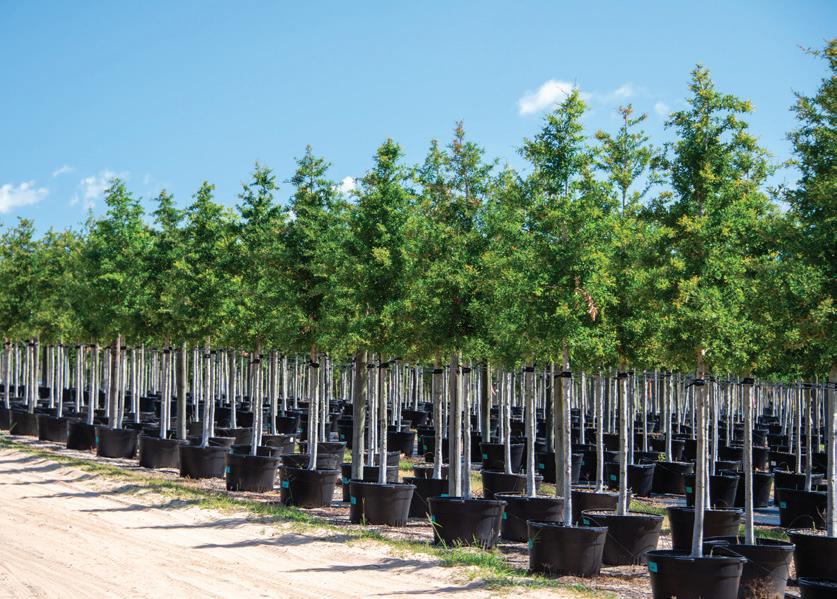
Growers know that the work doesn’t stop when they purchase a product or its application has been completed. Sometimes issues arise, there are questions about products, or there are other support needs. Deeper, well-established companies have entire teams dedicated to not only advancing the highest quality products but also answering questions and troubleshooting a variety of problems that might arise. This kind of dedicated support can save growers time, money, and headaches, and can mean the difference between a successful growing season and profit losses. Few generic companies have dedicated teams to handle these time-intensive problems. Growers should consider the level of support they receive at every stage of the season in purchasing decisions.
Efficiency is key when it comes to the tight margins that growers deal with. Companies that have expertise with specialized formulation can create products that increase efficiency by reducing the need for reapplications, simplifying application processes, improving product handling, and doing the research needed to integrate products into a biological control program. These advantages help growers save time and maintain effective, holistic pest management.
Most importantly, growers need to take a long-term view in aligning with companies that build relationships now and in the future. Field representatives and technical experts provide continuity, expertise and accountability. Growers know who to call when they need help. They are there when times are bad and good, and are supported by numerous scientific experts specializing in areas like formulation chemistry, agronomic field testing and collaboration with industry experts and influencers. They stand behind their products and are quick to rectify any quality control issues. Growers know that when they run into a snag or merely have questions, there’s someone
who they know and trust to help them — it’s not just a toll-free line and a phone tree to deal with. Long term collaborators build relationships and invest in their customers, while others merely sell products. Growers are advised to seek out suppliers who offer a high level of personal, consistent support.
When it comes to choosing products and suppliers, consider the entire picture and not just the allure of short-term savings. The investments made in innovative products years ago are responsible for the innovation relied upon today, and likewise, the investment in brands today ensures viable solutions for years to come. Supporting brands that have helped grow and adapt your business to changing pest management challenges ensures that effective, reliable solutions will be available for the challenges ahead.

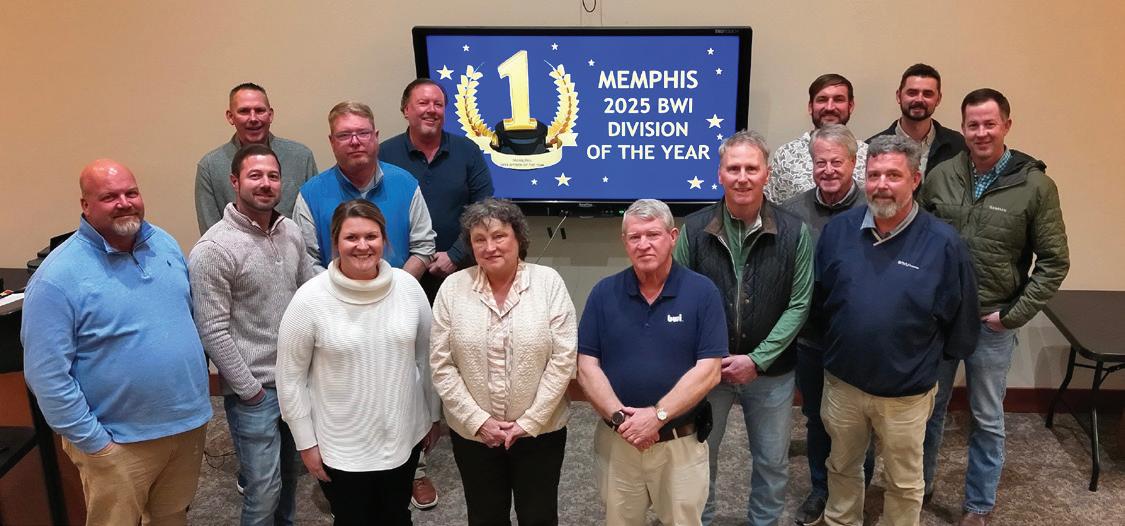
Congratulations to BWI Memphis on being name Division of the Year. The team earned points in 12 of the 14 categories. In the category measuring year-over-year improvement, they scored 3.5 out of a possible 4.5 points—an achievement that ultimately set them apart from the second-place division.
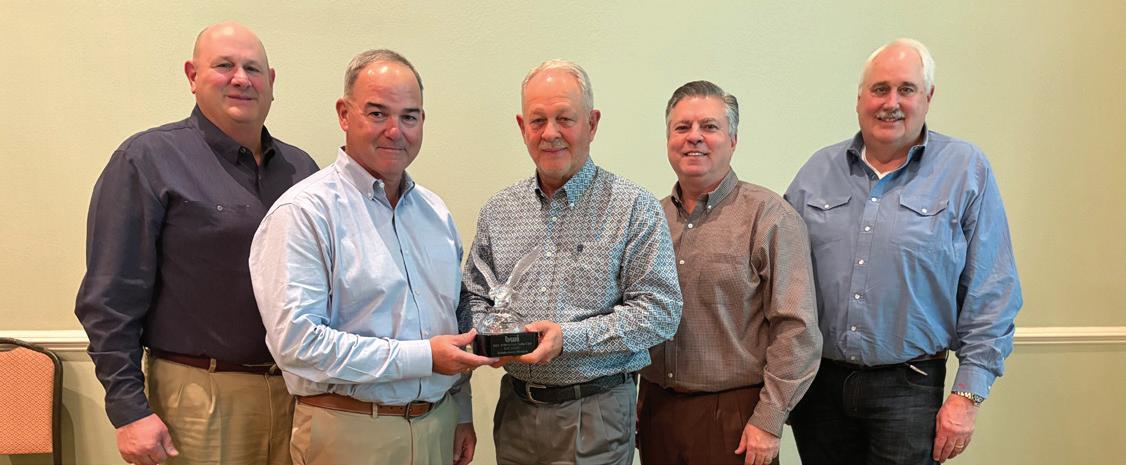
Congratulations to BWI Schulenburg for exceeding $100 million in sales for the fourth straight year. In a challenging sales year, they still achieved more than $105 million in revenue, making a $1.5 million increase over the previous year. Pictured left to right: Jim Bunch (BWI President & CEO), Craig Schulz (BWI-Schulenburg Sales Manager), Dennis Brower (BWI-Schulenburg Division Manager), Ron Riddle (BWI Executive Vice President), and Robert Bunch (BWI Co-President & CAO).
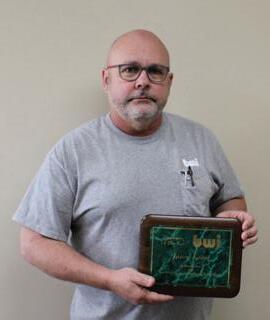
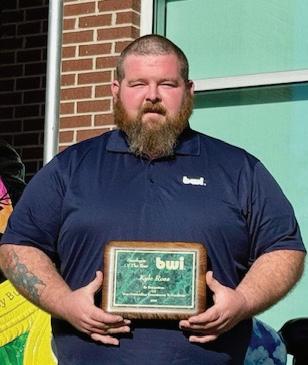
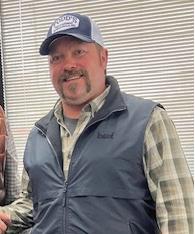

BWI Employees of the Year
1. Jason Lewis - Transportation (Texarkana, TX)
2. Kyle Ross - Transportation (Marion, MS)
BWI Department Manager of the Year
3. David Busby - Operations Manager (Memphis, TN)
BWI Corporate Employees of the Year
4. Caitlin Jones - Assistant Controller (Nash, TX)
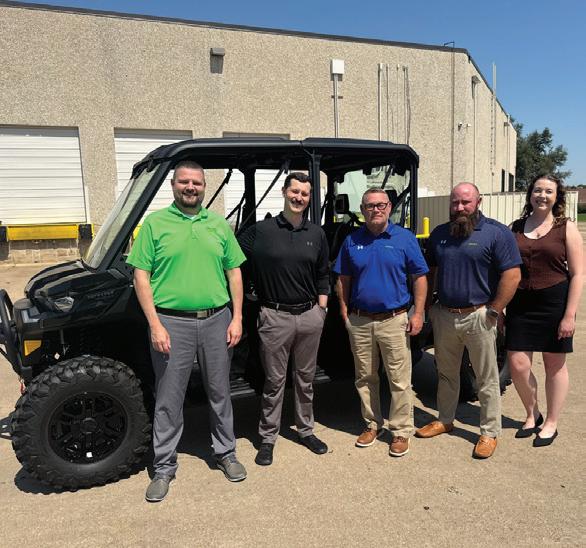
Congratulations to Gecko Green Lawn Care of Irving, TX for being our grand prize winner of a 2025 Can-Am and trailer.
Other prize winners include:
Chorbie Lawn Care & Pest Control - Anna, TX
Turner & Sons Nursery - McMinniville, TN
$3,500 Vacation Voucher
Smoky Mountain Farmers Co-op - Newport, TN
Tecovas Luggage
Dean's Pest Control - Leesburg, FL
Diamond Necklace
Pictured from left to right: Paul Wilkerson (Senior Vice President), John Hayes Jr. (President), Jeremy Wittenhauer (General Manager), Cameron Hess (VP of Sales), Lauren Pennington (Office Administrator)
Changing your rodent management program involves more than simply swapping out bait in a station. The first step is deciding if you need a rodenticide for control, such as Selontra® rodent bait, or a non-toxic monitoring bait to first assess activity, such as Prelontra™ rodent monitoring soft blocks. Whether the goal is to achieve faster, more effective results or to accurately measure infestation levels before and/or after control, both tools are essential components of a successful rodent management program.
When to use this path: When rodent activity is confirmed and immediate results are critical
Advantages:
• Unique mode of action: Cholecalciferol is effective against anticoagulant resistant rodents
• Efficient bait usage: Rodents stop feeding after a lethal dose is consumed, leaving more bait for the rest of the colony
• Faster results: Rapid control in as few as seven days
Best practices:
• Remove all old bait
• Use full label rate depending on target species
• Check stations frequently
• Evaluate success by rodent signs, not just bait consumption
When to use this path: For implementing a sustainable pest management program
Advantages:
• Smooth transition: Builds feeding confidence before deploying Selontra
• Actionable data: Shows rodent pressure and acceptance
• Versatile: Can be used in bait stations, snap traps and live catch traps
Best practices:
• Deploy Prelontra first to confirm feeding and areas of highest rodent density
• Check stations frequently
• Switch to Selontra at full label rates once activity is confirmed
• After control, rotate back to Prelontra for continuous monitoring
• Choose Direct Selontra Switch if you need fast, effective control of active rodent infestations
• Choose Prelontra Transition if you prefer a measured approach, want to confirm feeding first, need help overcoming neophobia, or if you are limiting rodenticide use in sensitive accounts





By Lisa Thompson
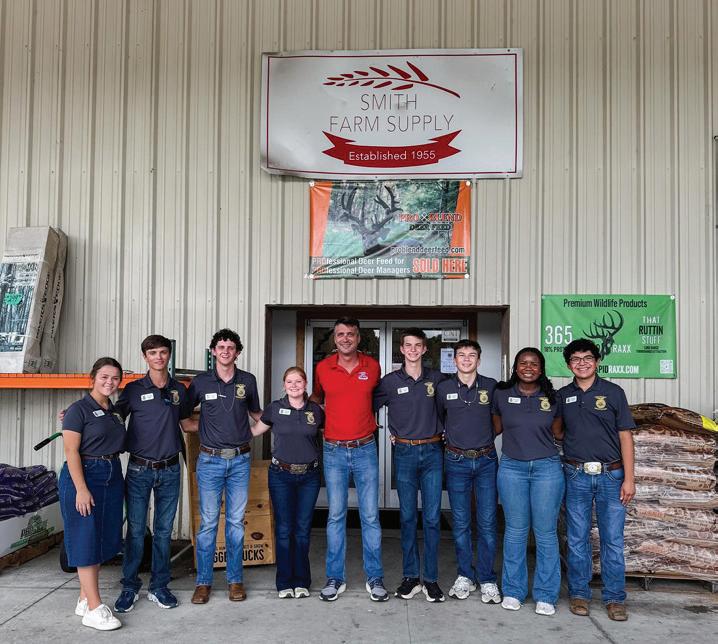
On any given day at Smith Farm Supply, the pace is steady and the work is purposeful. Phone calls come in from farmers needing fertilizer blends, customers stop by for feed or fencing, trucks move products between locations, and employees check in with growers about the season ahead. It is a rhythm built over decades—one that reflects both the long history of the company and the constant evolution of agriculture itself.
Smith Farm Supply serves a wide range of customers across north Georgia and into northwest South Carolina. The business includes multiple divisions, from agronomy and fertilizer to bulk feed, farm and ranch supplies, and home and garden products. Today the company operates 13 locations, each serving its surrounding community with products and services that support agriculture and rural life.
The company traces its roots back to 1955, when Gene Smith and his brother Melvin started the business to meet a growing need in the area. At the time, the operation was primarily a Purina feed dealership. Fertilizer services were
added later as the business grew and local agriculture expanded.
What began as a small agricultural supply operation steadily became an essential resource for the farming community. Over the decades, the company adapted to the changing needs of growers while maintaining the personal relationships that had always been central to its success.
Nearly seventy years later, that legacy continues under the leadership of Tyler Johnson, owner of Smith Farm Supply, who purchased the company on January 2, 2008. At the time, the business looked very different than it does today.
When he first took over, the company had just one location and two employees. The early days required a hands-on approach to nearly every aspect of the operation.
“Back then, I was involved in just about everything,” Johnson says. “With such a small team, you had to be.”
Today, the business has grown substantially, but that hands-on mindset remains. Even with a much larger team and a broader footprint, Johnson continues to stay closely involved in the company’s operations—particularly on the fertilizer side of the business.
No two days look exactly the same. Some days involve long hours at a desk working through logistics and planning. Other days bring conversations with staff, discussions with vendors, or time spent reviewing operations across multiple locations.
While the nature of the work has changed as the company has grown, the sense of responsibility has remained constant.
“I spend a lot more time in the office than I did in the beginning,” Johnson explains. “But I still stay closely involved with the day-to-day operations.”
The motivation that led him into the business was refreshingly straightforward.
“I wanted to live in Warrenton, Georgia, and I needed a job,” Johnson said. “From there, we just kept growing.”
Growth, however, hasn’t always meant bigger numbers alone. For Johnson, the concept carries a broader meaning.
“Change is inevitable, but growth is optional,” Johnson explains. “Change will happen whether you want it to or not. Growth is something you have to choose.”
That philosophy has shaped the way Smith Farm Supply has expanded over the years. While the company has grown in size and scope, the focus has also been on improving knowledge, efficiency, and teamwork. A large part of that progress can be seen in the evolution of the company’s services.
In the early years, Smith Farm Supply focused primarily on bagged feed, seed, fencing, and a small fertilizer operation. As additional locations were added, the business expanded into lawn and garden products, retail items, and walk-in trade.
The fertilizer side of the operation grew significantly as well. Today, Smith Farm Supply operates eight fertilizer blending plants throughout the company. Expanding trucking and logistics capabilities allowed the business to serve more customers and move product more efficiently across the region.
Those improvements also created opportunities to expand other divisions.
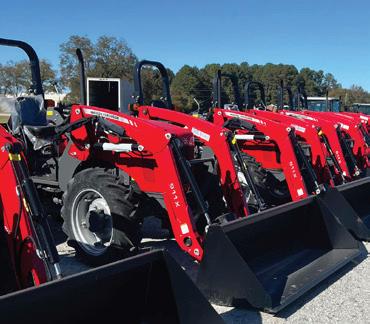
Fertilizer customers led naturally into growth on the agronomy side, including seed and crop protection products. More recently, the company added hardware, tractors, and agricultural implements to its lineup.
In 2024, Smith Farm Supply took another step forward by adding a propane company to its portfolio— another service designed to meet the needs of rural communities.
Despite all that growth, one challenge has remained constant: finding and developing great people.
“One of the biggest challenges we face is bringing in good team members and training them to do their jobs effectively,” Johnson says. “That’s something we’re always working on.”
Ironically, the people who make up the Smith Farm Supply team are also what Johnson considers the company’s greatest accomplishment.
“What I’m
most proud of is the group of people we’ve
been able to bring together to run this business,” Johnson says. “We’ve built a team that understands the industry, understands what we do, and understands where we’re trying to go.”
That shared understanding helps create a culture where employees move in the same direction and support one another along the way.
“It means a lot to see everyone working toward the same goals,” Johnson adds. Another key part of the company’s success has been its partnerships with vendors who help keep products flowing to customers. One of those
partnerships began somewhat unexpectedly.
Years ago, when Purina encouraged dealers to visit other feed stores and exchange ideas, Johnson traveled about an hour and a half from Warrenton to tour another operation. During the visit, he began asking questions about where the store sourced certain products.
That conversation introduced him to BWI.
At the time, neither side knew much about the other. But the connection proved valuable. Johnson contacted a BWI representative, and the relationship began to grow. In an ironic twist, about six years later he acquired the very same store where he had first heard about BWI.
Today, BWI plays an important role in helping Smith Farm Supply manage its inventory and supply chain across multiple locations. One of the biggest advantages is the ability to service a company operating across a wide geographic area.
“They understand the logistics required to support a business like ours,” Johnson says. “We can handle our bookings as one company while still filling orders consistently throughout the year.”
That reliability matters. If products aren’t on the shelves or in the warehouse, customers can’t buy them.
BWI also helps Smith Farm Supply stay competitive in an industry where independent retailers often face pressure from large national chains and big box stores. Inventory management itself is something Johnson describes as both an art and a science. As Smith Farm Supply grows and demand changes, the ability of vendors to keep pace becomes increasingly important.

“BWI has the capacity to deliver what we need, even during periods of fast growth,” Johnson says. “They’re prepared for that growth even when they don’t know exactly what our volume will look like.”
That flexibility has helped support the company’s continued expansion.
Equally important, Johnson says, is the willingness of BWI’s team to stay involved and engaged.
“In this day and age, simply showing up is a big part of customer service,” Johnson says. “BWI does that. No matter what we’re doing as a company, they’re there.”
At the core of Smith Farm Supply’s operations are a few simple values that guide decision-making across the organization.
“I believe common sense is greater than any policy that could ever be written,” Johnson says. “Policies have their place, but good judgment matters more.”
The other principle is treating people the way you would want to be treated—especially during difficult moments.
“When you’re faced with adversity, that’s when those values really matter,” Johnson explains.
Those ideas have helped shape the way the company interacts with employees, customers, and the communities it serves. Agriculture, after all, is more than just a business. It is a critical part of the food system that supports families across the country.
“When people asked about operating during the pandemic, I told them we already knew we were essential,” Johnson says. “We sell products that go into living things. There will always be a need for what we do.”
In that sense, the company sees itself as one step in a much larger chain.
“Food security is national security,” Johnson says.
Smith Farm Supply’s size also gives it a unique position in the marketplace. The company is larger than a singlelocation independent store but still small enough to maintain close relationships with customers.
“We’re not a big box store, and we’re not one of the major national agronomy companies,” Johnson says. “But we’re big enough to serve our customers in a complete and dependable way.”
Looking ahead, the company’s goals are centered on refinement and continued improvement.
The focus over the next few years is on making the organization an even more efficient and well-run operation while continuing to strengthen each location. A large part of that effort will involve investing in employees and helping the team grow in knowledge and capability.
At the same time, improvements are constantly underway across the company’s facilities. Several store renovations have recently been completed, and more projects are planned.
One of the biggest challenges—and opportunities—currently facing the company is the rebuilding of its main feed mill in Stapleton. The facility suffered extensive damage during Hurricane Helene and is now undergoing a major reconstruction effort. The goal is to bring it back stronger and more efficient than before.
“It’s going to be a long road,” Johnson says. “But I’m excited about what the finished product will look like.”
Despite the challenges and responsibilities that come with leading a growing company, Johnson still finds joy in the daily work.
Much of that comes from the people around him.
“I enjoy the talented team I get to work with every day,” Johnson says.
“And I enjoy the great customers we get to serve.”
Those relationships—between employees, customers, and vendors—are what ultimately make the business possible.
Through nearly seven decades of change in agriculture and rural retail, the company has continued to grow by staying focused on the fundamentals: serving customers, supporting communities, and building a strong team.
And no matter what new opportunities or challenges lie ahead, one thing remains certain.
“Regardless of what we’re doing or where we’re going,” Johnson says, “we’re always going to have fun at Smith Farm Supply.”





14-14-14

18-1-3














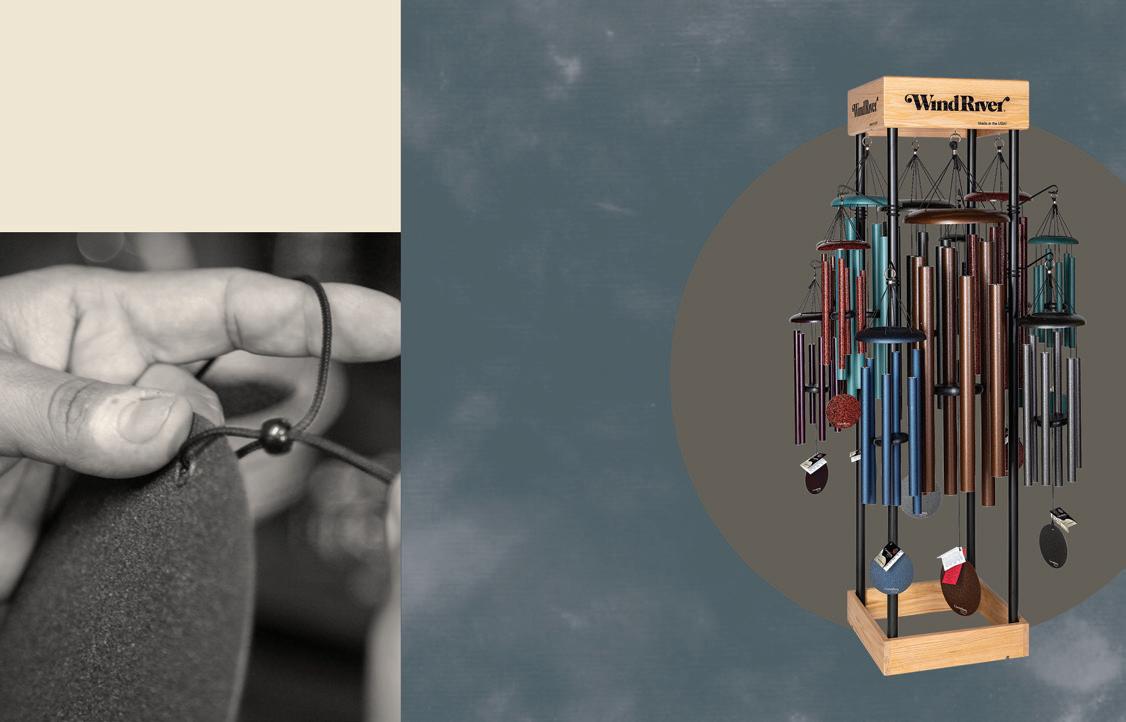
For 40 years, we’ve studied and perfected what we call “the Science of Sound”. Our chimes are individually handcrafted, hand-tuned, and made in Virginia using USA sourced materials, for exceptional precision and lasting beauty. From the shape of the components to the materials we use, every detail is tested and engineered to deliver superior resonance and tone.

















































































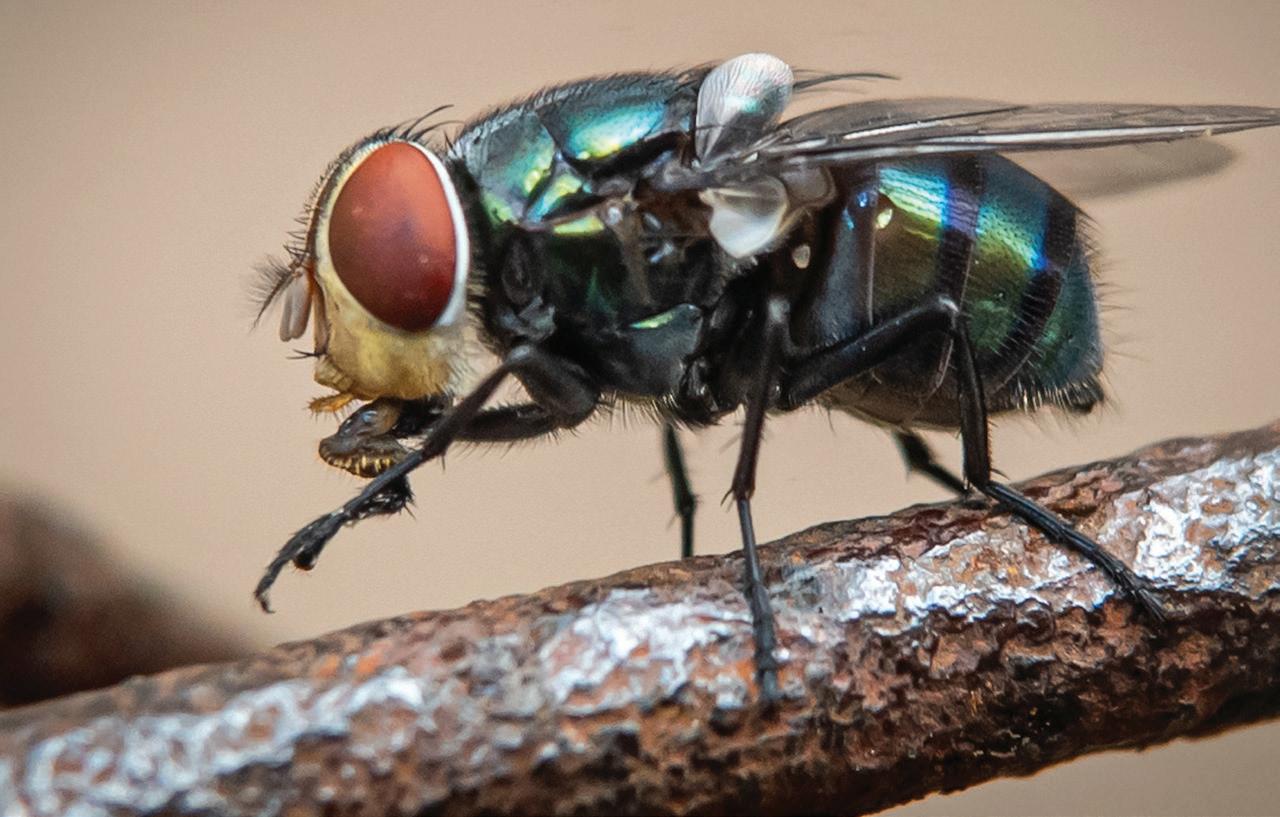
A flesh-eating pest infecting livestock, pets, and wildlife, known as New World Screwworm (NWS), is resurging across Central America and Mexico. The pest was eradicated from the United States in 19661, but some additional cases did occur in US cattle over the next 16 years. Since 2023, this pest has been making its way back north, and is now present in central Mexico.

Surprisingly, the New World Screwworm isn’t a worm. Kirk Ramsey, DVM, MS, Professional Services Veterinarian with Neogen® goes into further detail on the name of the species, “The screwworm isn’t a worm at all. It’s truly just the larvae form of a species of blow fly. Like any flies, they
will lay eggs in an area where their larvae can feed.” Typically, this group of flies is associated with decaying flesh of dead animals. “The New World Screwworm is a very strange species within this group, as they feed on living tissue exclusively to survive,” says Dr. Jonathan Cammack, PhD, D-ABFE, Assistant Professor and State Extension Specialist for Livestock Entomology and Parasitology at Oklahoma State University.
Further explaining why the NWS is a concern, Dr. Ramsey adds, “While feeding off of live tissue, they continue to burrow deeper into the flesh, essentially consuming tissue as they move in.” An infestation of NWS can cause extensive damage as they tear into living tissue with sharp mouth hooks and dig deeper into the wound, 2 which separates them from other insects.
Although there is an Old World Screwworm, Dr. Cammack confirms the two are not the same. “The reason it’s called New World is to differentiate this particular species from one that is present on the other side of the world that has a similar habit."
Dr. Cammack adds that the two species are very distantly related, and both have evolved this ability. “This is not a new pest, it’s just their distribution on the planet.”
Infestations of NWS were more prominent in Jamaica, Cuba, and across South America until more increasing detections were noted north of its geographical barrier: the Darién Gap in Panama, in 20233 According to the Animal and Plant Health Inspection Service (APHIS), NWS detections in 2023 in Panama specifically, increased from an average of 25 cases per year to more than 6,500 cases in one year.
Producers in the United States are bringing their attention back to this parasite as it travels farther north. Not only can an infection cause economic loss, but the impact NWS can also impose on livestock and wildlife is severe and often deadly if not discovered and treated.
Since NWS feeds on live flesh, it only takes a tiny break in the skin to cause an infection. Looking for evidence that NWS may be present can be a challenge. “It could be something very, very small and you wouldn’t even know it was happening because these larvae underneath the skin are eating away at the muscle and tissue below,” Dr. Ramsey adds.
Producers should monitor their animals regularly and be alert for the following signs of NWS:
• Irritated behavior
• Head shaking
• The smell of decay
• Presence of fly larvae (maggots) in wounds
Producers who suspect animals to be infected with NWS should contact their veterinarian.
The only effective solution found to control and eradicate NWS is through the release of sterile male flies called the sterile insect technique (SIT). Giving further history on the technique, Dr. Cammack adds, “Researchers determined this particular species only mates one time throughout their life and they could sterilize male flies then release them into the environment.”
After the sterile male flies would mate with the wild females, the females would lay unfertilized eggs that would not hatch. Dr. Cammack explains that the principal of the program was to overload and outnumber the population of wild male flies, so the sterile male flies could be present in the environment to mate with the females instead. This method, along with implementing a fly control solution has proven to be successful in mitigating their impact.
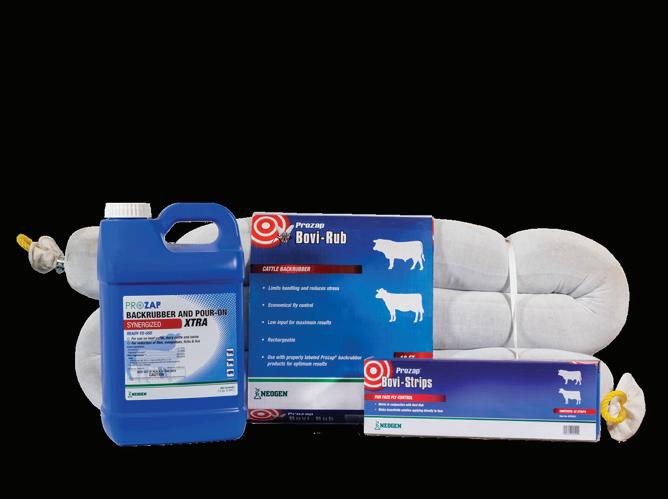
For producers, the first line of defense against NWS is making sure animals are protected through a fly control program. Utilizing products that are specifically labeled to treat screwworms can also help control a potential outbreak.
Dr. Ramsey gives a tip to apply products labeled to treat screwworms to an open wound or an area where an open wound would be, to help eliminate flies or fly larvae. Something even as small as a scratch from barbed wire or site where a tick had been feeding can become an entry point for these larvae.
Looking for ways to reduce fly populations in the herd and enforcing a herd management plan, including waste management and nutrition, can play a large part in keeping livestock safe from New World Screwworms. To continue learning, visit neogen. com and speak with your herd health veterinarian.
Neogen Corporation is committed to fueling a brighter future for global food security through the advancement of human and animal well-being. Harnessing the power of science and technology, Neogen has developed comprehensive solutions spanning the Food Safety, Livestock, and Pet Health & Wellness markets. A world leader in these fields, Neogen has a presence in over 140 countries with a dedicated network of scientists and technical experts focused on delivering optimized products and technology for its customers.
1. New World Screwworm. Animal and Plant Health Inspection Service. (2025, July 24). https://www.aphis. usda.gov/livestock-poultry-disease/ cattle/ticks/screwworm
2. New World Screwworm outbreak in Central America and Mexico. Animal and Plant Health Inspection Service. (2025b, July 11). https:// www.aphis.usda.gov/livestockpoultry-disease/cattle/ticks/ screwworm/outbreak-central-america
3. https://agrilifeextension.tamu.edu/ new-world-screwworm-fact-sheet/


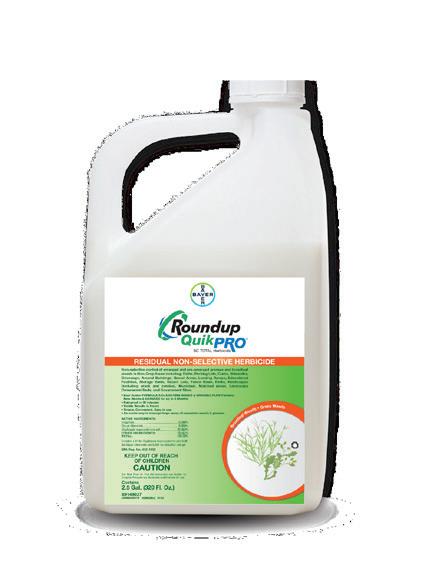
Save time. Conserve your budget. Get long-lasting control.
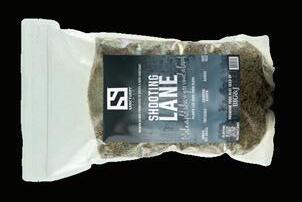
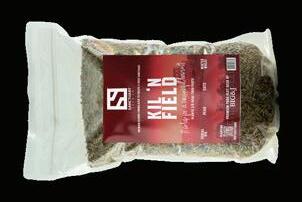
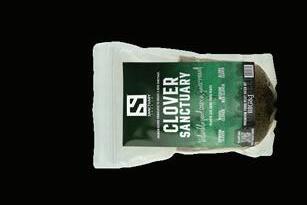
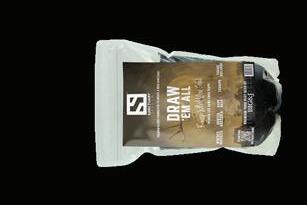


BIG&J® Long-Range Attractants delivers unmatched pull — bringing in more deer from greater distances and keeping them coming back, hunt after hunt.
We didn’t follow the crowd — we created the category. We set the standard in long-range attraction. While everyone else is playing catch-up, we’re still leading the way with the highest quality products, guaranteeing success, and putting deer right where you want them.







THE AROMA IS SUPER STRONG, THE RANGE IS SUPER LONG!


SPRING
FALL

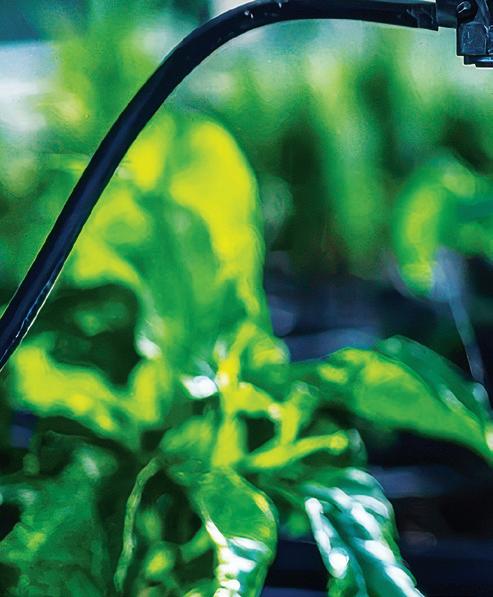


Peters Professional sets the world standard for water-soluble fertilizer, trusted by generations of commercial growers. Pure ingredients and patented technology keeps lines and emitters flowing freely, resulting in reduced downtime and labor. The exclusive M-77® chelating formula ensures superior uptake, and specialized product options allow growers to customize nutritional programs to their needs. Keep your lines and profits flowing—contact ICL today.