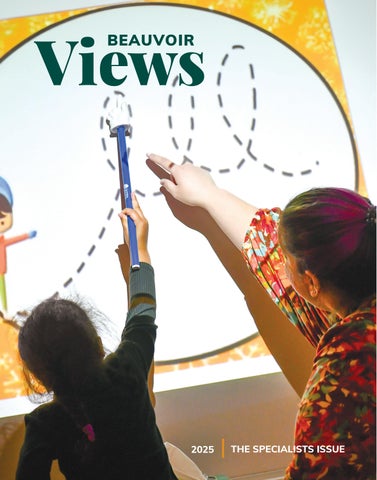
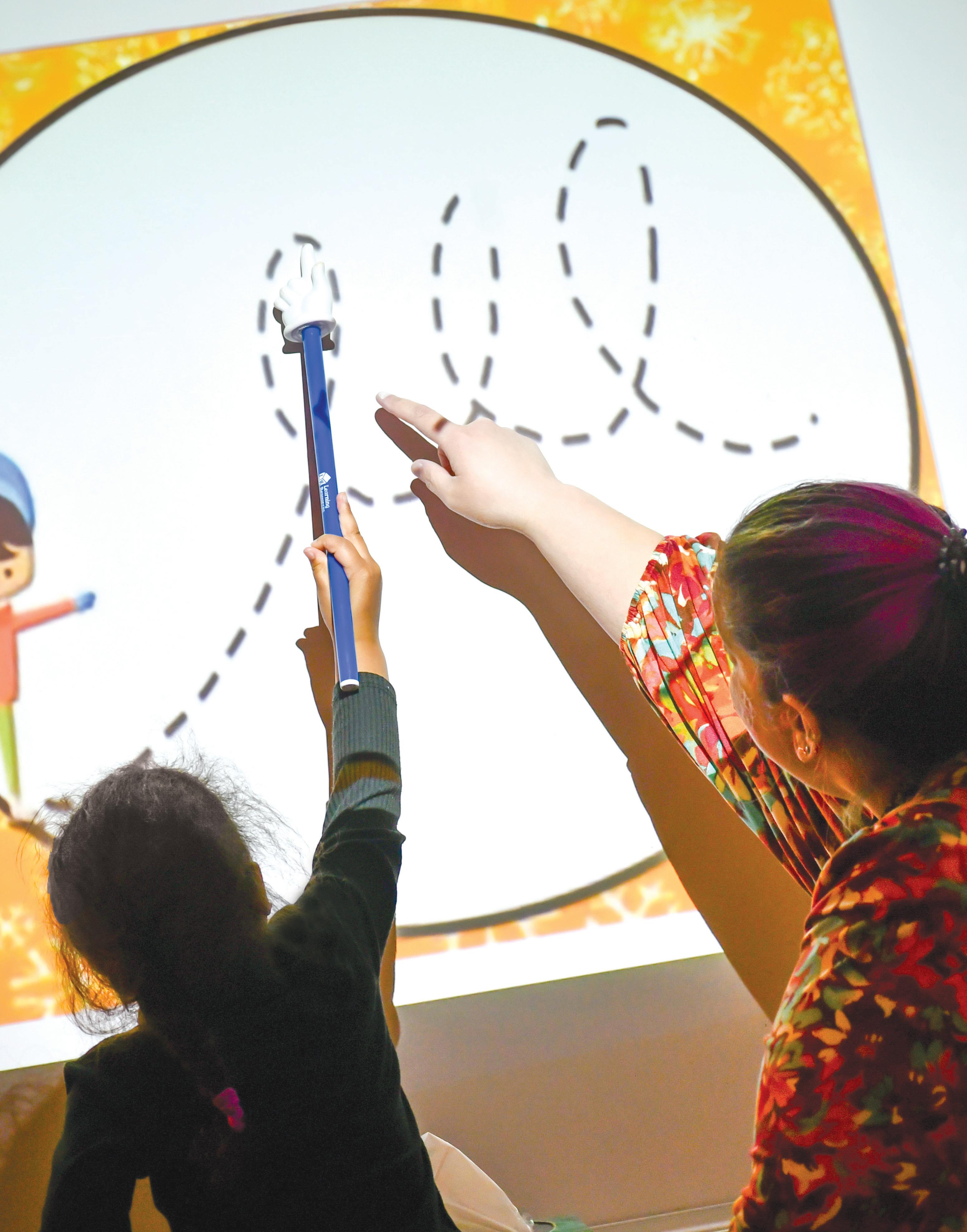
BEAUVOIR Views
Mission
At Beauvoir, the National Cathedral Elementary School, we provide an extraordinary early childhood education in a diverse community that values every individual. Beauvoir’s program encourages creative, courageous learners and builds an enduring foundation for a lifelong spirit of inquiry and joy in learning.
Vision
We hold a “beautiful view” of childhood. We embrace learning as a lifelong endeavor and are committed to building a community where every child grows, explores, questions, creates, and achieves—individually and together. We align our practices, decisions, and investments with our goal to be a child-centered, safe, and deeply engaging learning community.
CELEBRATING THE CLASS OF 2025
THANKSGIVING AND CHRISTMAS CHAPELS
CATHEDRAL STUDIES INSPIRES CATHEDRAL EXPERTS
CELEBRATING BEAUVOIR'S SPECIALS CLASSES THE BIONICS PROJECT COMES TO BEAUVOIR
BRINGING STEM TO LIFE
GLOBAL STUDIES: EXPLORING THE WORLD TOGETHER
PARENT EDUCATION
ALUMNI SPOTLIGHT: CLARK REYNOLDS '21
HEAD OF SCHOOL
Cindi Gibbs-Wilborn
EDITOR
Lisa Gilcrest
CONTRIBUTORS
Thayer Baine
The Rev. Dr. Lisa Barrowclough
Catherine Chieco
Abigail Coyne
Savannah Diaz
Ciara Hargrove
Geoff Johnson
Helen Macsherry
Caitlin Taylor
Laura Voelker
PROFESSIONAL PHOTOGRAPHY
Jason Dixon Photography
DESIGN
Kate O’Neil
PRINTING
Vogue Printers
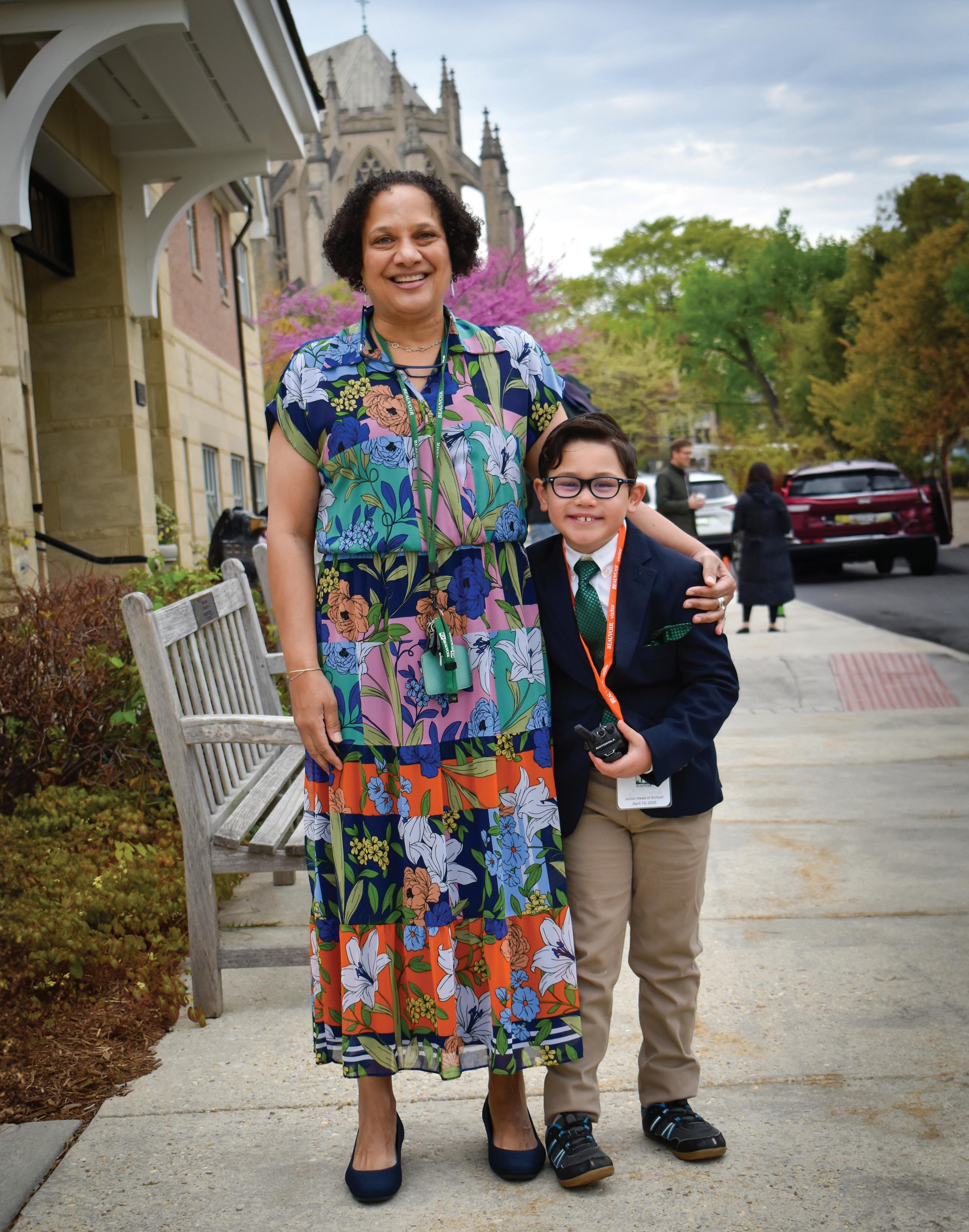
A Letter from the Head of School
Thirty years ago, my thinking was upended. As part of my graduate studies in curriculum and education, I was asked to observe a first grade teacher at a private school for one semester. I paused initially because, as a former public school educator, it was not the learning environment I envisioned. However, the opportunity was a perfect fit with my work-study schedule, so I accepted the assistantship. That experience, which was both life changing and career altering, brought me to Beauvoir.
I recently read that a preconceived sense of place is a risk. Rather, you should approach with an open mind because you might be surprised. It was indeed a risk I took, albeit a learning curve, but one for which I am forever grateful. My notions were turned upside down as I found an engaging, evidence-based curriculum; a student body diverse in background and academics; like-minded faculty and staff; parental partnerships; and leadership that challenged me as an educator.
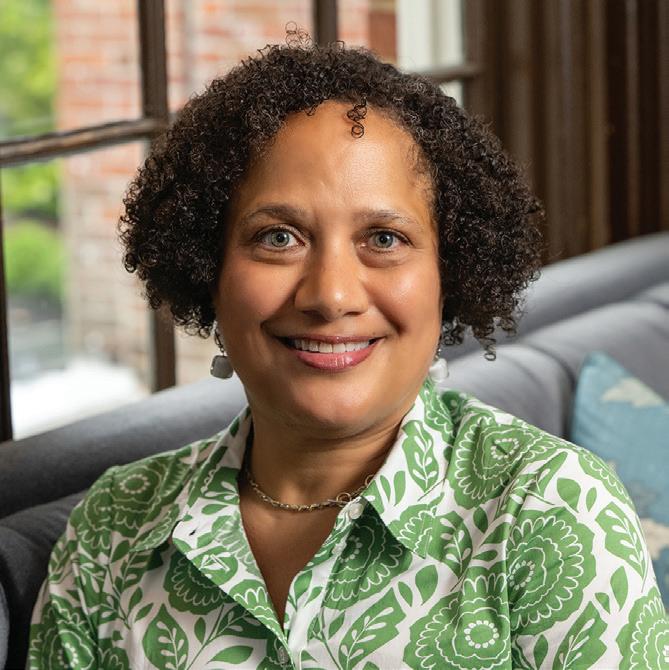
As I look back and consider then and now what makes Beauvoir special, that phrase— sense of place—continues to reverberate. Sense of place often refers to a location’s physical nature, but it is the people who are the beating heart of a place. They’re not always the ones most visible. They’re often behind the scenes, steady and quietly making a difference.
In this issue of the Views magazine, meet our featured Beauvoir Specialists. Their teaching increases the depth of each child’s knowledge in academic technology, library and media science, performing arts, physical education, science, Spanish, STEAM, and visual arts. In fact, many children will find their calling for future careers through a Beauvoir education enhanced by these special offerings.
In 1995, I discovered a small school “High on Mount Saint Alban, with beauty all around” and within its classrooms, offices, and, most of all, its people. That first encounter informed me then as a teacher and inspires me today as head of school. May we always embrace our beloved Beauvoir’s sense of place, “let all our voices ring.”
Warmly,
Cindi Gibbs-Wilborn, Head of School
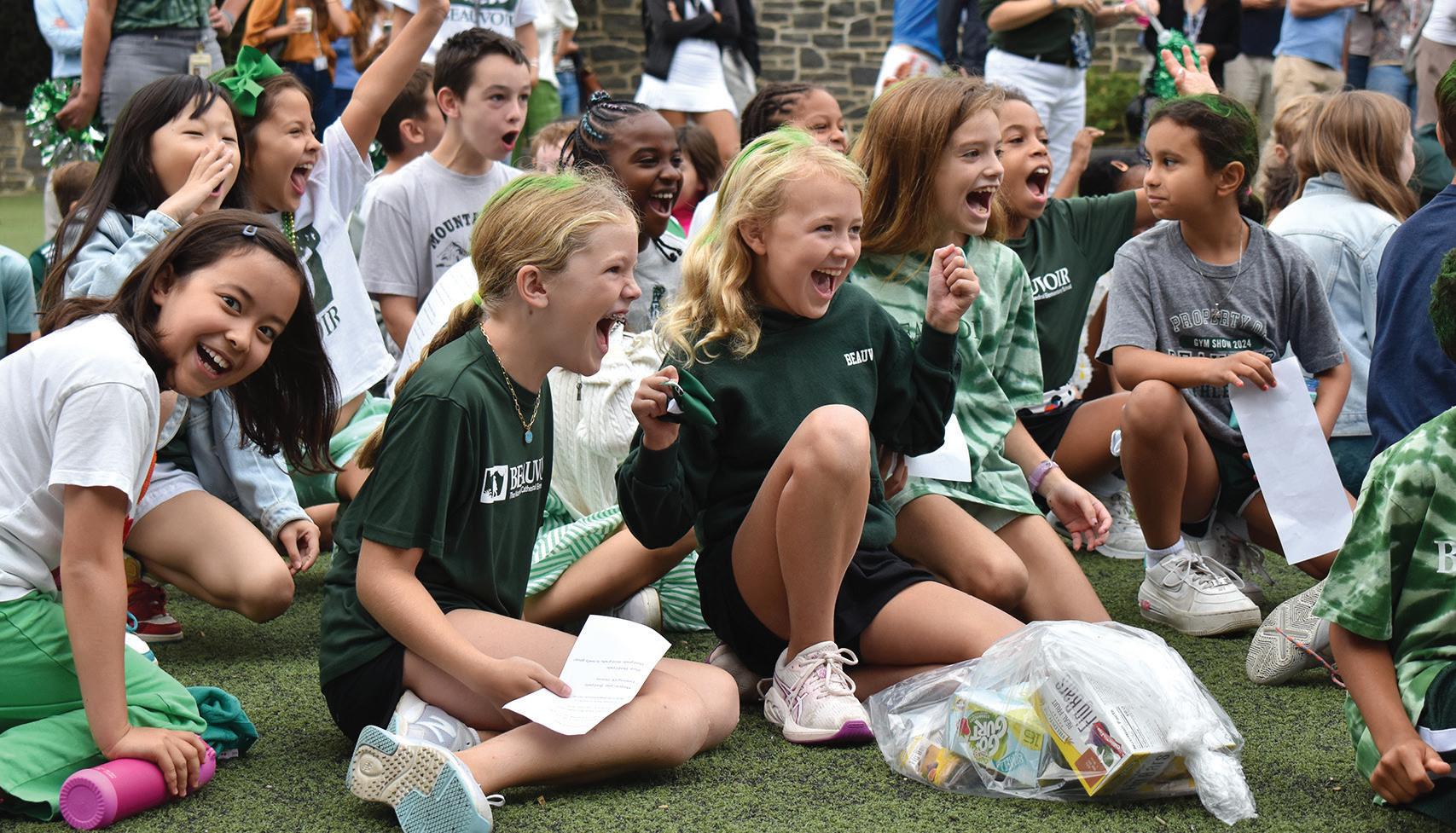
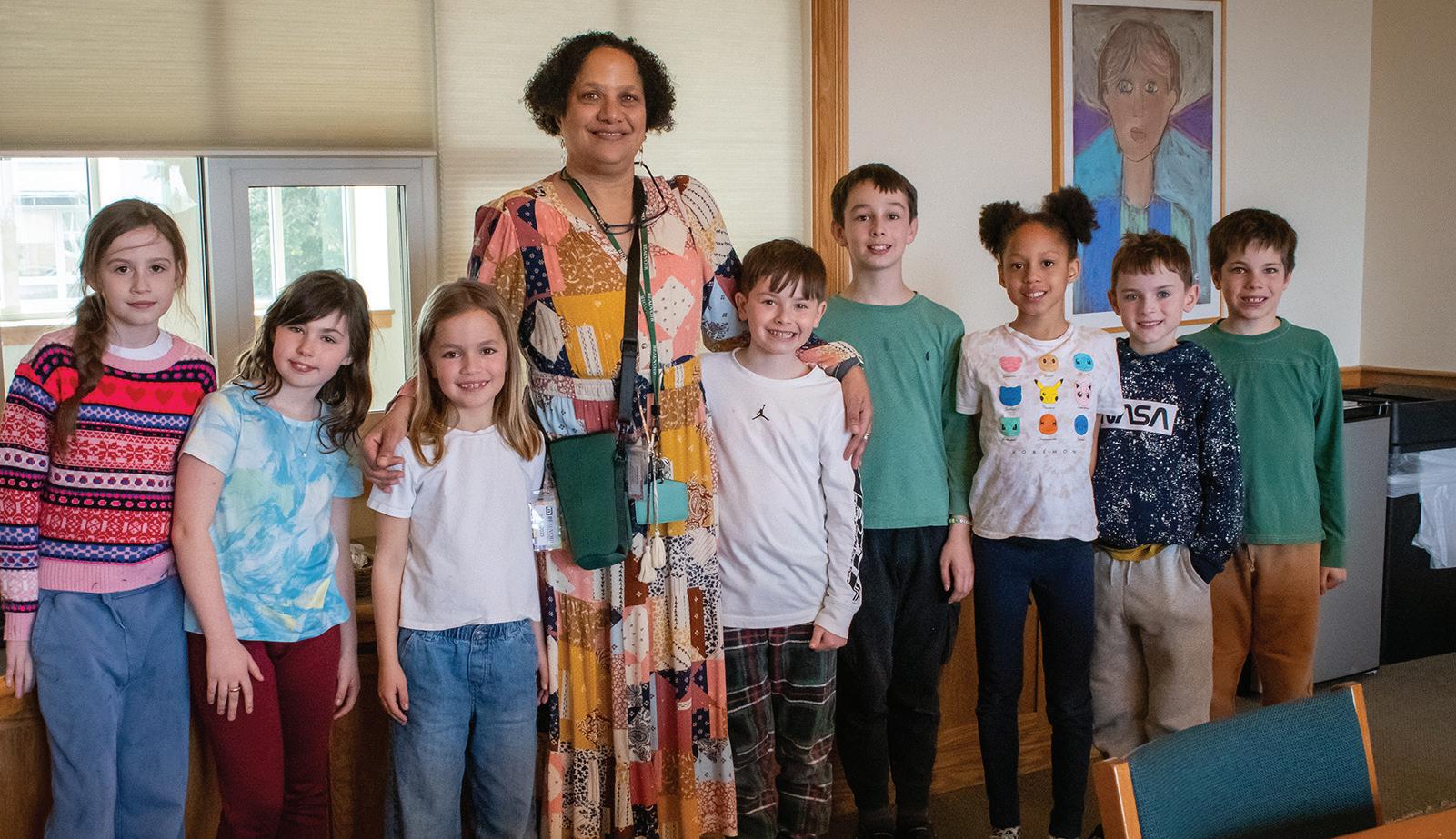
The class of 2025 is a group of creative thinkers, hard workers, problem solvers, and generous hearts. I feel lucky to have been able to spend time with them in their classrooms, while they were at play, and my favorite— during lunch where they would share riddles, jokes, and tales about their days.
We send them onto the next steps of their educational journey by reminding them to always live by the Beauvoir Life Rules and to always care for one another. Although they were a small group, they’ve left a big impression. They will forever be Beauvoir bears!”
Megan
Chounoune, Head of the Upper Years (Second and Third Grades)
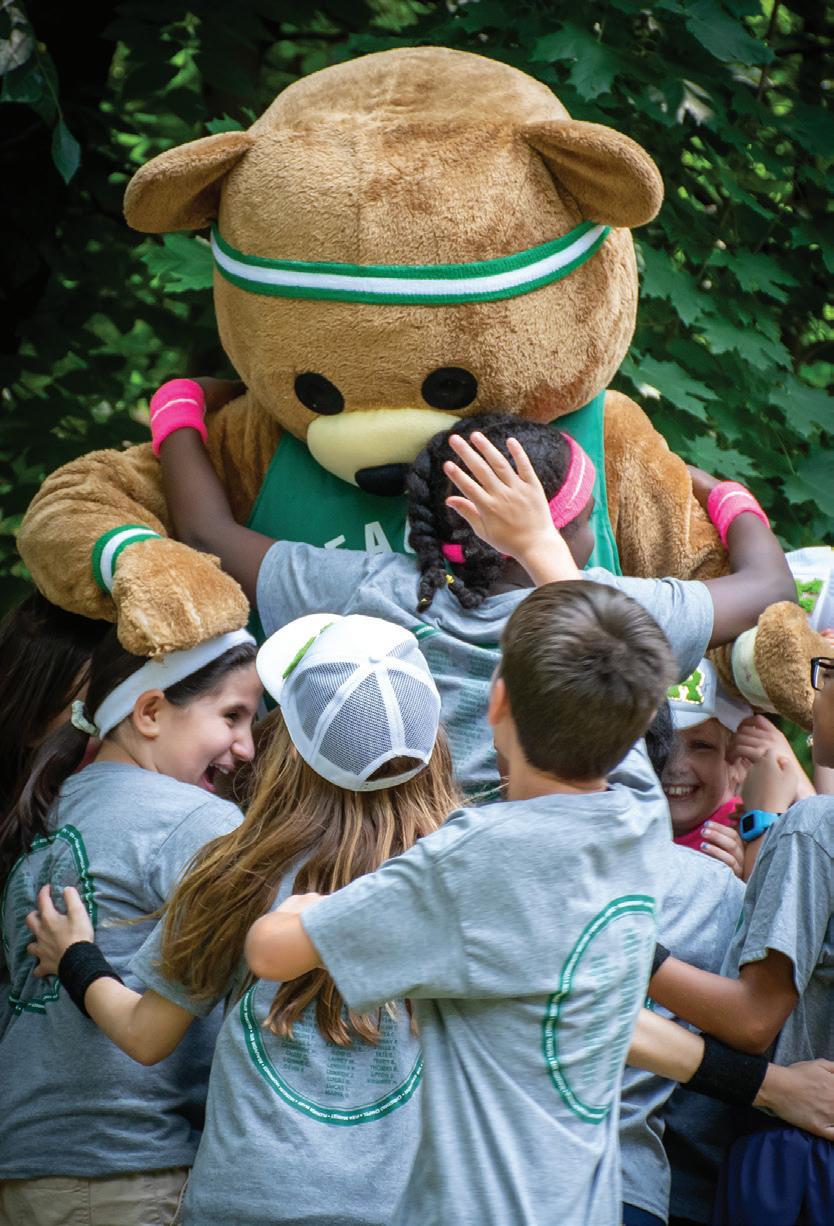
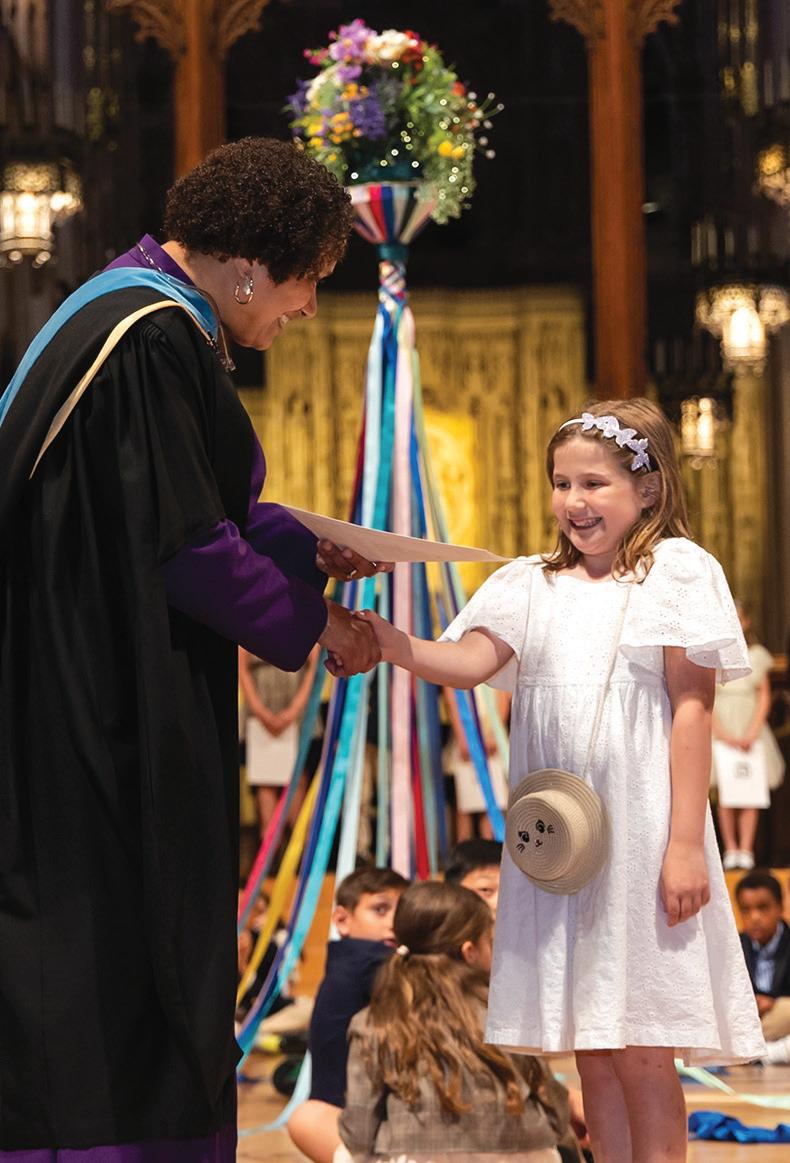

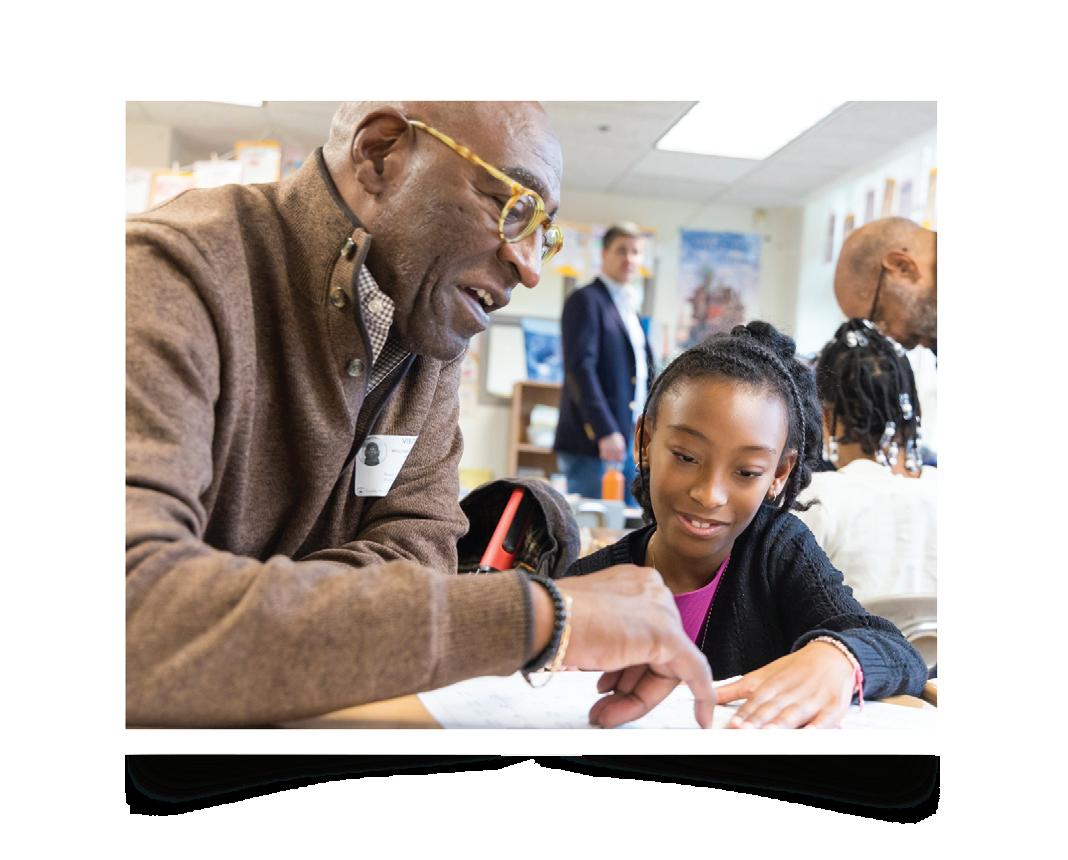
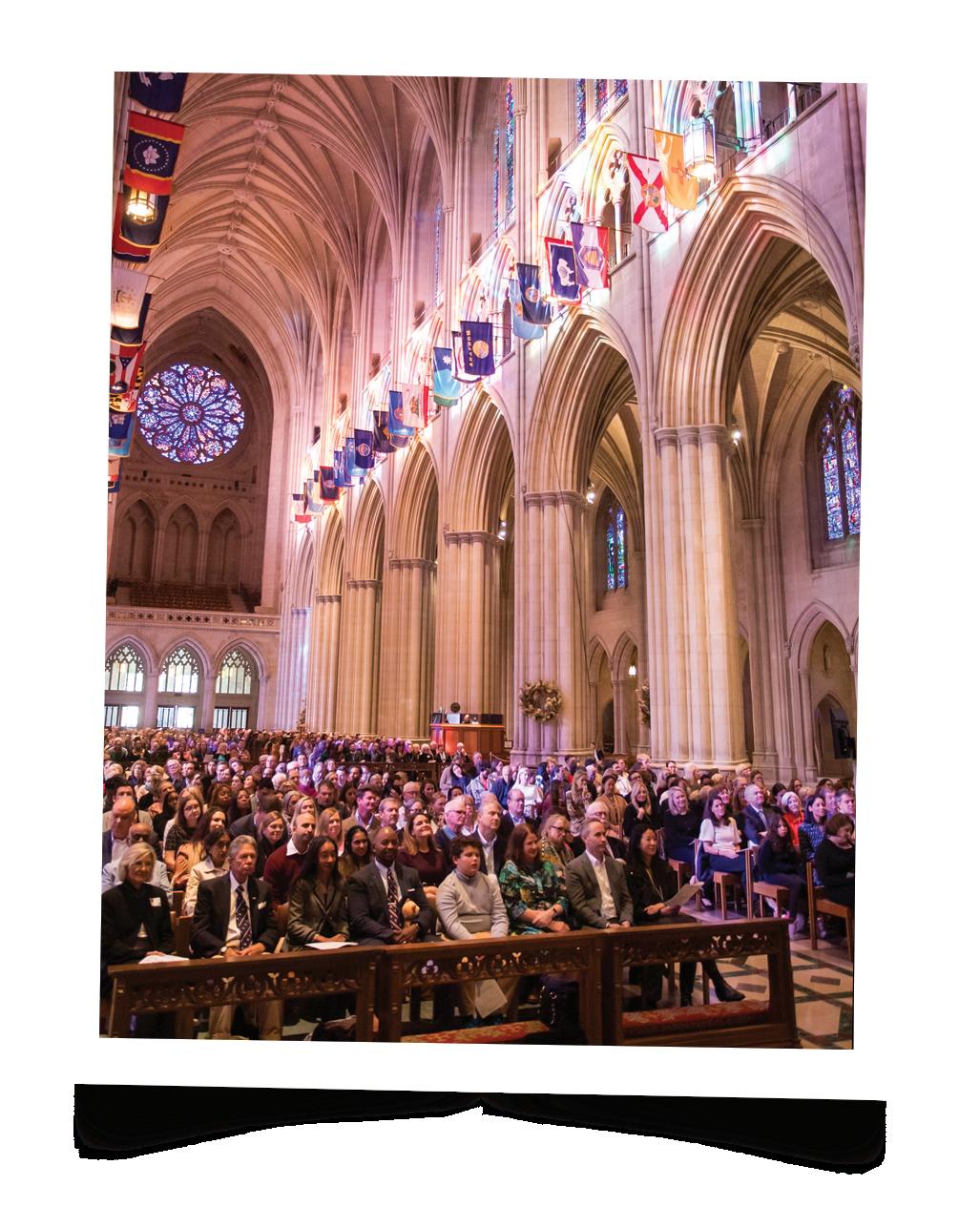
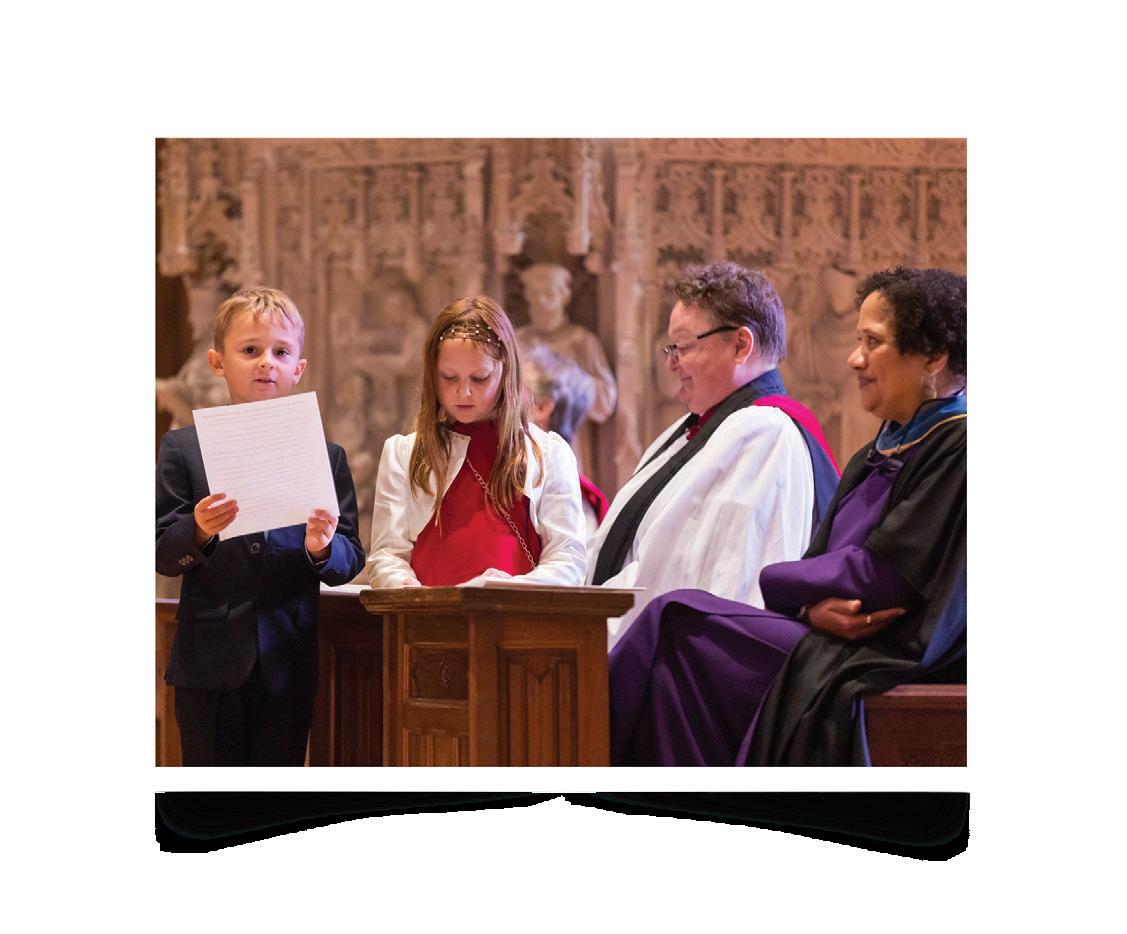
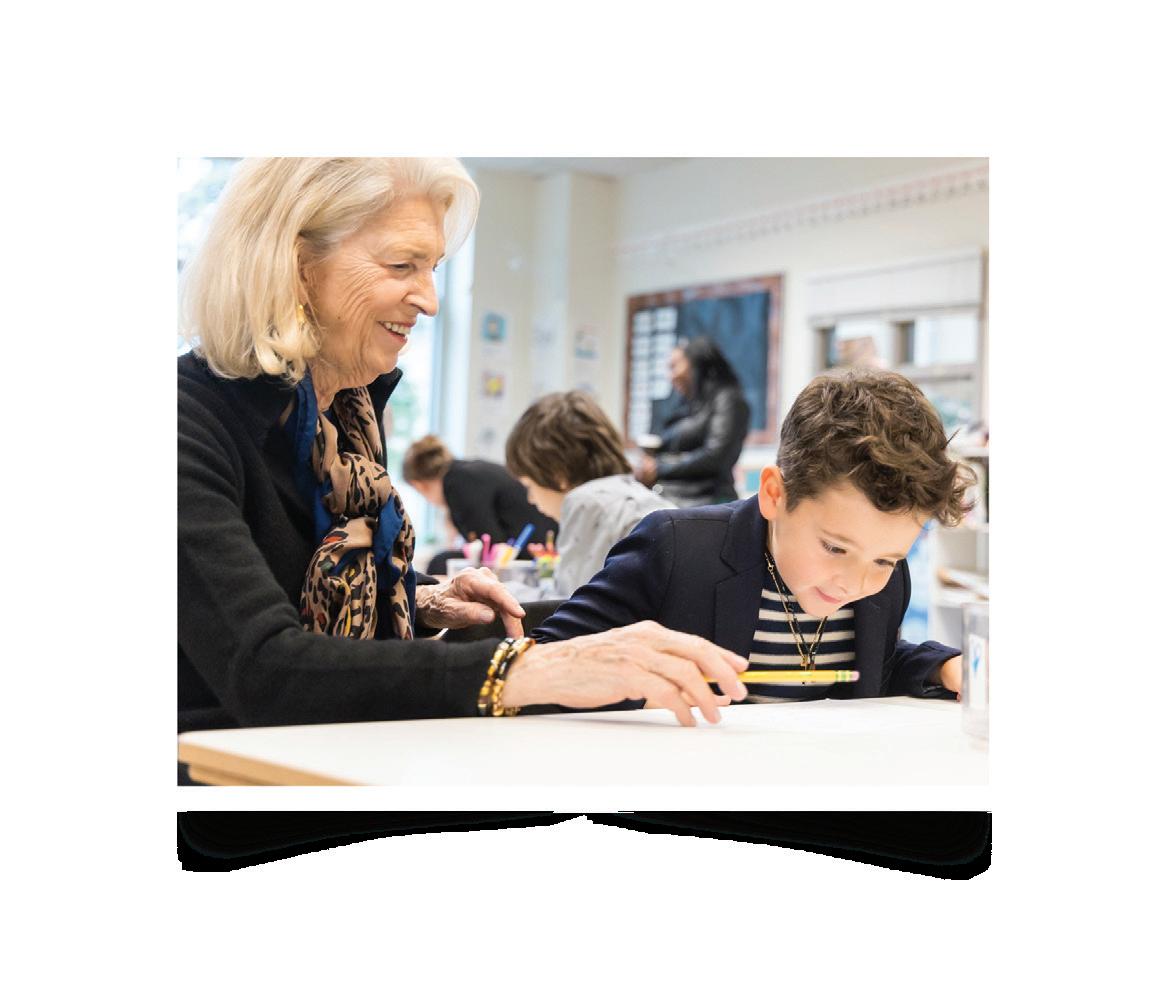
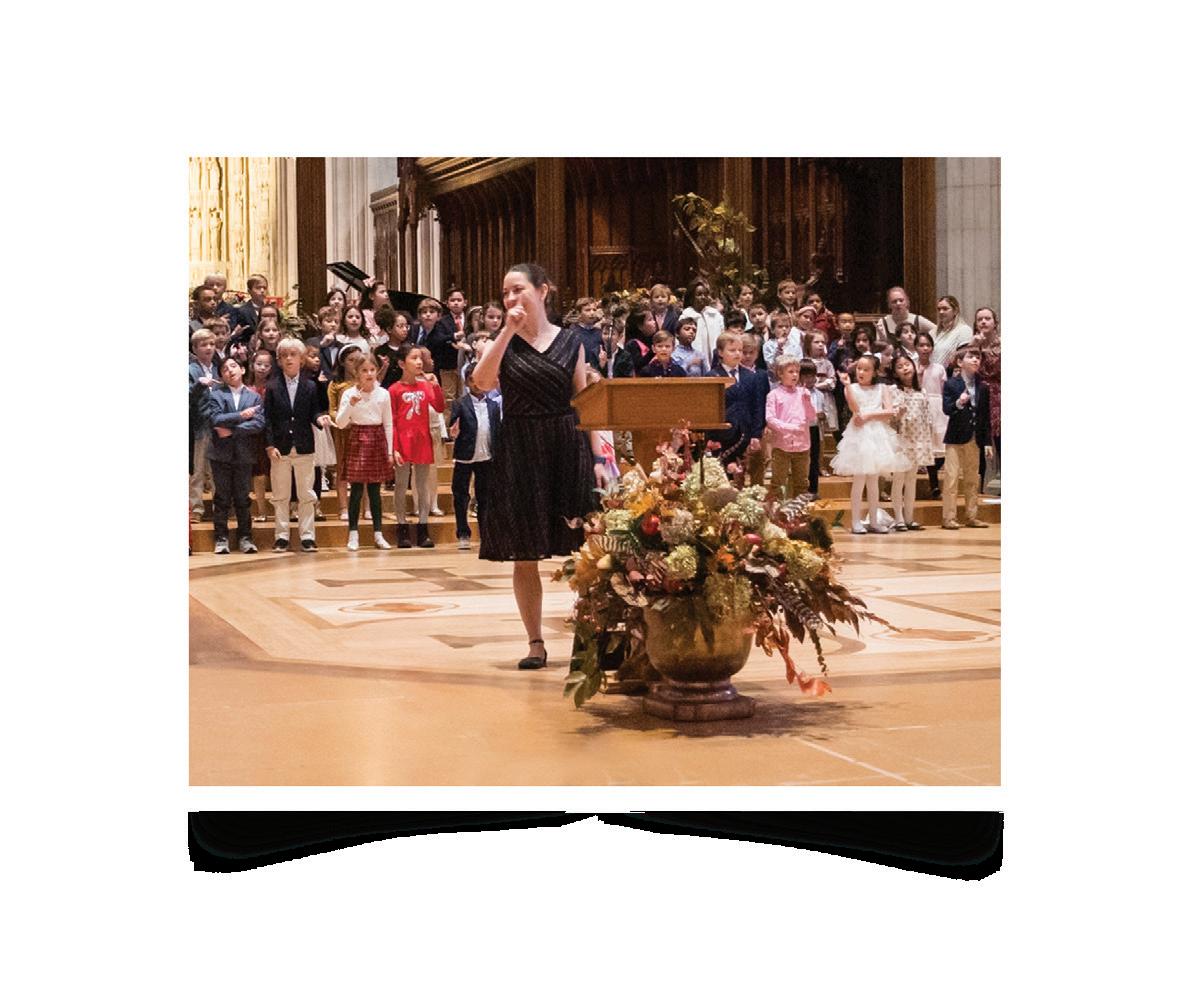
Thanksgiving Chapel & Grandparents’ and Special Friends’ Day
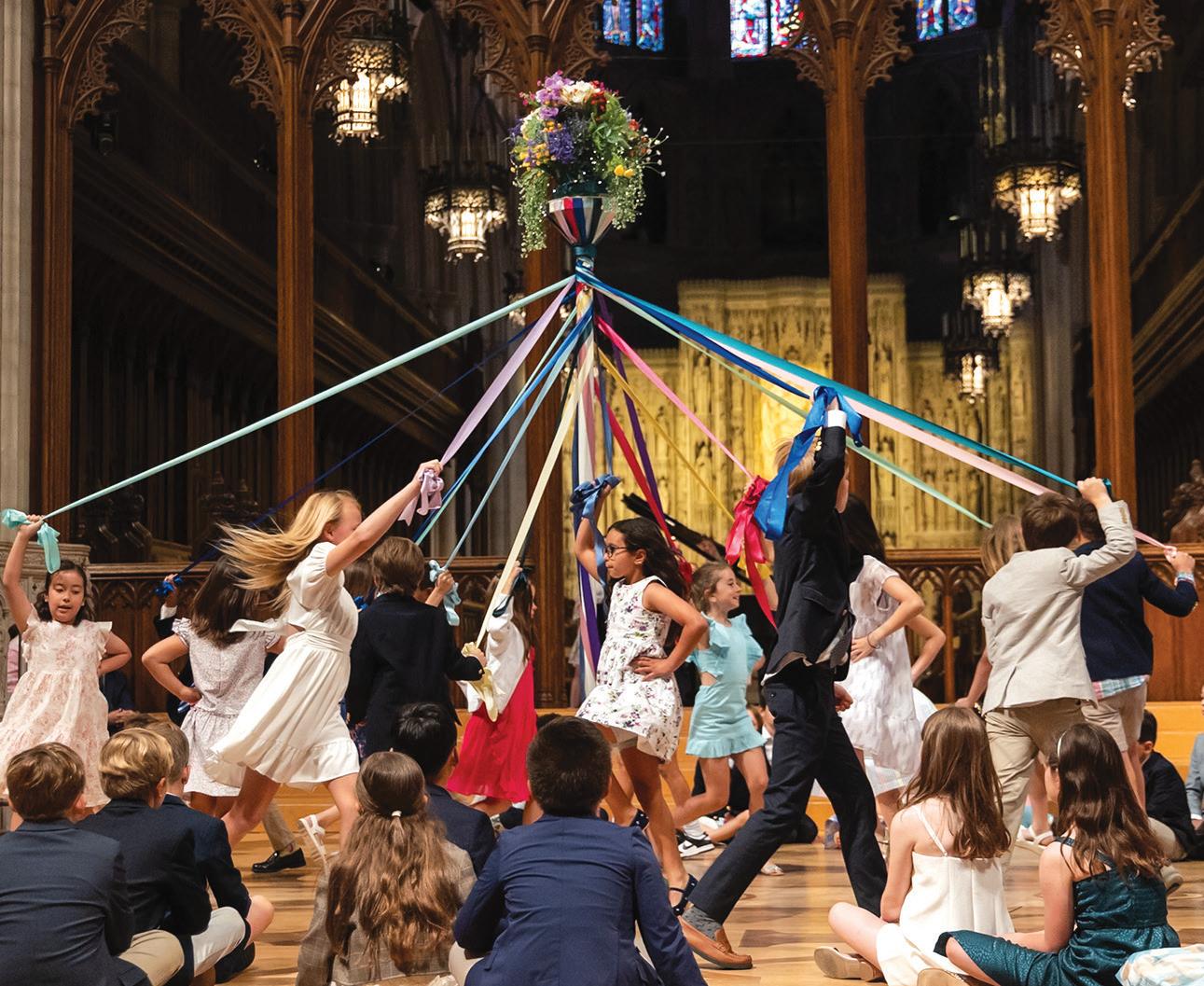
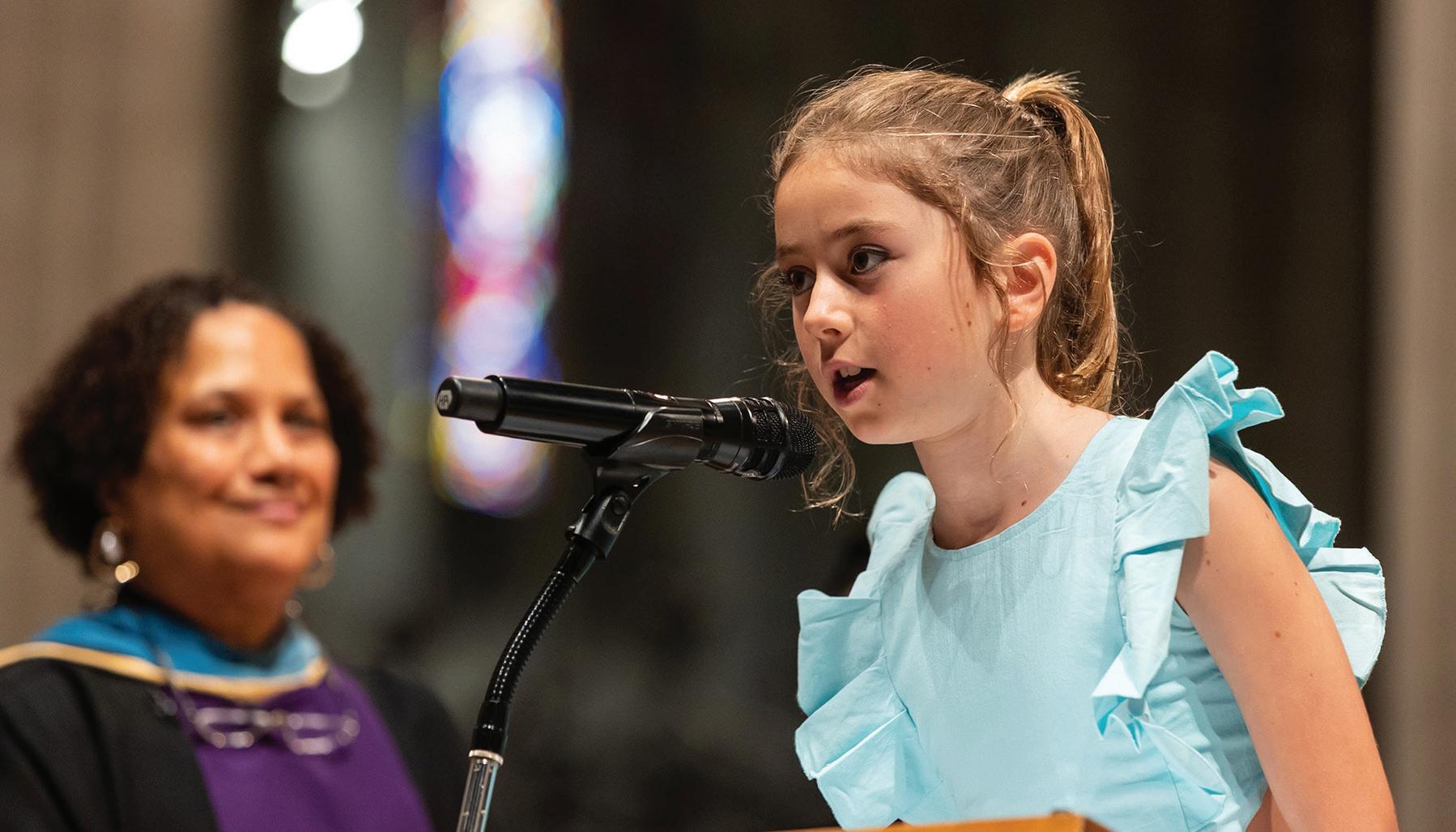
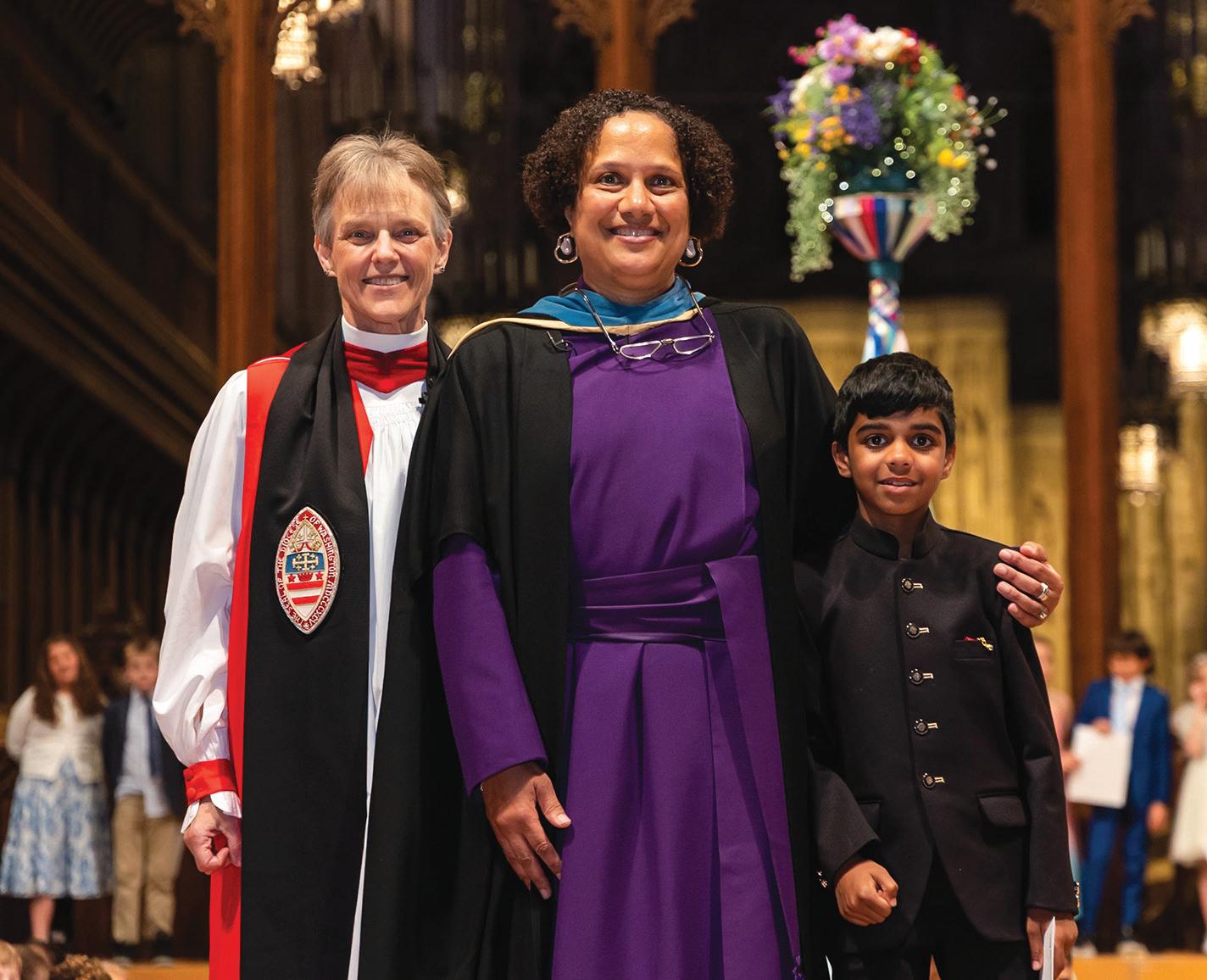
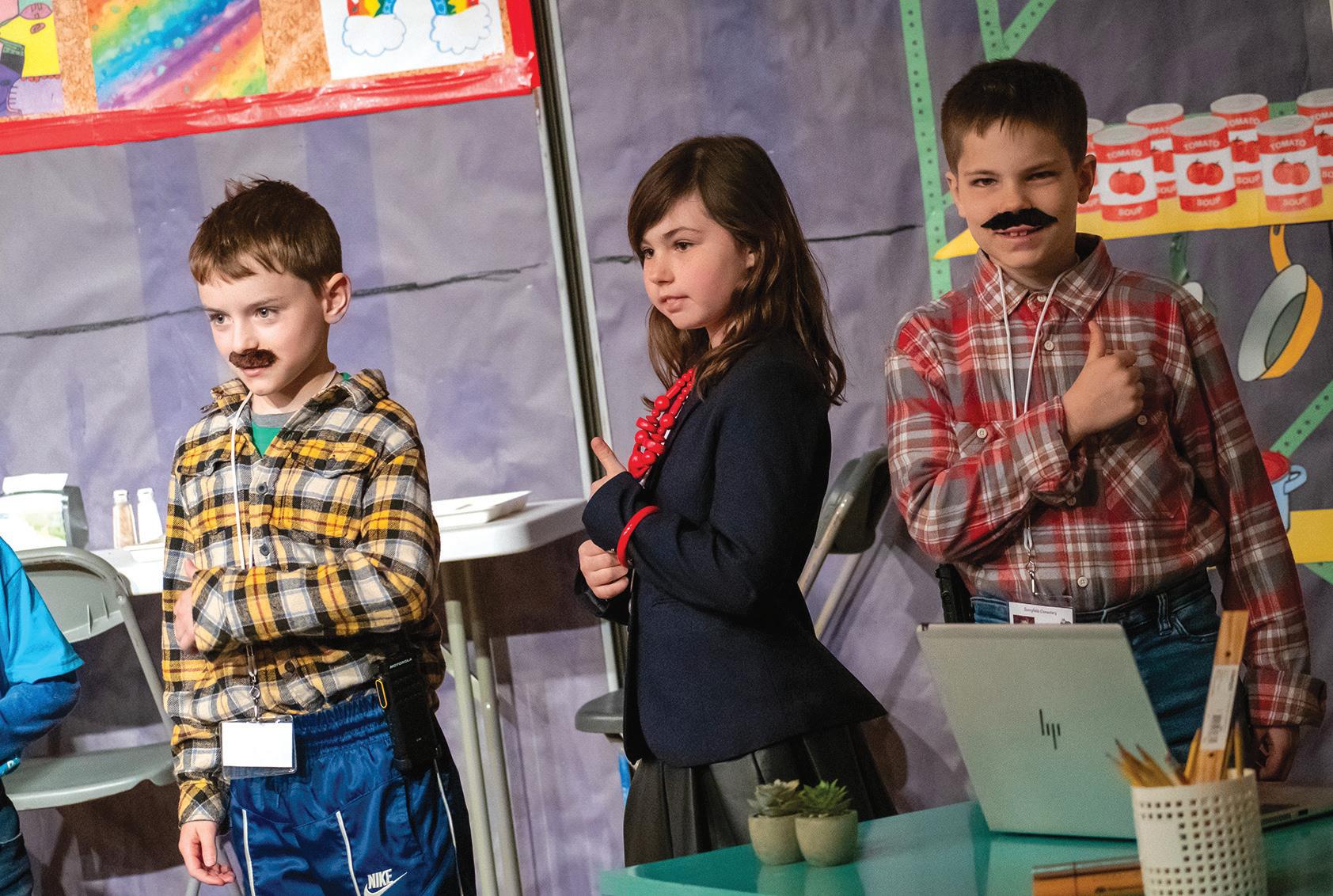
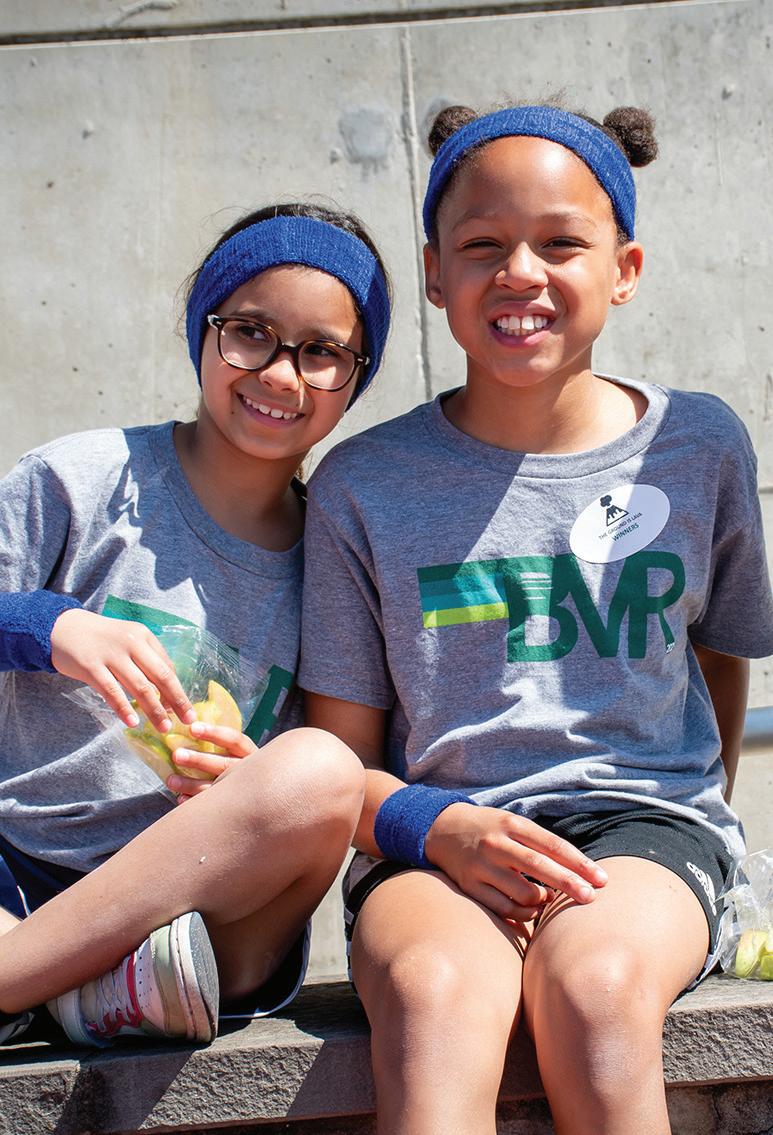
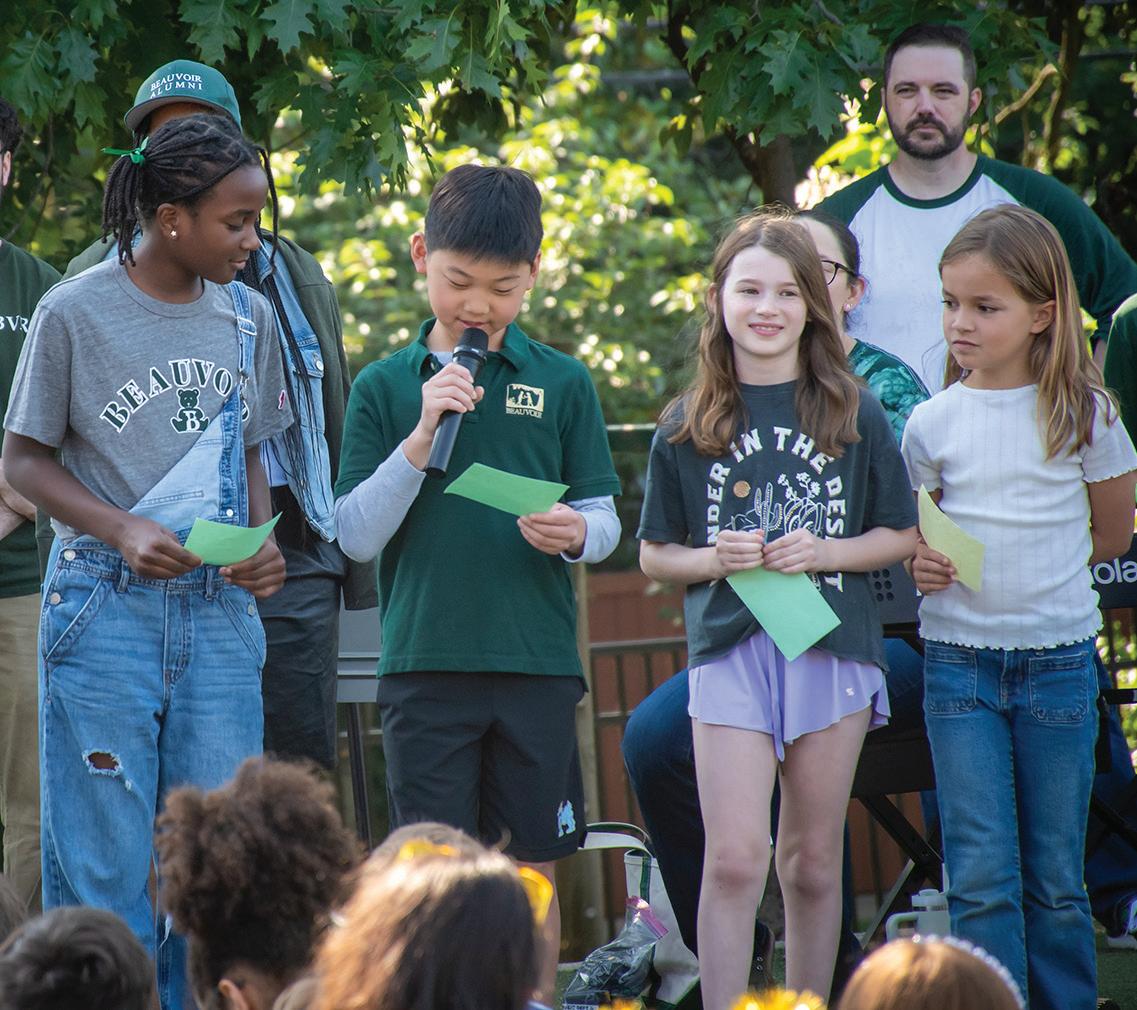
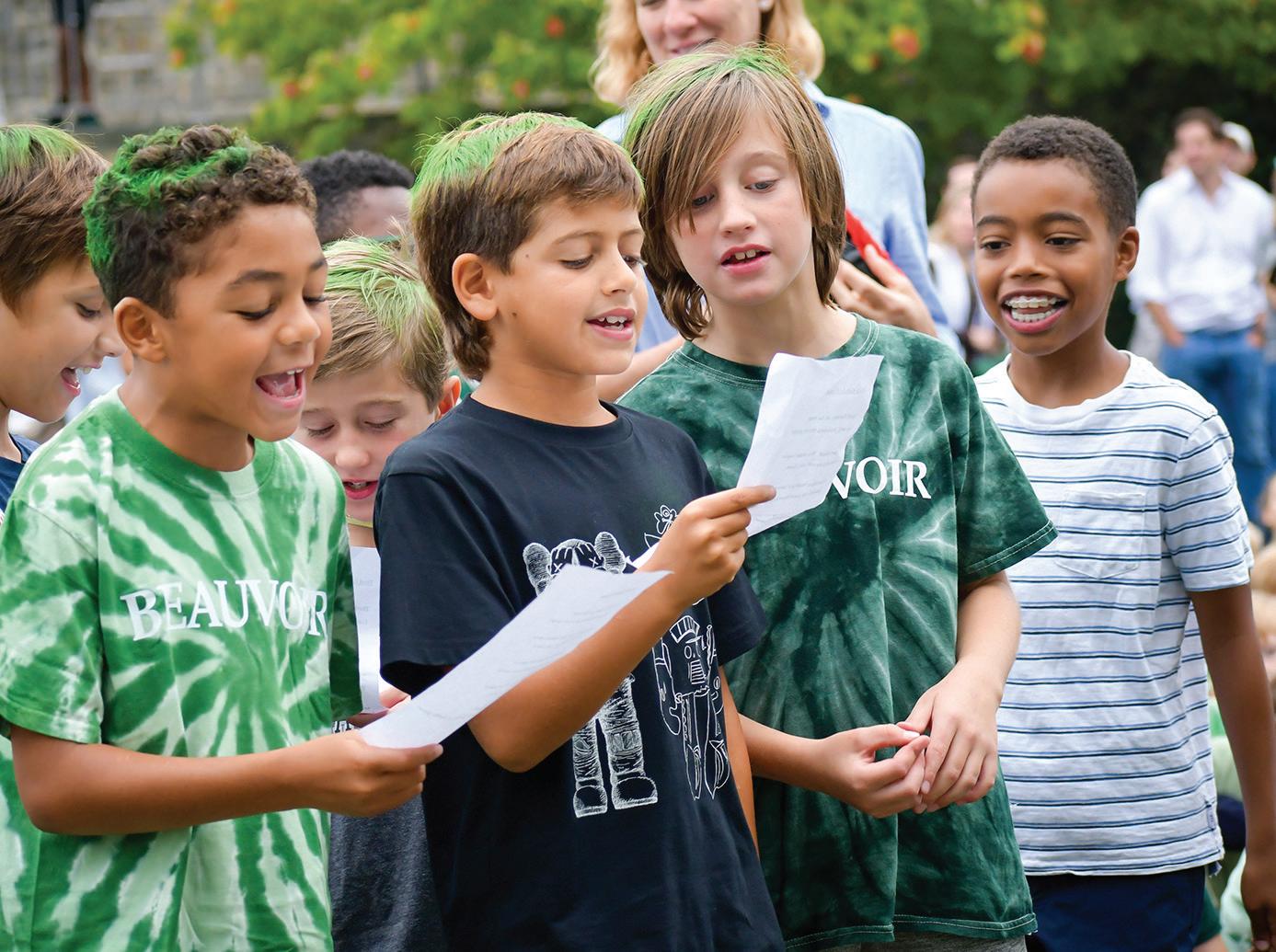
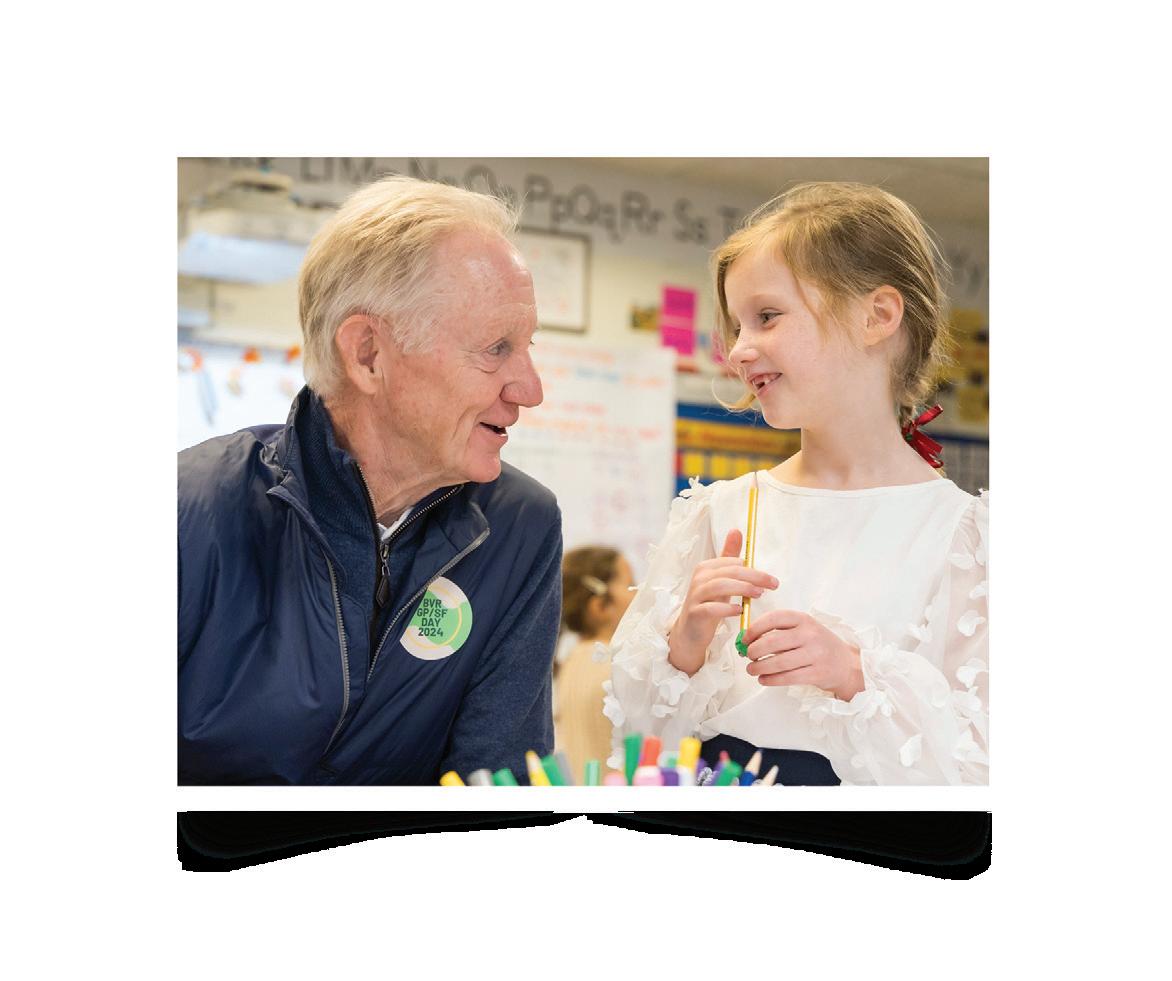
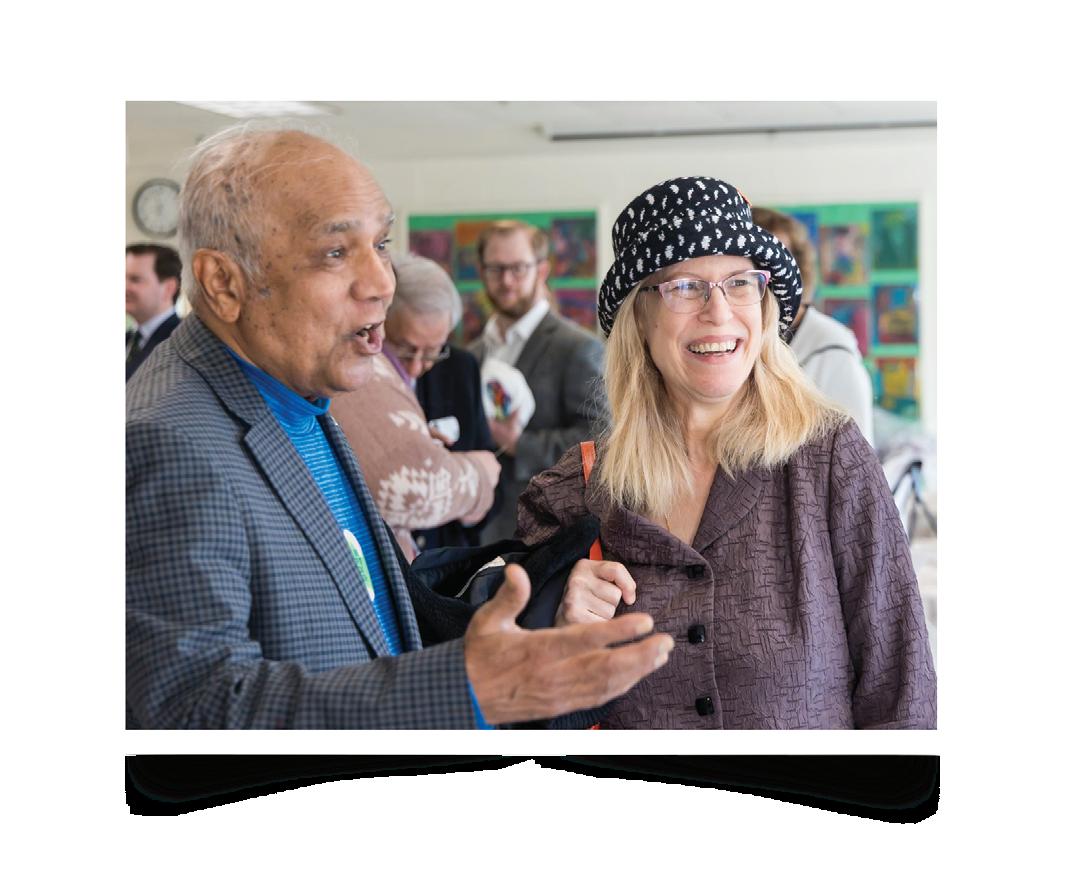
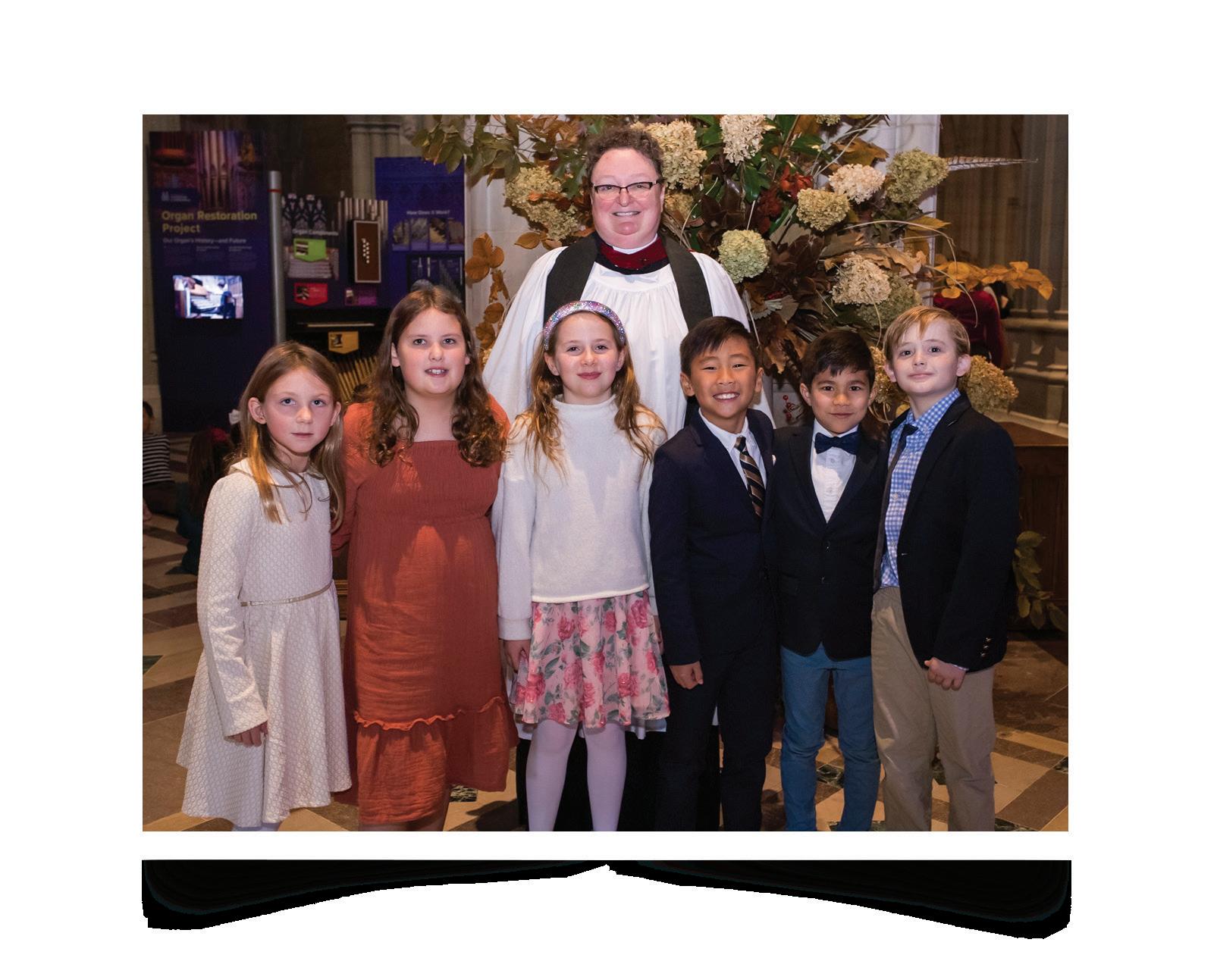
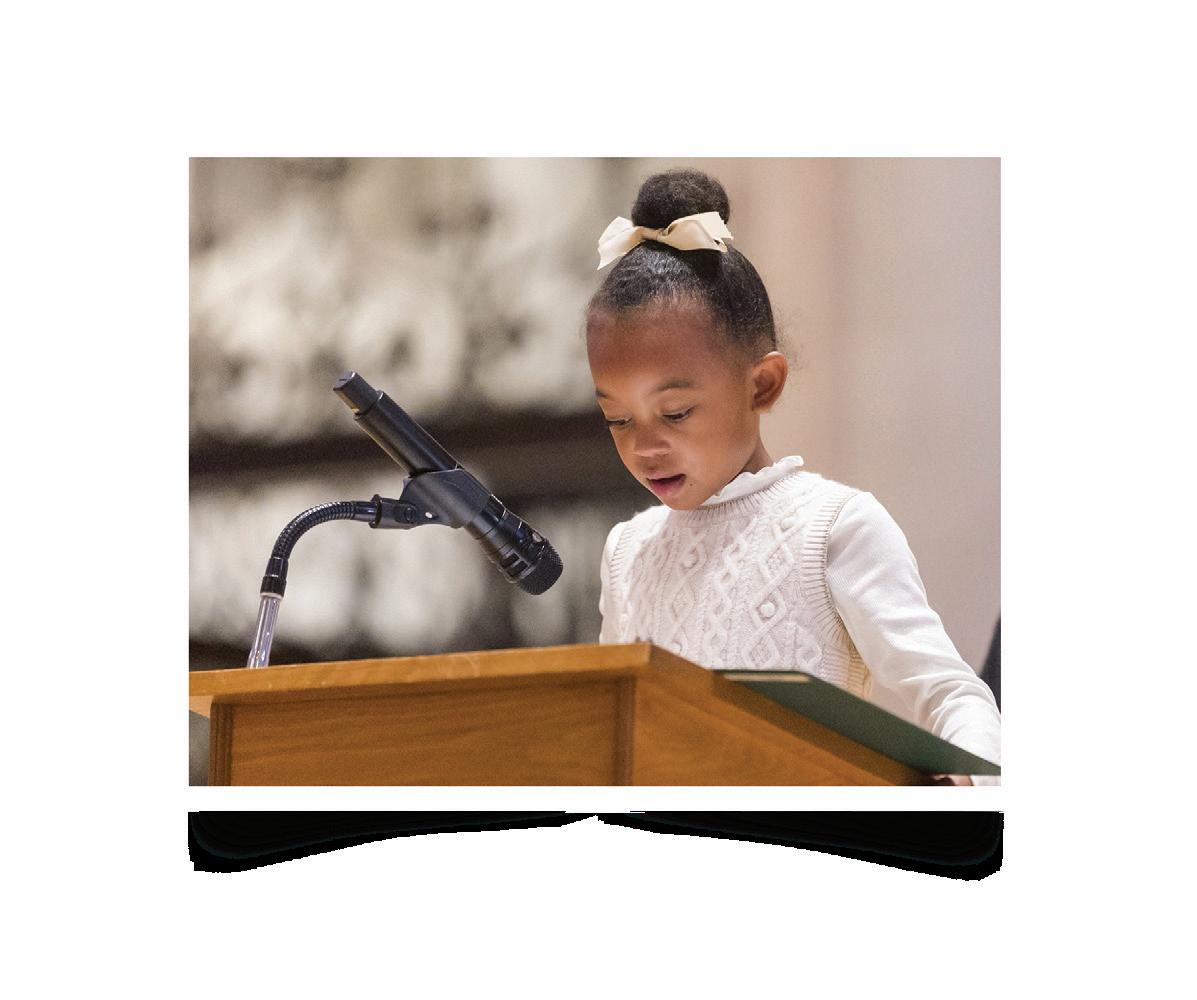
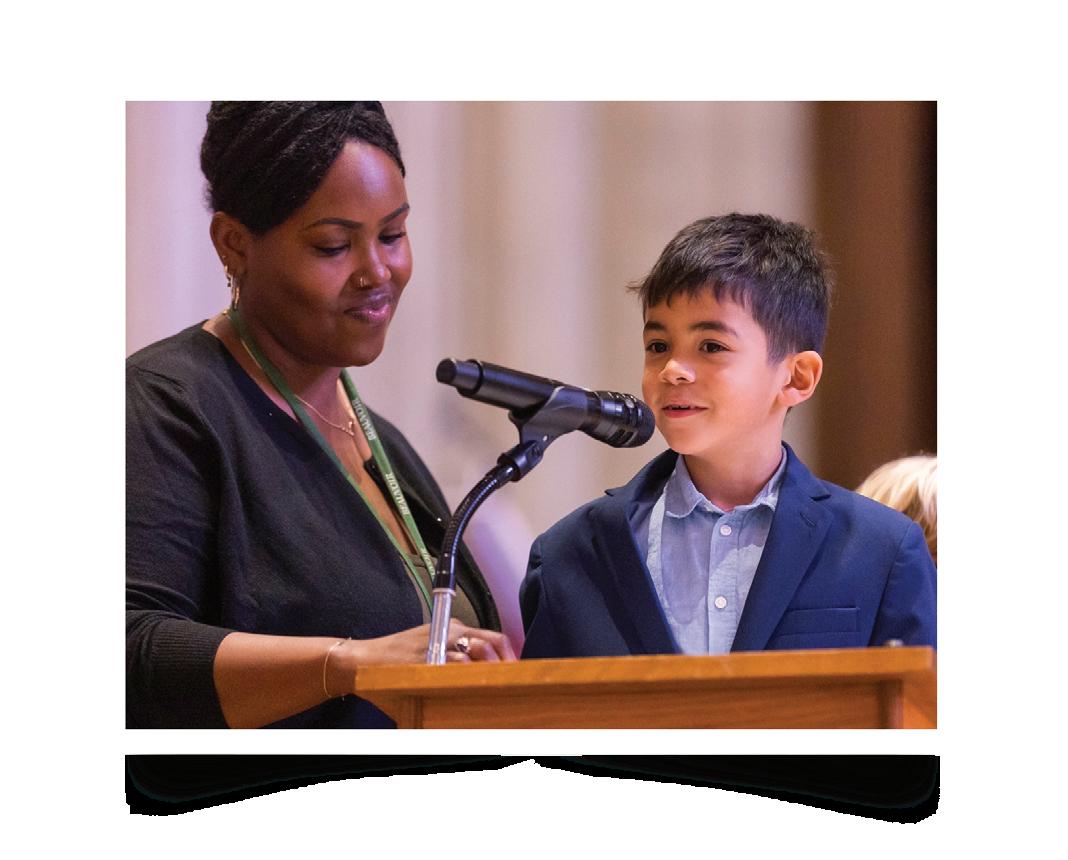
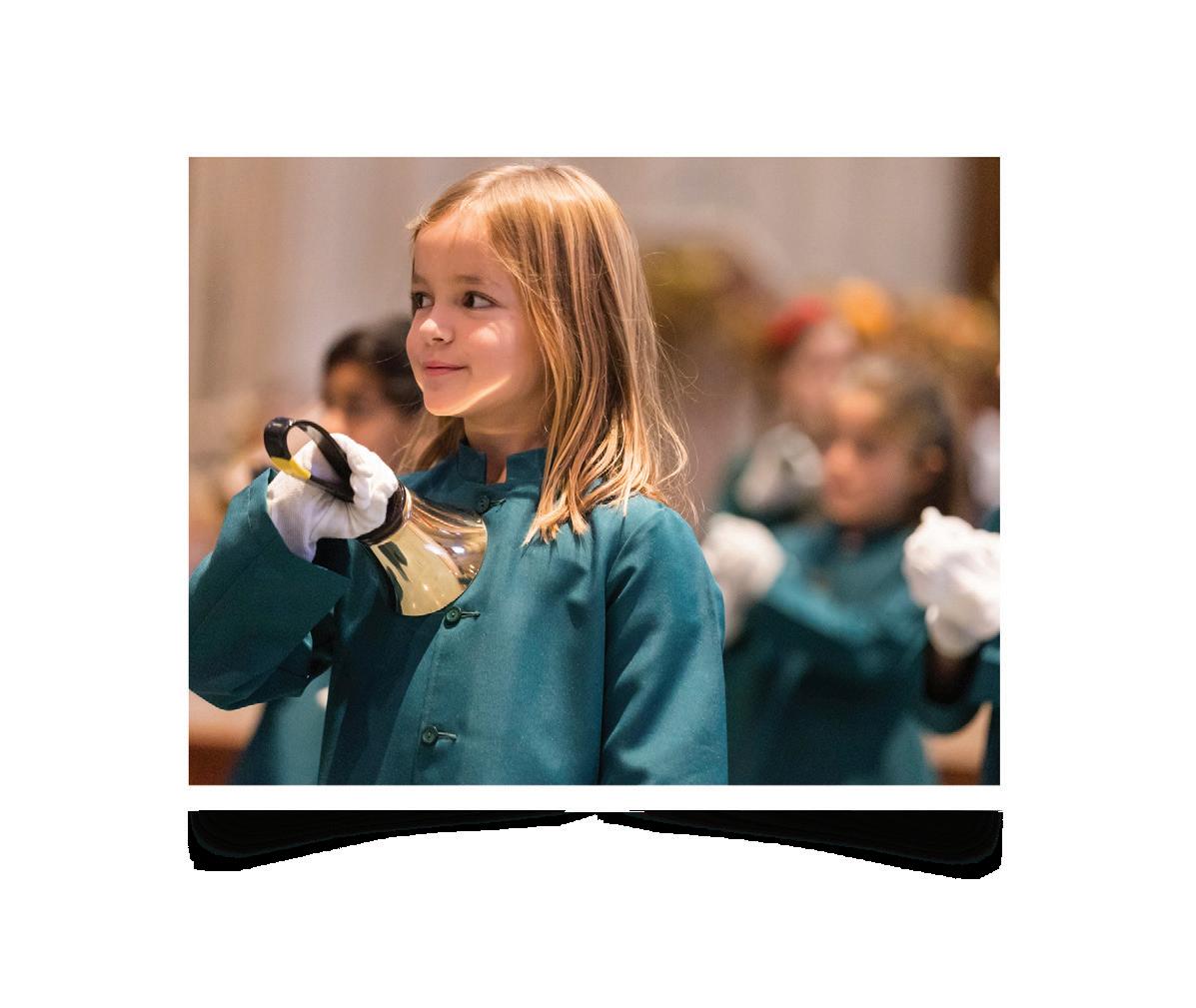
Beauvoir’s Thanksgiving Chapel is a highlight of our Grandparents’ and Special Friends’ Day, and a cherished tradition where our students, faculty, and families come together in gratitude. This treasured chapel takes place at the Washington National Cathedral and features student-led readings, joyful singing, and reflections on thankfulness. The event highlights our community’s spirit of generosity and togetherness. It’s a beautiful way to celebrate the season in our awe-inspiring Cathedral.




From Gargoyles to Stained Glass:
First Graders Become Cathedral Experts
By the Rev. Dr. Lisa Barrowclough, Chaplain
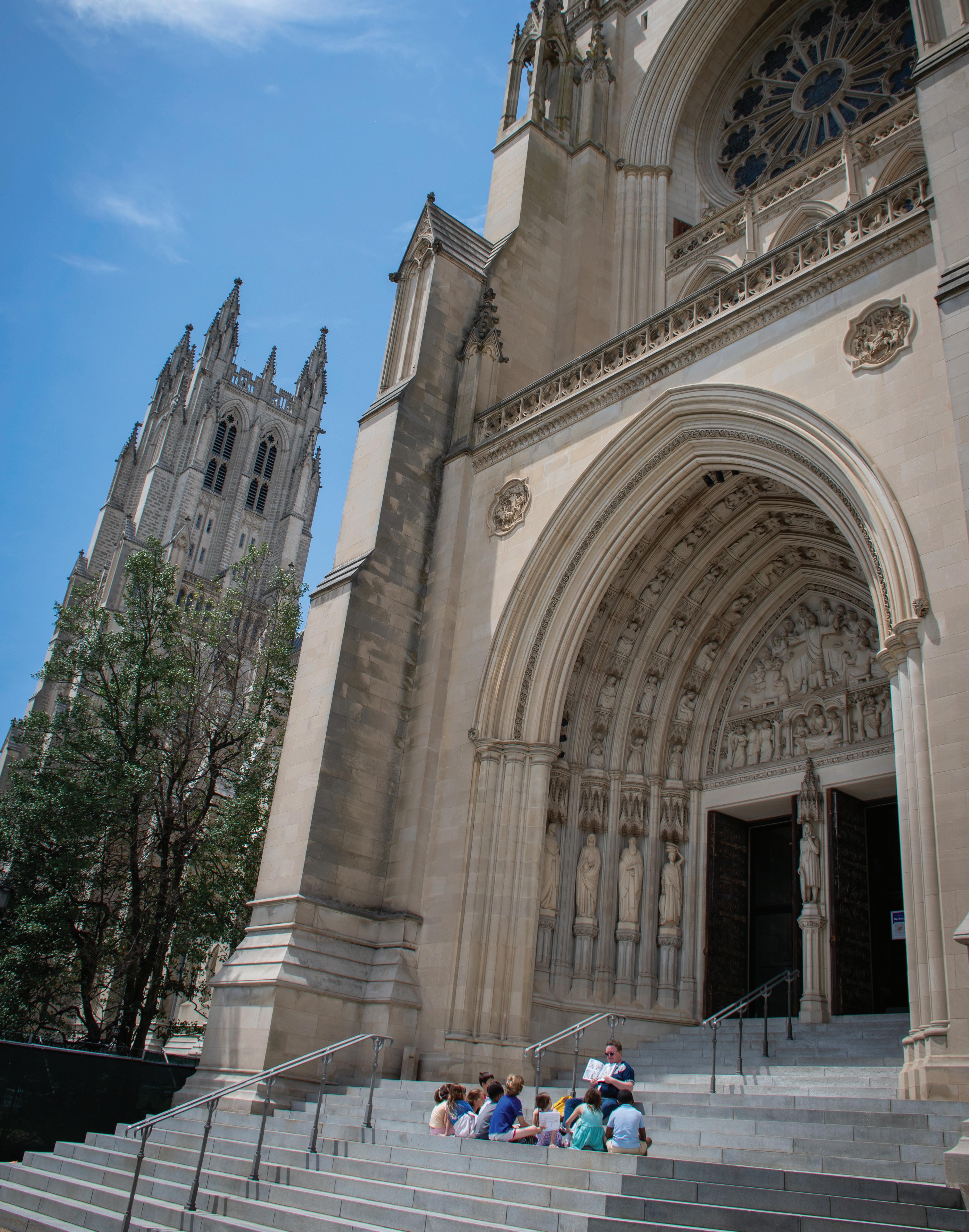
WWhen you meet a Beauvoir first grader, you are meeting a cathedral expert! Ask them about the features of Gothic architecture, like flying buttresses or pointed arches, and they’ll be able to tell you about the age-old science that helps the Washington National Cathedral stay standing. Inquire about the stone carvings with water pipes in their mouths, and a first grader will explain how gargoyles keep their side of the Cathedral safe from rainwater. Comment on the beauty of the stained-glass windows and be prepared for a list of fascinating facts about how glass was accidentally discovered, how non-readers once learned the stories of the Judeo-Christian faith by admiring stained glass, or how the process of making a window has seven tedious but worthwhile steps.
These are only a few examples of the learning that takes place in weekly Cathedral Studies gatherings at Beauvoir, ever since the class became a regular part of the first-grade rotation of specials classes. Cathedral Studies has been a component of the firstgrade curriculum for decades; however our new, more formalized curriculum has expanded into a
specials class separate from classroom instruction, and faculty notice their students are embracing and enjoying the learning of new material in creative ways. Beauvoir students have long referred to the Washington National Cathedral as “their Cathedral,” and now, students say this with even more joy and conviction, as well as a solid base of knowledge.
The Cathedral Studies year begins with video greetings from our bishop, the Right Reverend Mariann Edgar Budde, from whom the children learn about the cathedra (the bishop’s seat that makes a church a cathedral), and for whom students design and build their own cathedras with Legos®, wood blocks, and Magna-Tiles®. Next comes a message from our dean, the Very Reverend Randy Hollerith, who speaks to the first graders passionately and joyously about the Cathedral’s mission as “A House of Prayer for All People.” This lesson offers one of many opportunities to share an assortment of children’s books about practices of welcome without exception. Finally, these two leadership voices inspire and excite students just in time for the annual September 29 celebration of the 1907 laying of the
Cathedral Studies is my favorite. We are learning about all the different parts of the Cathedral, like the stained-glass windows. We also learn a lot about the Christmas story and then we get to dress up as angels and shepherds and sheep and tell the story at Christmas Chapel!”
cornerstone and our first Cathedral Studies trip to the Cathedral to sing and present giant cards for the Cathedral’s birthday.
Next, our curriculum takes students back centuries to learn about the wonders of Gothic architecture. Students first test the strength and supportive nature of various architectural features with their own bodies, then visit the Cathedral, inside and out, to recognize all they’ve learned; students feel very proud of their new knowledge and experiences.
Once the first graders understand how the Cathedral was built, it is time to explore the stories that it tells, beginning with a look at God’s story of love for the Earth and all its living things, ourselves included. Other stories include learning about the Cathedral’s patron saints, Peter and Paul, and reflecting on how both were imperfect, but faithful, followers. Then it’s time to look at two of the many special stories of the United States that are told in its national cathedral. The first story is the courageous tale of Helen Keller and her teacher Annie Sullivan, both of whom are buried in the Cathedral Crypt. The second story is the unforgettable account of the first moon landing, from which a piece of moon rock was brought back by St. Albans School alumnus Michael Collins, for installation in the Cathedral’s famed Science and Technology Window, lovingly referred to as the “space window.”
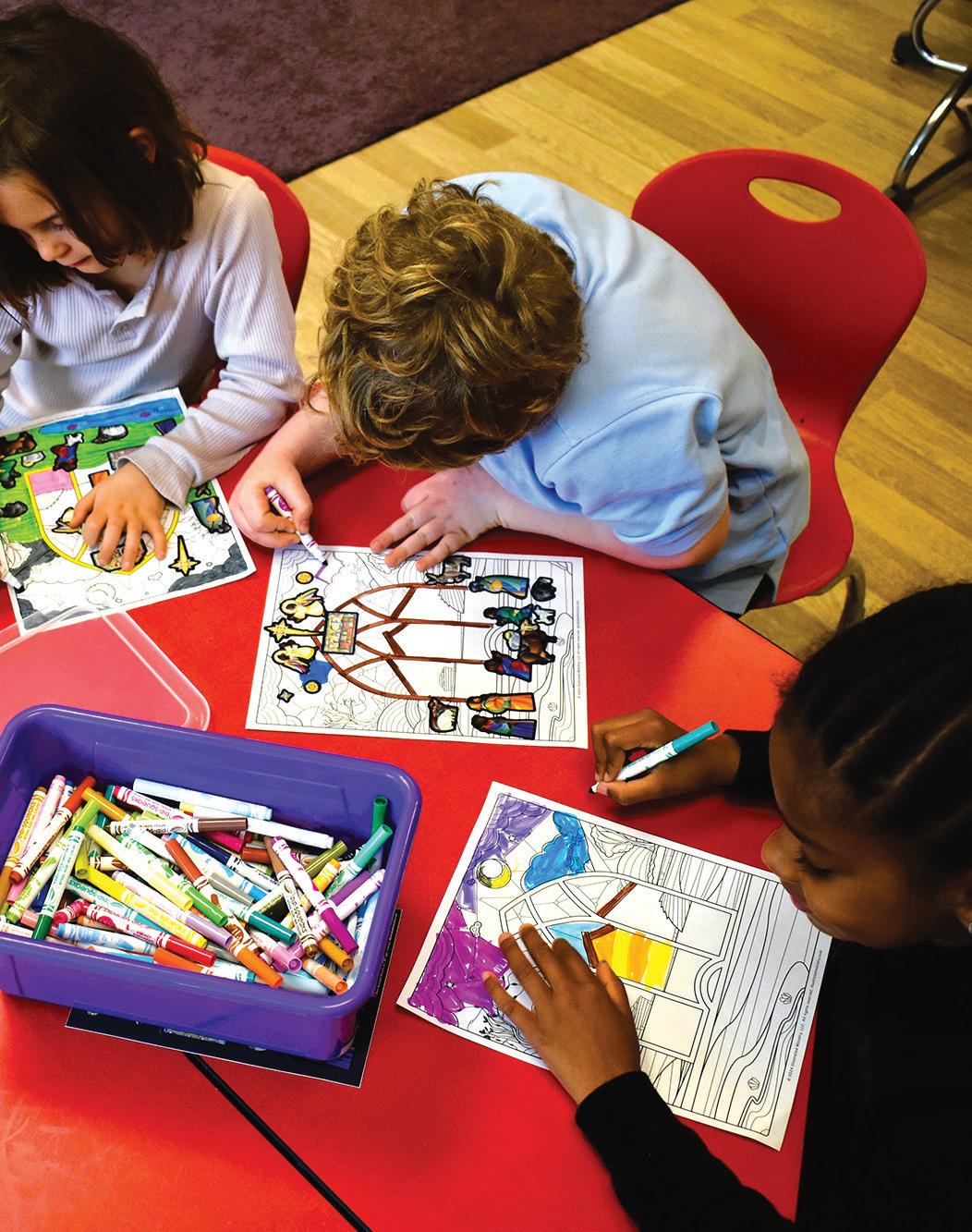
Our final Cathedral Studies visit of the calendar year is a trip to Bethlehem Chapel to see the stained-glass windows that tell the Christmas story, coupled with an awe-inspiring
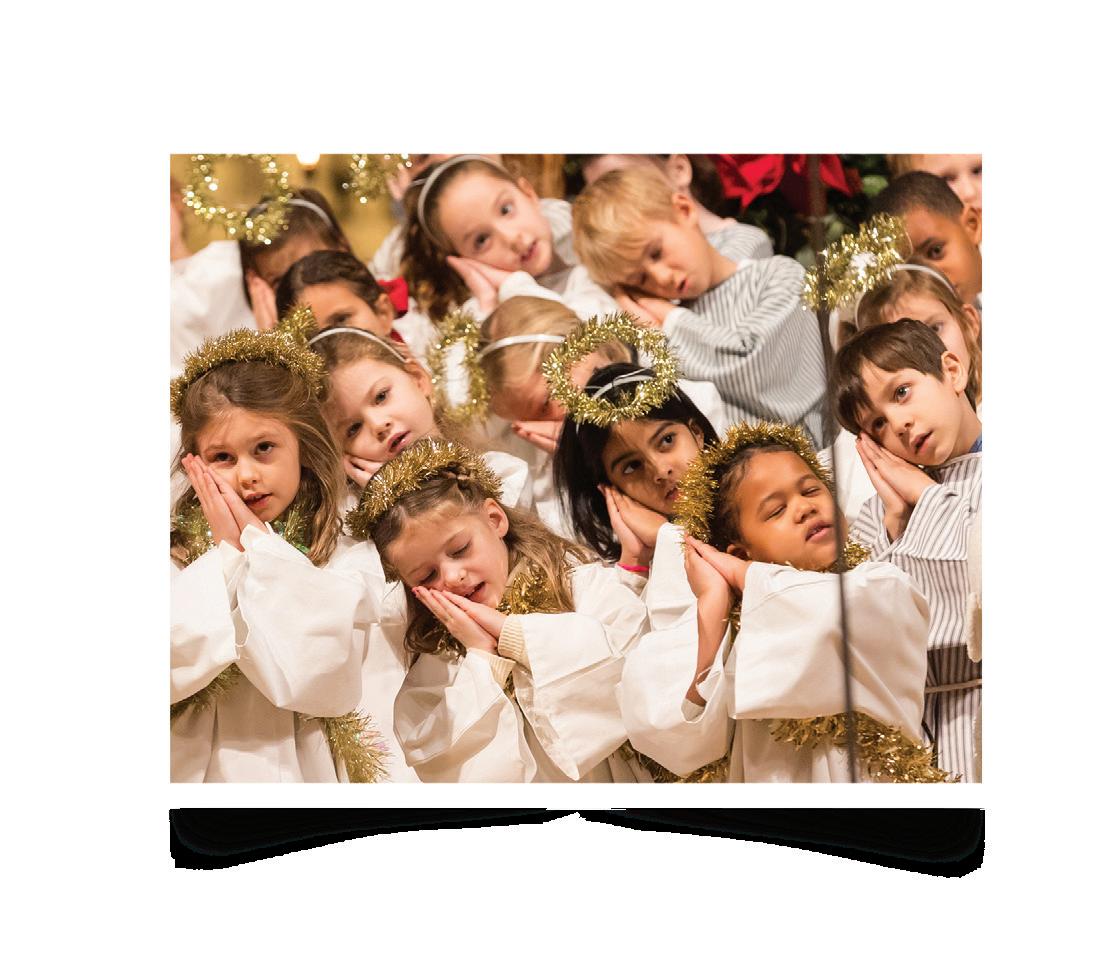
glance at the eighty-plus nativity sets from around the world, on display in the Crypt. The creches are made of stained glass and a wide variety of materials from every continent. These creche scenes are of special impact to first graders in late November as the students prepare to tell the story of the Bethlehem stable by portraying the people, angels, and animals of the pageant in Beauvoir’s beloved Christmas Chapel. By the time these students step onto the platform, they are experts, and their obvious care for each detail of the story touches every heart inside the Cathedral and across the livestream broadcast.
The new calendar year begins with a deep dive into stained glass—how it’s made and maintained, how it teaches the faith, and how it has evolved in our own Cathedral. During our current students’ time at Beauvoir, the Cathedral courageously replaced Confederate images on two windows with The Now and Forever Windows and a poem—a lived example of the “House of Prayer for All People” mission in practice. The windows, designed by acclaimed artist Kerry James Marshall, were dedicated on September 23, 2023. Dr. Elizabeth Alexander wrote the poem “American Song,” which was carved into tablets beneath the new windows a year after their installation. First graders learn about these windows during Black History Month, then they work together to reimagine the poem in words and concepts that they can grasp. Finally, they design their own versions of the windows. We are honored to share our revised poem and kids’-eye-view drawings with the Cathedral staff.
As our focus turns to the Cathedral’s stone carvings, students are inspired to learn the stories of those honored in the Human Rights Porch—Jonathan Daniels, Rosa Parks, Archbishop Oscar Romero, Eleanor Roosevelt, Mother Teresa, Bishop John T. Walker, and Elie Wiesel—and to notice the many ways these heroes made our world a better place. As a response, students make a nomination for the “Beauvoir Life Rules Porch,” writing persuasively about how their nominee best exemplifies honesty, kindness, respect, or responsibility.
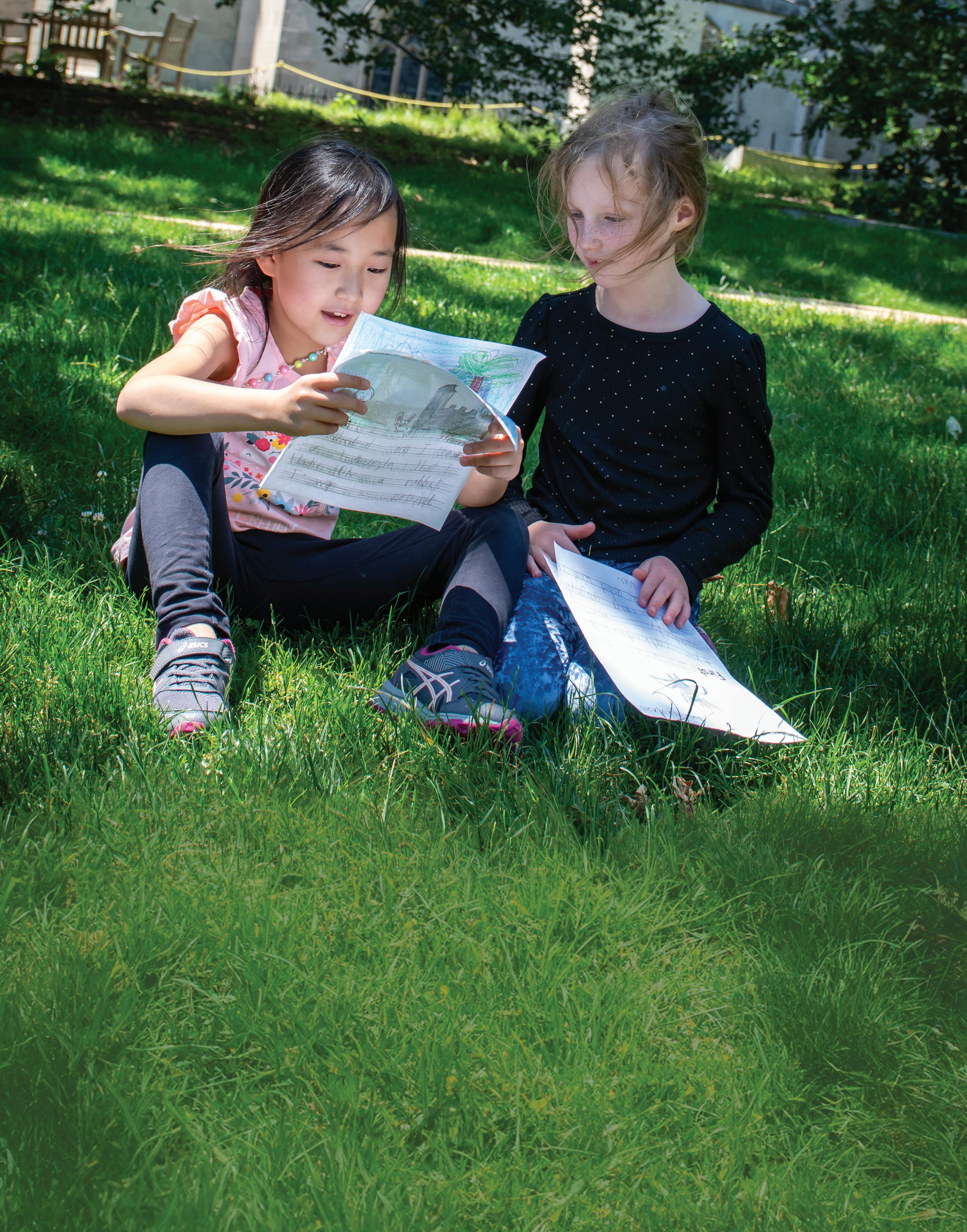
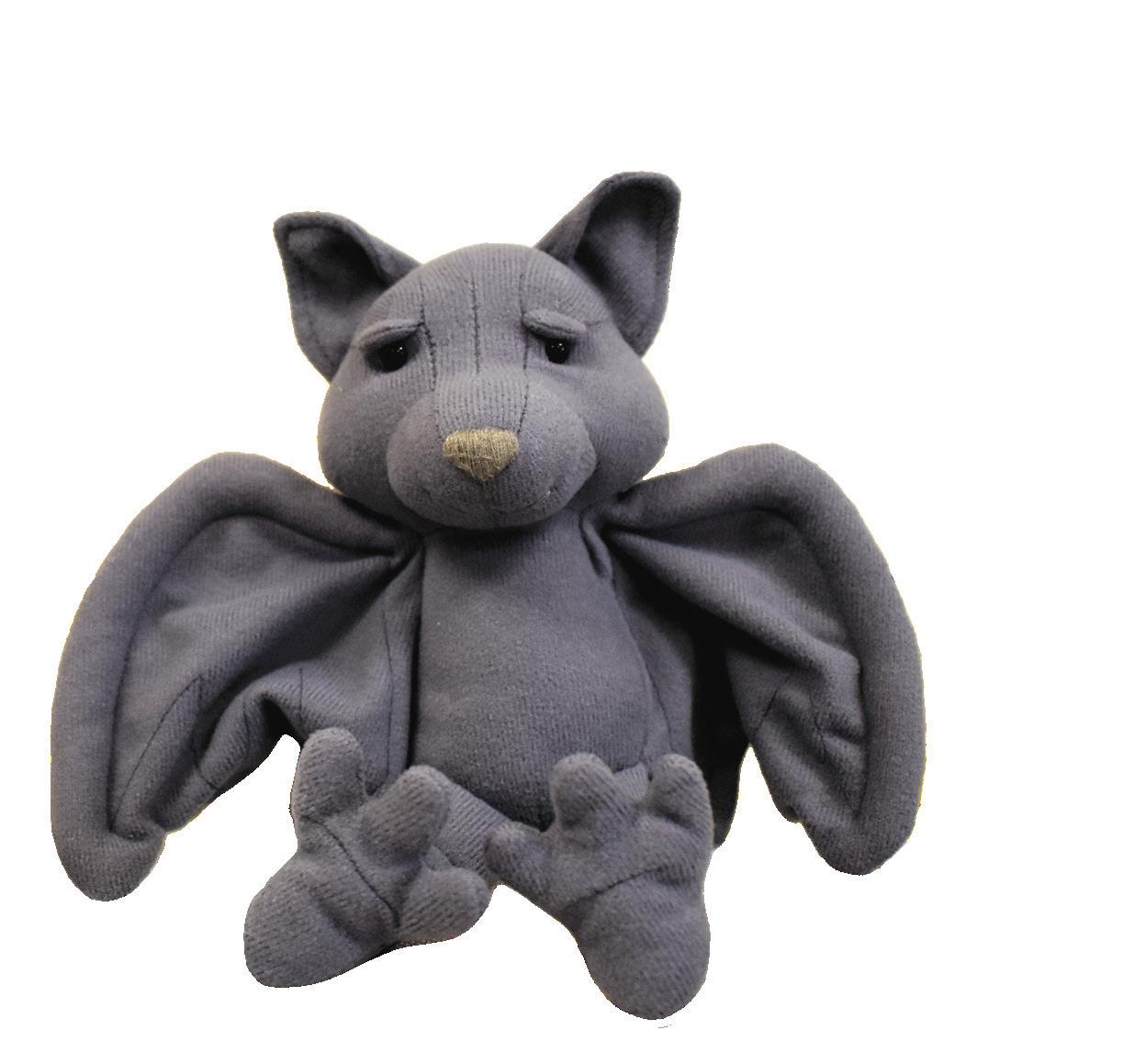
Our curriculum moves to the topic students ask about most: gargoyles and grotesques. Since the fall, students have enjoyed the adventures of “Garry the Gargoyle” through read-alouds that close nearly every class we spend together. The students are eager to learn the stories of the carvings on our own Cathedral. As both their knowledge of and experience with the Cathedral have increased and their writing skills have grown sharper,
the students craft “small moment” stories about their own imagined encounters and adventures with gargoyles wandering about the Cathedral Close. Sitting in the shadow of the Cathedral’s east end, the first graders share their stories and illustrations with one another, accompanied by gales of laughter and gasps of delight.
As first graders become “cathedral experts,” they also develop into appreciators and advocates. Proudly, they give visiting family and friends tours of “their Cathedral” and young learners begin to anticipate the day they have the honor of reading at a chapel or perhaps later serving as a chorister or acolyte inside the glorious building they have come to know and love. The journey since our first day together has been rich and rewarding. The Cathedral Studies experience helps first graders understand, appreciate, and take pride in what it means to be a part of Beauvoir, the National Cathedral Elementary School.
First graders create scenes from the first Christmas story.
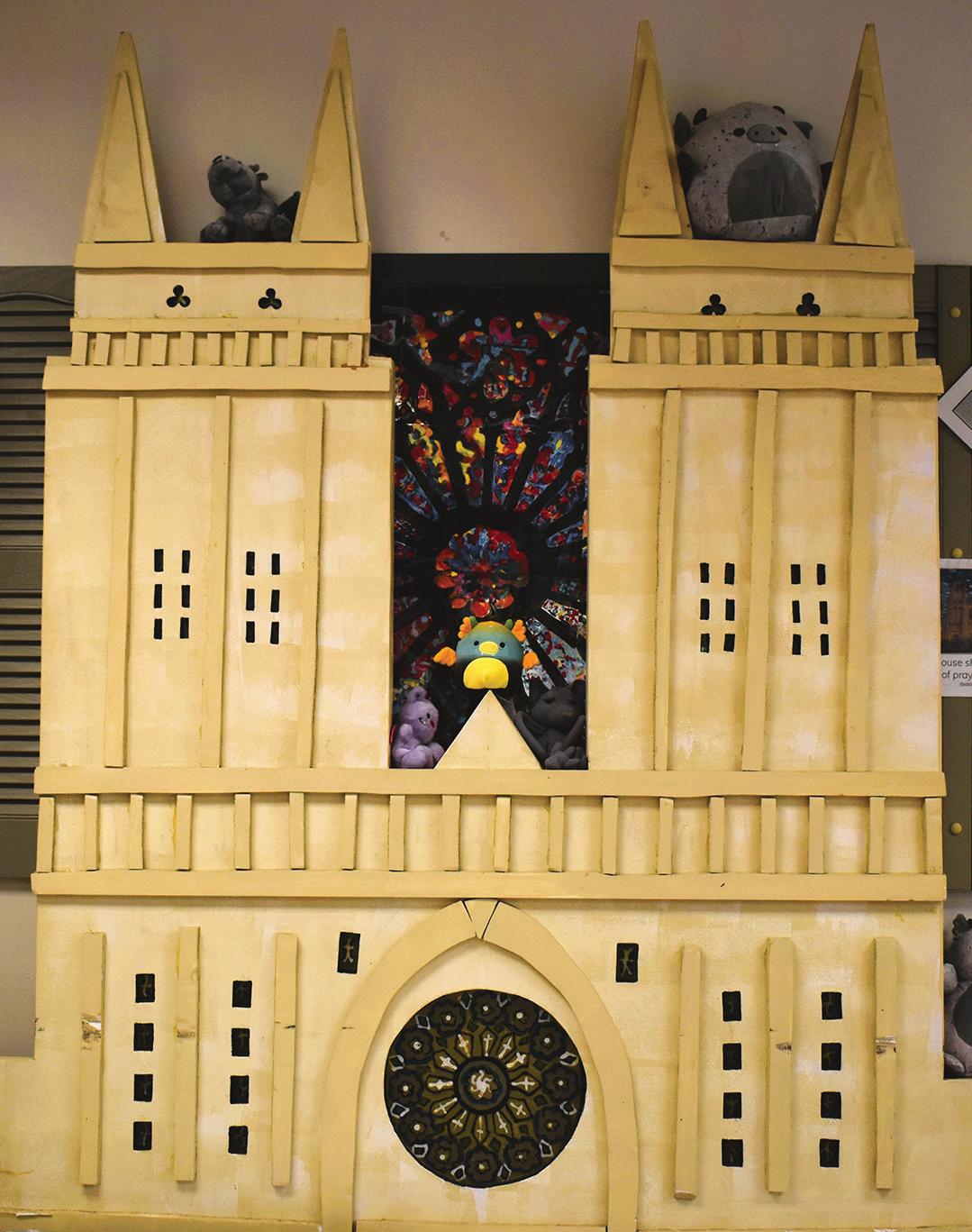
Stuffed gargoyles, pictured above adorn the wooden cathedral that graces the wall of the Cathedral Studies classroom.
Celebrating the Our Specialists Special in
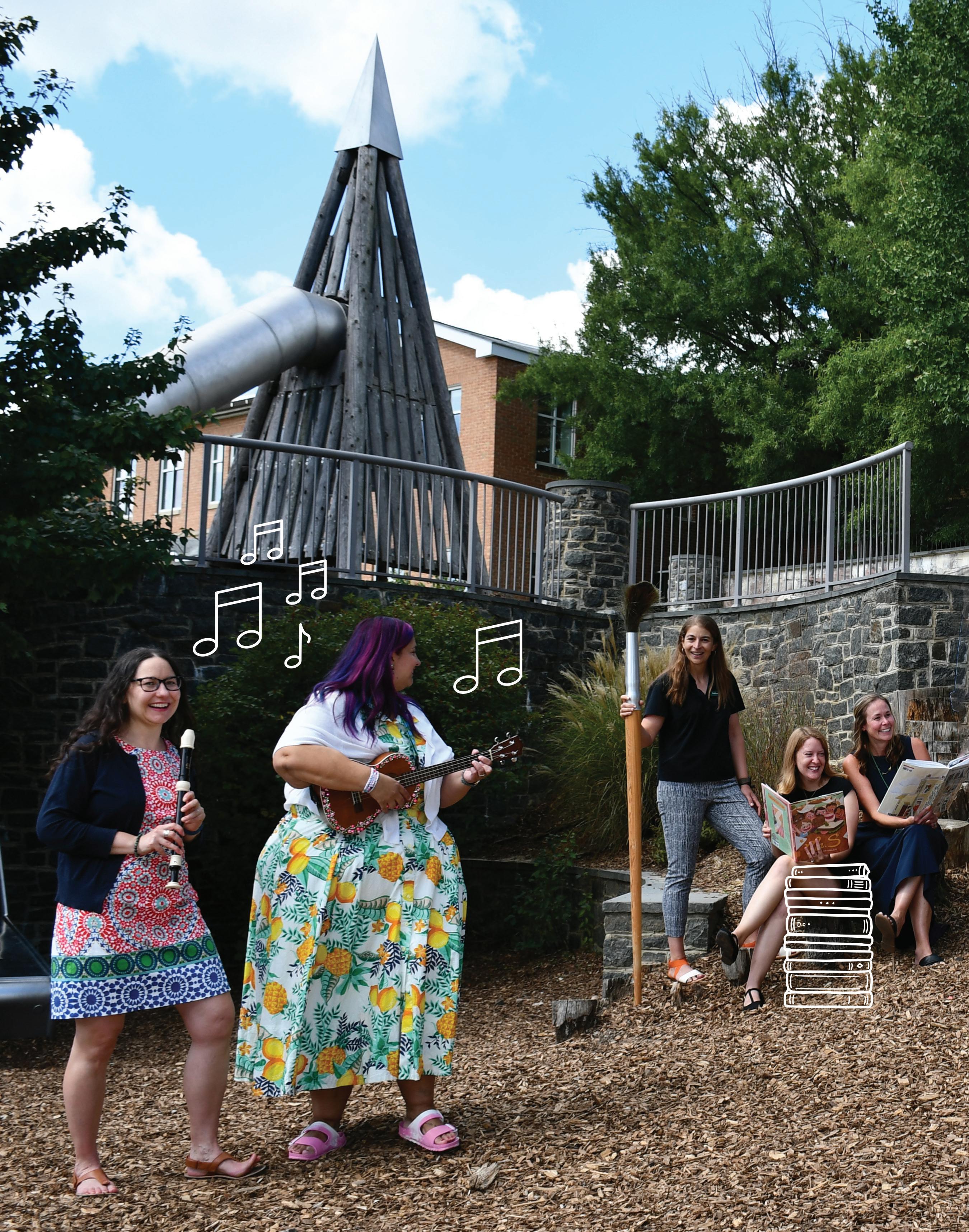
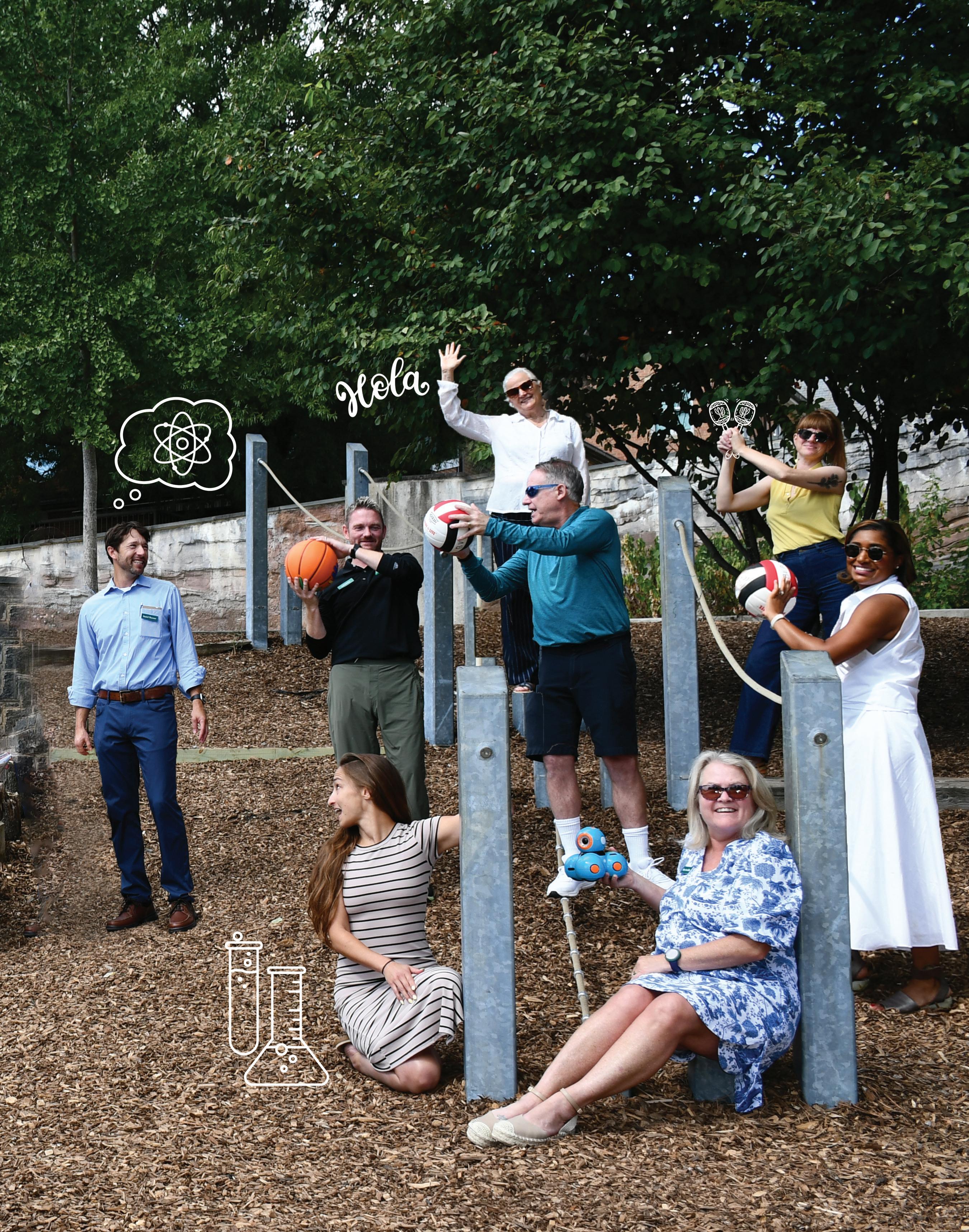
At Beauvoir, co-curricular specials aren’t extras, they are essential to a child’s foundation for learning and growth. Meet our team of extraordinary specialist teachers who nurture the whole child: mind, body, and spirit!
Left page from left to right: Erin Riley, Sara Alipanah, Kaitlyn Hay, Carissa Youse, Rachel Tanner. Right page back: Jessica Espinosa, Liz Hillbruner, Middle: Dan Thorner, Neil McClay, Gregg Albright, Front: Laura Voelker, Mary Ann Bliss, Director of DEIB & Director of Beauvoir’s Specialists Ryann Fapohunda
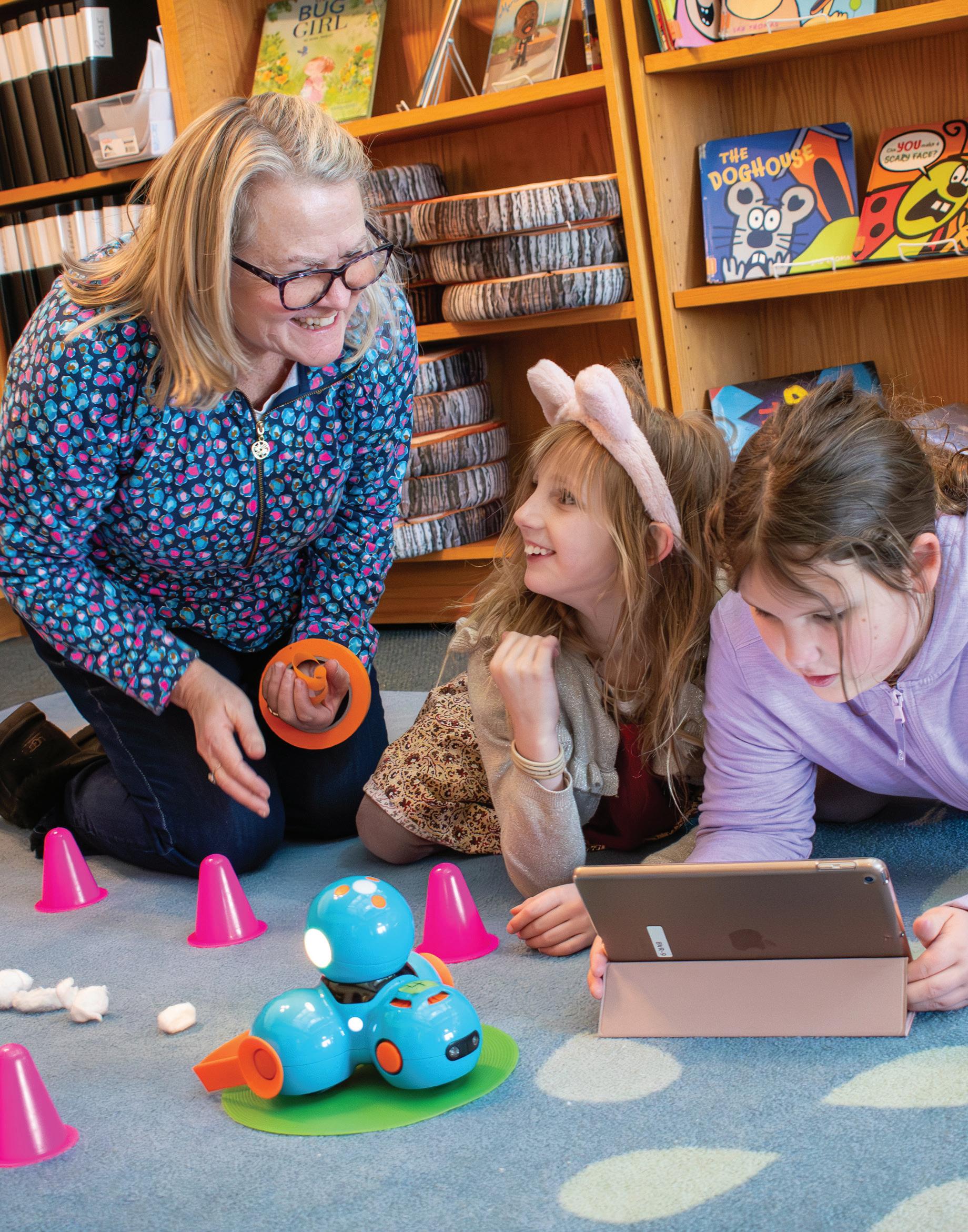
If you step into Mary Ann Bliss’s classroom on any given afternoon, you’re bound to find a buzz of excitement in the air. Dash robots zip across the floor, weaving around colorful cones and launching tiny foam balls into homemade hoops. Clusters of second graders huddle together, laughing, troubleshooting, and excitedly reworking their block code on iPads, while others debate whether their robot needs to turn 90 or 120 degrees to hit the target. In Mrs. Bliss’s classroom, technology isn’t just a subject. It’s an adventure, a puzzle, a way of thinking, and Mrs. Bliss is right there alongside her students, fueling their curiosity every step of the way.
For Mrs. Bliss, Beauvoir isn’t just where she works, it’s where she’s poured her heart into a career that blends creativity, curiosity, and cutting-edge technology. Now in her 37th year at the School, she reflects on what brought her here and what keeps her energized every day. “I chose Beauvoir because of its strong commitment to fostering a wellrounded education.”
Before diving into the world of education technology, Mrs. Bliss spent nine years teaching kindergarten and pre-kindergarten. It was during that time that she discovered how technology could enhance learning in meaningful ways. “When an opportunity arose to transition into ed tech, I quickly realized how technology could enrich and elevate Beauvoir’s strong curriculum,” she says. That
Mary Ann Bliss
Director of Academic Technology Years at Beauvoir: 37 A Passion for Technology and Teaching
“
Our technology curriculum doesn’t live in a silo. For example, in third grade, students program robots to draw red words or complete math problems. ”
—Mary Ann Bliss
realization led her to earn a master’s degree in educational technology, allowing her to contribute even more meaningfully to the School and her students.
As Director of Academic Technology, Mrs. Bliss has spent 22 years helping young learners unlock their potential through hands-on exploration and creative problem-solving. Whether it’s building robots or crafting code, she encourages her students to dive into learning with enthusiasm. Mrs. Bliss is always looking for ways to connect technology to other areas of study, as well. “Our technology curriculum doesn’t live in a silo,” she says. “For example, in third grade, students program robots to draw red words or complete math problems. They’re reinforcing science and language arts while also learning how to code.”
Inclusivity is also a cornerstone of her work. By integrating the principles of diversity, equity, inclusion, and belonging into the curriculum, she ensures that every student has access to technology tools and the chance to collaborate across diverse groups. “This interdisciplinary approach enhances learning and reflects the real world,” she adds.
Looking ahead, Mrs. Bliss is excited to introduce more advanced coding and robotics challenges to her students. “Each spring we plan projects tied to Global Studies that will really push students to think critically and creatively,” she says.
What keeps her inspired after all these years? It’s the joy of seeing young learners light up. “I love seeing their excitement when they successfully program a robot or solve a challenge. It motivates me to keep learning and trying new things too,” Mrs. Bliss says.
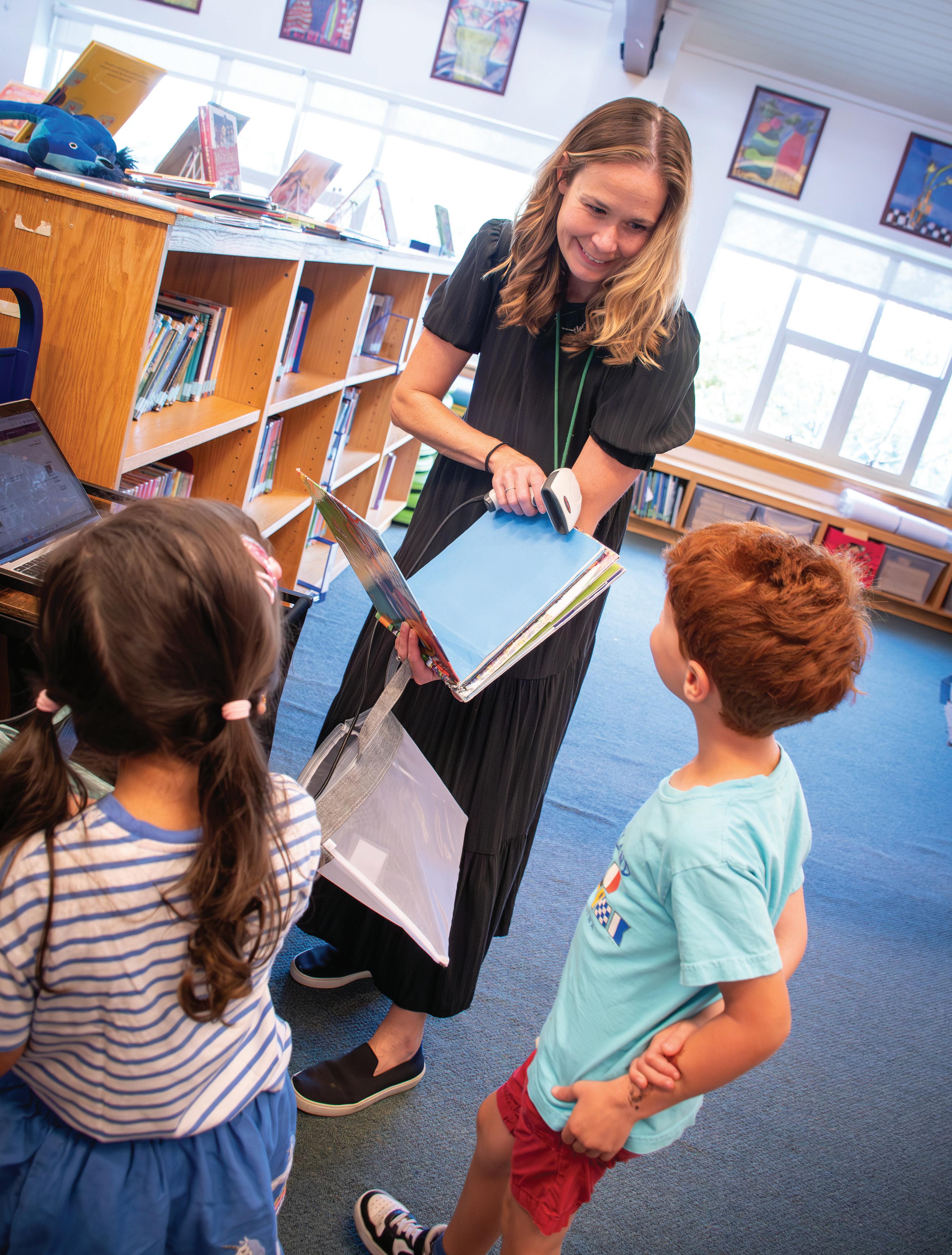
Rachel Tanner’s connection to reading is deeply personal. “Reading didn’t come easily to me as a child,” she admits. “But my parents read to me every night. My dad would make up these wild stories in funny voices, and I still remember the first series I could read on my own. I was hooked.” It’s that moment of connection she now looks for with each student. “When they find that book or series that clicks, that’s when the library becomes a place of confidence and joy.”
Ms. Tanner has a gift for helping young readers discover their spark: that moment when a book, a character, or even just a silly voice brings a story to life and makes reading feel like magic. Now in her ninth year at Beauvoir, and her 15th as an educator, Ms. Tanner brings both heart and creativity to her role as Library Media Specialist.
“Beauvoir reminded me of the international schools I attended as a child,” she says. “It’s a place that emphasizes community and puts each child’s well-being at the center of all learning.” That focus on joy and individual connection is what drew her in, and what continues to fuel her work.
Before stepping into the Library, Ms. Tanner spent six years teaching second grade at Beauvoir. Her classroom always leaned heavily into reading and writing. “I want each student to believe they are an author and that they have a voice worth sharing,” she explains.
Inspired by authors and illustrators herself, Ms. Tanner dreams of writing a children’s book one day. Until then, she channels that passion into helping students fall in love with storytelling in all its forms.
One of her favorite projects last year was a kindergarten fable unit, where students created their own stories
Rachel Tanner Library
and Media Specialist
Years at Beauvoir: 9
Nurturing a Love for Stories
“
I want each student to believe they are an author and that they have a voice worth sharing,”
—Rachel Tanner
using their class animal, a setting in Peru, and one of Beauvoir’s Life Rules. “They made puppets, recorded their stories on iPads, and turned the whole thing into a story cube with a QR code,” she shares. “It was such a fun blend of creativity, cultural learning, and technology.”
Collaboration is at the heart of Ms. Tanner’s approach. She partners with grade-level teams to bring deeper meaning to the curriculum. Some examples of her partnerships include supporting pre-kindergarten phonics with an ongoing ABC book, helping kindergartners research their class animals, and working with every grade on Global Studies projects.
Ms. Tanner’s lessons are often inspired by what her students gravitate toward. “I reflect on what characters, books, or types of media excite them, and then I look for what’s new and developmentally appropriate in that space,” she says. She’s also introducing new online tools to help students search for books and even recommend titles to each other, putting more power in their hands to explore and share their reading journeys.
Her own children, one Beauvoir alumnus (Harrison ‘23) and two current Beauvoir students, also help spark ideas. “Taking them to bookstores and watching what catches their attention is like research,” she laughs. Visiting libraries and children’s centers also fuels her imagination for how to shape library spaces and activities that truly engage young minds.
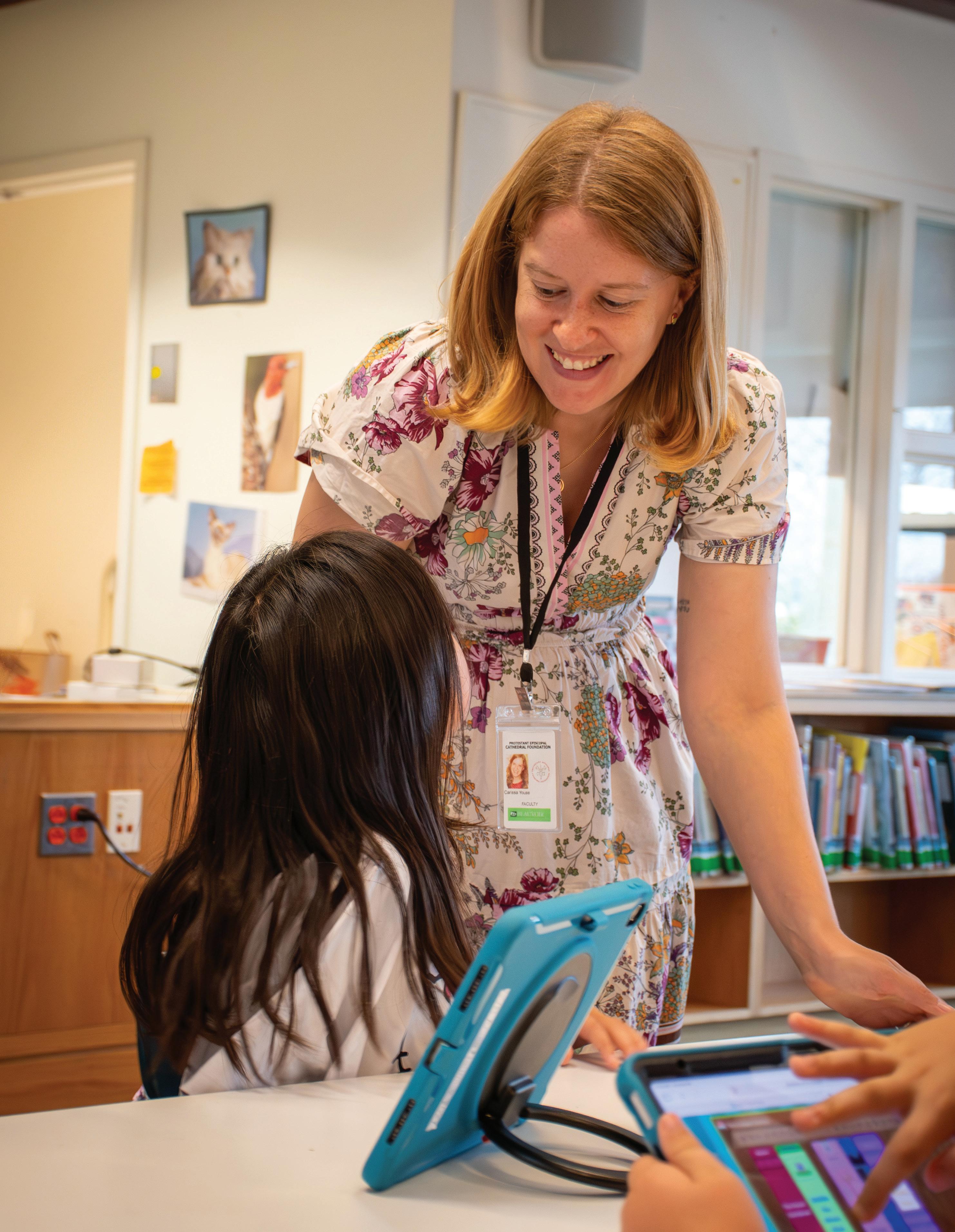
Each morning, before the school day even begins, the Beauvoir Library comes to life. Carissa Youse, a steady presence in the School for 13 years, greets students with a warm smile and a stack of books. Whether she’s leading a read-aloud or helping third graders record their own podcasts, Ms. Youse’s energy fills the room. In her space, books aren’t just things to read, they’re gateways to adventure, creativity, and new ways of thinking. It’s a place where curiosity is nurtured and every day feels like a new chapter.
Ms. Youse has spent her entire teaching career at Beauvoir, and she wouldn’t have it any other way. “Once I started right out of college, I just never left!” she says with a smile. As a Library Media Specialist, she’s known for her infectious love of reading and her warm presence. “I loved going to school when I was a kid, and Beauvoir reminds me of that joy. It’s a very happy place to be a kid and to be a teacher.” Her love of school has become a family trait; Ms. Youse’s son, currently in Beauvoir’s Early Learning Center, shares her enthusiasm for learning.
Her love of books started early. “My mom says I’ve been a reader for as long as she can remember. As a consequence, my mom would have to ban me from reading because being sent to my room was not punishment.”
Childhood sleepovers meant devouring Babysitter’s Club books or building models of Diagon Alley from the Harry Potter series.
Every class she teaches begins with a read-aloud. “No matter how old our students are, they all love getting to hear a good story.” She notes that even adults love stories, “that’s why audio books have become so popular.”
Carissa Youse
Librarian
Years at Beauvoir: 13
A
Place for Readers, Dreamers, and Storytellers
“
If
I’m working to teach nonfiction research and a grade is studying a particular country, I can tailor my book selections to support what they’re learning.”
—Carissa Youse
Beyond books, Ms. Youse introduces students to many forms of media. Third graders end the year by creating original podcasts on topics they love. “In past years, we’ve had podcasts about Taylor Swift’s best songs, supernatural encounters, ways to improve Beauvoir, the best Disney rides, you name it.” She loves watching how perspectives shift after hearing a compelling story, like her favorite This American Life episode about a squirrel removal gone wrong.
Ms. Youse steeps library time in the broader curriculum. “If I’m teaching nonfiction research and a grade is studying a particular country, I can tailor my book selections to support what they’re learning.” She’s always working to make the library a shared, student-driven space. Kids create “shelf-talkers” to recommend books, curate displays, and soon, some will even become “library helpers” who return books, give feedback, and decorate for the seasons.
Outside the classroom, Ms. Youse is constantly reading. “I have the Kindle app on my phone, so I’m reading when I walk to the grocery store, wait in line at Target, or eat lunch. I have six books going at any time on my bedside table.” She even reads student recommendations.
And while she jokes that she’s not great at keeping her interests a secret (just ask any of her colleagues about her opinions on Harry Potter fanfiction), she does have one hidden talent: she can solve a Rubik’s Cube. “I learned so I could teach a student on the playground. I think every teacher should try to learn something new and challenging every year. It helps remind us of what our students feel like when they’re learning.”
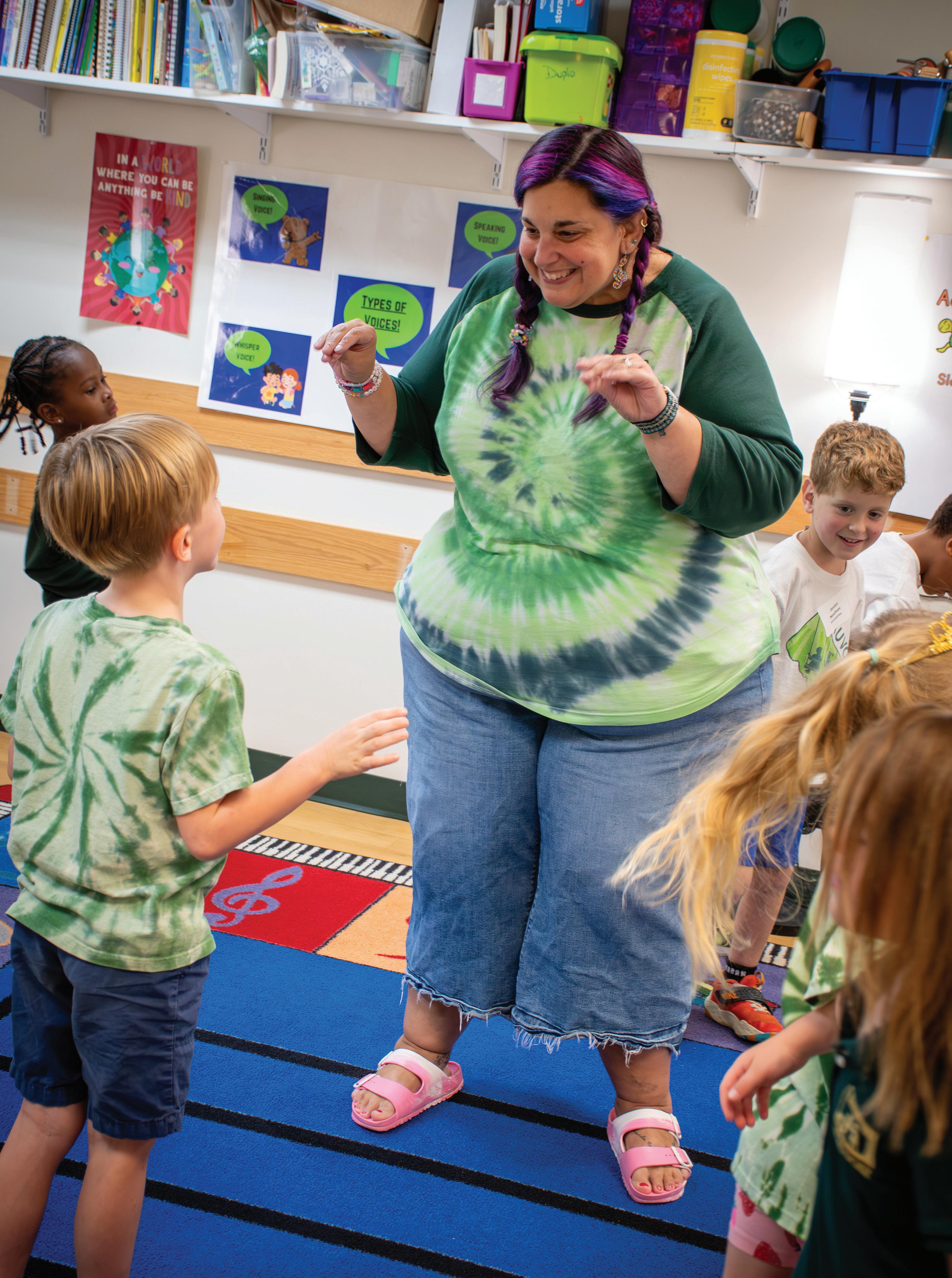
The sound of laughter and song fills the Beauvoir music classroom as pre-k students gather around Sara Alipanah, their excitement palpable. With a bright smile, she begins the morning lesson, guiding the children through rhythm and movement. “Just like this!” she exclaims, clapping her hands in time as the class joins in. As she starts to sing “Mortimer” by Robert Munsch, a few familiar faces light up—children who once watched quietly now sing with confidence and joy.
This moment captures the essence of Ms. Alipanah’s teaching philosophy: the importance of honoring childhood and nurturing each child’s unique voice. She has made it her mission to create a vibrant, supportive space where young learners can flourish.
One of the most rewarding parts of her role is witnessing students discover their voices. She recalls teaching infants as young as four or five months, who begin by listening and moving to the rhythm. Over the years, those same children begin to sing with her. “It’s a really neat experience,” she says, “when they sing the songs I’ve been singing to them.”
Ms. Alipanah’s love for music began early. In high school, she led her church’s children’s choir, which sparked her passion for guiding young singers. That experience inspired her to shift from vocal performance to music education, a path that allowed her to share her love of music while nurturing others.
In her classroom, literature and music intertwine. Each year, students explore “Mortimer” through dramatic play, singing, and instruments, helping them connect story to song. One kindergarten student even sang “Mortimer’s song” a year later, a testament to the lasting impact of
Performing Arts
Teacher
Years at Beauvoir: 9
Celebrating Childhood Through Music
“ Sara Alipanah
My holistic approach to music education blends multiple disciplines. Math comes alive through counting songs, while storytelling supports language development.”
—Sara Alipanah
her lessons. Other books, such as The Little Old Lady Who Was Not Afraid of Anything and Alexander and the Terrible, Horrible, No Good, Very Bad Day, are similarly transformed into lively musical experiences.
"My approach to music education blends multiple disciplines. Math comes alive through counting songs, while storytelling supports language development," she shares. Students strengthen fine and gross motor skills through instrument playing and movement, and social-emotional learning flourishes in partner and group activities. Each year, she also incorporates music from countries her students study in Global Studies, deepening their appreciation for culture and the arts.
Outside the classroom, Ms. Alipanah remains immersed in the arts community. She sings soprano with the Vocal Arts of Fairfax and participates in local theater productions. She continues to grow professionally through musiceducator workshops and open-mic performances, often accompanied by her ukulele.
A lifelong learner, she shares her expertise nationally. Ms. Alipanah has presented at music education conferences on social emotional learning (SEL) and authored “Mattering in the Music Room: Implementing SEL Practices to Connect with All Learners,” published in an international music education journal. Her podcast, Mattering in the Music Room, extends those conversations to a broader audience.
Through her enthusiasm and creativity, Ms. Alipanah nurtures not only a love for music but also the whole child, helping Beauvoir’s youngest learners find their voices, build confidence, and carry the joy of music long after they leave her classroom.
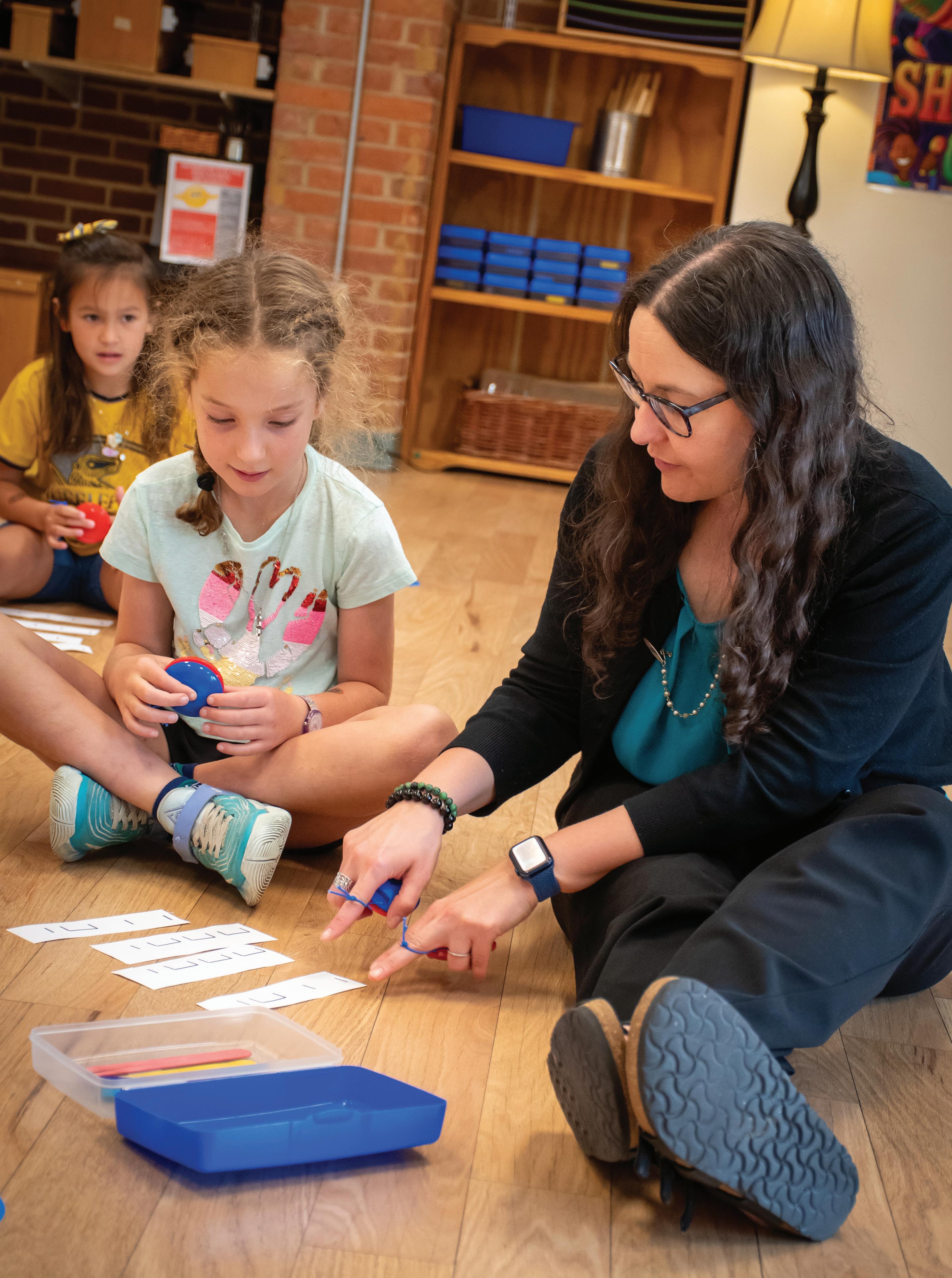
If you find yourself walking through Beauvoir’s halls in the springtime, you might hear familiar melodies drifting from recorders playing in the music room. In Erin Riley’s classroom, the recorder isn’t just a beginner’s instrument, it’s a chance for students to experience the joy, as well as the challenge, of making music together. It’s a rite of passage for many students, and a memory they carry long after they’ve moved on. “There’s something magical about it,” Ms. Riley said. “Hearing those springtime melodies drifting down the hallways feels like a little celebration of all the hard work the students have put in throughout the year.” For many Beauvoir alumni, the clear, bright notes of their first recorder performance remain one of their sweetest memories from their time at Beauvoir.
Now in her 11th year at Beauvoir, and her 19th year teaching, Ms. Riley’s path to the School was sparked by a former parent who had seen her work firsthand. “She ‘recruited’ me when a performing arts position here opened up,” Ms. Riley explained. “I was looking for a place where I could plant roots, and 11 years later, I’m still here because I feel like I found a teaching home.” For Ms. Riley, teaching performing arts to Beauvoir’s first through third graders isn’t just a job, it’s a joy. “Most days, I really have fun in my classroom,” she shared. “That’s not the norm for most of my friends at their jobs. I truly feel lucky to work here.”
Ms. Riley’s love for music and movement began when she was very young. She started dancing at age four, then moved on to piano lessons and singing in choirs. That passion led her to a regional high school for the performing arts, and eventually to a graduate degree in opera performance.
Erin Riley
Performing Arts Teacher
Years
at Beauvoir: 11
Finding a Home in the Arts
She performed professionally with companies including the Lyric Opera of Baltimore, Baltimore Opera Company and the Washington Concert Opera. Though she stepped away from performing in 2020, those experiences continue to shape her classroom. Currently, she participates in a monthly drum circle, and she attends a wide variety of concerts and engages in professional development for music teachers throughout the year.
“
Hearing those springtime melodies drifting down the hallways feels like a little celebration of all the hard work the students have put in throughout the year.”
—Erin Riley
One of her favorite Beauvoir traditions is the third-grade play, a capstone experience for students, and an annual highlight for Ms. Riley. “We choose a different play each year, one that suits that specific group of students. Watching them take ownership of it is so rewarding,” she said. The 2022 production holds a special place in her heart. “It was our first return to the stage after the COVID-19 pandemic. We couldn’t sing indoors yet, so I wrote a play that incorporated dance and instruments instead. Those curtain calls were some of the most joyous I’ve ever experienced.”
Ms. Riley embodies what it means to be a lifelong learner, as she is currently pursuing Kodály certification through George Mason University, a rigorous three-year program that includes coursework in pedagogy, conducting, folk music, sight singing, and ear training. “It’s an intense program,” she said, “but I’ve already brought back new ideas to the first-grade curriculum, and I’m excited to keep growing.”
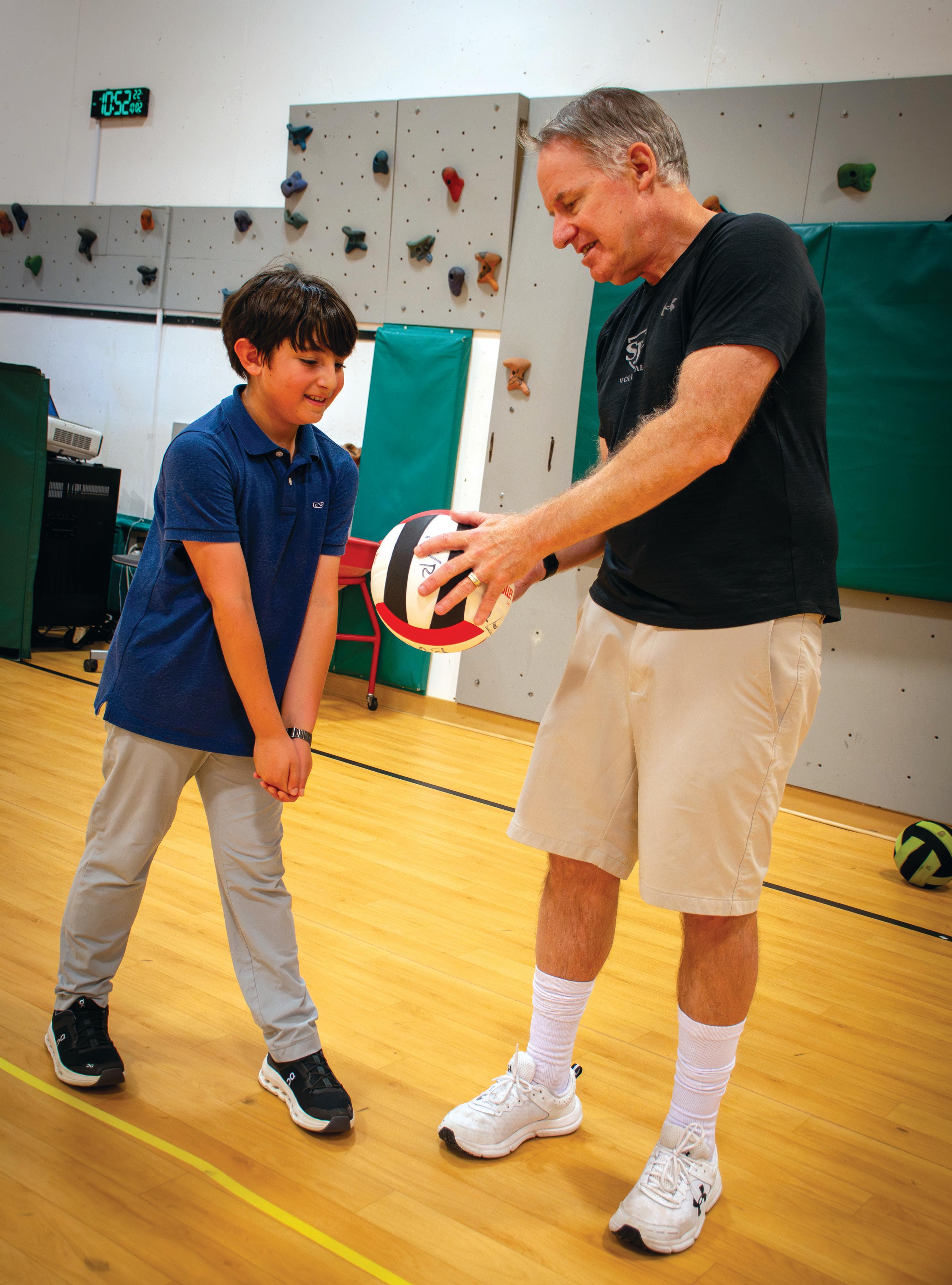
The gym at Beauvoir is alive with motion. Lights flash, soft balls arc through the air, and stilts click rhythmically against the floor. In one corner, two students carefully guide their friend across a balance beam, focused yet laughing together. These moments capture the spirit of Coach Albright’s program: joyful movement infused with lessons in collaboration, resilience, and respect—all grounded in Beauvoir’s Life Rules of kindness, respect, responsibility, and honesty.
“Beauvoir is one of the best schools in which I’ve had the privilege to serve,” Coach Albright reflects. “Every day, I see the Life Rules come to life through students, staff, and families alike.”
Coach Albright has brought energy and innovation to Beauvoir’s physical education classes. He has helped to introduce a wide range of equipment and technology—pocket radar devices, reaction light pods, trampoline volleyball, pogo boards, stilts, and video-based workouts. While also teaching Lego Robotics. With teaching partner Neil McClay, he contributes to Global Studies and cross-curricular programming, using games and teamwork to reinforce the Life Rules beyond the gym.
Ever eager to evolve, Coach Albright continually researches new ways to engage students. He is especially excited about the possibility of adding a circus unit and upgrading Beauvoir’s equipment. Collaboration is central to his approach; he regularly exchanges ideas with educators across disciplines to keep his teaching fresh and connected.
Coach Albright’s own athletic journey began in Pacific Palisades, California, where he grew up surrounded by a
Gregg Albright Physical Education Teacher Years at Beauvoir: 4 Building Strength and Character
“
Every day, I see the Life Rules come to life through students, staff, and families alike.”
—Gregg Albright
vibrant volleyball community that included both Olympians and college athletes. He competed at high levels, played professionally, and co-owned the Pacific Palisades Volleyball Club, coaching 15 boys’ and girls’ teams nationwide. One of the most memorable moments in his coaching career came in 2012, when his former mentor Gary Sato, then assistant coach for the U.S. Men’s Olympic Volleyball Team, invited him to serve as an opposition scout at the London Olympic Games. In that role, he analyzed serving patterns of elite teams including Argentina, Russia, and Italy.
After teaching and coaching in Southern California, Virginia, Atlanta, and Lima, Peru, Coach Albright eventually found his way to Washington, DC. Today, in addition to his role at Beauvoir, he serves as assistant volleyball coach at National Cathedral School. Each morning, as he looks out from Beauvoir toward the Cathedral and the Washington Monument, he is reminded of the remarkable journey that brought him here—and of how much joy he finds in shaping not just strong athletes but strong character.
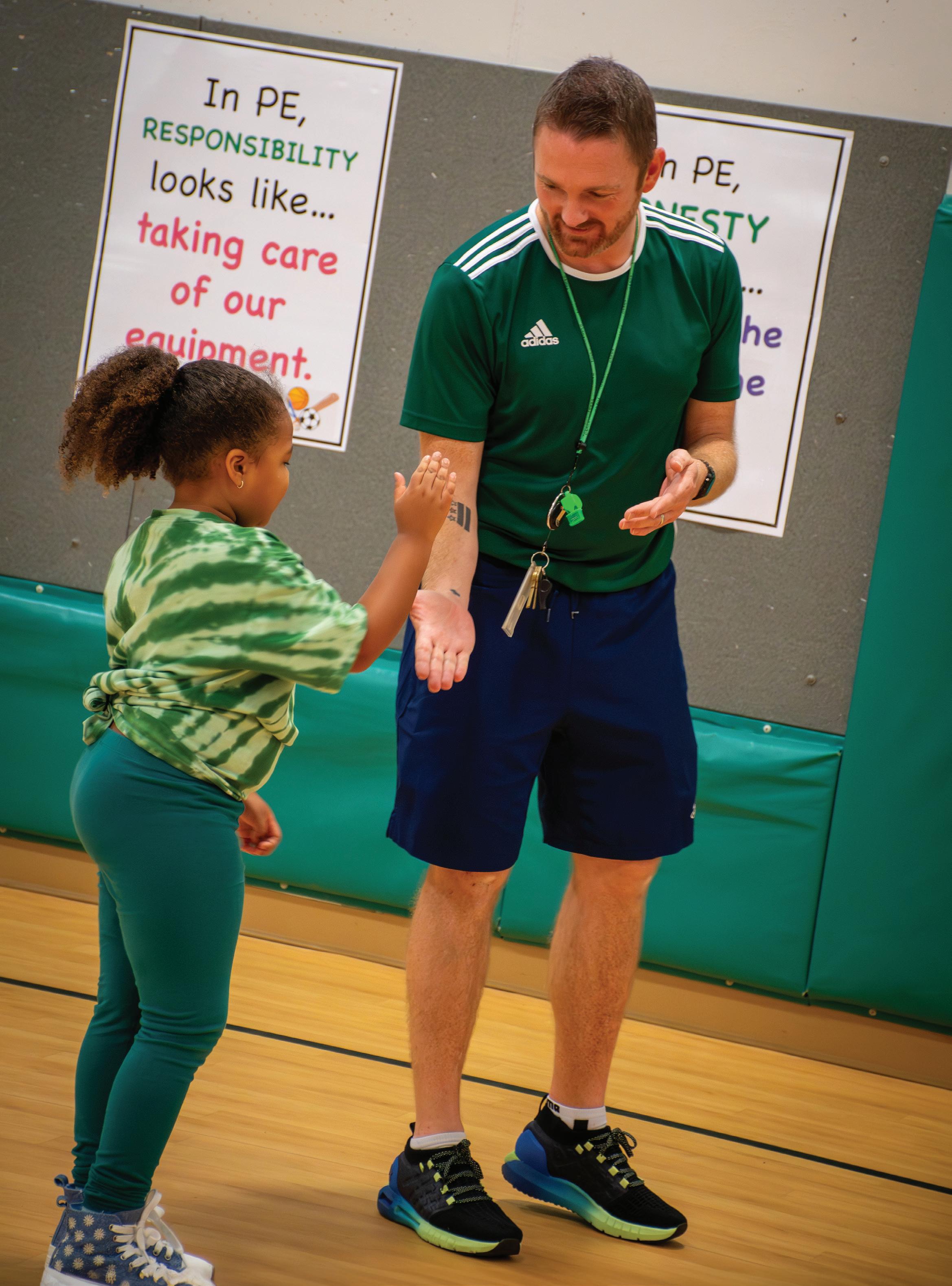
The Beauvoir Gym is always filled with joy and laughter that echo through the School’s halls; a testament to the energetic and imaginative physical education lessons led by Neil McClay. Now in his ninth year at Beauvoir, Mr. McClay has built a program that inspires students to move, collaborate, and grow in body and mind.
“I was very fortunate to be in the right place at the right time,” he recalls. “I went to a job fair and happened to stop at the Beauvoir table, but I must be honest and say I did not know a lot about Beauvoir at the time! When I returned home and told my wife about the fair, she explained Beauvoir’s stellar reputation, so I count myself very fortunate to have been called for an interview!”
“Working here has been like finding the perfect balance between fun and purpose as a teacher,” he says. “The School’s focus on the ‘whole child’ gives me the chance to help students grow in all areas, not just academically, and that helps build a strong sense of community.”
Mr. McClay began his teaching career in the classroom, where he looked for ways to weave movement into learning.
“I’ve always enjoyed sports and staying active. As a classroom teacher, I always looked for ways to incorporate movement into lessons, whether it was energizing math with jumping jacks, having students act out stories, or incorporating brain breaks throughout the day,” he explains. “Physical activity not only helped my students focus but also made learning more fun and engaging. When the opportunity arose to combine my love for teaching with my passion for keeping kids active by becoming Beauvoir’s physical education (PE) teacher, I jumped at the chance!”
Neil McClay
Physical Education Teacher*
Years
at Beauvoir: 9
Finding Joy in Movement
Two of his favorite Beauvoir traditions are the annual Haunted Gym and the Second Grade Gym Show. “For Halloween, the gym is transformed into ‘The Haunted Gym’ and is set up for various games and fun for grades pre-k–3,” he says. “It’s a big hit every year because it combines imagination with physical activity, and students absolutely love it; they ask about it for weeks before! We have heard ‘this is my favorite PE lesson’ many times!”
“For second graders, the Gym Show is a performance-based unit where students showcase the skills they’ve been working on throughout the year. We combine gymnastics, dance, and movement into a choreographed presentation for their families. When the third graders talk about their favorite Beauvoir memory, the ‘Gym Show’ always gets a mention!”
“The
School’s focus on the ‘whole child’ gives me the chance to help students grow in all areas, not just academically, and that helps build a strong sense of community.”
—Neil McClay
“At Beauvoir, we connect the PE curriculum with broader school initiatives, such as grade-level themes, and in particular Global Studies,” he explains. “One example is where each class participates in a mapped-out run across the chosen Global Studies country of study, promoting physical fitness while learning about different cultures and geographies.”
* For the 2025–2026 school year, Mr. McClay is serving as a Partner Teacher in first grade.
Mr. McClay has two young children whom he credits with keeping his passion for PE thriving. “My two tiny personal trainers are always keeping me on my toes, literally!” he says. “Something people may not know about me is that I used to be a lawyer before becoming a teacher. While it may seem like a big leap, that experience really complements my work with students. My legal background taught me how to approach challenges thoughtfully, communicate clearly, work in a team and stay organized, skills I rely on in the classroom, gym and on the field.”
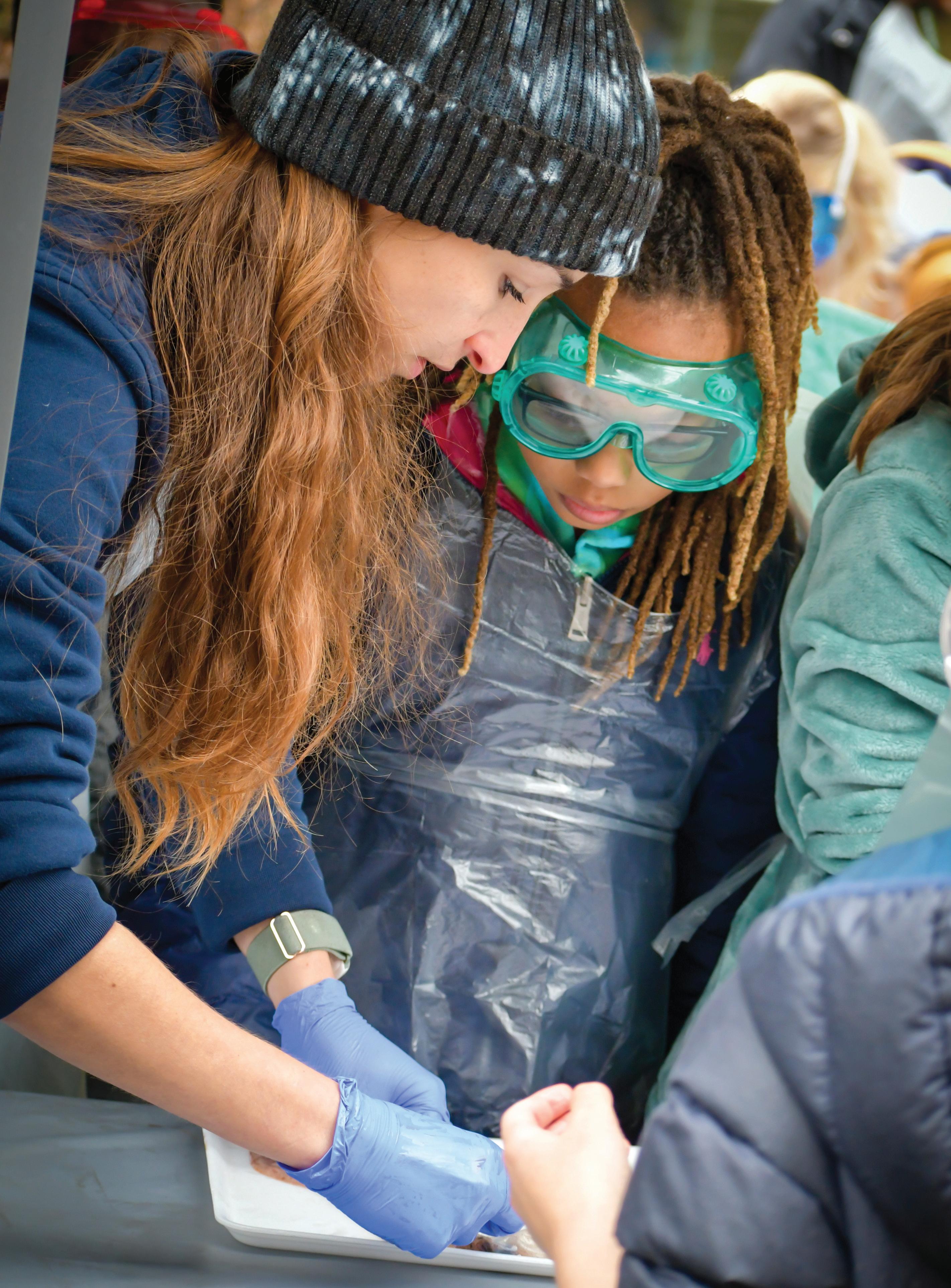
Laura Voelker first visited Beauvoir while still living in California and teaching STEM to students in pre-k through fifth grade. She was immediately drawn to the positive, supportive atmosphere radiating throughout the School. “It felt like the perfect fit,” she recalls. “I was excited to focus on early elementary grades and nurture students’ passion for science in these formative years.” It also felt like coming home, as her twin sister lives in Alexandria, VA, and her parents are in Delaware. Relocating to Washington, DC, allowed Ms. Voelker and her husband to be closer to family, just in time to start their own. “Now, having my son here in the ELC is a wonderful bonus!” she says with a smile.
Ms. Voelker’s path to science teaching began serendipitously. While researching graduate programs, she found one focused on STEM education for elementary and middle school students. A lifelong science enthusiast, she was intrigued by the idea of creating hands-on lessons that encourage perseverance, collaboration, and creativity. Being able to focus solely on science rather than teaching a homeroom class posed a unique opportunity.
One standout unit in Ms. Voelker’s classroom is the third-grade squid dissection, a Beauvoir tradition. “Every year, I love watching the reactions of the third graders as they open up their squid!” she says. “It’s thrilling, hands-on, and infinitely memorable as students, wide-eyed with wonder, explore biology up close.”
Another highlight is Ms. Voelker’s Human Body Systems unit. First graders learn how their bodies work— the skeletal, muscular, respiratory, circulatory, and digestive systems— by building models that show how
Laura Voelker Science Teacher, First through Third Grade Years at Beauvoir: 8
The Science of Wonder
“
It’s a thrilling, hands-on, infinitely memorable experience for the students, wide-eyed by wonder, as they explore biology up close.”
—Laura Voelker
these systems keep them healthy and strong. Their favorite is the stomach model, where students mix vinegar and goldfish in a bag to mimic stomach acid breaking down food. “We never say ‘ew,’ ‘yuck,’ or ‘gross’ in the science room,” she laughs. “We say ‘interesting!’ And this one is definitely ‘interesting!’”
Science at Beauvoir doesn’t exist in a bubble, it intersects with many other subjects through a rich, crossdisciplinary curriculum. “The biggest area of collaboration for science across grade levels is our Global Studies unit,” says Ms. Voelker. In first grade, students explore habitats and animals from around the world, learning about adaptations that help them thrive. By second grade, they dive into the scientific method, conducting water-related experiments they proudly display in their Museum Mornings exhibit. Third graders study famous inventors and scientists from the countries they explore in Global Studies, highlighting diverse figures who have made remarkable contributions to fields like engineering, medicine, and art. Through these projects, students see how science connects to broader global concepts and cultures.
These global connections are meaningful to Ms. Voelker, whose experience teaching abroad in South Korea, where she met her husband, Bruce, then later in Germany, gave her deep insight into the importance of raising responsible global citizens. “Teaching is much more than lessons and experiments,” she says. “It’s about inspiring young minds to think critically, explore fearlessly, and embrace the wonders of the world around them. Watching their curiosity grow is the most rewarding part. They remind me every day how exciting it is to learn something new.”
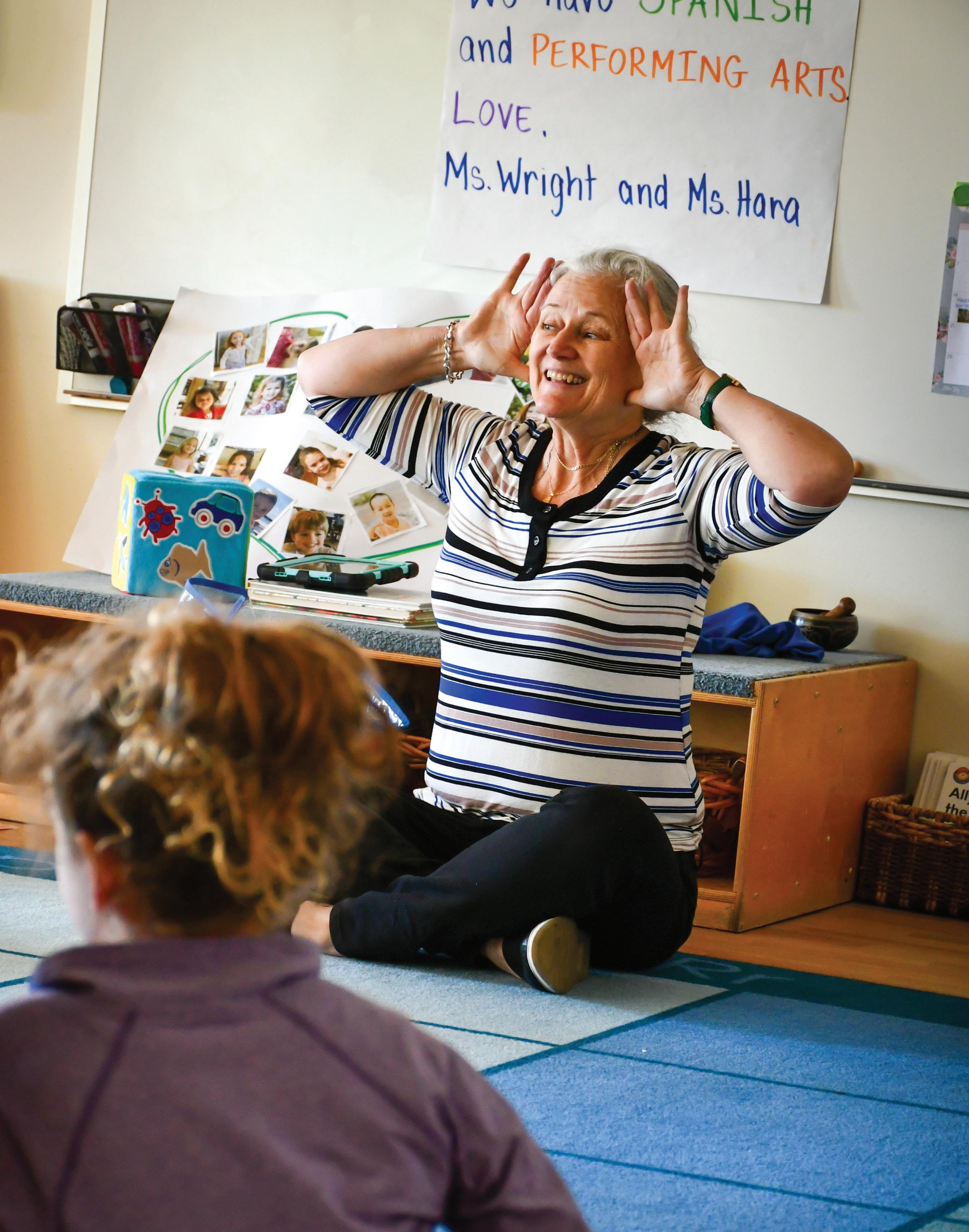
The sound of Jessica Espinosa’s classroom extends a warm greeting long before you arrive at her door. Whether it’s the laughter of students playing educational games or the strains of Spanish songs and music, it is clear her students are eager to learn.
Señora Espinosa has brought both Spanish language and culture to life at Beauvoir. She’s had the opportunity to immerse students in more than just vocabulary and grammar. Her passion for teaching a second language has become a bridge between cultures, offering young learners a glimpse into the diverse and rich traditions of Spanish-speaking countries.
For Señora Espinosa, Beauvoir is a place where educators thrive alongside their students. “Every day at Beauvoir, as a workplace and community, I have the opportunity to contribute the best of myself to teaching, taking on challenges and knowing that I can count on the support of the School,” she explains.
One of Señora Espinosa’s most firmly held beliefs is that teaching Spanish is as much about fostering an appreciation for cultural diversity as it is about language acquisition. She frequently incorporates lessons on cultural symbols, such as the maracas, a popular instrument in many Spanishspeaking countries, and the piñata, whose symbolism holds valuable moral lessons. These topics seamlessly align with Beauvoir’s Life Rules: kindness, respect, responsibility, and honesty.
“Learning Spanish also encourages students to be open to learning about the diversity of societies and cultural traditions,” notes Señora Espinosa.
“Integrating cultural elements into lessons helps students understand
Jessica Espinosa Spanish Teacher
Years at Beauvoir: 11
Inspiring Through Culture and Tradition
that language is not just a means of communication but also key to understanding different ways of life."
Señora Espinosa also understands that variety is essential. She believes in engaging students through multiple learning techniques, nurturing different learning styles to ensure her students remain excited and curious. “The students are introduced to different ways to learn a second language, such as through music and songs, didactic videos, pictures, books, games, and movement,” she says. Many young learners are also just beginning to manage transitions from one activity to the next, so she creates routines that help students understand what to expect next. Señora Espinosa takes great care to balance calming activities with those that are more energetic and movement oriented.
“Integrating cultural elements into lessons helps students understand that language is not just a means of communication, but also key to understanding different ways of life.”
—Jessica Espinosa
Her core teaching philosophies are simple but effective—let the class have fun, build in a variety of activities, and review, review, review. “Little ones like repetition, and doing familiar activities is easier when they know what to do,” she shares.
Deeply committed to her students’ growth, as language learners and as global citizens, her passion for teaching Spanish grows each day, sparked by her students’ excitement. Señora Espinosa says, “My goal is to aid the next generation in being ready to embrace the world with enthusiasm and respect.”
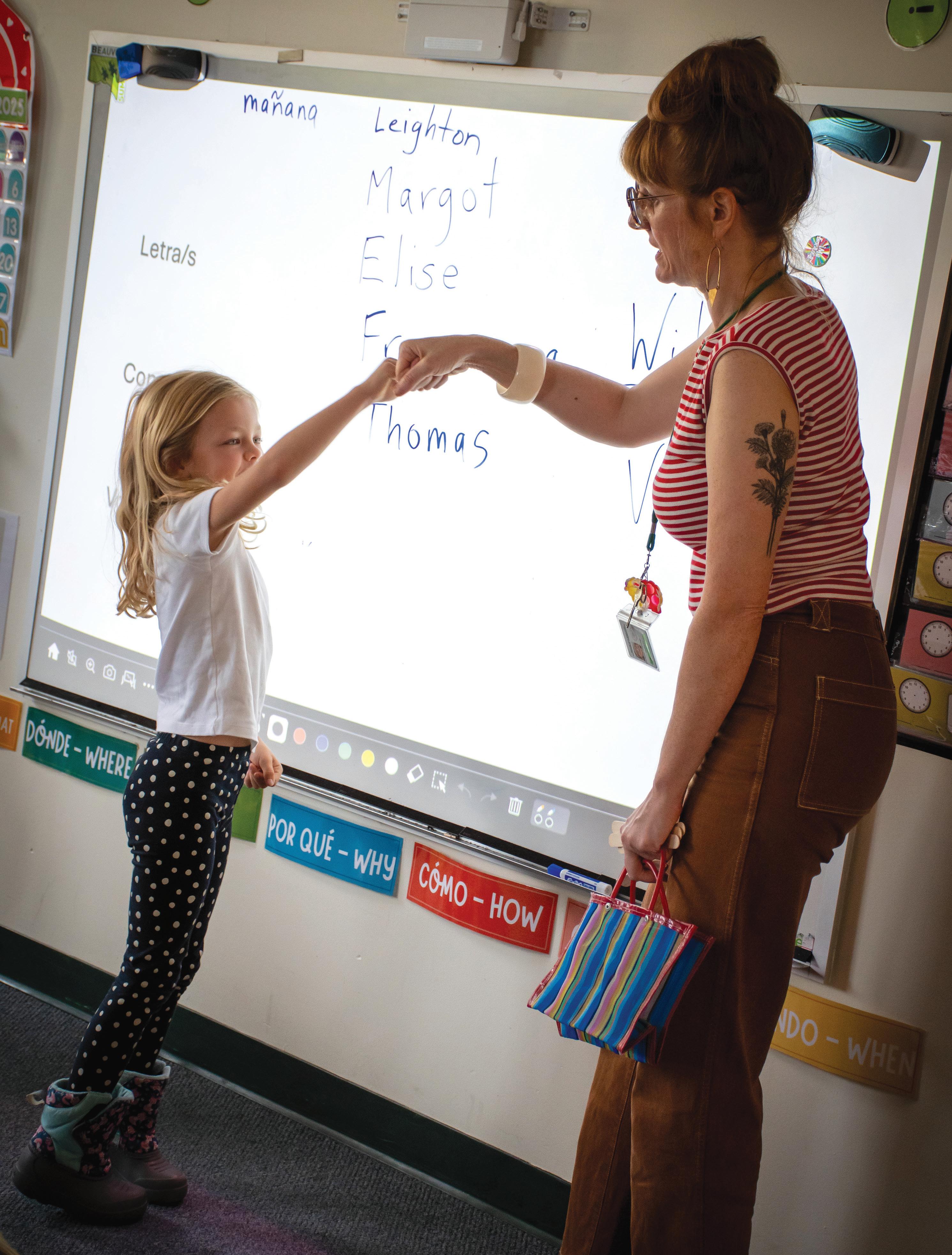
It’s a busy day in the Spanish classroom, and first graders are carefully crafting bright orange marigolds out of tissue paper. Later, second graders knead dough for pan de muerto, and third graders will decorate colorful calaveras.
Liz Hillbruner moves between the groups, encouraging them in Spanish and celebrating their creativity. The students are fully engaged—not just in a fun craft, but in a meaningful cultural experience. “I love teaching students about Día de Muertos,” she says. “It’s a tradition that challenges students to consider different cultures and perspectives, and it’s a great excuse to get crafty.”
Señorita Hillbruner has been an educator for 15 years and joined Beauvoir just over three years ago. She was drawn to the School because of its strong sense of community. “I love the Beauvoir Life Rules and how ingrained they are in the school culture,” she says. “It creates a really supportive and inclusive work environment and makes me look forward to coming to work every day.”
Her passion for Spanish began when she studied abroad in college. “When I was a junior, I spent a year living in Quito, Ecuador. This was my first experience living abroad and having to communicate regularly in Spanish,” she recalls. “While it was challenging in many ways, it proved to be very rewarding and ultimately sparked a lifelong interest in Spanish.” That passion led her to Mexico City, where she lived for 13 years, continuing to use Spanish daily.
At Beauvoir, Señorita Hillbruner makes learning Spanish engaging by connecting it to students’ interests and other subjects. “The Spanish curriculum intersects with many other
Liz Hillbruner
Spanish Teacher
Years at Beauvoir: 3 Considering different cultures and perspectives
“
The Spanish curriculum intersects with many other disciplines. I frequently use art and music to engage students with the language and talk about subjects they are already learning about in literacy.”
—Liz Hillbruner
disciplines,” she explains. “I frequently use art and music to engage students with the language and talk about subjects they are already learning about in literacy. If students are familiar with a topic in their native language, it makes it easier for them to comprehend in a second language.”
A recent example is a second-grade math unit on data and graphing. “In Spanish class, each group made a graph about favorite colors, which we then discussed as a group,” she says. “The students were able to practice talking about colors, numbers, and their preferences in Spanish.”
Beyond the classroom, Señorita Hillbruner is always thinking about how to help students see the value of learning a second language. “Spanish is the second most spoken language in the U.S., with more than 40 million speakers,” she notes. “I want students to recognize the Spanish speakers in their lives—whether at home or at school—so they can use their Spanish in real conversations.” One idea she is considering is having students interview Spanish-speaking faculty and staff at Beauvoir to help them gain confidence in their speaking skills.
Her love for language and culture extends beyond teaching. “I love eating, cooking, and researching food and food history,” she shares. “While living in Mexico City, I studied food anthropology and had a food tour business where I guided visitors around different neighborhoods and markets to take a deeper look at Mexican food.” She often brings this passion into her lessons. “Most people have strong opinions about food, so it’s always a great way to engage students in language classes,” she says. “I use food to talk about likes and dislikes, culinary traditions, and celebrations.”
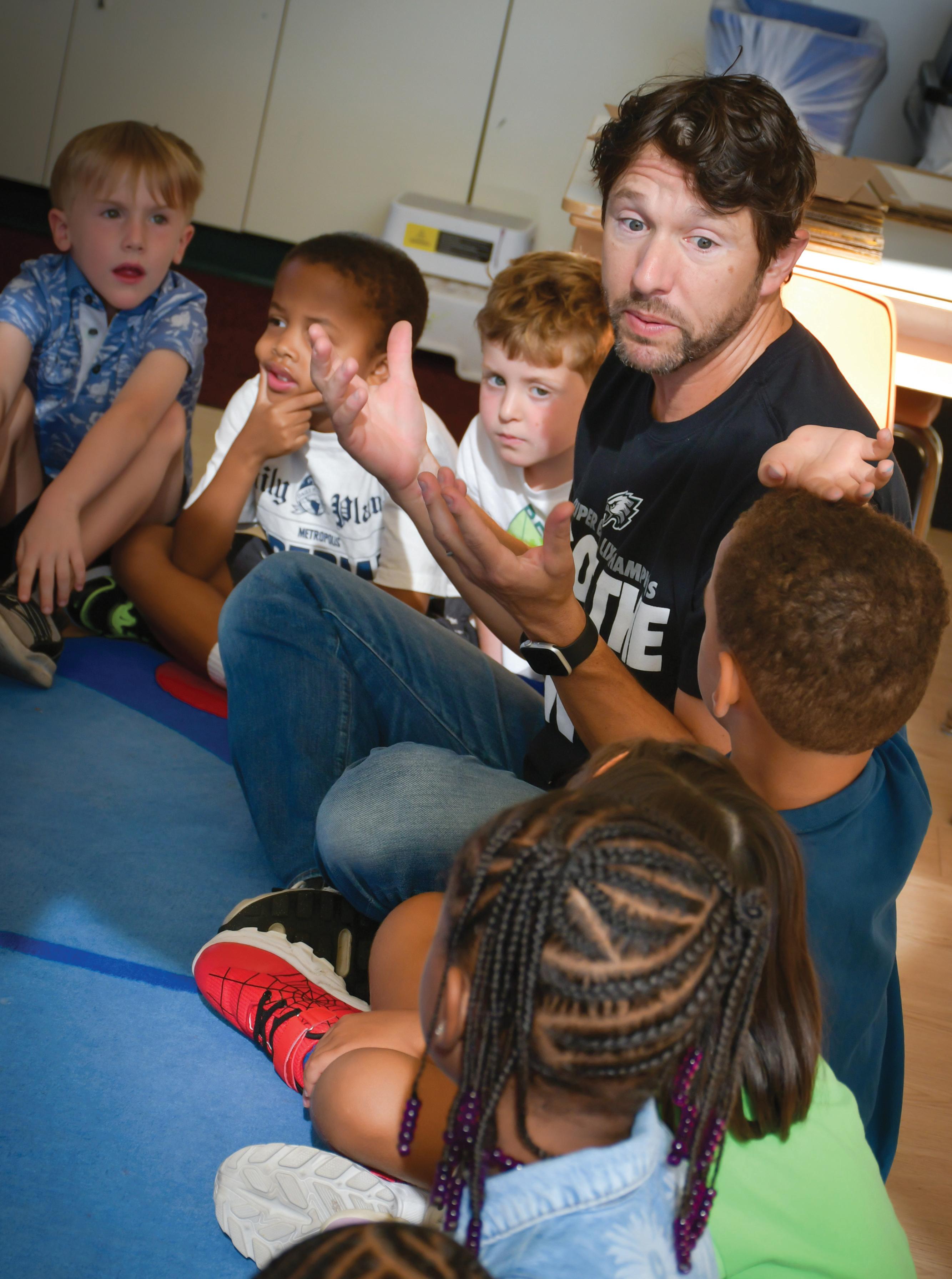
Most weekday mornings, you can find Dan Thorner opening car doors at drop off, welcoming students to another day at Beauvoir and belting out the lyrics to whichever pop song happens to be streaming out of his portable speaker.
Mr. Thorner has been a part of the Beauvoir community for two decades. In his time with the School, he’s jumped into whatever was needed: Associate Teacher, Directing Teacher, STEAM Specialist, and (maybe most importantly) enthusiastic cheerleader for creativity and curiosity. “I started my career here not entirely sure what my path would be,” Mr. Thorner shares. “But from the very beginning, the energy of the students and the camaraderie of the faculty made Beauvoir feel like home.”
It was a coaching job during high school and college that first sparked Mr. Thorner’s interest in working with children, a spark that caught fire once he entered the classroom. With the guidance of mentors such as former Beauvoir colleagues Katie Jamieson and Wendy Gillick, Mr. Thorner began to transform his natural connection with kids into purposeful teaching. “They helped me take my high energy and channel it into designing lessons, building relationships with families, and seeing each student as part of a longer journey.”
Mr. Thorner’s role in STEAM education means every day is filled with exploration. Whether students are designing statues that balance art
Dan Thorner
STEAM Teacher
Years at Beauvoir: 20 Building, Creating, and Inspiring at Beauvoir
and engineering or exploring Olmsted Woods with the eyes of both scientists and artists, Mr. Thorner encourages a spirit of play and problem-solving.
“Trying, making mistakes, and trying again; that’s how learning happens.”
One area especially close to his heart is Global Studies. “I love how it pulls together everything we learn about, and ends with a project that students are proud to share.” He lights up recalling past projects such as life-size Asian elephants and pyramid replicas.
“Two former students once stopped me, years later, just to reminisce about the coracle boat they built in second grade. The pride on their faces still makes me smile.”
“Trying, making mistakes, and trying again: that’s how learning happens.”
—Dan Thorner
Mr. Thorner is always evolving his teaching, with a growing focus on coding. He’s designing lessons for pre-k and kindergarten that combine tech tools with hands-on learning.
“For our youngest learners, it’s about sequencing, logic, and fun. Whether they’re moving game pieces or animating avatars.”
Outside the classroom, Mr. Thorner’s just as busy. A lifelong sports enthusiast, he coaches baseball through Bulldog Baseball and brings the same philosophy to the field as he does to the classroom. “Control what you can: your effort and your attitude. The outcome will take care of itself.”
Whether he’s drawing inspiration from a trip to the National Gallery or watching the morning light stream through the Cathedral windows, Mr. Thorner finds creativity in the world around him, bringing new opportunities and possibilities back to his students. “Those moments of joy, when a student moves from confused to confident, that’s what keeps me coming back every day.”
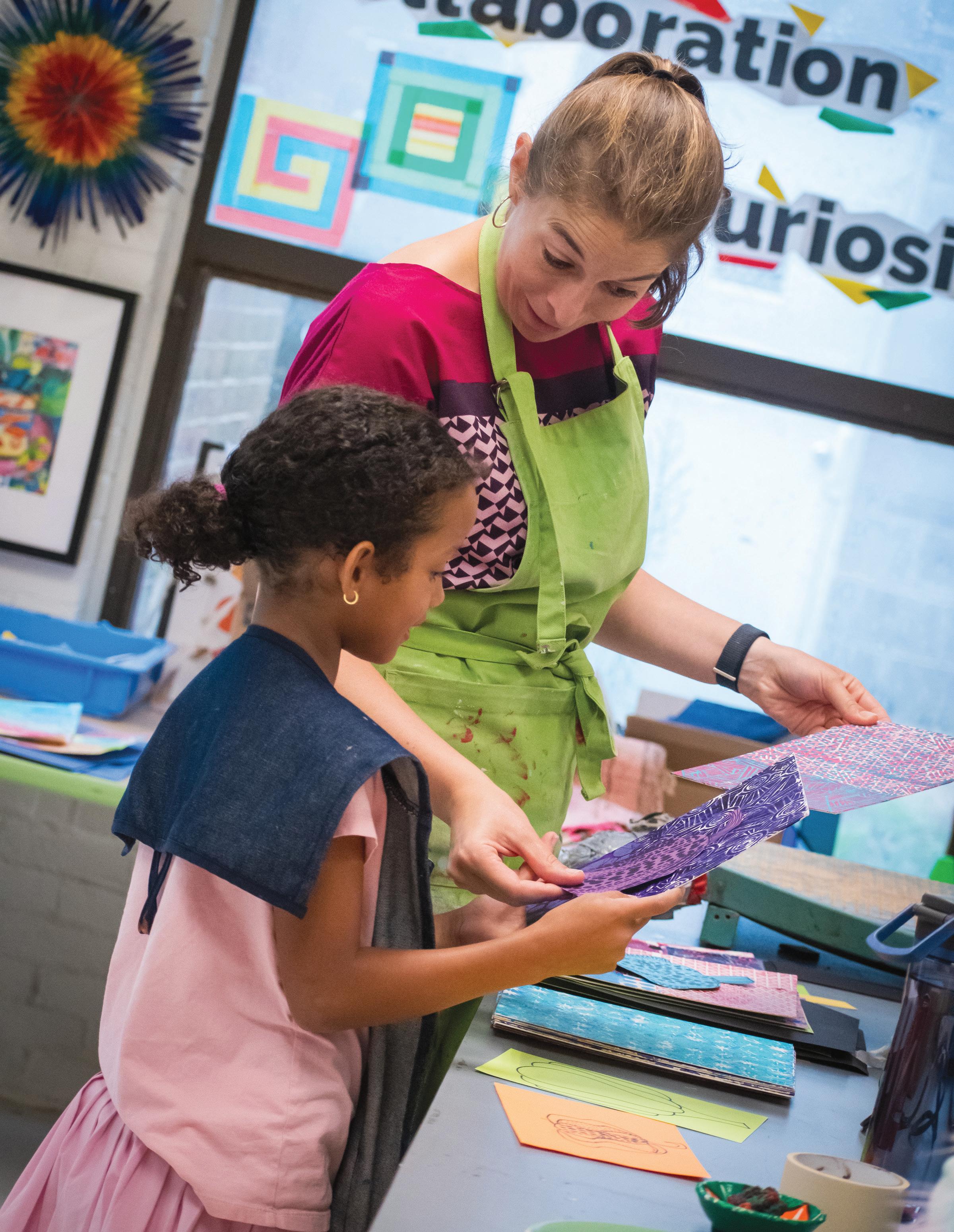
In Kaitlyn Hay’s art room you’ll find a vibrant world, alive with creativity. There might be giant paper trees stretching toward the ceiling, clay sculptures drying on counters, or colorful paintings inspired by faraway places covering the walls. Brushes, butcher paper, and bright ideas are everywhere, and students are fully immersed—sketching, sculpting, tinkering, and discovering. It’s a place where curiosity leads the way, and where every project connects to art techniques and to stories, science, and cultures from around the globe. As Ms. Hay puts it, “The potential projects, explorations, and connections in art are limitless.”
Ms. Hay also serves as chair of the Social Studies committee and takes pride in weaving Global Studies into the visual arts. “I believe it builds context for each of our projects,” she explains. “Understanding geography, climate, history, civic function of art, and even the economics behind materials helps students see their work in a broader way.” Now in her 14th year at Beauvoir, Ms. Hay has woven together a rich tapestry of responsibilities and opportunities, centering creativity in each new experience. “I started as a first-grade classroom teacher,” she explains, “but after four years, I made the shift to the art room, and I haven’t looked back.”
Ms. Hay’s path to Beauvoir began with a rich educational foundation, earning her bachelor’s degree from Princeton University and master’s from the University of Edinburgh. “I was an art major in college and worked in a gallery in New York City before moving to DC,” she says. In 2012, she came to Beauvoir as an associate teacher. One of her strengths in the classroom was finding ways to
Kaitlyn Hay
Visual Art Teacher
Years at Beauvoir: 14 Painting, Sculpting, and Inspiring
“
Beauvoir’s evolving STEAM curriculum has also opened new doors. “It’s now in its third year, and I can already see students arriving in the art room with stronger foundational skills and a mindset geared toward process and discovery. I want to build on that with sculpture projects and design challenges that ask them to plan, test, and refine their ideas.”
—Kaitlyn Hay
introduce art across all curricular areas, especially Global Studies. “Baobab trees extended from the ceiling tiles and a paper palm tree took up half the first-grade common area,” she recalls one year’s Global Studies project with a laugh. “The kids were enthralled, and I was in my element every time we got the big brushes and butcher paper out!”
“Clay is a favorite medium of mine, and a favorite of students at every grade level,” she says. “It’s so special to design and shape something functional that could last forever. Plus, the science behind ceramics is fascinating.” Ms. Hay emphasizes the unique opportunities available to Beauvoir students, “so they can understand how fortunate we are to have this clay, a kiln to fire it in, and glazes to decorate it with.” Some of her favorite past projects have included third-grade busts of biographical figures, which connect to their annual social studies project, as well as maple leaf bowls tied to first graders’ Canada studies.
Beauvoir’s evolving STEAM curriculum has also opened new doors.
“It’s now in its third year, and I can already see students arriving in the art room with stronger foundational skills and a mindset geared toward process and discovery. I want to build on that with sculpture projects and design challenges that ask them to plan, test, and refine their ideas.”
What keeps Ms. Hay inspired? “DC is an amazing city full of (mostly free!) museums, festivals, and exhibitions,” she says. “I try to visit two or three institutions every week. There’s just so much to pull from. My brain is always buzzing with ideas for the next project or collaboration.” And where does all that magic happen? “The art room!” she says with a smile. “It’s my favorite place to be.”
Kickstart the Conversation: The Bionic Project Visits Beauvoir
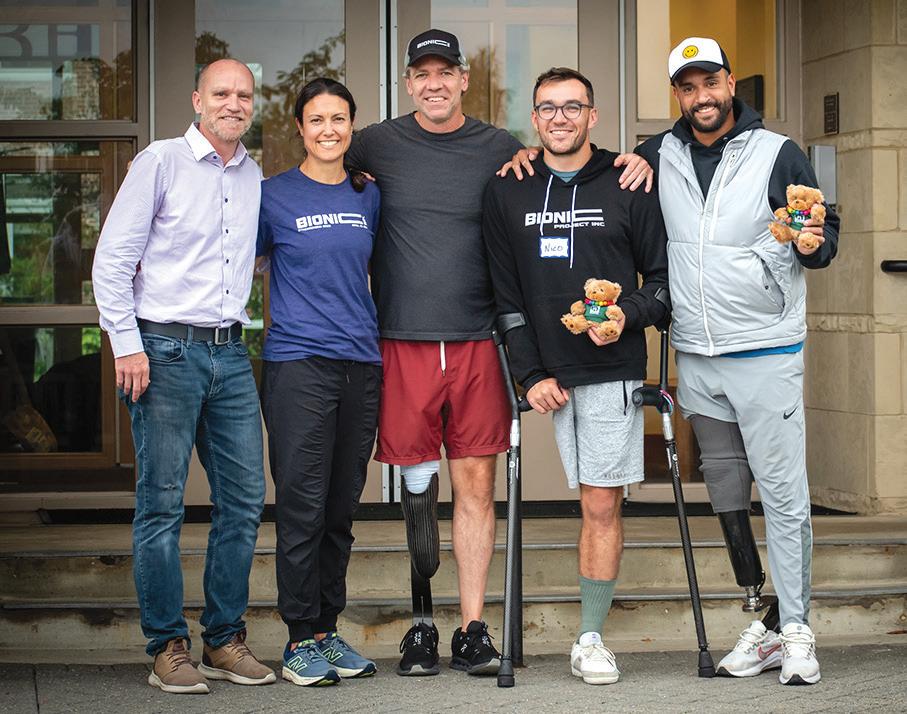
The Bionic Project, Inc. was founded in 2018 by avid runner, and below-the-knee amputee, Will Borden. After his firsthand experience with the lack of sporting events that welcome people of all abilities, Will was inspired to make the change he wanted to see in athletics. With his new mission in mind, Will started the Bionic5k in Harvard Square, in Cambridge, MA. In 2022, he established a second race in San Francisco. Both events have broken down barriers and built community in powerful ways.
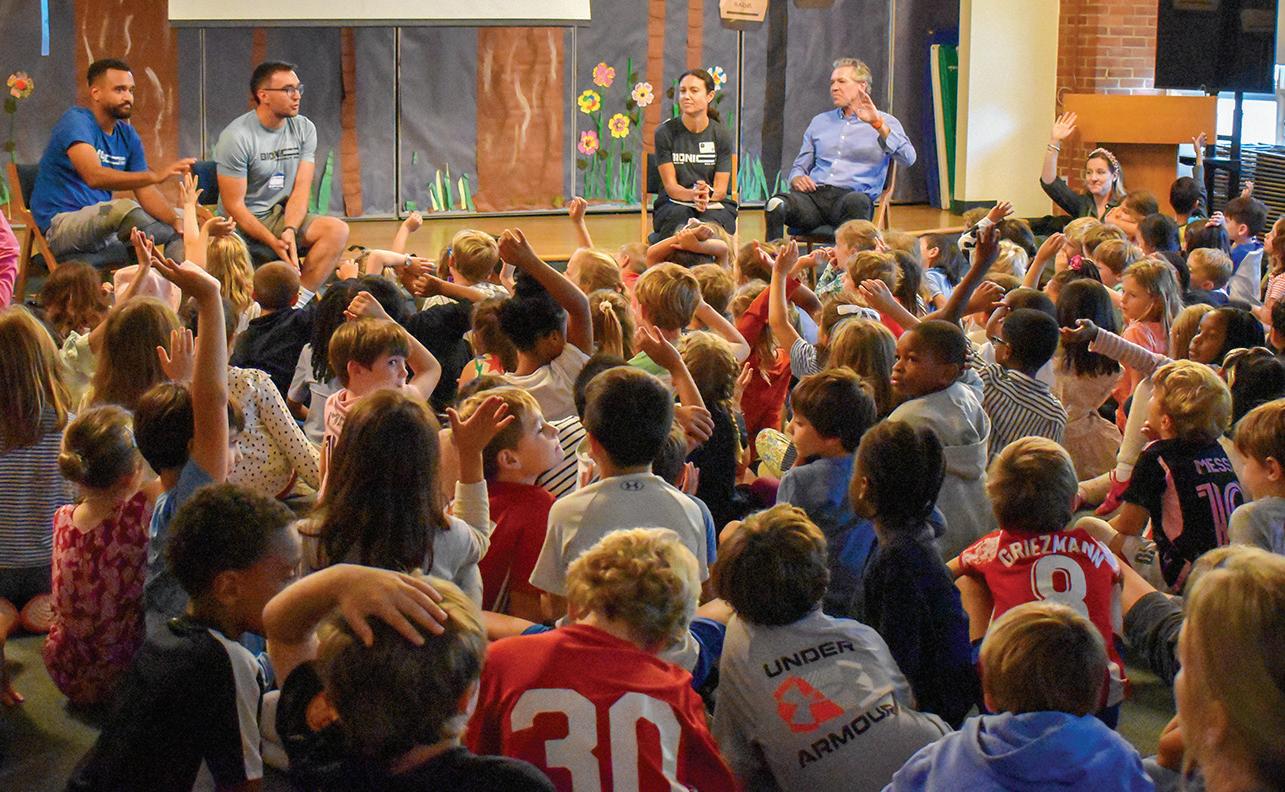
As a career educator, Will knew that programming specifically designed to engage young people was the next step to building a more inclusive future. The Bionic Project’s education program launched in the fall of 2023 and has already engaged more than 10,000 students in 34 schools across the country. The program helps students learn about physical disability, ask questions, play constructively, and build authentic connections, all while working to eliminate the insecurity that often drives fear and stigma.
From September 23–25, 2024, in collaboration with Director of Auxiliary Programs Drew Mackay and
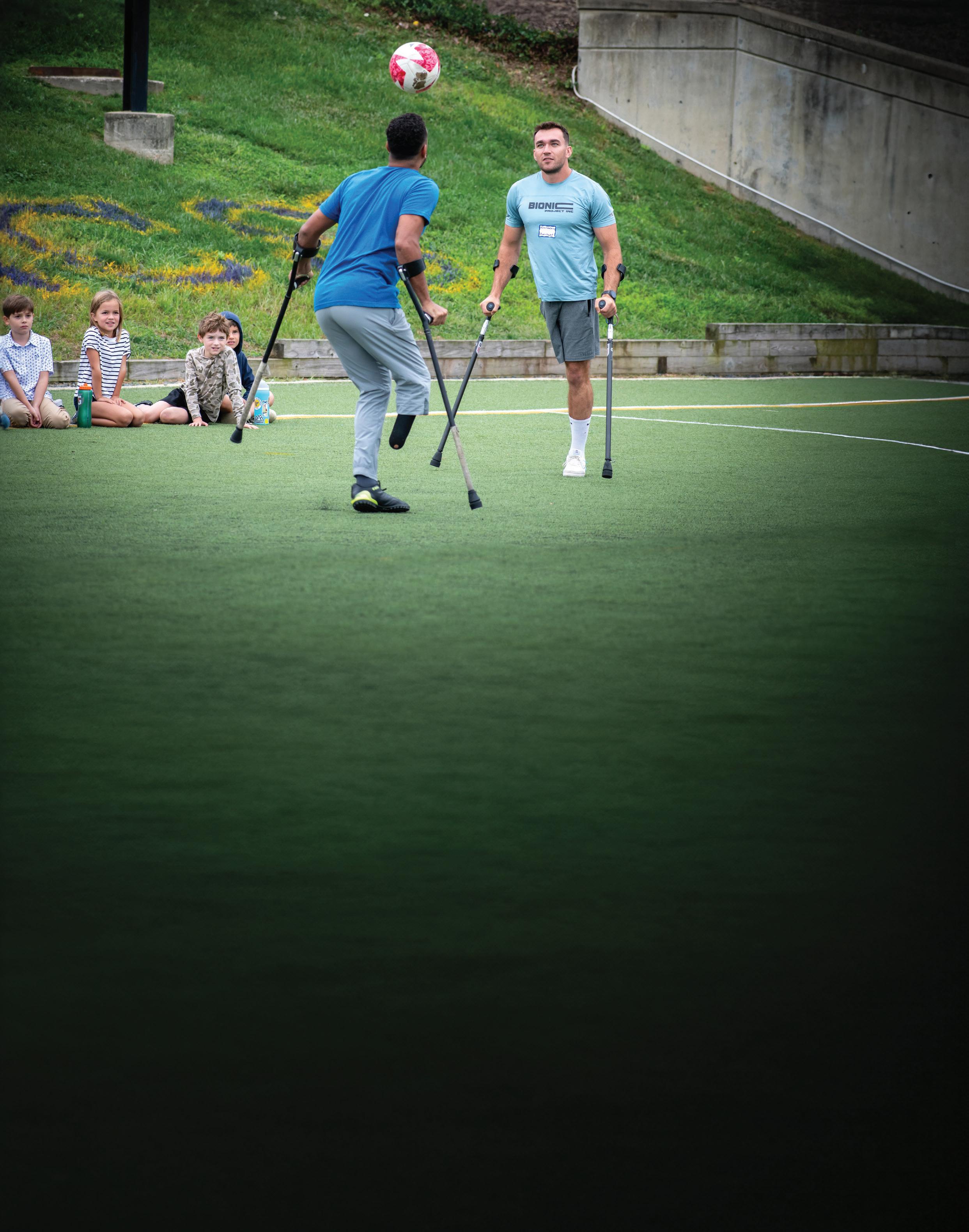
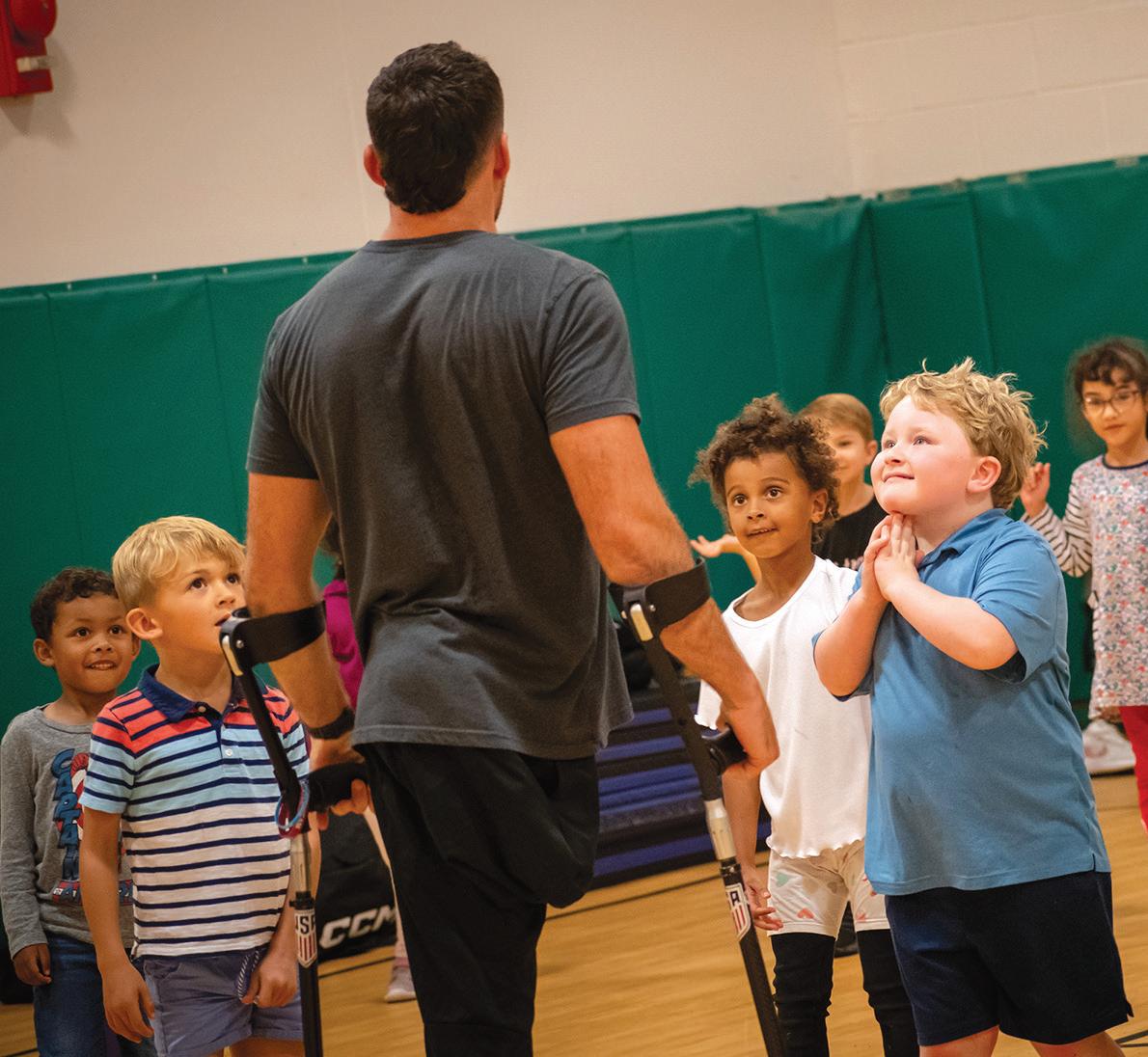
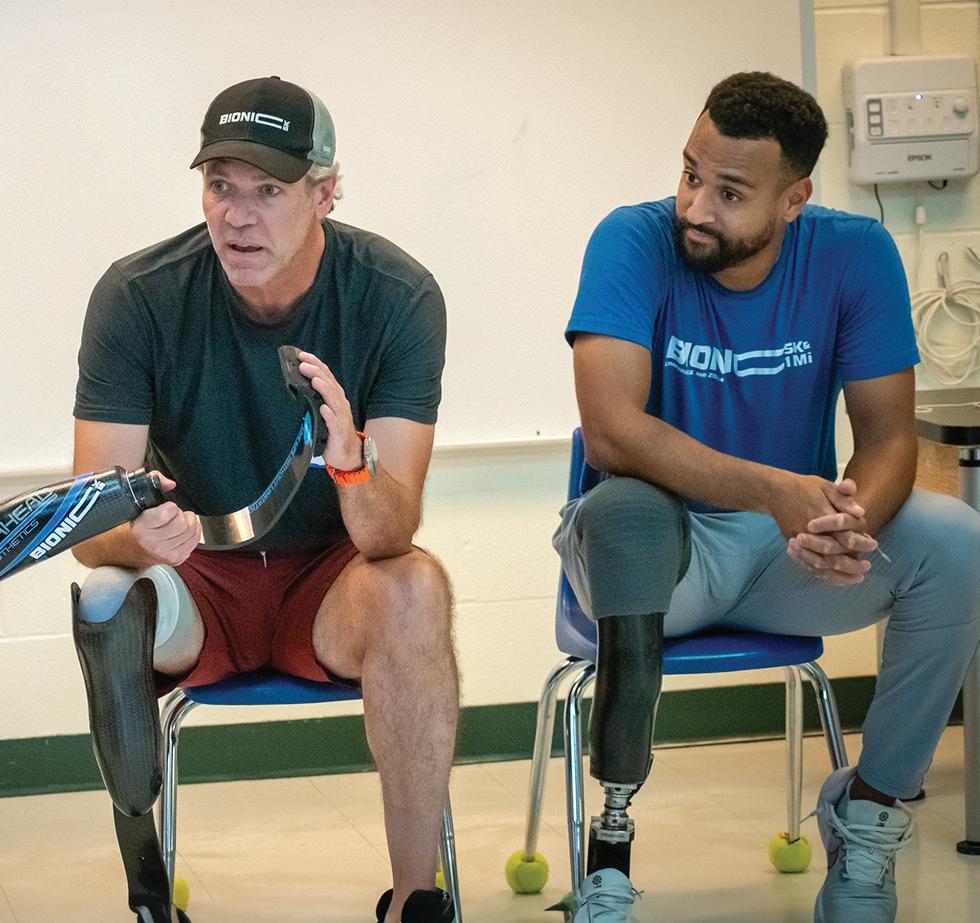
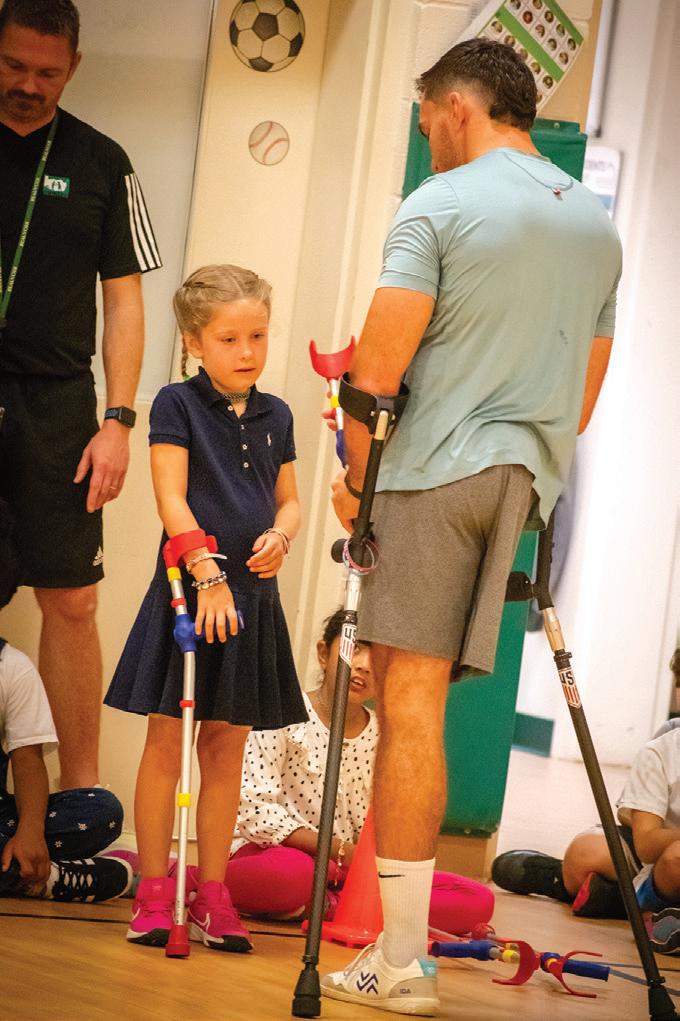
Physical Education Teacher Neil McClay, the Bionic team came to Beauvoir to spend time with our prekindergarten through third grade students. The team, which included Will, Jovan Booker, Nico Calabria, and Dana Rogers, demonstrated and participated in a variety of mission-driven activities, such as obstacle courses that made use of assistive technology skills; amputee soccer; Q&A sessions; and addressing media narratives regarding people with different abilities.
Will and his team hope their work encourages young people to build empathy in their interactions with those who may have physical differences.
If Beauvoir is any indication of The Bionic Project’s impact, Will is well on his way to accomplishing his mission. After The Bionic Project visit, students and parents were inspired, noting that the experience sparked conversations and constructive inquiries from many students and community members.
The Beauvoir community is looking forward to the Bionic Project team’s next visit during the 2025–2026 school year.
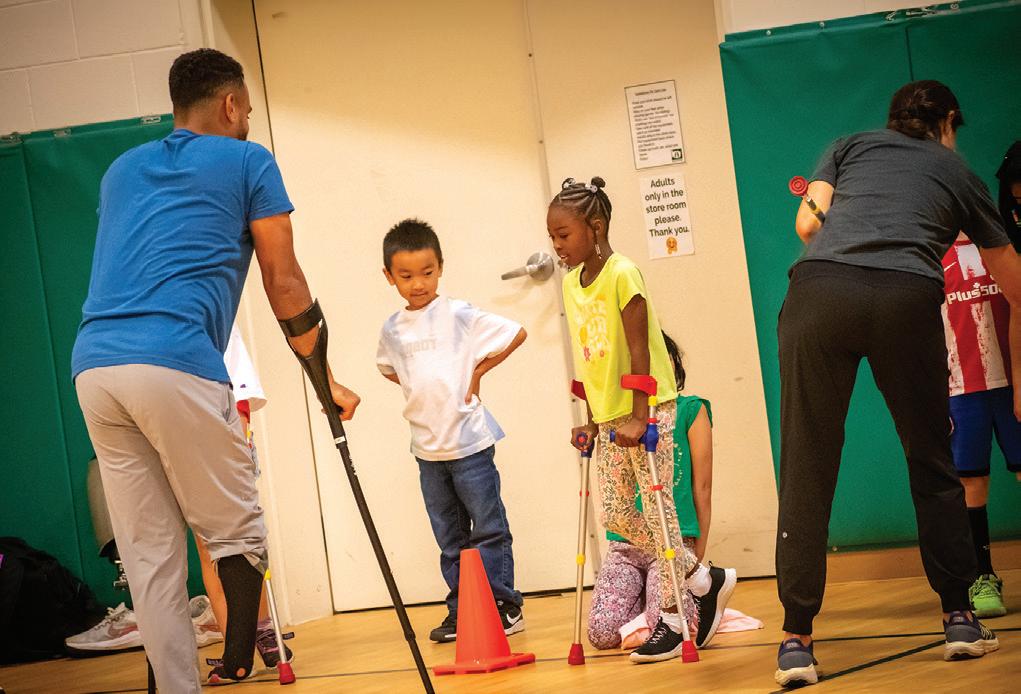
“Thank you SO much for an extraordinary start to the week last week! My children were blown away by the Bionic athletes, and I wanted to say thank you! My first tennis coach had arms that ended at his elbows, and it made a huge impact on my understanding of the world, and I still think about him all the time. I’m sure this is something my kids and all the other Beauvoir Bears will always carry with them.”
KIM STEED P’26, P’28, P’32
“Hosting The Bionic Project at our school was an unforgettable experience for our students. Seeing them engage with adaptive sports, ask thoughtful questions, and develop a deeper understanding of physical disabilities was truly inspiring. This program not only challenged their perspectives but also fostered empathy, inclusion, and a greater appreciation for the diverse abilities of all individuals. It was a powerful reminder that physical education is about more than movement. It’s about connection, understanding, and creating a space where everyone belongs.”
NEIL MCCLAY, PHYSICAL EDUCATION TEACHER
“Thank you for bringing The Bionic Project to Beauvoir! Please extend my gratitude to all who were involved. My son came home bursting with information, stories, and excitement. It sparked many amazing conversations in our house. What an awesome opportunity for our students.”
SHARON CADY P’20, P’22, P’28
“It was pretty cool how they were able to play soccer way better than I can, even on crutches!”
MADELINE ’25
“It was interesting to experience what it felt like for people who have a disability. It was cool to see and learn how they moved and played sports. Usually, people without disabilities don’t get to experience how difficult it is for people with disabilities. It was an experience I’ll never forget.”
VIVIENNE ’25
“We loved having you over to our school. Thank you for coming. We hope you come back soon! Feel free to come anytime you want!
It’s cool to have one leg! You did cool soccer tricks! We love you! Thanks for sharing with us and for teaching us to make a friend first.”
THE FARQUHAR/GRUBY KINDERGARTEN CLASS
Bringing STEM to Life
Connecting Students with Community Experts
Starting in 2023, Laura Voelker, Beauvoir’s science teacher for first through third graders, piloted an innovative program designed to bridge the gap between the classroom and real-world STEM careers. This initiative invited parents and caregivers working in STEM fields to share their expertise with students through engaging presentations and hands-on activities.
Connecting with Community Experts
One of the most powerful aspects of this program is the connection it fosters between Beauvoir students and the community. Seeing professionals (parents and community members) succeed in STEM roles makes these careers feel attainable and inspires students to dream big.
In addition to knowledge, these partnerships build critical life skills. Positive role models affirm students’ potential, boosting their confidence and ability to envision themselves mastering new skills or pursuing STEM careers. Additionally, engaging with experts helps students improve their communication skills by asking questions, sharing ideas, and participating in discussions. Beyond developing practical scientific knowledge, programs like this one demonstrate the value of community collaboration in education. When we tap into local expertise, we create opportunities for students to connect classroom learning with the real world. These experiences ignite curiosity, build confidence, and provide the foundation for future exploration in STEM.
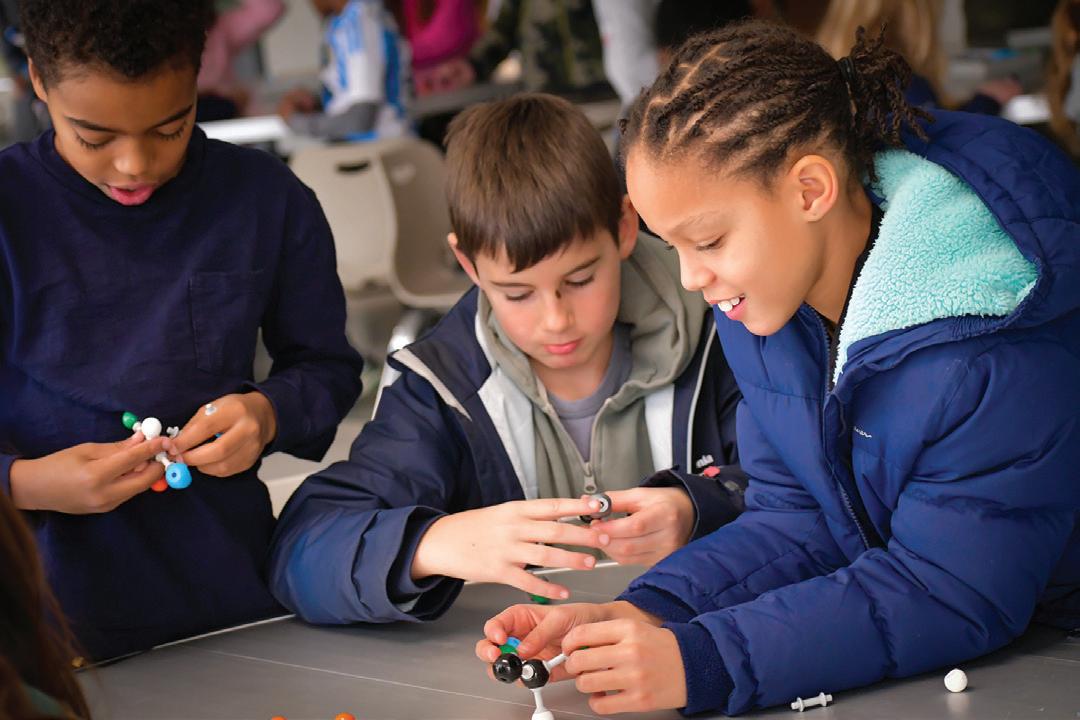
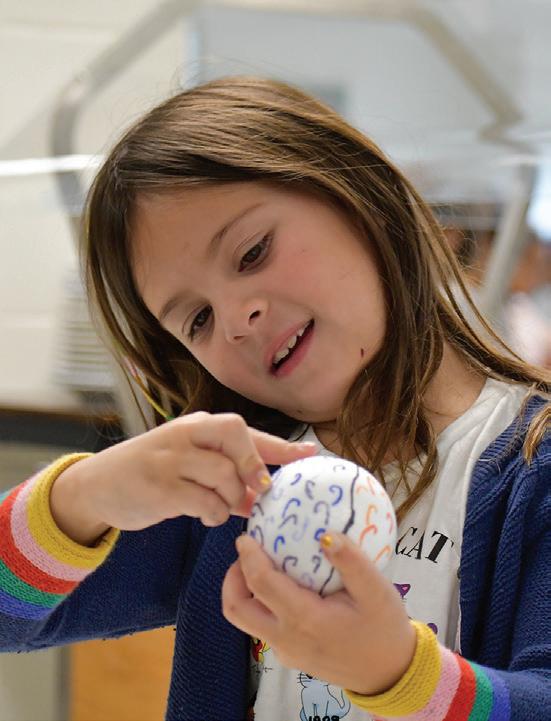
Memorable STEM Experiences
Here are some of the inspiring sessions that have brought STEM to life for our students:
Video Game Engineering and Design
Students explored the process of designing, engineering, and testing video games. Working in pairs, they brainstormed video game ideas and created initial designs, learning the importance of creativity and collaboration in technology.
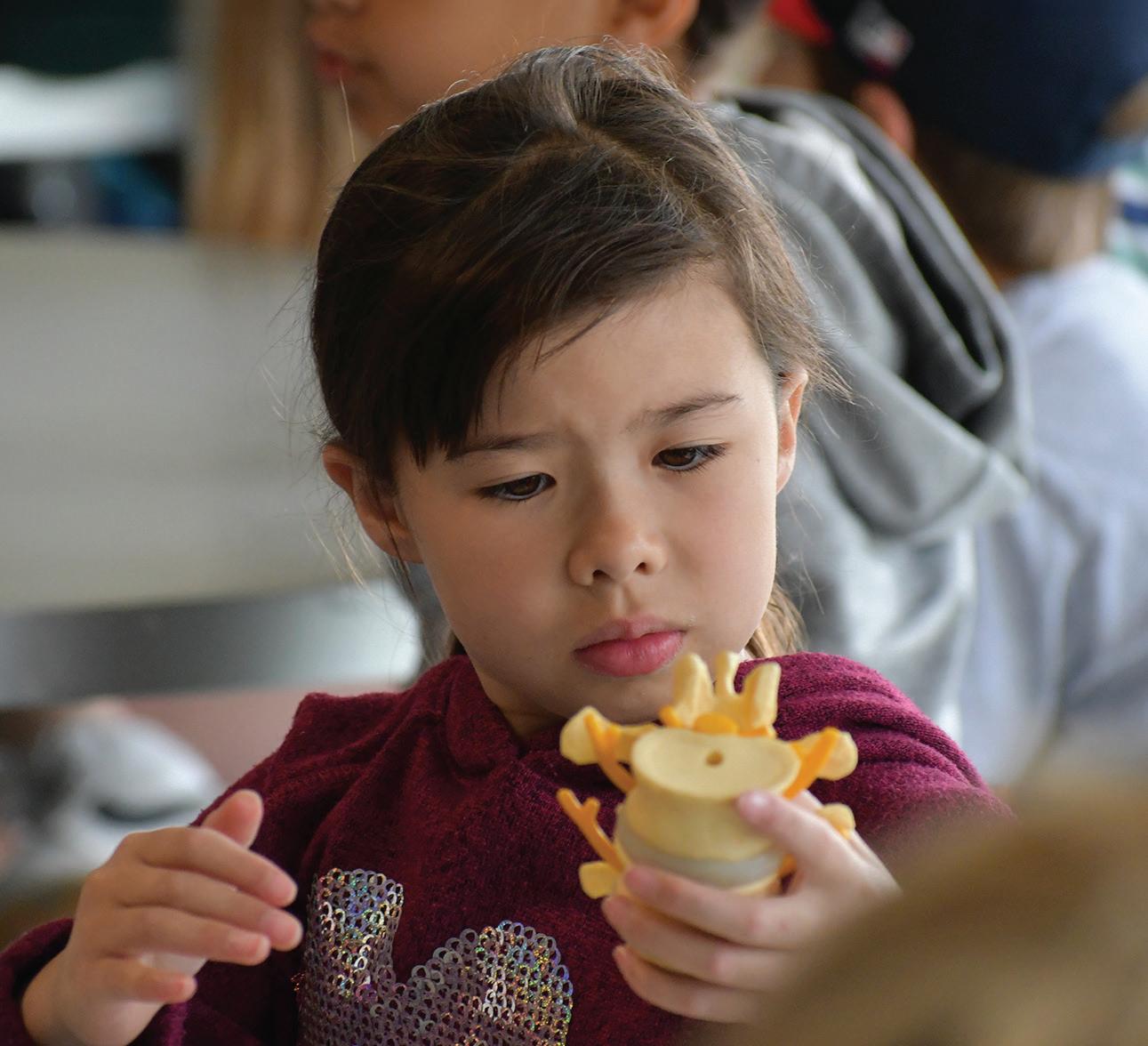
Orthopedic Surgery
Students discovered how orthopedic surgeons help fix broken bones. They applied cast materials to a plastic water bottle, simulating the process of creating a cast, which made abstract medical concepts tangible.
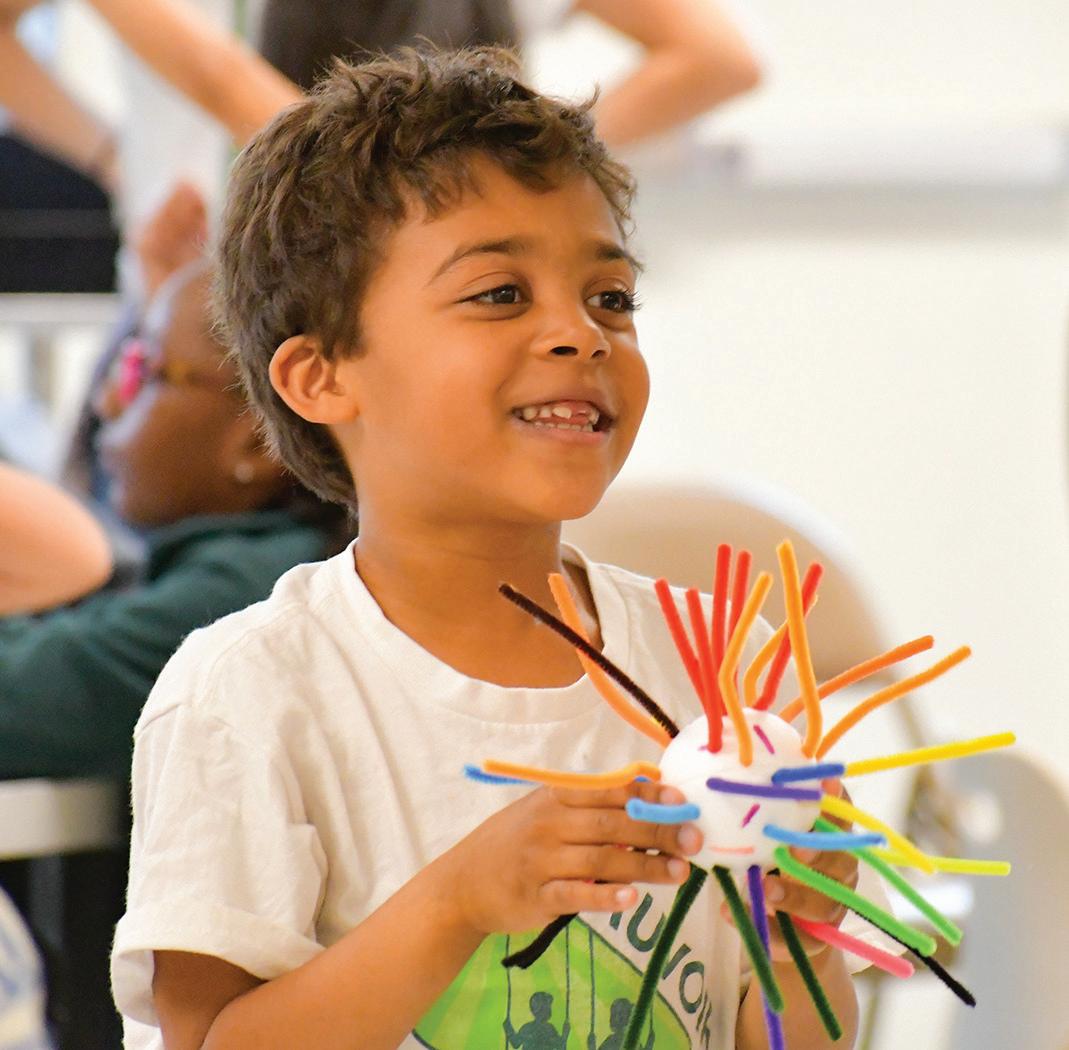
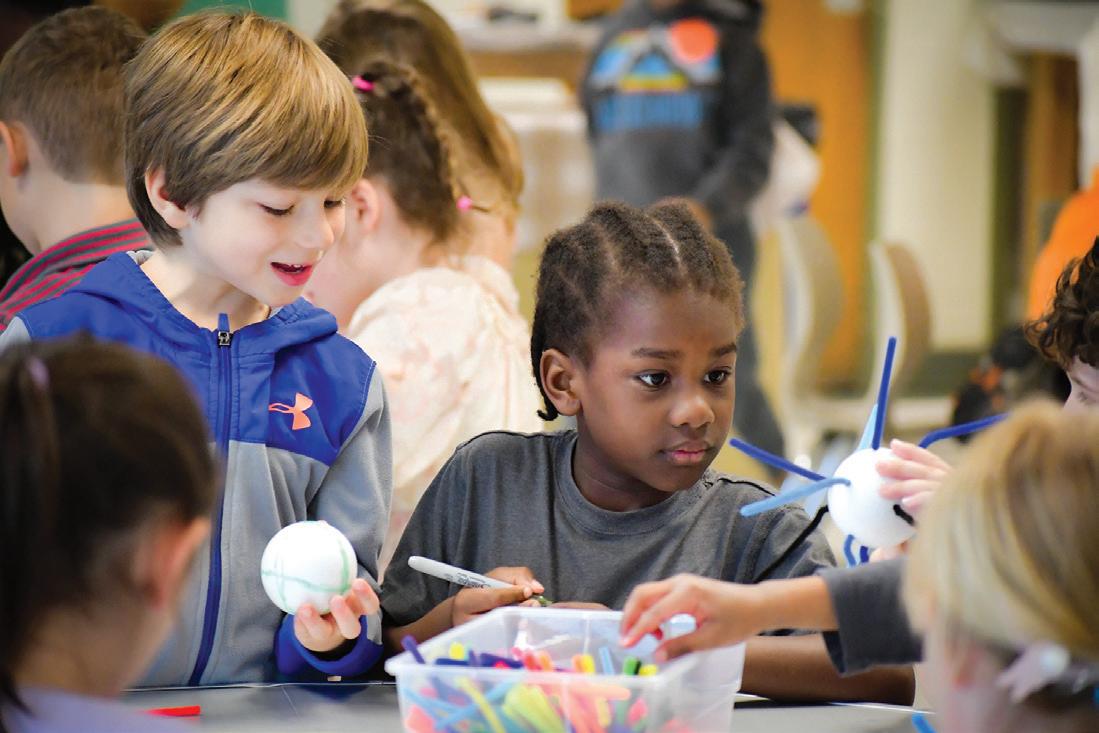
Virology
Students learned what viruses are, how they spread, and their structure. Using Styrofoam and pipe cleaners, they constructed virus models, gaining a visual understanding of microscopic organisms.
Pediatric Psychiatry
Focusing on emotional health, students learned how doctors help people manage their feelings. Through mindfulness activities and coping strategies, students gained tools to address stress, sadness, and anger: valuable skills for emotional well-being.
Self-Driving Truck Technology
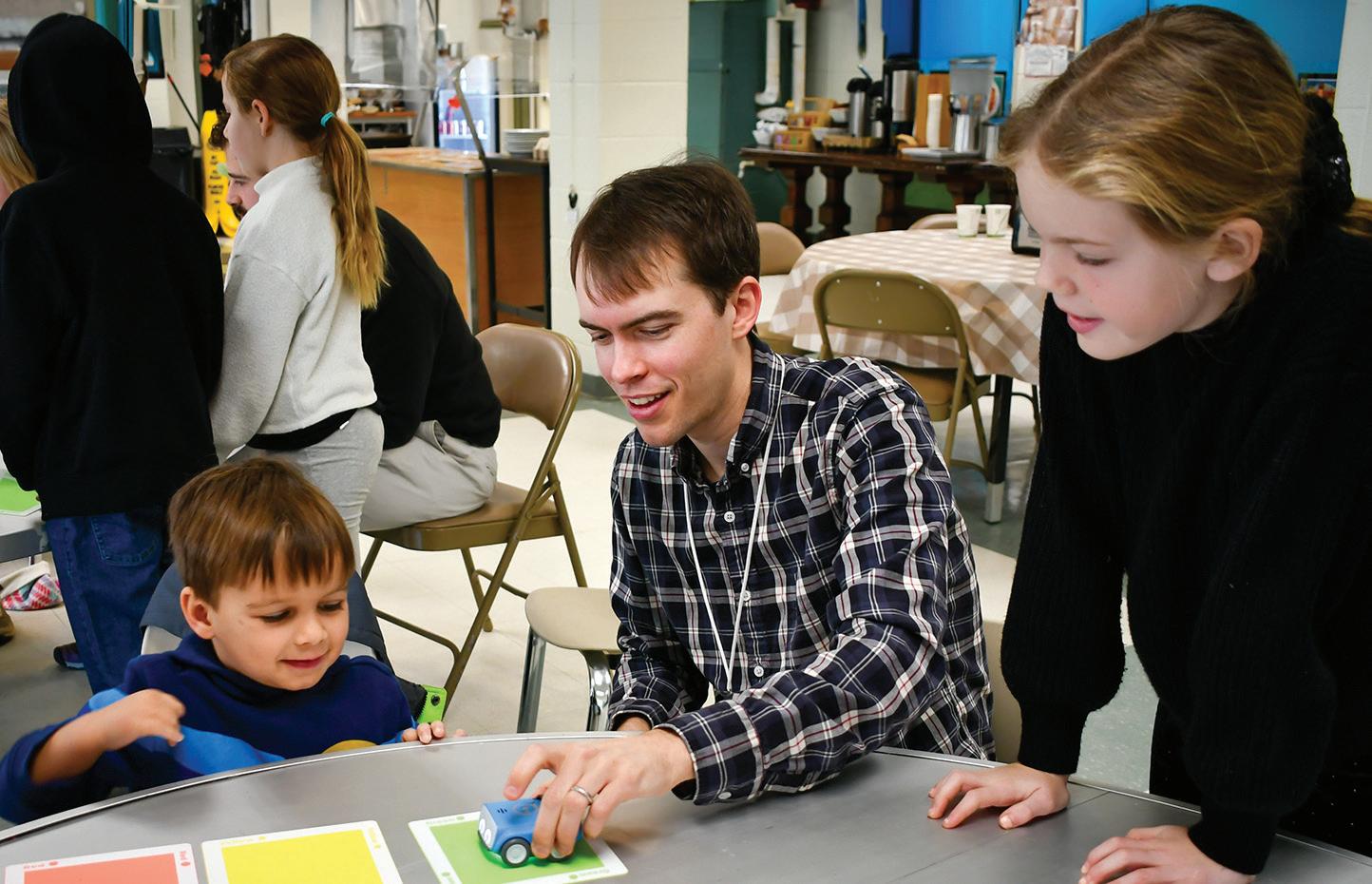
Students explored cutting-edge technology with a session on self-driving trucks. They practiced problemsolving by using “Sphero Indi Cars,” a fun and interactive way to grasp the basics of autonomous systems.
Chemistry
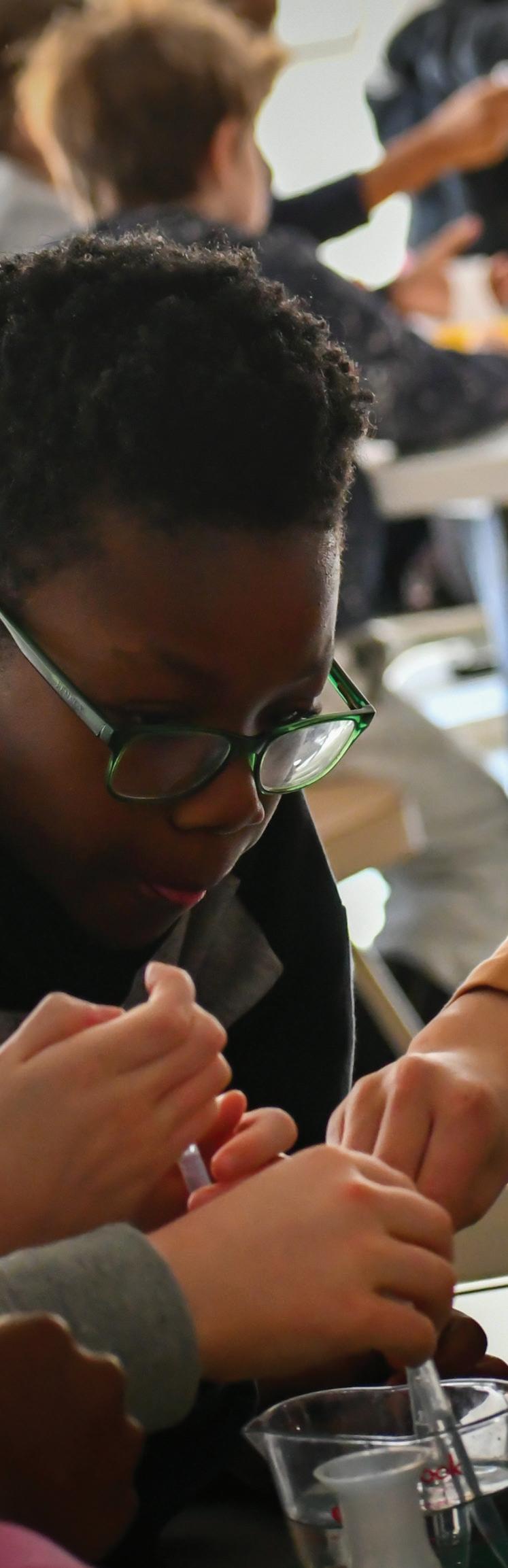
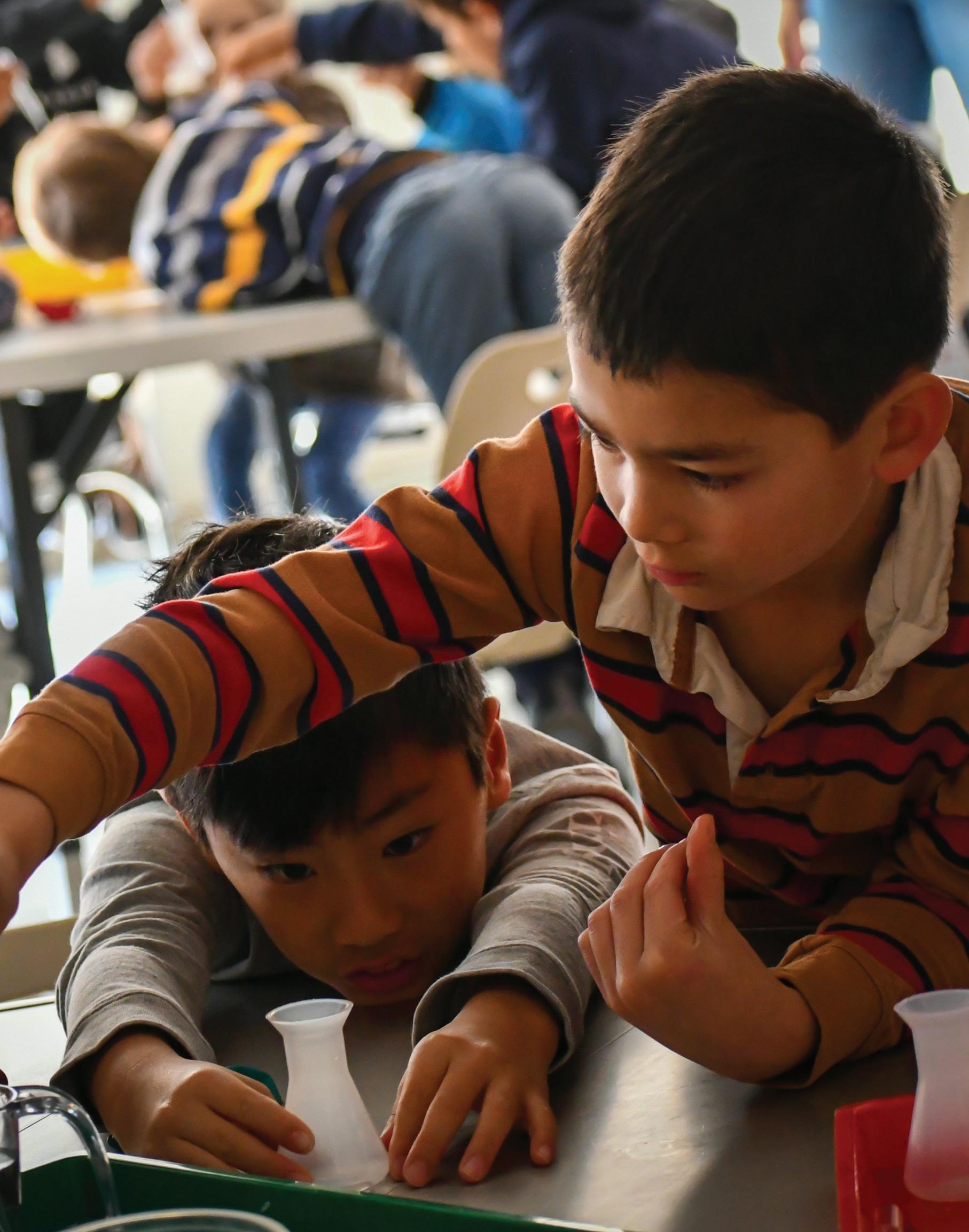
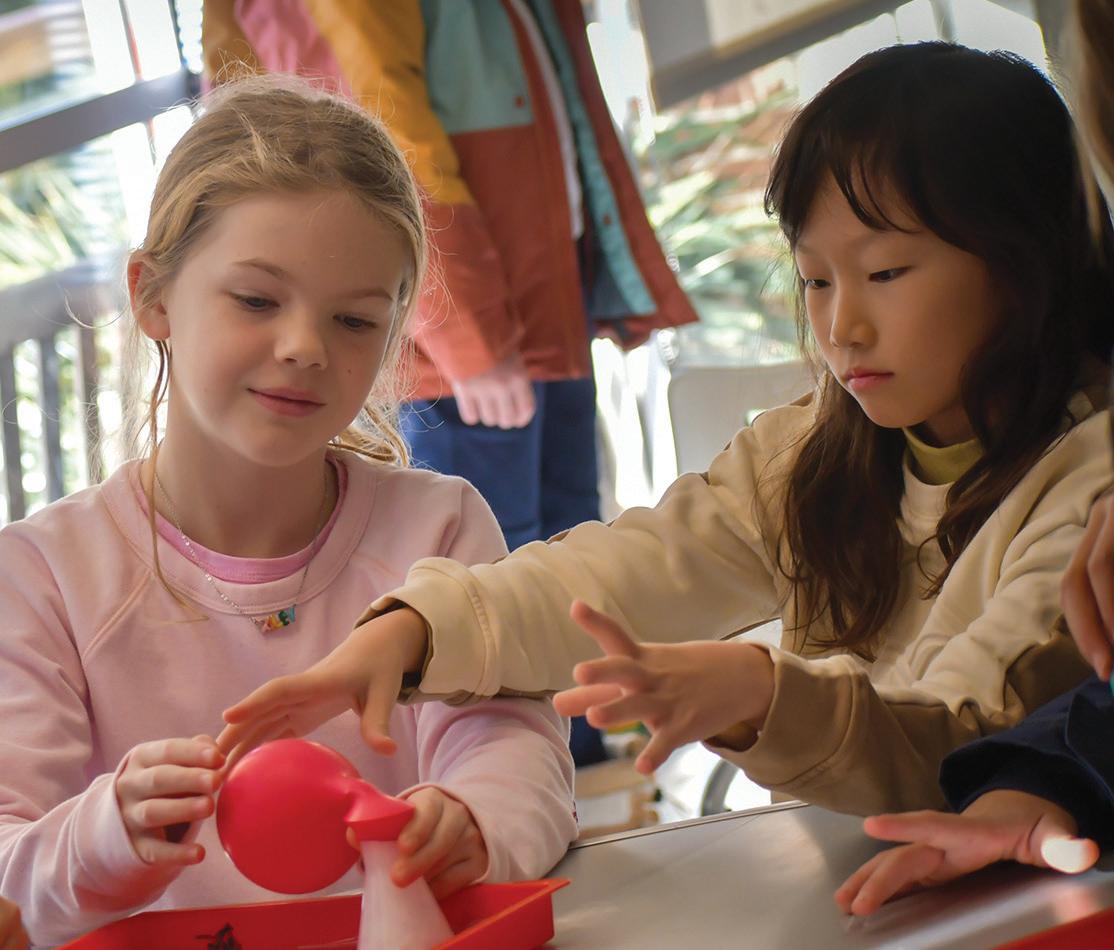
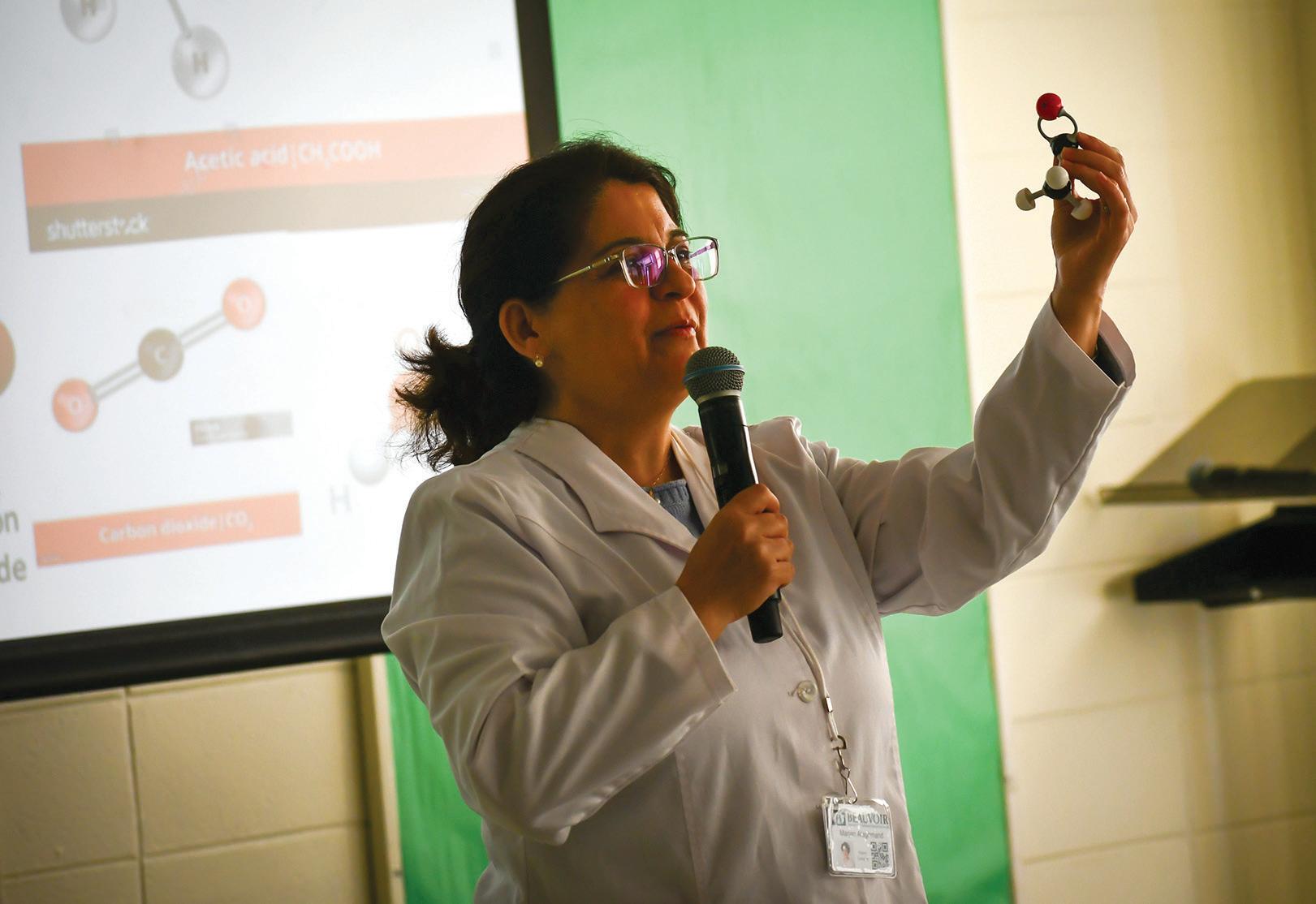
A chemistry professor from American University introduced students to chemical reactions, particularly acid and base reactions. Students then mixed baking soda and vinegar to inflate a balloon with carbon dioxide gas, providing a vivid demonstration of science in action.
Thank you!
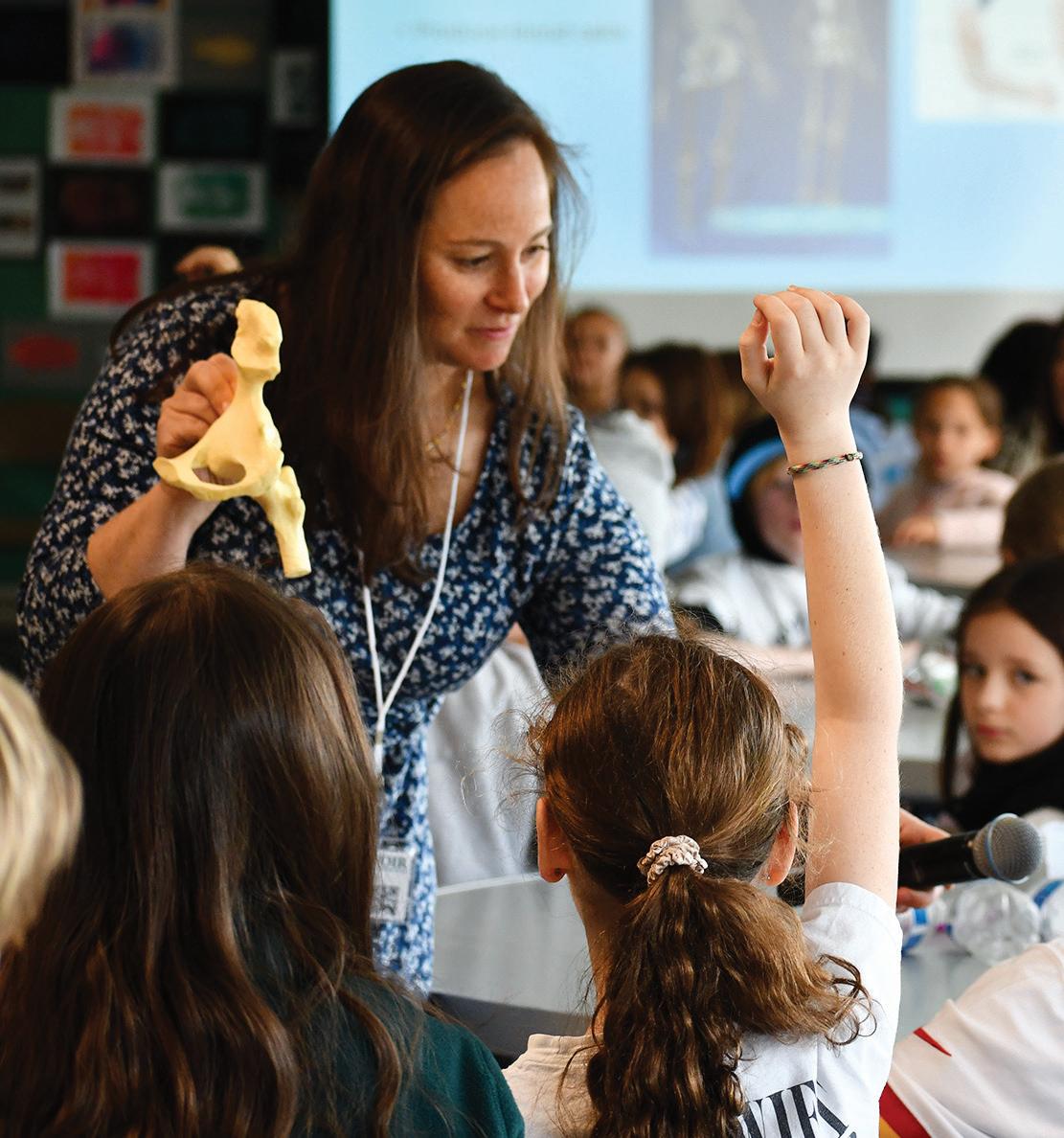
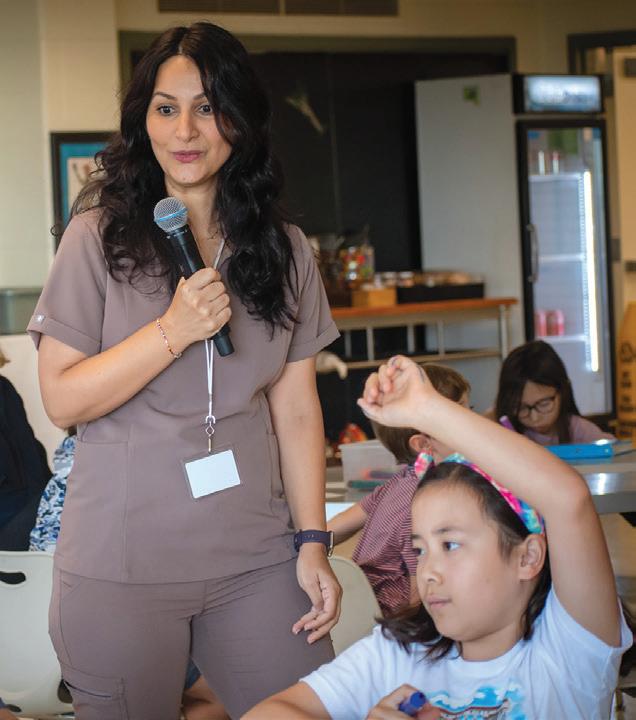
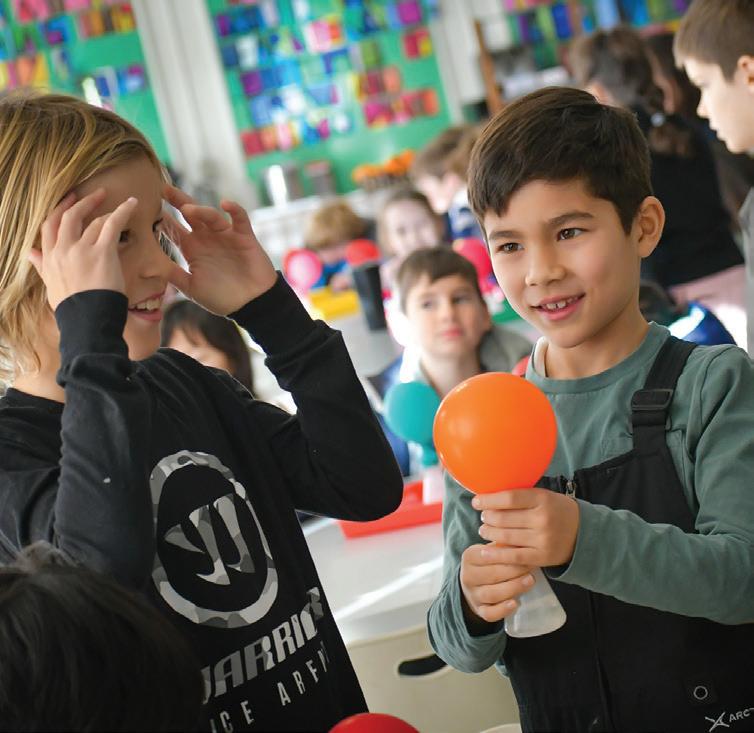
Whether it’s a teacher, parent, or other community members, students can look around to find a wealth of knowledge waiting to inspire them. Together, we can empower the next generation of problem solvers and innovators. Thank you to our 2024/2025 STEM experts:
2024
Karin Hoelzer Microbiology
Hana Yoo
Video Game Design & Engineering
Kevin Barone Electrical Engineering
Alison Kitay Orthopedic Surgery
Natalie Pica Friend Virology & Pediatric Medicine
Emmie Bodaghi Child Psychiatry
Megan Strand Solar Energy & Solar Farms
Wande Johnson Pediatric Anesthesiology
Justin Stilwell Systems Engineering & Self-Driving Truck Technology
Marjan Alaghmand Chemistry
2025
Victoria Powers Environmental Science
Anna Fisher NASA Astronaut
Keira Driansky Simon Biotechnology & Cancer Research
Mark and Mary Eid Dermatology & Micrographic Surgery
Reda Rawi Vaccine Research
Beauvoir’s Outdoor Classroom: Where Small Hands Discover Big Worlds
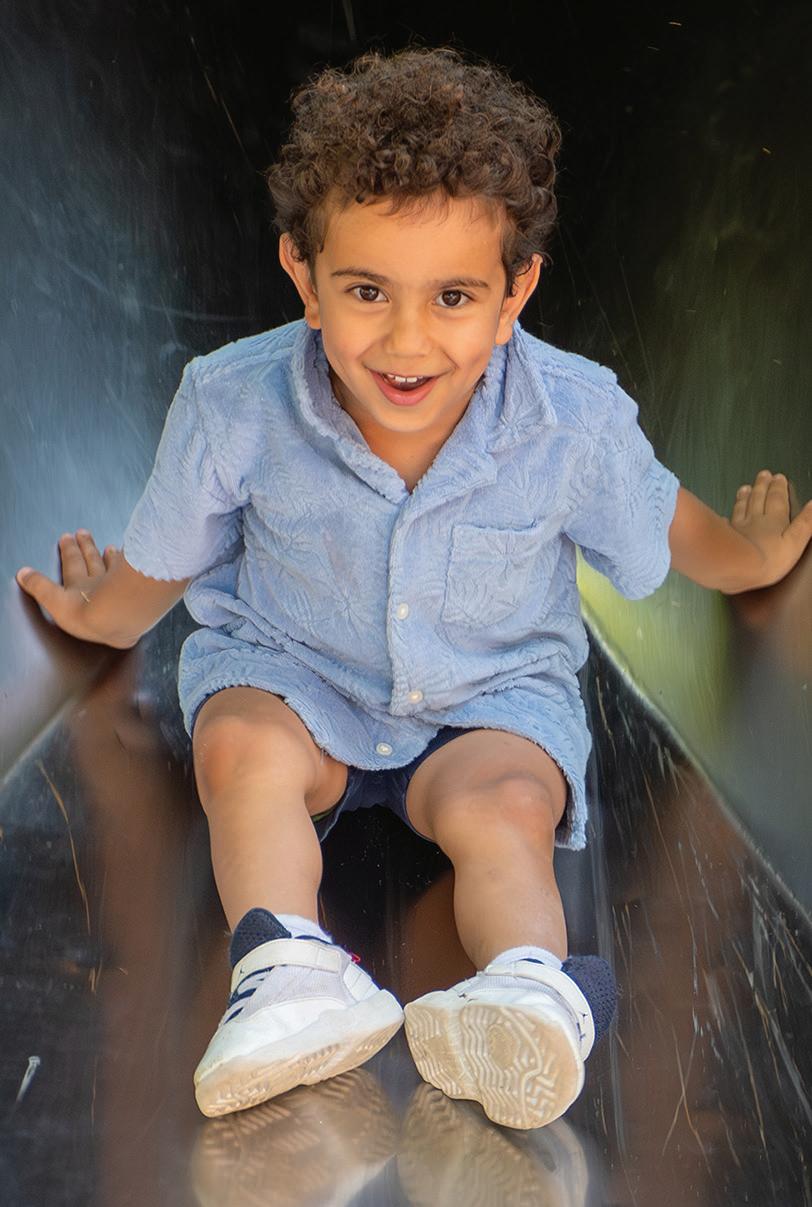
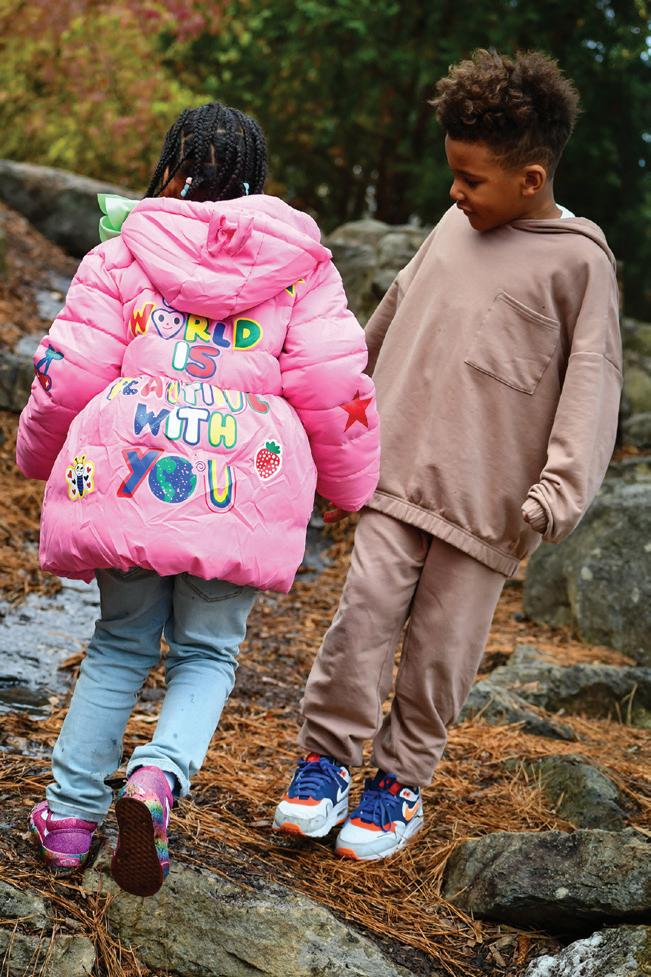
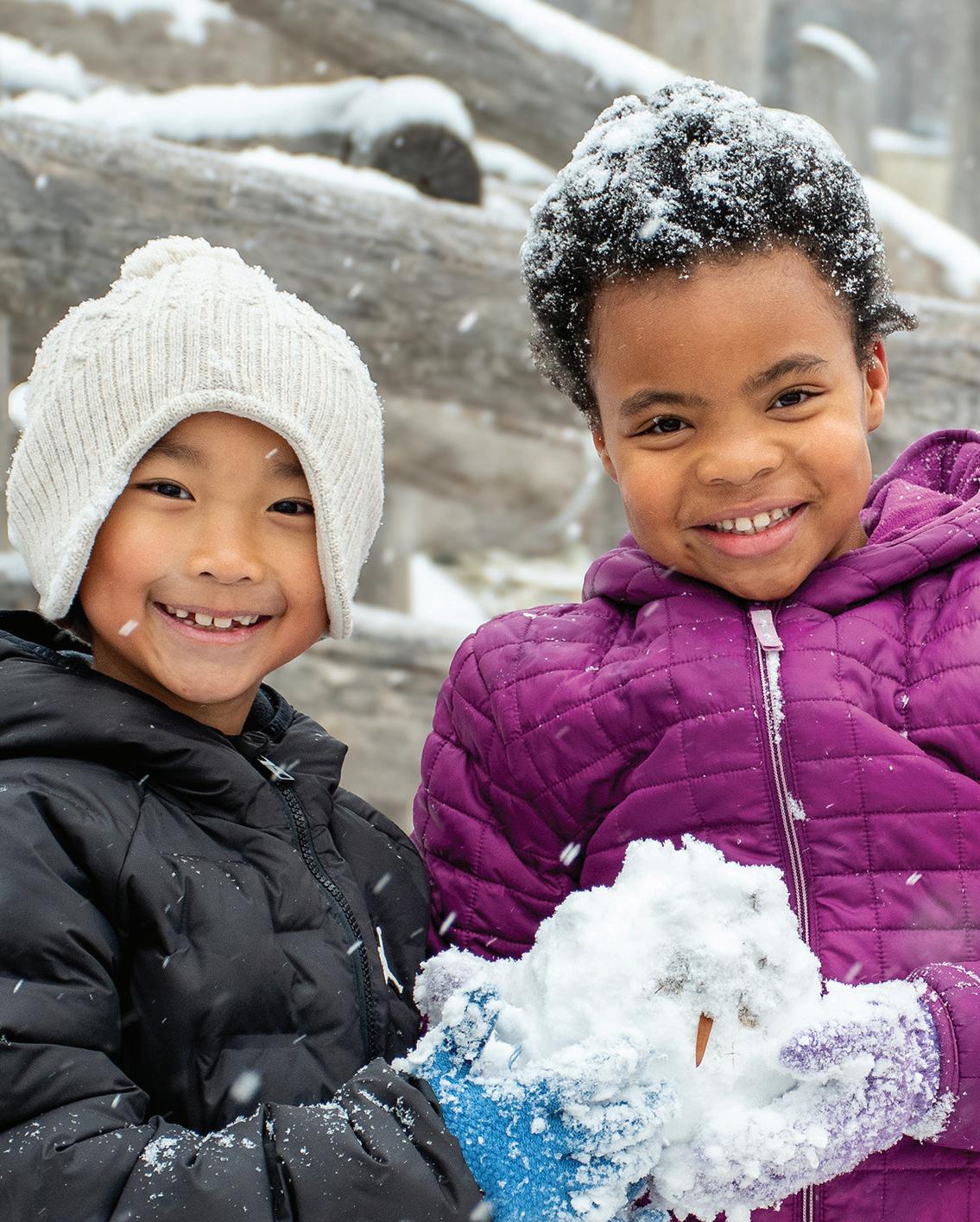
At Beauvoir, childhood unfolds with room to wonder. In a joyful, carefully designed outdoor environment, children are encouraged to explore, take risks, build confidence, and deepen their connection to the natural world. Each day outside offers opportunities to develop new skills, practice decision-making, and form meaningful bonds with one another and with their surroundings.
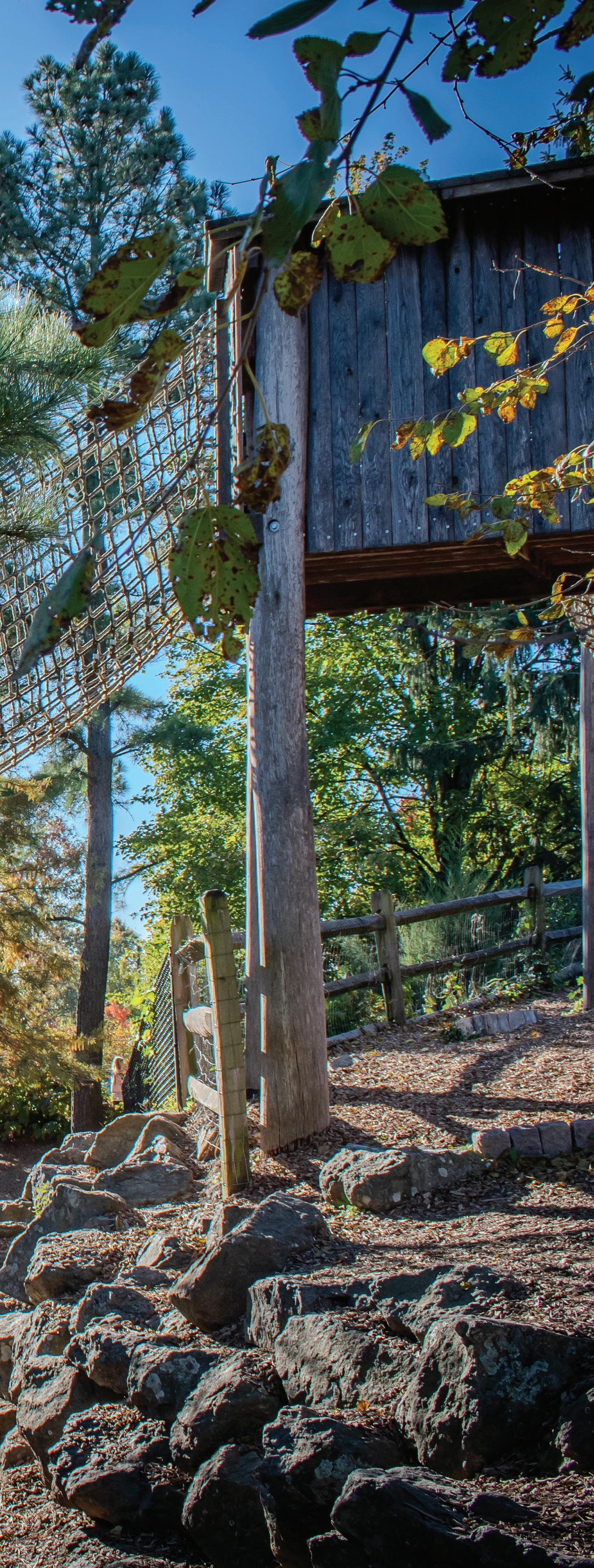
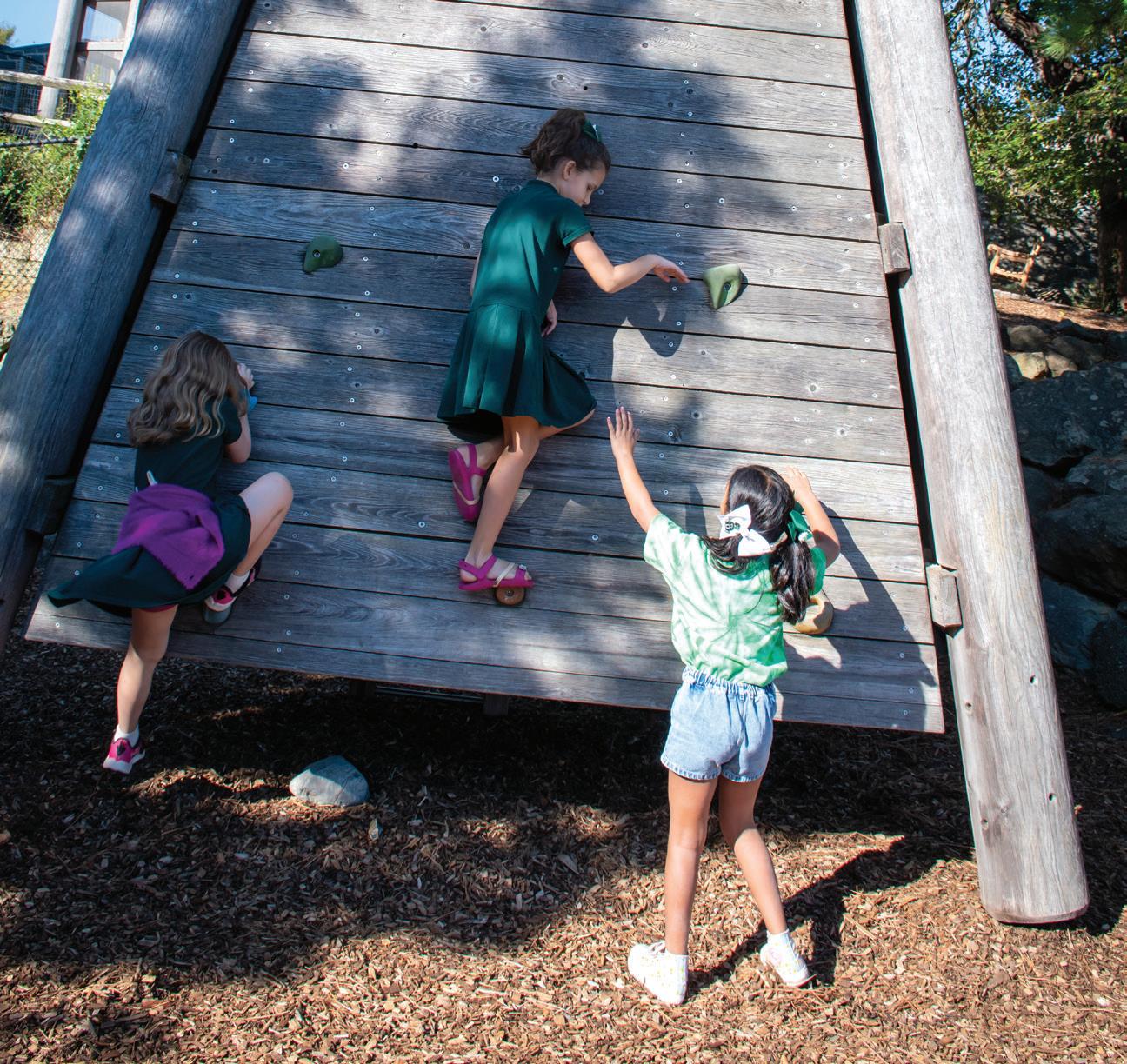
Beauvoir’s Paula Carreiro Campus Outdoor Laboratory is thoughtfully organized into distinct areas that support different kinds of play and learning. Each space is designed to meet children where they are developmentally, with challenges that evolve as they grow. As students progress from grade to grade, the skills they practice—balance, coordination, strength, problem-solving, and collaboration—become more complex, allowing children to experience both mastery and new discovery over time.
At the heart of the playground is equipment crafted by Richter Spielgeräte GmbH, whose philosophy holds that children learn best through full-sensory exploration. Constructed from natural materials with finishes that blend into the landscape, the equipment feels at home beneath the Cathedral tower, free from bright plastics or steel structures. Together, these thoughtfully designed spaces create an outdoor classroom where learning grows naturally, and childhood is free to breathe.
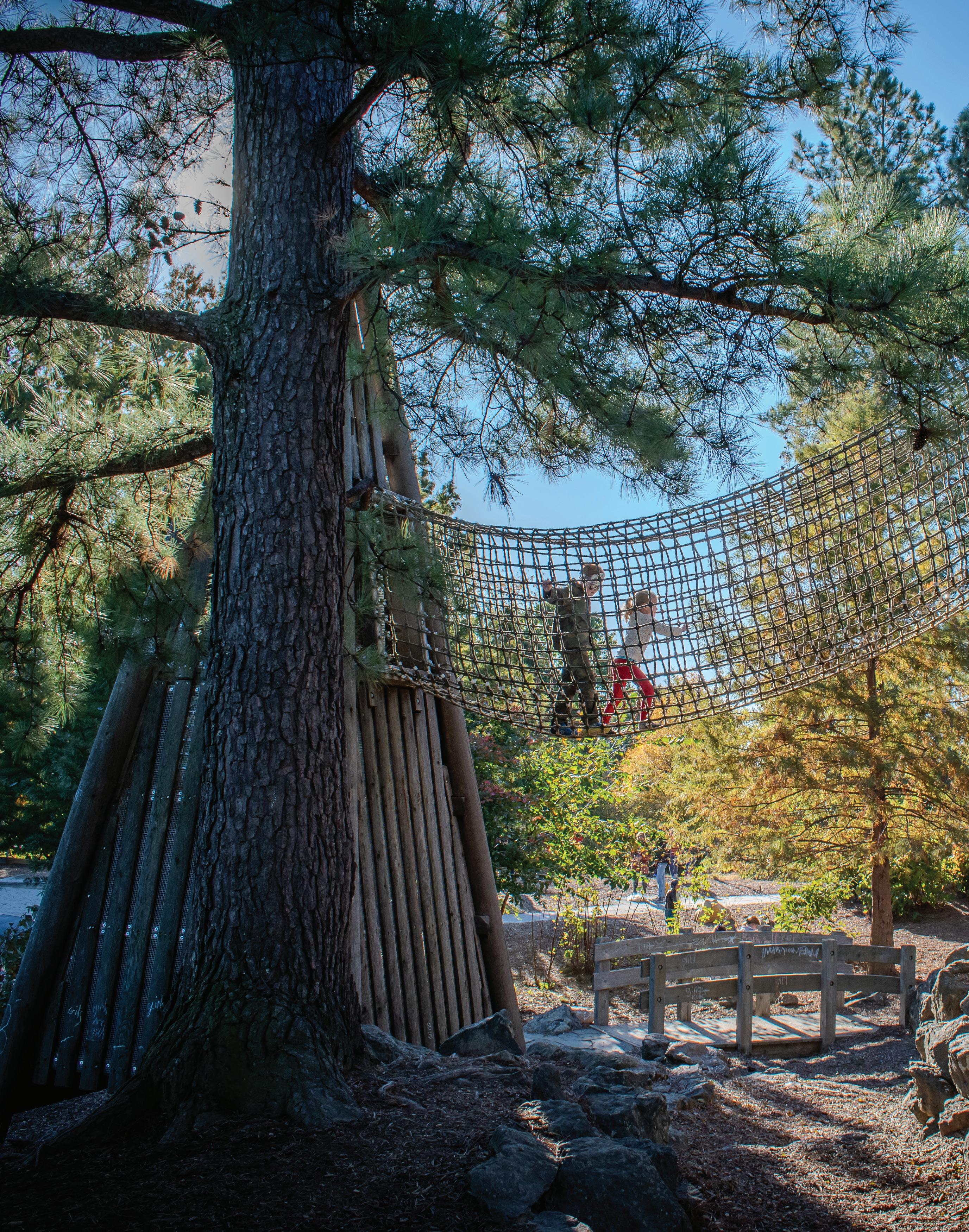
“We wanted to create an outdoor environment that grows alongside our students— one that offers new challenges, encourages perseverance, and invites children to stretch their abilities as they mature. These spaces support movement, imagination, and confidence, helping children recognize their own capabilities and develop a lasting respect for the world around them.” CINDI GIBBS-WILBORN

Exploring the World Together
Beauvoir’s Global Studies program inspires inquiry, connection, and cultural understanding.
Lake Pehoé within the Torres del Paine National Park in Chilean Patagonia. The park is located in Southern Chile between the Andes Mountains and the Patagonia Steppe. The mountains rising from behind Lake Pehoé are part of the Cordillera del Paine massif.

By the time children graduate from Beauvoir, they have explored the world—thanks to the School’s treasured Global Studies curriculum. This school-wide program invites students to discover geographical regions across the globe while celebrating the diverse cultures, traditions, and family stories that enrich our own community.
Each spring, students delve into an in-depth study of a country or region from one of five geographical areas: Africa, Latin America, Asia, Europe, or North America.
Through these integrated explorations, every child, from the Early Learning Center through third grade, engages in hands-on, interdisciplinary learning that builds cultural awareness and global understanding. By graduation, all students have studied each of the five regions, giving them a broad appreciation for the many peoples and cultures that shape our world.
The year culminates in Beauvoir’s beloved Museum Mornings celebration. The hallways outside of classrooms transform into interactive museum spaces where students proudly present exhibits showcasing their research, artwork, writing, and discoveries. Families, peers, and guests are invited to tour these vibrant galleries and experience the children’s learning firsthand.
In the following pages, we highlight several faculty members who journeyed abroad this past year and brought their experiences back to their classrooms through immersive, inquiry-driven learning opportunities.

Chile
Hannah LaBella Partner Teacher
Second Grade
Maria Kurt Partner Teacher
Second Grade
Where did you travel?
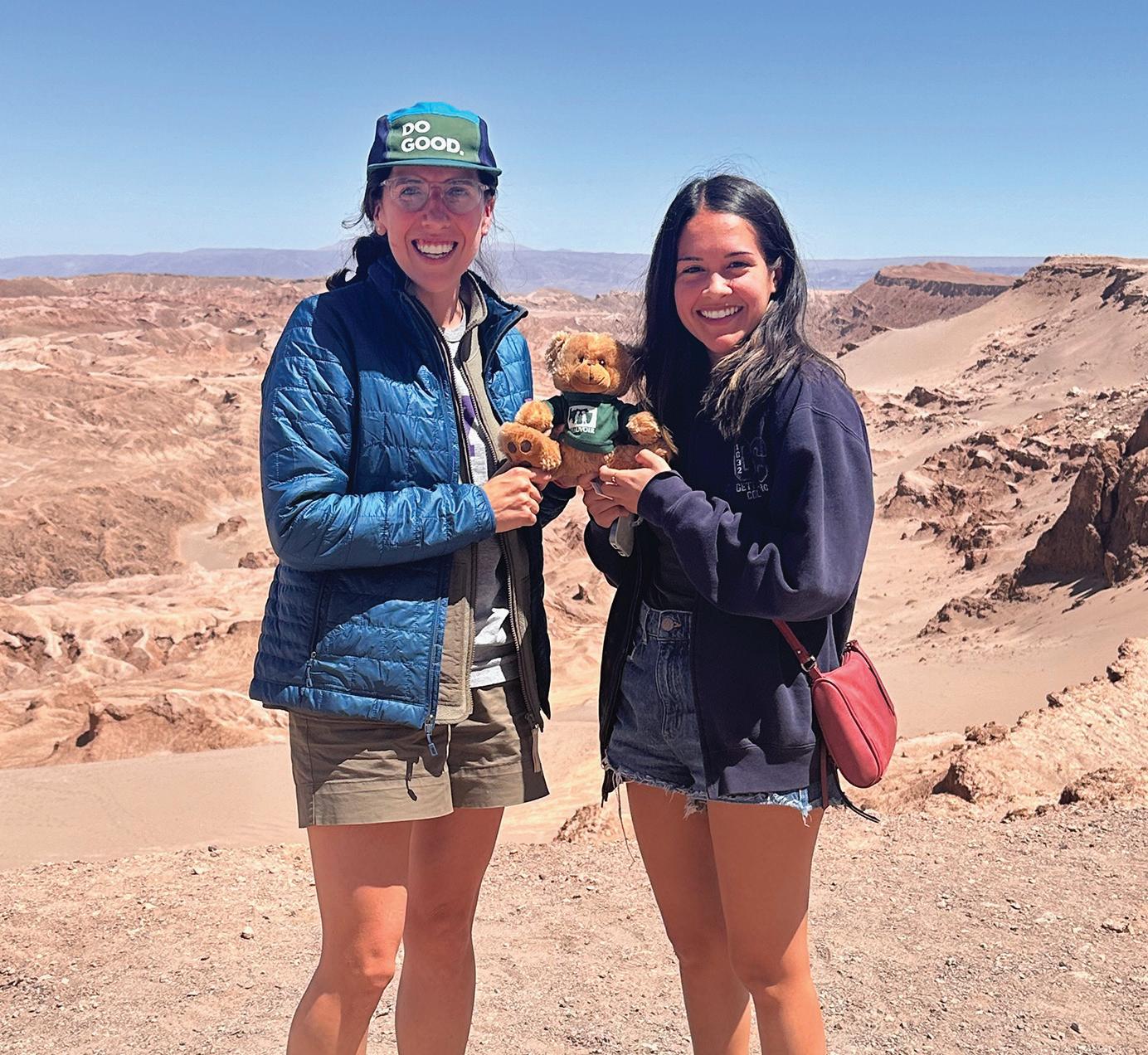
In the spring of 2024, Beauvoir second graders explored the country of Chile and the Loa River for Global Studies. We were lucky enough to be selected to receive a Global Studies grant and spent our Spring Break traveling the entire length of Chile! We created a trip that would allow us to learn about Chile’s traditional customs, various geologic locations, and local lifestyle in both city and remote areas. Before we departed on our adventure, each second-grade teacher became an expert on a specific topic within Chile such as art, food, music, holidays, etc. Equipping our students with background knowledge allowed them to brainstorm a list of more questions for us to find answers to!
Do you have any fun facts or highlights from your trip?
Over two weeks, we visited five diverse locations within Chile. Our first stop was Torres del Paine National Park in Patagonia, the southernmost area of Chile. Next, we traveled to the southern lake district area to visit Chiloé Island. On this slow-paced island, we learned how native traditions merged with those
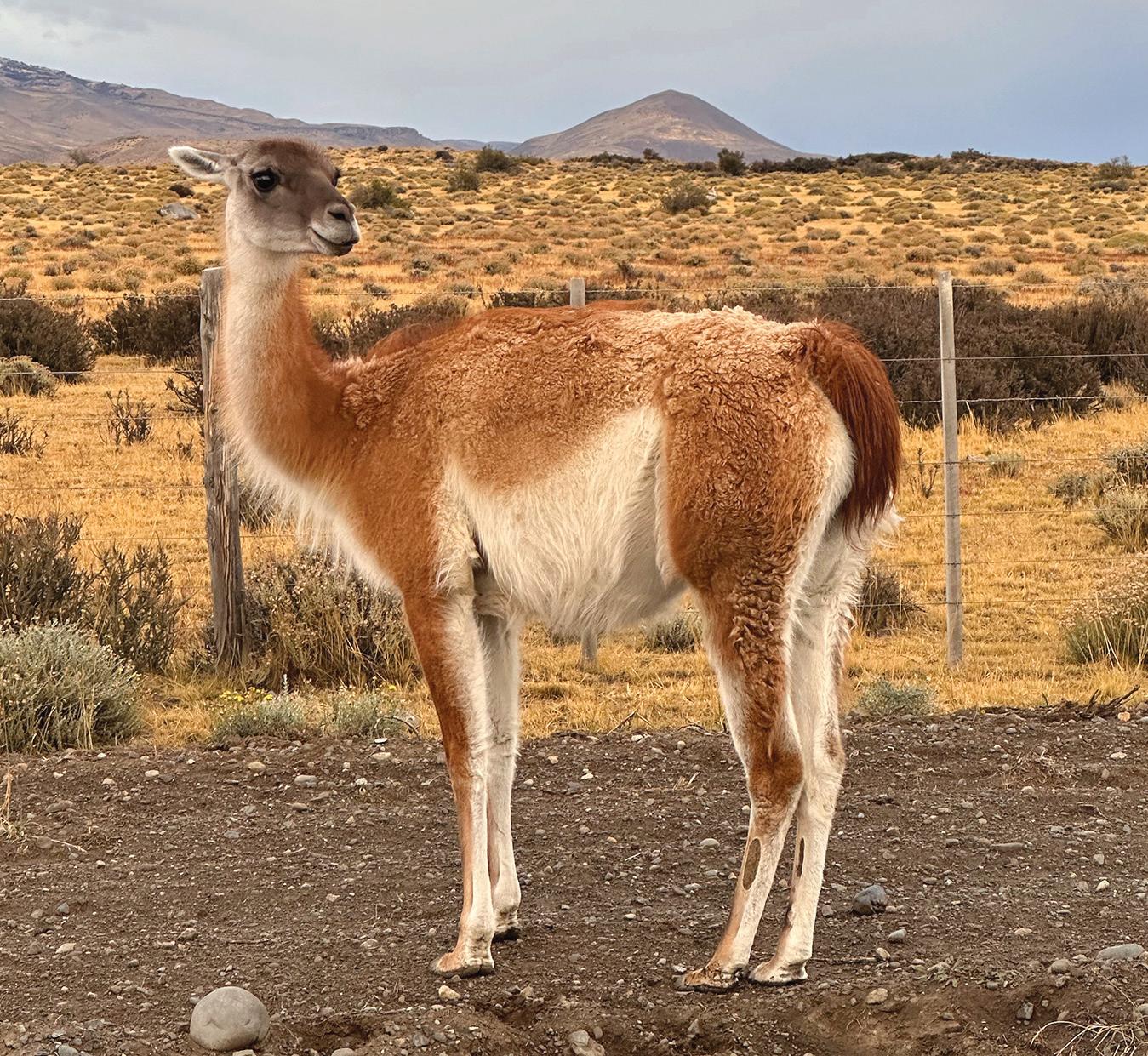
of the Spanish colonists to create a unique lifestyle here. Our third stop was to the coastal city of Valparaíso. This port city is comprised of more than forty hills, fabulous street art, and one of the homes of the great poet Pablo Neruda. Our students were most excited to hear about our next stop to the Atacama Desert—home to the Loa River. Here we explored lagoons, geysers, and salt flats at an altitude of 13,500 feet. Our final stop in Chile was to the capital city of Santiago. We taught our students about the bustling food markets, typical dishes like pastel de choclo and completo, iconic city structures, and ways to move around the city such as the funicular and cable cars!
How did our trip connect with what students learned in their Global Studies unit?
Through our time in Chile, we were able to collect many photos and videos to help immerse our students in the culture and landscapes of the country. Our students were incredibly interested in the flora and fauna native to Chile, and loved seeing our firsthand experience near flamingos, condors, and guanacos! They had the best time asking more questions, writing informational pieces on what they learned, and building their own animals as a final project! Our students also loved seeing the art we came across in Valparaiso, and a few of them replicated the murals to incorporate into our global studies hallway. Overall, the trip really allowed us to provide knowledge on Chile that we could not have obtained otherwise. It helped make the Global Studies unit more authentic and fun!
Belize
Liane Alves ‘97 Partner Teacher First Grade
Where did you travel?
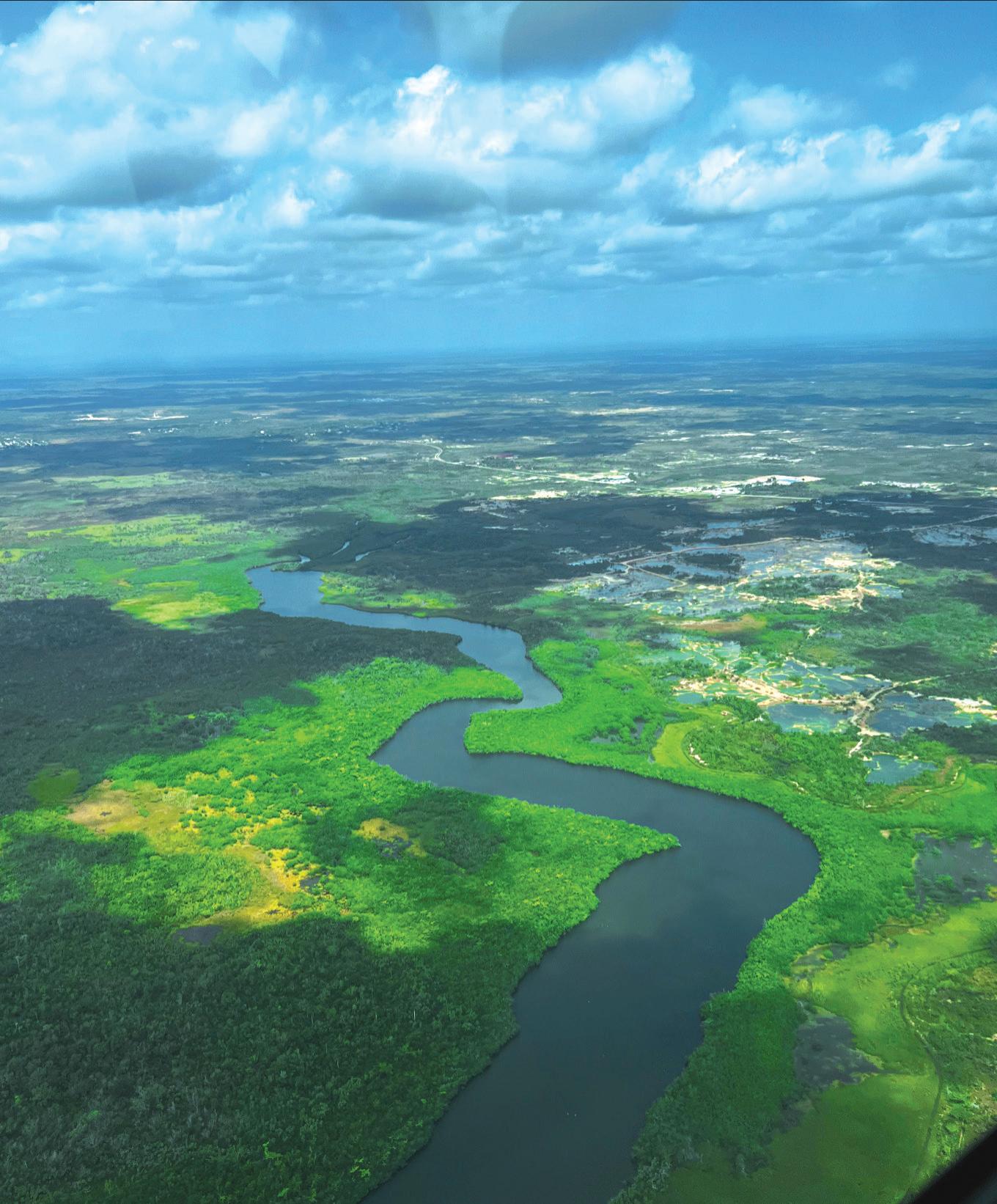
I visited Belize! I traveled from Belize City to Hopkins, a Garifuna village known for its cultural heritage.
How did you pick your destination?
Before teaching, my background was in cultural anthropology. I enjoy learning how different cultures come together to influence each other. Belize has a very diverse background and after initial research, I found that Hopkins was a great spot to learn about the representation of Mayan, African, and European culture in Belize.
Tell us a little about your proposal or how you envisioned your trip.
I wanted to focus on three main aspects: the Mayan city of Xunantunich, the Cockscomb Wildlife Sanctuary, and the culture of Belize. I worked with guides in Belize and visited multiple sites in a day.
How did your trip connect with what students learned in their Global Studies unit?
Traveling abroad allowed me the unique opportunity to access authentic resources such as maps, artifacts, documents, and photographs specific to Belize. I was able to incorporate my experience into lessons by offering students real-world examples and fostering a deeper connection with the subject matter. Because first graders study the Cathedral, I made sure to include a visit to Belize’s St. John’s Anglican Cathedral. We enjoyed thinking more deeply about our connection to our Cathedral through St. John’s in Belize.
Do you have any fun facts, highlights, or anecdotes from your trip?
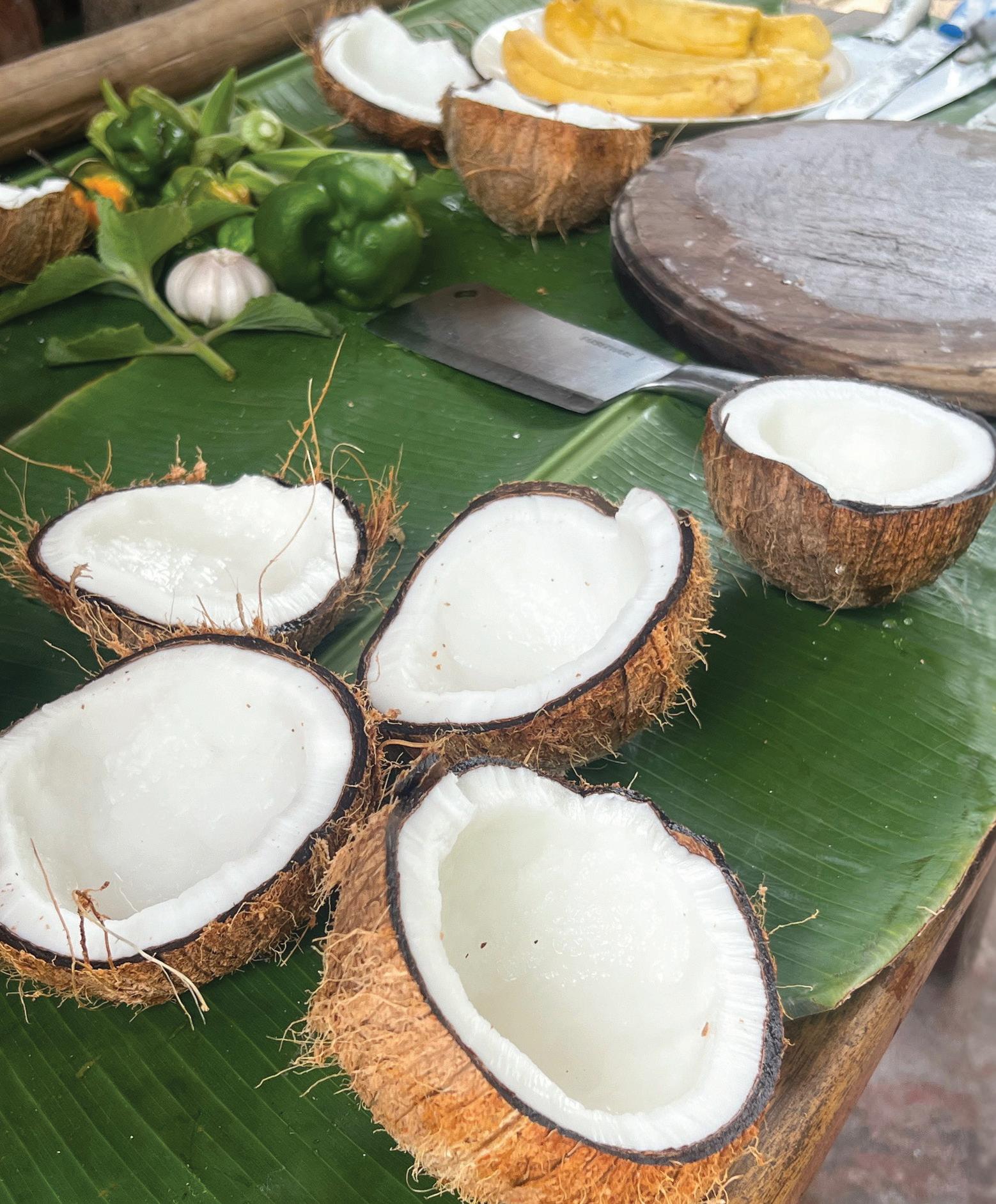
I stayed in a tree house! In the morning, coatimundi (members of the raccoon family) would jump past the windows. I also learned that jaguars roam freely in the area I was staying, and I would see lots of “jaguar crossing” signs on the road.
South Korea
Gabe Brown Partner Teacher Third Grade
Gabe Brown's trip to South Korea turned the country into a classroom and inspired lessons that will last a lifetime.
“I envisioned my trip as a way to deeply explore South Korea, its food, culture, and geography, so I could bring those experiences back to my students,” he said. His travels took him from the vibrant city center of Seoul to the volcanic cliffs of Jeju Island, all with one goal in mind: bringing learning to life.
Seoul’s vibrant neighborhoods and historical landmarks were apt comparisons to Washington, DC, the capital city his students know so well. “I wanted our third graders to see Seoul as another capital city, similar in some ways, but with its own unique design and story.”
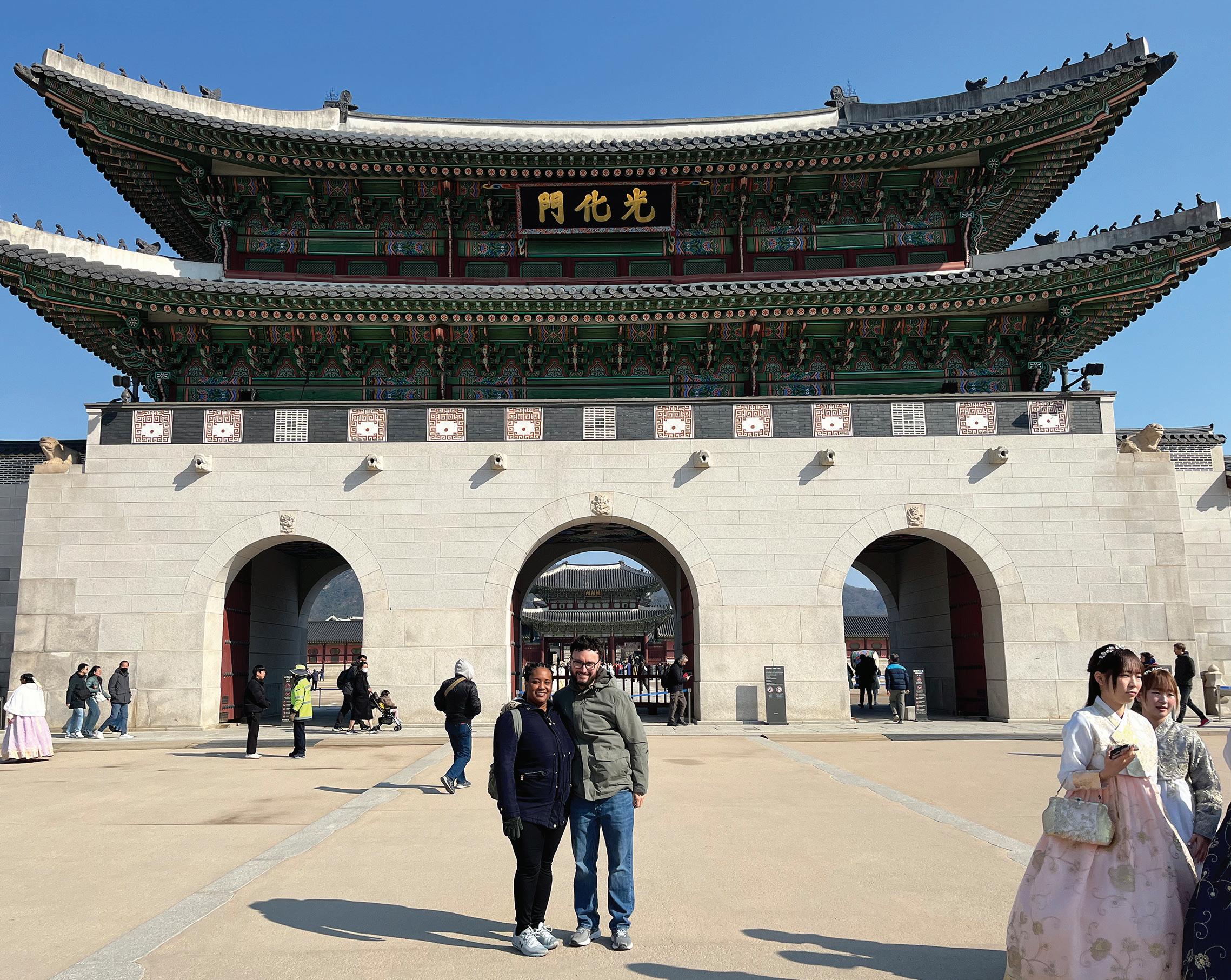
One of the experiences Mr. Brown was excited to share with his students took place when he visited the Jogyesa Temple, which dates to the 14th century and is one of the most important temples in Korean Buddhism. Mr. Brown had the opportunity to play a ceremonial drum, which plays a central role in Buddhist
ceremonies, as the drum’s deep and resonant sound is thought to foster powerful energy that connects to Buddha’s wisdom and compassion.
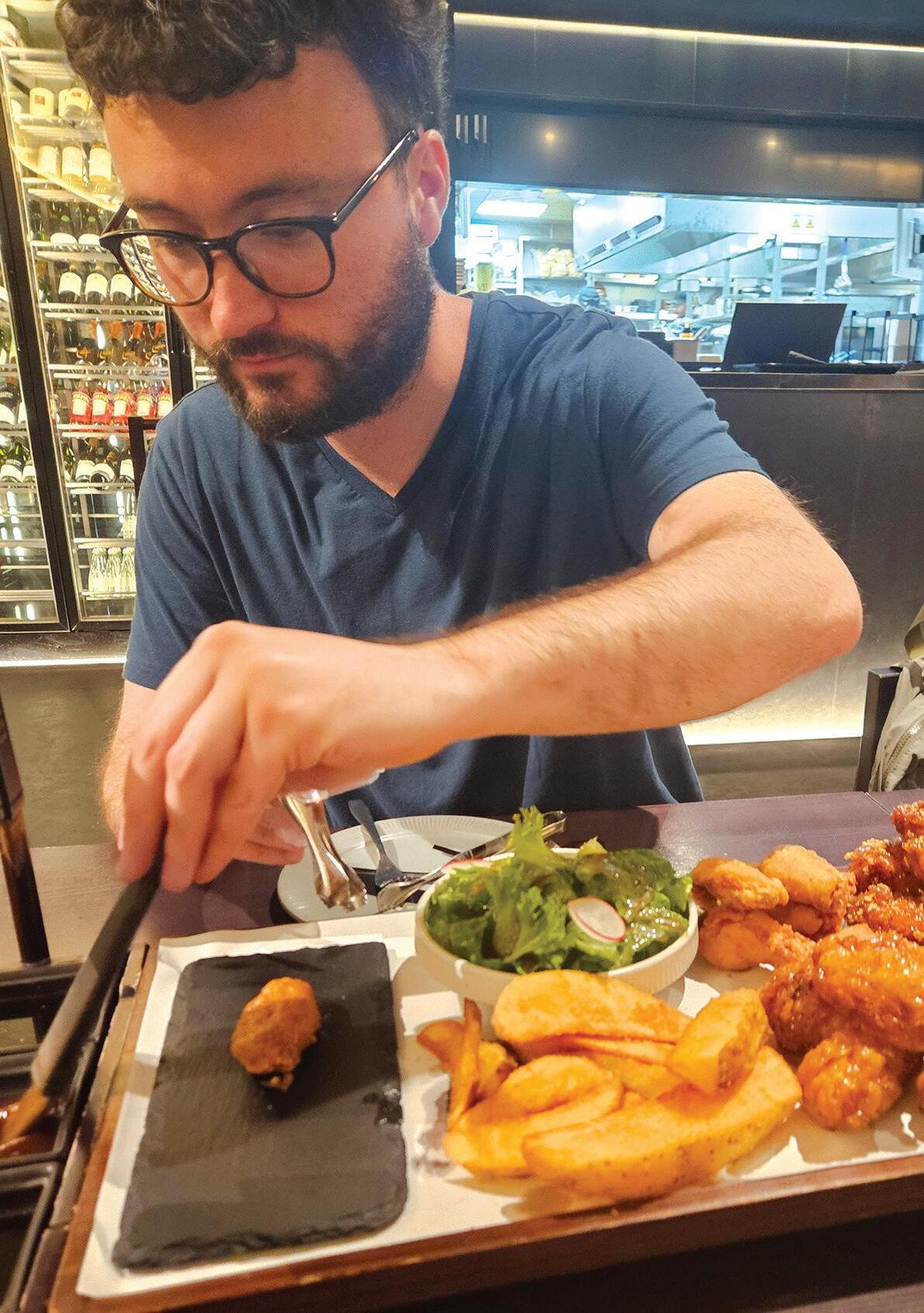
Food, art, and geography also featured prominently during his journey. “From Korean BBQ to a mindblowingly good seafood broth, everything I ate told a story,” he laughed. Especially exciting were the Hanyeo, Jeju Island’s famous free-diving women, many in their 60s, harvesting mollusks with incredible skill. “Watching them after visiting the museum dedicated to their culture, it was like history came alive in front of me,” shared Mr. Brown.
Back in the classroom, his photos, reflections, and firsthand insights added depth and excitement to his third graders’ Global Studies learning. The materials he gathered supported student presentations on South Korean cities, traditional arts, and geography, while his stories sparked conversations about cultural identity and community. “It helped the students go beyond the textbook. They could see real places, real people, and real experiences that connected directly to what we were studying,” he said. “It made the world feel a little smaller and a lot more interesting.”
New Zealand
Lynn Farquhar Partner Teacher Kindergarten
Saijal Patel Partner Teacher Kindergarten
Inspired by the curiosity of their kindergarten students, Lynn Farquhar and Saijal Patel embarked on an exciting journey to New Zealand. As part of the Global Studies curriculum, the class explored New Zealand, and the teachers saw an opportunity to bring the unit to life in a meaningful way.
“Our goal was to dive into the geography, the culture, and the everyday life of New Zealand from a child’s point of view,” Ms. Farquhar shared. “Our goal was to be able to answer the children’s questions with firsthand experiences,” added Ms. Patel.
During their travels, Ms. Farquhar and Ms. Patel researched topics their students were most interested in, which included New Zealand’s unique flora and fauna, local cuisine, Māori culture, weather patterns, and school life as well as what daily life looks like for children in New Zealand. The teachers’ observations helped students compare New Zealand and the United States, and the artifacts the educators brought back for their classrooms helped bring to life similarities and differences.
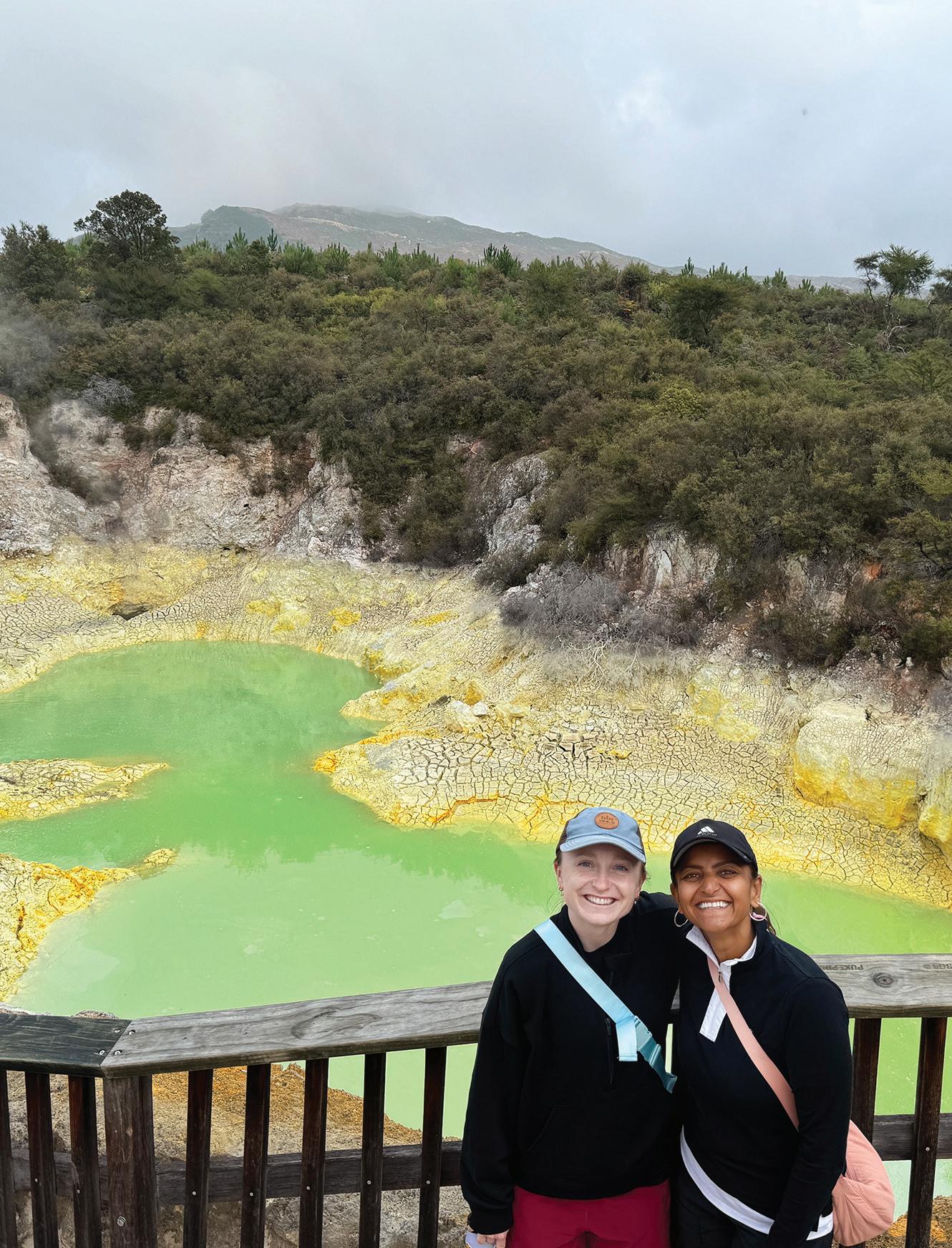
One highlight of their trip was visiting Queenstown, where a local guide described the city as his playground, office, and home. “That phrase really stuck with me,” said Ms. Patel. “It perfectly captured the vibrant spirit of the town, where natural beauty and community life are seamlessly intertwined.”
“The children were quite inspired by what they considered our bravery when we told them about our bungee jumping experience, as well as how fun it sounded! They really wanted to try something similar themselves. This motivated them to create the bungee jumping station for Museum Mornings, which was a huge hit among the students. Our experiences directly influenced their vision, and we were very proud of the work that they put into their projects.”

South Korea & Japan
Carolyn Hammonds Partner Teacher Third Grade
Carolyn Hammonds traveled to Seoul, South Korea, and made a quick detour to Japan, as part of her Global Studies Grant journey. “I didn’t know much about Korea going in,” she admitted, “but after planning with the help of Beauvoir families, and doing some research, it turned into a most meaningful trip.”
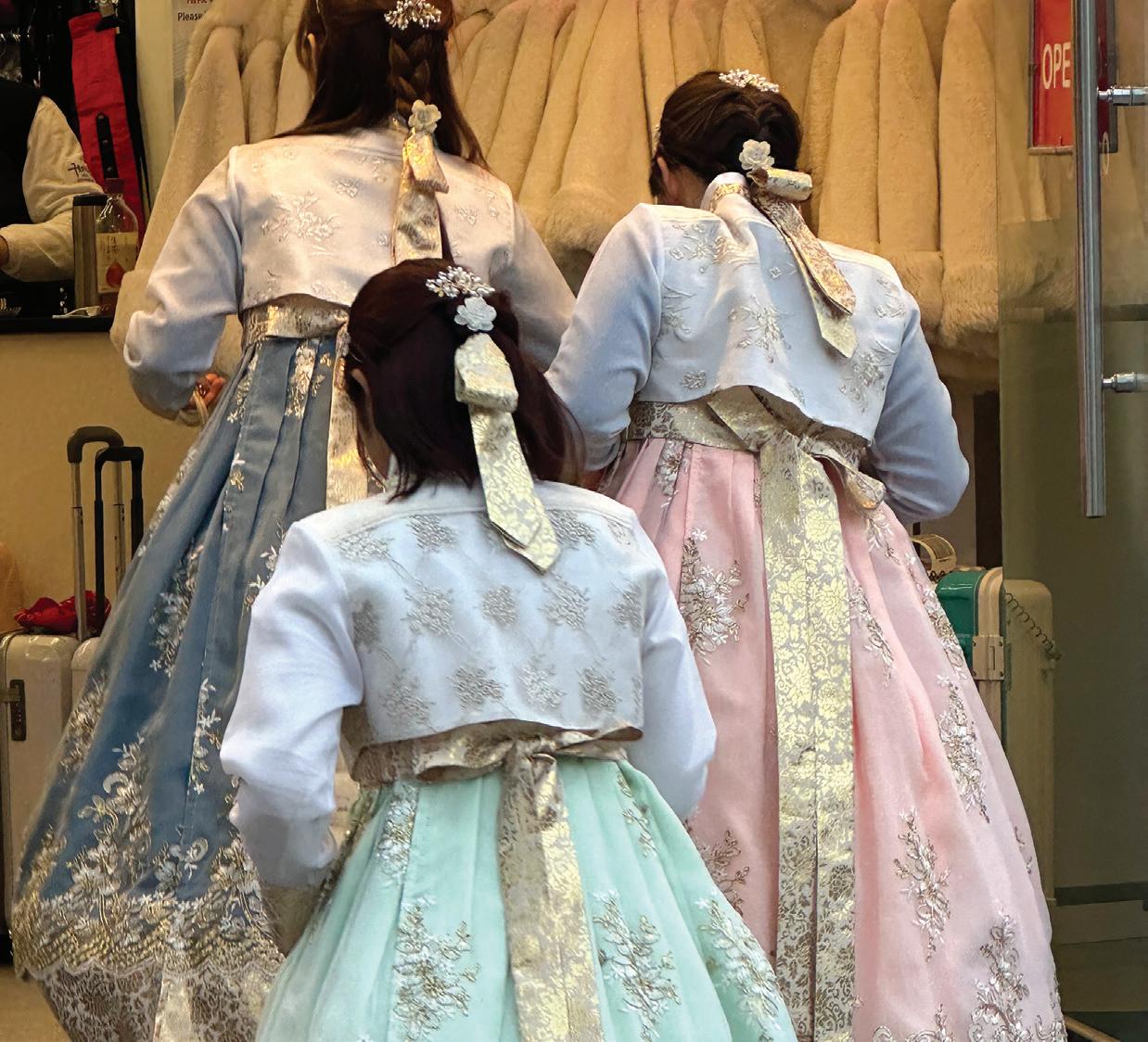
With help from parents and students, she mapped out a trip that would connect with the third grade’s Global Studies unit, from exploring Korean cities to diving into culture and history. “There’s nothing like having an authentic experience instead of just Googling,” she said. She even brought her students into the planning process with a PowerPoint, and returned with souvenirs like chopsticks, notebooks, and gonggi, a traditional game that was featured in the popular streaming show for grown-ups, Squid Game
The trip also offered some unexpected lessons. “There were large protests happening while I was there, peaceful, but very present. It reminded me how democracy works in different places.” One phone alert, written entirely in Korean, gave her a bit of a scare, until a friend translated: “Just a snow warning!”
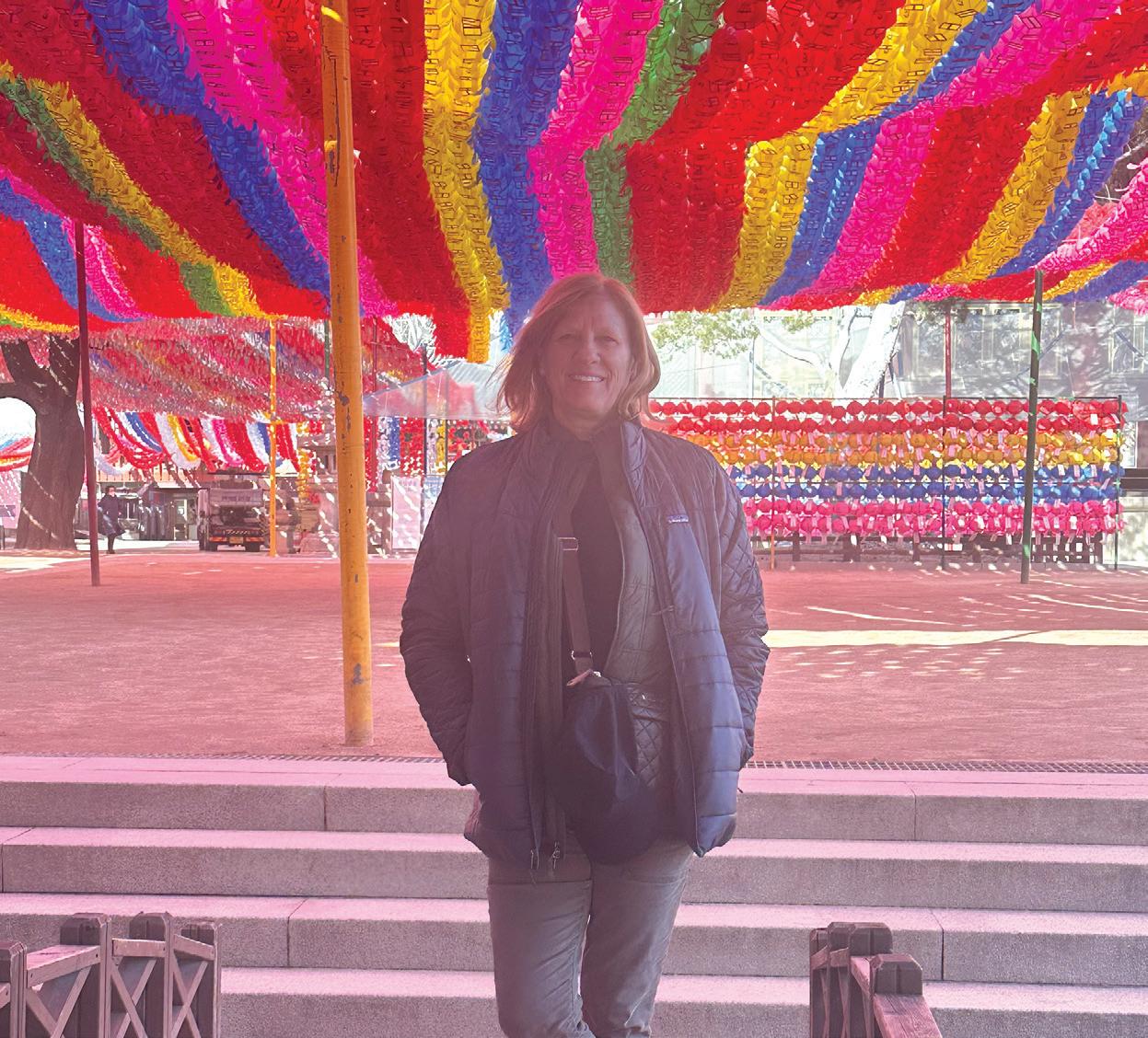
She embraced the challenge of being out of her element. “We ask our students to be okay with not knowing. I had to live that myself.” A favorite memory? A stranger in a restaurant helping her navigate shabu shabu, narrating kindly in Korean the whole way. “We didn’t understand her words, but her actions said it all.”
Would she go back? “Absolutely. Now that I’ve done the touristy things, I’d love to dive deeper. And maybe spend a bit more time in those amazing Korean bookstores!”
“The Seoul transportation system and my personal experience interacting with other passengers was an especially fun part of my trip. As part of our preparation for Museum Mornings, I worked with a group of our students to recreate a model of the Seoul metro system, including a replica of a train, with which they were fascinated. The end result was a piece of which they were very proud, and which also offered a connection with their own understanding of the transportation system in the United States.
In addition, we had five Korean-American students in our class last year who all helped shape my trip planning. This was such a nice connection for us, as they became the experts in offering me advice and suggestions prior to the trip. It was fun to compare our shared experiences upon my return!”
Japan
Melanie Lago Partner Teacher Second Grade
This past spring, Melanie Lago traveled to Japan, along with her son Ethan, a graduate of Beauvoir’s Class of 2023. They visited Tokyo, Kyoto, and Fujikawaguchiko as part of their adventure from the banks of the Sumida River to snow-covered trails near Mt. Fuji. Prior to their departure, Ms. Lago asked each of her students to submit a question that she would research while abroad and answer upon her return.
“Since second graders at Beauvoir engage in an interdisciplinary study of water and rivers through the course of the year, I wanted to explore the current and former capitals, and see how rivers and waterways shape food, culture, and daily life,” she shared. Highlights included hiking through the snowy Aokigahara Forest, spotting snow monkeys on St. Patrick’s Day (plus a rainbow!), and savoring endless treats at Tokyo’s Tsukiji and Kyoto’s Nishiki Markets. Ms. Lago recalled, “One of the best parts was the snowstorm in Kawaguchiko. We woke up to eight inches of fresh snow and hiked among the trees with Mt. Fuji in the background.”
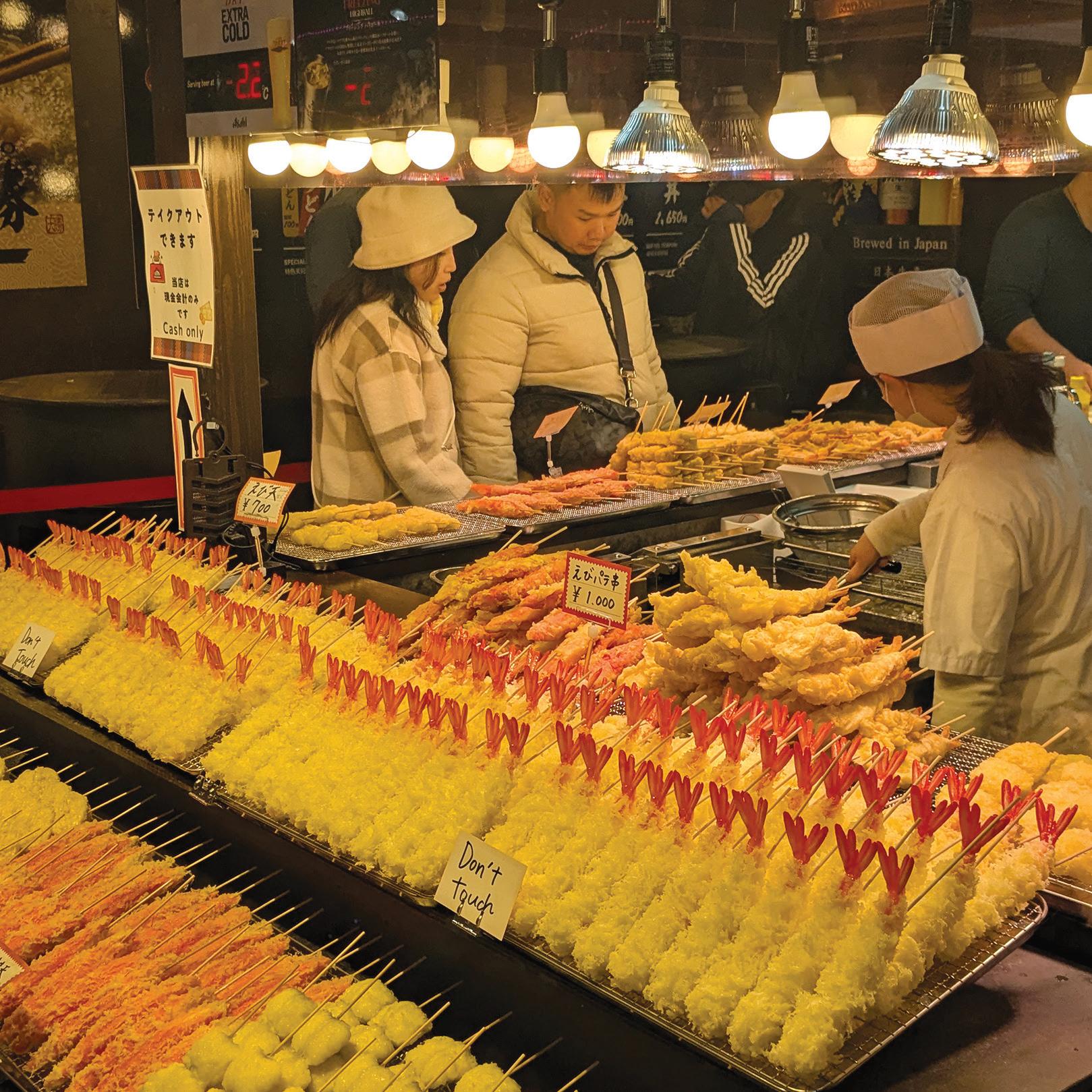
Back at school, she answered every student’s pre-trip questions with a handwritten note on Japanese paper and visited the other three second-grade classrooms to share stories and photos. “The kids were so curious about the food, the animals, even Japanese water conservation,” she said.
Ms. Lago shared photographs, books, and pamphlets with each class, which were used as inspiration for their global studies projects. "Several students created marketplaces and used photographs I took from the Tsukiji market in Tokyo and Nishiki market in Kyoto to recreate the marketplaces. Another group focused on building the bright orange Torii gates from the Fushimi Inari Shrine in Kyoto," said Ms. Lago. "Also, I was able to share my photos and talk about walking through the many gates on my hike up Mt. Inari. The second graders were so excited to hear about my trip to the Inari Shrine and eating Inari Sushi and then making their own Inari Sushi when we had a visit with the Table for Two organization which is a non-profit that uses a meal-sharing concept." The organization partners with companies, schools, and restaurants around the world to fund meals for children in developing nations.
Would she go back? “In a heartbeat”, she exclaimed! “There’s so much more to see, and maybe next time, I’ll finally figure out the Tokyo subway!”
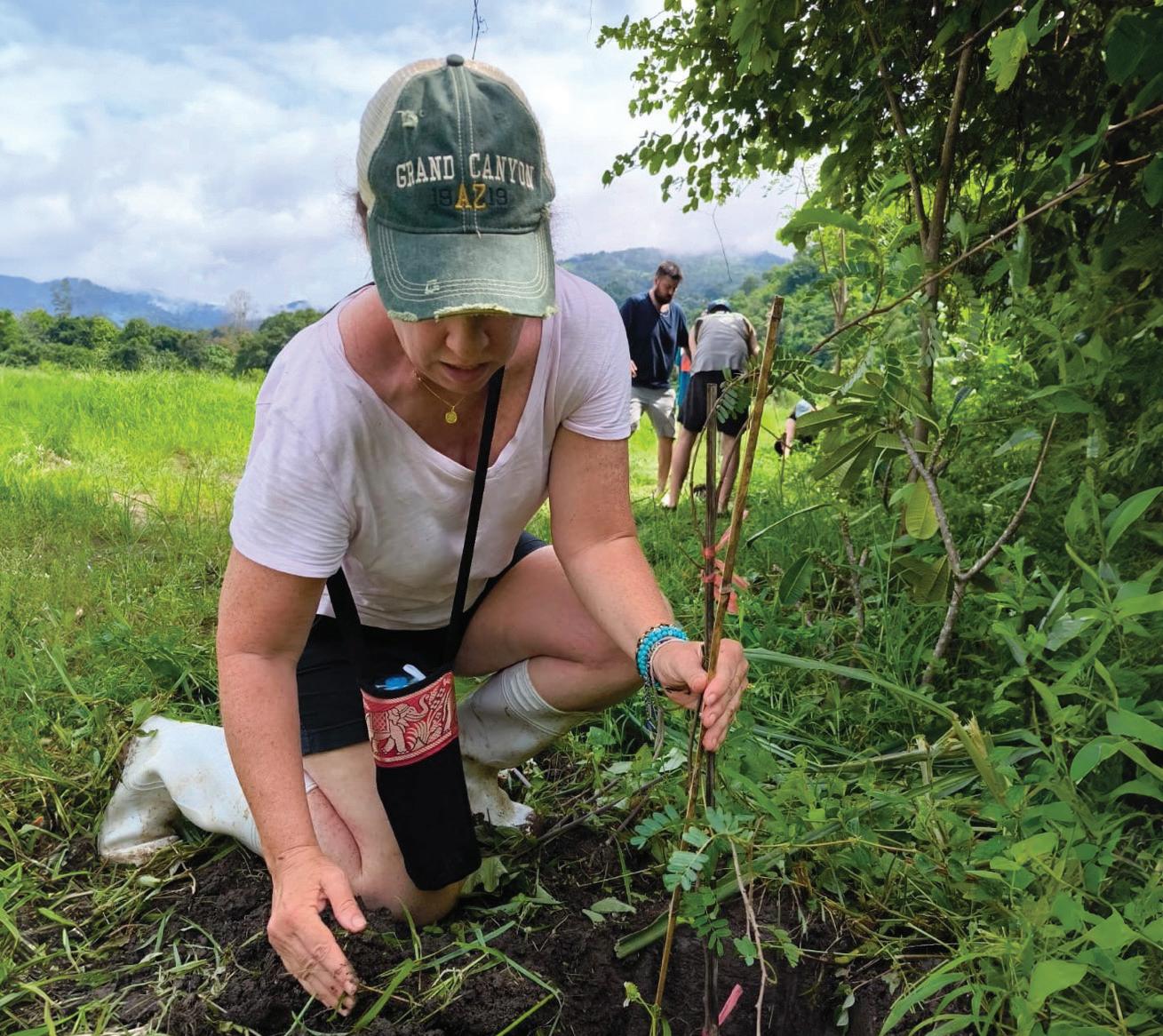

Thailand
Jeannie Lorenz Early Learning Center Teacher
During the summer of 2024, Jeannie Lorenz, an Early Learning Center (ELC) teacher, ventured across the globe to explore the vibrant landscapes, culture, and wildlife of Thailand. Her journey spanned the bustling streets of Bangkok, lush hills of Chiang Mai, and serene beaches of Krabi, but the heart of her trip was spent volunteering at an elephant rescue and sanctuary. “It went beyond expectations. Life-changing,” she shared.
With a love for travel planning and a lifelong dream of visiting Asia, Thailand had long been on her bucket list. “I wanted to see more than one place, and I really wanted to do something meaningful, especially something with elephants.” Her week at the sanctuary included daily tasks like scooping waste, planting trees, and unloading massive truckloads of vegetables for the 250 elephants on site. “Each elephant has a mahout, kind of like a personal caregiver,” she explained. “I even got a hand-carved wooden elephant of Jokia, the elephant I fell in love with.”
In the fall Ms. Lorenz began planting seeds of global curiosity with her students. “My co-teacher found a song called ‘The Wheels on the Tuk Tuk,’ a Thai twist on a classroom favorite.” She also planned a Thai-inspired batik project and brought back colorful
dress-up clothes for imaginative play. “I want to help our kids understand how animals should be treated, how some should remain wild, and how we care for those we bring into our lives.” In the classroom, these hands-on materials and stories from her journey offered students a rich entry point into learning about cultures different from their own. Discussions about elephant conservation and community roles like that of the mahout will help introduce concepts of empathy, responsibility, and interconnectedness, core themes of the ELC’s global learning approach.
Would she go back? “Yes!,” she exclaimed. “Especially to the north and the elephant sanctuary. I’d do again in a second.”
All ELC children had the opportunity to experience Thailand through books, art activities, dress up, and tasty food. In the Guppies classroom, a parent volunteered to bring mangos and sticky rice into the class for the children. Beauvoir's dining staff engaged the ELC students in a sensory exploration of a variety of Thai foods—touching, shaking, sniffing and eating exotic fruits. "Throughout the ELC, we read books about Thai animals, including elephants and the giant Komodo dragon," Ms. Lorenz shared. "Whenever possible, we wove messages into our activities about kind treatment of animals and emphasized that elephants are wild and should never be ridden by people. We had so much fun learning about Thailand!”
New Zealand
Helen D. Macsherry Executive Assistant to the Head of School
New Zealand (NZ) or bust!
The “Land of the Long White Cloud” or Aotearoa, the indigenous Māori name for NZ, was Helen Macsherry’s destination for Spring Break 2025. She built her itinerary from the North Island to the South Island always keeping in mind our kindergartners studying NZ. Literacy was her primary focus among a myriad of activities.
The curricular connections she planned in advance included a pen pal program with students at The Cathedral Grammar School (CGS) in Christchurch. As a former tutor/advisor at the Literacy Council of Montgomery County (LCMC), Maryland, Ms. Macsherry felt this would be a good way to support Beauvoir’s literacy benchmarks.
Prior to leaving for NZ, Ms. Macsherry shared two pen-pal themed books with our kindergarten— Same, Same but Different and Yours Sincerely, Giraffe, the latter published by NZ’s Gecko Press. The teachers and students read the books and wrote class letters to initiate the dialogue with their new NZ friends. She also prepared a PowerPoint presentation with some Beauvoir kindergartners using indigenous Māori greetings for CGS students.
Ms. Macsherry delivered the letters, the same penpal themed books, and her presentation to the CGS Junior School Director and class. Afterwards, the CGS
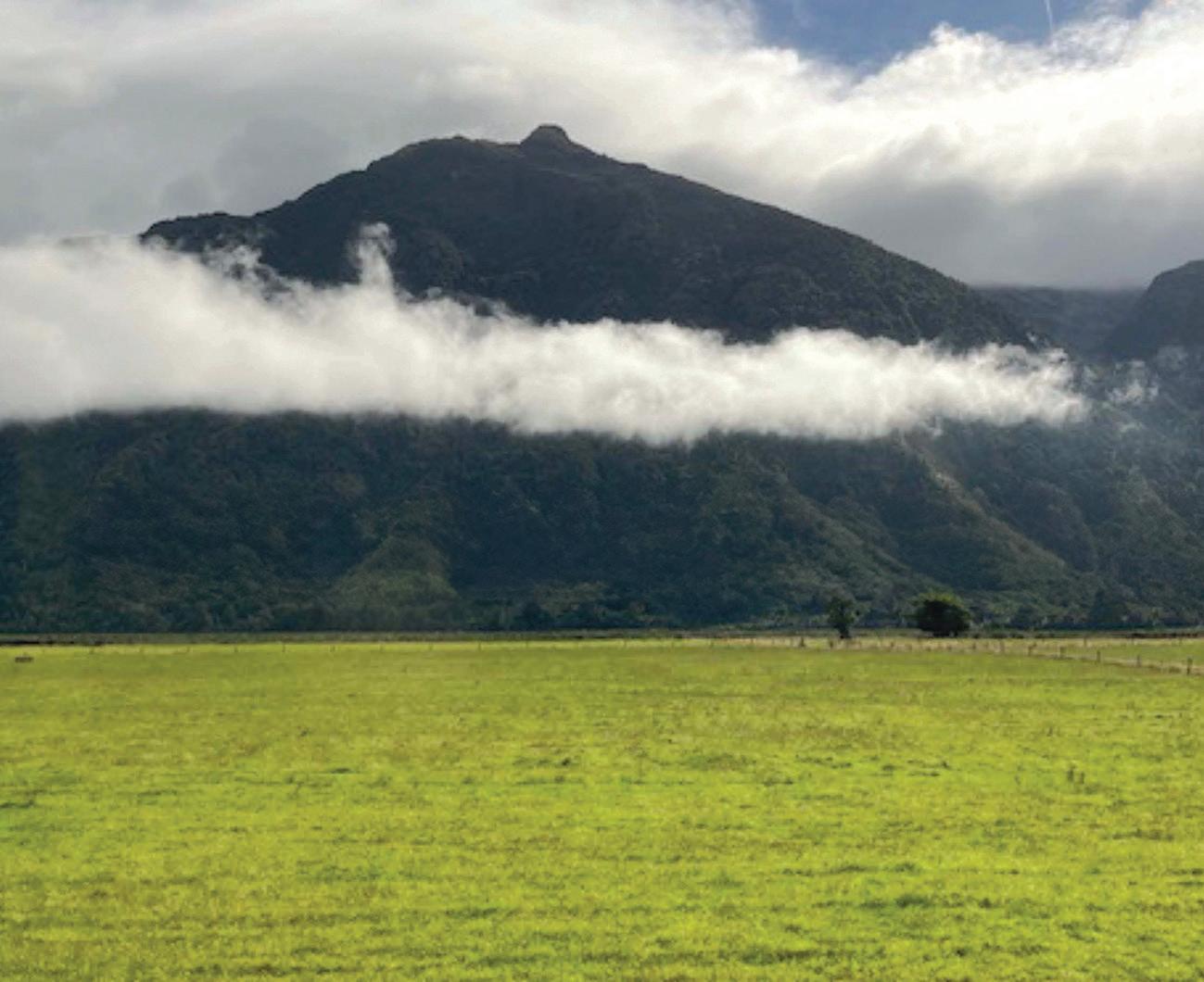
students shared letters written for their Beauvoir friends, making the program’s launch a successful liftoff with our new “sister school”. Ms. Macsherry returned with their letters as well as several ideas for museum projects. She also created a pamphlet of our kindergarten-curated exhibits for May’s Museum Mornings.
With Beauvoir’s adult community, Ms. Macsherry shared key differences and similarities between the DMV and the Land of the Long White Cloud; compared Beauvoir’s education with CGS; and highlighted a NZ children’s book publisher and the NZ Reading Ambassador’s takeaways to promote reading, including setting a “reading trap”. Before leaving for NZ, Ms. Macsherry contacted Gecko Press, which was founded by Julia Marshall to bring children’s books written in other countries and languages to NZ children via translation. Ms. Macsherry said, “Ms. Marshall’s intentional approach and global mindedness coincided beautifully with Beauvoir’s Global Studies program.” Their meeting during NZ Book Month (March 2025) led to Ms. Marshall’s invitation to “Reading is the Doorway,” the closing address of NZ Reading Ambassador Alan Dingley’s two-year term (2023–2025) at the National Library in Wellington.
It should come as no surprise that in Ms. Macsherry’s words, “All my plans and anticipation resulted in an extraordinary Global Studies adventure, for which I am forever grateful to Beauvoir. In NZ, I found a rich cultural heritage, natural wonders, parallel classroom experiences, and inspiring narratives. To quote Alan Dingley, ‘We are all stories in the end; make it a good one!’”
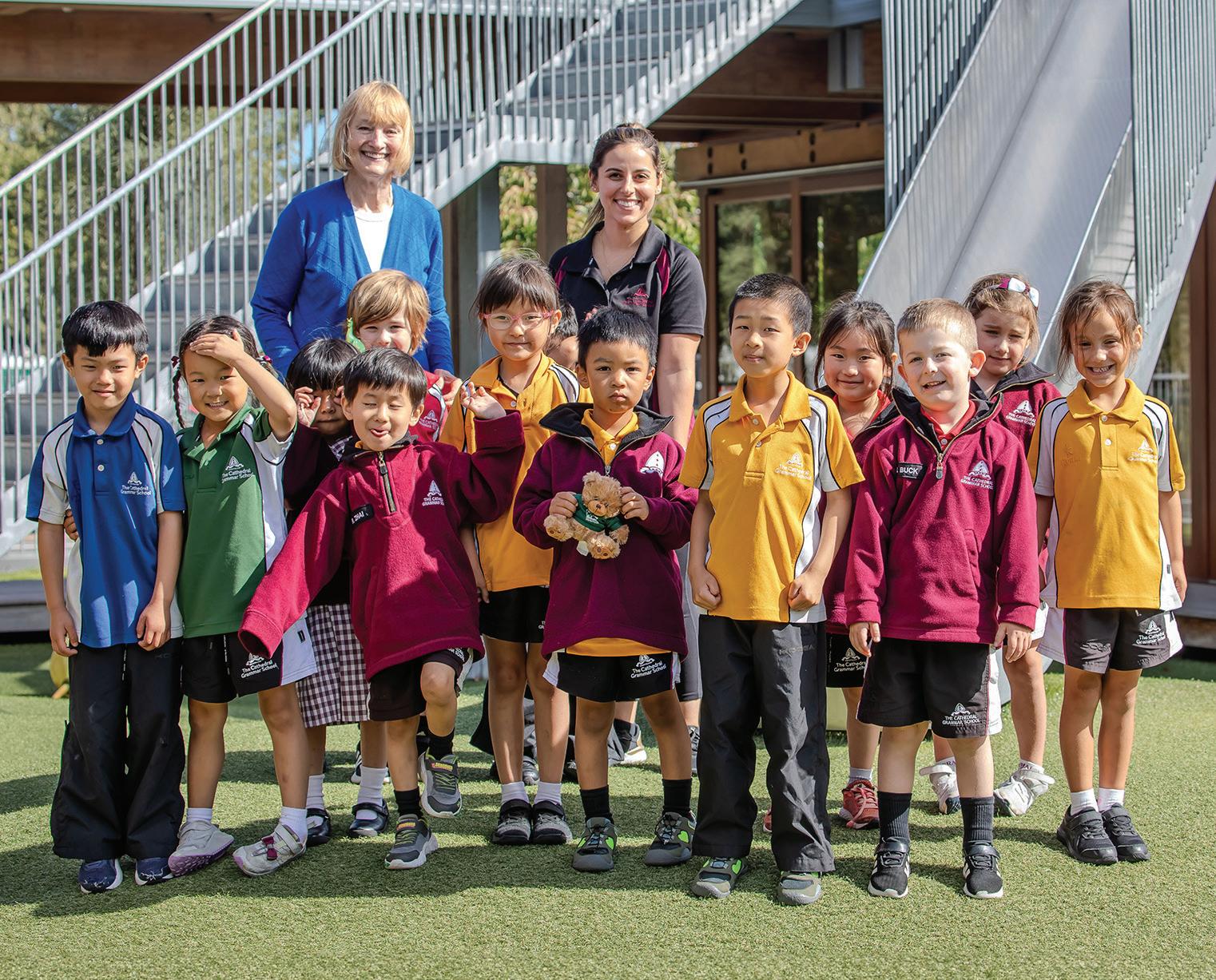
South Korea
Laura Voelker Science Teacher
Journeying to Seoul, South Korea on a Global Studies grant wasn’t just educational, it was a homecoming for Laura Voelker. “I lived in Seoul for two years after college, teaching English,” she explained. “When I saw it was an option for the grant, I knew I had to apply.”
Her trip was designed with purpose—to connect South Korea’s rich culture, history, and innovation to learning in the science classroom. “I spent a long time planning 10 days that would link to what we teach: government, food, geography, even biology,” she said. From bustling markets and technology hubs to the National Museum of Korea and nature parks, the experience offered opportunities to make curriculum come alive.
For Mrs. Voelker, one of the most striking parts of the trip was how South Korea balances the ultra-modern with deep-rooted traditions. “It’s such a cool contrast, ancient temples right next to skyscrapers. It reminded me of Washington, DC in that way,” she said, noting how the comparison can help students see their own city with fresh eyes.
For younger learners, the country’s hands-on museums offered plenty of inspiration. “There are so many children’s museums, and they’re incredibly interactive,” she said. “It’s a very kid-friendly place, and so well organized. It gave me ideas for how we can make learning more engaging back here, too.”
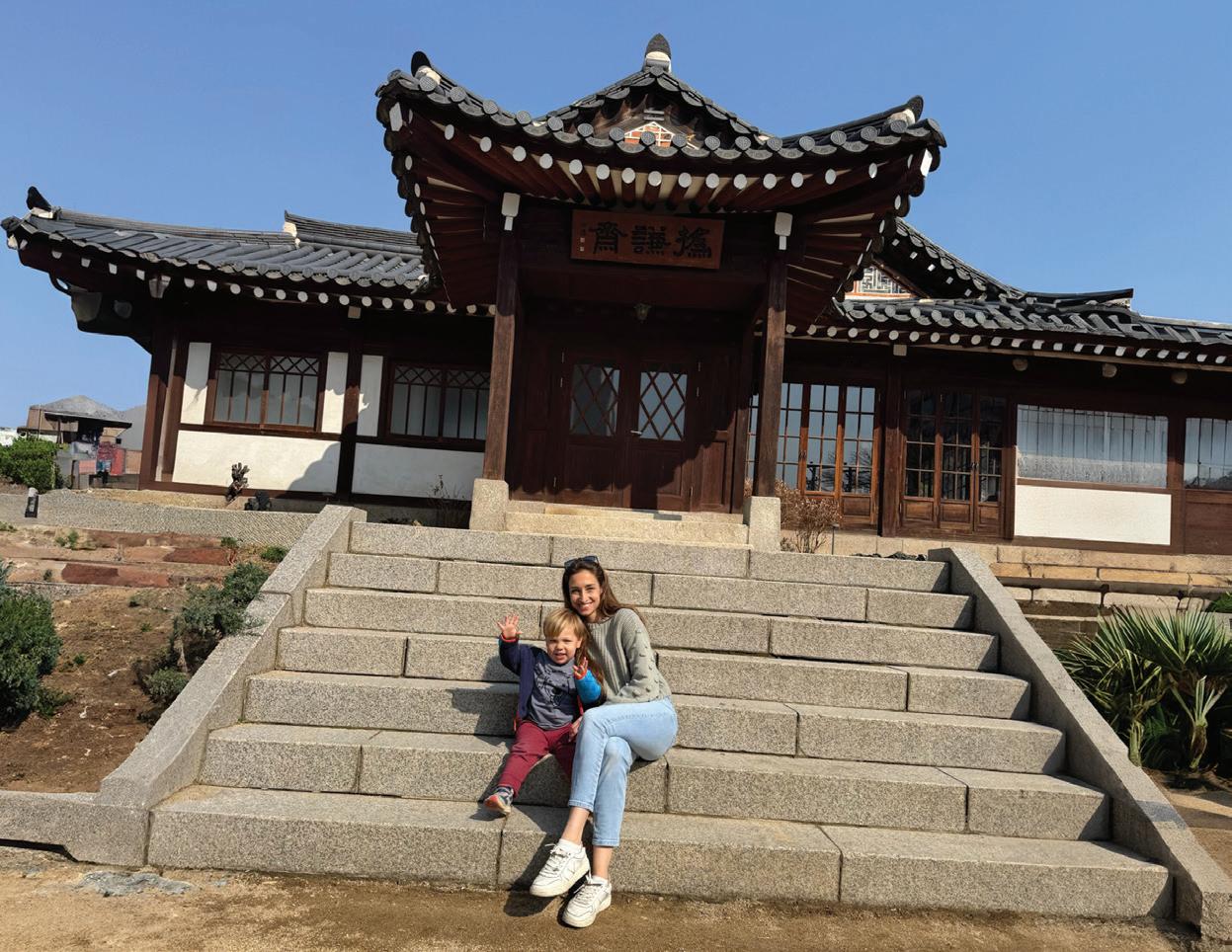
Even in the midst of ongoing public demonstrations in the Korean capital, the atmosphere remained calm and respectful. “We were around protests at times, but it always felt orderly and safe,” she added. This experience offered insight into the political process in South Korea, further enriching the knowledge Ms. Voelker returned to Beauvoir with, and deepening her understanding of global democracy.
And of course, there were moments of fun and discovery, like tracking down a favorite dish or watching how Korean families spend their Saturdays together. Each experience added a layer to what she hopes to impart to her students: curiosity, connection, and a broader view of the world.
While she hasn’t started planning her next trip to South Korea, her deep ties to the country and love of her former home will inevitably take her back in the not-too-distant future.
“My trip to Seoul, South Korea allowed me to provide meaningful support for students as they worked on their Global Studies museum displays. I shared authentic artifacts from my trip, including traditional Korean games, clothing, and a personal name stamp. These items gave students a tangible connection to Korean culture and history, enriching their understanding beyond what they learned from their research in the classroom," said Mrs. Voelker. The name stamp, inspired a hands-on project in their art class, where students designed and constructed their own personalized stamps. "By providing these cultural pieces, students were able to engage more deeply with their learning and create museum displays that reflected both authenticity and creativity.”
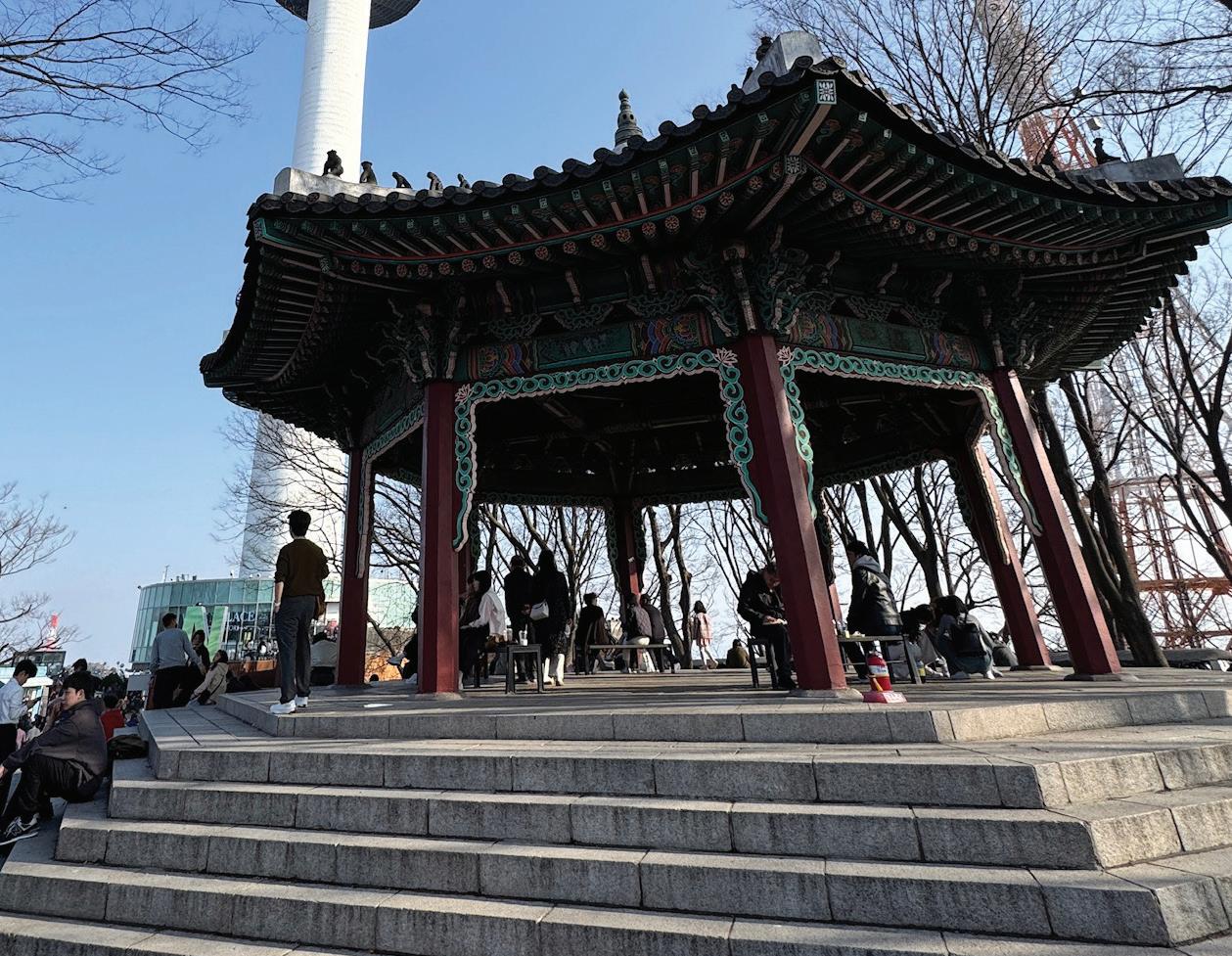
Museum Mornings 2025
At Beauvoir, Museum Mornings are a beloved annual tradition that showcase students’ learning through hands-on, inquiry-based exhibits; essentially, a child-centered version of a museum created by the students for their families and peers.
Each spring, Beauvoir’s hallways are transformed into interactive “museum galleries.” Students curate and present exhibits that highlight projects from the Global Studies curriculum and other interdisciplinary work, blending science, social studies, art, and writing. Families, faculty, staff, and Beauvoir students from throughout the School are invited to walk through these exhibits, where students explain their research and creations in their own words.
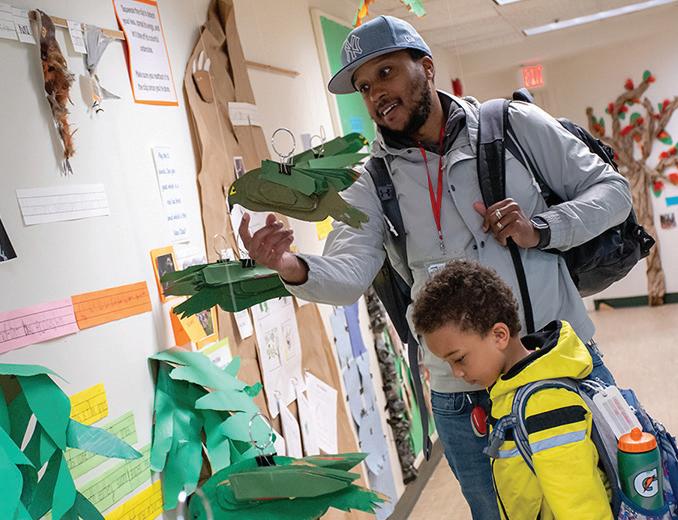
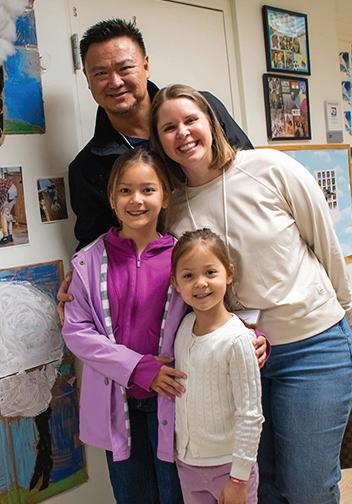
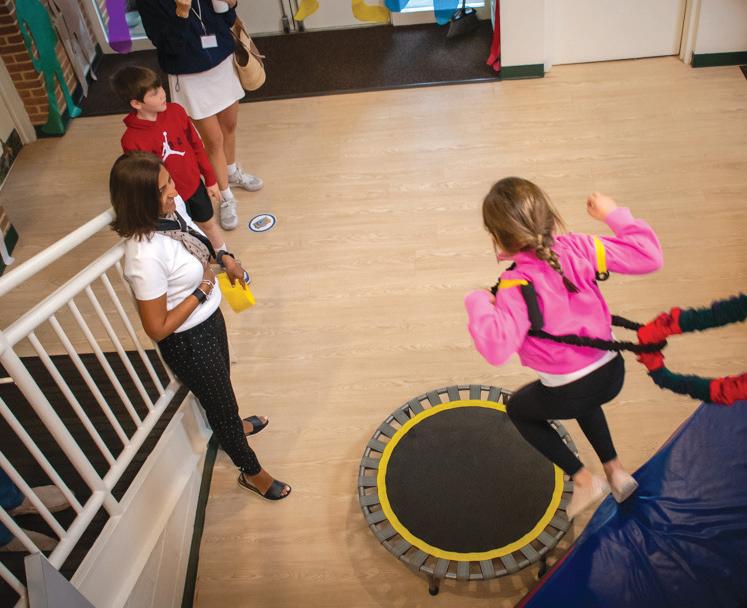
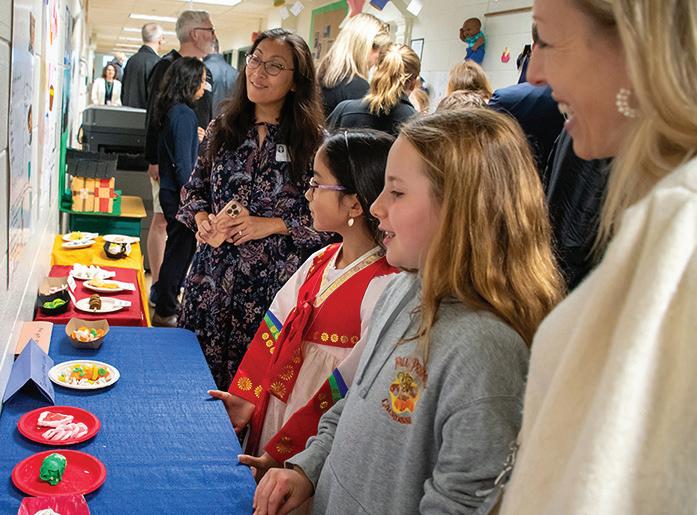
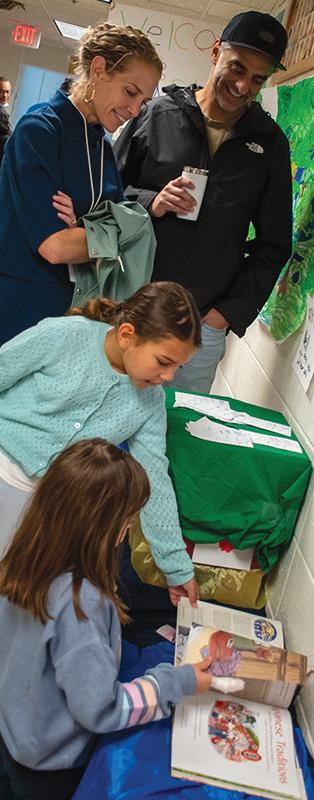
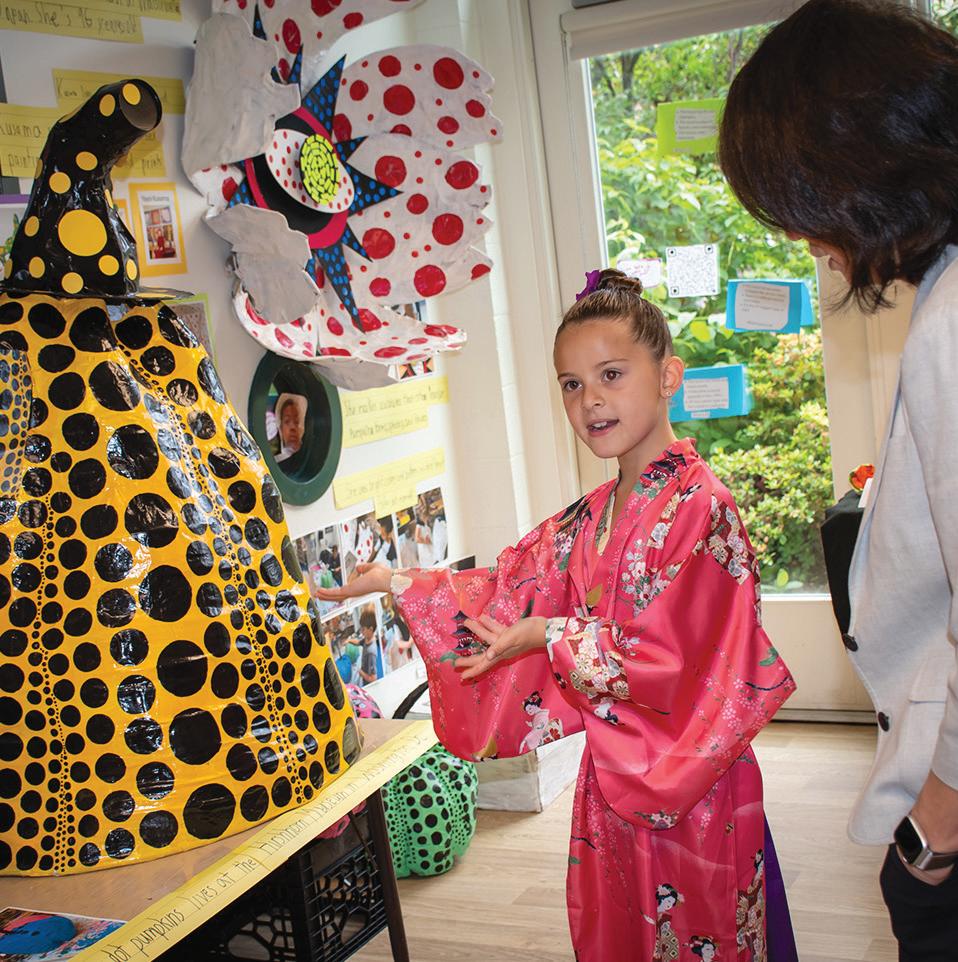
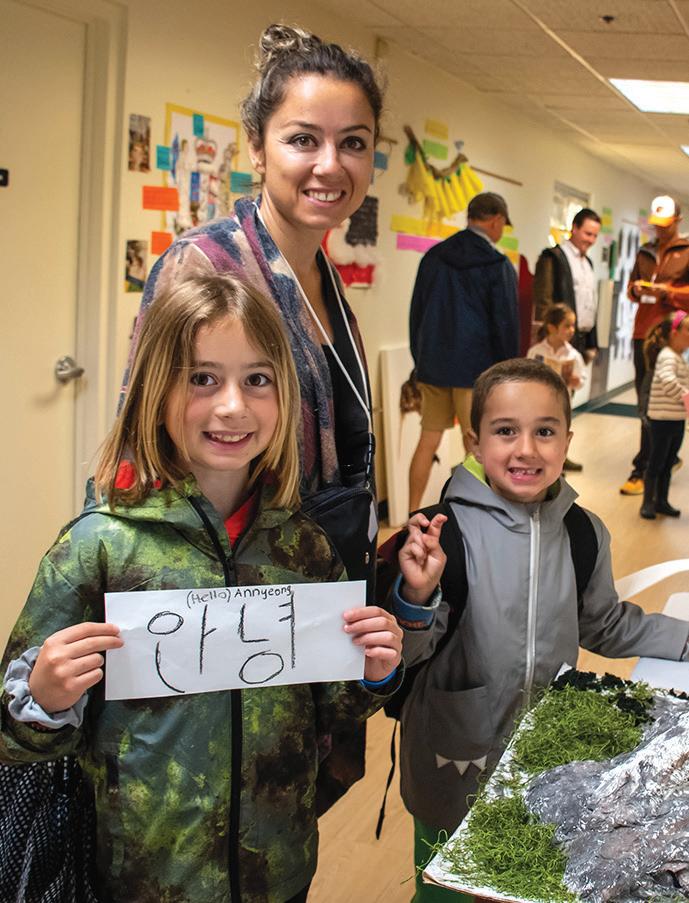
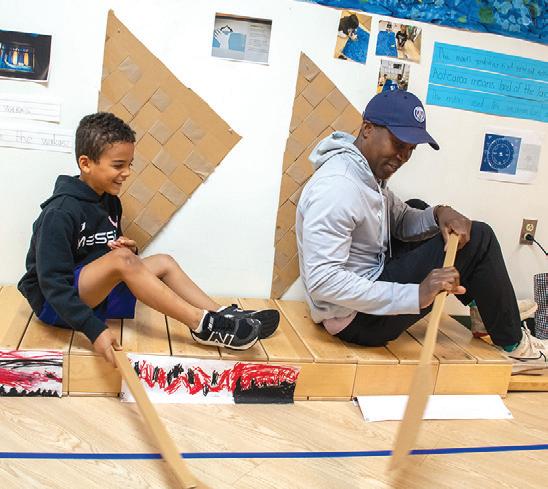
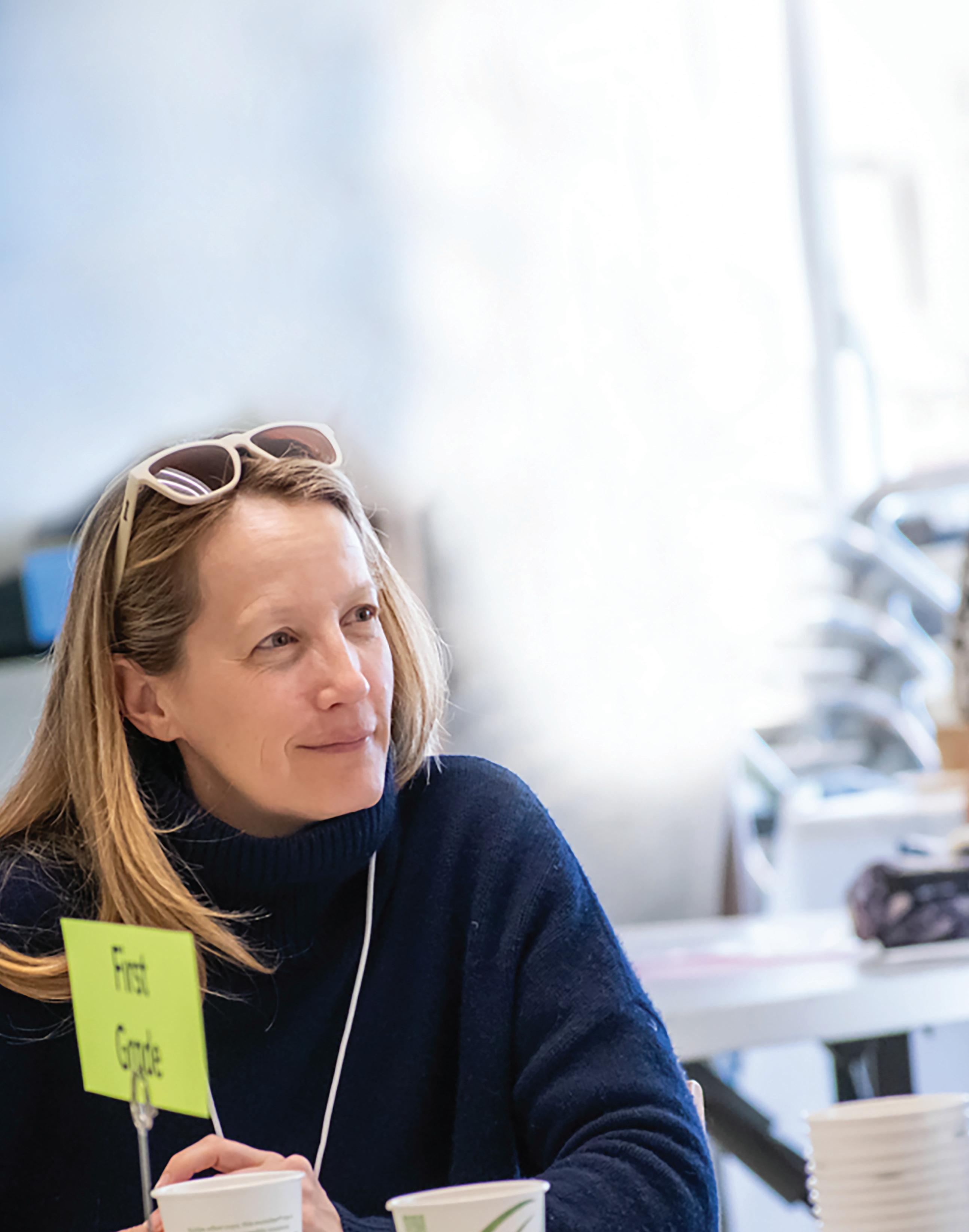
Parent at Beauvoir Education
Parent education is a key way we build community at Beauvoir. Through engaging events, discussions, and workshops like Wednesday Windows, we provide opportunities for parents to connect, learn, and grow together. These sessions cover a range of topics designed to support families and enhance the school experience.
Parent Education Events 2024–2025:
October 11, 2024 Virtual Event: Connect and Thrive with Dr. Geoffrey L. Cohen
January 15, 2025 Wednesday Windows: Leading the Community: Meet the BVR Governing Board
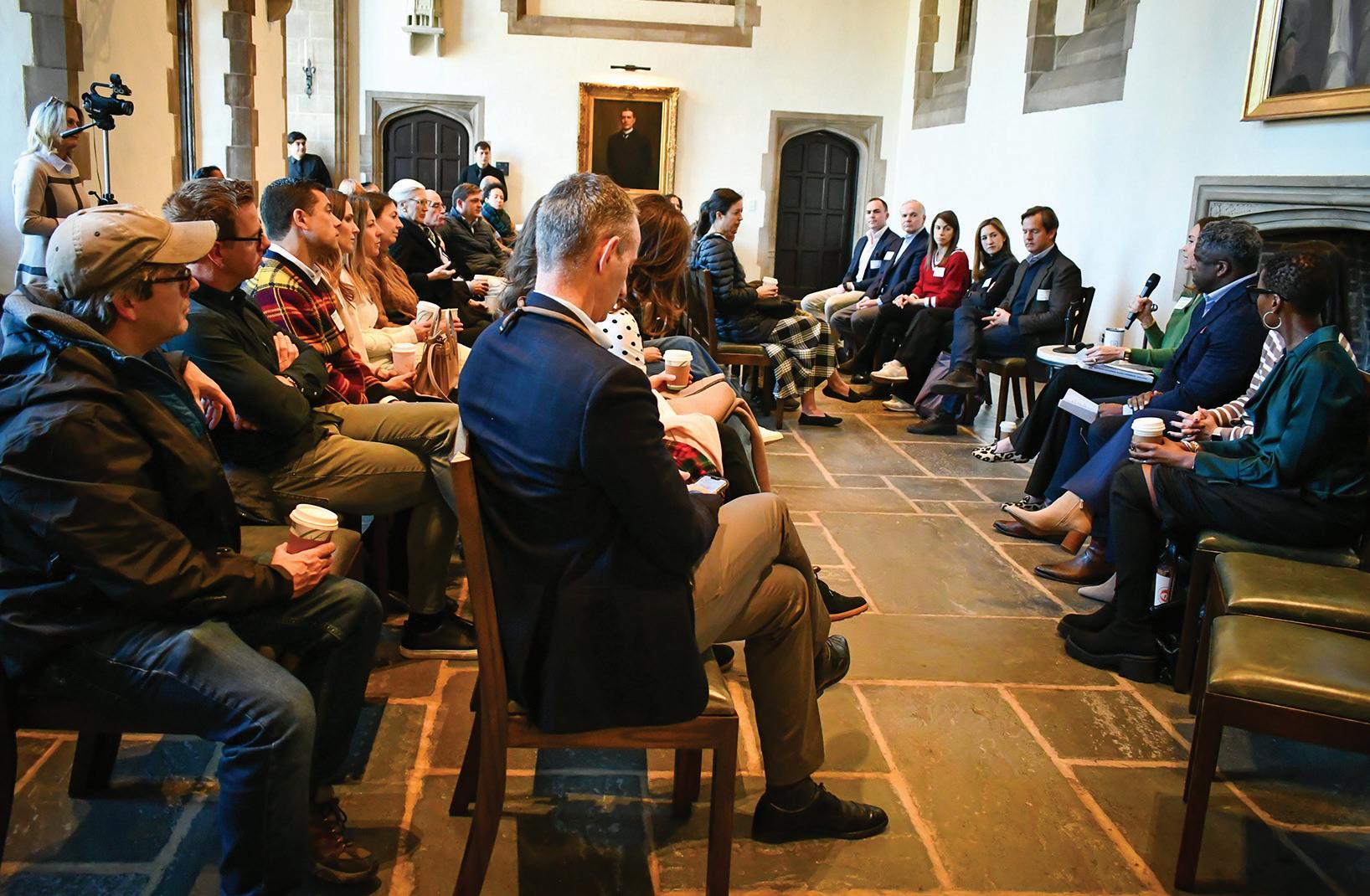
February 26, 2025 Wednesday Windows: Learning About Community I: Mathematics at Beauvoir
May 7, 2025 Wednesday Windows: Learning About Our Community II: Literacy at Beauvoir
May 14, 2025 Dr. Catherine McCarthy, “Navigating Sensitive Topics with Your Child”
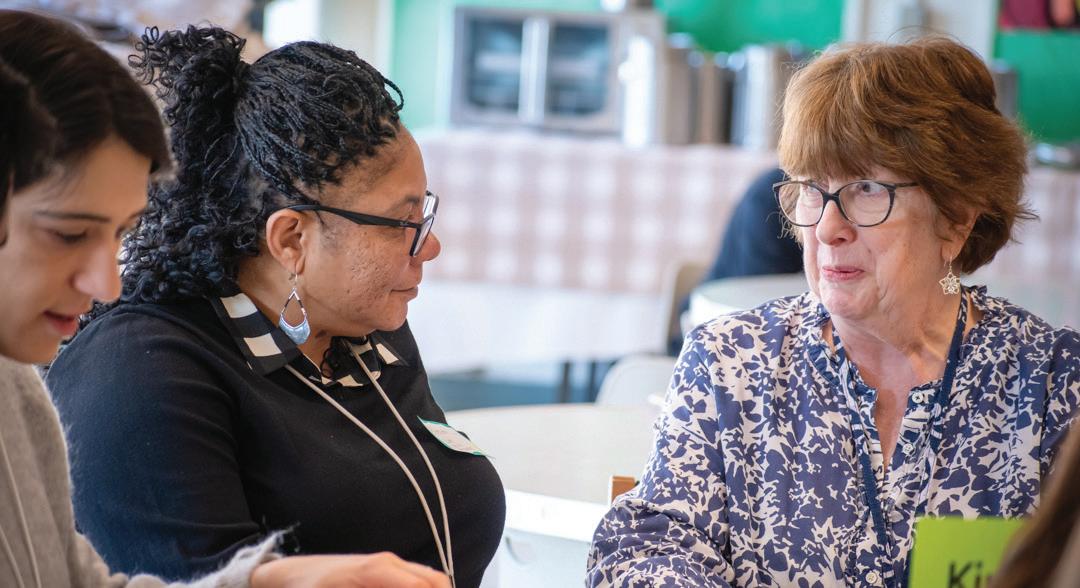
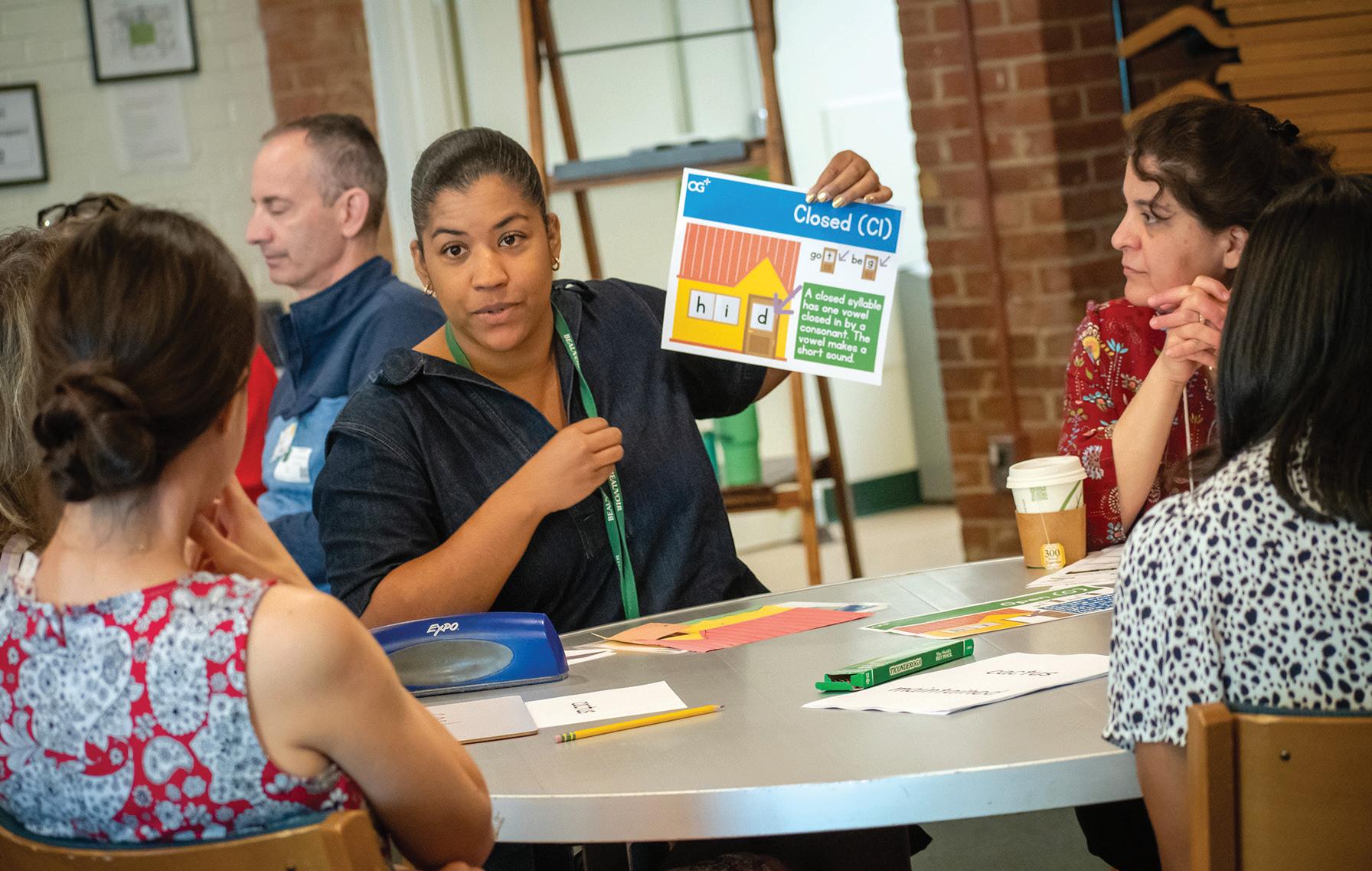
Alumni Spotlight
Clark Reynolds ’21
Head of School Cindi Gibbs-Wilborn catches up with one of Beauvoir’s young alumni.
Clark Reynolds, Kindergarten
In our conversation with Clark Reynolds ’21, an alumnus of the School, he demonstrates that even years after graduating he continues to embody the spirit of Beauvoir. Clark is currently a eighth grader at St. Albans School.
Cindi Gibbs-Wilborn: Share some of your current passions and interests now that you are in high school. Were there any that started at Beauvoir and what memories do you recall from those early years?
Clark Reynolds: I had fun playing basketball, soccer, and flag football on the Beauvoir playground and remember playing with my friends in my class. I remember being able to play wherever we wanted to on the playground when we were in third grade.
I am passionate about baseball, basketball, history, math, Spanish and English. I still play the same sports with many of the same friends from Beauvoir. We still play as if we’re competing to win a national championship.
CGW: When was the last time you visited Beauvoir? What did it feel like returning to the School? Did anything seem different from what you remember?
CR: I went back a few months ago to say hello to my friend King who is in kindergarten. I’m glad that his parents listened to my opinion and picked Beauvoir for him!
CGW: What are some of the best lessons you took away from your Beauvoir years? How have they helped you become the student you are today?
CR: The Beauvoir Life Rules and the Negotiating Toolbelt were lessons that I learned, and I still use them today at school, on the field, and on the court, though I have to work harder on using them—a little harder than my sister Stella Grace does.
CGW: If you could relive any of your Beauvoir memories, which one(s) would you repeat? Why?
CR: I would relive the Gym Show and Museum Night. Both activities are fun and give us the opportunity to learn new skills, work together, and learn about different countries.
CGW: What are your current aspirations now that you are in junior high school?
CR: I want to get better at managing homework and travel baseball.
CGW: What are you most proud of?
CR: I’m most proud of the friendships I have had since pre-k at Beauvoir, and I’m proud to have had caring teachers. I’m also proud that my sister could go there, too.
I’m proud that I have a 100 percent success rate for convincing other family friends to send their kids to Beauvoir too!
I’m also proud that my sister and I both had Mrs. (Elanor) Cato as our pre-k teacher. We will never forget her!
CGW: If we asked your teachers to describe you as a high schooler, what would they tell us?
CR: They would probably say that I am honest, kind, respectful, and responsible —and still play to win any sport we play during recess.
CGW: Is there anything else about you that you feel is important to share?
CR: I will always be a Beauvoir Bear and use the life rules wherever I go.
My sister and I will continue to support Beauvoir by contributing some of our allowance to the Beauvoir Fund so that other students can enjoy the playground and school grounds like we did.
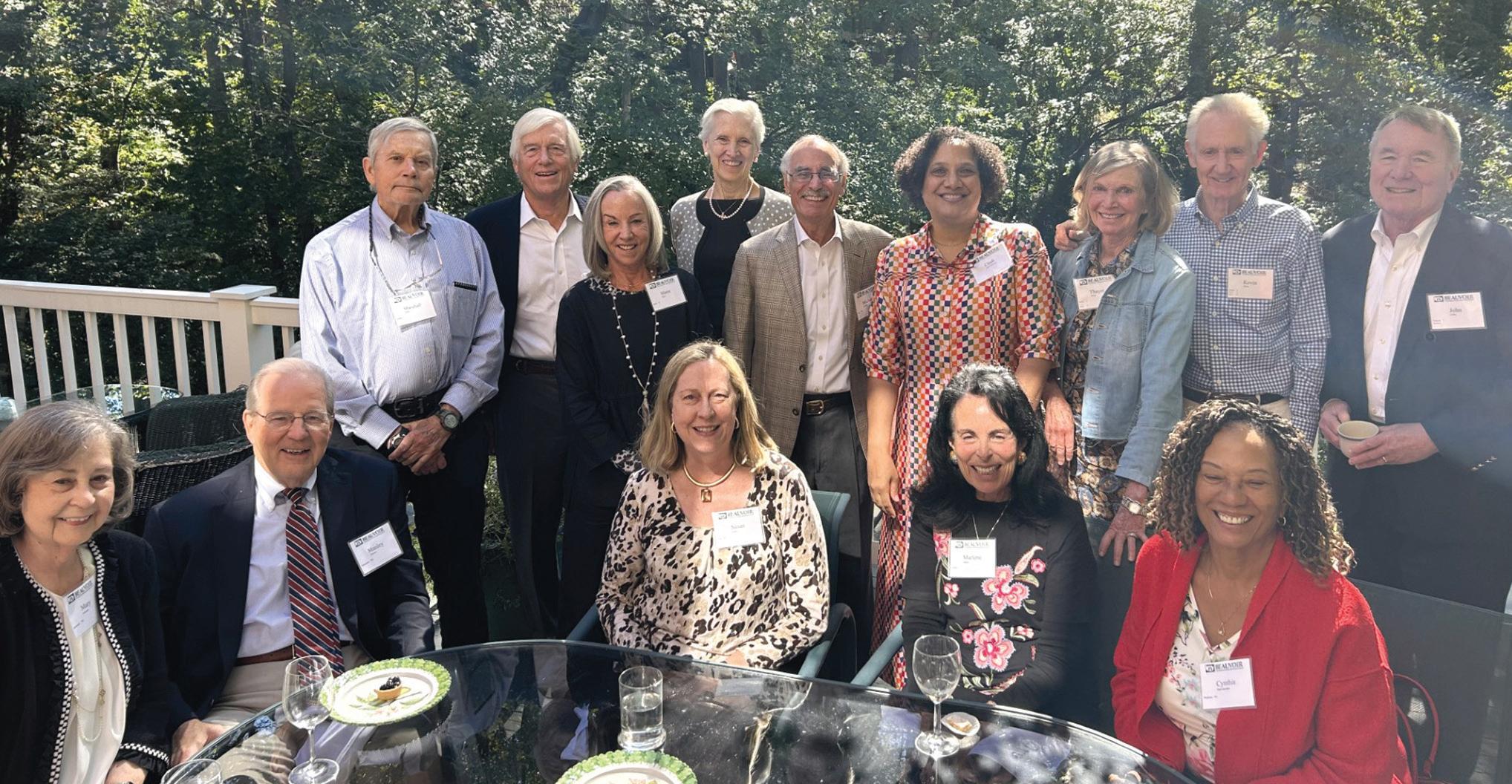
Grandparents’ Council
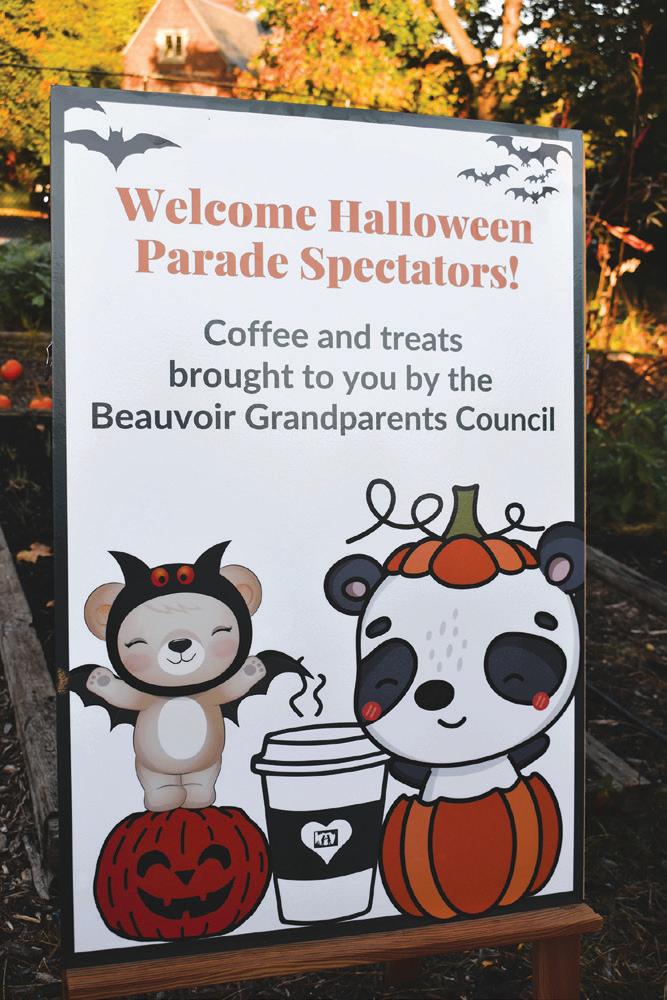
The Beauvoir Grandparents’ Council was established seven years ago to engage grandparents and special friends of our community. The Council’s mission seeks to offer grandparents and extended family a meaningful way to engage more deeply in the life of Beauvoir and the School’s students.
The Grandparents’ Council is currently led by Thayer and Kevin Baine, parents of Andrew (’87), Gillian (’89), Trevor (’91), and grandparents of Harper (’22), Thomas (’24), Trevor “Teddy” (’25), Thayer “Fern” (’27), Skye (’28), and Henry (’30). Currently, the Council has 38 active members who are actively involved in a variety of school events and activities. The Council’s contributions include school-wide events such as chapels and Museum Day, as well as more intimate gatherings like a hands-on art class, a Halloween coffee, and Zoom meetings with PAEC officers and Head of School Cindi Gibbs-Wilborn.
Looking ahead, the Council is excited about upcoming volunteer opportunities, including helping in the Library, participating in the annual Scholarship Benefit, assisting at the Flower Mart, and joining another Zoom meeting in March (with members living beyond the DMV area). Additionally, there will be an exclusive “insider’s” tour of the School.
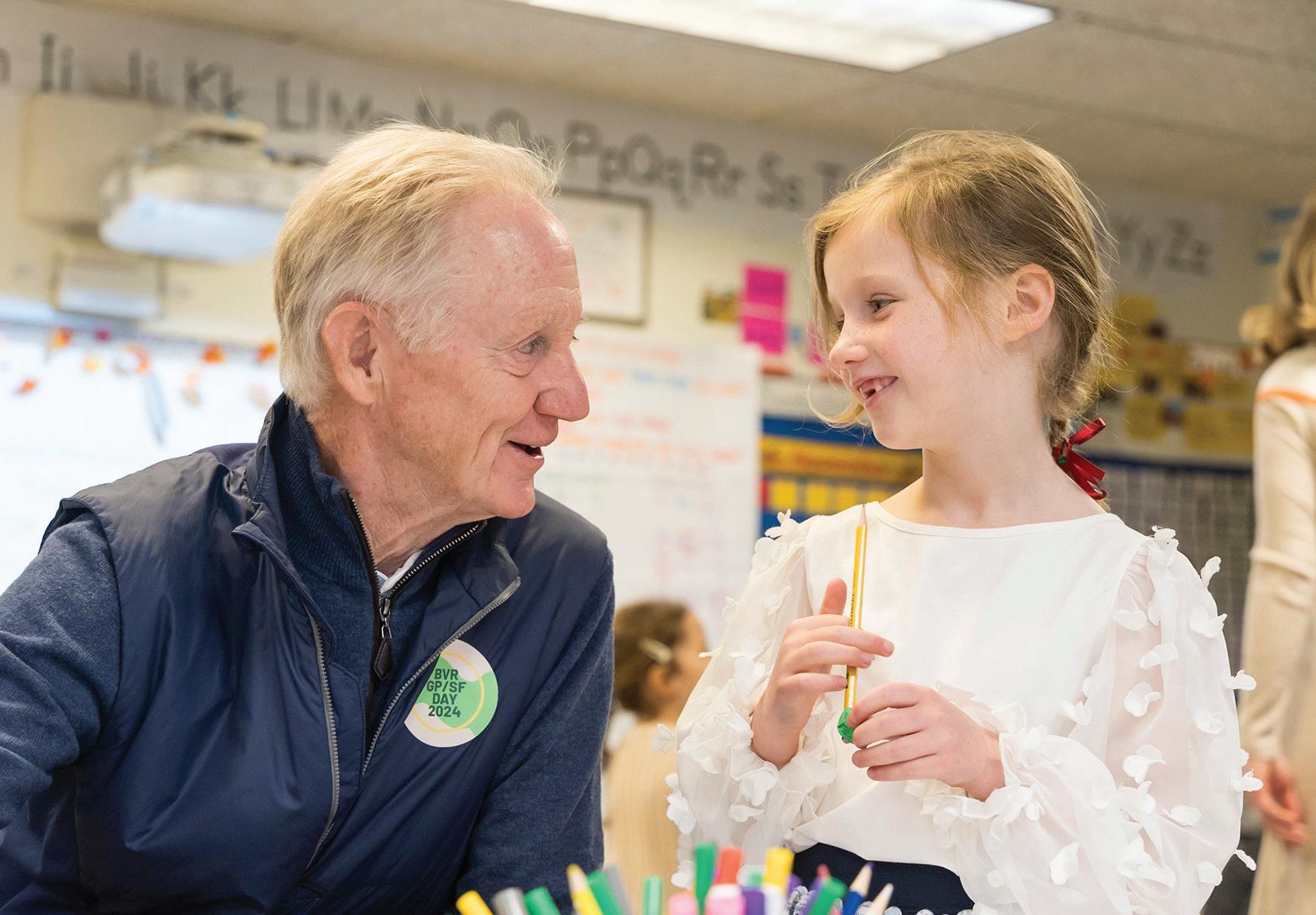
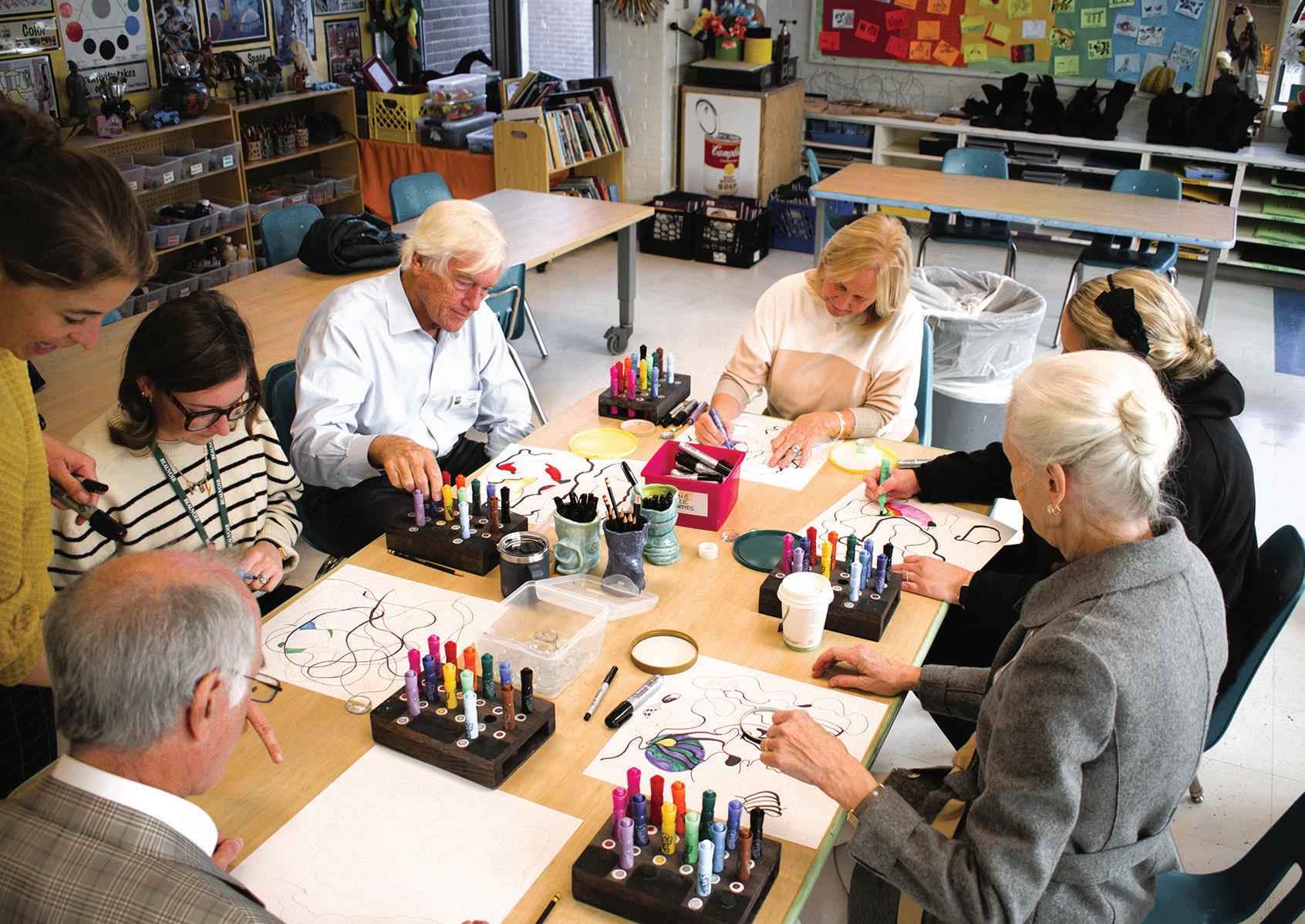
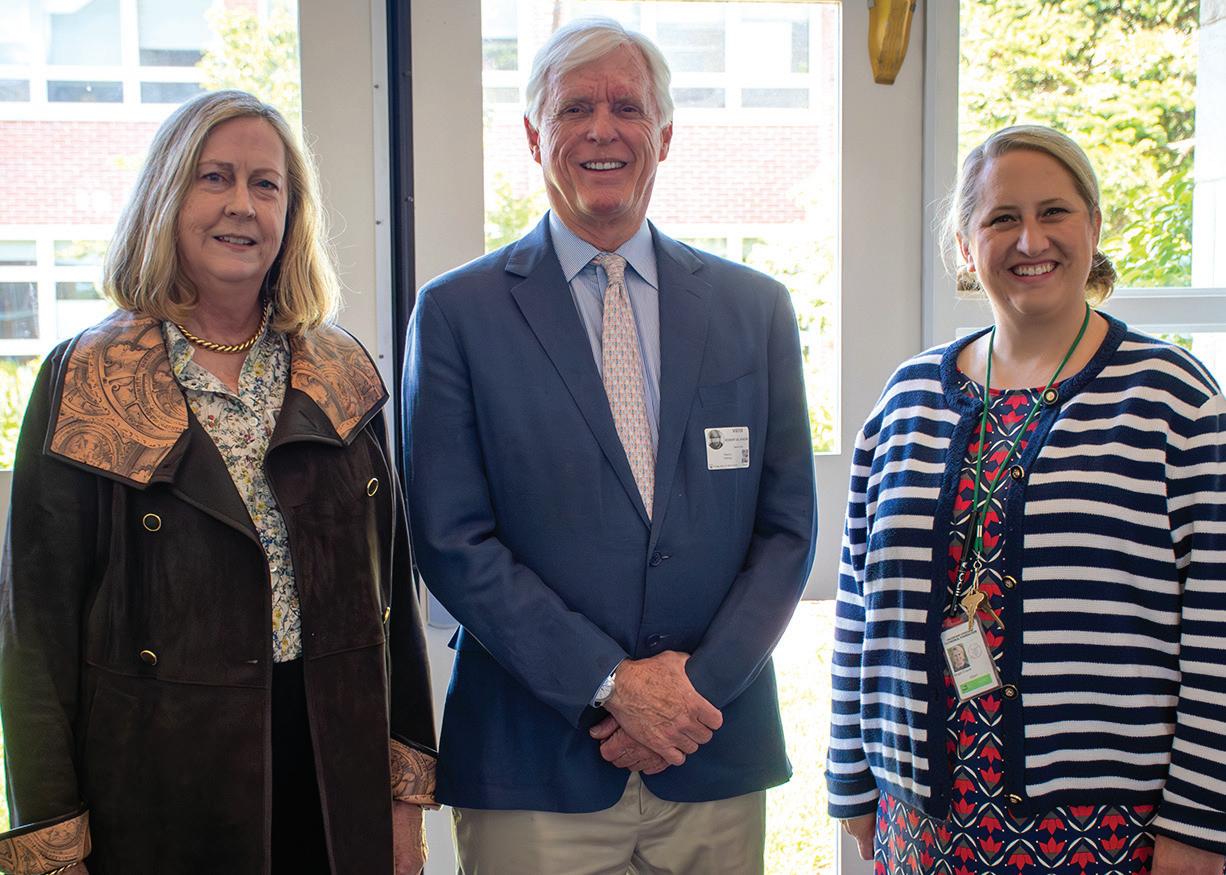
Kevin Baine
Thayer Baine
Shelley Bekler (R. Modi)
Tina Blake
Barbara Boehm
Michael Porcelli
Sharon Casey
John Colby
Susan Colby
Maria Daly
Elizabeth Dexheimer
Marilyn Dillon
Joseph Dillon
Lisa DiMonte
Susan Foster
Allen Foster
Michael Hankin
Cynthia Hart-Geraldo
Regina Jefferson
William Tuck
Marie Kelly
Joyce Linthicum
Diana Luka-Hobson
Mark Hobson
Marlene Miller
Rohit Modi (S. Bekler)
Bob Moore
Mary Moore
Holly Parker
Donna Pennington
Tensiene Ross
Debbie Shepherd
George Stamas
Georgia Stamas
Pamela Tiemeyer
Natica van Althann
Victor van Althann
Page Winstead
David Winstead
To join the Grandparents’ Council, please email Abigail Coyne, Assistant Director of Advancement for Constituent Relations, at abigail.coyne@bvrschool.org
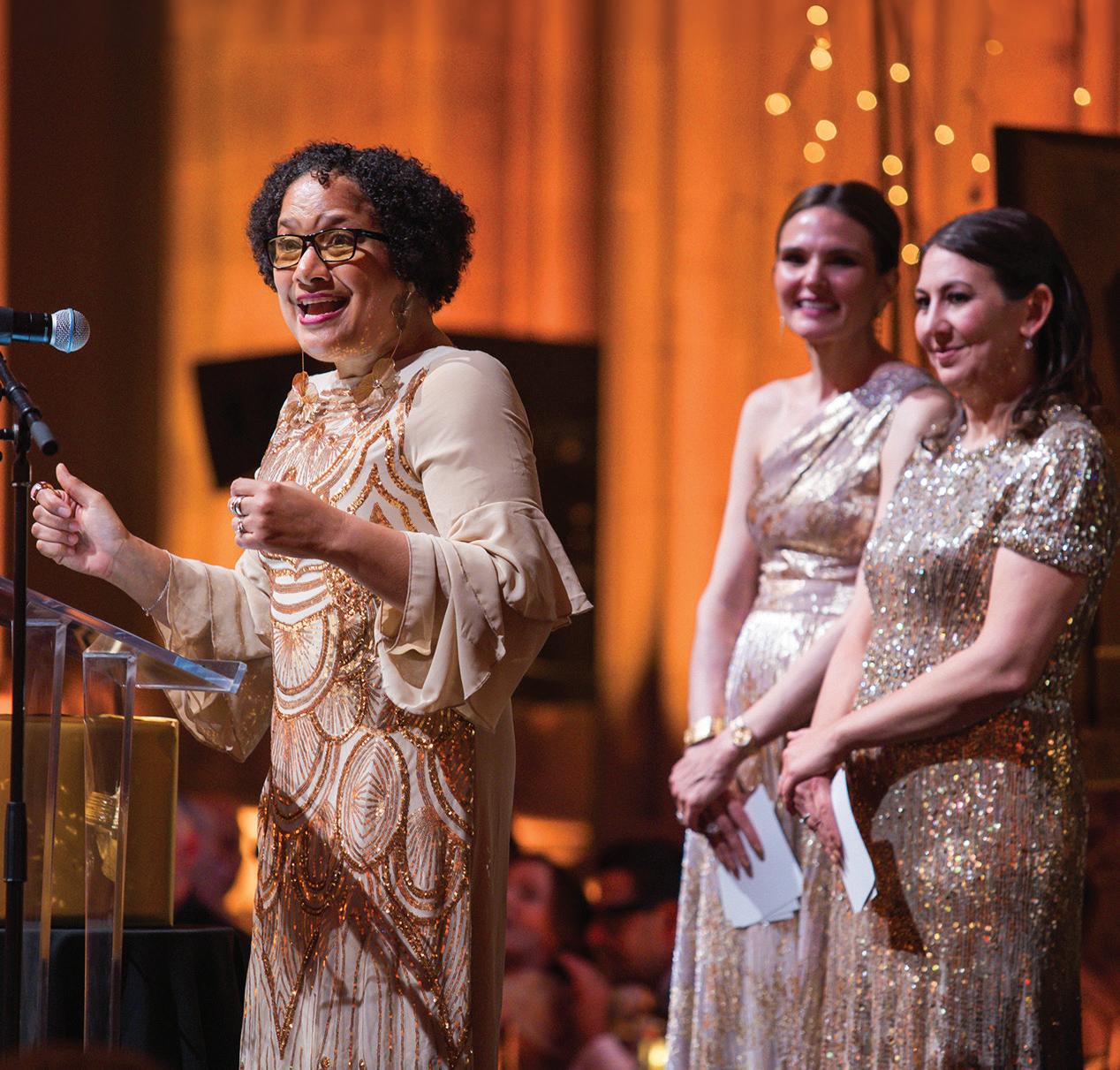
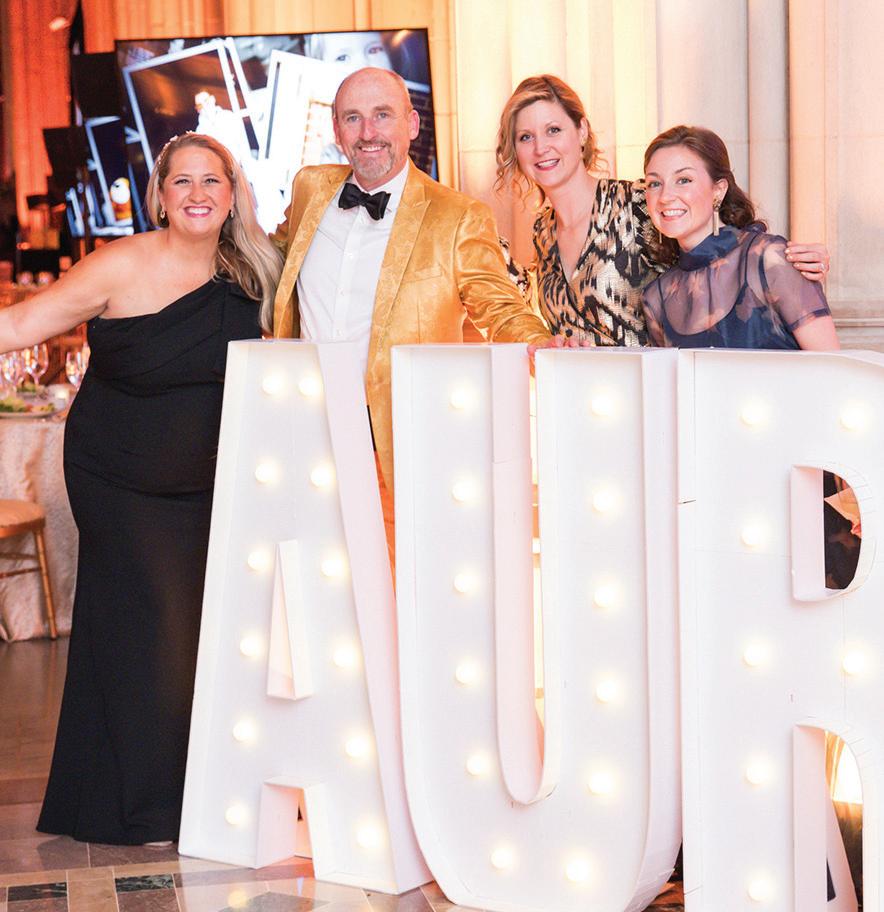


On April 26, 2025, the Beauvoir Community gathered at the Washington National Cathedral for the 50th Beauvoir Scholarship Benefit. Co-Chairs of the event, Lindsay Snell and Ingrid Miller chose the theme “AuRA” as a nod to the golden anniversary with “Au” being the chemical symbol for gold and as tribute to the indescribable spirit of Beauvoir. Ms. Snell and Ms. Miller toasted fifty years of this event with over five hundred guests. Special thanks to Golden Anniversary 50k Lead Sponsor, RoseStone, and 24K Pure Gold Legacy Sponsor Michael Rankin, TTR Sotheby’s International Realty.
In lead-up to the event, Head of School Cindi GibbsWilborn hosted the 2025 co-chairs and esteemed past benefit chairs at the Georgetown Club for a celebratory evening. Guests heard tales of Benefits held in Beauvoir classrooms, hotels, online (!), and the Beauvoir Playground. Since 1976, this event has been an integral part of Beauvoir’s ability to fund hundreds of financial assistance grants. In 2025 our community raised in excess of $700,000 gross toward student financial aid, helping to ensure that a Beauvoir education is accessible to students from all backgrounds.
While the Scholarship Benefit event has evolved, Beauvoir’s aura remains and continues to inspire—it’s the joy and wonder that we experience every day at Beauvoir, anchored by the cherished Beauvoir Life Rules.
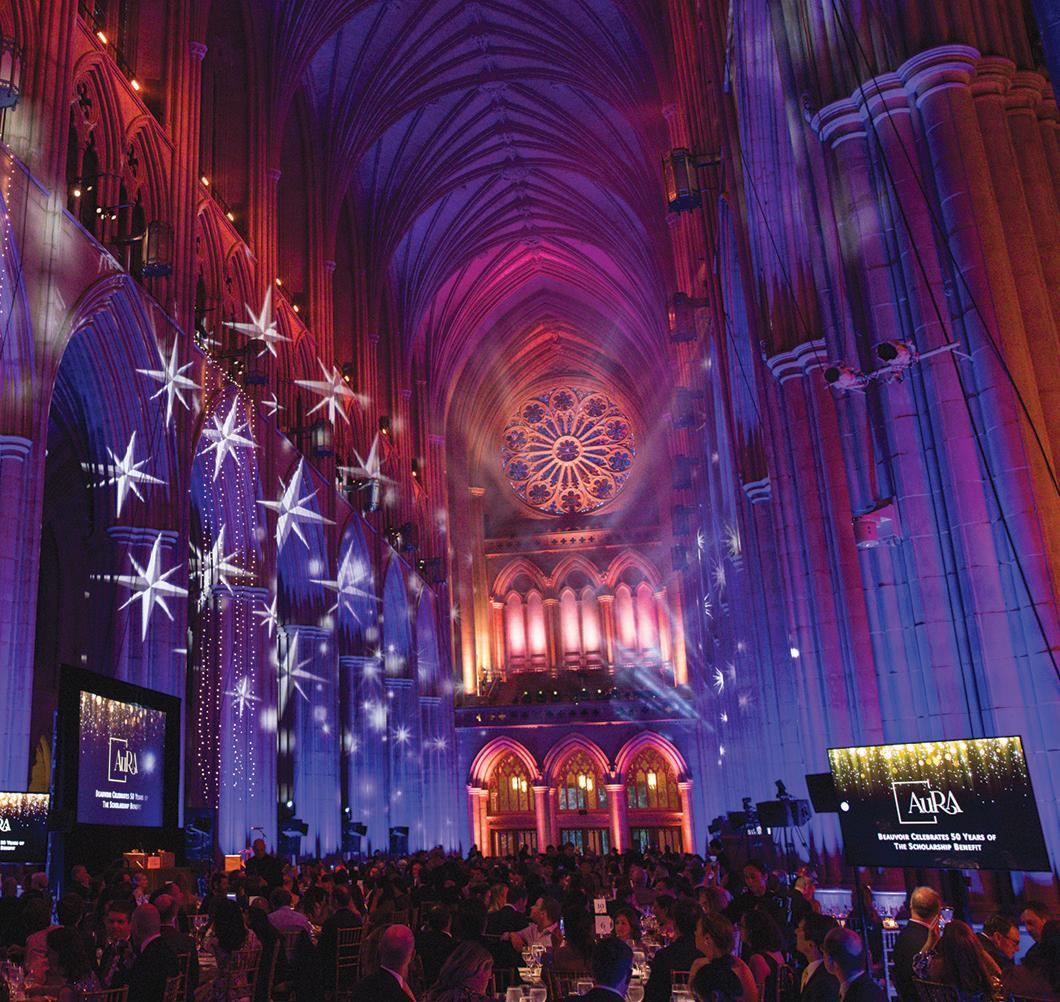

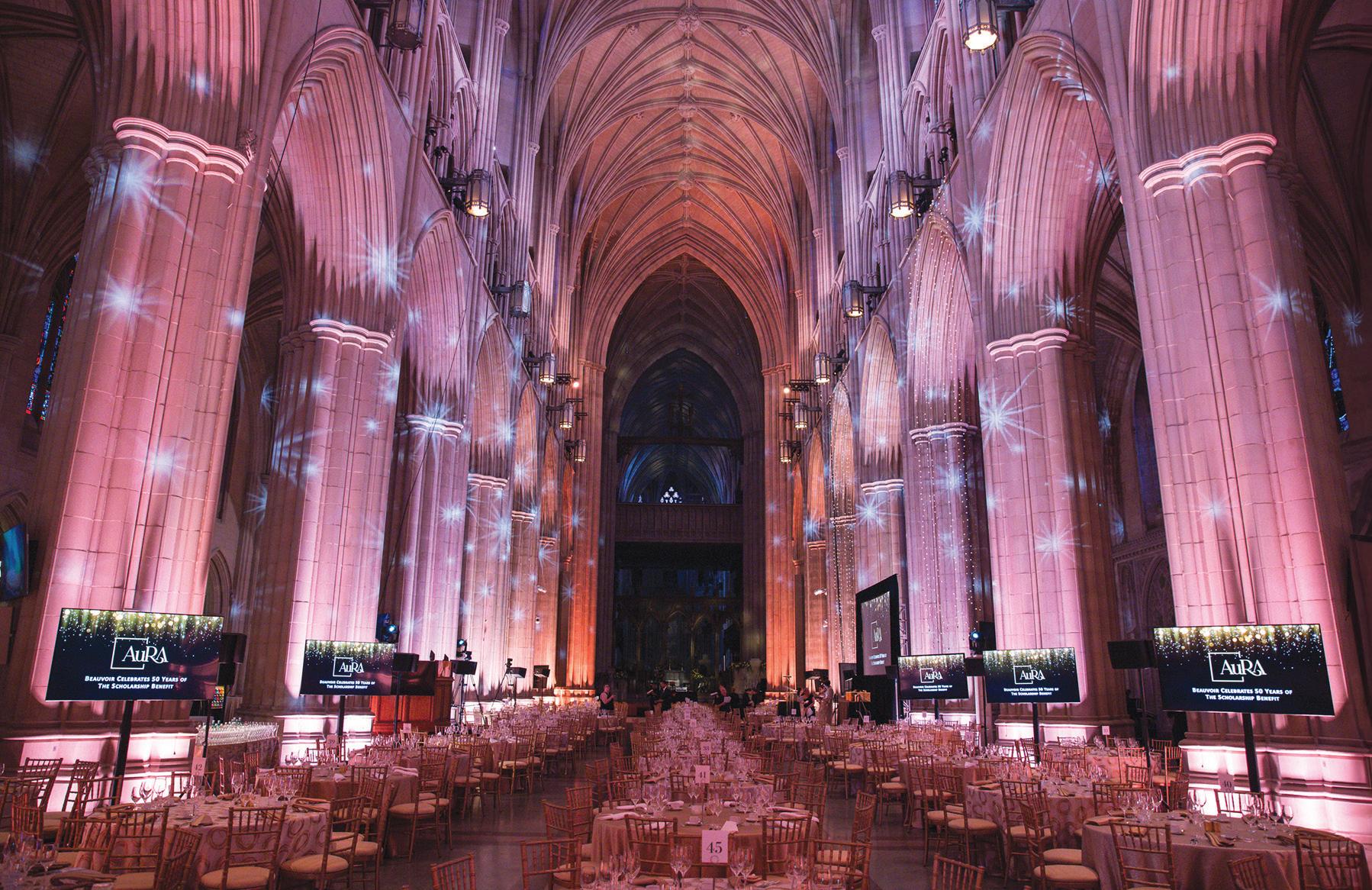

Thank You, Volunteers!
We are deeply grateful to the incredible volunteers who give their time, talents, and energy to support the Beauvoir community. Your dedication strengthens our school, enriches the experiences of our students, and fosters a spirit of connection and generosity.
From organizing events to lending a helping hand when needed, from leading initiatives to sharing your expertise, your contributions make a meaningful impact every day. Beauvoir thrives because of your commitment, and we are truly fortunate to have such a devoted community. Thank you for all that you do—your efforts inspire us, and we appreciate you more than words can express!
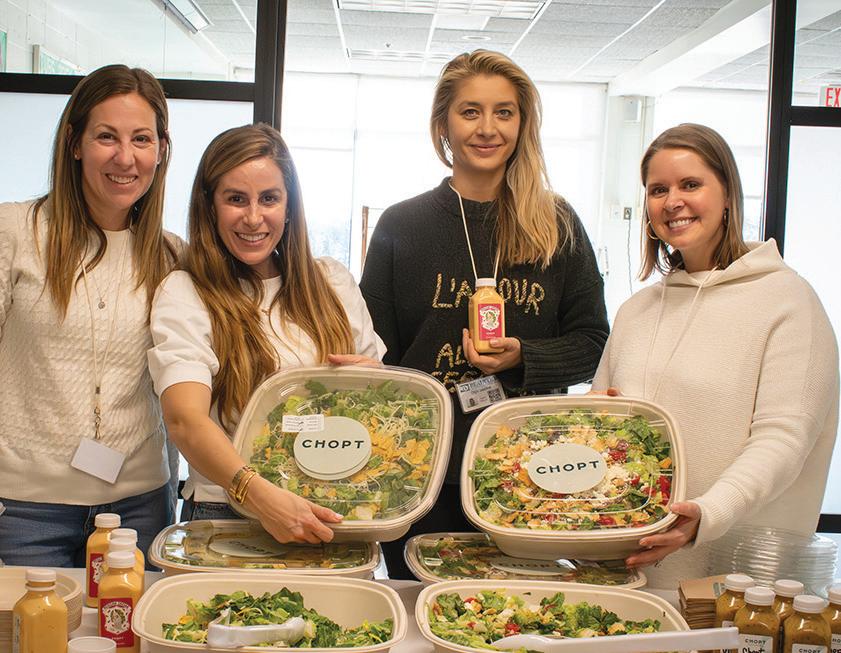
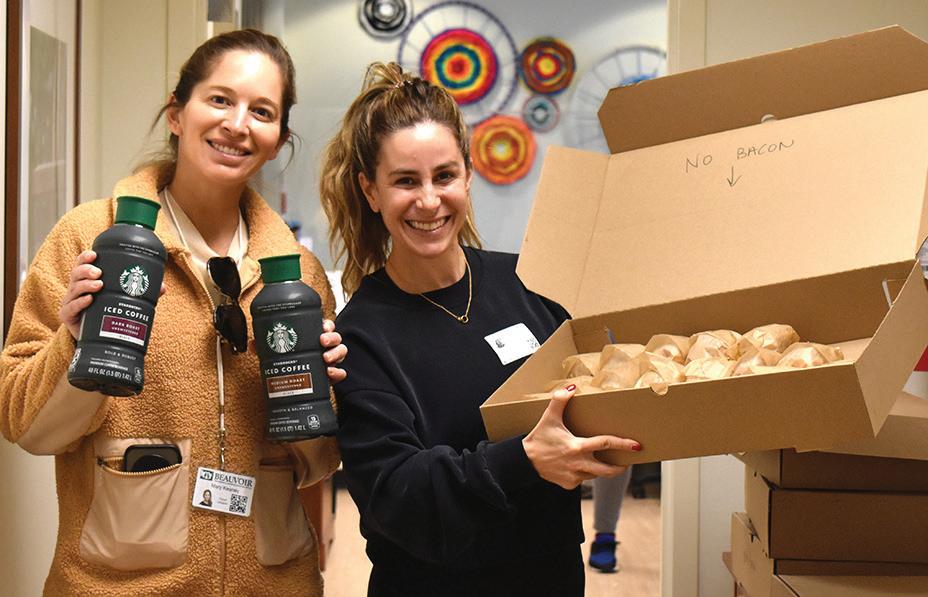
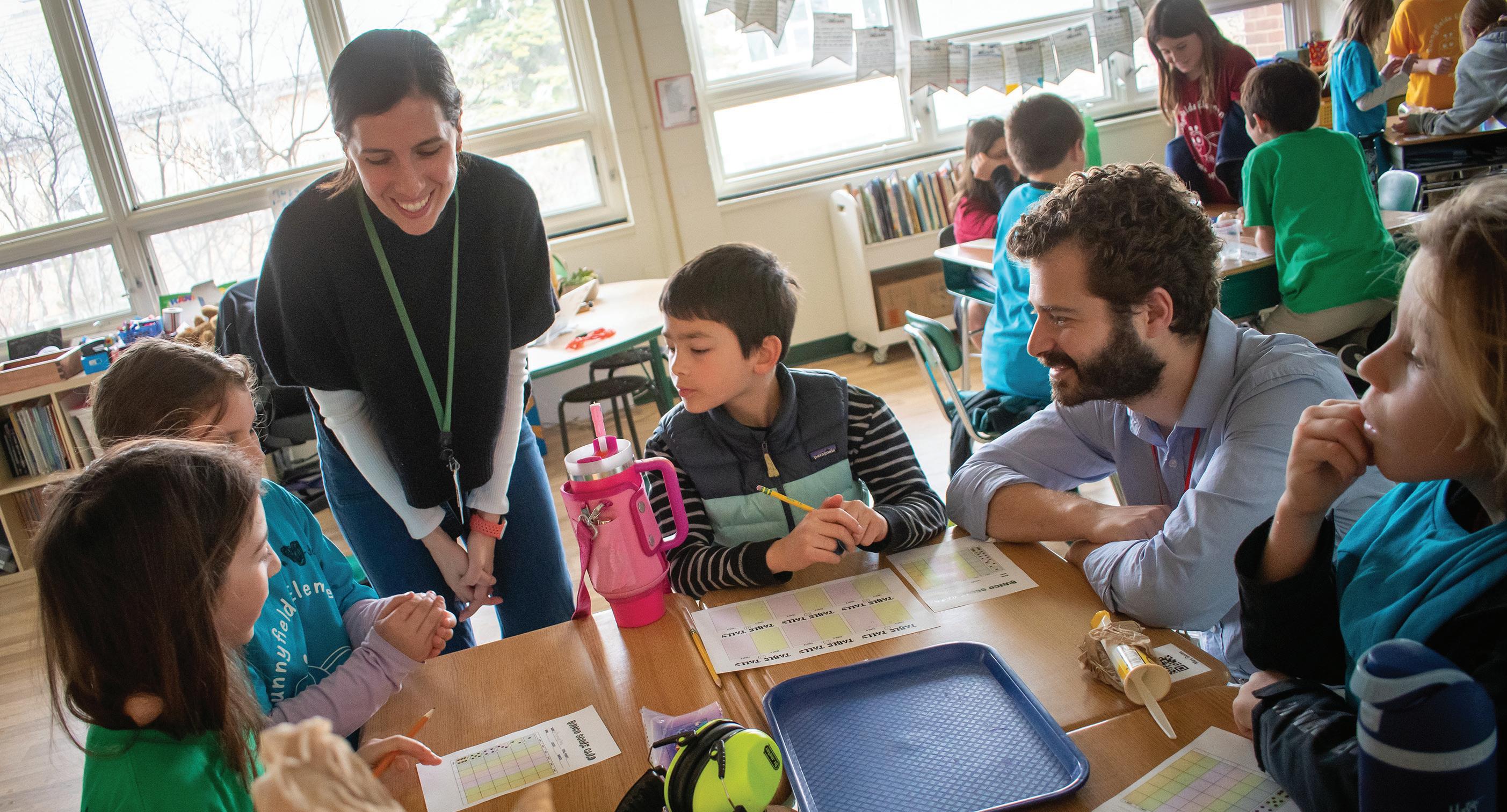
Your gift to the Beauvoir Fund goes beyond what tuition covers to ensure this year’s needs are fully funded; including educational field trips, classroom resources, exceptional professional development for our faculty and staff, and curricular improvements that evolve with our students’ learning needs.
Your support ensures each child benefits from Beauvoir’s exceptional partner-teacher model.
“ Third graders leave Beauvoir with so many amazing skills in their toolbox— perseverance, creativity, intellectual curiosity, and of course The Life Rules. While all important in their own right, if there’s one gift we hope to pass on, it’s a true love of learning. Regardless of whatever path our students choose to follow, this is a trait that will serve them well in their future careers and personal lives. Beauvoir’s program is perfectly calibrated to instilling the joy that comes from exploring ideas, making new discoveries, and carving out interests and passions. It’s endlessly gratifying to see our students move on with bright futures ahead of them as they continue to build their love of learning which began here at Beauvoir.
“
Hannah
LaBella and Jeremy Canter, Third Grade Partner Teachers
3500 Woodley Road, NW Washington, DC 20016 202.537.6485 beauvoirschool.org
Stay connected to Beauvoir wherever you go. Send your news to: Office of Institutional Advancement, Beauvoir, 3500 Woodley Road, NW, Washington, DC 20016 or bvradvancement@bvrschool.org
The National Cathedral Elementary School
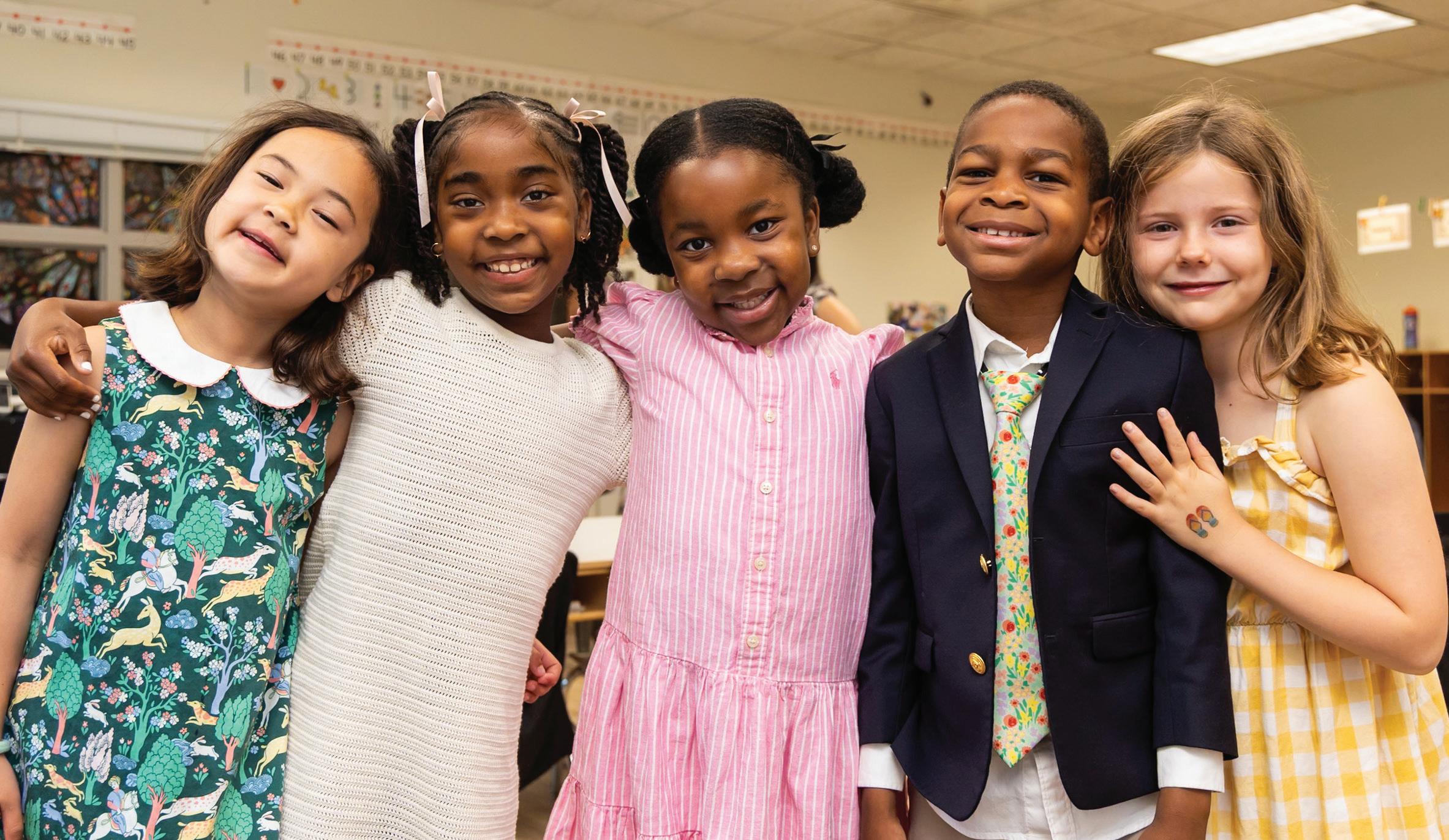
The National Cathedral Elementary School