At the epicentre of the autonomous mobility revolution
Opinion SMEs: over-looked and under-served
In association with:
Industry Outlook Report 2026
Market Headlines
90% of leasing companies forecast growth in salary sacrifice in 2026
38% of rental companies expect growth in LCV hire next year
Lower cost (<£37,000) EVs are arriving in volume, with 70% of firms expecting an increase
43% of leasing companies expect a large increase in Chinese car volumes
The outlook for the economy is gloomy, with 63% of companies forecasting a deterioration
The decline in EV residual values will continue, according to 64% of rental and leasing companies
Developing staff skills is a high or very high priority for 75% of firms
Executive Contributors
Ryan Johnson
Managing Director & Senior Vice President, Enterprise Mobility
Lakshmi Moorthy
Managing Director, Arval UK
Neil McCrossan
Managing Director, Northgate UK&I
Richard Jones
CEO, Zenith
Steve Cocks
Head of Broker, Lex Autolease
Andrew Smith
Senior Vice President / Managing Director UK, SIXT Rent a Car
Margaret Speirs
Customer Service & Rental Director, Arnold Clark Group
Per Voegerl
Managing Director, United Rental Group
Liz Matschy
Head of Partnerships, Avis Budget
Scott Jenkins
Sales & Operations Director, Autohorn
Mark Newberry
Transformation & Strategy Director, Europcar
Foreword
As I approach my one-year anniversary as BVRLA chief executive, I want to start by saying a sincere thank you for your support, candour and engagement over that time. This is an industry built on relationships and trust, and that has come through in every committee meeting, site visit and conversation I have participated in this year.
It has been a frenetic and often exhausting year for everyone in our sector. Members have had to navigate a tough economic backdrop, regulatory uncertainty, conflicting policy signals and a terrifying used EV market... all this while dealing with the practical realities of managing ageing fleets, reducing overhead costs and ever-changing customer demands.
Over the past year, the team and I have tried to get a much clearer view of your pressure and pain points. Our mission is to be an indispensable resource for our members. To do that we must spend more time listening to members, focusing on the issues that are most disruptive to your businesses, and being quicker and more effective in how we respond.
By championing your cause in Westminster and Whitehall, pushing back against regulatory overreach and providing practical services, guidance or training that you can plug straight into your operations, the goal remains the same: to make your lives a bit easier and your path forwards a bit clearer.
The pace of change is relentless and so this activity needs constant adjustment. To stay on track we need your input, so thank you to everyone that has engaged through committees, working groups, events and a myriad of other interactions.
We are privileged to have this perspective on the industry, and this latest Industry Outlook is one of the best ways we can share it with you. So, what is in store for 2026?
On the economic front, the UK remains in limbo, somewhere between crisis and recovery. Hardened by a series of shocks, our sector is more resilient than ever but desperately in search of some stability and certainty. The recent Budget delivered little of either.
The rapid rate of decarbonisation being enforced through the ZEV Mandate is hurting everyone, with imbalanced incentives, patchy demand, overexpensive infrastructure, plummeting residual values and a misguided new pay-per-mile tax clouding the horizon. Every positive step the Government takes seems to be undermined by a bad decision elsewhere.
We may or may not be on the cusp of a digital transformation that will see connected vehicle data, AI efficiency and increasingly autonomous mobility models shift our whole sector into a new gear –boosting profit margins and customer satisfaction. The aim of this report is not to add to the noise, but to distil what really matters for 2026, using your data and perspectives to highlight the risks and opportunities.
We are determined to up our game as your trade body. Our business plan for the coming year focuses on three things:
Strengthening our policy and campaigning voice on the issues that matter most to you.
Expanding our value proposition and making your association easier to work with.
Strengthening the standards that set BVRLA members apart.
Across all of this runs a commitment to collaboration, transparency and pace.
We look forward to working with you in the year ahead to ensure this sector remains resilient, innovative and influential. Your businesses keep the country moving; our job is to make sure you have the environment you need to thrive.
Toby Poston
Chief Executive BVRLA
Introduction to the survey
The BVRLA conducted a quantitative and qualitative survey of rental, leasing and broker members in October 2025.
The survey set out to gauge current business sentiment, assess market conditions and appraise members’ outlooks for 2026.
The data in this report is based on responses from 74 companies which participated in the survey. If you would like to get involved with our research projects in 2026 and join our Industry Outlook Panel, please get in touch with our Research and Insight Manager Phil Garthside via: Phil@bvrla.co.uk
Industry Outlook
of leasing companies expect an increase in BCH from large corporates in 2026
Stable demand for BCH
of brokers forecast growth in the SME sector in 2026
A steady year for business contract hire (BCH) has left firms confident that 2026 will bring more of the same, or even some growth. Early optimism in 2025 soon vanished in the face of the economic uncertainty caused by President Trump’s tariff trade wars, leading large corporates to delay investment decisions, while the higher employment costs of employer National Insurance contributions led businesses of all sizes to address their cost bases before renewing their vehicles. Drilling down into the data, brokers are much more optimistic than leasing companies about growth prospects in the SME sector in 2026, whereas leasing companies are more optimistic about both the medium and larger corporate markets. Encouragingly, only 13% of brokers and 18% of leasing companies expect the market to shrink in 2026.
Forecast demand for salary sacrifice, 2026 vs 2025
of leasing companies forecast salsac growth among large corporate customers in 2026
Salsac drives UK decarbonisation
leasing companies
a decline in salsac demand in 2026
Salary sacrifice schemes are the growth engine of electric vehicle adoption among private motorists, with leasing firms and brokers confident that 2025’s double-digit growth will continue next year. Large corporate customers are the driving force of this dynamic market, with 70% of leasing companies and brokers forecasting growth in 2026, but there are also positive outlooks for medium corporate and SME customers, as more businesses implement salsac schemes. Cheaper EVs, heavy discounting, and increasingly the offer of used EVs has expanded the uptake of salsac among lower paid employees. Executives are now strengthening their calls for the benefit in kind tax on used EVs to reflect their true market value, rather than their original list price, which would give a further stimulus to the used EV salsac channel.
Industry Outlook
Forecast for personal contract hire, 2026 vs 2025
of brokers forecast an increase in PCH demand in 2026 50%
of leasing companies forecast an increase in PCH demand in 2026 25%
PCH demand starts to rise again
Cut-throat levels of discounting by vehicle manufacturers have led to a resurgence in personal contract hire (PCH) as motorists capitalise on some exceptional offers. PCH volumes had been falling as drivers shied away from the inflation in new car prices since the pandemic, but new entrant OEMs have brought fierce price competition to the market, and established manufacturers have been forced to react. Leasing is also ideally suited to protect private drivers from the volatility that has impacted the used car market, especially for electric vehicles. Leasing companies and brokers, however, are having to adjust to a greater share of supply being dictated by ‘commit to buy’ tactical campaigns from OEMs. These are being so aggressively priced that orders from standard book price lists are evaporating.
Forecast demand for <90 day car rental, 2026 vs 2025
of rental companies forecast a decrease in SME rentals in 2026 28%
of rental companies expect an increase in demand from private customers in 2026 25%
Steady demand for short-term rental
Almost two-thirds of rental companies expect demand for shorter-term (less than 90 days) rental to stay the same in 2026. This headline figure masks sector differences, with firms reporting buoyant demand from in-bound customers, both business and leisure, but more challenging conditions in downtown locations, where there have been some station closures. Hire periods are shortening as the recovery of parts supply chains has reduced off-road times for mechanical and crash repairs, which in turn has cut hire periods for replacement cars. Plus, shorter lead times for new cars has shrunk the duration of pre-contract rental for company car drivers waiting for their next car. The positive aspect of this better vehicle availability is a return to full capacity rental fleets, which has brought a downward pressure on pricing and stimulated demand.
Industry Outlook
38%
of rental companies forecast an overall increase in demand for LCV hire in 2026
42%
of rental companies forecast a rise in consumer LCV hire in 2026
Short-term LCV hire is growing
Rental companies have a positive outlook for short-term light commercial vehicle rental next year. Overall, 38% of operators forecast an increase in demand, and 49% expect demand to be similar to 2025. The ageing of the UK van fleet as organisations have extended their vehicle holding periods means greater maintenance and reliability issues, driving up demand for shortterm replacements. However, an uncertain macroeconomic outlook has seen potential business customers retrench and restructure, before considering investment and expansion plans. Much is resting on business reaction to the Budget, although demand for delivery vans in the run up to Christmas was already booming. For private LCV hire customers, a sluggish housing market with sales forecast to remain flat, limits one of the prime drivers of LCV rental demand.
of hire companies expect a decrease in flexi-rental from SMEs 52%
of hire companies expect a rise in flexi-rental from large corporates 24%
Flexi-rental capitalises on economic uncertainty
Doubts about the national economy are driving demand for longer-term flexible rental products, especially for light commercial vehicles. Suppliers report that there is a large target market of both small businesses and fleets that have traditionally bought their vans, but now balk at the price of new vehicles. Flexi-rental offers a better use of capital, includes a full wrap-around service, and avoids long-term commitment if the economy does falter. Switching from capex to opex also appears to be attracting public sector fleets, which can take advantage of a growing number of procurement frameworks. Contracts for these flexi-rental solutions are stretching, as operators that bought LCVs for peak prices during and after the pandemic look to amortise unbudgeted levels of depreciation over a longer period by offering attractive extension terms.
Industry Outlook
of suppliers forecast growth in demand for HGV rental and leasing from SMEs in 2026 27%
HGV outsourcing on the rise
The cost and complexity of running a compliant heavy-duty truck fleet is leading more companies to outsource funding and fleet management to specialists. Amid a growing HGV driver shortage, outsourcing fleet management can save time and cost, with suppliers able to negotiate bulk discounts on parts, and, crucially, secure timely access to workshops to avoid the lost productivity of downtime. “With regulation intensifying and costs going up, we’re seeing a lot of growth in demand for fleet management from high intensity fleets,” said one director. Moreover, with the UK committed to phasing out the sale of new ICE trucks vehicles under 26 tonnes by 2035, and all other new HGVs by 2040, customers are looking to rental and leasing to afford the substantially more expensive electric trucks.
supply of vans in 2026
With LCV registrations down 10 percent year-on-year for the first 10 months of 2025, neither rental nor leasing companies have any immediate concerns about van supply. Availability is good across the industry, although rental companies report that two OEMs which historically supplied significant volumes have moved away from the sector. The bigger concern is how all OEMs respond to the demands of the ZEV Mandate, with this year’s sales of electric vans barely half the required level – if customers won’t buy eLCVs, the only option is to reduce volumes of diesel vans. As for eLCV demand, executives report that they are difficult to place, expensive to source, involve greater residual value risk, and deliver a lower return on investment than diesel vans. Demand for HGV rental & leasing, 2026 vs 2025
of leasing companies and brokers expect increased eLCV supply in 2026 63%
of rental companies forecast decreased eLCV demand in 2026 39%
Van availability is good, but eLCV doubts remain
Industry Outlook
Supply of cars to rental and leasing companies in 2026
of leasing companies forecast an increase in budget car supply in 2026 45%
No car supply concerns for 2026
Leasing, broker and rental companies are confident of new car supply in 2026, with vehicle manufacturers viewing both sectors as important channels to market. With new car sales set to breach the 2 million threshold this year for the first time since 2019, supply is arguably outstripping demand, leading about half of the industry to forecast an increase in supply next year. Brokers are the most optimistic sector. Leasing companies expect a rise in budget car supply as OEMs launch cheaper EVs, catnip for salary sacrifice drivers. The most vulnerable sector is luxury cars, where leasing and rental companies have suffered the heaviest depreciation following the crash in electric car residual values. The 35% of firms that forecast a decline in luxury car supply may actually be reflecting their own appetites.
Forecast for EV supply in 2026
of leasing companies expect an increase in sub £37k EVs
of rental companies expect an increase in sub £37k EVs next year 58%
Lower cost EVs ideal for salsac and PCH
An increase in EV supply is on the cards for next year as OEMs launch new battery-powered cars and push to achieve the thresholds dictated by the ZEV Mandate. Leasing companies and brokers are most excited by the arrival of lower cost EVs, which present new opportunities to entice more employees into salary sacrifice agreements with cheaper rentals. Supported by generous discounts, these cars are also potentially attractive to the PCH market. For rental companies, however, EVs present a challenge that some executives categorise as an existential threat, due to their higher costs and lower customer demand. Cheaper EVs might limit depreciation or bring cheaper buy-back arrangements, but if the ZEV Mandate were not forcing rental companies to accept battery-powered cars, the vast majority of operators would avoid the technology.
Industry Outlook
Penetration of new entrant OEMs in 2026
Three-quarters of industry expects increase in Chinese brands
Leasing, broker and rental companies are at the centre of the eye-catching sales growth of new entrant manufacturers. While these brands build their retailer networks, brokers and leasing companies are proving to be a valuable route to market via salary sacrifice, as well as BCH and PCH. All sectors report good customer acceptance of the new brands. The issues for leasing and rental companies are twofold – aftersales support in the form of parts and workshops; and residual value risk. Forecasting future values for brands with no trading history is difficult, exacerbated by the fear that not all new entrants will stay in the UK. Rental companies are also aware that adopting EVs from new OEMs makes it harder for their core suppliers to meet their ZEV Mandate targets.
Industry Outlook
EV RV deterioration to continue
The windfall disposal proceeds of 2022 and 2023 have disappeared in the rearview mirror as the secondhand car market normalises. Volumes are rising in line with demand, with used sales recording their 11th consecutive quarter of growth in Q3, according to the SMMT. Consequently, three-quarters of leasing and rental companies forecast residual values staying the same or improving in 2026… for ICE cars. But nearly two-thirds expect used EV values to continue their downward trajectory, with leasing companies particularly pessimistic as they continue to nurse heavy losses on their first wave of EVs. There are universal calls for support for used EV values in the form of grants, a benefitin-kind tax reduction for used EV and salsac drivers, and confidence-building measures, such as a positive narrative around battery health and charging infrastructure.
Residual value outlook for light commercial vehicles
Used LCV prices are stable, but RVs values are a worry
Two opposing forces are at play in the used LCV market. On the one hand, customers are extending contracts, which is restricting the supply of used vehicles and supporting prices. On the other hand, older vehicles with more wear and tear suffer greater depreciation. Overall, the outlook is stable or positive for used van values, according to more than 80% of the industry. The fly in the ointment is electric LCVs. Having suffered the nightmare of used electric car depreciation, and been burnt by the shocking decline in values of some first generation eLCVs, with their high prices and short ranges, the majority of leasing and rental companies are deeply concerned about the prospects for the technology and whether the SMEs and sole traders that buy used vans will ever switch to electric.
Residual value outlook for cars
Industry Outlook
of leasing companies think the UK economy will deteriorate over the next 6 months 57% of rental companies expect to increase their fleet size in 2026 28%
Gloomy outlook for the economy
The psychological factors of negative mood and sentiment are holding back economic performance, restricting consumer spending, and impacting business decisions. Despite inflation declining, interest rates falling, and household savings rising, the Government cannot seem to shift the sense of gloom or persuade businesses that it is on their side. Anticipated cuts in interest rates would have a bigger impact in building customer confidence than in reducing bills, say industry leaders. But executives also point to disjointed policymaking: at a national level, the increase in employment costs slowed recruitment and led to retrenchment as businesses dealt with the bottom-line impact. At an industry level, offering an Electric Car Grant to increase EV uptake, only to levy a 3 pence per mile road charge for EVs is baffling.
Leasing and rental firms look to fleet growth
The abundant availability of new vehicles has encouraged 40% of leasing, broker and rental companies to forecast growth in their fleets next year. Only a fifth (21%) expect contraction, typically reflecting a retreat from sectors they have previously served, especially in the rental industry. The uncertain economic outlook and lack of business confidence in the UK actually boosts demand for rental and leasing, giving customers access to the vehicles they require for exactly as long as they need them, protecting their capital reserves, and sheltering them from residual value uncertainty. Moreover, today’s fierce competition between OEMs shows no sign of abating, signalling another year of discounts and support to reduce fleet costs and lease rentals. Plus, freezing income tax thresholds makes salary sacrifice ever more attractive.
Industry Outlook
Outlook for margins over next 6 months
Profit and turnover priorities for 2026
4% think margins will improve
52% think margins will deteriorate
Industry margins under pressure
Rising fleet, business and employment costs are eating into the margins of brokers, and rental and leasing companies. They anticipate no significant change in demand next year, but tough competition is keeping a cap on the prices they can charge. Plus, higher fleet holding costs due to greater depreciation, especially for electric vehicles, and higher maintenance spend, again attributed to electric vehicles, are hitting bottom lines. Allied to this are higher staff costs due to employer National Insurance, the knock-on effects of the increased minimum wage, and the need to pay more to recruit staff for certain specialist roles. Moreover, regulatory compliance in automotive financial services is becoming more complex, and demanding more time and resource.
Profitability ahead of growth
Leasing and rental companies are prioritising profitability ahead of turnover as they address a number of headwinds. Chief among these for leasing firms is their exposure to residual value risk on electric vehicles, with some businesses looking to mitigate current losses through re-lease programmes and smart remarketing, rather than amplifying their depreciation risks by competing hard for new customers. Improvements in new vehicle supply during 2025 have allowed rental companies to renew their fleets and restore their numbers this year. Pushing hire rates up is a challenge in a competitive market, say industry leaders, so growth in either turnover or pricing will depend on the wider economy growing. For brokers, the tactical campaigns by OEMs indicate there will be no shortage of attractive offers to take to market in 2026.
Industry Outlook
of firms say developing staff skills is a high or very high priority 75%
of leasing companies rate cyber defence as a high or very high priority 86% of companies are not looking to recruit additional staff 58%
Companies develop staff skillsets
The increasing complexity of both vehicles and of regulatory compliance in automotive financial services is putting a premium on training and recruiting high calibre staff. Leasing and rental companies face the challenge of recruiting technicians with a deep understanding of electric vehicles to authorise appropriate service and maintenance work, but people with these skills are few and far between. Similarly, any company with its own workshops is having to fight hard to recruit and retain staff with specialist skills, whether for working on EVs or HGVs. In other areas, Consumer Duty has increased the need for competent and qualified staff to deal with all regulated business, appreciating the subtleties of a regulation that is more like a set of guiding principles than a set of rules.
Cyber defence and AI high on agendas
With the crippling costs of the cyber attack on Jaguar Land Rover fresh in the memories of rental and leasing executives, 68% of the BVRLA survey have rated the importance of investing in cyber defence as high or very high. Many businesses are part of wider organisations that are making group-wide investments to protect themselves and their customers from the disruption of a cyber attack. Artificial intelligence is also high on investment agendas, used by larger rental companies to analyse millions of daily rates, and integrated into customer-facing websites to serve as chatbots. Businesses with legacy IT systems are finding it challenging to harness the full potential of AI, but it is already assisting residual value forecasting, and supporting preventative maintenance by investigating connected vehicle data for indications of impending faults.
Economy: The need to restore business and public confidence
Unlocking UK demand: How stability can reignite both consumer spending and B2B leasing in the year ahead
There are currently two stories shaping the UK economy. One is cyclical, it’s a tale of an economy that has endured a series of shocks and is slowly emerging out from the other side. The other is structural - a long-term shift driven by net zero, digital transformation, AI and a renewed focus on infrastructure.
For the vehicle renting and leasing sector, these stories are linked. On the consumer side, behaviour has become more cautious and price sensitive. On the business side, investment has stalled, with firms focusing on replacement rather than expansion. The sector sits squarely at the junction between household confidence and business confidence, both of which are currently stuck in neutral.
But a clearer path is slowly beginning to emerge. Falling inflation, the prospects of lower interest rates, and the possibility of greater policy stability after the Budget could unlock both sides of the market simultaneously.
A soft patch, but with a potential recovery in sight
The UK has moved beyond the immediate shocks of Covid-19, the energy crisis, and the subsequent inflation spike, but the aftereffects of these remain visible in our economy. Economic growth, which was relatively strong in the first half of the year, has slowed as expected. Temporary disruptions like the JLR cyber-attack have added significant noise due to the scale of the impact, but looking past them, the bigger picture is familiar to many.
That is one of cautious spending, cost pressures and weak investment.
The labour market is slowly loosening, too. Vacancies have fallen sharply from their peak, unemployment has crept up to around 5%, and pay growth is slowing. This helps the inflation outlook but reinforces the sense of fragility that both households and firms are feeling.
In economic terms, the UK is operating below potential - we may not be in a crisis, but we are certainly not yet in recovery either. Looking ahead, the picture is only marginally expected to shift in the near term, with the potential for an upswing emerging over 2026 and 2027.
Mohammad Jamei Director of Economic Policy CBI
Households can spend, but lack the confidence to do so
Consumer behaviour is central to the sector, and right now, households remain cautious even as real incomes recover. Savings have picked up, and higher interest rates have made the ‘safe option’ of holding onto money more attractive.
Part of this is textbook economics, as higher rates encourage saving. But it’s also behavioural. After two years of living with high inflation, many households have adopted what Monetary Policy Committee member Catherine Mann calls “consumption scarring”. This is a mindset where big purchases feel risky until inflation is genuinely back under control. Would consumers like to upgrade the family car? Absolutely. Are many instead prolonging existing leases or opting for shorter commitments? Yes. The desire and ability haven’t gone, but the confidence needs rebuilding.
Lower inflation and lower interest rates, when they arrive, will help to unwind some of that scarring. As the incentive to save diminishes with falling interest rates and household budgets feel more predictable, spending on big-ticket items, be it cars or white goods, is likely to return.
But stability matters as much as any interest rate cut. A Budget that offers clarity, avoids tax shocks and reassures households on the fiscal outlook would help accelerate that turning point.
Economy: The need to restore business and public confidence
Businesses also lack confidence to invest and spend
On the B2B leasing and rental side, the picture shares some features with households but with a corporate twist. Demand hasn’t fallen off a cliff, but many businesses are taking a conservative stance:
• Investment intentions are subdued, held back by high financing costs and weak demand.
• Profitability has been squeezed, limiting appetite for fleet expansion.
• Hiring is being reined in, reducing the need for rapid growth in commercial vehicles.
• Spending is focused on replacement, efficiency, and selective upgrades - especially digital and netzero related.
Some of this is classic behaviour for an economy that has plateaued as firms look to firm up their bottom line by cutting costs. They haven’t pulled the plug on their spending, but equally, they’re not pressing down on the accelerator either. Uncertainty ahead of the Budget reinforced this cautious posture, with many businesses explicitly telling us that they are delaying fleet decisions until they know what the tax landscape looks like.
Again, the turning point comes through many of the same channels as for households, namely confidence, costs, clarity.
Falling inflation should help to reduce input cost pressures. Lower interest rates reduce financing costs, including for fleet renewal. Policy stability reduces the perceived risk of expanding or modernising fleets.
If policymakers get these areas right, the B2B leasing and rental market could shift from replacement-led demand to something more expansive.
Common characteristics converging
Though households and businesses behave differently, the underlying drivers are similar in nature, that is:
• They both seek stability and predictability;
• They are both sensitive to interest rates and financing costs.
• They are both affected by the psychological legacy of recent shocks.
• They both respond positively when inflation expectations fall.
In many ways, the vehicle renting and leasing sector sits at the centre of this intersection. Confidence returning to households and firms can help to unlock growth in vehicle rental, consumer leases and business fleets. And when one side turns, the other often follows. For instance:
• A consumer-led rise in confidence will help to lift retail sales, logistics and services demand, supporting B2B rental and leasing activity; and
• A business-led upswing supports employment and incomes, feeding back into consumer leasing activity.
The sector doesn’t just respond to confidence - it amplifies it. To unlock this combined impact, the industry will need to look to policymakers to hold the line on inflation, provide policy clarity, provide a clear pathway to decarbonisation and ensure financial conditions continue to ease so borrowing costs fall.
Getting this right is key for the UK to switch gears, giving way to a more confident, broad-based economic recovery - one that supports the natural lifecycle of household vehicle upgrading and business fleet investment. In many ways, stability is the accelerator here, and without it, the engine won’t turn over.
Business: Companies focus on efficiency, cost and resilience
CGI Business Insights 2025: Executive priorities for the next 12 months
These findings come from the 2025 CGI Voice of Our Clients report which is based on in depth conversations with more than 1,800 business and IT executives, over 80 percent of whom are C suite. This scale gives CGI a clear cross industry view of the priorities shaping the year ahead.
As a global IT and business consulting services firm working in the Asset Finance & Automotive space as well as across a wide range of other industries, CGI draws on these yearly insights to gather a view of the priorities for organisations shaping the year ahead.
What leaders are seeing:
• Digitisation is the single most influential force shaping strategy, and 75% of executives report it is having a high impact on their business model as they rethink ecosystems, supply routes and how value is delivered.
• Legacy technology remains a major brake on progress, with nearly half of leaders citing it as a top barrier. In response, 57% plan to modernise key applications, and 40% aim to migrate a substantial portion to the cloud within two years.
• Geopolitical and regulatory complexity has become one of the top obstacles to achieving business priorities, alongside budget discipline and organisational change.
Top 5 business priorities
Across industries, operational efficiency and modernisation are at the top of organisational agendas, with most industries seeing strong alignment between IT and business to support organisational strategy. The top five business priorities emerging from this year’s insights are as follows:
▲ Enhance operational stability and efficiency through automation and process.
▼ Drive strategic business growth through innovation, market expansion and partnerships.
Improve customer and citizen experiences through digitisation, simplification and personalisation.
Keep cost optimisation on track without sacrificing resilience.
▲ Strengthen cybersecurity, data protection and regulatory risk management.
As business and IT executives look into the next year, they are focusing on strengthening their organisations amid ongoing disruption. Priorities centre on improving operational efficiency, maintaining cost discipline and building greater resilience as regulatory and market pressures intensify. Many are rethinking how value is
Philip Benke Growth & Innovation Director, CGI
Top 5 industry themes to watch
This year’s industry trends show that executives are prioritising improvements that strengthen their organisations as a whole. Many are focusing on new ways to innovate, build resilience, protect data and improve efficiency. The top five industry trends are outlined below:
▲ Technology, innovation and digital transformation remain at the forefront.
▼ Sustainability and the energy transition continue to matter, even as emphasis varies by sector.
▲ Operational efficiency and cost optimisation are rising in importance amid economic uncertainty.
▲ Market volatility and risk management have moved into the top tier of executive focus.
▼ Cybersecurity and data protection remain foundational across all industries.
delivered, enhancing customer experience and tackling legacy challenges that slow progress. Innovation, sustainability and stronger risk management also stand out as key themes. Overall, with tight alignment between business and IT, leaders can turn today’s complexity into tomorrow’s advantage.
SMEs: The foundations of fleet
Why small-to-medium-sized enterprises (SMEs) hold the real power in fleet decision-making
For too long, the UK fleet market has been viewed primarily through the lens of large corporates – fleets with over 100 vehicles. Whereas headline SMMT registration data positions ‘fleet’ as a priority category for the leasing industry, this skewed, ‘top-heavy’ framing risks obscuring a far larger opportunity within the fleet ecosystem.
In terms of numbers, SMEs – organisations with fewer than 250 employees – represent 99% of fleet buyers by fleet population and collectively control around half of the UK fleet parc. This statistic underlines how the sector could reframe its narrative on fleet behaviour, market dynamics and the levers for EV adoption.
Despite their collective scale, SMEs often remain underserved and under-supported. Moreover, the lack of coherent data available suggests SMEs are also one of the least understood segments in the market.
The scale and influence of SME fleets
SMEs form the overwhelming majority of UK businesses. While individually small, collectively they account for the largest share of fleet demand, and play a crucial role in both the new and used vehicle markets. Yet SME fleet activity is systematically under-reported for a variety of reasons. Many SMEs, for example, buy used vehicles, which fall outside new registration datasets. Furthermore, a significant proportion of business purchases are not categorised by dealers as ‘fleet’. And there’s also a large proportion of SME demand that is concealed in a variety of services delivered via broker, dealer and rental channels.
SME ‘invisibility’ presents a strategic opportunity for fleet suppliers that understand how SME fleet behaviour is evolving and can partner with SMEs in new ways as they electrify their vehicles and data becomes more central to decision-making.
Doing more with less: the SME reality
A typical SME dedicates only two to four hours per week to vehicle responsibilities, yet within this limited window they must manage the full range of duties faced by larger fleets. These include vehicle acquisition and funding; maintenance and repairs; insurance; compliance and duty of care; and electrification decisions.
Ian Richardson Managing Director, 360 Media Group
A further challenge is the widening gap between perceived and actual fleet costs. Research by 360 Media Group reveals that one-third of fleets have not reviewed monthly rental bandings in more than two years, meaning outdated assumptions may be masking more affordable vehicle and EV opportunities. This does not reflect a lack of intent –it reflects a lack of time, insight and resource.
The complexity gap
Only half of fleets use a total cost of ownership (TCO) model, and a similar proportion have a formal fleet policy. Data fragmentation remains the single biggest obstacle to confident decision-making. SMEs capture data from fuel cards and charging apps, leasing portals, HR, payroll and mileage reimbursement, and in some cases telematics, but this data sits in silos.
This fragmentation makes it harder to build business cases for EVs, compile emissions and ESG reports, forecast risk and plan the most cost-effective lifecycle profile for vehicles. TCO analysis is only as strong as the data behind it. Unfortunately, for many SMEs the data sits across multiple systems that never ‘speak to each other’.
ESG pressures vs operational realities
ESG expectations are rising among SMEs, but their vehicle decisions prioritise operational needs. SMEs want to decarbonise, but not at the expense of vehicle uptime and availability, predictable operating costs, and cash flow resilience.
SMEs: The foundations of fleet
Internal stakeholder resistance and budget constraints are repeatedly cited as the biggest barriers to electrification, strengthening the case for clearer data, stronger business cases and more transparent modelling.
Around 80% of businesses now operate at least one EV, indicating that electrification is becoming mainstream. Yet confidence levels differ significantly between those with EV experience and those without.
A two-tier market is emerging
The UK fleet market continues to split into two distinct tiers. One tier covers larger fleets with formal fleet policies, structured EV strategies, mature data capabilities, greater resilience to rising costs, and the involvement of the most senior C-suite executives. The other tier covers SMEs where there is a lower level of policy maturity, limited internal fleet expertise, resource constraints, real-world barriers to EV adoption, and a lack of attention from suppliers. The widening gap between these two tiers highlights the need for solutions, communication, tools and support tailored specifically to SME realities.
The strategic opportunity
SMEs could be central to the future health of EV residual values, driving demand for used EVs (especially ex-company cars today, and used electric vans tomorrow). In short, a healthy EV market requires a healthy SME fleet market. One cannot advance without the other. There is also valuable potential in the SME sector for salary sacrifice adoption, and more wraparound services that bundle maintenance, tyres, telematics, insurance, and breakdown into a single offer. Moreover, electrification will increase demand for integrated charging solutions, which SMEs now rank among their top priorities.
Where industry leadership is needed
It may be tempting to think that price is the principal differentiator in competing for SME business, but other priorities can determine customer decision making. Provide practical data integration, for instance, alongside a clearer articulation of total cost and risk. Offer solutions that that simplify fleet admin and squarely address the challenges faced by customers spending no more than two to four hours per week. Design pathways to electrification that reflect the vehicle duty cycle realities of SMEs, while being openminded about mixed powertrain propositions. And generate credible case studies that demonstrate achievable outcomes to show SME customers what is truly possible.
The future of fleet
SMEs are not peripheral to the fleet sector, and they shouldn’t be an afterthought. This under-served sector of the economy is a core driver of growth, electrification and market stability. They offer scale, and they hold the key to strengthening EV residuals, accelerating used EV uptake and supporting the longterm resilience of the market.
Recognising their significance, and understanding their changing demands through clear, independent insight, is essential for any fleet supplier.
This is an area where artificial intelligence could play a central role, enabling suppliers to serve smaller customers cost effectively. AI could deliver more accessible, consistent and higher-quality support to SME fleets – closing the knowledge gap, improving decision-making and helping mixed fleets navigate complexity with greater confidence. Rather than replacing expertise, AI can enhance the industry’s ability to provide clarity at scale, supporting the SMEs who sit at the heart of the UK fleet landscape.
360 Media Group and FleetWise provide independent, evidence-based insight that helps the industry understand how the fleet market is evolving and where SME behaviour is shaping future demand. 360 can help you to understand, infiltrate and master the SME fleet sector. fleetwise. services/pages/contact
Tourism: Inbound visitors on the rise
The global travel industry is in a relatively healthy place. Tourism Economics project travel to grow at 3.5% per year over the next 10 years, ahead of the 2.5% growth forecasted for the global economy.
The positive outlook is indicative of an expanding ‘travelling class’ in emerging economies, and the prioritisation of experiences in mature markets. The UK is set to benefit from rising international travel. VisitBritain projected a 3% rise in overseas travel in 2025, and the available data suggests these projections were accurate. VISA international card counts (a proxy for overseas visitors) were up 3% between January and June, and 11% between July and September. Amadeus’ air traffic data paints a similar picture, with inbound figures up 2% by the end of September.
There are also positive signs as we look towards 2026. ForwardKeys’ flight search data indicates there has been a 4.5% increase in searches in the last 12 months, with double digit rises since July. Although searches do not always convert into trips, increased interest is clearly a positive sign, particularly with a Pound that is relatively weak against the Dollar and the Euro.
Tourism Economics’ projections of a 47% increase in international tourism spend in the UK by 2030, also point to a positive near-term picture.
Prospects for destinations within the UK
As of 2024, London welcomed 54% of international visits (the rest of England 33%, Scotland 11% and Wales 2%), and there is no sign of its popularity waning.
Tourism Economics predicts that leading urban destinations are poised for a 20% ‘growth premium’ relative to the rest of the country by 2030, with London’s growth forecast at 23%.
On-the-ground data supports this prediction. Amadeus’ air traffic figures indicate that London airports have experienced a 4% rise in international travel in 2025. Looking ahead, ForwardKeys reports a 7% rolling 12 month increase in international flight searches for London, rising to +32% in the latest reporting period in October.
There are also positive signs for the rest of the UK. In England, flight searches for Manchester were up since July, as were searches for Bristol, Liverpool and Newcastle. In Scotland, searches were up 7% (Edinburgh +7% and Glasgow +24%), and have been especially healthy since July. Wales is the only nation where searches are down.
Prospects amongst core international markets
Of course, not all international tourists are equal. Some markets have a tendency to take short-breaks in London, whilst others will take long trips across the country. Clearly the latter type are more valuable to the rental market.
On balance, the sector’s core markets (ranked by nights spent outside of London) are in fairly good health. We can be cautiously optimistic about travel from the USA and Europe, with only Australia generating a sense of pessimism.
Jon Young Audience Research Director, Decision House Ltd
In summary:
20
1. USA (42.7m nights in 2024, 22.2m outside of London, average stay of 8 nights):
• 2025 arrivals to September: Down 1% on 2024 but up 9% on 2019
• Flight searches since July: Significantly up on 2024
• Estimated spend growth by 2030: 25%
• Outlook: Positive based on flight searches data, but one to watch due to downstream impact of trade tariffs that may lead to increased travel costs and reduced air capacity
2. Germany (20.4m nights in 2024, 13.9m outside of London, average stay of 6 nights):
• 2025 arrivals to September: Up 7% on 2024, but 21% down on 2019
• Flight searches since July: Comfortably up on 2024
• Estimated spend growth by 2030: 33%
• Outlook: Positive, with significant growth potential given gap with pre-pandemic
Tourism: Inbound visitors on the rise
3. France (18.7m nights in 2024, 10.29m outside of London, average stay of 5 nights):
• 2025 arrivals to September: Up 5% on 2024, level with 2019
• Flight searches since July: Down overall, but up in October
• Estimated spend growth by 2030: 25%
• Outlook: Slight decline, although there are signs of this changing
Other markets to look out for
Beyond the UK’s core markets, we can also identify some potential growth markets, including:
• China: With airline capacity on the rise, spend in the UK is projected to grow 158% by 2030 and a return to 2019 levels is likely in the next couple of years. Given this market stays in the UK for 14 nights on average (64% outside of London), and spends more per trip than almost any other market, they are a strong prospect.
4. Australia (15.5m nights in 2024, 10.08m outside of London, average stay of 13 nights):
• 2025 arrivals to September: Down 2% on 2024 and 2019
• Flight searches since July: Down for each month, and for every other month this year
• Estimated spend growth by 2030: 47%
• Outlook: Slight decline, but growth in the medium to long term
• India: Regarded as a key emerging market by Tourism Economics, they stay 28 nights on average, which is supported by high spend. Flight searches are flat compared to 2024, but they remain one to watch.
• Saudia Arabia: Although not yet a top 10 market for visits (19th as of 2024), Saudia Arabia is reporting huge growth year-on-year – 58% up on 2019, and flight searches for the last 12 months up 49.2%. With spend per trip also very high, it feels like the sky is the limit for this market
• UAE: Like Saudi Arabia, a market with high spend per trip. Although the growth trajectory has not been as positive in recent years, flight searches are +9% for the last 12 months, and over +30% since August
5. Spain (16.4m nights in 2024, 9.84m outside of London, average stay of 7 nights):
• 2025 arrivals to September: Down 1% on 2024, down 4% on 2019
• Flight searches since July: Comfortably up on 2024
• Estimated spend growth by 2030: 43%
• Outlook: Positive
Summary
In summary, the available data suggests that prospects for overseas travel to the UK in 2026 are good with growth expected amongst core and growing markets. Whilst global politics may yet play a role, a positive performance in 2025 points to an international traveller that is both determined and resilient.
Mobility: Why autonomous vehicles will rely on fleet management skills
The emergence of shared, autonomous vehicles not only disrupts traditional paradigms of transport, it also challenges and redefines the responsibilities of fleet management.
The UK and Europe are edging closer to the widespread rollout of autonomous vehicles (AVs) from 2026 onward. Wayve (itself a London company), Waymo, Uber, Lyft, and Baidu have already announced London to be central to their ambitious plans – with more AV deployment announcements to follow. With them, comes a promise of greater road safety, more accessible transport options, and an enhanced – perhaps more efficient – mobility network. Within this network, it will become increasingly clear that fleet management stands at the epicentre of the autonomous mobility revolution.
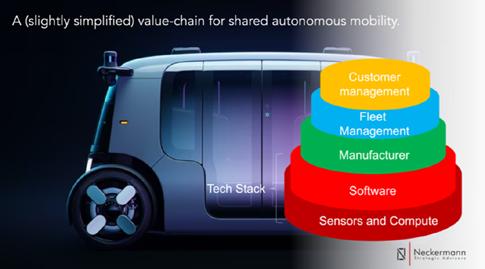
The autonomous mobility value chain
The value chain for autonomous mobility, while complex and multifaceted, can be simplified into five layers: sensors and compute, software, manufacturers, fleet management, and customer management.
• Sensors and compute: The hardware foundation, where perception and decision-making happen
• Software: The “brains” of autonomy, processing real-time data for vehicle operations
• Manufacturer: Building, maintaining, and adapting vehicles for AV fleet-readiness
• Fleet management: Overseeing vehicle deployment, maintenance, utilisation, uptime, insurance, and service fulfilment
• Customer management: Not just an app, but an interface with passengers, aggregating customer experiences and expectations.
Each layer is essential, but fleet management is the linchpin that ensures the promises made by OEMs and tech companies are actually delivered to the customer.
Without a driver, who does the dirty work?
It’s not necessarily the sexiest part of the value-chain, and in a human-driven world, it’s often done by drivers themselves: cleaning, maintaining, charging, insuring, and positioning vehicles. In an AI-driven world, this task will necessarily fall to service providers.
Rental, leasing, carsharing, and ridehailing companies are uniquely positioned to unlock this potential, because they already excel at the things that will be important to it. This industry possesses the depots, as well as the logistical and operational tools necessary to ensure seamless delivery of autonomous rides. Because even the most advanced tech stack will fail to reach the potential we ascribe to the technology without robust fleet management.
Uptime, user experience, and efficiency are the KPIs that will decide between success and failure in AVs. Hence, the centrality of fleet management, nestled between manufacturer and customer management, cannot be overstated. It is where promises of availability and reliability will be fulfilled.
A (slightly simplified) value-chain for shared autonomous mobility.
Mobility: Why autonomous vehicles will rely on fleet management skills
The size of the prize: hundreds of billions for fleet management
Within the next decade, the number of annual rides in on-demand driverless vehicles may top 27 billion globally – representing around £500 billion of revenue, as per our calculation at Neckermann Strategic Advisors (and compared to some analysts, this September 2025 analysis represents a very conservative view). The growth trajectory is exponential, with one inflection point coming as early as 2028.
This explosive growth is driven by several factors:
• Increasing AV platform deployments as technology matures and regulatory frameworks clarify
• Declining trip costs due to pooling and operational efficiencies
• A shift from personal vehicle ownership to shared mobility models.
By our estimation, vehicle asset management will represent just under one-third of this market value. That means of every Pound spent by the customer, some 31p will land with those who are best equipped to manage the assets. That’s several hundred billion in revenues per year for fleet management. However, this growth will only be realised if OEMs are able to deliver suitable, custom-built vehicles for the purpose, and if fleet management can scale operationally and technologically to meet these new demands. The reliability, efficiency, and safety of AV fleets rest on fleet managers’ ability to orchestrate the complex interplay of vehicles, data, and customer touchpoints.
2035 Model: Circa $550bn ride revenue p.a. from shared autonomous mobility.
❏ Decr. vehicles per deployment from 2030; smaller cities
❏ Avg. revenue per ride: $20 (decrease to reflect pooling)
Why fleet management matters now
The transition from today’s ridehailing and corporate fleets to tomorrow’s AV-powered shared mobility is not speculative – it is inevitable. But to deliver on these predictions, fleet management must undergo a profound transformation in the next 36 months:
1. Embrace data-driven operations
Fleet managers must become data architects, leveraging telematics, predictive maintenance algorithms, and real-time performance monitoring to optimise asset utilisation and reduce downtime. A key success factor will lie in integrating AV data streams with maintenance schedules, usage patterns, and dynamic routing.
2. Accelerate automation in fleet operations
Investments in AI-powered platforms enable proactive maintenance, route optimisation, and inventory management, meaning that fleets become resilient and responsive to fluctuating demand. For the fleet or mobility manager, this means that scheduling, dispatch, and recovery of AVs is automated – minimising human intervention.
Source: Neckermann Strategic Advisors analysis, September 2025
Mobility: Why autonomous vehicles will rely on fleet management skills
3. Upskill talent for autonomous mobility
Today’s fleet teams are not yet fully equipped for the challenges of autonomous mobility. Targeted training in software management, data analytics, and AV-specific maintenance is critical to building organisational readiness. Partnerships with OEMs and tech companies will accelerate this capability shift.
4. Forge ecosystem partnerships
Fleet operators must intensify their collaboration with a wider array of OEMs, technology providers, insurers, municipalities, and regulators. Early involvement in pilot programs and regulatory dialogues will secure advantages as standards evolve and deployment scales.
5. Invest in scalable infrastructure
The backbone of tomorrow’s AV fleets will be robust charging, maintenance, and vehicle-swapping infrastructure. Decisions made today - on depot locations, maintenance hubs, and digital infrastructure - will shape long-term competitiveness and ability to scale .
6. The promise: from tech dream to daily reality
The unprecedented scaling opportunity for AV fleets between now and 2035 is not just a matter of more vehicles or rides, but of fundamentally reimagining mobility - moving from fragmented, privately owned vehicles to orchestrated, shared, and intelligent fleets. Stay creative, stay curious. With fleet management at the heart of this transformation, the sector can deliver on the immense promise of AVs: safer streets, more efficient cities, and dramatically improved mobility for all.
In turn, fleet managers who position themselves at the forefront of this technology have the opportunity to lead in the new age of autonomous mobility. The rewards are not only economic but societal.
Lukas Neckermann is Managing Director of Neckermann Strategic Advisors, Co-Founder of PAVE Europe and the Urban Places Lab, and an Advisory Board Member of The London Clean Air Initiative. He wrote “The Mobility Revolution” over ten years ago, highlighting the coming transformation in electric, shared, and autonomous mobility; he followed up with “Corporate Mobility Breakthrough” – a book on the future of fleet and corporate mobility in this new age. He is based in London.
OEMs: How can UK vehicle production recover?
Can UK automotive production rebound?
New car production in the UK peaked in 2016 at 1.72m units, following the financial crisis of 2007. However, the chart on the next page shows that production has fallen dramatically to a low of 0.77m units, undermined by COVID and the global semi-conductor shortage. UK car manufacturing has failed to recover from COVID, when production fell below the all-important 1m level for the first time. Looking ahead, UK vehicle production in the UK is not expected to reach 1m units in the short term for the following reasons:
1. OEMs moving out of the UK – a steady stream of vehicle manufacturers have moved out of the UK. Peugeot moved its plant out of the UK in 2006, and Honda closed its Swindon plant in 2021; this was a small inefficient plant and Brexit-related uncertainty was cited as the reason for moving its plant for the Honda Civic to elsewhere in the world.
2. Brexit – the referendum in May 2016 generated uncertainty around the OEMs’ supply chains. Many businesses like Honda had just-in-time supply chains, but factors including increased administration, border controls, and the cost implications created by Brexit have forced OEMs to face slower and more complex supply chains, which has driven up OEMs’ costs. BYD has indicated that it would not want to invest in a production plant in the UK because of Brexit. BYD’s European President Michael Shu explicitly stated that without Brexit, the UK might have been a contender, but post-Brexit, BYD “don’t understand what happened” and regard the UK as lacking a good solution for long-term investment (source Silicon UK).
3. The move to electric vehicles – the closure of Vauxhall’s Luton plant in April 2025 was attributed to post Brexit, stringent net zero rules, and the need to centralise EV manufacturing. Stellantis remains in the UK with its Ellesmere Port facility.
4. Geopolitical issues – in April 2025 the USA placed tariffs on a raft of countries. This meant that the UK and other countries suffered initially from the uncertainty of having higher tariffs on the importation of vehicles into the US. The UK Government was able to negotiate US tariffs to a level of 10%, much lower than the 45% initially threatened by the US. However, the US also imposed a volume target on the UK that allows only 100,000 vehicles to be imported into the USA at 10% - vehicles over the 100,000 threshold would succumb to a higher tariff.
Such limitations on the number of vehicles at a tariff of 10% means that growth in imports to the USA will be limited. The UK exports 18% of its vehicles to the USA. Jaguar Land Rover exported approximately 110k vehicles to the US in 2014. The UK is estimated to produce 0.75m vehicles in 2025: if 18% of all vehicles produced are sent to the US, this would be 135k vehicles – a level exceeding 100k units per annum. Therefore, sales of vehicles to the USA are expected to fall and may potentially be capped at approximately 100K vehicles.
5. Cost of electricity and labour – the UK is one of the highest-cost areas of Europe for the purchase of electricity and energy. This discourages not only
Owen Edwards Director of Automotive, Interpath
the production of vehicles but also the production of vehicle components e.g. battery manufacturing, casting and stamping of vehicles components. The UK average labour cost per hour is approximately £22.80, c€25.92 which is low compared to central Europe, where the average is about €30 per hour, but well above Eastern Europe at between €9 and €17 per hour (source - Labour cost levels by NACE Rev. 2 activity).
6. The Chinese market – a slowing Chinese car market and a move by Chinese consumers towards the purchase of locally manufactured vehicles has meant that the demand for European vehicles has declined. The decline in the Chinese market has been cited as one of reasons for weaker profits in Q1 2025.
7. The sale of Chinese brands into the UK – the UK has seen a large influx of Chinese brands, squeezing current UK and European legacy manufacturers’ sales. Chinese OEMs see the UK market as ideal to build a strong presence. Some industry pundits estimate that Chinese OEMs will take at least 25% market share in the next 2-4 years.
OEMs: How can UK vehicle production recover?
This increase in market share can be attributed to the following:
a. Value for Money – vehicles produced by the Chinese are cheaper than current legacy OEMs, with a greater level of options. In the UK, costs €32,701 compared to the average legacy OEM’s price of €46,053 (source Jato Sept 2025).
b. Cost of production – production costs are significantly lower for Chinese vehicles, underpinned by factors including support from the Chinese state and local authorities, the current vehicle manufacturing process, and cheaper battery costs (e.g. LFP batteries as used in BYD vehicles are approximately 20%-30% cheaper than NMC batteries which are more commonly used in European manufactured vehicles). Moreover, 75% of the parts produced in a BYD are made in-house, resulting in lower costs and increased levels of control and security of the Chinese OEM’s supply chain. All these factors add up to a significant production cost difference between a Chinese and a legacy European OEM.
c. Higher tariffs in Europe on Chinese BEVs – Europe has implemented higher tariffs on imported Chinese BEVs in order to protect Europe’s legacy OEMs. Europe has imposed high tariffs of between 27.4% and over 40% for some Chinese brands, In the UK, there has been no increase on tariffs for any Chinese vehicles – hence the tariff to import a Chinese vehicle remains at 10%, making the UK an attractive country to sell vehicles.
d. Speed to market – from design to initial production, the design and development of Chinese vehicles is significantly quicker at 24-36 months, compared with some legacy OEMs at 5-7 years. Chinese OEMs can produce different designs at a quicker rate, and maintain a design and technology advantage over their slower legacy competitors. Legacy OEMs are now starting to recognise this as a major risk to sales and are beginning to make improvements in their design process e.g. Renault Five and Twingo, which take between 2-3 years from design to production.
UK automotive production is not expected to reach 1m units for several more years. However, the UK should look at its automotive industry with new eyes: instead of being a mass volume manufacturer of vehicles, the UK is likely to become more selective about the vehicles that it produces e.g. BEV Nissan in Sunderland, which has AESC, one of the few successful battery manufacturing facilities in Europe. A number of niche premium vehicle manufacturers generate specialist vehicles and are leaders in technological development, such as McLaren, Aston Martin, Lotus, JLR etc.
Furthermore, where possible the UK will seek to maintain the production which it currently has likeToyota, and Mini. Some of the manufacturers mentioned are small but contribute strongly to the UK automotive car production and to the underlying supply chain that is the bedrock of vehicle production in the UK, now and in future. Although a much smaller industry than it was pre-2016, there is still opportunity to build the industry back to 1m units. However, this needs to be undertaken selectively, investing in highend vehicles or new technologies that will lead the UK automotive industry into the next decade and beyond.
Connected cars: New services have reached a tipping point
2026 could be the breakthrough year for in-vehicle services
While telematics data has long been a feature of commercial vehicle fleets, particularly around the collection and monitoring of mileage, driver behaviour, and routing efficiencies, many fleet managers still struggle to capitalise on vehicle connectivity. A recent survey by Arval Mobility Observatory suggested that fewer than one in five fleets in the UK are making use of telematics data. However, 2026 promises to be the year that sees a breakthrough and significant growth in the deployment of connected car services, with a range of new offerings entering and expanding the choice in the market. Three use cases forecast to grow are remote diagnostics, vehicle-to-grid (V2G), and in-car payments.
Firstly, several OEMs plan to launch remote diagnostics services in the UK next year to support fleets, drivers and workshops. These systems, such as the BMW Remote Diagnostics Service promoted by Sytner Group, deploy central teams with the expertise to make assessments based on both transmitted fault codes from connected cars, as well as historic data. The human expertise is a vital counterbalance to the difficulties of over-relying on fault codes.
High and heavy vehicles, particularly those linked to ‘power-by-the-hour’ services, such as combine harvesters for which downtime is business critical, have for some years made use of remote diagnostics, supported by rapid response and mechanical expertise. Many car and van fleet managers would use this capability if it reliably drives down vehicle downtime and maintenance costs.
Third parties, and not just OEMs, can offer remote diagnostics. Their maintenance teams access the data either by buying it directly from the vehicle manufacturer, or by capturing it from aftermarket telematics devices. In Denmark, Connected Cars, a subsidiary of the importer Semler Group, has improved its customer retention rates with remote diagnostics. VW retailers install the telematics device for customers who want to take advantage of the Connected Cars service.
For fleet managers with multiple brands in their portfolio, third party aggregators, such as Berlinbased High Mobility, can integrate data from different manufacturers into a single data feed, reducing the administrative burden. Many fleet managers would like to see more non-manufacturer connected car services, and there is a live debate about the costs and accessibility of much of the connected car data to third parties. To take just one example, EV charging providers want real-time remote access to EVs to read the state of charge in batteries, and are pushing for easier and more affordable access to this data.
Secondly, the UK may be at an inflection point for V2G adoption in 2026. V2G offers the fleet manager and driver the prospect of optimising EV charging costs, as well as earning income by selling power stored in vehicle batteries back to the grid at peak times when the vehicle has more charge than is needed by the driver.
V2G has been trialled in several markets, but has proved challenging to implement at scale for a number of infrastructure, technical, and regulatory reasons. However, many vehicle manufacturers and
Ben Waller Associate Director, ICDP
energy providers think 2026 will be the year that these obstacles are overcome and V2G becomes part of a mainstream fleet solution. Nissan has pioneered V2G technology, including trials with energy company E.on, and next year will launch its V2G products and services in the UK before rolling out the technology to other markets. The energy firm Octopus has also developed V2G programmes with BYD, Nissan and Mitsubishi, while Mercedes has partnered with The Mobility House to develop a similar offer, starting in Germany, France, and the UK. The Octopus initiative demonstrates that energy or leasing companies could take the lead in V2G, rather than waiting for OEMs to drive the market.
As for in-vehicle payments, road tolls, EV charging, and parking solutions are all payable via apps that satisfy the needs of both fleet drivers and fleet managers. The Kia PV5, newly crowned 2026 International Van of the Year, includes the offer of in-vehicle payment for parking. Kia offers the same facility on all new BEV models, with drivers accessing the service through the dashboard screen, via the Parkopedia-powered app within Kia Carpay.
Greater integration by manufacturers with nonOEM apps and services can be mutually beneficial, supporting innovation through partnerships that bring together the depth of expertise in respective core capabilities. 2026 may be the year that through innovation and partnerships, connected car services mature and reach a tipping point, unlocking benefits for fleet providers and customers alike.
BVRLA Member Outlook
The en vogue acronym VUCA –Volatility, Uncertainty, Complexity and Ambiguity – could have been created specifically for the trading conditions faced by rental and leasing companies in 2025. From international macroeconomic challenges to local electricity grid constraints, businesses have confronted a variety of disruptive forces.
First, the trans-Atlantic tariff wars forced large customers to examine their cost bases and in some cases restructure, leading to pauses in fleet renewal programmes and scrutiny of travel budgets. Second, April’s increase to employers’ National Insurance Contributions and the living wage hit employers of all sizes, triggering the sweep of a fine toothcomb through both supplier and customer cost bases. Leasing and rental firms say the Budget’s changes increased the employment costs of their own new starters by 25 to 50 percent, with an upward cascade through their businesses to maintain salary differentials.
Third, these headwinds blew alongside the negativity surrounding the used prices of electric vehicles. Businesses with EV residual value exposure view this as a ‘push’ market, where volumes of new and used EVs are rising ahead of what they consider to be ‘natural’ demand if there were no grants, benefit in kind tax advantages or ZEV Mandate.
And fourth, regulation is becoming ever more complex, with a number of lenders connected to firms caught up in the Financial Conduct Authority’s redress scheme for the mis-selling of auto finance hire purchase agreements. Furthermore, the impending revision of the Consumer Credit Act threatens to blur the line between leasing and rental.
Despite this difficult environment, leasing companies and brokers, as well as rental firms, have reported a reasonable year in terms of customer demand. For hire companies, delays in customers replacing their fleet and private vehicles have led to more breakdowns and higher maintenance requirements, increasing the demand for short-term replacements. For leasing companies, however, extended contracts and ageing vehicles means increased maintenance costs. Some are now renegotiating the rentals of contract extensions to cover this extra spend. 2025 has been a good year for inbound rental business, with VisitBritain data indicating a rise on the volume and value of visitors compared to last year. However, operating in this market has become progressively more difficult for hire companies as airports attempt to extract as much revenue as possible from their concessionaires.
At a regional and local level, rental operators say demand has been steady rather than spectacular, with the Government’s growth agenda and construction boom yet to materialise.
Leasing companies report a similarly average market, where corporate demand has been stable since organisations devised strategies to offset the direct and indirect impact of tariffs on their businesses. The growth engine for most leasing companies has been salary sacrifice, with both lessors and brokers reporting double-digit growth in demand. This is the single biggest driver of new EV uptake in the
retail (albeit classified as fleet) new car market, and critically important to the UK’s decarbonisation ambitions.
Salary sacrifice could play an even more dynamic role in cutting CO2 emissions if leasing companies can harness it as a channel for used EVs. A simple tweak to the benefit in kind tax treatment of used EVs that offered a discount for four-year-old cars (as was available under the previous company car tax regime) would meaningfully cut the costs of these schemes, make them more accessible to a wider cohort of lower paid employees, and shore up the residual values of EVs, which have collapsed by 60 percent in the last two and a half years.
“If I’m buying a four-year old car that might have been worth £50,000 at the start and it’s maybe worth £20,000 now, I’m still getting charged benefit in kind tax as if the car was worth £50,000,” said one director. “Changing this would be entirely consistent with the spirit of benefit in kind.”
Over the past 12 to 18 months leasing companies have adopted more realistic / prudent / cautious (the adjectives differ, but not the sentiment) residual values for EVs, writing down their expectations well beyond the gap filled by the Electric Car Grant.
Establishing a stable used market for batterypowered models is top of the wishlist for any rental or leasing company with residual value risk exposure. The good news is that the technology is proving robust, with minimal battery degradation and excellent reliability, allied to enthusiastic ownership by drivers.
BVRLA Member Outlook
“Between 96 and 98 percent are staying in EVs when they replace their cars, which underlines that a lot of the negativity surrounding EVs is coming from people that don’t drive them,” said one director.
But the introduction of a three pence per mile charge for EVs from 2028 has left the industry cold, jeopardising the fragile stability that has developed in the used market. The Office for Budget Responsibility forecasts that the charge will result in about 440,000 fewer new electric car sales, so it is unlikely to help used sales or values. Most executives accept that road pricing will come sooner or later, but singling out one technology and giving motorists a reason not to switch to an electric car is viewed as a prime example of dysfunctional policy making, undermining whatever the Department for Transport is trying to achieve with the Electric Car Grant.
“Any EVs already on the road need to be exempt for a set period of time whenever this policy change comes in, because that would help to smooth the transition to EVs,” said a director.
To avoid the precipitous early depreciation of EVs, leasing companies are now heavily engaged in plans to re-lease used models once, and perhaps twice, keeping them on their books for up to eight years.
“What little worry customers have about battery life and the value of the car at the end of the contract is solved by leasing, because they don’t own it, they just use it then give it back,” said one director.
“The trouble is that when they weigh a used EV against a new car with such aggressive discounts in the market at the moment, the economics don’t stack up. For another £30 or £40 a month, or even the same price, they can get a brand new BEV, albeit from a different brand.”
This highlights the disruptive forces impacting new car registrations, where the combination of the ZEV Mandate and new entrant manufacturers chasing market share has seen very heavy discounting.
Leasing companies and brokers report a massive increase in ‘commit to buy’ deals with OEMs.
Cut-throat pricing is generating attractive rentals both for SMEs that can take advantage of small BCH orders as well as for PCH customers.
But rental companies are reluctant to accept anything like the ZEV Mandate thresholds in their orders, arguing that the only customers content to accept an EV are drivers who already drive an EV and have mastered charging. Given the tiny size of the EV parc in the UK, this remains an extremely limited customer base, while forcing customers who want an ICE car into an EV is a disaster for satisfaction scores.
“We have customers who stand at our counters, and independently Google the real range of our EVs, because they don’t trust the manufacturers’ figures,”
...said one rental executive, adding that the utilisation rate of a model with 220 miles of range had proved to be significantly lower than alternatives that can drive more than 300 miles between charges.
Rental resistance to OEM pressure to accept EVs is likely to become even more challenging as premium manufacturers seek homes for EVs originally intended for Motability customers.
Moreover, EV economics dictate rental holding periods of at least three or four times as long as ICE vehicles, in order to amortise the depreciation, which means rental firms can only account for a third or a quarter of the EVs that OEMs need them to take.
The issue is exacerbated by the higher depreciation, lower utilisation rates, and more expensive maintenance costs of EVs (due to the time required to drain batteries before work can start, and higher replacement tyre costs).
“There is no way to talk about the rental industry right now without a real air of concern and risk,” said one director, viewing the EV situation as a potential “existential threat.”
“The infrastructure isn’t there to handle them. The costs don’t work. The transaction pace doesn’t work. The repair cost is enormous. The downtime is enormous. And the customer demand simply isn’t there,” he said. “This is an industry with razor thin margins, and forcing EVs onto our fleets puts the entire market at risk.”
Additional complications arise in charging, with some rental stations having to pay staff to drive to rapid
BVRLA Member Outlook
charging hubs in order to recharge their EVs. This adds cost and delays the availability of a car to the next customer, yet it’s still preferable to the eyewatering expense of installing high-speed chargers at a rental station if a local grid upgrade is required.
And if electric cars are desperately difficult for rental and leasing companies, electric LCVs are a horror show. First generation models, with poor payload and short range, have lost tens of thousands of pounds in depreciation, and there is little confidence in the residual values of newer models despite their much improved performance.
“A lot of the volume is done by just a few major customers,” said one director. “These vehicles are difficult to place, they are expensive to source, they come with acute residual value risk, and they make a lower return on investment than ICE vans. In a perfect world, if the Government wasn’t mandating
us to take these vehicles, we wouldn’t have taken as many of them as we have. It’s a constant source of friction between us and our OEM partners - they push this product at us, but our customers don’t want the product.”
Another director revealed the alarming economics of having eLCVs on a rental fleet.
“You buy it for two or three times what an ICE van will cost you, you rent it for a poorer return, and then you lose money on its disposal. Really? That is not sustainable.”
Following a consultation, the Government has now announced plans to treat 4.25-tonne electric vans as if they weighed 3.5t, removing additional MOT, tachograph and driver hours requirements.
This should make fleet adoption easier, but industry executives speculate that the Government will have to relax its 2035 deadline for phasing out the sale of ICE LCVs.
The eLCV challenge presents a microcosm of the VUCA conditions facing the industry, and companies’ concerns for 2026. The vehicles are so expensive that the cost of finance is an issue. Residual values are highly uncertain. Regulatory issues impact owners and operators, and there’s a shortage of skilled staff to support customers and maintain the vehicles.