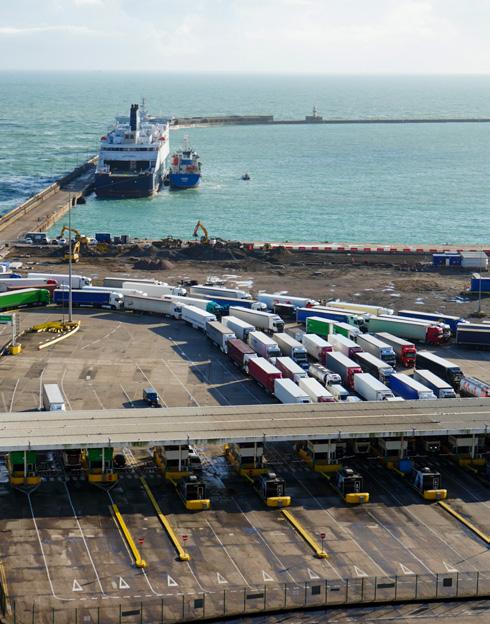
Cost pressures influence change in how fleets are managed.
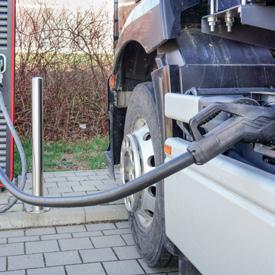
Dealing with decarbonisation
Fleets nervous about meeting phase out timeline.
Staffing, wages and welbeing
Sector shows adaptability in the face of labour shocks.
Member insights
The truck market battleground is shifting from hardware to software.
Welcome
The heavy goods vehicle sector sits at the heart of the UK economy. It underpins supply chains, connects businesses to markets and ensures communities receive the goods and services they rely upon every day. For the BVRLA and its members, trucks are not a peripheral asset class, they are an essential and strategically significant part of a diverse and evolving fleet landscape.
With the UK Government’s HGV CO2 proposals setting out an ambitious pathway towards zero emission road freight, the HGV sector is entering a period of profound structural change. At the same time, truck users continue to navigate cost inflation, regulatory complexity, labour market pressures and shifting customer expectations. The combination of these forces is reshaping investment decisions, funding models and the future composition of fleets.
This Outlook report brings together detailed desk research, survey evidence and the informed perspectives of our industry participants through individual briefings and roundtables. This enables us to provide a grounded assessment of the sector’s current position.
That position is a strained one. The 2026 HGV Outlook presents a sector operating under sustained pressures that span operational and transformational shifts.
More than two thirds of our survey respondents report significantly higher vehicle acquisition and maintenance costs compared with three years ago. At the same time, the decarbonisation transition has moved from
abstract ambition to operational reality. The industry is not disputing the direction of travel, but it is signalling a structural affordability gap and uncertainty around residual values and secondary markets.
Our extensive research reveals neither resistance to change nor complacency among industry representatives. It shows a sector with a cautious outlook rather than a defeatist one.
The HGV market is pragmatic, risk-aware and segmented by capital structure and fleet scale. Operators recognise that energy policy, fiscal support and regulatory clarity will be just as important as vehicle technology itself.
For BVRLA members, the evolution of the truck sector presents both challenge and opportunity.
The capital intensity of zero emission technology, and uncertainty around infrastructure and residual values demand careful risk management and constructive engagement with policymakers. Yet the transition also creates scope for innovation in funding, asset management and data-driven fleet optimisation.
Our objective is clear. We want to ensure that the voice of professionally managed fleets is heard, that regulation is workable and proportionate, and that our members are equipped to lead the next phase of change in the UK’s road freight sector.
Toby Poston CEO, BVRLA
State of the HGV sector in 2026
→ Confidence level
A majority describe trading conditions as challenging, and a significant proportion expect regulatory change to have a major operational impact. The sector’s outlook towards 2030 is cautious, with concern outweighing optimism.
→ Risk factors around inflation
Vehicle acquisition, maintenance and labour costs are widely reported as significantly higher than three years ago. Inflation is not a temporary shock but a structural feature shaping fleet strategy and investment timing.
→ Investment appetite
Replacement cycles are stabilising or lengthening for many operators, particularly among smaller fleets. Owned funding models remain common, although larger fleets show greater leasing penetration and flexibility.
→ Labour and skills
Driver recruitment and retention remain the most acute workforce challenge. Technician shortages and emerging skills gaps linked to zero emission technologies add further complexity.
Decarbonisation readiness
While many large fleets have begun deploying zero emission vehicles, confidence in current viability remains limited across the survey group. Strong majorities cite infrastructure cost and availability as leading barriers. There is broad agreement that government investment in infrastructure is essential.
Key transition tensions exist:
→ Affordability gap
High upfront vehicle costs and uncertain total cost of ownership are constraining adoption, particularly fleets owning and managing their vehicles.
→ Infrastructure uncertainty
Most operators do not believe charging and refuelling networks will be in place in time to meet regulatory deadlines.
→ Used market risk
There is strong support for fiscal measures to support the development of a viable used zero emission HGV market, reflecting concern about residual value exposure.
→ Two speed transition
Large, new buying fleets are progressing with pilots and early adoption. Smaller, used led fleets are more cautious, creating a structural divergence that policy will need to address.
Section 1
Market structure
Key survey insights
→ Market structure: Stable with 521,000 HGVs on the UKs roads.
→ Business outlook: Challenging conditions prevail.
→ Role of rental and leasing: Cost pressures influence change in how fleets are managed.
→ Dealing with decarbonisation: Fleets nervous about meeting phase out timeline.
Industry in numbers - the truck sector
The UK HGV sector remains one of the foundational components of the national economy, under-pinning construction, retail, manufacturing, utilities and international trade.
At the start of 2026, the total UK HGV parc stands at approximately 520,000 vehicles over 3.5 tonnes GVW, with around 420,000 vehicles above 6 tonnes GVW. Vehicles above 6 tonnes account for the vast majority of tonne kilometres moved across the network and form the core of the long-distance freight fleet.
The licensed heavy goods vehicle parc in the United Kingdom has stabilised following the pandemic period, with moderate recovery between 2020 and 2022 and marginal growth thereafter. At the end of 2020, the UK licensed HGV parc stood at 495,807 vehicles. By the end of 2022 this had increased to 520,788 vehicles. At the end of 2024 the total stood at 521,126 vehicles, indicating a broadly stable fleet size over the past three years.
Rigid vehicles represent the majority of units. In 2024, 362,259 rigid HGVs were licensed compared with 158,867 articulated vehicles.
While artics account for roughly 30 percent of the parc by number, they remain central to trunking and long-haul freight operations, particularly in the heaviest weight bands.
Weight band analysis confirms the concentration of the fleet in heavier segments. Vehicles above 26 tonnes GVW totalled 204,501 units in 2024, making this the single largest weight grouping. The 3.5–7.5 tonne category accounted for 160,185 vehicles, while the 7.5–18 tonne and 18–26 tonne segments together accounted for approximately 156,440 vehicles.
→ Staffing, wages and wellbeing: Sector shows adaptability in the face of labour shocks.
→ Member insights: The truck market battleground is shifting from hardware to software.
Licensed HGV Parc Rigid v Artic
Section
Market structure
Who runs the trucks
Every operator running an HGV over 3.5 tonnes in the UK must hold a goods vehicle Operator’s Licence issued by the Traffic Commissioners. The licensing regime sits at the centre of the sector’s regulatory framework and is designed to ensure that operators meet strict standards around safety, maintenance, financial standing and professional competence.
There are three types of licence: A standard international licence allows operators to carry their own goods and those of third parties both within the UK and internationally. A standard national licence allows operators to carry goods for other companies but only within the UK. A restricted licence (often referred to as own-account) allows businesses to carry only their own goods as part of their commercial activity.
Across the UK there are nearly 75,000 operator licences in circulation held by approximately 50,000 businesses –nearly half of these companies operate under restricted licences, reflecting the large number of retailers, manufacturers and service businesses that run trucks as part of their wider operations rather than as haulage contractors. Fleet capacity, on the other hand, is concentrated in third party logistics operating standard national and international licences.
Funding structures
2
One of the clearest structural features of the UK heavy truck market is its reliance on external funding structures. While no single dataset provides a definitive split, sector insight consistently indicates that around 70% of new truck acquisitions are funded through rental and leasing structures. A further 20 per cent are typically funded through hire purchase or finance lease, with only around 10 per cent acquired outright in cash.
Cash purchase is largely confined to cash-positive corporates such as major supermarkets. Beyond that narrow segment, most HGV operators rely on external capital, either through OEM captive finance arms or third-party lenders including banks and specialist asset financiers.
Risk allocation is a more meaningful distinction between ownership types than accounting treatment. Hire purchase and finance lease leave residual value risk with the operator. Rental and operating lease transfer that risk to the funder. In a market facing technological transition and potential used value volatility, that transfer of risk is strategically significant.
Body types and applications
The UK HGV fleet is defined as much by body type and application as by weight. Department for Transport vehicle licensing data for 2024 shows a structurally diverse goods vehicle parc that can be grouped into four primary operational ecosystems: long haul freight, urban and regional distribution, construction and specialist fleets. UK HGV parc by functional application, 2024
→ Long haul and trunking is predominantly logistics and third party freight.
→ Urban and regional distribution is closely linked to retail, FMCG and food service.
→ Construction and infrastructure fleets are tied to building activity, aggregates and utilities.
→ Specialist and municipal fleets are linked to waste management, fuel distribution and regulated public services.
Section
Source: DfT body type data
Key survey insights
→ 71 percent describe current conditions as challenging.
→ Only 18 percent are optimistic about the longer term outlook.
Confidence now and the two-year outlook
The sector is operating in a difficult trading environment: 71 percent of operators describe current trading conditions as challenging; only a minority characterise conditions as stable or favourable. This reflects sustained cost inflation, margin compression and ongoing regulatory uncertainty rather than any single shock event.
Looking forward to the end of the decade, sentiment remains cautious. 50 percent of respondents say they are concerned about the outlook for the UK HGV sector, 32 percent are uncertain and just 18 percent are optimistic.
→ Smaller and restricted licence operators show structurally lower confidence.
→ Leasing and rental users demonstrate relatively stronger forward confidence.
→ Confidence correlates with capital access and risk transfer mechanisms.
71% describe current trading conditions for their HGV fleet operations as ‘challenging’
Business outlook
Confidence is fragile rather than collapsing, but there is little evidence of strong forward momentum.
The divergence between operator types is material. Smaller fleets and restricted licence holders are more likely to report challenging conditions and express concern about the future. Larger fleets, particularly standard national and international operators, are more likely to describe conditions as manageable, though rarely positive. This aligns with the structural reality of the sector. Operator count is dominated by SMEs, but fleet capacity and contractual resilience sit with larger hire and reward businesses.
Fleet size remains a critical differentiator. Small fleets are disproportionately exposed to fuel volatility, higher borrowing costs and compliance overheads as a share of turnover. They are less likely to hedge fuel, less likely to access structured funding and more exposed to short term cash flow pressure. Larger fleets are better positioned to absorb regulatory layering and to plan investment across multi-year cycles.
The interesting dynamic sits within the “uncertain” category. Larger operators are more likely to describe themselves as uncertain rather than concerned.
This suggests strategic ambiguity rather than distress, modelling multiple transition pathways and awaiting clarity on regulation, infrastructure and asset economics.
Funding route introduces a further dimension. Organisations that deploy rental and leasing arrangements display relatively higher forward confidence than those relying predominantly on outright purchase. These operators report greater predictability of cost and reduced residual value exposure. In an uncertain trading environment, this risk transfer appears to provide a degree of reassurance. By contrast, outright purchasers, particularly SMEs, face direct exposure to asset risk and are therefore more cautious in outlook.
“TCO and legislation. They are the two things that are going to drive whatever we do as an industry”
Fleet sector participant
Section 3
Business outlook
Key survey insights
→ Fleet renewal continues, but holding periods are extending
→ SMEs demonstrate higher reliance on used vehicles and greater deferral behaviour
→ Finance rates and capital cost inflation are key behavioural drivers
Fleet replacement plans
Replacement discipline remains embedded across the market. The average share of new vehicles within purchasing behaviour remains high at 68%, demonstrating that structured renewal is still the dominant strategy. However, the survey also shows that asset holding periods are lengthening. 44% of operators retain vehicles for more than five years and 41% for three to five years. Looking forward, 30% expect replacement cycles to lengthen, while 40% expect them to remain unchanged.
This is not retrenchment, it is rational capital management. Operators are stretching asset life incrementally in response to finance rates, vehicle price inflation and residual value uncertainty. Discussion with industry participants reinforced this behavioural pattern.
“The industry is accustomed to modelling five year cycles but is increasingly questioning whether assets need to run longer to preserve balance sheet stability”
Mean % of fleet buying that are NEW vehicles: 68%
The fleet size split is instructive. Larger fleets are more likely to maintain formal replacement programmes and structured renewal cycles. Smaller fleets are more likely to extend asset life and review decisions annually rather than commit to multi-year plans. For a large operator, replacement is a rolling portfolio exercise. For a small operator, it is a high impact capital event.
→ Leasing and rental moderate investment ability and support confidence
“Buying propensity - % of new trucks: HGVs, while the
Buying propensity – % of new trucks: 37% of respondents only buy NEW HGVs, while the remainder all have some used trucks in their fleets
Section
New versus used buying propensity
Predominantly new buyers are disproportionately represented among large fleets and standard national licence holders. These operators often align purchasing to contract requirements, maintenance structures and brand positioning. They are more likely to view new vehicle procurement as part of a service proposition to customers rather than simply a capital decision.
Predominantly used buyers are concentrated within small fleets and restricted licence holders. This is not purely a cost saving behaviour. It reflects risk management. Used vehicles reduce capital exposure, shorten payback cycles and limit residual value uncertainty. In volatile markets, this flexibility carries value.
The in-depth conversations with industry hinted at a potential tightening of the used market. One participant observed that as uncertainty persists around the transition to low and zero carbon vehicles, operators may “be buying as many diesel fuel trucks in the last few years of production.” While framed in a different context, the underlying point applies more broadly: the used market may become a strategic buffer, and therefore more competitive as the industry heads toward the regulatory deadline for zero emission vehicles.
The deeper pattern emerging is segmentation by capital capacity rather than by sentiment. The sector is not splitting into investors and non-investors. It is splitting into those who can distribute risk across scale and funding structures, and those who carry concentrated asset risk.
Section 3
Role of rental and leasing
Key survey insights
→ Fleets aligned to rental and leasing are 13% points less likely to describe conditions as challenging than predominantly operator controlled fleets.
→ Concern about the outlook to 2030 falls from 54% to 41% as rental and leasing alignment increases.
Risk is the driver, not ownership
The clearest signal in the data is the relationship between funding structure and confidence. There is a distinction between: Vehicles under direct operational control, where the operator determines disposal timing and carries residual risk; and vehicles provided under rental or lease, where residual value and disposal risk sit with the funder.
74% of predominantly operator controlled fleets describe current trading conditions as challenging. This falls to 63% among mixed funding fleets and 63% among predominantly rental and leasing operators. Concern about the medium term outlook declines from 54% to 41% across the same spectrum, while optimism rises from 16% to 24%.
Where residual value exposure, disposal timing and maintenance volatility are shared with a funder, operators report greater forward assurance. Where exposure is concentrated, caution intensifies. Leasing, rental and outsourcing of fleet management services functions as a risk moderator.
→ IFRS 16 has reduced the accounting distinction, shifting the leasing argument towards structured risk sharing.
→ Medium fleets show the strongest evidence of selective risk transfer through mixed funding models.
→ Leasing, rental and outsourcing of fleet management services functions as a risk moderator.
The factors that are most likely to influence any future change in how fleets are managed: cost pressures, skills shortages and increasing regulatory and compliance complexity
Role of rental and leasing
This risk moderation matters in a post IFRS 16 environment. The historic “on versus off” balance sheet debate has diminished in relevance. Leasing no longer delivers the same accounting differentiation.
“The balance sheet argument has gone, what matters now is who carries the risk at the back end.”
The funding discussion has shifted decisively from financial presentation to capital stability.
Among small fleets of 25 vehicles or fewer, 72% are predominantly operator controlled and only 8% predominantly leasing or rental. For many SMEs, retaining disposal discretion is perceived as flexibility, even if it concentrates residual exposure.
Medium fleets present the most dynamic profile. 55% are predominantly operator controlled, but 30% now operate mixed models. This cohort is actively calibrating risk. As one operator describes;
“We’ll hold what we understand and lease what we don’t.”
That typically means transferring exposure on newer or more technologically complex assets.
Large fleets, where 62% operate mixed or predominantly rental and leasing models tend to use leasing and rental as portfolio management tools. Risk is pooled, capital cycles are smoothed and renewal discipline is embedded.
Section 4
Role of rental and leasing
Key survey insights
→ Funding structure influences renewal discipline as well as sentiment.
→ Mixed models indicate demand for flexibility rather than wholesale outsourcing.
→ Residual risk absorption and maintenance certainty are emerging as primary decision drivers.
→ The most likely trajectory is progressive rebalancing, not uniform conversion.
What fleets want from leasing and where the market may move
Fleets operating under rental and leasing or mixed models demonstrate more consistent renewal patterns. Predominantly operator controlled fleets show greater propensity to extend holding periods during volatile conditions. When residual exposure sits entirely with the operator, deferral becomes a rational hedge against uncertainty. When risk is shared, continuity is easier to sustain.
The
additional service from leasing or rental providers that would be most likely support the transition to zero emission HGVs:
Role of rental and leasing
This behavioural divergence explains what operators are seeking from leasing and rental providers:
Structured residual risk absorption: In an environment of volatile used values and uncertain asset lifecycles, predictable end of term outcomes matter more than marginal funding cost. One contributor noted, “it’s not the interest rate that keeps me awake, it’s the exit value.”
Integrated maintenance and technical assurance: As vehicles become more complex, particularly with electrification, operators without deep engineering capability view full service leasing as a hedge against technical risk.
Contractual flexibility: The persistence of mixed funding models, particularly among medium fleets, indicates that operators are not pursuing wholesale outsourcing. 30 per cent of medium fleets operate mixed structures. They are retaining optionality. Flexible termination, scalable contracts and the ability to adjust fleet mix are increasingly important.
Confidence gradient
54% of operator controlled fleets are concerned about outlook to 2030
41% of predominantly rental and leasing fleets concerned about outlook to 2030
4 confidence is higher amongst operators who lease or rent their vehicles
It would be wrong to imply an imminent structural shift. The majority of fleets remain predominantly operator controlled. However, the directional evidence is consistent. As risk intensity rises, the relative attractiveness of shared risk models increases.
The most plausible trajectory is progressive rebalancing rather than wholesale migration. Medium fleets are likely to continue expanding mixed models. Larger fleets will further embed leasing and rental within capital strategy. SMEs may selectively outsource higher risk or higher cost assets as zero emission adoption accelerates.
For BVRLA members, the implication is straightforward. The funding proposition is no longer centred on accounting treatment. It is centred on capital resilience, renewal stability and technical risk mitigation. Providers that articulate this clearly, supported by flexible structures and transparent risk sharing, are likely to align most closely with the market’s evolving needs.
Section
Dealing with decarbonisation
Key survey insights
→ Only around one fifth of fleets express confidence that the sector is ready to meet the 2035 and 2040 phase out timelines.
→ Concern outweighs confidence, but more than a third of operators remain neutral or uncertain, indicating conditional hesitation rather than rejection.
Readiness and confidence
There is broad acceptance of the direction of travel towards zero emission HGVs. What divides opinion is the industry’s preparedness to deliver at scale.
When asked directly about confidence in meeting the 2035 and 2040 timelines, just 20% of respondents describe themselves as confident. The balance of sentiment is weighted towards scepticism. Confidence is clearly a minority position. That minority, however, is not random. It is structurally concentrated.
Large fleets of 101 vehicles or more report the highest levels of confidence and the lowest levels of concern. Small fleets of 25 vehicles or fewer report the lowest confidence. Larger fleets are more likely to have undertaken early trials, embedded structured transition planning and faced customer pressure linked to Scope 3 carbon reporting. Confidence is not absolute, but it is grounded in managed exposure and practical experimentation. Funding model also influences sentiment. Operators aligned to rental and leasing report slightly higher confidence than those retaining full residual exposure.
→ Confidence is concentrated among larger fleets and those operating structured or risk sharing funding models.
→ Small fleets and predominantly used heavy buyers display materially higher concern, driven by viability rather than ideology.
Dealing with decarbonisation
The transfer of technology and residual risk appears to moderate anxiety. None of the fleet operators we interviewed questioned the legitimacy of the decarbonisation objective. The debate centred on sequencing and commercial realism. One operator stated plainly: “readiness depends entirely on the application”, noting that certain urban distribution cycles appear manageable, while specialist and heavy duty applications remain materially more complex.
“TCO and legislation are the two things that are going to drive whatever
we do”
These contributions underline a critical point. The sector’s hesitation is not ideological. It is conditional. Operators are waiting for clarity on infrastructure rollout, energy pricing stability and credible asset risk frameworks before committing at scale.
Policy implications
The minority expressing confidence is concentrated among larger fleets with structured funding. This cohort represents the most immediate platform for scaled learning. Supporting demonstration projects and transparent cost data within this group can generate transferable insight.
Smaller fleets and those running predominantly used trucks require a different form of intervention. Their concerns are rooted in cash flow, residual value risk exposure and infrastructure access. Without targeted measures addressing these structural constraints, acceptance will not translate into investment.
Readiness is uneven but movable. Around one fifth are confident. Nearly half are concerned. Over a third are waiting. That distribution suggests that the trajectory of confidence will be shaped less by rhetoric and more by commercial design.
Urban delivery and last mile will become viable first:
HGV applications this audience expect to be the most challenging to decarbonise
The most challenging applications to decarbonise are long-distance 44-tonne articulated and tramping operations, particularly those operating away from base or on non-fixed routes, where current electric range, charging times, infrastructure gaps and payload loss make zero-emission alternatives commercially unviable. Heavy bulk haulage and specialist vehicles with high energy demands (e.g., PTO equipment) were also repeatedly identified as significant barriers.
Long haul and tramping operations
Including international, night trucking and distance work away from base, challenged by limited range and charging infrastructure.
44-tonne articulated and bulk haulage
High-payload operations where battery weight reduces payload and impacts commercial viability.
32-tonne tippers and specialist vehicles
Construction, PTO-equipped and sitebased trucks with high energy demands and limited access to charging.
Q. Which HGV applications do you expect to be the most challenging to decarbonise and why? (Base – total sample: 261)
Section
Dealing with decarbonisation
Key survey insights
→ Infrastructure is the most consistently cited constraint across all fleet sizes.
→ Upfront cost pressure is strongest among small fleets.
Barriers to transition
Operators identify a consistent set of structural barriers across the fleet types and sizes that, in combination, suppress transition confidence.
→ Residual value uncertainty amplifies capital caution.
→ Payload and range concerns are concentrated in specialist and heavy duty applications.
→ Barriers are cumulative and interdependent rather than isolated.
The biggest barriers to the adoption of zero emissions HGVs are infrastructure availability and vehicle purchase prices:
Dealing with decarbonisation
Infrastructure emerges as the dominant concern. Operators in the survey consistently reference public charging coverage, depot grid capacity and planning constraints as fundamental obstacles. Participants described multi-year lead times for grid upgrades, landlord negotiations and physical depot limitations. Infrastructure risk is therefore not theoretical, it is operational and immediate.
Upfront cost is the second major barrier. Zero emission HGVs are widely perceived as materially more expensive than diesel equivalents. Even where lifecycle modelling narrows the gap, the initial capital commitment remains a significant hurdle, particularly for SMEs. Smaller fleets are markedly more likely to cite upfront cost as a primary barrier.
Residual value uncertainty sits close behind.
Operators are accustomed to modelling asset life and secondary market demand with relative confidence. Where long term resale value is unclear, capital risk increases. This interacts directly with funding models. Fleets retaining full operational control over assets express higher levels of residual anxiety than those operating under leasing and rental.
Product suitability. Payload and range concerns emerge as application specific, rather than universal. Distribution fleets operating predictable return to base duty cycles express fewer operational reservations. Specialist operators, construction fleets and long haul applications cite payload loss and range limitations more frequently.
Diesel dilemmas
There remains an absence, at present, of fully feasible alternatives to diesel for certain applications. Long haul, high payload and specialist duty cycles remain technically and commercially challenging under current zero emission offerings. In defined use cases, diesel remains the only reliable and economically workable solution today. If regulatory timelines advance ahead of product suitability, market distortion becomes a risk.
An 18 tonne urban return to base vehicle may be more readily electrified than a lighter vehicle operating long range, irregular routes. Conversely, some heavier specialist vehicles may face integration constraints not captured by headline weight categories. Survey responses consistently reference duty cycle, payload and route structure rather than weight band as the primary lens for decision making.
Two stage market risk
If adoption remains uneven, a two stage market may emerge, particularly in the third party logistics sector. Early adopters, typically large fleets with capital access and customer backing, may absorb higher upfront costs and transition earlier. Smaller operators may defer until infrastructure and economics converge.
Without careful policy calibration, this could create competitive imbalance. Operators serving similar markets may face materially different cost structures depending on transition timing.
Policy certainty versus policy quality
The need for policy certainty is a consistent theme. However, certainty around misaligned, impractical or bad policy could entrench cost distortion and accelerate imbalance. Certainty around well designed, use case aligned and infrastructure supported policy would enable structured planning and capital allocation.
“Certainty on bad policy, is still bad policy”
Section 5
Dealing with decarbonisation
Key survey insights
→ Battery electric is accepted as the primary short term pathway for defined duty cycles.
→ Confidence in battery power declines as applications become heavier or longer range.
Battery electric
Battery electric is recognised as the primary short to medium term technology pathway, particularly for return to base distribution and urban operations. Larger fleets, especially those with structured trial programmes, express greater operational confidence in battery solutions within defined use cases. Confidence is application dependent, rather than universal.
Industry participants described electric trucks as “solutions in each category” but questioned whether they are solutions for every job. That distinction is important. Capability exists, universality does not.
→ Hydrogen is viewed as “conceptual” - longer term and infrastructure dependent.
→ Low-carbon fuels are seen as bridging rather than end state solutions.
Hydrogen
Hydrogen, while not completely discounted, is viewed as a strategic option that requires further technical clarity, policy convergence and infrastructure commitment. Concerns cluster around infrastructure absence, cost and production method. Several industry participants observed that hydrogen remains largely conceptual in UK heavy vehicle deployment, with limited infrastructure visibility.
Low-carbon fuels
Operators using transitional fuels (bio-methane and HVO) reported significant emissions reductions relative to diesel and described them as commercially
“We keep coming back to this ‘zero means zero’. But actually, what’s important is the emissions reduction, how we get to that emissions reduction is less important, I would say.”
workable. However, they are not seen as end state solutions under a strict zero emission definition and under current Government proposals will not be incentivised as part of the transition to zero emission trucks.
Technology neutrality versus mandate
There is concern that rigid interpretation of “zero means zero” may narrow viable transition routes prematurely. Importantly, this was not framed as resistance to ambition. it was framed as sequencing risk. Several participants emphasised the industry does not want fuel type competition driven by ideology. It wants clarity on what is expected and by when.
→ Demographic ageing represents a medium term structural risk.
→ Wage inflation has structurally increased operating cost.
→ Technician and diagnostic skills are emerging pinch points.
People and workforce
The sector has demonstrated resilience and adaptability in the face of labour shocks. The challenge now is less about emergency recruitment and more about sustainable workforce renewal, skills development and simplification of operational burden. Workforce pressure remains one of the defining operating constraints in the HGV sector. While this is believed to be lower than at the peak of the post pandemic driver shortage, it signals that labour market tightness has not fully normalised.
Workforce challenge by fleet size
→ Workforce capacity influences the sector’s ability to manage operational change.
Staffing, wages and wellbeing
Larger fleets report higher levels of workforce challenge than smaller operators. This reflects scale exposure. Large fleets operate continuous recruitment pipelines and carry greater exposure to driver churn, training requirements and compliance oversight. Labour pressure is a constant management issue.
Smaller fleets, by contrast, often rely on long standing, stable driver relationships. However, when recruitment is required, it can be disproportionately disruptive. A small operator losing one experienced driver can see immediate service impact.
Driver recruitment and demographic risk
Survey responses indicate that recruitment difficulty has moderated relative to 2022 and 2023, yet the industry participants emphasised a structural demographic challenge. Several operators reported ageing driver workforces, with limited inflow from younger cohorts. One participant noted that the majority of their drivers are now in their late fifties, with very few under thirty.
“We have to change our attitudes about drivers. We’ve got 900 drivers in the fleet, the average age is late fifties. Given we have a few youngsters, that means some doing the job are well over 60.”
Licence type adds nuance. Standard national and international licence holders report higher ongoing recruitment activity and greater exposure to turnover. Restricted licence operators, often experience lower churn but face difficulty attracting replacement drivers when needed.
Wage inflation and cost structure
Labour cost is widely perceived to have increased significantly over the past three years. Wage growth has been a rational response to scarcity and inflation, but it has reset the cost base at a higher structural level.
For large fleets, wage inflation is often managed through contractual rate reviews with customers. For SMEs operating in competitive spot markets, passing through wage increases is more challenging. This creates margin compression risk.
There is also a skills premium emerging. Workshop technicians and diagnostic specialists are in short supply. As vehicles become more complex, the skill threshold rises. Medium sized fleets without large in house engineering teams appear particularly exposed, competing with both larger operators and OEM networks for talent.
Retention and wellbeing
Retention challenges are linked less to headline pay and more to working conditions. Responses highlighted stress, compliance intensity and route pressure as influencing factors. Drivers operate in increasingly congested environments, under high service expectations and extensive telematics monitoring. While digital oversight improves safety and efficiency, it can also increase perceived pressure.
One operator described a layered compliance burden that operates largely out of sight. There is statutory licence compliance, mandated safety and technical requirements, investment in new systems and equipment, and then a further tier of internally imposed standards covering driver behaviour and operational controls.
Regulatory fatigue is an emerging theme. Operators accept the necessity of regulation, but cumulative layering without simplification can affect morale.
BVRLA member insights: affordability
Key takeaway
→ Affordability is not just about price. It is the interaction between purchase cost, borrowing rates and residual value. At present, all three are working against electric trucks.
Affordability: the holy trinity shaping the zero emission truck transition
One of the clearest findings from the HGV outlook work is that affordability is becoming systemic. Operators are not simply reacting to higher list prices, they are responding to a funding structure that no longer aligns in the way it has for decades.
The traditional diesel market rests on a stable financial architecture. A vehicle is acquired at a known price, depreciated along a predictable curve and supported by a mature used market at home and overseas. Residual values are grounded in evidence. That confidence underpins leasing and structured finance.
Electric trucks enter a different environment.
As a leasing executive put it:
“You have three things that make up the lease cost and all three of them are worse for an electric vehicle at the moment.”
Those three things are straightforward: purchase price, cost of capital and residual value. When all three deteriorate at once, the pressure is structural.
Purchase price: the front end shock
The most visible gap remains upfront capital cost. In many heavy applications, electric trucks are between one and a half and two times the price of their diesel equivalents. For fleets buying at scale, this is not marginal. If a business requires 100 vehicles in a year, the difference between £150,000 and £300,000 per unit becomes a £15 million funding decision. That is a balance sheet issue.
Even if residual values were fully stabilised tomorrow, the capital differential alone would distort lease economics. One industry observer notes:
“Even if you fix the RVs, initial purchase price is still so much more.”
This is where the plug-in truck grant becomes strategically important. On the surface, it is a purchase incentive. In financial terms, it reduces the capital base on which depreciation and funding costs are calculated. However, a grant that only softens the front end does not resolve the wider issue. If public money narrows the purchase gap, it should ideally reinforce confidence at the back end. Without stronger manufacturer support for long term value, the grant alleviates pressure but does not rebalance the system.
Borrowing cost: risk priced into capital
Interest rates alone are not the core problem. The real issue is risk allocation.
With diesel, lenders are financing an asset class with decades of performance data. With electric trucks, long term battery degradation, secondary demand and asset obsolescence remain less certain.
“Uncertainty is risk, and risk is interest rates.”
Section 7
BVRLA member insights: affordability
In some cases, manufacturers are reluctant to stand behind forecast residual values. Where that happens, risk does not disappear. It simply moves along the chain.
“If they’re not standing by their own RV,” one leasing executive notes, “we’re not going to jump in and take all the risk.”
From a funder’s perspective, that is rational. The result may not be dramatic rate spikes. It may be tighter underwriting, shorter terms or higher advance payments. In an SME dominated sector, those shifts are significant.
Residual value: the eight year question
If purchase price is the visible challenge, residual value is the structural one.
The diesel market works because the second and third life market is deep and established. Vehicles move into regional fleets, smaller operators or export markets. That predictable lifecycle underpins depreciation modelling.
With electric trucks, the eight year question remains unresolved: who buys them?
Battery longevity, replacement cost, charging standards and secondary demand are still forming. At the same time, lower cost new entrants, particularly from China, are already reshaping export assumptions in parts of the market. In some international regions, buyers can access new trucks at prices that compete directly with used European assets.
That dynamic matters. If secondary demand weakens, residual forecasting becomes speculative. And when residuals become speculative, rental and leasing prices rise to compensate.
Adapting the lifecycle model
One potential response is to extend depreciation curves. Writing vehicles down over eight or even ten years reduces residual exposure at the end of term. In principle, that can work.
“If you can write something down over ten years to a point where you’ve only got a small amount of risk left in it, that can work.”
In practice, it depends on vehicle type, duty cycle and manufacturer support. Standard distribution vehicles may adapt more easily than specialist construction assets with bespoke bodywork. Warranty coverage and mid-life maintenance costs become critical beyond year seven or eight. This is not simply a funding adjustment. It is a shift in how assets are managed across their lifecycle.
Temporary friction or structural reset?
Is the affordability trap temporary? In the long term, it must be. Scale, data and competition will change the equation. But waiting alone will not rebalance a system where purchase price, borrowing cost and residual uncertainty all sit unfavourably.
“People come to us enthusiastic and wanting to electrify. You price it up and that enthusiasm soon cools. This isn’t about opinion. It’s pure economics.”
That is the heart of the issue. The sector is not resistant to change. It is responding to arithmetic.
7
Final takeaway
→ Until purchase price, capital cost and residual value move into closer alignment, adoption will remain constrained by economics rather than ambition.
→ The Plug-in Truck Grant can ease the front end. Stronger manufacturer backed residual commitments can stabilise the back end. Greater transparency on battery performance can reduce risk premiums in the middle.
→ Affordability is systemic. Unless the holy trinity is recalibrated, the transition will continue to move at the pace finance allows, not the pace policy desires.
Section
BVRLA member insights: truck developments
Key takeaway
→ By 2035 the truck market will not simply be more electric. It will be more digital, more collaborative and more globally competitive. The competitive battleground is shifting from hardware to software, infrastructure and ecosystem control.
The changing face of trucks: new competition, new alliances, new rules
The UK truck sector has historically been shaped by stability. A concentrated European OEM base. Predictable replacement cycles. Incremental engineering change. Well understood ownership models. That stability is now under pressure.
Regulation, electrification, digitalisation and new global entrants are converging to reshape both the supply side and the operating model of fleets. This is not disruption for its own sake. It is structural evolution.
As Tim Campbell, Managing Director at Campbells Consultancy, puts it:
“We are on the cusp of profound change in the truck sector.”
From engines to ecosystems
For decades, European truck manufacturers competed primarily on engine efficiency, chassis durability and brand loyalty. Barriers to entry were high. Diesel engineering capability was a defining advantage.
Electrification changes that equation. Battery integration, power electronics, software architecture and energy management become core differentiators. That plays to different competencies and opens the door to new collaboration and new competition.
Campbell argues that European OEMs, and by extension truck buyers, are entering “a period of significant adjustment” as technology and commercial models evolve simultaneously.
A clear signal of this shift is the 2024 agreement between Volvo Group and Daimler Truck to create a joint venture focused on a software defined vehicle platform.
The objective is not simply to share components. It is to build a common operating system and centralised digital architecture underpinning future commercial vehicles. In effect, the industry is decoupling hardware from software.
The rationale is straightforward. Electrified and connected trucks require centralised computing, harmonised electrical architecture and the ability to deliver over the air updates, diagnostics and new applications at scale. The battleground is expanding.
Competition will increasingly sit above a shared technological layer, with differentiation driven by applications, service models and customer integration rather than purely mechanical hardware.
Infrastructure as strategy
Collaboration is not limited to digital platforms. Milence, the charging infrastructure joint venture formed by Daimler Truck, TRATON and Volvo Group, reflects a strategic recognition that infrastructure risk cannot sit solely with operators. High power public charging hubs and Megawatt Charging System deployment are not peripheral investments. They are prerequisites for electric heavy truck adoption at scale.
Section 7
BVRLA member insights: truck developments
Campbell observes:
“By pooling resources on infrastructure and digital platforms, manufacturers are navigating the rising costs and complexity of zero emission vehicle development.”
In other words, OEMs are extending their business models beyond manufacturing. Energy partnerships and digital ecosystems are becoming core strategic territory.
New competition from China
Running in parallel to incumbent collaboration is a new competitive dynamic: Chinese manufacturers targeting European and UK markets.
China’s domestic heavy truck sector is vast and rapidly electrified. Scale in battery production, vertically integrated supply chains and strong policy support have created cost advantages that are difficult to ignore.
Campbell explains:
“Even modest penetration in urban and regional electric segments could exert downward pressure on acquisition costs and accelerate innovation among established European brands.”
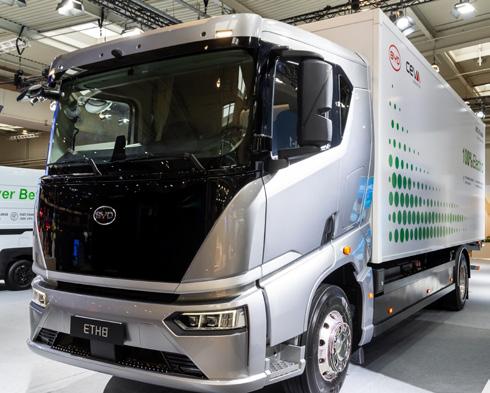
Brands such as BYD, Sany and Yutong are already building global credibility in electric mobility. In lighter segments, Maxus has established a UK presence.
Newer names, including Rightech, are positioning themselves in the electric truck space with Chinese sourced chassis.
Entry will not be frictionless. The UK heavy vehicle market is unforgiving. Dealer networks, parts availability and aftersales support remain critical. Downtime has direct revenue consequences. Electrification lowers some historical barriers. It can be easier to compete from a green field electric architecture than from a legacy diesel base.
For fleets and asset providers, the attraction of lower capital cost vehicles must be balanced against residual value confidence, warranty robustness and long term support capability.
Chinese entrants may not immediately dominate market share, but they will influence pricing discipline and accelerate technological change.
Implications for fleets and funders
By 2035 the OEM landscape working with UK fleets is likely to be broader and more globally competitive. Competition will not only be about truck performance, but about ecosystem integration.
For fleet operators, procurement will require a wider lens. Evaluation will extend beyond horsepower, torque and payload. Questions of data architecture, cybersecurity, interoperability and long term digital support will move up the agenda.
For leasing and finance providers, the shift is equally significant. Residual value confidence will depend not only on brand strength but on software lifecycle, charging compatibility and ecosystem durability. The truck becomes part of a technology stack.
Final takeaway
→ The next decade will redefine what a truck manufacturer is and what a truck asset represents. Hardware remains essential, but value is migrating towards software, infrastructure and partnership models.
→ Operators and asset providers that continue to assess trucks purely on traditional mechanical criteria risk missing where competitive advantage is actually shifting.
BVRLA member insights: autonomous trucks
Key takeaway
→ Autonomy does not simply remove the driver. It changes utilisation, asset design and the funding model. The shift is from owning trucks to buying guaranteed capacity.
Autonomous trucks: from asset ownership to capacity as a service
If electrification challenges the cost base of road freight, autonomy challenges its operating logic. Automated driving is not a technology upgrade bolted onto an existing model. Properly deployed, it alters labour structures, utilisation rates, vehicle architecture and ultimately the commercial foundation of fleet ownership.
By 2035, autonomy could represent the most significant structural shift the sector has experienced in decades. The UK is no longer in a speculative phase. The Automated Vehicles Act 2024 establishes a legal framework and clarifies liability in self-driving mode. The direction of travel is clear. The question is not whether autonomy arrives, but how it reshapes the market.
From pilot to deployment
Dr Nick Reed, founder of Reed Mobility, describes the shift succinctly:
“It is actually happening compared to where we were ten years ago.”
Deployment will not begin in dense urban networks. Early use cases are more controlled and commercially concentrated: motorway corridors, middle mile flows and repetitive, defined routes. Trials in the US from operators such as Aurora, Kodiak and Gatik illustrate the model, explains Reed.
The strategic question is not simply technological readiness. It is architectural. Should autonomy be retrofitted to conventional tractors, or designed into purpose built platforms?Mikael Karlsson, formerly of Volvo and now leading MIKA Innovation, argues that layering sensors onto legacy designs misses the opportunity.
“Most OEMs are still culturally oriented towards building trucks and selling them over the counter.”
Utilisation is the real disruptor
If utilisation doubles, fewer vehicles are required to move the same freight volume. That is not incremental efficiency. It reshapes fleet size, capital allocation and route economics.
Autonomy may also be a catalyst for decarbonisation. Electric trucks remain materially more expensive than diesel. A structural constraint today is low utilisation, with most trucks operating single shifts because night operation increases labour cost. Autonomy removes that constraint.
Labour typically accounts for 30% to 40% of operating cost. Combined with persistent driver shortages, there is structural slack in the system. If autonomous systems absorb that slack rather than
simply displace existing drivers, electric trucks can achieve higher annual mileage. Total cost of ownership improves. Decarbonisation accelerates without relying solely on subsidy.
This is not about eliminating people. Reed emphasises that driving is only one element of the freight task.
“Driving is only one part of the job.”
Loading, checks and customer interaction remain. The emerging model is hybrid, with remote supervision and intervention teams overseeing multiple vehicles. Human input is restructured, not removed.
From ownership to usership
The deeper shift is commercial. If autonomous trucks are designed for defined, repetitive flows, the value proposition moves from asset ownership to guaranteed capacity. Karlsson describes selling capacity on autonomous freight lanes rather than selling trucks.
Traditional hauliers, built around asset ownership and labour management could find themselves competing with capacity platforms operating software defined corridors. Value begins to concentrate in control systems, data management and orchestration rather than chassis ownership.
BVRLA member insights: autonomous trucks
Implications for rental and leasing
For rental and leasing providers this shift in market dynamic is fundamental. The truck becomes less of a broadly fungible asset and more of a specialised production unit embedded in a specific logistics flow. Physical interoperability remains important, but digital interoperability becomes critical: Can the autonomy stack transfer between operators? Is the data architecture open? Can vehicles be redeployed to adjacent corridors without extensive re-authorisation?
If not, assets risk becoming locked into proprietary ecosystems, reducing remarketing flexibility and concentrating risk. Residual value becomes binary
Today’s HGV funding model relies on a deep secondary market. Autonomous assets may behave differently. If a vehicle remains inside a supported ecosystem and contracted lane, residual values could be robust due to high utilisation and predictable cashflow. If corridor contracts end or software support is withdrawn, residuals could fall sharply because secondary demand is limited.
Residual risk shifts from general market demand to technology lifecycle and contract continuity risk. There may also be divergence between mechanical and digital life.
The chassis could outlast the economic life of the autonomy hardware. Sensor suites and computer platforms may depreciate more like industrial electronics than heavy equipment.
The analogy may be closer to industrial robotics than conventional trucks.
In manufacturing, robots are financed on the basis of productivity within a defined process, not resale liquidity. Value derives from uptime and contracted output. Long term service agreements and remote monitoring are integral to credit assessment autonomous freight may follow a similar pattern. The key underwriting question becomes less about resale value and more about the durability of contracted cashflow on a given lane.
"It's trucking, but not as we know it..."
Implications for rental and leasing
Funding structures may evolve accordingly. Corridor dedicated fleets could be owned through special purpose vehicles supported by availability or pay per mile contracts. Underwriting would focus on service levels, software maintenance commitments and step in rights. With sufficient operating data, such portfolios could attract infrastructure style capital seeking stable yield.
For rental operators, traditional short term asset provision may play a smaller role on autonomous corridors. However, opportunities may emerge in managing contingency fleets, integrating mixed conventional and autonomous operations, and providing transitional capacity.
Final takeaway
→ Autonomous trucks redefine the economic centre of gravity of road freight. The shift is from owning assets to underwriting performance and orchestrating flows.
→ Leasing and finance organisations that treat autonomy as a simple extension of today’s truck market risk mispricing exposure. Those that adapt their underwriting frameworks to reflect utilisation, software lifecycle and contracted cashflow may find themselves financing not just vehicles, but the next generation of freight infrastructure.
Section 7
BVRLA member insights: data and security
Key takeaway
→ In a connected truck market, data is now a core asset. The competitive advantage will not come from generating more data, but from governing it, interpreting it and protecting it.
Data, risk and resilience: why cyber governance will define the next decade
Over the next five to seven years, data will become one of the defining assets of the UK HGV sector. Modern trucks are no longer simply transport units. They are mobile data platforms generating continuous operational intelligence. For fleet operators, rental businesses and leasing providers, the ability to capture, interpret and protect that data will increasingly determine competitiveness and resilience.
From reactive to predictive
The opportunity is clear. Real time telematics, predictive diagnostics, battery health monitoring and driver behaviour analytics allow operators to move from reactive management to predictive control. Maintenance can be scheduled on condition rather than interval. Compliance monitoring can become exception based rather than audit driven. Utilisation patterns can be analysed at granular level and assets redeployed accordingly.
Aaron Peters at the Road Haulage Association consistently frames this in compliance terms. Better data does not simply make a business more efficient, it makes it demonstrably safer and more accountable. In a sector built around operator licence discipline, evidence matters. Data strengthens that evidence base, whether in roadworthiness, driver hours or risk profiling.
For leasing and rental providers, asset intelligence will increasingly inform underwriting, contract pricing and residual value forecasting. Verified battery health records and structured usage histories are likely to sit alongside mileage and service history in determining asset valuation.
The risk of data overload
More data does not automatically mean better decisions: telematics feeds, ADAS alerts, battery diagnostics, geofencing triggers and compliance dashboards can overwhelm operational teams. The challenge is shifting from insufficient information to excessive noise.
Without structured filtering, operators risk alert fatigue. Valuable insight is diluted by low value notifications. Engineers are presented with predictive flags that lack hierarchy. Compliance teams spend time reviewing marginal exceptions.
The next phase of development will therefore be less about data generation and more about data interpretation.
Artificial intelligence and advanced analytics are increasingly acting as the intermediary layer between raw information and executive judgement. Machine learning systems can identify patterns across multi variable datasets and distinguish genuine anomalies from routine variation. In practical terms, the industry is moving from dashboards to decision engines.
For fleet operators, AI systems could prioritise maintenance alerts based on failure probability and operational impact. For leasing providers, predictive models could refine residual forecasts by incorporating real world duty cycles and charging patterns at scale. Reliance on AI introduces a new governance dimension.
Section 7
BVRLA member insights: data and security
Cyber resilience: the existential risk
As data becomes a strategic asset, cyber risk becomes a board level issue.
The HGV sector is accustomed to rigorous frameworks around driver compliance and maintenance. Cyber security has historically been treated as a technical support function. That is no longer sufficient.
Paul Abbott’s experience at Knights of Old illustrates the point. Following a cyber attack, the operational business continuity response was strong.
As Abbott explains:
“We had a very good operational business continuity process… within ten days we were back on all systems.”
The trucks ran. Customers were served. The physical operation continued, he explains. Where the business ultimately failed was financial data recovery.
“The data required for the financial reporting was just too far gone to restore in the time that the bank gave us.”
Without credible financial information, lenders would not extend further support. The existential threat was not immediate operational disruption. It was the loss of trusted data.
Leadership accountability
Abbott draws a direct analogy with vehicle maintenance. Subcontracting maintenance does not remove an operator’s legal responsibility for roadworthiness. The same applies to IT providers.
“If you subcontract out your maintenance, you are still responsible… it is up to you to make sure the third party is doing what you expect.”
Outsourcing IT does not outsource accountability. In his view, the core weakness is often leadership capability. Cyber security must be treated in the same way as health and safety: embedded culturally and led from the boardroom. Accreditations such as ISO 27001 have value only if they are operational disciplines rather than decorative badges.
“Unless you understand it, you can’t lead it… it needs to be at the top of the board agenda.”
7
Final takeaway
→ In a connected truck environment, balance sheet resilience will depend as much on data integrity as on fleet condition.
→ Those who harness structured, high quality data will strengthen compliance, improve asset utilisation and protect residual values. Those who treat cyber governance as a peripheral technical issue risk reputational damage, financial exposure and, in extreme cases, business failure.
→ The trucks may still run. But without trusted data, the business may not.
Section
Research methodology
This research was designed to provide an evidence based, industry grounded assessment of the current state and future direction of the UK HGV sector, with particular relevance to rental, leasing and fleet funding stakeholders. Its purpose is twofold.
1. To establish a clear baseline of market conditions, sentiment and structural pressures.
2. To inform policy engagement and commercial decision making at a point of significant regulatory and technological transition, particularly in relation to decarbonisation.
The methodology combined three complementary elements to ensure both breadth and depth of insight.
Desk research formed the foundation. This included analysis of publicly available market data, registration statistics, vehicle parc analysis, regulatory publications and policy consultations. The objective was to quantify market size, structure, fleet composition, routes to market and funding models, and to contextualise the UK position within wider European dynamics. This phase established the factual framework against which industry sentiment and behavioural data could be assessed.
The second element was a series of structured industry round tables and briefings, convened with
senior fleet operators, leasing providers, rental businesses and sector specialists. This facilitated qualitative exploration of the strategic issues facing the sector, including affordability, residual value risk, compliance pressures, data governance and the practical challenges of decarbonisation. The round table discussions were conducted under Chatham House principles to encourage candid discussion and to surface emerging risks not yet visible in formal datasets.
The third component was a quantitative industry survey distributed in partnership with Motor Transport, the UK’s leading road freight trade publication. The survey captured responses from a cross section of fleet operators across varying fleet sizes and buying profiles. Fieldwork was conducted during Q1 2026. The survey instrument tested business confidence, investment intent, attitudes to leasing and funding, views on regulation and decarbonisation.
Together, these three strands provide a triangulated evidence base. Desk research established structural reality, the industry briefings surfaced strategic interpretation, and the survey quantified sentiment and behavioural intent. The result is a robust and balanced view of a sector navigating material economic and regulatory change.
Disclaimer
Any views set out in this report are from a range of contributors and do not necessarily reflect the official opinion of the BVRLA. Full disclaimer details and guidance on how we manage compliant publication of members’ data is available by contacting phil@bvrla.co.uk
Executive Contributors
Tim Campbell – Campbells Consultancy
Dr Nick Reed – Reed Mobility
Paul Abbott – Paul Abbott Advisory
Mikael Karlsson – MIKA Innovation
Andy Salter – Salter Advisory
Special thanks to everyone who participated in our round table briefings and completed the survey. Section 8