![]()


20,21 Back to the Moon
George Hiestand
4,5 Sunrise to Sunset
Safa Al Ameer
6,7 Great Debate
Ami Aguilera
8,9 Power to the People
Vivian Abar
10,11 Learning to Earning
Lauren Chonko
12, 13 The Senior Agenda
Van Freeman
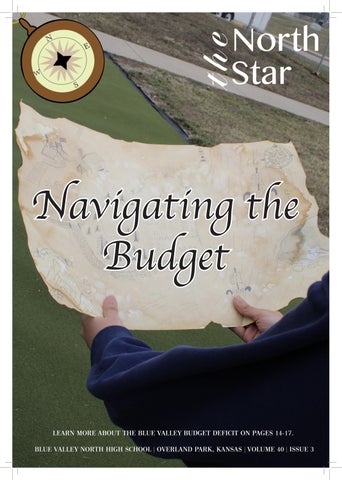
14-17 Navigating the Budget
Aahil Hassan
26,27 Love Birds or Early Birds
Anthony Sutcliffe
E-Sports at BVN
Hannah Markiewicz
18,19 Game of Phones
Likhitha Vunnama
22,23 Applying Abroad
Ayla Agayeva
Editorial
24,25 Breaking the Ice
Rameen Asif
28 Love, According to Us
Grace Kwak
Paul Struby and Olivia Moore
30,31 I Spy
Paul Struby and Olivia Moore


Dear readers,
Students, teachers and parents around the Blue Valley District were recently made aware of the budget shortcomings the district currently faces. Due to a variety of factors, including low enrollment and an end to Covid funding, the district finds itself in a $10 million deficit, forcing each school to examine the necessity of their programs and
Pg. 6,7 “This year, we won the state tournament,” Box said. “We had probably the best state tournament any school’s ever had at the 6A level.We’ve qualified three teams to the Tournament of Champions, which is the most prestigious tournament in high school debate.”
Pg. 19 “Despite it being a hotbutton topic in the state, I feel like the policy we have here at school is meeting that criteria,” Dr. Cox said. “I think we’ve got a good handle on cell phone use during class time.”
decide what is on the chopping block. However, the Blue Valley district claims that it will prioritize maintaining a high quality of education for all students in the coming years.
School officials have emphasized that this is not the first time budget shortfalls have faced the district. Dr. Ostroski specifically referenced the 2008 housing crisis as a previous example of a crisis that the
school managed to power through. However, while North survived, things did change— teachers were reassigned and program budgets were more heavily scrutinized. This issue of the North Star addresses the reasons that led to the budget deficit and the changes that BVN will face.
- The North Star Editors
EDITORS-IN-CHIEF
Paul Struby
Olivia Moore
STAFF WRITERS
Grace Kwak
Lauren Chonko
Aahil Hassan
Ami Aguilera
Ayla Agayeva
George Hiestand
Likhitha Vunnama
Rameen Asif
Tae Tran
Vivian Abar
SOCIAL MEDIA EDITORS
Hannah Markiewicz
Van Freeman
DESIGN EDITOR
Safa Al Ameer
WEB EDITOR
Safa Al Ameer
COPY EDITORS
Van Freeman
Anthony Sutcliffe


By Safa Al Ameer
This year, Ramadan began Feb. 18 for some and Feb. 19 for others. Ramadan begins when a crescent moon is sighted. Countries such as Saudi Arabia, Qatar and Palestine saw the moon on Feb. 17, while others such as Egypt, Singapore and Turkey say it was astronomically impossible to see the moon that night. During Ramadan, from sunrise to sunset, Muslims fast, which means no eating or drinking. Despite this, Muslim students are still expected to participate in gym, focus in class and keep up with school work. Muslim students are forced to overcome the challenges that result from

which follows the moon cycles. Although some calendars have an end date for Ramadan, it’s not exactly known until a new lunar cycle begins, indicating the start of a new month. During Ramadan, Muslims fast to get closer to their God, Allah, promote self-discipline and have empathy for the less fortunate.
Senior Sama Samour said she has been fasting for Ramadan since she was eight or nine years old.
“I fast during Ramadan because it’s a part of Islamic culture and the religion,” Samour said. “It’s one of the Five Pillars of Islam.”
Samour shared what a normal day of her life looks like when fasting.

“I wake up around 4:00 a.m. or 5:00 a.m. to eat breakfast,” Samour said. “Then we also start our fast during that time, it goes on until sunset, which is usually around 7:00 p.m. or 8:00 p.m.”
Samour is used to the challenges that come with the rituals of Ramadan. However, she says it doesn’t make it less challenging when it comes to staying energized.
“I’m used to drinking some sort of caffeine or like energy drinks, but obviously when I’m fasting, I can’t do that,” Samour said. “And when I’m taking AP classes, it’s hard.”
Samour has some strategies to keep herself motivated.
“I start counting the days down,” Samour said. “In the beginning, it goes by really slow. But then once you get to week two, it goes by fast.”
Junior Abdul Shahzad, who has been fasting since he was in middle school has a different reason to stay motivated during school while fasting.
“I want to keep my good grades and I don’t want to fail my classes,” Shahzad said. “That’s what motivates me.”
Junior Majd Alkhdar has been fasting for Ramadan since he was five. Unlike Shahzad and Samour, he doesn’t have a way to stay motivated in school. He said he just has to “get through it, and get it done.”
This makes it hard to focus in class.
“It becomes really hard to focus when all you can think about [is food], especially because a lot of other people like to eat during class, so all
you can focus on is them eating, and not necessarily the topic of the class,” Alkhdar said.
Samour believes that some classes are harder than others when fasting, preferring even days over odd or traditional days.
“Around fifth hour and seventh hour [fasting gets hard], because usually they feel longer in general,” Samour said. “Then when I’m fasting, they feel like I’m in there for an eternity.”
Shahzad doesn’t see a major difference in classes but notes that there are some activities that are more challenging while fasting.
significantly go down during the month,” Alkhdar said. “Even if I study, it’s just really hard to focus.”
Besides test scores, Alkhdar believes fasting hasn’t really gotten in the way of a school event.
“I think the only time that I can recall [fasting getting the way] is probably going to Wichita for marching bands, but it was far enough where I was technically exempt from fasting,” Alkhdar said.
“[Fasting] brings us closer together, closer to our faith and religion.
–Sama Samour“
“I think going to the gym or going to play basketball or soccer or anything like that, you can just feel demotivated [when fasting], especially if you have work,” Shahzad said.
Samour agrees that physical activity is quite hard while fasting, especially in fast-paced sports.
“I used to be in swim, and it was really tiring because you have to have a lot of stamina, you have to have a lot of energy when you do that,” Samour said.
Alkhdar does kickboxing, so he also understands the struggles as well. However, there are problems with school that come with fasting.
“My test scores
That being said, Samour believes there are positives about fasting. Some people believe that fasting is unhealthy, but the stereotype is wrong.
“A lot of people assume that [fasting is] really bad for your health, but it’s actually not,” Samour said. “It’s good because it’s like a detox.”
John Hopkins Aramco Healthcare says that after a few days of fasting, you are likely to have raised your level of endorphins, which will reduce stress, increase alertness and enhance your feeling of wellbeing. When fasting, health is important. One can’t fast if they are sick, pregnant or traveling. There’s also more to Ramadan than fasting.
“Other big things that people don’t know
is there’s a lot more than just not eating,” Alkhdar said.
Fasting also brings Samour closer to Islam as it gives her time for other religious activities.
“When you’re fasting you can’t really listen to music, you can’t do anything that you would do on a normal day,”
Samour said. “When you’re fasting, you’re more likely to pray your five prayers on time and you’re more likely to read some pages in the Quran.”
Ramadan is also a great way to get closer to family, according to Samour.
“In my culture, [fasting] also unites our families as well, because we have Iftar dinners together,” Samour said. “It brings us closer together, closer to our faith and religion.”


The Blue Valley North debate team has had many accomplishments in recent years under the leadership of debate teacher Brian Box.
“This year, we won the state tournament,” Box said. “We had probably the best state tournament any school’s ever had at the 6A level. We’ve qualified three teams to the Tournament of Champions, which is the most prestigious tournament in high school debate.”
A look into what BVN debate is and what they’ve accomplished.
By Ami Aguilera
BVN is the only Kansas school to ever qualify three teams in one year. Box also said that BVN has had the most debaters qualified to State of any school in Kansas. This summer two teams will represent North at the national tournament.
Junior Maira Parsons won Class 6A State last year. Parsons was also runner up at the National Speech and Debate tournament last year.
Box says that debate teaches students important life skills.
“Life skills students gain are analytical thinking, information processing, the ability to express yourself, self-advocacy, organization and then obviously, improving your public speaking skills,” Box said.
Debate is not only about critical thinking in the moment, it requires detailed research and planning ahead of time.
“[Debate] is more about researching and preparing and then being ready to defend yourself against
an opponent who had an equal amount of time to prepare themselves ahead of the debate,” Box said.
Debate is an integral part of American democracy because it allows citizens to hear multiple perspectives and understand the political ideas of government candidates. Recently, debates have gained widespread popularity on social media, fueling political discussions among viewers. Examples included Charlie Kirk and the Jubilee series “Surrounded.” Parsons believes that these are not real debates and are more similar to arguments.
“Charlie Kirk was not a debater,” Parsons said. “He was a podcaster. They’re not necessarily doing real debate. They’re just arguing at each other.”
Box believes that these debates may be helpful in some cases, but are mostly used to gain online reputation and likes.
“I think some of these online

accomplished.
or YouTube debates have their time and place, but oftentimes it’s more performative and kind of an argumentative stunt that is trying to get clicks and get people to watch videos,” Box said.
BVN debate is also different from presidential debates. For high school, debaters attempt to share as much information as possible, proving their argument while presidential debates are clearer and slower so people can understand what’s going on. Presidential candidates are also tasked with debating a wide range of topics, unlike high school debaters.
“We get assigned one topic to research and debate about for the entire year, which is different from political debate,” Parsons said.
“It’s a great opportunity for students to learn lifelong skills and to transform themselves into better thinkers, readers and writers.
The meticulous planning, researching, and practicing that goes into debate allows students to establish skills that they can utilize in their futures. There are some options to continue debate after high school, and students may even be entitled to financial help.
–Brian Box“
“There are a variety of different types of college debate, and depending on the college or university that you’re looking at,


there are really good scholarship opportunities,” Box said.
While debate doesn’t directly affect bigger picture scenarios such as government policies, debate teaches students how to make a change in the real world.
“It’s about the skills that those students learn along the way, how they become equipped to advocate for themselves and transform that into real-world change,” Box said.


By Vivian Abar
Political participation among students at Blue Valley North has increased. More students are engaging in political discussions, following current events, joining clubs and participating in activities related to national and global issues. Student involvement takes multiple forms and varies in visibility, but politics have become a more common presence in student conversations and academic settings.
A student-conducted survey indicates that more than half of BVN students identify as politically active in some way. Students reported engagement through political discussions, social media, clubs, protests, voting-related preparation or independent research. While the level of involvement differs among students, the results suggest broader participation than in previous years.
Avery Allen, a sophomore at BVN, has increased her political awareness in recent years.
“I just kind of started paying more attention to politics and how our world worked,” Allen said.
Senior Malia Reeder learned about political participation in her government class, which is a requirement for seniors.
“We learned in government class that a lot of people aren’t politically active because they believe their opinion doesn’t make a difference,” Reeder said. “Knowing that my
Design by Vivian Abar
As
political participation continues to increase at BVN, students report that engagement takes many forms.
opinion could make a difference motivated me.”
Students described political participation as existing on a spectrum. Some students participate actively through clubs or events, while others engage by staying informed, discussing issues with peers or consuming political content online.
“You don’t have to agree with everybody but you should treat everybody respect and kindness.
media can influence political ideas and explained how students can find themselves only seeing one side of an argument.
“If you like one post, the algorithm keeps showing you similar things,” Reeder said. “It pushes people toward certain viewpoints.”
–Malia Reeder “
Additionally, social media was identified as a major factor contributing to increased political participation. Platforms such as TikTok and Instagram expose students to political content regularly and influence how information is shared among peers. Allen said social media affects how students access and interpret political information.
“It affects the views of certain students and how they get their information,” Allen said.
Reeder says that social
With recent events— including the “No Kings” Protests and Anti-Ice walkouts— in many schools around the Overland Park area, many students are examining their own level of involvement in politics.
“A lot of students try to stay out of politics,” Allen said. “But the ones that


involved.”
Some students have experience with political activism, both with the present issues and also with some in the past. Reeder said she attended a protest following the 2022 Supreme Court decision regarding Roe v. Wade.
“I protested to vote no because I feel strongly that abortion should be up to the person choosing to get one,” Reeder said.
Students identified several issues that they believe are contributing to increased political engagement among their peers.
“A big topic right now is LGBTQ rights and the rights of Latinos and how ICE is affecting our country,” Allen said.
Allen said that current events influence student interest in politics.
“A lot of the current events influence the way students talk to other kids, who they talk to and the topics they talk about,” Allen said.
Reeder said that current events often connect directly to coursework, which leads to student awareness.

“Current events definitely influence topics in school, especially in government or world history,” Reeder said.
However, despite increased political engagement, students reported differing levels of comfort when expressing their political views at school. Some students said they choose to limit their participation to avoid conflict or misinterpretation.
“I don’t want politics to be the first thing people think about me,” Reeder said.
Students also noted that political discussions can affect relationships. While close friendships may withstand differing opinions, disagreements can impact interactions among acquaintances.
“If it’s a true friend, it shouldn’t affect your relationship,” Reeder said. “With acquaintances, opposing viewpoints can affect interactions.”
Allen discussed the level of political education available to them. She expressed concern that what they are being taught is not as relevant today.
“There’s a lot of education about former politics, but not enough about current politics,” Allen said.
Opinions varied on whether increased political participation leads to meaningful change. Allen said student involvement remains important regardless of the outcome.
“Students who vote and speak up about what they believe politically are important,” Allen said.

Of 109 people polled on @bvnnews

By Lauren Chonko
With enrollment for the upcoming 20262027 school year looming, juniors and seniors are granted access to a whole new way of learning. Through a partnership with Johnson County Community College (JCCC), school districts in the KC, MO area offer students the college experience starting in high school. Programs like Dual Degree, Career Ready and TIPS encourage students to get a head start on their plans after high school while still enrolled.
“Students gain real-world experience with industry experts, while simultaneously earning college credit at an affordable rate and a high school diploma. Currently, JCCC has made 15 paths available to upperclassmen students in the Career Ready Program, with HVAC, Plumbing, Cybersecurity, Culinary and Hospitality being just a few. Although this program has grown considerably in recent years, it’s far from new to the JCCC building, with roots tracing back
over six years. It’s stood the test of time and has led to some successes in higher education, giving students a head start in the industry.
Amy Sellers, Director of Early College Partnerships and Outreach at JCCC, discussed some of the achievements of past students in the Career Ready Program.
“Students in the Industrial Tech area have the opportunity to attend a job fair that’s hosted at JCCC,” Sellers said. “So, when they graduate in May, a lot of them are employed even before they get their high school diploma.
Through JCCC, students see a clear path for why their learning is important, and they fall in love with school in a way that they’ve never, ever felt before.
-Sarah Beren
year taking classes at JCCC, while receiving dual credit through their home high school and an average of 15 JCCC college credit hours per semester. The result is graduating from high school with a diploma alongside an Associate of Arts or Science degree.
Sarah Beren, the Blue Valley and
Design by Lauren Chonko
We have had students who have gotten hired immediately into automotive technology, welding and HVAC areas.
One of our culinary students even got an internship at Disney while she was in the program. The opportunities are worldwide.”
Students have not just flourished through Career Ready, but also Dual Degree. Students who choose this path spend the majority of their Junior and Senior school


Coordinator, spoke to the positives of this program.
“As far as successes go, it’s been remarkable,” Beren said. “Kids are going on to college with all of their Gen Ed credits done and in some cases, they can even finish college early. It opens up opportunities for kids to double major and just explore so many more things. But, above all, they go to college knowing exactly what they want to do, which gives them such a leg up.”
Naina Khan, a senior at Blue Valley North who has been involved with the Dual Degree Program, shared her perspective.
“Definitely do [Dual Degree], because it’s just so helpful,” Khan said. “I think the college setting is a lot easier and better than the school setting. The first semester was a little scary, but it’s not that bad. Now, in second semester, everything’s so much easier. There are so many programs that will help you.”

Jillian Lehr, a Blue Valley North Senior, began participating in JCCC classes this year, specifically Transition into Post Secondary Studies (TIPS); a program that offers students with an IEP or 504 support when transitioning into college.
“When you go to college, you won’t be able to carry your IEP and 504 with you. You’ll be starting clean slate, no extra bonus help,” Lehr said. “I hope to study paleontology at KU, but the thing is, KU does not accept IEPs, so TIPS helps me learn those skills.”
One of the main concerns of students thinking about joining one of these programs is whether they will be able to manage the workload from both college and high school curriculum. Sellers outlined the qualities that contribute to student success.
“They’ve got to be organized, dedicated- attendance is key and then just have the self drive to get their homework done,” Sellers said. “It is a commitment and these classes are transferring back and going on a part of their high school degree plan. They need to know that the work that they do or don’t do is going to be reflected on their high school GPA and their college transcript. So it takes a dedicated student.”
Khan agreed with this, but also mentioned that JCCC makes it easy to balance the demands of a busy schedule and caters to each student individually.
“Because you can choose your schedule, it’s a lot easier to manage than actual school,” Khan said. “I don’t want to wake up early to get to my classes, so I chose to take them in the afternoon this semester. But last semester I took morning classes and then I was completely done with school by noon. So the time
Through this program, Lehr hasimproved her skills in notetaking, organization and self-advocation, all of which will serve her next year. She encourages others to join, regardless of what they might already think they know about college.
“You may think you’ll be fine, but then you’re gonna struggle,” Lehr said. “You’re used to that Extra Booster, but it’s gonna be taken away on the first day [of college]. If you want to swim with everybody else and learn those skills, take this class, get the help you need, because I was gonna struggle if I didn’t do it and I feel more ready than ever now.”
commitment might sound bad, but it’s really not. It’s actually a lot easier, in my opinion.”
Overall, partnering with JCCC ensures that students are provided a leg-up when it comes to college and career preparation. They can become certified to practice in the industry right after high school or continue their education knowing that they have already completed two years of college.
Catalina Donnelly-Vazquez spoke from the viewpoint of a counselor at North, who advises students in these programs. She advocated for people to get involved, even if they are on the fence about joining.
“If you want to do it, go for it,” DonnellyVazquez said. “It’s just a really great opportunity for our students and so why not take advantage of it while we can.”
By Van Freeman
With the 2025-2026 school year being three quarters of the way done, Blue Valley North students have been enrolling in classes for the oncoming school year. While sophomores prepare for what is commonly called “the hardest year of high school,” the current juniors prepare for what can be either the easiest or the most stressful because of college applications. This opinion can change, however, based on how these students choose to design their senior year schedules.
Junior Noah Pratt described his senior year schedule as a blend between hard and easy classes.
“I’ll be taking AP Physics and AP [Literature], but then I’m also taking a bunch of easier classes that I just actually want to take,” Pratt said.
Apart from his plans for his senior year classes, Pratt also mentioned
Design by Van Freeman
extracurricular activities he’s a part of.
“I swim, that’s been my big thing,” Pratt said. “Beyond that, I’m not in a bunch of clubs or anything. I do band, but that’s about it.”
The amount of extracurricular activities that students are involved in can influence what classes they decide to take. When asked what inspired him during constructing his senior year schedule, Pratt shared his thoughts.
“I tried to put it down so that I was kind of splitting each semester with half harder classes, half easier classes,” Pratt said. “This year, I’m taking all AP classes and that’s just terrible. So I kind of want to lighten it up next year and make it so I can just have a fun time.”
Junior Jane Waldron, on the other hand, is prioritizing classes outside of BVN.
“I’ll be retaking the CAPS (Center for Advanced Professional Studies) class I’m taking right now, which is the law
one— American Justice For All— and instead of going to class, I’ll be taking an internship,” Waldron said.
Waldron is enrolled in CAPS classes for baking sciences, agriculture and the future of food. When asked why she does CAPS, she discussed the opportunities to branch out that CAPS provides.
“It’s just more fun to be in a different experience and meet so many different,
new people I haven’t been with since elementary or middle school.”
When asked about what they hoped for their senior year, both students shared a focus on taking classes that will benefit them in their future careers.
“I’m not taking a science class next year, because STEM is just not for
shared the process of how involved she usually is with helping students decide on their classes.
“If they’ve got questions about any of our Career Ready programs or questions about CAPS, sometimes they’ll come talk to us beforehand,” Levin said. “We meet with every student during the enrollment process to go over their course selections and make sure they don’t have any questions or need any advice or anything.”
post secondary,” Levin said.
No matter what a student’s choices are however, both students and counselors agree that what matters most when choosing what classes to take is a student’s wellbeing and personal enjoyment.
“[Students] shouldn’t go all easy, because then you’re not really showing colleges what you can do,” Pratt said.
me,” Waldron said. “I prefer arts and literature, government and history and stuff like that.”
Pratt shared a similar sentiment, citing his junior year schedule as an example of focusing less on personal enjoyment so that his senior year classes can align with his interests.
“This year I prioritized getting the last credits I had left,” Pratt said. “I’m looking to do good academically, but still have some fun. Work on swim, you know, do my own stuff.”
The two students also shared how their parents are involved with the decisions in their schedule.
“My dad actually was the one who convinced me [to take AP classes],” Pratt said. “I wanted to take [contemporary literature] but he was the one like, you should take AP Lit.” In addition to the involvement of
parents in the creation of their senior schedules, counselors also offer advice to students and provide vital information, such as credit requirements.
BVN counselor
Amanda Levin
However, Waldron and Pratt stated that they were less likely to ask their counselors for help when making schedules for senior year.
“ Definitely give yourself at least like one or two classes that you know you’re just gonna love and that might not have as much homework just to make life easier.
–JaneWaldron
“Typically, by the time kids get to their senior year, they kind of know the drill with enrollment, and they know what they want to take and they know how to fill out their form,” Levin said.
Despite this familiarity, Levin shared common mistakes she sees when having students fill out their forms.
“We tend to have students not fully fill out the form because they think they don’t need a full schedule,” Levin said. “But we encourage all students to have a full schedule both semesters of senior year. We try to push for taking advantage of those opportunities like CAPS and our Career Development and Exploration class.”
Despite whether or not students choose to invest time in these opportunities, Levin shared that students can be successful after whatever path they choose to follow.
“I think our classes here, especially in Blue Valley and specifically at North, do a really good job preparing students for whatever they want to do
“But you shouldn’t go all hard, because then you’re kind of overwhelming yourself two years in a row. I think you should split it up so you have time to do other stuff.”
Waldron shared similar thoughts, highlighting the opportunities that come outside of BVN as well.
“Definitely give yourself at least like one or two classes that you know you’re just gonna love and that might not have as much homework just to make life easier,” Waldron said.
Levin described making a senior schedule as a balance between education and personal life.
“I’m always having that conversation with students,” Levin said. “You’re still in high school, you still should be able to get to be a kid and enjoy it and not feel completely overwhelmed and anxious with your course selection, so finding that balance is good.”
A look into the Blue Valley districts budget shortfall for the 2026-2027 school year.
By Aahil Hassan
In 2026, the Blue Valley School District is projected to incur $10 million in budget cuts, which could affect programs and departments at Blue Valley North.
According to the Blue Valley District’s budget response video, these cuts stem from declining enrollment and rising costs for special education caused by a pull of federal funding. Administrators and teachers shared how these budget cuts could affect the quality of student life at North and what changes the school could expect to see in the future.
Blue Valley has experienced a 3.4% decrease in enrollment over the last seven years, and local taxes can not be raised to alleviate finances which are key aspects to the district’s budgeting. The current plans to combat the cuts include drawing on reserves when possible, advocating for the Kansas state legislature to fund special education and making strategic budget adjustments. So far, the district has reduced $1,400,000 by not filling certain district level positions, and reviewing job vacancies carefully as crucial first steps. In the coming months, the district plans to review staffing changes in order to prioritize


retirements, operational costs and programs to see where the budget can be balanced and what effective changes can be made.
Blue Valley North principal, Dr. Tyson Ostroski, was interviewed on the incoming shortfall and what students should know about the situation.
“Obviously we’re just one piece of the district, but it’ll impact our building just for the overall general fund,” Ostroski said. “But really it’s gonna allow us to look at what are the things we can do within our building to get rid of redundancies or find some ways to basically look at our own system and see what are some things we need to reevaluate.”
An immediate concern from incurring a deficit of this scale is what kind of impacts students and staff can expect to see. Ostroski assured that there will be little negative impact on the quality of student life and that the budget would be navigated through staffing decisions.
“As a student, you won’t really experience anything significantly; the district’s philosophy pertains to staffing because the biggest bulk of the budget is staffing,” Ostroski said. “We try to absorb positions when there’s a retirement or just through attrition


CALCULATED
-10,000,000
when somebody leaves.”
He elaborated on the district’s primary goal for navigating this situation.
“The goal of the district is for it not to impact student lives, and even teachers’ lives, a lot of those things [budgeting affects] are behind-thescenes type of expenditures,” Ostroski said.
Ostroski added more information on the issues causing the budget cuts, which included declining enrollment and special education funds, combined with previous Covid funding running


out and state level funding changes.
“During Covid, there were federal dollars, namely Esser funds, that were given to school districts just to get through the pandemic, and those are not there anymore, coupled with there are some decisions made at the state level with how much they fund, especially for special education,” Ostroski said.
Ostroski then explained how that has impacted district funding.
“And so when they’re not funded to the point that they need to be, the district has to still provide that education to all students, as we should, but that’s going to be an impact on the overall budget, so hopefully those things get worked out,”Ostroski said.


going through the recession, so that obviously had some impact, but I think that there’s a lot of measures being made right now at the district level and in turn us as building leaders, so it’s gonna get worked out.”
While it is a district-wide issue, the administration team at North still collaborates with the district to navigate the issue as smoothly as possible. Ostroski explained the process of working together.
We’re always gonna make sure that we have opportunities for our kids.
–TysonOstroski
The situation isn’t entirely new for Ostroski and the administration has navigated through similar situations before.
“This is my 20th year in the Blue Valley District, and this would probably– in my 20 years– be the third budget situation that we worked through, we’re gonna get through this, it’ll be fine,” Ostroski said. “My first one was in 2008 when we were


“We’ve been in contact with our district administrators and bosses ever since they’ve let us know about it, so it’s very collaborative, we’re just looking to see what we can do to maximize our budget and what we have going on here just like we always have,” Ostroski said. “Honestly, it really has not been that different, just reevaluating certain things that are minimal in the broad scope, so this is not a panic situation.”
The district also funds departments and programs within the school including performing arts and exam aid, which Ostroski assured would continue to receive support.
“This district is awesome because of the


programs that we have, and so that’s a priority,” Ostroski said. “We’re always gonna make sure that we have opportunities for our kids.”
Ostroski clarified what changes class sizes could see, especially in the arts department.
“Performing arts obviously is gonna be at the top of that list, we’ll just need to look at specific classes to make sure we have enough students enrolled in them,” Ostroski said. “Right now we have three marketing classes, so it could make more sense to consolidate that to one, just to maximize the amount of students that can be in that class.”
Ostroski then assured that these decisions would be made thoughtfully.
“But we’re never going to make it so cumbersome that it’s going to be a difference to the impact of learning,” Ostroski said.
He then provided insight on the district’s complex finances and how the budgeting system works.
“There’s a lot of different buckets when you are talking about educational finance. Some of them are on the stateside, local control, there’s federal money, as our school district is


more of an upper socioeconomic area, we’re not going to be getting some of that federal money that other schools need more than we do,” Ostroski said. “This particular situation, you cannot use local tax revenue, so we have professionals in our district level, we have a whole business department, they look at the revenue coming in, what the implications of the budget is, and then every school has a bookkeeper that works in conjunction with the business department at the district level.”
money is distributed through programs at Blue Valley North.
“I feel like it could decrease the benefits of education, because of the merging in classes, I feel like there’s less opportunities to learn things,” Bedell said.
She was then asked her opinion on how funding is distributed through the arts programs and if the current funding is fair.
“ “
This district is awesome because of the programs that we have, and so that’s a priority.
–TysonOstroski
He further explained the collaborative effort between the school and district.
“We have Miss Freeman [School bookkeeper] here, who is beyond phenomenal, and she and I work together, and Miss Kurle works with her on the athletic side and Mr. Moss works with her on the activity side, so really it’s a collaborative thing in terms of building our budget for our building,” Ostroski said.
The shortfall is a topic of concern amongst students as well, and Junior and thespian club vice president Mirabella Bedell shared her thoughts on the upcoming budget cuts and how
“Not fairly [funding], I feel like it could be a tad bit more fair, but it has come along,” Bedell said. “It’s not as prioritized [The arts], and sometimes it just gets thought last, I don’t think that’s intentional, I just think it’s one of those things that doesn’t get thought of first because it’s always difficult to fund everything equally all the time.”
She then commented on how she hopes the school handles the situation and what comes of it.
“I hope that it doesn’t make too drastic of a change because I like the way we’re set to learn and our opportunities for learning, and I hope that doesn’t get affected too much,” Bedell said.
Finally, Ostroski commented on how long this issue could last, and summarized his thoughts on the matter
as a whole, reassuring that the school will come out of this situation for the better.
“I think that the measures being taken right now are gonna be extremely helpful and make this as minimal of a lasting impact as possible, I equate it to any business or household; there’s going to be times where there’s a bit of a downturn and you just reevaluate your daily practice,” Ostroski said. “I’ve said this to our staff, and I say this to our students: the priority is always going to be maximising the student experience in our school, and that’s not gonna change as a result of this.”


Utilize reserve funding.


By Likhitha Vunnama
Kansas started the year off by advancing a bipartisan bill on school cell phone policy for grades K-12. This proposed phone

policy requires students to turn in their phones and other personal electronic devices from bell-to-bell. According to the districts’ websites, Andover, Wichita, Derby, Haysville and Cheney public schools have adopted the new policy. On the other hand, the Blue Valley District and other districts in Johnson County demonstrated opposition as they continue to use the current policies in place.
The present-day phone policy at Blue Valley North requires students to put personal electronic devices up in the caddies of each classroom at the beginning of class. In addition, they have the ability to retrieve them after class concludes, during lunch and during passing periods. Administrator Cory Cox expressed that the phone policy North has in place now addresses the same issues as the newly proposed policy.
“Despite it being a hotbutton topic in the state, I feel like the policy we have here at school is meeting that criteria,” Cox said. “I think we’ve got a good handle on cell phone use during class time.”
Cox believes that the ongoing cell phone policy handles the distractions phones can pose during class. In addition, he brings

Opinions continue to rise with the new phone policy proposed by the state of Kansas.

up another reason for the current policy to stay: it has been integrated into the routine of the students at school.
“The policy is something we’ve kind of leaned into, adopted and made part of our culture here,” Cox said. “It’s a good thing that we’re doing, and I would like to keep doing what we’re doing.”
Teacher Maria Worthington, however, doesn’t believe that the proposed phone policy is a bad idea. Without raising opposition to the current one, she expressed that the other phone policy can still be implemented, based on what she heard from her acquaintances.
“I’m not opposed to doing the policy from the beginning of the day to the end of the day because I am a reader for the AP exam, and I’ve met a lot of people from across the country who have similar policies, and they work just fine,” Worthington said.
Senior Vishwa Patel brought up another rising concern of not being able to contact her parents during school hours if the proposed policy were implemented.
“In case there’s an emergency, or anything happens, and I go to the nurse, I wouldn’t really have any way to contact my parents,” Patel said.
Worthington shared similar thoughts about not having access to a cell phone in the context of health concerns. She expressed that her own daughter uses her phone to manage her health.
“People with medical conditions might have to have an exemption,” Worthington said. “My daughter has Type 1 (diabetes), so she uses technology on her phone, and I’m not


sure how that would work out with the new policy.”
Along with this concern, Dr. Cory Cox says that implementing the new phone policy comes with discussions about its logistics.
“There’s going to be a lot of things to flush out as to what districts are able to implement, how they’re able to monitor that and then what the school consequences are if that policy is not enacted,” Dr. Cox said.
“We’ve done a good job of implementing a policy here in our building to have students put their cell phones away during class time and focus on the learning.
–Maria Worthington“
truly have a “good handle” on the phones, officers continue to observe the success of the phone policy at the schools, including North. Dr. Cox doesn’t see this as an issue, believing that the school has done a good job enforcing the current policy by providing teachers with resources that can assist them when it comes to distractions like phones and PEDs.
“We have been equipping our students and
when I walk in,” Dr. Cox said. “So I think we’ve done a good job with that.”
Worthington shares that phones play a big role when it comes to the amount of focus students have in class, making her feel “positive” about phone policies.
“I’m pretty positive about phone policies because I’ve noticed a difference in how students engage in class when they don’t have their phone in our class,” Worthington said.
With this belief, she expresses that the phone policy right now does enough to make students focus in class. Whatever policy it is, Worthington believes it depends on the agreement classrooms have across the building that makes the policy successful.
“If we have a collective agreement that everyone is abiding by the policy,
Alongside this discussion, in order to ensure that the school district does
and giving every teacher a cell phone caddy to put in their room so that kids know now I go in, I put my cell phone in there right


By George Hiestand
NASA is attempting a challenge untouched since the 1972 Apollo 17 Mission; they will be sending four crew members to the moon. Preparations for this mission began in 2017.
Artemis II’s intent and research plans are much different than most may expect from a mission orbiting the moon. The main focus of the mission is actually to test deep space travel and its effects. The mission will be tracking the spacecraft and the rockets’ systems and how they perform in deep space.
Junior Hattie Young discussed her
“They’re doing so many new scientific experiments aboard Artemis II, and so I also think what we get back from that will tell us more on whether we should
thoughts on the worth of the mission.
“Our technology now hasn’t really progressed from back in the Apollo missions, and so is it worth it, what are we gaining from it?” Young asked.
continue or not.”
In addition to this, the crew will be collecting brand new information about life in deep space. Humans haven’t been sent to deep space since Apollo 17, when there was less technology to track human health metrics. During all portions of the
20 | THE NORTH STAR | MARCH 2026
Design by George Hiestand
mission, the astronauts will provide saliva samples and wear health and sleep monitors, along with having their radiation exposure tracked.
These metrics will be used for reference in future missions for another possible moon landing or even further deep space exploration like a possible trip to Mars in the future. In short, the metrics being tracked for this mission and the results will be vital in the consideration for these future missions into deep space. If all is successful and the astronauts’ health stays in good condition, further missions into deep space could be pushed further towards the current day.
Junior Max Yeretsky is not in favor of space travel being a priority in the
United States currently.
“I think that the American people should be a priority,” Yeretsky said.
The mission hasn’t come without some questions, specifically about high costs. The total launch cost at the day of liftoff will cost $4.1 billion. The preparation over the years is what has brought along the real cost, however. In total, the preparation and construction of the rocket has accumulated a $55 billion cost. The entire Artemis program as a whole, including Artemis I and II has been $93 billion so far, raising debates over cost.
money on space exploration.
“I thought it was exciting, considering all of our new science and technology that we could use to analyze the moon,” Young said.
Preparation for the mission began with a much different goal from the one being achieved after launch. Originally, NASA planned to send astronauts around the moon’s orbit, using its gravitational pull to eventually get to an asteroid, where samples would be collected before re-entering the Earth’s orbit.
“ Our technology now hasn’t really progressed from back in the Apollo missions, and so is it worth it? What are we gaining from it?
Sophomore Jan Beltran shared his thoughts on the uncertainty surrounding the need for space exploration.
–HattieYoung “
“I feel like they could use the money for more important stuff like helping out citizens rather than putting money into space missions,” Beltran said. “It should be up there, but I feel like we should really focus on our relationships with other countries.”
On the other hand, Young believes that there are benefits to spending
Once that idea was scrapped, the plan shifted to its current form: an eight to ten day trip around the moon and back.
“Integrity” will launch from the Kennedy Space Center on Merritt Island, FL. The return vessel, currently planned to land in the Pacific Ocean, will be recovered by the United States Navy and returned safely to the United States. The success of the mission will likely influence any future plans to return to space.
“What we get back from [Artemis II] will tell us more on whether we should continue or not,” Young said. Originally planned to lift off in late February, the mission has been delayed until March 6 at the earliest due to issues with liquid hydrogen leak along with problems with the valve holding the capsule in which the astronauts will stay. The current projected date is anywhere from March 6-15, lasting approximately ten days in space before landing back to Earth.
The March 6 delay is one of many for the Artemis II mission’s final liftoff. During the original review of the mission, the spacecraft was supposed to make it to the moon anywhere from 2019-2021. It was then delayed to late 2023 before then reaching a projected September 2025 launch date. After a series of safety investigations, the mission was delayed to the current late February to mid-March launch timeline.
Young shared what she thinks about the Artemis II delays.
“I think it is a little bit concerning that it’s because of the fuel leaks,” Young said. “I feel like that’s the kind of thing that is typically solved by now, but NASA’s done many space flights. They’ll figure it out.”
In all, the years worth of preparation that NASA has put into the Artemis II mission will all be on full display once it’s time for launch and many will watch to see humans reach for the stars yet again.


who
By Ayla Agayeva
At the beginning of senior year, the time that students anticipate throughout their whole academic career arrives: college application season. For many, it is one of the most stressful and nerve-wracking stages of high school.
Depending on a student’s major, aspirations and priorities, where one may decide to apply varies. Some students prefer to stay local, others attend college out of state.
However, at Blue Valley North, a handful of students have chosen to apply to international universities. What motivates them to apply to schools in other countries?
For senior Nikos Lipscomb, leaving the United States seemed like a suitable opportunity for him, especially because he is interested in becoming a lawyer. The process of pursuing a career in law in abroad takes significantly less time than it does in the United States.
“I am interested in pursuing a career in law, and going internationally made the most sense for me because in the U.K.,
law is an undergraduate degree, whereas in the U.S., you have to go to four years and get a bachelor’s degree and then do three years to get your jurisdoctorate, which is when you can practice law after passing the bar exam,” Lipscomb said.
““But in the UK, you can immediately just get your law degree.”
Lipscomb wants to leave the U.S. mainly because it is more efficient for him to develop his career, similar to Senior Emilia Rodriguez Lopez, who hopes to practice economics or political science.
“I plan to study economics and political science,”
the country is one thing, choosing exactly where to go is another.
Both Lipscomb and Rodriguez Lopez applied to multiple universities.
Probably being on my own in a city I don’t really know would be difficult. Even though I’ve lived in Spain before, I’ve never lived in Madrid, so adapting to that will be a challenge, but a challenge worth trying.
“I applied to six schools internationally,” Lipscomb said.
–Emilia Rodriguez Lopez“
Rodriguez Lopez said. “The biggest factor that impacted my choice was that I’ve already lived in Spain and I really liked it. ”
While making the choice to try to apply to schools outside of
“They were the London School of Economics, the University of Cambridge, King’s College, University College London, Warwick University and finally a dual degree program between Columbia University and Trinity College Dublin.”
The application process for schools abroad was very different for Lipscomb than it was when he applied to domestic schools.

Design by Ayla Agayeva


“You will definitely have to do research and keep in touch with your guidance counselor, also the deadlines are different from American schools,” Lipscomb said.
Lopez wanted to base her decision on her major, so she worked on finding that first, knowing it would be in the realm of economics and politics.
“I’m very interested in politics and government, and Madrid is the political center of Spain, with many important institutions and opportunities related to that field,” Rodriguez Lopez said.
Despite the amount of research or assistance these two students may have had, they still have their concerns, as well as things they would look forward to if they were to decide to leave the U.S.
“My biggest challenge will be to leave my parents behind,” Lipscomb said. “Going to college is one thing, but going to a different country that is thousands of miles away is different. I think what scares me the most about the U.K. specifically is the fact that when you get there, switching your major is very difficult; for instance, you cannot just change after a semester, or you would have to quit and start over if you want to change.”
Experiencing new cities is an adventure on its own, but adjusting to the local culture, adopting a new lifestyle and adjusting to a new timezone is a whole different quest.
“Probably being on my own in a city I don’t really know would be difficult,” Rodriguez Lopez said. “Even though I’ve lived in Spain before, I’ve never lived in Madrid, so adapting to that will be a challenge, but a challenge worth trying.”


A look into how ICE’s presence is impacting student well-being.
By Rameen Asif
America has undergone profound changes regarding the Immigration and Customs Enforcement (ICE) agency. ICE was created by Congress in 2003 in response to the events of 9/11, when terrorists hijacked and crashed two U.S. planes into the Twin Towers. The agency’s goal was to promote greater national security for the public and prevent similar future scenarios through governing border control, customs, trade and immigration.
Following President Donald Trump’s administration, the “One Big Beautiful Bill Act” was enacted, which allowed $45 billion dollars to elevate ICE’s operations. This includes the mass deportation of undocumented individuals as well as the creation of agencies for the detention of immigrants who ICE officers deem compromise the safety of the nation. These could be due to factors like criminal records or illegal documentation. According to the American Immigration Council, ICE holds 73,000 people in detention facilities as of Jan. 2026, whereas it held approximately 40,000 individuals in Jan. 2025.
This has directly impacted Kansas, as citizens hear stories of the arrest of individuals due to stricter federal laws enforced by ICE.
One story is of a resident of Olathe, Kansas, Julio Rojas, who was
arrested by ICE in Aug. of 2025. Rojas had immigrated to Kansas from El Salvador, seeking asylum from gangs. His criminal record consisted of driving without a license in 2018, for which he had previously paid the fine. He has been deported to El Salvador while his wife and child remain in the U.S.
ICE’s presence has also been spotted by Kansans; there were dozens of parked vehicles marked with the agency’s logo in the Northland plot in Kansas City, Missouri, near Worlds of Fun and the Interstate-435 highway in early January. According to KCTV, city and federal officials have not yet confirmed the exact reason for the presence of the vehicles, but the sighting has sparked some unease among news and social media platforms.
In addition, ICE’s proposed plan to make Kansas home to one of the nation’s major immigration detention facilities was announced earlier this year. According to 41 KSHB, ICE agents alongside the Department of Homeland Security were found at an empty warehouse known as the I-49 Industrial Building 7. An ICE spokesperson confirmed the warehouse’s use to a 41 KSHB reporter, stating that, “these will not be warehouses - they will be very well structured detention facilities meeting our regular detention standards.” The facility is said to hold between 5,000 and 10,000 beds for occupants,
with its massive size indicating that it is bound for large-scale operations in the midwest region. However, Kansas Representative Sharice Davids expressed her dissent for the facility, stating that it would “undermine public safety, derail local economic development priorities and divert critical resources away from local law enforcement and community-based public safety efforts,” in a letter to the Department of Homeland Security.
ICE’s presence in Overland Park, as well as global news of people who have been arrested by ICE, add to a growing unease and fear in the community. When BVN students were polled on whether ICE’s presence had harmed their mental health, 59 voted “yes” and 62 voted “no”. By a very slight difference, the votes are almost 50/50, indicating that a significant proportion of students are being affected by ICE activities.
Some students are afraid to leave their homes, worry that their families will be taken from them when they return from school and must even make sacrifices in response to ICE’s operations. The report from neaToday explained that a student balanced a full-time job while also staying in school, as his father had been deported by ICE and his mother was in Honduras. The student soon stopped coming to school near the end of the school year. Countless other students face a similar situation, in addition to parents being fearful that their children will be taken from them during school hours and peers seemingly disappearing overnight from classrooms.
In the same report from neaToday, a child psychologist stated that “the stress, the anxiety and the trauma … can become chronic, leading to both immediate and long-term damage
to children’s mental and physical health,” which highlights how the negative effects students are currently facing are not just temporary. Some educators have also predicted that ICE’s activities in the nation may also simulate a similar effect as with Covid, with children losing out on topics integral to their learning over time.
North student freshman Meng Meng Barua shared how ICE’s presence had impacted her wellbeing.
“Just the idea of ICE being in our area frightens me because I come from a family full of immigrants, and I worry about my family,” Barua said.
She believed that ICE’s current activities were unnecessarily harmful to immigrants.
“[Immigrants] come to work, they come to just live. They don’t really do any harm in some type of way,” Barua said.
In response to ICE’s actions, Political figures and celebrities have begun to speak out, showcasing their support for the millions of immigrants deported. Many celebrities at the 2026 Grammys wore “ICE Out” pins to showcase their displeasure with the treatment of immigrants. The South Asian Student Association (SASA) within Blue Valley and the Olathe district have also worked toward raising money for immigrants with their “Eye of An Immigrant”
Fundraiser hosted at the Mock Mehendi.
Protests, walkouts and other forms of support for immigrants have been expanding throughout the nation. ICE’s activities have not recently significantly decreased as a result of opposition, which raises the question of the future of America with its continuous loss of immigrants.
By Anthony Sutcliffe
High school dating can be a controversial topic for high school students. Of 131 people polled on the BVN News Instagram, 34% claim to currently be in a relationship. These students often sacrifice their time and money to make room for their relationships. Even with this effort, only about 2% of high school relationships last until marriage, according to Daniel Dashnaw Couples Therapy.
Sophomore David Grandcolas shared his opinion on the topic.
“I think [dating in high school] is totally acceptable,” Grandcolas said. “It is good exposure to the real world.”
On the other hand, senior Vishwa Patel has different opinions on whether or not students should date while in high school.
“At a certain age, you’re just not mature enough to handle certain situations,” Patel said. “A lot of relationships can cause drama that’s really unnecessary, especially when you could be focusing on your studying.”
While Patel’s view on dating in high school remains skeptical, she does still see relationships working out for some students.
“I would say upperclassmen are mainly okay with it because they are mature enough to handle their
Design by Anthony Sutcliffe
ROsituations,” Patel said.
Cole Koshlap, a junior at North, has a more laid-back, varied opinion on the topic of dating.
“It depends on the situation. I think dating can be beneficial to branch out and to see what you want in a relationship, but I also think it’s important to spend time focusing on yourself as well,” Koshlap said.
On the contrary, Koshlap believes that while dating as an underclassman is acceptable, it’s better to wait until you’re older.
“Ithinkdatingcan be beneficial to branch out and to seewhatyouwant inarelationship, but I also think it’s importanttospend timefocusingon yourselfaswell.
The “perfect age” to start dating varies widely for many people. For example, Grandcolas believes that the right time to start is as an underclassman.
“Sophomore year is the best time to start, because freshman year, you’re exploring a new system of high school and you’re still new to the freedom that high school offers,” Grandcolas said.
–Cole Koshlap“
“You could definitely start dating at the start of high school, but ideally, I think you should start around 18,” Koshlap said. Those who tend to be against dating while still being in high school are usually worried about the level of maturity needed to be in a working relationship. Education can also be a big priority for some students.
“[The cons of dating] is the drama that comes with it, and not focusing on schoolwork,” Patel said.
On the other hand, some students view dating as an opportunity to grow and to learn more about life after high school.
“Some of the pros are how dating makes it possible to experience the real world,” Grandcolas said. “You can get out into the real world
and learn how to interact with other people. It forces you to get out of your bubble and build meaningful relationships with people.”
Dating can also affect people outside of the relationship itself.
Friend groups and communities of students can be affected by teenage relationships. Koshlap has had experiences of friends dating that have affected friend groups.
“They take away our friendship time, especially when they’re kind of
on a leash,” Koshlap said.
Not all relationships affect friend groups. In fact, most are quite harmless in that sense. Patel and her friends are a good example of this.
“[It’s never affected a friendship] on a deep level,” Patel said. “Sometimes I disagree with the things they choose to do, but it’s never really affected our friendship.”
Relationships take a level of commitment to maintain; not only do students sacrifice their time, but also their money. Grandcolas offered his opinion on whether the financial toll of dating in high school is worth it.
“It depends,” Grandcolas said. “If it’s not one-sided financially, then it’s worth it. If it’s two-sided and equal, then both of you are contributing, and it works.”
Koshlap talked about why he thinks financial commitment in a relationship is important.
“I think it’s always great to be giving people not only your attention, but also gifts,” Koshlap said.
While opinions about dating in high school remain mixed among students at Blue Valley North, one thing remains true in Koshlap’s mind; the success of a relationship depends on the people in it.
“It depends on the person and what they’re looking for,” Koshlap said. “I’ve seen that it’s
been very beneficial for some of my friends, and also not so beneficial for others.”
Should students date in high school?
(138 polled) Yes No 13% 87%
Of 138 people polled on @bvnnews on Instagram.
MARCH 2026 | THE NORTH STAR | 27
In high school, the most meaningful love isn’t always romantic.
By Grace Kwak
Ithink it’s safe to say that high schoolers often romanticize relationships. It’s because we see it on screens—the stereotypical “young teenage love”— displayed right in front of our eyes. Even scrolling through social media makes you feel “single”, as young couples all over the world experience sweet moments with their crushes. The reality is that high schoolers talk about love as if it only exists between couples, but most teenagers forget that our strongest love isn’t romantic. We often overlook our friendships when it comes to considering ideal love. We think about holding hands with a future soulmate rather than giving a hug to a friend that you haven’t seen in a while. But some of the most memorable and meaningful love comes from friendships, the kind that make long hallways feel less desolate or turn an ordinary afternoon into something worth remembering. Friends are the people who sit with you at lunch when you feel lonely, who know your laugh, your inside jokes and the things you don’t say out loud. That kind of love doesn’t fade just because it isn’t romantic—it grows steadily.
Love also exists in relationships we don’t always think to label as love at all. Teachers, siblings and mentors often show care in ways that are easy to forget. A teacher checking in when you seem off, giving you extra time
or simply asking if you’re okay can make a huge difference. Siblings who cover for you or defend you when things feel heavy show a form of love that’s protective and constant. These relationships may not be dramatic or romanticized, but they are often the ones that help us feel safest.
Being part of clubs or sports teams also creates a strong sense of belonging. Whether it’s staying late after practice, working toward a shared goal or celebrating small victories together, these spaces give teenagers community. They remind us that we’re part of something bigger than ourselves. That shared effort and encouragement is another form of love, one that’s built off of trust, teamwork and mutual support.
In our teenage years, love is often reduced to romance, but that narrow definition causes us to overlook what’s already surrounding us. Love is found in friendships, in support systems and in moments of connection that don’t fit the stereotypes we see on screens. When we recognize these forms of love, we realize we were never lacking it at all—it’s been in our lives the entire time.
Relax and enjoy the North Star Crossword, with questions taken from our stories.
By Paul Struby and Olivia Moore

2. The funding that BVN is no longer receiving.
3. Acronym for the organization that hosts the Mock Mehendi.
5. The space center that Artemis II will launch from.
7. The career path that Nikos Lipscomb hopes to follow.
8. The year that David Grandcolas believes people should start dating.
DOWN
1. YouTube channel known for hosting debates.
4. First school listed as supporting the phone policy in “Game of Phones.”
6. The sport that Sama Samour used to participate in.


“The North Star” is the official high school news publication of Blue Valley North High School, an open forum distributed to all the students four times a year. This is the March issue of volume 40. This issue of “The North Star” is published digitally through ISSUU and in print by Valley Print Logistics. This is a student publication and may contain controversial matter. Blue Valley School District No. 229 and its board members, officers and employees disclaim any responsibility for the content of this student publication; it is not an expression of School District Policy. Students and editors are solely responsible for the content of this student publication.
bvnnewspaper@gmail.com