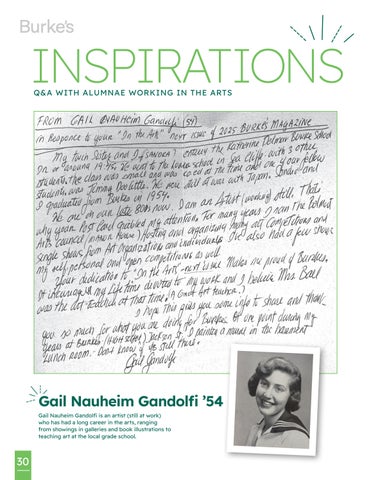
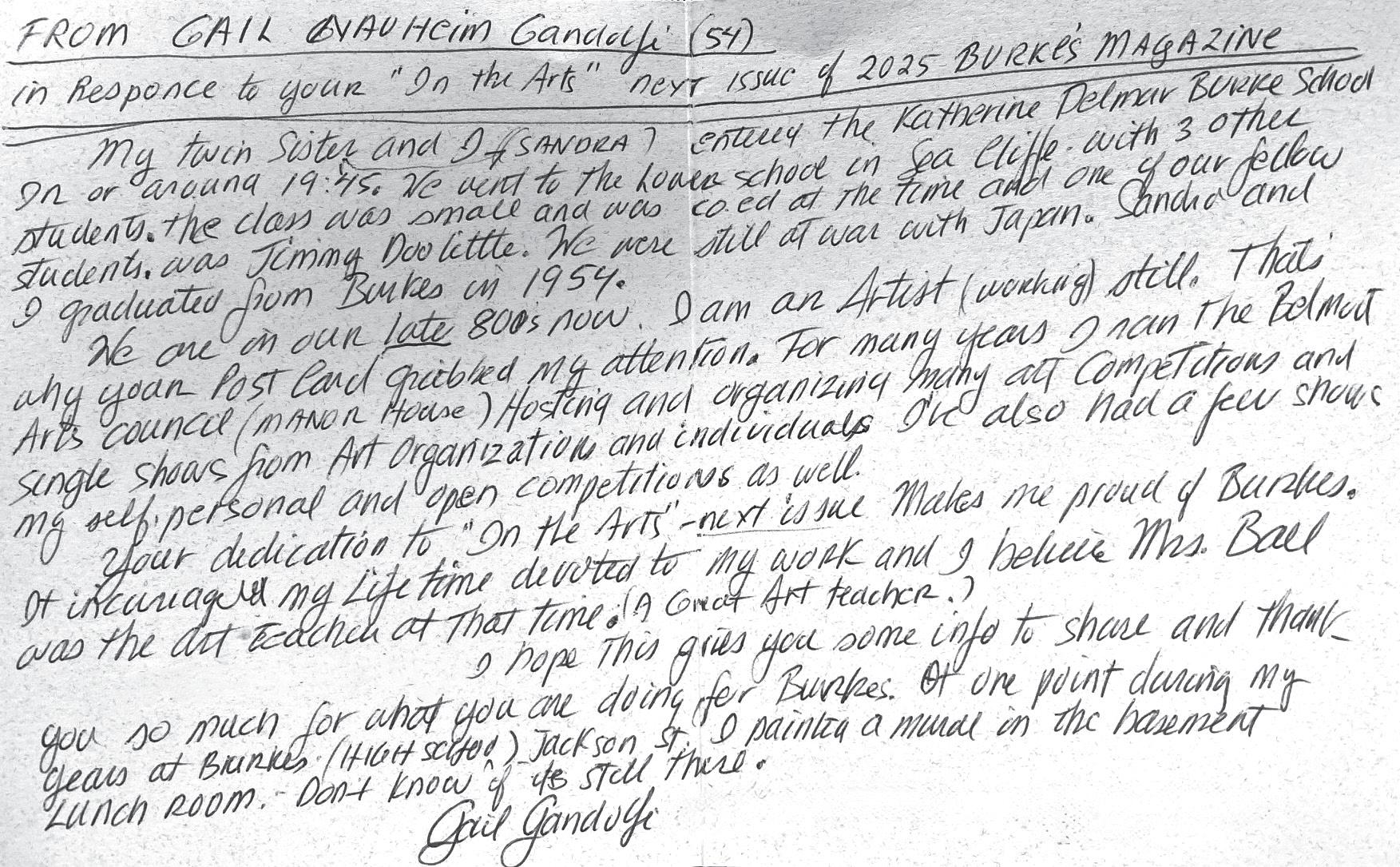
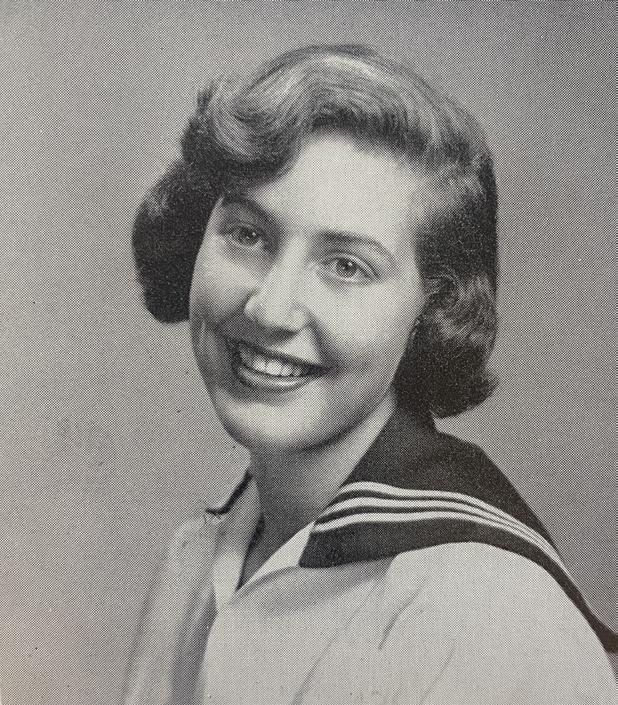
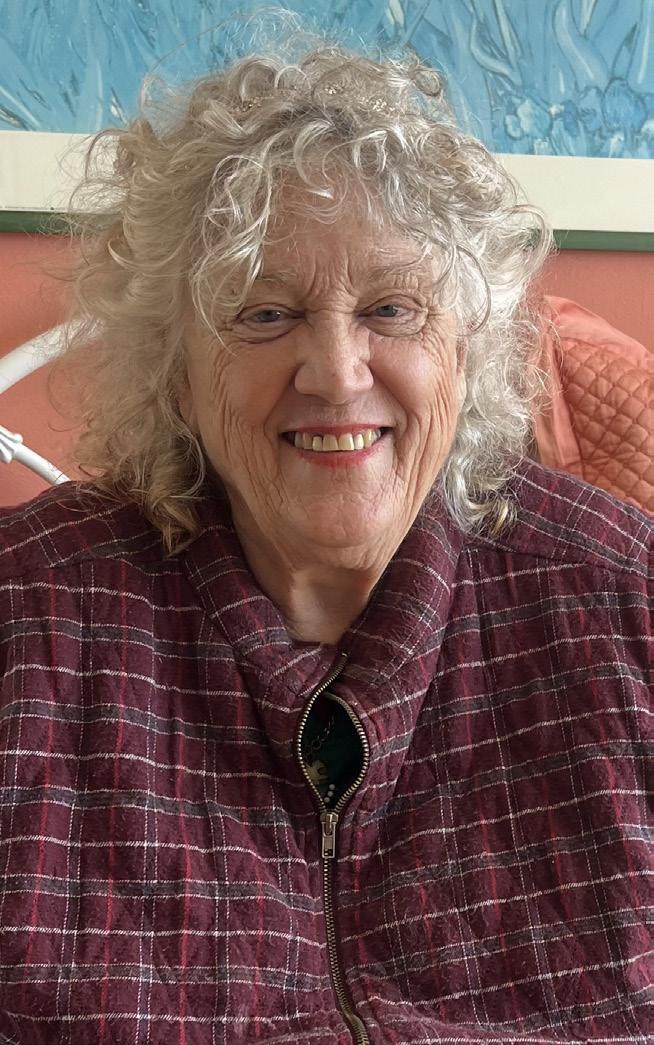
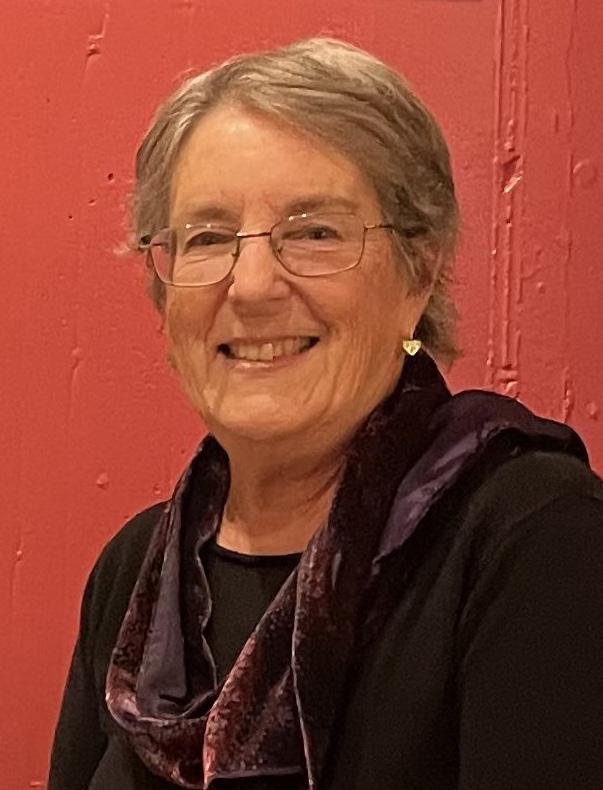
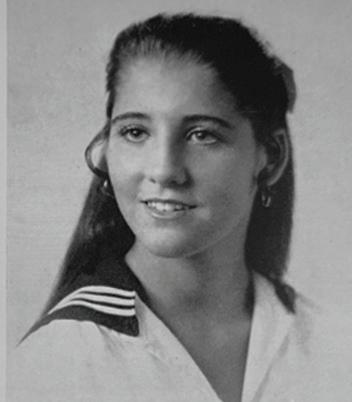
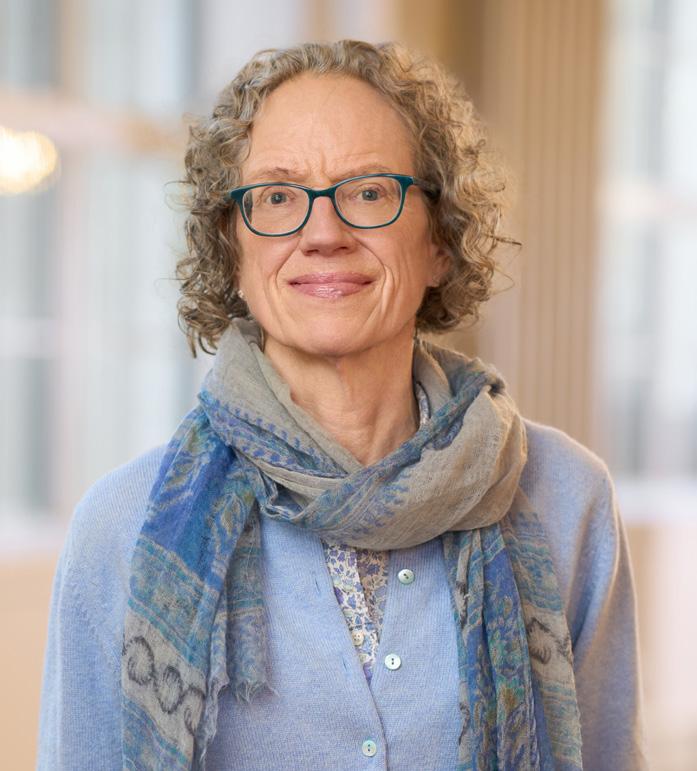
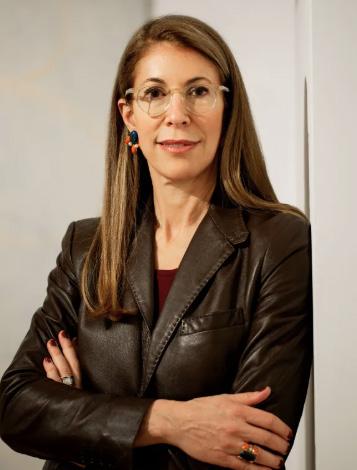
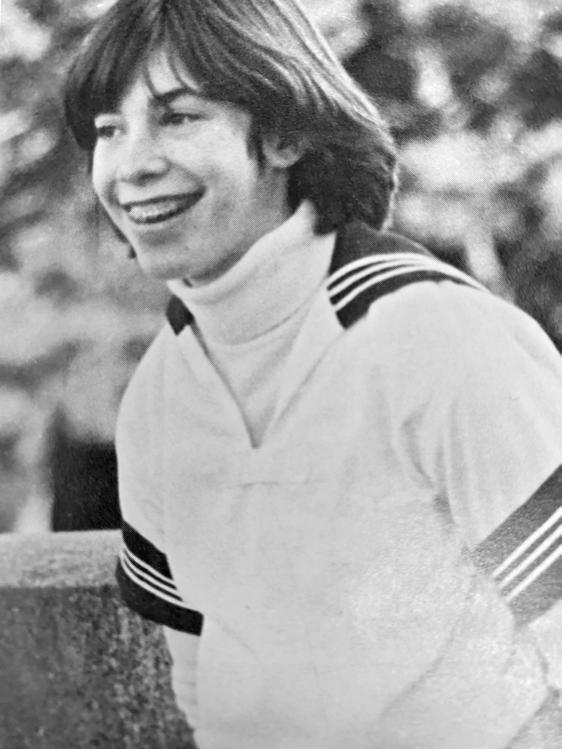
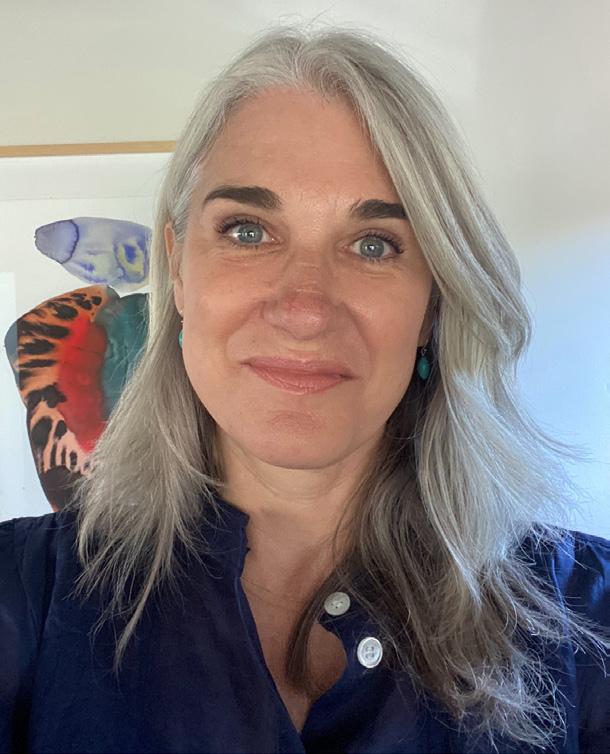
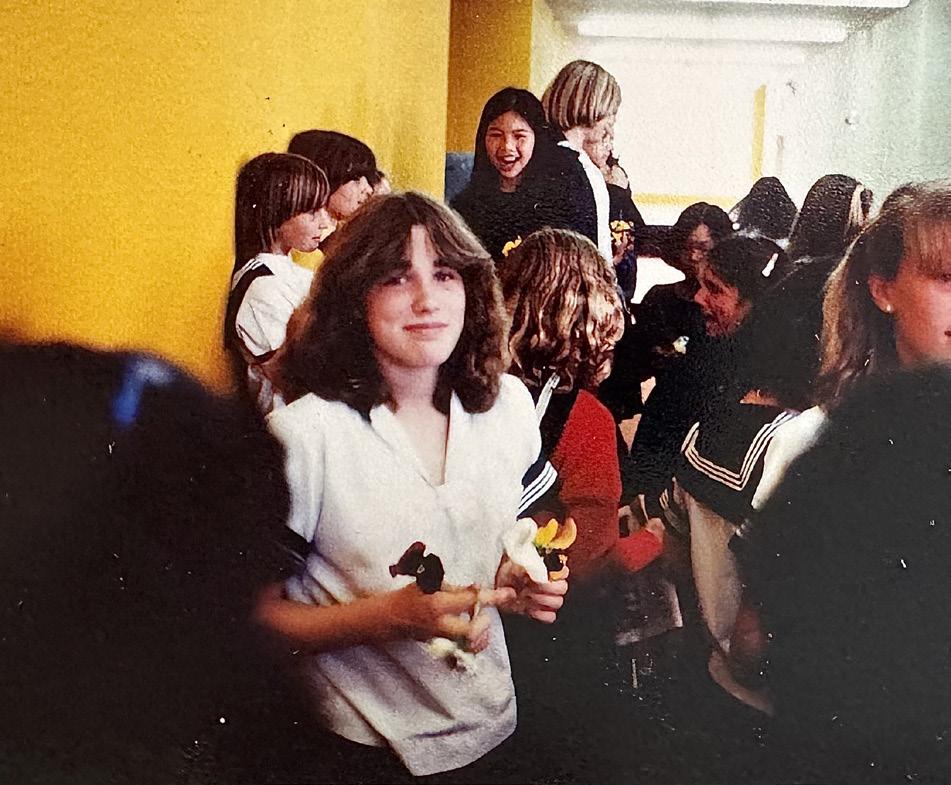
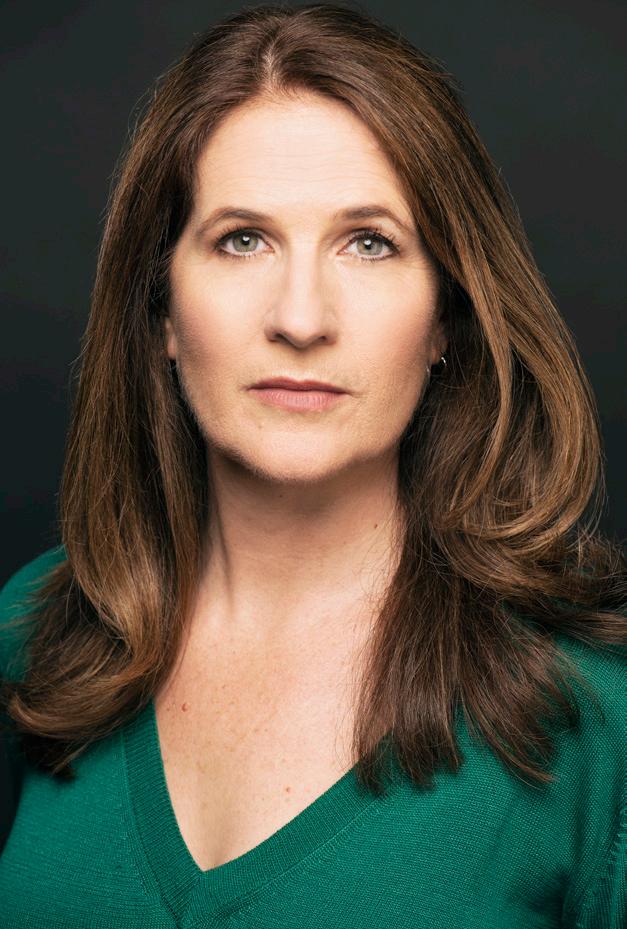
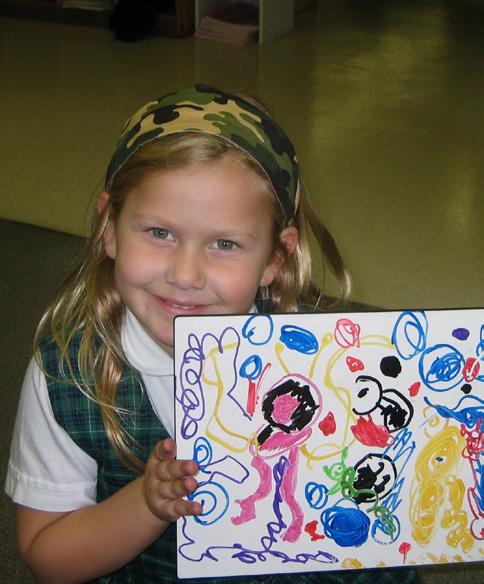
Gail Nauheim Gandolfi is an artist (still at work) who has had a long career in the arts, ranging from showings in galleries and book illustrations to teaching art at the local grade school.
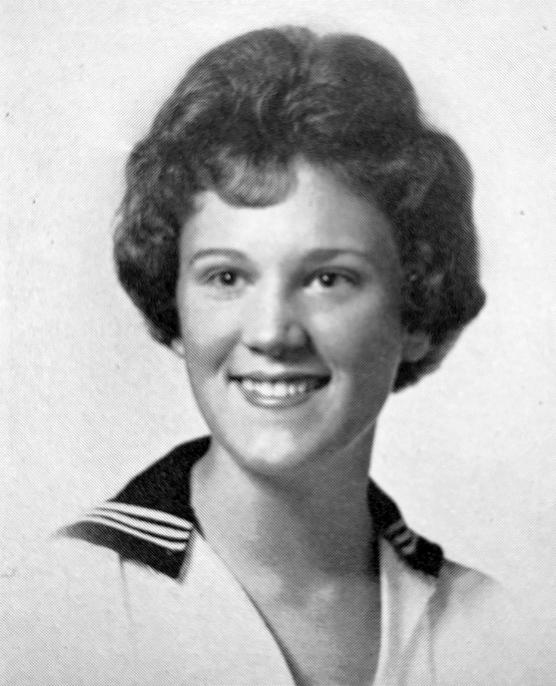
Nancy MacLean ’62
Music and performance were always a part of Nancy MacLean’s life—she sang in every kind of choir and even participated in a memorable Latin class production of a Roman Banquet staged in the Lower School auditorium.
After college, Nancy began actively pursuing a career in theatre and in her early twenties, she started reading audition notices in the San Francisco Chronicle. Her first performances were with the Lamplighters, San Francisco’s beloved Gilbert & Sullivan troupe. “Psycho: The Musical” was one of her flops (though Sir Ian McKellen did come to the cabaret after-party!), and another was an original musical about Emperor Norton, which opened with the scenery falling down on opening night and closed a week later. Special highlights included singing the National Anthem in celebration of the Golden Gate Bridge 60th Anniversary and singing “God Bless America” with the San Francisco Symphony Orchestra at the Democratic National Convention that included Corretta Scott King and President Jimmy Carter. But singing with Opera San José for five years and performing earlier with Beach Blanket Babylon were among the most fulfilling and joyful moments of her career.
Can you share a specific experience or teacher at Burke’s who inspired you to pursue a career in the arts?
I was fortunate to have several inspiring teachers at Burke’s who helped shape my path toward the arts. Ms. Carrington, our music and choir teacher, and Miss Hughes, our drama teacher, nurtured my early love for performance. I was Captain of the Collars. School Spirit was my thing and I made Ms. Waddell an honorary Collar and wrote her a tribute song. Ms. Lodeeson, my Latin teacher, challenged me to think deeply and expressively, a skill vital in any artistic pursuit. But perhaps the most unexpected influence came from Miss Andreason, my typing teacher. That skill led me to a flexible day job as a secretary for the Golden Gate Bridge District and, later, to an even more surprising role: working as one of the first female deckhands on their Ferry Transit system. It was not easy breaking into a male-dominated field, but the confidence I gained at Burke’s and from those teachers gave me the strength to persevere.
Burke’s gave us an anthem—and a purpose—to live up to: “Honest work, sincerity, let kindred feelings bind us, to our own selves be true... Let courage be undaunted.” That line became a guiding principle for me. As one of the first women on the San Francisco Waterfront, I faced a lot of prejudice. But Burke’s girls know how to stand their ground—on stage, on a boat, or anywhere life takes us.
I dedicate my story to my mother, Virginia Coghlan MacLean, a proud Burke’s alumna herself. She believed deeply in the power of a good education.
What advice would you give to current Burke’s students who are considering a career in the arts?
Consider applying to an arts-focused school after you graduate from Burke’s or high school. It’s a great way to hone your craft and connect with others who share your passion.
Also, find a flexible day job that supports your artistic goals. You’ll need time to audition, rehearse, and
perform. My job on the waterfront helped me stay financially stable while pursuing acting.
Remember this advice from my acting teacher Ray Reinhardt at A.C.T.: “If you audition ten times, you only need to land one.” Keep your confidence high—you’re doing what you love. Believe in your talent, be yourself, and follow your artistic soul. And never forget the old theater truth: “There are no small parts, just small actors.”
Do you have any anecdotes about your time at Burke’s to share with us?
I’ll never forget Miss Andreason’s typing class. She had us type to the rousing tempo of Sousa marches! It might seem silly, but that rhythm taught me discipline, speed, and focus. Thanks to her, I learned to type 70 words per minute, which opened the door to jobs that supported me while I pursued my passion for acting. It’s a reminder that sometimes the most unexpected lessons can shape your future.
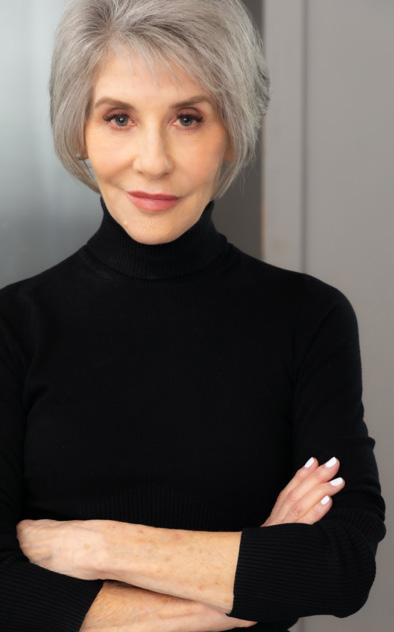
Alexandra Schilling Friedman ’65
After working several years in an architectural office as a model builder among other administrative tasks, Alexandra Schilling Friedman took an evening weaving class at the Boston “Y” and quickly became fascinated with this age-old craft. Eventually, this led to an important opportunity to weave shaped tapestries for the bulkheads of a fleet of jumbo jets.
Since then, she has maintained a studio for over 40 years wherever she lived: Hartford, Connecticut; London, England; and currently, Sausalito, California. Being able to create something beautiful from colored yarn and a spool of cotton warp is magical and the perfect expression of her artistic passions. She has executed commissions for corporate, private, and liturgical clients and continues to exhibit widely.
She is active in many Bay Area-based fiber organizations and continues to promote tapestry through lectures, workshops, and exhibitions. She has served as the President and CoDirector of the American Tapestry Alliance, and currently serves on the board of the Textile Arts Council at the de Young Museum. She welcomes visitors to her studio in Sausalito.
Can you share a specific experience or teacher at Burke’s who inspired you to pursue a career in the arts?
There were two teachers I remember well. One was Ms. Akins, who taught art and sewing in the attic room. I have always liked working with my hands, so this was a very inspiring class for me. We worked a lot with the design elements to understand the foundations of good art. The sewing class involved making three dresses, one in cotton, one in wool, and one in silk. The class celebrated by wearing a dress and taking Ms. Akins out to lunch at the end of the year. The second teacher was Ms. Hughes, who taught the Iliad and the Odyssey. She required extensive homework on these two tales, and much of it has stayed with me.
What advice would you give to current Burke’s students who are considering a career in the arts?
My advice to art students would be to follow your passion. Don’t be afraid to try new techniques. Explore, experiment, and once you find a creative process you love, stay with it and play with all its possibilities. For me, it has led to teaching, running workshops, lecturing, and meeting many people all over the world through exhibitions. As an artist, it was important to believe in myself and promote my art as best I could. No one else is going to do it for you! Of course, you can develop relationships with art consultants, curators, gallerists, and other artists working in the same medium who can help/guide you.
How do you incorporate the principles of leadership and empowerment learned at Burke’s into your work?
Burke’s supported leadership roles all along. I think an all-girls school was important for me to find my way. I grew up with brothers who seemed to receive more career focus than I. In the 1960s, all of this was beginning to change with women demanding more opportunities and recognition for their contributions. Women were finally able to use credit cards in their own name in 1974! It was a time of dramatic change. I think I was better prepared than many because of my education.
Do you have any anecdotes about your time at Burke’s to share with us?
One memory that sticks in my head is the first day of fifth grade. We had just moved to San Francisco, and my mother delivered me to the school entrance on Jackson Street. I walked and tried unsuccessfully to find the fifth grade. I soon found out that class was at the Seacliff campus, three miles away, and that I had to get on the bus to go there. Of course, when I arrived at the Lower School, I had no idea where to go. It was a terrible start for the new school year, but soon I made friends and school life got to be much better.
Even though I was only at Burke’s from fifth through ninth grade, I made good friends with whom I have remained in contact over the last 60 years. I think that is a good commentary on my Burke’s education.
Bettina Devin ’69
Bettina Devin is an actor in theater, film, and television, a recording artist, a performance coach, and a producer. Producing credits include “The Family Planner” (winner of over 25 festival awards including Best Film), “Doggie B” (winner of Audience Favorite, Sonoma International Film Festival), “A Normal Life” (winner of Narrative Feature film at the Knoxville Film Festival), and her most recent film “Lox” in which she also stars. A veteran actor/singer with over 50 years of experience in theater, TV, film, commercials, and concerts, Bettina remains a working actress and a busy coach, as well as a casting director for commercials, shorts, and feature films.
Can you share a specific experience or teacher at Burke’s who inspired you to pursue a career in the arts?
Without a doubt, Myna Hughes, our Upper School drama teacher, was instrumental in getting me to follow what was already in my heart. She cast me in several lead roles in school plays. She was a delightful director with a wicked sense of humor. I’m positive the confidence I gained from her approval helped me to think I could actually get somewhere in what I now know is a crazy industry. I remember her so fondly! I also remember watching one of the toughest girls in school with her (forbidden) mascara running, crying like a baby when I performed the final scene of Peter Pan as Peter. Figured I had something to be able to crack her shell.
What advice would you give to current Burke’s students who are considering a career in the arts?
If you have the slightest bit of doubt, DON’T DO IT. You must want it more than anything and be willing to face constant rejection before, in between, and after the big wins. Remember, it’s called show “business” for a reason. It takes discipline to remind ourselves that art is totally subjective, no matter how strong the urge to make it our fault if not chosen. We can never know what goes on in the minds of the critics. In fact, it’s a waste of time. Don’t waste that energy. Put it back firmly (and with kindness to yourself) into your art.
How do you incorporate the principles of leadership and empowerment learned at Burke’s into your work?
Burke’s taught me (and gave me the space) to think for myself. This is probably THE most important quality for someone who has their own business, which is exactly what any artist has, whether they see it that way or not. Our “art” is our “business.”
Do you have any anecdotes about your time at Burke’s to share with us?
I hesitate to admit this, but... always being the mimic, I remember having my classmates howling while doing my impressions of different teachers (who shall remain nameless) often DURING class.
I still recreate those, and my old friends from Burke’s days still do me the favor of howling.
Miranda Smith ’77e
Miranda Smith is a museum planner, exhibit content developer, and writer. Her first museum job was at the California Academy of Sciences, where she was lucky enough to land after deciding that a career as a college science professor was not for her. She loved every day at Cal Academy, which was revelatory to her. Although she had spent a lot of time in museums as a kid through Burke’s fieldtrips and having a mother who was involved in both SF MOMA and the DeYoung—it never occurred to her that there were people behind the scenes writing labels, making decisions about what and how to display art and objects, and crafting the displays. She had landed her dream job as a liaison among scientists, artists, and the design team, and getting to greet the dolphins every morning on her way into work.
That initial experience led to a job offer from Ralph Appelbaum Associates, a New York museum planning and design firm. She had the chance to work in Europe and Asia, as well as the US, for museums like the American Museum of Natural History, Natural History Museum of Utah, Anchorage Museum of History and Art, Canadian Museum for Human Rights, the Bishop Museum in Hawaii, National Museum of Scotland, Natural History Museum London, and Taiwan’s National Museum of Prehistory. Miranda is currently working on the Milken Center for Advancing the American Dream (MCAAD) in Washington, DC.
Can you share a specific experience or teacher at Burke’s who inspired you to pursue a career in the arts?
I had many memorable teachers at Burke’s. The three who inspired me most would have to be Mary Swope, Myna Hughes, and Nancy Clark. I remember Miss Swope’s elementary school art classes as places to explore and experiment, always with positive feedback. Miss Hughes (she will always be Miss Hughes in my mind) taught me how to write concisely and correctly and how to construct an argument. Nancy Clark gave us the gift of history as a narrative of people and context, not just a list of dates and events. Her enthusiasm for history and her storytelling ability helped us make connections between our lives and the past.
We were lucky enough when I was in middle school to have an intersession program, which I think was something of an innovation at the time. I chose a figure drawing class taught by Eleanor Dickinson (well-known artist and Burke’s parent). I was one of the youngest in the group, and the experience of being in an artist’s studio and working alongside older students and Ms. Dickinson affected me deeply. I think it was the first time making art was taken seriously, and I realized you could have a career as an artist.
What advice would you give to current Burke’s students who are considering a career in the arts?
Keep your Burke’s boldness, and don’t forget your teachers’ confidence in your abilities.
How do you incorporate the principles of leadership and empowerment learned at Burke’s into your work?
My days at Burke’s instilled in me a sense that I could do anything. I might not excel, but I could definitely achieve. I rely on that self-confidence every day. We were encouraged to find our own strengths and, along the way, also learned to recognize the strengths of others. The ability to recognize your strengths and those of others is very useful; I’ve always worked in teams, and assessing the best using your and others’ abilities makes for better outcomes.
I also learned to be a good listener, which I rely on daily at work. Listening to clients is essential to understanding their needs, and listening to co-workers empowers them and helps solve problems.
Do you have any anecdotes about your time at Burke’s to share with us?
In eighth grade English, Miss Hughes assigned us an “onomatopoetic art piece”—one that expressed the technique and design of the meaning of the word depicted. I chose “ooze,” which I rendered in puddles of grey-brown. Miss Hughes was very critical, deeming it ugly, but I wasn’t bothered by that (which, given my usual M.O. as a good student, is a bit surprising). I think my reaction was partly due to my classmates taking my side, and partly to a nascent inner critic affirming that I had not only executed the intent of the assignment but done a nice job of portraying the essence of ooze.
Isabella Hutchinson ’77e
Isabella Hutchinson began her career in the arts in 1986 at Sotheby’s New York in the Latin American Art Department. At the auction house, she held senior managerial roles including Director of the Department and Senior Vice President.
Originally from San Francisco, Isabella has also lived and worked in Paris, France, where she was engaged with Sotheby’s sale of the estate of Juliet Man Ray. She holds a B.A. in art history from Tufts University (1985) and a M.A. in the history of design and curatorial studies arts from Parsons School of Design, The New School (2011).
Isabella serves on the boards of Studio in a School and The Association of Art Museum Curators. She is a member of the Arts of the Americas Circle of the Americas Society and ArtTable, a national organization supporting professional women in the visual arts. She has participated in panels and lectures internationally.
Can you share a specific experience or teacher at Burke’s who inspired you to pursue a career in the arts?
Mary Swope was the art teacher during my time at Burke’s, and she had a huge and positive impact on my life. Her classroom was a very happy space for me. Miss Swope helped me realize, even at a young age, that playfulness and humor could be powerful forms of freedom, opening the door to greater creativity.
At the time, I wasn’t yet thinking about a future career, but her art classes—along with a calligraphy course taught by Bruce Hinton, an animation class with Madame Pickering, and a silkscreen workshop— sparked something in me. They helped me understand that I wanted to be an artist. As it turned out, I became an art historian.
What advice would you give to current Burke’s students who are considering a career in the arts?
My first job out of college was at Sotheby’s in New York, where I was surrounded by art every day—ranging from glorious to mediocre. By studying a wide range of work, I began to train my eye and develop my own idea of quality in art.
Just as important was listening to collectors, curators, artists, and experts. Each perspective added to my knowledge and shaped my thinking. Over time, all of those experiences led me to open my gallery, Hutchinson Modern & Contemporary, in New York City.
Kim Roberson ’81
After graduating from Burke’s in 1981, Kim Roberson attended Santa Catalina for high school and got an M.F.A. in illustration from Parsons School of Design in New York City. She began her career as an illustrator, creating editorial art for newspapers and magazines. One of her drawings caught the attention of an art director at Nickelodeon, who thought the style would translate well to animation. She was hired to design characters for a series of short animations, and that experience fueled her love for cartoons. She soon moved to Los Angeles, where she has spent the next 20+ years working as a character designer and storyboard artist for Nickelodeon, Cartoon Network, and Disney Television Animation.
A few years ago, she joined the writing team at Disney for the animated series Phineas and Ferb . She contributed to the original series run as both a writer and storyboard artist but now focuses solely on writing. The team is gearing up to start work on season six of the show!
Can you share a specific experience or teacher at Burke’s who inspired you to pursue a career in the arts?
I wasn’t exactly the strongest academic student during my time at Burke’s, even though my teachers were always supportive and did their best to help me succeed. But I always looked forward to art period—that was where I felt I could truly shine. It was the place where I could do what I loved most: be creative.
I had two art teachers while I was at Burke’s: Miss Swope and Ms. Rowe, and I really loved them both. One project I remember especially well was painting a four-legged stool however we wanted. Ms. Rowe brought in stacks of magazines for us to flip through for inspiration. I was drawn to the cover of a New Yorker magazine and decided I wanted to replicate it exactly on my stool.
Ms. Rowe told me about Saul Steinberg—the artist behind the cover, whom she adored—and taught me how to use a grid to break down the image so I could match the proportions perfectly. I remember getting completely lost in that project—time just disappeared. I still have that stool to this day! Maybe that moment planted a little seed in my brain that maybe I could be an illustrator in New York, too.
What advice would you give to current Burke’s students who are considering a career in the arts?
To any current Burke’s student dreaming of a future in the arts, my advice is this: keep creating. Seek out people who inspire you and who share your creative spark. Believe that your unique take on the world can be a great asset to a creative career. Working in the arts can be challenging—sometimes even heartbreaking—but for me, it’s brought more joy and meaning than almost anything else. As a writer on Phineas and Ferb, I get to dream up wild scenarios and hilarious predicaments for our amazing characters every day. And collaborating with other writers and artists is not only rewarding— it’s genuinely fun. I feel incredibly lucky to be doing this work.
How do you incorporate the principles of leadership and empowerment learned at Burke’s into your work?
Pursuing a career that’s a little “outside the box” can be intimidating. But my time at Burke’s gave me a strong foundation. I grew up in a time when opportunities for women—especially in animation—were limited. Burke’s nurtured a sense in me that there wasn’t anything I couldn’t do, and that belief carried me into young adulthood and beyond. I’m deeply grateful for that early encouragement. It helped shape the path I’m on today!
Anne Tolpegin ’84
Anne Tolpegin grew up in San Francisco and started school at Convent of the Sacred Heart, transferring to Burke’s in the fourth grade. She attended Northwestern University for college, where she majored in theatre, with a focus on performance studies (the analysis and interpretation of literature). She began her professional acting career in Chicago, moving to NYC about five years later. Anne made her Broadway debut in “Les Miserables” and was part of the Original Broadway Company of “A Tale of Two Cities.” Off-Broadway, Anne was in “Carrie” and “Sweeney Todd.” She has traveled across the United States, Canada, and Mexico with the following Broadway National Tours: “Ragtime,” “Mamma Mia!”, “Billy Elliot,” and “Kinky Boots.” Some favorite US Regional credits include: The Premiere of Sting’s “The Last Ship” (Peggy), “Next to Normal” (Diana), “Murder on the Orient Express” (Helen Hubbard), “The Prom” (Dee Dee), and “Passion” (Fosca). She toured Japan singing with the Tokyo Philharmonic and can be seen on USA Network’s “Mr. Robot” and in “Iron Fist” on Netflix. Anne remains a faithful 49ers fan, still thinks SF has the best food anywhere, loves her pooch Sherlock, and is married to the actor Blake Stadnik. Anne will be returning to The Orpheum in February 2026 with the Broadway musical “The Notebook.”
Can you share a specific experience or teacher at Burke’s who inspired you to pursue a career in the arts?
All my Burke’s teachers were phenomenal in one way or another. But three stand out to me as having inspired me with my career: Nancy Clark, James Bell, and Toni Wagner. Nancy was so joyful in her excavation of history with us, and so fully committed to our learning and researching; it was incredibly contagious to all of us. When she knew that I was interested in acting and singing, she encouraged me to dive deeply into the craft and to dive with joy. Jim Bell inspired me by opening the creaking, mysterious door of literature to us all (I’m remembering “Beowulf” specifically) and all that could be discovered there: the danger, the excitement, the knowledge. He was a fantastic reader in class, bringing so much drama out of every book we studied. He and Madame Wagner helped spark a true love of languages that has lasted my whole life; Mr. Bell with Latin and Madame Wagner with French. Toni taught us that French was akin to singing, and the musicality and flow of the language made sense to me as a young singer. It is known as a “legato” language, emphasizing smooth, sustained sounds as well as a “euphonic” language, meaning it’s very pleasing to the ear, much like singing. All three of these teachers helped me understand early on what it means to “study the human condition,” which is at the heart of what professional actors do.
What advice would you give to current Burke’s students who are considering a career in the arts?
My advice would echo Nancy Clark’s—to dive deeply into what it is that you love about the arts, whether it is singing, acting, painting, or photography. It is vital to enjoy the adventure of discovering what creativity means to you, and how it evolves with you naturally: in song, in prose, or in creating sculptures! What brings you joy, what do you love doing? Follow that love and that instinct madly. Never judge yourself while you are playing and creating. The path of discovering what works for you artistically will not lead you astray, and the skills you learn as a young artist will help you in any field you choose! Storytelling is an incredibly powerful tool, and a vital one today.
How do you incorporate the principles of leadership and empowerment learned at Burke’s into your work?
“Educate, encourage, and empower!” As a professional actress, I take great joy in sharing both career and personal advice, helping young artists make connections within the industry, and guiding them to become the strongest, brightest versions of themselves. There is nothing better than giving back—or paying it forward, for that matter—in the arts. It is so wonderful to be able to pass along the mentoring that
was given to me as a young student. If I am playing a principal role in a show, I try to set the best example I can to everyone: that acting and performing is a team effort, no one truly is “the lead,” and that everyone should feel empowered—and excited—to use their voice.
Do you have any anecdotes about your time at Burke’s to share with us?
When I was in eighth grade, I was playing Alice Sycamore in Kaufman and Hart’s comedy, “You Can’t Take It With You.” We were performing on the lovely stage in the gym, and on one night, I had a particularly energetic entrance. I must have come in with quite a scurry, because as I stepped forward onto the set, I accidentally kicked my shoe right off of my foot and across the stage in a wide arc. Everyone saw it fly across the set—happily not hitting anyone— and totally amazingly for a 14-year-old—I did NOT laugh. I finished my line, walked over, picked up my shoe, and exited the stage. I was so proud of myself for “staying focused” and not “breaking.” This was a very important skill set to learn early; because as we know, things go wrong in live theatre all the time! (That’s one of the joys of live theatre, isn’t it?)
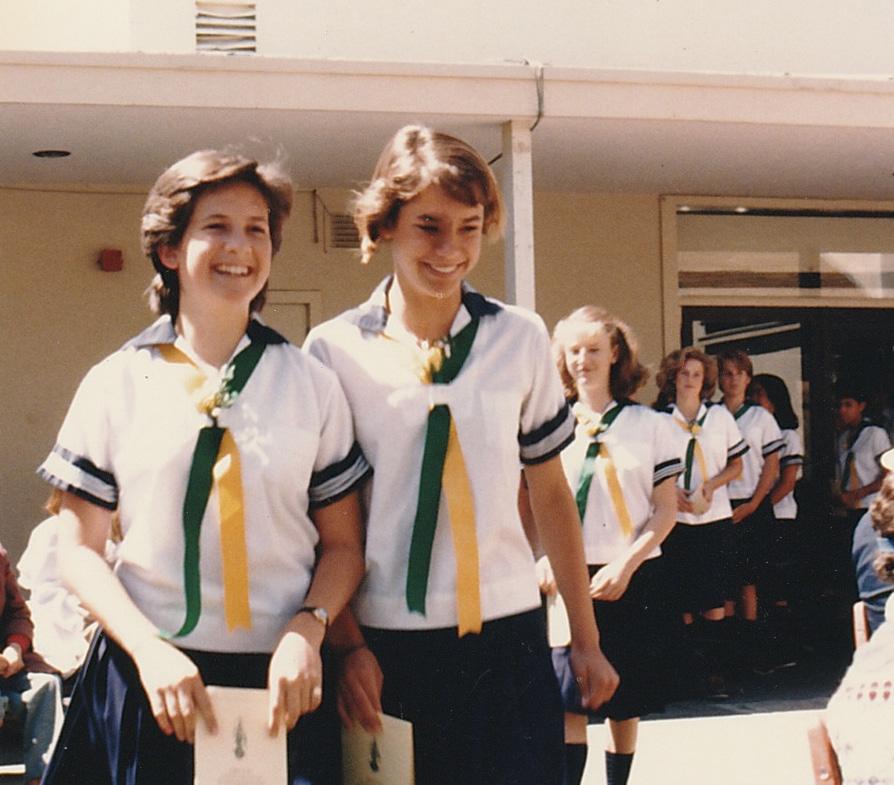
Anne Tolpegin (left) and Tracy Nagle (right) at graduation.
Hilary Magowan ’86
Hilary Magowan is the Associate Director of Exhibitions at the Fine Arts Museums of San Francisco. Hilary received her B.A. in art history from Connecticut College, and her M.A. in humanities with a concentration in art history from New York University. She began her art career in New York City at Christie’s, working in various departments including Old Master Paintings & Drawings, 19th Century Paintings, and Japanese and Korean Art. After receiving her MA, she worked as the director at the art gallery Sebastian Izzard Asian Art. In 2005, she returned to her hometown of San Francisco after over a decade working in the art world in NYC. In San Francisco, she was the director of Addison Fine Arts, a private art gallery, and she later founded her self-named art consulting company, where she advised private and corporate clients on purchases and sales of fine art. Hilary began working at the Fine Arts Museums of San Francisco in 2012, and is responsible for organizing temporary exhibitions from the early planning stages through implementation, and has helped plan over fifty major exhibitions in various media, ranging from ancient to contemporary art. Hilary attended Burke’s from 1978-1986.
Can you share a specific experience or teacher at Burke’s who inspired you to pursue a career in the arts?
I loved humanities class, which was taught by Ann Perez in 8th grade. We studied the Renaissance, and I remember learning about the artistic and scientific genius of Leonardo da Vinci. We studied his drawings, paintings, and sculptures, and what was especially illuminating was learning that on top of his artistic achievements, he was also an amateur scientist, architect, and engineer, who experimented with flying machines and other inventions.
Mary Swope’s art class throughout Upper School made a big impression on me. Making art was a nice break from the rigorous academics at Burke’s, and my favorite class. One challenging and fun assignment was to create a bust from clay and then make a plaster cast of it, which was a complex, multi-step endeavor. The assignment took weeks to complete and taught me a lot about artistic process.
My mother, sister, and I moved to Paris, France after graduation, where I spent my ninth grade year. I visited many art museums and took a painting class after school when I lived in Paris. I did this in large part because of Ann Perez and Mary Swope’s influence on me.
What advice would you give to current Burke’s students who are considering a career in the arts?
I encourage students to be open-minded about the many different careers in the art world. For art jobs at non-profit institutions, museum internships are a great way to get experience and break into the competitive field. Art museums have many different departments such as retail, public relations, marketing, business, education, finance, exhibitions, design, registration, and more. Although curators are the museum job most people think of, they actually comprise a very small percentage of a museum’s staff.
In the for-profit art sector, auction houses, galleries, art fairs, and art advisories range from huge companies to small businesses, so try something out and see what kind of environment you enjoy. Try to be outgoing and curious, and strive to make a few strong professional connections as you are exploring various career paths. Put in the effort to sustain the professional relationships that are important to you even after you’ve moved on to another job.
For the artists out there, you can gain a lot by closely examining art from the past, which might inspire your own creativity. Participate in group exhibitions when the opportunity arises, and be resilient when receiving critiques from peers, teachers, or anyone whose opinion you seek as you continue to hone your craft.
How do you incorporate the principles of leadership and empowerment learned at Burke’s into your work?
I appreciated the excellent teachers and rigorous education at Burke’s that prepared me well for college, graduate school, and my career in the arts. Students were strongly encouraged to participate in class, share their opinions and ideas, and also to listen and ponder. While planning exhibitions at the Fine Arts Museums of San Francisco, I work collaboratively with many different departments and a diverse group of colleagues. I encourage my co-workers to speak up, including staff who are just beginning their careers, since we can all learn from each other.
Do you have any anecdotes about your time at Burke’s to share with us?
The Burke’s campus is spectacular, and I loved participating in after school athletics—I played on a few sports teams. My favorite P.E. activity was when we held the “Olympics” on the blacktop outside of the Lower School and the field. We competed against our classmates in different events and it really brought out my competitive side!
Olivia Marwell ’15
Olivia Marwell is a sculptor from San Francisco, CA, working at the intersection of textiles and industrial materials. Influenced by her background in political science, feminist theory, photography, and fashion, Olivia’s work revolves around exploring the structural exploitations of the female body through the lens of domesticity as a complex economic and political institution. In 2019, Olivia moved across the country to attend Yale University, where she graduated Cumm Laude with a B.A. in fine art, was distinguished as a 2023 Swenson Scholar in the Arts, and received the 2024 Jonathan Edwards Arts Prize. She is a Norfolk School of Art alum, and currently serves as the Deborah Buck and Hilla von Rebay Foundations’ Studio Arts Fellow at Trinity College in Hartford, CT. Olivia’s work has been exhibited across the Bay Area, Los Angeles, Connecticut, and New York. Notable exhibitions include “Think of Salad Days” at Morgan Lehman Gallery in Chelsea, along with her solo show “Decorum and Demolition” at Poon Family Gallery in Harford, CT. Olivia has received scholarship awards both from the Metal Museum in Memphis, TN, and from the Anderson Ranch Arts Center in Aspen, CO.
Can you share a specific experience or teacher at Burke’s who inspired you to pursue a career in the arts?
While I didn’t start actively pursuing the arts until I was in high school, I had a number of experiences during my time at Burke’s that nurtured my creativity. I served on the yearbook committee, starred in the eighth grade play, and spent a lot of time doodling in my notebook. However, I think the most formative creative experience I had at Burke’s was in sixth grade when I took my first photography class. To be honest, I don’t remember too much from the course, seeing as I took the elective over a decade ago, but I do remember that this is where I first developed an interest in cameras—an interest that ultimately led to a career as a professional fine artist. Though sculpture is my primary medium now, I began my journey as a photographer.
What advice would you give to current Burke’s students who are considering a career in the arts?
When I signed up for an art class in high school, I was tasked with choosing between painting, sculpture, and photography. Despite ranking photo as my first choice, I ended up in painting; however, remembering how much I loved taking photography at Burke’s, I decided that I was not ready to give up just yet, so I pleaded with the Dean of Students, who ultimately caved and was kind enough to rearrange my schedule so that I was able to take photography that year. From there, I began seriously pursuing the discipline, winning a number of national awards, and later moving to New Haven to study photography at Yale under some of the most renowned contemporary artists in the world. Had I never taken that photography class back in sixth grade, it’s not unreasonable to think that my trajectory over the past decade may have looked very different.
How do you incorporate the principles of leadership and empowerment learned at Burke’s into your work?
While my early introduction to photography was certainly critical, Burke’s commitment to instilling values of women’s empowerment in its students was even more influential to my artistic journey. I still remember my many research projects on trailblazing women, celebrating International Women’s Day every year, and reading the words “educate, encourage, and empower girls” on the gymnasium wall nearly every day for nine years. Burke’s storied commitment to uplifting women sparked my passion for feminist advocacy and intellectualism from a very young age, interests that have underpinned my creative practice since its birth.
Today, my work revolves around exploring structural exploitations of the female body through the lens of domesticity as a complex economic and political institution. Fundamentally, I’m interested in interrogating the hierarchies we have created as a society to systemically devalue women’s physical, spiritual, and intellectual contributions to the world. As such, I believe that being raised in an environment centered around fostering women’s excellence without any limitations has been foundational to the development of my objectives and identity both as an artist and as a woman.
What advice would you give to current Burke’s students who are considering a career in the arts?
On that note, my advice to students contemplating a career in the arts is to be interested in everything! Great artists are not just interested in art—they are deeply curious about the world around them, and they pursue these curiosities to no end. Being a great artist is not just about how well you can paint, draw, act, or sing—it’s about cultivating a nuanced and authentic perspective about the world, and to do that, you must care about it deeply.