ADRA NEWS
“Life was hard. Sometimes we would only eat once a day for days at a time.”
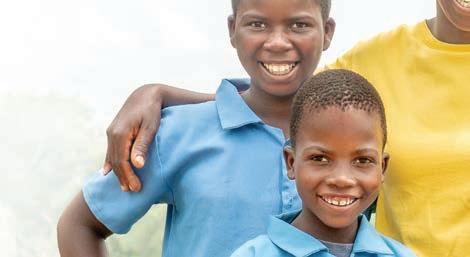
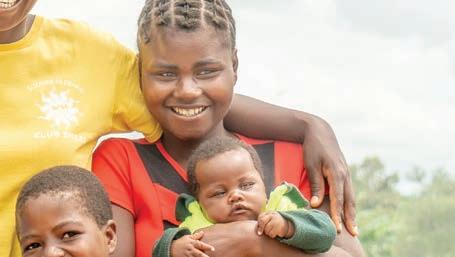
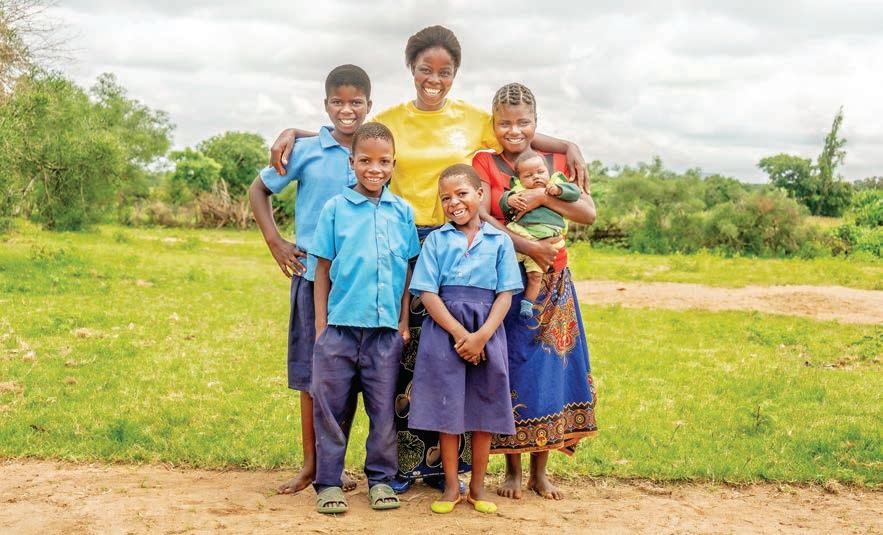
Mildred is a single mother of four, living in rural Zambia. She works as a farmer, but she struggled to grow enough food to feed her family. Often with no crops leftover to sell, her yearly income was less than $30 per year.
“Life was just about suffering
for us to find food,” Mildred says. “There was never enough food because we were not harvesting well. We would only have five bags per year out of all the maize, sunflowers, and groundnuts we harvested. It was not enough.”
Mildred also used to grow tomatoes and rapeseed to sell so she had income for her family’s needs. She was able to
buy basic necessities like soap but struggled to afford more than that.
“We didn’t have enough clothes, and even blankets –the children would fight for the blanket because we didn’t have enough,” Mildred says.
As a child, Mildred stopped going to school in grade nine because her family did not have the money to pay for her
ADRA is proud to be celebrating its 40th anniversary in Australia this year.
There is so much more to be said about this milestone, and you will find an article within these pages dedicated to reflecting on the past 40 years, as well as looking to what the future holds for ADRA. But it’s prompted me to think about legacies, and the impact we can make during our lifetime.
For forty years now, ADRA has been creating a legacy: a legacy of serving humanity, loving our neighbours, and helping the most vulnerable. But ADRA’s legacy is not ADRA’s alone; it is a shared legacy. It is a legacy shared with our generous supporters, without whom there would be no ADRA. It is a legacy shared with the Seventh-day Adventist Church, with our volunteers, with our partners, and our staff.
I am reminded of an update that I received from a community in Laos where ADRA Australia had a project over seven years ago. ADRA worked with the community to establish a “cow bank”. Initially, project participants received eight cows
from ADRA. Our local livestock specialists trained the community in how to breed and raise the cows, and the benefit to project participants was huge. Not only did they now have livestock, but they were able to sell cows to purchase items that furthered their farming ventures, like tractors and rice threshers.
Though the project wrapped up over seven years ago, the impact has been long-lasting. What started as eight cows in a collective livestock fund has increased to 270. Today, over 80% of the households in the community are participating in the cow bank, with the other 20%, who have seen the benefits, eager to join.
Having also worked with ADRA in Laos, stories like this fill my heart and act as a reminder of what is possible when we work together. Even within our lifetime, we are seeing glimpses of ADRA’s legacy, and I am energised by the fact that through our actions today, we are sowing life-changing seeds for tomorrow.
Thank you for partnering with ADRA in our purpose to serve humanity so all may live as God intended, and know that ADRA’s legacy is yours to share.
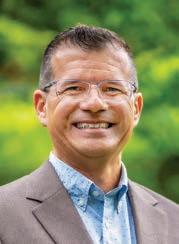
Denison Grellmann CEO, ADRA Australia
education anymore. Mildred feared her children were set to go down the same path.
“I did not have money for my children’s school, not even to buy books,” Mildred says. “Sometimes, my children would be sent home from school because of this.”
When ADRA came to Mildred’s village, she was eager to participate. The FARMS Project, which is supported by the Australian Government through the Australian NGO Cooperation Program (ANCP), provided farmers like Mildred with new seeds, taught best farming practices, and helped them market their produce.
“ADRA gave us cowpeas, cassava, and garlic, and provided training on how to grow these crops,” Mildred says. “We learnt about the possible diseases that affect these crops and how we can look after them so we can get a good harvest.”
Mildred’s first harvest exceeded her expectations, and not only did she have enough to feed her family well, but she had also crops leftover that she could sell.
“I was surprised at how many cowpeas I was producing! And the cassava crops performed
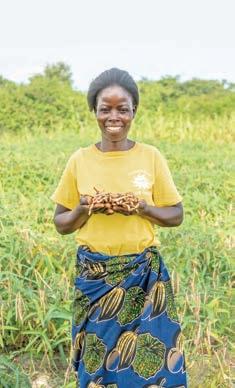
very well,” Mildred says. “On the day that we harvested, I was so happy that we had food at home. What we didn’t eat, we sold for income.”
As part of the FARMS Project, participants like Mildred learned how to sell excess crops to ensure they got the highest profit possible. Mildred had identified a potential buyer for her cowpea crops, but her farm alone didn’t produce enough crops. But through her training and working with other farmers involved in the ADRA project, Mildred rallied fellow cowpea farmers and together, they had a large enough harvest to attract big buyers.
“On my own with only one bag I would not have sold my cowpeas,” Mildred said. “I found our training very helpful because I gathered my friends and we sold together.”
The impact of the project has changed day-to-day life for Mildred and her children. Her family is well fed and her children are back in school.
“Now, I am making six or seven times more than before,” she says. “This has changed my life. Before, I was not managing. I was eating maybe once or twice a day. We would stay hungry. But now, I have seen the difference in my life because of the things you have brought for us. Now we have enough to eat – we are not hungry any more.”
Now, instead of living day-today, Mildred is planning for her future, and the future of her children.
“Looking forward to the future, I am seeing my life will be better. My children will have the chance to complete their education. They can even go to college! For me, I wish to be farming on a bigger scale than I am farming now.
“Thank you for what you have done through ADRA. You have helped people with malnutrition and a lot of people here have been helped. I ask that you continue to help people like me.”
Your gift can provide families like Mildred’s with the seeds and training they need to feed their family, increase their income, and send their kids to school. Donate today at adra.org.au/feedafamily
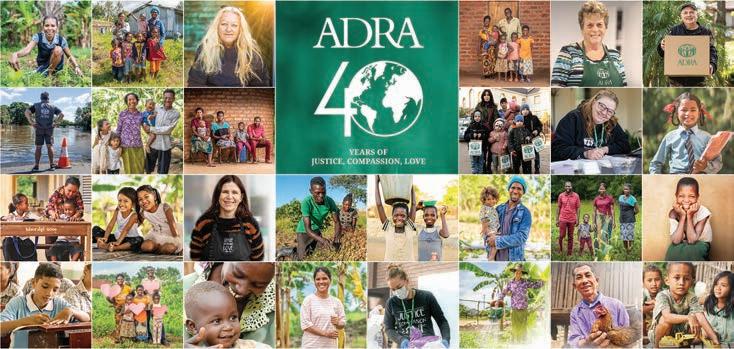
The Adventist Development and Relief Agency (ADRA) is celebrating its 40th anniversary in Australia this year.
ADRA is the global humanitarian arm of the Seventh-day Adventist Church that serves communities regardless of ethnicity, political, or religious affiliation. The international nongovernment agency works with communities, organisations, and governments to enhance the lives of millions of people via sustainable community development and disaster relief.
“Our 40th anniversary is a testament to the dedication and hard work of our staff members and partners, who have worked relentlessly to provide healing and hope to people in need,” says Michael Kruger, President of ADRA International.
“ADRA has made significant progress in its four decades of existence, nevertheless, more work remains. As we commemorate this milestone, we also look forward to the future and the
opportunities to continue making a remarkable difference in underprivileged communities.
“ADRA is grateful for the support of donors, volunteers, partners, and the Seventh-day Adventist Church, which make it possible for us to positively impact the lives of the millions of people we serve. We remain committed to our mission of serving humanity so that all people may live as God intended.”
ADRA has a long heritage of humanitarian work that dates back over a century.
Before the Seventh-day Adventist Church established ADRA internationally in 1983, and ADRA Australia in 1984, it had already been organising relief activities since 1918, when it sent aid to regions devastated by World War I.
The increase in disasters and famine prompted the Adventist Church to establish the Seventhday Adventist Welfare Service (SAWS) in 1956, which began supplying relief shipments to 22 nations by 1958. Over the years, SAWS evolved from a welfare agency to playing a global role in
long-term development initiatives, therefore it changed its name to the Seventh-day Adventist World Service in 1973.
As the need for international sustainable community development grew, SAWS was reorganised and renamed the Adventist Development and Relief Agency (ADRA) in 1983 to better reflect its overall mission and activities.
ADRA achieved General Consultative Status by the United Nations in 1997, the highest degree of nonprofit organisation accreditation. This afforded ADRA the potential to serve even more marginalised populations around the world on a greater scale.
Today, ADRA is a global humanitarian agency with over 5,000 employees and 7,000 volunteers serving in over 120 countries. Apart from supporting communities in long-term development initiatives in sustainable livelihoods, heath, education, and emergency preparedness, ADRA responds to an average of two disasters per week. Although its country offices are spread across different continents and thousands of miles apart, ADRA works as a unified body to provide innovative solutions to a world in need.
“As we reflect back on 40 years of ADRA in Australia, we are grateful for every supporter, volunteer, employee, board member, and of course the Seventh-day Adventist Church, that has been on this journey with us,” says Denison Grellmann, ADRA Australia CEO.
“We currently operate in 25 countries across the Pacific, South-East Asia, Africa, and the Middle East, impacting more than 600,000 lives.
“With the cost-of-living crisis and natural disasters in Australia, we are also stepping up our national program to meet the needs of vulnerable Australians. There are currently over 100 projects in Australia, and this is only possible thanks to our more than 2,000 volunteers, and partnerships with churches and ADRA Op Shops across the country.
“ADRA is committed to continue being the hands and feet of Jesus and demonstrating Justice, Compassion and Love throughout its work for decades to come!”
Visit adra.org.au/40-years to read more about our anniversary and to hear first-hand from ADRA staff, current and past, as they share their most significant experiences with ADRA.
Are you a past or current ADRA employee or board member? Have you served ADRA in Australia or overseas? Join us for a full day of celebrations on October 26 at Avondale University Church. Visit adra.org.au/40thevent to register.
More than one year has passed since powerful earthquakes devastated southern Türkiye and northern Syria on 6 February 2023, and ADRA is still assisting those affected.
The massive earthquake killed about 55,000 people, injured almost 130,000, destroyed 300,000 buildings, and displaced millions of families.
Within hours, ADRA’s country office in Syria launched the first response activities with the help of Seventh-day Adventist Church volunteers, as well as trusted partners.
In the early aftermath, emergency relief included shelter, blankets, meals, food parcels, and hygiene supplies to improve sanitation at temporary housing facilities, and the restoration of water facilities.
At ground zero in Türkiye, ADRA supplied critical tools and metal-cutting equipment for rescue operations and collaborated with the Adventist church and local agencies to deliver essential items including warm clothing, waterproof tents, and gas stoves to aid the most affected neighbourhoods.
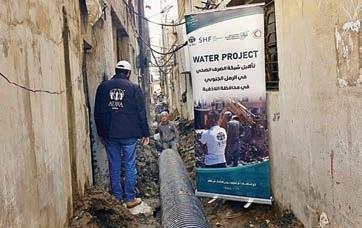
“ADRA staff were quick to respond, and they have remained active in impacted regions,” says Kelly Dowling, Emergency Response Program Manager for ADRA International. “Assistance has
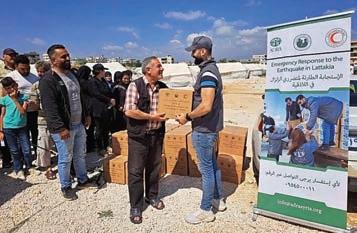
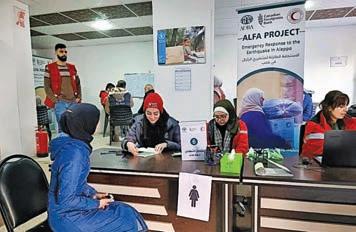
evolved from emergency aid to long-term rehabilitation, including the rehabilitation of school buildings and water systems.”
ADRA’s long-term rebuilding efforts focus mainly on children’s educational programs and the repair of school facilities.
“The education sector has been severely impacted, with a lot of kids out of school and many school buildings damaged,” says Nagi Khalil, Country Director for ADRA Syria. “ADRA is doing remedial classes and helping to repair schools that have been impaired.”
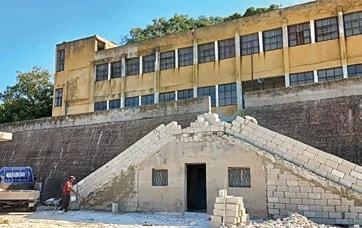
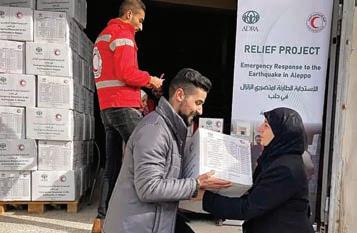
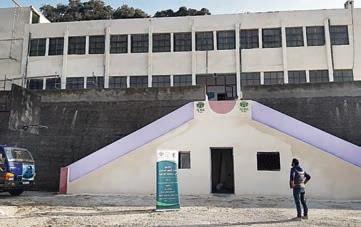
One example is of a school in rural Latakia. In October 2023, ADRA completed reconstruction of the school, benefiting 1,125 students. One student, Ilizabith*, 9, explains how the disaster affected students.
“I had to leave my school because (the building) had a crack,” Ilizabith said. “Our teachers tried to teach through WhatsApp groups, but this was hard because the internet was bad. After ADRA finished, we returned to the school, and it was much better than before!”
ADRA is also tackling food insecurity by giving cash vouchers to disadvantaged households and continues to restore water pumps and sewage infrastructure to provide safe drinking water and adequate sanitation in devastated regions.
“We want to thank all our donors and partners for their quick response to the earthquake,”
says Nagi. “We were overwhelmed by the demand for assistance during the disaster and continue to experience a high demand to support those in need.”
Before the 2023 earthquake disaster response, ADRA had already been serving Syrian communities and surrounding regions for over a decade, offering humanitarian relief projects such as education initiatives, shelter, and health care for refugee families.
ADRA Australia fundraised over $355,000 for the earthquake response.
*Name changed for child protection purposes.
Cyclone Kirrily made landfall near Townsville around 10pm on Thursday 25 January 2024 and was downgraded to a Category 2 cyclone.
There was minimal property damage and no loss of life reported. On Friday, 64,000 homes and businesses were without power, exacerbating the heatwave.
In December 2023, Cyclone Jasper struck Far North Queensland, causing widespread flooding and damage.
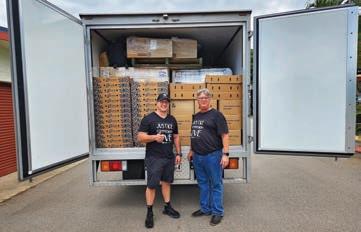
Together with local Seventh-day Adventist Churches, ADRA responded by distributing 480 food hampers and opening churches to act as emergency evacuation centres.
“We are thinking of the people in Cairns and praying for them,” said North Australian President, Pastor Simon Gigliotti at the time. “I’m pleased and thankful that our Church has been able to offer assistance to the community.”
In Mareeba, the council advised that there was no evacuation centre for stranded residents. In response, under the leadership of Pastor Sean Tavai and in collaboration with council, Mareeba Seventh-day Adventist Church became the official evacuation centre.
“The inspiring part was that local folks came through dropping bedding, food, and offering help,” says Pastor Tavai. “The impact of compassion, love, and reflecting the mission of Jesus to serve others was greatly experienced throughout the affected community.”
ADRA, together with local Seventh-day Adventist Churches, packed and prepositioned 400 food hampers. On Saturday 27 January, Aitkenvale Church opened to distribute food hampers, put on brunch, provide power for the community to charge devices and access air conditioning.
While the destruction caused by Cyclone Kirrily was thankfully not as bad as expected, this is not always the case. Disaster preparedness, like a disaster plan and prepositioned goods, can save lives and reduce damage.
In mid-February 2024, severe storms cut power to 530,000 homes, and 46 homes were destroyed by bushfires.
ADRA provided two emergency relief centres with fresh produce and cash assistance, as well as offering cash assistance to those affected. Together with SecondBite, ADRA provided 900kg of fresh produce to two emergency relief centres in Cardinia. And in partnership with local Seventh-day Adventist Churches, ADRA spent the weekend assisting families clean up their yards after the storm damage.
You can help us be prepared for the next disaster by giving to our Disaster Fund at adra.org.au/disaster
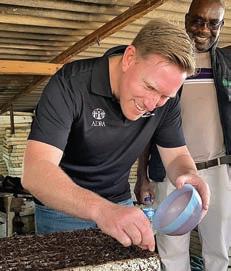
Jean Tiran has been the Chief Financial Officer for ADRA Australia since August 2020.
In 2022, Jean attended the ADRA Network Finance Summit in Prague. On his flight home, while putting his belongings into the overhead locker, one of the flight attendants behind him started crying unconsolably.
“I had my ADRA shirt on and she saw the logo and she just hysterically backed up, crying,” Jean says.
In a time where passengers sometimes mistreat or abuse cabin crew, the other attendants rushed over, thinking that Jean had done something to provoke her.
“They all came running to me thinking that I said or did something to try and hurt her, because she was almost uncontrollable,” Jean says. “But what she was saying the whole time was, ‘Thank you so much for what you have done for my family. Thank you. Thank you.’”
Jean glanced at her nametag and saw that the flight attendant, Oksana, had a Ukrainian flag next to her name, indicating her country of origin.
“The other flight attendants realised that she needed to take a moment,” says Jean. And then Oksana sat with Jean and told him her story.
Just months earlier, the war in Ukraine broke out and Oksana’s family lived in what would soon become the front line.
“She told me she’s one of six siblings,” Jean says. “Her brothers and dad have all been conscripted. She’s had no contact with them for months. She doesn’t know if they’re alive or not.”
Oksana’s remaining family – all her aunts, grandparents, babies, and her mum – were all staying together in the same apartment block on the front line.
“The reason why she recognised the logo is there was an ADRA van that picked them up,” Jean says. “The van came and extracted them, and as they drove off, the apartment block blew up. She expressed it as seconds away from being blown up.”
Oksana shared that ADRA didn’t just evacuate them from the front line but that they
helped her family transition into Poland as displaced people.
“That was a very, very touching moment,” says Jean. “She’s like ‘Thank you so much’ and I’m just like, ‘I didn’t do that! It’s not me. But it’s the logo.’”
In February 2022, ADRA launched a global response to assist the millions of women, children, families, and individuals who have fled their homes to escape shelling and seek refuge in neighbouring countries. ADRA’s response has included food and water provisions, shelter, transport, financial assistance, medical aid, and psychosocial support.
As of November 2023, ADRA has helped 40,265 people like Oksana’s family to evacuate.
More than two years after the conflict escalated, ADRA offices involved in the response have deepened their expertise in the fields of emergency response, psychosocial support, safeguarding, and multipurpose cash transfers.
ADRA Australia has fundraised over $626,000 for the Ukraine response to date.
To read more about ADRA’s Ukraine response, visit adra.org.au/ukraine.
“I just love coming here because I feel like little miracles happen every day.”
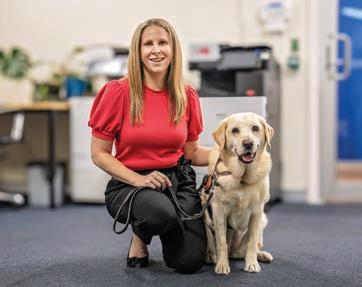
Liz Wheeler volunteers two days a week as a counsellor at the ADRA Community Centre Blacktown with her guide dog, Poppi, by her side. Run predominantly by volunteers, the centre offers services ranging from food parcels to social work but is best-known for its free, high-quality counselling.
“Losing my vision over time and acquiring a disability led me to appreciate what it's like to suffer and what it's like to heal,” says Liz. “I felt called into counselling so that I could support others.”
Liz sees a broad range of clients who are looking to improve their lives but don’t have the means to afford the mental health care required to address complex issues.
“Psychological services in Australia are incredibly expensive,” Liz says. “We have quite a wait list of people who really want to receive counselling services.”
Liz shared the story of one of her clients, Abigail*, and the incredible growth she has experienced thanks to her regular counselling sessions.
Abused as a child and homeless from the age of 13, Abigail did whatever it took to survive. She fell into drugs and had two children of her own before losing them to the foster care system.
“She came to ADRA wanting to change,” Liz says. “I was able to be part of that, part of supporting her through her year of sobriety, and then keeping off drugs, and then supporting her as she worked on her anger, and then even being able to be there in real time, critical moments that could have gone so badly.”
Liz attributes much of Abigail’s success to the
continuity of care that the ADRA Community Centre Blacktown was able to provide.
“Abigail knew this is a place she could come to, this is a place that cares, and that I could be with her and walk with her on her journey,” Liz says.
While her approach to each client differs, Liz says that her goal is the same: to help her clients see their worth.
“For me, the greatest gift I want to give to my clients is helping them to see their worth. You can feel tired at the end of the day, but it’s worth it.”
While volunteers like Liz help the daily running of the centre, it is not free from costs like rent and food support. The centre survives on the generous donations of ADRA supporters.
“I wanted to thank everyone who is supporting ADRA Community Centre Blacktown,” says Liz. “You're making a difference.”
*Name changed for privacy purposes.