The American Sports Builders Association, a non-profit trade association comprised of builders, designers and suppliers for sports facilities, exists to promote the highest standards of design, construction and maintenance.
ASBA Chair
Megan
Buczynski, PE, LEED AP
ASBA Executive Director
Fred Stringfellow, CAE | fred@stringfellowgroup.net
Editor
Mary Helen Sprecher | maryhelen@sportsbuilders.org
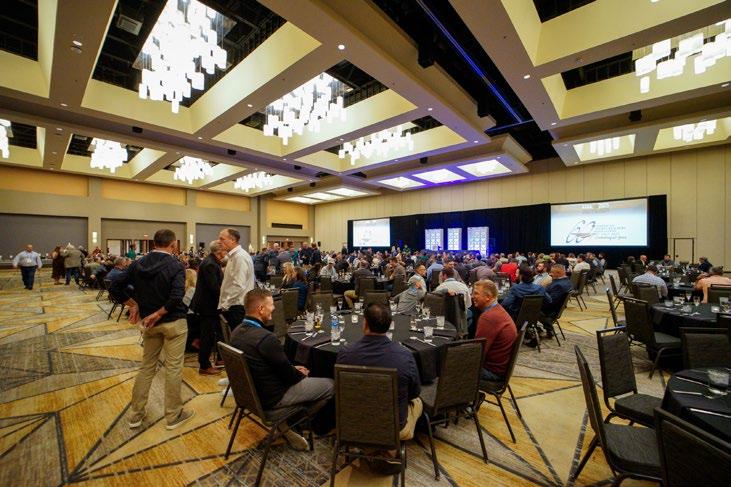
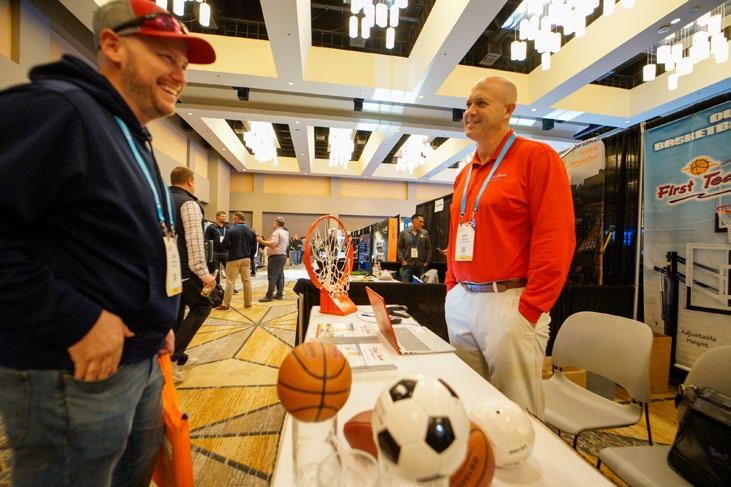
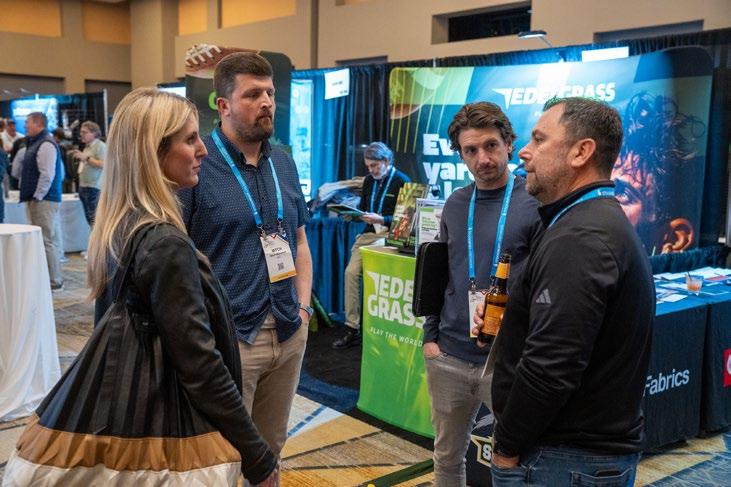
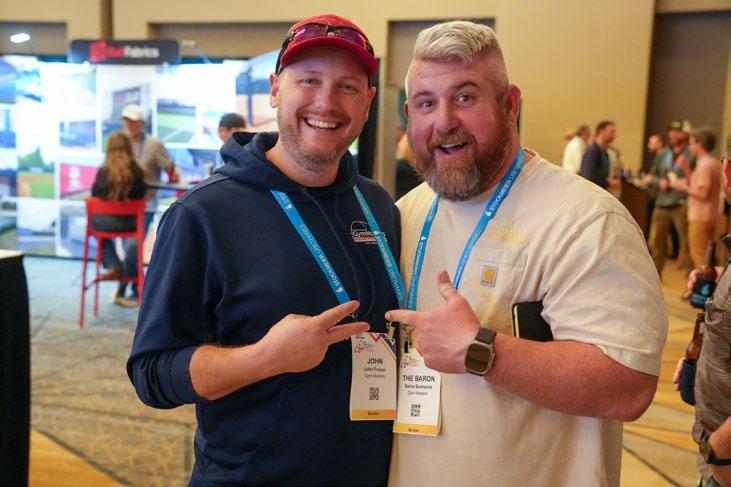
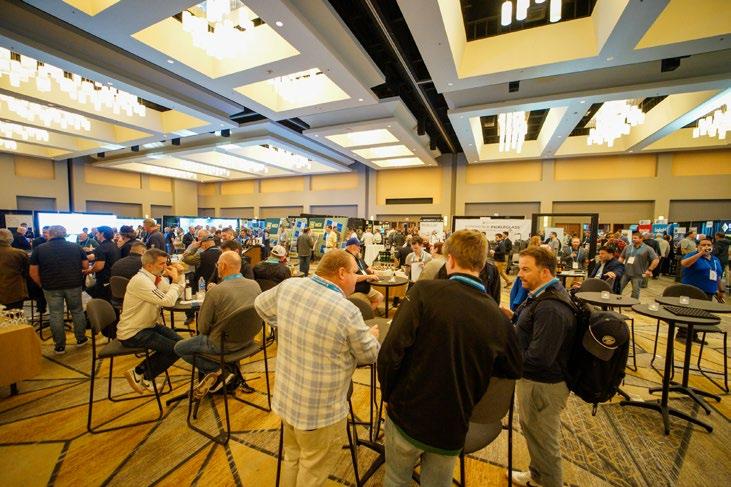
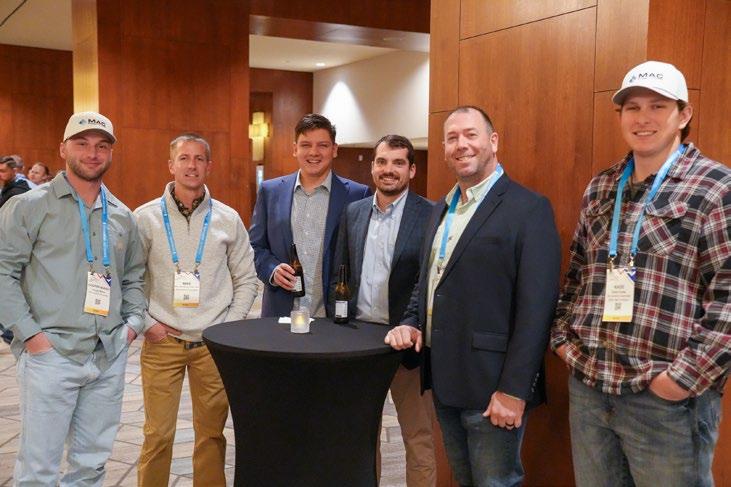
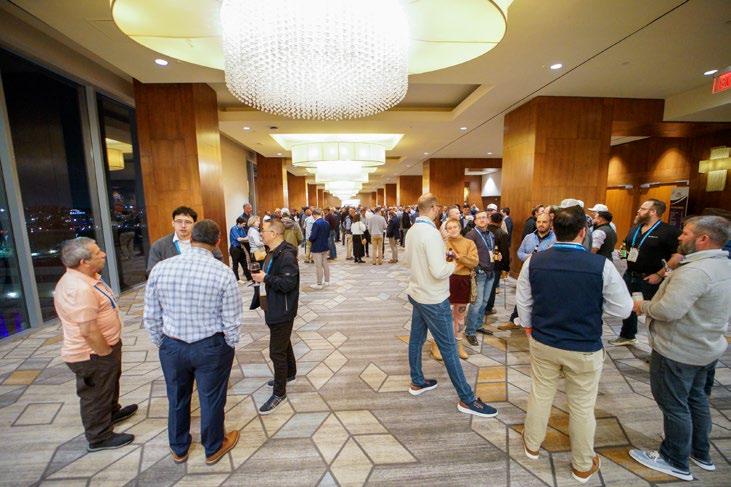
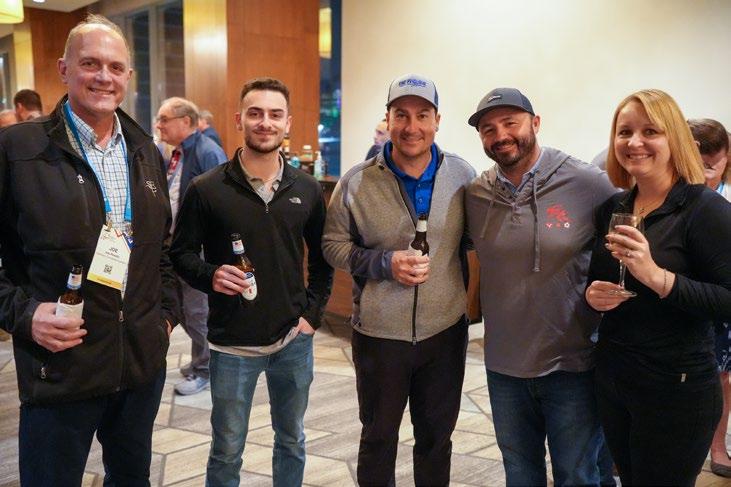
I hope you had a wonderful holiday season and New Year. It was inspirational to see so many of you at the Technical Meeting in San Antonio, Texas. Our Technical Meeting attendance continues to grow with another record high of 1,389 attendees. We received tremendous feedback on the variety of sessions throughout the five tracts of focus.
As you reflect on what you learned at those sessions, please be brainstorming about topics you’d like to learn more about and join us at the Winter Meeting in Costa Rica to help create the agenda for next year’s Technical Meeting. In addition, let’s pass the knowledge you learned on to others who were not able to attend. Many of the sessions are available online for review and are great tools to provide education for your colleagues.
I am honored to be writing my first letter as your ASBA Board Chair and am excited for the year ahead. As an industry we are strong, poised for growth, and ready to embrace the upcoming design and construction seasons. The results of those efforts are sure to create projects that will rival all of our Facility Award Winners from the past year!
Within ASBA, our Board and Committees are similarly ready to take on an exciting
LETTER FROM THE CHAIR
year with direction coming out of our fall strategic planning session. Our push forward will focus on education, partner relationships and creating more opportunities for our ASBA Community to grow within and outside of this organization.
Growth can be defined in many ways and I encourage each of you to think about how ASBA can help you grow. Over the last 20 years, ASBA has helped me grow my industry knowledge, my industry network and my interest in seeing how challenges can be solved in different ways (that may also be the engineer in me!). Seeing first-hand how technology can change our means and methods in design and construction is exciting.
As the sports and recreation industry grows, so does our members’ need to provide creative solutions and efficient construction methods to keep that momentum going. ASBA’s focus on continuing to cultivate our platform in order to bring this information to our members remains a high priority for our Board.
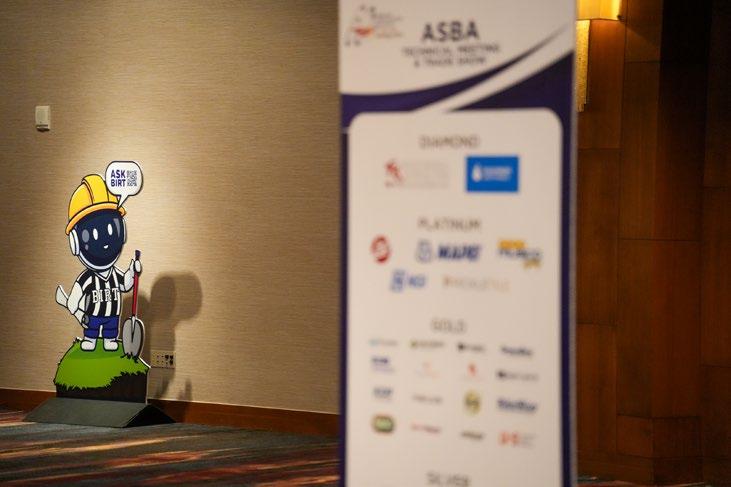
Speaking of new technology, has everyone tried BIRT? BIRT is ASBA’s AI bot designed to provide you with information from inside our ASBA website and educational platform more efficiently. Head to the website and click on “Ask BIRT” in the top right corner and see how ASBA is embracing AI to give our members a step up.
A theme you will hear from me in meetings and publications over the next year is encouragement to get involved. We as a Board are exploring more ways for members to become further involved in ASBA as it is the best way for members to share knowledge and network with their
peers – two important benefits of being in ASBA. Stay tuned for these opportunities in the coming months.
As we begin this new year together, I want to thank you for being part of ASBA. Being part of this Community has helped me grow as an engineer in this industry and I hope it has provided you with the means for growth in your career. With the continued collaboration of our membership we will continue to Build It Right. ★
Warmly,
Meg Buczynski, PE, LEED AP
HAS YOUR CONTACT INFORMATION CHANGED?
Need to update your address? Have you changed your e-mail or website? Is there a new employee you’d like to list?
Please help ASBA keep its records updated by letting us know!
This is the information that we will be using for ASBA’s Online Membership Directory – please make sure we have the most updated and accurate information.
To update any information, please contact info@sportsbuilders.org.
Meg Buczynski, PE, LEED AP
HEADLINE NEWS
ASBA Announces New Officers and Directors
ASBA has announced its officers and directors for the coming membership year. The new slate took its place at the conclusion of the Technical Meeting, held in San Antonio, Texas.
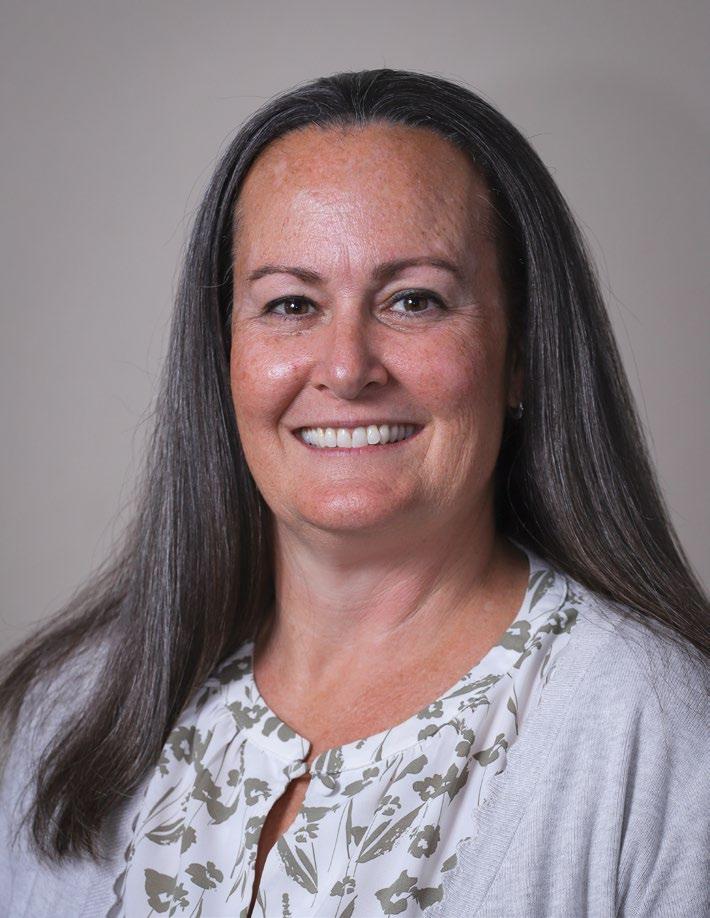
Megan Buczynski, PE, LEED AP (Activitas, Inc., Dedham, Massachusetts) is the Association’s new Chair. She has previously served as President of the Professional Division and has also worked in a number of volunteer capacities for the Association, including presenting at Technical Meetings and working on the editorial committee for the ASBA’s publication, Sports Fields: Construction & Maintenance Manual.
Randy Resley (Sport Court of the Rockies, LLC, Highlands Ranch, Colorado) will serve as Past Chair for one year. Resley was Chair of the Association from December 2023 to December 2025.
Newly elected/appointed members of the ASBA Board of Directors are the following:
Rick Hardin (STOCKMEIER Urethanes USA, Inc. in Clarksburg, West Virginia) –Suppliers Division President. Previously served as Suppliers Division Director.
Fred Kolkmann, CTCB (Fred Kolkmann Tennis & Sport Surfaces, LLC in Grafton, Wisconsin) – Courts Division President. Previously served as Courts Division Director.
Eric Loftus (Cape & Island Tennis & Track in Pocasset, Massachusetts) –Courts Division Director. Previously served as Secretary/Treasurer.
Tom Magner (California Sports Surfaces in Andover, Massachusetts) – Secretary/ Treasurer
Lee Narozanick, CFB, CTB (American Athletic Track and Turf in Vincentown, New Jersey – Tracks Division President
Darin Olofson, CTB (Fisher Tracks, Inc. in Boone, Iowa) – Tracks Division Director
Continuing in their positions as Division Presidents are the following:
Allen Verdin, CFB (The Motz Group in Cincinnati, Ohio) – Fields Division President
Jay Henley (Covington Flooring Co. Inc. in Birmingham, Alabama) – Indoor Sports Surfaces Division President
Sean Hufnagel, PLA, ASLA (HNP, LLC in Vestavia Hills, Alabama) – Professionals Division President
Continuing in their positions on the Board of Directors are the following:
Sam Titchener, CFB (Colony Landscape & Maintenance in Alviso, California) –Fields Division Director
Larry Wade (The Ohio Floor Company in Shreve, Ohio) – Indoor Sports Surfaces Division Director
Ross Rettler, PLA (Rettler Corporation in Stevens Point, Wisconsin) –Professionals Division Director
Alex Fletcher (Sportsfield Specialties in Delhi, New York) – Suppliers Division Director ★
HEADLINE NEWS
American Sports Builders Foundation: 2025 Year in Review
Established in 2023, the American Sports Builders Foundation was created to advance two core objectives: coordinating and funding the construction and renovation of sports facilities for communities in need and providing scholarships to students pursuing industry-related studies and programs. As the Foundation reflects on its progress in 2025, both initiatives continue to gain momentum.
Leadership and Governance
The Foundation extends its sincere thanks to Megan Buczynski, PE, Activitas Inc.; Kirk Grego, CFB, Mid-America Sports Construction; and Paul Nagle, AstroTurf Corporation for their service on the inaugural Board of Directors. Their dedication and leadership were instrumental in establishing the Foundation and guiding its work through its first two years.
The 2026 American Sports Builders Foundation Board of Directors includes:
• David Burke, NGI Sports
• David Clapp, CTB, CTCB, Baseline Sports Construction, LLC
• Patrick Maguire, RLA, Activitas Inc.
• David Moxley, Sportsfield Specialties, Inc.
• Chris Sullivan, RLA, Verde Design, Inc.
• Sam Titchener, CFB, Colony Landscape & Maintenance
• Jon Wright, CTCB, Court One
Scholarship Program Growth
In 2025, the Foundation reviewed 36 scholarship applications from highly qualified students across the country. Following careful evaluation, four scholarships were awarded for the fall 2025 academic year.
Three recipients are enrolled in turfgrass science and management and mechanical engineering programs at the University of Massachusetts Amherst and West Virginia University. The fourth recipient, a landscape architecture student at Michigan State University, was awarded the Ed & Martina Norton Scholarship, which is designated for students pursuing degrees in landscape architecture or civil engineering.
Scholarship applications for the fall 2026 academic year are now open, with an April deadline. Members are encouraged to share this opportunity with students in their professional and academic networks by visiting www.sportsbuilders.org/asbf
Facility Renovation Project
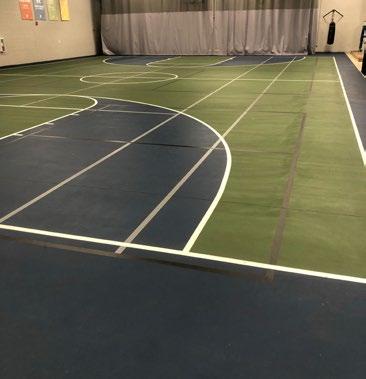
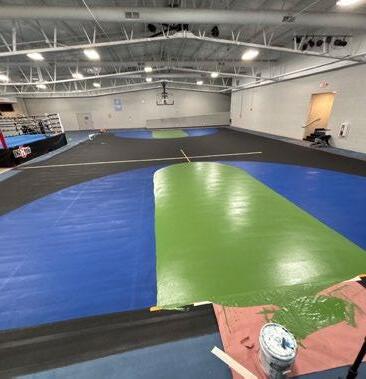
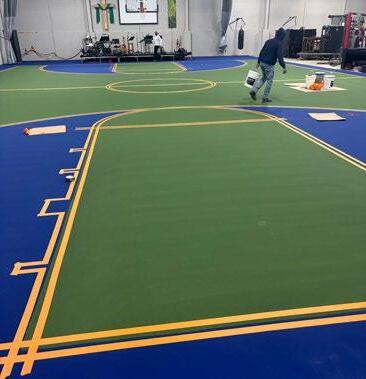
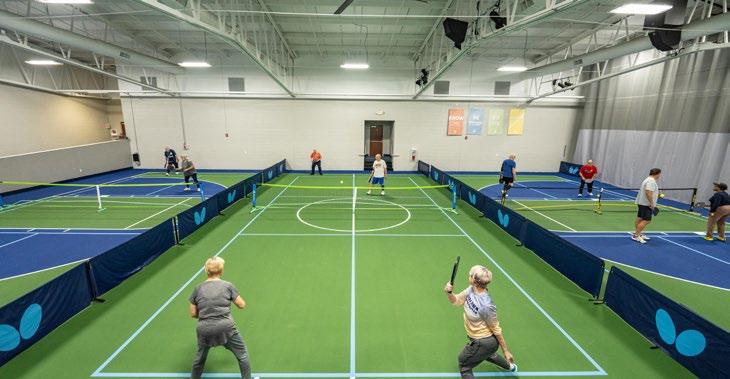
The Foundation also supported a community facility renovation project in 2025, contributing to improvements at The Beacon Resource Center in South Bend, Indiana. The indoor multi-use court serves the local community with space for basketball, tennis and pickleball; however, the concrete surface had faded over time, and incorrectly painted pickleball lines prevented the facility from hosting sanctioned tournaments, an important goal for increasing engagement and visitation.
HEADLINE NEWS
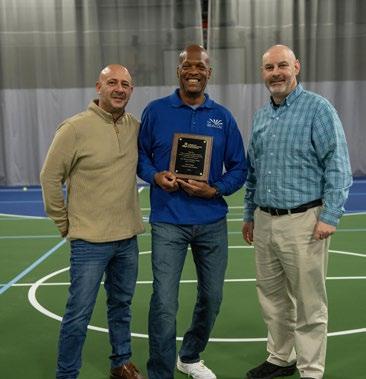
ASBA Member Ideal Coatings nominated the project and provided labor, while California Sports Surfaces donated product. The Foundation is grateful for their generosity and commitment to giving back. The renovation was completed in November,, and representatives from both companies were on site to present a commemorative plaque to The Beacon Resource Center recognizing the project.
Nominations and applications for the 2026 Foundation renovation project are now open, with a deadline in May. Members are encouraged to consider nominating a deserving facility in their community by visiting www.sportsbuilders.org/asbf
Fundraising at the 2025 ASBA Golf Tournament Support for the Foundation’s mission was generated during the 2025 Golf Tournament, held in conjunction with the ASBA Technical Meeting in San Antonio.
All tournament sponsorships directly benefited the American Sports Builders Foundation, with additional funds raised through the sale of mulligans and 50/50 raffle tickets. The strong participation and generosity of attendees helped further advance the Foundation’s scholarship and facility renovation initiatives.
Supporting the Mission
Those interested in supporting the ongoing work of the American Sports Builders Foundation are invited to make a donation through the ASBA website at www.sportsbuilders.org/asbf. Contributions help ensure the continued impact of both the scholarship and facility renovation programs in the years ahead. ★
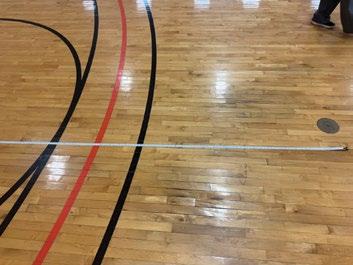
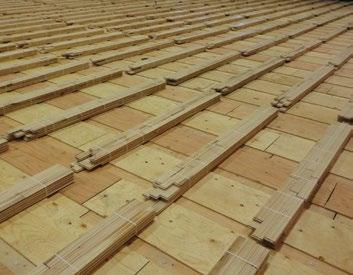
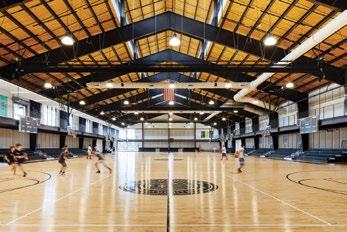
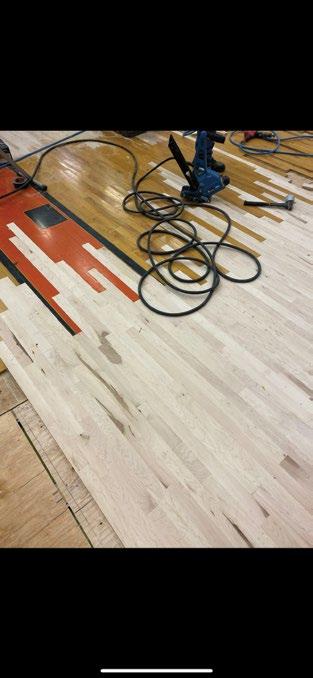
ASBA is excited to announce an all-new publication: Indoor Wood Sports Surfacing: Installation & Maintenance Manual.
This publication has been edited by an editorial board led by Rob Zehnder (Covington Flooring Co., Inc.) and made up of members of ASBA’s Indoor Sports Surfaces Division, with input from the National Wood Flooring Association (NWFA).
The manual will be an invaluable reference for facility owners, as well as builders, installers, manufacturers and others. It can also be helpful to those just entering the industry.
Topics covered include the following:
• Introduction to Wood Sports Flooring
• Wood Sports Flooring: A Brief History
• Planning and Design Considerations
• Health and Safety
• Tools Used in Wood Flooring Installations
• Jobsite Conditions for Successful Wood Flooring Installation
• Base Construction
• Wood Subfloors
• Athletic Flooring Installation
• Care and Maintenance of Wood Sports Floors
• Appendix
HEADLINE NEWS
Additionally, a wealth of photos and diagrams are included, which enhance the new publication’s value.
Indoor Wood Sports Surfacing: Installation & Maintenance Manual is currently in production and will be available soon.
The new publication joins others available from ASBA, including:
• Tennis Courts: Construction & Maintenance Manual
• Pickleball Courts: Construction & Maintenance Manual
• Courts & Recreational Surfaces: Construction & Maintenance Manual
• Running Tracks: A Construction & Maintenance Manual
• Sports Fields: A Construction & Maintenance Manual
• Padel Courts: Installation & Maintenance Manual
To find information on, or to order, any of ASBA’s publications, go to the website, www.sportsbuilders.org and using the top blue toolbar, mouse over the tab that reads “Resources.” A drop-down menu will include the word “Publications.”
All of ASBA’s publications are available in both hard copy and electronic format. ★
ASTM Standards Are Important to ASBA Members
Ed Norton, RLA, ASLA, LEED-AP, HNP, LLC and Alex Levitsky, PE, Global Sports & Tennis Design Group, LLC
ASTM International is a 120-year-old organization with over 30,000 volunteers developing standards. The published standards are highly regarded around the world and are among the most common standards referenced in construction documents. This is an introduction to a series of articles on the ASTM process, the makeup of committees and how standards are developed.
When evaluating a product or comparing products and their use, ASTM has established accepted industry-wide standards for the testing of materials used in manufacturing and for the final product (e.g. product makeup, durability, environmental impact).
Standards also include how the products should function in the field and their placement (e.g. installation, performance, reduction of injuries). Whether it is a synthetic or natural grass field, tennis court, indoor gym or running track, ASTM has developed standards to aid and direct the manufacturer, designer and builder.
An ASTM standard can be one of six types. Below are the types of standards and some examples relevant to ASBA members:
• Specification — an explicit set of requirements to be satisfied by a material, product, system or service.*
Example: F1936-19 Standard Specification for Impact Attenuation of Turf Playing Systems as Measured in the Field
• Test Method — a definitive procedure that produces a test result.*
Example: F3189-20 Standard Test Method for Measuring Force Reduction, Vertical Deformation and Energy Restitution of Synthetic Turf Systems Using the Advanced Artificial Athlete
• Practice — a set of instructions for performing one or more specific operations that does not produce a test result.*
Example: F3711-24 Standard Practice for Pole Vault Use Areas
• Guide — a compendium of information or series of options that does not recommend a specific course of action.*
Example: F3740-25 Standard Guide for Sports Facility Padding
• Terminology — a document comprising definitions of terms, explanations of symbols, abbreviations or acronyms.*
Example: F2650-17e1 Standard Terminology Relating to Impact Testing of Sports Surfaces and Equipment
• Classification — a systematic arrangement or division of materials, products, systems or services into groups based on similar characteristics such as origin, composition, properties or use.*
Example: F2043-13 (2018) Standard Classification for Bicycle Usage
After five years, a standard is to be reviewed by the originating subcommittee and re-balloted. After seven years, with no action, the standard is withdrawn. The numbers after the standard designate the year of the standard and if the standard was re-balloted with no changes, the re-ballot year is in parentheses.
Example: F2396-11 (2019) *- standard definitions from astm.org
Ed Norton and Alex Levitsky are the ASBA delegates to ASTM International and members of the ASBA ASTM Advisory Council. For more information about the ASBA ASTM Advisory Council, please visit www.sportsbuilders.org/volunteer ★
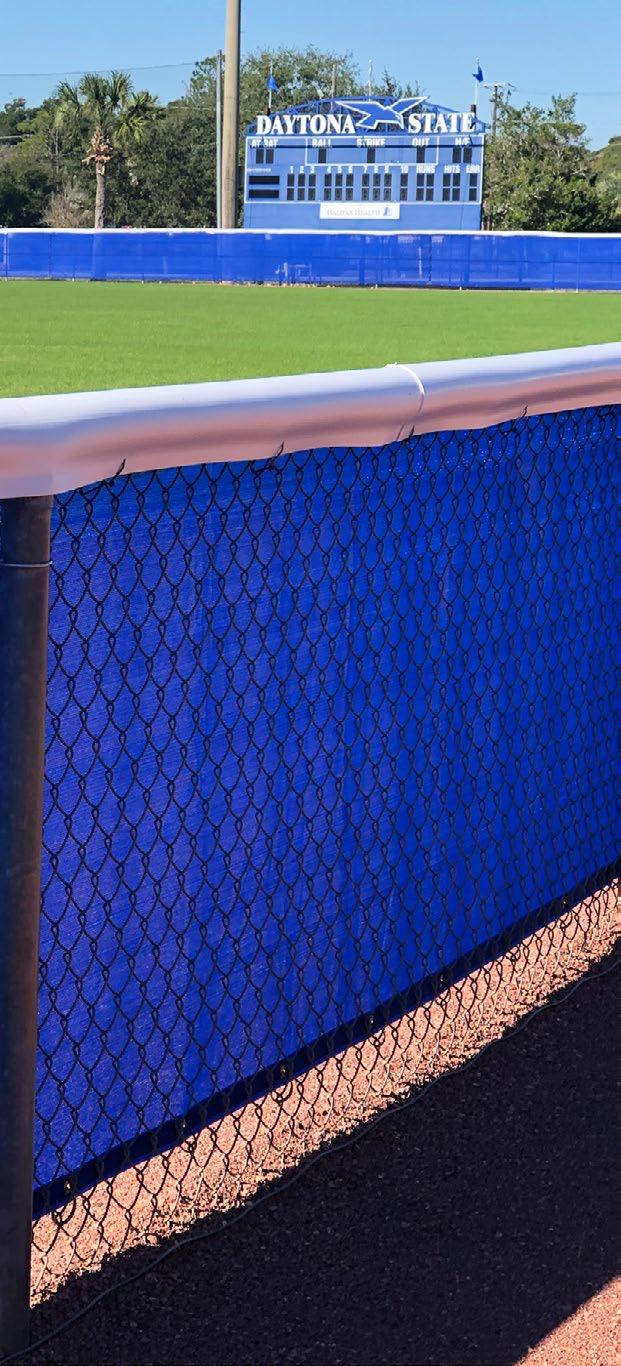
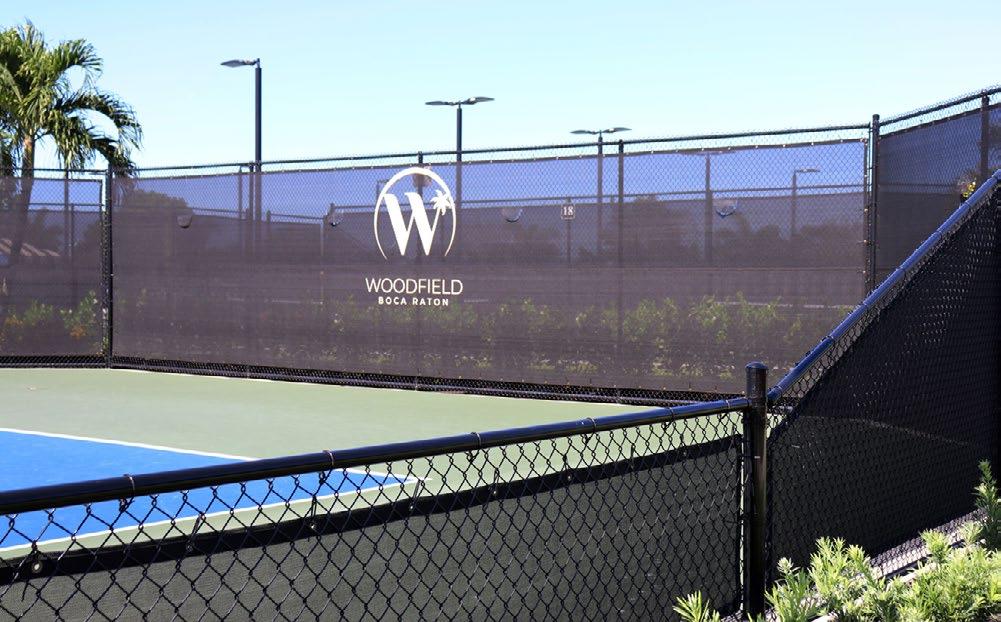
With 35 years of experience, Ball Fabrics presents the ultimate in windscreen durability and performance.
INTRODUCING EXTREMESCREEN®80
Less Wind. Less Maintenance. More Performance.
• Say goodbye to broken cable ties and flapping panels with ExtremeScreen®80.
• Reduces wind load by 50% - superior airflow outperforms other 80% windscreens.
• Built to last with durable HD Polyethylene that resists water wicking and cracking.
• Backed by the longest 7-year warranty in the industry.
ExtremeScreen®80 by Ball Fabrics 2024 ASBA Game Changer Award Winner! Recognized for excellence and innovation in the industry.
Built to Win: Why ASBA Members Should Be at RacquetX in 2026
ExtremeScreen®80 FROM OUR PARTNER
Across tennis, pickleball, padel, squash and the fast-growing “everything in between” categories, racquet facilities are evolving at amazing speeds. New surface systems, drainage solutions, lighting, fencing, modular court concepts, sound mitigation and tech-forward club amenities are changing what owners want and what players expect.
For the professionals who design, build and supply these facilities, the best way to stay ahead is to get in the same room with the people shaping demand.
That’s exactly why RacquetX is a can’t-miss moment for ASBA members. RacquetX brings the full ecosystem together under one roof in Fort Lauderdale, Florida at the Broward County Convention Center from March 13-15, 2026. The event brings together thousands of attendees, hundreds of companies and a show floor built for hands-on discovery.
For ASBA members, that translates into one simple advantage: you get early insights into what owners and operators will be asking for next season and you leave with the partners to deliver.
See the newest trends, before they become “table stakes”
Racquet facilities are no longer single-sport footprints. Increasingly, clubs and campuses are pursuing multi-use layouts, phased renovations and conversions that maximize space, programming and revenue.
Industry conversations at RacquetX have highlighted how today’s growth is often driven by retrofitting and redesign, not only ground-up builds.
That dynamic directly impacts ASBA members:
• Builders can evaluate emerging systems, tools and materials and compare approaches across sports.
• Design professionals can pressure-test layout, safety and performance trends with peers and prospective clients.
• Suppliers can showcase innovations to decision-makers actively searching for solutions and gather real-world feedback fast.
Why it’s worth the trip
RacquetX isn’t just a conference. It’s where the industry aligns around growth, innovation, standards and what owners will invest in next. It’s also a chance to strengthen the relationships that keep projects moving: from suppliers and designers to builders and owners.
If you’re an ASBA member, RacquetX is built for you because it brings together:
• The products and systems shaping courts and club environments
• The operators and developers who control budgets and timelines
• The education and peer exchange that turns trends into best practices
• The B2B pathways that turn conversations into contracts
We look forward to welcoming the ASBA community to Fort Lauderdale and to continuing our partnership with an association that defines quality and professionalism across the sports building industry. To learn more about RacquetX or to register, visit the website: theracquetx.com. See you at RacquetX 2026! ★
ASBA Honors Distinguished Sports Facilities
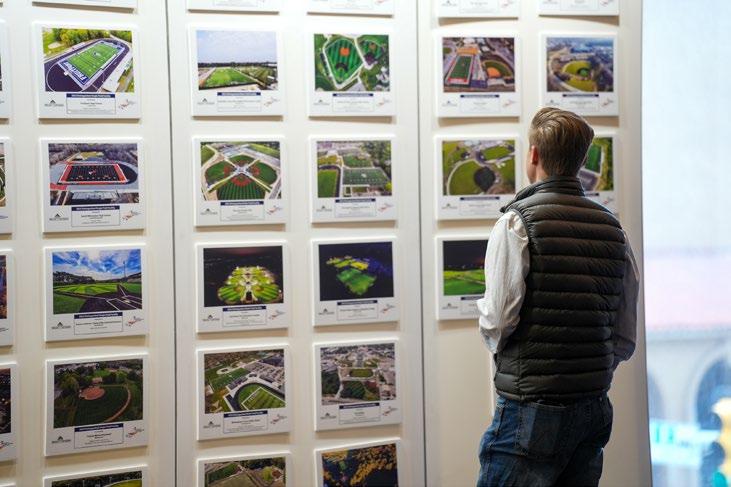
ASBA has announced the winners of its annual awards. Awards are presented each year to facilities built by ASBA members, which best exemplify construction excellence.
Awards are presented in various categories: Tennis Courts, Running Tracks, Sports Fields, Pickleball Facilities, Multi-Purpose/ Fieldhouse and Track & Field Facilities. Within some categories, there are divisions; for example, the Sports Field category recognizes single- and multiple-field facilities.
New this year was a special category: Tennis and Pickleball Facilities, in recognition of the growing number of multi-sport venues as communities recognize the value of both sports.
Winners of awards were announced at the Association’s 2025 Technical Meeting, presented from December 2-5 in San Antonio, Texas.
A full list of all award winners can be found on ASBA’s website, under the “News” tab. Select “News and Press” and then scroll down to “Press Releases.” The following facilities were chosen from among all winning entries to represent the best of athletic facility construction. This year’s winners were as follows:
OUTSTANDING SINGLE-FIELD FACILITY OF THE YEAR
Bryant-Denny Stadium at the University of Alabama
Tuscaloosa, Alabama
Precision Turf, LLC
Silver Award
Nova Southeastern University
NCAA Softball Field & Stadium
Davie, Florida
CSR Athletic Construction
Bronze Award
Calvin University Zuidema Soccer Stadium
Grand Rapids, Michigan
GMB Architecture + Engineering
OUTSTANDING MULTIPLE FIELD FACILITY OF THE YEAR
Paragon Star Sports Complex
Lee’s Summit, Missouri
LAND3 Studio, LLC
Silver Award
Bryant University
Smithfield, Rhode Island
Activitas Inc.
Bronze Award
Palomar College
San Marcos, California
Verde Design, Inc.
TRACK & FIELD FACILITY OF THE YEAR
Manteca High School
Manteca, California
Verde Design, Inc.
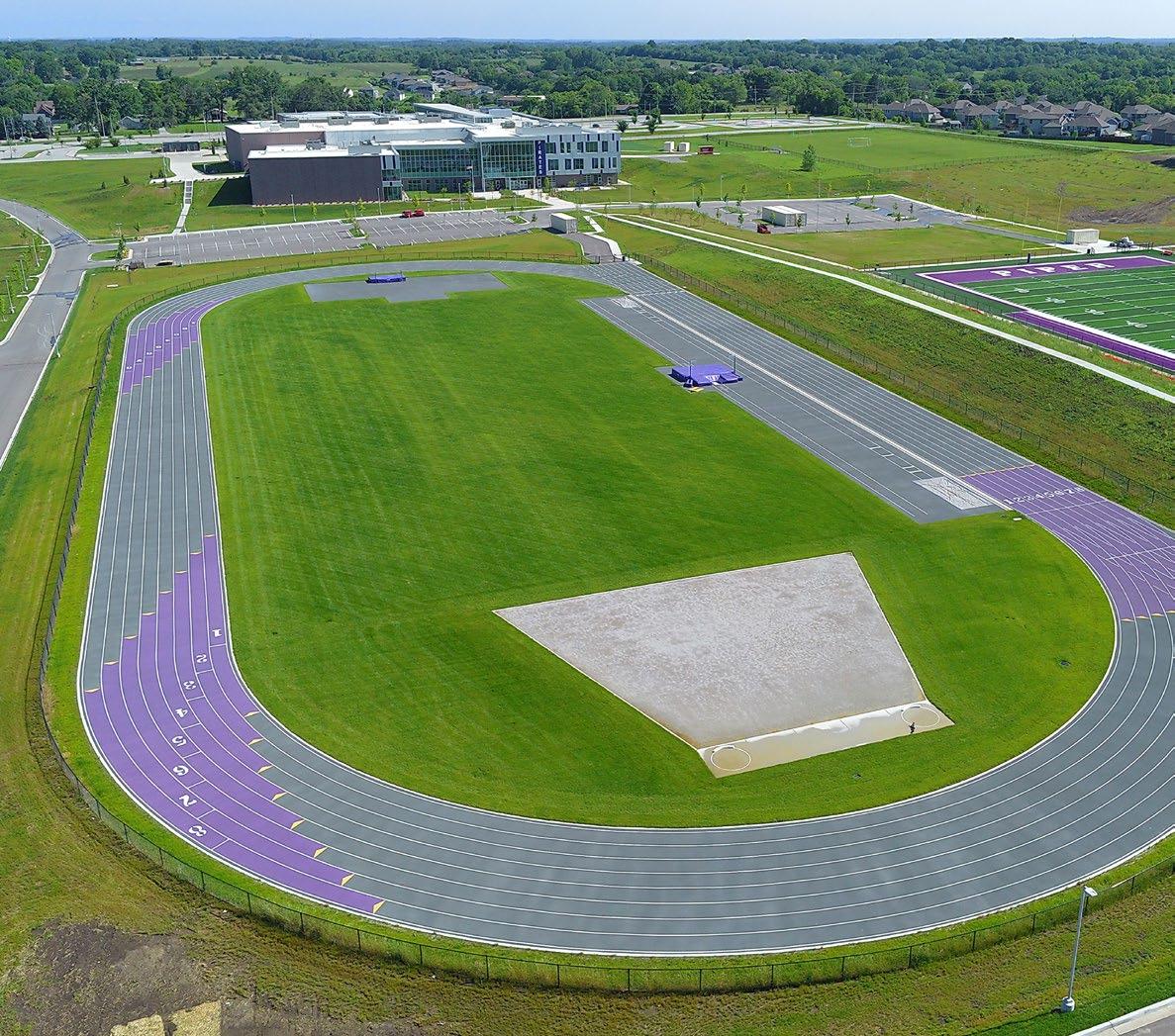
OUTDOOR TRACK FACILITY OF THE YEAR
Piper High School Athletics
Kansas City, Kansas Fisher Tracks, Inc.
OUTDOOR TENNIS FACILITY OF THE YEAR
Rush Henrietta Senior High School
Henrietta, New York LaBella Associates
Silver Award
Rockford Public Schools High Schools
Rockford, Michigan
GMB Architecture + Engineering
Bronze Award
Town of Weston
Weston, Massachusetts Activitas Inc.
INDOOR TENNIS FACILITY OF THE YEAR
University of Georgia
Athens, Georgia
Lower Bros. Co., Inc.
RESIDENTIAL TENNIS FACILITY OF THE YEAR
Henegan Residence
Lutz, Florida
Fast-Dry Courts, Inc. & 10-S Tennis Supply
Silver Award
Mactier Private Tennis Court in Ontario’s Cottage Country
MacTier, Ontario, Canada
Court Surface Specialists Ltd.
TENNIS AND PICKLEBALL FACILITY OF THE YEAR
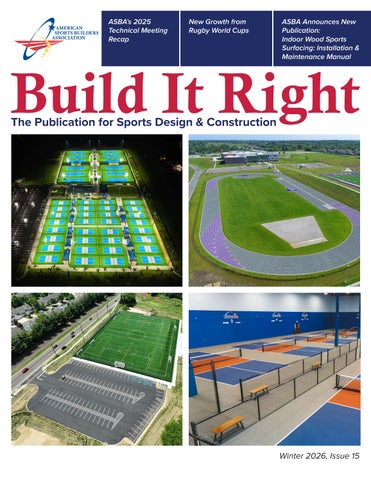
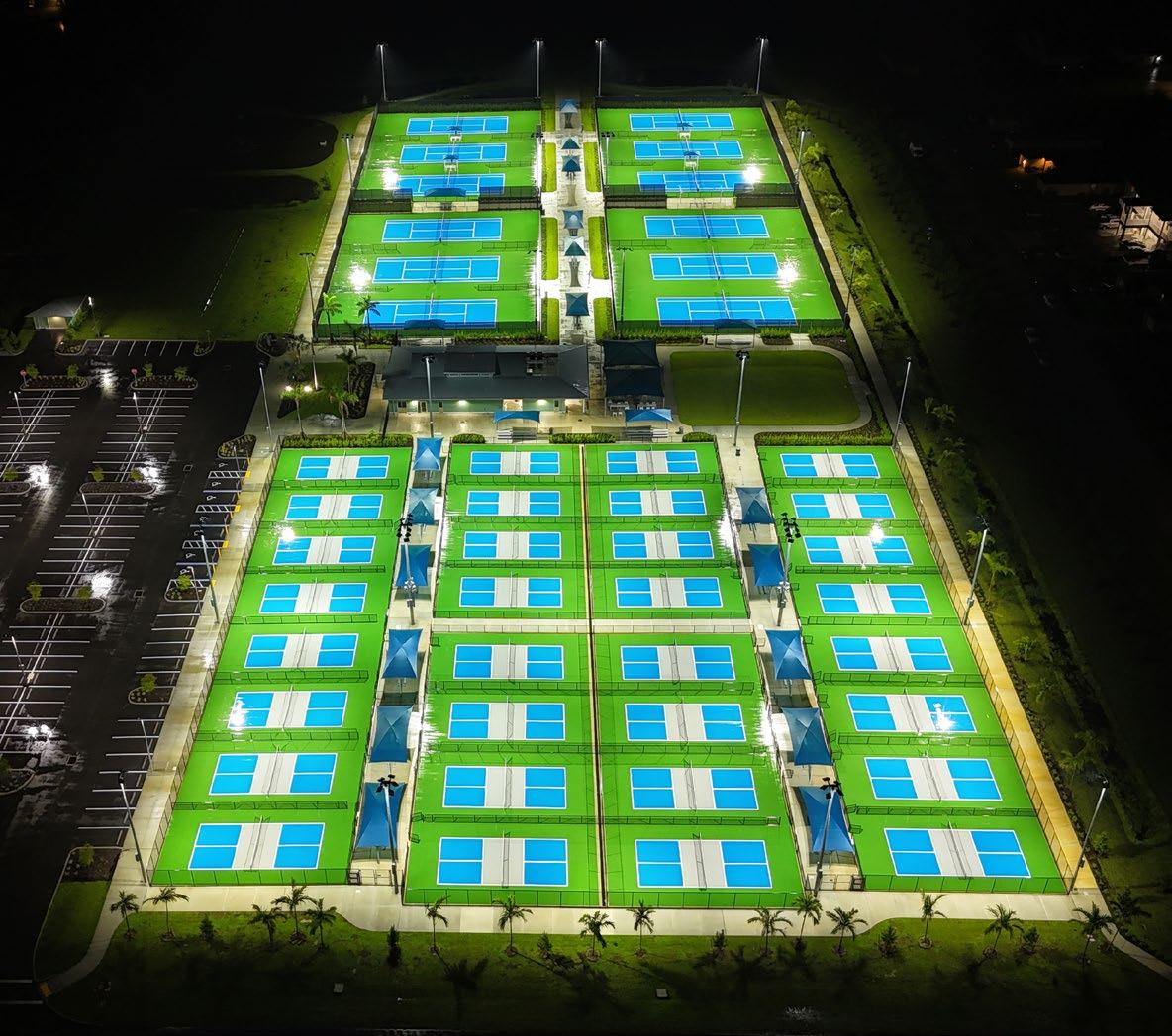
Lake Kennedy Racquet Center
Cape Coral, Florida
Nidy Sports Construction Co., Inc.
Silver Award
Drury University - The Panther Pad
Springfield, Missouri
McConnell & Associates Corp.
Bronze Award
Governor’s Island Club
Gilford, New Hampshire Huntress Associates, Inc.
INDOOR PICKLEBALL FACILITY OF THE YEAR
Missouri Pickleball Club – Ellisville St. Louis, Missouri
McConnell & Associates Corp.
Silver Award
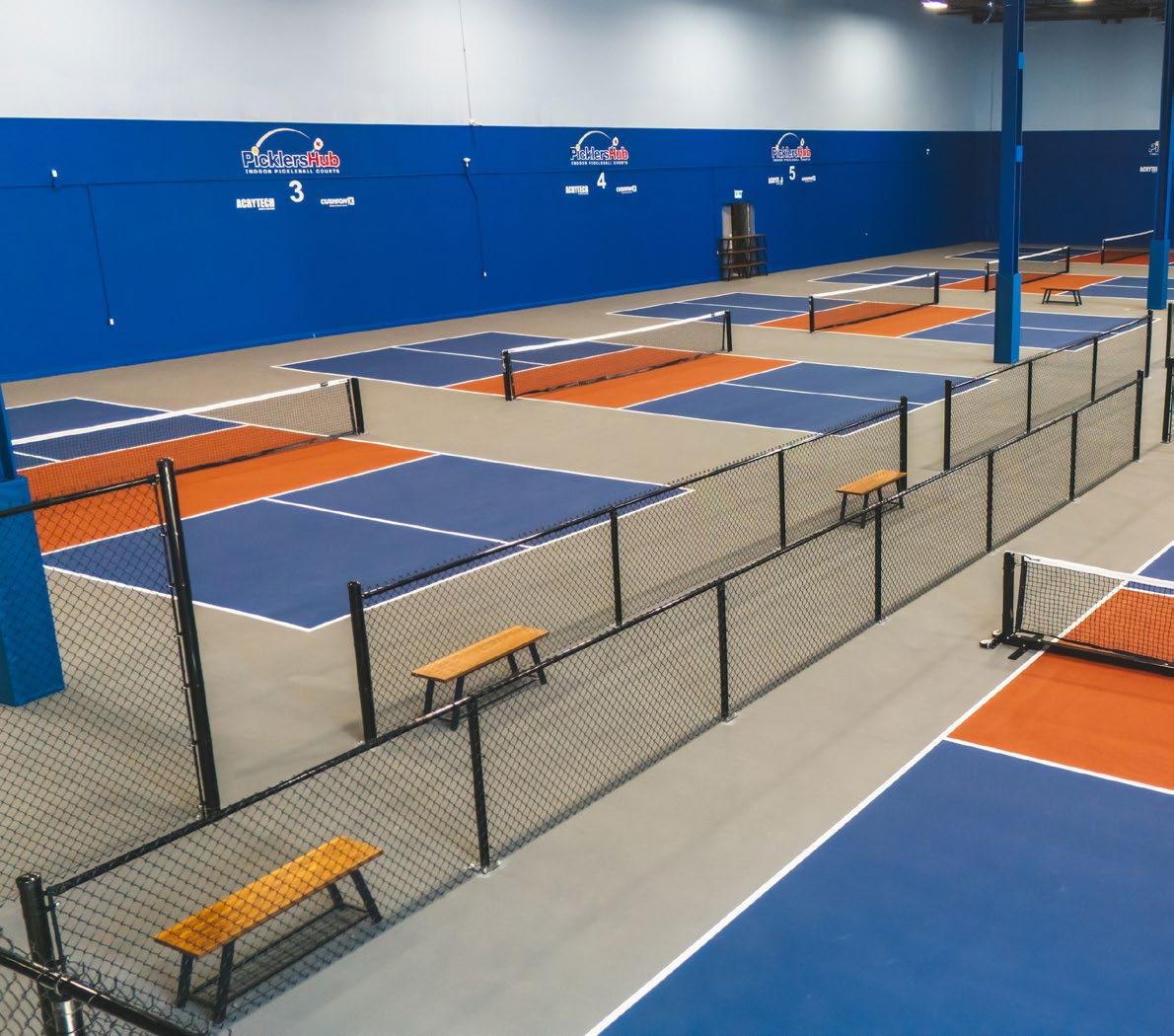
Picklers Hub
Mississauga, Ontario, Canada
Court Surface Specialists Ltd.
OUTDOOR PICKLEBALL FACILITY OF THE YEAR
Pelican Golf Club
Belleair, Florida
Fast-Dry Courts, Inc. & 10-S Tennis Supply
Silver Award
Kearney Pickleball Complex
Kearney, Missouri
McConnell & Associates Corp.
Bronze Award
Frontier Family Park
Queen Creek, Arizona
GA Sports Construction
A Sneak Peek Inside the Sessions
If you were present at the Technical Meeting in San Antonio, you already know how valuable and insightful the sessions were.
However, if you missed your chance to attend the meeting, here’s some incentive to get there next year: This special sneak peek into the content offered to all attendees. The following is a sampling of sessions designed to appeal to various membership divisions:
TRACKS DIVISION
Texas A&M San Antonio Track & Field: Design/Build Case Study
Presenters: Brian Binkowski and James Kindred, Halff; Bobby Killion and Joe Martin, CFB-S, CTB, Paragon Sports Constructors, LLC; Stephen Sherman and Darnell Smith, Ph.D., Texas A&M University-San Antonio
A comprehensive approach was necessary for this project, which included not just an NCAA-compliant 8-lane track and a soccer and intramural field but a grandstand that could flex from seating 500 to 1,000, a press box, pedestrian walkways, field lighting, scoreboard and other amenities. Field events, including high jump, long jump, steeplechase, javelin, shot put and hammer areas, also needed to be built.
Complicating the process was the fact that campus-wide construction and renovations were going on throughout the course of the work on the track & field facility, which created a need for efficient logistical and staging planning. Additional campus projects, including the planned construction of a roadway, were still in the design phase as well, which created further challenges.
As a result, communication was key among all parties both within the athletic project and those outside it; presenters highlighted the involvement of both athletic administration and contractors, with monthly design meetings being held between design meetings with campus administration, development staff and other campus project teams.
Drainage presented a particular challenge, requiring creative solutions; in addition, grading for future projects was necessary.
Step-by-step photos helped illustrate the scope of the project, from clearing a fully wooded area to stabilizing the subgrade
and installing the retaining wall and all underground utilities and ultimately to the installation of the field and track, with the track (and field events) among the last aspects of the sports facility project to be installed.
Note: This project was also the subject of a site visit for attendees.
COURTS DIVISION
Padel Courts: What to Know Before You Build
Presenters: Todd Dettor, Fast-Dry Courts, Inc./10-S Tennis Supply and Eric Loftus, Cape & Island Tennis & Track
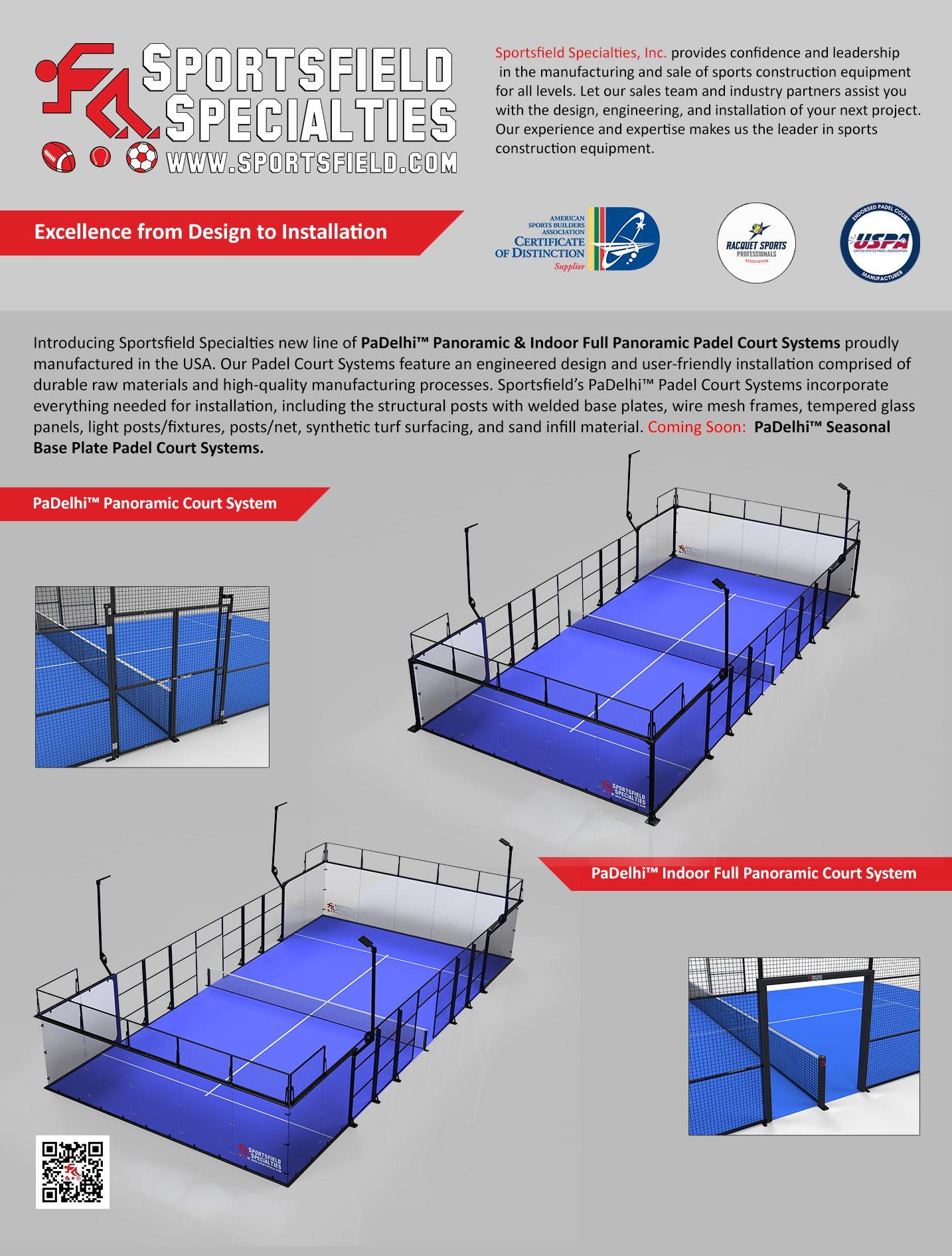
Padel is growing in popularity, with installations not just in clubs but in homes and multi-sport facilities. Presenters focused on the fact that the padel court is unlike any other sports facility (indoor or outdoor) in that its sides are made up of both wire mesh and glass, and that the surface is generally synthetic turf (although the International Padel Federation, or FIP, notes that a variety of other surfaces may be used instead).
Padel courts are also unique in that they are manufactured and shipped in a ready-to-assemble kit format, with the owner generally expected to provide only a structurally sound base to which the court can be bolted, and electrical power (many court kits include integrated lighting fixtures).
While previously, padel courts were manufactured only internationally and imported to the U.S., courts are now also being made stateside. One advantage of this, noted the presenters, is the fact that American engineers are more familiar with regional wind loads, which are an important consideration in installations.
The recommended slope for an outdoor padel court is a maximum of 1%. Presenters discussed the importance of having water drain away from the court, rather than collecting beneath it. Indoor courts may be flat, but it was noted that a vapor barrier must be used beneath the court in order to avoid problems.
A 26-foot to 30-foot clearance is recommended over padel courts, and presenters discussed lighting placement in order to provide adequate illumination but avoid glare on the glass of the court.
Additional attention was paid to ways to avoid common mistakes in installation; many of these were items that should be addressed in the planning phase, such as slab design, ceiling height and lack of attention to wind loads.
INDOOR SPORTS SURFACES DIVISION
Best Practices in Sports Surface Maintenance and Equipment
Presenters: Jason Blake, Robbins Sports Surfaces; Brian Boggess, Tarkett Sports; Ron Loffredo and Paul Berdusco, TEC Specialty Products
Proper maintenance of hardwood or synthetic sports floors not only preserves the longevity and appearance of the surface, but it enhances the safety of athletes and allows them to perform their best. Educating facility owners in proper techniques (and describing why they are essential) can mean the difference between a floor that maintains its luster and one that looks dingy and feels slippery underfoot.
It is incumbent upon manufacturers to create a full set of instructions and recommendations, and upon builders and installers to make sure that all instructions are communicated to the responsible parties (as it can save complaints down the line).
Maintenance of hardwood flooring was divided into various categories, including the following:
Daily Maintenance Routine and Preventive Care:
Placing walk-off mats at all entrances, dust mopping on a daily basis and addressing spills and scuffs as quickly as possible were all seen as necessary tasks, along with regular inspection of the floor and vigilance as to the HVAC system in order to keep the correct environment for hardwood (and users).
Some of the biggest threats to hardwood floors come from errors on the part of maintenance crew, such as the use of household cleaning projects or cleaning with power-scrubbers or other machinery. Owners must be given a list of care instructions, with a note to call the builder, installer or manufacturer for advice before trying anything new.
Synthetic floors can be inspected regularly when needed and cleaned (the frequency
of this can vary and should be discussed in advance) with an automatic scrubber using manufacturer-approved pads and neutral cleaner. Deep cleaning should also be carried out periodically, and repairs made when needed, according to the manufacturer’s directions.
Regular inspection of all cleaning equipment as well as sports equipment used in a gym is also useful in avoiding damage. In conclusion, presenters noted, it was essential to be consistent, and to train the staff to be proactive and use the correct tools.
FIELDS DIVISION
Case Study-Disaster Relief: Designing To Weather The Storm
Presenters: Jeff Bresee, CEI Engineering; Christopher McGill, SCG Fields; John Cairns, CFB-S, Keystone Sports Construction
Synthetic fields are designed to allow water from precipitation or irrigation to
drain down and be removed from the field. However, the session posed a novel challenge: What to do when water buildup occurs not from water coming from above the field but from beneath it?
A typical field includes a rubber liner over the subgrade and below the surface layers. Should water build up in the subgrade, however, it is unable to evaporate and remains trapped.
Presenters noted that in cases where such a scenario is possible (this might include areas subject to flooding conditions or those with a high water table, for example), the rubber liner should be replaced with geotextile fabric. Improvements to the system as a whole were discussed; these included using a soil cement or aggregate base layer (or both.
Photos used along with the program, illustrating damage to a Texas field from Tropical Storm Imelda (2019), showed the problem with startling clarity, including
shots of trapped water that caused the surface to balloon upwards.
Potential soil issues can be found using geotechnical research; some factors to consider include the soil’s Potential Vertical Rise (PVR) which is based on Atterberg Limits, and primarily the soil’s Plastic Index (PI). Presenters discussed various types of soils and their ability to contribute to (or help withstand) problems. Stabilization methods were also listed.
Wishing you’d sat in on some of these sessions? If you were an attendee at the Technical Meeting, you can access the recordings free of charge; contact ASBA to learn how. If you missed this Technical Meeting, make sure you don’t miss the 2026 meeting in Tampa, Florida, to be held from December 1-4, 2026 at the JW Marriott Tampa Water Street. ★
CHILL, IT’S ARAGONITE
ASBA Announces Industry Award Winners
ASBA has announced the winners of its industry awards of recognition.
Winners of awards were announced at the Association’s 2025 Technical Meeting, presented from December 2-5 in San Antonio, Texas.
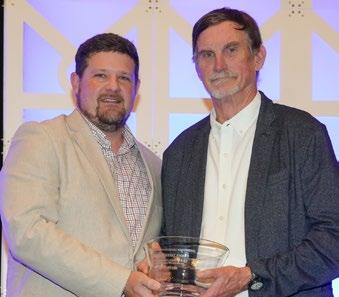
The Industry Merit Award, ASBA’s highest honor, given in recognition of exemplary service to the Association, was presented to Ed Norton (HNP, Vestavia Hills, Alabama). Norton, a longtime member of the Association, has been actively involved in the Association on multiple levels, including as a member of the Board of Directors, where he was chairman of the Professionals Division, and assisting with the writing and editing of several editions of ASBA’s publication, Sports Fields: Construction and Maintenance Manual.
Additionally, Norton, a Registered Landscape Architect who has been a member of the industry for more than four decades,
has used his knowledge of athletic turf and sports field design as a member of ASBA’s Awards Committee, and has also written position papers, contributed to technical articles, spoken at meetings and assisted with the development of the Certified Field Builder exam.
Outside of his work with ASBA, Norton has lent his expertise as a Delegate to ASTM International, where he made significant contributions to the testing and safety of sports equipment, playing surfaces and facilities through his involvement with ASTM Committee F08: Sports Equipment and Facilities. He has also worked with various ASTM subcommittees.
Sean Hufnagel, a member of ASBA’s Board of Directors, in nominating Norton, noted, “His significant contributions to the industry are both wide-ranging and impactful. Throughout his career, Ed has demonstrated unwavering commitment to advancing the field.”
Also during the Technical Meeting, Racquet Sports Industry Magazine announced the
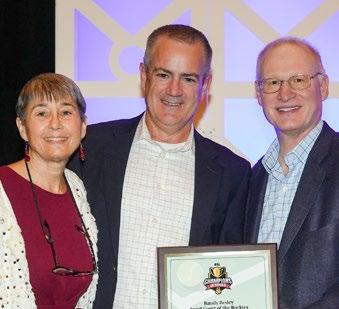
winner of its Court Builder/Contractor of the Year Award, recognizing outstanding contributions in tennis facility construction. This year, the award was presented to Court Builders of the Rockies, LLC (Highlands Ranch, Colorado).
The company, a longtime member of ASBA, has been active in the Association; its owner, Randy Resley, is the Association’s Immediate Past Chairman. Resley has served on ASBA’s Board of Directors, has spoken at meetings and most recently, contributed to numerous Association’s publications, including Courts & Recreational Surfaces: Construction and Maintenance Manual and Padel Courts: Installation & Maintenance Manual as well as the forthcoming publication, Indoor Wood Sports Surfacing: Installation & Maintenance Manual. Under Resley’s direction, the Association also added a new Indoor Sports Surfaces Division. ★
ASBA Announces 2025 Game Changer Award Winners
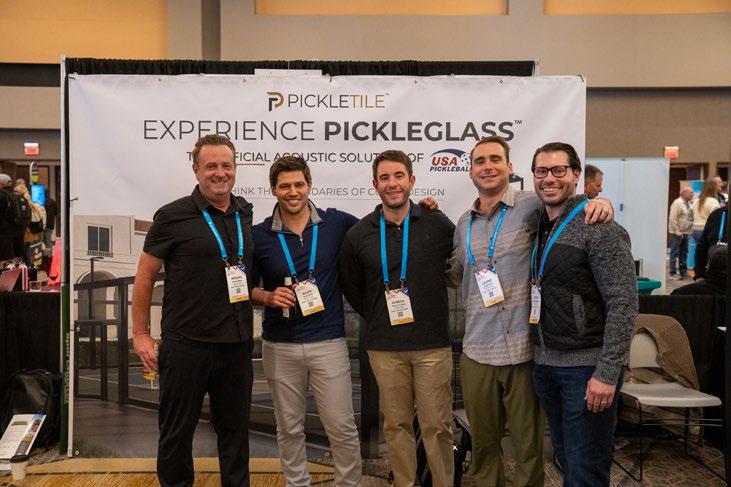
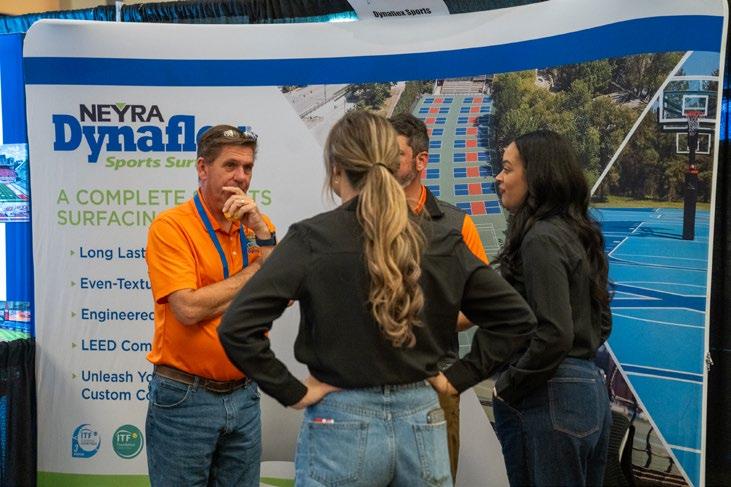
ASBA has announced the winners of its Game Changer awards. Winners of awards were announced at the Association’s 2025 Technical Meeting in San Antonio, Texas. The Game Changer Awards program allowed attendees in the ASBA’s Exhibit Hall to learn about new technologies and products on the market. Attendees were then able to vote for those products they thought best exemplified excellence and innovation in the industry. Winners were as follows:
COURTS DIVISION
AcoustiPadTM Noise Absorbing Safety Pad System | Putterman Athletics
This product establishes a new standard in facility padding, dramatically improving acoustics and aesthetics. AcoustiPadTM features a two-inch high-density foam core wrapped in a durable synthetic open-mesh fabric that reduces wear and tear even as it allows sound to dissipate efficiently. AcoustiPadTM reduces echo by more than 97 percent, as tested by Pickleball Sound Mitigation, LLC. Each pad is two feet wide by six feet high (with custom sizes available) for ease of installation.
FIELDS DIVISION
TIGER Barrier Netting System | Unlimited Sports Solutions
The TIGER Backstop Netting System is designed to withstand accidental and intentional damage, alleviating concerns about durability. The TIGER system features oxide-coated stainless steel netting that delivers the same visual appeal as standard netting, while being virtually in-
destructible. Engineered for long-lasting performance, the system includes highyield strength steel poles spaced up to 50 feet on center, transitioning to nylon netting above reach height, and all necessary cabling and hardware for installation.
INDOOR SPORTS SURFACES DIVISION
INFINITYFLEX™
| PICKLETILE
INFINITYFLEX™ is a premium, free-standing modular court divider engineered to bring versatility, durability and modern design to any sports environment. Unlike fixed systems, it requires no permanent foundations, making it ideal for professional pickleball events, temporary play or indoor facilities with restrictive site conditions. It uses interlocking four-foot and six-foot polycarbonate panels with powder-coated aluminum frames, delivering exceptional impact resistance and stability. INFINITYFLEXTTM offers tool-free assembly, configuration, and reconfiguration, enabling rapid installation and easy storage.
TRACKS DIVISION
GEZOFLEX endurance | GEZOLAN (KRAIBURG), LP
GEZOFLEX endurance are the EPDM granules for sports and leisure flooring that offer unprecedented UV stability. While previously, facility owners had to contend with products that remained vibrant for only a short amount of time, GEZOFLEX endurance features long-lasting color stability and unprecedented values on the gray scale. It is perfectly suitable as a top layer for projects expected to face high levels of UV exposure. This specialized product line features six bright colors, each with superior UV performance.
Information on the winners of all Game Changer Awards is available from the companies shown above.
Note: Winners were voted upon by individuals using the ASBA Technical Meeting mobile app; therefore, Game Changer awards are wholly attendee-driven and do not constitute a commercial endorsement from ASBA. ★
Presenter: Bill Botten, Accessibility Specialist, PlayCore Consultant
Understanding continues to grow of the importance of designing and building inclusive and accessible sports facilities, which led ASBA to host a webinar on the topic late last year.
The presenter, Bill Botten, has been a member of the U.S. Access Board and was part of the team that developed the combined guidelines for the Americans with Disabilities Act (ADA) and the Architectural Barriers Act (ABA).
As a person who uses a wheelchair, Botten brought firsthand experience. Once a sports facility goes under renovation, the responsibility for creating accessibility can be summed up in five
words: What you touch, you fix. Additionally, all newly designed and constructed facilities must comply with ADA. (Exceptions included construction sites.)
When making additions or enhancements to existing facilities, necessary changes include creating accessible entrances, toilet and bathing facilities, along with public telephones and drinking fountains. (While portions of historic structures may be exempt from some changes, such sites are required to have accessible routes, entrances and restrooms.)
Note: Missed this webinar and want to view it? You still can! Go to sportsbuilders.org/store, making sure you have signed in using your ASBA login. Scroll down to the bottom of the page, then click on the box that says, “Webinar Recordings.”
INDUSTRY VIEWS
An Interview with Paula Sliefert, CEO, Sports Field Management Association
Industry Views is a regular column in Build It Right, featuring an interview with an industry partner whose work is helping to drive evolution. Have a suggestion for someone to interview? E-mail our editor at maryhelen@sportsbuilders.org
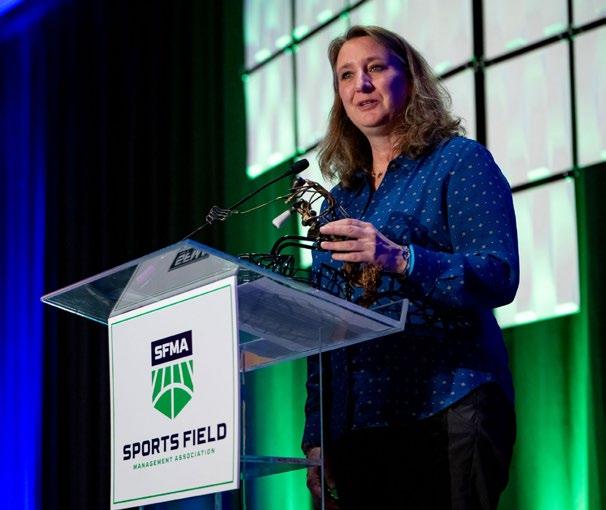
In mid-2025, the Sports Field Management Association (SFMA) announced Paula Sliefert as its new CEO, a role in which she will lead the association’s growth initiatives and execute its strategic plan.
Sliefert brings a wealth of experience in marketing, leadership and strategic development to SFMA. After a career at The Toro Company, she was appointed executive director of the Professional Football Field Managers Alliance (PFFMA), an organization primarily made up of NFL groundskeepers.
Additionally, she holds a bachelor’s degree from Simpson College and a master’s degree from Bowling Green State University. She has extensive history in the volunteer sector as well, including serving on multiple boards. She has also helped the National Recreation and Park Association (NRPA) launch a business council and serves on one of NRPA’s committees.
ASBA sat down with Sliefert to discuss her time at SFMA so far, as well as her plans and goals for the future.
American Sports Builders Association: In addition to taking on the position at SFMA, you have remained with the PFFMA.
Paula Sliefert: Yes. I was very transparent with SFMA throughout the interview process, as well as with PFFMA. After my position at Toro ended, PFFMA reached out to me, which I was deeply grateful for. Because of that, I remain very loyal to the organization and committed to supporting its mission alongside my role at SFMA.
American Sports Builders Association: What are some of your long-term goals as SFMA’s new CEO?
Paula Sliefert: One of the commitments I made to the Board was to earn my certification in association management within my first three years. SFMA places a strong emphasis on learning and continuing education, and I believe leadership should model that same commitment.
American Sports Builders Association: What has it been like so far at SFMA?
Paula Sliefert: I have been on what I call a “listening tour.” The SFMA Board gave me the gift of time, and rather than immediately diving into operations, I wanted to focus first on understanding our members and how they feel about the Association.
While the Board certainly could have said no to that request, they recognized the value in it. That time to listen was an opportunity I may never have again, and they agreed it was exactly what the organization needed at this moment.
American Sports Builders Association: What kinds of questions were you asking of members?
Paula Sliefert: I asked questions such as what SFMA is doing well, where we can improve, and whether there is anything we should stop doing immediately. Over the course of three to four months, I spoke with as many stakeholders as possible and made myself directly accessible to all members.
American Sports Builders Association: What did you learn?
Paula Sliefert: I learned that there is a great deal of pent-up passion around how SFMA can improve. Members are not looking for reinvention, but they do want evolution. It is also very clear how deeply they care about the organization
and want to see it succeed and grow. We plan to use that feedback as a key input into our strategic planning process, which will begin in March.
American Sports Builders Association: Do you feel like there is a lot of work to do?
Paula Sliefert: There is certainly work to be done, but meaningful change does not happen overnight. Rome was not built in a day. The changes we want to make are important and necessary, but they are also complex and will take time to implement thoughtfully.
American Sports Builders Association: What has been particularly challenging?
Paula Sliefert: SFMA has many long-standing programs, and in some cases, members have invested years of passion and effort into them. They want those programs to endure, and understandably so. At the same time, the Board must make decisions about the future. One of my priorities is ensuring those decisions are not perceived as personal, but rather as what is best for the organization as a whole.
American Sports Builders Association: That’s probably one of the most difficult aspects of leadership.
Paula Sliefert: Leadership requires grounding decisions in facts rather than emotions and supporting them with clear data. I strongly believe in data-driven decision-making. Data is a gift from yesterday that helps us make better decisions today to build a stronger tomorrow. ★
Photo by Mark Skalny
FEATURED ARTICLES
As Rugby World Cup Inches Closer, Awareness Ramping Up
Mary Helen Sprecher
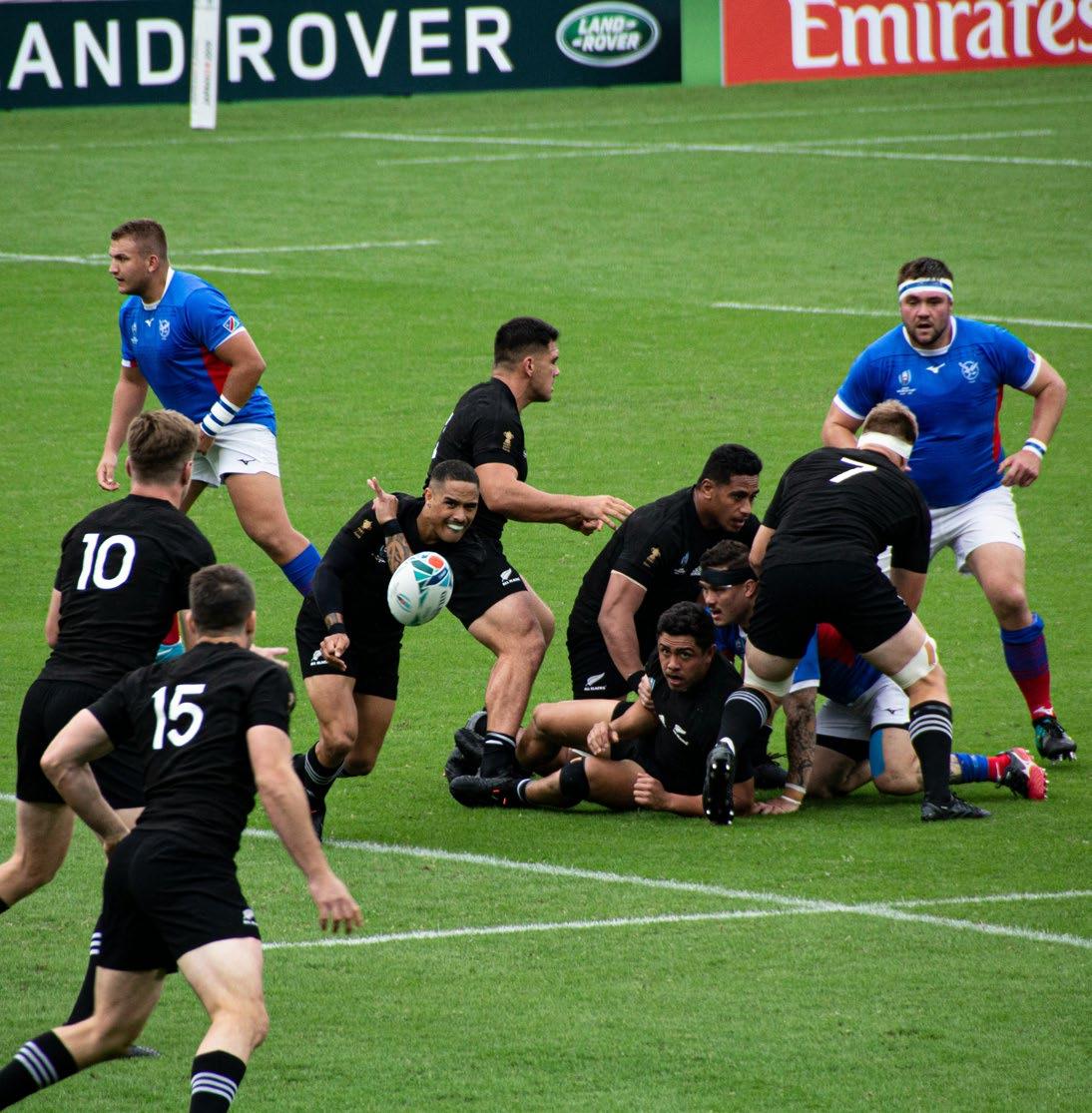
While it’s not a new announcement that the U.S. will be hosting the Rugby World Cup (RWC) in 2031 (the men’s tournament) and 2033 (women’s tournament), USA Rugby has been working to build both excitement and awareness.
After all, RWC is huge business and getting to host it is quite a coup for any country; in fact, it ranks as the third largest sporting event in the world behind the FIFA World Cup and the Summer Olympics.
The reason is simple: Rugby’s fanbase is huge and rabidly enthusiastic. Rugby boasts more than 405 million followers globally, and RWC, presented quadrennially, typically sees between 150,000 and 410,000 international travelers visit the host nation to experience the games.
While rugby does not have the recognition in the U.S. that football or soccer have, USA Rugby is working to change that. Last summer, the national governing body partnered with World Rugby and TEG Sport to host a series of world-class international matches across four cities: Los Angeles, Kansas City, Charlotte and Washington, DC. Matches pitted Team USA against men’s and women’s teams from around the world.
A few months later, at the November 1 game in Chicago between
the New Zealand All Blacks and Ireland’s Wolfhounds, the average ticket price was upwards of $400.
A total of 27 cities, states and areas (creating a combined 33 venues) have now submitted signed letters of intent to continue in the selection process. The applicants are: Arizona, Atlanta, Baltimore, Birmingham, Boston, Charlotte, Chicago, Cincinnati, Denver, Houston, Kansas City, Los Angeles, Miami, Minneapolis, Nashville, New Orleans, New York/New Jersey, Orlando, Philadelphia, Pittsburgh, Salt Lake City, San Diego, San Francisco Bay Area, Seattle, St. Louis, Vancouver and Washington, DC. Most of the proposed venues are NFL stadiums, with some MLB and MLS stadiums sprinkled in. Also noteworthy: 11 of those are scheduled to host play for the 2026 FIFA World Cup.
A total of 10 to 11 cities will be chosen to host RWC action. A review process has begun on all candidate areas and venues; this is expected to last more than a year.
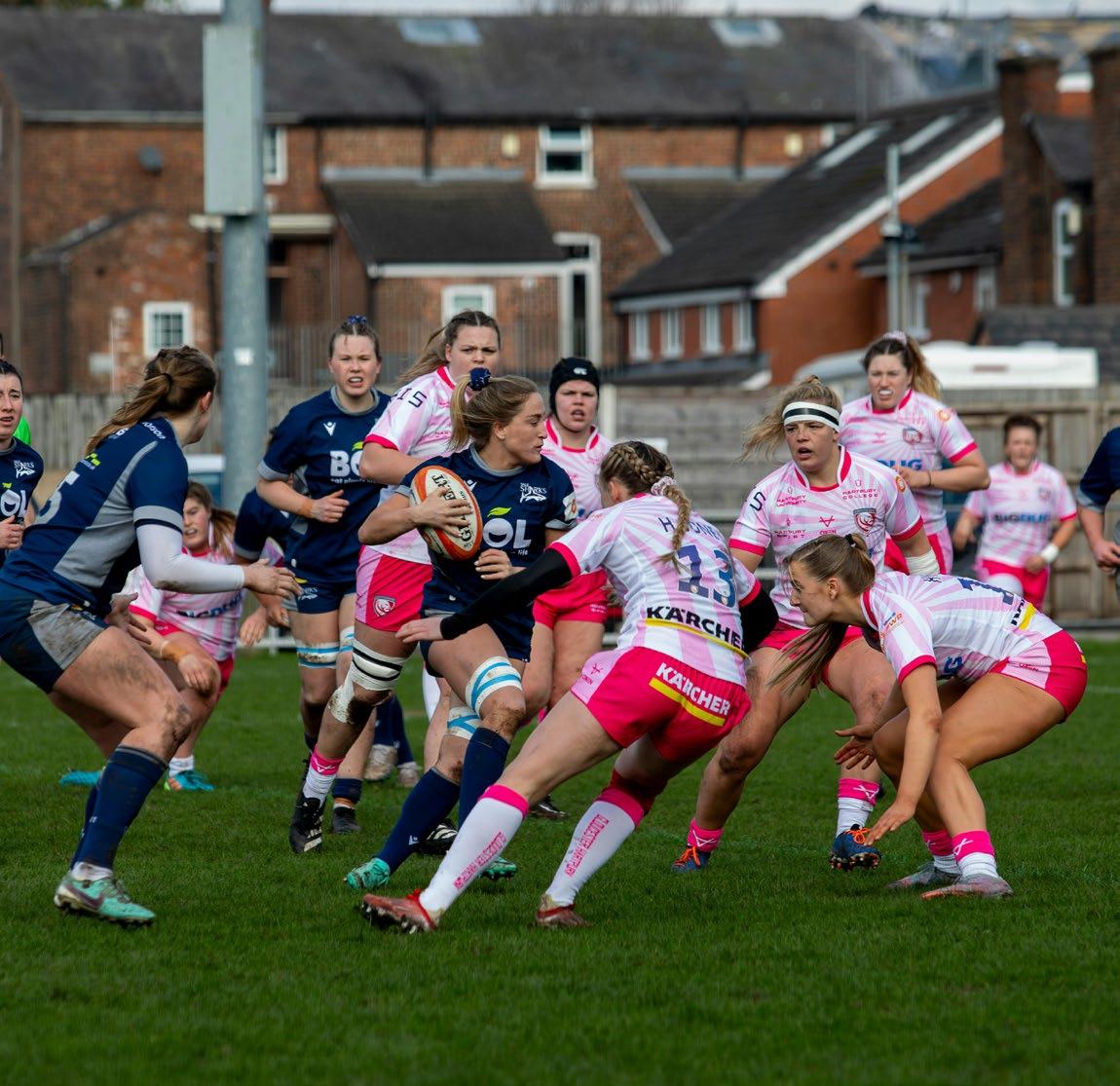
More growth, and more interest, are likely. Rugby is an NCAA Emerging Sport for Women, and it has been showing impressive growth, more than 316 percent over 10 years. Certain regions of the U.S., such as the West and Pacific Northwest, Rocky Mountain area and the Northeast, are hotbeds for rugby as a whole, and particularly for programs at the college level. ★
WHERE IN THE WORLD IS ASBA?
As part of our continuing effort to promote ASBA as an industry resource in sports construction issues, ASBA has had/will have a presence at the following events.
JANUARY - Sports Field Management Association (SFMA) Conference
ASBA participated at the SFMA Conference in Ft. Worth, Texas on January 18-22.
FEBRUARY - ASBA Winter Meeting
ASBA members, leadership and staff will gather in Costa Rica, February 20-22 for the Board of Directors meeting and Winter meeting. Each division will meet in breakouts to discuss issues pertinent to their respective sports; and to develop presentation topics for the 2026 Technical Meeting.
MARCH - RacquetX
ASBA will participate at RacquetX in Ft. Lauderdale, Florida, March 13-15, a festival for operators of racquet sports facilities. ASBA will be exhibiting in the show – stop by to see us!
ASBA IN PRINT
Where are ASBA’s Technical Articles Appearing?
ASBA publishes technical articles in a variety of publications across all divisions, using quotes from its members. Would you like to receive questions for an upcoming article? Contact technical writer, Mary Helen Sprecher, at maryhelen@sportsbuilders.org
• SportsField Management: Budget Crunch? You Can Still Renovate Your Field, December 2025
• SportsField Management: Pickleball and Tennis-Different Courts for Different Sports, January 2026
• Parks & Rec Business: Ready for Primetime, October 2025
• Parks & Rec Business: Playing in the Sand: Beach Volleyball in Parks, Winter 2026
• Parks & Rec Business: The Big Business of Youth Sports and How Parks Can Get Involved, Winter 2026
• NIAAA Athletic Administrator: Pinning Down the Win: Leverage Girls’ and Women’s Wrestling by Having the Best Facilities, Winter 2025
• Coach & Athletic Director: Special E-Book – Helping Athletic Administrators Meet the Demands of Tomorrow, Winter 2025
• Coach & Athletic Director: Multitasking Facilities Need Smart Field Design, Winter 2026
• NRPA Parks & Recreation: Advertorial- Girls’ and Women’s Sports Shaping the Park Landscape, Winter 2026 ★
frasurereps.com
TRENDING TOPICS
ASBA keeps an eye on subjects that are getting attention and that may affect those at the sports facility level. Here are a few of those.
Two New Sports Being Proposed for Olympics
Cross country running and cyclo-cross may be seen in future editions of the Winter Games if IOC President Kirsty Coventry has her way.
For the record, cross country was last featured in the Olympics in 1924 but because it was contested during the Games in summer, heat sickness caused most runners to drop out. Supporters have been trying to get it into the Winter Games, but the previous IOC leadership ruled out any sports not competed on ice or snow.
Under Coventry’s direction, however, cross country has re-entered the discussion, along with another endurance sport, cyclo-cross. No timeline has been set for inclusion.
New Pro Cheer League Brings Focus on Indoor Facilities
One new development on the indoor competition scene has been the Pro Cheer League (PCL), a travel circuit featuring four cheerleading teams that compete across a number of regional markets in the U.S.
Varsity Spirit announced PCL last summer, billing it as the world’s first professional cheerleading league for elite athletes 18 years of age and up. PCL launched in Jan-
uary with four teams (the Atlanta Air, Dallas Drive, Miami Metal and Golden State Grit).
The inaugural season launched in January and features events in Indianapolis, Atlanta, Houston and Anaheim, with a championship in Nashville in late March. Varsity says it plans to expand the league in the coming years, something that may include adding more teams and possibly even multiple teams in the same city if demand is high enough.
Senior Skateboard Games Find Success with Boomers
Skate parks are growing in popularity, but users aren’t just teenagers. In fact, when registration information on the San Diego Senior Games became available, one event raised eyebrows: Senior Skateboarding Games.
But according to organizers, it shouldn’t have been a surprise: After all, the kids who skateboarded in the 1970s and 80s are now not only adults but adults whose ages fall squarely into the senior games demographic.
The fall 2025 event, a success for both athletes and spectators, was, according to Heidi Lemmon, founder of the Skate Park Association International, “like a family reunion, but without the drama.” And, she
added, it proved “we are not going quietly into the grave.”
Students Take Active Role in Preparing for USC Football Action
When the Los Angeles Memorial Coliseum prepared for the USC Football Season home opener against Missouri State, the stadium’s Athletic Turf and Grounds Crew featured six special guests: four high school students and two teachers who learned the basics of preparing the grass for the game.
DBIA Honors Excellence Among Young Professionals
The 2025 National Design-Build Student Competition, presented by the Design-Build Institute of America (DBIA), honors excellence and ingenuity among rising young design professionals. This year, teams from universities across the country were challenged to design an airport expansion (the project differs each year).
First place went to D&T Construction –California Polytechnic State University, San Luis Obispo. Student teams competed regionally, with the top winners moving on for a chance to present their proposals live during the Design-Build Conference & Expo in Las Vegas in November before a panel of industry experts. ★
MEMBER NEWSLINE
Want your company featured in Member Newsline? Please send information to ASBA using the form available on our website at sportsbuilders.org/builditright You’ll find it on the Build It Right Magazine page under the News tab that is located on the top right-hand corner of the home page. All member news must be submitted through this portal. ASBA reserves the right to edit all information submitted.
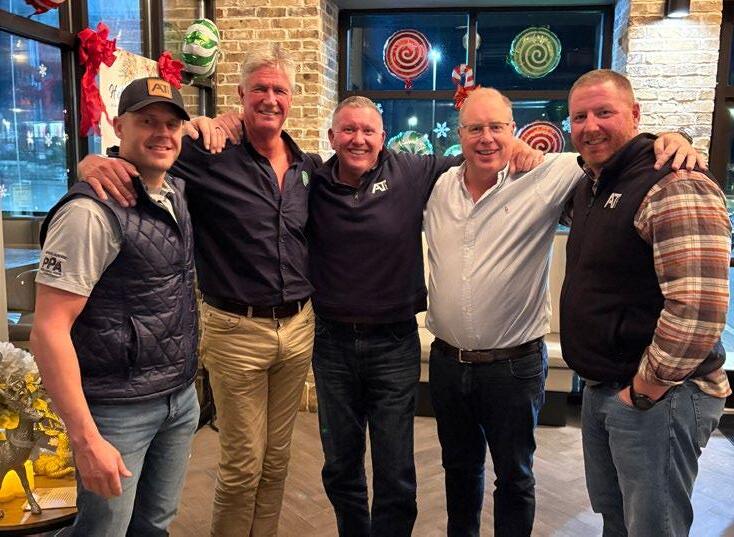
AT Sports Accelerates National and Global Growth with Expanded Product Portfolio
AT Sports has expanded both its product offerings and international footprint to meet surging demand across the sports infrastructure market. Best known for its leadership in tennis and pickleball court surfacing, the company recently marked a major milestone in its global expansion with the launch of Acrytech Sports Coatings in Australia and New Zealand.
The international rollout is supported through a strategic partnership with Urban Turf Solutions, positioning AT Sports to capitalize on rapid investment in pickleball facilities worldwide. This move underscores the company’s commitment to delivering proven, professional-grade surfacing systems to emerging and established markets alike.
Domestically, AT Sports has further strengthened its position with the introduction of premium windscreens for tennis and pickleball courts. The addition enhances the company’s growing portfolio of sports surface coatings, cushion systems, tools and accessories, reinforcing AT Sports as a comprehensive, one-stop solution for court construction, resurfacing and maintenance.
Backed by patented technologies and recognized as the Official Surface of the Professional Pickleball Association (PPA), AT Sports supports projects ranging from community courts to elite competitive facilities. Together, its domestic product expansion and international growth reflect a company scaling with purpose, broadening its capabilities while elevating standards across the global sports infrastructure landscape. ★
Cape and Islands Tennis & Track and Northeast Padel Welcome Brent Keyser Cape and Islands Tennis & Track, along with Northeast Padel, announce the appointment of Brent Keyser as Director of Tennis Operations and Partner.
With more than 25 years of experience managing large-scale construction projects across the United States, Keyser brings a unique blend of technical expertise, leadership and passion for racquet sports to his new role. He and his wife also own and operate a tennis club on Cape Cod, deepening his connection to the local tennis community.
“Brent’s background in overseeing complex projects nationwide, combined with his love for tennis and padel, makes him an extraordinary addition to our team,” said Eric Loftus, Partner at Cape and Islands Tennis & Track. “We are thrilled to welcome him and look forward to the vision and energy he will bring to our companies.”
Keyser spent the last 11 years with Consigli Construction Co., where he led projects across diverse sectors including healthcare, life sciences, education, hospitality and athletics. His career has been defined by building not only world-class facilities but also strong teams and lasting community impact.
With Keyser’s leadership, both organizations are poised to strengthen their legacy of excellence while shaping the future of racquet sports in New England and beyond. ★
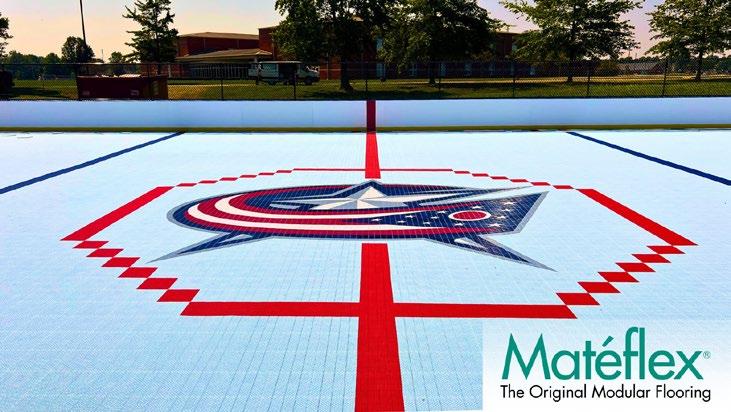
the Liberty Township/Powell YMCA with Matéflex as the chosen provider for their new surface.
The Liberty Township/Powell YMCA serves more than 11,000 people annually and this facility marks the first YMCA in the region with a dedicated outdoor hockey rink. Through structured programming, free clinics and curriculum support led by the Blue Jackets, the rink is opening doors for kids who might never have had a chance to try hockey before.
When it came time to choose a surface that could stand up to Central Ohio’s weather and deliver reliable playability season after season, the Blue Jackets turned to Matéflex to provide a durable, low-maintenance and performance-driven foundation. This is the third hockey rink provided to the foundation through Matéflex.
The Matéflex III tile surface ensures consistent puck movement, optimal traction and a safe, comfortable experience for athletes of all ages. Designed for longevity and engineered to withstand heavy community use, the court offers both professional-grade quality and community accessibility. ★
Matéflex Partners with the
Columbus
Blue Jackets to Provide New Inline Hockey Rink
The Columbus Blue Jackets Foundation and the YMCA of Central Ohio, in collaboration with the National Hockey League, recently celebrated the opening of a brand-new outdoor street hockey rink at
Mapecoat™ TNS Comfort Elite System:
Built tough, plays smooth
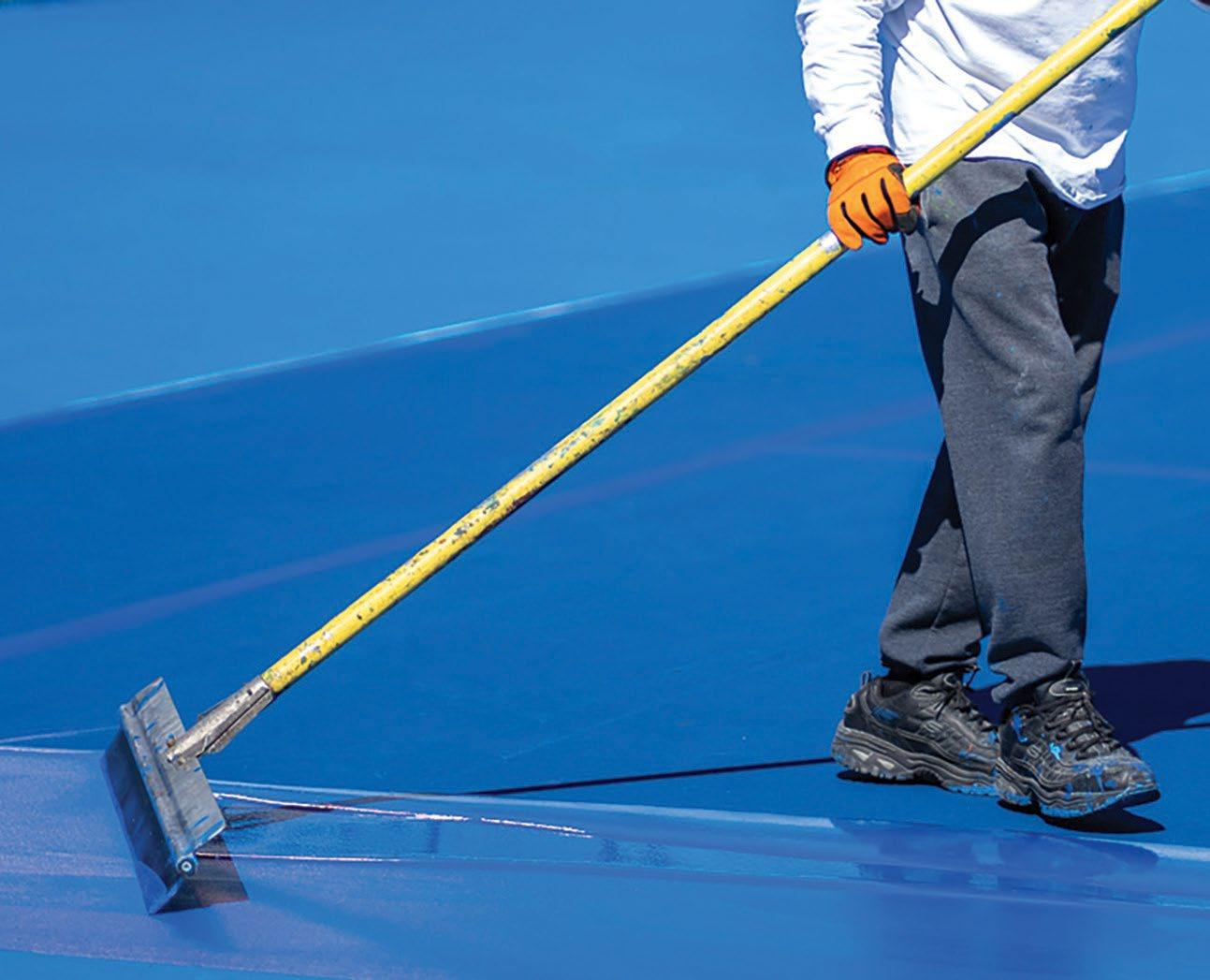
The premium acrylic, UV-resistant, long-lasting, low-maintenance Mapecoat TNS Comfort Elite System is designed for indoor and outdoor hardcourts on asphalt, concrete and existing acrylic surfaces.
This system’s advantages over liquid-cushion systems:
• Quicker installations with more consistent performance
• Longer life span
• Greater force reduction
• Less material waste for more sustainable applications
• 5-year warranty*
* Warranty can be extended on a rolling basis when resurfaced with MAPEI coatings by an authorized installer prior to expiration.
ASBA MEMBERS
New Members & Certified Builders
Builder
• Acme Fence Services Inc.
• America Sports Construction
• American Southwest Construction, LLC
• ATE Recreation
• Austin Courts and Floors Inc
• C.H. & D. Enterprises Inc.
• Fischer Brothers LLC
• K and K Fence, Inc
• Legacy Building Solutions
• M.J. Cataldo, Inc.
• Measure Line Services
• Mejorset USA Inc.
• North Point Land Construction
New Certified Builders
Drew Linnebur, CFB Hellas
Eddie Lovett, CTCB Renner Sports Surfaces
• Novo Products and Services Inc
• Palmetto Court Pros
• Premier Courts
• Pro Tech Track & Tennis, LLC
• Prostar Surfaces
• RL Striping
• Stallbaumer Contracting
• Victory Tracks
Professional
• ASC Athletic Sports Consultants
• Gonzalez-Strength & Associates, Inc.
• GP Architects LLC
• REI Engineers, Inc
Supplier
• 1st Source Lighting
• Collins Company
• Duralock Group
• Goodspeed America
• Industrial Fibers & Supplies of America
• New Planet Turf
• Polycoat Products
• Streamline Surfaces
• SunTrends
• UCS Inc
• Uzin-Utz North America
• Worldwide Foam
Andrew Marking, CFB Bush Sports Turf
Matthew Myer, CFB SCG Fields, LLC
Matt Schnitzler, CFB Hellas
#1
Cushioned surface for pickleball!
Qualify for various rewards*:
• points for purchases to redeem for sports equipment, tickets, electronics, gift cards, etc.
• earn bonus points by submitting images and project information for project profiles and social media coverage
• private and public project lead generation
• marketing support
• and more! *Program is currently only available in the US and Canada