RANK AMONG PRIVATE GRADUATE ENGINEERING PROGRAMS IN THE U.S.*
EMBRACING THE POWER OF CONVERGENCE AND COLLABORATION.
10
RANK IN RESEARCH EXPENDITURES PER FACULTY MEMBER AMONG PRIVATE ENGINEERING SCHOOLS*
TOP 12% OF ENGINEERING SCHOOLS IN THE U.S.*
$153 MILLION IN ENGINEERING-RELATED RESEARCH EXPENDITURES
4
27
RANK AMONG ALL GRADUATE ENGINEERING PROGRAMS IN THE U.S.*
FIELD-WEIGHTED CITATION INDEX*
11 NATIONAL ACADEMY OF INVENTORS FELLOWS 12%
Shaping a Sustainable Future
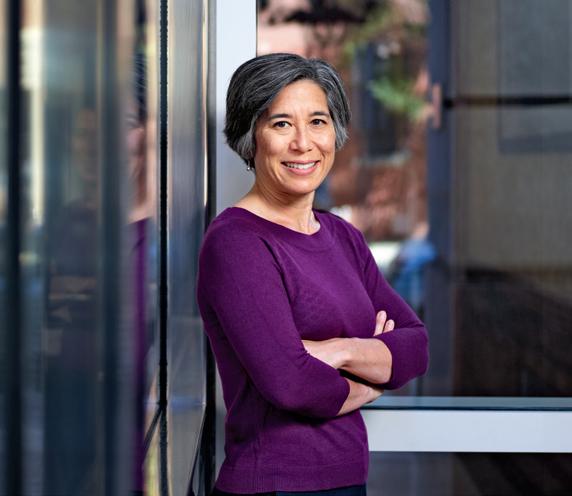
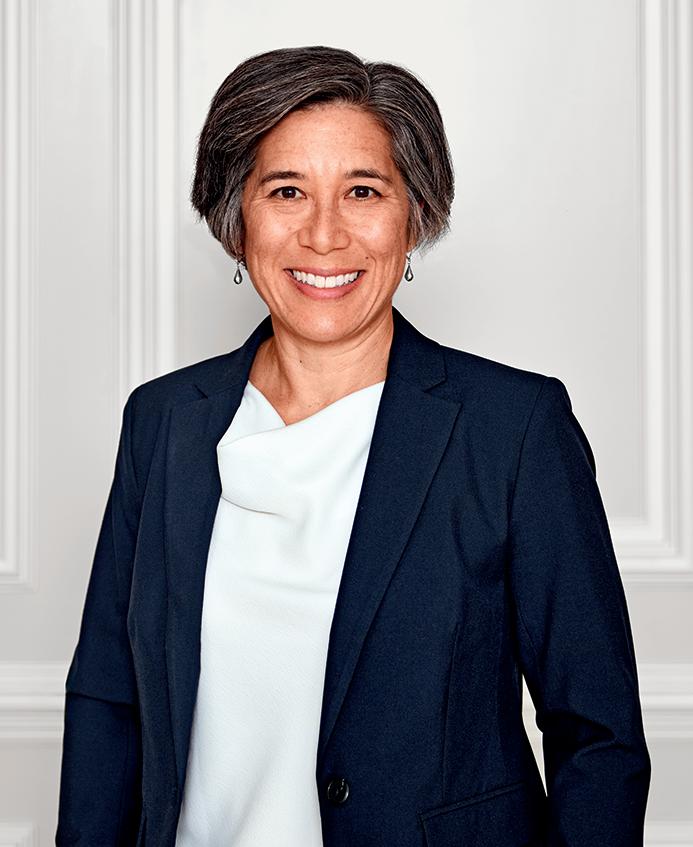
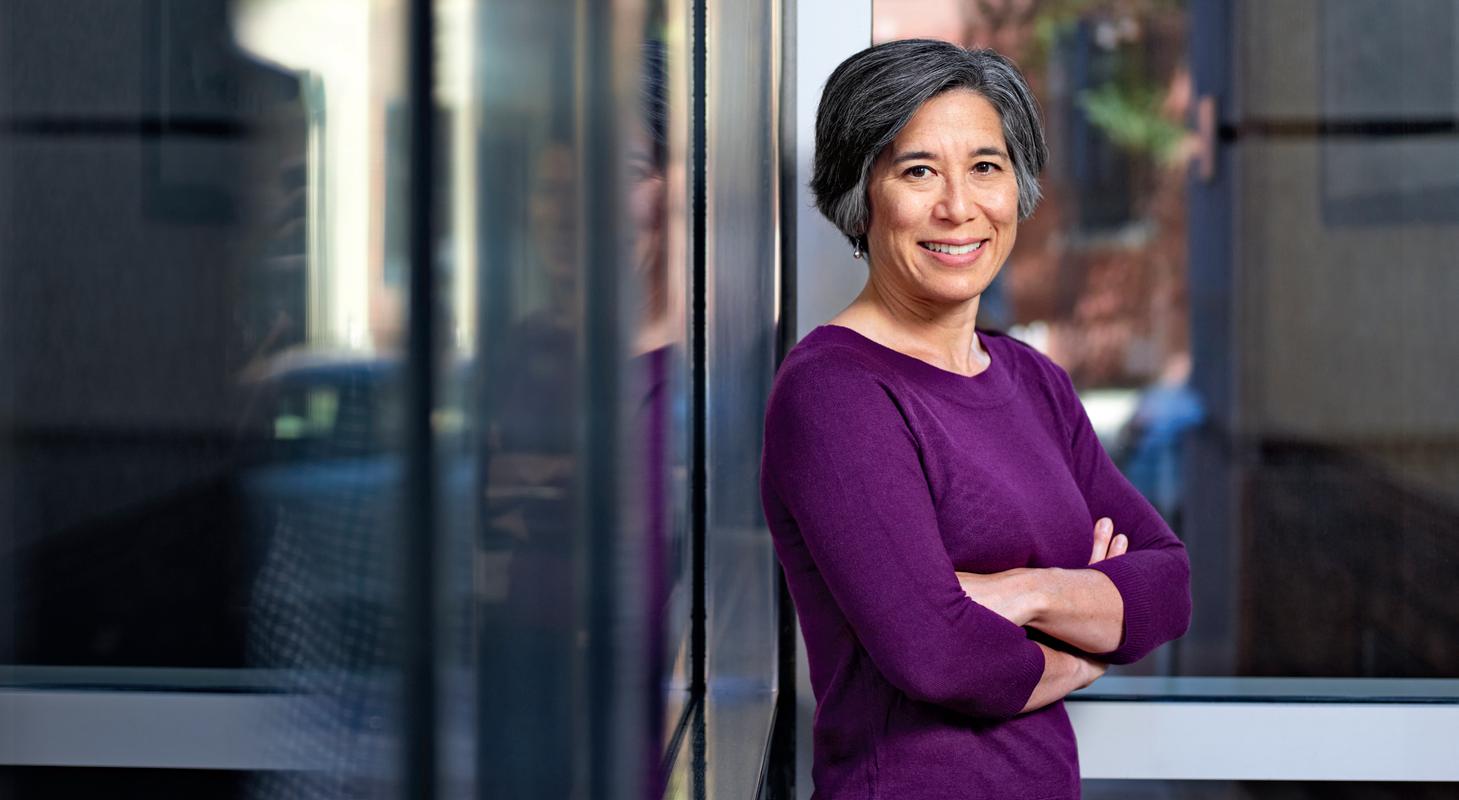
BY DEAN ELISE MORGAN
I am delighted to send you my first letter as permanent dean of the BU College of Engineering. This is an exciting time for the college. We are now 27th in the nation in the U.S. News & World Report rankings of graduate engineering programs and 4th in the nation in fieldweighted citation index, a measure of the impact of our scholarship on the engineering discipline.
I am privileged to lead a college of engineering that has not only world-class talent in our faculty, students, and staff, but also a strong sense of social responsibility. Given how deeply engineering is embedded in the human experience, that combination of technical prowess and commitment to service is critical to the
world’s future. From devices like smartphones and e-bikes, to telemedicine and medical imaging, satellite communication, access to clean water, and more, engineering discoveries are integral to how we live and connect with one another.
Over the past several months, I have presented my vision for BU Engineering: We will lead in shaping a sustainable future where engineering discoveries enable boundless human progress for every individual and every community. As you will see in the pages of this magazine, we have already begun our journey, fueled by a commitment to three attributes:
Interconnected
BU Engineering is a hub of collaboration within the University and throughout Boston and the region’s tech landscape. For example, Professor John White (BME) and Professor Anna Devor (BME) are collaborating with faculty in psychological and brain sciences to discover how the brain computes, stores, and retrieves information. Master Lecturer Caleb Farny (ME) is bringing to life his ideas for infusing our curriculum with engineering challenges facing cities like Boston. Working with BU’s Initiative on Cities, he is developing case studies on the electromechanical systems used by the Massachusetts Bay Transportation Authority’s Green Line trolley cars.
Innovative.
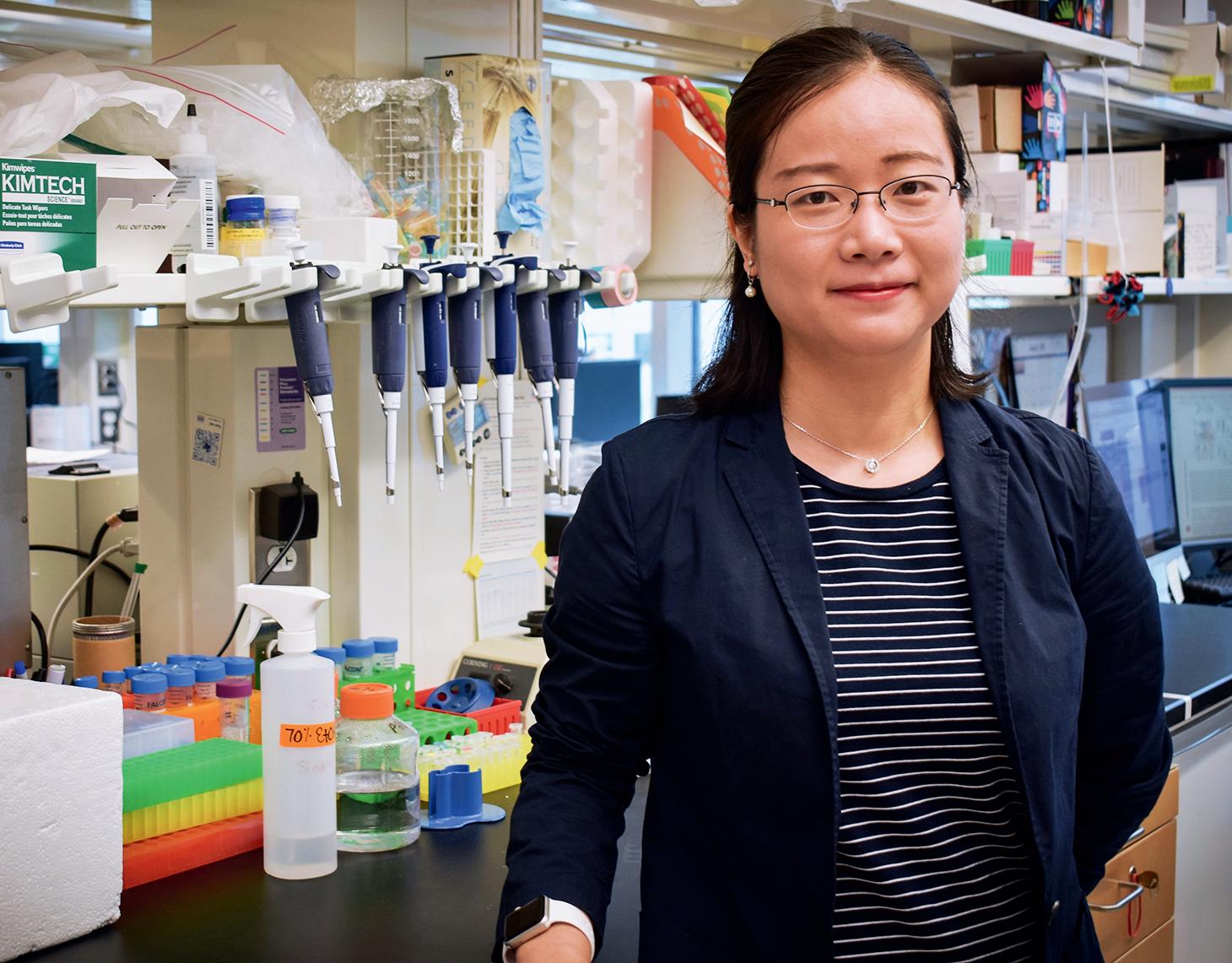
At BU Engineering, innovation is both a mindset and a driving force to create a better future. Professor Xin Zhang’s (ME, ECE, BME, MSE) groundbreaking work in metamaterials—artificially structured materials with properties not found in nature—has earned her the prestigious Thomas A. Edison Patent Award from the American Society of Mechanical Engineers. The metamaterials she designs are redefining fields from medical imaging to wireless communications.
Supported by programs such as the Dean’s Imagineering Competition, our students are constantly innovating. One
student group won the BU-wide Janetos Climate Action Prize for their low-cost indoor air sensors that can help BU identify classrooms in need of improved heating, cooling, and ventilation systems.
Inclusive.
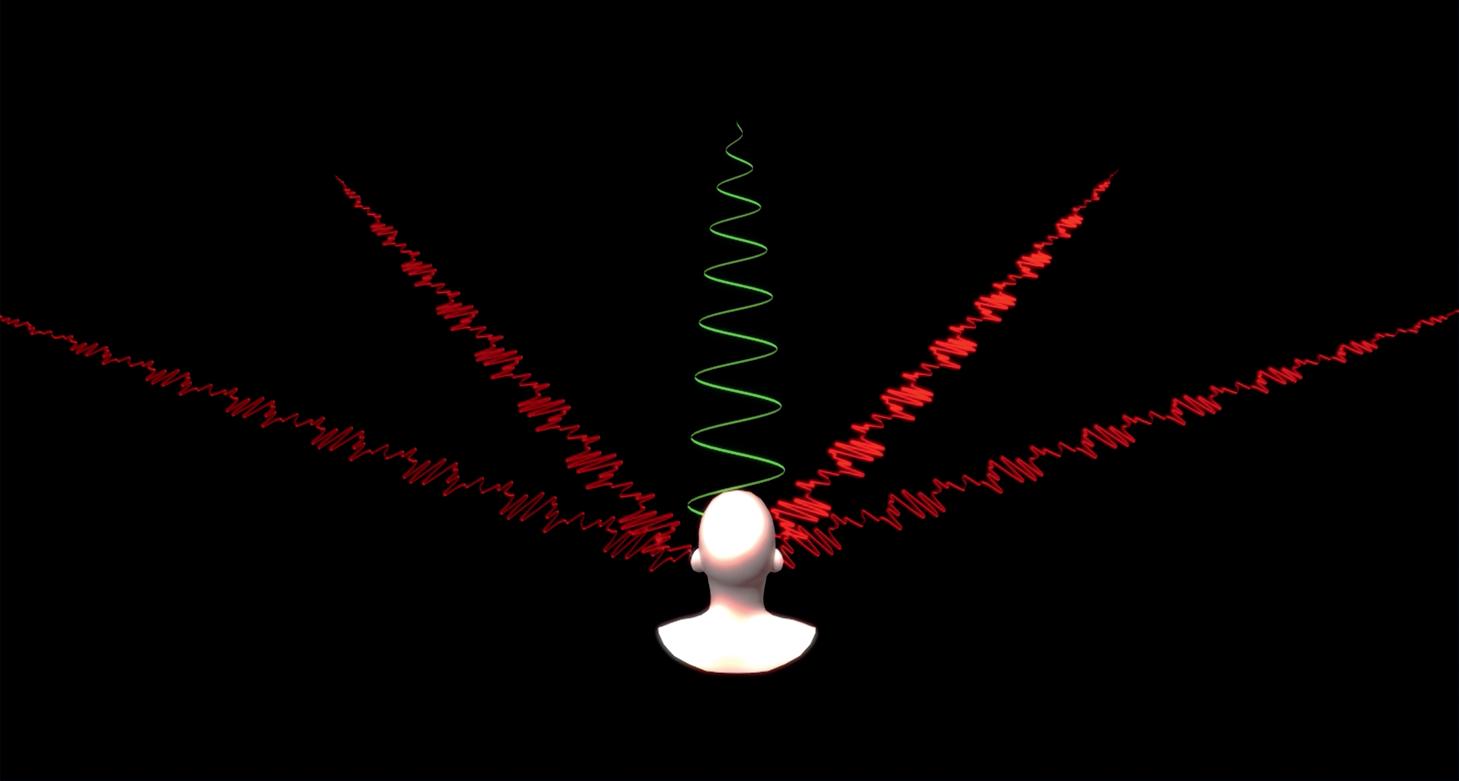
In the future that BU Engineering is creating, engineering advances must be accessible and empowering for all. Associate Professor Kamal Sen (BME) has pioneered an algorithm for next-generation hearing aids, and Professor Meryem Ayşe Yücel (BME) is working to ensure that neuroimaging technologies gathering data on brain activity through tomorrow’s sensing technology will work for people of all skin tones and hair types. Alumna Marissa Fayer is advancing women’s health with a nonprofit that facilitates donations of medical equipment to underresourced hospitals and clinics around the world. And programs in our newly launched Engineering Commons are providing peer mentoring, tutoring, and professional development workshops to bolster student success for all of our aspiring engineers.
With these advances and more, BU Engineering is creating a far-reaching legacy, one whose impact will reach beyond the hightech industry to make a real difference for individuals and their communities throughout the country and around the world.
I invite you to read on. The stories here demonstrate the phenomenal reach and relevance of our work. BU Engineering’s collaborative, creative spirit is making a meaningful difference in Boston and around the world. The accomplishments of our faculty, students, and alumni are expanding the boundaries of engineering and contributing to a more equitable and sustainable future.
Every day, in our labs and classrooms, I see the college’s light shining bright. The deep inroads our faculty and students are making in their societal impact demonstrate that the college’s legacy, already enduring, will only continue to grow.
upfront
Elise Morgan Named ENG Dean
LONGTIME FACULTY MEMBER WHO SERVED AS DEAN AD INTERIM FOR TWO YEARS ASSUMES PERMANENT LEADERSHIP
ROLE
The new dean of the Boston University College of Engineering is a familiar face. Elise Morgan (ME, MSE, BME), Maysarah K. Sukkar Professor of Engineering Design and Innovation, interim dean since July 2023 and a long-standing and deeply respected member of the ENG faculty, has assumed the role permanently as of August 2025
Her appointment comes after a national search process that included “several strong candidates for the role,” Gloria Waters, University provost and chief academic officer, wrote in a letter to the BU community. Waters cited Morgan’s exemplary leadership as a key factor in the decision.
Morgan’s robust résumé as a leader also speaks volumes. Formerly an ENG associate dean, she helped facilitate greater collaboration and in the process, strengthened research excellence throughout the college. Morgan also created new junior faculty mentoring programs, designed and oversaw a new faculty search process that focuses on convergent research themes, helped recruit a host of cross-disciplinary graduate students, and updated and oversaw the college’s holistic grants administration and finance system.
“Professor Morgan has brought a steady, collaborative management style focused on accelerating ambitious new scholarship, further strengthening the college’s undergraduate offerings, and enhancing a culture of inclusion for students, faculty, and staff across all departments, in her role as interim dean for the last two years,” Waters wrote. “In
doing so, she has established her own vision for the college as a laboratory for innovation and a training ground for premier engineering talent.”
Waters described Morgan as a bridgebuilder both within the various engineering disciplines at ENG and for the college and University as a whole.
“Professor Morgan was selected following a competitive national search. Clearly, she is the right leader to guide the College of Engineering at this time. She is an excellent scientist, an innovative leader, and brings a deep commitment to education and research. Elise will continue to advance the eminence of the College of Engineering and Boston University. I am excited about the college’s next chapter under her leadership,” said BU President Melissa Gilliam.
HONORED TO HAVE THE OPPORTUNITY TO LEAD
“Serving as the interim dean for the past two years has been an immense privilege; being selected as dean now is an even greater honor,” said Morgan. “I am humbled and excited to lead the college in its next chapter.
“I have been inspired every day by the energy, achievements, and creativity of our students and all facets of our community— faculty, staff, alumni, and friends. I have been heartened by the care and support that so many in our college have given to others in the face of challenges and turmoil around the world. And I believe strongly in BU Engineering’s commitment to the societal impact of our research and education. This combination of exceptional innovation, compassion, and dedication to the greater good is rare, and it is the foundation for our future.”
Morgan joined the BU faculty in 2003 and has accumulated a number of awards and honors since, including being elected a fellow of the American Institute of Medical and Biological Engineering and in 2015, named to the “100 Inspiring Women in STEM” list by INSIGHT into Diversity magazine. She has served as associate editor of the Journal of Biomechanics and as a member of the board of directors of the Orthopaedic Research Society and is formerly the chair of a National Institutes of Health study section.
MENTORING A TEEN ROBOTICS TEAM
“I believe strongly in BU Engineering’s commitment to the societal impact of our research and education. This combination of exceptional innovation, compassion, and dedication to the greater good is rare, and it is the foundation for our future.”
Morgan’s primary professorial appointment is in the department of mechanical engineering, with additional affiliations in the division of materials science and engineering, the department of biomedical engineering, and the Chobanian & Avedisian School of Medicine department of orthopaedic surgery. She founded the BU Center for Multiscale & Translational Mechanobiology.
An impactful researcher, Morgan has produced over 100 peer-reviewed publications and has received more than 14,000 citations. Her work focuses on the interplay between the mechanical behavior, structure, and biological function of tissues. A self-described “bone geek,” Morgan uses methods from engineering mechanics, materials science, and cell and molecular biology to investigate how
ENG Achieves Highest U.S. News Rankings Ever
ADVANCES FOUR PLACES TO 27TH NATIONALLY; 15TH AMONG PRIVATE SCHOOLS
New rankings of engineering schools released by U.S. News & World Report place the Boston University College of Engineering 27th in the nation, the highest position in the college’s history.
ENG advanced four places—among the largest gains of any school in the top 50— from 31st in last year’s rankings. U.S. News evaluated 222 doctoral-granting engineering schools, weighing a variety of factors related to research and doctoral programs. ENG ranked fourth in the component that measures the impact research papers have on their respective fields. In addition, deans were surveyed to rate the academic quality of each of the schools. The college’s climb this year comes on the heels of a fivepoint jump last year, making a total rise of nine places in just two years.
Among engineering schools at private universities, which tend to be much
mechanical stimuli guide the development, adaptation, degeneration, and regeneration of bone and cartilage.
“Engineering is a field with unrivaled power to transform lives at scale, and our college is uniquely positioned to expand this power even further,” Morgan said. “Our faculty and students are advancing biomanufacturing, redefining humanmachine partnerships with AI, building new tissues, revolutionizing imaging, attacking the world’s biggest energy challenges, and more. Together, we are shaping a future where engineering discoveries enable boundless human progress for every individual and every community.”
— MOLLY GLASS
smaller than those at public universities, ENG fared even better, ranking 15th.
“It is gratifying to see that the groundbreaking work of our faculty is making major inroads as reflected in many ways, including those measured in these rankings,” said Dean Elise Morgan (ME, MSE, BME), Maysarah K. Sukkar Professor of Engineering Design and Innovation. “Also gratifying is the recognition this work is garnering among our peers.”
Much of the college’s rankings climb can be attributed to gains in areas related to research productivity and reputation. ENG ranked 27th in total research expenditures (11th among private engineering schools), 16th in research expenditures per faculty member (10th among private schools),
and 19th in the number of citations (5th among private schools). The subjective measure of academic quality, as rated by other engineering deans, was the college’s highest ever.
At the department level, rankings were determined based solely on subjective assessments of academic quality as rated by respective department chairs at all institutions. In ENG, the Biomedical Engineering program ranked 19th; Computer Engineering 38th (a rise of six places from last year); Electrical Engineering 45th; Materials Science & Engineering 56th; Mechanical Engineering 51st; and Systems Engineering 44th (a rise of 11 places in a category more closely related to industrial engineering). — MICHAEL SEELE
TOP: DOUG LEVY, BOTTOM: CYDNEY SCOTT
ENG Dean Elise Morgan (ME, MSE, BME)
Common Ground
COLLEGE’S NEW COMMUNITY HUB OPENS
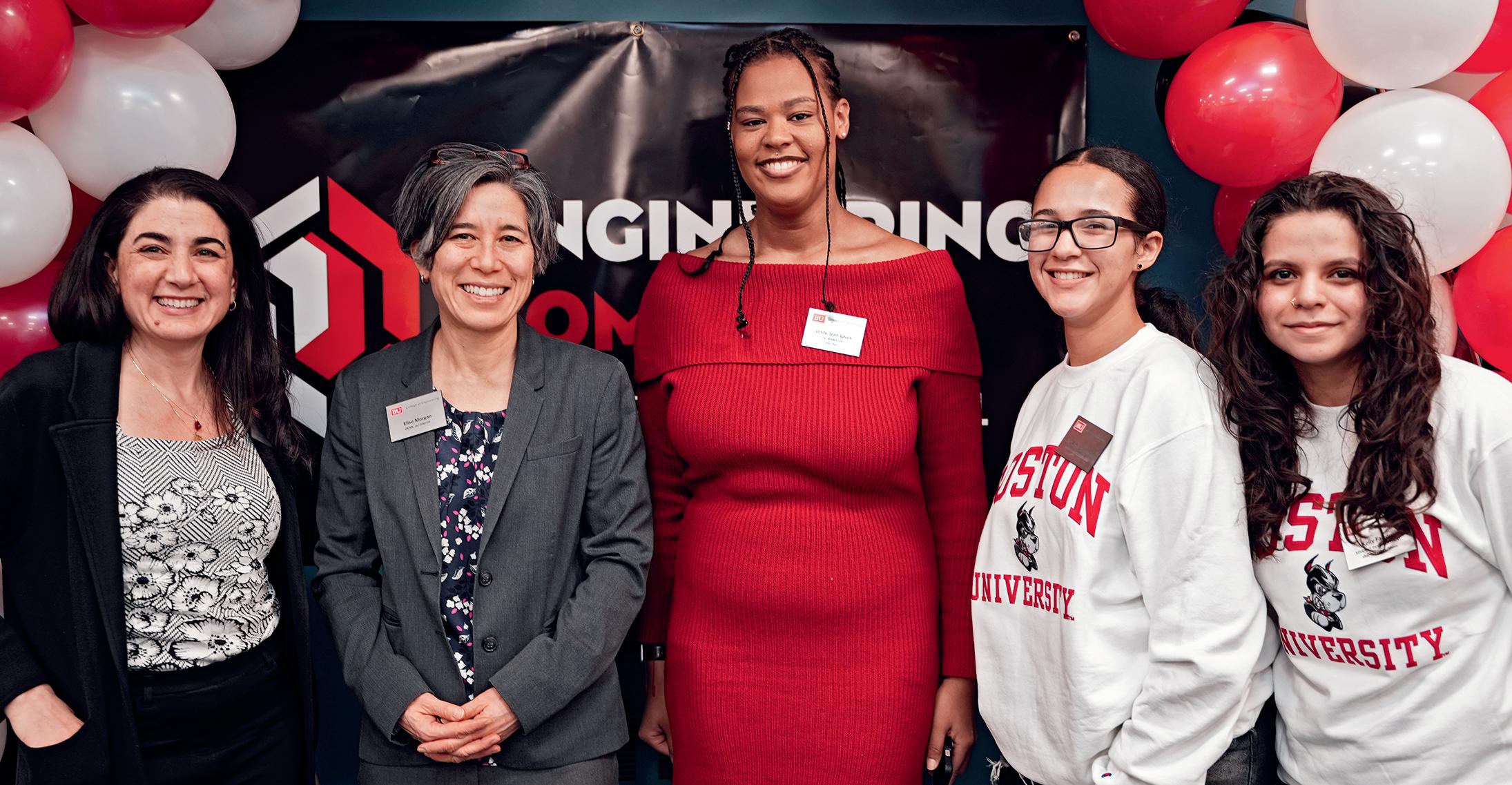
After a long day of classes and lab work, scores of BU ENG students, along with faculty and staff, gathered to socialize, enjoy some pizza, and celebrate the grand opening of the Engineering Commons, the college’s new student-focused community hub. The fully renovated basement space is located at 44 Cummington Mall, Room B14.
To a background soundtrack of hiphop and dance music, students lounged in beanbag chairs or circulated throughout the room, sharing fun facts about themselves and filling in boxes on an icebreaker bingo sheet. They won raffle prizes, made bracelets, snapped photos of each other wearing costume hats, checked out the displays from BU student chapters of the Society of Women Engineers and the Society of Asian Scientists and Engineers, and met informally with Dean Elise Morgan (ME, MSE, BME) and other ENG administrators. Close to 100
people visited the commons over the course of the evening.
BUILDING COMMUNITY
“It can be hard to build community in college,” says Unity Jean-Louis, ENG’s manager for diversity, equity, and inclusion. “This is a space where so many different people with different identities can be acknowledged and celebrated. It’s about supporting students holistically, making sure they’re supported academically, socially, and professionally.”
“A lot of students tell us they know about the university and college programs and support out there, but they’re not always sure how to access them, or they feel a little hesitant to reach out or join,” says ENG Assistant Dean for Outreach & Diversity Pamela Audeh. “Sometimes, there’s a real barrier, and other times, it’s just not knowing where to start. More often than not, it comes down to a sense of community—having access, building trust, and gaining the confidence to take that next step.
“That’s where the Engineering Commons comes in,” Audeh continues. “It’s not just a resource; it’s a fun, welcoming space to meet new people, hang out with friends, get support, and be part of student-designed
events that make the college experience even better.”
With tables, comfy chairs, and monitors with webinar capabilities, the room serves as a combination student lounge, study hall, and programming space. Along with “Munchkin Mondays” and “Cookies and Conversation,” there are regular tutoring sessions, game nights, study abroad info sessions, and professional and career development workshops.
STUDY AND UNWIND
Nilly Rodriguez Suarez (ENG’27), a student desk assistant at the commons, says that between classes and part-time jobs—and sometimes shyness—not every student makes it to faculty office hours for help. Now, they can seek answers from fellow students in a convenient, low-pressure setting. “If you don’t understand something, you can come here after classes, and there’s a great likelihood of someone knowing the material, because we’re all in engineering and have core foundational information we all learn,” she says. “It’s also a place you can unwind, and everyone needs that.”
—
PATRICK
L. KENNEDY
Left to right: Pamela Audeh, Elise Morgan, Unity Jean-Louis, Nilly Rodriguez Suarez, and Kelly Falcón.
Dean’s Catalyst Awards Announced for 2025
FUNDING FOR AMBITIOUS, INNOVATIVE PROJECTS
ENG Dean Elise Morgan (ME, MSE, BME), Maysarah K. Sukkar Professor of Engineering Design and Innovation, has announced the five winners—out of a record 30 applicants—of the 2025 Dean’s Catalyst Awards. The research teams will each receive funds over two years to pursue promising, ambitious projects that cut across disciplinary lines as they aim to solve global challenges.
“ENDOLYTIC PROBES FOR ROBUST PROFILING OF INTRACELLULAR KINASE ACTIVITY”
Assistant Professor Erica Pratt (BME, MSE), the Moorman-Simon Interdisciplinary Career Development Professor, will collaborate with Professor Ahmad (Mo) Khalil (BME) to develop a method of measuring kinase signaling, a potential biomarker for cancer.
Protein kinases are enzymes that regulate the activity of up to 30 percent of all cellular proteins, determining whether cells proliferate, differentiate, or migrate. That means if researchers could accurately pick up on kinase signals—particularly the process of protein phosphorylation, a kind of tumor on-off switch—in tissue samples, then it might serve as a predictor of cancer, as well as other pathologies.
But doing that will require an assay capable of measuring enzyme-specific signaling pathways. One way to do this is sending in what are known as cell-deliverable, affinity-based peptide probes, a process hampered by a data analysis challenge. The system proposed by Pratt and Khalil will integrate emerging technologies in
The team plans to combine rare intracranial electrophysiological recordings in two complementary patient groups, aided by advanced machine learning approaches.
chemical biology and bioengineering to quantify the signal-to-noise ratio, variability, and other performance metrics for each probe in a well-validated, cell-based kinase kinetics assay.
“IMPROVING SOLID OXIDE CELL PERFORMANCE FOR GREEN ENERGY BREAKTHROUGHS IN NANOSCALE 3D IMAGING”
Professor Soumendra Basu (ME, MSE) is working with colleagues on solid oxide cells (SOCs) that would make hydrogen viable as a clean energy source;
Professor Vivek Goyal (ECE) and his lab are improving secondary electron (SE) imaging technologies. The researchers are now joining forces to develop methods of evaluating the performance of SOCs using SE imaging.
One thing holding back SOCs is the degradation that results from oxygen pressure buildup at the interfaces between materials in the system. To design a better system, Basu’s team has been trying to understand that degradation, but current SOC characterization methods suffer from high noise and inadequate 3D resolution.
Leveraging Goyal’s expertise in imaging for nanometer-scale measurement, this collaborative project will build upon recent advances in helium ion microscopy to develop methods to reduce noise and improve resolution in the assessment of materials used in SOCs.
“INTERFEROMETRIC ABSORPTION MICROSCOPY FOR LABEL-FREE IMAGING OF NEURONAL HEALTH”
Professor Jerome Mertz (BME, ECE, Physics) and CAS Assistant Professor Lynne Chantranupong (Neurobiology and Metabolism) propose a versatile microscope based on a novel technique they are developing for the study of cellular molecules that are central to the pathophysiology of neurodegeneration.
The team’s technique, which they call interferometric differential absorption contrast (IDAC), is intended to be simple, robust, and highly sensitive, and to overcome the shortcomings of existing microscopy methods by simultaneously providing label-free imaging and molecular specificity. They believe IDAC might redefine how researchers interrogate the molecular mechanisms underlying neuronal health and dysfunction.
Working in conjunction with the Boston University Photonics Center and the CAS Department of Biology, Mertz and Chantranupong will use the Catalyst Award funds in part to acquire a unique ultra-broadband light source and a new ultra-broadband camera.
Erica Pratt (BME, MSE)
Soumendra Basu (ME, MSE)
Jerome Mertz (BME, ECE, Physics)
By combining physical models of wicking and evaporation dynamics, forcedchoice assays with freely flying mosquitos, and neurobiological studies of mosquito olfaction, Bird and Younger propose to investigate the interplay between capillary wicking, evaporation, and mosquito olfactory responses.
“THE
INFLUENCE OF WICKING AND EVAPORATION ON MOSQUITO HOST-SEEKING BEHAVIOR AND OLFACTORY NEURAL RESPONSES”
Associate Professor James Bird (ME, MSE) and Associate Professor Meg Younger (Biology, BME) seek to unravel the biophysical and sensory mechanisms underlying mosquito attraction, with potential applications including more effective mosquito repellents or traps.
Mosquito-borne diseases such as malaria, dengue, and Zika pose major global health threats. A critical factor in mosquitos’ host-seeking behavior is their ability to detect chemical cues released from human skin and sweat. Capillary wicking—the process by which liquids spread through porous materials—plays a key role in evaporating and sending out these chemical compounds into the air.
By combining physical models of wicking and evaporation dynamics, forcedchoice assays with freely flying mosquitos, and neurobiological studies of mosquito olfaction, Bird and Younger propose to investigate the interplay among capillary
More Faculty Honors
Associate Professor Lei Tian (ECE, BME) received the 2025 Provost’s Scholar-Teacher of the Year Award. Honoring scholars who excel both at the practice of teaching and at pedagogy, the award carries a $5,000 honorarium. Tian, who teaches courses on signals and systems and computational optical imaging, says,
“I want to inspire students to become skilled engineers, lifelong learners, and innovators who contribute meaningfully to society.”
Two mechanical engineering faculty members are undertaking curriculum projects with the support of the new Dean’s Faculty Leadership Fellows program. Associate Professor Scott Bunch (ME, MSE) is leading a review of the mentored teaching experience for graduate student teachers, while Master Lecturer Caleb Farny (ME) is working to tie the engineering curriculum to public infrastructure challenges in the Boston area.
wicking, evaporation, and mosquito olfactory responses. In addition to better sprays, the study might lead to greater knowledge about how mosquitos’ neural systems encode complex odor landscapes.
“EVERYDAY STRESS AND COGNITION IN EPILEPSY: LEVERAGING MACHINE LEARNING FOR NEXT-GENERATION NEUROSTIMULATION SYSTEMS”
Assistant Professor Matthias Stangl (BME, Psychological & Brain Sciences, Neurosurgery), Assistant Professor Brian DePasquale (BME), and Chobanian & Avedisian School of Medicine Assistant Professor Myriam Abdennadher, director of the Epilepsy Surgery program, propose to investigate how psychosocial stress interacts with epilepsy to affect cognition and seizure occurrence.
The team plans to combine rare intracranial electrophysiological recordings in two complementary patient groups, aided by advanced machine learning approaches. By uniting shortand long-term observations, the study aims to illuminate the neurophysiological mechanisms whereby both acute and sustained stress contribute to epileptic activity, seizures, and cognitive deficits.
The knowledge gained by this study will result in the next generation of neurostimulation systems that adapt to stress fluctuations, delivering personalized interventions that not only enhance seizure control but also preserve cognitive functioning. Ultimately, the researchers hope to transform treatment strategies for epilepsy by integrating real-world stress monitoring and computational modeling to improve clinical outcomes and quality of life.
— ENG STAFF
James Bird (ME, MSE)
Béla Suki Presents 2025 DeLisi Lecture
MULTIDISCIPLINARY EXPERT
PRESENTS LUNG COMPLEXITIES AT SIGNATURE ENG EVENT
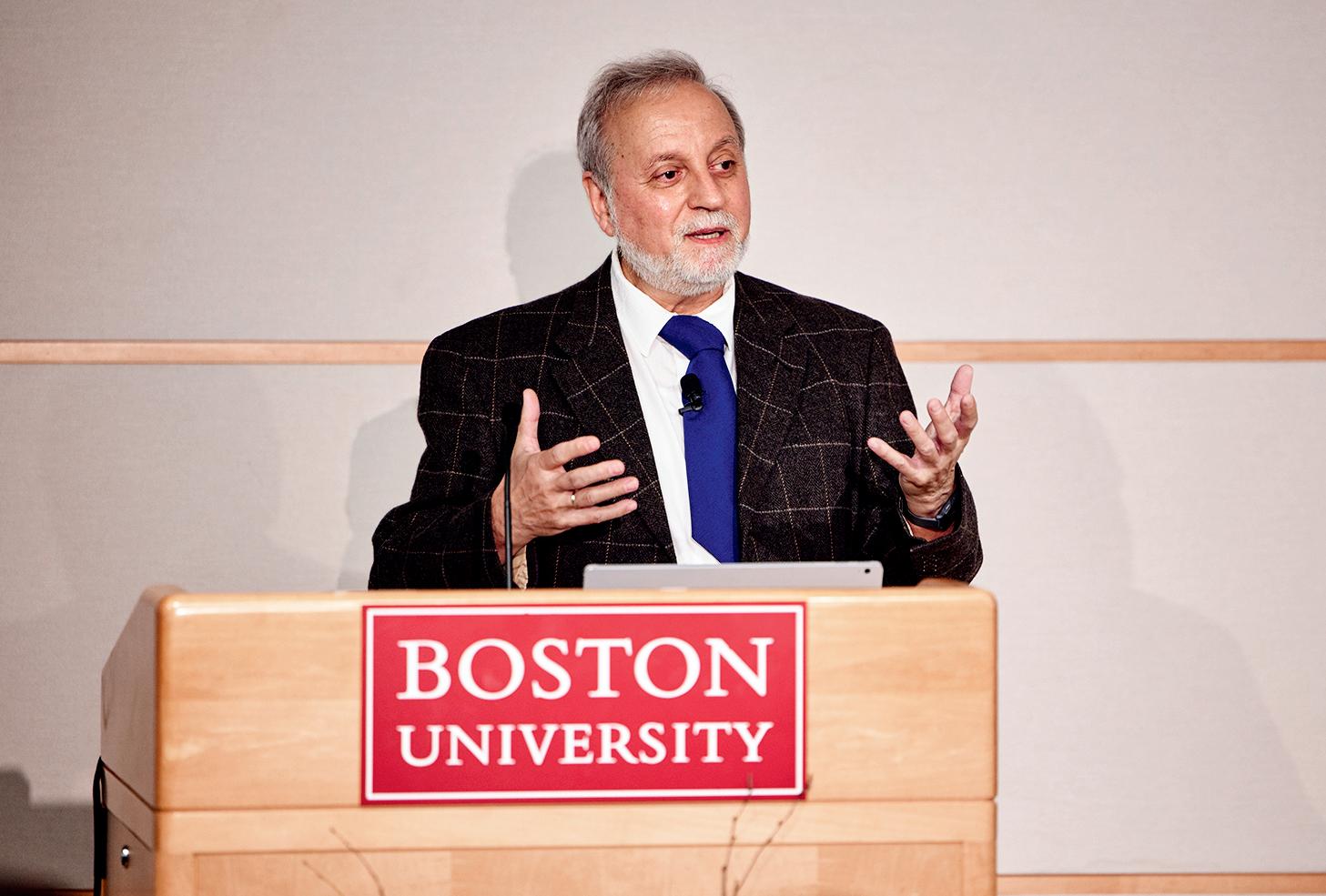
Professor Béla Suki (BME, MSE), recipient of the 2025 Charles DeLisi Award and Distinguished Lecture, delivered “Complexity in Translational Biomechanics and Mechanobiology” to a capacity crowd in the BU Photonics Center Colloquium Room.
A native of Hungary who began his career as a physicist, Suki has advanced the research community’s understanding of the impacts of physical forces on cell function, in particular related to the lung. He has invented a device, called AccuStretch, that mimics the breathing action of the lung, allowing researchers to test treatments on diseased lung tissue from organ donors. Suki has also developed a new way to measure the stiffness of lung tissue, and a computational model aimed at better understanding the progression of pulmonary fibrosis.
INTELLECTUALLY FEARLESS
“There is no aspect of the integration of science, engineering, and technology related to lung function that Béla would not be able to impact and use,” said ENG Dean Emeritus Kenneth Lutchen (BME), a longtime colleague, in opening remarks.
Suki has brought expertise in physiology, acoustics, estimation theory, modeling, signal processing, and nonlinear systems to the study of the lung. “The lung is inherently nonlinear, while we had been modeling it as if it were linear, as most engineers try to do,” said Lutchen. “I have been around a lot of scientists in my life, and I don’t know anyone who is as robust and intellectually fearless and diverse in applying any technology, science, and method you can think of to better understanding the lung function at every level.”
TOWARD A MORE USEFUL MODEL
In his lecture, Suki discussed some unexpected complexities in the biomechanics of the lung, and their implications for the understanding and treatment of diseases such as pulmonary emphysema.
“When we ventilate a patient’s lung, the volume and rate of air from the machine is always the same,” Suki said. “But we don’t really breathe like that.” In fact, the depth of breaths we take varies over time. Suki and colleagues found that diseased lungs, especially, inflate in a complex, “avalanche-like” manner. The team applied algorithms to develop a method of variable ventilation, which has been shown to improve gas exchange and inflammation in both developing and adult lungs.
Suki’s lab also studied collagen deposition throughout lungs afflicted with pulmonary fibrosis and developed a computational model that predicts bifurcations in the progression of the disease.
“George Box is quoted as saying, ‘All models are wrong, but some are useful,’” said Suki. “I would say that the ultimate usefulness of a model is when it is replaced by an even more useful model.”
Since joining BU, Suki has served on several NIH-funded grants, including a Transformative R01. He has authored or coauthored 246 peer-reviewed articles,
12 book chapters, and a book, and advised more than 30 graduate students and 20 postdoctoral fellows. A fellow of the Biomedical Engineering Society and the American Institute for Medical and Biological Engineering, Suki has earned the Joseph R. Rodarte Award for Scientific Distinction from the American Thoracic Society, and the Evans Center Research Collaborator Award from the BU Chobanian & Avedisian School of Medicine.
PIONEERS
Before Suki’s presentation, ENG Dean Elise Morgan (ME, MSE, BME), the Maysarah K. Sukkar Professor of Engineering Design and Innovation, presented Assistant Professor Eshed Ohn-Bar (ECE) with the Early Career Research Excellence Award, which celebrates significant, recent, highimpact research achievements of exemplary tenure-track faculty who are within 10 years of receiving their PhD.
The DeLisi Lecture was endowed by Charles DeLisi, who is widely considered the father of the Human Genome Project. He served as ENG dean from 1990 to 2000, establishing a research infrastructure that propelled the college into the top ranks of engineering graduate programs.
— PATRICK L. KENNEDY
Béla Suki, recipient of the 2025 DeLisi Award and Lecture.
Kenneth Lutchen Named AAAS Fellow
LIFETIME HONOR FOR ENG DEAN EMERITUS WHO HAS CHAMPIONED THE CONVERGENT RESEARCH APPROACH AND PIONEERED ADVANCES IN LUNG CARE
Ascholar at the forefront of respiratory mechanics and an innovative leader in higher education, Kenneth Lutchen, Boston University’s vice president and associate provost for research, has been named an American Association for the Advancement of Science (AAAS) Fellow. The world’s largest general scientific society, AAAS annually bestows this honor on scientists, engineers, and innovators in recognition of scientifically and socially distinguished achievements throughout their careers.
A panel of Lutchen’s peers elected him a fellow to formally recognize his “seminal work in modeling structurefunction relationships in the lung, and for developing new paradigms for mechanical ventilation.”
Lutchen, who served as BU’s interim provost and chief academic officer from 2023 to 2024, is also dean emeritus of the BU College of Engineering, where he is a professor of biomedical engineering. He first made his name as an expert in pulmonary physiology, publishing more than 150 peer-reviewed journal articles, which have been cited more than 10,000 times.
“I am deeply honored to be recognized by AAAS as a fellow, not only because of the personal accolade, but also because of my deep respect for the mission and impact of AAAS on society,” Lutchen says. “AAAS is dedicated to promoting the power of science and the scientific method to advance society in a data-driven way. While the world is a complicated geopolitical place, it will forever be dependent on advancing scientific discovery and technology innovation to improve everyone’s quality of life
and to address local and global challenges that emerge. AAAS stands as an objective advocate to facilitate how society can best be served by science and technology.”
Since the fellows program was founded in 1874, more than 110 BU scholars have been honored.
“Ken is the ninth member of the BU College of Engineering faculty to receive this lifetime honor from AAAS.
That is a testament to our prominence in engineering scholarship—and that prominence is due in no small part to Ken’s efforts here as dean for 17 years,” says ENG Dean Elise Morgan (ME, MSE, BME).
“One of his great strengths is the ability to inspire people to work across disciplinary boundaries, and to attract and retain faculty who are extraordinarily gifted in interdisciplinary inquiry.”
As dean of ENG from 2006 to 2023, Lutchen oversaw the creation of several research centers and worked with industry partners to open three experiential education facilities: the Engineering Product Innovation
“Critical societal challenges will not be solved by anyone trained in only a single discipline. Convergence engages the power of synthesizing across often disparate disciplines to accelerate impactful solutions.”
Center, the Bioengineering Technology & Entrepreneurship Center, and the Robotics & Autonomous Systems Teaching and Innovation Center. He also developed and promoted—and even trademarked— the concept of the Societal Engineer, an individual with a sense of purpose and appreciation for how engineering can be used to improve society.
To better train engineers with the Societal Engineer mindset and the broad mix of skills needed to put it into practice, Lutchen realigned the college’s departments with the goal of encouraging convergent research. “Critical societal challenges will not be solved by anyone trained in only a single discipline,” he wrote in a special edition of ENGineer magazine. “Convergence engages the power of synthesizing across often disparate disciplines to accelerate impactful solutions.”
As senior advisor to BU President Melissa Gilliam, Lutchen was recently named cochair of the University’s Task Force on Convergent Research and Education. — PATRICK L. KENNEDY
Kenneth Lutchen, ENG dean emeritus, BU’s vice president and associate provost for research and a renowned researcher in pulmonary physiology.
National Recognition for ENG Faculty
A ROUND-UP OF HONORS
WILSON WONG NAMED AIMBE FELLOW
Professor Wilson Wong (BME) has been inducted into the American Institute for Medical and Biological Engineering (AIMBE) College of Fellows, earning one of the highest professional distinctions accorded to researchers in the field. Now including Wilson, a total of 39 Boston University College of Engineering faculty are AIMBE fellows.
With a mission to recognize excellence, advance public understanding, and accelerate innovation in medicine and biology, the AIMBE College of Fellows comprises the top two percent of engineers in the medical and biological fields. Wong was nominated, reviewed, and elected by his peers “for pioneering contributions to mammalian synthetic biology, immune cell therapy, and leadership in service and outreach for
synthetic biology,” according to his citation. He is perhaps best known for his advances in chimeric antigen receptor (CAR) T-cell treatments for cancer.
XIN ZHANG EARNS EDISON AWARD
Distinguished Professor of Engineering Xin Zhang (ME, ECE, BME, MSE) has received the 2025 Thomas A. Edison Patent Award, a premier achievement award from the American Society of Mechanical Engineers (ASME) honoring exceptional patented innovation. Zhang is being recognized for her pioneering contributions to the field of metamaterials, whose engineered properties are redefining the frontiers of wave control, sensing, and signal manipulation.
The Edison award honors the creative ingenuity behind patented devices or processes that could potentially advance engineering significantly while making a lasting impact on industry and society. Zhang’s suite of patented inventions harnesses the extraordinary capabilities of metamaterials—artificially structured materials with properties not found in nature—with applications in healthcare, infrastructure, and more. Her innovations have led to ultralight, compact, and high-performance systems for noise reduction, precision sensing, and advanced imaging, offering
unprecedented control over acoustic, electromagnetic, and magnetic fields.
SANDER AND TIAN NAMED OPTICA FELLOWS
Two associate professors of electrical and computer engineering, Michelle Sander and Lei Tian, have been elected to Optica’s 2025 Class of Fellows. Formerly known as the Optical Society of America (OSA), Optica is the preeminent professional society in optics and photonics; fellow members of the society are selected based on their record of “distinguished contributions to education, research, engineering, business, and society.” This prestigious distinction is awarded annually to approximately 0.5 percent of the society’s total membership.
Sander leads BU’s Ultrafast Optics Laboratory, performing cutting-edge research to develop ultrafast lasers, photothermal light-matter interactions for imaging and modulation with applications in biomedicine and materials science. Optica cited her “seminal contributions to ultrafast fiber lasers and their applications in imaging, material characterization, and modulation.”
Tian is a pioneering researcher in computational imaging who utilizes deep learning and other data science techniques to design and build novel imaging devices and technologies. Optica recognized him for “contributions to computational microscopy, including differential phase contrast microscopy, Fourier ptychography, optical diffraction tomography, and imaging in scattering.”
SEMETER APPEARS ON NOVA
Professor Joshua Semeter (ECE), director of BU’s Center for Space Physics, shared some of his expertise in an episode of the long-running PBS series NOVA. The episode focused on UFOs, officially redubbed UAPs (Unidentified Anomalous Phenomena). Semeter used infrared and optical technology to demonstrate how many sightings might be explained by optical illusions caused by parallax, the effect behind human depth perception.
“We still do not know what many of these objects are,” said Semeter, “but it is unlikely to be alien or advanced terrestrial technology.” — ENG STAFF
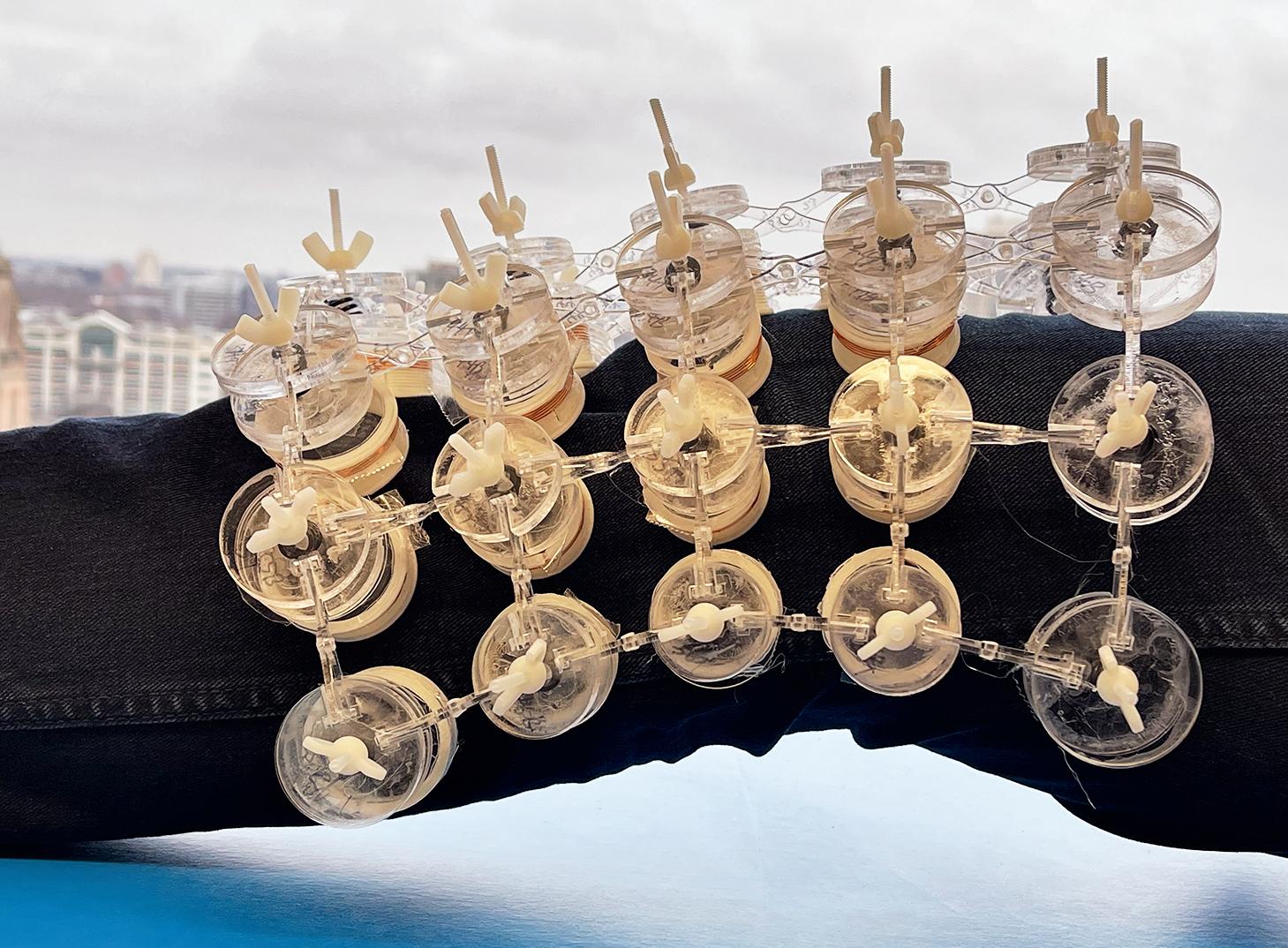
Segments of Xin Zhang’s wearable metamaterials aimed at boosting the signal of MRI machines.
BU-Bred Bionic Pancreas Company Hits Nasdaq
ANOTHER MAJOR MILESTONE FOR BETA BIONICS
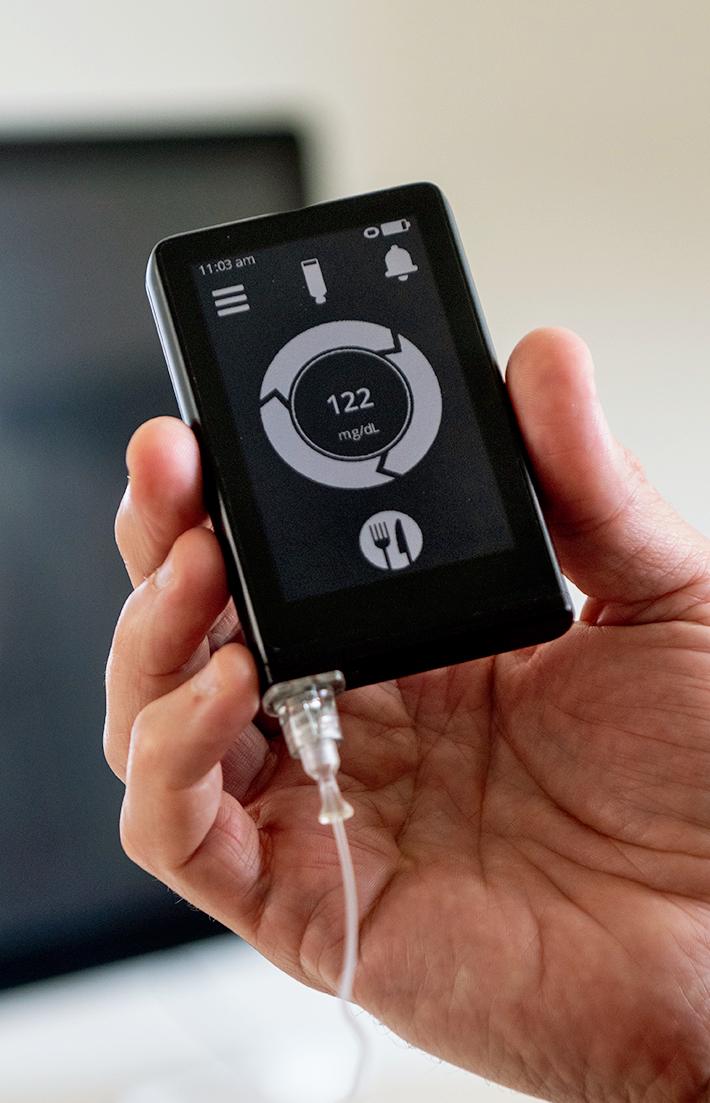
Beta Bionics, the maker of the iLet Bionic Pancreas, an automated insulin delivery device for people with type 1 diabetes, has completed its initial public offering, allowing anyone to buy shares in the company. The iLet was invented in the lab of Research Professor Ed Damiano (BME), who cofounded Beta Bionics as a public benefit corporation in 2015 and first began work on the device in 2002, inspired by his infant son’s battle with diabetes. The company, which is listed on the Nasdaq under the ticker symbol “BBNX,” hopes going public will help raise funds for product development and infrastructure expansion.
“It’s a major milestone that will allow us to grow faster and more easily raise capital than we probably could as a private company,” says Damiano, also Beta Bionics’ executive chair of the board. “And one of the key beneficiaries of that is the type 1 diabetes community. Whatever we can do to make Beta Bionics a greater force for good, by bringing more world-class technology to more people who need it, is good for that community.”
The iLet uses sophisticated software developed in Damiano’s BU lab to automate insulin delivery and help people with type 1 diabetes more easily achieve better health outcomes. In 2023, the FDA cleared the iLet for people aged six years and older with type 1 diabetes.
A 2022 study in the New England Journal of Medicine found the iLet was better at maintaining healthier blood glucose levels than standard-of-care options. The study was funded by an NIH grant to Damiano’s BU lab.
“The device has been out there for a year and a half, and we’ve had great success in the thousands of people who are using it,” says Damiano. “And when you look at how well those people are doing, it’s even more impressive than the results we published in the New England Journal of Medicine. That’s extremely satisfying and rewarding.”
There are now more than 15,000 patients in the United States using the iLet. Users sharing reviews have said that by automatically calculating their insulin needs and tailoring doses, the bionic pancreas has given them newfound freedom and improved their management of the disease. Parents talked about their children being able to join in more activities and sports: “She actually gets to be a kid again!” said one mom of her young daughter’s iLet use. “I never thought I would say this, but our life looks a lot like it did before our diagnosis. We are so thankful.”
“It is very uplifting to directly see the impact of our research,” says Michael J. Pratt, BU Technology Development’s managing director. His office helps researchers commercialize their inventions and discoveries. “If you are looking for a little
“And one of the key beneficiaries of that is the type 1 diabetes community. Whatever we can do to make Beta Bionics a greater force for good, by bringing more world-class technology to more people who need it, is good for that community.”
inspiration for supporting our research at BU, look no further than these testimonials.”
For Damiano, this has been a more than 20-year journey, sparked when his son, David, was diagnosed with type 1 diabetes just before he hit his first birthday. At the time, Damiano was “entirely a theoretician—I solved problems in mathematical biology for a small and highly specialized audience.” His son’s diagnosis changed all that, and he now encourages early-career researchers to “be open-minded, to be flexible as to how you define yourself and what you think you might be doing in the future.”
Next on the agenda for Beta Bionics is developing new bionic pancreas technologies, including a patch pump version and a two-hormone edition; the latter would raise and lower blood sugar levels automatically by delivering insulin and the hormone glucagon.
“What drove all of this for me was a desire to build technology for David that he could use one day,” says Damiano. “But along the way, it became clear that what we were building was for the multitudes of people living with type 1, not just one kid.”
— ANDREW THURSTON
Beta Bionics’ iLet device automates insulin delivery, helping people with type 1 diabetes.
upfront Students Score in Product Competitions
CRAFTING NOVEL SOLUTIONS TO A RANGE OF PROBLEMS
AIR QUALITY SENSOR WINS JANETOS CLIMATE ACTION PRIZE
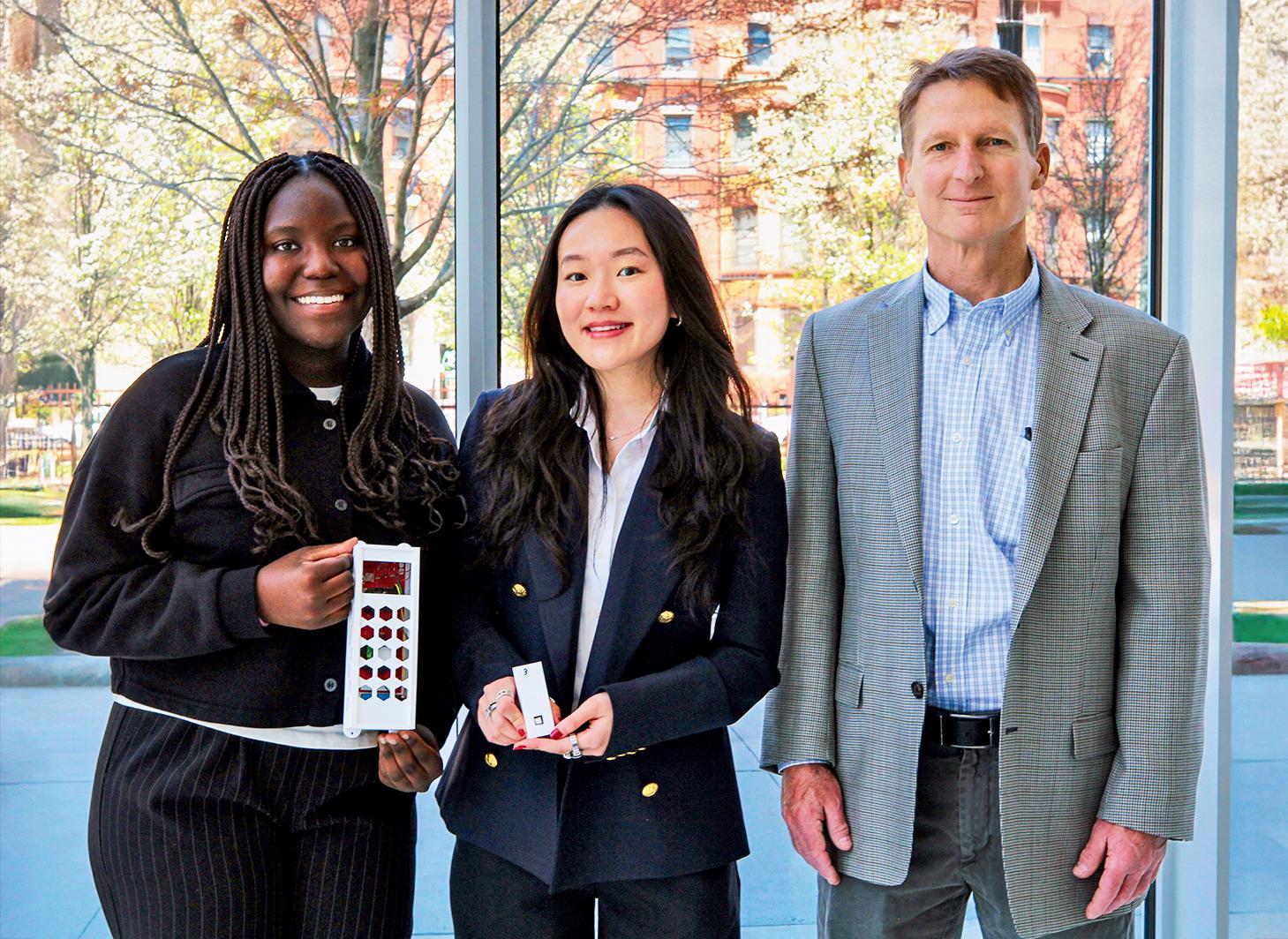
Celine Chen (ENG’25), Primah Muwanga (CGS’24, CDS’27), and Ellen Zheng (ENG’27) have won the 2025 Janetos Climate Action Prize with an indoor air quality sensor. The prestigious prize is presented annually to a student project that received funding from BU’s Campus Climate Lab (CCL) and can most significantly advance BU’s Climate Action Plan.
For two years, the students have been designing and testing the indoor air quality monitors to better understand—and ultimately improve—ventilation in different buildings across the Charles River Campus. Since healthier air has been shown to boost academic performance, raising standards across campus could potentially help students with concentration and test results. Along with former students Marybel Boujaoude (ENG’24) and Yangyang Zhang (ENG’24), the team designed and built 29 air quality sensors, which they used to gather approximately 30 million readings from classrooms last spring.
CCL is led by BU’s Institute for Global Sustainability, in collaboration with BU Sustainability and the Research office.
TIE FOR FIRST IN DESIGN-A-THON
Both a skin tone colorimeter and a tool for training cornea transplant surgeons earned first prize in the third annual BTEC x BMES Design-A-Thon, a joint effort by ENG’s Bioengineering Technology & Entrepreneurship Center (BTEC) and the BU student chapter of the Biomedical Engineering Society.
With the help of grad student mentors and the resources available in BTEC as well as the Engineering Product Innovation Center and the Singh Imagineering Lab,
students entered in this spring’s competition spent the academic year crafting technological solutions to healthcare disparities.
Anum Kotecha (ENG’28) developed a novel method of simulating penetrating keratoplasties (cornea replacement surgery). To create 3D-printed models of the cornea and the surgical field, Kotecha developed a novel bio-ink as well as its curing agent. The kit’s low cost is aimed at making training accessible in underresourced regions around the globe.
Jackson Muise, Emma Stone, and Shripreetika Guruprasad (all ENG’25) collaborated on a compact skin tone colorimeter intended to reduce racial bias in medical imaging. Their device is cost-effective and more sensitive to reflected light. It is also the first open-source academic colorimeter, allowing other researchers to replicate and build upon their design.
To depict fanciful but humanoid characters on film, major film studios use motion capture technology that employs optical sensing to record and re-create
Since healthier air has been shown to boost academic performance, testing and improving classroom air quality could potentially help students with concentration and test results.
actors’ movements. But the technology is extremely expensive. Fadi Kidess (ENG’25), the winner of the 2025 BU ENG Dean’s Imagineering Competition, has a more cost-effective solution, which he calls HIVE Technology.
HIVE can interface with virtual reality (VR) devices, allowing for a better user experience while maintaining a lower cost, especially with mobile VR—rather than costing thousands of dollars, HIVE can be deployed for less than $500.
“Using a VR headset with a Bluetooth connection, a subject is tracked at 12 different points on their body, and with haptic feedback, so they will ‘feel’ external stimuli,” said Kidess. — ENG STAFF
Janetos Climate Action Prize winners Primah Muwanga (left) and Celine Chen (center) with faculty advisor Thomas Little. Their team developed and refined air quality sensors, shrinking them from an initial design (held by Muwanga) to a doorbell-sized version (held by Chen).
COURTESY OF SARAH CRUZ
ENG Students Mentor High School Robotics Team
LEARNING
STEM SKILLS THROUGH FRIENDLY COMPETITION
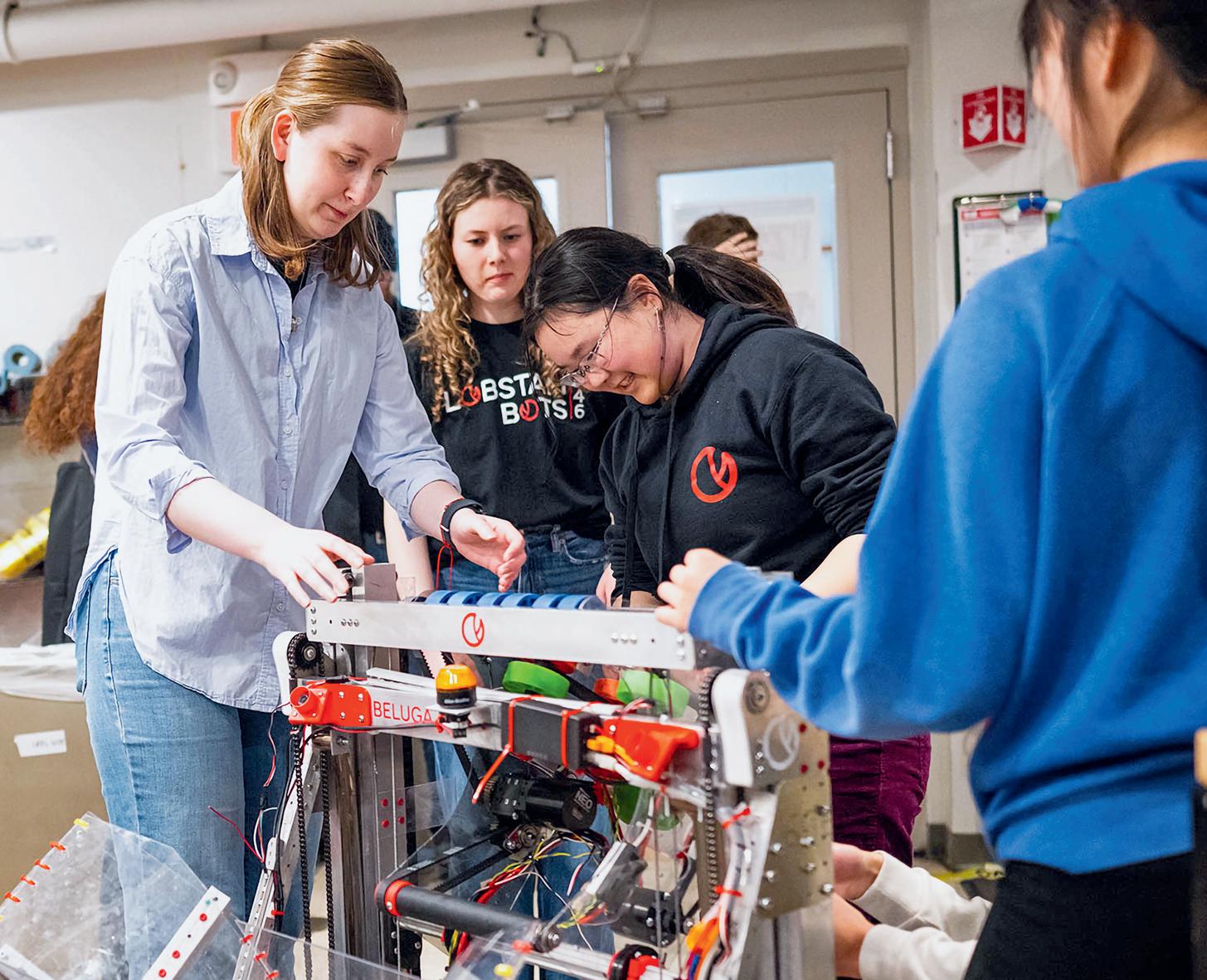
Toiling nearly every day after school for two months, a team of 20 students from Boston University Academy (BUA) and Boston’s Match Charter High School built a robot named Beluga in a workshop at BU’s College of Engineering. With lifting and grasping mechanisms, the robot looks a bit like a giant Erector set on wheels. Guided by BU ENG undergraduate mentors, the team earned high marks in FIRST Robotics scholastic competition in 2025, winning both an Excellence in Engineering Award and a Gracious Professionalism Award.
ENG sponsors Match students through its Technology Inspiration Scholars Program (TISP) and supports the team (nicknamed the Lobstah Bots) by sending their undergrad mentors to help in a handsoff way, troubleshooting and serving as sounding boards while the kids tinker and improve their robotic creation.
“They’re able to do pretty effective mentorship that almost feels invisible,” says BUA student Maxwell Yu, team colead on computer-aided design. “They’re not that much older than us, but they have more technical expertise, and they try to guide us by saying, ‘Have you considered this possibility?’ rather than, ‘You should do this.’”
The goal of both BU’s TISP and the national organization FIRST (For Inspiration and Recognition of Science and Technology) is to expose more young people to STEM fields—and all the possibilities in those fields for differencemaking careers—through a fun, exciting extracurricular activity.
“Robotics is the only sport where every kid can go pro,” says Madison McDonald (ENG’26), a TISP volunteer.
In FIRST Robotics, students design, build, and program industrial-size, mobile, multifunctional robots to complete various tasks, such as lifting and delivering items, in themed competitions that mimic realworld robotic challenges. Robots are graded on various attributes by expert volunteer judges.
Although in some ways, FIRST events are modeled on athletic contests, they strive to avoid the pitfalls of often overly competitive youth sports. In fact, FIRST uses the term “coopertition” to capture the spirit of fairness and civility emphasized at events, as well as the structure of competition, in which each team is actually an alliance of three robots/schools fulfilling tasks in parallel.
In this year’s theme, “Dive,” the playing field represents a coral reef. The robots are imagined as submarine robots seeding the reef with new coral by placing wide PVC pipes atop narrower pipes at different height levels and clearing it of algae (large gymstyle bouncy balls).
“They learn resilience, problem-solving skills, leadership skills, teamwork,” says Michael Kelly, ENG’s STEM outreach manager. “They get used to working together
across widely disparate subteams—some kids are into coding, some mechanical engineering, some electrical. Some really enjoy laser cutting and fabrication.”
The high schoolers machined all the parts of Beluga in BU’s Engineering Product Innovation Center (EPIC). “To truly learn something, you need the hands-on experience in addition to the theory,” McDonald says.
Beyond those hard skills, says Kelly, FIRST’s emphasis on gracious professionalism dovetails with BU ENG’s concept of the Societal Engineer. “When professionals use knowledge in a gracious manner and individuals act with integrity and sensitivity, everyone wins and society benefits,” reads the FIRST manual.
The experience of working with the Lobstah Bots benefits the mentors as well. “Mentoring has helped me contextualize my coursework,” says Carolyn Glasener (ENG’25). “I’m taking that theory and applying it to explain to them the reasoning behind the different design decisions they could make.”
It’s also heartening when her mentees learn and grow, Glasener adds. “Seeing their confidence in both their personal lives and their engineering skills has been one of the most rewarding aspects of my time with this team.” — PATRICK L. KENNEDY
Carolyn Glasener (ENG’25) (left) and Madison McDonald (ENG’26) (second from left) working with BU Academy robotics team, Lobstah Bots.
SKYWARD BOUND
STUDENT ROCKETEERS PERSEVERE AND MAKE HISTORY
BY PATRICK L. KENNEDY
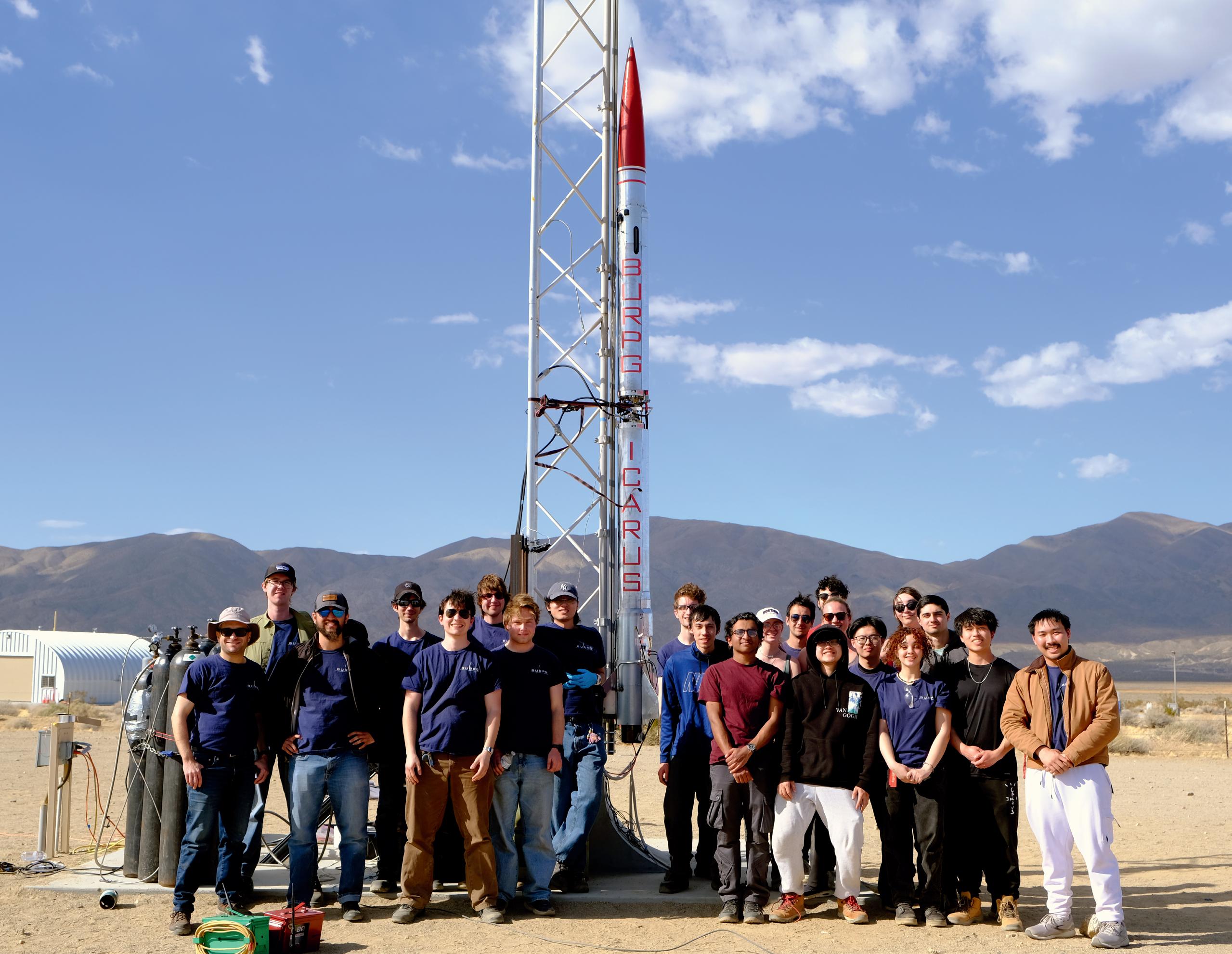
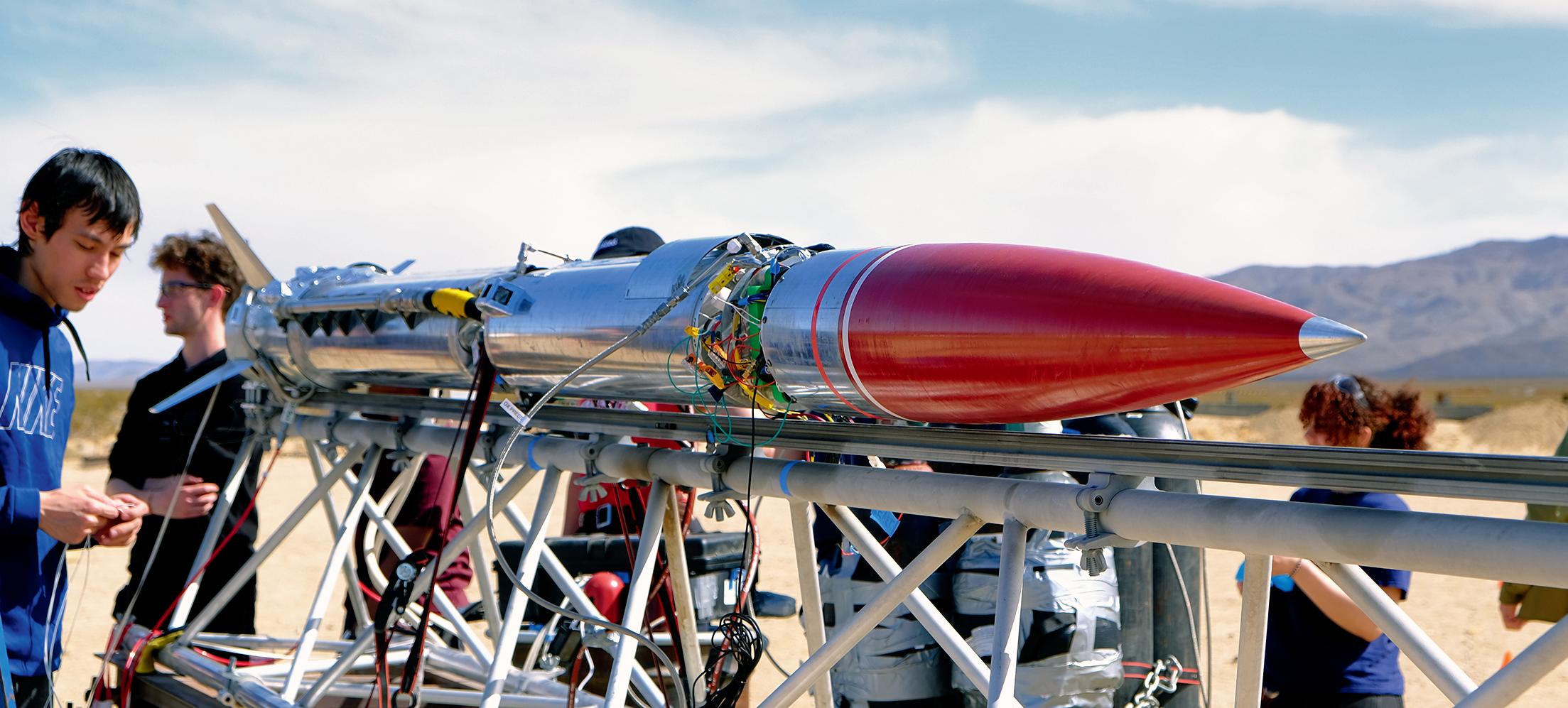
n March 29, the Boston University Rocket Propulsion Group (BURPG) launched and recovered Icarus, the first liquid-fueled rocket to be fired skyward by the student club in its 23-year history. The rocket also set a new record for the highest thrust of any collegiate liquid rocket to ever fly, with 2,200 pounds of sustained thrust. It was a momentous, earlycareer-defining achievement for all involved.
And it almost didn’t happen.
After they spent seemingly every spare moment for two years designing, building, and testing the 17-foot-long rocket, 19 of the students traveled to the Mojave Desert on March 1 for the club’s first attempt at this feat. They had to disassemble the rocket in Boston, ship it in two parts by freight to Los Angeles, fly themselves there, rent a truck and cars, collect the rocket parts, drive to the Friends of Amateur Rocketry launch site, and reassemble Icarus—this last step alone a daylong process.
After all that, they had to cancel the launch because of bad weather: gusts of wind approaching 60 miles an hour.
Those weren’t the only headwinds BURPG faced during its Icarus odyssey. Simply trying to operate a collegiate rocket team in the Northeast, the Terriers were at a disadvantage, relative to the many desert-proximate clubs on the West Coast. Nowhere in New England can you launch a rocket without it landing in a populated or wooded area, risking fires and casualties either way.
The students were, however, able to conduct stationary, groundbased fire tests at a secluded site in rural Massachusetts, albeit during the winter. To do this, they poured their own concrete slab and erected a steel testing structure, often working in rainy or near-freezing conditions.
“People put on 20 different hats,” says Ben Kamer (ENG’26), BURPG vice director. As one might expect, many of the club’s members are mechanical engineering majors, but there are also electrical and computer engineering majors as well as students from other BU schools, including majors in chemistry, computer science, and business.
“I worked on fluid systems design, but I learned so much about computers and electronics that I did not know, just because we’re talking to each other every day,” says Kamer. “This is the greatest
team project. If you don’t communicate, it’s not like you get a bad grade—it’s that the rocket blows up, or it doesn’t come down in one piece.”
Icarus is a bipropellant rocket, powered by a mix of isopropyl alcohol and nitrous oxide. The students designed their own flight software and fluid systems from scratch, and they built hundreds of the rocket’s components themselves, machining parts in the BU Engineering Product Innovation Center and in the BURPG workshop on Cummington Mall.
When complete, the rocket measured 17 feet long and eight to nine inches in diameter. It weighed 190 pounds dry, or 250 pounds when filled with fuel. It consisted of two halves connected by an intertank housing the oxidizer and fuel fluid systems. The base was fitted with four fins for stability, and just above these a thrust structure assembly distributed loads from the engine to the rest of the rocket. At the other end, a compartment holding two parachutes, and an avionics bay containing a flight computer and GPS system were topped with a fiberglass-and-steel-tipped nose cone.
The windy weather that doomed the March 1 launch was just the latest of many setbacks, said BURPG director Kacper Bazan (ENG’25). “For the last two years, it was never smooth sailing. It was constantly annoying, tedious. This is technically, emotionally, logistically one of the hardest things a lot of us have ever done.
“And yet,” added Bazan, when the students returned to Boston, “somehow the morale seemed so high, for everyone to go out again a month later without missing a beat, just to put all our marbles on the line to get it done.”
In that effort to avoid missing a beat, the club got a huge assist from BURPG alum Jack Sullivan (ENG’23), now an electrical engineer at SpaceX in California. Sullivan had a storage space just big enough to fit Icarus without the nose cone, so the students didn’t need to disassemble the whole rocket after the aborted first launch or reassemble it upon the return visit.
“That saved us a day and a half” of extra work, says Bazan.
Sullivan wasn’t the only alum who pitched in, notes Tim
Evdokimov (CAS’25), BURPG treasurer: “The alumni support network was invaluable. Many came in or called in to our design reviews and provided feedback and technical advice. We could not have done this without the support of our amazing alumni who’ve gone on to industry and continued to provide all this invaluable insight into how to do all these very complicated things.”
Fifteen students made the return trip, camping out in tents in the desert. On launch day, after setting up Icarus on a 40-foothigh steel rail, the team members hunkered down at the controls in concrete bunkers 300 feet away. Students calmly announced the readiness of all systems, just as they’d rehearsed. Then, as the countdown clock clicked down to zero, they remotely set off the igniter.
With first a whine and then a resounding roar, Icarus lifted off, and the shouting and cheering began. “We’d gotten quite good at keeping our cool during tests,” says Evdokimov. “During the launch, all that went out the window.”
“I felt an immense sense of awe,” says Bazan. “That, holy crap, we actually launched this thing.”
Burning through its fuel in 5.6 seconds and hitting a maximum velocity of Mach 1.6, Icarus reached an altitude of 12,900 feet in 30 seconds. Once the rocket hit its apex and began to fall, the parachutes deployed and the rocket “made its way leisurely down for the next minute and a half,” says Evdokimov, returning intact to Earth, to be recovered by BURPG.
Since starting at the club, many BURPG members have done internships and then landed jobs in the aerospace industry, following in the footsteps of Sullivan and many others.
As for the BURPG members who remain, and the new ones to come, the club retains a long-term goal of being the first collegiate team to fire a liquid-fueled rocket to the Karman line, 62 miles above sea level, touching outer space itself.
“You will succeed in doing the hard thing if you put enough effort into it,” says Bazan, reflecting on what he learned launching Icarus. “I will remember this experience my whole life.”
To learn more or support the work of BURPG, visit burpg.org
BURPG members setting up for their rocket launch in the Mojave Desert.
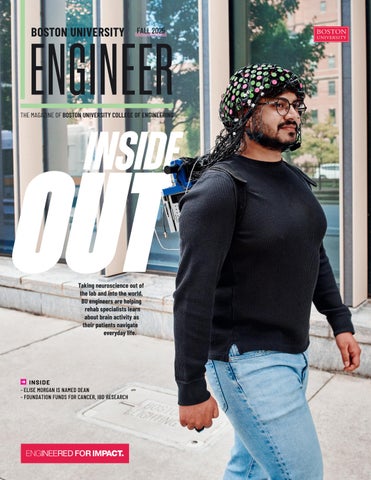
COLLABORATING ACROSS SCHOOLS TO HELP STROKE SURVIVORS AND OTHERS, RESEARCHERS ARE IMAGING BRAIN ACTIVITY IN HUMANS IN EVERYDAY SETTINGS
BY PATRICK L. KENNEDY AND DANNY GIANCIOPPO
PHOTOS BY DOUG LEVY
oday, when a stroke impairs your mobility, a doctor might prescribe a cane to help you walk. In the future, instead of a cane, you might get a robotic exosuit installed with a program that anticipates your every step, so you can smoothly walk down the street without giving it a thought.
That’s just one of a slew of technologies emerging from multiple multidisciplinary BU labs that promise not only to change the way we see and understand the human brain, but also to restore function to people impacted by neurological disorders, helping them to again navigate their homes and communities.
Professor David Boas (BME, ECE), founder and director of the BU Neurophotonics Center, calls this cohering, multifaceted field Neuroscience in the Everyday World (NEW). “These are technologies that are really advancing our ability to measure brain function and brain behavior under naturalistic conditions,” Boas says. “So we’re taking neuroscience out of the lab and into the everyday world.”
USING LIGHT TO UNDERSTAND THE BRAIN
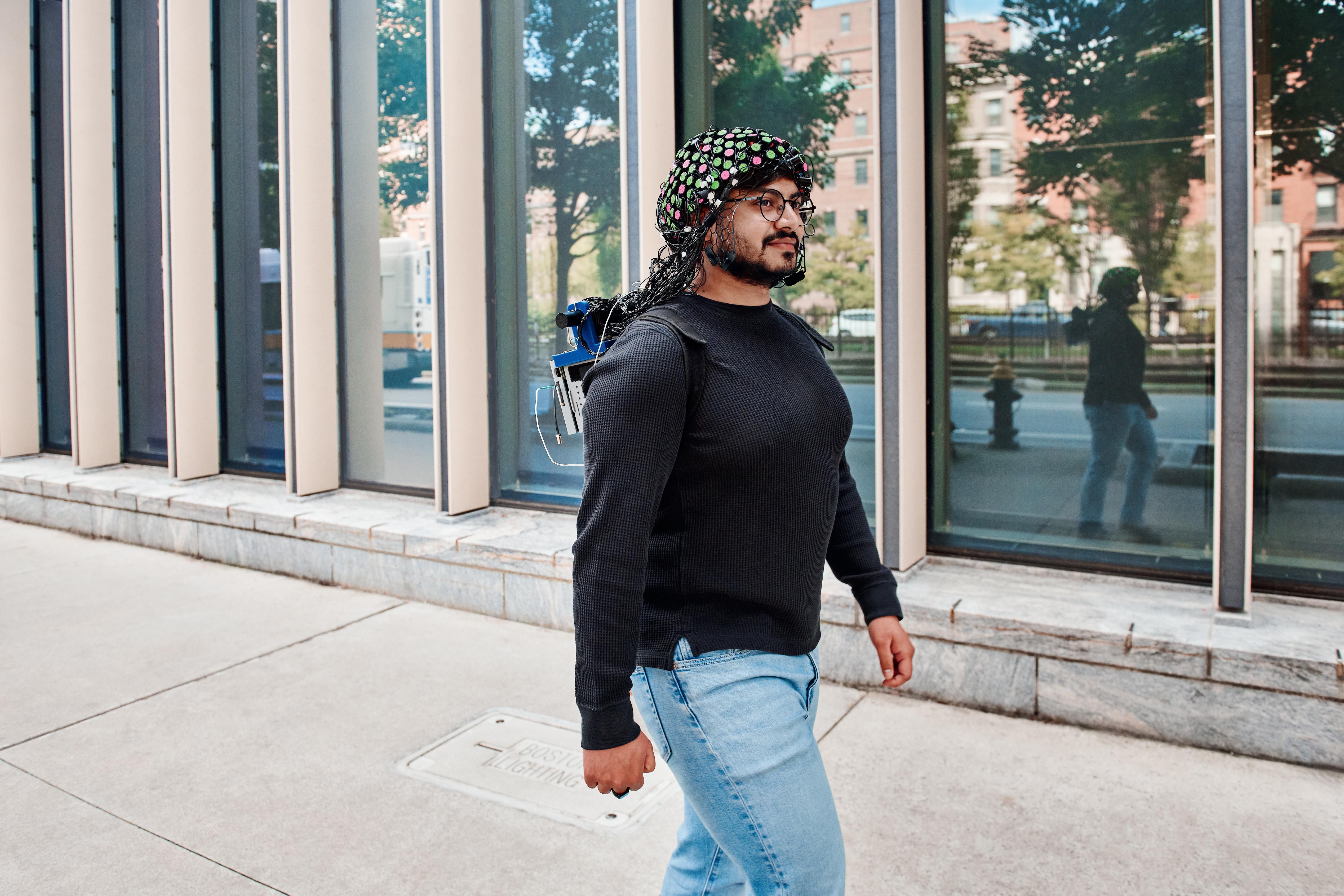
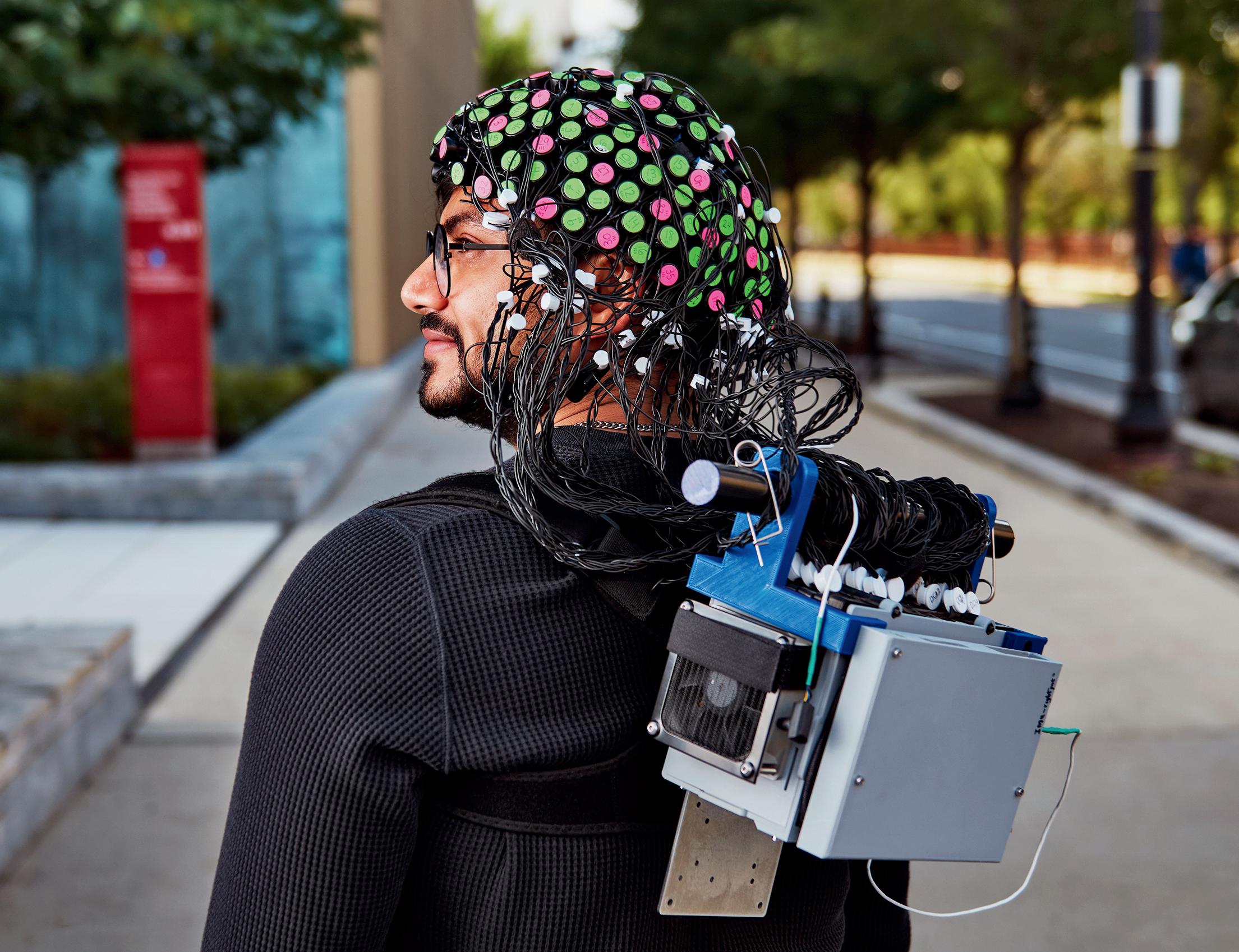
Boas and colleagues have developed one of the most prominent of the NEW technologies: wearable functional near-infrared spectroscopy (fNIRS). There are a few variations on wearable fNIRS for different applications, but they all use light to track the flow of blood to the different regions of the brain as a way to learn which neurons are activated by what stimuli and behaviors.
For three decades, the standard way to track blood flow in the brain has been functional magnetic resonance imaging (fMRI). “That revolutionized our understanding of the brain,” says Boas. “It requires the subject, however, to lie down inside a magnet, and when they’re inside the magnet, they can’t be engaging in actual naturalistic tasks.”
Near-infrared light can be used in neural imaging because it can travel far into brain tissue, but it’s absorbed by hemoglobin. “So if the amount of hemoglobin in the brain changes, as it does during brain activity, it will change the amount of absorbed light, and we can detect that,” says Boas. Subjects in fNIRS studies wear a kind
David Boas (BME, ECE)
of cap covered with light sources and detectors. “By measuring the temporal changes in the amount of light we detect, we can infer what brain regions are being activated.”
By making this fNIRS system wearable, Boas and colleagues can now study subjects as they move about in public, perceiving and interacting with their environment. The richer set of data the researchers thereby gain will lead to a new understanding of the links between brain activity and behavior, benefitting a variety of future researchers, clinicians, and patients.
“The classic complaint about the engineer is that they build a hammer and then are looking for a nail, but I’m really scouring the earth for the right nail,” Boas says. “We’re not just developing technologies but really following them through to make sure they can have the most societal impact. I’ve got so many colleagues doing amazing things with this system.”
The Boas team’s wearable fNIRS technology allows brain activity to be studied while subjects walk about outdoors and engage in ordinary activity.
“ WE’RE NOT JUST DEVELOPING TECHNOLOGIES BUT REALLY FOLLOWING THEM THROUGH TO MAKE SURE THEY CAN HAVE THE MOST SOCIETAL IMPACT.”
WALKING WITHOUT THINKING ABOUT IT
One of these colleagues is Louis Awad, an associate professor of physical therapy at the BU Sargent College of Health & Rehabilitation Sciences and the director of the Neuromotor Recovery Laboratory, which creates new technologies to help patients with neuromotor impairments—such as stroke, multiple sclerosis, and Parkinson’s disease—regain their mobility.
Louis Awad (physical therapy)
“We’re trying to develop the next generation of wearable sensing technologies that can give us a better sense of different things that matter to how patients move in the everyday world,” says Awad.
One element of mobility that neuromotor-impaired patients often lose is automaticity—the ability to walk without thinking about it consciously. Ordinarily, we take automaticity for granted, says Awad. “You’re not thinking about putting one foot in front of the other, or the timing of muscle contractions.” Awad’s patients must do this deliberately, which distracts their brains from other planning tasks.
“ WE’RE TRYING TO DEVELOP THE NEXT GENERATION OF WEARABLE SENSING TECHNOLOGIES THAT CAN GIVE US A BETTER SENSE OF DIFFERENT THINGS THAT MATTER TO HOW PATIENTS MOVE IN THE EVERYDAY WORLD.”
But it’s impossible for rehab researchers, let alone physical therapists, to understand exactly what’s going on in a patient’s brain simply by watching them walk. “We’re blind to the neural strategy underlying real-world mobility,” Awad says. “If our goal is to restore effortless walking, we need to be able to see into the brain.”
With Boas, Research Associate Professor Meryem Ayşe Yücel (BME) (see sidebar, p. 23) and others, Awad has devised the Robotic Exosuit Augmented Locomotion (REAL) system. Like other exosuits in Awad’s lab, this is a textile-based active assistive device, meaning it uses soft robotics and powered cables to help restore a patient’s gait after a stroke. But wearable fNIRS adds another dimension to the system.
Unlike a simpler robotic exosuit, wearable fNIRS can forecast a patient’s next move. “We can predict, 100 milliseconds into the future, what they’re going to be doing,” Awad says. “Because if we’re always playing catch-up—seeing what the patient is doing, then trying to assist—we’re never going to make this a fluid interaction. But having the fNIRS technology from David’s team means we can track the neural signal as it’s originating in the brain.”
That information is fed back to the robotic system that’s assisting the wearer’s movements. “It makes for a more seamless integration,” enabling the robot to carry out the human’s intent without frustrating delays, Awad says. “It gets back to that automaticity of movement.”
In one study, using the REAL system in parallel with fNIRS helped patients move in an automatic way—walking up and down the aisles of a parking garage—so that they could focus their brain on a cognitive task, finding their car. “This is true neuroscience in the everyday world,” says Awad. “Not just as a measurement but as a treatment.”
Awad’s father and uncle both had strokes within six months of each other when Awad was a teenager, which is what started him on the path to rehab science. “If the doctors had told me, ‘Your uncle will never fully recover the ability to control his own muscles, but we have a wearable exosuit that will enable him to move the way he wants to whenever he wants, and to reintegrate into everyday life,’ I would have accepted that in a heartbeat,” Awad says. “Maybe that’s not biological recovery, but it is functional recovery, and I think we can achieve that within the next couple of decades.”
A NORMAL CONVERSATION
Swathi Kiran also works with stroke survivors and people with dementia, Parkinson’s disease, and traumatic brain injuries. But while Awad focuses on patients’ gait, Kiran studies their speech. The James and Cecilia Tse Ying Professor in Neurorehabilitation at Sargent College, Kiran is the director of the Center for Brain Recovery (CBR) as well as the research director of the Aphasia Resource Center.
Kiran (neurorehabilitation)
As in Awad’s lab, Kiran and colleagues at the CBR are not just doing basic science; they’re helping real patients who suffer from neurological disorders by developing and testing better therapies.
“When you have neurological disorders like stroke and dementia, you have trouble speaking, understanding what people are saying, and remembering things,” says Kiran. The researchers want to see brain activity while patients try to remember and communicate.
“Before we started using fNIRS, our only option was to put folks in an MRI scanner—a big magnet—and scan their brains while they’re lying still and can’t really talk,” Kiran says of fMRI scans. “With fNIRS, we can sit across from each other normally while patients are wearing the cap and do the experiments while just having a normal conversation.”
While subjects converse thus, the sensors measure brain regions that are involved in language processing and planning. In the case of dementia, the experiments could lead to methods of early detection. “We’re looking for a marker,” Kiran says, “brain activation patterns showing that something is clearly going on.”
In the future, Kiran says, aging people who are showing what could be early signs of dementia, or not—for example, staying home a lot because they’re worried about falls or anxious about their language or memory—will be able to take a test similar to what Kiran is conducting at BU. “They can come in to monitor their brain,” she says. “It’s not invasive, it’s quick and easy, and the goal is to detect changes in brain function earlier, before the disease has set in.”
In the case of stroke, where the damage has already occurred, the goal of tests using fNIRS is to assess the extent of the damage, as well as the effectiveness of treatment. “We’d like to see if the brain is changing as a function of the intervention,” says Kiran. “We can measure their brains before and after the therapy to see what in the brain has changed.”
The wearable fNIRS system “has opened up a whole new avenue of research we didn’t think about before,” Kiran says. “It’s made some of this work more practical and not just lab-based.”
That’s a result, she adds, of the collaboration of experts across disciplines.
“I’m a trained speech language pathologist, and at some point I realized that we couldn’t help the patients fully change their
“ THE WEARABLE FNIRS SYSTEM HAS OPENED UP A WHOLE NEW AVENUE OF RESEARCH WE DIDN’T THINK ABOUT BEFORE. IT’S MADE SOME OF THIS WORK MORE PRACTICAL AND NOT JUST LAB-BASED.”
lives unless we reached out of our comfort zone and really tried to make a bigger difference,” she says. “So almost everything we do [at the CBR] is a convergence, with neurology, biomedical engineering, computer science, and data science all working on the same problem. I think that’s the future.”
ORGANOIDS HOLD POTENTIAL FOR SPINAL CORD REPAIR
Organoids are literally “mini-organs,” small, healthy cells placed onto a damaged organ—such as a brain impacted by a neurodevelopmental or neurodegenerative disorder. When regulated properly, these miniature cells show signs of reintegration with the damaged organ, providing it with new, functioning cells which could, in the best of cases, lead to organ repair and renewed functionality.
Assistant Professor Tim O’Shea (BME, MSE) is using organoids in his research aimed at repairing the spinal cord after a central nervous system (CNS) injury—such
as the freak rugby accident that paralyzed O’Shea’s best friend when they were teenagers. O’Shea’s lab is experimenting with implanting organoids into the brain to direct wound repair.
Many of O’Shea’s projects are supported by several grants from the NIH, as well as the Paralyzed Veterans of America and other foundations. “That support is crucial to do the work—it doesn’t just happen in a vacuum,” O’Shea says.
“And these projects are tackling a really important question that is addressing a really important need.”
Tim O’Shea (BME, MSE)
Swathi
ADVANCING NEUROSCIENCE IN THE EVERYDAY WORLD (NEW)
These are just a handful of the groundbreaking neuroscience technologies coming out of labs where ENG faculty work with colleagues from other BU schools. (See sidebars.) Boas and ENG colleagues such as Professor Anna Devor (BME) and Assistant Professor Matthias Stangl (BME, psychological and brain sciences, neurosurgery) have landed several NIH grants to advance the Neuroscience in the Everyday World field in conjunction with collaborators from the BU Chobanian & Avedisian School of Medicine, Massachusetts General Hospital, and other institutions.
For example, Boas is part of a large, multi-institution NIH grant to map the billions of neurons in the human brain. He calls it a “multiscale atlas akin to Google Earth for the human brainstem.”
“The convergent aspect can’t be emphasized enough,” says Awad.
“It’s not just cool technology, it’s truly bringing labs together to solve problems that we couldn’t solve alone. That’s what’s special about BU.”
“ THE CONVERGENT ASPECT CAN’T BE EMPHASIZED ENOUGH. IT’S NOT JUST COOL TECHNOLOGY, IT’S TRULY BRINGING LABS TOGETHER TO SOLVE PROBLEMS THAT WE COULDN’T SOLVE ALONE. THAT’S WHAT’S SPECIAL ABOUT BU.”
-LOUIS AWAD, ASSOCIATE PROFESSOR
BOOSTING MEMORY
What if fading memories could be reactivated? Professor John White (BME), who recently concluded his 10-year tenure as chair of the biomedical engineering department, runs the Neuronal Dynamics Lab, which uses imaging and electrophysiological approaches to understand the factors driving neuronal activity. Along with Professor Anna Devor (BME), CAS Professor Steve Ramirez (psychological and brain sciences), and doctoral students and postdoctoral researchers, White recently used genetic and optical methods—such as manipulating the light spectrum to affect neuron activation—to reactivate memories in mice and optically record activity downstream from the cells associated with the memory.
“We showed that the trace of the evoked memory somehow suppresses activity related to competing memories,” White says, “almost as if the circuitry of the brain declares, ‘You, surrounding memory cells, need to shut up, because we need to hear what these particular cells are saying.’” The study was published in the Proceedings of the National Academy of Sciences This work advances our understanding of the mechanisms underlying reactivation of memory-associated
John White (BME)
neurons. It’s important now, White says, because the country faces “a likely coming pandemic of memory disorders” as the baby boomer population ages. “By the time people reach age 85, they’re extremely likely to have memory disorders.”
“If we can understand what makes a memory take and settle in the brain clearly and stand above the other potential memories that one might be recalling,” White says, “if we understand how that process works normally, then we can potentially come up with ways to boost that process in people who are suffering from memory disorders.”
MAKING FNIRS MORE INCLUSIVE
Functional near-infrared spectroscopy (fNIRS) is a promising tool for neuroscience and clinical research (see pp. 16–22), but it carries the risk of bias. Currently, fNIRS signal quality might be compromised by differences in skin and hair characteristics, as it uses light to measure brain activity.
Working to ensure that fNIRS works for people of all backgrounds, Research Associate Professor Meryem Ays¸e Yücel (BME) led a large study examining how hair and skin
characteristics, head size, sex, and age relate to fNIRS signal quality. Yücel and colleagues offered recommendations for best practices to optimize fNIRS data collection across a diverse range of participants, the goal being a more inclusive approach to fNIRS research and application.
Yücel’s recommendations carry weight, as she is also the technical director for fNIRS at the BU Neurophotonics Center as well
“ THE OVERARCHING QUESTION IS HOW SCIENCE ITSELF IS AFFECTED BY THE SCIENTISTS THEMSELVES. HOW OBJECTIVE CAN WE BE? ”
as a board member of the Society for functional Near Infrared Spectroscopy. Beyond inclusion, she has played a leading role in driving community efforts to improve reproducibility in fNIRS research, promote standardized reporting guidelines, encourage open data sharing, and codevelop a public glossary to unify terminology in the field, efforts made possible through close collaboration with dedicated colleagues and the broader fNIRS community.
“The overarching question is how science itself is affected by the scientists themselves,” says Yücel. “How objective can we be? This is about trying to motivate the field to be more open about their pipelines— sharing all the data—but also to encourage them to do best practices in their analysis so that we as a scientific community do better in general. It’s about how to do science with the best practices while also embracing inclusive and open science.”
Meryem Ayşe Yücel (BME)
“OUR WORK’S NOT DONE”
Aiming to improve women’s health outcomes, alumna Marissa Fayer (third from right) matches medical equipment with hospitals and clinics that need it
By Patrick L. Kennedy
ot long after Marissa Fayer (ENG’00) moved to Costa Rica for work, she learned that the country’s eastern region suffered a disproportionately high rate of mortality from breast cancer. The reason was maddeningly simple: a lack of mammography equipment in the local hospitals. Women weren’t getting screened, so they weren’t getting treatment until it was too late.
This disparity bothered Fayer, and she decided to do something about it. At the time, around 2011, she was the operations project manager in Costa Rica for Hologic, a medical technology company with a focus on advancing women’s health, which has always been a passion of Fayer’s.
“‘I have a mammogram machine sitting against the wall right now,’” Fayer remembers saying to her local friend who’d told her about this need. “‘Let’s just ship it!’”
With years of engineering and executive experience in medtech, Fayer knew well that her company’s slightly older model mammogram machine worked fine and had plenty of years left in it. “Medical equipment is definitely built to last,” she says.
Fayer facilitated the donation of the mammogram machine to the Hospital Tony Facio Castro in Limón. In the years since, at least 18,400 women have been screened, and the breast cancer mortality rate in the region has plummeted.
That single donation sort of snowballed. Even though Fayer at first had no notion of starting a nonprofit, she did, and today HERhealthEQ has facilitated the donation of more than 60 pieces of medical equipment, improving the lives of more than 93,000 women in 12 countries. Working with industry partners, NGOs, doctors, clinics, and community members, Fayer secured an ultrasound machine for a hospital in Jamaica, sent equipment for
Fayer facilitated the donation of the mammogram machine to the Hospital Tony Facio Castro in Limón. In the years since, at least 18,400 women have been screened, and the breast cancer mortality rate in the region has plummeted.
detecting and treating cervical cancer to clinics in Tanzania, and delivered a fetal monitor to a mobile clinic in rural Mississippi, to cite just a few examples.
It turns out that the inequity Fayer stumbled upon in Costa Rica is part of a distressingly common pattern across the developing world: Women’s health is not prioritized, even as women are saddled with most of the caregiving duties. In 2020, for example, 95% of all maternal deaths occurred in low- and lower-middle-income countries, and most of those deaths could have been prevented with better resources.
Meanwhile, perfectly good medical equipment from wealthy countries ends up in landfills. “When something has a useful life of 15 to 25 years, and hospitals trade them in every three to five years, well, they shouldn’t go into a dumpster,” Fayer says.
“In my engineering training, especially in manufacturing engineering classes with Professor [Emeritus Theo] DeWinter, I was taught to get to the root of the problem, find the gap, and solve the problem,” Fayer says. Identifying the mismatch between needs and supply in healthcare, “I saw a gap, I figured out a solution, and I’m working to fix it around the world.”
HERhealthEQ focuses on noncommunicable diseases, affecting women, that are treatable when detected early, especially breast cancer, cervical cancer, maternal health, and heart disease.
“When women don’t have their health, their daughters don’t have the opportunity to go to school or stay in school longer, or the choice not to be married off early,” Fayer says. “And women around the world, and in the US as well, quite honestly, they’re supporting their communities and families.”
The nonprofit doesn’t simply drop off devices and leave them there. Projects are ongoing; Fayer continues to work with hospitals and communities to ensure support in terms of training and maintenance, often boosting employment as well.
Fayer likes to stay busy. After leaving her leadership role at Hologic, she began consulting for big players like Pfizer and the National Institutes of Health while getting HERhealthEQ off the ground. Today, she is CEO of the start-up DeepLook Medical. DeepLook’s novel software platform, DL Precise, enhances mammo-
gram images to improve early detection of cancer in dense breast tissue, potentially solving a problem that disproportionately affects Black, Asian, and Jewish women.
Fayer, who holds an MBA from the University of Connecticut as well as a bachelor’s in engineering from BU, has also been advising start-ups, serving on boards, and investing in healthcare projects—for example, she is on the investment committee for GGVentures, which is building one of Europe’s first women-centric healthcare funds. She even met with former First Lady Jill Biden and was part of the White House Women’s Health Task Force, when that was a going concern. She is also a founding member of the Milken Institute’s Women’s Health Network.
“I can’t just do one thing at a time,” Fayer says. “It’s the sign of an entrepreneur.”
Still, Fayer says starting HERhealthEQ, which she still runs, might be her proudest achievement. But she hopes that eventually, once she’s proved the benefits of having ultrasounds, mammogram machines, and other devices in developing rural regions, governments will step in with funding to fill the gap. “We want to put ourselves out of business.”
One reason Fayer is so motivated to address the imbalance in women’s health funding and outcomes is that, even as a successful healthcare executive in a wealthy nation, she has encountered
“When women don’t have their health, their daughters don’t have the opportunity to go to school or stay in school longer, or the choice not to be married off early.”
dismissive attitudes toward the female perspective in the boardroom.
“It still happens; that’s not gone away,” Fayer says. “That’s why having more women in STEM in executive positions, as investors, and in these positions of power will change and is starting to change the dynamic. But until there’s equality and equity, then our work’s not done.”
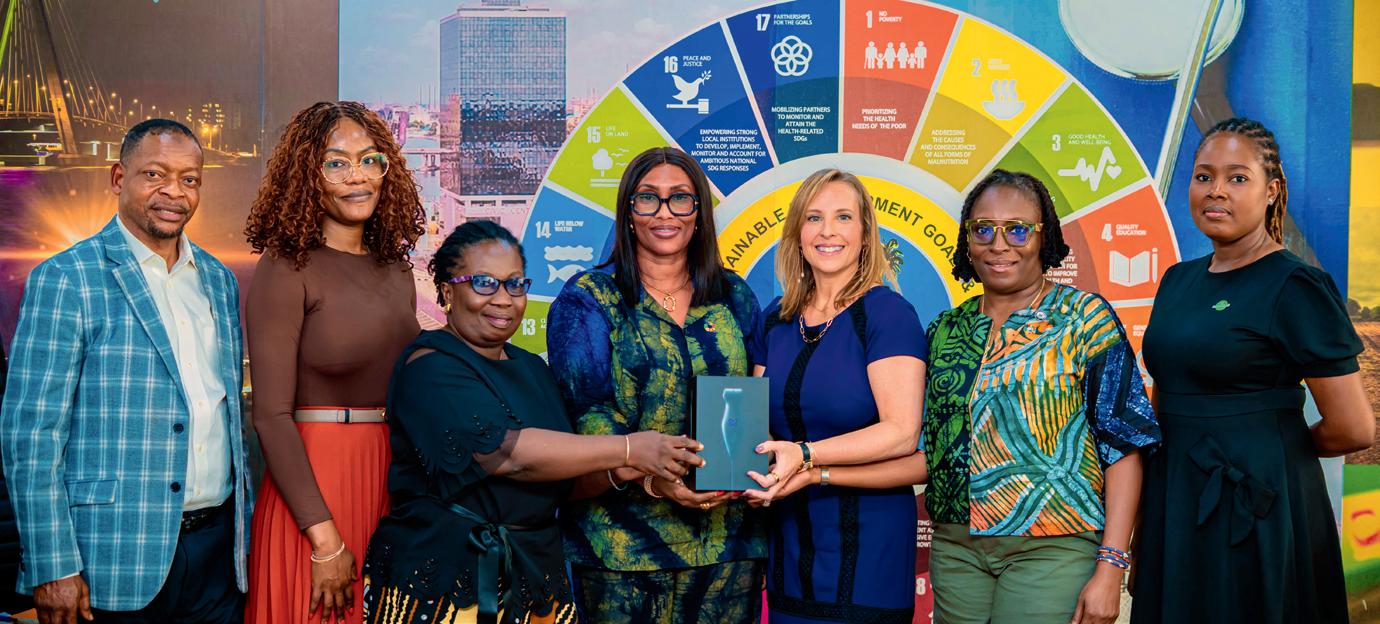
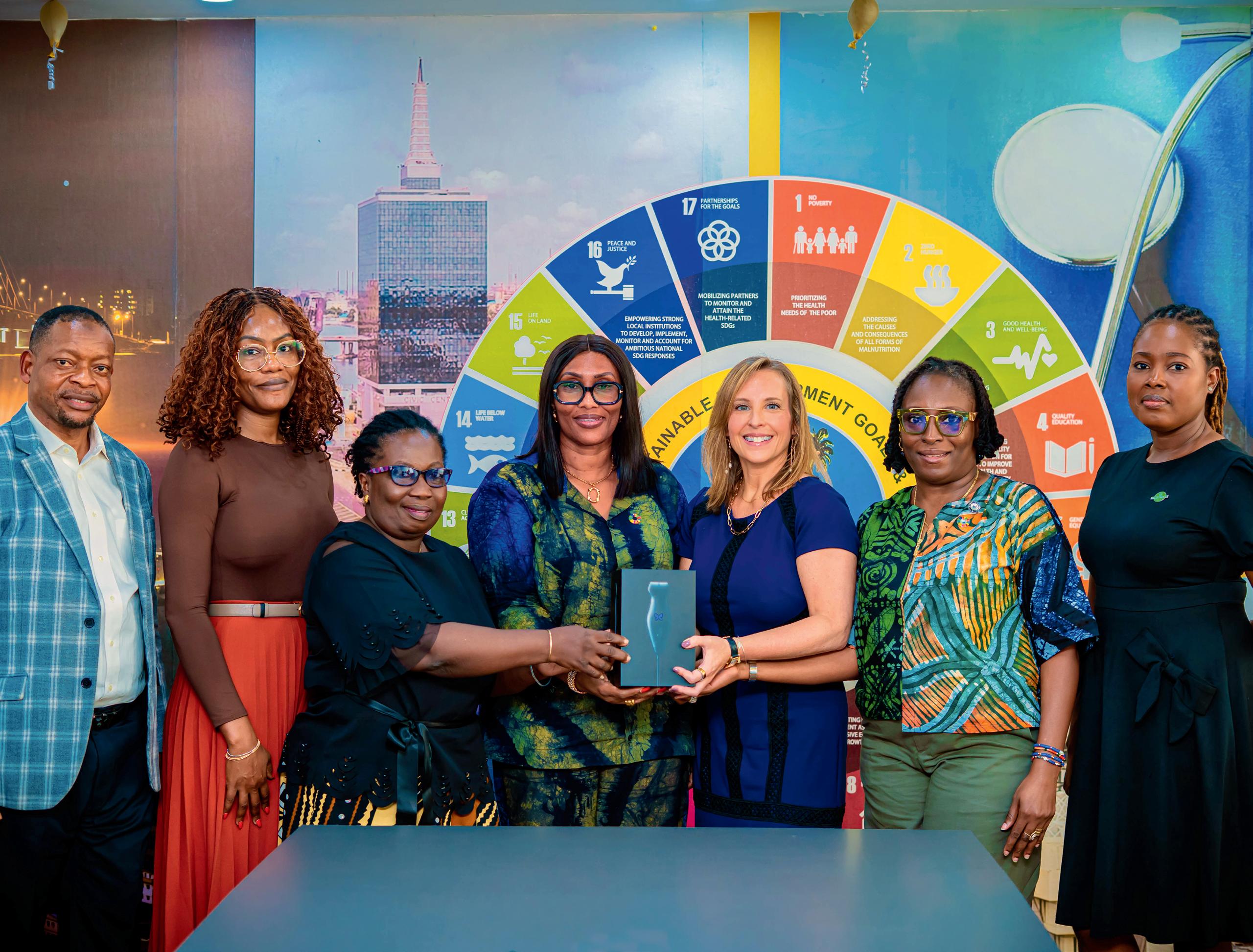
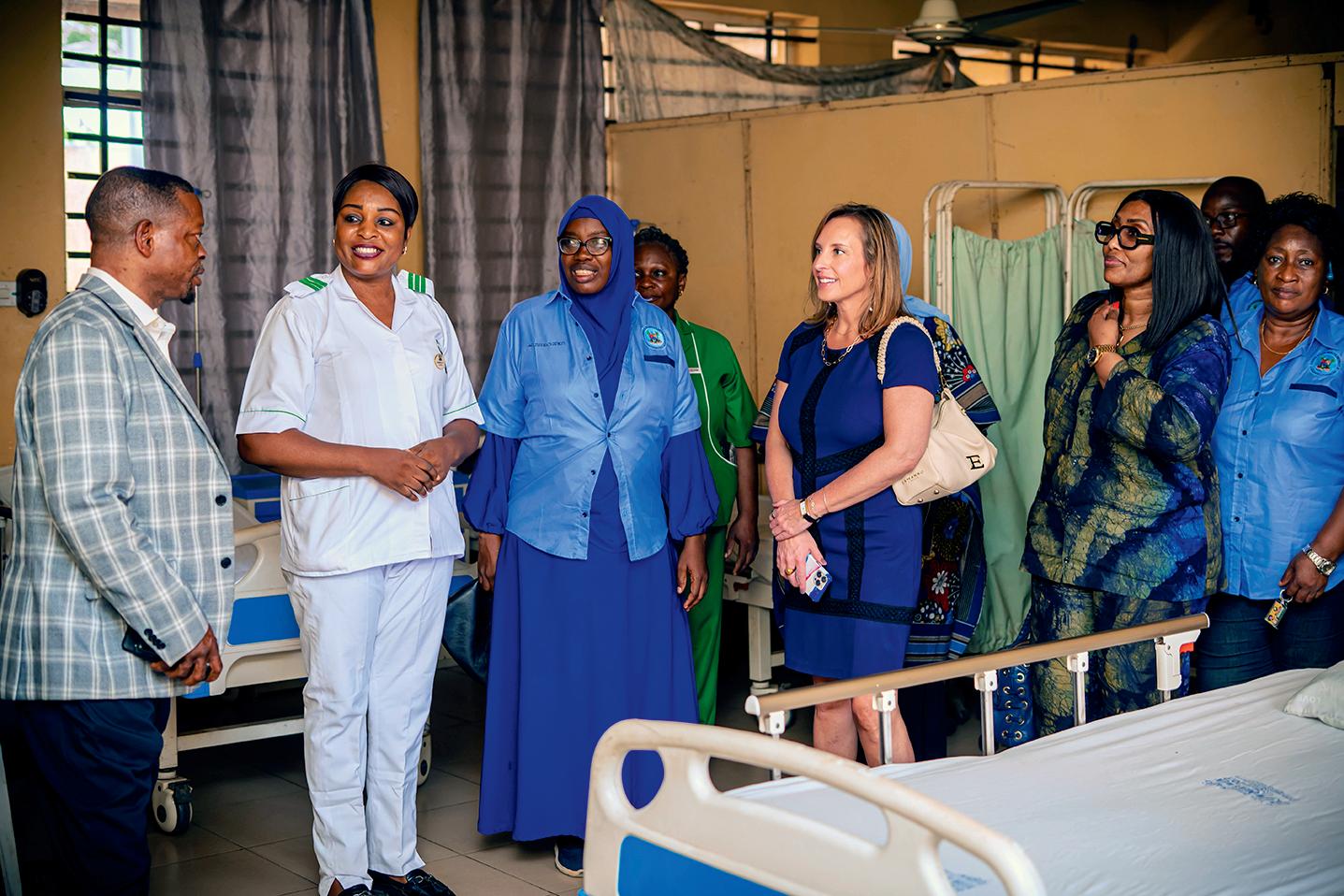
Fayer visits a hospital in Lagos, Nigeria, where HERhealthEQ donated a handheld portable ultrasound system for maternal health monitoring.
research
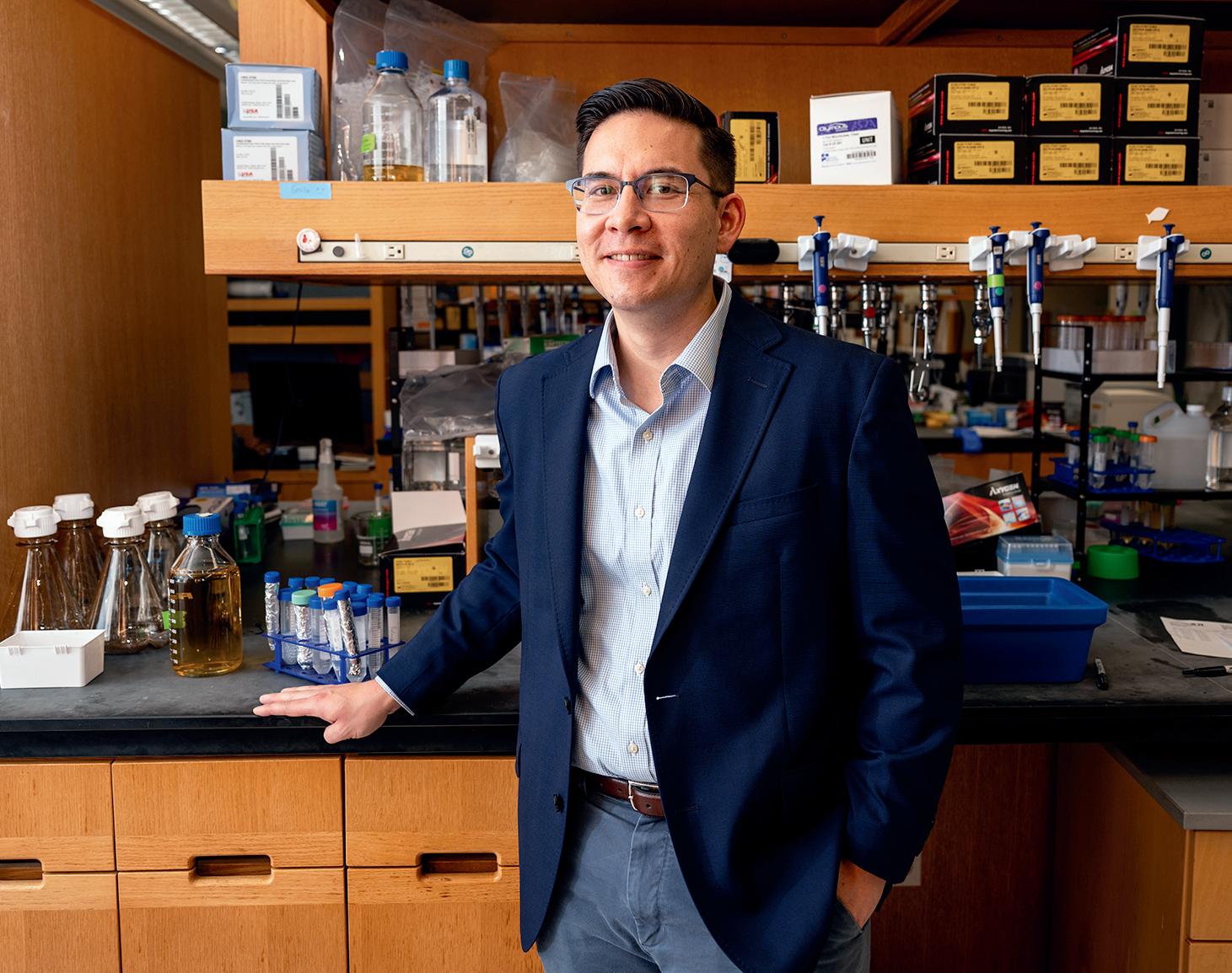
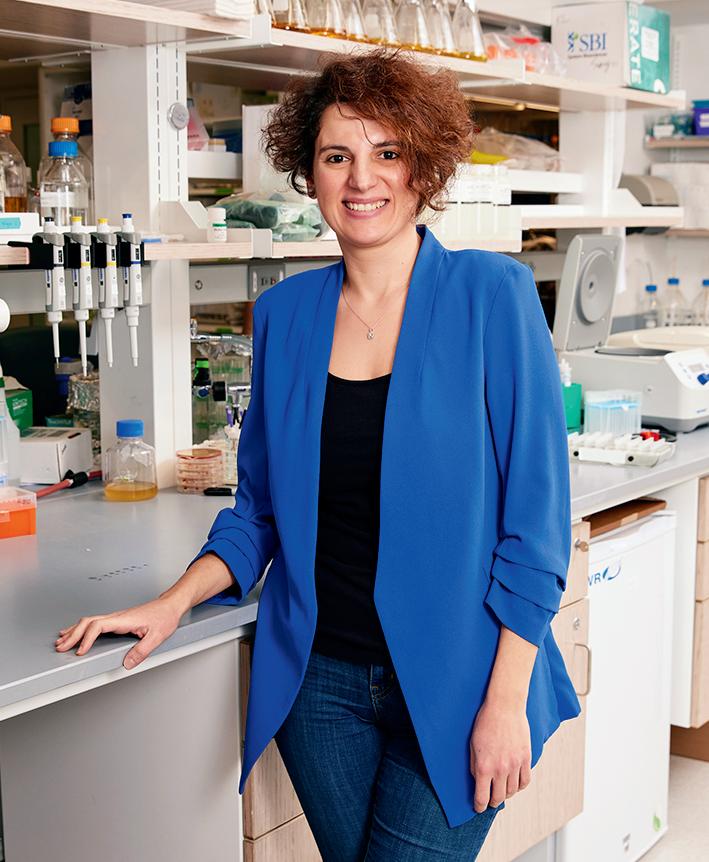
Rainin Funds for Researchers Developing Smart Probiotics
JIMENEZ, HAO EARN RAININ FOUNDATION
INNOVATOR AWARD FOR WORK ON NEW TREATMENTS FOR INFLAMMATORY BOWEL
DISEASES
With a proposal to develop smart microbial therapies to treat inflammatory bowel diseases, a team of Boston University researchers has landed an Innovator Award from the Kenneth Rainin Foundation. Assistant Professor Miguel Jimenez (BME, MSE), Assistant Professor Liang Hao (BME), and their doctoral students will receive at least $200,000 over one year to create a next-generation microbial therapy, taken in pill form, that would target inflammation without causing harmful side effects.
As many as 3.1 million Americans suffer from inflammatory bowel diseases (IBD) such as Crohn’s and ulcerative colitis. Symptoms can include severe diarrhea, fatigue, and malnutrition. Worse, IBD heightens the risk of colon cancer.
Currently, these chronic conditions are treated with expensive drugs that suppress the immune system. “Scientists have shown that engineered bacteria can help reduce inflammation in the gut, but most of these therapies were designed in lab conditions that do not reflect the real environment inside the body,” says Jimenez. “As a result, they often fail to work in animals or people.”
LABS
CONVERGE
ON SOLUTION
Jimenez, who previously developed an ingestible gastrointestinal tract monitor, runs a lab that creates microbial devices. Encompassing expertise in biomedical engineering and materials science and engineering, his team combines genetically engineered cells with electronic and mechanical components to make chemical sensors and actuators.
Hao’s lab focuses on in vivo disease probes. With a mission to realize the promise of precision medicine, her team develops molecular and cellular tools responsive to biochemical cues in a specific tissue microenvironment to track and control diseases in intact organisms.
With the Rainin project, the first-ever collaboration between these two labs, Jimenez and Hao are taking a new approach to IBD by building and testing genetic tools directly in animal models of intestinal inflammation. Jimenez says the team will work with a well-studied probiotic strain that is safe in humans and engineer it to sense disease conditions and deliver therapeutic proteins at the site of inflammation.
“I have experience developing a pill that can detect inflammation, but this is a brand-new idea on the therapy side,” says Jimenez. “We’re just at the dawn of microbial therapeutics.”
POTENTIAL APPLICATIONS TO OTHER DISEASES
Beyond the one-year, $200,000 layout, Innovator Award recipients are eligible for further funding based on their progress. “The research funded by the Kenneth Rainin Foundation brings us closer to safer, more effective treatments for patients living with difficult gut diseases,” says Jimenez.
Down the road, the team hopes their methods will find applications beyond IBD. “This program will allow us to establish the platform, hit the ground running, and attack different types of diseases,” says Jimenez. “In a few years, we should have the expertise in moving this from bench to bedside, so to speak, and might be interested in starting companies. But first, of course, we have to test this in IBD and see what the science tells us.”
This Innovator Award is the first grant that BU has received from the Kenneth Rainin Foundation, which supports IBD research nationally as well as the arts in the San Francisco Bay Area and early childhood education in Oakland. — PATRICK L. KENNEDY
A SHIP WRAP STEALS FROM A CITRUS FRUIT
The collaborative team is working to engineer probiotics to sense disease conditions and deliver therapeutic proteins at the site of inflammation.
Developing a Lifesaving Option for a Rare Childhood Disorder
AS A HARTWELL INVESTIGATOR, SAMAGYA BANSKOTA WILL LEAD A TEAM LEVERAGING A CUTTING-EDGE GENOME-EDITING TECHNIQUE
Starting around age six, certain children develop diabetes, followed by loss of vision and hearing, along with progressive nervous system dysfunction. These children are suffering from Wolfram syndrome (WS), a rare neurodegenerative disease. Most won’t live beyond age 30.
But with an award from the Hartwell Foundation, Assistant Professor Samagya Banskota (BME) and collaborators at Washington University in St. Louis are working on a novel method of developing treatments for WS and other “rare” genetic diseases that, taken together, affect millions of people. Funding research areas that include cancer, medical diagnostics, physiology, and neurobiology, the Hartwell Foundation seeks to identify and support research that has not yet qualified for significant funding from outside sources, and that has the potential to benefit children in the United States. These awards can also give early-career scientists the opportunity to realize their goals and make a difference.
BUILDING A CONVERGENT LAB
Since joining the ENG BME faculty last year, Banskota has been building her lab from the ground up to better understand and treat diseases through research combining expertise in biomaterials design, synthetic biology, drug delivery, and gene editing.
“My lab works to translate genomeediting technologies into effective treatments for patients by better understanding barriers to in vivo—i.e., in a living organism—delivery,” says Banskota. “These technologies are designed to precisely correct mutations that cause diseases, which is especially important for people with rare genetic diseases who often have limited treatment options. The main challenge in developing these therapies is delivering them to the right tissues and cells within the body.”
To that end, the Hartwell Foundation is giving Banskota and her lab a Hartwell Individual Biomedical Research Award. Each year, the foundation selects 10 unique proposals that represent early stage, innovative, and cutting-edge technology in medicine and biomedical engineering. Banskota’s team will receive at least $300,000 over three years.
WOLFRAM SYNDROME, A PROGRESSIVE CONDITION
Collectively, WS and other rare genetic disorders affect approximately one in 20 American children.
Most WS cases are due to pathogenic mutations in the Wolfram syndrome 1 (WFS1) gene. The prognosis is currently poor, as there are limited therapeutic options with no definitive cure. Palliative strategies include small molecule drugs that reduce some of the symptoms, but there is no treatment available that can
delay, halt, or reverse the progression of WS, and life expectancy is short due to continual symptom progression and complications caused by neurodegeneration.
Banskota and Fumihiko Urano at WashU aim to address ways to halt neurodegeneration and develop lifesaving treatment to fight WS.
One way to improve genome-editing treatments is by creating delivery systems that make the treatments safer, more precise, and more versatile, so that they may be applied to a broader range of biological and clinical challenges. Recently, such an approach was used to create a lifesaving treatment for a 9½-month-old boy who was born with a rare genetic disorder that affects just one in 1.3 million babies and can be fatal. Correcting it requires pinpoint targeting in an approach called base editing, a technique that identifies and fixes an incorrect DNA letter among the three million in the human genome. The child received an infusion made just for him and designed to fix his precise mutation; according to his doctors, he became the first patient of any age to have a custom gene-editing treatment.
If Banskota and her collaborators are successful in developing and implementing a precise genome-editing strategy for WS, it will also help advance the technology for use against other rare genetic diseases, for the first time providing affected children with a therapeutic option and the potential for a cure. — LYN MARKEY
Banskota has built a lab combining expertise in biomaterials design, synthetic biology, drug delivery, and gene editing, in order to better understand and treat diseases.
BU Launches an Open-Source Infectious Diseases Monitoring Tool
THE BIOTHREATS EMERGENCE, ANALYSIS AND COMMUNICATIONS NETWORK (BEACON) IS SLATED TO BECOME A GLOBAL HUB FOR CRITICAL INFORMATION ABOUT EMERGING OUTBREAKS
From measles to influenza, mpox to malaria, infectious diseases outbreaks are happening all over the world, at nearly all times. For health professionals and public health officials, staying up to date with pathogens that are particularly dangerous—or have the potential to become a pandemic, like COVID-19 did—is vitally important to help keep us safe. But accessing real-time information on outbreaks as they pop up around the globe isn’t always simple; currently, much of it is aggregated by hand.
To improve the way disease outbreaks are communicated, Boston University researchers and collaborators at Boston Children’s Hospital are launching the Biothreats Emergence, Analysis and Communications Network (BEACON), a new artificial intelligence–powered surveillance platform to monitor and analyze infectious diseases threats around the world. It’s led by infectious diseases expert and physician Nahid Bhadelia, a School of Medicine associate professor who has experienced firsthand the importance of global disease surveillance, having treated patients during multiple Ebola outbreaks in West and East Africa and worked on containment and prevention of Zika, COVID-19, and other pathogens.
College of Engineering Distinguished Professor of Engineering and Director of the BU Rafik B. Hariri Institute for Computing and Computational Science &
Engineering Ioannis Paschalidis (ECE, SE, BME, CDS) and his team trained the large language model (LLM) to filter out any nondisease-related information and assess the quality of its sources, making it intelligent enough to give each report a risk score related to the importance and severity of a potential pathogen.
“We infused the LLM with knowledge about infectious diseases to accurately answer the questions we need the model to answer,” says Paschalidis. “This will provide very fast and very accurate reporting of outbreaks.” Building the cloud-based software pipeline for BEACON was done with the help of the Hariri Institute–based Software & Application Innovation Lab (SAIL), a software development incubator for BU research projects.
Paschalidis now codirects BEACON and oversees its technical and computing capabilities. He is confident that the system will not only speed up global disease surveillance, but also alert experts to regional issues, such as the current outbreaks of measles localized in communities in Texas, New York, and a handful of other US states.
“BEACON fills a critical public health need, particularly given the current envi-
ronment and support for research related to the spread of infectious disease,” says Gloria Waters, BU provost and chief academic officer. “It brings together amazing strength and leadership at Boston University in the areas of infectious disease, artificial intelligence, and large language models. It is a great example of the ability of our faculty to work across disciplines and to have a real impact on society.”
BU’s investment in BEACON began under the leadership of BU President Emeritus Robert A. Brown, who now serves as chair of BEACON’s interim advisory group. Over the years, the project has gained support from the Gates Foundation and federal agencies, including the National Science Foundation and the US Department of Energy, which provided essential computing resources to train the model.
“The Department of Energy and the National Labs have very powerful computing equipment that our partnerships there allowed us to use. This would not have been possible without federal support,” Paschalidis says. “This kind of collaboration benefits every one of us.”
— JESSICA COLAROSSI
Ioannis Paschalidis (ECE, SE, BME, CDS) DANA J. QUIGLEY
The Appeal of a Peel
WITH NAVY GRANT FOR NOVEL HULL COATING, MCDANIEL TAKES INSPIRATION FROM A
SWEET FRUIT WITH A TOUGH SKIN
If a pomelo fell in the forest, would anyone hear it splat? Nope. There is no splat to be heard. Even though that pomelo plunged to earth from as high as 50 feet up, the delicate citrus fruit remains intact, protected by a complex, spongy peel that is one of nature’s marvels.
What does this have to do with the US Navy? Well, the nation’s seaborne fighting force has plenty of vessels it would like to protect from impacts, and it has awarded a $300,000 grant to a Boston University research team led by Associate Professor J. Gregory McDaniel (ME, MSE) to take a page from the pomelo’s playbook.
Over the next three years, McDaniel and colleagues will combine biology, materials science, and computational mechanics to engineer novel, lightweight materials that replicate this unique fruit’s energy absorption mechanisms on a larger scale. Eventually, the technology might be applied to cell phone cases, packaging for sensitive equipment, and other civilian uses.
“I’ve always been intrigued by bioinspired engineering,” says McDaniel. “Nature keeps building things and testing them all the time, right in front of our eyes.”
The Naval Engineering Education Consortium (NEEC) grant is aimed at developing materials that mitigate shock, blast, and impact. “Those are three different things, but they all happen on a very short time scale of high stress or force on something that might break,” says McDaniel.
Searching for solutions in the biology literature, McDaniel found a host of papers praising the pomelo. “It’s regarded as having this kind of magical impact resistance,” he says. “There seem to be a lot of design features in the pomelo fruit that are there for a reason and are not random.”
“What we are trying to do is go a little further in finding the optimal parameters that will allow us to steal this strategy, and take this all the way to a coating or layer that actually goes on a structure and works to absorb impact.”
A sort of grapefruit native to southeast Asia, the pomelo sprouts upon the branches of the pomelo tree, which can grow up to 50 feet tall. Every season, ripe pomelos plummet to the forest floor, traveling at 30 miles per hour. But instead of bursting upon impact and then lying around rotting, the fruit survives the fall and keeps its enticing appearance so that wandering animals will gobble it up and leave its seeds far away, planting new pomelo trees.
The key lies in the peel’s three-layered construction: Inner and outer membranes encase a spongy, foam-like layer, itself consisting of up to 18 mini-layers and pockmarked throughout with pores, or voids.
“It’s what’s called visco-elastic—kind of a rubbery elastic,” says McDaniel. “If you squish it, it kind of deforms itself to absorb the shock, then slowly rebounds,” not unlike a memory-foam mattress.
Working with Aidan Jimenez, the new PhD student that the Navy grant has enabled him to hire, McDaniel’s task here is to figure out precisely what the pomelo
The key lies in the pomelo peel’s three-layered construction: Inner and outer membranes encase a spongy, foam-like layer.
is doing right and translate that to a protective covering for a torpedo or a ship’s hull.
“There are interesting questions we need to answer,” says McDaniel. “What should be the size of the voids in the foam in the inner layer? What should be the thicknesses and stiffnesses of the membranes? We’ll create a model of the pomelo peel that is parameterized—i.e., completely described by a finite number of parameters—and then use computational mechanics to predict the performance as we change those parameters.”
The team will ultimately fabricate and test a first-of-its-kind peel, made of engineered rubbers and polymers, that the Navy can use.
“We’re absolutely not the pioneers in identifying the qualities of the pomelo fruit,” says McDaniel, “but what we are trying to do is go a little further in finding the optimal parameters that will allow us to steal this strategy, and take this all the way to a coating or layer that actually goes on a structure and works to absorb impact.”
— PATRICK L. KENNEDY
Trouble Hearing in Noisy Places and Crowded Spaces?
SEN TEAM’S NEW ALGORITHM COULD HELP HEARING AID USERS
When a group of friends gets together at a bar or gathers for an intimate dinner, conversations can quickly multiply and mix, with different groups and pairings chatting over and across one another. Navigating this lively jumble of words—and focusing on the ones that matter—is particularly
difficult for people with some form of hearing loss. Bustling conversations can become a fused mess of chatter, even if someone has hearing aids, which often struggle to filter out background noise. It’s known as the “cocktail party problem”—and BU researchers believe they might have a solution
A new brain-inspired algorithm developed at ENG could help hearing aids tune out interference and isolate single talkers in a crowd of voices. In testing, researchers found it could improve word recognition accuracy by 40 percentage points relative to current hearing aid algorithms.
“We were extremely surprised and excited by the magnitude of the improvement in performance—it’s pretty rare to find such big improvements,” says Associate Professor Kamal Sen (BME), the algorithm’s developer. The findings were
published in Communications Engineering, a Nature Portfolio journal.
Some estimates put the number of Americans with hearing loss at close to 50 million; by 2050, around 2.5 billion people globally are expected to have some form of hearing loss, according to the World Health Organization.
“The primary complaint of people with hearing loss is that they have trouble communicating in noisy environments,” says Virginia Best, a BU Sargent College of Health & Rehabilitation Sciences research associate professor of speech, language, and hearing sciences. “These environments are very common in daily life and they tend to be really important to people—think about dinner table conversations, social gatherings, workplace meetings. So, solutions that can enhance communication in noisy places have the potential for a huge impact.”
In a BU lab, researchers (from left) Kamal Sen, Alexander D. Boyd (ENG’23,’26), and Virginia Best tested a brain-inspired algorithm’s ability to help hearing aid users separate sounds in noisy places.
JACKIE RICCIARDI
Best was a coauthor on the study with Sen and BU biomedical engineering PhD candidate Alexander D. Boyd (ENG’23,’26). As part of the research, they also tested the ability of current hearing aid algorithms to cope with the cacophony of cocktail parties. Many hearing aids already include noise reduction algorithms and directional microphones, or beamformers, designed to emphasize sounds coming from the front.
“We decided to benchmark against the industry standard algorithm that’s currently in hearing aids,” says Sen. That existing algorithm “doesn’t improve performance at all; if anything, it makes it slightly worse. Now we have data showing what’s been known anecdotally from people with hearing aids.”
Sen has patented the new algorithm— known as BOSSA, which stands for biologically oriented sound segregation algorithm—and is hoping to connect with companies interested in licensing the technology. He says that with Apple jumping into the hearing aid market—its latest AirPod Pro 2 headphones are advertised as having a clinical-grade hearing aid function—the BU team’s breakthrough is timely: “If hearing aid companies don’t start innovating fast, they’re going to get wiped out, because Apple and other start-ups are entering the market.”
SUCCESSFULLY SEGREGATING SOUNDS
For the past 20 years, Sen has been studying how the brain encodes and decodes sounds, looking for the circuits involved in managing the cocktail party effect. With researchers in his Natural Sounds & Neural Coding Laboratory, he’s plotted how sound waves are processed at different stages of the auditory pathway, tracking their journey from the ear to translation by the brain. One key mechanism: inhibitory neurons, brain cells that help suppress certain, unwanted sounds.
“You can think of it as a form of internal noise cancellation,” he says. “If there’s a sound at a particular location, these inhibitory neurons get activated.” According to Sen, different neurons are tuned to different locations and frequencies.
The brain’s approach is the inspiration for the new algorithm, which uses spatial
cues like the volume and timing of a sound to tune in to or tune out of it, sharpening or muffling a speaker’s words as needed.
“It’s basically a computational model that mimics what the brain does,” says Sen, who’s affiliated with BU’s centers for neurophotonics and for systems neuroscience, “and actually segregates sound sources based on sound input.”
The science powering the algorithm might have implications beyond hearing loss, too.
A physicist who later trained in neuroscience, Sen says he came to BU in part because of the opportunity to work with the University’s Hearing Research Center, where he’s now a faculty member. And Sen turned to clinical researchers for help testing the algorithm.
“Ultimately, the only way to know if a benefit will translate to the listener is via behavioral studies,” says Best, an expert on spatial perception and hearing loss, “and that requires scientists and clinicians who understand the target population.”
Formerly a research scientist at Australia’s National Acoustic Laboratories, Best helped design a study using a group of young adults with sensorineural hearing loss, typically caused by genetic factors or childhood diseases. In a lab, participants
wore headphones that simulated people talking from different nearby locations. Their ability to pick out select speakers was tested with the aid of the new algorithm, the current standard algorithm, and no algorithm. Boyd helped collect much of the data and was lead author on the paper.
APPLYING THE SCIENCE BEYOND HEARING LOSS: ADHD AND AUTISM
Reporting their findings, the researchers wrote that the “biologically inspired algorithm led to robust intelligibility gains under conditions in which a standard beamforming approach failed. The results provide compelling support for the potential benefits of biologically inspired algorithms for assisting individuals with hearing loss in ‘cocktail party’ situations.” They’re now in the early stages of testing an upgraded version that incorporates eye tracking technology to allow users to better direct their listening attention.
The science powering the algorithm might have implications beyond hearing loss, too. “The [neural] circuits we are studying are much more general purpose and much more fundamental,” says Sen. “It ultimately has to do with attention, where you want to focus—that’s what the circuit was really built for. In the long term, we’re hoping to take this to other populations, like people with ADHD or autism, who also really struggle when there’s multiple things happening.”
The research was supported by the National Institutes of Health, National Science Foundation, and Demant Foundation. — ANDREW THURSTON
The new brain-inspired algorithm could help hearing aids tune out interference and isolate single talkers in a crowd of voices.
Designing RNA with Machine Learning and AI
Q&A WITH ALEX GREEN
Ribonucleic acid, also called RNA, is a molecule present in all living cells that plays a critical role in transmitting genetic instructions from DNA and creating proteins. With the power to execute a plethora of functions, the little RNA “messenger” has led to important innovations across therapeutics, diagnostics, and vaccines, and has made us rethink our understanding of life itself.
A team of researchers from BU’s Biological Design Center and ENG BME recently made significant steps forward in the development of the next generation of computational RNA tools, publishing a study in Nature Communications that describes an AI technique for designing different types of RNA molecules with improved function. Much like a large language model that can be used to compose entirely new texts, the model can compose new RNA sequences tailored for specific tasks in the cell or in a diagnostic assay. Their research has shown it is possible to predict and generate RNA sequences that have specific functions across a broad array of potential applications.
Here, Associate Professor Alex Green (BME) discusses the power of sequence and structure of RNA molecules (SANDSTORM) and Generative Adversarial RNA Design Networks (GARDN) as new tools in developing diagnostic and therapeutic RNAs with improved functions.
WHAT HAVE BEEN THE CHALLENGES TO DATE IN REALIZING THE POTENTIAL OF RNA ENGINEERING?
A key challenge has been the need to synthesize and screen RNA in experimental systems, which can be both time consuming and cost/resource intensive. Several computational tools have been developed to overcome the challenges of experimen-
tal approaches, but they all use different coding platforms and architectures, which makes it very difficult to integrate them. Additionally, most of these existing methods have been designed to predict the function of specific types of RNAs, which means there isn’t a single tool that can be broadly applied to answer all the questions and make all the predictions we’d like to make.
HOW DO SANDSTORM AND GARDN OVERCOME THESE CHALLENGES?
SANDSTORM is a deep ML approach that incorporates information about RNA sequence and RNA secondary structure to predict the function of diverse classes of RNAs. We can use SANDSTORM neural networks—which learn and improve over time as we get more data—to predict the functional activity of the ends of RNA molecules (which play important roles in RNA stability, trafficking, and translation), parts of the RNA that interact with ribosomes, and RNAs used in CRISPR diagnostics. GARDN is a generative adversarial network architecture, a system tasked with generating realistic examples of functional RNA and discriminating between realistic and unrealistic examples.
When we combine SANDSTORM with GARDN, we have a powerful system that can generate and select RNA sequences
that provide desired functions while also being highly computationally efficient. Fewer parameters are needed for training and prediction compared with other computational approaches, which makes the system faster and related workflows easier.
WHAT ARE THE NEXT STEPS IN THIS RESEARCH?
To date we have demonstrated the utility of SANDSTORM and GARDN in engineering the ends of RNA molecules (known as the 5-prime and 3-prime ends). Part of our current focus is on designing the coding region between the two ends. Toward this end, we are merging these computational tools with other developments at BU, including self-amplifying RNA technology and more specific delivery of therapeutics. Self-amplifying RNA technology is a more efficient way to generate the RNAs we want to evaluate in experimental systems. Further down the road, we also want to engineer RNA to improve the efficiency of protein production, which could have important implications in enabling new targeted therapies and making production of therapeutic proteins more efficient. —
JENN ROSENBERG
This work was supported by start-up funds from Boston University; Defense Advanced Research Projects Agency (DARPA); National Institutes of Health (NIH); and the National Science Foundation (NSF) Graduate Research Fellowship.
Alex Green (BME)
CYDNEY SCOTT
Toward Faster Wireless Communication
RABIA YAZICIGIL IS PART OF A $6 MILLION NORTHEAST MICROELECTRONICS COALITION HUB GRANT TO HELP ADVANCE WIRELESS CAPABILITIES
The COVID-19 pandemic exposed vulnerabilities in American supply chain logistics, especially regarding semiconductor chips, which are the foundation for modern technology and essential to future innovations. In 2020, the United States manufactured just 10 percent of the world’s total supply of semiconductors, a significant decrease from 1990, when America produced 37 percent of these chips.
American economic growth, national security, and global competitiveness are tightly linked to semiconductor technology, a fact that fueled bipartisan support to enact the 2022 CHIPS and Science Act, legislation aimed at increasing research and development of critical semiconductor technologies and revitalizing the domestic manufacturing of these chips. The act could boost America’s manufacture of these advanced chips to almost 30 percent of the world’s total supply by 2032.
Assistant Professor Rabia Tugce Yazicigil (ECE, BME), a faculty affiliate of the BU Center for Information & Systems Engineering and the Hariri Institute, will be helping advance wireless capabilities as part of a $6 million first-year grant awarded by the Northeast Microelectronics Coalition Hub (NEMC), a regional research hub established through the CHIPS Act. She will collaborate on the project with academic researchers from the Massachusetts Institute of Technology, Northeastern University, and the University of Massachusetts–Lowell and industry partners Sivers Semiconductors, Ericsson, Northrop Grumman, and Raytheon Technologies. As a large-scale initiative led by Sivers Semiconductors, the grant supports the development and potential domestic manufacturing of these
cutting-edge chips, with renewable funding available for up to three years to support continued innovation.
This project aims to develop US capabilities in wireless communications with applications spanning Internet of Things devices, autonomous vehicles, artificial intelligence, and mobile communication. 5G and upcoming 6G networks enable high-speed, ultra-reliable, and low-latency wireless communication, which means shorter delays in network communication. The NEMC grant focuses on enhancing 5G and 6G technologies through scalable wideband transceiver systems that can handle multiple input and output signals simultaneously, antennas
that are operational over a broad frequency range, advanced front-end components for incoming signals, and innovative universal decoders for interpreting the data.
For the project, Yazicigil and collaborators from MIT and Northeastern University will build on their previous work on the award-winning, multi-institutional Guessing Random Additive Noise Decoding (GRAND) project, which presents an innovative noise-centric decoding approach to maintaining reliable and secure wireless communication at a faster speed and lower energy consumption.
When information is sent wirelessly, noise during transmission can alter the data so the receiver gets a corrupted message. Decoder chips protect the accuracy of the information being transmitted through error detection and correction on the receiver side. However, existing decoder chips are tightly coupled to specific code structures, restricting their versatility and broader applicability. GRAND is a first-of-its-kind decoder chip in that it can be used universally as a code-agnostic data decoding approach in wireless communications.
Yazicigil, whose expertise is in integrated circuits and system design for energy-constrained applications, develops the energy-efficient and low-latency semiconductor chips for data decoding leveraging the GRAND algorithmic family. “This novel decoding approach enables low-latency, energy-efficient, and secure wireless communications in a manner that is future-proof, since it is adaptable to any coding scheme. By focusing on a noise-centric decoder, this innovation positions the United States to advance beyond current paired code-decoder technologies and regain its standing in wireless communication, a field where its historic leadership has recently waned,” Yazicigil says.
The GRAND project is a close collaboration with co-PIs, Muriel Medard, MIT NEC professor of software science and engineering, electrical engineering and computer science, and Ken Duffy, Northeastern professor of electrical and computer engineering and mathematics.
— MARGARET STANTON
Rabia Yazicigil (ECE, BME)
Yazicigil’s GRAND is a first-of-its-kind decoder chip that can be used universally as a code-agnostic data decoding approach in wireless communications.
Spotting Signs of Cancer When There’s Still Time
HAO NAMED A BECKMAN YOUNG INVESTIGATOR
By the time many cancers are diagnosed, it’s too late for treatment to have much effect, and patients with advanced-stage cancers largely have significantly lower survival rates.
Why the struggle to detect cancer earlier? “A big reason is that current diagnosis relies on static features like DNA mutations and protein abundance,” says Assistant Professor Liangliang Hao (BME). “These are important, but they often miss the earliest, most meaningful biochemical changes, which are driven by protein activity. Proteins are expressed throughout the body, but what matters most is where and when they’re active. Overlooking this means we likely miss the proteins that are actively contributing to disease, especially at its earliest stages.”
A BETTER WAY
What if clinicians had the technology to detect this activity? What if they could regularly scan high-risk populations, tracking the earliest disease signatures in real time and space? That sort of early warning system could save lives. “If we could spot disease sooner, diagnose it with greater precision, we’d open the door to more effective, personalized therapies,” Hao says.
In fact, Hao is trying to build just such a technology, and a grant from the Arnold and Mabel Beckman Foundation might help her get there. Out of 300 applicants, Hao and nine other early-career researchers across the country have been selected to receive the 2025 Beckman Young Investigator Awards. Over the next four years, Hao and her lab will use $600,000 in award funding to develop a first-of-its-
kind protein activity imaging platform that could transform how we diagnose and treat cancer and other complex diseases, helping to realize the vision of precision medicine.
VISUALIZING THE HOT SPOTS
Encoded by our DNA, proteins are the “molecular machines,” Hao says, that carry out our bodies’ essential functions. Diseases like cancer arise when these proteins stop functioning properly.
Hao’s proposed platform combines two technologies: specially designed molecular probes that will light up only when a protein is actively functioning; and a multimodal imaging system that will capture these chemical signals at high spatial resolution, creating visualizations of whole organs in living organisms.
“This powerful, integrative platform enables deep 3D tissue imaging to find where cancer-causing proteins are active in the body,” Hao explains. “I am most excited about the potential to spot the most dangerous cancer cells, at their very earliest stage and deep inside the body, without needing to carry out an invasive procedure such as a tissue biopsy. By providing a comprehensive view of disease origin, we can diagnose and treat cancer at the point when it is most treatable, saving precious healthcare resources and, more importantly, human lives.”
CONVERGING TO SOLVE A NEED
Hao has been designing molecular probes since her postdoctoral work at MIT, where she began focusing on early cancer detection because she lost a grandfather and an uncle to late-stage cancers. “I realized to develop those diagnostics, you really have to understand the disease better,” she says. She is working with colleagues across BU and externally to develop the full imaging system.
“It’s a nice collaboration,” says Hao. “It’s a combination of researchers with different areas of expertise and students from diverse backgrounds—we have chemists and biologists as well as biomedical engineers in my lab.”
DREAM BIG
Named for scientific instrument pioneer Arnold O. Beckman, the Beckman Foundation supports US institutions and young scientists whose creative, high-risk, and interdisciplinary research will lead to innovations and new tools and methods for scientific discovery.
“What’s unique about this award is that it allows us to take risks and ask bold questions,” says Hao. “That’s especially important for early-career researchers like me. It’s a huge encouragement for me to dream big.” — PATRICK L. KENNEDY
Liangliang Hao (BME)
Rapid Detection on a Chip
REVOLUTIONARY OPTICAL
BIOSENSOR HELPS SLASH
MPOX DIAGNOSIS TIMES
Adeadly variant of human mpox has swept through the Democratic Republic of Congo over the last couple of years, resulting in the deaths of approximately five percent of those reported as infected. As the disease spread to neighboring countries, in August 2024 the World Health Organization declared the outbreak a Public Health Emergency of International Concern. Currently, the international community lacks the resources for fast, cost-effective diagnostic tools to curb the spread of mpox, or indeed, any potential future global pandemic.
To address this critical deficiency, Distinguished Professor of Engineering Selim Ünlü (ECE, MSE, BME) has developed an optical biosensor in collaboration with researchers from UC San Diego School of
Medicine that enables rapid detection of the mpox virus at the point of care, eliminating the need to wait for lab results. The study’s findings were published in Biosensors and Bioelectronics, first-authored by current BU ECE PhD student Mete Aslan.
A SEARCHLIGHT FOR VIRUS DETECTION
Leveraging digital detection platform Pixel-Diversity Interferometric Reflectance Imaging Sensor, or PD-IRIS, to detect the virus, the study involved incubating lab-confirmed mpox samples with monoclonal monkeypox antibodies provided by co-PI Partha Ray of UC San Diego. The samples were then transferred into tiny chambers on the surface of silicon chips on PD-IRIS that were printed with proteins to capture these nanoparticles.
Precise wavelengths of red and blue light were shined simultaneously on the chip; this interference resulted in slightly different responses when virus-antibody nanoparticles were present. A color camera detected the small signal and the amount of individual particles with high sensitivity. The process is analogous to that of an FM radio mixing a weak signal containing
This technology has the potential to substantially slow community spread of mpox in countries where healthcare resources are sparse.
information with a more powerful carrier signal at the same frequency, which amplifies the weak signal.
TOWARD AN END TO AN EPIDEMIC—AND BEYOND
The study demonstrates extremely accurate results, easily discriminating mpox samples from other viruses like herpes simplex and cowpox virus samples, both of which have similar clinical presentations to mpox. The process also provided diagnosis in just 20 minutes, an exponentially significant improvement over the time required for sending samples to a lab.
This technology has the potential to substantially slow community spread of mpox in countries where healthcare resources are sparse. Even better, a boxed kit could be used not only for mpox, but for a variety of viruses, such as syphilis or HIV, with the only change being the antibody that is mixed with a particular virus. The research team is working toward commercialization; with government support, they hope the mpox epidemic can be curbed before it expands past the scope of the African continent.
Ünlü has been a member of the BU Electrical and Computer Engineering faculty since 1992. He is a fellow of AIMBE, Optica, and IEEE, and the founder and CEO of iRiS Kinetics.
— TYLER NGUYEN
Selim Ünlü (ECE, MSE, BME)
research
Disentangling Behavior: Cognition and Movement
A GROUNDBREAKING STUDY EXPLORES THE INTERPLAY OF NEURAL DYNAMICS
Are cognitive processes, such as planning an errand or trying to recall a name, separable from related muscle movements, like blinking rapidly or scratching one’s chin? In a groundbreaking study published as the cover story in Nature Neuroscience, a BU team has begun to disentangle cognitive and motor processes, with implications in the near term for the research community and in the long term for people with neurological conditions.
The team, led by Assistant Professor Michael Economo (BME) and including colleagues in BME and the BU Neurophotonics Center, has developed a way to both determine when correlated processes and movements are separable and, when they are, how to isolate them. “This capacity strikes at the heart of a conceptual question that is central to how neural data are interpreted in a broad sense,” says Economo, and it has wide-ranging implications for both future and past research.
THE NEURAL UNDERPINNINGS
Systems neuroscientists have long sought to understand the neural underpinnings of cognitive processes that are highly correlated with specific, subtle movements. Like a poker player’s “tell,” says Economo, these movements may include changes in posture, facial expressions, or “fidgets” that are closely associated with processes like perceptual decisions, working memory, contextual encoding, reward prediction, and action planning. These subtle move-
By demonstrating how the separability of cognitive and motor processes can be assessed, and, when separable, how the neural dynamics associated with each component can be isolated, the study holds great promise for the field.
Michael Economo (BME)
ments are, in turn, associated with strong neural activation across the brain.
The association between these cognitive processes and movements creates a distinct challenge for neuroscientists, since they cannot know whether the patterns of neural activation they observe are related to the particular process they wish to study, or to the movements that just happen to be related to those processes.
“If you want to treat a disease, you really want to understand the mechanisms involved,” says BME doctoral student and study co–first author Munib Hasnain. “And to understand the mechanisms involved, you want to make sure that the neural activity or the neural correlates that you’re picking up on are actually related to that disease and not related to some correlated movements that a person is making when you’re studying some behavior.”
RETHINKING RESULTS
As one example, the team reexamined seminal findings about the neural processes responsible for action planning. “We demonstrated that neural signatures long thought to be associated with the urgency of actions are, in fact, not related to urgency at all,” says Economo. “In con-
trast, we demonstrated that other neural signals, for example those encoding perceptual decisions, do exist and are separable from related movements, but they have been misidentified in past work.”
“It highlights within the field the importance of considering this relationship between cognitive processes and movement,” says doctoral student and study co–first author Jaclyn Birnbaum. “It’s kind of prescriptive advice for people who are thinking about behavior. Other researchers might want to consider this going forward when interpreting their data.”
By demonstrating how the separability of cognitive and motor processes can be assessed, and, when separable, how the neural dynamics associated with each component can be isolated, the study holds great promise for the field. “I expect that it will have a high impact for years to come,” says Economo. Understanding how the brain’s neural mechanisms function and control cognitive processes in a healthy state has implications for future research, and in the longer term, for the development of potential treatments for neurological disease conditions or disabilities.
— LYN MARKEY
dean’s leadership advisory board
Omar Ali ’96
Director of Operations, Petra Engineering Industries Co.
Carla Boragno
Former SVP, Global Head of Engineering & Facilities, Pharma Technical Operations, Roche/Genentech
Tye Brady ’90
Chief Technologist, Amazon Robotics
Deborah Caplan ’90
Former Executive VP, Human Resources & Corporate Services, NextEra Energy
Vanessa Feliberti ’93
Corporate VP, M365 Services Platform Engineering, Microsoft
Mikhail Gurevich ’07, Questrom’12 Managing Partner, Dominion Capital
Anand Krishnamurthy ’92,’96
President and CEO, Affirmed Networks
Abhijit Kulkarni ’93,’97
COO, Cellino Biotech Inc.
Antoinette Leatherberry ’85
Principal (Retired), Deloitte Consulting Trustee, Boston University
Daniel Maneval ’82
Nonclinical Biopharma Consultant, January Therapeutics
Kathleen McLaughlin ’87
EVP & Chief Sustainability Officer, Walmart Inc.
Manuel Mendez ’91
CEO, Quotient Limited
Rao Mulpuri ’92,’96
Former CEO, View Inc.
Girish Navani ’91
Co-Founder and CEO, eClinicalWorks
Nirva Kapasi Patel ’00
Exec. Dir., Animal Law & Policy, Harvard Law School
Vice President of Manufacturing and Logistics, General Dynamics Mission Systems
Emeritus members include John Abele; Roger Dorf ‘70; Joseph Healey ‘88; Venkatesh Narayanamurti; Richard Reidy, Questrom’82; and John Tegan ‘88
Elise Morgan dean
Solomon R. Eisenberg
senior associate dean for academic programs
Ayse Coskun associate dean for research and faculty development
Richard Lally
senior associate dean for finance and administration
Pamela Audeh assistant dean for outreach & diversity
Coralie Eggeling
assistant dean for development & alumni relations
STAY CONNECTED TO THE COLLEGE OF ENGINEERING
Join the ENG online community!
Post, tag, ask questions, reconnect with alumni, and learn about networking opportunities, job fairs, seminars, and other news and events.
Mary Dunlop
interim biomedical engineering chair
W. Clem Karl electrical & computer engineering chair
Sean Andersson mechanical engineering chair
David Bishop materials science & engineering head
Christos Cassandras systems engineering head
Michael Seele director of communications
Patrick L. Kennedy managing editor
Jessica Colarossi, Danny Giancioppo, Molly Glass, A.J. Kleber, Lyn Markey, Charisma Nguyen-Lai, Tyler Nguyen, Margaret Stanton, Andrew Thurston contributing writers
Boston University Creative Services design & production
ENGINEER is produced for the alumni and friends of the Boston University College of Engineering. Please direct any questions or comments to BU Engineering Communications