December 2025 Office Technology

Page 1


FEATURE ARTICLES

10

24

2026 Industry Forecast Manufacturers look to the year ahead

Compiled by Brent Hoskins Office Technology Magazine

What do you believe will be the primary market and product opportunities for dealers in the new year?

To find the answers to this question and others, Office Technology magazine asked nine MFP and printer manufacturers to share their expectations for 2026.

Your Strategy is Boring

Ten steps to improve B2B content marketing by Jenna Miller Emerald Strategic Marketing

When marketing your business, content remains king. Yet many business leaders find themselves baffled by B2B content marketing. More often than not, the problem is not the content itself, but rather the strategy — or lack thereof. Today, a robust content marketing strategy is critical.

26 Success Through Strategy

A look at one dealership’s EOS journey by Ray & Cindy Derstine Altek Business Systems

In 2018, Altek Business Systems decided to hire a consultant to introduce a business operating system (BOS) to its C-level team. Seven years later, Altek’s choice to adopt and integrate its BOS has driven success throughout the company and made 300% growth over the last seven years sustainable.

28 Tariff Costs & IT Project Comp Dealers answer two questions from fellow dealers

Compiled by Elizabeth Marvel Office Technology Magazine

This feature includes two questions submitted by dealer members as part of BTA’s Dealers Helping Dealers resource and many of the answers received. These answers and others can be found in the members-only section of the BTA website at www.bta.org/DealersHelpingDealers.

A Signal Year in Business Law 2025’s legal currents for office technology dealers by Greg Goldberg BTA General Counsel

It was a legally consequential year for the business of keeping American offices running. Lawmakers, regulators and courts made clear that the work of supporting back-office operations, technology stacks and image creation is a form of high-risk infrastructure.

PRINCIPAL ISSUES

Perspective on Perception

A master class from a 5-year-old by Jeannette Doucette Smart Technologies of Florida In the office technology world, perceptual shifts happen every day. What something is and what people believe it is are often two very different things — and if you are in the business of selling, servicing or implementing technology, ignoring that gap can cost you more than a few misunderstandings.

The Ricoh Advantage OEM hosts Dealer Partner Summit Oct. 27-29 by Brent Hoskins Office Technology Magazine

Ricoh USA Inc. hosted The Ricoh Advantage Dealer Partner Summit Oct. 27-29 at the Gaylord Opryland Resort & Convention Center in Nashville, Tennessee. The summit included four General Sessions, several breakout sessions, and an Office and Production Expo. 33

30 Business Technology Association • BTA Highlights

Register for New BTA Marketing Workshop

TExecutive Director/BTA Editor/Office Technology

Brent Hoskins brent@bta.org (816) 303-4040

Associate Editor

Elizabeth Marvel elizabeth@bta.org (816) 303-4060

Contributing Writers

Ray & Cindy Derstine, Altek Business Systems www.altekimaging.com

he Business Technology Association (BTA) is always striving to add new educational workshops for dealers that address aspects of their businesses they may not always focus on. One of these topics is developing and executing a go-to-market (GTM) strategy, which allows a dealership to drive sustainable revenue growth. The association recently added a new online workshop to its lineup that highlights this very subject.

Taught by Dominic Pontrelli of Pontrelli Marketing — who served 34 years in sales and marketing positions within Lanier and the Ricoh Family Group before founding Pontrelli Marketing — the Go-to-Market Mastery workshop teaches participants how to identify high-value target markets, define their unique value propositions, and align their marketing and sales efforts to maximize impact. Through a structured five-week approach, the workshop walks attendees through every stage of GTM planning — from strategy creation and customer segmentation, to the development of a marketing plan to support and enable sales efforts, to the measurement of the performance of each campaign.

Each week will cover a different topic:

n Week 1: Building a go-to-market strategy using business goals and growth opportunities

n Week 2: Sales strategy — sales activities and KPIs, an account business review program and CRM execution, along with the creation of a sales expectation document, and learning how to align sales and marketing

n Week 3: Developing a go-to-market plan by combining customer and market data to determine target markets using the ideal customer profile (ICP)

n Week 4: Developing and executing an aligned targeted marketing campaign

n Week 5: Monitoring, tracking and measuring the success of the strategy

By combining customer and market data, participants will gain the tools to pinpoint their most profitable opportunities, overcome barriers to growth and craft targeted campaigns that deliver measurable results. The workshop emphasizes practical application, using real-world examples, starting with the office technology dealer’s data ecosystem (its access to internal customer and market data resources), CRM best practices and proven frameworks to strengthen the marketing functions within their dealerships. Attendees will leave with a comprehensive GTM playbook, ready to accelerate growth and improve the return on their investments in marketing.

The inaugural Go-to-Market Mastery workshop will kick off at 3 p.m. Eastern on Tuesday, March 3, 2026. Classes will be held every Tuesday at 3 p.m. Eastern throughout the month — March 3, 10, 17, 24 and 31.

BTA member tuition is $750 and includes two attendees per dealership. An additional attendee from the same member dealership is $350. Members can also apply their $150 or $250 educational discount received with membership toward the workshop, which can be redeemed during registration. Non-member tuition is $1,250 per dealership, which includes two attendees and a one-year BTA dealer membership. Unlock new growth opportunities for your dealership at the Go-to-Market Mastery workshop and walk away with a practical GTM playbook to accelerate revenue, strengthen customer engagement and maximize your return on marketing investment. To learn more and register, visit www.bta. org/GtMMastery. n — Brent Hoskins

Jeannette Doucette, Smart Technologies of Florida www.smarttechfl.com

Greg Goldberg, BTA General Counsel Business Technology Association

Jenna Miller, Emerald Strategic Marketing www.emeraldstrategicmarketing.com

Business Technology Association 12411 Wornall Road Kansas City, MO 64145 (816) 941-3100 www.bta.org

Member Services: (800) 505-2821 BTA Legal Hotline: (847) 922-0945

Valerie Briseno Marketing Director valerie@bta.org

Brian Smith Membership Sales Representative brian@bta.org

Brooke Barker Administrative Assistant brooke@bta.org

Photo Credits: Adobe Stock. Cover created by Bruce Quade, Brand X Studio. ©2025 by the Business Technology Association. All Rights Reserved. No part of this publication may be reproduced by any means without the written permission of the publisher. Every effort is made to ensure the accuracy of published material. However, the publisher assumes no liability for errors in articles nor are opinions expressed necessarily those of the publisher.

FLASHBACK

Celebrating 40 Years of Excellence & Giving

O2025-2026 Board of Directors

President

Debra Dennis CopyPro Inc. Greenville, North Carolina ddennis@copypro.net

President-Elect

Mike Boyle

BASE Technologies Inc. Bethel, Connecticut mboyle@baseinc.com

Vice President

n Nov. 14, The Cannata Report celebrated a remarkable milestone during its 40th Anniversary Awards & Charities Gala, which was held at The Madison Hotel in Morristown, New Jersey. The event honored the legacy of the late Mike McGuirk, founder of ProCopy Office Solutions and a former Business Technology Association (BTA) volunteer (who served as president and vice president of BTA West, as well as a BTA West representative on the national BTA Board of Directors), with proceeds supporting diabetes research at the Inserra Family Diabetes Institute at Hackensack Meridian Hackensack University Medical Center. To date, The Cannata Report has raised more than $1.75 million for the Hackensack Meridian Health Foundation and more than $3.5 million for charitable causes nationwide.

I was honored to attend this exceptional event — alongside BTA Marketing Director Valerie Briseno — proudly representing BTA and celebrating the innovation, generosity and leadership that continue to shape our industry.

The evening began with a comedy performance by Larry Weiss, chairman of BTA member Atlantic, Tomorrow’s Office, and sponsored by HP. Hytec and TD SYNNEX were platinum sponsors, with ConnectWise, Distribution Management, First Citizens Bank and Katun as gold sponsors, and Nexera and Static Control as silver sponsors. The energy carried into the night with the Official After Party, sponsored by Xerox. BTA Ambassador Bob Goldberg once again served as a dynamic and engaging emcee.

A memorable highlight of the night was the auction of the top five albums of 1985, each signed by the original artists, which

sparked excitement and raised additional charitable funds.

The Frank Awards were also presented at the gala, recognizing companies and leaders chosen by office technology dealers nationwide. “The Frank Awards shine a spotlight on the innovative companies ... setting new standards of excellence,” said CJ Cannata, president and CEO of The Cannata Report. The winners included:

n Best-in-Class: Sharp Imaging and Information Company of America

n Best Diversification Partner: Intermedia Cloud Communications

n Best Production Print Manufacturer: Ricoh USA

n Best Marketing Strategy: Ricoh USA

n Best IT and Security Services Provider: ConnectWise

n Best Print Management Software Provider: ACDI and PaperCut

n Best Technical Service Provider: Sharp Imaging and Information Company of America

n Best ECM/Document Management Software Provider: DocuWare

n Best A4 Manufacturer: Kyocera Document Solutions America

n Best Leasing Company: GreatAmerica Financial Services

n Excellence in Innovation: Ricoh USA

n Best Manufacturer: Sharp Imaging and Information Company of America

n Best Female Executive: Laura Blackmer, Konica Minolta Business Solutions

n Best Male Executive: Larry White, Toshiba America Business Solutions

The event concluded the following morning with the inspiring Women Influencers Brunch, an empowering close to a meaningful industry celebration. I’d like to give a special thanks to Frank, Carol and CJ Cannata for hosting this extraordinary event. n — Debra Dennis

Mike Hicks Electronic Business Machines Inc. Lexington, Kentucky mhicks@ebmky.com

Immediate Past President

Adam Gregory Advanced Business Solutions LLC

St. Augustine, Florida adam@goabsinc.com

BTA East

Chip Denlinger DCS Technologies Corp. Franklin, Ohio chip.denlinger@dcs-tech.com

Tim Seeley Jr. Seeley Office Systems Inc. Glens Falls, New York tseeleyjr@seeleyoffice.com

BTA Mid-America

Brett Blake Corporate Business Systems LLC Madison, Wisconsin bblake@corpbussystems.com

Grant Goldsmith

Regal Business Machines/Gateway Business Systems Chicago, Illinois goldsmithg@gateway-biz.com

BTA Southeast

Blake Renegar

Kelly Office Solutions Winston-Salem, North Carolina tbrenegar@kellyofficesolutions.com

Richie Creech CopyPro Inc. Greenville, North Carolina rcreech@copypro.net

BTA West

Scott Reynolds Imagine Technology Group LLC Chandler, Arizona sreynolds@itgarizona.com

Richard Van Dyke Advanced Office Irvine, California rvandyke@goadvanced.com

Ex-Officio/General Counsel

Greg Goldberg

Barta | Goldberg West Hollywood, California ggoldberg@bartagoldberg.com

2026 Industry Forecast Manufacturers look to the year ahead

What do you believe will be the primary market and product opportunities for dealers in the new year? What are the best strategies for pursuing these opportunities? What will be the most significant challenges dealers will face in 2026 and how can they best address them? What notable changes in demand/needs/expectations for office technology do you anticipate from end users in 2026? What do you see as the characteristics of the office technology dealership that is best positioned for success in 2026? What product and services diversification strategies, if any, do you recommend for dealers outside of traditional imaging devices and why?

To find the answers to these questions, Office Technology magazine asked nine MFP and printer manufacturers to share their expectations for 2026. Perhaps the insight shared in this year’s industry forecasts will help you better position your dealership for continued success.

Brother International Corp.

Kimberlie Sutterfield, Senior Director, National Sales, Strategic Partners

In 2026, the continued migration from A3 to A4 print environments will remain one of the most significant opportunities for dealers as businesses shift to more efficient workspaces that support a hybrid workforce. Dealers who proactively assess their clients’ print environments will be best positioned to capture these evolving needs. A well-executed print assessment not only identifies consolidation opportunities, but also provides the framework for recommendations that deliver improved efficiency, lower total cost of ownership, stronger device utilization and enhanced document security.

Dealers should prioritize developing a comprehensive A4 strategy aimed at capturing unmanaged printer fleets, both

within existing accounts and new prospects. These fleets, often composed of desktop and departmental printers outside of service contracts, represent an untapped source of machines in field (MIF) expansion and recurring supplies revenue. To fully capitalize, dealers must extend their visibility beyond traditional corporate headquarters to include multisite offices, restaurants, retail locations and hybrid work environments where quick access printing is essential for distributed employees.

Profitability pressure will remain a dominant challenge for dealers in 2026, especially as market demand continues to favor lower-revenue hardware categories. To offset margin compression, dealers must focus on operational efficiency and cost control across the service and fulfillment life cycle.

Dealers should align with OEM partners that provide programs that minimize service overhead, such as warranty exchange programs, remote diagnostic support and simplified device deployment tools. Strategic collaboration with distribution partners can also streamline inventory management, reduce carrying costs and improve order visibility for hardware and consumables.

To preserve margin and competitiveness, dealers should modernize service delivery by automating routine support activities, adopting predictive maintenance through fleet monitoring and pursuing cross-training that allows technicians to handle a broader range of technologies.

End users in 2026 will expect their dealers to move well beyond the scope of traditional print hardware providers. Clients increasingly view office technology through the lens of network integration, data security and workflow efficiency. Dealers should look to transform their revenue models, increasingly adopting roles as comprehensive managed IT service providers. Those who can speak the language of IT and demonstrate how print intersects with cybersecurity, cloud enablement and digital workflow will command

greater trust and wallet share.

Expectations will rise for dealers to provide a holistic view of the client’s technology ecosystem, including how connected print devices integrate with authentication systems and document management tools.

The most successful dealerships in 2026 will be those that embrace technology and data intelligence to optimize every aspect of their operations.

The most successful dealerships in 2026 will be those that embrace technology and data intelligence to optimize every aspect of their operations. Digital transformation within the dealership, particularly automation of administrative, billing and fulfillment workflows, will be essential to controlling costs while maintaining speed and accuracy. Dealers leveraging cloud fleet management platforms will deliver superior uptime and customer satisfaction through proactive monitoring, remote remediation and secure device management.

By integrating data from service, ERP, fleet management and contract management platforms, dealers can use artificial intelligence (AI) to identify customer trends, forecast consumables demand and prioritize opportunities with the highest conversion probability. These insights will allow sales teams to focus their time on the right opportunities, improve renewal rates and increase the lifetime value of each client relationship.

Diversification will continue to be essential for long-term dealership sustainability. Expanding into managed IT services, IoT device management and security solutions allows dealerships to evolve into all-in-one technology partners, extending their services beyond print to encompass network and device management.

For that to happen, dealers should consider moving away from Simple Network Management Protocol (SNMP), which includes the installation of agents that interrogate the network to collect information and move toward cloud-based solutions to futureproof their businesses.

Dealers should prioritize recurring revenue streams by offering managed network monitoring, endpoint security and cloud backup services. Bundling these capabilities alongside print management delivers clients a unified, scalable technology offering under a single service relationship — an indispensable resource for businesses in the office technology space.

Dealers can leverage their existing service infrastructures — from dispatch, ticketing and remote help desk — to support multitechnology contracts without adding substantial overhead.

Epson America Inc.

The copier/MFP and printer industry continues to navigate significant transformation. As businesses continue to adjust to hybrid work environments, smaller office footprints and tighter budgets, the demand for compact, efficient and cost-effective technology is growing rapidly. Dealers who recognize these shifts and evolve their strategies accordingly will be best positioned to thrive in the year ahead.

By bundling hardware, supplies and maintenance ... dealerships can offer customers convenience and financial stability while securing steady business for themselves.

One of the most notable changes in the marketplace is the continued transition from A3 to A4 devices. More organizations are rightsizing their fleets, replacing larger multifunction systems with smaller, business-class A4 models that deliver strong performance at a lower total cost of ownership. For dealerships, this shift represents more than a hardware change — it is an opportunity to demonstrate value through consultation, customization and long-term partnership. By helping customers find the right balance between capability and efficiency, dealerships can reinforce their roles as trusted advisors rather than simple product providers.

Cost control remains at the center of nearly every business decision customers make. Dealerships that can clearly show how their products and services reduce expenses and improve productivity will stand apart. The most successful dealerships will focus on providing measurable outcomes: lower energy usage, less waste, improved uptime and simplified device management. Customers increasingly want to buy what they need — not what they used to need — and expect transparency and flexibility in how those solutions are delivered.

Reliability plays a key role in both customer satisfaction and dealership profitability. As service continues to be a major contributor to dealership margins, selecting reliable, low-maintenance products is essential. Devices that require fewer repairs not only reduce service costs, but also improve the customer experience. New tools, such as remote diagnostics and predictive maintenance, can further enhance service efficiency, allowing issues to be addressed before they cause disruption. In this way, reliability becomes a shared benefit — customers enjoy consistent performance while dealers protect their margins.

As traditional hardware margins tighten, managed print and subscription-based services are becoming increasingly valuable. These programs provide predictable monthly

revenue and help dealerships build deeper, more strategic relationships with their clients. By bundling hardware, supplies and maintenance into a single, easy-tomanage service agreement, dealerships can offer customers convenience and financial stability while securing steady business for themselves.

Many dealers are also looking beyond print to expand their value propositions. Document management, workflow automation and cloud-based solutions represent natural extensions of a dealership’s core capabilities. These services align with the digital transformation priorities of modern organizations and ensure that the dealership remains relevant as customers seek to integrate paper-based and digital processes. Offering these solutions not only diversifies revenue, but also deepens customer loyalty by embedding the dealership more fully into the client’s day-to-day operations. Dealerships that streamline internal operations, focus on reliable technology and position themselves as solution partners will be the ones that prosper. The coming year will favor those that embrace efficiency, flexibility and innovation. By helping customers print smarter, manage information more effectively and achieve tangible business results, dealerships can secure a strong and sustainable future in an evolving market.

The overall economic landscape will continue to pose challenges into the new year and beyond. Dealers grapple with whether and when to pass the impact of tariffs on to customers, but may be surprised to find most will be willing to share the costs. To engage clients effectively, dealers must understand the impact of economic uncertainty and be prepared with strong talking points on risk mitigation. Demand remains high for specialty print, particularly in SLED [state, local and education] and health care, although there is also competitive and financial pressure within the commercial print space. Any investment dealers can make in understanding and delivering full vertical solutions and products, in both office and production print, the better. Whether starting small with a production press such as

Konica Minolta’s AccurioPress 4080 or incorporating new technology within label and packaging, there are solid opportunities to grow revenue and margins. Building a successful production print business requires dedication and expertise but, once mastered, can generate new revenue streams and establish a highly profitable business while maintaining a focus on core operations. Konica Minolta’s Sales Accountability Program helps dealers take advantage of opportunities and keeps them on track to be successful.

The greatest growth opportunities for dealers lie in net-new business

...

By actively seeking new customers, dealerships can tap into emerging markets ...

While aggressive diversification can be powerful, at the same time it can put a lot of stress on a dealership. Shoring up your core business is the best way to ensure longevity and profitability. Make sure your core business is operating at its absolute peak before looking at alternatives.

The greatest growth opportunities for dealerships lie in net-new business. While nurturing existing customer relationships remains essential, relying solely on them can lead to stagnation or even decline in revenue and profitability. Net-new business fuels long-term sustainability, bringing fresh revenue streams and reducing dependency on any single segment. By actively seeking new customers, dealerships can tap into emerging markets, respond to changing demands and stay ahead of industry trends. Selling vertical solutions that address workflow and security — especially as cyberthreats continue to rise — creates high-value opportunities that align with evolving market demands.

To succeed in today’s office technology landscape, sales teams must be well-structured, equipped with the right tools — think AI and CRM — and have a solid understanding of security. Leadership plays a vital role by setting clear targets, and aligning strategic pricing and compensation plans to support growth initiatives. As AI becomes increasingly embedded in both products and customer interactions, organizations must ensure their teams are prepared to leverage it effectively. Success also depends on identifying margin leakage, properly monetizing value-added services such as security, and developing targeted marketing strategies. A deep understanding of customer needs — whether by vertical or solution type — is essential to delivering relevant, high-impact offerings.

A best practice is for dealers to become subject-matter experts in one particular area and seek guidance from their OEMs throughout the process to understand the opportunities and maximize profitability. Vendors can help with objectives, hiring strategies, compensation plans, marketing and more.

Customers are looking for efficiencies, and dealers need to be equipped to have in-depth conversations to help them

understand the tool sets available to them within AI, workflow and security, and the costs involved. It is critical to take time to learn the hot new workflow solutions, as you will be outsold if you are just renewing leases.

Dealerships investing in the right technologies, people and processes are evolving from traditional box movers to strategic partners, equipped to meet the demands of distributed and hybrid workforces with greater efficiency and security. Those leading this transformation will be best positioned as modern office technology providers.

Kyocera Document Solutions America Inc.

As we look ahead to 2026, the office technology landscape will continue to evolve and present challenges and opportunities for dealers who have a willingness to adapt and can honestly self-reflect. To thrive in this environment, dealerships must embrace diversification, take proactive measures to overcome challenges and strengthen their core competencies.

The traditional A3 print market is contracting, making diversification essential for long-term success. Dealers must expand beyond hardware into areas that will be significant growth drivers: workflow automation, cloud-based solutions, A4 devices, production inkjet and security-focused offerings.

Hybrid work models will continue to accelerate demand for seamless integration between physical and digital workspaces. Dealerships that position themselves as trusted partners in digital transformation — offering secure serverless print, document management and collaboration tools — will gain a competitive edge. Additionally, AI will play a pivotal role in service delivery. Leveraging predictive analytics and AI-driven tools can reduce downtime, improve efficiency and protect margins.

Dealers must also remember that end users will see certain features as table stakes in 2026, starting with AI-driven automation. Predictive maintenance, anomaly detection and automated workflows will become baseline requirements. Security will remain paramount, with “zero trust” frameworks, advanced encryption and cloud-based print solutions essential for hybrid work environments. Sustainability initiatives will also influence purchasing decisions, driving demand for energy-efficient devices and extended product life cycles.

Declining print volumes and slower hardware refresh rates remain pressing concerns. Since 2019, the A3 market

Embrace the future with an innovative partner

In a competitive market, your company needs more than great ideas. You need time-tested insights, scalable solutions and responsive support.

“World’s Most Ethical Companies” and “Ethisphere” names and marks are registered trademarks of Ethisphere LLC.

(11/24)

has contracted by nearly 18%, resulting in roughly 120,000 fewer devices needed annually. To counter this trend, dealers should implement formal managed print services (MPS) programs, especially as the market shifts toward A4 devices. Unmanaged printers represent significant lost revenue and profit opportunities.

Opportunities to take share exist beyond office print. Production print volumes also remain
strong ... with a projected CAGR of more than 7% over the next 10 years.

Talent acquisition remains a critical challenge, particularly as experienced technical staff members retire. Dealers should establish structured growth paths, and promote the financial and professional rewards of the industry to attract and retain both sales and technical talent. Emphasizing the earning potential and unique value proposition of the industry can help overcome perceptions that may deter new entrants.

While understanding the landscape is critical, dealers should concentrate on their core competencies before chasing every trend. This means continuously improving and differentiating their dealerships through operational discipline and customer-centric strategies.

The dealerships best positioned for success will share three core attributes:

n A relentless focus on customer needs and exceptional client experiences.

n Operational excellence, supported by clear KPIs to drive performance and profitability.

n The ability to attract and retain top talent through structured onboarding and a strong organizational culture.

While many dealerships have expanded into managed IT and cybersecurity, substantial growth opportunities remain within the imaging space. Before pursuing adjacent services, dealers should assess their core businesses for untapped potential and build on existing strengths.

To start 2026 with strong momentum, dealers must turn industry challenges into catalysts for growth. A market contraction signals the need to explore new revenue streams, while talent shortages present an opportunity to differentiate through a compelling value proposition that attracts and retains top performers. Success in this environment begins with a disciplined focus on core strengths: delivering exceptional customer experiences, driving operational excellence and building a culture that inspires talent.

Dealers who embrace these fundamentals while adapting to emerging trends will not only navigate change, but lead the market into a prosperous future.

Ricoh USA Inc.

The uncertainty that marked 2025

shows no signs of waning as we head into the new year. Continually fluctuating tariffs and high interest rates are slowing purchasing behavior in an already mature industry. Dealers cannot continue to operate the same way and expect their companies to grow. The good news is that there are opportunities to take share, even in this challenging market.

Though office print continues to decline, the need to scan and integrate paper and digital workflows continues to rise. IDC projects document scanning will grow steadily in the United States through 2029, particularly in the medical and legal fields, driven by compliance and workflow automation needs. Following the acquisition of PFU, Ricoh integrated PFU scanning technology and, in April, launched the first A3 multifunction printer with a straight-path scanner that can quickly and securely scan and orient high volumes, as well as multiple media types, including credit cards and thermal paper.

This presents an opportunity for dealerships to further differentiate themselves, build value and drive new annuity streams by attaching workflow applications, such as AI-enabled intelligent document processing software, to automate, classify, extract and index that scanned and unstructured data.

Opportunities to take share exist beyond office print. Production print volumes also remain strong and growing, with a projected CAGR of more than 7% over the next 10 years. Fueled by print-on-demand, customization, promotional applications and publishing, this market is a solid bet for dealers looking to expand and diversify. Research from Keypoint Intelligence found that more print service providers (PSPs) now purchase their color printing equipment from dealers (61%) rather than from OEMs. Beyond PSPs, many companies looking to lower costs and speed turnaround times are weighing the potential benefits of insourcing their digital printing capabilities. Calling on in-plants offers another potential market segment for dealers seeking to incorporate production.

While building on traditional MFP business through the addition of software and production solutions can be lucrative, it also requires an investment in time and resources that some dealers may be reluctant to make. In this turbulent market, having the right partner can make all the difference. Dealers should carefully evaluate the level of support and partnership OEMs are willing to provide — be it training, prospecting and/or sales resources — to lessen their operational burden, partner to win net-new business and maximize their success.

MORE THAN MAILING

STREAMLINE YOUR BUSINESS

ONLINE SHIPPING SOLUTION

FP Parcel Shipping gives you access to multiple carriers, built-in address validation, and real-time tracking so you can streamline your logistics, reduce manual errors, and deliver a smoother experience to your customers.

PARCEL MANAGEMENT & TRACKING SOFTWARE

FP Smart Lockers & TRAXsuite Software streamlines how your organization receives, logs, stores, and tracks packages - so nothing gets lost, delayed, or overlooked.

DIGITAL SIGNATURE SOLUTION

Empower your business with FP Sign to complete agreements faster, eliminate manual bottlenecks, and stay compliant with industry regulations.

RISO Inc.

Today, the United States is facing significant challenges in maintaining a reliable electricity supply due to rapidly rising demand and constraints on the grid. Many households (according to a Bloomberg report) are paying 267% more for power than they were five years ago and industry analysts are sounding the alarm about a 100fold increase in blackouts by 2030. Much of the pressure placed on the power grid comes from the development of data centers needed to drive the AI revolution. This is an opportunity for BTA dealers.

Show them a device that negates the need to raise customer pricing, all the while increasing profit margins, and you will have captivated customers.

to toner output. But if it means avoiding another price increase and keeping expenses in check, many print buyers are opting for the budget-friendly price of inkjet. A true sign of the times is businesses learning to live inside of their operating budgets.

The steady stream of price increases that print buyers have faced over the past five years has resulted in a decrease in printing. Consequently, the job run lengths are half of what they were even three years ago. Prices go up, volumes go down — go figure. The owners/managers of both commercial and in-plant printshops have adapted to the shorter run lengths by using smaller presses, but more of them. Instead of one large device, the print strategy today is to have five to 15 smaller presses for the price of the one large device.

Production print providers are seeing their electric bills skyrocket to all-time highs, triple what they were in 2021. For an industry already hit hard by the rising costs of paper, postage and wages, a 300% increase in the cost of hydro is forcing them to (once again) increase prices. Dealers are in a position to help printshops offset the rising cost of print by providing inkjet technology that uses 30% to 60% less power than production toner devices.

For large print providers whose footprints rival some airport hangars, the cost of utilities has become a huge expense. Show them a device that negates the need to raise customer pricing, all the while increasing profit margins, and you will have captivated customers. In fact, most inkjet devices use aqueous ink, still requiring heat for dryers and decurlers. Instead, search Google for “What production printers use oil-based ink?” (instead of aqueous). Instant -dry oil-based ink requires no heat, no drying and no decurler. When it comes to lowering the cost of utilities, few technologies are as impactful as “heatless” oil-based inkjet production presses. Power consumption is an electrifying topic for those paying the bills. Data centers are growing exponentially and soon coming to an empty field near you. Over the next two years, dealers can position themselves as firewalls to the rising cost of electricity.

Adding salt to the open wound that are profit margins are tariffs. Most manufacturers in our industry are due to increase hardware, parts and supplies pricing on products coming from Japan some 12% to 18% early in 2026. The impact of tariffs (introduced in April 2025) are expected to take hold in spring 2026. Here again, dealers can help print service providers facing rising costs and diminishing print volumes by offering a technology that lowers the cost to print. Inkjet looks different compared

The plan in 2026 will be to print multiple jobs simultaneously and deliver inside of 24 hours. This approach is perfect for dealerships that sell production inkjet with speeds of more than 300 impressions per minute.

In 2026, make it a point to look at your customers’ pain points. There is a good chance they involve expenses and the balance sheet. Inkjet has become a big part of the print strategy and your dealership can play a big role in helping print service providers cut costs and achieve their targets.

Sharp Imaging and Information Company of America

The year 2026 will look a lot like last year, only the changes will accelerate. We believe the market will continue to decline slightly, but still be relatively stable. The goal for dealerships will be similar to recent years — how to position themselves for future growth and success.

In a tight economy and flat market, some dealerships cut prices to win customers. Honestly, this can work, but the challenge is how to sustain the business. Lower prices and margins result in the need to reduce costs and support, which can ultimately hurt the dealership in the long term. A better strategy is to provide higher value and services for customers, and add new products to your dealership’s offerings. The data we have seen at Sharp, as well as in some industry studies, has shown that dealerships that diversified their offerings outperformed those that did not.

Customers want fewer providers, so being a one-stopshop for them makes a dealership more valuable and blocks

competitors from poaching their customers. There are many options available for dealerships to expand, including the security systems and water products businesses, among others. Sharp sees a tremendous opportunity in displays for conference rooms and classrooms, and in laptops, which are the staple of every business. This allows dealerships to control pretty much all information-sharing avenues for their customers. As dealerships build on this capability, they can grow upstream with larger and more complex (and profitable) deals. In fact, two Sharp dealerships have landed multimillion-dollar deals in airport signage with displays. This was something that would not have been possible just a few years ago. Others are leveraging their contacts with school districts to install dvLED scoreboards, which add a whole new revenue opportunity. The point is our channel can do more and we need to grab those opportunities.

Sharp sees a tremendous opportunity in displays for conference rooms and classrooms, and in laptops, which are the staple of every business.

United States

At Toshiba, we are confident that print is alive and evolving — and the future is still bright for independent dealers who adapt, innovate and stay relentlessly customer-focused. The year 2026 will test every dealership’s ability to redefine its value and, for those that rise to the challenge, the opportunity ahead is significant.

Dealers are also making decisions on what to do about potential OEM consolidation. This process is already starting with Xerox purchasing Lexmark and other partnerships that are being put into place. While few discuss it openly, it is the number-one conversation among dealers — which OEMs will still be operational in five years? Dealers have invested heavily in building their businesses and it is prudent for them to make sure they remain in control of their destinies. Evaluating their partners to ensure they are positioned correctly is a necessary step in planning out their business for 2026 and beyond.

Of course, there is not a lot of “new” in what I have said. What has changed is the urgency for dealers to take the steps to futureproof their businesses with the right products and partners. After all, it is within dealers’ best interests to make sure they can provide their customers with the best solutions and maintain the strength of their businesses for years to come.

Sharp made a big push at our NEXT dealer meeting for dealers to focus on three areas: Products, processes and people. These three elements, the right product offerings, improving efficiency in their businesses and investing in developing people, are the best way to foster long-term growth and success.

At Sharp, we are helping dealers apply lean management principles while maintaining high levels of support. These training programs teach dealers how to evaluate their operations, identify new efficiencies and keep costs low while maintaining their service and support. This flexibility can provide dealers with greater profitability or flexibility to attract new business without sacrificing margins.

The most pressing challenge facing independent dealerships is the continuing decline in traditional print volumes. With office environments becoming more digital, workflows are increasingly cloud-based. Dealers who support a client-first mentality, diversify intelligently and leverage strategic partnerships will be well-positioned to thrive. We believe that success in 2026 will belong to the dealers who move upmarket and embrace a more service-led, technology-driven model.

At the center of this evolution is managed print as a service (MPaaS), one of our core growth areas and a cornerstone of our strategy. Toshiba has made significant investments to streamline every aspect of MPaaS, removing complexity from onboarding and service delivery. A highlight of that investment is our patented eTAG technology — the industry’s first mobile, remote, self-service printer registration system. By using QR-enabled tagging, eTAG automates the capture of device data, locations and service requests, giving professionals an intelligent, real-time view of their entire print fleets. This innovation is exactly the kind of operational simplicity and transparency that customers expect in 2026.

Another key growth opportunity lies in label and receipt printing, where demand continues to surge in logistics, ecommerce and health care. These sectors are expanding even as office print contracts, offering dealers a critical revenue offset. Toshiba’s comprehensive line of label and receipt printers — combined with our new cost-per-label program integrated within MPaaS — provides a seamless, competitive solution that helps dealerships capture market share from established incumbents like Zebra while supporting strong recurring margins.

Customer expectations are also changing rapidly. In 2026, end users will demand greater automation, visibility and uptime — and the cloud will be central to meeting

Toshiba America Business Solutions Inc.

those needs. Our multilayered cloud strategy supports everything from traditional meter collection to AI-powered predictive analytics that reduce service costs and increase uptime. With the recent acquisition of directprint.io (now rebranded as Coreza Print), Toshiba has doubled down on cloud-native print management, empowering dealers with a subscription-based software platform that unlocks new, recurring revenue streams.

At Toshiba, we believe the future is bright for those who innovate with purpose, leverage partnerships and never lose sight of what matters most — the client.

Yet, technology alone is not enough; the people side of the business will define which dealerships succeed. Our industry faces a tightening labor market, with technician and sales talent increasingly difficult to find. Dealerships that modernize their recruiting approaches — emphasizing flexibility, training and clear career pathways — will stand out. Partnering with trade schools for service roles and tapping business or sales programs for new reps can create a reliable talent pipeline. The next generation values mentorship, momentum and meaning; dealerships that offer all three will win the talent competition.

The dealers best positioned for success in 2026 will combine customer obsession, digital capability and cultural strength. They will invest in CRM systems that capture opportunity at the right moment, reward teams for acquiring and nurturing new business, and embrace adjacent solutions that diversify their revenue bases.

At Toshiba, we believe the future is bright for those who innovate with purpose, leverage partnerships and never lose sight of what matters most — the client.

Xerox Corp.

President,

As we enter 2026, the office technology industry continues to evolve rapidly, driven by the acceleration of digital transformation, intelligent automation and data-centric solutions. Dealers face a critical moment. Those who innovate, invest in software and services, and build the right infrastructure to support vendor growth initiatives will capture the greatest opportunities in the year ahead. Key challenges include the shift to services and subscriptionbased business models, a tightening labor market and managing ever-evolving client expectations. Dealers must adapt operations to sustain profitability. At the same time, dealers need to balance short-term growth with long-term transformation, which will test organizational focus and agility.

With client demand shifting toward intelligent automation and data-driven outcomes, and moving beyond traditional, hardware-centric transactions, buyers now evaluate technology investments through the lens of security, compliance and sustainability. Dealers can address these headwinds by modernizing business models, investing in team upskilling, leveraging vendor partner programs, and embracing automation to achieve operational agility and sustainable profitability.

We anticipate the expansion of hybrid work environments to sustain demand for A4 devices, managed IT and managed print services, emphasizing flexibility and ease of use. This shift brings along the continued expectations for simplified and integrated solutions backed by trusted vendor relationships that ensure consistent support across digital and physical environments. In addition, environmental, social and governance alignment continues to emerge as a key purchase differentiator, and organizations increasingly favor suppliers that demonstrate measurable sustainability progress and transparency.

While the print landscape remains foundational, growth will hinge on agility, diversification and a deep understanding of clients’ digital journeys. Dealerships that position themselves as strategic advisors in automation, AI and workflow optimization will define the next chapter of channel success.

Some market opportunities and product areas for growth will include:

n Data automation: These areas, like intelligent document processing, distinguish forward-thinking partners from traditional print providers. These technologies enable dealerships to evolve into full-service digital transformation enablers. Success will depend on strategic investment in software expertise, workflow solutions and collaboration to deliver measurable client outcomes.

n Geographic expansion: As clients increasingly trust local providers, dealerships can gain market share by partnering with vendors to extend regional coverage and secure exclusive territories.

n Emerging technologies: AI and virtual reality will further enhance service delivery, streamline support and elevate client experiences. Dealers embracing automation and immersive tools will achieve higher productivity, client loyalty and profitability.

We believe the dealerships best positioned for success in 2026 will share common traits:

n Diversification: Expanding portfolios to include services, automation and digital workflows. Diversification

builds resilience, recurring revenue and competitive differentiation, enabling dealerships to thrive as print volumes stabilize and digital services continue to accelerate in 2026 and beyond.

n Talent investment: Developing expertise in AI, automation and data analytics to consult effectively with clients will be pivotal. Ensuring teams are knowledgeable on these key areas will set them apart.

The year ahead represents an inflection point for dealers. Those who combine technology innovation with local market strength will lead ... the industry.

n Operational excellence: Maintaining agility and responsiveness will be important as vendor networks consolidate. To ensure long-term growth and relevance, dealers should diversify into AI-enabled, service-led solutions, such as digital services, intelligent automation and managed IT.

n Collaborative culture: Creating a culture of continuous learning and innovation will allow you to stay ahead of evolving market needs. Promoting training and certification in sustainability and digital transformation

will create new revenue streams, while reinforcing client confidence and environmental leadership.

Dealerships that embrace these characteristics will not only sustain profitability, but lead the next wave of digital transformation across the channel.

The year ahead represents an inflection point for dealers. Those who combine technology innovation with local market strength will lead the evolution of the industry.

By investing in people, partnerships and automation, dealerships can redefine their roles not just as suppliers of workplace technology, but as trusted architects of business intelligence and digital growth. n

Brent Hoskins, executive director of the Business Technology Association, is editor off Office Technology magazine. He can be reached at (816) 303-4040 or brent@bta.org.

Your Strategy is Boring

Ten steps to improve B2B content marketing

When marketing your business, content remains king. Yet many business leaders find themselves baffled by B2B content marketing. More often than not, the problem is not the content itself, but rather the strategy — or lack thereof.

Content marketing refers to creating and sharing valuable, relevant content to attract and engage other businesses. Unlike B2C marketing, which targets individual consumers, B2B marketing focuses on businesses as clients. The goal? To inform, educate and persuade decision-makers. Sounds easy, but not these days. Why? Oversaturated marketing channels and industries.

Today, a robust content marketing strategy is critical for B2B companies. It not only helps in building brand awareness, but also positions your company as a knowledgeable industry leader. Furthermore, it helps nurture relationships with potential clients, ultimately driving sales and growth.

Many business owners mistakenly believe that B2B content is inherently dull — and sometimes it can be. But more often than not, the problem lies in a lack of creativity in content strategy.

Steps to a Better Strategy

(1) The first step in developing a successful content strategy is understanding your audience. Who are the decision-makers? What challenges do they face — externally, internally and philosophically? How can your product or service solve these challenges? Answering these questions will help tailor your content to meet their needs.

(2) A well-defined content strategy also needs clear objectives. Are you looking to increase brand awareness? Do you want to generate leads? How about establishing thought leadership? Defining your goals will guide your content creation process and help measure success.

(3) Content should be informative, but it should also be engaging and relatable. Use storytelling to make your

content sympathetic to your audience’s challenges. Incorporate case studies and real-world examples to illustrate your points. Remember, your audience is looking for valuable insights that can help them solve challenges. Never forget that it is about them, not you.

(4) Do not limit your content to just blog posts. Consider diversifying your content formats to include videos, infographics, podcasts and webinars. Different formats can reach different segments of your audience more effectively.

(5) More than ever, personalization is key. Tailor your content to address specific challenges your customers may have, or the interests of your target audience. Use data analytics to understand what resonates with them and adjust your strategy accordingly.

(6) Interactive content, such as quizzes and surveys, can boost engagement by encouraging audience participation. Not only does interactive content capture attention, but it also provides valuable insights into your audience’s preferences.

(7) Positioning your company as a thought leader in

your industry can significantly enhance your reputation. Share industry insights, predictions and expert opinions to build trust and credibility with your audience.

(8) Regularly assess your content strategy’s performance using key metrics such as engagement rates, lead generation and conversion rates. Be prepared to adjust your content strategy often based on what works and what does not.

(9) Collaboration is crucial for a successful content strategy. Encourage cross-departmental collaboration to ensure your content aligns with overall business goals and leverages diverse expertise within your organization.

(10) The world of content marketing is evolving at light speed. Stay informed about industry trends and emerging technologies to keep your content strategy fresh and effective. Partnering with a reputable marketing agency can help you do just that.

The Bottom Line

Here is the bottom line: B2B content marketing does not have to be boring. With the right strategy and continued assessment, you can create compelling content that engages your audience and drives business growth. By understanding your audience, setting clear objectives and leveraging current trends, you can transform your content strategy from mundane to magnificent. Remember: Content is only as engaging as the strategy behind it.

So, take a step back, reassess your approach and watch your content come to life. n

Jenna Miller is the CEO of Emerald Strategic Marketing, a digital marketing agency in Tampa Bay, Florida, that delivers custom solutions like SEO, social media management and other marketing services. She can be reached at info@emeraldstrategicmarketing.com. Visit www.emeraldstrategicmarketing.com.

Success Through Strategy

A look at one dealership’s EOS journey

In 2018, Altek Business Systems decided to hire a consultant to introduce a business operating system (BOS) to our C-level team. Seven years later, Altek’s choice to adopt and integrate our BOS has driven success throughout the company and made 300% growth over the last seven years not only achievable, but sustainable.

What Is a BOS?

A BOS is a set of practical tools presented in a clear format to run a business with guided focus and strengths. It helps leadership teams clarify and communicate their vision, gain traction with their teams, and provide every employee with accountability and objectives. There are multiple BOSes for our industry, with the Entrepreneurial Operating System (EOS) and Pinnacle being the most popular.

What Is the Difference?

A BOS is the overarching framework that defines how a company operates — its structure, processes, responsibilities and culture. EOS is one specific, proven version of a BOS. It delivers a highly structured playbook for leadership teams, including tools like the Vision/Traction Organizer, Accountability Chart and Level 10 Meetings. EOS is designed for organizations that want a standardized, repeatable system for alignment and execution.

Pinnacle is another BOS that emphasizes customization, growth and owner freedom. While it also provides tools, playbooks and accountability structures, Pinnacle is more flexible than EOS, allowing leadership teams to tailor processes and priorities to their unique cultures, goals and growth strategies.

Taking the Leap

Adopting a BOS can be stressful and intimidating. Making significant changes to how your organization functions is not something most executives welcome, especially when current methods are working well. We embraced that

challenge in 2018 and chose to be open to transforming not only the way we thought about our business, but also how we managed it. Altek brought in a consultant who specialized in the EOS platform. He encouraged us to examine our organization and determine what we, as a team, wanted Altek to become.

Redefining Who We Are

The tools EOS provides, which are comparable to all BOS systems, allowed us to reassess our mission statement, core values and employees. We spent three days with that consultant on the first two items, redefining what we believed Altek’s mission statement and core values should represent.

As a senior team, we still remember the two questions that our consultant asked us at the end of those days that changed the view of Altek. After we had redefined our core values and mission statement, he asked: “Would you hire off of this mission statement and these core values?” We emphatically stated we would. Then, he asked, “Would you fire off of this mission statement and these core values?” The room grew silent as we sat there, realizing that several of our employees did not fit this definition of Altek. Our first real exercise in EOS was realizing that we may have had a culture issue. There is no denying the fact that coming to this conclusion was scary for all of us in the room.

The Journey of Implementation

From there, Altek attempted to implement EOS internally, establishing effective meetings and using all the tools we had learned. We recognized we could not manage it alone and engaged a consultant to lead our quarterly meetings off-site. For the next two years, this consultant guided us through three oneday meetings and one annual two-day session, which fostered tough conversations, development and, ultimately, relationships that built honesty within the team, driving growth across the entire company. This shift profoundly altered the trajectory of Altek’s success.

Tools That Transformed Our Business

Discussing a defined shared vision ... talking about each of our opinions and goals, and creating a vision ... was ... well worth the hard and honest conversations

Telford, Pennsylvania, serving eastern Pennsylvania and southern New Jersey. Cindy Derstine is Altek’s chief financial officer. They can be reached at rderstine@altekimaging.com and cderstine@altekimaging.com. Visit www.altekimaging.com.

Utilizing tools such as the EOS Vision Traction Organizer, Accountability Chart, People Analyzer, GWC, the 5-5-5, the LMA Questionnaire, Cash Flow Drivers and Leadership Abilities challenged our team to rethink how we managed, led and collaborated. These tools provide structure for examining both major and minor elements of our business while driving the growth our organization seeks.

Extending EOS Across the Company

Over the last two years, Altek has expanded our EOS system to middle management and departmental meetings, resulting in structured sessions throughout the organization. The most significant impact was with our middle management team members, all but one of whom were promoted from entry-level positions. Teaching them to refine their management and leadership skills, and develop their expertise around Altek’s EOS, led to enhanced communication, problem-solving and collaboration throughout the organization.

Overcoming the Challenges

While every business benefits from an operating system, deciding whether a BOS such as EOS, Pinnacle or others is right for your organization comes with its own obstacles. Altek’s challenges included navigating differing long-term visions, cultural perspectives and processes for addressing issues within the organization. While these hurdles are substantial for any executive team, we at Altek believe they were crucial to our success over the last seven years. Discussing a defined shared vision from the entire leadership team, talking about each of our opinions and goals, and creating a vision that the executives were all 100% behind was a daunting task, but well worth the hard and honest conversations. n Ray Derstine is founder and president of Business Technology Association (BTA) member Altek Business Systems, based in

Altek is a member of the PRO Dealer Group (PDG), a BTA peer group. PDG has emphasized introducing and discussing BOSes, working alongside Steven Ness, CEO of BTA and PDG member Liberty Business Systems and a Certified Pinnacle Business Coach, to bring BOSes to all PDG members. For more information about Altek’s or PDG’s experiences with BOSes, contact Scott Flaherty, COO of Altek and president-elect of PDG, at sflaherty@altekimaging.com.

DEALERS

Tariff Costs & IT Project Comp

Dealers answer

two questions from fellow dealers

Following are two questions submitted by dealer members as part of BTA’s Dealers Helping Dealers resource and many of the answers received. These answers and others can be found in the members-only section of the BTA website. Visit www.bta.org/DealersHelpingDealers. You will need your username and password to access this member resource.

Are any dealers directly passing the costs of tariffs on to customers as a separate line item on their contract invoices? Please provide details.

“On equipment, we pass on any price increases to the end user. On contracts, we adjust pricing annually when the contract renews.”

Thomas Fimian, founder/CEO

Levifi, Charleston, South Carolina

“Not directly. We are increasing our prices to reflect the sale of equipment and our annual service increase. We will also charge for credit card fees.”

Tyler Best, president Abadan, Richland, Washington

“Yes. We add them to the invoice.”

Chip Miceli, CEO

Pulse Technology, Schaumburg, Illinois

“Yes. We pass tariff costs directly to customers as a separate line item on contract invoices. The tariff amount is determined by the manufacturer’s specified tariff rates and is calculated based on the number of devices covered under each customer’s contract.”

Tony Sanchez, president

C3 Tech, Santa Ana, California

“We are not passing it on as a separate line item. We decided to increase the scheduled rate at time of renewal.”

Kim Valenta, vice president

Offix LC, Gainesville, Virginia

“Not yet, but we have revised our terms and conditions to

state that tariffs are excluded from contracted pricing.”

Christina Morgan, president TDSiT, Lowell, Arkansas

For MSPs, how do you compensate reps for IT projects (e.g., wiring projects, server migrations, etc.)?

“We pay the reps 20% of the initial first bill and then on year two we pay them 10%.”

Peter Napolitano, sales manager United Business Systems, Buffalo, New York

“If the sales rep develops the opportunity, it goes into his (or her) comp plan. If it is driven by someone else, it does not. We push hard for MRR [monthly recurring revenue] arrangements and those are rewarded handsomely.”

Ron Hulett, president & CEO U.S. Business Systems Inc., Elkhart, Indiana

“They get a portion of the hardware commission, as well as a commission on the labor.”

Chap Breard, owner MOEbiz, Monroe, Louisiana

“For IT projects, we compensate our sales reps based on a percentage of the project revenue. If the project also includes a recurring revenue component, the rep is paid out for one year’s worth of that recurring revenue once the project is completed. One area I am still refining is how to handle projects that are identified by our sales engineer during QBRs, especially when they overlap with a rep’s territory. If I see clear value in leveraging the rep’s client relationship, I will involve him (or her) and compensate accordingly. However, if his presence would not add value to the opportunity, I may choose not to involve him. I am continuing to work through what is most fair and motivating in these situations, balancing recognition for both relationship-driven sales and technical-led opportunities.”

David Priestley, director of managed services

Donnellon McCarthy Enterprises Inc., Cleveland, Ohio n Elizabeth Marvel is associate editor of Office Technology magazine. She can be reached at (816) 303-4060 or elizabeth@bta.org.

A Signal Year in Business Law

2025’s legal currents for office technology dealers

It was a legally consequential year for the business of keeping American offices running. Lawmakers, regulators and courts made clear that the work of supporting backoffice operations, technology stacks and image creation is a form of high-risk infrastructure.

The most sweeping developments came from data privacy legislation, which continued its advancement across the United States. With no federal privacy law in sight, more than a dozen states enacted or significantly updated comprehensive privacy statutes. For MSPs, the influx of rules means grappling with a patchwork of consumer data rights: access, deletion, portability and, increasingly, transparency around automated decision-making.

For enterprises that now offer predominantly cloud-based and SaaS solutions, this regulatory quilt may pose practical compliance challenges. For example, an MFP may be sold in Ohio, managed from Texas, store data in Virginia and sync logs to a backup in Oregon. Such distributed arrangements now come with more stringent obligations: explicit disclosures, purpose limitations and retention rules that demand sharper contract language, and clearer operational boundaries. Amid this fragmentation, one unifying trend did emerge: service providers are undeniably on the hook. Many states expanded the definitions of “data processors” and “service providers,” imposing direct responsibilities where previously only the data owner was accountable. In many states, the days when an MSP could leverage a customer’s privacy policy for legal protection are over.

On the cybersecurity side, Washington, D.C., and several state governments sharpened expectations around incident reporting. Federal agencies updated guidance under the Cybersecurity and Infrastructure Security Agency’s (CISA’s) cyberincident reporting rules, encouraging industry-specific reporting channels and threatening enforcement for firms that fail to disclose breaches.

And while few small MSPs think of themselves as “critical infrastructure,” the rising number of ransomware attacks on schools, hospitals and local governments has pushed regulators to reconsider what counts.

Perhaps the most chilling development for the industry did not come from regulators, but from the courts. The expansion of negligence and breach-of-contract liability for service failures became a defining theme of 2025. High-profile litigation — such as the case between Delta Airlines and cybersecurity

firm CrowdStrike — sent a tremor through the MSP community. The underlying message was simple: If a provider’s tools, configurations or updates cause client downtime or data loss, courts are increasingly willing to treat those failures as actionable misconduct.

For many years, MSPs have relied on limitation-of-liability clauses as an all-purpose cap on potential damages. In 2025, judges signaled that such protections are not invincible. Terms must be conspicuous, reasonable and — crucially — aligned with the actual services performed.

Meanwhile, those relying more heavily on equipment sales received a pleasant surprise: tax legislation expanded Section 179 of the Internal Revenue Code regarding expensing and bonus depreciation allowances for qualifying property. The changes effectively reduced the after-tax cost of capital equipment — from large enterprise printers to server racks — giving customers an incentive to modernize infrastructure they often neglect in favor of client-facing gear.

Finally, a quieter but no less consequential trend emerged: broader expectations of transparency in automated systems, including artificial intelligence (AI)-driven monitoring tools. With the Federal Trade Commission sharpening its scrutiny of algorithmic claims and the White House issuing revised AI governance guidance, MSPs found themselves having to explain — sometimes to clients, sometimes to regulators — just how their AI tools arrive at decisions.

Taken together, the year’s developments signal a new legal paradigm for the office technology and managed IT worlds. Industries that once lived largely in the shadows — fixing printers, patching servers and quietly working in the background — now sit at the center of regulatory and legal attention. The upshot is simple: 2025 marked the moment when the rest of the country realized that the people who install endpoints, secure networks and keep documents moving are, in effect, stewards of critical infrastructure assets. For business owners, the mandate is clear: Understand your data flows. Update your contracts. Treat cybersecurity not as a service line, but as a legal obligation. And above all, prepare — because the regulatory tide is rising. n

Greg Goldberg, partner at Barta | Goldberg, is general counsel for the Business Technology Association. He can be reached at ggoldberg@bartagoldberg.com or (847) 922-0945.

BTA HIGHLIGHTS

BTA would like to welcome the following new members to the association:

Dealer Members

The Copy Shop Digital Systems, Teaneck, NJ

Sparks Office Solutions, Carlsbad, NM

Vendor Member

FlexPoint, Minnetonka, MN

For full contact information of these new members, visit www.bta.org.

WellCard Savings Discount Card

BTA is now offering the WellCard Savings Discount Card to all members. The WellCard is an easy way to help you and your family with all your prescription drug needs and medical visits.

• Includes all family members.

• Instantly receive an average savings of up to 65% on drug prices and up to 25% on medical visits.

• Join a nationwide network of more than 59,000 pharmacies and 410,000 physicians.

• An exclusive mail-order service will help you save an average of 20% off the regular price of prescription drugs.

• Talk to a doctor 24/7/365 — It is convenient, safe and cost-effective.

• Your information is kept private with this HIPAA-compliant discount card program.

For more information, visit www.bta.org/Insurance.

For information on BTA member benefits, visit www.bta.org/MemberBenefits.

Each month, BTA features two of its vendor members in this space. The association recommends due diligence when choosing a technology partner.

Lumana is an AI-powered video security platform that transforms any IP camera into an intelligent agent capable of detecting unwanted or suspicious behavior in real time. By combining modern video security hardware, software and proprietary AI on a single platform, Lumana enables organizations to centralize camera management, automate monitoring, accelerate incident response and uncover actionable insights from video data. Whether for safety, security or operational efficiency, Lumana helps teams respond faster, prevent incidents and make smarter decisions at scale. www.lumana.ai

Moving

Office Equipment (MOE) was founded in 2005 by Keenan Glass, who had spent more than two decades in the office technology industry, including 14 years owning his own dealership. Frustrated with the logistics and high cost of returning equipment, he saw an opportunity to create a specialized transportation service tailored for the office technology industry. Today, MOE operates out of six locations nationwide, with a growing fleet of 70-plus trucks and a team of dedicated office staff members and professional drivers.

https://moetrans.com

A full list of BTA vendor members can be found online at www.bta.org.

PRINCIPAL

ISSUES

Perspective on Perception

A master class from a 5-year-old

My son just turned five and, like any 5-year-old boy, he is obsessed with superheroes. The kid breathes Spiderman, eats Spiderman and, if he could, he would swing to school on imaginary webs. So, for his birthday, we got him a bright red Spiderman-themed digital watch. It lights up, flashes the time, and — in my opinion — makes him look like the coolest kid on the kindergarten playground. I patted myself on the back, certain I had nailed the “cool mom” gift of the year.

The next day, I overheard someone say, “Hey buddy, nice watch!” Without missing a beat, my son corrected them. “It’s not a watch.” I blinked. Excuse me? This thing was literally strapped to his wrist, ticking away in oversized block numbers. But he doubled down, with the confidence only a kindergartner can muster: “It’s not a watch ... because it doesn’t make phone calls.”

In his world, if it does not ring, ping, track steps or FaceTime grandma, then it is just a toy. And in that moment, I realized something both funny and profound: His definition of “watch” was not wrong — it had simply evolved.

When Definitions Shift

When I was five, a watch did two things: told time and made you feel grown-up. Maybe it glowed in the dark if you were lucky. Fast-forward a couple of decades and the baseline has completely shifted. My son does not see a watch as something that tells time — time-telling is assumed. To him, a real watch is one that calls people, counts his steps and probably tells him when it is snack time.

And honestly, he is not wrong. For him, the definition has already changed. His generation will not remember a world where watches did not talk back. The perception of what something should be has already overtaken what it used to be.

It is a small story, but it mirrors something much bigger happening all around us — in our relationships, our workplaces and especially in the office technology industry.

The Office Technology Parallel

In the office technology world, this kind of perceptual shift happens every day. What something is and what people believe it is are often two very different things — and if you are in the business of selling, servicing or implementing technology, ignoring that gap can cost you more than a few misunderstandings. Take the cloud, for instance. Technically, it is just someone else’s server — racks of hardware sitting in a data center

somewhere. But to most people, it is magic. It is infinite storage, instant access and peace of mind that everything is “backed up somewhere safe.”

Another example is cybersecurity. For IT professionals, it is a layered, evolving defense strategy with policies, monitoring and prevention. But to the average employee? It is a nuisance — another password, another pop-up, another reminder to update something he (or she) would rather not think about. Until, of course, there is a breach. Then suddenly it is not optional; it is oxygen.

And do not get me started on “digital transformation.” Executives hear those words and envision sleek automation, modern systems and future-ready innovation. Employees, meanwhile, may just see another platform to learn, another login and another disruption to their routines.

Perception defines expectations. And when expectations are not met, the reality of your product or service will not matter.

Mind the Gap

Just like I cannot convince my son that his Spiderman watch is technically a watch, you cannot convince customers that your solution is valuable if it does not line up with what they already believe it should be.

You can talk specs. You can showcase features. You can even exhibit glowing case studies and ROI charts. But if the perception of value does not match the story you are telling, you have lost the sale before the conversation even begins.

Businesses often fall into the trap of defining their solutions by what they do rather than how they are perceived. But here is the reality: perception drives adoption. Perception drives trust. And perception can kill a perfectly good solution before

it ever has a chance to prove itself. This is why change management exists. It is why branding matters. It is why communication — honest, empathetic communication — is as essential as the technology itself.

A Leader’s Takeaway

So, what is the takeaway? Meet people where they are, not where you think they should be. That means listening before pitching, translating features into outcomes that resonate and showing how your solution can make someone’s day better — not just his workflow. It means speaking his language instead of asking him to learn yours.

Meet people where they are, not where you think they should be. That means ... showing how your solution can make someone’s day better ...

And sometimes it means redefining your own categories. Maybe what you have been calling “automation” is really “time saving.” Maybe “infrastructure” should be “peace of mind.” Maybe the story you have been telling needs to sound a little more human. Because, at the end of the day, technology is just a tool. The magic happens when people believe in what it does for them.

My son’s Spiderman watch will never make a phone call. In

his eyes, that makes it less of a watch. And in the business world, if your shiny new technology does not align with how your audience perceives it, it might not matter what it actually does — your office superhero moment may just fall flat on its watch face. So, yes, perception wins. Every time. But when you take the time to understand it, shape it and respect it — that is when you turn a simple watch into something that truly connects. n

Jeannette Doucette is the director of administration at Smart Technologies of Florida, where she has spent more than two decades driving operational excellence and supporting innovation. Happily married with two energetic young boys, Doucette is also the author behind the mom blog, All The Giggles, which can be found at allthegiggles.squarespace.com. She can be reached at jdoucette@smarttechfl.com. Visit www.smarttechfl.com.

PRINCIPAL ISSUES

The Ricoh Advantage

OEM hosts Dealer Partner Summit Oct. 27-29

Attended by most of its top 100 dealers, Ricoh USA Inc. hosted The Ricoh Advantage Dealer Partner Summit Oct. 27-29 at the Gaylord Opryland Resort & Convention Center in Nashville, Tennessee. The summit provided a wide range of educational offerings in addition to opportunities for Ricoh senior management to express a new level of commitment to the company’s relationship with its dealer channel.

but ... we see opportunity because you have got to remember, your competitors are dealing with the same challenges. We see that very much as an opportunity. It’s an opportunity for us to take advantage of these changes.”

Coriddi referenced John Hey, one of the presenters at the summit and co-founder of Strategic Business Associates (SBA), a consultancy that tracks the revenue of about 130 of “the best dealerships in the United States,” totaling about $3.6 billion. Among the benchmarks taught by SBA, several focus on net-new business, he said. “If you want to grow, you have to achieve 20%-plus net-new revenue,” he explained. “That’s something that we have built into how we are planning.”

While the summit provided breakout sessions focused on traditional product categories, such as “Unlocking Growth Through A4 Expansion” and “Navigating the Future of Production: Strategic Insights & Driving Profitable Growth,” it also provided sessions reflective of the changing business landscape, such as “Workflow to Cash Flow: Practical AI for Dealers” and “The Balanced Growth Blueprint: Retain/Acquire/Thrive.” In addition, the summit featured the Office and Production Expo, providing attendees dedicated time to explore Ricoh offerings through its products, portfolio and alliance partners.

In the opening General Session, Jim Coriddi, chief dealer officer (CDO), Ricoh USA Inc., commented on the changing business landscape and the resulting opportunities in the industry, while also emphasizing the need for dealers to more actively pursue net-new growth. “When we look at the business, we’ve really seen a tremendous amount of change,” he said. “Think about technology — not just the technology that you sell and support, but the technology that’s all around us that’s influencing our customers and their decisions, the acceleration of cloud applications, AI [which is] going to change the world. [There is also the] generational shift. More and more, the millennials are not only influencing the decisions that need to be made, but they’re making the decisions now, and they have a different way of going about it.”

There are also the hybrid work environment and the uncertainty of the economy in “our very mature industry,” Coriddi said. “When we look at all that, it could be a little bit daunting,

That planning includes changes to “some of our program structures to enhance the aggressiveness in the programs,” Coriddi said. “We also established a new business development group, not only to improve the efficiency of how we go to market, but also to build in more automation so that we can operate more efficiently in our relationship with you. Now, when it’s all said and done, everything that we are planning, everything that we are doing is all about one thing — taking share. That’s what it’s going to come down to ... We just have to take more share. We have got to help you grow your net new.”

Coriddi shared more about the changes underway at Ricoh. “We recently added an advisory group of key dealers; the focus is to better leverage and integrate Ricoh and dealer resources and capabilities,” he said. “When it’s all said and done, the main goal is to improve profit efficiency for our dealers and for Ricoh. It’s a long-term play, but it’s an absolute game changer. It also reflects our commitment to and the importance that we place on our dealer business.”

Among the other presenters in the opening General Session was Carsten Bruhn, president and CEO, Ricoh North America. He shared, in part, his philosophy on how to find the best path forward. “A lot of us are wondering, ‘What the heck is going to happen [next]?’” he said. “Let’s not predict the future ... We have to wait for the answers to come to us.” With all of the technology changes that are occurring, such as the rise of AI, “it is so important to stay calm,” he later added. “You know, a lot of people are panicked, a lot of people are reacting. Of course, we have to react, but we also need to make sure whatever we do for the future will be right.”

Like Coriddi, Bruhn highlighted changes that have taken place at Ricoh, including the creation of multiple business

Carsten Bruhn
Jim Coriddi

units just over a year ago. “When I came here [four-and-a-half years ago] we were just operating with one big P&L; it was very difficult to get visibility of the different performances of the business,” he said. “So, we created five business units and one of them is for the dealer channel, meaning we now have a dedicated organization.”

Today, there are marketing, finance, HR and supply-chain personnel serving the dealer business unit who have the same “mindset” of how Ricoh can best serve the dealer channel, Bruhn said. “In a lot of corporations, the front line understands the customer [dealers], but really, a lot of people in the back office ... [are] totally disconnected. I wanted to make sure we brought everybody to the front.”

“Change is inevitable now ... We need to welcome new talent. We need to welcome people with a skill set that is very different from the skill set of yesterday.”

Bruhn also noted that Ricoh corporate personnel are now more focused on the dealer channel. “Even in Japan, they are starting to organize themselves into channel divisions,” he said. “So, there are dedicated people just for the dealer business, meaning they work every day with Jim’s team and Scott Dabice’s [vice president, commercial strategy and operations, Ricoh North America] team to make sure we — more and more — stay relevant by communicating ... For the first time in a long time, I feel that the corporate organization is getting closer to the

customer [dealers] ... I think that is going to help a lot of us going forward.”

Concluding his remarks, Bruhn emphasized the importance of a Ricoh and dealer operating model that provides for more agility and the ability to more readily react to change. “Change is inevitable now; it will never stop,” he said, adding that both Ricoh and its dealers need to refresh talent. “I don’t mean fire people, but get new people; we need to welcome new talent. We need to welcome people with a skill set that is very different from the skill set of yesterday.”

Both Ricoh personnel and dealers need to have an attitude of “this is the moment,” Bruhn said. “But I don’t think we should do it alone. I think we should work together on that journey ... We do want to hurry up and we do want to get it right, but we don’t want to make mistakes that hurt this great business that you have built over many years. So, stay calm, be focused and let’s make sure we build that operating model where we’ll have a very agile mindset.” n

Brent Hoskins, executive director of the Business Technology Association, is editor of Office Technology magazine. He can be reached at brent@bta.org or (816) 303-4040.

ADVERTISER INDEX

2-3 • BTA IGNITE Orlando (800) 843-5059 / www.bta.org/IGNITEOrlando

35 • BPO Media www.workflowotg.com / www.theimagingchannel.com

23 • DocuWare https://start.docuware.com

32 • ENX Magazine (818) 505-0022 / www.enxmag.com

17 • FP Mailing www.fp-usa.com

27 • Go-to-Market Mastery (800) 843-5059 / www.bta.org/GtMMastery

36 • GreatAmerica Financial Services www.greatamerica.com/1nvoice

5 • Hytec (800) 833-1001 / www.hytecrepair.com

7 • LEAF www.leafnow.com

19 • NA Trading and Technology (800) 231-8434 / www.natrading.com

25 • PrintReleaf www.printreleaf.com

21 • Ricoh (888) 425-8228 / www.ricohdocumentscanners.com

9 • Sharp https://business.sharpusa.com

13 • Toshiba https://business.toshiba.com

35 • TTR Shipping (888) 333-6865 / www.ttrshipping.com

15 • US Bank www.usbank.com

Integrating GreatAmerica into our billing infrastructure has streamlined our processes and helps drive consistent recurring revenue.

Mike Cornell, President and CEO Poynter’s Business Solutions

Adapt your billing as you diversify with our flexible platform.

Streamline

Your Billing Process

Leverage our InteGREAT API and 1nVOICE® for accurate, single-invoice billing.

Differentiate Your Business

Keep customers satisfied with one easy-to-manage invoice.

Enhance Customer Experience

Reduce billing errors with seamless technology integrations.

Save Time & Drive Efficiencies

Eliminate confusion and duplicated efforts for you and your customers.

Turn static files into dynamic content formats.
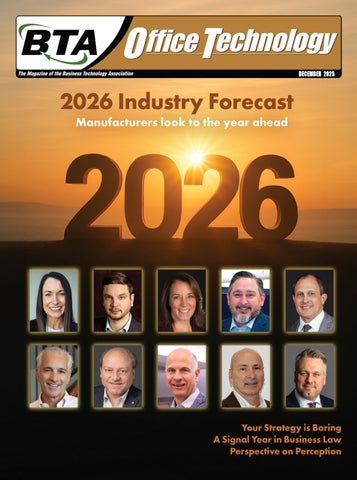
Create a flipbook
Issuu converts static files into: digital portfolios, online yearbooks, online catalogs, digital photo albums and more. Sign up and create your flipbook.