KINDERGARTEN CONCEPT: BEAUTY
What makes me special?
This is a settling unit in which teachers can discover what fascinates the children and what skills they already bring with them. It is very much about following the children’s interests and capabilities in order to better understand them.
How can we discover beautiful animals?
This unit allows children to explore the animal kingdom with many surprises along the way – they may have to rescue or help animals in trouble or find them new homes. Who knows what amazing creatures we’ll discover!
How do we see the beauty in colours?
This unit aims to explore all things about colour and will take many directions as the children wish to explore in order to understand how to describe colour, group colour, create colour and how colours can help us to express our emotions.
How can we create beautiful stories?
In this unit we build on our storytelling skills to create wonderful stories of our own and learn about some of the amazing stories in the world that have been told through time.
RECEPTION CONCEPT: BEAUTY
How can we inspire each other?
As we settle into our new class and navigate a new environment, how can we share our ideas and work well together? What can we learn from other inspiring people?
Where is the beauty in minibeasts?
Can minibeasts be beautiful? Can we find the wonder in these tiny creatures that we share our planet with? We need to investigate – let’s get our magnifying glasses out and explore!
Where is the beauty in movement?
Wheels and wings, legs and levers, rails and roads – all things transport to get us thinking about how we and the things around us keep moving.
What could you be in a fantasy world?
Stories, stories, stories. Who could you be? What are some of the most famous stories of all? Can we create our own beautiful fantasy worlds and fantasy tales?
YEAR 1 CONCEPT: WONDER
I wonder who I am and how I experience my world?
Our bodies and our senses, belonging, short timelines. Through the story of Beegu, we explore how other creatures and people might experience the world differently to us.
I wonder how we find our place in the wider world?
Mapping, continents, oceans and countries. Weather and climate. Through the story of Lost and Found, we explore the world, its climate zones, its oceans and continents and the concept of friendship.
I wonder what can we tell about time and place from the toys that children have had?
Materials, timelines, manufacturing processes. Through the story of Traction Man, we explore the idea of play, of toys and of how things have changed over time.
I wonder how we can help plants to thrive?
Biodiversity, plants and animals, growth, light and conservation.
Can we encourage more pollinators into our school grounds, to do our bit for the environment?
YEAR 2 CONCEPT: PROTECT AND PRESERVE
Do some animals need more protection than others?
We explore our local environment and the animals who might need our help here in Belgium before looking out across the world at animals who are in decline. What can we do about this and how can we raise awareness so that the world takes action?
Can we protect our planet by being less wasteful?
We explore the idea of recycling and reusing our waste and visit a waste recycling centre to learn more about materials. Can we bring this learning back to school and explore how we manage our own waste both in school and at home?
YEAR 3 CONCEPT: CHANGE
What changes can we make to lead healthier and happier lives?
Food groups, balanced diets, exercise and mental health.
Have changes to technology been harmful or helpful?
How have objects changed over time as technology has developed and what has the effect been on how we lead our lives and affect the planet? Leading on to...
How does scientific thinking change through our investigations?
Scientific inquiry into light and sound.
Who deserves to be remembered and why?
In this historical unit we look at some people from the past and consider whether they should be remembered. We learn about timelines and how historians use sources to learn about the past. We learn all about the nurse Edith Cavell and what she did that perhaps deserves to be remembered.
How has evolution changed our world?
Dinosaurs and fossils, extinction and adaptations – how can palaeontologists tell what came before us?
How does living in a volcanic region change the way people live?
A tour around the world to explore different volcanic regions of the world, learning about tectonic plate movements and the affect that volcanoes have on soil fertility.
Our Units of Discovery ask children to ask questions about the state of the worldpast, present and future.
YEAR 4 CONCEPT: IMPACT
How did creative Belgians shape the world?
An exploration of the impact that Belgian artists and architects have had on the physical world and (in Folon’s case), the social and human world through the declaration of human rights. We explore our own artistic selves both in our production and the creation of our own art work.
How have forces and extreme weather shaped the human world?
From earthquakes to hurricanes, what impact can earth have on humans and are humans making the earth more unstable?
An exploration of forces in science and how they work in the natural world.
How has history shaped the human world?
An exploration of the concept of civilisation and an exploration of a range of ancient civilisations from across the world.
Understanding how ancient civilisations lived alongside and interacted with each other and exploring why civilisations rise and fall.
How will we shape our future world?
Leading on from the previous unit, we explore how we might change our use of energy and commodities to create a more positive future for humankind.
YEAR 5 CONCEPT: ENDEAVOUR
How did early human beings move from surviving to thriving?
A look at the Stone Age and the achievements and developments of early human kind. How do anthropologists and archaeologists piece together this prehistory and help us to understand where we came from and how we developed?
Who does exploration benefit?
What did early explorers do to contribute to our understanding of our world and did they always behave with integrity? In this unit we ask whether the desire to explore is inherently human and what happens when our curiosity infringes on the rights of others.
How can scientists improve the world?
An exploration of scientific processes that help us to understand our world. Can science help us to solve some of the world’s problems? We will learn how to conduct fair and reliable experiments to explore a number of scientific ideas and concepts, thinking like a scientist as we go.
Do actions speak louder than words?
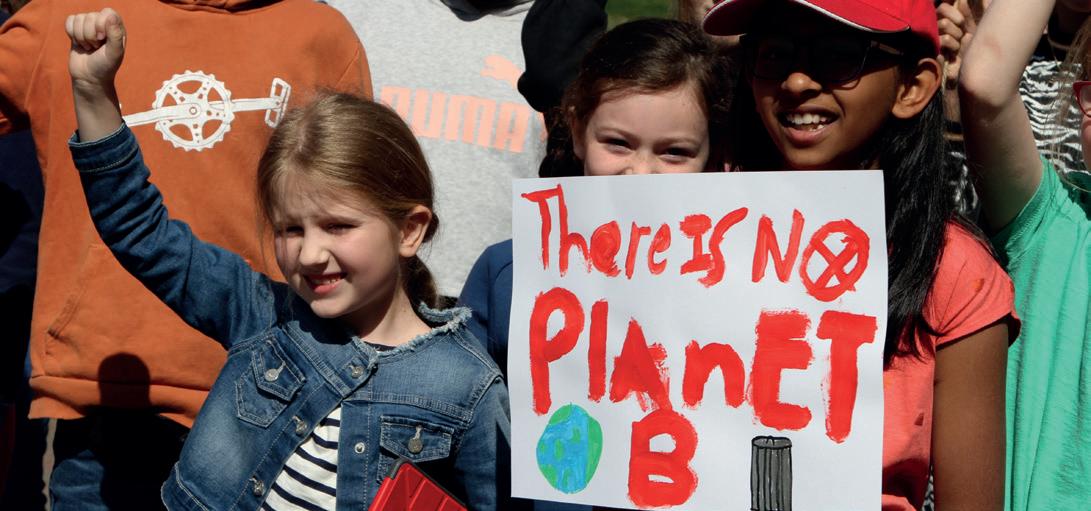
The history of protest and of human and civil rights. What types of protest are most effective and if we were to change the world, how might we go about it?
YEAR 6 CONCEPT: POWER
What is power?
In this unit the students explore the concept of power and begin by looking at power as a commodity linked to energy. They will make their own electrical circuits to help a refugee child in our story to find her way in the darkness.
Powerful Planets: Is the Earth unique?
An exploration of the power of the universe and the planets. From the big bang to gravity and the political powers behind space exploration.
What is political power and how does power create conflict and threaten peace?
Following the child we met in the first unit, we explore war and peace and how power can be abused to create conflicts. The children ask whether war can ever be justified and explore different examples.
Powerful Changes: Am I ready for transition and change?
As we prepare to leave Primary School behind and head to secondary, we explore the changes that are ahead both socially and physically and celebrate our learning journey so far.
Planning for our Units of Discovery is overseen by Curriculum leaders who ensure that all the objectives of the English National Curriculum are covered while allowing for creative cross-curricular learning.
Our teams then plan using the following pro-forma to ensure that each element of the curriculum is considered:
The Big Idea/Concept
Values (Guiding Statements)
Content (knowledge and understanding)
Outcome
Linked texts
Inspirational People / organisations / events
Creativity
Compassion / Action / Service
Coherence (links to other year groups)
Community
EAL pre teaching opportunities
Vocabulary
Assessment Opportunities
This is the overarching concept for the Year Group that connects learning across units.
How the unit links to the learner profile.
What the children will learn (taken from the subject vertical progression documents).
The tangible goal for the unit; how the children will demonstrate their knowledge and understanding.
This can include texts that are being explored in the English Curriculum, from the library, guided reading or whole class reading texts.
Significant people, places, events, organisations that relate to the theme.
Examples of how the children will show their understanding in multiple ways e.g. innovation and experiential learning, play based learning, outdoor learning, drama, technology…
A key audience for the children’s work, how the children will ‘give back’ or initiate action or service to be a ‘force for good.’
Where the unit builds on previous learning or is leading to future learning.
Links to local expertise and resources; visitors who the children will meet along the way; local trips to places of interest.
Examples of activities, resources needed to be in place within the class and / or within specific EAL sessions.
Key vocabulary that will be encountered / explicitly taught in the unit: this is divided into Tier 2 and Tier 3 vocabulary. (Tier 3 vocabulary is subject specific – for example ‘gravity’ whereas Tier 2 vocabulary is the kind of heightened vocabulary that children might encounter and struggle with in general knowledge/comprehension – for example ‘fragile’).
Examples of the specific learning that will be assessed and how – key assessment points in the process. This may differ to the ‘outcome’ as assessment happens all the time and is ongoing throughout Units of Discovery.
Outline of the Process
A brief outline of the teaching and learning process – step by step rather than lesson by lesson. The aim of this is to show the logical through line of learning and how it is sequenced.
An international learning community
The British School of Brussels vzw Pater Dupierreuxlaan 1, 3080 Tervuren, Belgium
Tel: +32 (0)2 766 04 30 – Fax: +32 (0)2 767 80 70 www.britishschool.be Email: admissions@britishschool.be