PROUD PARTNER OF THE JACKSONVILLE JAGUARS


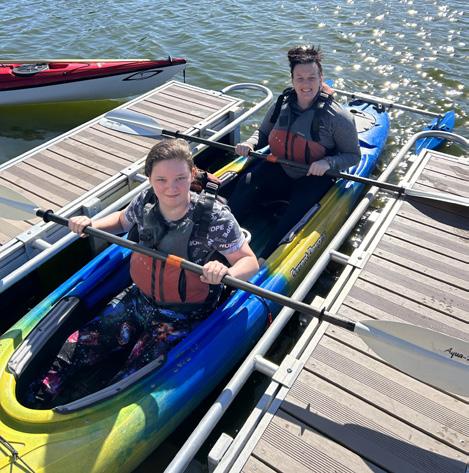
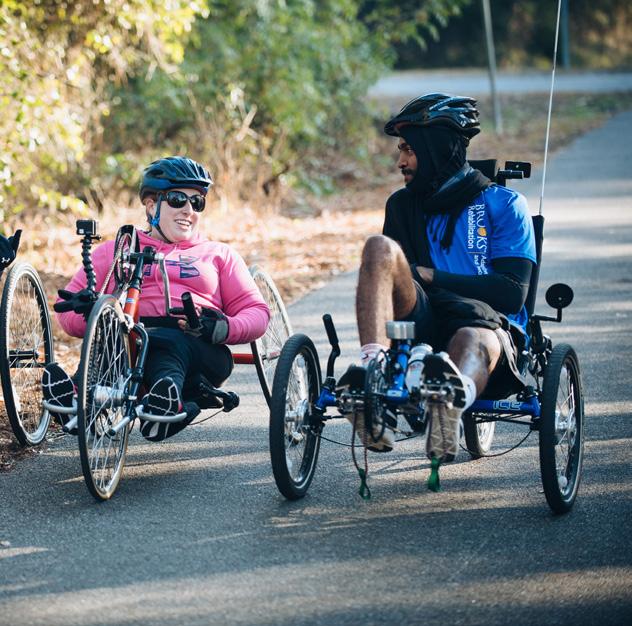
Brooks Adaptive Sports and Recreation program serves any individual in the community living with a physical, developmental, cognitive and/or visual impairment.
• Make new friends
• Get physically active
• All ages and abilities welcome
• No fee to participate

• Recreational and competitive options
• Limited free transportation
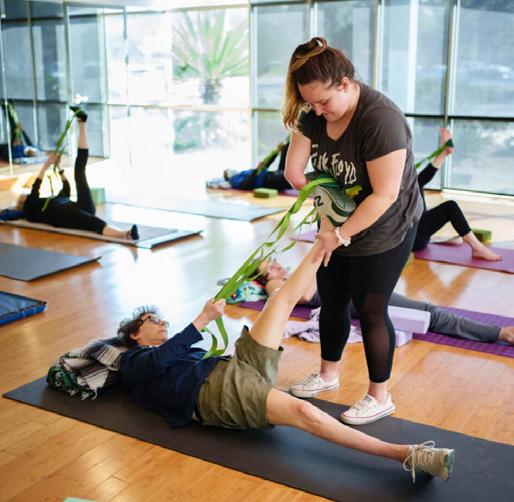
Yog a 1 – 2 p m
Brooks Family YMCA 10423 Centurion Pkwy. N. Jacksonville, FL 32256
Virt u al Yo g a 1 – 2 p m
*This will be a livestream of our 1:00PM live yoga class Zoom
Meeting ID: 971 8553 2956
Password: ASR2007
Yog a 2 : 30 – 3: 30 p m
Brooks Family YMCA 10423 Centurion Pkwy. N. Jacksonville, FL 32256
Brooks Family YMCA 10423 Centurion Pkwy. N. Jacksonville, FL 32256
Not e AB L ES Cho ir 3 – 4 p m
Brooks Family YMCA 10423 Centurion Pkwy. N. Jacksonville, FL 32256
1
:
p m Jacksonville University Negaard Rowing Center 2800 University Blvd. N. Jacksonville, FL 32211 A AS R G am e D ay 2 – 3 p.m . Zoom Meeting ID: 963 6249 1708
Password: ASR2007
Brooks Family YMCA 10423 Centurion Pkwy. N Jacksonville, FL 32256
Cycl in g 8: 30 – 1 1 a m
Jacksonville-Baldwin Rail Trail 1225 Halsema Rd. N. Jacksonville, FL 32220
W Whe e lch air B a
t b al l Pract ice w/B a lle rs 6 – 8: 30 p m
Brooks Family YMCA 10423 Centurion Pkwy N Jacksonville, FL 32256
P Powe r S o cce r Pract ice w/B a rrac ud as 6 – 8: 30 p.m . Cuba Hunter Community Center and Gymnasium 4380 Bedford Rd. Jacksonville, FL 32207
M usic M an ia 2 –
Zoom Meeting ID: 956 2660 6983
Password: ASR2007
Frid ay Ni ght Eve nt 5: 30 – 7: 30 p m *Alternates between Bowling & Billiards each week. Refer to newsletter for details.
B owl in g Bowlero 11141 Beach Blvd. Jacksonville, FL 32246
B ill ia rds Q-Ball Billiards 10150 Beach Blvd. Jacksonville, FL 32246 B
Brooks Family YMCA 10423 Centurion Pkwy N. Jacksonville, FL 32256
W We al so of f e r:
Conne ct io ns 3rd Monday each month
D ance Last Friday each month (during the school year)
Fis hin g Quarterly
G olf
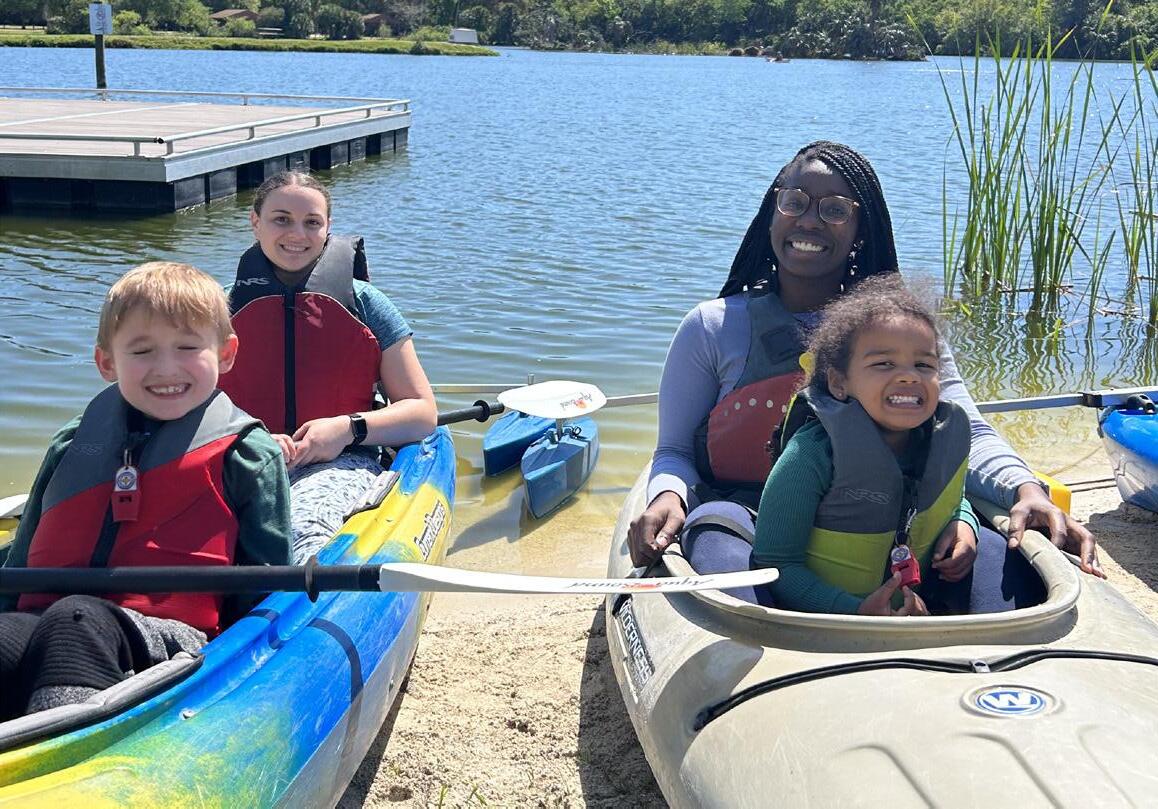
Twice Monthly K ay ak Quarterly
B e ach B a ll Vo lle yb al l 1st & 3rd Friday each month
Tra p S ho ot in g 2nd Wednesday each month
Ve t e ran Ar che ry 3rd Wednesday each month
* *Ot he r act iv it ie s wi ll be of f e re d a nd adve rt ise d whe n t he y are av ai la ble
Revised 11/14/25
Activities and events are available throughout North Florida and are FREE for all participants.
The Brooks Pediatric Recreation Program provides youth with disabilities meaningful and accessible recreation opportunities that offer social connection, family empowerment and community integration to enhance quality of life.
We serve youth (birth – 17-years-old) and offer both sport and recreation programs year-round through weekly classes, monthly activities and family-friendly special events.
SEASON CLASSES
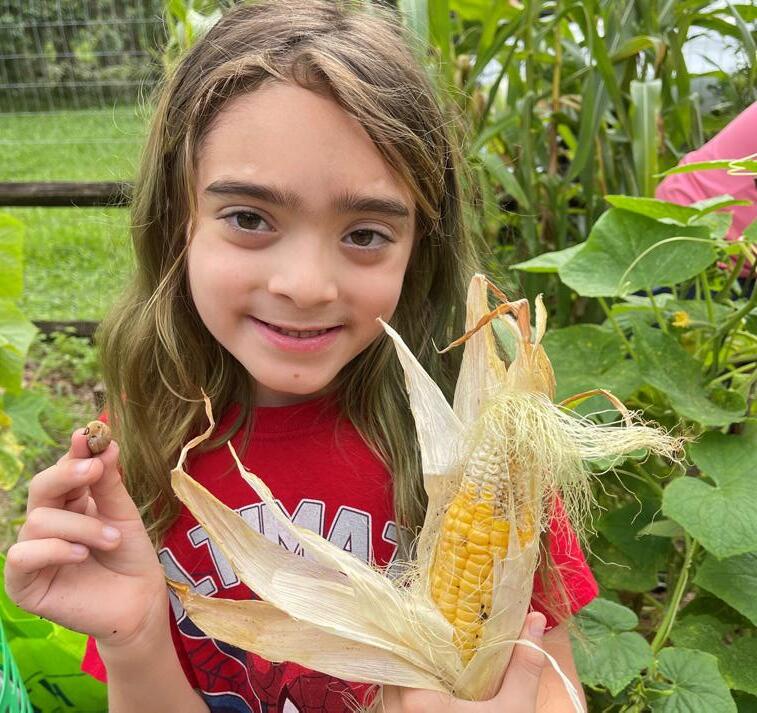
Spring Plant Pals Aquabilties Young Athletes Program (YAP)
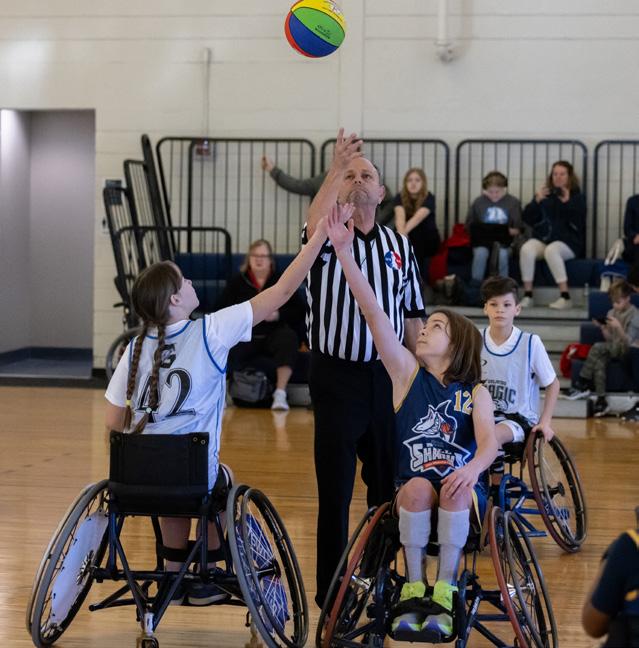
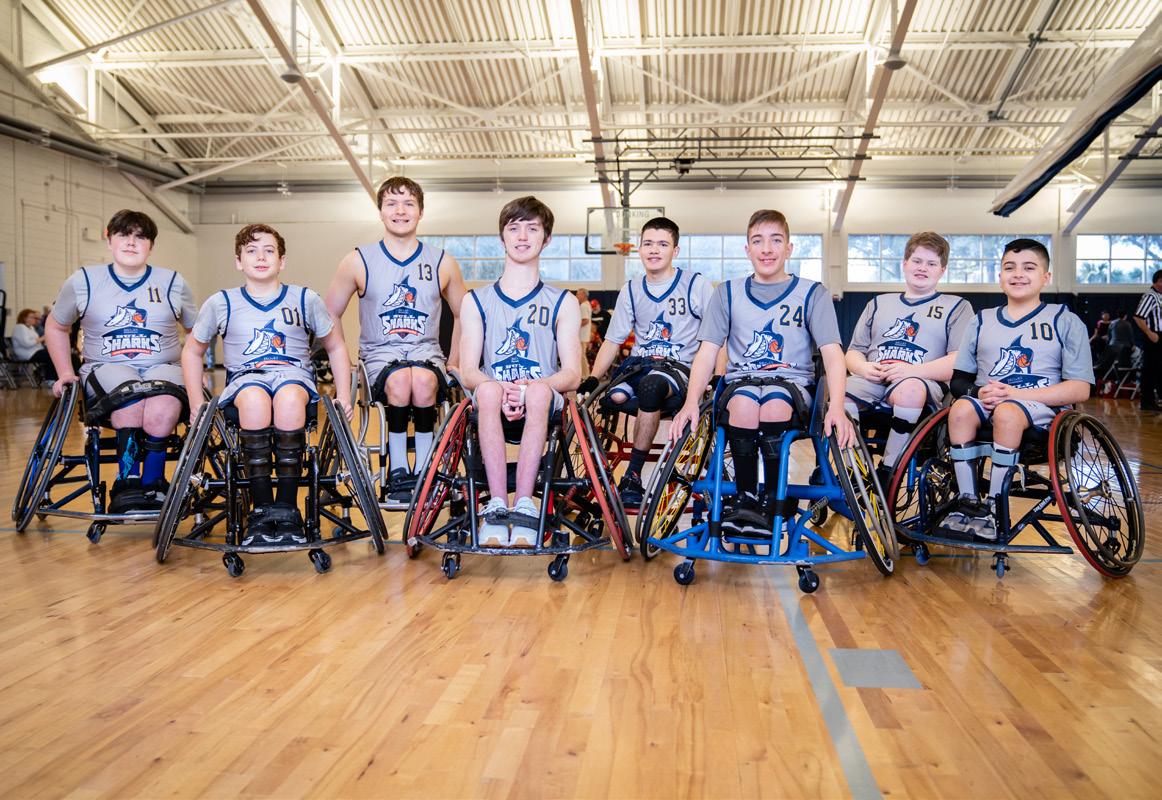
Brooks BullSharks wheelchair basketball
Brooks IceBreakers sled hockey
Summer Aquabilities Young Athletes Program (YAP)
Fall Plant Pals Dance Young Athletes Program (YAP)
Brooks BullSharks summer league
Brooks IceBreakers sled hockey
Brooks BullSharks wheelchair basketball
Brooks IceBreakers sled hockey
Winter Cooking Young Athletes Program (YAP)

Brooks BullSharks wheelchair basketball
Brooks IceBreakers sled hockey
/ SPECIAL EVENTS
Bowling
Little Ones Music
Peds Play Day
Kayaking
Challenge Mile
Little Putters
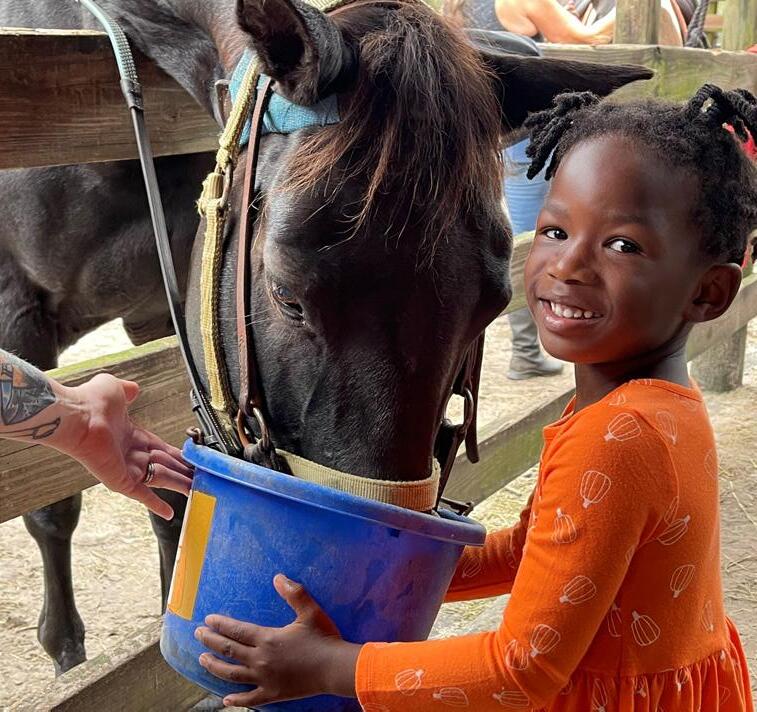
Horsin’ Around
Bowling
Little Ones Music
Surf
Kayaking
Family Field Day
Bowling
Little Ones Music
Peds Play Day
Jump Back to School
Family Fishing Day
Horsin’ Around
Bowling
Little Ones Music
Peds Play Day
Brooks On Ice
Kayaking
Hole in Fun
Volunteer Registration
Complete required documentation
Submit/complete a background check
Sign up for our digital newsletter to get up-to-date information on volunteer opportunities
All volunteers 15 years and younger need to be accompanied by a parent/caregiver
Documentation for proof of volunteer hours provided upon request.
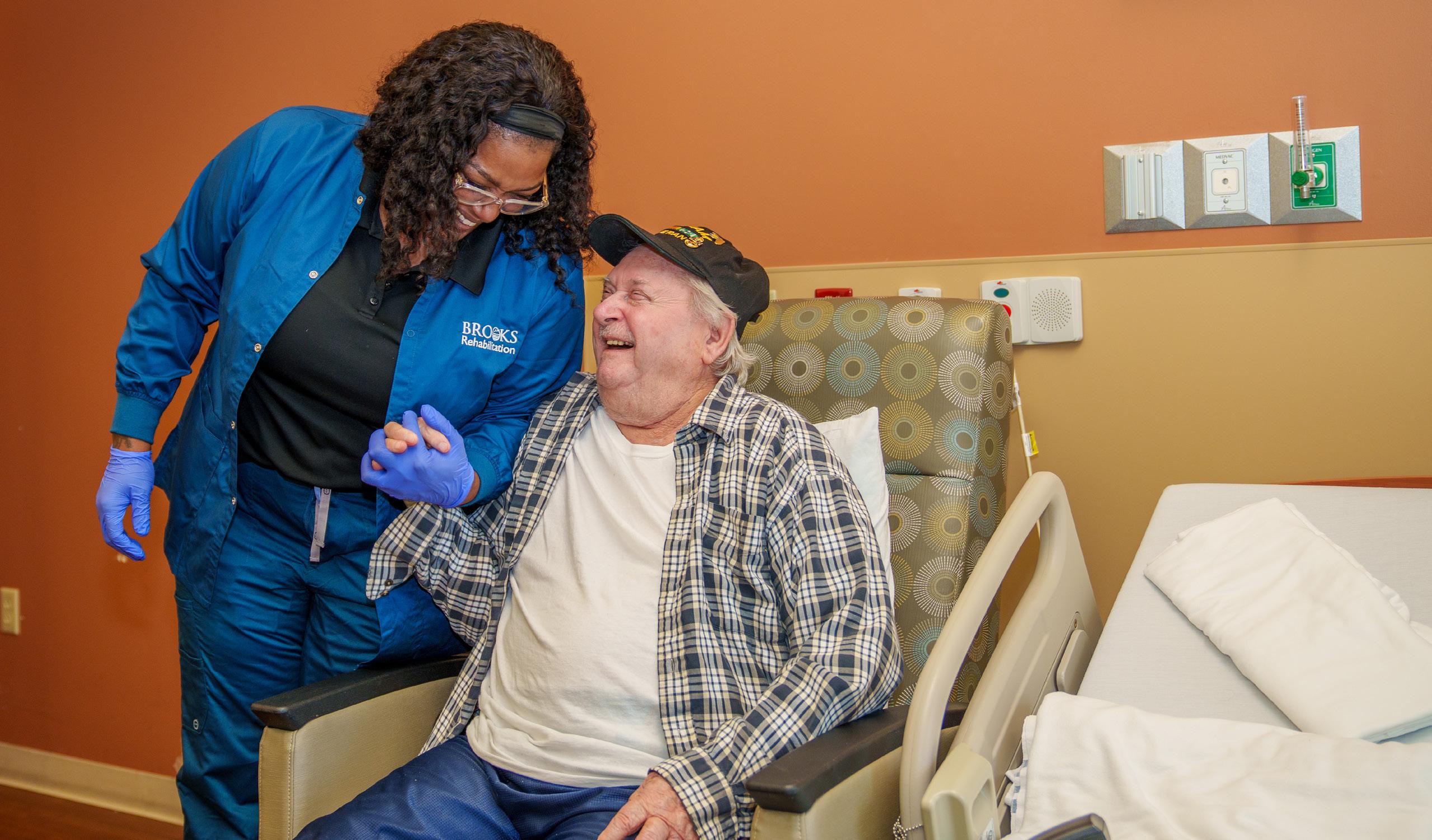
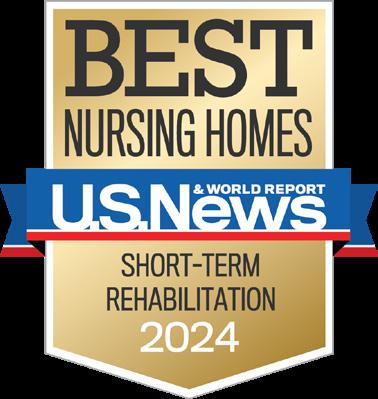
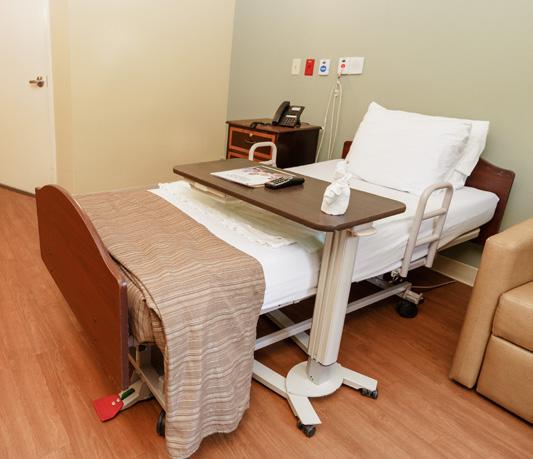
At Brooks Rehabilitation, we provide world-class rehabilitation solutions to advance the health and well-being of our communities. Our skilled nursing facilities offer 5-star quality care awarded from the Centers for Medicare and Medicaid Services (CMS) with all private rooms. Both facilities are also rated “High Performing” for short-term rehabilitation by US News and World Report.
When a patient is admitted to one of our skilled nursing facilities, they can expect to receive an individualized, rehabilitation focused plan of care to help them achieve their highest level of recovery.
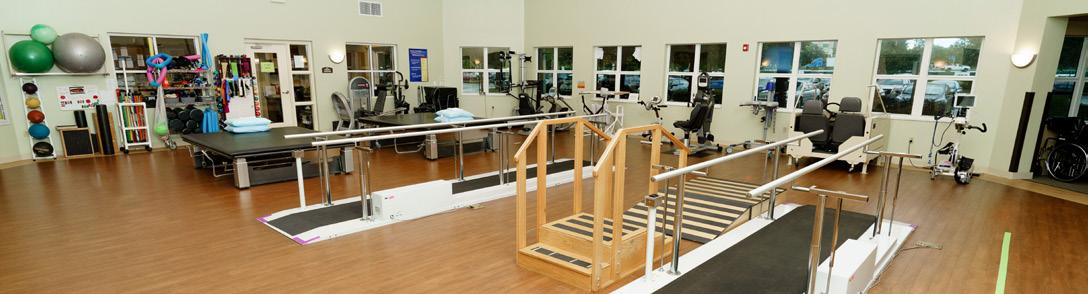
Our medical care is overseen by physiatrists, doctors who specialize in physical medicine and rehabilitation. The team may also include:
• Internal medicine physicians/nurse practitioners on-site
• Nurses (RN, LPN, CNA) with specialized training in rehabilitation
• Physical, occupational and speech therapists as needed
• Case manager on-site to assist with discharge back to the community
• Registered dietitian/nutritionist
• Recreation activities manager
• Psychology services
• Access to a network of specialists available as needed, including podiatry, dentistry and optometry
Our skilled nursing facilities offer a wide range of essential clinical services, including but not limited to:
• Post medical-surgical assessment and management
• Wound care services provided by Certified Wound Care specialists, including negative pressure wound therapy
• Intravenous (IV) hydration and antibiotic therapy
• Medication management
• Balance and fall prevention
• Blood sugar monitoring and treatment
• Gastrostomy (GT) feeding
• Oxygen and nebulizer treatments
• Foley and suprapubic catheter management
• Drain management
• Enteral nutrition
• Bladder and bowel training programs
• Patient and family education
• Assistance with activities of daily living
Since your medical team has decided that your healthcare needs have improved enough that you no longer need a hospital level of care, you can expect to see less nursing staff members in a skilled nursing facility as your care needs have decreased. Our nursing staffing levels are above the state and federally mandated minimum standards to ensure the highest level of resident care delivery and safety.
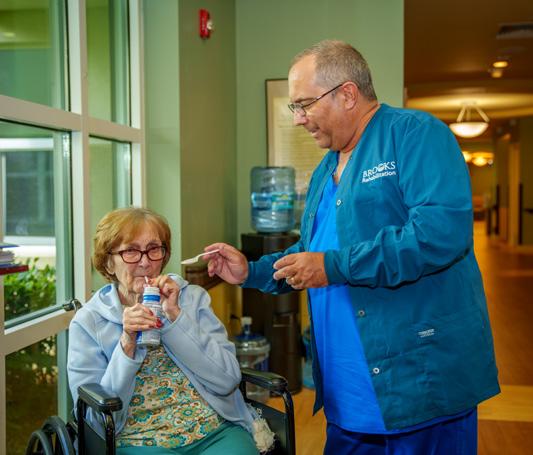
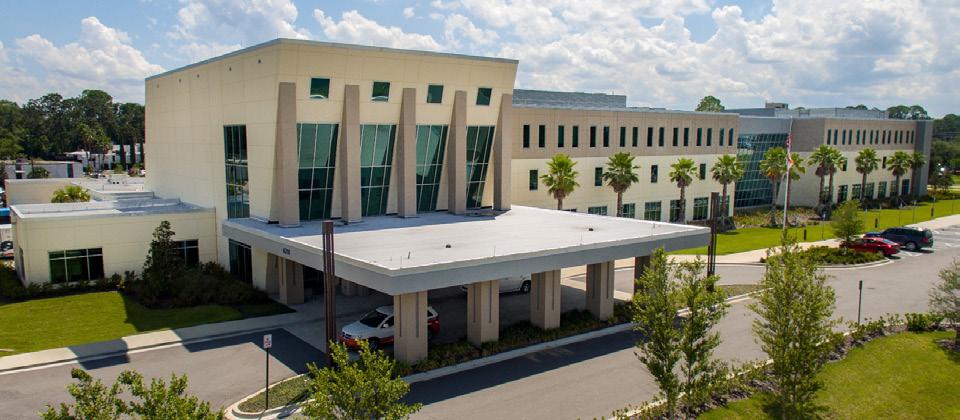
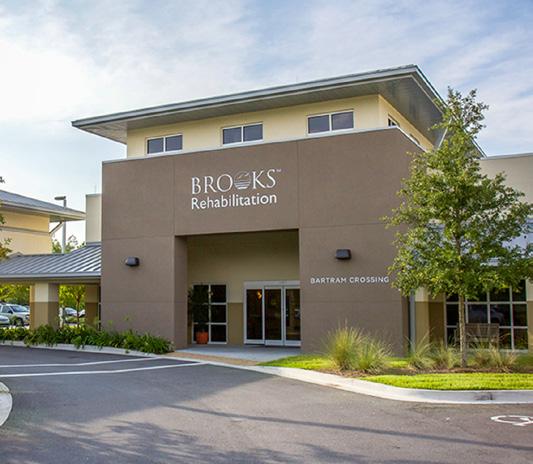
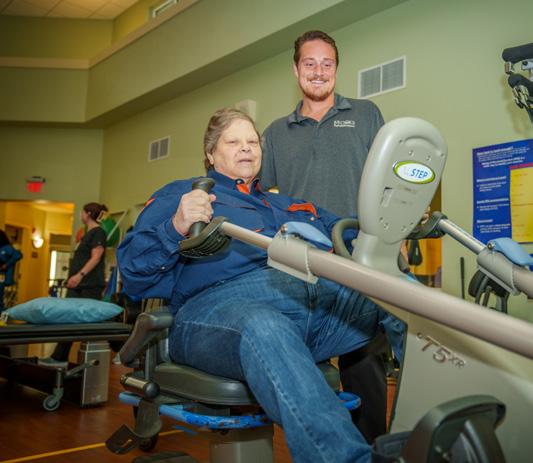
Discharge planning begins from the moment of admission to University or Bartram Crossing. Our comprehensive team works with patients and families to ensure a smooth transition home.
After skilled nursing care, you’ll have access to everything the Brooks system has to offer:
• Home health and private duty services
• More than 50 outpatient therapy clinics
• Assisted living and memory care facilities
• Research
• Free community programs.
We provide care in the right setting for your individual needs, resulting in the best outcomes.
P: (904) 528-3000 F: (904) 456-8771
P: (904) 345-8100 F: (904) 456-8771
Respite Care is available at Bartram Lakes Assisted Living and the Green House, based on availability. Respite stays are a great option for seniors who are discharging from a hospital or rehab center but need a little extra care. It’s also useful for caregivers who have a senior living with them and are planning a trip. Our guests enjoy a fully furnished apartment or bedroom, private bath, plus three meals per day and assistance with medication oversight and activities of daily living. We accept respite stays for one week – two months. Brooks will partner with providers to offer these guests therapy as needed.
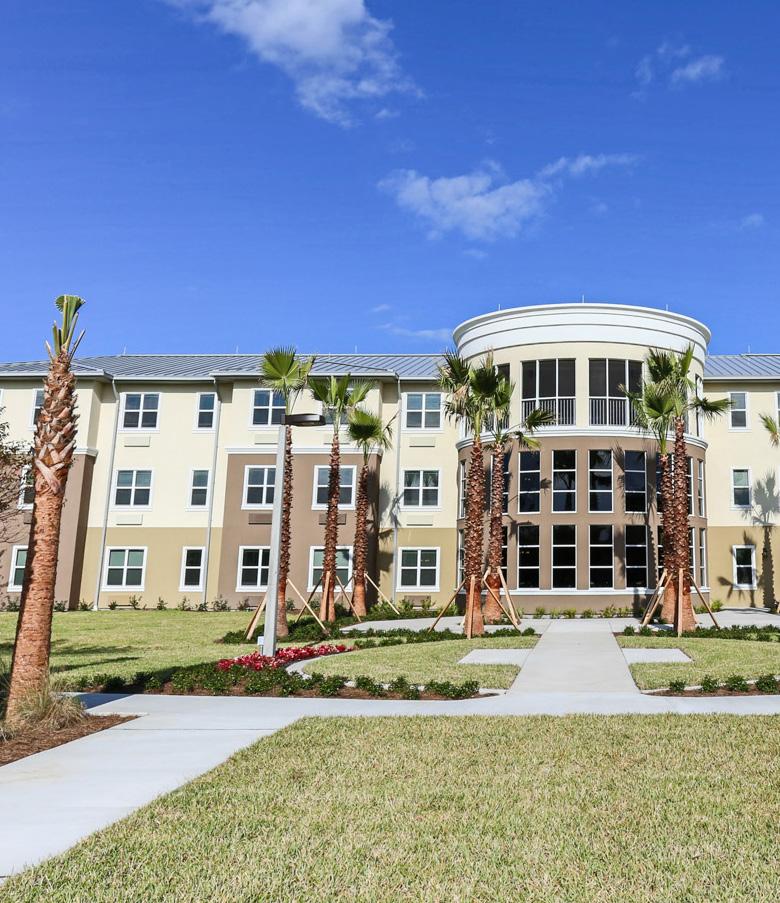
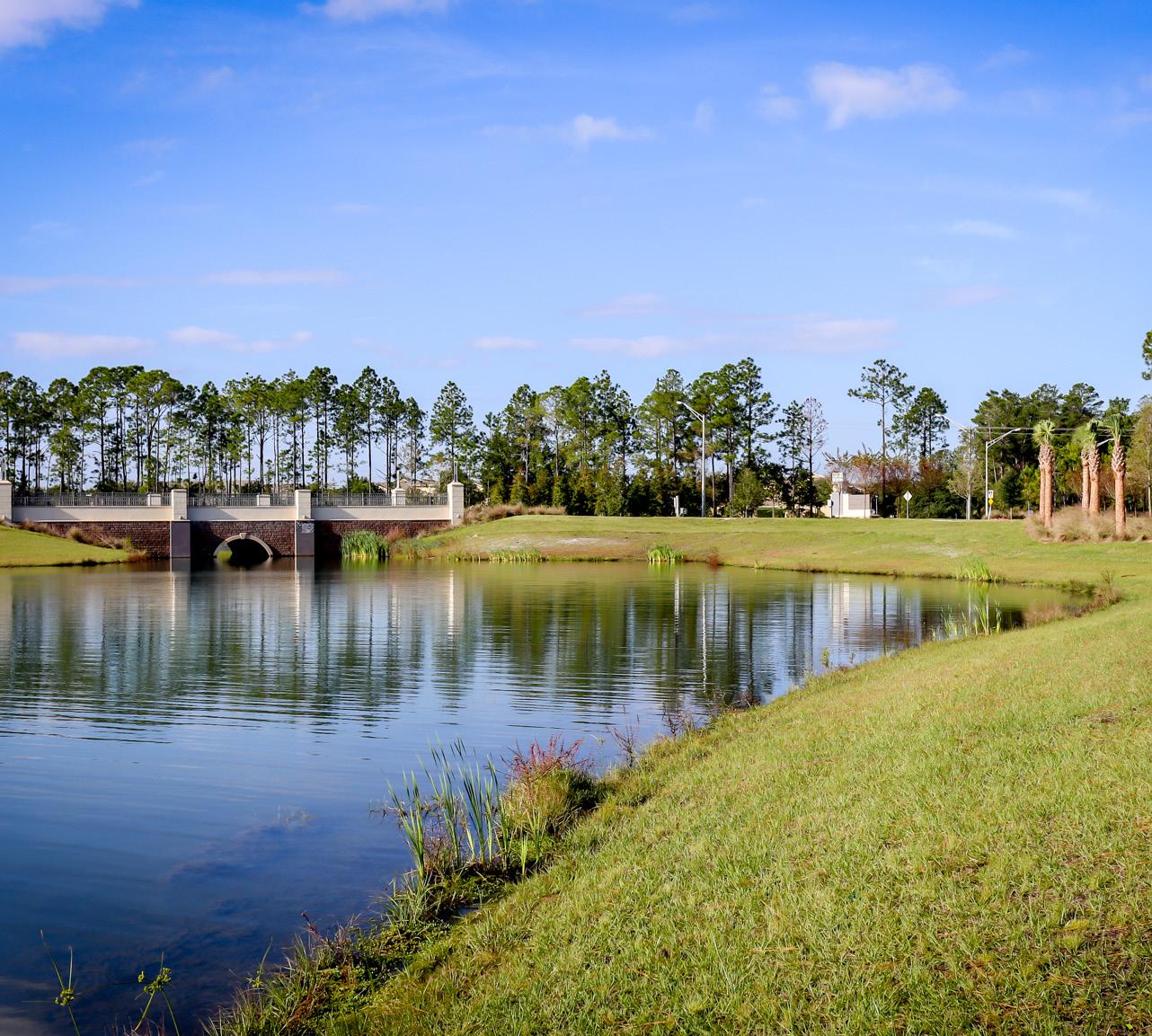
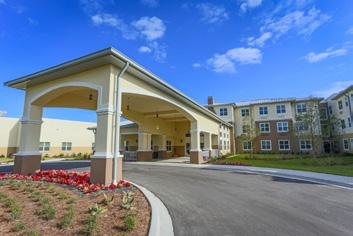

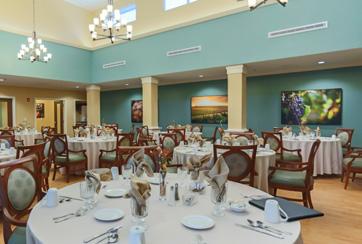
Brooks Rehabilitation invites you to redefine Assisted Living at Bartram Lakes. We provide care and services centered on enhancing our residents’ lives and wellbeing. Bartram Lakes is a community where seniors can live fully, where physical abilities are treated with dignity and assistance is available and delivered respectfully.
•Beautiful studio, one and two bedroom apartments
•Meals and snacks, made from scratch and featuring local ingredients
•Wellness program includes fitness center, chair exercises & walking paths
• Priority access to Bartram Crossing for short term rehabilitation or long term care
•24 hour nursing and Extended Congregate Care (ECC) licensure offers ability for residents to Age in Place
•Social opportunities include musical performances, restaurant & shopping outings, art classes, sporting programs plus games
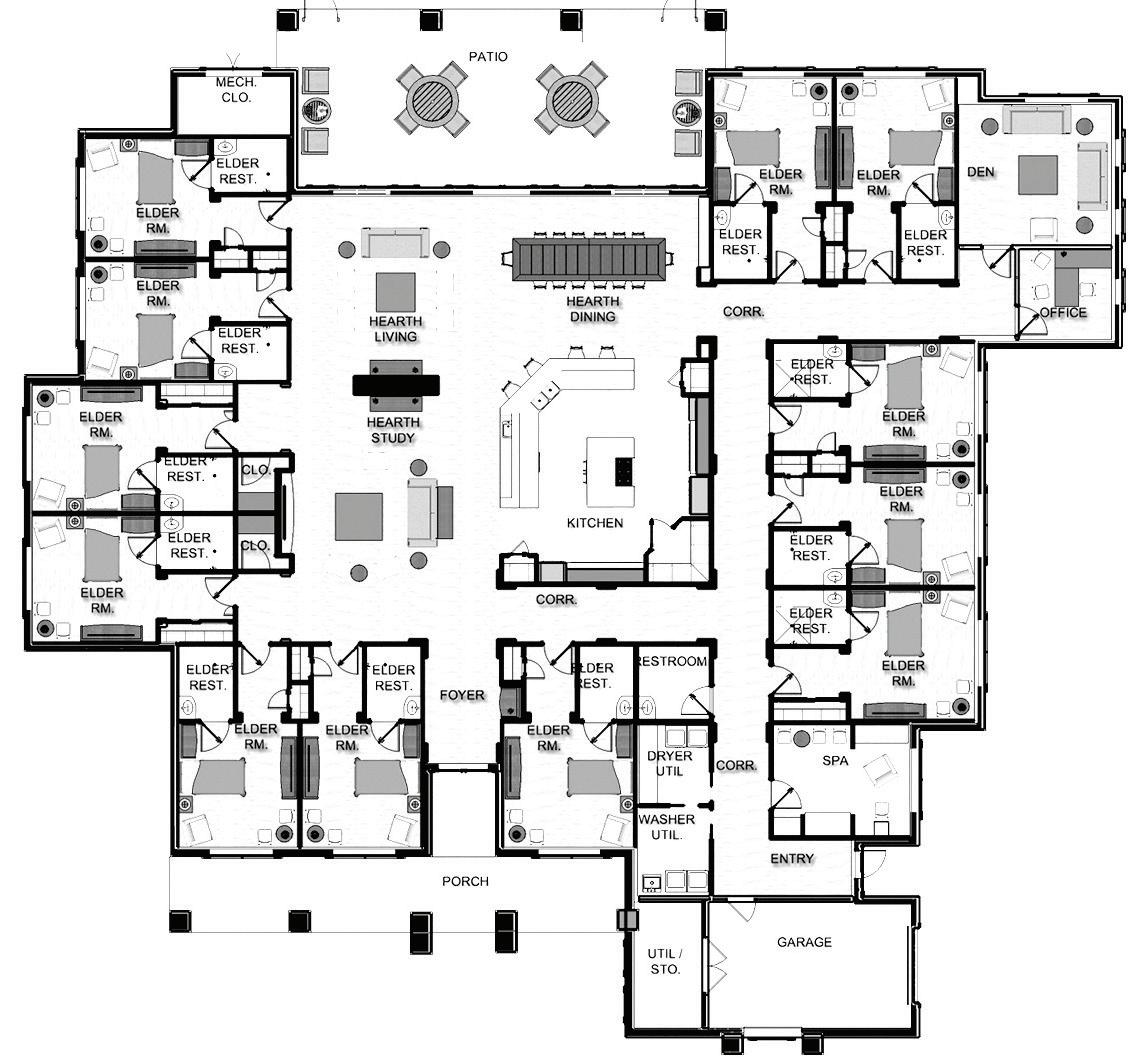
Brooks Rehabilitation has built a place where individuals with dementia can feel safe, nurtured and lead a meaningful life. Brooks Green House Residences are real homes with round the clock caregivers who provide meals, daily care and most importantly personal engagement for Elders living with dementia. Our Elders enjoy their beautiful surroundings and the caring relationships they build with each other and their caregivers. The result is a warm, loving home filled with laughter and compassion – where meaningful life continues.
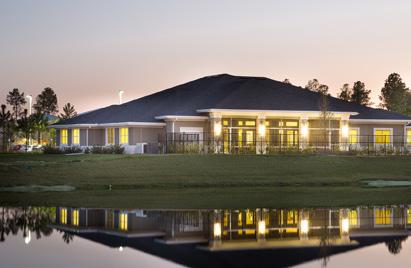
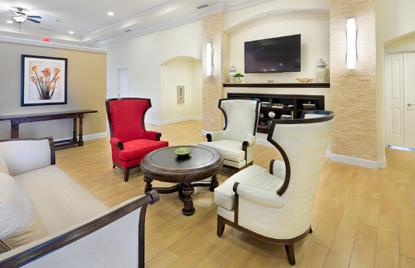

A Real Home
•Cozy Hearth
•Family Dining Table
•Secure Outdoor Garden
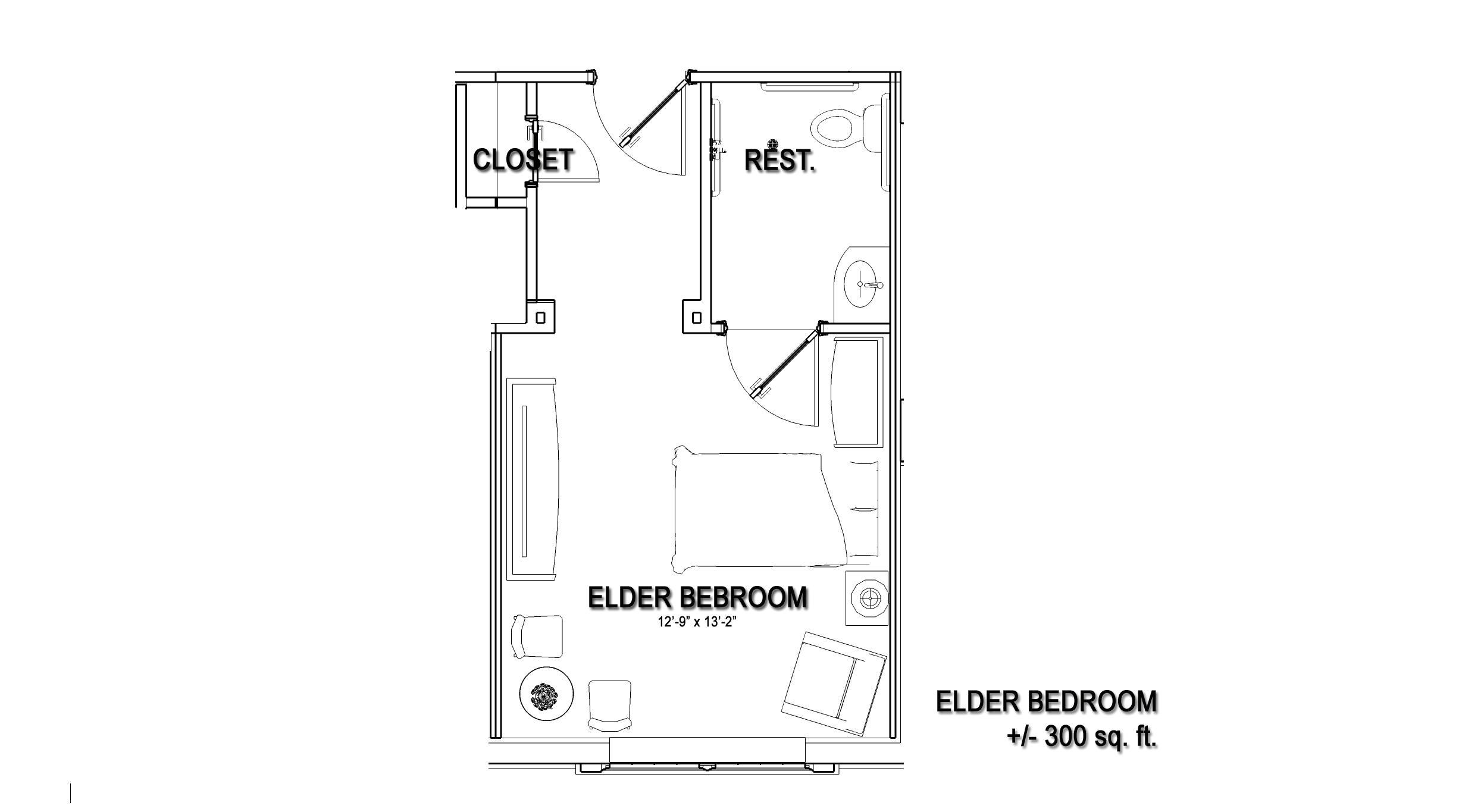
•Private Bedrooms & Baths
Meaningful Engagement
•Personal Interaction
•Elder Centered Living
•Elder Participation
Specialized Care
•24 Hour Care and Nursing
•Independence Promoted
•Age in Place Philosophy


Shabazim and nurses provide care 24 hours a day, seven days a week based on individualized care plans addressing specific needs of each Elder including medication management and assistance with activities of daily living.
Meals are prepared fresh from scratch in each Green House®, tailored to individual needs and preferences of each Elder under the oversight of a registered dietitian.
Care teams are trained in Best Life™ certification focused on providing personalized meaning to each daily interaction and encounter
An additional $400 per month will be charged for any of the following medical services:
Complex medication management (oxygen, insulin or nebulizer)
Direct assistance with eating
Assistance with catheter, ostomy or feeding tube
Two-person transfer
Individual care plans are based on medical assessment. One-time community fee: $2,000; Second person fee: $3,500
Aphasiaisanacquiredneurologicaldisorder thataffectslanguage,butdoesnotaffectintelligence.
ApersonwithAphasiamayhavedifficultywith tal ingunderstandingreadingwriting
Wearededicatedto helpingpeoplewithAphasia achievethehighestlevelof recoveryandparticipationinlife.
Ourcommunityprogramprovi espeoplewithaphasiaan opportunitytoexpressthemselvesinasocialenvironment throughsupportivecommunicationwhichimprovesoverall communicationwithothers.
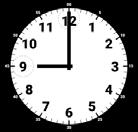

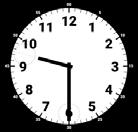

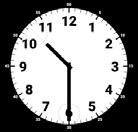

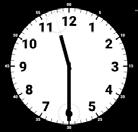

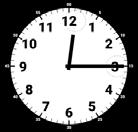

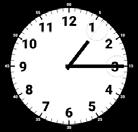
Supporting communication exchanges with gestures and words can increase understanding. Try using the following gestures as you talk with your patient.
Point to your mouth

Point to your left brain
"I know talking is challenging for you."
"It's tough because you know it in your brain and can't get it out."
"But there are a lot of other patients."
Point to the person

"What you have to say is important. I need help, so I need to talk to (the communcation partner)."
"I hope that's alright with you."

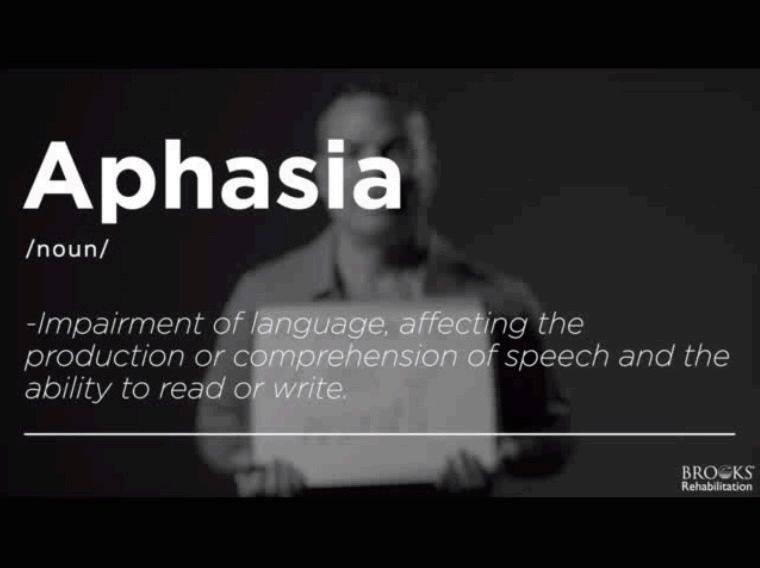
Aphasia
Is an acquired communication disorder that affects language. Aphasia does not affect intelligence.
Aphasia
Can occur after a stroke or brain injury. People with aphasia know what they want to say but may have difficulty getting the words out.
To talk to someone who has aphasia, you just need to communicate differently.
Ask 1 question at a time.
Pen and paper helps. Write down key words.
Hear him or her out. Do not rush them.
brooksrehab.org/aphasia • (904) 345-6780 • aphasia@brooksrehab.org
Allow enough time to respond.
Slow down. Speak clearly.
Incorporate drawings, pictures and gestures
Ask. Wait. Listen!

can affect reading and comprehension of written and visual materials. Try these tips to help support a person with aphasia.
• Font
o Use large font size (size 16 or larger)
o Sans Serif fonts are best (i.e., Arial, Tahoma, Verdana)


Aphasia is a loss of language, not intellect. (Arial, 16 point)
Aphasia is a loss of language, not intellect. (Monotype Cursiva , 16 point)
o Do not use block capitals. The shape of the word is lost.
o Keep at least 1.5 spacing between lines (as shown by the spacing in this document)
• Conveying key points
o Bold key words. Be careful not to over use because it feels like shouting.
o Write in lower case letters.
o Bullet points are helpful
o Use text boxes to highlight important information.
o Use numbers instead of words
1, 5, 67
o Use real pictures

o Keep background colors plain
• General Tips
one, five, sixty-seven

o Ensure words and sentences are short, clear, and simple
o Have clear headings to signpost information
o Keep reading level at 5 th – 6th grade level
brooksrehab org/aphasia (904) 345-6780
aphasia@brooksrehab org
Aphasia is a language disorder caused by a stroke or brain injury that does not affect someone’s intelligence. The Brooks Rehabilitation Aphasia Center bridges the gap between medical rehabilitation and community reintegration. We provide comprehensive support to those affected by aphasia and their families. Our center offers two programs for people with aphasia. We offer a community aphasia program and an intensive comprehensive six-week program. We offer all families communication support, outings, aphasia groups on line, family training and support groups.
The community program provides a matrix of coordinated group activities. These language-based groups are designed to help with re-engagement in life and communication. Our groups help reduce the barriers to communication while teaching new strategies and techniques to improve reading, writing, understanding, and expression. Members are given choices for group participation, which includes a variety of interests such as book and movie clubs, journaling, TV series, travel, music, and technology groups.
Highly trained speech-language pathologists and other specialists facilitate all groups from 9:00 am to 2:00 pm. Members are allowed to participate in this program for as long as they may wish to continue. Rates are determined on a sliding fee scale and range from $10-40 per day. A member can attend our program and receive outpatient therapy at the same time.
an
intensive therapy program designed to help maximize communication potential and improve life participation. ICAPs are multifaceted and take into consideration the many aspects of communication needs faced by persons with aphasia and their families, including reading, writing, speaking, and understanding. Our program runs Monday through Friday, averaging over 25 hours per week for 6 weeks. It encompasses focus on reengagement in life through individualized evidence based 1:1 therapy, outings, family training, and interactive language and social groups. This program is specialized for the person with aphasia and their family. Potential candidates for the ICAP must be able to participate in 5-6 hours of daily intensive speech and interact in a group setting.
brooksrehab.org/aphasia (904)345-6780
aphasia@brooksrehab.org
Both programs support community involvement and facilitate outings such as museums and lunch outings. We offer a free adaptive sports program after hours including events such as golfing, bowling, and surfing. We also offer 5 free Zoom groups a week including language and social groups, music therapy, and mental health and well-being groups.
We have three satellite conversation groups based in Daytona, Florida, Orange Park, Florida and Orlando, Florida. These weekly conversation groups focus on various topics and social activities focusing on improving communication skills, confidence, and friendship.
The criteria for participation in both programs include primary diagnosis of aphasia, must be able to toilet and feed independently. Detailed information can be provided for either program by contacting us.
brooksrehab.org/aphasia (904)345-6780 aphasia@brooksrehab.org
LisaA.Edmondsa
a DepartmentofBiobehavioralSciences,TeachersCollege,ColumbiaUniversity,NewYork,NY b BrooksRehabilitationAphasiaCenter, Jacksonville,FL c DepartmentofCommunicationSciencesandDisorders,JacksonvilleUniversity,FL
ARTICLEINFO
ArticleHistory: ReceivedSeptember27,2021
RevisionreceivedJanuary17,2022
AcceptedAugust2,2022
Editor-in-Chief:MelissaCollinsDuff
Editor:WilliamS.Evans
https://doi.org/10.1044/2022_AJSLP-21-00308
Purpose: Thepurposeofthisstudywastoevaluatepotentialchangesona hierarchyoflanguagetasksandmeasuresoffunctionalcommunicationand qualityoflifeinagroupofpeoplewithaphasia(PWA)whoattendedacommunityaphasiacenterfor2years.Asecondarypurposewastodeterminewhether therewereanypredictorsofchange.
Method: Twenty-sevenPWAwhoattendedBrooksRehabilitationAphasiaCenter(BRAC)wereevaluatedonanaphasiabattery,confrontationnaming,and structureddiscourseinadditiontocompletingself-reportedmeasuresoffunctionalcommunicationandqualityoflifeatthreetimepoints:beforeattending BRACandafter1(N =27)and2(N =20)yearsofBRACparticipation.TwentysixcommunicationpartnerswhocommunicatedregularlywiththePWAcompletedaquestionnaireabouttheirfunctionalcommunicationatthesametime points.Amixedlinearmodelwasconductedforalldependentvariablesto determinechangeovertime.Tau-bcorrelationswereconductedbetween demographicandaphasia-relatedvariablesanddifferencescoresforoutcome measuresthatexhibitedsignificantimprovements.
Results: At1-yeartesting,significantimprovementswereobservedontheaphasia battery,objectandactionnaming,andallself-andcommunicationpartner–reported measures.At2-yeartesting,allimprovementsweremaintainedexceptfortheselfreportedmeasureoffunctionalcommunication.Structureddiscourseshowed increasesinaveragenumberofwords,percentageofmeaningfulwordsandutterances,andefficiencyofmeaningfulwordproductionafter2years.Nosignificantcorrelationswereobservedbetweenpredictorvariablesanddifferencescores.
Conclusions: Participationinaphasiacenterscanresultinsignificantchanges inlanguage,functionalcommunication,andqualityoflifeinpeoplewithchronic aphasia.ThesefindingssupporttheimportanceofaphasiacentersinthecontinuumofcareforPWA.
SupplementalMaterial: https://doi.org/10.23641/asha.21313689
CorrespondencetoLisaA.Edmonds:lisa.edmonds@tc.columbia.edu. PublisherNote: ThisarticleispartoftheSpecialIssue:SelectPapersFrom the50thClinicalAphasiologyConference. Disclosure: LisaA.Edmonds isaresearchconsultantforBrooksRehabilitationAphasiaCenter (BRAC),forwhichshereceivesfinancialcompensation.JodiMorganis theDirectorofBRACandapaidemployeeofBrooksRehabilitation.
“Ahighlysupportiveenvironmentcanlessenthe consequencesofaphasiaonone’slife,whateverthelanguageimpairment” (Chapeyetal.,2000).Aphasiaisan acquiredlanguageimpairmentcausedbydamageinthe language-dominanthemisphere,mostoftenduetostroke, thataffectscomprehensionandproductionofspokenand writtenlanguagewiththepreservationofintellect.The
Clubhouse members can also enjoy other non-vocational activities each day, structured to foster engagement, creativity and communication. Activities can include arts and crafts, performing arts, exercise and gardening.
The Clubhouse is a community health program that provides for the long-term recovery needs of individuals who have su ered an acquired brain injury. The day-program bridges the gap between medical rehabilitation, vocational training and community reintegration.
It is currently the only Brain Injury Clubhouse in Florida and one of only 17 in the world.
There are three main work units at the Clubhouse that are designed to provide hands-on training and practice in preparation for job placement or volunteer work. They include:
Business Unit
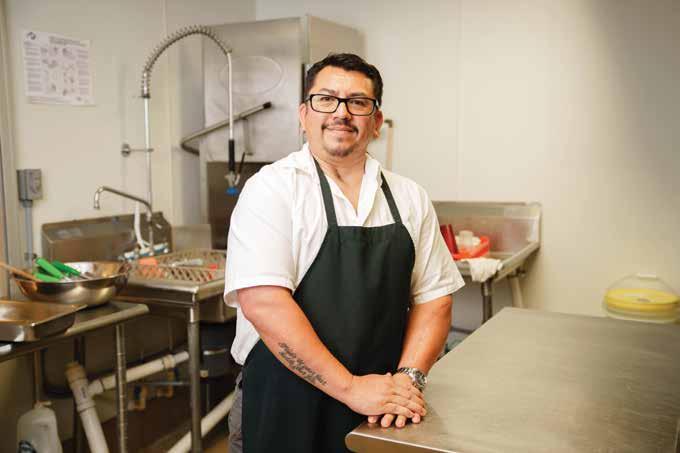
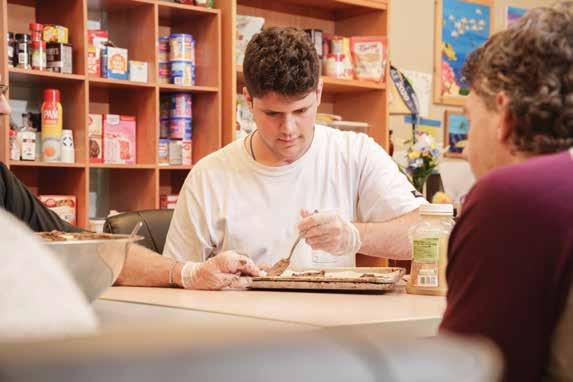
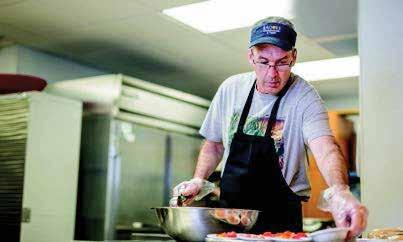
Food and Kitchen Unit
Facility and Grounds Maintenance

• Age 16 or older
• Acquired neurological injury (brain injury)
• Independent daily self-care activities or accompaniment by a companion
• Behavior does not pose a risk of injury to self or others
• Membership is voluntary and does not require a physician referral
The Brooks Clubhouse exists to advance the continuum of care for adults living with a brain injury. The mission of the Clubhouse is to enhance cognitive, physical and emotional recovery and to improve quality of life and vocational outcome for individuals with a brain injury.
The Brooks Clubhouse is a community-based day program operated by professional staff in conjunction with program members and volunteers. The program follows a work-ordered day which parallels typical working days and hours, Monday to Friday, 9 a.m. – 3 p.m. The Clubhouse engages members and staff, working side by side, in the daily operations of the Clubhouse. It focuses on improving functional abilities, developing work skills, enhancing strengths and talents, and achievement of individual goals. Brooks Clubhouse follows the guidelines established by the International Brain Injury Clubhouse Alliance (IBICA).
There are two available tracks of participation - a Community Inclusion Track and a Vocational Track. If the goal of participation is to enhance rehabilitation outcome, life skill abilities and general quality of life, the Clubhouse will provide opportunities for socialization, life skill training, and meaningful, productive involvement with activities in a safe and caring environment. However, if the goal is employment, the Clubhouse will provide all of the above, as well as facilitate employment opportunities through pre-vocational training, volunteer work and supported employment.
Who is Eligible: Membership is available to any adult, age 16 or older, who would benefit from activities to enhance social, physical, cognitive and vocational outcome following an acquired brain injury. This includes individuals with a diagnosis of traumatic brain injury, stroke, anoxia or other acquired central nervous system dysfunction.
Daily Structure: The Clubhouse is organized into work units, which have hired staff and members working together to provide a full and productive work day. The work is designed to help facilitate increased work skills, confidence, self-worth and purpose. Sample work groups may include, but are not limited to the following
4Business Unit: Responsible for management of all clerical and business functions including reception, telephone, file maintenance, intake operations, record keeping, generation of the newsletter and other general office duties as needed. Also responsible for usage and upkeep of Clubhouse business work unit computers and oversight of computer skills enhancement training classes.
4Food and Kitchen Unit: Responsible for meeting the daily nutritional needs of the Clubhouse staff and members. This work group plans, shops, prepares and serves the daily lunch for the Clubhouse.
4Facility and Grounds Maintenance: Responsible for overall cleaning, maintenance and repair of indoor facility and outdoor groundsat the Clubhouse. Also, responsible for production of selected products that are made at the Clubhouse, e.g., hand-constructed projects and crafts such as bird feeders, tile mosaic tables, plant gardens, pottery, etc.
In addition to the above listed work units, individuals have the opportunity to gain skills in computer usage in the computer lab and opportunities for academic skill remediation and GED preparation. Health and wellness activities include yoga, attending the YMCA fitness program, aquatics, music therapy, creative dance, meditation/mindfulness and Zumba. There are also many opportunities for a variety of other social and recreational activities.
For additional information, to make a referral or inquire about eligibility, contact:
Kathy Martin, M.Ed. | Manager of Brooks Clubhouse 2700 University Blvd. West | (904) 674-6400 katherine.martin@brooksrehab.org
• 1 in 8 women will be diagnosed with breast cancer.
• Maintaining a healthy weight can reduce your risk for breast cancer.
• Having a male relative that had breast cancer can increase your risk.
• Between 32–86% of women experience axillary cording after breast cancer surgery.
• Scar tissue from radiation or surgery can be helped with physical therapy.
• Nearly 80% of young women diagnosed with breast cancer find the breast abnormality themselves.
• Breast cancer is the most common form of cancer in women who are pregnant or who have just given birth.
• A man’s lifetime risk of breast cancer is 1 in 833
• The median age of diagnosis of breast cancer is 62, meaning half of the women diagnosed are younger than 62.
• Limited shoulder range of motion is seen in up to 77% of patients after breast cancer surgery.
• Approximately 1 in 5 people will develop lymphedema after breast cancer surgery, the more invasive surgery the higher the risk.
Early intervention from a rehab professional can improve quality of life after a breast cancer diagnosis.
IF YOU ARE DIAGNOSED WITH BREAST CANCER:
And have not started cancer treatments yet, physical and occupational therapy can play an important role early in your journey.
Or if you are currently undergoing or have completed cancer treatment, physical and occupational therapy can relieve pain, restore function and improve quality of life.

If you are diagnosed with breast cancer and have not started cancer treatments yet, physical and occupational therapy can still play an important role early in your journey. Prehabilitation can have positive effects on physical and psychological outcomes as well as increase potential treatment options. Our prehab program is usually one to two sessions unless deficits are found, at which time further treatment will be recommended.
EVALUATION SERVICES
• Assessment of baseline functional measures as well as baseline shoulder range of motion and strength
• Identify impairments that may affect your recovery and devise a plan of care to address those impairments prior to treatment
• Create an individualized exercise program to address overall cardiovascular strength and endurance
• Education on early signs of lymphedema, risk factors and prevention
• Education for dealing with cancer and related fatigue
EDUCATIONAL SERVICES
• Cancer related fatigue
• Lymphedema early signs and prevention
If you are diagnosed with breast cancer and are currently undergoing or have completed cancer treatment, physical and occupational rehabilitation can relieve pain, restore function and improve quality of life.
EVALUATION SERVICES
• Pain in the neck, shoulder, upper back, shoulder blades, arm and trunk
• Range of motion restrictions, muscular weakness and decreased core strength
• Soft tissue and scar restrictions caused by surgery, radiation or postural difficulty
• Cording or Axillary Web syndrome
• Lymphedema – will be referred for lymphedema treatment if patient is experiencing abnormal post-op edema/lymphedema
• Sensory deficits in the affected extremity
• Difficulties with daily living activities and/or recreational activities performed prior to surgery
• An individualized exercise program to address deficits
EDUCATIONAL SERVICES
• Prehab program information if patient has not previously attended the program
Our prehab and post-op programs, as well as other treatments, are available at Brooks locations in Jacksonville, Orange Park, Amelia Island and St. Augustine. Your physician can send your order to our Central Intake Unit to ensure you are sent to the most convenient location.
Reference: Silver, Julie K., and Jennifer Baima. “Cancer Prehabilitation.”
Our
This
The
It
The
experience fatigue, decline in balance, generalized weakness and range of motion deficits that affect daily function. Our therapists understand the importance of getting each person back to their highest level of recovery.
(services initiated before oncology interventions)
These services may include:
Assessment of baseline functional measures, range of
Lymphedema
Development
An
Education
The Brooks Rehabilitation Oncology Program takes a multidisciplinary approach to address specific needs and interests of cancer patients and survivors. Brooks clinicians are trained to meet the unique needs of cancer patients in various stages of treatment. Our goal is to help patients return to their highest level of recovery and to mitigate the effects of cancer treatments before they become debilitating.
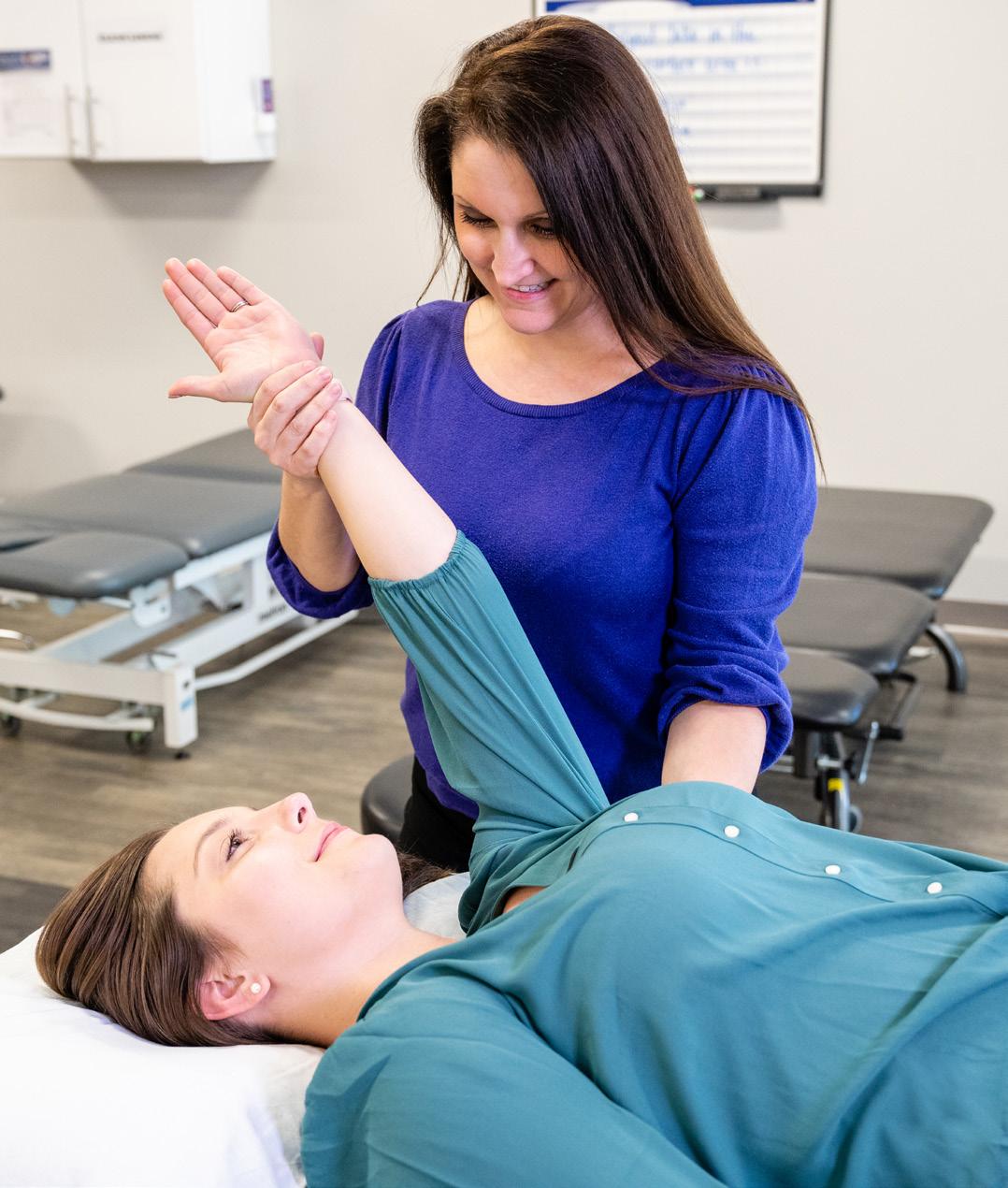
If you are experiencing any of the following, talk to your physician today about a referral for rehabilitation services:
• Fatigue
• Decreased range of motion
• Pain
• Peripheral neuropathy
• Lymphedema therapy
• Decreased balance/falls
• Decreased bone density
• Swallowing difficulties related to cancer treatments
• Pelvic floor dysfunctions such as urinary incontinence, painful sex and erectile dysfunction
We also offer a prehabilitation program. These services are initiated before oncology interventions and typically consist of 1-2 sessions which include:
• Assessment of baseline functional measures, range of motion and strength
• Development of an individual plan to address any impairments that may affect your recovery while receiving cancer treatments
• An individualized exercise program to address overall cardiovascular strength and endurance
• Education on early signs of lymphedema, risk factors and prevention
• Education for identifying and addressing cancer and related fatigue
Let our experienced clinicians develop an individualized treatment plan to take your fight to the next level.
For further information please email Brooks.Oncology@BrooksRehab.org or contact our Central Intake Unit at (904) 345-7277.
BrooksRehab.org
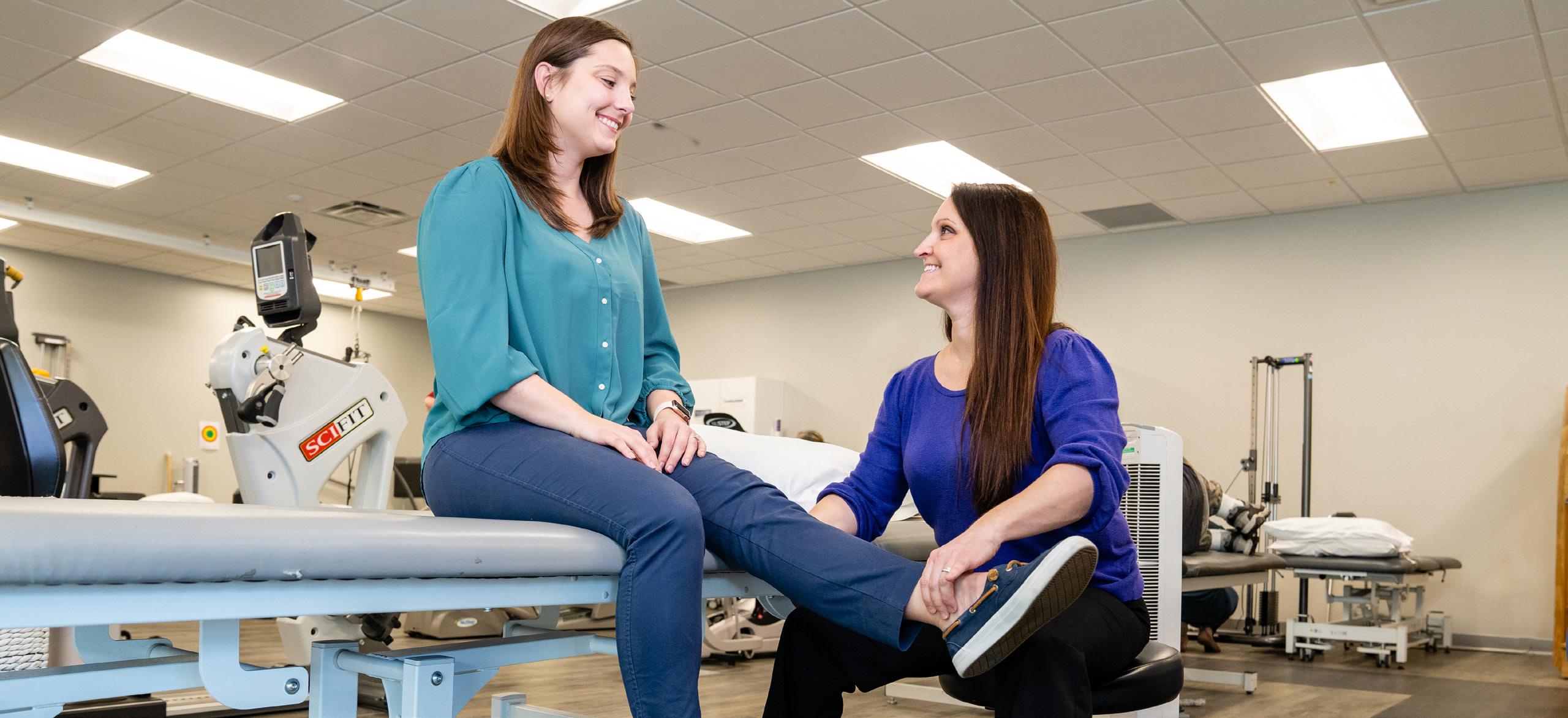
• Balance and Frequent Falls: Occupational and Physical Therapy can improve balance, safety and independence with mobility and transfers to car, toilet, shower/tub, bed, and provide prosthetic training.
• Cardiovascular Endurance/Fatigue: Occupational and Physical Therapy can provide education on energy conservation to improve endurance for activities. Speech Therapy can improve strength of diaphragm muscles.
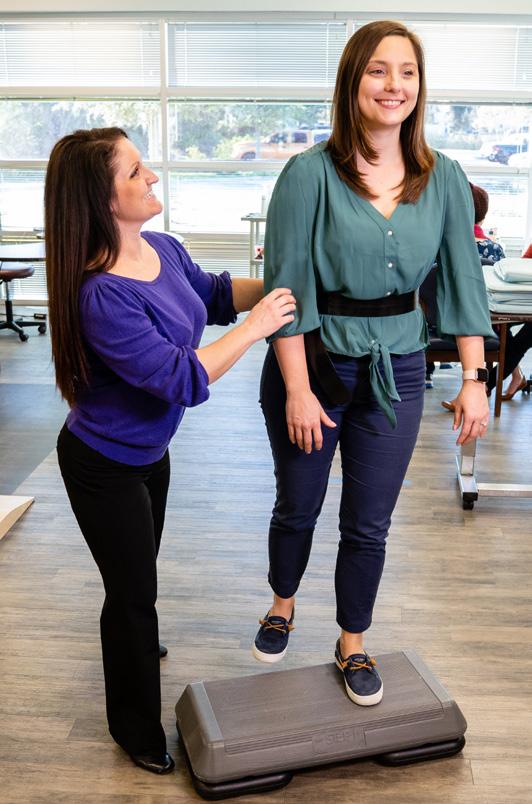
• Decreased Strength: Occupational and Physical Therapy can increase grasp and prehension strength and recommend adaptive devices to promote ability to grasp and open items and can improve upper and lower body and core strength.
• Soft Tissue Restrictions: Physical Therapy can address pain and soft tissue restrictions as well as range of motion related to breast cancer treatments.
• Lymphedema: Occupational and Physical Therapy can address lymphedema to decrease pain and improve circulation and range of motion.
• Difficulty Swallowing: Speech Therapy can address dysphagia which may be present due to laryngeal cancer or a PEG tube.
• Impaired Cognition/Vision: Occupational Therapy and Speech Therapy can provide strategies for impaired memory and vision.
• Language/Voice: Speech Therapy can help improve word finding and slurred speech due to weakened facial musculature and vocal volume following laryngectomy.
• Bowel, Bladder and Sexual Dysfunction: Pelvic Health Physical Therapy can address these deficits which may be caused by effects of chemotherapy and radiation.
• Pain: Occupational and Physical can help with pain including management of phantom limb pain following amputation.
• Peripheral Neuropathy: Physical and Occupational Therapy can address desensitization and provide education on home safety to avoid injuries due to sensory impairments.
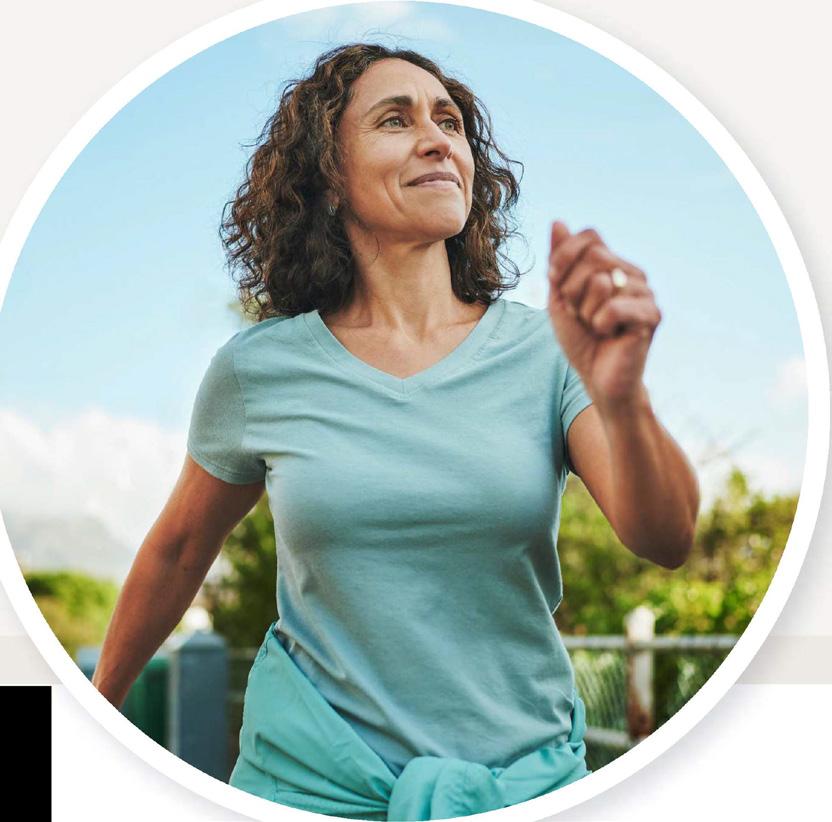
Chemo or hormone therapy related to cancer treatment can have an effect on your bone strength. Exercise is the most recommended non-pharmacological treatment to help prevent the onset and progression of osteopenia/osteoporosis It is essential to exercise at the appropriate intensity and to perform it SAFELY to see improvements in your bone mineral density (BMD). Evidence for increased BMD is the result of combining weight bearing, impact and resistive exercise. It can take up to 12 months of consistent weekly exercise to see changes in your bone scans.
GTransfers/Body Mechanics/ Posture:
• Log Roll/Chair Stand Techniques
• Basic household lift training for a safe spine
• Floor transfers/Fall recovery
• Posture Training

0Bodyweight/ Strengthening/ Balance Training:
• Weightbearing Cardiovascular Exercise (weight vest option)
• Plyometrics, Aerobics, Dance (guided by rehab professional)
• Weight and Resistance Band Strengthening
• Balance and Agility Exercises
Frequency and Intensity Recommendations:
• Aerobic -150 min/ week @ mod intensityweightbearing preferred
• Resistance - High load, low reps with good form to fatigue - 2-3 days per week
• Impact (if appropriate)3 days per week
For your safety it is important to train in an ideal trunk posture and proper form. Your therapist will prescribe specific repetitions, sets, time and weight after your evaluation. In approximately 4-6 visits you can have a customized home program to work on your skeletal strength for lifelong bone health.
For questions please contact brooks.oncology@brooksrehab.org
BrooksRehab.org
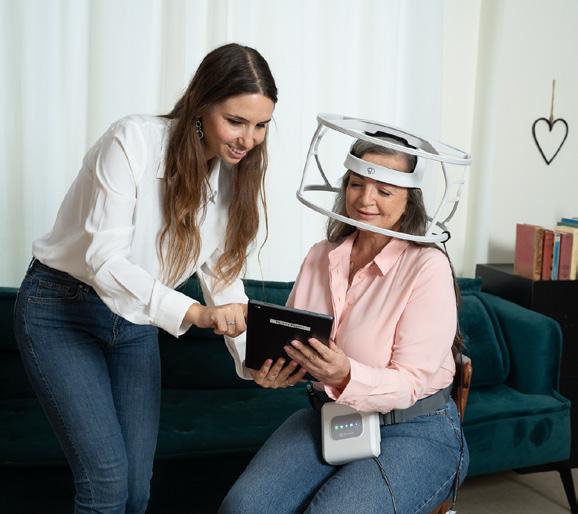
Brooks Clinical Integration and Research is committed to advancing rehabilitation science, technology and care through research and developing the most effective therapies for our patients Our clinical research programs are focused on patient populations who have experienced neurological injuries such as stroke, brain injury, or spinal cord injury and individuals who are battling musculoskeletal pain and other disabling conditions
We partner with leading experts in academia, clinical care and the industry to offer individuals the opportunity to participate in innovative research studies that focus on solving real-world problems that patients and healthcare professionals experience in rehabilitation Our skilled team is driven by a mission to generate new evidence and integrate the latest research discoveries into clinical practice.
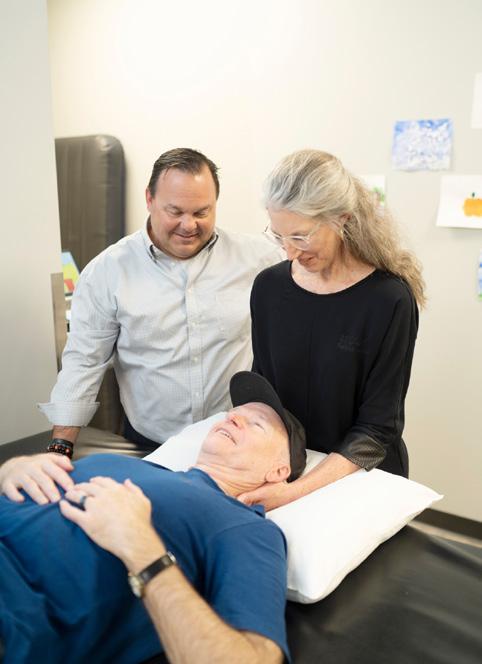
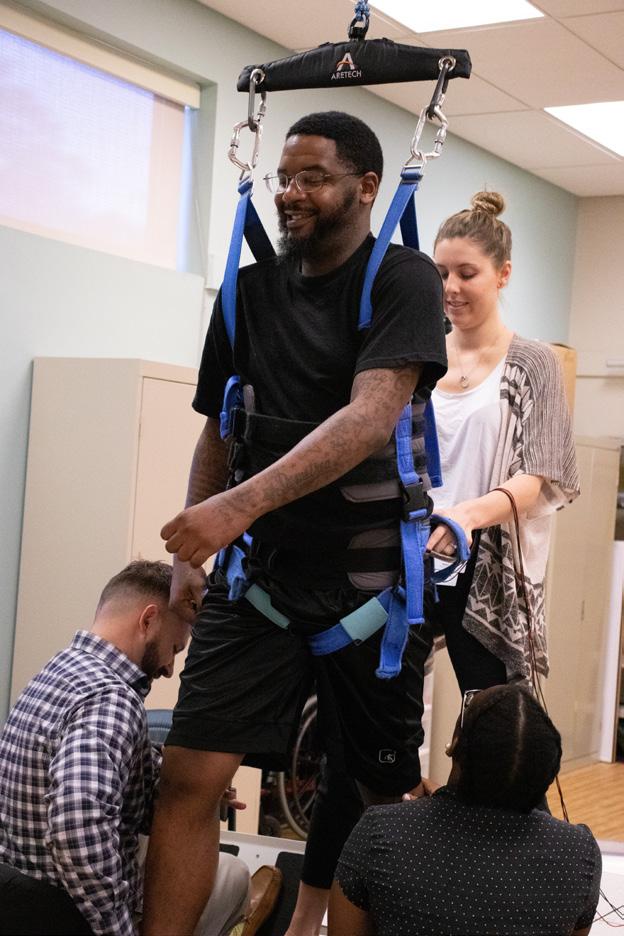
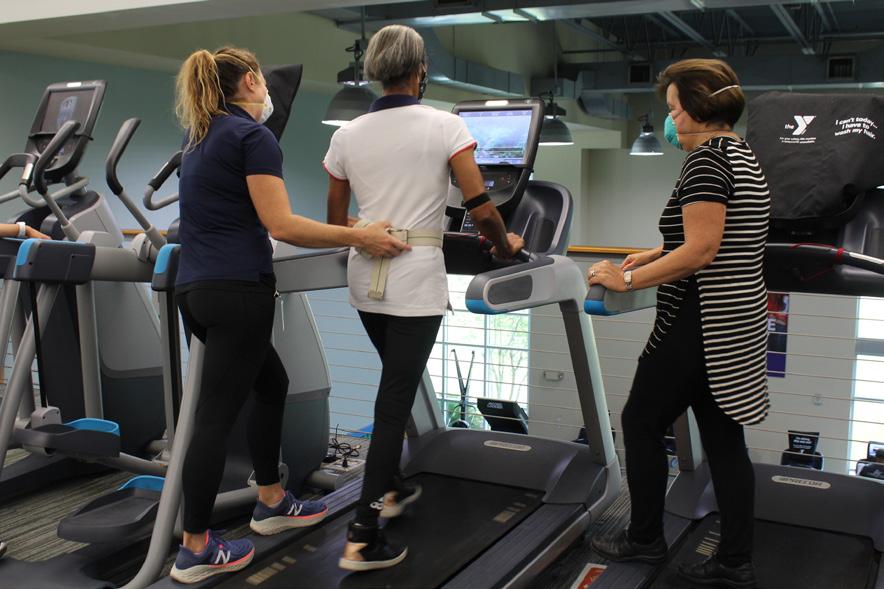
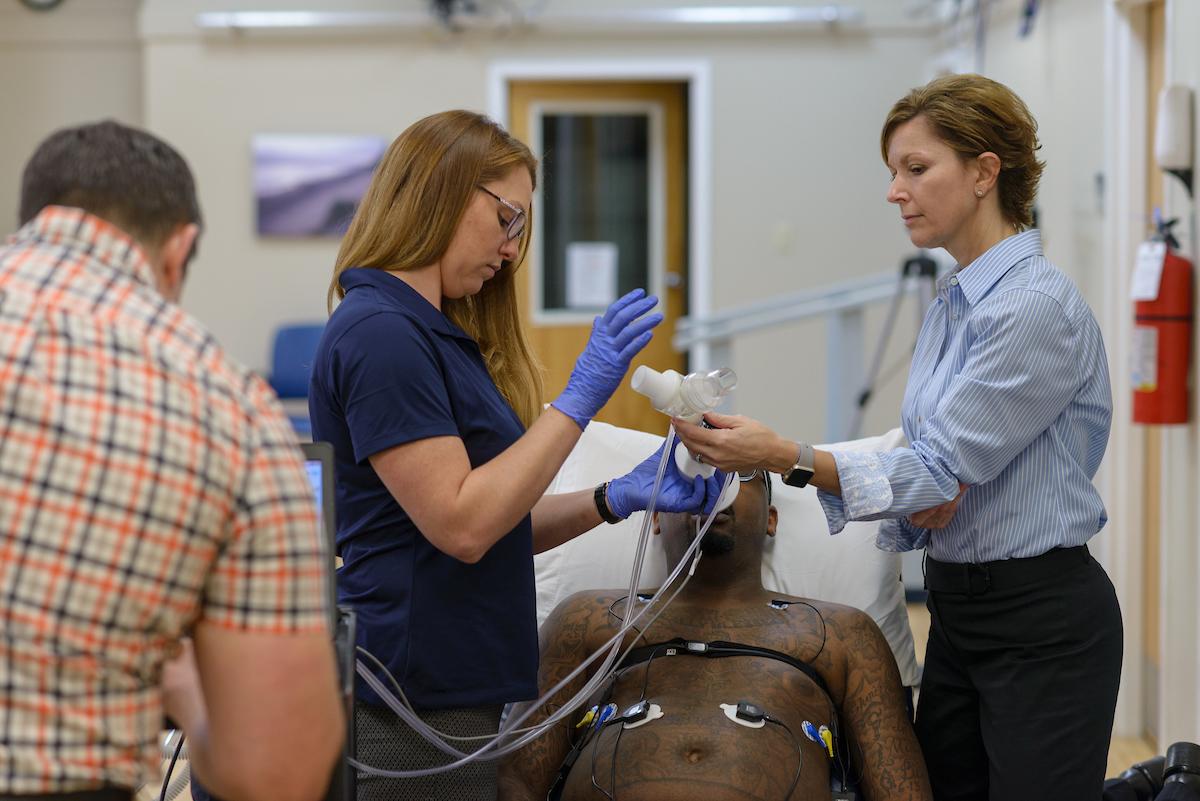
Brooks Rehabilitation is committed to advancing science, technology and care through research and d developing the most effective therapies for our p patients
Brooks has opportunities for people with S STROKE and S
to participate in research at n no c cost, and individuals m may receive compensation for their time and contribution.
Our research focuses on promoting neuro recovery and improving health outcomes such as:
For over five decades, Brooks Rehabilitation has been at the forefront of physical rehabilitation care. The nonprofit, based in Florida, is recognized as a premier rehabilitation system and ranks among the top 20 nationally according to U.S. News & World Report. Brooks currently operates three inpatient hospitals in Florida and is set to expand its reach through a collaboration with Mayo Clinic by opening a new facility on Mayo’s Arizona campus in 2026. The organization’s commitment to advancing rehabilitation science is evident in its focus on innovative research, education and cutting-edge technology. Offering a comprehensive system of care, Brooks provides inpatient and outpatient services, skilled nursing, assisted living, and memory care and impacts lives beyond the clinical setting through community programs designed to enhance the quality of life for individuals with physical disabilities.
More than 60,000 patients receive care through Brooks Rehabilitation annually.
Effective and efficient use of rehabilitation and assistive technologies is an integral part of providing exceptional care at Brooks Rehabilitation. The Center for Innovation was created to help identify the most efficient and effective ways to deliver rehabilitation to maximize a patient’s functional potential. We gain expertise through experience of providing patient care, clinical research, collaboration with rehabilitation partners and industry.
One of the goals is to help integrate rehabilitative and assistive technologies into clinical practice by determining clinical efficacy, cost efficiency and overall ease of integrating the technology. The Center’s activities help our Brooks system of care, as well as providing consultation to help other rehabilitation centers in the country to deliver the best care.
Brooks Rehabilitation Center for Innovation Partnership Services
The Brooks Innovation Center prides itself in its ability to leverage expert clinicians in rehabilitation. At right is a fee schedule for services available for the Brooks Rehabilitation Center for Innovation.
Consultation with Center Director
• As part of the Brooks Rehabilitation Innovation Center, we partner with rehabilitation technology companies to provide clinical consultation and expertise for product development, product placement and to help determine cost utilization.
• These activities may include consultation with expert clinicians to clinical research trials for feasibility studies, FDA approval and clinical efficacy.
• We have the advantage of being able to conduct most trials in a very efficient manner due to our large patient volumes mentioned above.
We look forward to collaborating with you. Below is pricing for partnership opportunities.
The Brooks Rehabilitation Innovation Center Team
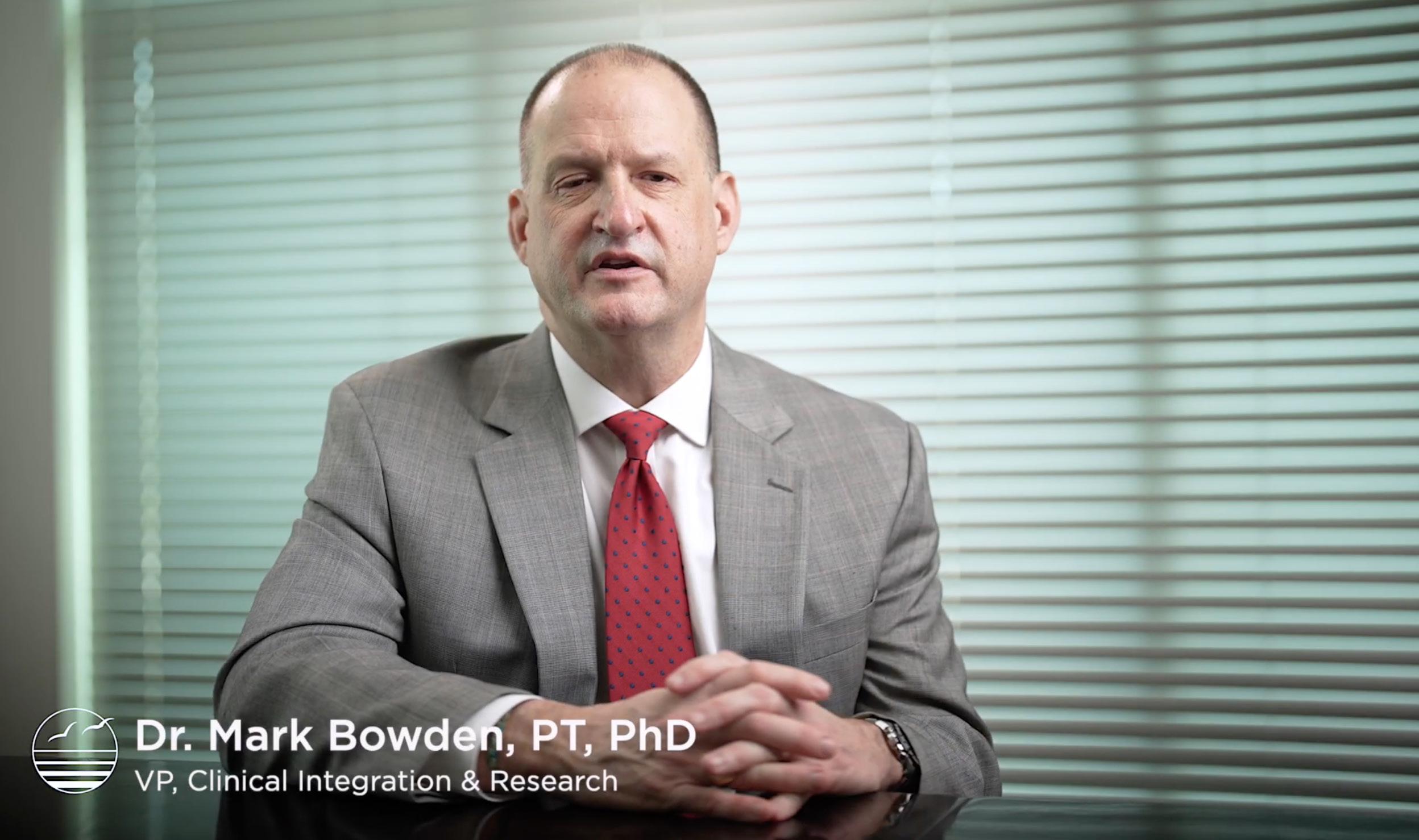
Mark Bowden, PhD, PT – Vice President of Clinical Integration & Research
Kenneth Ngo, MD – Medical Director
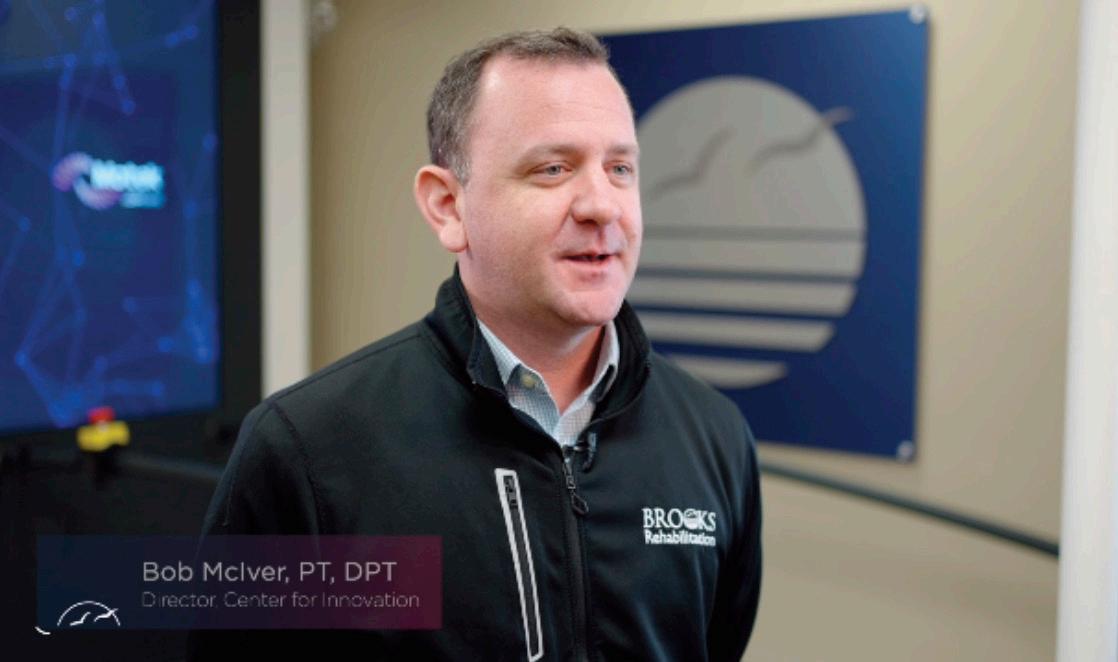
Bob McIver, PT, DPT, NCS – Program Director
Gina Brunetti, PT, DPT, NCS – Research Scientist
Hannah Grimes – Clinical Research Coordinator
Heather Dangman – NeuroRecovery Center Coordinator
Consultation with Medical Director/Physiatrist
$250/hr
$350/hr
Consultation with Center Director and Medical Director $500/hr
Consultation with a Brooks Rehabilitation Expert Therapist $200/hr
Assistance with Food and Drug Administration (FDA) approval $10,000
Non-Endorsement Marketing assistance
Clinical Trials: • Feasibility Trials • Efficacy Trials
• Pragmatic/Comparative Efficacy Trial
$500/hr
$900/hr
Rates are negotiable, depending on needs.
CONTACT:
innovation@brooksrehab.org (904) 345-6812 Brooksrehab.org/innovation
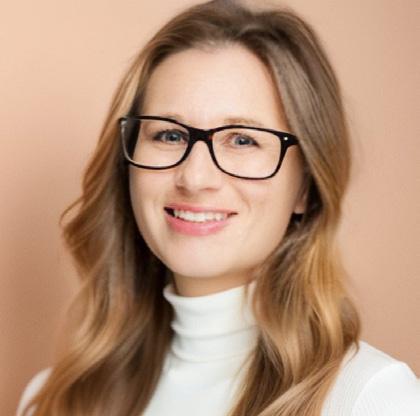
LETTER OF WELCOME FROM THE DIRECTOR
Central to our mission is the concept of a learning health system (LHS), which continuously collects, analyzes and applies knowledge from clinical practice to improve healthcare delivery and patient outcomes.
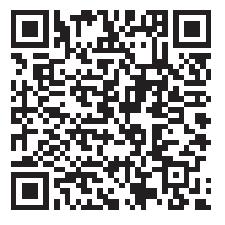
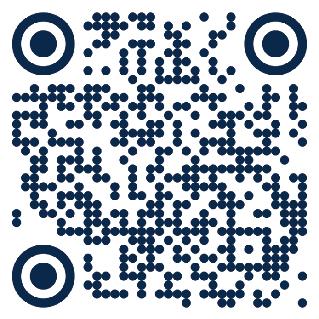
Scan the QR Code for a listing and links to all the COAR publications.
The Brooks Center for Outcomes Analytics & Research (COAR) is dedicated to advancing evidence-based and data-driven methods to support improved rehabilitation care and outcomes. We do this by improving clinical effectiveness in rehabilitation research through fostering collaboration between clinical, research and data teams.
COAR is a branch of the Clinical Integration & Research (CI&R) division at Brooks Rehabilitation. CI&R’s main goal is to bring Brooks research, data and education centers together to ensure a learning hospital environment and culture.
I am excited to introduce our Center for Outcomes Analytics and Research (COAR) and to share our commitment to improving patient care. Our mission is to advance evidence-based and data-driven methods to support improved rehabilitation care and outcomes. By studying rehabilitation outcomes, we aim to identify best practices, reduce care variability and provide the highest quality of care, as well as promote health equity through rehabilitation research.
Central to our mission is the concept of a learning health system (LHS), which continuously collects, analyzes and applies knowledge from clinical practice to improve healthcare delivery and patient outcomes.
Here’s how COAR contributes to this approach:
1. Data Analytics: We analyze large-scale health data and utilize advanced analytical tools to uncover insights that drive evidencebased practice.
2. Research: We conduct rigorous studies and develop innovative methods to address healthcare challenges and generate new clinical knowledge.
3. Quality Improvement: We collaborate with healthcare providers on projects that reduce care variability, enhance patient safety, and improve health outcomes.
4. Patient-Centered Care: We prioritize understanding patient needs to tailor care accordingly.
Thank you for your interest in COAR. We look forward to collaborating to improve rehabilitation care through continuous learning and innovation.
Sincerely,
Mindi R. Manes
Mindi R. Manes, PhD
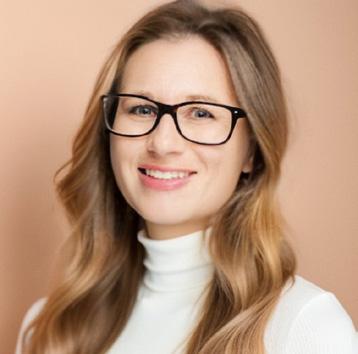
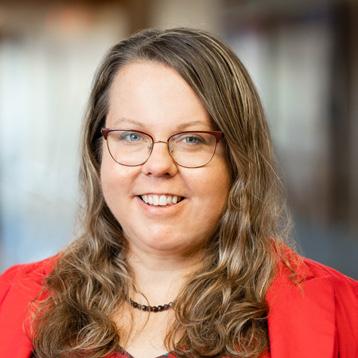
Mindi Manes, PhD Director, Center for Outcomes Analytics & Research
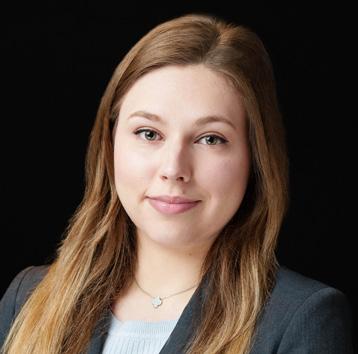
Heather Kendall, MSN, RN, LSSBB, CPHQ Director of System Clinical Quality & Patient Safety
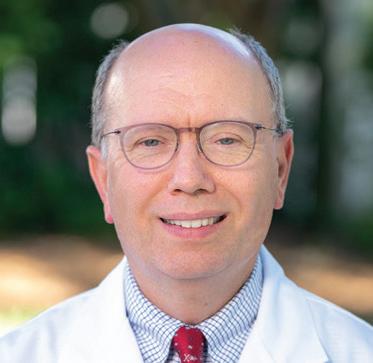
Chloe Bailey, MHA, BHA Research Coordinator
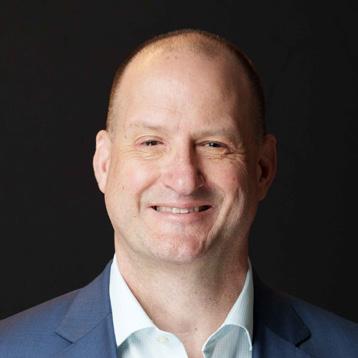
Trevor Paris, MD, FAAPM&R Medical Program Director
A Learning Health System (LHS) is a dynamic system that continuously collects, analyzes and applies knowledge from clinical practice to improve healthcare delivery and patient outcomes.
According to the Agency for Healthcare Research and Quality (AHRQ), Learning Health Systems:
• Gather and analyze data from patient care experiences and internal metrics to improve overall care.
• Continually assess outcomes, while refining processes and training, to develop a cycle for learning and improvement.
• Provide care teams with actionable data and tools.
• Are important for health system transformation.
Source: Agency for Healthcare Research and Quality. (2019). About Learning Health Systems. Retrieved from: https://www.ahrq.gov/learning-health-systems/about.html
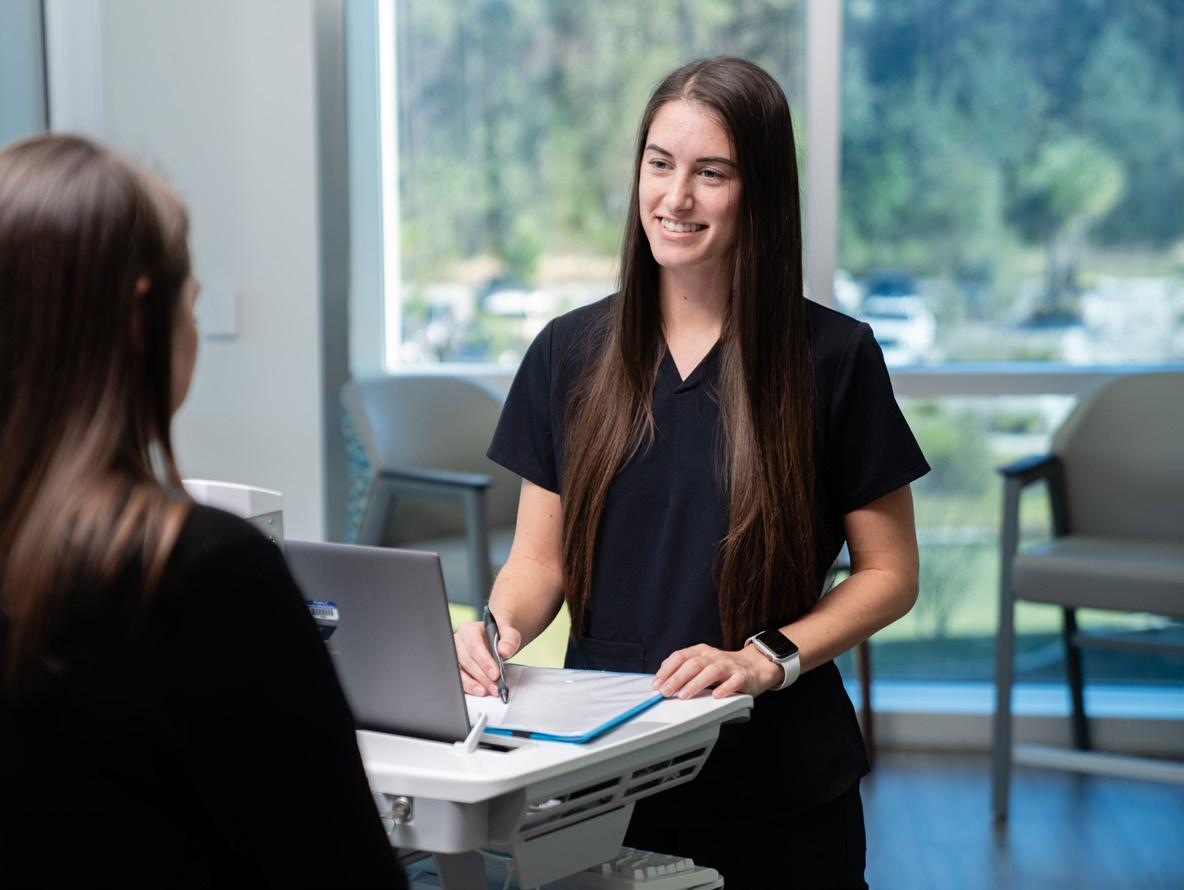
COLLABORATING WITH COAR
Mark Bowden, PT, PhD Vice President, Clinical Integration & Research
Jason Beneciuk, PT, DPT, PhD, MPH Clinical Research Scientist, Brooks – UF PHHP Research Collaboration
COAR is proud to work with both internal and external collaborators. We welcome project submissions from Brooks staff, researchers, clinicians, administrators and more.
If you are interested in collaborating with COAR, here are a few ways to decide if your project is the right fit.
• Is this a project that you want support in using data-driven methods to improve care and outcomes?
• Is this project “more than a report”?
• Will this project generate evidence that will inform our clinical/ operational practice?
If you answered yes to these questions, then your project may be right for COAR. If you are still unsure, check out project examples on the next page.

READY TO SUBMIT?
Please submit all projects to the “New Project Application” by clicking the button below or scanning the QR code.
SUBMIT A PROJECT
Your project request will be submitted to Clinical Integration & Research. The application below is the official communication of your intent to conduct a project with CI&R.
CI&R accepts all project requests to determine project efficacy and routes to the correct division.
STEP 1: Project submission form
STEP 2: Clinical Integration & Research Division Review
STEP 3: COAR or Brooks Clinical Research
Based on project needs, applications will be appropriately directed to the Brooks Rehabilitation Clinical Research Center (BRCRC) and/or the Center for Outcomes Analytics & Research (COAR) teams for further review.
A project application should be submitted at the earliest point possible once you determine an interest in conducting a project with CI&R/COAR.
Information Needed to Complete the Form
At a minimum, the following information is required:
1. A working title for the project.
2. The name and email address for the project contact person.
3. A brief description of the purpose and plan for the project.
Additional information requested based on the nature of the project application submission:
1. General information about funding source (if applicable).
2. Information about grant application deadlines and funding periods (if applicable).
3. Information about anticipated needs from Brooks Rehabilitation.
Please submit all projects to the “New Project Application” by CLICKING HERE or scan the QR code.
Contact COAR
If you have further questions about submitting a project, please reach out at (904) 345-7719 or COAR@BrooksRehab.org
BrookRehab.org/research/coar

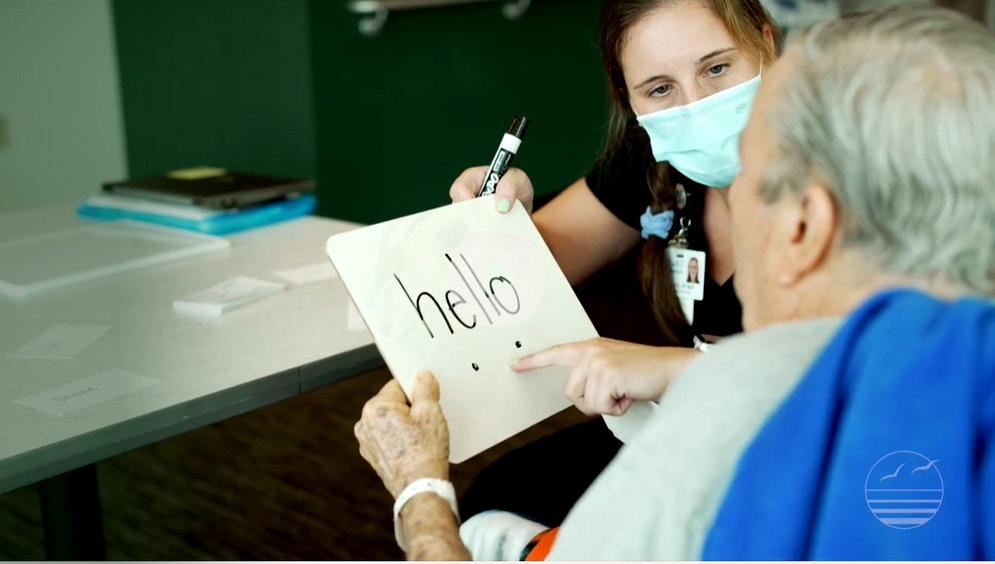
Each year, our Speech Therapy Clinical Fellowship accepts master’s level graduates who are seeking mentorship through Brooks Rehabilitation to complete their mandatory postgraduate Clinical Fellowship Year (CFY) with criteria set by the American Speech and Language Hearing Association (ASHA).
The Speech Therapy Clinical Fellowship with Brooks Rehabilitation fosters completion of mentorship requirements of ASHA in addition to providing an elevated clinical fellowship experience. Our SLPs will not only be able to meet requirements for their governing body to receive final licensure, but will receive increased mentorship hours beyond what the minimal requirement is, didactic learning hours, professional engagement to present lectures and the opportunity to rotate or shadow clinical work in different clinical settings across the Brooks’ System of Care
Program Highlights:
One-on-one mentoring
Paid observation and shadow days throughout the Brooks System of Care
Full-time benefits with Brooks Rehabilitation
Funding of ASHA certification and membership upon completion of the fellowship year
GRADUATION RATE: 99%
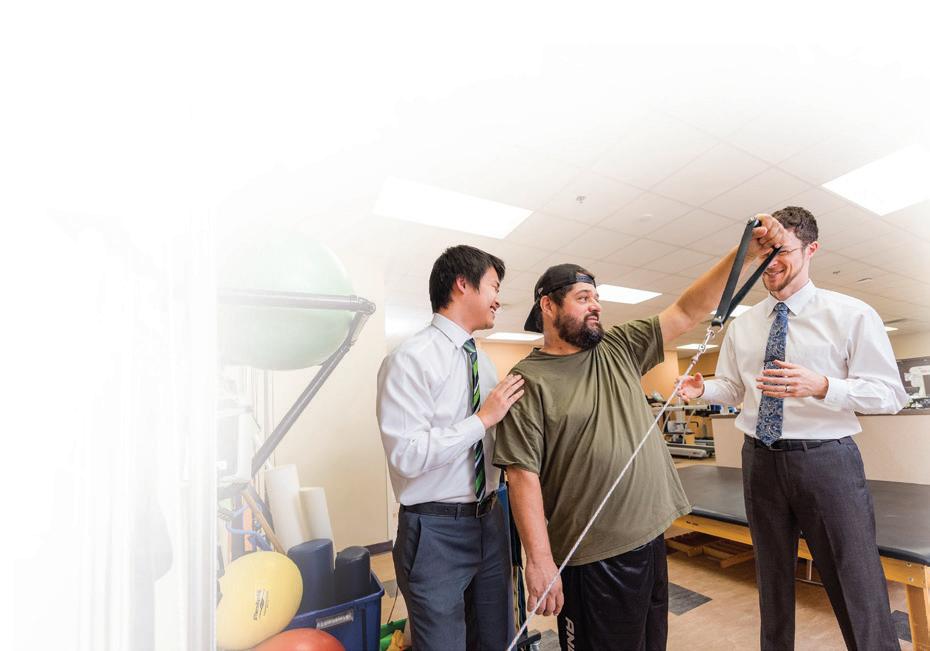
The Brooks IHL offers a total of eight on-site Physical Therapy Residencies, two Occupational Therapy Fellowships and an Orthopaedic Manual Physical Therapy (OMPT) Fellowship. Through mentoring, classwork, psychomotor labs and other unique learning experiences, our programs will advance your skills in the areas of clinical competence, scholarship, education, professionalism and patient management. Our residents and fellows are offered full salary and benefits with Brooks Rehabilitation, which gives them an opportunity to work side by side with experts in all areas of rehabilitation medicine.
We currently offer the following programs:
n Geriatric Physical Therapy Residency
n Neurologic Occupational Therapy Fellowship (Jacksonville and Daytona*)
n Neurologic Physical Therapy Residency (Jacksonville and Daytona)
n Orthopaedic Manual Physical Therapy Fellowship
n Orthopaedic Physical Therapy Residency (Jacksonville and Orlando)
n Pediatric Physical Therapy Residency
n Sports Physical Therapy Residency
n Women’s Health Physical Therapy Residency
*The Neurologic Fellowship Program in Daytona is an Applicant Fellowship Program and is accepting applications for its first cohort.
PHYSICAL THERAPY AND OCCUPATIONAL THERAPY PROGRAM HIGHLIGHTS
150+ hours of 1:1 on-site clinical mentoring (200 hours for OT)
Full salary and benefits with Brooks Rehabilitation
Shared experiences between our 11 residency and fellowship programs
Enjoy opportunities to collaborate with 150+ graduates practicing in the Brooks System
Experiential learning opportunities in multiple settings throughout the Brooks Rehabilitation System of Care
Multi-person cohorts per program
Collaboration with faculty from University of Florida, University of North Florida, University of Central Florida, University of St. Augustine and Jacksonville University
The majority of our mentors are program graduates, board certified and clinicians within the Brooks System
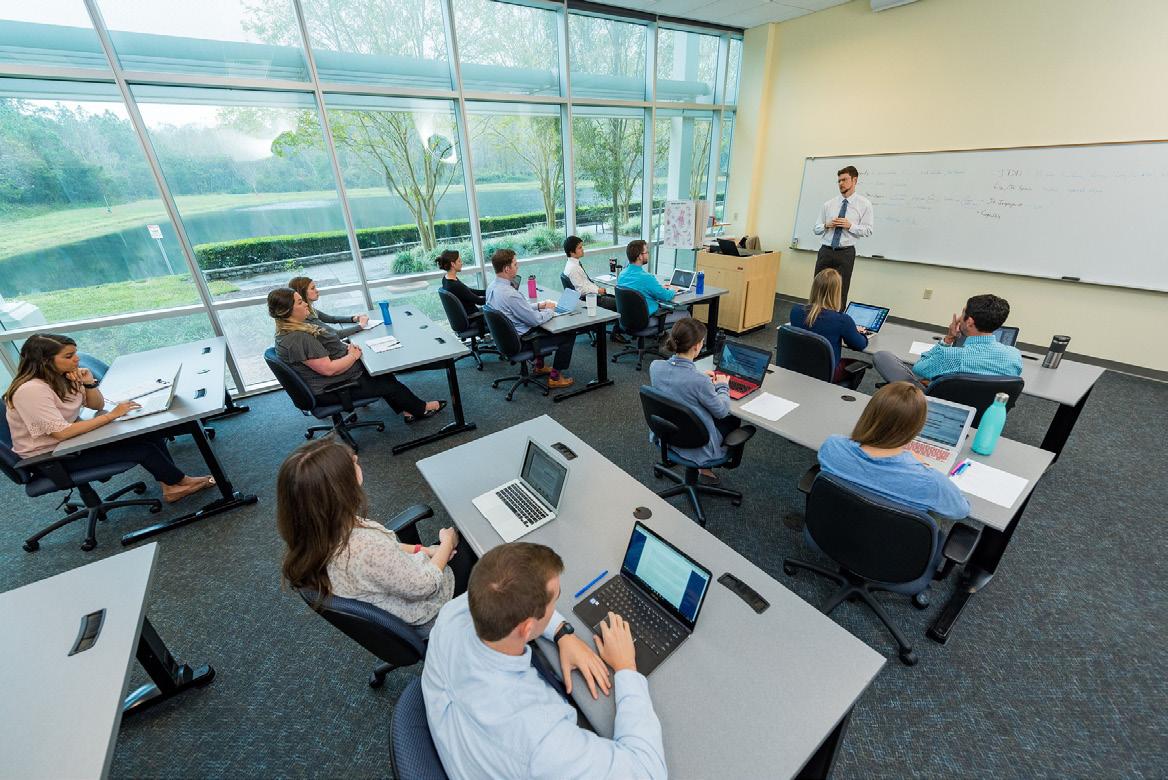
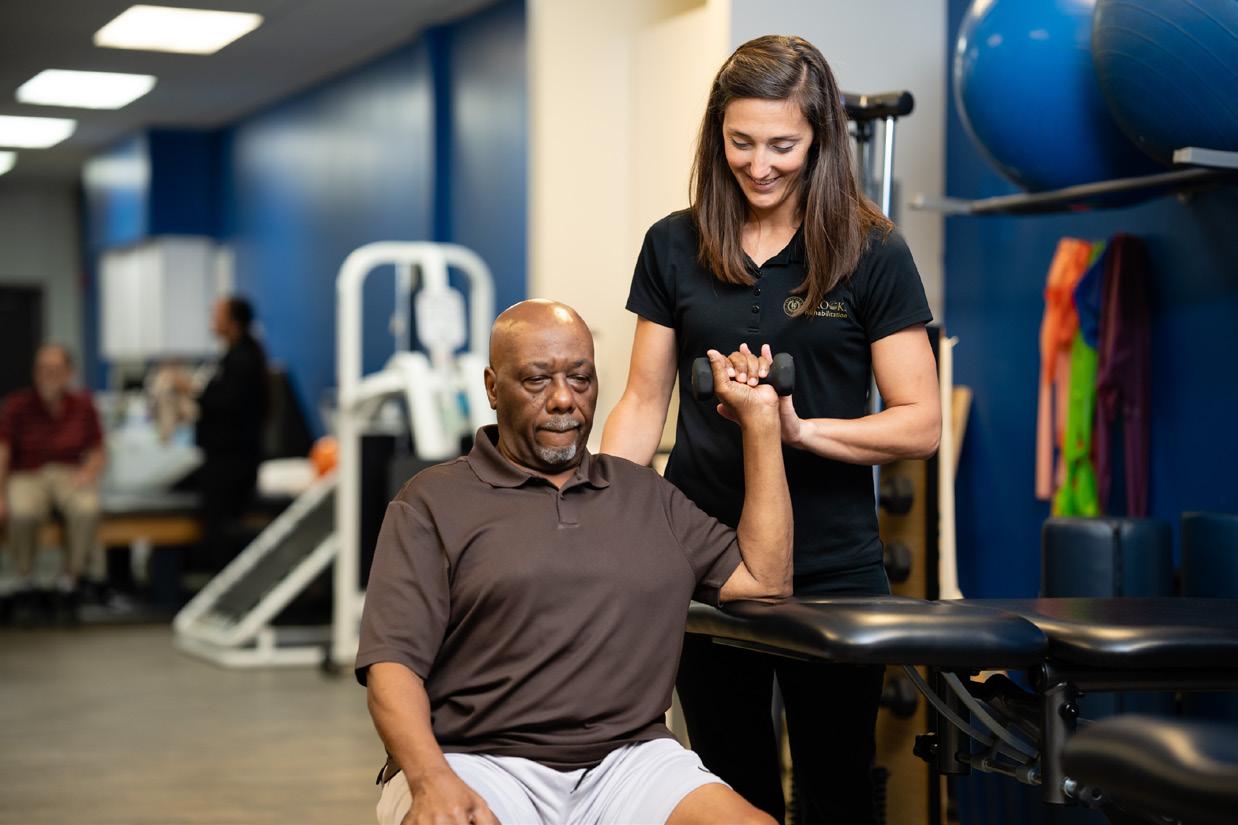
The Brooks Institute of Higher Learning Residency & Fellowship programs for Physical and Occupational Therapists provide highly focused educational experiences for clinicians seeking professional growth and clinical specialization. Through mentoring, classwork, psychomotor labs, and other unique learning experiences, our programs will advance your skills in the areas of Advanced Clinical Competence, Scholarship, Education, Professionalism and Patient Management.
We currently offer the following residency and fellowship programs:
Neurologic Occupational Therapy
Neurologic Physical Therapy
Jacksonville and Orlando
Orthopaedic Physical Therapy
Jacksonville and Orlando
Pediatric Physical Therapy
Sports Physical Therapy
Women's Health Physical Therapy
Orthopaedic Manual Physical Therapy
Our residencies and fellowships are accredited in accordance with:
For
Nurses
Nurses
Program
education and interactive seminars.
Structured, evidence-based clinical orientation with experienced registered nurse preceptors
Shared experience with all our Residency and Fellowship Programs
Opportunities to collaborate and learn from specialty experts across disciplines (PT, OT, SLP, LMT, etc.)
Specialties served: Brain Injury, Spinal Cord Injury, Pediatrics, Cerebrovascular/Stroke, Oncology & Transplant.
Admission Requirements:
Applicants to the Brooks Nurse Residency Program must:
Graduate from an accredited nursing program.
Have current and unencumbered licensure as a Registered Nurse in the state of Florida or Compact.
Meet all employment eligibility requirements as a practicing Registered Nurse within Brooks Rehabilitation.
Have less than 12 months of professional, clinical nursing experience.
Celebrating Success:
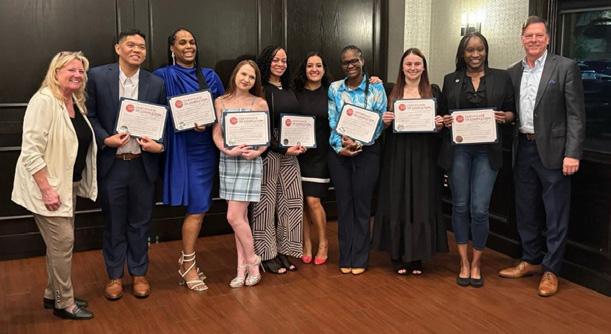
Upon completion of the program, Residents and their families attend a celebratory reception that highlights their achievement as they continue to serve as professional Registered Nurses who contribute to patient and family-centered care in our communities and beyond.
Benefits:


New graduate nurses who participate in the residency program gain additional skills and confidence to ensure their success as a new nurse. Additionally, Brooks provides tuition reimbursement for those who wish to continue their careers, a clinical ladder to continue growth and development,
Questions? Email Pamela Lambert, MSN, MBA, RN, CHSE, pamela.lambert@brooksrehab.org
About the Brooks Motion Analysis Center (MAC)
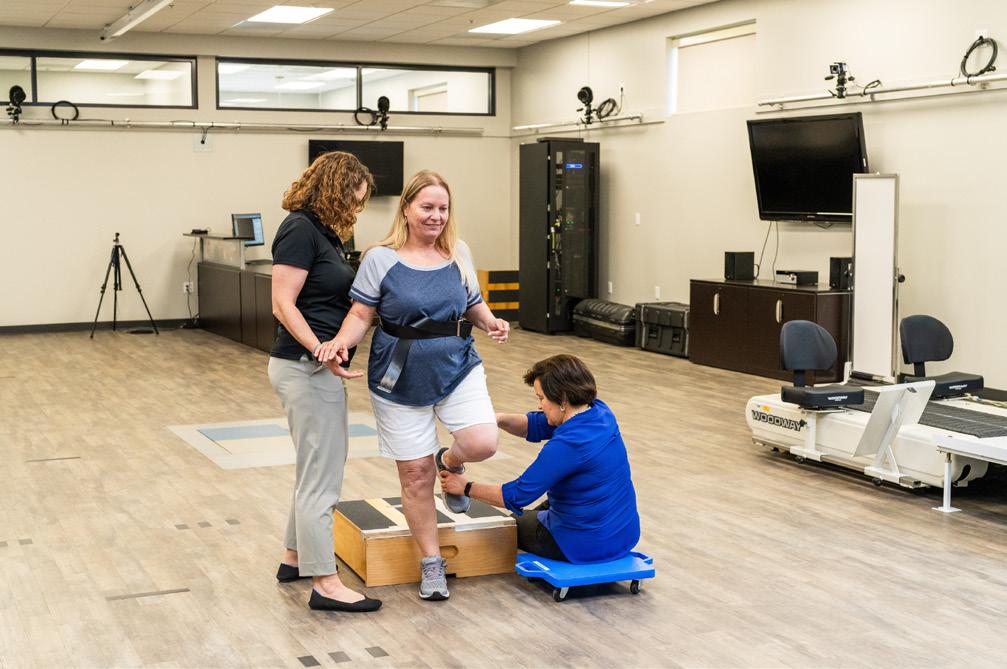
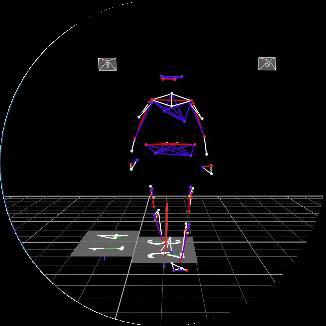
The MAC uses state-of-the-art 3D motion capture technology to deliver customized recommendations to promote recovery for individuals with walking disorders. Our programs focus on individuals with neurologic and orthopedic impairments. Measurements can include: muscle activity (timing and coordination), joint motion (range of motion occurring during each phase of gait), and forces produced by each leg.

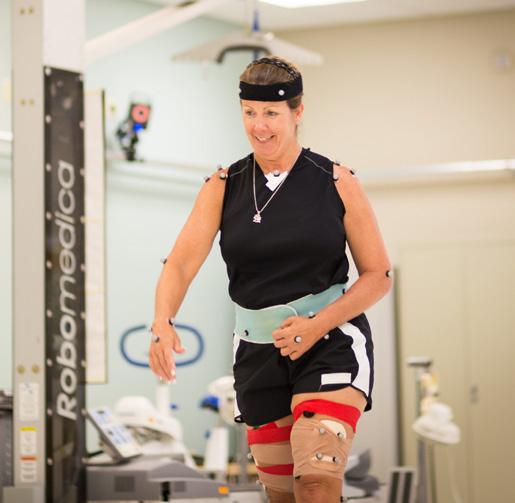
Our team consists of physical therapists, biomechanical engineers, and skilled support staff. However, it is important to remember that you are the most important member of the team. Please read the following information about your session and how the information will be used. You may ask questions at any time.
To ensure the setup process goes as smoothly as possible, it is important that all patients come dressed appropriately for their assessment, as described below.
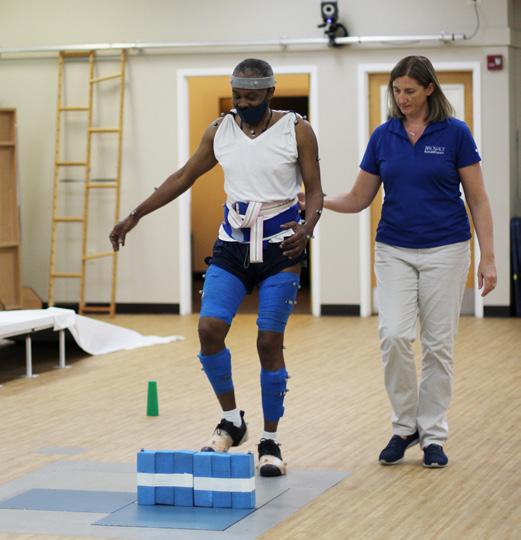
• Short-length shorts, loose or thin enough to able to be rolled up to expose the upper thigh
• Tank top or short sleeve shirt, loose enough to be rolled up to expose upper shoulders
• Well-fitting sneakers that expose the ankle
• Hair-bands if needed
• No lotion/body oil 24hrs before your appointment
Have questions? Email: BrooksMAC@BrooksRehab.org | P: (904) 345-8967 | F: (904) 345-8978
Motion Analysis Center: Walking Assessment Patient Education Guide
A typical visit lasts approximately 2 hours and is led by a trained physical therapist. It includes a clinical assessment (30–45 minutes), patient setup for motion capture (30–45 minutes), and the motion assessment (30 minutes).
During the clinical assessment, your therapist will measure joint mobility, strength, and muscle tone to better understand how you move and function. This also helps us interpret the rest of the data collected.
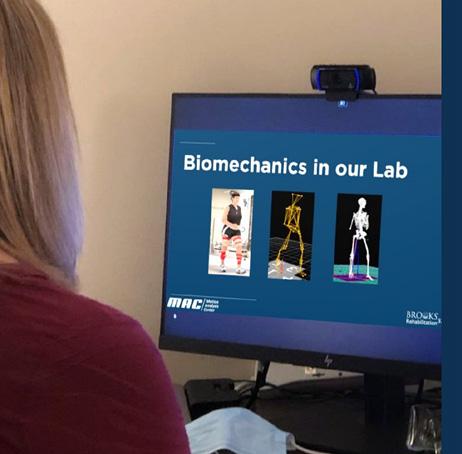
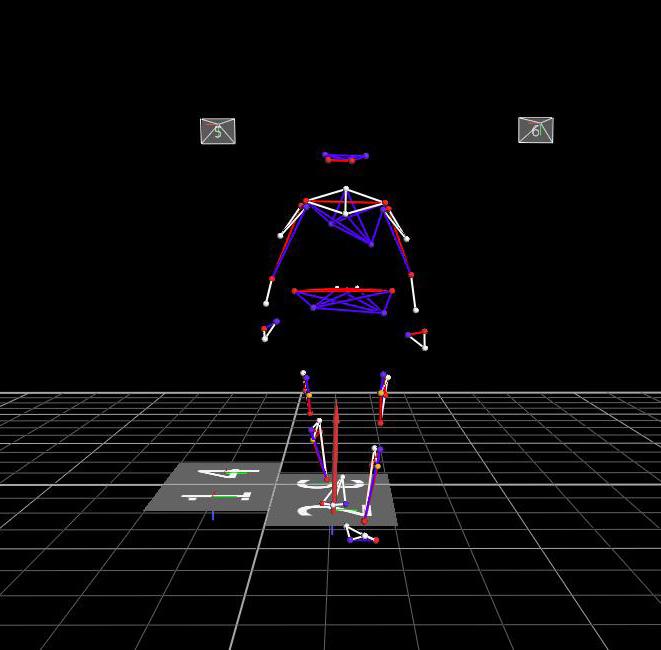
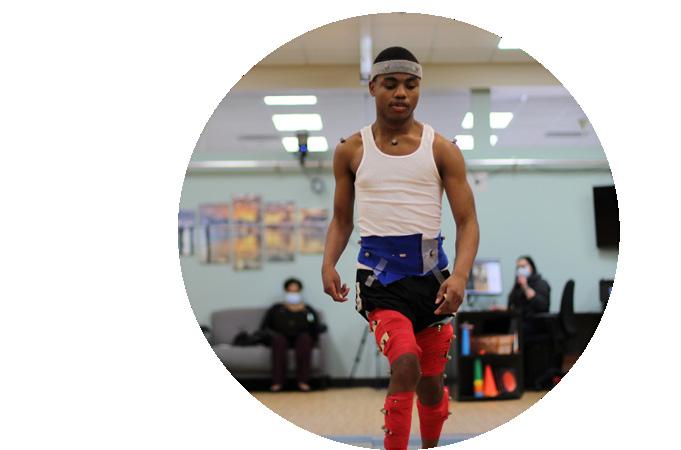
Patient setup involves attaching small reflective marker balls your skin with double sided tape to identify joints and specific landmarks on the body. The reflections are tracked by infrared cameras and help us learn how your joints move as you walk.
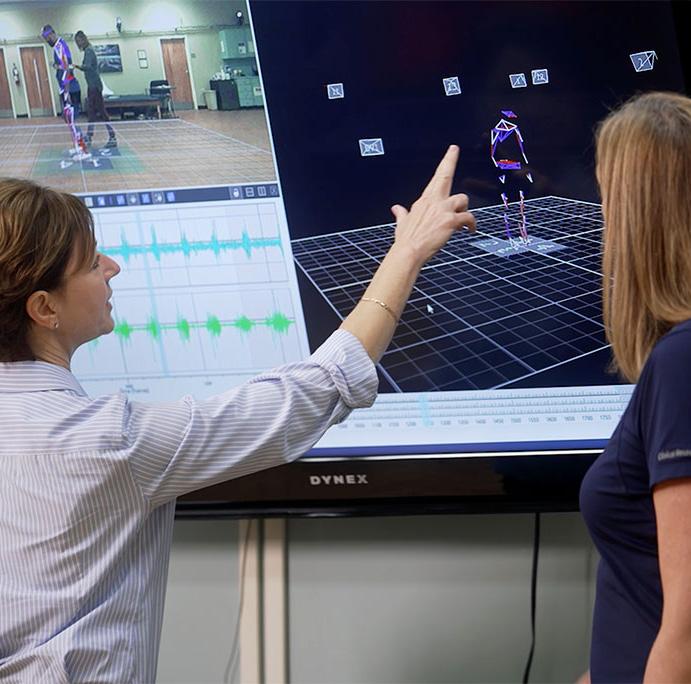
Surface electromyography (EMG) may also be used to detect your muscle activity during movement tasks. EMG signals are sensitive to your skin condition. The application process for EMGs requires removal of excessive leg hair and wiping the skin with an alcohol swab. The sensors are then wrapped with cohesive tape to ensure a high quality signal.
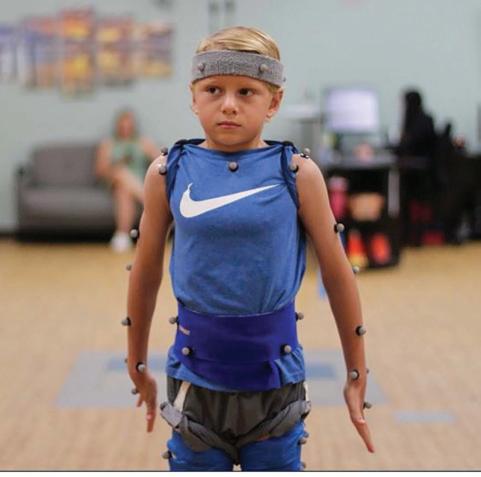
The motion assessment involves repeated walking trials of approximately 20ft in distance. Assistive devices such as walkers or canes can be used during the capture, and breaks will be allotted between bouts. The tasks you may be asked to perform include walking at various speeds, walking backward, standing from a sitting position, or stepping over an obstacle.
Data collected during your motion capture, along with your clinical assessment and medical history, will be reviewed by our team to provide a comprehensive interpretation of your movements.
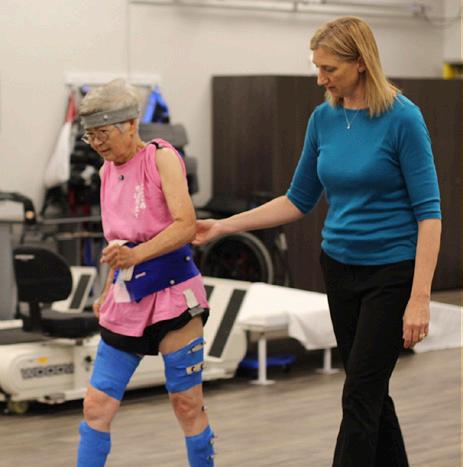
This report includes rehabilitation recommendations, and is shared with your referring healthcare provider to help determine appropriate treatment plans to improve functional movement and promote greater recovery.
The MAC uses state-of-the-art 3D motion capture technology to deliver customized recommendations to promote recovery for individuals post ACL reconstruction. Our program focuses on athletes returning to sport to reduce the risk of re-injury. Our analysis emphasizes symmetry of both lower limbs using measurements including joint motion (range of motion occurring during each task performed) and forces produced by each leg.
Our team consists of physical therapists, biomechanical engineers, and skilled support staff. However, it is important to remember that you are the most important member of the team. Please read the following information about your session and how the information will be used. You may ask questions at any time.
To ensure the setup process goes as smoothly as possible, it is important that all patients come dressed appropriately for their assessment, as described below.
• Short-length shorts, loose or thin enough to able to be rolled up to expose the upper thigh
• Tank top or short sleeve shirt, loose enough to be rolled up to expose upper shoulders
• Well-fitting sneakers that expose the ankle
• Hair-bands if needed
• No lotion/body oil 24hrs before your appointment
Have questions? Email: BrooksMAC@BrooksRehab.org | P: (904) 345-8967 | F: (904) 345-8978
Motion Analysis Center: Sports Assessment Patient Education Guide
A typical visit lasts approximately 2 hours and is led by a trained physical therapist. It begins with setup for motion capture (15-30 minutes), the motion assessment (30 minutes), and a clinical assessment (45-60 minutes) to assess flexibility, strength, and balance through hop tests and other proven metrics to evaluate your recovery progress.
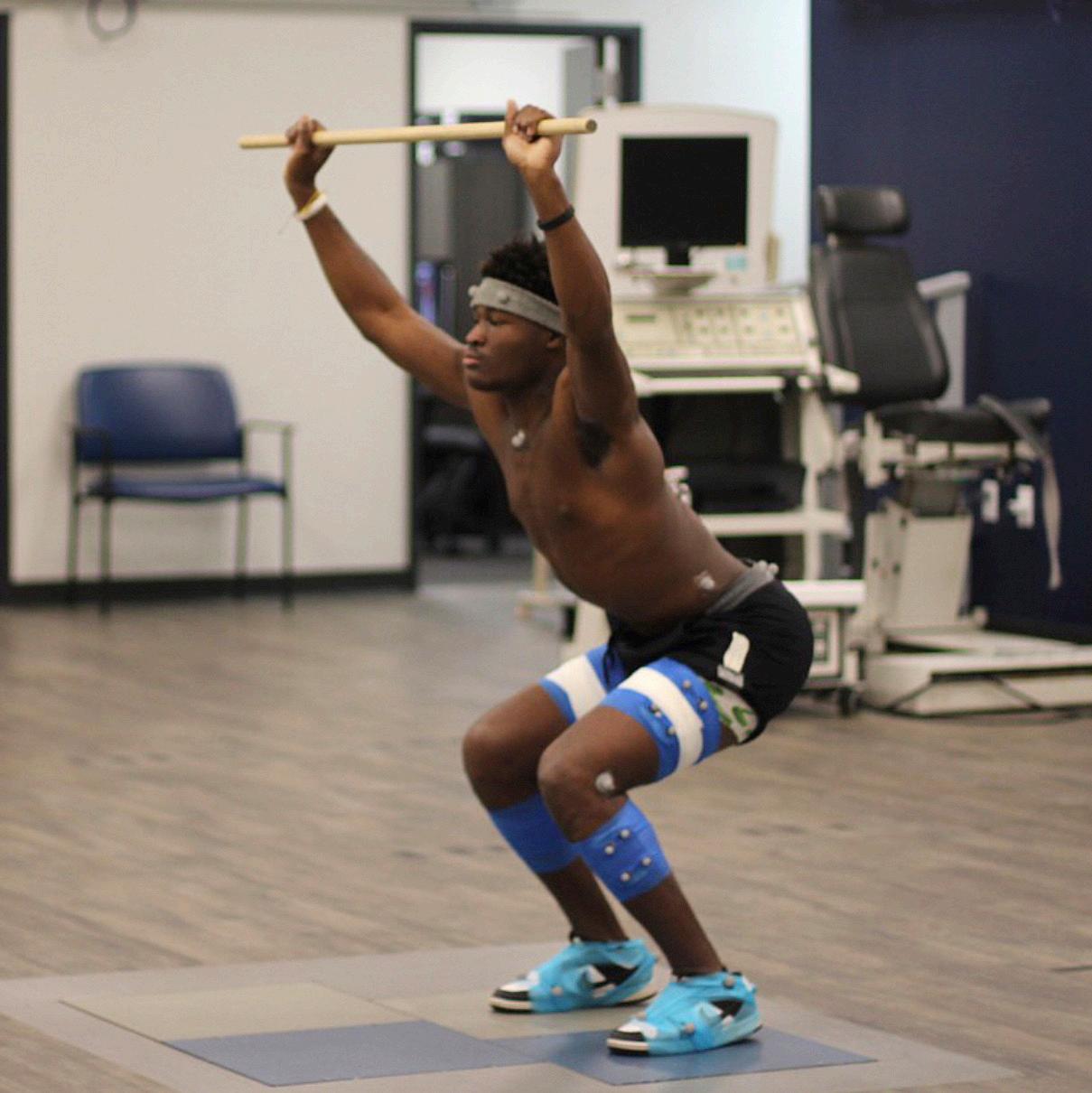
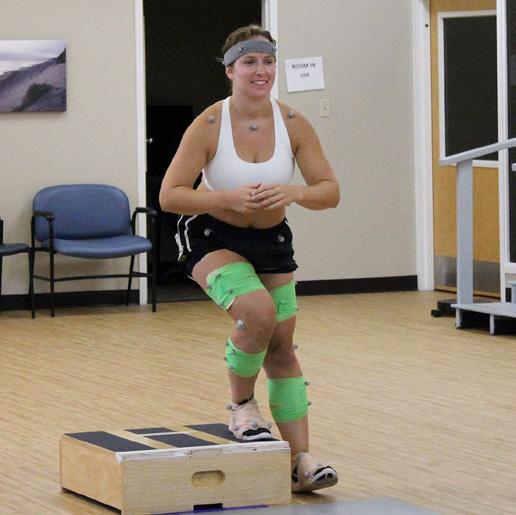
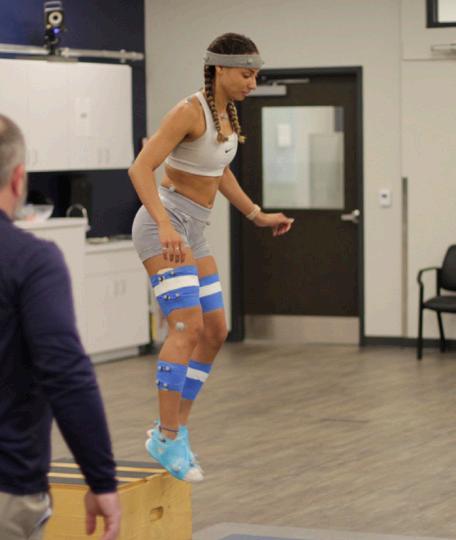
Patient setup involves attaching small reflective marker balls your skin with double sided tape to identify joints and specific landmarks on the body. The reflections are tracked by infrared cameras and help us learn how your joints move as you perform different tasks.
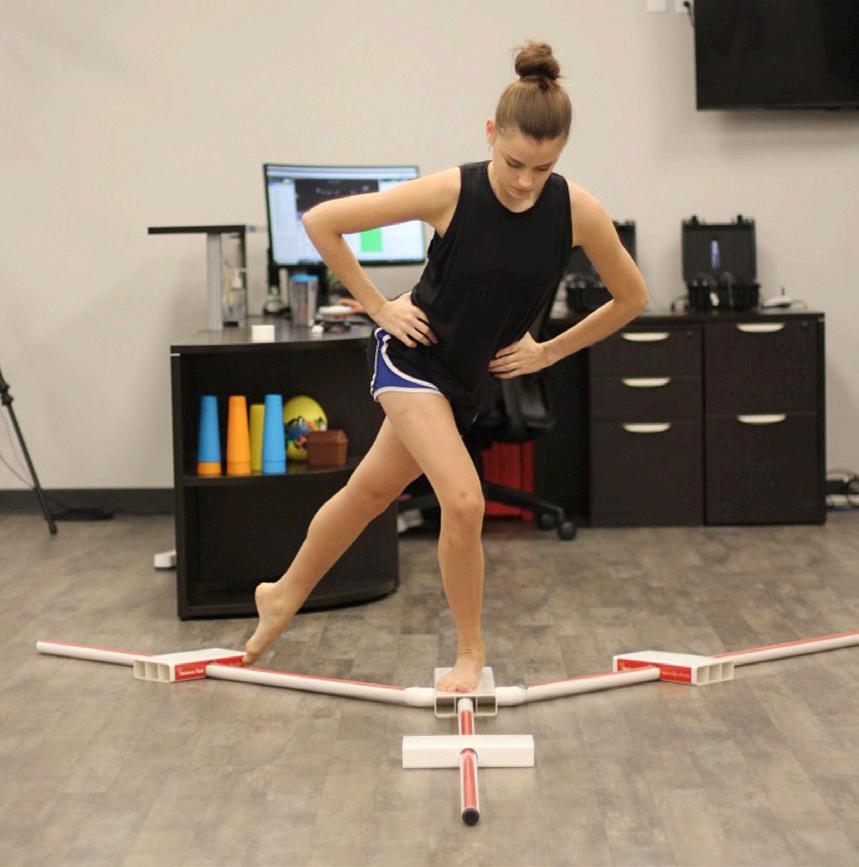
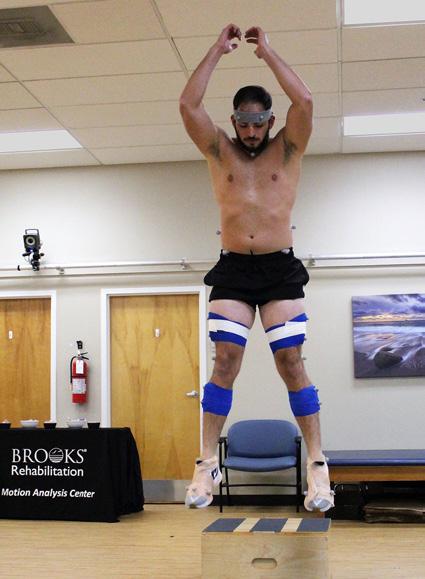
The motion assessment involves five repetitions of five functional tasks shown to correspond to your ability to perform in your sport. In-ground force plates measure the amount of force produced during jumping-landing tasks and squats to evaluate symmetry and detect impairments. Breaks will be allotted during tasks as needed.
• Overhead squat; to maximal depth with bar raised overhead
• Drop vertical jump; drop, jump, and land on both feet from a 12" box
• Single leg land; drop on to one foot and hold from a 8" box
• Lateral step down; perform an opposite leg heel touch from a 8" box
• Single leg drop vertical jump; drop on to one foot, jump, and land on the same foot from an 6" box
Data collected during your motion capture, along with your clinical assessment and medical history, will be reviewed by our team to provide a comprehensive interpretation of your movements that is shared with your referring healthcare provider.
This report includes appropriate corrective exercises to improve functional movement while minimizing risk of injury and maximizing performance.
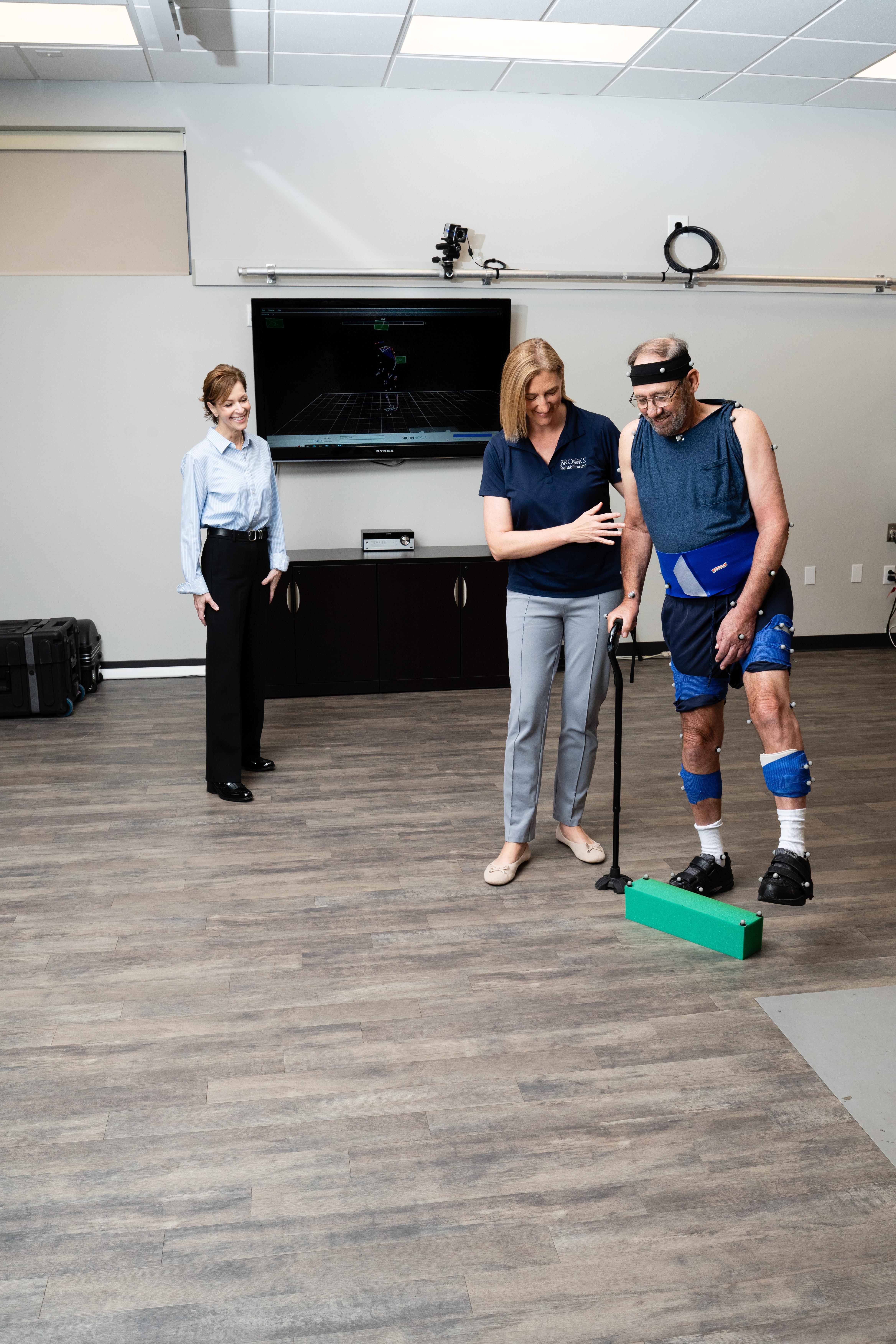
The MAC Assessment combines 3D motion capture technology and clinical expertise to assess movement and gait. We provide customized recommendations to help optimize treatment, outcomes and participation in daily activities.
Who Can Benefit?
•Individuals with walking impairments
•Able to walk at least 10 feet repeatedly
•Orthotics and assistive devices permitted
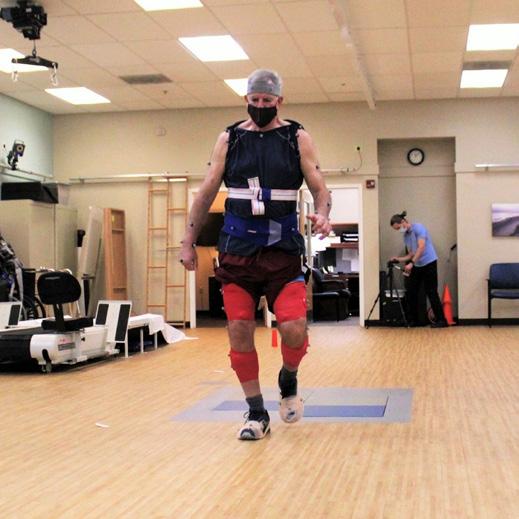
What Can This Program Provide?
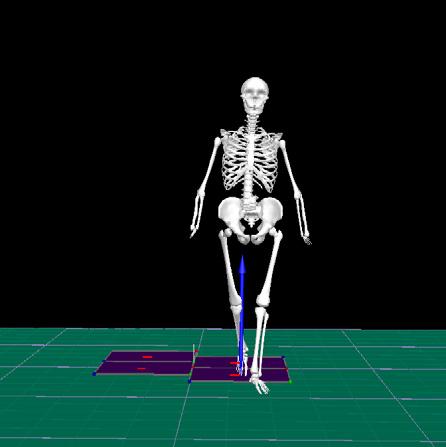
• Movement analysis to quantify joint motion, muscle activation, and force production during walking
• Customized recommendations to guide:
-Physical Therapy care
-Orthotic management and efficacy
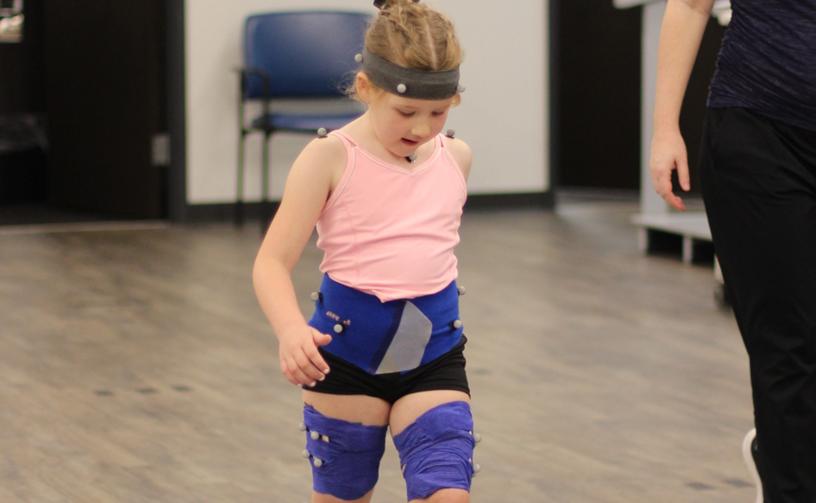
The MAC Assessment combines 3D motion capture technology and clinical expertise to assess movement and gait. We provide customized recommendations to help optimize treatment, outcomes and participation in daily activities and play!
Who Can Benefit?
Can This Program Provide?
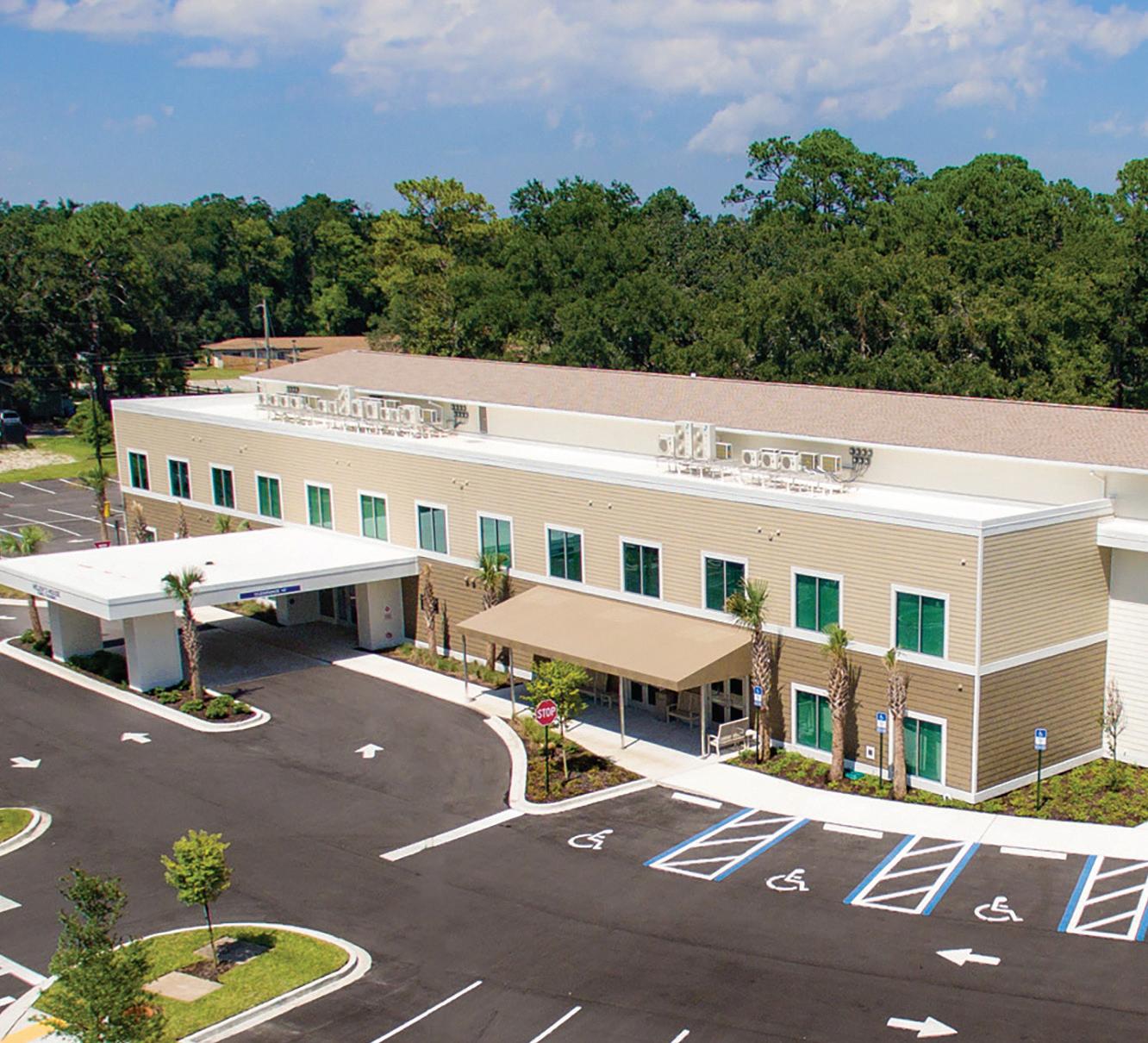
We are a nonprofit hospitality house offering affordable temporary lodging to Brooks patients and their caregivers.
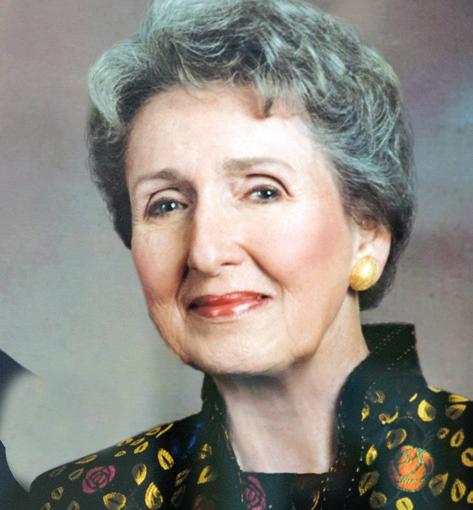
Helen’s House is named in honor of Helen Brown, the wife of Brooks founder J. Brooks Brown, MD. Helen was a welcoming and gracious host who made everyone she met feel like they were part of the family.
• Helen’s House is intended for patients of Brooks and their caregivers.
• A guest can remain eligible to stay, based on availability, if their loved one remains admitted to a Brooks inpatient setting (hospital or skilled nursing facility) or is taking part in one of our specialized programs (Aphasia Center, Neuro Recovery Center therapies/Cyberdyne, BI Day, SCI Day or Peds Day Treatment Programs).
• All guests and caregivers must reside outside the following five counties: Duval, Nassau, St. Johns, Clay and Baker.
• A referral is required for patients (guests) from their Brooks Case Manager, Nurse Liaison or give us a call.
• The nightly room rate is $40 a night, $15 a month for cleaning supplies. Guests may pay by cash or credit card.
• Helen’s House has a three-night minimum on the weekends (Friday, Saturday and Sunday) and a two-night minimum during the week. If one night is available between other reservations, guests may stay at a rate of $75.00.
• Check-in hours for all guests are between 3 p.m. and 7:30 p.m. daily. Tours are BY APPOINTMENT ONLY.
• Patients who need assistance with daily activities must have a caregiver with them 24/7. Caregiver must be 18 years of age or older.
• All minors must be in the presence of, or accompanied by, a parent or legal guardian 24/7.
• 38 guest rooms, handicappedaccessible, for up to three guests (no exceptions, three total). Each room has a queen-sized bed, a pull-out sofa and a private bath
• A large community kitchen for meal preparation and a large dining room
• Free WiFi
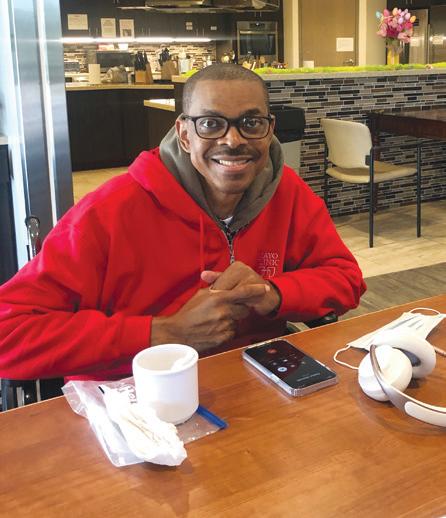
• Cable televisions in four community rooms
• A laundry room on each floor
• Fitness room
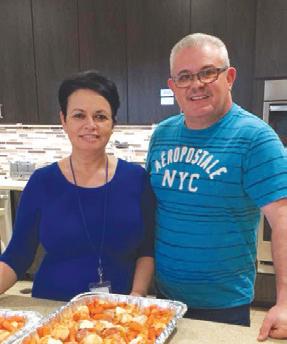
• Business office with computers and printers for guest use
• Free shuttle to Brooks University campus locations

An easy way to stay connected with us
• Emergency push-button on-the-go access to help 24/7
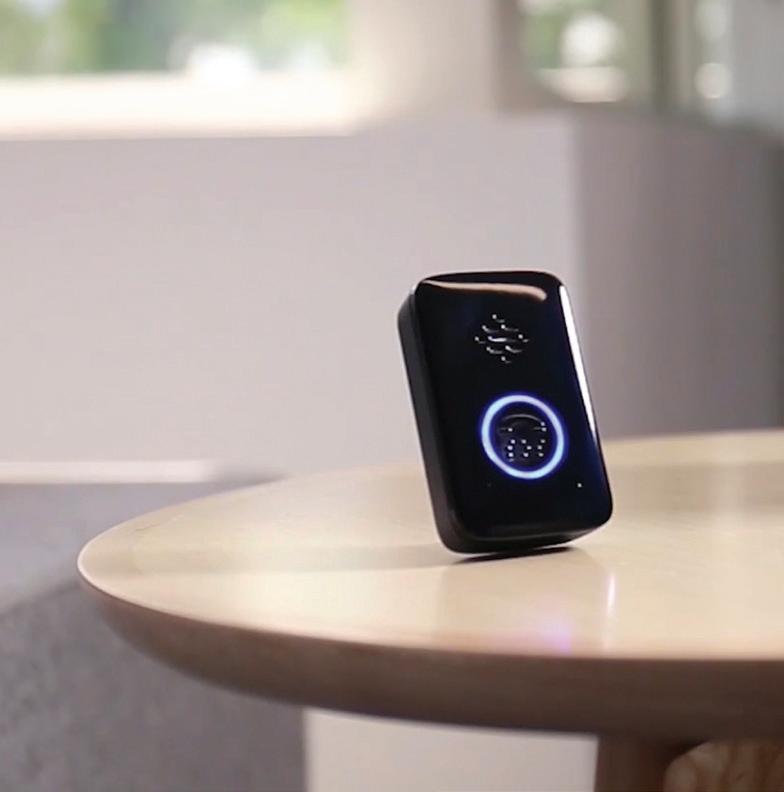
• 24/7 monitoring by a Medical Call Center
• Cellular communication that works across the United States
• No landline or cellphone needed
• Isolation Calls/Cognitive Support
• Unlimited emergent and non-emergent utilization
• Lightweight and water-resistant neck pendant or interchangeable neck lanyard and belt clip options
• Speaker and microphone built into button for easy hands-free communication
Provided to patients at risk of hospital readmission while on service with Brooks Rehabilitation Home Health
Patients have the option of continuing their service with Critical Signal Technologies independently after discharge.
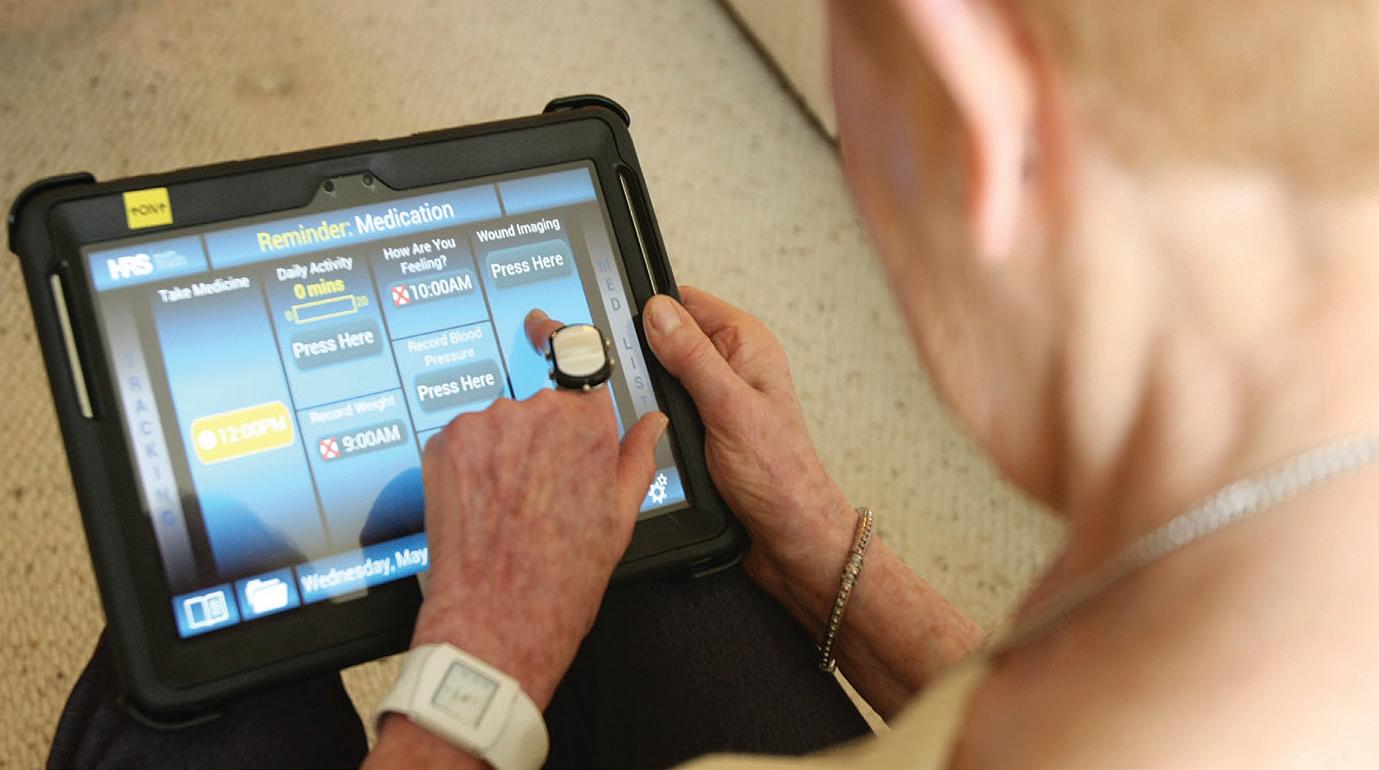
Each patient in the Brooks Connect telemonitoring program is provided with a Samsung tablet loaded with easy-to-use software that allows healthcare providers to continuously monitor patient vitals and symptoms, reducing the chance of hospital readmissions and ER visits.
The software allows patients to:
• Monitor their sodium intake
• Measure weight, blood pressure, heart rate, SPO2 (oxygen levels) and track their readings
• Let clinicians know of symptoms through a daily survey
• Learn about their disease condition and how to manage it
• Track their medication adherence and progress
• Communicate with their clinician via text, phone or video chat
The software allows clinicians to:
• Monitor a patient’s vitals in real time
• Respond to high-risk readings to help reduce readmissions
BrooksRehab.org/homehealth
#WeAreBrooks
Phone (844) 238-0064 • Fax (844) 238-0066
STATE LICENSES: HHA 299993785 and 299991243
• Communicate with patients via text, phone or video chat
• Track patient’s medication adherence
• Supplement education through videos and quizzes
BrooksRehab.org/homehealth
#WeAreBrooks
Phone (844) 238-0064 • Fax (844) 238-0066
STATE LICENSES: HHA 299993785 and 299991243

Brooks is a part of the Brooks Rehabilitation continuum of care. We offer compassionate care for individuals needing in-home clinical and nonclinical services. Our team of highly specialized professionals will work with patients and the families to develop an individualized care plan to achieve the best recovery possible.
SPECIALTY PROGRAMS:
• Cardiac Care
• Diabetes Management
• Fall Prevention–Home Safety
• Transitional Care
• IV Therapy
• Medication Management
• Memory Care
Available Technology:
Vital Stim | E-Stim
Biofeedback | Telehealth
• Orthopedics
• Lymphedema
• Vestibular & Balance Training
• Wound Care

Our Friendly, Patient & Skilled Staff Include:
• Medical Social Workers
• Certified Nursing Assistants
• Physical Therapists
• Speech Therapists
• Occupational Therapists
• Nurses Certified in Wound Care
• Residency Trained Therapists
• Licensed Nurse Practitioners
• Respiratory Therapists
• Nutritionists
• Home Health Aids
The Brooks Team’s Commitment to Care
• Commitment to patients and their medical, emotional, & social wellbeing as they transition home
• Access to resources across the entire Brooks system of care
• Highly trained, clinical experts readily available through consultation
• Specialized staff to meet the needs of specific conditions and diagnoses
• Ability to treat medically complex patients
OPTIONAL PRIVATE PAY PROGRAMS
• Home Health Aid
• Activities of Daily Living/Bathing
• Homemaking
• Vacation Care
• Respite Care
• Sitter
• Companion
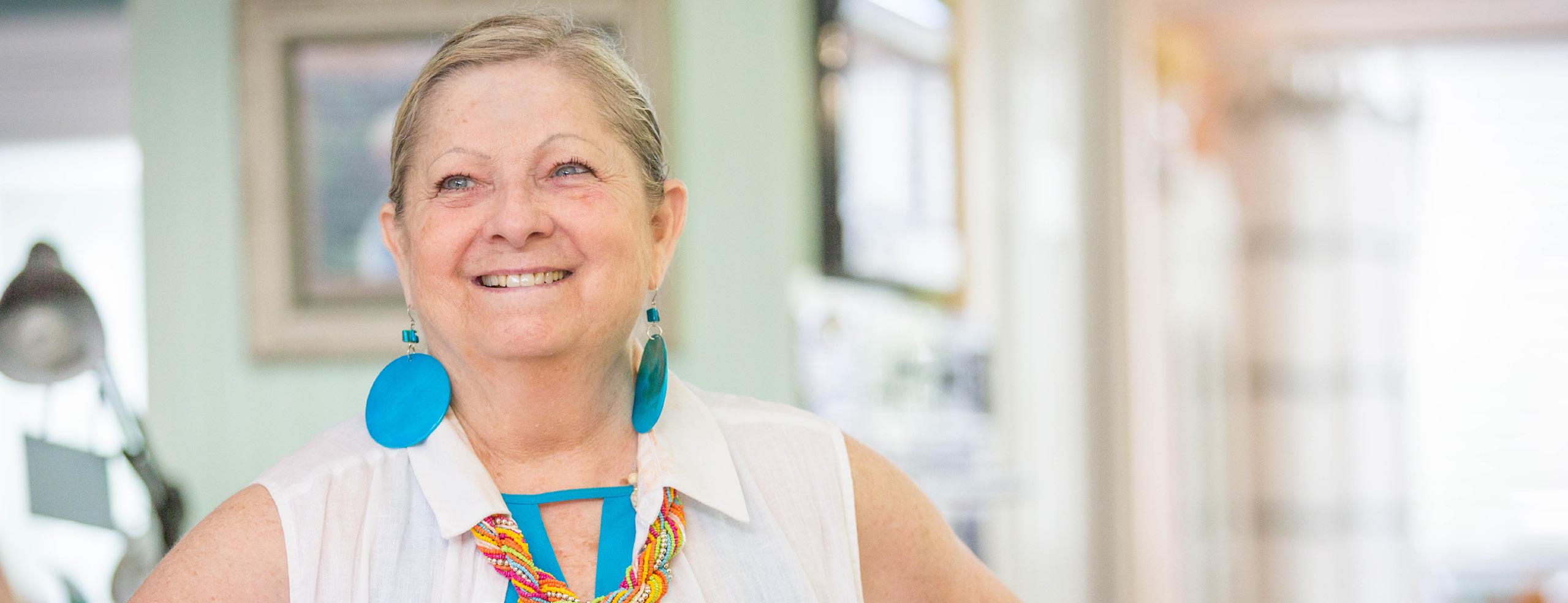
Brooks Rehabilitation Custom Care provides a wide range of caregiving services wherever you call home. In addition to private residences, we also provide support services in hospitals, skilled nursing and assisted living facilities.
Whether you are recovering from surgery, seeking ongoing support for a loved one or just need a little extra help at home, we can develop a customized service plan just for you.
Services include:
• Assistance with bathing, dressing, grooming and personal care
• Self-medication assistance and reminders
• Mobility, transfer and positioning assistance
• Nutrition, meal preparation and feeding assistance
• Light housekeeping & laundry assistance
• Companionship
• Respite for family
• Post-hospitalization or post-surgical care
• Movement assistance and exercise
• Accompany to appointments
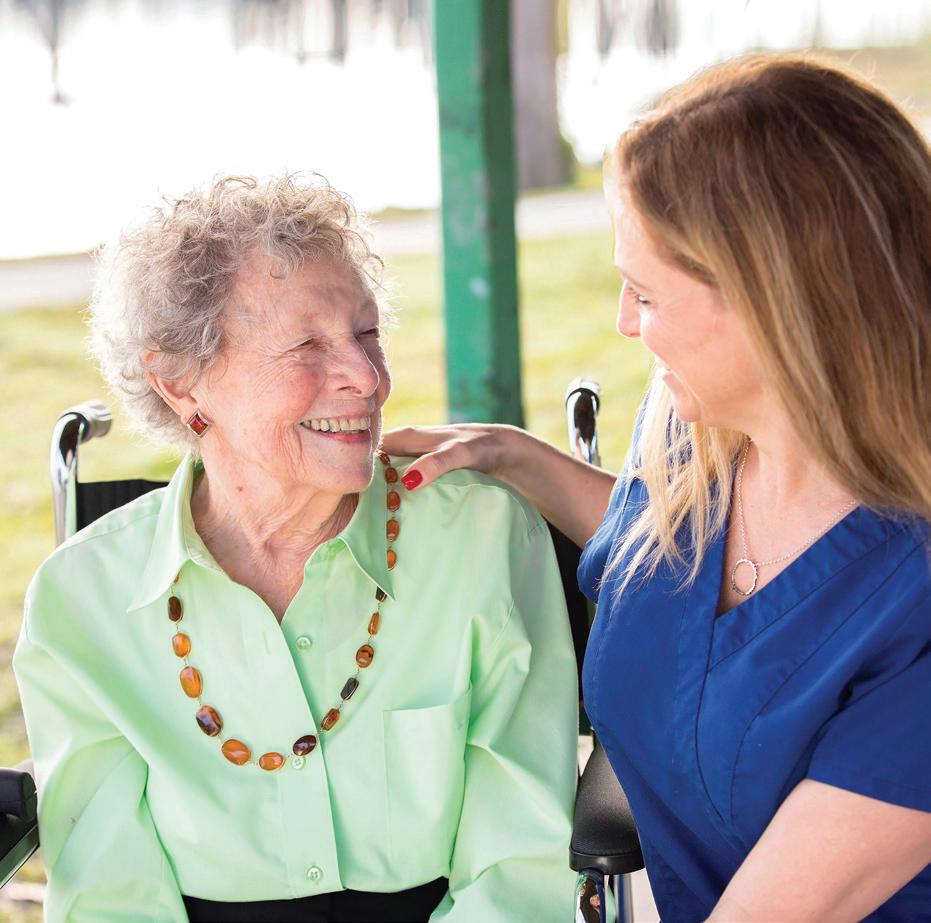
Our highly trained caregiving staff will assist with a customized care plan that meets the needs of each individual and his or her family.
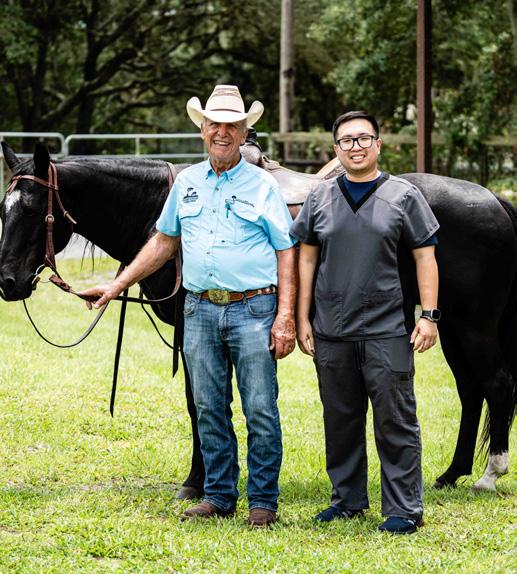
Our Caregivers are Brooks Rehabilitation employees-not contracted staff. All Caregivers are interviewed in person, complete a state and federal background check (includes fingerprinting), are drug tested and CPR certified. In addition, our caregivers receive specialized training, continuing education and supervision.
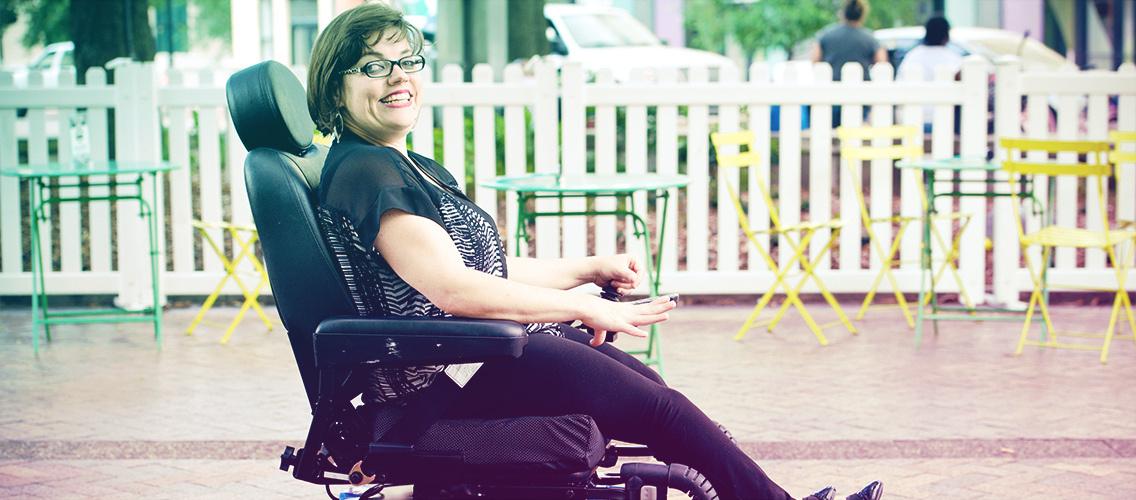
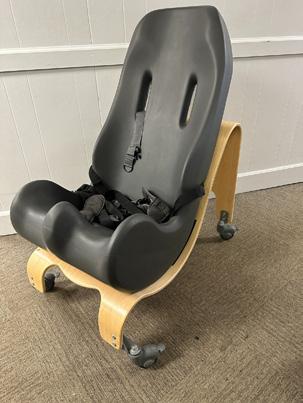
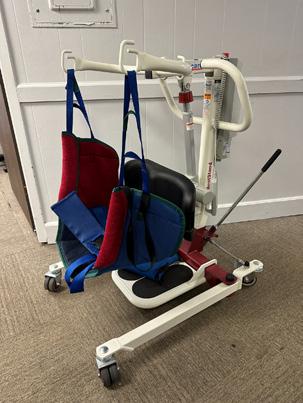
ABOUT THE TEMPORARY LOAN CLOSET
f
B a k e r , C l a y , D u v a l , N a s s a u , a n d S t J o h n s C o u n t i e s
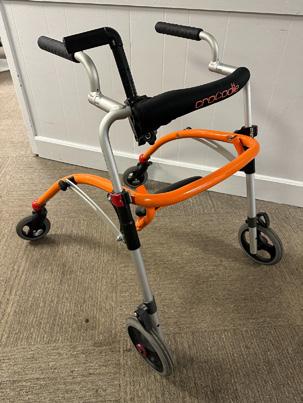
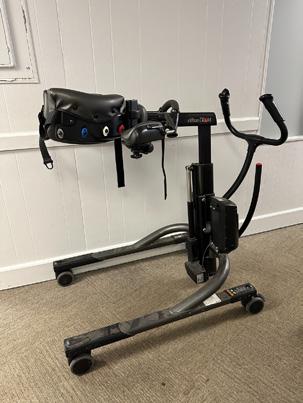
I n v e n t o r y i n c l u d e s w h e e l c h a i r s ( m a n u a l a n
i t e m s L o a n s r a n g e f r o m 3 0 - 9 0 d a y s b u t c a n b e
e x t e n d e d u p o n r e q u e s t
REQUESTING EQUIPMENT
R e q u e s t e q u i p m e n t o n l i n e a t C I L J a c k s o n v i l l e o r g / T L C
Y o u w i l l b e c o n t a c t e d w i t h i n t w o b u s i n e s s d a y s t o
c o n f i r m a v a i l a b i l i t y a n d s c h e d u l e p i c k u p E q u i p m e n t
m u s t b e r e t

Fax 904-396-0859
CONDITIONS TREATED AT BROOKS
•Brain Injury
(including our unique Disorders of Consciousness Program)
•Spinal Cord Injury
•Major Medical Trauma
•Orthopedic conditions
•Neurological
(including Guillain-Barré, Parkinson’s, ALS, etc.)
• Cancer Rehabilitation
• Stroke
•Amputation
•Pediatrics
•Transplant
•Burns
•Cardiac
•And more...
INPATIENT CARF-ACCREDITED PROGRAMS
Inpatient Rehabilitation Programs
(Adults, Children, Adolescents)
Brain Injury
Spinal Cord Injury
Stroke
Pediatrics
General Medical Rehabilitation
A nonprofit organization, Brooks Rehabilitation has more than 50 years of experience in treating the most complex and medically challenging rehabilitation cases across a wide range of issues: stroke, brain injury, spinal cord injury, neurological disorders, orthopedics, pain, trauma and more. At Brooks, you will find the experts for the individualized medical care you need, and each year thousands of patients from our region and across the country do just that.
At Brooks Rehabilitation, you will receive care, compassion and hope from a designated team of clinical experts. Our clinicians are among the highest trained and educated in their field and actively participate in clinical research and education on both the local and national levels. Many of our nurses are rehabilitation certified and many of our therapists have doctorate level degrees along with residency or fellowship training.
Our physicians are board certified in physical medicine and rehabilitation (PM&R). A PM&R physician is a distinct type of medical doctor who specializes in diagnosing, treating and managing conditions that affect movement, function and quality of life.
The specialized training for a PM&R physician is four years of undergraduate education with four years of medical school, and then four years of residency. Some physicians continue with an extra year of fellowship training in spinal cord injury, traumatic brain injury, pain, musculoskeletal and sports medicine. This deep subspecialty training provides the physician with even more expertise in the complexity of rehabilitation care.
At Brooks, we have two physicians who are board certified in traumatic brain injury and one who is fellowship trained in TBI. We have two physicians who are fellowship trained and received board certification in spinal cord injury. We have one physician who is fellowship trained in spasticity management and one who fellowship trained in pain. We also have a physician who is nationally recognized in amputee rehabilitation. PM&R physicians at Brooks work toward the goals of the patient and family to help achieve the highest functional recovery. This is a true interdisciplinary team model.
Brooks Rehabilitation is committed to offering the latest equipment, technologies and research-based treatments. Many times, our expertise in evidencebased rehabilitation helps develop these emerging technologies and gets them into wide-spread use sooner. Whether the technology is part of our community programs to promote socialization or in our rehabilitation settings to promote greater function, we know that ultimately the latest technologies will help drive better outcomes for our patients. We’re dedicated to always being on the forefront of “what’s next.” Some of the latest resources our clinicians are using include:
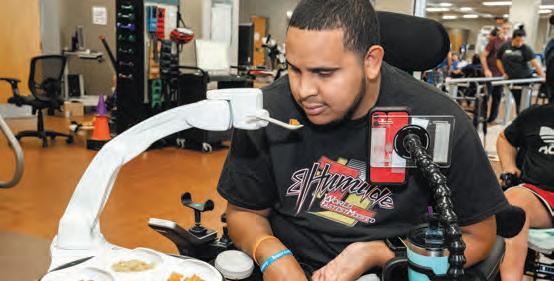
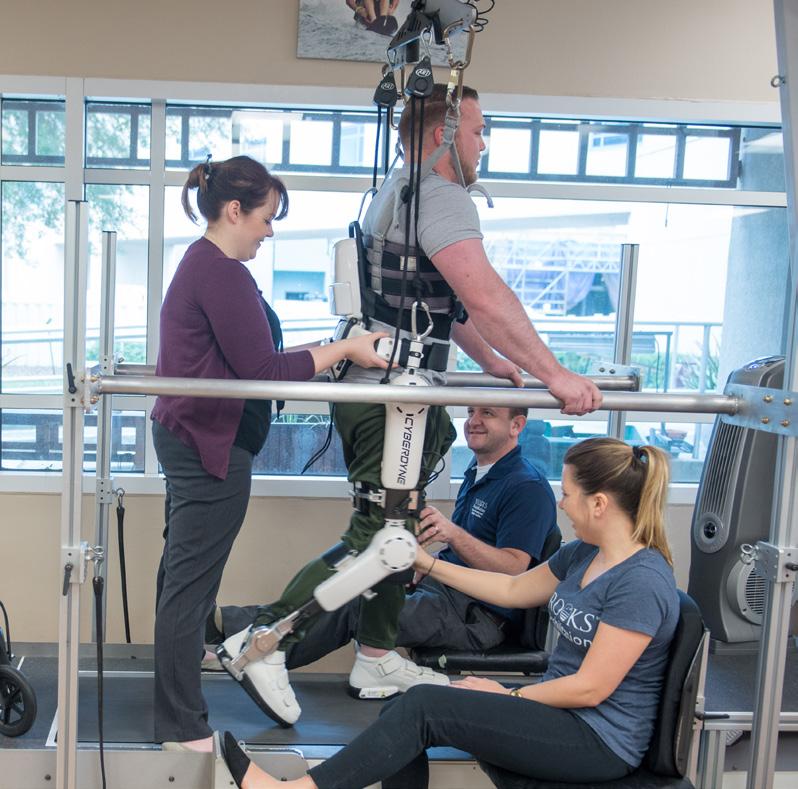
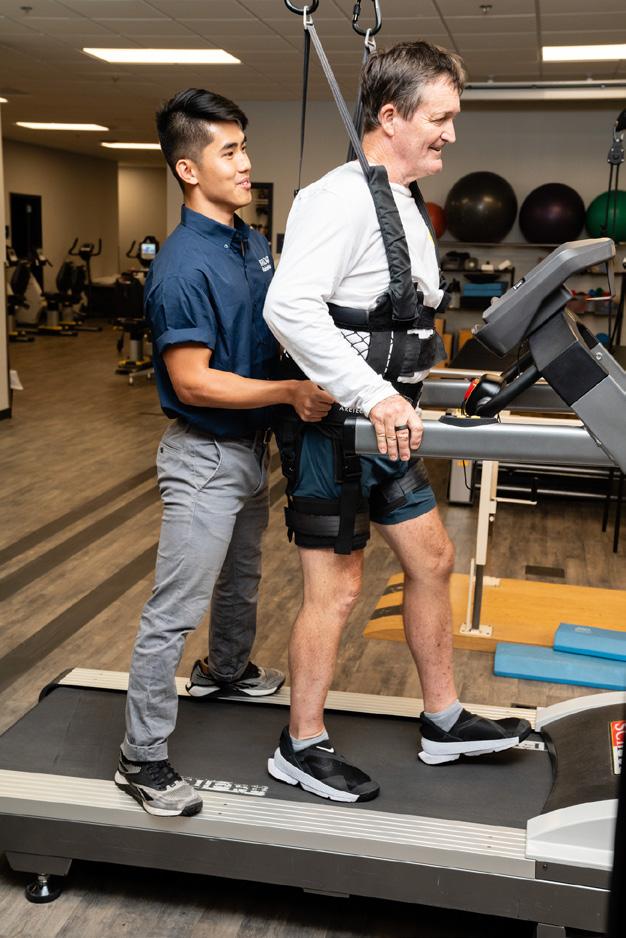
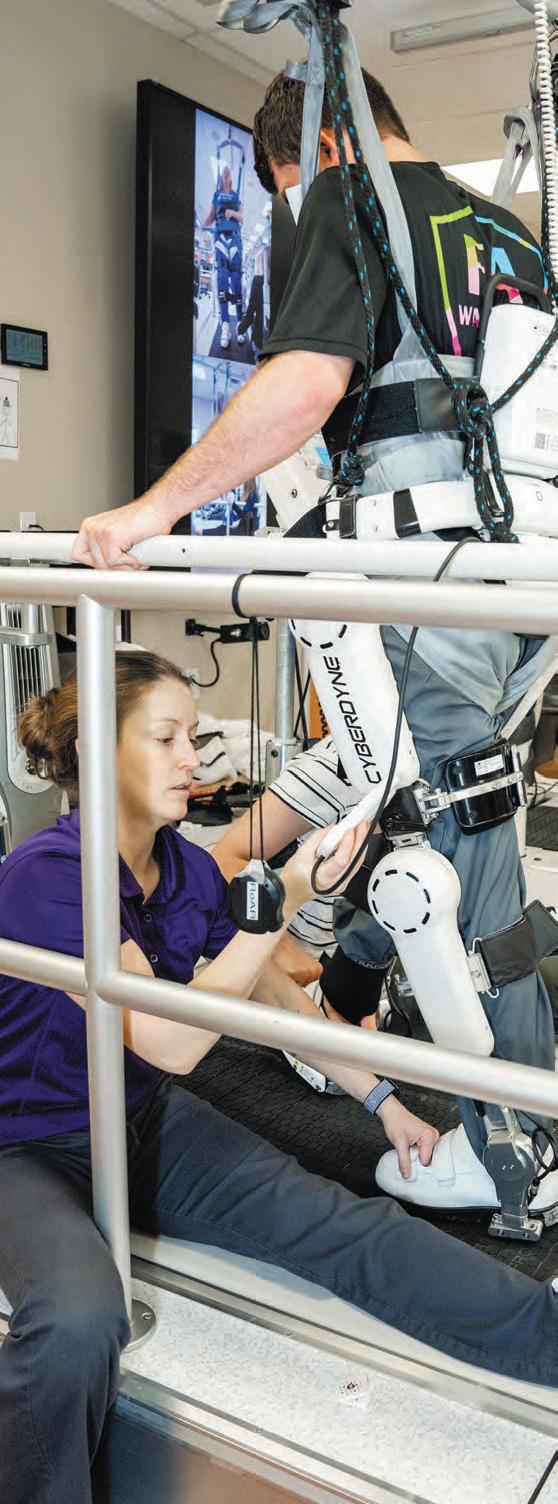
Exoskeletons such as Indego and the Cyberdyne Hybrid Assisted Limb (HAL) help patients exercise in ways that they otherwise would not be able to. These two devices not only help patients, but they also assist our clinicians in better understanding a patient’s recovery and progress. HAL, in particular, provides real time data so therapists can see and adjust settings and movements to produce the desired result.
VR is an area we are growing rapidly. We use an immersive environment to assess a patient’s function and then provide appropriate activities to enhance their recovery. VR uses include balance, visual and mobility issues. We are currently developing our own VR applications, which our therapists will control to provide functional tasks for each patient.
As the name implies, this covers a broad spectrum of new ways to give patients more functional independence in their lives. We train patients and caregivers to use new innovations to help with everyday activities – even simple tasks like eating a meal or getting in the front door. Assistive technology can move a patient from very dependent to more self-sufficient, creating a better quality of life.
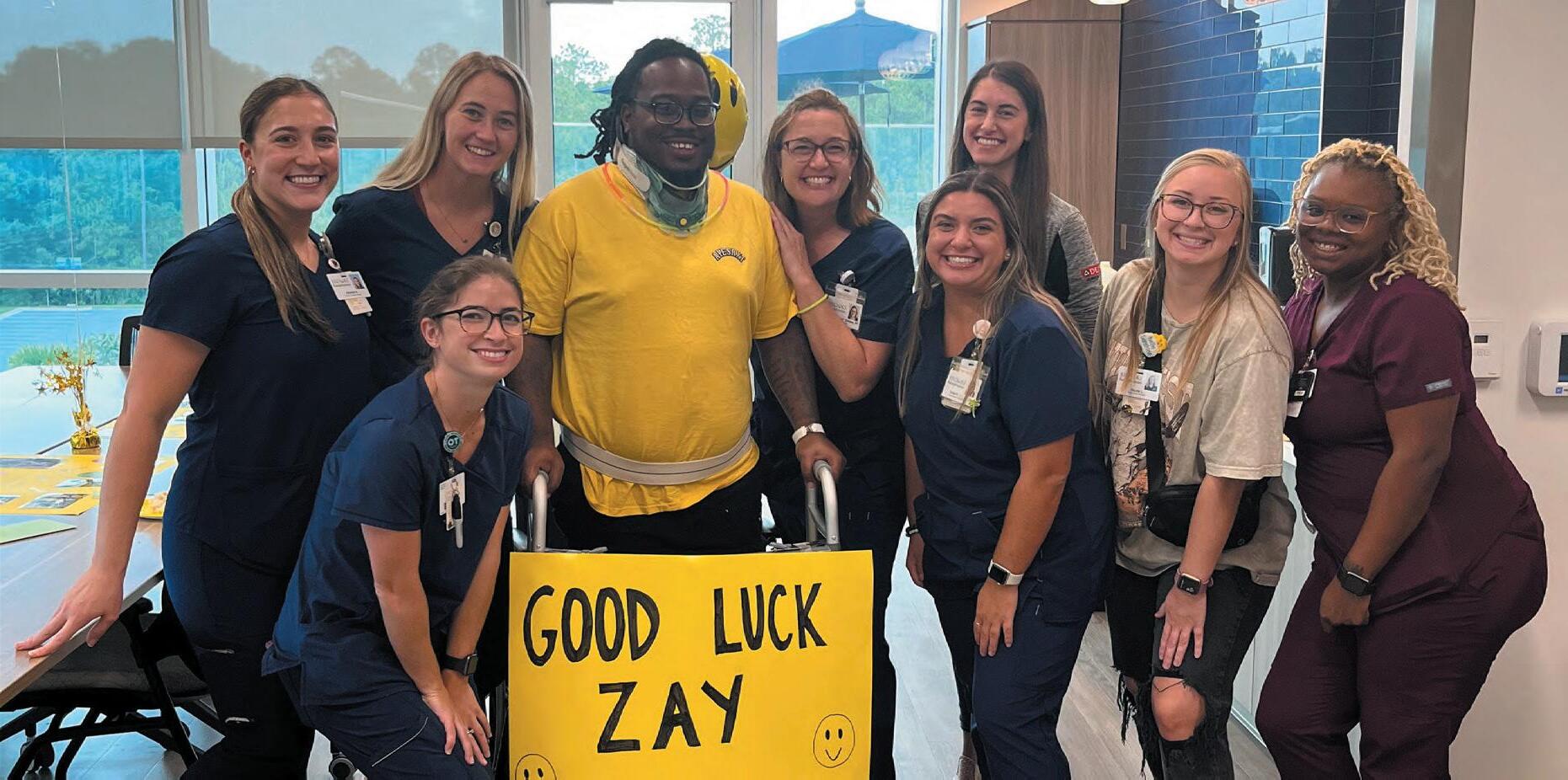
As a construction worker, Isaiah “Zay” Brown was heading to a school to repair a ceiling fire sprinkler system. On his descent from the 26-feet ceiling, his forklift touched a live wire that sent a 270-volt shock through his entire body. Zay fell to the ground.
He doesn’t remember much after the initial accident. He woke up in a hospital in Savannah, Ga., paralyzed from the chest down. He would later find out that he sustained a traumatic spinal cord injury (SCI). He ruptured his L5 vertebrae, experienced short-term memory loss and lost feeling in his left arm.
Zay spent seven days in the intensive care unit and over a month in acute care. To continue his recovery, Zay was referred to Brooks Rehabilitation Hospital –Bartram Campus in Jacksonville, Fla.
“My first couple of days at Brooks were rough,” said Zay. “I was trying to figure out why this happened to me. I wanted to give up. Then, I met Amy and the team.”
Amy Gibbes, PT, Zay’s physical therapist, remembers the first time she walked into Zay’s hospital room.
“We could tell Zay had so much potential. He has a great attitude and he has a heart of gold,” said Gibbes.
With the help of Gibbes and his entire therapy team, Zay began to see gains in his SCI recovery. As he began making physical improvements, his mindset slowly began to change.
“They told me I was going to have to be in a wheelchair for a long period of time and it would be two to three years before I would be able to walk again,” said Zay. “I kept praying and working toward my goal of being able to walk out of there.”
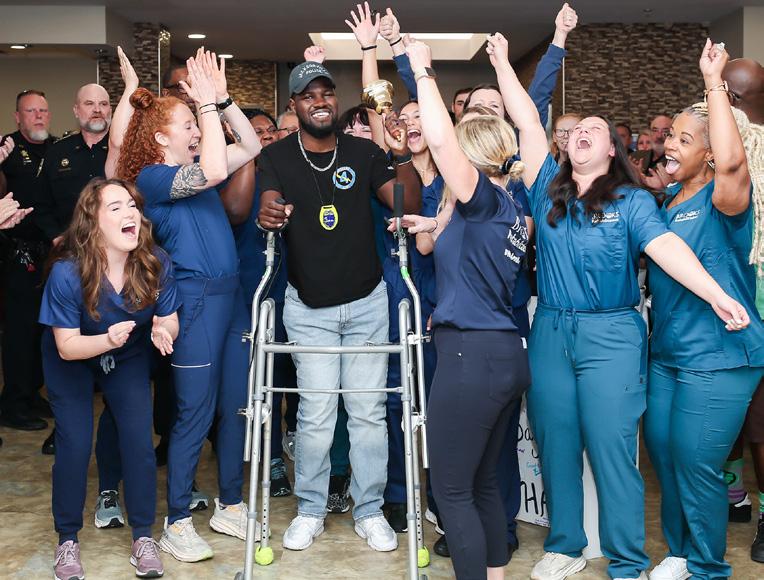
After almost two months of rigorous therapy sessions, the day finally arrived for Zay to leave Brooks’ hospital. Overwhelmed with emotions, he walked out of the hospital using only his walker.
After spending time home in Georgia, Zay realized he wasn’t receiving the same level and quality of therapy. He returned to Helen’s House, Brooks’ family housing in Jacksonville, while he continued his SCI recovery at the Brooks Neuro Recovery Center.
When asked for any advice for people in a similar situation as him, Zay said, “stay motivated, block out the negative thoughts, keep God first and anything is possible.”
By
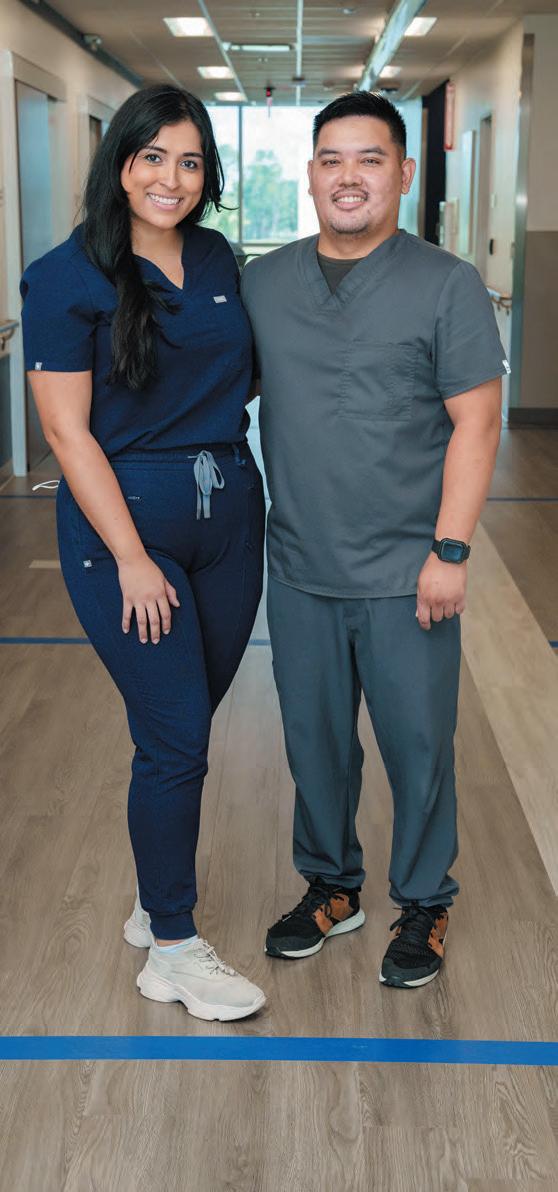


BROOKS REHABILITATION HOSPITAL CARE SETTINGS


By linking the best minds in rehabilitation with the latest treatments and technology, we enable our patients to achieve the highest quality of life possible.
Providing care for more than 50 years to patients from across the country and internationally
According to U.S. News & World Report, Brooks was ranked the #1 Rehabilitation Hospital in Florida and among the top Rehabilitation Hospitals in the nation. Brooks was selected for their excellence in patient services and expertise in treating patients after a stroke, traumatic brain injury and traumatic spinal cord injury.
CARF-accredited in stroke, spinal cord injury, brain injury, pediatrics and general medical rehabilitation
Magnet® designated as a reflection of nursing professionalism, teamwork and superiority in patient care. Brooks was the first in Florida and one of only five freestanding inpatient rehabilitation facilities in the country to achieve designation.
Joint Commission accredited, demonstrating a commitment to performance standards and patient care.
Hospital readmission rates are lower than the national average.
TOTAL PATIENT DISCHARGES IN 2023*
5,054
Bartram and University Campuses, Jacksonville, FL
Amputation
3% (125)
Neurological (including Guillain-Barré, Parkinson’s, ALS, etc.)
5% (223)
Major Multiple Trauma
9% (382)
Spinal Cord Injury
10% (410)
Complex Orthopedics
11% (453)
Pediatrics
2% (84)
Medical Complex
Rehab Cases
(including transplant, cancer, burns, cardiac, etc.)
21% (867)
Stroke
20% (801)
Brain Injury (including our unique Disorders of Consciousness Program)
18% (750)
*Data set is University and Bartram Campus Hospitals combined
Center for Inpatient Rehabilitation, Daytona Beach, FL
Amputation
Neurological (including Guillain-Barré, Parkinson’s, ALS, etc.)
4% (43)
Major Multiple Trauma
10% (98)
Spinal Cord Injury
6% (62)
Complex Orthopedics
16% (154)
3% (28)
Medical Complex
Rehab Cases
(including transplant, cancer, burns, cardiac, etc.)
22% (209)
Stroke
21% (199)
Brain Injury (including our unique Disorders of Consciousness Program)
17% (166)
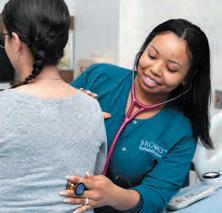
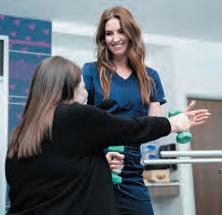
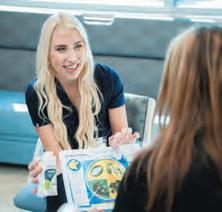
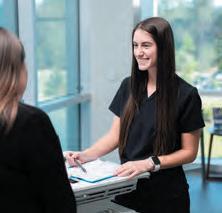
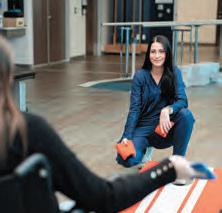
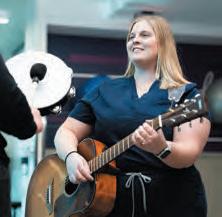
At Brooks, you are cared for by a designated team of experts in physical rehabilitation. Depending on your needs, your customized team may include:
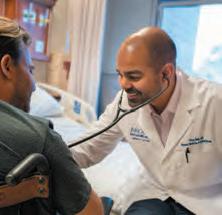
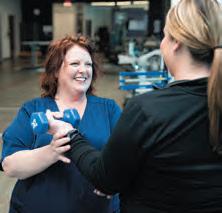
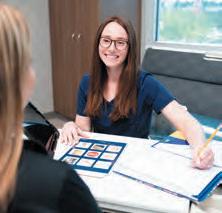
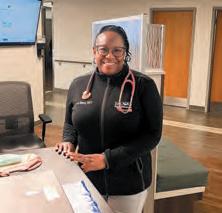
PHYSIATRISTS
are doctors who specialize in physical medicine and rehabilitation, to oversee your recovery
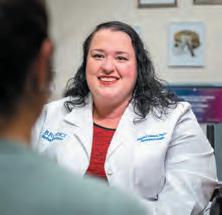
REHAB NURSING
provides hands-on nursing care 24 hours a day, coordinated with other members of your health care team
PHYSICAL THERAPISTS/ ASSISTANTS
help strengthen your muscles for increased balance, walking and coordination
OCCUPATIONAL THERAPISTS/ASSISTANTS
focus on muscle strength for increased hand and arm use with daily living activities such as bathing and dressing
SPEECH-LANGUAGE PATHOLOGISTS
help you regain skills in the areas of speech and language, cognitive-communication and swallowing safely
RESPIRATORY THERAPIST
helps people with respiratory disorders and breathing difficulties. A respiratory therapist is a medical professional who provides therapy focusing on the lungs and heart.
NEUROPSYCHOLOGISTS
perform evaluations to determine if there are any deficits in concentration, memory, reasoning and problem solving
REGISTERED DIETITIANS
develop individualized nutritional assessments, interventions, nutrition support and diet education
CASE MANAGERS
coordinate your inpatient stay and help plan your continued care
RECREATIONAL THERAPISTS
help you find enjoyment in returning to leisure activities and introducing activities adapted to your new abilities
MUSIC THERAPISTS
use elements of music such as rhythm, dynamics, pitch and harmony to optimize movement and elicit verbal expression
Puschel Sorensen came to Brooks Rehabilitation Hospital (BRH) after suffering with Guillain-Barré Syndrome (GBS) for 54 days in a hospital’s intensivecare unit. Guillain-Barré syndrome (GBS) is a rare neurological disorder in which the body’s immune system mistakenly attacks part of its peripheral nervous system and can range from a very mild case with brief weakness to nearly devastating paralysis, leaving the person unable to breathe independently.
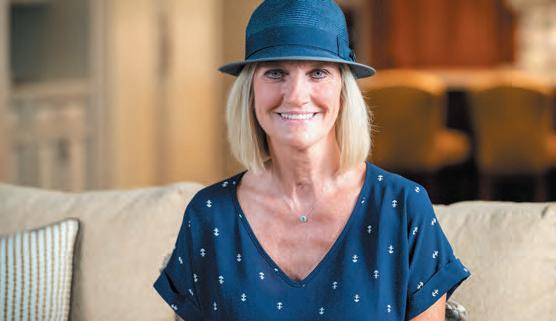
Geneva Tonuzi, MD, serves as Medical Director of Brooks Rehabilitation Spinal Cord Injury Program. “Puschel arrived to us in on a ventilator and she had a feeding tube. She had no movement in her legs and a little bit of movement in her arms at the time, but not enough to even to be able to lift her arm off the bed.”
Within a week of being at BRH, Brooks respiratory therapists weaned Puschel off the ventilator. For her family, who had been at her side since the GBS first came on, being off the ventilator was a game changer. Soon after, she began to sit up, even if just for 10 seconds at a time.
Puschel spent a total of five weeks at BRH. She then progressed in her recovery enough to receive Brooks’ home health care and outpatient rehabilitation services, including the use of the specialized technology in the Brooks Neuro Recovery Center.
“I feel like I would not have been able to get through what I went through – the recovery, all of that stuff –had it not been for Brooks,” said Puschel. “I would 100 percent, anytime, anybody needs any kind of rehab, I know where you need to go and it’s Brooks, it’s always going to be Brooks for me.”
Little did she know that just two years later, her son Eric would need Brooks’ services. Eric had a
seizure and fell, striking his head on the ground. He suffered a major traumatic brain injury (BI) requiring a hemicraniectomy, a surgical procedure where part of the skull is removed to reduce the intracranial pressure. Five and a half weeks later, Eric was transferred to Brooks Rehabilitation Hospital – University Campus, where his mother was previously a patient.
Less than four months after his injury and during Covid-19 shutdowns, Eric began home health services with Brooks. Eric had severe apraxia and needed intensive treatment that neither our outpatient nor our home health therapists were able to provide. He was also still improving from significant physical challenges.
Chris Sorensen, Eric’s father, proposed the development of an intensive program for adults with acquired apraxia of speech, so that Brooks will be able to better serve future patients and families living with Eric’s diagnosis. Thanks to the generous support of the Sorensen family, the Eric Sorensen Motor Speech Program was developed. In order to reach more members of the community, this program will benefit not only adults with apraxia, but also adults living with any motor speech disorder such as dysarthria, or slurred speech caused by muscle weakness.
“Eric has taught me so much about apraxia, neuroplasticity and the power of a positive attitude. I am beyond proud of his continued progress, and so hopeful for the many other people who will now have direct access to the best motor speech treatment options thanks to the Sorensen’s legacy,” said speechlanguage pathologist, Jackie L. Hurst, MS, CCC-SLP.
When Brittany Pitts’ son Wyatt was admitted to the hospital for suspected pancreatitis, it was her motherly instinct that may have saved his life. While CT scans were inconclusive, Wyatt began suffering from slurred speech, hallucinations, seizures and right-side paralysis before slipping into a coma.
After many tests and guidance from experts across the country, it was determined that Wyatt had a severe auto-immune response to the Coxsackie virus, a common childhood ailment known as Hand, Foot and Mouth Disease. A steroid regimen brought him out of the coma.
Wyatt was then transferred as an inpatient to Brooks Rehabilitation Hospital to help him regain his ability to walk and speak. Steve Walczak, PT, DPT, PCS, was Wyatt’s physical therapist. “Wyatt did great at Brooks. He arrived quiet and shy but really got his personality back while he was here. On day one, he could not take a full step without collapsing.
By the time Wyatt was discharged, he was chatting with the staff and able to walk more than 1,000 feet. Both Brittany and Wyatt were eager to return home to Panama City, Fla., to be reunited with Wyatt’s younger brothers and sister – a reunion two months in the making.
Lauren Ray was a typical 15-year-old girl until tragedy struck. Lauren and her dad were driving home when a drunk driver failed to stop at a stop sign and collided with their vehicle. Her father died at the scene. Lauren suffered critical injuries, including a traumatic brain injury.
After weeks of intensive treatment, Lauren was transferred to Brooks Rehabilitation Hospital –University Campus to continue her recovery.
Lauren’s inpatient care team took an individualized approach, creating tasks that simulated what Lauren needed to do in her life – such as simulating throwing a saddle up on a horse and navigating the hallways as if it was school. She was also tasked with high-level balance, increased distances in walking and simulated activities targeting her teenage interests.
In addition to nursing and therapy, Lauren received assistance from the Brooks School Re-entry team for her education and the Music Therapy team to get back to playing piano. As her rehabilitation journey progressed, Lauren also began treatment in the Pediatric Day Treatment Program.
After several months, Lauren returned to her hometown of Pensacola, Fla., and gradually transitioned back to school full-time. She is hopeful to resume competitive horseback riding soon. Her experience has led her to consider a future in neurosurgery and she also aims to educate people on the risks of drunk driving.
•On the day of admission, you will meet some of your nursing team and a member of your medical team. You can expect to meet your rehab physician on your first full day at Brooks.
•Your attending physician is a physiatrist, a doctor who specializes in physical medicine and rehabilitation – he or she will lead your medical care during your stay.
•You can expect to see your rehab doctor and other members of your medical team, consisting of physician assistants and nurse practitioners, on a daily basis.
•During your stay you will have 24-hour nursing care, you can expect your nurse and nurse assistant to check on you every hour to make sure you have everything that you need.
•As our nurses and nurse assistants change shifts, they will discuss your care and progress with your next nurse at your bedside.
•We want you to be an active participant in your care, so please ask questions during hourly rounds as well.
• Generally, you can expect to begin therapy the day after your arrival. In general, therapy sessions can begin as early as 7 a.m. and end as late as 7 p.m. seven days a week. However, your personal therapy schedule will be available on your TV screen under “My therapy schedule” the day after admission.
• You can expect to have at least three hours of therapy every weekday and a modified therapy schedule on the weekends. If your treatment team feels you would benefit, you will also be set up for our inpatient hybrid program in addition to your regularly scheduled sessions, which gives you access to more treatment through our advanced rehabilitation technology.
• On your first day of full therapy you can expect to meet the members of your therapy team consisting of a physical therapist, occupational therapy and a speech therapist.
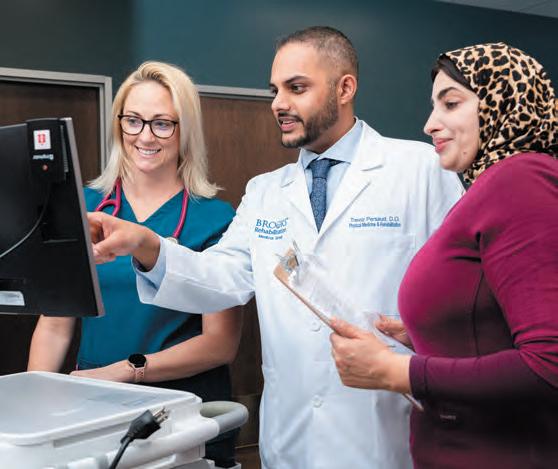
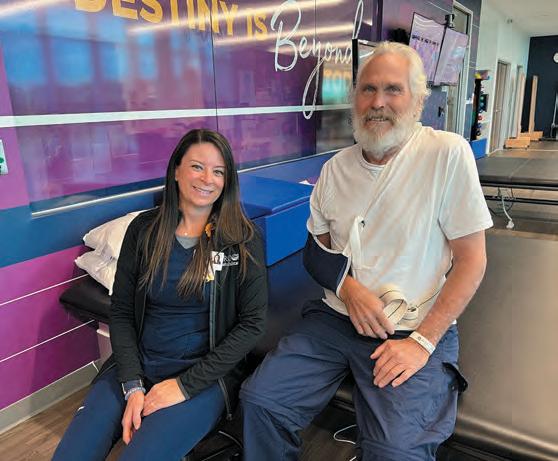
• If you are in need of more specialty care, you may also receive visits from our assistive technology, exoskeleton, and seating and positioning specialists.
•One of our goals at Brooks is to help you regain your strength and maximize your independence. To achieve this, you will be getting dressed daily in regular clothing. Bring comfortable pants, shorts, shirts, lace or Velcro tennis shoes.
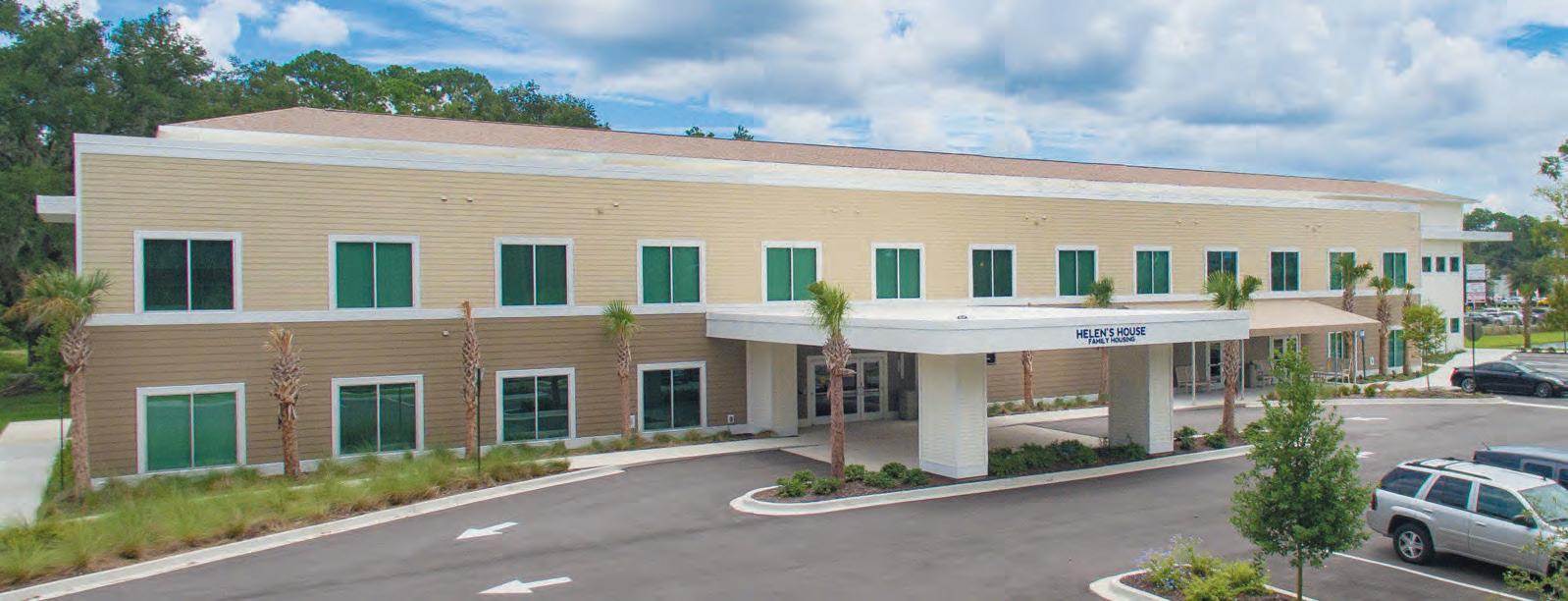
• Our Brooks hospitality house, Helen’s House, located on our University campus, offers affordable temporary lodging to out-of-town families and caregivers for a small fee. Our rooms can accommodate a maximum of 3 adults or 2 adults and 2 children. Each room has one queen-sized bed, a pull-out sofa, and a private, handicapped accessible bathroom. Check-in hours for all guests are between 3 p.m. and 8 p.m. daily. Helen’s House provides daily transportation to locations around the campus. Helen’s House is based on availability, so please ask a member of your rehab team for more information.
•Should your caregiver prefer to stay with you, we allow one overnight visitor. We ask that they check

in daily at the security desk. Sleeping options in private rooms include a single sleeper. Please be aware that nursing staff will be making hourly rounds to check on you throughout the night.
•We strongly encourage your caregiver to participate in your rehabilitation throughout your stay – especially if they will be your primary caregiver upon discharge.
•Caregivers who are participating in your care are welcome to stay overnight with you in your private room. However, please be aware that our nursing staff will make hourly rounds throughout the night. Please be sure that your overnight guest checks in at the security desk daily for an overnight pass.
• Any guests that will not be a caregiver, after discharge should visit between 4-8 p.m. to avoid interrupting your therapy schedule.
•One of our goals at Brooks is to prepare you for home or your next care setting. We will begin working with you and your caregiver immediately to prepare you for success.
•While your entire care team plays a role in your discharge, your case manager will help plan your continued care - including setting up doctors’ appointments or outpatient services. You can expect your first visit from a case manager within your first three days of admission.
•Weekly, your rehab physician and case manager will receive feedback from your therapy and nursing team on your progress and continued needs. This will help your rehab doctor plan for your discharge needs.
Multiple care settings and community programs are what makes Brooks the best choice for rehabilitative care and beyond. After the hospital, you’ll have access to everything the Brooks system has to offer: more than 50 outpatient therapy clinics; skilled nursing facilities; assisted living and memory care facilities; home health and home care services; research; day treatment programs; and community programs. We provide care in the right setting for your individual needs, resulting in the best outcomes.
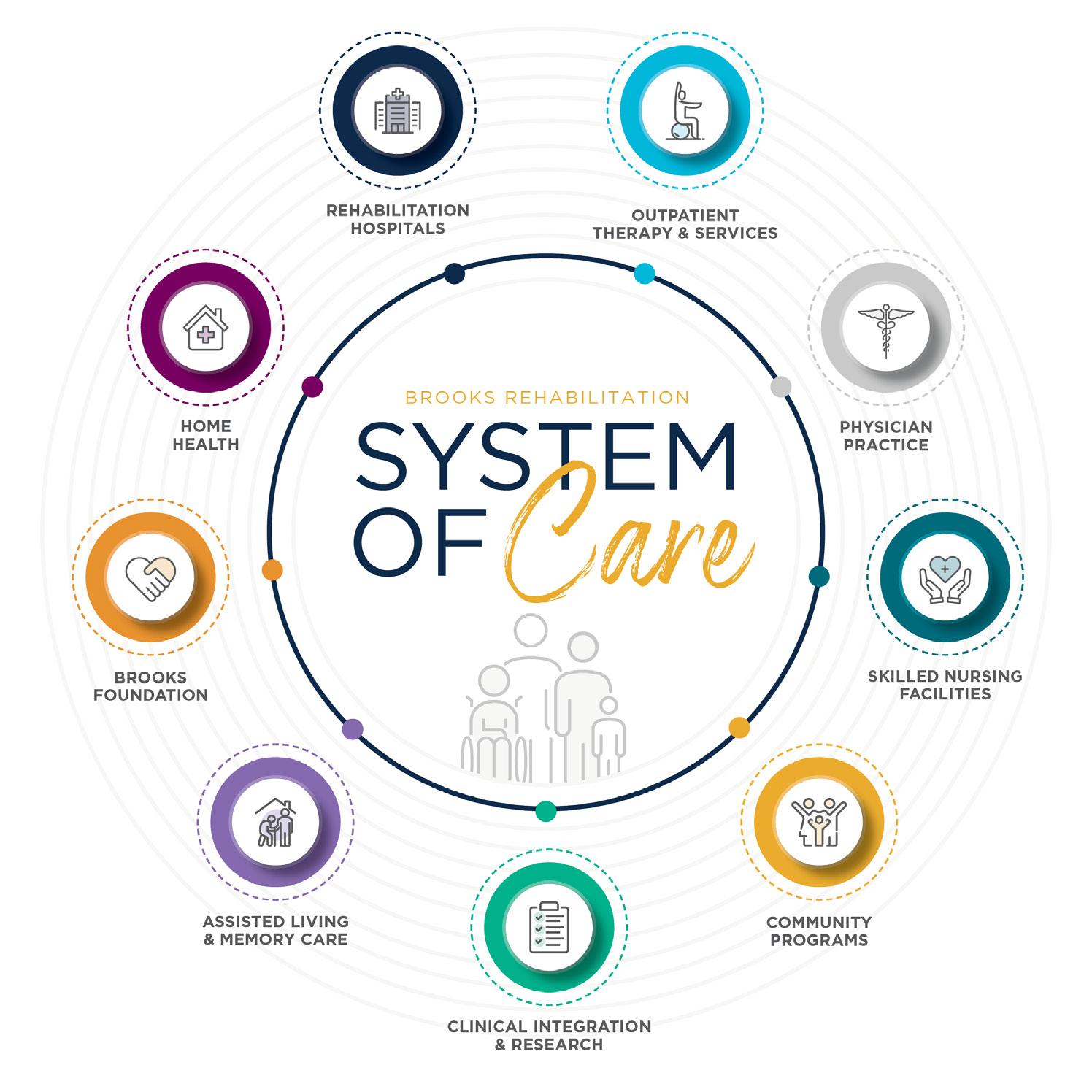
COMMUNITY HEALTH AND WELLNESS PROGRAMS PROVIDE ONGOING RECOVERY SUPPORT AT LITTLE OR NO COST
BROOKS INVESTS MORE THAN $12 MILLION ANNUALLY IN THESE PROGRAMS
One of the most comprehensive Adaptive Sports and Recreation programs in the country providing fun and fitness for individuals living with disabilities.
The Neuro Recovery Centers offer cutting-edge rehabilitation equipment and technology to our hospital patients, outpatients and community members.
The Aphasia Center offers both a social language community group and an Intensive Comprehensive Aphasia Program.
The Brain Injury Clubhouse provides a bridge between medical rehabilitation and community and vocational reintegration for individuals with an acquired brain injury.
The Clinical Research Center is devoted to generating knowledge and integrating the latest research discoveries into clinical practice.
The Brooks School Re-entry Program provides a continuum of school transition and support services to assist families throughout a child’s educational journey.
The Brooks Motion Analysis Center uses innovative technology with expert clinical examination and biomechanical analysis for walking and movement impairments.
Pediatric Recreation is a free program that provides a safe and supportive environment for youth with physical and/or developmental disabilities so they can engage in recreational activities with their peers.
Experts from Brooks Rehabilitation have teamed up with local YMCAs of Florida to offer an individualized and supervised exercise program for Stroke and Brain Injury survivors, as well as those battling Parkinson’s disease and Multiple Sclerosis
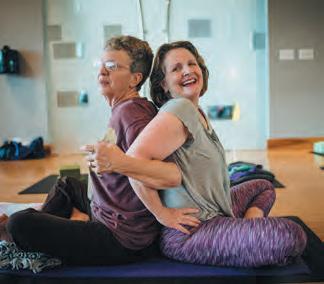
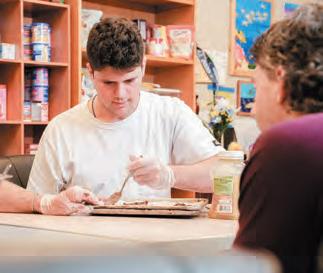
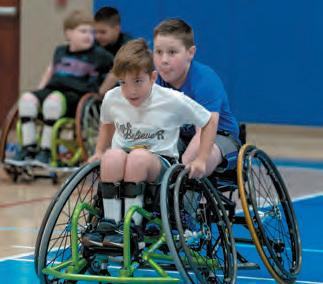
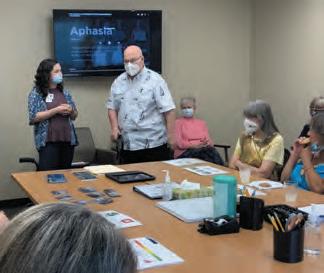
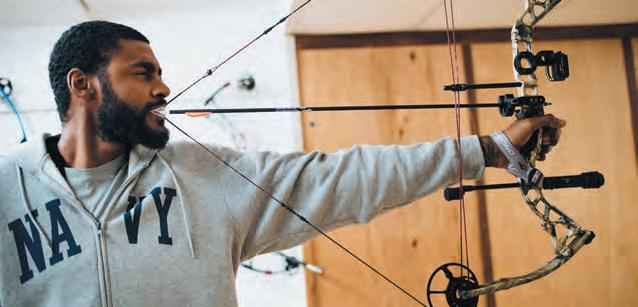
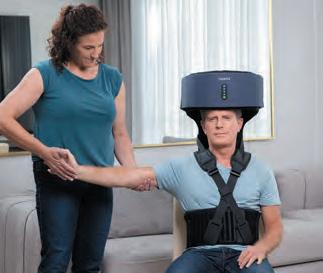
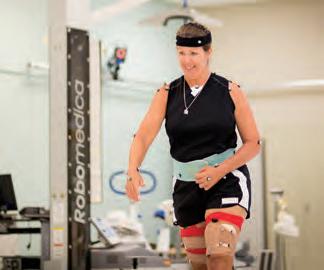
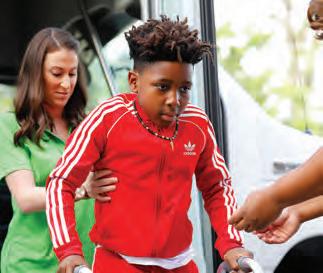
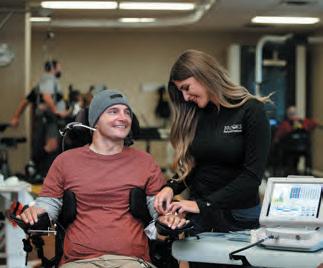
Michael Greene, PTA, has been inspiring patients at Brooks Rehabilitation Hospital – University Campus for the past 20 years. As soon as he finished school, he was hired at Brooks as a physical therapy assistant for the stroke and cardiac unit. Patients and families alike praise him for the impact he had on their recovery. Michael would work tirelessly, during breaks and after hours, to ensure his patients had the best recovery possible.
Then the unthinkable happened, and Michael became a patient himself. After returning home from the store, Michael had a massive heart attack. While in the ICU, he recognized the symptoms so many of his patients experienced and knew he was now also having a stroke. Since he was already in the hospital, they were able to rush him in to surgery, saving his life. The day after being discharged from the hospital, he had a second heart attack. The damage was so extensive, the only option was a heart transplant.
To prepare for the transplant, he returned to his second “home” – Brooks. “I feel the most safe in
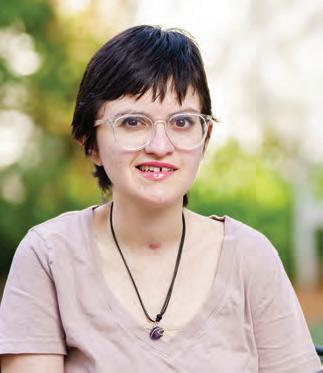
Adriana Fiorilo knew from an early age that she wanted to be a veterinarian. She graduated from the University of Florida with a biology degree and had work experience as a veterinary technician. She was on her way.
However, the 23-year-old, who was perfectly healthy at her graduation a day earlier, was now paralyzed on the left side of her body and had limited communication abilities. A CT scan at the ER revealed a stroke.
Adriana spent an uncertain and precarious month in ICU before she was moved to a regular room. She was barely able to give thumbs up, squeeze her
their hands and I wouldn’t want to go anywhere else,” said Greene. “It’s a different feeling when you are the patient. But it made me proudof the organization I work for. The care was top-notch and I knew it was the best care I could get.”
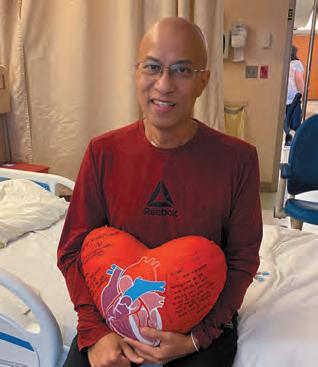
Seven months after his initial heart attack, Michael was given the tremendous gift of a new heart. Throughout his tenure at Brooks, Michael was a champion in raising funds and support for the American Heart Association (AHA) each year. He will now continue to be an advocate for AHA, this time as a survivor.
parents’ hands and wiggle her toes. “Her neurologist recommended Brooks Rehabilitation because he said it was the best in Florida. But we live in Miami and thought surely there would be some place closer to home. The more we researched and asked others, the more Brooks came up,” said Ileana and Ronald Fiorilo, Adriana’s parents.
Adriana arrived at Brooks Rehabilitation Hospital (BRH) hardly able to lift her head. She initially needed three people to assist her to walk. However, in the six weeks at BRH that followed, her fighting spirit and hard work, paired with the expertise of her Brooks team, made for tremendous improvement. By discharge, she was able to walk 200 feet with someone just holding onto her for safety. She also progressed significantly in all aspects of her self-care tasks.
Once discharged, Adriana immediately started at the Brooks Brain Injury Day Treatment Program (BIDT) to assist with her transition from an inpatient setting to home.
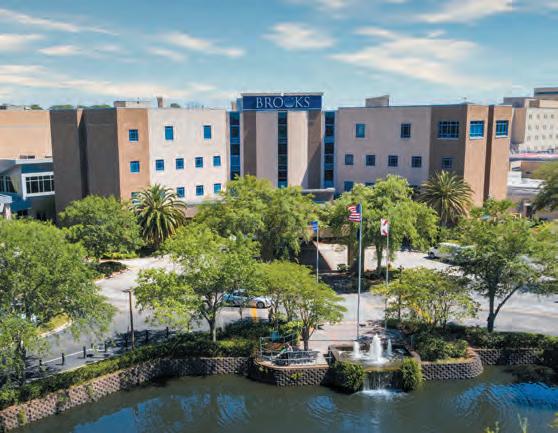
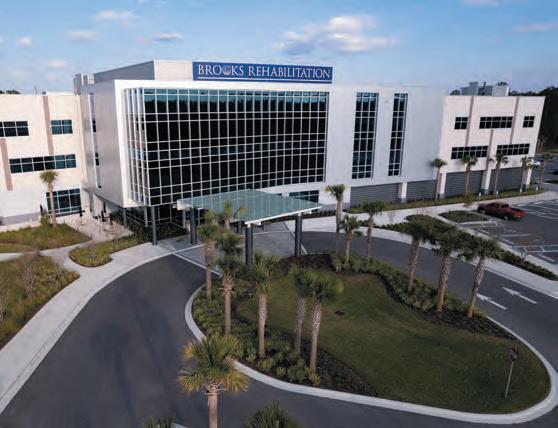

BROOKS REHABILITATION HOSPITAL: UNIVERSITY CAMPUS
3599 University Blvd S | Jacksonville, FL 32216 (904)345-7600
The original 170-bed rehabilitation hospital on University Blvd. in Jacksonville, Fla.
The hospital features almost all private rooms with dedicated therapy areas on each floor with equipment and technology supporting your specific illness or injury.
BROOKS REHABILITATION HOSPITAL: BARTRAM CAMPUS
6400 Brooks Bartram Drive | Jacksonville, FL 32258 (904)809-8080
Our newest 60-bed rehabilitation hospital located on Brooks’ existing 115-acre Bartram campus. Due to the overwhelming demand for our specialized services, this hospital will begin a 36-bed expansion.
HALIFAX HEALTH | BROOKS REHABILITATION CENTER FOR INPATIENT REHABILITATION
303 N Clyde Morris Blvd | Daytona Beach, FL 32114 (386)425-4000
Located within Halifax Health – Medical Center of Daytona Beach, this 40-bed inpatient rehabilitation hospital specializes in treating stroke, spinal cord injury, brain injury and complex orthopedic conditions. A full spectrum of physical and neuro rehabilitation services are provided.
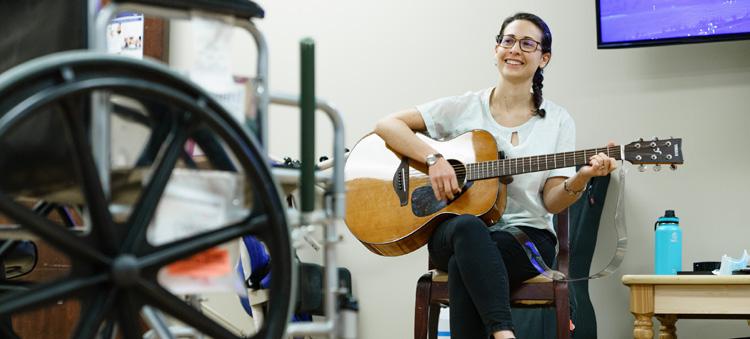
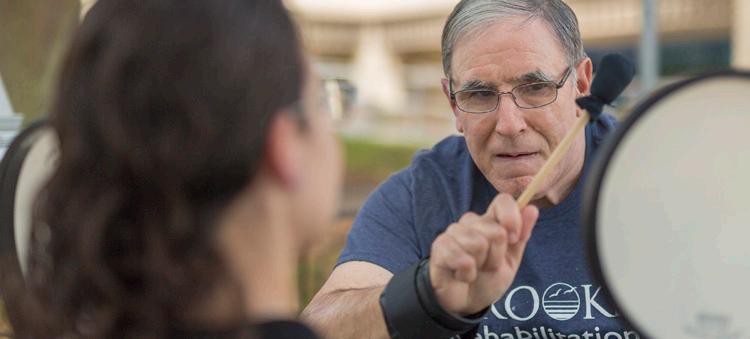
Music Therapy is the use of evidence-based music interventions to address physical, cognitive, social, and emotional issues in persons of varying abilities. Traditional music therapy practices are based on social-science model. Neurologic music therapy is based on a neuroscience model. At Brooks, our patients receive standardized and individualized NMT service across the system of care.
NMT TECHNIQUES
Speech & Language Cognition Movement
• Musical Speech Stimulation
• Melodic Intonation Therapy
• Therapeutic Singing
Rhythmic
Speech Cueing
Vocal Intonation Therapy
• Oral Motor and Respiratory Exercises
• Developmental Speech & Language Training Through Music
• Symbolic Communication Training Through Music
• Musical Attention Control Training
• Musical Executive Function raining
• Musical Neglect Training
• Auditory Processing Training
Musical Sensory Orientation Training Musical Mnemonics Training
• Music & Psycho Counseling
• Associative Mood & Memory Training
• Therapeutic Instrumental Music Performance
• Rhythmic Auditory Stimulation
• Patterned Sensory Enhancement
Playing and listening to music works several areas of the brain
Corpus Callosum: Connects both sides of the brain
Motor Cortex: Involved in movement while dancing or playing an instrument
Prefrontal Cortex: Controls behavior, expression and decision-making
Nucleus Accumbens and Amygdala: Involved with emotional reactions to music
Hippocampus: Involved in music memories, experiences and context
Sensory Cortex: Controls tactile feedback while playing instruments or dancing
Auditory Cortex: Listens to sounds; perceives and analyzes tones
Visual Cortex: Involved in reading music or looking at your own dance moves
Cerebellum: Involved in movement while dancing or playing an instrument, as well as emotional reactions
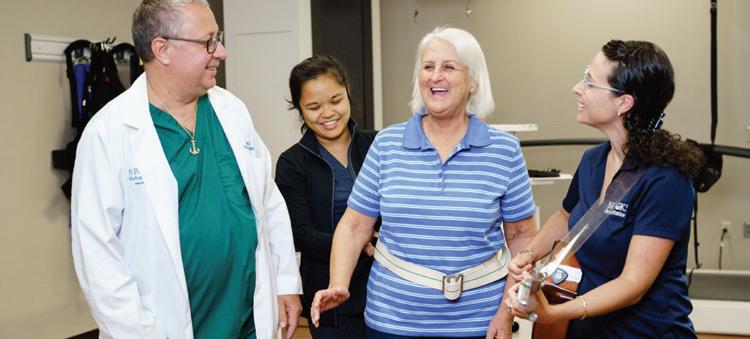
Cognition
Initiation
• Attention • Direction following
• Executive Functioning
• Reaction Time
• Processing Speed Memory
Visual Neglect
Speech & Language
• Verbal expression & intelligibility
• Verbal fluency & articulation
Stroke
• Brain Injury
• Spinal Cord Injury
• Neurodegenerative Diseases (Parkinson’s Guillan Barre, MS, ALS)
• Orthopedic
• Vocal Quality Vocal Intensity
• Respiratory coordination & endurance
Sensorimotor
• Walking
• Balance
Range of motion
• Strength
• Endurance
• Fine motor coordination
Cancer
• Developmental Disabilities
• Dementia/Alzheimer’s
• Autism
• Cerebral Palsy Down Syndrome
Brooks Bartram and University Inpatient Hospital’s THE GREEN HOUSE Residences
• Transitional Care Program (UC)
• Brain Injury Clubhouse
Brain Injury Day Treatment (BIDT)
• Brooks Rehabilitation Aphasia Center (BRAC)
• Pediatric Day Program (PDP)
• Pediatric Recreation Program
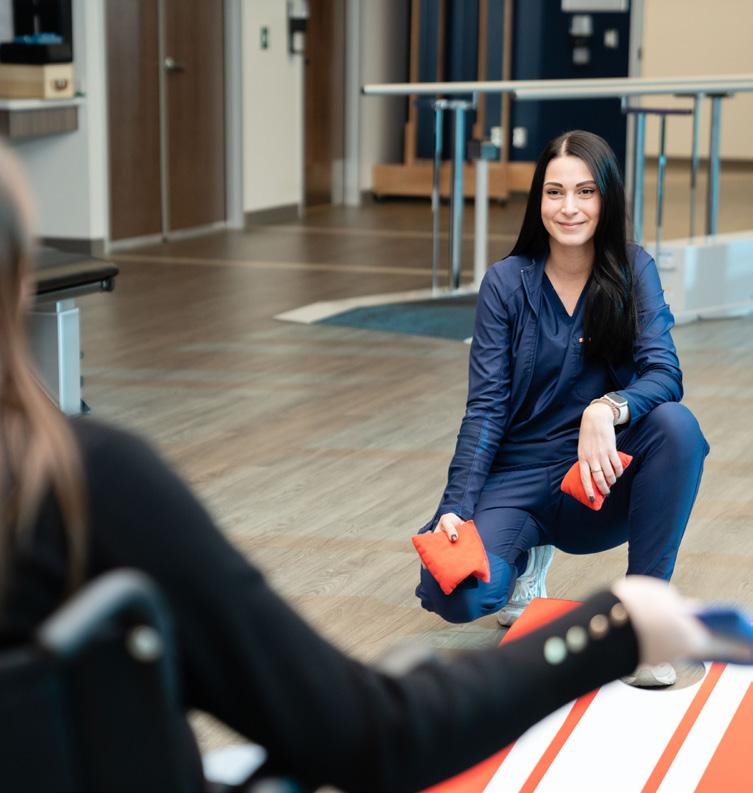
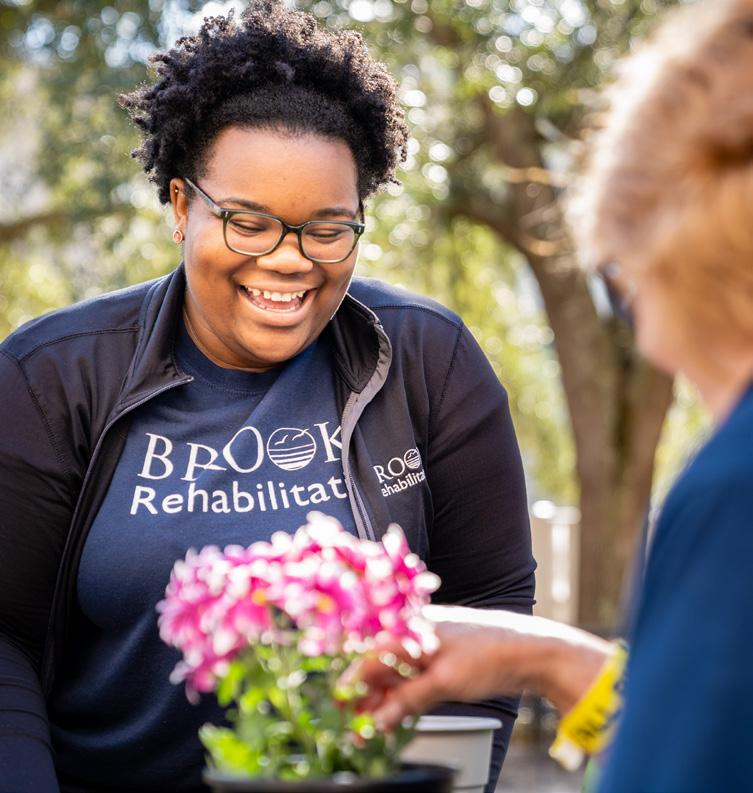
Recreational Therapy is a goal-based therapy focused on improving an individual’s quality of life through recreation and leisure activities by targeting physical, cognitive, emotional, and social needs. Recreation Therapists can introduce or reintroduce individuals to leisure interests and adaptive techniques to participate fully and independently in chosen life pursuits.
HOW DO WE SERVE OUR PATIENTS?
Adaptive Pediatric Recreation participants engage in adaptive sports, horticulture, cooking, art, aquatics, and music.
• At our inpatient facilities, patients have the opportunity to participate in adaptive sports, yard games, video games, card and board games, arts and crafts, gardening, biking, cooking, baking, grilling, and community reintegration outings.
• We support our patients beyond discharge by providing leisure education throughout their treatment - promoting ongoing participation in a healthy leisure lifestyle.
PATIENT OUTCOMES:
• Fine motor skills
• Balance Ambulation
• Safety
• Leisure Education
• Communication
• Social support
• Visual scanning
• Wheelchair mobility
Quality of life
• Independence
• Cognition: problem solving, sequencing, attention, memory
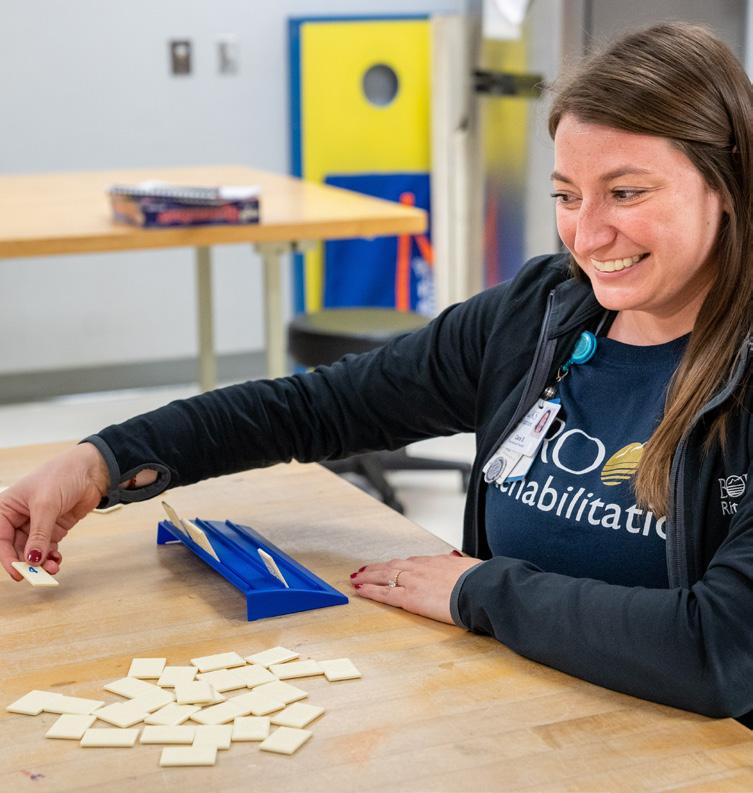
COMMUNITY REINTEGRATION
Community reintegration outings target adjustment in the community providing patients the opportunity to practice their therapy goals, assess safety using adaptive equipment, and identify potential barriers to discharge. Community outing locations can include familiar places such as restaurants or stores, but patients favor our special locations like TopGolf and bowling.
RECREATIONAL THERAPIST QUALIFICATIONS
A Certified Therapeutic Recreation Specialist (CTRS) is the qualified professional providing recreation therapy services. The CTRS is a certified Recreational Therapist who has demonstrated professional competence by acquiring a specific body of knowledge and passing a national certification exam. All Recreation Therapists within the Brooks system maintain a CTRS certification by completing Continuing Education Units (CEUs), thus demonstrating their continuing professional knowledge and competence.
LOCATIONS/PATIENTS SERVED ANNUALLY
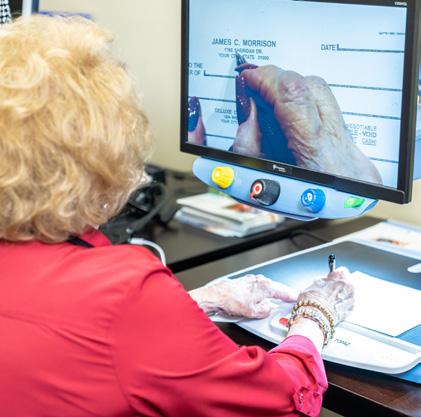
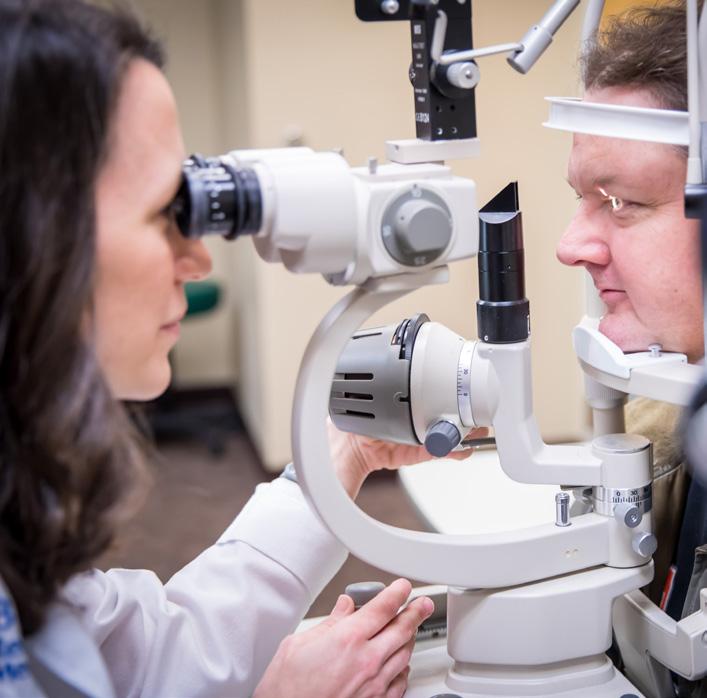
Low vision is a loss of vision that cannot be corrected with regular glasses, contact lenses, medicine or surgery. Low vision is usually caused by eye diseases or health conditions which can include age-related macular degeneration (AMD), cataract, diabetes, glaucoma or stroke.
Frequently, this type of vision loss can affect a person’s ability to participate in everyday activities like reading, cooking, walking and driving. While vision cannot be restored, low vision rehabilitation can help you to make the most of your remaining vision by continuing to participate in daily activities and maintaining independence.
Low vision exams are different from regular eye exams. While some of the tests will be familiar, other tests are specific to low vision testing. The primary goal of a low vision exam is not to diagnose eye disease, but rather to maximize functional vision. During a low vision exam, the low vision optometrist will establish goals based on your specific needs and perform tests to help determine the current level of vision. The exam includes testing for prescription glasses and devices to assist with your specific goals. A plan is then developed to specifically address your needs.
After the exam, you may be referred to an occupational therapist. The therapist will work with you to identify areas of your daily activities impacted by your change in vision. She or he will assess your use of various technologies and prescribed devices to help determine the best tools to optimize participation in those activities.
Our vision rehabilitation specialists
Led by Dr. Katelyn Jordan, our clinic utilizes a team approach pairing an optometrist specializing in low vision with an occupational therapist who specializes in low vision rehabilitation.
Our lead vision rehabilitation occupational therapist, Sarah LaRosa, MOT, OTR/L, SCLV, CLVT, is recognized as an expert in the niche area of low vision and has received acknowledgements for her contributions to the program.
In addition to our staff, our team works with local physicians, eye specialists and public service agencies to coordinate medical care, low vision training and vocational rehabilitation.
Any condition which limits the vision of a person and impacts their ability to participate in daily activities. Some examples of conditions that cause low vision:
• Macular degeneration
• Diabetic retinopathy
• Glaucoma
• Optic atrophy
• Retinitis pigmentosa, Stargardts and other hereditary retinal diseases
• Stroke
• Parkinson’s Disease
• Brain injury
• Multiple Sclerosis
• Ocular trauma
• Congenital nystagmus
• Ocular albinism
• Cataracts
Low vision equipment & technology
Our office is equipped with testing equipment and technology designed specifically for patients who have experienced vision loss. We also have a wide variety of low vision optical aids (magnifiers, telescopic glasses), assistive technology and non-optical aids such as talking devices, adaptive equipment and lighting available for testing and demonstration to determine what will be the most effective aid for you.
Additional services provided
Special needs eye exams for patients with difficulty communicating or participating in a regular eye exam
Eye exams to evaluate for visual or ocular changes after neurological injuries (i.e. stroke, traumatic brain injury)
SCHEDULE A CONSULTATION AT (904) 389-9989
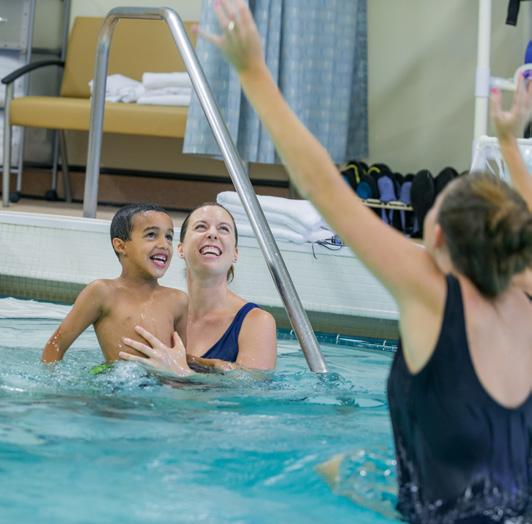
1 QUESTION: What Programs and Services are offered in the Neuro Recovery Centers?
Answer:
• Outpatient Physical Therapy
• Outpatient Occupational Therapy – Assistive technologies
• Wheelchair Clinic for customized seating evaluations
• Aquatic Physical Therapy
• Independent Gym Program
2
QUESTION: Am I able to just show up and join the gym membership?
Answer: No. Anyone wishing to join the Independent Program must get an order for Physical Therapy and be seen for 3-5 visits billed through outpatient physical therapy benefits.
3
QUESTION: How do I join the gym program?
Answer: Steps to Join the Independent Program
• 1st – Get orders and demographic information for desired patient to the NRC or CIU
• 2nd – Patient will have a PT evaluation completed in the NRC. (billed through patients insurance)
• 3rd – Patient will be seen for 3-5 outpatient follow up appointments after eval for setup on appropriate equipment. (billed through patients insurance)
• 4th – Patient will have an orientation appointment that officially makes them a member.
• A patient cannot start programming before each of these steps are completed!
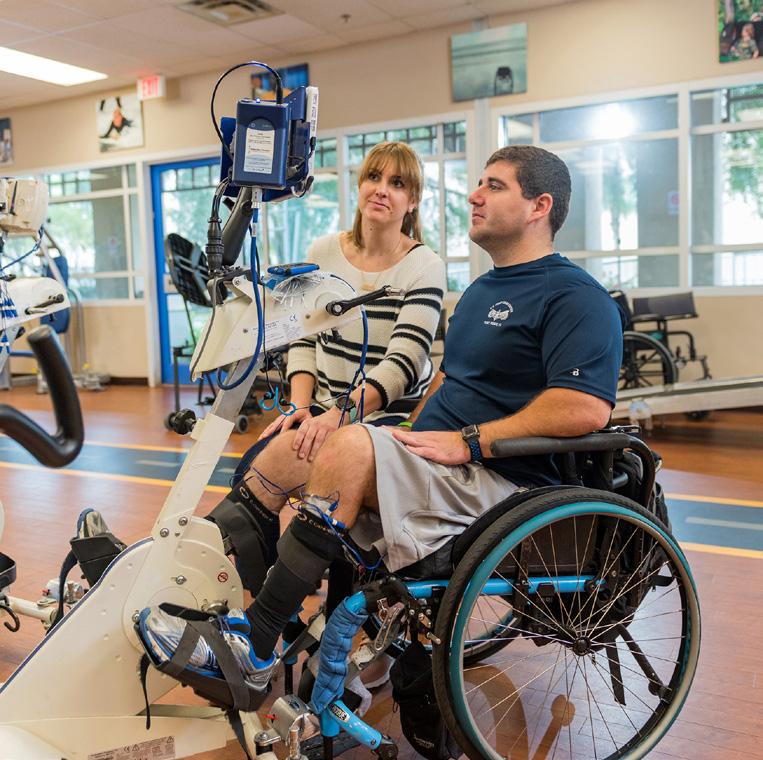
4 QUESTION: What technologies/services are included in the Independent Gym Program?
Answer:
• Functional Electrical Stimulation Cycles –RT200 and RT300 models
• Armeo Spring-Upper Extremity Exoskeleton
• Diego-a robotic-assisted arm-shoulder device
• Amadeo-robotic-assisted technology that targets hand and finger function
• Xcite-provides FES-integrated functional activities for both upper & lower extremities
• Circuit training – Combination of strength, endurance, and functional exercises with traditional machines
• Personal training
• Independent aquatic exercise
5
QUESTION: How much does the independent gym program cost?
Answer: $110.00 per month
6 QUESTION: Will my insurance cover the gym membership?
Answer: No. Unfortunately the program is not covered by insurance. It is a private pay program.
7 Question: How often can I attend the gym program?
Answer: We are open Monday – Friday from 9-5 and attendance is up to the patient and their goals.
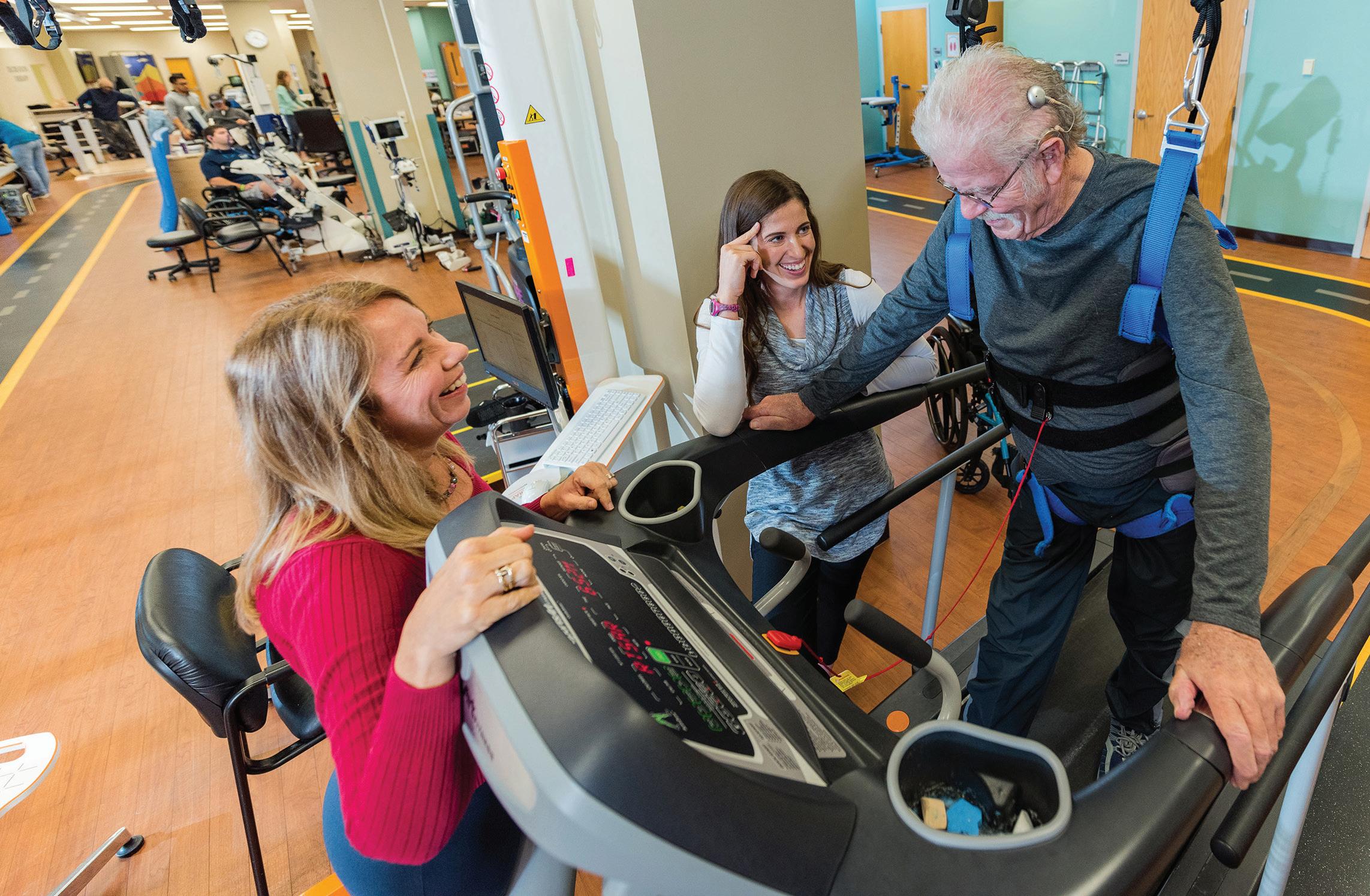
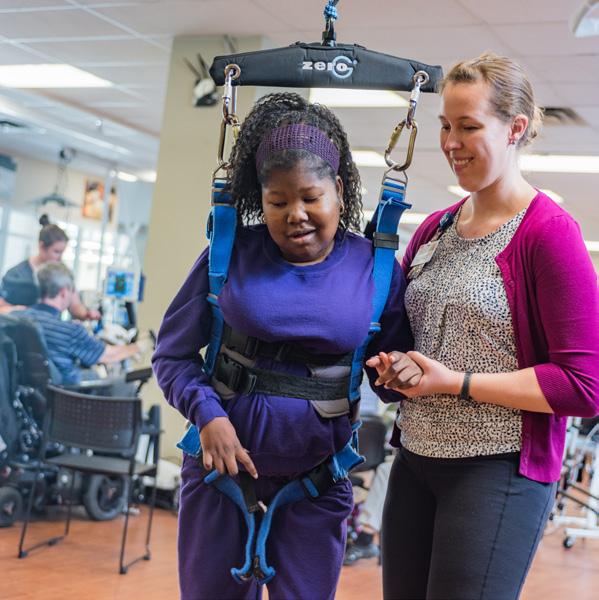
The Neuro Recovery Centers (NRC) Offer Specialized equipment for customized rehabilitation during and after traditional therapy has been completed. This Unique Gym Program allows individuals with disabilities to continue ongoing exercise and conditioning to maintain and improve functional movement and abilities. Our members receive access to our state of the art technology and can utilize the gym up to six days per week. Following an initial evaluation with our physical therapist an individualized care plan will be created to decide equipment usage within the program. Members will be trained on the equipment and exercises will be performed under the guidance and supervision of our neuro exercise specialists.
2 CONVENIENT LOCATIONS
3599 University Blvd S | Jacksonville FL 32216
Phone: (904) 345-6812
500 Park Avenue | Orange Park FL 32073
Phone: (904) 579-1892
$100 Monthly Membership fee gives you access to the gym equipment up to 6 days per week!
Financial Assistance is available to those who apply and qualify.
INDEPENDENT PROGRAM EQUIPMENT AND SERVICES OFFERED
• FES Cycle
• Armeo Spring
• Bioness H200
• Sabeo Glove
• Diego
• Amadeo
• Circuit Training
• Personal Training
• Aquatics
First steps to Participate in the Brooks Rehabilitation Adaptive Fitness and Independent Program:
1. Have a physician fill out the form below.
2. Call Brooks Rehabilitation to set up an appointment for an evaluation. (See the list of numbers at the bottom)
Physician Order for Therapeutic Treatment
Patient name:
Patient’s phone numbers (home/cell):
Physical Therapy Evaluation and Treatment for Independent Excercise Program (check all that apply)
n Stroke n Spinal Cord n Brain Injury n Other
n Parkinson’s n Cerebral Palsy n Multiple Sclerosis
Other/Comments:
I certify that I have examined the above patient and determined that outpatient therapy is necessary. I approve this treatment plan and will review it as necessary or as the patient’s condition requires.
Physician’s Signature
Printed Name
Date ______________ Physician’s Phone
Physician’s Fax (for progress notes)
Physician’s Location
TO SET UP AN APPOINTMENT
Physician’s Office Stamp Here
In Jacksonville | P: (888) 323-8005 or (904) 345-7277 | F: (904) 345-7280 | referrals@brookshealth.org
NRC Jacksonville Clinic Line | P: (904) 345-6812 | F: (904) 345-7663
NRC OPR Clinic Line | P: (904) 579-1892
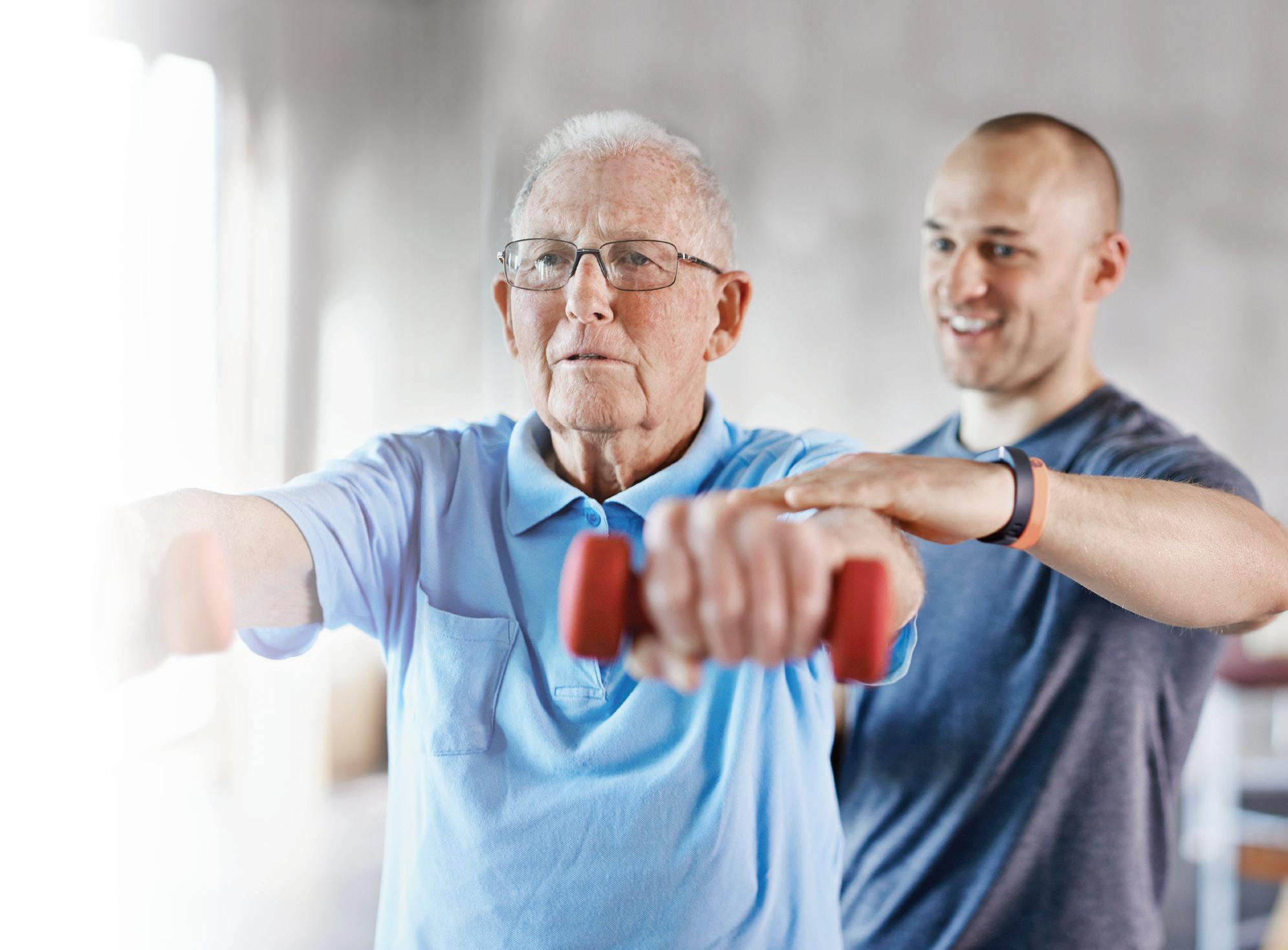
Experts from Brooks Rehabilitation have teamed up with the YMCA of Florida’s First Coast to offer an individualized and supervised exercise program for stroke and brain injury survivors, as well as those battling Parkinson’s Disease and Multiple Sclerosis. The Adaptive Community Wellness Programs allow participants to stay active and improve their health after completing formal physical therapy. An individualized exercise program will be developed for each participant following an initial evaluation with a Brooks physical therapist. The cost of membership is $15/month for YMCA members, and $30/month for non-YMCA members.
Questions? Contact us at (904) 792-4423 or AdaptiveWellness@brooksrehab.org
https://brooksrehab.org/services/ adaptive-wellness/
Area Locations
Brooks Family YMCA
Dye Clay YMCA
Johnson YMCA
McArthur YMCA
Nocatee YMCA
St. Augustine YMCA
Williams YMCA
Winston YMCA
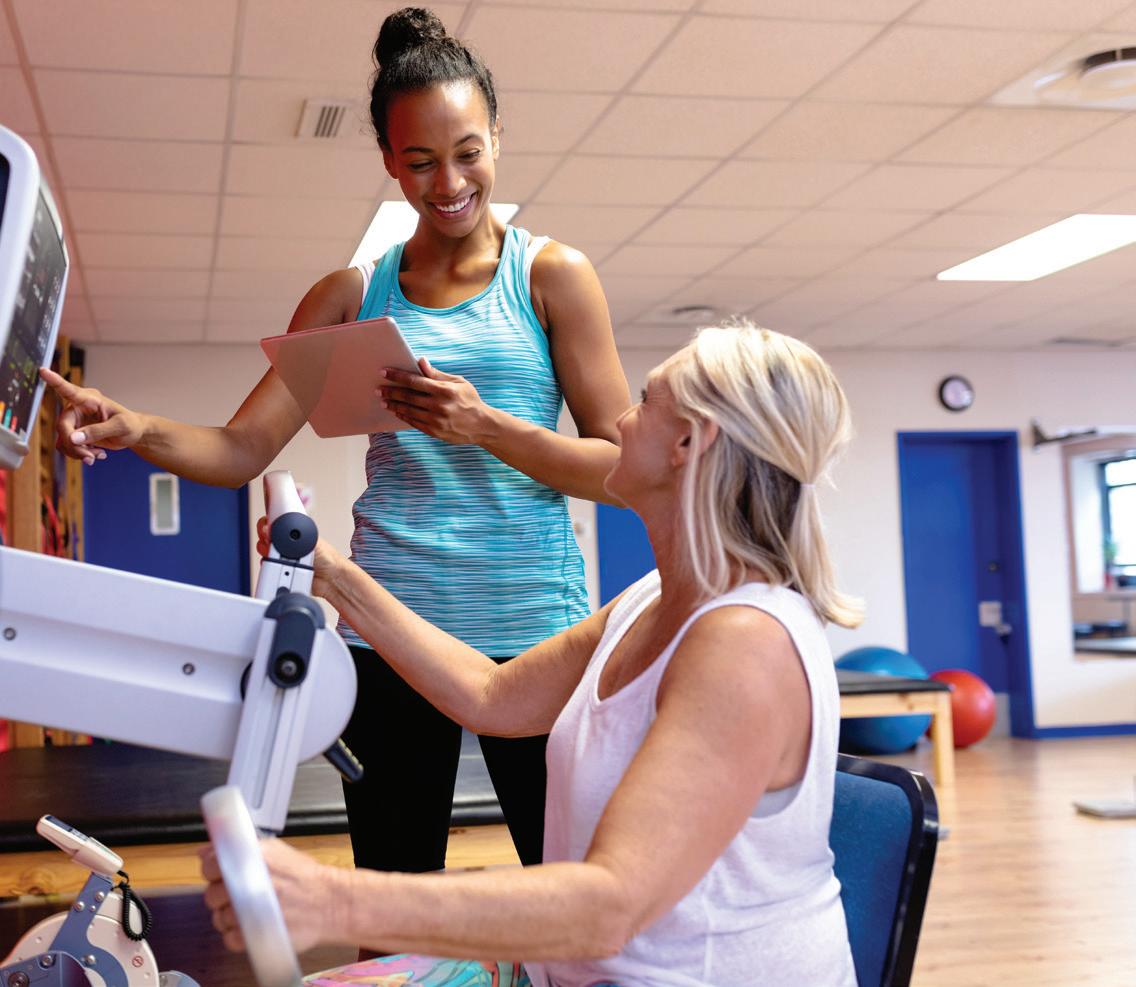
1. Have your doctor fill out the form below OR give you a prescription for “a physical therapy evaluation and treatment for Brooks Wellness Programming”
2. Call Brooks Rehabilitation at (904) 345-7277 to schedule your evaluation, and bring your signed prescription.
OR
Your doctor can fax the prescription to (904) 345-7280 / email referrals@brookshealth.org
3. Attend your scheduled one-time physical therapy appointment – your therapist will conduct a specific evaluation to help select the most appropriate location and services.
4. You will be contacted by a Brooks Rehab staff member to schedule your first session to meet with the Program Specialist.
Patient Name:
Patient’s Phone Numbers (home phone / cell phone):
Physical Therapy Evaluation and Treatment for Wellness Program: (please check all that apply)
Stroke
Parkinson’s
Other / Comments:
Brain Injury
Multiple Sclerosis
Adaptive Aquatics
I certify that I have examined the above patient and determined that outpatient therapy is necessary. I approve this treatment plan and will review it as necessary or as the patient’s conditions requires.
Physician’s Signature
Date _____________ Physician’s Phone _____________________
Physician’s Fax
Physician’s Location _____________________________________
Physician’s Office Stamp Here
Please note: The wellness programs require a physician’s clearance to exercise as well as a one-time Brooks Rehabilitation Physical Therapy Evaluation prior to any program participation. Program times and locations are subject to change at any time. Please contact us for more information.
Brooks Family YMCA
10423 Centurion Pkwy N, Jacksonville, FL 32256
Monday, Wednesday, Friday
Stroke Wellness: 1PM – 4PM
Parkinson’s Disease Wellness: 9AM – 12PM
Tuesday, Thursday
Brain Injury & MS Wellness: 1PM – 4PM
Dye Clay Family YMCA
3322 Moody Ave, Orange Park, FL 32065
Tuesday, Thursday
Adaptive Community Wellness: 9AM – 12PM
Johnson Family YMCA
5700 Cleveland Rd, Jacksonville FL, 32209
Tuesday, Thursday
Adaptive Community Wellness: 10AM – 12PM

McArthur Family YMCA
1915 Citrona Dr, Fernandina Beach, FL 32034
Monday, Wednesday, Friday
Adaptive Community Wellness: 1PM – 4PM Parkinson’s Disease Wellness: 9AM – 12PM
Nocatee YMCA
884 Cross Town Dr, Ponte Vedra Beach, FL 32081
Monday, Wednesday, Friday
Adaptive Community Wellness: 9AM – 12PM
St. Augustine YMCA
500 Pope Rd, St. Augustine, FL 32080
Monday, Wednesday, Friday
Adaptive Community Wellness: 1:30 – 4:30 PM
*Adaptive Community Wellness includes Stroke, Parkinson’s, BI and MS participants in one program
Williams Family YMCA
10415 San Jose Blvd, Jacksonville, FL 32257
Tuesday, Thursday
Adaptive Community Wellness: 1:30 – 4PM
Winston Family YMCA
221 Riverside Ave, Jacksonville, FL 32202
Monday, Wednesday, Friday
Adaptive Community Wellness: 9AM – 12PM
Patient Access Center: P: (904) 345-7277 | F: (904) 345-7280
Email: Referrals@BrooksRehab.org | Web: BrooksRehab.org/outpatient
1 Amelia Island
4800 First Coast Highway, Suite 240
Fernandina Beach, FL 32034
P: (904) 321-5491
F: (904) 321-5478
2 Arlington
9100 Merrill Road, Suite 10
Jacksonville, FL 32225
P: (904) 725-9994
F: (904) 725-9138
3 Balance Center
(Within Center One)
10475 Centurion Parkway N., Suite 104
Jacksonville, FL 32256
P: (904) 854-2050
F: (904) 854-2058
4 Callahan
45390 Green Ave.
Callahan, FL 32011
P: (904) 879-1223
F: (904) 879-4986
5 Center for Low Vision
(Enter through the Brooks Medical Group Practice)
3901 University Blvd. S., Suite 103
Jacksonville, FL 32216
P: (904) 389-9989
F: (904) 389-1060
6 Center for Sports Therapy
(Within Brooks Family YMCA)
10423 Centurion Parkway N. Jacksonville, FL 32256
P: (904) 854-2090
F: (904) 854-2093
7 Fernandina
1885 South 14th St.
Fernandina Beach, FL 32034
P: (904) 277-4449
F: (904) 277-4177
8 Fleming Island
4575 US 17 South, Suite 350
Fleming Island, FL 32003
P: (904) 637-0148
F: (904) 637-0155
9 Healthcare Plaza
3901 University Blvd. S. Jacksonville, FL 32216
P: (904) 345-7310
F: (904) 345-7240
10 Julington Creek
450 S.R. 13 N., Suite 112
St. Johns, FL 32259
P: (904) 900-5512
F: (904) 999-4815
11 Mandarin
11705 San Jose Blvd., Suite 111
Jacksonville, FL 32223
P: (904) 345-7450
F: (904) 345-7451
12 Mandarin North
10400 San Jose Blvd Suite 8 Jacksonville, FL 32257
P: (904) 664-8330
P: (904) 664-8331
13 Neuro Recovery Center
3599 University Blvd. S. Jacksonville, FL 32216
P: (904) 345-6812
F: (904) 345-7663
14 Nocatee
400 Colonnade Drive, Suite 100
Ponte Vedra, FL 32081
P: (904) 395-1755
F: (904) 395-1754
15 Northside
1034 Dunn Ave., Suite 104
Jacksonville, FL 32218
P: (904) 757-1782
F: (904) 757-9808
16 Orange Park
500 Park Ave.
Orange Park, FL 32073
P: (904) 278-7890
F: (904) 278-7762
17 Ortega
5539 Roosevelt Blvd. Jacksonville, FL 32244
P: (904) 483-2272
F: (904) 483-2273
18 Ponte Vedra
816 N. Highway A1A, Suite 307
Ponte Vedra Beach, FL 32082
P: (904) 543-4021
F: (904) 543-4022
19 Riverside –Healthy Living Center
221 Riverside Ave.
Jacksonville, FL 32202
P: (904) 661-2790
F: (904) 661-2793
20 San Jose (within JCA)
8505 San Jose Blvd.
Jacksonville, FL 32217
P: (904) 419-6101
F: (904) 419-6191
21 San Pablo
14286 Beach Blvd., Suite 34
Jacksonville, FL 32250
P: (904) 345-7510
F: (904) 345-7540
22 St. Augustine
190 Southpark Blvd., Suite 100
St. Augustine, FL 32086
P: (904) 824-1478
F: (904) 824-8071
23 St. Augustine
Pediatrics Center
200 Southpark Blvd., Suite 102
St. Augustine, FL 32086
P: (904) 417-6236
F: (904) 417-6024
24 St. Johns
104 Ashourian Ave., Suite 105
St. Augustine, FL 32092
P: (904) 230-7761
F: (904) 230-7763
25 Westside
7749 Normandy Blvd., Suite 147
Jacksonville, FL 32221
P: (904) 786-5576
F: (904) 786-9907
26 World Golf Village
319 W. Town Place, Unit 5
World Golf Village
St. Augustine, FL 32092
P: (904) 342-5262
F: (904) 217-3580
27 Yulee
463721 S.R. 200, Suite 7
Yulee, FL 32097
P: (904) 602-6088
F: (904) 602-6091
Outpatient Locations CENTRAL FLORIDA
Pelvic Health
Multidisciplinary clinic offering Physical, Occupational & Speech Therapy
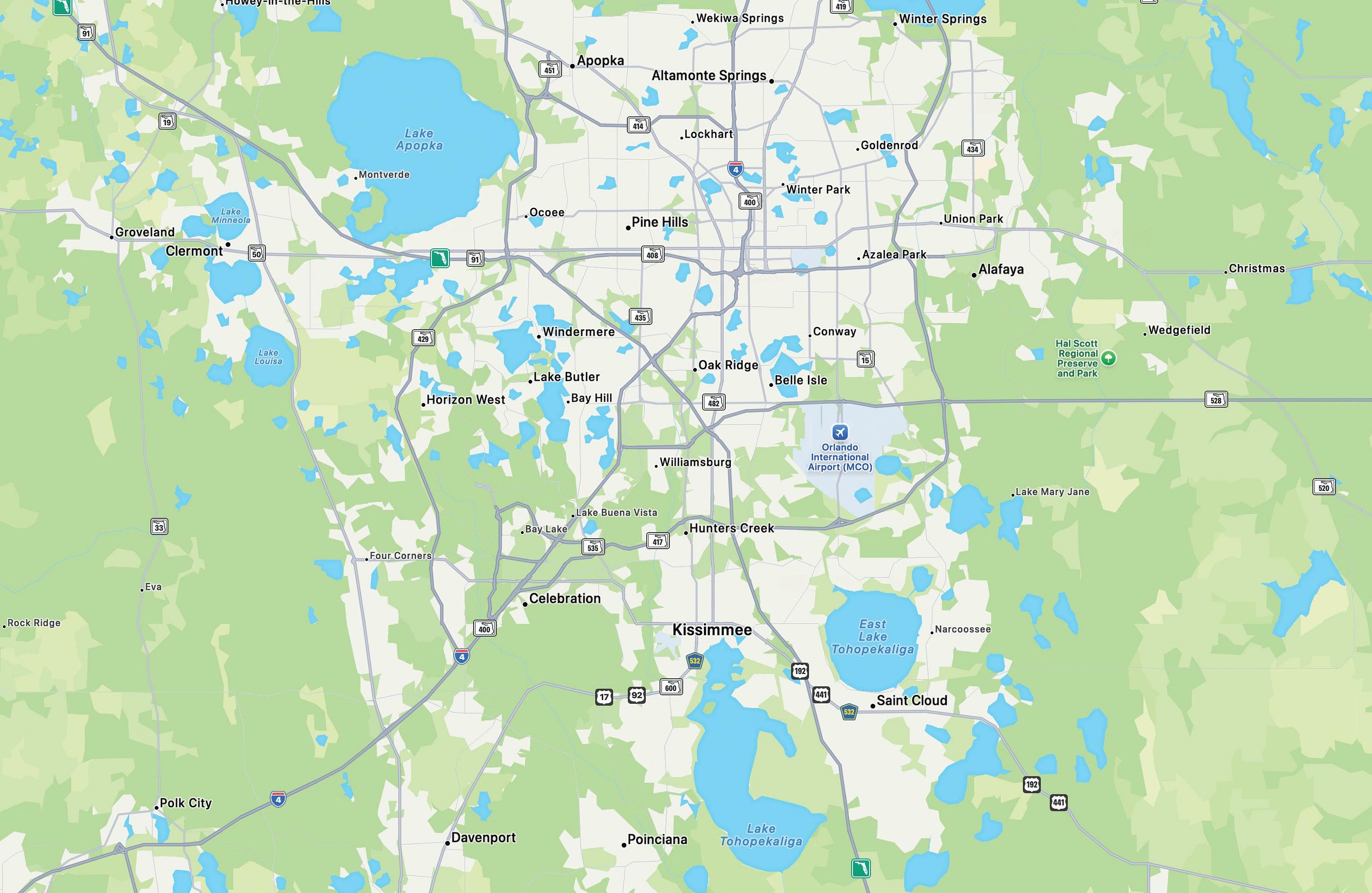
1. Apopka
3030 E. SR 436, Suite 240 Apopka, FL 32703
P: (689) 698-3731 | F: (689) 698-3732
2. Buenaventura Lakes
2705 Simpson Road, Suite 111 Kissimmee, FL 34744
P: (689) 223-5490 | F: (689) 223-5491
3. Clermont
2616 South Highway 27 Clermont, FL 34711
P: (352) 565-5992 | F: (352) 565-5993
4. Horizon West – Hamlin
15820 Shaddock Drive, Suite 110 Winter Garden, FL 34787
P: (321) 999-9056 | F: (321) 999-9057
5. Kissimmee South
3337 S. Orange Blossom Trail Kissimmee, FL 34746
P: (321) 999-9250 | F: (321) 999-9251
6. Lake Nona
12958 Sunstone Ave Suite 101 Orlando, FL 32832
P: (689) 223-3632 | F: (689) 223-3633
7. Metrowest
2441 S Hiawassee Road Orlando, FL 32835
P: (407) 965-5818 | F: (407) 965-5819
8. Ocoee South 2960 Maguire Road, Suite 1001 Ocoee, FL 34761
P: (321) 999-9285 | F: (321) 999-9286
9. Osceola
1172 West Osceola Parkway Kissimmee, FL 34741
P: (689) 204-2221 | F: (689) 204-2225
10. Oviedo 1121 Alafaya Trail, Suite 1073 Oviedo, FL 32765
P: (407) 796-5265 | F: (407) 796-5260
11. Poinciana
339 Cypress Parkway, Suite 101 Kissimmee, FL 34759
P: (407) 530-3577 | F: (407) 530-3578
12. Rio Pinar
515 South Chickasaw Trail, Suite 515 Orlando, FL 32825
P: (407) 710-1946 | F: (407) 710-1951
13. Sodo
2849 South Orange Ave, Suite 360 Orlando, FL 32806
P: (689) 207-4255 | F: (689) 207-4256
14. Waterford Lakes
801 Woodbury Road, Suite 103 Orlando, FL 32828
P: (407) 373-6082 | F: (407) 373-6083
15. Winter Garden
15508 W Colonial Drive, Suite 100 Winter Garden, FL 34787
P: (407) 347-4101 | F: (407) 347-4102
16. Winter Park
4270 Aloma Ave, Suite 150 Winter Park, FL 32792
P: (321) 999-9260 | F: (321) 999-9261
= Multidisciplinary clinic offering PT, OT, ST
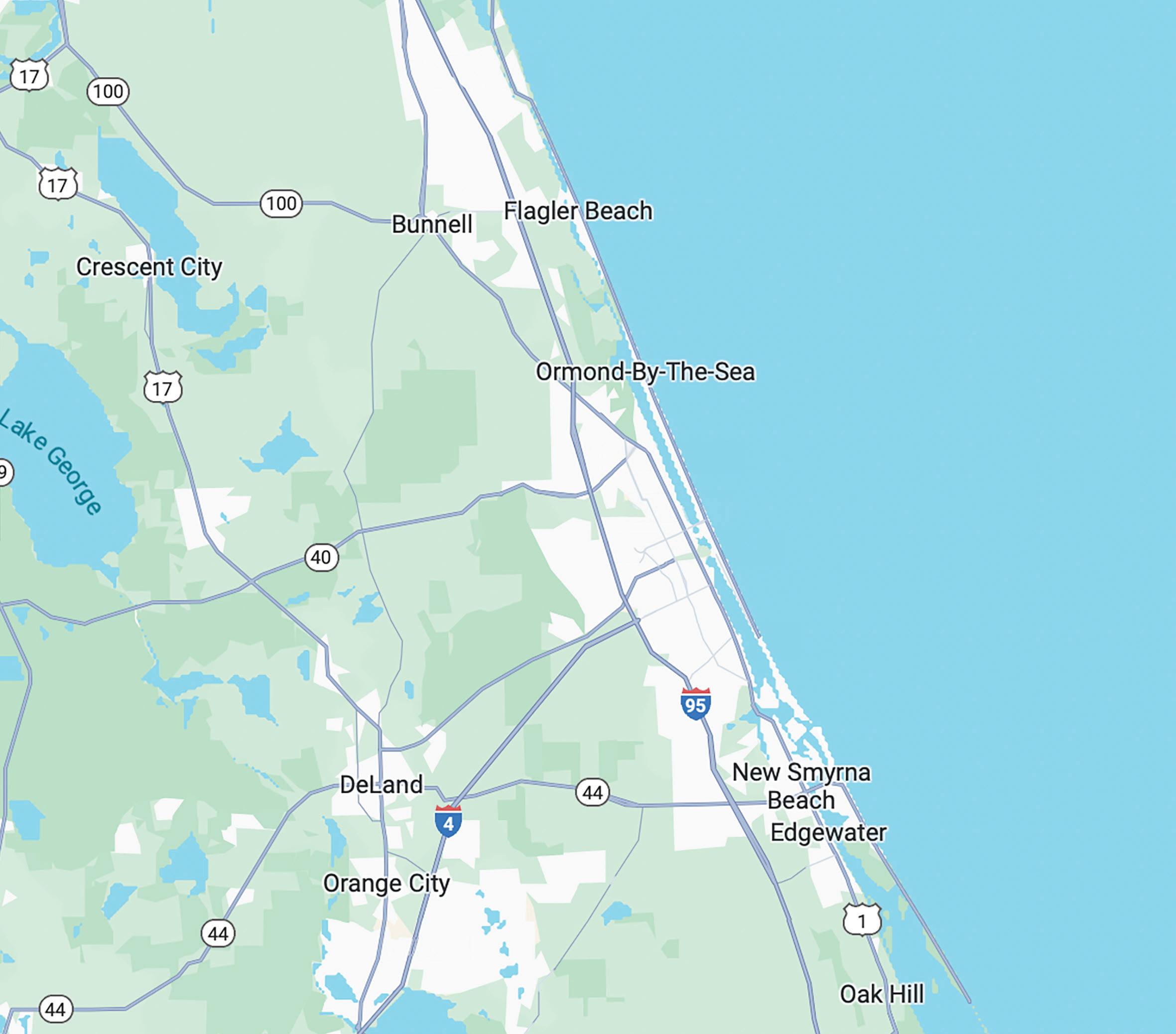
DAYTONA BEACH
201 N. Clyde Morris Blvd., Suite 320 Daytona Beach, FL 32114 P: (386) 236-7017 F: (386) 236-7018
2. DAYTONA BEACH PEDIATRICS
311 N. Clyde Morris Blvd., Suite 50 Daytona Beach, FL 32114 P: (386) 425-7800 F: (386) 425-7801
3. DELTONA
3400 Halifax Crossings Blvd., Suite 140 Deltona, FL 32725 P: (386) 425-6800 F: (386) 425-6801
For more information contact:
4. ORMOND BEACH
1240 W Granada Blvd, 1st Floor Ormond Beach, FL 32174 P: (386) 898-0220 F:(386) 898-0221
5. PALM COAST
9 Pine Cone Drive 104B Palm Coast, FL 32137 P: (386) 446-9716 F: (386) 446-0046
6. PORT ORANGE
3863-H South Nova Road Port Orange, FL 321297 P: (386) 236-7010 F: (386) 236-7002
Central Intake: (904) 345-7277 Fax: (904) 345-7280 Email: Referrals@BrooksRehab.org
7. WEST VOLUSIA
2621 Enterprise Road, Suite 100 Orange City, FL 32763 P: (386) 775-7488 F: (386) 775-9515
8/25
Spinal Cord Injury and Other Disorders Day Treatment Program (904) 345-7506
The Spinal Cord Day Treatment Program is an intensive interdisciplinary CARF accredited treatment program for patients with spinal cord injury and related neurological injuries/disorders.
Brain Injury Day Treatment Program (904)345-7223
The Brain Injury Day Treatment Program is a comprehensive CARF accredited program for the treatment of brain injury.
Neuropsychological Evaluations (904)345-7210
Neuropsychological evaluations assess cognitive and emotional status in order to assist in diagnosis, tracking change, and treatment planning.
Driving Evaluation Program (904)345-7210
The driving evaluation program is designed to ensure that drivers are safe after injury or illness.
Cognitive Rehab Therapy (904)345-7210
Cognitive Rehabilitation Therapy improves the attention, problem solving, and memory skills that are impaired after an injury to the brain.
Medical Psychotherapy (904) 345-7210
Medical Psychotherapy is provided to foster coping and improve the psychological health of those with medical illnesses.
Functional Capacity Evaluations (904) 345-7210
A Functional Capacity Evaluation is a comprehensive physical assessment to determine an individual’s safe maximum physical abilities for employment or disability
Brooks Behavioral Medicine offers brief individual psychotherapy services to patients experiencing a wide range of concerns and mental health difficulties following medical illness and injuries. Many experience emotional distress, difficulty coping with pain, grief/loss, altered cognitive and physical functioning, family role changes and more.
Mental health concerns that existed before can worsen, and some may experience mental health problems for the first time. These services help patients adapt to and recover from physical changes, decrease emotional distress, and develop greater independence and wellbeing.
Typical course of treatment is 6-10 sessions.
Inclusion and Exclusion criteria
Inclusion
• Age – 16 and older
• A medical diagnosis
• Presence of psychological diagnosis (related to medical diagnosis)
Exclusion
• Less than 16 years old
• Primary diagnosis of neurodevelopmental disorder, eating disorder, substance use disorder, active psychosis
• Imminent risk and/or in need of long-term mental health treatment
• Need of couples/marital therapy and/or family therapy
Insurances accepted
• We accept all major insurances except Medicaid and United Healthcare
• Uncompensated Care Fund (for those without insurance and those under-insured and those that have Medicaid)
How to refer
• Call the Brooks Behavioral Medicine front desk at (904) 345-7210 or fax (904) 345-7255


To make a referral for a neuropsychological evaluation with one of our experts, please call (904) 345-7210 or fax a referral to (904) 345-7255.
Russell Addeo, Ph.D., ABPP-CN Board-Certified Clinical Neuropsychologist
Specializing in evaluation and treatment of adolescents and adults.
Anissa Maffett, Ph.D. Clinical Neuropsychologist
Specializing in evaluation and treatment of adults.
Laura Wulff, Ph.D., ABPP-CN Board-Certified Clinical Neuropsychologist
Specializing in evaluation and treatment of adults.
Zachary Houck, Ph.D. Clinical Neuropsychologist
Specializing in evaluation and treatment of adolescents and adults.
Michelle Benjamin, Ph.D. Clinical Neuropsychologist
Specializing in evaluation and treatment of children, adolescents and adults.
Gloria Morel Valdes, Psy.D. Clinical Neuropsychologist
Specializing in the evaluation and treatment of adults, with expertise in multicultural neuropsychological assessments.
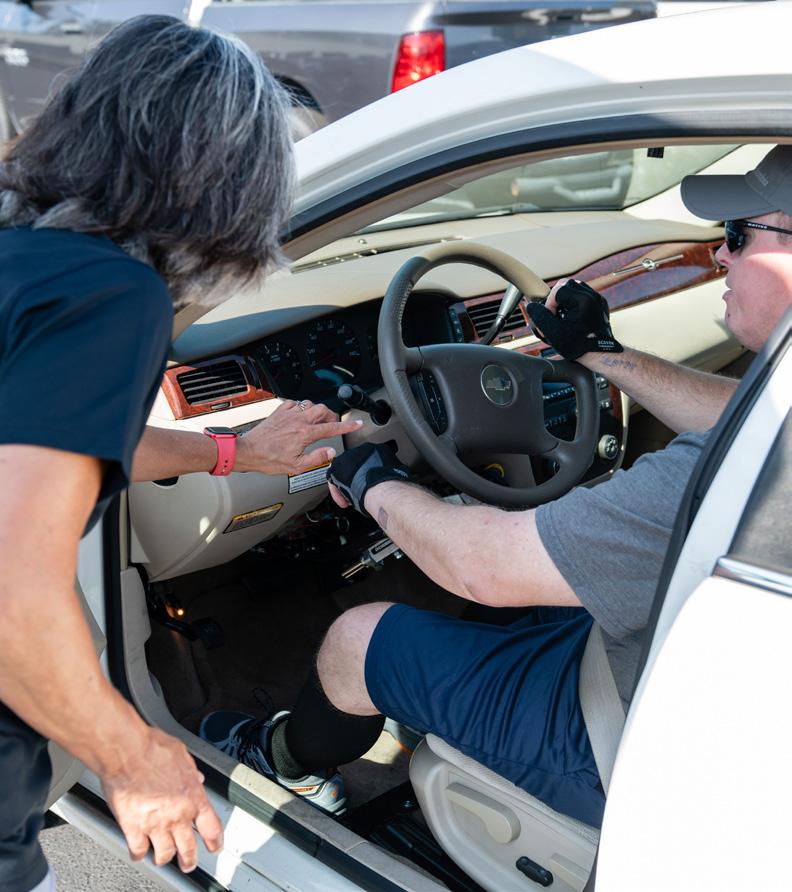
Brooks Rehabilitation’s Driver Evaluation and Training Program provides assessments and training for individuals with cognitive, physical or developmental issues to help determine their driving capabilities.
Our comprehensive driving evaluation includes assessments of functions critical for safe driving. These functions include cognition, vision, reaction time and physical skills.
The evaluation takes approximately 2 hours in the clinical setting and 1 hour behind the wheel. During that time, we will obtain the individual’s medical history and driving history.
Tests will include knowledge of driving safety, reaction timing, cognition, vision and general strength. Once completed, the individual then participates in an on-the-road assessment in a vehicle provided by Brooks.
An assessment for adaptive driving equipment can also be completed during the evaluation.
Our program is geared toward servicing the following diagnoses and populations:
4Spinal cord injury
4Traumatic brain injury
4Stroke 4Amputations
4Other diagnoses or health disorders
4Elder drivers with cognitive changes such as Alzheimer’s
4New drivers with developmental or learning disabilities i.e. cerebral palsy, spina bifida and autism.
We can help determine if an individual’s current vehicle meets their needs. We also provide (once training is complete) the prescription for the adaptive equipment needed for an individual with disabilities to drive independently. We can also provide recommendations for local vendors who will provide the necessary modifications.
Our program is available for individuals 15 years and older. Participants must have a valid learner’s permit or driver’s license to participate.
4All participants must also have a referral from their treating physician.
4If your license is revoked or under medical review, we can assist in obtaining a one-day temporary permit.*
4Fees are based on the number of sessions required to complete testing and training. An estimate is available upon request.
The Spinal Cord Injury and Related Disorders Day Treatment Program is an interdisciplinary outpatient rehabilitation program designed to provide intense therapy for patients who have had a spinal cord injury (SCI) or similar neurologic disorder such as:
• Traumatic and non-traumatic injuries to the spinal cord (includes injuries related to accidents, surgical interventions, infections and spinal pathology)
• Autoimmune disorders (including Gulliain-Barre Syndrome or Transverse Myelitis)
• Critical illness polyneuropathies and polymyopathies
• Multiple Sclerosis
The program is overseen by a medical director and the interdisciplinary team includes a physical therapist, occupational therapist, speech therapist, psychologist and a nurse case manager, all with specialized training in spinal cord injuries. The SCI Day program focuses on managing ongoing medical needs with special attention towards home and community reintegration. Additional components can include community outings, school re-entry and return to work training, as well as driving evaluations, wheelchair evaluations or assistive technology consultations.
WHO
• Individuals who are 16 and older and who are able to participate in up to 5 hours of various therapeutic interventions (individually or in a small group setting)
WHAT
• 5 hours a day, 5 days a week
• Personalized treatment plans will determine program length WHERE
• Healthcare Plaza at 3901 University Blvd S, Jacksonville, FL 32216 REQUIREMENTS
• At least 2 disciplines for treatment
• Caregiver availability (as determined by need)
• Dependable transportation
• Funding/insurance REFERRALS
• Please contact the nurse case manager at SCIDay@Brooksrehab.org or (904) 345-7506
• Referrals can be made by inpatient rehabilitation hospitals, outpatient therapists, primary care physicians, home health clinicians and case managers.
• For more information you can also visit our website at https://brooksrehab.org/services/sciday/
By offering this program and using the other extensive Brooks services offered, we are striving to empower our patients to achieve their highest level of recovery and participation in life.
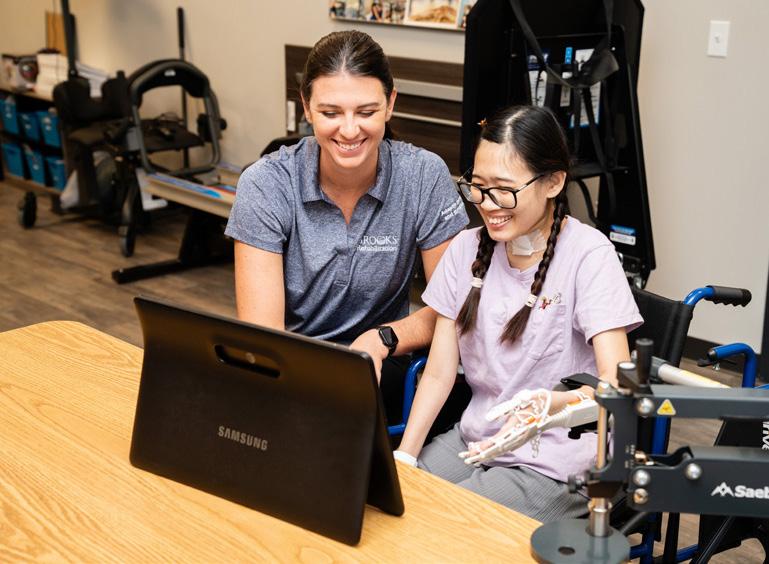
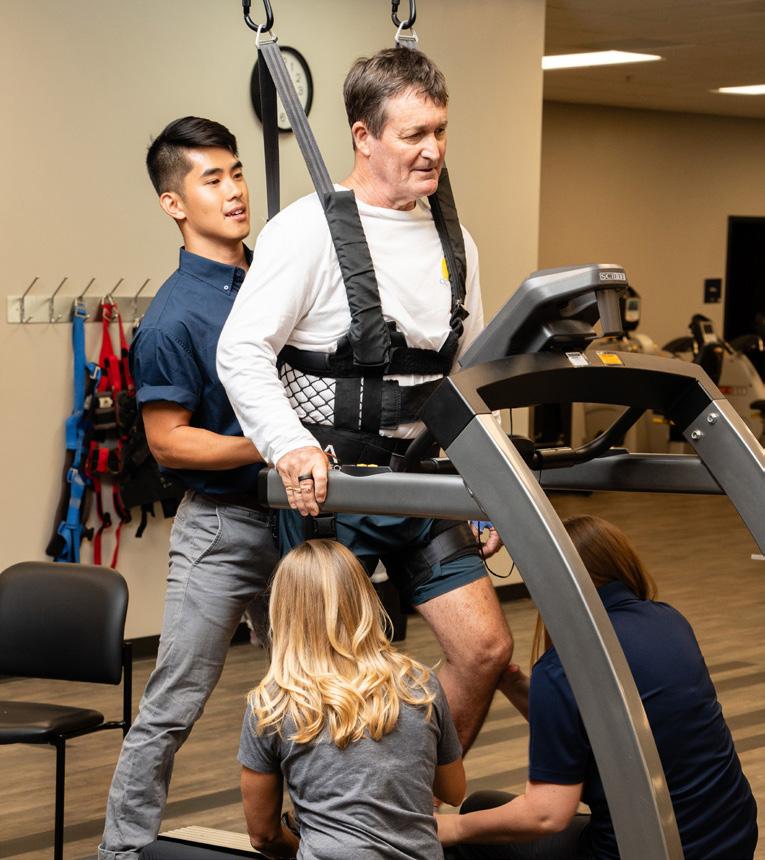
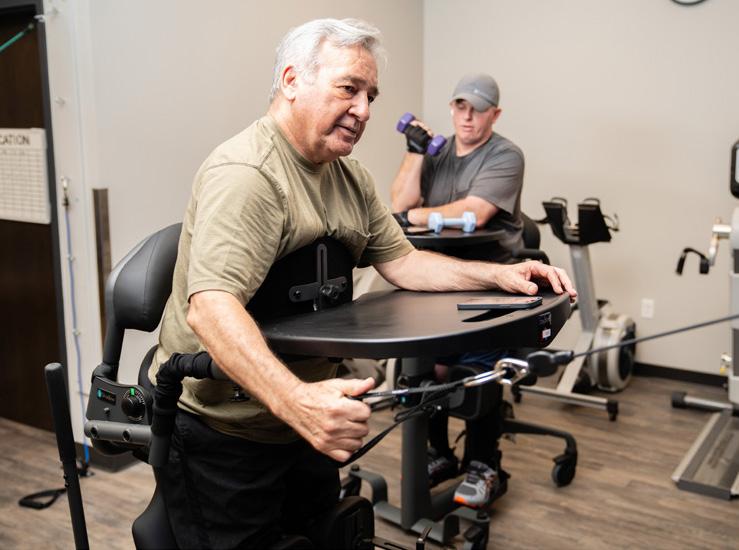

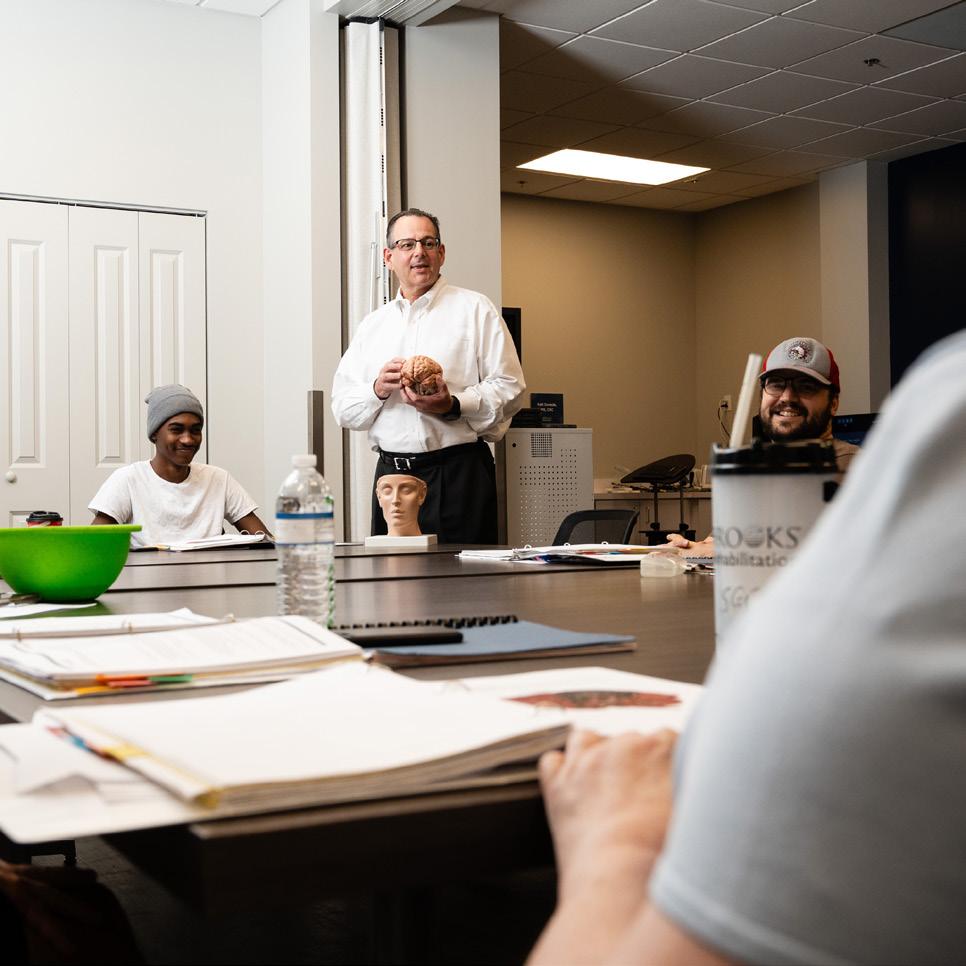
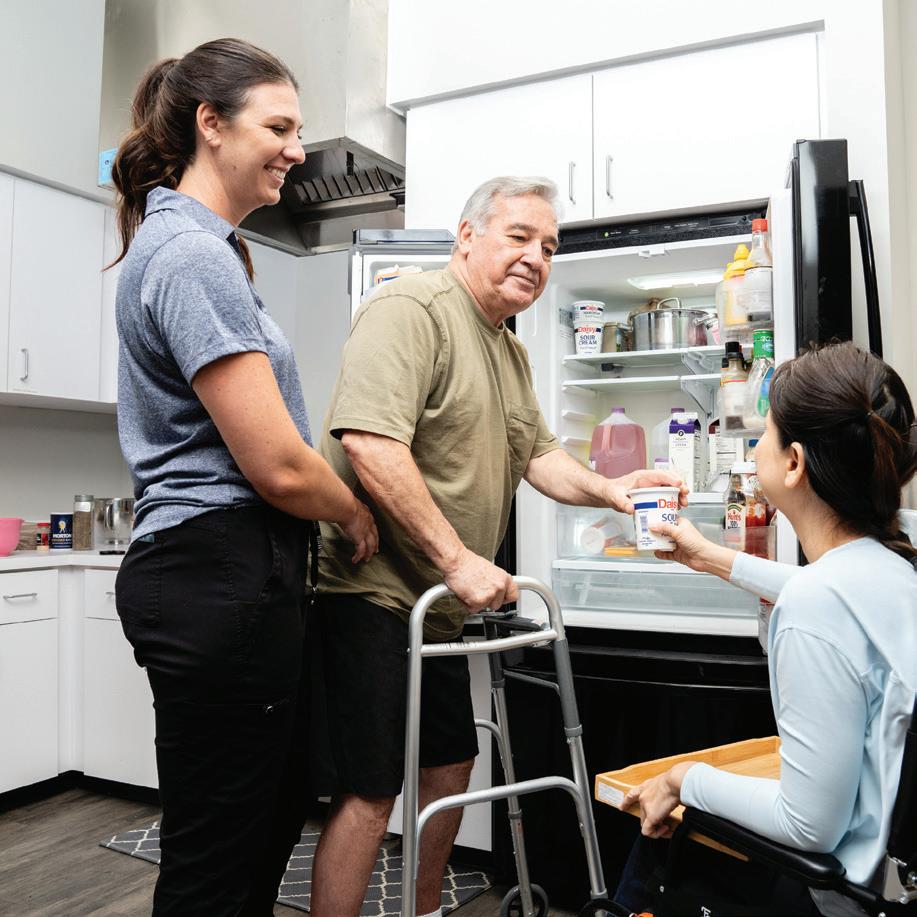
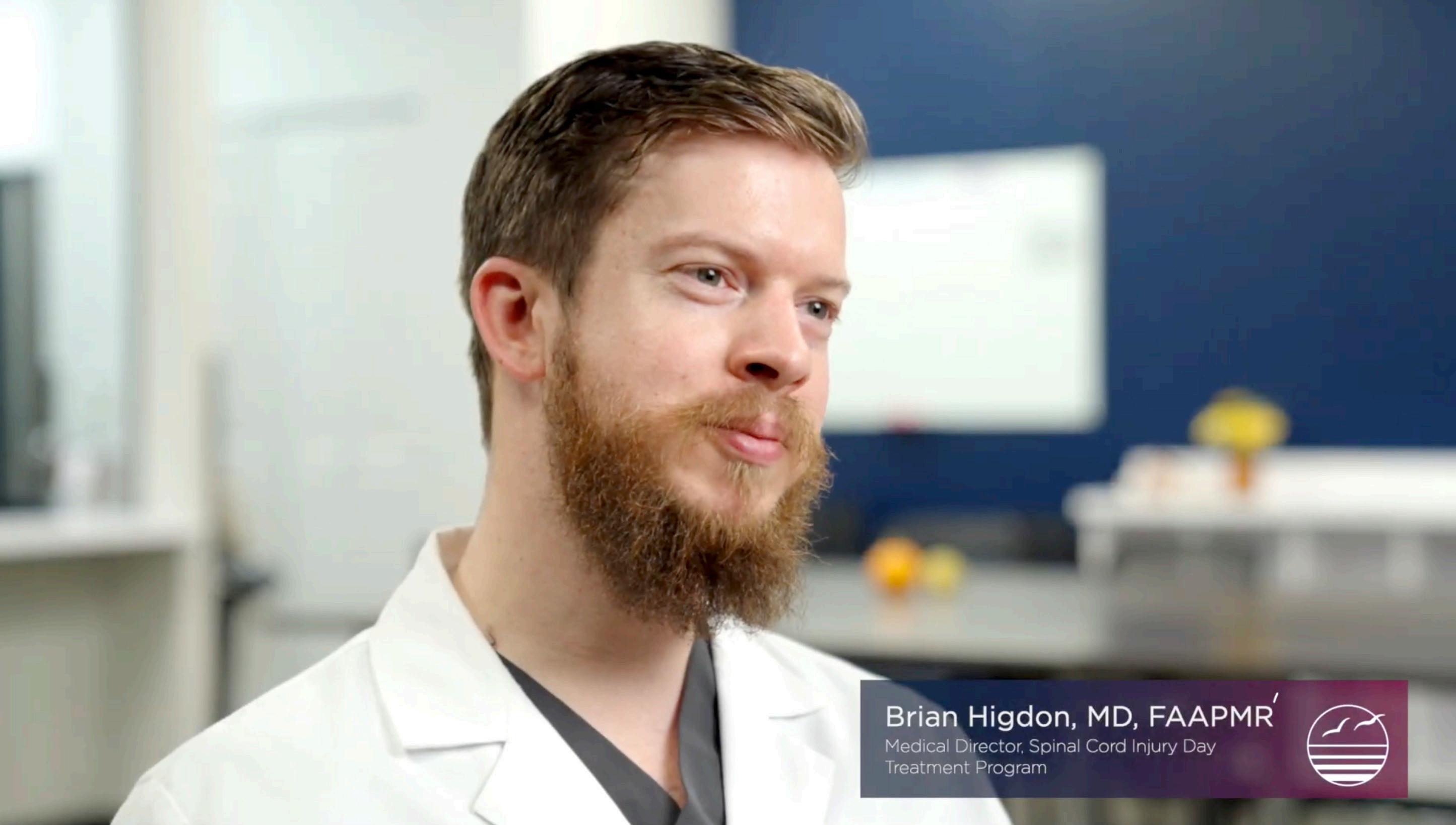
The Brain Injury Day Treatment (BIDT) Program uses a comprehensive and interdisciplinary treatment model to help individuals who have sustained either a traumatic (e.g., moderate-to-severe TBI) or nontraumatic (e.g., CVA) brain injury. This team includes a neuropsychologist, psychologist, cognitive rehabilitation therapists, speech-language pathologists, occupational therapist, and a physical therapist, and they have specialized training in brain injuries. The program has a case manager who works with the patients and their families during their time in the program. There is also a program assistant who can provide help to the patients, as well as the therapists, throughout the treatment day.
The BIDT program was created to help improve cognitive/thinking skills, communication ability, social skills, physical functioning, and emotional stability, with the goal of increasing independence and returning to the community. Additional components of the program include (when appropriate) community outings, grocery shopping, cooking, school re-entry, and return to work training.
WHO
• Individuals that are 16 and older who have suffered a brain injury. These injuries could include traumatic brain injuries, strokes, and anoxic brain injuries, and other acquired brain injuries.
• The individual must be able to participate in six hours of diverse therapeutic activities with the majority of the time spent in a group setting.
WHAT
• After a patient participates in the program for over a week, a treatment plan is created to match the needs of the patient. This model provides the individual with up to as many as 30 hours of therapy per week. Therapy services include individual speech, occupational, and physical therapies along with psychotherapy, cognitive group-based therapies, and a support group.
WHERE
• The BIDT Program is located within Brooks Behavioral Medicine at the Healthcare Plaza at 3901 University Blvd. S, Jacksonville, FL 32216.
REQUIREMENTS
• Ability to work in a group-based setting on cognition (“thinking skills”)
• Dependable transportation
• Funding/insurance
REFERRALS
• Please contact the case manager of the BIDT Program, Kelli McNames, COTA/L at (904) 345-7223, or email her at kelli.mcnames@brooksrehab.org.
• Referrals can be made by hospitals, rehabilitation facilities and case managers. A signed order will be needed from a medical provider/physician.
• For more information on our program, you can visit our website at https://brooksrehab.org/services/brain-injury-day-treatment/.
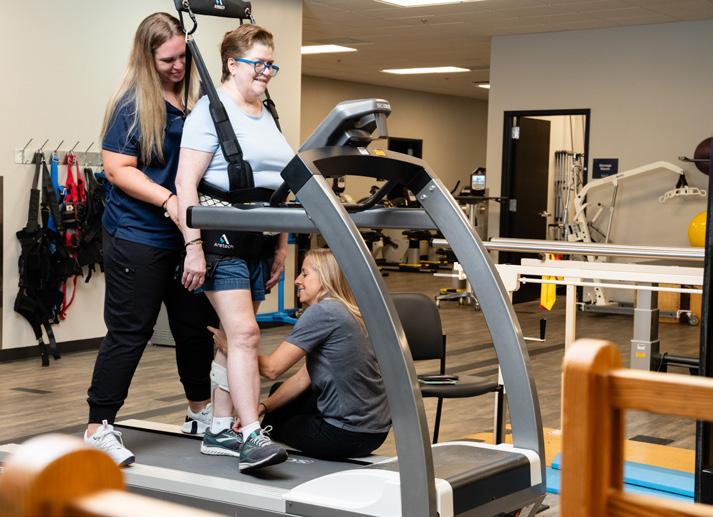
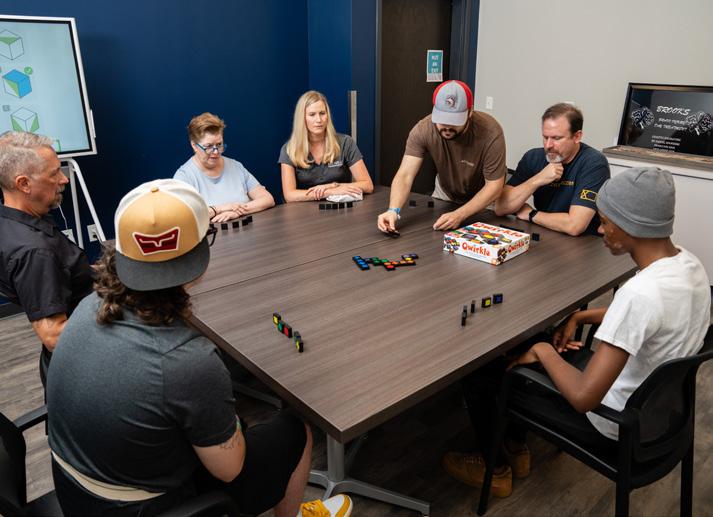
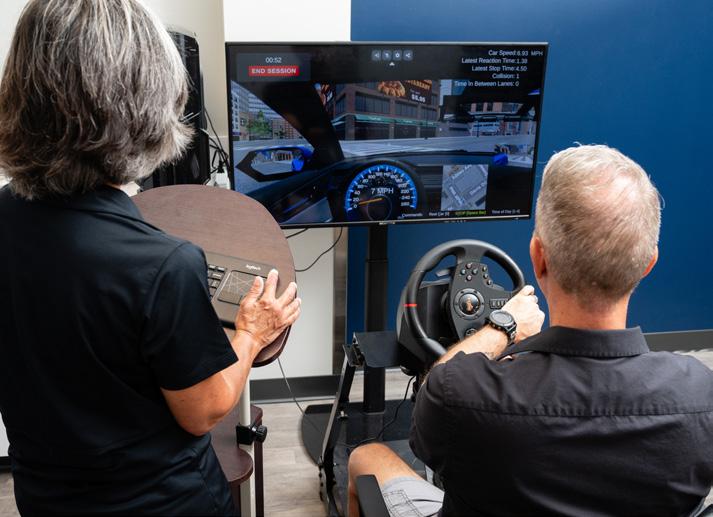
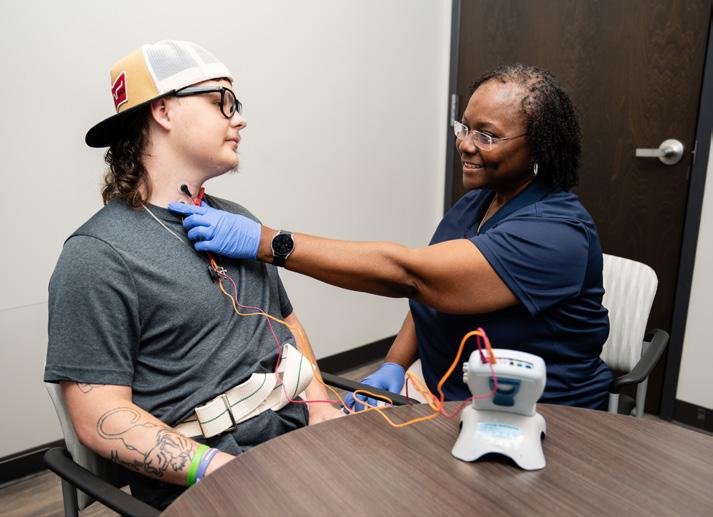
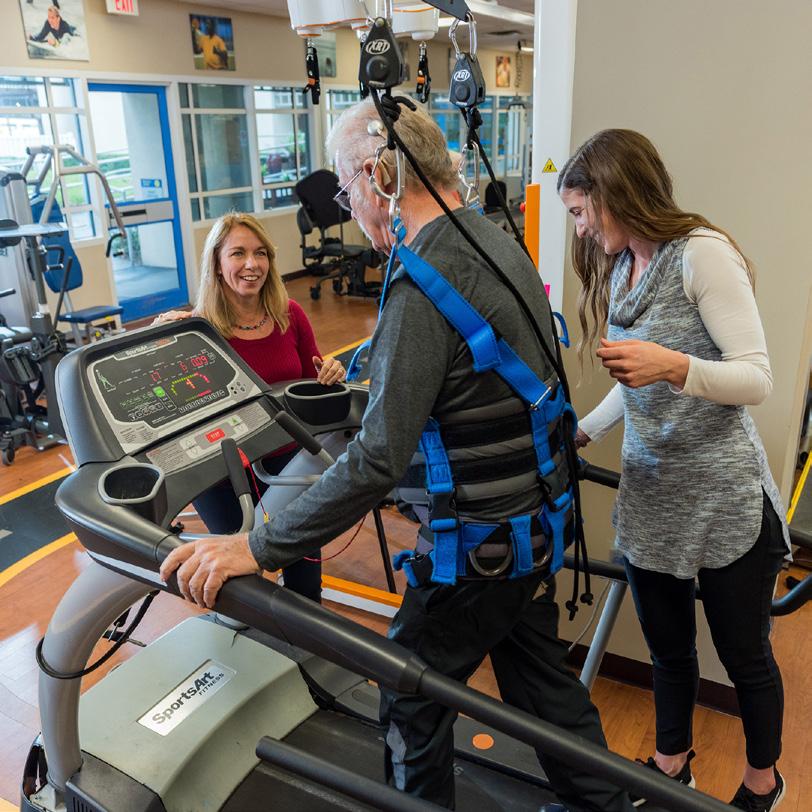
Brooks Rehabilitation is proud to offer individualized services for patients and clients with neurological conditions from physical therapists, occupational therapists and speech-language pathologists who have completed extensive training in neurologic rehabilitation and apply evidence-based strategies to promote maximum recovery.
Brooks utilizes state-of-the-art technology to promote neurorecovery including, but not limited to:
• Functional & neuromuscular electrical stimulation
• Body-weight support and fall prevention harness systems
• Biofeedback devices
• Mobile arm supports and robotics
• Exoskeletons
• Virtual reality
• Augmentative and Assistive Communication devices
Additional resources available at Brooks include:
• Neuro Recovery Centers
• Aphasia Center
• Motional Analysis Lab
• Research Department
• Brain Injury Clubhouse
• Brain injury and Spinal Cord Injury/ Disease Day Treatment Programs
• Wellness programs at participating YMCAs
• Independent wellness programs at Brooks Clinics
WE SPECIALIZE IN TREATING PATIENTS WITH VARIOUS NEUROLOGIC DIAGNOSES SUCH AS:
• Parkinson’s disease
• Multiple sclerosis
• Stroke
• Brain Injury
• Spinal cord injury/disease
• Vestibular disorders
• Concussion
• Balance impairments/falls
• Motor speech disorders
• Swallow disorders
BROOKS HAS 15 MULTIDISCIPLINARY CLINICS THROUGHOUT:
Jacksonville
St. Augustine
Daytona
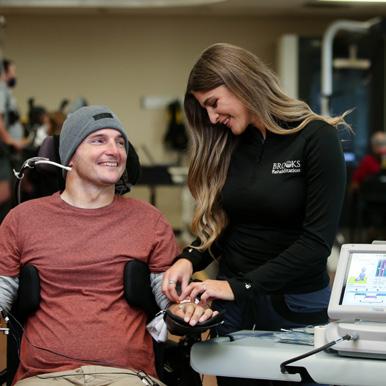
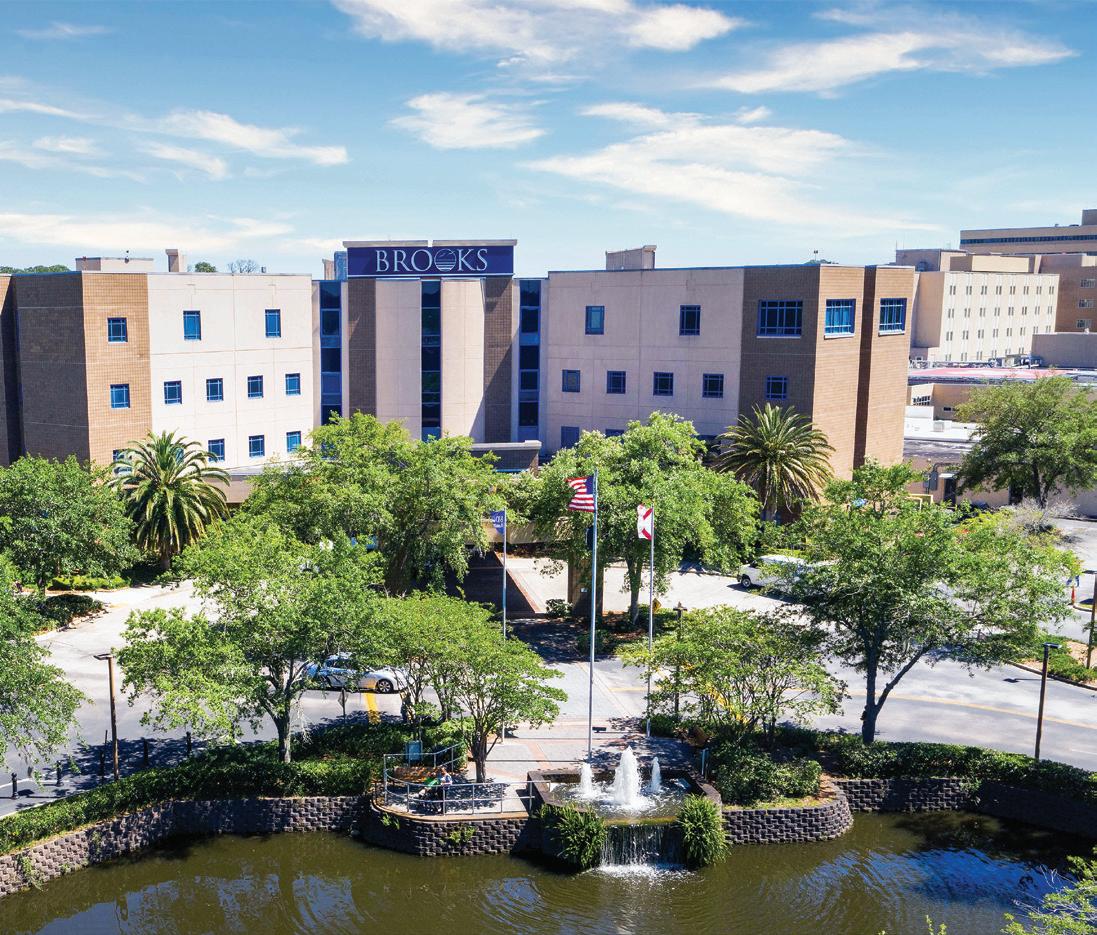
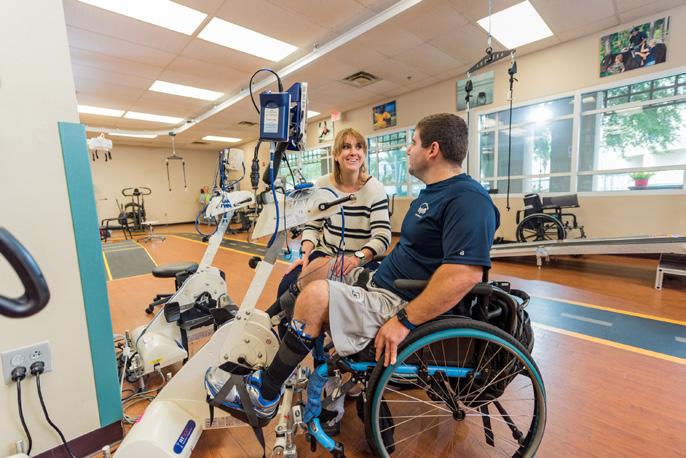
Orlando
Hudson
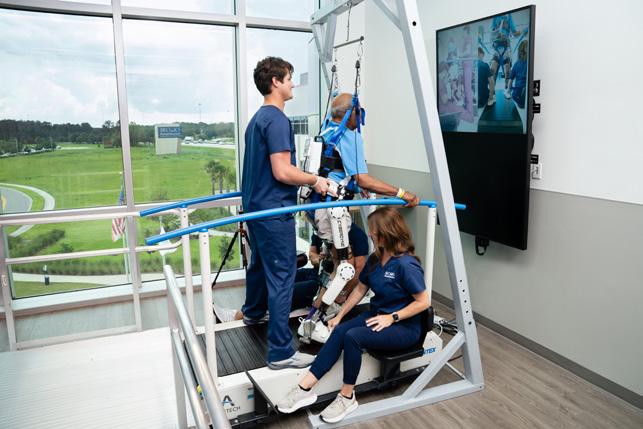
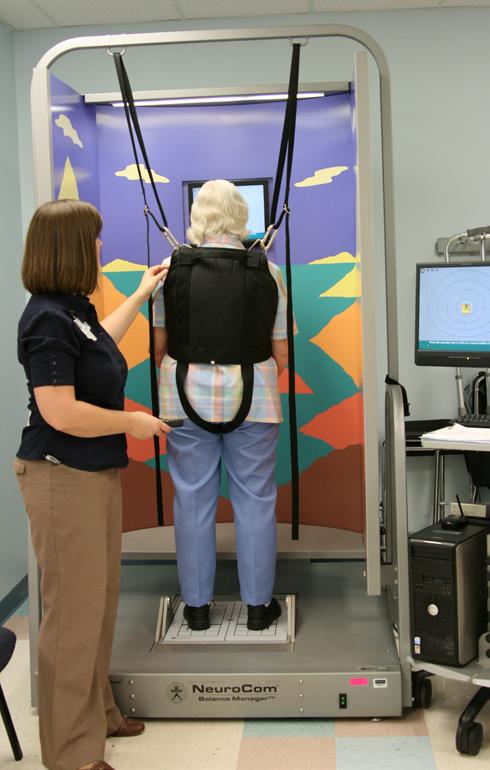
BrooksRehab.org
We take a comprehensive approach to address age-related and condition-related changes to maximize health and participation in meaningful activities.
It’s more than just treating aging adults. Our physical, occupational and speech-language clinicians receive:
• Additional training on geriatric care standards
• Community resources for patients and caregivers
• Patient and caregiver education
• Literature and case study review sessions
Common reasons to seek our geriatric rehabilitation
• Osteoporosis
• Balance and Fall Safety
• Concussion
• Deconditioning and Weakness
• Dysphagia
• COPD
• Initiate an Exercise Program
• Senior Athlete Injuries
For more information please contactour Central Intake Unit. (904) 345-7277

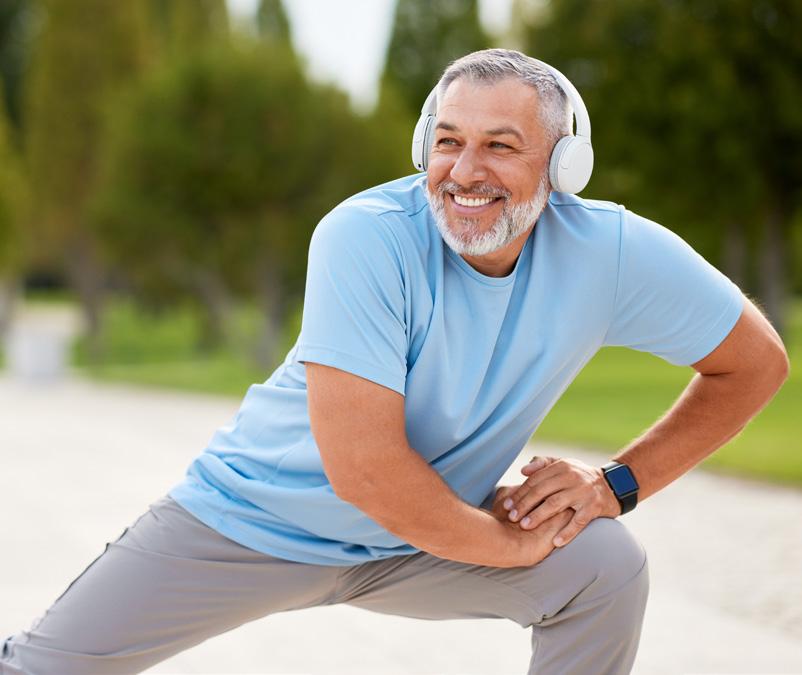
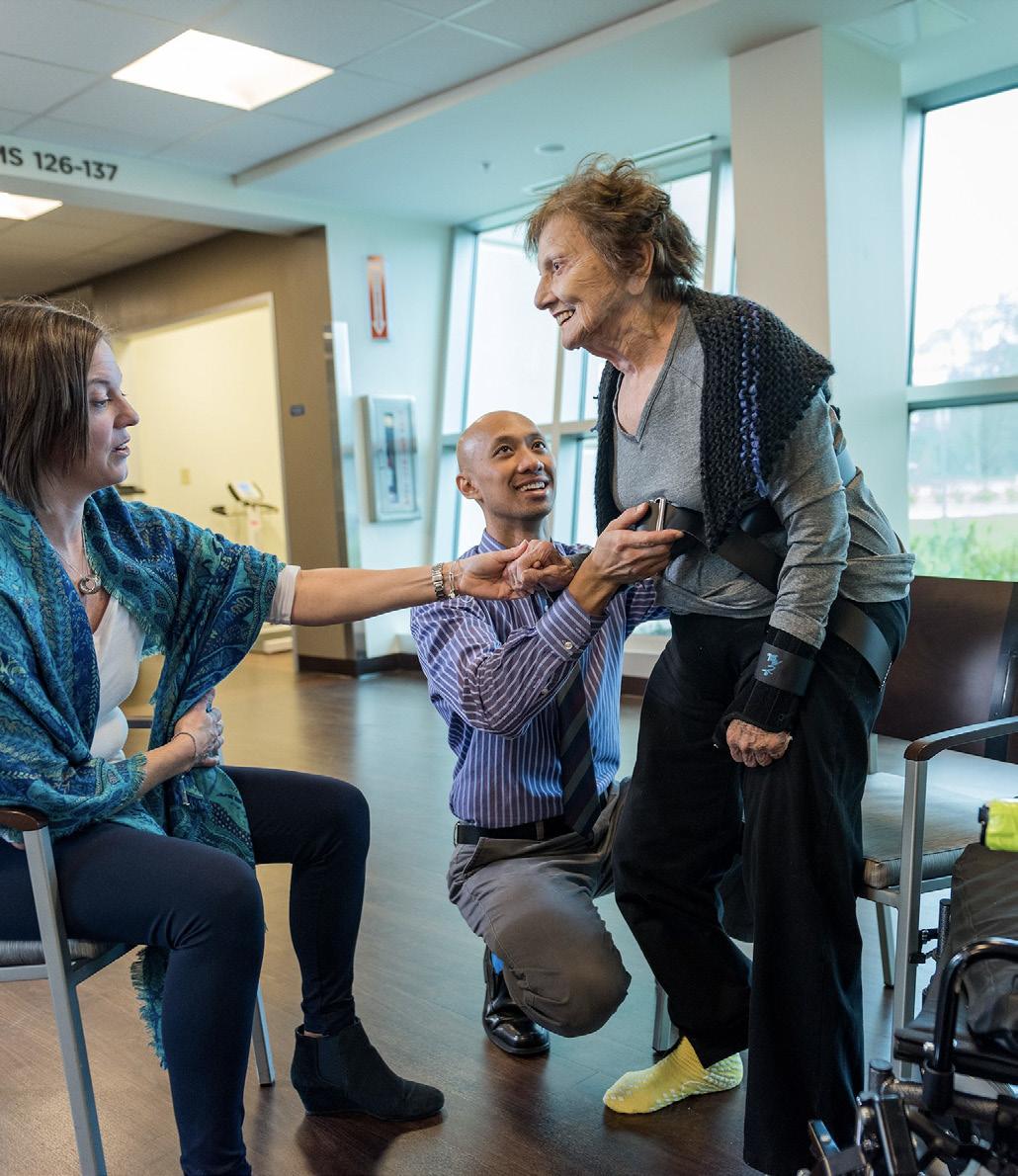
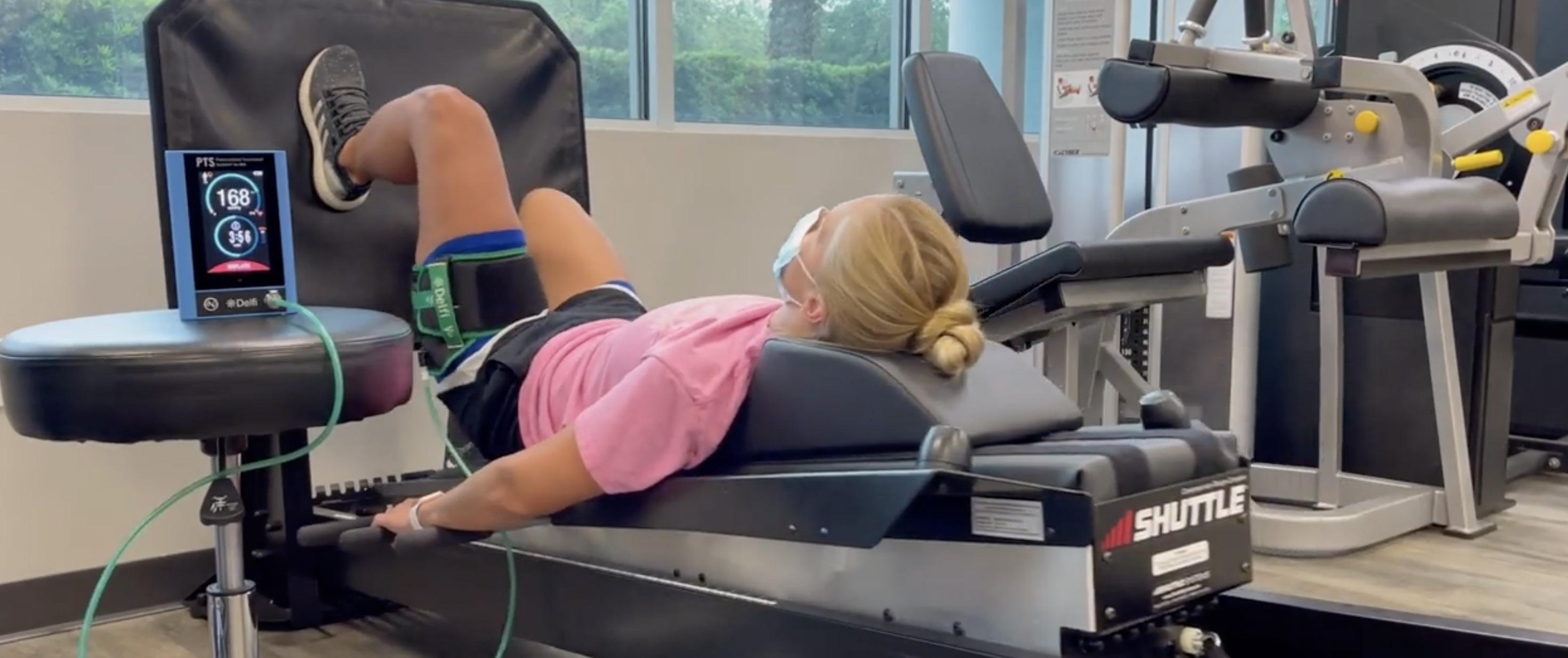
Blood Flow Restriction (BFR) training is a game-changing injury recovery therapy that is producing dramatically positive results:
Who is BFR appropriate for?
Pre-operative patients
Post-operative patients
Patients with heavy lifting restrictions (older population, injured population, etc)
What are the benefits of BFR?
Increased strength at lower loads
Improved healing post operatively
Same improvements at lower loading
Decreased atrophy
Improved ischemic loading tolerance (pre/post op)
How to refer:
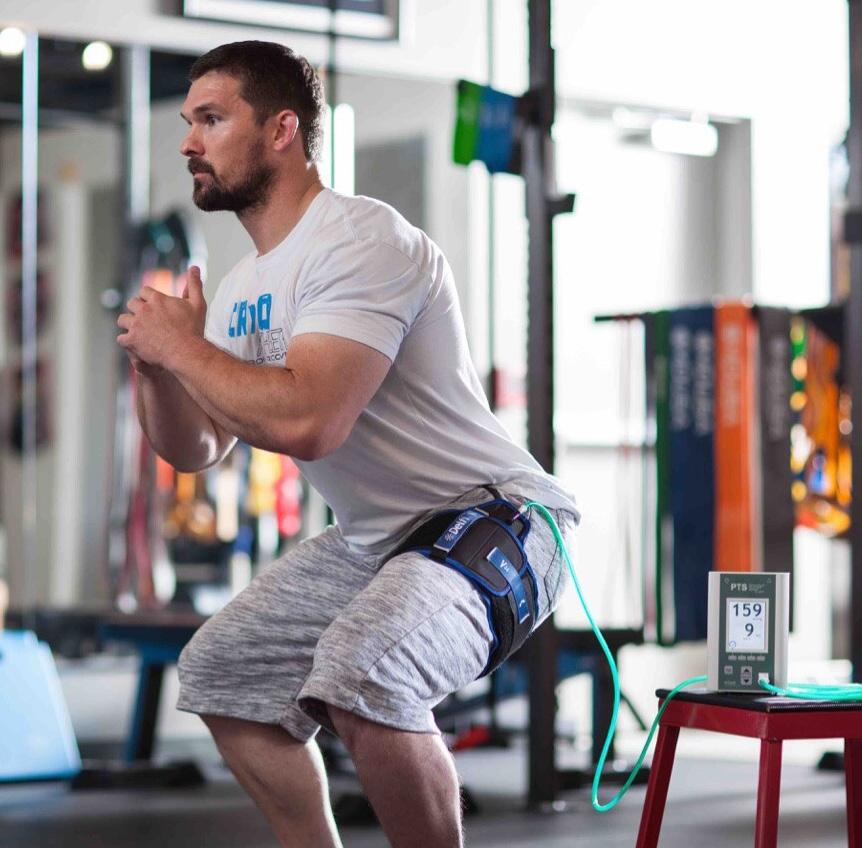
Send an order with the diagnosis to our Patient Access Center. Indicate for PT with BFR - Evaluate and Treat Patient Access Center (PAC) P: (904) 345-7277 F: (904) 345-7280
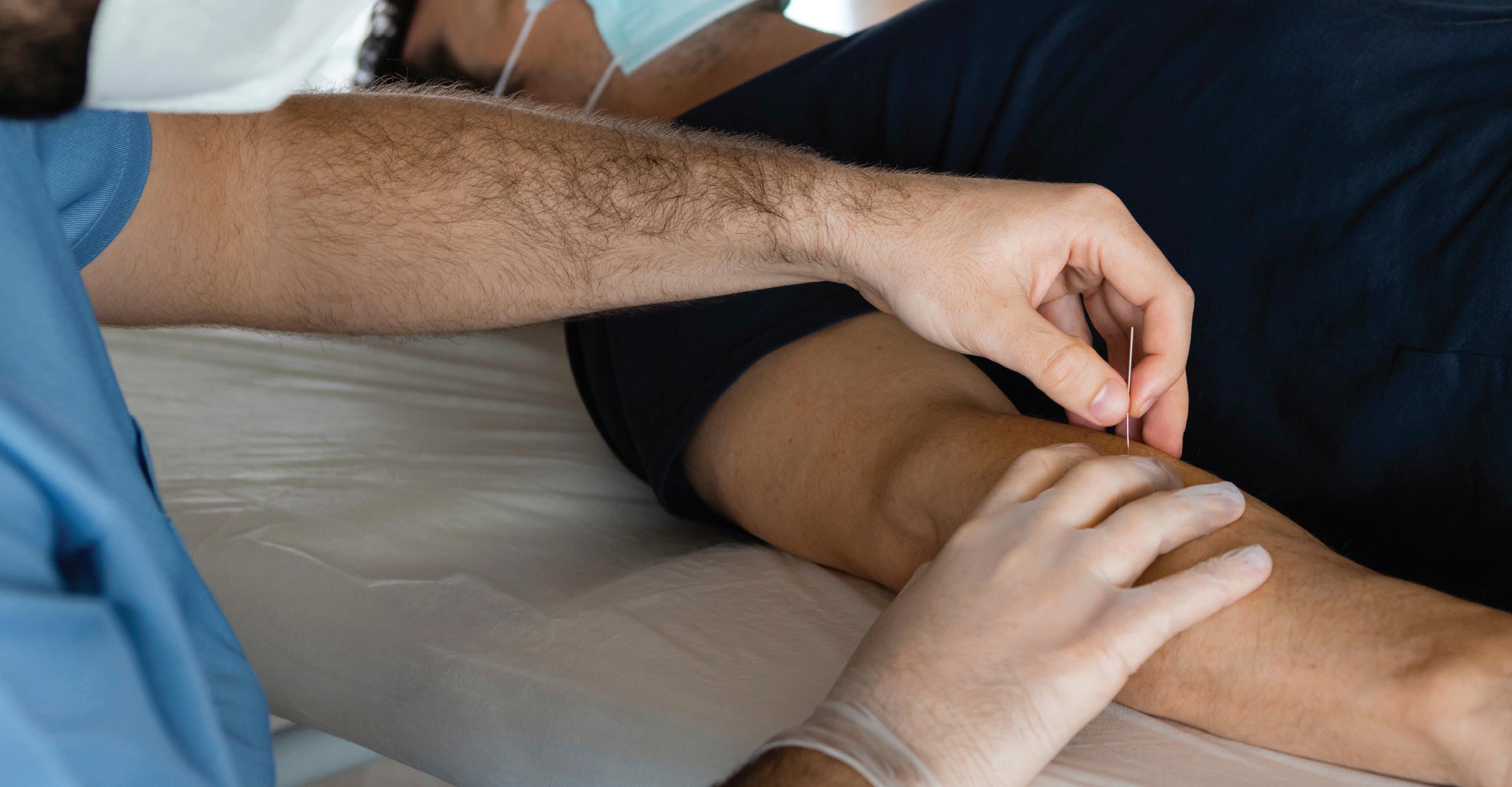
Trigger point DN is a skilled intervention that uses a thin filiform needle to penetrate the skin and stimulate underlying myofascial trigger points, muscular and connective tissues for the management of neuromusculoskeletal pain and movement impairments.
Trigger point dry needling is used as a component of a comprehensive plan of care to assist with restoring function and movement. DN should result in a more efficient progression to corrective exercises to improve activity limitations and participation restrictions.
• Headaches
• Shoulder pain
• Elbow pain
• Neck pain
• Back pain
• Hip pain
• Knee pain
• Foot and ankle pain
• Scar tissue
Due to our high level of education on the musculoskeletal system and pathologies associated with this system, we are the ideal providers of this modality.
Selection of these patients requires high levels of clinical reasoning in order to identify potential patients which may benefit based on our examination and review of systems, while screening out patients which may not be appropriate.
For locations and more information contact our Central Intake Unit at (904) 345-7277.
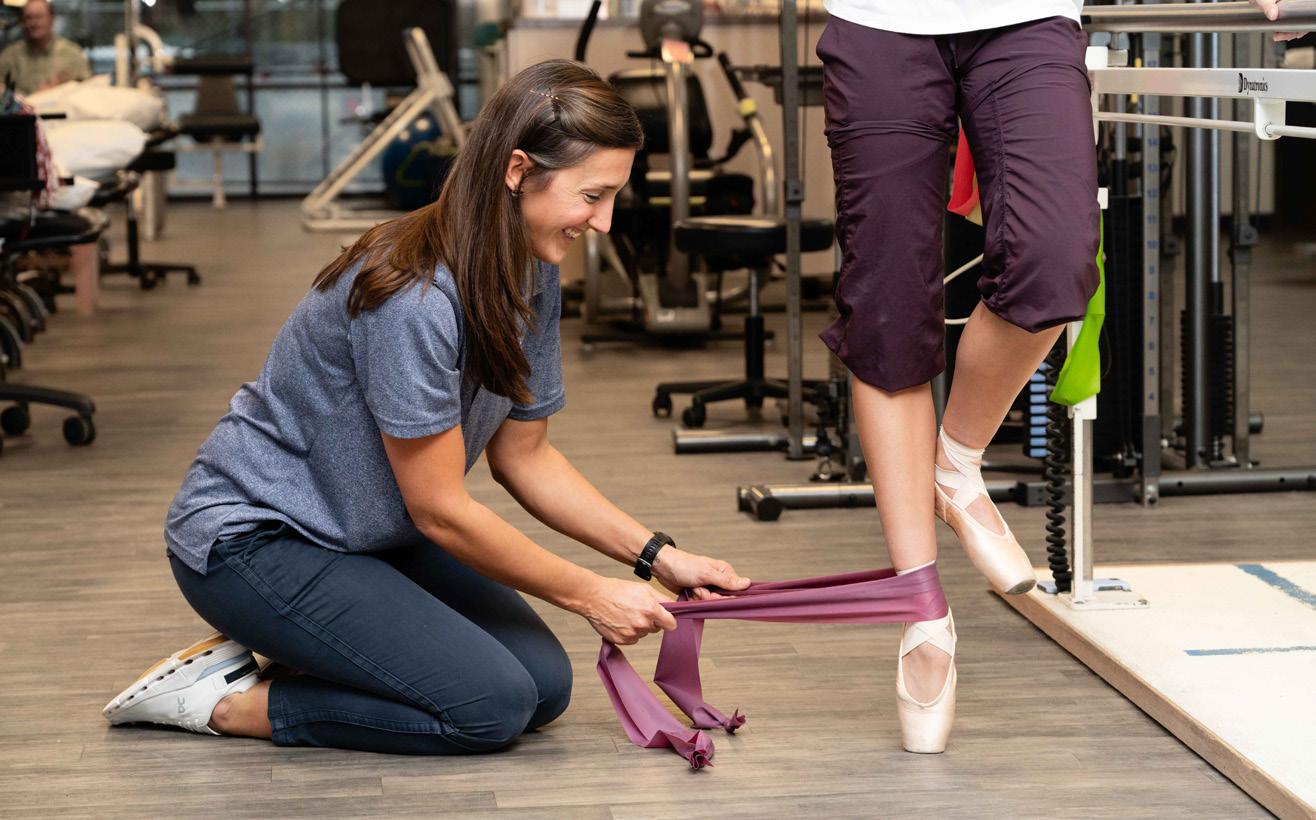
Are you a dancer dealing with a nagging injury? Are you interested in future injury prevention? Do you want a functional dance-specific assessment from a trained physical therapist?
Let us help you!
As a dancer, your body has to move differently than the majority of the population.
At Brooks Rehabilitation our dance physical therapist has completed dance-specific PT training, allowing her to work with dancers of all ages and levels of experience, from recreational to professional dancers.
Contact us today for a dance-specific evaluation!
The Brooks Sports Medicine Program consists of a multi-disciplinary team of healthcare professionals ready to assist athletes in their return to sport after injury. After recovering from a concussion, our Concussion Return to Play Protocol uses a graded approach to safely return to full participation.
DAY 1: Light Aerobic Exercise
DAY 2: Sports Specific Exrcises
DAY 3: Non-Contact Sport Training
DAY 5: Progressive Full Contact
DAY 6: Return To Play
• AT 18 Form = Page 1 MUST be signed by MD (AT-18 form is required to start this process if the student is returning to sport at an FHSAA member school only)
• Begin light cardio 10-20 mins (steady state exercise performed @ 70% of MHR to be consistent with the AT-18)
• Uniplanar, Sport Specific movements
• Forward, Backward, and Lateral running without change of direction
• Footwork, Balance, Throwing, Catching, Dribbling, Passing, Shooting, etc. (listed items are examples and not all-inclusive)
• Multiplanar, Sport Specific Movements
• Change of directions with running
• Combine different aspects of sport: Pass Routes with catch, Dribbling with Shot/Pass, etc. (listed items are examples and not all-inclusive)
• Defensive Player shadow Offensive player
• Should be completed at practice with AT/Coach
• Slow Progression from 1v1 to multiple teammates/opponents
• Should be completed at practice with AT/Coach
• AT 18 Page 2 signed by MD
There must be at least 24 hours in between each step. If the athlete experiences any concussion symptoms, activity must be stopped. Theathlete will wait at least 24 hours or until asymptomatic then return to previous level that they were asymptomatic.
HOW TO REFER:
Call our Patient Access Center at (904) 345-7277, send a fax to (904) 345-7280 or email referrals@brooksrehab.org.
Send a referral with “Evaluate and Treat” noted and specify Brooks Concussion Services.

Pelvic Floor Rehabilitation: Provided by a specially trained women’s and pelvic health physical therapist, pelvic floor rehabilitation is the conservative and comprehensive treatment for common pelvic floor disorders including urinary incontinence (UI), fecal incontinence, constipation, dyspareunia (painful sex) and pelvic pain.
Physical Therapy During Pregnancy and Postpartum: Physical therapy treatment for back pain and pelvic girdle related to pregnancy is effective at improving mobility and reducing pain. A specially trained women’s health physical therapist will provide treatment for painful joints and muscles, and will teach you ways to move to avoid injury and reduce pain. Your physical therapist can also recommend support belts and other aids to help with back pain during pregnancy.
Interview: At the beginning of your visit, you will meet with a physical therapist to discuss your symptoms and concerns.
Private Examination: Following the initial interview, you will receive a private examination to identify causes and reasons for pain.
Please note: The pelvic floor evaluation includes a comprehensive history and physical examination in a private room with your physical therapist. Examination of the pelvic girdle and pelvic floor MAY include a direct vaginal and/or rectal assessment of the pelvic floor muscles. The examination of the pelvic floor musculature is important in order to determine the muscles ability to contract and relax normally, and to identify painful areas, so that you will receive the proper treatment.
Plan of Care: Following a private examination, your physical therapist will develop a plan of care and establish treatment goals including a timeline for achievement of goals. You will be a partner in establishing your goals and timelines. Your plan of care will be sent to your physician for review and signature.
What to wear: Please wear or bring comfortable clothes and shoes.
Duration: Your initial evaluation will last approximately 1 hour. Please arrive 30 minutes early to allow time to fill out pre-appointment forms and account for traffic or other delays.
• Wetting the bed at night?
• Having accidents at school?
• Missing out on social activities?
• Having difficulty with potty training?
• Feeling embarrassed?
Physical therapy is a conservative and noninvasive treatment strategy for the management of pelvic floor dysfunction in the pediatric population. Specially trained physical therapists at Brooks Rehabilitation can evaluate and treat pelvic floor dysfunction in children ages 0-18 years. Physical therapists are the ideal providers to help address dysfunctions of the musculoskeletal system that can lead to symptoms like:
• Urinary incontinence
• Urinary urgency
• Urinary frequency
• Fecal incontinence
• Constipation
• Bed wetting
• Abdominal pain
The pelvic floor is a group of muscles that are located on the underside of the pelvis. These muscles serve the important role of supporting the pelvic organs, working with the other core muscles to assist with trunk stability and controlling urinary and bowel functions. Just like the other muscles in our body, the pelvic floor muscles can be dysfunctional. They can be weak, tight or have poor coordination. If these muscles are not working properly, bowel and bladder issues or pelvic pain can occur.
A physical therapist who specializes in treating pelvic floor conditions will meet with you and your child for an initial evaluation. During the evaluation, the therapist will ask questions about your child’s medical history and symptoms. The examination portion of the visit will assess your child’s strength, range of motion and core muscles. Initial examination may include an assessment of pelvic floor muscle function. The information gathered will help to determine what treatment interventions are required to help improve your child’s symptoms and the therapist will work with you to establish goals for treatment.
Brooks Rehabilitation offers physical therapy for pelvic floor dysfunction in multiple settings and convenient locations near you! Ask your physician for a referral for physical therapy at Brooks Rehabilitation.
• For more information on outpatient therapy call (888) 323-8005.
• For Home Health call (904) 306-9729.
• For Inpatient Hospital call (904) 345-7185.
®
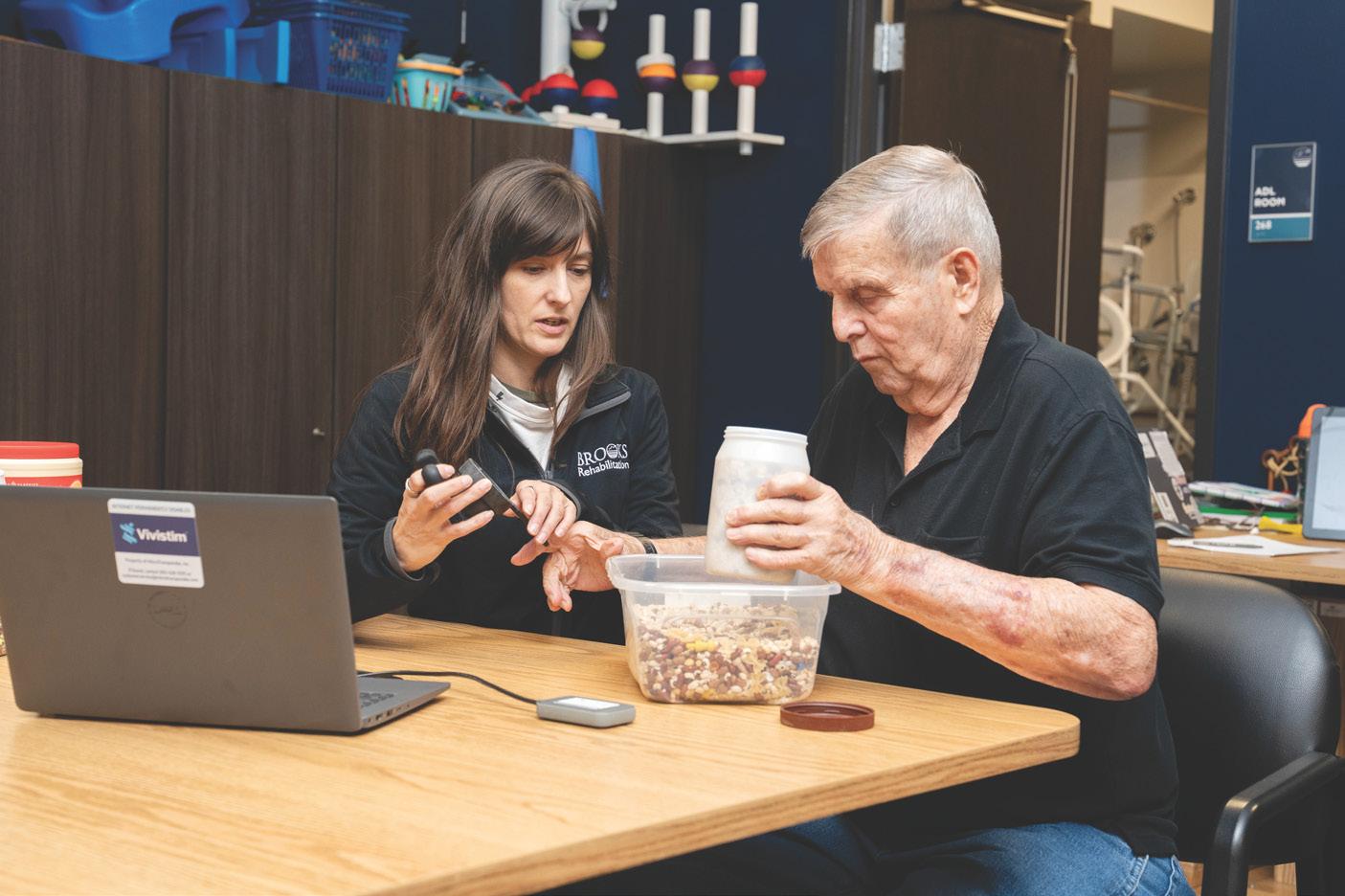
Vivistim is the first FDA-approved neurostimulation device used in chronic ischemic stroke patients with moderate to severe arm impairment. It pairs vagus nerve stimulation (VNS) with upper extremity rehabilitation therapy and daily activities to help strengthen the brain connections needed to relearn motor tasks and increase neuroplasticity in the chronic stage.
Partnering Brooks Clinic Locations:
Healthcare Plaza | 3901 University Blvd. S. | Jacksonville, FL 32216 | P: (904) 345-7310
O Orange Park | 500 Park Ave. | Orange Park, FL 32073 | P: (904) 278-7890
S St Augustine | 190 Southpark Blvd. 100 | St. Augustine, FL 32086 | P: (904) 824-1478
D Daytona Beach | 201 N. Clyde Morris Blvd. Suite 320 | Daytona Beach, FL 32114 | P: (386) 236-7017
O Osceola | 1172 West Osceola Parkway | Kissimmee, FL 34741 | P: (689) 204-2221

O Oviedo | 1121 Alafaya Trail, Suite 1073 | Oviedo, FL 32765 | P: (407) 796-5265
C Clermont | 2616 South Highway 27 | Clermont, FL 34711 | P: (352) 565-5992
H Hudson | 13910 Fivay Road 6-7 | Hudson, FL 34667 | P: (727) 869-9479
Scan Here to Learn More About Vivistim
Scan Here to Watch Emily’s Story
The MicroTransponder® Vivistim® Paired VNS™ System is intended to be used to stimulate the vagus nerve during rehabilitation therapy in order to reduce upper extremity motor deficits and improve motor function in chronic ischemic stroke patients with moderate to severe arm impairment. Do not use if the patient has had a bilateral or left cervical vagotomy. Risks may include, but are not limited to pain after surgery, hoarseness, bruising, swelling, coughing and throat irritation. Infection leading to explant is a risk associated with any device surgery. For full safety information, please see www.vivistim.com/safety. Individual results may vary.
©2025 MicroTransponder Inc. All rights reserved. Vivistim, Paired VNS, and Vivistim Therapy are trademarks of MicroTransponder Inc.
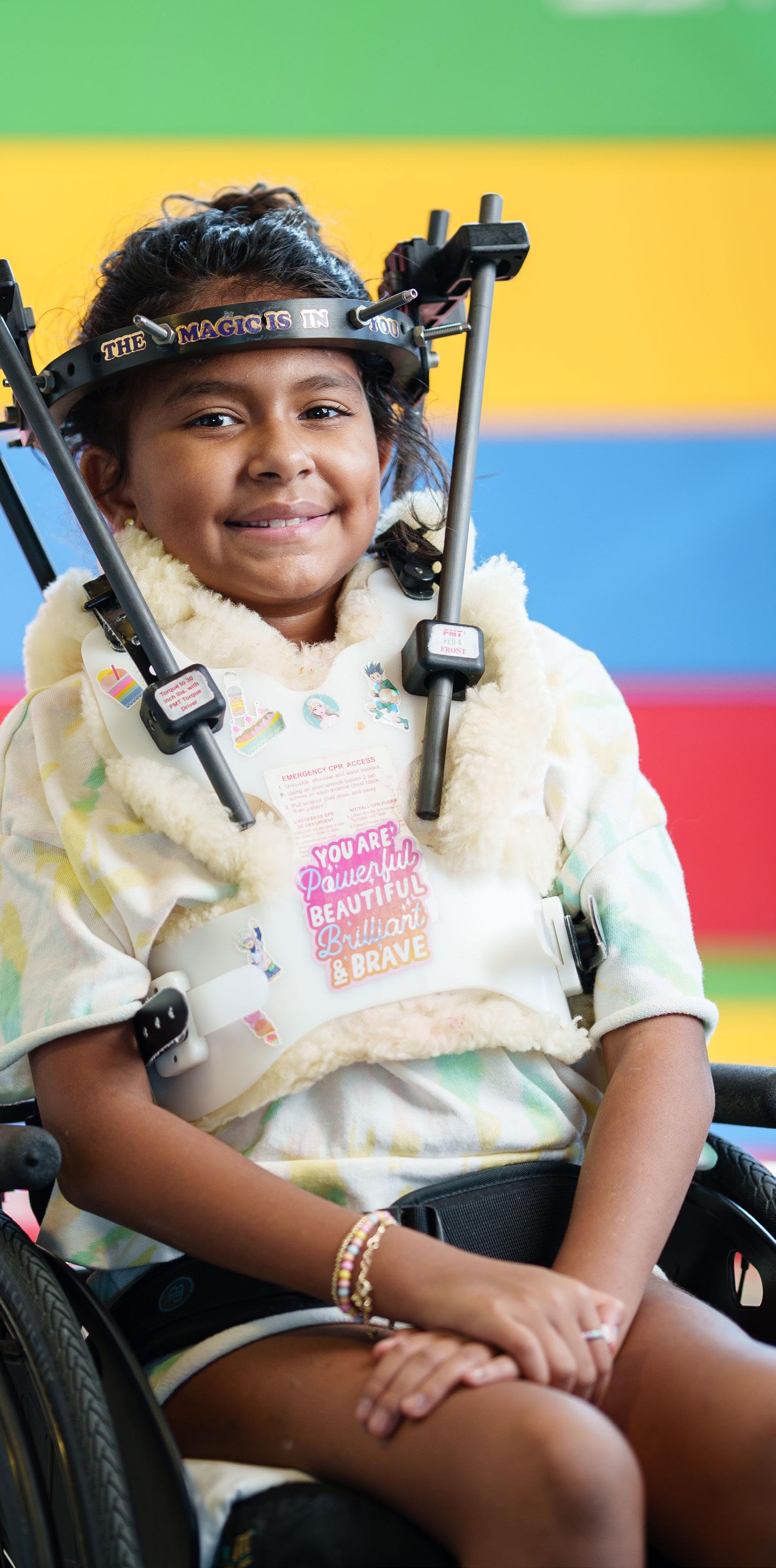
BROOKS REHABILITATION PEDIATRICS
Brooks addresses a myriad of conditions throughout our system of care that range from traumatic brain injuries to developmental delays. Here are some of the many conditions we treat in our inpatient rehabilitation hospital:
• Traumatic/acquired brain injury
• Stroke/AVM rupture
• Spinal cord injury
• Cerebral palsy
• Amputation
• Spina bifida
• Muscular dystrophy
• Dysphagia
• Neuromotor disorders
• Traumatic orthopedic conditions
• Genetic/chromosomal abnormalities
• Autism spectrum disorder
• Developmental conditions with a new onset decline
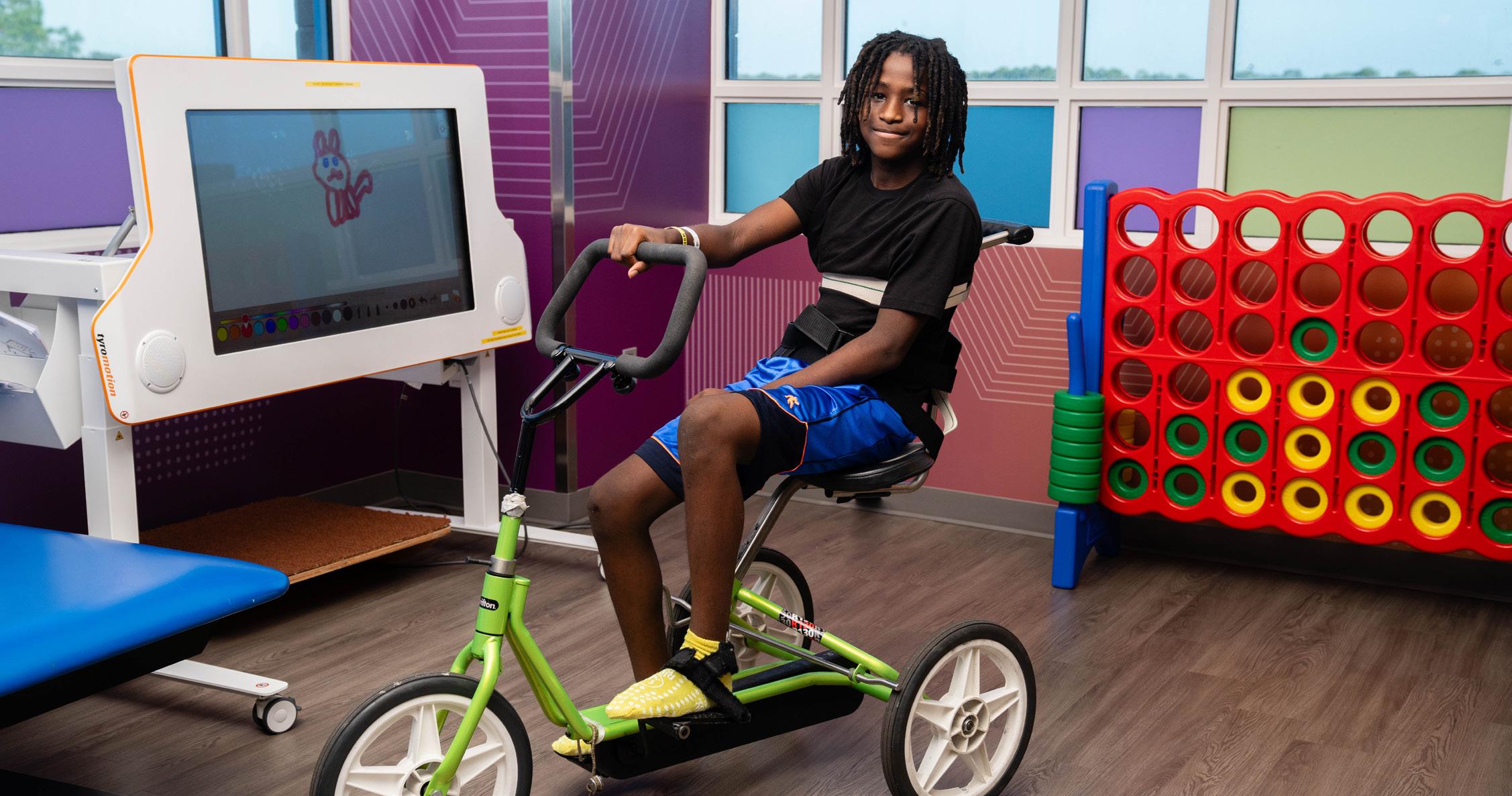
Bright colors, toys and laughter create a cheerful setting for our pediatric hospital patients. Our secured hospital wing is designed especially for children and teenagers with developmentally appropriate equipment, a sensory gym and a designated pediatric therapy gym.
Our therapists are innovative when it comes to motivating children. It’s not unusual to see a child riding on a bicycle down the hallways. And wheelchairs are sometimes replaced by wagons. Some days there are princess tea parties or children playing videos games adapted to their needs. While it might look like play, therapists are working on balance, coordination, motor skills, cognition and much more.
In an innovative move to enhance pediatric care, Brooks Rehabilitation partnered with Nemours Children’s Health, Jacksonville, Wolfson Children’s Hospital and UF Health Jacksonville. By combining resources and expertise, the new partnership provides for medical care, training and education to ensure children of all ages receive the best that each organization has to offer.
This means that your child will have 24/7 medical coverage from a Nemours Children’s pediatrician to manage all medical issues or complexities. In addition
to the pediatrician, your child will be cared for by a physiatrist, a medical doctor who specializes in physical medicine and rehabilitation. This physician will work closely with therapists and nursing teams to manage the physical aspects of recovery, ensuring patients are set up for success and smooth transitions back home.
And since we are a hospital, we are able to address any additional needs your child might have, including diagnostics, lab work or pharmacy services. They’ll also have access to a team of Nemours Children’s and University of Florida subspecialists for consultations, providing comprehensive coverage and collaboration.
Family involvement and support is central to your child’s success at Brooks. That’s why from day one, parents, guardians, siblings and grandparents are part of the treatment process—not just as decision makers, but as goal setters, support givers and hand holders.
As your child begins treatment, you’ll want to know how you can play a lead role and still balance that with other family needs. We can help.
• A caregiver is required to participate in caregiver training in preparation for discharge and is highly encouraged to participate in the rehabilitation process throughout your child’s stay.
• Because you’re encouraged to stay with your child throughout his or her treatment, we make sure our patient rooms are comfortable for you. A pull-out sofa bed is included in each room for your convenience. Up to two identified caregivers can spend the night with children.
• Any guests that will not be a caregiver should visit between 4–8 p.m. to avoid interrupting your child’s therapy schedule. General visitation hours for the hospital are 8 a.m. to 8 p.m.
One of our goals at Brooks is to help your child regain strength and get back to being as independent as possible for their age and condition. To achieve this, each day he or she will be getting dressed in regular clothing. Please bring in comfortable pants, shorts, shirts, lace or Velcro tennis shoes. You can also bring in any familiar toys, photos or blankets that remind them of home and provide a sense of comfort in unfamiliar surroundings. Also, please remember to bring their insurance card.
Other parents have shared that they were anxious about transitioning to a new care setting after their acute hospital stay. They didn’t know what to expect or how their child would be treated. Let us try to put your mind at ease:
• On the day of admission, you will meet some of your child’s nursing team and a member of your medical team. You can expect to meet your rehab physician on your first full day at Brooks.
• During your child’s stay, he or she will have 24-hour nursing care. You can expect your nurse and nurse assistant to check on your child every hour to make sure he or she has everything that they need.
• Generally, you can expect therapy to begin the day after your arrival. In general, therapy sessions can begin as early as 7 a.m. and end as late as 7 p.m. seven days a week. However, your child’s personal therapy schedule will be available on the TV screen under “My therapy schedule” the day after admission.
• You can expect to have at least three hours of therapy every weekday and a modified therapy schedule on the weekends.
• On your child’s first full day of therapy you can expect to meet the members of their therapy team consisting of a physical therapist, occupational therapy and a speech-language pathologist.
Your child’s daily schedule is structured similarly to a typical day at school. They will get up and dressed in regular clothing with assistance from you or their therapy/nursing team. Your child's daily schedule will be created each day depending on their needs and may look something like this:
● 8 a.m. | Visitation hours begin
● 8:15 – 8:45 a.m. | Physical therapy session
● 9 – 9:30 a.m. | Occupational therapy session
● 10 a.m. | Morning medications
● 10:45 – 11:15 a.m. | Speech therapy session
● 11:30 a.m. – 12:30 p.m. | Lunch
● 12:30 – 1 p.m. | Recreational therapy session
● 1 – 1:30 p.m. | Music therapy along with their physical therapist
● 2 p.m. | Medication
● 3 – 3:30 p.m. | Occupational therapy session
● 3:30 – 4 p.m. | Speech therapy session
● 5 p.m. | Dinner
● Free time
● 8 p.m. | Visitation ends for all but the parent/guardian staying the night. Please check in with the security desk daily to receive an overnight visitor pass.
Throughout your day, you will have other check-ins with your nurse, doctor or other team members. You may have other unique changes in your schedule dayto-day such as outside medical appointments or outings with recreational therapy to practice community re-entry skills. These outings could be to places like a restaurant or bowling alley.
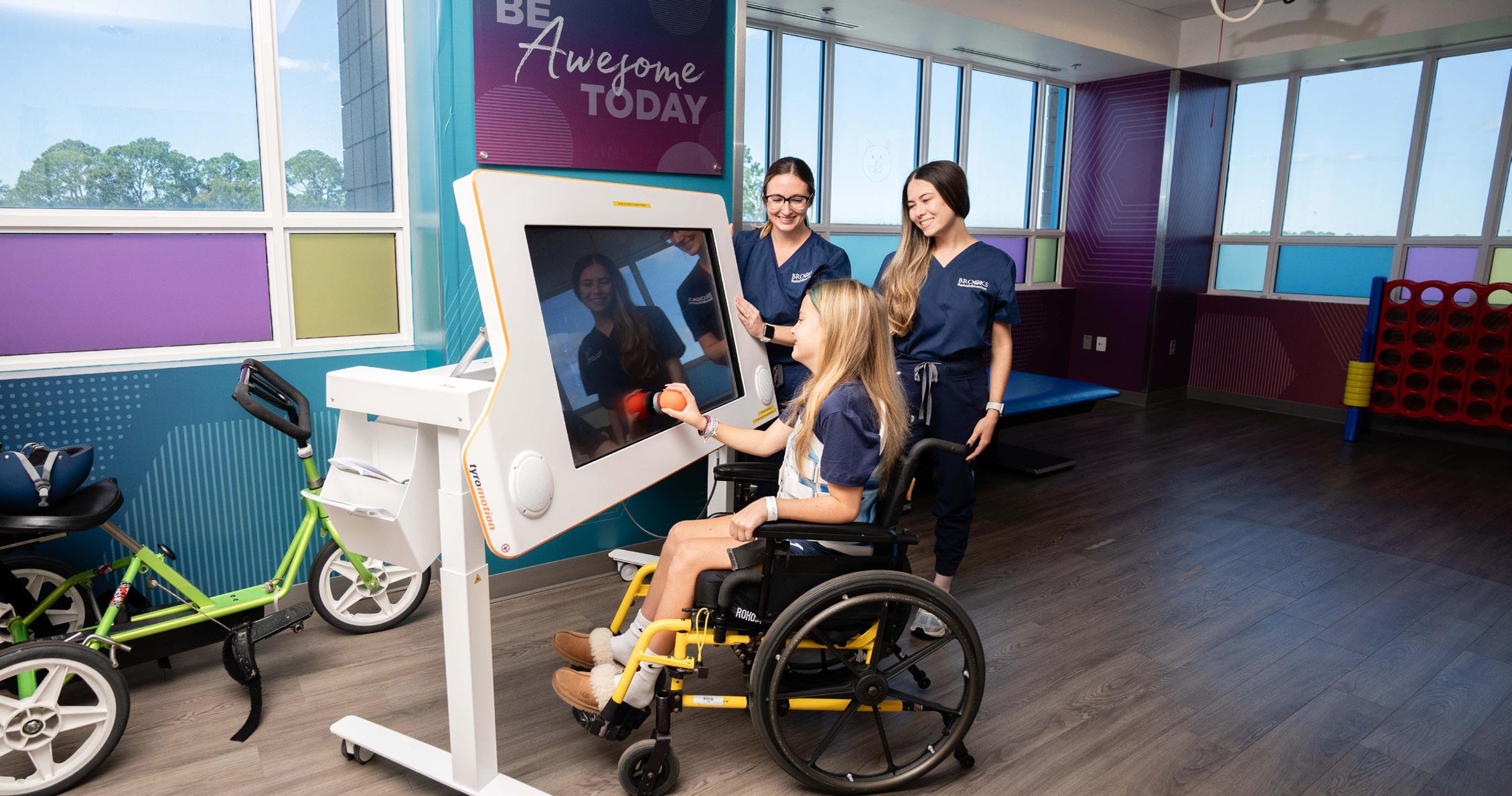
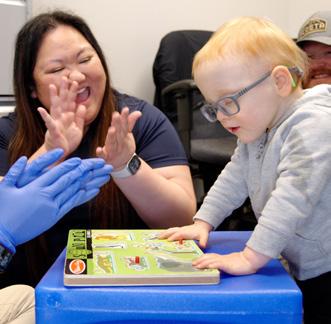
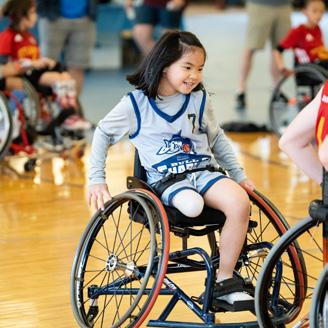
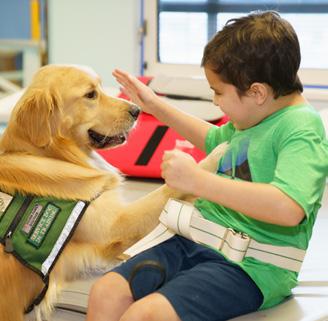
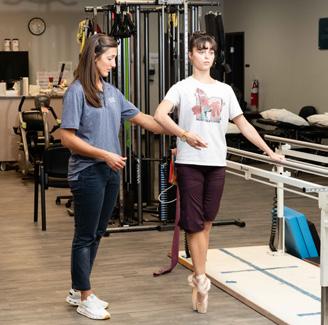
One of our goals at Brooks is to prepare your child for home or your next care setting. We will begin working with you and your child immediately to prepare him or her for success. While your child’s entire care team plays a role in their discharge, your case manager will help plan your child’s continued care – including setting up doctors’ appointments or additional services.
Thankfully Brooks offers a full system of care for children so we can help no matter what that next step might be. Whether they need our pediatric day program, outpatient services or pediatric recreation, we’ll find the best fit for their unique needs.
The Pediatric Day Treatment Program is designed to meet the diverse needs of children and teens aged 8–18. Whether living with lifelong disabilities or requiring intensive rehabilitation services to maximize recovery, this program offers individualized, multidisciplinary therapy to boost their participation in life.
Children in the program benefit from a collaborative team of specialists, including physical therapists, occupational therapists and speech-language pathologists, all working together to create a tailored treatment plan. Additionally, the program will have
nursing support available as needed, along with case management services and neuropsychology support.
Each day, children engage in a range of therapeutic activities that support physical, cognitive and social development. Participants must be able to tolerate three hours of therapy and require treatment from at least two therapy disciplines to be an eligible candidate for the program. The program offers two half-day sessions, mornings and afternoons, every weekday.
Each three-hour session consists of:
• One-on-one individualized therapy services (physical, occupational or speech therapy)
• Group participation-based activities
• Community outings
• Functional skills training
• Educational content
• Caregiver empowerment
• Recreational Therapy
• Music Therapy
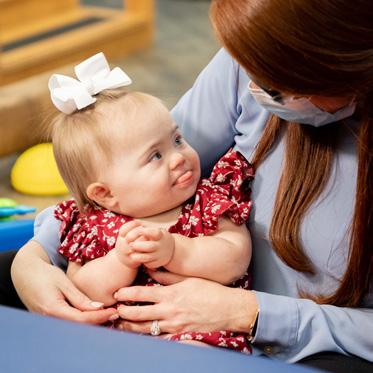
• Connection to Brooks Community Programs: School Re-entry Program
Pediatric Recreation Program
Adaptive Sports and Recreation
BROOKS REHABILITATION PEDIATRICS
Brooks Rehabilitation’s outpatient pediatric rehabilitation services offer individualized therapy plans to children of all ages and address a wide range of conditions, from developmental delays and neurological disorders to post-surgical rehabilitation and orthopedic concerns. With multiple locations from the greater Jacksonville area to Daytona Beach, children can receive occupational therapy, physical therapy and speech-language pathology from specialized experts.
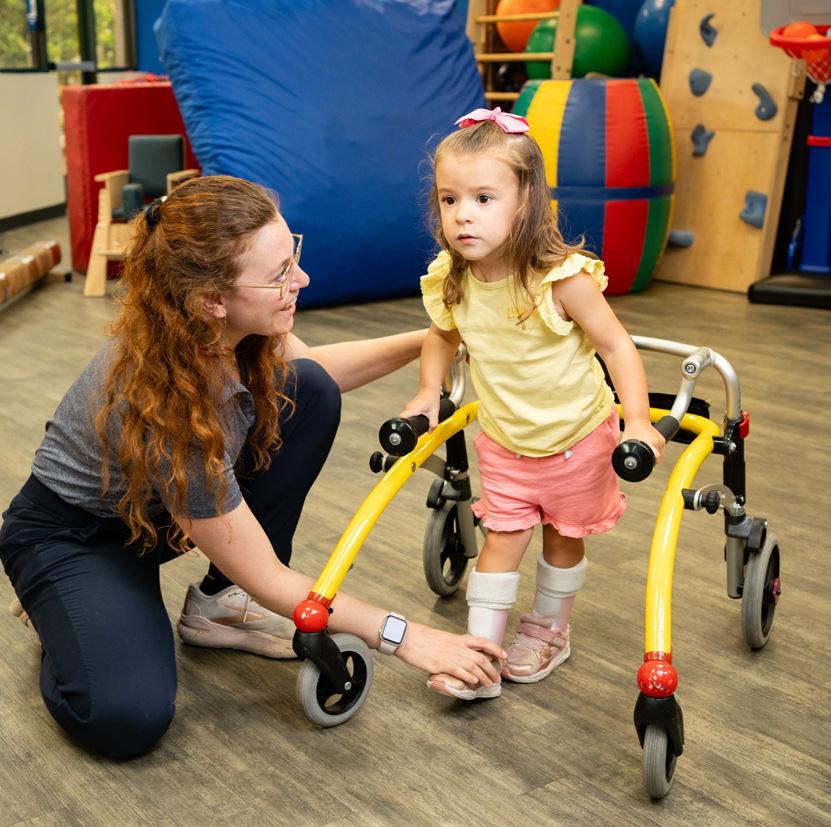
Recreational activities play a crucial role in the comprehensive rehabilitation process for pediatric patients.
The Brooks Pediatric Recreation Program serves any child, from birth to 17 years old, with any type of limitation/disability (physical, developmental, cognitive, sensory and social). We offer both sport and recreation programs year-round through weekly classes, monthly activities, family-friendly special events.
Weekly classes include adapted aquatics, art, cooking, dance and gardening. Monthly and special events include activities such as bowling, horseback riding, fishing, music, kayaking, golfing and art.
Pediatric physical therapists (PTs) focus on enhancing children’s mobility, strength, flexibility, balance, coordination and movement. The primary objective is to improve the child’s capacity to carry out daily activities and participate in their home, school and community environments.
Pediatric occupational therapists (OTs) work to optimize a child’s functional independence in activities of daily living including self-care, education and play. OTs address sensory processing, fine motor and visual motor skills to help children participate in the activities they want and need to participate in.
Pediatric speech-language pathologists (SLPs) assess, diagnose, and treat disorders of language, articulation, motor speech, voice, fluency and social and play skills. SLPs also assist in feeding and swallowing disorders or dysphagia.
Our outpatient clinics are equipped with state-ofthe-art technology, including adaptive equipment, sensory integration resources, and specialized exercise equipment to cater to the diverse needs of pediatric patients. Designated pediatric areas are designed to be engaging and motivating for children, making therapy a positive and rewarding experience.
As a community program, Brooks provides all equipment and classes free of charge for participants and families. These activities not only support physical recovery but also contribute significantly to emotional and social wellbeing.

For more than 50 years, Brooks has served as a source of hope for children and teens in need of physical rehabilitation.
We use therapies and technology that are just right for young bodies and minds. Our clinicians are among the top in their field and actively participate in clinical research and education on both the local and national levels. And our team of experts is specially trained in pediatric rehabilitation, so they can assess your child’s abilities and build the right kind of therapy program.
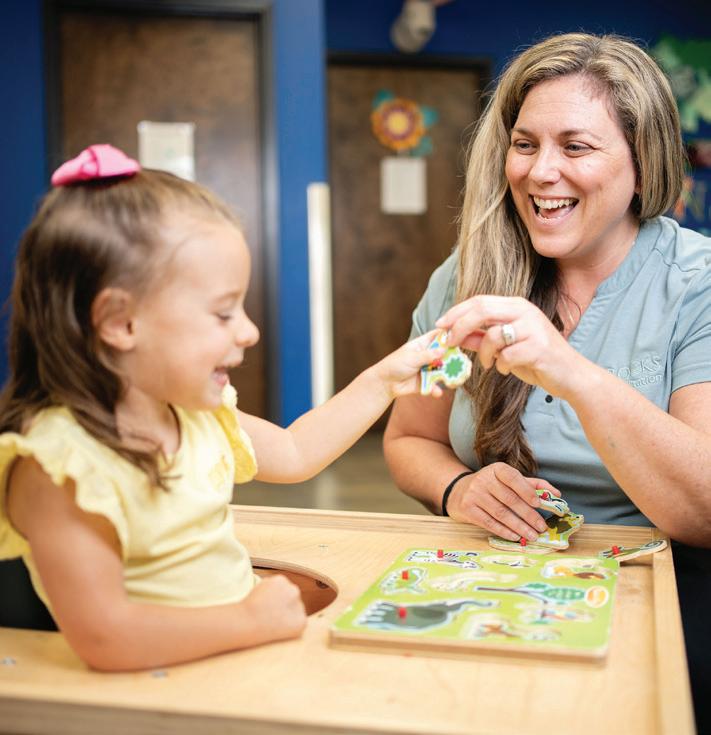
Brooks cares for children of all ages throughout our system of care and addresses a wide range of conditions, from developmental delays and neurological disorders to post-surgical rehabilitation and orthopedic concerns.
With multiple locations from the greater Jacksonville area to Daytona Beach, children can receive occupational therapy, physical therapy and speech-language pathology in the location most convenient for busy families.
Pediatric Physical Therapy
Pediatric physical therapists (PTs) focus on enhancing children’s mobility, strength, flexibility, balance, coordination and movement. The primary objective is to improve the child’s capacity to carry out daily activities and participate in their home, school and community environments.
Pediatric Occupational Therapy
Pediatric occupational therapists (OTs) work to optimize a child’s functional independence in activities of daily living including self-care, education and play. OTs address sensory processing, fine motor and visual motor skills to help children participate in the activities they want and need to participate in.
Pediatric Speech-Language Pathology
Pediatric speech-language pathologists (SLPs) assess, diagnose, and treat disorders of language, articulation, motor speech, voice, fluency and social and play skills. SLPs also assist in feeding and swallowing disorders or dysphagia.
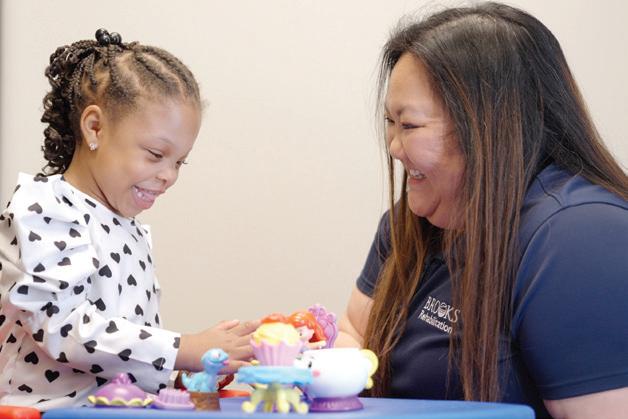
Here are some of the many conditions we treat:
• Orthopedic injuries
• Genetic/chromosomal disorders
• Autism spectrum disorder
• Sensory processing concerns
• Swallowing/feeding disorders
• Toe walking
• Torticollis
• Developmental delays
• Expressive/receptive language delays
• Articulation and fluency issues
• Balance/vestibular issues
• Concussion/sports injuries
• Augmentative alternative communication (AAC)
• Handwriting difficulties
• Plagiocephaly management
• Traumatic/acquired brain injury
• Stroke/AVM rupture
• Spinal cord injury
• Cerebral palsy
• Amputation
• Spina bifida
• Muscular dystrophy
• Neuromotor disorders
• Pediatric pelvic health
• Pediatric oncology
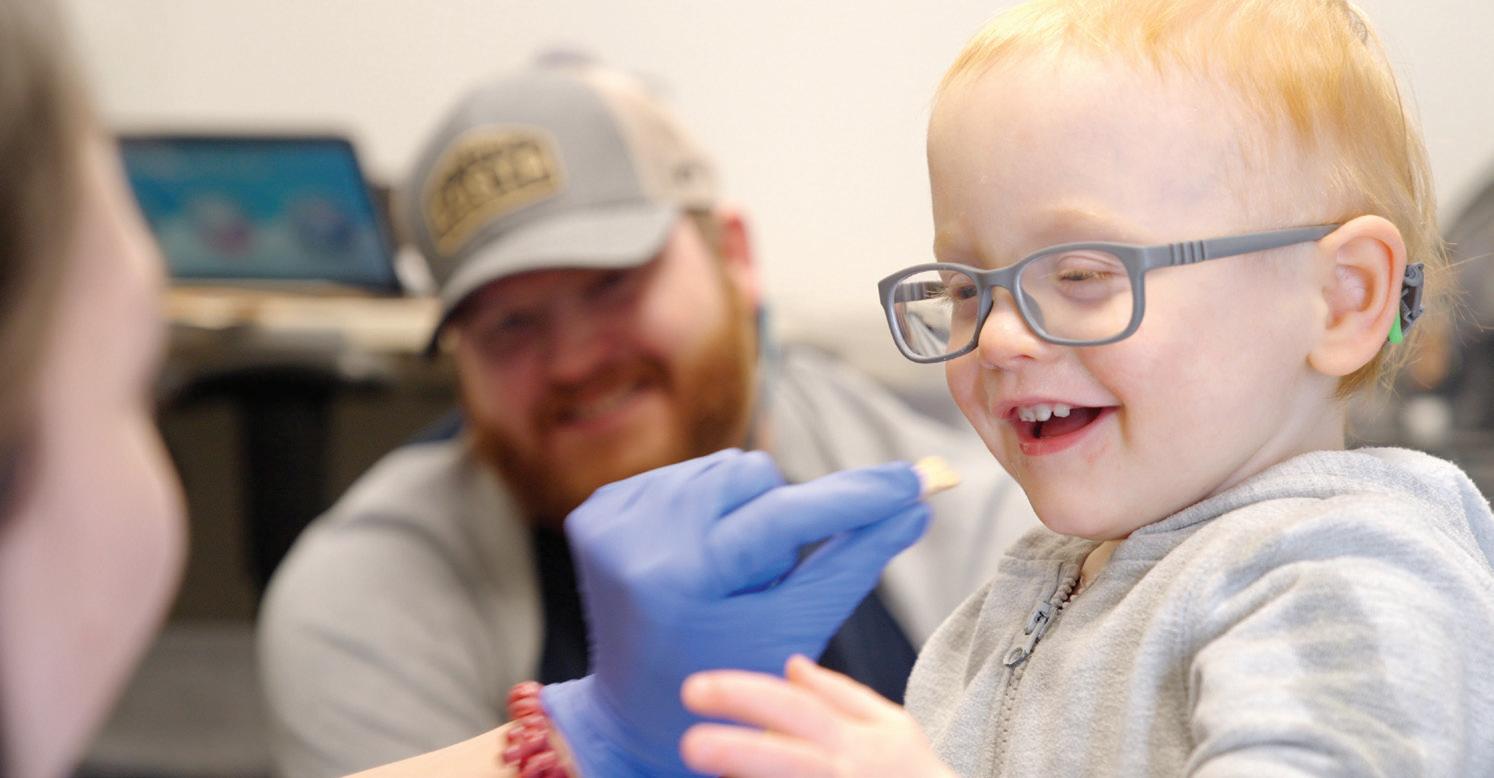
Brooks provides a designated outpatient licensed clinical social worker to help connect families to available community resources.
The Brooks School Re-entry Program provides a continuum of school transition and support services free of charge for children and adolescents through their entire academic career.
Brooks Pediatric Recreation Program offers both sport and recreation programs free of charge through weekly classes, monthly activities and family-friendly special events to any child, from birth to 17 years old, with any type of limitation/disability (physical, developmental, cognitive, sensory and social).
Motion Analysis Center is a specialized clinical and research assessment facility that serves children with neurological or developmental disorders whose impairments may impact walking function.
Relationships with community partners like GoBabyGo, for adaptive toy vehicles, Ablenet, to get AAC devices quickly, and Numotion, to evaluate and provide equipment such as wheelchairs, standers and bath chairs.
As a non-profit organization, Brooks provides scholarships and financial assistance to families who qualify.
For additional questions or to schedule an evaluation, please contact your local Brooks Rehabilitation pediatric clinic.
San Pablo 14286 Beach Blvd Suite 34, Jacksonville, FL 32250 (904) 345-7510
Northside 1034 Dunn Ave, Jacksonville, FL 32218 (904) 757-1782
Healthcare Plaza 3901 University Blvd S, Jacksonville, FL 32216 (904) 345-7310
Mandarin 11705 San Jose Blvd Suite 111, Jacksonville, FL 32223 (904) 345-7450
Westside 7749 Normandy Blvd Suite 147, Jacksonville, FL 32221 (904) 786-5576
St. Johns 104 Ashourian Ave Suite 105, St. Augustine, FL 32092 (904) 230-7761
St. Augustine Pediatric Center
200 Southpark Blvd #201, St. Augustine, FL 32086 (904) 417-6236
Orange Park
500 Park Ave, Orange Park, FL 32073 (904) 278-7890
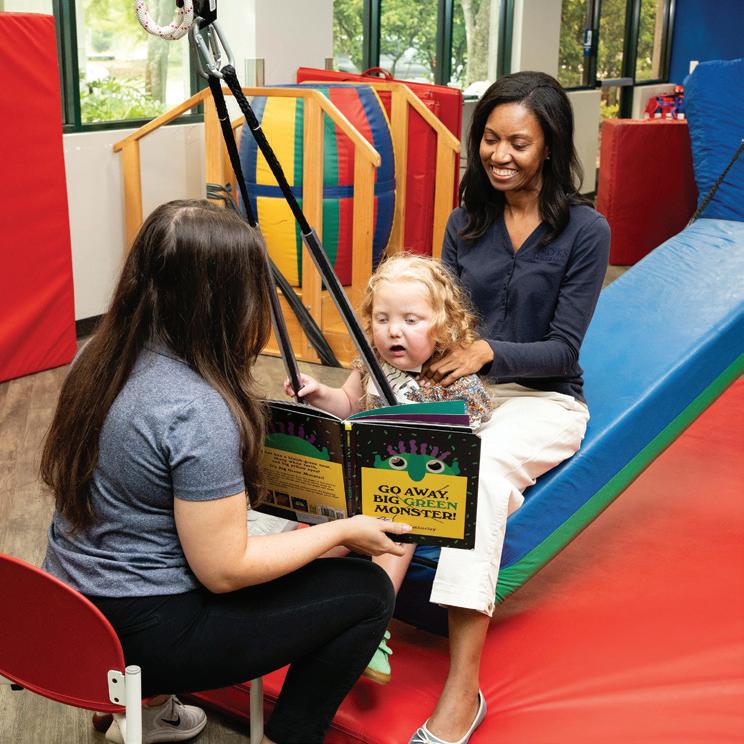
Our outpatient clinics are equipped with state-of-the-art technology, including adaptive equipment, sensory integration resources, and specialized exercise equipment to cater to the diverse needs of pediatric patients. Designated pediatric areas are designed to be engaging and motivating for children, making therapy a positive and rewarding experience.
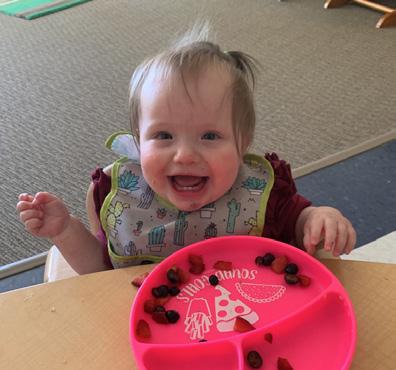
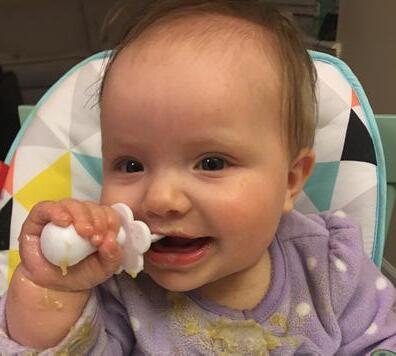
The feeding services at Brooks Rehabilitation take a supportive, comprehensive approach that incorporate the child’s developmental needs while addressing behavioral and oral-motor feeding issues as well as family education and training.
This comprehensive team may include:
• Child’s physician/pediatrician
• Occupational therapist
• Speech language pathologist
• Physical therapist
Listed below are common signs and symptoms that may indicate a child would benefit from feeding therapy:
• Not transitioning appropriately from bottle to cup, or from purees to solid foods
• Has difficulty holding bottle or cup
• Turns head or cries during adult directed feeding (when caregiver presents food on spoon)
• Eats very quickly, “overstuffs” or “pockets” foods
• Prefers to eat with his/her hands, has difficulty with utensils or refuses to use utensils
• Is resistant to touching foods or does not like to get hands “messy”
• Refuses new brands or foods or chooses food based on color, shape or packaging
• Feeding time exceeds 30 minutes
For additional questions or to schedule an evaluation, please contact your local Brooks Rehabilitation pediatric clinic.
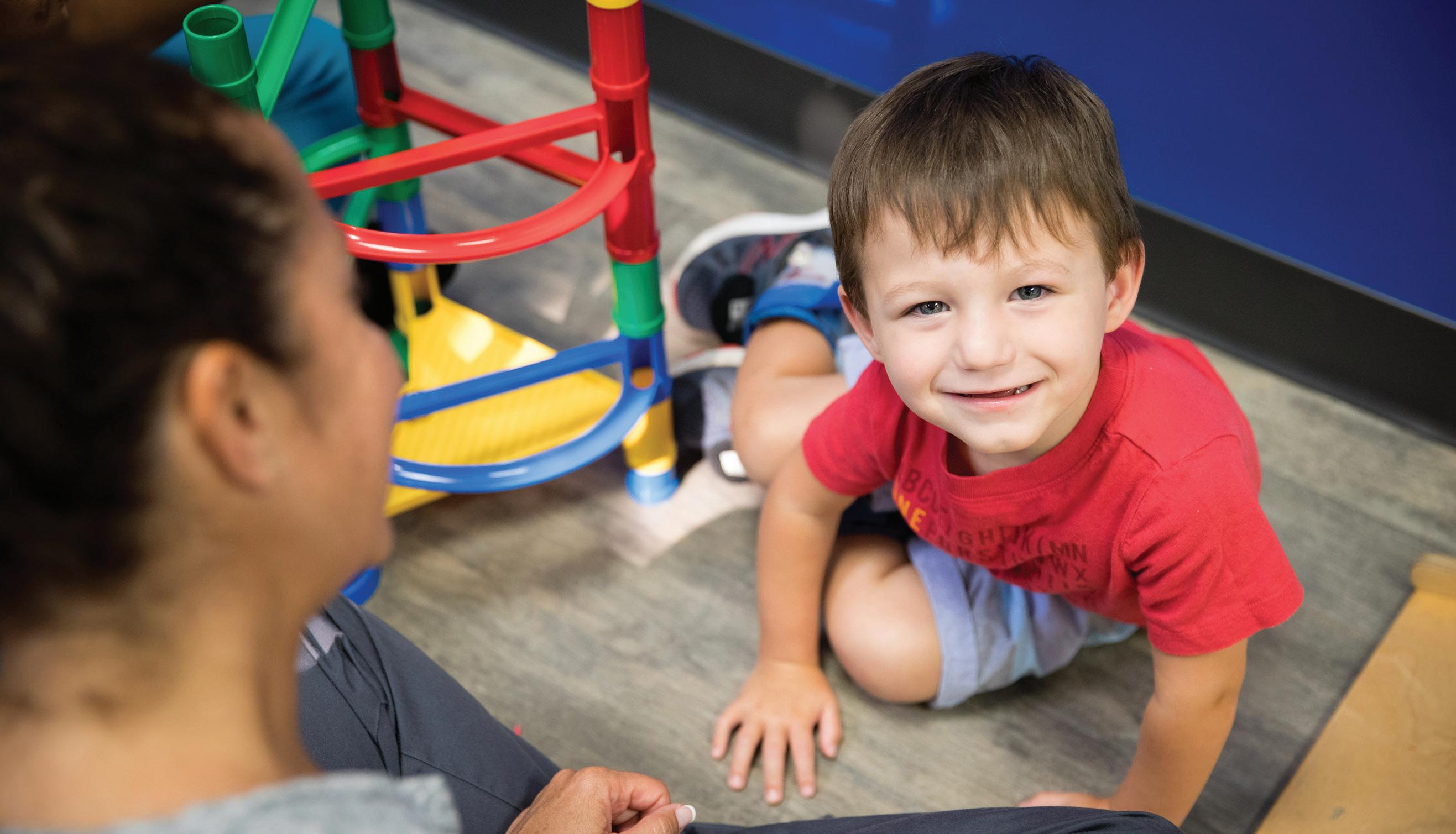
Developmental disabilities are a group of conditions due to an impairment in physical, learning, language or behavior areas. Early identification and intervention has been shown to positivelyimpact the child’s development and caregiver competency, all while reducing the cost of needed care over time. Brooks Rehabilitation provides comprehensive pediatric services to support early identification and treatment of developmental disabilities.
Areas of development we address include gross motor skills, fine motor skills, communication, visual integration skills, feeding, processing/adaptation, self-care skills and social pragmatics. Environmental modifications, accommodations, equipment recommendations and family training may also be part of the plan of care. Our goal is to help each child reach their full potential!
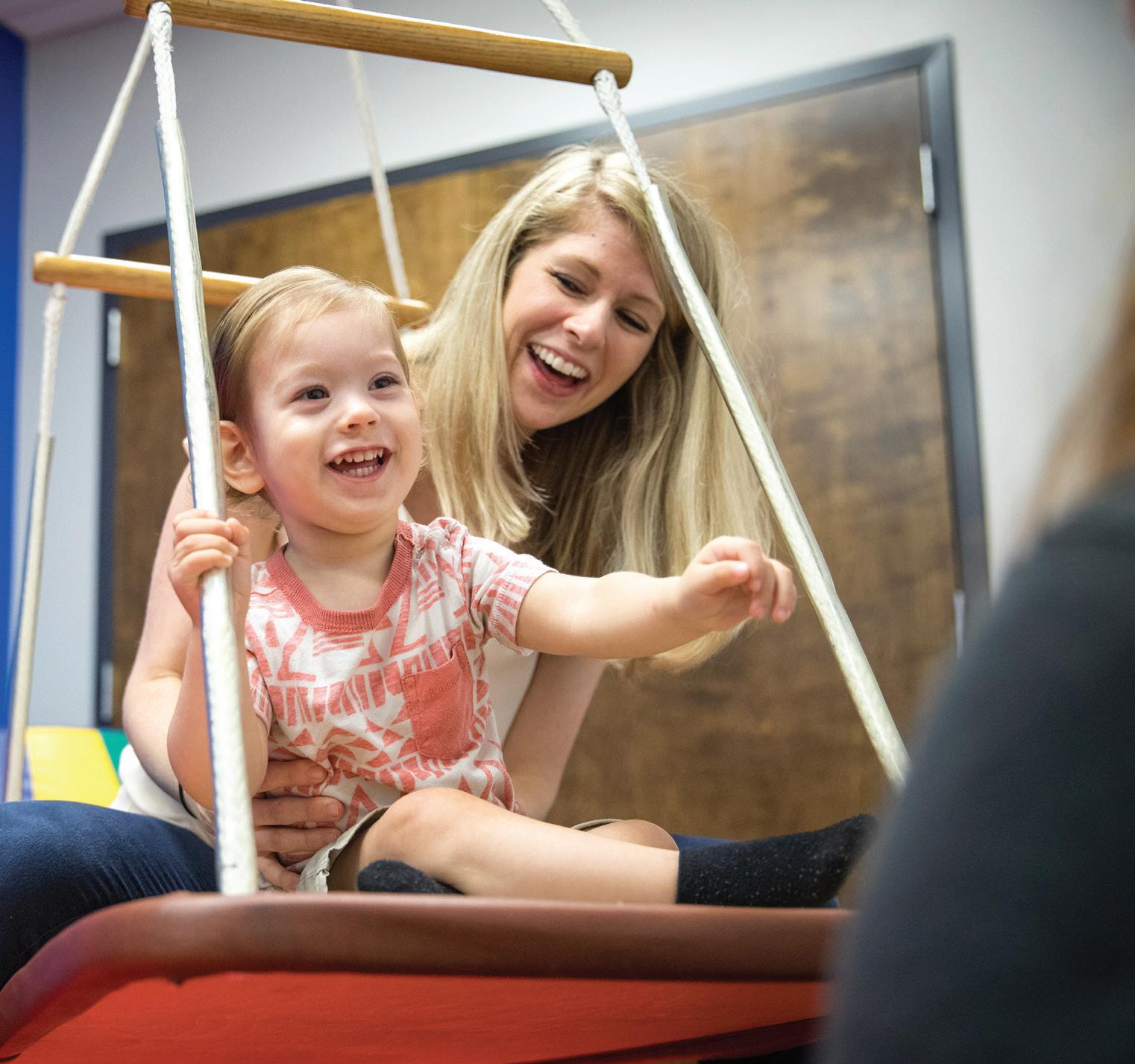
Developmental diagnoses commonly referred for therapy:
•Autism spectrum
disorder
•Down syndrome
•Failure to thrive
•Prematurity
•Cerebral palsy
•Spina bifida
•Tourette syndrome
•Fetal alcohol syndrome
•Intellectual disability
•Vision loss/low vision
•Fragile X
Supplemental pediatric services available:
•Pediatric Recreation Program
• Adaptive Sports and Recreation Program
•School Re-entry Program
•Wheelchair clinic
•Motion Analysis Center
For more information, please send an email to pediatrics@brooksrehab.org or contact our Central Intake Unit at (904) 345-7277.
#WeAreBrooks BrooksRehab.org
RECOMMEND: Primary diagnosis
2nd dx
3rd dx
Developmental dx
Developmental dx (if applicable)
Continued on next page
RECOMMEND: Primary diagnosis Medical dx/condition (if applicable)
2nd dx Developmental dx
3rd dx
Developmental dx (if applicable)
1. DAYTONA BEACH PEDIATRICS
311 N. Clyde Morris Blvd., Suite 50 Daytona Beach, FL 32114
P: (386) 425-7800
2. HEALTHCARE PLAZA
3901 University Blvd. S. Jacksonville, FL 32216
P: (904) 345-7310
3. MANDARIN
11705 San Jose Blvd., Suite 111 Jacksonville, FL 32223
P: (904) 345-7450
4. NORTHSIDE
1034 Dunn Ave., Suite 104 Jacksonville, FL 32218
P: (904) 757-1782
5. ORANGE PARK
500 Park Ave. Orange Park, FL 32073
P: (904) 278-7890
6. SAN PABLO
14286 Beach Blvd., Suite 34 Jacksonville, FL 32250
P: (904) 345-7510
7. ST. AUGUSTINE PEDIATRICS CENTER
200 Southpark Blvd., Suite 102 St. Augustine, FL 32086 P: (904) 417-6236
8. WESTSIDE
7749 Normandy Blvd., Suite 147 Jacksonville, FL 32221
P: (904) 786-5576
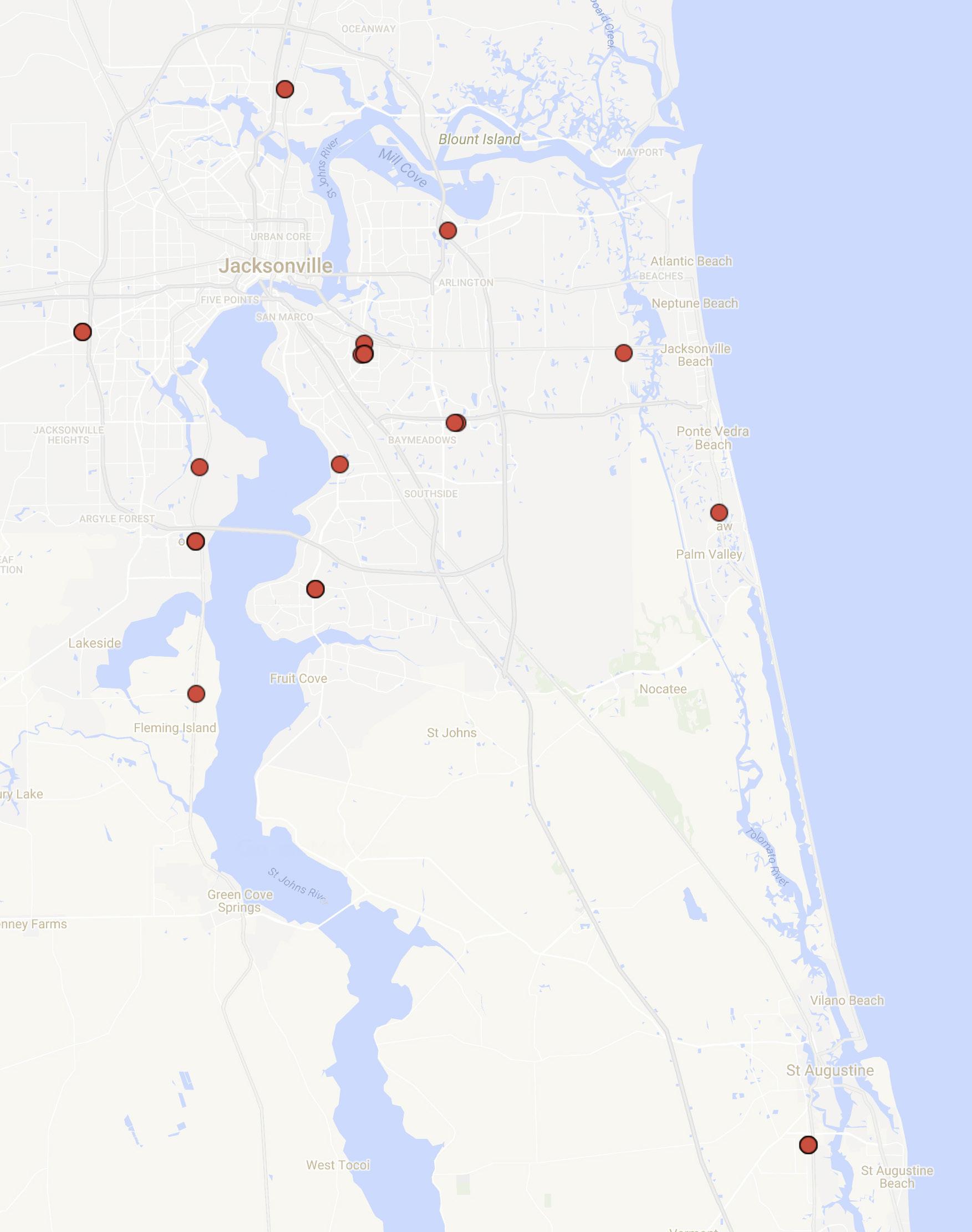
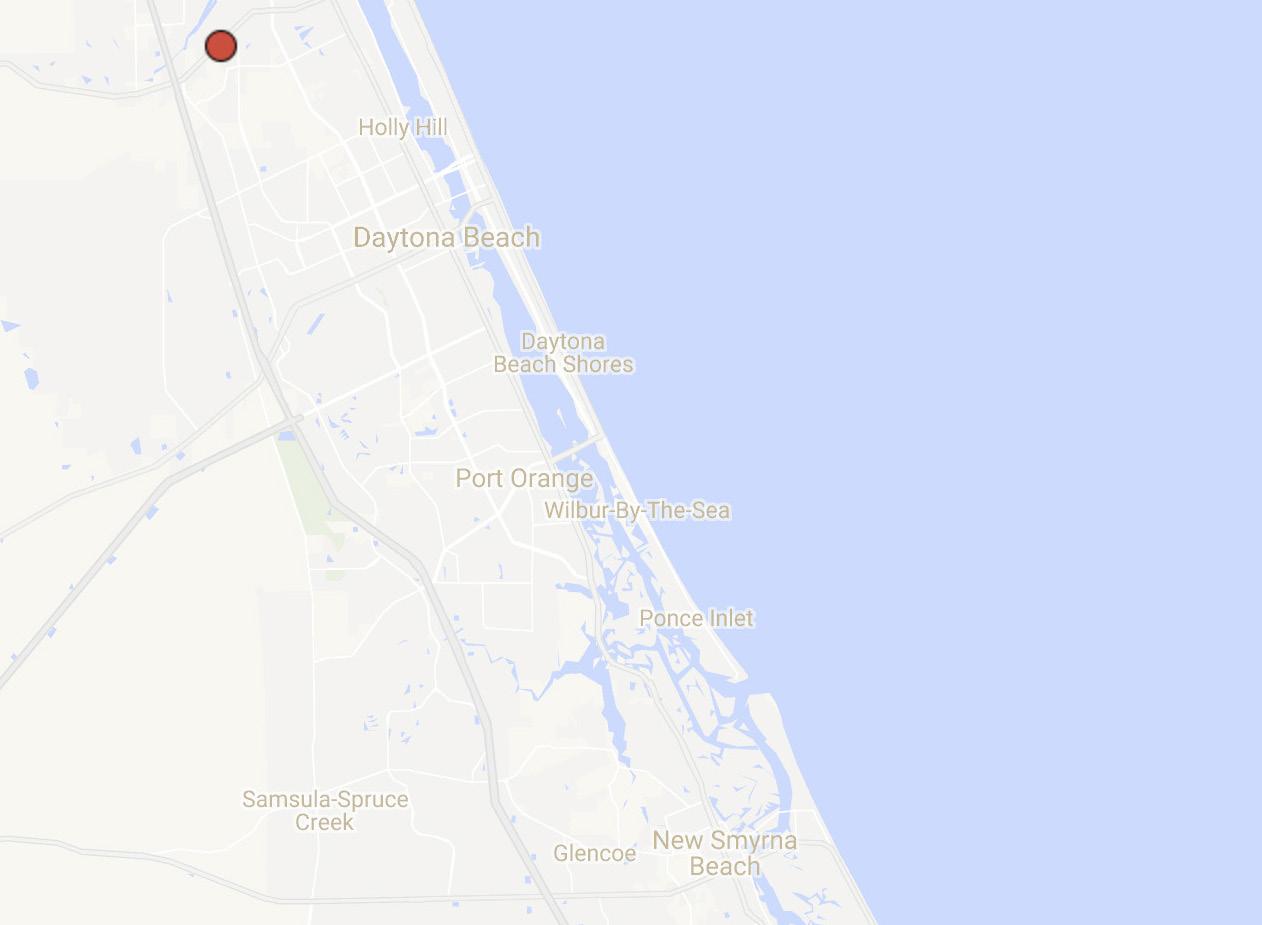
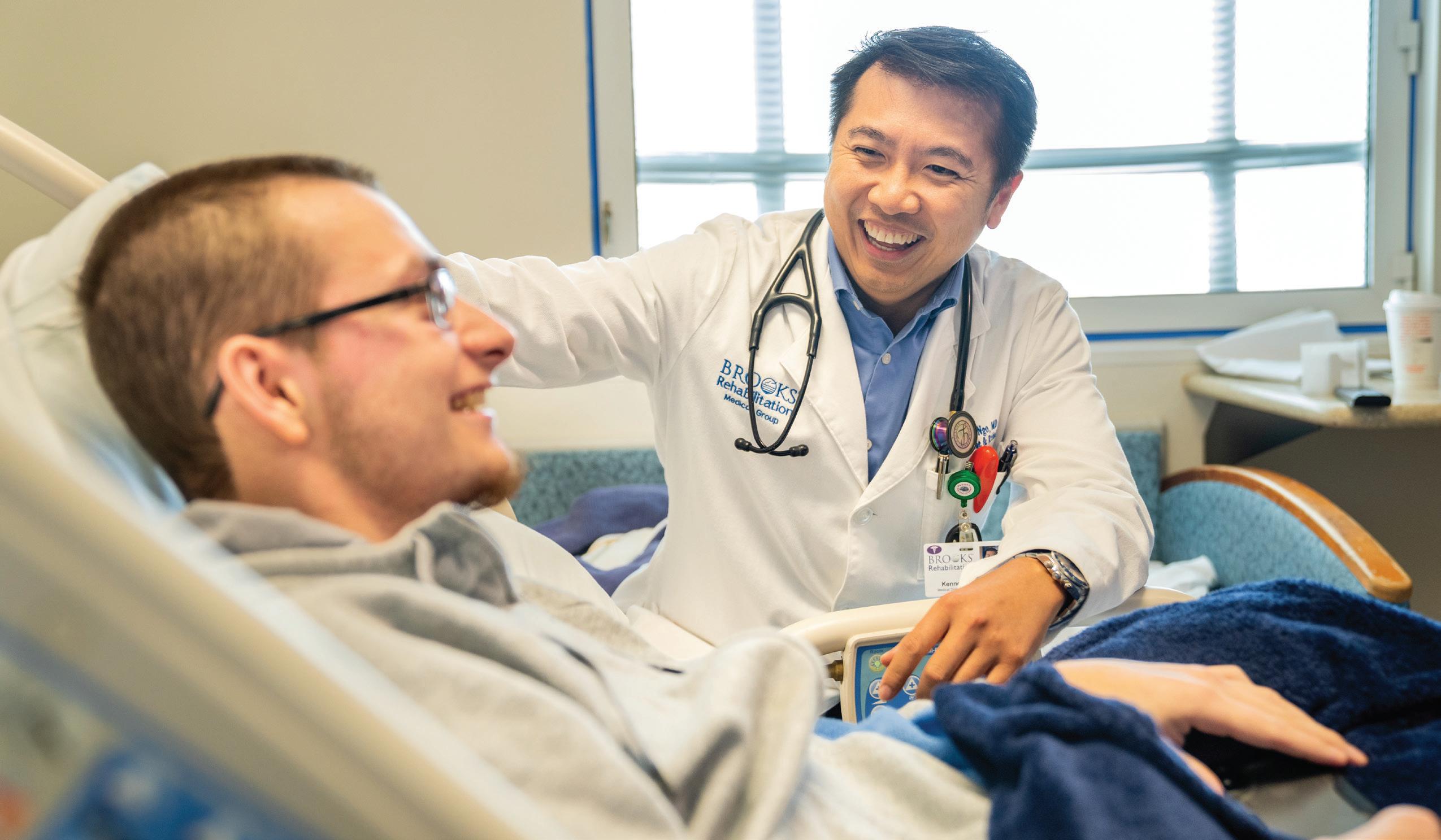
Innovation is a core value that has always been a driving force at Brooks Rehabilitation. It is the spirit of innovation that led to the creation of our newest service: a Transitional Care Program (TCP). The TCP is designed for patients who may no longer require an inpatient level of care, but still require intensive rehabilitation services and are unsafe to return home. This 22-bed unit will accommodates longer lengths of stay depending on the individual needs of each injured worker.
THE 22-BED UNIT FEATURES:
• Care from our specialized brain injury and spinal cord injury physicians
• Improved nurse-to-patient staffing ratios than other traditional discharge facility options
• Dedicated program manager and case manager
• Hybrid programming with Spinal Cord Injury and Brain Injury treatment programs
• Individual PT, OT and ST services
• Individual psychology services
• Recreational activities
• Customizable programming depending on patient needs including work conditioning
• Transitional Care and Supportive Living tracts
• Private patient rooms
referrals call (904) 465-6130 or visit BrooksRehab.org/WorkersComp