Finding rays of sunshine
There are moments when working for the Wildlife Trust can make you feel quite emotional. And it wasn’t just watching our team – and myself – on BBC North West Tonight, telling the story of how they had collected thousands of shark and ray egg cases on beaches around the Fylde and Wyre and won a national award for their efforts.
By Tom Burditt, Chief Executive Officer
It was the realisation that our team and volunteers were doing something that not only benefitted wildlife but was also helping them to cope in this pretty mad world. It also becomes a social event with tea and cake, and lovely chatter.
It was a pleasure to meet everyone on a sunny day at the impressive Rossall Point Tower, in Fleetwood. I handed over the award to our volunteers and then watched them set off to collect another 90 mermaids’ purses.
Projects like this aren’t just about that particular day. Every one of these volunteers will spend any time they have on the beach looking for signs of wildlife and report it back to our officers. This information tells us about the health of rays and sharks in the Irish Sea.
We do have a dream that one day we can get the resources to search the Irish Sea with underwater cameras on submarines. Imagine if we could get a glimpse into that amazing and beautiful hidden world. So read on about the work your Wildlife Trust is doing across the North West and you too will feel emotions like pride, passion and hope. Your support is making our work possible.
I hope you all have a lovely Christmas and that 2026 will give you opportunities to explore the North West’s natural places.
18,000 egg cases were collected by our volunteers!
4-5
4-5
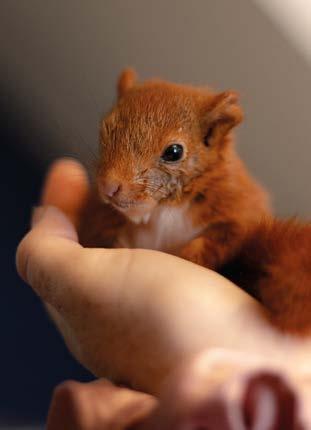
Red squirrels
Their ear fur gets longer and fluffier in cold weather, like little earmuffs
8-9
Fungi
Pushing up through the leaf litter, jelly-like blobs or tiny scarlet cups glowing like jewels
8-9
12-13
12-13
Long-tailed tits –What do we call a group? A chirping or chirruping of long-tailed tits? A bundle or a fluff, a tassle?
18-19
Searching for sharks Award winning volunteers contributing to citizen science
20-21
20-21
Strictly nature please
There was a buzz of excitement in the air; we were going to meet Hamza!
24-25
Photo competition
“Nature and photography have been instrumental in my recovery from my mental illness”

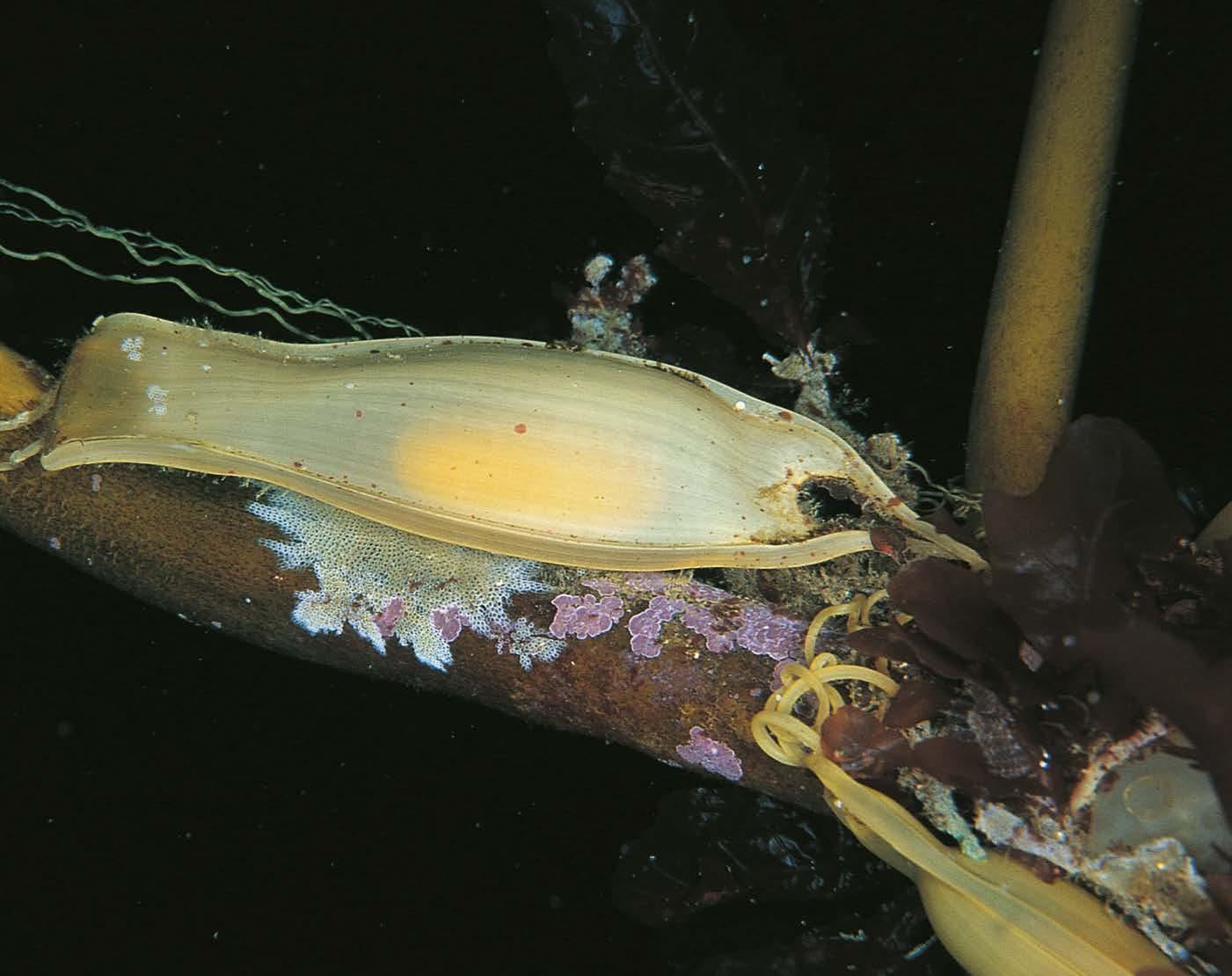
Dogfish egg case © Paul Naylor
Get in touch
You can change the way we contact you, or update your details by speaking to our membership team: E: membership@lancswt.org.uk T: (01772) 324129 24-25
We’d love to hear from you, whether sharing your thoughts on the magazine or your adventures in nature.
@Lancashirewildlifetrust @lancswildlife @Lancashirewildlifetrust lancswt.org.uk info@lancswt.org.uk 01772 324129
The Barn, Berkeley Drive, Bamber Bridge, Preston, PR5 6BY
Editor: Jenny Bennion
Sub Editors: Alan Wright, Lydia German, Amy Shakeshaft
Contact the editorial team: jbennion@lancswt.org.uk Design: nectarcreative.com
Registered charity no. 229325 Registered company no. 731548
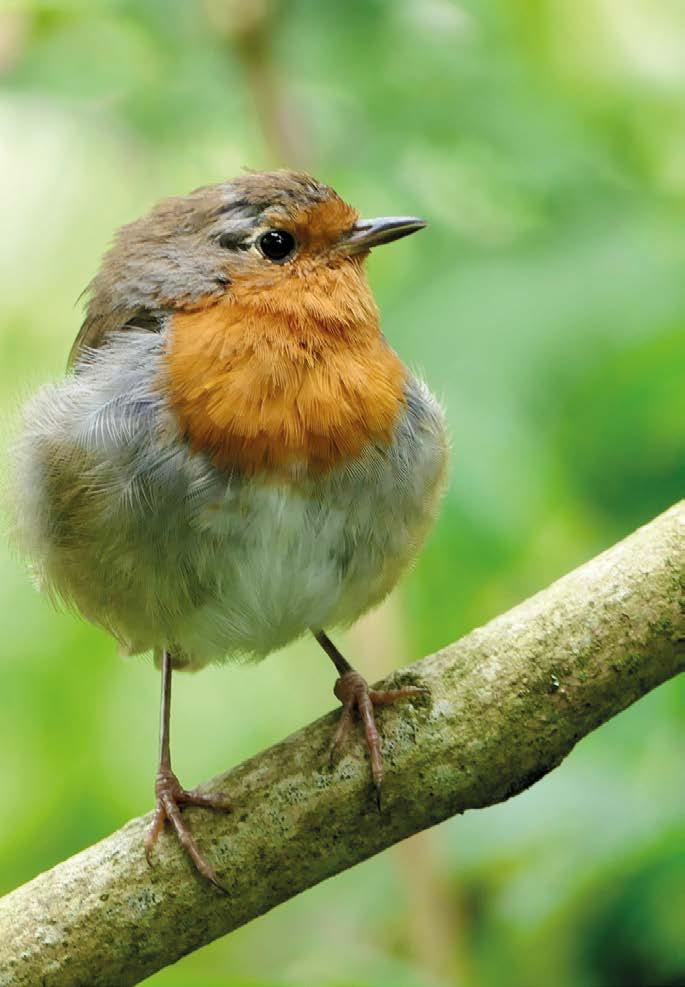
Robin © Sim Vessey
Branching out for red squirrels
By

A bold new project is taking root, bringing communities together to protect one of Britain’s most iconic species.
The Red Squirrel Recovery Network: What is it?
The Red Squirrel Recovery Network (RSRN) is an ambitious cross-border partnership bringing together conservation organisations, volunteers, and research institutes across Northern England and Southern Scotland.
The project focuses on expanding the red squirrel's range, strengthening community involvement, and raising public awareness, whilst also exploring innovative approaches to grey squirrel management through trialling a delivery method for grey squirrel fertility control.
The National Lottery Heritage Fund is supporting the project with five years of funding (until March 2030), following a successful one-year development phase. The first year set up baselines in squirrel distribution, grey squirrel management, and volunteer demographics, and developed strategies for broader engagement and conservation planning. The next five years will implement these plans, increasing opportunities for people to get involved in red squirrel conservation.
“Once numbering millions, the UK population of red squirrels has crashed over the past century. Current estimates suggest around 287,000 individuals remain”

Why this matters: the plight of the red squirrel
Once numbering millions, the UK population of red squirrels has crashed over the past century. Current estimates suggest around 287,000 individuals remain, with around 70 per cent residing in Scotland.
In England, numbers are far lower, and the species is classified as endangered on the Mammal Society’s Red List.
The main threats to red squirrel survival are grey squirrels. Originating from North America, these invasive species outcompete red squirrels for food and space and spread the fatal squirrel pox virus.
But there is cause for optimism. Through projects like the RSRN, we can achieve action at landscape scale through improved community engagement, science-led interventions, and threat management. All of this will help secure a brighter future for our beloved red squirrels.
Scan to find out more about the Red Squirrel Recovery Network


Molly Frost, Red Squirrel Officer

‘Thanks to National Lottery players’
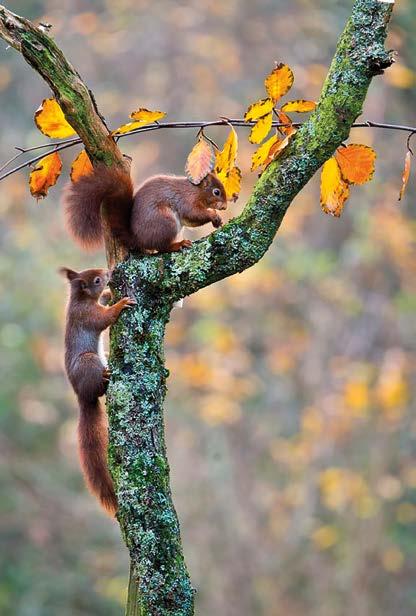
Can you help?
There are lots of things we can all do to help red squirrels. Check out our website to find out more.
1. Formby, Merseyside
places to spot red squirrels
Known for its coastal woodland, red squirrels can be found in mixed pinewoods and urban greenspace.
2. Kielder Forest, Northumberland
A vast woodland stronghold and one of the UK’s best places for reds.
3. Whinlatter Forest, Cumbria England’s only true mountain forest, with thriving red populations and dedicated viewing points.
4. Galloway Forest Park, Southern Scotland Britain’s biggest forest park and a key Scottish refuge for reds.
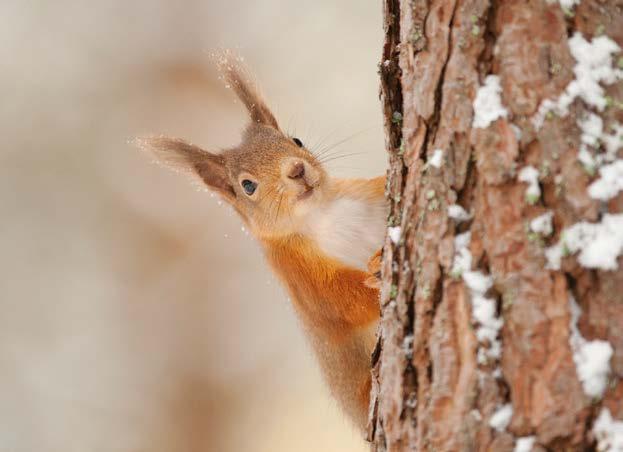
THREE FACTS ABOUT
Red squirrels
Known as ‘ear tufts’, red squirrels’ ear fur gets longer and fluffier in cold weather, like little earmuffs.
With powerful back legs, and agile feet, they can leap up to two metres between branches.
Their coat colours shift with the seasons, from sunset orange in summer, to silvery-grey in winter.
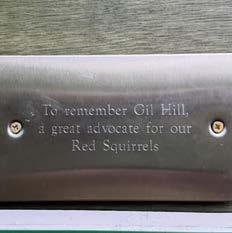
Our new soft release pen, thanks to Gil
Gil Hill volunteered for the Lancashire Wildlife Trust for over 25 years, until her sad passing.
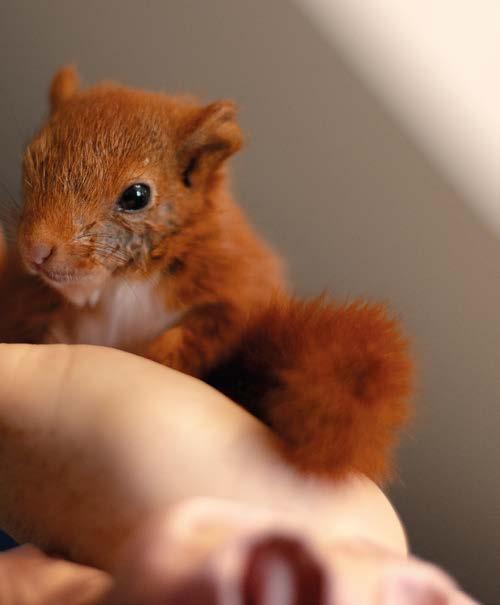
Gil left a generous legacy in her Will to our red squirrel project, which was used to build a new soft release pen for orphaned red squirrel kits that end up in our care.
The red squirrel staff and volunteers recently got together to unveil the new pen and take a walk around the Formby woodlands to reflect on Gil’s enduring passion for protecting our precious reds. Thank you Gil.
Ear tufts get longer in winter © Mark Hamblin 2020VISION
Houdini, an orphaned red squirrel kit cared for by our team © AJCritch Wildlife
Red squirrel © Peter Smith
Breathing new life into an old landscape
Dr Paul Thomas from Natural England introduces the new Risley, Holcroft and Chat Moss National Nature Reserve...
MBy Dr Paul Thomas, Senior Officer Peat and Wetland, Natural England
ost people driving on the M62 between Warrington and Salford probably do not realise that the blur of green fields they are passing is an ancient 10,000 year old wetland. And now, excitingly, this amazing landscape on Manchester’s doorstep is a National Nature Reserve –home to rare species, such as lapwings, curlew and adders.
Part of the King’s Series, Risley, Holcroft and Chat Moss National Nature Reserve is a network of 11 sites being restored for people and nature. This part of England once led the world in industrial innovation but today it shows leadership in nature recovery. Having been involved in the project since 2003, I consider myself lucky to have played a key role in many of the changes and transformation on site.
To start with a lot of my work focused on mapping the mosslands to see what had survived, but then my focus moved to the hydrology and the work needed to re-wet the peat. However, it was the formation of the Great Manchester Wetlands Partnership in 2011 that proved crucial. The wildlife benefits couldn’t be underestimated but we also had to remember that the mossland is a superhero in the fight against climate change, soaking up and locking in carbon, if only we can re-wet them.
“All this hard work has transformed Risley, Holcroft and Chat Moss into a National Nature Reserve that is resilient and inspirational

My job was to work with the ever-growing partnership to help them restore more and more mosslands, until by the end of 2022 we no longer had just three isolated islands of biodiversity, but an archipelago of bogs, fens and wet woodlands stretching from Risley Moss in the south to Astley Moss in the north.
A range of partners including Warrington Borough Council Ranger Service, Woodland Trust, Cheshire Wildlife Trust, Forestry England and of course the Lancashire Wildlife Trust hosting the project.
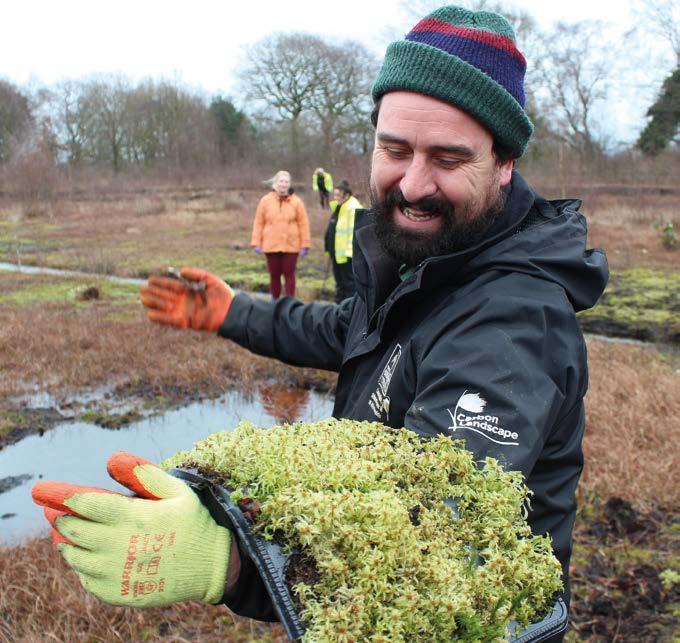
This project had put almost all the pieces in place to create our new National Nature Reserve. But the last piece we needed was the land linking them back together. And as luck would have it the Lancashire Wildlife Trust had been working with local farmers that flagged up just the opportunity we needed. So, Moss Side Farm was acquired by Natural England, and we are now working to re-wet the peat and restore the fields to wetlands, allowing wildlife to move between the relic sites.
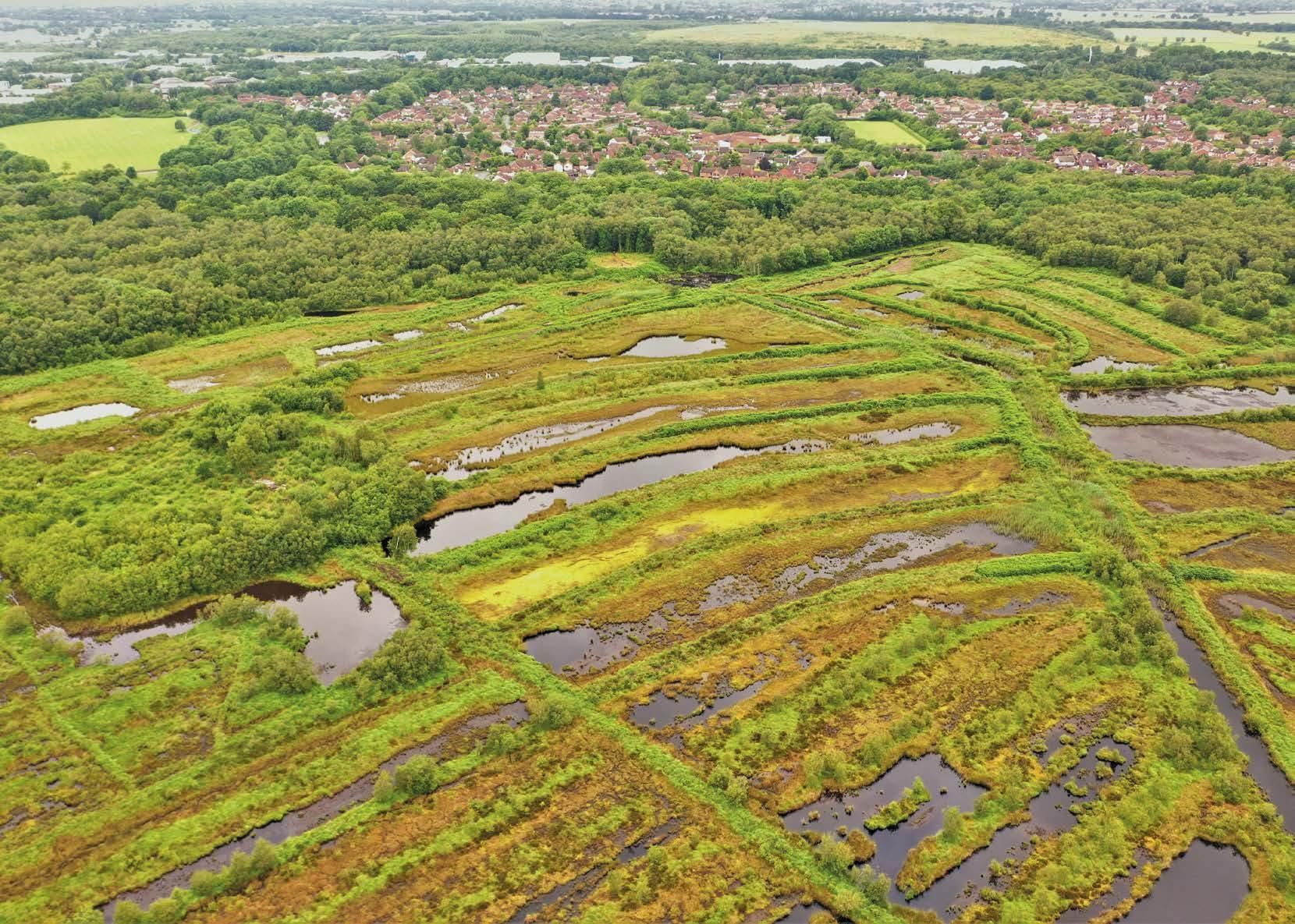
The new Risley, Holcroft and Chat Moss National Nature Reserve covers an amazing 529 hectares
There is a lot to do but we are building on all the peatland restoration knowledge that has been built up in the area over the past 20 years. Moss Side Farm links the Wildlife Trust reserves at Astley Moss, Rindle Moss, Cadishead and Little Woolden Mosses, and this effectively created the opportunity to reconnect all the surviving re-wetted bog on Chat Moss into one ‘mega moss’ – covering 529 hectares, across 11 sites.
All this hard work has transformed Risley, Holcroft and Chat Moss into a National Nature Reserve that is resilient and inspirational. It will enhance the area’s natural assets which create a sense of place, contribute to pride in the local area, help attract visitors and create places people want to live and invest in.
So, if you are driving along the M62 it is worth turning off at the Birchwood junction. Within five minutes you will be taking the short walk on the boardwalk at Risley Moss into an ancient habitat that’s full of life once more.
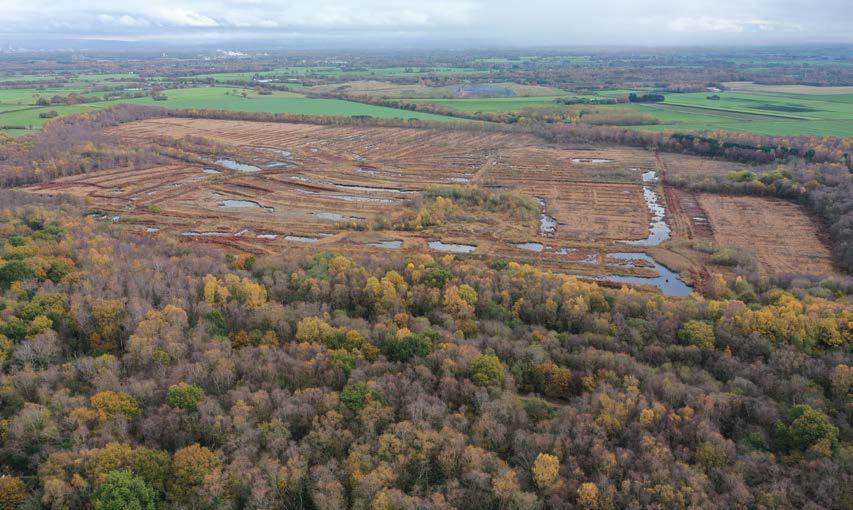
Risley moss is a haven close to many people’s homes © Risley Moss Rangers Risley Moss © Paul Thomas
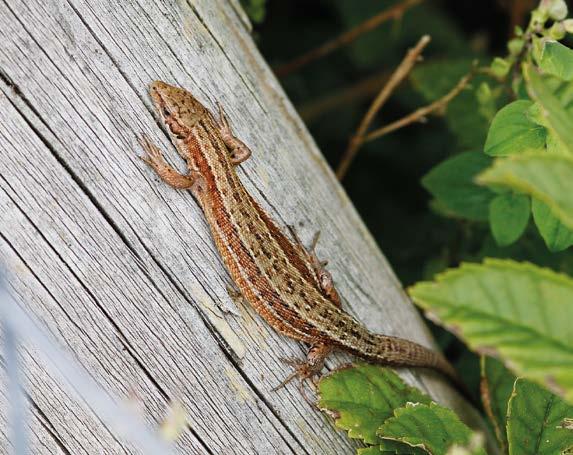
Common lizard © Mike Roberts
The largest known organism on earth is the Armillaria ostoyae fungus, which covers more than 2,300 acres in Oregon’s Blue Mountains.
Did you know?
The hidden world beneath our feet
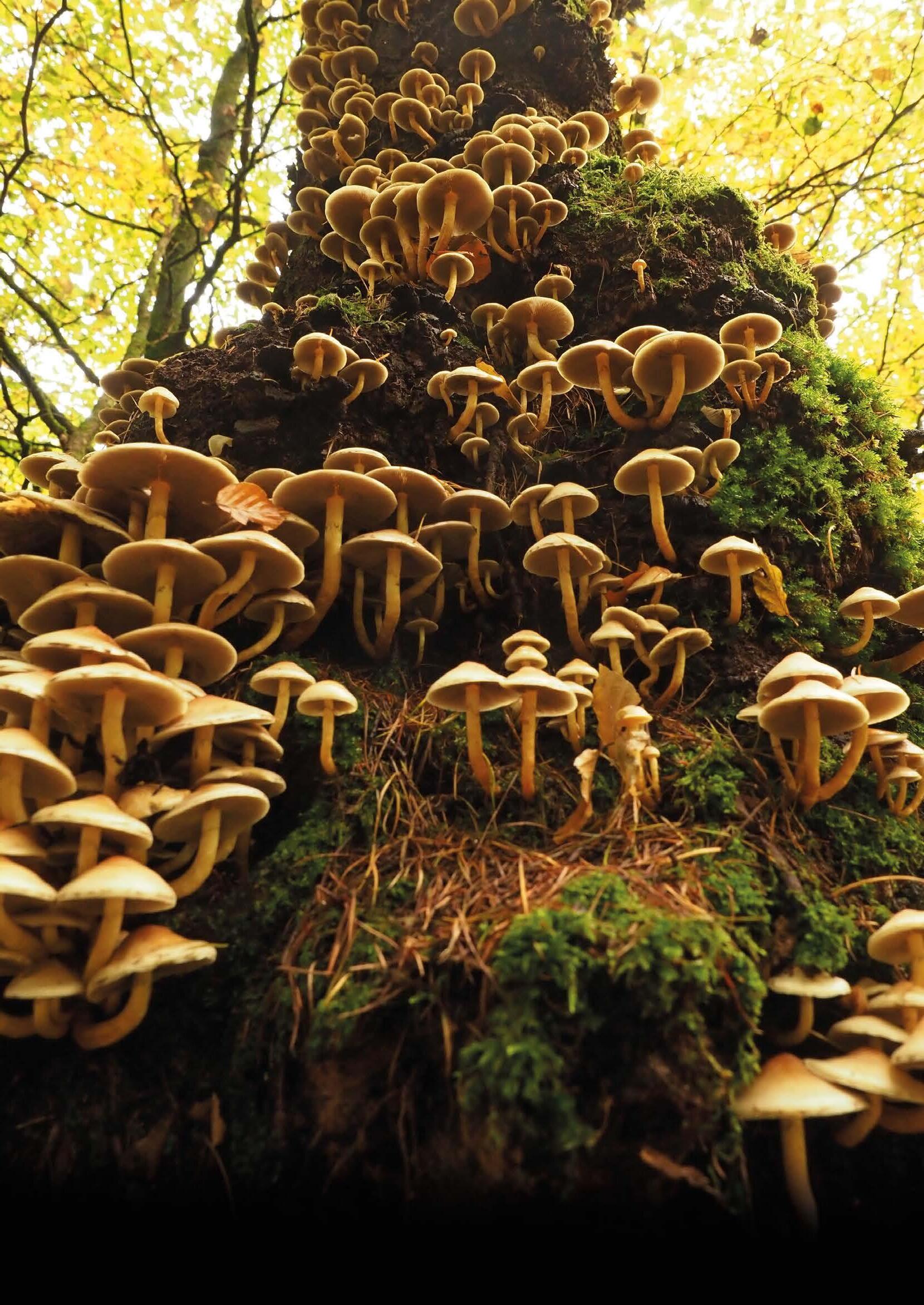
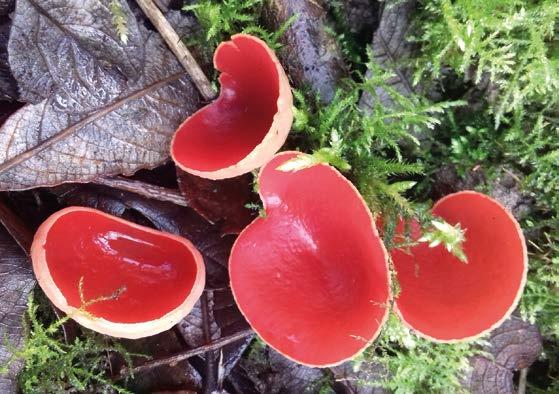
Step into a damp winter woodland and you’ll soon spot them: mushrooms pushing up through the leaf litter, jelly-like blobs clinging to fallen branches, or tiny scarlet cups glowing like jewels against the winter gloom.
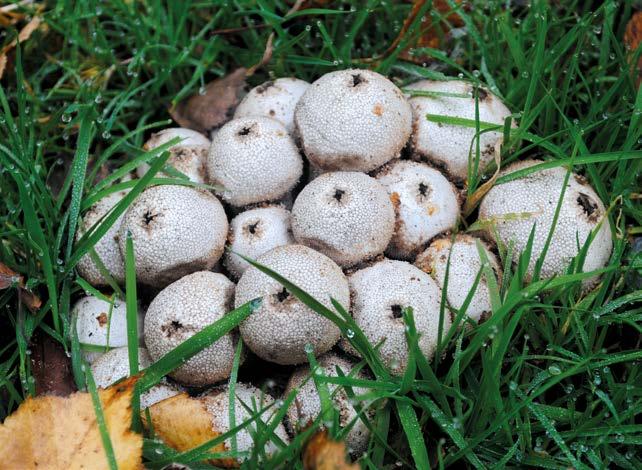
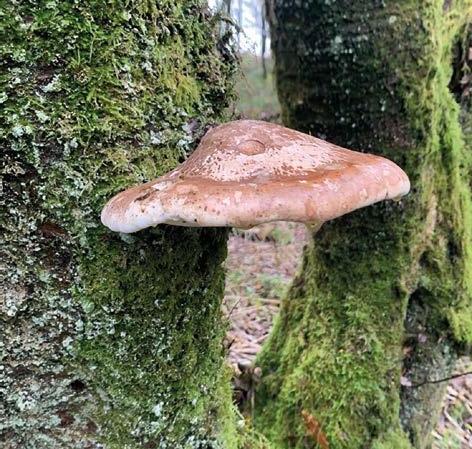
Fungi come in all shapes and sizes, from familiar toadstool shapes to cups, brackets and puffballs. These curious structures are actually the fruiting bodies of fungi, offering a brief glimpse of a much bigger story happening beneath our feet.
Known as mushrooms by most of us, these appear above ground just once or twice a year. Like apples on a tree, they’re temporary, fragile, and focused entirely on reproduction.
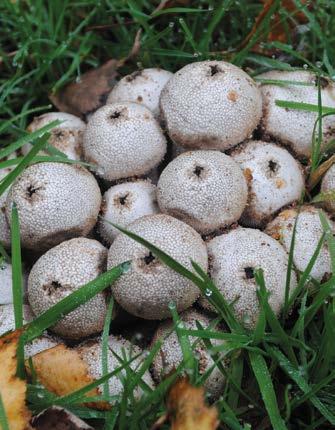
Their job is to spread spores, which are dust-like particles that carry the fungus’ future. They’re everywhere, but invisible to the naked eye. They drift on the wind, splash with the rain, or take a ride on animal fur. Some fungi even fire out their spores like cannons. When knocked, puffballs burst with a smoky cloud of spores, almost as if the mushroom itself is exhaling.
As exciting and varied as these travel methods are, the real life of a fungus is hidden away underground or within whatever it feeds on, whether that’s soil, wood or leaves. Fine threads called hyphae weave together into a dense network called a mycelium. This network is essentially the heart of the fungus, quietly growing, feeding and connecting for years, long after the visible fruiting bodies have rotted away.
To picture this, imagine an apple tree buried beneath the ground, but you only ever see the apples (in this instance, the mushrooms). Underground, the tree’s branches sprawl for metres, sometimes even miles.
Through this network, many fungi form partnerships with trees, grasses, and other plants. The mycelium wraps around plant roots, delivering nutrients from the soil in exchange for sugars made by photosynthesis. As a result, mycelium has earned the nickname of the Wood Wide Web, as it essentially acts like an underground social network.
Trees can use it to share resources with their neighbours, passing sugars and minerals to weaker or shaded trees, and can even send out warnings. A tree under attack from insects or disease can signal through the fungal network, giving others the chance to strengthen their defences.
Next time you spot a mushroom, remember that you are seeing just the surface of one of nature’s most extraordinary hidden worlds.
places to spot winter fungi
Even though many autumnal fungi have faded, winter still offers plenty to spot.
LONGWORTH CLOUGH
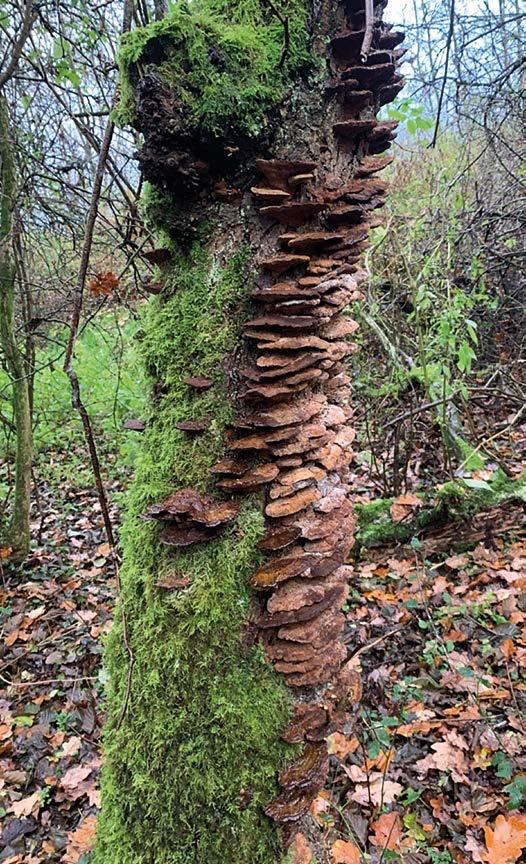
Spot tree ear, scarlet elf cups, and bracket fungi like turkey tails and hoof fungus.
MERE SANDS WOOD
One of Lancashire’s hotspots, with over 200 species recorded. Look for bracket fungi decorating rotting logs and lingering earthballs releasing their spores.
BROCKHOLES
Discover golden witch’s butter on dead branches, as well as rubbery tree ear thriving in damp conditions.
By Lydia German, Senior Content and Campaigns Officer
Alder bracket at Longworth Clough © Lydia German
Puffballs © Amy Lewis
Sulphur tuft © Allison Lyon
Scarlet elf cups at Holiday Moss
© Helen Earnshaw
Birch bracket at Longworth Clough © Lydia German
During these short, dark December days, it’s easy to get lost in the days between ‘The Big Day’ and returning to work. Join us for 12 Days Wild and stay wild and well with us this winter.
We all know that lull between Christmas Day and the first week of January. It’s a busy spell where, if you’re not at work, you fall out of your routines, eat an inordinate amount of food, and catch up with friends and family you may not see on a regular basis.
After the pressure of hosting, shopping, socialising and gifting, it can be hard to check in with ourselves and the natural world around us. 12 Days Wild is a fun and festive way of staying active during the winter by doing one wild thing every day from 25 December to 5 January.

Through daily doses of eco-inspiration, encouragement and ideas for activities, we’ll keep you connected to nature and promote wellness through wildlife. It may seem like the wild world is in hibernation, but each 12 Days Wild activity is designed to help you follow the five ways to wellbeing; taking notice, giving back, connecting, keeping active and learning.
Whether you’re travelling to visit family, keeping energetic children entertained indoors, or are having a ‘quiet one’ this year, we all need to keep our health and wellbeing in check during what can be a gloomy, exhausting yuletide. Sign up for a daily dose of wild wellbeing on our website and you’ll get emails straight to your inbox, and follow us on social media for activities, ideas and resources.
By Amy Shakeshaft, Communications and Campaigns Assistant
25 December
Do the planet a favour. Recycle or re-use your wrapping paper, bows, bags and ribbons. Re-gift or donate wellintentioned but unwanted gifts.
Wading birds can be difficult to identify. Challenge yourself by taking your binoculars out to see if you can correctly identify and learn our shore birds and their behaviours with our handy tips.
December
If you’re travelling across counties to see loved ones, check out the nature reserves of Wildlife Trusts in that area and plan to go for a walk. You might notice different varieties of wildlife in that region.
December
Entertaining children? Keep them busy and creative by visiting our Wildlife Watch website, full of activity sheets and resources to keep them (and you!) active.
Did you know that the December moth is one of the few moths you’re likely to see this month? Learn something new about nature, through a documentary, book or the species explorer pages on our website.
December
As we look towards the New Year, take a moment to reflect on the year passed. Jot down what you are grateful for, any special wildlife moments, and look forward to and connect with what brings you joy.
It’s easy to want to stay warm indoors. On a day when the weather is not so frightful, don your coats and get out for a walk in a green space or nature reserve. You can find suggested walks and wildlife identification guides on our website.
2 January
Wildlife is still out there - and it’s easier to see through the bare trees. Learn which birds are migrating with our winter bird migration guide and discover more about birds of prey.
December 30 December 4 January
1 January 3 January
29 December 5 January
Listen to our podcast. Reduce stress levels and learn something new by checking out our podcast: The Conservation Chronicles. Available on YouTube.
Don’t neglect your garden. Wildlife needs extra support in winter. Give back by keeping your bird buffet well stocked, fresh water topped up and your leaf litter untouched for insects.
Pledge to make change… New Year’s resolutions are infamous for being hard to keep. Commit to making small but achievable changes in your lifestyle to give back to the planet, with our tips and ideas on plastic reduction and sustainable living.
It’s time to take the tree down. If it’s a real fir tree, give back and donate it to us for our annual Christmas tree planting event on the Fylde Sand Dunes in February. Learn more from our website or social media.
Small birds need a fluffy moniker
Whilst maybe not as spectacular as starling murmurations, flocks of long-tailed tits are a delight to see in winter months.
By Alan Wright, Head of Communications
It is amazing that a birder or naturalist has never had the nous to come up with a collective noun for a group of long-tailed tits.
Surely, this tiny delight deserves a bit of recognition as it hops between charms of finches and clouds of blackbirds.
You may sometimes hear them collectively referred to as a volery of long-tailed tits, but this hasn’t been officially adopted. And I can’t help but think that we could do better...
“It is remarkable that these tiny pink, black and white birds get cold because they look as though they are balls of fluff”
We could go with a chirping or chirruping of long-tailed tits?
A bundle or a fluff, a tassle? And for people who shorten meadow pipits to mipits and tree pipits to tripits, what about litits? Or lotits?
A suitable collective noun has to be something that captures the sheer rapture of discovering a party of these beautiful, tiny birds as you wander along pathways in the colder months.
Of course, you can see long tailed tits all year round but, like many creatures, they do congregate in parties of 20 or 30 birds for warmth and safety when it gets cold.
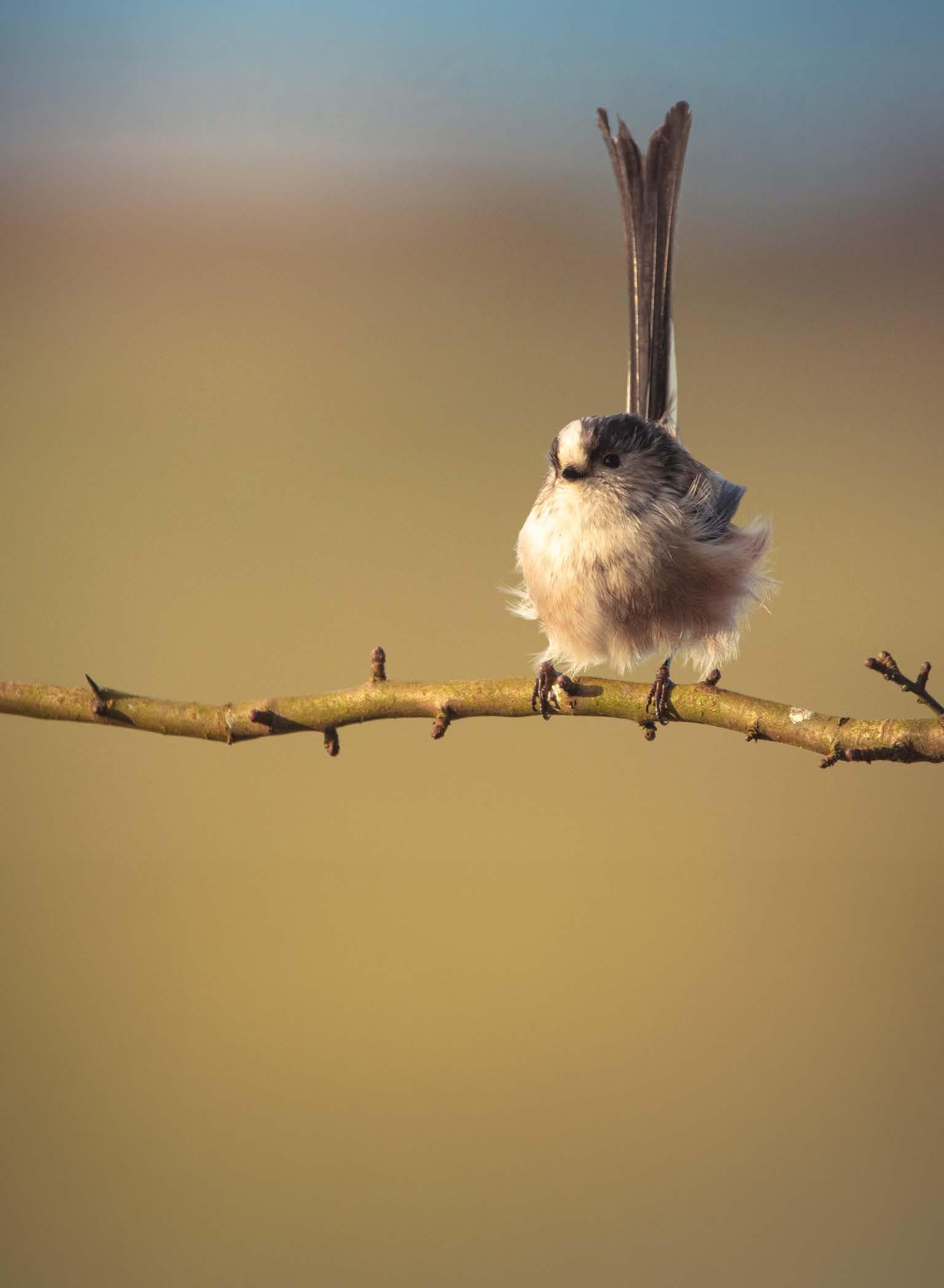
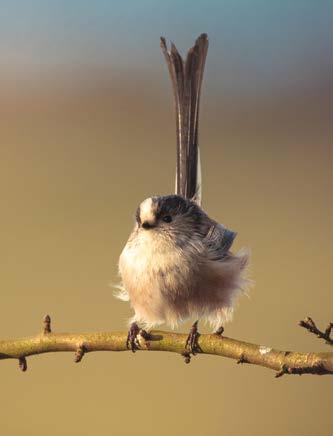
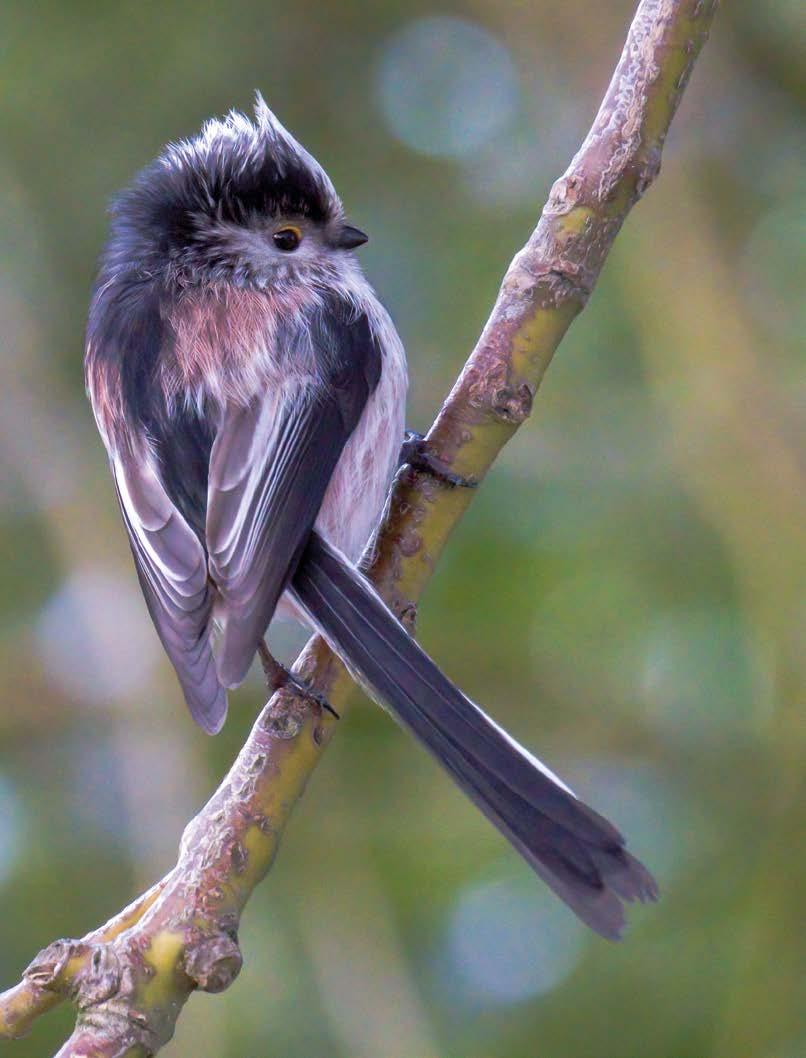
That spectacular tail © Tom Wilson
Long-tailed tits are one of the first birds to start nest building, often before the leaves have unfurled on the hedges, which may explain why the nest is so well camouflaged.
It is remarkable that these tiny pink, black and white birds get cold because they look as though they are balls of fluff, feathers attached to a long tail. It’s probably down to their size. They are about 14cm long, with an 18cm wingspan and they weigh around three ounces, the same as an AAA battery.
You will see them on country walks, in woods, parks and, if you are really lucky, they will visit your garden and your bird table. They will mix with other tits as they search for food.
In spring, long-tailed tits build domed
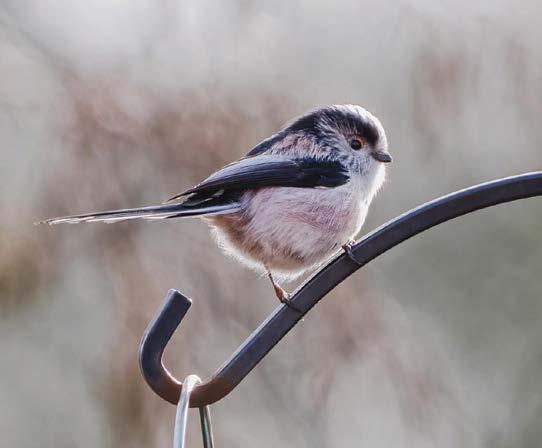
If you are lucky you will see a long-tailed tit in your garden
© Elaine Price
Pink, black and white, the long-tailed tit
© Christine Armstrong
Long-tailed tit in woodland
© Peter Smith
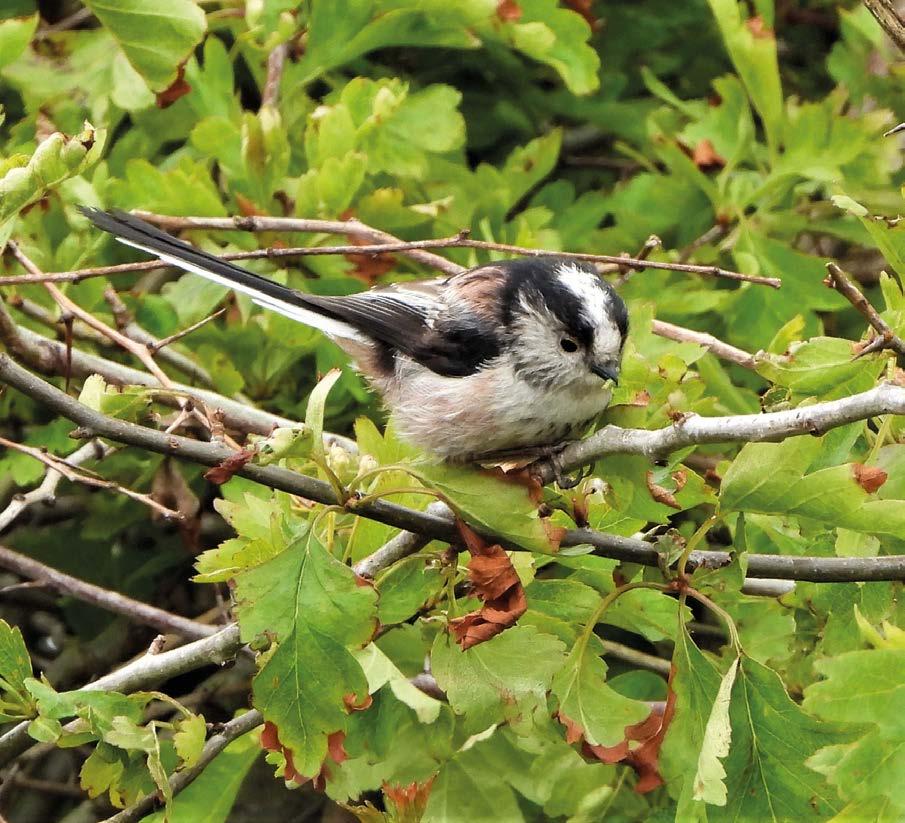
They will hunt out insects and spiders among the smaller branches and leaves of trees in woodlands.
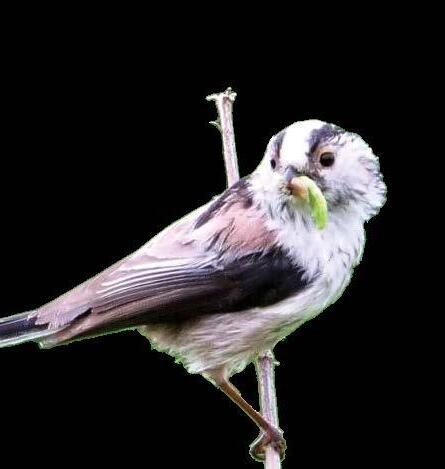
The long-tailed tit’s long black and white tail is bigger than its body. It has a black, white and pink back, a white head with a wide, black eyestripe and a pale pink belly.
I don’t go looking for them, but I do see them regularly in the trees along the edge of our local mill lodge. At first, I will spot one, and then I will see a group flitting between trees. Even from a distance they are easy to recognise. And there is something really lifeaffirming to know that something so tiny can happily tootle along in the midst of winter.
Hang on, a tootle of long-tailed tits?
They are about 14cm long, with an 18cm wingspan and they weigh around three ounces, the same as an AAA battery

Bringing back the butterflies
Once suffering from drainage and overgrazing, precious fen peat soils at Manor House Farm are now on the road to recovery.
R
By Helen Earnshaw, Peatlands Programme Project Manager
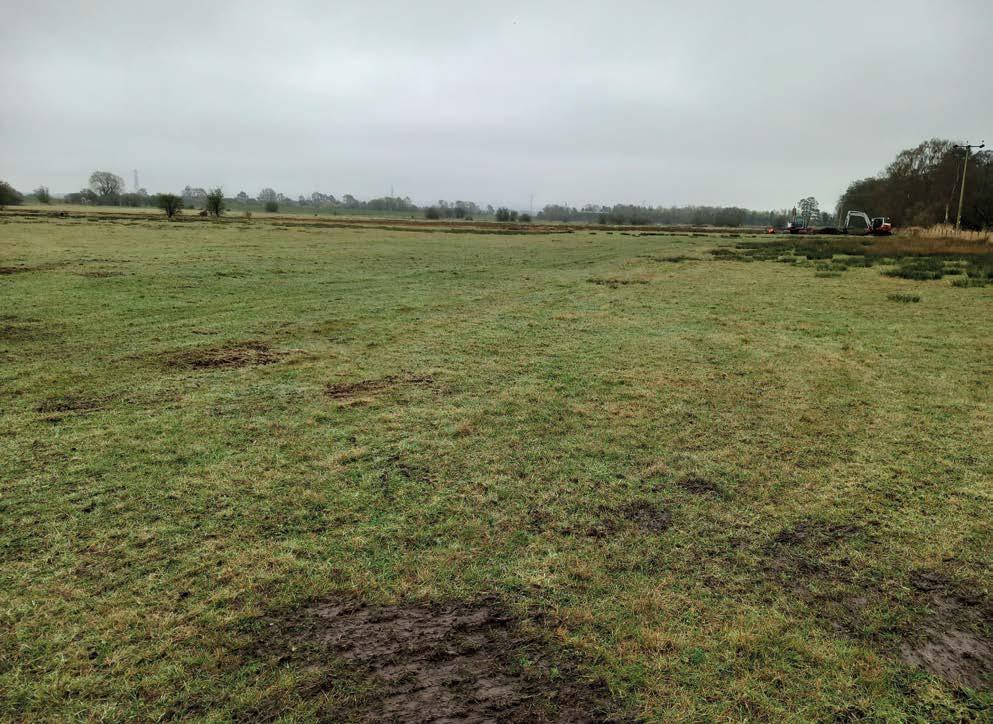
unning alongside a stretch of the Rufford branch of the Leeds and Liverpool canal, lie the fields of Manor House Farm. The extensive fen peat soils, which were once part of a much larger peat mass, have been drained and under a regime of heavy agricultural grazing for many years.
Not only has the draining of the land led to the drying out and degradation of the deep fen peat soils, but the continuous grazing has also had a devastating impact on the site’s floral biodiversity.
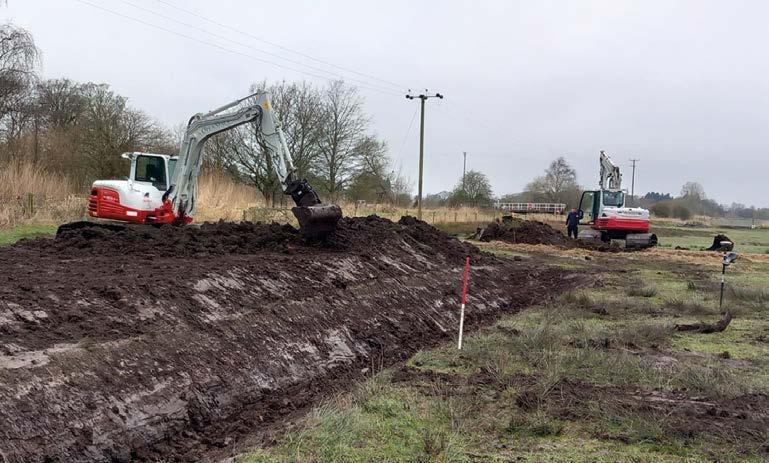
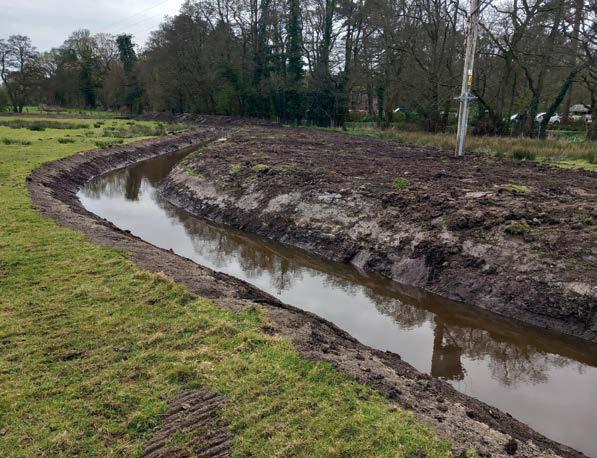
At the beginning of 2025, diggers rolled onto site as LWT teamed up with landowners National Trust to revitalise this landscape. Funded by Natural England’s Nature for Climate Peatland Grant Scheme, 773m of new ditches were created and a series of 13 weirs were installed across the ditch network to prevent water loss throughout the site.
The banks of the existing ditches were lowered through reprofiling to allow water to flow out and into the field to create wet meadow conditions as well as protecting the peat soils. The creation of shallow scrapes around the ditches, has resulted in additional wetland habitat and muddy margins which are just perfect for invertebrates and mammals.
“The importance of restoring areas of lowland peat is critical to carbon capture and restoring nature.”
Justin Matthews, Lead Ranger at National Trust
Not only will this work protect the fen peat soils from further degradation and reduce carbon dioxide emissions, but these fields will also be able to store water during high rainfall events to prevent overwhelming of the agricultural ditch network and help to mitigate flooding in surrounding areas.
There is still a long way to go, but it has been exciting to see the flowers flourish across the site after the removal of the intensive grazing, which has led to an amazing increase in butterflies and dragonflies throughout the summer months.
This winter, furrowing and sowing work will take place to boost the floral biodiversity of the grassland and start the suppression of some of the agricultural grasses that currently dominate the sward.
Over the next few years, the fields at Manor House Farm will become transformed into thriving wet meadows, protecting their precious peat soils, along with providing a home for countless plants and animals.
ditches created 773 m of new

BURSTING with butterflies
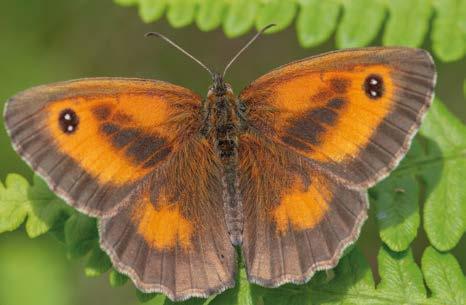
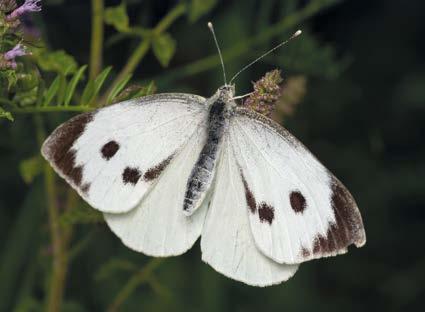
Since removing the grazing, large number of butterflies have been spotted at Manor House Farm this summer including:
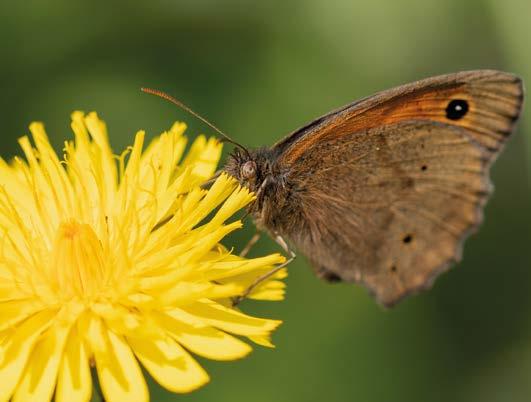
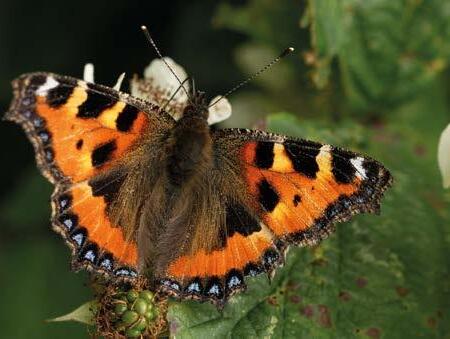
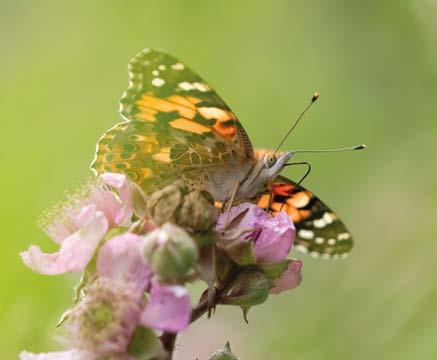
Justin Matthews, Lead Ranger at National Trust said:
“The importance of restoring areas of lowland peat is critical to carbon capture and restoring nature. Working with LWT has been a pleasure, I’ve learnt so much and seeing the transformational change has been energising.
“I’m hoping to see another piece of the jigsaw puzzle slot into place, where nature is thriving and part of a wider community of nature havens in the region. Long term I want to work with LWT to fine-tune these changes and do the absolute best we can for nature and wildlife.”
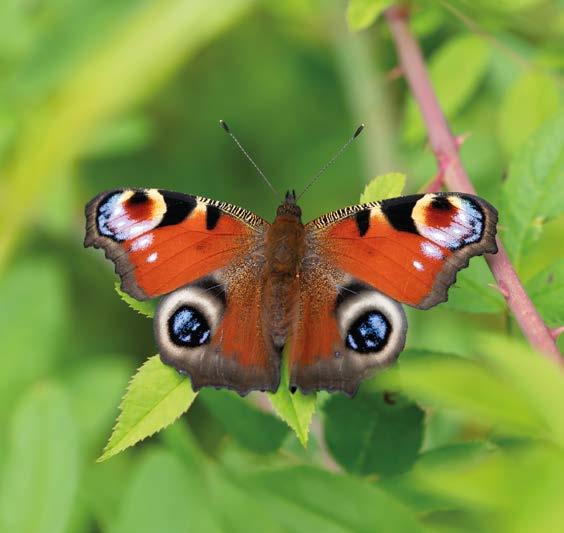
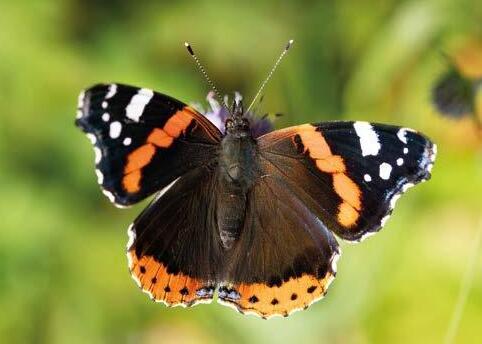
Reprofiled ditch at Manor House Farm
© Helen Earnshaw
Manor House Farm before re-wetting works
© Helen Earnshaw
Gatekeeper
© Ali Rajabali
Large white © Ali Rajabali
Small tortoiseshell © Ali Rajabali
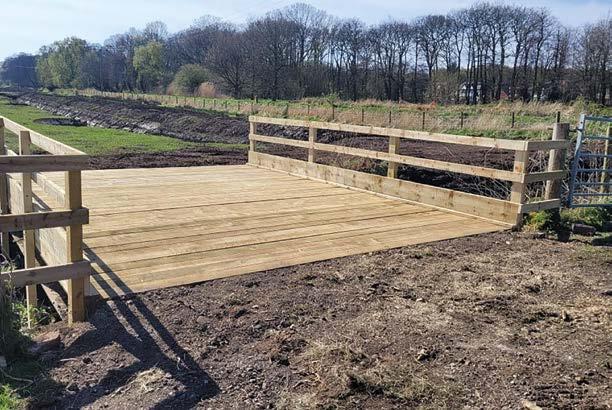
New access bridge at Manor House Farm
© Helen Earnshaw
brown
Ali Rajabali
with wings A winter gift
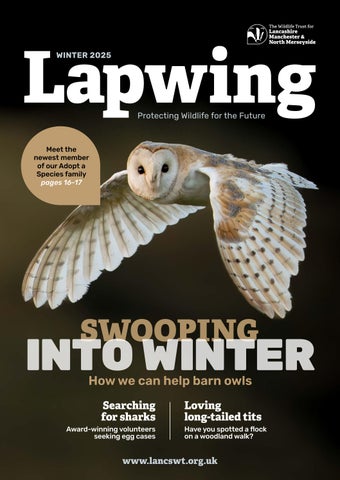
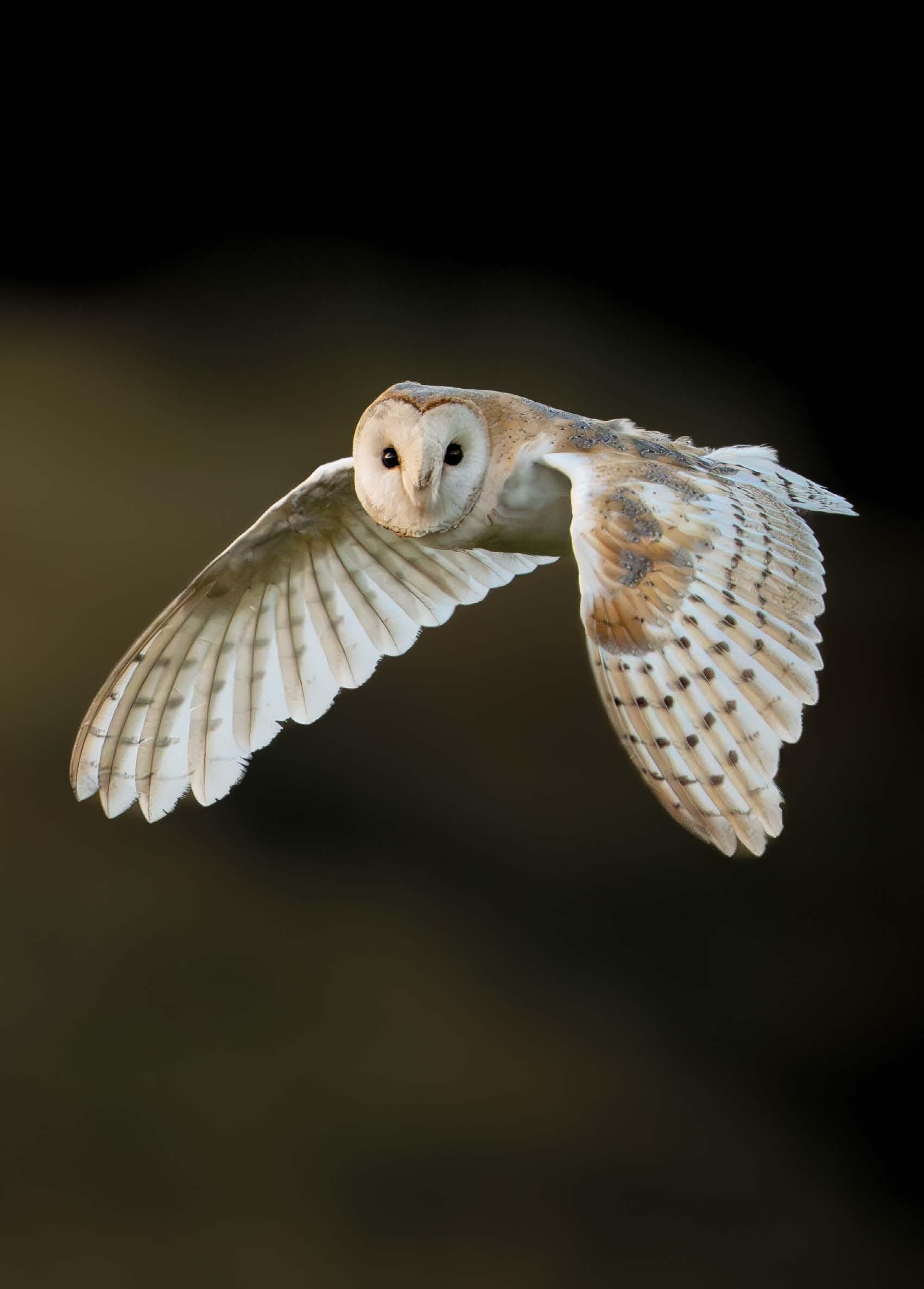
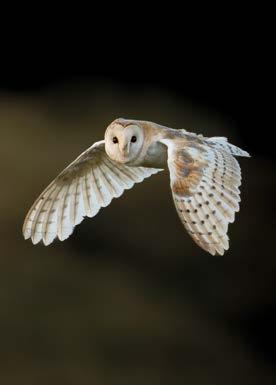
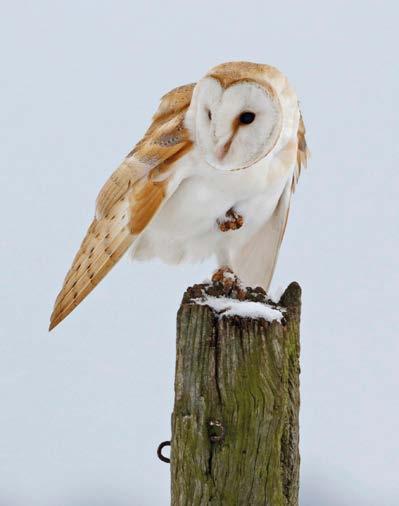
Meet the barn owl, a feathered ghost of the grasslands, and the latest addition to our Adopt a Species family.
The bird behind the myth
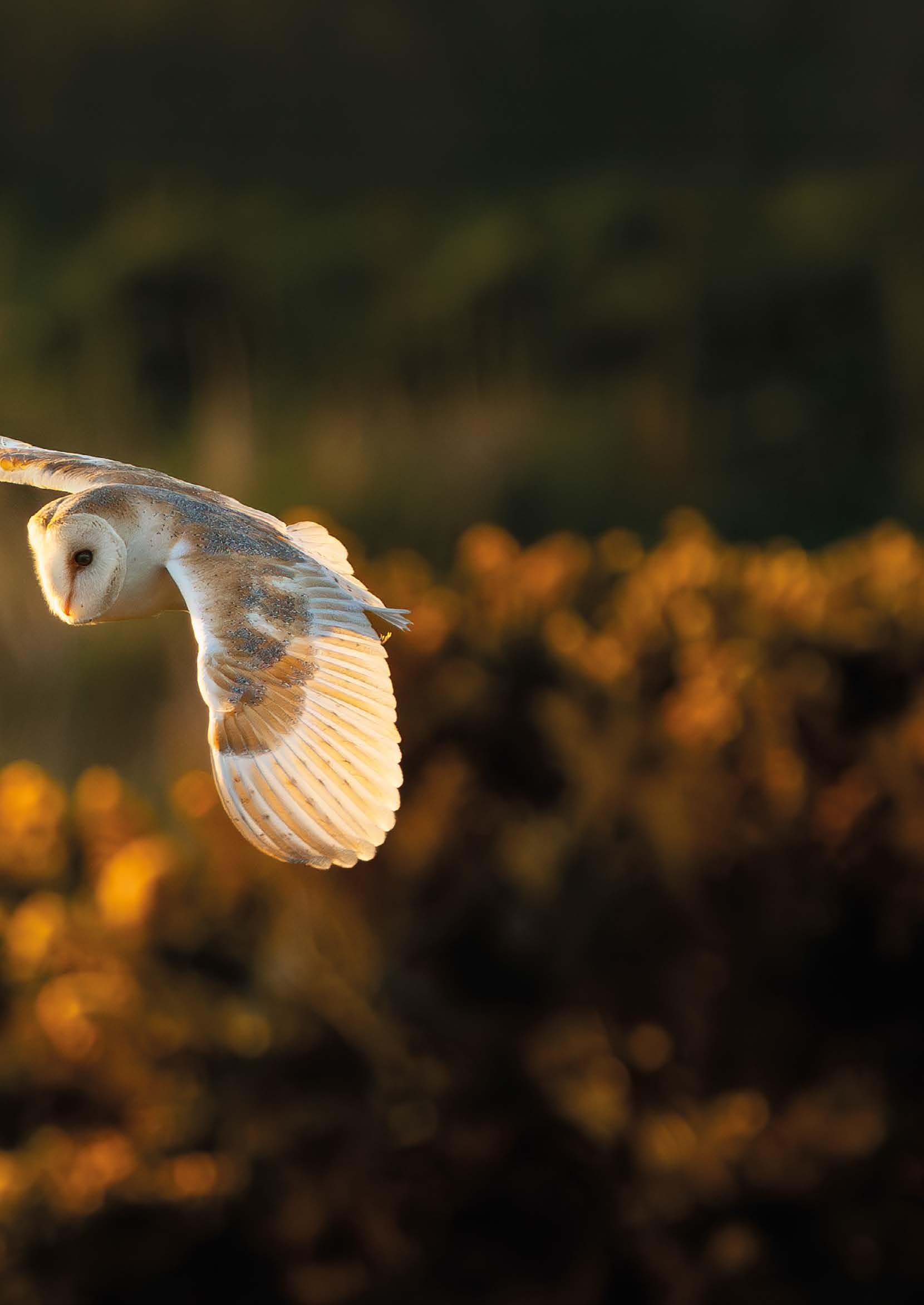
With a heart-shaped face and wings that barely make a sound, the barn owl is a bird like no other. Most often seen gliding low through the twilight, it’s no surprise that this silent hunter has inspired centuries of folklore... but there’s real science behind the magic. Their flight is whisper-soft thanks to specially adapted feathers, and their hearing is so sharp they can catch prey in total darkness.
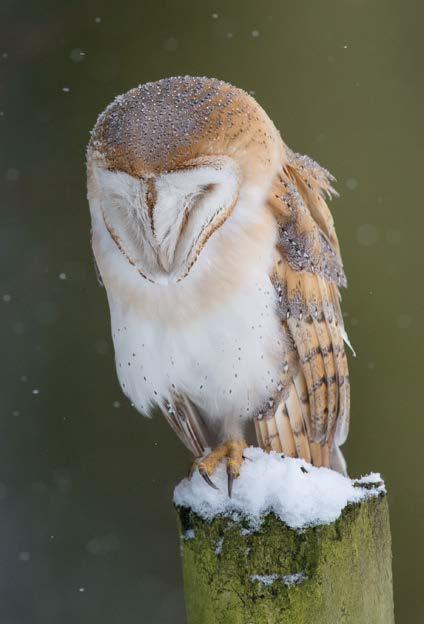
© Don Sutherland
By David Price, Fundraising Officer
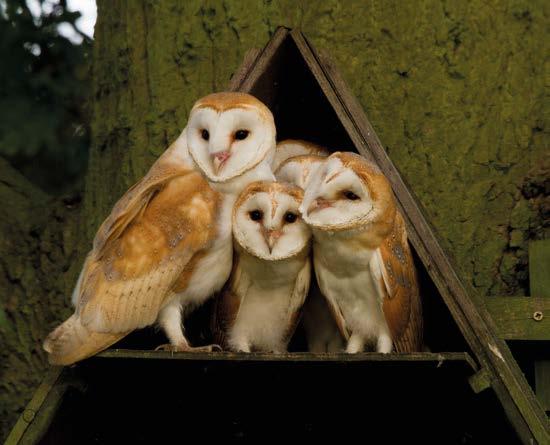
© Russell Savoury


Give a meaningful gift this winter and support local wildlife – scan the QR code or visit our website
Wild places they call home
Barn owls rely on the kind of wild spaces that often go unnoticed – the long grass at a field’s edge, the hedgerow behind a barn, the open mossland where small mammals thrive.
These birds are still found across our region, including at Lunt Meadows, Brockholes, Mere Sands Wood and Little Woolden Moss, but the future of these habitats is far from guaranteed.
A delicate balance
Although barn owls are present across the UK, their numbers rise and fall depending on the landscape around them. A harsh winter or a drop in small mammal populations can make survival difficult.
Roads pose a major threat, especially when owls hunt low across verges. And changes to farming and land use have reduced the quiet, rough places they depend on to feed and nest.
© Russell Savoury
How you can help
You don’t need to live in the countryside to support barn owls. Leaving rough grass patches untouched, avoiding harmful rodenticides, and watching from a respectful distance can all make a difference.
For those in rural areas, installing a nest box can provide vital shelter especially in autumn and winter when food is harder to find.
Fascinating facts
Barn owls are full of surprises. Despite their elegant appearance, they are fierce predators, able to snatch prey from beneath the grass without making a sound. They don’t hoot like tawny owls, but hiss, screech and even snore.
Chicks grow fast and fledge just ten weeks after hatching, though they’ll stay close to home while still learning to hunt.
A new way to give back
Just in time for the season of giving, our brand-new Adopt a barn owl pack is now available. With both beautifully boxed physical packs and instant digital versions, it’s the perfect gift for nature lovers of all ages.
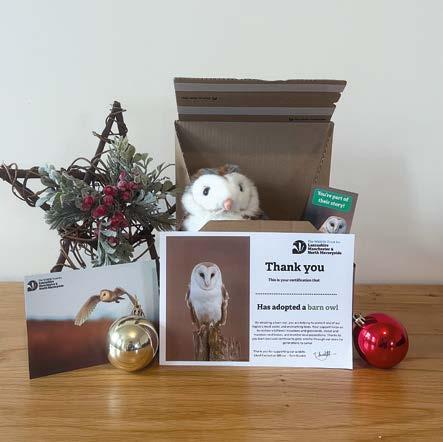
Each adoption supports real conservation work across Lancashire, Manchester and North Merseyside, from restoring meadows and installing nest boxes, to monitoring wild barn owl populations.
Whether you’re treating someone special or planning a thoughtful gift with impact, this is a meaningful way to help barn owls thrive.
© Simon Owen

Searching for sharks
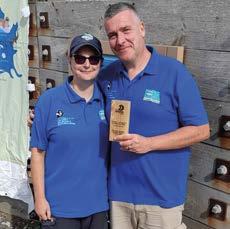
Volunteers from The Bay Nature & Wellbeing programme recorded nearly 18,000 shark egg cases to win the Marsh Award.
By Rachel Glascott, Community Engagement Officer, Emma Ironfield, Volunteer Manager & Mike McDonnell, Nature & Wellbeing Officer
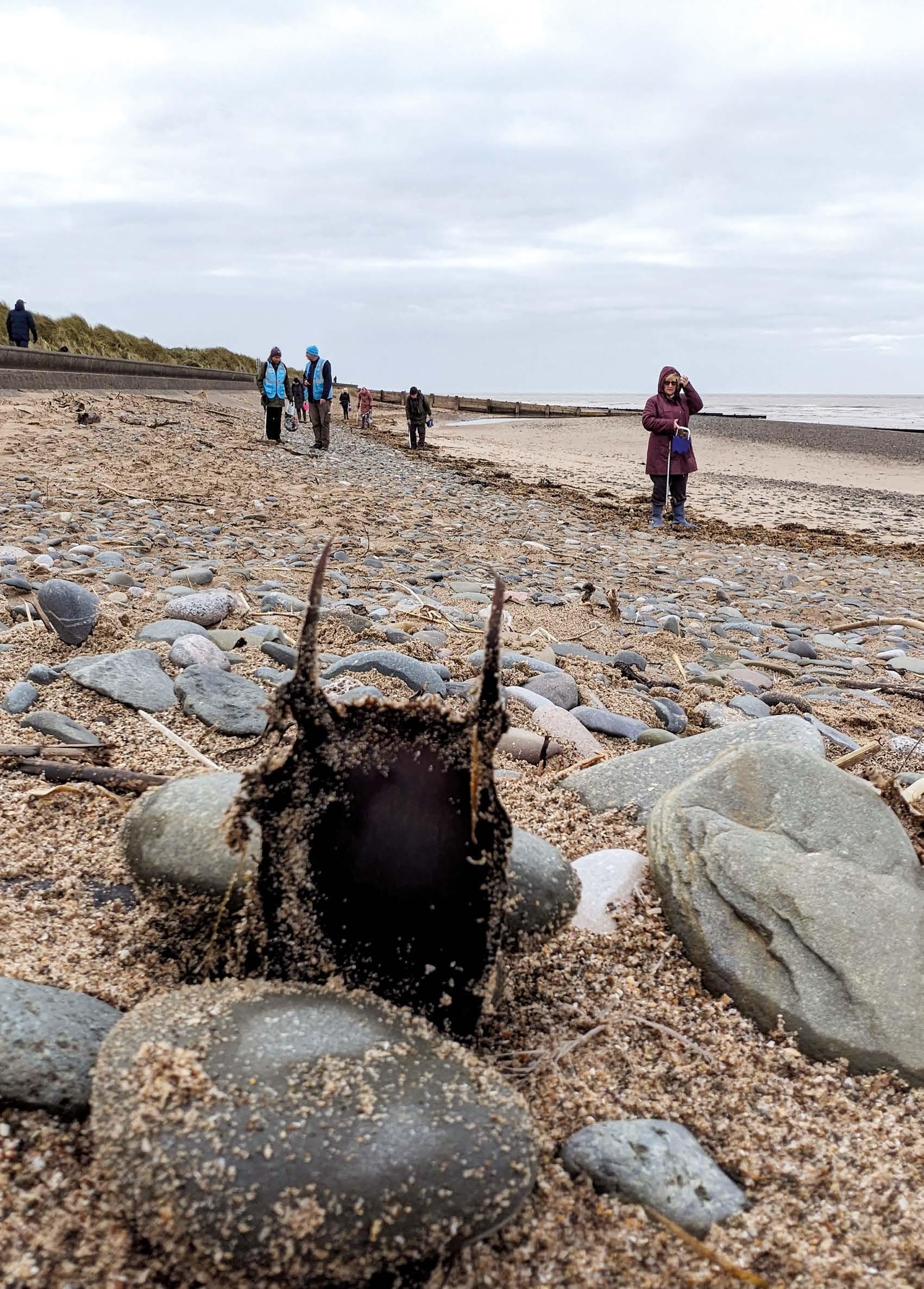
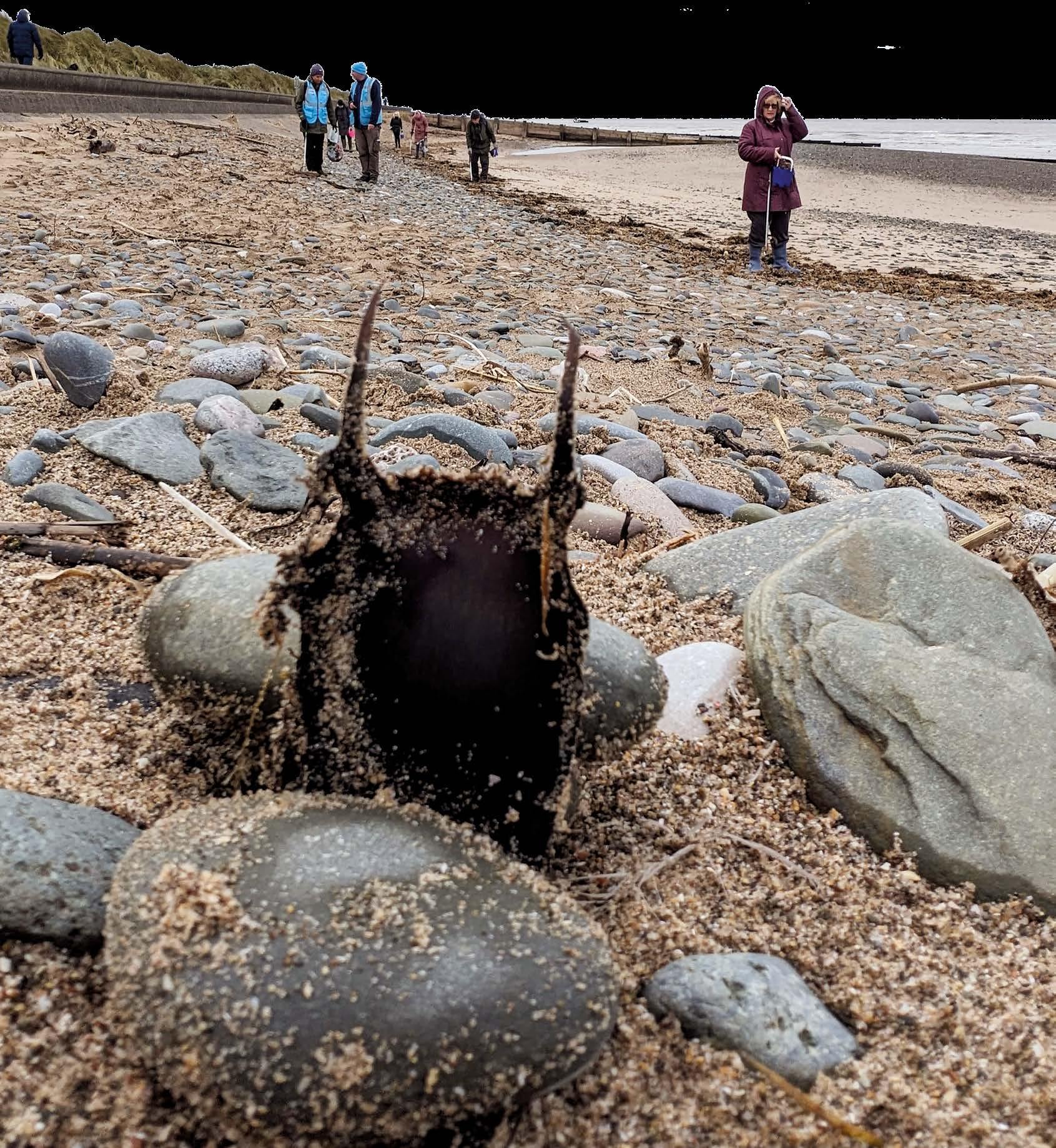
Some of our amazing volunteers
Natasha Simmonds says the award is an amazing recognition of how one person can make a drop in the ocean and create a current:
“My contribution of a handful of egg cases is part of the bigger picture. I feel proud to contribute, but even more so to support the peaceful environment of our sessions and support the attendees who contributed to this amazing achievement.”
Carol and Owen Fawcett enjoy being outdoors taking in the scenery as it changes with the tide, weather and seasons – sharing an interest in strandline finds: “The award is a lovely acknowledgement of local people getting together with The Bay.”
Every year our beaches are littered with what many of us would call mermaid’s purses, but what are in actual fact the empty egg cases of the sharks and rays that inhabit the waters of the Irish Sea. And every year dedicated volunteers around the UK collect and record these providing vital citizen science data on the number and species of these amazing hidden creatures.
But we have something very special here in the North West. The Bay is our amazing nature and wellbeing project that stretches along Morecambe Bay, working with people to improve health and wellbeing through access to coastal and marine environments. Our Wyre based groups have been taking part in egg case collecting for a few years now, but 2024 was a bumper year with 17,989 egg cases recorded – a staggering 30 per cent of all UK records!
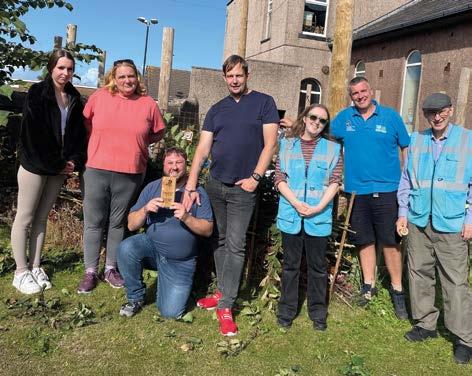
Emma Attwood, Nature and Wellbeing Lead Volunteer, says the award shows how the group are making an impact, whilst building a community, showing the importance of being in nature to promote health and wellbeing.
Ras Thomasen has been volunteering with The Bay for two and half years. During this time, he has discovered the healing effect of nature on his wellbeing and the joy of working with other volunteers.
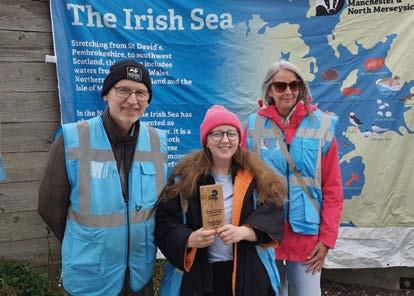
Wyre’s 16km of coastline lies at the southern end of Morecambe Bay, with a 10 metre tidal range, one of the largest in the world. It is important for its mudflats, saltmarsh and sandflats, providing a variety of habitats for the wildlife that calls it home, with the marshes and sea grass meadows providing nursery grounds for species including small spotted catshark and thornback ray. The Marsh Award for Marine Conservation was awarded to The Bay volunteers in recognition of their outstanding contribution to marine conservation and having furthered the marine work of The Wildlife Trusts.
The award demonstrates how volunteering can bring people together through collective social action and offers significant personal benefits, including a connectedness to nature that supports wellbeing and a sense of purpose. And all of this whilst making a real and tangible difference to conservation of some of our amazing species that are usually hidden beneath the waves.
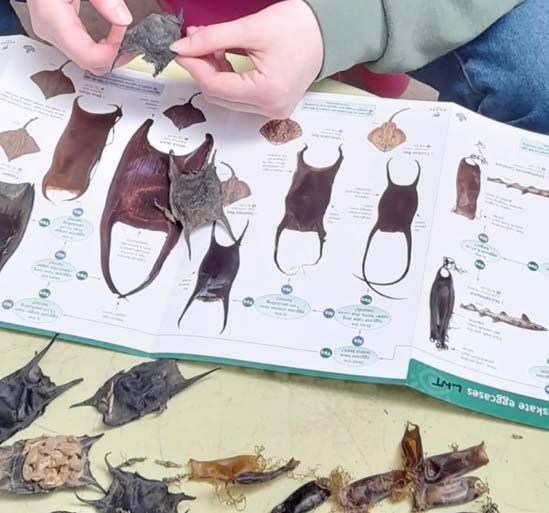
Whose egg cases could you spot on our beaches?
Thornback ray
• Grow to about 85cm
• Lay about 60 eggs a year
• Eggs hatch after 4-6 months
• Young are about 12cm long when they hatch
Small spotted catsharks
• Reach a maximum length of 1m
• Eggs hatch after about 9 months
• Pups are 10cm long when they hatch
• Females lay the eggs in pairs, 150 eggs per year
especially your dedication to collaborating with the Shark Trust in support of shark conservation, is exceptional and has been recognised by the judging panel as outstanding.”
Marsh Charitable Trust

Rachel Glascott
Hamza's Hidden Wild Isles
Volunteers from The Bay Nature and Wellbeing project shared their experiences on prime-time TV.
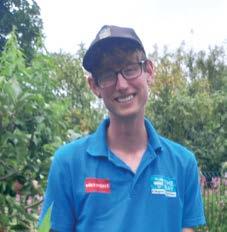
By Dr. Alex Blomfield, Nature and Wellbeing Officer, The Bay –Morecambe
To sum The Bay up in just a sentence is hard, as it means something different to every single person who attends our sessions. But one common theme is that everyone who joins a session is brought together by the wonderful nature that Morecambe Bay has to offer.
Nature has a powerful way of bringing people together and connecting with nature is something that can bring wellbeing benefits to us all. Some people have been signposted to The Bay by a GP or other professional, while others find out about the project through social media or from friends. While everyone who attends the sessions has different motivations for being there, many people
This sort of transformation meant that when the group were invited to share their stories and take part in filming for the new series of Hamza’s Hidden Wild Isles we jumped at the chance. One attendee described it: “I wouldn’t have missed it for the world.”
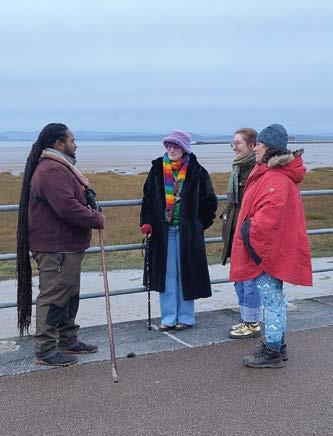
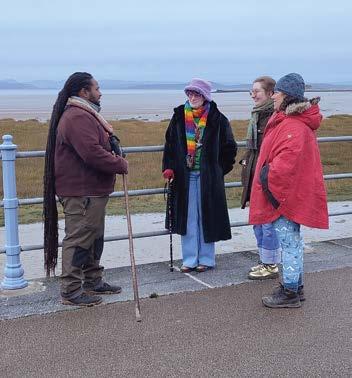
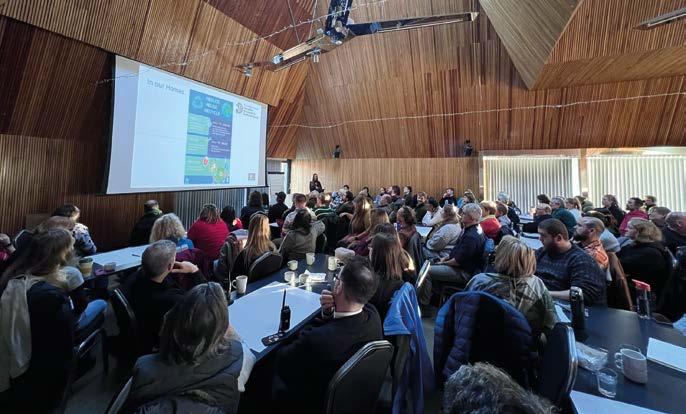
On a crisp, clear day last November, we joined a film crew from the BBC and spent the day together on the seafront in Morecambe. We huddled together watching the birds, sharing stories about what had led us to get involved with The Bay, and the difference that being part of the group had made in people’s lives.
Despite the chill, there was a buzz of excitement in the air; we were going

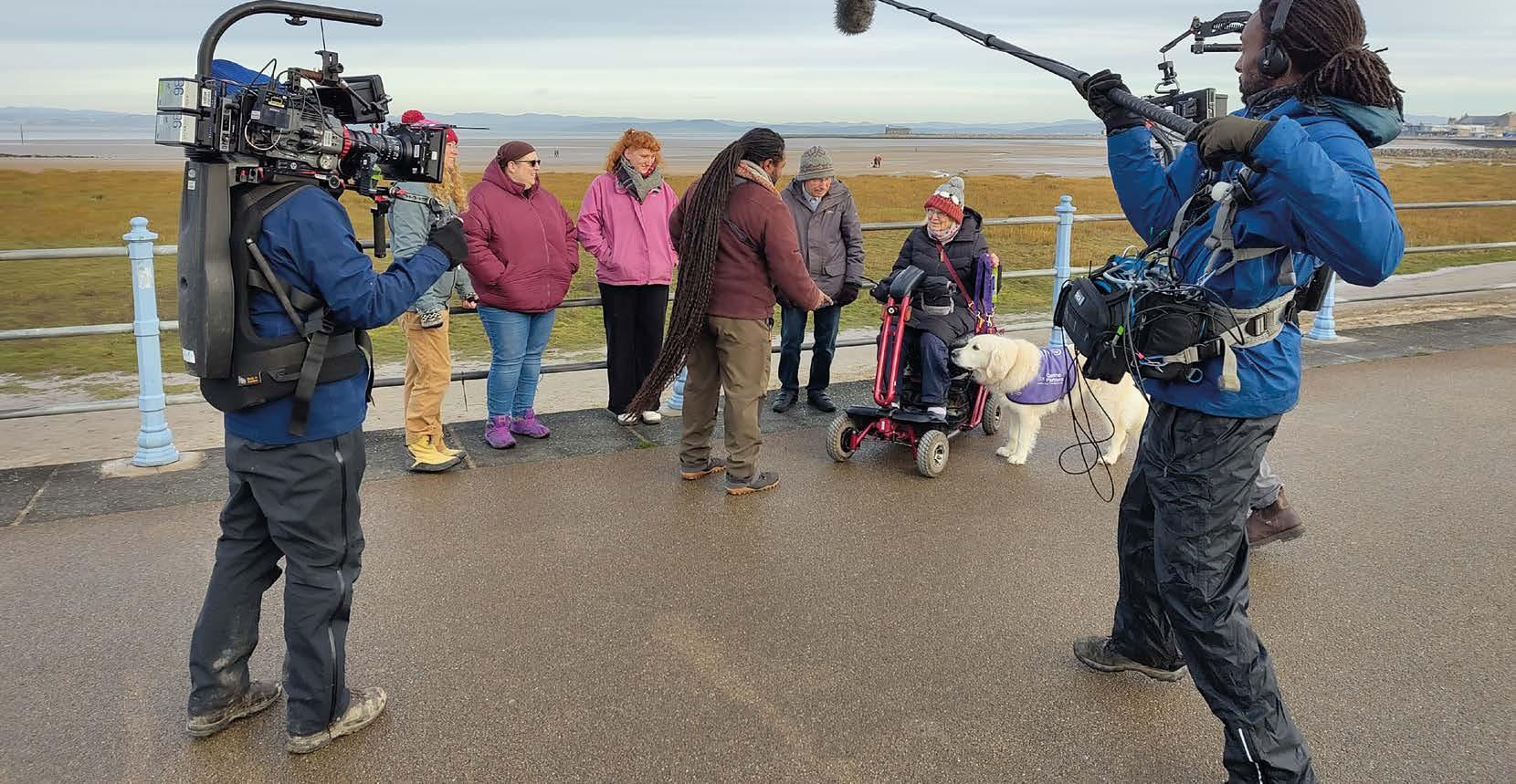
Filming with Hamza on the seafront at Morecambe Bay © Jenny Bennion
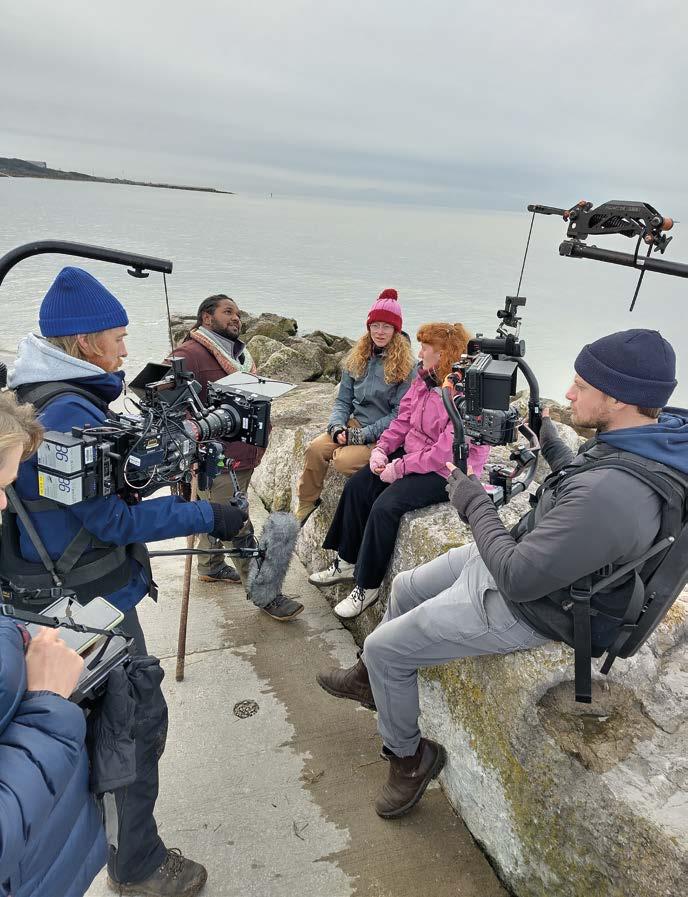
The feeling that the team from the BBC were interested in our local area and that our stories would be shared on such a large platform made it really special. While there were feelings of apprehension mixed in with excitement, the film crew couldn’t have been kinder. They were great at putting everyone at ease, talking us through how the day would run, answering questions and they even brought handwarmers to help keep us warm. Hamza was witty, relaxed and full of bubbly energy, not intimidating at all. It was lovely to spend time that day with people at all stages of their journeys with us, those who were attending sessions and those who have been through the programme and are now volunteering with us to support others.

Hamza was witty, relaxed and full of bubbly energy, not intimidating at all.

Why not refer yourself or someone else to one of our nature and wellbeing sessions at The Bay?
Scan the QR code and fill out the form!

Wendy self-referred to The Bay with her husband Peter after finding out about the programme on Facebook. Here’s what she said about the day:
“It was an absolute privilege to be there that day. I wouldn’t have missed it for the world. It was so exciting. What a wonderful man Hamza is, he is so passionate about birds and protecting wildlife. I felt I could talk to him forever.”

At one point I caught a glimpse of a snipe hidden among the vegetation by the seawall, and as the light started to fade, I hoped that when the programme aired it might inspire others to get involved with these lifechanging groups. I often hear feedback to the effect of: “The Bay has changed my life, I wish I’d got involved sooner.” So, if you’d like to get involved but are hesitant, know this: we understand that taking the first step can be the hardest. We'll meet you where you are at, and we’ll be here with you every step of the way.
The Bay: A Blueprint for Recovery is a multi-award-winning Nature and Wellbeing Programme bringing together the work of the Lancashire Wildlife Trust, Cumbria Wildlife Trust and Eden Project, with support from the Lancashire and South Cumbria NHS Foundation Trust. We run events and smallgroup Nature and Wellbeing sessions open to anyone who wants to meet others, improve their wellbeing and take action for nature around Morecambe Bay
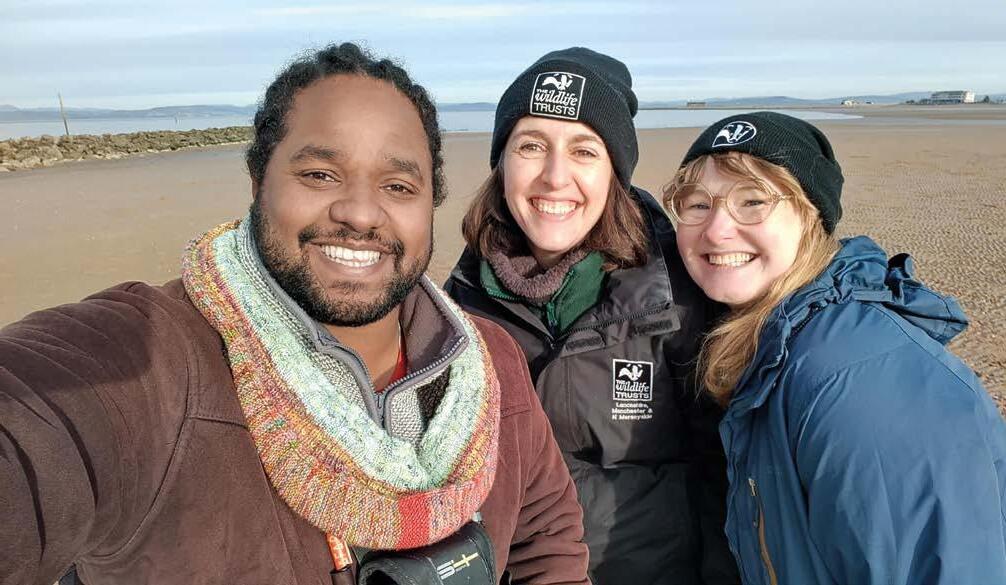


Kirsty, Jenny & Hamza on the seafront at Morecambe © Jenny Bennion
Hamza chatting to The Bay volunteers © Jenny Bennion
The camera crew filming with The Bay group volunteers © Jenny Bennion
Thank you for standing with us
impact: A year of W
hat a year it has been. When we look back at everything we have achieved together over the past twelve months, one thing is clear; none of it would have been possible without you, our members and supporters.
By Jenny Johnson, Head of Marketing and Income Generation
“Your membership has been the quiet engine driving us forward every single day”
We welcomed 227 schools to our nature reserves, immersing hundreds of children in the wonders of nature
We opposed 11 planning applications and reviewed 47 strategic planning documents so that nature stands a chance of survival
We recruited 8 new members of core conservation staff thanks to income from membership
Your support has allowed us to take bold steps for wildlife, people and places across Lancashire, Manchester and North Merseyside. From restoring precious habitats to inspiring the next generation, your membership has been the quiet engine driving us forward every single day.
This year we have seen wetlands revived, woodlands nurtured and wildflower meadows bursting back into life. These landscapes do not just look beautiful, they lock away carbon, reduce flood risk, and provide food and shelter for countless species that would otherwise be struggling to survive.
Our education and engagement teams have welcomed thousands of school children, families and community groups to our reserves. Together they have pond dipped, bird watched, planted trees and discovered that nature is not a distant idea but something alive and exciting right on their doorstep; hundreds of muddy hands, soggy wellies and smiles on faces tell their own story.
Again, it is your membership that made this possible, your donations are giving our natural world a fighting chance by allowing us to steward young minds, helping them realise the importance of protecting our environment.
It has also been a year of stepping up for wildlife where it matters most. You helped us raise over £318,000 in our biggest ever appealand then stepped up again for Three Species, One Wild Comeback, our most recent appeal - all in the pursuit of a better future for our environment and nature.
We also challenged poor planning decisions, worked with councils on ensuring local nature is protected, and joined forces with other Wildlife Trusts to make the case for nature at a national level, we have been able to speak with strength and confidence because we know you are with us. Every member adds weight to our voice.
Nature is still under immense pressure and the challenges ahead are real. But thanks to you we are stronger than ever. You have shown that membership is not just about a card in your wallet, it is about being part of something bigger. Together we are building a movement for nature that grows year by year.
As we move into winter, and wildlife struggles even more to survive the harshness of unpredictable storms and food scarcity, it is important that we all do our utmost to help wildlife and creatures of the North West survive until spring. We know that Christmas is an expensive time of year for everybody, so to give you the opportunity to support nature in a low cost way, we have launched our most affordable appeal yet, and all we ask for is just one pound.
One pound to you could be a quarter of a coffee in any big chain, maybe it’s just 1 per cent of your weekly shop, or perhaps it’s a little bit of pocket money, but can make the difference for wildlife in our region this Christmas. Thank you for being so kind and generous. Our wildlife is forever thankful.
To donate, please scan the QR code here or visit lancswt.org.uk

So thank you for standing with us, for believing in the value of wild places, and for giving so generously. We know how tough the cost of living crisis has made it for lots of households, we’ve felt it too. But with you by our side, there is no limit to what we can achieve in the pursuit of protecting wildlife and nature right here in the North West. Here's to another year of action, energy and impact.
reflections Summer
As winter arrives, we take a look back at some of our photo competition winners from the summer months.
By Alice Wood, Marketing Officer
Don’t forget to grab your copy of the 2026 Lancashire Wildlife Trust calendar, featuring winners from our photo competition. Available from our website or at Brockholes, Mere Sands Wood or Moss Bank Park.
As our reserves transition into the colder months, and the wild world transforms, there is so much to capture as you explore the ever-changing landscapes of our nature reserves. Our photography competition is the ideal opportunity for you to showcase your nature moments.
May
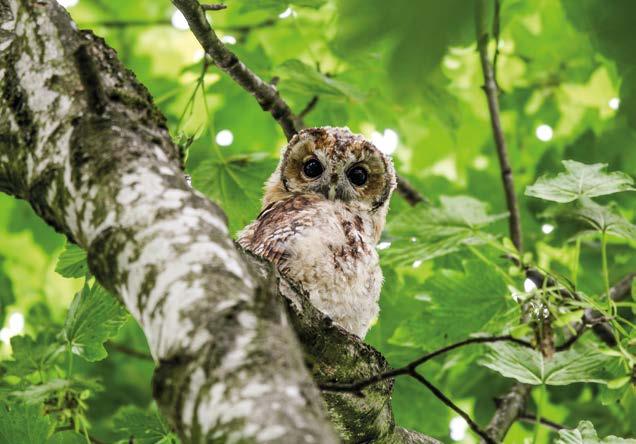
This beautiful tawny owlet was photographed by Sam Wade at Cutacre nature reserve in Greater Manchester, and it fit May’s theme of 'new beginnings' perfectly.
“The tawny owl – a sound many recognise, yet a sight few are lucky enough to witness. Its dark, round eyes gleamed like mirrors, reflecting the lens of my camera. Moments like this make all the hours of waiting worthwhile; the quiet patience, the hope for that single, unforgettable encounter. Nature is special in every way, and being able to capture wildlife and share its beauty with others is what makes photography so fulfilling.” Sam Wade
June
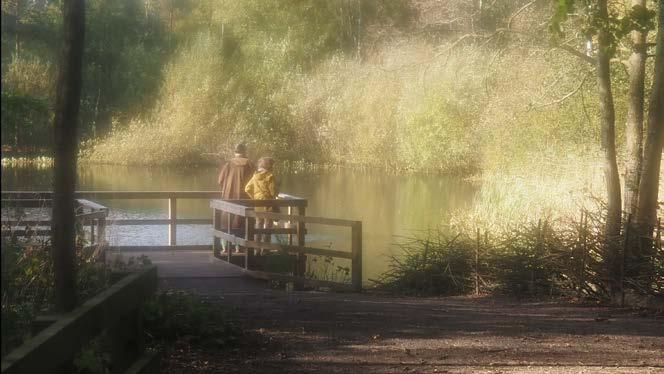
The theme for June was 'people in nature' and our winner was Mike Owen.
“As I turned the corner, by the jetty in Mere Sands Wood, I noticed how the hazy sunlight lit up the trees. The people on the jetty gave a depth and a sense of perspective to the photo as they soaked in the view. Nature and photography have been instrumental in my recovery from my mental illness and now they provide invaluable opportunities for mindfulness as I continue to step along my new path of psychological peace.” Mike Owen
July
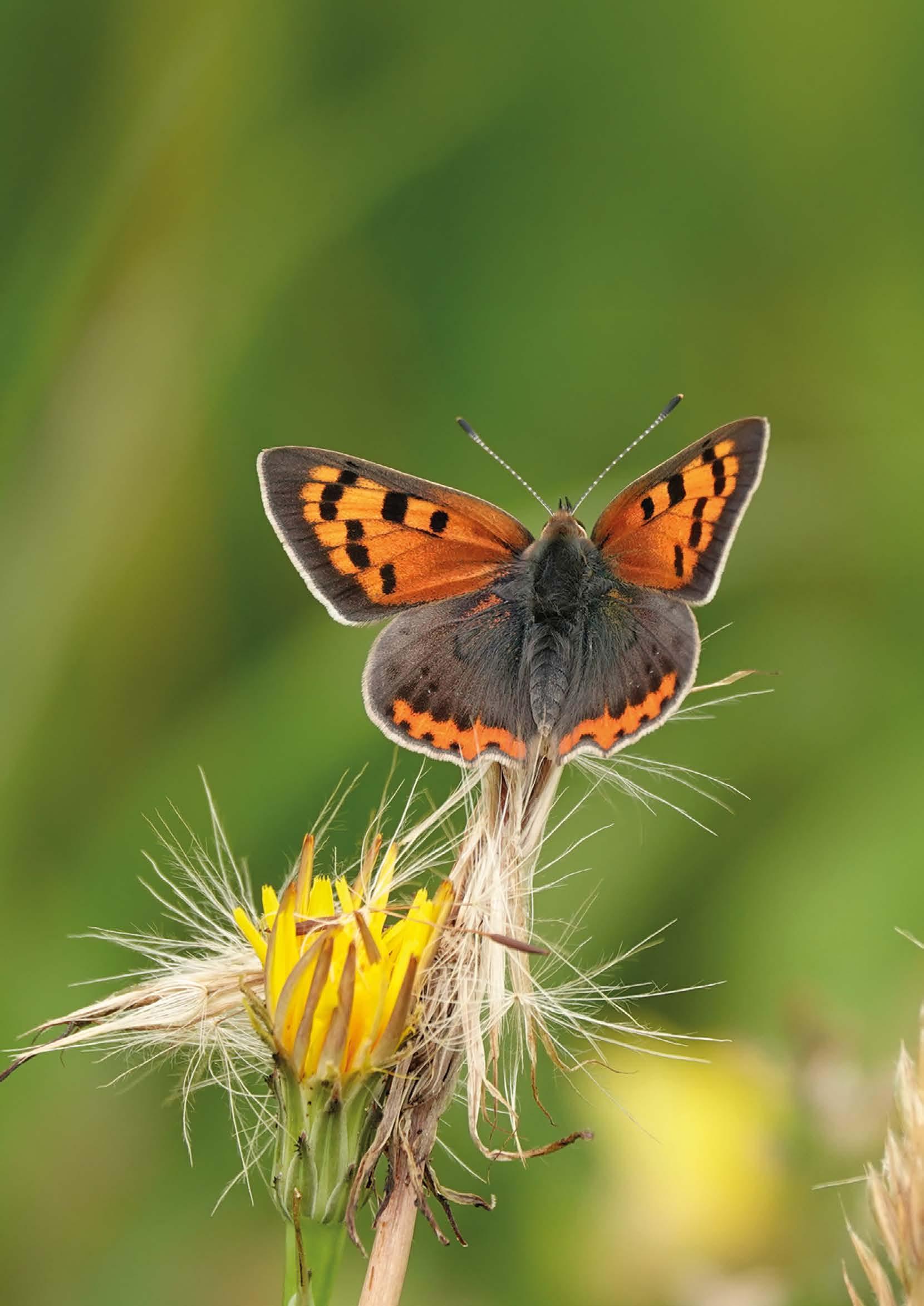
Pat Aitchison was our winner for July who encapsulated the theme of 'colours of summer' with this beautiful image.
“I took the photo on a sunny June afternoon at Brockholes nature reserve. I am always on the lookout for a good butterfly shot, and this one literally landed at my feet. I had to step backwards to focus on this glowing gem of a small copper as it sat in the midsummer sun. Brockholes, and the other LWT reserves, have given me so many photo opportunities, but none so appropriate to a day in mid-summer as this freshly minted copper.” Pat Aitchison
August
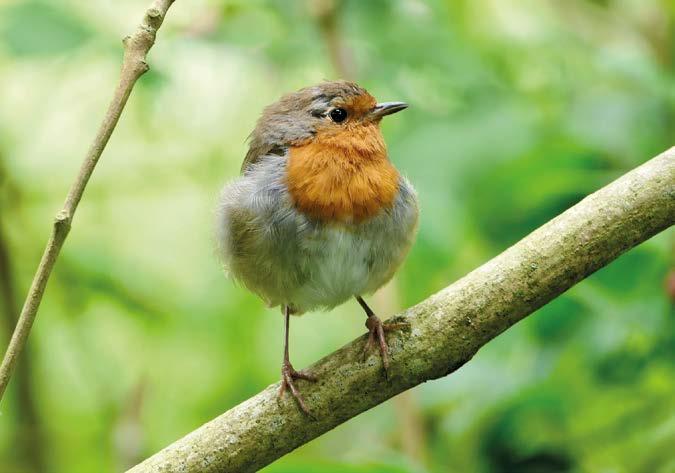
This little robin, taken at Brockholes by Sim Vessey, was the winner for August fitting the theme of 'wildlife close-up' wonderfully.
“I had a day off as it was my (62nd - yikes!) birthday and we decided to visit Brockholes as I had never been there before. The weather was pretty rubbish, but I really enjoyed walking around and had my camera with me when this robin almost posed for me on a nearby branch and allowed me to get a nice close up. When I saw the QR code in the hide at Brockholes as we sheltered from the rain, I thought it would be fun to send in my photo and can't believe it won!” Sim Vessey
If these incredible images have inspired you to get out in the natural world and capture some wildlife shots, why not enter our competition? Take a look at this month’s theme and find out how to enter at lancswt.org.uk/photo-comp
Tawny owl © Sam Wade
Robin © Sim Vessey
Mere Sands Wood © Mike Owen
Rising ashes from the
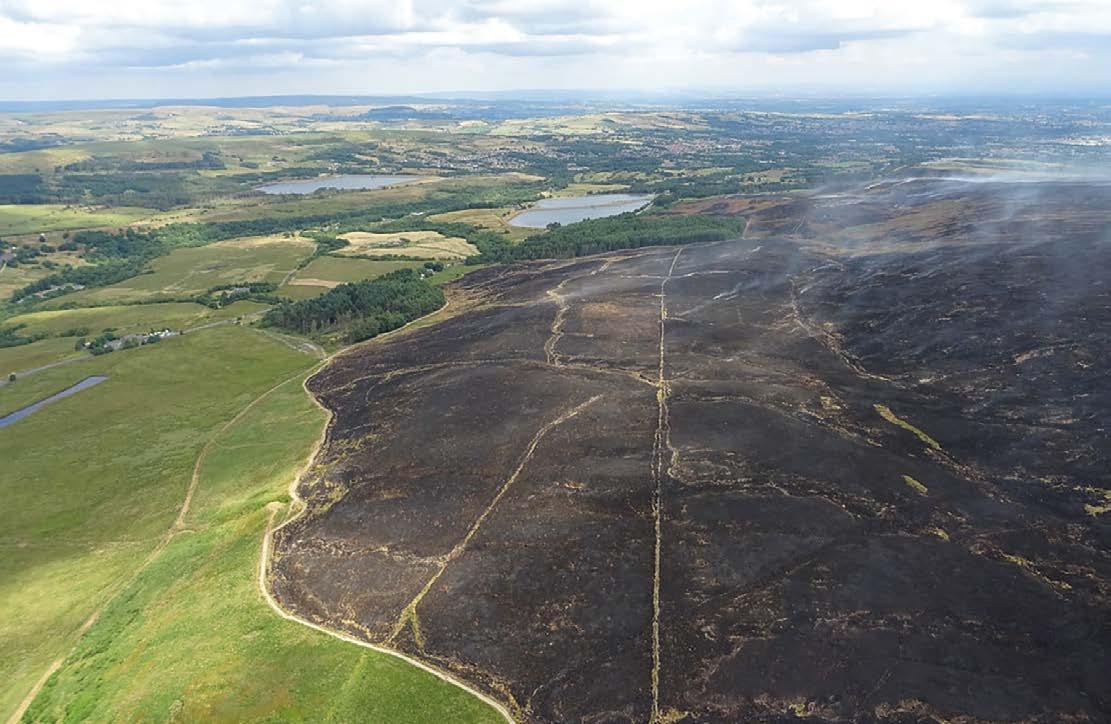
In 2018 Winter Hill was devastated by a fire which burned for 41 days, destroying the moorland and decimating the peat. Work is about to start to rectify this disaster.
By Kirsty Tyler, Peatlands Communications Officer

396 hectares (approximately 550 football pitches) of Winter Hill will be restored
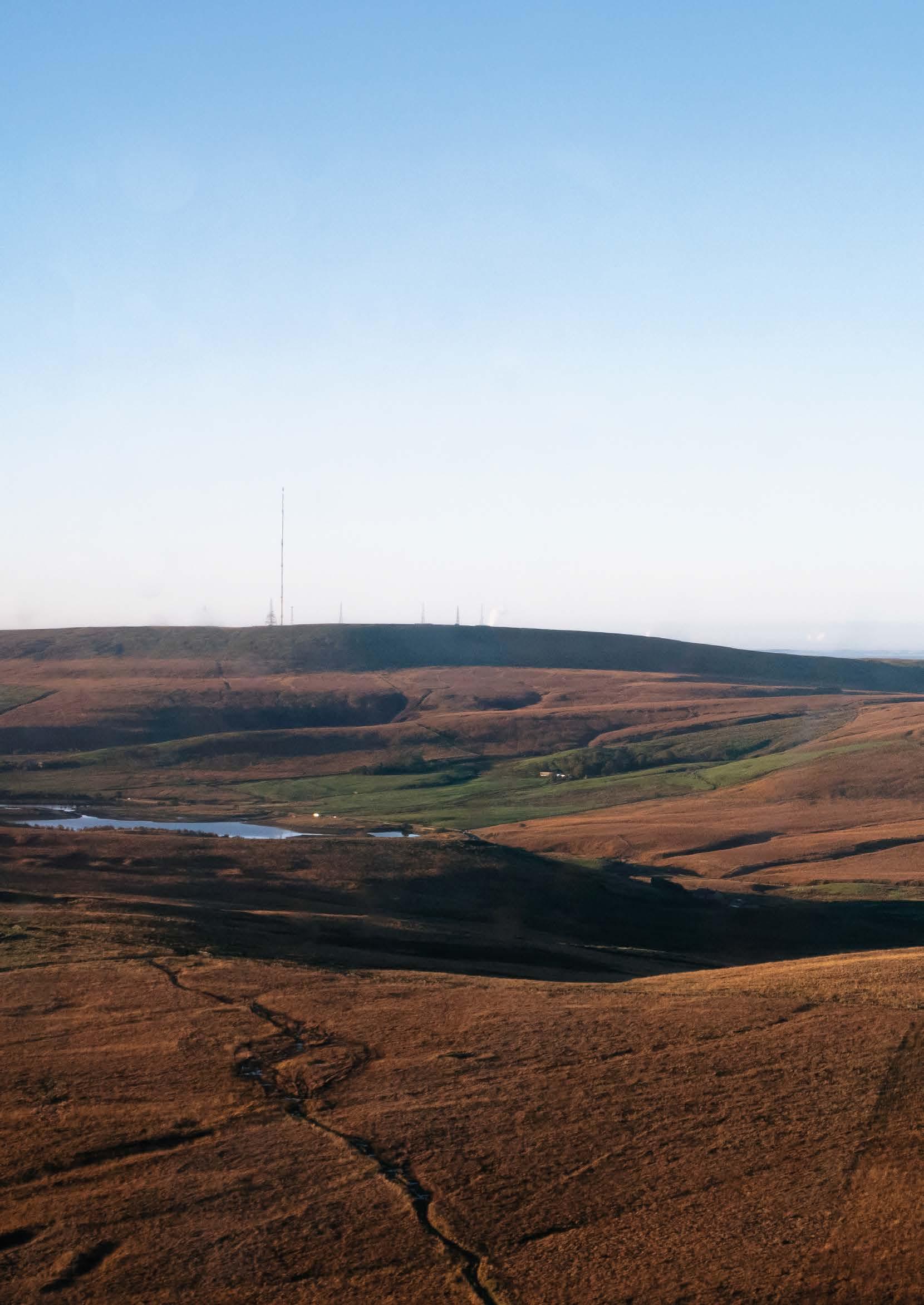
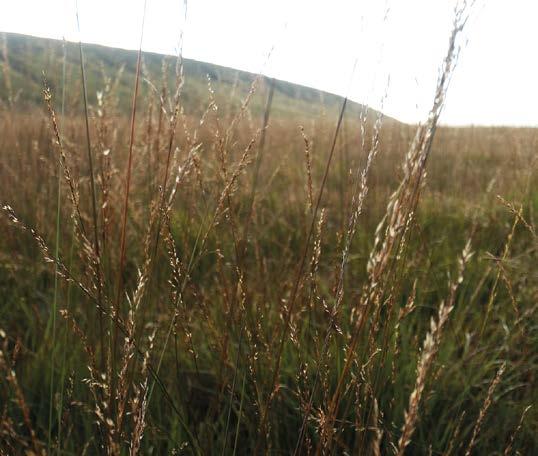
It’s an ecological desert” says Alex Hubberstey, Lancashire Peat Partnership Manager, as we head up the steep path towards the famous TV mast that tops Winter Hill. Purple moor grass dominates the hillside, leaving no space for anything else to thrive here.
The fire that swept through the moorland in 2018 was truly devastating, burning through thousands of years' worth of peat soils for over a month, with the fire service, police and United Utilities battling against the flames and smoke.
In the winter 2018 edition of Lapwing, Alan Wright, Head of Communications said: "Thousands of young birds will have died. They would have been trapped by the rushing flames and their parents would have had no choice but to leave them behind to perish. What a horrible thought. What a horrible way to die.”
It’s a dark and upsetting image.
After the fires had finally been doused, the peat was so dry and degraded that it would blow away in a breeze.
But now there’s hope on the horizon.
90km of bunding will be installed
The
Winter Hill fire burned for 41 days
Lancashire Wildlife Trust, with colleagues from United Utilities, who partnership fund the Lancashire Peat Partnership, will be starting to bring Winter Hill back to life.
Over three years, they’ll be working on 396 hectares of the hillside above Belmont. There’s a lot of work to do – the hillside is covered in drainage channels which need to be blocked, and 90km of water-retaining bunds will be installed this winter to allow pools to form, all helping to re-wet the peat.
After this first year of work, there’ll be more blocking of drainage ditches as well as getting started on planting sphagnum moss on the re-wetted soil to start the long process of forming peat again.
Alex said: “This work is obviously needed for biodiversity and to give wildlife a home once more, but also it will make it much more difficult for a fire of those proportions to happen again. Removing dry grasses and making the whole area much more damp will make it a lot less flammable.”
The surveying team have been out in all conditions over winter, mapping and logging the area so work can begin.
The view and the quiet up on Winter Hill are both magnificent. It really feels like you are on top of the world. Part of this work will also include managing some of the footpaths that have also become degraded, making it a much more pleasant walk.
Imagine it in years to come, covered with cottongrass and heather, with calls of lapwing and curlew in the distance. Winter Hill deserves it.
Meet the LWT
Youth
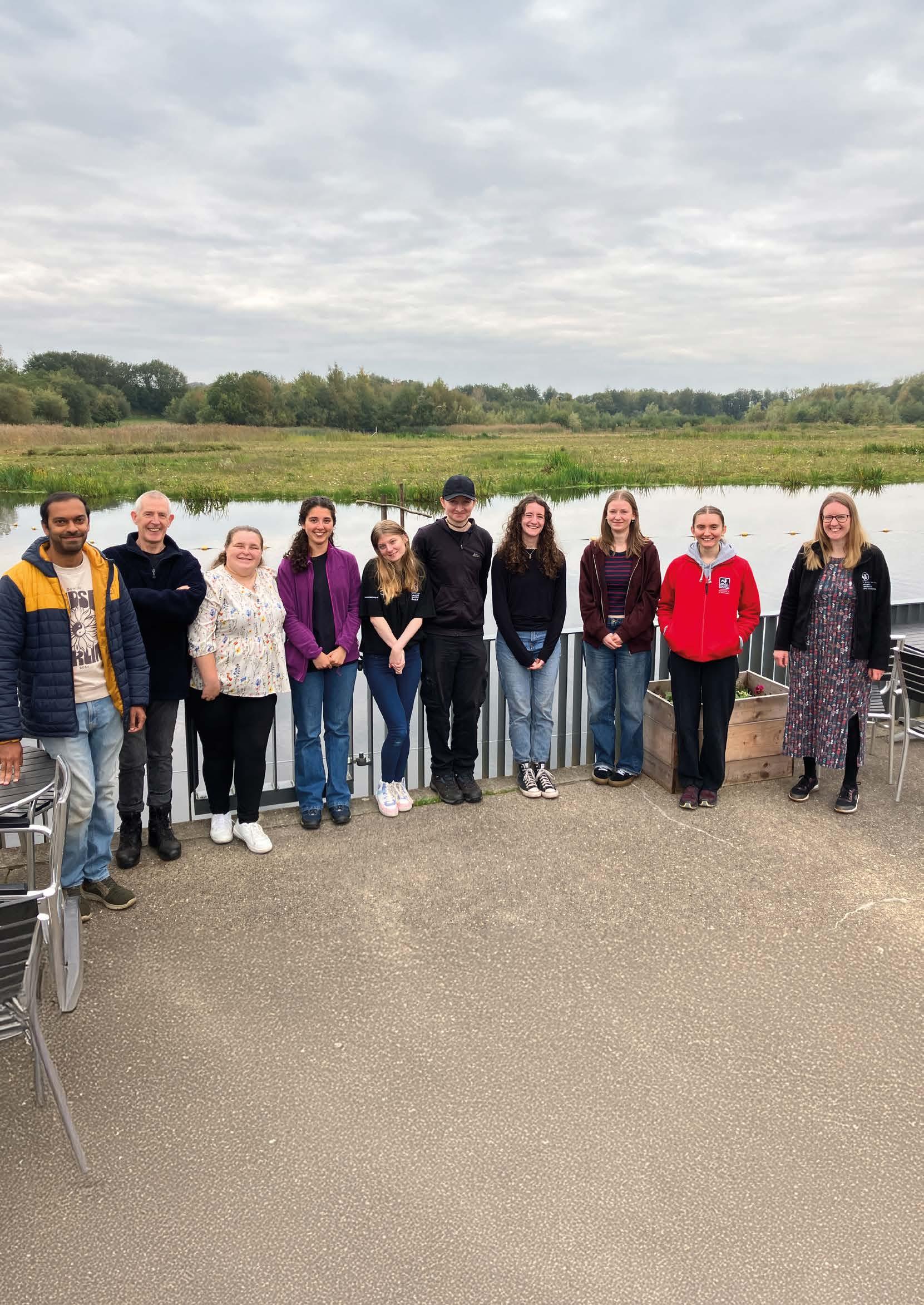
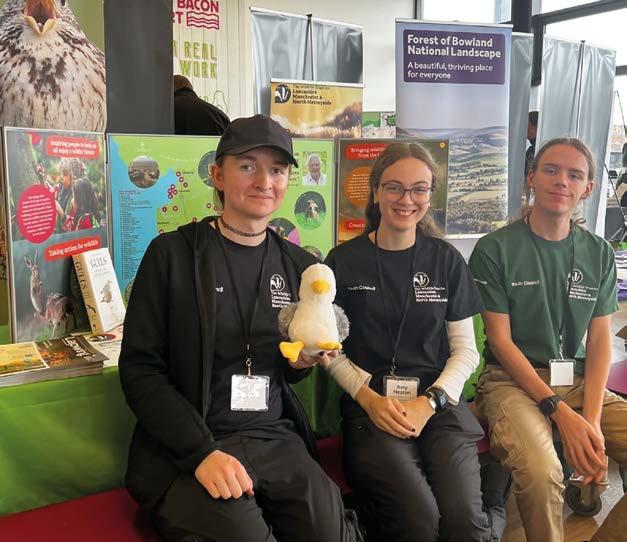
Our Youth Council is open to young people age 13–25 and we currently have a 15 member committee.
Council

By Emma Ironfield, Volunteer Manager
Lauren Fairfax has been Chair of the Youth Council since July 2024 and has an active role attending events and meetings. Outside of her volunteer work with the Trust, she is an ecologist specialising in entomology and ornithology.
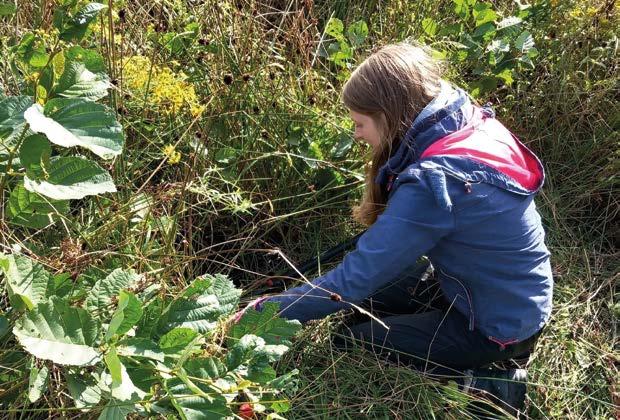
Phoebe Holbrook is also a practical conservation volunteer at Bickershaw Country Park and is studying Wildlife Conservation and Ecology at university.
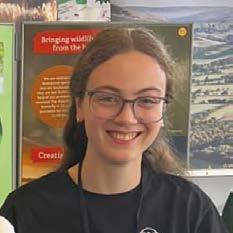
Amy Heaton has recently joined the Youth Council and is an Earth and Environmental Science graduate.
Who or what inspired you to join the Youth Council at LWT?
Lauren: Having birdwatched as a child with my Dad, I have a longstanding passion for the natural world and wanted to share that with other likeminded young people.
Phoebe: I had been a Bickershaw practical conservation volunteer for around a year before officially joining the Youth Council, and I felt that doing volunteer work with a group around my age would be beneficial to me.
Amy: My love for nature and my passion to help conserve it for future generations whilst giving a youth voice in discussions and decisions.
When did you first become interested in wildlife and conservation?
Lauren: My parents got me a camera for my 18th birthday, and I spent my daily lockdown exercise photographing the wildlife around me. This reignited my childhood passion for wildlife and conservation, and I haven’t looked back since!
Phoebe: My parents tell me that from age three I was obsessed with hugging trees! So my interest in nature probably stems from the connection I built with trees as a toddler.
Amy: Probably when I was in primary school after watching lots of David Attenborough documentaries in class. I was also taken on lots of hikes when I was younger which definitely helped pique my interest.
What have you learned about wildlife conservation through your involvement?
Lauren: Being on the Youth Council has taught me how much wildlife conservation is a team effort and that creating bigger, better, more connected green spaces is key to allowing nature to thrive.
Phoebe: I’ve learnt the importance of communicating with the community and other stakeholders. It's a fact that humans have destroyed the world over time, and reducing these impacts requires a group effort and support from the public.
Amy: I've learnt about carbon emissions and what we can all do to reduce our footprints, and also the importance of habitat conservation.
How has the experience of being on the Youth Council developed your skills?
Lauren: The Youth Council has massively helped me to gain confidence and soft skills which I carry with me in my day-to-day jobs as an ecologist. Furthermore, it has taught me countless ID skills which are also extremely important for my career.
Phoebe: The Youth Council helps me to develop my skills to become more employable in the environment industry. I graduate from University in about a year's time, and I am hoping by then that I will be ready to enter the working world.
Amy: I've developed my teamwork and interpersonal skills in addition to gaining highly valuable experience volunteering within the environmental conservation sector.
Would
you recommend joining a Youth Council to others? What advice would you give to someone?
Lauren: Absolutely join a Youth Council! It is a fantastic opportunity to gain experience and meet like-minded young people. Don’t let anyone tell you that it’s not for you; nature, conservation and youth engagement in the sector is for everyone!
Pheobe: Yes! Even if you don’t intend to work in the environmental sector, get yourself heard.
Amy: Absolutely! My biggest piece of advice would be to show your passion for nature and share any environment related experiences and qualifications no matter how small.
reeds Raptors in the
Rising from reedbeds and tumbling through the sky – marsh harriers are a sight to behold.
By Molly Toal, Communications and Engagement Officer

Half a century ago, your chances of spotting a marsh harrier would have been extremely slim. Decades of persecution, habitat loss and devasting damage from the widespread use of pesticides in the environment had whittled the population down to a single breeding pair at Minsmere in Suffolk
Thankfully, marsh harriers are bouncing back, and while still rare, are no longer critically endangered. They are a real conservation success story.
As their name suggests, they are wetland birds, feeding on frogs, small mammals and birds, such as moorhen and coot. They roost in long vegetation, preferably in reedbeds, but can be found in salt marshes and farmland too, if there is enough cover to offer them protection.
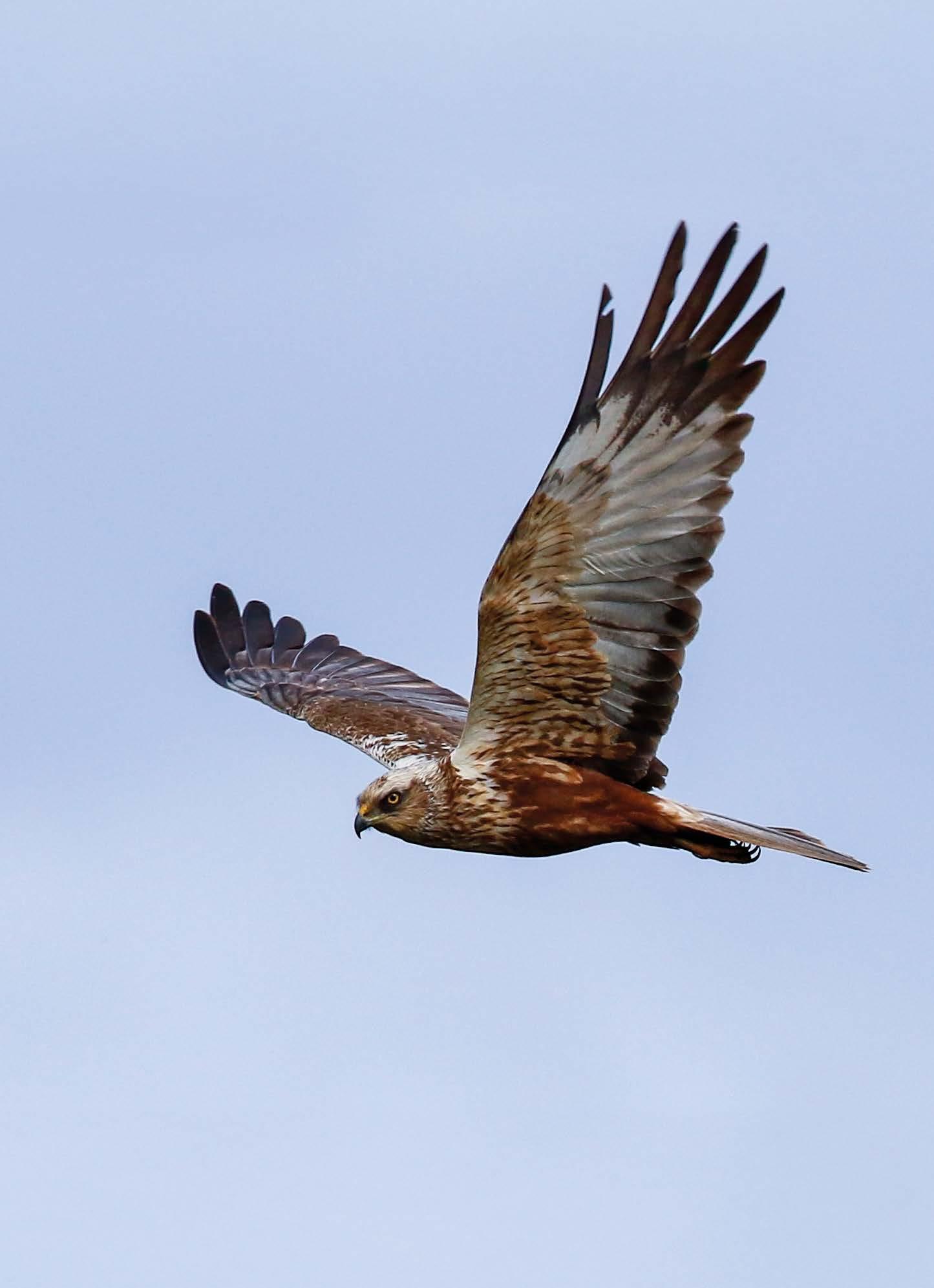
Females and males can be distinguished by both size and plumage. Females are bigger, with a golden-cream head and throat, and a dark brown body. Males have a brown back, ginger belly, and long, grey wings with black tips.
"Females are bigger, with a golden-cream head and throat, and a dark brown body."
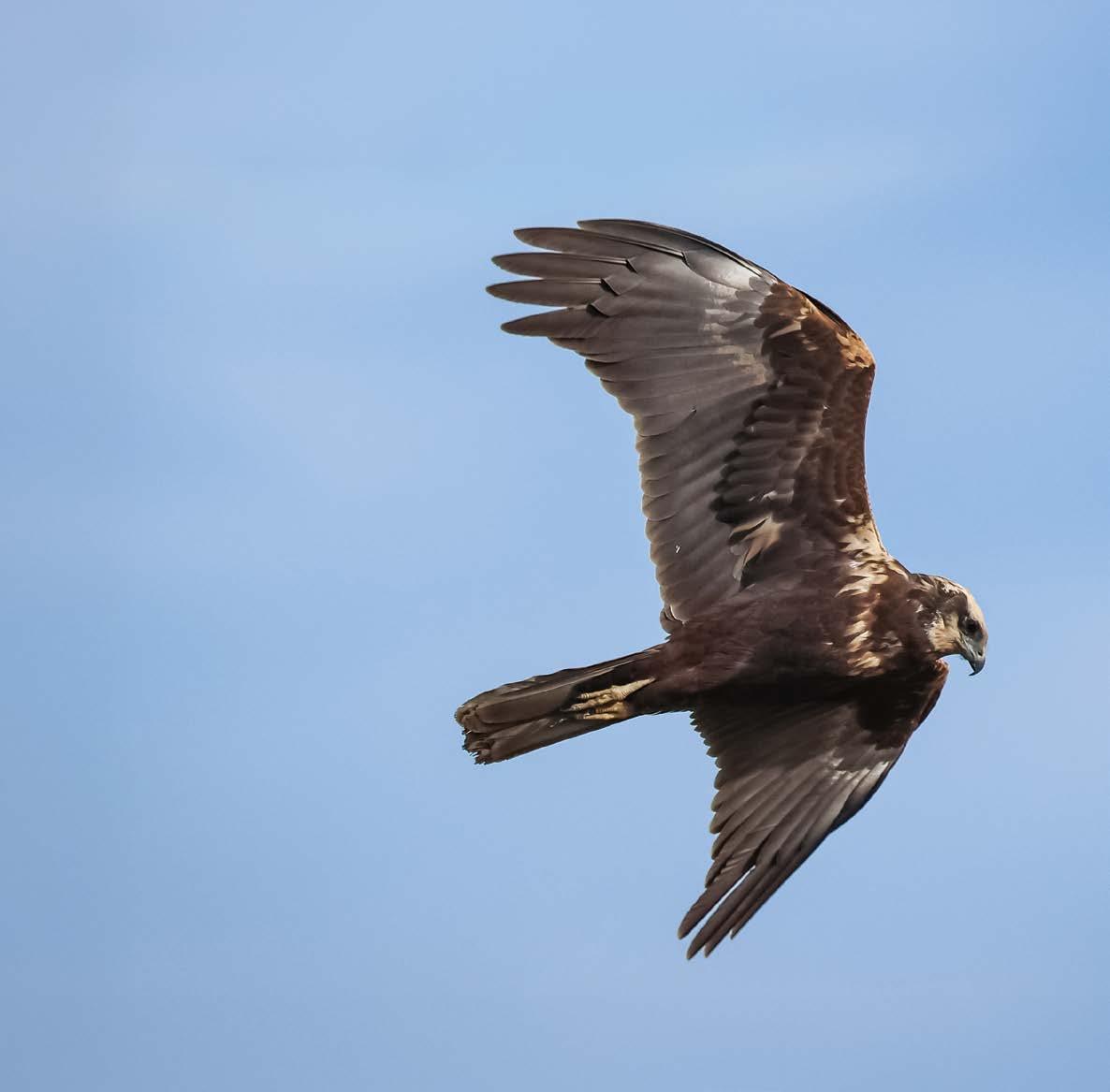
Is it a marsh
harrier?
Marsh harrier stats
Length: 48-55cm
Wingspan: 1.2m
Weight: 540-670g
Adult marsh harriers perform brilliant courtship displays, with males spinning high in the sky before tumbling down again. The female will sometimes join in, and the pair lock talons in mid-air. They are typically migrant birds, arriving in April to breed and leaving in October to overwinter in Africa, but more are choosing to remain in Britain for winter.
The low-lying wetland habitats in our region provide ideal conditions for marsh harriers, and the restoration of reedbeds has been integral to the bird’s comeback. Lunt Meadows Nature Reserve, in Sefton, had three marsh harriers fledge in the reedbeds in 2021 –incredible given that in 2012, the land was farmer’s fields used for growing crops.
The reserve’s transformation is in part thanks to the dedicated work of volunteers, who over the years have nurtured and planted out reed saplings to create this important and rare reedbed. The work at Lunt Meadows has also been made possible by players of the National Lottery through the National Lottery Heritage Fund, through the Mesolithic and Modern Life Project, improving the nature reserve for wildlife and visitors.
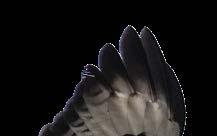
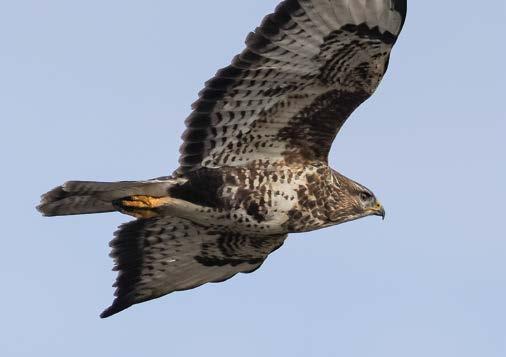
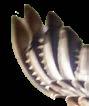
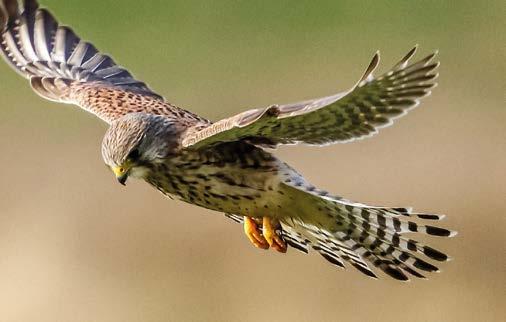

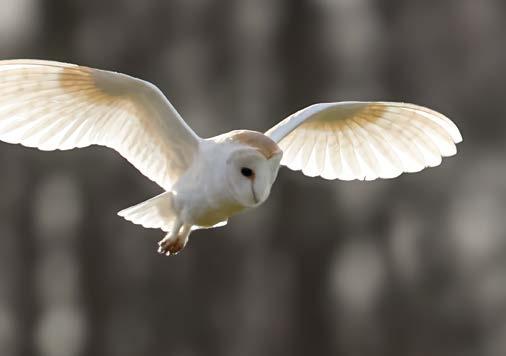
Marsh harriers are a common sight at Lunt Meadows, seen all year round, but they are not the only birds of prey on the reserve. Here’s how to spot the differences between winter regulars.
MARSH HARRIER:
Flies slow and low to the ground, with their wings held high in a distinctive V-shape, and minimal wing flaps.
BUZZARD:
Broad, rounded wings with splayed tips, like fingers, and a relatively short, fan-shaped tail. Often seen soaring in circles on thermal currents high in the sky and sometimes hold their wings in a V-shape when soaring.
KESTREL:
Much smaller than buzzards and marsh harriers. When hunting, they hover above prey, keeping their body very still, tail fanned, but still moving their wings.
BARN OWL:
Rounded, long wings and a small body, with a slow, controlled flight. They fly low over open land, zig-zagging in a methodical quartering pattern.
second The power of chances
Working with His Majesty’s Prison service is allowing us to give valuable employment placements to people nearing the end of their prison sentences – and get a lot back in return.
Here at your Wildlife Trust, we believe in helping to create second chances. So much of our conservation work is about giving a second chance to a wonderful variety of habitats and species to not only survive - but thrive. So, it seemed natural for us to help give a second chance to people too.
This was the result of a conversation that started when the Governor of HMP Kirkham got in touch with us a couple of years ago to offer us some free benches that had been made by people within the prison. The prison service has a Custody 2 Work scheme that allows people who are coming to the end of their sentence in open prisons (the lowest security category of prison in the UK) to gain vital skills and experience, helping them to rehabilitate after their release.
After a series of stringent safety checks, risk assessments and approvals by both the prison service and LWT staff and Trustees, we welcomed our first Custody 2 Work participant two years ago.
The scheme has now expanded into 14 successful placements so far, two of which have entered full time employment with us (in roles we had previously had difficulty filling) upon their release.
One of the pair said: “I love working here, it’s like being in a different world, it’s so tranquil. At first it felt weird being an employee, but it feels so normal now and I really like working with everyone else in my team. I appreciate and feel so thankful for this opportunity. Working means that I can pay my bills, contribute towards childcare, and just generally pay people back. Being given this opportunity makes me feel valued and appreciated too.”
Along with our full-time employees, through the Custody 2 Work scheme we have also been able to offer volunteer placements to others who are coming to the end of their sentences and are looking to gain vital skills to help them reintegrate into society and the workforce upon their release.
Each placement runs for eight hours a day, six days a week, which when you consider that most of our wonderful volunteers support us for an average of a four hours a week, means that these placements give us the equivalent of two and a half years of volunteering in just three months. Many of the people undertaking the placements also bring with them valuable practical skills which they either learned within prison training courses or from their previous jobs.
So, it’s clear what we get out of the scheme, but our new employee continued:
“It’s a different chapter for me, I’ve never done anything like this in my life, but it’s always good to have different chapters. I’ve always loved watching wildlife documentaries so it’s great to be working somewhere that is not only surrounded by nature but is also giving something back to it. I’ve never had a day off sick because I’m just so happy here. It’s a bit of a fairytale really.”
By Jenny Bennion, Senior Communications Officer
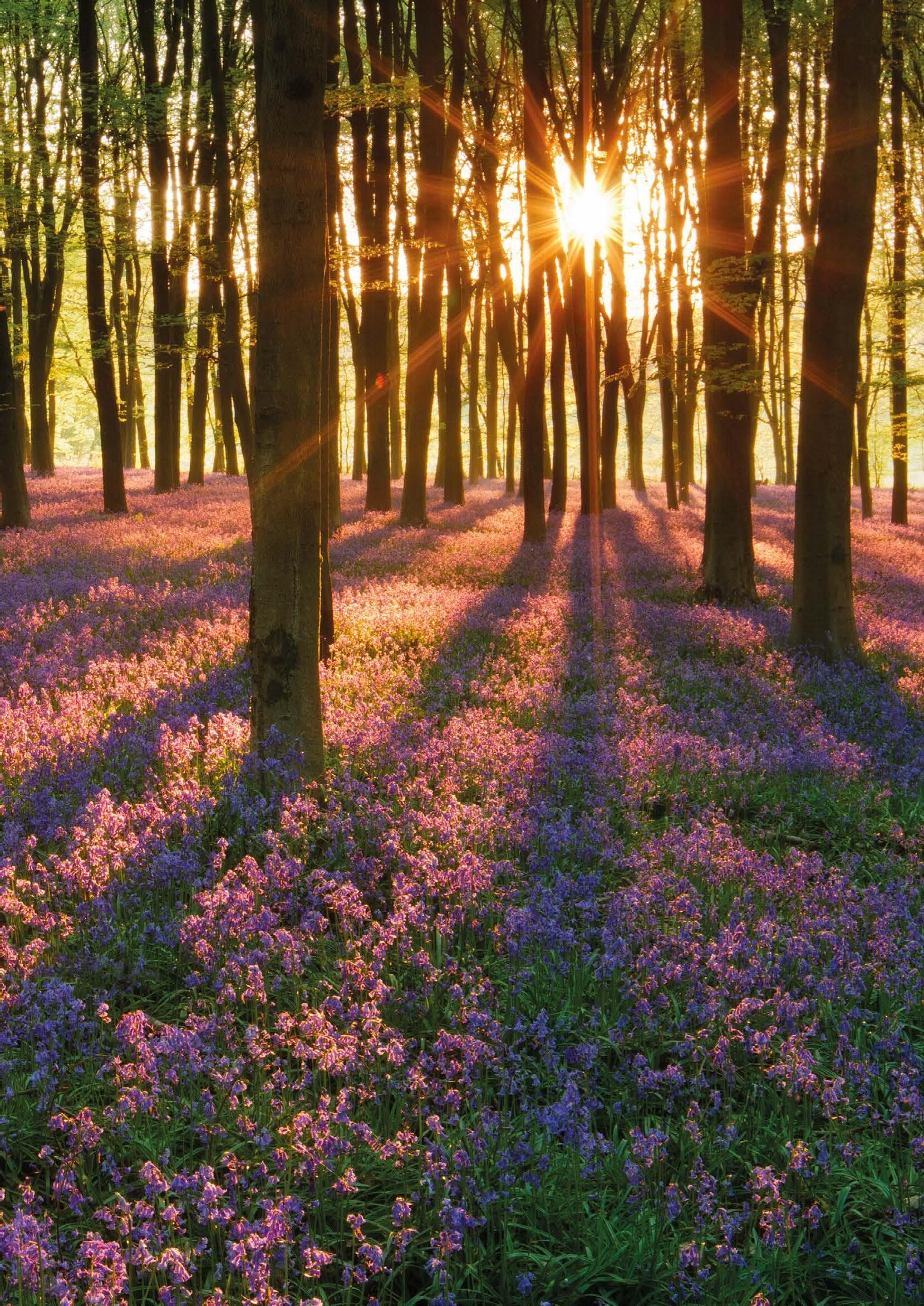
Bluebell wood
Guy Edwards
Dr Deborah Brady introduces a secretive animal from the UK’s past and the partnership project exploring its potential return.
Missing Lynx

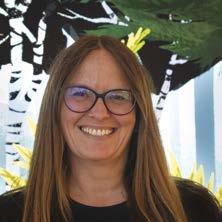
Dr Deborah Brady is lead ecologist for The Lifescape Project and manages The Missing Lynx Project.










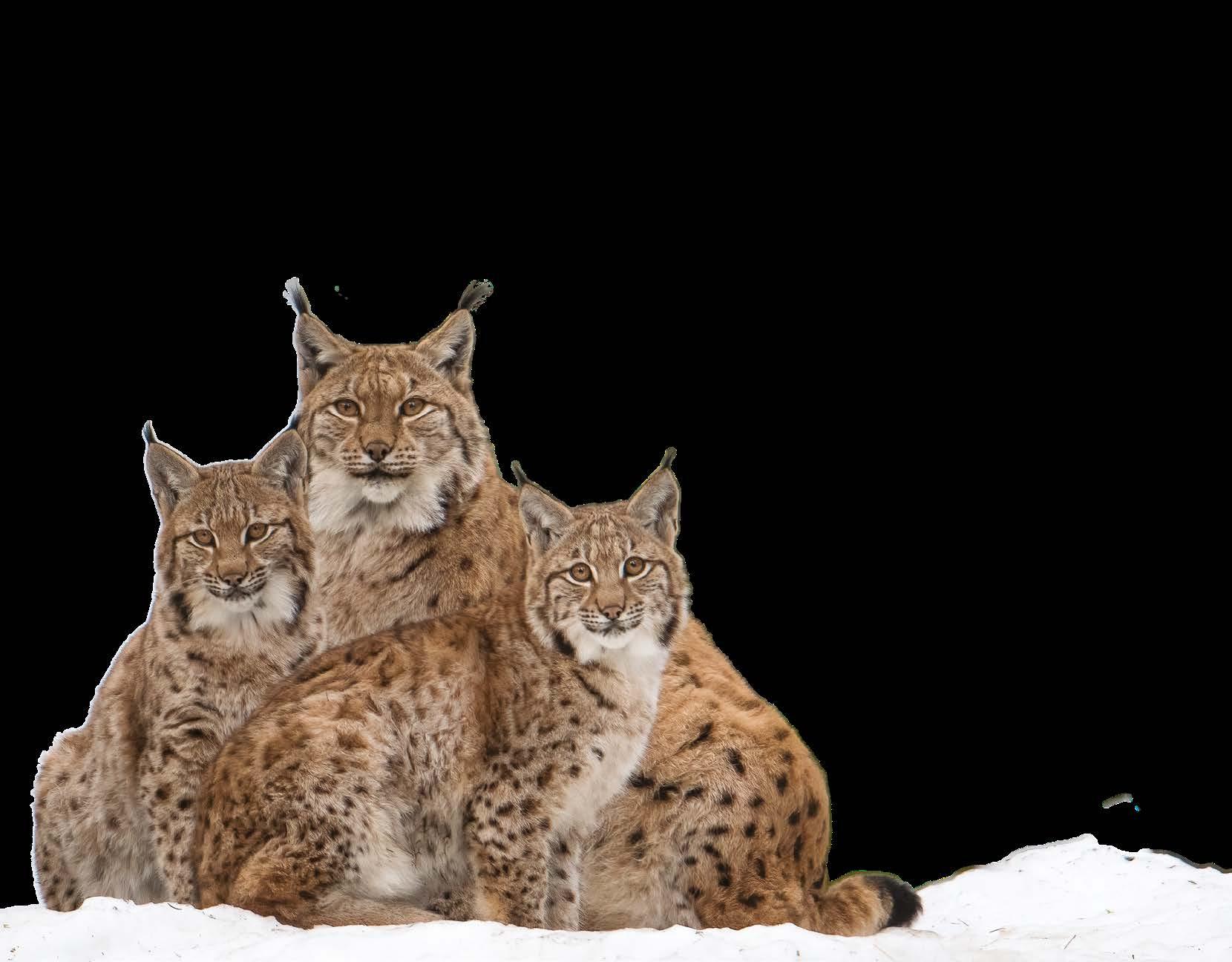
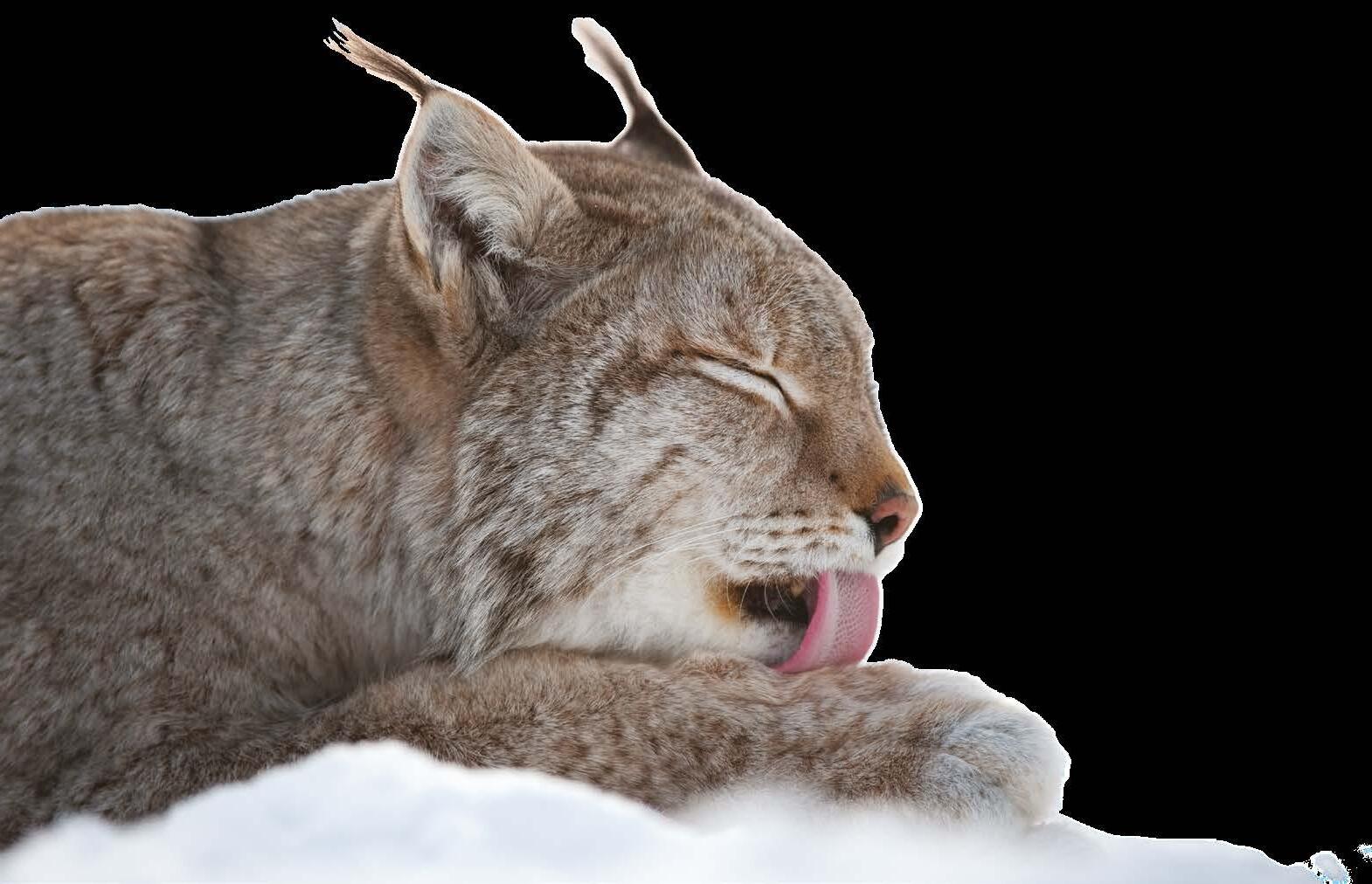
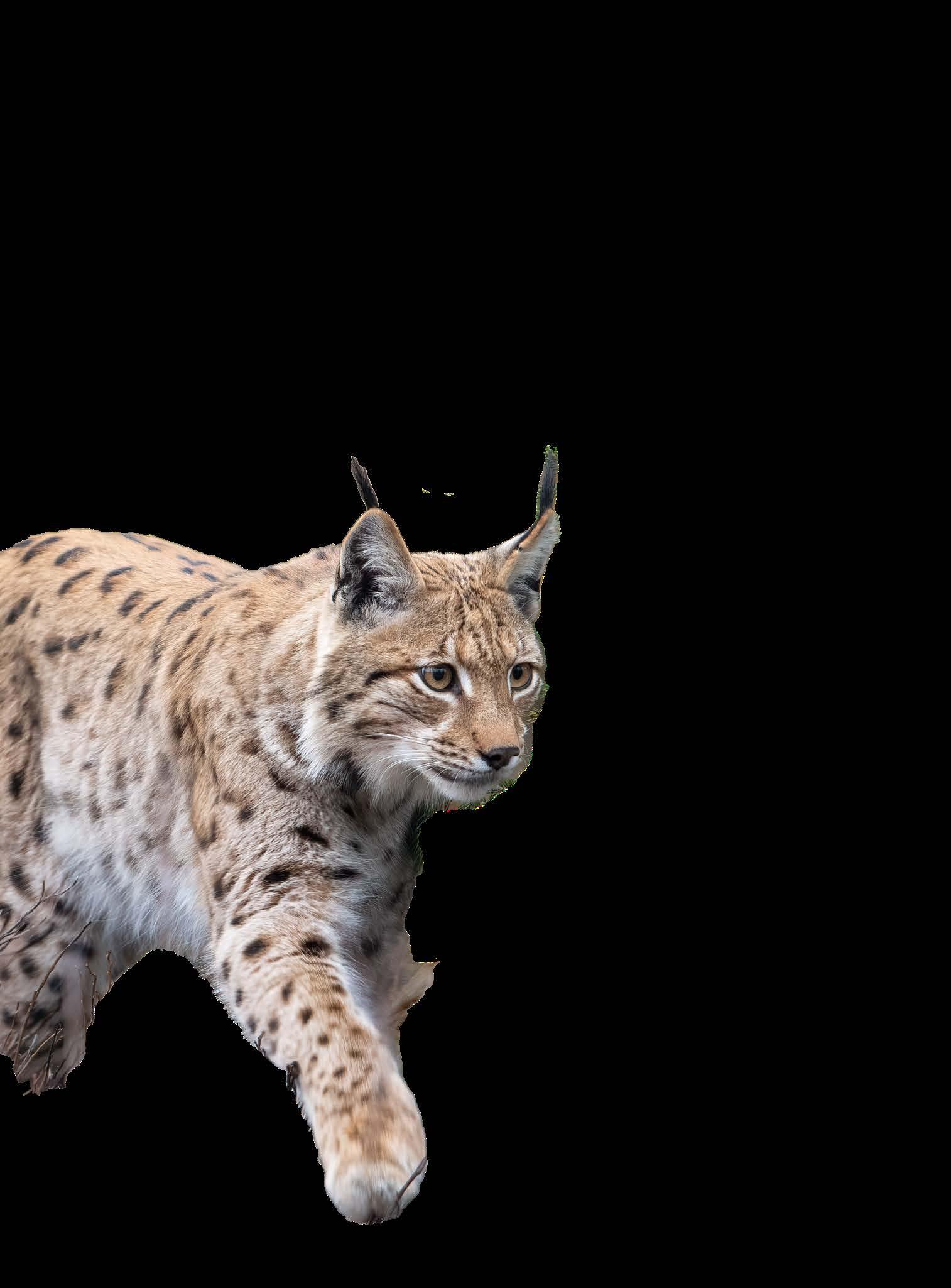
The Missing Lynx Project was formed to explore this question. It’s led by The Lifescape Project supported closely by Northumberland Wildlife Trust and The Wildlife Trusts. The project is exploring the ecological, practical and social feasibility of reintroducing lynx. This is basically asking three key questions. Is there an area in Britain where lynx could live? How would bringing lynx back work (e.g. where would they come from)? And would local people accept lynx back in the landscape?
Could lynx live in Britain ?
The first step was to examine whether there was anywhere with the right habitat for lynx. To test this, the Lifescape Project followed a similar approach to that used in Germany, where lynx have been successfully reintroduced. This meant using advanced computer modelling techniques, drawing on the most recent and detailed data on lynx ecology and Britain’s landscapes. Essentially, a virtual Britain was created in which simulated lynx could live. Knowledge from over 50 years of monitoring European lynx populations helped make the lynx behaviour as realistic as possible. Lynx reintroductions in different areas were tested using the model, under lots of different scenarios, and the outcomes studied.
This research found that if lynx were to be released in Northumberland, they could grow into a healthy population covering north-west Northumberland, the edge of Cumbria and the bordering areas of southern Scotland. This is currently the only area in England and Wales with the extensive forest habitats that lynx need.
How could we bring lynx back?
Any species reintroduction is a complicated process. There are lots of practical elements to consider. These include finding the right place to get the lynx from, managing the translocation and release, and monitoring lynx after they are released. The Missing Lynx Project is working closely with experts from across Europe to explore these elements. There are decades of experience to help guide the process.
How do people feel about lynx?
To recap, the Missing Lynx Project’s research has shown that there’s an area of northern England and southern Scotland that could support a healthy population of lynx. We also have lots of expertise from across Europe on how to manage the practicalities of a successful lynx reintroduction. But – crucially – a reintroduction could only take place if local people are accepting of the animal back in the landscape.
For more than a year, the project has been sharing its findings with people in the area identified by the modelling; opening discussions about lynx and providing a variety of opportunities for everyone to share their views. As part of this, a travelling Missing Lynx exhibition toured the area to bring the lynx to life. We welcomed almost 10,000 visitors across 15 venues, from village halls to agricultural colleges and at iconic local landmarks. The project has held meetings, hosted community workshops and conducted one-to-one interviews. We also held focus groups for people with shared interests in the area – there are groups for farming, forestry and business, as well as a Lynx Community Group with 117 members.
In addition to all of the face-to-face conversations, the project provided a questionnaire for people to record their views on lynx. We had responses from just over 1,000 people who live in the project region, with 72% of them supporting a lynx reintroduction there. The overall attitudes towards lynx were positive, but it’s important to listen to the voices of those with concerns. Much can be learnt from how people live alongside lynx in Europe and the project’s next step will be to keep working with local communities, exploring how a reintroduction project could be managed to maximise benefits and reduce risks. Together, with the acceptance of the local community, we can bring back our missing lynx.


bugs Getting the bug for
While there are some great apps out there helping us to identify the bugs buzzing around our garden, there is still something comforting about reading a book about your discoveries. Alan Wright finds four recent publications adding fun to bug bothering.
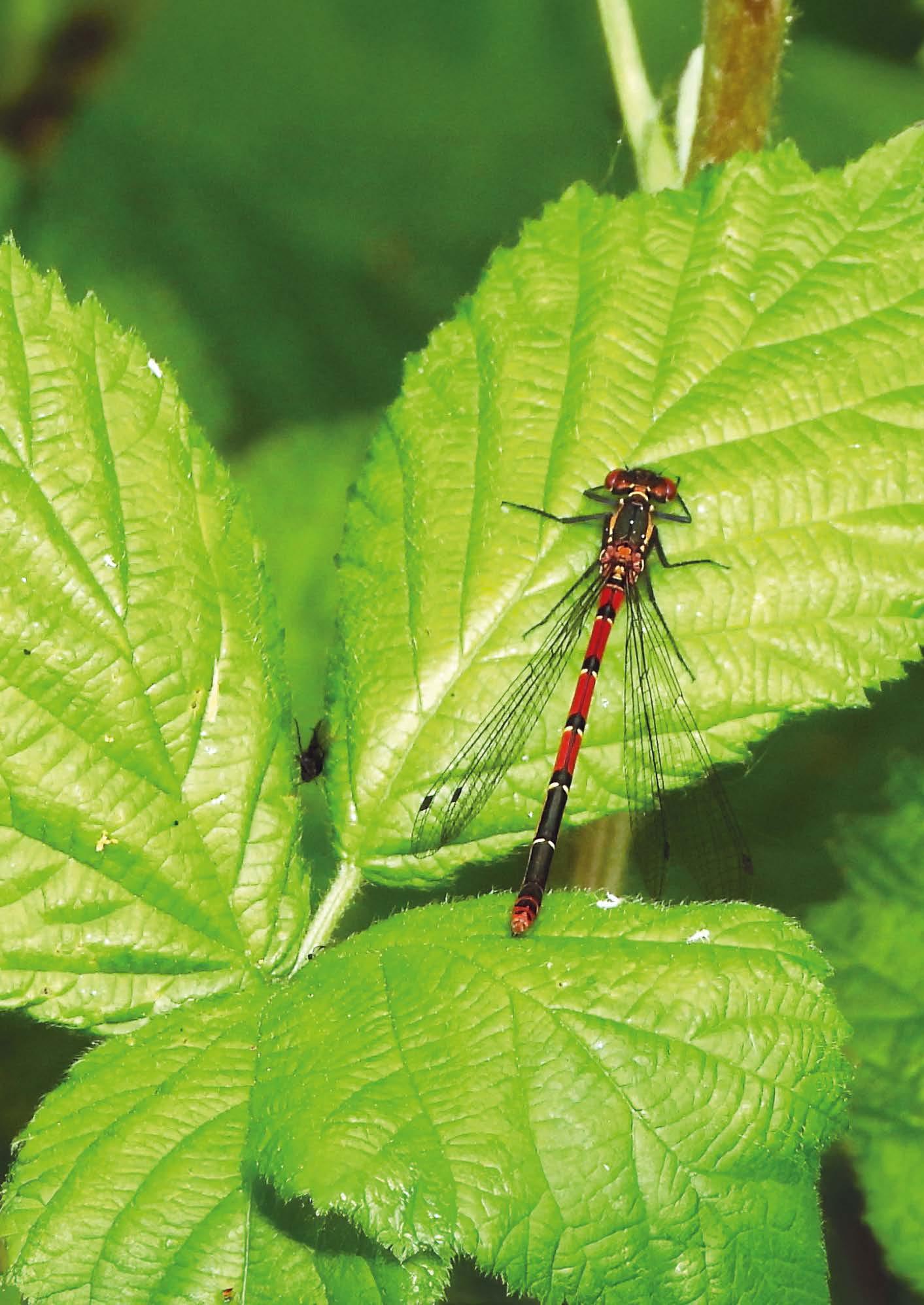
Bugs are everywhere and many are with us all year round, hiding in nooks and crannies providing food for birds in winter. Since working for The Wildlife Trust, I have found that I spend a lot of time photographing bugs and getting close up into their lives.
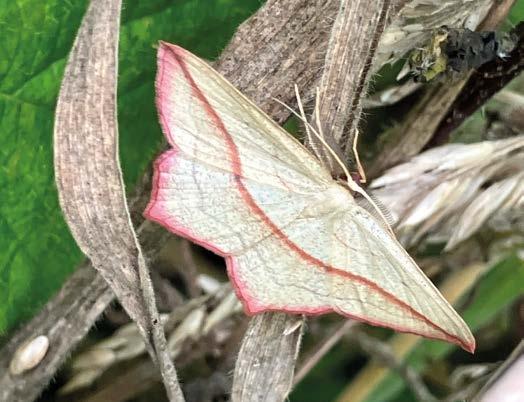
I was out with my dog over summer when I spotted a strange looking moth, which I immediately checked on my phone. It was a blood vein moth, now a regular in the northern moth-spotters notebooks.
Our natural world is stuffed full of amazing specimens that I can appreciate all the more when I actually know what I am looking at.

When I am at our Brockholes Nature Reserve, I often get excited about the dabs of colour that some invisible artist has added to the scenery. Blue, green and red dragonflies and damselflies glide above the water or dib around the grassland.
I was lucky enough to spend time watching a giant emperor dragonfly at Brockholes as it buzzed around the water lilies and a black darter allowed me to film it close up at Risley Moss.
I find it exciting when I find bugs that I haven’t spotted before and then I enjoy reading about them. So please let me introduce you to some of our favourite bug spotting books by our friends at Princeton University Press.

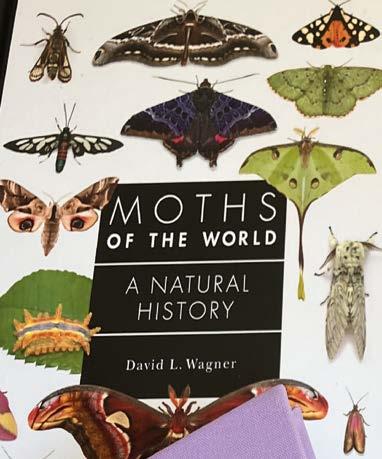
“I find it exciting when I find bugs that I haven’t spotted before and then I enjoy reading about them.”

Moths of the World –A Natural History, David L. Wagner
This is one of a number of smart books by Princeton, that provide excellent guides to many colourful and exciting species.
Wagner writes: “In many regions of the world, moths are among the most conspicuous insects in yards: as caterpillars in gardens, adults visiting flowers, and
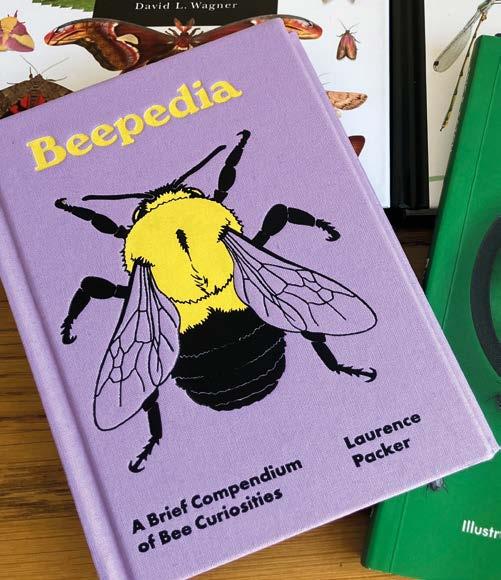
Laurence Parker
Following on from other successful compendiums of wildlife knowledge such as Florapedia and Birdpedia, we now have Beepedia.
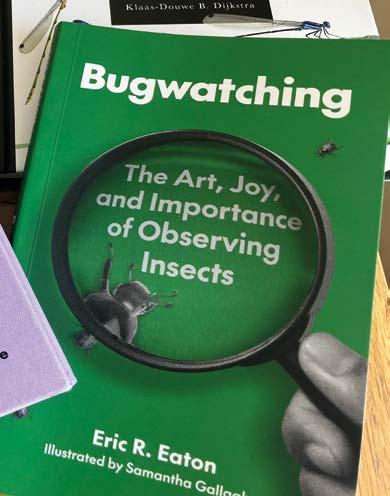
Bugwatching – The Art, Joy and Importance of Observing Insects, Erick R. Eaton
This is a fascinating and fun guide to identifying the bugs you see in your everyday life.
Eaton says: “Birders claim their pursuit is accessible to anyone because birds are common and easily spotted; but if birds are everywhere, insects are everywhere-er-er. Insects are wildlife too and provide much of the same satisfaction for the naturalist as birds do, but in greater quantity and diversity.
“Few, if any, members of the animal kingdom exceed insects in their rainbow of dazzling colours, grace in movement and vibrancy of life.”
These pocket-sized books, perfect for getting out and about, are packed with facts both useful and fun; hairy bees, fossil bees and even killer bees. There are colourful books aimed at bringing more people into the naturalist family.
Rewards of bug watching include their visual beauty, song, diversity, contribution to science, and the fact that you are discovering them.
If you see someone taking pictures of bees in your local garden centre with a copy of Bugwatching sticking out of his back pocket, it will be me.
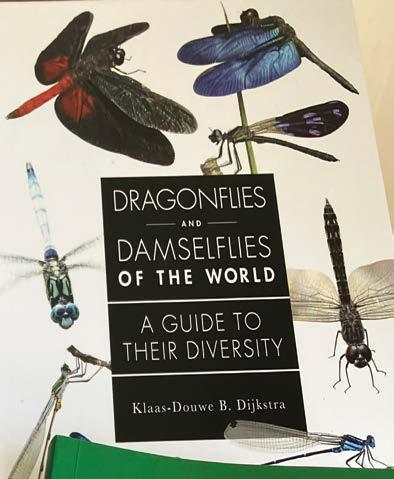
Dragonflies and Damselflies of the World – A Guide to their Diversity, Klaus-Douwe and B. Dijkstra
This book is packed with amazing pictures and illustrations which give the reader an intimate view of what these insects are all about.
Klaus-Douwe clearly loves his subject: “Spirits dwell among us. For months, even years, they lurk underwater but on warmer days they emerge into our lives… Borne on lacelike wings… The watchful eye will soon see their bright colours shoot by everywhere.”
By Alan Wright, Head of Communications

Blood vein moth © Alan Wright
ground up From the
Reflections from the Great Manchester Wetlands Land Managers’ Group.
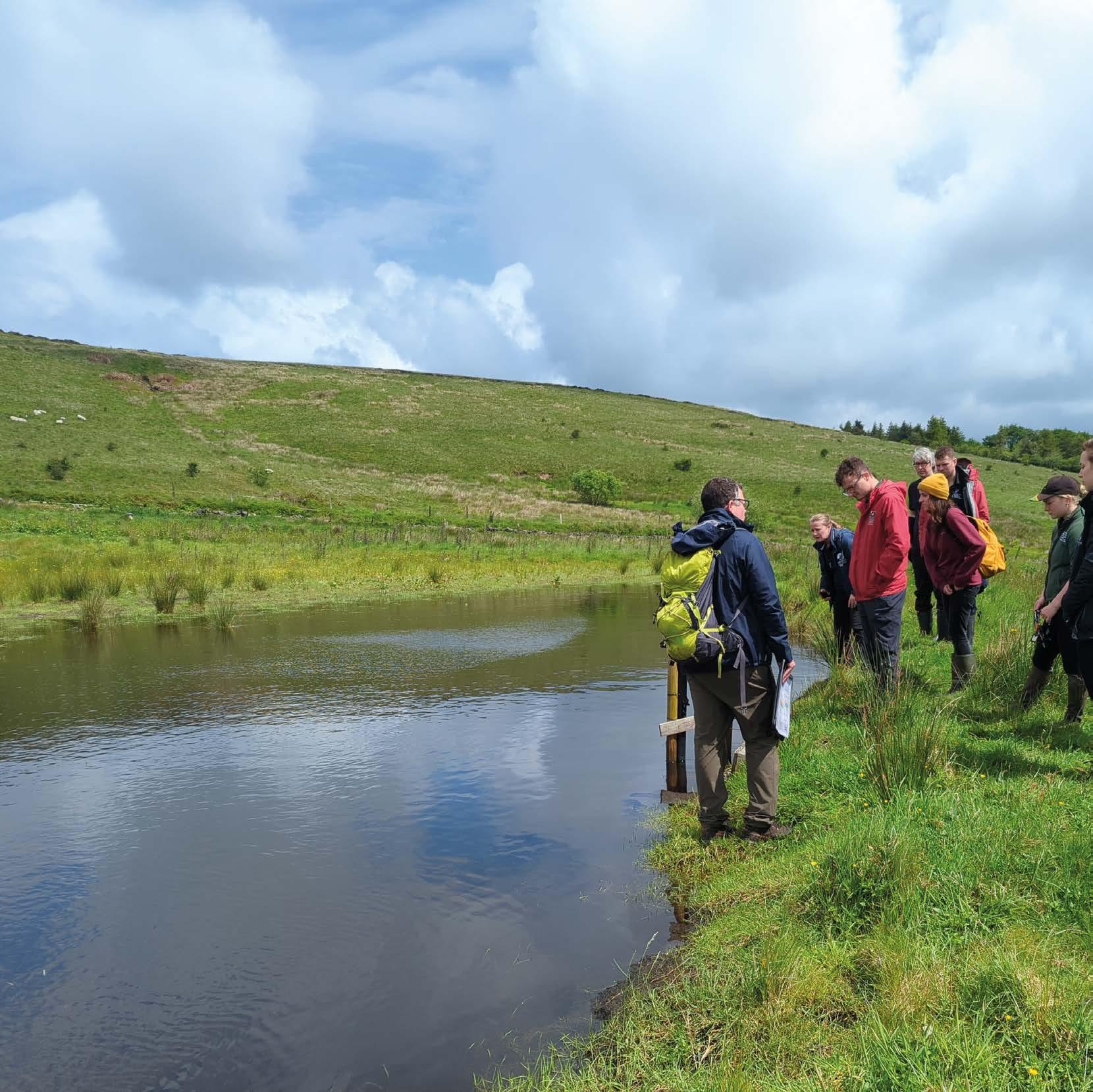
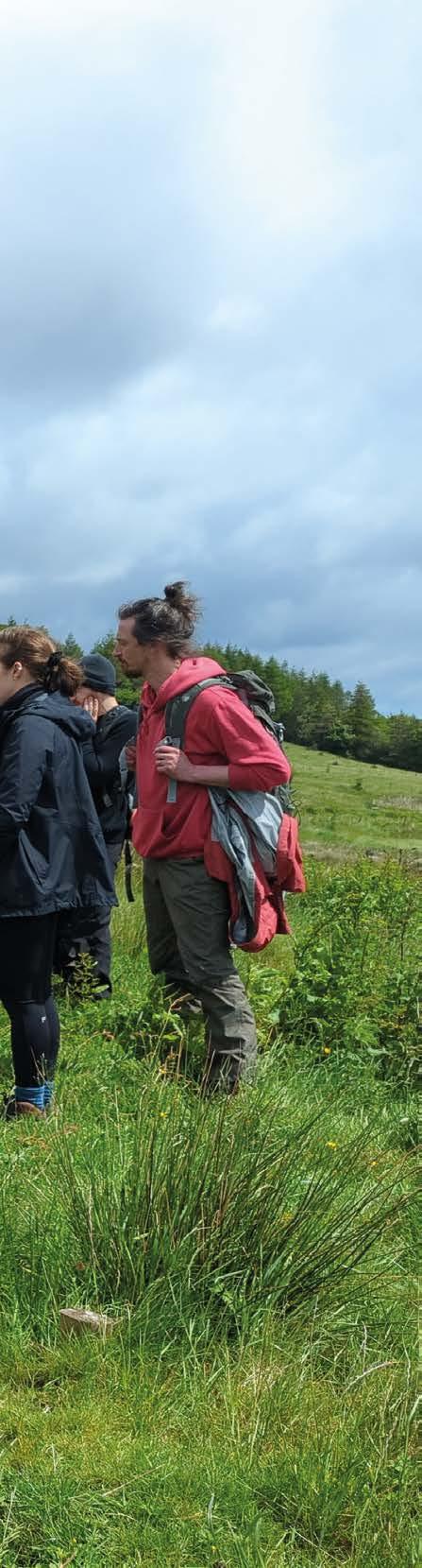
By Jenny Bennion, Senior Communications Officer
Historically, farmers and conservationists have not always seen eye to eye over managing the countryside, but both care deeply about wildlife.
The Great Manchester Wetlands Land Managers’ Group connects farmers and land managers, providing opportunities for knowledge sharing and exchange.
Through the Countryside Stewardship Facilitation Fund, the group has delivered workshops, training, visits and demonstrations. All focused on supporting willow tit, lowland raised bog and fen habitats, water quality and natural flood risk management.
Approximately 70% of the land in the UK is farmland
Members include farmers, a local cooperative grocer, a large local landowner, Natural England and Wigan Council, all involved in different ways in managing the area’s land for a range of outcomes and purposes.
Recently, members of the group gathered for a brew, discussing what has been achieved over the last three years.
Natural Flood Management demonstration visit May 2024 © Matt McMullen

"I don’t think I would have had the opportunities to get involved in these different areas without the contacts that I’ve made through the group."

Steve Ormerod
Natural England, Moss Side Farm
“Since Natural England bought Moss Side Farm, we have been hard at work restoring some areas of the peat into mini bogs and creating plans for wetter farming trials on others. We have also been monitoring water quality and the greenhouse gas reductions that result from re-wetting the peat.
“The capital works needed for this can be tricky, but by being part of the Land Managers’ Group we have been able to involve local farmers, Steve and Tim, who is not only a really skilled digger driver but knows where all of the land drains are –as it was his Grandad that put them in!
“Learning from pioneering farmers such as Janine and Steve, has been something I just wouldn’t have had the chance to do without being part of the group.”
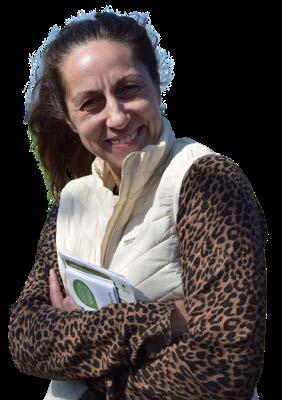
Jannine McMahon
Moss Lane Farm & Sons
“I moved onto my smallholding 10 years ago and have always been interested in managing my land environmentally. I‘m delighted that we have a pair of breeding willow tit and will be working with a local community group to create a movement corridor for them.
“I’m also investigating growing a number of novel crops such as hemp, flax and sphagnum moss on areas of my land which are naturally wet, a bit like what Steve is doing. The group has also allowed me to make connectionsI’ve met my neighbour, Steve, who I hadn’t met in 10 years! The farmers and land managers in the area feel like more of a community now.”
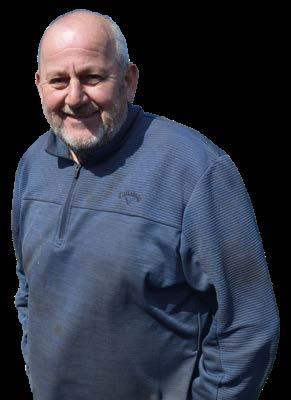
Steve Denneny
Barton Moss Produce
“I took my farm over from my Grandad, but we have been finding conventional farming more and more difficult. Since getting involved in the Land Managers’ Group I was introduced to Lancashire Wildlife Trust and now have a wetter farming trial on my land growing a crop of bulrushes. I’ve even been out to The Netherlands to see a big bulrush growing project there and how they are harvesting the crop.
“I have also been able to start delivering habitat restoration works, diversifying the farm business. This has proved to be a much more reliable income stream than solely relying on conventional farming. I’ve also learnt more about growing more environmentally, such as growing wildlife crop mixes. I don’t think I would have had the opportunities to get involved in these different areas without the contacts that I’ve made through the group.”
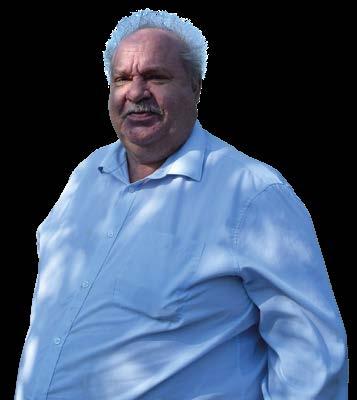
Mark Champion
Wigan Greenheart partnership
“Being part of the Land Managers’ Group has allowed us to meet with farmers and to stretch the interest of our Wigan-based partnership further out into the Manchester Mosses, seeing how the Flashes of Wigan and Leigh and the Risley, Holcroft and Chat Moss National Nature Reserves can link up. We’ve even been able to make practical contacts, enabling us to procure heritage fruit trees from another group member and contacts for meadow hay cutting.”
"This project shows how simple interventions can have a lasting impact."
Cris Jackson, Urban Nature Project Officer
Business for nature
Wienerberger supports wildlife in Greater Manchester
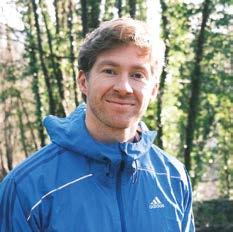
By Matthew Stewart, Partnerships Manager
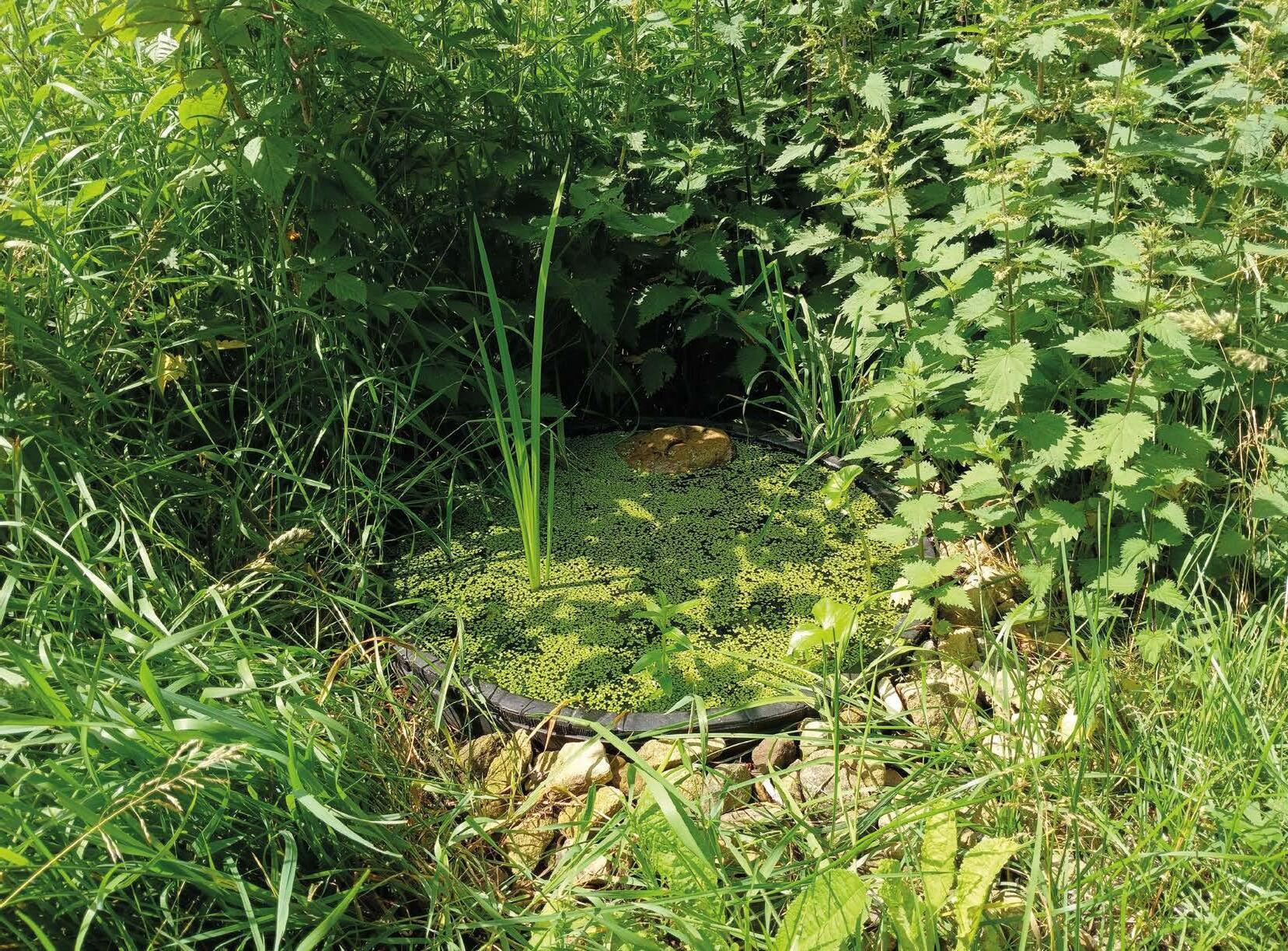
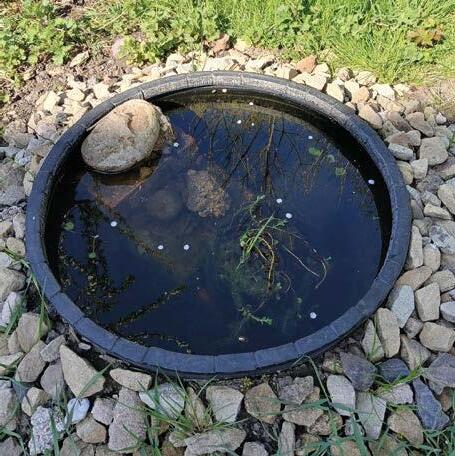
Leading brick and roof tile manufacturer, Wienerberger is helping wildlife make a splash across Greater Manchester with its support of an innovative mini pond project funded by The Swire Charitable Trust. Running from April 2024 to March 2025, the project created 50 mini barrel pond kits designed to boost biodiversity and connect local habitats.
Could your business be a nature positive partner? Get in touch at business @lancswt.org.uk to discuss how your business can support our work
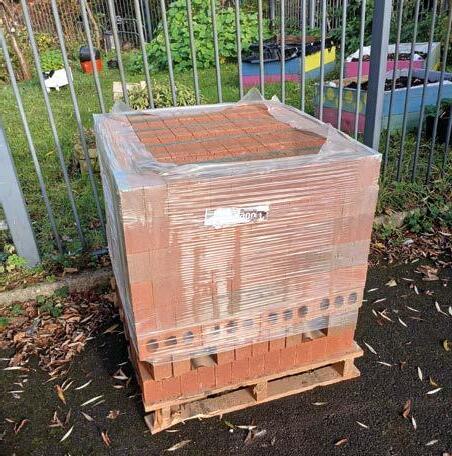
The kits, distributed to schools, community groups, and local gardens, included various sized buckets, plants and a stack of Wienerberger bricks. While they may seem simple, these bricks were essential for creating wildlife friendly ponds, providing different levels within the water, along with access ramps in and out of the ponds.
The goal for this project goes beyond individual ponds. By placing these mini ponds across the region, the project creates stepping stone habitats that link to nearby larger ponds.
This connectivity encourages wildlife movement, helping species flourish in urban and suburban landscapes where natural habitats are often fragmented. From providing safe resting spots for amphibians to offering a water source for insects and birds, these mini ponds are making Greater Manchester a more welcoming place for wildlife. With Wienerberger’s support, communities are not only seeing wildlife up close but are also playing a vital role in building a nature positive future.
Bricks create varied water depths within the new barrel ponds © Cris Jackson
One of the new barrel ponds © Cris Jackson

LWT News
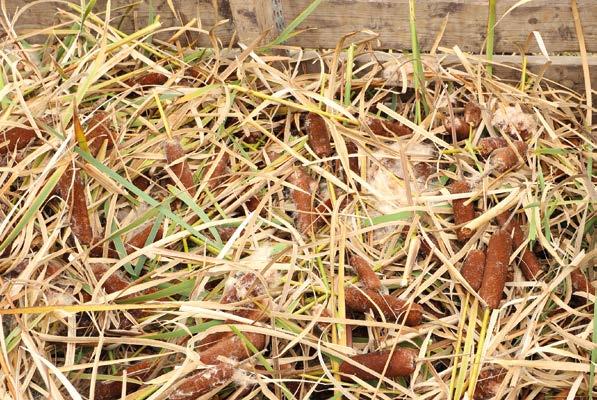
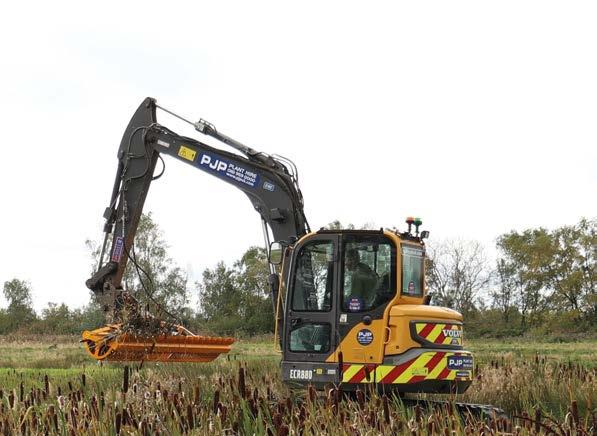
Harvesting boggy bulrushes
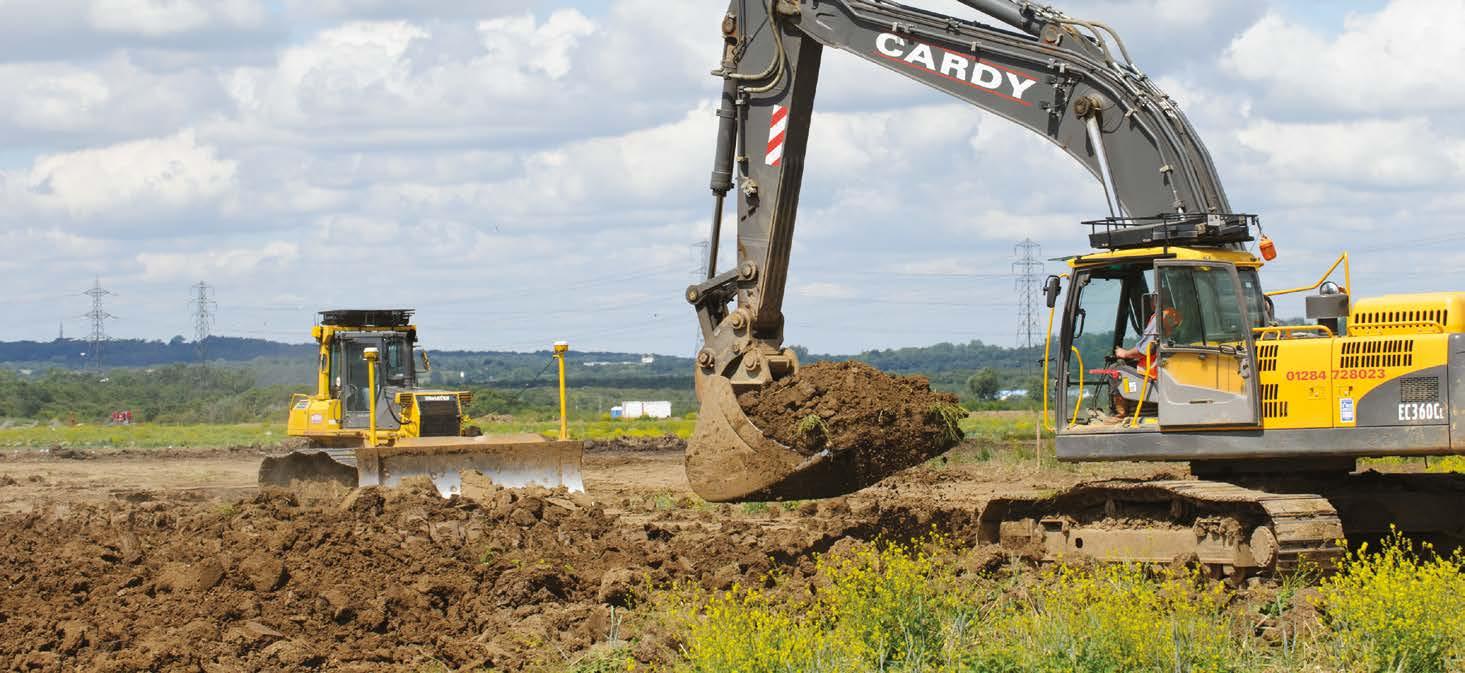
We are delighted to have undertaken the first harvest of bulrushes from one of our pioneering wetter farming trials in Greater Manchester. Just over two years ago the site was an unproductive field that had been previously drained from lowland raised peat bog. Since then, it has been re-wet, and a commercial crop of bulrushes sown and grown.
But how do you harvest a crop on boggy land? With a giant cutter head on the end of a digger arm of course - and after a bit of trial and error, it worked! This is just one of a number of wetter farming methods we are trialling to help reduce CO2 emissions from drained agricultural peat, whilst keeping the land productive and profitable for farmers.
There’s always so much going on at your Wildlife Trust –here's just a few of the things we’ve been up to recently...
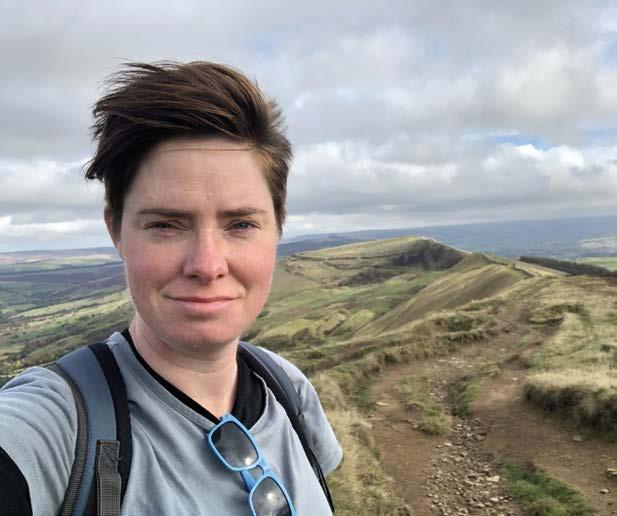
Introducing Dr Rachael Antwis
It’s an absolute joy and privilege to be your new Director of Nature Recovery. My main role at the Trust will be to drive forward a nature recovery strategy, ensuring our work is generating the best outcomes for nature, and supporting our fantastic teams to carry on doing what they do – restoring our precious peat, creating new partnerships and projects to drive nature restoration, and looking after our fantastic reserves.
I’ve joined the Trust after four years at Defra following a career in academia, including a PhD on frog conservation, a postdoc on amphibian chytrid fungus, and six years as a Lecturer in Global Ecology and Conservation, conducting research on a broad range of organisms from black rhino and wild ponies to sponges, ash trees and soil!
It has been brilliant getting to know the Trust and all our wonderful nature reserves and sites over the last few months.
Images by Kirsty Tyler, Phil Parry, Podcast Foundry, Karen Williams

25 years of the Stockbridge Junior Rangers
In 1999 a group of like-minded individuals got together in Stockbridge Village, Knowsley and decided to do something about the local woodland which was suffering from fly tipping, dumping of burnt-out stolen cars and antisocial behaviour. By 2000 the Stockbridge Junior Rangers were formed with children from local schools getting together twice a month in the woodland or allotment site, making a real difference for their local greenspaces.
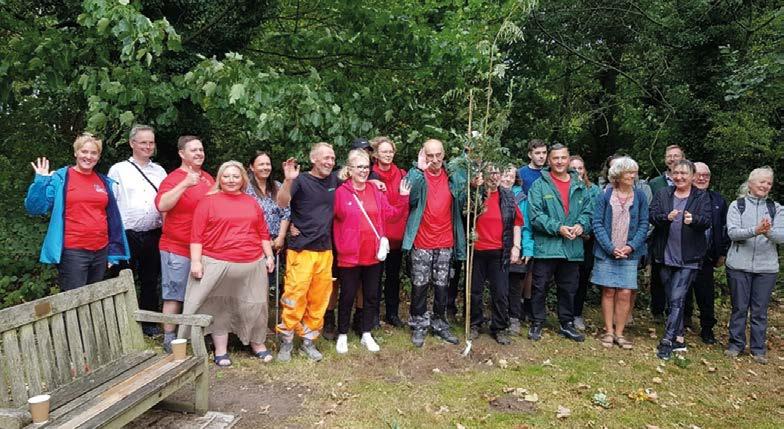
Over the years the group has won numerous awards, including in 2009 when the Junior Rangers received The Observer Ethical Award for Kids. After 25 years the group is still going strong and looking forward to hitting the 50 year mark!
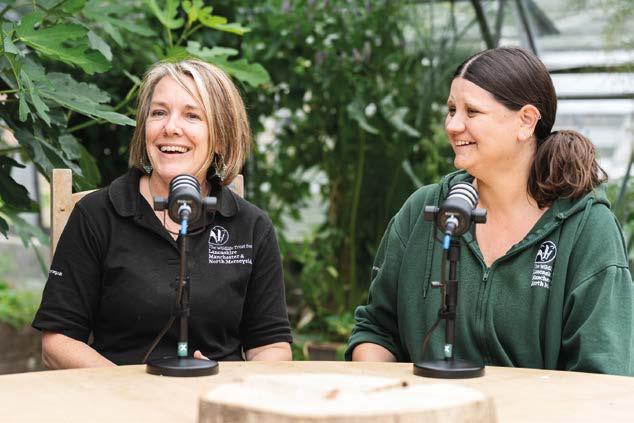
The Conservation Chronicles
Have you heard our new podcast? Head to our YouTube channel to hear fantastic conversations with staff and volunteers from across LWT. We’ve been chatting everything from red squirrels to cows, nature and wellbeing to peatland restoration, from Wigan to our fabulous coastal and marine work, and loads more. There are new episodes being added all the time!
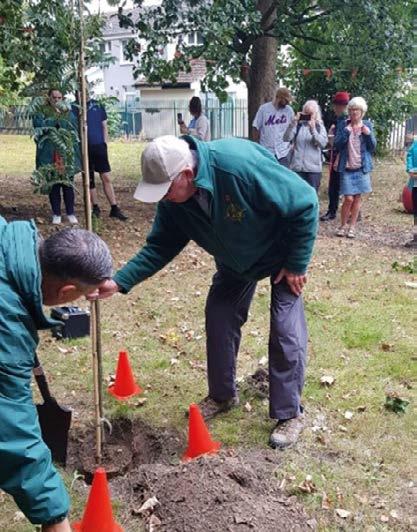
Reducing our impact
Here at LWT we are always looking at ways to reduce out impact on the planet. Last year a mammoth 123 staff members got together and completed Carbon Literacy training, making various pledges to cut both their individual and team carbon footprints.
The LWT Carbon Club consists of staff members form across the Trust who come together to review and expand our carbon cutting goals. And finally, SHE Adviser, Karen Williams, creates an annual carbon footprint for the Trust identifying where we can further reduce carbon. Follow us on

What’s On
Winter is the most wonderful time of the year. Our nature reserves transform as colder weather sets in and seasonal wildlife flocks to our shores. Wrap up warm, get outside and explore one of our fantastic sites this winter.
A wild Christmas awaits...
There are loads of different ways that your little ones can get festive and even meet Santa himself this Christmas, all whilst helping to support our vital work.
With events at Brockholes, Mere Sands Wood and Moss Bank Park you can join us for everything from Breakfast with Santa to Supper with Santa, visit Santa's Grotto and explore our nature reserves before you find Santa's post box.
Dates, prices and booking details are all available on our website.
Fylde Sand Dunes
Guided Walk
North Beach Car Park, St Annes
Numerous dates throughout the winter
Free
Come along and discover the wonders of the Fylde Sand Dunes with our passionate and informative volunteers.
Nature Tots at Heysham
Heysham Nature Reserve
Numerous dates throughout the winter
£3.00 per child
Join us to explore the natural world out on the reserve in this interactive Nature Tots session at Heysham Nature Reserve.
Winter Xplorer Challenge
Brockholes and Mere Sands Wood Nature Reserves
Numerous dates throughout December
£4.50 per child
Wrap up warm and come and Xplore. Explore our sites, find Christmas themed markers, complete the Xplorer Challenge and have fun together.
Christmas Tree Planting
10-12 February 2026
Free
Join the Fylde Sand Dunes Project this February for our annual Christmas Tree planting event, where we’ll be burying recycled trees in the sand to help grow and protect our dunes. It’s a fun, hands-on way to care for our coastline, strengthen natural sea defences, and make a real difference for local habitats and wildlife.
Wildlife Wonders Photography class
Brockholes Nature Reserve
Numerous dates throughout November and December
£25.00 per person
Passionate about photography? Get snappy at Brockholes. Whether you're a beginner or brushing up your skills, this hands-on workshop will help you capture stunning shots of wildlife in one of Lancashire's most beautiful natural settings. Learn tips and techniques from expert photographer Ilse Bogerd and connect with like-minded creatives.

As your local Wildlife Trust, we're working tirelessly to help wildlife and nature on your doorstep to thrive once again.
Thank you for supporting us.
Wishing our members a very m e rry Christmas and a happy New Ye ar
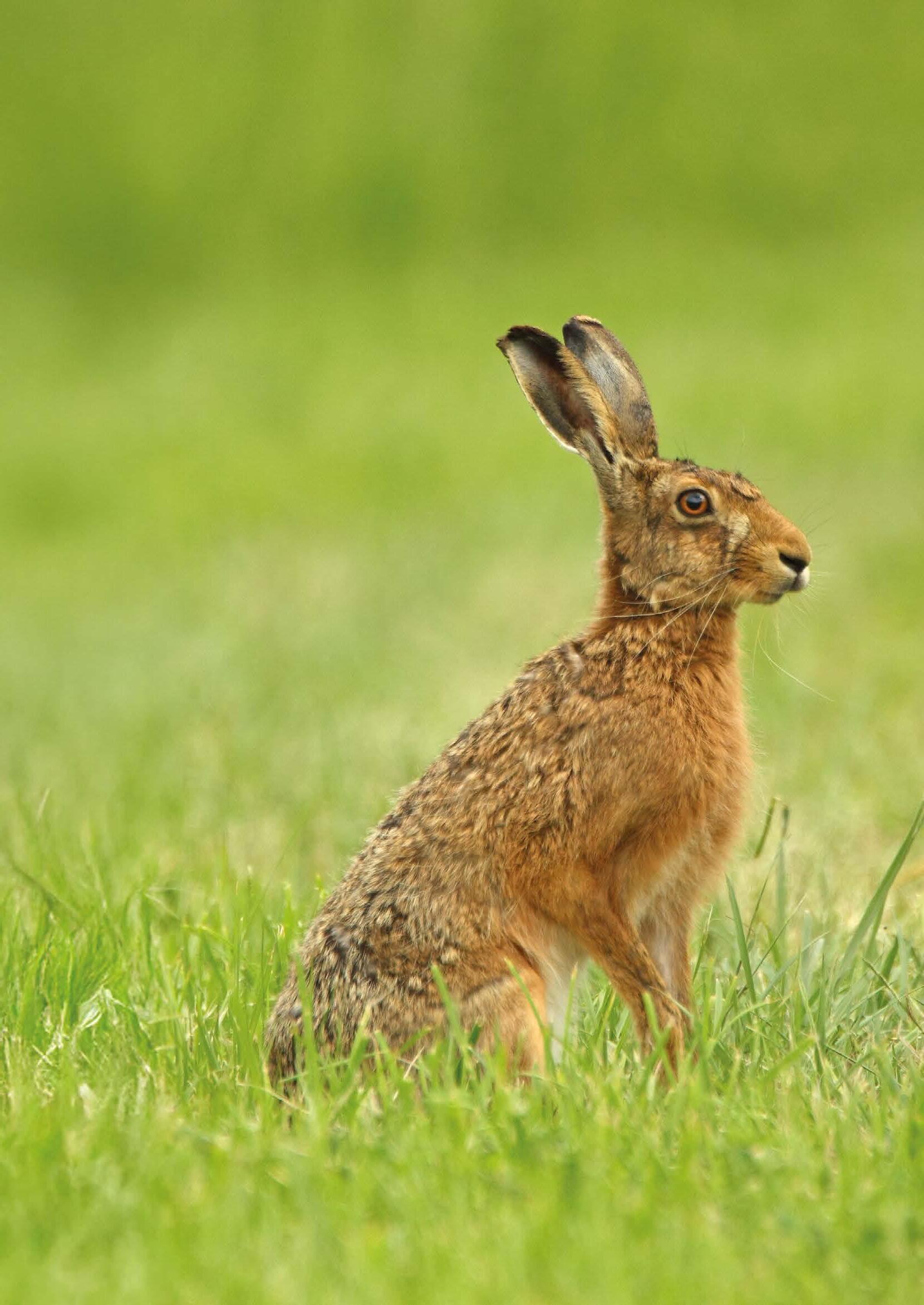
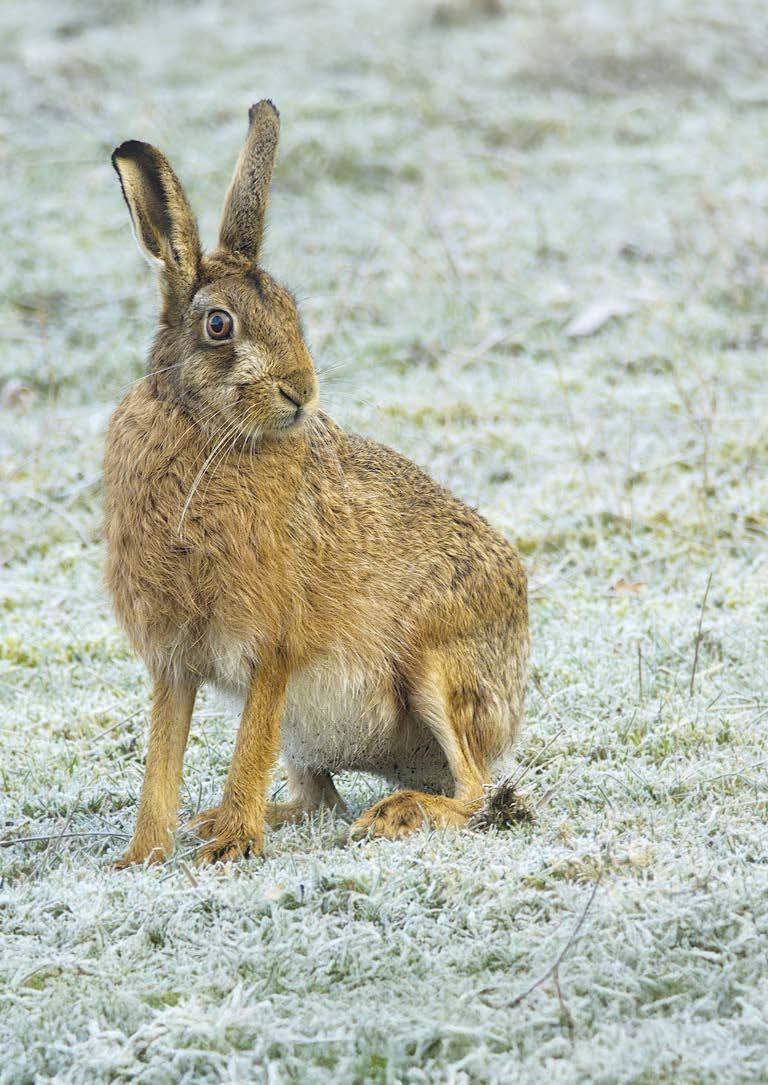
Hare © John Bridges