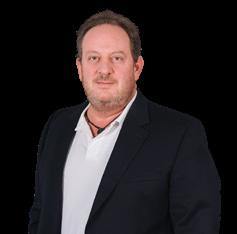




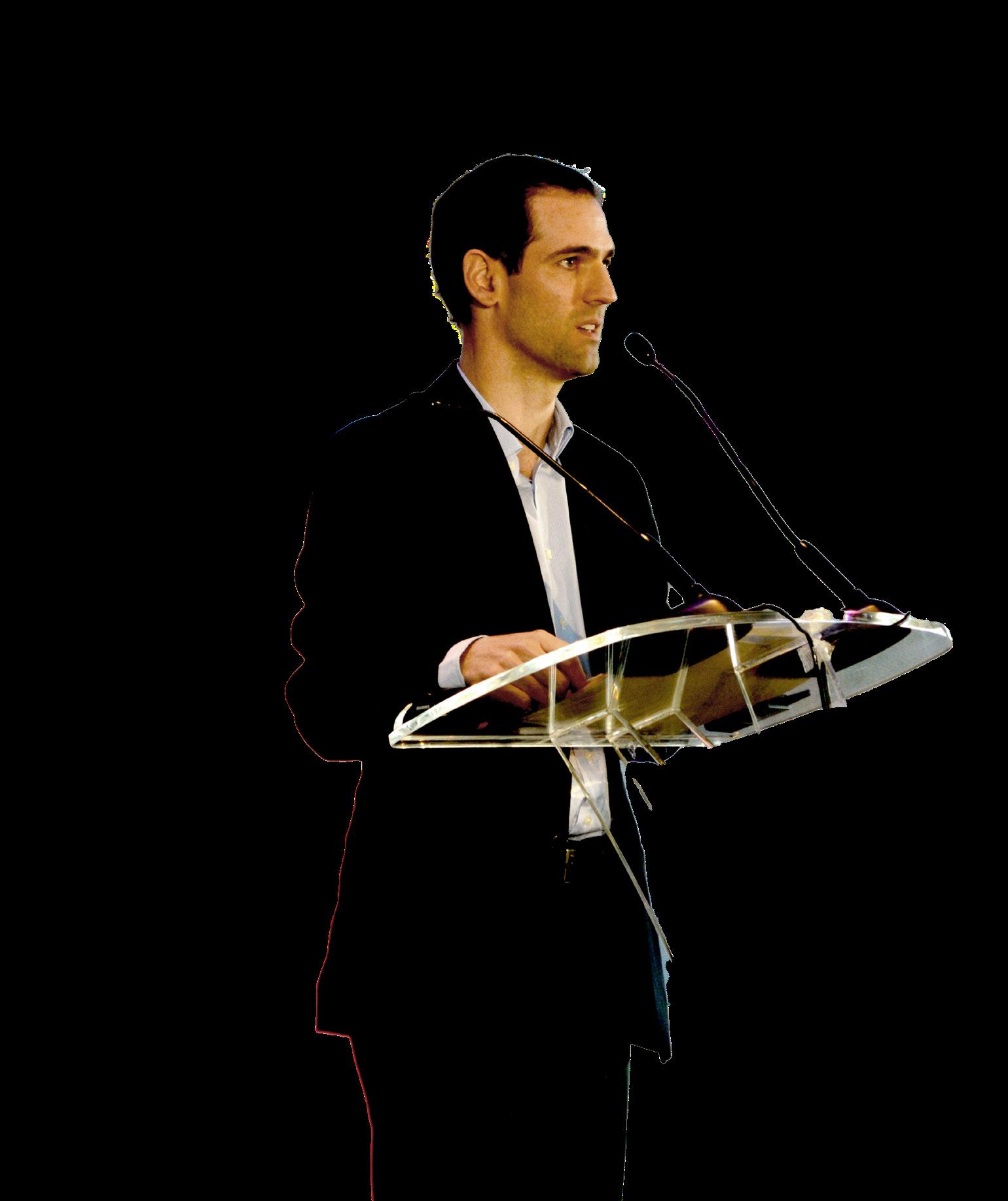

Managing Director
Jassen Pintado
Creative Director
Omar Rodríguez
Editor in Chief
Rafael Tablado
Finance Director
Christina Schoch

Social Media Director
Maria Elena Gastelum
Content Coordinator
Alicia Barrantes
Project Directors
Ana Macfarland
David Alarcon
Giuseppe Modenesi
Lucy Verde
Marcelo Modenesi

2021
As the year keeps running, we are aware of the transformations we’ve been subject to since approximately a year ago, though in some places we begin to feel free of the imposed quarantine restrictions. There’s more than one vaccine out there in some countries as there are individuals on the move to receive a shot and avoid the disease.
We’re proud to share the great work and the way our friends at DeAcero and DeAcero Logistics step up to transform into an “outside in” company, centering their operations around client satisfaction.
Also, Mexican entrepreneur Marcus Dantus took a few minutes to share with us his approach to business ventures and Mateo Rafael Tablado, Editor In Chief at The Boston Business Review
Email: rafael.tablado@thebostonbr.com
startups. Dantus currently heads StartUp México and stands out as one of the investors in Sony TV’s Shark Tank Mexico. Marcus has been involved in developing successful, innovative business ventures in Mexico and abroad since the 1990s.
Another interesting feature you’ll find in this issue is Glassdoor’s top 10 companies to work for in the U.S. in a year in which labor was certainly affected, with business relying on IT more than ever to adapt to the circumstances and keep running,
And we suggest you take a ride down memory lane as we share the evolution of Samsung’s Galaxy S smartphone cameras. Enjoy reading the Boston Business Review!




ARCHITECTURE AND CONSTRUCTION, DEDICATED TO MAKING YOUR BUSINESS MORE SUCCESSFUL.

Architecture company dedicated to design and construction, with extensive management in sectors such as Retail and Workplace. Our methodology is based on experience and the will to make your business more successful.

blaqplus.com
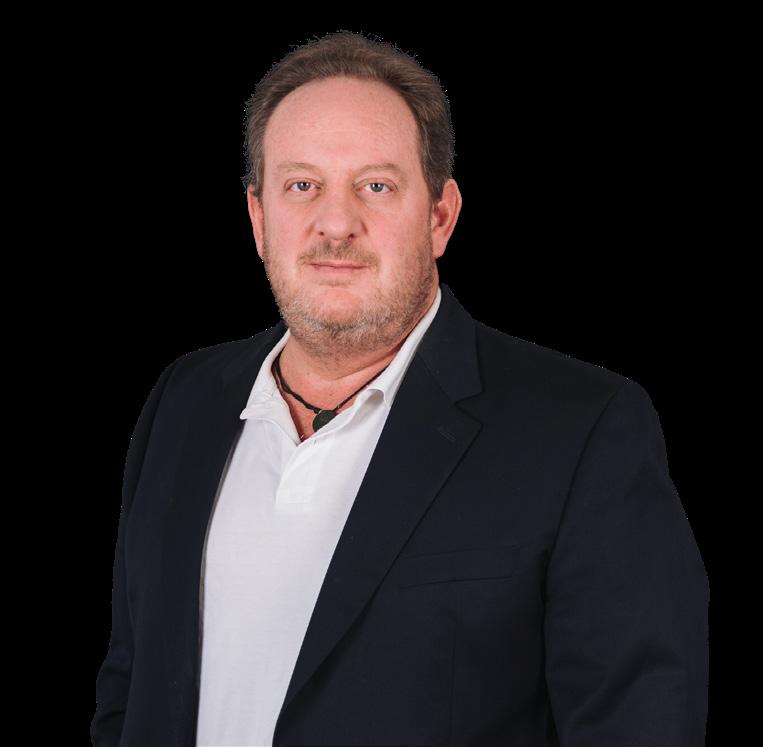

18. TOP 10 best places to work in the United States, according to Glassdoor
26. IDB facing changes brought by new president Mauricio Claver-Carone FINANCE
36. MANFACTURING

58. On



Reduce risk and increase your chances of success with DP ENTERPRISE SOLUTIONS as your technology partner.
Our multidisciplinary team accumulates more than 20 years of consulting experience, providing each of our clients with great added value in a multitude of public and private sectors.
Extensive experience in SAP environment implementation, migration and maintenance projects.
We offer “End to End” solutions to clients by defining business processes, strategic consulting, implementation of technological solutions and control of each of the projects through the implementation and execution of project offices.
We respond to the technological needs of companies, accompanying them, through strategic consulting, on their way to digital transformation, totally necessary for their growth.
Dynamism, Experience, Quality, and Innovation at the service of our clients.



contacto@dpes.es | www.dpes.es




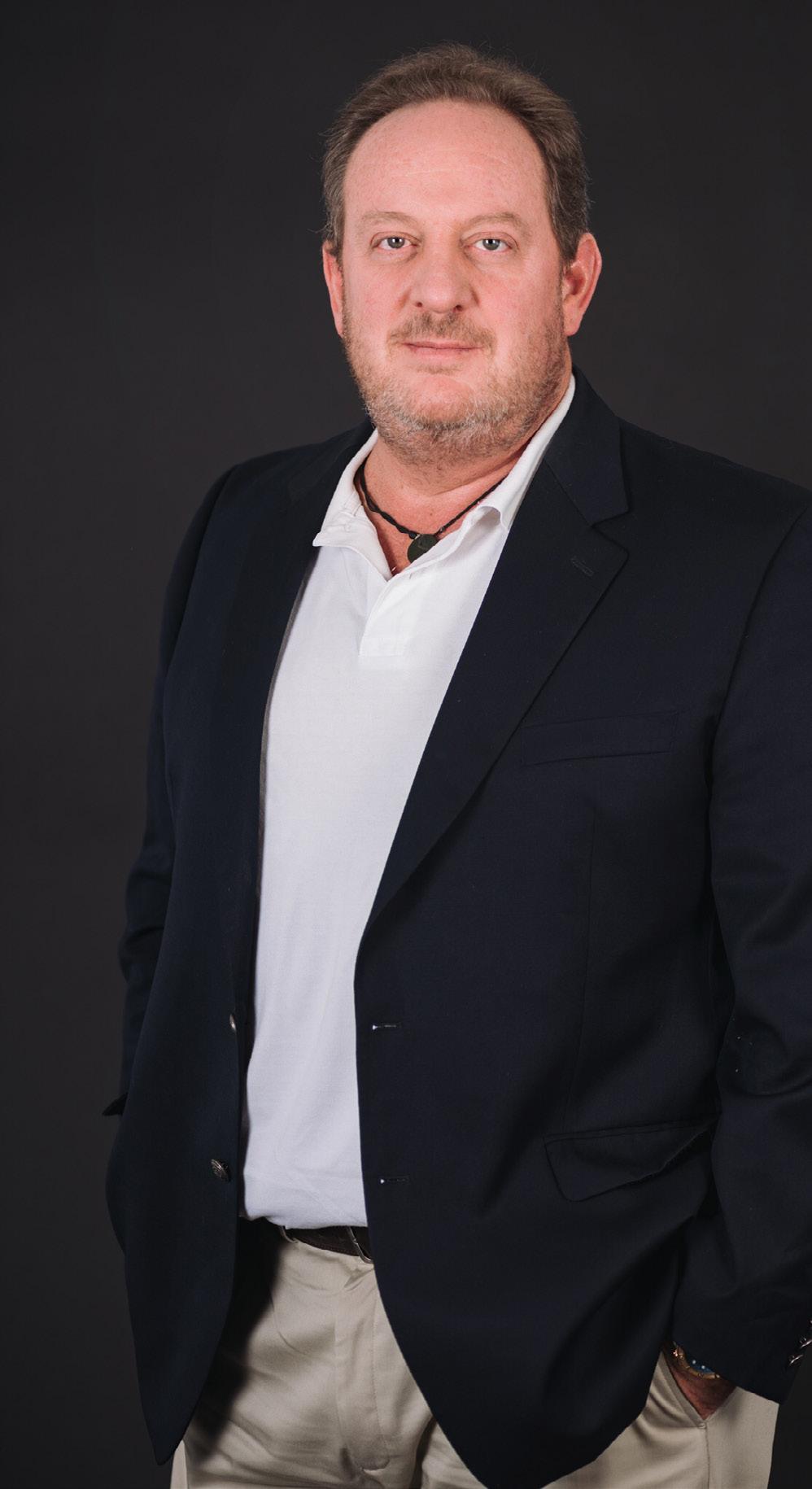
Marcus Dantus shows why continuous success is brought about by experience. Throughout his career he’s been involved in innovative ventures
To the general public, Marcus Dantus is known for appearing in Shark Tank México, but even before taking part in the thrilling reality show on Sony TV, Marcus Dantus made a name for himself as an entrepreneur since decades ago, after developing businesses with high potential resulting in success, and engaging in projects displaying such traits as innovation, creativity and becoming a solution to one or more problems.
“I’m an entrepreneur, I’ve been through all of this, and obviously that helps to boost businesses, since I know what kind of problems they face,” Dantus explained.
The Shark Tank celebrity went twice through college, majoring in Computer Science at ITESM (Monterrey Institute of Technology and Higher Education) and also earning a bachelor’s in Communications with a specialization in Film, at the University of Pennsylvania.
“I’ve seen too many businesses, thousands of pitches, thousands of business models, which brings me a greater vision about what businesses need,” the investor declared.
After Dantus’ first ventures toward becoming an Internet pioneer in Mexico -through the Mexico.com website and
the Latin American Telecom enterprise-, online phone solutions such as Simitel and Peerant followed. He was also appointed as CEO for medical device creators Innovamédica, a position he held for three years.
Once into the second decade of the 21st Century, Dantus joined Wayra, Telefónica’s business incubator, helping drive startups from Mexico through the Iberian telecom giant’s platform.
Dantus currently heads StartUp México (SUM), a platform that offers innovation for entrepreneurs, the company’s success relies on financial support from Dux Capital, another of Dantus’ companies, poised to accomplish 14 investments during 2021.
“Our greatest success in SUM is the number of companies we’ve created, all the people we’ve been able to help, and our territorial expansion,” Dantus said.
The entrepreneur is also in charge of the Mexican chapter for the Global Entrepreneurship Network (GEN), which
operates in 170 countries; he is Head of Latin America for Angel Labs, and he was a member of the board for nonprofit Ashoka.
“To be chosen to represent Mexico in an important, worldwide organization such as GEN is important,” the entrepreneur commented.
The successful entrepreneur believes talent is to be evaluated once its combined as a team, considering aspects such as each partner’s level of expertise about the venture and how
each individual’s knowledge adds to the whole; talent should also be assessed according to the specialization level in a determined subject, as in the way they are poised to answer any question derived from the problem to be solved by their business model, what kind of market is there for it and how is it different from similar efforts.
• There’s a purpose beyond just earning money
• It solves a problem
• There’s some kind of innovation to it
• There’s a great team backing it
• It happens in the proper place and moment
“I take notice of the whole team; when you deal with only one individual, you must perceive aspects such as ethics, willingness to listen, how passionate they are about their project and the knowledge they possess about such matter,” Dantus explained.
Among Marcus Dantus’ recent investments, there are ones getting some attention, such as Play Business, a crowdfunding platform whose stocks have notably risen. Another venture bringing a significant ROI is the PlayQ gaming platform.
Other standout ventures include Mozper fintech platform and the Epica platform for AI, both companies have been supported by Dux Capital. Dantus also foresees success for Paradise, whose outlets offer CBD, cannabis and other hemp products.
I’M AN ENTREPRENEUR, I’VE BEEN THROUGH ALL OF THIS, AND THAT HELPS TO BOOST BUSINESSES, SINCE I KNOW WHAT KIND OF PROBLEMS THEY FACE TIENEN
- Marcus Dantus
Marcus Dantus has brought nothing but thrills to Sony TV’s reality show. Among the success stories he’s been involved with in Shark Tank, he recalls Señor Dog, a training product for pets; and the easy and practical suitcase, a unique product predating an exciting development and chance for success.
The show has also brought Dantus a couple disappointments. One of them was the healthy tuna franks project, as he was absent from that episode, and the Chorizos DM Toluca delicatessen, whose team picked Arturo Elías Ayub’s proposal over Dantus’ and the rest of the “sharks”.
“They wouldn’t take my proposal, they picked other sharks and that hurt a bit... I feel those are very good businesses,” the entrepreneur said.
• Working individually or with too many partners
• Profit being the only purpose of the venture
• Being unaware of the customers’ needs
• Disputes among partners
There are businesses whose lifespan ends, according to Dantus, when they can no longer repeat the same rate of success, when there’s not enough market for them or when they become obsolete.
And all of these may happen to businesses which actually got a start. Nevertheless, there are plenty of ideas and projects that never get that start. Dantus blames lack of support to SMEs
in Mexico and many other countries; he also mentions the reduced markets, besides other factors such as economy and systemic problems in many countries like corruption and the lack of support from a legal system favoring entrepreneurs, among other matters in the way of business.
“There are also cultural matters, such as a lack of tolerance for failure, punishment for success, investors’ unwillingness to take a risk, the lack of financial options... I feel all of these can be serious disadvantages,” Marcus Dantuls concluded.
I’VE SEEN TOO MANY BUSINESSES, THOUSANDS OF PITCHES, THOUSANDS OF BUSINESS MODELS, WHICH BRINGS ME A GREATER VISION ABOUT WHAT BUSINESSES NEED
- Marcus Dantus



We are a group of investors and experts in the infrastructure sector with the objective of developing and building with strong bonds so that constructions are of great value and forever.
We set our bases to to respond effectively to the great challenges, because we understood that it is possible to believe in an infrastructure at international levels with the current requirements.
Infrastructures so well made, that they last forever.
Visit us at: vitsa.co


In recent years, business has been experiencing a series of transformations, even before the COVID19 pandemic, which pushed online retail sales well above commerce in “brick and mortar” locations. Telecommuting supported by evolving and improved digital resources had never been as common. However, business adapting to new conditions doesn’t mean there aren’t any more companies operated by humans, where there are labor relations, environments among employees, different conditions and hierarchies that factor into establishing opinions among workers, resulting in rankings such as the most recent one shared by Glassdoor based on employees’ opinion.



The 340-location supermarket chain spreads through Texas and Northeastern Mexico. Its employees talk wonders about the company and those in managerial positions. Other positive factors are a fun work environment and regular wage increases.

The IT giant has also taken part of the hardware side of mobile devices, besides developing software that became a global standard decades ago. Employees boast a great company culture as well as good work/life balance. Other attributes mentioned are the flexibility the company offers into challenging its employees’ potentials and setting the stage for them to pursue their goals.

The specialty apparel company has catered for more than 20 years to yoga and exercise enthusiasts. Communication among its staff and the attention the company brings to its employees’ feedback places them atop other apparel companies in this list.


Highest airline in this ranking and the most important airlines in the U.S., offering flights to multiple destinations and connections. Employees consider their wellbeing and comfort has been the management’s priority, especially during the pandemic.

What once was only a userfriendly web browser which derived into developing multiple apps and software products in which we rely on also stands out for gathering a highly skilled, intelligent and motivated troupe. Other highlights include the company’s focus into work/life balance, besides paying very good wages.
management consulting firm stands out for its company culture, the benefits provided to its workforce, a friendly atmosphere and for being grounds for internal advancement opportunities.
4 3
HubSpot is a software developer supporting the sales and marketing operations of companies. The Massachusettsbased company has had its share of success along its less than 20year run. HubSpot’s leadership brings support to its workforce through thoughtful programs and flexibility.
The Southwestern restaurant chain may not compete head to head with the global hamburger giants. Nevertheless, it certainly tops any other company in their specialty when it comes to choosing a best place to work. Employee opinions mention amazing people, awesome leadership and the workforce being taken care of, besides creating the best product in its kind.


You can hardly think about gaming without NVIDIA nowadays. The company specializes in graphic processors and is constantly evolving the
gamer experience. Employees mention intellectual honesty, innovation, excellence and teamwork as the company’s most outstanding attributes.

The business consulting firm for businesses, NGOs and governments takes the top spot of best companies to work in the U.S. for the fifth time. Employees at Bain & Company express they enjoy a great
working atmosphere, being in a top environment regarding such matters as inclusion, diversity and equity, besides praising the company’s response to the COVID19 emergency.
The Finance sector closes 2020 with a surprise: the first US citizen to become president of the Inter-American Development Bank is Mauricio Claver-Carone, who doesn’t seem to bring any downtime to the forecast
Written by Mateo Rafael Tablado


In more than 60 years after being founded, the Inter-American Development Bank (IBD) --the most important financial institution of its kind in the Western Hemisphere-- has worked as a bastion for its main partner’s policies (the US, with a 30% share of the bank) supporting megaprojects in Latin America and the Caribbean which have benefitted governments in the territory as well as the businesses involved in such projects. Aside from being the bank’s largest shareholder, the IDB had never been led by US citizen… until now.
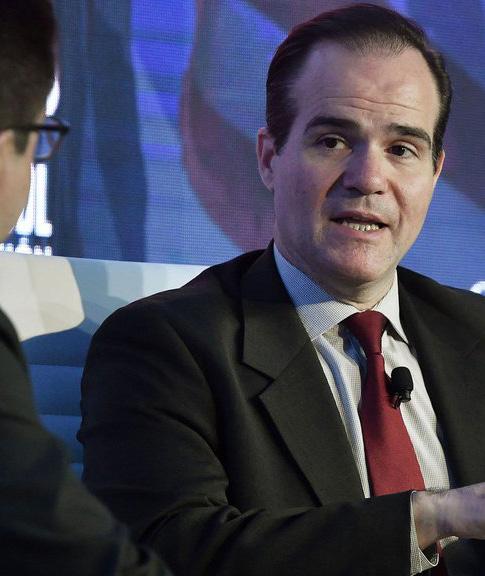
Mauricio Claver-Carone, a 45 year old lawyer, was elected last September, becoming the first US-born president of the IDB. Claver-Carone is of Cuban and Spanish descent and he’s not only ending the institution’s tradition of being led by a Latin American officer, but he already declared he’ll be serving one five-year term only in this position, considering that in 61 years the IDB has only had four presidents.
Claver-Carone is succeeding Luis Alberto Moreno, from Colombia, who is leaving the bank after three successive five year terms.

The current IDB president, who’s also been a lobbyist, is a former Senior Director of the National Security Council and has previously held other positions for the US government. He served as Senior Advisor for International Affairs in the U.S. Department of the Treasury (201718), afterwards he was appointed Special
Assistant to President Donald Trump and Senior Director for Western Hemisphere Affairs on the National Security Council, and shortly after he was promoted to become a Deputy Assistant to the President.
Claver-Carone isn’t unfamiliar with the IDB, as he had previous experience in the institution as an executive director, in representation of the USA in the bank’s board of directors.

Before the election, the prospect of ending with the tradition of the IDB’s presidency being a position held exclusively by Latin American executives for decades brought itself some opposition. One of the other candidates to run against Claver-Carone was Laura Chinchilla, former President of Costa Rica, who retired her candidacy before the elections, leaving Argentinean Secretary of Strategic Affairs Gustavo Béliz as the sole opposition facing the American lawyer. A politician, Béliz has served Argentina since the early 1990s, holding different positions in government and had also previous experience in the IDB.
The opposition and other shareholders of the bank tried unsuccessfully to delay the elections until March.
In an interview with The Hill, ClaverCarone mentioned the four areas the IDB is aiming to support. One of them is preparing public health policies, a relevant subject considering the COVID19 pandemic; the others are the creation of security networks for vulnerable populations, employment development through SMEs and development for fiscal policies. These plans undoubtedly stand far from traditional support to infrastructure megaprojects which would benefit businesses, could reflect on countries’ GDP and in many other ways, except finding its way into the pockets of workers, pillars of the region’s economies.
This intention to grow the middle class in Latin America and the Caribbean once again through employment development is a key strategy to the region’s economic development as it also benefits the US policies for this territory.
Claver-Carone is also in favor of
supporting women-owned businesses, which generate 10% more income than male-owned business, in spite of having 50% less access to financing. Another goal aligned to the main matters in Claver-Carone’s agenda is digitizing financial processes in the territory.
The possible impact of a growth in the Latin American middle class -which recently seemed to face extinction not only in this continentby benefitting the regions’ workforce can work for the US beyond commercial matters, but also having a positive impact on its policies about immigration and other subjects.
The new IDB president also aims to accomplish the bank’s recapitalization, enabling the institution to obtain funds for over $20 billion in lending capacity, to be destined to the recovery of the region’s economies after the pandemic. Claver-Carone’s duty is to
secure a commitment from the US and its representatives to allow the creation of laws that would guarantee the necessary funds for the bank to carry out policies not only benefitting the region, but also with a positive collateral impact in different policies and interests in North America.
Since entering office, Claver-Carone has already engaged in commitments about different subjects concerning the IDB, such as nearshoring, growth, post-pandemic economic recovery,
governments, private sector, women in executive positions, men, IDB partners and beneficiaries, and even setting foot in subjects such as human trafficking.
Five years in office in the way the president has announced -and done, so far- may bring significant progress in the region if all of these efforts are enabled to be carried out down to the very last link of the chain, benefitting those whose sacrifice and effort bring support to the continent’s economies.

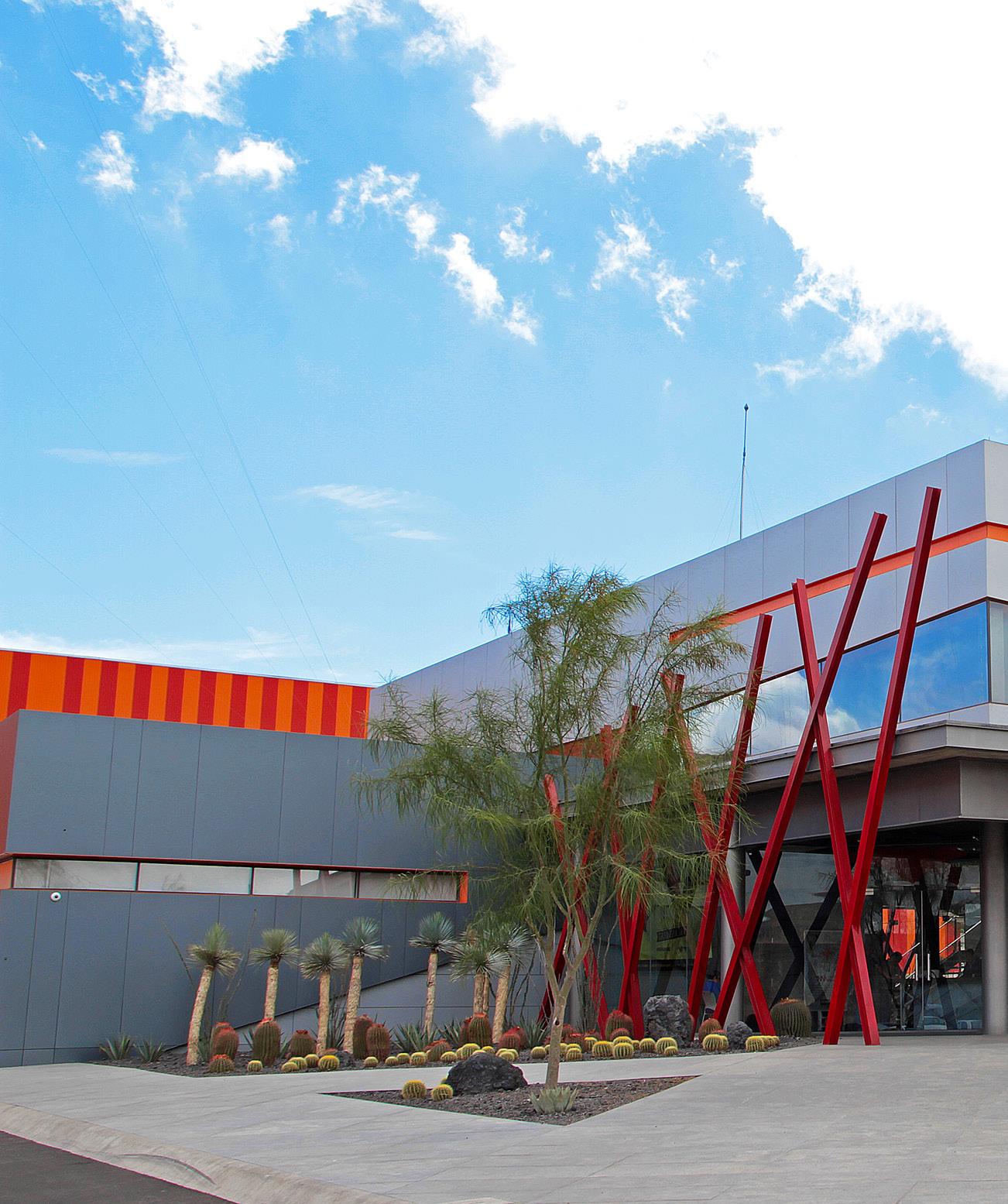
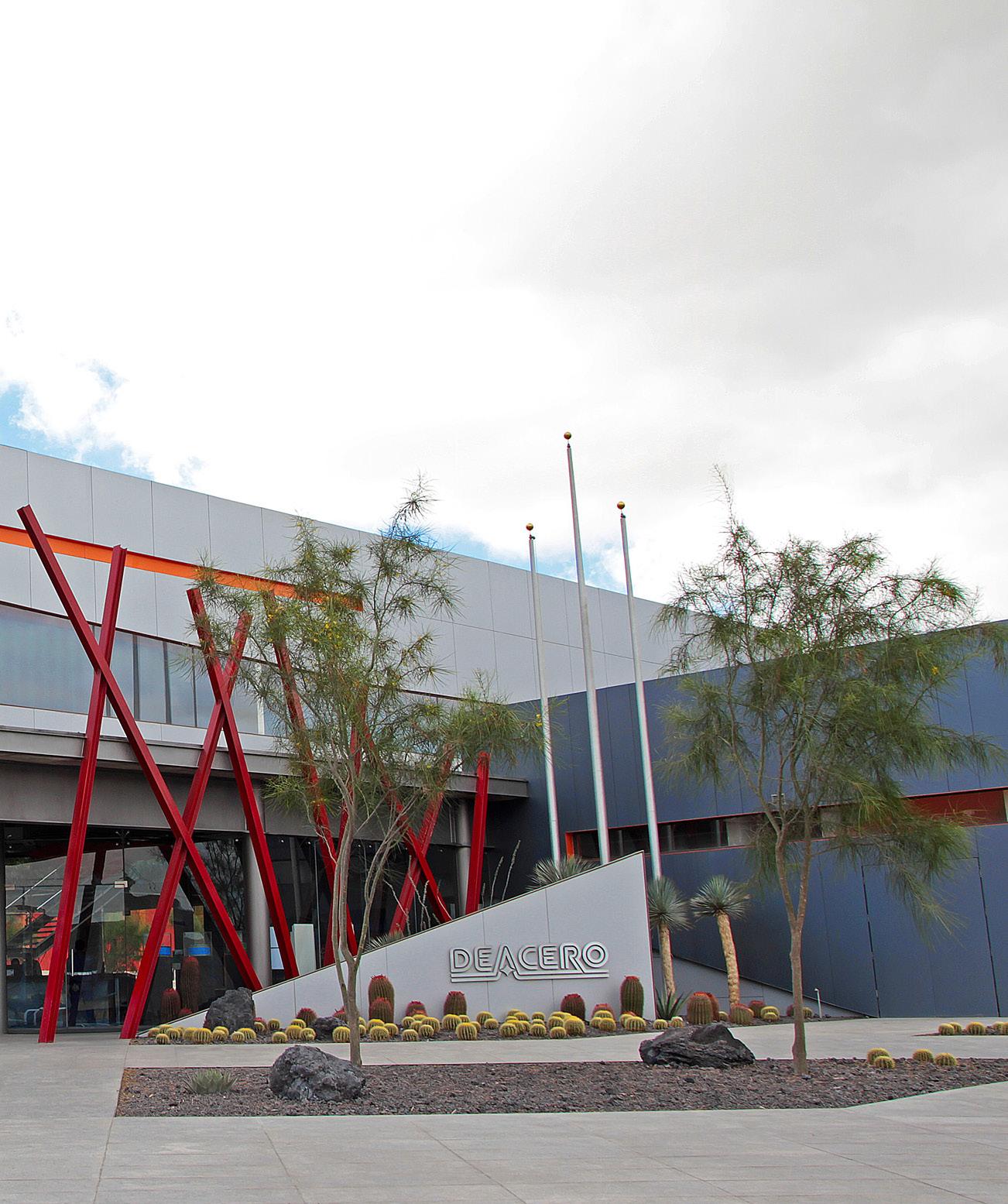
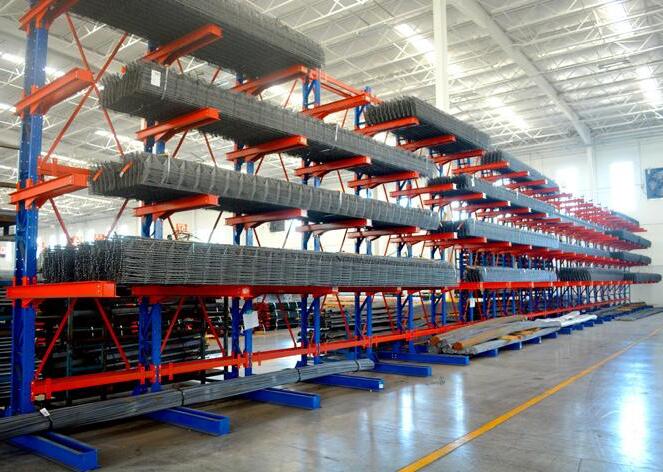
DeAcero offers a wide variety of products, serving different business sectors, besides counting with the DeAcero Logistics business unit. The company is a major reference for the industry in Mexico and abroad
Produced by Jassen Pintado
Interviewee: Raúl Gutiérrez Durán, Global Supply Chain Director for Grupo DeAcero and CEO for DeAcero Logistics
Grupo DeAcero opened for business more than 70 years ago as a family business started by César M.
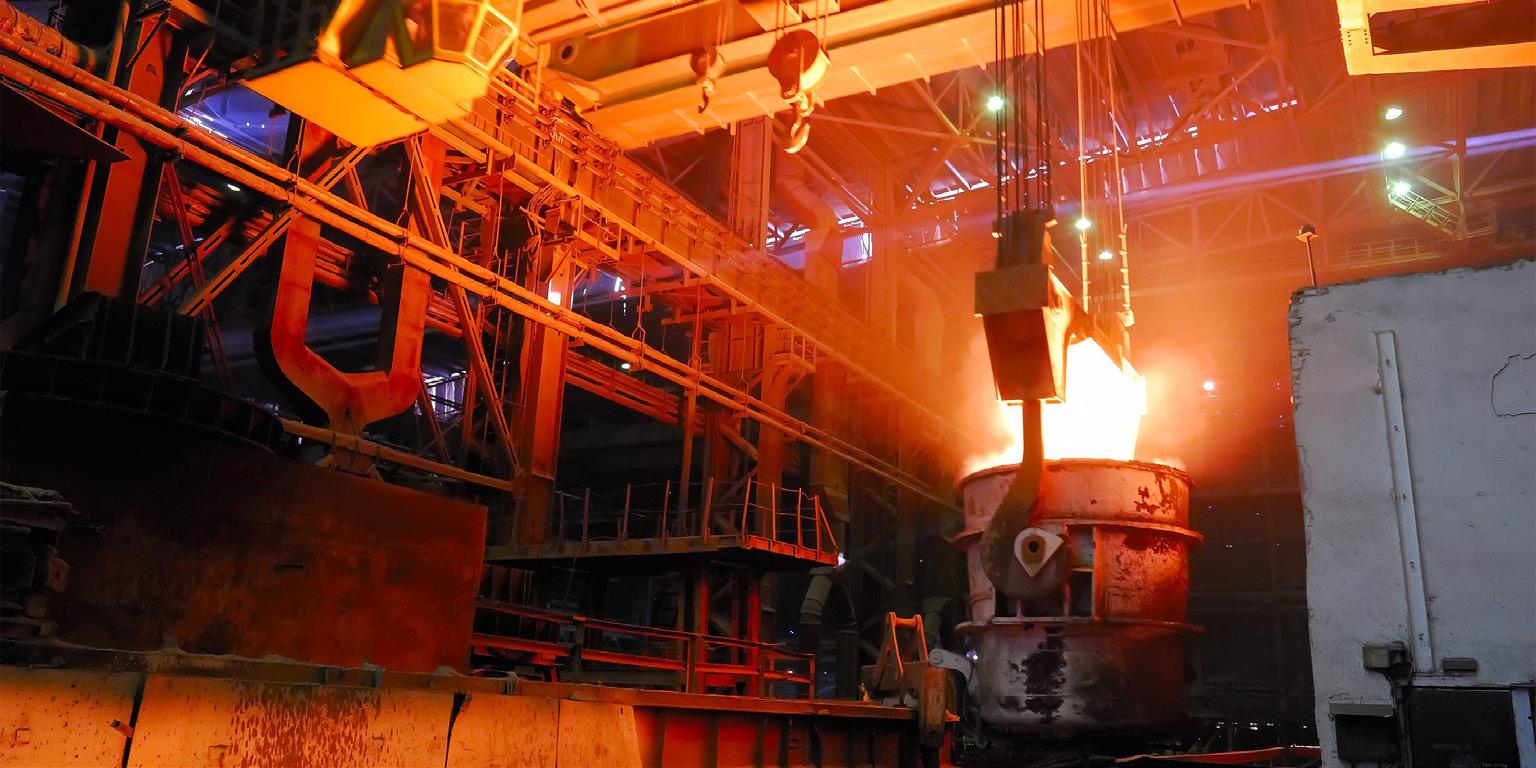
Gutiérrez Lozano in his workshop in Monterrey, Nuevo Leon (Mexico). Mr. Gutiérrez expanded his product portfolio, grew his staff and, as decades went by, DeAcero increased its presence nationwide and abroad, becoming a leading company in manufacturing and exports of long steel, wire and reinforcement steel products.
DeAcero has 18 production plants, 21 recycling facilities and delivers 4.5 million tons of steel per year. Since the seventies, DeAcero’s products are sold in Latin America, and during the nineties the company expanded into the USA, supported by its own plants in Houston, Texas and Missouri, as well as its warehouse in Laredo, Texas and 29 distribution centers throughout North America.
DeAcero currently offers the widest range of products for construction and steel
reinforcement, wire rod, steel rod, profiles, angles, beams, canals, wire mesh, trusses, panels, nails, chains, cables, guy wire and a wide variety of fences, bars and wire products for the automotive, infrastructure, energy, hardware, manufacturing, mining, and oil & gas sectors.
DeAcero’s success results from a series of efforts, optimizations and generations’ work in different areas, and to a large extent from the evolution in its logistics area, which depends on Raúl M. Gutiérrez Durán, a professional with wide experience in the company’s processes.
Gutiérrez Durán is the Global Supply Chain Director for the DeAcero group, CEO for DeAcero Logistics and a member of the Grupo DeAcero’s board of directors. Gutiérrez Durán graduated in industrial engineering from ITESM (Monterrey Institute of Technology and Higher Education), where he graduated with honors. In 2014, he earned an MBA from the Stanford Graduate School of Business (California).
Gutiérrez Durán first joined DeAcero in
- Raúl Gutiérrez Durán, Global Supply Chain Director for Grupo DeAcero and CEO for DeAcero Logistics
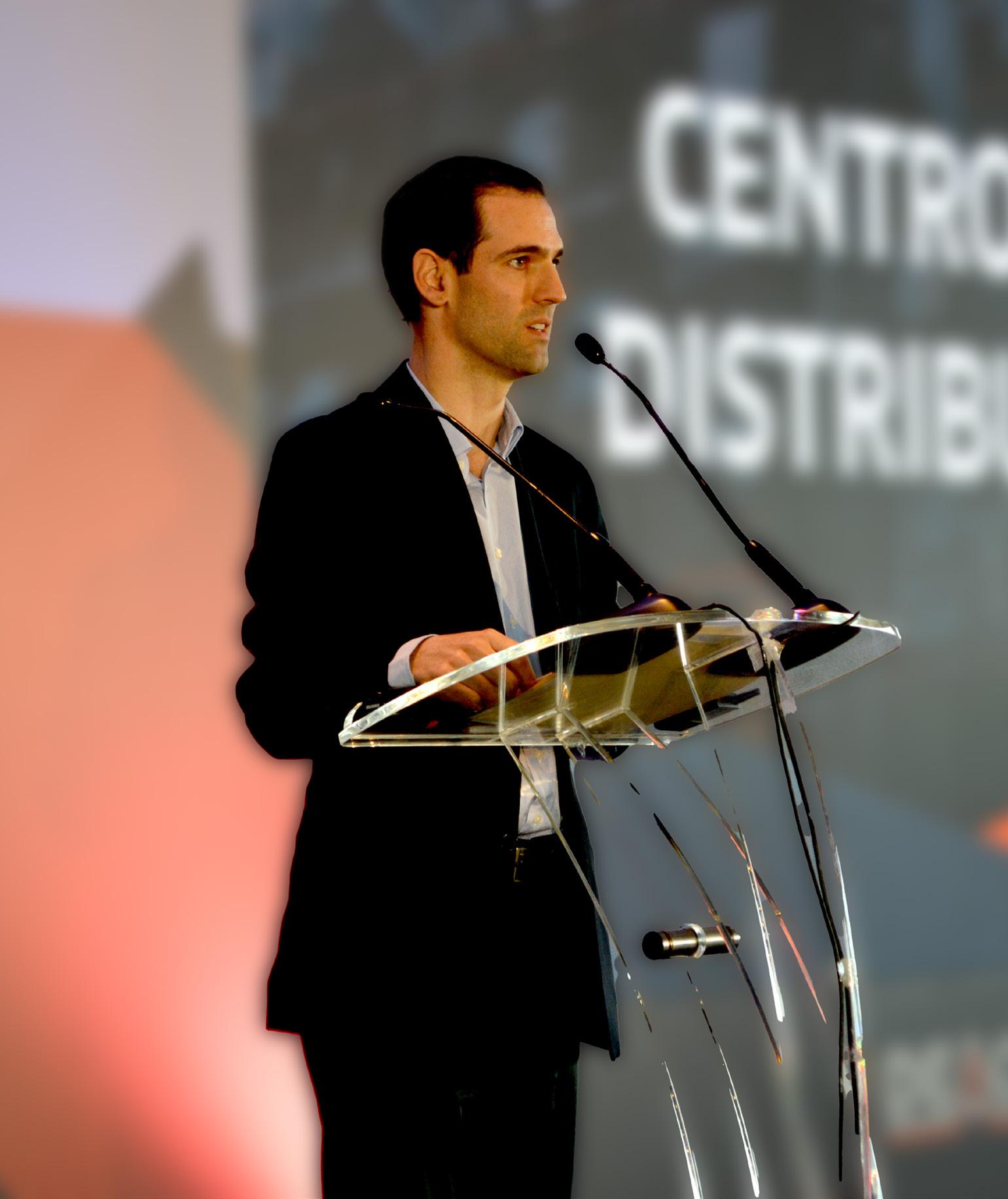
“We are looking to cover every link in the supply chain in its entirety. We are convinced that focusing beyond costs, an internal collaboration and alignment among our operational areas, and an external alignment and proximity to our clients through an ‘outside in’ philosophy is the right strategy”


Year Established: Oct/2010
Industry: Consulting
Main Services:
Consulting on the Improvement of Operations and Profitability Growth.

Development of three Distribution Centers (DC) covering services in the North, Bajío and Laredo, Tx regions.
Services Included:
Business Case Development supporting DC approval, including: the building site, construction specifications, and operating equipment requirements.
Site Planning Laredo covering the site size and design, positioning of the future building, parking lots, offices and optimal flow of truck traffic.
Layout design including building specifications for height under joists, distance between columns, dock doors, ramps, work areas, positioning of the fixed equipment and inventory.
New Operating Model focused on the management and execution of work processes, cycle times (from receipt to storage, picking to shipping), inventory management and KPIs.
Alignment with WMS Information Systems following the new operating model, support in the preparation of a WMS (Oracle Warehouse Management System).
Implementation and On-Site Training (i.) coordination and validation of the fixed equipment installations, and (ii.) conference room and onsite training at the management and operating level, prior to and following go-live.
Design and Implementation of a Profitability to Serve Model (RDS),
Based on a common platform of information throughout the organization, developed with Deacero´s IT a profitability model covering costs and revenues from production, distribution and sales. With profitability dashboards management has gained visibility on what contributes or erodes the contributions to profit at a SKU, order and/or customer level, as well as by DC, sales channel, region, etc…
Managing Partner: Ken F. Wallett
Webpage: www.kfwconsultants.com
2008 as head of production in one of the company’s wire production plants. “From there, it was all growth and learning at different operative positions until becoming a director in one of our wire production plants. Afterwards, I took my master’s degree, I worked in the Supply Chain area for Apple and returned to DeAcero to become the director of our global supply
chain,” Gutiérrez Durán commented.
Among other activities, Gutiérrez Durán’s position as vice-president of CAINTRA (Chamber of the Transformation Industry of Nuevo Leon) stands out as well as his membership and active partaking in other important associations and groups such as the Horno 3 museum’s Foundation for Education, Science and Technology.
One key attribute for DeAcero has been the company’s ability to evaluate the different factors involved in order to modify and optimize processes and functions.
“We have divided our understanding of the market to adapt our whole organizational structure and strategies, offering a better service, finding ourselves aligned to our clients’ needs.
We’ve engaged in an important mindset transformation, taking us from thinking processes from the inside-out to go from the outside-in. This frame of thought starts from analyzing the environment to develop transformation toward the company’s core,” Gutiérrez Durán said.
“This drives us to reassess the way we perceive ourselves, the way we perceive our clients, our markets, the way we

“SOMOS”


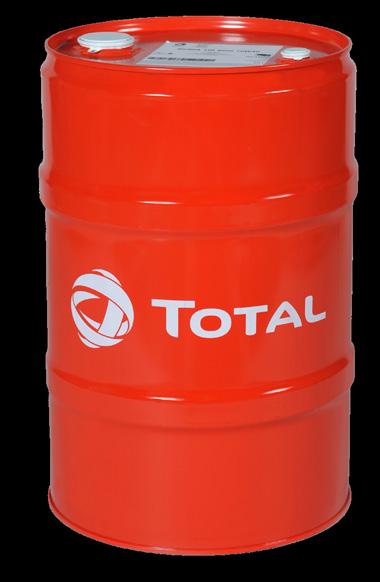



Total México, with its Lubricants division, becomes a strategic partner for the DEACERO company nationwide, supplying the 35 locations it has for 5 years.
www.total.com.mx
Profile Number of Employees:
96,000+
Year Established:
Founded in 1924 under the name of Compagnie française des pétroles CFP with mixed private and French State participation, in 1985 it adopted the name Total-CFP and only Total S.A. in 1991. Following the merger with the Belgian company Petrofina in 1999, the company adopted the name Total Fina. Later it absorbed Elf Aquitaine and from March 22, 2000 it was called TotalFinaElf until on May 6, 2003 it was decided to recover the unique name of Total.
Industry:
TOTAL is one of the largest oil and fuel companies in the world, active in more than 150 countries.
Main Services:
Important actor in the exploration and production of oils and natural gases, refining, marketing, gases and new energies, commerce and chemicals.
Recent Projects:
Bus escuela (an innovative truck that we take directly to the facilities of our clients and prospects to carry technical training on different topics for industries, lubricants for Diesel engines, lubricants for gasoline engines, mining industry, metallurgy, etc., using educational tools and technological ones such as virtual reality and lubricant demonstrations within a didactic engine.
Marie Djordjian, CEO
Webpage: www.total.com.mx
For more information, click aquí

conceptualize investments, processes and our own organizational structure,” the executive added.
Operations in the production, logistics, distribution, transportation and commercial areas have been restructured from an operational territorial organization previously set as a silo, into a channel, segment and attention model arrangement, leaving behind the “one size fits all” model by adapting and customizing work processes to the client’s satisfaction.
Changing these paradigms also brings an intelligent balance between cost and service, optimizing work systems and allowing a better understanding of the market resulting in delivering optimized services.
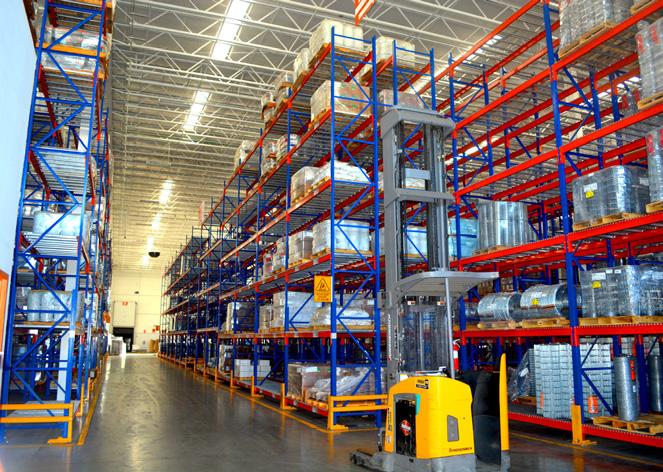
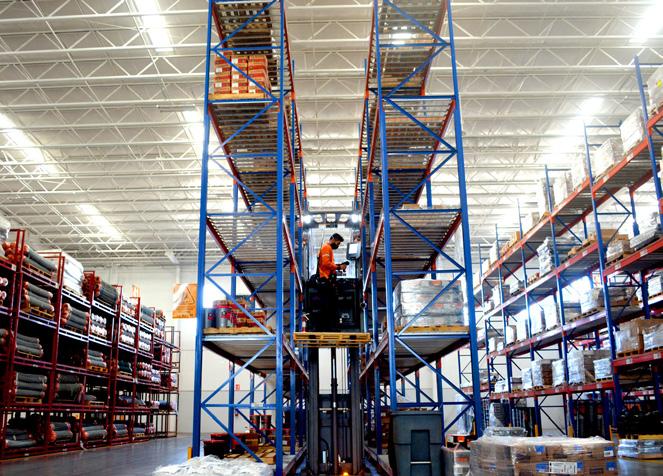
One of the key strategies has been the deployment of the spoke-hub model in distribution centers with reliable solutions as satellite distribution transfer centers and last mile locations support the strategy and commercial programs, thus increasing our value offer.
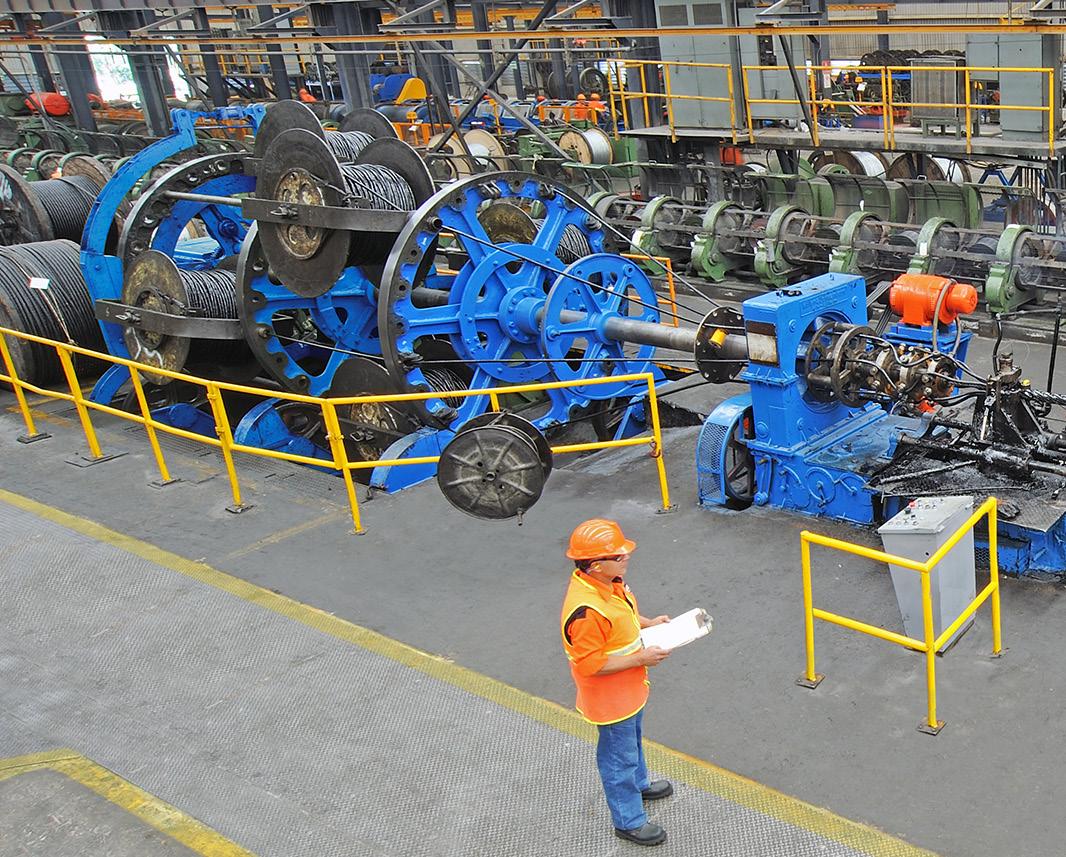
The pandemic’s consequences drove Grupo DeAcero into taking timely action, allowing for operational continuity in safe conditions, without compromising its personnel’s health. Outwards, the company and its strategic partners became
closer, developing strategies for mutual support and coverage to comply with health and hygiene regulations. “We also share resources and contents about best practices among our clients, suppliers and the company, benefiting each other’s staff.”
“We operate with more intelligence and
“We’ve engaged in a mindset transformation, taking us from thinking processes from the inside-out to go from the outside-in, to develop transformation toward the company’s core”
- Raúl Gutiérrez Durán, Global Supply Chain Director for Grupo DeAcero and CEO for DeAcero Logistics
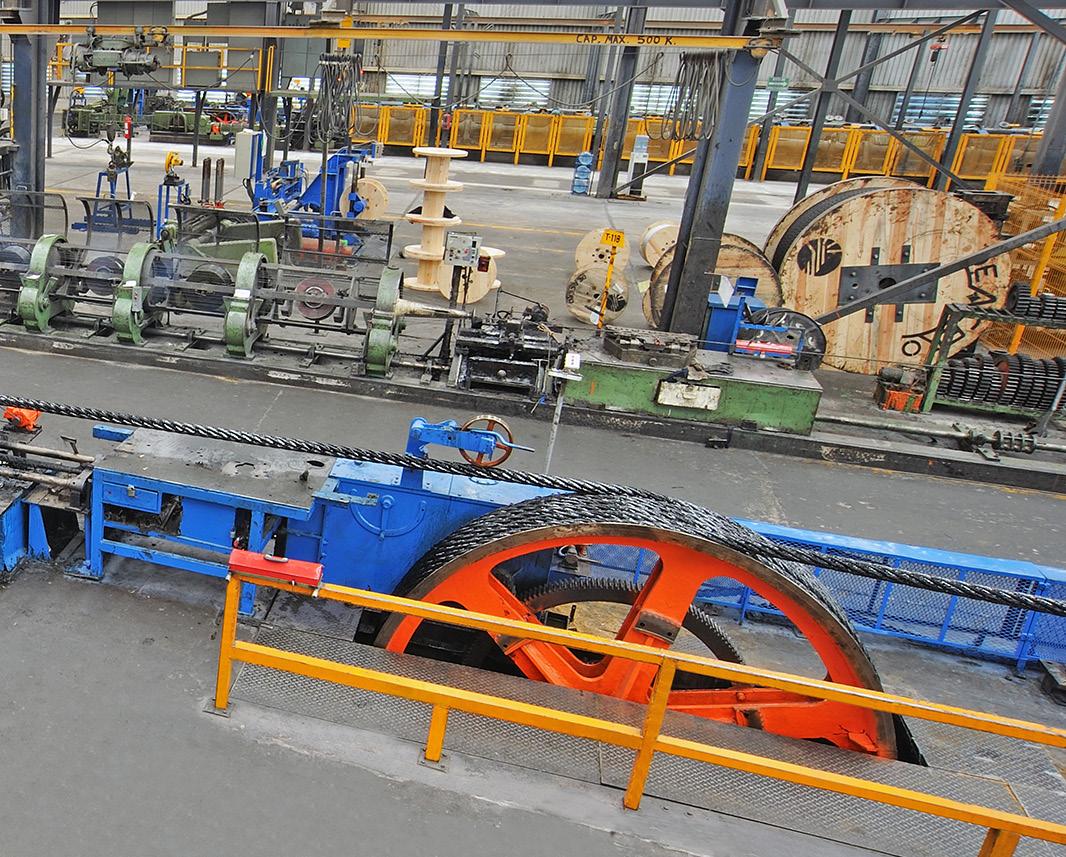
attention to detail regarding inventory and supply planning. This situation pushed us into creating new processes focused toward the development of new consumables and replacement parts in an effort to avoid any stoppage. Roles and liabilities were restructured in procurement, setting apart
the tactics, strategies and operations and creating a Procurement Intelligence, supported by a centralized negotiation and specialized regional clusters.”
“We are becoming a shared services area in order to disseminate and ensure the fulfillment of the best practices in


procurement and securement in every function of the company’s purchasing area, looking to create win-win conditions with our vendors,” Gutiérrez Durán declared.
Strategic suppliers sought-after by DeAcero stand out due to timely deliveries, a flexible portfolio, and adaptation capabilities toward the company’s requirements for short lead times. These
partnerships have resulted in win-win strategies, enabling the creation of the alternatives that bring more value for DeAcero. “We’ve searched for an efficient integration of every factor’s management, changing this concept from a supply chain to a value chain,” Gutiérrez Durán explained. “Our supplier evaluation and our Quarterly Business Reviews are focused on improving our productive chain, and becoming more resilient and competitive.”

Number of Employees:
Year Established: 08/12/1987
Industry:
Consulting with more than 30 years of experience in Latin America, generating value as a trusted advisor for the leaders of the region.
Main Services: Management & Business Consulting
Recent Projects:
We have had multiple and varied projects with companies from all industries in the last year, solving everything from inventory strategies, supply chain transformation, supply catalog management, SAP solution implementations, omnichannel strategies, customer experience, to organizational design, change management and more.
Oscar Lozano, Partner Director
Webpage: www.sintec.com
As with other parts of the business, transport was also affected by the pandemic, taking Grupo DeAcero into rethinking its strategies to continue providing timely solutions to clients:
• New intelligent, dedicated and rented schemes were created by establishing strategic agreements with vendors, allowing the company to ensure product conveyance by making the most out of every trip.
• Truck contents and routes were optimized, aligning each trip with a product mix able to satisfy the clientele’s specific needs, according to our salesforce and clients’ agenda.
• Conveyance was reorganized by centralizing operations into central and regional clusters, arranging this area in clear planning, negotiation and management dimensions.
“This allowed us to get to know the conveyance market much better and expand our vendor portfolio,” the executive explained.
State-of-the-art data analysis delivers useful information to the Logistics department, improving decision-making
The adoption, digitization and automation of processes have allowed the group to face the conditions of a volatile, hard-fought market in which deployment, training and better use of tech resources result in a great competitive advantage.
The tech and digitization projects DeAcero developed include new resources such as the control tower -providing data visibility and management-, end-to-end, purchase-to-pay (P2P) and order-to-cash
(O2C) processes, along with recurrent and automated analysis of its distribution network, which allow for better strategic decision-making. This resulted in obtaining such advantages as a constant redesign process of the operating logistics network able to bring more agility in attention to the market, which increases predictability when supported by optimized inventory management.
In its behalf, quality in production lines has also included digitized processes, as
well as the warehousing and conveyance processes.
“This allows us to maintain our competitiveness!”, the executive pointed out.
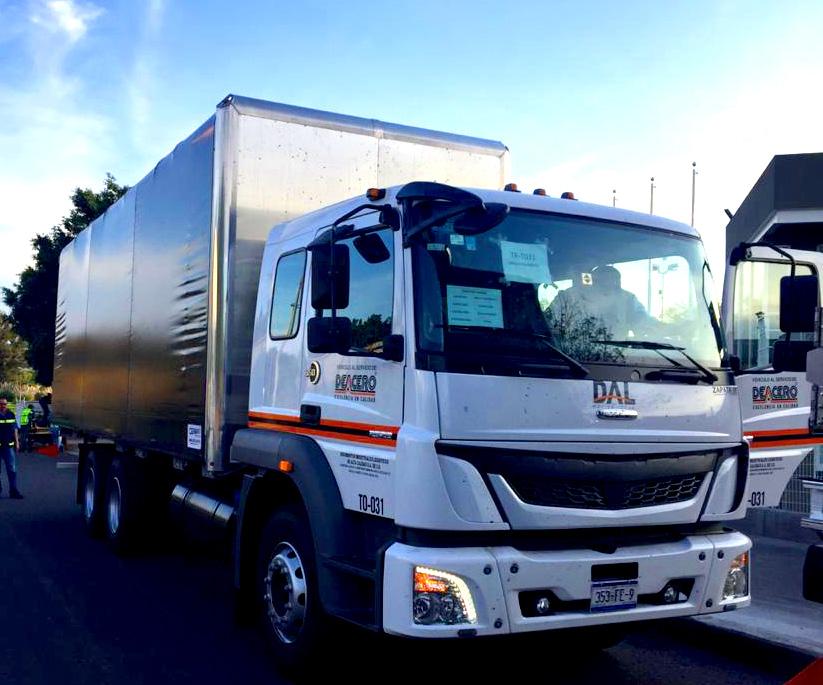
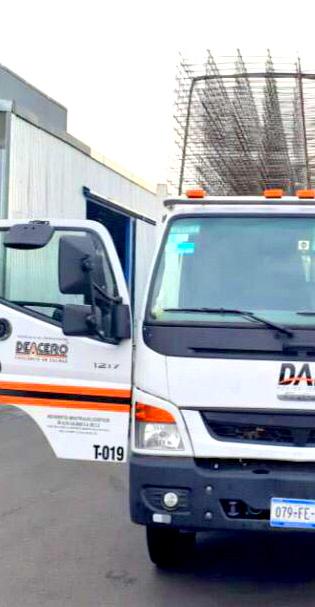
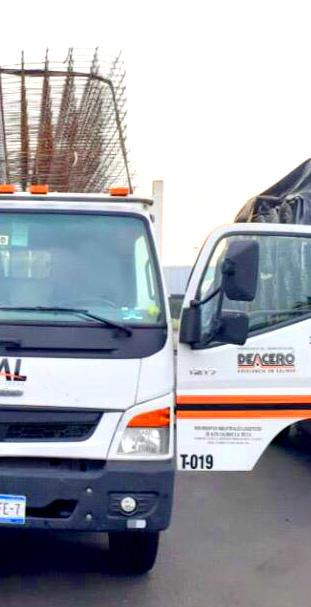
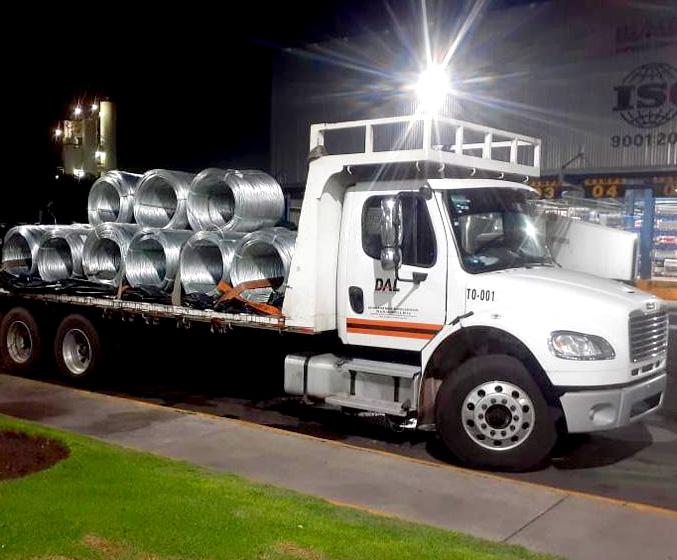
Strongholds in Grupo DeAcero’s logistics and infrastructure have thrived after DeAcero Logistics (DAL) was created in 2016.
DeAcero Logistics offers train freight,
“This drives us to reassess the way we perceive ourselves, our clients, our markets, the way we conceptualize investments, processes and our own organizational structure”
- Raúl Gutiérrez Durán, Global Supply Chain Director for Grupo DeAcero and CEO for DeAcero Logistics
roadways, cross-border transportation, VAS (value added services) storage, consulting, rentals, international trade, maritime cargo and distribution network analysis. DAL works for different industries and segments, including paper, oil, metalmechanics, containers, specialty and retail, among others.
DAL covers the Americas, Asia and Europe. Since Gutiérrez Durán created
DeAcero Logistics, the company achieves a 110% YOY (year over year) growth supported by its philosophy: placing clients and suppliers first, prioritize service, add value to its entire chain and create synergies able to optimize the use of available resources within and beyond the company.
“DeAcero Logistics enables us to offer competitive products and solutions, providing our clients with complete services,
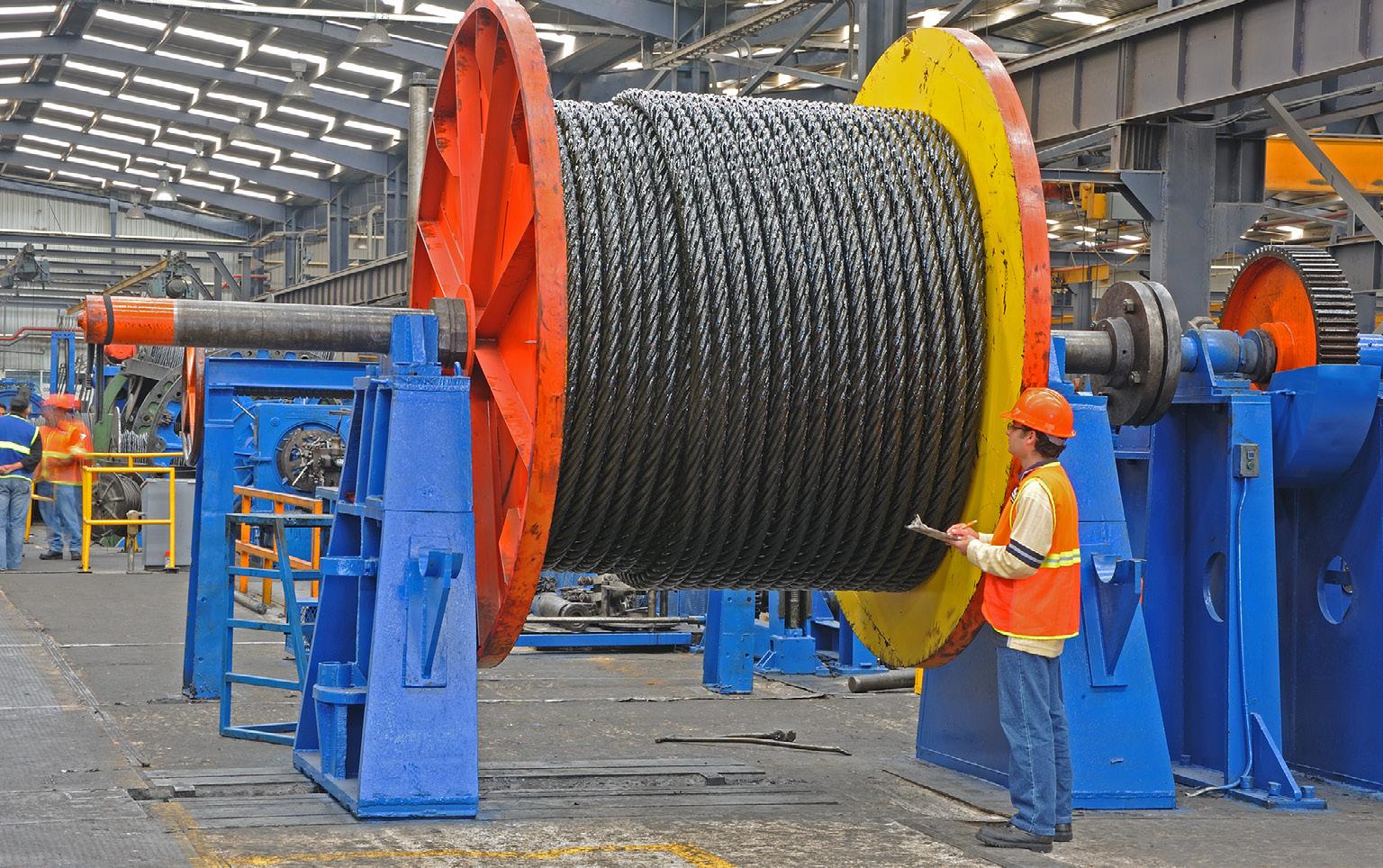
Grupo DeAcero Manufacturing
helping them focus and thrive in their business,” Gutiérrez Durán commented.
Staff management principles at DeAcero covers different aspects acknowledging the personnel’s work, offering wages above market average, to begin with. The company offers flexible schedules and open spaces designed with collaboration in mind.
The company’s intranet constantly shares information capsules covering individual achievements, both in the personal and professional spheres. New hires have access to onboarding programs, and all the staff can take place in mentorships and talent development programs. Ongoing inclusion programs highlights female leadership within the company.
It should be noted that in spite of the
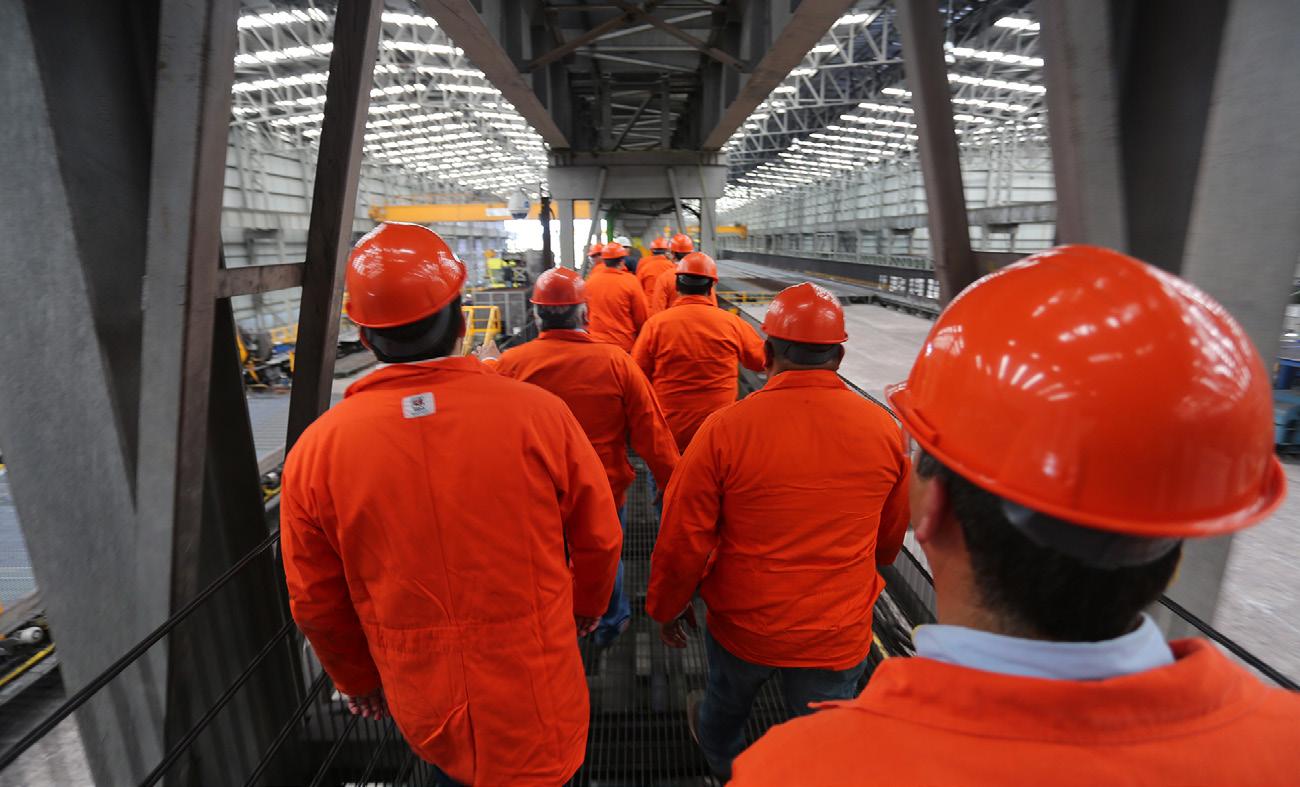
“Creciendo Juntos”
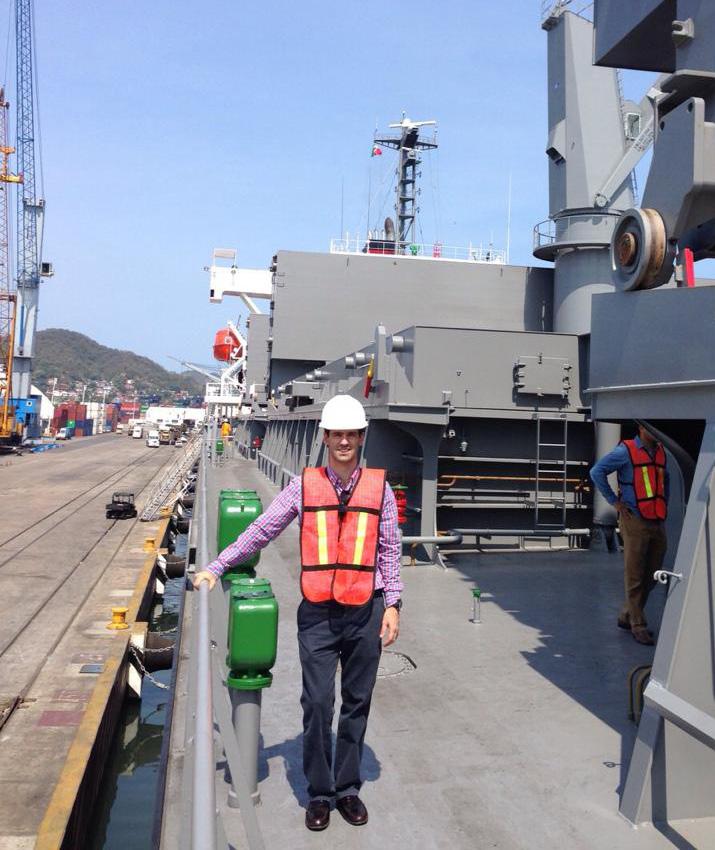
“We are becoming a shared services area looking to create win-win conditions with our vendors”
- Raúl Gutiérrez Durán,
Global Supply Chain Director for Grupo DeAcero
and CEO for DeAcero Logistics
pandemic, DeAcero maintained all of its staff, no adjustments were made, whatsoever.
Social activities such as taking part in local sports tournaments are supported by the company as are benefits and discounts in determined purchases and services, besides rewarding employees’ children with scholarships. The whole family has a place in DeAcero through workshops and learning activities covering subjects from handcrafts to finances.
“The importance we give to our workplace culture, large family environment and employee satisfaction are key subjects in our staff surveys, the feedback we obtain helps us improve in these areas,” the executive said.
Efforts by DeAcero in contributing to society are well beyond business and commercial purposes. DeAcero is the largest recycler in Mexico. All of the raw material used by the company is derived from recycled steel, processing more than 3M tons a year. DeAcero is also Mexico’s
first steel supplier whose products are LEED-certified (Leadership in Energy and Environmental Design). Also, total water consumed by DeAcero in every process is destined for reuse, while 98% of waste derived from these processes is recycled for use in other industries.
On its behalf, the DeAcero Foundation has established links with the community through different programs focused on social, health and education matters. On its own and along with other organizations, the DeAcero Foundation has contributed to goals set in the 2030 Sustainable Development Agenda, adopted by the United Nations Organization, through 10 projects aimed at eradicating poverty, 12 to bring hunger down to zero, 39 aimed to good health and well-being, 25 for access to quality education, 3 for gender equality, 7 for decent work and 18 to reduce inequality. The foundation also supports 2 other projects for responsible consumption and production, 1 climate action project, 4 for peace and justice-strong institutions and 101 partnerships to achieve these goals.
Since Gutiérrez Durán created DeAcero Logistics, the company achieves a 110% YOY growth supported by its philosophy: placing clients and suppliers first, prioritize service, add value to its entire chain and create synergies able to optimize the use of available resources within and beyond the company
The current conditions in every market bring along different challenges, such as volatility, possible trade blocs and setbacks. DeAcero sets the following goals facing these factors:
• Integrating and aligning the value chain with a focus on the client. This implies speeding up the supply chain with technology to align and control it by assembling each of its parts, creating a flexible omnichannel network. This results in an integral logistics
network becoming an important differentiating factor.
• Relying on collaboration and management dynamics focused on delivering business results through policies aligned with commercial and service expectations, making the most from logistic locations to offer a wide portfolio of customizable packages and solutions for each industry.
• Increasing digitization in key processes -such as e-business-, through platforms bringing the company closer to its clients.
• Developing the business’ knowledge, technical and personal abilities of every individual involved, guaranteeing the proper development of roles with a focus on adding value for clients, for our integral value chain and our company.
“We are looking to cover every link in the supply chain in its entirety, from purveyors, production facilities, storage, distribution and most importantly, our clients. We are convinced that focusing beyond costs, an internal collaboration and alignment among our operational areas, and an external alignment and proximity to our clients through an ‘outside in’ philosophy is the right strategy,” Raúl Gutiérrez Durán, Global Supply Chain Director for the DeAcero group and CEO for DeAcero Logistics finalized.
Written by Mateo Rafael Tablado

This is more than a project, but rather a commitment to sustainability for future generations, capable of having a positive impact still today: Budapest, Los Angeles, Mexico City and Oslo take part on clean construction
The Clean Construction Declaration is part of the C40 forum, in which 97 cities and each city’s major is committed to observance of these goals, first established in the Paris Agreement in respect to climate change. This chapter is focused on a very
necessary activity worldwide --whose contribution to climate change is estimated in 25%-- and offers support to cities involved in a transition toward a sustainable construction model and zero emissions, also enabled to construct healthier buildings,

improving air quality for the millions of urban residents worldwide. Its main purpose is to arrive in 2050 without polluting emissions from buildings and other infrastructure constructions, focusing on construction machinery and materials.
The landscape for population growth, and the prospect for creating housing and infrastructure for the world population foresee an increase in construction activity in many years to come.
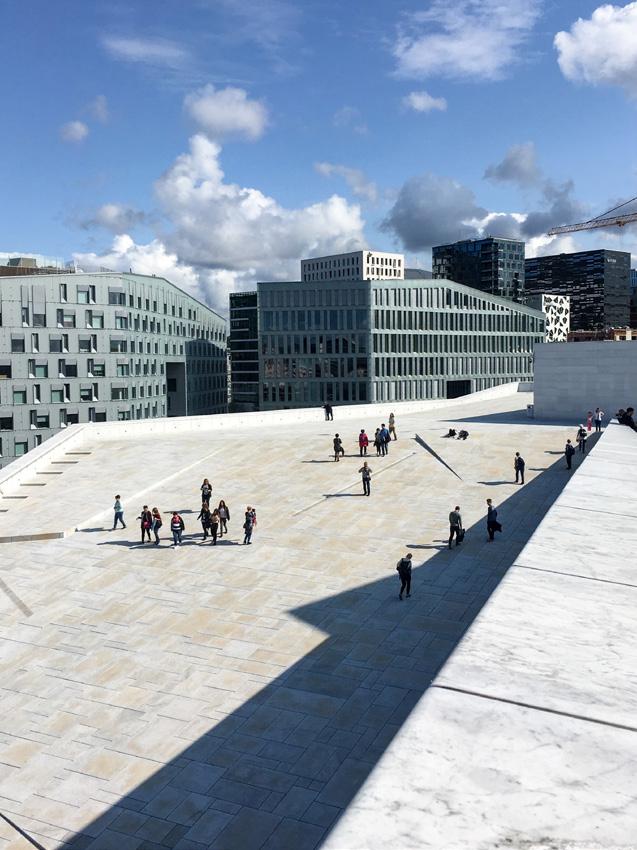
Oslo, Norway
Focus areas in which there’s already work in progress, brainstorming, strategies, challenges and policies include:
• Commitment and inclusion
• Market development
• Resources and data
• Benefits
On November 24, the current mayors of Budapest, Los Angeles, Mexico City and Oslo committed to reduce by half all the emissions produced by construction-related activities by 2030. It should be noted that the Clean Construction Forum is led precisely by the Norwegian capital. These mayors committed to revolutionize the construction industry globally, thrusting it into a sustainable future, resulting in a resilient, healthy lifestyle able to offer development capacity to all its inhabitants, especially those in vulnerable population groups.
Besides being the cause of more
than 23% of GHG and 30% of global resource consumption, the current pace for construction is leading the Earth to a 37°F increase.
This declaration sets ambitious targets to develop net-zero emission buildings and infrastructure of the future by:
• Reducing embodied emissions by at least 50% for all new buildings and retrofits by 2030
• Reducing embodied emissions by at least 50% of all infrastructure projects by 2030
• Procuring and when possible using only zero emission construction machinery from 2025
Being aware of the fact that cities cannot tackle the climate crisis alone, the Declaration places the circular economy as its core and calls for innovation and collaboration across cities, businesses, regional, national and supranational government and industry.
The Declaration commits cities to repurposing and retrofitting building stock to make better use of the buildings and infrastructure that currently exist, which also has huge potential to create new green jobs. Retrofitting reduces the need for raw building materials that have a high carbon footprint — concrete production alone is responsible for 8% of the world’s GHG emissions.
The mayors have also committed to preach by example in clean construction by using their purchasing power and normalizing the use of zero emission machinery for construction work, as well as demanding transparency and responsibility in supply chains. These leaders aim at these goals by incorporating clean construction policies in the design, planning and procuring processes, as well as in construction codes.
“I’m proud to announce our firm commitment with business and

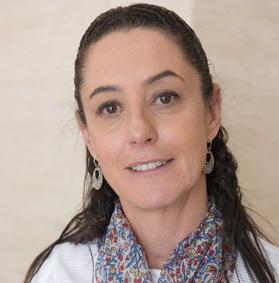
Claudia Sheinbaum, Head of Government of Mexico City

-
Photo by Tomas Martinez
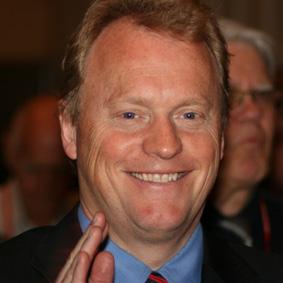
industry to transform construction in Oslo and cities around the world. for the better. The climate crisis is a global problem that requires global solutions. We need to unite businesses, industry and government on all levels to advance climate action. We are confident that the C40 Clean Construction Declaration will contribute in shifting the construction market globally. Together, we can remove fossil fuels and reduce emissions from construction sites altogether,” declared Raymond Johansen, Mayor of Oslo, Norway.
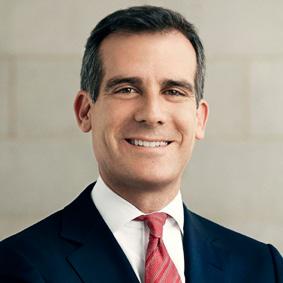
On his behalf, Eric Garcetti, Mayor of Los Angeles, California said: “The climate crisis affects every facet of our lives and every sector of our cities, that means we have to fundamentally change the way we operate across the board and revolutionize how we power our neighborhoods, consume natural resources, construct buildings, commute, travel, and lead. Los Angeles is doubling down on our commitments.”
“Mexico City has a firm commitment to CDMX, México
the best international sustainable building practices, not only because of the need to reduce the impact generated by construction and demolition waste, but also because of the potential in energy efficiency that can be achieved, thereby contributing to the achievement of the Sustainable Development Goals,” expressed Dr. Marina Robles, main officer at the Secretary of Environment of Mexico City.

Gergely Karácsony, Mayor of Budapest, Hungary, said: “Budapest is a beautiful city with an incredible historical heritage and great architecture that we all adore. This, however, means a large building stock with rather poor energy performance and high GHG emissions. The Municipality of Budapest has committed itself to take active steps to reduce emissions in the city. Embodied emissions in construction activities and materials are uncharted areas, where large mitigation potential can certainly be found.”
Gergely Karácsony, Mayor of Budapest

Budapest, Hungría
- Photo by Dan Freeman

When it comes to capturing precious moments, a smartphone camera is an absolute necessity. It’s no surprise that an overwhelming number of consumers rank the camera and its features among the factors that matter most when buying a new smartphone




Since releasing its first camera phone, the SCH-V200, in 2000, Samsung has remained a leader in the industry by relentlessly advancing the camera phone segment. The Galaxy S series’ innovative cameras are the culmination of years of experience developing groundbreaking technologies. Follow along as we explore just how much the series’ cameras have evolved over the last 11 years – from the very first Galaxy S in 2010 to the recently introduced Galaxy S21.

The first Galaxy S device featured a VGAclass front camera capable of making video calls, as well as a 5-megapixel (MP) rear camera that could record HD videos. The rear camera also included built-in autofocus, facial
recognition and anti-shake functions, and featured a Panorama Shot mode, which allowed users to capture an image of a scene that was wider than what they saw on their screen.

The Galaxy S2 featured a thoroughly enhanced camera. Included among the upgrades were boosts in pixel counts – 2 megapixels in the front and 8 megapixels in the rear – and an LED flash to facilitate night
shots. Other additions included an improved autofocus feature, which made it easier to focus the camera on a desired subject, and a cartoon-inspired feature that transformed photos into hand-drawn images.
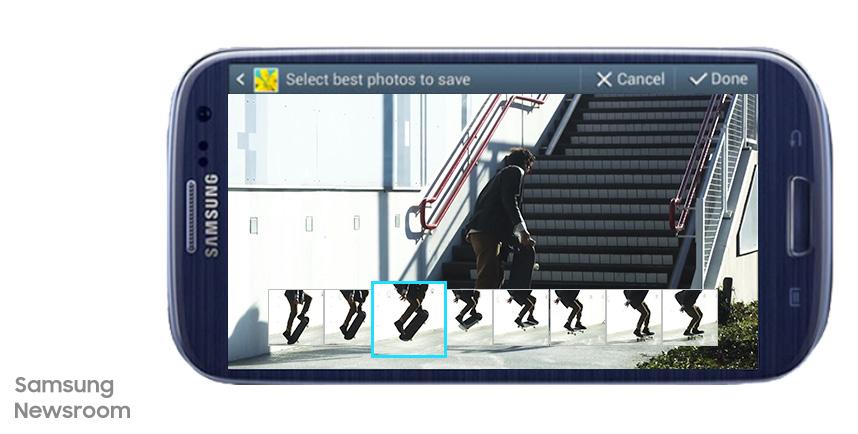
Burst Shot offered users the perfect tool for capturing blink-and-you’ll-miss-it moments like fun jump-in-the-air shots. Both the 1.9MP front camera and the 8MP rear camera supported the mode, which allowed users to take up to 20 pictures in 3.3 seconds. The
cameras also featured a Best Photo mode, which helped users select the best photo out of eight continuous shots, and a Zero Shutter Lag mode, which guaranteed there would be no delay between the moment the user tapped the shutter button and the picture was produced.

The Galaxy S4 ushered in the era of 10plus megapixel cameras by combining a 2MP front camera with a 13MP rear camera. It also introduced features that changed how users captured special moments, and transformed their pictures into stories. For example, the camera’s Dual Shot mode allowed users to capture images with both cameras at the same time, producing a photo in which the
photographer and the subject occupied the same frame. Other features included Sound & Shot, which allowed users to record audio to accompany their images, and Drama Shot, which let users take multiple pictures in quick succession and combine them into an image that tells the story better than a single photo could.


The Galaxy S5 was the first smartphone to feature a 16MP ISOCELL camera. The ISOCELL image sensor enhanced image quality with less cross-pixel interference, making it possible to take clearer pictures
even in the dark. The camera also featured an upgraded HDR mode for enhancing photos. The HDR feature allowed users to enjoy vibrant images even in dimly lit rooms or environments with heavy backlighting.

Samsung introduced a Quick Launch function with the Galaxy S6 that allowed users to launch the camera in just 0.7 seconds, simply by tapping the home button twice
on any screen. A function that automatically tracked and focused on moving objects enhanced image sharpness, while a 5MP F1.9 lens was installed on the front to boost selfie quality.

The Galaxy S7 incorporated a dual pixel image sensor – a technology featured in high-end DSLR cameras – to allow users to quickly snap crisp and clear photos even in the dark. The sensor worked by splitting every pixel into two photodiodes for on-chip
phase detection, providing vastly improved autofocus performance. The camera also introduced a selfie flash mode Together, the Galaxy S7’s camera innovations achieved a then-record DxOMark Mobile Score of 88 points.

To help users snap better photos, the Galaxy S8 introduced an improved image signal process algorithm that ensured clear, stable images regardless of time or place. It achieved this by taking three consecutive photos and selecting the best one. Gesture-
based controls were also introduced to help users operate the camera. For example, with the camera open, swiping left or right with your thumb would toggle filters or modes, while swiping up or down would allow you to switch between the front and rear cameras or zoom in or out.



The Galaxy S9 introduced a Dual Aperture camera that would automatically adjust to ambient light just like the human eye –widening in the dark and shrinking in bright light. The camera featured the brightest F1.5/F2.4 lens available in a smartphone at the time, which allowed it to absorb approximately 28 percent more light than the previous model, resulting in clearer pictures even in dark settings. Samsung also enhanced the camera with functions designed to help users express themselves
more effectively. The camera’s Super Slowmo feature allowed users to record videos at 960 frames per second, making it possible to capture movements or moments that are too fast for the human eye to see. The function made it easy for users to share these epic slow-mo moments as GIFs on social media. Another notable addition was AR Emoji – a function that utilized the camera and augmented reality technology to allow users to create AR avatars that could mimic their facial expressions in real time.

By the time the Galaxy S10 was released in 2019, smartphone users were creating more content than ever before. To cater to this trend, the Galaxy S10 introduced Super Steady mode. The function enhanced the quality of users’ recordings through video stabilization, making it perfect for recording
smooth content when enjoying activities like cycling and dancing. The Galaxy S10’s HDR10+ support produced true-to-life colors in users’ videos, while its 16MP Ultra Wide Camera captured scenes as users saw them with a field of view that was similar to the human eye.

GALAXY S20 SPACE ZOOM paired Hybrid Optic Zoom with AI-powered digital zoom. This allowed users to zoom much further into images – up to 100x in the case of the Galaxy S20 Ultra. In addition to supporting 8K video recording, the camera also included an upgraded Super Steady mode that took camera stability a step further thanks to an anti-rolling stabilizer and AIbased motion analysis.
To offer users the ability to capture moments of their lives in more meaningful ways, Samsung equipped the Galaxy S21 series with a pro-grade camera that enhances content using on-device AI. The Galaxy S21 Ultra is the first Samsung smartphone to feature two telephoto lenses, and boasts five cameras in all: a 40MP (F2.2) front camera, a 12MP (F2.2) rear ultra-wide camera, a 108MP (F1.8) rear main camera, a 10MP (F4.9) rear telephoto camera, and a 10MP (F2.4) rear telephoto camera. The Galaxy S21 and S21+, meanwhile, feature a total of four cameras: a 10MP (F2.2) front camera, a 12MP (F2.2) rear ultra-wide camera, a 12MP (F1.8) rear main camera, and a 64MP (F4.9) rear telephoto camera.
The combination of anti-shake technology, 10x optical zoom, and both laser and dualpixel autofocus enables the cameras to produce results that rival those of high-end DSLRs. The new Director’s View feature, meanwhile, helps users pick the perfect lens for their photo by placing three preview

screens beneath the camera’s viewfinder. The Galaxy S21 series also offers creators the ability to utilize the selfie and rear cameras simultaneously to create unforgettable video content. Each camera additionally supports 4K video recording at 60fps (frames per second), and the dual telephoto lens setup is especially adept at capturing vivid photos from virtually any distance. Furthermore, with an upgraded 108MP lens and nonabinning technology, the Galaxy S21 series ensure bright and clear photos even in low-light environments.

Written by Mateo Rafael Tablado
Produced by Jassen Pintado
Soracci,

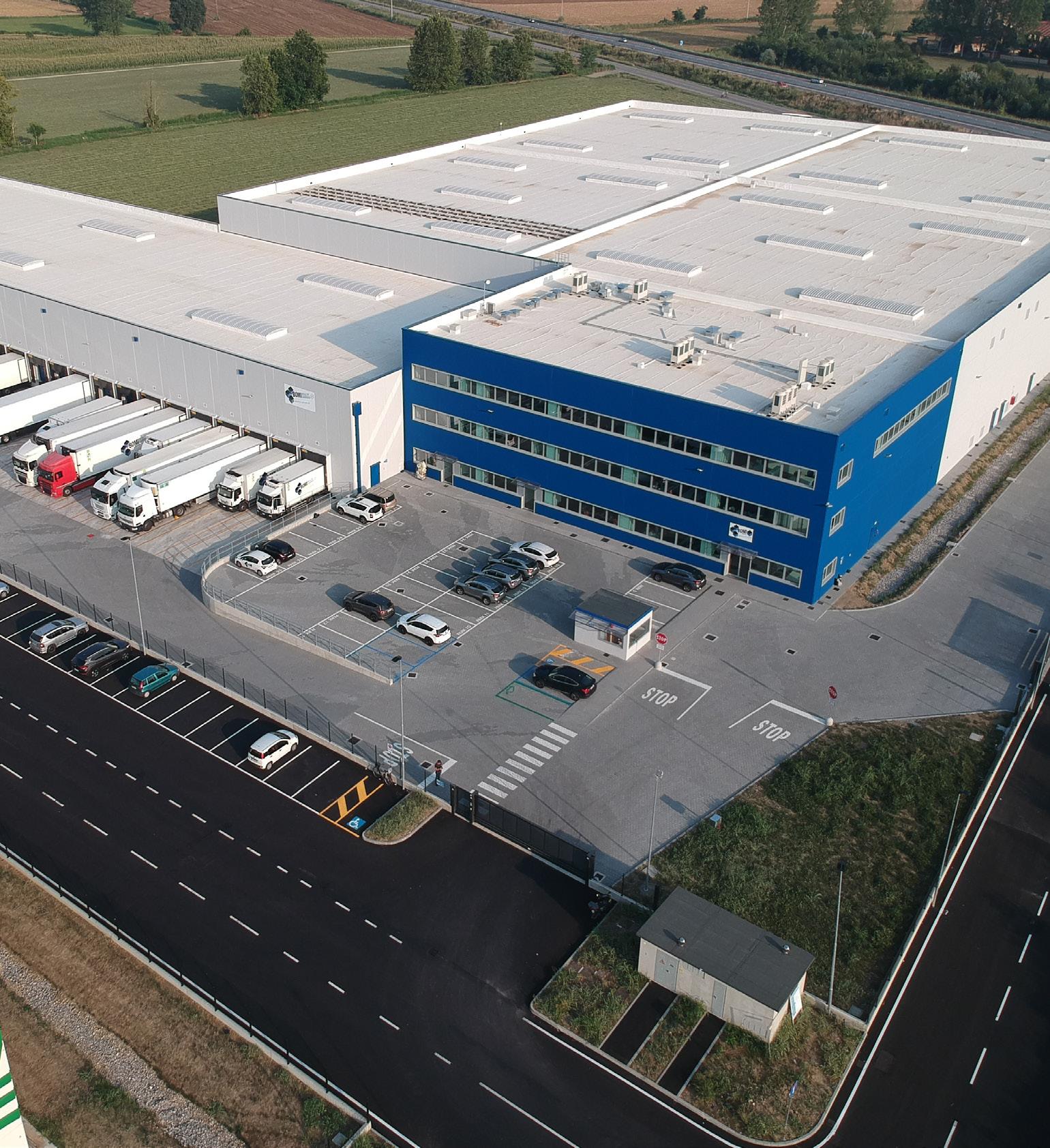
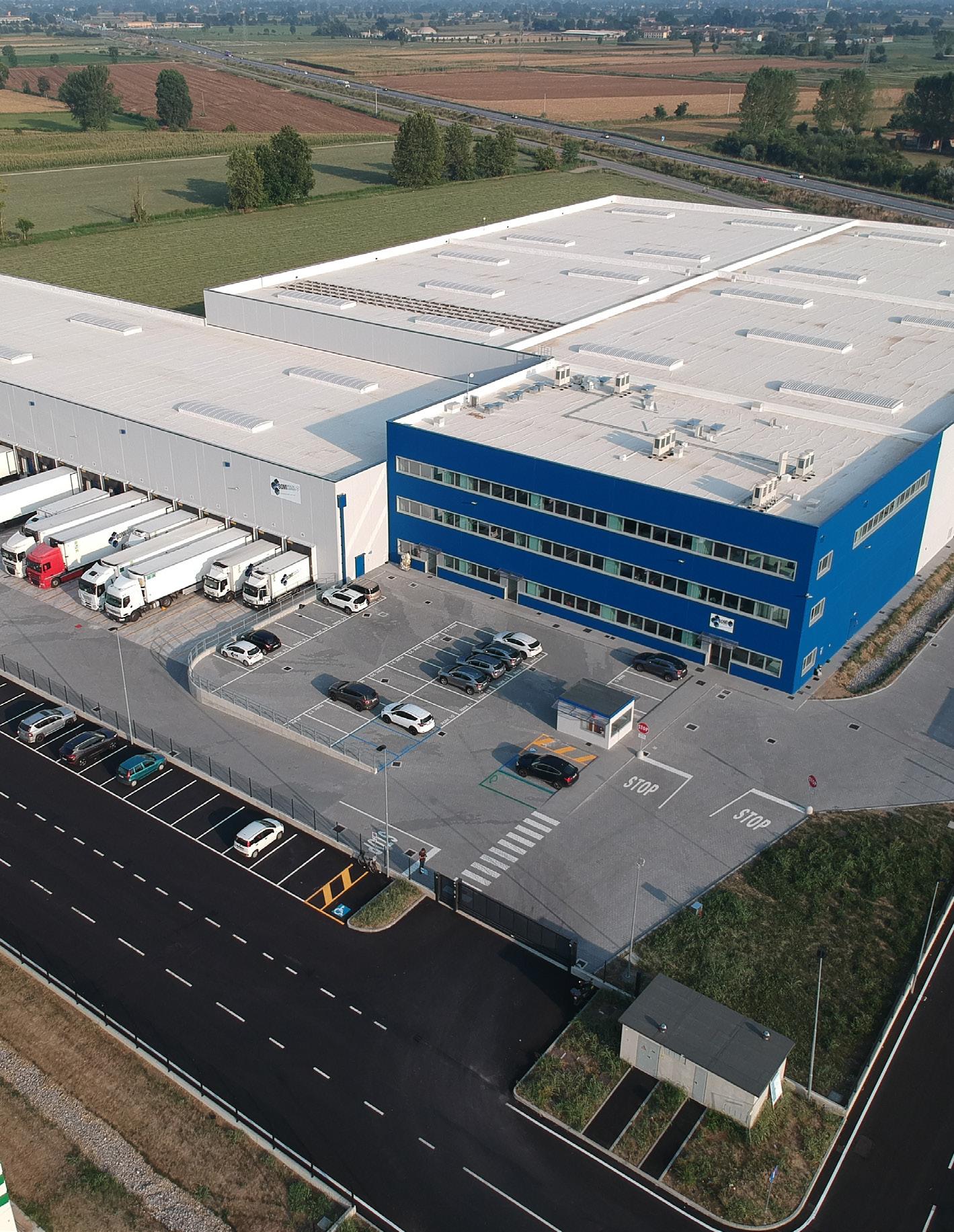
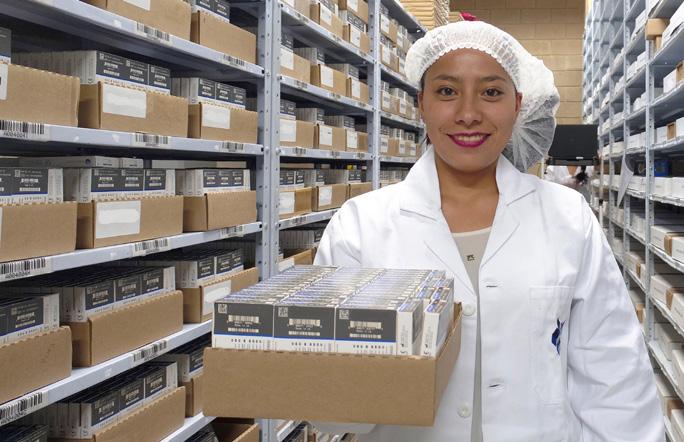
The performance delivered by BOMI GROUP in Colombia and LATAM provides solid support for the healthcare sector by relying in flexibility and adaptability toward each client’s needs
The BOMI GROUP story began in 1985 in Milan, Italy, helping the healthcare sector. It didn’t take long to expand across Europe; and after a decade’s worth of success, BOMI GROUP arrived in Latin America, bringing its know-how and ability in 3PL (third-party logistics) to supply consumables and medical equipment in Argentina, Brazil, Colombia, Chile, Ecuador, Panama and Peru.
The increase in BOMI GROUP’s presence across the map is due to a constant drive to attain excellence beyond compliance by setting a higher bar with help from the company’s own benchmarking standards. The specialized management, storage and conveyance of equipment, medication and disposable materials by BOMI GROUP becomes a crucial, indispensable resource raising demand from a clientele whose main common attribute is global presence and the ultimate goal of saving lives.
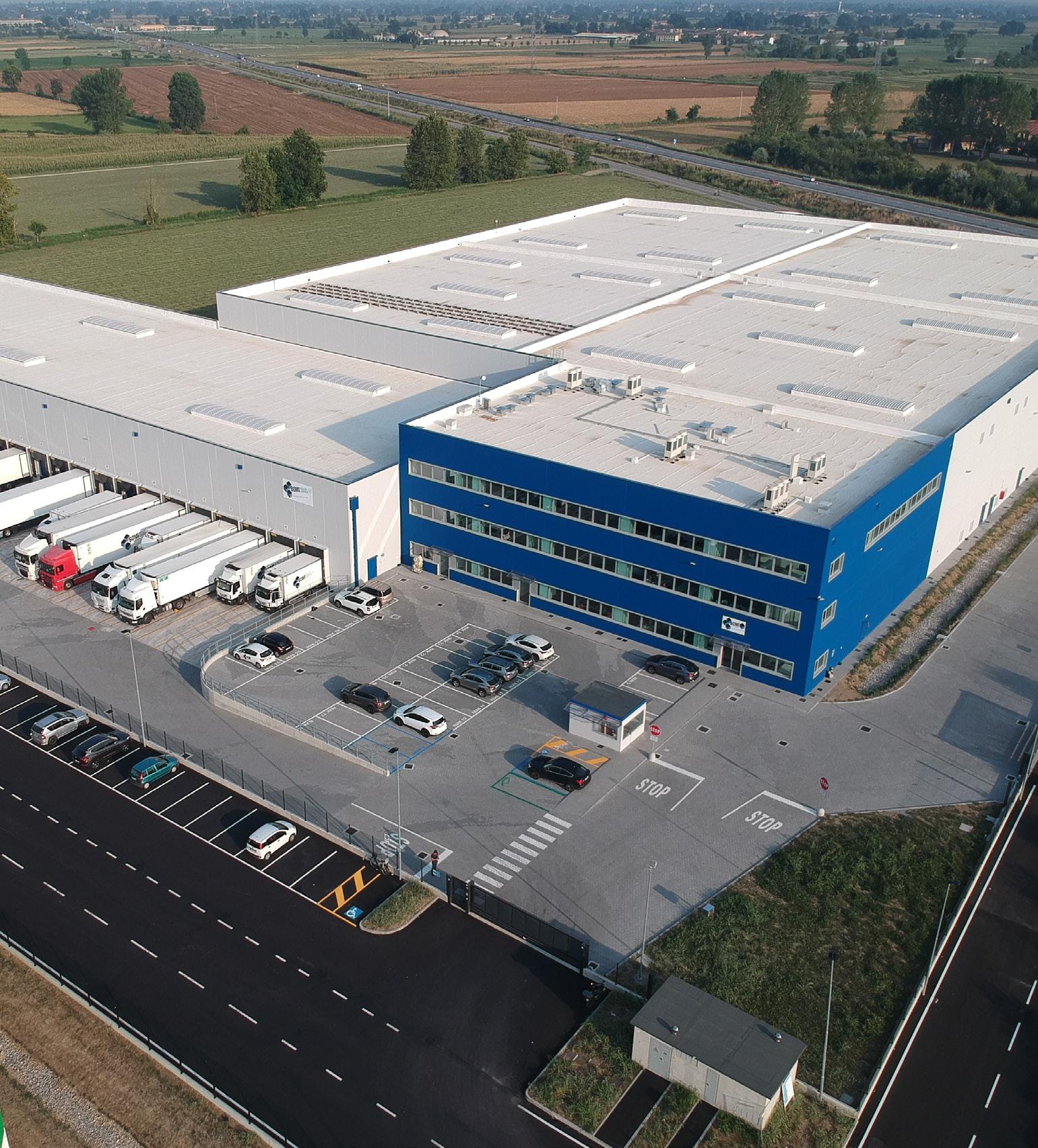
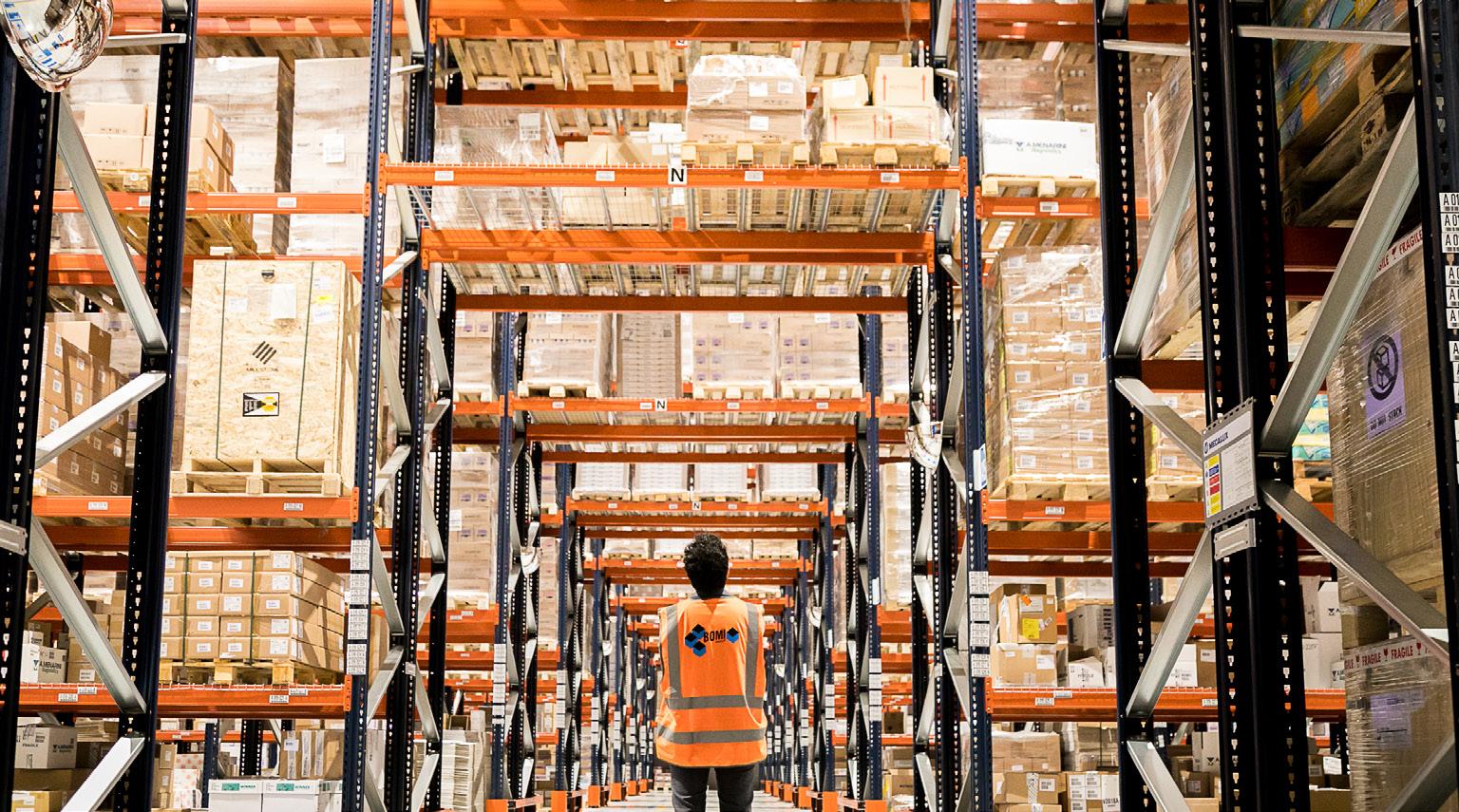
BOMI GROUP opened for business in Colombia in 2010, arriving in this country under a client’s request, as usual. Its presence across Colombian territory has expanded from Bogota, the country’s capital, to Barranquilla, Bucaramanga, Cali, Medellin and Pereira, adding up to 194,000 sq.ft. worth of storage facilities.
BOMI HEALTHCARRIER is able
“WHEN
IT”
- Javier Soracci, country manager in Colombia for BOMI GROUP


“WE OBTAIN FEEDBACK FROM OUR LABOR AND WE ARE ALWAYS LOOKING FOR WAYS TO INNOVATE AND IMPROVE”
- Javier Soracci, country manager in Colombia for BOMI GROUP
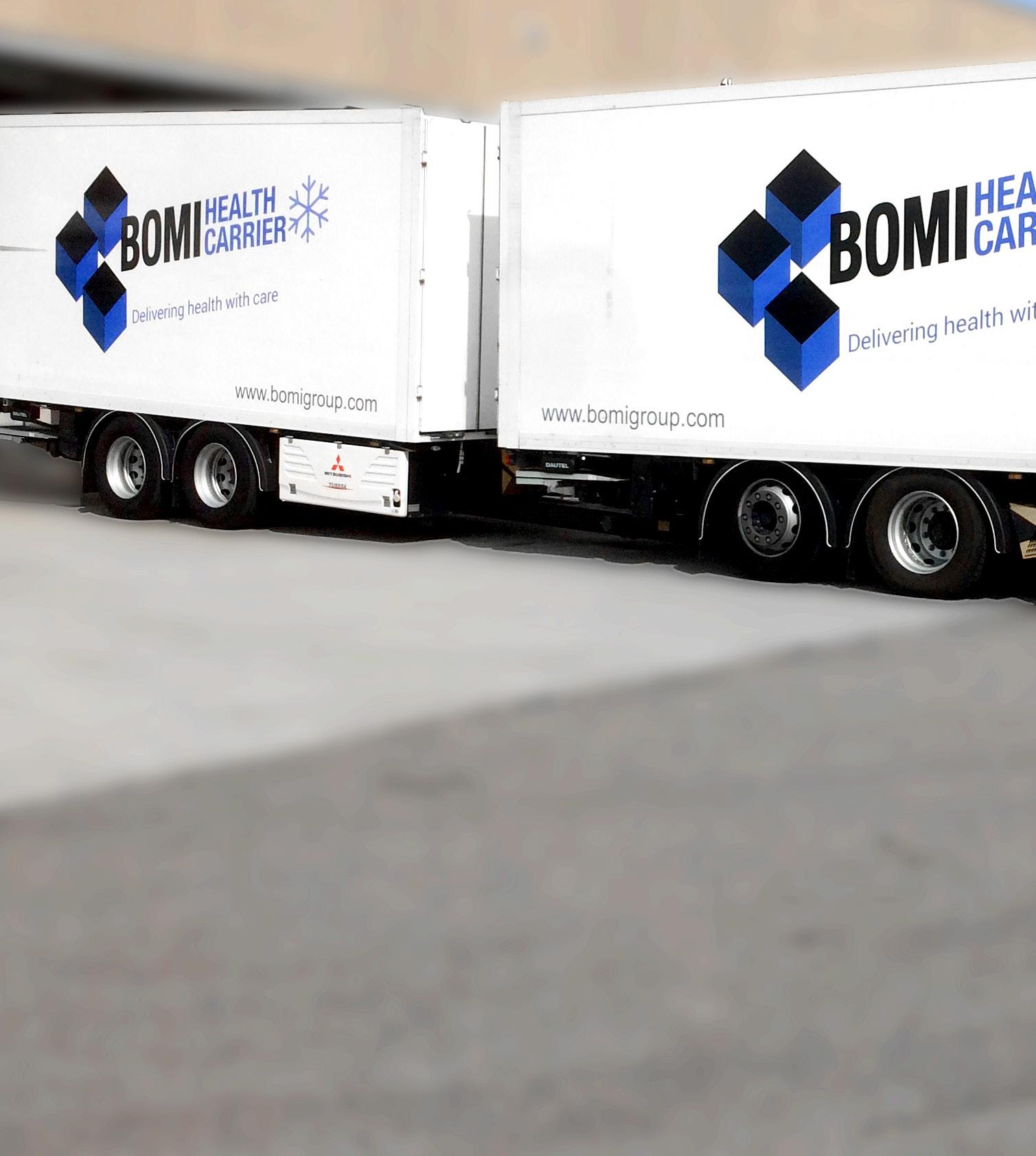
to store and convey devices, medication, diagnostic reagents and cosmetics everywhere in the country directly or through strategic partners in a cold chain with the required handling provisions.
In the Colombian market, BOMI GROUP is the first company to deliver for home care services. Other innovations in the country comprise the GECOS proprietary management system, able to provide a complete inventory service of stock levels, and the Virtual
Branch solution for companies in a streamlined operation.
Besides ISO 9001 and ISO 13485 compliance, BOMI is also certified under the local BPM (good manufacturing practice certification) and INVIMA (National Food and Drug Surveillance Institute) standards, providing furnishings to more than 25 medical device and reagent importers under CCAA (certificate for conditioning and storage capacity) regulations. The company also earned the “Positive” status from Secretaría de Salud (health ministry), which certifies storage and conveyance of

healthcare products.
“The most important challenge brought by certifications is maintaining them, supported by our own inspections and audits. Keeping up to date with these is based in permanent training and continual innovation. Any procedure created two years ago not adapted to this day should be improved,” said Javier Soracci, country manager in Colombia for the BOMI GROUP
The experienced Soracci has 21-year experience in logistics for the healthcare sector under his belt. Soracci graduated in
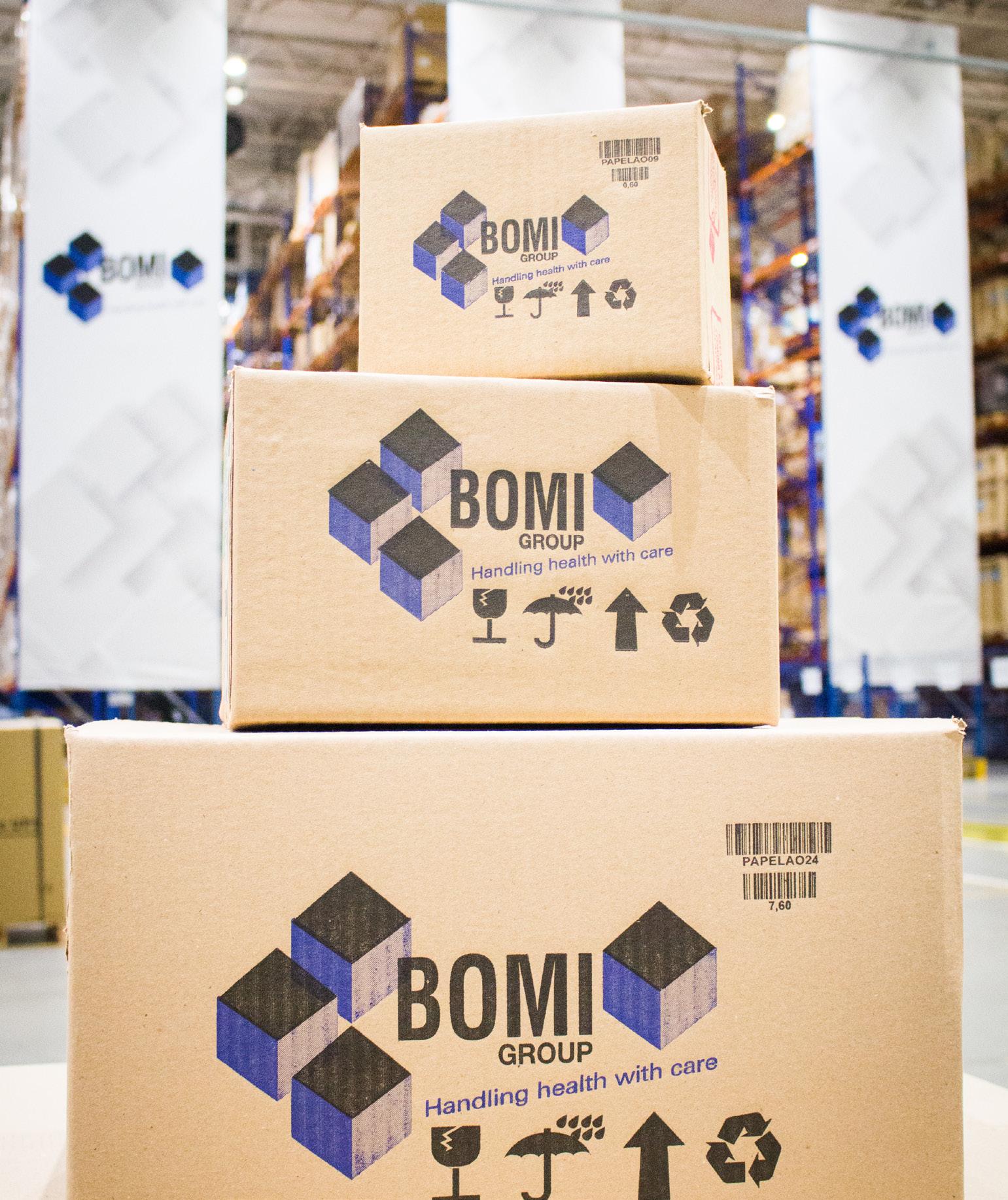
BOMI GROUP works according to its own and its clientele’s standards, usually stricter than local regulations
Business Administration from UADE (Argentine University of Enterprise) and afterwards earned an MBA from the Deusto Business School, in Spain. Before taking the reins of the Colombian operation for the BOMI GROUP, he led the company’s operation in Chile. Soracci also worked for top companies within this business sector in Argentina -his home country- and neighbor Uruguay.
“Every country has its own ways and that should be
understood. One should adapt to it. These are all rewarding experiences,” the executive declared.
The 20 markets where BOMI GROUP provides substantial support to the healthcare sector share high level operational standards, easing business development and expansion for clients growing into new territories.
Bulky medical equipment, special beds, high-precision medical devices, medication and reagents through cold chain… BOMI GROUP is the ideal partner in logistics for the healthcare sector globally

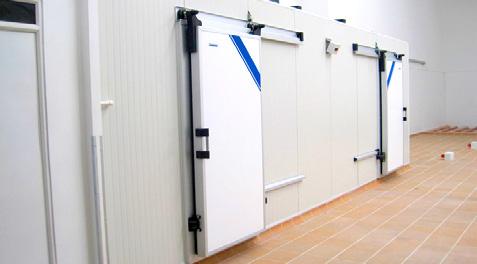
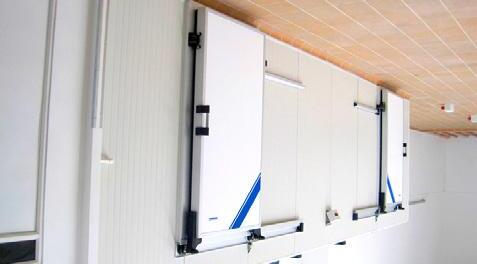
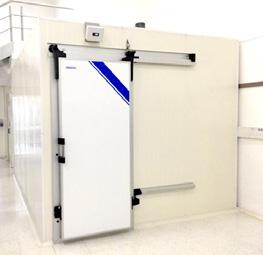
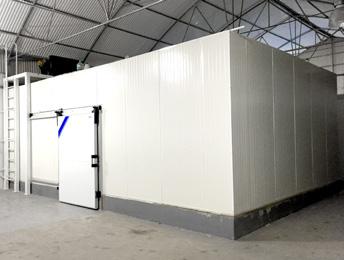

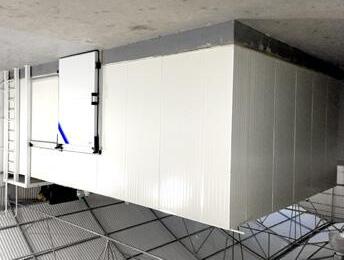
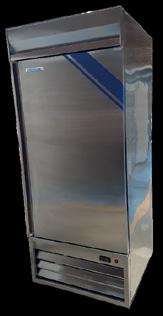
www.ingecold.com We are a company dedicated to the manufacture, installation, rental and maintenance of refrigeration equipment with more than 20 years of experience in the pharmaceutical, logistics and food industry.
At the regional level, the now virtual meetings among country managers and heads of different departments allow detection of areas for improvement, new business opportunities and sharing solutions for similar procedures. Cross selling is a common practice for BOMI GROUP in Latin America and other territories as a result of delivering outstanding solutions to clients desiring a successful outcome across their global presence.
The IT structure along constant development of proprietary software solutions at BOMI GROUP benefits not only the company’s tasks, but also clients’ interaction with inventory status, product request and
tracking interfaces.
Systems already delivering results, such as BOMI WMS, Botrack, Boclaim and BOMI Business Intelligence are now joined by ONETx and ONEVax interfaces for conveyance and control for value added services and conditioning for the clients’ platforms in Latin America.
Developing new IT resources to improve internal manoeuvres as well as dealings with clients and regulatory agencies is an ongoing endeavor for BOMI GROUP. Latest developments in this area include:
• An inventory detection and early restocking system, aided by RFID, developed in a partnership with a client in Brazil.
• A multi-code scanner (recently deployed in Turkey).
• Robot evaluation for warehouse automation in Europe and Brazil.
We are currently at the analysis and evaluation stage, before running the pilot program for automation in these territories, aiming to improve determined business areas, markets and operations. This program will run globally soon after,” Soracci said.
In the same way BOMI GROUP and the relationships with its clientele is extended globally, the company also develops longterm partnerships and purveyors. Storage, land and air transport, moving and handling equipment, and outsourcing companies, among others, are the main areas in which BOMI GROUP’s partners in Colombia stand out.
The most important capabilities shared by these suppliers are flexibility and being able to reach standards set by BOMI GROUP, which are usually stricter than health, customs and transport regulations in effect in each country.
“Our suppliers go through different evaluations. We don’t engage in any partnership because of pricing convenience. When we ask for collaboration and flexibility, we find it,” the country manager explained.
The tasks involved in supplying hospitals, medical offices and even patients under home care cannot stop during a pandemic.
Under the guidelines of the company’s headquarters in Milan, BOMI GROUP took timely, exemplary measures to counter www.thebostonbr.com
“AT
- Javier Soracci, country manager in Colombia for BOMI GROUP
the pandemic even before the emergency was declared in the LATAM countries where there’s company presence:
• New product handling protocols were implemented immediately to protect labor. Equipment, disposables and distance measures were established to avoid infection in warehouses and operating space. And it’s been stressed that the staff share these guidelines at home. Also a hotline became available for staff and their families to seek support while facing the lockdown during quarantine.
• Task forces were created in the local and regional levels, grouping personnel from different departments to be in charge of monitoring the situation and making the best choices for business operations.
“Our staff working in logistics never thought that they are actually saving lives. We explained the importance of sharing these guidelines back home. They also give us ideas that we try immediately. We obtain feedback from our labor and we are always looking for ways to innovate and improve,” Soracci declared.
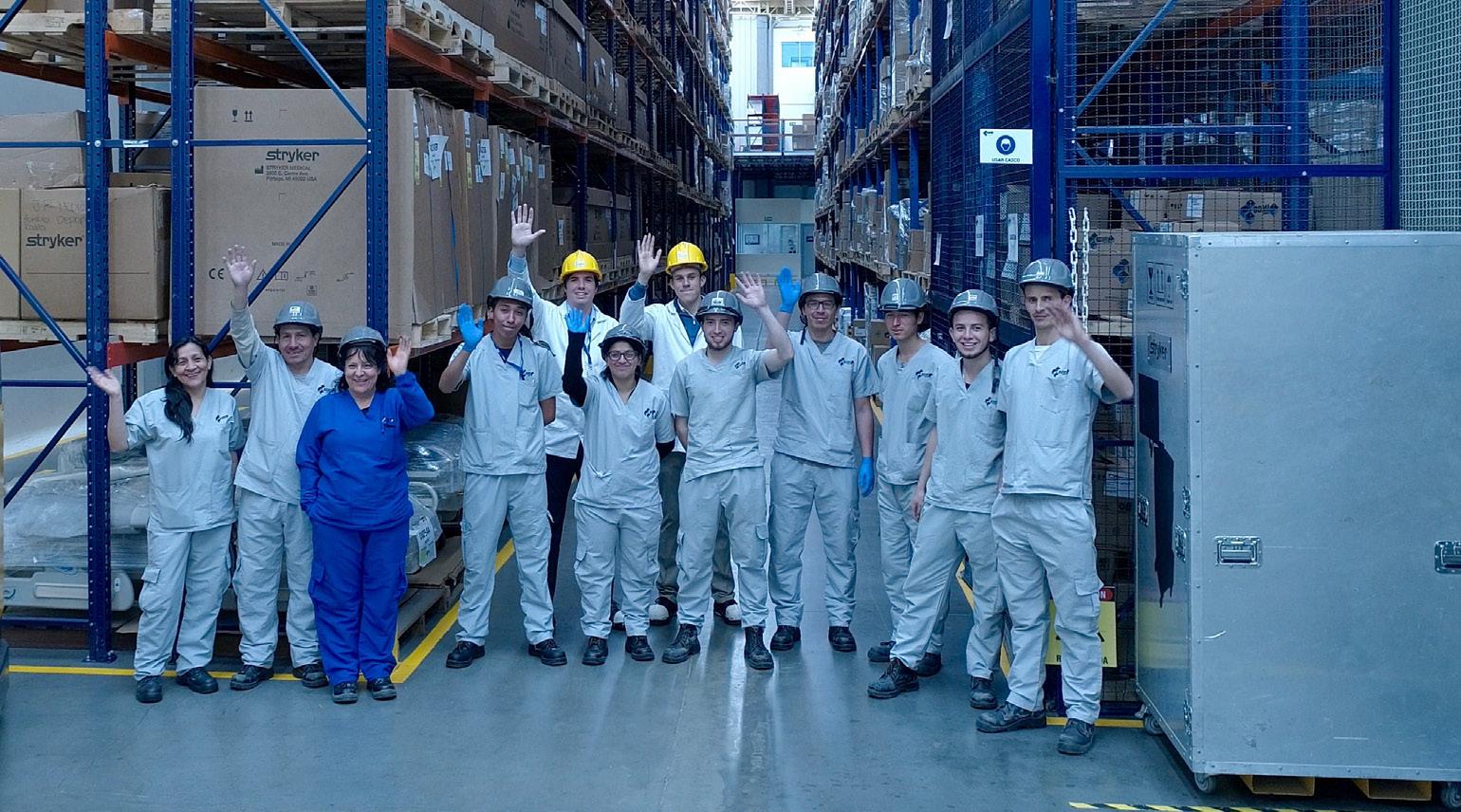
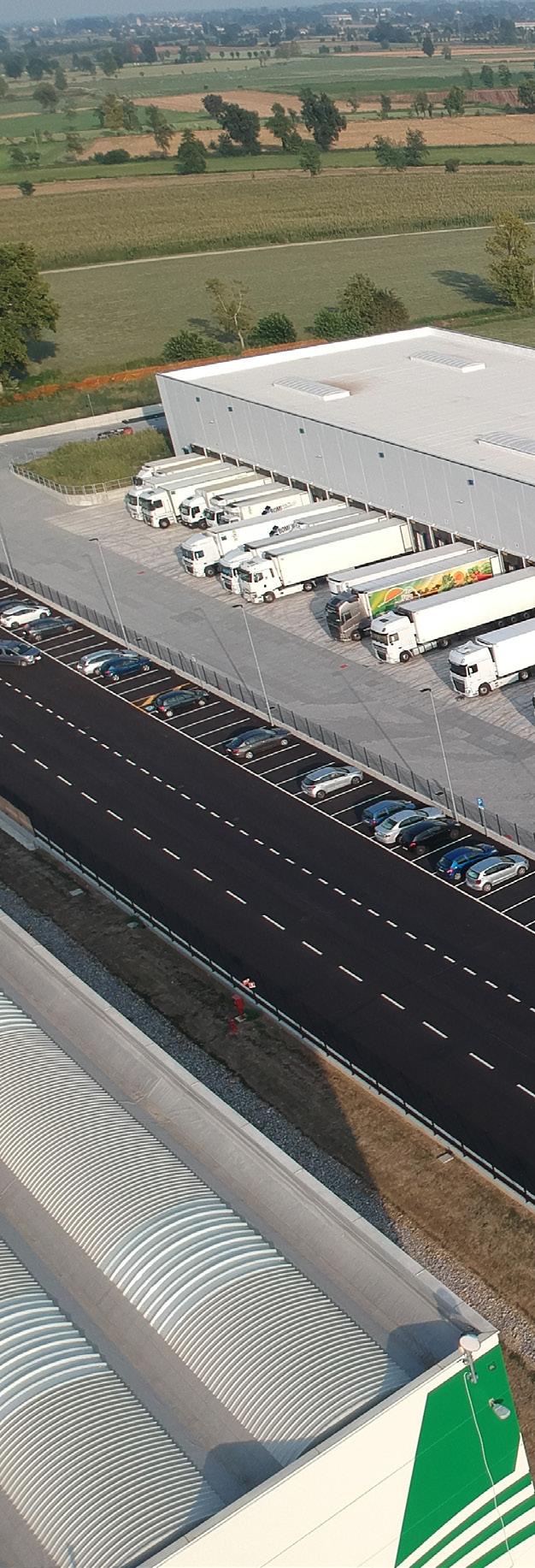
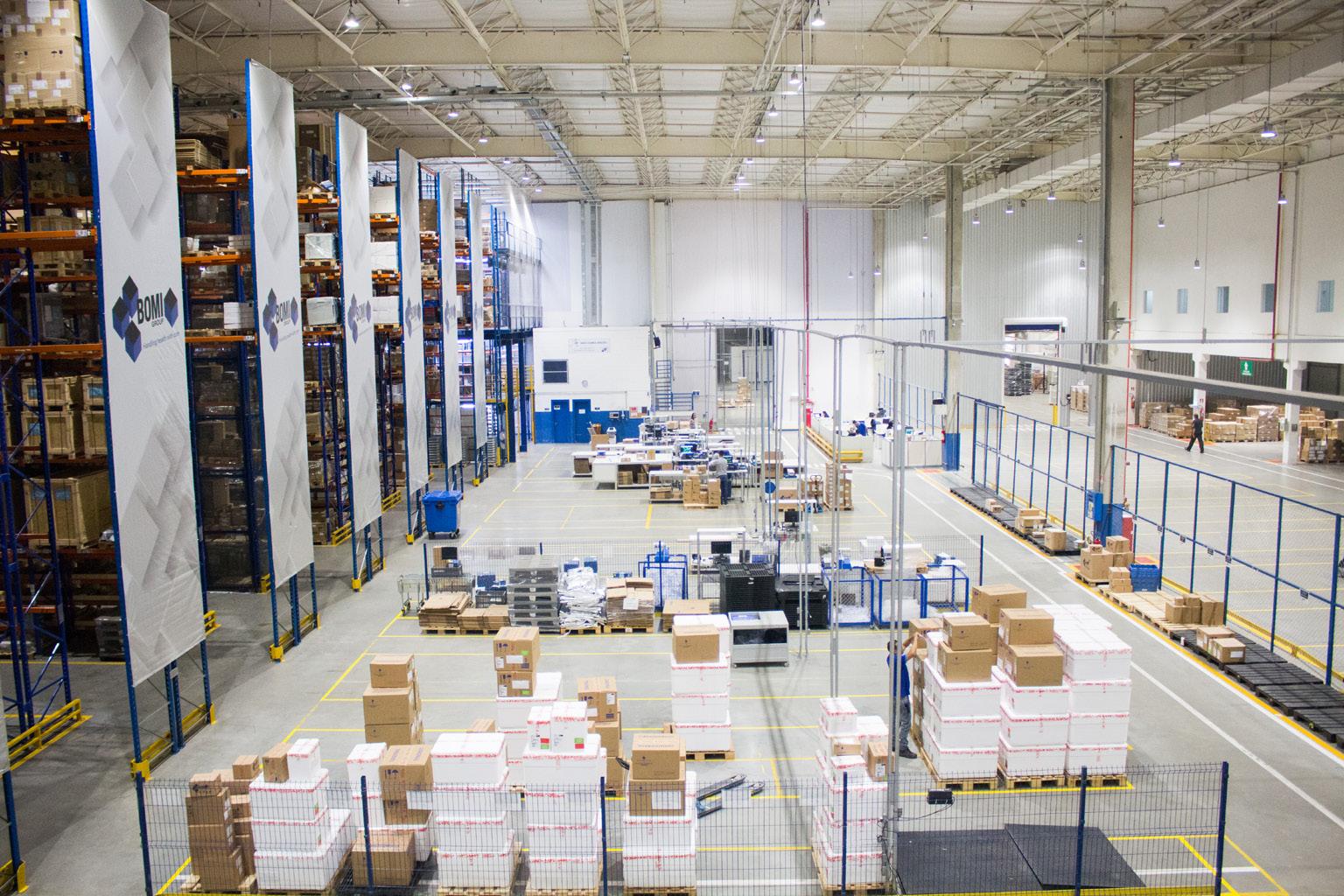
BOMI GROUP counts with 194,000 sq.ft. worth of storage facilities in Colombia
As part of CSR (Corporate Social Responsibility) standards, BOMI GROUP is supported by strict corporate ethics shared by employees, partners and shareholders. This code considers care for the environment through a zero pollution policy which includes maintenance of BOMI HEALTHCARRIER vehicles, besides continual risk management assessment in warehouses and offices, and waste management by specialized contractors.
The communities surrounding BOMI GROUP’s facilities benefit from the company’s engagement with local job boards. 20% of labor in the Bogota location hails from surrounding towns west of the capital. The company is also engaged in mutual support programs with institutions such as the SENA (National Service for Learning) office in Mosquera, also a vicinity of Bogota.

New business opportunities open for BOMI GROUP in inpatient nutrition, animal wellness and home care services
Projections for BOMI GROUP during the upcoming months are going forward, from IT deployments and warehouse expansion to new territories and new business segments. New operations began recently in Ecuador, Russia and BeNeLux territories (Belgium, Netherlands, Luxembourg), with more to add to the list from both sides of the Atlantic Ocean.
New business opportunities are open in the high-cost biopharmaceuticals sector, inpatient nutrition, animal wellness, and home care delivery.
“The home care segment in Colombia has achieved the
most growth among the region. In a different subject, animal wellbeing’s standards are being raised and we see opportunity in this specialty,” the executive said.
Adaptability and flexibility toward clients’ operations drive BOMI GROUP to achieve its goals, planning during 2020 to deliver in 2021 with no intention to stop in the endeavors to support the healthcare sector.
Bomi Group
“We’ve even received letters from patients’ relatives thanking us for arriving on time with a required product, helping complete a surgery or other procedure. At the end of the day we bring hope of life,” Javier Soracci finalized.
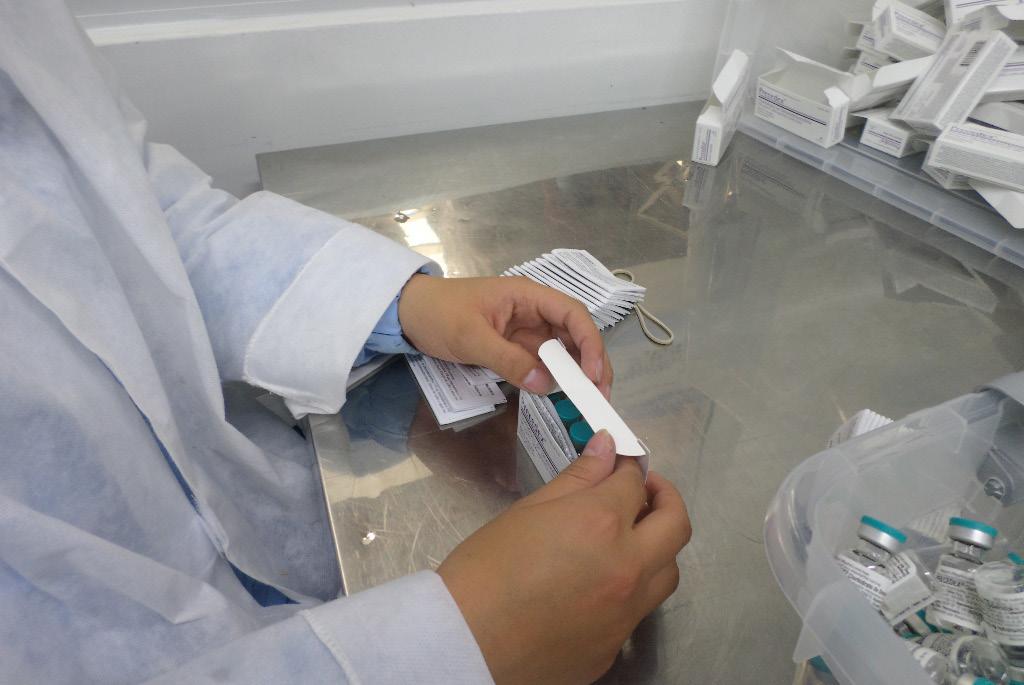
Feedback from the staff is key to innovation and improvement