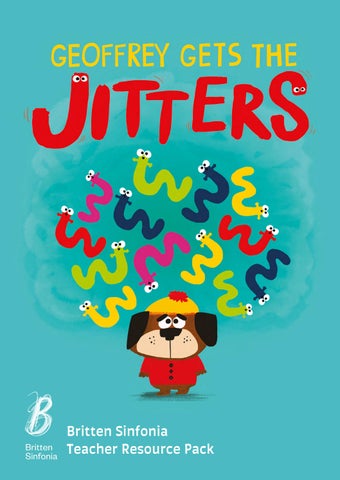
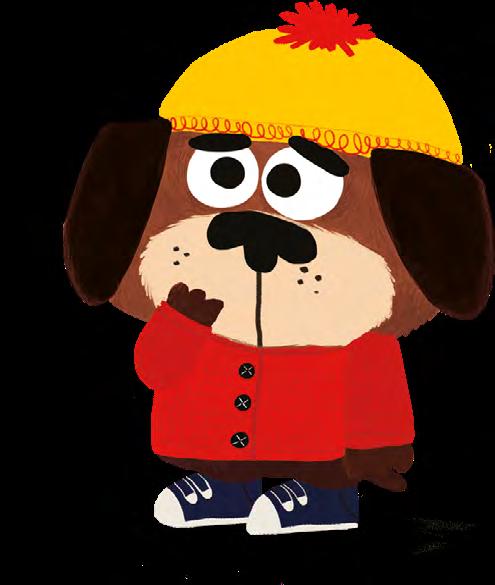
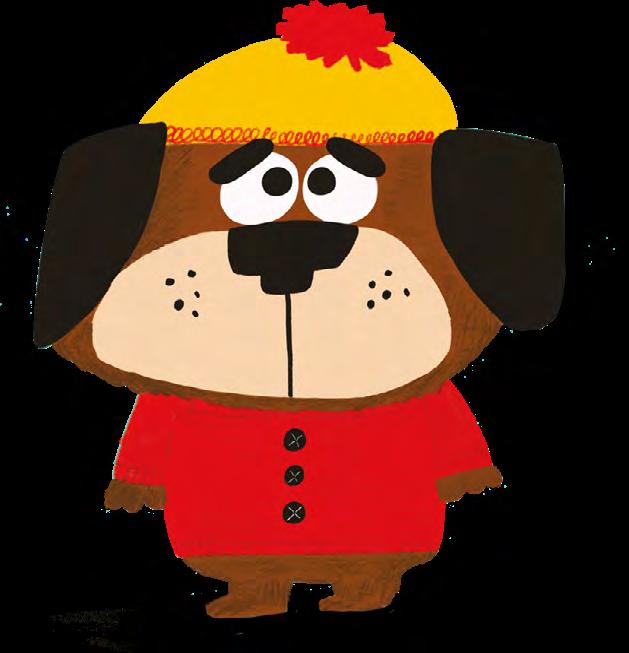
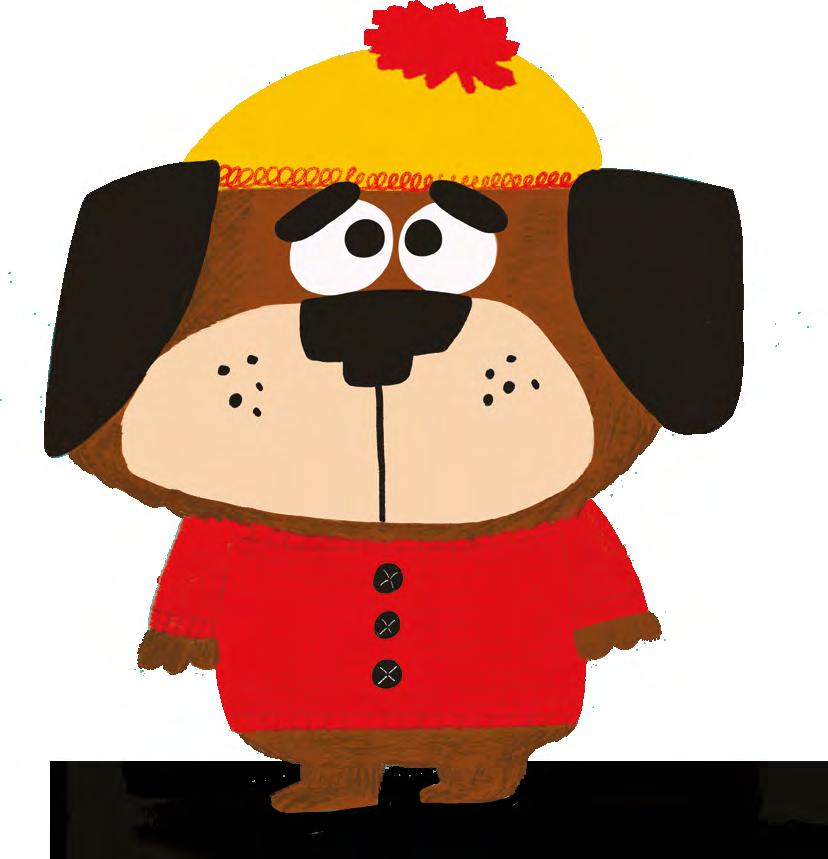
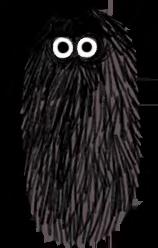
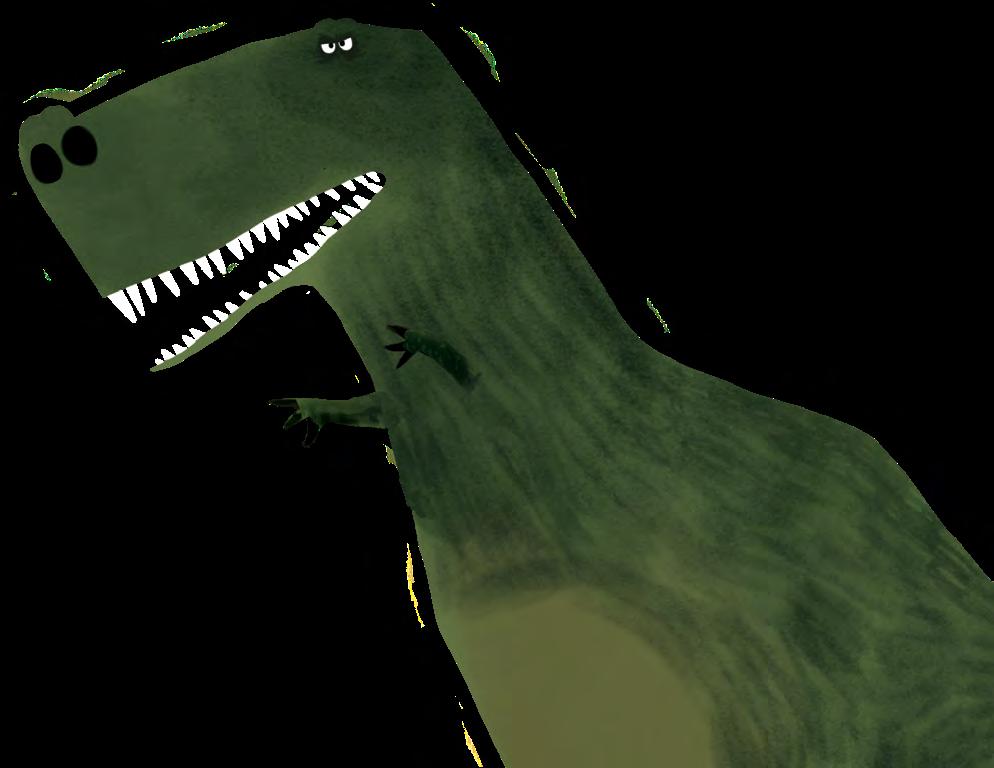
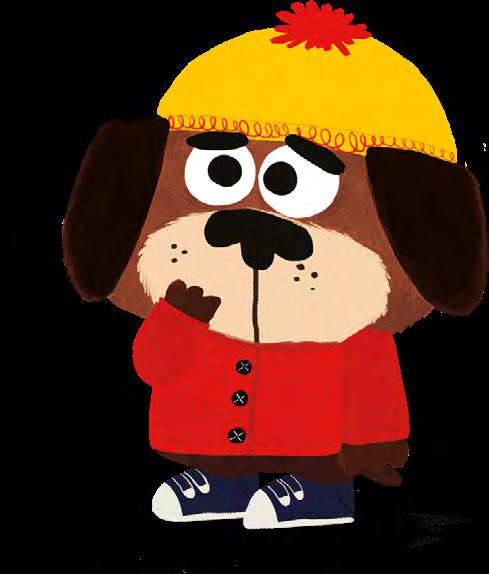
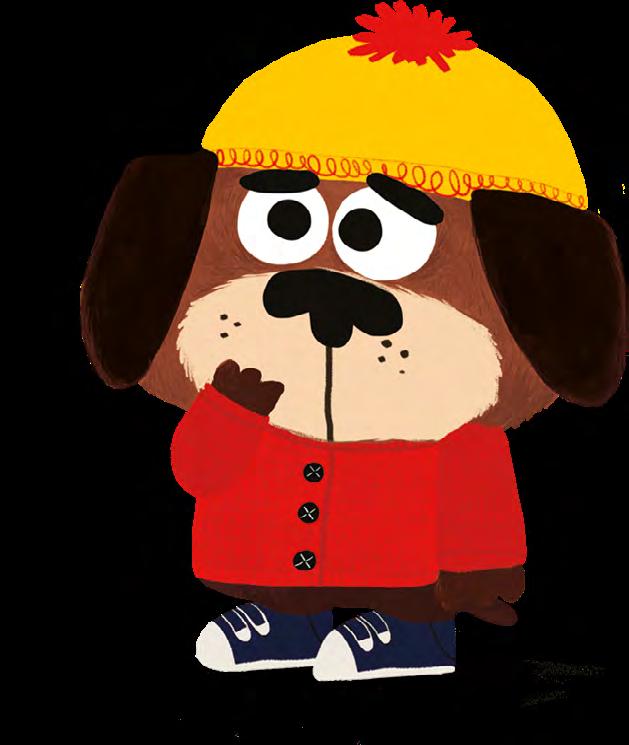
Geoffrey Gets the Jitters is Britten Sinfonia’s new Key Stage 1 Schools’ Concert, based on the book by Nadia Shireen and published by Penguin Books� The performance involves new music written by Fran Lobo and James Redwood with animations by Victor Craven, set design by Ruth Paton and stage direction by Hazel Gould With a focus on ways to deal with worries and feelings of anxiety, the show tells the story of Geoffrey and his Jitters in a light-hearted way, using live instruments, interactive songs and actions
This pack will:
• Suggest ways into the story and the music as preparation for the concert�
• Give some background information about the creative team, the Britten Sinfonia players and their instruments
• Put forward some ideas for extension activities you may like to do with your children�
The Story
This is a children’s book, although it’s actually a book for everyone It’s about how to keep our worries under control� It offers some really useful – and humorous – ways into discussions about some quite scary emotions, giving children (or anyone) practical strategies for putting the jitters in their place�
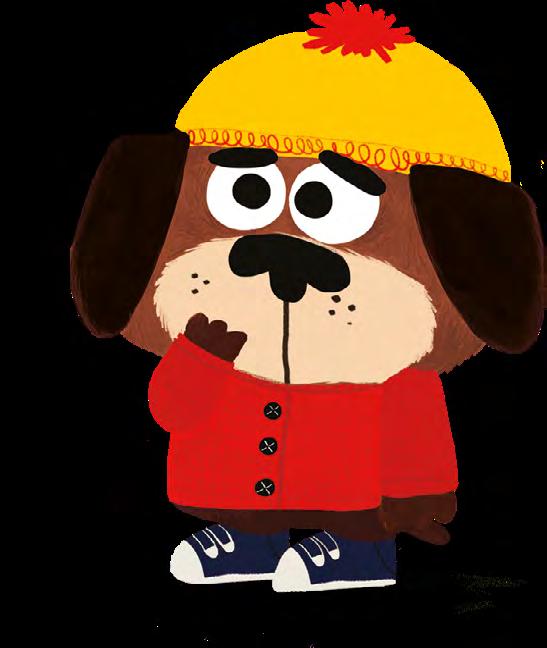
Geoffrey says he’s OK, but we soon realise that he’s not OK at all� We’re introduced to some of the worries that are giving him fluttery jitters in his tummy�
The jitters are clearly getting the better of our friend Geoffrey� His worries are getting out of control and, although he tries to hide from them, it doesn’t work
Geoffrey doesn’t like how the jitters are making him feel� He decides to talk to them to try to understand who they are, why they’re in his tummy and what he can do to sort them out�
Following their advice, taking some deep breaths and doing some slow, meditative, stretches, he starts to feel better, and he confronts his biggest jitter of all “Losing Big Dave”� He talks to his friend, Barbara, about all of this which helps enormously By the end of the show, Geoffrey really is OK�
Preparing for the Show
The Show
Our show tells the story with our presenter, Fran, as both the narrator and as Geoffrey’s friend, Barbara� It follows the book very closely, although there are some new encounters with specific types of jitter�
There is one difference which we feel is very important and could be the basis for a discussion with the children In the book, the jitter disappears completely In the show, the jitter becomes “tiny – small enough to fit inside his pocket� Far too small to cause any trouble”� Do our worries ever really go away completely, or do we just learn how to deal with them?
The show will be led by musician and presenter Fran Lobo along with musicians from Britten Sinfonia� Each performance will last about 50 minutes Children – and adults – will be encouraged to participate fully with the songs and the actions
In addition to sharing the book with your children, it would be great if you’re able to use this resource to help familiarise them with the songs, the actions and some of the other repertoire, prior to the show�
There are “Learn the Songs” videos and playlists available on our online resource hub which you can find here�
About Britten Sinfonia
Britten Sinfonia is a professional chamber orchestra and music education charity based in Cambridge and working across the East of England As well as being one of the UK’s leading ensembles and performing concerts worldwide, the orchestra is committed to bringing people together through highquality music making, incuding through its dedicated Learning & Participation programme
Nurturing new music is part of Britten Sinfonia’s DNA� From school halls to recording studios, the orchestra has a track record for commissioning and supporting composers at every stage of their career� It is therefore very exciting to be bringing Geoffrey’s story to life with brand new songs by Fran Lobo and music by James Redwood You and your children are some of the first people in the world to hear it!
Introducing the Creative Team
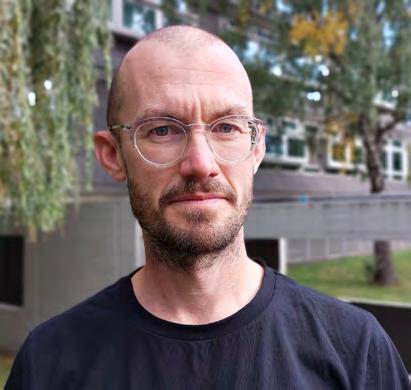
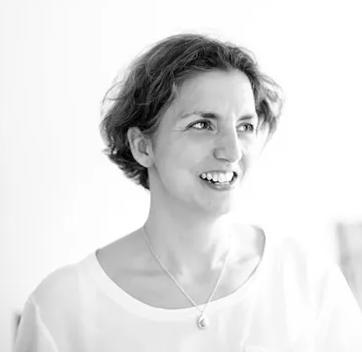
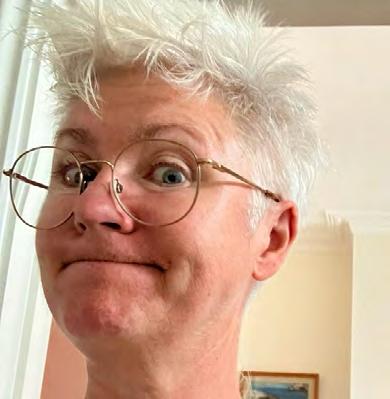
Nadia Shireen Author/Illustrator
Chris Bell Producer
Fran Lobo Presenter, Songwriter
James Redwood Composer
Hazel Gould Writer, Director
Ruth Paton Set Designer
Victor Craven Animation Designer
Sheena Masson Education Consultant
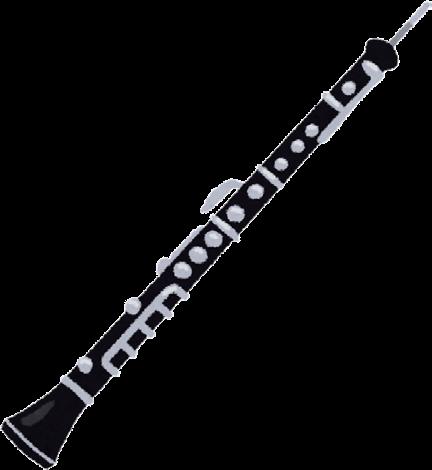
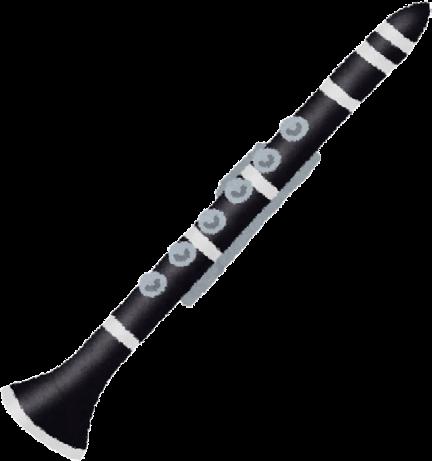
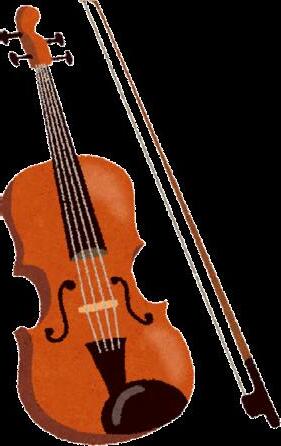
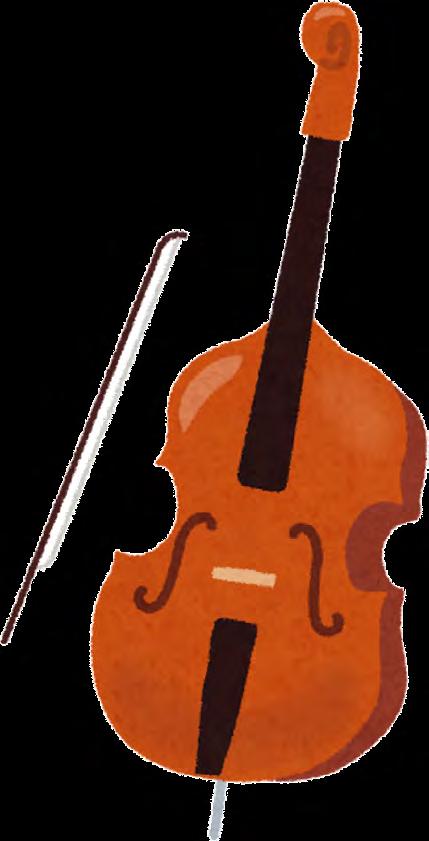
Meet the Instruments
The schools’ show will be accompanied by a Britten Sinfonia orchestra�
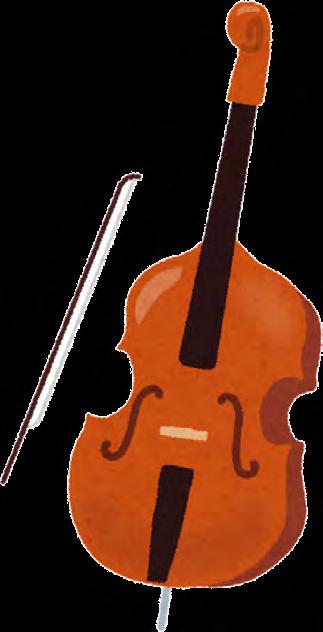
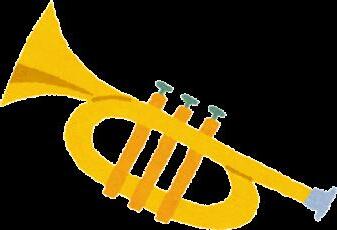
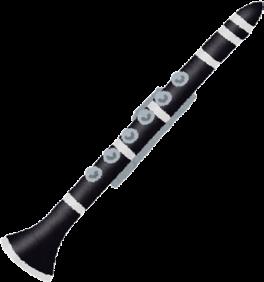
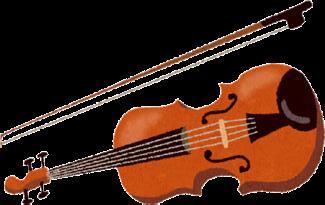
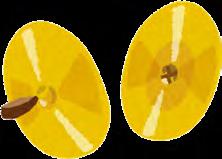
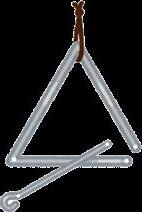
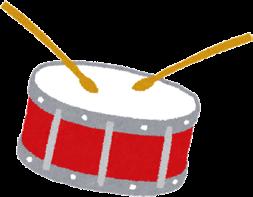
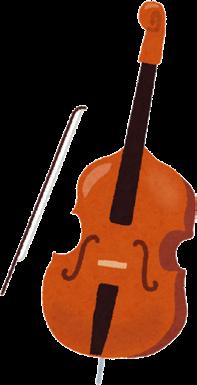
Some instruments you may see include:
To learn more about these instruments, consider watching this video
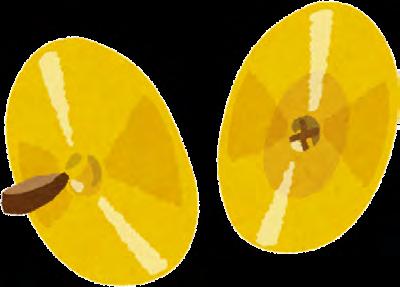
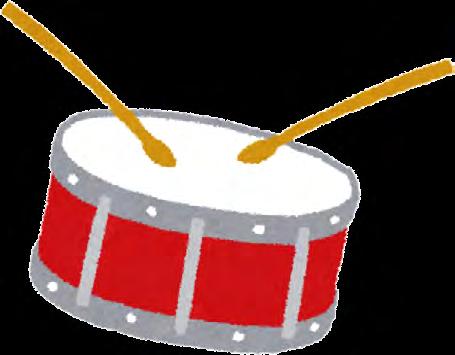
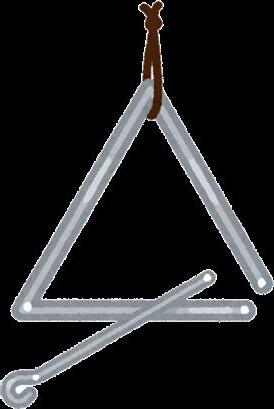
Percussion
Horn
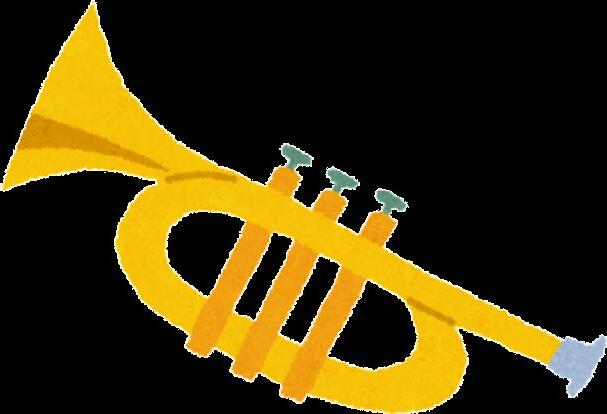
Trumpet
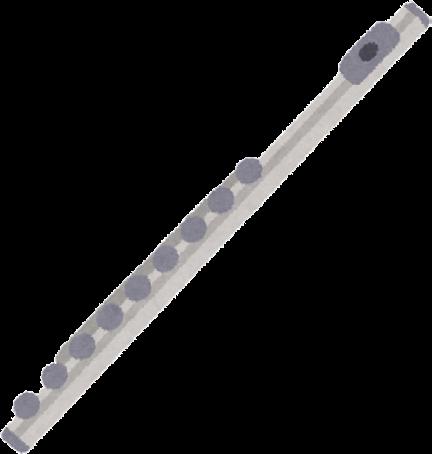
Flute
Oboe
Clarinet
Bassoon
Violin
Double Bass
Cello
Can you match the instruments to their
names?
Draw a line connecting an instrument to their name� One has been done for you as an example�
Bonus Activity
Can you name any of the four families these instruments are grouped into?
Learning the Songs
There are lyrics and movements for each song Fran teaches them in the Learn the Songs videos and will lead them in the show�
Hey! I’m OK
There are two versions of this song It’s the first thing we sing in the show and the last thing we sing! Warning – this is a real earworm; you will find yourself humming it constantly��� maybe it’s actually a Niggle
• At the beginning of the show, we sing a short version� This is when Geoffrey is saying he’s OK, when in fact he isn’t OK at all
• Each line is repeated, but the tune of each line is slightly different on the repeat – the endings change Can your children spot the differences?
• Another bit to focus on is the rhythm of “today”
Chorus 1
Hey! I’m OK, I’m OK Hey! I’m OK, I’m OK And nothing will get in my way today And nothing will get in my way today
Chorus 2
Woah! I’m just fine, I’m just fine Woah! I’m just fine, I’m just fine
Having an easy breezy , easy breezy time
Having an easy breezy, easy breezy time
Coda
Yes, Geoffrey would say to you I’m absolutely, most completely, positively, definitely OK !
•
We sing the song again at the end of the show when (no spoilers) Geoffrey really is OK
• The two choruses are sung again, but we also get a verse to sing�
• It’s worth spending a bit of time checking the children learn the rhythms of the verse correctly� Make it into a rhythm game – clap a phrase eg “if you ever wonder” – and see if the children can recognise it?
• There are some lovely vocal slides in the verse which the children will enjoy� Copy Fran!
Verse
(clap) If you ever wonder who I am I’m as cool as a cucumber, as happy as a clam A ray of sunshine, I light up the room! I’m on cloud nine – I’m over the moon!
Then we’re back to “Hey! I’m OK...“
• The song ends with an echo section. Fran will sing a phrase and the children will copy�
• The very last phrase is sung in unison, everyone singing the same thing together� This last phrase is marked “Molto Ritardando” – a big slow down - and a grand finish to the show
C h i l d r e n
L i ve l y q = 9 0
C h o r u s ( H e y I ' m O k ! )
C h i l d r e n
C h i l d r e n
C h i l d r e n
C h i l d r e n
C h i l d r e n
C h i l d r e n
C h i l d r e n e a s y - b r e e z y, - e a s y - b r e e z y - t i m e 1 5 4 4 & >
S
H e y! I ’ m O K I ' m O K
H e y! I ’ m O . K . I ' m O . K . A n d 3
n o t h i n g - wi l l g e t i n m y wa y t o d a y a n d 5
n o t h i n g - wi l l g e t i n m y wa y t o d a y7
C h o r u s ( W o a h I ' m ju s t f i n e ! ) 9
W o a h ! I ' m j u s t f i n e , I ' m j u s t f i n e !
W o a h ! I ' m j u s t f i n e , I ' m j u s t f i n e ! H a vi n ' a n 11
e a s y - b r e e z y, - e a s y - b r
C h i l d r e n
C h i l d r e n
L i ve l y q = 9 0
C h o r u s ( H e y I ' m O k ! )
H e y! I ’ m O . K . I ' m O . K .
H e y! I ’ m O . K . I ' m O . K . A n d
C h i l d r e n
n o t h i n g - wi l l g e t i n m y wa y t o d a y a n d
C h i l d r e n n o t h i n g - wi l l g e t i n m y wa y t o d a y7 9
F r a n
C h o r u s ( Wo a h I ' m j u s t fi n e ! ) 1 2
C h i l d r e n W o a h ! I ' m j u s t f i n e , I ' m j u s t f i n e !
C h i l d r e n W o a h ! I ' m j u s t f i n e , I ' m j u s t f i n e ! H a vi n ' a n 1 4
C h i l d r e n e a s y
F r a n
Ve r s e
2 3
C h i l d r e n
I f yo u e ve r - wo n d e r - wh o I a m I ' m a s
2 5
C h i l d r e n
2 7
C h i l d r e n
2 9
C h i l d r e n
c o o l a s a c u c u m - b e r - a s h a p p y - a s a c l a m - A
C h i l d r e n
r a y o f s u n s h i n e , - I l i g h t u p t h e r o o m ! I ' m
o n c l o u d n i n e
I n s t r u m e n t a l 3 1
I ' m o ve r t h e m o o n !
C h o r u s ( H e y I ' m O k ! ) 3 6
C h i l d r e n
H e y! I ’ m O . K . I ' m O . K .
3 8
C h i l d r e n H e y! I ’ m O K I ' m
C h i l d r e n
n o t h i n g - wi l l g e t i n m y wa y t
C
i l
C h i l d r e n W o a h ! I ' m j u s
C h i l d r e n
Hot and Sweaty
The jitters get worse and it all gets too much for poor old Geoffrey
The song is marked “Urgent” and there is a definite urgency about the accompaniment Can the children find ways to describe the introduction?
The song starts with the Jitter Warm Up which Fran will teach the children Then there is some chanting, which happens in two different ways:
Firstly it’s an echo:
And then it’s a call and response:
• Practice this with the actions Fran teaches – or the children can make up their own�
• Practice it, responding to a conductor using louder / quieter voices
• Practice with body percussion eg one group claps on “hot” and another group replies with leg pats for “and sweaty”� Switch round� Get children to come up with different sounds�
• Do the same thing but with untuned instruments, both as an echo and as a call and response
The children sing the first of two choruses and the urgency continues with a lot of spikey syncopation NB watch out for how some of the words are on the beat and some are off the beat� The actions will help; the children just need to watch Fran!
Chorus 1
Geo ffrey was feeling hot and sweaty
Suddenly everything felt too bright
Heart was pounding, legs like spaghetti Poor old Geoffrey he wasn’t right
Fran then sings the first verse� The children don’t need to learn this, but we suspect that once they’ve heard it a few times, they will want to sing along which is absolutely fine with us!
Verse 1 (Fran)
The jitters were taking over Growing big and strong Throwing a jitter-party in his tummy
Inviting all his jittery friends along – friends along – friends along -
The children then get another chorus – same tune, pretty much the same rhythm, different words
Chorus 2
Geoffrey was breathing fast and shallow
Suddenly everything seemed too loud
Mouth was a desert, brain marshmallow Trapped underneath a thunder cloud
Then it’s back to Fran for a second verse
Verse 2 (Fran)
The Jitters were multiplying, rising up inside Out of control and getting really frantic Geoffrey only wanted to run and hide – run and hide – run and hide –
The song finishes as it started, with the echo section:-
Fran - Hot! And sweaty! Hot! Hot! And Sweaty!
Children - Hot! And sweaty! Hot! Hot! And Sweaty!
S o n g s b y F
U r g e n t ( q = 1 2 0 )
C h a n t - C a l l a n d r e s p o n s e
F r a n
A l l Vo i c e s
F r a n
C h i l d r e n
H o t ! a n d s we a t y! H o t ! H o t ! A n d s we a t y!
H o t ! a n d s we a t y! H o t ! H o t ! A n d s we a t y! 5
F r a n I n s t r u m e n t a l 9
F r a n
C h i l d r e n
F r a n
C h i l d r e n
F r a n I n s t r u m e n t a l 2 1 4 4 4 4 &
H o t ! a n d s we a t y! H o t ! H o t ! A n d s we a t y!
H o t ! a n d s we a t y! H o t ! H o t ! A n d s we a t y!
H o t ! H o t ! H o t ! H o t ! H o t ! H o t !
C h a n t i n 2 p a r t s 1 3 a n d s we a t y! - a n d s we a t y! - a n d s we a t y! - a n d s we at y!
H o t ! H o t ! H o t ! H o t ! H o t ! H o t ! 1 7
a n d s we a t y! - a n d
C h i l d r e n
C h o r u s 1 ( H o t a n d S we a t y) 2 5
G e o � �
2 8
C h i l d r e n
r e y - wa f e e l i n ' - h o t a n d s we a t y - S u d d e n - l y - e v r y - t h i n g - f e l t
t o o b r i g h t ! H e a r t wa s p o u n d i n g , - l e g s l i k e s p a g h e t - t i , -
3 1
°
F r a n
C h i l d r e n T h e
¢
p o o r o l d G e o � r y - h e wa s n ' t - r i g h t !
Ve r s e 1 ( T a k i n g O ve r ) 3 7
F r a n
Ji t t e r s - we r e t a k i n ' - o ve r -
G r o w i n g - b i g a n d s t r o n g
F r a n
F r a n
C h i l d r e n
T h r o w i n ' - a Ji t t e r - p a r t y - i n h i s t u m m y, - i n vi - t i n g - a l l h i s Ji t t e r - y - f r i e n d s
a l o n g , - f r i e n d s a l o n g - f r i
I n t r o C h o
G e o � r y - wa s b r e a t h i n g - f a s t a n d s h a l l o w -
C h i l d r e n
s u d d e n - l y e v e r y - t h i n g - s e e
Ve r s e 2 ( M u l t i p l yi n g )
6 5
F r a n Ji t t e r s - we r e m u l t i p - p l y - i n g , - r i s i n g - u p i n s i d e -
F r a n
n
F
n
Hiya! We’re the Jitters!
How could anyone be worried about Jitters who sing a silly song like this one!
Chorus
Hiya! We’re the Jitters
We’re wibbaly and wobbaly, jiggaly and joggaly
Hiya! We’re the Jitters!
If you’re worried or scared, we’ll be there
At the end of this song, the children will be split into two groups, with Fran adding a third part to perform the “We’re the Jitters” canon.
The two children’s groups follow on directly after Fran – one after the other “We’re the Jitters We’re the Jitters� We’re the Jitters”
NB watch out for the gap before the final “We’re the Jitters” which everyone does together�
C h i l d r e n
C h i l d r e n
L a z y a n d S i l l y q . = 1 0 8
C h o r u s 1
H i ya ! - W e ' r e t h e Ji t t e r s ! - W e ' r e
wi b b a - l y - a n d wo b b a - l y, - j i g g a - l y - a n d j o g g a - l y! -
C h i l d r e n H i ya ! - W e ' r e t h e Ji t t e r s ! - I f yo u ' r e 5
C h i l d r e n
wo r r i e d - o r s c a r e d we ' l l b e t h e r e 7
S p o k e n T e xt 9
F r a n
C h o r u s 2 1 7
C h i l d r e n H i ya ! -
C h i l d r e n
C h i l d r e n
wi b b a - l y - a n d wo b b a - l y, - j i g g a - l y - a n d j o g g a -
Mindful Movements
There is a point in the show where Fran will lead the children in some gentle, relaxing movements to help calm the Jitters� There will be some deep breathing, some stretching and some slow, controlled movements to follow and copy There’s nothing in particular to practice ahead of this, although it is a really lovely thing to do with your class� And you can take an opportunity to listen to “Night” by Florence Price�
Other bits of repertoire you’ll hear during the show
In addition to learning the songs, it would be great if the children could be familiar with these pieces of music before the concert� Here is a bit of background information for each of the pieces and some ideas to help with listening�
Baga Yaga
Where does it fit in the story?
Geoffrey’s worries are getting a bit out of hand and he’s imagining all sorts of terrible things are going to happen� He thinks there are dinosaurs stomping all over him!
Baba Yaga - The Hut on Fowl’s Legs from Pictures at an Exhibition, by Modest Mussorgsky (1839 –1881)
Written in 1874 by Russian composer Modest Mussorgsky, Baba Yaga – the Hut on Fowl’s Legs, is part of a suite of music called “Pictures at an Exhibition”� The whole suite is a musical reflection of an actual art exhibition, with each bit of music representing one of the paintings� Our painting / bit of music is Baba Yaga – the Hut on Fowl’s Legs It was originally written for solo piano, but over the years it has been arranged by lots of composers for different groups of instruments – from Ravel’s arrangement for full symphony orchestra to Emerson, Lake and Palmer’s prog rock version to the Britten Sinfonia version you will hear in the show
Baba Yaga is a character in Slavic folk tales Sometimes she appears as a scary, ferocious old woman Sometimes she appears as friendly and helpful�
Ravel’s arrangement for full symphony orchestra
Emerson, Lake and Palmer’s prog rock version
In the Classroom
Listen to the opening of the music
Which version of Baba Yaga do the children think is depicted here?
Here’s an idea���
“Oh no! ---
Look what’s there!---
Big creatues!
Can they come up with some words to fit the rhythm of the very first bit of the piece?
The music definitely sounds as if something is about to happen and it sounds like it might be quite scary� What do the children think it might be��?
The first time we hear this music, Geoffrey has gone to his tent in the garden, thinking that he can get away from his Jitters We don’t hear much of this calm music first time round because the Jitters come back! We hear it again as Fran leads the children in some deep breathing and some stretching - and the Jitters start to disappear
The Music... Night, by Florence Price (1887 – 1953)
This beautiful piece was written by African American composer Flornece Price, in 1946� We will hear an instrumental version, but it was originally a song, a setting of a poem by a poet, known to Florence Price, called Louise C Wallace (1902 – 1973) You can hear it sung here
Night comes, a Madonna clad in scented blue.
Rose red her mouth and deep her eyes, She lights her stars, and turns to where,
Beneath her silver lamp the moon,
Upon a couch of shadow lies
A dreamy child,
The wearied day
In the Classroom
Listen to Florence Price’s Night with your children What sort of night does the music describe? (peaceful, calm, beautiful, gentle )
Geoffrey uses this music to help him feel calmer�
Maybe the children have a piece of music they like to listen to help them feel calm?
In pairs, ask children to describe the things they do to help them relax
• Go for a walk?
• Look at / feel the weather?
• Watch the clouds / the sky?
• Dance?
• Play an instrument?
• Play a game with a friend?
• Draw a picture?
In the show, the children will be following Fran’s calming movements Use the recording of the music and get the children to follow your movements� Choose children to be “leader” and get the others to follow� Get the children to work in pairs, mirroring each other’s movements�
In the extension activities section later in the pack, there are some more ideas using this music as a starting point and links to some online relaxation and mindfulness activities. Do your children have special things or places or people they think about that make them feel warm and comfy?
“Night” - Song - Lyrics by Louise C. Wallace
Introducing ‘The Worries’
The Brood
Something happened a long time ago, but the Brood is still thinking about it�
Where does it fit in the story?
Geoffrey is having a good look at some of the jitters around him and is discovering the different types of worries There is “A very useful guide” at the back of the book
The Music... Chamber Symphony in C Minor Opus 110a, by Dmitri Shostakovich (1906 – 1975)
Dmitri Shostakovich was a Soviet – era Russian composer and pianist� The piece we hear is a Chamber Symphony based on one of his string quartets (No 8) Written in 1960, this piece was completed in only three days A note on the score tells us that it is dedicated “to the victims of fascism and war” Not an up-beat piece of music, it certainly sets the scene for our Brood�
In the Classroom
What is brooding? People sometimes say they’re “brooding over” something - something that’s just not right Rather than getting it sorted out, you find yourself going over and over it in your head - you can’t stop thinking about it – you Brood over it�
Can your children think of any examples of a Brood…?
• Maybe a falling out with a friend� And all it would take is a “sorry”?
• Maybe someone has upset you It may be that they don’t know Perhaps what you need to do is talk to them?
We’ve all experienced a Brood
How does a Brood make you feel?
How do you feel when you finally get round to doing something about it?
Listening and Watching
Listening can often be enhanced by watching something at the same time� There are a number of good videos of this piece on YouTube�
Talk to the children about the instruments they are seeing – all the strings of the orchestra, violin, viola, ‘cello and double bass Get them to watch and listen out for how the music is passed from one section of instruments to another� This is perhaps easier to see by following and listening to the music score� (In the show we hear the first 26 bars of the piece – about a minute of listening�)
The opening of the piece is slow, dark, moody and broody� It starts with the lower strings, the cellos and basses, introducing a short pattern of notes that moves in steps The Brood grows as a canon, with this pattern being repeated by the violas, then the second violins, then the first violins until all the instruments are playing�
Help the children to hear as the different instruments join in - following the score as it plays� You don’t need to be able to read the notes to see how the different parts join in�
Can the children hear the section when all the instruments play that pattern of notes all together? (part way through bar 11 and then again part way through bar 23)
There’s one bit where the first violins play some short, loud, spikey notes that jump out of the broodiness of the rest of the piece Did the children notice them in the video? Can they spot where they are in the score? (bar 16)
The Niggle
Every now and then the Niggle will poke you with a tiny stick and remind you about something annoying
Where does it fit in the story?
Geoffrey is having a good look at some of the jitters around him and is discovering the different types of worries� There is “A very useful guide” at the back of the book�
The Music... Pay Close Attention, by Cheryl
Frances–Hoad (b1980)
Cheryl Frances-Hoad is a British composer born in 1980 She started to learn the cello when she was seven and at the age of 15, she won the BBC Young Composer of the Year award
In the show we hear the beginning of her piece “Pay Close Attention” which she wrote in 2009� Cheryl says that the piece was “subliminally influenced” by The Prodigy’s Experience album
Pay Close Attention
In the Classroom
The Prodigy’s Experience album
In terms of worries, Niggles tend to be quite small and are often things that keep happening - unless we decide to do something about them�
Sometimes we have a Niggle about something someone else is doing� And they may not even know they’re causing a Niggle! Things may be a Niggle to one person, but not bother another person at all�
Can your children think of any examples of a Niggle?
• Maybe someone constantly taps their foot
• Maybe your brother or sister always leaves the door open when they go out of room
• Maybe you just can’t get a song out of your head����!
What’s the best way to deal with a Niggle?
Listening - In the show we only hear the first 36 seconds of the piece, but this is enough to tell that the piano and the strings have had enough of each other� They are clearly Niggling each other� The strings are trying to wind-up the piano – it’s almost as if they are laughing at it The piano is being very grumpy and mono-syllabic in its response�
Can your children describe what’s happening between the instruments at the beginning of the piece?
How many times do we hear the piano saying “No!” in response to the strings? (6)
The next bit of the piece is more question and answer between the instruments, with the piano having more of a say
Our extract finishes with the strings playing a rhythmic pattern that we hear five times – getting louder and more insistent each time
The Panic
Has lost control! Is going to run around screaming! Is wearing pants on its head!
The Music... Romanian Folk Dances VI & VII (Fast Dance), by Bela Bartok (1881 - 1945)
Bela Bartok was a Hungarian composer and one of the first ethnomusicologists� He was fascinated by Hungarian, Slovak, Romanian and Bulgarian folk music and incorporated many folk melodies in his own compositions
The whole set of Bartok’s Romanian Folk Dances is short – seven dances in a little over six minutes In the show we get to hear the Marunţel (Fast Dance).
In the Classroom
A Panic can be a bit of a scary worry as it tends to try and take over
Does Geoffrey have a Panic in our story?
What are the things that Geoffrey does to get the Panic under control? Deep breathing and mindful stretching definitely help Geoffrey The image of a Panic wearing pants on its head is also very useful!
Listening and Moving
Dances VI and VII are both called “Fast Dance” – although I think one should be called “Fast Dance” and the next should be “Faster Dance”!
• How do your children respond physically when they first hear the music?
• Can they explain why it makes them want to move like that?
It’s a dance It has a very strong sense of pulse The phrases are repetitive and, in many ways, predictable� But the music becomes increasingly frenzied and there’s a sense of trying to get away from something There are many notes, played very fast, but they never seem to get anywhere – the dance takes them round and round in circles, although eventually it does slow down and stop�
Both these dances are great for helping children to feel a pulse and to internalise phrases
Can the children feel the counts of eight? (there are arguably four counts of eight in the first piece and twelve counts of eight in the second piece, plus a fancy bit added on the end)�
Use body percussion / simple movements to play my turn / your turn games with the children eg you do a movement for 8 / the children copy the movement Change the movement Get children to lead Get the children to work in pairs with one leading / one copying Swap round
Can the children devise a sequence of movements to fit with the piece and to fit with the feeling of the frenzy of the piece? This might be better in a hall space rather than in the classroom�
Ideas for Extension Activities
While we don’t want to encourage children to invent worries they don’t have (!), this book is a fantastic vehicle for normalising feelings of anxiety – it’s OK to sometimes be a bit worried – but there are things you can do to make sure these worries don’t get out of hand
The book, and our show, offer strategies for exploring this, using language, music, songs and movement, giving you a funny, accessible way into exploring some tough themes�
Ideas for using talk and writing
Look at the pictures of Geoffrey at the beginning of the book
• How do the pictures tell us how he’s feeling?
• What sort of things might you say to a friend if they’re looking a bit anxious or unhappy?
• What sort of things might you be able to do to help?
• What sort of things help you if you’re worried about something?
It can sometimes be easier for a child to use a puppet as a surrogate discussion partner to talk things over with You probably have puppets in class, but you might like to get children to create their own sock puppets�
Use some of the children’s ideas and words about things they do to make them feel calm and happy and create a class poem� Record the children reading this along with Florence Price’s Night� Or maybe create some words to go along with some gentle music the children have created
Ask the children to re-tell the story in their own words – maybe encourage them to do illustrations first and then fill in the words�
Can the children use Geoffrey’s story as a model for one of their own about a different character?
Write a book review or a presentation for other people telling them about the book and its important message If practical, record or film the presentations
Relaxation and Mindfulness
Thinking about finding ways of relaxing, have a look at some of these resources from BBC Children in Need – especially the “Mindfulness Take a Brain Break Activity Cards” - And here are some general advice about how to help children come to terms with their fears from BBC Tiny Happy People
Ideas for Creative Music Making
• Composing is a big word for making decisions about how we control and organise sounds�
• Give your children the opportunity to investigate sounds – their own voices, body percussion, found sounds, instruments you have access to
• Encourage your children to find ways of controlling sounds – playing them louder/quieter, faster/ slower, changing pitch – making them higher/lower
• Encourage improvising – making it up as you go along
• Show them how to use questions to help them make decisions about how they would like their music to sound
How will my music start?
Shall I change this idea / pattern?
Should it be louder / quieter?
Should it be faster / slower?
How many sections are there?
Are any sections repeated?
How will my music end?
Making decisions about how they want their music to sound is an indication of musical intention and, although it may sound like nothing on earth, if there is musical intention, then we are well on the way to composing
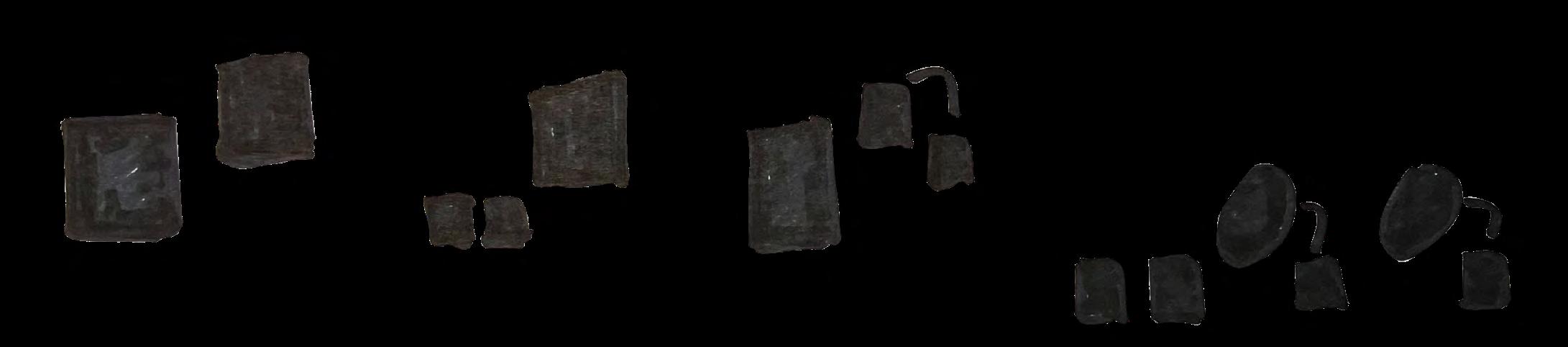
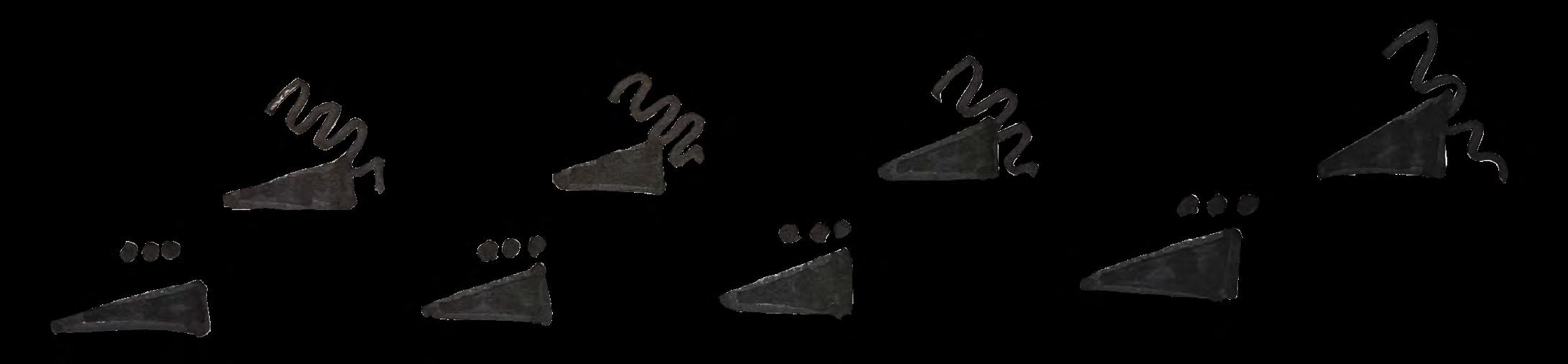
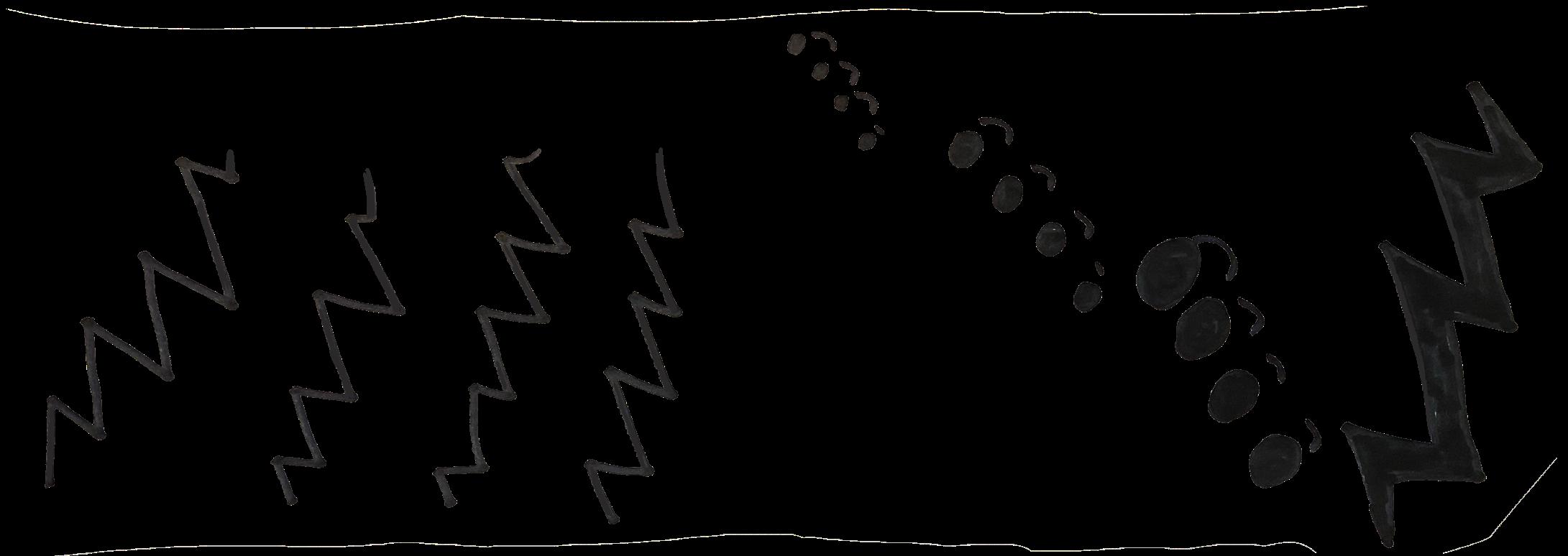
Get children to find ways of representing the sounds they make by drawing / creating symbols - these representations / these works of art are sometimes called graphic scores Conversely, create symbols for them to recreate in sound� Understanding that music can be represented by written symbols is the beginning of understanding musical notation�
Encourage your children to think about the difference between silence and sound, and between stillness and movement
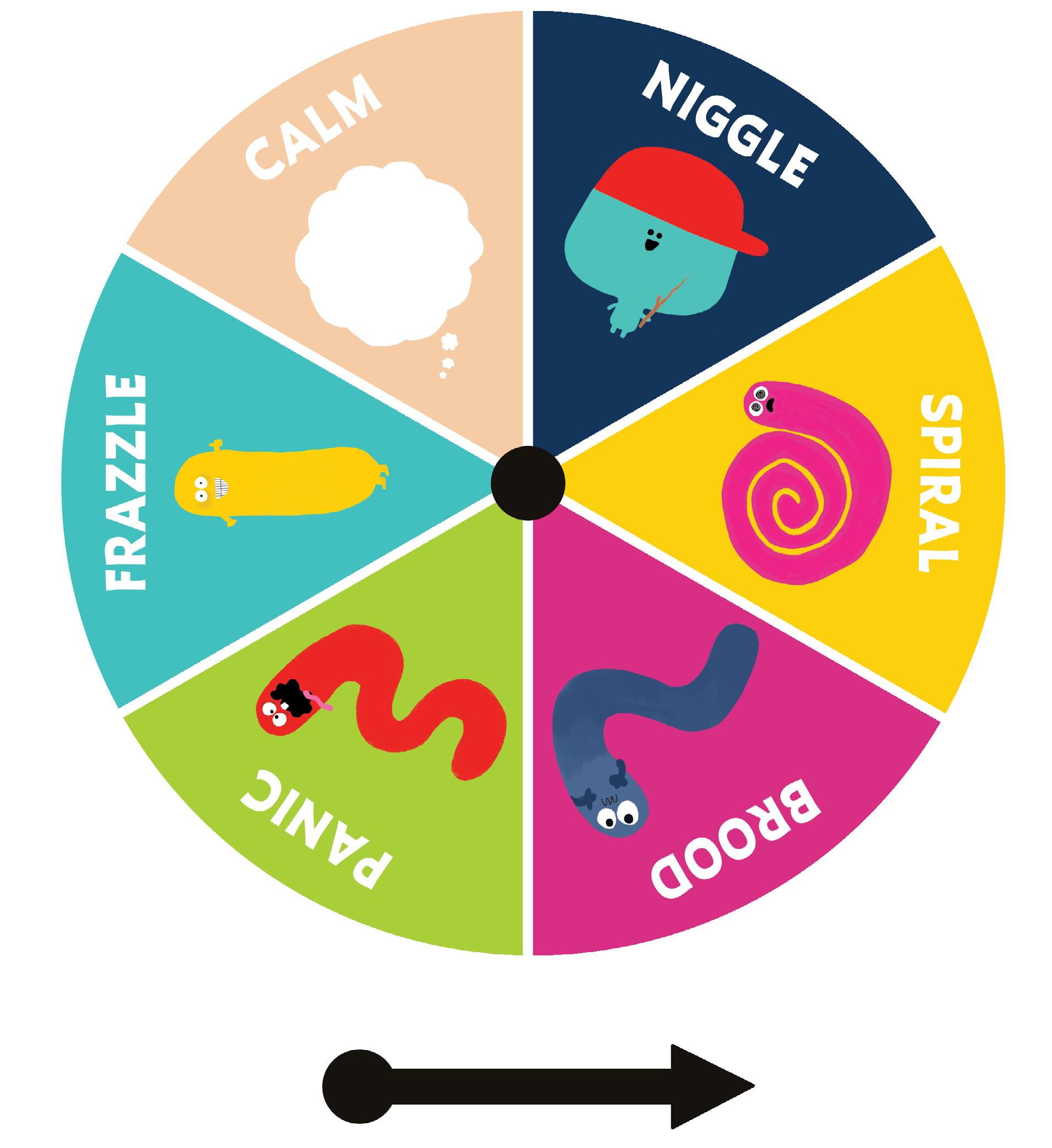
The Musical Worry Spinner
Children work in small groups to make up short motifs / bits of music, possibly incorporating movements, for a Worry – using voices, body percussion and instruments if you have them� Each group has one Worry
Use a spinner indicating the different Worries, a bit like this one below� When the pointer lands on a group’s Worry, that group performs their piece
CALM involves everyone in a long slow breath in and out
PANIC is everyone at once!
You may want to use more Worries / incorporate some of the Worries the children have designed themselves�
You can use this spinner or make your own!
Baba Yaga and the Dinosaur Chase
The beginning of Mussorgsky’s Baba Yaga is a wonderful starting point for all sorts of creative work
Use the rhythm of the opening section to create a chant or use the words below This can be an introduction to your piece�
“Oh no! --Look what’s there!--Big creatues! Geoffrey’s very worried!
• Use your biggest drums to play the rhythm of the words
As Mussorgsky’s piece gets going, it sounds like a chase or maybe a game of hide and seek� There are a lot of question and answer phrases too�
Use classroom percussion instruments to recreate the idea of a chase�
• Organise instruments into section eg woodblocks / drums / shakers / metal instruments and practise my turn / your turn with the children copying your rhythm�
• Extend this by getting each section to follow the other eg you play a pattern – the woodblocks copy – followed straight on by the drums – followed straight on by the shakers…
• Once you’ve modelled this, get individual children to lead�
• Extend this by getting the children to work in small groups eg four children, each with a different instrument�
• Essentially this is an exercise turn taking / musical anticipation and listening to / internalising rhythms
• If children are struggling to come up with / remember rhythms, start with word rhythms�
• If you don’t have access to instruments then this works equally well using body percussion
Graphic scores
A graphic score is visual representation of a piece of music
We’ve included an example of a graphic score for the first bit of Baba Yaga
There’s no right or wrong in a graphic score; the visuals need to be meaningful to the children who created them
• Any music the children create themselves can usefully be recorded as graphic scores
• It works the other way too – ie any visual art the children create can be interpreted in sound�
• The third part of the cycle is movement – any music or soundscapes the children create can be interpreted in dance / movement�
SOUND
VISUAL ART MOVEMENT
Music for relaxing movements
What sort of sounds do the children think would be useful for creating music for some relaxation movements? Slow, sustained, gentle, quiet�
Choose some instruments that may work Indian bells? Triangles? Chime bars / metallophone? A piano with a sustain pedal?
What about children’s voices?
Record the music the children create and use this as the background for them reading their own poems / a class poem�
Ideas for Visual Art
Visual
response to music
Drawing / painting can be a very calming activity – taking your pencil/brush for a walk whilst listing to a piece of calming music
You can also use drawing / painting to respond to less-calming music��� Ask your children to draw the first minute or so of Mussorgsky’s Baba Yaga!
Visual responses to piece of music can become graphic scores – the children can use them as the starting point for making up their own music or movements – see the cycle above!
Create your own Jitter - Invite the children to draw / paint / design a Jitter / a Worry of their own
• What is it called?
• What makes it special?
• What do you do to make sure it stays under control?
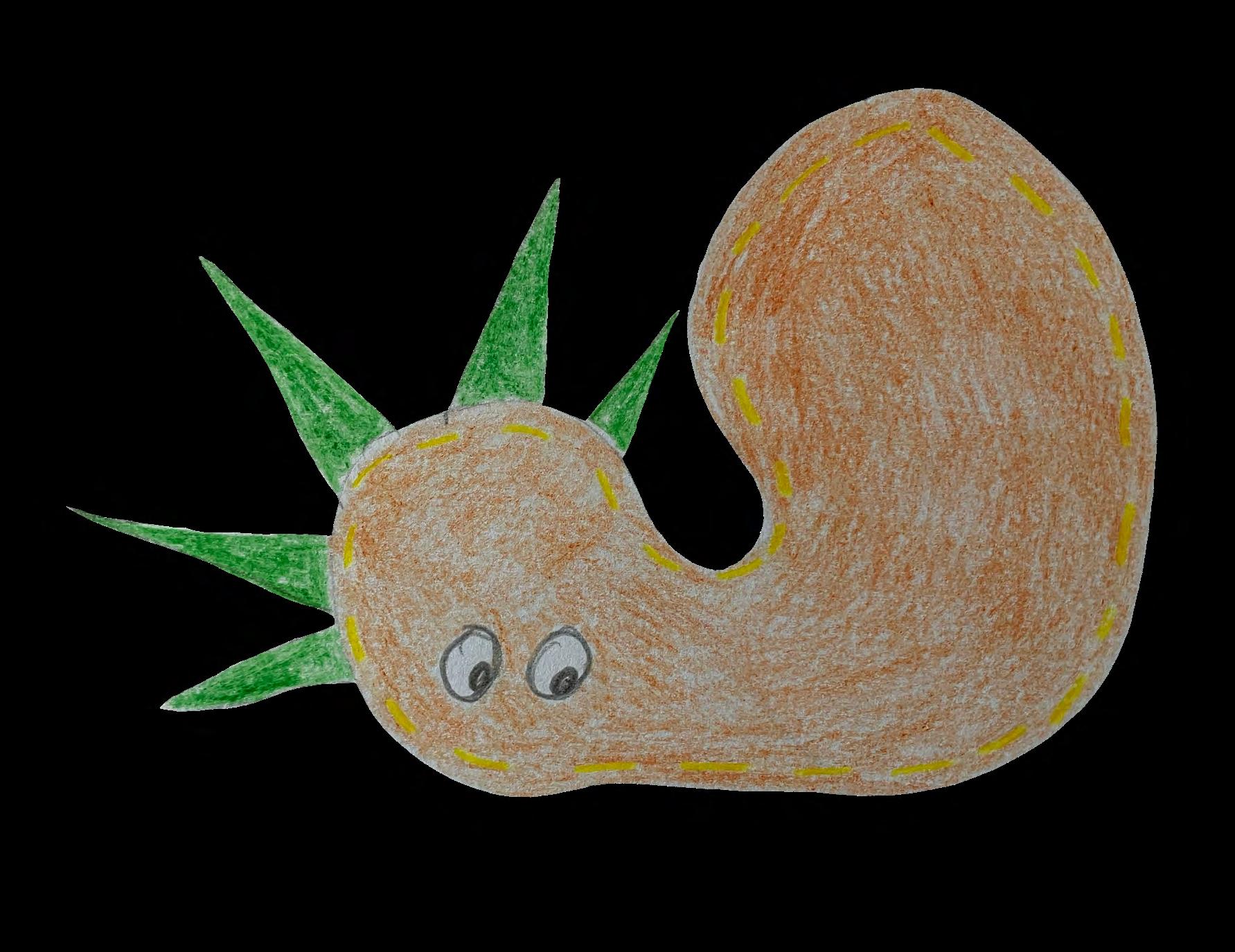
Here’s my design for a new Jitter
• It’s called a Daunt
• It usually turns up when you’ve got something you need to do and you really don’t think you’re going to be able to do it
• The best way of keeping a Daunt under control is to look at what you have to do and work out how you can break the job down into easy stages – take it one little step at a time� The Daunt will soon leave you alone!
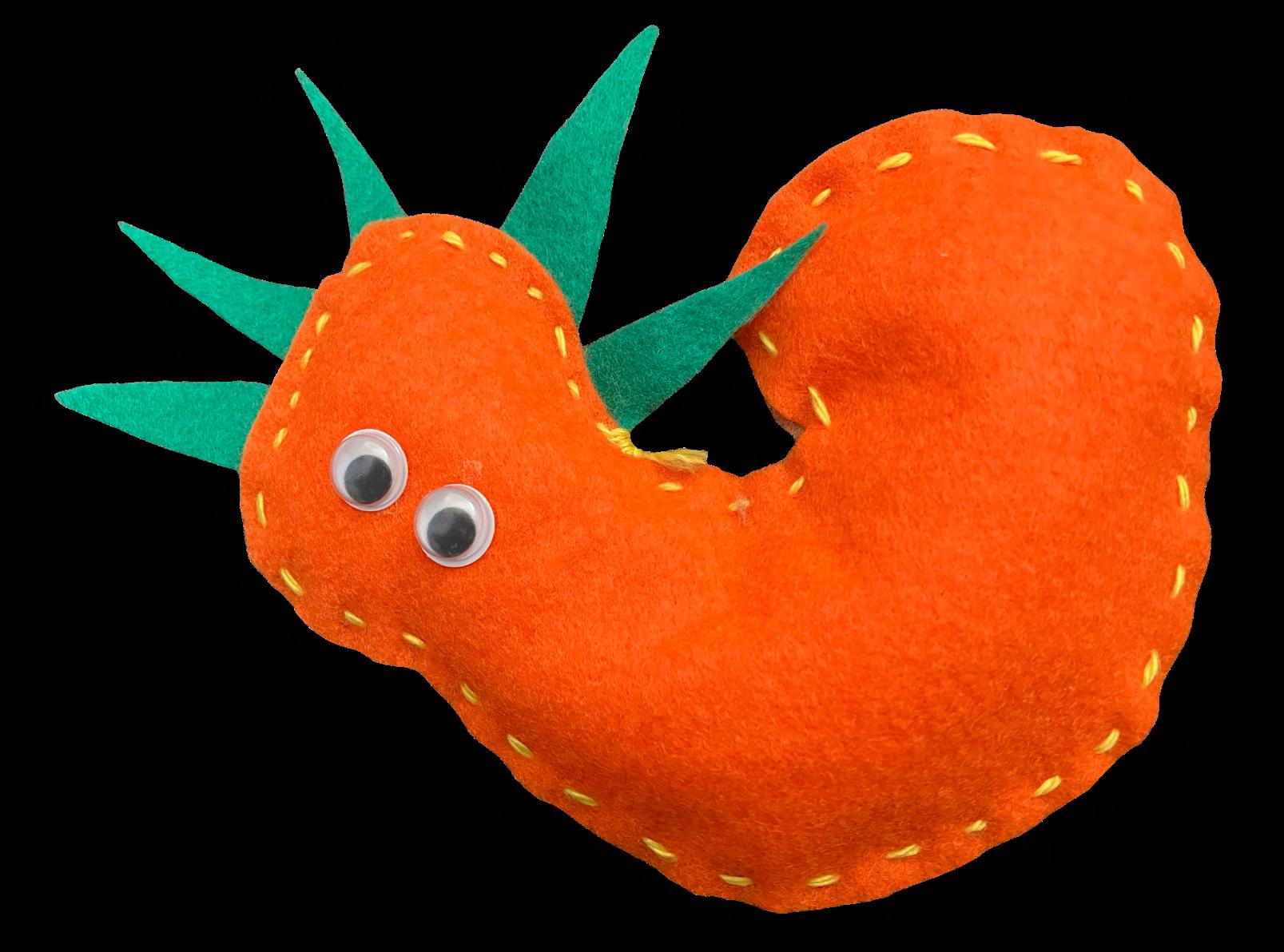
Here’s my fabric Daunt.
• I used a paper template of my design, pinned to two pieces of felt
• I cut round the template and removed it�
• With the two bits of felt still pinned together, I stitched round the perimeter, leaving a gap to pop some stuffing in� NB I also added some spiky bits, but that might be a bit fiddly for little hands�
The eyes are little plastic eyes just stuck on, but you could use bits of fabric
Make it move It might be one step too far, but once you’ve made your new jitter, it’s ever so easy to create a short animation using I Can Animate or another animation app…
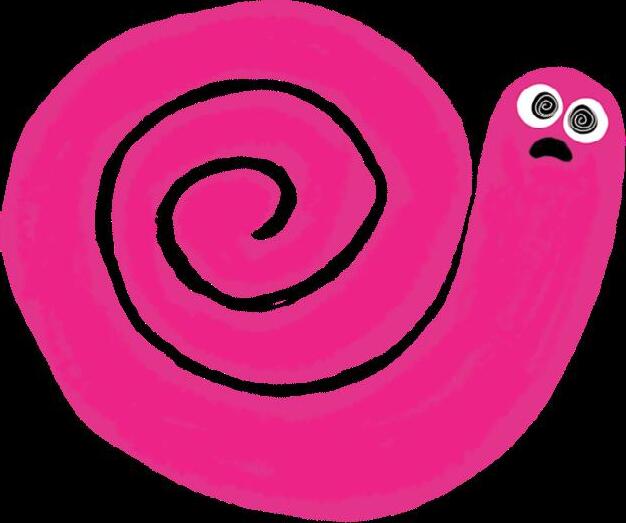
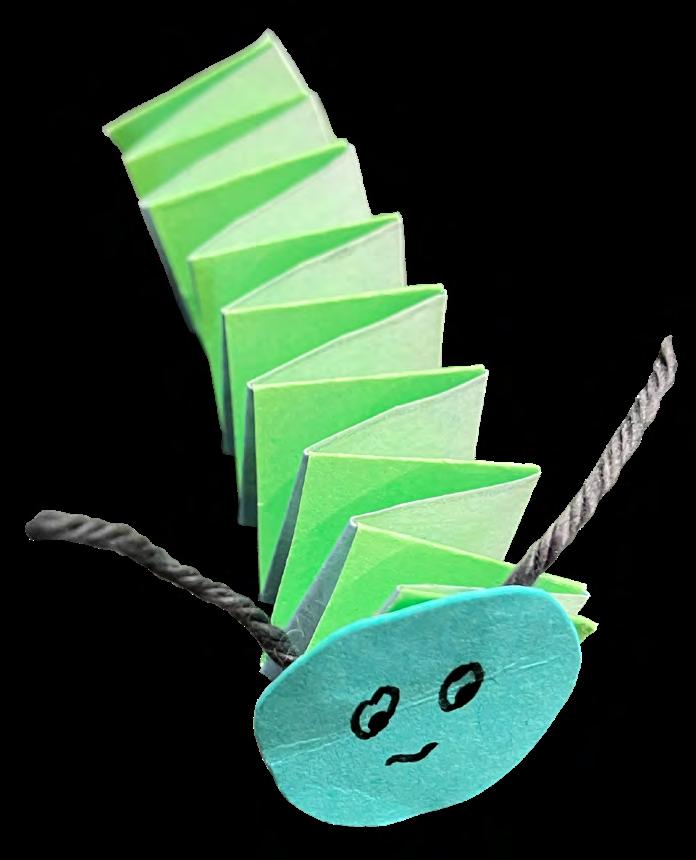
Create a 3D paper Jitter
You’ll need two strips of paper about 2cm wide and 30 cm long – by changing the width and length of the paper strips you can change the character of your jitter
You’ll need a face for your jitter and any other adornments you fancy – I’ve put some long antennae on mine
You’ll need a small blob of glue or a glue stick�
Hold the ends of the strips at right-angles to each other and glue them together�
Fold the strips one over the other over the other over the other to create a sort of spiral concertina Do this until you run out of strip Stick the ends together
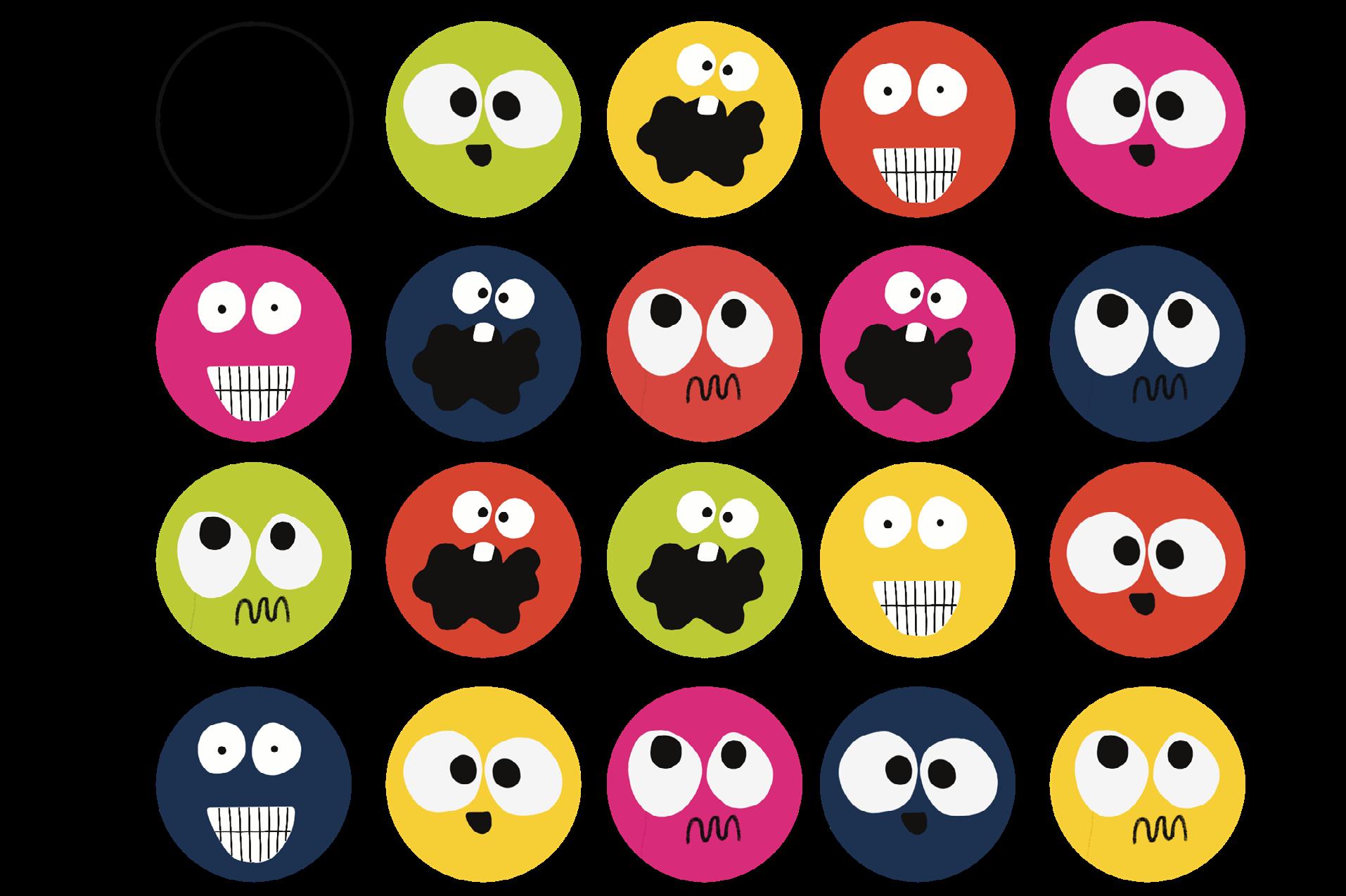
Choose a jitter face below and stick it on! Or draw your own!
Draw your own jitter face here!
Ideas for Movement and Dance
Calm
Use the music Night (or another gentle piece) for the children to design a sequence of three or four calming movements� Encourage the children to find movements that flow from one to another and to remember their sequence� Working in pairs, can they teach each other their own patterns? Maybe devise a whole-class sequence, taking ideas from individuals
Worried
But what about the dinosaurs…? Use the first minute or so of Mussorgsky’s Baba Yaga� Listen with the children several times helping them focus on the opening rhythm, the repeated bits - where the music is getting higher and louder, the question and answer between the brass and the strings… There’s so much going on! Get the children to explore big, stompy, heavy, threatening, sudden, scary ways of moving
Focus on control and intention rather than running around roaring (although that can be fun too…)
If you’ve already done some visual artwork based on this piece, you could use the children’s pictures as a starting point for a movement sequence / dance-drama� Or work the other way round and ask the children to represent their movements on paper Big bits of paper would probably work best !
Incorporate any music the children have created in response to Mussorgsky’s Baba Yaga Possibly best to do this when the class next door has gone swimming…
The Jitters are taking over
Start with one bit of your body, maybe a finger, then add another bit, maybe another finger, maybe a hand� Gradually build up until your whole body is jittering���
Make sure the children know what the STOP signal is� This could be a sound, but an action or sign is probably more useful
Get the children to decide on their own individual Jitter movement or action and creat a similar build up, but as a class, adding one jitter at a time Again, the children need to know how to stop the jitters This could be a sudden stop, or maybe your children choose to banish the jitters one by one?
Model how using an instrument can indicate a specific way of moving eg the difference between a triangle struck once left to ring and a triangle struck rapidly, lots and lots of times� Children should work in pairs, one using an instrument one responding to the sound Switch round
Controlling the jitters
This could be starting and stopping suddenly, or it could involve slow motion, fast forward or possibly rewind? How do you turn the whole thing off?
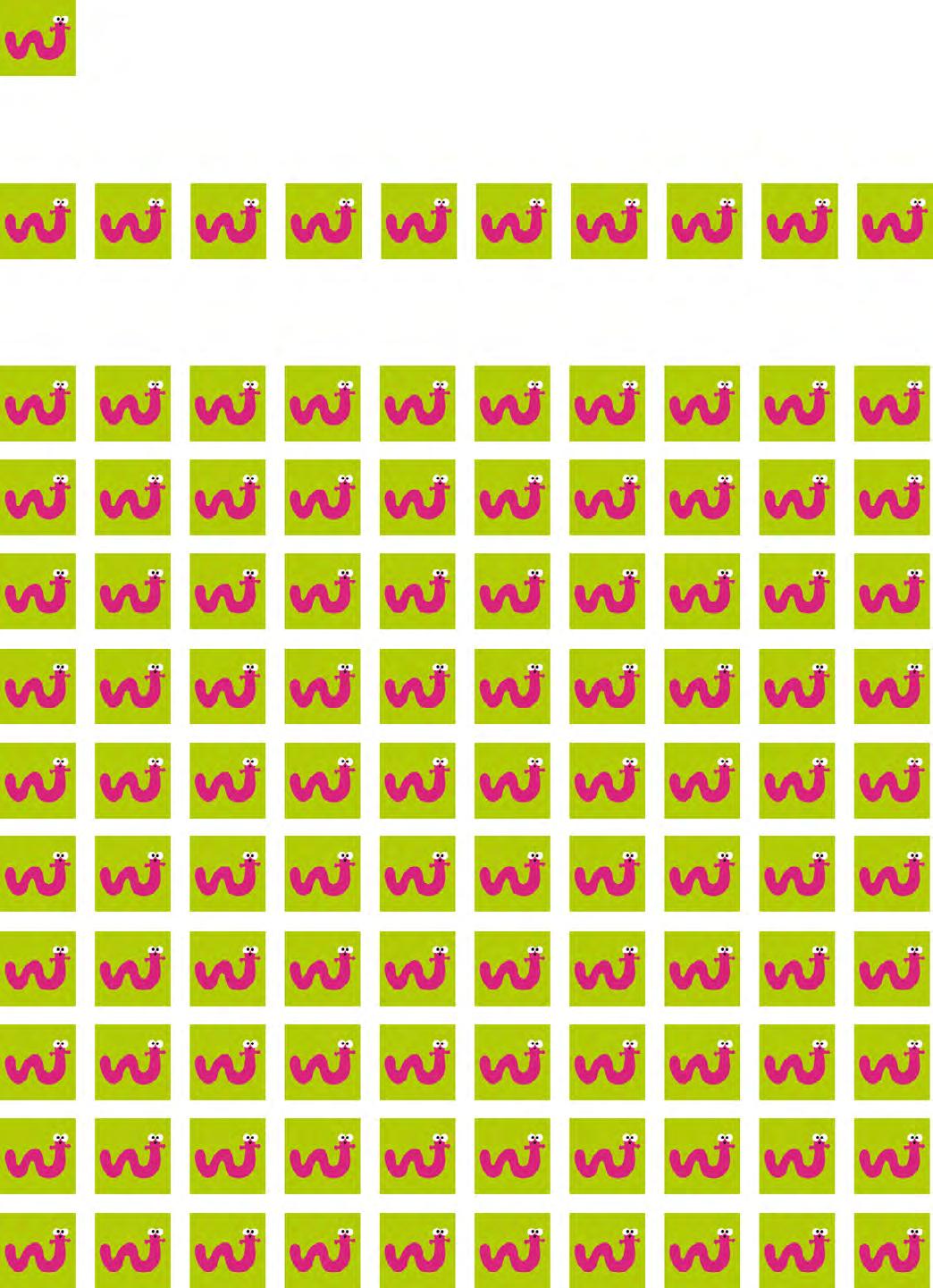
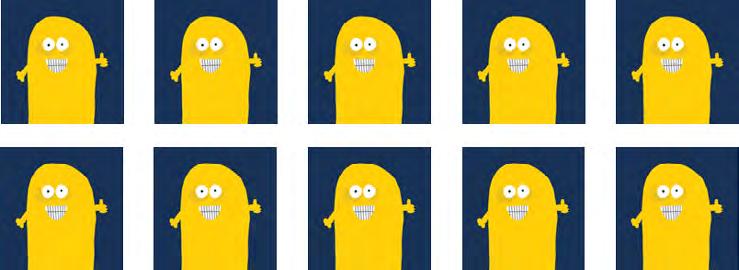
Jitter Maths
Children will need a plentiful supply of cut out Jitters, Frazzles and Panics
They will also need a die
Working in pairs, they take it in turn to roll the die� If they roll a 4, they take 4 Jitters�
On the next turn, if they roll a 6, they take 6 Jitters but then can exchange all 10 Jitters for a Frazzle…� = A Jitter
10 Jitter = A Frazzle or
100 Jitter or 10 Frazzles = A Panic
First to get a Panic wins!
Let us know how you get on!
We hope you enjoy trying out some of the activities in the pack and learning the songs, ready to join in and enjoy our performance.
We would love to see what you get up to – please send us any examples of your children’s work to learning@brittensinfonia.com as we would love to share examples on our social media.