Summer 2026
In this issue
Major Literary Award Winner
AI in Schools: What’s to Come
Students Break
Fundraising Records
In this issue
Major Literary Award Winner
AI in Schools: What’s to Come
Students Break
Fundraising Records
CHALLENGING THE STATUS QUO


Editorial Team
Miranda Cook
Editor and Communications Manager
Ella Begg
Writer and Executive Administration Assistant
Lachie Grey
Writer
Courtney Adam
Writer
Karoline Fjeldsbo
Graphic Designer
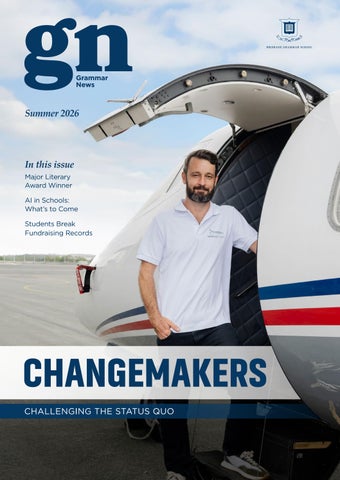
Front Cover Image
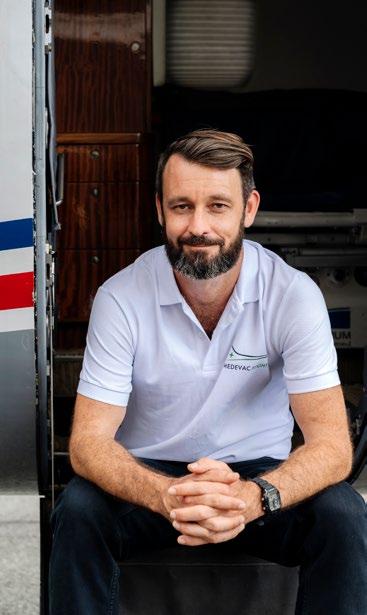
Old Boy Will Cassidy ‘00 owns medical evacuation company Medevac Flights — one of the fastest growing companies in Australia.
Photographed by Marigold Meagher.
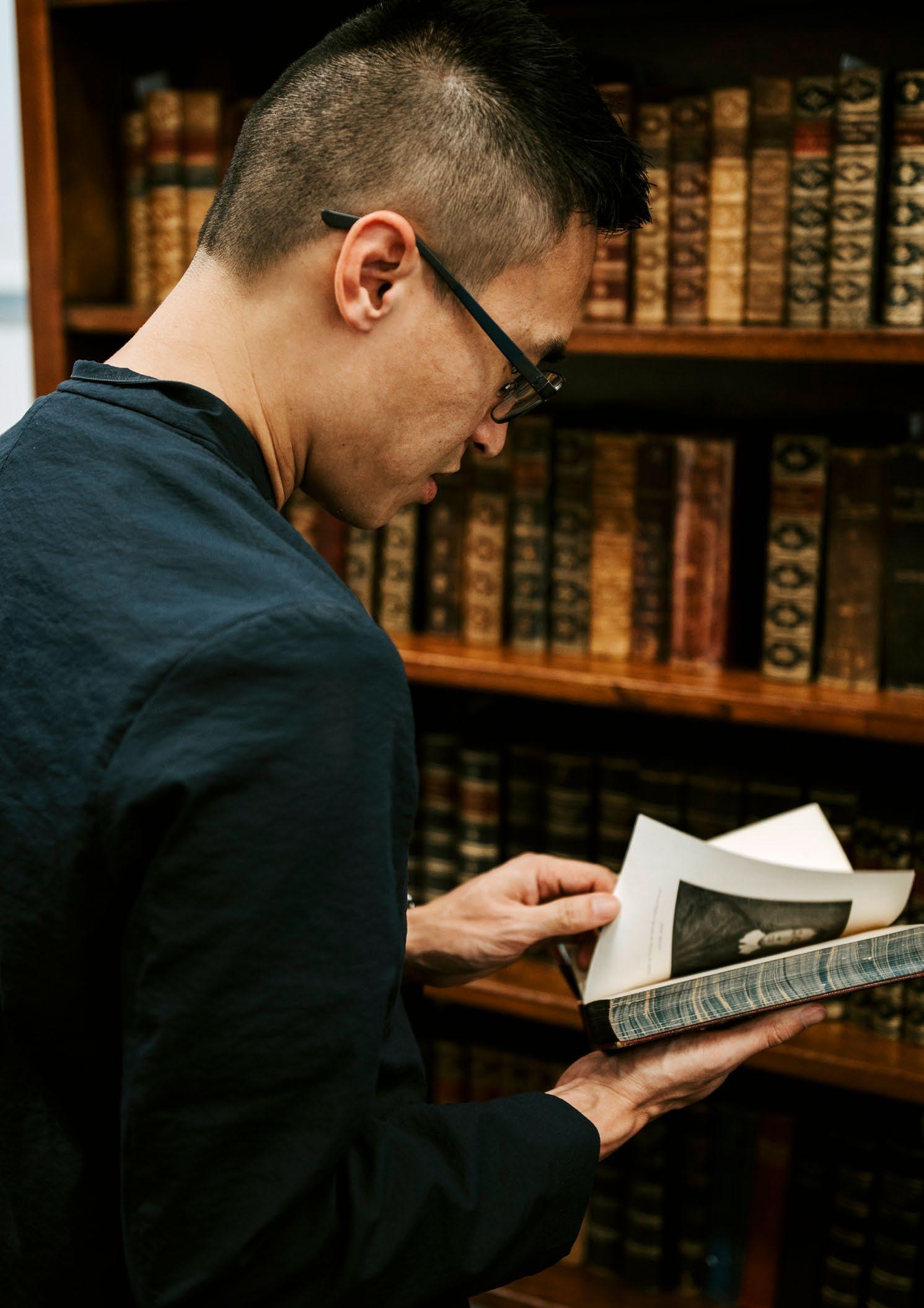
Inside Cover Image
Old Boy Siang Lu ’02 has been awarded the prestigious 2025 Miles Franklin Literary Award for his book Ghost Cities.
Photographed by Marigold Meagher.
Acknowledgement of Country
Brisbane Grammar School acknowledges the Jagera people and the Turrbal people as the Traditional Owners of the lands on which our school is located. We pay our respects to Elders past and present, and acknowledge their deep connections to the land and waterways where we meet, work and learn.
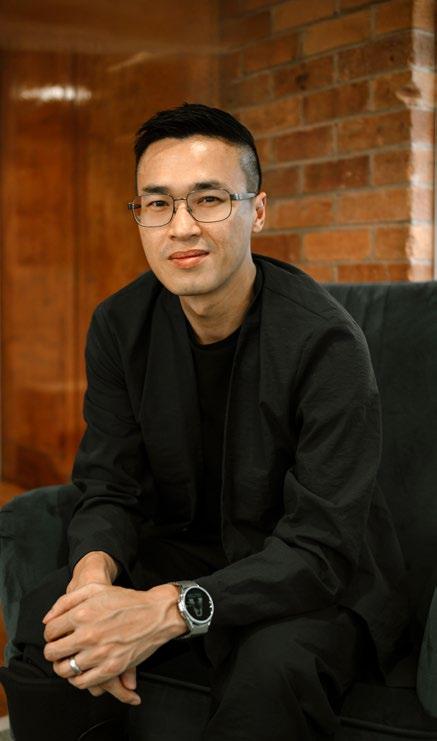
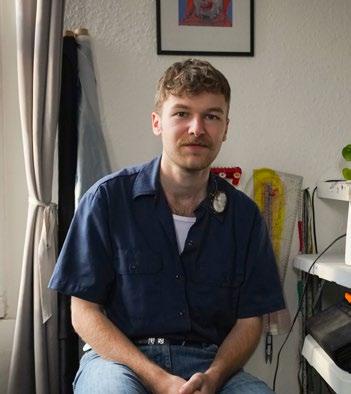
Old Boy Siang Lu’s novel Ghost Cities was rejected 200 times before winning the Miles Franklin Award.
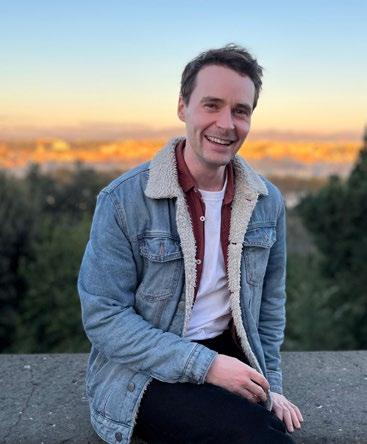
Meet some of our Old Boy changemakers. They are writers and war heroes. Academics and activists. Scientists and students. Disruptors in their fields. Challengers of the status quo. In this edition, we share just a few of their inspirational stories.

Page 30
Promises and pitfalls of AI
We share the findings of our study on how AI is changing the way our students are learning.
Jed Siganto is the first student in 50 years to be elected as both the School and Boarding Captain.
Page 36
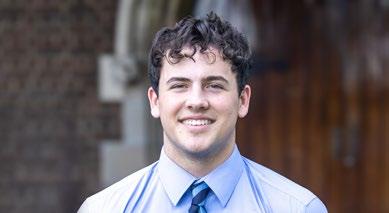
Old Boy Connor O’Grady ‘18 designs an iconic costume for Grammy-winning singer Chappell Roan’s.
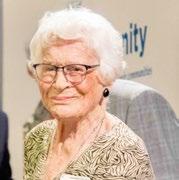
Honouring the life and service of one of our most devoted volunteers.
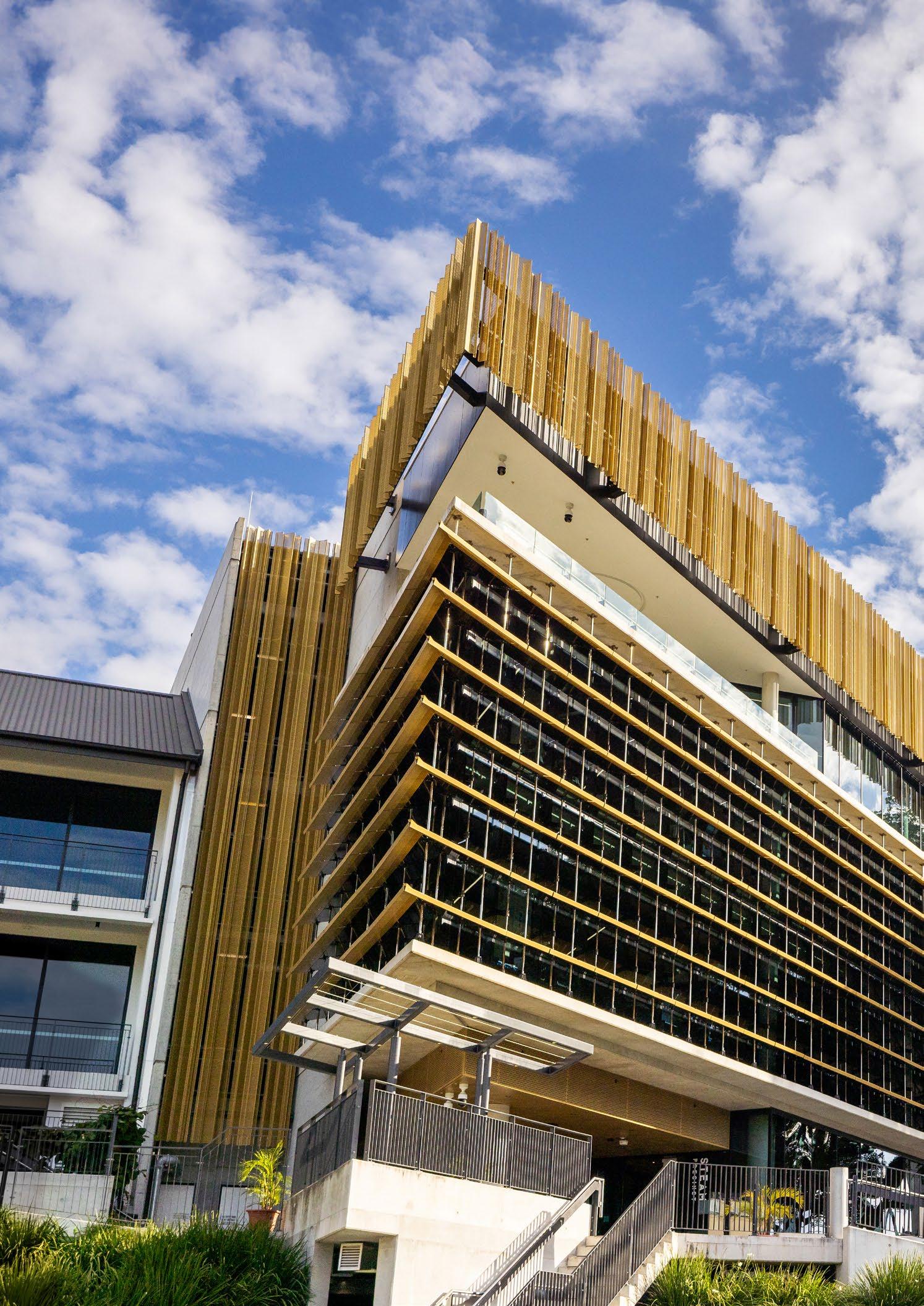
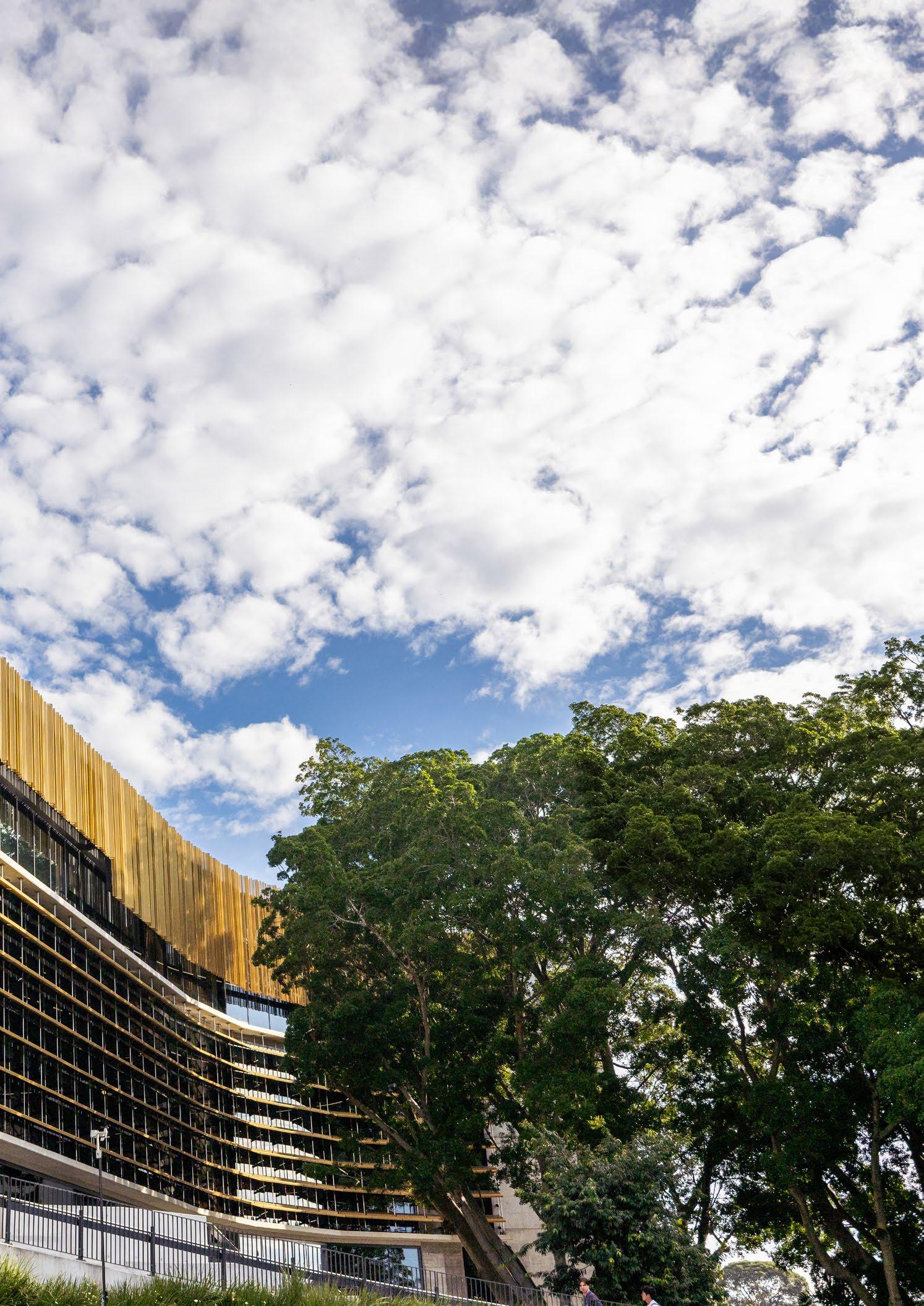
With this edition celebrating some of the changemakers within our community, it feels only fitting to feature the striking architecture of the STEAM Precinct.
The learning hub has won many prestigious design awards, yet its aesthetic appeal is only one facet of its innovation. The precinct delivers a groundbreaking educational experience, encouraging students to embrace experimentation and multidisciplinary thinking.
For generations to come, this will be where students develop the confidence to shape the world, not just respond to it.
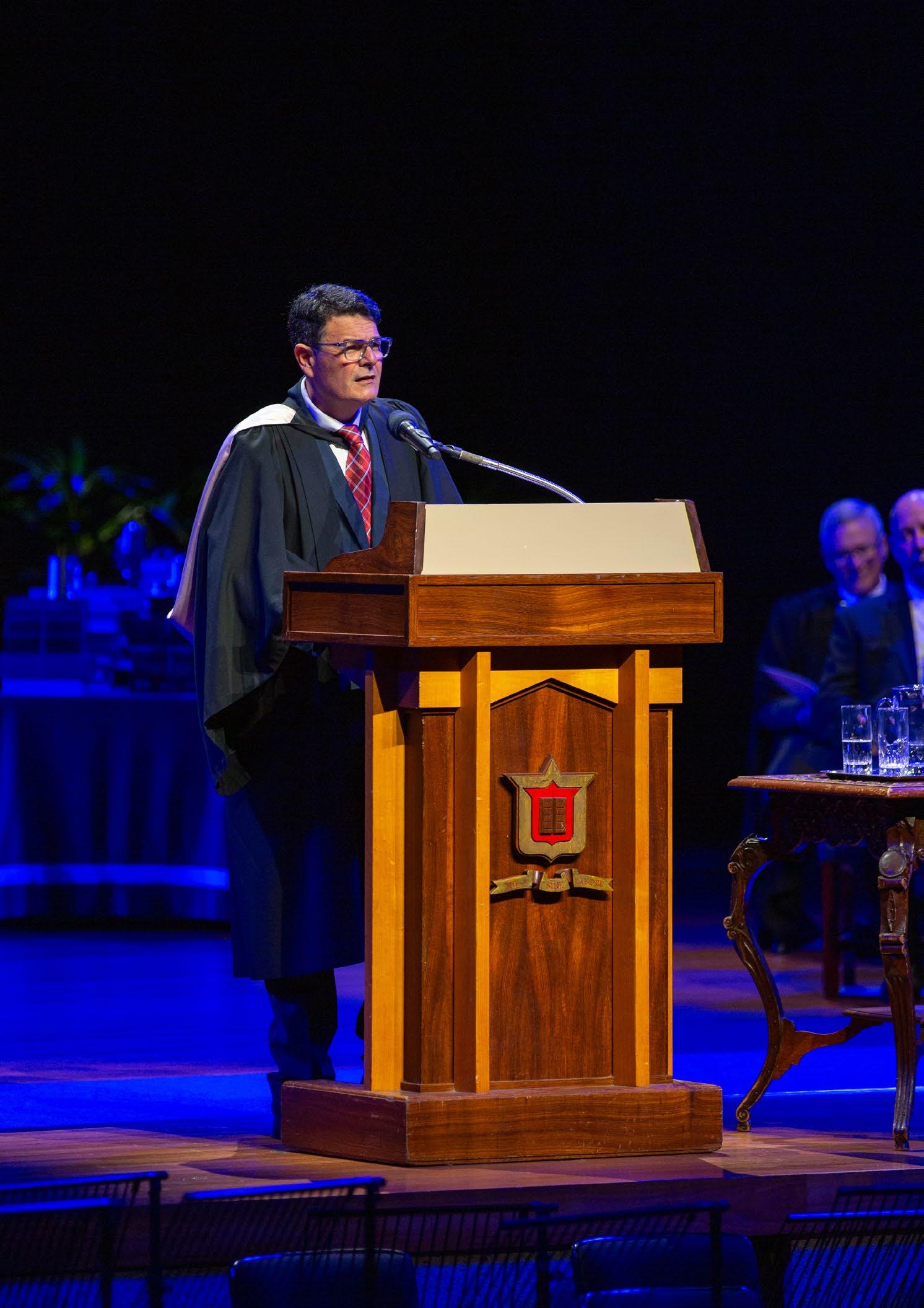
Written by
Anthony Micallef Headmaster
What I value most about this magazine is its ability to capture the breadth of stories that make up our community. Within these pages are students who are already making an impact, alongside Old Boys across generations who continue to shape their fields. They challenge convention, tackle meaningful problems and create positive change in their industries, communities and beyond.
At Brisbane Grammar School, we encourage students to step beyond their comfort zones, question the way things have always been done and believe in their capacity to make a difference. These principles are part of daily school life, guiding students through experiences that broaden their perspective and understanding of the wider world.
We are proud of the role the School has played in shaping Old Boys whose influence extends far beyond our gates.
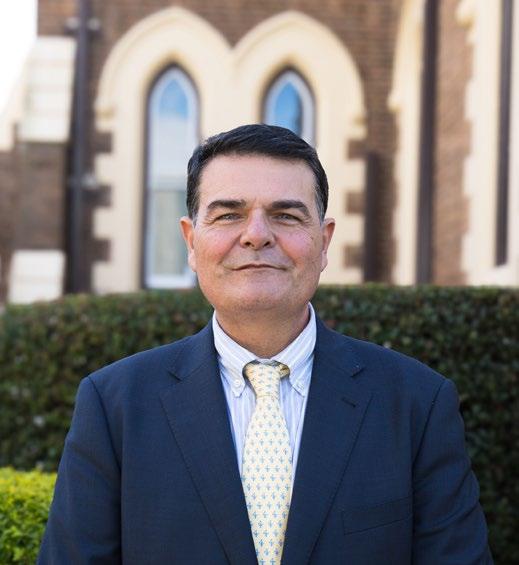
From the 2025 Miles Franklin Award winner, Siang Lu, whose literary work challenges how we see culture and society, to Professor Michael Milford, who is shaping the future of robotics while mentoring the next generation of innovators, and William Cassidy, who founded a medical evacuation company, listed as one of the fastest growing companies in Australia, these stories show the power of curiosity, courage and self-belief. They are not bystanders but participants, eager to break the mould to create a better world.
Throughout this edition, we highlight students and Old Boys who have chosen the path less travelled, reminding us that progress is driven by those who are brave enough to challenge the status quo. We share these stories to preserve our history, celebrate achievement and inspire the next generation of changemakers.
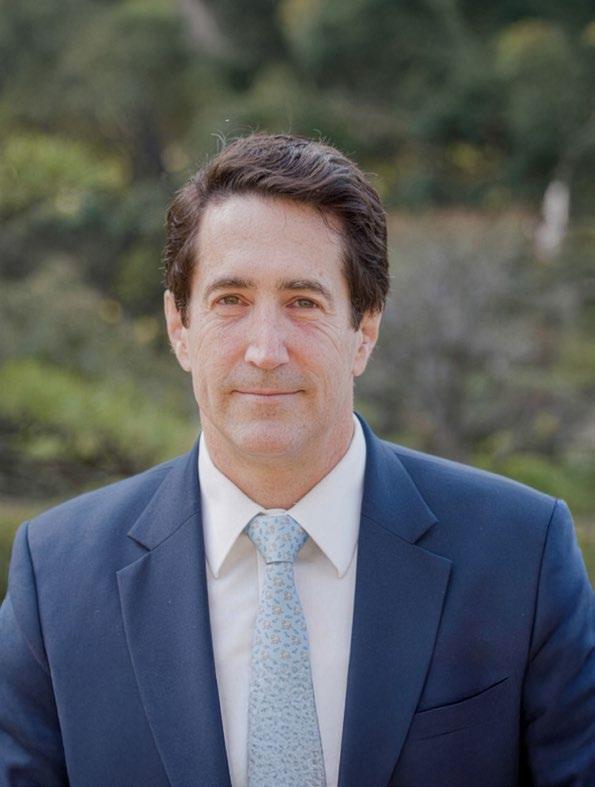
We congratulate Old Boy Cameron Brownjohn ‘93 on being awarded a Medal of the Order of Australia (OAM) for his service to people with disability and to business. Cameron is involved with UNICEF Australia as a non-executive director, and his philanthropic efforts have touched the lives of many.
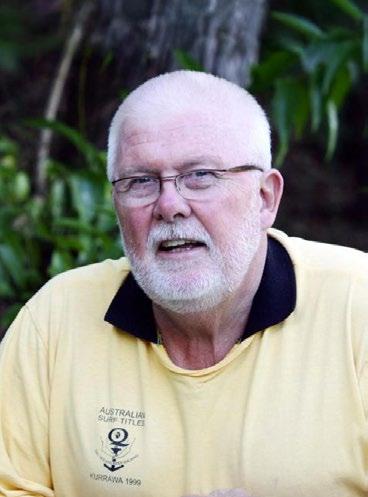
We acknowledge Old Boy Wayne McLennan ‘63 for his Medal of the Order of Australia (OAM) award for his service to surf lifesaving. Wayne’s dedication spans six decades, having worked his way up from patrol member to club president, during which time he pioneered helicopter rescues and authored the first Aquatic Rescue Manual.

Old Boy Andrew Stephens ’05 umpired the 2025 AFL Grand Final in what he describes as a “dream 20 years in the making”.
After being the emergency umpire in two previous deciders, Andrew made his grand final debut at the MCG in September, when the Brisbane Lions claimed victory against the Geelong Cats. He puts his success down to the result of hard work and consistency.
Old Boy George Pullar ’13 wowed audiences with his performance in playwright Aaron Sorkin’s A Few Good Men, as part of QPAC’s 40-year anniversary celebrations last year.
George starred as Lt. J.g Daniel A. Kaffee — a role made iconic by Tom Cruise in the
Oscar-nominated film adaptation in 1992.
The actor’s passion for performance began at BGS, before landing major stage and screen roles in Fighting Season, Barons, Playing for Keeps, and A Place to Call Home, just to name a few.


BGS has been named as the winner of the 5-Star Best Schools Award for 2025 by The Educator.
The School has been recognised for its commitment to providing a multi- disciplinary education as part of the STEAM Precinct. While the building has won many architectural prizes, this award celebrates the progressive shift in teaching and learning methods as we prepare our students for the modern world.
Recent graduate Old Boy
Lucas Lu ’25 has been ranked as one of the top debaters in the world. Last year, he captained the Queensland State Debating Team and competed in the 2025 World School Debating Championships, in Panama. Around 250 debaters from around the world went headto-head hoping to win the prestigious title.
Remarkably, Lucas and his team claimed silver, and on an individual level, he placed 20th.
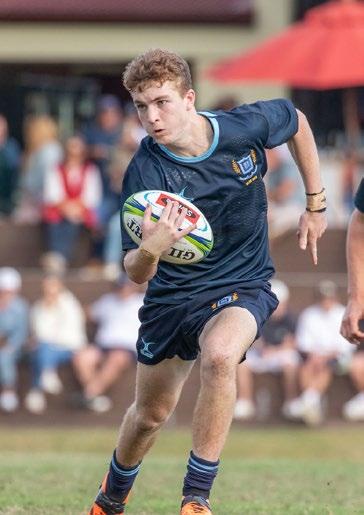
2025 was a standout year for Old Boy Elijah Breen ‘25, who recovered from injury to represent the Australian Schoolboys in rugby union. Elijah broke his tibia representing Queensland earlier in the season, but worked hard through recovery and reclaimed his form to secure national selection. Old Boy Fraser McReight ‘16 continues to make his mark, becoming the 91st Wallabies captain in August. Current student Noah Gaffney earned selection in the 2025 Australian U16 squad.
While the First XV endured a tough season, many players were successful in making pathway teams at both state and national level, including the Australia U16 squad and Australian Schoolboys. Pre-season training was a memorable time for all, with boys invited to train with the Queensland Reds Super Rugby Women’s team and to compete in the Ballymore Cup.
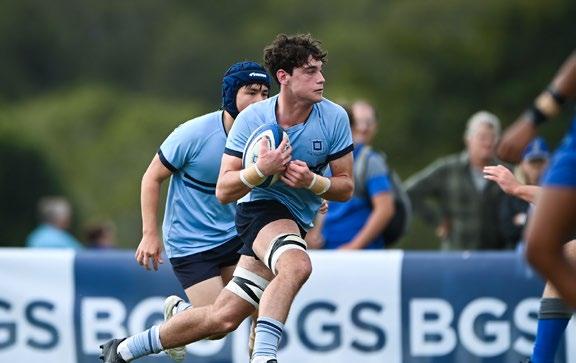
The 2025 Football season will go down as one of the best in BGS history, with the First XI breaking their 18-year GPS Premiership drought. They won the competition with a 5-1 domination over TSS. The Second XI, Third XI and 10A teams also claimed GPS titles. More than 800 boys were involved in the program last season, cementing it as one of the fastest growing sports at BGS.

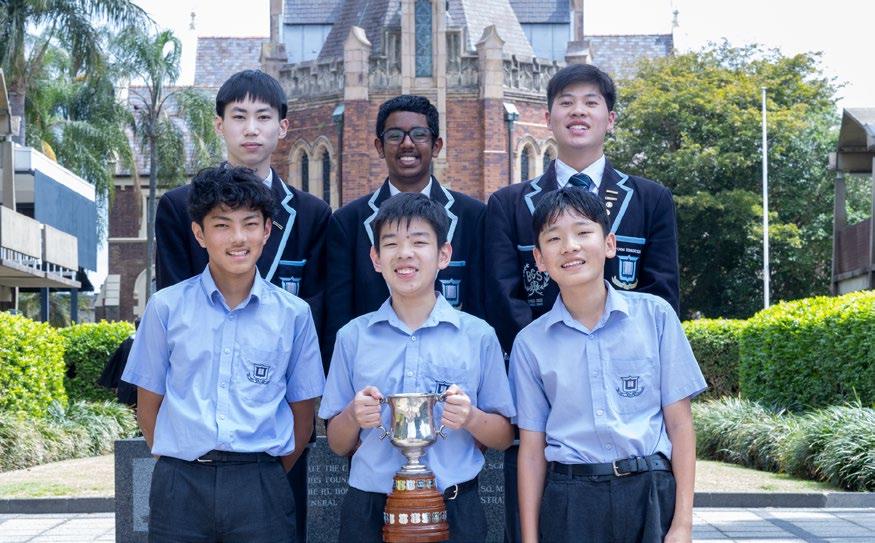
Chess had a stellar season, with an emphasis on team culture and growth at the heart of the program. The Premier Team claimed the GPS title after an undefeated season. Eleven of the other 12 teams also followed suit. Beyond the competition, the BGS Chess Team qualified for State Finals at the Inter-School Chess Competition.
Basketball once again proved to be one of the strongest programs in the GPS competition, with the 10A, 9C, Fourths and Thirds teams all claiming premierships in 2025. Many of our athletes enjoyed state and national success, with Lennon Bann winning the Under 18 State Championship and playing in the NBL1 Championship — a rare feat for a high school player. Another memorable moment was when our Year 5 players participated in a Brisbane Bullets’ training clinic.

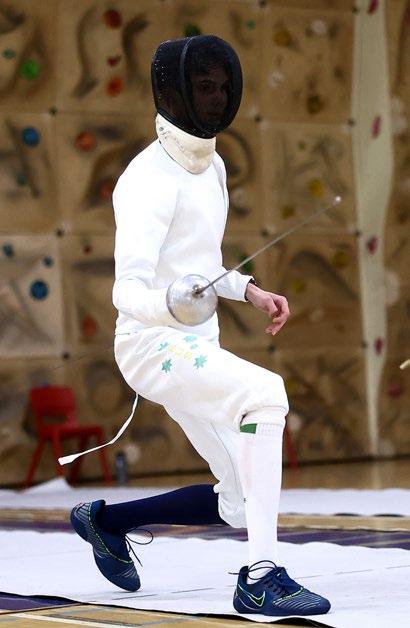
This year, Fencing fielded 24 foil, seven épée and 15 sabre teams. Close to 170 boys from Years 7 to 12 competed at the QFA Brisbane Schools Teams Competition, where they claimed the overall title. The School achieved strong results at state and national levels, and the annual Primary Internal Fixtures saw our Years 5 and 6 fencers familiarise themselves with new weapons.
Debating students produced extraordinary results in 2025. Almost 50 teams participated in more than 230 debates and secured 11 GPS Premierships. Multiple teams made it to the semi finals and grand final in Queensland Debating Union, with the Senior A team taking home the title.

The 2025 Track and Field Championships reflected the strong spirit and teamwork of BGS, with the juniors finishing fourth overall. The seniors enjoyed impressive victories in relay and hurdle competitions, where several teams recorded podium finishes. New records were set in the 200 metre sprint and triple jump events.


More than 400 boys across 35 teams took to the field in another standout season for the Cricket program. Nearly two thirds of BGS teams finished on the podium with an overall program win rate of
53%. Memorable achievements included 10 five-wicket hauls and a record-breaking eight centuries, as well as undefeated seasons from the 9B and 8D teams.
Written by Miranda Cook and Courtney Adam

For decades, countless alumni have broken the mould to be drivers of change in business, academia, medicine, finance, engineering, the arts and sport.
Many step beyond their comfort zone to make an impact to local, national and global challenges. These are just some of their stories.
Click to watch our interview with Will about his incredible career and his hopes for the future of Medevac Flights. Click Here
For Old Boy Will Cassidy ’00, the most memorable moments in his work don’t come from figures or awards; they come from the messages he receives from grateful families.
One email, in particular, has stayed with him.
About eight years ago, a couple who were living in Fiji needed urgent medical help. The wife was pregnant and had been told by local doctors that the baby could not be saved.
With few options left, they contacted Medevac Flights — the aeromedical company Will founded — requesting medical transport to Brisbane.
The flight went ahead, with the specialist medical team onboard and the jet configured for critical care.
A couple of weeks later, a message landed in Will’s inbox.
“The husband emailed me on New Year’s Day to say the baby girl had been born, and that both mum and bub were doing well.”
Will started Medevac Flights around a decade ago after a career in finance, including time spent as an investment banker at Deutsche Bank, in London.
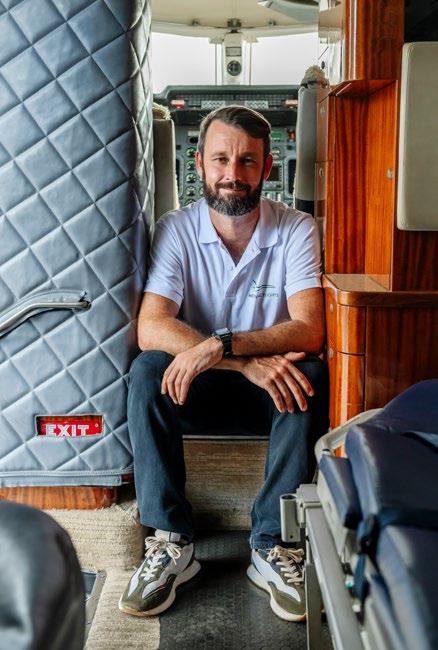

Above The aeromedical company’s planes are equipped with specialist staff and equipment.
The shift, he said, was driven by a long-standing interest in medicine and a desire to build a service for people at their most vulnerable.
“When I was at BGS and later during my undergraduate degree, I always planned on studying medicine, but life unfolded differently.”
In 2024, Medevac Flights topped The Australian Financial Review Fast 100 List, recognised as Australia’s fastest-growing company.
“It was exciting, nerve-wracking — an honour, really.”
The company recorded a three-year compound annual growth rate of 700 per cent, supported in part by the revival of the cruise industry after COVID-19. Government contracts, insurers, hospitals and private patients also form part of the broader business.
Behind the scenes, work is
rarely straightforward. With operations spanning multiple jurisdictions and missions often involving tight timelines, the pressure can be intense.
“It’s high-stress a lot of the time because of the logistics, communication across countries and time zones, coordinating aircraft, medical teams and government border processes — there are a lot of moving parts.”
What makes it worthwhile is helping Australians return home from hard-to-reach places, so they can access world-class treatment and be surrounded by family.
“Patients can be stuck in a hospital where the doctors and nurses speak very little English,” he said.
“When our doctors and nurses arrive, people are often crying with relief because they know they’re on their way home — it’s very rewarding.”
“When our doctors and nurses arrive, people are often crying with relief because they know they’re on their way home – it’s very rewarding.”
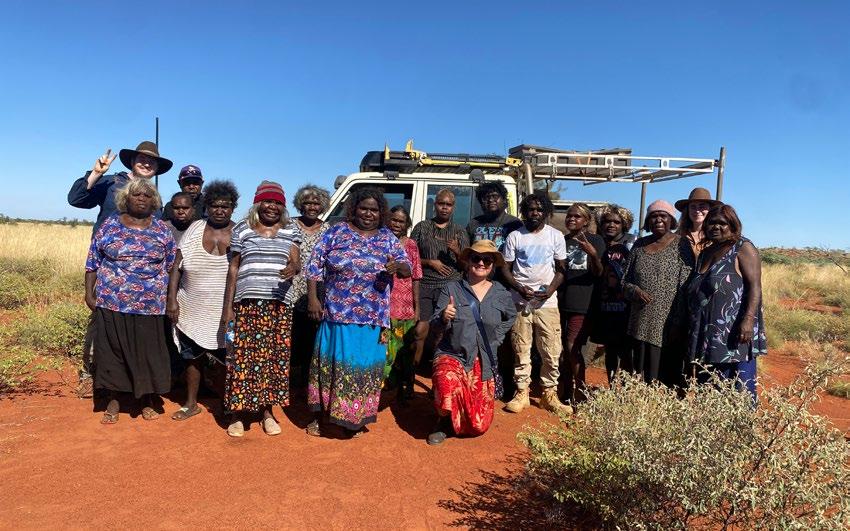
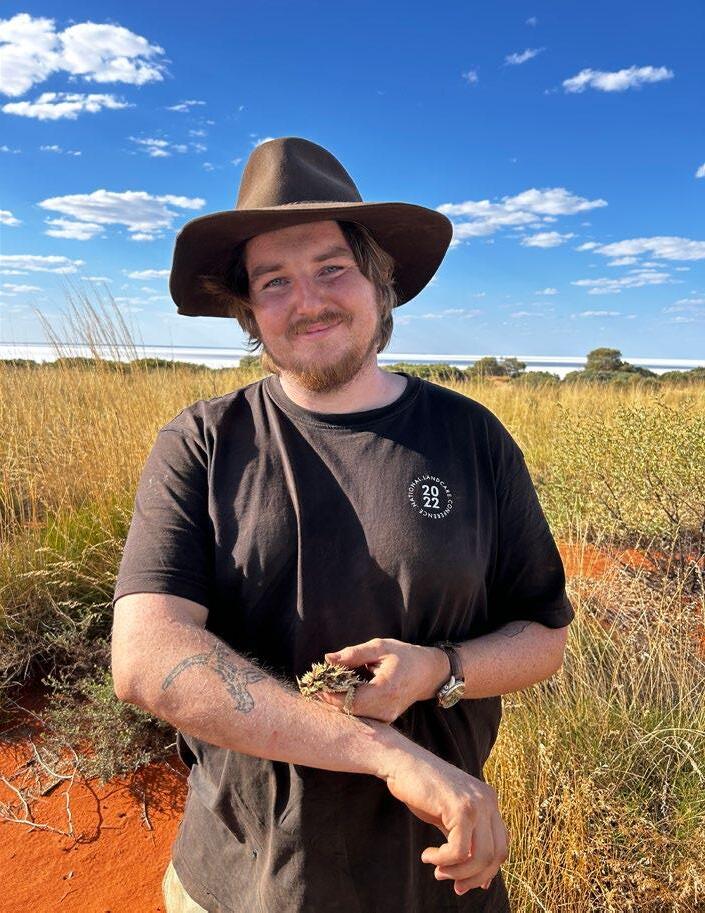
Another Old Boy whose career has taken him to isolated places is Ed Blackwood ’15 who is passionate about looking after Country under the guidance of those who have cared for it for generations.
Since leaving BGS, Ed has built a career working alongside First Nations communities.
After completing an honours project exploring Indigenous fire management, Ed was keen to get out from behind a desk and into the field.
He took on the role of Ranger Coordinator at Kiwirrkurra, Australia’s most remote community, near the border of Western Australia and the
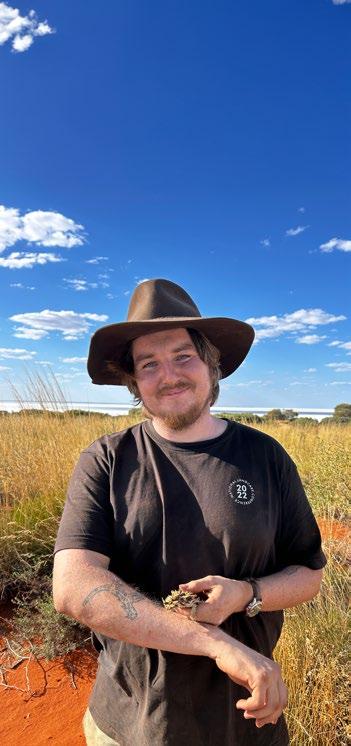
Left Old Boy Ed Blackwood ‘15 (centre) worked as a Kiwirrkurra ranger in Australia’s most remote community.
Northern Territory.
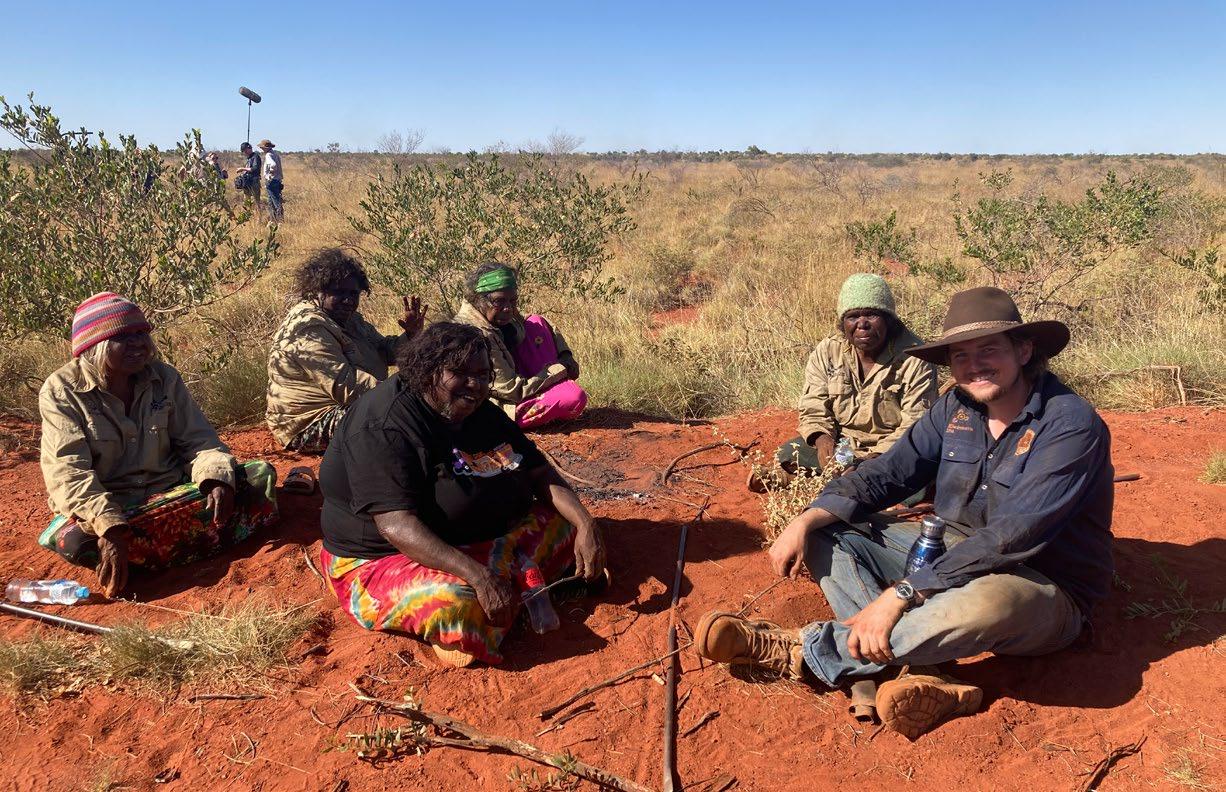
“I was working with the Traditional Owners of the Kiwirrkurra IPA to manage their Country,” Ed told Grammar News.
Working side by side with local rangers, Ed delivered land management programs that combined traditional practices with Western science.
Carefully planned cultural burning reduced destructive wildfires, supported threatened species and maintained healthy ecosystems.
“The Traditional Owners know exactly how to look after Country. They’ve done it for thousands and thousands of years.
“The Traditional Owners know exactly how to look after Country. They’ve done it for thousands and thousands of years.”

“The outcomes we’re getting on Indigenous Country is now being presented around the world.”
Now based in Alice Springs, Ed is completing a PhD studying Indigenous fire management on the Arnhem Plateau and its impact on biodiversity.
He said working with these communities has been pivotal in shaping his career.
“They’re just the loveliest, funniest, most kind-hearted people I’ve ever met.”
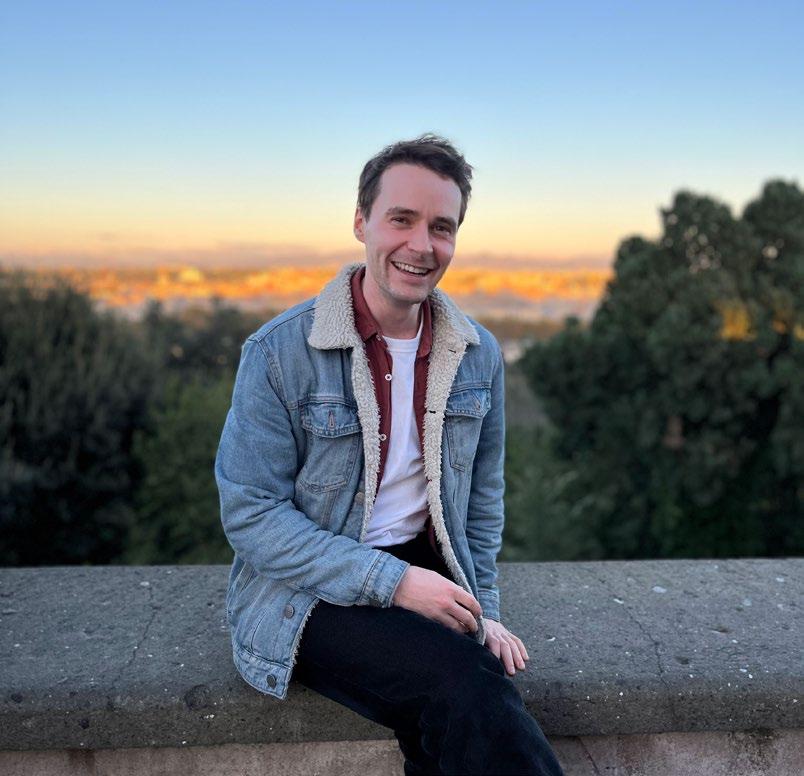
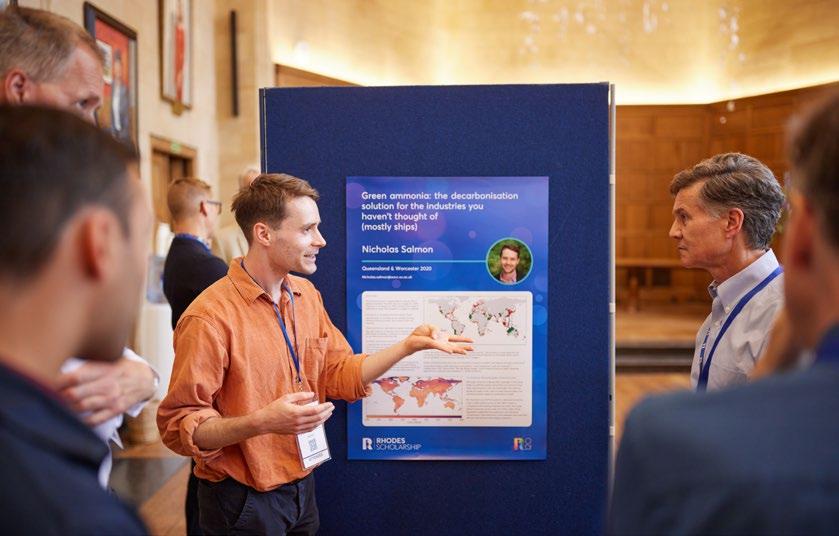
Across the globe, another Old Boy is taking on some of the world’s biggest environmental challenges.
A Rhodes Scholar and chemical engineer, Nicholas Salmon ’12, now works at the International Energy Agency (IEA) in Paris, helping map the pathways for global decarbonisation.
Nicholas focuses on industrial emissions that are often overlooked but have a huge impact on the planet.
“Ammonia represents two per cent of global CO2 emissions, and we can’t not use ammonia because it’s a very important synthetic fertiliser, and so if we were to go without it, we
wouldn’t have enough to eat,” he explained.
“It produces a lot of emissions, so my research was about understanding how we could decarbonise that.”
At the IEA, Nicholas analyses industry emissions, advises governments and contributes to reports that shape energy
“For me, the environment is really, really important.”
policy worldwide, including the World Energy Outlook.
“It’s a very comprehensive report which does forecasting across the whole energy sector out to 2050. And so that helps countries and companies plan their energy use.”
For Nicholas, protecting the planet is what inspired his career path.
“For me, the environment is really, really important. When I grew up, my family had a place on North Stradbroke Island, and spending a lot of time there emphasised how important looking after the planet was,” he said.
From studying chemical engineering at The University of Queensland to working on global energy policy in Paris, Nicholas is using his skills to make a real difference.

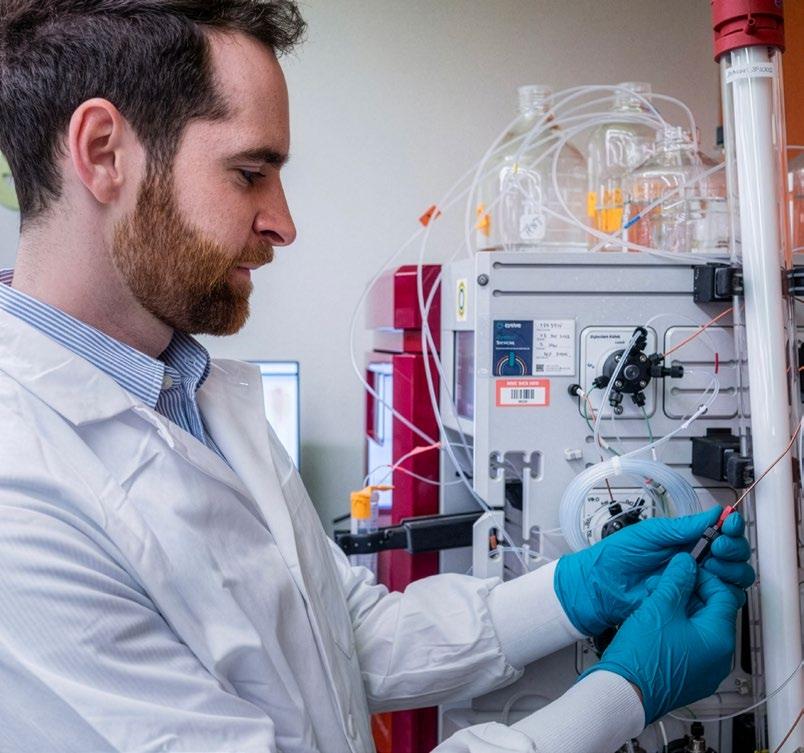
And while Nicholas tackles global decarbonisation, Old Boy Eamon Byrne ’05 is changing the world of biotechnology.
A scientist, founder and biotech consultant, Eamon has spent his career taking on projects that push the boundaries of biomedical science.
“The first year after I left school, I actually didn’t go straight to university. I had a gap year,” he recalled.
After earning a double degree in Arts and Science at Melbourne University, Eamon undertook a PhD in Clinical Medicine at Oxford University in the UK, studying proteins to improve cancer treatments.
“The main topic I was working on was structural biology, which in my case was trying to crystallise and solve the structure of a particular protein,” he said.
“It was very relevant to understanding cancer and understanding fundamental human biology as well.
“Having those two things combined in one project was
“Try to find things that you are interested in because that will make it much easier to work hard and be committed and hopefully get some good results.”
very, very exciting to me.”
During his subsequent research he worked on optogenetics, a technique that uses light to control neurons and which could one day be used to treat brain conditions.
“This technique has been used by systems neuroscientists for the last decade or so to interrogate the inner workings of the brain,” Eamon explained.
He also spent time working as a Postdoctoral Research Fellow
at Stanford University, in the US. Now in Albuquerque, he is building connections and exploring what might be his next big scientific opportunity.
Reflecting on his journey, Eamon offers advice to students hoping to follow a similar path.
“Try to find things that you are interested in because that will make it much easier to work hard and be committed and hopefully get some good results.”
Written by Miranda Cook

When award-winning author and Old Boy from 2002 Siang Lu visited Brisbane Grammar School for this Grammar News interview, something quite remarkable happened.
While we set up for a photoshoot in the School Museum, Siang was drawn to the large timber bookcase on the east wall, lined with some of literature’s most beloved works.
Almost immediately, he spotted the very book that inspired his own.
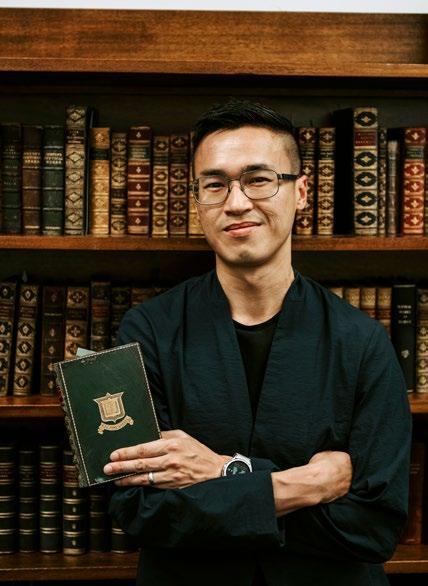
“My face lit up when I was in the museum, and I saw the book Paradise Lost by John Milton, which a really key part of Ghost Cities is inspired by,” he later said. This was a full circle moment.
Ghost Cities took root in the vacant megacities that stand tall and lifeless in parts of mainland China. These ghost towns boast the world-class infrastructure needed to be a thriving metropolis, yet the people — the vital innards that make up a real, living city — are missing.
The story is both a nod to Siang’s Chinese heritage, and a love letter to his wife and children, who feature as characters.
“I was inspired by this idea of modern ruins.
“My embrace of my Chinese culture and my western way of thinking was to ask how we solve the emptiness of these ghost cities, so I turned it into a giant film set.”
He pointed out some ‘ghost cities’ have recently become more populated hubs, such as
Shanghai’s Pudong District.
Ghost Cities won for Siang the 2025 Miles Franklin Literary Award, a prestigious prize for authors of the highest literary merit in this country.
He is the third Old Boy to claim the prize, after Ronald McKie’s The Mango Tree won in 1974 and David Malouf’s The Great World won in 1991.
Miles Franklin judges have described Ghost Cities as “at once a grand farce and a haunting meditation on diaspora” and “a genuine landmark in Australian literature”.
The novel will be published with Simon and Schuster’s Summit UK and US imprints in 2026, and in 24 territories in translation thereafter, which Siang humbly described as “mind-boggling”.
The path to publishing success, however, has not always been easy.
Siang, who studied law and journalism at the Queensland University of Technology, has written six novels. Only two have seen the light of day.

Ghost Cities, finished 10 years ago, was rejected more than 200 times in Australia and the US.
Repeated knockbacks taught him how to process failure.
“I had to realise that no matter how many rejections Ghost Cities has, that is a rejection on a market perspective.
“When it comes to the artistic perspective, whether this was creatively worthwhile, that has to come from within yourself — you can’t have someone else tell you that.
“Most writers want to think that they are some literary genius, but the fact is almost none of us are — it is just about being stubborn enough to keep doing it and keep getting better.”
Large chunks of the book were written on Siang’s phone during the long train commute into Sydney’s CBD. There, he climbed the corporate ladder in the IT and tech industries — a pragmatic yet imperative part of supporting his young family.
Fighting for time to do the thing he loves most is proof that creativity is not a matter of instant gratification, but of persistence.
“It is all well and good to have writing rituals, the desk all
perfect and your cup of tea, and you’ve carved out the specific hours in the day to do ‘the thing’.
“But really, if you need those rituals in order to write, you will never write.
“It’s about being a bit less precious and finding the time wherever you can.”
After years of “writing in the margins”, it comes as no surprise to hear Siang had a physical reaction when Richard Neville, of the State Library of New South Wales, phoned to announce he was the Miles Franklin winner.
“I lost all feeling in my arms and legs.
“I have never once in my life had to ask a person delivering news if this is a dream or not?”
When asked about the next book, Siang was tight lipped other than to say it is finished and is inspired by Homer’s Odessey, a work he also discovered on the museum bookshelf.
“All literature is just an uninterrupted conga line of writers seducing readers into wanting to become writers.”
Siang’s son James Lu is in Year 7 at BGS and his daughter Madeleine Lu is in Year 5 at BGGS.
“All literature is just an uninterrupted conga line of writers seducing readers into wanting to become writers.”

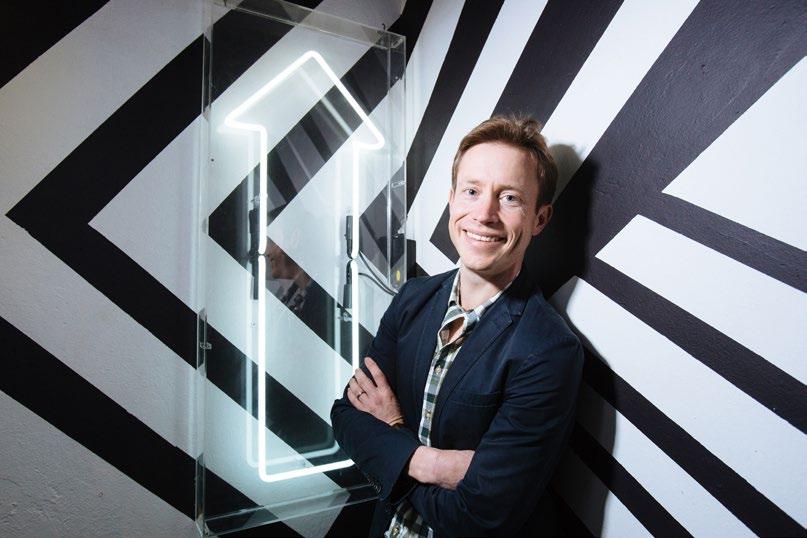
Current parent and Old Boy Dr James Chin Moody ‘93 is one of Australia’s leading authorities on science and technology for sustainability and the circular economy. A former BGS Prefect and Lilley Gold Medal winner, James was previously a National Commissioner for UNESCO and the Executive Secretary of the UN Millennium Development Goal Task Force on Science and Technology for Development.
James has served on a range of the World Economic Forum’s Global Agenda Councils for more than a decade and has penned this letter about the UN’s Themes for 2025.

Every year, the United Nations designates international themes to focus global attention on the issues that will most shape our collective future. In 2025, three themes stood side by side: the Year of Glacier Preservation, the Year of Quantum Science and Technology and the Year of Cooperatives. At first glance, these may appear to inhabit very different worlds. What on earth do icy mountain ranges, atomic particles and local communities have in common? Yet, when
considered together, they form a powerful story about resilience and interdependence in the face of global challenges.
Glaciers are sometimes called the “water towers of the world” because they feed freshwater to billions of people. Their disappearance is one of the clearest warnings we have about climate change. Rising temperatures aren’t
just destroying beautiful landscapes—they’re threatening the water sources that keep farms productive, power stations running, and cities hydrated. The Year of Glacier Preservation isn’t really about saving ice. It’s about protecting people. By focusing on these frozen water reserves, the UN is saying something simple: taking care of the environment means taking care of ourselves. Our wellbeing depends on it.
If glaciers speak to the awe of our natural systems, quantum science shows us how far human knowledge can reach. 2025 marked a century since the formalisation of quantum mechanics — the theory that reshaped physics by revealing the counterintuitive behaviour of particles at the smallest scales. It all sounds crazy when you first learn about it. Can things be in two places at once? Is all matter really entangled? But this isn’t just theoretical stuff: quantum discoveries are already changing computing, communication and medicine. These tools might help us predict climate patterns better, protect information from bad actors or create materials that waste less energy.
The third theme brings us down from glaciers and labs into everyday life—neighbourhoods, jobs, and farms. The Year of Cooperatives highlights something we don’t talk about enough: cooperation works. In a world obsessed with competition, cooperatives show a different way. Credit unions in cities, farming co-ops in rural areas—they let people combine their resources, spread risk and fight poverty. Because they’re democratic, members actually own them and have a say. They build economic systems focused on stability rather than quick profits. At a time when inequality is growing, cooperatives take a simple approach: communities can handle together what people can’t manage alone.
“Nothing exists in isolation—not glaciers, not particles, not people.”
So, what do these three things actually have in common? It’s the idea that everything is interdependent. Glaciers connect climate to livelihoods across continents. Quantum science describes the entanglement and interconnection of all matter. Cooperatives connect individuals into resilient networks. Each asks us to look beyond the isolated and immediate, and instead to see how our survival and progress depend on systems — natural, scientific and social — that bring us together whether we realise it or not.
As our BGS boys step into a rapidly changing world, these themes can help us pause and reflect. They are a reminder that nothing exists in isolation—not glaciers, not particles, not people. The

choices you make at school ripple outward. The education you are getting connects you to global conversations about science and climate. The communities you are part of, whether at school or beyond, are small versions of the cooperative networks that help societies hold together. Understanding interdependence isn’t just philosophical — it’s practical. It means recognising that your future is tied to the health of distant ecosystems, to breakthroughs happening in labs you’ll never visit, and to the wellbeing of people you’ll never meet. The questions these UN themes really ask are: knowing you’re part of something bigger, what will you do with that knowledge? How will you contribute to something bigger than yourself?
Written by Miranda Cook

The Class of 2025 achieved remarkable ATAR results with eight students receiving the top score of 99.95.
The result is significant when considering only 37 students across Queensland were awarded the same score, meaning BGS represented 21% of the state’s total outcomes.
The cohort secured a median ATAR of 95, which is particularly impressive given the School’s large non-selective cohort of 287 boys.
Five students achieved an ATAR of 99.90, while another four received 99.85.
The QCE results were also impressive with 41 perfect scores of 100/100 across nine subjects and a median subject score for all students across all subjects of 89/100.
Seventy-two per cent of students earned an ‘A’ in at least three of their six subjects.
“The outstanding ATAR outcomes for the Class of 2025 were made possible by a strong academic culture, high cocurricular participation and a focus on student wellbeing.””
- Anthony Micallef
Left 2025 School Captain Luke Saywell scored the top ATAR rank of 99.95.
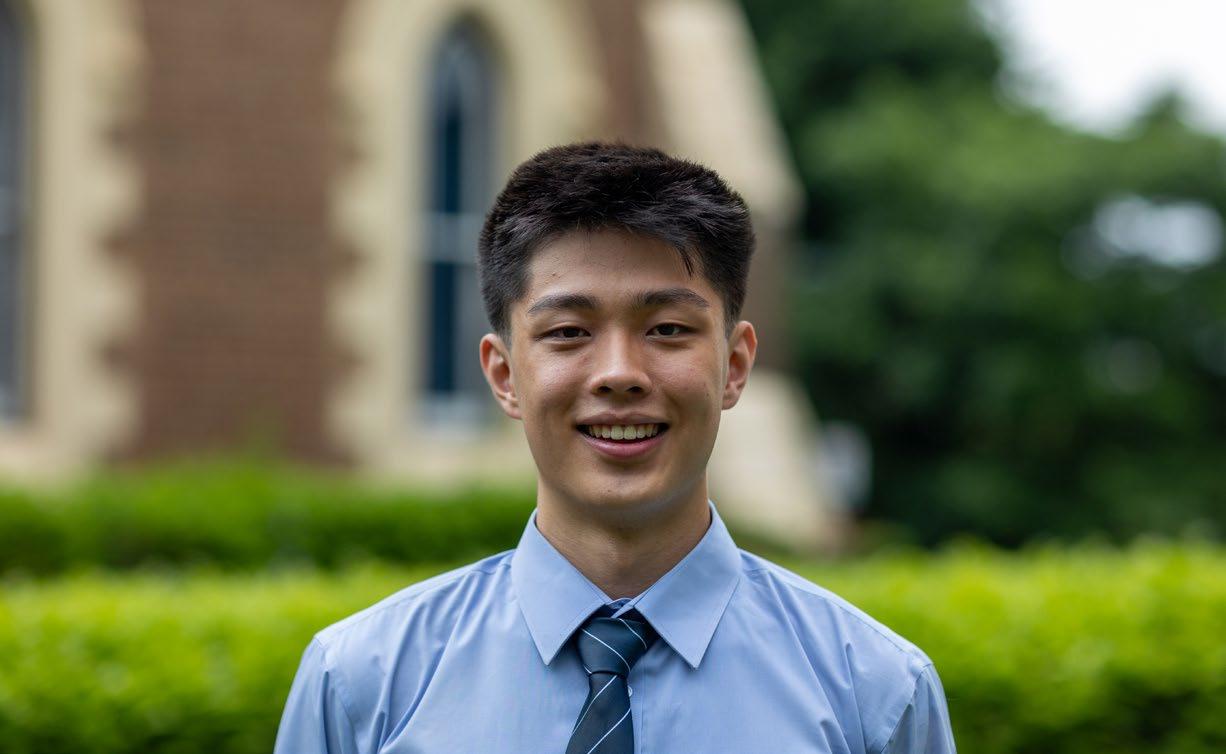
Above BGS Dux and Lilley Gold Medallist Benjamin Li made the rare feat of topping all his subjects.
BGS Dux and Lilley Gold Medallist, Benjamin Li, achieved the rare feat of topping all his subjects, receiving awards for Physics, Chemistry, French, English, Mathematical Methods and Specialist Mathematics. This was coupled with a perfect ATAR score of 99.95. His academic achievements were matched by important cocurricular contributions to Music, Debating and Public Purpose initiatives, such as the Guide Dogs Youth Ambassador Program.
“It feels good to have that hard work recognised, and it’s a good experience for my family to connect and have that shared happiness,” Benjamin said.
“I think BGS has really shaped me in a really unique way. I don’t think any other school would be able to give me such a formative experience.
“I’ve learned the value of discipline and hard work, and I’ve come to appreciate the connection you build with other boys and teachers.”
Headmaster Anthony Micallef said: “The boys’ success is testament to our dedicated teaching staff who continually promote a culture of deep thinking and targeted feedback
for students.
“The outstanding ATAR outcomes for the Class of 2025 were made possible by a strong academic culture, high cocurricular participation and a focus on student wellbeing.
“Congratulations to the Class of 2025 for their incredible efforts.”
Students who achieved an ATAR of
99.95
• Benjamin Li
• Chris Zhu
• Kyung Chan Kim
• Luke Saywell
• Nicholas Howarth
• Niklas Dark
• William Yuen
• Shaun Li
Written by Chris Price School Historian and Archivist
In Robert Frost’s famous poem, The Road Not Taken, published in 1915, he writes about the choices we make in life. The final three lines read:
“Two roads diverged in a wood, and II took the one less travelled by, And that has made all the difference.”
Old Boys have contributed to our community in so many ways. Their variety of careers and fields of endeavour reflect the diversity of their interests and passions. One thing that unites them in this rich tapestry is their success in taking roads less travelled. This timeline features some of those.

BGS 1885-1888
Meteorologist
Studied sunspot cycles and astronomy to make long range weather forecasts to predict floods and droughts. Though his methods were sometimes questioned, farmers relied on him. His success in predicting the end of a dry spell in 1923 led to his appointment as the Queensland Director of the Bureau for Seasonal Forecasting.
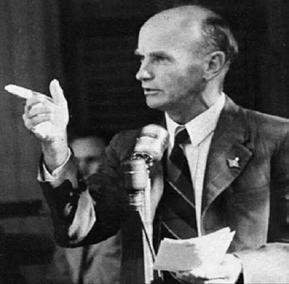
Fred Paterson
BGS 1915
Politician and communist
He saw action in WWI and then won a Rhodes Scholarship. After witnessing extreme poverty in post-war Britain, he joined the Communist Party on his return to Australia. He became the only Communist representative elected to an Australian parliament when he became the state member for Bowen in 1944.
Leonard Shillam
BGS 1928-1931
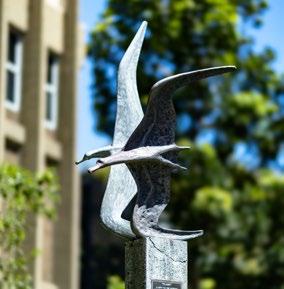
Sculptor
Credited with introducing modern sculpture to Brisbane after WWII, his piece Flight is found at the front of the School. His work The Banker is located on the façade of the Westpac Building facing Post Office Square in the city. He and his wife Kathleen’s pelican sculptures are much admired at the Queensland Art Gallery.
BGS 1907-1909

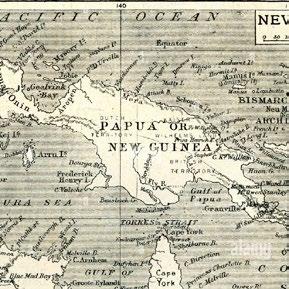
One of many artefact collectors in New Guinea who were both resident Magistrates and Patrol Officers. He was there for over 20 years from 1919. His expedition papers and documentation of culturally sensitive practices like headhunting are still used and give us an insight into the work of ‘colonial anthropologists’.
BGS 1915-1917
Leprologist
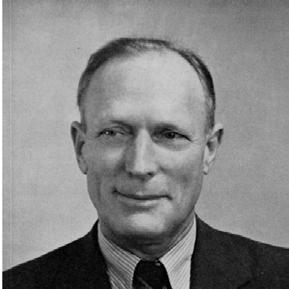
After studying tropical medicine, he became a member of the International Leprosy Association and an honorary member of the Indian Association of Leprologists. He served in East Africa for 10 years from 1947 and assisted in setting up the Leprosy Research Centre at Alupe in Kenya. He was editor of Leprosy Review.
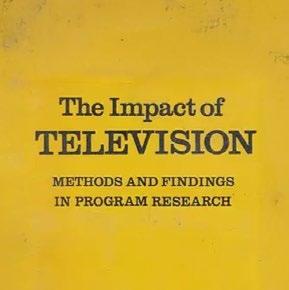
In 1952, he was appointed by the British Broadcasting Corporation (BBC) as an Official Psychologist to study radio audiences and television watchers. He conducted research on television’s impact, particularly on violence, and published The Impact of Television in 1967 and a manual of survey research methods. William A Belson
Arthur Benjamin
BGS 1908
Pianist and composer
After being shot down by a young German pilot, Herman Goring, in WWI Arthur returned to music. His best-known composition is Jamaica Rumba, for which the Jamaican government gave him a free barrel of rum a year as thanks. Alfred Hitchcock also hired him to write the score for The Man Who Knew Too Much.
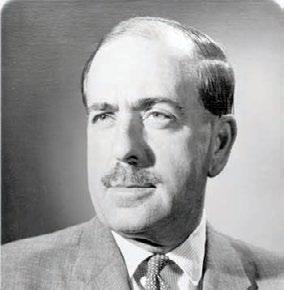
BGS 1924-1927
Australia’s ‘chief spy’
The second head of the Australian Security Intelligence Organisation 1950-1970. He was instrumental in reorganising ASIO, and his work at the height of the Cold War included securing the defection of Vladimir Petrov, third secretary in the Soviet Embassy, in 1954. His life was the subject of a television documentary “I Spry, the Rise and Fall of a Master Spy”.

BGS 1964-1968 Puppeteer
Had a starring role in the BGS centennial production of Pygmalion, by George Bernard Shaw, in 1968, then became a celebrated puppeteer. He was Assistant Head Puppeteer for the Marionette Theatre of Australia, and his productions were staged all over Australia, including at World Expo ‘88 in Brisbane.
Written by Courtney Adam
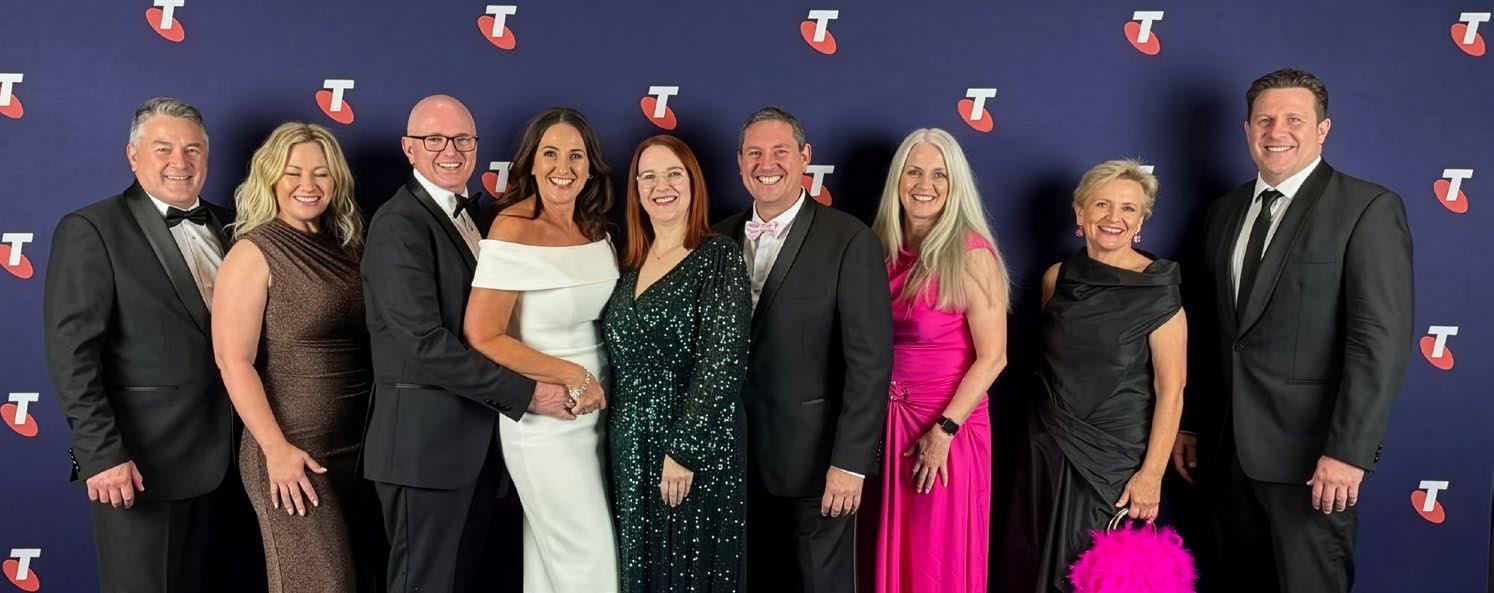
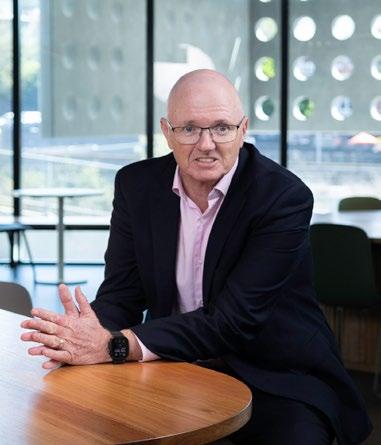
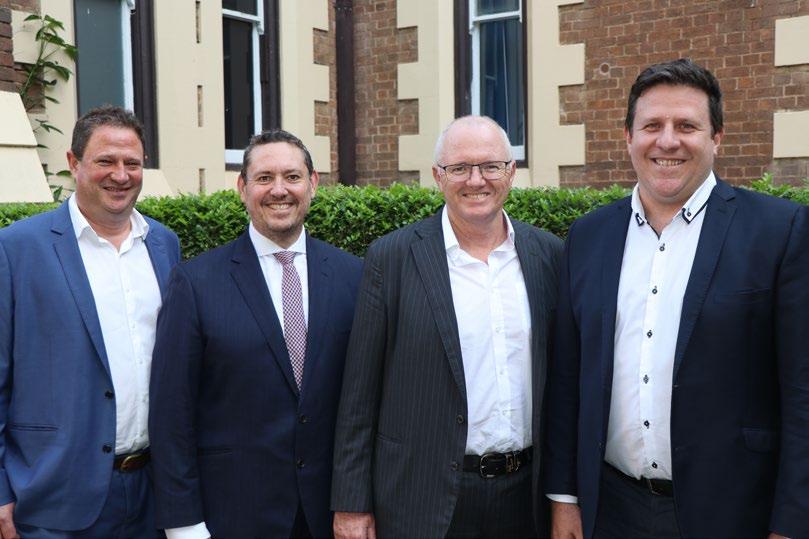
For Old Boys Shayne Gilbert ’87 and Simon Tolhurst ’87, helping women and girls access period products isn’t just a charitable cause, it’s personal.
“I’ve got a daughter and two stepdaughters, and I think it’s every Australian’s responsibility to take care of one another,” said Shayne Gilbert, Share the Dignity Director.
Shayne and his wife Rochelle have turned their ambition to help vulnerable women
into a nationwide movement. Together, they run Share the Dignity, a charity dedicated to breaking down barriers to accessing period products.
This year, the charity celebrated its 10th anniversary.
Simon decided to take on the role of Chairperson after a chat on Shayne’s back deck about how they could make a real impact. Two other Old Boys, Matt Smith ‘97 and Nick Long ‘89, also sit on the Board.
“The ultimate goal is to deal with the stigma associated with periods. Let’s get over that.”
- Simon Tolhurst
“The ultimate goal is to deal with the stigma associated with periods. Let’s get over that,” said Simon.
“It’s a human right to have access to period products.”
“We had 153,000 women participate in a 2024 survey… 64% said they had experienced some form of financial stress and had gone without period products at some point in time in their life,” added Shayne.
Real feedback from women and girls around the nation has allowed the charity to advocate for change at every level, from vending machines in Queensland schools, to improved access in hospitals.
The organisation also campaigns for menstrual equity, helping to remove the tampon
tax in 2018, while challenging the stigma around periods.
Each year, the charity distributes hundreds of thousands of period products to those in need through its Dignity Drives, vending machines and its ‘In the Bag’ program.
These initiatives are just a few examples of why Share the Dignity was recognised as the Queensland winner of the Building Communities category, in the 2025 Best of Business Awards.
Equally remarkable is how comfortable the men are when talking about periods.
“10 years ago, it probably took me a while to get used to quite openly talking about it, but I openly have it in the workplace now,” Shayne admitted.
“I’ll have that conversation, and if someone’s uncomfortable with it, it’s on them, not on me.”
For them, it’s about normalising the conversation
“We had 153,000 women participate in a 2024 survey… 64% said they had experienced some form of financial stress and had gone without period products at some point in time in their life.”
- Shayne Gilbert
and teaching younger generations to take social advocacy seriously.
“Particularly for the guys at BGS, become a champion of change. You know, it’s a normal bodily function. Why on earth is anyone scared about talking about it?” Simon said.
Their message to Brisbane
Grammar School students, and young men everywhere, is simple: normalise the conversation and act.
“Being able to change somebody else’s life when you’ve never met them, and you never will meet them… I don’t think there’s much better in life than that,” Shayne said.
To watch our extended video interview about Shayne and Simon’s incredible work, click the button. Click Here
Written by Courtney Adam
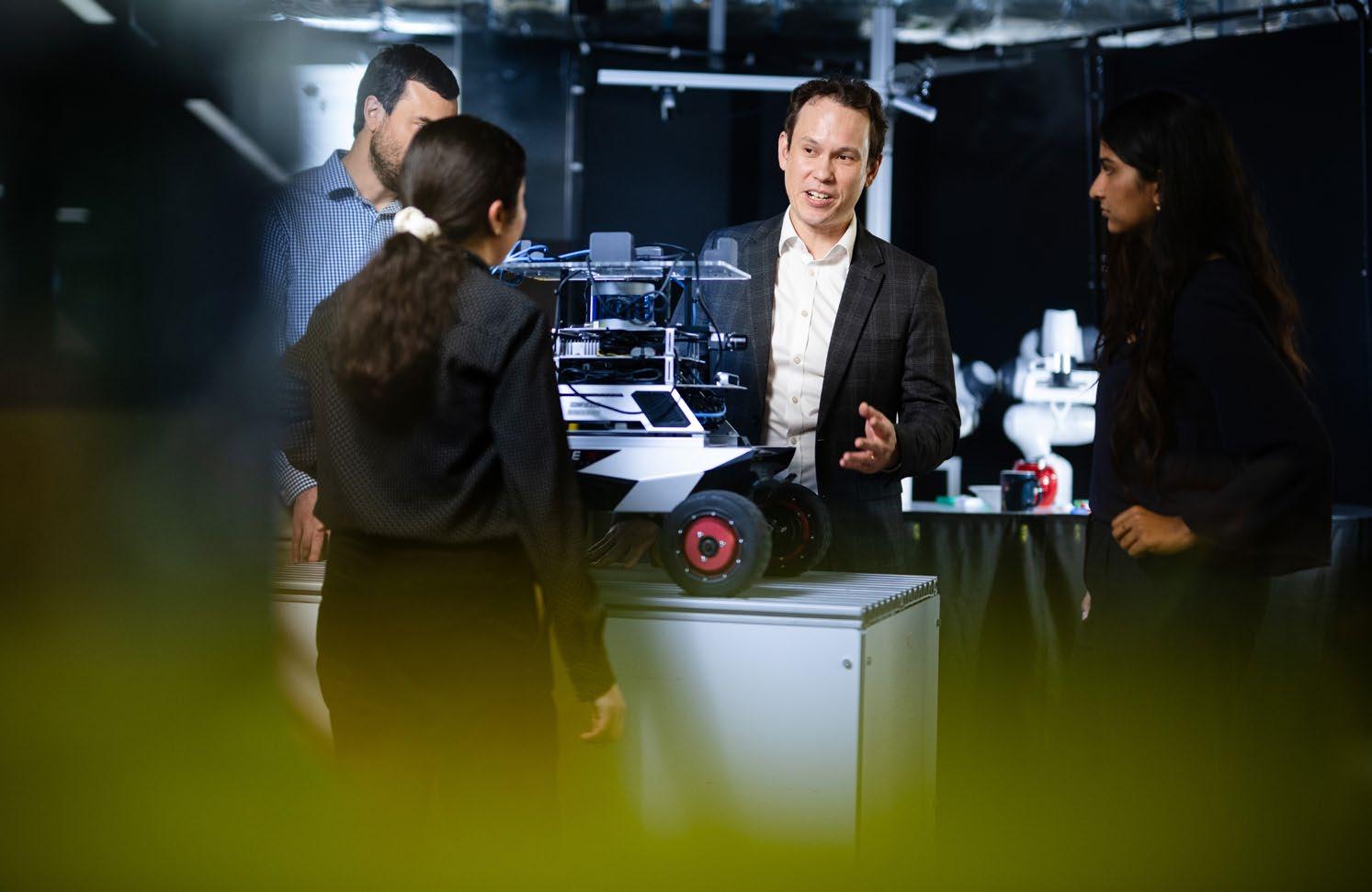

At the intersection of science, technology and art, Old Boy Professor Michael Milford ‘98 is shaping the future of robotics and mentoring the next generation of innovators.
After graduating from BGS, Michael studied a mechanical and space engineering degree at the University of Queensland.
“I loved all things space but during my degree I also fell in love with things like coding and AI, and robotics, so that sent me off on my current career path,” Michael told Grammar News
That curiosity has taken him from BGS classrooms to becoming Director of the
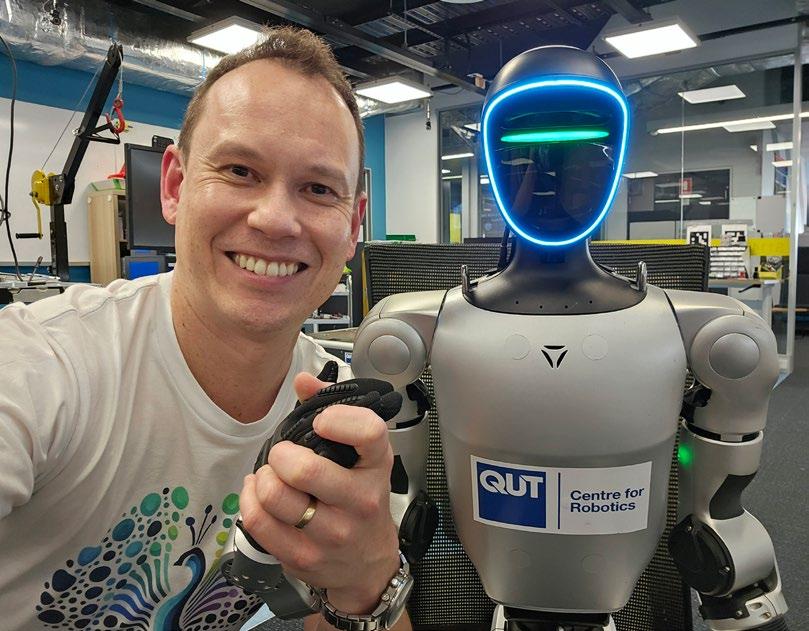
Queensland University of Technology Centre for Robotics, a leading international robotics centre contributing to projects as ambitious as Australia’s first homegrown lunar rover.
“One of the really exciting things that is happening in Australia right now is the ELO2 consortium of companies and universities that are together building the first Australian made rover that will go to the moon, which is a lot of fun to be a part of,” Michael said.
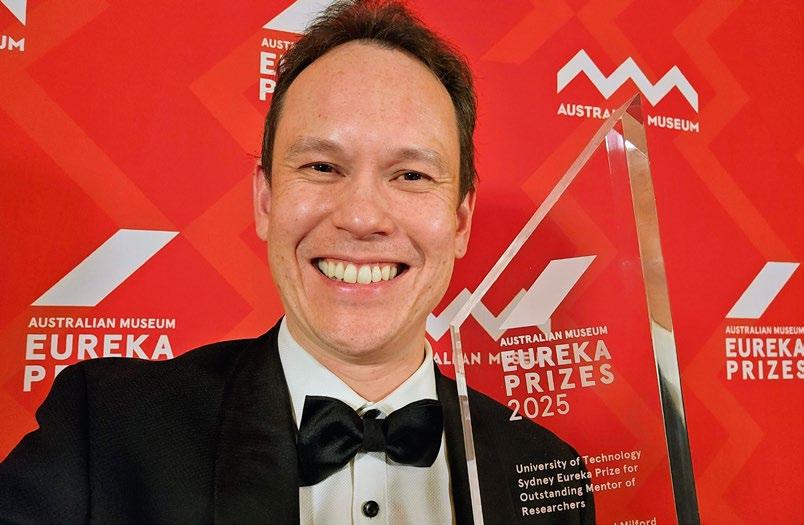
Beyond robotics, Michael dedicates himself to mentoring on a national and international scale — work that earned him the prestigious Eureka Prize for Outstanding Mentor of Researchers, in 2025.
“Everyone — including myself — needs to be on a continual learning journey with these new technologies; you can’t just learn it at school or university and then forget about learning ever again. It’s going to be a lifelong process.”
“I’ve been particularly interested in things like mentoring at scale… mentoring people into careers in these areas, and helping them navigate all the ups and downs.”
His commitment to students goes hand-in-hand with reshaping research, emphasising that learning is a lifelong process.
“One of the things I’m spending a lot of time on nowadays is reshaping how we do research, how research is rewarded and recognised in a way that makes it better connected to the likelihood of generating useful outcomes for society,” he said.
“Everyone — including myself — needs to be on a continual learning journey with these new technologies; you
can’t just learn it at school or university and then forget about learning ever again. It’s going to be a lifelong process.”
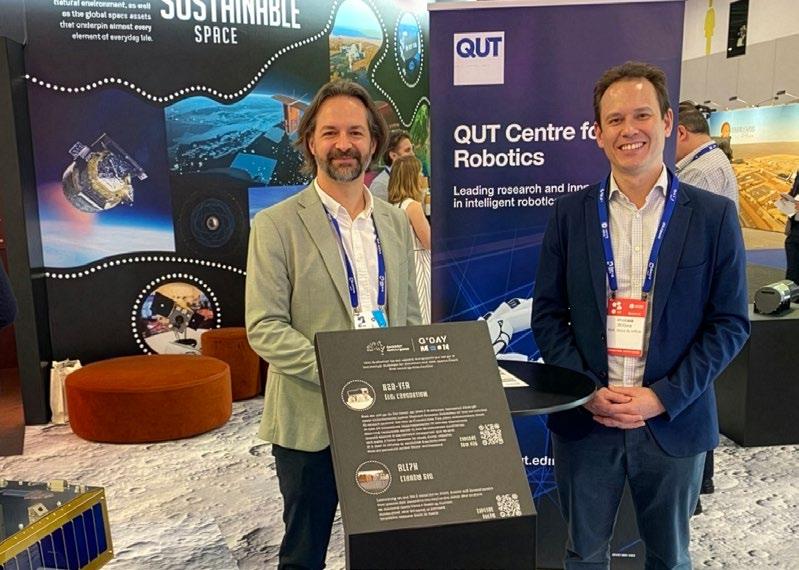
That philosophy underpins his enthusiasm for learning hubs like Brisbane Grammar School’s STEAM Precinct.
“The physical space you inhabit when you’re learning is just so important and so the STEAM Precinct is an amazing facility — I wish I’d had it when I was here.”
His advice to students reflects the same combination of curiosity and forward-thinking that has guided his own career.
“Really look at what people have done before, talk to the amazing alumni network of people that have done amazing things, but then also be confident that you can make your own journey as well”.
As schools increasingly adopt AI technologies, the BGS Learning Organisation Team (LOT) has been asking students if they think AI is helping or hindering their schoolwork.
Executive Director Educational Innovation Jacqui Zervos writes about some of her team’s fascinating findings.
In communication earlier this year, we outlined four productive ways students can use artificial intelligence to support their learning. In the intervening time to writing this article, the School’s Learning Organisation Team (LOT) has been collecting data that reveal the extent to which our students are making progress in their use of AI.
Recent research with students from Years 5 to 11 now provides a clearer picture of how young people are engaging with AI and how their habits compare to these recommended approaches. The findings give good reason for optimism, particularly as older students demonstrate increasingly thoughtful and responsible decision-making based on their own experiences with AI.
Through a series of focus groups, students were invited to share not only how they use
“Collecting and analysing our own data allows us to respond quickly and be guided by what our students are telling us about their learning.”
AI, but also why they turn to it and how they feel it affects their learning. Some saw it as an organisational tool that helps them consolidate information or retrieve ideas when revising.
One student summed it up beautifully, describing AI as “a hybrid car, the electric motor gets you started, then you use your own motor to keep going”.
Students also spoke about using AI to unpack application tasks. For example, to break down a complex maths problem, or to model the structure of an essay, before independently attempting the work.
Several students reported using AI to check their own understanding. They described submitting parts of their work, along with marking guides, to seek feedback or suggestions
for improvement. Encouragingly, in these conversations they were quick to acknowledge the limits of AI and emphasised the importance of weighing its feedback, alongside the expertise of their teachers.
Perhaps most promising was the way students spoke about their motivations. They consistently described using AI as part of a genuine effort to learn well and make progress toward personal goals.
There are, of course, important caveats. The maturity of AI use varied widely across year levels. Younger students were more likely to treat AI as a search engine rather than a tool that predicts what a user wants to hear. Some admitted to using AI to bypass tasks they found tedious, such as reading long
passages of text, or to complete work quickly without engaging deeply in the learning process. They recognised, however, that such habits were unlikely to help them long term and were candid about the risks of taking shortcuts.
What emerged strongly from this research is the value of involving students as partners in conversations about AI. When students discussed their habits and choices with one another, they naturally began challenging and refining each other’s ideas. Many left the room thinking differently about AI and about their own learning than when they entered.
Students also expressed appreciation for being invited into these discussions. They advocated for trust, agency and the opportunity to demonstrate responsible use. Across all year levels, there was a shared belief that using AI wisely is part of developing intellectual integrity. Their insights remind us that responsible, thoughtful use of AI is not simply a set of skills to be taught.
It is a mindset to be fostered, together.
“Using AI wisely is part of developing intellectual integrity.”
For more than a decade, the School’s Public Purpose Program has taught students that small acts of kindness can make a difference in the lives of those less fortunate.
Many Old Boys involved in the program have since become strong advocates for social justice. Among them are Jeremy Hunt ‘16 who created free vaccination charity VacSeen and Raziq Qasimi ‘14, who works as a human rights lawyer.
As Public Purpose Leader Dr Kerry Benson explains, BGS broke many fundraising records in 2025.
Over the past few years, Brisbane Grammar School has seen a remarkable transformation in how students engage with public purpose.
The program has grown into a vibrant, student-led movement that reflects the School’s deep commitment to empathy, leadership and meaningful
action. Public Purpose is no longer just a cocurricular activity — it is at the core of our students’ experience.
From Years 5 to Year 12, the boys are encouraged to think beyond themselves, to act with integrity, and to make impactful contributions to the world around them.
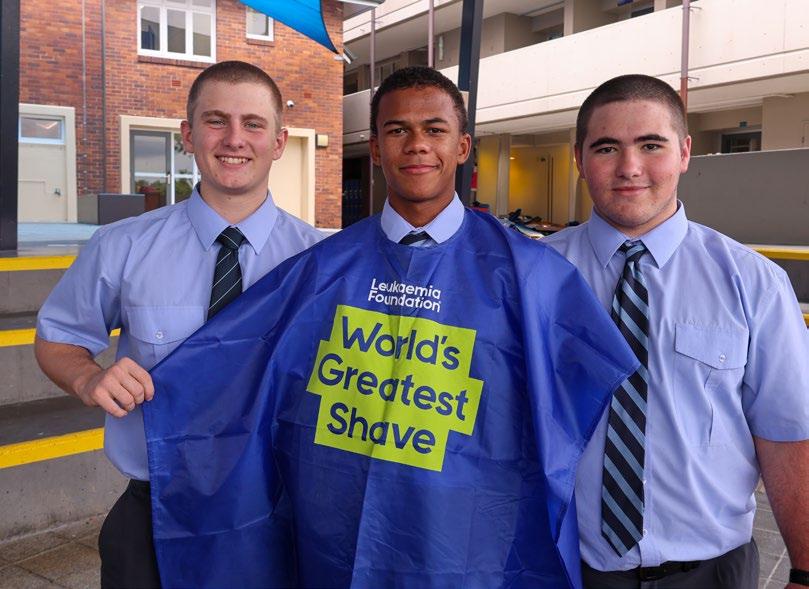
This year, fundraising efforts reached new heights. In the 2025 World’s Greatest Shave, more than 50 students shaved or coloured their hair, raising a record-breaking $74,000 for the Leukaemia Foundation — the most raised in BGS history.
Nineteen students took part in the Starlight Super Swim, raising a record-breaking $11,220.
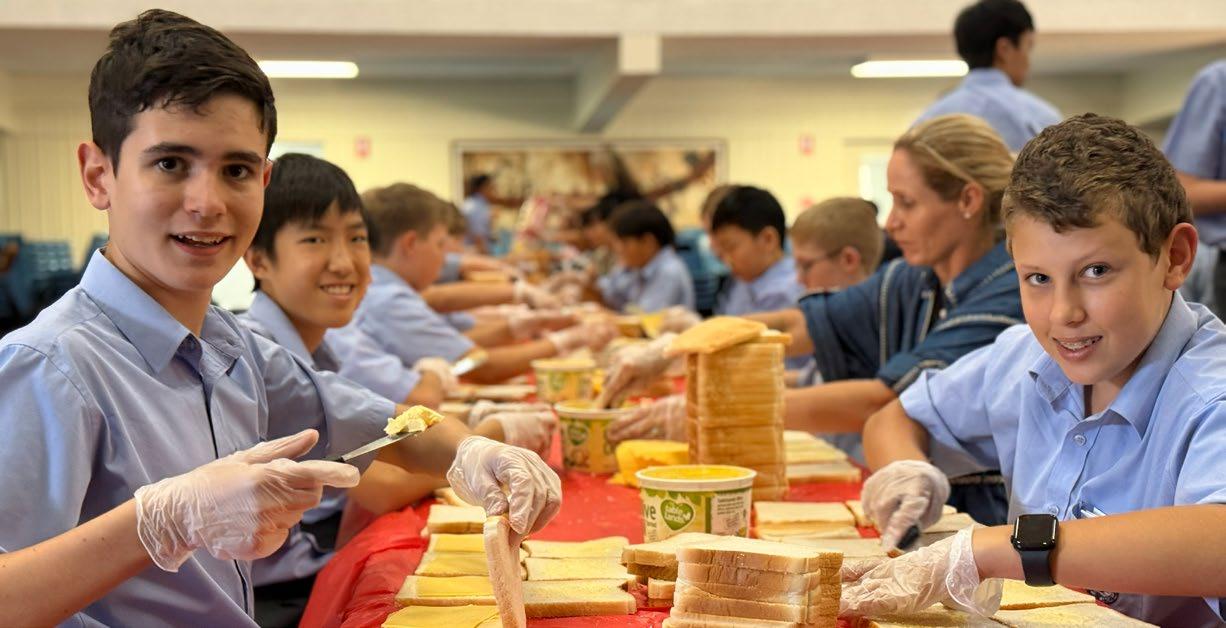
Another significant development has been the School’s partnership with Eat Up, which began in 2023. It has become the most attended Public Purpose activity, with hundreds of students and parents coming together to make sandwiches for vulnerable children.
“More than 50 students shaved or coloured their hair, raising a recordbreaking $74,000 for the Leukaemia Foundation — the most raised in BGS history.”
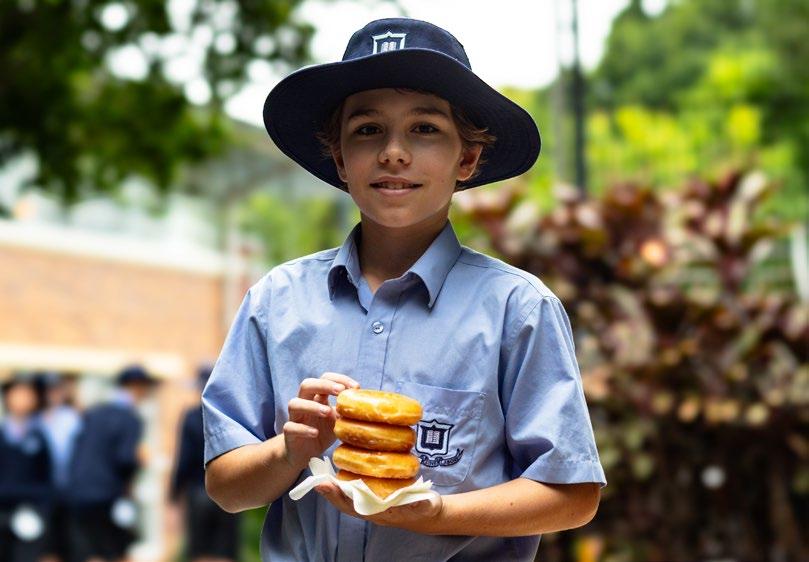
This shared experience not only strengthens family bonds but also supports a vital cause: ensuring no child goes hungry at school. Hunger can severely affect concentration and energy levels, and BGS is proud to help bridge that gap.
Another standout initiative is Hope in a Suitcase, which was introduced in 2024. The program supports children entering foster care, many of whom arrive with nothing but the clothes on their backs. That year, students
and staff united to donate 28 thoughtfully packed suitcases filled with essentials, such as clothing, toiletries, books, and comforting items. In 2025, Year 9 students adopted the cause as their year-level project. In total, BGS donated more than
40 suitcases, each one offering a child a sense of dignity, stability and hope during a deeply uncertain time.
The School looks forward to building on this momentum in the years ahead.
“Hunger can severely affect concentration and energy levels, and BGS is proud to help bridge that gap.”
Written by Ella Begg
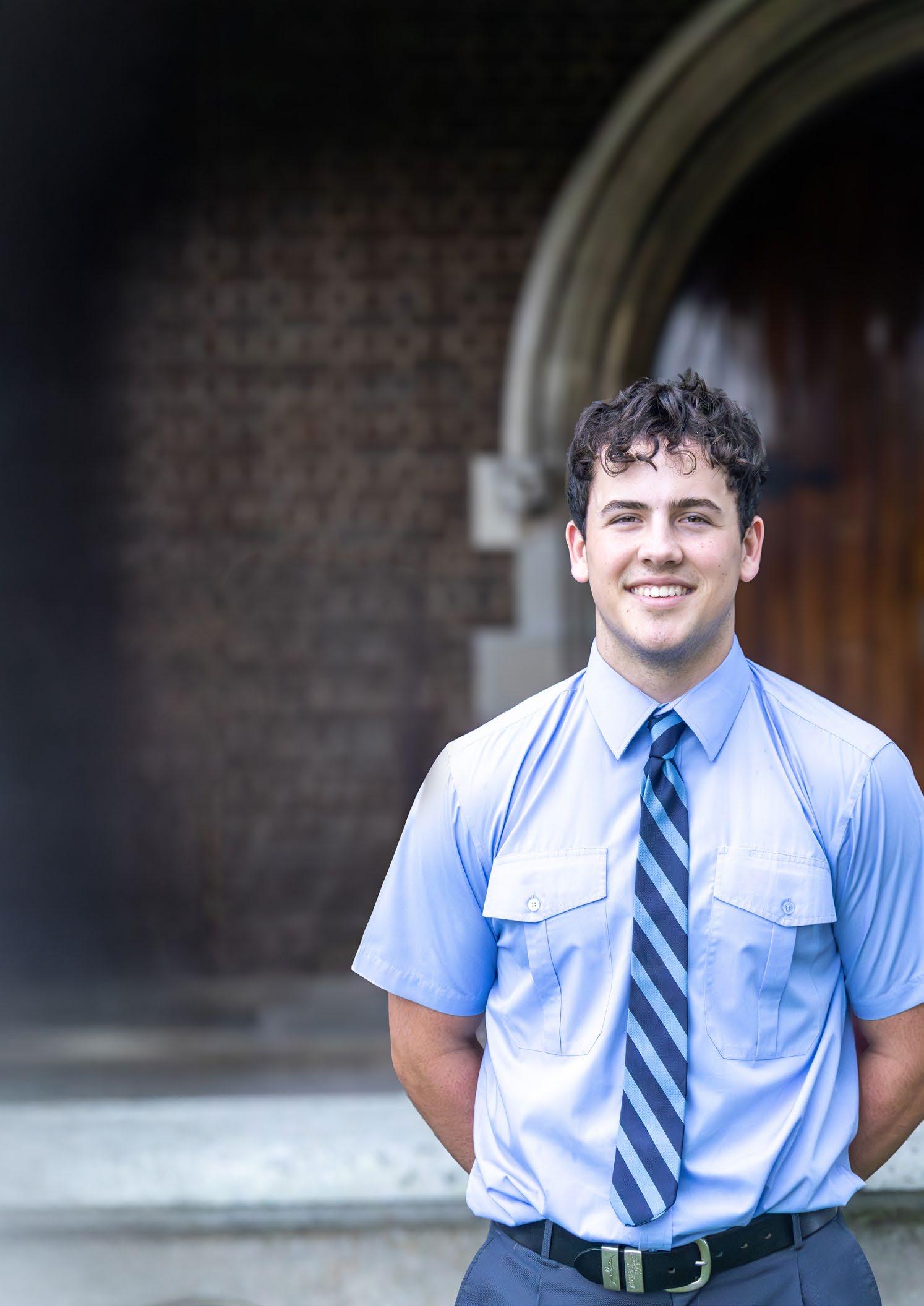
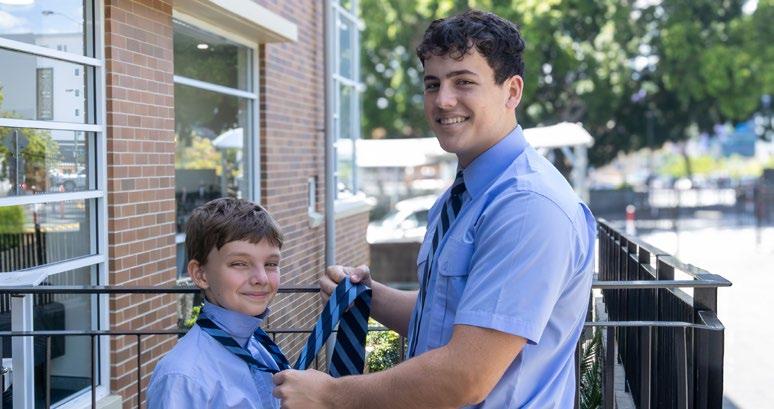
Introducing Jed Siganto, our Boarding and School Captain for 2026.
Remarkably, it has been 50 years since a student held the highest leadership position in both the Boarding House and the School. Ralph Ferguson held the titles in 1975.
Ella Begg, from the Community Relations team, spoke to Jed about the type of leader he hopes to be and why he believes camaraderie is the real measure of success.



“Titles come and go, but the way you treat others leaves a lasting impression.”
Q1 Describe the moment you found out you had been appointed as captain.
It was a surreal moment. It took a bit to soak it all in but being able to share the news with my family was so special. Hearing the news from the Headmaster is a moment I’ll always remember from my time here at the School.
Q2 Holding dual captaincy titles is rare — how does it feel?
It feels incredibly humbling and rewarding. Holding both positions is a unique opportunity to serve the School in different but connected ways. Although they can sometimes feel like two separate worlds, both groups share the same sense of pride in our school and want to feel part of something bigger than themselves.
Q3 What kind of leader do you hope to be?
I want to be an approachable and resilient leader. Being approachable allows me to connect with my peers on a deeper level and create a rich sense of belonging, while showing resilience to other students helps demonstrate that no challenge is impossible to overcome.
Q4 What do you want to achieve by the end of the year?
For me, I believe the greatest success in a Year Level comes from the culture we create. Having every boy in the Year Level get along with one another, support each other, and genuinely enjoy being part of the cohort is what matters most. If, by the end of the year, everyone feels proud to be part of our group — knowing they were valued, included and contributed to something bigger than themselves — that, to me, is true success.
Q5 Tell us about your family’s history at the School.
I am the last of my family’s current generation to come through BGS. My grandfather is an Old Boy, along with four of my older cousins. My brothers Sam and Tom are also BGS Old Boys who held Boarding leadership roles, while my parents are involved in the P&F and Cocurricular support groups.
Q6 What example do you want to set for future School and Boarding captains?
I hope they can see that I led with purpose, that I genuinely cared about the people around me, and that I tried to make a positive difference in their lives. Titles come and go, but the way you treat others leaves a lasting impression. If they could see that leadership is about service, not status, then I’d feel I set the right example.
Jed Siganto Boarding and School Captain
Lewis Hay Boarding Vice Captain
Jack Fleming School Vice Captain
Om Thaker School Vice Captain
Written by Courtney Adam
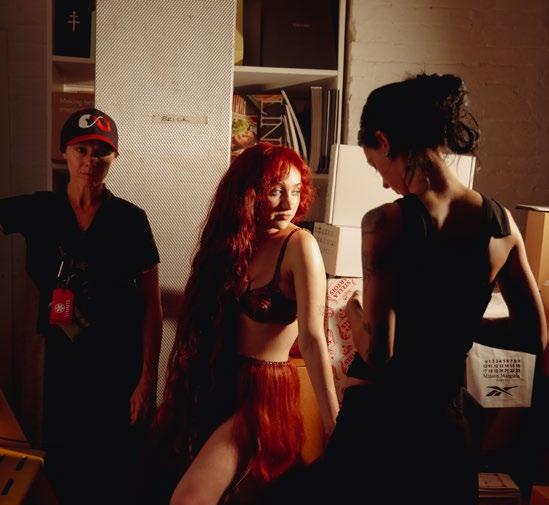
When Pink Pony Club singer Chappell Roan stepped out on a New York fire escape in a twopiece outfit made entirely from human hair, designer and Old Boy Connor O’Grady ’18 had “goosebumps.”
Designing the breathtaking outfit for the Grammy Award winner’s music video The Subway pushed Connor in new ways.

Contacted directly to create the piece, he meticulously crafted it from human hair, dyed to match Chappell’s colour, and hand-sewn with beads, rhinestones and tinsel.
“I had about four days to bring the outfit to life … it was all a bit crazy,” Connor told Grammar News.
“I had few all-nighters to get it done.

“It was a challenge, but that is what I like about it.”
Delivery delays nearly derailed the costume’s arrival on set, but Connor took matters into his own hands.
“I went to the warehouse of the Royal Mail [in London] where they were holding it and basically pulled it from there and then hopped on a flight that evening and got to New York the next day [and] dropped it to set.”
Connor recalled the moment he saw the outfit come to life.
“I remember I was in the hotel and then there were paparazzi pictures showing her wearing it… I just felt relief.”
“A lot of the time within fashion, you will make something or loan it, and whether they wear it or use it, that’s sort of a big mystery.”
Connor’s journey into fashion began early, with sewing lessons at his father’s veterinary clinic and launching his own label at just eight years old.
“One of the clients at my dad’s vet surgery used to be a seamstress, and so she was my first sewing teacher.”
“My parents supported me — I think they could see that I wanted to continue with it.”
At 18, he moved to London to
“If you have one person who believes in you and can see the vision, that’s the most important thing. As long as you have the drive to keep pushing at it, I think then you can do anything really.”
study at the London College of Fashion, graduating in 2023 and starting his business shortly after.
From humble beginnings learning to sew in Brisbane to creating celebrity-worthy designs in London, Connor believes achieving your dreams is all about self-belief and determination.
“If you have one person who believes in you and can see the vision, that’s the most important thing.
“As long as you have the drive to keep pushing at it, I think then you can do anything really.”
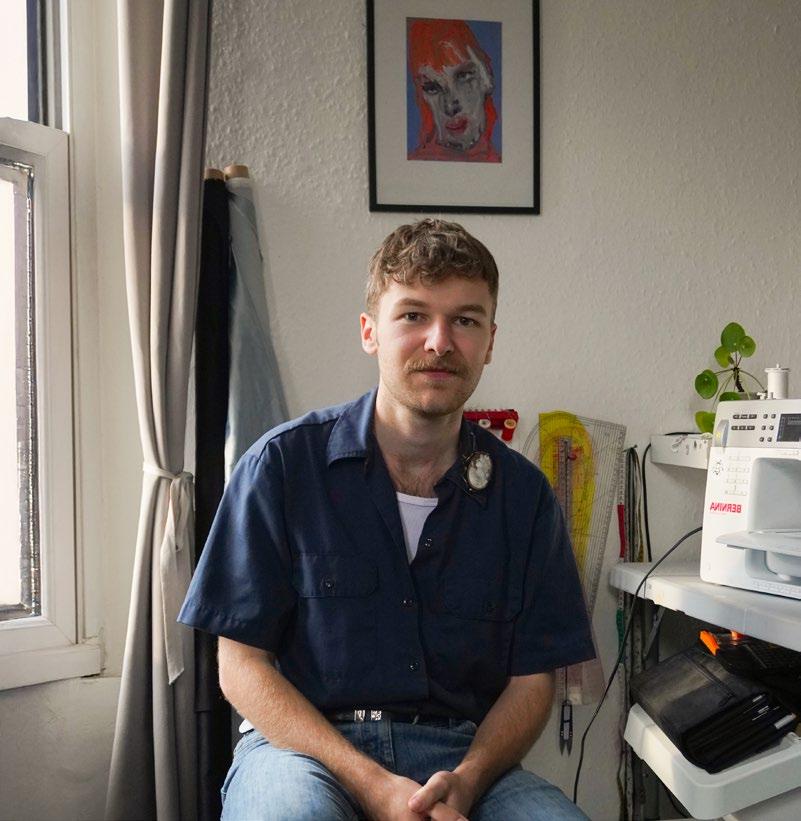
Written by Courtney Adam
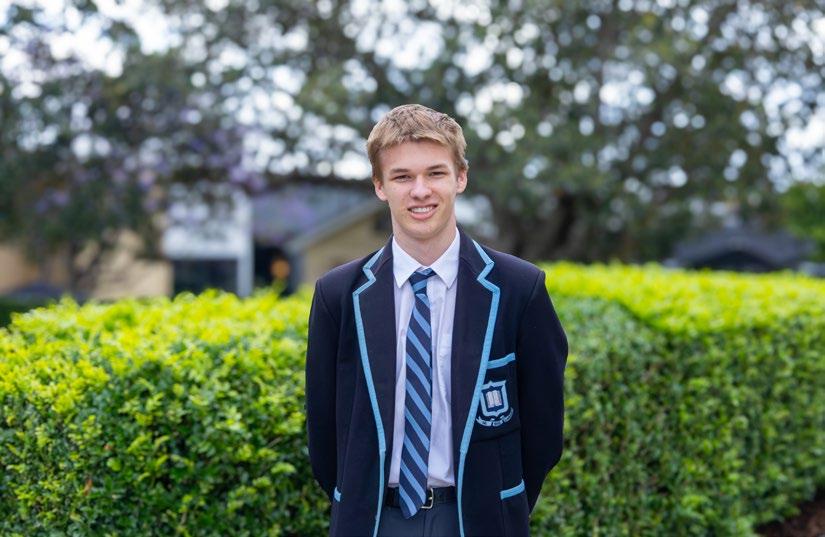
In his final year at BGS, Old Boy Matthew Beckingsale ‘25 was recognised as one of the top economics students in Queensland.
In a real coup, he won the 2025 University of Queensland and Queensland Economics Teachers’ Association Economics Competition.
This annual competition is the most significant high school economics challenge, which tasks senior students to apply their knowledge to contemporary issues in a complex 40-question exam.
“There are a couple thousand students across Queensland who compete in it every year, and it assesses students on contemporary macroeconomic and microeconomic issues in Australia,” Matthew told Grammar News.
Matthew’s interest in economics began well before he could formally study it.
“My interest in economics probably arose from my involvement in debating at Grammar since I started here in Grade 7.”
“Economics is only offered in Grade 11 and 12 as a subject,
so that’s when I got really into it.
“The economics aspect of debating had me kind of interested and involved in the real-world stuff from an earlier stage.”
When he found out he had won, it came as a complete surprise.
“I didn’t actually know that I’d won until I got to the ceremony,” Matthew recalled.
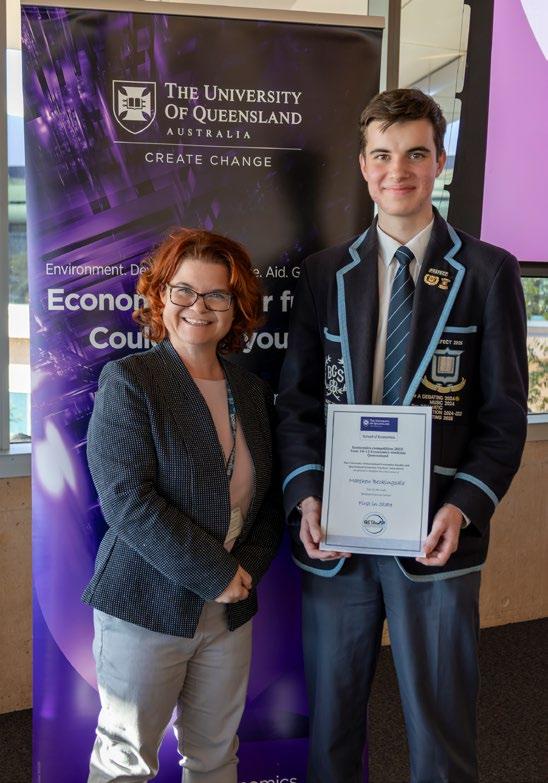
my economics journey with her,” Matthew said.
“In previous years, they had invited the medallists, bronze, silver and gold, all to the ceremony, so I figured I was just one of those. And then when I got there, I figured out that this year they were only doing the first place.
“I was very honoured. It just gave me an opportunity to kind of take a step back and then I realised that it got me thinking more about the value of economics.”
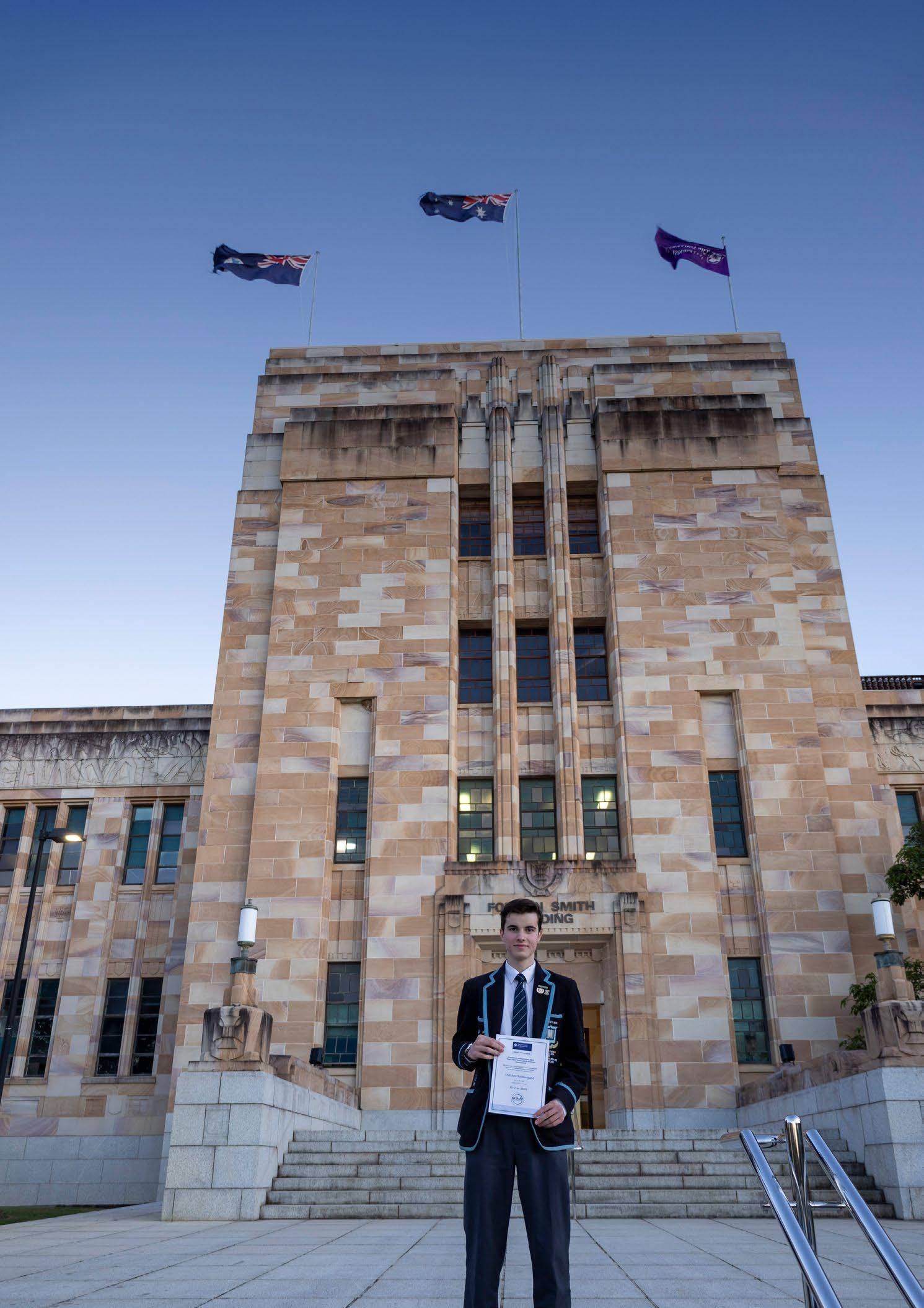
The awards ceremony was held at UQ’s Forgan Smith Building, where Matthew was joined by his parents and his economics teacher, Ms Lilla Csaki.
“It was really lovely because, you know, Grade 12 is the end of
“I was very honoured... It got me thinking more about the value of economics.”
“It was just nice to be able to spend that afternoon with her... and talk in depth with her and with the economists at UQ about different paths that I might go down.”
Matthew describes economics as one of the most challenging yet relevant subjects available to students.
“It’s very applicable to basically any area of life, which means that studying economics just translates to so many different fields of study that you can then go into,” he added.
Next year, Matthew plans to study a Bachelor of Commerce and Law at the University of Queensland, continuing to build on his foundation in economics and exploring a potential future in law.
Right Recent graduate Matthew Beckingsale holding his certificate for first place in the state’s top economics competition.
“My
interest in economics probably arose from my involvement in debating at Grammar since I started here in Grade 7.”
Written by Ella Begg
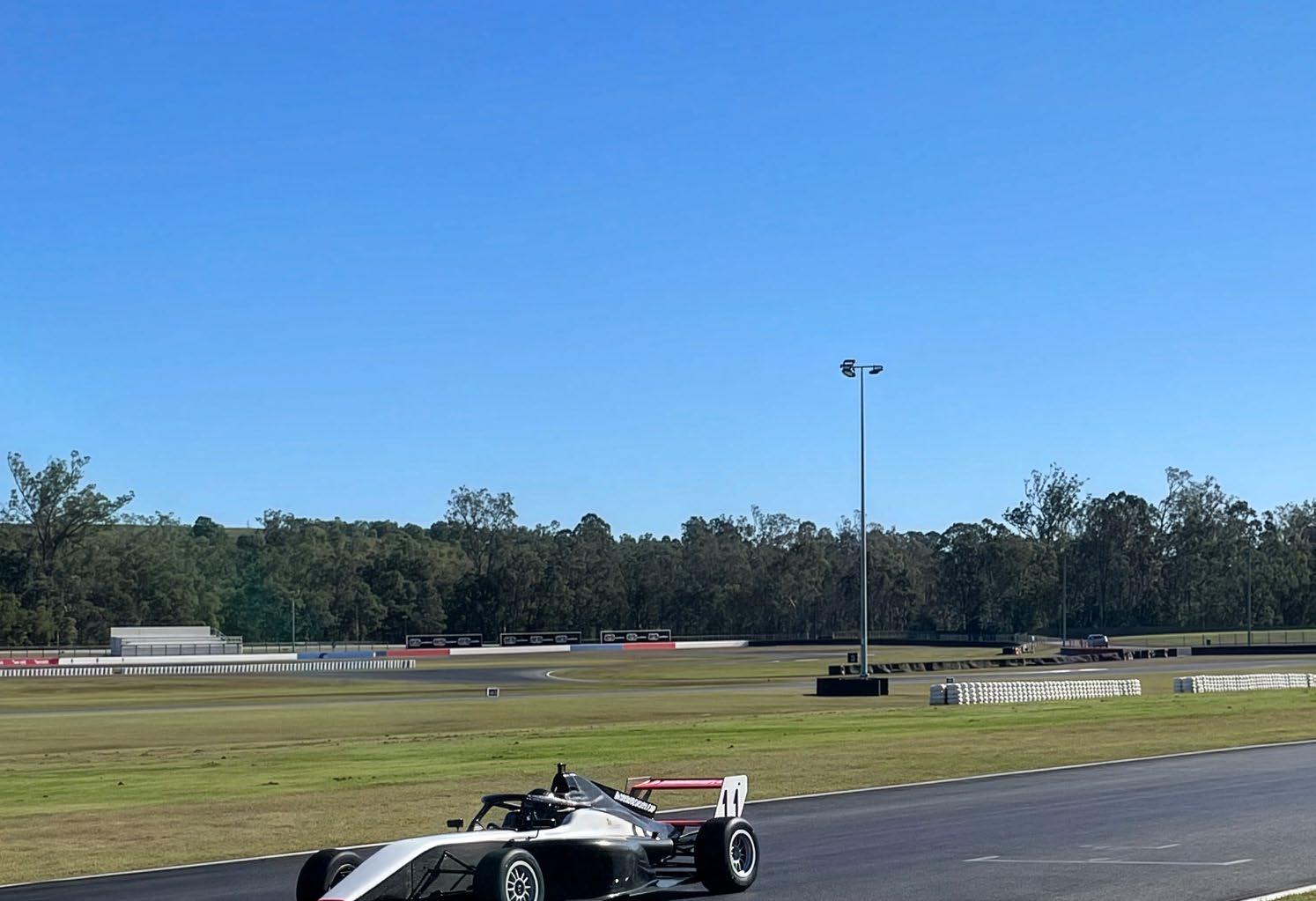

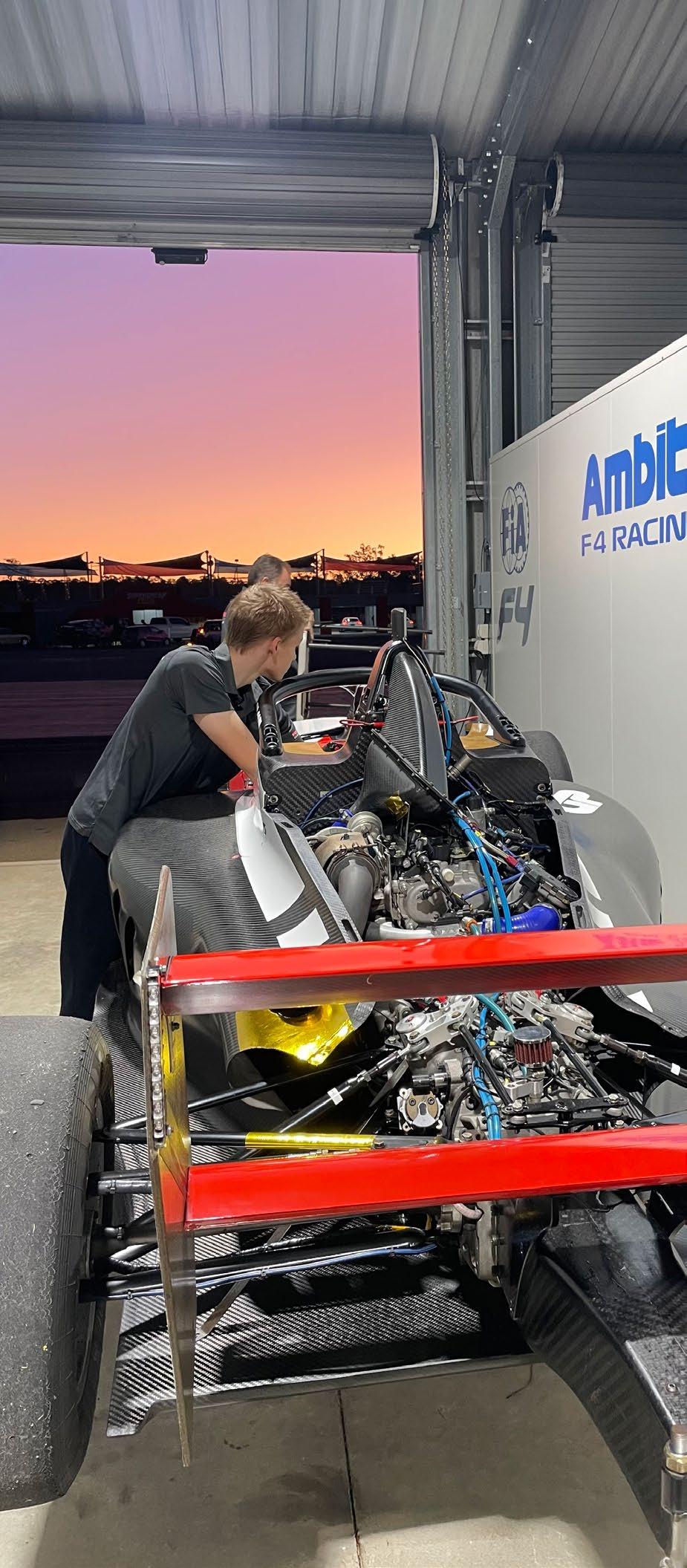
For aspiring Formula 1 driver and Year 12 student James Raaymakers, a level head and positive attitude have kept his goals in reach and his dreams on track.
“I grew up watching Formula 1 alongside Dad. Seeing it on television was pretty amazing to me. I was only about five, but I thought ‘I want to do that one day’,” James told Grammar News.
“2018 was when I got my first kart. Dad put me into karting to make me better on the roads, and from there I just worked my way up.”
In seven years, James has advanced from junior karting to pro karting, and recently earned promotion to Formula 4.
Driving for Ambition GP, the team founded by his father, James made his Formula 4 debut last year, at the Iacon Tech Sprint Championship at Queensland Raceway.
The greatest challenge, however, is balancing schoolwork with his racing commitments.
But James hasn’t let that stop him in his tracks.
“2018 was when I got my first kart. Dad put me into karting to make me better on the roads, and from there I just worked my way up.”
“Competing at a state and national level demands constant performance review, vigorous fitness regimes, and a deep dive into data analysis after every race.
“You just have to adapt; come up with a plan and follow it.
“I work where I can; on the plane, at the hotel, or in the car travelling to comps.”
Evidently, it takes far more than just skill and work ethic to climb the ladder in an elite sport — a unique mentality is necessary.
“In terms of positivity, you must keep moving forward no matter what.
“There have been times that I made a mistake and beat myself up so much about it, but I realised at some point that I had to just move on.
“As for key figures in my life, Max Verstappen stands out. He pushes on even if he has a bad car. He is constant and focused and always keeps his cool.”
James has his sights set on the 2026 SE Asian F4 Championship starting in April, followed by the UAE Trophy Series later in the year.
Written by Courtney Adam
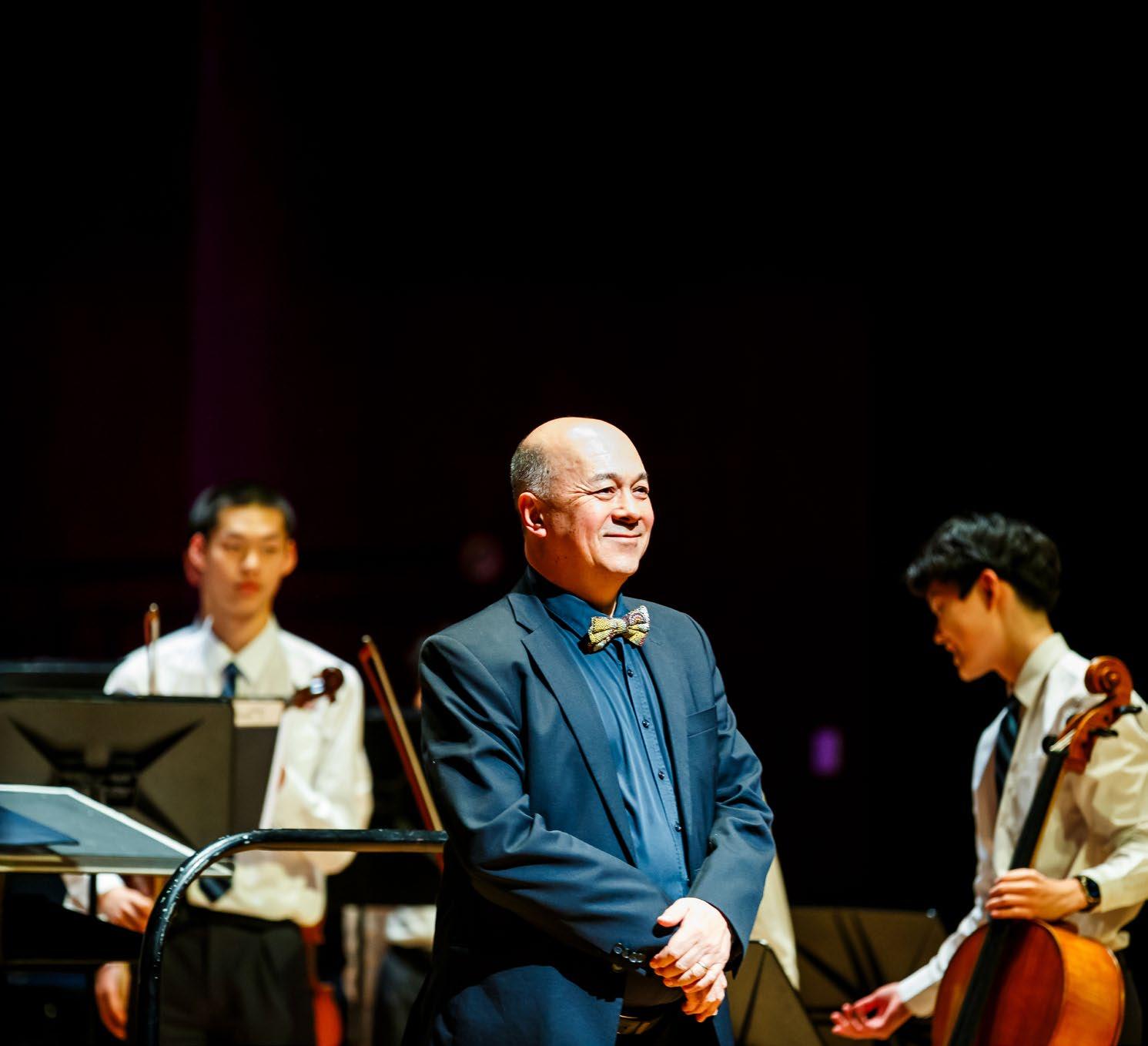
After 33 years shaping Brisbane Grammar School’s music program, long-serving music educator Stephen Chin has bid farewell to the School.
Mr Chin joined BGS in the early 1990s and has since become a driving force behind the School’s renowned String Program, inspiring generations of boys to discover a lifelong love of music.
“I had intended to stay to 2029, but there are a whole lot of other things that are happening in my life, particularly with my family,” Mr Chin said.
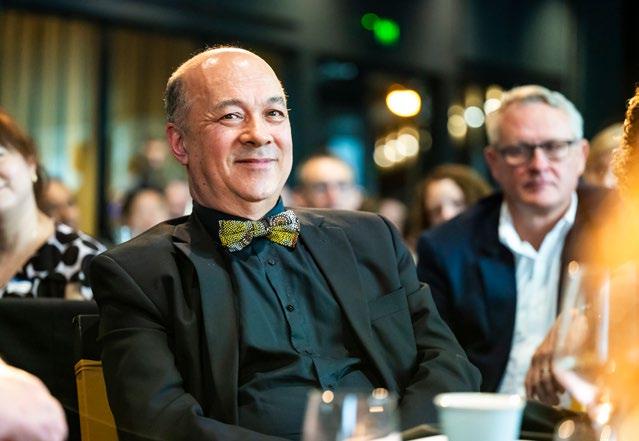
“I’ve got grandchildren, I have six children that all have all sorts of other needs, and I want to be able to focus on them.”
A passionate educator and prolific composer, Mr Chin said his greatest joy comes from watching young musicians grow.
“I really would like to see that musicians grow as a result of the type of music that is being written for them…in the past 20 years there’s been a resurgence
of educational music and how important it is to developing musicians.”
During his time at BGS, he expanded the String Program from just a few string ensembles to eight auditioned groups.
“What I’ve liked the most is that I’ve been allowed to expand my vision… of what I think a really wonderful program can be.”

Beyond the classroom, Mr Chin has contributed widely to Australia’s music community through leadership roles, performances abroad, and mentoring teachers on international music tours.
“When I went overseas with BGS in 2010 and 2014, I thought we should have this for teachers… Why aren’t teachers doing international music tours by themselves?
“What I love about music in general is that it taps into a whole wide range of emotions that you can’t put into words.”
-
Mr Stephen Chin
“So, I just put it out there and we were just flooded.
“A lot of them at that time of their lives, they just think, I’ve just given so much, there’s nothing left here for me.”
“And we say to them, there is something left for you… you can come back and discover your first love as a musician — it’s wonderful.”
Headmaster Anthony Micallef has paid tribute to Mr Chin’s
“A masterful pedagogue and passionate advocate for the transformative power of music, Stephen’s legacy is etched in the hearts and aspirations of those he guided.”
- Mr Anthony Micallef
remarkable contribution to the School.
“Stephen has shaped not merely a program, but a musical lineage, cultivating artistry, discipline and a spirit of camaraderie among generations of students,” Mr Micallef said.
“A masterful pedagogue and passionate advocate for the transformative power of music, Stephen’s legacy is etched in the hearts and aspirations of those he guided.”
For Mr Chin, it’s the music and the people that will stay with him.
“What I love about music in general is that it taps into a whole wide range of emotions that you can’t put into words. And that is wonderful for the soul.”

To hear more about Stephen’s career and what he loves most about music, click the button.
In the age of artificial intelligence, the role of teachers in preserving original thinking and debunking misinformation has never been more important.
In 2025, BGS staff were invited to share their knowledge at conferences around the world,
Australian Council for Educational Leaders Awards
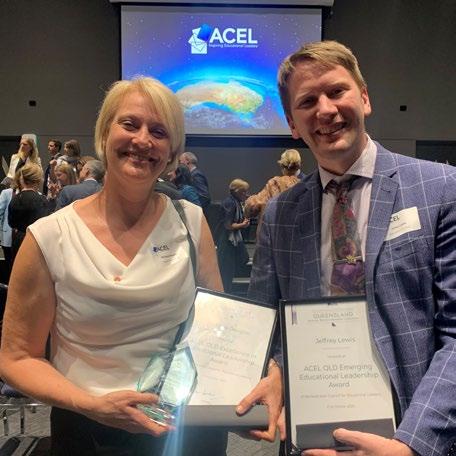
Ms Philippa Douglas and Mr Jeffery Lewis were both recognised for their exceptional contributions to the teaching profession at the prestigious ACEL awards.
Director of Student Wellbeing Programs, Ms Douglas, was honoured with the Excellence in Educational Leadership Award, celebrating her remarkable career.
setting the agenda in educational research.
Others won major awards, recognising them as some of the most influential people in the profession.
Assistant Head of English,
Her BGS career began in 1998 as a Geography teacher, before playing a key role in developing the Public Purpose Program into one of the School’s most well attended cocurricular initiatives. Her work in the wellbeing space nurtures the boys’ social and emotional development, and teaches them the value of helping those less fortunate.
Mr Lewis, received the Emerging Educational Leadership Award in recognition of his rising influence and dedication within the field. In 2026, he will celebrate a decade of service at BGS. He previously served on the English Teachers’ Association of Queensland management committee and as an assessor for the Queensland Curriculum and Assessment Authority.

Head of Physical Education
Daniel Alizart was named in The Educator’s 2025 Hot List, which recognises 50 leaders shaping the future of education in Australia by bridging the gap between theory and real-world practice.
Mr Alizart’s work exemplifies the qualities this award seeks to recognise: vision, innovation and impact. He has been commended for his role in leading Sports Science Innovation, relocating and integrating the Physical Education and Athletic Development departments, and Cocurricular Program Leaders, when STEAM opened in 2024.
Senior English Teacher Mrs Bridget Pearce was one of 60 invited representatives from the education, training and government sectors to convene at the University of Sydney to help design a shared vision for the future of education.
The collaboration produced the Castlereagh Declaration, which builds on the 2019 Alice Springs (Mparntwe) Education Declaration. The document outlines goals, principles and a roadmap for the industry and in preparing Australians for an AIenabled future.
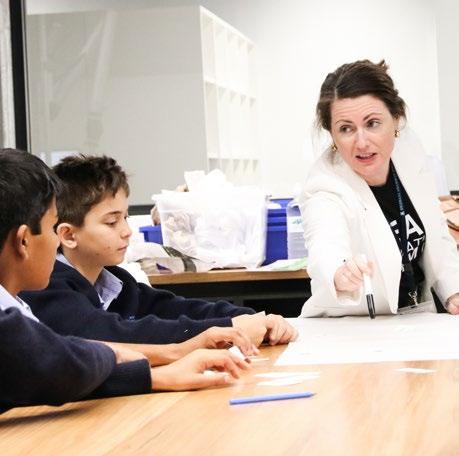
“Achieving this vision will demand coordinated action on a scale we have not seen before, across states and sectors, to navigate AI-driven disruption and harness its educational opportunities,” Ms Pearce said.
Deputy Headmaster Teaching and Learning Steve Uscinski and Executive Director Educational Innovation Jacqui Zervos presented on the importance of teacher input when implementing artificial intelligence into classrooms, at the Informa AI in Education Conference, in Brisbane.
“We have to keep returning to first principles — what are the practices that make a positive difference to student learning — and adapt AI to these,” Mr Uscinski said.
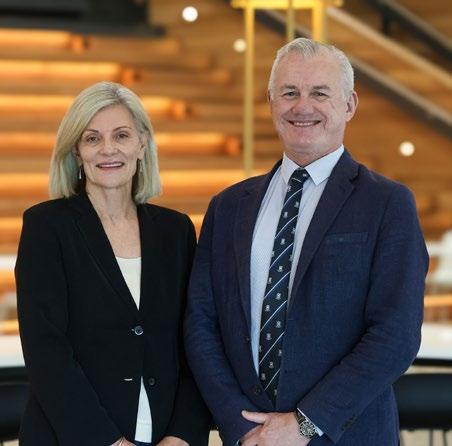
“An ongoing challenge is how we systemise knowledge exchange across the School to sustain the necessary pace of change.”
- Ms Jacqui Zervos

International Boys’ School Coalition Conference, Boston
Drawing on his experience as a rugby union coach, PE Teacher Harry Curtin presented his Action Research Project focused on how pre-training play can strengthen an athletes’ sense of belonging, at the International Boys’ School Coalition Conference, in Boston, USA.
“Presenting at the IBSC allows for positive impact and influence to be widened to many schools,” Mr Curtin said.
Kaitlin Emerson, Sam Lobascher, Simon Conway and Anthony Micallef also presented at the conference.
“Presenting at the IBSC allows for positive impact and influence to be widened to many schools.”

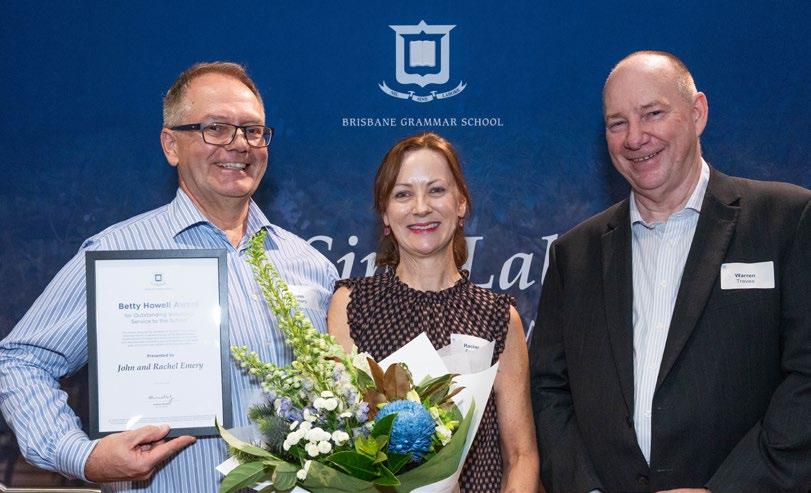
Headmaster Anthony Micallef has penned this tribute profiling the contributions and leadership of Warren Traves following his resignation as the Chairman of the Board of Trustees late last year.
On behalf of Brisbane Grammar School, I want to thank Mr Traves for his many contributions to the School during his time as a Trustee, Deputy Chair and most recently Chairman.
An alumnus of BGS, Mr Traves has a distinguished family legacy within the School, and
an accomplished career in engineering and leadership. He brought substantial expertise and a resolute commitment to guiding the School’s ongoing advancement, including leading the Project Control Group that delivered the STEAM Precinct, advancing
the digital transformation of the school information system, contemporising the School’s risk profile and refreshing of The Strategic Plan 2025–2030.
Mr Traves’ connection to BGS began as a student, graduating in 1982. The Traves family’s enduring association with the School, includes his father, uncle, brother, son and nephews. These long-running family ties equipped him with a deep understanding of the development and foundational values of BGS.
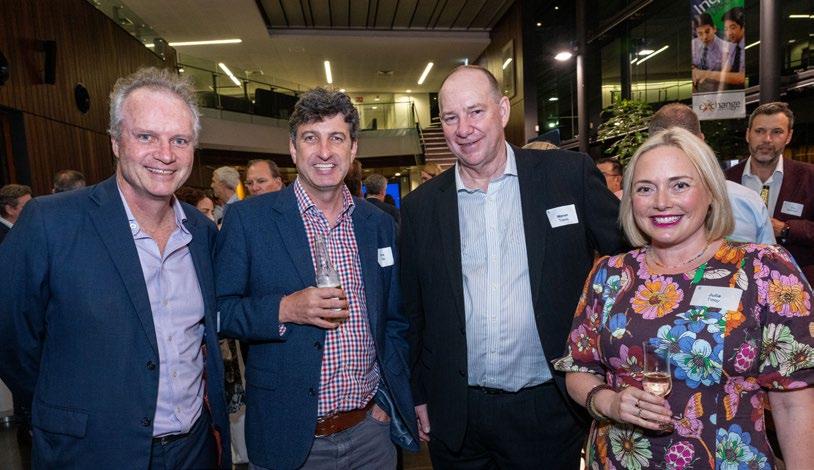
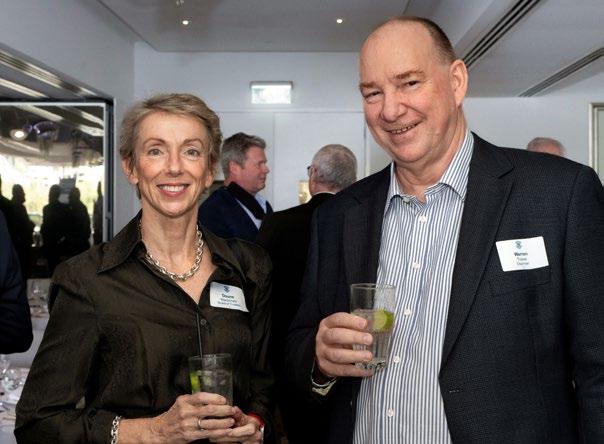
Left Warren Traves (third from left) at the Celebrating Our Community event, in 2025.
Mr Traves furthered his academic pursuits at the University of Queensland, earning honours in Civil Engineering and a Master of Engineering Science. With more than 30 years at GHD, a global engineering and professional services firm, Mr Traves advanced from engineer to Chief Risk Officer and Regional General Manager.
His leadership experience has encompassed teams in sustainability, infrastructure, risk management and innovation. Notably, he led a company-wide sustainability initiative that achieved a 15% reduction in operational costs while delivering improved environmental outcomes.
As Chairman of BGS, Mr Traves did an outstanding job maintaining the School’s traditions while also positioning BGS to adapt to a rapidly changing landscape. The Strategic Plan 2025–2030 introduces bold initiatives like major improvements to the Outdoor Education facilities at Moogerah, planning for a modern Arts Centre and an expanded bursary program for
underrepresented students. These priorities showed how committed Mr Traves was in supporting the School’s vision to be the best school for boys in Australia, and to providing an inclusive and future-focused education, therefore sustaining our global reputation for excellence.
We thank Mr Warren Traves for his leadership and wisdom, and for his ability to honour our heritage while pursuing innovative opportunities for the benefit of the entire community.
Mr Traves is succeeded as Chair by Mr Stephen Bizzell and Mr Stephen Moore AO, assumes the role as Deputy Chair.
“As Chairman of BGS, Mr Traves did an exceptional job maintaining the School’s traditions while also positioning BGS to adapt to a rapidly changing landscape.”
Click to Read The Strategic Plan 2025-2030 Click Here
Written by Chris Price, School Historian and Archivist
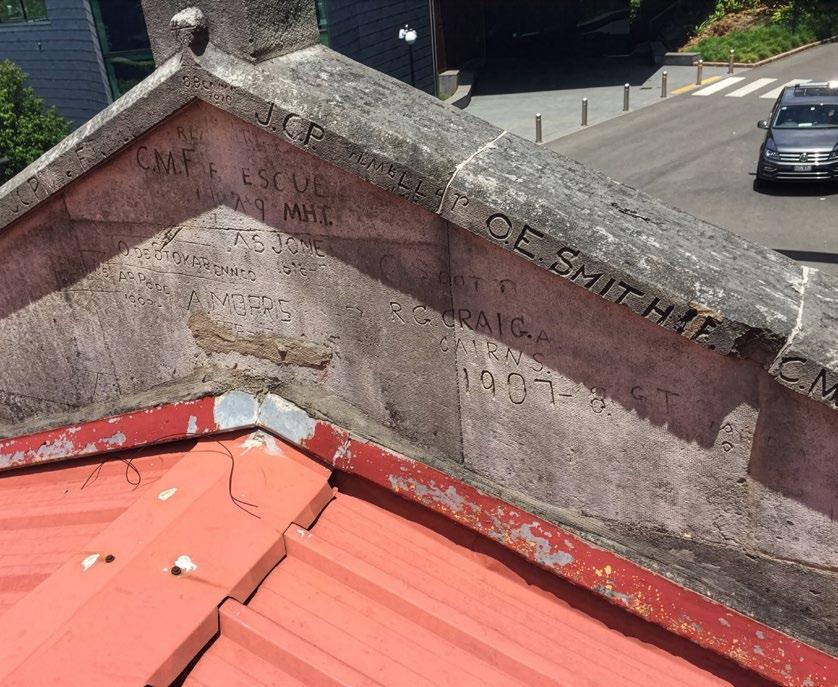
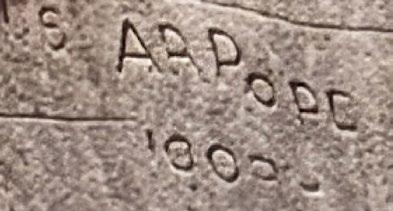
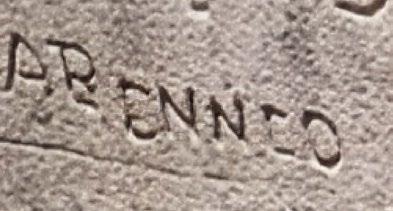
In an age before Instagram posts, students sometimes ‘tagged’ their identity by etching their names into wooden desks. One group of boarders, clearly with a taste for daring, took things to new heights and carved their names on the inside of the stone portico of The Great Hall. As graffiti wasn’t an officially sanctioned activity, the boys probably thought the portico was a safe place to leave their mark. For over 100 years, their secret was guarded by the stone face of the hall. It was after the great storm of 2014, when
repairs were carried out, that the unapproved stonemasonry was rediscovered.
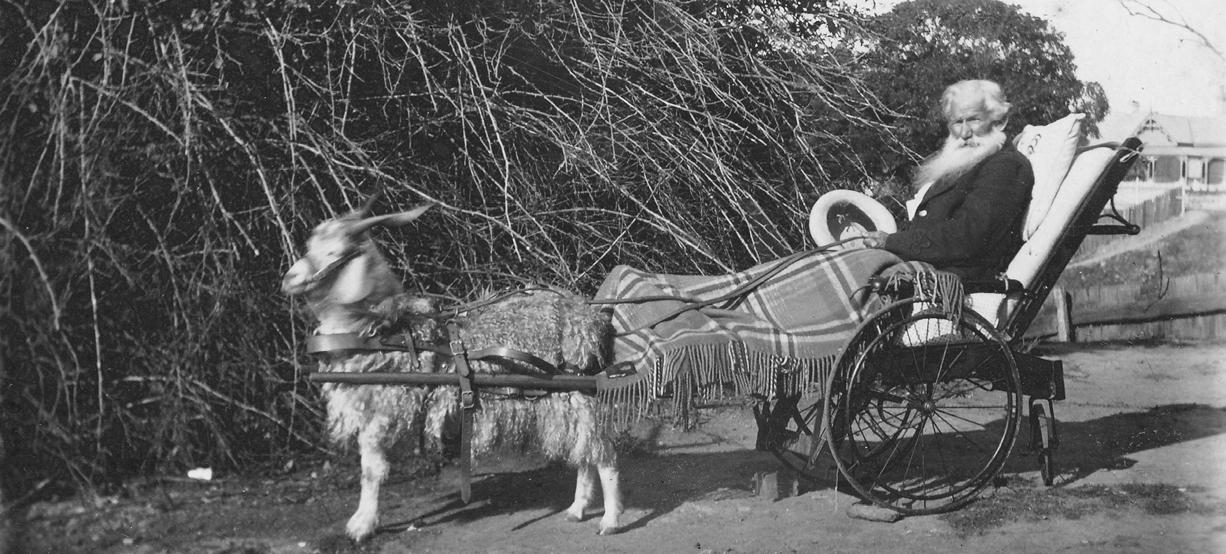
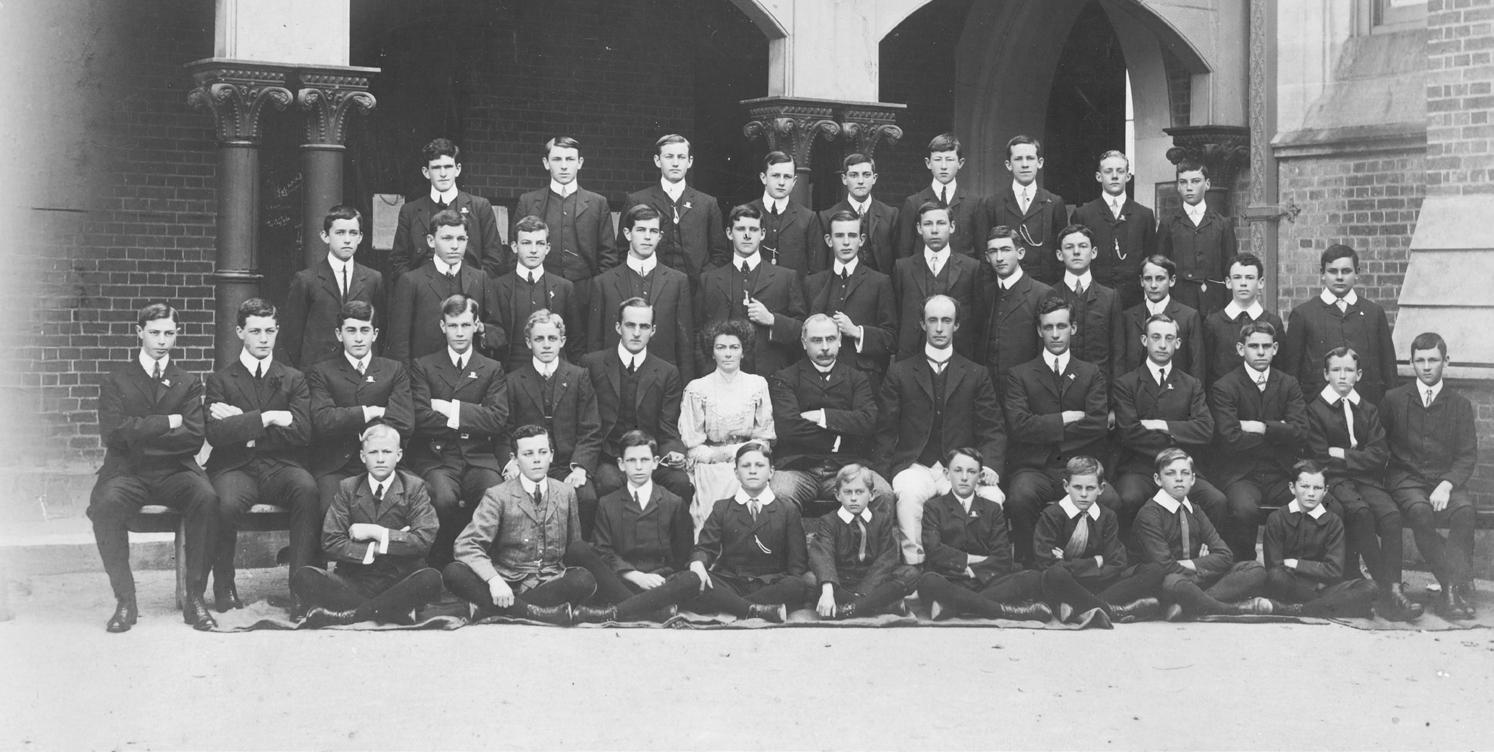
Three of the names can be found in a 1908 photograph of School House (now the Roe Building). John Kennedy arrived in 1908. His parents ran the Western Star Hotel in Richmond, halfway between Townsville and Mt Isa. Ormesly Ernest Smith arrived in 1907 from the Glengallan Estate near Allora. Lastly, Archibald Roberton Pope arrived from Mackay in 1907. School House was run by Mr Bousfield, soon to be
“Whether they made a dash across the boarders’ lawn or took a clandestine route along the bank after dark, we’ll never know.”
headmaster, and Mrs Bousfield. They lived on the middle floor and the boys all lived on the top floor, with the only way out being past Bousfield’s front door. The kitchen, with its giant wood-fired stove, was on the lower floor. George Rilatt, the faithful janitor who lived on site, still grazed his cows and goat on the sloping hill. Easter camp was at Jumping-Pin (Jumpinpin) as most of the boys did not go home for the holiday. Searching for adventure, those three plucky boarders found a way to shimmy up the decorative columns of the hall, flip over the turret of the portico and chisel their names into the stone before returning safely to School House. Whether they made a dash across the boarders’ lawn or took a clandestine route along the bank after dark, we’ll never know. In their time at school, Kennedy and Smith both
passed the Sydney Junior exam, with Kennedy obtaining a railway engineering cadetship in 1911. Archie, who had been a promising bugler in the Cadet Corps, a member of a premiership football team and captain of his cricket side, did not sit the junior exams.
Fate took a cruel turn for Archie. Mr Bousfield made this solemn announcement in 1909: “On Monday, March 15th, little Archie Pope, beloved of all who knew him, died of pneumonia, after an illness of a little longer than a week — an ordeal through which his habitual chivalry and consideration of others came triumphant to the end.”
In an age before antibiotics and air travel, Archie succumbed to his illness and sadly his mother arrived too late to see her son alive. Mr Bousfield went on to describe him as “cheery, delighting heartily in his school and all its pursuits, loyal and warm-hearted.”
Archie had left his mark.
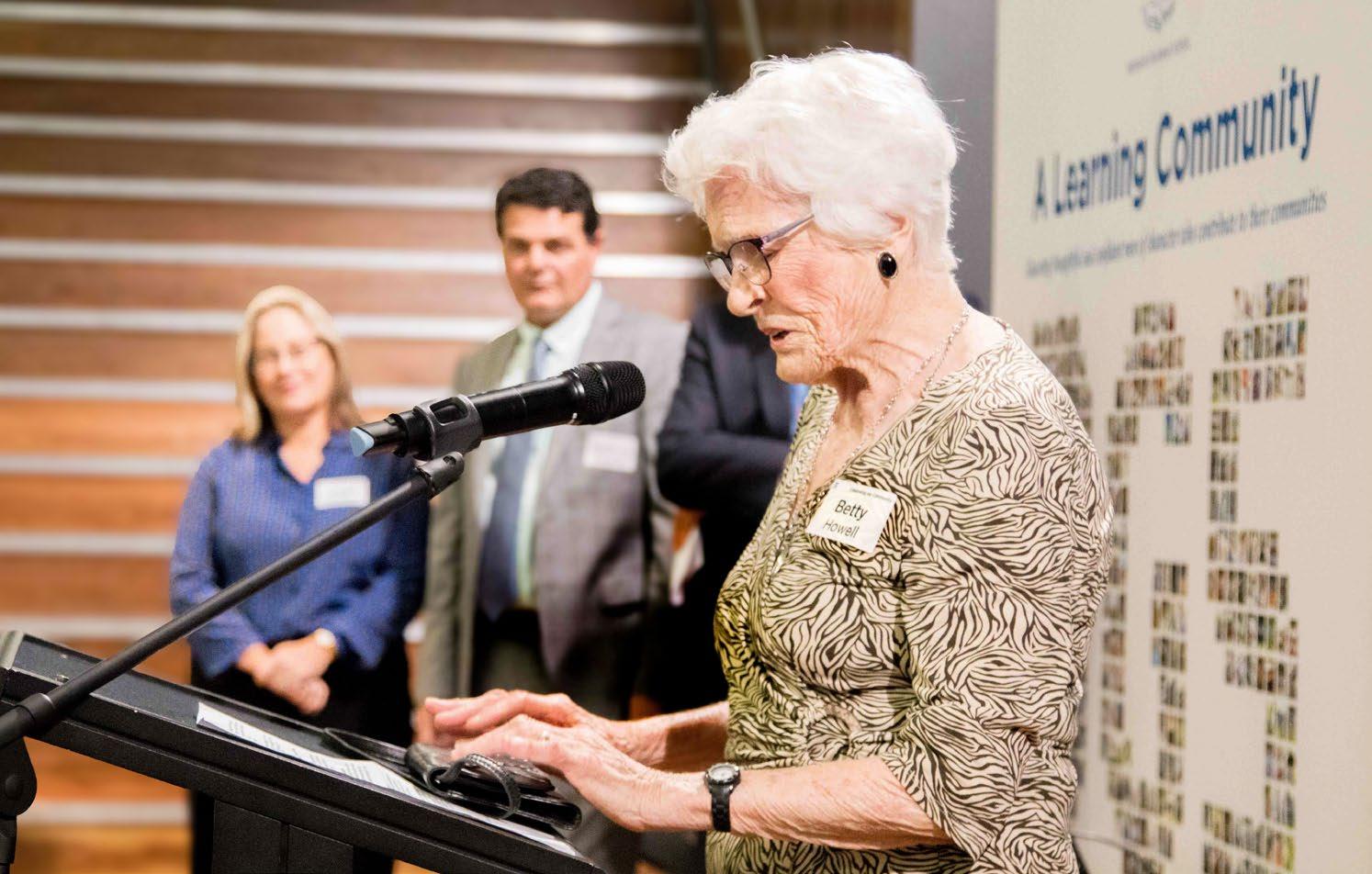
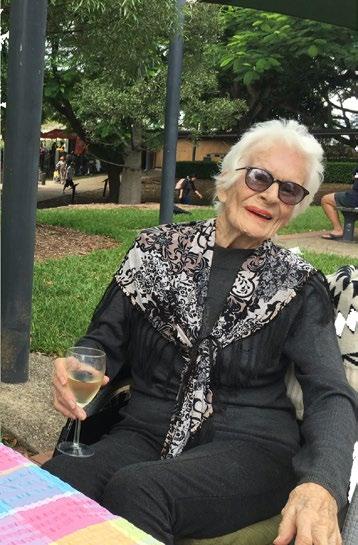
The BGS community mourns the passing of much-loved volunteer and wife of a former headmaster, Mrs Joan Elizabeth “Betty” Howell, at age 99.
For 25 years between 1965 to 1989, Betty was a dedicated volunteer who served the School and its students.
Written by Lachie Grey
Although Betty never held any official positions, she was a cherished leader and mentor to others, particularly across the Boarding Program, staff community, the P&F Auxiliary and the Art Committee.
Whether it was leading bachelor cooking classes
“She’d do things like make scones and pots of tea for the staff during scholarship exams on a Saturday morning.”
- Mr Chris Price
for senior students, driving significant events during the 1968 centenary year, or quietly mopping up the Centenary Hall after heavy rains, Betty’s work was often unseen and hands-on.
As written in the 1989 School Magazine by Old Boy and then trustee The Hon. Justice John Dowsett ’65, Betty’s “intelligence, courtesy, administrative skill, tact and energy … contributed greatly to the building of the [School’s] support structures”.
School Archivist Chris Price remembered Betty as “charming”, “erudite” and “a very
warm and caring person”.
“When I moved into the Boarding House as a teacher in 1988, it was a very close-knit community, and she was so incredibly welcoming to everyone,” Mr Price said.
“Mrs Howell — and she was always known as Mrs Howell — played an integral role in the broader life of the school and really added to the fabric and
“Betty’s enduring service and quiet leadership embodied the very best of Grammar spirit and set a standard for all.”
- Mr Anthony Micallef
culture of the place.
“She was always there with a smile and a helping hand. She’d do things like make scones and pots of tea for the staff during scholarship exams on a Saturday morning.
“She had a huge role in the P&F, she was always supporting tuckshops and functions, and her role in the establishment of the Art Committee was significant in developing our collection.
“Mrs Howell really was an important part of the fabric of the School.”
Betty’s legacy endures in the annual Betty Howell Awards, which acknowledge outstanding
volunteer contributions within the BGS community.
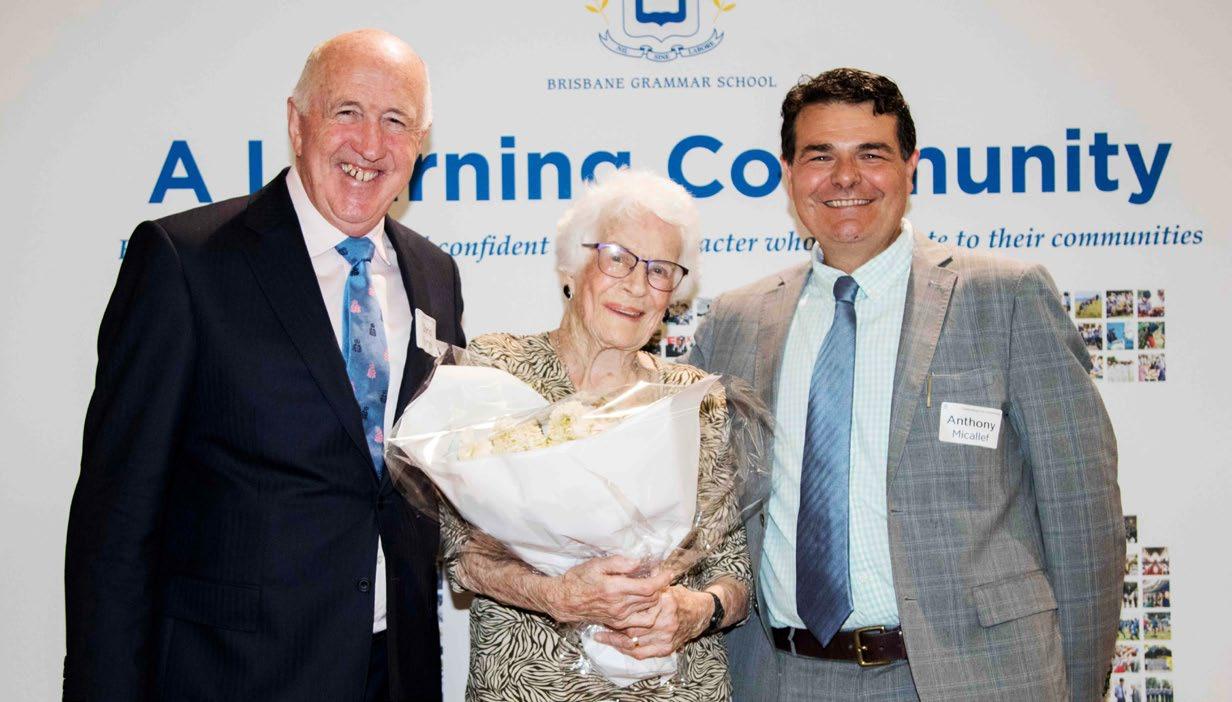
Headmaster Anthony Micallef said there was no better tribute to a woman whose selfless action and shared purpose left an indelible mark on the School.
“Betty’s enduring service and quiet leadership embodied the very best of Grammar spirit and set a standard for all,” Mr Micallef reflected.
“Her actions continue to remind us that leadership is not solely about personal achievement, but about service to others.”
Vale Betty Howell.
Written by Lachie Grey

BGS Old Boy and Olympian Toby Jenkins ’97 used his Speech Day address to remind students that small gestures during difficult moments can change someone’s life.
Last year’s Speech Day was held on Wednesday 19 November at the Queensland Performing Arts Centre. The event was well attended by students, parents and staff who reflected on the achievements of 2025.
Toby, who played in the Australian water polo team
“We all stand on the contributions of those who have come before us. We all rely on the tiny acts of kindness of the people around us.”
at the 2004 Olympics in Athens, was one of several distinguished speakers, which also included former Chairman of the Board of Trustees Warren Traves, Headmaster Anthony Micallef and School Captain Luke Saywell.
Toby revealed his personal battles as a young player when trying to break into the Australian team.
“I’d missed out on two tours where I was the only player left behind in Canberra.
“I was gutted, but there was nothing I could do.”
Toby recalled a particularly difficult fortnight where he was told in front of his teammates, many of whom were childhood heroes, that he hadn’t made the squad for an upcoming international friendly series.
“I was finally in the room I so desperately wanted to be a part of.
“I sat, watched, listened and was told I wasn’t training with the team — again I was the only one,” Toby said.
However, he went on to
highlight a life-changing moment of kindness shown to him by Australia’s then vice captain Nathan Thomas.
“As we were walking out of that meeting, Nathan grabbed my arm, reached into his bag and grabbed a team t-shirt.
“He said to me: ‘Tobes, I have been watching, I can see the effort you’re putting in. I want you to have this shirt of mine because one day I think you will earn your own’.
“I didn’t realise an act of kindness could change my life — but it did.”
Determined to learn from his setbacks, Toby went on to play for Australia 137 times in water polo. He is now the co-founder of marketing agency Blue Wire Media.
“We all stand on the contributions of those who have come before us. We all rely on the tiny acts of kindness of the people around us.
“Take everything you are, everything this blazer represents and make a contribution — pay it forward.”
The annual Spring Luncheon is always a calendar highlight and 2025 was no exception.
The fundraising event brought together more than 700 community members on Friday 31 October, at The Star Brisbane.
There was plenty of laughter, food and excellent company while a popular champagne raffle added extra fizz to the festivities.
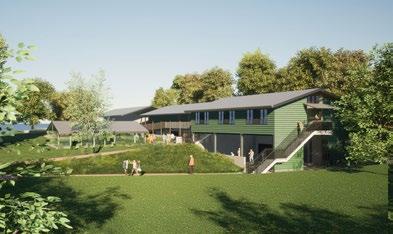
In total, almost $24,000 was raised with all proceeds supporting the redevelopment project at Pepperina Hill, at Lake Moogerah.
To mark the 50-year anniversary of the Outdoor Education program in 2026, the School is seeking to raise $1.5 million for facility upgrades to future proof the site for another half a century.
Building six modern six-bed dormitories, new communal areas, new undercover outdoor spaces and improved landscaping are all part of the plans.
The School acknowledges the hard work of the P&F Auxiliary for its planning and delivery of a fun and memorable event, while helping to raise money for an important school project.
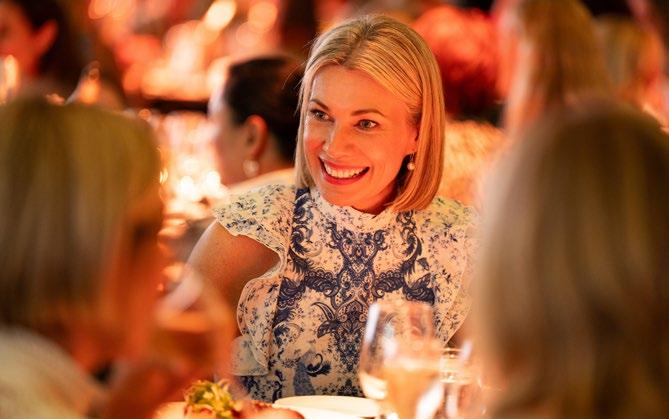


“Almost $24,000 was raised with all proceeds supporting the redevelopment project at Pepperina Hill.”

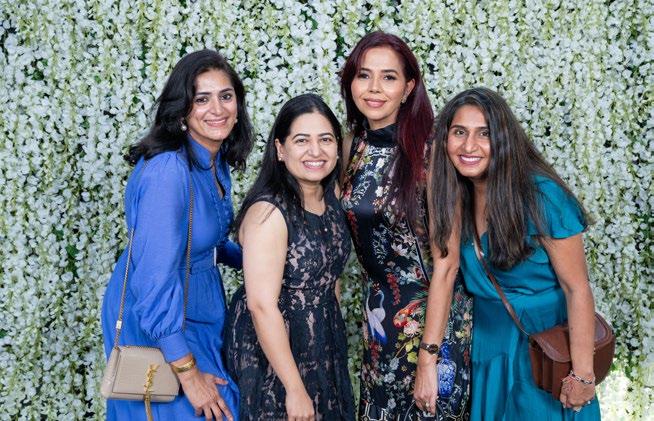

2025 was defined by strong connections across all generations of Old Boys. We welcomed the newest cohort of 2025 graduates into the association and saw record engagement. We are also grateful to the School for continuing the tradition of gifting Life Membership to all graduating boys, a gesture that strengthens the association and ensures every new Old Boy begins with an immediate sense of belonging.
The long-standing monthly lunch for Vintage Old Boys continued to grow, and in a particularly special moment, we celebrated one of our oldest Old Boys turning 100. It was a
remarkable milestone and a reminder of the depth and history within our community.
Written by Adam Franklin ’97 BGSOBA President

Our events calendar remained full and well supported, with Old Boys of all ages showing up across the year. We hosted Business Breakfasts, the Grapes and Graziers lunch, the Sportsman’s Lunch, the Test Cricket Breakfast, professional networking events and several smaller functions. Milestone reunions were well attended, with year groups reconnecting and celebrating long-standing friendships. The Back to BGS weekend again
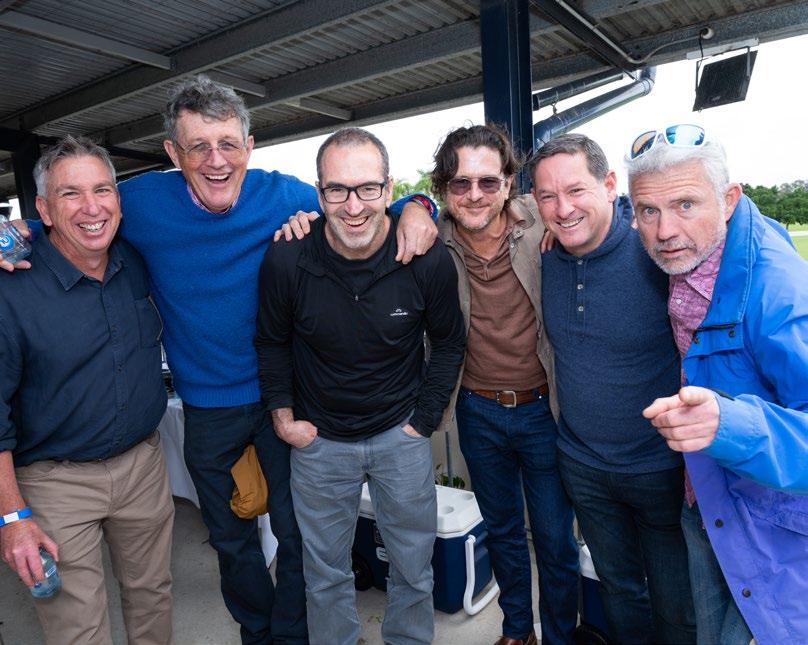
brought Old Boys together at the ISC for basketball and at Northgate for a day of rugby and camaraderie.
Old Boys also gathered in Sydney, Melbourne, New York and Boston for catch ups hosted by Headmaster Anthony Micallef. Attendance across 2025 spanned generations and continents, demonstrating the breadth and depth of the Old Boy network.
Finally, the strength and generosity of the Old Boy community has enabled us to continue making meaningful contributions. This year, we pledged to support OBA bursaries for two more boys with immediate needs, so they can complete their senior years at BGS. The OBA now supports four boys with their tuition, and it remains one of the most important things the association does.
Class of 2016 10 Year Reunion


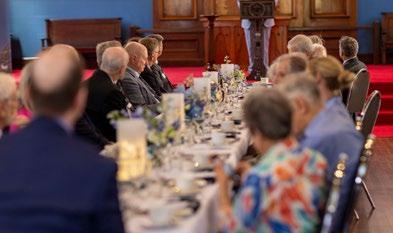
Sunday 29 March 12.00pm – 5.00pm
BGS Spring Hill Campus
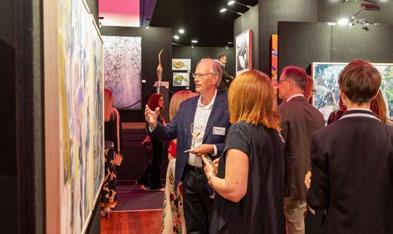
Friday 15 May
6.00pm – 10.00pm
BGS Spring Hill Campus Friday 17 April 8.00am – 2.30pm
Keperra Country Golf Club Saturday 16 May 11.00am – 3.00pm
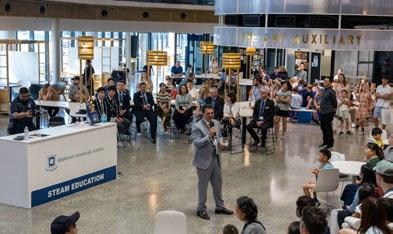

brisbanegrammar.com/bgs-community/events-calendar