
STUDENTS FEAR FUTURE AS STIRLING UNI SLASHES OVER 170 EMPLOYEES
By Alex Paterson Editor-in-Chief
University of Stirling students are fearing the impact of the recent voluntary severance scheme which has seen 175 staff members leave the institution.
Over 112 professional services staff and over 63 academics were granted the severance package.
The University said the scheme was launched to support their

“financial stability” as the higher education sector continues to experience uncertainty.
However, in the most recent financial accounts dated 2023-2024, the University recorded 5.6 per cent total income growth, turning over £179.2 million with a surplus of almost £7 million.
Vice Chancellor Gerry McCormack’s salary also increased again this past year, growing from £414,000 to £438,000.
In the past two years, his salary has increased by £190,000.
This makes him Scotland’s bestpaid higher education chief.
Students at the University of Stirling say they find the situation concerning.
Ali, a mature Journalism Studies student, said: “There is so much anxiety amongst students about the severance scheme.
“Modules are being cancelled, people are losing project or

dissertation supervisors. It’s really stressful.
“On top of that, the staff that are left are seeing their workloads increase massively. It hardly seems fair.
“When you look at the numbers, Greedy Gerry could pay the salary of 5 to 6 academic staff or 10 to 12 professional services staff and still be left earning £100,000 per year.
CONTINUED ON P5

MP Chris Kane: Scots are "pretty wise" to "nonsense" Reform rhetoric
INTERVIEW ON P7
EDITORIAL
By Alex Paterson Editor-in-Chief
OUR second print of the acadmeic year is complete. Whilst we all await the Winter break, I doubt there will be little rest for many of us. As you will tell from the articles included in this issue, it has been a tumultuous few months. It is unlikely to improve anytime soon.
Sorry to be making your winter blues worse. Maybe read our Deputy's Seasonal Depression article on page 8 to cheer yourself up?
All joking aside, this issue has a lot of articles that are really valuable. Our University climate is treacherous as Stirling, like many other higher education institutions across the UK, is facing extreme financial difficulty. Current and prospective students as well as staff are deeply worried. No one is certain what the future will hold, but we at Brig promise to cover every update with speed, accuracy and consideration.
Similarly, Brig is looking at the problems facing the rest of our country. As the cost of living crisis and graduate employment situation worsens, we will ensure student voices make their mark in the national debate.
In lighter news, it is not just student dilemnas we write about. Two articles this issue mention the great efforts of beavers to restore our enivornment and make the planet a better, healthier place.
In a world full of doom and gloom, this issue of Brig has tried to highlight some of these merrier topics.
I think that is important. In the dark winter days, it is easy for our minds to focus on the negative. Not that we should ignore it either. Often, that is how things get worse.
So, like beavers, who obviously know they are saving the enviornment, tackle pessism with action. Chomp, chomp, chomp?

www.brignews.com
/brignewspaper
@brig_newspaper
@brignewspaper
@brignewspaper
Graduation cancellation causes student “distress”
By Alex Paterson Editor-in-Chief
Stirling students expecting a March graduation have had their plans cancelled by a university announcement saying the ceremony will not be happening.
On October 21, the impacted students received an email inviting them to graduate in June or in absentia.
There was no apology or mention of the prospective March graduation.
The University has been running March graduations since 2022, largely for master’s degree students who have a January to December academic year.
The Human Rights and Diplomacy course, taught in collaboration with the United Nations, is one of the courses impacted.
62 per cent of students on the course are currently overseas completing internships with the UN or similar institutions.
Around 50 per cent of the course made up of international students.
Many planned to return to Scotland at the end of year once their internship concluded, spending a few weeks in the country and leaving after graduation.
However, a June graduation means students will need to return to their home countries, booking more flights to and from Scotland which they have said is a huge financial pressure.
Some students had already begun planning their graduation trips, under the assumption their ceremony would be happening in March in line with previous years.
Similarly, students have said they will be entering employment at that time and likely will not be able to organise time off from work to graduate in June.
Tash Miller, the Students’ Union President from 2022 to 2023, is one of the impacted students.
Overall, Tash has spent over £60,000 studying her undergraduate and master’s at the University of Stirling.
Speaking to Brig , she said the decision felt like “a slap in the face”.
“We are being ignored, students are distressed… A lot of money has been spent, plans have been made to return in March to graduate with our friends and family.
“These changes mean a lot of us won’t get to graduate.
“It hurts… it feels like a slap in the face.”
Tash said she understands the University is facing a financial crisis, as seen with the recent voluntary severance scheme where over 170 staff left the institution. However, the real upset with the cancelled graduation is the lack of understanding from the University.
Tash said: “I’ve sat in these rooms and heard so many times that ‘we’re an institution for students, we are not like the others’.
“But this is a decision that very much feels like they are not for the students.
“There was no understanding of the impact this will have on us.”
Tash said her class representatives have made petitions and contacted the university and the department to find a resolution.
So far, they have only received an official acknowledgement.
Tash emphasised her cohort is open to a range of solutions— they just need the University to communicate with them.
Tash continued: “There is a lack of sympathy.
“We just want a conversation to find a solution that is mutually beneficial, but they won’t engage.”
Mollie Black, one of two class representatives for MSc Human Rights and Diplomacy, said: “The decision to suspend Spring graduations came as a real shock, particularly as there had not even been a whisper of of any changes being made for the entire 10 months we have been at the university full-time.
“None of us are naive to the struggles faced by Scottish universities in our current climate, and we are sympathetic to the cuts which have to be made, but I don’t think there is any excuse to leave students out of the conversation.
“I think that’s the most deflating part - I was attracted to this university because it truly seems to value its students. I am disappointed to say that I am not leaving with that same opinion.”
Beatrice Cimmino, the other representative, said: “My co-representative and I tried to contact the University to have a meeting regarding Graduation, to express our grievances and report the opinions and grievances from our colleagues. However, we have been met with silence.
“We found this unprofessionalism disheartening, in respect to our investments and the good memories of our time in Stirling.
“We remain committed to support our cohort and open to dialogue with university to ensure that our grievances are heard.
“We are aware that re-instating a March graduation would be impossible but would like to still express our voices and ensure that such mistreatment will not be faced by future students and graduates.
A spokesperson from The University of Stirling said: “The University has recently reviewed its graduation schedule and taken the decision to revert to a model where a set of ceremonies is held in summer and another in winter.
“This was our long-established, standard approach before additional spring dates were introduced in 2022.
“Demand for spring graduation has declined in recent years and running this additional set of dates for a small cohort is no longer viable.

“Students who complete their studies late this year or in early 2026 will be invited to celebrate their achievements at a graduation ceremony in 2026.
“This decision will not adversely affect graduating students, who are eligible to receive their
graduation certificates and accompanying documentation in the existing timeframe – enabling them to pursue further study or employment opportunities.
“Full details have been shared with those students directly.”
Three's a Crowd at University Challenge Auditions
By Frank Baker
On November 26, the Union held try outs for students hoping to participate in next year’s University Challenge. But only three people turned up.
The union announced the event on November 18 on their website and social media channels. Brig released a piece on the event on November 23. But there were no posters on campus and the event took place on the cusp of deadline season.
The university hasn’t had a team since the 1970s. That’s not including 2013’s Christmas special, in which participated Paul Lewis, now BBC 4 presenter.
At the try out, hopefuls were asked 30 questions in the show’s style by Union President, Justine Pédussel and Ellie Hammond, VP Communities.
What people did the ethnographic study, the Florentine Codex, research? In 2023, which African country dropped French as its main language?
What style of cooking originating from Taino people and freed slaves has been described by cultural critics as a “global Jamaican brand?” What Greek prefix is used in cancers of the bone, some species of small fish and a stone coffin? Or perhaps quantum entanglement’s more your thing? How about Shakespeare?
Five people make a team, and it’s advised that each member has their own speciality. Considering the nature of the questions, this would have been of some reassurance if only five people were in attendance.
One masters student said that they have “always wanted to be on University Challenge”. Another 4th year, hoping their pub quiz experience at Jessica O’Marleys might come in handy, insisted that it was simply “for a laugh”. All agreed that it was a good experience.
If Stirling receive an invitation again next year, try outs will take place at around the same time. Doubtless, the union will be hoping for more interest.

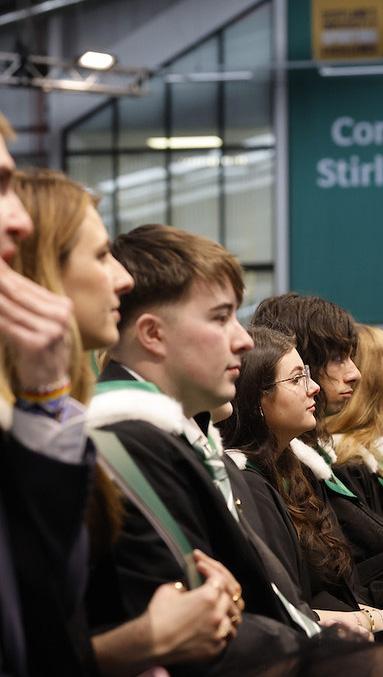
Students sitting at graduation. Image Credit: University of Stirling
University Challange. logo Image Credit: BBC
Police Scotland have launched a campaign to combat domestic violence and abuse
By Emma Christie
The Choose to Stop campaign aims to bring awareness to what domestic abuse can look like in the relationships of young people.
A series of short videos have been released on popular social media platforms by Police Scotland to raise awareness about dangerous relationships.
These videos also provide information on what to do if you find yourself in an abusive partnership, or if you feel that you are being abusive.
The Respect Phoneline is an organisation which supports people across Scotland that may be worried about their harmful or abusive behaviours.
Experts will work through a person’s situation and help them build strategies that will benefit them and their loved ones.
Police Scotland Detective Superintendent, Adam Brown, notes that domestic abuse can
take many forms, including physical, verbal, sexual, psychological, or financial. It can also take place online.
He said: “At the heart of domestic abuse is where one partner wants to have power and control over the other partner.
“What starts out as a normal and fun, loving relationship can quickly sour as jealousy and anger start to emerge.
“My advice to anyone, regardless of their age, gender identity, or sexual orientation, is if you are behaving abusively, choose to stop and look to change your behaviour.
“If you don’t and your behaviour is reported to us, we will take action.”
The Respect Phoneline can be reached via their website or by calling 0808 8024040.
Police Scotland also want to highlight to potential victims what an abusive relationship can look like.
Controlling behaviours, isolation from friends and family, physical violence, and love-bombing are just some of the red flags when spotting an abusive relationship.
Brown said: “Some people will think that what is happening to them isn’t serious enough to contact police about or they are worried about what might happen.
“I would always recommend telling us. We would rather someone tell us about what’s happening to them or has happened to them than not tell us.
“And our priority will always be to ensure that you are safe from further harm.
If you have concerns about your partner, or someone you know, Police Scotland urges you to submit a request to the Disclosure Scheme for Domestic Abuse Scotland (DSDAS).
The scheme allows police to inform potential victims of a partner’s abusive past.
It has been 10 years since the DSDAS was first launched, and since then more than 35,500 applications have been submitted, with more than 19,500 disclosures made.
Nature’s Engineers: Stirling Study Finds Beavers Create Wetlands That Boost Pollinator Numbers
Beavers quietly reshaping Scotland’s wildlife
Beavers are quietly transforming parts of Scotland’s countryside. New research from the University of Stirling suggests they may be rescuing some of the nation’s most threatened pollinators in the process.
A study published in the Journal of Applied Ecology has revealed that natural wetlands created by beavers support far more butterflies and hoverflies than human-made ponds. With Scotland’s pollinators facing decades of decline, the findings point to an unexpected, and already active, ally in the fight to restore biodiversity.
A dramatic difference in pollinator numbers
Researchers compared beaver-made wetlands with human-made ponds at Bamff Wildland in Perthshire and nearby farms. Surveying pollinators throughout spring and summer, the results were striking. Beaver wetlands were home to 29% more hoverfly species, 119% more individual hoverflies, and 45% more butterflies. For lead researcher Patrick Cook, a PhD student at Stirling and Senior Ecologist at Butterfly Conservation, the implications are clear.
“Pollinators are undergoing widespread and dramatic declines,” he said. “We urgently need methods to reverse these trends. Beaver wetlands provide a scalable, natural solution — but landowners need to
be incentivised to keep them.”
A gap between policy and ecology
Despite the ecological benefits, UK agri-environment schemes still tend to reward the construction of artificial ponds rather than the maintenance of naturally formed beaver wetlands. Cook argues this approach doesn’t reflect the evidence emerging from sites like Bamff.
“This position needs to change if we are to benefit from the buzz, flutter and hum of pollinators that beaver wetlands promote,” he said.
The research team didn’t just count species; they observed how pollinators used the flowers around each site. Beaver wetlands offered richer and more varied foraging opportunities — something that may be increasingly important as climate pressures intensify.
Why removing dams removes benefits
Professor Nigel Willby, Professor of Freshwater Science at the University of Stirling, warns that removing beaver dams risks undoing those gains.
“For every beaver dam removed, a beaver wetland dies,” he said.
“And with it go a multitude of benefits - including for pollinators.”
At Bamff Wildland, where beavers have been shaping the landscape for more than two decades, the findings ring true on the ground.
“This brilliant new research shows once again that beavers are vital to the agricultural landscape
Bradley Walsh Shouts out University of Stirling
Bradley Walsh gave a shout out to Stirling University Movember campaign on the set of The Chase, applauding students participating in Movember.
Movember is an annual long movement event in November where people grow moustaches, raise funds, participate in events such as walks, runs, ceilidhs and quizzes all in support of and awareness for mens physical and mental health.
Stirling University has participated in Movember for years, with students coming together to raise money and campaign in honour of Movember. This year they have surpassed their fundraising goal of raising £40,000.
Walsh said, "I do wish you all the very, very best indeed, the bigger the 'stache the better! And please do send in your pictures to us, I'd like to see them." A heartfelt shoutout to the students of Stirling University.
Stirling University Movember shared the clip via Instagram with the caption "A little bit of encouragement from this gentleman, Cheers Bradley!"
By Courteney Pearson Head of Photography
as well as to biodiversity in general,” said estate manager Sophie Ramsay.
Beavers as partners in Scotland’s nature recovery
With support for beaver reintroductions growing across Scotland, the study adds weight to the argument that these animals aren’t just reshaping waterways, they are helping revive Scotland’s shrinking populations of butterflies, hoverflies and other vital pollinators. Whether loved or loathed, Scotland’s beavers are shaping the landscape in ways that matter. For now, the country’s smallest pollinators may have their busiest engineers to thank.
By Plum McKechnie News Editor

Stirling council supports international campaign
By Amelia Fryer News Editor
Tuesday November 25 marked the start of the international campaign to fight against gender-based violence, and Stirling Council have again indicated their endorsement of the efforts made to advocate against violence against women and girls.
16 Days of Activism is an international campaign which was launched in 1991 to coexist with the International Day for the Elimination of Violence Against Women and runs until Human Rights Day on December 10.
Stirling Council Community Wellbeing Convener, Cllr Brian Hambly said: “The 16 Days of Activism campaign offers us an annual chance to reflect on the scale of the challenge we face in our communities to challenge gender-based violence head on 365 days a year.
“We remain committed to creating an equally safe society for women and girls throughout Stirling, and indeed the wider Forth Valley. We must remain alert to misogyny wherever we see it, whether in person or in online spaces which contribute to a culture that allows gender-based violence to manifest. We all must play a role in helping to tackle violence against women and girls.”
"their passion and committment is an investment"
In accordance with the programme of events set to occur across the Forth Valley, an
awareness raising event is taking place at Stirling train station on Thursday December 4, at which members of the public will be invited to sign the ‘White Ribbon pledge’. In addition, the Tolbooth will be illuminated in Orange on December 10 to mark Human Rights Day as the last day of ’16 Days of Activism’ against Gender-Based Violence. Stirling Council was the first ever local authority in Scotland to be given ‘White Ribbon’ status. Since 2012, an Elected Member has been appointed to act as Champion for the campaign.
White Ribbon Champion, Cllr Martin Earl, said: “I am inspired by the relentless work being carried out across Stirling and the Forth Valley by councils and partner organisations. Their passion and commitment is an investment for positive changes in culture and behaviour to eradicate gender based violence.
“The 16 Days campaign is an opportunity to showcase the work being carried out in our communities to tackle violence against women and girls, as well as amplifying the voices of people who have been affected by it.
“This year’s campaign underlines the scale of the challenge to tackle this issue. It also highlights new and emerging root causes of violence that originate online and can poison attitudes against women. We all have our part to play in helping to curb gender-based violence.”
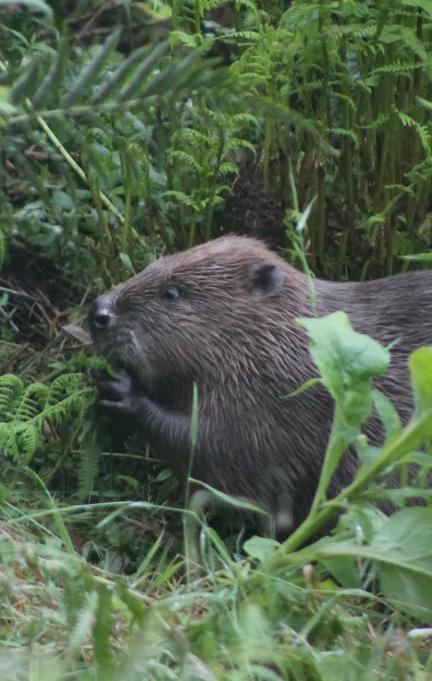
Beaver amongst folliage. Image Credit: Stirling Council
Bradley Waslh shouting out the University. Image credit: Stirling Uni Movember
Stirling Pride Denounce
The Herald By Connor Peebles Deputy Editor
For Women Scotland won “Campaigner’s of the year” this year at The Herald’s Scottish Politician of the Year Awards ceremony. In response, Stirling Pride published posts across their social media platforms denouncing this decision.
Stirling Pride spoke clearly about the contradictions that went into this decision citing that Scottish Power sponsored the event, and that they “regularly champion diversity.” Furthermore, they went on to say, “For Women Scotland have been at the core of the anti-trans
lobby for a number of years and their actions are causing enormous harm to trans and non-binary people across the UK.”
The decision to give For Women Scotland this award speaks to The Herald’s anti-trans beliefs as they would not award the group in the way they did if they were truly neutral. Wrapping up their post Stirling Pride wrote that they “will not stand for this.” and that they will no longer work with The Herald or Scottish Power.

£350,000 INVESTED IN THREE PUBLIC WORKS PROJECTS AROUND STIRLING
Stirling Council will invest nearly £350,000 to revitalise public spaces in three Stirling communities.
The Scottish government’s PlaceBased Investment Programme (PBIP) funds projects that “support local area regeneration, community development and economic growth”. Stirling Council has spent over £2 million in PBIP money on public works since its introduction in 2021.
When the Finance, Economy and Culture Committee met on Nov 13, Counsellors agreed to fund three projects.
Borestone and Morrison
Shopping Area
£145,000 will go to the revitalisation of the Borestone and Morrison Shopping Area. The shopping area will soon feature Borristone’s ties with the Battle of Bannockburn, in addition to St. Ninians Kirk and nail making as a local tradition, through illuminated public art and neutrals.
Local schools, businesses and residents will have the opportunity to consult on the project. Some funding may go to revitalising shopfronts.
Raploch Village Square
With £145,000 worth of new seating and public artwork, the Council intends to create a more inviting

Getting Ready for Winter
Stirling Council is encouraging locals to prepare for the winter seasons ahead of the decrease in temperatures. With the colder months arising it is important that residents are bundling up and stay safe during the winter.
The council are committed to keeping everyone safe during the winter period, while still allowing residents to make errands and travel safely. Multiple different measures have been put in place in order for this to happen.
What has been put in place?
The council have got a variety of procedures put in place in order for there to be minimal disruptions. This includes 7000 tonnes of salt being readily available for use. There is also just under 550 grit bins for
Stirling communities to help with difficult weather.
Main areas will get the most out of these resources such as hospitals, schools and public transport stations. This means that places will be as accessible as possible for people to reach. The council’s road services have been able to inherit new gritting vehicles that will help to get the roads safe as quickly and efficiently as possible.
Other systems that have been put in place are drains being cleared to tackle flooding issues as well as the winter Duty Room being created.
This is where expertise in the subject will be on call to inform people on the dangers of the weather.
The council would like people to be prepared for all types
By Brooke Duffy
of extreme weather. With Cllr Alasdair Tollemache, Convener of the Council’s Environment, Transport and Net Zero Committee stating: “Winter just doesn’t bring snow and ice, however, and we have also taken steps to build our resilience to respond proactively and reactively to other extreme weather events, including heavy rain and strong winds.”
What Can Residents Do to Stay Safe?
There are several ways that residents can stay as safe as possible during harsh weather conditions. This includes: minimising travels and travelling only if necessary, investing in the right footwear that prevents slips, and bundling up in multiple layers.
By Delaney Brook
space in the Raploch Village Square.
The Council also hopes to install a war monorail and statue for football midfielder Billy Bremner. The Council is fundraising for both.
Darnley Park
Through community consultation, the Council determined Darnley Park is a valued, but underutilised resource. £58,435 in care and attention will go to park improvements.
Convener of the Finance, Economy and Culture Committee, Cllr Gerry McLaughlan, said: “Our allocation of investment from the Place Based Investment Programme is shaped and driven by the needs and aspirations of our local communities.
“The decision to fund the latest three projects ensures resources are directed to communities with greatest need and will also help to provide a more welcoming environment for residents and visitors alike.
“As always, we will work closely with residents, community groups and other local organisations to make sure their voices are heard in the planning and implementation of all aspects of the project design and to celebrate the unique character of each of these special neighbourhoods.”
Centenary Monte Carlo Rally to soar through city of Stirling
By Amelia Fryer News Editor
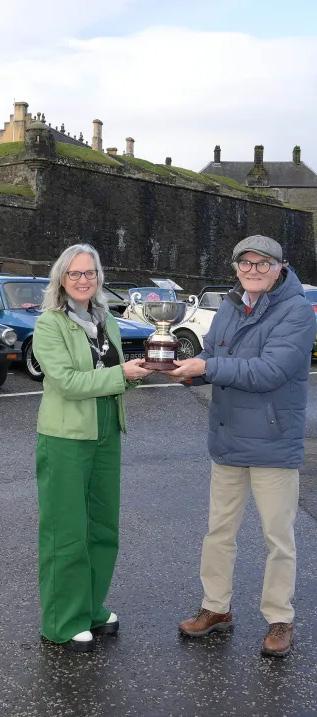
The Monte Carlo Classique/ Historique Rally is set to make its way to Stirling in January on its way to the South of France, and the historic Stirling Castle gave the perfect backdrop for the preview of the Rally’s journey to the city.
Lord Provost of Stirling Rosemary Fraser and members of the Stirling and District Classic Car Club demonstrated some of their collections, including a Triumph TR3, Nissan Sunny Coupe, Ford Capri 3.0, Morgan +4, MG Midget, Porsche 911, Austin Mini and VW Beetle.
The event will begin from John O’Groats signpost on January 29 2026, marking 100 years of the start of when a group of adventurers left the Scottish mainland to drive 1500 miles to Monte Carlo, in the South of France to establish what is now one of the most renowned international motorsport events.
The event has been run through a range of Scottish start places including Paisley, Glasgow and Clydebank, as well as the return of the traditional John O’Groats start. When Stirling becomes one of the
stops in the Rally’s journey, the castle will be illuminated in red as a setting to one of as series of passage controls along the route.
Members of the public will also have the opportunity to take part in a ‘Monte Fest’ in front of the castle to reflect some of the attraction of the event with entertainment, classic rally films and the chance to mingle with some of the competitors and their cars.
"Stirling is proud to play host"
Lord Provost Fraser said: “Stirling is proud to play host to the Scottish leg of the legendary Monte Carlo Rally; an event that captures the imagination of motorsport fans around the world.
“The rally has a rich heritage and spirit of adventure and we are delighted to welcome competitors, crews and visitors to share in this special occasion.
“I know the people of Stirling will turn out in force to cheer them on as these magnificent cars wind their way from the Castle through our streets on the next stage of their adventure.
“We wish all participants a safe and unforgettable journey as they head for Monte Carlo.”
Construction Men stading in a row. Image Credit: Stirling Council
Lord Provost Rosemary Fraser and Douglas Anderson, co-ordinator of the Monte Carlo Rally. Image Credit: Whyler Photos
Wooden Hut in Fintry. Image Credit: Stirling Council
UoS Student awarded prestigious Young Sustainability Innovator of the Year
By Amelia Fryer News Editor conservation.
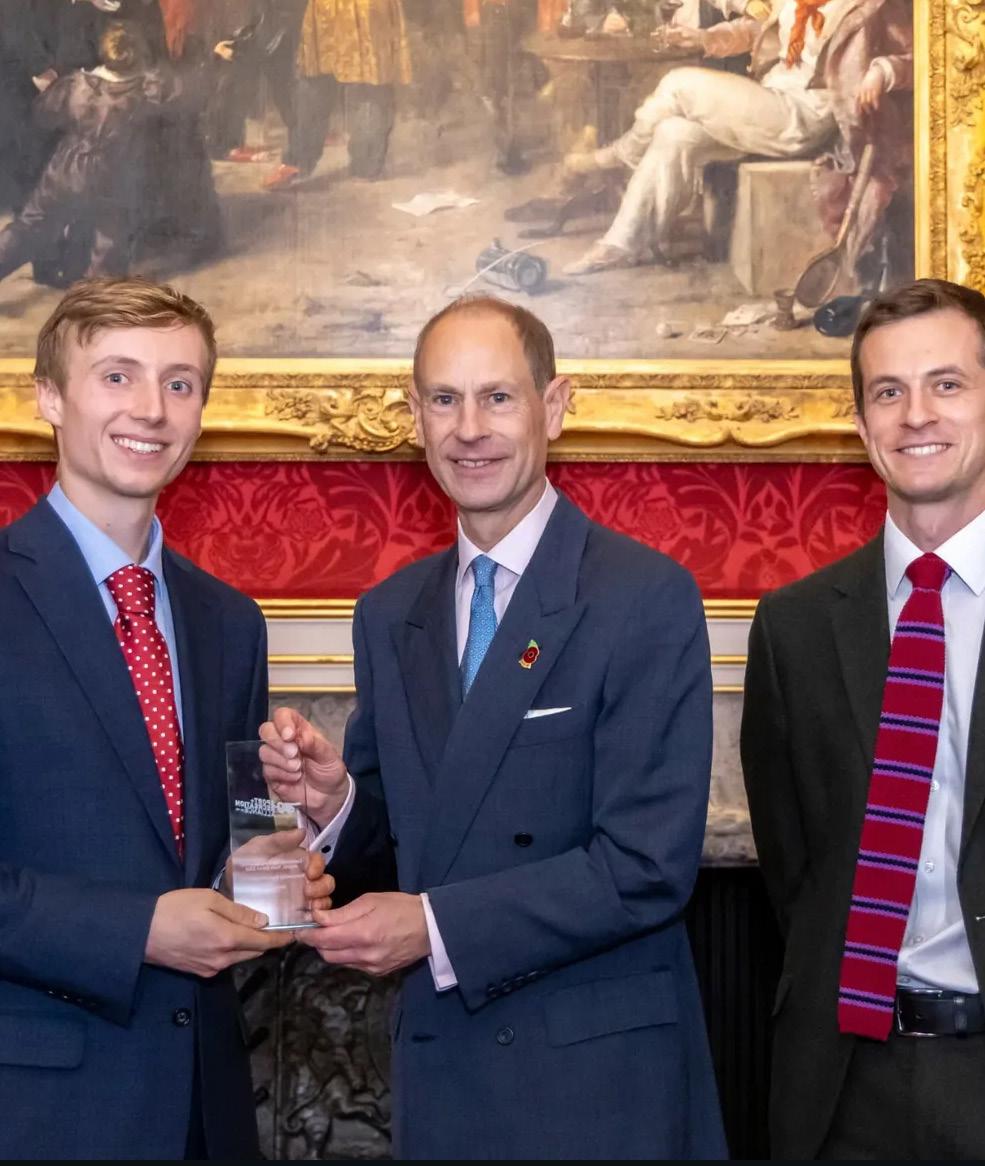
A student from the University of Stirling has been awarded Young Sustainability Innovator of the Year at the Sport and Recreation Alliance Awards 2025, and was presented the award by Prince Edward.
James Bennett, an Environmental Geography and Outdoor Education student, was a key and avid member of the University of Stirling Mountaineering Club (USMC).
Taking on the role of Climbing Coordinator in 2023/24, organising and teaching students how to climb safely, and taking the helm as President of the club in 2024/25, he quickly became a loved and crucial member in the club’s future.
During these roles James worked tirelessly and enthusiastically to always improve the club for its members and the environment, focusing on sustainability and social responsibility, and also being a strong advocate for climate literacy, regularly engaging club members in discussions on environmental issues such as deforestation, deer management, and peatland

When asked what it meant for him to win the award, James said: “Winning this award and was an honour to be recognised for my committee's and my hard work on this topic. It has been a great opportunity to amplify the need for more work on sustainability in sport. This isn't always what you think, reducing barriers to make a sport more accessible is sustainability related because there is no such thing as climate justice without social justice."
The USMC stated on their Instagram: “As our former President (2024-25) and Climbing Coordinator (2022-23) he [James Bennett] dedicated huge amounts of time striving to make the club more sustainable and accessible.
“We are hugely thankful and proud of him for his achievements and as always wish him the best of luck! Big congratulations again James!”
The UoS Sport’s Union said: “Huge congratulations to James on being awarded Young Sustainability Innovator of the Year at the Sport and Recreation Alliance Awards 2025.”
“We are so proud of James receiving this award as his ability to drive meaningful change and ongoing efforts will undoubtedly leave a lasting impact on both the mountaineering community and the wider environmental movement.”
Now James is working as an Estate Ranger at Oxygen Conservation at the Invergeldie Estate, his job consists of working in lanscape scale conservation and restoration - still he strives to fight for the environment and sustainability, and advocating for the climate in his day-today life.
Staff and students express severance scheme concerns
By Alex Paterson Editor-in-Chief
CONTINUED FROM FRONT PAGE
"...that is an amount that most of us can’t even aspire to.
“It’s disgusting.”
Despite the university’s assurance that teaching will not be impacted, students are beginning to feel stressed about the dwindling staff number.
Three French lecturers, including the programme director, are leaving the university leaving students concerned about future modules.
One French student said: “The whole department will be reorganised and we are losing probably some of the greatest teachers that I’ve met during my entire education.
“The fact that they can’t see out the semester, and are having to leave before our assignments are due to be submitted, has given my class a lack of faith in the
university, that they would decide something that does affect our education.
“I think a lot of people are frustrated… there has been no acknowledgement of the fact that it will be affecting us and our education.
“It is also sad to see these teachers, who have been at the uni for such a long time, upset at the fact they can’t speak to us and are being put in this position, where they can’t see out the rest of the semester at least.”
Journalism Studies tudents in their final year have expressed worries about their final project, as supervisors are allegedly moving from having two or three students each to seven or eight.
A 21-year-old second year student, who wishes to remain anonymous, said she is worried about the changes, and worried about who is left to support them: “We have no clue what this means for students further on. How are lecturers
going to maintain the same quality of teaching with less staff?
“I am also a bit concerned about other services the university provides, such as counselling.
“It all feels very unclear, which doesn’t help when uni is stressful already.”
A UCU spokesperson said: “Staff are very concerned about the impacts the recently closed voluntary severance scheme is going to have on the student experience this year.
"A recent survey of UCU Stirling members revealed widespread concerns about workload, including how this will impact on teaching (66 per cent think there will be significant impacts, 19 per cent some impacts, a further 13 per cent are unsure / too early to say).”
One member of staff commented: "I have never seen colleagues so demoralised. The ‘business as usual’ message is misleading. Students are already recognising that staff are struggling. We have seen no
leadership.
"The constant uncertainty is having a huge impact on morale as is the loss of key academic and professional services staff."
The Students’ Union Officers said: “We understand why the university has resorted to this scheme and we are in constant and regular communication with the Trade Unions on campus to ensure that staff are being treated fairly.
“Whilst the university assures us that this will not have an impact on staff workload, teaching staff have raised concerns of increased workload due to this scheme and limited resources.
“We want to assure our students that we are working hard to ensure that there is as little disruption to your studies as possible.
“We do ask you to demonstrate understanding and kindness towards staff during this period.
“Please do not hesitate to seek support if you need it either from
us or Student Support Services.”
A University of Stirling spokesperson said: “The University’s Voluntary Severance Scheme was one of several strategic measures designed to support long-term financial sustainability.
"The Scheme was carefully managed and outcomes were decided based on business need - with 175 staff leaving the organisation as a result of VSS.
“In an increasingly challenging and unpredictable external environment – where income generation and cost pressures are continuing to impact the entire UK higher education sector – strong financial stewardship and good governance remain essential.
“The savings achieved – through this Scheme and wider organisational efficiencies – are intended to support our strategic priorities and improve operational effectiveness.”
James Bennett presented award by Prince Edward. Image Credit: Sport and Recreation Alliance
Headshot of James Bennett smiling at work. Image credit: JBenjamin Marshall/ Oxygen Conservation

LABOUR'S ASYLUM SYSTEM: THEFT OR FAIR BUSINESS?
By Edward Jewsbury
Politics Editor
UK Home Secretary Shabana Mahmood announced on Monday, November 17, that the UK would introduce tighter asylum rules as part of its strategy to deter illegal migration.
The move comes as part of Labour’s drift to the right to combat Reform UK’s performance in national polls.
They’ve been inspired by policies implemented by the centre-left Social Democrats in Denmark, although reporting by the Guardian suggests voters are also abandoning this party for right-wing alternatives.
Leave to remain, that is, the time that refugees can stay in the UK, will be shortened from five years to thirty months. This will only be
renewed if they are “in need of protection”, and if this is not applicable, they will be liable for removal.
Refugees will also only be eligible for settlement after twenty years of residence in the UK, up from the current period of five years.
While asylum seekers are here, the Government seeks to reduce the access that they have to public funds by removing the automatic right to family reunion, incentivising refugees to move onto work and study routes, and prioritising access to benefits to those “making an economic contribution to the UK”.
The Government has also removed its “duty to support” asylum seekers, which it says was an EU law that the UK is no longer bound by. In practice, this will see asylum seekers who are able to work denied state support, such as housing and money. Law-breaking asylum
seekers will also be rendered ineligible for support.
A change that caused uproar on social media was reports that jewellery could be confiscated from individuals to pay their processing costs.
This came from a Sky News interview with Home Office minister, Alex Norris, who said that the British public pays billions of pounds a year to support asylum seekers, and that it is right that those with cash and assets like e-bikes and cars should help bear the costs.
He initially denied a report from The Sun that jewellery, such as heirlooms, would be taken at the border, but stressed that people should listen to what the Home Secretary has to say.
The full list of changes can be found on the UK Government website.
Some were quick to applaud the changes, with far-right activist Stephen Yaxley-Lennon, also known as Tommy Robinson, posting on social media, “The Overton window has been obliterated, well done patriots”.
Others were more concerned. The Refugee Council, a charity that represents refugees across the UK, called the plans “highly impractical” and “inhumane”, and estimated that they’d cost the Home Office £872mn over the next ten years in processing costs.
Local MP for Alloa and Grangemouth, Brian Leishman, who was recently reinstated to the Parliamentary Labour Party following his suspension over the summer, told Brig: “We need to build a caring compassionate society that looks after people from the UK and from other countries.
“And that needs to be done with
real Labour Party values. Values of equality, opportunity, and tolerance. The people that are coming to the UK on small boats or under lorries are fleeing from danger, oppression and persecution. It’s a question of human decency that we look after people that are in danger.
“That’s the true values of the Labour Party and not trying to copy Farage and Reform who only want to demonise people. The problems the UK have are not down to immigration, legal or otherwise.
“The societal problems that are really tearing our country apart are because of austerity that has hollowed out communities, of wage suppression and horrendous inequality on the back of political decisions and a cost-of-living crisis. These are the issues the government should be tackling.”
What could Stirling Council’s new SNP administration look like?
By James Mcintyre
For the first time since 2022, the SNP have returned to the administration of Stirling Council and for the first time in Stirling’s history, Labour are not a part of the administration.
Working alongside the Greens and an independent, the SNP successfully ousted the Labour minority administration, a move that seemed all but inevitable following Josh McIvie’s victory at the Stirling East By-election.
Despite this, it took two meetings to oust the administration, which seems to have been because of the Conservative Lord Provost’s unwillingness to resign.
Regardless of this slight hiccup in securing the administration, the SNP are now in control and has laid out its vision for the future of Stirling Council.
Top of the agenda appears to be addressing the Housing crisis. The SNP have formed a new committee led by Councillor Willie Ferguson dedicated to tackling the issue.
It is unclear, however, where the already financially struggling Stirling council will find the money to address one of the most complicated and expensive issues in the country.
There’s been little communication from the SNP directly, but we can also work out what the administration may look like from the concessions it has had to give to the Greens and Independents.
These have all been made public, perhaps to contrast the previous Labour minority administration, which Councillor Gerry McLaughlin describes as having been “patched together in back rooms and never disclosed”.
Independent Councillor Alasdair Macpherson had a long list of demands, mostly involving things such as a law centre, the restoration of Hogmanay events and a potential thermal energy plant in Bannockburn to combat fuel poverty.
Councillor MacPherson is certainly a name to watch in the upcoming
administration. Despite ostensibly being a part of the administration, he has made his separation from them very clear.
‘I ruled out a coalition with the SNP from the outset as my Independent status was not up for grabs’, he said on his website, while also saying that he ‘could never share power with’ the Greens, with whom the SNP recently signed a deal.
Councillor MacPherson was a long-term member of the SNP but left under unclear circumstances in 2022. It was alleged that he plotted to bring down the then SNP and Labour administration.
With the SNP administration depending on Councillor MacPherson’s vote and considering their uneasy history in the past, it remains to be seen whether this new administration will have the security it needs for its ambitious agendas.
Brig approached SNP councillors Fyvie and McGill for comment, but has not yet received a reply.
Shabana Mahmood. Image Credit: UK Home Office via Wikimedia Commons.
Stirling Council Chambers. Image credit: Brig Newspaper

MP Chris Kane: Scots are "pretty wise" to "nonsense" Reform rhetoric
ByJess Urquhart Secretary
“Disappointing, concerning and confusing for disabled people” is how the CEO of Young Lives vs Cancer described the Universal Credit Bill, which sent Westminster into chaos when several Labour MPs refused to vote for it in July.
Chris Kane, Labour MP for Stirling and Strathallan, was not one of those MPs.
Chris Kane started his career as an unaffiliated political journalist.
“I never really got into party politics. I stayed away from it because I always thought that, as a journalist, it wasn’t the thing to do.”
That changed when he was elected to Stirling Council in 2017, joining as the candidate for Labour. Despite this, he doesn’t want party lines to limit his outreach.
“I think that the mainstream parties, Labour included, have to find a way to listen to the concerns of our electorate. I’m the MP for Stirling and Strathallan. I’m not the Labour MP for Stirling, I was the Labour candidate, but I’m now the MP for everybody”.
This includes the 517 voters who voted for Reform UK in Stirling’s recent council by-election. Despite beating both the Scottish Liberal Democrats and the Scottish Greens, Kane is adamant that the party are “a bad answer to a good question”.
“People are frustrated that life is not as good as it needs to be.
"I think we all know that. Everything’s just a little bit more expensive, people are going about their day-to-day life, and things are just a little bit worse than they need to be. Labour in Westminster is working hard to fix that.
"I’m not seeing the same outcomes in Holyrood with the SNP government.
“They [Reform UK] have an interesting proposition that is definitely resonating with the electorate, but as soon as you put them in the position where they’re asked to deliver, it’s all falling apart. Now I think that the people of Scotland are
pretty wise to people who are selling them a lot of nonsense”.
Despite working for all residents of Stirling and Strathallan, party loyalty is a factor in some decision-making. Most notably, Kane’s decision to vote for the Government’s controversial Universal Credit and Personal Independence Payment Bill.
“I’m trying not to be too careful will my answer here, I’m trying to be honest with you.”
He continues: “I am not a rebellious person. I will go with my principles, but I recognise that I was elected as a Labour MP, so I have to help the government deliver on its values or on its manifesto.
"I think that we’re in an interesting position with welfare, which is that we have too many people who could work and want to work who are unable to work, because the system is making it very difficult or indeed impossible to do so.
"So, when we talk about welfare reforms, we have to reform the system and make sure that people who can work, do work. I think for those who can’t work, the system also needs reform to make sure that these people are given the financial support that they need.
"But the welfare system, the welfare bill, what we have, is growing.
The number of people who are on welfare who are not working is also growing. Now that’s not healthy. That’s not a sign of a society that is in a healthy position when it comes to its workforce.”
As a former community councillor and later the head of Stirling Council, Kane was a believer in being more pragmatic about the bill rather than simply saying no. “I’m a very policy-led person more than a politically-led person. I like sitting there and saying, ‘Well, if the policy’s not working, what do we do about the policy?’
"So, when I looked at the policy, there were elements to it that I didn’t like, there were elements that made me very, very uncomfortable, but there were also imperatives I knew we had to deal with, and one of which was a welfare bill that was
The State of the Scottish Independence Debate
Scottish Independence seems to have fallen away from the headlines in recent years, but John Swinney’s SNP are making it their flagship issue heading into the 2026 Holyrood election.
Following the UK Supreme Court blocking Scotland’s ability to call a second independence referendum without the UK Government’s approval back in 2022, the SNP and Scottish Governments of Nicola Sturgeon, Hamza Yusif and John Swinney all went quiet on the issue of independence.
Using the 2024 general election as a ‘de facto referendum’ was pitched in 2022, but the idea went nowhere.
The following years proved
turbulent for the SNP between leadership changes, the breakdown of the Bute House Agreement and a party finance scandal.
However, following the SNP’s disastrous result in the 2024 general election, the party is now fully focused on the independence issue.
One MSP candidate for the SNP told Brig that “Hamza (Yusif) and late-stage Sturgeon were seen as having lost their way… Amongst core supporters, there was the question of ‘why have you not delivered independence?
“I think the party got sidetracked into process, not principle… We need to get back to what we’re for and that’s independence.”
In September, the Scottish Government published a paper called Your Right to Decide.
The paper “sets out the Scottish Government’s view that it is for the people of Scotland to decide on their constitutional future. It calls on the UK Government to make a clear commitment to respect the people of Scotland’s right to choose their constitutional future.”
With major issues like the cost-ofliving crisis, fears over immigration and the housing crisis, the SNP believe that independence is the only way to address these issues by gaining full economic control and joining the European Union.
“There’s never a perfect time
going to become unaffordable.
"So, you either make a welfare system that is sustainable, and works to Labour values, or you have a system that’s unsustainable and works to Labour values, and then collapses at some point in the future because there’s not enough money in it.”
When pressed further about whether or not fixing these imperatives is worth voting for a bill that made him somewhat uncomfortable, the answer was complicated: “'Worth' is the word in your question that gets us all into trouble.”
“To deliver a sustainable welfare system, that is deliverable and sustainable with the resources we’ve got, was requiring tough decisions. That was the bill, and I think probably, without rebelling, I could tell you what I think about the process; I think probably what the government did that I’m really, really glad they walked back on now, is that rather than saying “Let’s cut the money out and then put it into employability to get more people into work” in that order, I would much rather if they’d said “Let’s front load it and put money into people getting into work”, and then the welfare bill will naturally fall away. So I think that the order that they did it was not the best way to do it, and I think they’ve recognised that.”
Despite the major rebellion that Labour faced in regards to this bill, and the shockwaves that occurred when his neighbouring Labour MP, Brian Leishman, lost the whip for voting against the bill as he believed: “It is not my duty as an MP to make people poorer”. Kane stands by his decision.
“I think that the easiest thing in the world would be to stand up and say, ‘This is a really difficult decision, therefore I’m not going to engage with it, I’m just going to tell you that I can’t vote for it.’ It was a really difficult problem, and I engaged with it, and I did what was best.”
Read more online at brignews. com
By Elliot Johnston Features Editor
(but) I think the UK is operating on a model that’s run out of road”, the SNP candidate told us.
Heading into next year’s Scottish Government election, the SNP are seeking a majority in Holyrood in order to recreate the circumstances which led to the first independence election.
The Your Right To Decide paper concludes by saying, “The Scottish Government believes that the precedent of 2011 demonstrates that it is for the people of Scotland to decide when a referendum is to be held, and that when they do it is for the governments of Scotland and the United Kingdom to take the steps required to facilitate that.”
However, achieving such a majority will be a challenge for the Party as Holyrood is designed to prevent majorities.
But, while the SNP may be the loudest voice in the independence conversation, they are not alone, as both The Scottish Greens and The Alba Party also support Independence. If the SNP do not achieve a majority, they may seek to form an ‘independence coalition’ with the Scottish Greens and/or Alba; however, SNP leadership have yet to make firm comments on this strategy.
Read more online at brignews. com.
Chris Kane in front of the Wallace Monument. Image credit: Chris Kane.
OPINION: SCOTLAND HAS AN URGENT DUTY TO SOLVE STUDENT MENTAL HEALTH
By Kristina Wikensten
In the midst of a post-pandemic Scotland and a cost-of-living crisis, university students’ mental health is now more than ever in need of sufficient support through counselling and mental health services provided by their institution. However, with funding being stripped back, students are left wondering how universities are to maintain these services.
Universities will seldom shy away from advertising the fact that they offer counselling services. Mental health support is something the Government repeatedly emphasises the importance of. The issue is that simply marketing that you provide a service does not guarantee that it functions well.
Are universities keeping their promises to support students’ mental health, or have on-campus counselling services become more symbolic than functional?
In 2022, Thriving Learners concluded their study on the well-being of students in Scottish higher education institutions. They found that just over one third (35.5 per cent) of students reported having moderate to severe symptoms of depression. Back in 2018, the Scottish Government sought to significantly improve mental health services within further and
higher education with a subsidy programme of just under £16 million. Sadly, all good things come to an end. Despite campaigners managing to acquire the Student Mental Health and Well-being Transition Fund, granting an additional £3.21 million, that too expired at the end of the academic year 23/24.
With students’ mental health on the rise and some tragically choosing to take their own lives, what responsibility does higher education have? The previously mentioned study also found that just below a fifth of students reportedly experienced suicidal ideation or had attempted suicide in the last six months. Regrettably, this is something the University of Stirling and other Scottish universities are familiar with.
Some might argue that the NHS is the more appropriate resource in severe instances, while counselling and other well-being support services should exist at universities as a preventive measure. However, with long waiting times and diminishing funding, how can it continue to function in this manner?
Even more concerning is the number of students who claim to have, at some point, hidden their mental health problems in fear of being stigmatised. The Thriving Learners study from 2022 found these numbers to be just under 60 per cent.
It would not be surprising if on-campus counselling services were soon abandoned entirely, especially with external resources such as Spectrum Life emerging as a convenient alternative. The question of potentially outsourcing university counselling services is an insidious possibility.
Indeed, this seems to be a pattern in universities across the UK, such as Birmingham. In 2021, the university’s well-being staff reported concerns, through their union, regarding the lack of counselling provisions. Due to a voluntary severance scheme, the university was left with only one counsellor, without any intention from the university to replace lost staff. Instead, the University of Birmingham invested in the services provided by Spectrum Life to cope with the long waiting list for student counselling. Reports of long wait times are not unusual; nevertheless, the University of Stirling saw a significant improvement after 2019. According to student Eliot Wooding-Sherwin, in an interview for The Herald, he remained on the waiting list for half a year. He speaks of an improvement a couple of years later, in line with the initial governmental funding. The temporary subsidy may have helped rectify an impaired mental health support system in higher education,
but what happens now?
According to a freedom of information release, the Scottish Government say that funding such as the 2018 investment program or an additional grant such as the transition fund is not on the horizon for Scottish Higher Education. It is evident, however, that a temporary solution will not suffice as students' mental health remains an acute issue.
Will the Government increase funding only when mental health support in universities is on its knees again, or is it already too late? How many students should have to suffer in silence until then?
The university offered the following statement in response to these concerns.
A spokesperson for the University of Stirling said: "Supporting our students' wellbeing is and will continue to be a priority for the University. Students who want to talk or seek guidance can contact our Student Support Services or our wellbeing partners, Spectrum. Life, who run our confidential helpline 24 hours a day, seven days a week. The full range of our services is at Student Support Services.”

Reading Cured my Seasonal Depression
By Connor Peebles Deputy Editor
It’s the happiest time of the year again for a majority of people, but not for me. In the last few years the winter months have spurred the now annual occurrence of “seasonal depression” to hit me like a truck. This isn’t to say I don’t enjoy the frosty weather and excuse to see family that Christmas always brings, it’s just to say that daily life, at least for me, becomes that bit harder as the air gets cooler and the nights get longer.
Only this year has the dreaded condition seemed to subside, and that’s thanks to reading. The pure escapism that books grant is second to none. Waiting at a bus stop now becomes a fun stretch of time that I can spend enjoying a hobby I thought I lost when I was a child. The only downside to reading whilst outside is the nippy air on your exposed hands, but gloves were invented for this reason weren’t they? I’ve found that books help me stave off the moody feeling winter brings, as they give me something to think about other than my quickly draining bank account.
Most recently I found comfort in the world of R.F Kuang’s The Poppy War, a fantasy book that’s rooted in Chinese history. The books themselves aren’t necessarily Winter themed, but the brief mentions of snow covered mountains and iced walkways made me feel right at home.
“Seasonal depression” is a constant for many people in their 20’s, but if you were once an avid reader that craves an escape from that all encompassing dreaded feeling, then pick up a book and face the weather head on! But remember to pack a pair of gloves.

Two people talking in a therapy session. Image Credit: Pexels
Bookshelf of old books. Image Credit: Jens Mohr via Wikimedia Commons

Are Christmas markets still worth going to?
By Isla Barker Lifestyle Editor
Almost everyone knows by now that Christmas markets are expensive. Like most things in the festive season, external costs and demand have pushed prices up to new heights, and people are losing interest.
Everything about Christmas markets, like Christmas itself, has become too commercialised. The early start to the Christmas season leaves people tired of it by mid December. These markets are also becoming too large and too similar. They are no longer cosy, intimate marketplaces for wooden crafts to give to loved ones, they're about £12 pints and shoulder-to-shoulder crowds. Like in ASDA's Christmas ad featuring the Grinch and his thoughts on expensive Christmas market gifts.
High prices drive smaller unique artisans out because of the high stall fees, so the same things are sold at every market. If you go to
one, you've gone to them all. The big markets also take foot traffic away from smaller independent businesses that rely on Christmas revenue to stay in business for the rest of the year.
However, Christmas markets still sell crafts that are memorable and can become sentimental gifts. You can find really cool stuff there, I once bought a wreath made of dried fruit that smells like Christmas for my Dad.
People still go to the markets for some Christmas spirit and whimsy. They are a nice way to get into the Christmas spirit and they make for a nice day out with family or friends. I still enjoy going as well, but mostly to look around and get one gift for someone.
I went to Christmas markets in Vienna with my Gran seven years ago and we loved exploring the stalls selling rose shaped chocolate, buildable wooden figurines,
and tree decorations. I remember having a sip of my Gran's gluwein from a winter boot shaped mug. However, Christmas markets in the UK are losing that charm. Last year I went with my partner and we went on the Ferris Wheel and bought stroopwafel. It was a memorable date and they later bought me an elephant shaped candle holder which I still treasure today. Amidst the same, expensive goods, there are a handful of smaller unique stalls with gifts worth buying.
Christmas markets have their problems and their benefits. With the joy and memories they can bring, I still believe they are worth going to. Just as I believe in the magic of Christmas in this commercialised world.
HAS THE AI COCA-COLA CHRISTMAS ADVERT LOST WHAT MADE IT MAGICAL?
By Antanina Papouskaya
Coca-Cola created an AIgenerated advertisement for the second year in a row, which sparked a lot of criticism online.
The 2024 AI ad was not warmly received, but it seems Coca-Cola is not abandoning the concept of AIgenerated advertisements.
This year's AI advert is a reproduction of the original from 1995, with some modifications. The decorated Coca-Cola trucks continue to make holiday deliveries while driving across a snowy landscape. Instead of excited children looking out the window, AI created animals such as polar bears that are staring at the trucks.
Most people’s reactions are negative. They claim that innovation is fading, people are losing their jobs, and the advertisement doesn't even look good.
However, there are some opposing comments, such as "Why overpay a bunch of nerds to make the same thing as the AI effects?"
Essentially saying that it makes no difference whether it’s AI or not because it’s only an advertisement. But is it only an advertisement?
Despite what many may think, the Coca-Cola Christmas advert has become a cultural phenomenon. For many, the commercial felt like a cosy, hopeful winter dream that signalled the beginning of Christmas.
The Coca-Cola trucks even became a part of holiday celebrations.
In 2001 Coca-Cola launched the Christmas Coca-Cola truck tours worldwide. Families would go to see the trucks and enjoy the holiday spirit.
The original advert wasn't simply about Coca-Cola as a product. It was about experiencing a heartfelt moment. The company crafted stories that reflected what made holidays meaningful for people.
Before AI, Coca-Cola changed its advertisement each year based on how we as a society experienced the holidays. They designed their advertisements to appeal to our emotions and cultural trends, ensuring that people could relate to them.
This is the problem with the new advertisement. It has nothing of real human experience in it. The ad that celebrated human connection completely lost its magic. There are no people, no warmth, and no joyful feeling about the coming celebration.
Regardless of all the backlash, the company will likely continue with AI because it is cheaper and easier, but at the cost of its cultural value.
The real question is whether we want the companies to solely focus on promoting their product, without the human touch that once made their campaigns so special.

Christmas ornaments at a Christmas Market stall. Image Credit: Isla Barker
Coca-Coca bottle covered in snowflakes in front of Christmas tree. Image Credit: Pexels

‘LUX’ REVIEW: GOD DESCENDED, ROSALÍA ASCENDED, AND POP FOUND A NEW LIGHT
By Adrian Martinez Aidoo Head of Broadcasting
Rosalía’s LUX is a journey between two worlds – the human and the divine.
The album shifts Rosalía’s sound to a spiritual landscape, filled with grand vocals and divine orchestras. LUX is pop reaching for the heavens.
The album’s opening track, “Sexo, Violencia y Llantas” sets the tone with a question: “Who could live between the two? / First, I’ll love the world, and then I’ll love God.”
In two lines, Rosalía situates herself between chaos and paradise.
The transition into “Reliquia” deepens this duality as she lists the parts of herself she has lost in love – her faith in Washington D.C., her smile in the UK – offering her heart as something others may keep “for when I’m not here”.
Themes of self-sacrifice, devotion, and mortality echo throughout the album, appearing in tracks like “Divinize”, “Porcelana”, and the lead single “Berghain” where she sings with dejectedly sings, “I know
well what I am […] I’m just a sugar cube”.
The image of dissolving so others may taste sweetness captures a core theme in LUX : love as sacrifice.
Rosalía’s exploration of the divine reaches its most dramatic expression in “Mio Cristo Piange Diamanti”. Sung entirely in Italian, with power and nobility, she refers to “love that cannot be chosen and cannot be let fall”.
Spirituality is not the album’s only thread. “La Perla” is a waltz berating an ex-partner, awarding him an “Olympic gold medal for being the biggest scumbag” – many fans link this to former fiancé Rauw Alejandro.
Across LUX , Rosalía moves between earthly wounds and other-worldly longing. On “Mundo Nuevo” she considers leaving this world to search for truth in another.
Its lungful reflection contrasts with “De Madrugá”, inspired from the legend of Saint Olga of Kiev, fusing flamenco heritage with themes of revenge. Rosalía’s ability to knot folklore and theology into contemporary pop is on full display here.
These reflections then get interrupted. “Dios es Un Stalker” brings an amusing intrigue to the album.
Rosalía likens God’s modus operandi to stalking. “I don’t like doing divine intervention, but today I’m going to stalk my baby to make them fall in love” she sings, pairing unsettling lyrics with fun production, highlighting the strange nature of omniscience.
In “La Yugular” Rosalía shifts to contemplation, describing God no more as a distant figure behind us, but as a presence closer than her own jugular vein.
The song elaborates on the interconnectedness of all things; what is small can also be immense, and what is near can feel far.
The album’s final stretch weaves between the sacred and the personal.
“Sauvignon Blanc” explores leaving the past behind to follow God’s call, while “La Rumba del Perdón” returns to flamenco to tell the exciting story of an inattentive partner who was robbed and abandoned her, but she forgives him because of love.
“Memória” is the album’s most
Legend Lost: Ace Frehley Found Dead At 74

By Maisie Nisbet
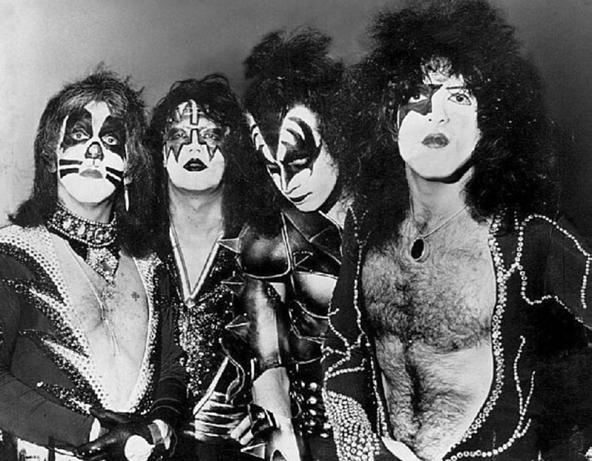
On October 16, founding guitarist for iconic band KISS sadly passed away after suffering blunt brain trauma from an accidental fall in his home studio.
Known for his “Spaceman” stage persona, Frehley was an adored member of the glam-rock group, performing alongside original members Paul Stanley and Gene Simmons on and off for almost 3 decades.
Performing on KISS’s first 9 albums, this rocker inspired generations of guitarists with his hardrock rhythm.
touching moment, reflecting on the cruel nature of memory: “Whenever I remember something, I always remember it in a different way, and however that memory may be, it’s always true in my mind”. Rosalía asks the listener: “Do you still remember me?”
LUX closes with “Magnolias”, a depiction of Rosalía’s funeral. She imagines magnolias thrown over her as a celebration rather than just mourning.
The choir sings: “God descends and I ascend, we meet in the middle” – Rosalía finally finds her answer of being between two worlds.
The physical edition adds three tracks: “Focu Ranni” celebrating personal freedom, reflecting on her broken engagement; “Jeanne” honouring Joan of Arc; and “Novia Robot” a sharp critique of misogyny and the sexualisation of women.
With appearances from Björk, Yahritza Y Su Esencia, Estrella Morente and more, LUX becomes a testament to Rosalía’s evolving artistry.
From a motomami to a saint, Rosalía has achieved the omnipresence her music envisions.
Paul Daniel “Ace” Frehley grew up in the Bronx, New York, becoming music-obsessed after the gift of his first guitar at 13. Little did he know that dropping out of high school would lead to becoming a multimillionaire and later, being inducted into the Rock n Roll Hall Of Fame.
Bandmates Simmons and Stanley shared kind words in a joint statement;
“We are devastated by the passing of Ace Frehley. He was an essential and irreplaceable rock soldier during some of the most formative foundational chapters of the band and its history. He is and will always be a part of KISS’s legacy.”
The long line of rock icons paying tribute to Ace, including Alice Cooper and Bret Michaels, just proves that his instantly recognisable sound will live on.
LUX album cover. Image credit: Columbia Records
(Top) Ace Frehley. Image credit: Aca2001 via Wikimedia (Bottom) KISS. Image credit: Casablanca Records via Wikimedia
THE STAGES THAT SHOOK 2025
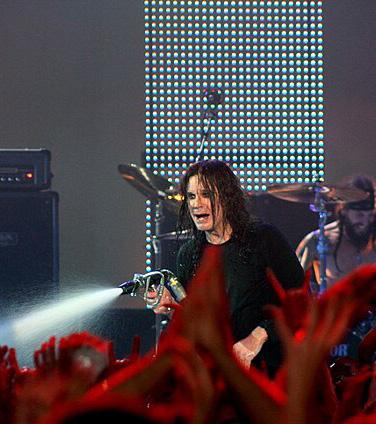
Black Sabbath Back to the Beginning (Benefit Concert)
Marking the last live performance of rockstar, Ozzy Osbourne, while raising millions for beneficiaries involved.
Some even claim the event to be the best show they’ve ever seen with the most emotional value in a performance.
Ozzy later died on July 22, surrounded by his family in Birmingham.

Lewis Capaldi Comeback Tour
Scotland’s national treasure performs in a comeback tour after taking a break from the industry to focus on health.
With high demand for tickets, fans expressed frustration. However, those who had the chance to attend were in awe of Capaldi’s performance. As well as everyones excitement for the new album, hopefully leading to more performances.
EUROPA MUSIC: THE BEATING HEART OF STIRLING’S MUSIC SCENE
Europa Music isn’t just a record shop, it’s a Stirling institution.
Tucked away in the city centre, the shop has been part of local life since the early 1970s, back when discovering new music meant flicking through crates, not clicking a playlist. Formats have changed more times than anyone cares to count; vinyl to cassette, cassette to CD, iPods and eventually to the era of endless streaming, Europa has stayed standing, adapting without ever losing its charm.
When vinyl made its comeback in the 2000s, Europa didn’t just benefit from the revival; it helped lead it. While record stores across the UK shut their doors, Europa expanded its already huge collection and cemented its reputation as one of Scotland’s best spots for both new releases and rare finds.
Students, collectors, and curious first-timers all wander in expecting a quick look and end up spending an hour flipping through shelves. Europa’s importance goes beyond what it sells. It has played a massive role in supporting Stirling’s creative community.
Local musicians know they can walk in and actually see their music on the shelves, and countless Stirling students have found their next obsession or their next gig thanks to a staff recommendation. Events like Record Store Day turn the shop into a buzzing meeting point for fans, artists, and anyone who loves good music.
In a world where everything is streamed, shuffled, and algorithm-approved, Europa Music offers something different: a physical space where people can talk, explore, and be part of Stirling’s culture.
Whether you’re a lifelong collector or a student hunting for your first vinyl, Europa remains one of the city’s most iconic, authentic, and genuinely loved spots.
By Courteney Pearson Head of Photography
Ewen Duncan, owner of Europa. Image credit: Courteney Pearson
With a strong fan-community presence, there was something for everyone to love on the tour. Along with special guests and surprises along the way, the tour gained an extremely positive reaction with eagerness to see what is next from Carpenter.

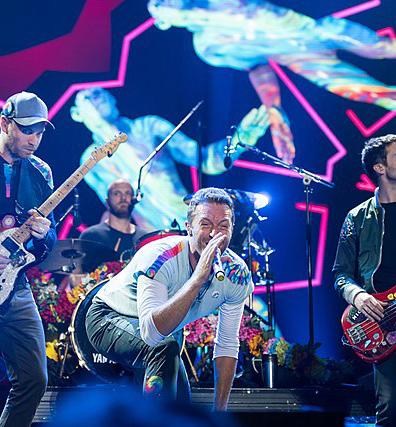
of the Spheres Tour
Famous for their interactive and large-scale production shows using renewable energy, Coldplay know how to put on a spectacular performance.
Fans claim the shows to be a once in a lifetime experience which is extremely rare and media influences encourage everyone to attend as it has became widely accessible and one of the best performances in history.
Britains own set the standard for future reunion tours as the Gallagher brothers reunite after a sixteen year feud. The great wait is finally over as Oasis steal back the stage and give the performance of a lifetime.
Described as timeless, there is yet to be anything negative said following the tour as communities came together to see the return of the great band.
By Kiera McGregor


Sabrina Carpenter Live ’25 Tour Short n’ Sweet Tour
Coldplay Music
Oasis
Pop princess, Sabrina Carpenter, debuts her album Short n’ Sweet on her world tour.
Ozzy Osborne. Image credit: Aznplayer213 via Wikimedia
Lewis Capaldi. Image credit: Ralph_PH via Wikimedia
Sabrina Carpemter. Image credit: Ralph_PH via Wikimedia
Coldplay. Image credit: Frank Schwichtenberg via Wikimedia
Liam Gallagher. Image credit: Ralph_PH via Wikimedia

A VERY HOLDOVERS CHRISTMAS
By Tess Bowen Film and TV Co-Editor
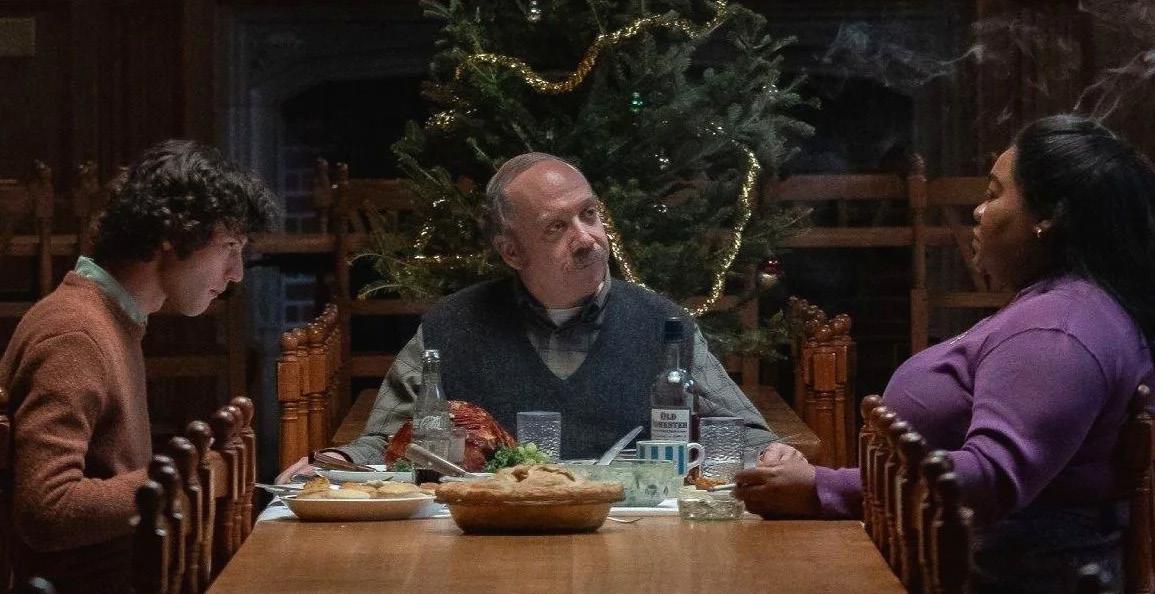
Released at the beginning of 2024, The Holdovers is the most recent film from director Alexander Payne. Starring Dominic Sessa in his breakout role as Angus Tully, the film is probably the best release from recent years for the winter season. It is a personal favourite to find comfort over Christmas. The film takes place in New England prep school Barton Academy as it closes for Christmas, and ‘holdover’ students are left under the watchful eye of ill-tempered teacher Paul Hunham (Paul Giamatti). When the holdover students get the chance to leave the school and go skiing, Angus doesn’t get parental permission and is left behind.
It is a classic story of an unlikely friendship between student and teacher as they get to know each other and realise their likeness, à la Dead Poets Society and Good Will Hunting . It is a very highly acclaimed film, receiving five
Oscar nominations, one of which, Best Supporting Actress, went to Da’Vine Joy Randolph for her role as dinner lady Mary Lamb.
Despite this acclaim, I do find that the film flies under the radar for most people and is largely underrated. It is, in many ways, a perfect film to me, especially in the colder months.
To start with why the film is perfect for this time of year, we can look at the basics. The Holdovers takes place over the festive period, large parts of it revolve around Christmas. Snow covers the landscapes on screen, and the contrast between the stark white exterior and warm interior creates the cosy feeling that we can only find in the winter months.
The film is also largely character-driven. It is, at its core, about human interaction and finding understanding between people. Sure, everyone can recognise that this time of year does bring people together, and the film reflects this.
One of my favourite scenes in The Holdovers is when Mary, Paul and Angus sit below a crooked,
WHY DO WE WATCH HALLMARK MOVIES WHEN WE KNOW WHAT WILL HAPPEN?
By Isla Barker Lifestyle Editor
As soon as you read the description of a Hallmark movie you accurately predict the plot. A man and woman meet, there is a low stakes conflict, (like another love interest the woman clearly won't end up with) the man and woman make up, they get together, they have a short kiss because it's network TV and the movie ends. We know the formula. So, why do we watch them every year?
People like familiarity. Sometimes we like to switch our brains off and watch something light-hearted and silly for fun. And with a period of time as hectic as Christmas, sometimes what you need most is a break in the form of a hot drink and a cheesy movie. We need fluffy, predictable and low stakes media to balance out the chaos that is the modern world.
Some of Hallmark's movies are quite unique, however. For example, there is an upcoming film called The Christmas Baby , which is about a lesbian couple who find
a baby on their doorstep leading up to Christmas.
They take care of the baby together while running their business and considering adoption.
Some other movies I'm excited to watch this year are A Newport Christmas , which tells the story of a woman in 1905 wishes on a comet for a new life and is transported to 2025.
She falls in love with a historian in Newport and they navigate the complications of the difference in their eras and the effects of their relationship on time itself. How cool is that?
Another is A Christmas Angel Match , where two angels tasked with setting couples up must work together to get two humans together. Their different tactics makes them butt heads and grow closer. I know exactly what is going to happen, but I want to watch this nonetheless!
This is the thing about Hallmark films, they make you feel warm and fuzzy inside. Who doesn't want that? And if watching lovey-dovey Christmas rom coms is a crime, then I plead guilty!
poorly-decorated Christmas tree for their Christmas dinner, and share gifts. Despite initial turbulence, they have grown to understand each other and why they act the way they do. Over the course of the film, they are able to overcome grief and loneliness, finding themselves in each other.
Another incredible aspect of this film is its ability to balance comedic and emotional moments. The Holdovers has a certain wit about it in its dialogue. Each character has a charm that becomes more obvious as the film goes on. There are genuine moments that made me audibly laugh while watching them.
As well as this, à la Dead Poets Society and Good Will Hunting once more, it brought me to tears. It is hard for me not to cry at films so deeply rooted in emotion and human connection, I admit. However, before watching The Holdovers, I had never cried at a simple handshake.
So, why not pick The Holdovers as your choice of comfort film over this festive period?

Angel Falls Christmas. Image Credit: Netflix
The Holdovers. Image Credit: Focus Features
Nostalgia ticket aboard The Polar Express
By Sarah De Beer Comment Editor
When the children in The Polar Express ring the bell and hear the jingle – a sound that the parents don’t hear because they don’t believe in Santa.
Every time Christmas season comes around, I think about this ringing bell and how it could be connected to nostalgia.
My family and I watch The Polar Express every year for Christmas, the lead up towards watching the movie is more exciting than Christmas itself in recent years – the magic of watching it is filled with nostalgia and remembering every other time I watched it from when I was a kid.
Yet, I seem to forget how bad the graphics are every time I sit down with a cup of hot chocolate to watch it.
I will admit and say that the graphics for the movie aren’t bad for the era the movie comes from, they’re easy to ignore when watching the train staff dancing around singing for the children on the train and giving them hot chocolate.
It goes to show the strength of the story in The Polar Express –the feeling of Christmas cheer drawing me in enough to dismiss that it feels like I am watching something from more than 20 years ago, hearing “Ticket please” for days afterwards in my ears.
A part of me is glad for the graphics being the way they are, it reminds me that this movie has been around for my whole childhood and that there is effort put into the movie being made.
The graphics to me don’t matter If the movies plot is good and The Polar Express isn’t only good but brilliant, which is only my opinion
An opinion that is steeped in nostalgia for a movie from my childhood and the memories that I associate with it. Bad graphics wouldn’t stop me from watching this movie or in this instance it’s more old graphics than bad graphics.
With a bowl of popcorn, a cup of hot chocolate, and gathering my family together, I can’t wait to watch The Polar Express for another year this Christmas.

FILM
& TV WINTER WORDSEARCH

WICKED: FOR GOOD REVIEW: ARIANA
GRANDE'S
GLINDA CAPTIVATES IN MESSY SEQUEL
By Ben McSwan Film and TV Co-Editor
When the film adaptation of Wicked was announced to be split into two separate parts; fans were left worried, with Act One of the stage show marked as one of the greatest musicals of all time and Act Two being a case of diminishing returns, a rushed re-imagining of The Wizard of OZ with weaker songs. Unfortunately, Wicked: For Good is also weaker than last year's Wicked . While that film earned it's longer runtime, with it's fleshedout worldbuilding, For Good, while over an hour longer than act two, adds nothing new of substance to it's material.
In For Good , Ariana Grande's Glinda is serving as a public figure for The Wizard of OZ, while Elphaba continues to fight for animal rights while being branded by all of OZ as The Wicked Witch of The West. Wicked worked best when it was focusing on the growing friendship between Elphaba and Glinda, it was the emotional core of the film that gave us brilliant scenes like The Ozdust Duet, Popular & Defying Gravity. For Good features a brilliant reunion between the two; but as it goes on, they grow further and further apart with a melodramatic love story taking up much of their time together. until the ending with For Good and The Melting scene which is brilliantly expanded from the source material and earns it's emotion -- although much of that comes from brilliant improvisation from Cynthia Erivo & Ariana Grande, rather than director Jon M Chu.
The new film is also much more of an ensemble piece with Fiyero tracking down Elphaba, while Morrible and The Wizard continue to work in the background spreading propaganda and fear. Too much time is spent on unnecessary additions, like an expansion of Every Day More Wicked (which works a short intro to Thank Goodness in the stage show) which features a cheesy reprise of Popular, two new songs (The Girl In The Bubble is a fun throwback to old musical style, but No Place Like Home is poorly directed) & an unnecessary 'flashback' to Glinda's childhood. rather than expanding important plotlines such as Nessarose and Boq or Elphaba's transformation into being Wicked after No Good Deed. These frivolous new additions definitely create a ''what-could'vebeen" scenario.
As stated, Cynthia Erivo & Ariana Grande are fantastic. And they are the glue that holds the film together. Grande really gets to show off her emotional side here, whereas she was much more comedic in part one. Erivo stuns with No Good Deed and her character change is believable and intense. Jonathon Bailey as Fiyero is still
underutilized as the character is in the stage show, and really only serves to create tension between the two leads, however, he does his best with the material given. Jeff Goldblum is as sinisterly charming as ever as The Wizard, as he tries to get Elphaba to come back to his side. It's Michelle Yeoh as Madame Morrible that is the cast's weakest link, as she delivers much of her lines as if she just got sent the script and unfortunately she is not a good singer for a musical film. I have never been of the opinion that Act 2 of Wicked has 'forgettable', or bad songs. There's nothing (except No Good Deed & For Good) that really lives up to act one's biggest moments, but there's nothing as outright boring as Something Bad or A Sentimental Man. Jon M. Chu may not be the boldest director in the business (we'll get to that), but his interpretation of As Long as You're Mine is a refreshing twist from the stage show and feels more like how two people would act after leaving someone they care about on their wedding day for each other. The No Good Deed sequence is also handled with aplomb and has some interesting flashback sequences. But it's the Girl In The Bubble sequence that is the film's highlight for cinematography as the camera passes through all sorts of mirrors and reflections. It may be slightly gimmicky, but it is impressive nonetheless.
Jon M. Chu is passionate about Wicked and has said he's always wanted to make these films and his love and care for the source material can definitely be felt -- even in interviews with him and his DP Alice Brooks, they have a genuine reason for the directorial and visual choices they made. But good intentions do not make good cinematography. There's no unbearable over-lighting like there was in Dancing Through Life here, but so much of the film is shot in closeup which undervalues the incredible sets and costumes designed by Nathan Crowley and Paul Tazwell.
Wicked. Image Credit: Warner Brothers Pictures
Polar Express. Image Credit: Warner Brothers Pictures
Local Matters
A new voice for Stirling



Isla Glen, The Courier’s Stirling reporter, graduated with a BA (Hons) in film, media, and journalism from the University of Stirling in 2023.
Former editor-in-chief of Brig Newspaper and contributor to Air3 Radio, Isla focuses on highlighting local issues and shining a positive light on Stirling.
EXPLORE MORE: DAILY STIRLING NEWS, MADE FOR YOU
BRIG 2025/26 COMMITTEE
















Edward Jewsbury POLITICS EDITOR
Spencer Haynes FOOD EDITOR
Alex Paterson EDITOR-IN-CHIEF
Connor Peebles DEPUTY EDITOR
Jess Urquhart SECRETARY
Plum McKechnie NEWS EDITOR
Amelia Fryer NEWS EDITOR
Melissa Thomson SPORTS EDITOR
Erin Schoolar SPORTS EDITOR
Rae Archibald ARTS EDITOR
Tess Bowen FILM AND TV CO-EDITOR
Ben Macswan FILM AND TV CO-EDITOR
Dylan Burt GAMING AND TECH EDITOR
Isla Barker LIFESTYLE EDITOR
Alice Pollard BRAW CO-EDITOR
Kerry Lloyd BRAW CO-EDITOR
Emily Morgan-Hughes CHIEF SUB-EDITOR
Emma Walker POLITICS EDITOR
Mia Ford MUSIC EDITOR & HEAD OF ADS
Elliot Johnston FEATURES EDITOR & HEAD OF PODACSTING
Sarah De Beer COMMENT EDITOR
Robbie McAvenue HEAD OF SOCIAL MEDIA
Adrian Martinez Aidoo HEAD OF BROADCASTING
Courteney Pearson HEAD OF PHOTOGRAPHY
IT'S NOT CRINGE TO TRY HARD
By Ali Rees
“It’s not cringe to try hard, guys, it’s not.” These words, spoken by a recent graduate on a panel on the media industry, coalesced something for me that I had long suspected but struggled to articulate. It’s easy to get caught up in other people’s opinions of you. Particularly as newly fledged young adults taking on independence for the first time, it feels only natural to curate the experience of ‘you’ to the tastes of those you find yourself with. Black Mirror may be a dystopian nightmare version of reality, but the reason the idea of social capital is so freaky is because of how close to real it seems like it could be. We don’t have numbers floating above our heads, but the feeling of “everyone must know” is familiar.
That fear of shame is something I struggled with for a long time, every time I spoke up first, risked making a mistake, did something silly. “It’s not cringe to try hard,” but if that’s true, why is everyone looking at me like that? Why can’t I shake off the uncomfortable, prickling heat of a blush?
One of the main lessons that has come to me over the years is that when the source of embarrassment is our imagined reality of what people think of us, it actually fades pretty quickly, however intense it may feel in the moment. “It’s not cringe to try hard,” and the embarrassment of speaking up in class is gone in a moment.
Late at night, when I’m trying to sleep and the spectres of cringes past revisit me, I can silence their howling with a parallel mode of thought – what about all the times that I thought I was being cringe
that resulted in something good? “It’s not cringe to try hard”, and sometimes, something brilliant will come of it.
I think about all (there really are a lot) the times I have asked a question in class and received, in a conspiratorial whisper, the feedback “I’m so glad you asked that, I was really confused.” If the price of doing business is a moment of pinkfaced embarrassment, the payoff is worth it every time. Or the times I’ve volunteered an answer that was incorrect and received a clarifying explanation that has helped greatly.
I think about the time dedicated to perfecting pieces of work, articles written, the times I’ve said not tonight, I’ve got to work on something, I’m trying to get this done. The momentary flicker of shame at putting in effort pales in comparison to the results. Good marks in
assignments, paid writing gigs, a prestigious fellowship, Best Culture Writer in the UK at the Student Publication Association Awards. “It’s not cringe to try hard.” I think about being the only person dancing at a wedding, by myself on the floor. A brief realisation that everyone else had sat down or gone to the bar, a pang of oh god there’s no-one else here I should sit down that lasts only as long as it takes a friend to join in, or for the next song to start, a wedding classic, and all that’s left is the joy of celebration.
Embarrassment and shame are very real emotions that can catch us unaware at moments where they really don’t deserve to be. It’s not cringe to try hard, and even if it feels like it is in the moment, lean into it, move through the cringe –there could be something brilliant waiting on the other side.

ImageCredit:AlicePollard
"YEAH, YOU'RE HORRIBLE FOR THIS" WELCOME TO BRAW'S NEW AITA
My experience of falling in love at university
By Isla Barker Lifestyle Editor
Like many people, I met my first love at university. I was in second year, they were in third year and we are still together now. It may sound silly to some, but I want them to be my only love. They're nerdy, like me, we enjoy the same things, they want to travel anywhere with me, and I want to play any game they're interested in.
We developed a friendship the year before we got together. I was first drawn to their caring nature, and they were drawn to my outspokenness. Other than occasional conversations and some joking around, we did not speak much. Then my second year started, and so did a new perspective on my future partner. We spoke more, and got each other's contact details and learned more about each other.
During a day out with some friends we both realised our feelings for each other when we couldn't stop wanting to be close to each other, and trying to make the other laugh. I went home and for hours after I said goodbye to my friends I thought: "What was that all about?". That was when I realised, I had feelings for my shy, gentle friend.
The next part was more daunting, because I was rejected the only time I had asked someone out before. I was very certain that they liked me back but I still felt that doubt we have all felt before of, "Do they like me? Or are they just flirty?" People should wear certain colours to indicate if they are serious or not. It would greatly help oblivious neurodivergent people like me.

The Situation I have been on nights out with a friend and his friends, but I’m scared I’ve only been invited because he fancies me, which my friends think is the case. The only problem is that I don’t want to stop hanging out with them because I actually enjoy his friend’s company more than his, and I fancy one of his friends, but this is the only way I can be in a social setting with that friend. AITA?
Want our unsolicited advice? Submit your AITA stories here
BRAW’s opinion
Yeah, you’re horrible for this. Just talk to the person you want, honestly. You can’t lead this poor person on because they are your only way to see this person you fancy. If you communicate that you like hanging out with this group of people but don’t want to be with the original person who brought you in, you may get what you want in the long run. This definitely won’t happen if you keep lying and leading this person on. Don’t go tearing up this friend group for your own desires. YTA.
I planned to ask them out the week after, once I learned more about them. But, my partner, being the considerate person they are, took care of that for me and confessed themself. Like in a movie, I jumped off my bed and screamed into my hands. Thankfully this was over text so I did not frighten the person who bared their heart to me. And so, our relationship began and we have never been happier. We bring out the best in each other and encourage each other to follow our dreams. Now I understand why romance novels and love songs all sound similar; that is just what love feels like. They make me laugh, I bring them out of their shell. We are a unit and a team. They are my Odysseus, and I am their Penelope.
Coffee shop and study.
Hot Goss
FROM SCOTLAND TO ENGLAND FOR CHRISTMAS
By Sarah de Beer Comment Editor
From Scotland to England for Christmas, from house to house, country to country, I am used to moving on from places. I thought I had gotten used to this.
Yet when my parents told me this summer, before packing up for my second year, that they were done with Scotland and England was in their sights – I had a sudden, overwhelming anger fill my veins.
Where I have lived in Scotland has been the house I have lived in the longest in my life and I had to swallow the bitter pill my parents shoved towards me when telling me that this was the end.
I remember when I was told that I was moving to Scotland at 11 years old that I was excited for a new adventure, the excitement of going to a country where I could be someone new.
That excitement died the minute Christmas came around – six months after we moved here – and realising we were alone.
Christmas is subpar when it doesn’t involve the whole family. I wanted the dishes my gran cooked, eating ice cream at my grandparents’ house while watching The Polar Express, and going to church to show off my Christmas presents with all the other kids.
Being here is not the same and my parents moving to England is going to change the Christmas traditions even more. Over the years I have gotten used to the makeshift traditions we made as a family in Scotland.
I know realistically that we would still be following some of these traditions we have made – going to Christmas Markets, eating gammon for Christmas instead of the selection of meats my gran cooked, stockings opened first, watching Christmas movies together, etc.
Especially since a lot of these traditions have been something we had in South Africa anyways, minus the gammon and Christmas Markets, but I hate that the living room would be different and that the streets outside would be
unfamiliar.
Every time we move, something must be given up for it to work, and I don’t know what will be given up for this Christmas in England.
While writing this I decided to text my mum about this – wanting to hear what she thought about having to move again and, not to toot my own horn, to be in a different country to me.
My mum said: “Home is where the heart is, as long as I have you, Morgan [my sister] and dad with me, Christmas will always be special, no matter what we do.”
It was like a pile of rocks have been lifted from my back, having my mum reassure me that Christmas would always be special helped me in the relieving the anxiousness this move has given me.
Hopefully, when Christmas comes around, where I will be sitting in an unfamiliar living room with the same tree we have had since I was young enough to remember (yes, you read that right, we shipped the tree over from South Africa), that my mum will be right.
COMMUTING TO WORK: PIGEONS OVER PUBLIC TRANSPORT
By Alice Pollard BRAW Co-Editor
Commuting to work can be a deeply monotonous affair, as is well known by the majority of the population. Commuters line up, shoulder to shoulder, empty soul to empty soul, packed in on their tin can of fetid heat. Those who do not work in an LEZ sit alone in their cars, Radio 2 forcing Sabrina Carpenter down their throats at 8 am, unwilling victims of the mainstream. Me? I walk with the pigeons.
The pigeon, or Columbus Polumbus, is a commonplace sight
in the UK. Often associated with stealing a cold McDonald's fry or having an unsightly gammy foot, the humble pigeon is forgotten, overshadowed by exciting alternatives: a magpie, jackdaw, robin.
Tucked into the ancient walls of Stirling’s Ancient Burgh are bundles of sad sticks. Poking out at random, jagged angles, they appear random. Flotsam, caught up in Scotland’s stormy weather. Peer closer - you’ll see two small beady eyes, a small beak, and a fluff of feathers.
The pigeons are my friends. Rather than making awkward
eye contact with a crotch-itching, sweaty-breathed, man-spreading businessman, I make eye contact with the vacant abyss of a pigeon’s brain.
Have you ever made eye contact with a pigeon? It’s a new level of connection. You look into those eyes, and nothing looks back. You stare blankly, your busy work brain trying to make sense of the void within, losing all trains of thought in the process. There’s no way to explain the overwhelming peace of a pigeon's stare. There are galaxies in their eyes. Worlds that we can’t comprehend. Knowledge of the
ancient gods, messages of the past, miles of phenomenal interdimensional travel. You can see it all, behind the pigeon’s eyes. The pigeon, in comparison, doesn’t have a clue. I thought a way to connect with my new friends would be to bring some birdseed up the hill with me, tucked away in my bag beside my own lunch. Scattering on the ground, under their beaks, sunflower seeds and oats and a myriad of other seeds. A feast, fit for the king of birds. They don’t notice. Vacant eyes turn inwards, observing the thin slices of time that
make up the fabric of the universe. To guardians of the quantum world, seeds are nothing compared to stars.
What a privilege to witness these small, wise souls, such a far cry from the stagnant crowds on London’s underground. What a privilege to waste some bird seed and see the next universe within a beady eye. What a privilege to walk to work, amongst alternate universes and far-off stars. What a marvellous bird.
Christmas Classics: A Guide to Festive Novels
By Emma Holmes
As the air turns crisp, and we cosy up in our comfiest pyjamas, there is nothing better than a festive novel to bring the Christmas spirit! If you like Charles Dickens' A Christmas Carol, below is a guide of books that will bring the festive cheer to life.
1. The Chimes (1844) by Charles Dickens
This is the second novel of Dickens' “Christmas books”, and uses ghost-like visitors to warn about social injustice and redemption. While it is not a Christmas story in the conventional sense, it is set on New Year’s Eve and has strong moral messages.
2. The Cricket on the Hearth (1845) by Charles Dickens.
A tale that celebrates family, generosity and the Christmas spirit. It explores themes of love, family, and the importance of home.
3.The Gift of the Magi (1905) by O. Henry
Though a short story, this piece focuses on what love brings you to do. It follows a young couple, who each secretly sacrifice their most prized possession to buy one another a Christmas gift. This Christmas novel shows that gifts aren’t always what matters; it’s the thought and intention behind them.
4.A Redbird Christmas (2021) by Fannie Flagg
This story is a heartwarming tale of hope and Christmas spirit. It is aholiday novel that blends humour, redemption and community spirit, resonating with the important message of kindness.
5.The Christmas Box (1993) by Richard Paul Evans
This story is about a family caring for an elderly widow, while uncovering letters that teach valuable lessons. It teaches about love, loss, and the importance of cherishing moments with those around you.
Bonus: A Cheesy Alternative
If you want to experience a Christmas classic but struggle with concentrating on complicated books or audiobooks, consider going to a panto.
Listen- they are not all the bad. Support your community, have a laugh and go see your local panto. Or maybe it is time to settle down with that book...
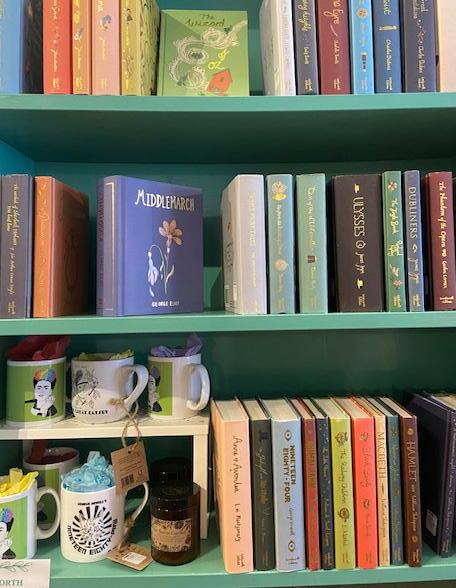
Should you set a Reading Goal for 2026?
By Ali Rees
There are ways to earn points for doing pretty much anything. From our language learning to fitness, grocery shopping to coffee. The fact that these points are often fake doesn’t appear to matter –psychologically, humans like it when the number goes up.
So it should come as no surprise that more and more frequently, people are setting themselves reading goals. Often known as a “Goodreads Goal” after the platform many use to track their reading, people who read as a hobby will commonly set a target number of books for the year.
What this looks like can vary wildly between people, and often transcends Goodreads altogether.
However, people are taking examples from influencers and content creators, which can lead to
expectations that are wildly different from most people’s reality.
Of course the person you saw online has read 250 books this year. It’s literally their full time job. It doesn’t mean that you have to set a drastically out of reach goal to be considered a “real reader”.
That being said, it can be hugely motivating. Targets and goals can contribute significantly to increasing behaviours we want to do more of. If you read five books this year and set yourself a 10 book goal for next year, you might just be on to something.
Finally, remember that reading is a hobby. We absolutely can learn things through reading, but it’s meant to be fun! We read in our spare time because we enjoy it. Don’t sacrifice that for the sake of a goal that doesn’t work for you.
TRAVEL WRITING: THE ANTIDOTE TO WINTER STASIS
By Alice Pollard BRAW Co-Editor
My heated blanket has trapped me. Winter shadows tap at frosted window panes as 4pm draws in.
Simply put, it is dark and cold and I can’t afford to leave the country for warmer climates.
The UK becomes particularly miserable once all the leaves have fallen. Students are tied home by assignments and dwindling loans, heating switched on for a luxurious yet expensive hour to stave off the frostbite. The antidote, however, comes in the form of high-quality travel writing.
An author who understands their craft, who has lived lives beyond a Scottish winter, who knows how to turn those experiences into a paperbound reality, holds more weight and power than any vitamin D supplement. Travel books, when well selected, tell a story of real human life, distant culture, alternative travel, sunshine and lifetime achievements. Travel writing can inspire the individual, providing depth that a TikTok could never replicate.
Is travel writing dying? Perhaps.
Author Tim Hannigan wrote an entire novel - The Travel Writing Tribe: Journeys in Search of a Genre (2021) - in an attempt to define its future, which lies with the readers and consumers. Videos do not recreate the extravagant details and beauty of Paul Theroux. They cannot rewrite classic travel literature, replace the likes of
Eric Newby, Bruce Chatwin and George Orwell. Yet it does not all lie in the classics - there’s much more to the genre beyond the voices of old white men.
Life Lessons From The Amazon (2021) by Pip Stewart transported me far from Scotland to the depths of the Amazon Rainforest. Stewart built a new world I didn’t know existed, a true insight into what lies beyond our personal horizons by using refreshingly blunt honesty and realism in this groundbreaking adventure novel.
Likewise, Around the World in 80 Trains (2019) by Monisha Rajesh afforded me a whole new perspective on our western way of life, of sustainable travel and human connection, in one of the most powerful, cleverly written, and humanised travel books of the century.
The heated blanket may trap your body, your bank account may have frozen alongside the weather, but the mental escapism of the travel book holds far more power than you might expect. Escapism does not lie just in fantasy - this genre is rooted in reality, human connection, and culture, yet holds whimsy and substance. Try something new and pick up a travel book this winter.
Sisters watching the geysers in Iceland. Image Credit : Rae Archibald
Classic books display in a bookstore. Image Credit : Rae Archibald
My Top Five Books From English Studies

The Ending Writes Itself

By Rae Archibald Arts Editor
The Ending Writes Itself, set to be published in April 2026, is the first collaboration between authors VE Schwab and Cat Clarke, a mystery book set on a reclusive island off the coast of Scotland.
The book follows a group of six ambitious authors, who have been invited to a saloon with world famous writer, Arthur Fletch, on his private island, but when they arrive they are shocked to discover he is dead.
The real reason for their invite is this – his late publisher and editor want one of them to write the ending to the last book in his most successful series, the one the world have been waiting for with baited breath. The book that he never got to complete.
Although the invited authors are talented, they have never managed to break out of the “midlist” of publishing. Winning comes not just with having your ending published, but a lucrative book deal, and two million dollars.
The authors sign non-disclosure agreements, have their devices locked away – and then are left in the castle. As the 72 hours they have to write start to count down, don’t forget that is a competition to die
for.
As the novel progresses and perspectives change, it becomes increasingly unclear who you can actually trust. Some of them simply withhold important information, some are straight up lying to you. The point of view chapters are not always predictable, but based on whose insight is most urgent.
The Ending Writes Itself uses aspects of gothic literature, including a castle with secret passageways and the fear of the supernatural, as well as poking fun at but employing classic tropes of having no access to technology and splitting up the group.
With a shout line of “the book everyone will be talking about in 2026”, I can certainly understand why. It is not just a locked room mystery, but also a comment on the publishing industry, and what the constant need for success can do to authors. This is a book that does not bore you for a second, but instead implores you to turn the page.
The Ending Writes Itself will be published by HQ in April 2026. Brig Newspaper was given access to an early copy from events at Bloody Scotland.
By Kerry Lloyd Braw Co-Editor
As an English Student, I feel well read enough to say that some readings I’ve been forced to do for class have been worse than others. I’m sorry, Charles Dickens, but Hard Times was a bore and I couldn’t even get past the first fifty pages.
Moving away from the books that feel never-ending, I’ve been exposed to some real stars in the literature world throughout my course. Here’s my top five.
Coming in at number five is Paradise Lost by John Milton. Whilst this extended poem takes some dedication to get through, it is well worth the deep dive. I had a blast writing about it for an essay, as its takes on religion and the role of Lucifer got me giddy.
Fourth place goes to Northanger Abbey, Jane Austen’s take on the gothic novel. The slow build, the creeping dread, the mood Austen creates - all of it is enthralling. If you’re a fan of Austen and somehow haven’t read this yet, do yourself a favour and pick up a copy.
The bronze goes to The Good Soldier by Ford Madox Ford. This witty, winding narrative and
unconventional storytelling may be confusing at first, but it is executed perfectly. It’s funny, it’s infuriating, it’s one of a kind. I never would have picked it up if it wasn’t for a class, but I'm glad I did.
Second place is a tie. A Room of One’s Own by Virginia Woolf, an essay on women and writing. This is an inspiration for people like me and my personal favourite of Woolf’s work. Then Mrs Dalloway - what a novel. Lesbianism, feminism, drama - what more could a girl ask for?
Number one is a surprise to anyone who knew me in high school. Romeo and Juliet made me think I hated Shakespeare, but Hamlet blew me away. I had such a good time reading this play that I ended up watching multiple variations online for fun. I love when characters actually face the consequences of their own actions and with pretty much all of them dying (sorry, spoilers), I was immensely satisfied.
Be brave and pick up a book you never would have thought to read, it might become your new favourite!
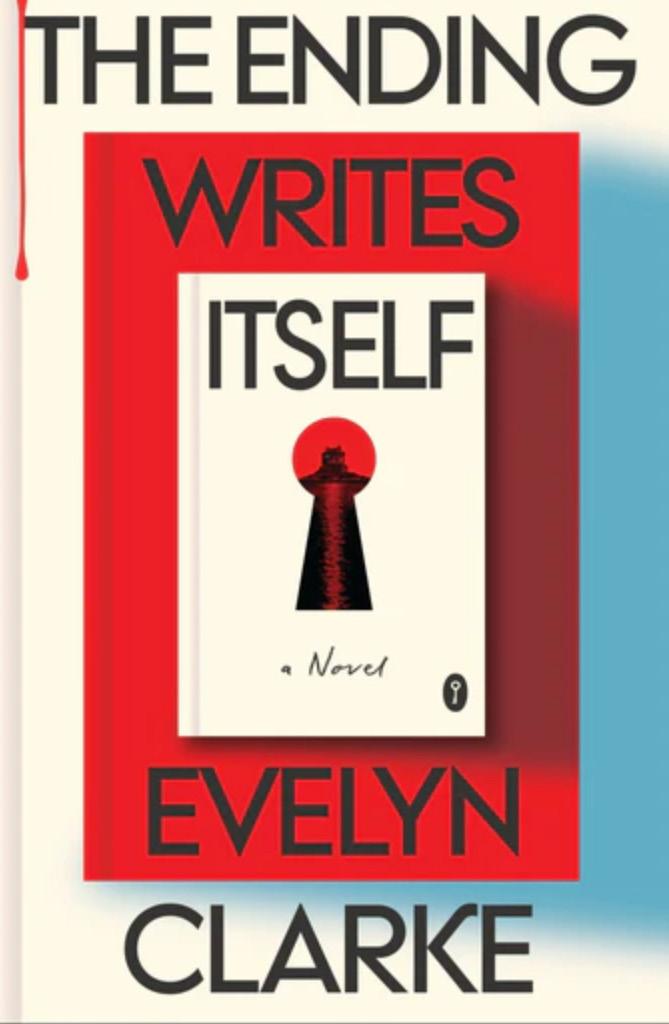
Trinity College Library, Dublin. Image Credit : Rae Archibald
THE VALUE OF OFFLINE PLAY
By Ali Rees
Don’t get me wrong, I love video games. I never have fewer than three games on the go at any one time, and I have a Minecraft moment every six months when I spend two weeks in the blocky, nostalgic sandbox.
I’ve written previously about the important role video games have in my personal connections. I am a gamer and I always will be. Sometimes though, you have to do something that is not in front of a screen.
During Covid lockdowns, I quickly realised that I was spending 14 hours a day in front of a computer, TV, or phone, between work, video games, and the inevitable doomscrolling.
Perhaps unsurprisingly this was leading to headaches, trouble sleeping, and a general sense of melancholy (over and above the obvious lockdown blues).
Initially I really struggled with this.
I’ve always loved reading but lockdown times were not conducive to the kind of focus required to get through a novel.
I tried yoga, but it was quite annoying to have to move the sofa and coffee table every time I wanted to do yoga in our tiny one-bedroom Edinburgh flat.
I know enough about myself to know that the sourdough trend was not for me.
Then for my birthday I received the thoughtful gift of some Minecraft Lego, and that really unlocked something for me.
Sitting at the table with some music playing and looking at something 3D and tangibly there in front of me, rather than through an eyestrain inducing digital filter, was exactly what I needed.
I built my Lego deliberately slowly.
By Connor Peebles Deputy Editor
I opened up a single bag and sorted the pieces out (I later learned this practice of laying items out in an organised, aesthetic way is called knolling) before starting to put the pieces together.
There is something deeply satisfying to the feeling that you are building something with your own hands, even though Lego is the most controlled environment wherein the creativity has been outsourced.
That curation does not diminish the experience.
Looking at the instructions, gathering the pieces, and fitting them together is immensely satisfying, and then when you’re done, you’ve got a neat little (or sometimes large) decorative object to put on a shelf and admire fondly.
This was the start of an exploration of offline hobbies that really carried me through Covid and is still a part of my life to this day.
Do I want to disconnect from the world for a few hours, zone out while still doing something that keeps me occupied? Time to bust out a Lego set.
Do I need to keep my mind active but have spent a little bit too long at the computer?
I’ve got some jigsaws and some crossword books. Gathering with some friends?
I’ve got a selection of board games for any occasion. All these activities are fun and enjoyable in their own rights, and are extremely complimentary to video gaming.
Sometimes after working on an assignment for 10 hours, I just need to step away from my computer and do something in the real world for a while.
I can’t recommend enough taking the time to do something joyful, peaceful, and offline.
REMEDY ENTERTAINMENT: QUALITY OVER QUANTITY
Remedy Entertainment, Finland’s iconic gaming production studio that’s produced some of the industries most innovative games for three decades. Now with multiple productions on the horizon, it’s time to take a look back at why the studio is so beloved.
The name Remedy is one that holds a lot of weight within gaming circles; from their humble beginnings with Death Rally, their medium smashing series Max Payne, and their confusingly brilliant Alan Wake games, they’ve touched on a lot of different genres in their 30 years of life.
Founded by Samuli Syvähuoko, Markus Mäki, Sami Nopanen, John Kavaleff and Sami Vanhatalo in 1995, the studio began their life with Death Rally, a little known top-down racing game about smashing cars into one another. The game didn’t make a big splash when it was released, however it opened the door for longtime Remedy collaborator, and creative director Sam Lake to step up and take the reins on their next production, Max Payne.
Writing about Remedy Entertainment without exploring Max Payne would be pointless as it was the production that put the studio on the map. Combining the third-person shooter stylings of the late 90’s with Matrix-like “bullet time” mechanics created a game that was unlike any other released at that time.
On top of the game’s incredibly addicting gameplay, the story itself was incredibly impactful. Written entirely by Sam Lake, the story was
WHY FALLOUT FEELS RIGHT IN THE WINTER
By Dylan Burt Gaming & Tech Editor
Cold weather has a way of drawing people toward games that offer long sessions, rich worlds, and a strong sense of atmosphere.
The Fallout series fits that role perfectly. Built around exploration, resource management, and environmental storytelling, these games naturally complement the slower pace and indoor focus that winter often brings.
a gritty New York based noir that fused comic book panels with voice overs that elevated the game’s serious, if silly by modern standards, story.
After wrapping up production on Max Payne 2: The Fall of Max Payne, and giving the rights to the series to publisher Rockstar Games, Remedy started production on a horror game that broke that barriers of the gaming medium by incorporating traditional film and literature elements, this game would take the form of Alan Wake.
Inspired mostly by Twin Peaks and Stephen King’s horror novels, Sam Lake and the team crafted a story about an author given incredible power in a sleepy midwestern town. To go into all the in’sand-out’s of Alan Wake would be an article in itself, but to say Alan Wake was impactful on the company would be an understatement.
Though the game wasn’t nearly as successful as their previous Max Payne series, it came to define them more than any other game.
Each subsequent game released by Remedy Entertainment; Quantum Break, Control, Alan Wake 2 and FBC: Firebreak, all fell into one inter-connected story about supernatural powers and cerebral worlds within worlds.
Remedy is now working hard on a fresh from the ground-up remake of Max Payne and Max Payne 2, as well as a sequel to 2019’s Control. They’ve proven that even if a game they produce isn’t financially successful, their focus has always been to provide games for their devoted fans.
Fallout works so well in this season is its immersive world design. Every entry presents large open regions filled with abandoned towns, research facilities, and hidden shelters. These areas reward patience and curiosity. Winter often encourages extended play sessions, giving players the time needed to follow lengthy quest lines or wander through wide stretches of irradiated wilderness. The pacing of the series supports thoughtful play rather than rushed bursts of action.
Sound design contributes to the fit.Ambient tracks lean on sparse melodies, retro influences, and environmental sounds that reinforce the mood of isolation. These quiet moments pair well with the calm of a winter evening. When exploring wastelands, the audio maintains a reflective tone that resonates during the colder months.
Fallout also features systems that encourage careful survival planning. Limited supplies, scavenging, and crafting push players to think several steps ahead. These mechanics align with the instinct to settle in and focus during winter downtime. The slower rhythm supports methodical decision making, which the series consistently rewards.
The games combine personal stories with large scale political or scientific conflicts. This keeps players engaged for long stretches. With more time spent indoors, it is easier to become invested in long form storytelling.
Finally, the series offers a satisfying balance between exploration, action, and customisation. Players can fine tune equipment, upgrade settlements, and build unique character paths.
This sense of progression feels especially rewarding during months when people look for projects that unfold gradually.
This creates an experience that matches the quiet, reflective, and immpersion that winter encourages.
Remedy Entertainment Newest Logo. Image Credit: Remedy Entertainment
Lego Arranged on Table. Image Credit: Ali Rees
The State of the UK Games Industry is A State of Exploitation
The Tragedy of Destiny’s Slow Death

By Elliot Johnston Features Editor
The UK games industry is the fourth largest in the world and bigger than the country's film and music industries combined.
But beneath the surface lies an industry built on toxic crunch culture, union busting and a constant threat of layoffs.
Despite being valued at over £5 billion, layoffs are constant in the games industry and the last few years have seen them becoming more and more common.
As with much of the tech space, layoffs are often attributed to vague ‘market shifts’ and ‘restructuring’.
According to the GDC State Of The Games Industry 2025 report, one in ten developers worldwide has been laid off in the last year.
Within the UK specifically, this year has seen layoffs from Rockstar Games, Build A Rocket Boy, Avalanche Studios, Turn10, Rare and countless others.
In reaction to the state of the industry, the UK Government has founded the U.K. Video Games Council to support studios and
drive growth, similar to Scotland’s existing Games Strategy.
However, some have criticised this new council for largely being comprised of massive studios and existing to further their growth rather than protect the thousands of developers they employ.
Layoffs have also been tied to acts of union busting, most recently with Rockstar Games, which terminated over 30 employees at the start of November, all of whom supposedly had ties to a potentially forming union within the studio.
However, Rockstar claims that these terminations were linked to the leaking of confidential information, although no leaked information has been found in relation to this claim.
Union busting is not new to the games industry; however, allegations of union busting are difficult to prove without legal action.
The above issues are further compounded by the existence of AI, which threatens to replace roles all across the sector.
Generative AI is now used in more than half of all game studios served in one way or another; however, opinions on it are mixed even
within the industry.
Some studios mandate the use of AI, while others ban it outright, but these decisions are often made by the higher-ups.
In a survey of developers, 30 per cent of them believed that generative AI was having a negative effect on the industry, while only 13 per cent believed the impact was positive.
There are countless other issues facing the industry, over 40 per cent of developers work more than 41 hours per week, for example, but very little is known about the work culture in most studios, as strict non-disclosure agreements prevent developers from speaking out.
For an industry as profitable as this, employees deserve to work safely and comfortably, without constant fear of being laid off.
But it will likely be up to the government to intervene and implement changes in legislation.
Until that happens, developers will be stuck in a parasitic industry that exploits them for all their worth and gives nothing back.
How Indie Games Have Dominated the Multiplayer Space
By Mattew Ponticelli
Indie games have notably been gaining popularity, with more gamers citing that they prefer them over AAA games as the years go by.
This year, Megabonk and Dispatch both sold over a million copies, and The Game Awards 2025 includes both Hades 2 and Hollow Knight: Silksong as nominees for Game of the Year, the first time two indie games have been present in the category.
It’s not just singleplayer indie titles which have made it big. During the pandemic the online gaming market saw a massive boom as users rushed to find alternatives to outside social interaction, and Among Us is likely the biggest example. Over two years after its
initial release in 2018, it went from a tiny indie game that very little had ever even heard of to its status now as a household name.
Among Us marked a huge shift in the perception of online indie titles. However while Among Us pits its players against each other in a game of trust and deceit, the next big indie trend would flip this on
its head. Lethal Company, released in 2023, is a chaotic co-op game in which players must work together to scavenge for goods on different planets, all home to different hostile entities.
The mix of horror and comedy as you get trapped in different situations with friends is perfect. Lethal Company essentially inspired a subgenre of co-op horror, with games such as Content Warning and R.E.P.O following suit. R.E.P.O which released earlier this year has over 44,000 players currently in the game as I write this.
The latest example, PEAK, released this summer.
The game takes the chaotic vibes of its predecessors and gives it the refreshing coat of paint of
By Dylan Burt Gaming & Tech Editor
Destiny 2 has entered a period of sharp and measurable decline, and the downturn reflects issues deeper than simple fatigue.
Player counts across major platforms have dropped to historic lows. On Steam, the game has lost the overwhelming majority of its peak population since the release of The Final Shape.
This fall happened even as Bungie continued to deliver updates, expansions, and new activities, which signals that the core problems lie in long term engagement rather than a lack of content.
The Final Shape served as the conclusion to the franchise’s long running Light and Darkness saga, a narrative arc that defined the series for nearly a decade. While the expansion was widely regarded as a strong finale, it also created a sense of closure. Many veteran
players viewed the ending as a natural point to step away from the game. That sentiment appears to have carried through the months that followed, with each new update drawing fewer returning guardians.
The shift from a familiar seasonal model to episodic content has also played a part. The new structure provides fewer regular incentives for players to log in, and the loop of ritual activities has grown repetitive. Raids, strikes, and playlist updates help temporarily, but they have not restored sustained engagement.
All of this converges with internal challenges at Bungie, including restructuring efforts and pressure to justify major investments. Destiny 2 is not fading because of a single mistake.
It is fading because several forces have aligned in a way the studio has struggled to counter.
Megabonk Withdraws from The Game Awards
By Dylan Burt Gaming & Tech Editor
The indie hit Megabonk became a surprise talking point in the lead up to The Game Awards when the developer voluntarily withdrew the game from the Best Debut Indie Game category.
The creator, known as Vedinad, announced publicly that Megabonk should not be considered a debut title because they had released other projects in the past under different studio names.
The decision was framed as a matter of fairness. The category exists to spotlight creators launching their very first game, and they felt remaining on the ballot would give them an advantage they had not earned.
The Game Awards organizers confirmed the withdrawal soon after the statement was posted. The removal was handled quickly,
climbing a mountain. PEAK has sold over 10 million copies since launch, and currently stands as a nominee for Multiplayer Game of the Year alongside industry giant Battlefield 6.
These games focus on spending time with friends, which I haven’t found in many of their AAA competitors. That alongside a steady stream of content updates keeps me coming back.
Anytime that I want to game with friends recently we have found ourselves attracted to indie titles, and if your gaming group hasn’t made the jump yet, this is your sign to check some of these titles out.
and Megabonk no longer appears among the contenders for the category.
The decision prompted a strong positive response from many players and fellow independent developers. The gesture was viewed as an example of transparency in a space where award eligibility can sometimes be unclear.
The situation also reignited discussion about how award shows define a debut project. Some creators release small prototypes or publish games under different labels before achieving broader success. This makes it difficult for award bodies to evaluate eligibility without developer honesty. Megabonk’s withdrawal highlighted the importance of clear communication and personal integrity in the indie scene.


Cosy Corner: How to make the perfect movie night
By Isla Barker Lifestyle Editor
Winter means long nights, frosty grass and wanting to stay indoors from 3pm. The season lasts three months so you might as well make the most of it: perhaps with a wintry movie night.
When you are not out playing in the snow or skidding on the ice at the bus stop, you can cosy up at home with a dozen blankets.
We all know how to make a good movie night: blankets, a good film, and dim lighting all create a warm cosy vibe, but you can take it up a level.
You don’t have to watch a Christmas movie
The Polar Express , Home Alone and Klaus are excellent choices, but there are other wintry films like Frozen , the Bridget Jones series, Little Women , Cool Runnings, and The Lion the Witch and the Wardrobe. They all have wintry or cosy themes to get into.
And to avoid the 45 minutes of back and forth to decide a film, draw a movie from a hat or a random name wheel.
Different movie themes can also open your night (or day, but with the sun setting at 3pm, who cares?)
Holiday Weight Gain? You Deserve That Extra Slice
By Adara Kulug
The winter break is fast approaching and students are feeling it. With tight deadlines, hours spent in the library, and hours researching and reading, students are working hard for the results they need. The sad reality is that during these busy times, the students themselves are an afterthought. Being too busy juggling academia and social life can take its toll. The hardworking students deserve a well-earned rest.
What better way is there to rest up from the first semester than going home? For some individuals, this time may be the first they are living away from home. Suddenly pushed into the deep end of adulthood, students often miss the comfort of home— and home cooking. With Christmas and Hogmanay celebrations filling up students’ diaries, a lot of the gatherings will involve festive feasts and treats. Naturally, this may lead to some weight gain which is perfectly okay. Students’ experiences during these
times are varied and unique.
Once students come back home, they can relax and let the stresses of university behind. The parents of the students will likely make dishes they miss. These dishes are an act of love and care. Another dish known for being loving and caring is a Christmas dinner. Christmas dinners are big and people end up with leftovers for days. So do not feel bad about indulging. The food is there to be eaten.
How to avoid the guilt
You may be questioning if it’s okay to be eating so much over the holidays. The simple answer is: yes. Food is there to fill and nurture our bodies— it is not our enemy. However, if you would like some more reasons, there are plenty.
Social and lifestyle factors do play a part, particularly for students, who balance various aspects of life throughout their educational journey.
Celebrations, reduced stress, and improved mental health due to the stressful time of exams season being behind us plays a factor in our weight gain during the winter
period. Friends and family are back from university around the same time and often stay until half way through January. Meeting up for catch up coffees and brunches with our loved ones during this time in winter when everyone is home is normal and may have its effects. Although, it is so worth it.
The change in our routines, the amount of food that we can have, and lower levels of movement are the reality of coming home for the winter break. Students don’t have to wake for a 9am class. They can have as big of a breakfast, lunch or dinner as they want. They can just rest. Rest their body and mind for the semester ahead of them. Also with the days getting darker earlier and earlier, it is just the right time to catch up on shows or books and enjoy the time and relax. At the end of the day weight gain is normal and natural during this time. Food is fuel. The most important take away from this break is that the students feel refreshed and ready for another semester. And who cares? You still look great and healthy.
to themed snacks, decor and vibes. Make your home cinema a feast for the senses
Sure movie nights are mostly spent watching the screen with the occasional comment or joke, but you can do up the room and go the extra mile.
Fairy lights or lightbulbs with gentler light and scented candles turn your room into a winter nook.
Depending on the theme of the film you can change the lighting or scents if you can. For Christmas movies peppermint smells and colourful lighting match well. For a non-Christmas seasonal film, twinkling fairy lights and a vanilla or pine scented candle can set the mood before you press play.
Fluffy blankets, pillows and cushions are a great addition too, but do not go out of your way to buy extra things. Use what you have, ask your friends to bring their throws or soft furnishings or buy from charity shops. As long as it is multi-purpose and you plan to use it again, go for it.
Lastly, ask people to bring pajamas or fluffy jumpers. It will be like having a sleepover at school again!
Go beyond the popcorn I love popcorn, especially during
a movie but why not add a little pizzazz.
If you are all gathered round to watch a Christmas film, make some strawberry Santas or classic gingerbread cookies. For strawberry Santas, cut the strawberry in half, sandwich the halves together with whipped cream, add mini chocolate chips for eyes and add whipped cream on the tip of the hat. They are tasty, cute and easy to make.
For the post-Yuletide film nights, try your hand at chai spiced rice pudding or s’mores. Without setting your living room on fire, you can make s’mores in the air fryer or microwave.
Hot chocolate, mulled wine and apple cinnamon tea are delicious as well as seasonal. You can also make cinnamon sugar to sprinkle on your popcorn, or make caramel popcorn. And who doesn’t like brownies?
Make it more than a movie night Of course, the night does not need to end once the movie is over. You can start a board game night, video game tournament, put on a themed playlist, (which you can make together for extra personality), or have a long chat over tea.

Pumpkin pie. Image credit: Pexels
A festive movie night. Image credit: Pexels

A student’s guide to beating winter blues
By Nicola Berry
When the clocks go back and the sky turns black in the late afternoon, many of us feel our mood darken too.
Winter blues are a period were someone suffers from a bout of depression from the seasonal shift. It is also known as SAD, seasonal affective disorder.
According to the NHS, it can lead to lethargy, finding it hard to get up in the morning, lack of concentration, and other frustrating symptoms.
Winter begins in December and lasts until February. For some students, assessments can fall in that three-month period, and winter blues can become a barrier to good learning. It can even make students stop going out, sleeping more and missing classes, and overall feel pretty crummy.
In some severe cases, it may be wise to consult a GP. But in those milder cases, what can students do to combat those stubborn blues?
Embrace the light
With the limited sunlight throughout the day, it is important to soak up every bit of that clear morning sky. Get up, open the curtains, and take a morning walk to kick that circadian rhythm out its funk.
According to the NHS, the minimal sunlight can cause our bodies internal clock to get confused. Feeding our bodies as much sunlight as possible can help straighten it out. Even on those miserable cloudy days, the sun is still there so
taking a stroll on campus between lectures can help.
You could consider buying a SAD light box to stimulate sunlight for when the sun is starting to go away a bit too soon for our liking.
Let nature in Bringing nature into your space can provide benefits to your wellbeing in these colder months. It could decrease stress and anger, help depression, boost relaxation and many more.
Calming lavender plants in your room and bright green leaves create a perfect hobby to keep the mind at ease.
Going on walks around campus will not only provide sunlight, but it will bring the mind a bit of calm. Even watching nature documentaries has been suggested to provide a sort of meditation for the viewer. So, pop on some David Attenborough while studying. Make studying more enjoyable Winter months can make students feel lazier and unmotivated, and that’s okay.
When it comes to studying, fun little additions to your study routine can increase productivity and improve your overall learning. Apps like Flora can create a reward system in your mind. You set up how long you wish to study for and during that time you will be growing a tree. If you use your phone, the tree dies— yikes!
Taking a more artful approach to studying with colourful pens, drawings and diagrams can keep you focused. Remember when your school teachers told you to stop
A Very Thrifty Christmas: Festive Cheer on a Student Budget

By Courtney Pearson Head of Photography
doodling? You are an adult now. If scribbling helps you, then scribble away!
Embrace the winter season
In Tromsø, Norway, the ‘Polar Night’ happens from November to January, a time when the sun does not rise at all. Yet, despite the lack of sun, Norwegians have a low seasonal depression rate. This is because they embrace winter and have a positive mindset when it comes to the colder time.
Try and avoid thinking winter is the season when you miss out on some things. Instead, picture it as the time of year when you gain things. This can bring more joy into the time of year.
For example, you get to have warm drinks and start decorating your space with cosy additions to warm up those winter blues. You get to enjoy Christmas markets with friends and think about gifts for family. And, of course, you get to wear comfortable layered outfits without sweating like in summer. Remember to be kind to yourself It is normal to be frustrated with yourself when you are feeling down but remember that winter blues are only your body responding to the changing season. Little things can go a long way when increasing your mood. Being kind and as understanding as you are to others with yourself will greatly improve your mental wellbeing. See your friends, get excited for the Christmas holiday, embrace the cosy element of the year. Do not be too hard on yourself.
It is that time again. Deadlines are looming, your overdraft is whimpering, and somehow there is already mention of Secret Santa. The festive season is great: lights are twinkling, mulled wine is brewing, Michael Bublé defrosting. Although, it also has a knack for draining your bank account faster than you can say “student loan instalment”. Enter ‘Thriftmas’: a cheaper, greener, and infinitely more meaningful way to do Christmas.
Rethink What a Gift Is Forget splurging on novelty pyjamas or another overpriced skincare set. What your friends actually want is something that feels like you thought about them. A handwritten letter, some homemade bath salts, or a thrifted framed photo says a lot more than something wrapped in plastic. Thriftmas is about swapping consumer chaos for creativity because thoughtfulness does not come with a price tag.
Homemade, Not Half-Hearted
You do not need to be the next Bake Off star. Homemade can be as simple as a batch of cookies, a jar of spiced nuts, or a hot chocolate kit made from leftover jars and some ribbon. Print a few photos, doodle on a tote bag, or make a mini scrapbook of shared memories. It is less about crafting perfection and more about making something real. Plus, it is a brilliant excuse to procrastinate university work in the name of “festive productivity”.
Thrift It, Gift It
Charity shops are absolute goldmines, especially in Stirling. You will find everything from vintage jumpers to classic novels, quirky mugs, and the occasional 00s CD you forgot you loved. Each item already has a story; you are just continuing it. By thrifting, you are cutting down on fast fashion waste and supporting a local charity. Wrap your finds in old newspaper and buy some ribbon scraps. It is cheap, sustainable, and gives serious eco-chic vibes.
Experience Over Expense
When your budget is tight, time and effort are the best currency. Organise a “cosy film night” kit for a friend: a DVD or two, some popcorn, and a handwritten movie list. An even cheaper alternative for those who may be in difficult positions this year, grab a flask of hot chocolate and take a frosty walk up the Wallace Monument with your mates. Take photos for memories or draw what you see. You will remember that long after another Amazon parcel has been forgotten. Keep It Real
There is pressure everywhere to make Christmas look like an influencers feed, with matching jumpers, perfect trees, and aesthetic wrapping. But the best festive moments are messy and human. That is the spirit of Thriftmas: joyful, imperfect, and a bit improvised. So this year, skip the spending spree. Make, thrift, or gift experiences instead. You will save money, cut waste, and give gifts that actually mean something. Because the best kind of Christmas magic doesn’t cost a thing— it just takes a little imagination and maybe a bit of glitter glue.
A woman with a scarf covering her face. Image credit: Tarang Dave Unsplash
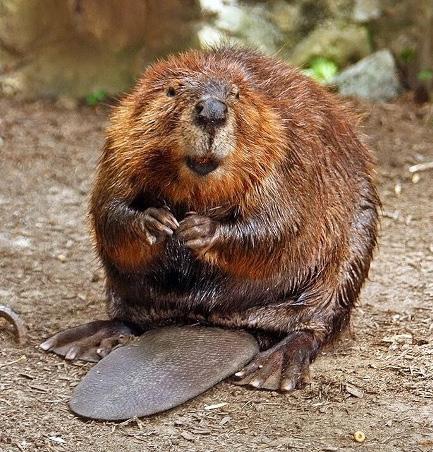
IT'S NOT ALL BAD FOR NATURE
If you follow environmental news, you will know the feeling of clicking on a story and thinking everything is doom and gloom with no real improvement. Climate warnings, disappearing species, political delays: it can be disheartening. However, this year also gave us hope. Real progress took place in conservation and rewilding. Yet, these developments barely made headlines.
To make up for the lack of coverage, Brig is taking a look at some of the most hopeful nature moments of the year.
Beavers Create Wetlands and Save Public Money
One of the most hilarious stories of the year came from the Czech Republic. A beaver family living in the Brdy Protected Landscape Area built a series of dams that ended up achieving what human engineers had been trying to do for months.
The dams restored wetlands, slowed water flow, increased biodiversity, and helped protect nearby communities from flooding.
Conservation officials estimated that the work the beavers achieved for free would have cost the government more than a million dollars if built by human contractors.
Species Recovery Efforts in England Pay Off
Another major positive development came from England. A national programme dedicated to species recovery supported more than 150 threatened plants and animals this year. It was a mix of practical conservation work, habitat improvement, community involvement and reintroduction programmes.
Water voles continued to spread through restored wetlands.
Dormice were released into new woodland sites. Rare bees returned to wildflower meadows for the first time in around a century.
Conservation teams raised thousands of individuals in captivity and released them into the wild.
Leaders at Natural England described the year as one of the most successful periods for targeted conservation in decades.
Rewilding Push Across the UK
Rewilding projects gained serious momentum this year, especially in the Midlands and the north of England. Wildlife trusts received funding to explore the possible return of species such as beavers, elk and European bison. These animals shape the landscapes they live in. Bringing them back could transform rivers, woodlands and grasslands.
These projects are still in early
stages, but landowners and conservationists are beginning to see rewilding not as a idea but as a tool for repairing damaged ecosystems.
France Launches Landmark Restoration Project in the Alps
France delivered one of the most ambitious nature recovery stories of the year with a large-scale rewilding initiative in the Dauphiné Alps. The project aims to restore entire ecological processes. That includes river systems, mountain forests, open valleys and the species that keep them functioning.
Teams are encouraging the return of herbivores, carnivores and scavengers so that natural cycles can rebuild themselves. It is a longterm project but already being described as a model for future European restoration work.
Conservation Leaders Recognised on Global Stage
At the first Rewilding Our World conference, several major figures were celebrated for decades of work in conservation. Their achievements ranged from pioneering large landscape restoration to championing the return of threatened species. The recognition showed how far the rewilding movement has come and how much its ideas now influence mainstream environmental policy.
Europe Debates Future of Wolves
Not every story was simple progress, but some illustrated how complex conservation policy has become. The European Union approved a change to the protection status of wolves, lowering them from strictly protected to protected. Governments now have more flexibility when dealing with conflicts between wolves and livestock.
Reactions were mixed. Farmers welcomed the decision while conservation groups warned that it could slow or reverse the recovery of wolves in Europe. The debate showed how important it is to balance ecological recovery with the needs of rural communities.
Reptile Habitats Improved in New Forest
One of the quieter wins of the year came from the New Forest in southern England. A restoration project focusing on rare reptiles worked to improve heathland habitats and reconnect fragmented areas. This benefits species such as the sand lizard, smooth snake and adder. These reptiles are often overlooked in discussions, yet they are vital parts of their ecosystems.
Red Squirrels Get Boost Across Scotland and Northern England
Another highlight was the commitment of nearly five million pounds to protect and expand red squirrel populations. The funding will be used to create strongholds across the Scotland-England border. The programme supports habitat work, community engagement and careful control of competing grey squirrels. It is a major step forward for a species that has been struggling for more than a century.
Recovery Is
Possible
Looking back at the year as a whole, something becomes clear. Nature bounces back when people give it the chance to do so. None of these wins happened by accident. They happened because scientists, volunteers, landowners, governments and local communities made choices that favour restoration instead of decline.
The climate and biodiversity crises are still serious. But this year offered a different perspective. It showed that change is possible, recovery is happening and there is genuine hope for the future. If these projects continue and expand, next year could bring even bigger steps forward for the natural world.
By Erin Schoolar Sports Editor
A river in the Forth Valley. Image Credit: Brig Newspaper
A beaver. Image Credit: Wiki Commons.

TRUE CRIME: WHERE CURIOSITY TRUMPS PROPRIETY
By
There is a current that runs through true crime writing, binding disparate authors from countries across the world. A question that so obsesses these writers that they will stop at nothing to unearth, to their satisfaction, the answer: what sort of a person could commit these violent crimes, and why?
Different things about these atrocities will attract the attentions of different authors. Some are upfront about the specific elements that grip them to each case, for example Emmanuel Carerre’s fascination with the emptiness of Jean-Claude Romand’s life and the perhaps tenuous link to his own quiet days in The Adversary . However, some obfuscate their involvement to a degree that a term has been coined, the invisible journalist, which suggests a book which spontaneously came into being without any intervention from the curious person.
Books like In Cold Blood by Truman Capote seek to detach subject and writer to an extent that, while perhaps not dishonest in the truest sense of the word, could definitely be called disingenuous. Nowhere within the text of the book is the reader introduced to Capote and his motivations. What is the source of his obsession with Dick Hickock and Perry Smith, for what but obsession drives someone to pen 343 pages about a crime? He declines to say, as well as omitting any information about his research process or interviewing techniques – perhaps because, as it was later
revealed, he received a significant amount of uncredited help from Harper Lee.
When originally published as a four-part serial in The New Yorker, In Cold Blood featured an ‘Editors Note’ stating that “All quotations in this article are taken either from official records or from conversations, transcribed verbatim, between the author and the principals.” However, when one stops to think about this, it becomes obvious that it is at best, an exaggeration. Capote repeatedly includes thoughts or conversations that took place involving people who were subsequently murdered before he could extract these details. This exchange between Nancy and Kenyon Clutter is one such example: “Good grief, Kenyon. I hear you!”
As usual, the devil was in Kenyon. His shouts kept coming up the stairs.
‘Nancy! Telephone!’
Barefoot, pajama-clad, Nancy scampered down the stairs.”
The first chapter, ‘The Last to See Them Alive’, contains multiple examples of this.
Peering behind the curtain past the book’s story and into its methods of construction raises further questions about the nature of the non-fiction novel as an entity. When the invisible journalist is detached utterly from the text, there is no sense of what has been pieced together through painstaking research, what has been embellished for the sake of the story, and what has been wholly invented.
If the topic at hand was the brutal murder of a family, the minutia is vital for accurately conveying the story in its entirety. Capote himself
Features Series Spotlight
Not every topic can be covered in a single article. Sometimes it takes a series.
This year, Brig's Features writers have begun producing incredible series ranging from explorations of their personal passions to breakdowns of some of the most complex issues of the day.
Below, we've spotlighted some of the most fun and thought-provoking series the Features section has seen so far.
True Crime Tuesdays
This series looks back at the cases that stay with people, exploring the mysteries, crimes and unanswered questions the continue to capture attention and imagination around the world.
By Erin Schoolar Sports Editor

Party Profiles
confirmed that at least one scene (the last one, between the detective Alvin Dewey and Nancy Clutter’s best friend Sue, was entirely fabricated. This casts a shadow of doubt across the whole book, creating suspicion where before there was trust. More recent examples, such as David Grann’s Killers of the Flower Moon and Anse Seierstad’s One Of Us , provide detailed accounts of their research processes and methodologies, ensuring a huge degree of trust in their reportage.
However, despite these inaccuracies and fabrications, In Cold Blood’ s biggest failing is that it is not a book about a murder and the family who were the victims. It is a deep dive into the men who killed them, a subtle but important difference.
True crime writing, by its very nature, aims to tread the knife edge between exploratory and exploitative. A person who was the victim of a murder has been deprived of the opportunity to tell their own story, and it is the responsibility of the journalist to take up that mantle and provide an account that explores the victims in detail. Neither In Cold Blood nor The Adversary neglect this entirely but the scales are tipped in the favour of the villains of these tales. The victims are not the centre of the story; they are a catalyst exploited into a portrait of the people who killed them. As Carrere says, “It was to him that I felt I owed consideration because, wishing to tell this story, I saw it as his story.” Romand, however, is the one who keeps his voice – the victims are silenced, and who will tell their story?
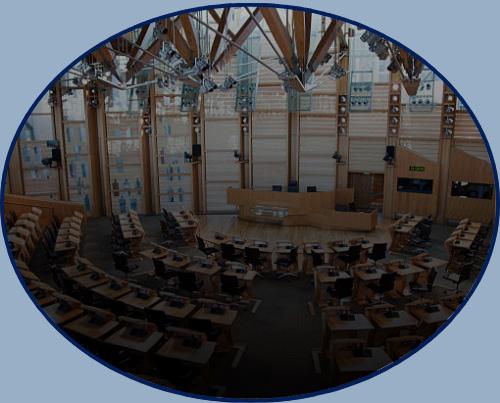
A series of interviews with candidates and political heavyweights heading into the 2026 Scottish Government Election.
Politicians all want to win you over, but who really has young people’s interests at heart?
By Elliot Johnston Features Editor

Worth Remembering
Worth Remembering is a dive into the history of Stirling, Scotland and beyond.
Looking at everything from legendary battles to old folktales, because every story is worth remembering.
By James McIntyre

Life of an International Student
International students explore many challenges, big and small, when study- ing abroad. Here, they tell their stories.
By Ioanna Lagonika
Ali Rees
An investigation. Image Credit: Pexels.com
What's on the Menu? Food Trend Predictions for 2026
By Spencer Haynes Food Editor
As 2026 is nearly upon us here are 5 food trends Brig predicts will make an appearance and a handful of trends we can leave in 2025. Predicted Trends for 2026
1. A Surge in American Snacks
This may be wishful thinking, but with Blue Raspberry Sour Patch Kids, a Tesco own-brand of chocolate-covered pretzels, and more American chain restaurants like Wing Stop opening in the UK, it seems likely that more will follow.
Personally, I am hoping for penut butter pretzels, everything bagels, hot apple cider, or anything from Trader Joe’s. But really, at this point, anything well seasoned would be a good thing.
2. Varitety and expanded usage of Filled Dumplings
Following the recent viral dumpling bake and the rise in trendy Asian foods, Brig is hoping that we see more and more dumpling-based recipes. Soups, salads, bakes, scrambles, and smashes, dumplings could do it all – probably.
Filled dumplings are available
in hundreds of different forms. You have most likely heard of a handful like pierogi, boa, empanadas and gyoza. Still, there are so many more out there which are not at all reminiscent of the stodgy lumps from the days of school dinner.
3. Banana bread Flavoured Anything and Everything
Again, due to rising food prices, banana bread as an easy and cheap bake is returning. All I want is a banana bread, French toast and maybe an ice cream, is that so hard to ask? These predictions might just be a wishlist.
4. Microwave mug cakes have a triumphant return They had their time in 2010, but as a sweet treat becomes more and more of a luxury, simple store cupboard-made at-home delights are sure to be on the rise. The biggest downside of these delights is the washing up, but that, compared to the price of a coffee shop croissant, an extra couple of minutes of scrubbing is worth it.
5. ‘Nduja sausage going Beyonde the Humble Pizza An Italian spicy sausage that has been seen on pizzas, crisps and other products. This spreadable

southern Italian sausage is only on the rise and would be stunning in pastas, toasties or anything in need of a little kick.
Suprise Extra Prediction: Community around food Over the past couple of years, potluck trends have been going around TikTok, as well as trends like Cake Picnics. These types of events indicate a shift back to food being associated with community. People gathering to celebrate food is a good, fun start in building an in-person community based on the social internet Trends to leave in 2025
With optimism out the way lets reflect somewhat on the food trends of 2025 and remind ourselves that we can do better.
1. So Sorry but I'm not going to Tira-miss-you Tiramisu
Why are we having a tiramisu-flavoured latte that's a coffee-flavoured coffee? It's everywhere, though. I understand the appeal, but there are only so many ways you can do coffee and cream-flavoured things.
2. Performative Matcha Matcha is nice, but it’s gone too far. Let's all settle for a

good matcha rather than a syrup-filled, overly milky atrocity. Focusing on quality rather than trendiness.
3. Good-bye to Dubai Chocolate It is lovely and was interesting but was never worth the price,
A matcha. Image credit: Unspash
and the ensuing pistachio onslaught has been enjoyable. Still, pistachio is not a top-tier nut and it does not belong in everything.
A History of Christmas Food In Britain
Turkey, pigs in blankets, sprouts, parsnips, and pudding: how did Christmas dinner start?
The Christmas dinner we know today is strongly connected to the Victorian era. After Charles Dickens' A Christmas Carol became such a success, Christmas became more important in society. The book's themes of charity, kindness and Christmas magic revived Christmas to make it the season we know now. Most bosses did not give their employees the day off on Christmas, which is almost unimaginable for most industries now.
The midwinter solstice and the pagan celebration Yule had people gathering in the dark nights to feast on winter vegetables, pork, beef, and berries.
When the Romans invaded the British Isles they brought their own winter feast traditions. The Roman festival Saturnalia honours the god of agriculture, wealth and time: Saturn. Celebrations would
last for up to seven days beginning on the December 17. During this time, slaves were allowed to eat with their masters and would sometimes be served by them.
As time passed, people celebrated Christmas with their families and loved ones instead of hosting grand parties. Christmas dinner was an opportunity for Georgian and Tudor nobility to show their wealth by serving roasted meats and indulgent desserts. The Victorians, however, started moving to vegetables which became less associated with less wealthy classes.
Cabbage, sprouts, carrots, parsnips and other winter vegetables became Christmas staples across society. Desserts like gingerbread, Christmas pudding and mince pies also came into fashion.
In the 1930s, Christmas dinner stayed relatively similar to the Victorian era. A turkey would cost around a week's wage for most people, which would have to be
collected as close to Christmas day as possible for people who did not own a fridge.
Cocktails were also becoming popular with wealthy people as well as drinking champagne punch with dinner.
Fun fact: lobster au gratin was a popular starter. Lobster used to be very cheap and was even served in prisons!
These days, Christmas dinner holds onto some traditions from the Victorian era and early to mid-20th century. And with supermarkets competing for the essential Christmas revenue, each one comes up with their own Christmas dinner sides, desserts and mains as well as ad campaigns to win over the market. For example, LIDL's melting chocolate house or Tesco's panettone.
By Isla Barker Lifestyle Editor
A Chirstmas Panetonne. Image Credit: Pexels
Who You Will Meet on a trip down Quality Street
By Spencer Haynes Food Editor
As Britain's favourite Christmas sweet box continues to reduce the number of sweets while raising the price, we are forced to face the important questions: How would each sweet perform in The Traitors ? What novel were they obsessed with as a child? What is their favourite Dungeons and Dragons class? And most importantly, why am I being mean to sweets?
To begin, The Cream Filled Ones : Strawberry Cream: Too sweet, will never tell you how they really feel because they think they are being nice, but actually, she is the worst. The Strawberry cream wears fuzzy socks, and Princess Dream School was their favourite Barbie movie growing up, no questions asked. This quality street is like a BuzzFeed quiz, and she’s an apologetic but bad flatmate.
Orange Cream: The orange cream is your classic middle child, attention-seeking and loud. This Sweet has all the fakeness of its sister but with a desperate want to be the orange crunchie. This is a sweet who thinks they can win the Hunger Games but can't, only reads books they found on TikTok and thinks that they are the pomegranate girlfriend. Next category of Quality Street is,
those that are uninspiring, The Boring Ones if you will.
Toffee Penny: She wears a puffer vest, calls it a gilet, has a walking stick and a thermos of tea at all times, and tells you stories from the war that are not that exciting. She doesn't know what The Traitors is or who Claudia Winkelmen is, has never played Dungeons and Dragons , but would be a druid, and read Narnia religiously as a child when it first came out.
Toffee Stick: The Toffee Stick is the Toffee Penny, but a few years younger and has driving gloves.
Fudge: No, I don’t like it, and I don’t have it in me to be kind, and it’s not inspirational enough to be bitchy.
Chocolate: Simple, beautiful study. Not the most exciting, but it gets the job done. When the green one walks into the room, you're not unhappy to see her; she's just there. She read dystopia in 2014, but has since evolved to books exclusively written by women. She would be killed by the Traitors late on because she's a solid, faithful person, and it would shake everyone up. This sweet has one fantastic signature bake, and it's a banana cream pie, no questions asked.
Coconut: Coconut is trying to be something it’s not and failing. Not quite reaching the expectations for it, it's your older sister trying to be your mum, but she never took on that role growing up and
6 Months On, Decaf Ain’t That Bad
By Elliot Johnston Features Editor
Earlier this year, my love was stripped away from me. Caffeine: My driver and the literal reason I got up in the morning. Coffee and tea are largely the only things I drink besides water, and so I’ve tried a lot of coffees and have developed some favourites.
But now I’m not allowed any of them because if I have them, my stupid heart will explode; it sucks. I’ve been forced into drinking decaf outside of the occasional coffee when my brain needs a turbo boost and sleep seems unnecessary.
At first, decaf was gross and lacking the depth of its caffeinated contemporaries. However, after six months of dedicated decaffeination, I’ve come to accept that it is, in fact, fine. It’s definitely not as good and never will be; the lack of variety alone determines that fact, but it really isn’t as bad as it’s made out to be.
Decaf Tea for one is nearly indistinguishable from the caffeinated original and has made me question why I didn’t make the shift years ago, as drinking three cups of tea every night for years probably wasn’t great for my sleep.
bag is being generous, it’s a downgrade, but not a huge downgrade at least.
The previously mentioned lack of depth is something that not even the best decafs can really address, and even finding a decent decaf can be difficult, as not only is the selection smaller, but so too is the online discourse around good decaf. Hell, even beyond finding good decaf, it can be a chore to even find places that do decaf, as a lot of coffee shops and restaurants simply don’t carry the stuff, leaving you stuck between a rock and a caffeinated place.
When one can find decaf, the quality leaves a lot to be desired from most brands, as while they may offer dozens of varieties of caffeinated beans, most only offer a singular decaffeinated option.
But still, beyond my endless moaning about its numerous shortcomings, it does the job, and decent decaf does exist, it's just hard to find.
If you're having a milky coffee or anything involving a syrup, then nine times out of ten you probably won’t even notice the difference. However, if you favour an Americano, Flat white or Espresso, then I’m afraid you will have to face the downgrade.
Streets soon to
is not very good at it. Coconut is defensive and on a short temper, mostly because she cares, but also because she knows that she's a fraud. Realistically, Dungeons and Dragons does not fit into the narrative she has built about herself, and so she does not play. Our third and final catagorie is those who shine, the interesting nutty and beautiful creatures which are the best of the box.
The Purple One: The purple one believes that she is that bitch, she knows that she's just hazelnut flavoured, but she insists on everyone calling her the purple one - theatre kid behaviour if I ever did see it. She read Diary of a Whimpy Kid, Harry Potter, and Percy Jackson, but hasn’t picked up a book in months. The purple one exclusively plays a Bard but doesn’t realise that it’s not a Class that is very effective in combat and finds DnD fights really Slow and boring ,makig that known Green Triangle: Overhyped and proud, the green triangle is the Taylor Swift of the Quality Streets, not like other girls but exactly like other girls. She thinks she is one step above you, not ahead of you, above, and we are just giving her that pedestal. She loves Twilight but hasn’t read the books, she plays a rogue or sourcerer because she likes a solo story and is always aiming to be the centre of attention.
Coffee, on the other hand, is a bit more of a mixed bag. Well, mixed
But it’s not terrible, it's just mediocre. It’s not offensive, it’s just… fine.
Quality
be befriended. Image credit: Spencer Haynes.
A definitely decaf cofee. Image credit: Spencer Haynes.
SPORT SPOTLIGHT: Flag Football
By Melissa Thomson Sports Editor
One of the University of Stirling’s newest sports clubs is Flag Football. Flag football has been gaining momentum across the UK and Europe. Brig caught up with flag football president, Yaser Lamsatfi Hanafi.
The simplest way to describe flag football, is that flag football is to American football what touch rugby is to rugby.
Where American football is 11v11, flag football is 5v5 and is much faster paced than the traditional game.
Yaser got into flag football because he played American football and eventually thought “Why don’t we have a club? It was gaining traction, and then it got declared for the LA 2028 Olympics, and I and two other people were like the University doesn’t have flag football even though we host NFL UK, which seemed a bit weird. That’s why I got into it, to set it up.”
So, they spent the summer planning and working out if a flag football club would actually work. They had weekly meetings, hosted taster sessions, and after a lot of hard
work flag football became a club. When asked what it is like going from contact American football to flag football, Yaser commented “it hurts a lot less, but the main thing is the lack of equipment. The only thing you need to bring is football cleats and your water.”
The lack of equipment leads to other benefits. Yaser added that he believes “the entry price is the best thing about [Stirling’s club]. We offer the lowest entry fee that you can, because we want to charge students the least amount as possible, because we don’t really need equipment.”
When asked what flag football offers that American football doesn’t, Yaser highlighted that “it’s accessible. The reason [flag football] is becoming more popular is because its more accessible. Countries in Africa, they’re focusing on flag football, Europe, they’re focusing on flag football. Women’s contact is not as popular as women’s flag football now, just because it’s so easy to implement. You could go to a high school, give them a just a set of flags, a ball, and then that’s it. You don’t need pads, you don’t need helmets, anything like that

you don’t need.”
Finally, we asked Yaser why you should join flag football. While Yaser stressed the importance of joining any club or society, he thinks you should join flag football because “its new, so there is no possibility that you are going to be the worst at it, it’s a new sport, you’re new to it, and we’re all learning,” even adding “I’m not very good, but I’m learning, and I’m getting better.”
Starting in January, there will be two flag football BUCS leagues – an open one, and a women’s only one. While women are allowed to play in the BUCS contact American football league, there isn’t a female only one. Yaser hopes that in the coming years due to the rate flag football is growing at, that “it’s going to explode before 2028”, and he urges anyone who’s interested to “get in on it now”. Yaser added that if Stirling could boast a women’s only flag football team “that would mean so much”. So, if flag football sounds like something you want to try, or if you are just wanting to try something new, why not try flag football?

Profile: Who is Cathy Gallagher?
By Erin Schoolar Sports Editor
Cathy Gallagher is the Executive Director of Sport at the University of Stirling. She is responsible for leading the university’s sport strategy, managing its facilities and overseeing performance and participation programmes for students and staff. Her role places her at the centre of planning, development and delivery across all areas of sport on campus.
Cathy has more than seventeen years of experience working in higher education sport. She studied Finance at Queen’s University Belfast, completing both undergraduate and postgraduate degrees. During her time there she was heavily involved in student sport and later progressed into senior management at Queen’s Sport. Her work during this period included overseeing major developments and the expansion of student sport services.
She also worked for the national governing body for third level sport in Ireland and later joined Dublin City University, where she managed student sport programmes. In 2011 she moved to Trinity College Dublin as Development Manager.
There she was responsible for writing the university’s strategic plan for sport, establishing performance structures, developing major capital projects and introducing medical support systems for student athletes.
Cathy has significant international experience. She served as Head of Delegation for Ireland at the World University Games in Shenzhen in 2011, in Kazan in 2013 and in Gwangju in 2015. She also spent ten years as National Team Manager for Northern Ireland Universities.
Her sporting background is in Gaelic Football, which she played at inter county level.
At Stirling, Cathy leads the
continued development of the university’s sport facilities. A major part of this has been the enhancement of fitness and performance spaces, including high performance gyms and updated conditioning areas with modern equipment. These improvements were designed to support both performance athletes and the wider student community.
Cathy also chairs the advisory board for Winning Students, the national sport scholarship programme for Scotland. Her role supports the development of student athletes who combine academic study with elite training and competition.
Her leadership contributes to the university’s strong reputation in sport and supports its position as Scotland’s University for Sporting Excellence. She continues to play a central role in shaping the environment that allows athletes, clubs and recreational participants to develop and succeed.

Image Credit: University of Stirling.
Image Credit: University of Stirling
THE WORRYING STATE OF SCOTTISH FOOTBALL
By Deaglán Murray
John McGinn, Andy Robertson, Kieran Tierney, - three names that have come to define modern Scottish football. All three began their journeys on Scottish soil, breaking through with local clubs before earning high-profile moves to England’s Premier League.
Their stories represent the traditional pathway of Scottish talent: develop at home, make an impact domestically, and then move south for bigger opportunities.
For decades, this system has worked well. Scottish clubs gained both financial reward and pride from producing top-quality players, while the national team benefitted from stars who had honed their skills in Scotland before testing themselves at higher levels.
But in recent years, this well-established pathway has begun to crumble - and with it, the future of Scottish football itself may be under threat.
A worrying trend has begun to
emerge in recent years, young Scottish players are now being poached by English clubs before they even make their senior debuts. Talented teenagers who might once have broken into Premiership first teams are being tempted south by the promise of better wages, elite facilities, and the allure of worldclass academies.
While these moves can be financially appealing for both the player and their family, they often come at a steep cost to Scottish football. When players leave too early, Scottish clubs lose the chance to nurture and benefit from their talents on the pitch.
Instead of seeing local prospects develop into first-team regulars, clubs are forced to rebuild their squads more frequently, relying on short-term signings or foreign imports to fill the gaps. This constant turnover disrupts team continuity and weakens the competitive standard of the league.
The impact extends beyond club

football too. Scotland’s national team depends heavily on players gaining regular first-team experience - something that becomes harder when youngsters spend crucial developmental years in English reserve systems, playing limited minutes against lower-level competition.
For every success story like Billy Gilmour or Ben Gannon-Doak, there are tens or even hundreds of youngsters who move away too soon and struggle to break through.
This exodus of young talent has created a ripple effect throughout the Scottish football pyramid. The country’s biggest clubs, such as Celtic, Rangers, and Hearts, are forced to spend more money scouting abroad, while smaller sides find it difficult to compete both financially and competitively. The result is a league that increasingly lacks homegrown talent and identity.
Reversing this trend requires a coordinated effort from clubs, the
SFA, and the Scottish government. Investment in youth academies must be a top priority. Scotland has already made progress through initiatives like Project Brave in 2017, but this has had little impact and more must be done.
Local clubs need better funding to build facilities that rival those found in England. Improved coaching standards, access to sports science, and stronger domestic youth competitions would help convince young players that they can develop just as effectively at home.
Clubs should also be rewarded for giving opportunities to Scottish players, whether through financial incentives or a minimum number of youth graduates being required in a matchday squad – similar to UEFA’s registration rules for European competition.
Partnerships between Scottish clubs and their English counterparts could also be reshaped to benefit both sides. Instead of losing players permanently at a young
age, Scottish sides could negotiate structured development loans or joint training programs that allow prospects to gain experience in both systems.
But perhaps most importantly, Scottish football must change the narrative that leaving the country is the only path to success. The examples of McGinn, Robertson, and Tierney show that staying longer in the Scottish Premiership can build resilience, leadership, and experience - qualities that serve players well when they eventually make the move abroad.
In conclusion, the early migration of young Scottish talent poses one of the greatest challenges to the future of the national game. If this pattern continues unchecked, it risks hollowing out the very foundation of Scottish football.
But with renewed investment, collaboration, and belief in the country’s ability to produce top players, Scotland can turn the tide.

Why Should You Watch... Tennis?
By Adrian Martinez-Aidoo
6-4, 3-6, 6-1, 3-6, 6-3.

Those numbers might mean nothing to you, but they are the outcome of the 2017 Men’s Australian Open Final in which Roger Federer defeated Rafael Nadal to win his 18th Grand Slam. That was my reason to watch tennis… Tennis is a fast-paced sport. A sport of emotions, strategy, resilience, and motivation.
It’s global, meaning fans can follow tournaments from around the world, from Grand Slams to local events.
An ‘elegant’ sport, tennis conveys qualities reflected in the words of its champions.
“The only way to prove you are a good sport is to lose.” – Rafael Nadal
“You have to believe in yourself when no one else does.” – Serena Williams
It teaches focus, sportsmanship, and respect, qualities that can be used beyond the court.
Singles are true individual battles. Doubles are more strategic, requiring teamwork.
In both cases, there’s 23.77 metres between one end of the court and the other – the players only have themselves; their coaches shout, their fans cheer, but only they play.
The scoring system makes tennis even more exciting; being at deuce, going into a tiebreak, drawing level in sets – that tension, that emotion,
transcends screens.
From the echoing thump of the ball to the sudden silence before each point, tennis creates an atmosphere unlike any other sport. Even the bounce of the ball is satisfying. Research from China West Normal University shows the sounds associated with tennis, such as hitting the ball, can provide emotional relief for viewers. Often described as ‘chess at 100 miles per hour’, players must constantly adapt. Watching them may even make you more strategic and improve decision-making.
Top players constantly overcome adversity and achieve greatness –this can be deeply inspiring. Those are some of the reasons you should watch tennis.
Above Image Credit: Goodreg3
Below Image Credit: Nicholas Richoffer
Formula One: A Recap of the Season So Far
By Brooke Duffy
It has been a thrilling Formula
One season so far with the final races looming over and an ongoing championship battle. With a maximum of 83 points left available to a single driver across the 3 weekends, everything is still to play for. This is a recap of the season for far.
There has been a lot of unforgettable races this season that have promised action, excitement and surprises. Particularly Australia, Silverstone, Azerbaijan and Mexico.
Australia
Kicking off the season with Australia was a real treat to viewers with the wet conditions causing chaos among drivers. With a total of six DNFS it was certainly a race packed with action. This included Isack Hadjar who unfortunately crashed on the formation lap at turn one during his debut race. Other early retirees included Rookie Jack Doohan and Carlos Sainz. Fernando Alonso, Gabriel Bortoleto and Liam Lawson all retired further on in the race.
Home hero Oscar Piastri was a favourite going into the weekend and got off to a tremendous start in P2. However, due to the tricky conditions this did not last. Both Mclaren’s had a bit of a slide at
turn 13. Oscar wasn’t as lucky as his teammate and ended up on the grass. This cost him the chance of a podium finish, and he brought it home in a respectable P9.
Silverstone
Silverstone is always a highly anticipated race of the season especially for the British fans. Every year there is the hopes of a British driver securing the win such as Lewis Hamilton last season. This looked entirely possible with the British drivers qualifying third, fourth and fifth place.
Once the race got underway Oscar Piastri was leading out front. However, during one of the safety car restarts Oscar was found to be driving irresponsibly due to heavy levels of breaking. This caused other cars to avoid bumping into each other, earning Piastri a 10 second penalty. He served this during a final pit stop which allowed Lando Norris the chance to surpass him. Lando ultimately finished in P1 with Oscar finishing behind him.
An unexpected surprise occurred during the grand prix with Nico Hulkenberg earning his first ever Formula one podium. After 239 races as a driver he finally got to step onto on the podium.
Azerbaijan
The Azerbaijan qualifying session
proved to be a tricky one with a total of six red flags appearing. This meant that Verstappen would be on pole for the race start with Sainz and Lawson following to complete the top three. Due to these effects, it was certainly an interesting race.
During the race start Oscar Piastri crashed and headed straight into the barriers which saw the end of his race. It also took a significant chunk out of his championship lead. This was a shocker to many fans as Piastri doesn’t make a lot of huge errors.
A massive highlight of this race was Carlos Sainz getting his first podium with Williams causing a lot of celebrations to be had. With Williams being a mid-field team, this was a pivotal moment for them this season.
Honourable mention to Kimi Antonelli and Liam Lawson who finished fourth and fifth. They both had an excellent race and achieved some points for their teams.
Mexico
Mexico was arguably the best race of the season so far with multiple battles happening on track at once, viewers were certainly kept on the edge of their seats. Hamilton and Verstappen fighting it out once again allowed lots of action to be going on. There was also a lot going

between the mid-field. This meant the race didn’t have any boring parts.
A change in championship leader occurred at the end of the grand prix with Lando Norris now out in front ahead of Oscar Piastri. He converted pole into a race win allowing him to finish 1 point ahead of Piastri in the championship. Ollie Bearman also deserves credit for his incredible run from P9 to P4. This saw Haas’s first P4 finish in a long time. Due to this
performance Ollie was awarded with a well-deserved title of driver of the day.
Looking Ahead To Next Season Next season everything will be shaken up a little with DRS changing to MOM. As well as the cars becoming smaller and lighter with changes in the aerodynamics. The cars will also run on 100% sustainable fuel. This means that next season it could be anyone’s game. We’ll just have to wait and see.
2025 BUCS Mid-Season Roundup Shows Stirling's Dominance Across the Field
By Erin Schoolar Sports Editor
The University of Stirling has opened the 2025/26 season with a series of dominating performances across American football, swimming, tennis and student athletics. With national titles, record-breaking swims and key wins already secured, the early months of competition point to one of the university’s strongest starts in recent years.
The Stirling Clansmen delivered the first major result of the semester with a 62–0 victory over HeriotWatt. The side controlled the contest from the opening minute, building pressure on both sides of the ball and stretching the lead throughout the second half. The margin reflects the squad’s improvement and determination, especially across the running game and defensive line, and gives the Clansmen an early statement win as they look to push further into the Scottish season.
In the pool, Stirling produced a landmark performance at the 2025 BUCS Short Course Championships in Sheffield. Across three days of racing, the team collected 11 gold medals, 10 silvers and 6 bronzes, placing the men’s squad second overall and the women’s squad first. In the combined standings, Stirling finished second, only ten points behind Loughborough. The championships also brought a remarkable number of records.
Stirling swimmers set five new BUCS records through Sam Downie, who broke two, Mikhail Andriushkin, Angharad Evans and the open 4×50 medley relay team. On top of that, the programme claimed four Scottish records, achieved by Lucy Grieve, Katie Shanahan, Sam Downie and the women’s 4×50 medley relay.
The breadth of results confirms Stirling’s status as one of the most successful university swimming environments in the UK, with both elite and emerging swimmers contributing to the total.
Success continued on the tennis courts, where Stirling won the BUCS men’s doubles championship for the first time since the 2013–14 season. The pairing of Rob Cowley and Liam Hignett produced a composed run through the draw, handling tight contests and building momentum into the final. The title adds to Stirling’s growing list of national achievements in university tennis and reflects the programme’s consistency across both singles and doubles formats. For the squad, the win provides a timely boost ahead of the main stretch of the BUCS season.
Stirling athletes added further medals at the Scottish Student Cross Country Championships.
Ryan Martin claimed gold in the men’s race with a controlled performance that saw him break away

on the final section of the course.
In the women’s event, Alice Jones secured bronze, helping Stirling achieve team bronze in the overall women’s standings. The results reinforce the programme’s strength in distance running and set a positive tone ahead of the indoor athletics calendar, where several Stirling athletes are expected to compete for medals.
Taken together, the early-season results show breadth as well as
strength. American football, swimming, tennis and athletics are all contributing national-level performances, giving the university momentum as the BUCS year begins to take shape.
Coaches across the programme have highlighted the intensity of pre-season preparation, the impact of returning athletes and the quality of new recruits as key reasons behind the success. With major league fixtures, national
championships and indoor seasons still ahead, Stirling moves into winter competition with confidence and a clear platform for further success.
The opening months of 2025/26 have already delivered headlines, and the university’s athletes now head into the next stage of competition looking to build on a start defined by discipline, depth and standout results across multiple sports.
Image Credit: Johnathan Borba
Shaw Swimming. Image Credit: Scottish Swimming
Stirling Sporting Stars Awarded Honorary Degrees
By Melissa Thomson Sports Editor
During the University of Stirling’s winter graduation, professional rugby union player, Finn Russell, and Aquatics GB swimming coach, Steven Tigg, were awarded honorary degrees.
Finn Russell
Finn Russell grew up in Bridge of Allan, just down the road from the University. He started his rugby career at Wallace High School. Russell then played for Glasgow Warriors where he won the Pro12 title, followed by a stint at French club Racing 92. He is currently flyhalf for Premiership Rugby club Bath and has over 40 caps since joining in 2023.
Russell was a part of Scotland’s Rugby World Cup squad in 2015, 2019, and 2023; and was a part of the Great British and Irish Lions tours in 2017, 2021, and 2025. He was named Scotland’s co-captain for the 2023 Six Nations Championship.
This honour means a lot to Finn
Russell and “is made all the more special as someone who grew up less than a mile away.” Russell went on to add that he is “proud to see the ambition to develop the next generation of rugby players here at the University of Stirling in partnership with Stirling County – where I started my career.” He truly believes that “partnerships like this will help young players develop both on and off the pitch and reinforce Stirling’s place in Scottish rugby.”
Steven Tigg
Steven Tigg currently holds the position of head coach at Aquatics GB, the top job in British swimming.
His links to the University of Stirling started in the early 1990s when he swam as part of the Stirling Amateur Swim Club. Alloa Swim Club was the beginning of his coaching career in 2005, which was also where he met Duncan Scott. He would go on to coach Duncan for almost 20 years.
His success as an athlete led him to join the university’s high-performance programme in 2014 as a coach. In 2017, he was promoted to head coach.

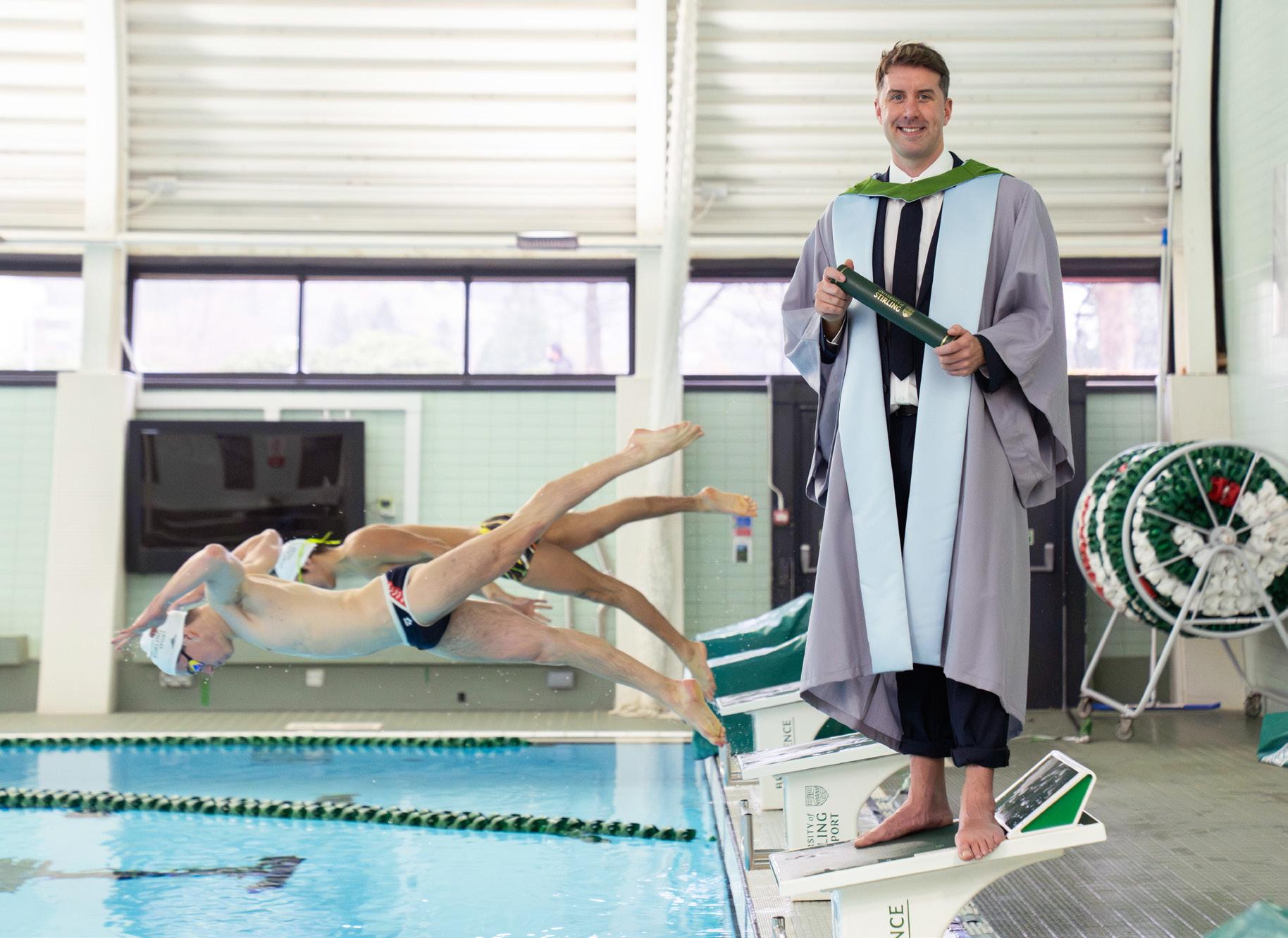
Tigg has coached two Great British Olympic teams (Paris 2024 and Tokyo 2021), and five World Championship teams. He also coached the Scotland team at the 2018 Gold Coast Commonwealth Games. Under his leadership, the University sent a record number of athletes to the 2024 Olympics (eight athletes), and to the 2022 Commonwealth Games (16 athletes). They returned from the Olympics with 11 medals, and 27 from the Commonwealth Games. Tigg has earned over 15 Coach
of the Year awards from various organisations throughout his career, in addition to being named a National Lottery Game Changer in 2024 to honour of his contributions to sport and community.
When asked how he felt about receiving this honorary degree, Tigg described it as “surreal, and something I would have never imagined all those years ago when I first set foot on campus. For me, it means that regardless of where I go or what I do, the University’s valued and principles will forever be carried with me”.
Comments from University of
Stirling
Sir Gerry McCormac, Principal and Vice-Chancellor of the University expressed his congratulations to both Russell and Tigg. He highlighted that Russell “has never forgotten his roots here in Stirlingshire, often supporting the local community with charitable and fundraising efforts”, and Tigg “remains an inspirational ambassador for the University of Stirling at a local, national, and international level.”
Congratulations to both Finn Russell and Steven Tigg.
Notching the Arrow on the Start of an Archery Journey
By Sarah de Beer
Last semester I decided to join the Archery society with no expectations of how much I would enjoy the sport and how much I would improve in hitting bullseye.
I was much like a stumbling baby deer when I first started Archery, barely hitting the target or knowing how to improve in the first place.
“How did that happen?”
That was a common thing people could hear me saying during Archery training as another arrow got stuck in the wood above the target – or below.
It took some time for me to figure out the right things I was doing wrong and how to improve those areas, mainly with pointers on how to set up the bow (apparently, I have been setting up wrong for a while).
Once I started taking these pointers, I started being more consistent and confident in my Archery skills. Arrows started flying from my bow and instead of hitting air or wood, it was hitting bullseyes occasionally. This improvement has also made me enjoy Archery anymore, as many people that have done sport before can relate to – it can be quite hard to enjoy a sport if you aren’t good at it. However, Archery club here at Stirling wouldn’t have judged if I was still stuck at where I started in skills.
There’s a range of skill at the sports club from people like me that have only started Archery at university to people that have done Archery for years and all these skill levels are welcome in the sports club.
This academic year of 2025-2026
Archery club has decided to start entering competitions officially and have had a selection of members of the sports club going to competitions around Scotland on Saturdays.
I am aiming to go to the competition on November 29 in Strathclyde, Glasgow (I am writing this article before I have gone to this competition) and hoping I don’t lose the confidence I have gained over the past few months in the Archery club.
It’s not only the skills I have gained from this sports club, but also the social aspect of training with other aspiring Archers.
The bond I have with them has strengthened as we have grown in skill together – playing special Archery team games for holidays like St Paddy’s Day and Halloween has truly connected us.
Finn Russell. Image Credit University of Stirling
Steven Tigg. Image Credit University of Stirling

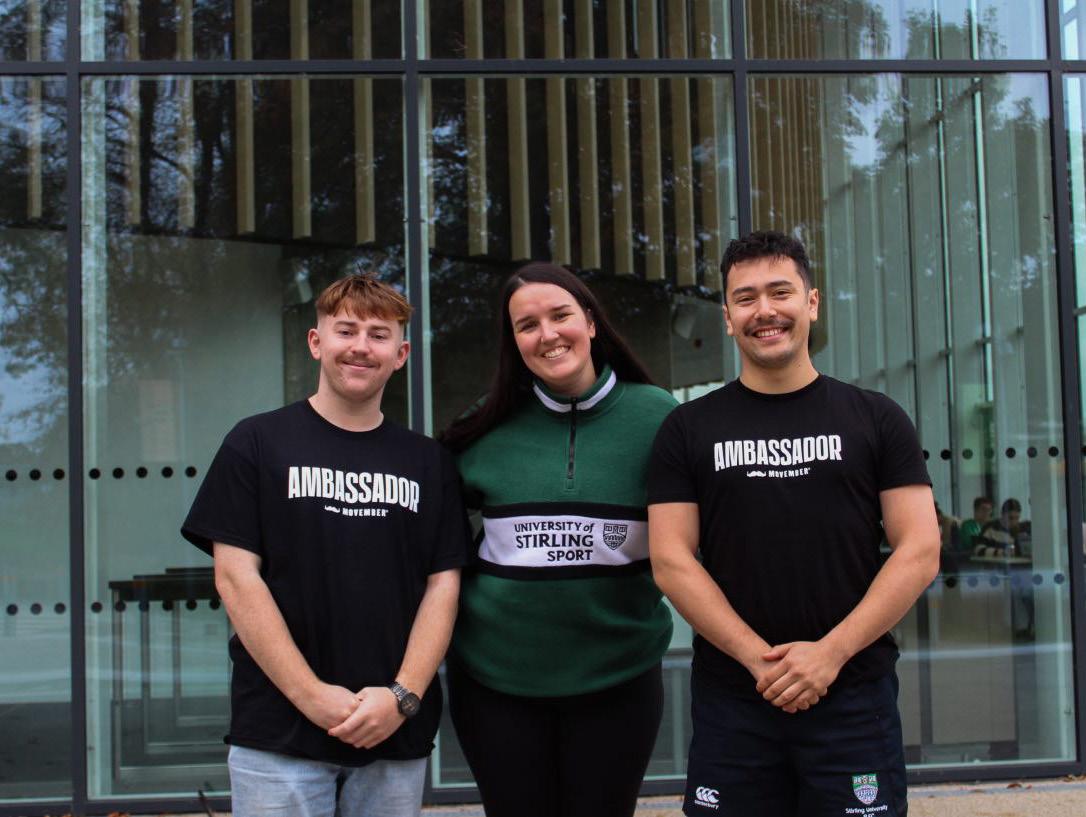
Stirling University Smashes Movember Fundraising Target
By Melissa Thomson Sports Editor
Movember is an annual event every November to raise awareness for men's health, including men's mental health, prostate and testicular cancer, and suicide prevention.
As part of Movember, there is a university specific campaign called The Big Moustache on Campus which Stirling takes part in. This involves students growing moustaches and getting active to raise money for charity. The University of Stirling is currently ranked 6th in the UK, and 1st in Scotland for the amount of money raised. Stirling's target was £40,000 and currently we sit at £44,206 (a University of
Stirling record) with a week left in Movember.
Brig spoke to Sports Union President, Laura Shaw, about this year's Movember efforts. Laura commented: "Clubs always surprise [her], with how unique some of their fundraisers get." She went on to add that of this year's fundraisers, "one that I'm particularly proud of, especially for the effort they put into it, was the ceilidh. They have raised just under £5000 from that event alone,… they sold out 300 tickets in 12 hours and they organised it all themselves, so really proud of them."
Laura also discussed that a lesser seen benefit of Movember is that it brings people together: "I think it's really great the way that the clubs
come together and provide that support for one another".
When asked what impact Movember has had on campus, Laura highlighted that she thinks "more students have definitely felt like they can talk about their mental health on campus… It's a nice community where people that may have previously kept things private feel more open to talking about things."
Laura attributes a lot of the University's Movember success to Stirling being a campus university. "You see everyone everyday, but I think it is also easier to base challenges around campus." She also mentioned that "staff have been really supportive in helping facilitate these challenges, which
has made it a lot easier to achieve these goals." Ultimately, it comes down to the community that exists within Stirling - "external visitors have commented that they love the communities within our union, and that's just not seen to such a strong extent at other universities… I think there is something special in that community."
Laura finished by expressing her gratitude to everyone that has taken part in Movember this year: "I'm just incredibly proud of everything that Paddy and Archie have done. They’ve been brilliant to work with, and I think they’ve achieved some pretty amazing things, and I'm just really proud of the entire committee for everything that they’ve managed to pull together so far."

Stirling Sporting Stars Awarded Honorary Degrees
During the University of Stirling’s winter graduation, professional rugby union player, Finn Russell, and Aquatics GB swimming coach, Steven Tigg, were awarded honorary degrees.
Sir Gerry McCormac, Principal and Vice-Chancellor of the University expressed his congratulations to both Russell and Tigg.

FOOTBALL
One of the University of Stirling’s newest sports clubs is Flag Football. To find out more about the increasingly popular sport, Brig caught up with flag football president, Yaser Lamsatfi Hanafi. He says the simplest way to describe flag football, is that flag football is to American football what touch rugby is to rugby.
Sports Union President Laura and the Movemeber Ambassadirs. Image Credit: University of Stirling Sports Union