Key Stage 3 (Years 7–9)
Curriculum Guide

Key Stage 3 (Years 7–9)
Curriculum Guide
Welcome to Key Stage 3 at Brighton College (Singapore)!
Years 7, 8 and 9, collectively known as Key Stage 3, represent a crucial stage in every pupil’s educational journey. These years are about much more than simply acquiring knowledge; they are about learning how to learn, building the habits, curiosity and resilience that underpin future success at IGCSE and A-level.
At Brighton College (Singapore), we see Key Stage 3 as a time of discovery. Our pupils are encouraged to explore new subjects, encounter exciting ideas and experiment with different ways of thinking and studying. It is a period in which they begin to find their voice as learners and develop a genuine enthusiasm for the world around them.
Our curriculum, grounded in the British system, offers a broad and stimulating range of subjects. It has been carefully designed to nurture our pupils’ curiosity and build the confidence pupils need, as they prepare for their public examination courses in Year 10.
Above all, we believe that education should instil a lifelong love of learning, a hallmark of every Brighton College pupil. With the guidance of our passionate and expert teachers, our Key Stage 3 pupils are encouraged to think deeply, question freely and approach their studies with both dedication and enthusiasm, to help ensure success.
Please read on to discover more about what our pupils will be exploring in each subject over the years ahead.
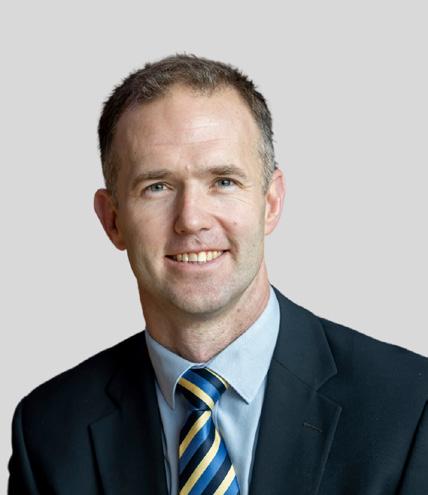
Nick Davies Head of College
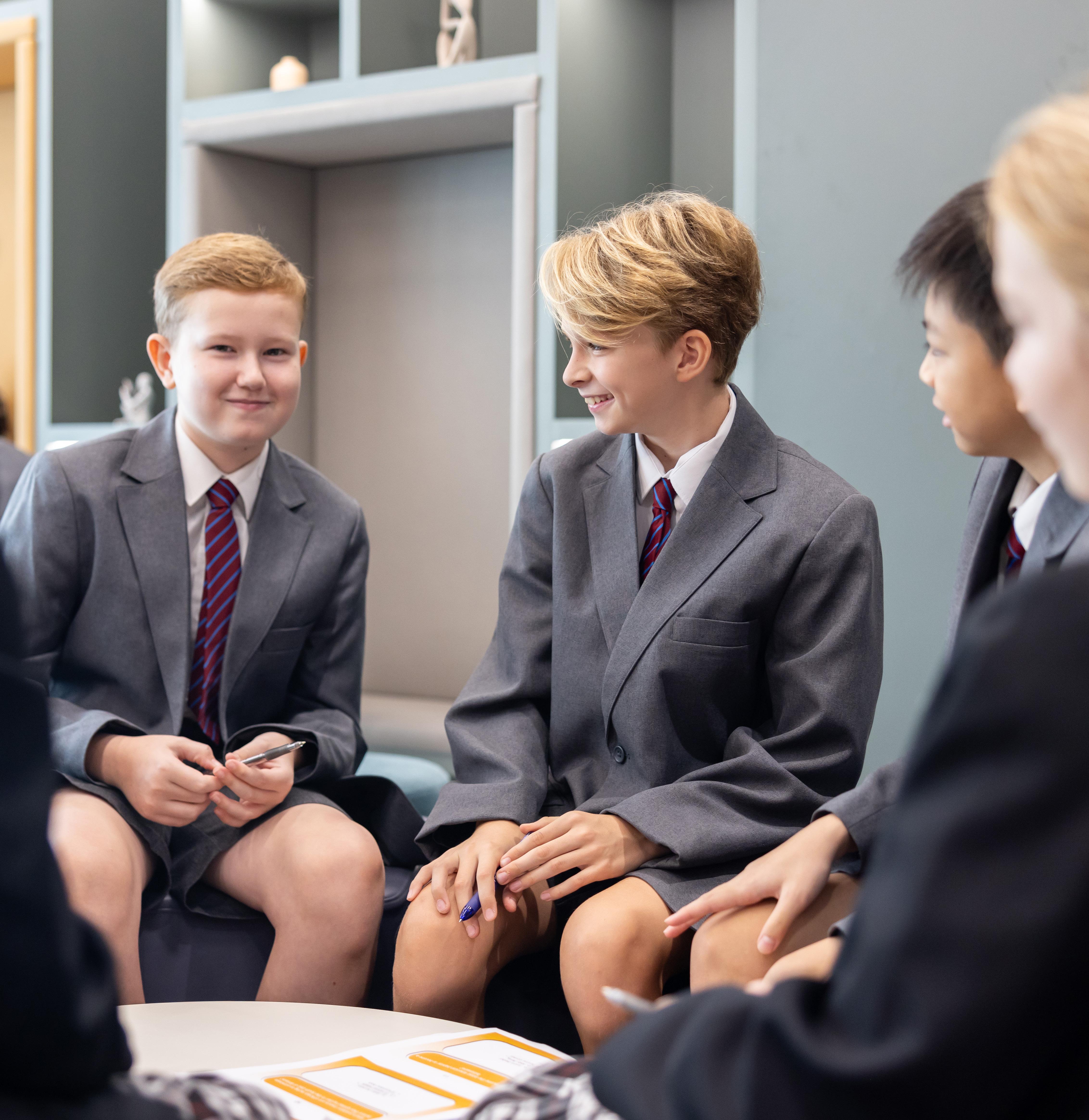
In Years 7 and 8, all pupils will study:
• Art
• Computing
• Design and Technology
• Drama
• English
• Humanities (History, Philosophy and Geography are studied together in a topic known as ‘The Story of Our Land’)
• Mathematics
• Modern Languages – Mandarin Chinese, French and Spanish
• Music
• Separate Sciences – Biology, Chemistry and Physics
• In addition to games, pupils will also rotate through swimming, dance, and PE classes over the course of the year
• Pupils will also undertake lessons relating to their Personal, Social, Health and Moral Education (PSHME)
• Co–Curricular Activities
Year 9 Subjects:
Year 9 is an important year, where pupils will learn skills and knowledge that provide the best possible foundation for the IGCSE courses they will study in Years 10 and 11. At Brighton College (Singapore) pupils in Year 9 follow a curriculum based on that of the English education system consisting of the following subjects:
• Art
• Computing
• Design and Technology
• Drama
• English
• Games
• Geography
• History
• Languages – Mandarin Chinese, French and Spanish
• Mathematics
• Music
• Physical Education (PE)
• Personal, Social, Health and Moral Education (PSHME)
• Presentation Skills
• Separate Sciences – Biology, Chemistry, Physics
• Co–Curricular Activities

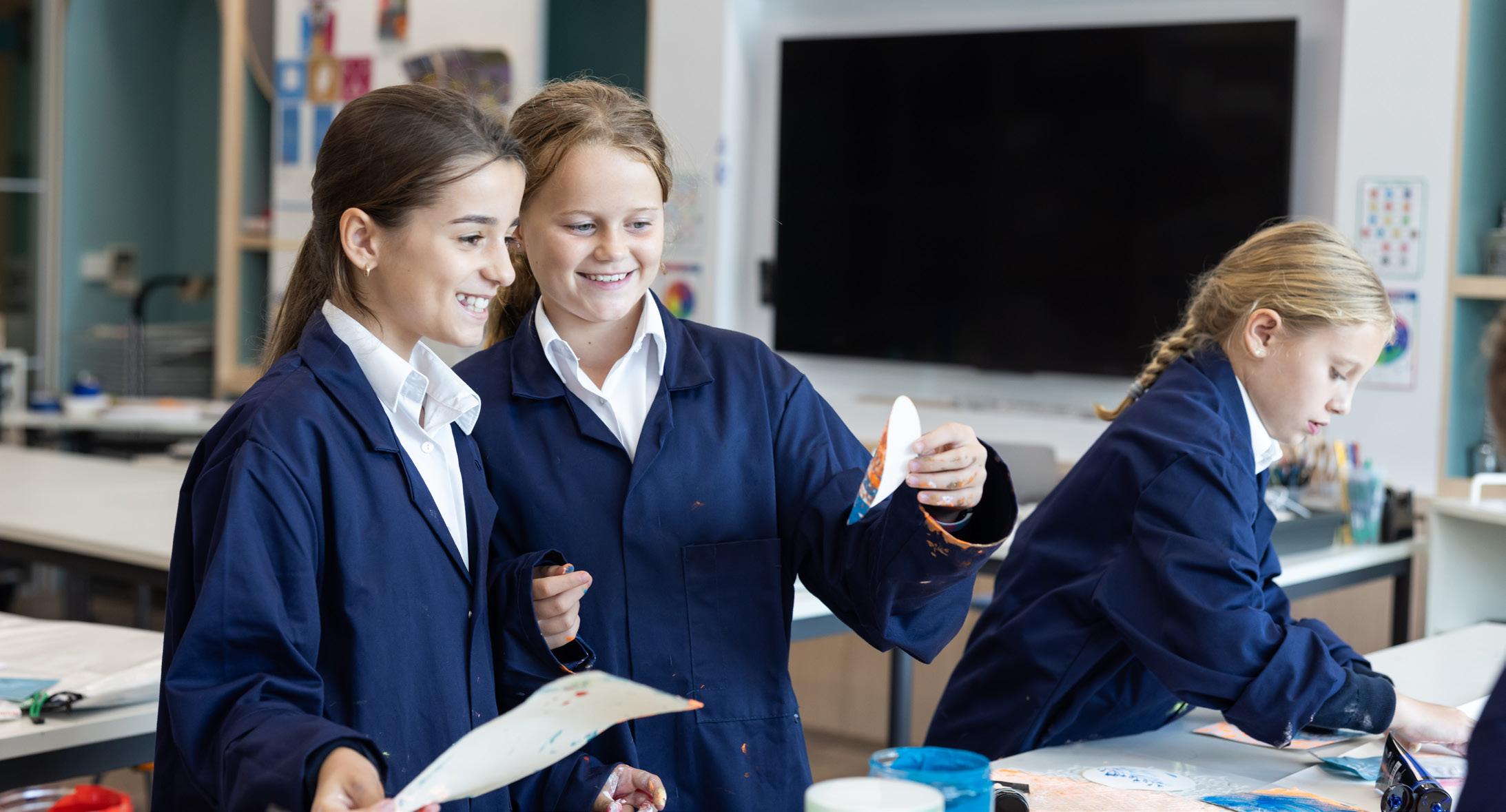
Art throughout Key Stage 3 at Brighton College (Singapore) will give pupils a grounding in the essential skills crucial to Art and Design, allowing individuals the opportunity to build and forge links within the arts and understand how art connects across all subjects.
This is a broad course exploring practical, new media technologies and critical/contextual work through a range of two–dimensional and/or three–dimensional processes. Pupils are required to develop knowledge, understanding and skills through integrated practical, critical, and theoretical study that encourages direct engagement with original works. Pupils may work with both traditional and new media.
• To become adept at drawing, painting, sculpture, printing and a range of other techniques, both familiar from Key Stage 2 and new to Key Stage 3
• To plan, create, develop and improve both their own work, and pieces of art completed in collaboration with others
• To evaluate artwork and communicate ideas in a way which demonstrates critical thinking and personal reflection
• To research great artists and designers from different eras, both locally and internationally renowned, and understand the development of their craft
• Record observations in sketchbooks, journals and other media as a basis for exploring new ideas
•
• Use a range of techniques and media, including drawing from observation, grid drawing, carbon transfer drawing, application of tone, colour theory and various forms of printing
• Develop in confidence and proficiency in the handling of a wide range of materials
• Analyse and evaluate their own work, and act upon peer and teacher assessment in order to strengthen the visual impact or applications of their work
• Learn about the history of art, craft, design and architecture, including periods, styles and major movements from ancient times up to the present day, both within Singapore and further afield
• Review and refine skills learnt throughout the phases of Key Stage 3, as well as build confidence in preparation for IGCSE
Continuous assessment takes place for pupils throughout the programme of study at Key Stage 3. Pupils receive verbal feedback and guidance in lessons to help their artwork evolve and improve. Pupils will also receive written feedback on project based work and will take part in self–assessment as part of their journey as an artist. Parents will receive feedback in the form of formal reports.
Brighton College (Singapore)’s Key Stage 3 Computing curriculum is designed to provide a progressive, reflective and modern curriculum that prepares pupils for the digital future. The curriculum is structured around six core areas: Computational Thinking & Problem Solving, Programming & Software Development, Data Information & Artificial Intelligence, Networks Systems & Cybersecurity, Digital Creativity & Media, and Impact of Technology & Future Innovation. This approach builds strong foundations for IGCSE Computer Science and beyond while developing pupils as confident digital creators and responsible, confident users of technology.
• To understand and apply computational thinking principles including algorithms, decomposition, and abstraction
• To progress from visual programming (Scratch) to text–based languages (Python) and develop practical software solutions
• To explore data representation, artificial intelligence concepts, and ethical implications of technology
• To understand network systems, the internet and cybersecurity principles
• To develop creative digital media skills and user – centered design thinking
• To evaluate the impact of emerging technologies on society and explore computing career pathways
• Computational Thinking & Problem Solving: Design and optimise algorithms, apply decomposition and abstraction techniques, develop debugging strategies, and evaluate efficiency
• Programming & Software Development: Progress from Scratch to Python, master programming constructs, work with data structures, and develop applications using libraries and functions
• Data, Information & Artificial Intelligence: Understand binary and data representation, design and query databases using SQL, explore AI concepts, and examine ethical considerations
• Networks, Systems & Cybersecurity: Understand internet protocols and network topologies, investigate cybersecurity threats and security measures, develop digital citizenship skills
• Digital Creativity & Media: Apply design thinking principles, develop graphics and multimedia skills, create websites using HTML/CSS/JavaScript, explore UI/UX design
• Impact of Technology & Future Innovation: Investigate emerging technologies (IoT, blockchain), analyse global impact and sustainability and research future trends
Computing is assessed through a range of digital tasks and projects within the six curriculum areas. Each year, pupils complete a unit in each of the six curriculum areas. Pupils will also complete a formal assessment at the end of each unit which can be either a project–based outcome or traditional exam depending on the unit. Computing will always have an end of year exam which will cover the range of learning throughout the year. Pupils receive regular verbal and written feedback to support them with their learning, and parents receive formal progress updates in reports.
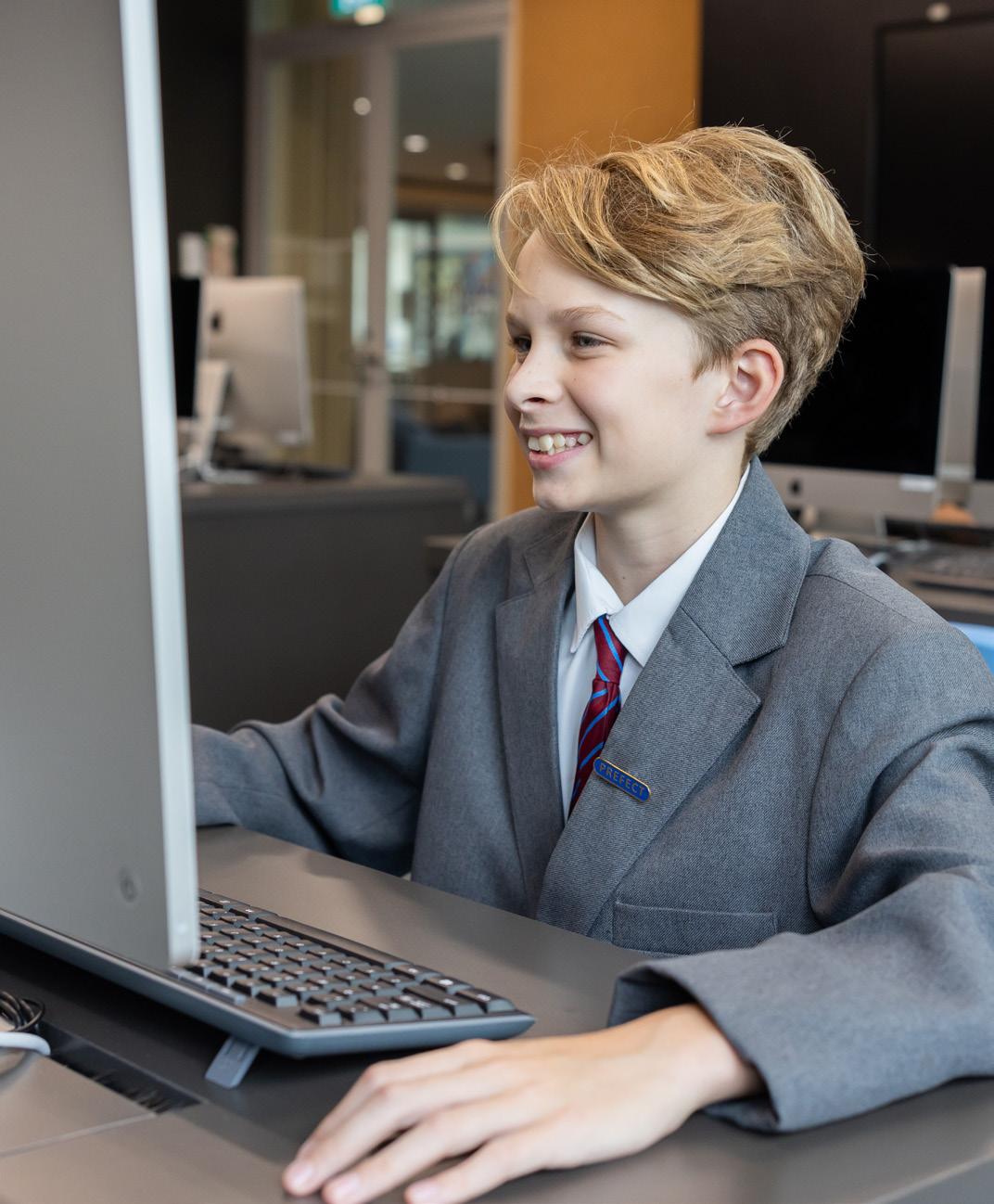
Design and Technology is a creative, rigorous and practical subject. Through design, pupils develop a critical understanding of the impact of good and poor design on daily life and the wider world. Pupils are taught how to use their imagination to design and make products that solve real and relevant problems within a variety of contexts, considering their own and others’ needs, wants and values. They acquire and draw upon a broad range of subject knowledge and other disciplines such as mathematics, science, computing, business and art. Most importantly, pupils learn how to take risks through the iterative process and so become more resourceful, innovative, enterprising and capable.
• To develop the creative, technical, and practical expertise needed to perform everyday tasks confidently and to participate successfully in an increasingly technological world
• To build and apply a repertoire of knowledge, understanding and skills to design and make ‘fit for purpose’ prototypes and products for a wide range of users
• To identify and solve their own design problems and understand how to interpret problems given to them
• To develop the ability to make aesthetic, economic, ethical and technical value judgements
• To critique, evaluate and test ideas and products and the work of others
• Develop and communicate design ideas using annotated sketches, Computer Aided Design (CAD), develop workshop skills using a wide range of hand tools and machinery and produce working models/products
• Research and explore contexts, including different cultures, to to better identify and understand user needs and wants
• Identify and solve their own design problems and understand how to reformulate problems given to them
• Develop specifications to inform the design of innovative, functional, appealing products that respond to needs in a variety of situations
• Test, evaluate and refine their ideas and products against a specification, considering the views of intended users and other interested groups
• Analyse the work of past and present professionals and others to develop and broaden their understanding
Pupils are evaluated throughout the Key Stage 3 course on:
• Design – sketching, annotation of design ideas, oral and digital communication of ideas
• Create – modelling skills (including CAD), prototypes and final outcomes
• Evaluate – critical thinking skills, social, moral and ethical considerations and their impacts on users
• Technical knowledge – application of skills, understanding of processes, materials and equipment
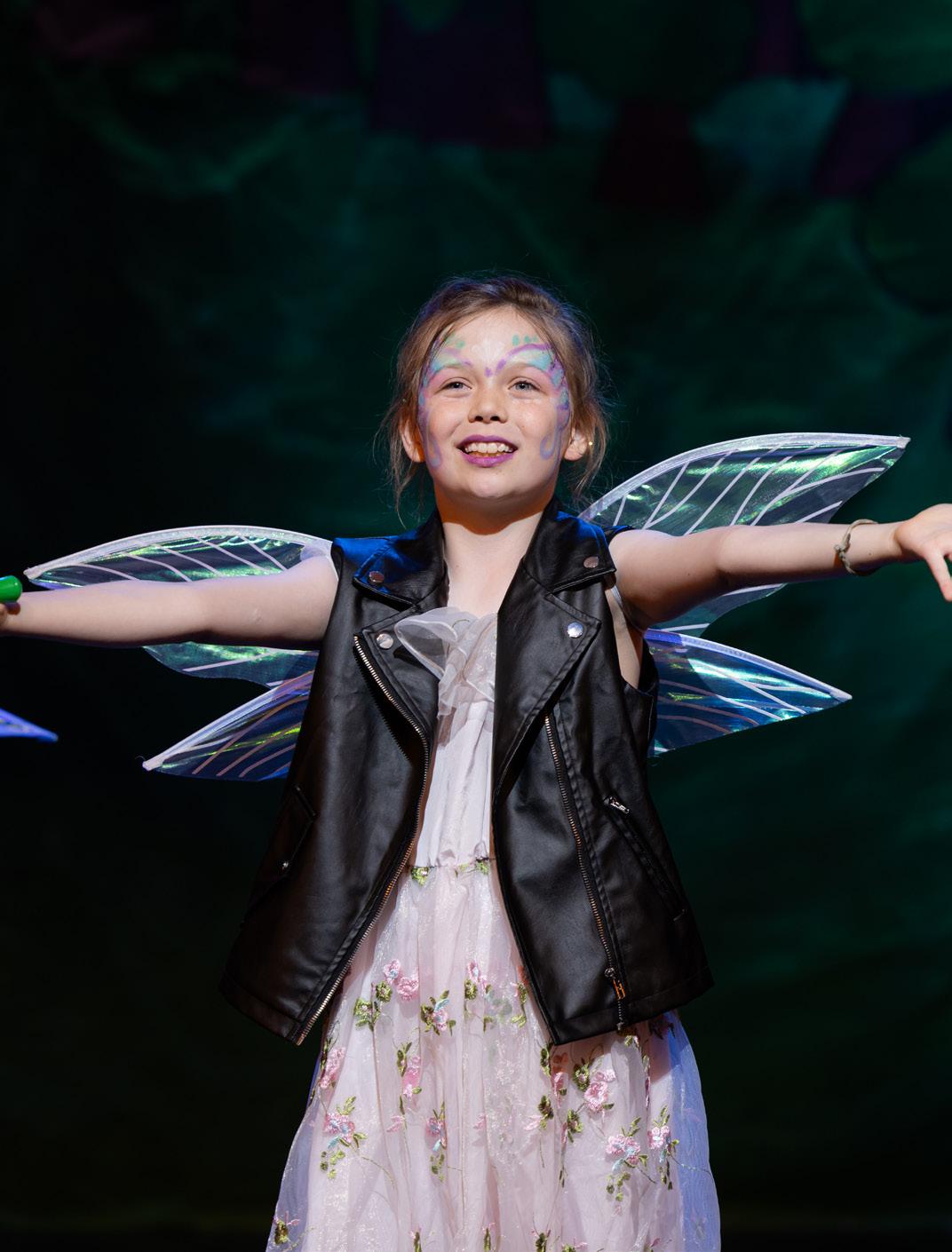
Drama at Brighton College (Singapore) is a subject that uses the body, voice and imagination to develop creative skills and produce performances. Pupils will explore the basics of drama and learn how to create and perform short dramatic works, such as monologues and duologues. As they progress through Key Stage 3, pupils will perform more complex dramatic works, such as scenes and one–act plays. They will also learn about the cultural and historical context of different dramatic works. Pupils will also have the opportunity to explore different styles of drama, such as physical theatre, scripted plays and Commedia dell’arte.
• To nurture imagination and court inspiration through mastery of skills and techniques
• To create fluent, authentic, original storytelling that illuminates the complexity of the human spirit and can question accepted wisdom
• To learn how to focus and listen to the ideas of others, hearing the voices of classmates and striving for a collective vision of our goals; we prize the contributions and accomplishments of the individual and of the team
• To foster curiosity, invention, bravery and humour
• To take risks and learn from failure and vulnerability in order to build lifelong habits of innovation
• To commit to fair and ongoing practices that enhance our relationships with theatre makers, audiences and society, finding strength in our diversity and lowering barriers to participation in the classroom and on the stage
• Create and develop characters, settings and situations for dramatic works
• Use voices and bodies effectively to express emotions, thoughts and intentions
• Work collaboratively with others to create and perform dramatic works
• Analyse and evaluate their own performances and also those of their peers
• Understand the cultural and historical context of dramatic works
Pupils are assessed on their ability to create, perform and evaluate. Pupils can be assessed on their individual work (both planned and improvised) and on pair and group work. As pupils progress through the course, they are also assessed on their ability to reflect critically – both verbally and in written form – on the success of theatrical performances, and the effectiveness of techniques used within lighting and sound, costume, stagecraft and direction.
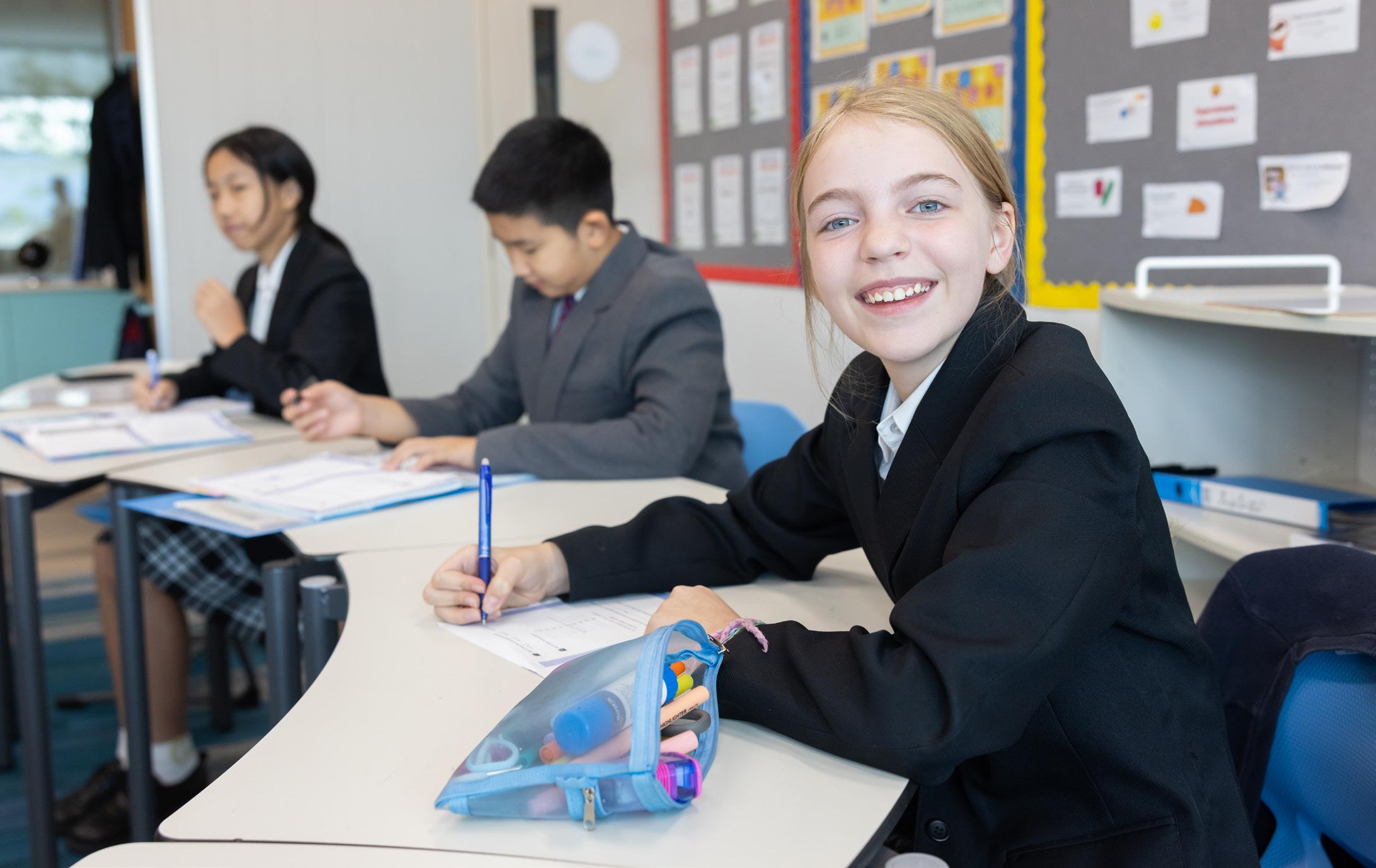
The English department’s main aim is to develop communication skills and to foster a lifelong love of literature. Over the Key Stage 3 course, pupils will engage with a wide range of texts from different genres, time periods and cultures in order to broaden their knowledge and understanding of language and literature over time and prepare them for their future IGCSE and A-level. In order to support the skills of intertextuality required at A-level, all units across Key Stage 3 and 4 are linked conceptually in order for pupils to think critically across the range of texts they are studying. Most lessons are discussion–based, with pupils being encouraged to express an informed personal response to a range of fiction and non–fiction texts. Pupils will also be taught how to improve their analytical and creative writing skills, as well as write with accuracy, fluency, and sophistication.
• To read a broad, challenging range of fiction and non–fiction (including whole books, short stories, poems and plays with a wide coverage of genres, historical periods, forms and authors) for both pleasure and for information
• To decode accurately, read critically and consider authorial intent
• To know how language, including figurative language, vocabulary choice, grammar, text structure and organisational features, presents meaning
• To understand how directorial decisions and theatrical performance of set texts can support varied interpretations of source material
• To understand context for writing and consider the purpose and audience
• To write creatively, fluently and with interesting detail in different genres
• To develop a broad vocabulary and the ability to craft descriptive and figurative language effectively
• To develop into mature, independent writers
• To know how to use linguistic terminology and concepts and be able to apply them correctly to examples of real language, such as pieces of creative writing or books
• To know how to use increasingly complex punctuation accurately and, where necessary, for effect
• To discuss reading, writing and spoken language with precise and confident use of linguistic and literary terminology
• To rehearse and perform extracts from scripts and poems, using an understanding of stagecraft and techniques of language, intonation, tone, and voice, in order to add impact
• Select and read books independently for challenge, interest and enjoyment
• Know how to make inferences and refer to evidence from text to support ideas and arguments
• Build skills in analysis of unseen material and the creation of quotation banks
• Plan, draft, edit and proofread writing
• Know the purpose, audience for, and context of their writing and draw on this knowledge to support comprehension
• Recognise a range of prose and poetic conventions and understand how these have been used
• Understand the importance of setting, plot and characterisation, and the effects of these
• Understand how the work of dramatists is communicated effectively through performance and how alternative staging allows for different interpretations of a play
• Develop knowledge and understanding of figurative language, vocabulary choice, grammar and text structure
• Draw on new vocabulary and grammatical constructions from reading and use these consciously in writing and speech to achieve intended effects
• Draw on knowledge of literary and rhetorical devices from reading and listening to enhance the impact of personal writing
• Use Standard English confidently in writing, including during responses linked to practice for IGCSE questions
• Debate themes and concepts encountered throughout the course, in order to compare and contrast texts (both fiction and non–fiction)
• Present to peers and adults, justifying opinions using literary evidence
Formative and summative assessment will be used throughout Key Stage 3. Pupils will be assessed informally through opportunities to hone their speaking and listening during class debates and presentations. Pupils will receive both verbal and written feedback on their work and will be encouraged to become independent in their approach to reading and writing. As pupils approach the end of Key Stage 3, they will be assessed with increasing regularity on their ability to write under timed conditions, as preparation for public examinations at IGCSE.
Course Overview
The ability to understand and communicate in French is a valuable asset that allows pupils to see the world with different eyes. At Key Stage 3, we believe that every single learner should feel a sense of enjoyment, achievement and progress throughout their language learning journey. To achieve this goal, we strive for a pupil–centred approach, empowering pupils to take charge of their learning. By integrating technology, pupils will have access to a range of digital resources and language learning software that will provide a dynamic and stimulating learning experience, while also equipping them with the essential digital skills needed for future academic and professional pursuits.
• To develop a strong foundation of French language skills, including reading, writing, listening and speaking competencies
• To gain a deeper understanding of French culture and society, including traditions, customs and values
• To foster a love for language learning and build confidence in French language communication
• To read some French literature (such as stories, songs, poems and letters) to stimulate ideas, develop creative expression and expand understanding of the language and culture
• To develop transferable skills, such as critical thinking, problem–solving and digital literacy, that are valuable across all areas of the curriculum
• Identify and use tenses or other structures which convey the present, past and future
• Use and manipulate a variety of key grammatical structures and patterns
• Develop a wide–ranging and deepening vocabulary that allows participation in discussion about wider issues
• Listen to a variety of forms of spoken language to obtain information, transcribe sentences and respond appropriately
• Initiate and develop conversations, coping with unfamiliar language and unexpected responses
• Express and develop ideas clearly and with increasing accuracy, both orally and in writing
• Speak coherently and confidently, with increasingly accurate pronunciation and intonation
• Read, translate and show comprehension of original and adapted materials from a range of different sources
• Write creatively to express opinions and use an increasingly wide range of grammar and vocabulary
Course Assessment
Assessment will cover speaking, listening, reading and writing skills in French.
• Speaking assessments may include class discussions, role–plays and presentations
• Listening assessments may include extracting relevant details, deducing meaning and answering questions related to spoken texts
• Reading assessments may include extracting relevant details, deducing meaning and answering questions related to written texts
• Writing assessments may include writing on everyday topics, demonstrating clear expression, appropriate grammar, vocabulary and spelling
Course Overview
At Brighton College (Singapore), we follow a combined humanities course in Years 7 and 8 in The Story of Our Land. From Year 9, pupils follow a course in geographical method and skills to start to prepare them for the IGCSE syllabus.
Geography is a powerful subject which educates young people about the world in which they live. A high– quality geography education should inspire in pupils a curiosity and fascination about the natural and human environments. As this knowledge grows, pupils deepen their understanding, enabling them to evaluate the interactions between human and physical processes.
Pupils will develop an understanding of the world as well as a range of skills and values that will be beneficial for their current and future roles in a rapidly changing and increasingly interconnected world.
• To increase knowledge and understanding of the world we live in and the processes that shape it
• To understand how people affect the environment they live in and how environments affect the lives of people
• To explain how and why people’s quality of life varies from place to place
• To encourage an enquiry–based approach to learning through investigative work both inside the classroom and further afield
• To make decisions through the analysis and evaluation of evidence
• To develop skills such as: literacy, numeracy, thinking skills, data collection, graphicacy, map skills, analysis and the use of IT
• To interpret a wide range of evidence including maps, diagrams, globes, aerial photographs and Geographical Information Systems (GIS)
• To communicate geographical information in a variety of ways, including through maps, data presentation techniques and extended writing
• To investigate the methods that enable effective geographical research
• To appreciate a variety of different cultures, religions and ethnic backgrounds in a global community
• Explain the reasons for a rapid increase in the global population
• Evaluate pronatalist and anti–natalist policies to manage population growth
• Evaluate the impacts of migration on donor and recipient countries
• Understand the structure of the Earth, tectonic plate boundaries, types of volcanoes and causes of earthquakes
• Complete a research project on an earthquake which considers causes, impacts, short– and long–term responses
• Understand the complexity of the term ‘development’
• Compare different approaches countries have used to increase their development
• Evaluate the positive and negative impacts of globalisation
• Explain climate change (natural and anthropogenic) and the various challenges areas may face in the future, as well as possible solutions
Geography in Year 9 prepares pupils for Year 10 and 11 by exposing pupils to the style of IGCSE questions. Both data response and extended response style questions feature within end–of–topic tests and more formal mid–year and end–of–year summative assessments. Pupils are also assessed and provided with supportive, constructive feedback (both verbally and in written format) on prep work and key pieces of classwork such as presentations and project work.
At Brighton College (Singapore) we follow a combined humanities course between Years 7 and 8 in The Story of Our Land. From Year 9 pupils are given a course in historical method and skills to start to prepare them for the IGCSE course.
By learning the rich history of the world, it helps pupils paint a picture of where we stand today, how past societies, governments and cultures were established and how they changed over time.
Pupils will explore the past through social, economic, cultural and political perspectives, developing questions of the past as well as their historical skills, knowledge and understanding, to present analytical, organised and well–supported arguments.
Pupils will analyse different interpretations of the past through a range of sources. By using and evaluating evidence, they will learn to decode the message of written and pictorial sources and will learn to explain how and why events in the past happened.
• To recall, select and deploy relevant historical knowledge to support a coherent and logical argument
• To demonstrate an understanding of the complexity of historical concepts
• To understand interpretation and evaluation of a wide range of historical sources and their use as evidence
• To communicate in a clear and coherent manner using appropriate historical terminology
• To understand historical concepts, such as continuity and change
• To compare and contrast a range of sources of history to draw clear, logical conclusions
• To identify the limitations of particular sources
• To understand individuals and societies in the past
• To distinguish clearly between cause and consequence, change and continuity, and similarity and difference, by selectively deploying accurate and relevant historical evidence
• To gain historical perspectives by using knowledge to understand different contexts and connections, such as cultural, economic, military, political, religious and social history
• Assess the significance of colonialism and the British Empire to the world
• Explore the impact of colonialism in America, India, Australia and Africa
• Understanding different interpretations of the British Empire, through the lenses of different authors (Shashi Tharoor and Niall Ferguson)
• Understand the challenges that Britain faced before First World War
• To know why women were given the vote in 1918
• Understand the causes of First World War and subsequent peace treaties
• Describe and explain why British men enlisted to fight in World War 1 and what the impact was for those who decided not to fight
• Describe what life was like during First World War
• Explain what conditions were like in the trenches
• Describe the ways in which the lives of British people changed as a result of First World War
History in Year 9 prepares pupils for Year 10 and 11 by exposing pupils to the style of IGCSE questions. Both the analysis of source material and essay style questions feature within end–of–topic tests and more formal mid–year and end–of–year summative assessments. Pupils are also assessed and provided with supportive, constructive feedback (both verbally and in written format) on prep work and key pieces of classwork such as presentations, historical research and project work.
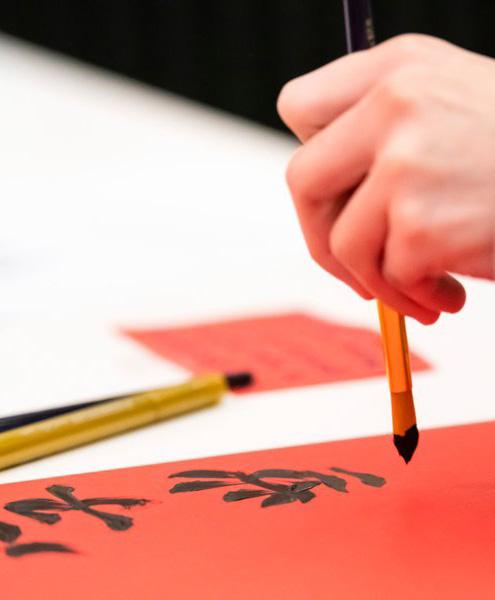
Mandarin as Native and Near–Native Learners Pathway
Course Overview
The Advanced Mandarin Learners Pathway at Key Stage 3 aims to strengthen pupils’ linguistic precision, analytical thinking, and appreciation of Chinese literature and culture. Building upon their prior exposure to Mandarin, the curriculum develops advanced reading, writing, listening, and speaking skills through a wide range of authentic materials and meaningful contexts.
Pupils are encouraged to explore social, cultural, and historical topics while enhancing their ability to express complex ideas and opinions both orally and in writing. Lessons are designed to balance the needs of native speakers and near–native learners through differentiated instruction, small–group discussion, and individualised feedback.
By the end of Key Stage 3, pupils will have a strong foundation for further study in IGCSE Mandarin and a deepened understanding of their cultural identity and global citizenship.
Course
• To enhance pupils’ ability to communicate confidently, accurately, and appropriately in both spoken and written Mandarin
• To develop advanced literacy through structured reading and writing of modern and classical Chinese texts
• To cultivate a deeper appreciation of Chinese culture, literature, history, and current affairs
• To strengthen independent thinking and analytical skills through discussions, debates, and extended writing
• To develop transferable academic skills, including critical reading, coherent writing, and effective oral presentation
• To prepare pupils for smooth progression to IGCSE and higher–level Mandarin study
Content
• Understand and apply advanced Chinese vocabulary and idiomatic expressions in various contexts
• Read, analyse, and appreciate a range of authentic texts including short stories, classical poems, news articles, and personal narratives
• Write in different genres such as narrative, descriptive, argumentative, and reflective writing
• Explore contemporary and traditional cultural topics such as festivals, moral values, family relationships, social changes, and Chinese innovations
• Engage in project–based learning related to current social issues, film appreciation, and literary adaptations
Skills
• Demonstrate grammatical accuracy and stylistic sophistication in both spoken and written Mandarin
• Interpret and evaluate written texts, identifying tone, perspective, and literary techniques
• Produce extended writing with clear structure, logical flow, and appropriate register
• Deliver coherent oral presentations and participate in debates, expressing opinions with reasoning and cultural awareness
• Compare and contrast ideas between Chinese and other cultural contexts, fostering intercultural understanding
• Use dictionaries, reference materials, and digital tools effectively to support independent learning
Course Assessment
Assessment will evaluate pupils’ language proficiency, cultural understanding, and analytical thinking across all four skills: speaking, listening, reading, and writing.
• Speaking: Class discussions, debates, storytelling, role–plays, and individual presentations
• Listening: Understanding authentic spoken materials such as news clips, interviews, and documentaries, with focus on inference and summarisation
• Reading: Analytical reading of literary and non–literary texts; identifying themes, structure, and stylistic features; critical reflection on content and message
• Writing: Composition tasks including essays, reflections, creative writing, and text analysis; assessment of vocabulary range, grammatical control, and depth of thought
The primary goal at Key Stage 3 is to help the pupils establish a solid foundation of vocabulary, knowledge of Chinese and communication skills through the natural and gradual integration of language, content and cultural elements. They will be able to communicate in some authentic contexts and develop their all –round skills including listening, speaking, reading and writing skills.
As part of a pupil–centred approach, Mandarin lessons are designed with personalised instruction and support. To prepare for a smooth transition to the IGCSE Mandarin programme, Year 9 pupils will engage with more linguistically challenging content including newspaper reading, diary writing and presentations on relevant cultural topics of their choice in Mandarin.
• To develop the language proficiency to communicate in simple and complex daily conversations
• To offer insights into the culture and society of countries and communities where Chinese is spoken
• To develop awareness of the nature of language and language learning
• To provide enjoyment and intellectual stimulation
• To develop transferable skills to complement other areas of the curriculum
• To form a sound base of the skills, language and attitudes required for progression to work or further study, either in Mandarin Chinese or another subject area
Content
• Develop an understanding of the structure and history of Chinese characters
• Be able to talk authentically about family, numbers, appearance, hobbies, countries and languages, describing where you live, etc
Skills
• Use basic elements of Chinese grammar correctly
• Write basic Chinese (simplified characters) and translate Chinese into English at sentence level
• Use Chinese in a range of everyday situations
• Read, listen to and understand some short texts on a familiar topic, demonstrating an understanding of ideas, opinions and attitudes
• Select and extract relevant details from some short texts on a familiar topic
• Speak in Mandarin Chinese and engage in some everyday conversations
The assessment will cover speaking, listening, reading and writing skills in Mandarin.
• Speaking may include class discussions, role–plays, and presentations
• Listening may include extracting relevant details, deducing meaning and answering questions related to spoken texts
• Reading may include extracting relevant details, deducing meaning, translating Chinese to English and answering questions related to written texts
• Writing may include writing on everyday topics, demonstrating clear expression, appropriate use of grammar, vocabulary, stroke order and accurate character writing
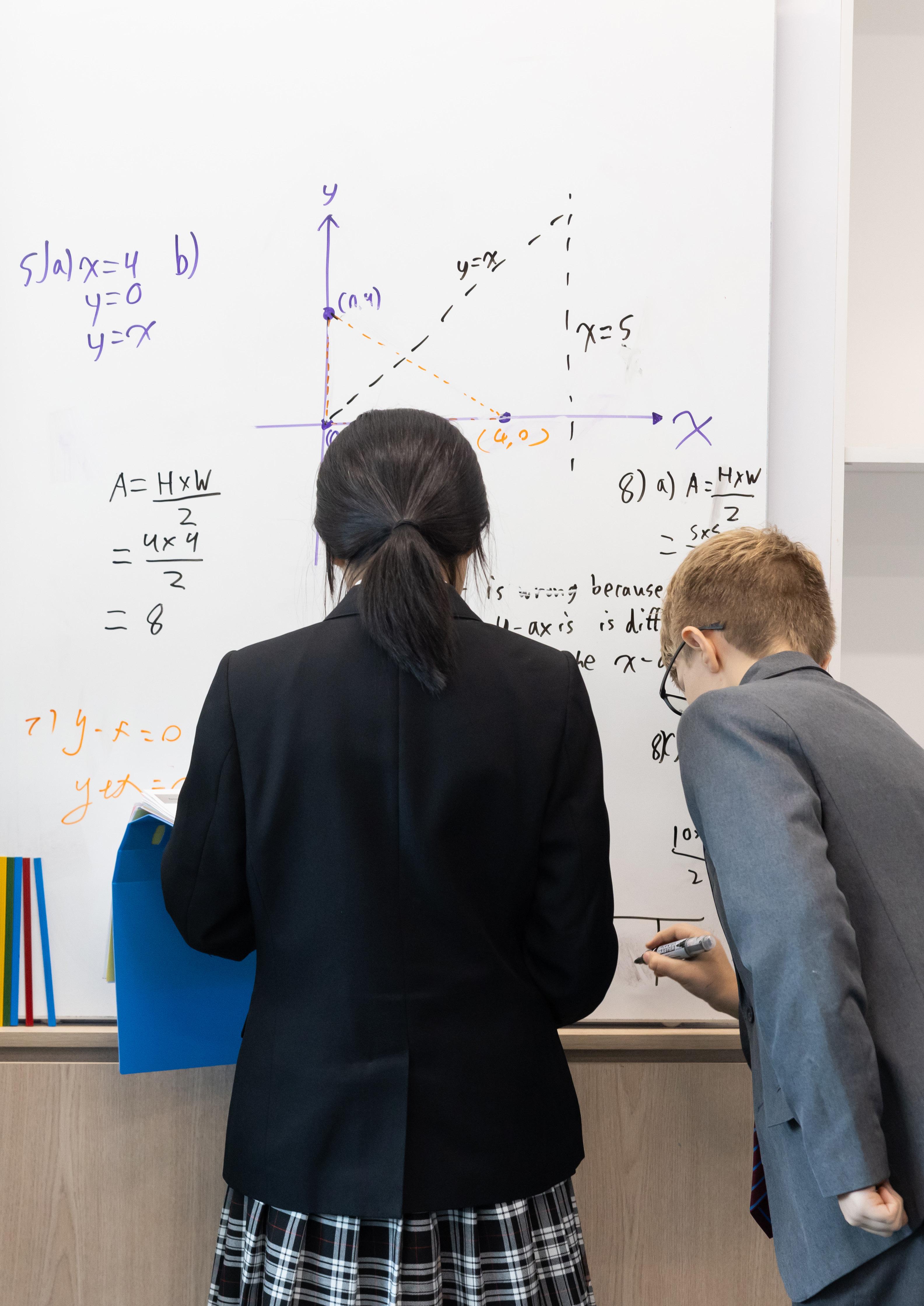
Mathematics provides a fundamental toolkit for pupils to understand and question the world around them. At Key Stage 3, the curriculum is designed to provide a strong foundation in logic, reasoning and core mathematical concepts whilst giving them a sense of enjoyment and curiosity about the subject. Pupils learn to move between representation and concrete mathematical ideas, reinforced by their understanding of core subject concepts.
The curriculum builds upon each phase of learning at Key Stage 3, which forges connections across the taught topics and develops fluency in key mathematical techniques. This not only provides a rigorous framework for the IGCSE programme, but also lays the foundation for pupils to draw connections between mathematics and other key areas across the curriculum. Pupils improve their capacity to handle and resolve increasingly challenging problems in all subjects, deepening their understanding of mathematics and enhancing resilience.
• To be fluent in mathematical concepts which grow increasingly complex over time
• To recall and apply mathematical knowledge quickly and with accuracy
• To reason and enquire mathematically using accurate mathematical language
• To solve problems using a range of increasingly sophisticated mathematical techniques
• To demonstrate a developed ability in spoken mathematical vocabulary in order to deliver a mathematical argument or proof
• To be confident using IT in appropriate ways to develop mathematical abilities
• To be skilled at problem–solving both individually and when working collaboratively with others
• To cultivate a sense of enjoyment and academic engagement with the subject, that reflects one of the key pillars of a Brighton College (Singapore) education – curiosity. To develop an appreciation for the power and importance of mathematics for understanding the world around us
At Key Stage 3, pupils will be exposed to a variety of distinct domains that build on ideas and concepts learnt at Key Stage 2. By the end of Key Stage 3, pupils will be able to:
• Use algebra to formulate mathematical relationships and generalise key arithmetic structures
• Substitute values into equations to find the value of a given subject
• Rearrange and simplify linear and quadratic expressions
• Develop algebraic and graphical fluency in linear and quadratic systems
• Understand the meaning and representation of ratio using ratio notation
• Identify variables and express relations between variables algebraically and graphically
• Develop and test hypotheses about patterns and relationships, using algebraic proofs or proofs by counter–example
• Reason deductively in geometry, number and algebra, including using geometrical constructions
• Develop mathematical knowledge through solving multi–step problems
• Apply their mathematical knowledge to interpret and solve problems in applied fields such as mechanics, physics, finance and statistics
• Select appropriate concepts, methods and techniques to apply to unfamiliar and non–routine problems
The mathematics curriculum at Brighton College (Singapore) adopts a thematic approach to learning to develop a pupil’s ability to use multiple techniques to solve increasingly complex problems.
Pupils will be able to demonstrate knowledge and understanding of how to:
• Develop strong abilities in mental arithmetic to solve problems
• Solve linear equations involving all four operations and using inverse operations
• Understand decimal place value and position decimals on a number line
• Convert fluently between fractions, decimals and percentages, including converting recurring decimals into fractions
• Express ratios in their simplest form and understand gradient as a concept of ratio
• Convert between currencies and describe financial problems algebraically
• Apply appropriate methods for solving complex percentage problems
• Use and manipulate numbers in standard form
• Understand integer powers and the idea of variables, monomials and binomials raised to positive integer powers
• Understand recurring decimals and convert recurring decimals to fractions algebraically
• Understand bounds, estimation and truncation
• Appreciate the concept of infinity through a basic understanding of set theory
Through generalisation and algebraic techniques, pupils will be able to:
• Use and interpret algebraic notation
• Understand the concept of substitution in formulae, expressions and scientific formulae
• Use substitution in basic linear kinematic equations to solve practical problems
• Accurately use the vocabulary of expressions, equations, inequalities, terms and factors
• Simplify and manipulate algebraic expressions to maintain equivalence
• Factorise and expand brackets to simplify and solve algebraic equations
• Use fractions in algebraic contexts
• Solve linear inequalities in one variable and find integer solutions that satisfy an inequality
• Factorise and solve quadratic equations
• Form and solve quadratic equations from contextual data
• Interpret mathematical relationships both algebraically and graphically
• Recognise, sketch and produce graphs of linear and quadratic functions of one variable with appropriate scaling on the Cartesian plane
• Understand and manipulate linear equations graphically and use algebraic, graphical and approximation methods to solve simultaneous linear equations
• Generate, recognise and find the nth term of an arithmetic sequence
• Recognise a geometric sequence
Pupils will be able to demonstrate knowledge and understanding of how to:
• Derive and apply formulae to calculate and solve problems involving perimeter, area and volume of Euclidean shapes
• Draw and investigate angles, identify perpendicular and parallel lines and recognise shape types
• Derive and illustrate properties of triangles, quadrilaterals, circles and other plane figures
• Describe the results of translations, rotations and reflections applied to given figures
• Derive and use standard ruler and compass constructions to solve problems involving minimising distance and bearings
• Recognise and manipulate shapes in symmetry
• Understand the properties of interior and exterior angles to solve complex problems
• Illustrate properties of triangles, quadrilaterals, circles, and other plane figures using appropriate language and technologies
• Prove geometric facts using knowledge of properties of shape and solve problems in Euclidean space
• Use Pythagoras’ Theorem to solve problems involving right–angled triangles, using both calculator and non–calculator methodology in both 2D and 3D planes
Pupils will be equipped with the knowledge and understanding of how to:
• Record, describe and analyse experiments of simple probability using appropriate language and describing equally and unequally likely outcomes
• Know and use the vocabulary for probability, calculating the probability for a single event
• Identify and represent sets, use Venn diagrams, and understand and use the intersection/union of sets
• Generate theoretical sample spaces for single and combined events with equally likely, mutually exclusive outcomes and use these to calculate theoretical probabilities
• Construct and interpret bar charts (including histograms), vertical line charts, pie charts for given sets of data
• Interpret and compare observed distributions of a single variable discrete, continuous and grouped data through appropriate graphical representations and appropriate measures of central tendency (mean, mode, median) and spread (range, consideration of outliers)
• Describe simple mathematical relationships between bivariate data in observational and experimental contexts and illustrate using scatter graphs
Pupil assessment in mathematics will focus on interpretation, communication and problem solving of themes covered in the academic year. A typical structure of a Key Stage 3 assessment may look like:
Paper 1 – Non–calculator – 50%
Topics: Sequences, Equivalence, Algebraic Notation, Solving problems with multiplication and division, fractions, using geometric notation, sets and probability, prime numbers and proof
Paper 2 – Calculator – 50%
Topics: Representing data, data handling, angles in parallel lines and polygons, area of trapezia and circles, probability, generating and recognising sequences
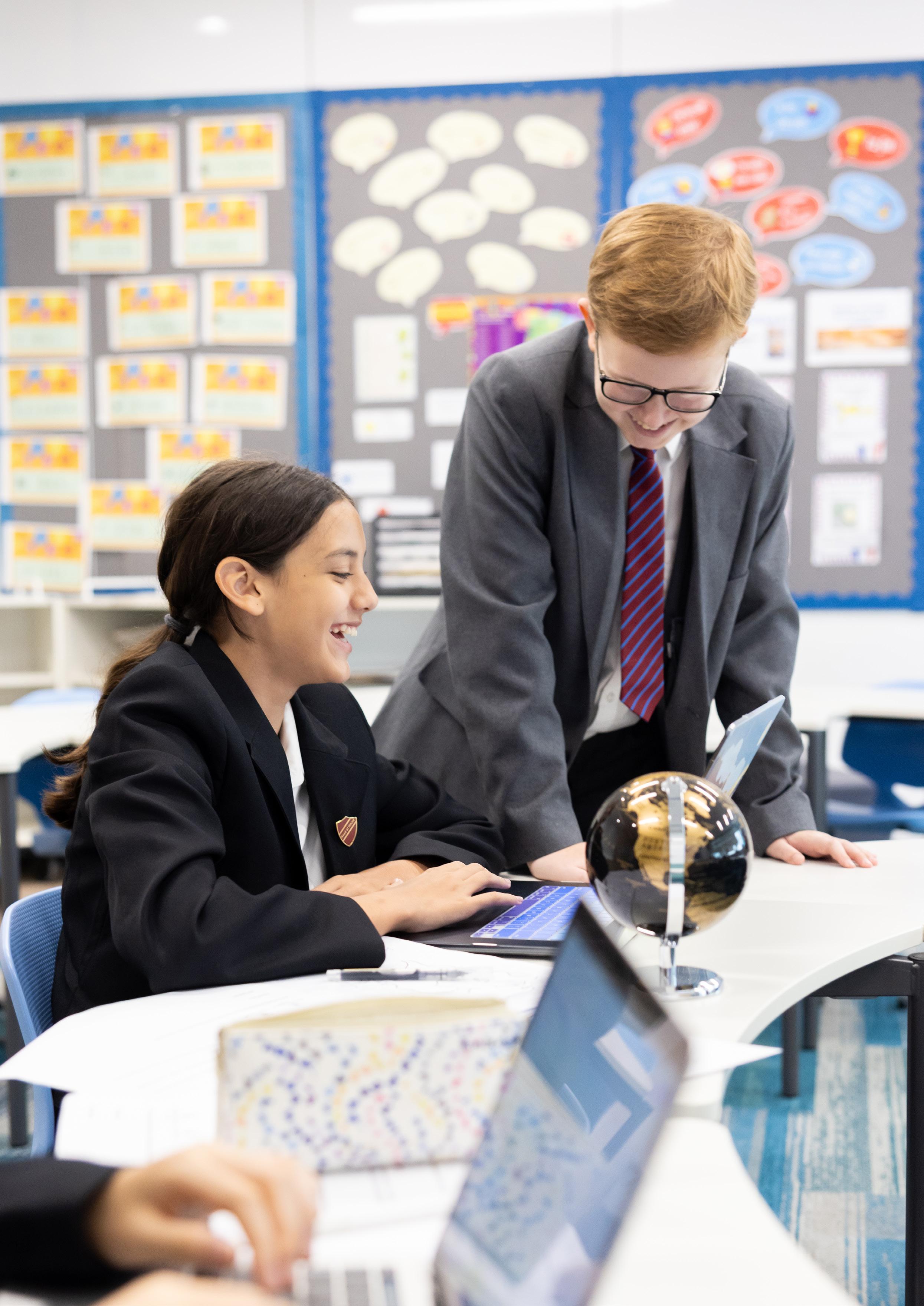
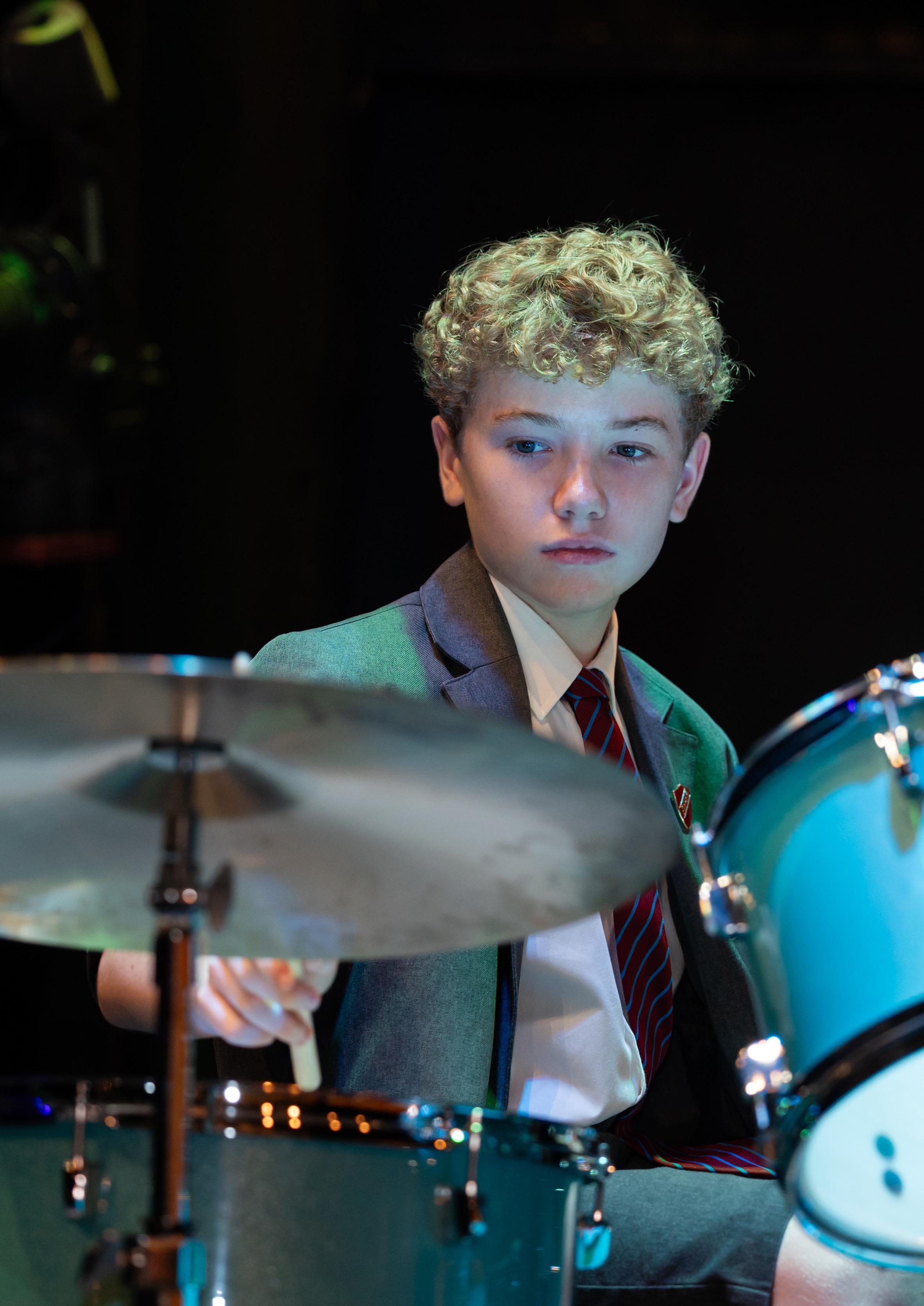
Music at Key Stage 3 is an integral part of the academic curriculum; all pupils sing, perform, create and appraise a variety of musical genres. Music technology is embedded fully throughout the programme. We offer pupils the opportunity to participate in performances of varied repertoire, appropriate to their experience and musical preferences.
• To perform, listen to, review and evaluate music across a range of historical periods, genres, styles and traditions (such as rhythms of the Caribbean, contemporary song writing, music for film, television and gaming, classical music and musical theatre), including the works of the great composers and musicians across the world
• To learn about the music of Singapore
• To learn to sing and to use their voices, to create and compose music on their own and with others
• To learn a range of musical instruments and use technology appropriately
• To explore how thoughts, feelings, ideas and emotions can be expressed through music
• To understand and explore how music is created, produced and communicated, including through the inter–related dimensions: pitch, harmony, duration, rhythm, dynamics, tempo, timbre, texture, structure and appropriate musical notations
• Develop knowledge, skills and understanding through the integration of performing, composing, listening and appraising
• Participate, collaborate and work with others as musicians
• Improvise, compose and develop musical ideas by drawing on a range of musical structures, styles, genres and traditions
• Understand musical traditions and the part music plays in national and global culture and in personal identity
• Explore how ideas, experiences and emotions are conveyed in a range of music from various times and cultures
• Engage with and analyse music, developing views, and justifying opinions
• Use staff and other relevant notations appropriately and accurately in a range of musical styles, genres and traditions
• Identify and use the inter–related dimensions of music expressively and with increasing sophistication, including use of tonalities, different types of scales and other musical devices
• Draw on experience of a wide range of musical contexts and styles to inform judgements
• Explore ways music can be combined with other art forms and other subject disciplines
• Listen with increasing discrimination to a wide range of music from great composers and musicians and develop a deeper understanding of music history
Music is evaluated using a combination of aural and written assessment, appropriate to experience and ability.
Analysis: Short and long–answer questions demonstrating an understanding of musical genres, styles, local and global musical traditions and composition techniques to convey thoughts, ideas, emotions, and feelings.
Aural: Short–answer questions to identify musical devices employed in a range of musical styles and genres.
Course Overview
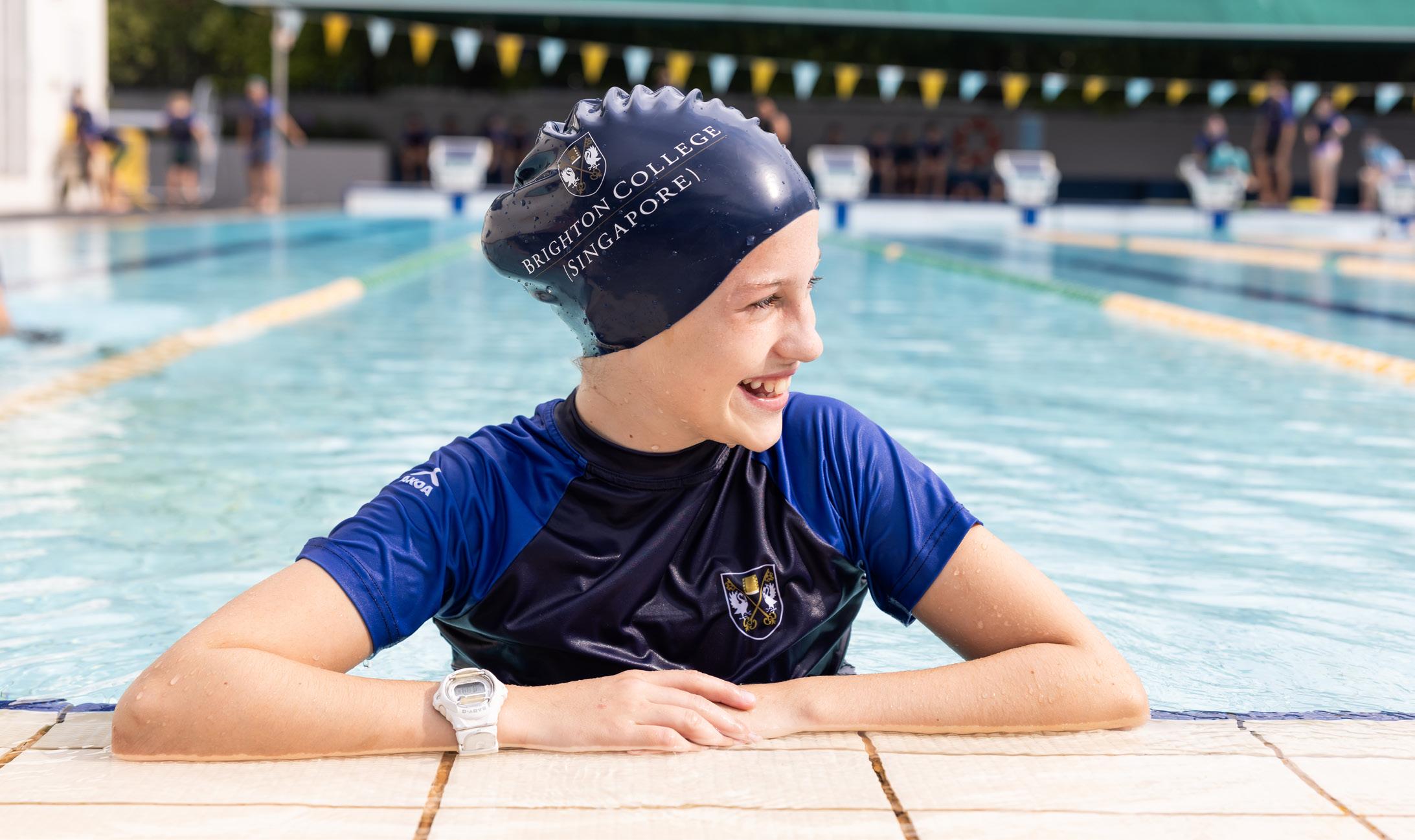
The Physical Education (PE) curriculum is available to all pupils at Brighton College (Singapore) and is used to develop physical literacy which can be described as the motivation, confidence, physical competence, knowledge and understanding that provides children with the movement foundation for lifelong participation in physical activity. At Brighton College (Singapore), PE is a subject in which all pupils are encouraged to take risks and self–reflect. This can build confidence and help develop a positive relationship with physical activity. The PE curriculum also includes a carousel of Swimming, Dance and Games.
Course Aims
• To develop competence to excel in a broad range of physical activities
• To be physically active for sustained periods of time
• To engage in competitive sports and activities
• To build resilience and learn how to use feedback for improvement and manage a variety of challenging situations
• To motivate, coach and work with others to help them improve their own performance
• To lead healthy, active lives
• Learn and develop the various health and skill related components of fitness using a variety of activities
• Develop their technique and improve their performance in competitive sports (for example, athletics and gymnastics)
• Perform dances using advanced dance techniques within a range of dance styles and forms
• Participate in activities which present intellectual and physical challenges and be encouraged to work in a team, build on trust and develop skills to solve problems, either individually or as a group
• Analyse performances compared to previous ones, outsmart opponents and demonstrate improvement to achieve their personal best
There is no formal assessment of PE at Key Stage 3. However, pupils are provided with continuous informal feedback throughout their lessons. This is designed to help them improve in terms of their skills and understanding, and also with regards to their levels of self–confidence – one of the key pillars in a Brighton College (Singapore) education.
Building confidence and conviction is crucial for all pupils, as presenting information clearly and effectively is a key skill that is useful in all subjects as well as every field of work. Understanding how to convey a message succinctly, clearly and with meaning is a critical skill for young people in their engagement with fellow pupils, at university, in interviews and in life more generally. Our Presentation Skills course aims to develop key techniques in this area that will give our pupils a natural advantage in these wider life skills. As a core part of the taught curriculum in Year 9, all pupils will learn how to speak and present in front of their peers and adults with conviction and clarity. The Presentation Skills course is taught in modern ‘state–of–the–art’ spaces such as our specialist classrooms and theatre. Spaces like these, with opportunities for collaboration, group work, practical work and voice projection, provide the ideal venues to develop these skills.
• To introduce the basic ideas of vocal technique and build confidence, group trust and key skills ready for public speaking
• To demonstrate poise and conviction in the delivery of public addresses, using both famous speeches from the past and self–scripted individual and/or group speeches
• To learn how to analyse the performances of others
• To learn how to participate in a structured debate
• To understand the different elements of a formal interview, including the different possible formats and how to prepare for these
• To become proficient at responding to questions in an interview situation, in order to convey information and share ideas
• To understand how to communicate about a range of topics in an informative and engaging manner, in order to raise awareness, spark debate and conversation, using the format of a TED talk
• To build on, and extend, skills in ICT presentation to accompany formal presentations
• Understand the basic physiology of the voice and how to develop range
• Understand the importance of posture and diaphragm support for projection
• Read with expression and use techniques such as comedy to enhance presentation skills
• Develop confidence in performing formal speeches as part of a small group
• Develop confidence in performing formal speeches individually
• Evaluate the performance of our own work, and others, and provide articulate, meaningful feedback
• Develop the skills needed to participate in structured debates on a variety of topics
• Learn how to present and to talk about yourself with clarity and conviction in an interview situation
• Deliver a TED talk with confidence, with the support of visual aids to create maximum effect in front of an audience
Topic 1: The art of effective presentation and projection
Topic 2: The art of debating in order to present a cogent argument and how to prepare for, and present at, interviews
Topic 3: Creating and delivering a TED talk with confidence and conviction
Informal assessment takes place based on pupils’ contribution to the programme and their participation in the practical exercises. Pupils will receive written and verbal feedback on their presentations to help them improve and hone their skills at public speaking. Parents will be updated on their progress with the course through formal means such as end–of–term reports.
The aim of the Personal, Social, Health and Moral Education (PSHME) curriculum is to provide pupils with a balance of essential life skills they need to successfully navigate challenges they face now and in their future. It should also provide opportunities for pupils to recognise and enhance their own wellbeing by developing their self–awareness and ability to understand how and where to seek support when it is needed.
• Promote personal wellbeing, safety, and mental health through age–appropriate, structured guidance
• Encourage healthy, respectful relationships and empathy towards others in diverse communities
• Equip pupils with the knowledge to make informed decisions about health, relationships, and lifestyle
• Prepare pupils for future life stages – from adolescence to adulthood – through practical skills in organisation, finance, and decision–making
Learning Outcomes and Skills
Year 7
• Understand safeguarding principles and where to seek support
• Demonstrate respectful friendships and manage conflict constructively
• Recognise healthy and unhealthy online behaviours and protect personal information
• Identify emotional and physical changes in puberty and learn coping strategies
• Apply healthy habits for sleep, nutrition, hygiene, and self–care
• Understand basic money management, citizenship, and human rights
Year 8
• Build self–confidence, assertiveness, and resilience in social settings
• Recognise prejudice, discrimination, and harassment; act as an ally
• Develop awareness of global citizenship, diversity, and justice systems
• Learn about healthy online and offline relationships, consent, and body image
• Acquire basic first–aid and personal safety skills
• Explore identity, values, and career aspirations through reflection and enterprise
Year 9
• Enhance leadership, presentation, and communication skills across contexts
• Understand and manage complex relationships, consent, and sexual health
• Recognise and respond appropriately to online risks, including image–based abuse
• Apply critical thinking to misinformation, social media, and AI literacy
• Build emotional resilience and mental health awareness, including crisis response
• Make informed decisions about GCSE options, future careers, and financial independence
• Engage in civic discussion, debate, and participation in democratic values
Assessment within these PSHME units is informal, focusing on personal growth and skill development rather than formal testing. Pupils maintain a record of their work to reflect on their learning, progress, and understanding across topics. Half–termly informal assessments provide opportunities for teachers to gauge engagement, participation, and the application of key skills. The emphasis is on developing transferable life skills that support learning across all subjects, while nurturing personal values and the school’s core principles of curiosity, confidence, and kindness. This approach ensures that assessment reinforces self–awareness, empathy, and responsible decision–making rather than academic grading.
Course Overview
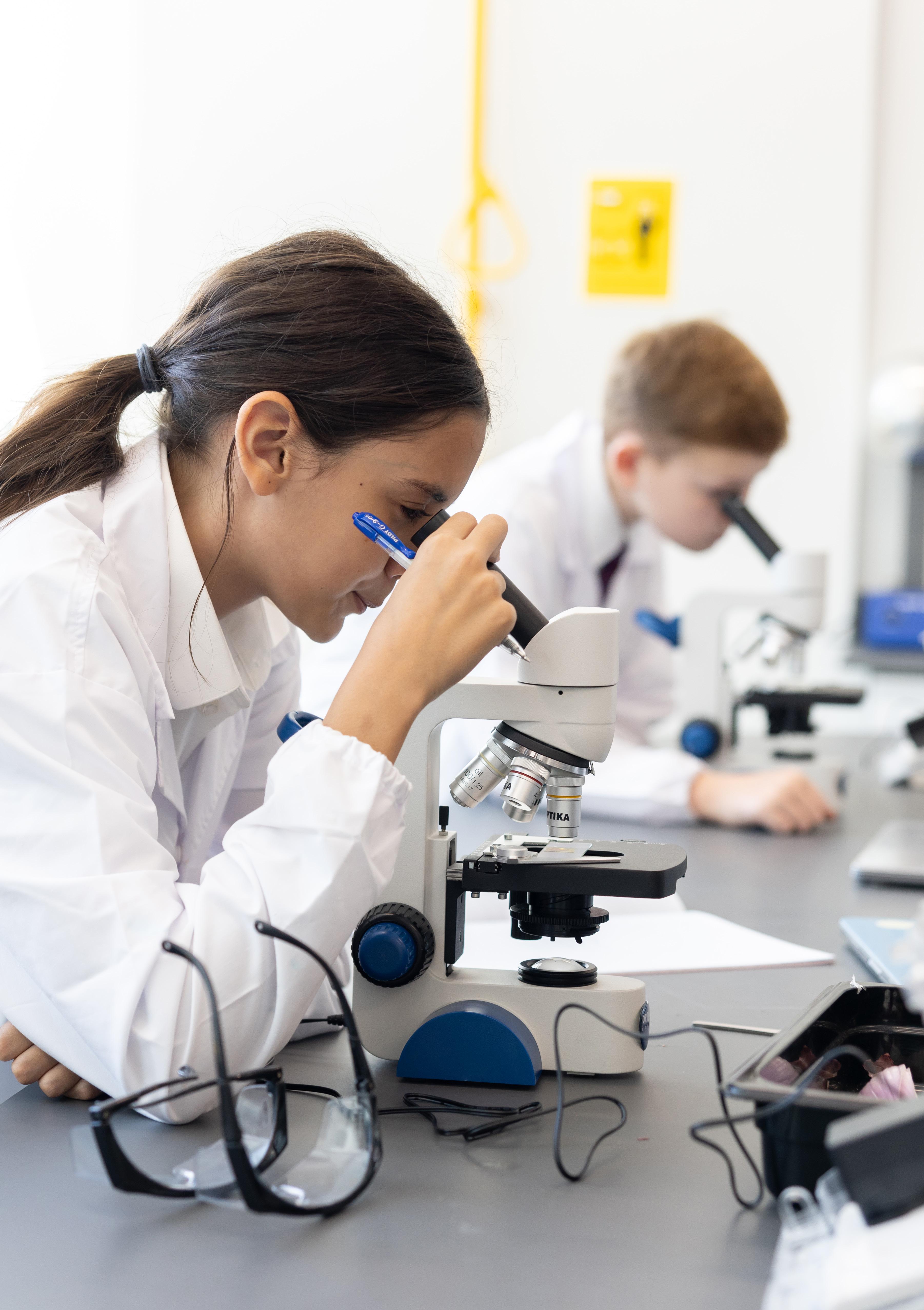
The Key Stage 3 curriculum is designed to provide pupils with a solid foundation in the scientific principles and skills necessary for further studies in science. Over the course of three years, pupils will explore a range of topics, within biology, chemistry, and physics. Through a combination of theoretical concepts and practical experiments, pupils will develop their critical thinking, problem– solving, and analytical skills, and gain a deeper understanding of the natural world and our place in it. The curriculum also emphasises the importance of scientific ethics and responsible scientific enquiry.
• To foster a love of learning and a curiosity about the natural world, inspiring pupils to continue studying science and pursuing scientific careers in the future
• To develop pupils’ knowledge and understanding of key scientific concepts and principles across biology, chemistry and physics
• To develop pupils’ scientific inquiry skills, including the ability to ask questions, design and carry out investigations, and analyse and interpret data
• To develop pupils’ practical skills, including the ability to use scientific equipment, conduct experiments safely, and record and present data effectively
• To promote scientific literacy, including the ability to communicate scientific ideas effectively, understand the role of science in society, and utilise modern technology to communicate their findings
• To develop pupils’ critical thinking and problem–solving skills, including the ability to evaluate evidence, make logical connections between ideas, and apply scientific principles to real–world problems
Knowledge and understanding
• Understand scientific phenomena, facts, laws, definitions, concepts and theories
• Learn how to use scientific vocabulary, terminology and conventions (including symbols, quantities and units)
• Understand the purpose and use of scientific instruments and apparatus
• Understand scientific and technological applications, along with the social, economic and environmental implications
Handling information and problem–solving
• Locate, select, organise and present information from a variety of sources
• Translate information from one form to another
• Manipulate numerical information and other data
• Use information to identify patterns, report trends and form conclusions
• Make predictions based on relationships and patterns, and present reasoned explanations for what has been observed
• Solve problems, including some of a quantitative nature
Experimental skills and investigations
• Demonstrate knowledge of how to select and safely use techniques, apparatus and materials (including following a sequence of instructions where appropriate)
• Plan experiments and investigations
• Make and record observations, measurements and estimates
• Interpret and evaluate experimental observations and data
• Evaluate methods and suggest possible improvements
• Develop a high–level knowledge of living systems and consider them in relation to humans and other organisms (including animals, plants, fungi and microorganisms) in the natural environment
• Understand the importance of understanding and protecting our natural world
• Test theories developed about living things using scientific methods, by collecting and interpreting information about the natural world to identify patterns and relate possible cause and effect
• Become proficient in the use of scientific nomenclature, units and mathematical representations specific to biology
• Develop a strong foundation of knowledge and understanding about the science of living organisms that allows secure progression through to IGCSE and beyond
• Understand how chemistry is the science of composition, structure, properties and reactions of matter
• Acquire knowledge of the empirical world
• Develop an awareness of the implications of chemistry, both for the natural and human–made worlds around us
• Communicate effectively using the language of chemistry and to develop the use of scientific nomenclature, units and mathematical representations specific to chemistry
• Develop a strong foundation of knowledge and understanding about the science of chemical properties of substances and materials of all kinds that allows secure progression through to IGCSE and beyond
• Use knowledge acquired to discover and explain the order of our physical environment
• Understand how physics is the science of concepts of field, force, radiation and particle structures
• Apply physics knowledge in the conservation and management of our environment
• Select and use appropriate instruments to execute measurements in the physical environment
• Develop the use of scientific nomenclature, units and mathematical representations specific to physics
• Develop the capacity to think critically and solve physics–related problems
• Develop a strong foundation of knowledge and understanding about the ideas of physics and our material environment that allows secure progression through to IGCSE and beyond
In the Key Stage 3 science curriculum, pupils will be assessed through a variety of formative and summative assessments. Formative assessments will encourage individuality and pupil voice by providing opportunities for pupils to choose topics for independent research projects and have input into practical investigations.
Teachers will provide clear and constructive feedback to help pupils understand their performance and identify areas for improvement. The assessment approach is designed to support pupils’ learning and encourage them to take ownership of their learning, while also ensuring they achieve the aims of the curriculum.
The ability to understand and communicate in Spanish is a valuable asset that allows pupils to see the world with different eyes. At Key Stage 3, we believe that every single learner should feel a sense of enjoyment, achievement and progress throughout their language learning journey. To achieve this goal, we strive for a pupil–centred approach, empowering pupils to take charge of their learning. By integrating technology, pupils will have access to a range of digital resources and language learning software that will provide a dynamic and stimulating learning experience, while also equipping them with the essential digital skills needed for future academic and professional pursuits.
• To develop a strong foundation of Spanish language skills, including reading, writing, listening and speaking competencies
• To gain a deeper understanding of Spanish culture and society, including traditions, customs and values
• To foster a love for language learning and build confidence in Spanish language communication
• To read some Spanish literature (such as stories, songs, poems and letters), to stimulate ideas, develop creative expression and expand understanding of the language and culture
• To develop transferable skills, such as critical thinking, problem–solving and digital literacy, that are valuable across all areas of the curriculum
• Identify and use tenses or other structures which convey the present, past and future
• Use and manipulate a variety of key grammatical structures and patterns
• Develop a wide–ranging and deepening vocabulary that allows participation in discussion about wider issues
• Listen to a variety of forms of spoken language to obtain information, transcribe sentences and respond appropriately
• Initiate and develop conversations, coping with unfamiliar language and unexpected responses
• Express and develop ideas clearly and with increasing accuracy, both orally and in writing
• Speak coherently and confidently, with increasingly accurate pronunciation and intonation
• Read, translate and show comprehension of original and adapted materials from a range of different sources
• Write creatively to express opinions and use an increasingly wide range of grammar and vocabulary
Assessment will cover speaking, listening, reading and writing skills in Spanish.
• Speaking assessments may include class discussions, role–plays and presentations
• Listening assessments may include extracting relevant details, deducing meaning and answering questions related to spoken texts
• Reading assessments may include extracting relevant details, deducing meaning and answering questions related to written texts
• Writing assessments may include writing on everyday topics, demonstrating clear expression, appropriate grammar, vocabulary and spelling
Story of Our Land (SOOL) is a course completed in Years 7 and 8 which introduces pupils to the history, geography and beliefs of the world in which we live. It is a refreshingly innovative way of presenting the humanities; rigorous yet also relevant and appealing to academically ambitious schools. Story of Our Land is unique. It grew from a vision at Brighton College for an inspirational and innovative education that would equip pupils with the knowledge, skills and enjoyment they would need to become enthusiastic life–long learners, as well as responsible and thoughtful citizens.
Course Aims
• To provide an inspiring curriculum based on a chronology of world history enriched with geographical, philosophical and religious themes
• To be academically rigorous and challenge pupils to see the cross–curricular themes involved in the development of countries and societies over time
• To develop pupils’ critical thinking skills and enhance their ability to interpret, analyse and evaluate primary and secondary sources of evidence
• To develop history and geography subject specific skills and ensure each subject retains individual integrity, ensuring excellent foundations for IGCSE and A-level
• To build an understanding of how history, geography, religion, philosophy and economics are interconnected
• To celebrate diversity within and between cultures and countries
• To build independent research and study skills by incorporating texts into the curriculum (Disaster by choice/Prisoners of Geography and Factfulness)
• To develop essay writing skills
Learning Outcomes and Skills
Year 7
• Explain different ways in which we gain knowledge
• Analyse Plato’s theory of truth and knowledge
• Evaluate primary and secondary sources of evidence
• Explore primary and secondary sources of evidence to gain knowledge on the Celts and their settlements
• Develop an understanding of what makes a settlement sustainable today, based off the sustainable community’s model
• Create a sustainable settlement (in collaboration with DT)
• Describe the characteristics of the tropical rainforest and explain the importance of the tropical rainforest in the fall of Singapore during World War Two
• Explain the causes of threats to our world such as deforestation and natural hazards such as earthquakes, volcanic eruptions and typhoons
• Categorise natural and moral evil and understand the ‘problem of evil’
• Develop basic map skills
Year 8
• Develop an understanding of research skills
• Understand the uses and importance of coasts (historically and currently), as well as the physical processes and how they are managed
• Explore what happens to places as tourism increases over time, using Butlers model of tourism
• Explore Brighton as a case study for coasts and tourism
• Independently research, critique and present a study on coasts and tourism in Brighton, UK
• Explore factors that affect global levels of development
• Analyse ideas, such as the ‘generalisation instinct’, from the book ‘Factfulness’ to understand misconceptions that we have about the different levels of development of countries
• Compare the journeys of historical development for Singapore and the UK
• Conduct fieldwork in our local area
Pupils are assessed through a mixture of formative and summative assessments. In addition to mid–year and end–of–year summative assessments, pupils complete project work (both independently and collaboratively), extended pieces of research, essays and class presentations. When possible, local fieldwork and trips will be introduced to help refine skills of historical understanding and geographical investigation, and pupils will also be informally assessed on their participation in these activities.
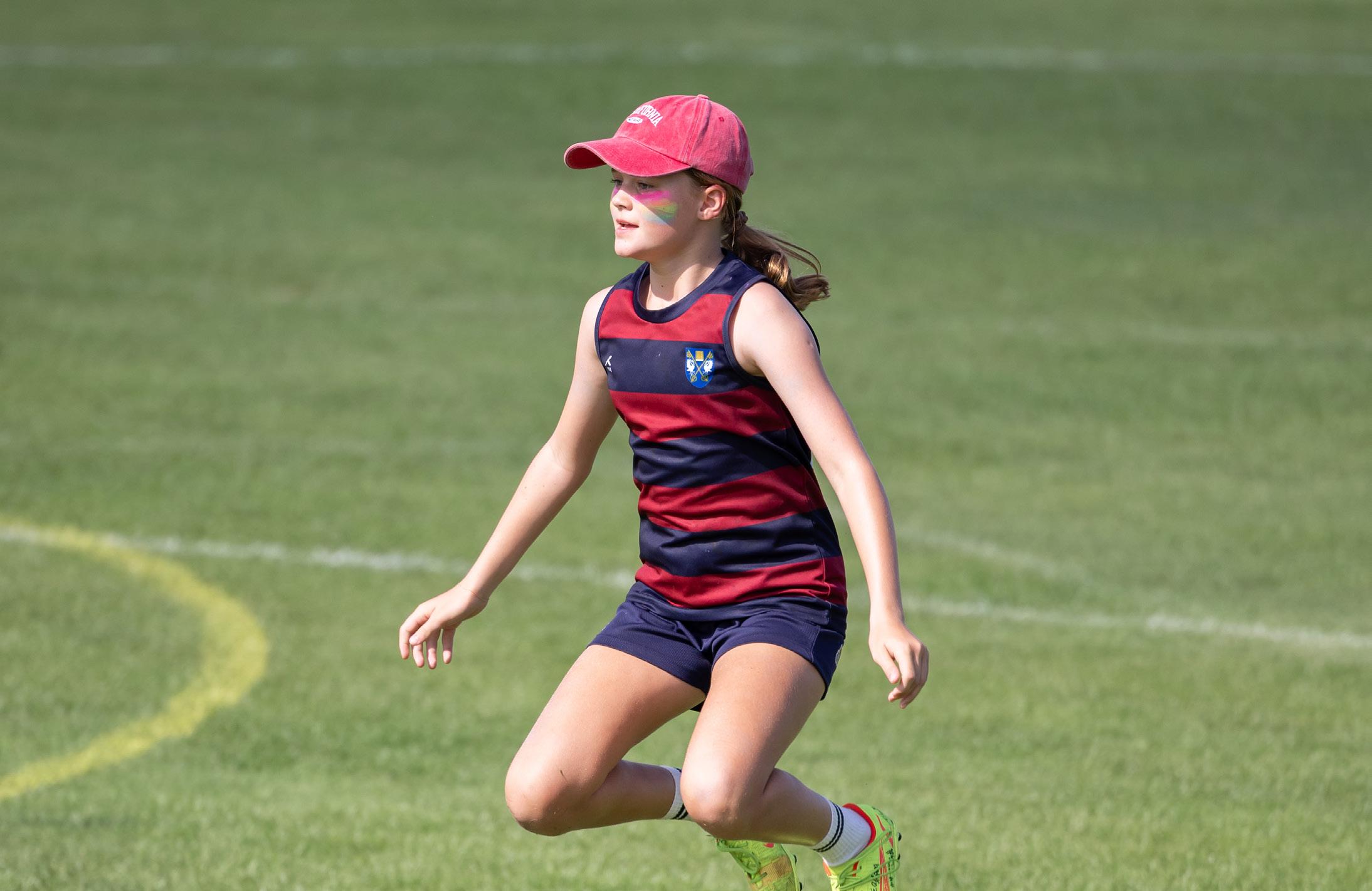
The Co–Curricular programme is designed to enhance and complement our curriculum. CCAs are offered at the end of our school days (Monday to Friday) by a variety of teachers and external experts. We offer creative, active and service activities. Other activities will be introduced through pupils’ suggestions and interests. Pupils will have more opportunities to experience different activities throughout the year.
The programme aims to add challenge and offer further opportunities for pupils to own their achievements.
Why it is important
CCAs are important to fuel pupil learning and to build important skills, such as social and leadership skills, to enrich and balance a pupil’s academic experience. Pupils who engage in different CCAs practise and develop their self–management skills. Pupils develop a positive outlook towards school and future study through an increased sense of community at school.
By selecting varied activities, pupils improve their confidence and self–esteem through developing proficiency in different areas. Through leadership and independence, CCAs can help prepare pupils for their future as they discover more about themselves and their path in life.
Older pupils can expect CCAs to be wide–ranging. Increasingly they are expected to take the role of leader within the school, by working with younger pupils to help them develop skills and passions of their own. There will be significant time to develop areas in which pupils have emerging talent, as well as considering new challenges.

At Brighton College (Singapore) Co–Curricular Activities range from specialist to general
These are just some of the activities we offer:
Brighton College (Singapore) 1 Chuan Lane
Singapore 554299
+65 6505 9790 brightoncollege.edu.sg

For more information or to book a personal tour please scan QR code or contact us at admissions@brightoncollege.edu.sg
©Brighton College (Singapore) Pte Ltd | PEI Registration Number: 201904884D
Period of Registration: 14 October 2023 to 13 October 2027. THE SUNDAY TIMES