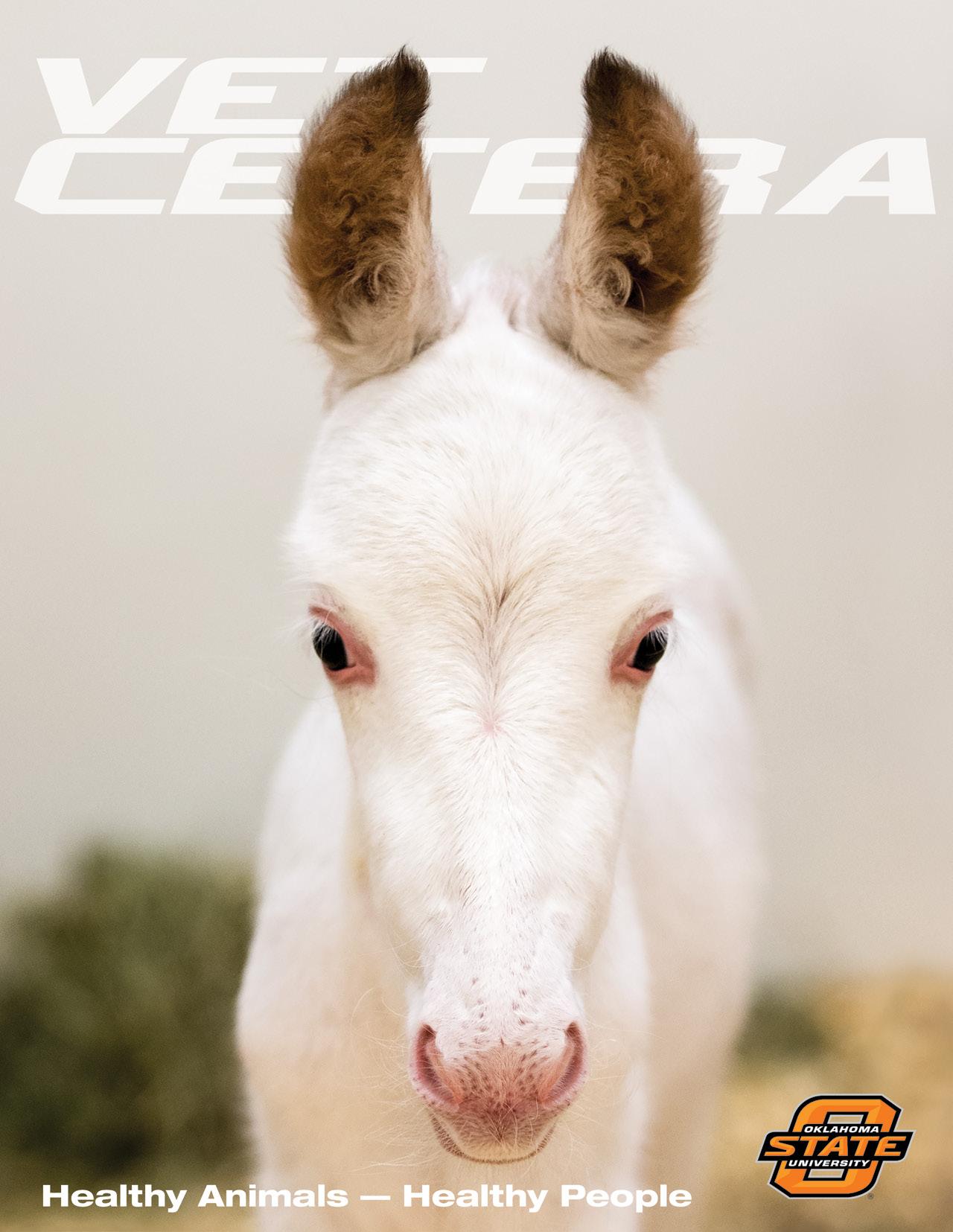
DOUBLE THE TROUBLE
Yes, this precious baby mule has a dark-coated twin.
Page 13
DOUBLE THE TROUBLE
Yes, this precious baby mule has a dark-coated twin.
Page 13
2 HEALING A BROKEN HEART
The Center for Veterinary Health Sciences graduates competent, confident, career-ready veterinarians — a tradition it has proudly carried forward since the day the veterinary college opened its doors 69 years ago. Please join us at the CVHS website: www.cvhs.okstate.edu. The OSU homepage is located at www.okstate.edu
zine
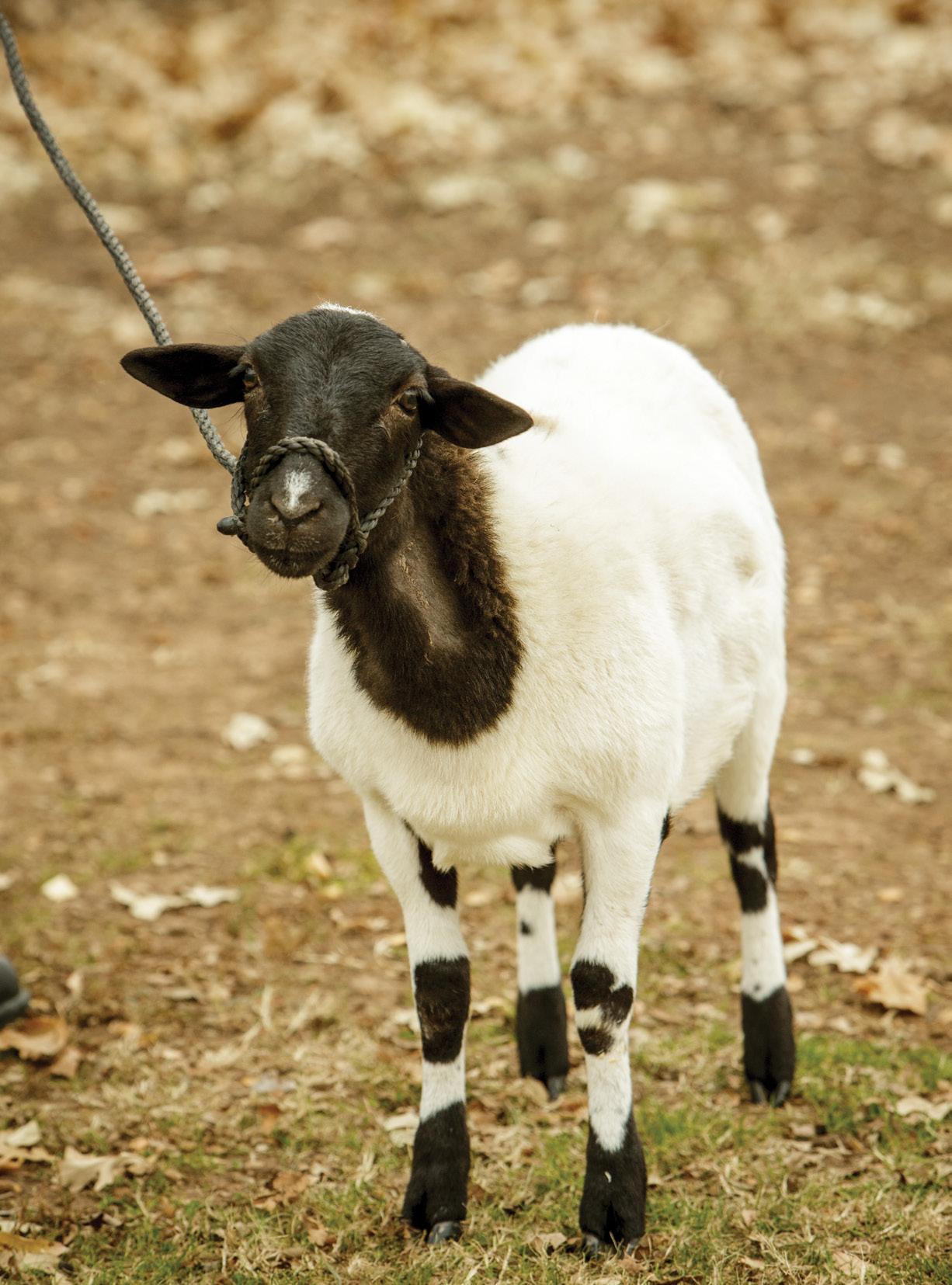
A therapy sheep named Yoda needed a little help with his own heart, and Oklahoma State University’s Center for Veterinary Health Sciences was able to correct his congenital problem.
18 AHEAD OF THE GAME
OSU, in keeping with its commitment to stay in the forefront of advancing technologies, is offering a new array of minimally invasive procedures for patients. The treatments involve minimal pain, minimal healing time and much better outcomes, veterinarians say.
42 GETTING THROUGH IT ALL
Jose Oyola Morales battled a risky brain surgery as a veterinary student, but he managed to keep up and graduate with the Class of 2017. Full Commencement coverage, Pages 42–49
54 TRACKING HIS DAYS
Dr. Bob Story spent his 30-year career as a racetrack veterinarian at Ruidoso Downs in New Mexico, working with owners, jockeys, grooms, trainers and horses, helping produce 14 All-American Futurity winners.
Christopher Ross, DVM, Ph.D.
Interim Dean, Center for Veterinary Health Sciences
Derinda Blakeney, APR
Public Relations and Marketing Coordinator
Sharon Worrell
Alumni Affairs and Events Coordinator
Chris Sitz
Senior Director of Development
Dorothy L. Pugh
Editor
Paul V. Fleming
Art Director / Designer
Phil Shockley / Gary Lawson
Staff Photographers
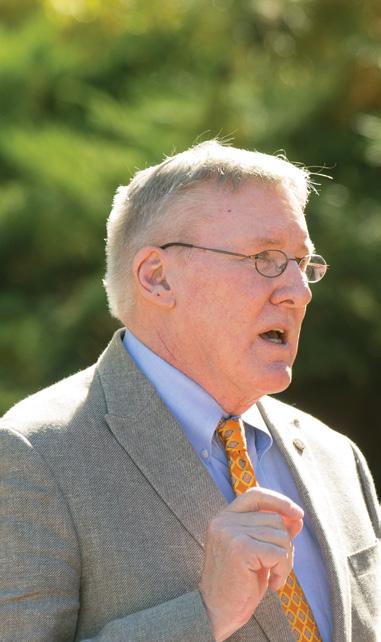
Things are moving right along at the CVHS. We recently finished another very successful Fall Conference, complete with a number of alumni events. It was great meeting new (to me) faces and renewing some old acquaintances.
Some highlights of things that are keeping us busy right now:
Progress on the classroom building project continues. Eliott and Associates will be the architects, and Flintco the primary contractor. We should begin construction in spring 2018 and occupy the building in time for fall 2019. Fundraising continues in honor of Dr. Roger Panciera. Please contact us if you have questions or would like to participate.
Please welcome Dr. Carlos Risco, currently at the University of Florida, who will join us in March 2018 as our new dean.
It has been exciting and “interesting” serving as interim dean! CVHS finances have been strained by the state’s revenue shortfalls over the past three years. We have our fingers crossed that the state budget treats us kindly this year and next. Inadequate state funding jeopardizes our progress and, indeed, our continued accreditation.
We continue to graduate confident, competent, career-ready veterinarians. Our graduating Class of 2017 had essentially 100 percent employment and a 100 percent national board pass rate. The value of a CVHS DVM degree ranks at the top in the country, compared with other U.S. veterinary programs.
I need to give a special shout-out to the faculty and staff members who operate one of the most productive, efficient teaching hospitals in the country, especially given the relatively small size of our faculty. We are conducting an aggressive, targeted hiring campaign that will yield continued excellence as we go forward. CVHS is amazingly productive, and all deserve special thanks.
Please let us know how we can serve the state and the profession better!
Sincerely,
CHRIS ROSS, DVM, PH.D. INTERIM DEAN, CENTER FOR VETERINARY HEALTH SCIENCES
OSU VETERINARIANS USE GROUNDBREAKING TECHNIQUE TO HELP THERAPY SHEEP
BY DERINDA BLAKENEY,
FOR THE FIRST TIME EVER, veterinarians at Oklahoma State University’s Center for Veterinary Health Sciences corrected a specific congenital heart problem in a sheep. Yoda, a 15-month-old therapy animal owned by Ranch Hand Rescue Counseling Center and Animal Sanctuary in South Argyle, Texas, suffered from a patent ductus arteriosus or PDA.
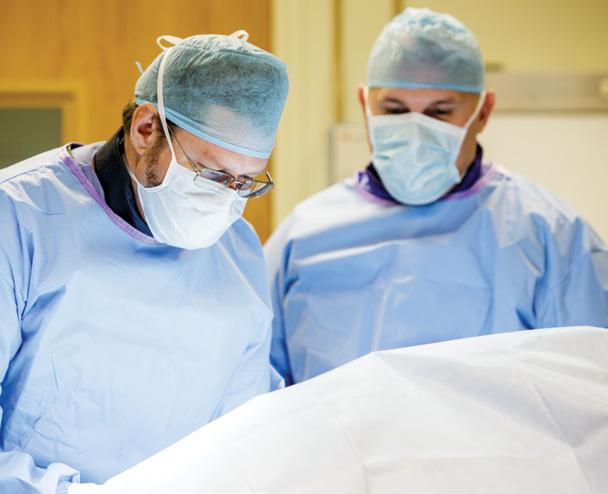
“A PDA is a blood vessel that allows blood to bypass the lungs. At birth it should close off, and now — 15 months later — it is still open,” explains Dr. Ryan Baumwart, a board certified veterinary cardiologist. “With Dr. Robert Streeter’s assistance, we first tried to correct the problem by going in through a blood vessel in Yoda’s leg with a catheter. However, the blood vessel we wanted to close off was too large.”
Baumwart handed the case over to his colleague, Dr. Danielle Dugat, a small animal surgeon.
“My role was to take Yoda to surgery and open his chest where we could see his heart, the normal blood vessels and the shunting vessel,” Dugat says. “I secured a suture around that vessel and tied it down, closing that vessel completely. Blood flow could no longer pass through that shunt pathway. As a result, the murmur disappears, and Yoda can begin the recovery process.”
“Yoda is one of our more popular therapy animals,” adds Bob Williams, founder and CEO of Ranch Hand Rescue. “All the animals here see clients daily in our counseling program, but Yoda has a very strong connection with many of
Dr. Ryan Baumwart (right) looks on as Dr. Robert Streeter operates to try to repair Yoda’s defective blood vessel.
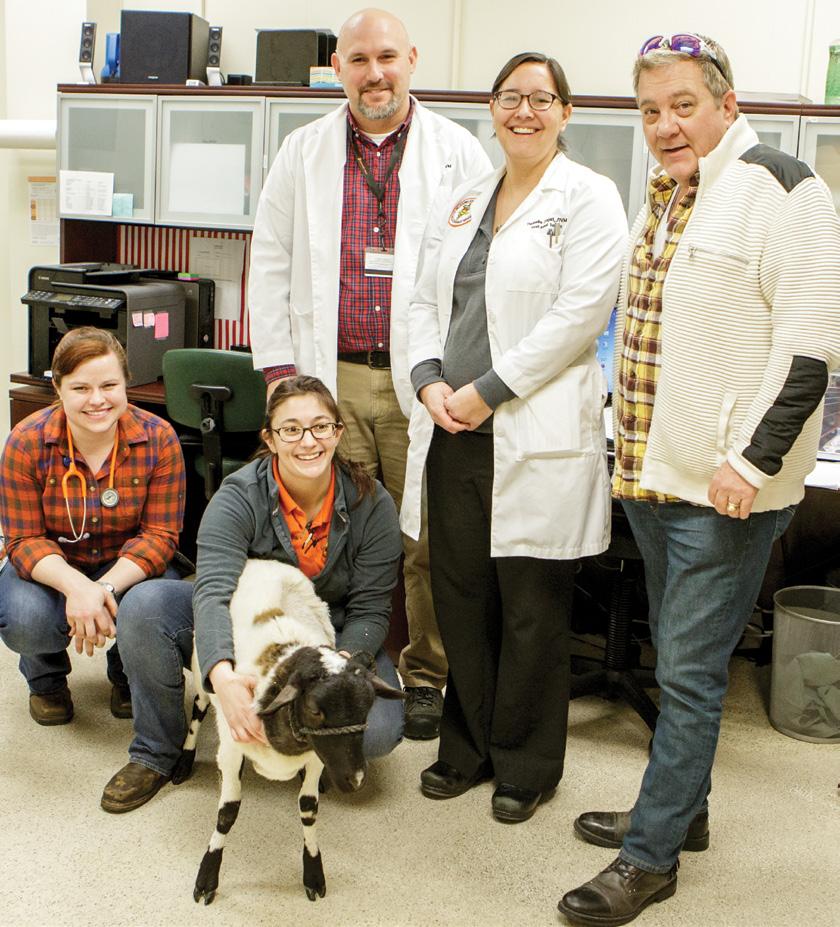
With Yoda are, kneeling (from left): fourth-year veterinary student Kelsey Walker and Dr. Jennifer Halleran, food animal medicine and surgery resident; and standing (from left) Drs. Ryan Baumwart and Danielle Dugat with Bob Williams, CEO of Ranch Hand Rescue
our clients who are abused children. It’s exciting to me to do this firstever procedure. I’m very proud of the partnership we have with OSU and of the team here. Yoda’s unconditional love and snuggles he gives to all the clients make him a special partner to all who meet him.”
Repairing the defect was a priority because leaving it untreated would have cut Yoda’s life short, Baumwart says.
The surgery was a success. The case will be written up and published in veterinary medical journals so that others may benefit from the experience OSU veterinarians gained saving Yoda. The ground-breaking surgery even caught the attention of the American Heart Association. That story can be found at Yoda Makes Sheep History with Heart Surgery
Today, Yoda is expected to live a full, happy and healthy life.
“I couldn’t be more thrilled. Dr. Baumwart and the whole team up here have just been incredible,” Williams says.
Videos featuring Yoda’s case can be found at okla.st/Yoda1 and okla.st/YodaProg
“YODA IS ONE OF OUR MORE POPULAR THERAPY ANIMALS. (HE) HAS A VERY STRONG CONNECTION WITH MANY OF OUR CLIENTS WHO ARE ABUSED CHILDREN.”
— BOB WILLIAMS, FOUNDER AND CEO OF RANCH HAND RESCUE
STORY BY DERINDA BLAKENEY, APR | PHOTOGRAPHY BY GARY LAWSON
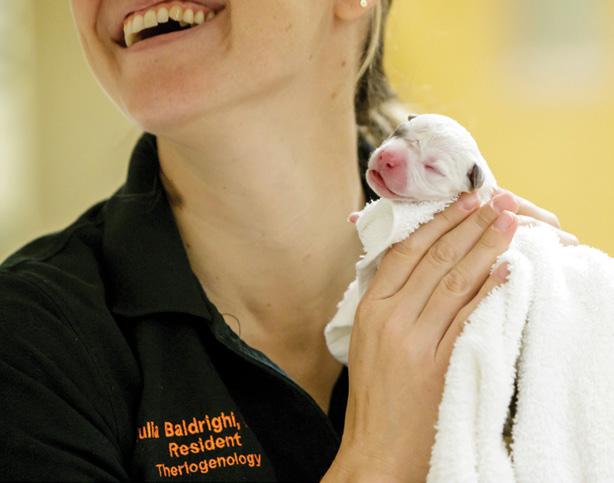
In ancient Egyptian lore, Isis was the goddess of marriage, fertility, motherhood, magic and medicine. Unfortunately for dog owner Larry Shaw of Barnsdall, Okla., his female Staffordshire terrier, Isis, was anything but fertile.
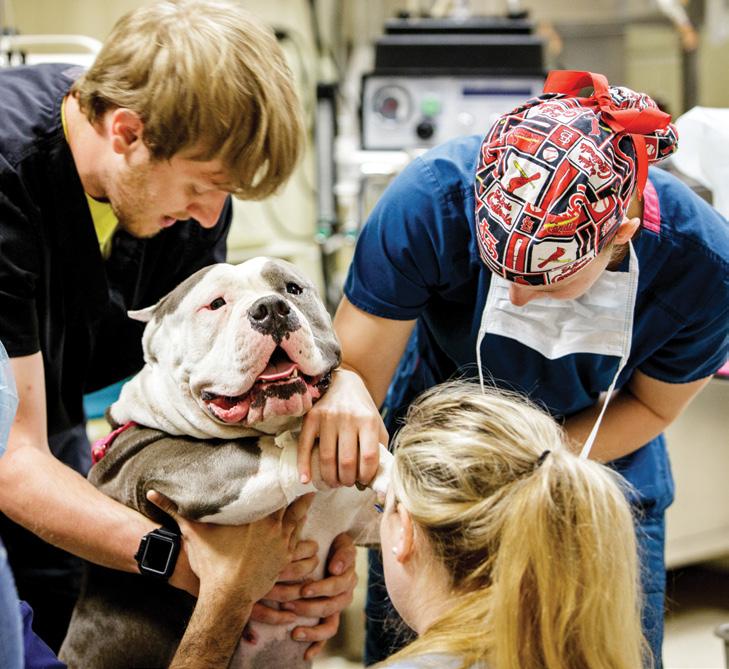
After four unsuccessful attempts had been made to breed Isis, Shaw’s veterinarian referred him to Oklahoma State University’s Center for Veterinary Health Sciences. Dr. Candace Lyman, a board certified theriogenologist at the center’s Veterinary Medical Hospital, took the case.
“The thing that makes Isis unique is that after multiple attempts of unsuccessfully becoming pregnant, we identified that she would accumulate large amounts of abnormal fluid within her uterus prior to even getting bred,” Lyman says. “We were able to remove that fluid by doing transcervical lavage and performed further diagnostics, such as a transcervical endometrial biopsy.
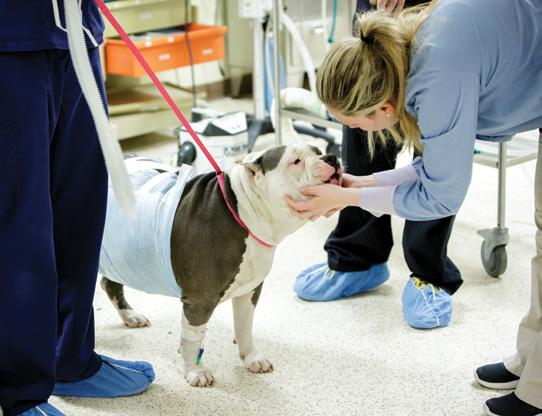
“Previously these procedures — the biopsy, uterine lavage, any diagnostics that had to be performed were surgical procedures,” she adds. “So now we are able to do these procedures in patients that are awake and standing and are happy to comply with us, using some new equipment that has become available. And with Isis we were able to identify that she had fluid, and we used a drug called oxytocin to evacuate that fluid out of her uterus, and then we performed a transcervical uterine lavage.”
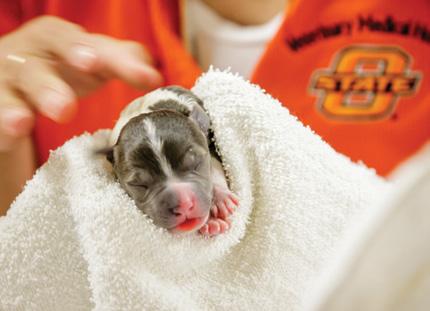
Isis was bred again using semen from a male dog also owned by Shaw. And for the first time, ultrasound confirmed she was pregnant with a litter of puppies.
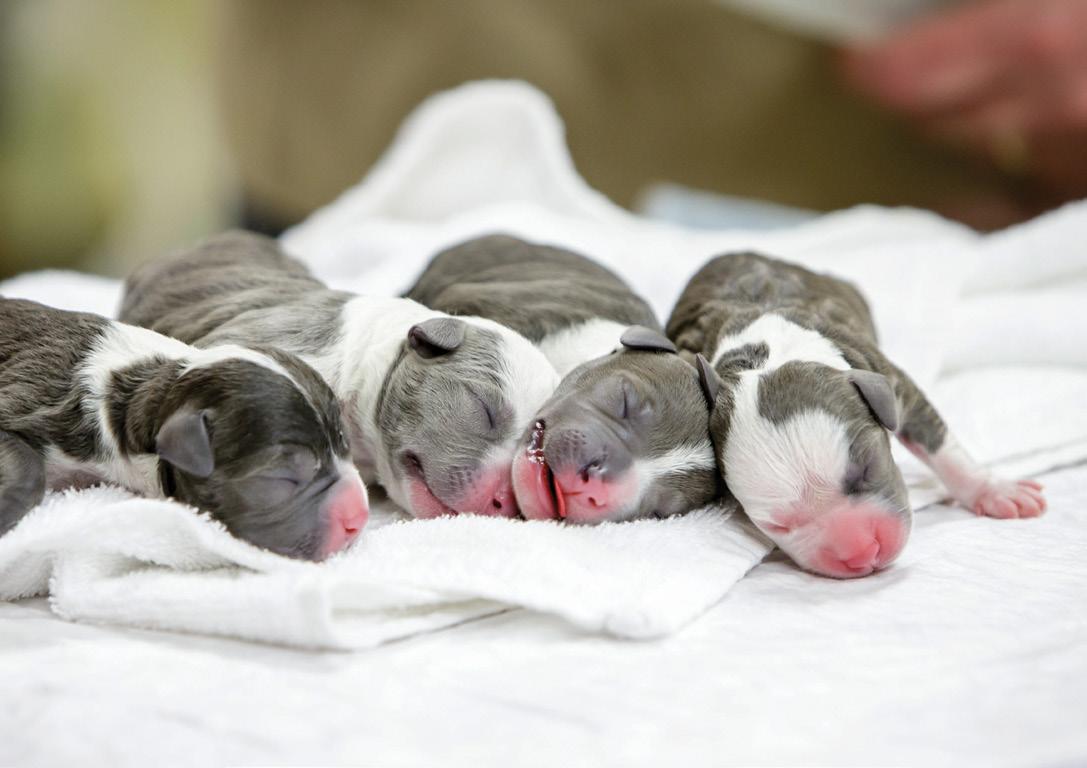
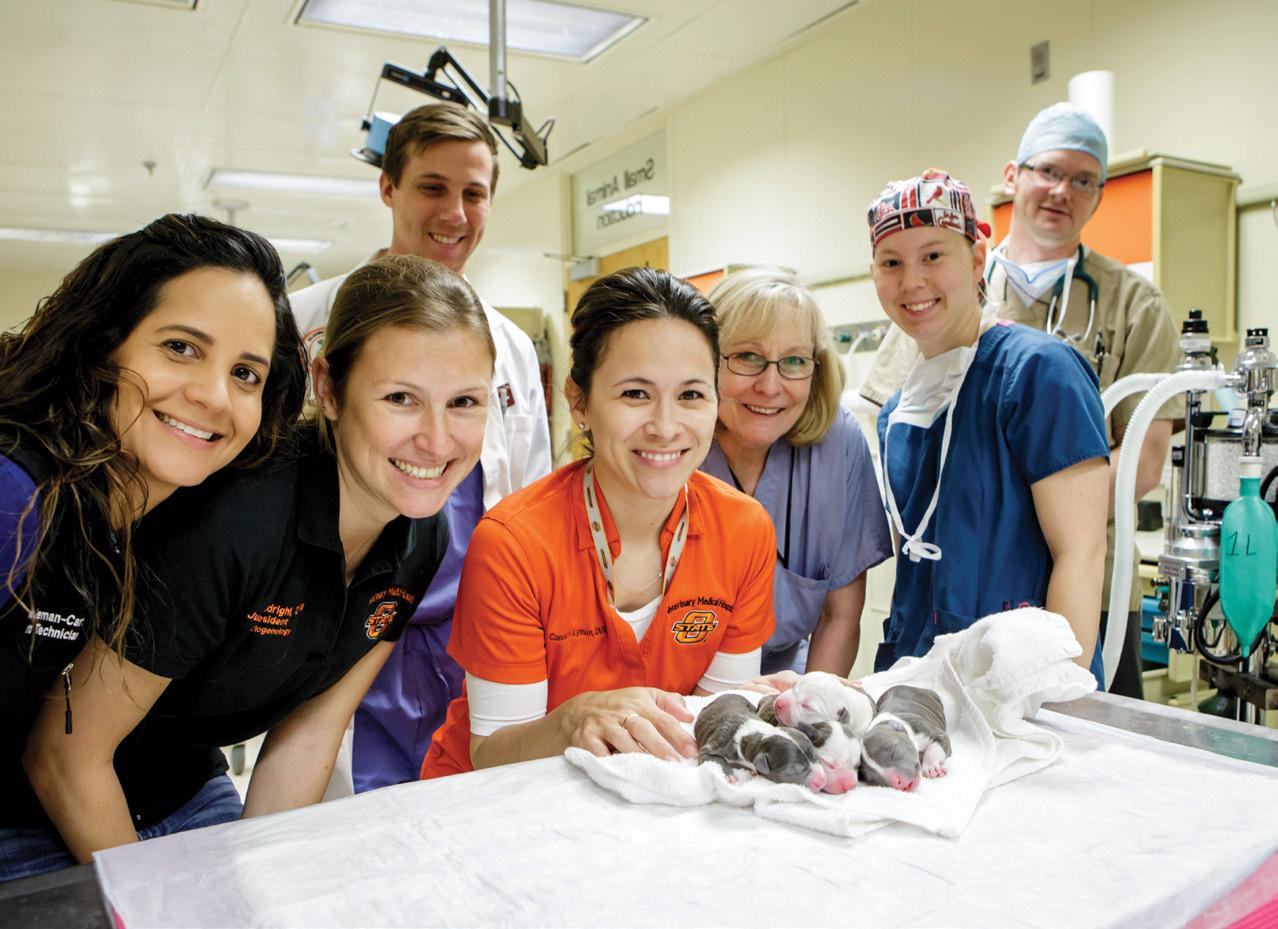
“So today (April 18, 2017), we are reaping the rewards of all of our hard work,” Lyman says. “Isis electively had a caesarian section giving birth to four gorgeous puppies — two males and two females. The owners are pretty excited about this result, and so are we. This is the first time that we are aware of that a dog has been transcervically managed for intrauterine fluid prior to breeding like this and has given birth to a litter of puppies.”
“If you have a problem getting your dog bred, bring it here,” Shaw adds.
“PREVIOUSLY THESE PROCEDURES … THAT HAD TO BE PERFORMED WERE SURGICAL PROCEDURES. SO NOW WE ARE ABLE TO DO THESE PROCEDURES IN PATIENTS THAT ARE AWAKE AND STANDING AND ARE HAPPY TO COMPLY WITH US.”
— DR. CANDACE LYMAN
For more information about theriogenology/reproductive services available at OSU’s Center for Veterinary Health Sciences, visit okla.st/repro1234
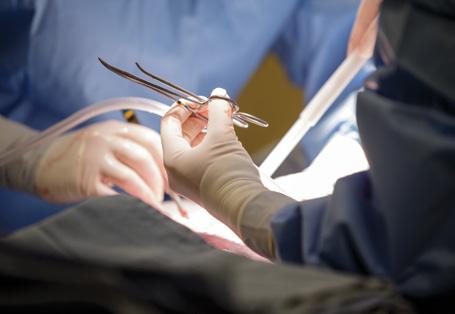
VETERINARY CENTER OFFERS CANINE ATHLETIC PROGRAM
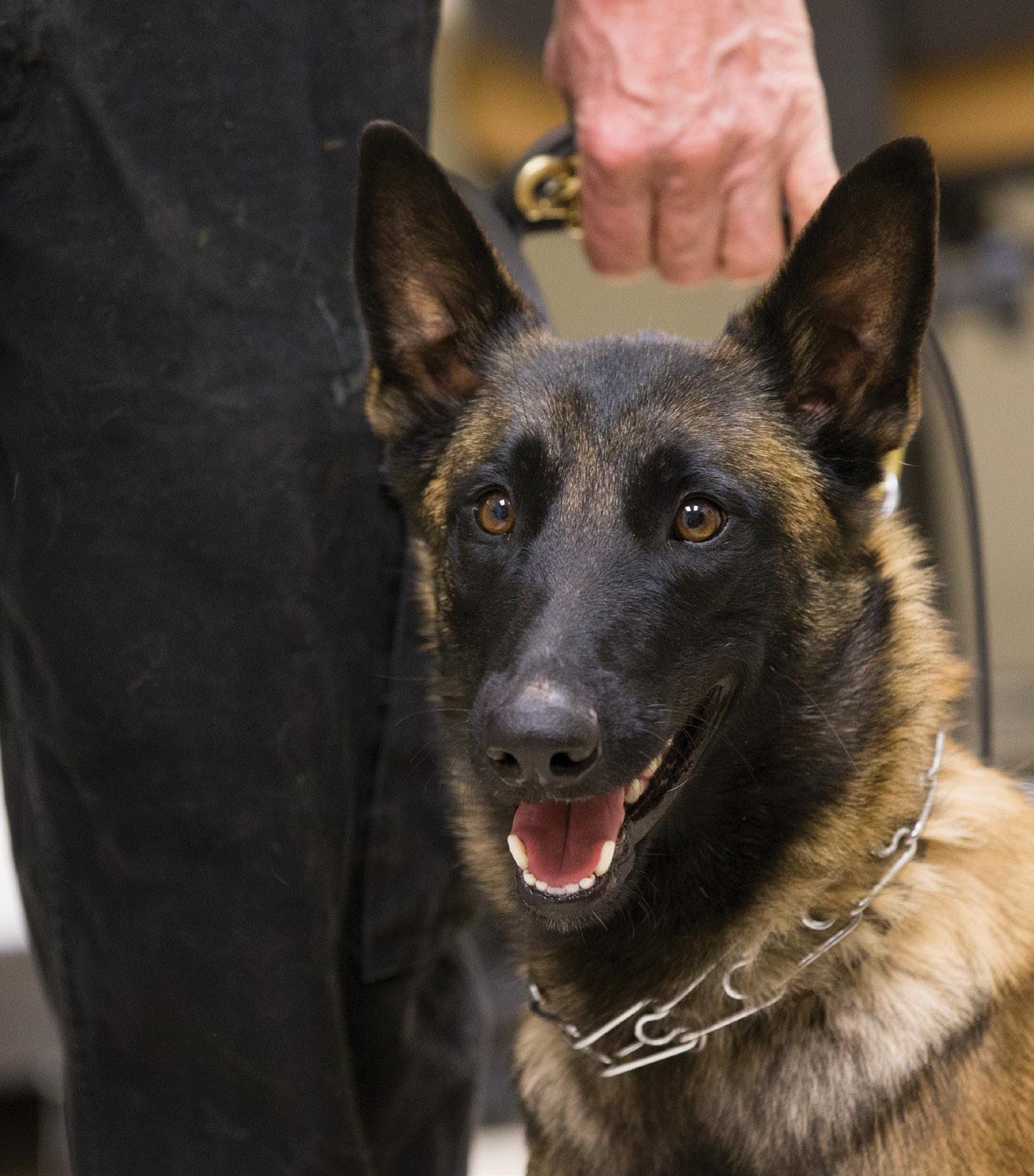
We all hear about it when a law enforcement K9 officer is killed in the line of duty.
But heat stress and a lack of adequate physical conditions — NOT VIOLENCE — killed far more such dogs across the United States in 2016.
That concern for these working dogs prompted Oklahoma State University’s Center for Veterinary Health Sciences to host an Advanced Canine Athletic Program to provide the latest knowledge and training techniques for improving these canines’ fitness.
“We’ve been doing research that supports this training for about two decades,” says Dr. Michael Davis, director of the center’s Comparative Exercise Physiology Laboratory and a professor in the Department of Physiological Sciences. “The information has been disseminated to the people who have paid for the research, mainly the military special operations. However, it’s every bit as beneficial to law enforcement dogs, but they didn’t have access to the information unless we put together a workshop like this.”
The Advanced Canine Athletic Program aims to increase the fitness of military dogs to improve their performance and value to deployed teams.
“Since development, that program has transitioned to more of a law enforcement orientation as the folks who developed it got out of the military and started a business, Guardian Point, to market this training program and develop better tools for law enforcement to mimic the capabilities that exist for the military,” Davis continues.
“JUST BECAUSE THE DOG IS A BETTER ATHLETE THAN THE HUMAN RIGHT OFF THE SHELF DOESN’T MEAN THAT THEY WON’T BENEFIT FROM PHYSICAL FITNESS AND CONDITIONING TRAINING.”
— DR. MICHAEL DAVIS, DIRECTOR, COMPARATIVE EXERCISE PHYSIOLOGY LABORATORY
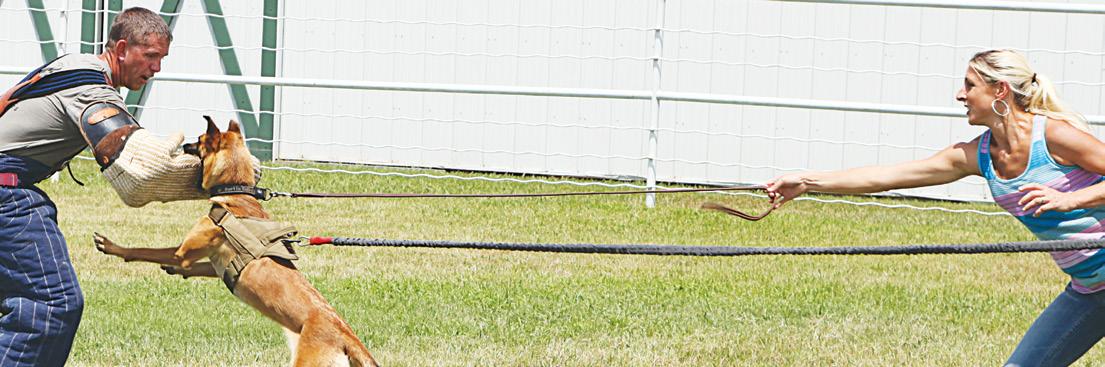
Attendees at OSU’s three-day program represented municipal, state and federal law enforcement agencies as well as personal protection canine trainers and owners, some of whom are veterinarians.
“It’s great seeing the different agencies that have an interest in this,” says Dr. Sean McPeck, an emergency veterinarian from Alaska who assisted with the program. “We can make these law enforcement and military working dogs much more effective.”
“I think the take away for attendees is the importance of training,” Davis says. “Just because the dog is a better athlete than the human right off the shelf doesn’t mean that they won’t benefit from physical fitness and conditioning training, just like a human does. In particular, the physical fitness will improve their resistance to heat injury. It will allow them to exercise harder under more stressful conditions without overheating. It also tends to decrease the number of injuries so it can potentially prolong the service life of the dog before they are forced to retire.”
“I have a profound interest in taking the athlete to the next level. And these working dogs are athletes and the conditioning is not there,” McPeck says. “A little bit of time, a little bit of investment daily, and it will pay off. If you have the patience and invest 20 or 30 minutes a day now, two or three months from now you’re going to be just blown away by the results that you can achieve with your canine. I think we’re just touching on the tip of what they can do.”
Instructors with extensive experience in preparing dogs for military and law enforcement activities covered program design, nutrition, thermoregulation, supplements, conditioning equipment, canine exercise physiology and more in the three-day program. Attendees brought their own canines or used dogs provided by the veterinary center for the exercise portion of the program.
Special thanks to the program’s sponsors: Guardian Point, the Comparative Exercise Physiology Lab, and Oklahoma State University’s Center for Veterinary Health Sciences.
Cl/HS
To see the dogs in action, visit okla.st/2fxmDgz
“WE CAN MAKE THESE LAW ENFORCEMENT AND MILITARY WORKING DOGS MUCH MORE EFFECTIVE.”
"WE CAN MAKE THESE LAW ENFORCEMENT AND MILITARY WORKING DOGS MUCH MORE EFFECTIVE,"
— DR. SEAN MCPECK
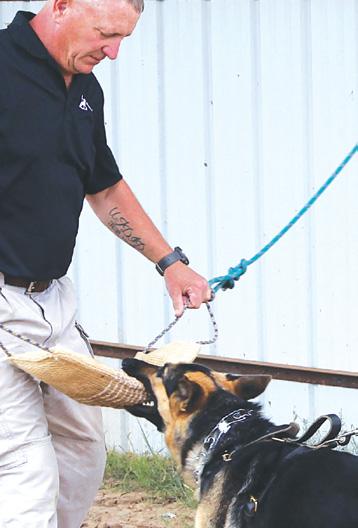
Randel Roy teaches a dog how to get a proper submission bite. During this exercise, dogs develop the proper bite technique and strength that will allow them to be lifted off the ground without releasing their hold on the bite training device.
Subject matter experts presenting at the Advanced Canine Athletic Program were:
ALAN SIERING has 23 years of military service, 17 with the U.S. Special Operations Command and 10 years of that working with K9s. He handled canines on five combat deployments to Iraq and Afghanistan, conducting more than 400 direct action missions against enemy combatants in hostile territory.
RANDEL ROY has 25 years of combined law enforcement and military experience. With more than 15 years of K9 service, he spent eight years as a senior K9 trainer for the U.S. Army Special Operations Command. He has conducted numerous successful K9 detection operations with various agencies and organizations including the FBI, ATF, Iowa Department of Corrections, local businesses, Fed Ex, UPS and the U.S. Postal Service.
SEAN MCPECK, DVM, has 21 years of military service, 18 years with canines. He has served as a sniper team leader and as a veterinarian with the U.S. Special Operations Command. He authored and implemented the first comprehensive canine conditioning program, which is still in use.
MICHAEL DAVIS, DVM, PH.D., DACVIM, DACVSMR, has more than 25 years of experience as a licensed veterinarian. He is also a board-certified specialist in veterinary internal medicine and veterinary sports medicine and rehabilitation. Davis is a research physiologist and clinical expert in exercise physiology at Oklahoma State University. He has received more than $8 million in research funding to study the effects of exercise stress in animal models, particularly racing sled dogs and military working dogs.
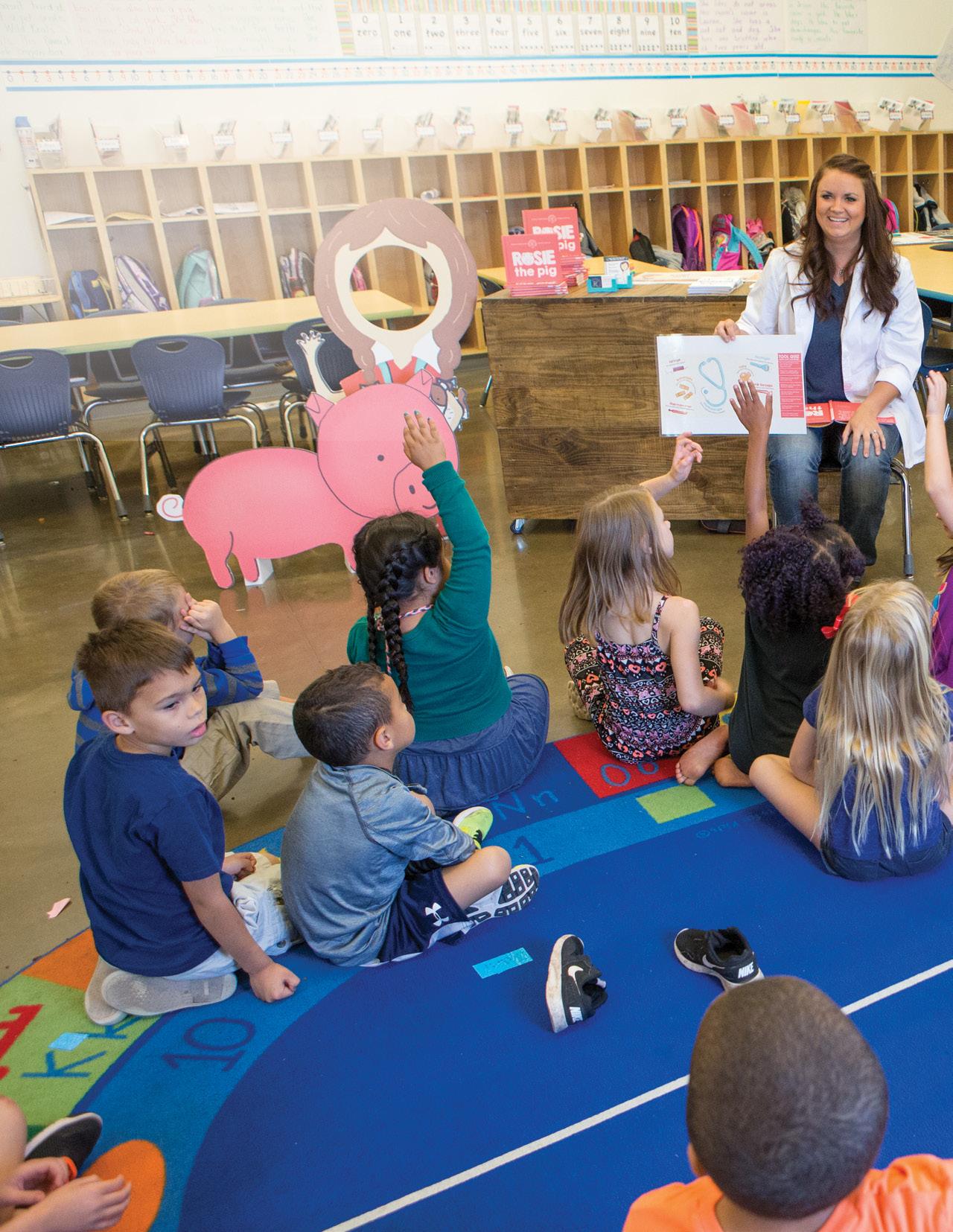
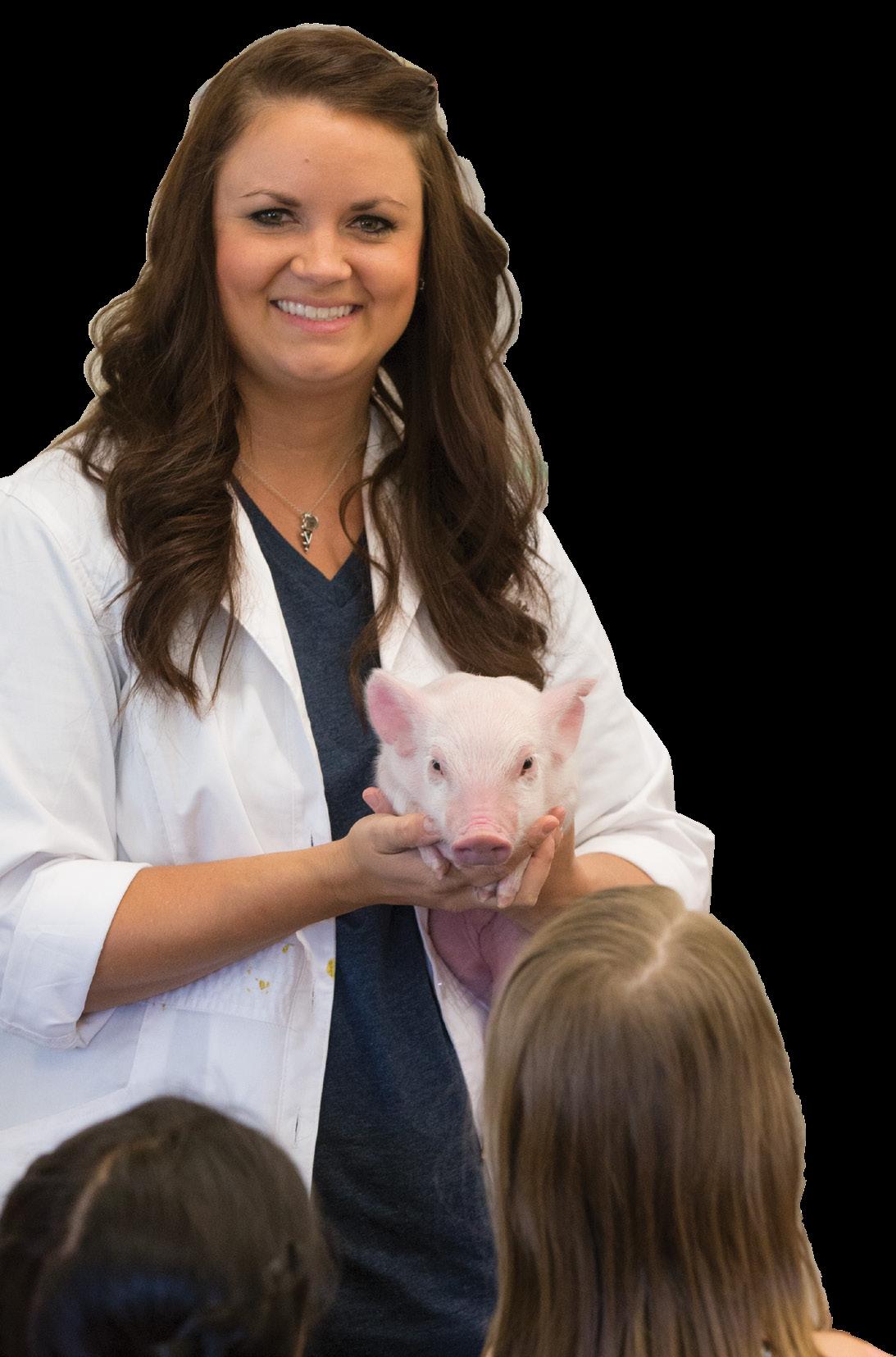
“I DID NOT HAVE A STRAIGHT PATH TO VETERINARY SCHOOL. I wasn’t one of those kids who grew up knowing they wanted to be a veterinarian,” says Dr. Rebekah Hartfield, a mixed animal practitioner from Chandler, Okla. “I have a lot of faith, and God helped me get through everything that I’ve been through and overcome. That’s what helps me keep going and to keep fighting. I wasn’t going to give up.”
Hartfield’s not-quite-straight path began with her childhood in Bridgeport, Texas. She tried a semester of college after high school but decided it wasn’t for her. While working on a dude ranch the next summer, listening to her colleagues talk about school persuaded her to try college again.
BUT VETERINARIAN HOPES NEW BOOK SERIES WILL ENCOURAGE EARLY ENTHUSIASM FOR CAREER PATH
“I FEEL LIKE OSU REALLY PREPARED ME TO WORK IN PRIVATE PRACTICE. WE JUST REALLY GOT A LOT OF HANDS-ON EXPERIENCE.”
— DR. REBEKAH HARTFIELD
“I ended up getting my associate degree in equine science,” she says. “I needed a second job to help pay for school and worked at a veterinary clinic. I decided to get my vet tech degree as well. It was my husband who really inspired me to go to veterinary school. He said, ‘Hey, you’re really good at this. Why don’t you go to vet school?’ I was like, no, that’s just way too much school. I don’t think I’m smart enough to go.
“It was hard. School is really, really hard for me,” she adds. Still, she really enjoyed her classes while earning her bachelor’s degree in animal science at Texas A&M University and applied there first for veterinary college.
“I didn’t get in my first year,” Hartfield remembers. “I applied the second time at Texas A&M, and I also applied at Oklahoma State. I probably wasn’t the best candidate to get into veterinary school, but I worked really hard and with my experience and everything, I was able to get into OSU. My husband and I moved out of Texas and made our residence in Oklahoma.”
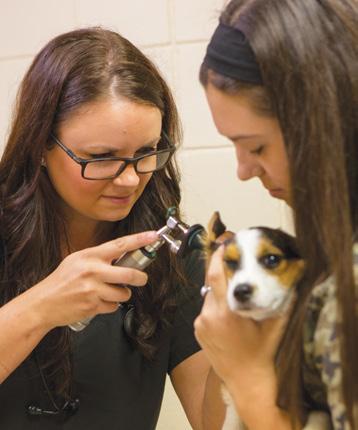
Hartfield earned her DVM degree from OSU in May 2016. Since graduation, she has been working full-time at Cushing (Okla.) Veterinary Clinic, a mixed animal practice owned by Dr. Brian McNeil, a 1978 OSU Veterinary Medicine graduate.
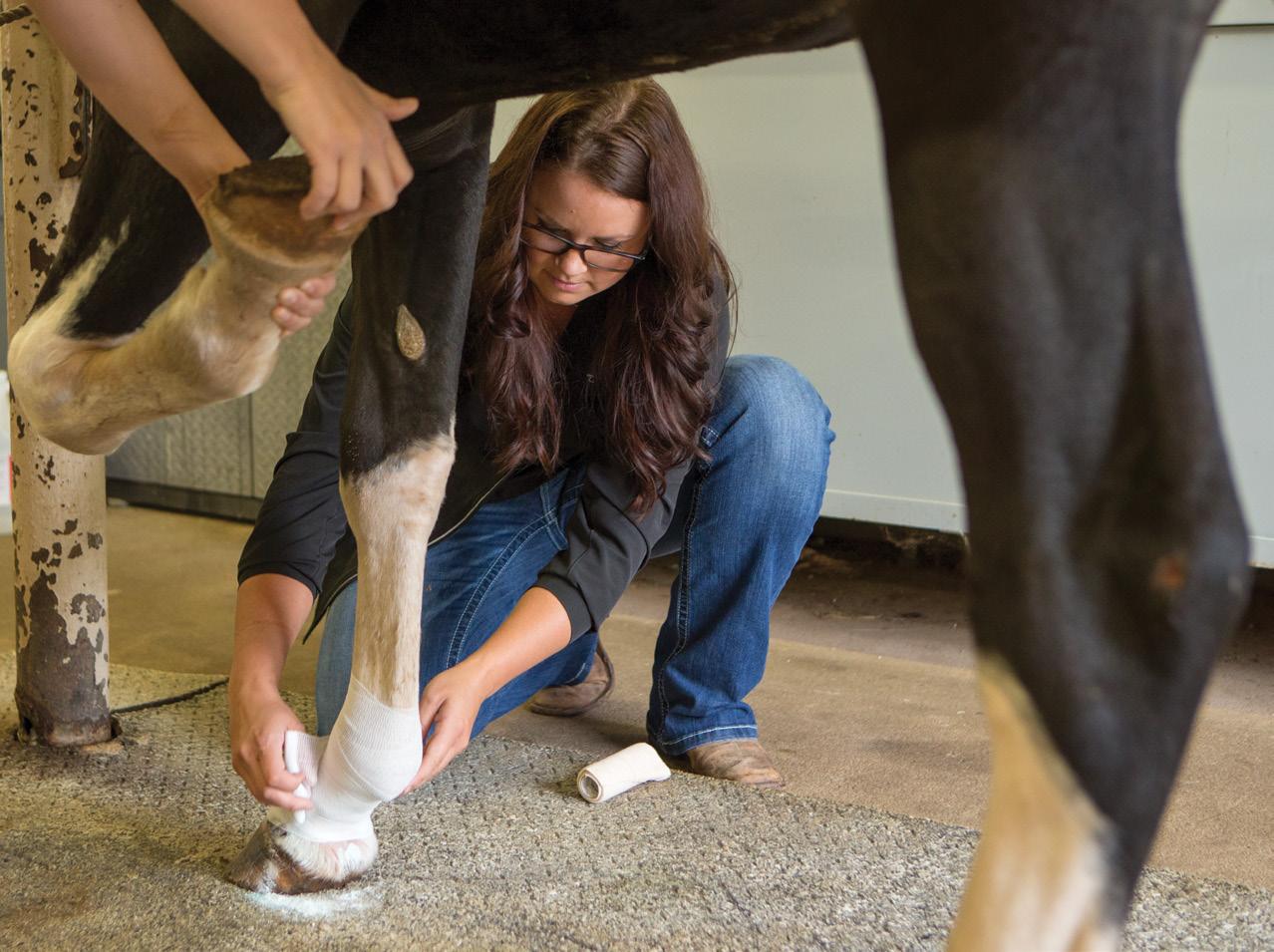
“I see everything — dogs, cats, horses, cows. I feel like OSU really prepared me to work in private practice,” Hartfield says. “First year, they got us into clinics working with fourth-year students doing exams on animals. They also put us at various locations such as the OSU dairy so we got to work there. Second and third year, same thing. We just really got a lot of hands-on experience. I also created a lot of hands-on experience for myself by volunteering outside of school. And then, of course, fourth year, a lot of experience in the hospital working on cases.”
Hartfield says she works about 55 hours a week at the clinic. And in her free time, she works on her next love — her book.
“What originally inspired me to write a children’s book actually came from my sister. A senior at the University of North Texas working on her graphic design degree, she needed a scho ol project. I also had a friend call me up and ask me, ‘Hey, my daughter who’s 10 wants to be a veterinarian. What are some good books for her?’ I did some research and I couldn’t find any good books for her age, so that’s when I called my sister and said, let’s write a children’s book. My niece, Abby, who was 3 at the time, came out to my farm. We went to check on my animals and Rosie, my pig, was sick. I led (Abby) through how to do an exam, diagnosis, treatment of Rosie. And that’s when I was like this is what my first book needs to be about.”
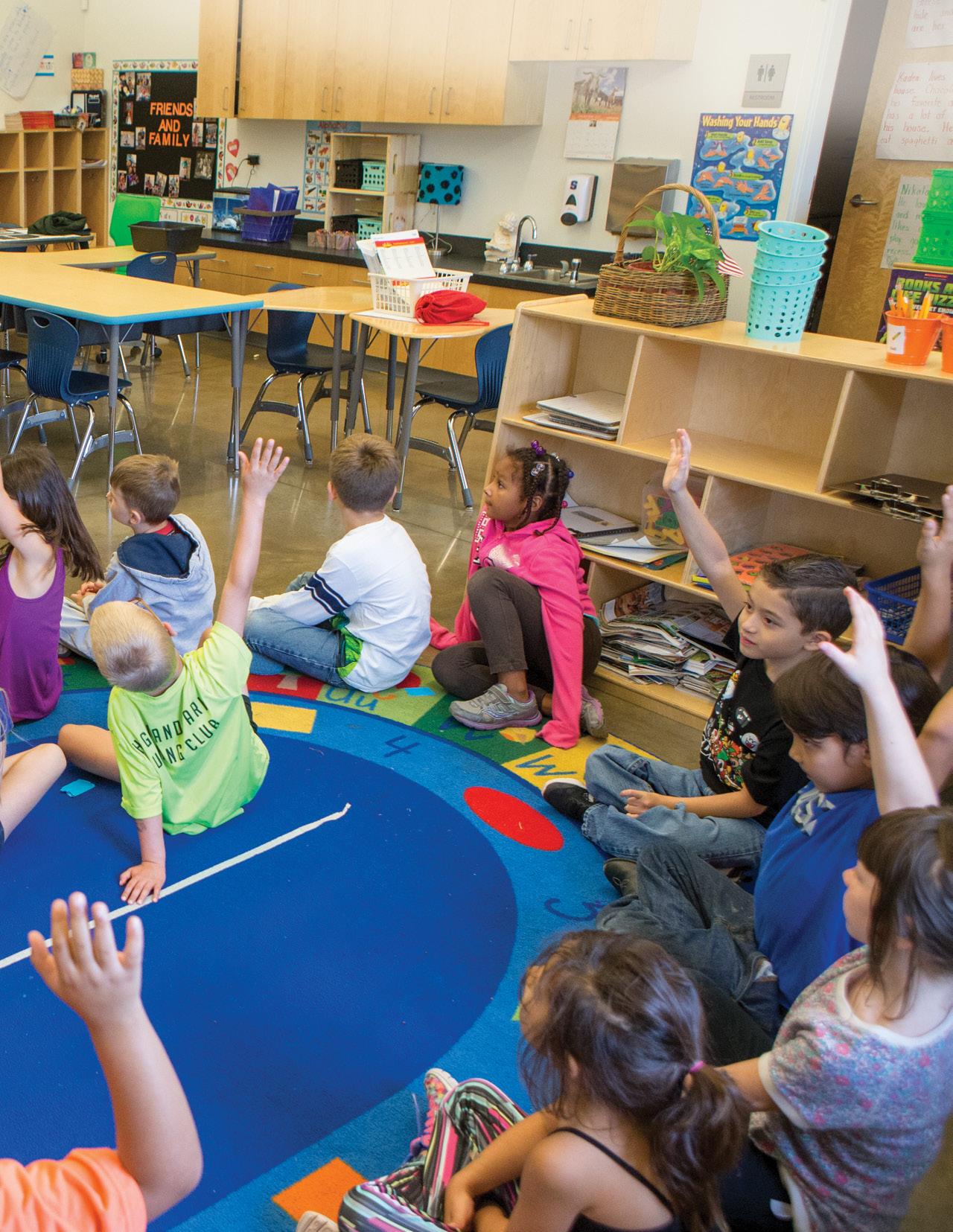
Rosie the Pig is the first book published in a series of six books for children 10 and under. Just three months after its release, Hartfield and Rosie had traveled over 1,500 miles to read to more than 3,000 children at 10 schools, five libraries and other events across Oklahoma and Texas.
In that same time, she sold well over 1,000 copies of her book mostly through events and her website, www.doctorhartfield.com. She’s partnering with area veterinary clinics to carry her book and will have a Doctor Hartfield Veterinary Book Series display at the OSU Veterinary Medical Hospital. (She’s open to more sales opp ortunities; check her website.) Hartfield’s book has been a way for her to merge three things she loves: veterinary medicine, teaching and reading. While not all kids have access to the large animals featured in her book series, they do have access to books.
“I really hope that my book will inspire younger kids to maybe practice in rural medicine in a mixed animal practice working with large animals sp ecifically. And I really want to start at a younger age. When I’m visiting several of these schools, the biggest thing that I’ve seen is not even half, not even a quarter of these kids have even seen a pig let alone touched a pig. And so that could be with any animal — horses, cattle. I just want to expose these kids to as much of those large animals as I can and then hopefully that will inspire them to want to be a large animal vet one day as well.”
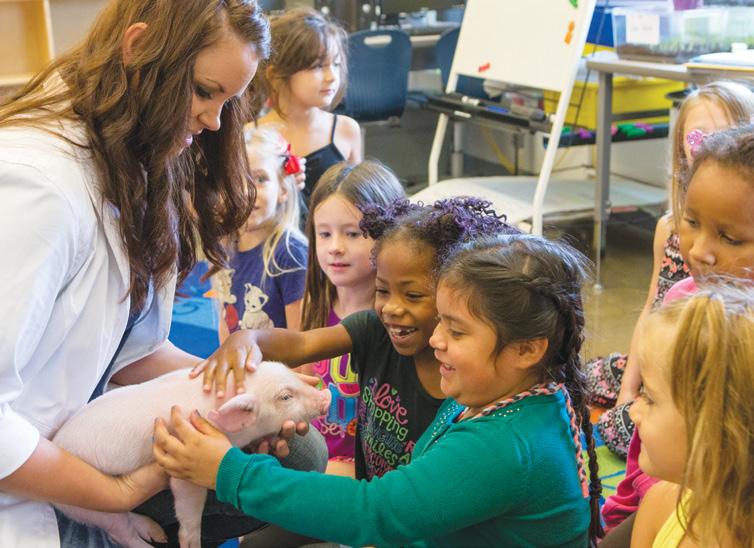
Her next book, Pistol the Horse, will be out May 2018. It will share the story of how Abby and Dr. H help bandage a cut on Pistol’s leg. Each book will reiterate some lessons from previous books while introducing new knowledge. Other b ooks in the series will feature a goat, a cow, a dog and a cat.
Hartfield plans to use the book sales to continue funding an OSU veterinary student scholarship, the Doctor Hartfield Veterinary Book Series Mixed Animal Scholarship.
“I just think there is such a need to have more scholarships out there to encourage kids to pursue rural medicine, especially that mixed practice. I want to give back to the school that gave me a chance.
“And the biggest advice that I have for someone wanting to go into veterinary medicine is get experience. Get hands-on experience before
school. Four years of veterinary school can only teach you so much. Create those experiences, that hands-on experience for yourself. I was actually a veterinary technician for about five years before I decided to go to veterinary school. I gained a lot of hands-on experience so I already knew how to do a lot of the procedures going into school. Once I was in school, I was able to get help developing those skills even more.
“I struggled when I was in school. I had to study probably more than anybody else, but I made it through. I think my story can help encourage other people who maybe think ‘I’m not really smart enough’ but I think that you can do it. If you really want to do something and that desire’s in your heart, then you can do it. So that’s what I did.”
If you share Dr. Hartfield’s passion for animals and would like to support veterinary student scholarships, contact Chris Sitz, senior director of development at the Oklahoma State University Foundation, at csitz@osugiving.com or 405-385-5170

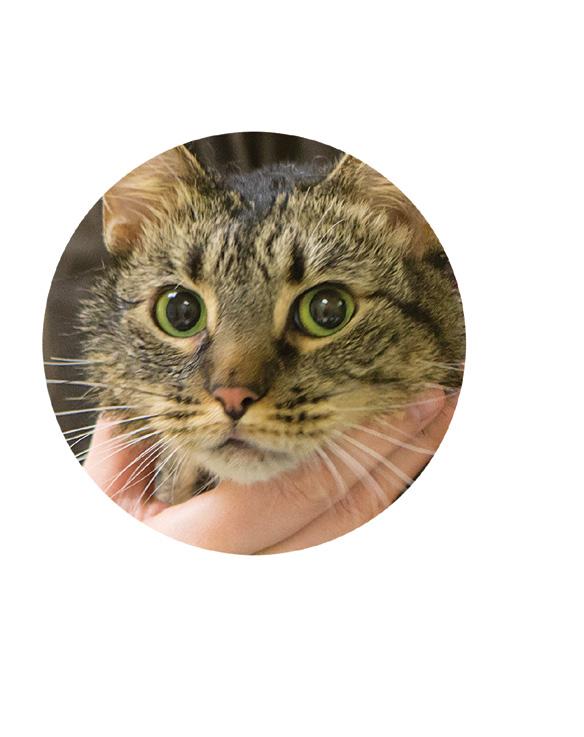
ELLIE’S SUB-PORT SURGERY IS FIRST DONE AT CVHS
A 5-year-old cat named Ellie marked another medical first at
OSU’s Center for Veterinary Health Sciences. Owner Alexa Hunter, originally from Folsom, Calif., is a member of the Class of 2020. So when Ellie stopped eating, Hunter knew exactly where to take her.
“She stopped eating Wednesday night, and my husband found vomit where she had thrown up her breakfast,” Hunter recalls. The couple originally thought a hairball was the issue, but Ellie continued to refuse to eat for days after throwing up one. “I called the hospital to see if we could get her on something to start her eating again. It turned into something a little bigger than that.”
“We found that one of her ureters was blocked by a ureteral stone or a kidney stone,” says Dr. Johnattan Arango, a small animal surgery resident at the Veterinary Medical Hospital.
To treat the feline, the surgery team placed a SUB-port in Ellie — the first time the procedure was done at OSU.
“SUB stands for subcutaneous ureteral bypass port,” Arango says. “It basically creates a bypass between the kidney and the ureter into the bladder. … The main way to treat this is with a ureterotomy, which involves cutting into the ureter, taking the stone out and closing the ureter. The problem is that in many cases, scar tissue creates a blo ckage anyway. Also, the surgery is very minute; it’s a microscopic surgery, so there is a lot of potential for complications. Doing a port is easier and hopefully prevents any issues with the healing ureter. It’s a more longstanding way to bypass the ureter.”
This was the first time Hunter used OSU’s Veterinary Medical Hospital, and she was pleased: “It was an amazing team. Everyone was very supportive, very nice.”
Ellie spent three nights at the hospital recovering from her surgery. An infection was diagnosed in the affected kidney and treated. Two weeks later, a re-check found her port was working properly and the infection was coming down. Her sutures were removed, and she was good to go.
“It’s a fairly common condition that we see in cats,” Arango says. “We are happy we were able to do the procedure here. Hopefully Ellie continues to do well and she can live a happy life.”
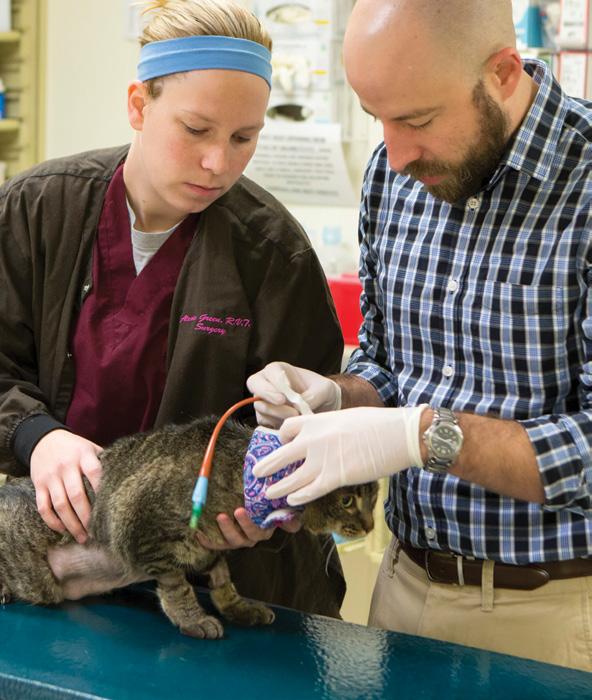
The procedure was started by Dr. Chick Weisse and perfected with Dr. Allyson Berent. Weisse and Berent have since created “the SUB™ A Subcutaneous Ureteral Bypass System,” a surgical guide for veterinarians.
See more online at okla.st/1ellie
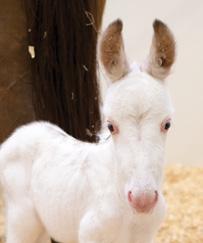
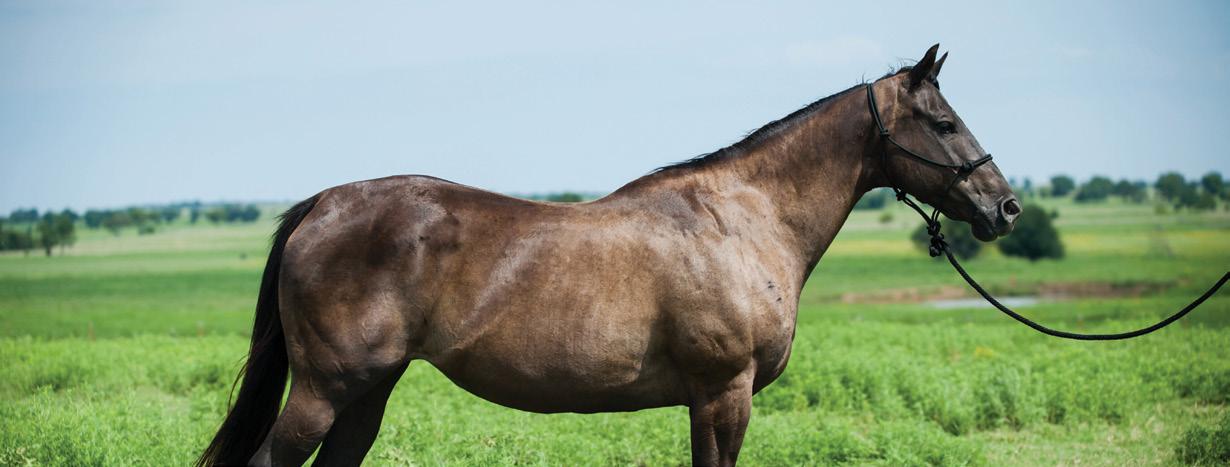
Shirley Rosenbaum runs Meadowcreek Equine Rescue Mission in Fox, Ark. A brown mare she acquired in July 2016, Sarah, was not in good physical condition. A veterinarian told Rosenbaum the horse had a broken pelvis. With care, Sarah was able to get up on her own within a month. Several months later, Rosenbaum discovered the horse was pregnant.
“One veterinarian told me it would kill her,” Rosenbaum says. “Another said she had a 50/50 chance and a third veterinarian said maybe she will be all right. Dr. Bill Nixon in Mountain View, Ark., told me the only thing to do was take her to OSU because she may have to have a cesarean. So I drove her to OSU’s Center for Veterinary Health Sciences Ranch.”
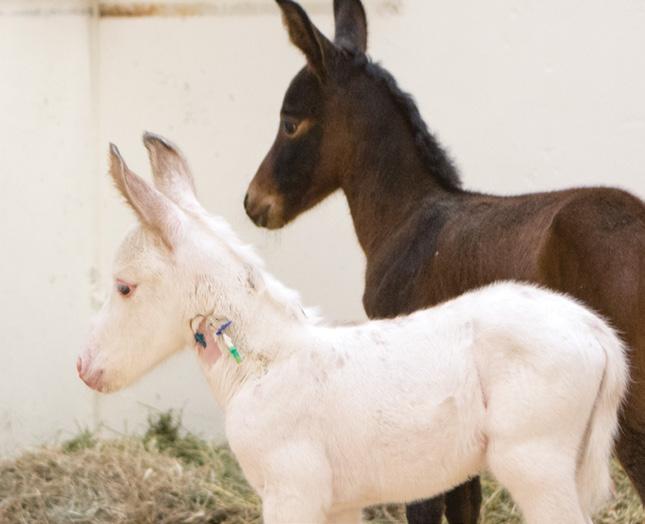
Upon her arrival at the ranch, Sarah was put on a 24/7 foal watch to monitor her upcoming labor and birth. Rosenbaum speculates that a donkey that was next to Sarah’s former home impregnated the mare. On March 20, 2017, OSU veterinarians called to say Sarah had given birth to not one but two mules — one white and one brown. The pair arrived during the American Veterinary Medical Association’s Council on Education Accreditation site visit, giving the accreditation team an opportunity to see OSU’s veterinary ranch team in action.
Sur viving twins are very rare in the equine business. Shortly after birth, the mother and twins were transported to OSU’s Veterinary Medical Hospital. Veterinarians determined that the white mule didn’t have adequate passive transfer and needed plasma. She was also showing signs of sepsis, which required antibiotics and fluids.
“We sat beside these foals 24/7 literally around the clock until they were stable,” says Dr. Lyndi Gilliam, board certified equine internal medicine specialist. “The white filly was found to have underdeveloped bones. This is not uncommon in twins where one baby gets more nutrition. This can be a life-threatening condition. At one point, splints were applied to her left front limb. Many therapies
were instituted to ensure her bones developed without being crushed, including a special cart for her to walk without putting too much pressure on her bones. She also spent exercise time in our underwater treadmill.”
A little over a month later, the twins and mom were ready to go home.
“Everyone was so dedicated and so good and careful,” Rosenbaum says. “They kept them alive. They stayed with them and watched them. They called every day and told me how they were doing. Oklahoma and Oklahoma State are so fortunate to have this group of wonderful veterinarians and students who care so much about
“EVERYONE WAS SO DEDICATED AND SO GOOD AND CAREFUL. THEY KEPT THEM ALIVE. THEY CALLED EVERY DAY AND TOLD ME HOW THEY WERE DOING."
"EVERYONE WAS SO DEDICATED AND SO GOOD AND CAREFUL. THEY KEPT THEM ALIVE. THEY CALLED EVERY DAY AND TOLD ME HOW THEY WERE DOING."
— SHIRLEY ROSENBAUM
their job. This is not a $50,000 horse. She’s just a horse of some breed, but that didn’t matter to these doctors. I will be forever grateful. I hope that the whole state appreciates their expertise and their dedication. They are a fine group of people, and I am honored to be associated with any of them.”
The twins’ owners checked in with OSU’s ranch in August.
“They again thanked the Vet Med Ranch for all that we did in keeping the mare healing and healthy up to and through her labor and for delivering both babies alive,” says Dr. Reed Holyoak, Bullock
Professor in Equine Reproduction and board certified theriogenologist. “They were happy to r eport that the twins are doing great. They are happy and healthy at home.”
To see the twins in action, visit okla.st/2Mules
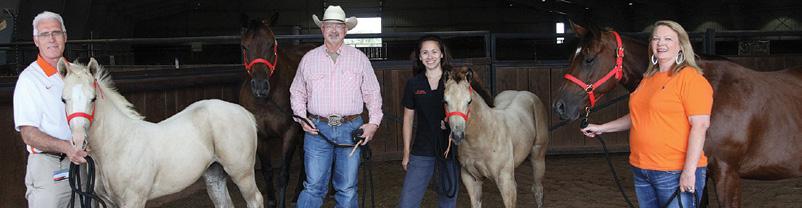
What is an ICSI foal? ICSI refers to a special conception procedure now commercially available for mares. It’s a procedure offered in part at Oklahoma State University’s Center for Veterinary Health Sciences Ranch.
“One of the procedures we offer is called transvaginal aspiration of oocytes from mare ovaries,” Dr. Candace Lyman, assistant professor in the center’s theriogenology section, explains. “We aspirate oocytes or eggs from the mare’s ovary. Then we partner with laboratories where we send those eggs. They perform intracytoplasmic sperm injection or ICSI. ICSI
“They were one of the very first clients who allowed us to provide this service for them. They had two foals this year as a result of this procedure.”
Alan and Teri Dufur own Dufur Quarter Horses in Caddo, Okla., where they raise 600plus registered Hereford cattle and 450-plus registered quarter horses.
is where a stallion’s spermatozoa is taken and injected directly into the egg from the donor mare. The egg and sperm are then cultured by way of what’s called ‘in vitro incubation’ or maturation of an embryo. Once that embryo develops to be a seven- or eight-day embryo, it is transferred to a recipient mare or a surrogate mare who then carries that pregnancy and gives birth to that foal.
“I was extremely excited to meet the Dufurs and their mare, Takin Love, that came to our facility in need of this service,” Lyman continues.
“The aspiration of the eggs for any mare is a process that gives your mare the ability to have more than one baby a year and can extend her ability to have babies longer,” Teri Dufur says. “We decided that we would use OSU to take eggs out of this mare so we could possibly get more than one baby because she’s a really nice mare. And it’s the only way we could breed her to Frenchman’s Guy. Frenchman’s Guy is probably the most well-known stallion and has won the most money of any stallion in the barrel-racing world.”
Frenchman’s Guy’s owners put his semen at Colorado State University. OSU provided the oocytes so that CSU could perform the ICSI procedure on Takin Love’s eggs. One foal was born March 12, 2017, and the other was born two days later.
“Because the mare was a race mare and the dad is a barrel racing stallion, we’re hoping they become barrel horses,” Dufur says.
In addition to ICSI, OSU’s ranch offers other services.
“We receive cases from clients that are just normal mares that are happy, healthy mares that simply need to be artificially inseminated to get pregnant,” Lyman says. “We also have mares that come to us that have more intense needs as far as case management. They’ve had some fertility issues previously or they need to have some higher maintenance cycle management performed on them in order for them to get pregnant.”
And once those mares are pregnant, OSU’s ranch can assist when it comes time to foal.
“The mares will come to us when they are heavy pregnant,” Lyman says. “When they are ready to foal, they will go into stalls where they are under camera watch and 24/7 monitoring by students and house officers until the mares give birth.”
Cl/HS
If you would like more information, contact the ranch at 405-649-2504 or visit cvhs.okstate.edu/cvhs-ranch
Video: okla.st/2jtFgnv
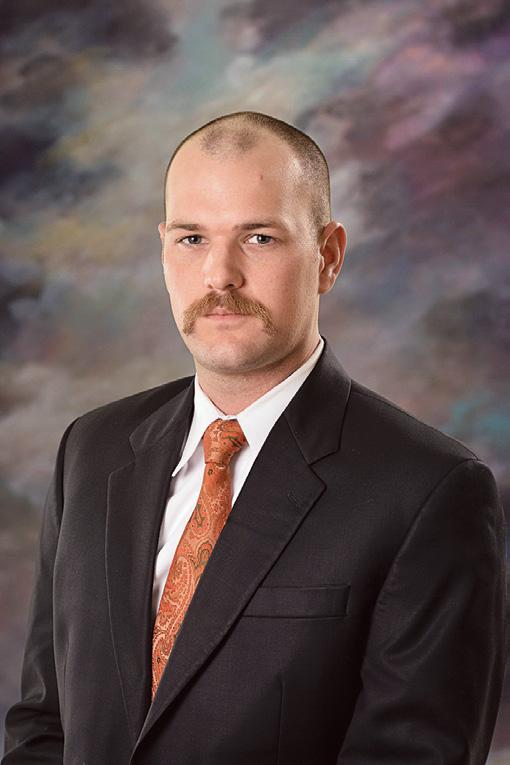
Holt Tripp, DVM, MBA, of Okotoks, Alberta, Canada, received t he prestigious AgriLabs Dr. Bruce Wren Continuing Education Award at the 2017 American Association of Bovine Practitioners Annual Conference. Tripp, a 2015 DVM/MBA dual degree alumnus of Oklahoma State University’s Center for Veterinary Health Sciences, is the director of cattle operations for the GK Jim Group of Companies in Canada.
The award honors Bruce Wren, DVM, Ph.D., a longtime AgriLabs technical services veterinarian, for his lifelong commitment to practical and formal continuing education for veterinarians. Tripp received a $5,000 grant to further his educ ation and will learn cutting-edge principles of modern risk management from the Real World Risk Institute in New York City.
“My time working with Kee has been nothing short of incredible,” Tripp says. “Kee has demonstrated what it means to stay the course, focus on controlling the variables we can, and to use data to drive our decisions on health, production and the markets. He gives me tremendous responsibility and allows me to figure out how to most efficiently achieve objectives. He also models what it means to dedicate oneself to continual self-improvement, and he supports my efforts in that arena.”
Holt attributes the award to his colleagues and mentors who have helped him develop as a person and a professional over the years.
"[WITH] THIS TRAINING … I WILL BE BETTER ABLE TO HELP INVESTORS ADDRESS CATTLE HEALTH AND PRODUCTION, PROCUREMENT, MARKETING, AND PRICE RISK AS PARTS OF A COMPREHENSIVE STRATEGY, NOT SIMPLY IN ISOLATION FROM ONE ANOTHER.”
"[WITH] THIS TRAINING I WILL BE BETTER ABLE TO HELP INVESTORS ADDRESS CATTLE HEALTH AND PRODUCTION, PROCUREMENT, MARKETING, AND PRICE RISK AS PARTS OF A COMPREHENSIVE STRATEGY, NOT SIM PLY IN ISOLATION FROM ONE ANOTHER."
— DR. HOLT TRIPP
“I anticipate that this training will better prepare me to help producers develop robust systems to manage their risk holistically,” Tripp says. “By that, I mean I will be better able to help investors address cattle health and production, procurement, marketing, and price risk as parts of a comprehensive strategy, not simply in isolation from one another.”
Since graduating, Tripp has worked with Dr. Kee Jim at GK Jim Group.
“It’s a long list and in cludes my employer, Dr. Kee Jim; all of the veterinary and nutritional/production consultants at our sister company, Feedlot Health Management Ser vices; my mentor and friend, Dr. D.L. Step; and too many private practitioners and veterinary consultants to list. They have challenged me to think critically, see the big picture, and use data to answer the questions we face daily in the beef industry.”
This is the second year in a row that an Oklahoma State alumnus has received the AgriLabs Dr. Bruce Wren Continuing Education Award. Last year Tripp’s classmate, Dr. J.D. Folsom, received the award in the beef category.
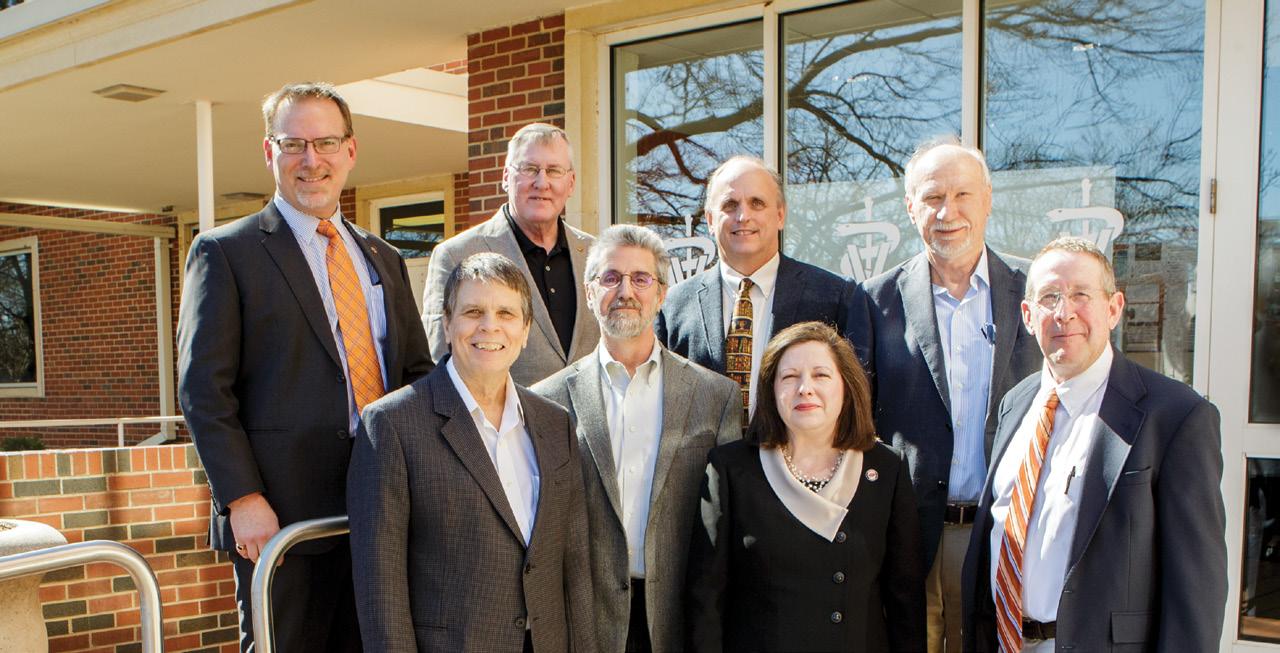
Chemicals are all around us, affecting people, animals and the environment. The Third Annual Interdisciplinary Toxicology Symposium addressed complex issues related to chemical toxicity.
Guest speakers and Interdisciplinary Toxicology Program (ITP) Fellows with expertise from forensic science, sociology, integrative biology, toxicology and veterinary medicine shared their research with nearly 80 attendees plus many more watching a live feed on OStateTV.
To kick off the symposium, 21 undergraduate and graduate students participated in a poster session. Jeff Krall and Adam Simpson won Best Poster for undergraduate and graduate research, respectively.
Following the ITP Fellows presentations, Phil Kemp, Ph.D., talked about the importance of forensic toxicology investigations in aviation accidents. Kemp is a senior research toxicologist and supervisor of the Forensic Sciences Section at the Federal Aviation Administration’s Civil Aerospace Medical Institute in Oklahoma City. His team’s goal is to more accurately pinpoint the factors that cause accidents.
Paul Mohai, Ph.D., shared his work on the water crisis in Flint, Mich. Mohai is part of an environmental equity work group designed to review evidence to grasp the problem and prepare recommendations. Flint water has been contaminated with lead for three years. Mohai is a professor in the School of Natural Resources and Environment at the University of Michigan in Ann Arbor.
And finally, Kevin Crofton, Ph.D., presented “The Evolution of Toxicology and Chemical Regulations” as the 17th Annual Sitlington Lecture in Toxicology. Crofton is the deputy director of the U.S. Environmental Protection Agency’s National Center for Computational Toxicology in Research Triangle Park, N.C. Crofton emphasized the importance of understanding the uncertainties in toxicology data and matching them to the regulatory decision context.
“THE CHALLENGE IS THE THOUSANDS OF CHEMICALS FOR WHICH WE HAVE VERY LITTLE DATA ON AND NOT ENOUGH TO MAKE REALLY GOOD HEALTH ASSESSMENTS."
— KEVIN CROFTON
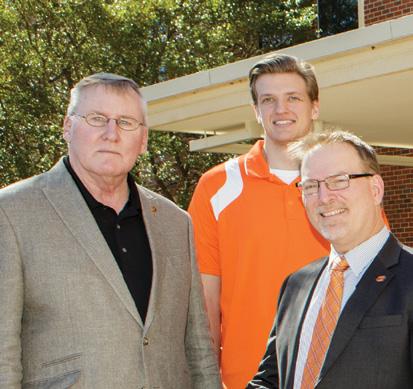
“The challenge is the thousands of chemicals for which we have very little data on and not enough to make really good health assessments,” Crofton explained. “That is why the agency started the National Center for Computational Toxicology, so we can discover more about the exposure and bioactivity of these chemicals.
“The aim is efficiency. To develop only the data really needed for making regulatory decisions using the least amount of resources possible,” he continued. “We created the CompTox Chemistry Dashboard, which is available to the public, in the hopes that it would be the ‘go to’ place for information on chemicals.”
Interdisciplinary Toxicology Symposium
Regents Professor and Sitlington Chair in Toxicology in the Department of Physiological Sciences. For more information on OSU’s ITP, visit okla.st/2jTotH8
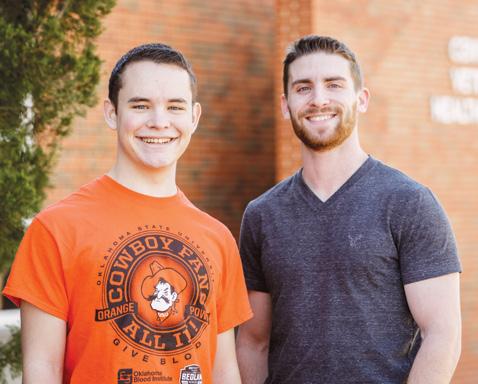
student Jeff
and graduate student Adam
won Best Poster for research projects at the Third Annual Interdisciplinary Toxicology Symposium
TIM ANDERSON — Comparative in vivo toxicity of chlorpyrifos oxon in mice and toads
CHRISTOPHER GOODCHILD — In vitro toxicity of crude oil in avian erythrocytes
SARAH HILEMAN — Polycyclic aromatic hydrocarbon accumulation in soil receiving rooftop runoff
WILLIAM MIMBS — Dermal uptake of organic contaminants by amphibians: location and hydrophobicity
ANA CHICAS-MOSIER — The effects of ingested aqueous aluminum on floral fidelity and foraging strategy in honey bees (Apis mellifera)
KIRSTIN POINDEXTER — Comparative kinetics of inhibition of free and nanocomplexed butyrylcholinesterase
KENDALL SCARLETT — Development of a behavioral assay to test pesticide toxicity in amphibians
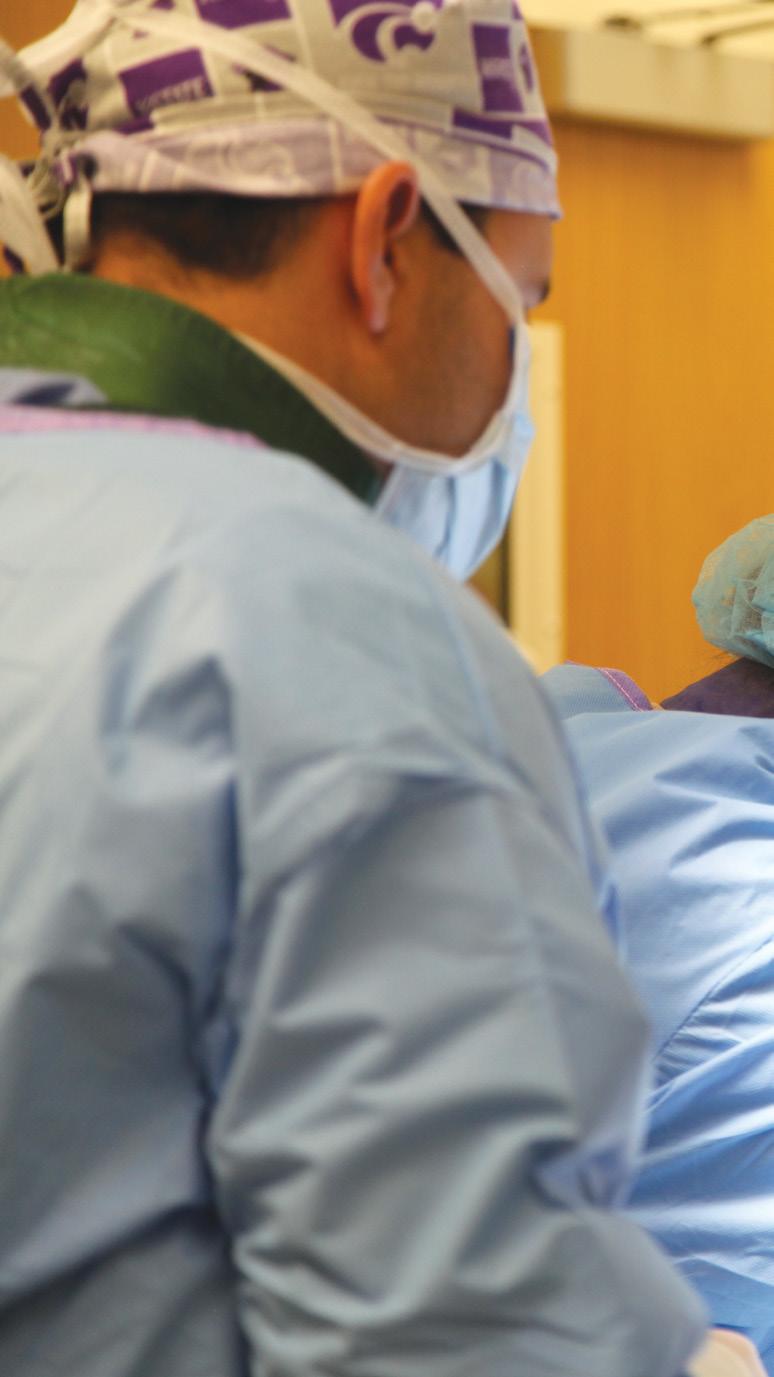
OSU’S MINIMALLY INVASIVE PROCEDURES OFFER PETS AND OWNERS NEW OPTIONS
BY DERINDA BLAKENEY, APR
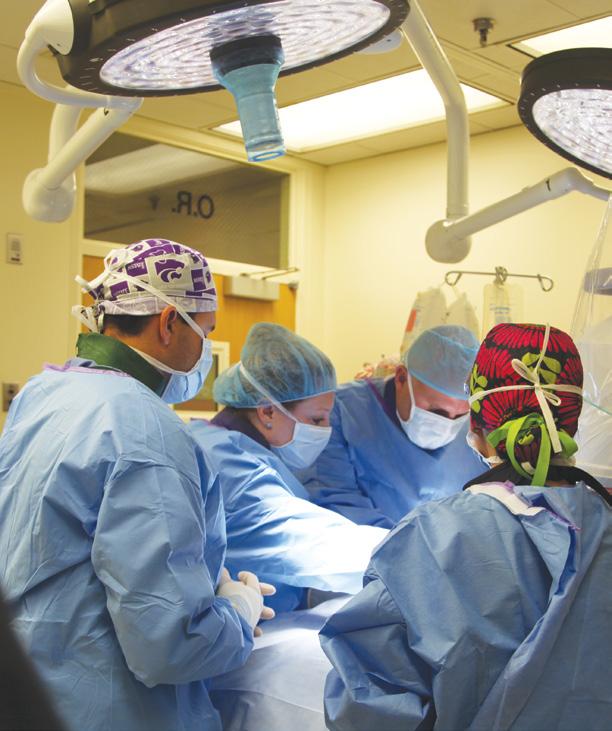
Minimally invasive medical procedures are increasing at Oklahoma State University’s Center for Veterinary Health Sciences. A group of clinicians at the center’s Veterinary Medical Hospital have gone the extra mile to learn these procedures, and it’s a winwin-win for all involved.
“Minimally invasive procedures are a set of procedures that allow us to treat complicated diseases,” says Andrew Hanzlicek, DVM, MS, DACVIM (SAIM), associate professor of small animal internal medicine. “These are diseases that in the past either didn’t have a good treatment, or the treatment caused a lot of pain and had a long healing time. These minimally invasive procedures take some of the more advanced technologies in medicine and allow us to treat those with very minimal pain, minimal healing time and much better outcomes.”
Hanzlicek says it’s a team effort involving many different specialties including surgery, medicine, cardiology, radiology and anesthesia, to name a few.
“A group of clinicians are interested in these minimally invasive procedures because they make sense,” he adds. “They decrease pain, decrease healing time, and they treat things that weren’t treatable in the past. Several of us have gained advanced training. There are only a few places around the country that do some of these procedures. We’ve learned how to do them at one of the places that really pioneers these procedures. We’ve invested a lot in being able to offer these procedures to our pet-owning population in Oklahoma. Because so many specialties are involved, I think it makes the minimally invasive procedures a very interesting area.”
“THESE MINIMALLY INVASIVE PROCEDURES TAKE SOME OF THE MORE ADVANCED TECHNOLOGIES IN MEDICINE AND ALLOW US TO TREAT THOSE WITH VERY MINIMAL PAIN, MINIMAL HEALING TIME AND MUCH BETTER OUTCOMES.”
— ANDREW HANZLICEK
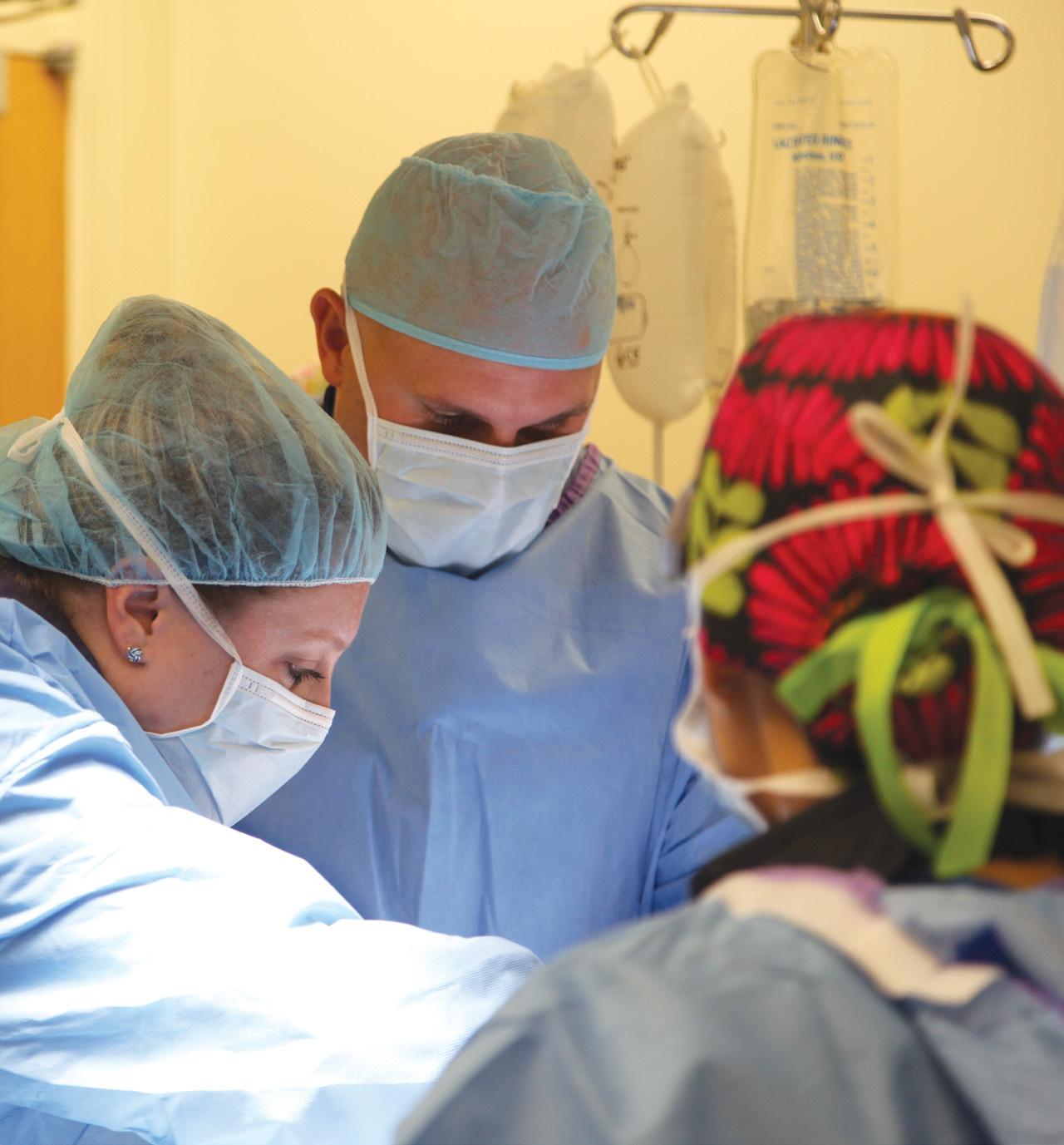
Many different procedures are now offered that Hanzlicek and his colleagues couldn’t do before, he says.
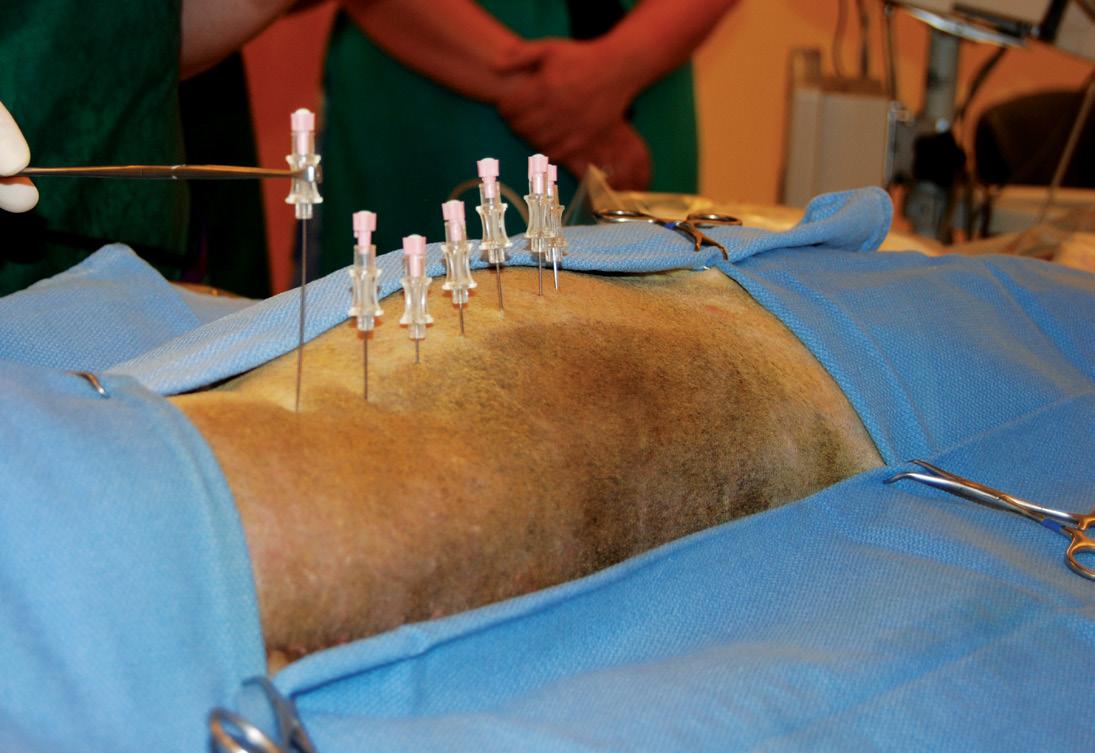
“For example, intrahepatic portosystemic shunts or an abnormal vessel that a dog is born with inside of its liver,” Hanzlicek says. “In the past, that required a major abdominal surgery, possibly removing part of the liver. Now we can fix that abnormal vessel through a small incision — about a centimeter — in the neck. We actually go through the incision in the neck down to the liver and fix that vessel. As you can imagine, healing time is much less with that, and there is a much better outcome. Almost all dogs do really well with that procedure.”
And that is just one procedure. There are many, many more associated with the urinary tract.
“When we have a ureteral obstruction, we can now place stents or bypasses. For dogs that are incontinent, there’s a couple different procedures that we now offer that are minimally invasive that help with their incontinence. There are also procedures in the respiratory tract. We
“PET OWNERS ABSOLUTELY LOVE THIS PROGRAM.”
— DR. ANDREW HANZLICEK
Oklahoma State University’s Center for Veterinary Health Sciences has been offering percutaneous laser disk (PLDA) ablation surgery for dogs for more than 20 years — and most owners are very grateful the procedure is available.
The procedure lowers the risk that a future disk herniation will occur in dogs that previously suffered from herniated disks. First investigated by former OSU professors Drs. George Henry and Kenneth Bartels, the American Veterinary Medical Association has released follow-up research on the recurrence of disk herniation following the procedure.
D rs. Danielle Dugat and Kenneth Bartels studied 303 dogs that underwent a PLDA and were followed for three years after their procedure. Overall, owners reported that their dog was the same or improved immediately
following a PLDA, and 92.7 percent of owners rated their satisfaction with the procedure as a 9 on a scale from 1 (completely dissatisfied) to 10 (completely satisfied).
Dugat is a board-certified small animal surgeon and an assistant professor in the Department of Veterinary C linical Sciences at OSU’s Veterinary Medical Hospital. She performs approximately 25 disk ablation surgeries a year.
Cl/HS
To read the full text of the research, visit okla.st/2AO3Vut
can put stents in collapsing airways. There’s really a whole handful of procedures that treat pretty common diseases and do so in a much less invasive way.
“Pet owners absolutely love this program. Anytime you tell them that you can fix a complicated or challenging problem with less pain, less suffering and a quicker healing time, then they’re all about it. Pet owners have been very happy with the outcomes after these procedures. It’s really great to see the pets do well, the pet owners be happy, and, again, doing all of that while minimizing their healing time and the pain and morbidity associated with the procedure.”
While the Veterinary Medical Hospital has the trained specialists to do these procedures, what they need is a perfect place to perform them.
“These procedures are somewhat unique and novel and the type of operating room that we need to perform these is somewhat unique and novel,” Hanzlicek says. “So we’re looking for
ways to find a place that has these advanced technologies all in one room to maximize our ability to do these procedures.”
According to Hanzlicek it can get pretty crowded in the operating room with clinicians, an anesthesiologist, interns and residents, fourth-year veterinary students, and the veterinary technicians who assist with the procedure. And then there is the special equipment such as a fluoroscopy unit and computer screens to display the fluoroscopy results.
“Fourth-year veterinary students are very involved with these procedures,” Hanzlicek adds. “Many times in the very small OR that we’re using right now, it’s packed full. There are more students outside the operating room, peeking through the window trying to see them because they’re neat, cool, and novel procedures. Seeing how these procedures are done may spark some interest so that they learn how to do them themselves someday. Even if they don’t learn these cutting-edge ways of treating
complicated diseases, they know what’s offered here, and they can refer patients back to OSU when they’re out in the real world.
“The most important aspect to me is that we have a group of clinicians who are very interested in these procedures because again, they minimize pain and minimize healing time in pets. It’s what pet owners want for their pets, which makes sense because they’re animal lovers. I think that it’s just a win-win-win. We enjoy doing the procedures — it’s something new and it helps pets and pet owners in Oklahoma and surrounding states. Everybody benefits from our being able to do these minimally invasive procedures.”
To learn more about these minimally invasive procedures, visit okla.st/nuprocedures
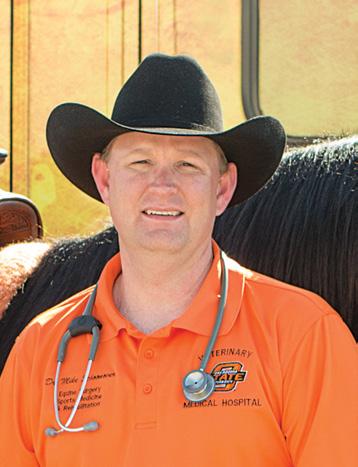
Mike Schoonover, DVM, MS, DACVS, DACVSMR, assistant professor of equine surgery at Oklahoma State’s Veterinary Medical Hospital, is always looking for ways to improve patient care. The equine section sees 1,200 to 1,500 equine cases a year, with the surgery service treating about 800 cases a year.
“Horses spend their whole life trying to kill themselves,” Schoonover says. “So we treat a lot of traumatic type injuries. We also treat a lot of sports medicine injuries such as western performance horses with injuries to the musculoskeletal system.”
Intravenous regional limb perfusion is one technique Dr. Schoonover uses in treating injuries.
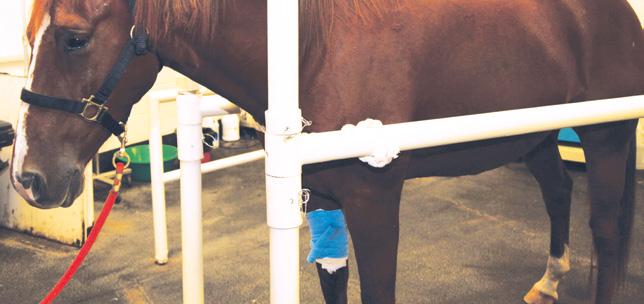
When a horse has a leg injury, Schoonover uses a tourniquet to “isolate the vasculature or the blood volume in the leg,” he explains. “We then inject a medication directly into a superficial blood vessel. Because of the tourniquet, the medication is contained within the leg for usually around 30 minutes. This technique allows us to achieve high concentrations o f a medication in a limb with less medication, so it’s less expensive with fewer systemic s ide effects because we’re using less medication. And it’s more effective because the medication is really confined and concentrated in the area we want it.”
While regional limb perfusion isn’t new, techniques vary widely among clinicians.
“Different clinicians use different techniques. Some might use a different time of tourniquet application or a different volume of fluid used to dilute the medication. The first study we did looked at the effect of a given amount of amikacin, an antibiotic, added to different dilution volumes and how the different volumes affected the concentration of the medication in the different joints of the limb. We used four different volumes ranging from 10-120 milliliters and measured the antibiotic concentrations in the knee or carpal joint, and we measured the concentration achieved in the foot or coffin joint.”
Scho onover and his team discovered that it didn’t really make a difference what volume of fluid was used to dilute the medication. The concentrations of the antibiotic achieved in the joints were very similar with all the dilution volumes. But what they did find led to a second study.
“What we found with the first study was that antibiotic concentrations achieved in the coffin joint were significantly higher than the concentrations in the carpal or knee joint. And the concentrations achieved in the knee weren’t high enough to be effective in treating an infection in that location. So that led us to a second study where instead of using just a single tourniquet placed above the knee, we placed two tourniquets — one ab ove and one below. And that did show a significant difference. The second tourniquet allowed for higher concentrations in the knee, and those concentrations were within the therapeutic range.
“What we determined from these two studies was if we are going to treat an infection in the foot, then using a single tourniquet is adequate. But to treat an infection in the knee or carpus, then a second tourniquet below the carpus is required in order to achieve appropriate antibiotic concentrations.”
Schoonover and his team also looked into using a common drug as an intravenous regional limb perfusion to treat navicular syndrome.
“Navicular syndrome is a progressive inflammatory degenerative problem that horses can develop in a very small bone of the foot. We see this disease a lot in middle-aged quarter horses,” he says
“Bisphosphonates are drugs that have been used in human medicine for a number of years. They change the way bone is metabolized. The first drug licensed or approved for navicular syndrome in the bisphosphonate class is a drug called Tiludronate or Tildren®. It was originally approved in Europe and used in the United States for a number of years under a conditional licensure.”
Schoonover’s team decided to study if there were any efficacy in using Tiludronate as a regional limb perfusion.
“We recruited 12 horses that were diagnosed with navicular disease. Half of the horses were treated with the labeled systemic dose (1mg/ kg) of tiludronate, and half of the horses were treated with two regional limb perfusions, one into each foot, using a 0.1mg/kg dose. The system group got a full dose, and the regional limb horses got a total of 1/5 of the systemic dose (1/10 into each foot).
“We found the systemically treated horses did improve, but the regional limb treated horses did not. That led us to a second study where instead of using just a single regional limb perfusion, we did multiple regional limb perfusions.”
Schoonover’s team recruited 15 horses for this study. Five horses received the same dose as the first study — a tenth of the dose or 0.1
mg/kg. Five horses received a 0.2 mg/kg dose or double that dose, and five horses had a saline placebo, a control.
limb p erfusion is a more efficacious, less expensive and safer method of delivery compared to systemic treatment.”
Schoonover will continue to look for better ways to treat horses that come to OSU’s Veterinary Medical Hospital. As he completes each study, the information will be published in veterinary medical journals.
“HORSES SPEND THEIR WHOLE LIFE TRYING TO KILL THEMSELVES. SO WE TREAT A LOT OF TRAUMATIC TYPE INJURIES. WE ALSO TREAT A LOT OF SPORTS MEDICINE INJURIES.”
"HORSES SPEND THEIR WHOLE LIFE TRYING TO KILL THEMSELVES. SO WE TREAT A LOT OF TRAUMATIC TYPE INJURIES. WE ALSO TREAT A LOT OF SPORTS MEDICINE INJURIES."
—
DR. MIKE SCHOONOVER
“We monitored these horses subjectively and objectively as before for 120 days and what we found was that neither dose really made a significant difference in soundness of these horses. It app ears that using Tiludronate as a regional limb perfusion is not an effective treatment for navicular syndrome. We still recommend and do use Tiludronate systemically. Our hopes were that by using Tiludronate as a regional limb perfusion, we improve lameness and decrease some of the systemic side effects, but our research indicates that that’s not the case.
“Regional limb perfusion is a very effective way to deliver any drug to the limbs or to the foot area. Rather than treat a horse with a large dose of a medication that may cause systemic problems, we can sometimes treat injury or disease locally. In many cases, intravenous regional
“A lot of our clinical studies are funded internally. Donations made to the OSU equine research program help fund a lot of these studies. If someone is interested in helping out with o ur research endeavors, it would be greatly appreciated,” he says.
To support equine veterinary medical research, contact Chris Sitz, senior director of development with the Oklahoma State University Foundation at csitz@osugiving.com or 405-385-5170
28 FFA TEAMS VIE FOR STATE VETERINARY TITLE
Five years ago, 10 or 12 teams competed; this year, 28 FFA teams from across Oklahoma came to OSU’s Center for Veterinary Health Sciences to compete in the Veterinary Science Career Development Event. The winning chapter represents Oklahoma in the national FFA competition.
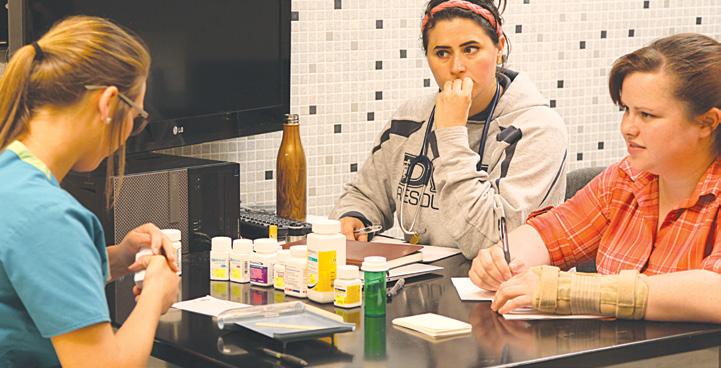
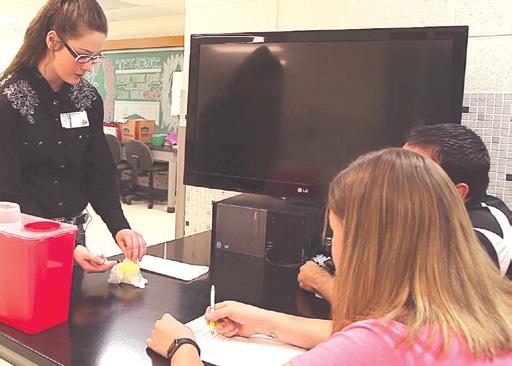
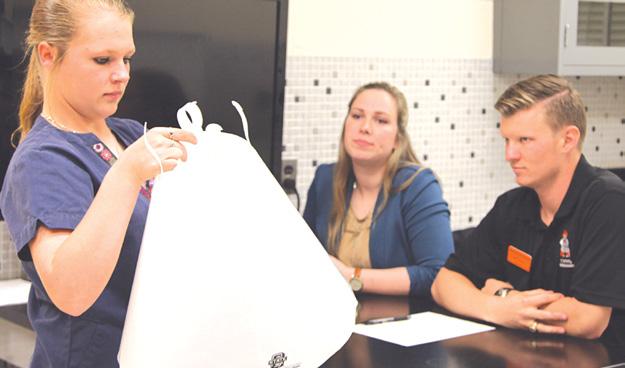
“The contest involves a multitude of activities,” says Dr. Danielle Dugat, assistant professor of small animal surgery and co-superintendent of the event. “There are five parts to the competition. Students perform acts that they would have to do as a veterinarian or a veterinary technician, such as administering a subcutaneous injection, placing an Elizabethan collar on a dog, placing a tail tie on a cow or filling a prescription. They
“I like how well-rounded the contest is. There are a lot of different things going on. It makes it challenging getting the students all shuffled around to all those different stations,” Wilson says. “About 80 percent of our incoming students in the animal science program are pre-vet. It’s a chance to see and interact with some of those students who hopefully will be coming to OSU in a year or two when they graduate from high school.
“THERE ARE FIVE PARTS TO THE COMPETITION. STUDENTS PERFORM ACTS THAT THEY WOULD HAVE TO DO AS A VETERINARIAN OR A VETERINARY TECHNICIAN.”
— DR. DANIELLE DUGAT
also take a written exam that tests their knowledge on animal science topics and a math exam doing conversions and figuring dosages for administering medications. Another section tests their ability to identify instruments, breeds and parasites. Lastly, each team performs a skit on a designated topic that they are given in advance. This year’s topic is a dairy goat with CAE or caprine arthritis encephalitis. Each part of the CDE is individually scored, and those scores are compiled for a team score that determines the winner.”
Dugat arranges the judges, acquires the instruments, secures the rooms and coordinates the execution of the CDE. Co-superintendent Dr. Blake Wilson, assistant professor in the Department of Animal Science, helps during the five-hour competition.
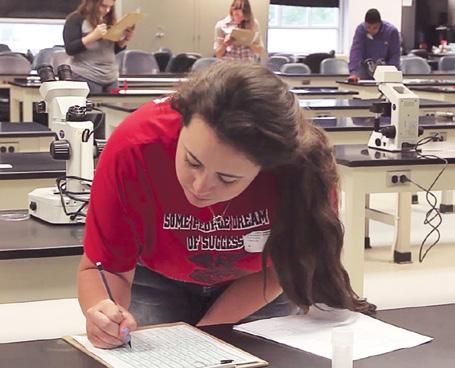
An FFA contestant (left) studies an instrument and fills in her answer during the identification exam.
Two fourth-year veterinary students (above) judge a contestant on how to fill a prescription.
Then a percentage of them will hopefully apply and be accepted into the veterinary program at the Center for Veterinary Health Sciences and ultimately become veterinarians.”
“The nice thing about this contest is that high school students get to be involved in a unique aspect of FFA, which is veterinary medicine,” Dugat adds. “They get exposed to many different techniques, procedures and knowledge within the veterinary curriculum. Students who may have an interest in veterinary medicine can develop that interest further and get hands-on experience of what it would be like to become a veterinary technician or veterinarian.”
“Our student demographics have changed a lot,” Wilson says. “We don’t have kids with a traditional production agriculture or animal background, but they have the interest. This is a contest that is going to attract a
“I LIKE HOW WELL-ROUNDED THE CONTEST IS. THERE ARE A LOT OF DIFFERENT THINGS GOING ON. IT MAKES IT CHALLENGING.”
"I LIKE HOW WELL-ROUNDED THE CONTEST IS. THERE ARE A LOT OF DIFFERENT THINGS GOING ON. IT MAKES IT CHALLENGING."
— DR. BLAKE WILSON
different type of student than some of our more traditional state CDE contests. It’s another avenue to target a different group of students, get them involved and show them what we have to offer here at OSU.”
Students attending this year’s competition came from both rural and city schools.
“We have Claremore, Jenks and Stillwater, which are big schools, down to small schools like Billings or Oolagah,” Dugat says. “To successfully run this competition requires a lot of volunteers. The judges are a combination of veterinarians who work here at the veterinary school, veterinary students or technicians who
“It’s a great contest, and we look forward to it every year,” Wilson says. “It’s fun to have kids from all over the state come to campus and compete. We like the opportunity to work with them and expose them to what we do here before they hopefully attend college in Stillwater.”
“It’s been a blast,” Dugat says. “Every year we are gaining more and more participants. It allows for collaboration between the veterinary college, animal science and the high schools for future development of the veterinary program.”
work in the Veterinary Medical Hospital. This allows for a variety of expertise in volunteers who get involved and engage these high school students.”
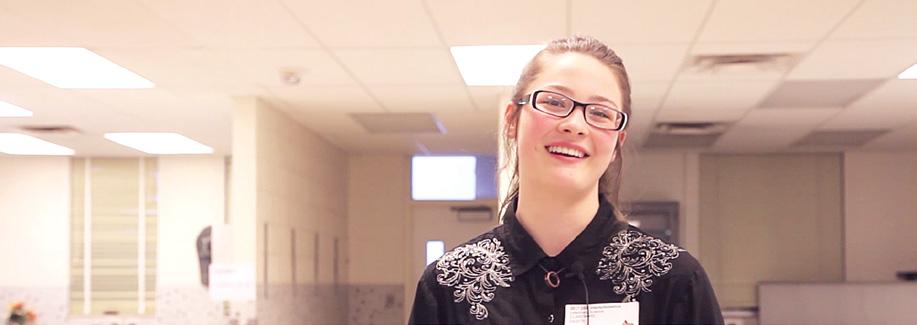
“I’ve been in FFA in Texas before, but this is my first year here in Claremore FFA,” says Katelyn Lawson from Claremore High School. “A lot of people seem happy and excited for the competition. Everyone’s smiling at each other, giving each other a thumbs-up and good luck. I want to be a veterinarian, and that’s why I’m in FFA Vet Science.”
Seth Stone from Chandler, Okla., has similar aspirations.
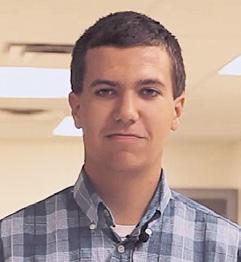
“I have been in FFA two years. I like being around animals and participating in the Vet Science competition,” Stone says. “My grandpa is a veterinarian, and my brothers and I have a sheep flock to take care of. I’m looking to become a large animal veterinarian in the future.”
But not all the participating students plan to go into veterinary medicine. Of the four-person team from Locust Grove, Okla., one plans to be a wildlife biologist or pathologist, one a cosmetologist, one plans to attend OSU IT in Okmulgee — and one plans to be a veterinarian specializing in equine medicine.
A contestant (left) shows judges how to administer a subcutaneous injection.
Veterinary technician Alexis Green and third-year veterinary student Zach Croslin (above) judge a contestant on how well she put together an Elizabethan collar.
The 2017 Veterinary Science Career Development Event winners were: Weatherford, first place; Billings, second place; and Colcord, third place. Weatherford FFA was to represent Oklahoma in the national competition in October in Indianapolis.
T~e :2011Vieteririari, Scie11cie Career De11elopme11tE11e11t Cl/HS
Twenty-five years ago, the Oxley Foundation of Tulsa, Okla., decided to invest in the equine program at Oklahoma State University’s Center for Veterinary Health Sciences. Its endowment created the Oxley Chair in Equine Sports Medicine.
“The chair was established by John T. Oxley,” says Konnie Boulter, executive director for the Oxley Foundation. “Horses are part of the family.”
For the last 10 years, the Oxley Chair has been held by professor Michael Davis, DVM, MS, Ph.D., DACVIM, DACVSMR and director of the center’s Comparative Exercise Physiology Laboratory, which houses an equine treadmill.
“The Oxley Chair has been a huge asset in that, like most endowments, it allows you to do things and to have resources that would be very difficult to get on an extramural funding basis,” Davis says. “The Oxley Chair basically allows us to maintain an infrastructure for equine sports medicine that no other university has.”
As a founding member of the Geropathology Research Network, Timothy Snider, DVM, Ph.D., DACVP, a pathologist at Oklahoma State University’s Center for Veterinary Health Sciences, is working to improve lifespans and health spans.
“Our group is developing mouse pathology scoring systems to use in determining pathology endpoints in aging studies,” explains Snider, who earned his DVM (1996) and Ph.D. (2005) from OSU. “The work is
Oklahoma State University
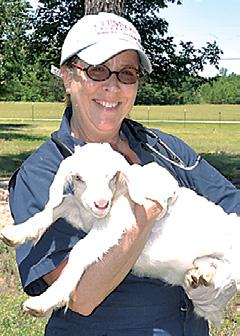
alumna Dr. Charlotte Krugler of Elgin, S.C., was named the 2016 Distinguished Veterinarian of the Year by the South Carolina Association of Veterinarians.
CHARLOTTE KRUGLER
translational in that the hope is to understand mechanisms of aging and to develop and test drugs and other measures that improve lifespans and health spans.”
Snider and Dr. Sara Rostad, a pathology resident, attended the second lesion-scoring workshop for the Geropathology Grading Platform in Seattle earlier this year. The group consists of a research scientist, several pathologists, a postdoctoral research associate and a lab animal veterinarian.
During the 2015 floods in South Carolina, she worked with the state emergency management division coordinating statewide resources to assist animals.
Krugler is an emergency preparedness veterinarian and extension veterinarian at Clemson University and has been an adjunct professor in its Animal and Veterinary Sciences Department.
“My job at the South Carolina State Veterinarian’s office involves a lively mix of livestock and poultry disease response and recovery planning as well as animal/agriculture-related disaster preparedness for the state,” she says. “It was a surprise and an honor to be selected.”
Krugler earned her DVM degree from OSU in 1985. She is a Diplomate of the American College of Veterinary Preventive Medicine.
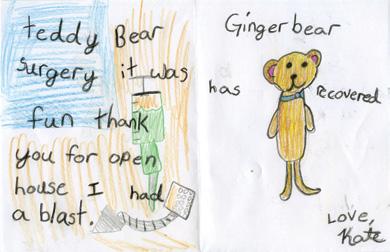
The Center for Veterinary Health Sciences received a wonderful thank-you note after its annual Open House.
Seven-year-old Kate Wardlow was one attendee who really enjoyed the Teddy Bear Surgery — and shared her delight with us. In the interest of full disclosure, Miss Wardlow does have family ties to OSU: Her grandmother is STATE editor Elizabeth Keys, who brought her to the Open House.

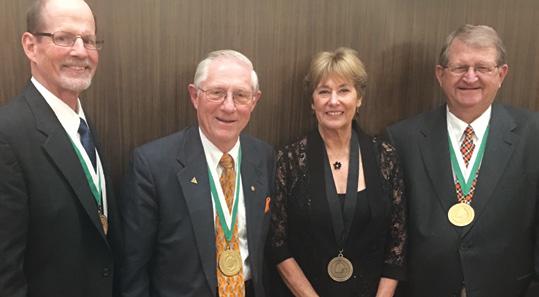
Dr. Katherine Kocan has become the seventh OSU CVHS faculty or alumni member to be inducted by the Oklahoma Higher Education Hall of Fame. With her at the 2017 ceremony were fellow inductees (from left) Drs. Anthony Confer (2015), Michael Lorenz (2014) and Robert Fulton (2016).
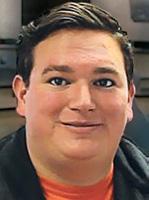
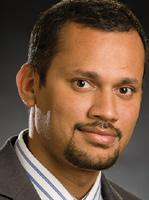
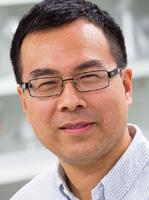
Drs. Ashish Ranjan and Shitao Li have received funding from the Oklahoma Center for the Advancement of Science and Technology (OCAST).
O CAST recently approved $5.4 million for 41 research and development projects that include innovations in energy, aerospace, agriculture, weather, health and other critical industries.
Ranjan and Li are with the Department of Physiological Sciences. Both of their projects are part of 25 approved projects in the Health Research Program.
Jeff Olivarez of Edmond, Okla., a fourth-year veterinary student at Oklahoma State University’s Center for Veterinary Health Sciences, is in the final stretch of his term as president of the Student American Veterinary Medical Association. As leader of this national organization, he has represented all veterinary students at several national meetings.
“Being the student AVMA president has been great this past year,” he says. “I’ve gotten to meet a lot of people, go to a lot of meetings, and really represent the students.”
His administration has worked to open the organization to more students.
“We’ve created an at-large liaison position for all of our members to apply for,” he says. “That way, it’s not just limited to a set numb er of students, like our delegates, being able to go to these different meetings. We really want to involve as many people as possible. So, we’re just kind of breaking down some of those barriers that we’ve had in the past and really opening up our organization as a whole.”
Olivarez is also working on an app for members that he’d like to get launched before he leaves office.
learn more, visit
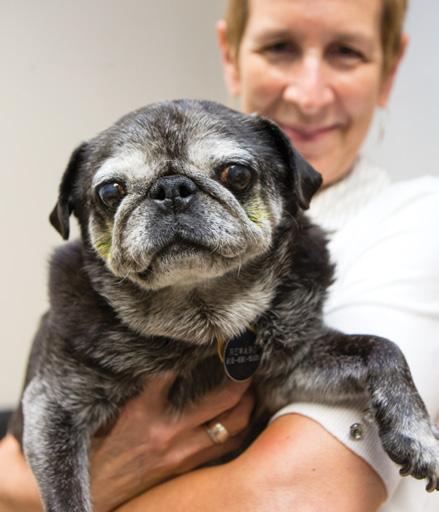
Eliz abeth Paszkiewicz with her pug, Baby, recently attended the ribbon-cutting for the upgraded ophthalmology suite at the Center for Veterinary Health Sciences. Dr. Margi Gilmour (below) has been treating Baby since 2010 when the dog came in with an eyelid tumor. Paszkiewicz donated the funds for upgrading the facility after seeing a flier in Gilmour’s office. The Tulsa resident has been bringing her animals to OSU for more than 20 years.
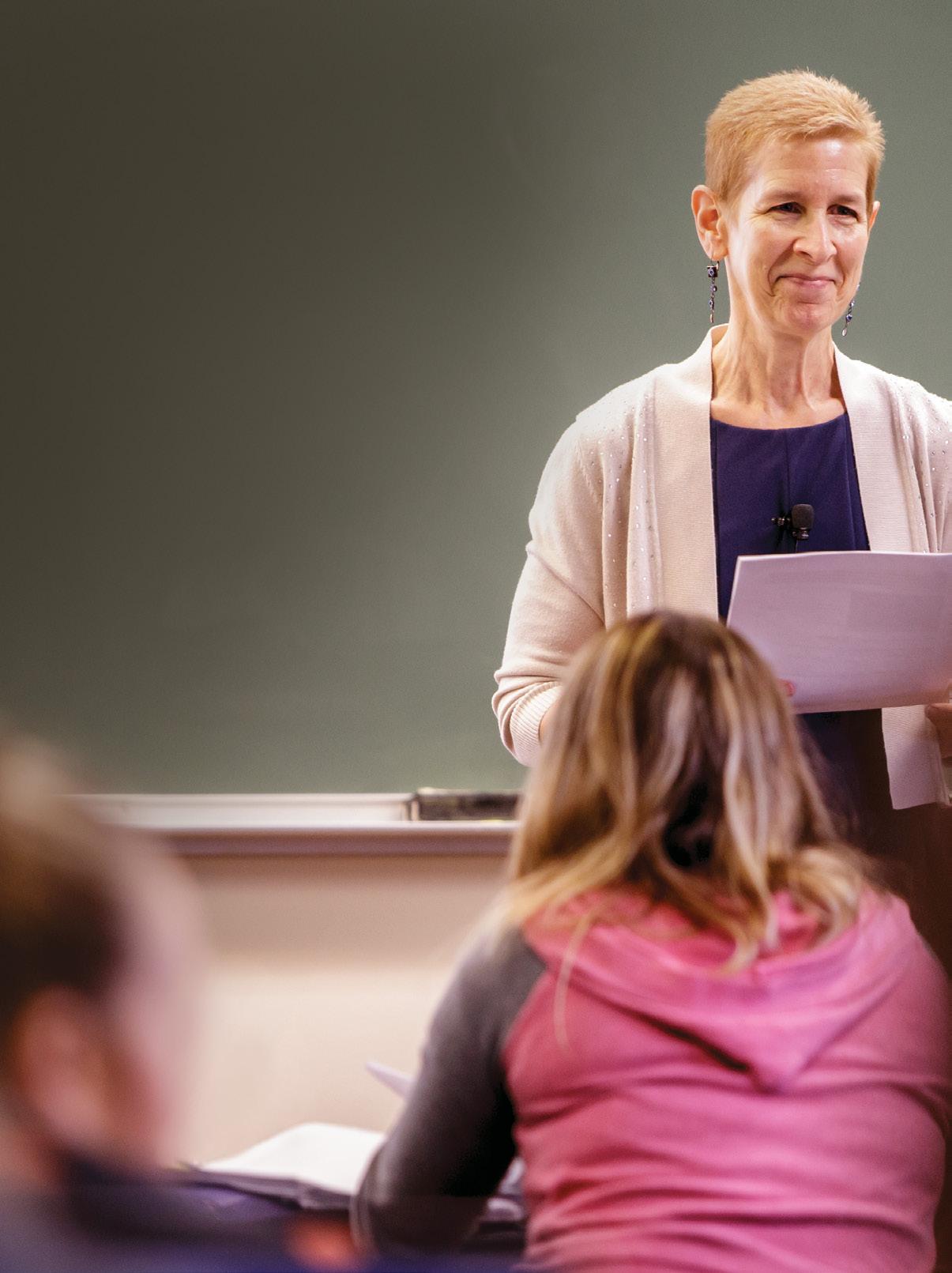
Dr. Margi Gilmour loves teaching, but the facet she prizes most is “when you see that ah-ha moment in your students,” the ophthalmology professor says.
GILMOUR APPRECIATES THE MEANING BEHIND HER REGENTS DISTINGUISHED TEACHING AWARD
It’s easy to see why Dr. Margi Gilmour received the 2017 Regents Distinguished Teaching Award: Whether watching her in the classroom or talking with her, Gilmour’s passion for teaching shines through.
“The thing I love the most about teaching is when you see that ‘ah-ha’ moment in your students,” she explains. “Either when you’re in class and you see them nodding and smiling, or on clinics the first time they look into the back of an eye and they really see a good view of the fundus on their own, and they just realize, ‘Oh my gosh, this is every bit as cool as you have said, Dr. Gilmour.’”
Gilmour, professor of ophthalmology and interim associate dean for academic affairs, has been teaching for 16 years at Oklahoma State University’s Center for Veterinary Health Sciences.
“YOU ACTUALLY FIND THE FUN AND THE JOY IN TEACHING BECAUSE IT CAN BE DYNAMIC ….”
"YOU ACTUALLY FIND THE FUN AND THE JOY IN TEACHING BECAUSE IT CAN BE DYNAMIC,,,,"
— DR. MARGI GILMOUR
“Receiving the Regents Distinguished Teaching Award means the world to me because teaching has been important to me really since I was in grade school. So it’s a big honor. It validates the love that I’ve had all these years.”
She chose ophthalmology as her discipline in veterinary medicine for a couple of reasons.
“I realized being on emergency that the cases that really excited me were the ophthalmology cases. And it wasn’t that I knew ophthalmology very well, but when I would look into an eye, it was just fascinating to me. I also realized that as an ophthalmologist we can do medicine and surgery. So you don’t have to give up one for the other when you specialize. Also (ophthalmology) goes across all species. I can do wildlife, large animal and small animal.”
Gilmour considers her success stories to be those students who have graduated and contact her as practicing veterinarians.
“They will email me or call me or sometimes even send a letter saying, ‘Dr. Gilmour, I now realize how important everything was that you taught me or thank you so much. Now I realize that everything I learned is really what I need in practice. I can use the tools you gave me and do a good job and make a difference.’”
Gilmour has spent the last year as the interim associate dean for academic affairs and feels that role is connected to her teaching position.
“First of all, I feel like I can watch over all the students now, not just my own students in my class or on my rotation, and be sure that they’re getting everything they need. And in the end, what is really going to be critical is that they are competent and confident veterinarians. And the other aspect, which I think is very important, is I can also play a role in faculty development in education and try to offer more and more opportunities for our faculty to become better educators and just find that love of teaching.”
And to younger faculty members just beginning their journey as an educator, Dr. Gilmour offers this advice:
“When it comes to teaching, number one is you don’t start out as an excellent teacher. It’s a growth. It’s something that you work on and you progress toward. It’s keeping current on some of the new teaching philosophies and things that will engage our students and increase their retention. I think when you learn those aspects, just like we all learn veterinary medicine, it makes teaching a dynamic type of activity and not just ‘oh, I know this topic. I’m just going to go recite this material.’ You actually find the fun and the joy in teaching because it can be dynamic; you can do new things in your classes every year. You don’t have to be perfect from the outset, just make those little changes as you go along. I think your teaching career will not only be fun but it will stay stimulating for you no matter how long you continue to teach. Even if it’s 30 years, it will still be fun for you.
“I would like to thank everybody who has supported me in my 16 years here — for the excellent teachers who encouraged me and also people on campus. The Institute for Teaching and Learning Excellence on campus has given me great ideas that have allowed me to expand my teaching. I’m just really thankful to be at Oklahoma State and our program at the Center for Veterinary Health Sciences. We value teaching and that to me is critical. I wouldn’t want to be at a college where teaching was not considered a high priority, and it really is here.”
Gilmour earned her DVM degree from Michigan State University in 1986. She is a board certified ophthalmologist and a diplomate in the American College of Veterinary Ophthalmologists. Her faculty appointment includes treating patients of all species with ophthalmic disease at the Veterinary Medical Hospital, providing consultations for referring veterinarians in the quad-state region, teaching ophthalmology to veterinary students after their first years, providing continuing education to veterinarians, and conducting research pertaining to veterinary ophthalmology and veterinary medical education.
To watch Dr. Margi Gilmour, visit okla.st/1gilmour1
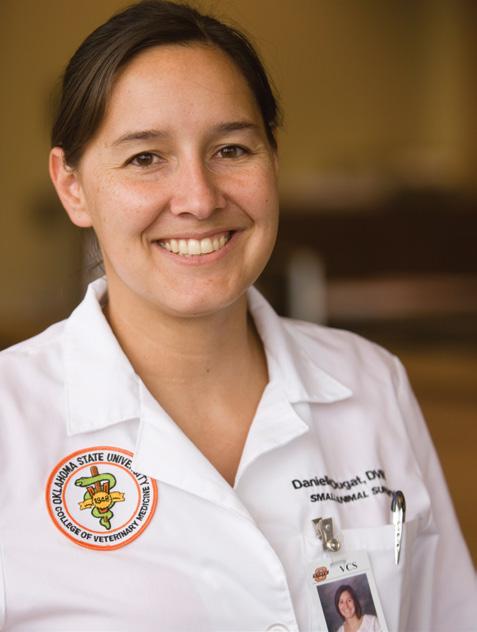
“I CAN … HELP YOUNG INTERNS AND RESIDENTS, STUDENTS AND FACULTY COLLEAGUES LOOKING TO EXPAND THEIR RESEARCH GOALS.”
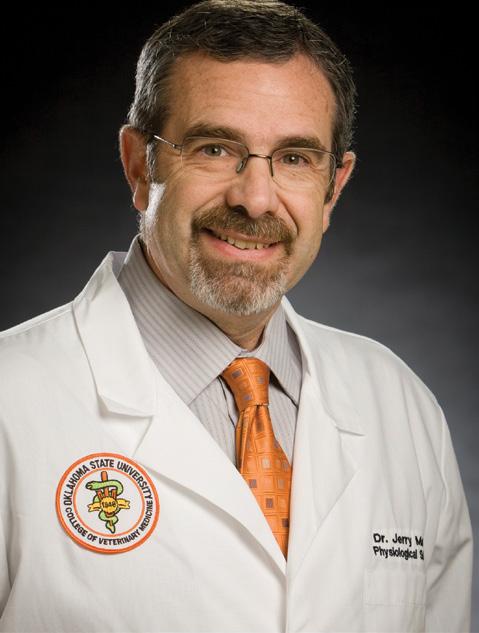
“… TO ME, THE CHAIR REPRESENTS A RESPONSIBILITY TO DO SOMETHING MEANINGFUL WITH THE RESOURCE.”
In January 2017, the OSU/A&M Board of Regents approved the appointment of Dr. Danielle Dugat to the Cohn Family Chair for Small Animals.
Dugat is a board-certified small animal surgeon at OSU’s Veterinary Medical Hospital.
“Being awarded the Cohn Family Chair for Small Animals is humbling,” Dugat says. “I have taken the challenge of working as the only surgeon and turned it into an opportunity. I interact more with the students in the classroom and have more one-on-one mentoring of my house officers. I can control how positive my day is going to be, even if it means putting in extra hours at home or here. Receiving this chair reiterates that others are witness to my hard work and dedication to this university.”
The Cohn Family Chair will open the door to expanding research, teaching and educational opportunities in both small animal medicine and surgery.
“This chair gives me some flexibility to utilize funding for collaborative research,” she adds. “I can also help young interns and residents, students and faculty colleagues looking to expand their research goals and fulfill their research requirements to become specialized.”
Jerry Malayer, Ph.D., has been named the McCasland Foundation Endowed Chair in Food Animal Research. Malayer is the veterinary center’s associate dean for research and graduate education as well as a professor in the Department of Physiological Sciences. He is also an adjunct professor with OSU’s Department of Biochemistry and Molecular Biology.
The appointment was approved at the January 2017 OSU/A&M Board of Regents meeting.
“The endowed chairs are great professional recognition,” Malayer says. “It really constitutes an investment in our college by the sponsor. Obviously, every dollar is a precious resource and so, to me, the chair represents a responsibility to do something meaningful with the resource.”
Malayer’s research focuses on infectious disease processes, diagnostics, therapeutics and mitigation at the cell and molecular level. His team is developing new therapeutic approaches to problems in infectious disease and working with sponsors to extend their work on diagnostics and mitigation strategies.
Dugat already has a list of possibilities that the Cohn Family Chair can supp ort.
“This is a super-exciting accomplishment for me,” Dugat says. “I am currently working on a clinical research study on dogs with disk ruptures in their necks (cervical intervertebral disk herniation). Another colleague and I have been invited to submit a proposal for research on chronic wound therapy and the use of high-frequency ultrasound to speed wound healing and reduce infection. I will also be organizing a training session on using our materials testing unit. This unit will facilitate multiple areas of research relative to orthopedics and mechanical stressors placed on materials or the b ones themselves.
“I want to thank Oklahoma State University and my colleagues who encouraged me to apply for this chair,” she says. “I am humbled to be awarded this chair, and I will do everything to ensure that I do not disappoint.”
Originally from Huntington Beach, Calif., Dugat came to OSU in 2003. Following her undergraduate work, she earned her DVM degree and completed a small animal surgical residency and master’s degree in biomedical sciences, all at OSU. In 2013, she b ecame a board-certified surgeon and a Diplomate in the American College of Veterinary Surgeons. Dugat has b een on faculty at the Veterinary Medical Hospital since 2011 and is an assistant professor in the Department of Veterinary Clinical Sciences.
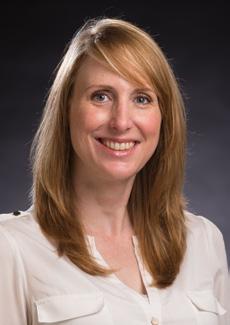
Kelly Allen, MS, Ph.D., promoted to assistant professor in the Department of Veterinary Pathobiology. Her areas of interest include the epidemiology, biology and control of vector-borne parasites and bacteria; drug studies targeting the control of arthropods transmitting vector-borne agents; development of diagnostic methods for detection of parasitic and bacterial pathogens; and the experimental assessment of alternate transmission routes of vector-borne pathogens. Allen is the project leader at the National Center for Veterinary Parasitology. She updates the NCVP website’s teaching content/resources and coordinates NCVP educational outreach efforts, programs and newsletters.
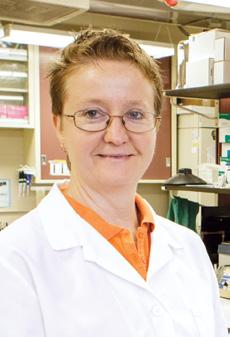
Melanie Breshears, DVM, Ph.D., DACVP, promoted to professor in the Department of Veterinary Pathobiology. Her interests include hepatobiliary and renal pathology, pathology of infectious diseases, and effective teaching in the professional veterinary curriculum.
“The chair will make it easier to support our overall effort,” he adds. “My idea from the beginning is to use the resources to support program development, not just for the lab, but for the college as well. Immediately, the resources from the chair will support personnel development and the establishment of collaborations. We are trying to establish a new Center f or Integrative Microbiome Science. Microbiome refers to the collection of genomes of microbes in a system. There is tremendous potential in understanding the interactions of microbes with plants and animals.
For example, we might identify new antimicrobials or new ways to understand how the environment, including diet, impacts the health of livestock. New understanding of host-pathogen interactions presents new therapeutics targets.”
Malayer earned his bachelor’s and master’s degrees from Purdue University. His doctorate is from the University of Florida, and he was a postdoctoral fellow at the University of Wisconsin. He joined OSU’s Center for Veterinary Health Sciences in 1994.
Mason Reichard, MS, Ph.D., promoted to professor in the Department of Veterinary Pathogiology. He is also the co-director of the National Center for Veterinary Parasitology. His interests include zoonotic and tick-borne diseases of wild and domestic animals.
Timothy Snider, DVM, Ph.D., DACVP, promoted to professor in the Department of Veterinary Pathobiology. His interests include E. coli 0157, zoonotic diseases, reproductive pathology and comparative aging pathology (geropathology).
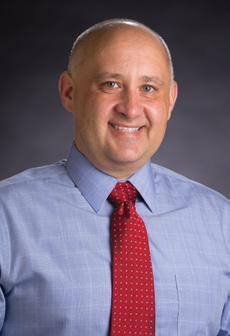
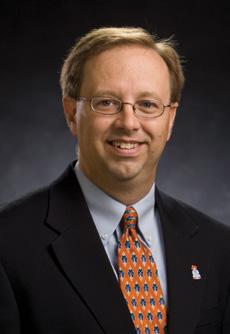
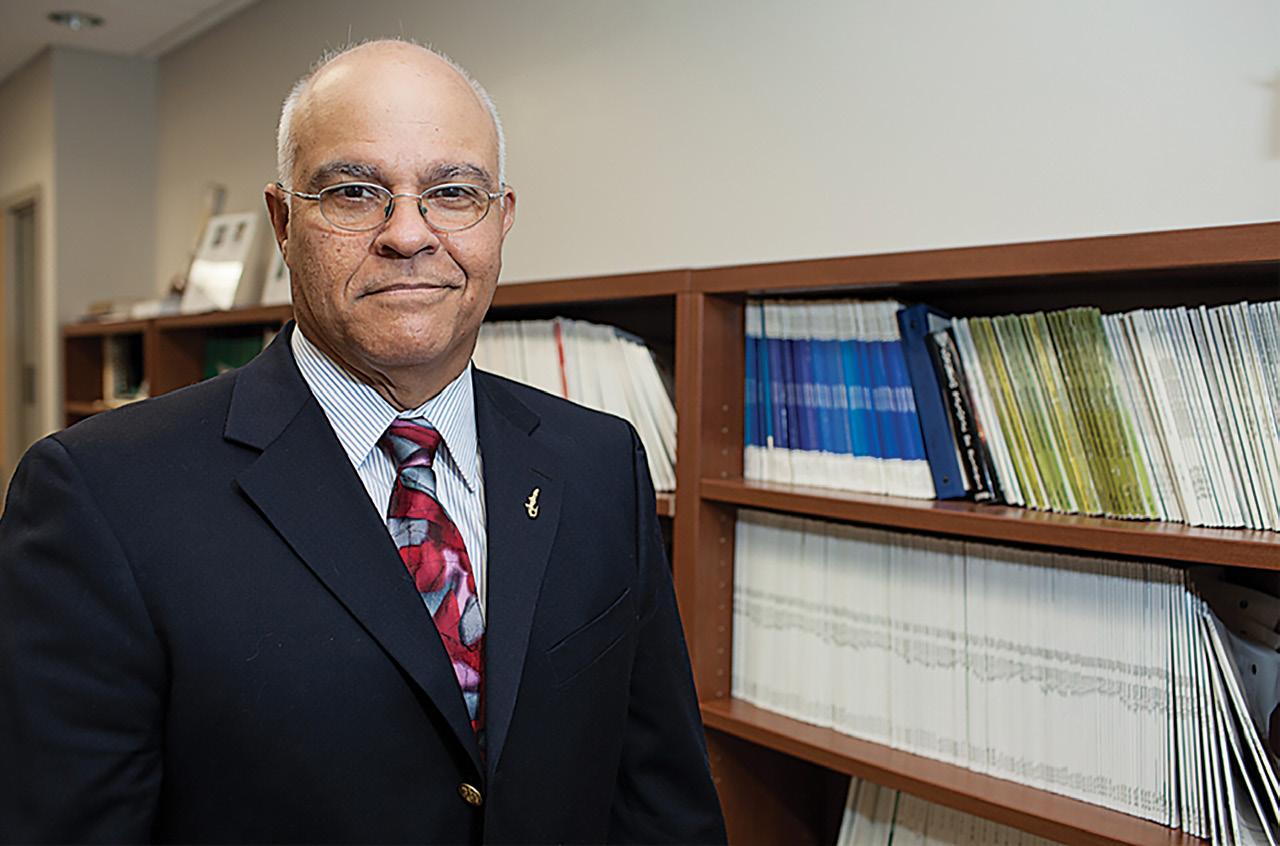
CARLOS A. RISCO, DVM, DACT , will become the new dean of Oklahoma State University’s Center for Veterinary Health Sciences. He is a tenured professor and chair of the Department of Large Animal Clinical Sciences at the University of Florida. He is expected to assume the OSU position in March 2018.
Risco earned his DVM degree in 1980 from the University of Florida and did advanced clinical training as an intern in private dairy practice at the Chino Valley Veterinary Associates in California. He is a diplomate in the American College of Theriogenologists.
From 1982 to 1990, Risco was a full partner at Chino Valley Veterinary Associates, a nine-veterinarian dairy practice. In 1990, he joined the faculty at the University of Florida as an assistant professor in the College of Veterinary Medicine. His main research focus pertains to metabolic
disorders and reproductive management of dairy cows. In addition, he has published extensively on the toxicological effect of gossypol from feeding cottonseed products to pre-ruminant calves and lactating dairy cows.
Risco has authored 72 refereed publications, 32 proceeding articles and 12 book chapters. He has given more than 100 presentations nationally and internationally and has received numerous teaching awards at the University of Florida.
The Oklahoma State University/A&M Board of Regents approved his selection in October.
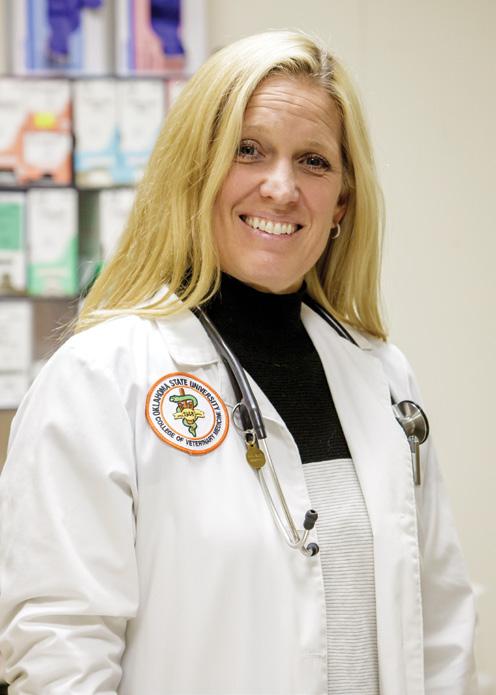
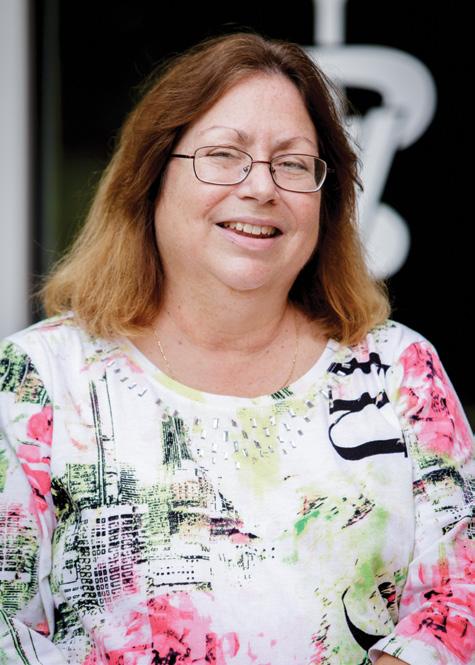
Patricia Coan, DVM, Ph.D., DACLAM, is the associate director of Animal Resources. Originally from Birmingham, Ala., she earned her DVM degree at Auburn University and her Ph.D. at the University of Alabama at Birmingham. She is also a Diplomate of the American College of Laboratory Animal Medicine. Coan’s research interests focus on immunology, infectious diseases and cancer prevention.
Cara Blake, DVM, DACVS, CCRT, is an assistant professor of small animal surgery. Originally from South Weymouth, Mass., she earned her DVM degree from Ross University School of Veterinary Medicine. She is a Diplomate of the American College of Veterinary Surgeons-Small Animal and a certified canine rehabilitation therapist. Her research interests include osteoarthritis and gait analysis.
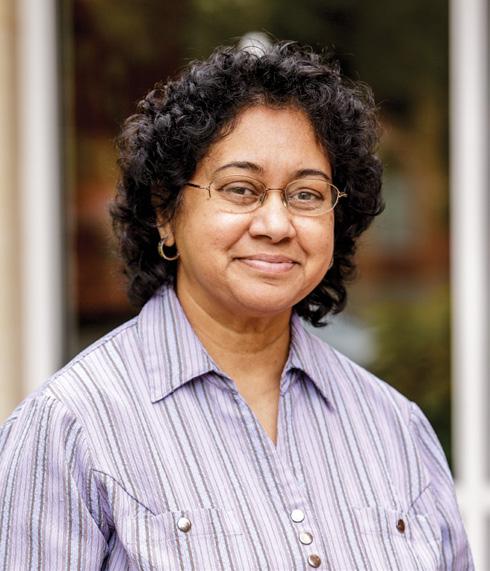
Rupika DeSilva, BVSc, MS, DACVP, is a lecturer in anatomic pathology in the Department of Veterinary Pathobiology. Originally from Matale, Sri Lanka, she earned her BVSc, a DVM equivalent, at the University of Peradeniya in Sri Lanka. She then earned a master’s degree at Kansas State University and became a Diplomate of the American College of Veterinary Pathologists. Her research focus includes the pathology of infectious diseases. DeSilva spent several years in cell and molecular biology research in both academia and industry.
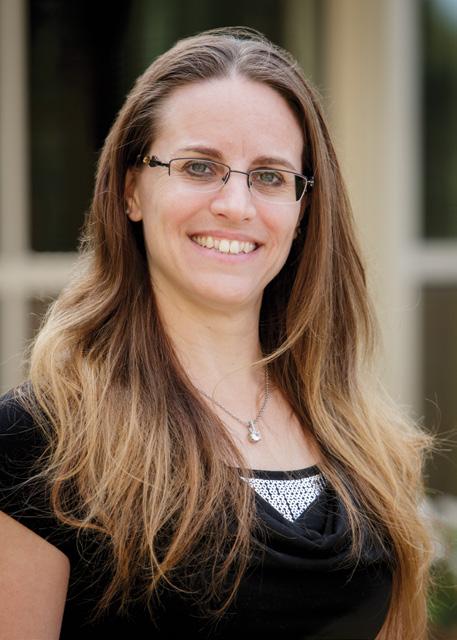
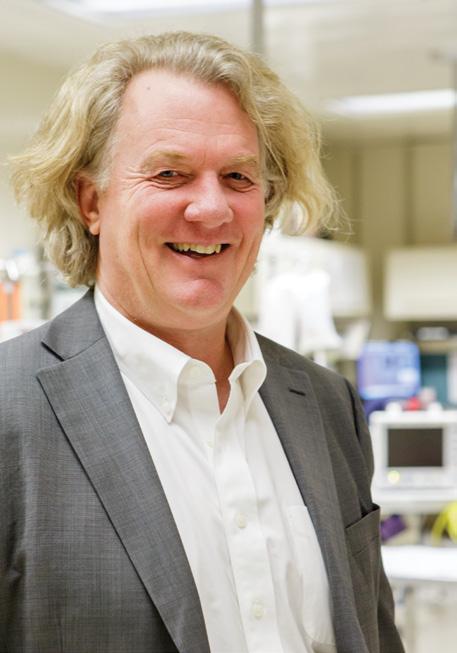
Carrie Kuzma, DVM, is a clinical instructor in radiology in the Department of Veterinary Clinical Sciences. Originally from Rochester, N.Y., she earned her DVM degree from Ross University. Her research interests include crosssectional imaging, specifically CT, and contrast applications in exotics and large animals.
Kip Lemke, DVM, MSc, DACVAA, is a professor of anesthesiology and pain management. Originally from Normal, Ill., he earned his bachelor’s (1981), DVM (1983) and master’s (1993) degrees from the University of Illinois. He is also a Diplomate of the American College of Veterinary Anesthesia and Analgesia (1995). Lemke’s research interests focus on neural blockade in dogs and balanced anesthesia in horses.
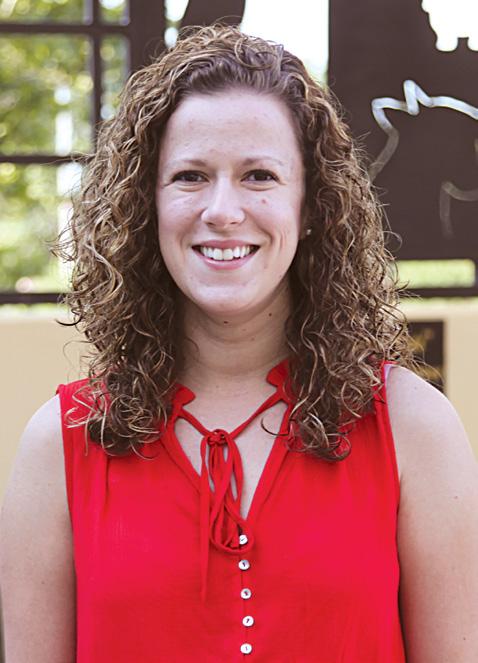
Emily Sharpe, DVM, DACVO, is an assistant professor of ophthalmology in the Department of Veterinary Clinical Sciences. Originally from Broken Bow, Okla., she earned her bachelor’s and DVM (‘13) degrees from Oklahoma State University. She is a Diplomate of the American College of Veterinary Ophthalmologists. Her research focus includes ocular pharmacology, specifically antiinflammatory therapy.
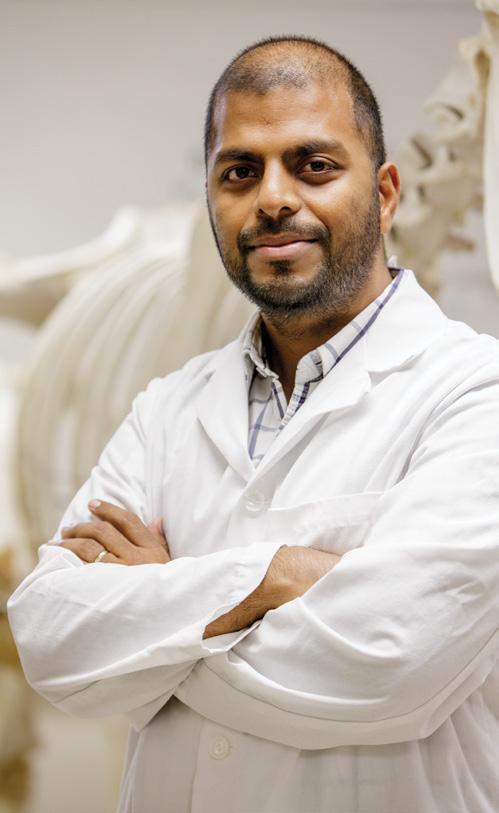
Megan Williams, DVM, is an assistant professor of equine surgery in the Department of Veterinary Clinical Sciences. Originally from Leawood, Kan., she earned her bachelor’s and DVM degrees from Kansas State University. Her research focus includes equine lameness, particularly regarding suspensory ligament pathology.
Madhan Subramanian, BVSc, Ph.D., is an assistant professor of anatomy in the Department of Physiological Sciences. Originally from Karur, Tamilnadu in India, he earned his BVSc from Madras Veterinary College in Chennai, India. He went on to earn a Ph.D. from Michigan State University. Subramanian’s research interests include understanding the molecular and cellular mechanisms involved in the central regulation of blood pressure. He also worked as a research assistant in Gwangju, South Korea.
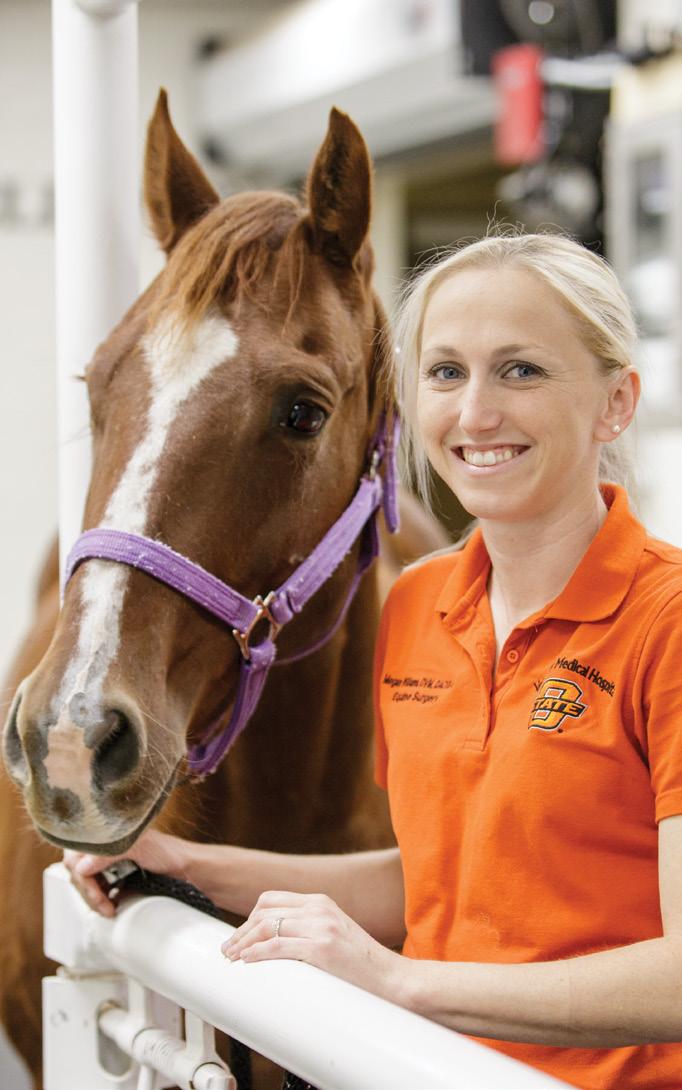
When he accepted the position as director of Oklahoma State University’s Veterinary Medical Hospital Dr. Mark Neer had specific goals in mind for the facility. As he retires 11 years later, he looks back on his accomplishments.
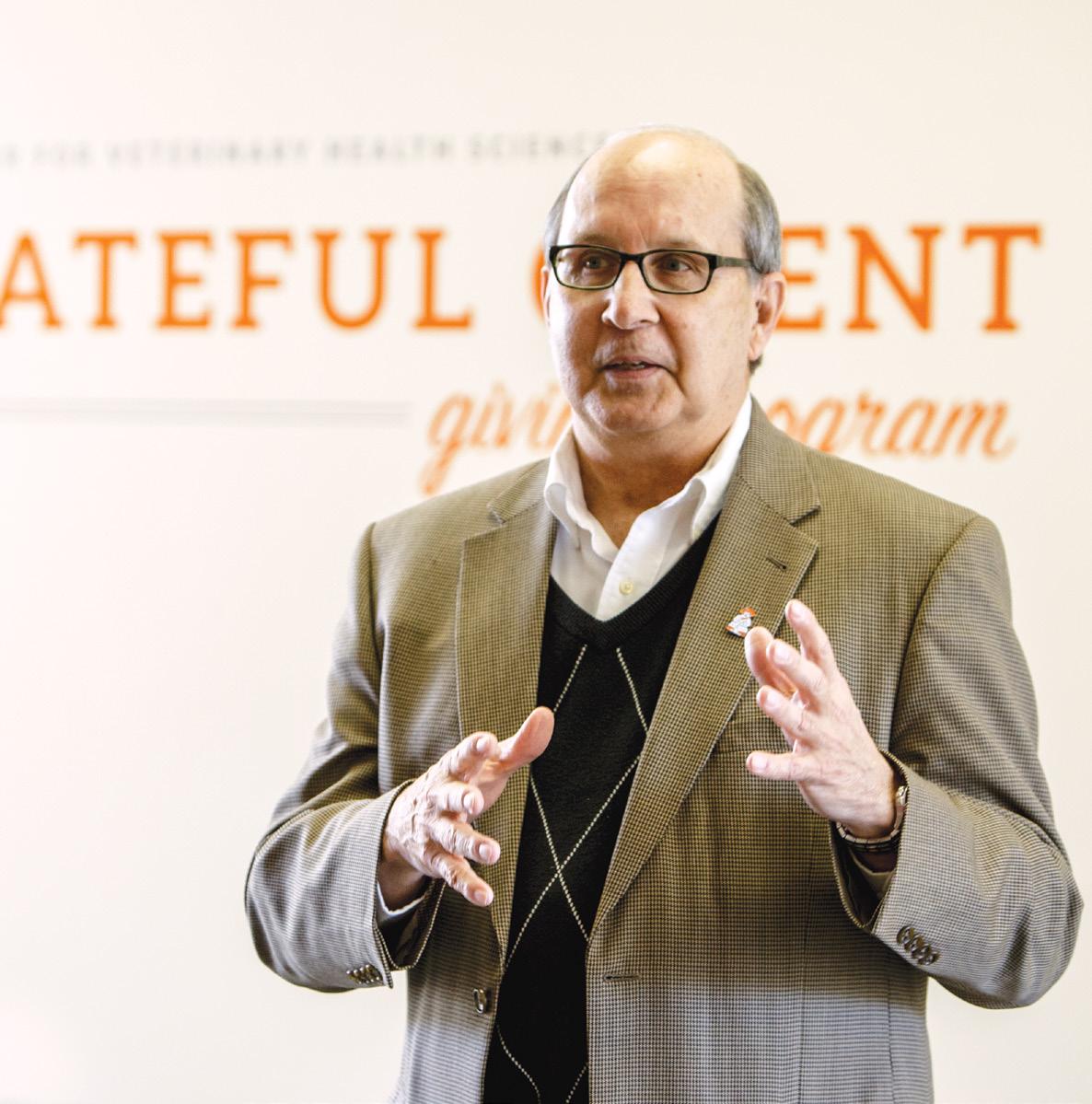
After more than 40 years working as a veterinarian, Dr. Mark Neer is retiring. He has spent the last 11 years as director of Oklahoma State University’s Veterinary Medical Hospital.
“Iwasn’t even looking for a hospital director position,” Neer recalls.
“Dr. Mike Lorenz and I did a couple of anatomy and neurology lectures and labs together at an AVMA meeting, where he and Dr. Ken Bartels asked me if I would ever consider hospital director. I told them I hadn’t thought about that. I was pretty content staying at LSU and retiring there in small animal internal medicine. But the more they talked to me about it, I thought well, that might be something interesting. I felt like it would be a good opportunity for me to come back and hopefully do something positive for my alma mater before finishing my career.”
Neer was born in Pittsburg, Kan. before his family moved to Manhattan where his father earned his DVM degree from Kansas State University. His dad had a practice in El Reno, Okla., before moving the family in 1966 to Tulsa, where Mark finished high school.
“I think [choosing to become a veterinarian] just happened by osmosis,” Neer says. “With my father and his brother being veterinarians, I grew up with that. I worked in his practice growing up and found it to be a very challenging profession. I made the decision probably late in
high school to go into the veterinary profession. Living in Tulsa, I did my undergraduate work at Oklahoma State, so it was a natural fit to go ahead and apply for veterinary school at OSU.”
Following his DVM graduation in 1976, Neer completed an internship at Angell Memorial Animal Hospital in Boston, followed by a three-year residency in small animal internal medicine at Kansas State. Board certified in small animal internal medicine, Neer was a faculty member at OSU from 1979 to 1982.
“I then spent two years in Fort Lauderdale, Fla., in an internal medicine specialty practice,” he says. “In 1983, I took a position at LSU Veterinary School, where I spent 23 years in inter-
“I hoped we would build a culture of teamwork, comradery, collegiality, servant attitude for everybody to everybody else in the hospital, whether that’s staff to doctor or doctor to staff b ecause it’s a team approach,” he says. “So that was real important to me to hopefully instill that culture, and I think overall that has occurred.”
And what advice would Neer offer his successor?
“Patience. Realize you can’t do everything that you would want to do, and that’s because of the restraints that we have with budget resources. And that’s tough because there are lots of things that I would have liked to accom-
sp ecialty in the hospital, but that’s not the most important thing for a veterinary student coming out; it’s to be very well rounded with large animal exposure, equine, small animal — and they would definitely get that here. It would be a wonderful educational opportunity for them.
“It’s been an honor for me to work with everybody in the veterinary center. And that’s not just the individuals that I work with daily in the hospital but the public relations office, development office, all of those individuals have been a big part of what we’ve accomplished. Going forward, I think the future is bright because we have a great group of individuals who will help the hospital grow.”
“I WANTED TO IMPROVE AND ENHANCE THE PEOPLE RESOURCES IN THE HOSPITAL …. I ALSO WANTED TO … PROVIDE A HOSPITAL THAT OUR CLIENTS AND RDVMS (REFERRING DVMS) WOULD FIND AS THE ULTIMATE REGARDING PATIENT CARE AND TECHNOLOGY, AND PROVIDE CLIENTS WITH A COMPASSIONATE VIEWPOINT FROM OUR HOSPITAL.”
nal medicine before moving to Stillwater in 2006 to b ecome hospital director.”
Neer took the position with specific goals in mind.
“I wanted to improve and enhance the people resources in the hospital, meaning all the staff and the team that makes up the hospital,” he says. “I also wanted to improve [referring] DVM relations, increase caseloads for the students who are going through their clinical year, a nd provide a hospital that our clients and RDVMs would find as the ultimate regarding patient care and technology, and provide those clients with a compassionate viewpoint from our hospital.
“I think overall most of those things have been accomplished. We’ve added more than 13 new technician positions in those 11 years. We’ve focused more on the technician positons versus the non-technical positions, but we’ve added a few positions there along the way, too, and that’s through some tough budget years. I like to say ‘we.’ It’s not ‘me,’ it’s not ‘I,’ it’s everybody who works in the hospital.”
Neer hop es to be remembered for those accomplishments and for being fair-minded. He also stressed the importance of building a culture of teamwork.
plish with the facility and the equipment. So realize that sometimes you’re going to have to say no, and that’s hard because you would like to meet everybody’s needs.”
And for anyone considering Oklahoma State as the place to earn a DVM degree, Neer offers this:
“It’s a great place to get a thorough education and become a very well-rounded veterinarian at the point of graduation. Even though it’s a small number, faculty members are very dedicated and committed to educating the veterinary student. We may not have every single
To watch Dr. Mark Neer reflect, visit okla.st/neerfarewell
Neer has plans for his retirement. He and his wife, Kitty, will be having fun with their granddaughter, Harper Grace, who will turn 2 years old in November 2017. His daughter and sonin-law live near Denton, Texas.
“We want to be involved in everything as Harper grows up. Our plans are to build our retirement home on Lake Fork, which is a great trophy bass lake about two hours east of Dallas, Texas. I’ll do a lot of fishing, riding the big Harley hog, and start playing golf again. And certainly, number one is watching the grandbaby grow up.”
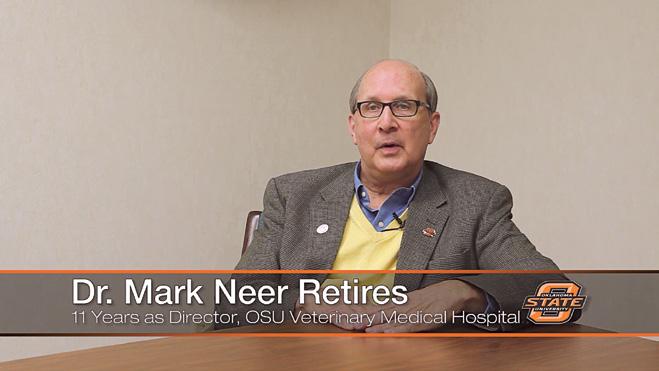
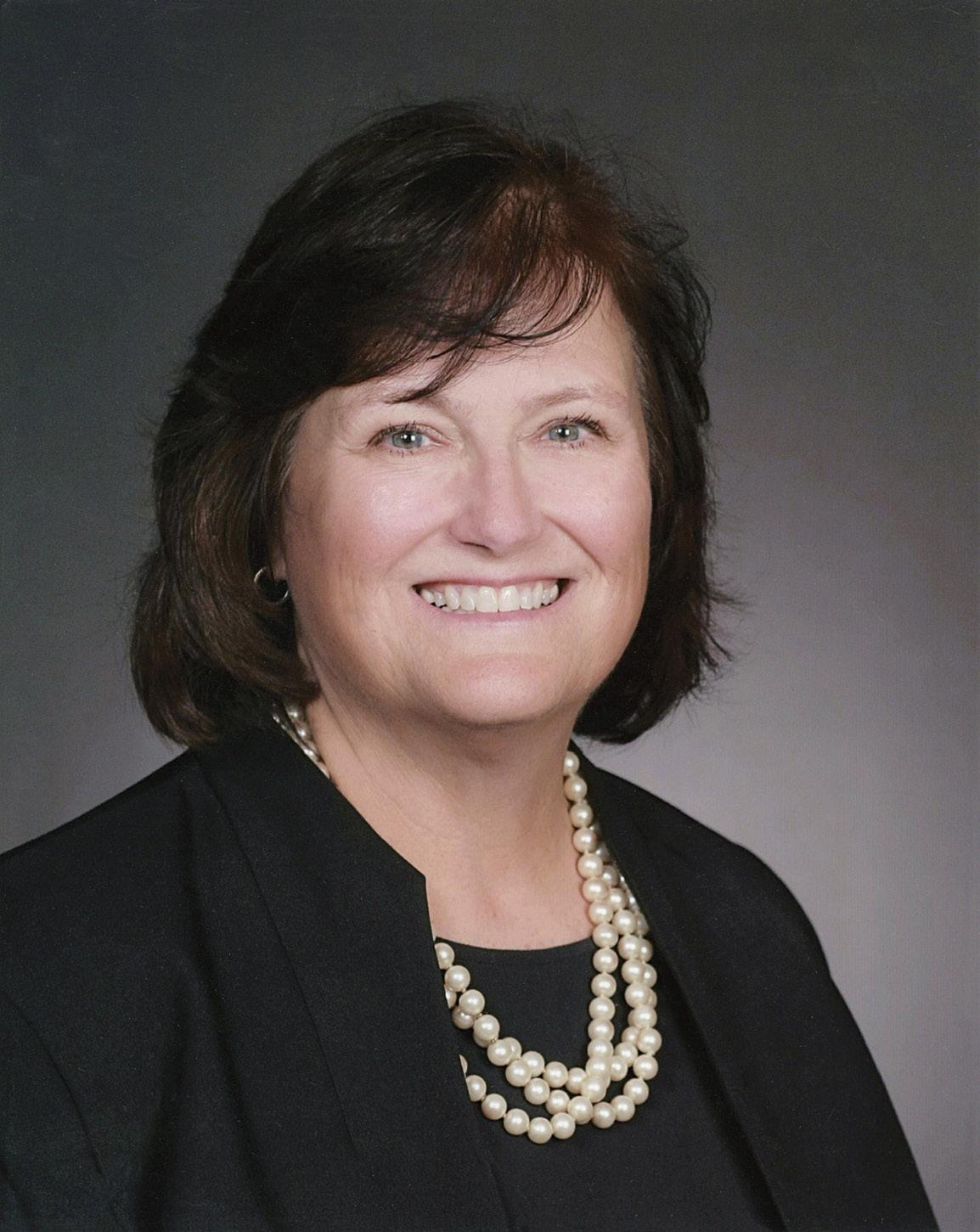
“… YOU WILL BE VERY LUCKY TO BE A VETERINARIAN.”
— DR. LEE DENNEY
Dr. Lee Denney of Cushing, Okla., was named the 2017 Oklahoma Veterinarian of the Year by the Oklahoma Veterinary Medical Association.
“I’m very honored,” Denney says. “I feel unworthy, but also I’m very grateful. It was a very humbling experience to be in that room with my colleagues.”
Denney, a lifelong resident of Cushing, earned her DVM degree from Oklahoma State University in 1978.
Why did she choose OSU? “Oh, you just have to say why not?” she says. “Being an in-state resident and having a vet school with an excellent reputation was a great combination, and that’s why I picked it.
“I always knew I wanted to do something in the medical field,” she continues. “Loved biology and the variety of species, the variety in your daily routine was very appealing. And then add in the medical aspect, veterinary medicine seemed like the likely choice.”
Immediately upon graduation, she went into private practice. “At the time, I was married to a veterinarian, and we opened a mixed practice in Cushing and had that practice for 35 years.”
Denney has another professional interest that also affects animal owners: politics. She served in the Oklahoma legislature for 12 years before being term-limited.
“I got interested in politics probably 10 to 12 years before I was elected and realized what an impact it does have on our state,” she says. “I think a lot of us just go through life voting all the time, making sure we vote but not really paying attention to what those that we put in office actually do. And with money being tight these days and regulations changing, I thought it was important to spend my time in public service.
“I think it’s very important for veterinarians to be engaged. At the time I was in the legislature, we had three veterinarians. We were an active voice, not only for veterinary medicine, but also for production agriculture. And I think it was very important; colleagues looked to us.”
At the time of her interview, Dr. Denney was an instructor and department head for the Veterinary Technology Department at the Oklahoma State University-Oklahoma City campus.
“I hop e I’m remembered as someone who is open minded and willing to learn and willing to change. And approachable on all areas whether it’s in veterinary medicine, teaching students here at OSU-OKC or even in the leg-
dog or their cat, and it’s their lifelong companion and they feel like the outcome is going to probably be euthanasia, but you find out that it’s not … just the joy on their face is wonderful. To return that animal to their family is really a great accomplishment.”
When asked what advice she would offer someone who is considering becoming a veterinarian, Denney offers:
“I HOPE I’M REMEMBERED AS SOMEONE WHO IS OPEN MINDED AND WILLING TO LEARN AND WILLING TO CHANGE. AND APPROACHABLE ON ALL AREAS ….”
"I HOPE l'M REMEMBERED AS SOMEONE WHO IS OPEN MINDED AND WILLING TO LEARN AND WILLING TO CHANGE. AND APPROACHABLE ON ALL AREAS ...."
— DR. LEE DENNEY
islature. Someone who values other people’s opinions and is willing to work with those people. Maybe not always agreeing with opinions, but willing to have a civil discourse and move through problems that we have in today’s society.”
Denney has many areas of accomplishments — her family, her veterinary practice, and her time in the legislature.
“Raising kids to be productive adults is always a great accomplishment,” she said. “Also in the field of veterinary medicine, even protecting the Practice Act and things like that in the legislature have been great. If you drill it down even further, when someone brings you their
“Do it. It’s a wonderful profession. It’s like anything; there is good and bad. You know at 2 a.m. when you’re at the clinic delivering puppies, you kind of think why did I do this? But when those puppies are all going yip, yip, yip and sucking on their mom and you get to go home and go back to bed, it’s rewarding. And the variety of it (veterinary medicine) and the people you meet. It’s b een a great profession. Not only on the small animal side but veterinarians are extremely necessary to protect our food supply and protect us from a lot of foreign animal diseases that we’re starting to see creep back into society. So do it. It’s very rewarding. There are so many different avenues you can take, and you will be very lucky to be a veterinarian.”
Meet Dr. Lee Denny at okla.st/OkVet17
Other Honorees
Other Oklahoma State veterinary graduates recognized during the Oklahoma Veterinary Medical Association’s Annual Convention were:
Dr. Christopher Kelley (’97), COMPANION ANIMAL PRACTITIONER OF THE YEAR
Dr. Byron Schick (’87), DISTINGUISHED SERVICE AWARD
Dr. Jarod Kennedy (’06), FOOD ANIMAL PRACTITIONER OF THE YEAR
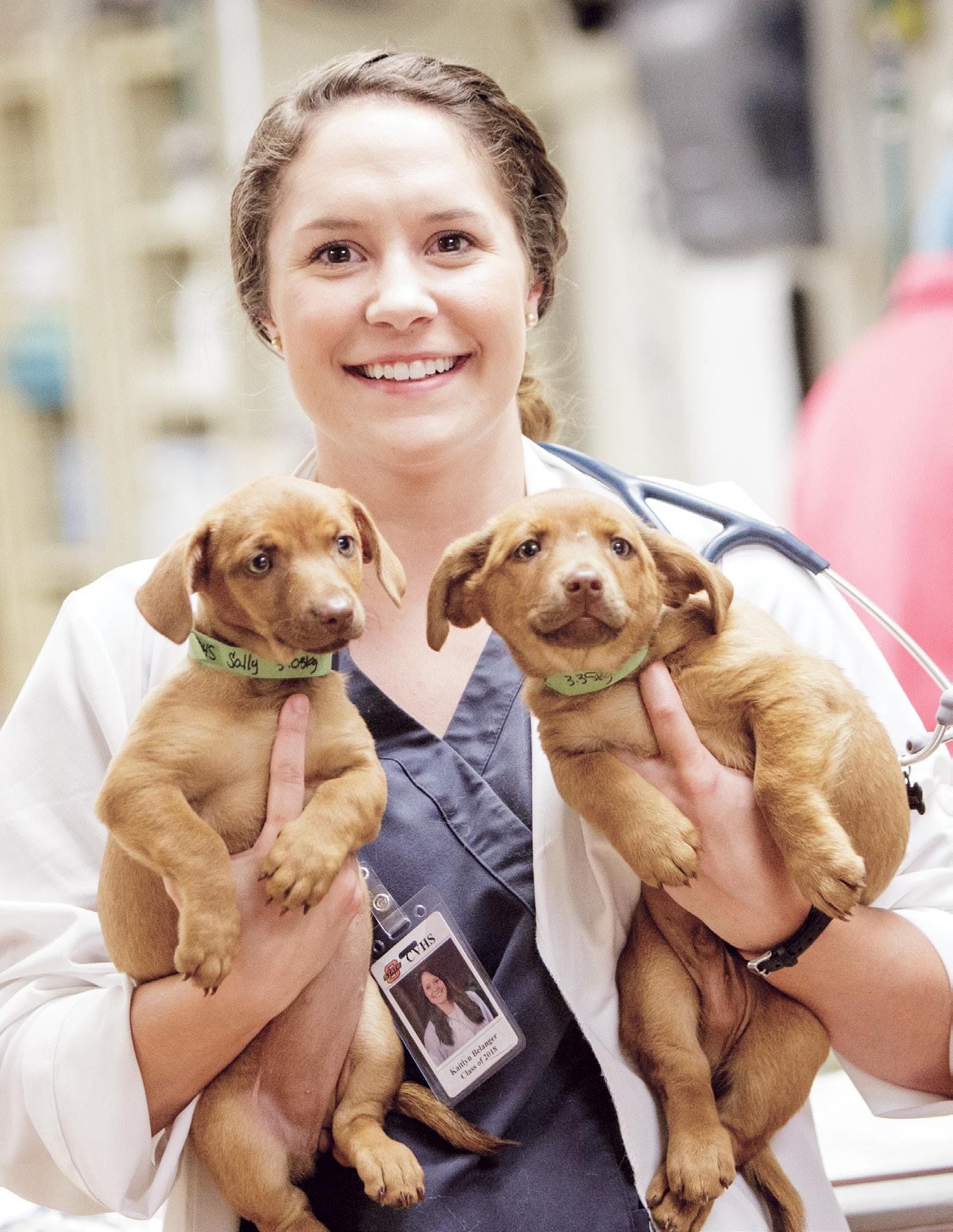
KAITLYN BELANGER , Class of 2018 at Oklahoma State University’s Center for Veterinary Health Sciences, was filled with gratitude for the DEAN HARRY W. ORR
MEMORIAL AWARD
“I am so thankful for the donors,” Belanger says of the award, presented at an annual awards reception in April. “Having [Dean Orr’s] name on this award means a lot, as well as being rewarded for all the hard work I have put in the last three years.”
The Dean Orr Award, honoring the center’s second dean, goes to the top third-year veterinary student.
Once upon a time, Belanger was a little girl who dreamed of becoming a veterinarian.
“ I was a little girl who said I wanted to be a vet, and I never grew out of it,” she says. “In high school, I started working at a vet clinic, and I have known ever since that’s what I want to do.”
While Belanger applied to several vet schools, she had her sights set on attending OSU’s Center for Veterinary Health Sciences.
“Growing up in Oklahoma, you hear about how great the vet school is and after doing my own research, OSU was my top choice,” she says.
“I told myself that even if I got into those other places and not OSU, I would reapply the next year.”
Belanger has loved everything about her time at the CVHS, but the relationships she has formed have been the best part.
“My favorite part is for sure the people,” she says. “The people I have gotten to know through clubs and in my class, they’re going to be my friends forever.”
In addition to the lifelong friendships, Belanger also noted the importance of the supportive and caring faculty to her success.
“The clinicians, faculty and staff here just make this place the best,” she says. “If I ever need something, I know I could ask any of the clinicians for help.”
In her final year, Belanger will trade the classroom for the clinical setting.
“I like having a little bit more responsibility, while still knowing that there’s someone there to give me their opinion,” she says. “I look forward to working on animals that I may not ever work on again, like cows or pigs.”
“MY FAVORITE PART IS FOR SURE THE PEOPLE. THE CLINICIANS, FACULTY AND STAFF HERE JUST MAKE THIS PLACE THE BEST.”
"MY FAVORITE PART IS FOR SURE THE PEOPLE. THE CLINICIANS, FACULTY AND STAFF HERE JUST MAKE THIS PLACE THE BEST."
— KAITLYN BELANGER
Belanger expects to graduate feeling confident and excited about her future.
“I can’t wait to practice what I’ve been taught,” she says.
Belanger also was selected as one of 36 DVM students across the country to receive the Dr. Jack Walther Leadership Award. This annual honor is gi ven to students who portray leadership through active involvement and promote lifelong service to the profession.
KAYLIE WEHR
“DR.
JOSE OYOLA MORALES PERFECTLY EXEMPLIFIES THE TYPE OF STUDENT WE HAD IN MIND WHEN WE CREATED THE DR. CRAIG AND STEPHANIE JONES ENDOWED SCHOLARSHIP.”
— DR. CRAIG JONES
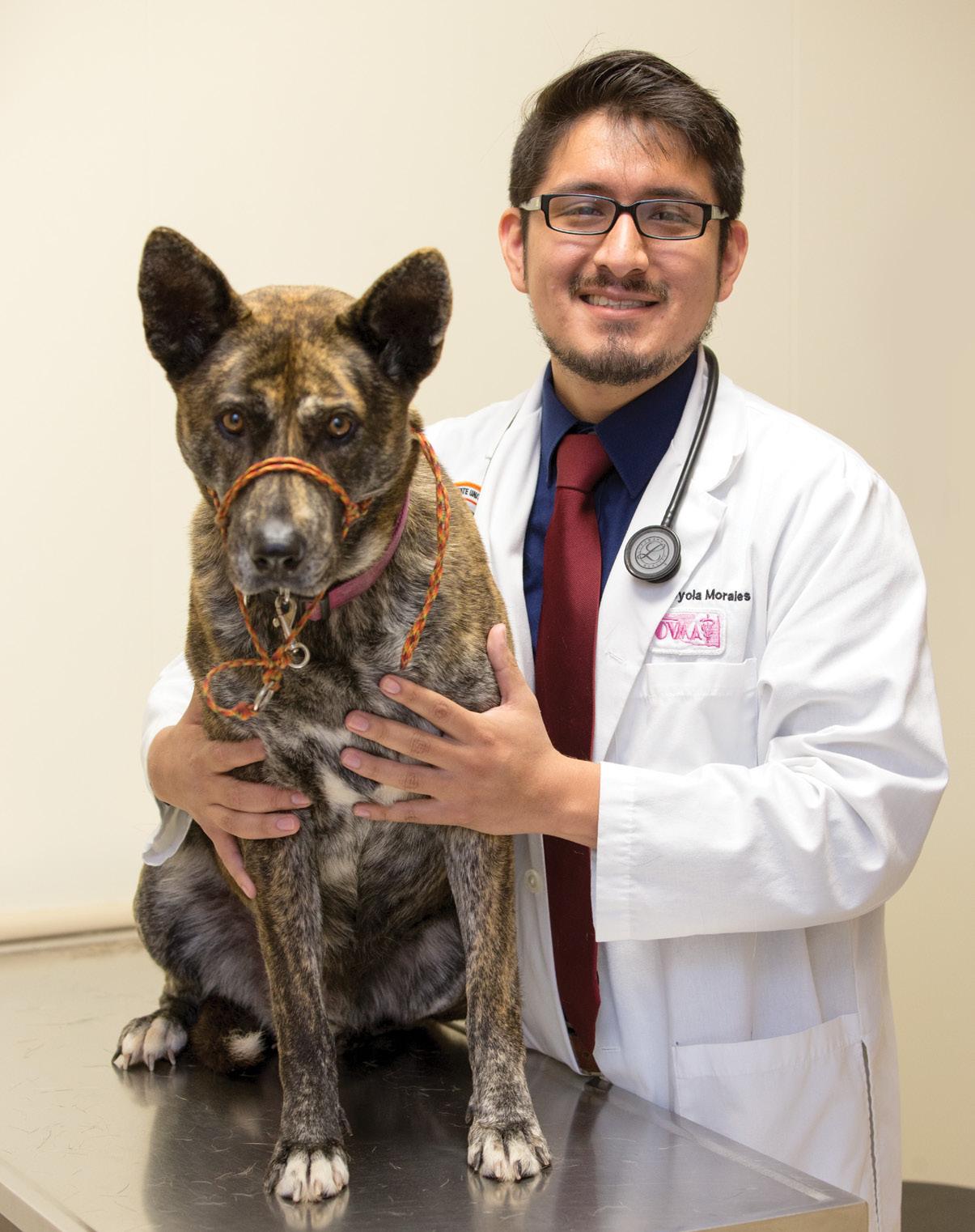
MORALES BATTLES RISKY BRAIN SURGERY WHILE EARNING HIS DEGREE
Born in San Borja, Peru, Jose Oyola Morales discovered his love for animals on his grandparents’ farm. He later lived in Delaware and chose Oklahoma State University as the place where he would earn his DVM degree. OR WOULD HE?
He began having severe headaches in the spring of 2015 as Oyola Morales was finishing his second year of veterinary college. One was so intense that it caused him to vomit for several hours.
“If you looked at me back then, there was nothing necessarily besides my symptoms that said anything was actually brewing underneath,” Oyola Morales recalls. “But Dr. Anderson at the OSU clinic picked up on the clues and said let’s just go get you an MRI. That evening I had an MRI at Stillwater Medical Center. That was probably one of the b est hospitals I’ve been to. The radiologist pulled me aside after it was done and said I just want to take a moment and talk to you about the images that we have because otherwise, you’re going to worry for the entire week before my actual final report comes out.
“He showed me the pictures and it’s very clear that there is this mass on the right side of my brain. The first thought that comes to mind — is it cancer? He said in this case it’s not. It’s actually called an arteriovenous malformation
or AVM. It’s an abnormality of vessels in which an artery goes straight into a vein instead of going into a capillary.”
Oyola Morales was advised to see a neurosurgeon as quickly as he could.
“They ultimately referred me to Mercy in Oklahoma City,” he continues. “They did all the diagnostic workup but their prognosis was that most likely I was going to lose vision if they removed the AVM. I wasn’t very happy about the prognosis because as a veterinarian, you need to have good sight to complete your job, especially because you’re going to be examining animals every day. You’re trying to pick up on those small clues, and losing 50 percent of my vision wasn’t necessarily something that I was very comfortable with.”
O yola Morales had a lot of thinking to do. The chance of him finishing veterinary school was in jeopardy. An untr eated AVM could rupture, causing permanent brain damage or death. If removed, he could lose part of his vision. He had financial concerns as well.
“O ne evening I decided to contact one of the leading neurosurgeons, Dr. Michael Lawton at the University of California San Francisco Medical Center,” he says. “When I emailed him, I didn’t really think he was going to reply because he’s probably very sought after, not to mention that it was just one of those emails from a random person.”
Oyola Morales had a reply the next morning.
“I told him my story and that I was in school in veterinary medicine. He said he wouldn’t charge me for the consultation fee, he would look at the files and get back to me. Within a week or so, probably in April 2015, he asked me to come to California. ‘We’ll do further diagnostics to track down exactly where the AVM is located and have it removed safely for you,’ he said. ‘I can promise you I’ll do my best to avoid having you lose any vision.’
“I think it was his willingness to promise that that really made me go with him. Everyone else was hesitant to give me any sort of good prognostics. And I understand, I know that CONTINUES
“I WASN’T VERY HAPPY ABOUT THE PROGNOSIS BECAUSE AS A VETERINARIAN, YOU NEED TO HAVE GOOD SIGHT TO COMPLETE YOUR JOB, … AND LOSING 50 PERCENT OF MY VISION WASN’T NECESSARILY SOMETHING THAT I WAS VERY COMFORTABLE WITH.”
"I WASN'T VERY HAPPY ABOUT THE PROGNOSIS BECAUSE AS A VETERINARIAN, YOU NEED TO HAVE GOOD SIGHT TO COMPLETE YOUR JOB, ... AND LOSING 50 PERCENT OF MY VISION WASN'T NECESSARILY SOMETHING THAT I WAS VERY COMFORTABLE WITH."
— DR. JOSE OYOLA MORALES
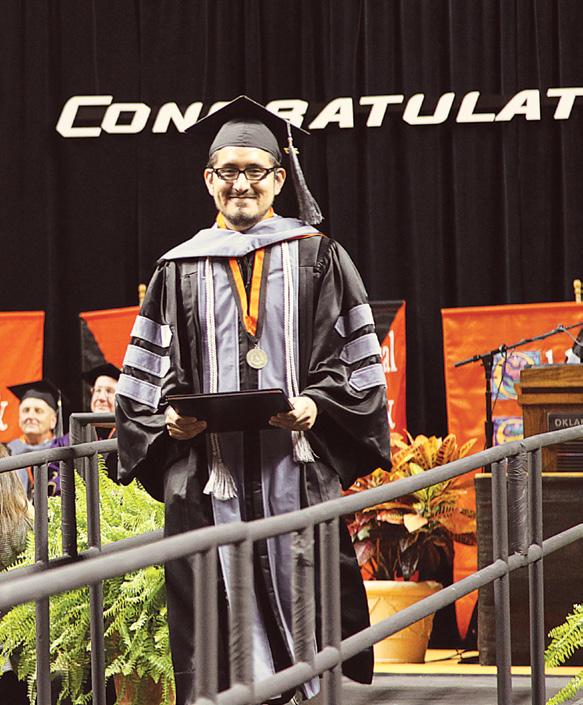
you want to be very careful with what you relay to clients. And so his willingness to sort of make that promise, even though you know it would be difficult, is what made me go forward with him.”
Oyola Morales had the surgery in California the summer of 2015. His girlfriend and classmate, Melissa Nelson, accompanied him.
“It took three days — one day to do the diagnostics, then the surgery, and then further diagnostics to make sure everything was taken care of and luckily, it was a success. That summer we were both working at OSU. She was helping Dr. Jared Taylor with one of his projects and I was helping Dr. Todd Holbrook with one of his projects. Both Drs. Taylor and Holbrook were excellent in helping us schedule everything so that we could both fly out there. I chose to bring her to California because I thought that my mom and my dad would be very, very nervous, and I didn’t want to put them through that ordeal. My parents called me every day, talking to me, encouraging me. Melissa was there to physically help me. … She was there just helping me to move forward, and I think that made a big difference.”
He spent seven more days hospitalized before going home to finish his recovery. He has some residual effects today from the AVM.
“I have a bit of a blurry visual field on the left corner of my left eye. Wearing glasses helps me not focus on that little edge of blurriness. It doesn’t affect my driving. It doesn’t affect my surgical skills or my medicine at all. It’s just one of those things that reminds you of what you went through.”
“I THINK THOSE SCHOLARSHIPS WERE LIFESAVING. WHEN I WAS GOING THROUGH THIS ENTIRE PROCESS, I WAS ALWAYS WORRIED ABOUT HOW AM I GOING TO COVER ALL THESE EXPENSES.”
"I THINK THOSE SCHOLARSHIPS WERE LIFESAVING. WHEN I WAS GOING THROUGH THIS ENTIRE PROCESS, I WAS ALWAYS WORRIED ABOUT HOW AM I GOING TO COVER ALL THESE EXPENSES."
— DR. JOSE OYOLA MORALES
And how did Oyola Morales handle the medical expenses? Generous scholarship donors made it p ossible for him to pursue his dream.
“I think those scholarships were lifesaving. When I was going through this entire process, I was always worried about how am I going to cover all these expenses. I had already taken out a set of loans to finance my education. The money that was provided through those scholarships allowed me to cover my academic expenses and gave me the opportunity to funnel the loans that I had taken out into covering medical [costs]. So without the [scholarships], it would have been impossible for me to juggle the finances.
“I couldn’t have picked a better place than Oklahoma State to be diagnosed and treated with this. The fact that we have the opportunity
to offer student scholarships and cover these events that are unplanned whether it is medical or personal, I think that in itself is so wonderful. I am very, very thankful to the donors for supp orting our veterinary school and in helping me finish my degree.”
Oyola Morales graduated with the Class of 2017 on May 12.
“I’m very excited to have made it this far, and I’m very excited for what lies ahead. I’m thankful for the staff, both academic and general, who have helped me get here. I think all the training that I have received has prepared me to be a practice ready veterinarian. I think I’m going to go out there and have a lot of fun. I’m going to make the best of everything that’s happened, and I really look forward to being a veterinarian finally.”
Following graduation, the couple moved to Texas. Jose is at a Banfield Veterinary Hospital in Denton, Texas, and Melissa will join a sister clinic in Fort Worth. Both will be focused on small animal medicine with some exotic pets.
Through his four years in the veterinary program at Oklahoma State, Oyola Morales received the following scholarships: Austin and Audrey Weedn Foundation Scholarship (2014 and 2016) Dr. Craig and Mrs. Stephanie Jones Endowed Scholarship (2015) Ethel Peters Endowed Scholarship (2017) Robert G. and Karen F. Beach Scholarship (2017) American College of Veterinary Radiology Award (2017)
“Dr. Jose Oyola Morales perfectly exemplifies the type of student we had in mind when we created the Dr. Craig and Stephanie Jones Endowed Scholarship,” Craig Jones says. “Many times during veterinary school, I found myself in financial need. An anonymous donor stepped forward to help me during this struggle, and I promised I would one day repay the generosity. I am honored that a young man such as Jose was the recipient of our scholarship.”
Cl/HS
To support veterinary student scholarships, contact Chris Sitz, senior director of development with the OSU Foundation, at 405-385-5170 or csitz@osugiving.com
To see Dr. Jose Oyola Morales' story, visit okla.st/JOMorales
lizabeth Forbes of Nashua, N.H., received the 2017 Dean Clarence H. McElroy Award , the highest honor that an Oklahoma State veterinary student can achieve. The recipient is voted on by faculty and class peers, and high academic achievement, leadership and outstanding clinical proficiency are required criteria.
“I was in shock when they announced my name; I still am,” Forbes says. “It’s really humbling but also scary to follow in the footsteps of other people who have received that award in the past. It’s a little nerve-racking, but I’m very grateful for it.”
Forbes toyed with the idea of becoming a veterinarian through high school, but she made her mind up in undergraduate school.
“I wasn’t really sure until probably my sophomore year of undergrad,” she says. “I started working with a private equine practitioner and with Tufts’ ambulatory vets a little bit. I think then I really decided that was what I wanted to do. I really love the human-animal bond we form with horses. I decided on veterinary medicine because having healthy horses is so important for maintaining that bond.”
Forbes earned a bachelor’s degree in animal science at the University of Connecticut. She chose Oklahoma State University for her DVM degree for a couple of reasons.
“I really wanted to get horse experience. I know there is a huge equine population here (Oklahoma),” she says. “So as I expected, there was a great equine caseload. Also, the tuition is pretty reasonable for out-of-state students, one of the lowest in the country. So that’s always a factor.
“I really loved my fourth year,” she continues. “Some of my favorite moments were with patient care and seeing patients get b etter a little bit at a time and feeling like you are actually doing something.”
Forbes was heading to an equine internship at an equine referral hospital after her graduation. After that, she would like to go into a general equine practice, hopefully an ambulatory type practice.
“I think you have to have something that you are really passionate about in veterinary medicine. I don’t think you have to like all aspects of veterinary medicine. I know I certainly don’t enjoy a lot of the small animal stuff but I think you have to find a path that you really love.”
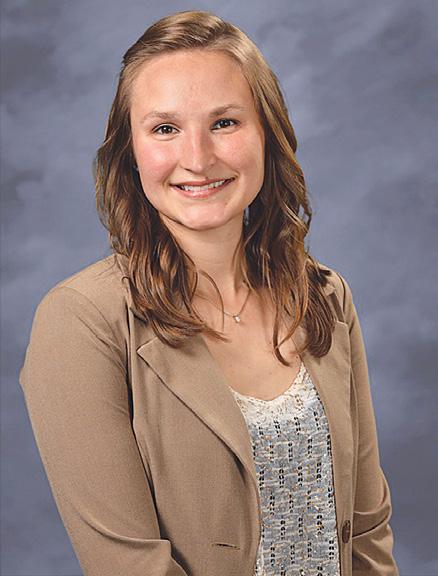
In addition to the Dean McElroy Award, Forbes also earned a Butch and Luella Ruth Curtis Educational Fund Award for her academic achievements and a Dr. C. Kip Doran Memorial Scholarship for her interest in equine medicine and surgery. The month before graduation, she was inducted into the Nu Chapter of the Society of Phi Zeta , the honor society of veterinary medicine. Forbes is the daughter of Cynthia Dunlop and Thomas Forbes of Nashua.
Cl/HS
Watch Forbes, visit: okla.st/ForbesWins
“SOME
"SOME
OF MY FAVORITE MOMENTS WERE WITH PATIENT CARE AND SEEING PATIENTS GET BETTER A LITTLE BIT AT A TIME AND FEELING LIKE YOU ARE ACTUALLY DOING SOMETHING."
OF MY FAVORITE MOMENTS WERE WITH PATIENT CARE AND SEEING PATIENTS GET BETTER A LITTLE BIT AT A TIME AND FEELING LIKE YOU ARE ACTUALLY DOING SOMETHING.” — ELIZABETH FORBES
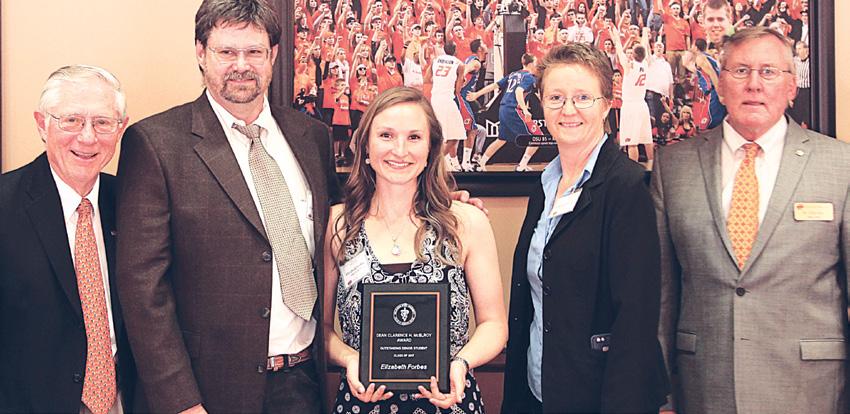
“HOODING CASSIE GIVES ME THE HONOR OF INDUCTING HER AS A DOCTOR INTO THE PROFESSION OF VETERINARY MEDICINE. AS A FAMILY MEMBER, IT ALSO GIVES ME GREAT PRIDE TO BE ABLE TO SEE HER JOIN ME IN ADVANCING THE GREATEST PROFESSION.”
— DR. AMY OLIVER
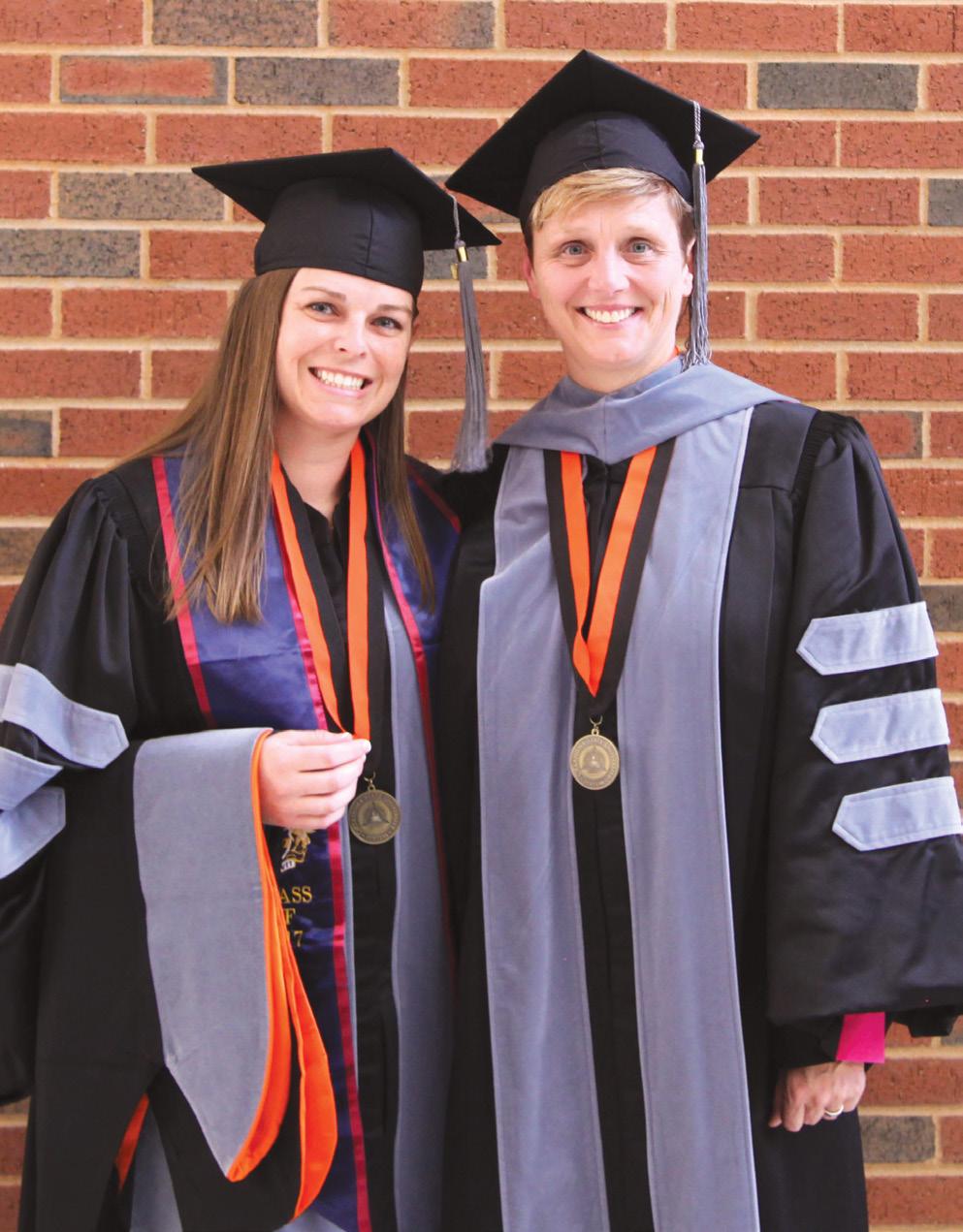
Becoming a veterinarian wasn’t a childhood dream for Cassie Park of Woodward, Okla.
The member of the Class of 2017 didn’t make the decision until her senior year when she was an undergraduate.
“I was mainly looking for employment and not necessarily in veterinary medicine,” Park says. “Dr. Tim Kennemer (Class of 1987) owned Sunset Veterinary Clinic, where I took my first job in veterinary medicine as an assistant. I fell in love with the field and decided to apply for veterinary school. To gain experience, I observed my cousin, Dr. Amy Oliver (Class of 2005) in Las Vegas for a couple of weeks. She is the type of veterinarian I would like to be. She is honest and intelligent as well as compassionate with her clients and patients. It is an honor to have her hood me.”
“I wanted to give Cassie the opportunity to understand the demands of the profession before making the decision to choose veterinary medicine as a career,” says Oliver, now an associate at Specialized Veterinary Services in Fort Myers, Fla. “Cassie is able to communicate concisely with clients and colleagues. She has great compassion and empathy. She is able to balance a moderate case load in a timely manner, which is exceptional for a new graduate. Cassie’s greatest strength is her desire to be an exceptional veterinarian.
“It’s a professional and personal honor to be able to participate in Cassie’s hooding ceremony,” Oliver
continues. “Being a hooder means ‘passing the torch.’ Hooding Cassie gives me the honor of inducting her as a doctor into the profession of veterinary medicine. As a family member, it also gives me great pride to be able to see her join me in advancing the greatest profession.”
Park started her journey to earn a DVM degree at Ross University and transferred into the Class of 2017 during the spring semester of their first year in 2013.
“There are so many great memories with the friends I have made. If I were to pick one memory out as a favorite, it would be my patient Oliver the camel,”
In today’s society, a dog or cat is part of the family. I am able to help people take care of their family members, which feels amazing.”
And to Cassie and her classmates, Dr. Oliver offers this advice:
“Veterinary medicine is a rewarding and enjoyable profession. First, you must take time for yourself, your mental health. Do not let your clients consume all of your time. Set boundaries. Second, you must have a support system — family, friends, colleagues, professional veterinary organizations or lo cal clubs. Talking honestly with someone about your feelings is the best way to prevent emotional exhaustion.
“VETERINARY MEDICINE IS A REWARDING AND ENJOYABLE PROFESSION. FIRST, YOU MUST TAKE TIME FOR YOURSELF, YOUR MENTAL HEALTH. SECOND, YOU MUST HAVE A SUPPORT SYSTEM …. AND THIRD, YOU MUST CHANGE YOUR VIEW — YOUR SCENERY AND OUTLOOK. NEVER GIVE UP.”
"VETERINARY MEDICINE IS A REWARDING AND ENJOYABLE PROFESSION. FIRST, YOU MUST TAKE TIME FOR YOURSELF, YOUR MENTAL HEALTH. SECOND, YOU MUST HAVE A SUPPORT SYSTEM .... AND THIRD, YOU MUST CHANGE YOUR VIEWYOUR SCENERY AND OUTLOOK. NEVER GIVE UP."
— DR. AMY OLIVER
she says. “Prior to veterinary school, I would have never thought that I would have a camel for a patient. In this career, the opportunities are endless!”
Park plans to be a small animal general practitioner and eventually hopes to share her skills through missionary work as well. To anyone considering a degree in veterinary medicine, she says, “It is a difficult road to choose, and sometimes you may want to give up. I am now able to see how rewarding it is to help people with their loved ones.
And third, you must change your view — your scenery and outlook. Focus on your accomplishments. The veterinary profession is vast, and there are many career choices within the field. Sometimes a change of scenery is the break you need. It took me 10 years as a veterinarian to find the balance I needed to enjoy work and life. It’s important. Never give up.”
Cl/HS
“IT REALLY MEANS A LOT TO HAVE A MEMBER OF THE FAMILY AND A PRESTIGIOUS MEMBER OF THE OSU COMMUNITY WHO UNDERSTANDS THIS JOURNEY SHARE THESE MOMENTS WITH ME AND OFFER HIS CONTINUAL SUPPORT.”
— DR. OLIVIA SHOUP
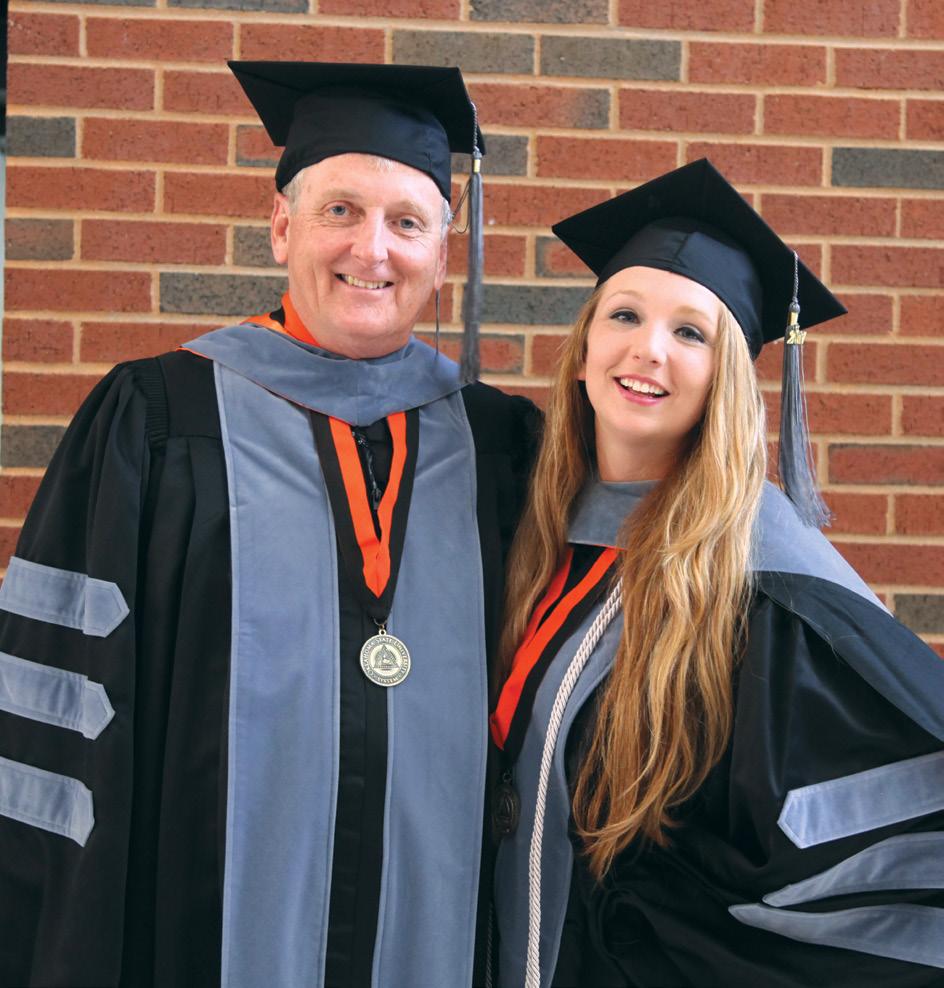
livia Shoup of Dallas says she’s wanted to be a veterinarian for as long as she’s known what one is. On May 12, she achieved that dream, being hooded by her uncle, Dr. Bob Shoup, co-owner of Catoosa Small Animal Hospital and Oklahoma State University Class of 1982 graduate.
“To be the one who hooded Olivia was a special day for me and, I hope, her,” Bob says. “She worked hard for her DVM, and I am honored to celebrate this accomplishment with her. Olivia worked for me a few weeks one summer. She has a very energetic and outgoing personality. She’s not afraid to get involved with cases and people. She always gives at least 100 percent in effort and has some smarts to go with it.”
“It really means a lot to have a member of the family and a prestigious member of the OSU community who understands this journey share these moments with me and offer his continual support,” Olivia says. “My uncle is a great
veterinarian who is never afraid to tackle new and different cases, and I hope to be the same way.”
“Every animal experience I’ve had over the years has just reinforced my decision,” Olivia continues. “My family has a long history at Oklahoma State University. My uncle went to vet school here, and both my parents earned their engineering degrees here. The ‘all nighters’ studying are probably my favorite memories of veterinary college. While having to stay up all night studying is not fun, my closest friendships in veterinary school were formed and strengthened during those late nights.”
Following graduation, Olivia will begin a one-year rotating internship at BluePearl in Spring, Texas. After that, she hopes to be admitted into a neurology specialty internship or residency and continue on to b oard certification in neurology.
“If you are thinking about a degree in veterinary medicine, know that veterinary school is not easy,” Olivia adds. “It can be extremely trying physically, mentally and emotionally. I would never choose any other path, but I would suggest that anyone who chooses this path should be sure before pursuing it. Get involved with local clinics and work or volunteer in them as soon as you can.
A healthy balance of determination and humility are key. And know that you will acquire animals during veterinary school, so try not to start with too many.”
And to the entire Class of 2017, Dr. Bob Shoup said, “Congratulations on completing your education and b ecoming part of a wonderful profession. This profession will offer you a lifetime of continued educational growth, challenges and many rewards. As you find success in this profession, find ways to give back to your profession so that others will have the same opportunities. I sincerely hope that each and every one of these new graduates can say after 30 years that they enjoy our profession as much as I have.”
In May, the Center for Veterinary Health Sciences graduated the Class of 2017 with 74 members. Congratulations, Class of 2017
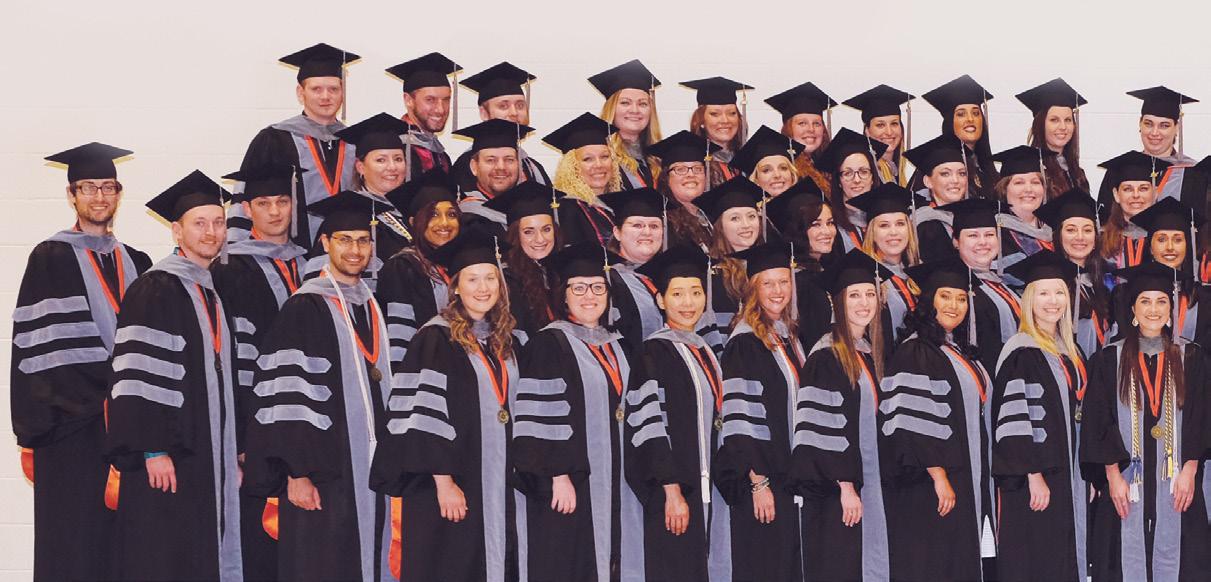
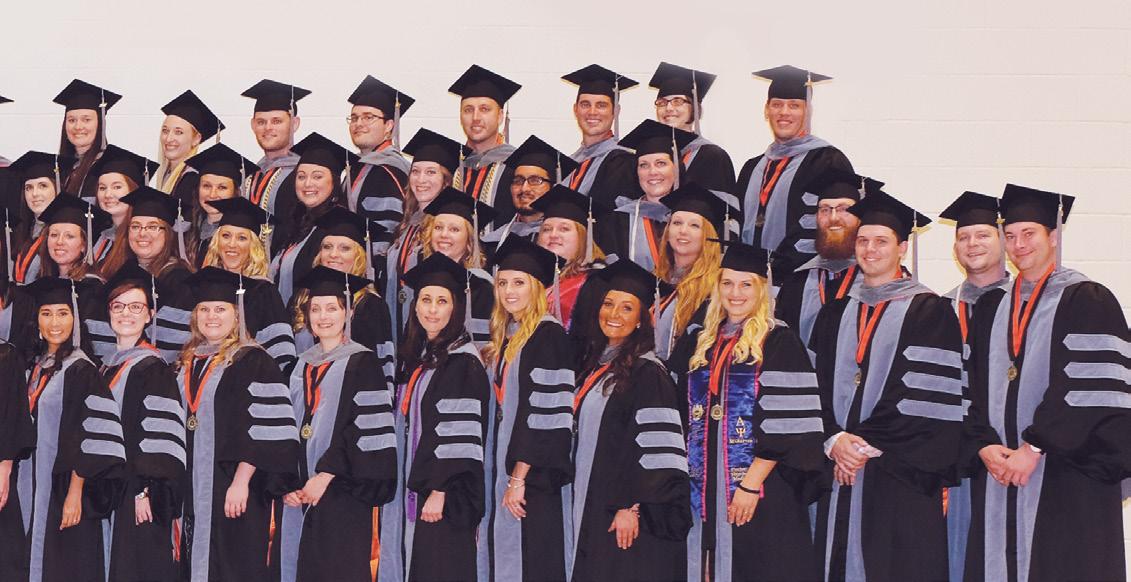
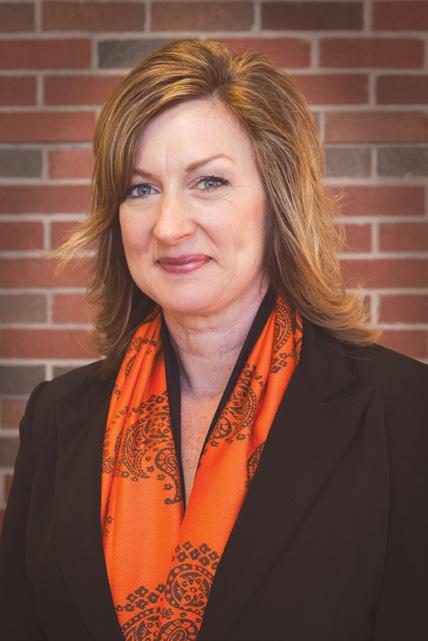
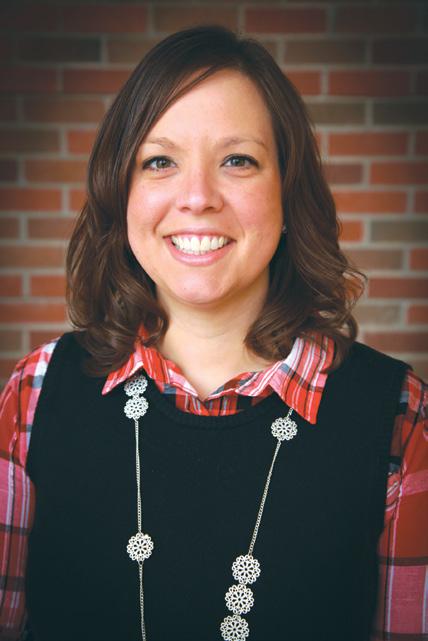
Chris Sitz is the senior director of development for the Center for Veterinary Health Sciences at the OSU Foundation.
Originally from Bartlesville, Okla., she earned a bachelor’s degree in business administration with a major in marketing from Oklahoma State University. She gives to the Veterinary Medicine Fund for Excellence.
Sitz grew up loving horses, dogs and the performing arts. After landing her first job and before buying a car, she bought a dog and a horse and rode the horse home. She and her husband, Dayton, have two daughters, Carmen (20) and Claire (17) who both love animals, the outdoors and the arts. In their free time, they enjoy camping with their horses and trail riding and traveling with their children.
Heidi Griswold is the senior director of development and team lead for the Center for Veterinary Health Sciences at the OSU Foundation. Originally from Galt, Mo., she earned a bachelor’s degree in agribusiness management and a master’s degree in public administration from the University of Missouri.
Griswold supports the veterinary center’s wildlife care and study abroad opportunities for veterinary students.
Growing up on a farm with four siblings, Griswold has had all types of livestock and pets over the years. Her Future Farmers of America project consisted of two black Angus cows and four Bichon Frise dogs.
In her free time, Griswold enjoys cheering on the Cowboys, traveling, photography, reading and enjoying the outdoors.
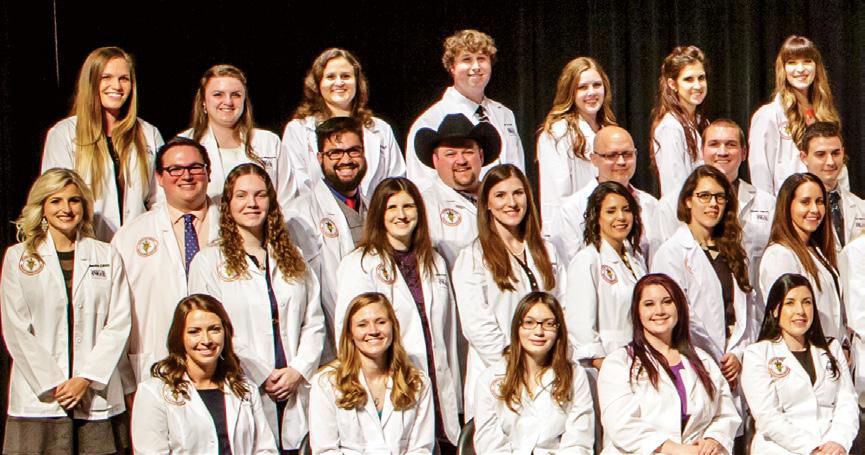
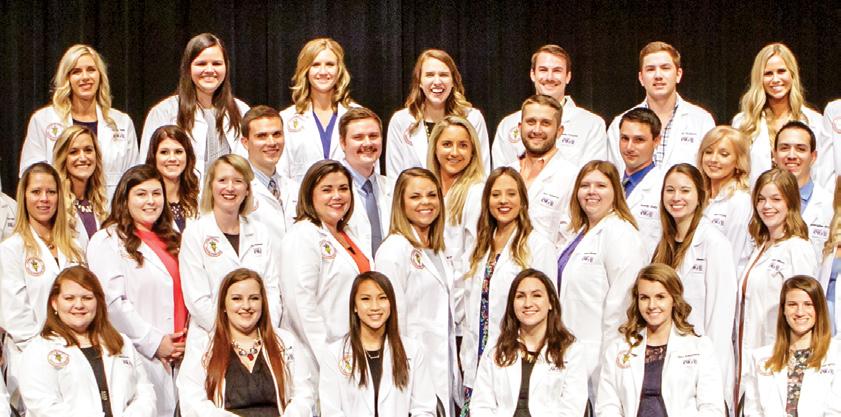
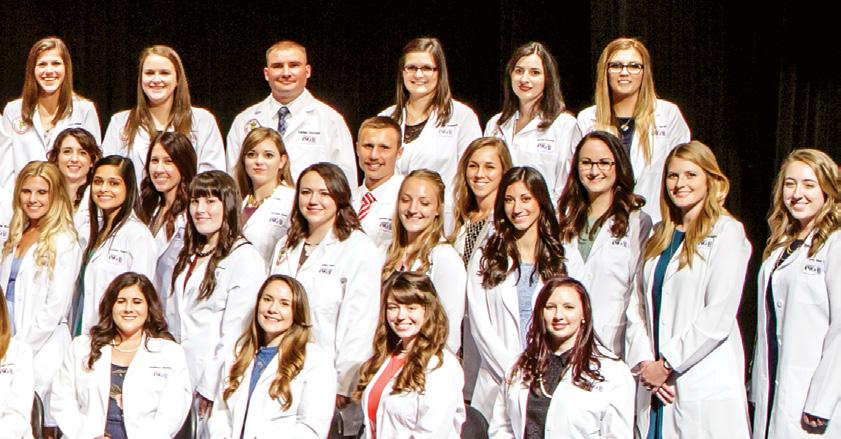
The Class of 2018 marked the completion of their first three years of the DVM program and the beginning of their clinical rotations at Oklahoma State University’s Center for Veterinary Health Sciences with the annual Transition ceremony
more on the Transition ceremony at okla.st/CVHStransition
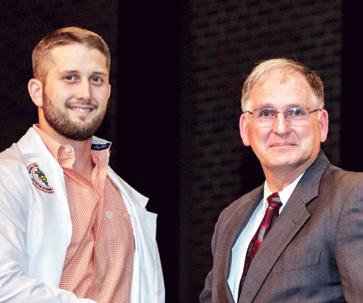
“My father is a veterinarian so I grew up around it,” says Nick Thompson of Coalgate, Okla., son of Dr. Larry Thompson, 1981 graduate of Oklahoma State’s veterinary program.
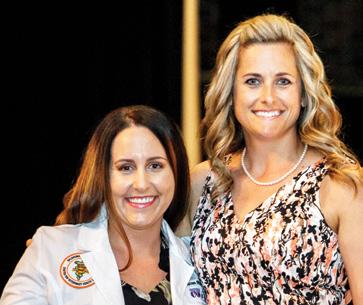
“I’m just excited to be here, and I can’t wait to start clinics, and I’m ready for the next chapter,” says Kristen Rivers, with her mentor, Dr. Kimberly Huckaby (’06).
THE CENTER FOR VETERINARY HEALTH SCIENCES HAS EXPANDED ITS FRESHMAN CLASS FROM 88 TO 106 STUDENTS. HISTORICALLY, EACH YEAR MORE THAN 800 APPLICANTS COMPETE FOR THE OPEN SEATS.
PHOTOGRAPHY BY GARY LAWSON / UNIVERSITY MARKETING
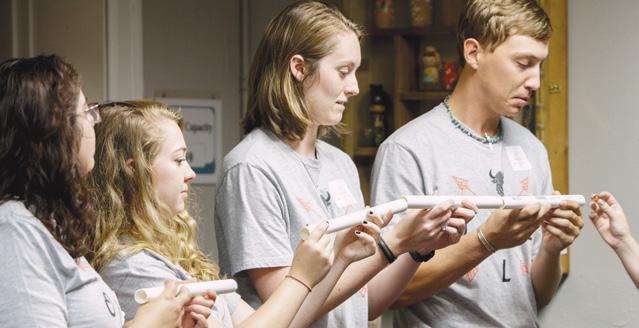
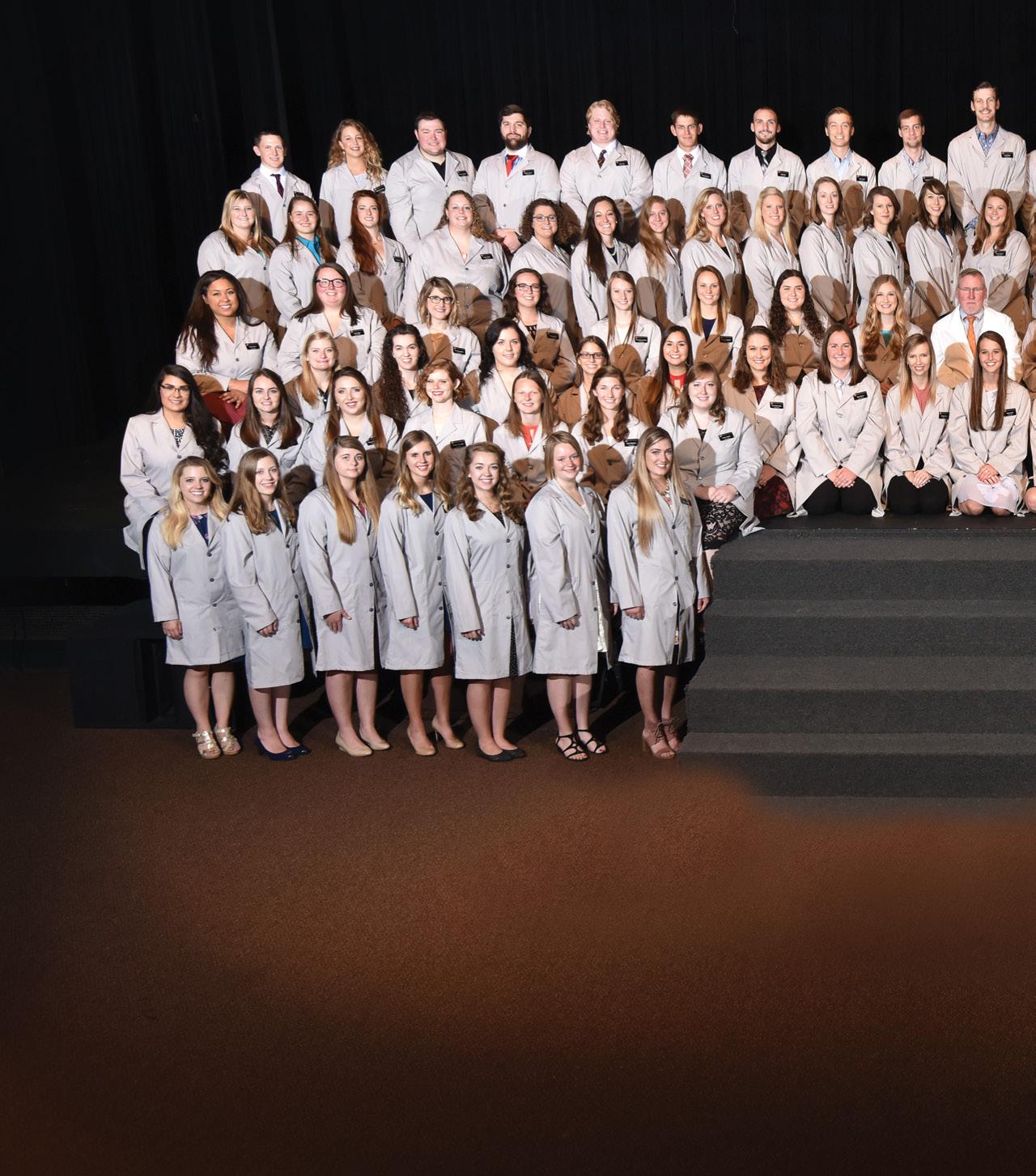
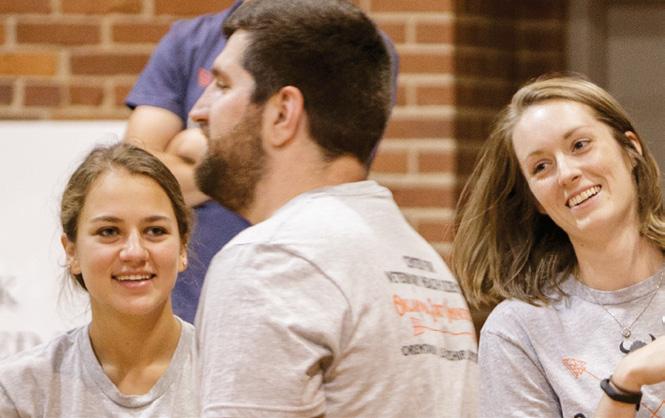
WHO THEY ARE 17 MEN 89 WOMEN 106 TOTAL
WHERE THEY’RE FROM
58 OKLAHOMA RESIDENTS
48 NON-RESIDENTS REPRESENTING ARKANSAS, CALIFORNIA, COLORADO, FLORIDA, INDIANA, KANSAS, MASSACHUSETTS, MARYLAND, MINNESOTA, NEBRASKA, NEW MEXICO, NEW YORK, OHIO, PENNSYLVANIA, SOUTH CAROLINA, TENNESSEE AND TEXAS; TORONTO, CANADA
BY THE NUMBERS
3.570 CORE GPA
3.590 CUMULATIVE GPA
152 GRE VERBAL
151 GRE QUANTITATIVE
4.0
GRE ANALYTICAL
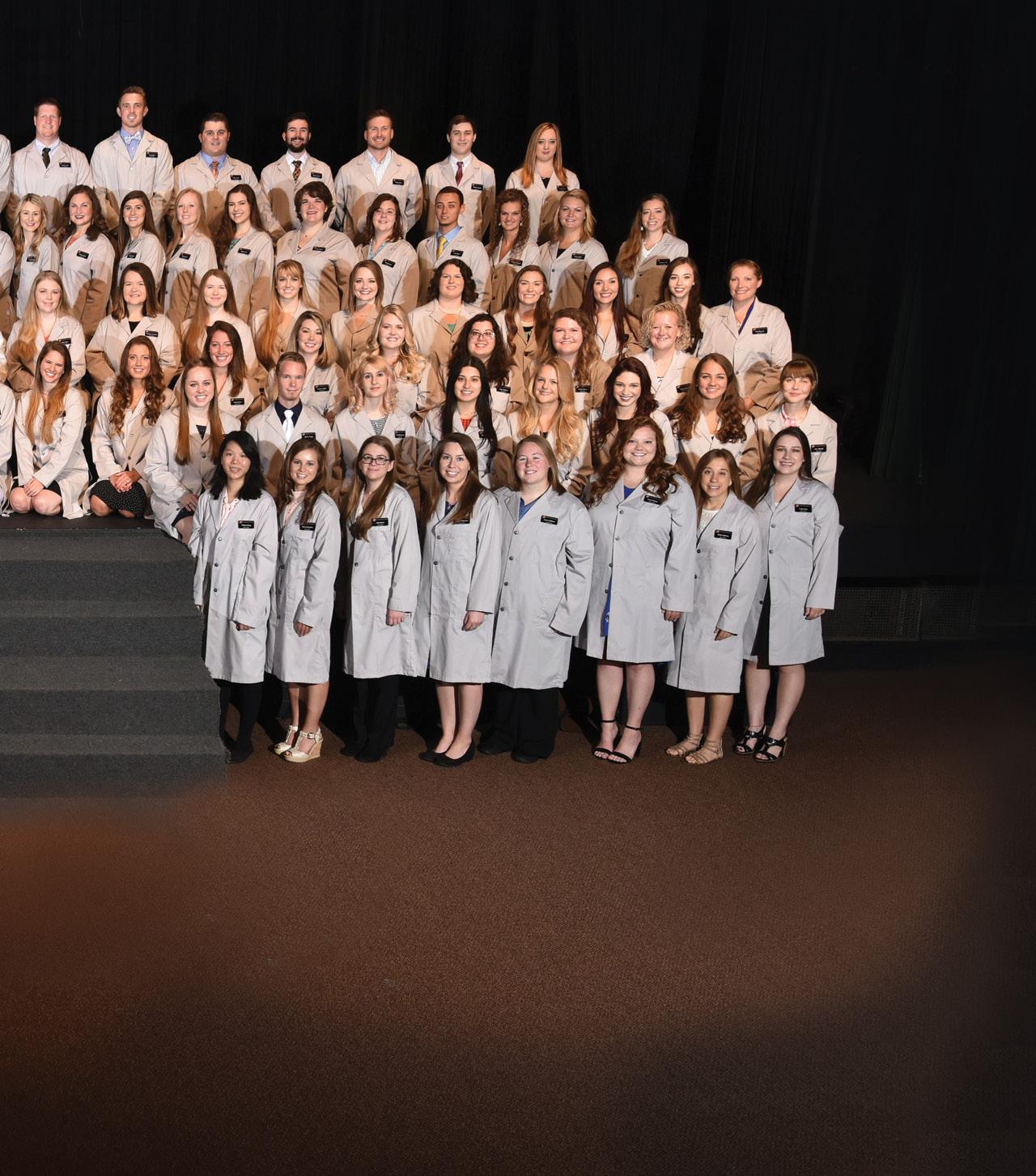
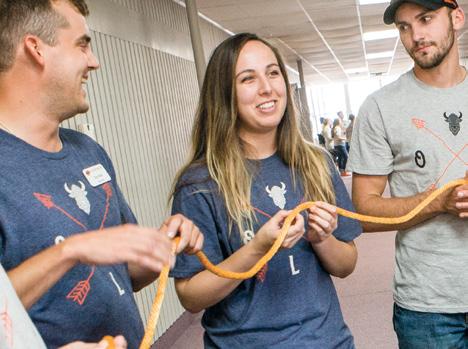
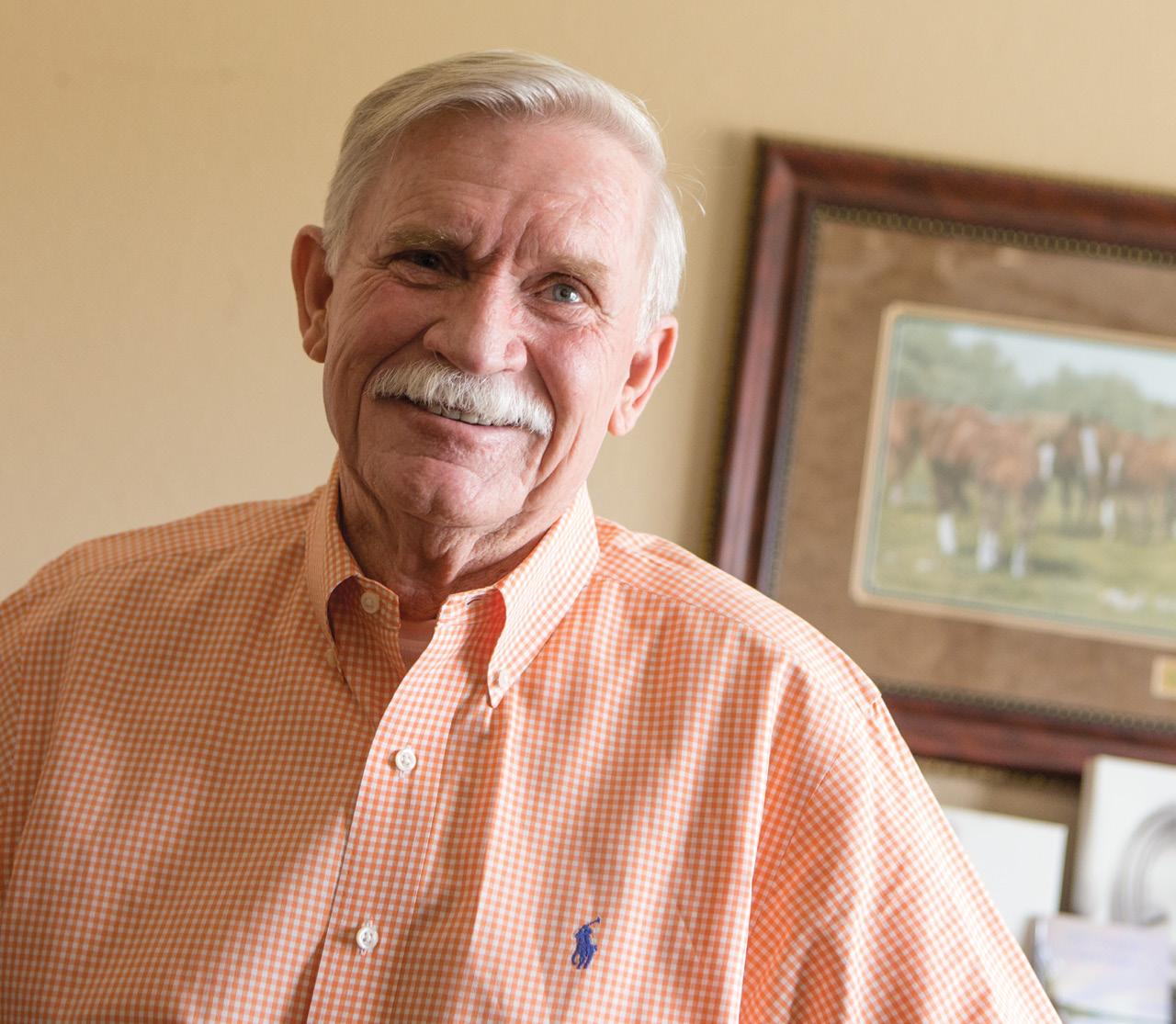
HORSE TRACK WORK KEPT STORY BUSY FOR 30 YEARS
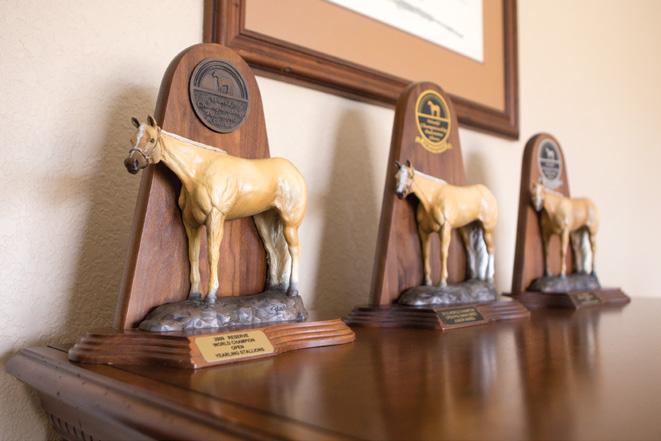
The bell rings. The gates fly open. Aaaaaand they’re off!
For 30 years, that was Dr. Bob Story’s work world.
He heard those words daily while working as a racetrack veterinarian at Ruidoso Downs in New Mexico. Trophies, statues and paintings from his impressive career fill every room of his Perkins, Okla., home.
“Both my dad and my stepdad were racehorse trainers, so I’d been around racehorses all my life,” Story says. “It intrigued me, but I knew I didn’t want to be a trainer. So I decided veterinary medicine might be the way to go to be involved with racing plus have a profession other than training.”
After high school, Story earned a degree in education from Oklahoma State University. He taught high school, community college and then OSU’s horse production class b efore earning his DVM degree from OSU in 1983. During high school and college summers, Story loved working for a veterinarian at the Ruidoso racetrack.
“He was an excellent veterinarian but not very well organized,” Story recalls. “I used my organizational skills to help him get to where he was supposed to be, and the clients noticed that. So when I came out of veterinary school, I had a ready-made clientele. I just went out there and started practicing.”
"YOU'RE
DEALING WITH PROFESSIONAL ATHLETES. JUST LIKE SPORTS MEDICINE IN HUMANS, YOU HAVE TO MAKE SURE PHYSICALLY AND MENTALLY THAT THESE HORSES ARE AT THE BEST OF THEIR CAPABILITIES. WHAT MAKES THEM HAPPY? WHAT MAKES THEM PERFORM?"
“YOU’RE DEALING WITH PROFESSIONAL ATHLETES. JUST LIKE SPORTS MEDICINE IN HUMANS, YOU HAVE TO MAKE SURE PHYSICALLY AND MENTALLY THAT THESE HORSES ARE AT THE BEST OF THEIR CAPABILITIES. WHAT MAKES THEM HAPPY?
WHAT MAKES THEM PERFORM?”
— DR. BOB STORY
And practice he did. One of 10 to 14 veterinarians at the track, Story worked with owners, jo ckeys, grooms, trainers and horses, helping produce 14 All-American Futurity winners. The All-American Futurity is the richest quarter horse race in the world.
“There were always different challenges every day. It’s a very demanding veterinary area, but it was very interesting. Plus the other thing is trying to make the animal peak at a certain point to where he can perform to his best genetic abilities. You’re dealing with professional athletes. Just like sports medicine in humans, you
have to make sure physically and mentally that these horses are at the best of their capabilities. What makes them happy? What makes them p erform?”
Along the way, Story learned some tricks of the trade.
“I did some specific things that I figured out through the years. If a horse qualified for a big race, I de-wormed him between the trials and the finals. If you’re in practice and very obser vant, you notice that about 10 days to two weeks after a de-worming, the horse seems to bloom somewhat. Horses at peak performance many times have petechial hemorrhages in their lungs. Even if you do an endoscopy after the race, you may not actually see the petechial hemorrhages. So I ran my finalists through a respiratory antibiotic right after the trials so that if they did have petechial hemorrhages, it would prevent a pulmonary infection.”
Story also administered Lasix to his horses to try to prevent petechial hemorrhages.
“A typical day usually started between 4 and 5 in the morning. The trainers get out there very early. I had to be out there at least three hours prior to the speed work in order to administer Lasix to prevent petechial hemorrhages.
CONTINUES
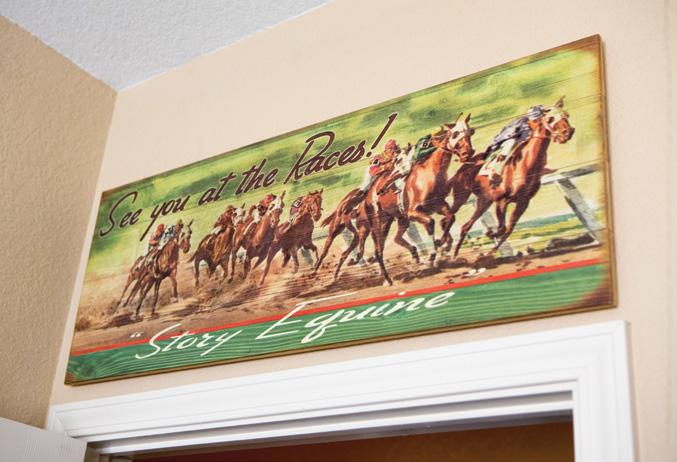
Because once the horse starts hemorrhaging from the lungs, it’s very hard to get it turned around. So we tried to prevent that.
“When I got to the stable, I knew which ones were on antibiotics, which ones would be racing in five days or in three days, which ones had had some type of illness. The night before, I would go through that so when I arrived, I knew all the different populations of horses that I needed to see in that stable. And so organization was a very important thing in order to be able to get to my clients in a timely manner.”
On a light day, Story would treat 120 horses; the number increased from there.
“The most horses I have ever worked on in one day was 342. I started at 1 o’clock in the morning, and I finished at 11 that night. I swore I never wanted to have to do that again,” he says, laughing.
For anyone considering a racetrack veterinary practice, Story has some words of wisdom.
“You have to be really committed to the industry and to the profession. It is very long hours. Hone your people skills. With every racehorse comes a trainer, the groom and possibly the owner and jockey. You have to really listen to the people and figure out what they’re seeing on the racetrack, what the jockey’s feeling, what the groom is noticing about small differences in everything. You put all that together and then you help the horses in the areas that you think they need to be helped.
“As in any athletic endeavor, there are going to be a certain amount of injuries. It’s very important to know that you have to give 100 percent on your analysis every time because
there are a lot of factors involved. There is a jockey on top of those horses. And there are owners who love those horses.
“I think a person in any profession has to have a passion for that profession. And that deep-seated passion is really important to be successful in the racetrack veterinarian because you have to dedicate a lot of your life and a lot of your time to being out there.”
Story definitely has passion and easily recounts horses and the races they ran.
“My favorite memory was a mare named Deceptively. She was probably the bravest, most focused horse I ever worked on. She just loved to run, and she put out 100 percent effort every time. She won the Ruidoso Futurity and came back and won the Rainbow Futurity. In the finals of the Rainbow Futurity, she was in the six hole and was hit by the seven horse just out of the gates. As we watched the film, it tweaked her a little bit, and she had her right leg planted at the time that she was hit. She finished the race; won by daylight, I think close to 2½ lengths. Soon after the race, she started to go lame so I radiographed her. She had a cracked shin. She had won that race — and set a track record — with a cracked shin. She won my heart at that time, and that was probably one of the times that I just felt humbled by a horse.”
His clients have some memories of Story as well.
“He’s one of the best veterinarians I know at Ruidoso,” says Jose De La Torre, a race horse owner from California. “He is a good man, an honest man. He treated everybody the same. If you had an emergency with your horse in the
“THE MOST HORSES I HAVE EVER WORKED ON IN ONE DAY WAS 342. I STARTED AT 1 O’CLOCK IN THE MORNING, AND I FINISHED AT 11 THAT NIGHT. I SWORE I NEVER WANTED TO HAVE TO DO THAT AGAIN.”
— DR. BOB STORY
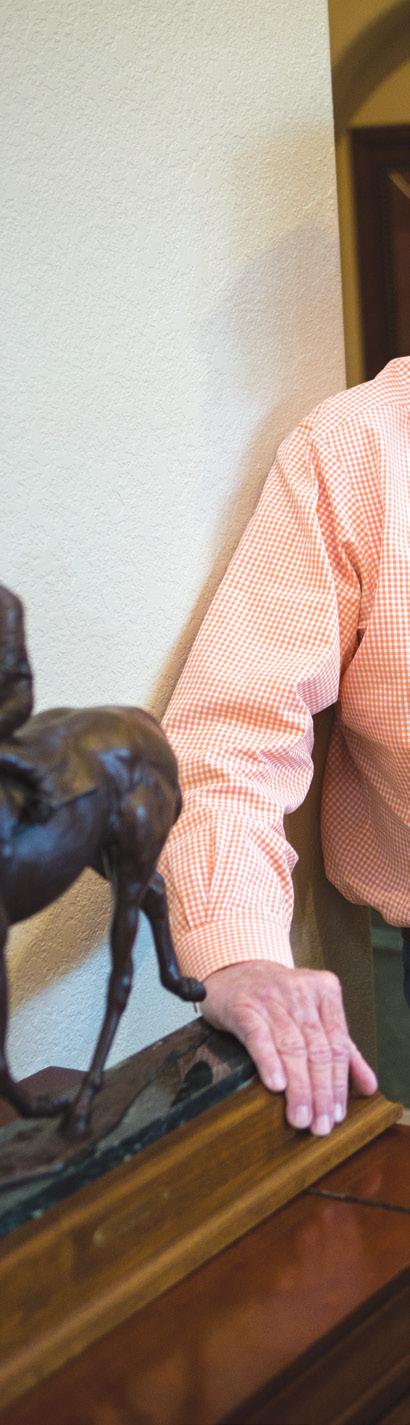
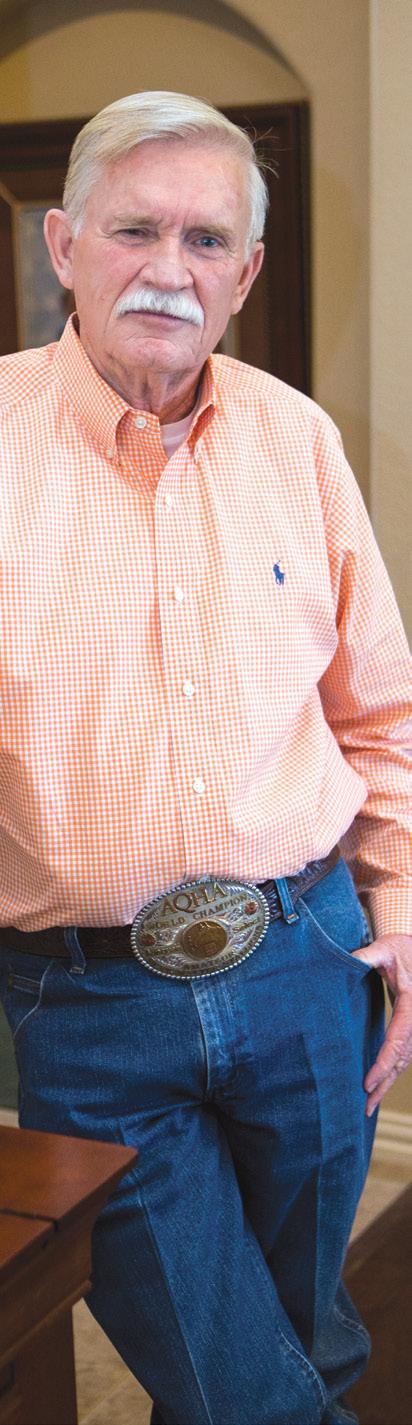
middle of the night, he would be the one to come — not his assistant. My favorite memory of Dr. Story is when he didn’t let my horse die. I had taken One Sweet Jess for the first time to a trial. The horse had a hard time adjusting to the altitude. He was severely dehydrated and had kidney problems. He helped us save the horse.”
What comes to mind when Bruce Bell, a retired trainer now living in Louisiana, hears Story’s name?
“Above all else, he was honest. He would always tell you what’s happening, what the results are and where you need to be,” Bell recalls. “We had a horse that ran a consolation for the All American, Virgil Vengeful. In those days, you had to run three times — elimination race, the time trials and the consolation race. He won. The horse was just exhausted and before we could take his winner picture, he collapsed (in front of the stands). I remember how much Dr. Story worked to revive that horse. He was endless in his efforts to do the best for the horse
and for you, the client. That honesty, that compassion and the passion for his work made him as go od a vet as I ever ran across.”
“I hope to be remembered for being a veterinarian who was caring, who cared about every horse that he worked on,” Story adds. “And for my organizational skills because I worked very hard on that. And I’d also hope to be remembered as the veterinarian who was always available any time of the day that didn’t give up on any horse.”
When he retired in 2012, Dr. Bob Story had been there the longest of any of the veterinarians at Ruidoso Downs. Colleagues presented him with a plaque that hangs above his home office doorway and reads, “See you at the races, Story Equine,” the name of his practice.
While he might not be at the track any more, he will long be remembered for his excellent veterinary care, honesty and compassion. And in their hearts, Dr. Story, they’ll see you at the races.
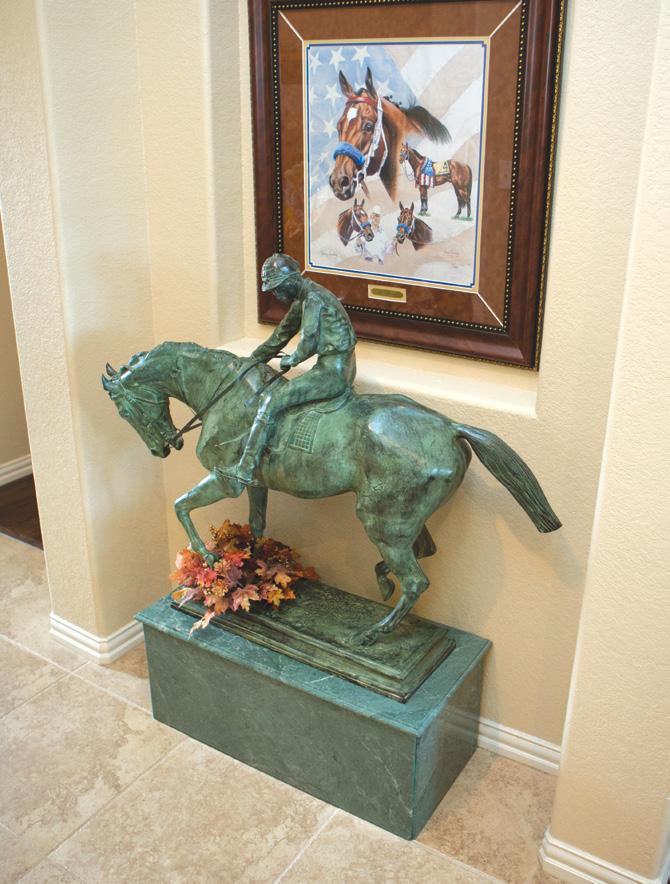
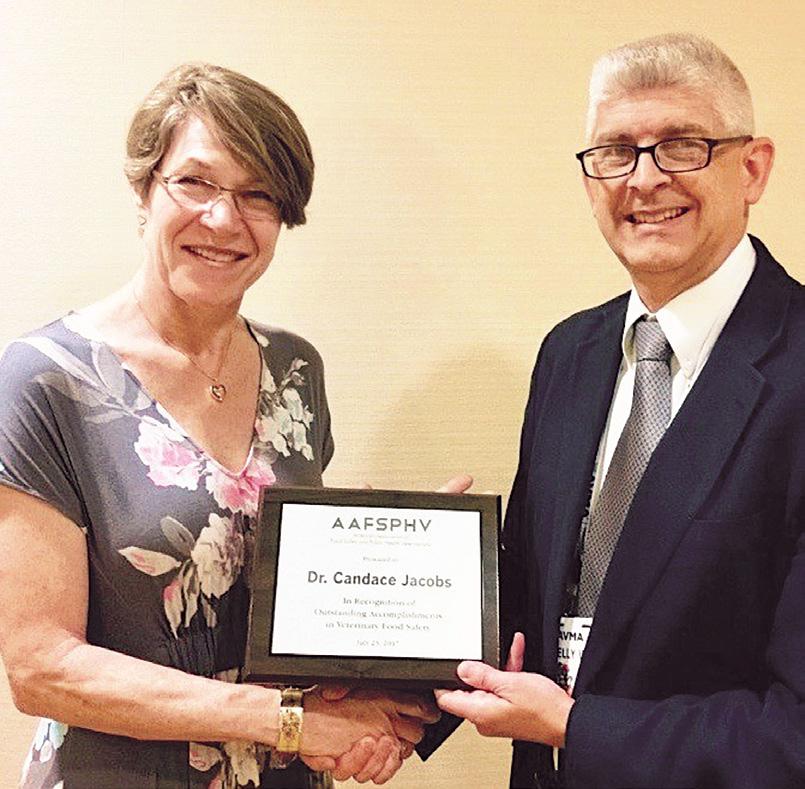
Oklahoma State University alumna CANDACE JACOBS , DVM, MPH, Dipl. ACVPM, of Olympia, Wash., received the 2017 FOOD SAFETY VETERINARIAN OF THE YEAR AWARD from the American Association of Food Safety and Public Health Veterinarians. This annual award honors a veterinarian who has gone above and beyond in the field of veterinary food safety.
Jacobs currently serves as an assistant director, leading the Food Safety and Consumer Services Division of the Washington State Department of Agriculture (WSDA). The division has about 125 employees in six program areas. She earned her veterinary degree from OSU in 1978.
"OKLAHOMA
“OKLAHOMA STATE WAS THE FIRST INSTITUTION THAT ACCEPTED ME AS A VETERINARY STUDENT. IT WAS A GREAT CHOICE FOR ME AS I LOVE BEING AN OSU COWBOY!”
STATE WAS THE FIRST INSTITUTION THAT ACCEPTED ME AS A VETERINARY STUDENT. IT WAS A GREAT CHOICE FOR ME AS I LOVE BEING AN OSU COWBOY!"
— DR. CANDACE JACOBS
Her team works together on legislative activity, rulemaking, compliance, strategic planning, stakeholder outreach and the like. Some of the unique issues Washington has include licensing and inspecting marijuana-infused edible firms in its Food Safety Program, doing whole genome sequencing (DNA fingerprinting) in its lab, and approving materials for organic farm use or input.
Jacobs was recognized for her leadership in implementing the Food Safety Modernization Act of 2011 at the state level. The act aims to ensure the U.S. food supply is safe by shifting the focus from responding to contamination to preventing it. WSDA was the second state to implement all of the standards required under the Manufactured Food Regulatory Program Standards rule in the Food Safety Program.
Now, her team is well on its way to a similar accomplishment for implementation of the Animal Foods Regulatory Program Standards rule in the Animal Feed Program. WSDA has also initiated a Produce Safety Program to address elements of the Produce Safety rule after successfully receiving a multi-year grant from the FDA.
In addition, Jacobs developed strategic plans for all the division’s program areas and created a Recall, Notifications, and Alerts webpage to increase awareness of food/feed recall activities.
Originally from Lincoln, Neb., Jacobs became interested in veterinary medicine during her undergraduate studies in zoology at the University of Arkansas.
“I was interested in research and saw a veterinary degree as a marketable skill and attribute for breaking into scientific research,” she says. “Additionally, my family’s veterinarian was Dr. Ordella Geisler, one of the few women veterinarians in practice in those days. She was a wonderful mentor and great role model.”
Jacobs chose Oklahoma State for her veterinary degree as it was one of a handful of institutions with contracts for Nebraska residents.
“Oklahoma State was the first institution that accepted me as a veterinary student,” she says. “It was a great choice for me as I love being an OSU Cowboy!”
Jacobs also earned a master’s degree in public health with an environmental health concentration from San Diego State University in 1988. In 1991, she became board certified in veterinary preventive medicine. She is also certified as a Six Sigma Green Belt from the American Society of Quality and a Certified Food Scientist from the Institute of Food Technologies.
Throughout her career, Jacobs also has been a practicing veterinarian, a military officer doing research on marine mammals, and the state toxicologist in a health department. She has worked in the food and beverage industry in regulatory affairs, in environmental management and in quality assurance. She was in the grocery business and held multiple positions with the WSDA, both in policy and programs.
Her advice to veterinary students is to “keep an open mind and open eye out for interesting professional opportunities. Veterinary degrees are applicable across a wide spectrum of jobs. Follow your passion. My passion was food safety — something I did not consider during my years in veterinary school.”
Earlier this year, Jacobs also received the 2017 Sanitarian Award from the International Association of Food Protection for Excellence in Food Safety. Jacobs and her late husband, Martin J. Yates, are members of the OSU Heritage So ciety and have arranged for an endowed chair in Comparative Medicine at the Center for Veterinary Health Sciences.
Mission Statement: To promote the science and art of public health, epidemiology, and preventive medicine by providing an expert forum for the discussion of public health issues of importance to the veterinary profession and the development of professional recommendations and public health resolutions.
Vision Statement: To be the foremost organization for the communication, cooperation, and collaboration of all public health veterinarians and other public health professionals and to serve as a coalition to promote changes in public health policy that result in improved human and animal health.

CLASS OF 1967 REUNITES IN STILLWATER BY
DERINDA BLAKENEY, APR
When the members of the Class of 1967 graduated with their DVM degrees, they numbered 43 men. In May 2017, 18 of the 35 living class members returned to Stillwater to celebrate the last 50 years. The two women represent deceased class members. Here are brief summaries of their varied careers as OSU Cowboy veterinarians.
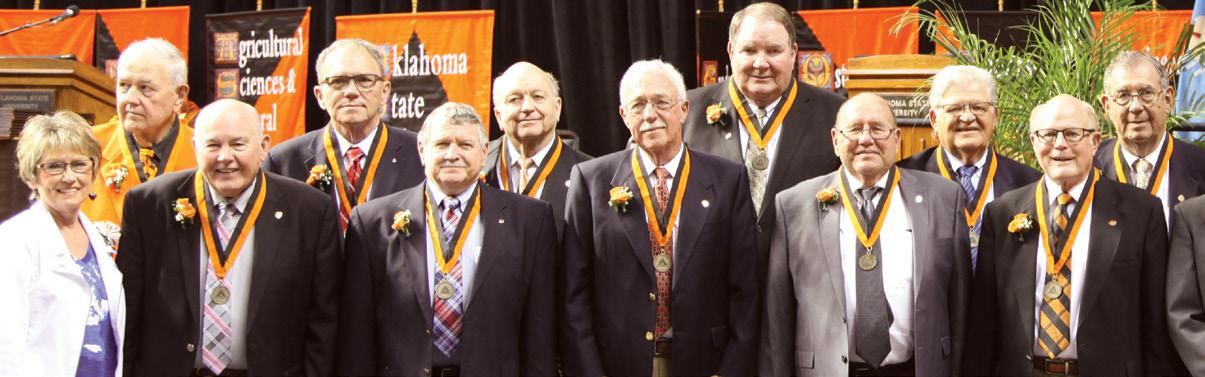
CLASS OF 1967
Front row (from left): Sally Beavers (widow of Don Beavers), Nicholas Jewell, Toby Hoover, Paul DuBois, Ernest Harland, Merlin Ekstrom, Larry Murphy, Kenneth Sperling, Dennis Savell and Molinda Cox (mother of Hollis Utah Cox).
In back (from left): Phil Richardson, C. Fredrick Kirkland, Charles Gray, Stephen Cobb, Arden Anderson, James Waymack, James Provo, Reynolds Cowles, Joe Smith and Stanley Kolar
CATCH UP WITH THE CLASS OF
ARDEN L. ANDERSON, DVM, joined a practice in Midwest City, Okla. In 1969, he and his wife moved their family to Anchorage, Alaska, where he ran two clinics for 10 years. He was active in the Alaska Veterinary Medical Association, serving as president. He also served on the Alaska Board of Veterinary Examiners. In 1980, they moved to Phoenix, Ariz., where they owned and operated four different clinics. Anderson still works two or three days a week at North Phoenix Animal Clinic. He and Debbie have been married 54 years.
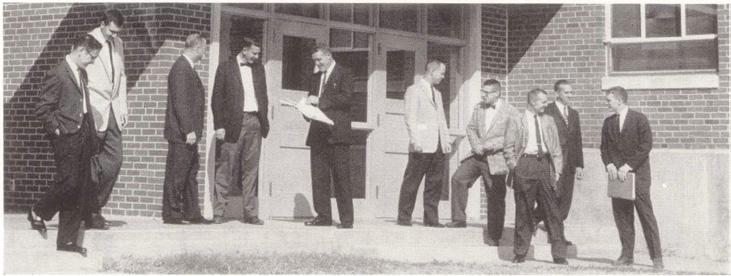
STEPHEN R. COBB, DVM, served two years in the military. He has owned five full-service small animal veterinary hospitals in Greensboro, N.C. He is involved with veterinary and civic organizations and holds the distinction of Paul Harris Fellow, benefactor, in the Rotary Club. In 2002, he earned the Silver Beaver Award for his work with Boy Scouts of America. Cobb retired in 2008.
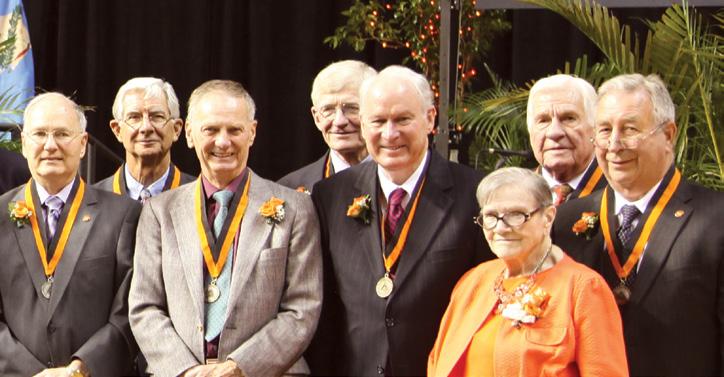
DON W. BEAVERS, DVM, owned and operated Beavers Animal Hospital in Lawton, Okla., for more than 30 years. Upon retirement, he farmed full-time. He was active in his church and a longtime member of the Kiwanis Club, serving as president. He was a member of the American Veterinary Medical Association’s Honor Roll and the OVMA, also serving as its president. In 1998, the Oklahoma Veterinary Medical Association named him Oklahoma Veterinarian of the Year. He died in 2015; his widow, Sally Jo, attended the reunion.
R. REYNOLDS COWLES JR., DVM, worked in Georgetown, Va., doing equine and small animal medicine before opening his own all-equine clinic in Free Union, Va. Cowles has been active in the Virginia VMA, the Virginia Thoroughbred Association and is currently president of the AAEP. Now working only parttime, he and his wife of 40 years enjoy fox hunting with the Farmington Hounds.
HOLLIS UTAH COX, DVM, PH.D., served in the Air Force as a captain. He earned a Ph.D. in microbiology at Louisiana State University and remained on faculty as a professor of veterinary medicine and head of the diagnostic lab until he retired in 2009. An Eagle Scout, he remained active in the Boy Scouts earning the Vigil Honor, the OA Founder’s Award and the Silver Beaver Award for Exemplary Service. Cox died in 2015; his mother, Molinda Cox, attended the reunion.
PAUL R. DUBOIS, DVM, MS, DACT, served in the military, taught and worked in private practice and for Cargill Pork. He helped develop the American Meat Institute animal welfare audit and is a professional animal certified foundation auditor. He was part of the U.S. delegation to the World Organization for Animal Health animal welfare symposium in Cairo. He serves as a consulting food animal veterinarian and a cow/calf producer.
MERLIN E. EKSTROM, DVM, MS, DACVP, received the 2015 Distinguished Alumnus Award. Ekstrom has been involved in military service and working in research and education institutions. He served a combined 24 years in the Air Force active duty and Michigan Air National Guard, retiring as a lieutenant colonel. He also spent nearly 40 years at Wayne State University in Detroit, retiring in 2015. He was the university’s attending veterinarian and served as the director of the Division of Laboratory Animal Resources and as an associate professor of pathology in the School of Medicine. He won many peer-reviewed NIH grants and was a founding member of the Michigan Society for Medical Research.
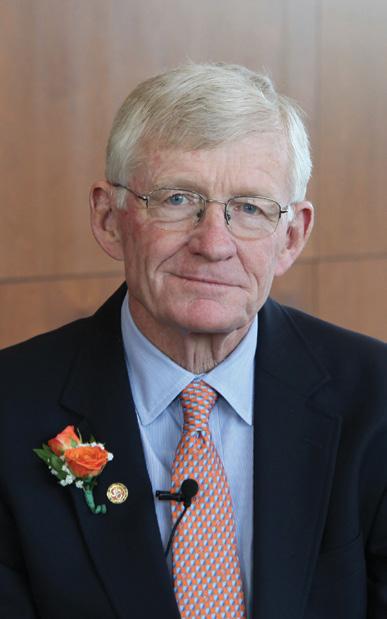
The class of 1967 celebrated 50 years since their graduation in Stillwater in May 2017. Among the class members who attended was Reynolds Cowles, DVM, from Charlottesville, Va.
“This is our 50-year reunion for the class of 1967. It’s great to be back here,” Cowles says. During his visit, he reflected on his student days in Stillwater and since.
Cowles grew up on a North Carolina dairy farm and had great interaction with the veterinarians servicing the family’s farm.
“I w as extremely interested in large animals — b oth cattle and horses,” he remembers. “It was a natural evolution for me to consider veterinary medicine.”
He chose Oklahoma State University to earn his DVM degree.
“North Carolina … had a contract with Oklahoma State and Georgia. We were able to attend at in-state tuition fees, and I wanted to come out here.”
Times were different in the mid-1960s.
“When I left here, it was in the middle of the Vietnam War. We all thought we’d be in Saigon by Christmas,” Cowles says. “I took a temporary job with Dr. Dan Flynn in Charlottesville, Va., at Georgetown Veterinary Hospital, where I spent a summer during my veterinary years here. They never drafted me, so I stayed there. It was a mixed practice, and it evolved into all equine. I was there for 11 years. Then that practice split three ways, and I established a solo equine practice in that area.”
Today, he is the president of the American Association of Equine Practitioners (AAEP).
“AAEP is a great organization, one that is run by super-professional staff. It’s a very challenging group, a lot of travel, a lot of meetings and a lot of committee work but it’s a lot of fun.
“AAEP works off a strategic plan. Our primary goal is high-quality, world-class continuing education. Other real important goals are support for students and student scholarships through the AVMA Foundation, representing equine practice in many halls of government and state legislatures, and promoting the profession.”
Looking back over his career and life, Cowles considers his family to be his greatest accomplishment.
“Our children and grandchildren, for sure. After that would be servicing our clients and hopefully doing a good job for them and their horses. And I hope to be remembered for just that.”
And to the classes who are working on their DVM degrees from Oklahoma State University, he advises: “There is so much opportunity. They are coming out strapped with a lot of debt in many cases. But that, while it is intimidating, should not stop them from working hard. Because if they work hard in this profession, they can make it and it is extremely gratifying to do that.”
CHARLES W. GRAY, DVM, owns and operates Southern Hills Veterinary Hospital in Edmond, Okla. He is still practicing small animal medicine.
TOBY RAY HOOVER, DVM, MS, worked in a mixed animal practice before moving into academia, teaching first at the University of Missouri and then Auburn University. In 1983, he and his family spent a year in South America, working with the Christian Veterinary Mission in Bolivia. In 1988, they were appointed to serve as veterinary missionary-church planters in Bolivia. Twenty years later, the family returned to the United States with a 5-year-old adopted Bolivian daughter. Now retired, he teaches high school biology and translates for Hispanic parents.
NICHOLAS T. JEWELL, DVM, joined Paris Veterinary Clinic in Paris, Ark., becoming a partner 18 months later. Thirty years later, due to health issues, he sold his share and joined the Gideons. However, Jewell decided to work part time for his former partners and still works there 15 to 20 days a year. He and his wife of 53 years, Kathy, enjoy traveling and have been in every state except California.
C. FREDRICK KIRKLAND, DVM, served two years active duty in the Air Force, then returned to his hometown of Henderson, N.C. He worked in a small animal practice for several years. He and his wife, Donna, opened a fishing tackle and bait shop and chartered some fishing trips. Kirkland’s career later took him to North Carolina Animal Diagnostic Laboratory and finally to director of field forces for the North Carolina Department of Agriculture and Consumer Services. During his tenure, North Carolina was declared free of tuberculosis in cattle, Brucellosis in cattle and swine, and pseudorabies in swine. He retired in 2006.
WM. STANLEY KOLAR, DVM, worked in a rural mixed practice in his hometown of Prague, Okla. Five years later, he built his own practice and still runs it today with two associates and other employees. He also runs the Kolar Family Farm Operation and purchased an interest in Prague Hardware.
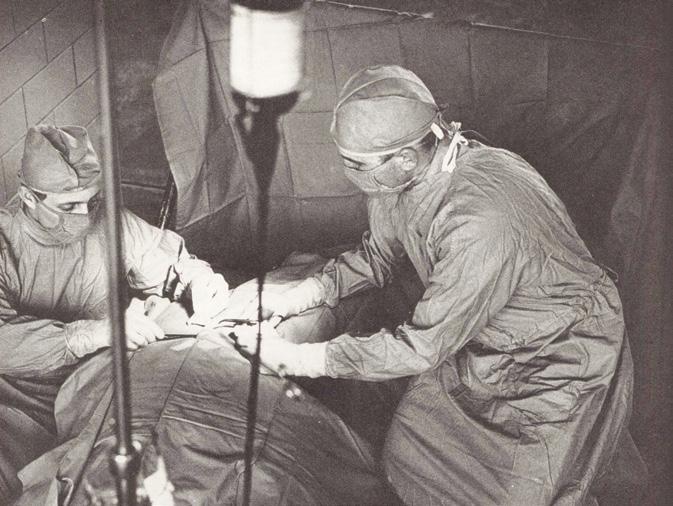
LARRY M. MURPHY, DVM, served in the Air Force for two years. He married Doris, and they spent some time on the family farm. By 1970, he was practicing in Oklahoma City. In 1986, he opened a small animal practice in Bethany, Okla., where he worked 25 years until he retired in March 2011. He enjoys retirement, spending time at the YMCA, and being active in Putnam City Baptist Church as a deacon, Bible study teacher, prison ministry and hospital visitation.
JAMES W. PROVO JR., DVM, served in the Air Force as base veterinarian at Kadena Air Force Base in Okinawa, Japan, where he cared for sentry dogs, conducted companion animal clinics and directed the base food safety program. From 1970 to 1989, he practiced small animal medicine including rehabilitation of birds of prey in the Greensboro, N.C., area. In 1989, he became a field veterinarian medical officer for the USDA Animal and Plant Health Inspection Service until he retired in 2013.
PHILLIP N. RICHARDSON, DVM, married Janalee; the couple has been wed 50 years. He served two years in the Army Veterinary Corps. Upon his discharge, he opened a clinic in Tuttle, Okla. He also partnered with his brother in the family farm cow-calf operation with stocker calves and a 50-sow farrow-to-finish swine operation, which eventually turned into a farrowing operation. In 2004, Richardson was elected to the Oklahoma House of Representatives, where he served four terms.
DENNIS E. SAVELL, DVM, served in the Air Force as a base veterinarian for two years. In mid-1971, he started a new small animal practice in northern Kentucky, selling it 12 years later in 1983. In 1984, he and his wife moved to Charlotte, N.C., and he made a career change, becoming a full-time, registered investment adviser and consultant until he retired in 2013. He and Donna, his wife of 49 years, enjoy traveling in the U.S. and overseas and being active in their community and church.
JOE H. SMITH, DVM, settled in Little Rock, Ark. He practiced small animal medicine and dabbled in other businesses including outdoor electronic advertising, fishing tackle and computer programming. He serves as the class representative and is currently doing veterinary relief work and loving it.
JAMES W. WAYMACK, DVM, joined a mixed animal practice in Batesville, Ark., becoming partner in two years. In 1978, he and his wife moved to Arkadelphia and bought a mixed animal practice and later added another practice across town, working both practices for 17 years. In 2013, he retired. Waymack has been active in Rotary, their church and community. In 1992, the Arkansas Veterinary Medical Association named him Arkansas Veterinarian of the Year. He and Sue have been married 49 years.
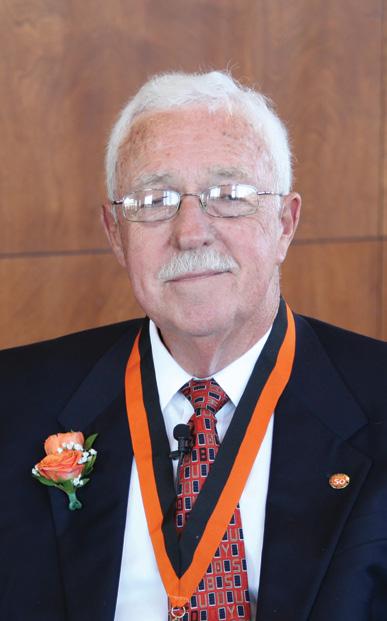
“We can’t separate an OSU pep rally from a
family
reunion.”
That’s the case for the family of Dr. Paul DuBois of Cameron, Oklahoma. After all, Oklahoma State University is their school of choice — especially for veterinarians like him.
“I have two grandchildren. Both their grandpas, both parents and three uncles are veterinarians — all Oklahoma State grads. We’re pretty much in love with veterinary medicine and Oklahoma State,” says Dr. Paul DuBois of Cameron, Okla., during his 50-year class reunion in May 2017.
“My father-in-law had three daughters; all of those went to Oklahoma State, all the sons-inlaws did, all the grandchildren did, and now a great grandchild is there.”
The veterinary school didn’t initially draw him to OSU.
“I actually wanted to be a vo-ag teacher,” DuBois recalls. “My ag teacher said he often wished he had tried to go to veterinary school, and he thought I could do that. It was not any lifelong thing, but I’m very thankful, and I recognize that he was one of the most influential people in my life other than my family.
“I had already started planning to go to Oklahoma State to major in vocational agriculture. … I’m grateful I came here. Maybe it was part of God’s design because I met my wife the first week I was in Stillwater.”
Veterinary medicine provides a variety of opportunities and careers, and DuBois experienced several following his 1967 graduation.
“After spending a few months in practice, I was in the military for two years,” he says. “Part of the time I was doing food inspection, procurement inspection, and then I spent a year in Vietnam. After the military, I returned to mixed practice. I thought every drug salesman knew more about the immune system than I did, so
after being out of school nine years, I went to graduate school to earn a degree in immunology. I also did board certification in theriogenology and taught in Georgia’s veterinary school a little over two years.”
A conversation he overhead between his oldest son and a neighbor kid persuaded DuBois to change his career path again.
“He said, ‘When I get big, I’m going to be a veterinarian. My dad used to be one.’ So I went back into private practice for 21 years. The next nine years, I was manager of veterinary services for Cargill Pork. In addition to managing herd health, I spent time on animal welfare issues for Cargill, on the social issues surrounding food animal production. I’m still involved in doing some consultation.”
Unlike most veterinarians, DuBois doesn’t claim to be an “animal lover.”
“Over the years people would say, ‘You’ve been a veterinarian; I bet you just love animals.’ I’d say, ‘No, I love people.’ I hope I’m remembered for loving people. I like to be able to serve people and help people who have animals. We all ought to contribute to society to make it a better place.
“I had the opportunity to lecture this past spring to third-year vet students. We talked about swine respiratory disease. I told them that when I was in school, none of these disease agents were there. We had a different set of agents but the principles of disease control across all species are not unique to one species. It’s critical to learn the principles so you’re prepared for whatever changes.”
One thing won’t change for sure — the connection the DuBois family has with OSU and veterinary medicine!
This year, the Corral Crawl celebrated alumni reunions for classes ending in 2 and 7. We explored how the CODE OF THE WEST brands us in the veterinary profession to live the message centered on professionalism, fair play, loyalty and respect. SCAVMA hosted a silent auction with all proceeds — more than $5,240 — benefiting veterinary student scholarships. The Corral Crawl event features a hearty buffet and a cash bar. Reunion classes were recognized by SHARON WORRELL with special awards based on alumni engagement, distance traveled, veterinarians in the family and more.
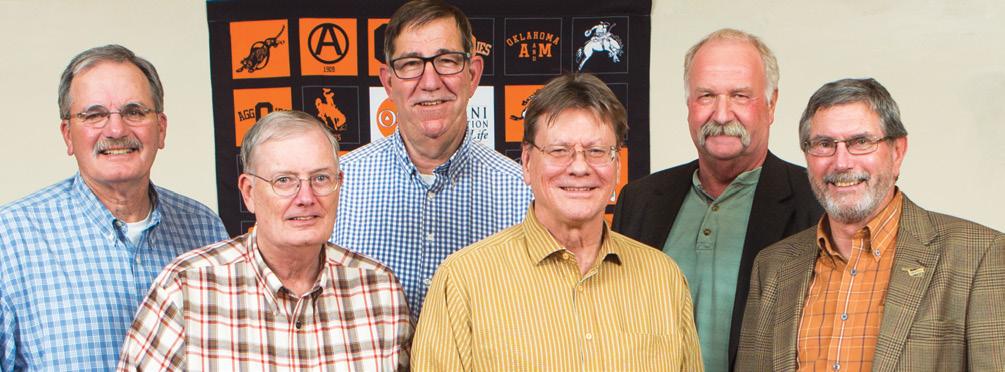
Reuniting (from left) Drs. Fred Reuter, Dickie Herbel, Robert Evans, Ted Schupbach, Max Combs and Rod Hall
Seated (from left): Drs. Amanda Skogen, Kerri Darbonne, Carrie Hobgood and Kira Kautz
Second row (from left): Drs. Candice Denham Soquena, Sarah Smith, Suzanne Genova, Danielle Dugat, Holly Lunsford Braly and Gwendolyn Ingersoll
Third row (from left): Drs. Jeffrey Garner, Heather Akridge, Sara Schweers Holloway, Trace Kirkpatrick, Oliver Engle, and Ricky Couch
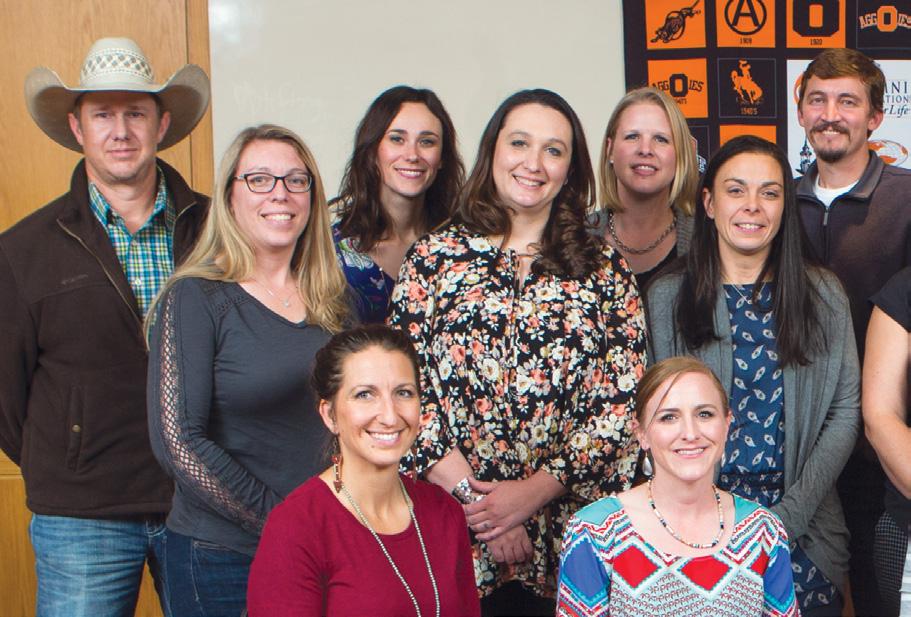
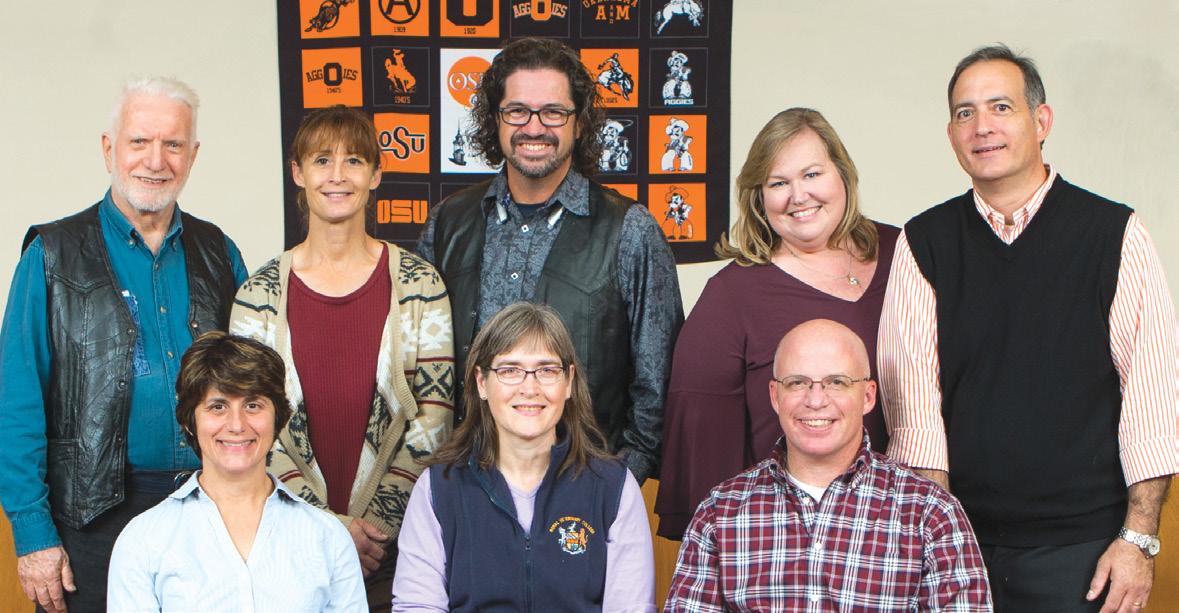
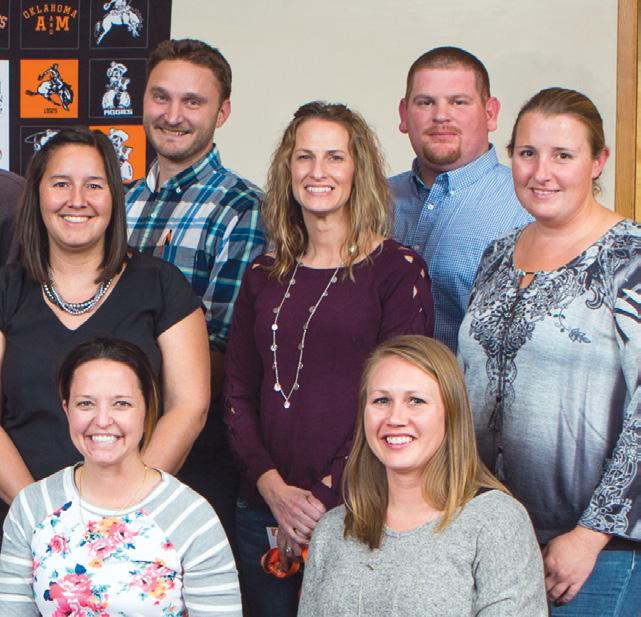
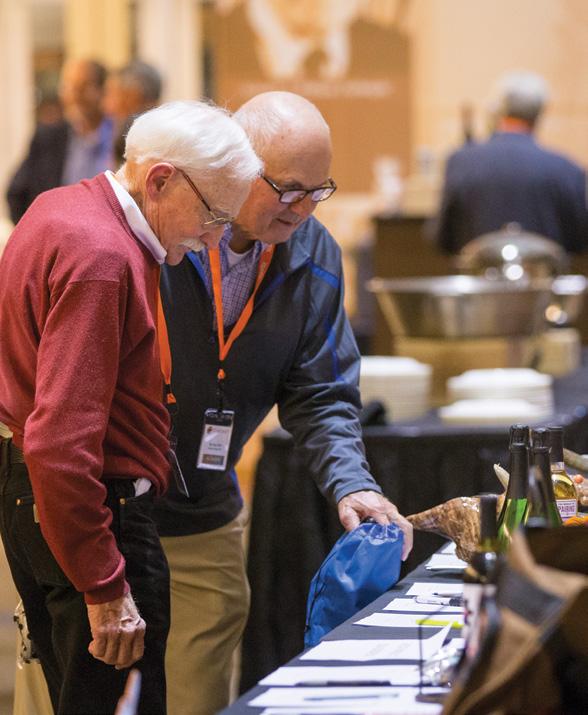
EXPERT SHARES RESEARCH ON ANTIMICROBIAL RESISTANCE AMONG ALL USAGE
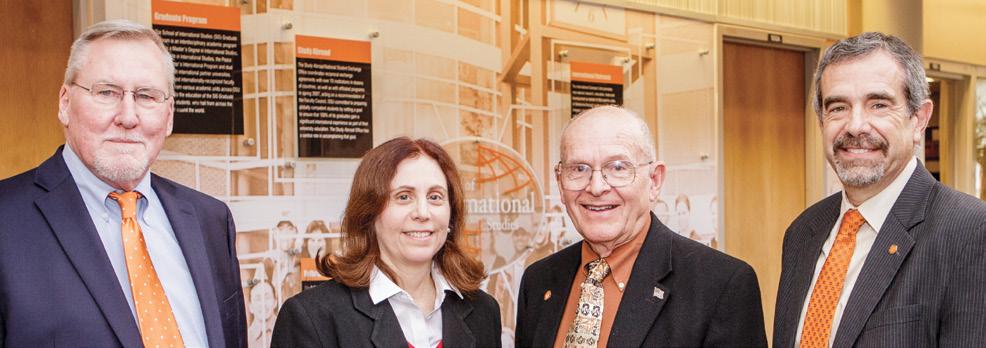
During the 2017 Annual Fall Conference, the Class of 1963 Distinguished Lectureship featured Laura H. Kahn, MD, MPH, MPP, FACP, who shared her research on One Health and the growing problem of antimicrobial resistance in “A One Health Perspective on Antimicrobial Resistance.”
Kahn has sp ent years investigating the history, science and politics behind antimicrobial resistance. Her analysis includes looking at antibiotic use, antimicrobial resistance, history of the bans on low-dose antibiotics, livestock production, healthcare costs, global antimicrobial resistance, environmental antimicrobial resistance and antibiotic research and development issues.
“The concept of O ne Health is that human, animal and environmental health are linked,” Kahn says. “Because they are linked, it is critical to analyze One Health and address it in an interdisciplinary way.
“Medicine and agriculture are critical to the functioning of society. Both have become increasingly specialized. Both are technologically driven. Antibiotics are the foundation of mo dern medicine. … The use of antibiotics is intimately involved with food security. In livestock, we use antibiotics for growth, prevention and treatment. In humans, we use antibiotics for prevention and treatment. All uses — all uses lead to antibiotic resistance.”
While debates over antibiotics have continued for decades, Kahn says, Congress has not allo cated funding for more hard data. Both human medicine and agriculture continue to blame the other for antibiotic resistance.
“There is a no evidence that vancomycin resistance (VRE) came from U.S. livestock even though VRE is a huge problem in human hospitals. When we look at antibiotic resistance, we’re lo oking at genes, just snippets of the DNA in an organism. What we need is to sequence the entire genome of an organism to be able to look at the epidemiology of vancomycin resistance.”
Kahn says discoveries in the microbiome (i.e., gut microbes) make researchers rethink how we approach health and disease.
“The human microbiome project has shown that our bodies harbor many microbes and that animals have microbiomes, too. When it comes to food animal microbiomes, some are positively correlated with growth while others are negatively correlated. More studies are needed.”
The Class of 1963 established its Distinguished Lectureship in 2004. The money earned from this investment hosts an annual expert on a variety of subjects related to veterinary medicine, human medicine, and environmental health.
Cl/HS
To watch a recording of Dr. Kahn’s presentation, visit okla.st/2jvMpDV
A native of California, LAURA H. KAHN holds a bachelor’s degree in nursing from UCLA, a medical doctorate from Mount Sinai School of Medicine, a master’s degree in public health from Columbia University and a master’s in public policy from Princeton University. Dr. Kahn is a Fellow of the American College of Physicians and a recipient of the New Jersey Chapter’s Laureate Award.
She published Confronting Zoonoses, Linking Human and Veterinary Medicine in the Center for Disease Control and Prevention’s (CDC) Journal of Emerging Infectious Diseases That publication helped launch the One Health Initiative (www.onehealthinitiative.com) that seeks to improve the health of all species by increasing communication and collaboration among human, animal, and environmental health specialists.
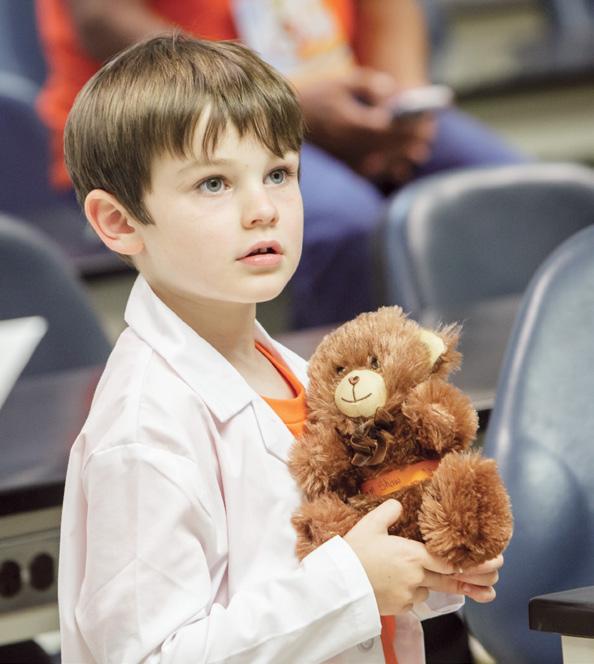
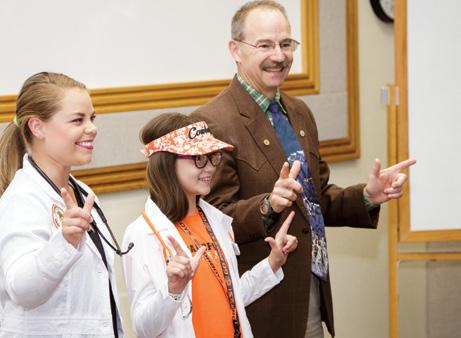
Oklahoma State’s 2017 Grandparent University brought some would-be pint-size practitioners to the Center for Veterinary Health Sciences. Each grandchild was inducted into the Center’s veterinary medicine family through the symbolic white coat ceremony followed by the veterinary oath and the receipt of an orange stethoscope. The group learned about anatomy, parasitology and large animal medicine. In each section, such fun learning experiences as tick races, de-horning squash and teddy bear surgery awaited the youngsters.
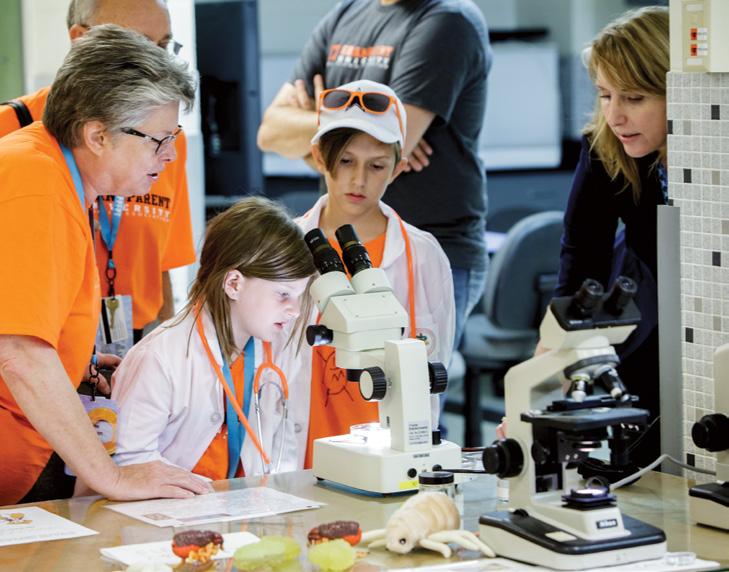
Special thanks to the following individuals for helping make Grandparent University 2017 a memorable experience for all involved:
Dr. Elisabeth Giedt, director of continuing education, extension and community engagement
Emily Snow, continuing education, extension and community engagement
Dr. Daniel Burba, head of the Department of Veterinary Clinical Sciences
Dr. Jill Akkerman, associate professor of anatomy
Dr. Kelly Allen, assistant professor in veterinary pathobiology and project leader for the National Center for Veterinary Parasitology
Dr. Mason Reichard, associate professor in veterinary pathobiology and co-director of the National Center for Veterinary Parasitology
Dr. Brian Herrin, research fellow in veterinary pathobiology
Megan Wohltjen, research technician in veterinary pathobiology
Elizabeth Crabtree, Class of 2018
Samantha Hancock, Class of 2019
Stephen Dilday, Class of 2019
Ashley Wick, registered veterinary technician in food animal medicine and surgery
Mary Beth Davis, Class of 2019
Shannon Davis, Class of 2019
Julia Jordy, Class of 2020
Grandparent University is hosted by the OSU Alumni Association.
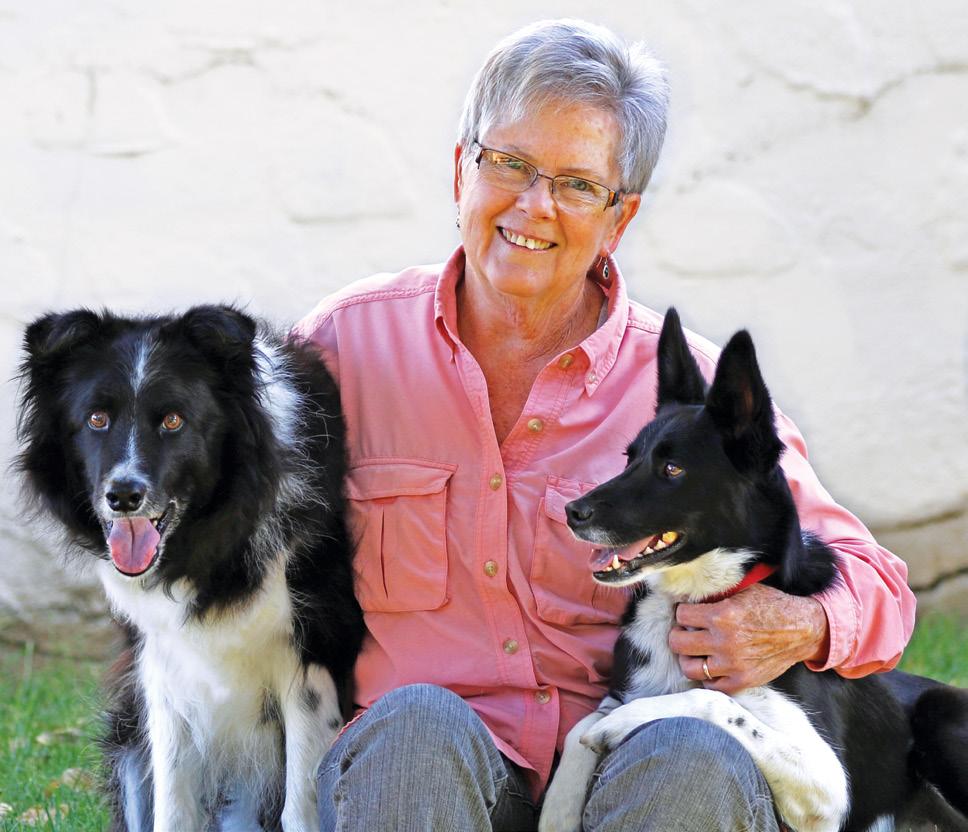
CLETA SUE BAILEY, DVM, PH.D., DACVIM
Cleta Sue Bailey, DVM, Ph.D., DACVIM (Neurology) of Davis, Calif., is professor emerita of the Department of Surgical and Radiological Sciences at the University of California-Davis School of Veterinary Medicine. Originally from Bartlesville, Okla., she earned both her bachelor’s degree in pre-medical science (’67) and her DVM (’70) degrees from Oklahoma State University.
At UC Davis, she completed an internship, residency and Ph.D. in comparative pathology. Bailey was the first UC Davis Veterinary Medical Teaching Hospital’s neurology/neurosurgery resident. In 1983, she became board certified by the American College of Veterinary Internal Medicine in neurology.
In 1978, Bailey joined UC Davis’ School of Veterinary Medicine as an assistant professor in the Department of Surgery and worked her way
up to full professor of surgery. She instructed veterinary students, mentored graduate students and trained neurology/neurosurgery residents throughout her tenure.
She has received many honors and fellowships, including the Bank of America Giannini Foundation Fellowship for Medical Schools, a National Institutes of Health Fellowship, and the Bay Team’s John Nunes Caninitarian Award for “making her professional skills available to the emergency needs of the agility community, strangers and friends, competitors and comrades, day or night, on a moment’s notice.”
Bailey has been a member of the American Association of Veterinary Medical Colleges, American College of Veterinary Internal Medicine, American Veterinary Medical Association, American Veterinary Neurology Association,
Association for Women Veterinarians, the California Veterinary Medical Association and the Phi Zeta Society, the national Veterinary Honor Society. She has held several offices within these organizations including president of the ACVIM — Specialty of Neurology from 1990 to 1993.
In addition to publishing numerous articles, book chapters and books, Bailey has served as an editorial consultant for several journals, including associate editor-neurology for the Journal of Veterinary Internal Medicine
Since retiring, she has enjoyed training and competing with her dogs in several dog performance sports. With her border collie Skip, Bailey has successfully competed in agility trials from Washington to Texas, including three national championships.
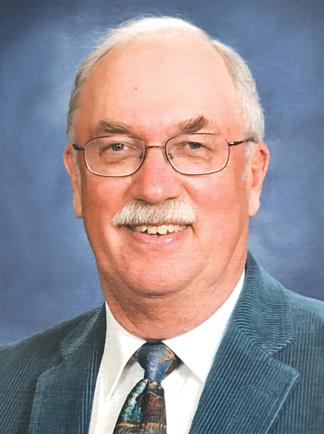
LAWRENCE D. MCGILL, BS, DVM, PH.D., DACVP
Dr. Lawrence McGill of Cottonwood Heights, Utah, has been involved in private veterinary diagnostic work for more than 40 years.
Although his primary training is in anatomic pathology, he has practical experience in clinical pathology and cytology and was instrumental in the growth of three different private diagnostic laboratories in Utah.
Gr owing up in Nebraska, he earned his BS (’66) and DVM (’68) degrees from Oklahoma State University and a Ph.D. in veterinary pathology from Texas A&M University. He b ecame a Diplomate of the American College of Veterinary Pathologists in 1975.
Throughout his career, he has been active in veterinary organizations. He chaired the public relations committees in the Nebraska and Utah Veterinary Medical Associations and served as president of the Utah group. He served on several committees, some as chair, in the American Veterinary Medical Association including the council on public relations, the member services committee, governance performance review committee and the task force on volunteer engagement. McGill has also served on several committees with the ACVP including the public relations committee. To his knowledge, McGill is the only veterinarian who has
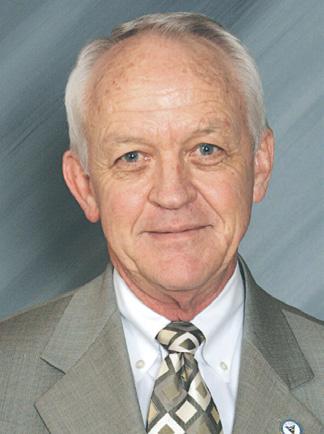
JOEL WOODY, DVM
D r. Timothy J. Woody of Siloam Springs, Ark., retired from private practice in 2009. Today, he does contract veterinary work four days a week.
Born in Greenwood, Ark., he graduated from Greenwood High School in 1963. He attended Arkansas Tech University in Russellville before transferring to the University of Arkansas, where he earned his bachelor’s and master’s degrees. In 1971, he earned his DVM degree from Oklahoma State University.
Following graduation, Dr. Woody worked in a mixed veterinary practice in Siloam Springs for 25 years. He then purchased a small animal clinic in Fayetteville, Ark., where he worked for 13 years.
Throughout his career, Woody has been extremely active in veterinary organizations. He is a member of the Arkansas Veterinary Medical Association, the Oklahoma Veterinary Medical
chaired four different public relations/communications committees including two national organizations.
In 1990, McGill received the Utah Veterinarian of the Year Award. In 2015, he received an ACVP Presidential Award for his contributions and service.
McGill’s involvement in multiple articles and presentations led to his documentation and presentation of the Vaccine Associated Sarcoma Task Force report. He has also shared practical aspects of vaccination adverse reactions while strongly affirming the necessity of vaccinations to keep patients healthy.
He has been associated with two National Institutes of Health research studies. McGill’s research emphasis is implant reaction and the healing response. He is associated with approximately 50 publications in various research journals.
McGill is an adjunct clinical associate professor at the University of Utah. After several years as clinical pathology section editor for Elsevier’s Advances for Small Animal Medicine and Surgery, he was named editor-in-chief in January 2016.
He and his wife, Marilyn, have been married for 42 years and have raised four children. He is active in family, church and community endeavors including 27 years as a bass in the Utah Symphony Chorus.
Association, the American Veterinary Medical Association and the Southwest Veterinary Symposium. He served as the Arkansas delegate in the AVMA House of Delegates for 20 years. He also served as president of the Arkansas VMA in 1996. In 2001, Woody received the Arkansas Veterinarian of the Year Award. He was a founding member of the SWVS and served in multiple roles including on the board of directors from 2004 to 2010 and as president from 2008 to 2009.
His colleagues see him as influential, a leader and a loyal Cowboy. He is dedicated to the profession of veterinary medicine and has mentored many veterinary students and younger veterinarians.
He and Peggy have been married 52 years. The couple has four children, eight grandchildren and two great-grandchildren. He is active in his church and enjoys spending time with his family, playing golf and fishing.
We Honor those Who have our.. and.. the.Profession,Served FRIENDS.
Dr. Edward L. Blevins
Edward L. Blevins, DVM, of Chickasha, Okla., died Nov. 26, 2016. He was 87.
Born in Enid, Okla., he graduated from high school in 1946 and attended Phillips University, earning a degree in pre-veterinary medicine. He earned his DVM from then-Oklahoma A&M College in 1952.
After practicing a short time in Ottumwa, Iowa, he returned to OSU, serving as an assistant professor from 1952 to 1958. Dr. Blevins is credited with performing Oklahoma State’s first diaphragmatic hernia procedure.
In 1958, he and his wife, Helen “Buddy,” moved to Chickasha, where he became a partner in the Chickasha Veterinary Hospital. Dr. Blevins eventually became its sole practitioner and worked there for 51 years, retiring in 2009.
Dr. Blevins was a member of the American Veterinary Medical Association, the Oklahoma Veterinary Medical Association (62 years), and the OSU Alumni Association. He was also a member of St. Luke’s Episcopal
Church and served on the vestry for many years. Dr. Blevins also served on the Chickasha School Board for 17 years (1975-1992), including four years as president.
He is survived by his wife, Buddy; their children, Scott Blevins (Julie) of Bloomington, Ill.; Barbara Melchor (Robert) of Wichita, Kan.; John Blevins (Stephanie) of Westport, Conn.; seven grandchildren; and lifelong friends and colleagues Harold Irby and Ed Schenk, both of Chickasha.
Memorial contributions may be made to St. Luke’s Episcopal Church, 124 6th Street, Chickasha, OK 73018.
SOURCE: FERGUSON FUNERAL HOME
Rodye Edward Butler, DVM, of Indianapolis, died Nov. 21, 2016. He was 87.
Affectionately known as “Brother” or “Ed,” he was born in Pennsylvania, the fifth of 13 children. His family moved to West Virginia when he was young. He earned a bachelor’s degree in agriculture from West Virginia State University before serving in the artillery division of the U.S. Army from 1954 to 1956 and retiring as a major. In 1960, he became the first African-American to earn a DVM degree from Oklahoma State University. He went into private practice at the Plainfield (Ind.) Animal Hospital, where he worked until 2015.
Dr. Butler served as president of the Alpha Beta Chapter of Phi Beta Sigma Fraternity, the Plainfield Rotary Club and the Central Indiana Veterinary Medical Association. He was a charter member of the board of directors for the Plainfield Chamber of Commerce, a member of the Indiana Veterinary Medical Association, a 30-year member of the American Veterinary Medical Association, and a life member of the NAACP and the Plainfield Library. In 1985, the governor appointed Dr. Butler to serve a four-year term on the Indiana State Board of Animal Health. He also received a two-year appointment to the Indiana Humane Society’s board of directors.
In addition, Dr. Butler was one of four members of the 1995 Family of the Year awarded by the Page Jackson High School Alumni Association in Charles Town, W.Va. He became a member of the Sigma Pi Phi Fraternity in December 1996. Most recently, he held the title of the oldest member of the Butler-Gilbert Family.
Dr. Butler is survived by his son, Eric, and daughter, Michelle (Roger), seven grandchildren and two great-grandchildren, two sisters, one brother and a host of nieces, nephews, cousins and friends.
SOURCE: FLANNER AND BUCHANAN FUNERAL CENTERS
Dr. Joseph F. Chabot
Joseph F. Chabot, DVM, died at his home in North Grafton, Mass., on Jan. 10, 2017. He was 77.
Originally from Whitinsville, Mass., he earned his DVM degree from OSU in 1963. Shortly thereafter, he established a veterinary practice in Lexington, Mass. After he retired, Dr. Chabot taught for many years at the Cummings School of Veterinary Medicine at Tufts University. He also developed a deep love and appreciation of elephants. In his spare time, Dr. Chabot enjoyed playing golf.
Dr. Chabot was predeceased by his son, John Austin Chabot. He is survived by his wife of 55 years, Mary Ellen (Lynch) Chabot; daughter, Mary Elizabeth Flaherty (Patrick) of Flower Mound, Texas; son, Joseph F. Chabot Jr. (Diana) of Waltham, Mass.; and four grandchildren.
Memorial gifts may be made to Compassionate Care ALS, P.O. Box 1052, West Falmouth, MA 02574.
SOURCE: THE LEXINGTON MINUTEMAN
Dr. George Clement
George L. Clement, DVM, of Lawrence, Kan., died Jan. 8, 2017. He was 99.
The Arkansas native was a six-year veteran of World War II, serving as a chief gunner’s mate aboard Navy destroyers in both the Atlantic and Pacific theaters.
Following his military service, he worked in Mena, Ark., for a year as a barber before attending OSU, where he earned his DVM degree in 1954. In 1955, his family moved to Miller, S.D., where he worked for the Miller Veterinary Clinic. In 1956, they moved to Howard, S.D., and Dr. Clement established the Howard Veterinary Clinic. He practiced there for 26 years. He also served on the Howard School Board and the Howard City Council, including a year as president. He was active in the South Dakota Veterinary Medical Association, serving as both a board member and as president. Dr. Clement served on the South Dakota Veterinary Medical Examining Board as well.
In 1981, Dr. Clement retired and he and his wife, Ruby, moved to Arkansas, where he enjoyed working on his tree farm, vegetable garden and yard. They enjoyed traveling and visiting their children and grandchildren. In 2009, they moved to Lawrence to be near their oldest son.
Dr. Clement is survived by his sons, G. Edward Clement (Mary Jane) of Lawrence; Donald D. Clement (Denise) of Sioux Falls, S.D., five grandchildren and two great-grandchildren. Memorial donations may be made to Visiting Nurses Hospice, 200 Maine, Third Floor, Lawrence, KS 66044.
SOURCE: WARREN-MCELWAIN MORTUARY AND CREMATION SERVICES
Dr. Debra D. Evans
Debra D. Evans, DVM, 59, of Moore, Okla., died on Dec. 29, 2016. Born in Kansas City, Mo., she earned her DVM degree from OSU in 1983.
Known for her kind heart and generosity toward others, she took great pride in the years she spent at Eastmoor Animal Clinic. Animals were her passion. She loved traveling all over the world, scuba diving, reading, shopping, and gadgets. Most of all, she enjoyed spending time with her beloved family, especially her grandbabies.
Evans is survived by her children, Jennifer Baker (Brian) and Eric McClintock (Ashley), step children Chad Sprinkle and Jason Sprinkle (Joshalyn), three grandchildren, four step grandchildren and many other relatives and friends.
SOURCE: THE OKLAHOMAN
Fletcher
John Fletcher, DVM, of Madison, Wis., died Dec. 31, 2016. He was 89.
Originally from Platteville, Wis., he joined the U.S. Navy right out of high school at the age of 17 and served until the end of World War II.
He returned to Platteville and earned a bachelor’s degree and teaching certificate from the University of Wisconsin. He then joined the U.S. Air Force. During gunnery training, he became the sixth man to survive bailing out of a plane going faster than the speed of sound. He flew air-to-ground strikes in an F-84 during the Korean conflict.
Upon his return home, he married Elsa Marie Moe; the couple had four children.
In 1960, he earned his DVM degree from Oklahoma State University. Dr. Fletcher worked in a small animal practice in northern Illinois before establishing and operating the Animal Hospital at Hilldale in Madison for many years. Later, he worked for the U.S. Department of Agriculture’s Food Safety Inspection Service. He was the supervisory medical officer in several cattle slaughter plants in New York and in Green Bay, Wis. He transferred to the Wisconsin State Meat Inspection Program and served in several Wisconsin locations. He rose to head of the program before he retired.
Dr. Fletcher was a lifelong Master Mason and a member of Zor Shrine in Madison.
He is survived by his second wife, Luann Martens; sons Joel (Cheryl) and Jay (Lynn) Fletcher; daughters Erica Fletcher and Kristen (Tim) Mann; and three granddaughters. Memorial contributions may be made to Agrace Hospice Center, 5395 E. Cheryl Parkway, Madison, WI 53711 or Zor Shriners, 575 Zor Shrine Place, Madison, WI 53719.
SOURCE: CRESS FUNERAL SERVICE
Dr. Michael Ray Hurt
Michael Ray Hurt, DVM, of Purcell, Okla., died Sept. 6, 2017, in Lexington, Okla. He was 70.
Originally from Princeton, W.Va., he attended Concord University in Athens, W.Va. Shortly after graduating from college, he and his wife, Susan, moved to Tazwell, Va. In 1970, they moved to Stillwater, where Mike earned his DVM degree from OSU in 1974. In 1975, they moved to Purcell, where Dr. Hurt was co-owner of Purcell Veterinary Hospital until he retired in 1994. Dr. Hurt was very active in his community and a member of the Purcell City Council for 19 years. He was also a member of Kiwanis, the Eagle Lodge and Rotary Club. Dr. Hurt enjoyed spending time with his family, hunting and fishing. He also spent many hours woodworking in his garage.
Dr. Hurt was preceded in death by his parents, James and Mosha Hurt, and his wife of 50 years, Susan Hurt. He is survived by his son, Chris Hurt (Deborah), grandson, Justin Hurt, and many other relatives and friends. Memorial contributions may be made to the Oklahoma Medical Research Foundation, 825 NE 13th, Oklahoma City, OK 73104.
SOURCE: WADLEY’S FUNERAL SERVICE INC.
Dr. Thomas E. Jueschke
Thomas E. Jueschke, DVM, of Flandreau, S.D., died Jan. 13, 2017. He was 79.
Born in Tonkawa, Okla., he earned his DVM degree from OSU in 1962.
Following graduation, he moved his family to Flan dreau and joined the Halvorson and Ludgate Vet erinary Medicine Clinic. In 1964, he became a full partner. In 1977, Dr. Jueschke purchased the prac tice and built the Flandreau Veterinary Clinic, where he practiced until his retirement.
Dr. Jueschke served in the National Guard. He was elected to the honorary academic Phi Kappa Phi fra ternity. He was also a member of Alpha Psi Fraternity, the American Veterinary Medical Association, and a 40-year member of the Benevolent and Protective Order of Elks. He served two terms on both the Flandreau School Board and the Flandreau Hospital Board. He was appointed to the National Veterinary Medicine
Biological Terrorist Attack Preparedness Planning Committee and served for six years.
His passions after veterinary medicine were fishing, gardening, hunting and woodworking, always with his constant companions, Rily and Woody.
Dr. Jueschke was preceded in death by his son, David Michael Jueschke, and his parents. He is survived by his wife, Deanna Humes Jueschke; daughter, Tara Jueschke (Cecile Cloete) of League City, Texas, siblings and several nieces and nephews. Memorial gifts may be made to the David Michael Jueschke Memorial Fund at the Sioux Falls Area Community Foundation, 200 North Cherapa Place, Sioux Falls, SD 57103. These funds are used throughout Moody County.
SOURCE: MOODY COUNTY ENTERPRISE
Dr. Shon Mitchell
Fonda Sharlene “Shon” Mitchell, DVM, of Wister, Okla., died Jan. 12, 2017. She was 57.
Originally from Poteau, Okla., she earned her DVM degree from Oklahoma State University in 1992.
Dr. Mitchell was a homemaker, a veterinarian and a Christian. A private family memorial was held. She is survived by her daughter, Phoenix Wheeler of Poteau, and two grandchildren.
SOURCE: TIMES RECORD
After running his own veterinary clinic in Tulsa for three years, Dr. Montgomery was drafted into the U.S. Army in 1966. He became the first preceptee in Comparative Pathology at the Armed Forces Institute of Pathology in Washington, D.C. He finished his residency and served at the 9th Medical Lab in Vietnam. He returned to Walter Reed Army Institute of Research as head of veterinary pathology.
In 1977, Dr. Montgomery moved to the U.S. Public Health Service, serving as head of comparative pathology at the National Cancer Institute. He later served as the chairman of pathology at the Uniformed Services University of Health Sciences School of Medicine and the head of toxicology pathology for the National Toxicology Program in North Carolina. In 1987, Dr. Montgomery moved to the private sector, serving as the director of lab animal medicine and comparative pathology for Biotherapeutics Inc., a biotechnology company developing cell therapies for cancer. In 1989, he became director of the Center for Comparative Medicine at Baylor College of Medicine in Houston, a position he held for nine years. He became director of pathology for Lexicon Genetics Inc., in The Woodlands, Texas, in 2000.
Dr. Montgomery was known for outstanding improvements in the care and quality of animals used in biomedical research. He loved to teach and mentor young pathologists. He was one of only three veterinary pathologists to be named chairman of the Department of Pathology in a medical school. He is the author of 106 publications, including one textbook and eight book chapters.
Born in Tulsa, he graduated from Jay (Okla.) High School (’57) and earned his bachelor’s degree (’61) and his DVM degree (’63) from OSU. He was a diplomate of both the American College of Veterinary Pathologists and the American College of Laboratory Animal Medicine.
He also received many military awards and honors including the Meritorious Service Medal from the Armed Forces Institute of Pathology, the National Defense Medal, the Vietnam Service Medal, the Vietnam Campaign Medal with three campaign stars, the Bronze Star, the Vietnamese Cross of Gallantry and the Association of Veterinary Surgeons Medal, to name a few.
In 2005, he and his wife, Mitzi, moved to Lake Eucha near Jay, where he ran his consulting pathology practice, ComPath, which he established in 1972. Since his retirement in 2012, Dr. Montgomery enjoyed fishing and boating on the lake. In 2014, the couple moved to Grove, Okla.
Dr. Montgomery is survived by his wife of 17 years, Mitzi Martinez Montgomery; his sons, Clay Montgomery of Owasso, Okla.; and Bart Montgomery of Grove; his daughter, Amy Bowser-Rollins of Jessup, Md.; and three grandchildren. Memorial gifts may be made to the American College of Veterinary Pathologists online at www.ACVP.org or 2424 American Lane, Madison, WI 53704-3102.
SOURCE: MONTGOMERY FAMILY
Dr. Clinton Noyes Jewett
Clinton Noyes Jewett, DVM, of Hot Springs, Ark., died Jan. 23, 2017. He was 82.
He was born in Whitefield, Maine. He served in the Air Force and earned his DVM degree from Oklahoma State University in 1963.
Following graduation, Dr. Jewett opened a mixed animal practice in Cabot, Ark. In 1989, he left to pursue consultation services for several pharmaceutical companies in the U.S., Spain, England and Australia. Dr. Jewett was active in organized veterinary medicine. He was the American Veterinary Medical Association delegate for Arkansas and served on the Public Health Regulatory Council. He also chaired the Practitioner Involvement Committee of the U.S. Animal Health Association. In 1980, Dr. Jewett was named the Arkansas Veterinarian of the Year by the Arkansas Veterinary Medical Association.
He is survived by his daughter, Elizabeth Martin.
SOURCE: SMITH FAMILY FUNERAL HOMES
Dr. Lonnie D. Moore
Lonnie D. Moore, DVM, age 69 of Dallas, Texas, died on July 10, 2017. Born in Moreland, Okla., he graduated from Waynoka, Okla., High School, where he participated in sports, band, student government, and the FFA. He was also a Boy Scout earning the rank of Eagle Scout.
Dr. Moore earned his DVM degree from OSU in 1972. During his years in veterinary college, he served as president of the Student American Veterinary Medical Association. Following graduation, he moved to Irving, Texas, where he met and married his wife, Jean, and practiced small animal medicine for 44 years. His hospital was accredited by the American Animal Hospital Association. He was a member of the American Veterinary Medical Association, Dallas County Veterinary Medical Association and the Dallas Business Men’s Association.
He was active in the couple’s church, where he enjoyed singing in the choir. The couple enjoyed traveling, especially to Hawaii.
Dr. Moore is survived by his wife of 44 years, Jean; stepdaughters Gayle and Cynthia (Howard); stepson Kenneth; five grandchildren and three great-grandchildren, as well as other relatives and friends.
SOURCE: SPARKMAN FUNERAL HOME AND CREMATION SERVICES
Dr. Jonathon Psaila
Jonathon R. Psaila, DVM, 31, of Clovis, Calif., passed away on August 3, 2017, following an accident at his home. Originally from Clovis, he graduated from Clovis High School where he participated in Clovis FFA and established a Main Anjou cattle operation. He earned his undergraduate and DVM (’13) degrees from Oklahoma State University. While working on both degrees, Psaila worked in necropsy, serology and bacteriology sections at the Oklahoma Animal Disease Diagnostic Laboratory.
Following graduation, Dr. Psaila practiced two years in Elk City, Okla., before returning to California. He established Psaila Veterinary Services, a mobile veterinary practice, providing medical care for animals from underserved families throughout the Central Valley. He also developed a pet food pantry with Fresno County’s 4-H to collect and distribute pet food to those in need.
Known for his inherent kindness, contagious smile and inspiring ability to embrace each and every day, Dr, Psaila enjoyed spending time outdoors nurturing his flourishing gardens. He was the chairman of the Mendota FFA Agricultural Advisory Committee and a member of the California Veterinary Board.
Dr. Psaila is survived by his parents, Kellie and Dennis Psaila, brother, Chris Psaila and numerous relatives and friends. Memorial gifts may be made to the Dr. Jon Psaila Scholarship Fund at https://www.gofundme. com/dr-jon-psaila-scholarship-fund/donate to support the post-secondary education of Clovis FFA members.
SOURCE: FRESNO BEE
Dr. James Richard Rocconi
James Richard Rocconi, DVM, of Camden, Ark., died Nov. 24, 2017. He was 77.
Born in Lake Village, Ark., he earned his DVM degree from Oklahoma State University in 1965.
Following graduation, Dr. Rocconi moved to Camden, where he started Camden Animal Hospital. He practiced there for 52 years. Known as “Doc” to everyone, he was loved by many and always willing to help anyone or their pet anytime.
Dr. Rocconi supported local agriculture youth with countless FFA scholarships. He served on the Ouachita County Fair Board and supported the Camden Police and Ouachita County Sheriff K-9 units, along with many other community services. He was a member of the St. Louis Catholic Church and served as an active Parish Council member.
“Doc” is survived by three children, Cindy Mounts (Ricky), Phil Rocconi (Melissa) and Tony Rocconi (April), 10 grandchildren, 11 great-grandchildren, and his beloved dog, JuJu.
In lieu of flowers, memorial donations may be made to St. Louis Catholic Church, 202 N. Adams Ave., Camden, AR 71701 or Ouachita County Animal Protection Society (OCAPS). If donating to OCAPS, please make the check payable to Ouachita County Animal Protection Society and mail it to Ouachita County Sheriff’s Office, 109 Goodgame Street, Camden, AR 71701, Attention: Mike Hall.
SOURCE: ROCCONI FAMILY
Dr. Leon Self
Leon Self, DVM, 84, of Springdale, Ark., died March 5, 2017. Born in Oswego, N.Y., he graduated from Albion (Okla.) High School, and earned his DVM degree from OSU in 1957.
Dr. Self was an equine veterinarian for more than 60 years. He was an avid endurance judge. At the age of 81, he participated in an endurance ride where he and his mule broke a record for the oldest horse and rider — 105 years combined. He finished eighth out of 22 riders. His mule, Cole Younger, wound up with the high vet score. Dr. Self’s record resulted in him being featured on the cover of Endurance News magazine. He is survived by his partner of 22 years, Barbara Coyle; sons Thomas Self and Bruce Self of San Antonio; two grandsons, six great-grandchildren and other relatives and friends. Memorial gifts may be made to Ozark Country Endurance Riders, c/o Cathie Birmingham, 5538 S. Roanoke, Springfield, MO 65810 or Wyandotte Food Pantry, c/o Sycamore Chapel, 67102 E. 160 Road, Wyandotte, OK 74370.
SOURCE: WESTFIELD CHAPEL
Dr. David G. Tanner
David G. Tanner, DVM, of Russellville, Ark., died Sept. 5, 2017. He was 68.
Born in Morrilton, Ark., he graduated from Morrilton High School and earned his bachelor’s degree from Arkansas Tech University. Upon graduating, he became a helicopter pilot in the U.S. Army. He served in Vietnam from Nov. 21, 1971, until May 23, 1972, flying multiple missions and serving as a flight
instructor. After his release from active duty, he continued in the U.S. Army Reserve, where he attained the rank of captain.
He earned his DVM degree from Oklahoma State University in 1977. Following graduation, Dr. Tanner began practicing in Russellville and eventually became the sole owner of Tanner Veterinary Hospital and Veterinary Supply Co. until September 2016.
He was active in his community, including memberships in Ducks Unlimited, Quails Unlimited, Kiwanis National Wild Turkey Federation, the American Veterinary Medical Association, and the Arkansas Veterinary Medical Association. He received numerous accolades including Kiwanis Citizen of the Year 19891990 and 1991-1992.
Dr. Tanner loved to spend time with his family, especially his grandchildren, fishing and going on adventures across the country with his friends. He enjoyed cooking and often donated his time and money to prepare meals for local organizations.
Dr. Tanner is survived by his wife, Michelle Tanner; three children, Maegan Hampton (Billy) of Pottsville, Ark.; Richard “Richie” Tanner of Conway, Ark.; and Wayne Brown (Angela) of Russellville; eight grandchildren; his brothers and sisters and numerous other cherished family members.
Memorial gifts may be made to St. Joseph Catholic Church, 343 Catholic Point Road, Center Ridge, AR 72027 , or a charity of choice.
SOURCE: SHINN FUNERAL SERVICE
Dr. Richard C. Wilson
Richard Charles “Doc” Wilson, DVM, of Pryor, Okla., died Sept. 3, 2017. He was almost 71.
He was born in Fairview, Okla., and his family moved to Southern California when he was very young. In 1960, Wilson’s father, a motorcycle policeman in Burbank, Calif., was killed in the line of duty. The family returned to Oklahoma, and Richard graduated from Fairview (Okla.) High School in 1964. He attended Northwestern Oklahoma State University in Alva and earned his DVM degree from Oklahoma State University in 1972.
Following graduation, Dr. Wilson established his practice, Bar W Small Animal Hospital, in Pryor, Okla., where he worked until it closed July 1, 2016. Upon his retirement, Richard and his wife, Karen, opened an antique store, Our Vintage Treasure Antiques. In addition to going to auctions and working at the store, Doc loved fishing, especially at his fishing cabin in Canada. Dr. Wilson is survived by his wife of 52 years, Karen Campbell Wilson; daughter, Amie Wilson Miller (David); two grandchildren; mother, Billie Wilson of Salina, Okla.; and best friend, Elvin Simmons of Chester, Okla. He was preceded in death by his father, Joseph Richard Wilson, and four brothers.
SOURCE: STEPHENS-KEY FUNERAL & CREMATION CARE
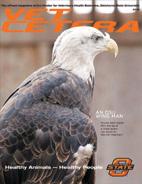
The 2016 issue of Vet Cetera won first place in the Magazine publication category of the Upper Case Awards for the Public Relations Society of America Oklahoma City Chapter.
The magazine also took Best in Show, which was a very nice surprise and a great honor.
The vet school would like to thank all for their contributions to this award-winning publication. None of this would be possible without each of you.
"… WHEN YOU PUT TWO OSU FANS TOGETHER, ANYTHING IS POSSIBLE. THE OUTCOME IS WHAT WE HAVE TODAY.”
— KELLY JOHNSON
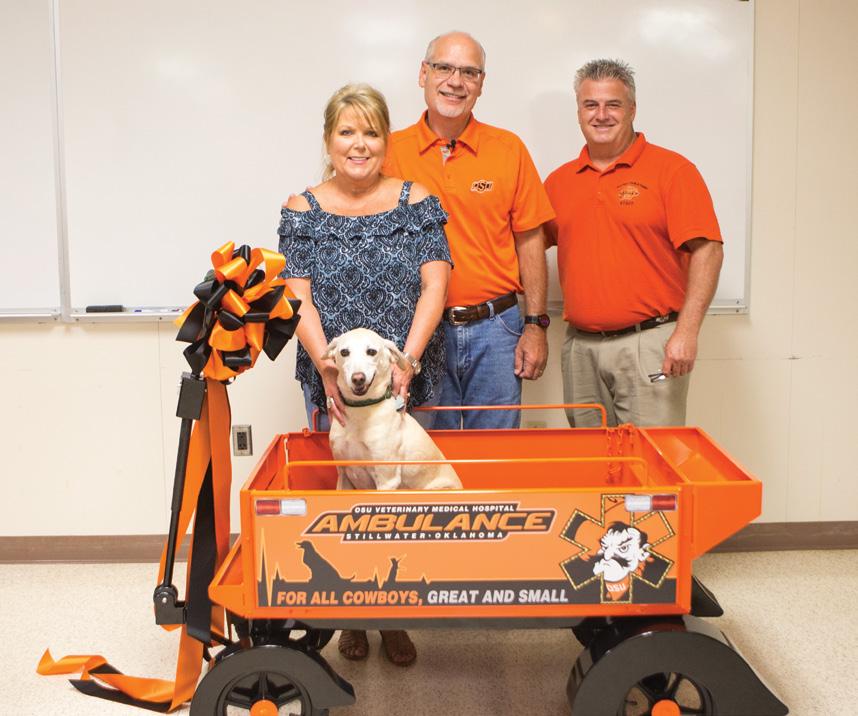
Thanks to Kelly and Cheryl Johnson of Ponca City, Okla., Oklahoma State University’s Center for Veterinary Health Sciences is sporting a brand new veterinary ambulance cart. The cart was designed and built by Custom Mechanical Equipment in Ponca City.
The couple donated the ambulance to the center’s Veterinary Medical Hospital for patient use. The Johnsons own Quality Water Services, based in Ponca City with offices in Stillwater and Arkansas City, Kan. An avid animal lover, Cheryl Johnson is also involved with the Humane Society in Ponca City.
“It was literally made from the ground up, except for the wheels and the steering mechanism, which were bought,” Kelly explains. “It is powder-coated so it should last for a long time. Both sides drop down if you have a larger animal that you need to transport from the parking lot to the hospital or vice versa.”
The idea for the cart actually came from the hospital. Wanting to do special projects as they are able, Kelly, an OSU graduate, and Cheryl asked what the hospital could use, and an animal transport cart was mentioned.
“The concept was taken to a local manufacturer in Ponca City. They are very much OSU fans as well, and when you put two OSU fans together, anything is possible. The outcome is what we have today,” Kelly said as he and his wife presented the finished product to hospital staff and veterinarians.
According to Kelly, the project took on a life of its own. Designer Wendell Clement and the owners of Custom Mechanical Equipment, Erick Peitz and his family, had a blast with it. Clement would send Johnson progress photos, which he would share with the hospital.
“It was just cool to see it come together. I think you’re going to like it,” Kelly says. “I know a lot of the veterinarians in our area refer a lot of owners and their pets to Stillwater to the Vet School. I think it’s an outstanding service. I think having a pet in one’s life just complements it, as do children. Pets are always giving
and don’t take much. Our love of OSU and my wife’s love for the animals, their health and well-being, made today such an easy choice.”
“We are exceptionally grateful for the Johnsons’ long-term commitment to the health and well-being of animals treated at the hospital but also for engaging and understanding our current needs and working to make them a reality,” says Bruce Williamson, hospital administrator.
“This cart will be a significant and highly visible pride point for our hospital. It also serves to enhance the visibility of our new Grateful Client Program, an opportunity for those who love animals and have interactions with the hospital to give back.”
If you would like to support Oklahoma State University’s Center for Veterinary Health Sciences, contact Chris Sitz, senior director of development at the OSU Foundation, at csitz@osugiving. com or 405-385-5170
Oklahoma State University
Center for Veterinary Health Sciences
308 McElroy Hall
Stillwater, Oklahoma 74078-2011
70 YEARS YOUNG
The Oklahoma State University Center for Veterinary Health Sciences will celebrate its 70th anniversary in 2018.
Since its doors opened March 1, 1948, the center has graduated more than 3,900 career-ready veterinarians. These men and women have gone on to do great things to improve the lives of animals and humans alike.
To scroll down memory lane and see the many accomplishments achieved through the years, visit timeline.okstate.edu/events/cvhs.