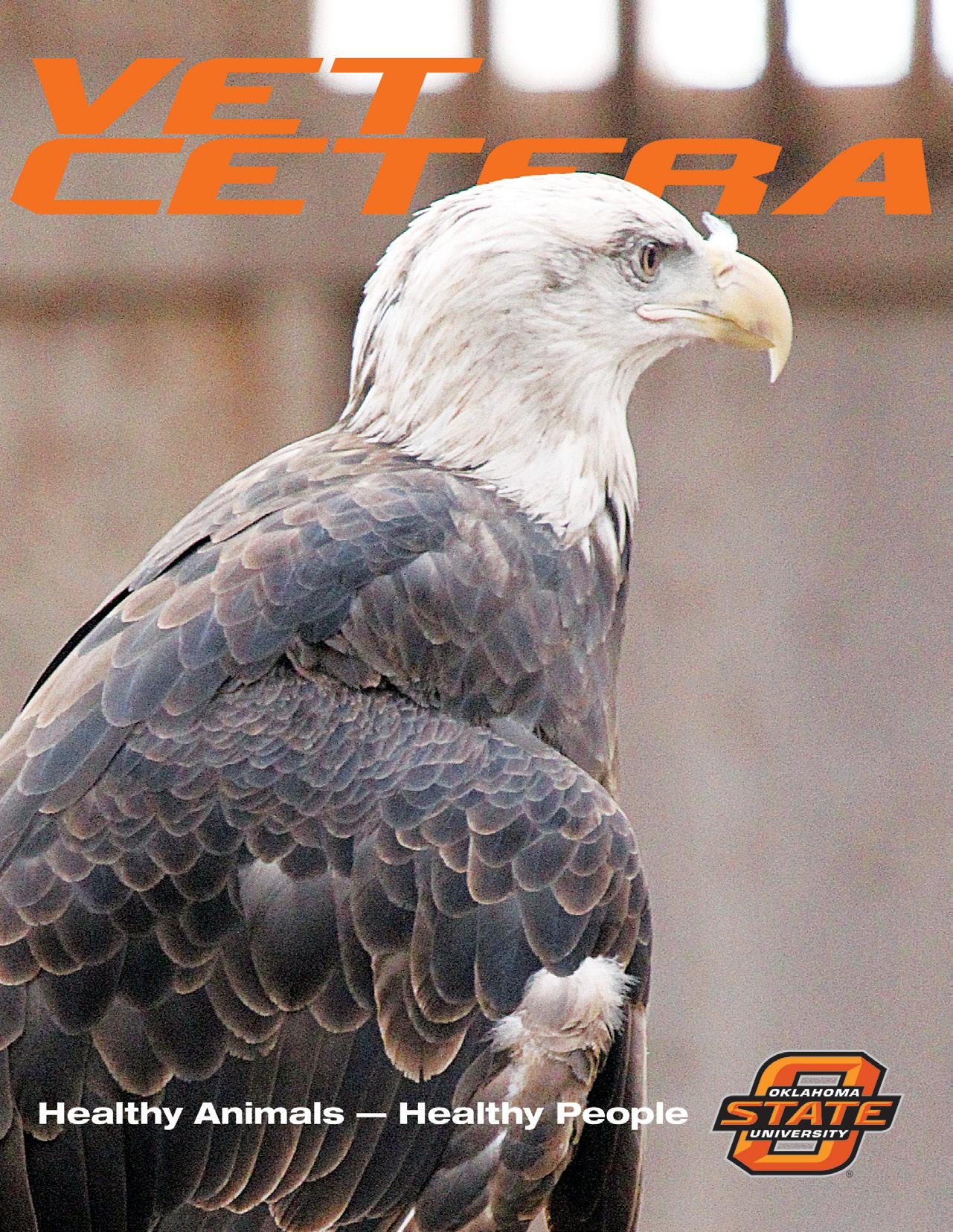
AN OSU WING MAN
Injured bald eagles that end up at a tribal aviary can count on top-tier treatment




Injured bald eagles that end up at a tribal aviary can count on top-tier treatment
tThe Center for Veterinary Health Sciences graduates competent, confident, practice-ready veterinarians — a tradition it has proudly carried forward since the day the veterinary college opened its doors 68 years ago. Please join us at the CVHS website: www.cvhs.okstate.edu. The OSU homepage is located at www.okstate.edu
VET CETERA magazine is published each Winter by Oklahoma State University, 305 Whitehurst, Stillwater, OK 74078. The magazine is produced by University Marketing and the Center for Veterinary Health Sciences. Its purpose is to connect the college with its many alumni and friends, providing information on both campus news and pertinent issues in the field of veterinary medicine. Postage is paid at Stillwater, OK, and additional mailing offices.
ON THE COVER: Injured bald eagles and other majestic birds at the
get expert treatment from OSU alumnus Dr. Paul Welch, a volunteer there.
10 PARTYING WITH A PACEMAKER
Almost two dozen dogs are living better lives with pacemakers implanted by Dr. Ryan Baumwart.
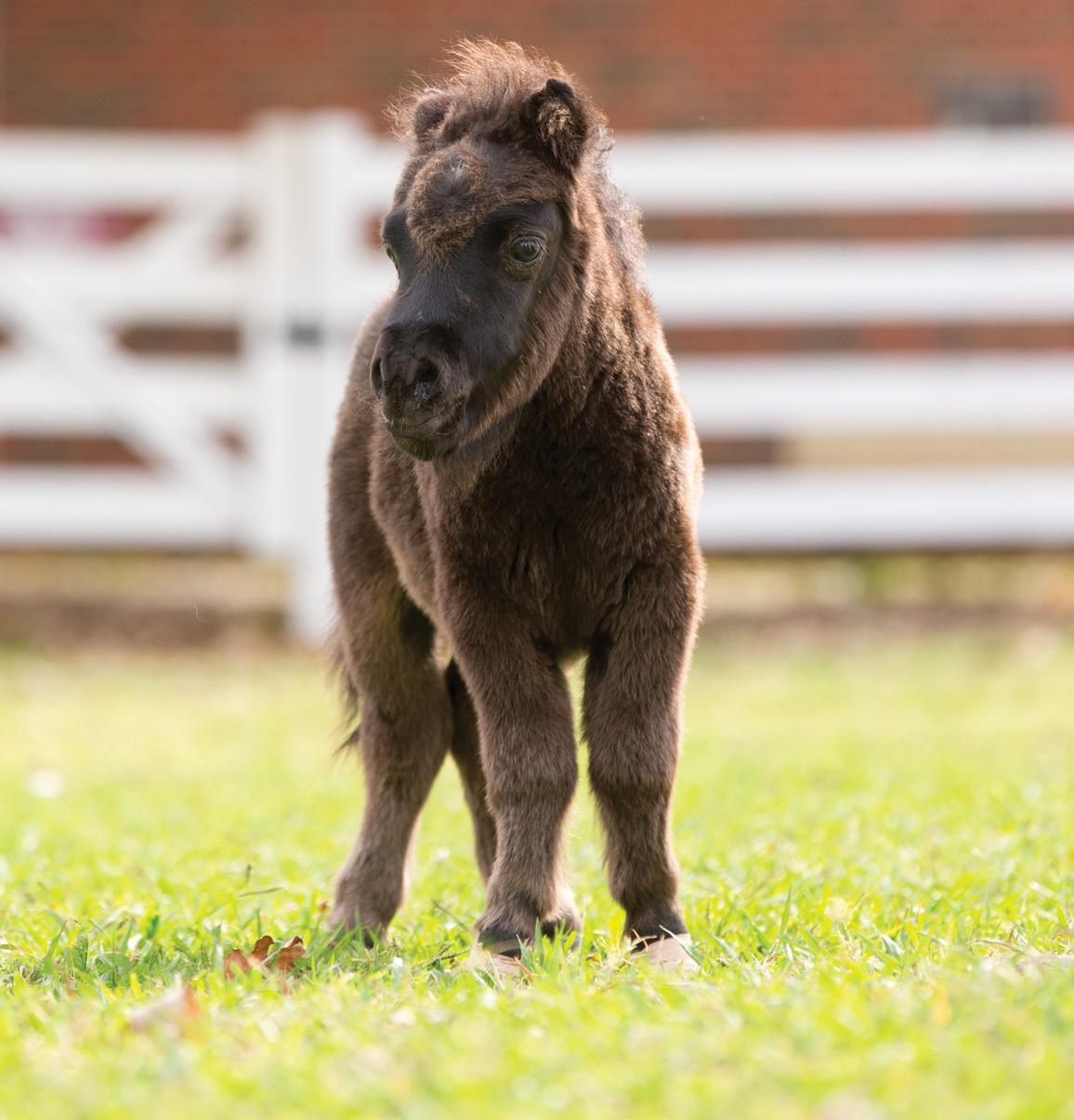
14 MINI HORSE, MAX APPEAL
Baby Donut (above) is undergoing treatment at OSU’s Veterinary Medical Hospital to fix his unusually angled legs — and his visits draw a crowd.
16 HEALTH FOR ALL
Three OSU researchers are leading studies that focus on herpes viruses that affect humans, primates and horses.
45 GOING NATIONAL
The Student American Veterinary Medical Association has selected OSU’s Jeff Olivarez as its president-elect.
66 GOT A FAVORITE VETERINARIAN?
Katherine and Edwin Sain do — Dr. Mike Wiley. And the Sains have shown their appreciation for his expertise by endowing a scholarship in his name.
Christopher Ross, DVM, Ph.D.
Interim Dean, Center for Veterinary Health Sciences
Derinda Blakeney, APR Public Relations and Marketing Coordinator
Sharon Worrell Alumni Affairs Specialist
Heidi Griswold Senior Director of Development
Dorothy L. Pugh Editor
Paul V. Fleming Art Director / Designer
Phil Shockley / Gary Lawson
Staff Photographers

JEAN E. SANDER , DVM, MAM, DACPV, HAS SERVED THE CENTER FOR VETERINARY HEALTH SCIENCES AS DEAN FOR THE PAST FIVE YEARS. SHE RESIGNED IN JULY TO ACCOMPANY HER HUSBAND AS HIS CAREER TAKES HIM TO WASHINGTON, D.C.
“I promised my husband, Allen, when he followed me to Stillwater that the next ‘career move’ would be his,” Sander says. “Allen is an attorney who specializes in federal laws of patient confidentiality, particularly as applied to mental health and substance abuse patients. Changes in these federal laws have created the need for new national-level policy advisers in Washington. This is truly a career-capping opportunity for him.”
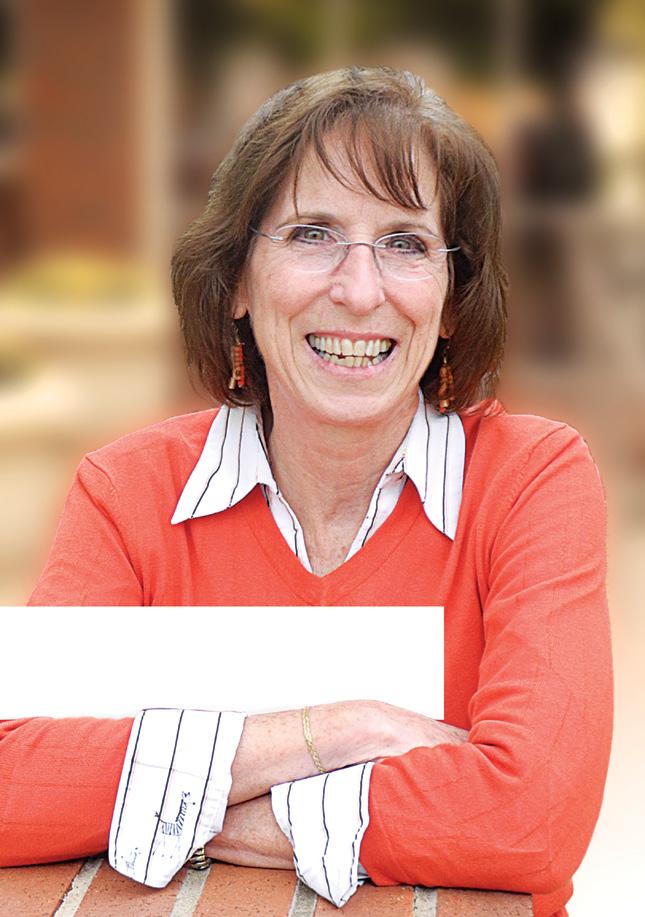
The first female dean of OSU’s Center for Veterinary Health Sciences, Sander wasted no time building relationships with key audiences and growing Oklahoma’s only veterinary college. Here are just a few of her greatest accomplishments:
Bringing the Academic Center Office Faculty Building to fruition.
Dedicating the Gaylord Center for Excellence in Equine Health.
Streamlining and transferring the handling of all animal resources and the responsibilities of the university attending veterinarian to the Office of Research.
Enhancing the services of the Oklahoma Animal Disease Diagnostic Laboratory through the recruitment of new leadership.
Hiring 24 young, highly regarded faculty for various research and clinical programs.
Offering veterinary medical care to the animal victims of the May 2013 Oklahoma tornadoes at no charge to their owners.
THANK YOU, DEAN SANDER, AND BEST WISHES TO YOU AND ALLEN IN YOUR FUTURE ENDEAVORS.
Things are moving right along at the Center for Veterinary Health Sciences. We recently finished another very successful Fall Conference, complete with a number of alumni events. It was great meeting new (to me) faces and renewing some old acquaintances. Some highlights of things that are keeping us busy right now:
We have started the soft launch of a fundraising project to enlarge and improve our teaching facilities. The fundraising drive has been named in honor of Dr. Roger Panciera, and we hope to use these private donations to supplement college resources on this project. More details will be available as they develop. Please contact us if you have questions or would like to participate.
At long last, we have occupied the Academic Center, which houses Veterinary Clinical Sciences faculty and administration. The space vacated for badly needed teaching space, offices for staff and house officers and other needs. Development of this facility will be an integral part of the project to improve our teaching facility.
The search for a permanent dean is underway. The Oklahoma A&M Board of Regents approved the position description Oct. 21, and the search committee held its first meeting Oct. 24. Send comments and nominations to Denise Weaver in the provost’s office (denise. weaver@okstate.edu; 405-744-8782). Search committee chair Dr. Tom Coon is organizing a series of listening sessions around the state to get input as the search begins.
It has been an exciting and interesting experience serving as interim dean! I had not appreciated what a different set of skills is needed for this job. Dr. Margi Gilmour is doing an outstanding job as interim associate dean of academic affairs, and our supporting staff is working hard, as they always do.
We have our fingers crossed that the state budget treats us more kindly this year and next. Between midyear pullbacks and cuts going into this fiscal year, our state appropriation is about $2 million less than in the previous year. This obviously has a major impact on our operations, but the veterinary center will persevere and improve. Our core missions have not changed, and we continue to graduate confident, competent, career-ready veterinarians every single year. Our graduating Class of 2016 had essentially 100 percent employment, a 98 percent national board pass rate, and are well on their way to becoming accomplished professionals.
I need to give a special shout out to the faculty and staff who operate one of the most productive and efficient teaching hospitals in the country, especially given the relatively small size of our faculty. Person for person, CVHS is amazingly productive, and all involved deserve special thanks.
Please let us know how we can serve the state and the profession better!
Sincerely,
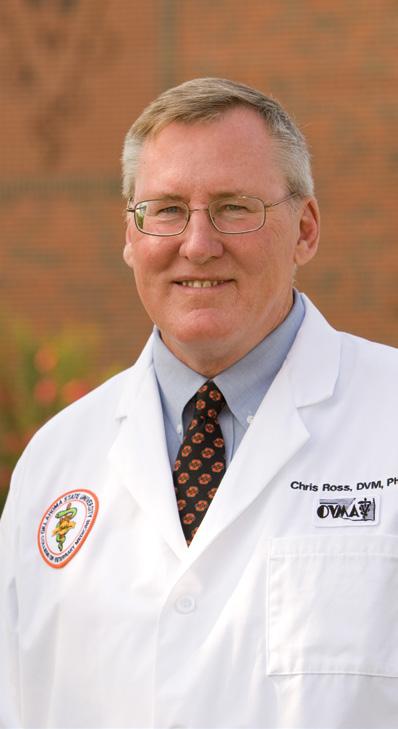
CHRIS ROSS, DVM, PH.D. INTERIM DEAN, CENTER FOR VETERINARY HEALTH SCIENCES
JJ OVERCOMES SERIOUS OBSTACLES WITH OSU’S HELP
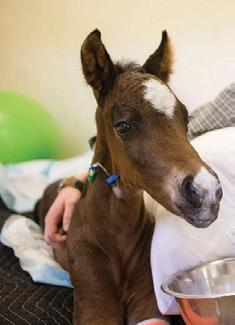
Premature birth.
Underdeveloped bones.
Pneumonia.
And more.
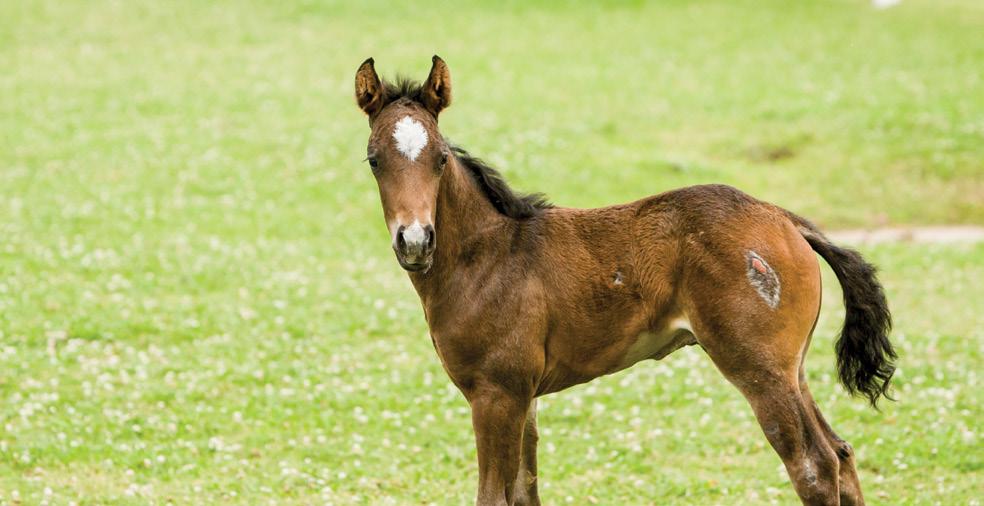
Any one of those problems would be a challenge for a colt. Poor JJ, born in April, had to overcome them all.
Dharma’s colt weighed only 50 pounds at his birth in Newkirk, Okla. Within his first 12 hours, owner Karen Smith had rushed him to Oklahoma State University’s Veterinary Medical Hospital.
“When he arrived in the hospital’s Gaylord Neonatal Care Wing, he was able to stand but had severe tendon laxity of all four limbs and suffered from partial failure of passive transfer due to inadequate colostrum intake,” says Dr. Jenna Young, equine intern on the case. “Nursing within the first few hours of birth is vital to the health of any foal, much less a premature one.”
Foals rely on their mother’s antibody-rich milk or colostrum for protection from disease. Without it, the foal developed pneumonia. But that wasn’t his only problem.
“He was born with incomplete ossification of his carpal and tarsal bones,” says Young. “He was at risk of crushing his under developed bones and developing severe lameness and arthritis long-term if he were allowed to walk on them.”
OSU’s team placed a tube cast on each leg to ensure proper alignment of his bones. He then had to lie in a b ed, standing solely for feedings. Weekly radiographs monitored his progress. The foal was in casts for 3½ weeks with round-theclock care to ensure he remained down and to help him change his position frequently.
Smith decided to name the colt after one of the students assigned to his case — Jeff Henderson. According to Henderson, the colt would follow him everywhere.
OSU faculty and staff started calling the colt JJ for Jeff Junior.
“A little under one month after JJ was born, his bones had developed enough that we were able to take the casts off his legs,” says
Young. “It was great to be able to see him standing on his own and interact with his mother as a normal foal again.”
JJ got to go out to the paddo ck and stretch his legs for short periods of time initially.
U nfortunately in the meantime, JJ developed an abscess in his umbilicus that had to b e removed. Luckily, he bounced back from this surgery in no time.
There was one more hurdle to overcome.
“JJ has been fed out of a pan or bucket since he arrived. Soon after his casts came off, we began trying to encourage him to nurse from his mother,” says Young. “Shortly thereafter, he latched on to Dharma for the first time and never looked back to his milk bucket again!”
JJ went home on May 31, after more than six weeks in the hospital.
A recheck 10 days later showed he had developed an angular limb deformity of his right hind hock. JJ underwent surgery to place a screw across his growth plate to retard growth on the overgrown side.
“We’ve had our registered quarter horses at OSU’s Veterinary Medic al Hospital before, and we’ve used the breeding services at OSU’s ranch west of Stillwater,” says Smith. “JJ is doing great. He’ll be back one more time to have a screw removed from his back right hock. They put it in there to even out his growth. OSU took super care of him. The kids even slept with him while his casts were on to make sure he was okay.”
“It’s very rewarding to see him go from a premature 50-pound little colt who could barely walk to a strong 150-pound guy who can buck, kick, bite, and play as good as the rest of them,” says Young.
The Gaylord Center for Excellence in Equine Health includes the Gaylord Neonatal Care Wing. The wing has three enlarged stalls with swinging half-Dutch doors to accommodate mares and foals. Critically ill foals can be managed in the adjacent partitioned stall r egion, which allows separate access for veterinary medical staff while mom looks over the half-door.
DERINDA BLAKENEY, APR
To support the Gaylord Center for Excellence in Equine Health contact Heidi Griswold at hgriswold@osugiving.com or 405-385-5656.
Watch a video at okla.st/2dENBxq
“IT’S VERY REWARDING TO SEE HIM GO FROM A PREMATURE 50-POUND LITTLE COLT WHO COULD BARELY WALK TO A STRONG 150-POUND GUY WHO CAN BUCK, KICK, BITE, AND PLAY AS GOOD AS THE REST OF THEM.”
"IT'S VERY REWARDING TO SEE HIM GO FROM A PREMATURE SO-POUND LITTLE COLT WHO COULD BARELY WALK TO A STRONG 150-POUND GUY WHO CAN BUCK, KICK, BITE, AND PLAY AS GOOD AS THE REST OF THEM."
— DR. JENNA YOUNG
“WE APPROACH CHARLIE’S DIET FROM AN EASTERN PERSPECTIVE.”
"WE APPROACH CHARLIE'S DIET FROM AN EASTERN PERSPECTIVE."
— DR. LARA SYPNIEWSKI
PHOTOGRAPHY BY GARY LAWSON / UNIVERSITY MARKETING
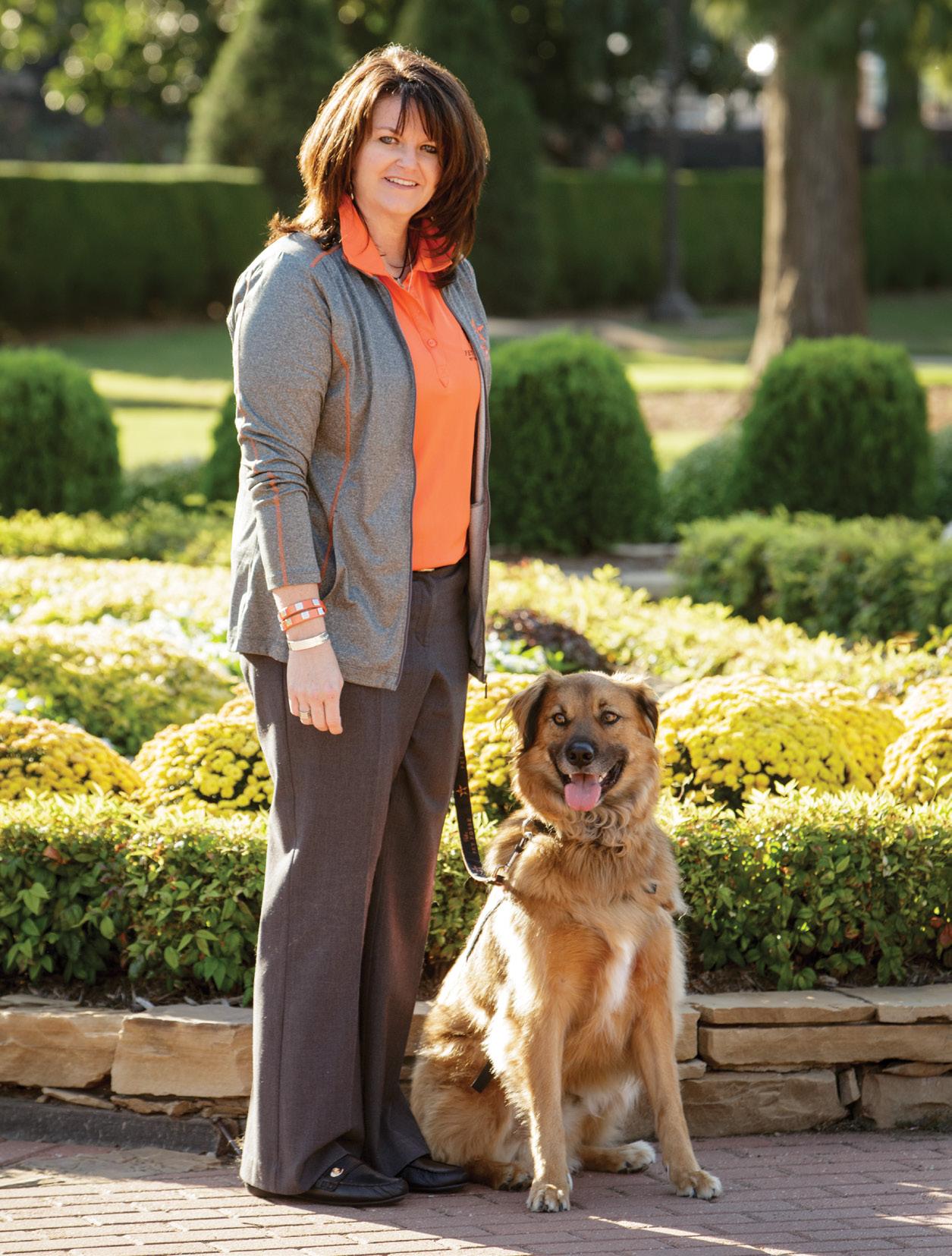
Charlie, Charles or Sir Charles, as he is commonly referred to, is walking with his head a little higher these days. Charlie is a member of Oklahoma State University’s Pete’s Pet Posse, an on-campus pet therapy dog program. The 3½-year-old mixed-breed dog belongs to Kendria Cost of Westport, Okla., who rescued him in April 2013.
While he was a bit underweight at his rescue, that didn’t last too long.
“He had gained a little weight,” Cost says of Charlie’s physique about a year after his adoption. “I changed his food several times. He was exercising. We were walking every day, increasing our route, doing a lot of different things to try to help him lose weight, and it just was not coming off.
“Probably the defining moment for me was when I brought him to Stillwater to stay with his trainer,” Cost remembers. “She had not seen him in a while. I got out of the car with him and she said, ‘Oh, my gosh, he is so fat. I’m so embarrassed. I’m not even taking him to campus.’ And so, honestly, I cried all the way home, not even knowing what I could do, how I could change his diet, how I could change his lifestyle to make him healthy and happy.”
“I suggested to Kendria that we approach Charlie’s diet from an Eastern perspective, evaluating his individual needs based on his personality, his environment, his stressors, his body typ e and his exercise program,” says Dr. Lara Sypniewski, Charlie’s veterinarian at OSU’s Veterinary Medical Hospital. “This allowed us to cho ose the best proteins and carbohydrates to meet his nutritional requirements, while honoring those of his overall body type.”
As an example, Charlie always “runs hot.” He consistently pants, seeks cool places to lie and avoids warm environments. To accommodate this need, Sypniewski recommended using cooling foods — items that would normally be eaten during the summer.
“I don’t think you would go to the beach and eat a mutton sandwich for lunch,” says Sypniewski. “But having a nice turkey sandwich wouldn’t be out of the question during the summer months. Thinking seasonally helped us to make the food choices we did to help Charlie cool down. Mom finds new recipes all the time. She makes pupsicles with Greek yogurt and mango. She uses the balanced dehydrated diet as well as home-cooked food. We really just switched him over a week’s period of time. Charles loved the food, which was good. I mean he is a food hound, so he had no problem eating. He was happy.
“And after a couple of weeks, the difference in him was phenomenal,” continues Sypniewski. “Not only was his hair coat starting to change, it was a lot softer hair coat, he had a little bit more glimmer in his eyes. He had more energy. And then all of a sudden, the weight just started to melt off.”
Within six months, Charlie had lost nearly 20 pounds.
“We did it very slowly, very gradually,” adds Cost. “Wellness is obviously a big focus. We did not want it to come off too quickly.”
And Sypniewski says Charlie’s discomfort in his hips and elbows all went away as soon as he lost weight.
“And so that’s a big take home to most of my pet owners is that obesity causes arthritis,” adds Sypniewski. “It actually increases the risk of earlier death. So we really try to keep them as thin as possible. Before and after pictures are profound. I give his Mom a lot of credit. She really worked hard and he just looks phenomenal. A great ambassador for wellness.”
Cost reports that Charlie loves being a Pete’s Pet Posse therapy dog.
“He thinks everyone needs to give him a big ol’ pat and a belly rub,” she says. “He spends a lot of energy doing that, actually. He just loves people. He loves the attention that he gets. He loves making a difference. He’s very intuitive. He understands somebody who needs maybe a little bit of extra attention and he seeks those people out, which is really interesting to watch and it makes me really proud of him.”
Pete’s Pet Posse dogs are trained to interact with people and provide affection and comfort in a variety of situations. The OSU Pet Therapy Program has been designed and developed to enhance the wellness of its campus population and contribute to the success of being America’s Healthiest Campus®.
Watch a video about Charlie at okla.st/2dUtuPi
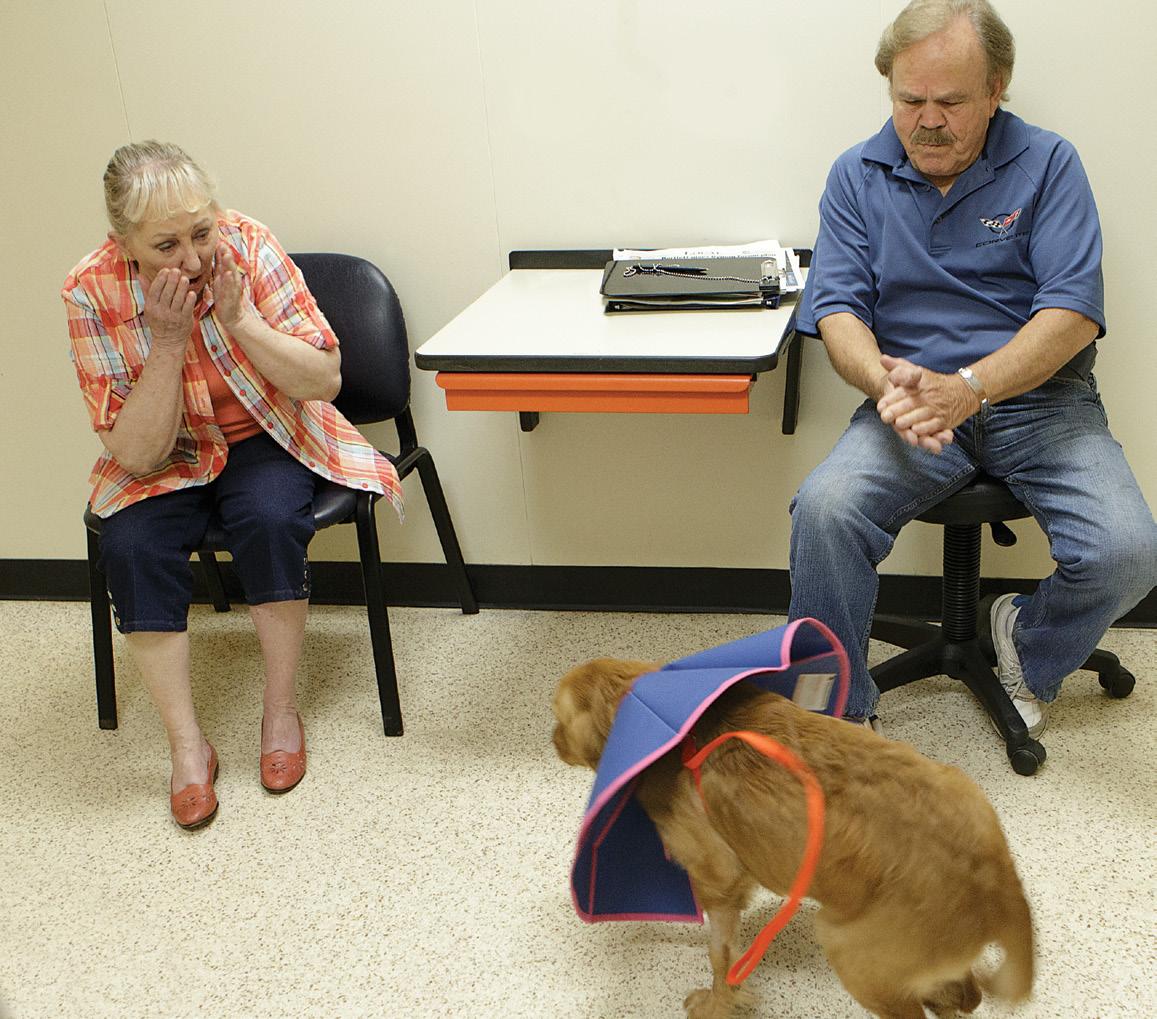
“OSU’S VETERINARY MEDICAL HOSPITAL … WAS FANTASTIC. EVERYONE HAS BEEN SO CONGENIAL. … I KNEW HE WAS BEING TAKEN CARE OF.”
"OSU'S VETERINARY MEDICAL HOSPITAL WAS FANTASTIC. EVERYONE HAS BEEN SO CONGENIAL .... I KNEW HE WAS BEING TAKEN CARE OF."
— MARCENE WARFORD
OSU VETERINARIANS SAVE 6-MONTH-OLD PUPPY
It was do or die for Marley. The 6-month-old puppy had a problem with his liver that desperately needed repair.
“Marley came to OSU’s Veterinary Medical Hospital by way of a secondary referral from a referral hospital in Tulsa,” says Dr. Ryan Baumwart, an OSU veterinary cardiologist.
“They found a shunt, a diversion of blood, in Marley’s liver that wasn’t operable by a traditional laparotomy, where they go in through the belly and try
to put a constriction device on that. The shunt was inside the liver so they gave us a call. They knew we had the equipment to do the procedure. Unfortunately, we had not done one to date here at OSU.”
Still, Marley’s owners, Marcene and Fred Warford of Muskogee, Okla., had faith the veterinarians would be able to help their golden retriever puppy.
“We noticed within the first week that something was wrong with Marley,” says Marcene Warford. “He was vomiting, had diarrhea. He would go into stupors, just really zone out to where he didn’t even know where he was. It was frightening.
“I just had a lot of confidence in what they were going to do,” she adds. “I felt real comfortable with the fact that I thought they could do it. This is where my vet, Dr. Lisa Jamison (’91), earned her degree. There was really no alternative because he would die without it.”
Baumwart and his colleague, Dr. Andrew Hanzlicek, a small animal internal medicine specialist, invited Daniel Hogan, a Purdue University cardiology professor, to help.
“With the expertise of Dr. Daniel Hogan, Dr. Hanzlicek and myself, we all went in on the surgery and had a very good outcome,” says Baumwart. “We made a very small incision in the neck to put a catheter in that allowed us to inject dye to outline the abnormal blood vessel where we needed to try to decrease the amount of blood flow. Once we did that, we were able to size a stent that went into the vena cava.
“The stent held the device in place that we needed to put into the abnormal blood vessel. We also had a plugging device outside the stent. The idea was to decrease the amount of blood flow through this vessel that was a shunt around the liver. The liver is the detoxification center of the body and blood was actually getting bypassed around the liver. So by closing this shunt, we can put blood back into the liver and allow the dog to act more normally once the detoxification occurs in the blood.”
“This was the first time we have used OSU’s Veterinary Medical Hospital,” says Warford. “It was fantastic. Everyone has been so congenial. They are marvelous. They kept me updated two or three times a day, which just made me very comfortable knowing he’s here. I could let go; I knew he was being taken care of.”
“Not only was this the first time we had done the procedure, it was a minimally invasive procedure,” says Hanzlicek. “This dog, instead of having a big abdominal incision, had two very small incisions in his neck. We went through the vein and did the entire procedure. So the dog recovers more quickly and it is less painful.
I think a lot of pet owners are looking for these types of procedures — minimally invasive — and we’re going to offer more and more of these here at Oklahoma State as time goes on and we learn more of these procedures.
“Marley has a very good prognosis,” he adds. “He is expected to live a normal life after this procedure.”
“I would like to say thank you to Dr. Hogan at Purdue University for coming and donating his time and expertise,” says Baumwart. “He was very instrumental in making all of this work. He’s an excellent cardiologist and very generous with his time.”
“It took special pet owners in the Warfords to make this happen and a very kind and skillful cardiologist in Dr. Hogan,” says Hanzlicek. “Thanks to all of them.”
DERINDA BLAKENEY, APR
To see a video of Marley, visit okla.st/29bDH9o
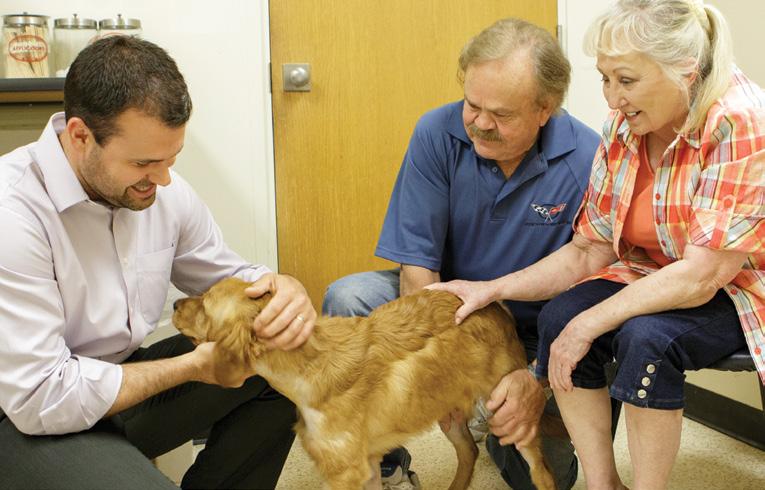
Marley and his owners, Marcene and Fred Warford, thank Dr. Andrew Hanzlicek and his team at OSU for saving the pup’s life.
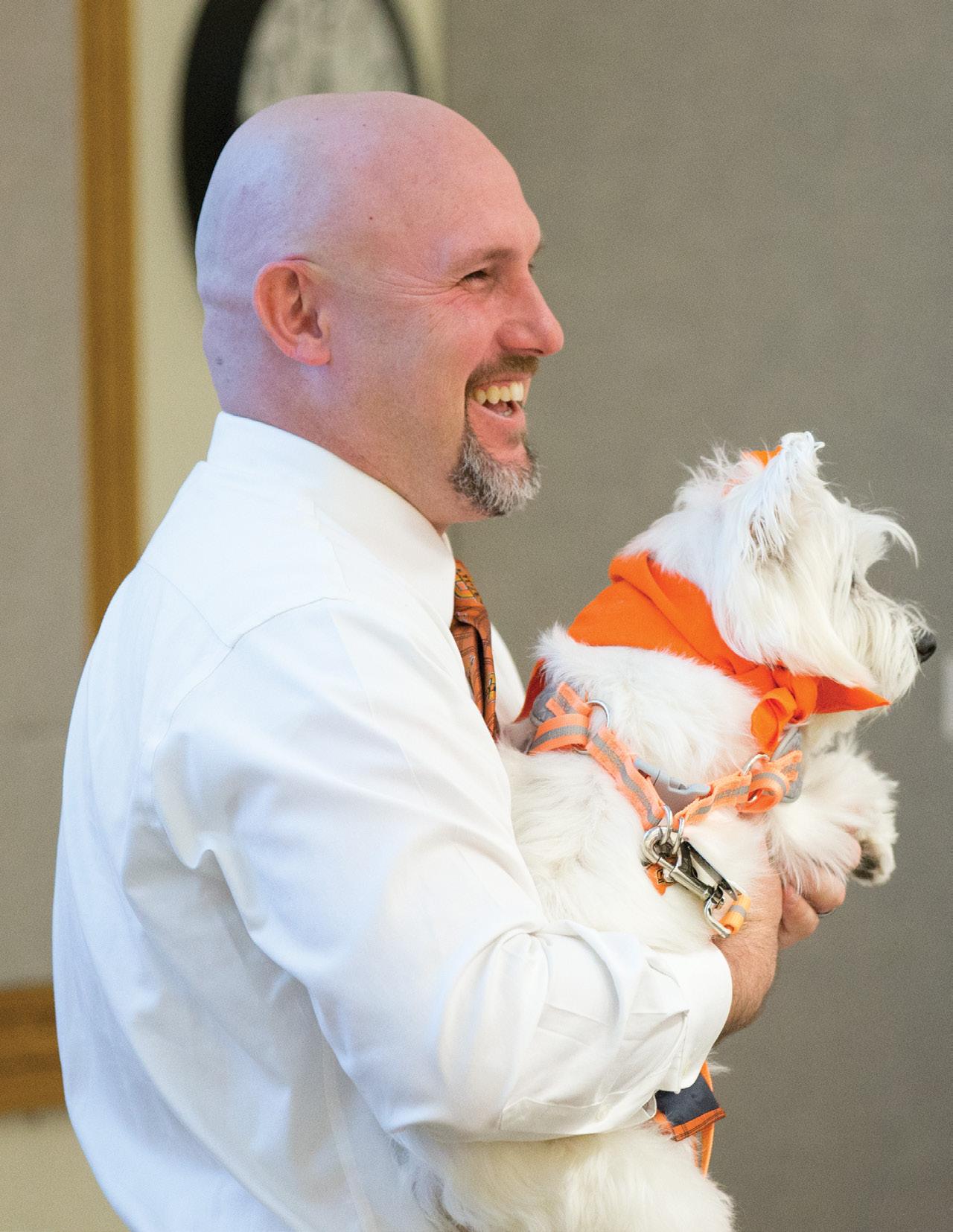

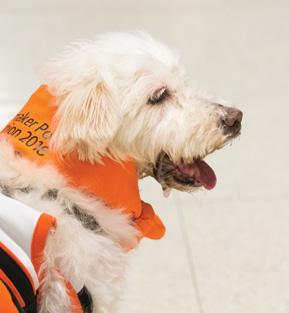
PACEMAKER POSSE PARTIES AT REUNION
PHOTOGRAPHY BY PHIL
SHOCKLEY
/ UNIVERSITY MARKETING
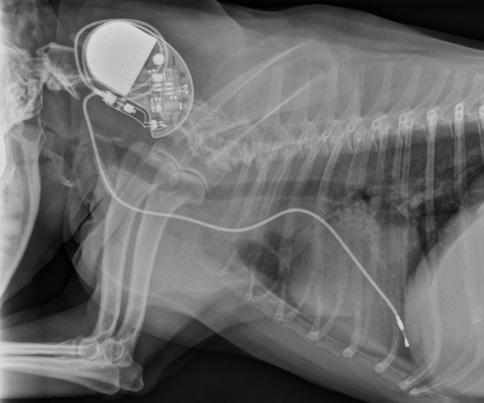
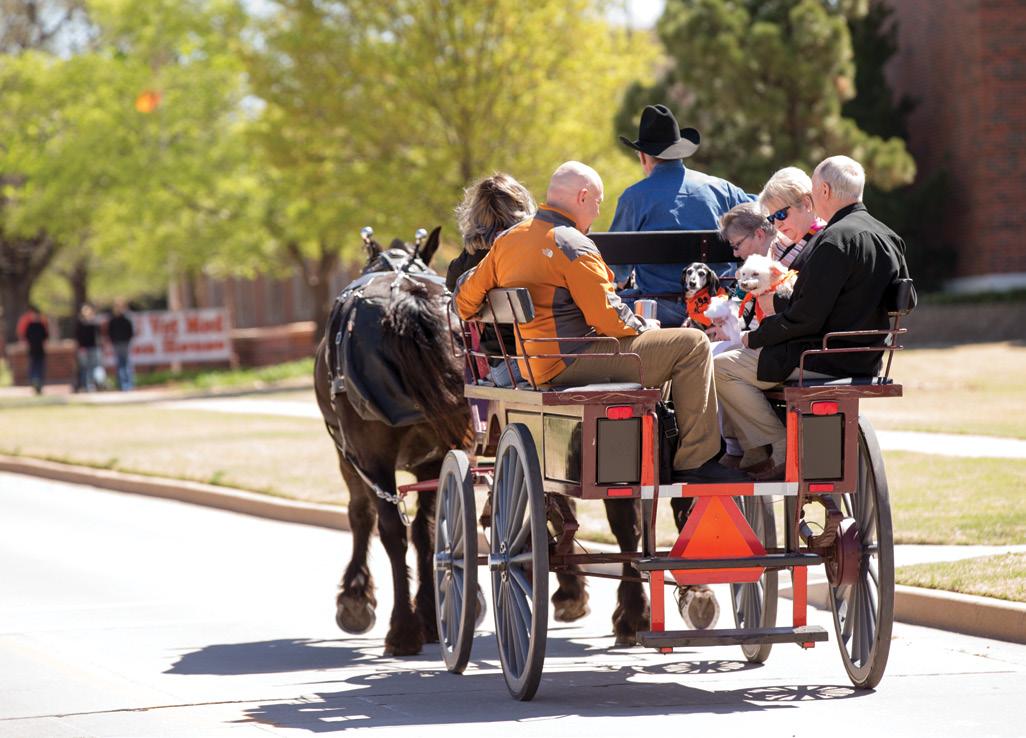
Dr. Ryan Baumwart, veterinary cardiologist at Oklahoma State University’s Veterinary Medical Hospital, has created a unique group of canine survivors appropriately named the Pacemaker Posse. Over the last two years, he has placed pacemakers in 23 dogs, improving their quality of life and, in many cases, prolonging their days on the planet. In April, the pacemaker recipients were invited back to OSU.
“WE THOUGHT THIS WOULD BE A GREAT TIME TO CELEBRATE THE SUCCESS OF THESE PATIENTS AND SHOW OTHERS A BROADER VIEW OF VETERINARY MEDICINE.”
"WE THOUGHT THIS WOULD BE A GREAT TIME TO CELEBRATE THE SUCCESS OF THESE PATIENTS AND SHOW OTHERS A BROADER VIEW OF VETERINARY MEDICINE."
— DR. RYAN BAUMWART
Owners Maureen Cancienne, Rebecca Dees, Ken and Susie Sharp, Patricia Wayman and Mary Jo Wipperfurth brought five Pacemaker Posse dogs to OSU’s Center for Veterinary Health Sciences’ Annual Open House.
“When the veterinary center offers unique services such as this, we maintain our role as the premier specialty veterinary hospital in the state and region,” says Dr. Chris Ross, interim dean of the veterinary center. “Our faculty [members] have a chance to showcase their skills and knowledge; animal owners have access to lifesaving treatments; and our students are exposed to cutting-edge technologies.”
“OUR STUDENTS CAN GRADUATE WITH AN AWARENESS OF THE PRESENCE AND POSSIBILITIES IN CUTTING-EDGE TREATMENTS AT THE VETERINARY CENTER.”
"OUR STUDENTS CAN GRADUATE WITH AN AWARENESS OF THE PRESENCE AND POSSIBILITIES IN CUTTING-EDGE TREATMENTS AT THE VETERINARY CENTER."
— DR. CHRIS ROSS
Patricia Wayman of Goltry, Okla., wanted to celebrate with her dog, Abby, at the open house.
“About a year ago, I really noticed that Abby would be moving and then she would just go down,” Wayman says. “I thought, well, she’s tired.
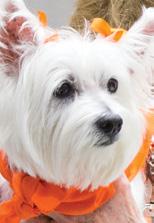
“I was fortunate that my veterinarian, Dr. Carey Bonds (OSU ’03) at Trinity Hospital, told me about Dr. Baumwart. We came over, and they ran all the tests.”
Abby had sick sinus syndrome.
“The sinus node is the normal pacemaker in the heart,” Baumwart says. “When that normal pacemaker stops, they don’t have normal blood flow to their brain, and they pass out.
“We have had dogs that will pass out 20 or 30 times a day.”
Baumwart suggested implanting a pacemaker; Wayman had to think about it.
“My family is farmers,” she says. “Abby is not a farm dog; Abby’s my child. So we talked about it and talked about it.
“Now in the small town that I live in, Abby’s the bionic dog. Everybody talks about, ‘Do you know that we’ve got a dog in Goltry that has a pacemaker?’ I would do it 100 times again.”
Abby received her pacemaker in September 2015. She turned 11 in May.
“She’s doing extremely well,” Wayman says. “Her quality of life — she’s out chasing rabbits and squirrels in the backyard. I tell you, Brandy Hutchings (cardiology veterinary assistant) and Dr. Baumwart are just wonderful. I highly recommend them.”
Susie Sharp of Stillwater inherited her dog, GiGi, from her aunt.
”I had GiGi a while, and suddenly her health was failing,” Sharp recalls. “She was losing weight. She couldn’t keep food down.”
Sharp’s veterinarian did exploratory surgery to try to diagnose GiGi’s problem.
“My veterinarian called to say GiGi had died on the operating table twice and been brought back twice — and she’s not going to come back a third time,” Sharp says.
GiGi did survive, and it appeared there was no brain damage.
“My vet suggested that we take GiGi to an intensive care unit rapidly — either in Edmond or at OSU,” Sharp says.
The family chose OSU, where veterinarians determined the muscles GiGi used in swallowing were too weak to function, and a pacemaker could help.
“I didn’t know they did that,” Sharp says.
GiGi was originally diagnosed with a third-degree blockage. She recently had her pacemaker replaced because its battery life was nearly depleted.
Sharp says her family is very thankful they live in Stillwater. “We are very grateful to OSU.”
Traditionally, human pacemakers — about the size of a silver dollar — are used in dogs.
“We recently started using a company that provides animal pacemakers at a much reduced cost compared to the human pacemakers,” Baumwart says. “However, this can still be a large amount of money for the average pet owner.”
Training in specialties such as cardiology takes years of work and study.
“Our students can graduate with an awareness of the presence and possibilities in cutting-edge treatments at the veterinary center,” Ross says. “Some may also decide that they would like to pursue a career in specialties like cardiology.”
DERINDA BLAKENEY, APR
To support the veterinary cardiology unit at OSU’s Veterinary Medical Hospital, contact Heidi Griswold at hgriswold@osugiving.com or 405-385-5656.
CAT UNDERGOES FIRST-OF-ITS-KIND SURGERY AT OSU
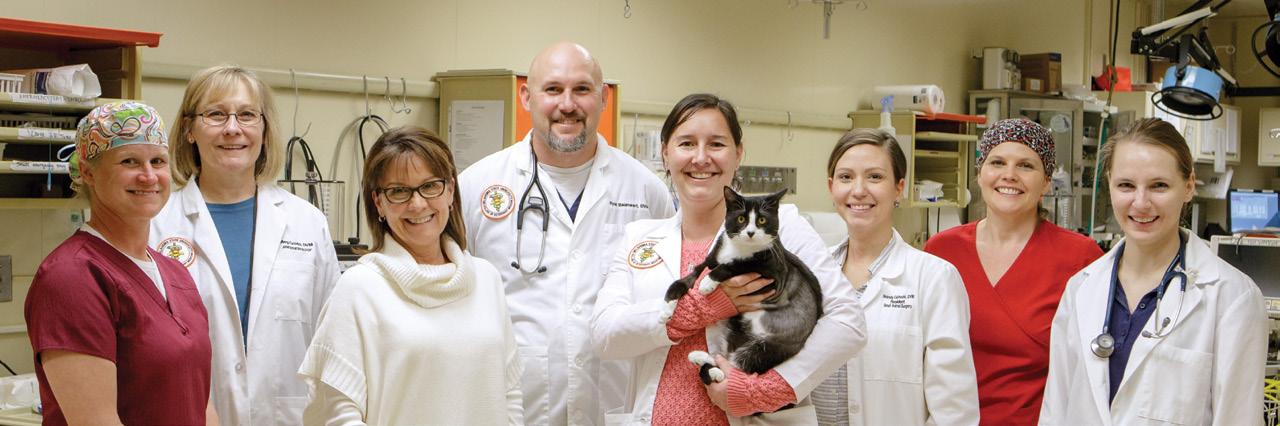
Linda Wheeler came to tears the first time she saw Romano. The 6-month-old kitten, a stray who popped up in the yard of the Tulsa woman’s sister, bore a striking resemblance to a cat Wheeler had recently lost.
The only difference was Romano’s perfect heart on his nose. Was it a sign? After all, it turned out that his heart had a hole in it, which was leading to congestive heart failure. But Oklahoma State University’s Veterinary Medical Hospital came to his rescue with a first-of-its-type-in-Oklahoma procedure.
Dr. Ryan Baumwart, veterinary cardiologist, and Dr. Danielle Dugat, small animal surgeon, of OSU’s Veterinary Medical Hospital, collaborated on the surgical procedure. The hole in the feline’s heart was causing blood to shunt, overworking the left side of the heart.
“The procedure hadn’t been done in Oklahoma,” Wheeler says. “From just watching Dr. Baumwart in coming here four different times, I can tell he’s very competent. He did his research on the procedure, and I very much trust him.”
Fourth-year veterinary student Amy Tomcheck, of Milwaukee, examined the cat and reviewed his medical history with Wheeler the day before the surgery. Dugat talked his owner through what would take place during surgery.
“We’ve got our game plan all lined out,” Dugat told Wheeler. “We’re going to go into the chest on the left side and do an intercostal thoracotomy. That’s the easiest access. We’re going to use a retractor to separate his ribs, and the pulmonary artery will be sitting right there.”
After a lengthy discussion, Dugat asked, “So are you ready?”
“I’m ready. I trust you more than you know,” confirmed Wheeler.
The next day in surgery, Baumwart monitored Romano’s pressures while Dugat inserted a catheter into his pulmonary artery and placed a band around it. The trick was to tighten the band enough but not too much. Two days later, Romano was well enough to go home.
“It turned into a little bit of a guessing game,” Baumwart says.
“We had to give Romano some drugs to keep the pressures up to avoid kidney damage and at the same time try to adjust the pressures as Dr. Dugat placed the band around the artery.”
“You’re going to get to live a little longer,” Wheeler told Romano.
“So just a handful of these have really been done across the U.S. I knew you could do it.”
“Everything went the way it was supposed to because we all had our plan and everybody stuck to the plan,” Dugat says.
“That incision looks wonderful. You guys did great,” Wheeler says. “Thank you so much. Thank you so much.”
The procedure performed on Romano will allow him to live a longer, healthier life. The only alternative would be to have (very rare) open-heart surgery to correct the hole in his heart.
“To see such joy in an owner’s eyes when the procedure you perform is successful makes this a fulfilling profession,” says Dugat. “I could not have had the confidence I needed in performing this procedure for the first time if it was not for an owner who was willing to hand over the life of her baby into my hands. More so, developing a plan before surgery and understanding every individual’s important role to the success of the surgery made the execution seamless.”
DERINDA BLAKENEY, APR
To view a video of Romano, visit okla.st/1qxmmL6
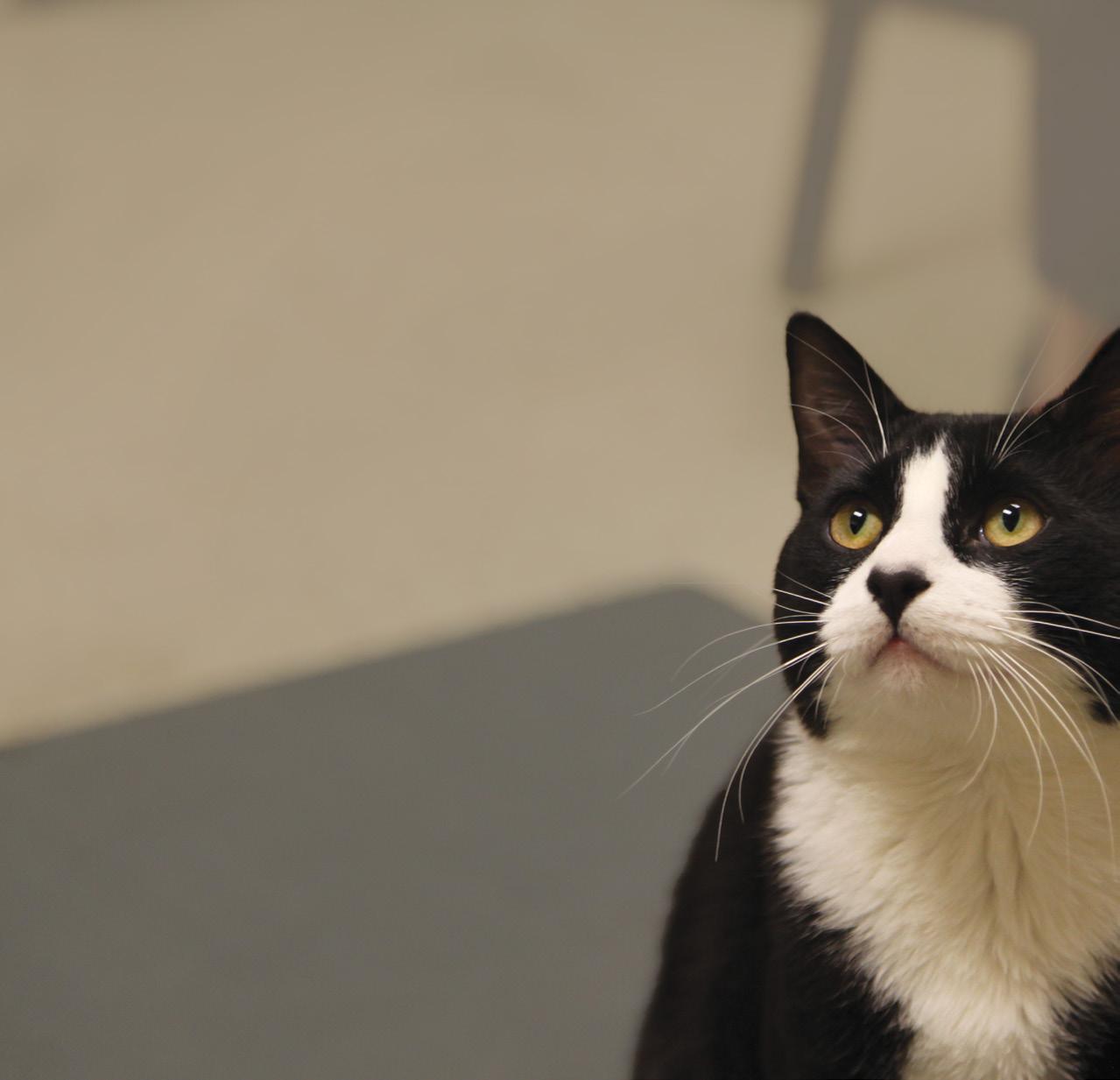
PHOTO BY GARY LAWSON / UNIVERSITY MARKETING
“TO SEE SUCH JOY IN AN OWNER’S EYES WHEN THE PROCEDURE YOU PERFORM IS SUCCESSFUL MAKES THIS A FULFILLING PROFESSION.”
— DR. DANIELLE DUGAT
“I’M
VERY PLEASED WITH THE HOSPITAL. I HAVE SOME FRIENDS WHO HAVE BROUGHT ANIMALS OVER, AND THEY WERE VERY PLEASED AND HAD NOTHING BUT GOOD TO SAY.”
— ZACK DANIEL
PHOTOGRAPHY BY PHIL SHOCKLEY / UNIVERSITY MARKETING
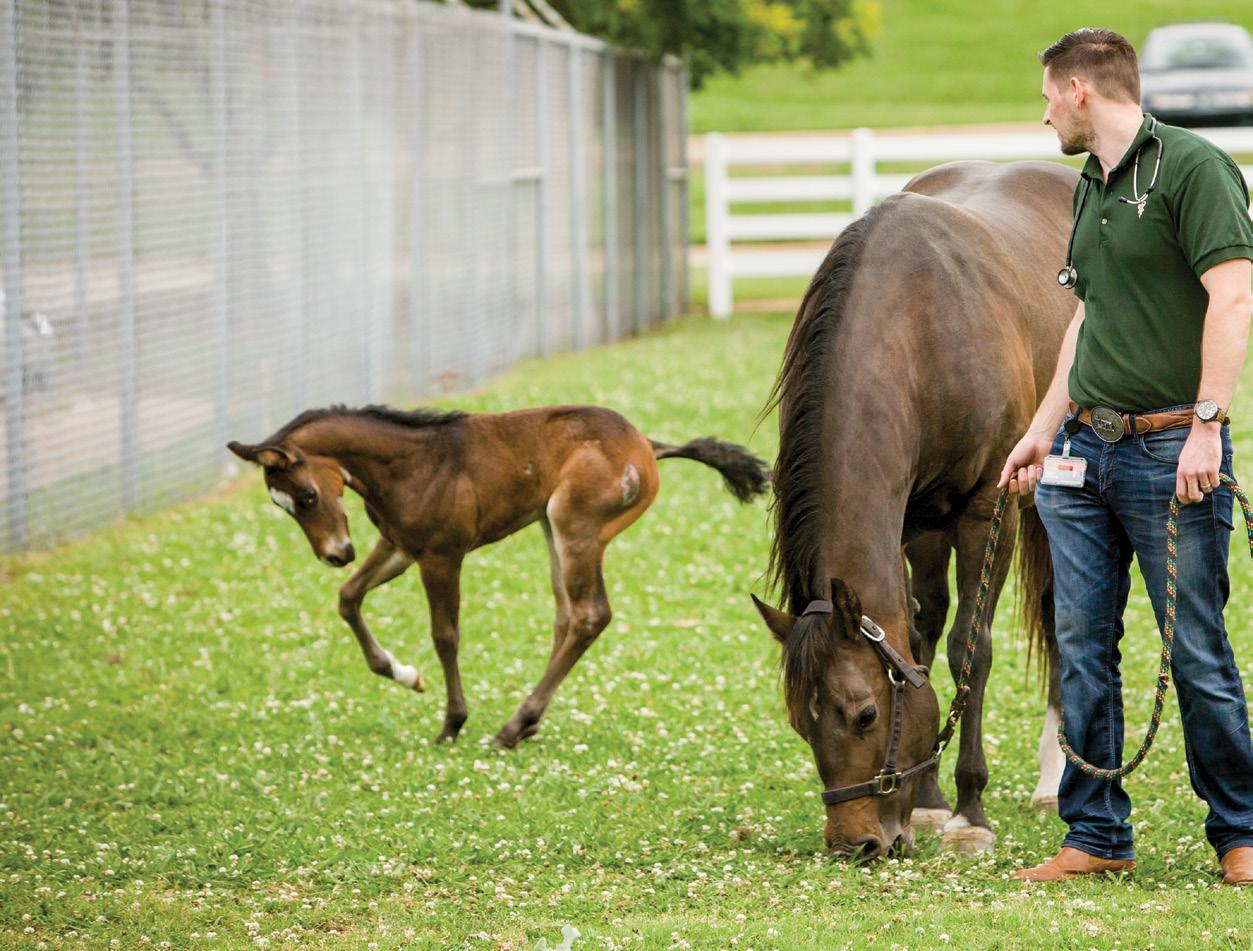
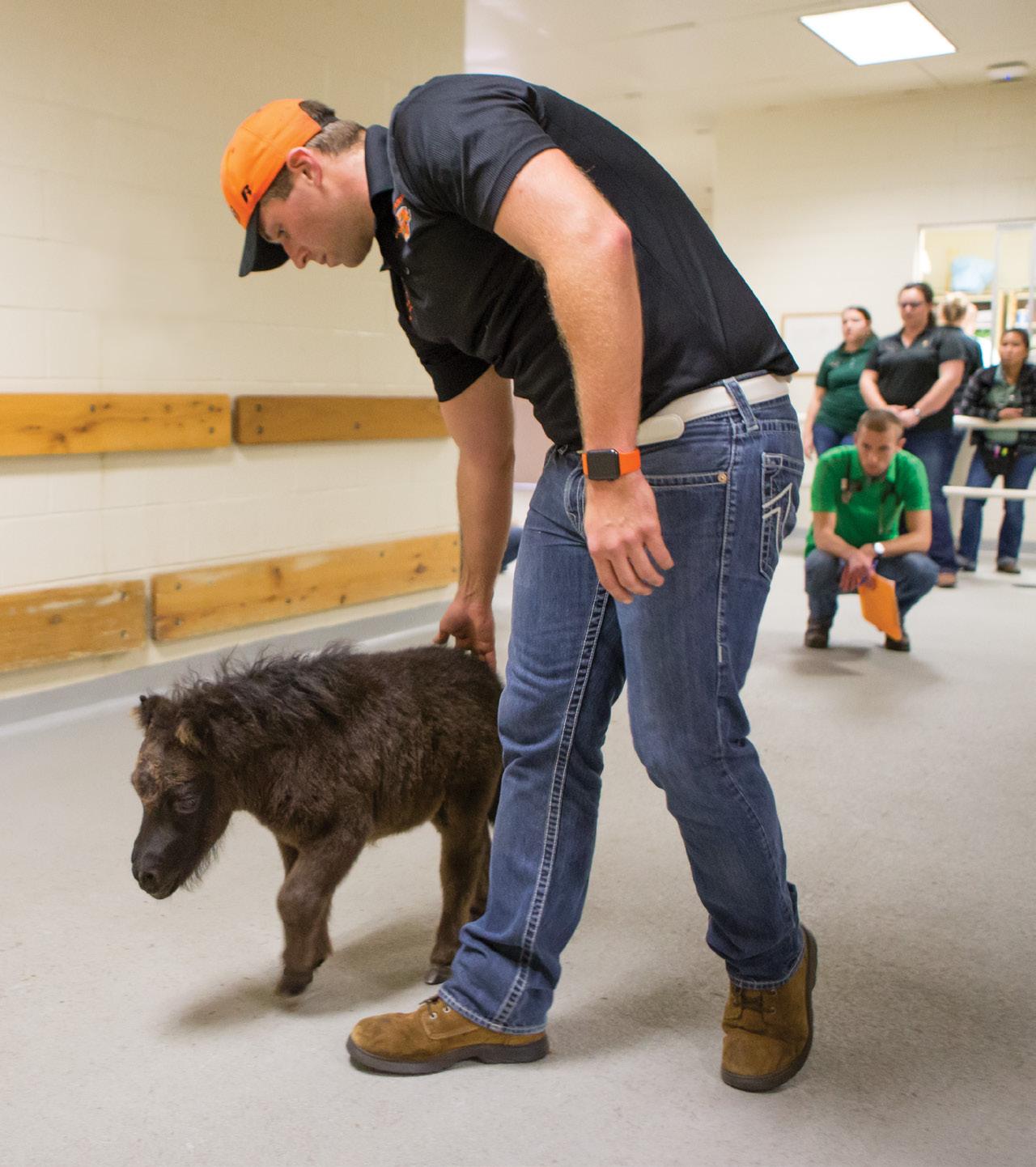
At 10 weeks old, Baby Donut isn’t very big. When you consider he’s the offspring of two miniature horses, you know he’s not even as big as one might expect from the word “foal.” And when he arrives to see the equine veterinarians at Oklahoma State University’s Veterinary Medical Hospital, a crowd quickly gathers to catch a glimpse of the tiny patient.
Zach and April Daniel of Enid, Okla., acquired Baby Donut’s parents for their children, Bailey and Wade, in the fall of 2015. The mare named Sprinkles gave birth In September, and shortly after the foal was born, Zach Daniel knew something was wrong. (His sire’s name is Cinnamon, hence the Donut name.)
“About two weeks after he was born, we could tell his knees were going in,” Daniel says. “We called around and the other vets basically said that they won’t do anything because they specialize in other areas. I called over here to see what they could do, and they said bring him in.”
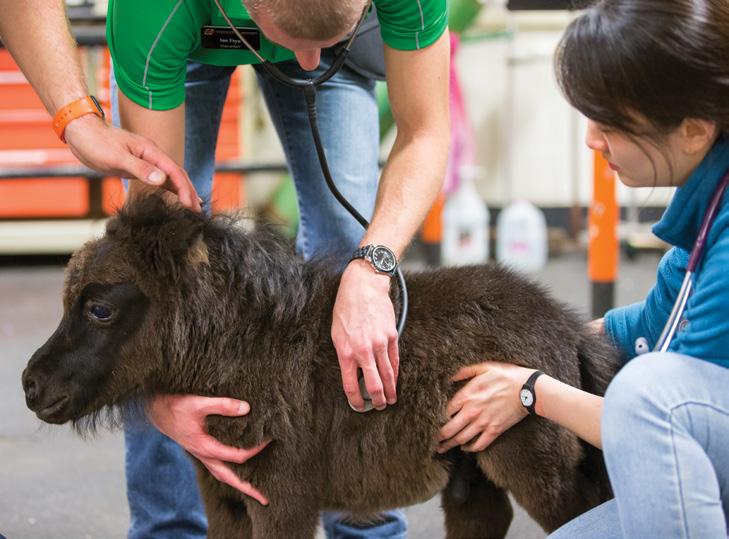
Dr. Mike Schoonover, equine surgeon at OSU’s Veterinary Medical Hospital, and Dr. Patrick Foth, equine medicine and surgery intern, examined Baby Donut. Schoonover ordered radiographs of the foal’s legs.
“Radiographs show that all four of the foal’s legs have severe abnormalities,” Schoonover says. “He has severe bilateral carpal and tarsal valgus. In other words, he’s knockkneed. All of his legs angle outward at about 25 degrees. He also suffers from tendon laxity in all four limbs, with the worst case b eing in his front limbs.”
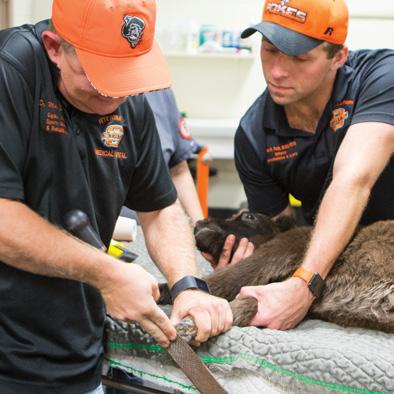
Schoonover trimmed the foal’s hooves and placed special shoes with 3- to 4-centimeter extensions from the inside and heel on the front hooves.
“Surgery is often indicated with this degree of angulation but because Baby Donut is so young, we are going to be somewhat conservative and see if the angulation will begin to correct on its own with confinement and physical therapy. What we hope to do with
the shoes is prevent hyperextension of the coffin joints which will allow Baby Donut’s flexor tendons to strengthen,” Schoonover continues. “By trimming the hooves and applying the extensions, Baby Donut’s feet are more stable, preventing the hyperextension and allowing the flexor tendons to contract.”
Daniel took Baby Donut home with instructions to keep the foal confined to a stall to restrict his exercise. Every three to four days, Daniel took the shoes off for a couple of hours before taping them back on. Two weeks later, he brought Baby Donut back to the hospital for a recheck.
The delighted foal gladly ran and walked around the hospital’s outdoor paddock while veterinarians checked his progress.
Schoonover trimmed each of the foal’s hooves again and reapplied the shoes to his front hooves.
“We’ll see how he does with that. I definitely feel Baby Donut has improved both in the angulation of his limbs and the degree of tendon laxity since we first saw him,” Schoonover says. “We’ll probably take new radiographs on his next recheck. Those will show the progress we’ve made and help us determine what our next steps will be.”
This is the first time Daniel has used the services at OSU’s Veterinary Medical Hospital.
“I’m very pleased with the hospital,” Daniel says. “I have some friends who have brought animals over, and they were very pleased and had nothing but good to say.”
OSU’s Veterinary Medical Hospital is home to several equine internal medicine and surgery specialists who see nearly 1,900 equine cases a year.
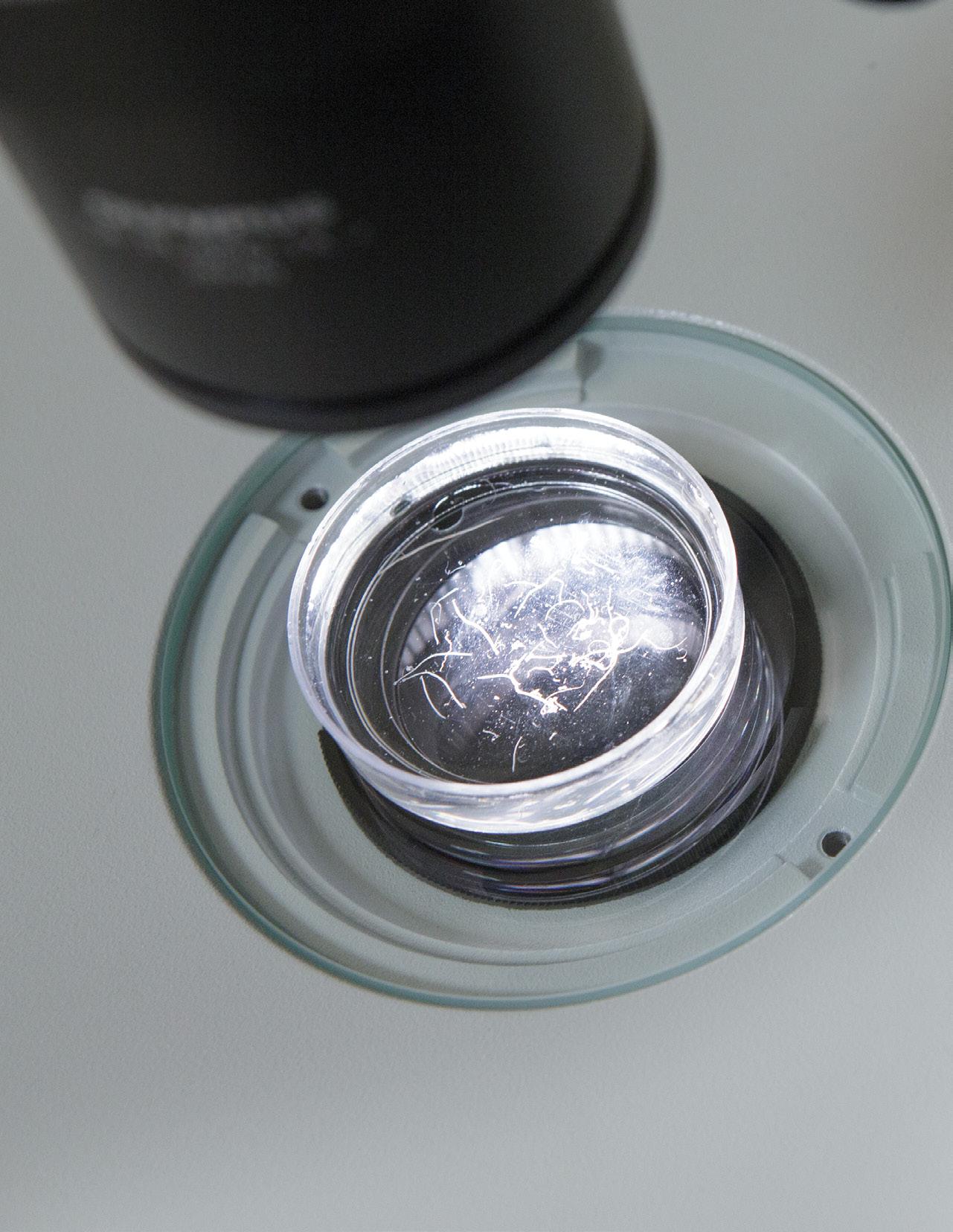
EXPERTS TACKLING VIRUSES THAT HIT HUMANS AND ANIMALS
Research is a key component of our mission at Oklahoma State University’s Center for Veterinary Health Sciences. Current collaborative efforts focus on herpes viruses that affect primates, humans and horses.
BY DERINDA BLAKENEY, APR
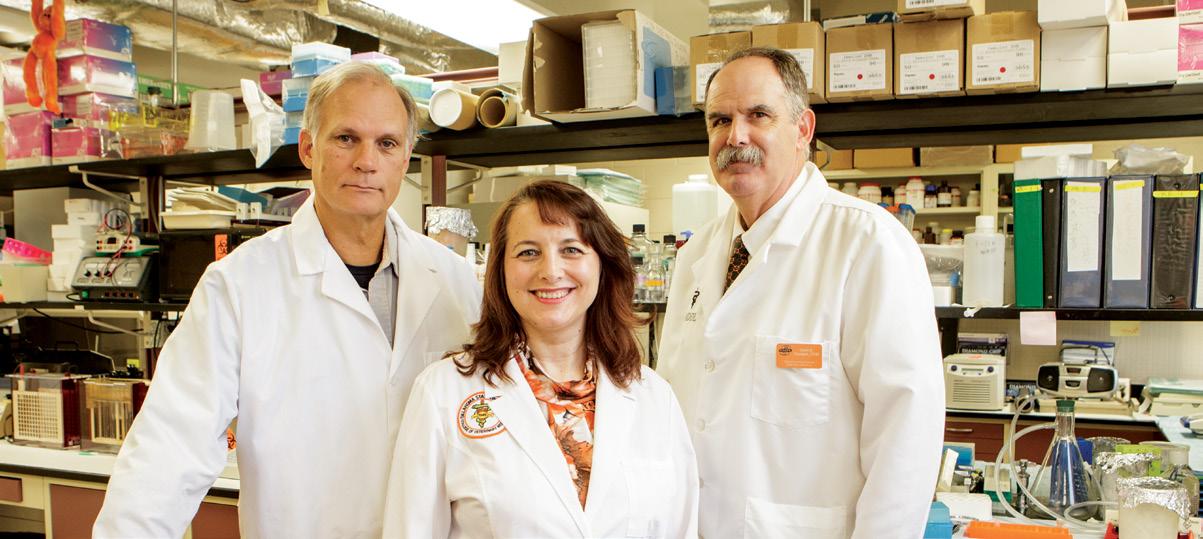
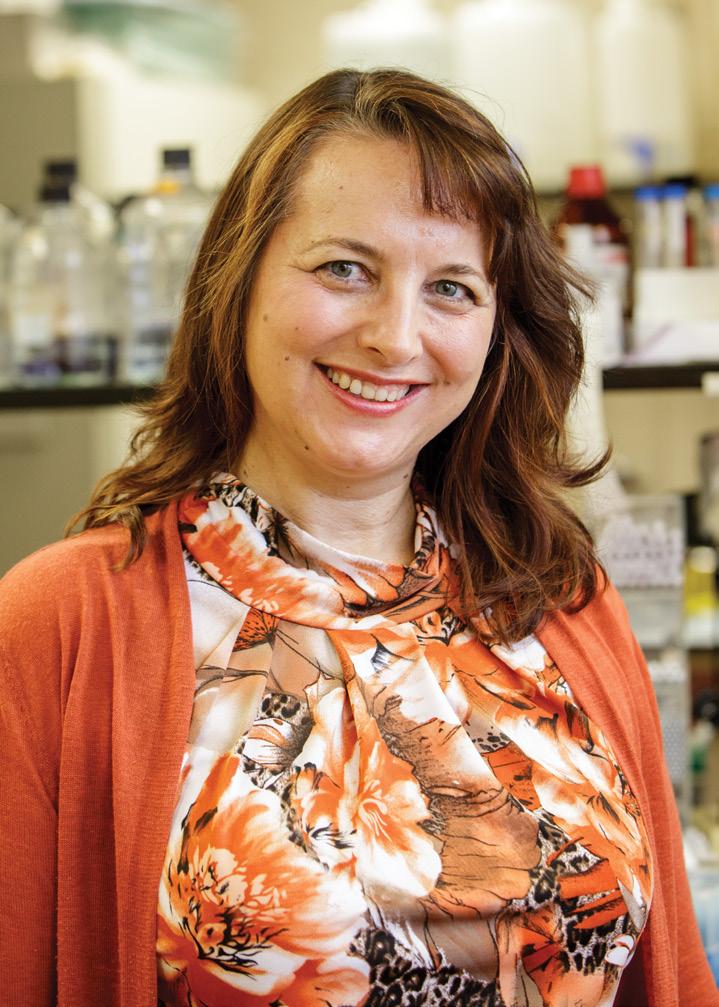
Three of the main researchers involved include RICHARD EBERLE, Ph.D., molecular biology/virology professor in the Department of Veterinary Pathobiology; LARA MAXWELL , DVM, Ph.D., American College of Veterinary Clinical Pharmacology diplomate and professor in the Department of Physiological Sciences; and GRANT REZABEK, MPH, DVM, assistant clinical professor in the Department of Veterinary Pathobiology and veterinary pathologist at the Oklahoma Animal Disease Diagnostic Laboratory.
“I have been very lucky to work with Dr. Eberle and his technician, Darla Black, since coming to Oklahoma State University in 2003,” Maxwell says. “Dr. Eberle is one of the world’s premier researchers in Monkey B virus and in Herpesvirus Papio 2 (HVP-2). HVP-2 affects baboons and Monkey B virus affects macaques.”
While neither virus produces much disease in their host species, they can produce devastating neurological disease and death in the majority of people they infect.
“B virus is very closely related to herpes simplex virus (HSV) that people have,” Eberle says. “In monkeys, it’s just like HSV in humans; they get oral and genital lesions. But when (Monkey B virus) is transmitted to humans, it’s about 80 percent lethal. Because Monkey B virus is so dangerous, it is the primary zoonotic concern for people working with macaques, which are a really essential animal model for biomedical research like AIDS research.”
“So we are interested in preventing these devastating consequences of infection in people by figuring out which antiviral drugs will best protect people from developing disease if they are exposed to Monkey B virus or HVP-2,” Maxwell says. “Although HVP-2 has not been shown to be pathogenic to people, it is being used as a model for Monkey B virus because Monkey B virus is so dangerous to work with. Our research has shown that HVP-2 does parallel Monkey B virus in its drug sensitivity.

“We are exploring the use of different antiviral drugs in mice, either administering them systemically, throughout the whole body, or topically to the site of infection because, of course, we can’t actually study this in people,” she adds. “People are very rarely bitten by macaques and so are rarely affected by this disease. However, the disease has been documented and when it occurs, the effects are so devastating that we would really like to be able to offer better protection for these people.”
The major documented cause of zoonotic B virus transmission is via monkey bites or scratches to animal care personnel. However, other inadvertent modes of infection including needle stick injuries could occur in research personnel.
“THE ONE THING THAT I WANT PEOPLE TO KNOW IS THAT WHEN I WAS A VETERINARY STUDENT, I WAS TOLD THAT IF YOU WERE EVER INFECTED WITH MONKEY B VIRUS FROM AN ANIMAL THAT YOU ARE WORKING WITH IN A ZOO OR IN SOME TYPE OF PRIMATE RESEARCH COLONY, THAT YOU WERE BASICALLY DEAD. THERE IS NO CURE FOR IT AND NO WAY TO PREVENT THE INFECTION.”
— DR. LARA MAXWELL

“The one thing that I want people to know is that when I was a veterinary student, I was told that if you were ever infected with Monkey B virus from an animal that you are working with in a zoo or in some type of primate research colony, that you were basically dead. There is no cure for it and no way to prevent the infection,” Maxwell says. “Based on our research in mice, we think we really could prevent people from developing the severe systemic illness and neurological disease that occurs with Monkey B virus infection. We think that prophylaxis is possible and doable and could be more effective than current CDC guidelines, which would be very important for those who are potentially exposed to Monkey B virus.”
The team’s research has shown that administering drugs such as ganciclovir and cidofovir early in the course of the disease can protect mice. Some preliminary evidence suggests that these drugs can be very effective when administered topically on a bite wound, which would be much less invasive for the patient.
“Cidofovir, which hasn’t previously been used to treat Monkey B virus, seems to be much more effective than ganciclovir,” Eberle says. “You can use it at a much lower concentration. But still, once the virus is in the nervous system, cidofovir doesn’t work.”
“Our idea is that ultimately in any place where monkeys are housed, a treatment pack would be available,” Maxwell says. “Anyone who is scratched or bitten could immediately apply this topical antiviral to the skin. This would prevent the infection from ever getting established. If the infection does become established, systemic antiviral drugs are still recommended but at that point, they are far less successful. Even if people survive the infection, they are likely to have lasting neurological damage.”
Eberle, Maxwell and Melanie Breshears, DVM, Ph.D. and an American College of Veterinary Pathologists (DACVP) diplomate, recently received a National Institutes of Health grant that will allow the team to work full time on this project.
“We’ll finish the trials with cidofovir,” Eberle says. “There are a lot of different macaque species. They all have their own version of B virus. So will cidofovir or ganciclovir protect against all these different variants of B virus? Will it protect against extremely high doses of virus? How long after infection can you wait before starting the drug? We’ll want to look at combinations of drugs as well as other experimental drugs to see if maybe that will help with infections once the virus is in the nervous system.”
“It’s a very rare illness and thus, understudied,” Maxwell adds. “Those people who are impacted are often those who are trying to help human health in other ways, such as in primate research or people who are trying to maintain the animals at zoos. I think those people deserve the highest level of protection that we can provide.”
Maxwell is also involved with a multidisciplinary team that is studying the mitigation and prevention of equine herpesvirus myeloencephalopathy in horses.
“It’s a disease that’s become increasingly important to the equine industry due to outbreaks that result in quarantines, closures of race tracks and horse shows, as well as individual horses that are affected,” she says. “Since the disease can be so devastating, it can result either in death or in damage to the career of a show horse or race horse.”
“The principal herpesvirus of concern is Equine Herpesvirus type 1 or EHV-1,” Rezabek says. “This is an endemic virus in the United States. It affects all kinds of horses in all regions. It’s been present a long time. The majority of the horses infected with EHV-1 develop an acute respiratory disease. A moderate number also suffer abortions. A small subset, however, develop a neurologic disease that’s typified by hind limb ataxia, urinary incontinence and some other neurologic signs.
“Certainly the disease has been around for a long time,” he continues. “However, more recently in 2003, there was an outbreak in Ohio that had a high infection rate. That was followed by an outbreak in some show horses in Florida in the winter of 2006 where a large number of horses developed neurologic signs when acutely infected with herpes virus.”
There have been other western horse show outbreaks of this disease culminating in an outbreak in Ogden, Utah, in May 2011.
“It was a cutting show,” Rezabek says. “There were 421 primary horses that were exposed at that Ogden show and subsequent to that when they all went home, there were 1,685 secondary and tertiary exposed horses. The economic impact of that disease outbreak was significant on the industry because a lot of shows had to be canceled.”
These disease outbreaks have continued intermittently at racetracks, horse shows and training centers throughout the nation; the most recent outbreak was in Sunland Park, a racetrack in New Mexico.
“That outbreak started in January 2016 and was declared clear March 9,” Rezabek says. “There were 79 infected horses and six fatalities. The economic impact of that Sunland Park outbreak on racing in the state of New Mexico was estimated at $1.8 million.”
The team, led by Maxwell and including Eberle; Rezabek; Lyndi Gilliam, DVM, Ph.D., American College of Veterinary Internal Medicine (DACVIM) diplomate; Todd Holbrook, DVM, DACVIM, American College of Veterinary Sports Medicine and Rehabilitation diplomate; Dianne McFarlane, DVM, Ph.D., DACVIM; and Tim Snider, DVM, DACVP, Ph.D., is interested in preventing the disease either through vaccination or through the use of antiviral drugs.
“We’ve done a pilot study where vaccination appeared to be protective and presented on that,” Maxwell says. “Some of the drugs we’ve investigated have been valacyclovir and ganciclovir. What we found with those drugs is that if we are able to administer the drugs very early in the course of disease, either before or immediately after infection, then we are able to prevent the disease with the oral drug valacyclovir. This is a more convenient drug that veterinarians can issue a prescription for and owners are able to get it from a pharmacy. If treatment didn’t occur until late in the course of the disease, then ganciclovir worked better.
“So we have reason to think that both vaccination and the use of antiviral drugs can be protective for horses,” she concludes. “We think this approach can be helpful for the industry either in protecting individual horses at the time of outbreaks or in providing additional protection in horses that are already showing signs of equine herpesvirus myeloencephalopathy. An outcome that has already been realized due to this research is increasing use of valacyclovir in horses with exposure to EHV-1 during an outbreak. All of these measures together, we think, can mitigate the disease and prevent as many horses as possible from developing the most destructive effects of this virus.”

For more information on research being conducted at OSU’s Center for Veterinary Health Sciences, visit cvhs.okstate.edu/Research
To watch a video on OSU’s research, visit okla.st/2fNmSAc
The flu is among the Centers for Disease Control’s top 10 causes of human deaths. Oklahoma State University is working to make the virus far less lethal.
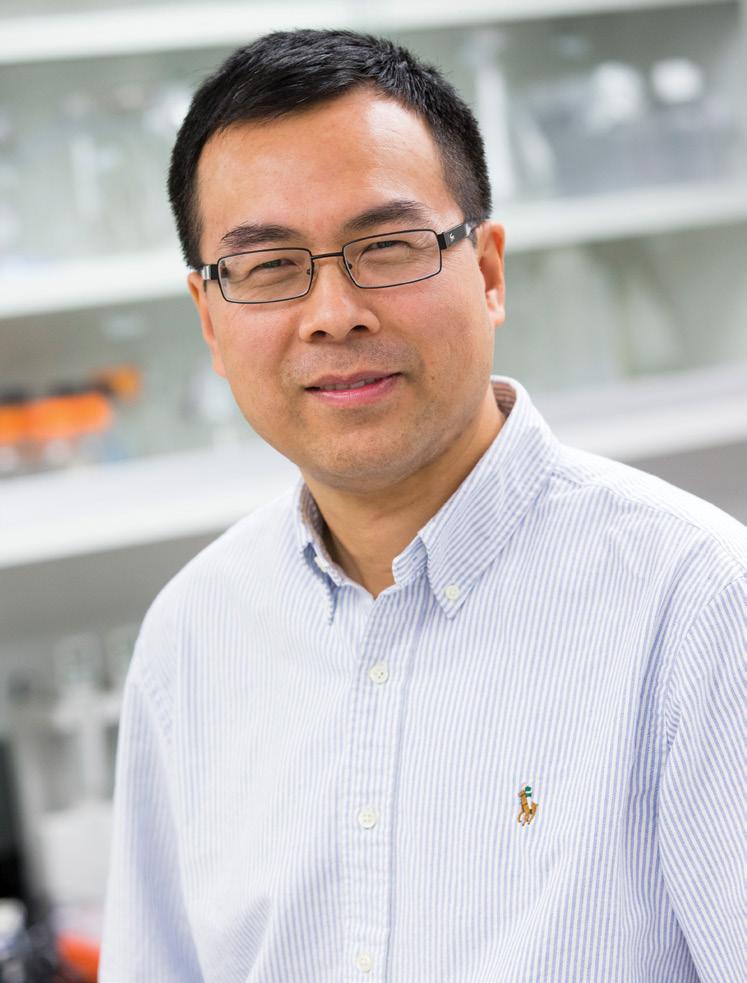
At OSU’s Center for Veterinary Health Sciences, Shitao Li, Ph.D., is conducting biomedical research to develop new antiviral drugs to combat the flu virus.
“The flu virus is a highly transmissible pathogen that can cause epidemics and sometimes pandemics like the swine flu in 2009,” says Li, an assistant professor in the Department of Physiological Sciences and investigator with the Oklahoma Center for Respiratory and Infectious Diseases. “The virus is also zoonotic, which means it infects not only humans but animals as well, such as poultry, pigs, horses, etc. So this study will benefit human health as well as have a great impact on agriculture.”
Li joined OSU in 2015. During his first year, he made great progress in establishing his laboratory and moving forward with his research. His team includes Lingyan Wang, Ph.D., postdoctoral candidate, and Girish Patil, a first-year graduate student.
“Currently we are working on the interaction between the flu virus and the host defense,” Li adds. “Specifically, we are studying the protein interactions between the host and the virus. We found that more than 300 host factors actually interact with the flu virus. So now we are focusing on one protein named PKP2. PKP2 is known as a cell junction protein, and now we find it is also an antiviral protein.”
Oklahoma State University’s Dr. Shitao Li has received $813,438 as a co-investigator on a National Institutes of Health Research Project (R01) grant.
Li’s project is entitled, “Interferon-induced IFITM recruitment of ZMPSTE24 blocks viral endocytic entry.” Since virus entry is the first step of infection, impeding viruses at the entry point is important to help defend against their spread. Li’s proposal presents the discovery of a broad-spectrum antiviral protein that blocks virus entry.
Li, who holds a doctorate in developmental biology from China’s Wuhan University, is an assistant professor in the Department of Physiological Sciences and an investigator with the Oklahoma Center for Respiratory and Infectious Diseases.
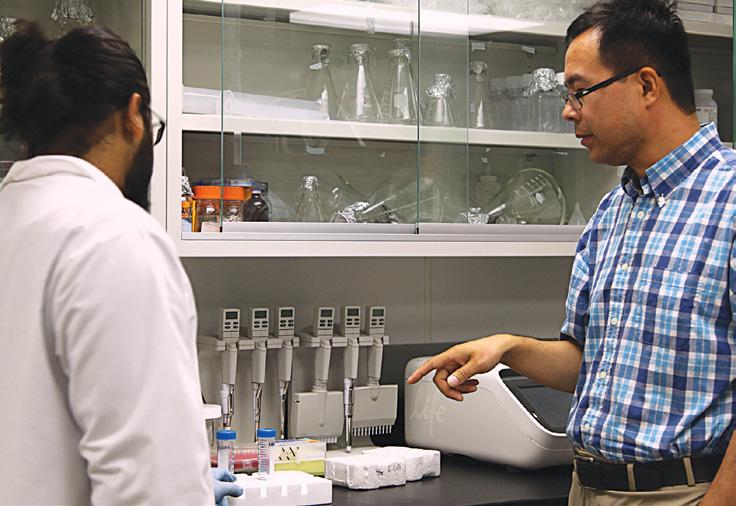
Dr. Shitao Li and graduate student Girish Patil discuss OSU’s biomedical research.
“THIS STUDY WILL BENEFIT HUMAN HEALTH AS WELL AS HAVE A GREAT IMPACT ON AGRICULTURE.”
"THIS STUDY WILL BENEFIT HUMAN HEALTH AS WELL AS HAVE A GREAT IMPACT ON AGRICULTURE."
— SHITAO LI, PH.D.
Li’s team found that this protein restricts the virus by inhibiting the viral polymerase activity.
“In other words, PKP2 impedes viral replication and prevents the virus from spreading. Interestingly, PKP2 has a peptide which mimics one viral polymerase subunit, PB2,” he says. “This p eptide competes with PB2 for binding to other viral polymerase subunits, thereby disrupting the viral replication machinery. Now we are examining the antiviral efficacy of this peptide in human cells and mice.”
Li’s project is still far from clinical studies, but the preliminary results are promising.
“Before we test the peptide in mice, we will examine the effects of the peptide on viral infection in the tissue culture that includes human cells and mouse cells,” he says. “Currently, we are testing only one peptide and may modify this peptide in the future.
“With so many people affected by the flu virus, the most important thing in my lab is to discover new host defenses to the virus infection,” says Li. “We are grateful to the Centers of Biomedical Research Excellence program under Dr. Lin Liu. The challenge for research is finding the funding, which a CoBRE grant has provided.
The program includes funding and administrative support as well. I have two mentors in Drs. Liu and Clint Jones. As a junior faculty member, I appreciate their guidance on writing proposals, how to recruit students and how to train them. I really appreciate their help and support.”
Originally from China, Li earned his Ph.D. from Wuhan University in 2000. He plans to submit more proposals to continue funding his research.
DERINDA BLAKENEY, APR
For more information on OSU’s biomedical research, visit www.cvhs.okstate.edu/research
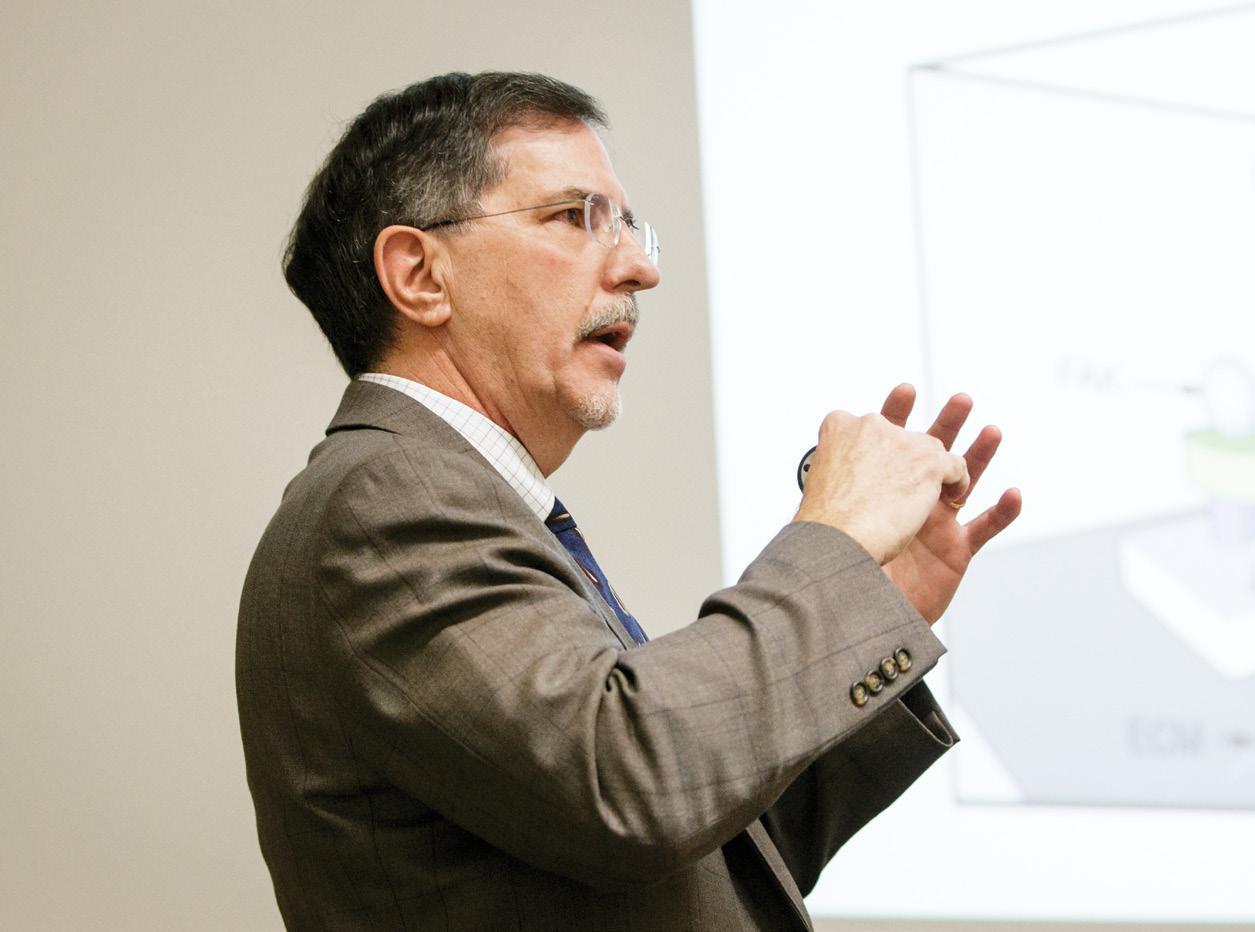
They come from different educational backgrounds and represent different levels of expertise with one goal in common: making the world a safer place for people, animals and the environment. Meet the participants in the 2016 Interdisciplinary Toxicology Symposium, hosted by Drs. Carey Pope, Loren Smith and Dave Wallace.
OSU’s Interdisciplinary Toxicology Program was developed to bring together experts from agriculture, engineering, human and veterinary medicine, forensic science, and toxicology to address complex issues related to chemical toxicity. This symposium provides a forum to share valuable research to better understand how chemicals interact with people, animals and the environment.
Molly E. McCue, DVM, MS, Ph.D., DACVIM, an associate professor of veterinary population medicine at the University of Minnesota College of Veterinary Medicine, spoke at the first Distinguished Equine Research Scientist Lecture in March at Oklahoma State University.
McCue’s presentation focused on the role of genetics and environmental exposure in equine metabolic syndrome.
In her research, McCue views equine metabolic syndrome as a clustering of clinical signs. EMS predisposes horses toward certain risks, including laminitis. Laminitis is an inflammation of the lamina, which holds the hoof wall to
the bones of the hoof. It is very painful and usually worse in the front hooves than in the hind ones. Laminitis often causes horses to lose their athletic ability, she says, and can lead to the horses being euthanized.
Her work is potentially a model for human metabolic syndrome, which often leads to an increased risk of cardiovascular disease in patients.
The lecture was sponsored by the Ricks Rapp Endowed Chair in Equine Musculoskeletal Research, the June Jacobs Endowed Chair in Equine Medicine and the Veterinary Biomedical Sciences Graduate Program.
Cl/HS
Seven graduate fellows presented summaries of their research:
TIM ANDERSON, zoology master’s student, the interaction between anticholinesterases and endocannabinoid signaling in toads.
CHRIS GOODCHILD, zoology doctoral student, how contaminants can affect energy production, regulation and investment, using a zebra finch model.
SARAH HILEMAN, master’s student in zoology, atmospheric deposition of polycyclic aromatic hydrocarbons into soil from rooftop runoff and rainwater harvesting systems.
WILLIAM MIMBS, doctoral student in zoology, the toxicokinetics of pesticides in mixtures with dermal exposure in amphibians.
SHANE MORRISON, zoology doctoral student, measuring pulsed pesticide exposures in aquatic environments.
KIRSTIN POINDEXTER, doctoral student in physiological sciences, the biochemical properties of a proteinnanoparticle complex that may protect against nerve agent intoxication.
ADAM SIMPSON, zoology doctoral student, biochemical mechanisms of insecticide resistance in resurrected Daphnia or water fleas.
Three outside experts shared their research, including one who presented the 16th Annual Sitlington Lecture in Toxicology:
AYUSMAN SEN, Ph.D., presented “Self-Powered Enzyme Pumps for Detecting and Reacting with Specific Toxicants.” His research studies how chemicals react with a toxicant causing the molecules to turn over. This creates the energy to pump or remove harmful chemical agents and pathogens from our body. Sen is a chemist and a Distinguished Professor of Chemistry at Pennsylvania State University. He is also a fellow of both the American Association for the Advancement of Science and the Royal Society of Chemistry.
GEORGE COBB, Ph.D., presented “Chemicals of Emerging Concern.” He talked about a variety of toxic sources and the challenges with assessing risk. This includes looking at chemicals that are aging as well as new toxicants that we are just starting to see the effects of on people, animals and the environment. Cobb is a professor and chair of the Department of Environmental Science at Baylor University. He is also a fellow of the American Chemical Society.
PETER GOERING, Ph.D., presented the 16th Annual Sitlington Lecture in Toxicology entitled, “Effects of Immobilized Surface Nanostructures on Tissue-Material Interactions.” Goering is the deputy director of the Division of Biology, Chemistry and Materials Science at the Centers for Devices and Radiological Health with the U.S. Food and Drug Administration. His team is responsible for verifying that approved medical devices (implants, dialysis units, wheelchairs, etc.) interact well with various nanomaterials to avoid harming patients. Goering is a diplomate of the American Board of Toxicology, a fellow and past president of the Academy of Toxicological Scientists, and president of the Society of Toxicology, the largest scientific organization of toxicologists in the world.
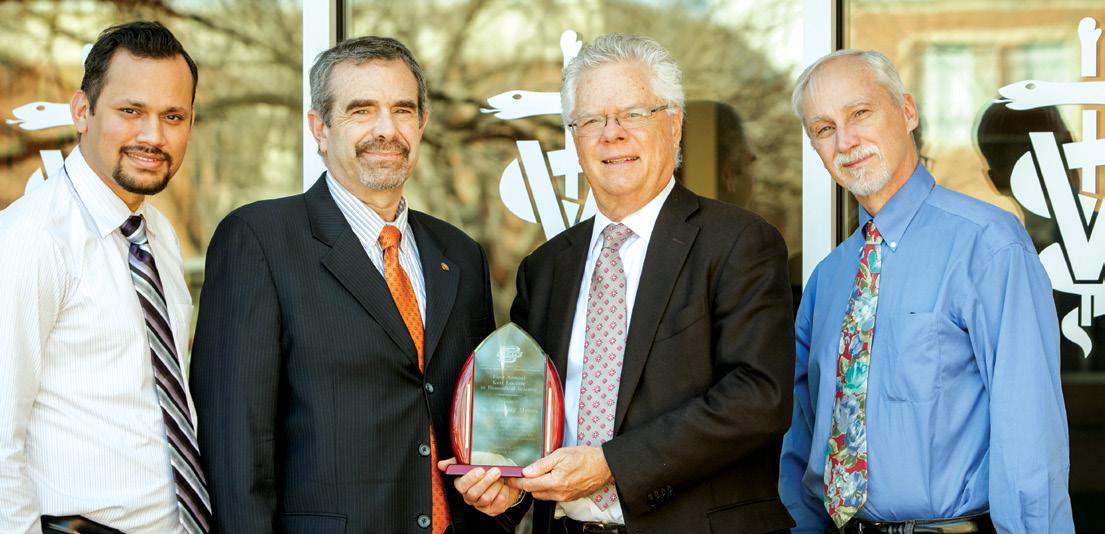
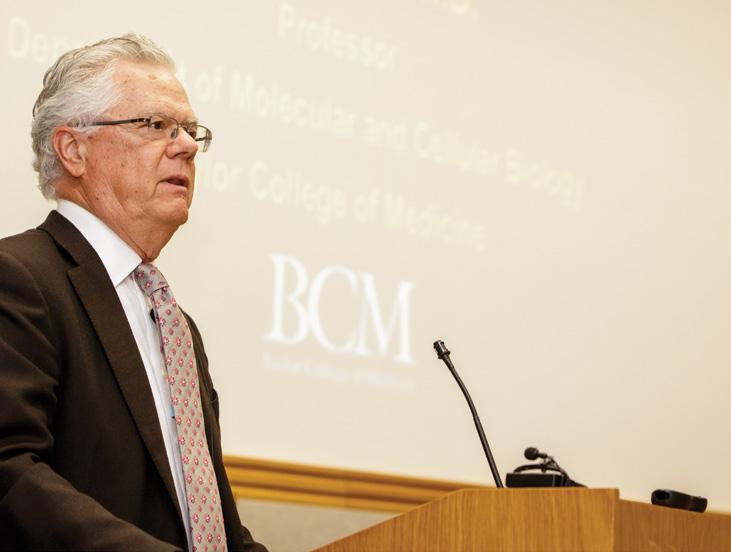
Anthony Means, Ph.D., professor in the Department of Molecular and Cellular Biology at the Baylor University College of Medicine, presented the first Kerr Lecture in Biomedical Science in 2016 on “CaMKK2 as an Integral Mediator of inflammatory Disorders.”
Means focused on calmodulin and calmodulin kinase-regulated processes. Calmodulin is a calcium-binding protein, for which a 3D structure is known that is present in all eukaryotic cells and implicated in virtually every biological process. Calmodulin binds to and regulates the activity of almost 120 cellular proteins. Among these proteins is a family of protein kinases (CaM kinases) including those that comprise a CaM kinase cascade. Means focused his talk on the most proximal of the cascade proteins, CaMKK2 (calmodulin-dependent kinase kinase 2). CaMKK2 is involved in regulating several physiological functions in a number of different tissues including brain, fat, liver, pancreas and the cardiovascular system to name a few.
Through his research, Means has discovered that having less CaMKK2 helps protect against high fat diet-induced fatty liver, acute liver failure, and liver cancer. Outcomes research data shows that people with lower levels of CaMKK2 have a considerably better chance of surviving
liver cancer than do those with higher levels of this enzyme. Means opined that drugs designed to inhibit CaMKK2 could b e beneficial in treating patients with heaptocellular carcinoma (HCC), for which no effective treatment now exists.
Means earned his bachelor’s and master’s degrees from Oklahoma State University and his doctorate from the University of Texas. He is a fellow of the American Academy of Arts
and Sciences, the European Academy of Science and the American Association for the Advancement of Science.
The Kerr Lecture in Biomedical Science was co-hosted by Jerry Malayer, MS, Ph.D., associate dean for research and graduate education, and Ashish Ranjan, BVSc, Ph.D., associate professor and Kerr Foundation Endowed Chair in the Department of Physiological Sciences.
Above: Drs. Ashish Ranjan (from left), Kerr Foundation Endowed Chair; Jerry Malayer, associate dean for research and graduate education; Anthony Means Kerr Biomedical Sciences lecturer; and Martin Furr, Physiological Sciences department head.
Left: Dr. Anthony Means delivers the first Kerr Lecture in Biomedical Sciences.
PHOTOGRAPHY BY
PHIL SHOCKLEY / UNIVERSITY MARKETING
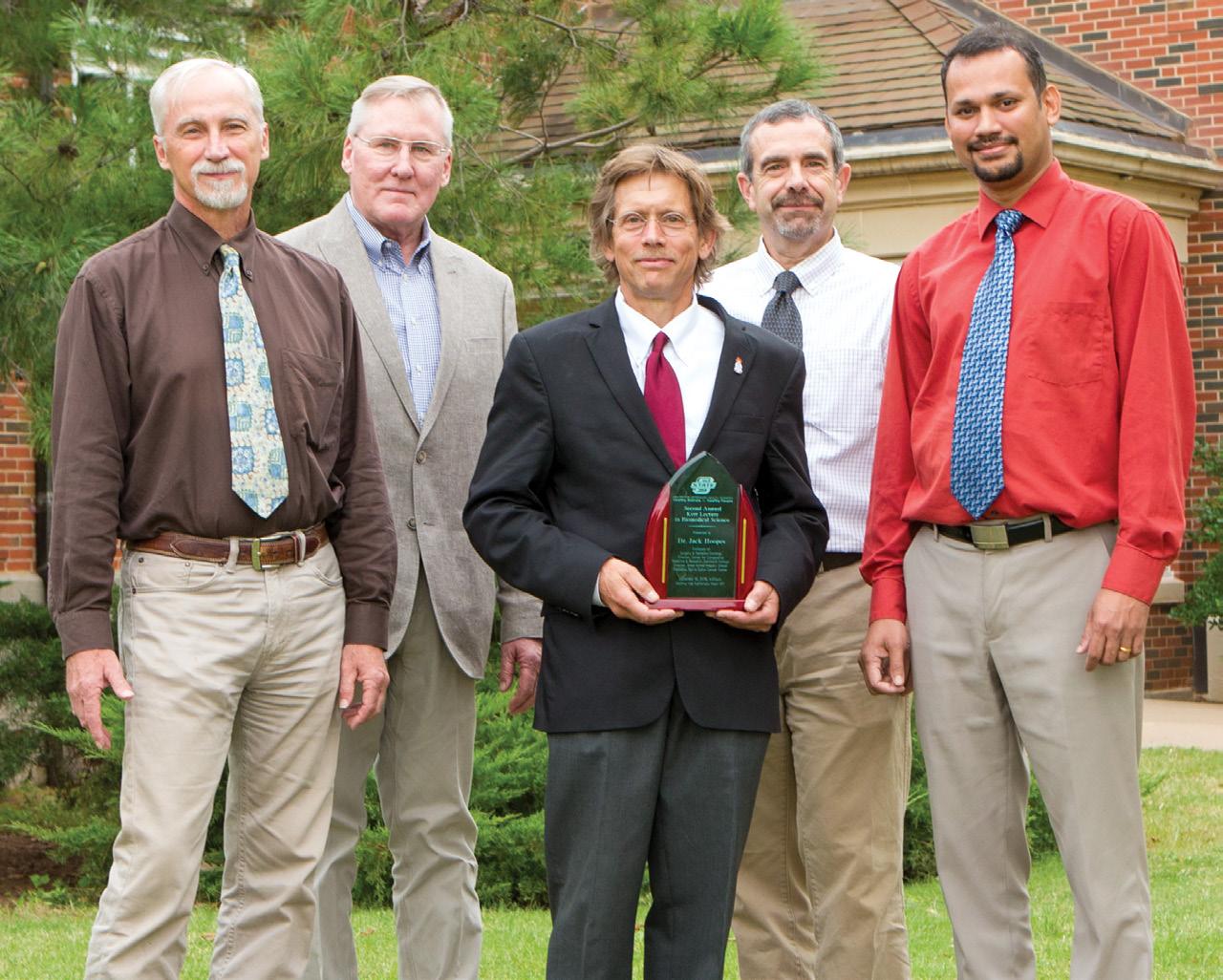
The second Kerr Lecture in Biomedical Science focused on “The Future of Radiation Therapy: Altered Fractionation, Nanotechnology and Immunotherapy.” For the last 25 years, speaker P. Jack Hoopes (OSU Vet Med ’76) has been studying how radiation can work with other therapeutics to improve cancer treatment for humans and animals.
In his federally funded research, Hoopes uses spontaneous oral canine melanoma in pet dogs that are referred by private veterinary practitioners as a model for human melanoma. Growing canine melanoma cells in transgenic mice has extended his research opportunity.
His experimental treatments involve combining magnetic nanoparticle hyperthermia with an immunogenic virus and fewer but larger radiation doses. This technique has a greater effect on the primary tumor and creates an effective systemic anti-cancer response. Hoopes believes combining targeted heat with the immunogenic virus and larger radiation doses kills tumor cells in a manner that effectively stimulates the anti-cancer immune response. Earlier studies suggest that targeting the magnetic nanoparticles, with highly specific tumor antibodies, is capable of effectively treating some tumors without radiation. He believes this type of cancer targeting, which is currently being pioneered in a number of clinical cancer trials, will ultimately make a tremendous difference in cancer therapy.
research and graduate education; and Ashish Ranjan
Foundation Endowed Chair, Department of Physiological Sciences.
Although Hoopes received all of his postgraduate education and training at veterinary institutions — OSU, Colorado State University and North Carolina State University — he has spent virtually all of his professional career at a medical school and an associated clinical cancer center. Still, Hoopes says his DVM degree from OSU has given him a very significant edge in conducting translational research and competing for federal research funding.
Hoopes concluded his remarks saying, “My translational-based research road has been a little different; however, it is one that I think we, as veterinarians, should consider embracing a little more. Veterinarians are uniquely qualified to conduct and assess many types of biomedical research, and it is regularly demonstrated that such expertise expedites and improves the development of new mechanisms and therapies.”
He is a professor of surgery and radiation oncology and the director of the Center for Comparative Medicine and the Surgery and Radiation Research Laboratories at Dartmouth’s Geisel School of Medicine. He is also the director of the Imaging and Radiation Resource at Dartmouth’s Norris Cotton Cancer Center and an adjunct professor of engineering at Dartmouth’s Thayer School of Engineering.
The Kerr Lecture in Biomedical Sciences was sponsored by the Center for Veterinary Health Sciences and Ashish Ranjan, BVSc, Ph.D., Kerr Foundation Endowed Chair and associate professor in the Department of Physiological Sciences.
“IF WE CAN DETERMINE WHAT TRIGGERS THESE TUMORS IN ANIMALS, THAT INFORMATION IS TRANSFERABLE TO HUMANS.”
"IF WE CAN DETERMINE Wr.11\li TRIGGERS ifHESE TUMORS IN AN I MAL S, TH ,6;if I N F.0 RM AT ION IS iliRANSF.ERABLE iliO f;lU~ANS."
— DR. RODNEY PAGE
LECTURESHIP PRESENTS EXPERT IN WAR ON CANCER
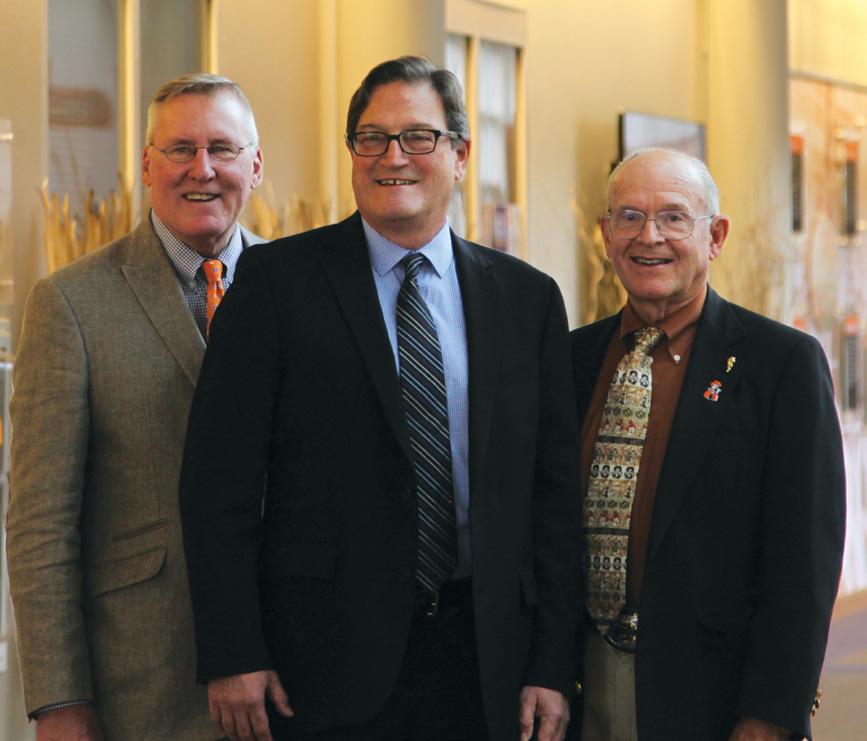
Dr. Rodney Page, an oncology expert from Colorado State University’s Flint Animal Cancer Center, presented “One Health War on Cancer” as the 2016 Class of 1963 Distinguished Lecturer. Page shared the amazing research he has spearheaded with the Morris Animal Foundation. He is the principal investigator on the Golden Retriever Lifetime Study, which involves 3,000 dogs.
“America has been trying to cure cancer for decades,” Page says. “Veterinarians have long embraced the ‘one health’ concept. This study focuses on comparative oncology. Dogs get cancer like humans do. We are looking at aging, the environment and cancer susceptibility in a naturally relevant patient population with semi-uniform genetics as we study these golden retrievers.”
Tumors in animals are just as complex as tumors in humans, Page says.
“If we can determine what triggers these tumors in animals, that information is transferable to humans,” he says.
The study includes about 50 dogs from Oklahoma as well as others from California, Florida and New England. Researchers are looking at several factors including early neuter equating to early disease, the risk of cancer with obesity, exposure to weed control or pest control and more.
“Exp osure to environmental issues in humans takes decades to study,” Page says. “The same issue in dogs takes only years, which means treatment will be available sooner.”
Page says the results of the Golden Retriever Lifetime Study will be made available to other researchers, including what worked and what didn’t work in trying to prevent cancer.
Page earned his DVM degree from Colorado State University and completed specialty training in medical oncology in New York City. He was a faculty member at North Carolina State University and Cornell University, where he participated in nationally funded translational cancer research. He returned to Colorado as the director of the Flint Animal Cancer Center in 2010 and was recently conferred the Stephen J. Withrow Presidential Chair in Oncology.
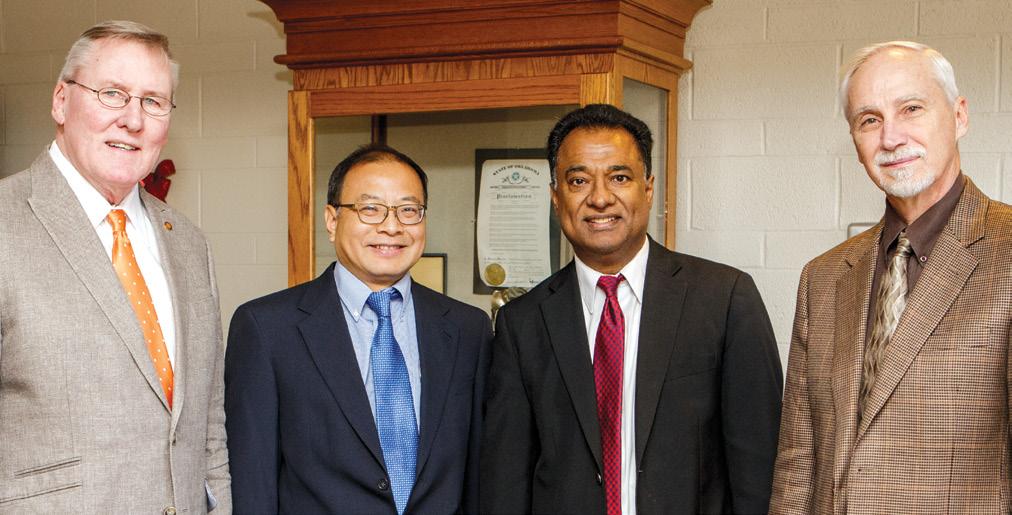
Victor Thannickal, M.D., presented “Predisposition of the Aging Lung to Fibrosis” to faculty, staff and graduate students at the Center for Veterinary Health Sciences on Nov. 30 at the eighth annual Lundb erg-Kienlen Lecture. Funded by the National Institutes of Health and the U.S. Department of Veterans Affairs, Thannickal’s research focuses on cellular and molecular mechanisms of lung repair and regeneration.
“The adult lung is very complex, making cellular homeostasis in the adult lung very important,” Thannickal says. “As our population ages and more people live longer, we will see an increase in the incidents of COPD, pneumonia and idiopathic pulmonary fibrosis (IPF).
“Fibrosis occurs in the context of failed tissue regeneration and aging is a risk factor for fibrosis,” he continues. “I think it is imp ortant to start at the bedside, bring it to the bench and research it, and then take it back to the bedside. Linking the biology of aging with chronic disease, called ‘geroscience,’ may offer novel therapeutic strategies for age-related diseases such as IPF.”
Thannickal is a professor of medicine and pathology and the director of the Division of Pulmonary, Allergy and Critical Care Medicine at the University of Alabama at Birmingham. He is an elected
member of the American Association of Physicians and the recipient of the American Thoracic Society Recognition Award for Scientific Accomplishments in 2016.
The Lundberg-Kienlen Lecture in Biomedical Sciences was co-sponsored by the Lundb erg-Kienlen endowment and the Oklahoma Center for Respiratory and Infectious Diseases. OCRID director and host of the lecture, Lin Liu, Ph.D., holds the Lundberg-Kienlen Endowed Chair in Biomedical Research and is a Regents Professor in the Department of Physiological Sciences.
LINKING THE BIOLOGY OF AGING WITH CHRONIC DISEASE … MAY OFFER NOVEL THERAPEUTIC STRATEGIES FOR AGE-RELATED DISEASES ….”
LINKING THE BIOLOGY OF AGING WITH CHRONIC DISEASE MAY OFFER NOVEL THERAPEUTIC STRATEGIES FOR AGE-RELATED DISEASES ...."
— VICTOR THANNICKAL, M.D.
the eighth annual Lundberg-Kienlen
Lundberg-Kienlen
were
Biomedical
of Physiological Sciences.
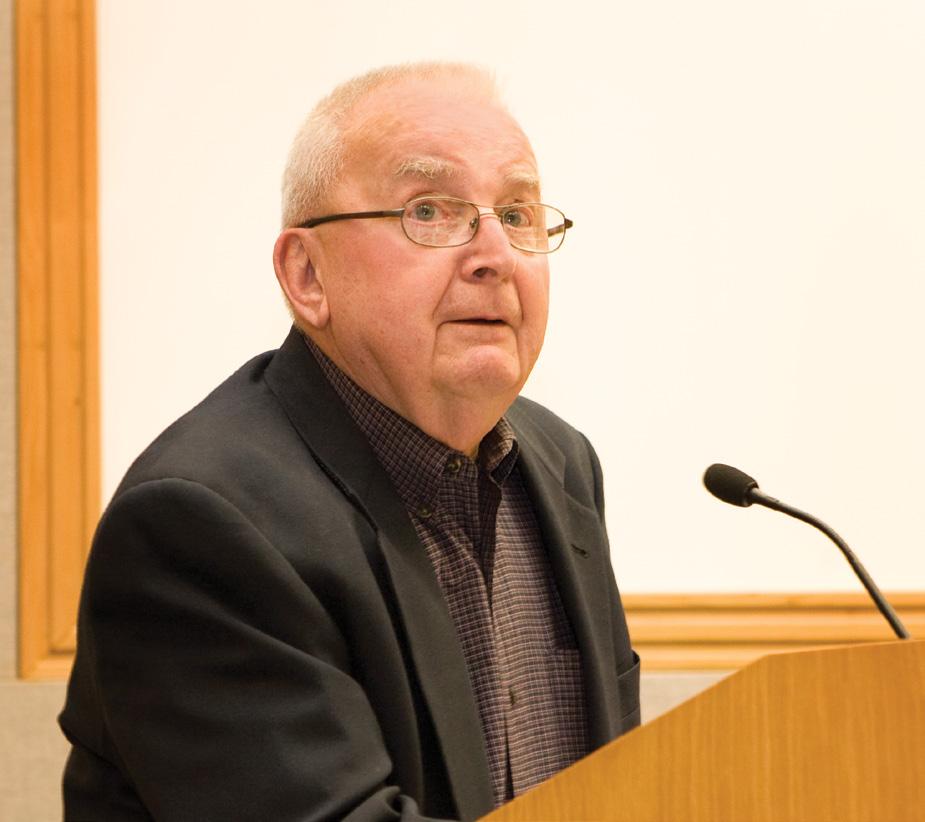
“WHAT IS TRULY REMARKABLE … IS DR. ROGER PANCIERA’S (LEFT) IMPACT ON GENERATIONS OF PRACTICING VETERINARIANS AND THE INSPIRATION HE HAS PROVIDED TO HUNDREDS OF VETERINARY PATHOLOGISTS.”
"WHAT IS TRULY REMARKABLE ... IS DR. ROGER PANCIERA'S (LEFT) IMPACT ON GENERATIONS OF PRACTICING VETERINARIANS AND THE INSPIRATION HE HAS PROVIDED TO HUNDREDS OF VETERINARY PATHOLOGISTS."
— DR. JERRY RITCHEY
ROGER PANCIERA, DVM, MS, Ph.D., DACVP, has been inducted as the 2016 Beef Award Recipient into the Cattle Production Veterinarian Hall of Fame by the American Association of Bovine Practitioners.
Professor Emeritus at Oklahoma State University Center for Veterinary Health Sciences, Panciera earned his DVM degree from OSU in 1953. After earning a master’s degree and a doctorate from Cornell University, he returned to OSU, where he has influenced generations of students, residents, practitioners and pathologists. He has provided both scientific contributions and education to veterinarians and producers on beef cattle production and disease control.
ROBERT FULTON, DVM, Ph.D., DACVM, Emeritus Regents Professor and McCasland Foundation Endowed Chair for Food Animal Research in the Department of Veterinary Pathobiology at OSU’s Center for Veterinary Health Sciences, has been inducted into the Oklahoma Higher Education Hall of Fame for 2016. The honor recognizes outstanding educators.
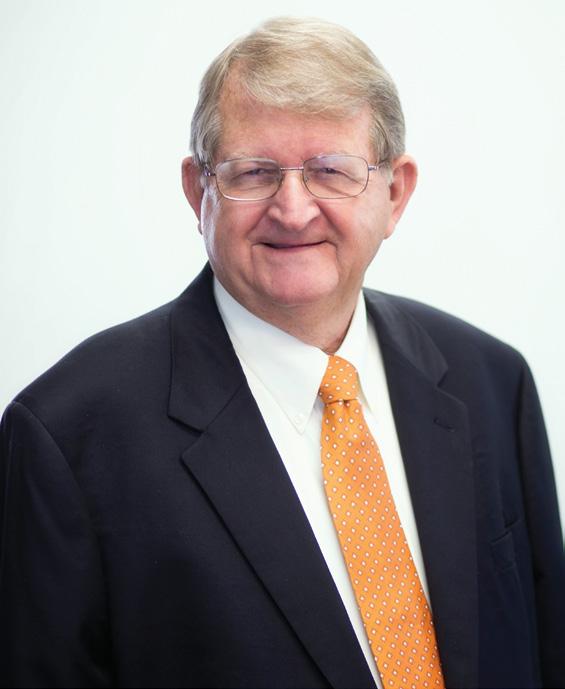
Fulton is known for his research on bovine respiratory disease and making significant advances in bovine viruses and vaccinology. He has been recognized for his work on bovine viral diarrhea viruses, bovine coronaviruses and other respiratory viruses. In 2015, he received the Outstanding Service Award from the Academy of Veterinary Consultants and Merck Animal Health.
Fulton earned his DVM degree from Oklahoma State University in 1966. He was a captain in the Air Force Veterinary Service before earning a master’s degree in veterinary sciences from Washington State University (1972) and a doctorate in microbiology from the University of Missouri-Columbia (1975). In 1976, he became a diplomate in the American College of Veterinary Microbiologists.
“Dr. Panciera has a well-documented list of academic accomplishments related to decades of productivity in research, teaching and diagnostic pathology,” says Jerry Ritchey, DVM, Ph.D., DACVP, head of the veterinary center’s Department of Veterinary Pathobiology. “However, what is truly remarkable and immeasurable is his impact on generations of practicing veterinarians and the inspiration he has provided to hundreds of veterinary pathologists currently working all over the world.”
The hallmark of Panciera’s teaching philosophy was developing thought processes rather than relying on memorization. He is legendary
In 1982, Fulton joined the veterinary center. He retired after 33 years here. He has been named a Distinguished Alumnus of the veterinary center (2006), a Zoetis Research Award winner (2008) and a Regents Distinguished Research Award winner (2010).
More than 200 leaders have been inducted into the Oklahoma Higher Education Hall of Fame since 1994.
on the necropsy floor, working with students and trainees, and squeezing every possible learning opportunity from each necropsy case. There are two important testimonies to Panciera’s distinction as an educator. First, he has b een recognized over the years by students and faculty colleagues as a recipient of numerous teaching awards. Second, he has inspired many others to become educators as well.
Panciera is a founding member of the Academy of Veterinary Consultants (AVC), a member of the Oklahoma Higher Education Hall of Fame, a distinguished member of the American College of Veterinary Pathologists, and a
Distinguished Alumnus of Oklahoma State University. He is a member of the Oklahoma Veterinary Medical Association Hall of Fame and the first recipient of the OSU College of Veterinary Medicine Distinguished Alumnus Award.
The Cattle Production Veterinary Hall of Fame is sponsored by Merck Animal Health, the American Association of Bovine Practitioners, the Academy of Veterinary Consultants, Bovine Veterinary magazine, and Osborn Barr.
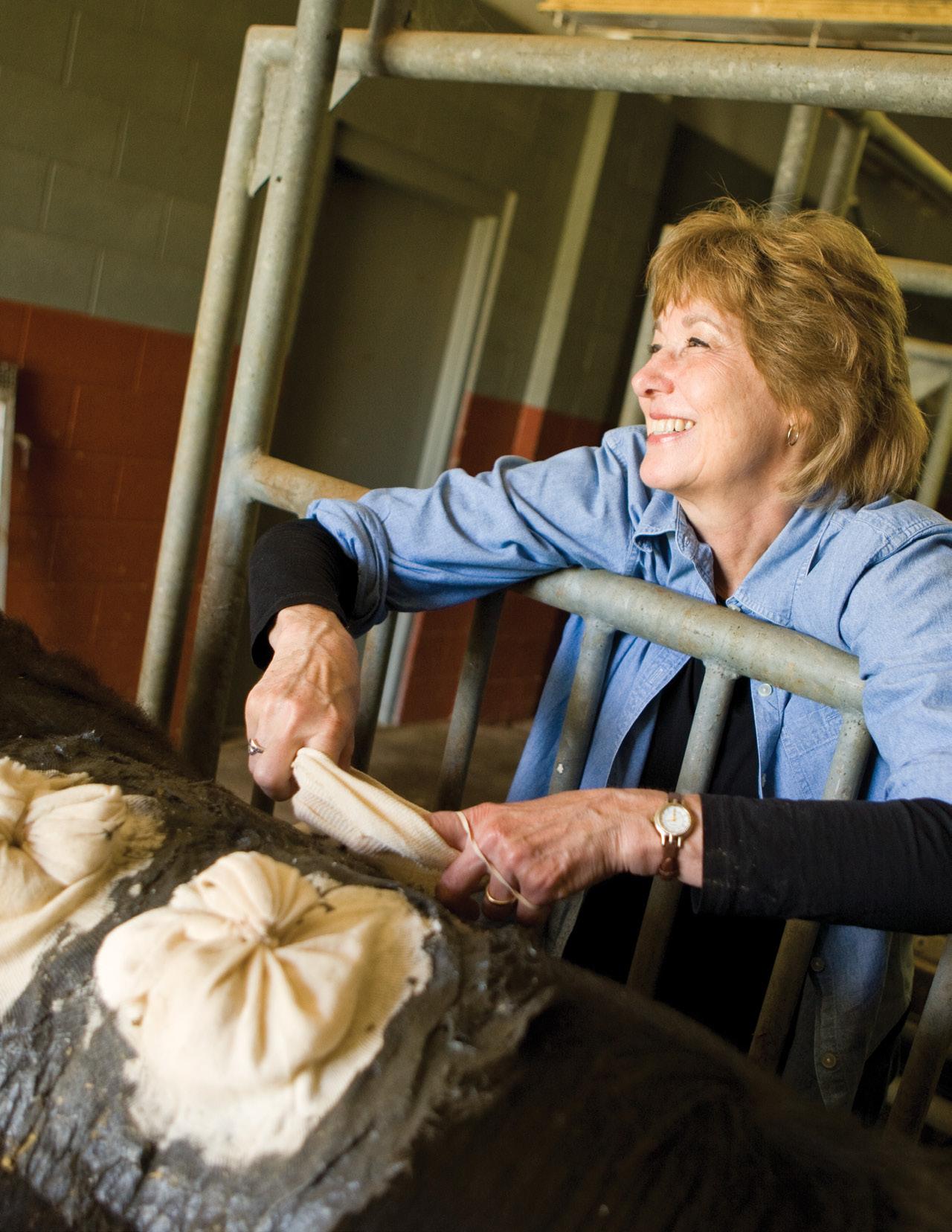
OSU’s Center for Veterinary Health Sciences is fortunate to attract some of the brightest faculty members, their careers often spanning decades. We are bidding farewell to those who have retired this year.
BY DERINDA BLAKENEY, APR
Katherine Kocan, Ph.D., OSU Regents Professor and the Walter R. Sitlington Endowed Chair in Food Animal Research, has retired after 42 years at OSU’s Center for Veterinary Health Sciences. During her career, she and her team brought in more than $6.8 million in research funding that led to many important contributions to the field of ticks and tick-borne pathogens.
Kocan considers her ability to maintain a continuous research program for 42 years by adapting to funding and technology changes her greatest accomplishment. She says maintaining the program was possible thanks to productive
research teams, the most notable consisting of Drs. José de la Fuente, Ed Blouin and herself.
“The economic downturn that occurred in the late 1990s reduced funding opportunities for research on the role of ticks in the transmission of bovine anaplasmosis,” she says. “We adapted and broadened our collaborations and the direction of our research, which allowed us to maintain our research productivity with a total of 328 publications in peer-reviewed journals. We hosted visiting scientists and students from South Africa, Argentina, the Czech Republic, Australia, Israel and Spain.”
The research team’s highlights include:
Identifying Anaplasma marginale in the tick vector, describing the tick development cycle, demonstrating persistent A. marginale infections in ticks and defining the role of male ticks in transmission of A. marginale to cattle.
Defining molecular interactions between ticks and their Anaplasma pathogens.
Developing the first cell culture system for A. marginale, expanding research opportunities on tick-borne pathogens worldwide.
Applying the gene silencing technique RNA interference to the study of gene function in ticks.
Discovering candidate antigens for developing vaccines for control of ticks and tick-borne pathogens, most notably the discovery of the tick protective protein, Subolesin
Developing a sheep model for the study of human granulocytic anaplasmosis.
Kocan has received numerous awards, including being Dedicatee of the 9th Biennial Conference of the Society for Tropical Veterinary Medicine in 2007.
“My favorite memory is the great fun and productivity of our research team,” she says. “We worked hard but also have greatly enjoyed wonderful friendships. Our travels over the years took us to Kenya, South Africa, Israel, Guadalupe, Vietnam, Mexico, Argentina, Brazil, Peru and several European countries. All of these experiences have broadened my perspectives and enriched my life.
“I hope to be remembered for being a good member and team player of the CVHS and for doing good science, promoting the Society for Tropical Veterinary Medicine and for making significant
contributions to graduate education and research on ticks and tick-borne diseases.”
Before Kocan leaves to enjoy “downtime and time with my children and grandchildren along with gardening, wildlife photography, cooking, reading and quilting,” she offers this advice to up-and-coming faculty members:
Dr. Katherine Kocan’s 42 years of work at OSU included many important contributions to the field of ticks and tick-borne pathogens. CONTINUES
“Follow your passions for veterinary medicine teaching and research. Become a participant in the veterinary center and university community. Be a good collaborator with colleagues. I am grateful to have worked with an exceptional group of people. I very much appreciate their many kindnesses, friendship and support. You don’t maintain a research program for 42 years without the support of many colleagues and students.”
After 27 years with the Center for Veterinary Health Sciences, associate professor Jim Lish, Ph.D., is retiring with many fond memories.
“My favorite memories are of the fun I had interacting with the freshmen and the teaching staff in the anatomy lab,” Lish says. “I consider my greatest accomplishment to b e presenting a course that was academically challenging, interesting, valuable and, for most, fun. And I am very proud that over the years the students have rewarded me for my work with many teaching awards — thanks, guys!”
Lish hopes to be remembered for quality teaching that helped students achieve their career goals and improved the lives of animals. He offers this advice to incoming faculty:
“Always be fair and consistent. Treat students like future colleagues. Be a role model for professional behavior and honesty. Stress the basics. And remember, the students are sacrificing and paying considerably for this training. It’s up to you to deliver a quality product worth their money. Or in the words of the country singer Johnny Lee — ‘If you want to make a living, you’ve gotta put on a good show.’”
Besides teaching, Lish is known for his work with birds of prey and his pencil drawings.
“Over the years my work with birds of prey in some of the earth’s wildest places has provided more adrenaline rushes and exciting memories than I could ever count. But nothing has given me more satisfaction or sense of accomplishment than knowing I have help ed some great young people achieve their goals and get where they want to be in life.
“And finally, I would like to give a warm thank you to my wonderful colleagues here in the Center for Veterinary Health Sciences for
all the help, encouragement, great company, interesting conversations, and fond memories.”
Lish has not made any special plans for his retirement and will “just see what life brings,” he says.
Lish earned his bachelor’s, master’s and doctoral degrees at OSU. In 2015, he authored Winter’s Hawk: Red-tails on the Southern Plains. The book has 200 color photographs of hawks taken by Lish a nd details important lessons in southern Great Plains biodiversity, underscoring the place of the redtailed hawk in Oklahoma’s tallgrass prairie ecology.
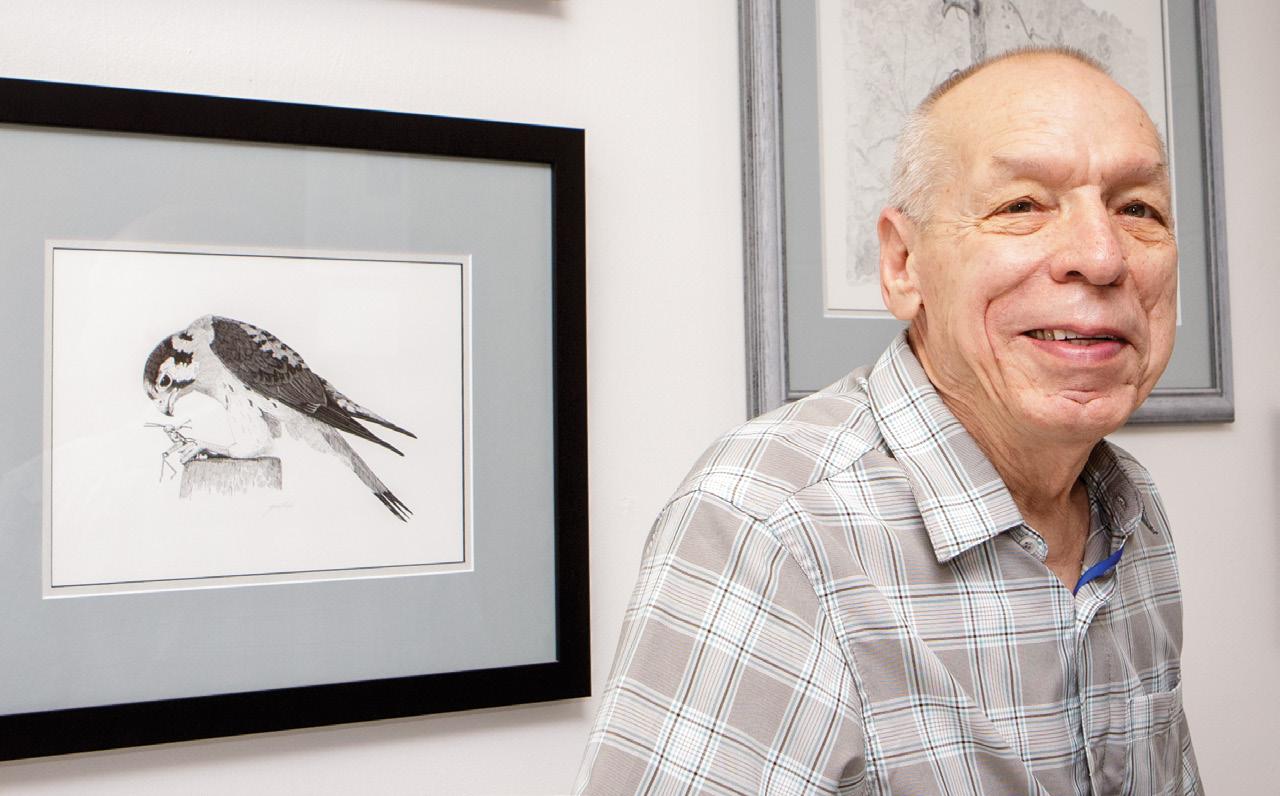
“OVER THE YEARS MY WORK WITH BIRDS OF PREY … HAS PROVIDED MORE ADRENALINE RUSHES AND EXCITING MEMORIES THAN I COULD EVER COUNT.”
"OVER THE YEARS MY WORK WITH BIRDS OF PREY ... HAS PROVIDED MORE ADRENALINE RUSHES AND EXCITING MEMORIES THAN I COULD EVER COUNT."
— JIM LISH
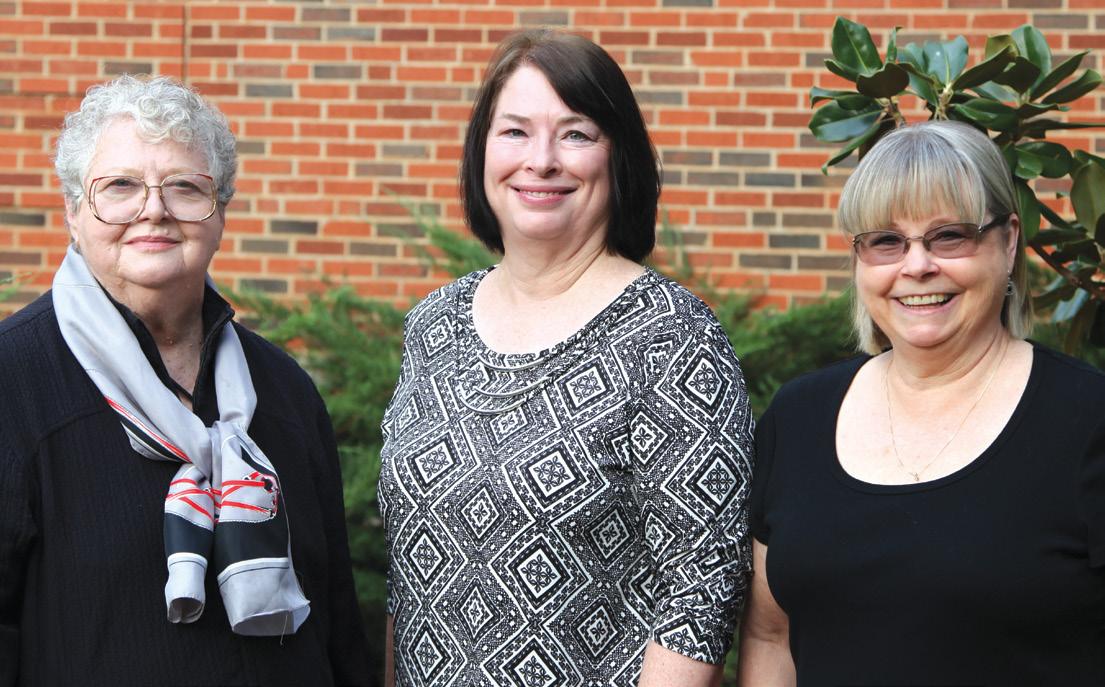
BETTY HANDLIN has served the veterinary center for 18 years as a computer support person in the center’s IT Department. She holds a bachelor’s degree in engineering mathematics (now applied mathematics) from North Carolina State University.
“My favorite memory is observing and learning about a completely different type of science than I had practiced before,” Handlin says.
She hopes to be remembered for the professional work materials she provided for faculty and students. She considers her greatest accomplishment to be creating innovative, professional teaching materials with Drs. Charlotte O wnby, Jim Lish and Michael Lorenz.
“I plan to work only part-time and start on the huge number of projects that I have stacked up,” Handlin adds. “Thank you to so many people who gave me education and encouragement these many years.”
JOAN HUBBARD has been a research grants and contracts specialist at the veterinary center for 27½ years. Her bachelor’s degree in business administration is from OSU.
“The veterinary center has been my home away from home for much of my adult life,” Hubbard says. “I’ve seen many changes in those years. Many work relationships have developed into close friendships. We have worked through problems, shared inside work jokes, told family stories — all of which combine to make my favorite memories.”
Hubbard hopes to be remembered for being a team player, being a conscientious worker, having the ability to get along with just about everyone, and having a bit of a “warped sense of humor.” She lists being selected for the Stratton Staff Award as a professional highlight and having a loving husband, daughter, son and two grandsons as her personal highlights.
“I plan to work a couple days a week volunteering on some church projects and spending more time in my gardens. There are many places, even in Oklahoma, where I have not visited, so travel is definitely on my list,” she adds. “Working at the veterinary center has been a rewarding experience, and Vet Med will always hold a special place in my heart.”
VERLYNDA BEANE has spent 35 years at the veterinary center as an administrative associate in the business office. She holds a degree in management information systems from OSU.
“I have enjoyed the people I have worked with and the fun events I have attended,” Beane says. “There are too many favorite memories I have collected in 35 years to select one.”
She hopes to be remembered for her friendly attitude, her willingness to help and her flexibility to handle any task with a smile. She considers her greatest accomplishment to be the privilege of working with four deans and three business directors. She has mastered the skills necessary to learn two major accounting software changes implemented by OSU and even worked with payroll for a time.
“My goal in retirement is to just have the time to do anything,” she says. “I want to do more gardening, spend more time with my family and travel more.”
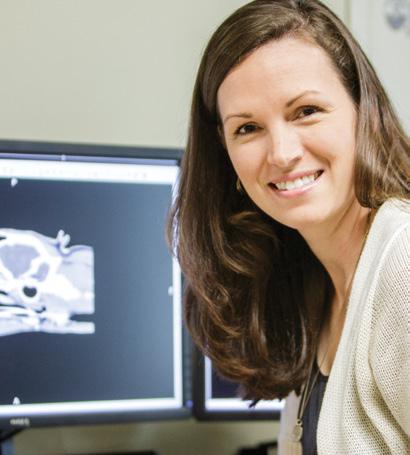
Dr. Mackenzie Hallman is an assistant professor in diagnostic imaging in the Department of Veterinary Clinical Sciences. Originally from Almena, Kan., she earned both a bachelor’s degree in biology and DVM degree from Kansas State University. She completed a small animal internship at Virginia Tech and a residency in diagnostic imaging at Kansas State.
Hallman’s clinical interests focus on expanding the use of CT in imaging the thorax of critical patients and in small animal abdominal ultrasound. She loves teaching radiology in both the didactic and clinical setting and is interested in exploring different teaching styles in radiology, including systemic approaches versus pattern recognition and case-based learning.
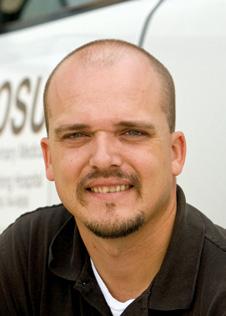
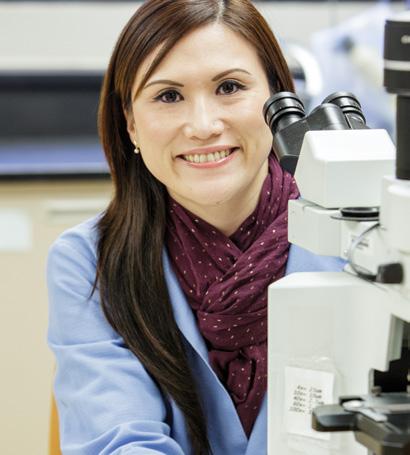
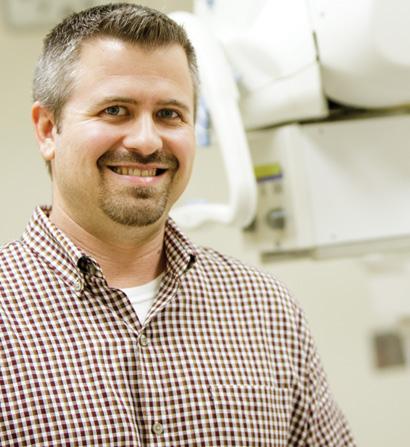
JOHN GILLIAM , DVM, MS, DACVIM, DABVP, has been promoted from clinical assistant professor to clinical associate professor of food animal production medicine and field services in the Department of Veterinary Clinical Sciences. His professional interests include beef cattle production medicine, internal medicine and bovine theriogenology.
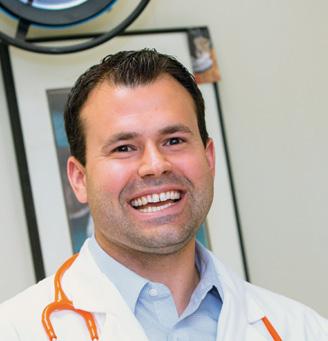
ANDREW HANZLICEK , DVM, MS, DACVIM, was promoted from assistant professor to associate professor and Kirkpatrick Chair in Small Animal Medicine with tenure in the Department of Veterinary Clinical Sciences. His current areas of research include investigating small animal kidney, urinary, infectious and hematologic diseases.
Dr. Yoko Nagamori is a clinical assistant professor in the Department of Veterinary Pathobiology. Originally from Tokyo, Nagamori earned a bachelor’s degree in geosciences from Shizuoka University in Shizuoka, Japan, and another in biology and mathematics from Augustana University in Sioux Falls, S.D. In 2013, she earned her DVM degree from Iowa State University and in 2016 her Master’s in veterinary biomedical sciences from Oklahoma State University.
Nagamori is interested in both diagnostics and zoonotic and tropical diseases. She teaches a parasitology portion of the fourth-year diagnostics rotation. She also lectures in parasitology to first- and second-year students as well as in some elective parasitology classes. When she is not teaching, Nagamori examines parasitology cases submitted through the Oklahoma Animal Disease Diagnostic Laboratory and OSU’s Veterinary Medical Hospital.
Dr. Clay Hallman is a lecturer in diagnostic imaging in the Department of Veterinary Clinical Sciences. Originally from Souderton, Pa., he earned a bachelor’s degree at Wake Forest University and his DVM degree at Kansas State University, were he met and married his wife, Dr. Mackenzie Hallman.
Hallman’s clinical interests focus on researching advanced imaging for cardiac disease and canine musculoskeletal disease.
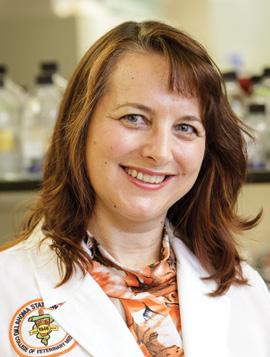
LARA MAXWELL , DVM, Ph.D., DACVCP, has been promoted from associate professor to professor in the Department of Physiological Sciences. Her two major areas of research pertain to mitigation of herpes virus infections and improving patient outcomes through pharmacokinetic and pharmacodynamic modeling.
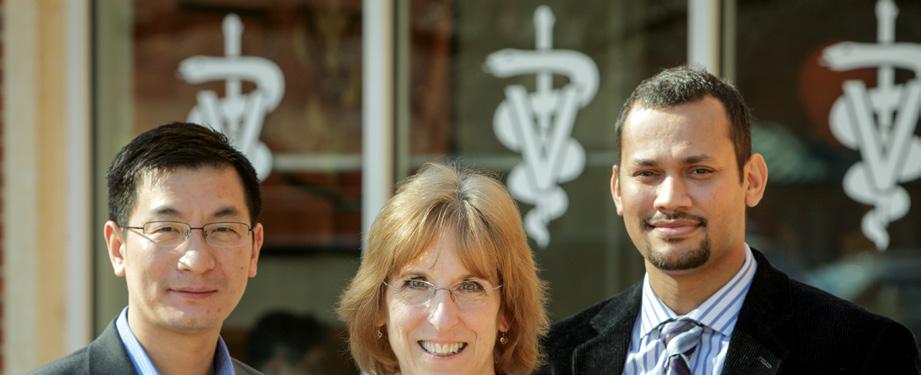
ASHISH RANJAN , BVSc, Ph.D., was promoted from assistant professor to associate professor with tenure in the Department of Physiological Sciences. His research focuses on nanocarrier-mediated targeted drug delivery, image-guided therapy and nanotoxicology.
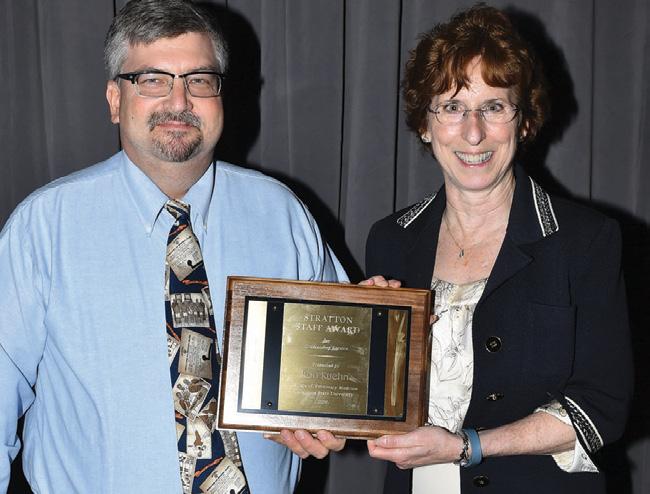
Ron Kuehn of Stillwater is a senior support specialist in the IT department at Oklahoma State University’s Center for Veterinary Health Sciences.
“It was a great surprise and honor to receive the 2016 Stratton Staff Award,” says Kuehn. “I know several of the employees who received it before I did and consider them to be role model employees.”
Kuehn started working at OSU’s veterinary center in December 1993 in the bacteriology lab at the Oklahoma Animal Disease Diagnostic Lab oratory. By 1996, he was involved in computer support work at OADDL and has been helping computer users for the last 20 years.
“What I like most about my job is working with students and helping them use computers and technology to make their time in school easier,” he says. “The best advice for computer users is to backup your data t wice and often. There are two types of computer users — those who have lost data and those who will lose data.”
Kuehn was born in Germany on a U.S. Army base. He lived in Washington and Montana before he was 5 y ears old. His family settled in Duncan, Okla., where he graduated from high school and met his wife, Michelle. He attended Murray State College and Southeastern Oklahoma State University and worked for the Oklahoma Department of Wildlife for several years before he came to OSU to earn his master’s degree in zoology (’93).
“It’s humbling to receive an award voted on by those who have won it previously and to be nominated with many others who were so deserving as well,” he adds.
The Stratton Staff Award was established upon the retirement of Dr. Louie Stratton in 1989. The late Dr. Stratton, former director of the Veterinary Medical Hospital, wanted to honor outstanding staff members for their dedicated service and many key contributions to the overall success of the veterinary center. Nominations are accepted from any employee of the center and selected by an ad hoc committee appointed by the dean.
To watch a video about the Class of
visit http://okla.st/2f6Rm2a
THE INCOMING CLASS OF 2020 AT OKLAHOMA STATE UNIVERSITY’S CENTER FOR VETERINARY HEALTH SCIENCES WAS WELCOMED TO THE STILLWATER CAMPUS WITH A TWO-DAY ORIENTATION PROGRAM IN AUGUST.
PHOTOGRAPHY BY GARY
LAWSON
/
UNIVERSITY
MARKETING WHO THEY ARE AND WHERE THEY COME FROM 13 MEN 75 WOMEN 88 TOTAL 58 OKLAHOMA RESIDENTS 30 NON-RESIDENTS REPRESENTING ARIZONA, ARKANSAS, CALIFORNIA, COLORADO, DELAWARE, FLORIDA, KANSAS, MARYLAND, NEVADA, NEW JERSEY, NEW YORK, TEXAS AND WISCONSIN
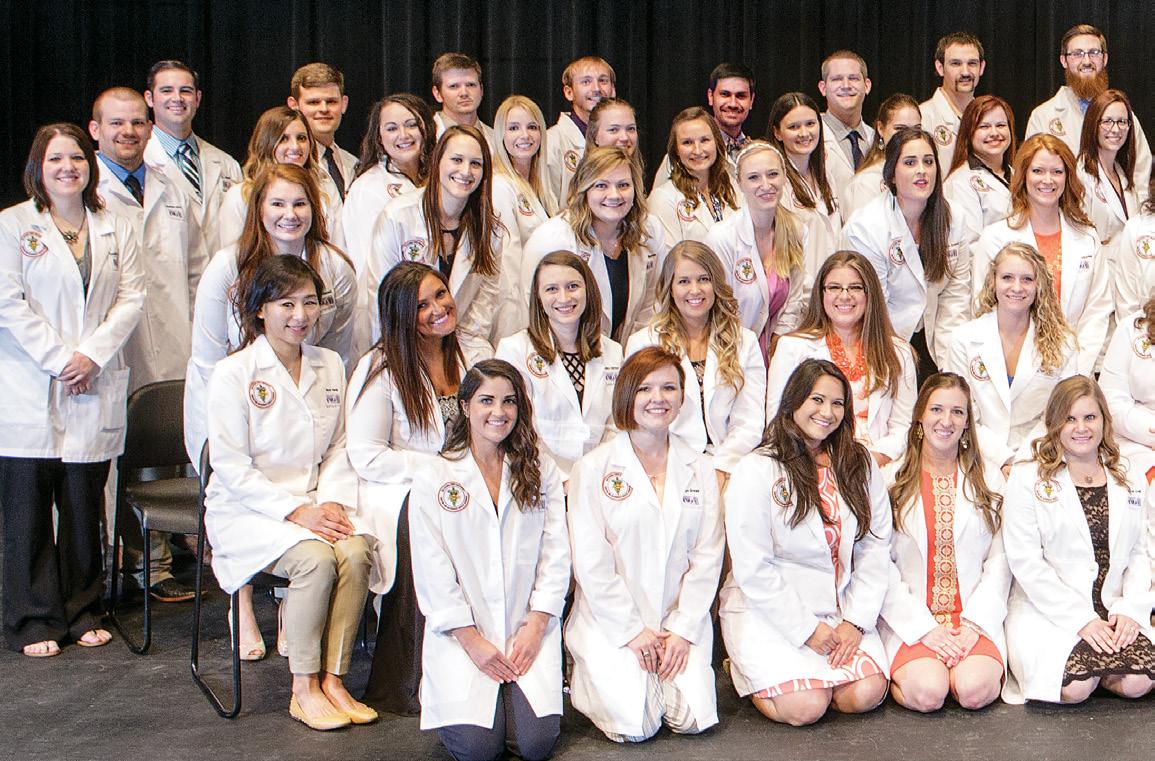
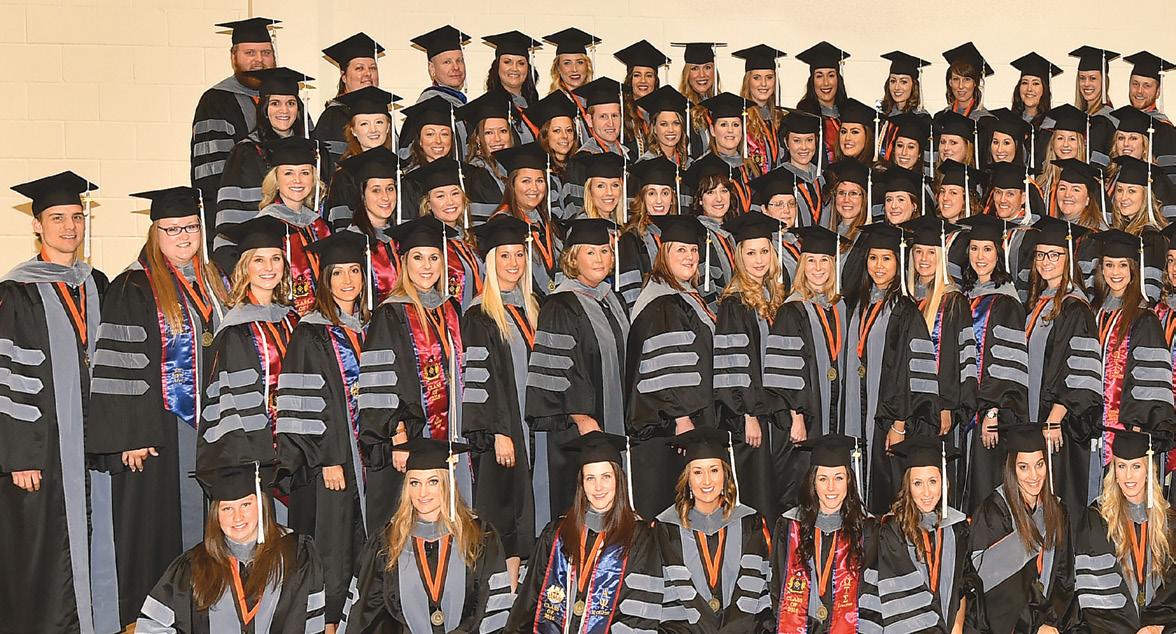
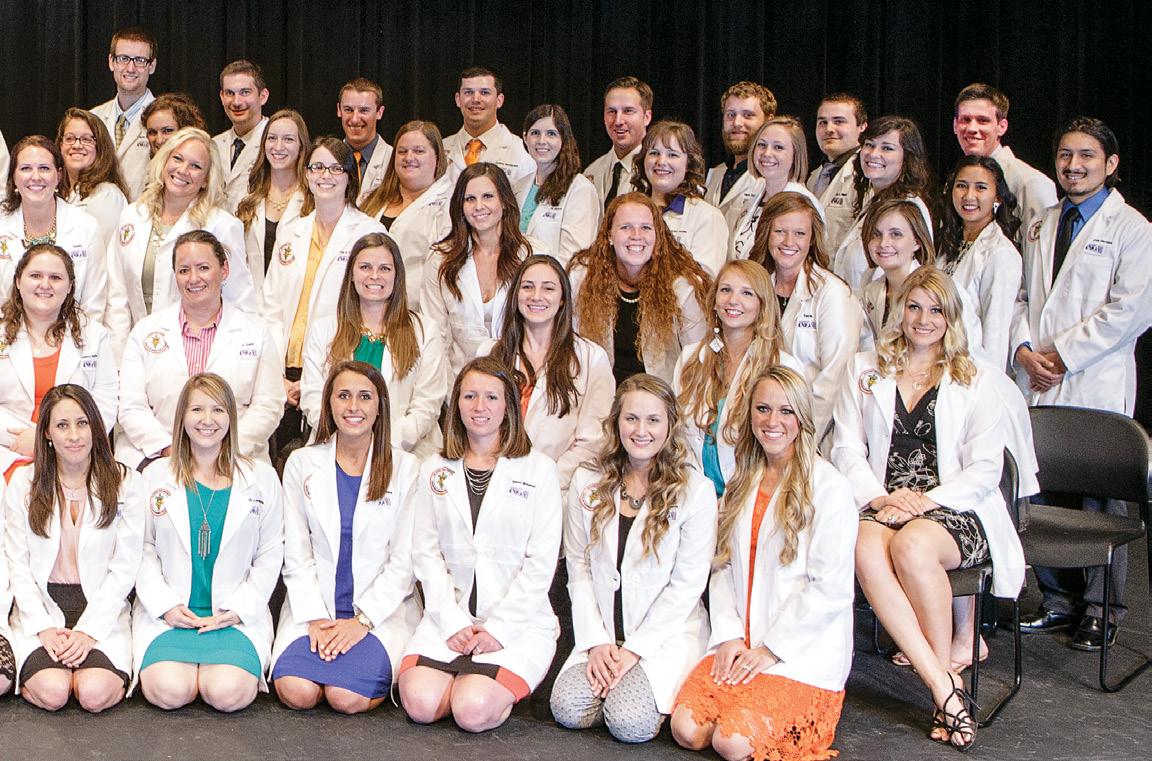
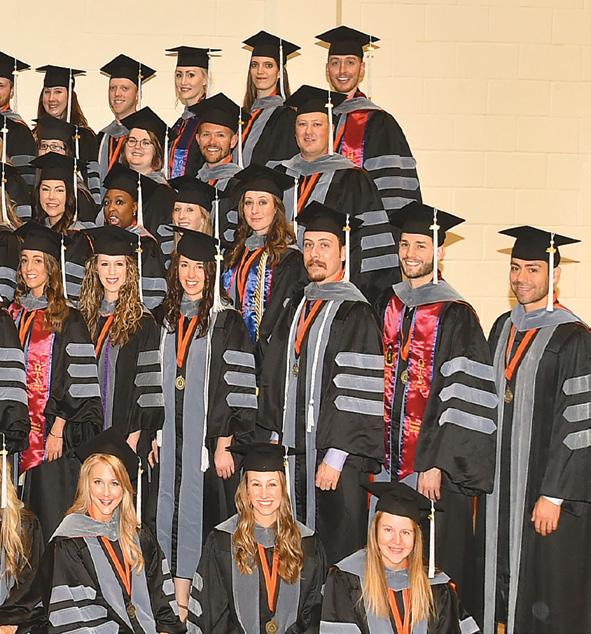
Class of 2017: Rising Higher
Members of the Class of 2017 prepare for their final year of veterinary school with a Transition Ceremony last April.
Congratulations, Class of 2016!
The Class of 2016 took time out on Commencement Day for a class photo.
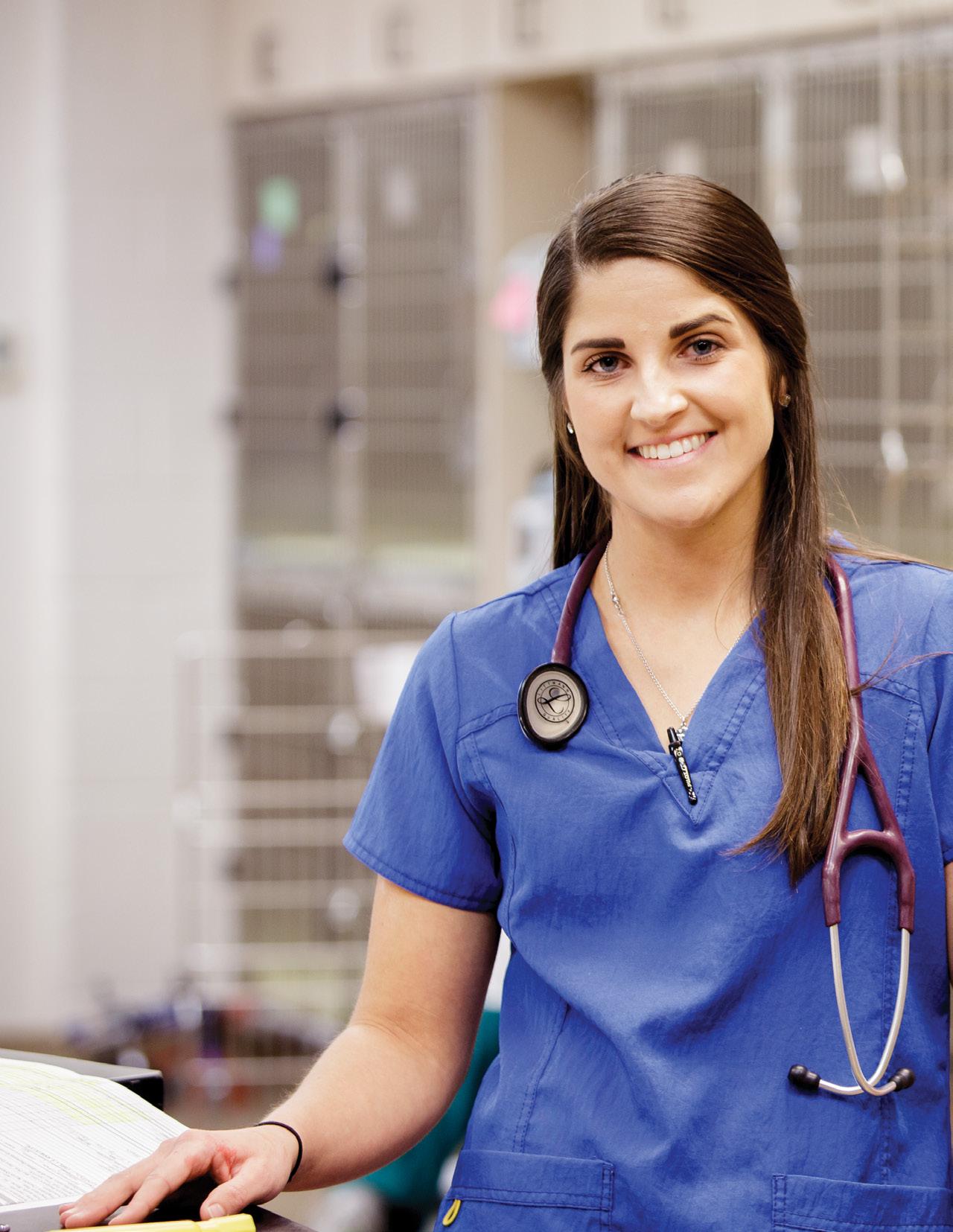
“I REALLY LOVED MY EQUINE MEDICINE ROTATION. … THERE WERE QUITE A FEW NIGHTS THAT I SLEPT IN STALLS WITH FOALS.”
"I REALLY LOVED MY EQUINE MEDICINE ROTATION .... THERE WERE QUITE A FEW NIGHTS THAT I SLEPT IN STALLS WITH FOALS."
— MORGAN PIERCE
Morgan Pierce, Class of 2017, received the 2016 Dean Harry W. Orr Memorial Award at the CVHS annual banquet in April. She was granted $2,500.
PHOTOGRAPHY BY GARY LAWSON / UNIVERSITY MARKETING
Morgan Pierce of Bellville, Texas, won the 2016 Dean Harry W. Orr Memorial Award for prominent academic achievement at the Center for Veterinary Health Sciences annual awards banquet in April — an accomplishment that well illustrates her intensive work thus far.
“It was really exciting to get this award because it has so much history behind it regarding the vet school and the dean,” says Pierce, now a fourth-year veterinary student.
“We don’t know which one we’re getting when we show up to the banquet,” she says. “It’s kind of fun because it’s unknown. You’re just sitting there kind of waiting for your name to be called — you know you won something, but it could be anything. This particular award was a part of the bigger scholarships online, so I just applied.”
The Orr Award honors Oklahoma A&M School of Veterinary Medicine’s second dean.
“Morgan received the Dean Harry W. Orr Award in recognition of her high academic standing,” says Dr. Chris Ross, professor and interim dean for the Center for Veterinary Health Sciences. “Monetary awards like this one help lessen student debt. We are very grateful for our donors, who allowed us to award more than $600,000 this past year.”
Pierce didn’t always want to be a vet, even though she grew up around horses. One particular experience — caring for a severely injured horse while working for a horse trainer during high school — sparked her interest in animal science, and she pursued her career path from there.
“My grandfather went here [to OSU],” she says. “He actually lived in the dairy barn and would walk back and forth to main campus. That kind of pushed me to go to OSU, and I really love it here.”
There hasn’t been a dull moment for Pierce. She’s already learned so much and seen countless case types since the beginning of her fourth year.
“I really loved my equine medicine rotation,” she says. “It was so busy. We had very few open stalls in the hospital. There were quite a few nights that I slept in stalls with foals.”
In the clinical setting, Pierce gets true hands-on experience and feels like she’s a real doctor.
“It’s fun to kind of be able to make those decisions but then also have somebody there just in case to be like, ‘Are you sure you want to do that? … Maybe we should try something else, or this would be better,’” she says.
Pierce is pretty confident that when it’s time to walk across the stage, she’ll be ready to go out into the world as a veterinarian.
Pierce helped care for a patient, Timmie, during one of her shifts in the CVHS Small Animal Critical Care Unit.
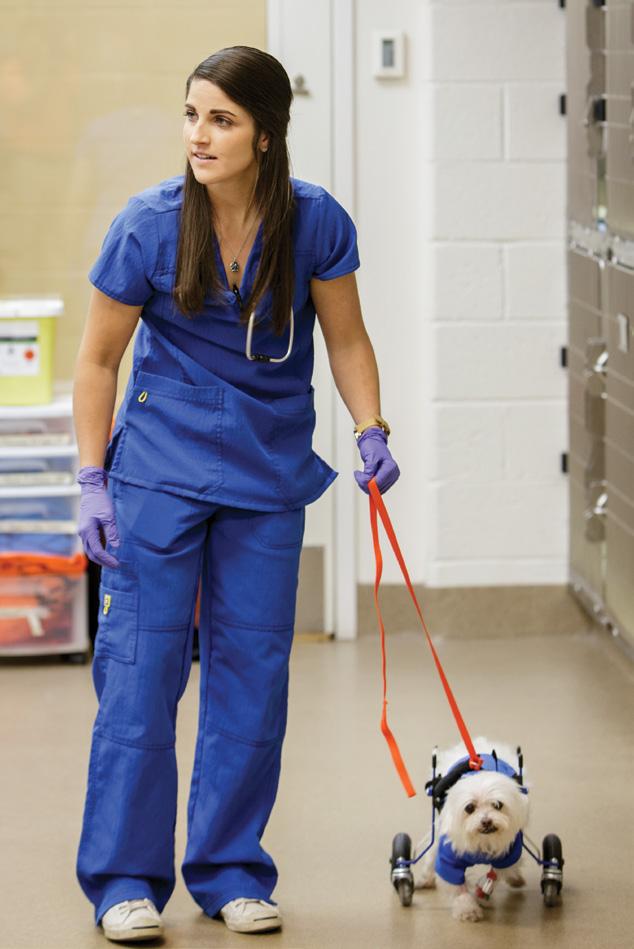
“BELIEVE IN YOURSELF. … YOU ARE ENTIRELY CAPABLE AS LONG AS YOU’RE WILLING TO WORK HARD.”
"BELIEVE IN YOURSELF YOU ARE ENTIRELY CAPABLE AS LONG AS YOU'RE WILLING TO WORK HARD."
— PAUL CUNNINGHAM
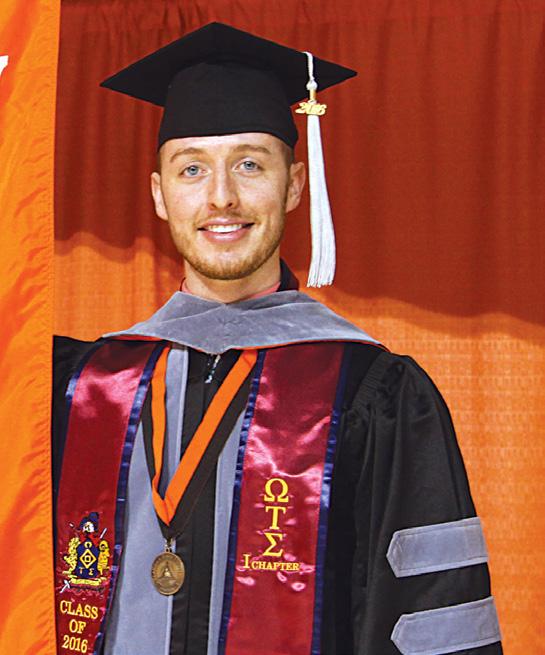
Paul Cunningham of Lawton, Okla., is the 2016 recipient of the Dean Clarence H. McElroy Award.
“I was in complete shock when they announced my name as the award winner,” he says. “I can think of a ton of other people in my class who are completely deserving. It was even better because I was there with my parents. My mom was beside herself. All I could think to do was to stand up and hug her and then go receive the award. It was just really humbling.”
The Dean Clarence H. McElroy Award was established in 1954 to honor the first dean of OSU’s College of Veterinary Medicine. It is the highest award an Oklahoma State University senior veterinary student can earn. Recipients are selected by classmates and the fourth-year faculty.
Cunningham knew early on he wanted to become a veterinarian.
“I was probably 6 or 7 years old the first time I went to the zoo,” Cunningham says. “When I was around elephants and giraffes and feeding the sharks and things like that at the Oklahoma City Zoo, I realized that my love for animals was real and strong.”
He chose to earn his DVM degree at Oklahoma State.
“I had my heart set on getting out of Oklahoma. I really wanted to go far away and see some place new. But I came here and toured at Oklahoma State and fell in love with the campus. It was new enough for me.”
Cunningham’s favorite memory of veterinary school is going to the Student Chapter of the American Veterinary Medical Association Symp osium in Denver.
“Going with all my classmates to see schools from around the nation, to learn and listen to speakers from all over the world who talk
about their interest whether that be bovine medicine, acupuncture, toxicology — it was just an amazing weekend and I got to do it in a place that I had never seen.”
“I think the best advice I can offer is to believe in yourself,” he would advise others. “I think that’s one of the things we, as vet students, struggle with the most. The feeling of imposter syndrome is something they talk about in first year during our orientation, and it’s very real. But if you want this bad enough, you just need to let all that doubt leave your mind. You are entirely capable as long as you’re willing to work hard.”
And Cunningham did work hard. The McElroy Award is given based on academic performance, leadership and clinical proficiency. He was an ambassador all four years of veterinary college. He also earned a Butch and Luella Ruth
Curtis Educational Fund Award.
The oldest of four children, he is the first to graduate from college. Cunningham is the son of Penny Lowry of Lawton and Paul Cunningham of Minco, Okla.
F ollowing graduation, Cunningham will be going to an internship at Michig an State University College of Veterinary Medicine.
“It will be a small animal rotating internship,” adds Cunningham. “There may be a residency to follow that. I have not quite decided yet but I do have an interest in critical care and internal medicine. So I’m hoping this year at a different place in a new setting will kind of weed out what I want to do with the rest of my life.”
DERINDA BLAKENEY, APR
To see a video of Cunningham, visit okla.st/2gds92Z
The winners of OSU’s Center for Veterinary Health Sciences’
3 Minute Thesis Competition for 2016 and their presentations were:
FIRST PLACE: Zahra Maria of Dhaka, Bangladesh, “Is Diabetes Breaking the Heart?”
SECOND: Jennifer Rudd , DVM, of Perkins, Okla., “Battling Superinfections: A Body at War.”
THIRD: Kalyani Ektate of Nagpur, Maharashtra in India, “War Against Cancer.” She also won the People’s Choice Award
Maria is working on her doctorate in mechanical and aerospace engineering and hopes to become a researcher in a national laboratory in the United States. She earned her bachelor’s degree in mechanical engineering from the Bangladesh University of Engineering and Technology and a master’s degree in mechanical engineering from Oklahoma State University.
“I wanted to bridge the gap between engineering and biology,” she says. “Although I began research in mechanical engineering, my interest led me to work in Dr. Veronique Lacombe’s lab in the Department of Physiological Sciences at the veterinary center. I’m completing studies regarding the effect of diabetes on cardiovascular disease including both the mechanical and physiological aspects.”
Rudd would love to continue her research and teaching. “Teaching is my favorite part of what I do,” Rudd says. “My dream job would be to stay right here at OSU.”
A doctoral student under the advisement of Dr. Narasaraju Teluguakula in the Department of Physiological Sciences at OSU’s Center for Veterinary Health Sciences, Rudd earned her bachelor’s degree in biomedical sciences in 2008 and a DVM degree in 2011, both from OSU. She also completed an internship in small animal medicine and surgery at the University of Missouri. Rudd spent a couple of years in private veterinary practice before returning to OSU.
“My interest lies in respiratory infectious disease,” she continues. “I am fascinated by the complicated, generally efficient show of force that our bodies display when exposed to infection. Immunology and response to infectious disease is a field with so much potential and so much still unknown. Each time we collectively figure out a small part, we discover how many more things we have yet to explain.”
Ektate of Nagpur, Maharashtra in India, strives to stop the spread of cancer in both animals and humans and is working on her doctorate in veterinary biomedical sciences in the veterinary center’s Department of Physiological Sciences. Her adviser is Dr. Ashish Ranjan. Ektate earned her DVM degree equivalent from the Maharashtra Animal and Fishery Science University in India.
“My long-term goal is to optimize and provide uniform intratumoral delivery of antitumor drugs with real-time control,” Ektate says. “I want to keep working on novel ideas to fight cancer in both animals and humans.”
“The multidisciplinary approach considers both animal health and biomedical research,” she says. “The specific focus of my work is nanomedicine and image guided drug delivery. The applicability of my research in nanomedicine and drug delivery for treating cancer is amazing.”
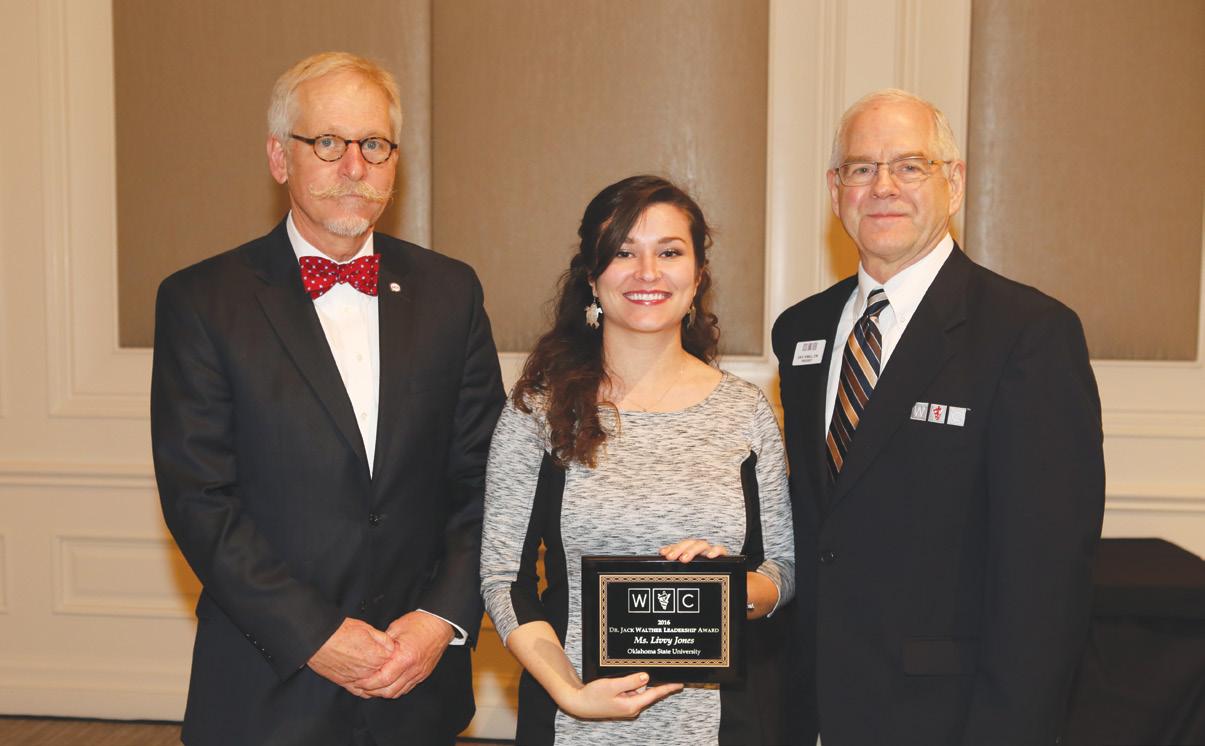
Livvy Jones of Pauls Valley, Okla., is the Oklahoma State University 2016 recipient of the Dr. Jack Walther Leadership Award. She is one of 33 recipients across North America.
The award recognizes veterinary students who portray leadership and promote a lifelong service to the profession. Recipients received $1,000 along with complimentary registration, lodging, airfare and daily stipend to attend the 88th Annual Western Veterinary Conference held in Las Vegas in March.
Jones is a third-year veterinary student. She is the Zoo, Exotic and Wildlife Club president, and the Parasitology and Small Ruminant Clubs’ secretary. Jones is also an ambassador for the veterinary center and tutors fellow veterinary students.
She also received one additional complimentary registration to a future WVC Annual Conference to be used within five years following her graduation in 2017.
Congratulating Livvy Jones are Greg Campbell (left), DVM, Ph.D., Oklahoma State University Center for Veterinary Health Sciences alumnus and Jon Pennell, DVM, MS EMT-l, immediate past president of the Western Veterinary Conference board of directors.
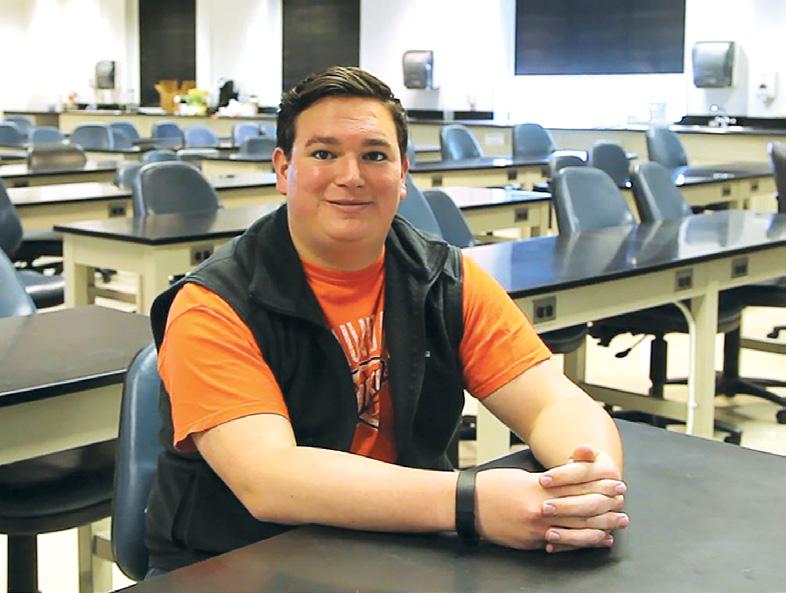
Jeff Olivarez of Edmond, Okla., is about to put Oklahoma State University’s Center for Veterinary Health Sciences in the national spotlight. Olivarez was recently selected as president-elect of the Student American Veterinary Medical Association. He will spend the next year preparing for his run as president of SAVMA, the national organization of veterinary students.
While Olivarez has completed his second year of veterinary college at OSU, he didn’t always want a degree in veterinary medicine.
“Going through college, I went to undergrad for human medicine,” Olivarez says. “But I was never really passionate about it so my senior year of my undergrad, I decided that vet school was actually what I wanted to do.
“I chose Oklahoma State because, to be honest, it was the most affordable option,” he says. “I love the school. It’s the best in my opinion.
“Vet school is going great so far. It’s been one of the hardest things that I have ever done but it’s going well. I’ve never considered myself a great student but it’s amazing to me, seeing once I’m actually learning something I care about, how much my attitude toward academics has changed and my scores overall.”
And like many who attend Oklahoma’s only veterinary college, Olivarez likes the overall atmosphere.
“I love the people the most. The faculty is great here, all the staff. And then the clinicians are always willing to help, always willing to teach. I’ve built a small little family here. I’m from Edmond, which isn’t that far away but in vet school just from all the work it’s hard to get away. So I’ve kind of created my own little family here with friends. And they are my real support system and I really appreciate them for that.”
Olivarez says wanting to give back led him to run for SAVMA president.
“I’ve always wanted to serve the students, and I thought the best opportunity for that would be to be SAVMA president.”
When he found out he had won, a moment of panic set in. “They announced my name, and I think my heart stopped.”
Olivarez will spend his year as president-elect learning everything the president does.
“I travel with the president to all the AVMA board of directors meetings, any event that he’s at, I’m also at and just asking questions and learning what I really need to do. The president is supposed to be the voice of the students.
“I love that I get the opportunity to serve the students and really find out what they need to be done and what they want out of their vet school experience and trying to help them with that. I like that everywhere I go I get to represent Oklahoma. People are asking me where are you from, and I get to say Oklahoma State University.
“I’m really excited for this opportunity. I think it will change my life forever. And I want to do the best that I can. So I want the students to know that I’m available for them. And if they need anything, nothing is too small. They can reach out to us, the SAVMA exec board.”
To watch a video on Olivarez, visit okla.st/2gz7fj7
Dr. Ron Guthrie of the Class of 1966 hooded his great-nephew, Andrew Willis, at the 2016 Center for Veterinary Health Sciences commencement in May.
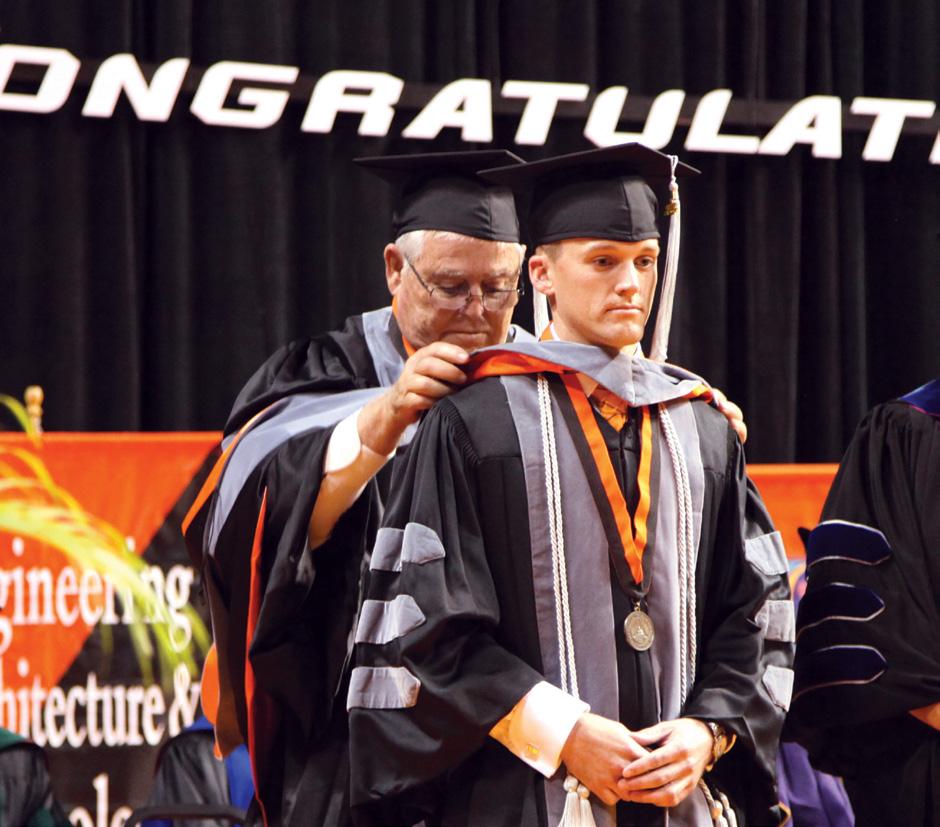
WILLIS’ GRADUATION COMES ON 50 TH ANNIVERSARY OF FAMILY’S STREAK
Andrew Willis of Woodward, Okla., is carrying on a family legacy. He earned his DVM degree in May 2016 and was hooded by his great-uncle, Dr. Ron Guthrie, who was in Stillwater celebrating his 50-year reunion.
“To me, that’s a sense of nostalgia, I guess,” Willis says. “In the sense that 50 years ago, he received a degree that provided a livelihood for him and his family and a knowledge base that allowed him to help many patients over the years. So I hope to do the same thing.”
Willis decided to become a veterinarian when he was about 14 years old.
“I started working on a ranch over the summer,” he recalls. “I was really interested in the animals and in helping animals. Things just progressed from there.”
As his relatives before him, Willis chose Oklahoma State for his DVM degree.
“Well, I was born and raised in Oklahoma, so Oklahoma is a special place to me. Additionally, OSU is cost effective, close to home, and I’ve had many relatives who have gone to school here and it’s provided a very good education for them.”
While at OSU, Willis was drawn to equine veterinary medicine.
“I don’t know if I could pinpoint any one specific event in veterinary college that I enjoyed the most but I think since I am an equine oriented person, my equine rotations and my externships that I did were pretty special to me. I felt like it provided a lot of skills and knowledge that I can utilize later in life.”
And for those who are considering a degree in veterinary medicine, Willis offers this advice.
“My biggest piece of advice would be to just be committed wholeheartedly from the beginning. All the information that you’re going to get in undergrad and in vet school, all those pieces will come together in a great puzzle to help your patients. So just try to be committed to learning that information and retaining it.”
Following graduation, Willis began an equine internship at Weatherford Equine Medical Center in Weatherford, Texas.
To watch a video of Willis, visit okla.st/2eNQr60
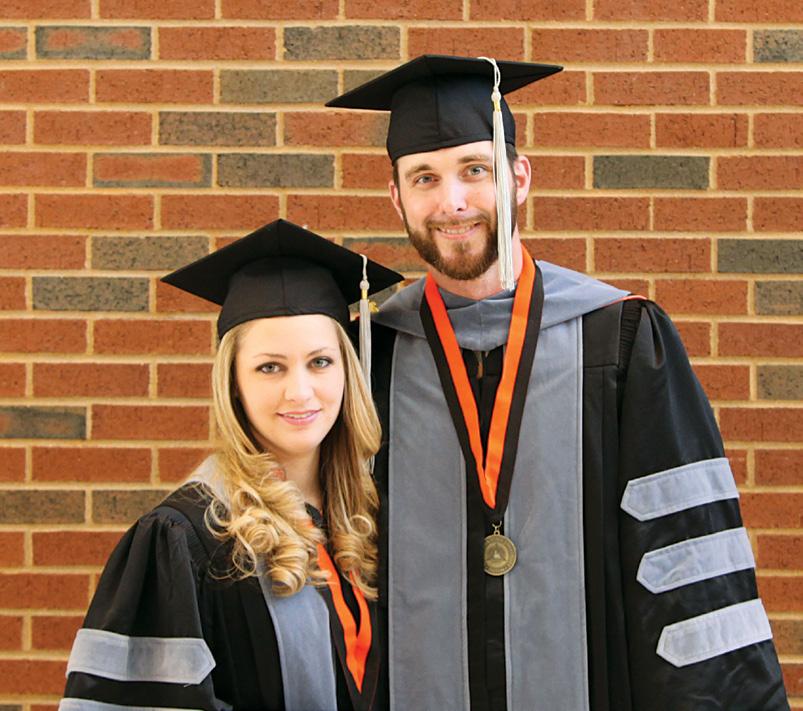
LENABURG TURNS CHILDHOOD LOVE FOR STRAYS INTO VETERINARY CAREER
Kimberlee Lenaburg of Bartlesville, Okla., just made her childhood dream a reality.
“My parents tell me I was obsessed with animals as a child,” Lenaburg says. “I brought everything home, every stray animal. About 9 or 10 years old I understood the career, what a veterinarian was and that’s when I realized that’s what I wanted to do.”
Lenaburg is among the 88 students who earned a DVM degree from Oklahoma State University’s Center for Veterinary Health Sciences on May 6. Hooding her was her husband, Dr. Trace Lenaburg, who earned his OSU degree in 2013.
“Personally welcoming my wife into the profession that I am so passionate about gives me overwhelming pride and anticipation for our future,” Trace says.
“It’s been a big help. Not necessarily with the information or the learning process, it’s more just having the moral support of somebody
who’s been through the stresses and the difficulties of the curriculum and veterinary school,” Kimb erlee says. “It’s also nice to have somebody there to remind you that there is a light at the end of the tunnel, and it does get better.”
Kimberlee came to OSU for her DVM degree for a couple of reasons.
“Both my parents are graduates of OSU,” she says. “They raised us to be very die-hard fans. As kids we would come up to campus and go to the football games and basketball games. They always told us that we could go anywhere we wanted to go, but their money would only go to OSU. I did my undergraduate here and loved it. Loved the campus and the town so it made sense to come here for my DVM and in-state tuition kind of helps, too.”
Reflecting on having Trace hood her, Kimberlee says it’s really exciting because he’s been there from the beginning. The couple met on a blind date about a month before Kimberlee started veterinary school.
Kimberlee has already passed her boards, licensing her to practice in Oklahoma right away.
“My husband and I bought a practice in Pawnee, Okla.,” Kimberlee says. “We took that over May 1. So there are a lot of decisions and changes that we’ve been dealing with. I’m very excited to start that. It’s a mixed animal practice. They’ve been mostly doing large animal and so hopefully with us there, we’ll bring back some small animal medicine into it, too.”
“Words cannot express how proud and excited I am to see the love of my life, my best friend achieve this great honor,” Trace adds. “She will be a blessing to the animal owners of Pawnee, an asset to the veterinary profession and forever the object of my affection.”
Drs. Trace and Kimberlee Lenaburg are now operating the Pawnee Veterinary Hospital.
For a video about Kimberlee Lenaburg, visit okla.st/2f0rK35
Many pet owners know their local veterinarian has an impact on animal health. However, few of these people realize the significant impact veterinarians have on global health and safety — including the health of people, the environment and even food safety.
Three recent Oklahoma State University Center for Veterinary Health Sciences graduates — Kaitlin Agel of Yukon, Okla., Cyrena Neill of Hudson, Colo., and Mandy Hall of The Woodlands, Texas — decided to obtain a Master’s of Public Health degree while enrolled in the DVM program.
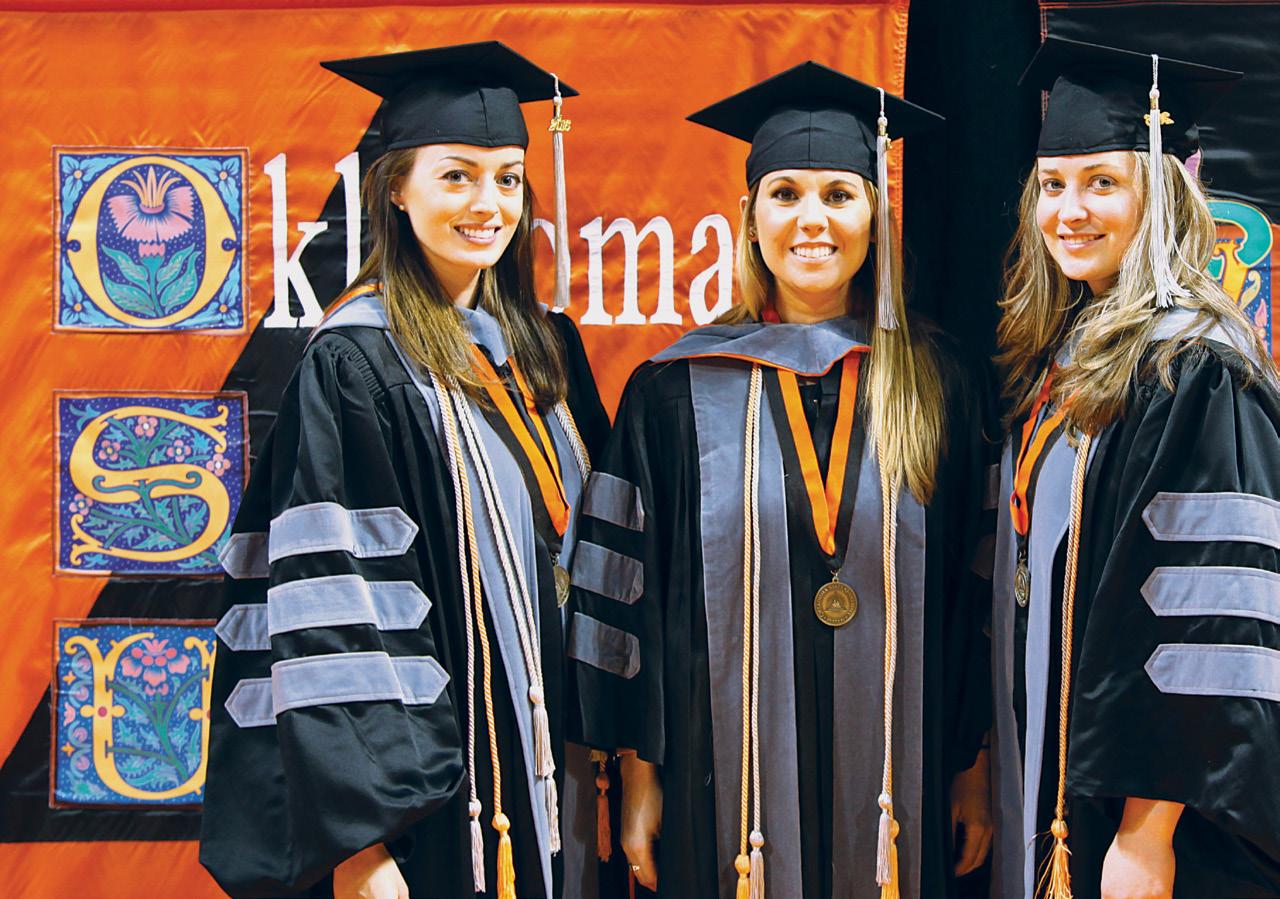
“IN THE SUMMER OF 2014, I WAS COMPLETING A LAB ANIMAL FELLOWSHIP AT MIT. WHEN I MENTIONED THE MPH PROGRAM TO MY MENTOR, SHE IMMEDIATELY SAID SHE WISHED THAT SHE HAD THAT OPPORTUNITY. SO IT MADE ME THINK ABOUT IT. THE ONLY EXTRA COST IS YOUR TIME AS IT ADDS CLASSES TO AN ALREADY FULL SCHEDULE.”
"IN THE SUMMER OF 2014, I WAS COMPLETING A LAB ANIMAL FELLOWSHIP AT MIT. WHEN I MENTIONED THE MPH PROGRAM TO MY MENTOR, SHE IMMEDIATELY SAID SHE WISHED THAT SHE HAD THAT OPPORTUNITY. SO IT MADE ME THINK ABOUT IT. THE ONLY EXTRA COST IS YOUR TIME AS IT ADDS CLASSES TO AN ALREADY FULL SCHEDULE."
— KAITLIN AGEL
IT’S A HUGE TIME COMMITMENT, BUT NO EXTRA COST IN THE DUAL-DEGREE PROGRAM.
“The biggest challenges have been time management and being the ‘guinea pigs’ of the program,” Hall says. “It’s a brand-new program, so we are all figuring out the kinks together.”
Agel adds, “I think it would have been easier to start during our second year. In your third year, you have surgery schedules to work around and hope that DVM tests don’t fall the same time as the test schedules in the master’s classes. And remembering how to write papers is also challenging. It’s been a long time since I had a 10-page research paper due.”
The three came to the world of veterinary medicine in different ways. Neill says she wanted to become a veterinarian for as long as she can remember.
“While earning my bachelor’s degree in communications, I worked part-time as a receptionist at a veterinary clinic,” Hall says. “The veterinarians and veterinary technicians at the clinic were amazing. Their compassion and passion for their work inspired me to pursue veterinary medicine.”
Agel was a teacher when she decided to pursue a DVM degree.
“I taught high scho ol for four years after earning my bachelor’s degree in zoology,” Agel recalls. “While in college, I worked at the WildCare Foundation in Noble, Oklahoma, and en joyed the medicine. I liked treating, bandaging, suturing, performing surgeries — the parts of working there that were very medically driven. So when I wasn’t teaching during the summer, I would work at small animal clinics to gain experience and learn more about the veterinary medicine profession.”
SO WHAT MADE THESE STUDENTS DECIDE TO TAKE ON THE DUAL DVM/ MPH DEGREE?
“In the summer of 2014, I was completing a lab animal fellowship at MIT,” Agel says. “When I mentioned the MPH program to my mentor, she immediately said she wished that she had that opportunity. So it made me think about it. The only extra cost is your time, as it adds classes to an already full schedule.”
“I suppose I had never considered the global impact that veterinarians have,” Hall says. “As part of the vet med curriculum, we are required to take an epidemiology class along with one or two food safety lectures. I was thoroughly intrigued. I am very passionate about One Health and think it should be all health care providers’ mission to live by it. When I found out OSU offered a joint MPH/DVM program, I felt that it not only would help me to better incorporate the One Health mission, but also expand my knowledge base on things like food safety that are very important to me.”
One Health is the integrative effort of multiple disciplines working together to attain optimal health for people, animals and the environment.
“For me, it was about opening more doors and more job opportunities,” Neill says. “And the One Health concept interests me also. I hope to work where I can make a difference and help others understand why One Health is so important.”
“Getting the MPH degree is opening an entirely different door for me,” Agel says. “Public health is very appealing to me, and from what I’ve seen career-wise, it is smart to get a master’s degree. So, why not get this master’s degree that could lead to a job with the Food Safety and Inspection Service or any other USDA program?”
Hall completed an externship with the USDA Animal and Plant Health Inspection Service in the summer of 2015 and with the Centers for Disease Control in the spring of 2016.
“I would like to use my MPH to help me gain entry into public service, and I want to be in an environment where the people are just as passionate as I am,” Hall says.
Agel, Hall and Neill are the first veterinary students to enroll in the DVM/MPH dual degree designation. All three graduated in May. Neill is focusing on a position in a mixed animal clinic, and Agel and Hall are working in small animal clinics in Texas.
DERINDA BLAKENEY, APR
The Western Veterinary Conference recently elected Oklahoma State University alumnus Dr. Joe M. Howell of Oklahoma City as its president. His election follows decades of commitment to animal care and welfare.
Howell, who earned his DVM degree from OSU in 1972, is a companion animal practitioner, a former owner of the Britton Road and Quail Creek Animal Hospitals in the Oklahoma City area, and a current partner in Montecito Animal Hospital in Las Vegas. He is president and CEO of Howell Investments Inc., a consulting, venture capital and investments firm. He is one of two ethicists for the American Humane Association and a former president of the American Veterinary Medicine Association.
“It is an honor to ser ve as president of such a well-regarded organization with an unmatched continuing education program in the field of veterinary sciences,” he says.
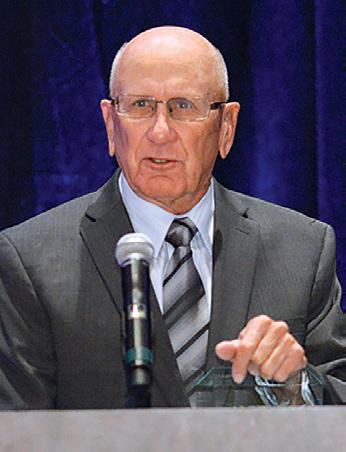
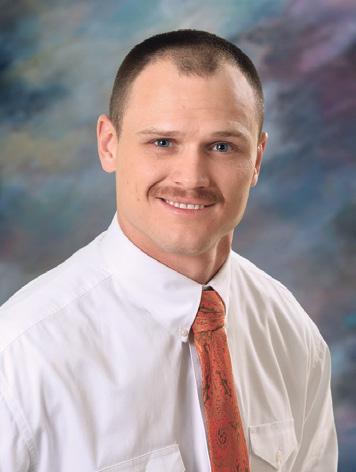
Cattle veterinarian Dr. J.D. Folsom of Rexburg, Idaho, received one of two $5,000 Dr. Bruce Wren Continuing Education awards from AgriLabs during the 2016 American Association of Bovine Practitioners annual conference in Charlotte, N.C.
Folsom earned his DVM degree from Oklahoma State University Center for Veterinary Health Sciences in 2015.
The annual awards honor Bruce Wren, DVM, Ph.D., a longtime AgriLabs technical services veterinarian.
Oklahoma State University alumnus Dr. Andy Baker of McAllen, Texas, was recently named the 2016 Veterinary Medical Specialty Practitioner of the Year by the Texas Veterinary Medical Association. Baker earned his DVM degree from OSU in 1966.
Baker co-owns Nolana Animal Hospital in McAllen. His peers nominated him for his dedication to advancing the profession of veterinary medicine.
“Veterans Day is our day to thank and remember all veterans and to let them know we appreciate them for their service and honor them for their sacrifices,” Air Force Lt. Col. Benjamin Dahlke told the audience at the 2016 Center for Veterinary Health Sciences’ Veterans Day observance.
“An inscription at the Korean War Veterans Memorial says, ‘Our nation honors her sons and daughters who answered the call to defend a country they never knew and a people they never met.’ They answered the call. These words apply equally to many others, to today’s service members who are tomorrow’s veterans.”
Dahlke, commander of Air Force ROTC Detachment 670 at OSU, a professor and head of the Department of Aerospace Studies in the College of Arts and Sciences, offered his unique perspective on tomorrow’s veterans. CVHS students, professors and alumni are often affiliated with the military.
“The term the ‘Greatest Generation’ is used for those who lived through the Depression and fought and won World War II, and it’s the perfect name. Now we have Generations X, Y and Z, and as this generation alphabet has reached its end, many maintain that the sense of entitlement, apathy and narcissism has risen exponentially with each letter, but let me present a different view,” Dahlke said, noting more than 3 million have joined the military since 9/11.
“Their service has been selfless … and their accomplishments have been extraordinary,” he said.
“This generation of active guard and reserve service members, this 9/11 generation has maintained our security during a hard and certainly divisive time in our nation’s h istory. These men and women have disproved the myth of apathy in their generation. They chose to ser ve a cause greater than themselves, they answered a call.”
O ver the next five years, more than 1 million will transition back to civilian life, embracing a new role as veterans.
“Certainly, they’ve earned their place among the greatest of generations,” Dahlke said.
“If there is anything that our veterans have taught us, it is that there is no threat we cannot meet and there is no challenge we cannot overcome. And for that inspiration, for all the sacrifices, and those of veterans’ families that have helped keep our country safe and free, we thank each and every veteran, not just today, but every day, for every day. God bless each of you and God bless America.”
KAYLIE WEHR
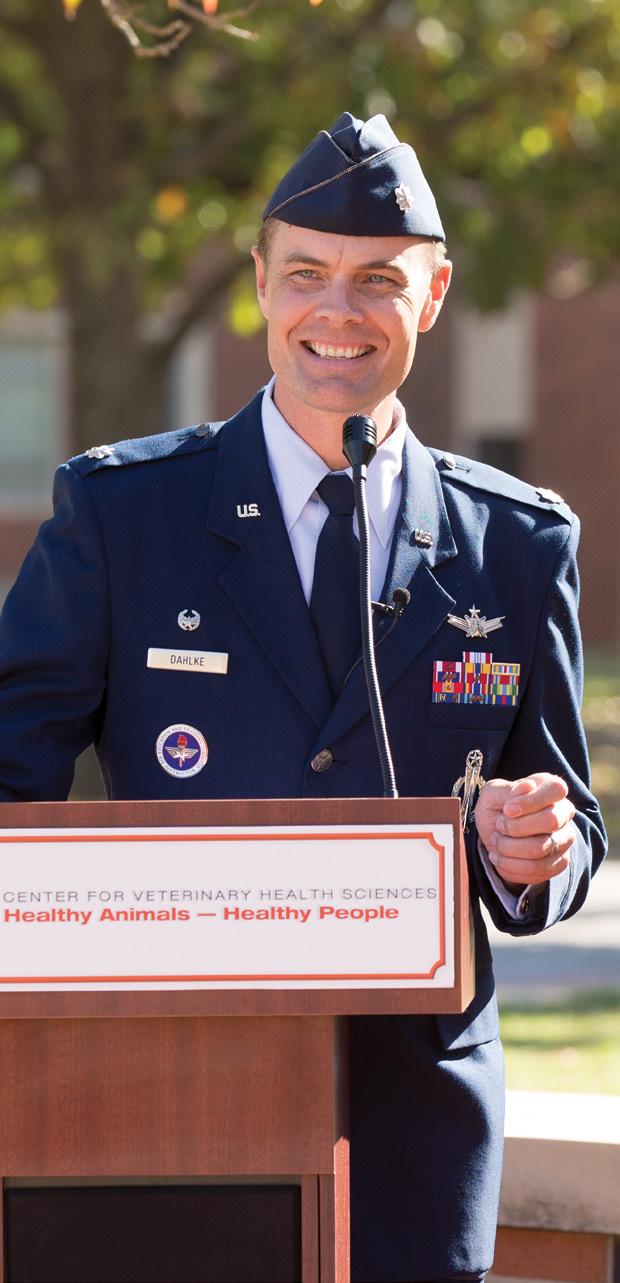
In Dr. Wendy Hauser’s 28-year career, she spent 26½ years in hospitals accredited by the American Animal Hospital Association. She values AAHA’s ongoing commitment to excellence in its hospitals and the difference that makes for clients, patients and teams. Her veterinary business, Peak Veterinary Consulting, is also committed to excellence by “ Creating Happy Teams and Healthy Hospitals .”
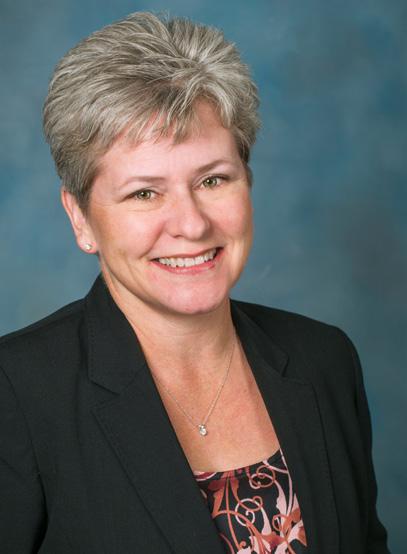
“I enjoy consulting and presenting workshops on hospital culture, leadership, client relations and operations,” says Hauser, a 1988 alumna of OSU’s Center for Veterinary Health Sciences. “I perform limited relief veterinary services as part of my consultancy. I believe it is critical to keep a finger on the pulse of veterinary medicine at its foundational level — the examination room. My approach to consulting is influenced by my realworld experiences as a veterinarian who built a successful hospital from the ground up.”
Hauser’s volunteer efforts include:
Southeast Pennsylvania local veterinary group leadership
Medical advisory board for the corporate aggregator she sold her hospital to in 2009
Collaborator and co-facilitator for the Colorado Veterinary Medical Association Power of Ten Recent Graduate Leadership Academy
Communications coach at Colorado State University’s College of Veterinary Medicine
AAHA task forces that created the AAHA business group initiative and the regional associate development course
Veterinarian director on the AAHA board of directors in 2012
AAHA board vice president in 2015
She calls “being involved” her greatest accomplishment with AAHA.
“‘Self’ doesn’t exist on this board,” she says. “By being a thoughtful, hardworking board member, participation is centered on collaboratively making the best choices for our memb ers and providing resources to help them continue to succeed. Serving in AAHA leadership is truly one of the highlights of my veterinary career. As part of a team that helps direct the vision and mission of AAHA, I have been inspired to continuously develop new perspectives and skill sets.” Hauser encourages others to follow in her footsteps.
“Please be involved,” she says. “The strength of any organization is the sum total of the commitment of its members. By participating, the individual brings a different set of experiences and perspectives that will help build a vibrant, sustainable organization and enriches the volunteer’s life.”
Hauser (née Mohr) grew up in Claremore, Okla. She decided at age 9 to pursue a career in veterinary medicine. Her involvement with 4-H exposed her to Oklahoma State University. She completed her undergraduate studies at OSU and never considered attending veterinary school anywhere else.
“At that time, I wasn’t aware of the common application process. I still ‘bleed’ orange to this day,” she adds.
Dr. Roy Smith of Round Rock, Texas, has been volunteering and giving back to the community ever since he earned his DVM degree from Oklahoma State in 1962.
Smith was president of the Texas Veterinary Medical Foundation and longtime treasurer of the Texas Veterinary Medical Association. He was president of the American Association of Feline Practitioners in 2012 and is the group’s current treasurer.
“My greatest accomplishment has been with the AAFP advancing feline veterinary medicine,” Smith says. “We have worked to educate the public on the importance of good health for their cats. People are beginning to recognize the vital role cats play in our lives as companions.”
Smith also supports multiple animal welfare organizations in his area. He has a special interest in feline leukemia cats, and in 2004, he and his wife co-founded Shadow Cats, a charitable
organization where hundreds of special-needs cats have found a safe haven over the last 20 years. He is also a strong proponent of TNR (trap, neuter and return) programs.
Smith owns and operates Central Texas Cat Hospital in Round Rock. He has had the feline-exclusive, no-declawing practice for more than 13 years. He has owned three other small animal practices in his career.
He also serves on the board of directors for the Veterinary Information Network. “VIN is an online source for veterinary medicine that literally is accessible around the globe,” Smith says. “The information we provide goes all over the world to veterinarians everywhere. It is particularly helpful in underserved areas where veterinarians can now access valuable information.”
Smith encourages others to volunteer. “There are things coming down the road that are trying to change how we practice veterinary medicine,” he says. “We need people to get involved locally and nationally to keep the profession strong. Get involved when you are in veterinary college or from day one when you graduate. My motto is, ‘get involved, stay involved and don’t be discouraged. Persevere. You can make a difference.’ Some may think their one vote or one action doesn’t matter, but it does. It all starts with one. Get involved and make difference in your community, your state, your region and the world.”
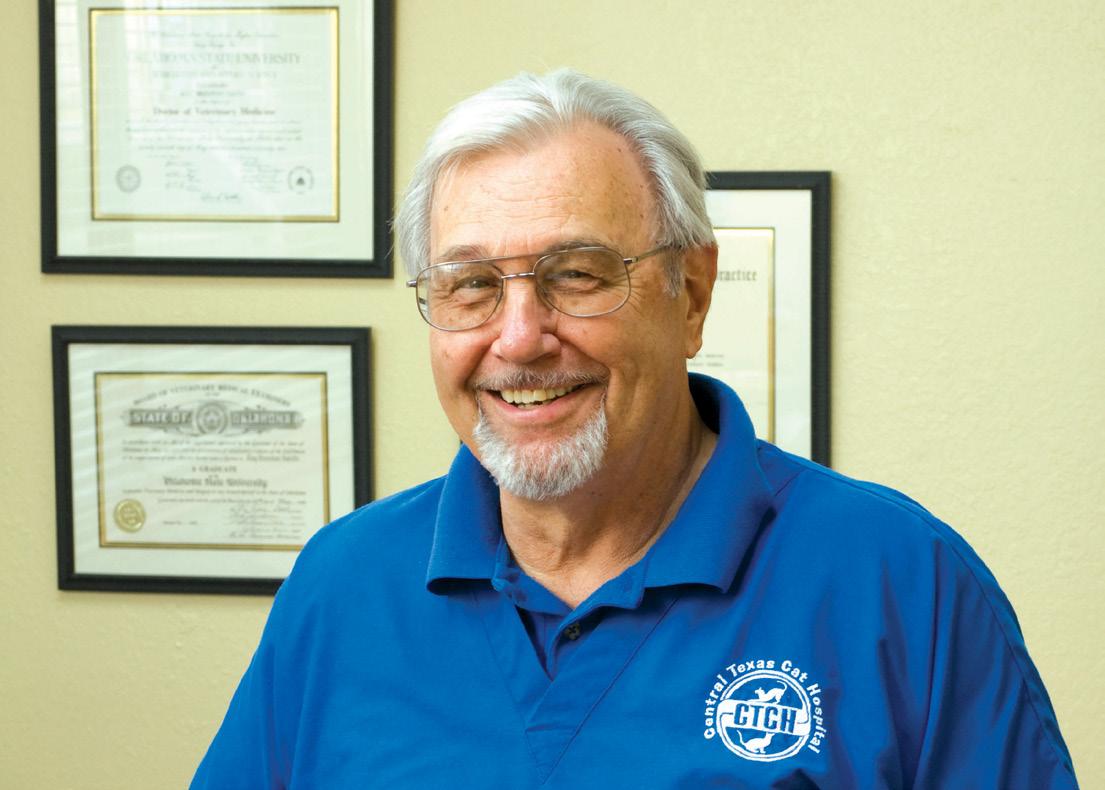
“MY MOTTO IS, ‘GET INVOLVED, STAY INVOLVED AND DON’T BE DISCOURAGED. PERSEVERE. YOU CAN MAKE A DIFFERENCE.’”
— DR. ROY SMITH
“I HAVE TO REMIND MYSELF THAT NOT EVERYONE GETS TO SEE A BALD EAGLE UP-CLOSE IN THEIR LIFETIME.”
— DR. PAUL WELCH
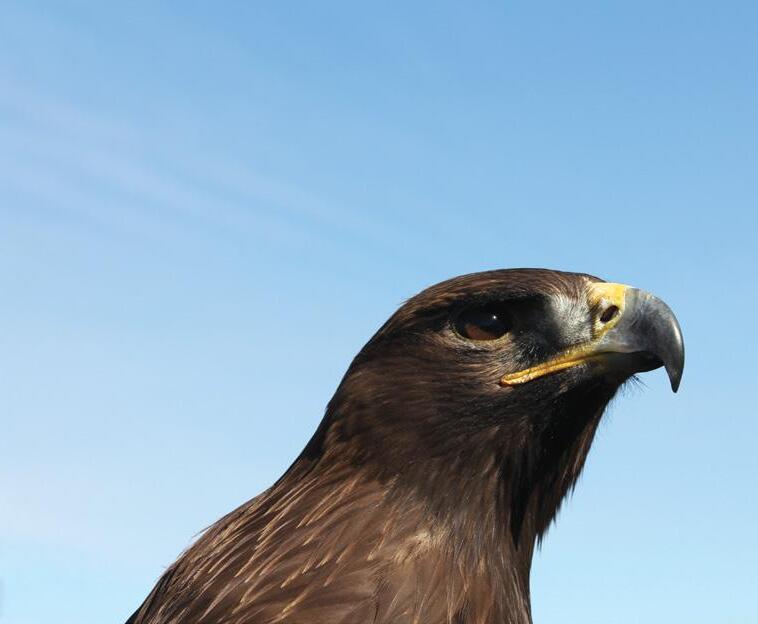
WELCH OFFERS EXPERTISE TO PERKINS AVIARY
Dr. Paul Welch earned his DVM degree from OSU in 1981. Once he figured out he didn’t really want to be a zoo veterinarian, he opened Forest Trails Animal Hospital in Tulsa — and he volunteers his veterinary services for the Grey Snow Eagle House in Perkins, Okla.
“I have been working with Grey Snow Eagle House since the Iowa Tribe of Oklahoma opened it in January 2006,” Welch says. “I visit the aviary in Perkins at least four times a year. The rest of the time, they bring the birds to me. I can pin a broken wing in about 30 minutes.”
Welch also sees about 500 wildlife cases a year.
“I have been able to do a tremendous amount of work with wildlife cases including raptors like the bald and golden eagles cared for by the Iowa Tribe,” Welch says. “I have to remind myself that not everyone gets to see a bald eagle up-close in their lifetime. With the refuge housing about 48 bald eagles, I see them all the time. When one comes in the clinic, I try to remember to check the waiting room for clients. If there are any there, I invite them back. They are truly amazed at these magnificent birds.”
Welch has been involved with the Association of Avian Veterinarians, serving as its president and on the board for 15 years. “I think when we get out of vet school, we need to do something a little extra with our DVM degree,” he says. “Whether it’s wildlife rehabbers or SPCA volunteers, do something where it isn’t about the money but the animals we treat. Some 30-plus years later, I’m still living the dream.”
The Grey Snow Eagle House is the nation’s only facility that has the unique combination of permits that allows it to carry out its mission — rehabilitation, religious use, education and research. Injured eagles are treated and released back into the wild. Those unable to return to the wild are kept at the aviary, where their naturally molted feathers are used in tribal ceremonies. Trained raptors help educate the public about the conservation of eagles, raptors and Native American beliefs. And research efforts support the conservation of eagles, our national bird.
Cl/HS
For more information about the Grey Snow Eagle House, visit eagles.iowanation.org
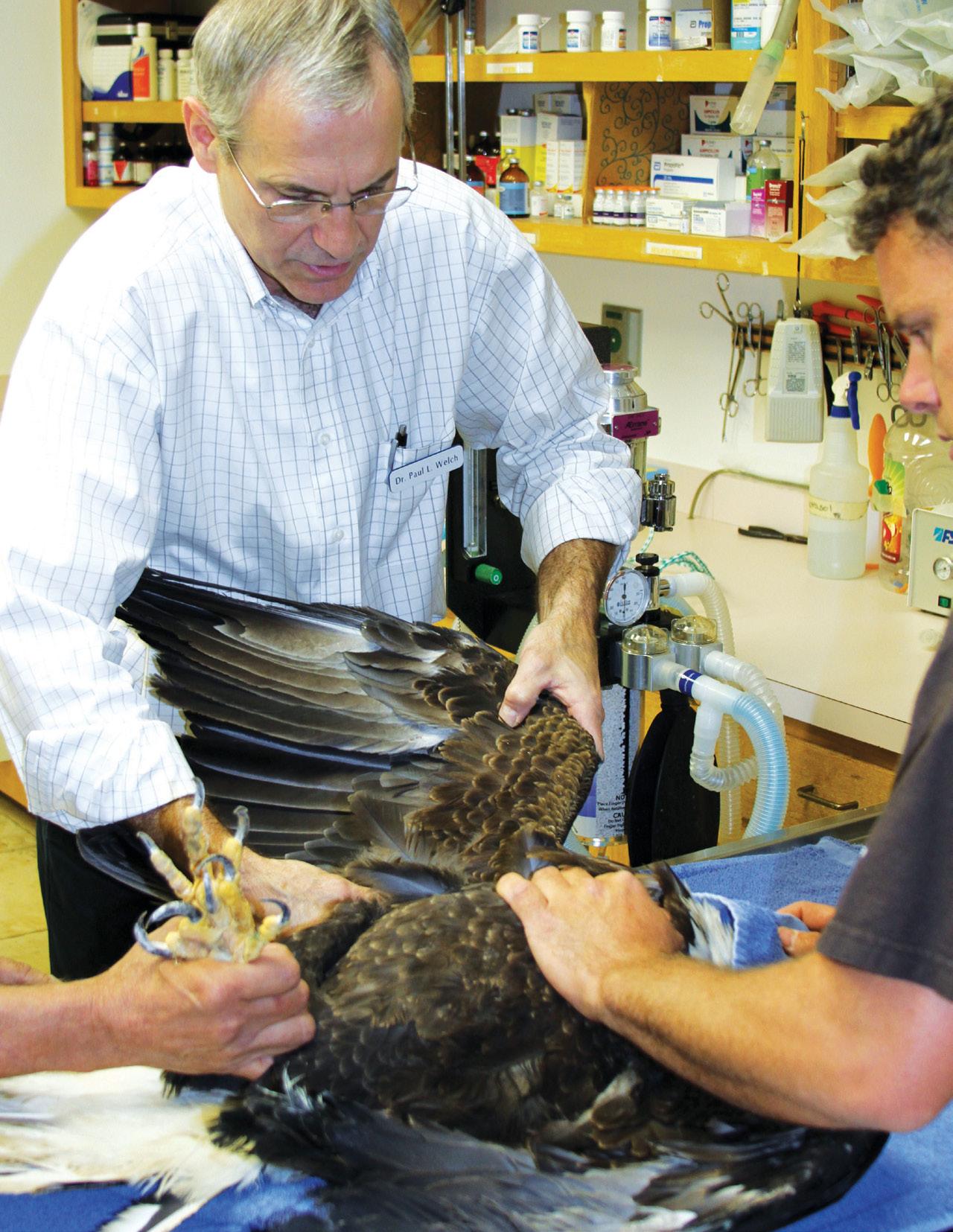

When the members of the Class of 1966 graduated with their DVM degrees, they numbered 40, with 37 men and three women. In May 2016, 12 of the 27 living class members returned to Stillwater to celebrate the last 50 years. Here are brief summaries of their varied careers as OSU Cowboy veterinarians.
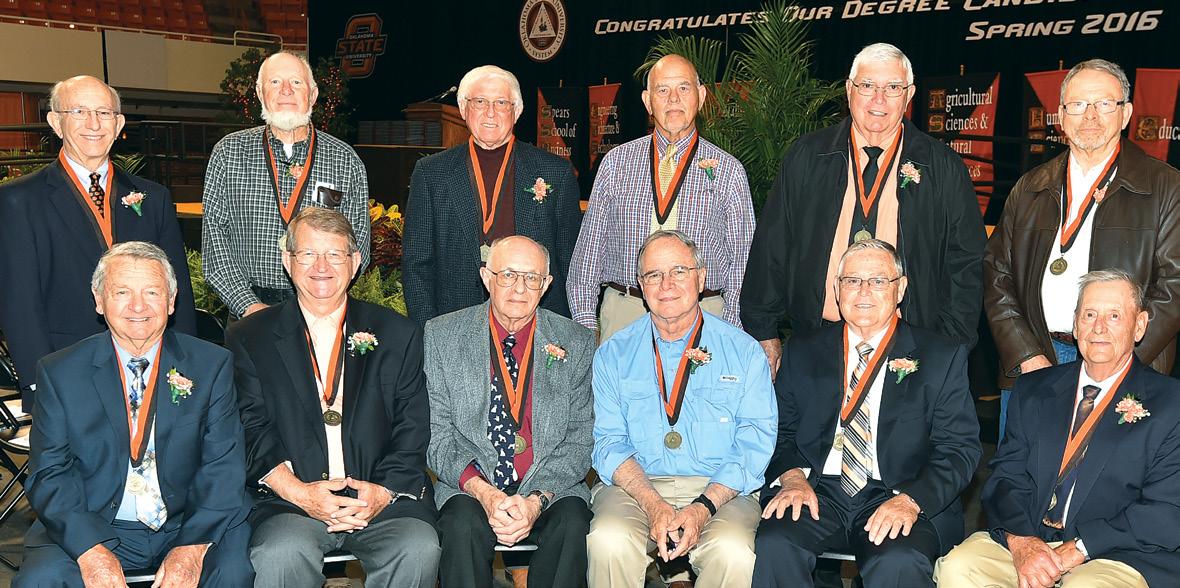
CLASS OF 1966
CATCH UP WITH THE CLASS OF 19 66
ANDY B. BAKER, DVM, became interested in veterinary medicine after spending time with the family veterinarian, Dr. Jack Bostwick (OSU ’51). Following graduation, Baker joined the Air Force as the base veterinarian and public health officer. He also obtained his pilot’s license. He specializes in small animal surgery and often flies to the location of his referral surgeries. The Texas Veterinary Medical Association awarded him the 2016 Medical Specialty Practitioner of the Year Award.
BILL F. BARNUM, DVM, worked in the only veterinary clinic in Beaver, Okla., before joining the Oklahoma Department of Agriculture. He was director of its Food Safety Division until he retired in 2006.
KAYE J. BOSE CHARLES, DVM, was one of three women in the 40-member class. After graduating, she joined a small animal practice in Kansas City, Kan., one of two female veterinarians in the Kansas City area then. She later switched to veterinary relief work until she retired in 2000.
JEFFERSON GARY EDWARDS, DVM, practiced in Arkansas before joining Wayne Farms LLC, the sixth-largest poultry producer in the United States. Part of his responsibility included spending more than a year in Beijing to open the company’s Asian operation. He retired in 1999 and volunteers in his community. The Arkansas Hospital Association named him the 2011 Volunteer of the Year.
EDWARD A. (TONY) FELL, DVM, joined a mixed animal practice in Pryor, Okla., which he bought 10 years later. During the next 31 years, it grew to three partners and six veterinarians. He especially enjoyed large animal medicine and retired in 2009.
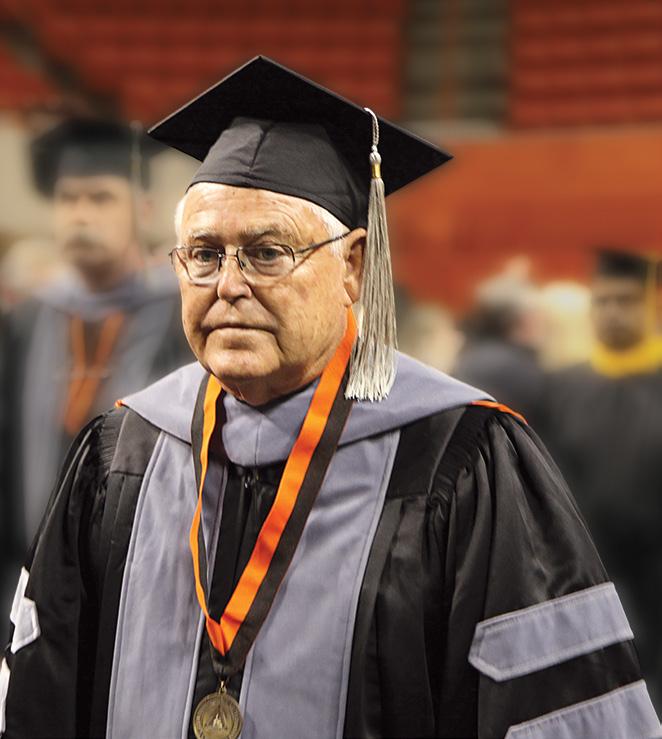
DR. RON GUTHRIE
Fifty years ago, DR. RON GUTHRIE of Woodward, Okla., had no idea he was starting a family legacy when he earned his DVM degree from Oklahoma State University.
Younger brothers Darryl (’74) and W.E. (’76) followed suit. So did Guthrie’s oldest daughter, Kimber, and her husband, Jim Giles (both ’98). In May 2016, Guthrie welcomed another family member into the OSU Cowboy veterinarian line, hooding his great-nephew, Andrew Willis.
“Andrew was born and raised in Woodward, so we were very close to him. As he grew up, he started coming around the clinic,” Guthrie says. “I didn’t know that I was going to get to hood him, but I knew that he was going to graduate. It’s an honor for me to be able to do that. I think he’ll make a great veterinarian.”
He remembers well his own history. “I grew up in Burns Flat, Okla., on a dairy farm,” Guthrie says. “I saw the necessity for veterinarians and about the age of 10 or 11, I decided that I would like to be a veterinarian. I was on the judging team in FFA, and we made annual trips over here, so I was already familiar with OSU. I was a football and basketball fan, so
it was the only consideration I ever had as far as where to go to earn my DVM degree. I had no idea it would start such a legacy.”
Following graduation, Guthrie served two years in the Army. He then worked at a mixed animal practice in Woodward for 38 years before retiring in 2006.
“The highlight of my career was living in a relatively small community and becoming part of that community,” he says. “The friendships that you build and the service you provide, whether it’s large animal or small animal. It’s just a great, rewarding career.”
Guthrie said the 50-year reunion has been fun, visiting and seeing how his classmates have lived their lives.
“One of the challenges is just recognizing everybody after 50 years,” he says. “I’ve seen one or two that I would not have known but most of us still have at least a resemblance after 50 years. I’m very thankful for OSU and the veterinary school.”
Cl/HS
Check out a video of Dr. Guthrie at OKLA.ST/gzdVtZ
ROBERT W. FULTON, DVM, PH.D., served in the Air Force Veterinary Service before earning a master’s degree and a doctorate in veterinary microbiology. A critical thinker and scholar, he spent 34 years teaching and conducting bovine respiratory disease research at OSU’s veterinary center. He served as department head, a Regents Professor and the Endowed Chair in Food Animal Research. In 2015, he received the Outstanding Service Award from the Academy of Veterinary Consultants.
GERRY L. GRANT, DVM, served two years in the Army before becoming the resident veterinarian for Beaver Dam Plantation, a purebred Angus ranch in north Mississippi. In 1971, he became the sole owner of a Clarksdale, Miss., mixed animal practice. His practice became the fifth American Animal Hospital Association-certified practice in Mississippi at that time. He continues working there today.
WILLIAM A. GRANTHAM, DVM, decided to focus on equine medicine and surgery. He worked for two racetrack practitioners before establishing his own equine practice in 1972. He serves several racetracks in northern California’s Bay Area today.
NOLAN L. GROSS, DVM, served in the Army in charge of guard dogs and meat inspections for Ohio and Pennsylvania. In 1969, he built Mingo Road Veterinary Hospital in Tulsa and in 1981, he and his wife, Ginger, opened Southern Agriculture, a retail store with “all things for all animals,” which grew to eight stores. He died in December 2009; his widow attended the 50-year reunion. His family still owns and operates Southern Agriculture.
JOHN W. HAHN, DVM, MS, served two years in the Air Force. He worked at the St. Louis University School of Medicine doing surgical research for 12 years, then joined a small animal practice for five years. He then became a veterinary medical officer for the USDA Animal and Plant Health Inspection Service Veterinary Services, serving as a poultry disease epidemiologist. After more than 20 years at USDA, he retired in 2005.
TERRY A. JACKSON, DVM, PH.D., worked for the U.S. Public Health Service. After becoming a diplomate of the American College of Veterinary Pathology, he joined the USDA Animal Research Service pathology unit. He went on to conduct toxicology and pathology studies at Upjohn on compounds designed for humans. Several mergers and 24 years later, Pfizer ended the studies, and Jackson retired.
STEPHEN M. JONES, MS, DVM, was a commissioned officer for the U.S. Public Health Service as an epidemiologist for the Centers for Disease Control. In 1971, he opened a central veterinary hospital and three outpatient clinics with three other veterinarians. This practice grew into a 12-doctor, 60-plus staff operation with four outpatient clinics and one central hospital.
ERNEST S. MARTIN, DVM, worked at private practices while attending Southwestern Baptist Theological Seminary. He eventually opened a practice in Dallas, working there for 28 years. For 22 of those years, he also pastored a church. In addition, he did cancer research with Morton Cancer Hospital and Wadley Research Institute before retiring in 2003.
STAUFFER MILLER, DVM, served two years in the Army Veterinary Corps. He also worked in small animal practices in West Virginia and in state diagnostic laboratories in West Virginia and Maryland. In 1994, he moved to Cape Cod, Mass., and stopped practicing veterinary medicine to focus on historical research.
WARREN K. NEWBY, DVM, served two years at a research post in the Army. He then opened a solo mixed animal practice and later built a new clinic, both in Kansas, where he practiced his entire career. He still practices some.
BETTY L. REDDICK, DVM, worked in small animal or mixed animal practices throughout her career. She also completed a residency in radiology at Kansas State University and did graduate program studies in oncology at Colorado State University. She served several years as a director in the New Mexico Veterinary Medical Association and is now retired.
ROBERT J. (JACK) ROBERSON, DVM, worked 21 years at an AAHA-certified small animal hospital in Texas before moving to clinics in Missouri. He has served as the Class of 1966 representative and as president of the OSU College of Veterinary Medicine Alumni Society. His other love involves plants and plant genetics. He is manager of product development at his 40-year-old company, American Daylily and Perennials, and has received several horticulture awards and honors.
RONALD Q. ROBERTS, DVM, served in the military for five years, including three on assignment in Berlin. After returning to the U.S., he owned and managed a small animal practice in Tulsa for 25 years before merging the practice with Dr. Ross Clark at Woodland Animal Hospital. He continued to practice there until retirement.
JOHN R. WEBSTER, DVM, served two years in the Army Veterinary Corps. He returned to practice in North Carolina, doing mainly large animal work. He is retired and raises cattle on his farm. He enjoys checker tournaments and won the National Checker Championship in 2007.
Cl/HS
In 2016, OSU Cowboy veterinarians and guests gathered at the Wes Watkins Center for the Corral Crawl.
A great time was had by all, especially those celebrating class reunions.
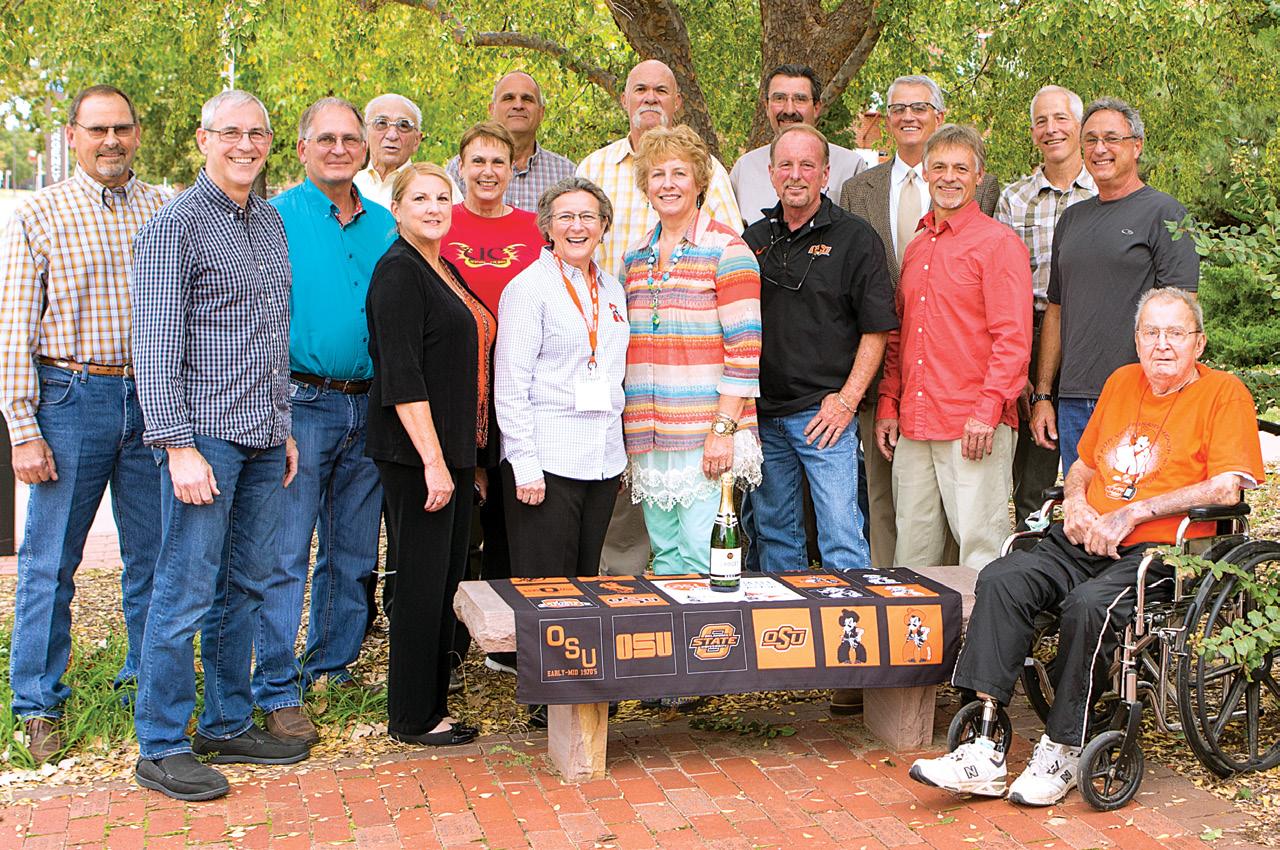
The Class of 1981 dedicated this bench in honor of their class and in memory of classmates who have passed away.
Front row, from left: Drs. Paul Welch, Genie Bishop, Lynetta Freeman, Renee Hammer, Stephen Meyerdirk, Jeff Tidwell, Mark Kopit and Roger Panciera, emeritus professor
Second row, from left: Drs. Dee Gragg, Larry Thompson, and Paula Bailey
Third row, from left: Drs. Art Quinn, emeritus professor; Kevin Allen; Bob Ables; Phillip Steinert; Rocky Bigbie and Tom Taggert
Class of 1991
Seated, from left: Drs. Jerry Ritchey, Susan Harrington, Elizabeth Owen, Tracy Jenkins, Karen Kapp-Vance and Richard Hufnagel
Standing, from left: Drs. Travis Mauldin, Troy Osborne, Steven Lucas, Christopher Schumpert, Mark Richards, Steven Giles and Mike Jones
Seated, from left: Drs. Michelle Quinn, Karen Matlock, Leslie Cole, Diane Delbridge, Susanne Short, Tamara Dormire, Susan Gaffney and Susan Tomlinson
Standing, from left: Drs. Joseph Quinn, Chris McMeans, Kenneth Powell, Michael Nichols, Roddy Roberts, Keith Fuchs, Grant Rezabek, Richard Prather, Tim Wilkins, Martin Furr, Matt McQuade, William Boyd and Paul Robertson
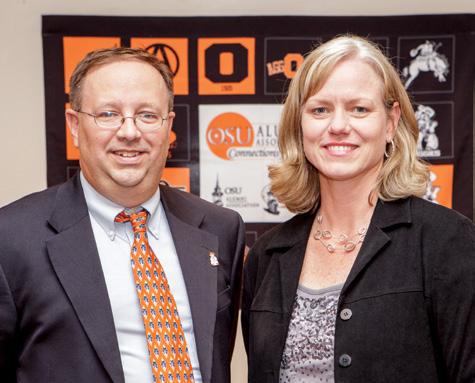
Class of 1996
Drs. Timothy Snider and Kelly Cooper
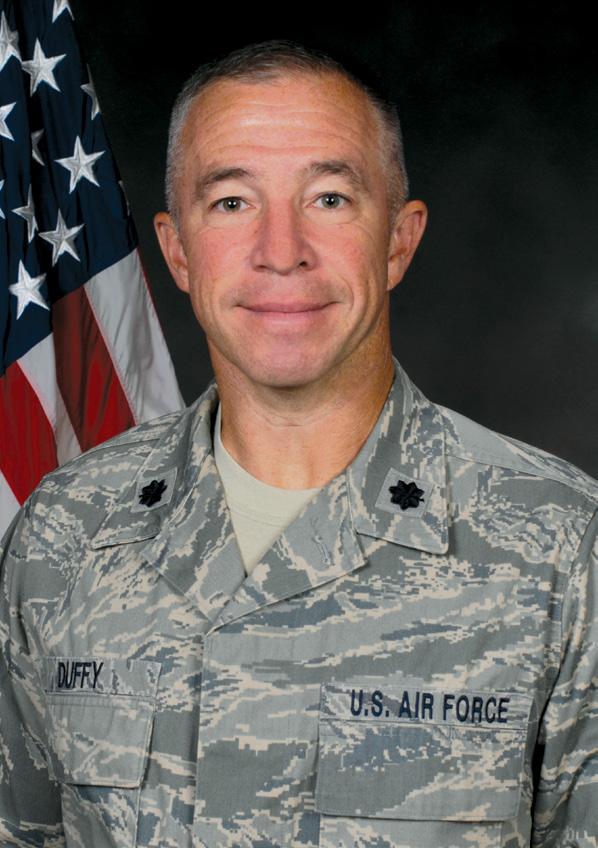
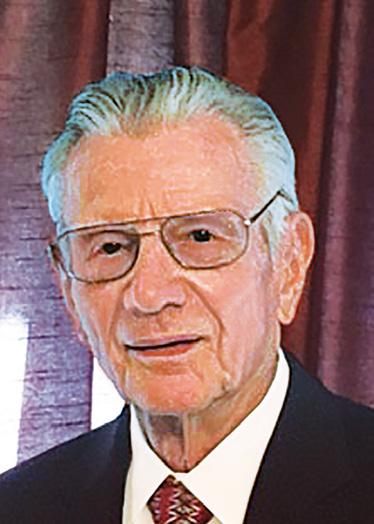
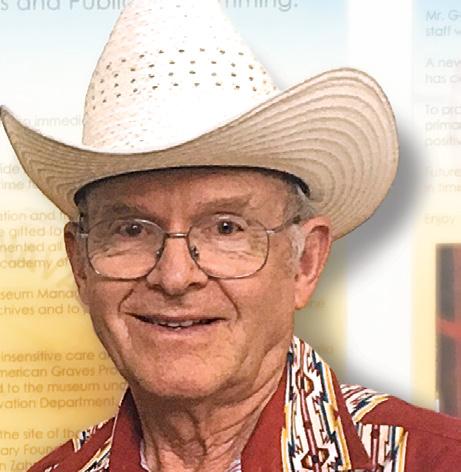
DVM,
MPH, DACVPM
U.S. Air Force Lt. Col. Mark R. Duffy, DVM, MPH, DACVPM, of Cibolo, Texas, earned his DVM degree from Oklahoma State University in 1994. He partnered in a rural western Montana practice before accepting an Air Force commission in 1999. In 2003, he earned a master’s degree in public health. He is an active diplomate of the American College of Veterinary Preventive Medicine.
Duffy currently serves as the public health officer for the Air Force Education and Training Command at Fort Randolph, Texas. Among his many successes, Duffy developed a weeklong course in humanitarian disaster response and led training teams in The Gambia, Iraq, Afghanistan, The Republic of Congo, and Macedonia. He has led multiple infectious disease outbreak responses around the world, including dealing with an outbreak of plague in northern Uganda and characterized Japanese encephalitis epidemiology in Vietnam.
In 2007, Duffy led a team of scientists in identifying and studying the first known Zika virus outbreak on Yap Island in Micronesia. Subsequently, his paper in the New England Journal of Medicine documented the outbreak. His published literature on Zika and other outbreaks has been cited by more than 1,000 peer-reviewed papers.
DONALD D. HOLMES
DVM, MS, DACLAM
Dr. Donald D. Holmes of Wichita, Kan., earned his DVM degree from OSU in 1954 and serves as class representative.
He worked in a mixed animal practice before serving in the U.S. Army (1955-59) as a first lieutenant and receiving a letter of commendation. The first veterinarian to serve as chief of the Exp erimental Animal Laboratory, he established the hospital’s Surgical Research Unit.
He earned a master’s degree in veterinary pathology from OSU in 1962, then spent three years as the first lab animal veterinarian at the Civil Aeromedical Research Institute in Oklahoma City. Under his leadership, it became AAALAC accredited.
Holmes’ next appointment was split between the University of Oklahoma Health Sciences Center and the Oklahoma City Veterans Affairs Medical Center. Shortly after starting, he became a diplomate of the American College of Laboratory Animal Medicine (1966). Again, he was the first lab animal veterinarian at both the VA and OUHSC, and both earned AAALAC accreditation under his leadership. He also assisted with pathology labs for OU medical and dental students and established a nationwide training program for VA animal
THOMAS G. LOAFMANN DVM
Dr. Thomas G. Loafmann of Glencoe, Mo., owns and operates Equine Medical Associates Inc., one of the first equine medical and surgical clinics in the St. Louis area. He still practices to day, doing ambulatory calls and specializing in dentistry.
Born in Clayton, N.M., Loafmann grew up in Oklahoma and graduated from Prague High School as valedictorian. He earned a bachelor’s degree in agriculture (1961) and a DVM (1963) from OSU. He worked in a mixed animal practice, then served in the Army Veterinary Corps from 1966 to 1968. Soon after his discharge, he established his own equine-only practice in 1968.
An active member of organized veterinary medicine, Loafmann is a member of the American Veterinary Medical Association (1963), Missouri Veterinary Medical Association (1965) and the American Association of Equine Practitioners (1969). He has served in leadership roles and has published a book on equine hospital planning and construction. He has also taught equine science and health care at St. Louis Community College.
In 2015, the secretary of agriculture presented the Dr. Daniel E. Salmon Award to Duffy for exemplary achievement in Federal Veterinary Medicine. Some of the major military awards and decorations he has earned include the Bronze Star, Meritorious Service Medal, Air Force Commendation Medal, National Defense Service Medal and Global War on Terrorism Expeditionary Medal.
Mark is married to retired Air Force Maj. Angela Duffy. They have four children and share a passion for fitness and fly fishing.
To see Lt. Col. Duffy’s video on the Zika Virus, visit okla.st/2hnziCO
facility supervisors. In addition, Holmes served as the lab animal consultant for the OU Medical Research Foundation and OU main campus. Through the efforts of Dr. Gary White, a library/ conference room in the OUHSC’s Biomedical Science Building was dedicated to Holmes.
From 1979 to 1986, Holmes served as the director of Laboratory Animal Resources and professor of veterinary pathology at OSU’s Center for Veterinary Health Sciences. He was also the attending veterinarian for OSU’s main campus. He authored a reference book, Clinical Laboratory Animal Medicine: An Introduction, which has b een distributed internationally.
His final position (1986-93) before retirement was chief veterinary medical officer for the D epartment of Veterans Affairs in Washington, D.C. In 1991, the VA recognized Holmes’ commitment and dedication with the establishment of the Laboratory Animal Medicine Reference Library.
Throughout his career, Holmes has been active in organized veterinary medicine. He is a member of the American Veterinary Medical Association, the Oklahoma Veterinary Medical Association, American College of Laboratory Animal Medicine, American Association for Laboratory Animal Science and the Society of Experimental Biology and Medicine, to name a few.
Holmes mentored many young veterinarians, especially through his work with the VA. He and colleagues created the Association of VA Veterinary Medical Officers to better coordinate activities and communications nationwide.
He was a member of the Edmond YMCA’s board of management and the First United Methodist Church of Edmond’s board of trustees. He is a life member of the OSU Emeriti Association (president in 1998-1999), the OVMA and the OSU Alumni Association.
He and Mary have been married 61 years. They have a son and a daughter.
Loafmann has mentored 93 pre-veterinary volunteers, 43 veterinary student externs and 37 graduate interns. As a class representative, he has spent countless hours during the last 53 years keeping his classmates connected and organizing class reunions.
He was instrumental in establishing the Class of 1963 Endowed Distinguished Lectureship with his classmates. The endowment p rovides opportunities for faculty, students and practitioners to interact with eminent scholars, speakers and leaders of national and
international reputation in biomedical research, veterinary science and medicine each year during the Fall Conference.
Loafmann has served on missions to the Navajo Indian Reservation (1977, 1978), Cheyenne Indian Reservation (1981), Bolivia (1984, 1985) and Mongolia (2002, 2006, 2013). He was instrumental in conceiving and implementing a continuing education program for Mongolian veterinarians that has substantially raised the level of veterinary medical expertise and practice there.
He has been married to Fredda-Lois for 52 years. They have a son, Thomas G. Loafmann Jr., a daughter, Beth Renee Pawley, and four grandchildren. He is dedicated to his family and the Quest Evangelical Free Church, where he serves on the Elder Board. He is known for his work ethic, his dedication to his clients and to the well-being of their horses. He goes above and beyond the call of duty and has truly had a positive impact on the profession of veterinary medicine.
Cl/HS
Dr. Rod Hall didn’t set out to become the state veterinarian. He was happy in his mixed animal practice, where he enjoyed the large animal work most of all. So how did the man who leads the entire agriculture livestock industry in Oklahoma come to be not only the state veterinarian but Oklahoma’s 2016 Veterinarian of the Year, so named by the Oklahoma Veterinary Medical Association?
The answer is easy — hard work and a commitment to doing the best possible job for his clients. Those clients went from individuals when he was in private practice to producers and veterinarians across Oklahoma as state veterinarian.
“I initially took a job here at the Department of Agriculture as a staff veterinarian,” Hall says. “I was over the cattle programs and a Brucellosis epidemiologist. I just worked for my boss, and she was great. She gave me a lot of leeway, and I pretty much did my job and was very happy doing that. Then she took another job with the United States Department of Agriculture and left us without a state veterinarian.”
Dr. Michael Herrin, the assistant state veterinarian at the time, and Hall discussed the open position.
“We both applied with the idea that probably one or the other of us would be chosen,” Hall says. “We just thought it would be better for one
of us to take it where we already knew the process and thought it would be a smoother transition. So ultimately that’s how I ended up here; it certainly wasn’t on my bucket list or anything.”
Since taking the position in 2011, Hall has discovered much to enjoy about being state veterinarian.
“I love that I get to talk to a lot of veterinarians,” he says. “We’ve worked really hard at trying to develop a good relationship with the practitioners, and I think we’ve made progress. And then I enjoy interacting with the different producer groups like Oklahoma Cattlemen’s Association, Oklahoma Pork Council. I enjoyed my clients when I was in practice, and I feel like
“DON’T BE AFRAID TO GO TO A SMALL TOWN AND GO INTO A MIXED ANIMAL PRACTICE. IT’S HARD WORK. BUT I THINK YOU HAVE SUCH AN OPPORTUNITY TO REALLY MAKE A POSITIVE IMPACT ON PEOPLE’S LIVES. WHEN A VETERINARIAN MOVES INTO A SMALL TOWN, PEOPLE LOOK TO YOU AS SOMEONE THAT THEY RESPECT. WE REALLY NEED MIXED ANIMAL PRACTITIONERS.”
"DON'T BE AFRAID TO GO TO A SMALL TOWN AND GO INTO A Ml ED ANIMAL PRACTICE, IT'S HARD WORK, BUT I THINK YOU HAVE SUCH AN OPPORTUNITY TO REALLY MAKE A POSITIVE IMPACT ON PEOPLE'S LIVES, WHEN A VETERINARIAN MOVES INTO A SMALL TOWN, PEOPLE LOOK TO YOU AS SOMEONE THAT THEY RESPECT, WE REALLY NEED Ml ED ANIMAL PRACTITIONERS,"
—DR. ROD HALL
now I still have a similar job. I have clients, but my job now is basically to protect the livestock industry in Oklahoma.
“Sometimes we have to quarantine herds and maybe even depopulate a herd of animals to get rid of a disease. It’s hard, but it’s also very interesting doing the epidemiology and trying to figure out where that disease came from and did it go somewhere? Do we have it contained? Whenever I talk to veterinarians, and especially younger veterinarians, I encourage them to call with problems or questions. We would rather help you work through something than have you do something wrong.”
Hall calls communication key, and today’s technology makes it easier to disseminate information.
“Our mission is to protect the herd and flock of Oklahoma, and we do that in so many different ways. Today, we have a staff with about 15 field p eople. We consider the practitioners our partners in working with producers and educating the public on why it’s important to get your horses tested for EIA every year. Why it’s important to get a certificate of veterinary inspection when you’re traveling to another state. If they have questions or don’t agree with something that we say, well, let us know. We want to help them in any way that we can.”
And that line of thinking and keeping animal owners and veterinarians statewide informed has earned Hall the respect of his peers.
“It’s just a tremendous honor to be given that award (Oklahoma Veterinarian of the Year) by the people who I consider to be my colleagues and friends,” he says. “I thank the OVMA for the award. I am proud of this profession. I’ve always thought that being a veterinarian was a really neat way to make a living.”
Hall earned his DVM degree in 1977. He married that summer, and the couple went to Alva, Okla., where he worked for Dr. Ben McKinley (OSU ’72) at Ridgeview Veterinary Clinic for one year. Even though he loved Alva, the clinic and the people, he decided that wasn’t where he wanted to spend the rest of his life. The couple moved to Tishomingo, Okla., where he ran a mixed animal practice for 29 years.
For those thinking of working in a mixed animal practice, Hall has some words of encouragement.
“Don’t be afraid to go to a small town and go into a mixed animal practice. It’s hard work. You’re going to have to take after-hour calls. But I think you have such an opportunity to really make a positive impact on people’s lives. When a veterinarian moves into a small town, people look to you as someone that they respect. There are lots of great civic organizations that you will be invited to be a part of. We really need mixed animal practitioners.”
Whether he’s taking a veterinarian’s call to discuss a potential disease problem or discussing cases that need testing performed or epidemiological investigations completed, Dr. Rod Hall is part of all Oklahomans’ lives as he and his team work to keep the food supply safe and animals and their owners healthy.
To watch the video of Dr. Rod Hall talking about his career, visit okla.st/2hnOL5J
At the Oklahoma Veterinary Medical Association’s 101st Annual Convention and Expo, the following OSU alumni were also honored:
Dr. Bob Shoup (’82), COMPANION ANIMAL PRACTITIONER OF THE YEAR
Dr. Kimberly Huckaby (’06), YOUNG PRACTITIONER OF THE YEAR
Dr. Dan Merkey (’68), DISTINGUISHED SERVICE AWARD
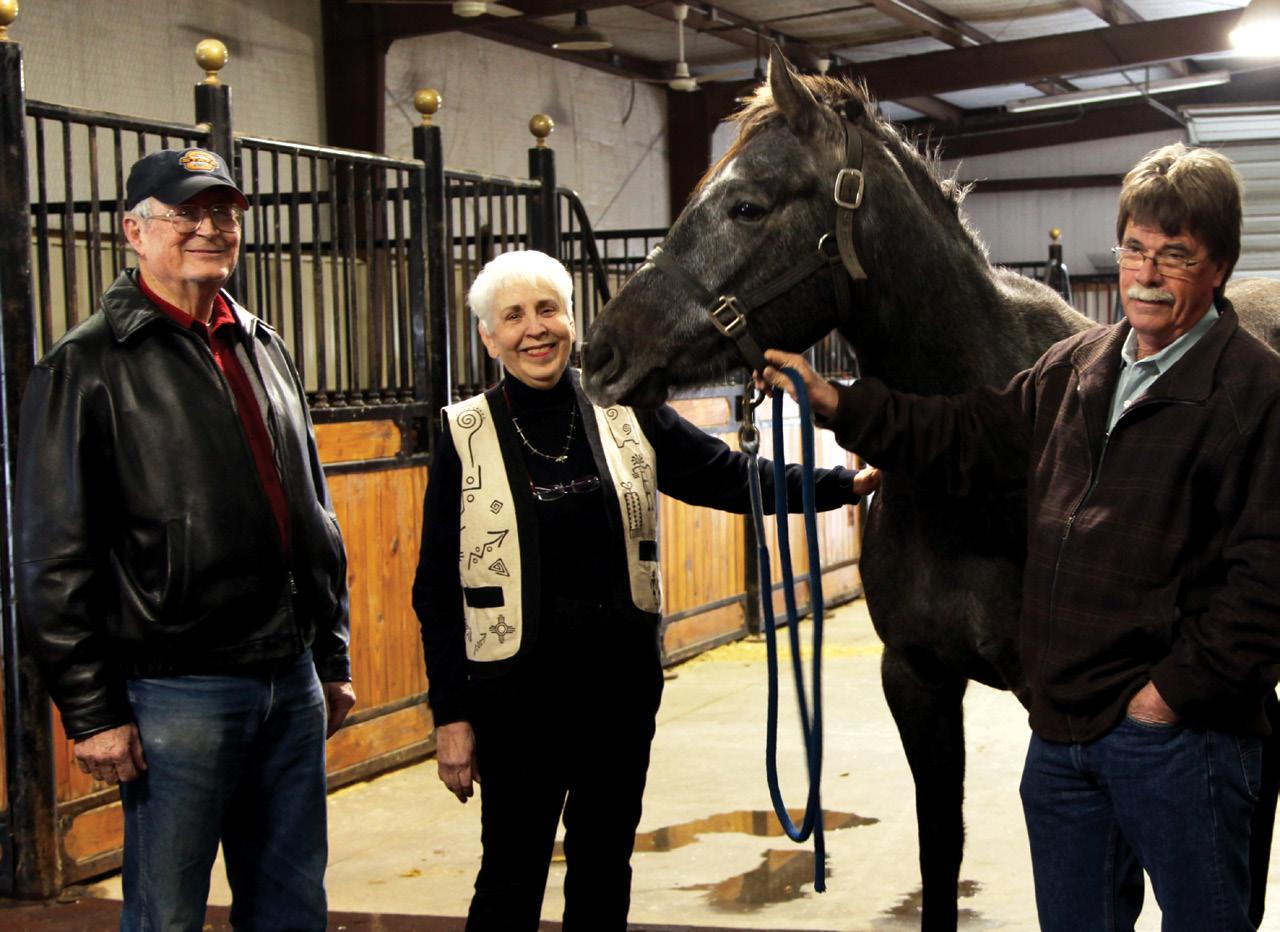
SAINS ENDOW SCHOLARSHIP TO HONOR WILEY’S CARE AND HELP KEEP POSITIONS FILLED
It’s not often that clients would endow a scholarship in honor of their favorite veterinarian, but that’s exactly the case for Dr. Mike Wiley of the Equi-Center Veterinary Hospital in Norman, Okla.
Clients Katherine and Edwin Sain of Oklahoma City have been bringing their horses to Wiley since 1986.
“We inherited him from my father-in-law, who had race horses,” Katherine Sain says. “He brought his horses here so when we moved back to Oklahoma, we started bringing our horses here. I like his ability to get the job done when it needs to be done.”
“Also, he cares,” Edwin Sain adds. “As far as taking care of the horses, he cares.”
“It’s like he has a personal interest in them. They are not just somebody’s horses,” Katherine continues.
The Sains met while attending Oklahoma State University. They lived across the United States before returning to Oklahoma when aging parents needed tending. The couple started raising and showing registered paint horses.
They have been so impressed with Wiley that they recently endowed a scholarship in his honor.
“We had been thinking about it for a couple of years,” Katherine says. “After talking to him on several occasions, he said there are fewer and fewer large animal vets. There is a need. You have to have someone to take his place when he decides to retire. And we thought what better than the vet school, at the school we graduated from, to endow the scholarship in his name.”
Wiley says learning of the scholarship set off an array of emotions.
“It was a very nice honor. It’s nice to have your clients think that much of you,” he says.
The Dr. Michael J. Wiley Endowed Scholarship in Large Animal Medicine will be awarded to a thirdor fourth-year veterinary student who has achieved high academic performance and is interested in large animal medicine. The first award was given in April to Darcy Messerly of Enterprise, Utah. A member of the Class of 2016, Messerly has joined Dr. Rod Auffet (OSU CVM ’95) at a rural, predominantly large animal mixed veterinary practice in Wray, Colo.
“I grew up on a ranch in Oklahoma. OSU’s veterinary college was a good place to go and I got an excellent education there, graduating in 1980,” Wiley says. “You get to deal with a variety of people in a variety of situations. No days are the same; they are always different. I think I’m fortunate in that my profession also turned out to be my passion.”
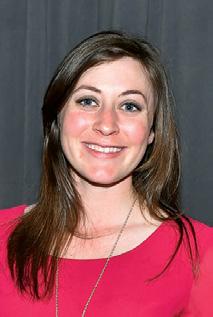
received the first Dr. Michael J. Wiley Endowed Scholarship
“… THERE ARE FEWER AND FEWER LARGE ANIMAL VETS. … I HOPE PEOPLE FOLLOW UP ON WHAT WE’VE STARTED.”
" ... THERE ARE FEWER AND FEWER LARGE ANIMAL VETS .... I HOPE PEOPLE FOLLOW UP ON WHAT WE'VE STARTED."
— KATHERINE SAIN
He’s not the only one passionate about horses in this story.
“We like horses so that’s where our main thrust is,” Katherine says. “More people are getting in the horse business and more vets are getting out so we’re going to need more vets. And if you’re into agriculture or anything that supports the horse industry or vice versa, do something and give it back. There aren’t enough to go around, and we need more large animal vets.”
OSU graduates between 85 and 90 veterinarians a year, with around a third going into large animal practices.
“No gift is too small,” Katherine says. “I hope people follow up on what we’ve started. Pick a scholarship that is already started and put something to it. If you want to start your own, do that, to o. I’ve always said, ‘In lieu of flowers, send it to the scholarship.’”
DERINDA BLAKENEY, APR
Cl/HS
To support future veterinarians, contact the OSU Foundation’s Heidi Griswold, senior director of development for OSU’s Center for Veterinary Health Sciences, at hgriswold@osugiving.com or 405-385-5656
To watch a short video with the Sains and Dr. Wiley, visit okla.st/1ONTbbX
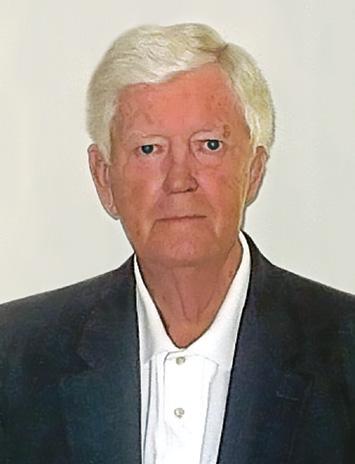
LOUIE G. STRATTON
WE HONOR THOSE WHO HAVE SERVED THE PROFESSION, OUR DISTINGUISHED COLLEAGUES AND FRIENDS.
Louie G. Stratton, DVM, Ph.D., Diplomate of the American College of Theriogenologists, died Aug. 1, 2016. He was 85.
He was born Oct. 25, 1930, in Cookson, Okla., and remained a lifelong resident. He earned his DVM degree from then-Oklahoma A&M College in 1955 and went into private practice in Siloam Springs, Ark., from 1955 to 1968. Dr. Stratton was a member of the Arkansas Veterinary Practitioners Association and the Arkansas Veterinary Medical Association, serving as president in each organization.
From 1968 to 1971, Dr. Stratton was a National Institutes of Health postdoctoral trainee in the Department of Physiological Sciences at Oklahoma State University’s College of Veterinary Medicine. In 1971, he became a research associate and later a temporary assistant professor.
In 1972, Dr. Stratton worked as an assistant professor in the Department of Animal Sciences at the University of Arkansas. In July 1973, he returned to his alma mater as an associate professor in the Department of Medicine and Surgery, becoming a professor in 1977.
From 1978 to 1979, Dr. Stratton was also the acting coordinator of veterinary research. From 1979 to 1980, he served as professor and coordinator of animal disease research, and in 1980, he was appointed as professor and director of research. The president appointed Dr. Stratton to serve as the first veterinary member on the Joint Committee for Food and Agriculture Research of the U.S. Department of Agriculture. Ordered by Congress, this committee was comp osed of individuals from private industry, universities and the USDA and charged to produce a report on the future role of the USDA.
In 1980, Dr. Stratton was appointed as the first director of the Boren Veterinary Medical Teaching Hospital, opening the hospital. From 1984 to 1985, he added interim head of medicine and surgery to his titles of professor and hospital director. From 1985 to 1988, he carried the responsibilities of professor, head of medicine and surgery, and hospital director. From 1988 until he retired in 1989, Dr. Stratton served as professor and assistant dean of college outreach for OSU’s College of Veterinary Medicine.
Upon his retirement, the Stratton Staff Award was established at OSU’s College of Veterinary Medicine. Dr. Stratton wanted this award to honor outstanding staff members for their dedicated service and many key contributions. Nominations are accepted from any employ ee of today’s Center for Veterinary Health Sciences and recipients are selected by an ad hoc committee appointed by the dean.
During his OSU tenure, Dr. Stratton served on numerous academic committees and mentored several veterinary and graduate students. He was an active member of several professional organizations including the American Veterinary Medical Association, the Oklahoma Veterinary Medical Association (president), North Central Oklahoma Veterinary Medical Association (president) and the Society for Theriogenology. In 1991, the Oklahoma Veterinary Medical Asso ciation named Dr. Stratton the Oklahoma Veterinarian of the Year, and in 2008, OSU’s Center for Veterinary Health Sciences awarded him a Distinguished Alumnus Award for his contributions to OSU, his community and the profession of veterinary medicine.
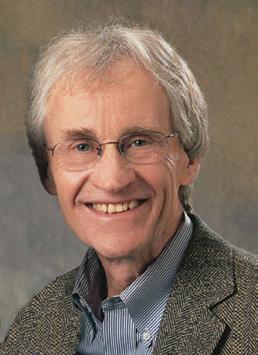
Dr. Gordon Andrews
Dr. Gordon Allan Andrews of Manhattan, Kan., died on Jan. 17, 2016, at Stormont Vail Medical Center in Topeka, Kan. He was 62.
Born in Batavia, N.Y., he earned his bachelor’s degree from Cornell University (’75) and his DVM degree from OSU (’84). Following graduation, he worked in general and emergency veterinary medicine in New Jersey. In 1987, he entered Kansas State University, earning his doctorate in anatomical pathology in 1991 and completing his residency in veterinary pathology in 1992. He became a Diplomate of the American College of Veterinary Pathologists in 1993. He was a professor of diagnostic pathology at the KSU College of Veterinary Medicine for 22 years.
Dr. Andrews loved being outdoors and cultivating his flower and vegetable gardens. He enjoyed hiking, fishing and attending sporting events with his family. He was a talented woodworker and well known for his cooking.
He is survived by his wife, Mary Anne, and their two daughters, Katherine Andrews of Lawrence, Kan., and Emily Andrews of Manhattan, Kan.; his parents, Gordon and Barbara Andrews of Del City, Okla.; as well as many other relatives and friends.
Memorial donations may be made to Public Television station KTWU Washburn University in Topeka or Habitat for Humanity in care of the Yorgensen-Meloan-Londeen Funeral Home, 1616 Poyntz Avenue, Manhattan, KS 66502.
SOURCE: YORGENSEN-MELOAN-LONDEEN FUNERAL HOME
Dr. M. Joseph Bojrab
M. Joseph Bojrab, DVM, MS, Ph.D., died at his Las Vegas home on Sept. 13, 2016. He was 76.
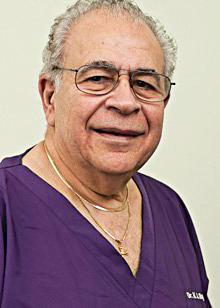
Born in Fort Wayne, Ind., he earned his DVM degree from Purdue University in 1964. He joined the Oklahoma State University veterinary clinical sciences faculty in 1966 as an instructor in the Department of Veterinary Surgery. He earned a master’s degree in physiology in 1968. In 1969, he received a National Science Foundation Faculty Fellowship and traveled to the University of Bristol, England, where he studied veterinary anatomy and earned his Ph.D. in 1971. Dr. Bojrab returned to OSU and was appointed associate professor and head of small animal surgery in 1973. He later taught at the University of Missouri College of Veterinary Medicine before opening a surgical consulting practice in Las Vegas in 1987.
Dr. Bojrab was known for his surgery textbooks, lectures and hands-on laboratory courses featuring surgical pointers and techniques. It has been calculated that he delivered more than 800 seminars and presentations on veterinary surgery around the world. Dr. Bojrab was also heavily involved in continuing education, recruiting speakers for and managing the clinical track of the Central Veterinary Conference.
Memorial gifts may be made to the Mary W. Blazer Fund for Gastroesophageal Cancer Research (www. marysfund.org). Mary (Bojrab) Blazer and Dr. Bojrab were first cousins who were very close.
SOURCES: DVM360 AND KRAFT-SUSSMAN FUNERAL SERVICES
Dr. John Day
John C. Day, DVM, M.D., of Kerrville, Texas, died Oct. 28, 2016. He was 86.
Born in Eden, Texas, he grew up in Black Fork, Ark. He attended the University of Arkansas in Fayetteville and earned his DVM degree from OSU in 1955. He changed his career to human medicine, studying at the University of Oklahoma School of Medicine, where he met his wife of more than 50 years. He specialized in obstetrics and gynecology at St. John’s Hospital in Tulsa.
Dr. Day made a midcareer change to specialize in pathology. He spent the remainder of his working life in Boise, Idaho, as chief of the laboratory at St. Luke’s Hospital and chief of the medical staff. Upon retiring, he returned to Kerrville.
Dr. Day is survived by his wife, Clara McCord Day; daughters, Cynthia Wilson and Sarah Day; son, John Diaz Day; six grandchildren; brother, James L. Day; and nieces and nephews.
SOURCE: IDAHO STATESMAN
Dr. Larry W. Edwards
Larry Wayne Edwards, DVM, of McKinney, Texas, died Oct. 14, 2016, after a four-year battle with cancer. He was 75.
Born in Elk City, Okla., he graduated from Hereford High School and earned his DVM degree from OSU in 1965. After graduation, he and his wife, Carol Ann Newell, moved to Sherman, Texas, where he practiced veterinary medicine until he retired in 2014. Carol died after 43 years of marriage, and Dr. Edwards met and married Kristy Carmichael in 2008.
Dr. Edwards loved spending time with his family. He and his first wife were founding members of Sherman Bible Church. He did mission work in several foreign countries including a recent trip to Cuba. He was a huge Dallas and OSU Cowboys fan and enjoyed hunting, fishing, tennis and golf.
Besides his wife, Dr. Edwards is survived by his mother, Edith Edwards of Sherman; daughter, Clair (Todd) Petelski of Van Alstyne, Texas; stepchildren, Taylor (Lee) Carmichael Wynkoop of Fort Collins, Colo., and Meredith Carmichael and Brody Carmichael both of Austin, Texas; son-in-law, Mike Gray of Baltimore; and four grandchildren.
Memorial gifts may be made to Sherman Bible Church, 2515 W. Lamberth Road, Sherman, TX 75092 or to East-West Ministries, 2001 W. Plano Parkway, Suite 3000, Plano, TX 75075.
SOURCE: THE HERALD DEMOCRAT, SHERMAN, TEXAS
Dr. Herschell Giles
Herschell Giles, DVM, Ph.D., of Birmingham, Ala., died Feb. 25, 2016, just shy of 77 years old. Originally from Caddo County, Okla., he earned his bachelor’s, DVM (’67), and doctorate in pathology from Oklahoma State University.
In 1970, he moved to Auburn University to teach clinical pathology at the College of Veterinary Medicine. In 1976, Dr. Giles moved to Birmingham and worked at Southern Research Institute in cancer research. After retiring, Dr. Giles continued as a pathology consultant for Veterinary Lab Services for many years.
His main focus in retirement was to be the best and favorite Pepa — and he was, his family will tell you.
Dr. Giles is survived by his wife, Jo Ann; sons, Jeff, Brent (Karen), Clay (Renea), Ross (Kathy), Rip (Kim), Ryan (Beth); daughter Ginger (Brian); and 11 grandchildren.
Memorial gifts may be made to the American Cancer Society, 1100 Ireland Way, Suite 201, Birmingham, AL 35205.
SOURCE: THE BIRMINGHAM NEWS
Dr. Kester Hawthorne
Kester Walton Hawthorne, DVM, of Baton Rouge, La., died Oct. 4, 2016, following a long battle with cancer. He was 73.
Born in Provencal, La., he graduated from University High School in Baton Rouge and attended Louisiana State University. He earned his DVM degree from OSU in 1967. Dr. Kester went on to serve the greater Baton Rouge area for more than 40 years as a veterinarian. He was known for his sharp wit and sense of humor and enjoyed spending time with his family, especially at the False River family camp.
Dr. Hawthorne is survived by his wife of 47 years, Bonnie Hardin Hawthorne; his sons, Rhett Hawthorne and Kyle Hawthorne; and two grandchildren.
Memorial donations may be made to Mary Bird Perkins Cancer Center, 4950 Essen Lane, Baton Rouge, LA 70809 or St. Jude Children’s Research Hospital, 501 St. Jude Place, Memphis, TN 38105.
SOURCE: GREENOAKS FUNERAL HOME AND MEMORIAL PARK
Dr. Eric Wynn Jones
Eric Wynn “Ginger” Jones, Ph.D., MRCVS, FRCVS, of Starkville, Miss., died April 8, 2016, in Tupelo, Miss. He was 91.
Born in St. Martins, Shropshire, England, he graduated from the Royal Veterinary College, University of London, and earned a Ph.D. in surgery at Cornell University. While at Cornell, he met and married Florence “Sam,” and they enjoyed 55 years together until her death in 2003.
In the early 1950s, Dr. Jones joined the clinical faculty at OSU’s College of Veterinary Medicine and was named director of clinical research in 1964. Concurrently, he established the Veterinary Research Laboratory. He developed the first suitable and efficient anesthetic machine for large animals using endotracheoscopy and co-authored the original textbook on veterinary anesthesia and analgesia.
Dr. Jones served as a consultant for the planning and establishment of a new College of Veterinary Medicine at Mississippi State University. He left OSU in 1977 to serve as its vice dean until his retirement.
Dr. Jones was an accomplished veterinarian, anesthesiologist, researcher, inventor, pharmacologist and professor with a passion for veterinary research. He was recognized through myriad honors, awards, appointments, memberships and publications, including being named a Charter Diplomate of the American College of Veterinary Surgeons and a Founder Diplomate of the American College of Veterinary Anesthesiologists. He was also the first veterinarian appointed to the American Society of Anesthesiologists.
Dr. Jones is survived by his beloved daughter, Sarah (John) Orebaugh; granddaughter, Claire Fyvolent; his friend and companion of more than 10 years, Deen Self; and many other family and friends.
SOURCE: STARKVILLE DAILY NEWS
He served seven years in the U.S. Air Force achieving the rank of captain. During that time, he earned a Master’s degree in laboratory animal medicine from Texas A&M University and completed his board certification in that field.
Following his military service, Dr. Kendrick returned to Fairmont and founded Middletown Animal Clinic. Here, he cared for animals and mentored future veterinarians for 41 years. He was easy going and enjoyed golfing, skiing, and being a devoted West Virginia University sports and Pittsburgh Steelers fan.
Dr. Kendrick was preceded in death by his parents and first wife. He is survived by his wife of 27 years, Susan Kendrick; two sons, David Zane Kendrick of Houston, Texas, and Jeffrey Scott Kendrick of Waxhaw, N.C.; four grandchildren; and many other relatives and friends.
Memorial gifts may be made to Pet Helpers Inc., 726 East Park Ave., Fairmont, WV 26554; the Marion County Humane Society, P.O. Box 905, Fairmont, WV 26555; or the Humane Society of Harrison County, 2450 Saltwell Road, Shinnston, WV 26431.
SOURCE: TIMES WEST VIRGINIAN
Dr. Allan Thomas Kimmell, of Topeka, Kan., died Jan. 21, 2015. He was 89.
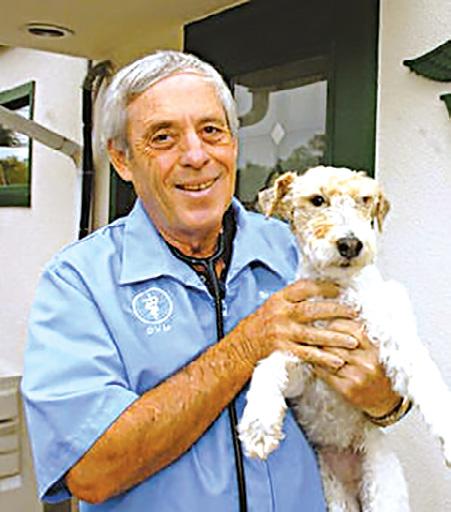
Oklahoma State University in 1963.
Born in Cherokee, Okla., he volunteered to enlist in the U.S. Navy at 17 years old. He served in the Naval Armed Guard during World War II from 1943 to 1946. He was a member of the second veterinary class at then-Oklahoma A&M College, earning his DVM degree in 1952.
He opened his own veterinary practice in Kiowa, Kan., serving Kansas and Oklahoma from 1952 to 1976. For the next two years, Dr. Kimmell was a federal meat inspector. In 1978, he became the Kansas State Veterinarian. In 1985, he was appointed to the Kansas Department of Animal Health as the livestock commissioner for five years.
Dr. Kimmell was preceded in death by his wife of 52 years, Betty L. (Liggenstoffer) Kimmell. He is survived by his sons, Bill (Nik) Kimmell of Canyon, Texas; Richard (Pattie) Kimmell of Olathe, Kan.; and Jeff (Michelle) Kimmell of Kiowa; daughter Karen Ann Kimmell of Fort Summer, N.M.; eight grandchildren and three great-grandchildren.
Memorial gifts may be made to the Kiowa District Hospital, 1002 S. 4th St., Kiowa, KS 67070 and the Masonic Arab Shrine Legion of Honor, 1305 S. Kansas Ave., Topeka, KS 66612.
SOURCE: DOVE CREMATION & FUNERAL SERVICE
Dr. John King
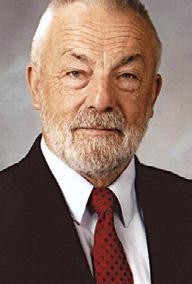
Dr. John M. King, of Ithaca, N.Y., died April 14, 2016. He was 89.
Born in Boston, he joined the U.S. Army in 1945. He earned his DVM degree from Oklahoma State University in 1955 on the GI Bill. Following graduation, he went to Cornell University College of Veterinary Medicine, where he taught for 50 years. He spent all of his sabbaticals in foreign countries, teaching and doing applied research.
Former students and colleagues from around the world shared their thoughts on this “legend, pillar of pathology and unrivaled master of observation.”
A sampling:
“He had a love of pathology, of learning, of students, of teaching and of challenging minds — young and old alike. His pathology catechism contains more than 100 questions about veterinary pathology that aren’t in any textbook.”
“King was known for his show-and-tell sessions where he would produce a career’s worth of portable treasures from a black box.”
“His book, The Necropsy Book , is the best-selling volume ever written for veterinary pathologists. His Necropsy Show and Tell website contains more than 20,000 images, which are used around the world.”
Dr. King was considered “tough on the outside with a heart of gold.”
“All who trained with him owe a great deal to him. He gave us a superb grounding in pathology on which to build our careers.”
“He had passion — he was not teaching from the books; he was teaching from the heart and developing in his students a scientific curiosity and a passion to not just learn but discover, question and comprehend.”
“I will miss him, but he’s not gone. A part of him still lives inside me; he influenced my life and guided my career path. Guidance that he willingly shared with so many.”
Dr. King is survived by his wife of nearly 70 years, Marie Ryan King; his sister, Ruth King, nieces and nephews. In lieu of flowers, memorials may be directed to the charity of one’s choice. The Dr. John M. King Phi Zeta Endowed Scholarship Fund at Oklahoma State University’s Center for Veterinary Health Sciences honors Dr. King while providing financial support to deserving veterinary students who present the finest research presentation on Phi Zeta Research Day. Donations may be made payable to the OSU Foundation with #28-95200 or John King in the memo and mailed to Sharon Worrell, Oklahoma State University, 308 McElroy Hall, Stillwater, OK 74078.
SOURCES: ITHACA JOURNAL AND THE C.L. DAVIS/ S.W. THOMPSON DVM FOUNDATION
Dr. Judy Larson
Dr. Judith “Judy” Ann Larson, of Tulsa, died Feb. 6, 2016, after a long battle with cancer. She was 73. She earned her DVM degree from Oklahoma State University in 1981.
Dr. Larson founded Brookside Veterinary Clinic in Tulsa.
SOURCE: CLASSMATE
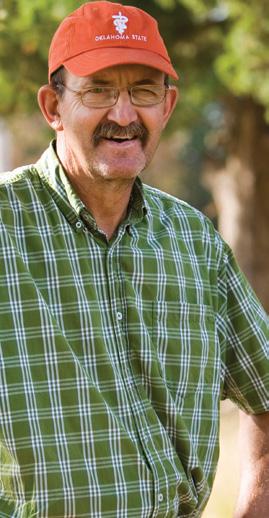
Dr. Gregor Morgan
Gregor Morgan, BVSc, MVSc, DACT, of Mehan, Okla., died Aug. 14, 2016. He was 64.
The New Zealand native grew up working the family dairy farm. In 1975, he earned a BVSc degree (equivalent to a DVM degree) and in 1978 a master’s degree in reproductive physiology, both from Massey University in New Zealand. He came to Stillwater in 1978 to teach, complete a three-year residency in theriogenology and earn a Ph.D. in reproductive physiology specializing in swine. In 1983, he became a Diplomate of the American College of Theriogenologists.
Dr. Morgan began as an assistant professor at OSU’s Veterinary Medical Hospital in 1982. Before leaving in 2010, he taught for more than 30 years specializing in production medicine and theriogenology. For 22 years, he served as the food animal medicine section chief.
Dr. Morgan was a pioneer in embryo work in horses and cattle. He is credited with having the first successful equine embryo transfer in Oklahoma and participated in producing the first in-vitro calf at OSU. He was instrumental in starting the laparoscopic artificial insemination service in deer and small ruminants in the early 1990s.
He was an active member of the Society of Theriogenology, American College of Theriogenologists, American Association of Bovine Practitioners, American Association of Equine Practitioners and the American Embryo Transfer Association. During his tenure at OSU, Dr. Morgan was an author or co-author of various book chapters and journals. He has trained numerous veterinary students, graduate students, residents and faculty.
Dr. Morgan is survived by his wife, Dr. Sandra Morgan (OSU ’80), sons, Seth and Sean and their families.
William Dean Munson, DVM, of Tulsa, died Sept. 17, 2015, just eight days before his 85th birthday.
He was born in Helena, Mont., and joined the U.S. Air Force after graduating from high school. He proudly served his country during the Korean War. After his honorable discharge, he earned his DVM degree from OSU in 1960.
Dr. Munson opened a clinic in Skiatook, Okla., and worked in private practice until 1975. He then worked for the state and federal governments until he retired in 1988.
He had a passion for horses, was an avid sports fan, and enjoyed going to casinos.
He is survived by his children, Debra Kay Munson, Diana Sue Slaton (Claude), Donna Lynn Bruce, William R. Taylor, Michael Dean Munson (Glenda), and Patricia Jo Munson; eight grandchildren; and one great-grandchild.
SOURCE: PAYNE FUNERAL HOME & CREMATION SERVICE
Dr. David Shell
Dr. David Shell, of Houston, died May 6, 2016, after a three-year battle with cancer. He was 70.
Born in Jackson Hole, Wyo., he earned his DVM degree from OSU in 1970. He began his career in small animal medicine in Tulsa and practiced at Memorial 610 Hospital for Animals in Houston for 33 years.
Dr. Shell retired in 2009 to spend more time with his family and grandchildren and to enjoy his hobbies.
He is survived by his wife, Carmen, three children and five grandchildren. Memorial gifts may be made to Reach Unlimited, 12777 Jones Road, Suite 103, Houston, TX 77070.
SOURCE: HOUSTON CHRONICLE
Dr. Greg Smith
Dr. Argus Gregory “Greg” Smith died March 2, 2016, in Bethany, Okla. He was 62.
Born in Fort Benning, Ga., he earned his DVM degree from OSU in 1984. He practiced for more than 32 years, earning a reputation of caring deeply for his clients and their pets.
Dr. Smith enjoyed OSU sports, the OKC Thunder and NASCAR.
He is survived by his wife, Gayla; daughter, Jessica; mother, Lucille; and many other relatives and friends.
SOURCE: BUCHANAN FUNERAL SERVICE
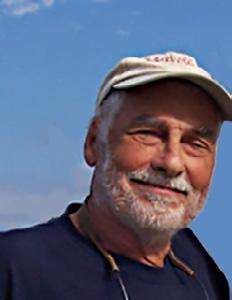
James R. Van Beckum, DVM
Dr. James R. Van Beckum, DVM, originally from Rubicon, Wis., died at his home in Sebastian, Fla., on June 16, 2016, two days before his 86th birthday. He earned his DVM degree from Oklahoma State University in 1961.
He was a farmer, a veterinarian and a sailor. He will be greatly missed by all who knew and loved him.
Dr. Van Beckum is survived by his wife, Margaret Sattler Van Beckum; his children, Peter Van Beckum (Cindy Stanley), Sarah Van Beckum (Matt Biscan), Mary (Steve) Goshorn, David Van Beckum (Carina Alt), Paula Van Beckum (Jonathan Alms), Joe Van Beckum (Dona Zanotti), one granddaughter and eight grandsons.
Memorial contributions may be made to Doctors Without Borders (http://tinyurl.com/JVB-donate).
SOURCE: ALL COUNTY FUNERAL HOME AND CREMATORY
Army Capt. Kristen Marie Ward, DVM, 25, of Tulsa, died Sept. 13, 2016. Born and raised in the suburbs of Tulsa, she graduated summa cum laude from OSU in 2012 with a bachelor’s degree in animal science. She earned her DVM degree from OSU in 2016. During veterinary college, she was active in student life and leadership positions. She served as student representative to the Oklahoma Veterinary Medical Association, ambassador for the OSU Center for Veterinary Health Sciences, vice president for the Society for Veterinary Surgery and Anesthesiology, fundraising chair for the American Association of Feline Practitioners, and secretary for the Zoo, Exotics and Wildlife Club.
She was inducted into the Phi Zeta National Veterinary Honor Society during her junior year. She earned multiple scholarships for her academic standing throughout veterinary college.
Capt. Ward joined the Army through the Health Professions Scholarship Program while attending veterinary college. She graduated from the Army Medical Department Basic Officer Leader course in July 2014 and completed the Veterinary Track in July 2016. She
began her first assignment as an intern at the First Year Graduate Veterinary Education Program in Fort Belvoir, Va. Her clinical interests included ophthalmology with a long-term goal of pursuing exotic veterinary medicine.
Her military awards include the Army Commendation Medal, the National Defense Service Medal, the Global War on Terrorism Service Medal and the Army Service Ribbon.
Capt. Ward spent her free time traveling, hiking, horseback riding and chasing after her Doberman, Zenzi, or cuddling with her cat, Aurora.
She is survived by her parents and younger brother, who still live near Tulsa.
SOURCE: U.S. ARMY VETERINARY CORPS
Donald Raymond Whitehead, DVM, age 66 of Magnolia, Ark., passed away Dec. 7, 2015. Born in Walkers Creek, Ark., he earned his DVM degree from OSU in 1974.
Dr. Whitehead practiced veterinary medicine in Magnolia for 40 years. He was a member of the Arkansas Veterinary Medical Association, serving as past president. In 1998, the Arkansas VMA voted him Veterinarian of the Year. He was also a member of the American Veterinary Medical Association, serving as a national delegate to the AVMA for 20 years. He was an avid duck hunter. He was a charter member of the Holly Mound Land Company Duck Hunting Club and a board member of Delta Water Fowl.
Dr. Whitehead is survived by his wife, Kay; two sons, Robert Whitehead (Lynea) of St. Louis, Mo., and Josh Hillery of Prescott, Ark.; two daughters, Melonie Himel (Shane) of Sulphur, La., and Susannah Broome of Magnolia; and four grandchildren.
SOURCE: FOUR STATES NEWS
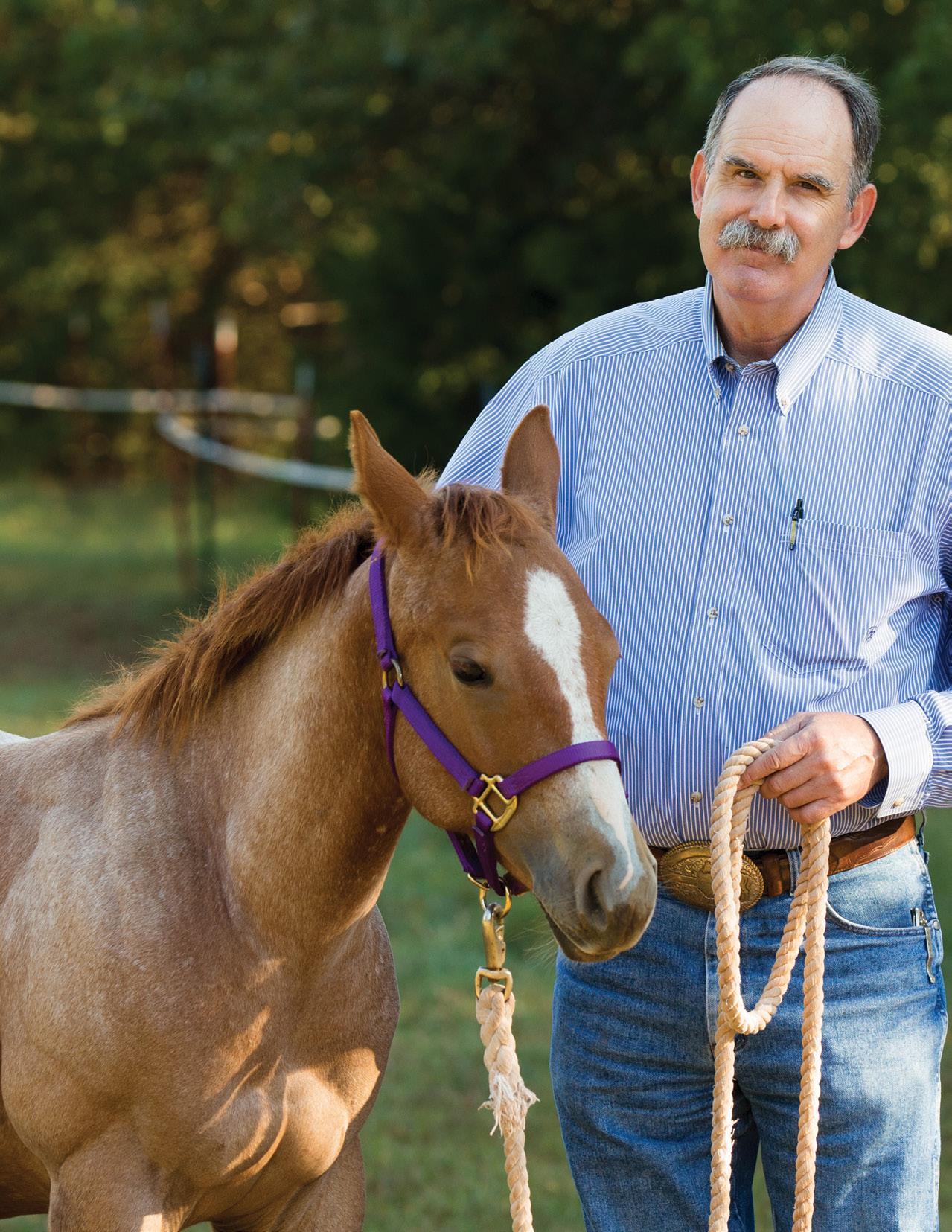
VET’S PETS
Dr. Grant Rezabek and his wife, Dr. Chris Schiller, raise registered quarter horses on their 22-acre farm east of Stillwater.
Currently, they have 13 horses at home and additional animals in Overbook, Okla., being trained as cutting horses. As lifelong horse owners involved in rodeo, show and performance events, they began breeding some of their successful retired mares in 2006.
Rezabek is an assistant clinical professor in the Department of Veterinary Pathobiology with his primary assignment as a veterinary pathologist at the Oklahoma Animal Disease Diagnostic Laboratory. His primary interests are equine and bovine pathology and the musculoskeletal system.
Schiller is a board-certified veterinary pathologist who works for ANTECH Diagnostics. Her pathology training was at the National Zoo in Washington, D.C., and her primary interest is in avian and exotic animals.
Oklahoma State University
Center for Veterinary Health Sciences
308 McElroy Hall
Stillwater, Oklahoma 74078-2011 Access
