This edition of Vet Ceterais devoted to student learningand the roles that our faculty and alumni play in this vital function of our college. We hope you will enjoy reading the articlesabout our students, faculty, alumni and friends.
On Aug. 19, 2002, 75 new students began a four-year journey that will culminate in the doctor of veterinary medicine degree. The class of 2006 has the excellent academic preparation and background to do very well in our program. They join the 216 students presently enrolled, giving the college a total enrollment of 291 students for fall semester.
The success of our students depends heavily on the ability of our faculty to deliver a core curriculum enriched with over 40 elective courses. We can anticipate that these new students are naive about the importance of business management principles, economic issues affecting our profession, career opportunities and personal debt management. It is our responsibility to educate them about these issues. No longer can we just
focus on teaching the science of veterinary medicine.
As we visit with our alumni, we are struck by the affection they hold for faculty members and practitioners who helped mold their veterinary careers. The relationship that develops between faculty and students is the single most important factor that bonds alumni to the college.
Our college has a strong tradition of student-centered instruction. Many of you can likely recall those special teachers who had a unique way of imparting scientific information and practical wisdom. Some of us had teachers that ignited our interest in teaching, research or specialty practice careers. In addition, they demonstrated compassion for their patients, their profession and their students.
We maintain that tradition today While OSU's College of Veterinary Medicine ranks high among veterinary colleges in research productivity relative to stare funds appropriated for research, student learning in the professional and graduate degree programs remains our number-one priority.
We are blessed to have many friends that support our college through a variety of means. Our friends and alumni have helped numerous students over the years through scholarships and other forms of financial assistance. This financial help makes it possible for our students to fulfill their dreams.~
Sincerely,
MICHAEL D. LORENZ, DV~ -
INTERIM DEAN
VICE PRESIDENT FOR RESEARCH AND EXTERNAL RELATIONS
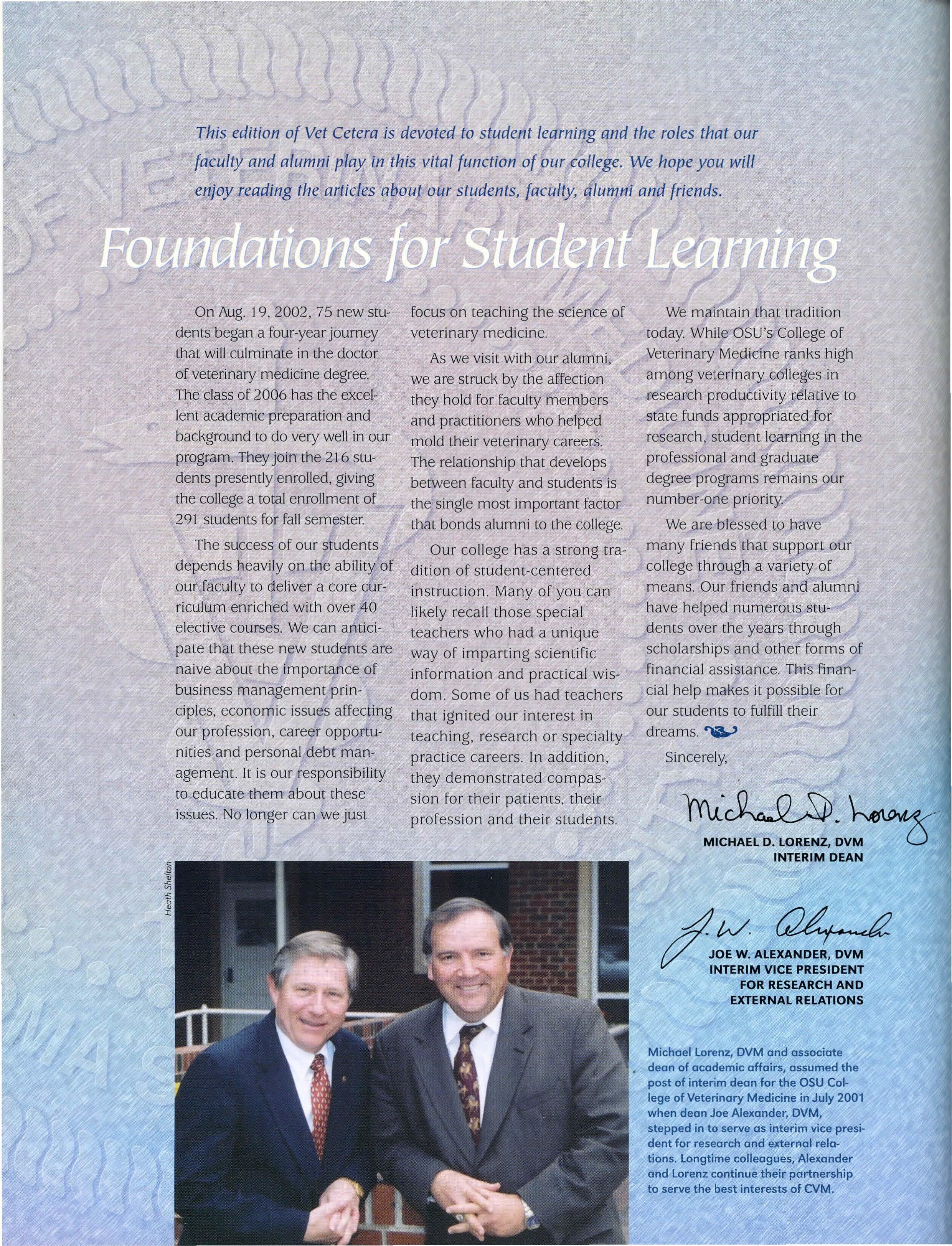
Michael Lorenz, DVMand associate dean of academic affairs, assumed the post of interim dean far the OSU College of Veterinary Medicine in July 2001 when dean Joe Alexander, DVM, stepped in to serve as interim vice president for research and external relations. Longtime colleagues, Alexander and Lorenz continue their partnership to serve the best interests of CVM.
C 0 N T ENT S
THE VET MED MAGAZINE FALL. 2002/VOLUME 5
When OSU College of Veterinary Medicine opened its doors to the first class 51 years ago, there was a feeling of excitement and an anticipation of important things to come. Today this some adventurous spirit continues to resound in the lives of faculty and students and alumni. Much work has already been done to improve the health care of our animal population. It is our hope that this important work and the current CVM research will serve as a legacy for those who continue to follow in the footsteps of these first graduates.
We invite you to honor a friend or family member by contributing to the OSU College of Veterinary Medicine Brick Walk of Honor. Space is stili'available for inscribed bricks for the college's alumni, students, friends and current and former staff and faculty. Each brick has three lines and is sold for $25.
Please join us at the CVM website: www.cvm.okstate.edu. The OSU homepage is located at www.okstate.edu.
New Jersey students have become a staple at OSU's College of Veterinary Medicine.
A new, first-of-its-kind gift expands OSU's equine research and instruction programs.
New CVM faculty bring wide-ranging skills and expertise to already strong programs.
JO 12
A CVM research team attracts backing from Uncle Sam in detecting bacterial threats.
CVM's expanded opthalmology services provide insight into animal health.
Gracie
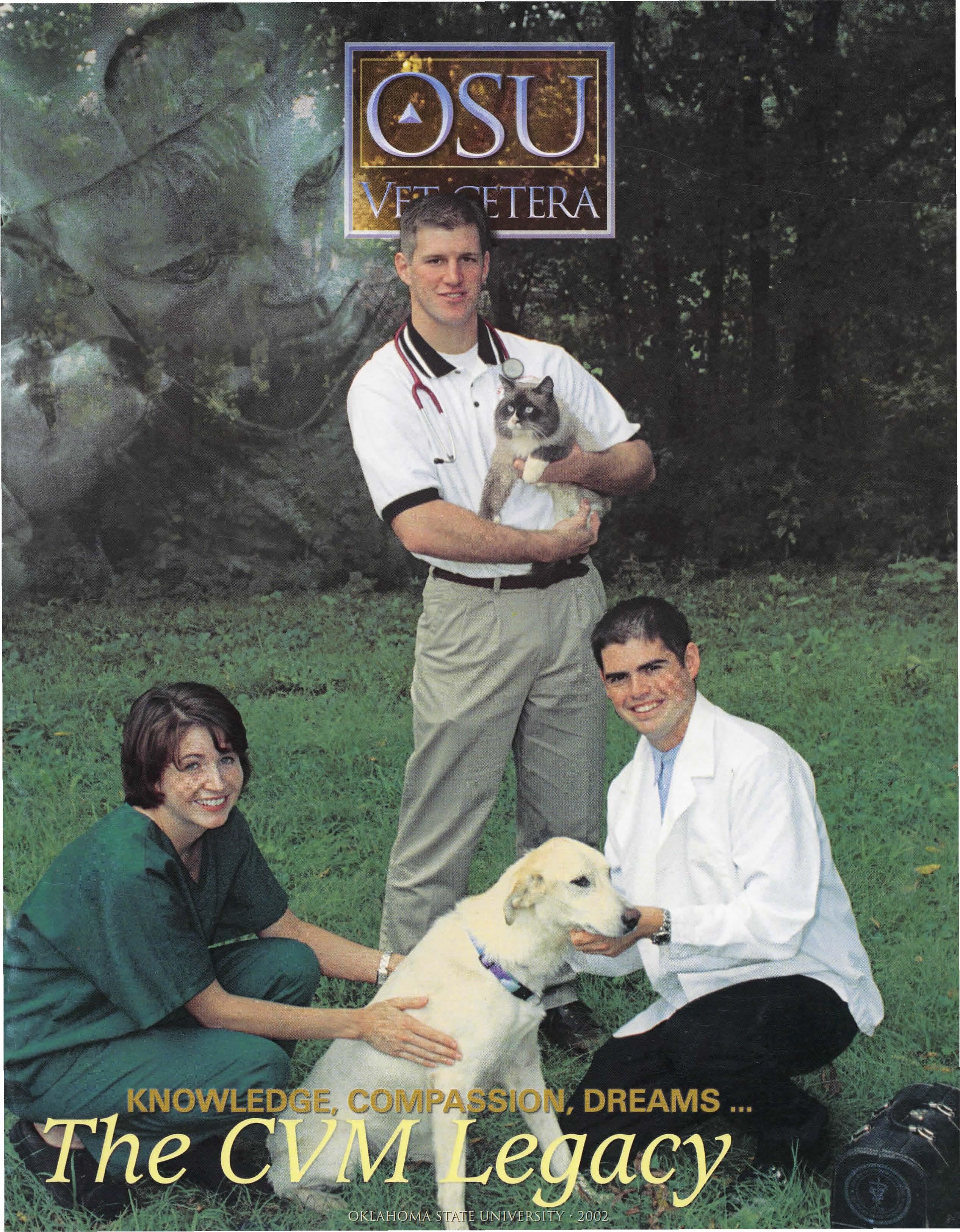
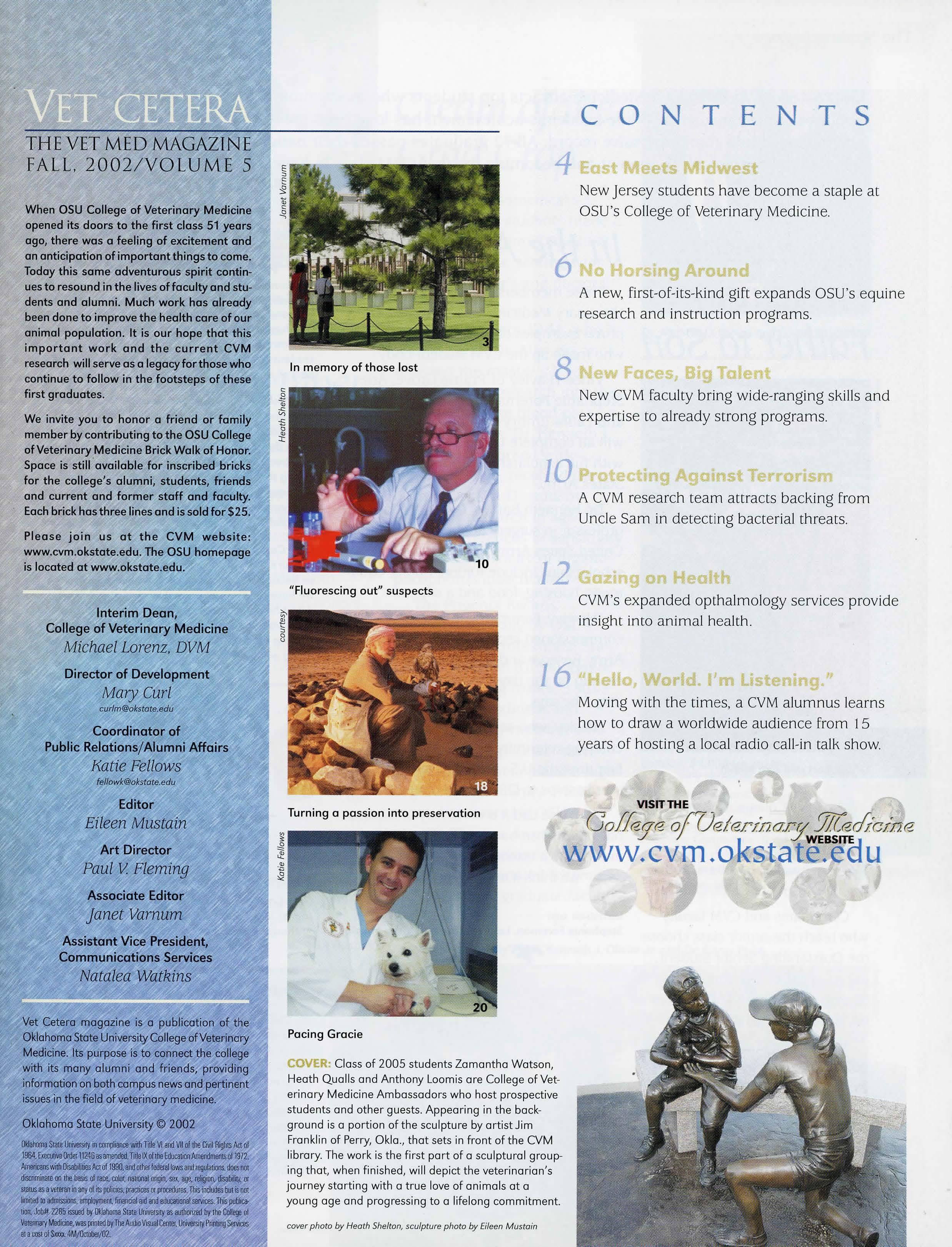
COVER: Class of 2005 students Zamantha Watson, Heath Qualls and Anthony Loomis are College of Veterinary Medicine Ambassadors who hast prospective students and other guests. Appearing in the background is a portion of the sculpture by artist Jim Franklin of Perry, Okla., that sets in front of the CVM library. The work is the first part of a sculptural group· ing that, when finished, will depict the veterinarian's journey starting with a true love of animals at a young age and progressing to a lifelong commitment.
photo by Heath Shelton, sculpture photo by Eileen Mustain
Moving with the times, a CVM alumnus learns how to draw a worldwide audience from 15 years of hosting a local radio call-in talk show
Pacing
"OSU's College of Veterinary Medicine attracts top students who are committed to learning and passionate about veterinary medicine. While academic achievement has long been the norm at CVM, the class of 2002 still managed to set an impressive record. All 72 graduates passed their national board exams, exceeding the national average of 97 percent and becoming the first CVM class to have a 100 percent passing rate."
TopHonors PassFrom Fatherto Son
In theArmyNow
Three members of the OSU College of Veterinary Medicine's class of 2003 are prime examples of the quality students who make up the CVM student body.
Vince Hawley of Prairie Grove, Ark., Stephanie Foreman of Anderson, Mo., and Laura Embry of Albuquerque, N.M., will all complete their final year at CVM with full scholarships from the United States Army.
Dr. Kenneth Bartels, CVM's Mccasland professor in surgery and a colonel in the United States Army Reserve, says the scholarships include tuition, books, equipment, housing, food and a stipend.
"Hawley, Foreman and Embry were all commissioned second lieutenants in the Army Reserve and will be promoted to captain on the day they report for active duty," he says.
PARTNERSHIP BENEFITS ALL
The College of Veterinary Medicine and the Stillwater Humane Society began a program a few years ago that has proven to be "a 'win-win' far everyone," says Dr. Katrina Meinkoth, assistant professor who takes students to the Humane Society twice a week as a part of a course she teaches.
"We feel like we're doing some good far bath the animals and the Humane Society. Plus, we're exposing our students to a wide variety of animal health concerns they are going to have to be familiar with once they become veterinary practitioners," Meinkoth says, noting that even freshman students receive "handson" experience learning basic procedures such as animal handling, drawing blood, giving injections and pills and, second semester, how do a physical exam.
Cory Cart, director of the Human Society, heartily concurs, "The program provides tremendous value to us because it saves us so much money. Over the year, we have an average animal load of about 80. If we didn't have this program, we'd have to figure office calls, time to take the animal to the office and back, and the medicines involved. Without this program, doing what we do would be impossible."
TOM JOHNSTON Katie Fellows
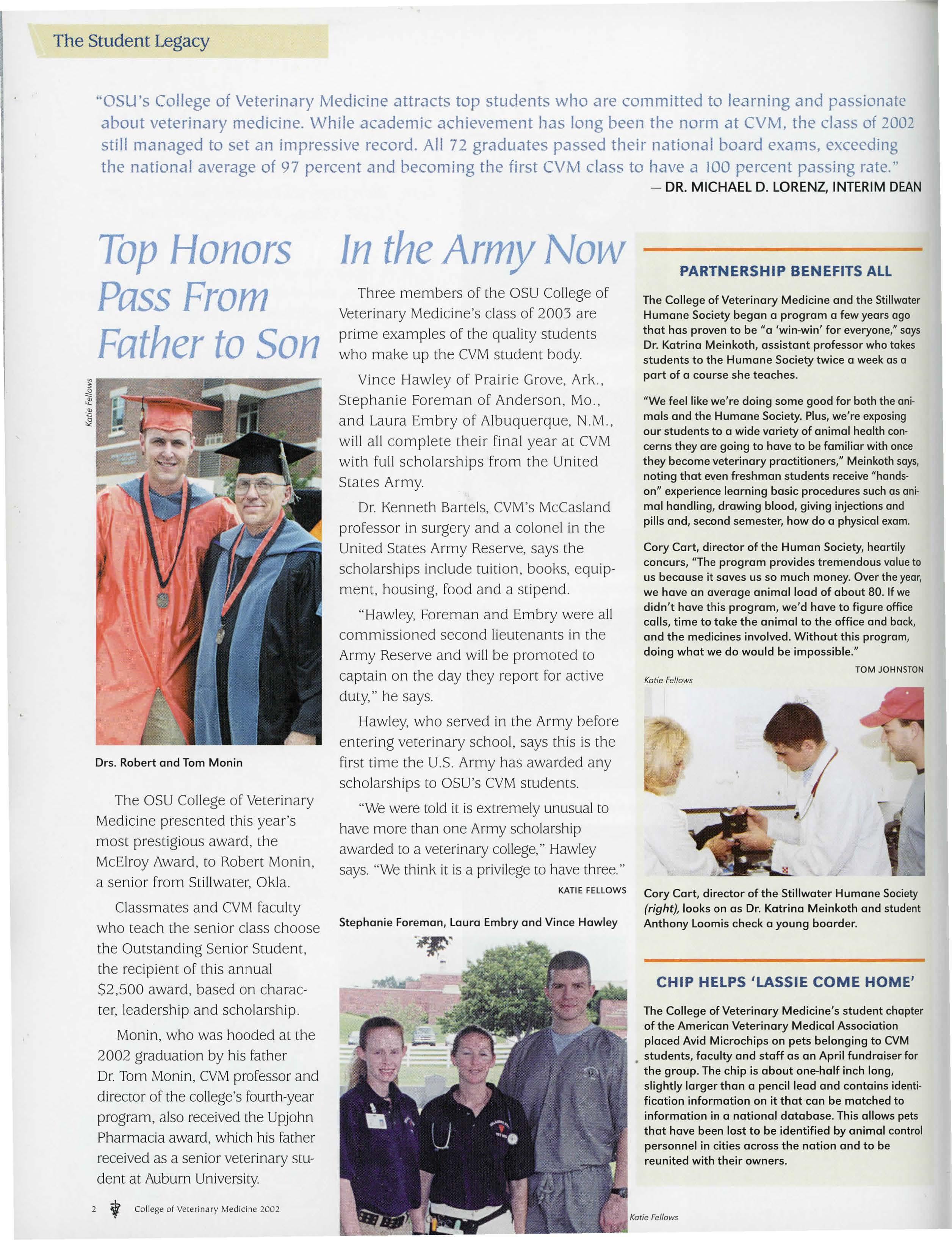
Drs. Robert and Tom
The OSU College of Veterinary Medicine presented this year's most prestigious award, the McElroy Award, to Robert Manin, a senior from Stillwater, Okla.
Classmates and CVM faculty who teach the senior class choose the Outstanding Senior Student, the recipient of this annual $2,500 award, based on character, leadership and scholarship.
Manin, who was hooded at the 2002 graduation by his father Dr. Tom Manin, CVM professor and director of the college's fourth-year program, also received the Upjohn Pharmacia award, which his father received as a senior veterinary student at Auburn University.
Hawley, who served in the Army before entering veterinary school, says this is the first time the U.S. Army has awarded any scholarships to OSU's CVM students.
"We were told it is extremely unusual to have more than one Army scholarship awarded to a veterinary college," Hawley says. "We think it is a privilege to have three."
CHIP HELPS 'LASSIE COME HOME'
The College of Veterinary Medicine's student chapter of the American Veterinary Medical Association placed Avid Microchips an pets belonging to CVM • students, faculty and staff as an April fundraiser far the group. The chip is about one-half inch long, slightly larger than a pencil lead and contains identification information on it that can be matched to information in a national database. This allows pets that have been lost to be identified by animal control personnel in cities across the nation and to be reunited with their owners.
Monin
KATIE FELLOWS
Stephanie Foreman, Laura Embry and Vince Hawley
- DR. MICHAEL D. LORENZ, INTERIM DEAN
Cory Cart, director of the Stillwater Humane Society (right), looks on as Dr. Katrina Meinkoth and student Anthony Loomis check a young boarder.
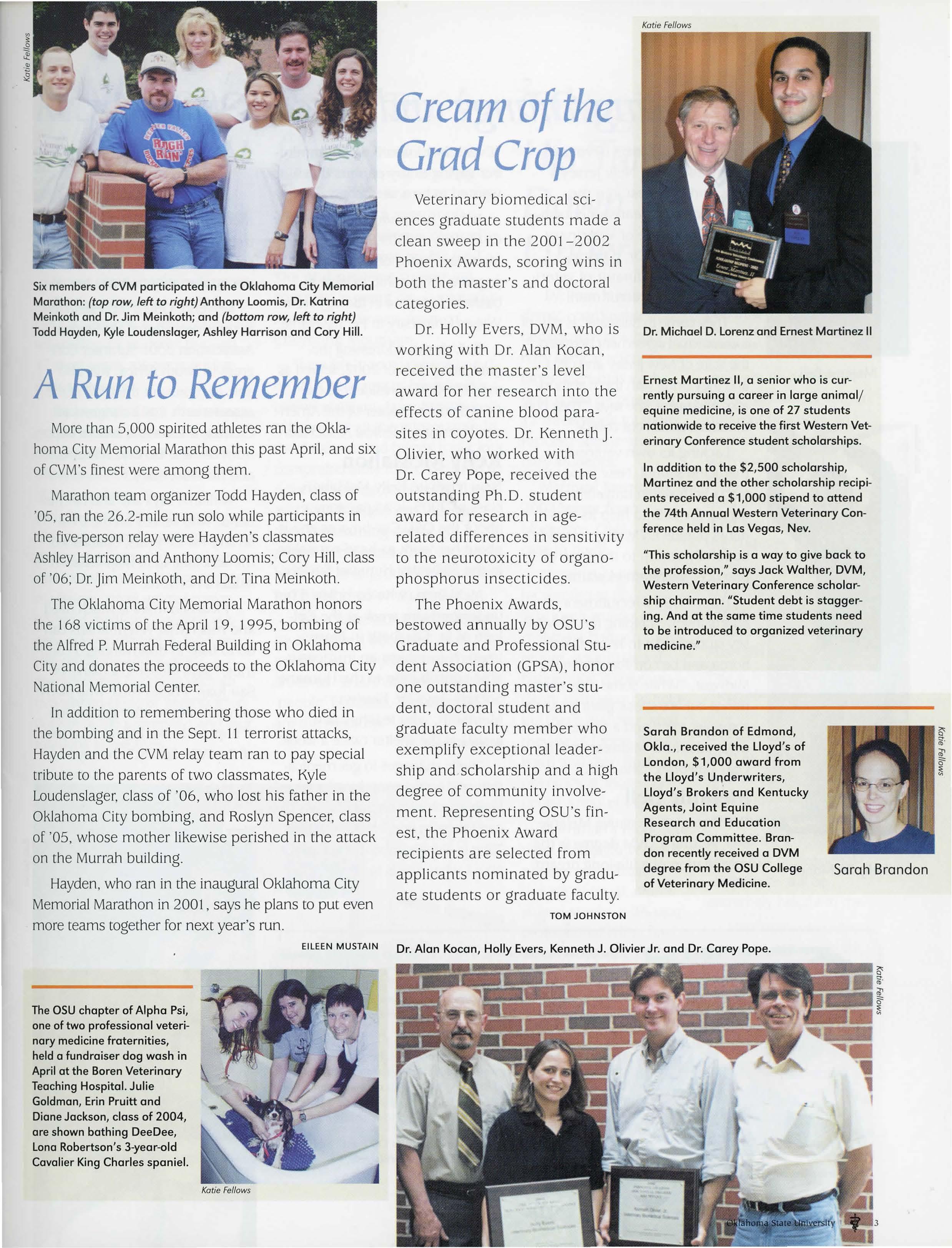
Six members of CVM porticipated in the Oklahoma City Memorial Marathon: (top row, left to right) Anthony Loomis, Dr. Katrina Meinkoth and Dr. Jim Meinkoth; and (bottom row, left to right) Todd Hayden, Kyle Loudenslager, Ashley Harrison and Cary Hill.
Creamof the GradCrop
Veterinary biomedical sciences graduate students made a clean sweep in the 2001 -2002 Phoenix Awards, scoring wins in both the master's and doctoral categories.
A Runto Remember
More than 5,000 spirited athletes ran the Oklahoma City Memorial Marathon this past April, and six of CVM'sfinest were among them.
Marathon team organizer Todd Hayden, class of '05, ran the 26.2-mile run solo while participants in the five-personrelay were Hayden's classmates Ashley Harrison and Anthony Loomis; Cory Hill, class of '06; Dr.Jim Meinkoth, and Dr. Tina Meinkoth.
The Oklahoma City Memorial Marathon honors the 168 victims of the April 19, 1995, bombing of the Alfred P. Murrah Federal Building in Oklahoma City and donates the proceeds to the Oklahoma City National Memorial Center.
In addition to remembering those who died in the bombing and in the Sept. 11 terrorist attacks, Hayden and the CVM relay team ran to pay special tribute to the parents of two classmates, Kyle Loudenslager,class of '06, who lost his father in the Oklahoma City bombing, and Roslyn Spencer, class of '05, whose mother likewise perished in the attack on the Murrah building.
Hayden,who ran in the inaugural Oklahoma City Memorial Marathon in 2001, says he plans to put even more teams together for next year's run.
Dr. Holly Evers, DVM, who is working with Dr. Alan Kocan, received the master's level award for her research into the effects of canine blood parasites in coyotes. Dr. Kenneth J. Olivier, who worked with Dr. Carey Pope, received the outstanding Ph.D. student award for research in agerelated differences in sensitivity to the neurocoxicity of organophosphorus insecticides.
The Phoenix Awards, bescowed annually by OSU's Graduate and Professional Student Association (GPSA), honor one outstanding master's student, doctoral student and graduate faculty member who exemplify exceptional leadership and scholarship and a high degree of community involvement. Representing OSU's finest, the Phoenix Award recipients are selected from applicants nominated by graduate students or graduate faculty.
TOM JOHNSTON
Western Veterinary Conference student scholarships.
In addition ta the $2,500 scholarship, Martinez and the other scholarship recipients received a $1,000 stipend to attend the 74th Annual Western Veterinary Conference held in Las Vegas, Nev,
"This scholarship is a way to give back to the profession," says Jack Walther, DVM, Western Veterinary Conference scholarship chairman, "Student debt is staggering, And at the same time students need to be introduced to organized veterinary medicine." Sarah Brandon of Edmond, Okla., received the Lloyd's of London, $1,000 award from the Lloyd's Ur,derwriters, Lloyd's Brokers and Kentucky Agents, Joint Equine Research and Education Program Committee. Brandon recently received a DVM degree from the OSU College of Veterinary Medicine.
the Boren Veterinary Teoching Hospital. Julie Goldman, Erin Pruitt and Diane Jackson, class of 2004, are
The OSU chapter of Alpha Psi, one of two professional veterinary medicine fraternities, held a fundroiser dog wash in April at
shown bathing DeeDee, Lona Robertson's 3-year-ald Cavalier King Charles spaniel.
EILEEN MUSTAIN
Dr. Michael D. Lorenz and Ernest Martinez II
Ernest Martinez II, a senior who is currently pursuing a career in large animal/ equine medicine, is one of 27 students nationwide to receive the first
Sarah Brandon
Dr. Alan Kocon, Hally Evers, Kenneth J. Olivier Jr. and Dr. Carey Pope.
AdoptingOrangeand Black Offeringa
Every year since 1996, as "Ever since I was 5, I can remem-
many as four of New Jersey's ber saying to my parents that I
best and brightest join the wanted to be a vet," she says. incoming first-year students at Before becoming a leader in the the OSU College of Veterinary CVM class of 2003, Bell, who is Medicine, says Dr. Katrina Meinkoth, coordinator of veterinary medicine recruitment.
They come to Stillwater as part of a contractual agreement between the state of New Jerseyand OSU, and they bring with them enthusiasm and talent, she says."Their contributions enrich our college."
Lacking its own veterinary medicine school, New Jersey contracts with seven universities across the U.S. to help its residents pursue DVM degrees and, hopefully, return to the state to practice, Meinkoth explains.
Part of OSU's recruitment efforls involve helping the New Jersey students get to know Oklahoma and be comfortable in the Midwest. "While some may experience culture shock getting use to a smaller town and a slower pace, most adopt the Midwest and the OSU Cowboys," she says.
Melanie Bell
For Vernon, NJ, native Melanie Bell, getting a DVM degree is the culmination of a life-long dream.
Miss New Jersey of 1996, used her pageant scholarship to earn a bachelor's degree in biology from Wilkes University in Pennsylvania.
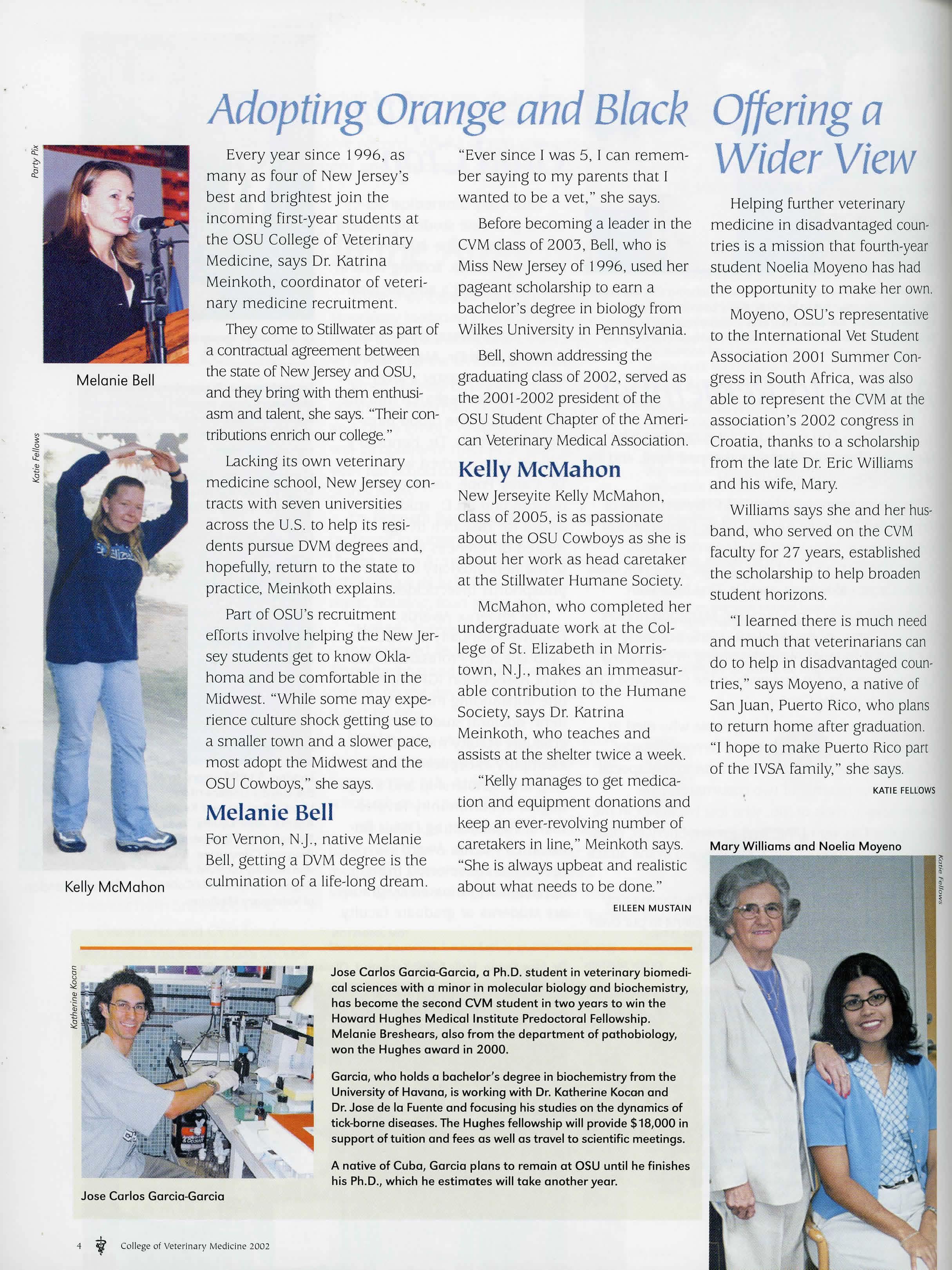
Bell, shown addressing the graduating class of 2002, served as the 2001-2002 president of the OSU Student Chapter of the American Veterinary Medical Association.
Kelly McMahon
New Jerseyite Kelly McMahon, class of 2005, is as passionate about the OSU Cowboys as she is about her work as head caretaker at the Stillwater Humane Society.
McMahon, who completed her undergraduate work at the College of St. Elizabeth in Morristown, NJ, makes an immeasurable contribution to the Humane Society, says Dr. Katrina Meinkoth, who teaches and assists at the shelter twice a week.
"Kelly manages to get medication and equipment donations and keep an ever-revolving number of caretakers in line," Meinkoth says. "She is always upbeat and realistic about what needs to be done."
EILEEN MUSTAIN
Jose Carlos Garcia-Garcia, a Ph.D. student in veterinary biomedical sciences with a minor in molecular biology and biochemistry, has become the second CVM student in two years to win the Howard Hughes Medical Institute Predoctoral Fellowship. Melanie Breshears, also from the deportment of pothobiology, won the Hughes award in 2000.
Garcia, who holds o bachelor's degree in biochemistry from the University of Havana, is working with Dr. Katherine Kocon and Dr. Jose de la Fuente and focusing his studies on the dynamics of tick-borne diseases. The Hughes fellowship will provide $18,000 in support of tuition and fees as well as travel to scientific meetings.
A native of Cuba, Garcia plans to remain at OSU until he finishes his Ph.D., which he estimates will take another year.
Wider View
Helping further veterinary medicine in disadvantaged countries is a mission that fourth-year student Noelia Moyeno has had the opportunity to make her own.
Moyeno, OSU's representative to the International Vet Student Association 2001 Summer Congress in South Africa, was also able to represent the CVM at the association's 2002 congress in Croatia, thanks to a scholarship from the late Dr Eric Williams and his wife, Mary.
Williams says she and her husband, who served on the CVM faculty for 27 years, established the scholarship to help broaden student horizons.
"I learned there is much need and much that veterinarians can do to help in disadvantaged countries," says Moyeno, a native of San Juan, Puerto Rico, who plans to return home after graduation. "I hope to make Puerto Rico part of the IVSA family," she says
Melanie Bell
Kelly McMahon
Jose Carlos Garcia-Garcia
KATIE FELLOWS
KeepingStudentson Track
Anyone who has ever had trouble keeping pace with his own children will appreciate a little of what Dr. Tom Monin goes through when tracking fourthyear students.
Monin, academic coordinator in the department of veterinary clinical sciences, is responsible for scheduling 73 students through I 7 three-week rotations during their senior year.
Each rotation is a three-week period where students work closely with clinicians in one department of the hospital, Monin explains. Rotations include small animal surgery, radiology, anesthesiology, pathology/diagnostic, small animal /community practice (general medicine), small animal major (internal medicine), equine surgery,equine medicine, food animal medicine and surgery, preceptorship (working with an establishedclinic or organization outside of the university) and four rotations in electives.
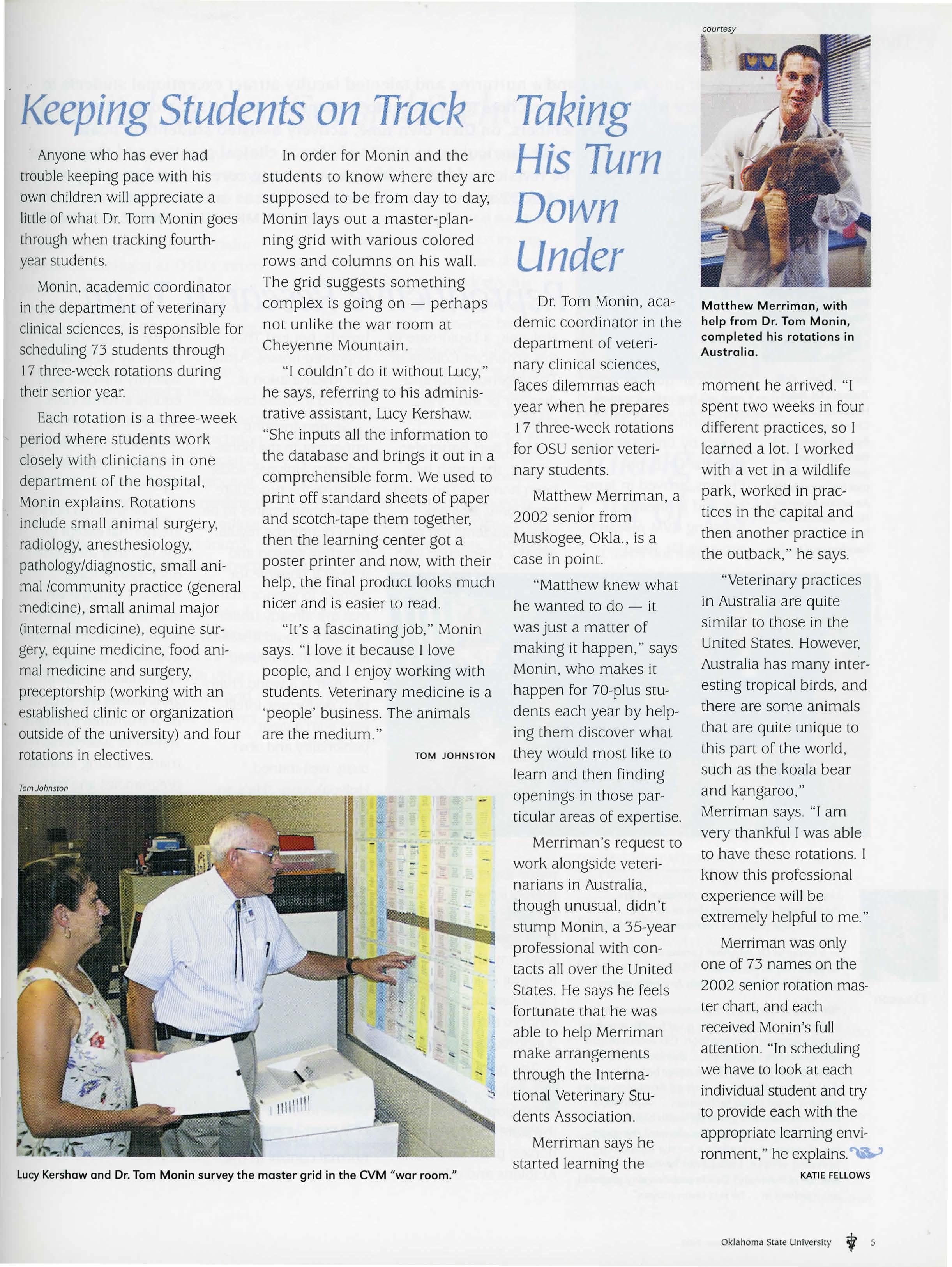
In order for Monin and the students to know where they are supposed to be from day to day, Monin lays out a master-planning grid with various colored rows and columns on his wall. The grid suggests something complex is going on - perhaps not unlike the war room at Cheyenne Mountain.
"I couldn't do it without Lucy," he says, referring to his administrative assistant, Lucy Kershaw. "She inputs all the information to the database and brings it out in a comprehensible form. We used to print off standard sheets of paper and scotch-tape them together, then the learning center got a poster printer and now, with their help, the final product looks much nicer and is easier to read.
"It's a fascinating job," Monin says. "I love it because I love people, and I enjoy working with students. Veterinary medicine is a 'people' business. The animals are the medium."
Taking His Turn Down Under
Dr. Tom Monin, academic coordinator in the department of veterinary clinical sciences, faces dilemmas each year when he prepares 17 three-week rotations for OSU senior veterinary students.
Matthew Merriman, a 2002 senior from Muskogee, Okla., is a case in point.
"Matthew knew what he wanted to do - it was just a matter of making it happen," says Monin, who makes it happen for 70-plus students each year by helping them discover what they would most like to learn and then finding openings in those particular areas of expertise.
Merriman's request to work alongside veterinarians in Australia, though unusual, didn't stump Monin, a 35-year professional with contacts all over the United States. He says he feels fortunate that he was able to help Merriman make arrangements through the International Veterinary Students Association.
Merriman says he started learning the
moment he arrived. "I spent two weeks in four different practices, so I learned a lot. I worked with a vet in a wildlife park, worked in practices in the capital and then another practice in the outback," he says.
"Veterinary practices in Australia are quite similar to those in the United States. However, Australia has many interesting tropical birds, and there are some animals that are quite unique to this part of the world, such as the koala bear and k<!-ngaroo," Merriman says "I am very thankful I was able to have these rotations. I know this professional experience will be extremely helpful to me."
Merriman was only one of 73 names on the 2002 senior rotation master chart, and each received Monin's full attention. "In scheduling we have to look at each individual student and try to provide each with the appropriate learning environment," he explains.~
KATIE FELLOWS
TomJohnston
TOM JOHNSTON
LucyKershaw and Dr. Tam Monin survey the master grid in the CVM "war roam."
Matthew Merriman, with help from Dr. Tom Monin, completed his rotations in Australia.
The Educational Legacy
"Up-to-date equipment and facilities and a nurturing and talented faculty attract exceptional students to the College of Veterinary Medicine. Our teachers· dedication to student learning is apparent in the successes of the class of 2002. Faculty members, on their own time, actively assisted students in board preparation. Our faculty also re-tooled the curriculum in 1997 to balance clinical practice and theory and to provide a wide array of electives. The revision added breadth to our strong core curriculum and appears to have paid off at test time. The class of 2002 scored competitively in all areas on the national exam."
- DR. MICHAEL D. LORENZ, INTERIM DEAN
Ban JoinsReproductiveResearchTeam
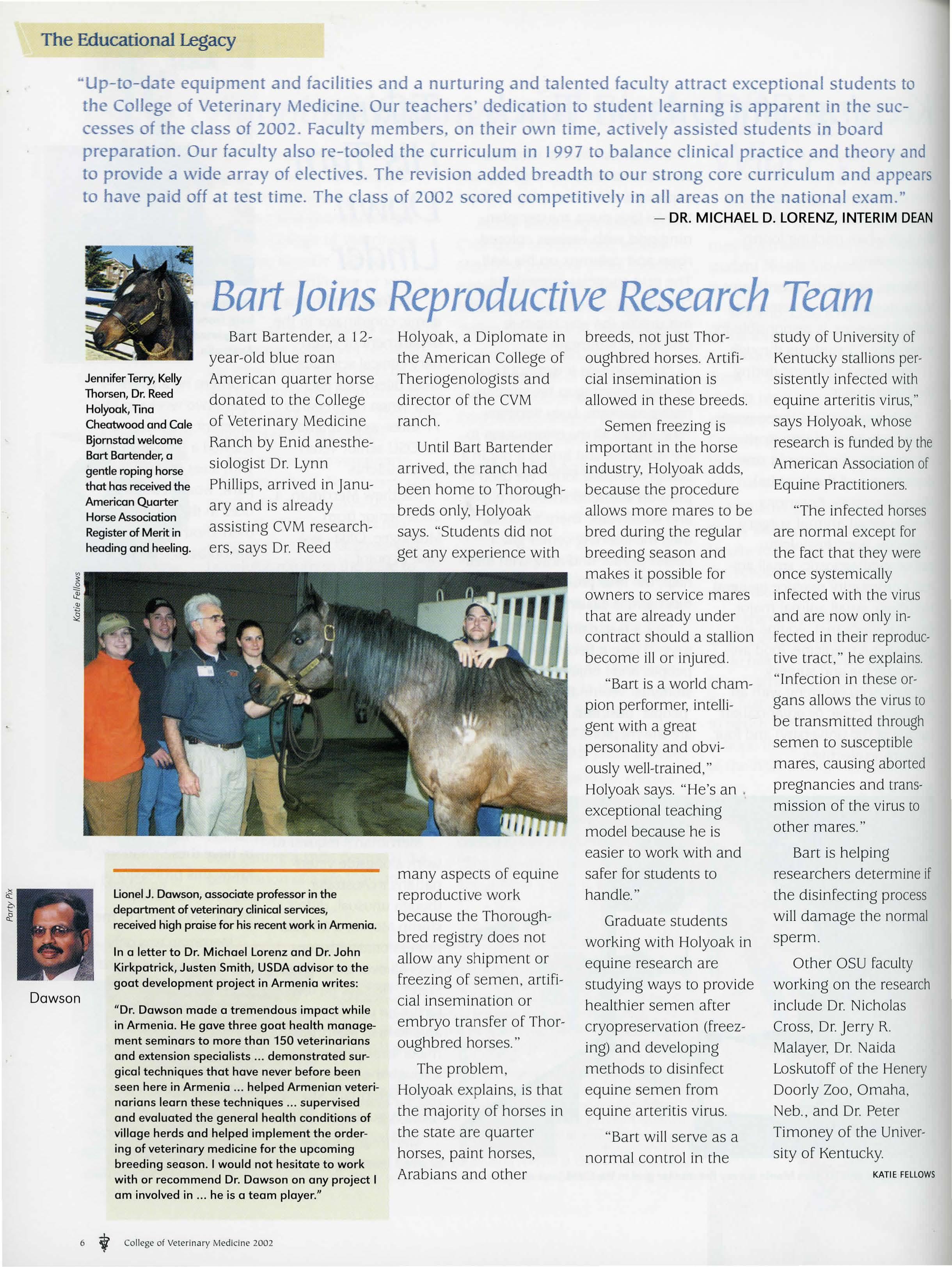
Bart Bartender, a I 2year-old blue roan
JenniferTerry, Kelly Thorsen, Dr. Reed Holyoak,Tina Cheatwood and Cale Bjornstadwelcome
Bart Bartender, a gentle roping horse that has receivedthe American Quarter Horse Association Registerof Merit in heading and heeling.
American quarter horse donated to the College of Veterinary Medicine Ranch by Enid anesthesiologist Dr. Lynn Phillips, arrived in January and is already assisting CVM researchers, says Dr. Reed
Holyoak, a Diplomate in the American College of Theriogenologists and director of the CVM ranch.
Until Bart Bartender arrived, the ranch had been home to Thoroughbreds only, Holyoak says. "Students did not get any experience with
breeds, not just Thoroughbred horses. Artificial insemination is allowed in these breeds.
Semen freezing is important in the horse industry, Holyoak adds, because the procedure allows more mares to be bred during the regular breeding season and makes it possible for owners to service mares that are already under contract should a stallion become ill or injured.
study of University of Kentucky stallions per· sistently infected with equine arteritis virus," says Holyoak, whose research is funded by the American Associationof Equine Practitioners.
LionelJ. Dawson, associate professor in the department of veterinary clinical services, received high praise for his recent work in Armenia.
In a letter to Dr. Michael Lorenz and Dr. John Kirkpatrick, J1<JstenSmith, USDA advisor to the goat development project in Armenia writes:
"Dr. Dawson made a tremendous impact while in Armenia. He gave three goat health management seminars to more than 150 veterinarians and extension specialists demonstrated surgical techniques that have never before been seen here in Armenia helped Armenian veterinarians learn these techniques supervised and evaluated the general health conditions of village herds and helped implement the ordering of veterinary medicine for the upcoming breeding season. I would not hesitate to work with or recommend Dr. Dawson on any project I am involved in he is a team player."
many aspects of equine reproductive work because the Thoroughbred registry does not allow any shipment or freezing of semen, artificial insemination or embryo transfer of Thoroughbred horses."
The problem, Holyoak explains, is that the majority of horses in the state are quarter horses, paint horses, Arabians and other
"Bart is a world champion performer, intelligent with a great personality and obviously well-trained," Holyoak says. "He's an exceptional teaching model because he is easier to work with and safer for students to handle."
Graduate students working with Holyoak in equine research are studying ways to provide healthier semen after cryopreservation (freezing) and developing methods to disinfect equine semen from equine arteritis virus.
"Bart will serve as a normal control in the
"The infected horses are normal except for the fact that they were once systemically infected with the virus and are now only infected in their reproductive tract," he explains. "Infection in these organs allows the virus to be transmitted through semen to susceptible mares, causing aborted pregnancies and trans· mission of the virus to other mares."
Bart is helping researchers determine if the disinfecting process will damage the normal sperm.
Other OSU faculty working on the research include Dr. Nicholas Cross, Dr. Jerry R. Malayer, Dr. Naida Loskutoff of the Henery Doorly Zoo, Omaha, Neb., and Dr. Peter Ti money of the University of Kentucky.
KATIE FELLOWS
Dawson
·HospitalGains'SecondSight'
If you've heard someone say, "She can see right through me," they may havebeen talking about Carolyn Rodebush.
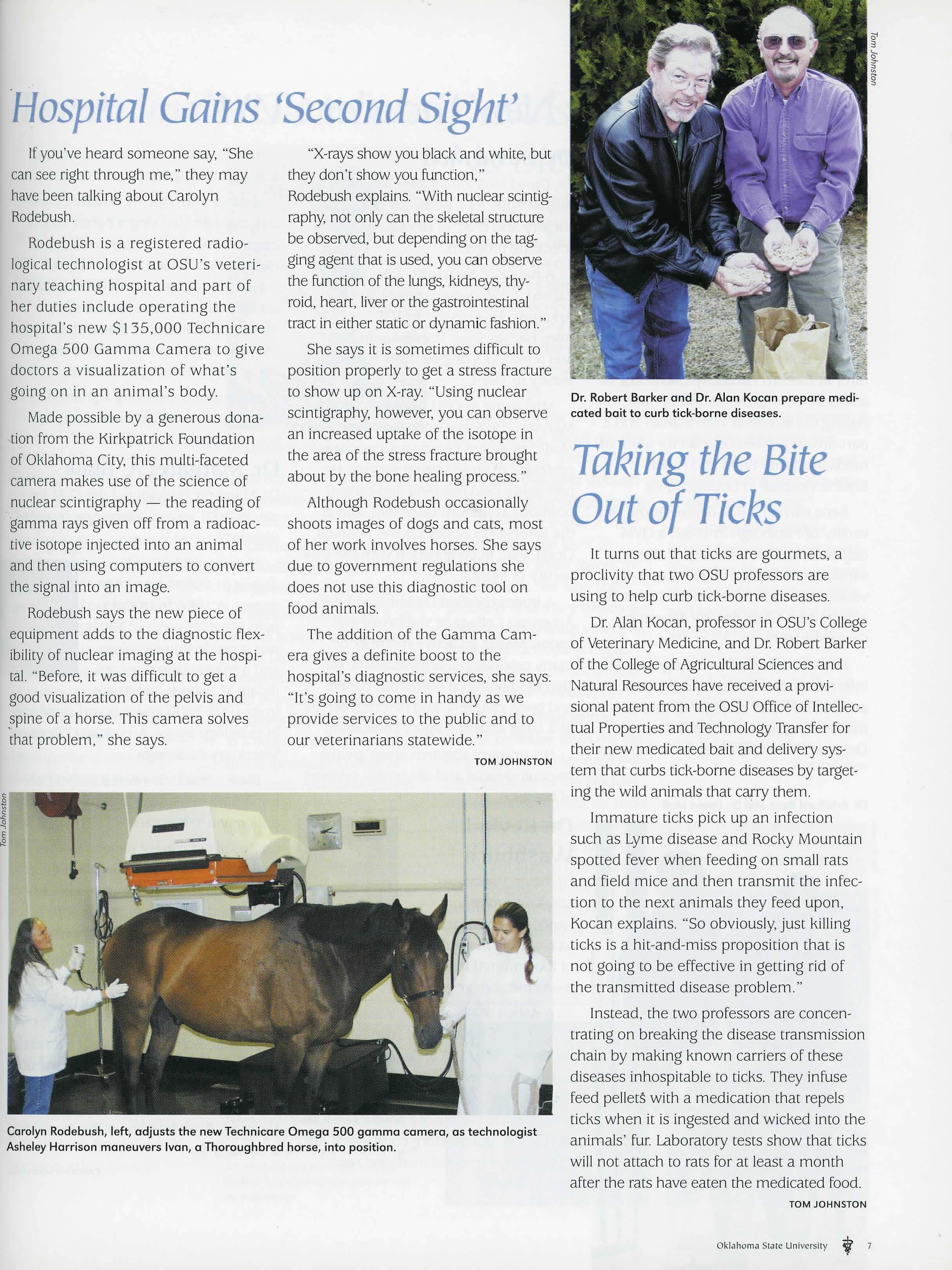
Rodebush is a registered radiological technologist at OSU's veterinary teaching hospital and part of her duties include operating the hospital's new $135,000 Technicare Omega 500 Gamma Camera to give doctors a visualization of what's going on in an animal's body
Made possible by a generous donation from the Kirkpatrick Foundation of Oklahoma City, this multi-faceted camera makes use of the science of nuclear scintigraphy - the reading of gamma rays given off from a radioactive isotope injected into an animal and then using computers to convert the signal into an image.
Rodebush says the new piece of equipment adds to the diagnostic flexibility of nuclear imaging at the hospital. "Before, it was difficult to get a good visualization of the pelvis and ~pine of a horse. This camera solves that problem," she says.
"X-rays show you black and white, but they don't show you function,"
Rodebush explains. "With nuclear scintigraphy, not only can the skeletal structure be observed, but depending on the tagging agent that is used, you can observe the function of the lungs, kidneys, thyroid, heart, liver or the gastrointestinal tract in either static or dynamic fashion."
She says it is sometimes difficult to position properly to get a stress fracture to show up on X-ray "Using nuclear scintigraphy, however, you can observe an increased uptake of the isotope in the area of the stress fracture brought about by the bone healing process."
Although Rodebush occasionally shoots images of dogs and cats, most of her work involves horses. She says due to government regulations she does not use this diagnostic tool on food animals.
The addition of the Gamma Camera gives a definite boost to the hospital's diagnostic services, she says. "It's going to come in handy as we provide services to the public and to our veterinarians statewide."
TakingtheBite Out of Ticks
It turns out that ticks are gourmets, a proclivity that two OSU professors are using to help curb tick-borne diseases.
Dr. Alan Kocan, professor in OSU's College of Veterinary Medicine, and Dr. Robert Barker of the College of Agricultural Sciences and Natural Resourceshave received a provisional patent from the OSU Office of Intellectual Properties and Technology Transfer for their new medicated bait and delivery system that curbs tick-borne diseasesby targeting the wild animals that carry them.
Immature ticks pick up an infection such as Lyme disease and Rocky Mountain spotted fever when feeding on small rats and field mice and then transmit the infection to the next animals they feed upon, Kocan explains. "So obviously, just killing ticks is a hit-and-miss proposition that is not going to be effective in getting rid of the transmitted disease problem."
Instead, the two professors are concentrating on breaking the disease transmission chain by making known carriers of these diseases inhospitable to ticks. They infuse feed pellets with a medication that repels ticks when it is ingested and wicked into the animals' fur. Laboratory tests show that ticks will not attach to rats for at least a month after the rats have eaten the medicated food.
TOM JOHNSTON
TOM JOHNSTON
Carolyn Rodebush, left, adjusts the new Technicore Omega 500 gamma camera, as technologist Asheley Harrison maneuvers Ivon, a Thoroughbred horse, into position.
Dr. Robert Barker and Dr. Alon Kocon prepare medicated bait to curb tick-borne diseases.
Meet Someof theNew Facesat CVM
Dr. Bradford G. Benz
Dr. Bradford Benz, a native of Nurnberg, Germany, joined the CVM faculty in February 2001 as an assistant professor of equine internal medicine. He also continues a private practice as a show horse veterinary consultant.
He came to OSU from Richmond, Ky., where he had a private veterinary practice and served as a part-time lecturer at Eastern Kentucky University. In addition, he was the Kentucky State Racing Commission veterinarian and a part-time relief veterinarian for internal medicine at the Rood and Riddle Equine Hospital in Lexington, Ky.
Benz earned a B.S. degree at the University of Pittsburgh in 1988, a DVM degree from the University of Pennsylvania in I 992 and a master's degree in veterinary medicine from the University of Kentucky Gluck Equine Research Center in 1999.
He is board certified in large animal internal medicine and equine practice and served as an emergency and control veterinarian the 1998 Kentucky Derby and the 1999 Breeder's Cup race.
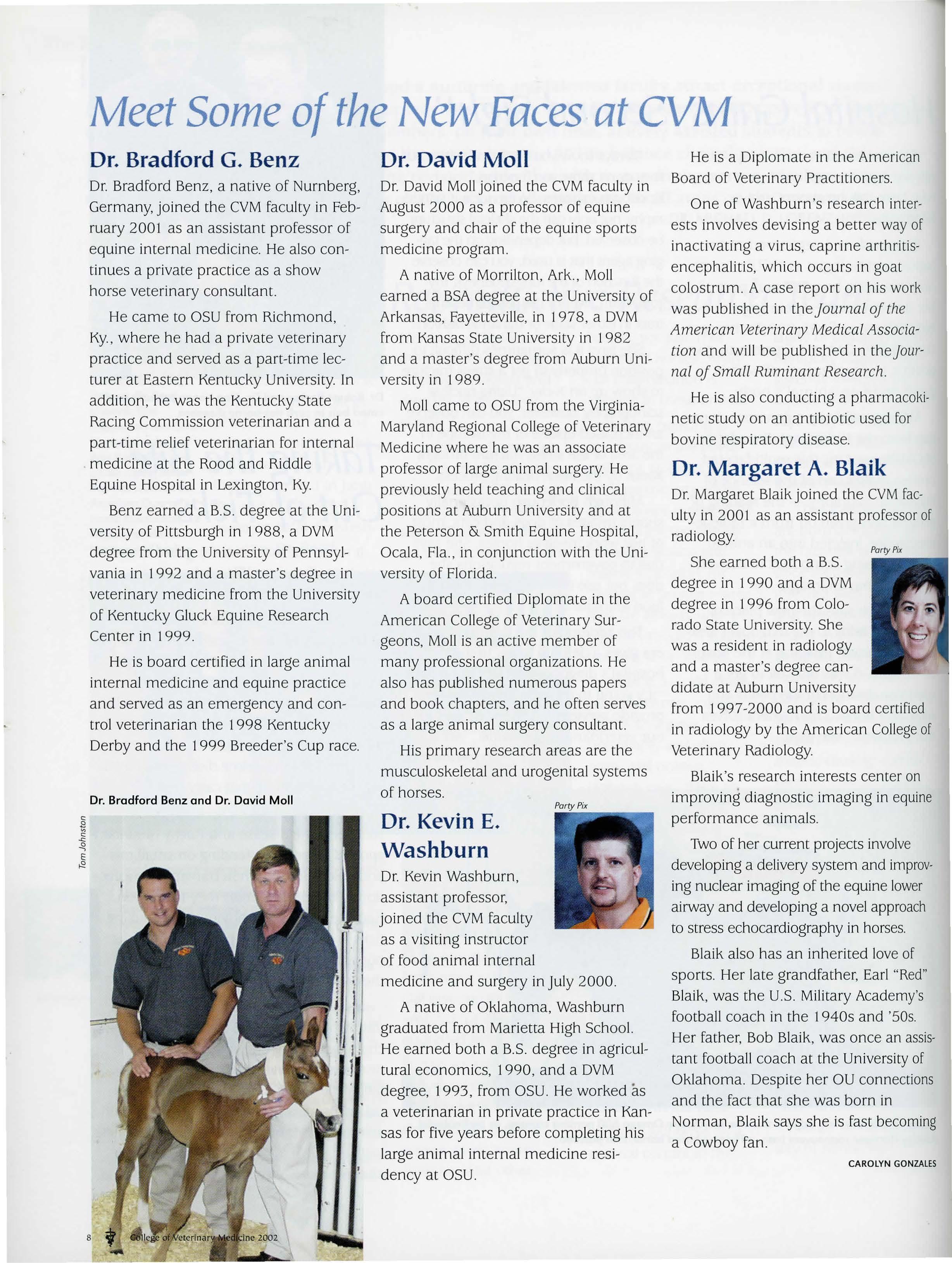
Dr. Bradford Benz and Dr. David Moll
Dr. David Moll
Dr. David Moll joined the CVM faculty in August 2000 as a professor of equine surgery and chair of the equine sports medicine program.
A native of Morrilton, Ark., Moll earned a BSA degree at the University of Arkansas, Fayetteville, in 1978, a DVM from Kansas State University in 1982 and a master's degree from Auburn University in 1989.
Moll came to OSU from the VirginiaMaryland Regional College of Veterinary Medicine where he was an associate professor of large animal surgery. He previously held teaching and clinical positions at Auburn University and at the Peterson & Smith Equine Hospital, Ocala, Fla., in conjunction with the University of Florida.
A board certified Diplomate in the American College of Veterinary Surgeons, Moll is an active member of many professional organizations. He also has published numerous papers and book chapters, and he often serves as a large animal surgery consultant.
His primary research areas are the musculoskeletal and urogenital systems of horses.
Dr. Kevin E. Washburn
Dr. Kevin Washburn, assistant professor, joined the CVM faculty as a visiting instructor of food animal internal
medicine and surgery in July 2000.
A native of Oklahoma, Washburn graduated from Marietta High School. He earned both a B.S. degree in agricultural economics, 1990, and a DVM degree, 1993, from OSU. He worked as a veterinarian in private practice in Kansas for five years before completing his large animal internal medicine residency at OSU.
He is a Diplomate in the American Board of Veterinary Practitioners.
One of Washburn's research interests involves devising a better way of inactivating a virus, caprine arthritisencephalitis, which occurs in goat colostrum. A case report on his work was published in the Journal of the American Veterinary Medical Association and will be published in thejournal of Small Ruminant Research.
He is also conducting a pharmacokinetic study on an antibiotic used for bovine respiratory disease.
Dr. Margaret A. Blaik
Dr. Margaret Blaikjoined the CVM faculty in 2001 as an assistant professor of radiology.
She earned both a B.S. degree in 1990 and a DVM degree in 1996 from Colorado State University. She was a resident in radiology and a master's degree candidate at Auburn University
from 1997-2000 and is board certified in radiology by the American Collegeof Veterinary Radiology.
Blaik's research interests center on improving diagnostic imaging in equine performance animals.
Two of her current projects involve developing a delivery system and improving nuclear imaging of the equine lower airway and developing a novel approach to stress echocardiography in horses.
Blaik also has an inherited love of sports. Her late grandfather, Earl "Red" Blaik, was the U.S. Military Academy's football coach in the 1940s and '50s. Her father, Bob Blaik, was once an assistant football coach at the University of Oklahoma. Despite her OU connections and the fact that she was born in Norman, Blaik says she is fast becoming a Cowboy fan.
CAROLYN GONZALES
TheAnimals'Guardian
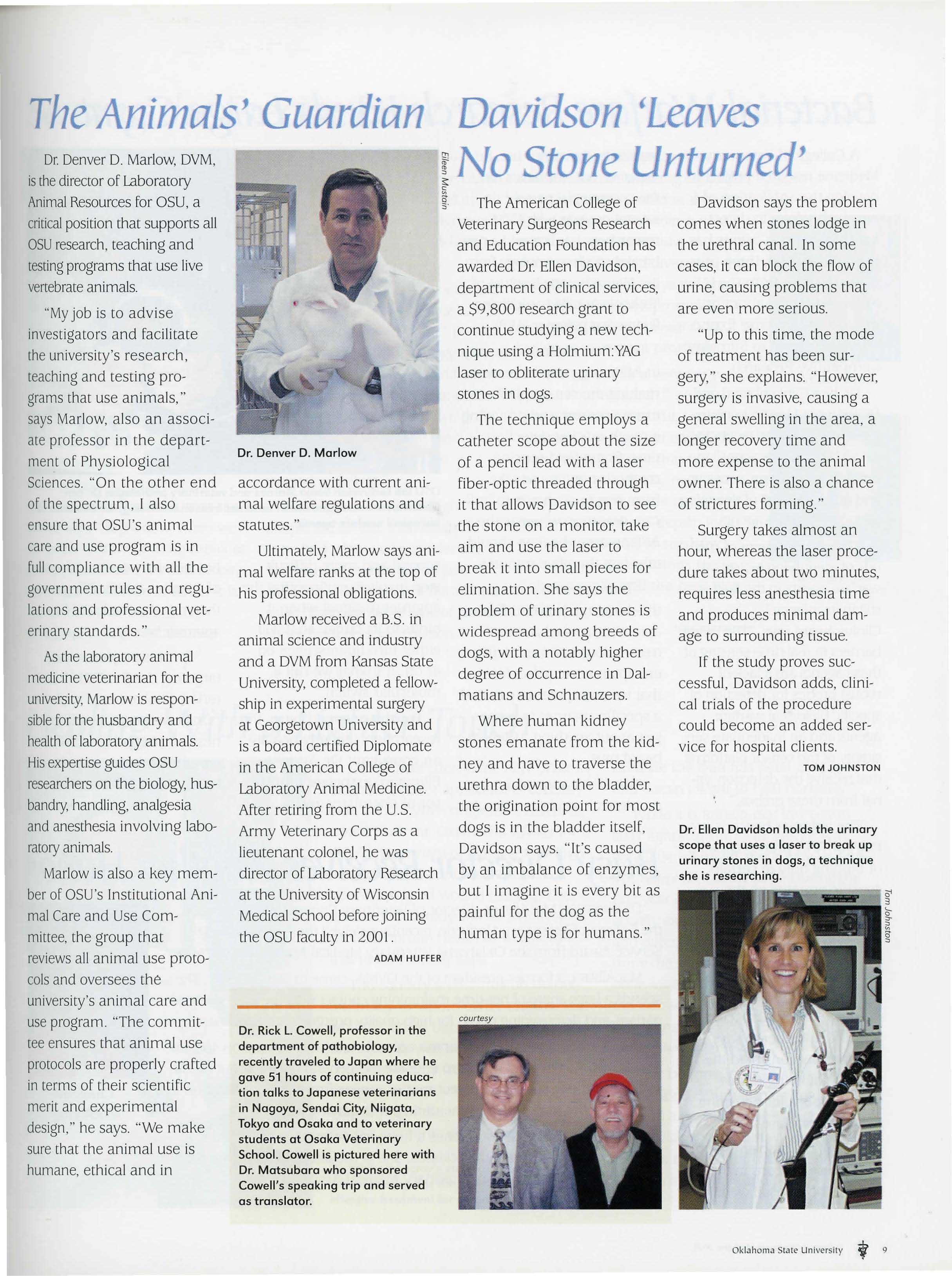
Dr.Denver D. Marlow, DVM, isthedirector of Laboratory AnimalResourcesfor OSU, a criticalposition that supports all OSUresearch,teaching and testingprograms that use live vertebrateanimals.
"My job is to advise investigators and facilitate the university's research, teachingand testing programs that use animals," saysMarlow, also an associate professor in the department of Physiological Sciences."On the other end of the spectrum, I also ensure that OSU's animal careand use program is in full compliance with all the government rules and regulations and professional veterinary standards."
As the laboratory animal medicineveterinarian for the university,Marlow is responsiblefor the husbandry and healthof laboratory animals. Hisexpertiseguides OSU researcherson the biology, husbandry,handling, analgesia and anesthesiainvolving laboratoryanimals.
Marlow is also a key member of OSU's Institutional Animal Care and Use Committee, the group that reviewsall animal use protocolsand oversees the university's animal care and useprogram. "The committee ensures that animal use protocolsare properly crafted in terms of their scientific merit and experimental design," he says. "We make surethat the animal use is humane, ethical and in
Davidson'Leaves r No StoneUnturned'
Dr. Denver D. Marlow accordance with current animal welfare regulations and statutes."
Ultimately, Marlow says animal welfare ranks at the top of his professional obligations.
Marlow received a BS. in animal science and industry and a DVM from Kansas State University, completed a fellowship in experimental surgery at Georgetown University and is a board certified Diplomate in the American College of Laboratory Animal Medicine.
After retiring from the U.S Army Veterinary Corps as a lieutenant colonel, he was director of Laboratory Research at the University of Wisconsin Medical School before joining the OSU faculty in 2001.
ADAM HUFFER
Dr. Rick L. Cowell, professor in the department of pathobiology, recently traveled to Japan where he gave 51 hours of continuing education talks to Japanese veterinarians in Nagoya, Sendai City, Niigata, Tokyo and Osaka and to veterinary students at Osaka Veterinary School. Cowell is pictured here with Dr. Matsubara who sponsored Cowell's speaking trip and served as translator.
The American College of Davidson says the problem Veterinary Surgeons Research and Education Foundation has awarded Dr. Ellen Davidson, department of clinical services, a $9,800 research grant to continue studying a new technique using a Holmium:YAG laser to obliterate urinary stones in dogs.
The technique employs a catheter scope about the size of a pencil lead with a laser fiber-optic threaded through it that allows Davidson to see the stone on a monitor, take aim and use the laser to break it into small pieces for elimination. She says the problem of urinary stones is widespread among breeds of dogs, with a notably higher degree of occurrence in Dalmatians and Schnauzers.
Where human kidney stones emanate from the kidney and have to traverse the urethra down to the bladder, the origination point for most dogs is in the bladder itself, Davidson says. "It's caused by an imbalance of enzymes, but I imagine it is every bit as painful for the dog as the human type is for humans."
comes when stones lodge in the urethral canal. In some cases, it can block the flow of urine, causing problems that are even more serious.
"Up to this time, the mode of treatment has been surgery," she explains. "However, surgery is invasive, causing a general swelling in the area, a longer recovery time and more expense to the animal owner. There is also a chance of strictures forming."
Surgery takes almost an hour, whereas the laser procedure takes about two minutes, requires less anesthesia time and produces minimal damage to surrounding tissue.
If the study proves successful, Davidson adds, clinical trials of the procedure could become an added service for hospital clients.
TOM JOHNSTON
Dr. Ellen Davidson holds the urinary scope that uses a laser to break up urinary stones in dogs, a technique she is researching.
BacterialWarfare ResearchLandsLargeGrant
A College of Veterinary Medicine research project to develop the application of a new technology to detect bacterial warfare agents has won a $308,000, three-year research grant from the U.S. Army Research Laboratory through the Defense Experimental Program to Stimulate Competitive Research.
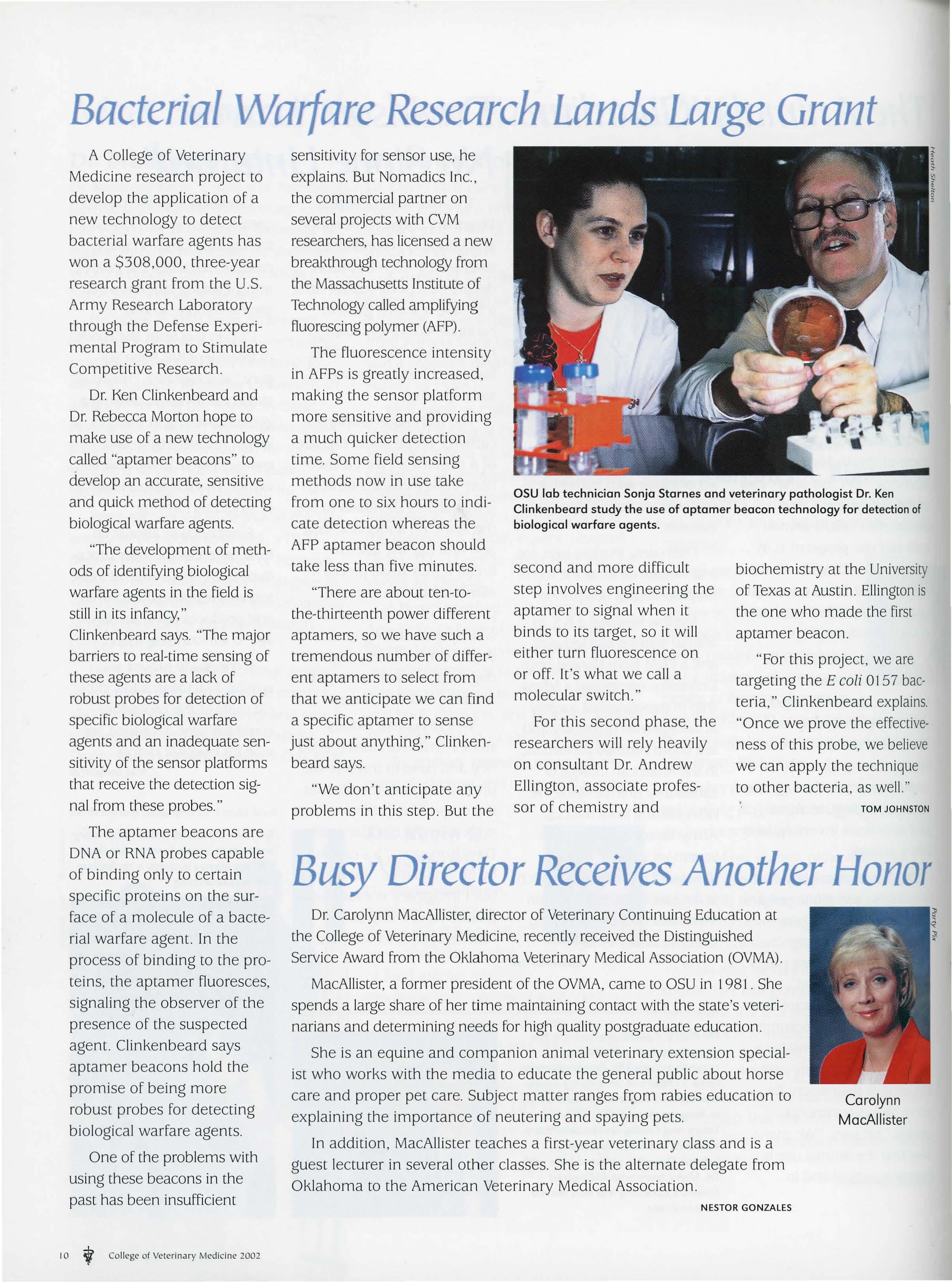
Dr. Ken Clinkenbeard and Dr. Rebecca Morton hope to make use of a new technology called "aptamer beacons" to develop an accurate, sensitive and quick method of detecting biological warfare agents.
"The development of methods of identifying biological warfare agents in the field is still in its infancy," Clinkenhe;ird says. "The major barriers to real-time sensing of these agents are a lack of robust probes for detection of specific biological warfare agents and an inadequate sensitivity of the sensor platforms that receive the detection signal from these probes."
The aptamer beacons are DNA or RNA probes capable of binding only to certain specific proteins on the surface of a molecule of a bacterial warfare agent. In the process of binding to the proteins, the aptamer fluoresces, signaling the observer of the presence of the suspected agent. Clinkenbeard says aptamer beacons hold the promise of being more robust probes for detecting biological warfare agents
One of the problems with using these beacons in the past has been insufficient
sensitivity for sensor use, he explains. But Nomadics Inc., the commercial partner on several projects with CVM researchers,has licensed a new breakthrough technology from the MassachusettsInstitute of Technology called amplifying fluorescing polymer (AFP).
The fluorescence intensity in AFPs is greatly increased, making the sensor platform more sensitive and providing a much quicker detection time. Some field sensing methods now in use take from one to six hours to indicate detection whereas the AFP aptamer beacon should take less than five minutes.
"There are about ten-tothe-thirteenth power different aptamers, so we have such a tremendous number of different aptamers to select from that we anticipate we can find a specific aptamer to sense just about anything," Clinkenbeard says.
"We don't anticipate any problems in this step. But the
second and more difficult step involves engineering the aptamer to signal when it binds to its target, so it will either turn fluorescence on or off. It's what we call a molecular switch."
For this second phase, the researchers will rely heavily on consultant Dr. Andrew Ellington, associate professor of chemistry and
biochemistry at the University of Texas at Austin. Ellingtonis the one who made the first aptamer beacon.
"For this project, we are targeting the E coli 0157 bacteria," Clinkenbeard explains.
"Once we prove the effectiveness of this probe, we believe we can apply the technique to other bacteria, as well."
TOM JOHNSTON
BusyDirectorReceivesAnotherHonor
Dr. Carolynn MacAllister, director of Veterinary Continuing Education at the College of Veterinary Medicine, recently received the Distinguished Service Award from the Oklahoma Veterinary Medical Association (OVMA).
MacAllister, a former president of the OVMA, came to OSU in I 981. She spends a large share of her time maintaining contact with the state's veterinarians and determining needs for high quality postgraduate education.
She is an equine and companion animal veterinary extension specialist who works with the media to educate the general public about horse care and proper pet care. Subject matter ranges fr;om rabies education to explaining the importance of neutering and spaying pets.
In addition, MacAllister teaches a first-year veterinary class and is a guest lecturer in several other classes. She is the alternate delegate from Oklahoma to the American Veterinary Medical Association.
NESTOR GONZALES
Carolynn MacAllister
OSU lab technician Sonja Starnes and veterinary pathologist Dr. Ken Clinkenbeard study the use of aptamer beacon technology for detection of biological warfare agents.
SensingthePreciseDose
Medicinefaculty members are collaboratingwith physicists in the Collegeof Arts & Sciences on a new research project aimed at producinga near real-time radiation sensor for cancer therapy.
Dr. Ken Bartels and Dr. Robert Bahrare working with physics professorDr. Stephen McKeever undera grant from the Oklahoma Centerfor the Advancement of Scienceand Technology.
Two OSU College of Veterinary picture of its location and how The radiation sensor the researchers are working on could be strategically placed in or close to the tumor and render a near real-time sensing of how much radiation is being delivered to that specific area. Bahr says the sensor might very well prompt a reconsideration of present-day radiation treatment protocols.
much it invades, and then we use a mathematical formula as well as a computerized program to figure out the dosage of radiation to deliver," he explains.
The aim of the project is to developa sensor that will give a moreprecise measurement of radiationdelivery at the tumor site, Bartelssays."Right now, when we do cancertreatment using cobait or a linearaccelerator,we do a biopsy to find out what type of tumor it is. Thenwe do a CT (computed tomography)to get an accurate
"The mathematical formulas are based on homogenous tissue everything being the same," Bartels says. "The problem is biology isn't that way. Tumor cells have different densities from one spot to another. Using the present system, we don't always end up delivering the amount of radiation that we wanted to deliver."
Bahr agrees. "Even though people are similar, individuals do vary. And when you consider the variations in anatomy, you just can't say 'one treatment fits all,"' he says. "Even the same type of tumor varies from person to person."
"We are still at a very early stage in our research," he says. "But if we're successful, 1can envision the medical establishment saying, 'Now that we have the ability to actually measure the radiation that the patient is getting at a certain depth, let's go back and look to see how we've been doing things to see if this is really still the best way to do it."'
HealingWith a LighterTouch
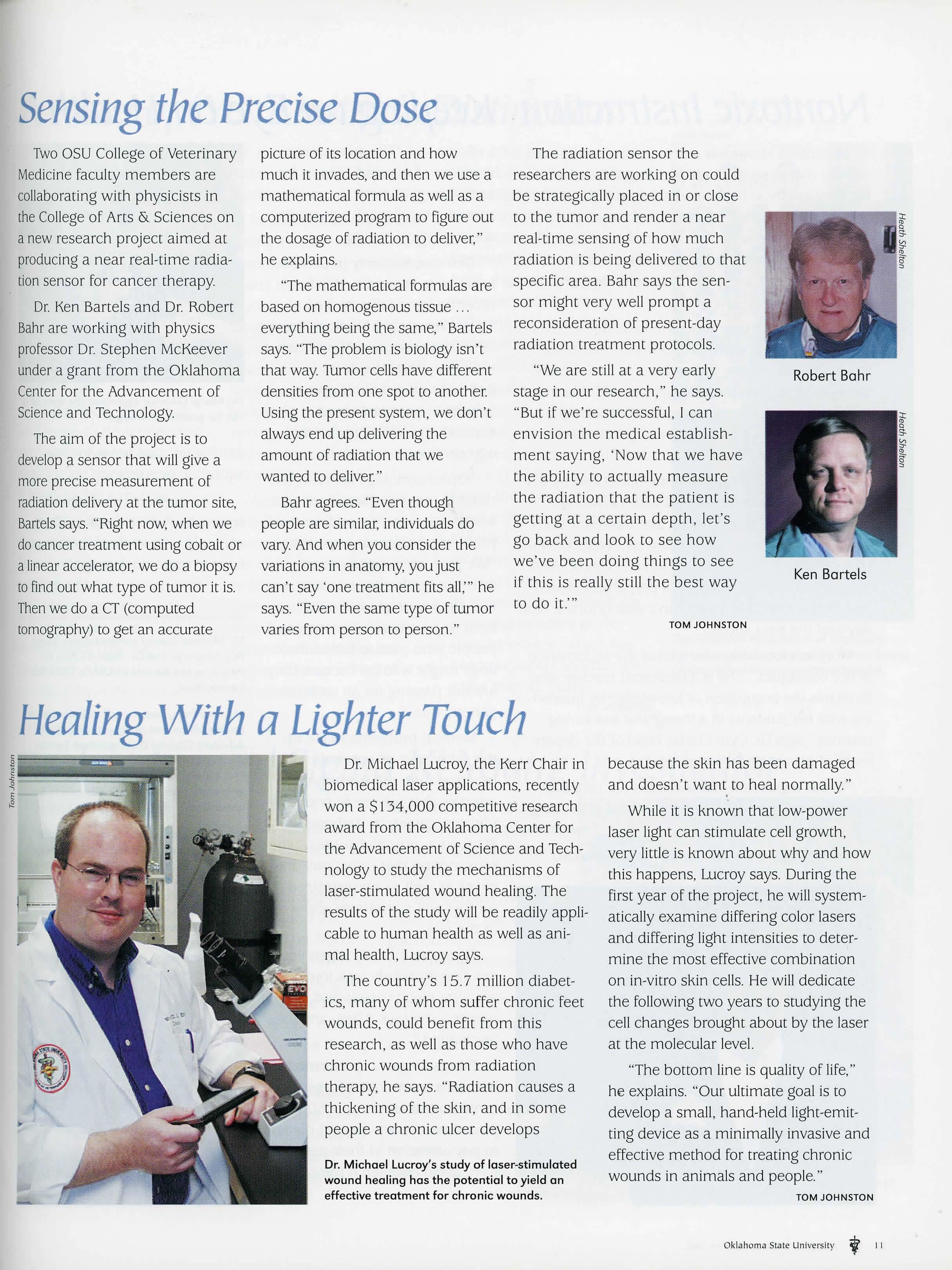
Dr. Michael Lucroy, the Kerr Chair in biomedical laser applications, recently won a $134,000 competitive research award from the Oklahoma Center for the Advancement of Science and Technology to study the mechanisms of laser-stimulated wound healing. The results of the study will be readily applicable to human health as well as animal health, Lucroy says.
The country's 15. 7 million diabetics, many of whom suffer chronic feet wounds, could benefit from this research, as well as those who have chronic wounds from radiation therapy, he says. "Radiation causes a thickening of the skin, and in some people a chronic ulcer develops
Dr. Michael Lucray's study of laser-stimulated waund healing has the potential to yield an effective treatment for chronic wounds.
because the skin has been damaged and doesn't want. to heal normally."
While it is known that low-power laser light can stimulate cell growth, very little is known about why and how this happens, Lucroy says. During the first year of the project, he will systematically examine differing color lasers and differing light intensities to determine the most effective combination on in-vitro skin cells. He will dedicate the following two years to studying the cell changes brought about by the laser at the molecular level.
"The bottom line is quality of life," he explains. "Our ultimate goal is to develop a small, hand-held light-emitting device as a minimally invasive and effective method for treating chronic wounds in animals and people."
TOM JOHNSTON
TOM JOHNSTON
Robert Bahr
Ken Bartels
NontoxicInstruction
Dr. Sandra Morgan is a firm believer in her veterinary medicine students learning about the toxins they are most likely to encounter in future veterinary practice. "l don't care if they learn the rare things," she says, "but when they get out of my class, 1definitely want them to know the common things they are going to have to deal with as practitioners."
Morgan says every time she talks to former students who are in veterinary practice out in the state, she asks them, "What kind of toxin cases are you seeing the most of right now?" She then tailors her instructional materials accordingly, so the students can gain a practical grasp of what may be coming.
This practicality has not gone unnoticed by her students. "l was so impressed with Dr. Morgan after the first week of classes that I asked if she would be my advisor for the last two years of veterinary school," says Stacey Hubler, class of 2002. "Every day she comes to class prepared to teach and by the end of lecture I can't wait until the next day and the next subject."
Morgan's focus has also gained the acclamation of her colleagues. "She is a dedicated teacher who facilitates the acquisition of knowledge by interacting with her students in a thoughtful and caring manner," says Dr. Cyril Clarke, head of the department of physiological sciences.
"In this regard, she has mastered not only the mechanics of instruction, but also the soul of teaching."
TOM JOHNSON
Keepingan Eyeon Health
Some say, "The eyes are the windows of the soul," but as far as Dr. Margi Gilmour is concerned, they also tell a great deal about physical health.
Gilmour, formerly in private practice in Issaquah, Wash., recently joined the staff of OSU's Veterinary Medical Hospital as the second staff ophthalmologist. Both she and ophthalmologist Dr. Virginia Schultz are excited about expanding CVM's ophthalmology services for animals.
"Ophthalmology services fall roughly into two classifications: certification exams and medical problems," Gilmour explains. "We perform a certification exam to verify that an animal has good eyesight before it is bred or purchased. For instance, people who plan to breed their dogs might want to be sure they are not passing on an undesired genetic trait."
Medical problems make up the other part of ophthalmology practice. "We see everything in animals that we see in peopleinjuries, cataracts, diabetes, glaucoma, retinal diseases," she says, noting that infectious diseases as well as metastasized tumors will sometimes show up in the eye.
"Eyes are the only organ you can non-invasively look into and visualize blood vessels and nerves," she says. "They are quite fascinating."
Gilmour - who performed her most memorable surgery removing cataracts on a 500pound seal - advises pet owners to pay attention to their pets and have them checked if they
exhibit unusual behavior like squinting or rubbing.
"The eyes are non-forgiving structures," she cautions. "They can only take so much before you have irreparable damage."
TOM JOHNSTON
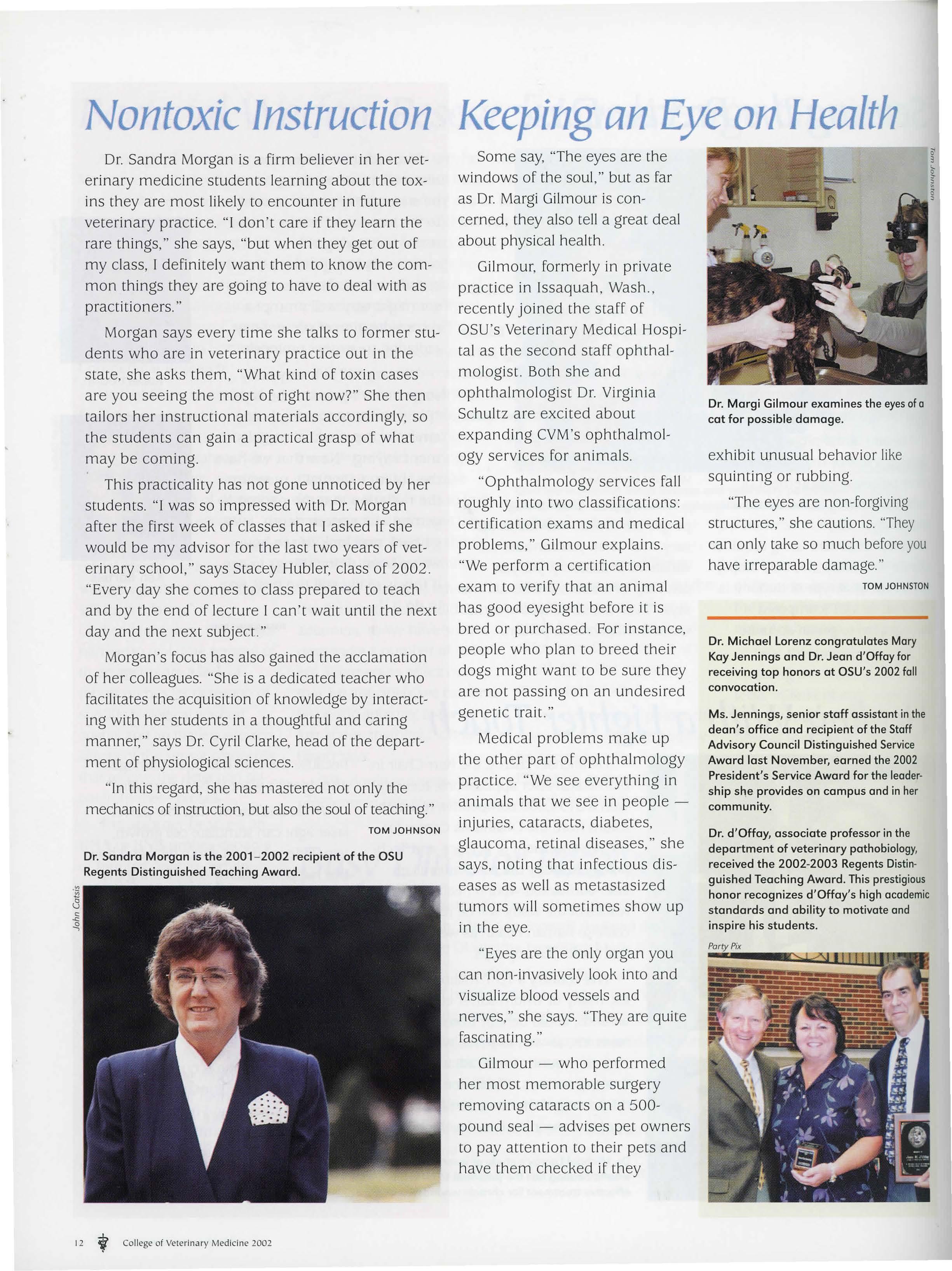
Dr. Michael Lorenz congratulates Mary Kay Jennings and Dr. Jean d'Offay for receiving top honors at OSU's 2002 fall convocation.
Ms. Jennings, senior staff assistant in the dean's office and recipient of the Staff Advisory Council Distinguished Service Award last November, earned the 2002 President's Service Award for the leadership sfie provides on campus and in her community.
Dr. d'Offoy, associate professor in the department of veterinary pathobiology, received the 2002-2003 Regents Distin· guished Teaching Award. This prestigious honor recognizes d'Offay's high academic standards and ability to motivate and inspire his students.
Dr. Sandra Morgan is the 2001-2002 recipient of the OSU Regents Distinguished Teaching Award.
Dr. Margi Gilmour examines the eyesof a cat for possible damage.
A Man of (YetAnother)Distinction
Dr. Sidney Ewing, interim associatedean for academic affairsfor OSU's College of VeterinaryMedicine, had alreadyearned many feathersin his cap before receiving yet another honor this pastsummer when the AmericanAssociation of Veterinary Parasitologists named him Distinguished Veterinary Parasitologist.
Ewing is the Wendell H. and Nellie G. Krull Endowed Professorof Veterinary Parasitologyat OSU and well known for his expertise.
He was the first to recognize canine ehrlichiosis in North America, and most recently, Ewing, along with Dr. Roger Panciera and other colleagues at OSU, determined that the Gulf Coasttick, Amblyomma maculatum, is the vector of
the debilitating disease, American canine hepatozoonosis.
In addition to research, Ewing's active career in academic veterinary medicine spans more than 40 years. During this time he has taught and served as department head, associate dean and dean of various land-grant institutions, including Kansas State University, Mississippi State University, the University of Minnesota and OSU.
Among the honors of the past few years, Ewing was named Oklahoma Veterinarian of the Year in I 997 and later that year was selected to receive OSU's first Eminent Faculty Award. He was named to the Oklahoma Higher Education Hall of Fame in 2000.
In 2001 he authored Wendell Krull: Trematodes and Naturalists, which is already being heralded by parasitologists across the country as a fascinating tribute to Wendell Krull, the founding head of veterinary parasitology at OSU and one of the great parasitologists and naturalists of the 20th century.
In December of 2002, Ewing's classmates from the University of Georgia, where the Georgia native graduated with a DVM in 1958, established the Sidney Ewing Scholarship in Veterinary Parasitology in his honor to recognize Ewing's contributions to class unity. He served as secretary-treasurer of the class and as editor of the class newsletter, which has been published annually for more than 40 years.
TOM JOHNSTON
RitcheyNamedSigmaXi YoungInvestigator
SigmaXi, a scientific researchsociety, named Dr.Jerry Ritchey, assistant professor of pathobiology, the Sigma Xi Young Investigator for 2002. The society is a non-profit organization of nearly 75,000 scientistsand engineers electedto the society becauseof their research achievements.
The OSU chapter of SigmaXi established an annual Young Investigator Award to recognize an individual who has received a degree within
the past 10 years and has already established a national reputation as a scientist.
Ritchey earned his DVM at OSU in I 991 and his Ph.D. at North Carolina State University before returning to OSU in 1997. He is the first OSU faculty member to receive the Young Investigator Award.
"Students, staff and fellow faculty members at CVM consider Ritchey an inspirational and gifted faculty member,"
says Dr. Kenneth Bartels, who served as chairman of the awards committee for Sigma Xi.
"For the past five years Ritchey has distinguished himself as an outstanding teacher, service provider and successful scientist," Bartels says. "His research involving molecular biology has produced some relevant advances toward understanding the immune responses in cattle, cats and human beings."
Heath Shelton
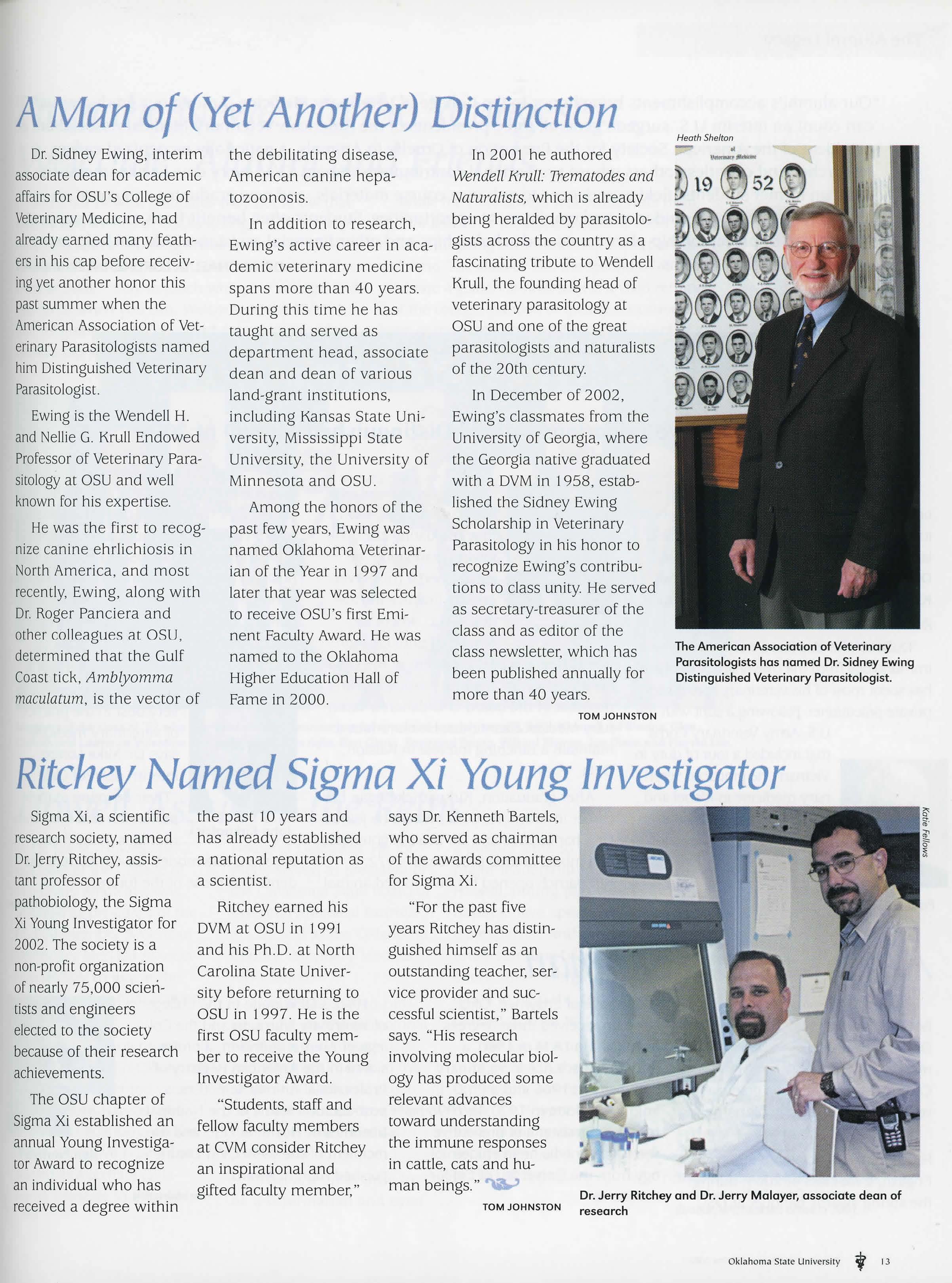
The American Assaciatian of Veterinary Parasitologists has named Dr. Sidney Ewing Distinguished Veterinary Parasitologist.
TOM JOHNSTON
Dr. Jerry Ritchey and Dr. Jerry Ma layer, associate dean of research
"Our alumni's accomplishments bring honor to the College of Veterinary Medicine. Among our graduates we can count an interim U.S. surgeon general, three presidents of the American Veterinary Medical Association. a president of the American Society for the Prevention of Cruelty to Animals, a nationally recognized cancer researcher and countless others whose professional contributions impact CVM every day. Faculty members draw on former students' field experiences to enhance course materials, and new graduates can count on alumni for professional guidance and employment opportunities. Students often benefit from alumni support in the form of preceptorship placements and scholarships and other financial assistance. Alumni help many students fulfill their dreams." - DR.
MICHAEL D. LORENZ,INTERIM
DEAN
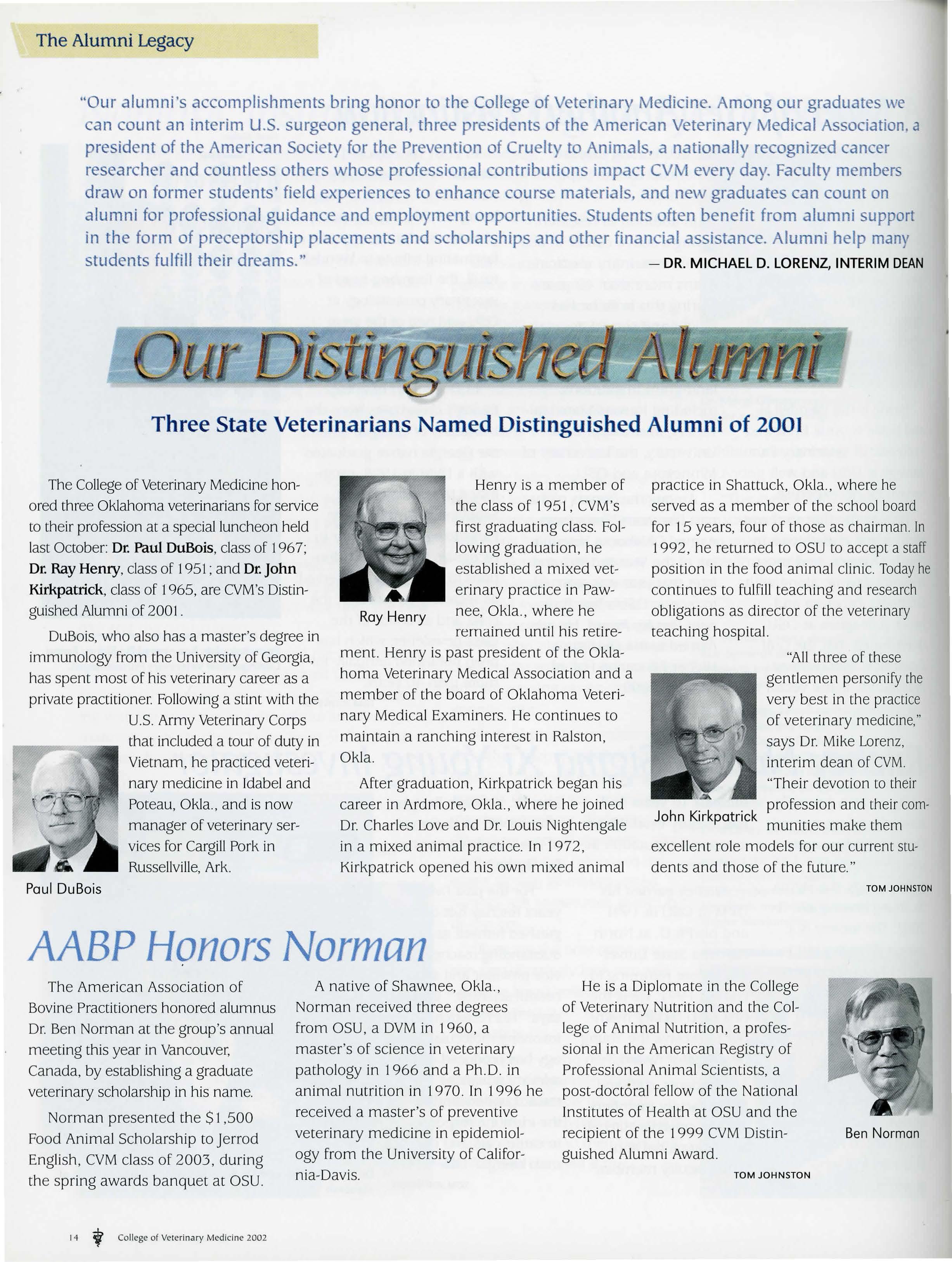
The Collegeof Veterinary Medicine honored three Oklahoma veterinarians for service to their profession at a special luncheon held last October: Dr. Paul DuBois,classof 1967; Dr. Ray Herny, classof 1951; and Dr.John Kirkpatrick, class of 1965, are CVM's Distinguished Alumni of 200 I DuBois, who also has a master's degree in immunology from the University of Georgia, has spent most of his veterinary career as a private practitioner. Following a stint with the
U.S. Army Veterinary Corps that included a tour of duty in Vietnam, he practiced veterinary medicine in Idabel and Poteau, Okla and is now manager of veterinary services for Cargill Pork in Russellville,Ark.
Henry is a member of the class of 1951, CVM's first graduating class. Following graduation. he established a mixed veterinary practice in Pawnee, Okla., where he remained until his retirement. Henry is past president of the Oklahoma Veterinary Medical Association and a member of the board of Oklahoma Veterinary Medical Examiners. He continues to maintain a ranching interest in Ralston. Okla.
After graduation, Kirkpatrick began his career in Ardmore, Okla., where he joined Dr. Charles Love and Dr. Louis Nightengale in a mixed animal practice. In 1972, Kirkpatrick opened his own mixed animal
MBP HonorsNorman
The American Association of Bovine Practitioners honored alumnus Dr. Ben Norman at the group's annual meeting this year in Vancouver, Canada, by establishing a graduate veterinary scholarship in his name.
Norman presented the S1,500 Food Animal Scholarship to Jerrod English, CVM class of 2003, during the spring awards banquet at OSU.
A native of Shawnee, Okla., Norman received three degrees from OSU, a DVM in 1960, a master's of science in veterinary pathology in 1966 and a Ph.D. in animal nutrition in 1970. In 1996 he received a master's of preventive veterinary medicine in epidemiology from the University of California-Davis.
practice in Shattuck, Okla., where he served as a member of the school board for 15 years. four of those as chairman. In I 992, he returned to OSU to accept a staff position in the food animal clinic. Todayhe continues to fulfill teaching and research obligations as director of the veterinary reaching hospital.
"All three of these gentlemen personify the very best in the practice of veterinary medicine," says Dr. Mike Lorenz, interim dean of CVM. "Their devotion to their profession and their comJohn Kirkpatrick munities make them excellent role models for our current students and those of the future."
He is a Diplomate in the College of Veterinary Nutrition and the College of Animal Nutrition, a professional in the American Registry of Professional Animal Scientists, a post-doctoral fellow of the National Institutes of Health at OSU and the recipient of the I 999 CVM Distinguished Alumni Award.
Three State Veterinarians Named Distinguished Alumni of 2001
Paul DuBois
Ray Henry
TOM JOHNSTON
Ben Norman
TOM JOHNSTON
FromtheNewestto the Youngest Welcome,Alumniand Friends
Since our newest graduates may not know that alumni and friends of OSU's College of Veterinary Medicinehold a standing invitation to visit, CVM extendsa special invitation with a reminder to the classof 2002: "Stay in touch with your college, and callon us when you can. Welcome to the CVM alumni group - you've joined the company of the world's top veterinary medicine professionals."
While the CVM always welcomes visits from alumni and other friends, the class of ! 952's 50th reunion at spring commencement was particularly welcome. The class of '52, the second CVM class to celebrate a golden anniversary, is a vivid reminder that the college tradition of quality education has been shaped over time by the commitment of its students and the successesof its alumni.
MARY CURL, DIRECTOR OF DEVELOPMENT
WHAT'S NEW?
Keep your college and fellow alumni informed of pertinent events in your life by sending your news to: Vet Cetera, OSU College of Veterinary Medicine, 308 McElroy Hall, Stillwater, OK 74078-2011; telephone: (405) 744-5630; Fax: (405) 744-5233; email: curlm@okstate.edu
HowellAssumestheReins
Dr.Joe M. Howell, 1972 graduateof the College of Veterinary Medicine, was installedas president of the 65,000-member American Veterinary Medical Association (AVMA) in July at th.e association'sannual convention in Nashville.
Howell, who owns a small animal practice in Oklahoma City,has represented veterinarians from Kansas, Missouri and Oklahoma on the AVMAexecutive board and servedas alternate Oklahoma delegate to the AVMA
House of Delegates. He formerly served as president of the Oklahoma State Board of Veterinary Medical Examiners, as well as the Oklahoma County Veterinary Medical Association.
Howell has chaired campaigns for state gubernatorial, legislature and mayor races and was instrumental in the creation of a political action committee within the Oklahoma Veterinary Medical Association.
"This is a great time to be a veterinarian and even
a greater time to have a major leadership role," says Howell, noting that veterinarians have special medical expertise and understanding of zoonotic, exotic and emerging diseases to help the country defend against terrorism.
"We are in a unique, historic period in the veterinary profession. Never in the AVMNs 139 year history· have so many changes been occurring in such a short period of time."
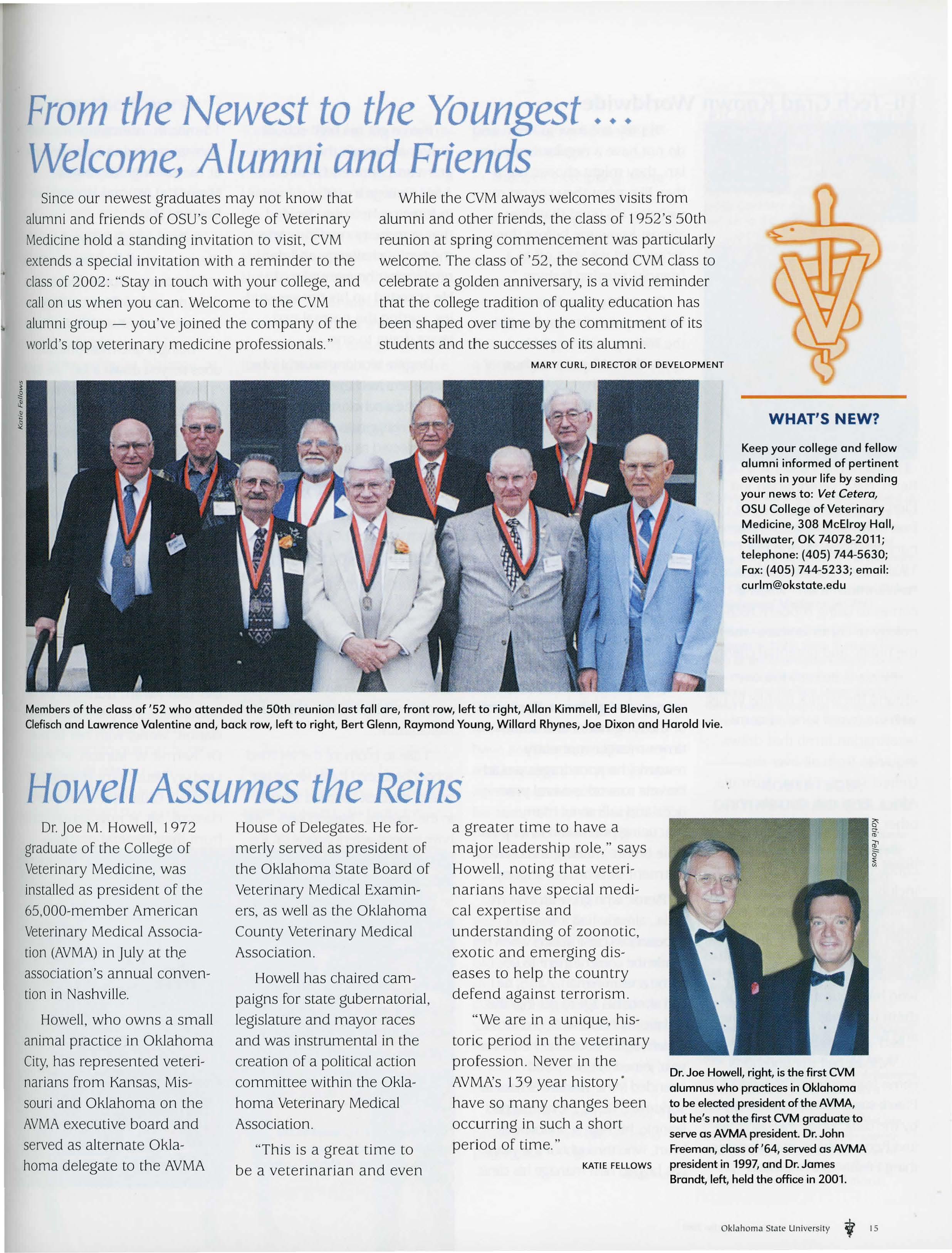
Members of the class of' 52 who attended the 50th reunion last foll are, front row, left to right, Allan Kimmell, Ed Blevins, Glen Clefischand Lawrence Valentine and, back row, left to right, Bert Glenn, Raymond Young, Willard Rhynes, Joe Dixon and Harold Ivie.
Dr. Joe Howell, right, is the first CVM alumnus who practices in Oklahoma
KATIE FELLOWS to be elected president of the AVMA, but he's not the first CVM graduate to serve as AVMA president. Dr. John Freeman, class of '64, served as AVMA president in 1997, and Dr.James Brandt, left, held the office in 2001.
Hi-Tech Grad Known Worldwide
"If they are new to Reno and do not have a regular veterinarian, they might choose me if they like what they see on my website. It's good that they almost know me before they arrive, and we start off in a friendly, trusting fashion."
Pierce says he does the website more for the fun than the money, a concept he applied for 15 years as host of the popular "Pets & Vets" program, a weekly one-hour veterinary advice radio program.
Pierce got his high school diploma through the GED program and entered Oklahoma A&M College in 1954 to major in forestry. He soon decided that veterinary medicine was more of a challenge and definitely what he wanted to do. He speeded up his pre-vet studies, cutting the normal two years down to one.
15-month internship in small animal medicine and surgery at the prestigious Angell Memorial Animal Hospital in Boston, Mass.
Following his internship, Pierce worked for veterinarians in Vancouver, British Columbia, then moved to Reno, where he's worked since 1964.
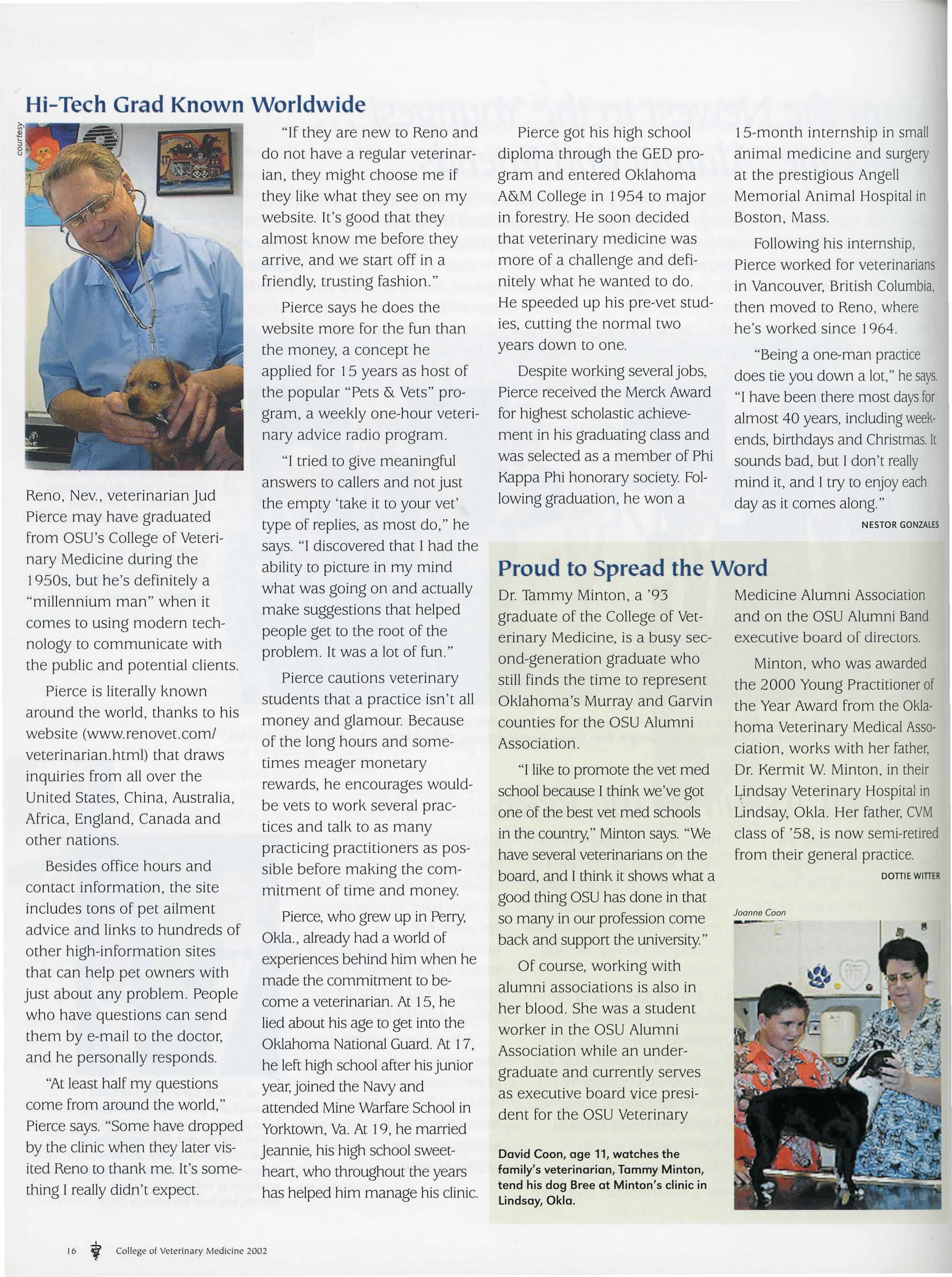
Reno, Nev., veterinarian Jud Pierce may have graduated from OSU's College of Veterinary Medicine during the 1950s, but he's definitely a "millennium man" when it comes to using modern technology to communicate with the public and potential clients.
Pierce is literally known around the world, thanks to his website (www.renovet.com/ veterinarian.html) that draws inquiries from all over the United States, China, Australia, Africa, England, Canada and other nations.
Besides office hours and contact information, the site includes tons of pet ailment advice and links to hundreds of other high-information sites that can help pet owners with just about any problem People who have questions can send them by e-mail to the doctor, and he personally responds.
"At least half my questions come from around the world," Pierce says. "Some have dropped by the clinic when they later visited Reno to thank me. It's something I really didn't expect.
"I tried to give meaningful answers to callers and not just the empty 'take it to your vet' type of replies, as most do," he says. "I discovered that I had the ability to picture in my mind what was going on and actually make suggestions that helped people get to the root of the problem. It was a lot of fun."
Pierce cautions veterinary students that a practice isn't all money and glamour. Because of the long hours and sometimes meager monetary rewards, he encourages wouldbe vets to work several practices and talk to as many practicing practitioners as possible before making the commitment of time and money.
Pierce,who grew up in Perry, Okla., already had a world of experiences behind him when he made the commitment to become a veterinarian. At 15, he lied about his age to get into the Oklahoma National Guard. At 17, he left high school after his junior year,joined the Navy and attended Mine Warfare School in Yorktown, Va. At 19, he married Jeannie, his high school sweetheart, who throughout the years has helped him manage his clinic.
Despite working severaljobs, Pierce received the Merck Award for highest scholastic achievement in his graduating class and was selected as a member of Phi Kappa Phi honorary society. Following graduation, he won a
"Being a one-man practice does tie you down a lot," hesays.
"I have been there most daysfor almost 40 years, including weekends, birthdays and Christmas.le sounds bad, but I don't really mind it, and I try to enjoy each day as it comes along."
Proud to Spread the Word
Dr. Tammy Minton, a '93 graduate of the College of Veterinary Medicine, is a busy second-generation graduate who still finds the time to represent Oklahoma's Murray and Garvin counties for the OSU Alumni Association.
"I like to promote the vet med school because I think we've got one of the best vet med schools in the country," Minton says. "We have severalveterinarians on the board, and I think it shows what a good thing OSU has done in that so many in our profession come back and support the university."
Of course. working with alumni associations is also in her blood. She was a student worker in the OSU Alumni Association while an undergraduate and currently serves as executive board vice president for the OSU Veterinary
David Coon, age 11, watches the family's veterinarian, Tommy Minton, tend his dog Bree at Minton's clinic in Lindsay, Okla.
Medicine Alumni Association and on the OSU Alumni Band executive board or directors.
Minton, who was awarded the 2000 Young Practitioner of the Year Award from the Oklahoma Veterinary Medical Association, works with her father, Dr. Kermit W. Minton, in their I.)ndsay Veterinary Hospital in Lindsay, Okla. Her father, CVM class of '58, is now semi-retired from their general practice.
~-
Joanne Coon
Stayingthe Course
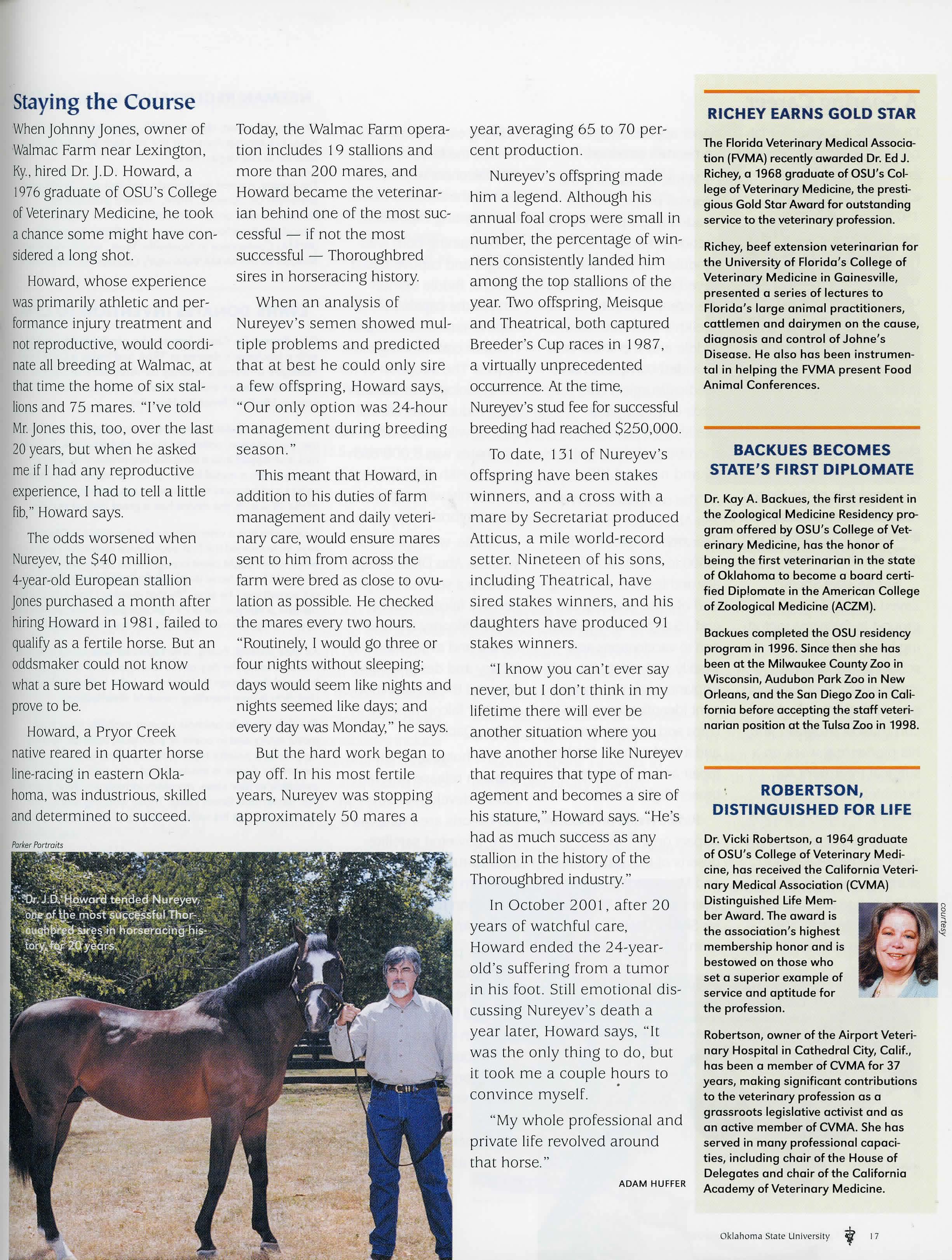
WhenJohnny Jones, owner of WalmacFarm near Lexington, Ky.,hired Dr. JD. Howard, a 1976graduate of OSU's College of Veterinary Medicine, he took a chancesome might have considereda long shot.
Howard, whose experience wasprimarily athletic and performanceinjury treatment and not reproductive, would coordinateall breeding at Walmac, at thattime the home of six stallionsand 75 mares. "I've told Mr.Jonesthis, too, over the last 20years,but when he asked meif I had any reproductive experience,I had to tell a little fib," Howard says.
The odds worsened when Nureyev,the $40 million, 4-year-oldEuropean stallion Jonespurchased a month after hiring Howard in 1981, failed to qualifyas a fertile horse. But an oddsmakercould not know whata sure bet Howard would proveto be.
Howard, a Pryor Creek nativereared in quarter horse line-racingin eastern Oklahoma,was industrious, skilled anddetermined to succeed.
Today, the Walmac Farm operation includes 19 stallions and more than 200 mares, and Howard became the veterinarian behind one of the most successful - if not the most successful - Thoroughbred sires in horseracing history.
When an analysis of Nureyev's semen showed multiple problems and predicted that at best he could only sire a few offspring, Howard says, "Our only option was 24-hour management during breeding season."
This meant that Howard, in addition to his duties of farm management and daily veterinary care, would ensure mares sent to him from across the farm were bred as close to ovulation as possible. He checked the mares every two hours.
"Routinely, I would go three or four nights without sleeping; days would seem like nights and nights seemed like days; and every day was Monday," he says.
But the hard work began to pay off. In his most fertile years, Nureyev was stopping approximately 50 mares a
year, averaging 65 to 70 percent production.
Nureyev's offspring made him a legend. Although his annual foal crops were small in number, the percentage of winners consistently landed him among the top stallions of the year. Two offspring, Meisque and Theatrical, both captured Breeder's Cup races in 1987, a virtually unprecedented occurrence. At the time, Nureyev's stud fee for successful breeding had reached $250,000.
To date, 131 of Nureyev's offspring have been stakes winners, and a cross with a mare by Secretariat produced Atticus, a mile world-record setter. Nineteen of his sons, including Theatrical, have sired stakes winners, and his daughters have produced 91 stakes winners.
"I know you can't ever say never, but I don't think in my lifetime there will ever be another situation where you have another horse like Nureyev that requires that type of management and becomes a sire of his stature," Howard says. "He's had as much success as any stallion in the history of the Thoroughbred industry."
In October 2001, after 20 years of watchful care, Howard ended the 24-yearold's suffering from a tumor in his Foot. Still emotional discussing Nureyev's death a year later, Howard says, "It was the only thing to do, but it took me a couple ~ours to convince myself.
"My whole professional and private life revolved around that horse."
ADAM HUFFER
RICHEY EARNS GOLD STAR
The Florido Veterinary Medical Association (FVMA) recently awarded Dr. Ed J. Richey, a 1968 graduate of OSU's College of Veterinary Medicine, the prestigious Gold Star Award for outstanding service to the veterinary profession.
Richey, beef extension veterinarian for the University of Florida's College of Veterinary Medicine in Gainesville, presented a series of lectures to Florida's large animal practitioners, cattlemen and dairymen on the cause, diagnosis and control of Johne's Disease. He also hos been instrumental in helping the FVMA present Food Animal Conferences.
BACKUES BECOMES STATE'S FIRST DIPLOMATE
Dr. Koy A. Backues, the first resident in the Zoological Medicine Residency program offered by OSU's College of Veterinary Medicine, hos the honor of being the first veterinarian in the state of Oklahoma to become a board certified Dip!omote in the American College of Zoological Medicine (ACZM).
Backues completed the OSU residency program in 1996. Since then she hos been at the Milwaukee County Zoo in Wisconsin, Audubon Pork Zoo in New Orleans, and the Son Diego Zoo in California before accepting the staff veterinarian position at the Tulsa Zoo in 1998.
ROBERTSON, DISTINGUISHED FOR LIFE
Dr. Vicki Robertson, a 1964 graduate of OSU's College of Veterinary Medicine, hos received the California Veterinary Medical Association (CVMA) Distinguished Life Member Award. The award is the association's highest membership honor and is bestowed on those who set a superior example of service and aptitude for the profession.
Robertson, owner of the Airport Veterinary Hospital in Cathedral City, Calif., hos been a member of CVMA for 37 years, making significant contributions to the veterinary profession as a grassroots legislative activist and as on active member of CVMA. She hos served in many professional capacities, including choir of the House of Delegates and choir of the California Academy of Veterinary Medicine.
A Soaring Career
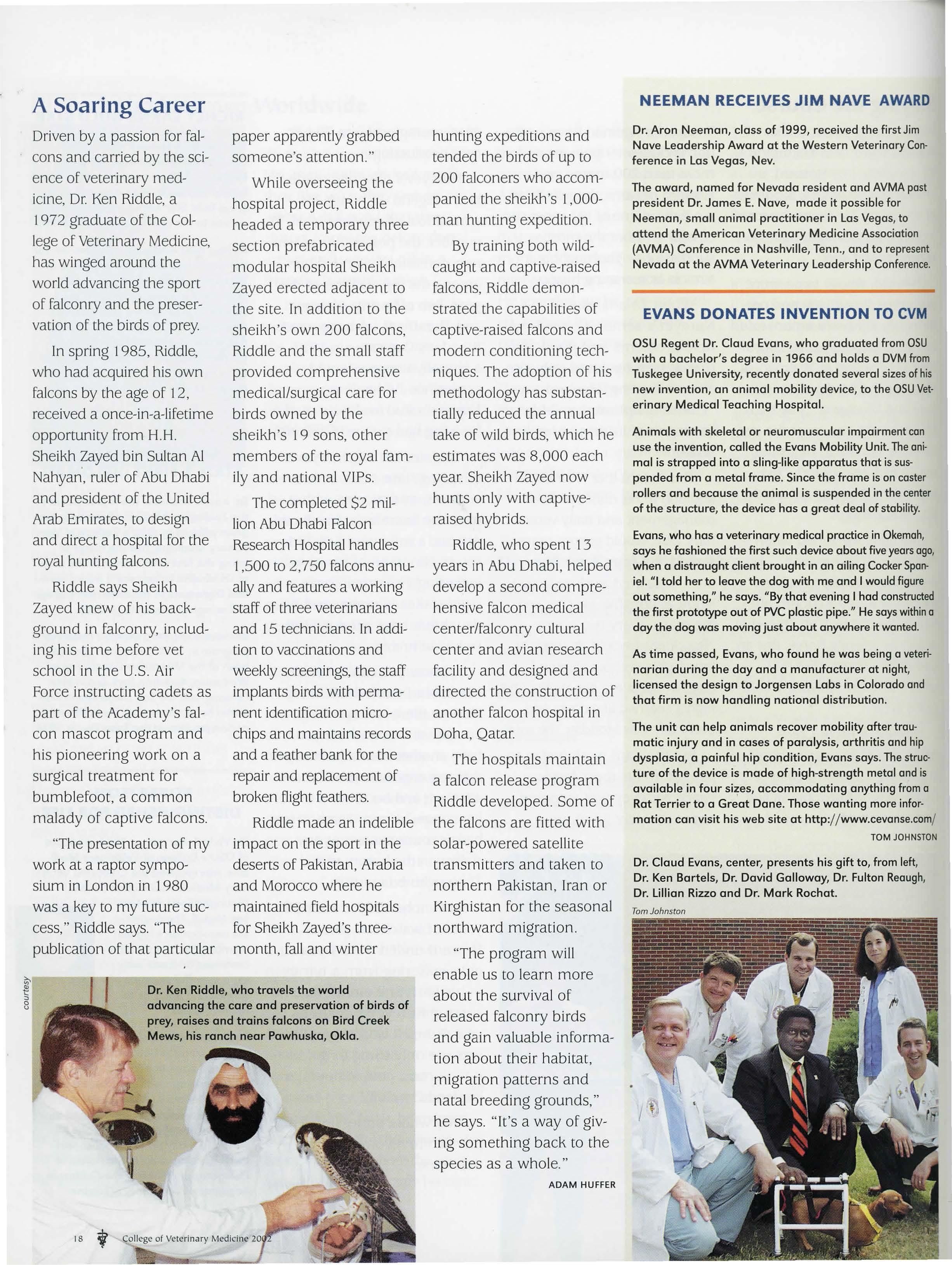
Driven by a passion for falcons and carried by the science of veterinary medicine, Dr. Ken Riddle, a I 972 graduate of the College of Veterinary Medicine, has winged around the world advancing the sport of falconry and the preservation of the birds of prey.
In spring I 985, Riddle, who had acquired his own falcons by the age of 12, received a once-in-a-lifetime opportunity from H.H. Sheikh Zayed bin Sultan Al Nahyan, ruler of Abu Dhabi and president of the United Arab Emirates, to design and direct a hospital for the royal hunting falcons.
Riddle says Sheikh Zayed knew of his background in falconry, including his time before vet school in the U.S. Air Force instructing cadets as part of the Academy's falcon mascot program and his pioneering work on a surgical treatment for bumblefoot, a common malady of captive falcons.
"The presentation of my work at a raptor symposium in LDndon in I 980 was a key to my future success," Riddle says. "The publication of that particular paper apparently grabbed someone's attention."
While overseeing the hospital project, Riddle headed a temporary three section prefabricated modular hospital Sheikh Zayed erected adjacent to the site. In addition to the sheikh's own 200 falcons, Riddle and the small staff provided comprehensive medical/surgical care for birds owned by the sheikh's 19 sons, other members of the royal family and national VIPs.
The completed $2 million Abu Dhabi Falcon ResearchHospital handles 1,500 to 2,750 falcons annually and features a working staff of three veterinarians and I 5 technicians. In addition to vaccinations and weekly screenings, the staff implants birds with permanent identification microchips and maintains records and a feather bank for the repair and replacement of broken flight feathers.
Riddle made an indelible impact on the sport in the deserts of Pakistan, Arabia and Morocco where he maintained field hospitals for Sheikh Zayed's threemonth, fall and winter
hunting expeditions and tended the birds of up to 200 falconers who accompanied the sheikh's 1,000man hunting expedition.
By training both wildcaught and captive-raised falcons, Riddle demonstrated the capabilities of captive-raised falcons and modern conditioning techniques. The adoption of his methodology has substantially reduced the annual take of wild birds, which he estimates was 8,000 each year. Sheikh Zayed now hunts only with captiveraised hybrids.
Riddle, who spent 13 years in Abu Dhabi, helped develop a second comprehensive falcon medical center/falconry cultural center and avian research facility and designed and directed the construction of another falcon hospital in Doha, Qatar.
The hospitals maintain a falcon release program Riddle developed. Some of the falcons are fitted with solar-powered satellite transmitters and taken to northern Pakistan, Iran or Kirghistan for the seasonal northward migration.
"The program will enable us to learn more about the survival of released falconry birds and gain valuable information about their habitat, migration patterns and natal breeding grounds," he says. "It's a way of giving something back to the species as a whole."
ADAM HUFFER
NEEMAN RECEIVES JIM NAVE AWARD
Dr. Aron Neeman, class of 1999, received the first Jim Nave Leadership Award at the Western Veterinary Conference in Las Vegas, Nev.
The award, named for Nevada resident and AVMA past president Dr. James E. Nave, made it possible for Neeman, small animal practitioner in Las Vegas, to attend the American Veterinary Medicine Association (AVMA) Conference in Nashville, Tenn., and to represent Nevada at the AVMA Veterinary Leadership Conference.
EVANS DONATES INVENTION TO CVM
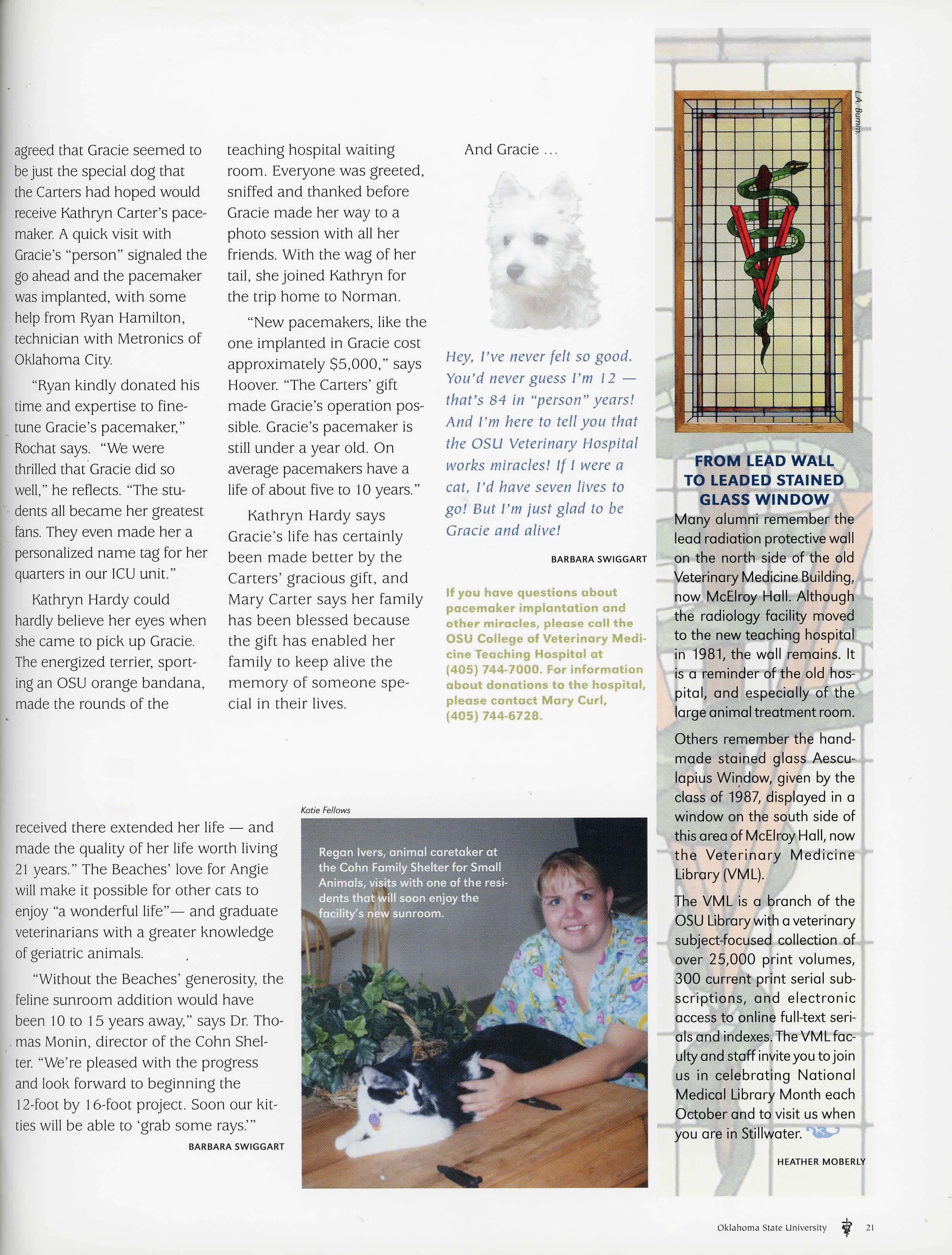
OSU Regent Dr. Claud Evans, who graduated from OSU with a bachelor's degree in 1966 and holds a DVM from Tuskegee University, recently donated several sizesof his new invention, an animal mobility device, to the OSUVeterinary Medical Teaching Hospital.
Animals with skeletal or neuromuscular impairment can use the invention, called the Evans Mobility Unit. Theanimal is strapped into a sling-like apparatus that is suspended from a metal frame. Since the frame is on caster rollers and because the animal is suspended in the center of the structure, the device has a great deal of stability.
Evans, who has a veterinary medical practice in Okemah, says he fashioned the first such device about five yearsago, when a distraught client brought in an ailing Cocker Spaniel. "l told her to leave the dog with me and I would figure out something," he says. "By that evening I had constructed the first prototype out of PVC plastic pipe." He says withina day the dog was moving just about anywhere it wanted.
As time passed, Evans, who found he was being a veterinarian during the day and a manufacturer at night, licensed the design to Jorgensen Labs in Colorado and that firm is now handling national distribution.
The unit can help animals recover mobility after traumatic injury and in cases of paralysis, arthritis and hip dysplasia, a painful hip condition, Evans says. The structure of the device is made of high-strength metal and is available in four si~es, accommodating anything from a Rat Terrier to a Great Dane. Those wanting more information can visit his web site at http://www.cevanse.com/ TOM JOHNSTON
Dr. Claud Evans, center, presents his gift to, from left, Dr. Ken Bartels, Dr. David Galloway, Dr. Fulton Reaugh, Dr. Lillian Rizzo and Dr. Mark Rochat.
Tom Johnston
Dr. Ken Riddle, who travels the world advancing the care and preservation of birds of prey, raises and trains falcons on Bird Creek Mews, his ranch near Pawhuska, Okla.
Swimming with Dolphins
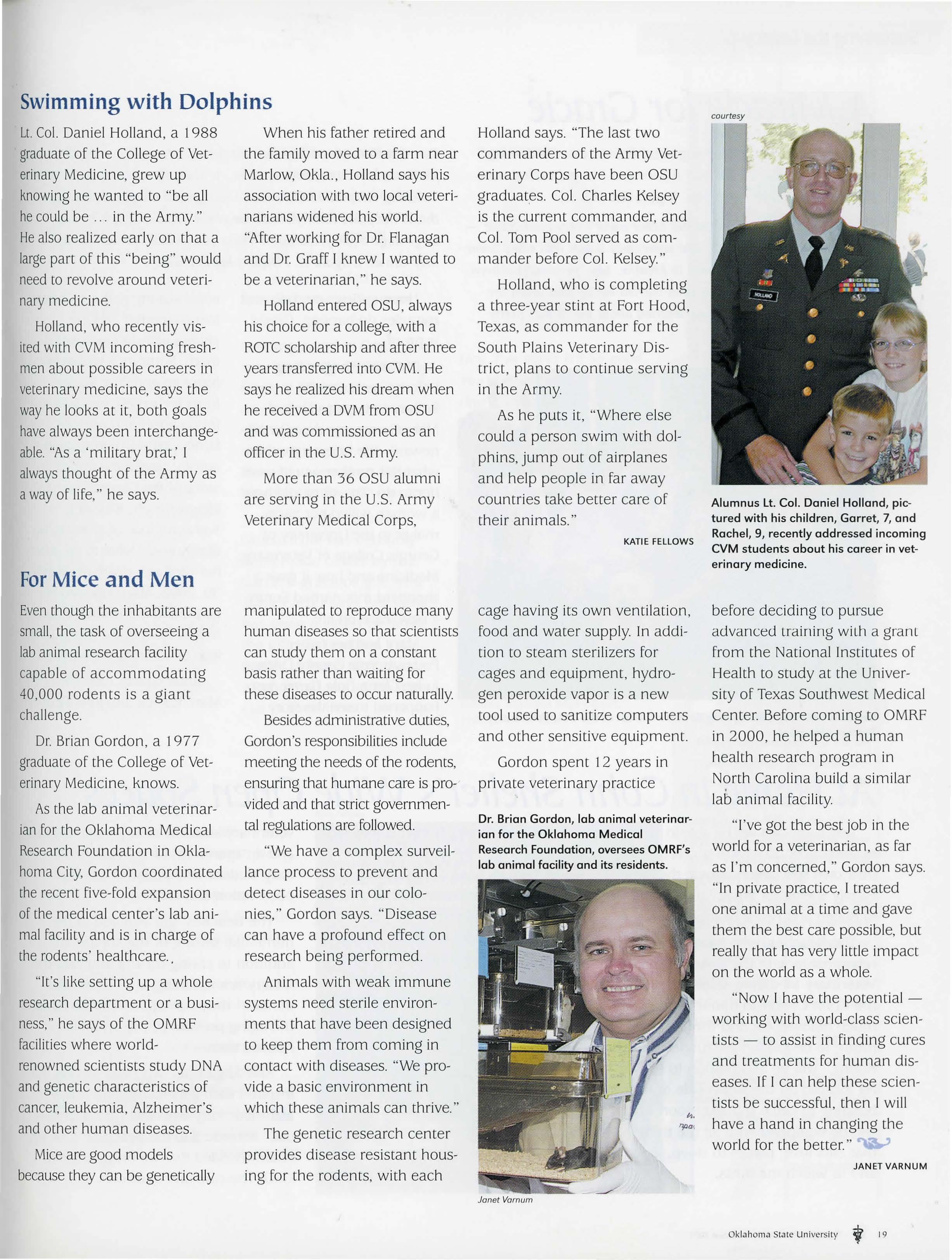
Lt. Col. Daniel Holland, a I 988 graduateof the College of Veterinary Medicine, grew up knowing he wanted to "be all hecould be ... in the Army." Healso realized early on that a largepart of this "being" would needto revolve around veterinary medicine.
Holland, who recently visited with CVM incoming freshmen about possible careers in veterinary medicine, says the way he looks at it, both goals havealways been interchangeable."As a 'military brat,' I alwaysthought of the Army as a way of life," he says.
ForMice and Men
Eventhough the inhabitants are small,the task of overseeing a labanimal research facility capable of accommodating 40,000 rodents is a giant challenge.
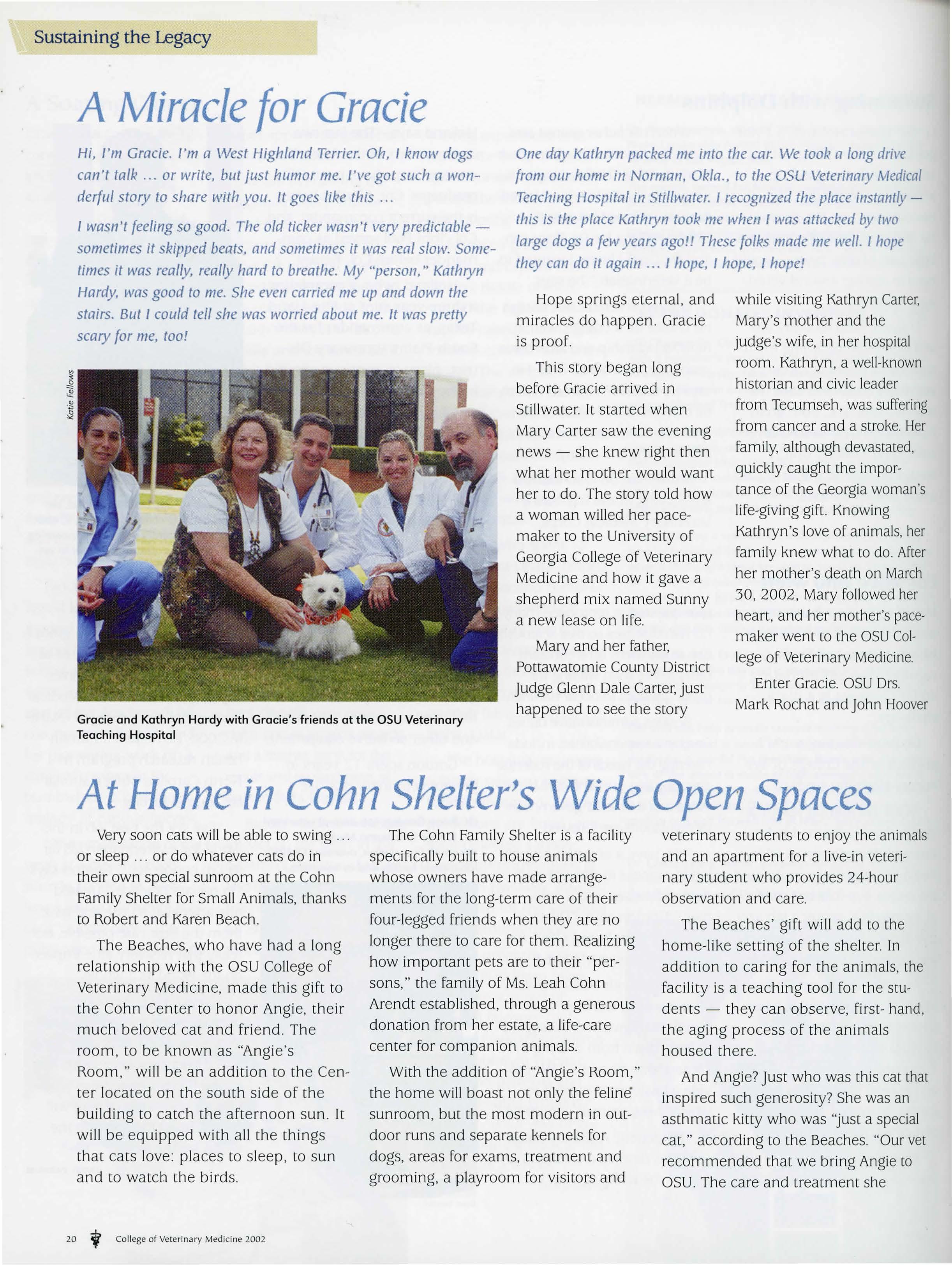
Dr. Brian Gordon, a I 977 graduateof the College of Veterinary Medicine, knows.
As the lab animal veterinarian for the Oklahoma Medical ResearchFoundation in Oklahoma City, Gordon coordinated the recent five-fold expansion of the medical center's lab animal facility and is in charge of the rodents' healthcare.
"It's like setting up a whole researchdepartment or a business,"he says of the OMRF facilities where worldrenowned scientists study DNA and genetic characteristics of cancer,leukemia, Alzheimer's and other human diseases.
Mice are good models becausethey can be genetically
When his father retired and the family moved to a farm near Marlow, Okla., Holland says his association with two local veterinarians widened his world.
"After working for Dr. Flanagan and Dr. Graff I knew I wanted to be a veterinarian," he says.
Holland entered OSU, always his choice for a college, with a ROTCscholarship and after three years transferred into CVM. He says he realized his dream when he received a DVM from OSU and was commissioned as an officer in the U.S. Army.
More than 36 OSU alumni are serving in the U.S. Army Veterinary Medical Corps, manipulated to reproduce many human diseases so char scientists can study them on a constant basis rather than waiting for these diseases to occur naturally.
Besidesadministrative duties, Gordon's responsibilities include meeting the needs of the rodents, ensuring that humane care is provided and that strict governmental regulations are followed.
"We have a complex surveillance process to prevent and detect diseases in our colonies," Gordon says. "Disease can have a profound effect on research being performed.
Animals with weak immune systems need sterile environments that have been designed to keep them from coming in contact with diseases. "We provide a basic environment in which these animals can thrive."
The genetic research center provides disease resistant housing for the rodents, with each
Holland says. "The last two commanders of the Army Veterinary Corps have been OSU graduates. Col. Charles Kelsey is the current commander, and Col. Tom Pool served as commander before Col. Kelsey."
Holland, who is completing a three-year stint at Fort Hood, Texas, as commander for the South Plains Veterinary District, plans to continue serving in the Army.
As he puts it, "Where else could a person swim with dolphins, jump out of airplanes and help people in far away countries take better care of their animals."
KATIE
cage having its own ventilation, food and water supply. In addition to steam sterilizers for cages and equipment, hydrogen peroxide vapor is a new tool used to sanitize computers and other sensitive equipment.
Gordon spent 12 years in private veterinary practice
Dr. Brian Gordon, lab animal veterinarian for the Oklahoma Medical Research Foundation, oversees OMRF's lab animal facility and its residents.
before deciding to pursue advanced training wiLh a granL from the National Institutes of Health to study at the University of Texas Southwest Medical Center. Before coming to OMRF in 2000, he helped a human health research program in North Carolina build a similar lab animal facility.
"I've got the best job in the world for a veterinarian, as far as I'm concerned," Gordon says. "In private practice, I treated one animal at a time and gave them the best care possible, but really that has very little impact on the world as a whole.
"Now I have the potentialworking with world-class scientists - to assist in finding cures and treatments for human diseases. If I can help these scientists be successful, then I will have a hand in changing the world for the better."
JANET VARNUM
FELLOWS
courtesy
Alumnus Lt. Col. Daniel Holland, pictured with his children, Garret, 7, and Rachel, 9, recently addressed incoming CVM students about his career in veterinary medicine.
A Miraclefor Gracie
Hi, I'm Gracie. I'm a West Highland Terrier. Oh, I know dogs can't talk or write, but just humor me. I've got such a wonder{ul story to share with you. It goes lif<e this
I wasn't feeling so good. The old ticker wasn't very predictablesometimes it skipped beats. and sometimes it was real slow. Sometimes it was really, really hard to breathe. My "person," Knthryn Hardy. was good to me. She even carried me up and down the stairs. But I could tell she was worried about me. It was pretty scary for me, too!
One day Kathrynpacked me into the car. We took a longdrive from our home in Norman, Okla., to the OSU VeterinaryMedical TeachingHospitalin Stillwater.I recognizedthe place instantlythis is the place Kathryntook me when I was attackedby two large dogs a few years ago!! Thesefolks made me well. I hope they can do it again I hope, I hope, I hope!
This story began long before Gracie arrived in Stillwater. It started when Mary Carter saw the evening news - she knew right then what her mother would want her to do. The story told how a woman willed her pacemaker to the University of Georgia College of Veterinary Medicine and how it gave a shepherd mix named Sunny a new lease on life.
Hope springs eternal, and miracles do happen. Gracie is proof. while visiting Kathryn Carter, Mary's mother and the judge's wife, in her hospital room. Kathryn, a well-known historian and civic leader from Tecumseh, was suffering from cancer and a stroke. Her family, although devastated, quickly caught the importance of the Georgia woman's life-giving gift. Knowing Kathryn's love of animals, her family knew what to do. After her mother's death on March 30, 2002, Mary followed her heart, and her mother's pacemaker went to the OSU College of Veterinary Medicine.
Mary and her father, Pottawatomie County District Judge Glenn Dale Carter,just happened to see the story
Enter Gracie. OSU Drs. Mark Rochat and John Hoover
At Homein CohnShelter'sWide OpenSpaces
Very soon cats will be able to swing or sleep or do whatever cats do in their own special sunroom at the Cohn Family Shelter for Small Animals, thanks to Robert and Karen Beach.
The Beaches, who have had a long relationship with the OSU College of Veterinary Medicine, made this gift to the Cohn Center to honor Angie, their much beloved cat and friend. The room, to be known as "Angie's Room," will be an addition to the Center located on the south side of the building to catch the afternoon sun. It will be equipped with all the things that cats love: places to sleep, to sun and to watcl;i the birds.
The Cohn Family Shelter is a facility specifically built to house animals whose owners have made arrangements for the long-term care of their four-legged friends when they are no longer there to care for them. Realizing how important pets are to their "persons," the family of Ms. Leah Cohn Arendt established, through a generous donation from her estate, a life-care center for companion animals.
With the addition of "Angie's Room," the home will boast not only the feline sunroom, but the most modern in outdoor runs and separate kennels for dogs, areas for exams, treatment and grooming, a playroom for visitors and
veterinary students to enjoy the animals and an apartment for a live-in veterinary student who provides 24-hour observation and care.
The Beaches' gift will add to the home-like setting of the shelter In addition to caring for the animals, the facility is a teaching tool for the students - they can observe, first- hand, the aging process of the animals housed there.
And Angie? Just who was this cat that inspired such generosity? She was an asthmatic kitty who was "just a special cat," according to the Beaches. "Our vet recommended that we bring Angie to OSU. The care and treatment she
Gracie and Kathryn Hardy with Gracie's friends at the OSU Veterinary Teaching Hospital
agreedthat Gracie seemed to bejust the special dog that the Carters had hoped would receiveKathryn Carter's pacemaker.A quick visit with Gracie's"person" signaled the go ahead and the pacemaker wasimplanted, with some help from Ryan Hamilton, technician with Metronics of Oklahoma City.
"Ryan kindly donated his time and expertise to finetune Gracie's pacemaker," Rochatsays. "We were thrilled that.Gracie did so well," he reflects. "The students all became her greatest fans.They even made her a personalizedname tag for her quarters in our ICU unit."
Kathryn Hardy could hardly believe her eyes when she came to pick up Gracie. The energized terrier, sporting an OSU orange bandana, made the rounds of the
teaching hospital waiting room. Everyone was greeted, sniffed and thanked before Gracie made her way to a photo session with all her friends. With the wag of her tail, she joined Kathryn for the trip home to Norman.
"New pacemakers, like the one implanted in Gracie cost approximately $5,000," says Hoover. "The Carters' gift made Gracie's operation possible. Gracie's pacemaker is still under a year old. On average pacemakers have a life of about five to 10 years."
Kathryn Hardy says Gracie's life has certainly been made better by the Carters' gracious gift, and Mary Carter says her family has been blessed because the gift has enabled her family to keep alive the memory of someone special in their lives.
received there extended her life - and made the quality of her life worth living 21 years." The Beaches' love for Angie will make it possible for other cats to enjoy "a wonderful life"- and graduate veterinarians with a greater knowledge of geriatric animals.
"Without the Beaches' generosity, the feline sunroom addition would have been 10 to 15 years away," says Dr. Thomas Mon in, director of the Cohn Shelter. "We're pleased with the progress and look forward to beginning the 12-foot by 16-foot project. Soon our kitties will be able to 'grab some rays."'
BARBARA SWIGGART
And Gracie.
Hey, I've never felt so good. You'd never guess I'm 12that's 84 in "person" years! And I'm here to tell you that the OSU Veterinary Hospital works miracles! If I were a cat, I'd have seven lives to go! But I'm just glad to be Gracie and alive!
BARBARA SWIGGART
If you hove questions about pacemaker implantation and other miracles, please call the OSU College of Veterinary Medicine Teaching Hospital at (405) 744-7000. For information about donations to the hospital, please contact Mory Curl, {405) 744-6728.
FROM LEAD WALL TO LEADED STAINED GLASS WINDOW
Many alumni remember the lead radiation protective wall on the north side of the old Veterinary Medicine Building, now McElroy Hall. Although the radiology facility moved to the new teaching hospital in 1981, the wall remains. It is a reminder of the old hospita I, and especially of the large animal treatment room.
Others remember the handmade stained glass Aesculapius Wi,:idow, given by the class of 1987, displayed in a window on the south side of this area of McElroy Hall, now the Veterinary Medicine Library (VML).
The VML is a branch of the OSU Library with a veterinary subject-focused collection of over 25,000 print volumes, 300 current print serial subscriptions, and electronic access to online full-text serials and indexes.The VML faculty and staff invite you to join us in celebrating National Medical Library Month each October and to visit us when you are in Stillwater. HEATHER MOBERLY
Katie Fellows
'Breeding' Orange: A New CVM Family
Graduation day for the OSU College of Veterinary Medicine class of 2002 was a typical commencement passing in a whirl of spirited congratulations and farewells - with one exception. The family reunions were larger this year. The class of 2002 contains more second-generation CVM graduates than any previous class, and CVM celebrated these family connections with special hooding ceremonies.
Tradition
Second-generation graduates say it's not surprising to see the family connections swell at CVM. Children of veterinarians grow to love the profession by seeing their parents doing something they absolutely love, says CVM graduate Angie DuBois.
Along with conveying a passion for veterinary medicine, some parents also are apparently passing on an appreciation for OSU, and CVM is pleased to be a part of the family.
Inset, left to right: Dr. Roberta Kelleher, a 1996 CVM graduate, hooded her daughter, Desi Kelleher. Dr. Russell L.Donathan, a 1959 graduate, haaded his san, Russell Donathan. Dr. Alan Potter, a 1975 graduate, hooded his son, T.K. Potter, and Dr. Michael Stephen Jones, who graduated in 1982, hooded his daughter, Meredyth Jones. Dr. Angie Boumwart DuBois, a 1999 CVM graduate, was the hooder for her brother Ryan Baumwart. Their father, Dr. Alvin Baumwart, graduated from CVM in 1977, and their brother Chad Baumwart is a member of the class of 2004. On the other side af their family, Dr. Bill DuBois, husband of Angie Baumwart DuBois, graduated from CVM in 1996, as did his brother Dr. Joseph DuBois in 2001 and before that, their father, Dr. Paul DuBois, in 1967.