REPORT AND FINANCIAL STATEMENTS for the Year Ended 30th June 2025

REPORT AND FINANCIAL STATEMENTS for the Year Ended 30th June 2025
Our Vision: to find a cure for all types of brain tumours.
Our Mission: to increase the UK investment in research into brain tumours.
Our numbers
Income of £8.7 million this year
Total of £27 million awarded to research
We have contributed £60.5 million to the national investment in research into brain tumours
We fund five Centres of Excellence and four Funded Initiatives nationwide
Last Year at a Glance
• September 2024 – £500,000 funding boost for paediatric research at our Centre of Excellence at the Institute of Cancer Research
• October 2024 – Blocking MERTK protein shown to halt growth of meningioma and schwannoma tumour cells
• November 2024 – Pete Waterman OBE announced as Patron
We now support 217 researcher personnel
We have an active political supporter in 550 (87%) UK constituencies
• January 2025 – Launch of the Scottish Brain Tumour Research Centre of Excellence
• February 2025 – Announcement of a new trial to predict effective treatment options for glioblastoma
• February 2025 – Brain Tumour Research helps shape the Rare Cancers Bill
• March 2025 - £2.5 million awarded to our Centre of Excellence at Queen Mary University of London
• March 2025 – Celebrated our 15th anniversary with the publication of Closer to a Cure – 15 Years of Impact
• May 2025 – Dr Sarah Kingdon from our Centre of Excellence at the University of Plymouth awarded Scotland’s first dedicated Neuro-oncology Fellowship
• May 2025 – Innovative new technique developed to study recurrent glioblastoma

Rob Hughes
Appointed as Chair 1st July 2024
Sandy Saunders President
Wendy Fulcher
Dr Nicola Haines
Sonia Khan
Appointed 9th October 2025
Denise Sefton
Jeremy Aron
Appointed as Vice Chair 1st August 2025
Nigel Boutwood
Jack Goodwin
Oscar Kirby-Hogarty
Appointed 9th October 2025
Mel Jarrett
Appointed 4th November 2024
• CEO – Dan Knowles
• Director of Finance and Operations –Mark Stavers
• Director of Marketing and Communications – Sue Castle-Smith
• Director of Research, Policy and Innovation – Dr Karen Noble
• Interim Director of Income Generation and Development – Katrina Jones (appointed 11th November 2025)
о Former Director of Income Generation and DevelopmentRussell Marriott (last working day 11th July 2025)
• Professor Tony Marson MB ChB, MD, FRCP, FEAN, FMedSci (joined as Chair December 2024)
• Professor Frank A Giordano
• Professor Petra Hamerlik
• Dr Lennard YW Lee
• Mr Richard Mair
• Dr Philip Scard
• Professor Sheila Singh
• Professor Anna Dimberg
• Dr Laura Donovan (appointed May 2025)
• Professor Spencer Collis (appointed May 2025)
• Dr Jeff Edwards (appointed May 2025)
• Dr Sevin Turcan (appointed May 2025)
• Professor Dan Tennant (appointed May 2025)
Bank
• NatWest, Beaconsfield Enfield CSC Lee House, Baird Road, Middlesex EN1 1FD
• Moore Kingston Smith LLP Chartered Accountants, 4 Victoria Square, St Albans, Hertfordshire AL1 3TF
• Registered Charity Number 1153487 (England and Wales)
• Registered Charity Number SC046840 (Scotland)
• Registered Company Number 08570737
Registered Office and Headquarters:
• Suite 37, Shenley Pavilions, Chalkdell Drive, Shenley Wood, Milton Keynes MK5 6LB
Telephone number: 01908 867200
Website: www.braintumourresearch.org
Email: info@braintumourresearch.org

As my first year as Chair of Brain Tumour Research draws to a close, I am delighted to reflect on the Charity’s achievements, led by a strong Board of Trustees and Leadership Team, in continuing to build on the excellent work that has been accomplished over the last 15 years in the research and campaigning space.
It was a moment of deep personal significance to be appointed as Chair on 1st July 2024. Having lost my young daughter, Anna, to an ependymoma brain tumour, I understand all too well the plight of our community and am passionate about the Charity’s vision to find a cure for all types of brain tumours.
I wish to thank my predecessor, Wendy Fulcher, for her outstanding service and contribution and appreciate her remaining as a Trustee. This year, the Board was strengthened by the appointment of Mel Jarrett as Trustee and Chair of the Finance, Audit and Risk Committee. We said a fond farewell to Co-founder and former Chief Executive Sue Farrington Smith MBE who stood down as Vice Chair and we are all pleased that she will continue to wield her influence in support of Brain Tumour Research in her new role as Ambassador. Jeremy Aron, who has been a valued Trustee of our Charity since 2017, will step into the role of Vice Chair on 1st August 2025.
The past 12 months have been challenging yet rewarding and, despite continuing economic uncertainty, the Charity delivered income of £8.7 million and further strengthened reserves to £3 million.
It was with great pride that we launched our fifth Centre of Excellence in January 2025, dedicated to advancing treatments for glioblastoma – one of the most aggressive tumour types. The Scottish Centre is based at the Universities of Edinburgh and Glasgow and is funded through a game-changing collaboration with Glasgow-based Beatson Cancer Charity. The Board has agreed to launch a sixth Centre, based at the University of Nottingham, in early 2026 to bring ever-more hope of a cure to the brain tumour community.
I was thrilled to attend our Researcher Workshop along with other Trustees in November 2024 where more than 100 researchers, funded and supported by Brain Tumour Research, participated. It was an inspiring event and demonstrated the collaborative community of scientists, researchers and clinicians we have built through the Centres of Excellence and Funded Initiatives that we fund.
My initial focus as Chair has been to ensure that the Charity’s governance was fit for the future and this was carried out by means of an external governance review. Trustees supported the recommendations, including improving Board effectiveness and Trustee learning and development. The review of Trustee skills confirmed the breadth and depth of experience possessed by the Board in providing both the necessary support and scrutiny.
Ahead of the review of our overall 2026 Strategy Plan, the Board has been involved in an extensive external review of the Charity’s Research Strategy, which has included input from the Scientific and Medical Advisory Board and our Patient Group. This work will be finalised in the coming months and will guide us on our path to realise our vision.
Alongside research, campaigning is an essential component of the work we do and, following the General Election, I was pleased that we were able to support the formation of the new All-Party Parliamentary Group on Brain Tumours (APPGBT) and I am grateful to the new Chair, Dame Siobhain McDonagh MP, and fellow MPs who have joined the group. The Board recognises and will support the important
role of the APPGBT and the critical work that lies ahead in engaging and influencing Government and key stakeholders.
I wish to thank the wonderful team at Brain Tumour Research who inspire me with their unending passion, dedication and contribution to our cause. It is a pleasure to not only see the Charity grow but also watch individuals flourish in their roles which all bodes well for the future.
Finally, we could not do what we do without our incredible supporters, Member Charities, Fundraising Groups, Patrons, Ambassadors and volunteers who work tirelessly to raise funds and awareness of this devastating disease and for this we are extremely grateful.
Together we will find a cure.
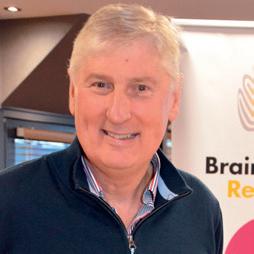
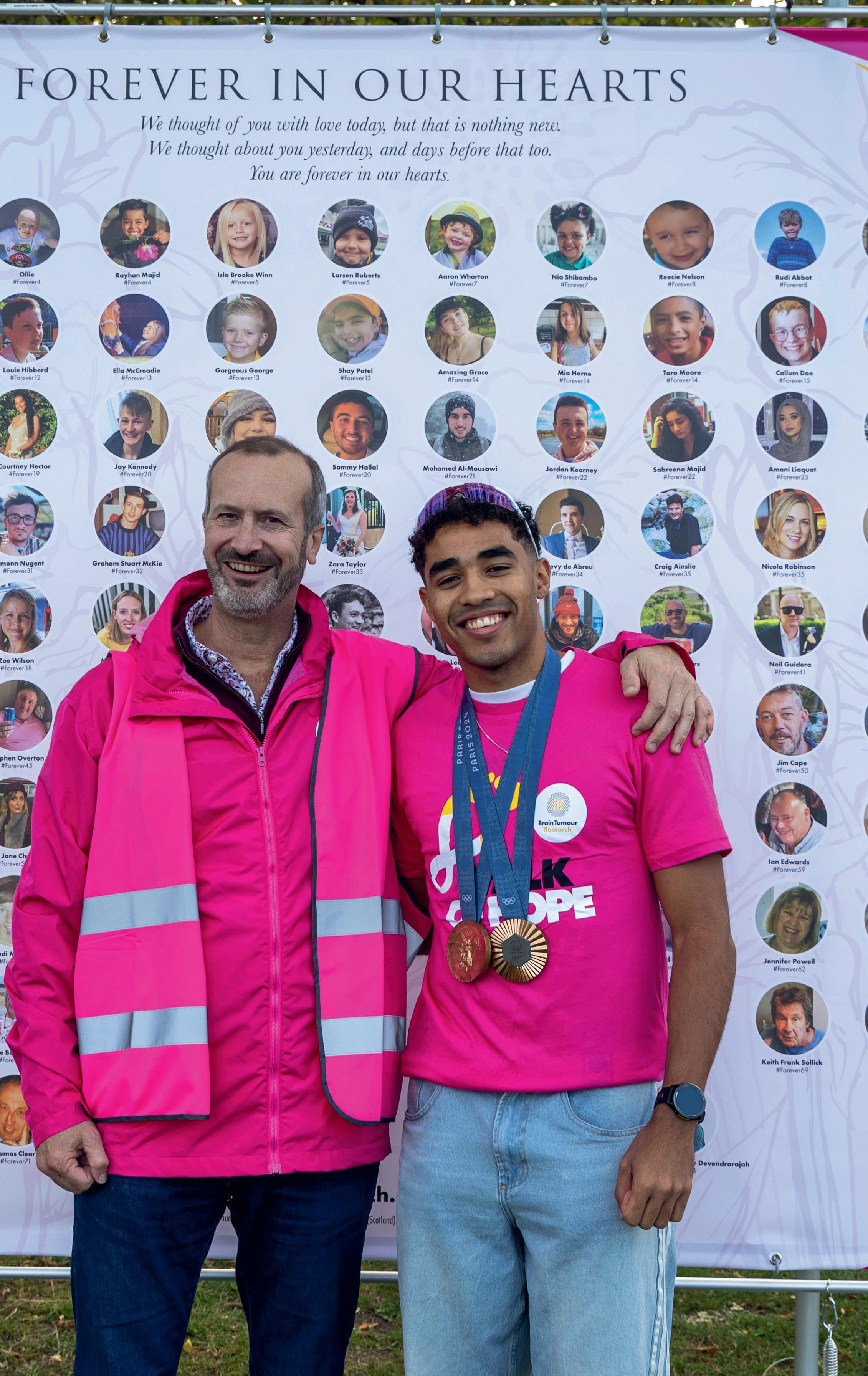
I wish to thank my predecessor, Wendy Fulcher, for her outstanding service and contribution and appreciate her remaining as a Trustee
Brain Tumour Research has had another strong year, with a record income of £8.7 million and research spend exceeding £3.8m, bolstered by significant achievements across our research portfolio and campaigning priorities.
Our work is made possible by our challenging and supportive Board, and I would like to thank our Chair, Rob Hughes, the subcommittee Chairs, and all our Trustees for their dedication and expertise. We were delighted to welcome Professor Tony Marson as the new Chair of our Scientific and Medical Advisory Board and are pleased that our outgoing Chair, Professor Garth Cruikshank, will be staying on as Clinical Advisor. I would also like to thank my Leadership Team for their expertise and hard work, our talented and driven employees, wonderful volunteers and all our supporters and donors. We are truly a family united by our vision to find a cure and it is a pleasure working with them all.
In this Report, you will read of our achievements over the last year. In March 2025, we published Closer to a Cure – 15 Years of Impact which documents the achievements of our research programme since our inception in 2009. During the year, we had the first new NHS treatment for brain tumours since Temozolomide 20 years ago, and although this is only for a relatively small number of paediatric patients, it does demonstrate real scientific progress is being made.
We have appointed a number of new Patrons and Ambassadors (as detailed on page 28) who are all compelled by a personal connection to lend us their influence to further our cause and support us by sharing their stories, backing our campaigns, driving donations to fund more research and petitioning politicians from Westminster to Holyrood.
We have strengthened our collaboration with Beatson Cancer Charity in Scotland and together we have almost raised the full £2.3 million required for our five-year investment north of the border. The launch of the Brain Tumour Research Scottish Centre of Excellence
in January 2025 was a deeply inspiring day for all involved and we look forward to seeing our sixth Centre develop and deliver gamechanging progress in the years ahead.
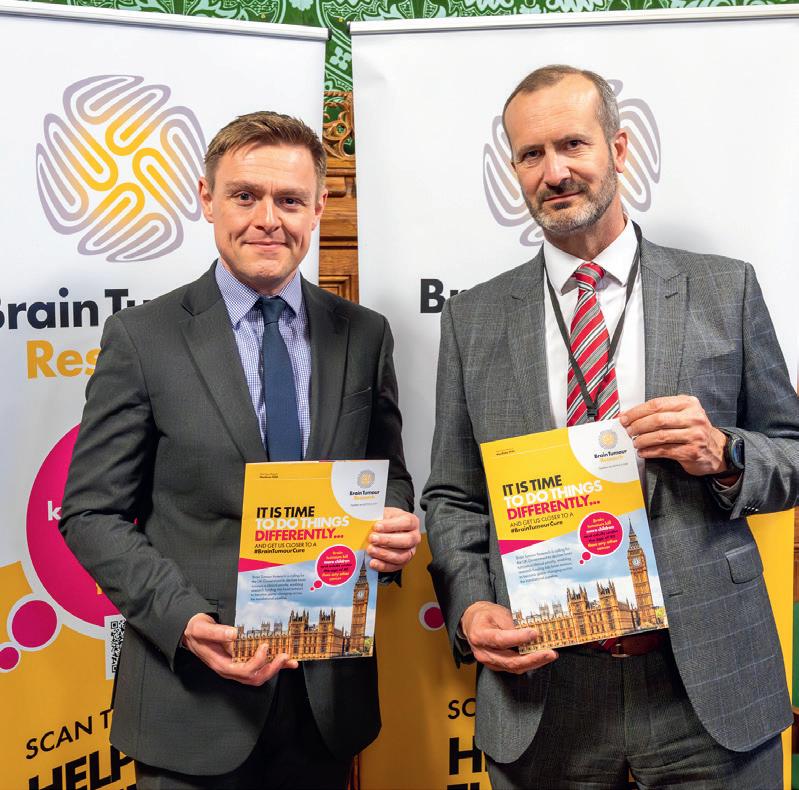
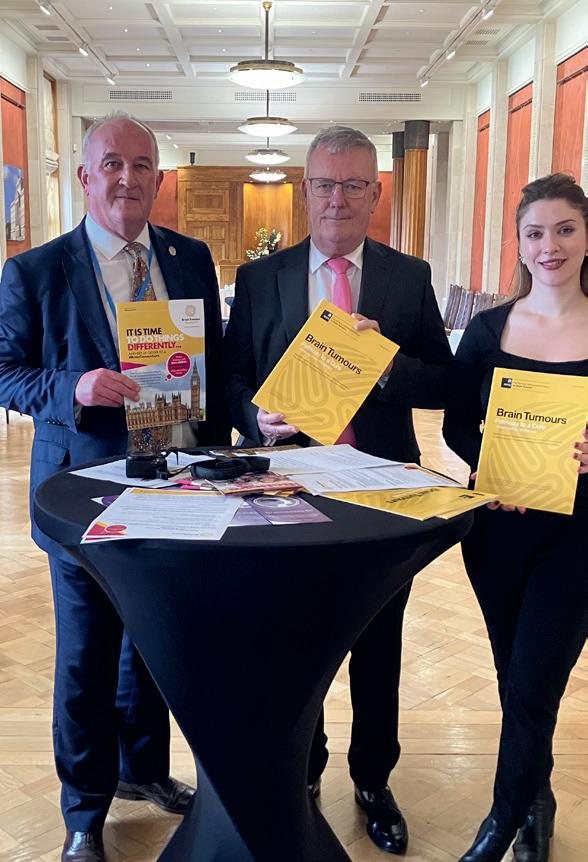
Following the General Election, the All-Party Parliamentary Group on Brain Tumours (APPGBT) was reinstated with Dame Siobhain McDonagh as Chair. Dame Siobhain lost her sister Margaret to a glioblastoma and is a passionate and powerful advocate for change. We are delighted to continue to provide the secretariat for this important body and look forward to celebrating the 20th anniversary of the APPGBT in the year ahead. Another parliamentary campaigning highlight was meeting Minister Ashley Dalton together with supporters Louise Fox and Laura Kurtul, as well as Jess Mills, daughter of the late Baroness Tessa Jowell and founder of the Tessa Jowell Foundation. We will continue to campaign powerfully for greater investment in research into brain tumours and better outcomes for the brain tumour community.
In the coming year we plan on continuing to grow our impact, including the formal launch of our sixth Research Centre of Excellence, campaigning for increased investment, and continuing to focus on finding a cure for all types of brain tumours. Everything we do is based around the needs of the brain tumour community and it is to patients and their families, past, present and future that we dedicate our work.
Together we will find a cure.

Dan Knowles, CEO
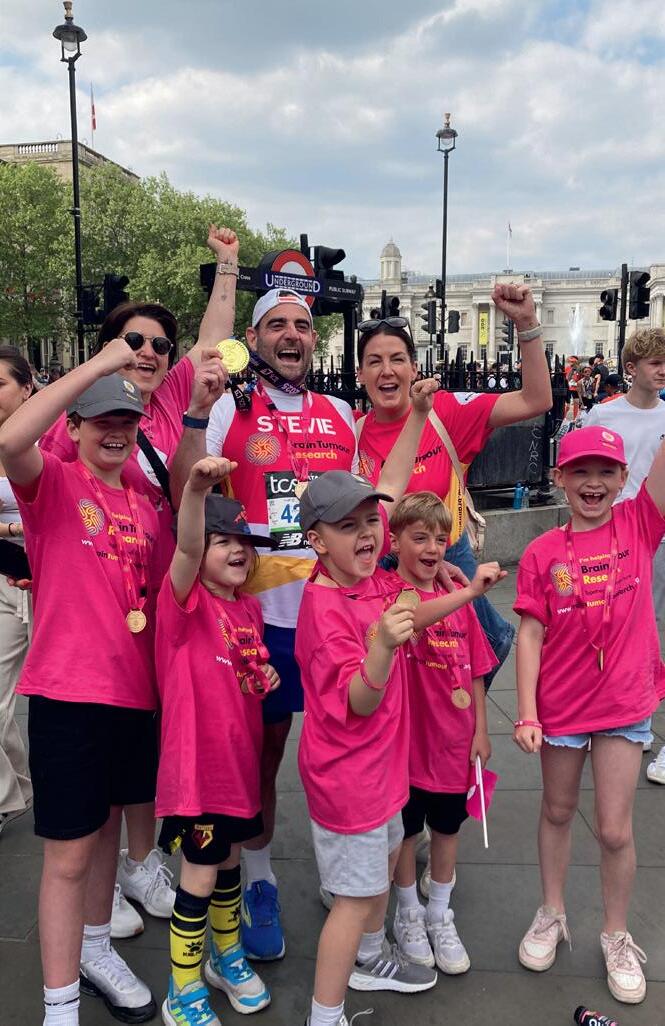
We are truly a family united by our vision to find a cure
This has been another exciting and engaging year for the Scientific and Medical Advisory Board (SMAB), and I thank its members for their continued dedication and contributions.
The SMAB has continued to provide expert, transparent and independent assessment of the research activity at the Brain Tumour Research Centres of Excellence and other Funded Initiatives, ensuring that the Charity is investing in the most promising research and building capacity to drive progress towards a cure for all types of brain tumours.
In December 2024, I succeeded Professor Garth Cruickshank as Chair of the SMAB and am delighted to bring my transferable expertise and skills as a Professor of Neurology to the Charity. We extend our sincere thanks to Prof Cruickshank for his invaluable contributions, dedication and years of service. We look forward to continuing our collaboration as he transitions into his new role as Clinical Advisor.
In line with the Association of Medical Research Charities (AMRC) policy, SMAB members serve for a tenure of three years, which can be renewed once for a further three years, and as a result we bid a farewell to Professor Paolo Salomoni and Dr Sean Lawler. We are grateful to them for their valued contributions during their tenure.
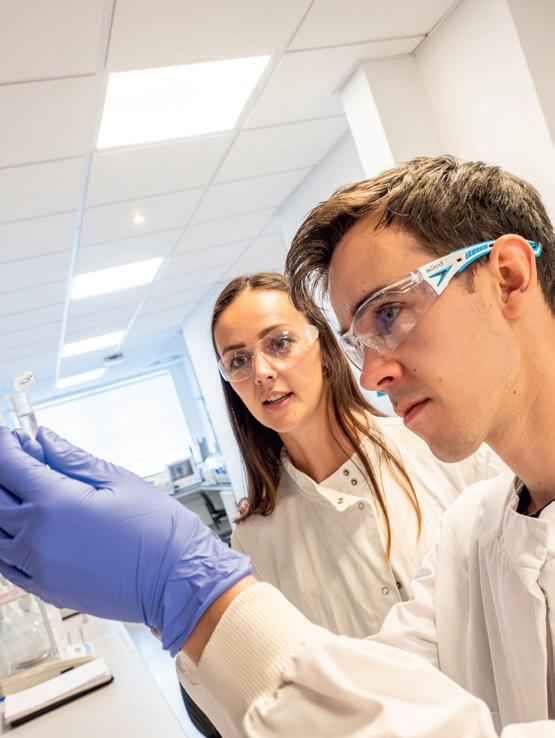
To extend the range of research disciplines and perspectives of the SMAB, we welcomed five new members this year, who were selected for their internationally renowned expertise and experience. Their addition strengthens the SMAB’s depth and breadth and brings fresh perspectives to our review processes. Our new members include Professor Spencer Collis (University of Sheffield), Dr Laura Donovan (University College London), Dr Jeff Edwards (Patient Representative), Professor Dan Tennant (University of Birmingham) and Dr Sevin Turcan (University of Heidelberg). Their expertise spans genomics, epigenomics, tumour metabolism, and paediatric brain tumours.
Throughout 2024-25, the SMAB has reviewed and assessed the performance of all our Centres and other Funded Initiatives. It was a bumper year with nine Annual Reviews and two Quinquennial Reviews (QQR). The SMAB, supported by peer review from international experts, was delighted to conduct successful QQRs of the Centres of Excellence at Queen Mary University of London and the University of Plymouth. These reviews assess the progress of the Centre over the preceding five years and consider the application for funding for the next five to make a funding recommendation to the Board.
We were happy to report that the Queen Mary Centre received a further £2.5m following its QQR to continue to develop personalised treatments for glioblastoma and gentler, more effective treatments for childhood brain tumours, including medulloblastoma and ependymoma. The Plymouth Centre will also receive further funding after successfully completing its QQR, to be announced in the coming year, to aid research into unravelling the mechanisms of tumour development and translating findings into novel, effective treatments.
The Annual Reviews of all the other Centres and Funded Initiatives demonstrated the growing strength and excellence of the research portfolio and included an assessment of reports detailing the progress they have made during the previous year, research outputs and inputs, and plans for the coming years.
In January 2025, we celebrated the official launch of our fifth Centre of Excellence, the Scottish Brain Tumour Research Centre of Excellence, based at the Universities of Edinburgh and Glasgow. The Centre has already made impressive progress in its research, as highlighted in its Annual Review.
In the next year, we look forward to enlarging the portfolio of the Charity’s research success with the official launch of the sixth Centre of Excellence at the University of Nottingham. I look forward to leading the SMAB as we continue building momentum towards more effective treatments and, ultimately, fulfil our vision. Together we will find a cure.
Professor Tony Marson MB ChB, MD, FRCP, FEAN, FMedSci, Chair, Scientific and Medical Advisory Board
In December 2024, I succeeded Professor Garth Cruickshank as Chairman of the SMAB and am delighted to bring my transferable expertise and skills as a Professor of Neurology to the Charity
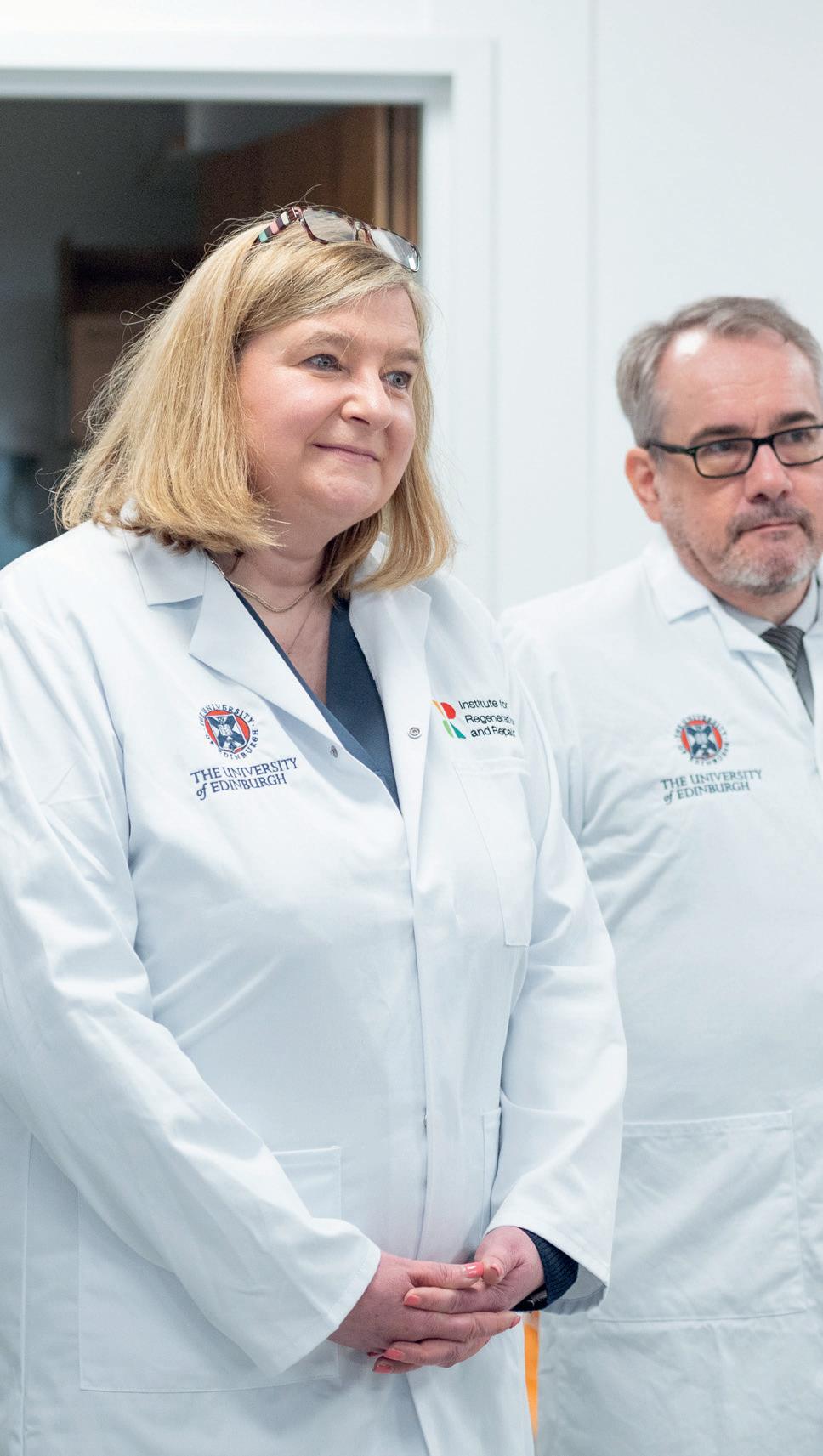
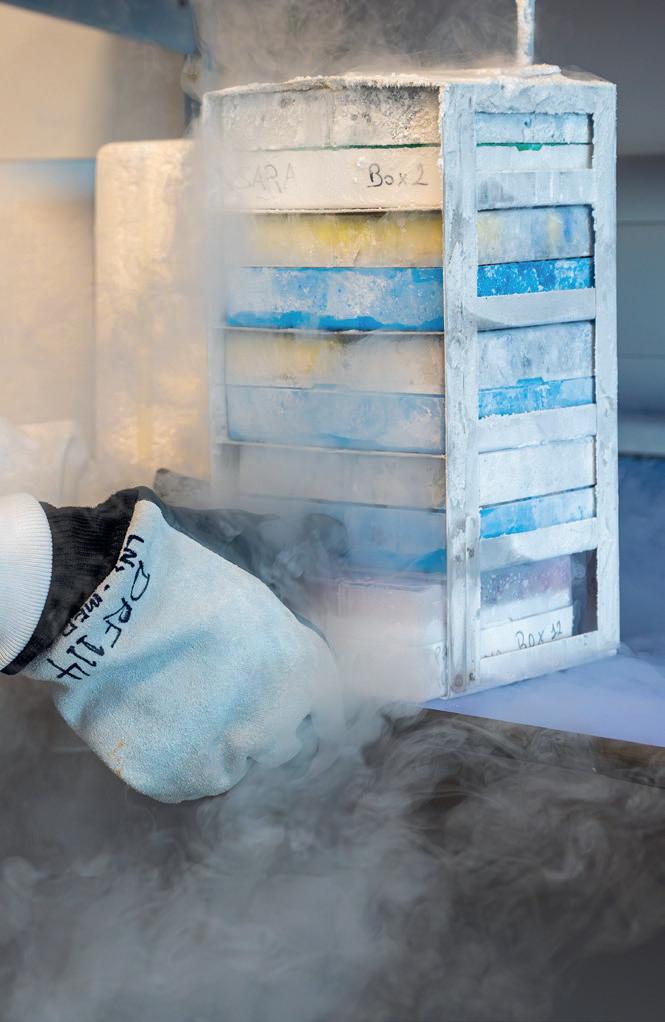
The Trustees of Brain Tumour Research, who are also Directors of the Charity for the purposes of the Companies Act, present their Annual Report and audited financial statements for the year ended 30th June 2025.
Our vision is to find a cure for all types of brain tumours, and our mission is to increase the UK investment in research into brain tumours and build a network of experts in sustainable brain tumour research. We work with elected representatives in Westminster and the devolved nations to raise awareness of brain tumours and to influence national cancer policy at the highest levels as we campaign to increase national investment in research to £35 million per annum and bring parity with other cancers such as breast and leukaemia. Brain tumours kill more children and adults under the age of 40 than any other cancer, yet just 1% of the national spend on cancer research has been allocated to this devastating disease since records began in 2002.
We believe that, with sustainable long-term funding, we can build capacity at our Brain Tumour Research Centres of Excellence such that they are able to recruit and train more promising researchers who might otherwise be attracted into other cancer research areas, which have traditionally attracted greater funding and with it, greater prospects and job security. Over time, as specialist brain tumour expertise and knowledge builds, it is our plan that researchers who are experienced and knowledgeable in the field will move between Centres to support ‘crosspollination’ of the very best thinking at the cutting-edge of research into brain tumours.
With a growing ability to build outstanding teams of collaborative researchers amongst the academic and medical communities, we believe our Centres of Excellence are
well-placed to develop long-term strategic research plans to explore new avenues and potentially find the key breakthroughs that patients and their families so desperately need.
Each Centre of Excellence is an active partner with Brain Tumour Research. We support these Centres by providing dedicated members of the Charity’s staff with expertise in fundraising, marketing and PR to work at a local and national level. This cooperation and dedication to the brain tumour cause, supports and enhances the identity of each Centre as well as that of Brain Tumour Research, providing a dynamic fundraising atmosphere with the goal to help each Centre ultimately raise up to £3 million per year to support sustainable research.
Our Centres form part of a national network collaborating with each other and with other institutes, both within the UK and internationally, to accelerate progress in research into brain tumours and ultimately make a real clinical difference. We partner with researchers and clinicians who share our vision of a sustainable and secure future for research in the UK.
Collaboration is important to us, and the number of registered Member Charities which have joined forces with us to raise awareness and campaign as one voice numbered 26 at the end of the year. We aim to work with Member and other charities to continually expand brain tumour fundraising in the UK in order to increase the investment into research and expand the specialist information and support that our Members provide to those diagnosed with a brain tumour and their families.
This Trustees’ Report also meets the company law requirements for a directors’ report. Further, as a medium-sized company, the Trustees’ Report also covers the requirements for our Strategic Report.
To assist in the relief of sickness and distress of persons suffering from brain tumours particularly by supporting research projects
into the causes and treatment of brain tumours and disseminating the useful results of such research.
The Trustees have referred to the guidance contained in the Charity Commission’s general guidance on public benefit when reviewing the Charity’s aims and objectives and in planning its future activities. In particular, the Trustees consider how planned activities will contribute to the aims and objectives that have been set.
The Charity operates throughout England, Wales, Scotland and Northern Ireland.
The Charity is a charitable company limited by guarantee and was originally known as The Diana Ford Trust and registered on 14th August 2002. In 2005, The Diana Ford Trust joined an informal partnership of UK brain tumour charities known as The United Brain Tumour Campaign. In 2008, the Charity formalised this relationship and amended its name, to better demonstrate its objectives, to Brain Tumour Research.
The Trustees who served during the year ending June 2025 were:
Rob Hughes (appointed as Chair 1st July 2024)
Sue Farrington Smith MBE (resigned as Vice Chair and Trustee 31st July 2025)
Sandy Saunders (President)
Jeremy Aron (appointed Vice Chair 1st August 2025)
Nigel Boutwood
Wendy Fulcher
Jack Goodwin
Dr Nicola Haines
Mel Jarrett (appointed 4th November 2024)
Denise Sefton
Members of the Charity guarantee to contribute an amount not exceeding £10 to the assets of the Charity in the event of winding up. The total number of such guarantees at 30th June 2025 was 10 (2024:10). The Trustees are members of
the Charity but this entitles them only to voting rights. The Trustees have no beneficial interest in the Charity.
The Remuneration Committee meets to review the remuneration policy, the pay and benefits of the Charity’s employees, Board development, Leadership Team performance and development and to ensure we meet our statutory duties as a responsible employer. The Finance, Audit and Risk Committee assists the Board in its duty to supervise the broad direction of the Charity’s financial affairs, oversees the audit and risk management processes, as well as the evaluation and implementation of investments. The Research Committee meets to consider new programmes, review existing programmes and receive research reports. It provides oversight and takes expert recommendations from our Scientific and Medical Advisory Board (SMAB).
The Fundraising and Communications Committee meets to protect the brand and ensure that fundraising activities and marketing communications are appropriate and within the law. The Policy and Campaigning Committee oversees the Charity’s parliamentary profile and influencing activities to deliver on the mission of increasing national investment.
Declaration of trust made 17th July 2002 as amended 4th April 2008 and 9th December 2008 and Memorandum and Articles of Association dated 14th June 2013.
New Trustees are appointed by a resolution of the existing Trustees. In selecting potential Trustees, the Trustees take into account the benefits of appointing a person who, through lived experience, residence, occupation, employment or otherwise, has special knowledge of the area of benefit or who is otherwise able, by virtue of his or her personal or professional qualifications, to make a contribution to the pursuit of the objects or the management of the Charity.
Potential Trustees are identified through advertising in relevant publications, recommendations from Member Charities and approaches (informal or formal) to the Charity. They are scrutinised by at least three serving Trustees and appointment is approved by the Board of Trustees
On appointment, all new Trustees receive thorough induction and training, detailed information about the Charity via a Trustee Induction Pack, including its Memorandum and Articles, latest accounts, latest financial reports and minutes of recent Trustees’ meetings. In addition, new Trustees attend an induction process at Head Office, where they are briefed by the CEO and key staff on all aspects of the Charity’s operations, staffing and organisational management. Trustees are encouraged to attend appropriate external training events where these will facilitate the undertaking of their role.
The Trustees have always sought to develop a professional, well-managed and proactive Charity in line with good business practice. Trustees oversee governance, agree strategy and the direction of the Charity, they approve financial accounts, budgets and reserves and approve research grants, policies, and risk management. The Trustees delegate the day-to-day management of the Charity to the Leadership Team, as referenced on page 4.
The Key Management Personnel comprise the Trustees and the Leadership Team.
The Trustees are not remunerated. The Charity is committed to ensuring that it pays its employees fairly and in a way which ensures it attracts and retains the right skills to have the greatest impact in delivering its charitable objectives. As such, its principles are to pay a fair salary and offer benefits that are competitive within the charitable sector and the local employment market, as well as affordable, proportionate to the complexity and technical demands of each role and in line with organisational objectives.
The Charity seeks to offer a competitive package of benefits for all employees comprising market-leading holiday entitlement, salaries and healthcare, including occupational sick pay.
The Charity reviews the salaries of all employees annually in July, with the Board of Trustees approving the percentage rates for any baseline or higher rate increases. A salary review does not imply an increase and, in making any pay award, the review will be based on affordability and the Charity’s financial health. The remuneration policy, applicable to all team members, is reviewed annually and the Remuneration Committee oversees its application, providing advice to the Board.
In 2024-25, Brain Tumour Research spent £3.8 million on research, launched the Scottish Brain Tumour Research Centre of Excellence based at the Universities of Edinburgh and Glasgow and started to raise funds to establish our sixth Centre at the University of Nottingham.
Research Spend by Year
£4,500,000
£4,000,000
£3,500,000
£3,000,000
Total Spend on Research
£2,500,000
£2,000,000
£1,500,000
£1,000,000
£500,000

Brain Tumour Research is dedicated to funding continuous and sustainable scientific research into brain tumours. This is vital if we are to achieve our vision of finding a cure for all types of brain tumours. We currently support five Centres of Excellence and have
an ambition to fund seven Centres in the UK, which will enable us to deliver on our research aims.
Our research aims are built around three pillars:
Attract and retain talented researchers to increase the quantity of brain tumour research taking place in the UK
Support the research infrastructure, connecting and improving coordination across the UK brain tumour research community
Improve the quality of brain tumour research in the UK and support innovative research to generate new treatments for brain tumours
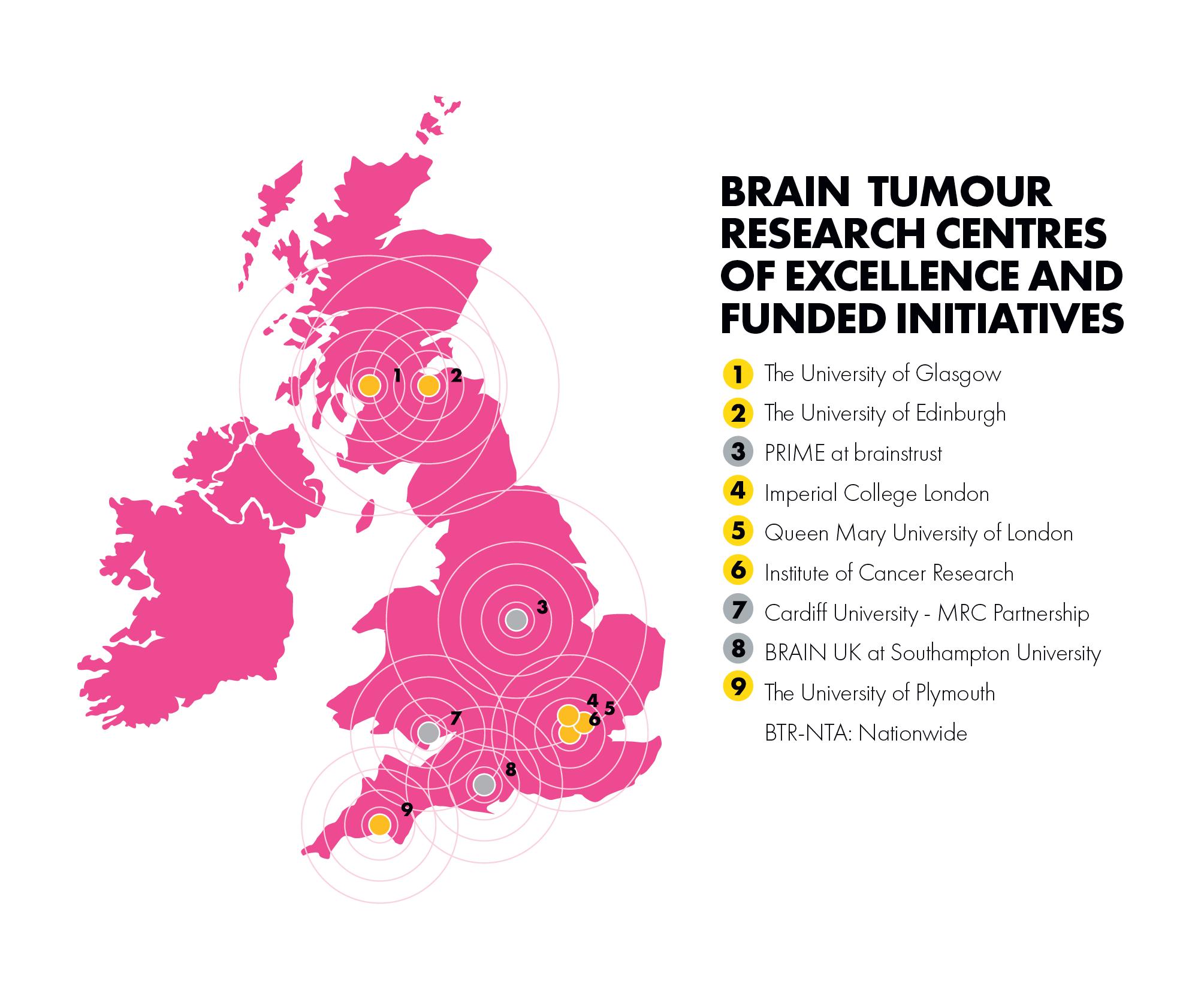
Our wide-ranging portfolio is focused on delivering and enabling high quality research, to deliver on our research aims. It includes:
• Five Centres of Excellence: Imperial College London, Queen Mary University of London, The Institute of Cancer Research, the University of Plymouth and the Scottish Brain Tumour Research Centre of Excellence
• A new Centre (our sixth) to be based at the University of Nottingham
• BRAIN UK: the virtual brain tumour tissue registry based at the University of Southampton
• The Brain Tumour Research Novel Therapeutics Accelerator (BTR-NTA) programme in partnership with the Tessa Jowell Brain Cancer Mission
• The Patient Research Involvement Movement (PRIME) initiative in partnership with brainstrust
• The ‘super sponge’ project at Cardiff University in partnership with the Medical Research Council (MRC)
“By strategically allocating our resources, we foster innovation and collaboration, ultimately accelerating the development of new treatments and improving patient outcomes. We are working towards a future where a brain tumour diagnosis begins with a thoughtful, informed, personalised journey driven by hope, choice and a belief that you will get better and not worse.”
- Dr Karen Noble, Director of Research, Innovation and Policy, Brain Tumour Research
For more information on our Research Strategy, please visit our website: www.braintumourresearch.org /research-strategy
The Scottish Brain Tumour Research Centre of Excellence, which launched in January 2025, is a game-changing collaboration between Brain Tumour Research and Beatson Cancer Charity. Based at the Universities of Edinburgh and Glasgow, it is dedicated to advancing the development of new treatments for glioblastoma, with the aim of producing the evidence required to rapidly progress these treatments into clinical trials for patients in Scotland and beyond.
We have committed to investing £2.4 million over five years to fund this vital research. In its formative months, our fifth Centre has been focused on recruiting talented PhD and post-doctoral researchers to establish its team of multidisciplinary scientists – and the largest group of glioblastoma researchers in the UK – who will bridge the gap between promising new discoveries and patient benefit.
“This is hugely significant for the brain tumour community in Scotland who, thanks to their generous support, have helped make the Scottish Brain Tumour Research Centre of Excellence a reality. Glioblastoma patients desperately need new, improved treatments, so I welcome the prospect of more clinical trials which will lead to better and kinder treatments and, ultimately, a cure.”
- Dan Knowles, CEO, Brain Tumour Research
In March, we published our Research Impact Report, Closer to a Cure – 15 Years of Impact, which showcases the pioneering progress we have made in the 15 years since the Charity’s inception. Our gamechanging breakthroughs offer renewed hope to all those affected, including a blood test to detect high-grade brain tumours, repurposing HIV medication to treat schwannoma and meningioma, accelerating the launch of paediatric clinical trials and using a ‘bionic eye’ to enhance precision and safety in brain tumour surgery.
Read the full Report at: www.braintumourresearch.org /impact-report
Brain Tumour Research now supports 217 research personnel dedicated to finding a cure for brain tumours across our Centres and Funded Initiatives. This includes the direct funding of salaries for 64 researchers, spanning full-time and part-time roles, PhD candidates, Research Fellows, and Technicians.
In addition, we are proud to support the academic development of 57 PhD students, with 27 of these funded by Brain Tumour Research. These investments reflect our ongoing commitment to building research capacity and accelerating progress towards better outcomes for brain tumour patients.
We step ever closer to realising our ambitious plans to fund seven Centres of Excellence as work is underway to raise the money needed to launch our sixth Centre at the University of Nottingham in the coming year. There, scientists will focus on understanding glioblastoma recurrence, for which there is currently no effective treatment available, with the aim of developing imaging-based methods to predict the location and composition of recurrent tumours. Our goal is to identify personalised drug treatments that can prevent glioblastoma from returning.
“We envision a future where brain imaging alone will identify drugs tailored to each individual patient, to block glioblastoma recurrence.”
- Dr Ruman Rahman, future Director of the Brain Tumour Research Centre of Excellence at the University of Nottingham
Researchers at our Centre of Excellence at the University of Plymouth, led by Professor Oliver Hanemann, are working to transform outcomes for patients with low-grade brain tumours such as schwannoma and meningioma – the most common adult primary brain tumour, with approximately 2,790 cases diagnosed annually in England.
Our researchers have uncovered how the genetic makeup of meningioma shapes immune cell behaviour, which could lead to more personalised and effective immunotherapy treatments
Current treatments for meningioma and schwannoma tumours are limited to surgery and radiotherapy, which carry significant risks of complications. This year, the Centre made key breakthroughs, driving forward the development of minimally invasive therapies that could greatly improve quality of life for those currently facing high-risk procedures.
In a trailblazing study, the Plymouth team has identified a promising new treatment approach that could reduce the need for invasive surgery and radiotherapy.
The research, published in Oncogene and led by Senior Research Fellow, Dr Sylwia Ammoun, who works in Prof Hanemann’s team, focuses on a protein called MERTK found on the surface of tumour cells. For the first time, they showed that blocking MERTK halts the growth of meningioma and schwannoma tumour cells.
The study, co-funded by Brain Tumour Research and Animal Free Research UK, also found that blocking MERTK reduced the number of tumour-supporting immune cells. This could help prevent tumours from evading the immune system, making immunotherapy treatment more effective.
Offering tangible hope for patients within the next two to four years, Dr Ammoun said: “This research is incredibly exciting. There are many drugs currently in development to target MERTK, including some going through phase 3 clinical trials for other cancer types.”
Our researchers have uncovered how the genetic makeup of meningioma shapes immune cell behaviour, which could lead to more personalised and effective immunotherapy treatments.
While immunotherapy has shown promise in other cancers, its results in meningioma have been inconsistent. To understand why, Brain Tumour Research-funded PhD student Ting Zhang and Prof Hanemann studied how immune cells behave across different genetic subtypes of meningioma.
The team used pioneering 3D models that closely mimic how immune cells interact with tumours. They found clear differences in immune cells between more aggressive and less aggressive tumours. They showed that a specific immune cell type – known as an M2-like macrophage – is more prevalent in meningiomas with certain genetic mutations (such as NF2) or molecular profiles (like methylation). These cells appear to accelerate tumour growth.
Published in the Journal of Experimental and Clinical Cancer Research, the study also revealed that M2-like macrophages are linked to higher levels of IL-6, a molecule associated with tumour progression, particularly in lower-grade tumours. This positions both M2-like macrophages and IL-6 as promising targets for future therapies.
This research not only lays the foundation for new immunotherapy strategies but also offers a potential tool for clinicians to identify patients most likely to benefit – marking a critical step towards personalised treatment approaches for meningioma.
Our scientists have identified a protein, ANXA3, that drives the growth of certain meningioma cells. By blocking this protein in the lab, they were able to slow, and in some cases completely stop, tumour cell growth.
The study, published in eBioMedicine, involved extensive analysis of tumour samples from the Plymouth biobank – a crucial resource for researchers funded by Brain Tumour Research. The team investigated DNA changes that influence tumour growth and how these affect protein behaviour in cells.
Prof Hanemann said: “Targeting ANXA3 may offer a more personalised approach to treating meningiomas in future, particularly for patients whose meningioma is a result of a mutation in a gene known as NF2, the most common cause of meningioma tumours.”
“These breakthroughs are a powerful example of the progress we can make with sustained investment in research. The work being done at our Plymouth Centre is world-leading, and by continuing to fund the Centre, we can build on this momentum.”
- Dr Karen Noble, Director of Research, Policy and Innovation at Brain Tumour Research
Glioblastoma is the most common high grade brain tumour in adults in the UK, affecting around 3,200 people each year.
Although diagnostic techniques have improved, survival remains poor, with most patients living only 12 to 18 months after diagnosis. Treatment typically involves surgery followed by radiotherapy and chemotherapy, but this has remained unchanged for decades.
Tumour variability between patients has hindered clinical trial success, highlighting the need for personalised approaches. Brain Tumour Research funds work at our Centres of Excellence to deepen understanding of glioblastoma biology and uncover tailored treatment options. By addressing the complexity of this disease, we aim to improve outcomes and accelerate progress for patients facing this devastating diagnosis.
Scientists at the Brain Tumour Research Centre of Excellence at Queen Mary University of London have revealed that a gene known as METTL7B is essential in regulating the growth of glioblastoma tumours.
Dr Myrianni Constantinou found that the gene is overactive in glioblastoma tumours. When the gene was silenced (turned off), the resultant tumours were significantly smaller. However, the tumour cells travelled further into the surrounding areas of the brain, making the tumour more invasive. This infiltration can result in them becoming more difficult to remove completely through surgery and increases the likelihood of recurrence.
This early-stage research has provided valuable insights into glioblastoma growth and suggests that targeting METTL7B in combination with drugs to reduce invasiveness could improve patient outcomes.
Professor Silvia Marino, who leads the team at Queen Mary, explained: “This new research has opened the way for research into a new potential combination therapy, using two types of drug: one to slow tumour growth and one to target invasiveness, which may result in smaller, less aggressive tumours.”
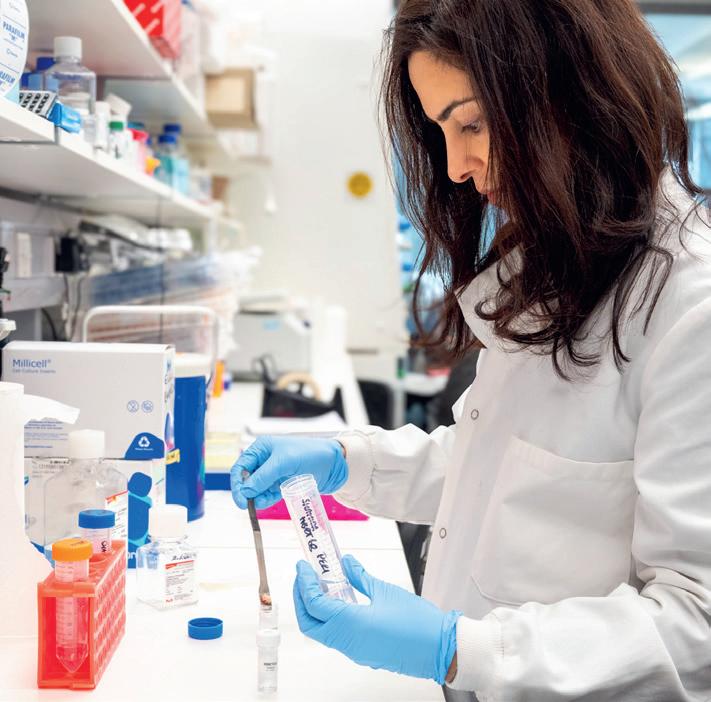

Our team at Queen Mary is exploring the possibility of using the unique make-up of a patient’s tumour to predict effective treatment options for people with high-grade gliomas, such as glioblastoma.
Launched in August 2024, researchers funded by Brain Tumour Research are conducting a five-year observational trial in collaboration with Barts Brain Tumour Centre, which will enrol up to 200 newly diagnosed patients at Barts Health. By comparing healthy and cancerous cells for each enrolled patient, they aim to identify genes uniquely activated (turned on) in tumour cells which could be potential targets for new or repurposed drugs.
The basis of one of the innovative techniques used in the trial was detailed in a paper published in BMC Biology in February this year. The paper explored how chromatin (a material that wraps around DNA) controls gene activity by altering DNA accessibility. It showed that this process behaves differently in glioblastoma cells, offering a new way to pinpoint tumour-specific gene activity that could be targeted by new or repurposed drugs.
Prof Marino said: “This trial will identify activated or repressed genes in patient tumour cells, allowing researchers to predict what could be effective treatments. It will also test these drugs in the lab, giving us an indication of their utility as a personalised treatment option for patients.”
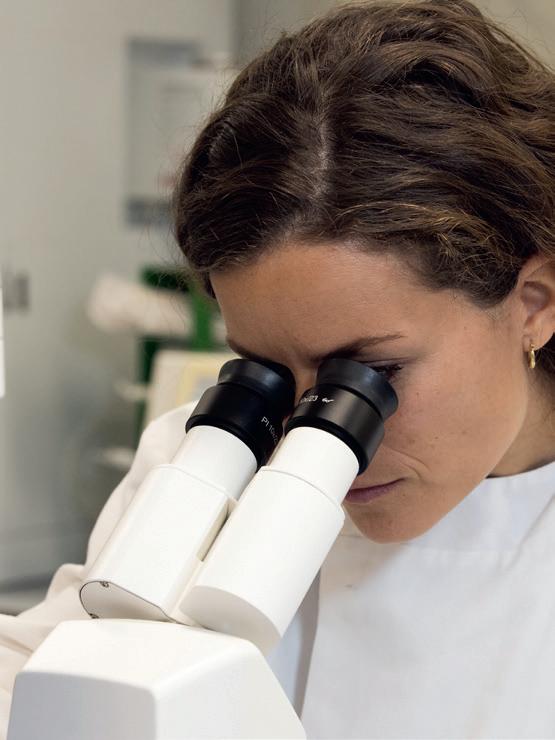
Research by our scientists at Queen Mary has revealed results that could prove gamechanging for the treatment of recurrent glioblastoma tumours.
Glioblastoma always returns despite treatments including surgery, radiotherapy and chemotherapy. Recurrent glioblastoma tumours often have a significantly different composition to the original, which means previously effective therapies have no impact, leaving patients with few options and little hope.
The team at Queen Mary has developed an innovative new technique that mimics the glioblastoma treatment process in the laboratory. Led by Dr Sara Lucchini and Dr James G Nicholson, they have been able to accurately replicate how glioblastoma tumours recur and evolve after treatment.
This work, published in EMBO Molecular Medicine, paves the way for personalised medicine for recurrent tumours.
Prof Silvia Marino said: “By analysing the genetic and molecular changes in the recurrent tumours, researchers may be able to identify patient-specific vulnerabilities. This means that in the future, treatments could be tailored to the unique characteristics of each patient’s recurrent tumour, improving the chances of successful treatments when firstline therapy has failed.”
Using the new model, researchers identified a specific type of cell that becomes more prevalent when glioblastoma recurs. These cells, which are decorated by tiny hair-like structures called cilia, are more resistant to treatment. But the team found that targeting these ciliated cells with a drug called Mebendazole – a readily available over-the-counter medication, commonly used for threadworm – could make them more sensitive to chemotherapy, potentially offering a new treatment option for patients who have, until now, been left with none following a recurrence.
At Brain Tumour Research, we are proud of the transformative work taking place at our Centres of Excellence. These Centres are powered by our unique long-term funding model, which enables researchers to focus on continuous, high-impact investigation without the disruption of repeatedly applying for individual grants.
This stability supports career development, fosters collaboration across Centres, and enables the recruitment and retention of talented researchers who might otherwise pursue other specialisms.
This year, we are funding more researchers than ever, and these scientists are advancing in their careers, establishing their own research groups, and accelerating progress towards a cure for all types of brain tumours.
Three exceptional researchers who have recently stepped into co-lead roles at our Queen Mary Centre are bringing fresh momentum to our vision.
Working closely with Prof Silvia Marino, Dr Lovorka Stojic is exploring the critical role long non-coding RNAs, important regulators of gene activity, play in tumour formation and progression. Together, they have already identified IncRNAs that are active only in glioblastoma and are now investigating their potential to aid earlier diagnosis and treatment.
Dr Radu Zabet is using artificial intelligence (AI) to better understand how genes are controlled in glioblastoma. His research focuses on the parts of our DNA that act like switches, turning genes on or off at the right time. When these switches malfunction, cells can become cancerous. With AI, Dr Zabet’s team aims to predict how these switches function in glioblastoma, helping them identify which genes may be driving the disease and opening up new pathways for treatments.
Thanks to previous funding from Brain Tumour Research, scientists at Queen Mary have already developed a method to predict which drugs might work best on an individual patient’s tumour cells. Now, Dr Thomas Millner is focused on refining the process and building experimental models that better reflect real-life conditions, bridging the gap between the research teams in the Centre and the clinicians caring for patients. He will work on streamlining the pipeline so that when promising new treatments are found, there’s a clear path to getting them to glioblastoma patients quickly.
PhD Project Aims to Kill Paediatric
Cancer Cells
During Childhood Cancer Awareness Month in September 2024, we were delighted to share that a new Brain Tumour Research-funded PhD student joined our team at the Brain Tumour Research Centre of Excellence at the Institute of Cancer Research (ICR).
Carla Fuentes-Guerra Bustos is building on research led by Centre Director, Professor Chris Jones, which identified proteins essential to paediatric-type diffuse highgrade glioma (PDHGG) survival. Her work aims to develop molecules that target these proteins and selectively kill cancer cells.
Carla said: “I am thrilled to begin my PhD at the Brain Tumour Research Centre of Excellence at ICR to contribute to groundbreaking multidisciplinary research for PDHGG. Being part of such an innovative environment, I aspire to pave the way for more effective treatments and better outcomes for patients.”
The project brings together biology in Prof Jones’ lab and chemistry in Dr Gary Newton’s lab at ICR’s Centre for Cancer Drug Discovery. This multidisciplinary approach is designed to accelerate the translation of research discoveries into new medicines.
This research gives much-needed hope to the families of children diagnosed with highgrade gliomas, who face a poor prognosis of just nine to 18 months.
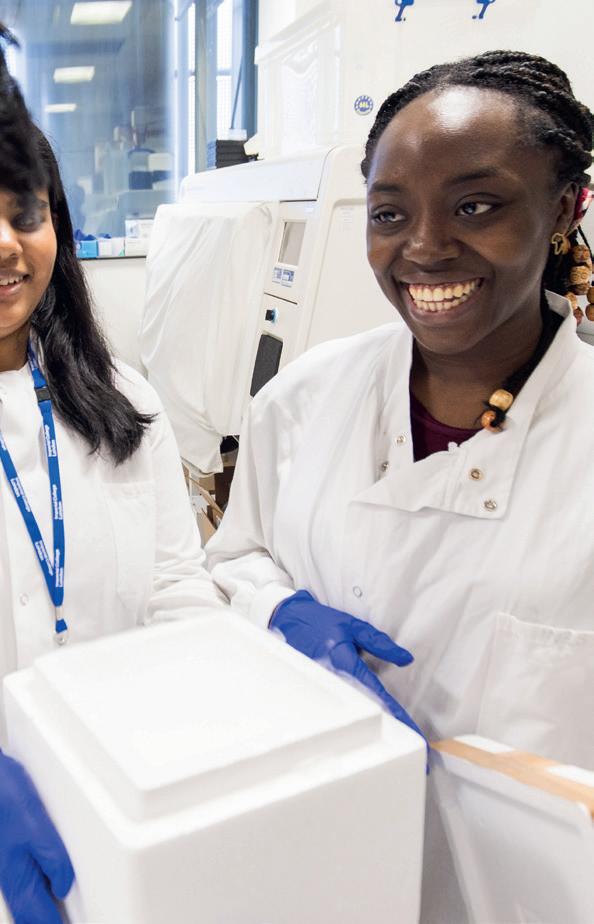
A vital funding boost is enabling scientists at the Brain Tumour Research Centre of Excellence at the University of Plymouth to advance pioneering research into meningiomas.
The £278,500 investment from the USbased Children’s Tumor Foundation was awarded to Dr Liyam Laraba, who completed his Brain Tumour Researchfunded PhD studentship in 2020 in Professor David Parkinson’s team. It marks the first project where he serves as lead investigator, a significant milestone in his career.
The funding will allow Dr Laraba to address two critical gaps in meningioma research: the development of effective therapies to improve patient outcomes, and the lack of models to study interactions between human immune cells and meningioma tumour cells in living systems prior to clinical trials, particularly important for immunotherapy treatments.
Dr Laraba said: “Developing therapies for meningioma and other types of brain tumour represents a significant challenge for the global scientific community. Even when potential immunotherapies are identified, they will need to undergo several phases of complex testing, and no model exists to look at these therapies’ effectiveness or sideeffects in a living organism.
“We believe this project could play a vital role in the process, creating a model on which therapies can be tested to ensure they are safe and effective. In the long run, that could ultimately shorten the time it takes for drugs to be validated and used for patient treatment.”
Dr Sarah Kingdon, Clinical Oncologist at University Hospitals Plymouth NHS Trust and a member of the team at our Plymouth Centre, has been awarded Scotland’s first dedicated Neuro-oncology Fellowship.
The inaugural Scottish Tessa Jowell Fellowship is the first from a new partnership between Scotland’s Chief Scientist Office (CSO) and the Tessa Jowell Brain Cancer Mission (TJBCM). It is co-funded by Beatson Cancer Charity and NHS Lothian Charity and aims to nurture the next generation of future leaders in neuro-oncology.
Taking place within our newly established Scottish Centre and jointly hosted by the Edinburgh Centre for Neurooncology and the Beatson West of Scotland Cancer Centre, the 12-month fellowship will provide Dr Kingdon with extensive experience in brain tumour management and the research skills needed to, in time, lead high-impact clinical trials.
It not only supports Dr Kingdon’s development but also strengthens collaboration between our Centres of Excellence, fostering knowledge exchange and accelerating progress.
Dr Kingdon said: “I was fortunate to gain experience in an early phase clinical trial while at Plymouth, and I am eager to build on that during my time in Scotland. Working in both Edinburgh and Glasgow also offers diverse clinical experience due to the high volume of patients, and the opportunity to collaborate with multiple oncologists who are experts in their fields. I hope to form a professional network with ongoing future benefit to both regions.”
By successfully securing funding from other sources, our Centres and Funded Initiatives are empowered to expand their research projects, attract high-calibre researchers, and achieve game-changing advancements in research into Brain Tumours. In 2024-25, our Centres of Excellence attracted an additional £10.5 million in leveraged funding for research into brain tumours
The collaboration will improve the odds of success in clinical trials and deliver better treatment options for patients living with this disease.
As part of the Charity’s funding model, which provides significant investment to our Centres of Excellence over multiple years, we require our Centres and Funded Initiatives to build on our initial investment and attract additional funding from other sources.
£500,000 Funding Boost for Paediatric Research
Our Centre of Excellence at ICR, which opened in September 2023 with an initial funding agreement of £2.5 million, received a share of £12 million from the Innovate UK Cancer Therapeutics programme this year which focuses on developing lifechanging cancer treatments, including immunotherapies and vaccines.
Chris Jones, Professor of Childhood Brain Tumour Biology at ICR and Director of our Centre focused on paediatric-type diffuse high-grade gliomas, said: “We are delighted to have been given this significant amount of money to further our work in identifying new treatments for brain tumours in children and young adults.
“This grant, which we are sharing with Revolver Therapeutics Ltd, will support identifying tiny proteins, known as peptides, that can enter cells to prevent specific cancer-causing proteins from binding to DNA within a child’s brain tumour. This phenomenon is strongly associated with high-grade childhood brain and spinal tumours, and it is hoped that by interfering with these DNA-binding proteins, these cancers affecting children can be treated.”
Bioelectronics Group Gets a Step Closer to Clinical Trials
In May 2025, Brain Tumour Research was pleased to announce that QV Bioelectronics (QV), a participant in the inaugural application round of the Brain Tumour Research – Novel Therapeutics Accelerator (BTR-NTA) programme, secured a substantial funding boost of £1.26 million from Innovate UK’s Biomedical Catalyst programme.
Through the BTR-NTA programme, research groups that have a new therapeutic, device or idea for brain tumour treatment can apply to have their research robustly reviewed by academic, clinical, patient and industry experts.
The funding boost received by QV is aimed at preparing for the first in-human trial of its implanted device. GRACE – Glioma Resection Advanced Cavity Electric Field Therapy – is a surgically implanted device designed to deliver electric field therapy directly to the tumour margins. This approach seeks to disrupt cancer cell division whilst preserving healthy tissue, with
the goal of improving patient outcomes and enhancing quality of life.
In November 2023, the QV team applied to participate in the BTR-NTA review programme, seeking guidance on how to better position their device on a successful path to clinical trials. They received feedback on manufacturing and attracting funders, alongside expert guidance on the next steps for preclinical safety and efficacy, and the design of the first in-human trial.
Dr Karen Noble, Director of Research, Policy and Innovation at Brain Tumour Research, said: “We are glad to see the progress made by GRACE and the support from the Biomedical Catalyst programme. This demonstrates a tangible impact of the BTRNTA programme, and we look forward to seeing how this technology continues to develop and translates to patients.”
Funded by Brain Tumour Research and delivered in partnership with the Tessa Jowell Brain Cancer Mission (TJBCM), the BTRNTA programme is designed to provide expert advice to research groups, facilitating the progression of therapeutics into human trials and bridging the so-called ‘valley of death’ in the research pipeline.
Patient and Public Involvement and Engagement (PPIE) is crucial to ensure that the voices of those directly affected by brain tumours are heard and integrated into the research process. It fosters collaboration, improves the relevance of research, and empowers patients. This approach bridges the gap between researchers and the community, leading to more meaningful advancements in research into brain tumours.
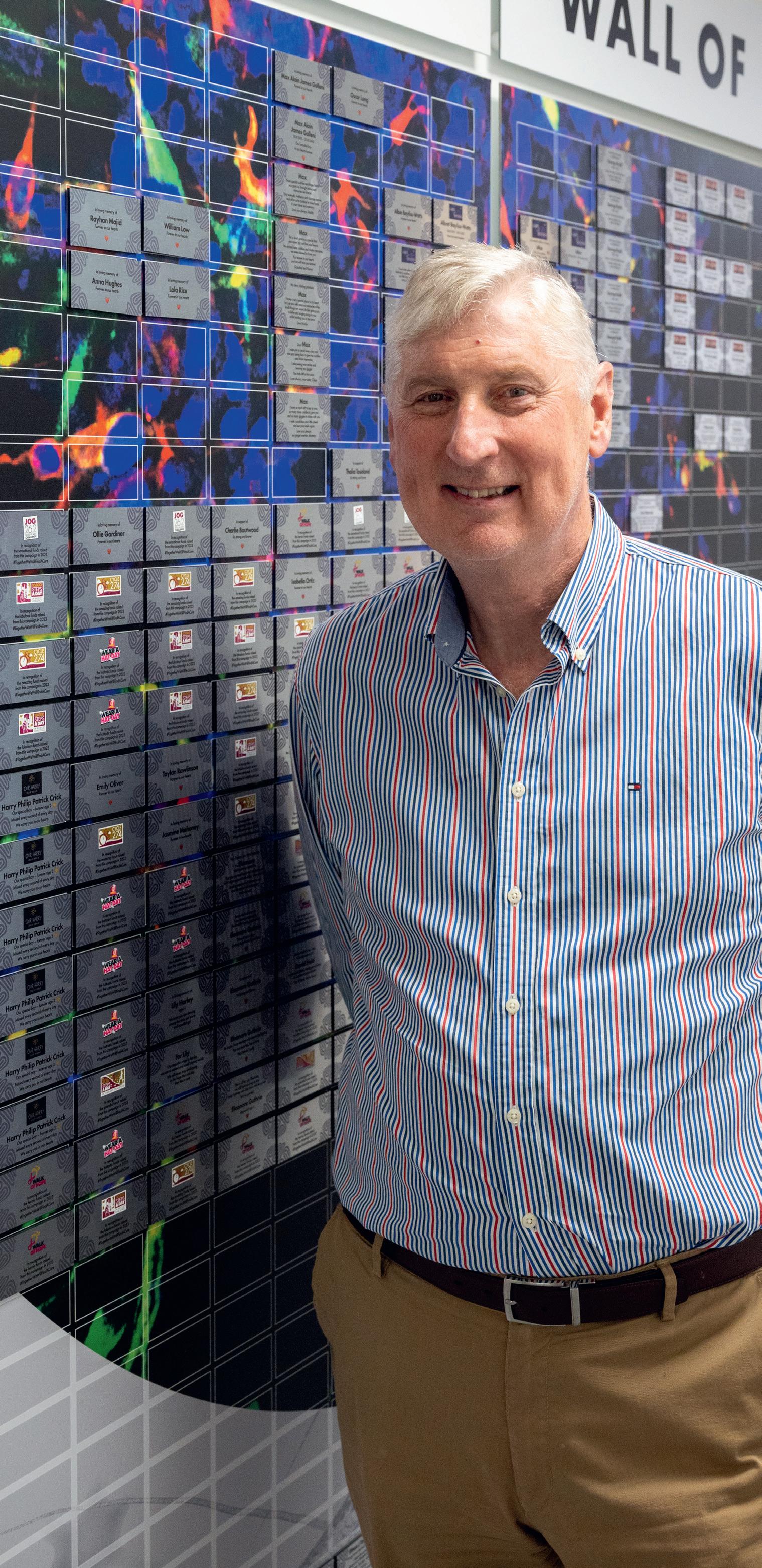
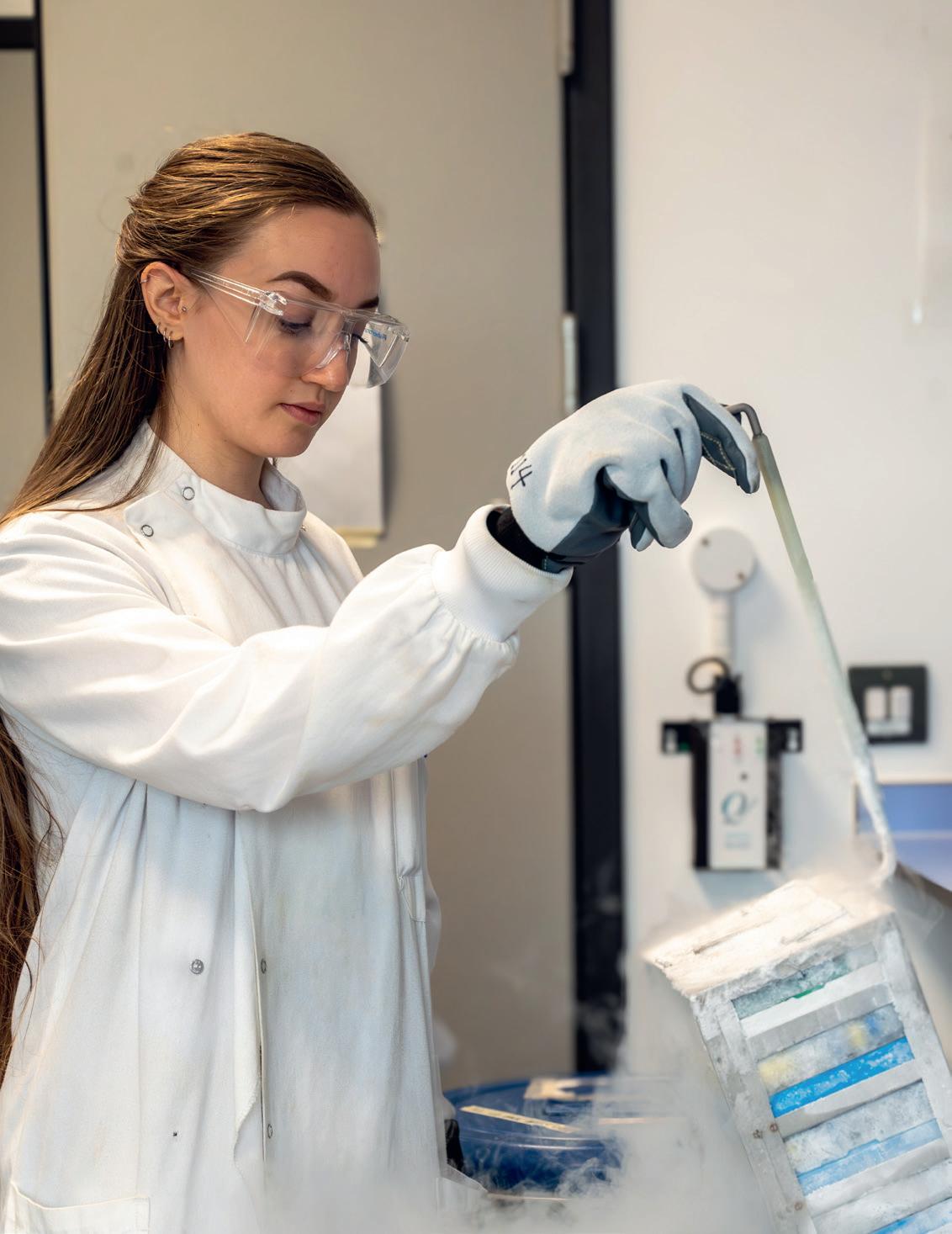
This year, all Brain Tumour Research Centres of Excellence welcomed patients and supporters into their laboratories, offering a powerful, first-hand view of the pioneering work their fundraising makes possible. These visits not only inspire and connect supporters with our vision but also energise researchers by reinforcing the real-world impact of their work and the community behind it. Each Centre also houses a Wall of Hope, where supporters are given the opportunity to place tiles representing the number of days of research sponsored in the name of a loved one.
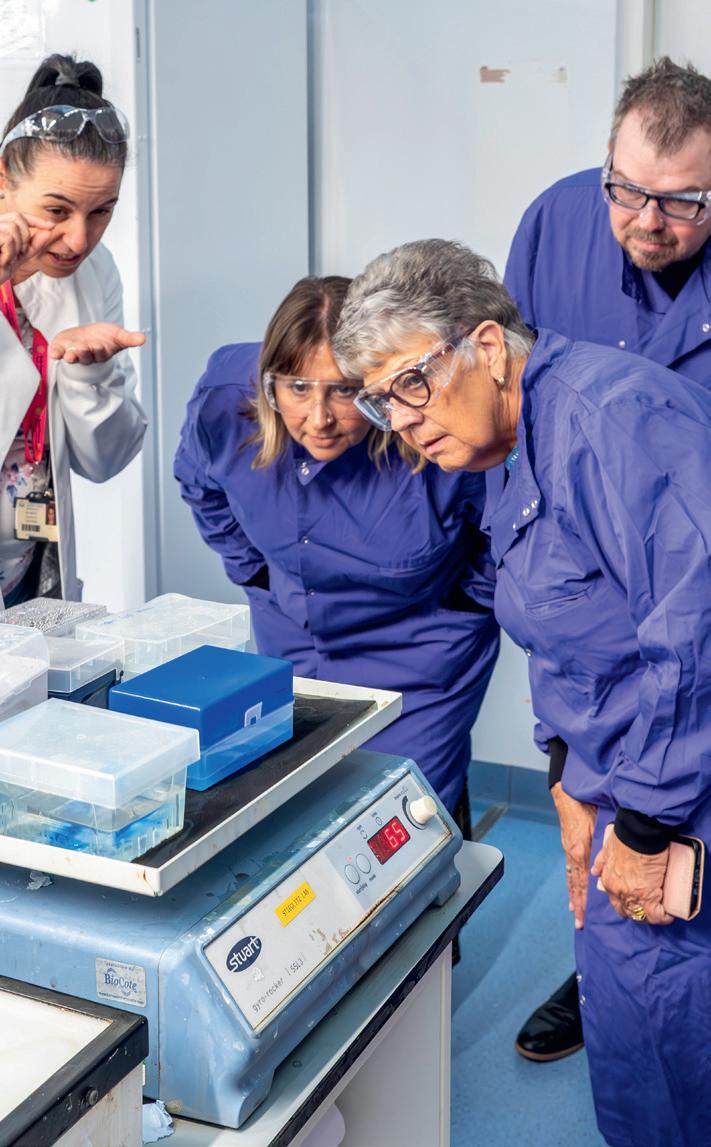
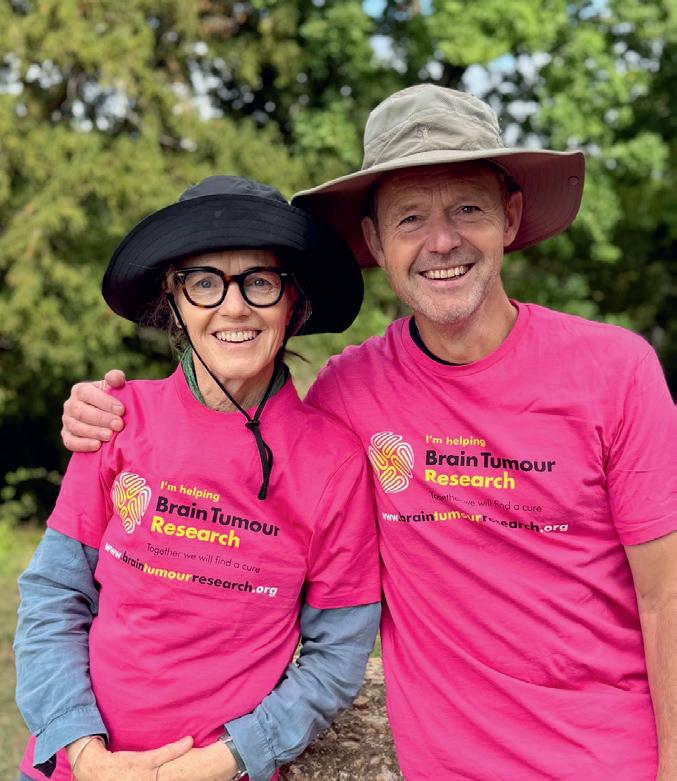

“Being able to visit the lab at the Brain Tumour Research Centre of Excellence at The Institute of Cancer Research and remembering Ethan at the Wall of Hope is very special to us as a family. Ethan is what drives us to make a change in the outcome of this disease for those who will follow and seeing how our fundraising is translating into groundbreaking research is encouraging for all who support us on this journey. We’ve placed nine tiles on the Wall of Hope so far – this is Ethan’s legacy.”
- Nikki Treharne, mother of Ethan who died aged 17 from a glioblastoma and founder of Fundraising Group, A New Hope for Ethan
The paediatric BRAINatomy study is being supported by PRIME, the patient and public involvement programme run by brainstrust and funded by Brain Tumour Research.
BRAINatomy is a clinical study that aims to enhance brain tumour treatments for children by pinpointing specific brain regions to avoid during radiotherapy treatment, reducing the risk of long-term cognitive and hormonal side effects. Supported by Stand Up to Cancer and Cancer Research UK, BRAINatomy is studying the path that radiation travels when treating paediatric brain tumours to develop an atlas of brain regions to be avoided during radiotherapy.
PRIME worked with the BRAINatomy team to support the study goals and provide a patient-focused perspective throughout the trial design. Two patient representatives shared their experience of being diagnosed with a brain tumour at a young age with the research team. This helped the research team to consider how best to approach patients to take part in the trial and to prioritise patients’ needs during such a difficult time in their lives.
The researchers’ goal is to identify brain regions sensitive to radiotherapy, enabling the development of tailored treatments that mitigate long-term cognitive and endocrine issues. The potential creation of a prediction model could revolutionise decision-making for clinicians, offering a tool to optimise survival while minimising adverse effects.
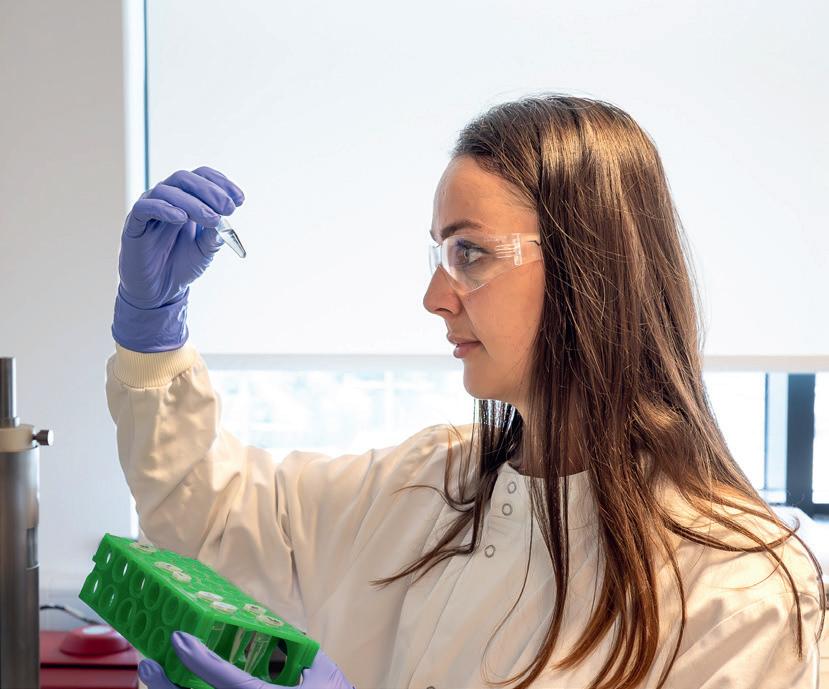
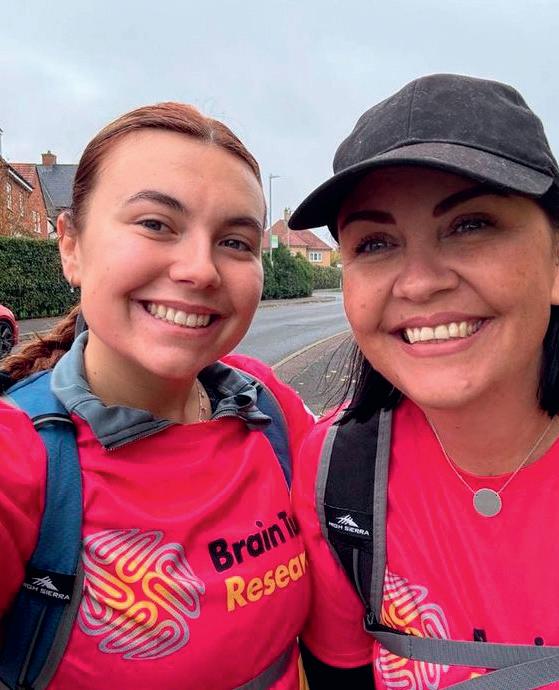
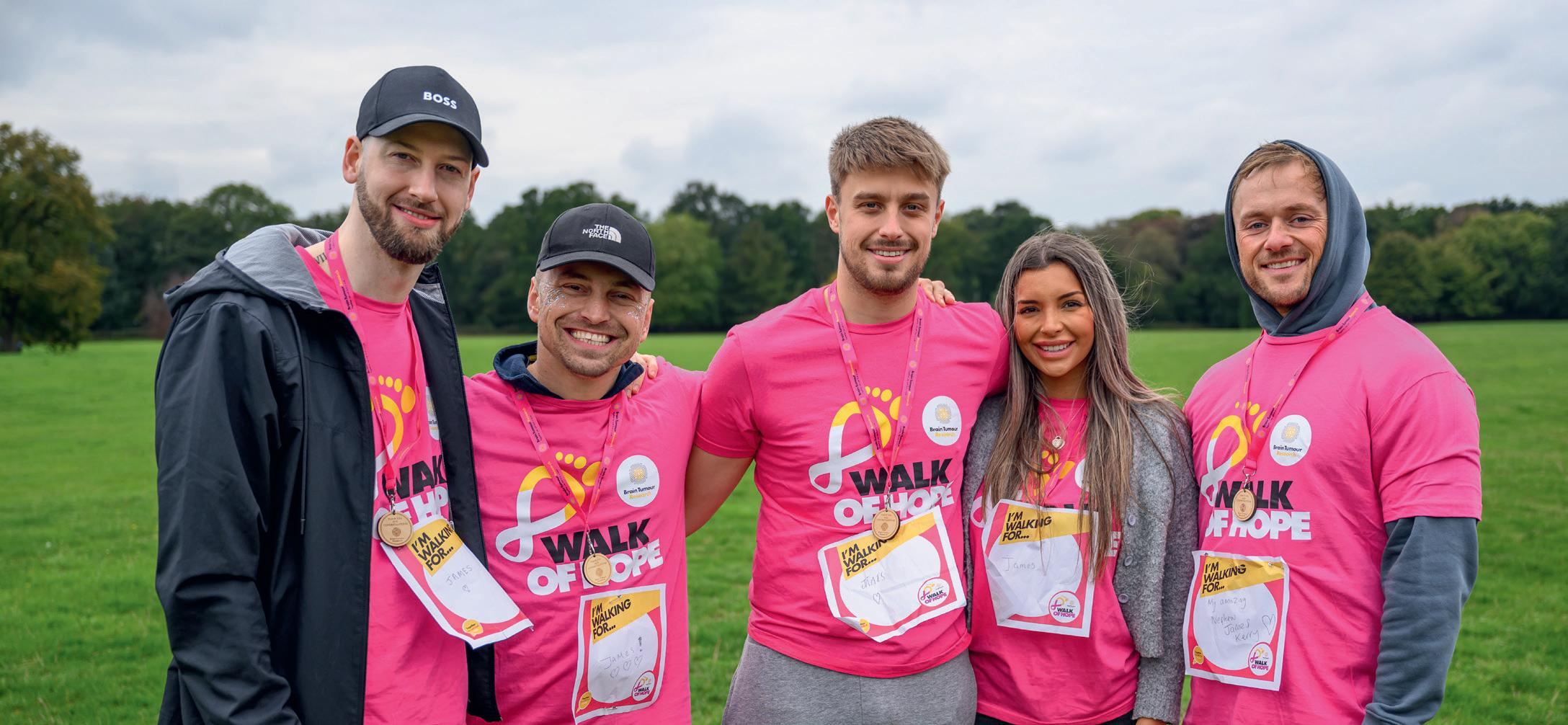
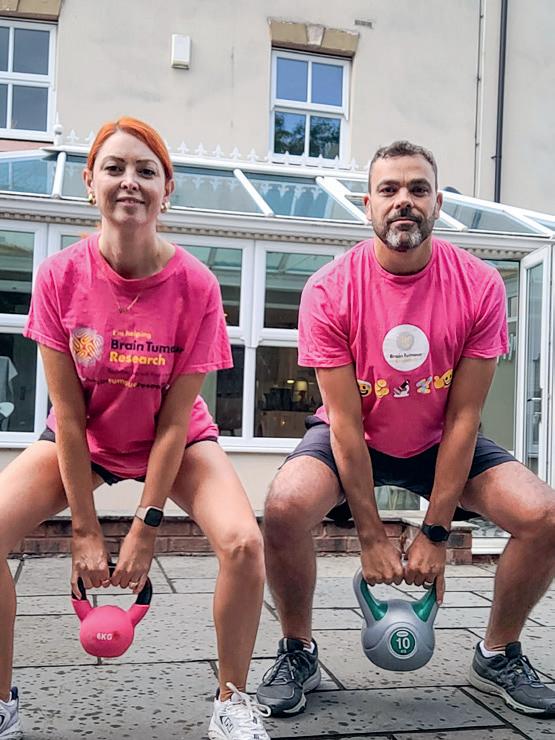
Nearly 100 brain tumour researchers swapped lab coats for charity t-shirts to take part in our fundraising challenge, 99 Miles in November, to help raise awareness of this disease that kills more children and adults under the age of 40 than any other cancer.
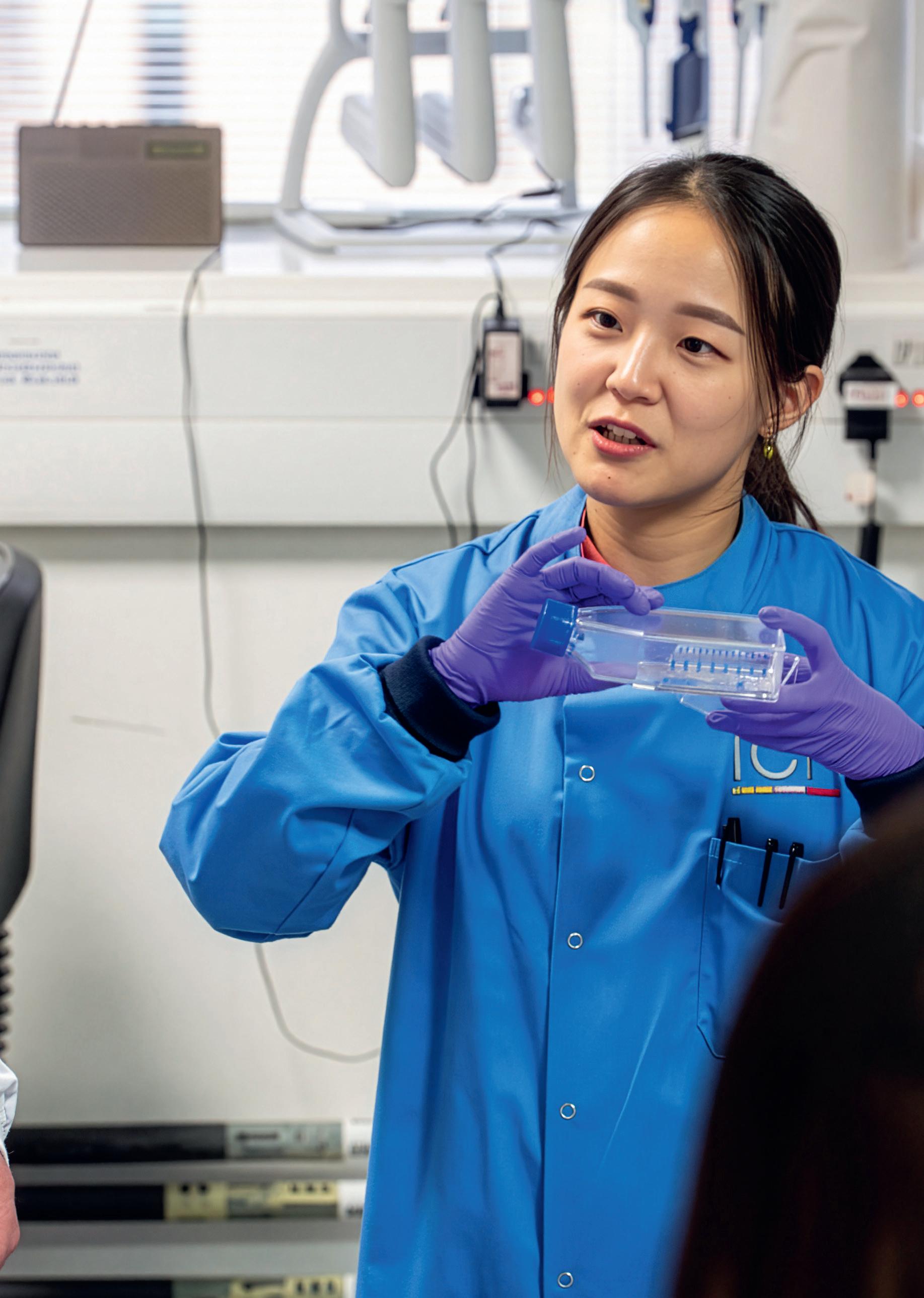
The walk took place during our seventh annual Researcher Workshop, a two-day event that brought together experts from our five Centres of Excellence, Funded Initiatives, and other partner institutions. With updates from each Centre and presentations from early career researchers, the workshop provided a valuable opportunity to strengthen relationships, explore shared interests, and spark potential future collaborations.
Sanjana Ananth, a fully-funded third year PhD student at our Queen Mary Centre, working on targeted therapies for glioblastoma, said: “When you’re working in the lab, it can be easy to forget the bigger picture. But taking part in the 99 Miles event, and when we do lab tours with the Charity’s supporters, reminds us of why we are doing this work – for the families who desperately need us to find better treatments.”
Also fully funded by us, third year PhD student Libby Williams, who is based at our Plymouth Centre, is trying to identify the cells that start meningioma tumours in patients with neurofibromatosis type 2. She said: “There’s no chance I could be here doing this work without the funding from Brain Tumour Research; it is absolutely essential.”
The work carried out at our five dedicated Research Centres and through our Funded Initiatives is vital and is monitored carefully to ensure our money is well spent. Indeed, we owe it to brain tumour patients, their families and our supporters. It is also a condition of our membership of the Association of Medical Research Charities (AMRC), which regularly audits members to ensure good practice of review to guarantee that only the best quality research is funded.
Our Research Centres and Funded Initiatives submit a report annually which also includes a request for the subsequent year’s funding. The funds are approved and granted by the
Trustees following the recommendations of the Scientific and Medical Advisory Board (SMAB) and ratification by the Research Sub-Committee. The reviews comprise a comprehensive assessment, which includes interviews with the Centre Directors and considers results to date, publications and other achievements and the research vision for the coming years.
Every five years, each Centre of Excellence is asked to complete a more in-depth version of the Annual Review process. The report is sent out for international peer review and a site visit is undertaken with members of the SMAB who have relevant areas of expertise; other reviewers with specific areas of expertise related to the focus of the Centre can be co-opted, if required. Recommendations from the review panel are then considered and ratified by the Trustees of Brain Tumour Research.
It remains our fundamental goal to develop a network of dedicated Brain Tumour Research Centres of Excellence in order to build research capacity, promote sustainability and the growth of research into brain tumours in the UK.
The review is very important for the Charity as it enables the Centre’s progress over the previous five years to be reviewed and its plans for the next five years considered. This provides the Charity with an independent, expert assessment of the Centre’s achievements and goals. It also provides an opportunity for the Centre to include new areas of research that have been indicated as potential routes to a cure for brain tumours, based on its discoveries in the preceding five years.
In 2024-25, two of our established Research Centres, at Queen Mary University of London and the University of Plymouth, underwent Quinquennial Reviews (QQR) led by the SMAB. The reviews were chaired by Professor Garth Cruickshank (former Chair) and Professor Tony Marson (current Chair), respectively, and ensured that we are continuing to invest in high-quality, peer-reviewed research that serves the best interest of patients, scientists and clinicians.
Following its review in November, Queen Mary was awarded a further £2.5 million to support pioneering research into adult glioblastoma and childhood brain tumours, including medulloblastoma, diffuse midline glioma (commonly referred to as DIPG), and ependymoma.
The Centre will leverage its expertise in epigenetics to identify genes crucial for tumour growth and investigate whether these can be targeted with new or repurposed drugs, helping to develop personalised treatment options tailored to individual patients.
Additionally, the funding will enable researchers to advance gentler, more effective therapies for childhood brain tumours, for which current treatments can cause lifelong side effects and disabilities.
In March, Plymouth underwent its QQR and an award for further funding over the next five years will be announced in the coming year, to enable the Centre to continue and expand its research into low grade brain tumours, such as meningioma, schwannoma, and low-grade glioma, and to broaden its focus to include investigating differences between low-grade and highgrade tumours. The Centre is investigating how and why brain tumours develop and what drives their transformation into higher grade forms with poorer prognoses. Researchers are also working to develop non-surgical treatment options for patients with schwannoma and meningioma.
£2.5 Million Investment in Highquality Research to Improve Outcomes
Following the General Election in July 2024, we ensured that brain tumours remained high on the political agenda with a focus on engaging with the new Government. In a year of intense campaigning activity, we have had an active role in shaping the Rare Cancers Bill which, if passed, will transform the landscape of rare cancer research. We also resumed our role as secretariat for the newly registered All-Party Parliamentary Group on Brain Tumours (APPGBT), held our first ever event at Stormont, and exposed barriers caused by bureaucracy in Scotland.
We continue to work collaboratively with campaigning organisations such as Cancer52, the Neurological Alliance, the Charity Medicines Access Coalition, the ABPI Patient Organisation Forum and Scottish and Welsh Cancer Coalitions. This collaborative working is vital to make sure we are heard across the UK cancer, rare diseases and neurological space.
Our efforts were reinforced by the more than 1,560 supporters who received our weekly campaigning update, designed to motivate supporters to call on their elected representatives to advocate for increased funding for research into brain tumours.
We now have an active political supporter in more than 550 (87%) UK constituencies, helping us to become more visible than ever
The inaugural meeting of the All-Party Parliamentary Group on Brain Tumours (APPGBT) for this Parliament was held in September, where Dame Siobhain McDonagh, who lost her sister to a brain tumour, was announced as the new Chair. Membership of the group consists of more than 20 Parliamentarians and Brain Tumour Research was proud to resume its role as secretariat. The three
meetings of the newly registered APPGBT this year demonstrated that it continues to be an invaluable platform for fostering discussions and identifying tangible ways to improve options for patients. Attendees of note included Scott Arthur MP and, in an unusual move for a Minister, Health Minister Ashley Dalton attended our meeting in May.
The Rare Cancers Bill has offered Brain Tumour Research an opportunity to directly influence legislation. From the outset, the Charity has played a key role in helping to develop the Bill, which was proposed by Dr Arthur, MP for Edinburgh South West, following positive conversations with APPGBT Chair, Dame Siobhain. Dr Arthur understands the urgent need for reform following the death of his father-in-law to a glioblastoma. As this bill broadened to include the wider rare cancer research area, Brain Tumour Research organised roundtable meetings to work alongside colleagues in the rare cancer community and highlight critical gaps in research, treatment and patient support. In a significant step towards the Bill becoming law, it passed its third reading at the House of Commons with no amendments and has passed to the House of Lords, taking us ever closer to tackling the inequalities faced by patients with rare cancers.
Our emphatic calls upon the Government to make brain tumours a priority gained further traction when we attended a meeting with Health Minister Dalton alongside one of our highly committed supporters. Laura Kurtul gained a pledge of support during Prime Minister’s Questions, when Sir Keir Starmer called for the milestone meeting following the loss of her six-year-old son to a medulloblastoma in February 2024. The successful discussion ended with a pledge from the Minister to meet again in the autumn to hold further discussions.
“We recognise that more needs to be done to stimulate high-quality, high-impact research into brain tumours. That is why we are committed to making a real difference for patients with brain cancer. We will leave no stone unturned until they get the first-class care that they deserve.”
- Ashley Dalton, Parliamentary Under-Secretary of State for Public Health and Prevention
Over the past year, Brain Tumour Research has made significant strides in raising awareness and influencing change across the devolved nations. Through impactful events, meetings, and cross-party engagement, we have continued to highlight the urgent need for greater research funding and better patient outcomes in Scotland, Wales, and Northern Ireland. Our work is rooted in partnership with universities, health boards, patients, and policymakers.
In Scotland, we have worked to expose how bureaucracy is blocking research into brain tumours. The inaugural meeting of the Cross-Party Group (CPG) on Brain Tumours in the Scottish Parliament, held in October, brought together Members of the Scottish Parliament (MSPs), patients, researchers, and campaigners to shape the future of brain tumour care.
Attendees heard from the Minister for Public Health and Women’s Health, Jenni Minto MSP, who acknowledged that survival rates for brain tumours are too low and the need for better treatments that are accessible to all. In her message to the Group, Convener Beatrice Wishart MSP said: “I spoke recently with a constituent diagnosed with an inoperable brain tumour and told him about the newly formed CPG. He was encouraged to learn about it and said it gave him hope for the future.”
A CPG meeting in June underscored how delays in funding and approvals are slowing innovation and three key priorities emerged:
1. Equitable access to genomic testing
2. Better access to clinical trials
3. Elimination of postcode-based disparities in drug access
These reflect a growing consensus that Scotland must modernise its systems. The meeting highlighted multiple examples where delayed or unavailable genomic sequencing – a critical tool in diagnosing and treating brain tumours – has had serious consequences for patients.
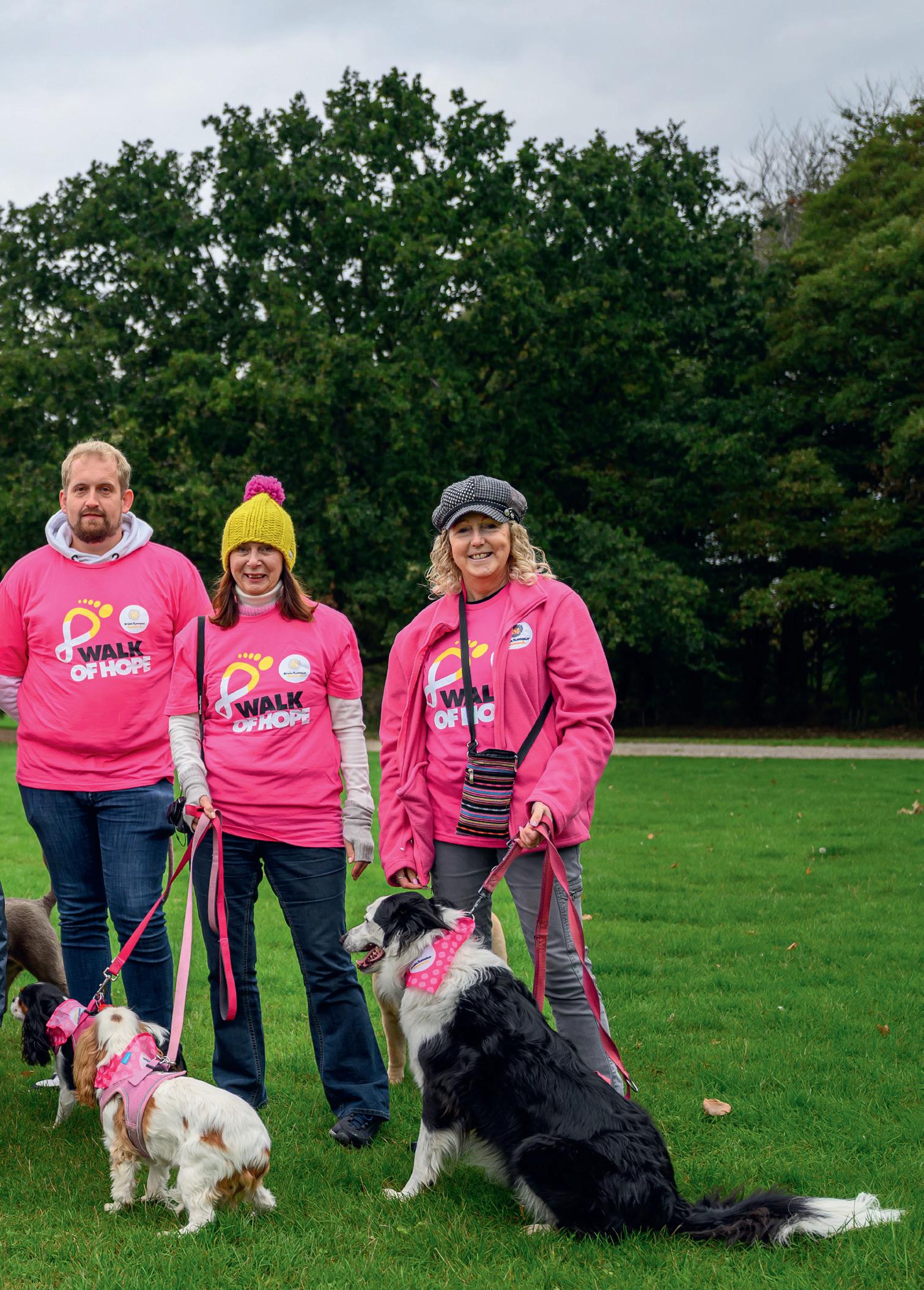
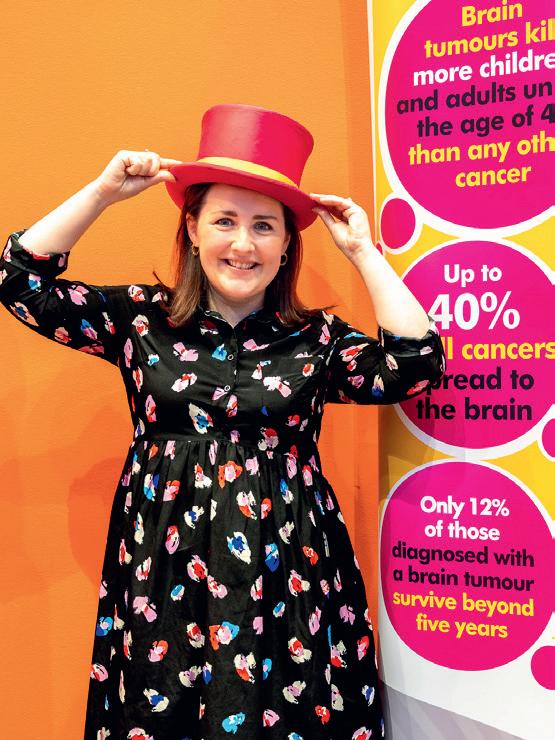
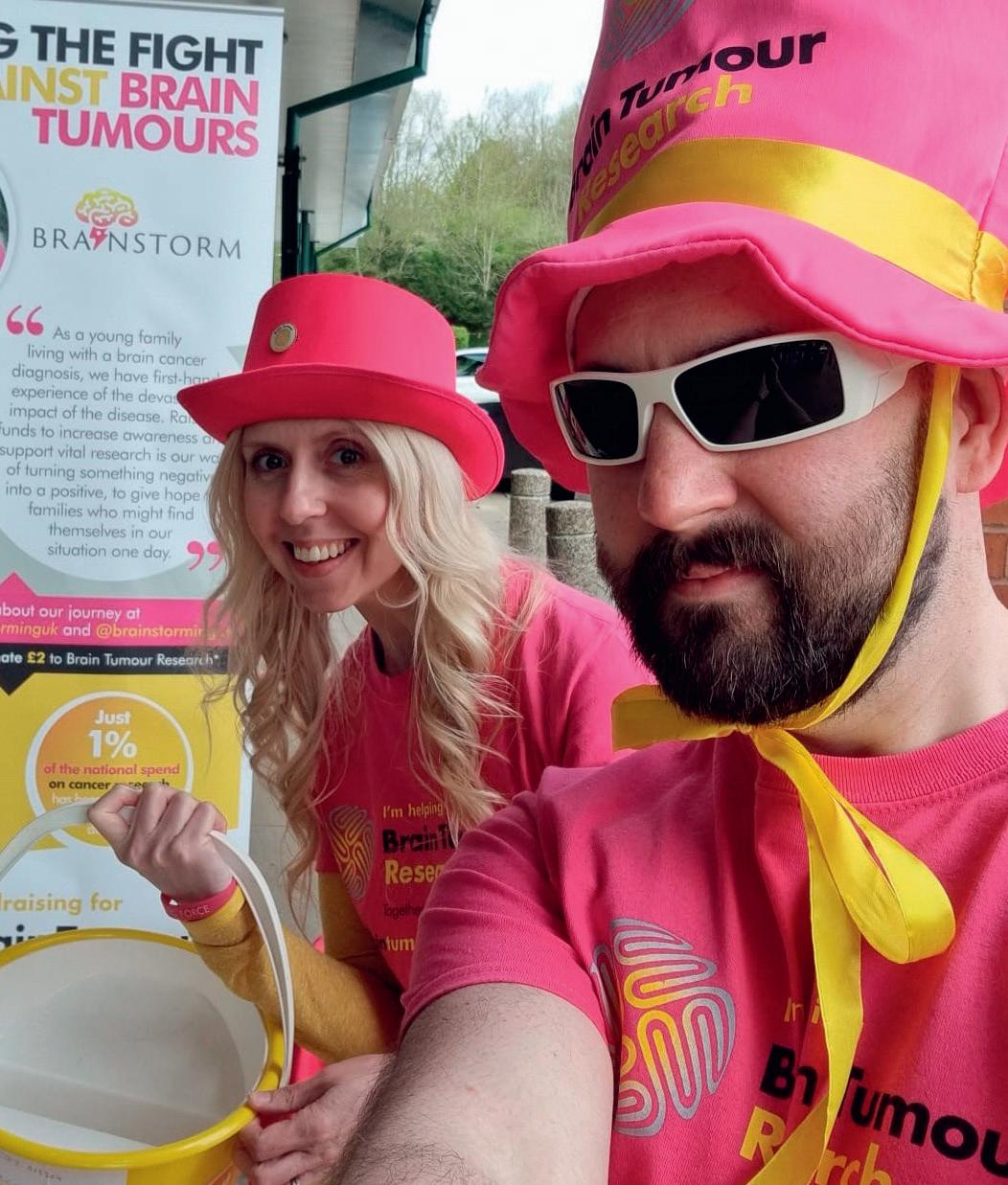
An event sponsored by Ms Wishart brought MSPs together in a photocall for our flagship fundraising campaign, Wear A Hat Day, during Brain Tumour Awareness Month in
March, for which First Minister John Swinney donned our trademark pink top hat. MSPs then heard of the urgent need for improved research infrastructure, better clinical trial access and stronger funding commitments at an event titled Advancing brain tumour research in Scotland.
Our work in Wales has focused on tackling inequities in access to treatment and research. This was central to our activity at the Senedd during Brain Tumour Awareness Month, where patients and families joined us to highlight the need for better access to clinical trials and innovative treatments for brain tumour patients in Wales. Debra Gibbon, whose daughter died of a brain tumour, said: “The heartbreak of this disease is only made worse when patients realise they have fewer options than others across the UK. That must change.”
A key aspect of our current activities is our support for Owain’s Law – a campaign to strengthen consent and transparency around brain tumour tissue use. The motion puts the spotlight on a critical issue: how brain tumour tissue is handled, stored and used. It aims to uphold patient rights, improve research potential and prevent lost opportunities for treatment, such as personalised vaccines. Speaking of the death of his mother from a brain tumour, Peredur Owen Griffiths MS said: “Families like mine and Owain’s are let down not only by research but also by how precious brain tumour tissue is managed.”
In a landmark step, we hosted our first Stormont event in September 2024, bringing together Members of the Legislative Assembly (MLAs) and health leaders to address diagnosis pathways, data collection, and local research investment. The event was sponsored by Cara Hunter MLA, with whom the Charity has worked closely since she disclosed her own brain tumour diagnosis, laying the groundwork for future collaboration.
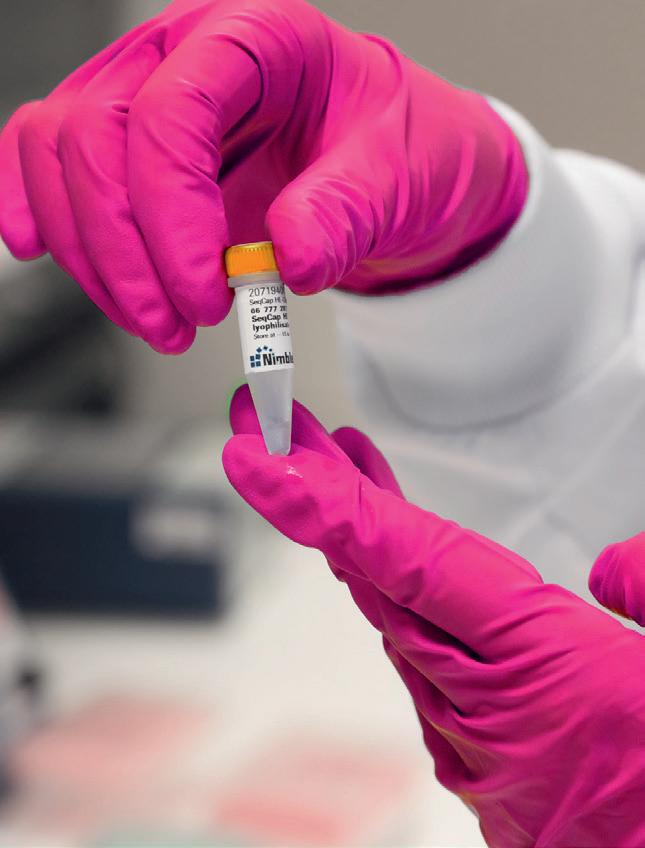
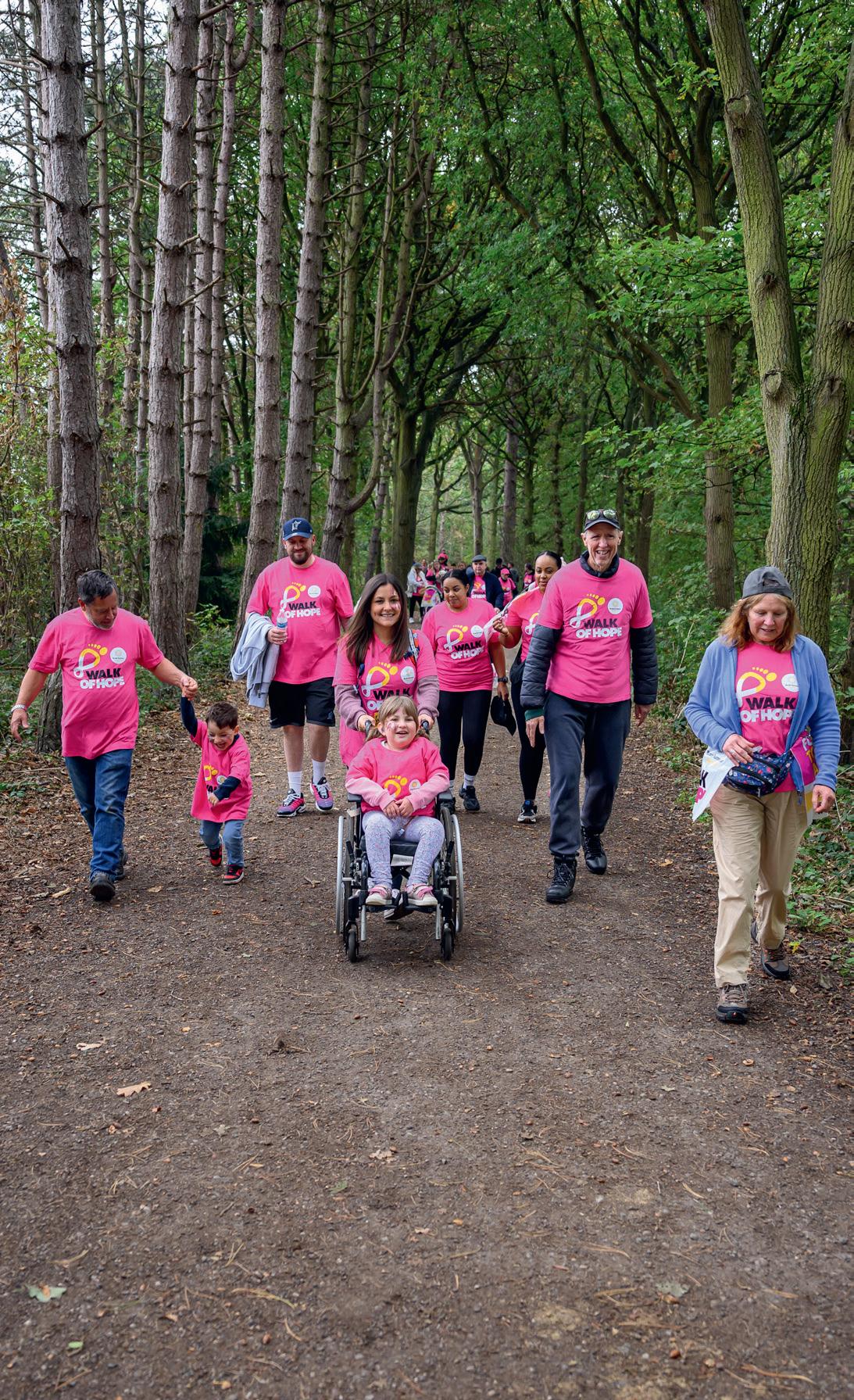
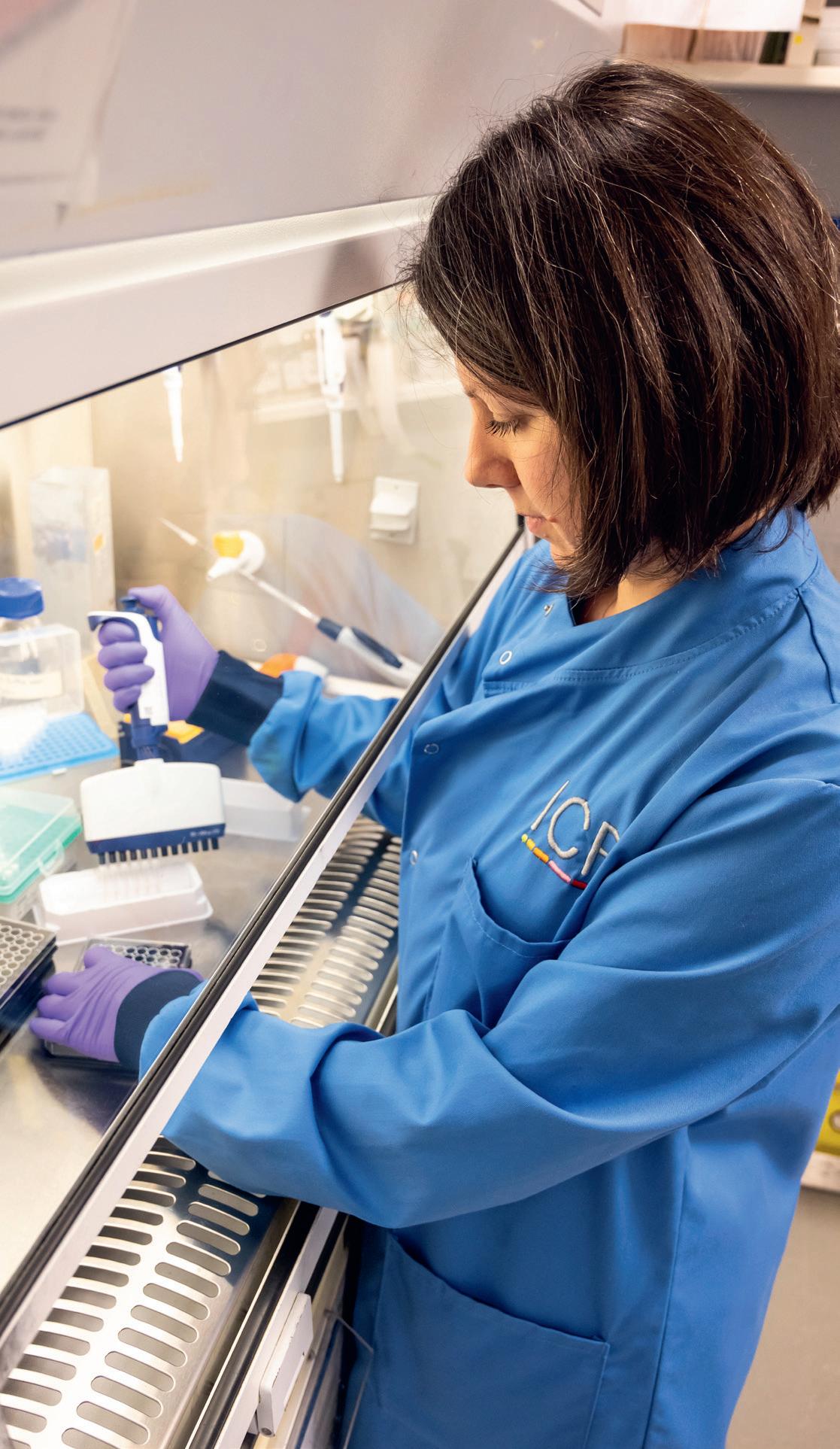

We continue to fortify our position as the leading voice of the brain tumour community through our highly effective Marketing and Communications function. This year, the PR team achieved an overall media reach of 31 billion and a recordbreaking reach during Brain Tumour Awareness Month in March of 4.3 billion, alongside standout coverage across the year on BBC Breakfast, BBC Morning Live, ITV News and STV News. From our research experts and campaigning stalwarts to our Patrons and Ambassadors, our Charity is the go-to for media outlets seeking authoritative comment and trusted information regarding research into brain tumours.
Our 15th anniversary was a milestone moment to drive awareness of our vision and inspire hope for a future in which brain tumours no longer devastate lives. The launch of our Impact Report, Closer to a Cure – 15 Years of Impact, was celebrated with an extraordinary gala dinner at The Dorchester in London, attended by more than 300 supporters and celebrities, all with a personal connection to our cause. The achievements made at our Centres of Excellence were brought together in a powerful film that was presented on the night, narrated and produced by broadcaster Sarah Beeny, who was also announced as our new Patron.
Throughout 2024-25, we expanded upon our High-Profile Supporter Strategy with the announcement of new Patron, music producer Pete Waterman OBE, alongside Sarah Beeny, as well as a host of new Ambassadors: actor Craig Russell, influencer Abi Feltham, Olympic athlete Sam Reardon and actor Charles Dale, all of whom have been affected by a brain tumour diagnosis. Alongside our existing high-profile supporters, they have each used
their public platform to amplify our message to a new audience of millions, helping to make this our most successful Brain Tumour Awareness Month ever with a total media reach across press, broadcast and social media for celebrities and influencers of 1.5 billion. Our Patrons and Ambassadors are also highly engaged in driving forward our income goals, with Antiques Roadshow expert and Patron Theo Burrell, who is living with a glioblastoma, taking on our 88 Squats a Day in July challenge, and Charles Dale completing a 3,200-mile motorcycle challenge. Multi-platinum-selling recording artist and Patron Alfie Boe OBE, who performed at our gala dinner, has inspired donations of more than £100,000, while patient and political broadcaster Glenn Campbell has engaged a wide-reaching community, raising £371,500 through his group Brain Power which supports our Scottish Centre.
We are continually working to ensure that our website is offering the best supporter journey possible. Visitors to the website exceeded 100,000 during Brain Tumour Awareness Month and the team refreshed more than 1,000 supporter story pages to ensure they are aligned with our strong brand identity, as is important across all our outputs, and improve search engine optimisation.
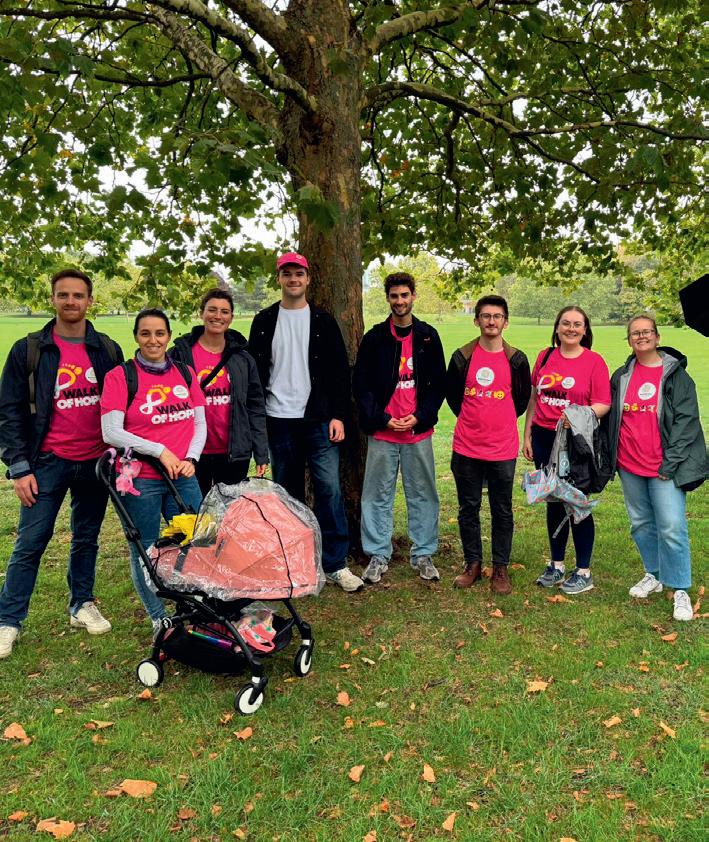
Following the appointment of a Social Media Manager, we have seen growth across all social platforms, particularly Instagram and LinkedIn, with followers now totalling 210,000. Impressions were up more than 10% at 51 million and video viewing up more than 50% on last year, reaching almost three million views. Our new strategy has put more focus on sharing inspiring research stories, which has translated into new followers, while compelling storytelling posts drive connection with the brain tumour community resulting in tens of thousands of engagements and reactions, and reach that exceeds hundreds of thousands. Campaign posts have been pivotal in boosting visibility for our flagship fundraising campaigns Wear A Hat Day and Walk of Hope, while our Shine A Light social media campaign to mark the start of Brain Tumour Awareness Month was our top performing post of the year, bringing celebrity supporters and our community together in a poignant moment of remembrance and hope.
Fundraising is key to the sustainability of our research model and enabling the worldclass progress that is being made across our network of Centres of Excellence and Funded Initiatives. During 2024-25, our activities brought in £8.7 million, making it our most successful year to date and securing a strong funding pipeline for the coming year.
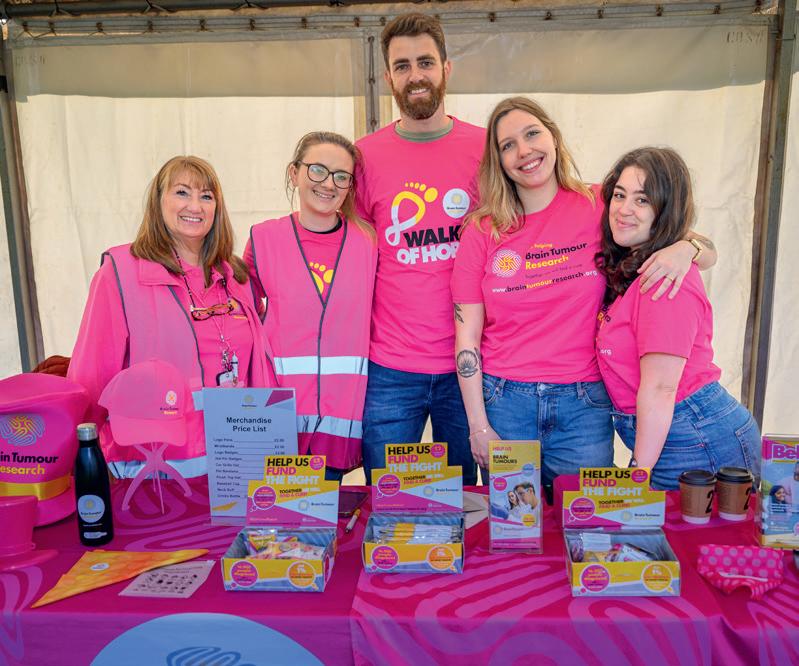
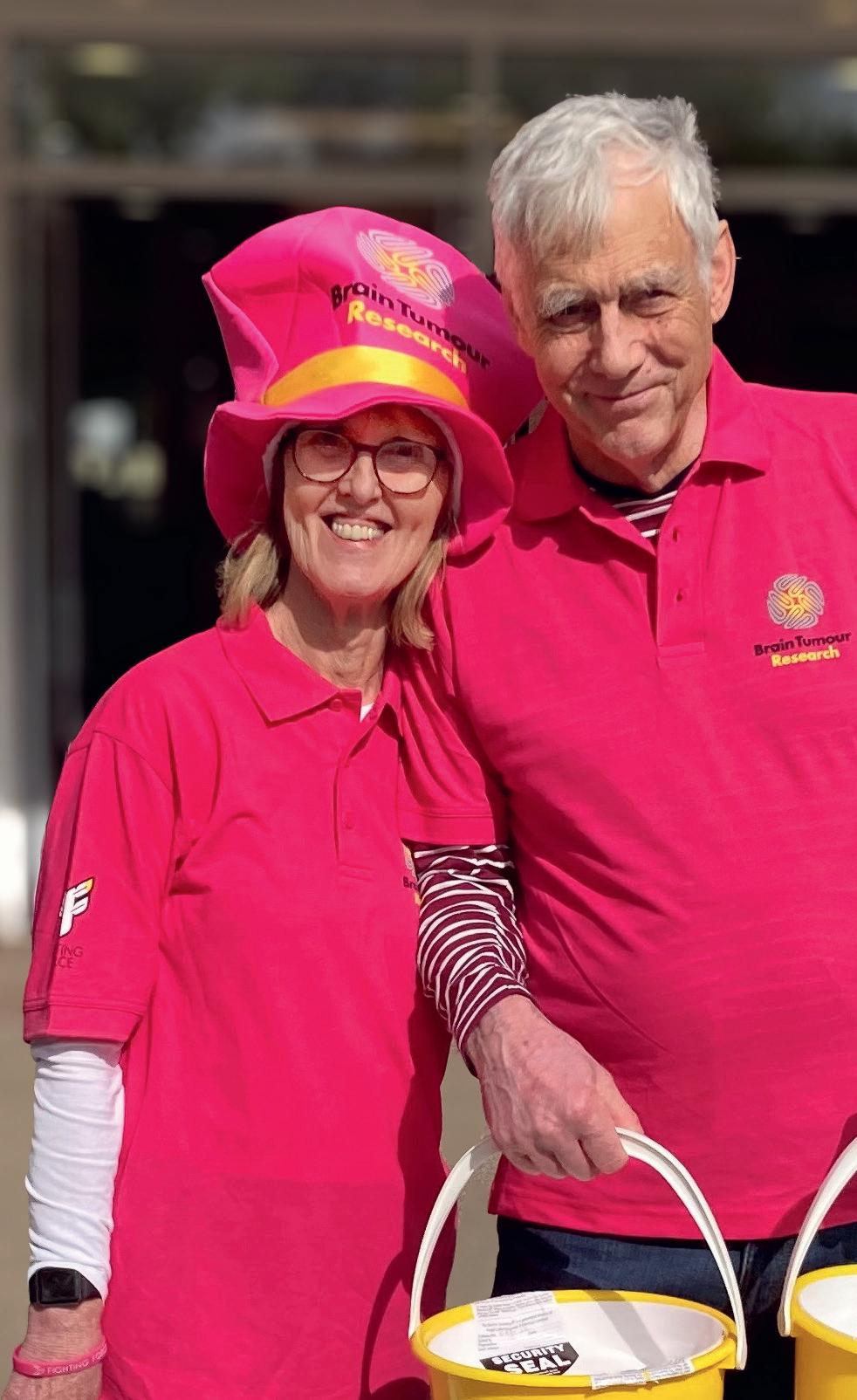
Building on the traction of the previous year, we focused on diversifying income streams and exceeded target in a number of areas. Income from High-Value Individual Donors more than doubled, reaching almost £1 million, with £500,000 donated in support of our new Scottish Centre of Excellence, while income from Gifts in Wills saw an increase of 25 per cent on last year’s total, raising £500,000. Community and Events also experienced a boost, generating £3.6 million – growth of 10% on the previous year – which included more than £500,000 from our flagship fundraising campaigns Wear A Hat Day and Walk of Hope. We are, as ever, grateful to the thousands of dedicated supporters who give their time, passion and energy by signing up to challenges and organising their own events to raise money for our common goal: to find a cure.
A team of 97 runners participated in the 2025 TCS London Marathon for Brain Tumour Research, achieving our highest ever fundraising total for this event of more than £490,000 and, with additional places secured, we aim to beat this figure with a 200-strong team for 2026. Meanwhile, supporter Jeremy Banks proudly wore the number one bib at the 2025 London Landmarks Half Marathon as the highest JustGiving individual fundraiser for the race, bringing in £16,500 to sponsor more than six days of research at one of our Centres.
Digital Fundraising also saw 15% overall growth, boosted by our 99 Miles in November challenge that raised £192,000 – our most successful autumn fundraiser to date, and a 430% increase on the previous autumn’s event.
Member Charities continue to be an important source of funding for Brain Tumour Research, and we are honoured to be working with 26 UK charities that are dedicated to strengthening the voice of the brain tumour community. Several of our
Member Charities fund researchers at our Centres, totalling £186,000, which enables this vital work to continue.
Regional Workplace income was £244,000, which included more than 20 businesses and organisations which chose to support us as a Charity of the Year. We are grateful to the Worshipful Company of Feltmakers, which is supporting us with a three-year funding partnership, and Lions Clubs International British Isles, the world’s largest volunteer service organisation, as it continues in its aim of raising £1 million for our Charity.
Income from Trusts and Foundations is an important funding source which we are continually looking to develop and grow. The sector is seeing significant demand, and many institutions are now outsourcing their administrative function due to huge volumes of applications or deploying more strategic and stringent criteria such as reduced value of giving, giving less frequently, deploying tighter objectives, or imposing an income threshold, therefore ruling out many larger or national charities.
This year we welcomed 25 new Trusts and Foundations to our portfolio and while some regular sources of funding came to an end, income totalled £397,000 and we experienced a 28% increase in the number of grants received.
The scientific progress made at all our Centres of Excellence would not be possible without the necessary funding and we are grateful to all the Trusts and Foundations that have supported us, especially those which continue to do so with repeat or multi-year grants, including Beatson Cancer Charity, the Garfield Weston Foundation, the Misses Barrie Charitable Trust, and a significant anonymous donor.
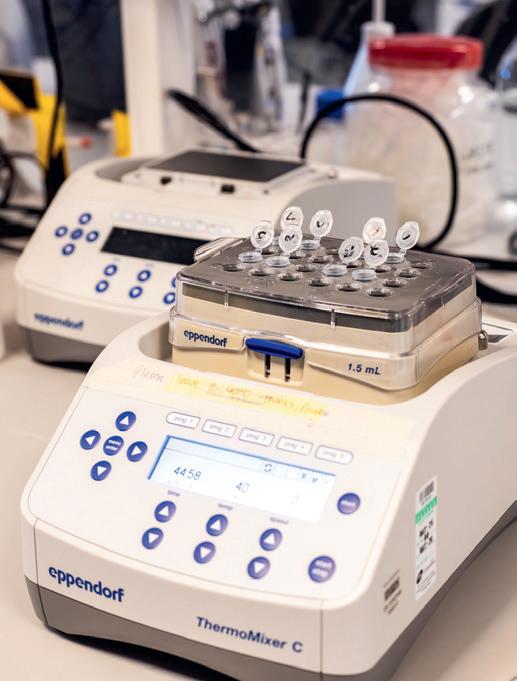


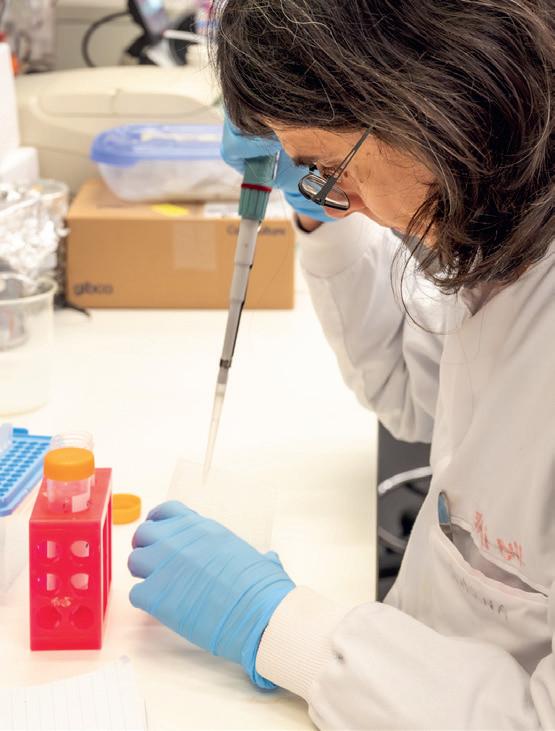

Beatson Cancer Charity and the Garfield Weston Foundation both restricted their multi-year grants to the Scottish Brain Tumour Research Centre of Excellence, with Beatson pledging £1.1 million over five years and Garfield Weston awarding £300,000 over three years to fund the stipend fees for four PhD students. This enabled the multi-disciplinary team at the Centre to expediently recruit world class researchers, whilst unrestricted grants from other funders have enabled us to deploy that money to the harder to fund areas of research.
Recruitment of early career researchers, such as PhD students, and the ability to fund more senior roles such as Clinical or Postdoctoral Research Fellowships, is essential for both building and retaining the scientific expertise needed to find better treatments for the disease that kills more children and adults under the age of 40 than any other cancer.
PhD students are typically recruited for a three or four-year research term at a cost of £40,000 per annum. By comparison, a Postdoctoral Research Fellow would lead a research programme for five years at a total cost of £415,000. Multi-year grants give us financial security and enable us to recruit with increased assurance.
We are proud of the corporate relationships we have built across sectors, and these have continued to strengthen over the past year. From law firms and insurance providers to medical technology companies and innovative start-ups, our corporate community is more engaged and impactful than ever before.
There are myriad ways that our Corporate Partners support our work: by making us their Charity of the Year: via sponsorship of an event, by funding a research initiative, awareness campaign or publication, through fundraising and challenge events, with financial gifts, and through Payroll Giving –a tax-efficient way for employees to donate directly from their salary.
This year, Brain Tumour Research raised more than £142,000 through seven National Corporate Partnerships, each of which has brought energy, creativity and commitment to our shared cause:


Each of these Partners has made their mark in unique and meaningful ways. Highlights include employees of Dalcour Maclaren taking on an epic 40-mile ultra-marathon, Novocure sponsoring our flagship fundraising event, Wear A Hat Day, during Brain Tumour Awareness Month for the second year running, and a highprofile campaign linking property raffles to charitable giving by Raffle House, all of which raised funds and visibility for Brain Tumour Research.
Online competition platform GoGoVox was secured as the headline sponsor for our gala dinner to celebrate the Charity’s 15th anniversary and the publication of our Impact Report, Closer to a Cure – 15 Years of Impact. The generous support provided helped us deliver a memorable evening of celebration, storytelling and fundraising, amplifying our message to a wide audience of celebrities, influencers, philanthropists and community leaders.
“Partnering with Brain Tumour Research has been a meaningful experience for our team. The cause resonates deeply, and the support we receive in planning activities, engaging employees, and seeing the real-world impact of our fundraising is second to none.”
- James Irving, Associate Director, Dalcour Maclaren
“This partnership goes beyond the cheque. The team at Brain Tumour Research has helped us connect with the cause on a human level – our staff feel inspired, empowered, and proud to be making a difference.”
- Diane Hipkins, Head of Competitions and Growth, GoGoVox
Recent years have been very challenging for many sectors of the economy and the charity sector in particular, as a result of the aftermath of the pandemic, the extended cost of living crisis and new regulations.
At Brain Tumour Research we strive to be a leader in good fundraising practice and supporter care, ensuring our supporters are treated fairly and with respect, and we are fully compliant with the Fundraising Regulator’s Code of Fundraising Practice that came into effect on 1st November 2025.
All members of the Charity’s team are required to demonstrate an understanding of the Code and make a commitment to act in accordance with its principles when they join the Charity and throughout their employment.
Supporter feedback is an important source of information about how our work impacts on supporters and members of the public,
providing us with insight and lessons for future fundraising activities.
As a national charity, our fundraisers will occasionally encounter people who may be in vulnerable circumstances. We aim to be especially sensitive when engaging with vulnerable people, including those affected by cancer. We are confident in the safeguarding measures we have in place, including a whistleblowing hotline, but it is an issue we take very seriously and regularly review our Safeguarding Policy.
Communicating with members of the public, in person, on the telephone, by email or through social media are vital ways to engage supporters in our work and raise funds. This work is only carried out by members of our team.
In the time period of this Report, we received nine complaints (2024: two) relating to our fundraising activities, which were resolved satisfactorily.
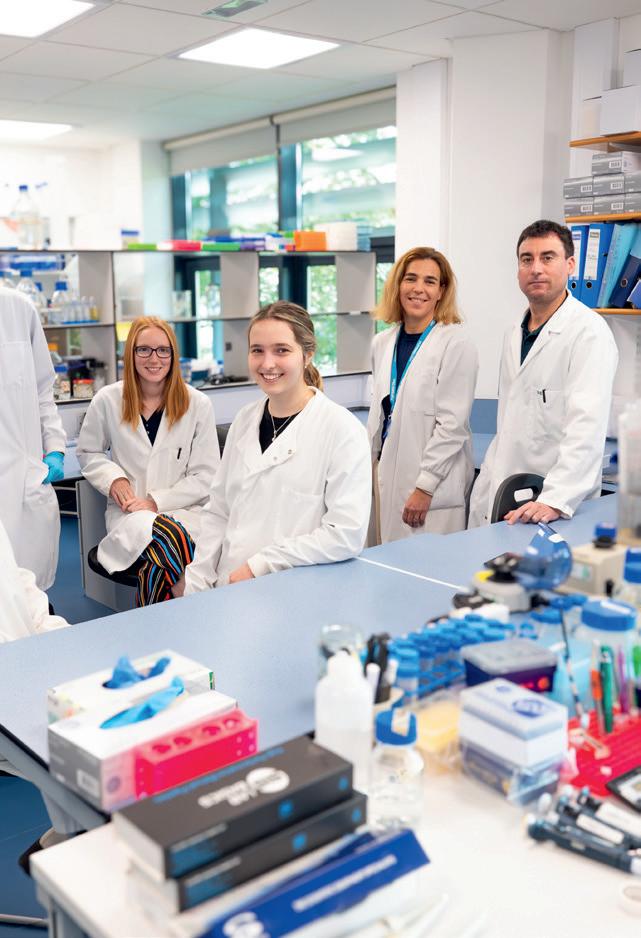
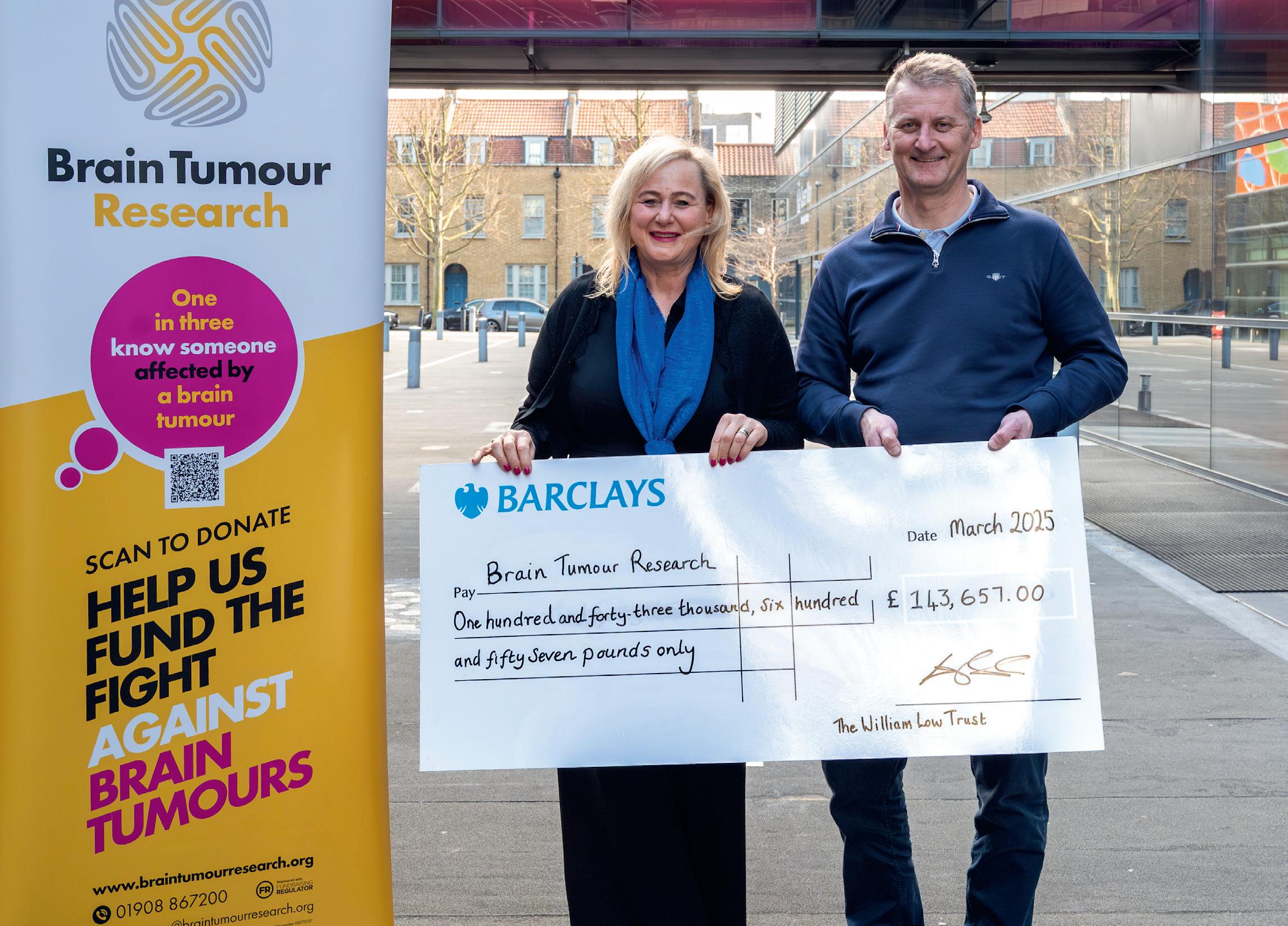
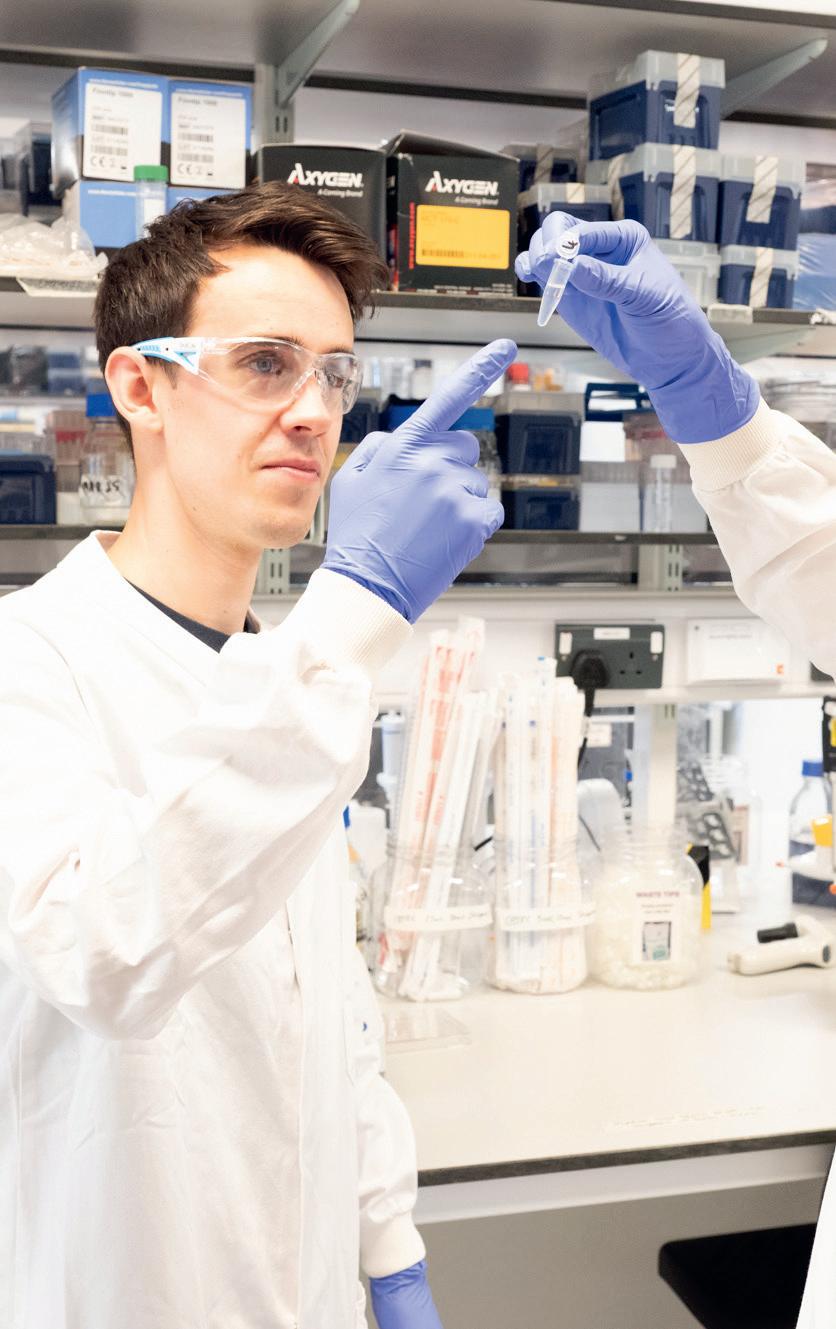
We remain committed to our mission to increase the UK investment in research into brain tumours to £35 million a year, while fundraising to create a sustainable network of seven Research Centres of Excellence across the UK.
Following the launch of our Scottish Centre in January, plans are already well underway to launch our sixth Centre at the University of Nottingham in 2026. Fundraising has begun to support a world-class team that will focus on improving the understanding and treatment of glioblastoma, which, even with treatment, has an overall survival of just 12-18 months. The Centre is a further development which will strengthen our science programme, develop more careers in research into brain tumours, and ultimately help us find a cure.
We will be undertaking work to launch an ambitious new Research Strategy for 2026-2031 that will guide how we invest the money we raise to fund research that brings us closer to achieving our vision. Shaped by expert advice and community voices, the strategy will build on our strong foundations and reflect our bold commitment to transforming lives through research.
we are heading into 2025-26 with new plans and vigour to build on our fundraising successes and develop robust strategies for income growth from Trusts and Foundations, Corporate Partnerships, Gifts in Wills and Major Donors. Our legacy marketing is building momentum and we are working to achieve further growth, while we aim to refresh our Major Donor programme and Bright Club offer, with unique networking and event opportunities for our high-value donors. There will be a greater focus on securing additional multi-year grants from a variety of Trusts and Foundations to provide stability and enable the Charity to plan more effectively and we plan to grow our Corporate Partnerships network by targeting new sectors.
We emerge from 2024-25 in a strong position, having made investments to make Brain Tumour Research fit for the future. With strengthened reserves to make the organisation resilient against future challenges, further investment in the team and research spend at record levels, we enter the new year committed to delivering the scientific breakthroughs and political progress that the brain tumour community and all those affected by this devastating disease deserve.
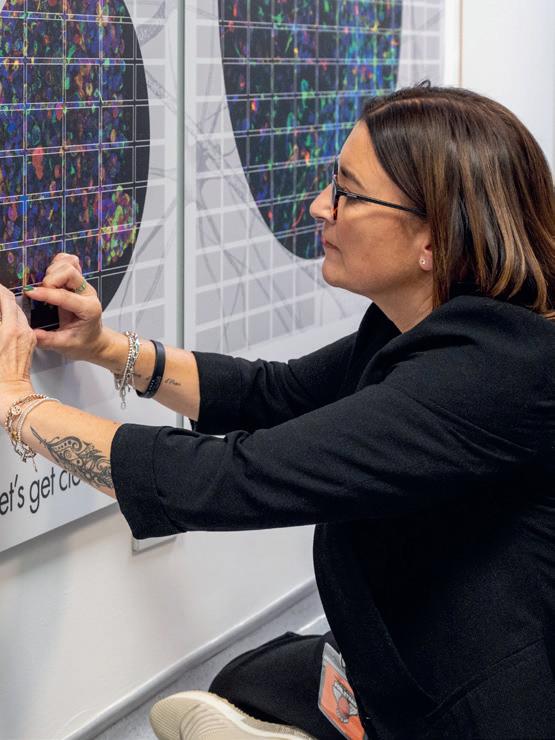
We have strived to ensure that brain tumours have their rightful place on the ministerial agenda and, in the coming year, our activities will focus on holding the Government to account to deliver in real terms – funding for research, a much-improved take up of clinical trials with more available and new therapeutics quickly available to patients in the UK. We expect to see greater priorities for brain tumours in the National Cancer Plan to be published later this year. We will also be pushing the newly formed National Institute for Health and Care Research (NIHR) Brain Tumour Consortium to ensure full deployment of the £40 million made available for research into brain tumours in 2018, of which just £12 million has so far been allocated. Across the devolved nations, we aim to expand the impact of the Scottish Cross-Party Group (CPG), explore deeper political engagement in Wales and Northern Ireland and secure increased funding for research, while continuing to campaign for equal access to trials, treatments and diagnostics. In addition, we will begin work on developing Manifestos for Scotland and Wales.
The appointment of a new Head of Philanthropy and Partnerships means that
We monitor and review the suitability of our reserves policy as a minimum once a year. During the last year, we have conducted a review and consider the policy introduced in 2021 to continue to be suitable and appropriate for the Charity.
It remains our priority to protect our committed research spend. To this end, we perform rolling forecasts to ensure that the Charity maintains the level of reserves required to protect against any unexpected deterioration in our income which cannot be mitigated by savings in expenditure. The target level of reserves at 30th June 2025 has been calculated at £2 million, as the mid-point within the range £1.7 million to £2.3 million. The reserves target is calculated by assuming a 20-25% reduction in forecast income, offset by a forecast reduction in discretionary costs of approximately 25%. We ended the year with free reserves (net assets less fixed assets and restricted funds in surplus) of £3 million which was £1 million
in excess of the target. This surplus will allow the Trustees to be more agile in considering future applications for research expenditure.
With the support of the Leadership Team, the Trustees continually review risks as they arise and satisfy themselves that the systems and controls are in place to manage them as appropriate and practicable. The risk management process relies on our judgement of the risk likelihood and its impact, as well as developing and monitoring appropriate controls. We maintain a Risk Register of the principal risks faced by the Charity and a full annual review is an important component of our governance framework.
As a fundraising charity with strategic objectives to fund a network of experts in sustainable research and grow the national investment in order to find a cure, our principal risk is the need to protect and increase our income. To this end, we see our principal risks as including our supporter relationships, our brand reputation, our people, the quality of research available to fund and our ability to fund this research.
As we continue to build on diversifying our income streams, we continue to seek new opportunities including strengthening current income streams such as Trusts and Foundations, Community Fundraising and Regular Giving. Over the next 12 months, we will continue to be innovative especially in the areas of Major Donors and converting one-off donors to regular givers as these areas provide the most impact for return on investment and resources.
Our success would not have been achieved without the commitment and talent of the whole team and our enthusiastic volunteers. Against a challenging recruitment landscape, we continue to endeavour to attract new and complementary skills to the team to broaden the knowledge and experience of the Charity whilst maintaining the passion for our goal of finding a cure for brain tumours.
Failure to deliver a satisfactory supporter journey risks losing a donor’s support and adversely impacting our ability to grow income. Although this risk increases along with the growing supporter base,
we believe we effectively mitigate this risk by continuing to develop the fundraising team under experienced leadership and embedding best-in-class supporter care and management.
Damage to our reputation and negative sentiment in the wider sector is a risk we take seriously, although we believe the close relationships we develop with our supporter base help minimise this risk and alleviate the potential impact.
We are also aware of the continuing threat of cyberattacks and cyber fraud in particular. Whilst we believe we have appropriate insurance and proper and adequate controls in place, we have increased the frequency of staff training to ensure all staff are fully aware of the risks and the steps they can take to reduce the risks arising from human error. To guard against a cyberattack and mitigate the risk of digital security failure, vulnerability tests are carried out and the Charity has become Cyber Essentials certified.
More broadly, frequent full-team training and development sessions, allied to our regular competency and objectives-based appraisal process, seek to promote the right behaviours, deliver results and retain key staff. During the year, we conducted our fifth annual Employee Engagement Survey. We were delighted that our overall score remained impressive at 82% (2024: 79%) despite the increased headcount.
This financial year has seen a record level of income for Brain Tumour Research –£8.7 million – regardless of a continuing cost of living crisis. Despite it only being a relatively modest increase on the last financial year, in 2023-24 we received a Government grant of nearly £1 million which has not been repeated, so on a like-for-like basis the growth is significant. Regular Giving continues to grow slowly and we will continue to invest in recruiting regular donors. Trusts and Foundations were a welcome source of support including the continuing relationship with the Lions Clubs International Foundation. Our Member Charities were also a great support, and their donations continue to fund vital research. We are pleased to be remembered by increasing numbers of people in their wills and we have seen legacies steadily grow as an income source.
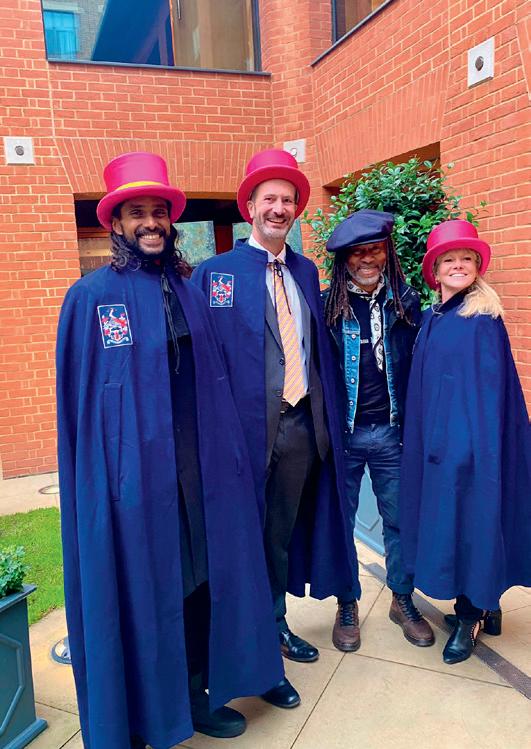
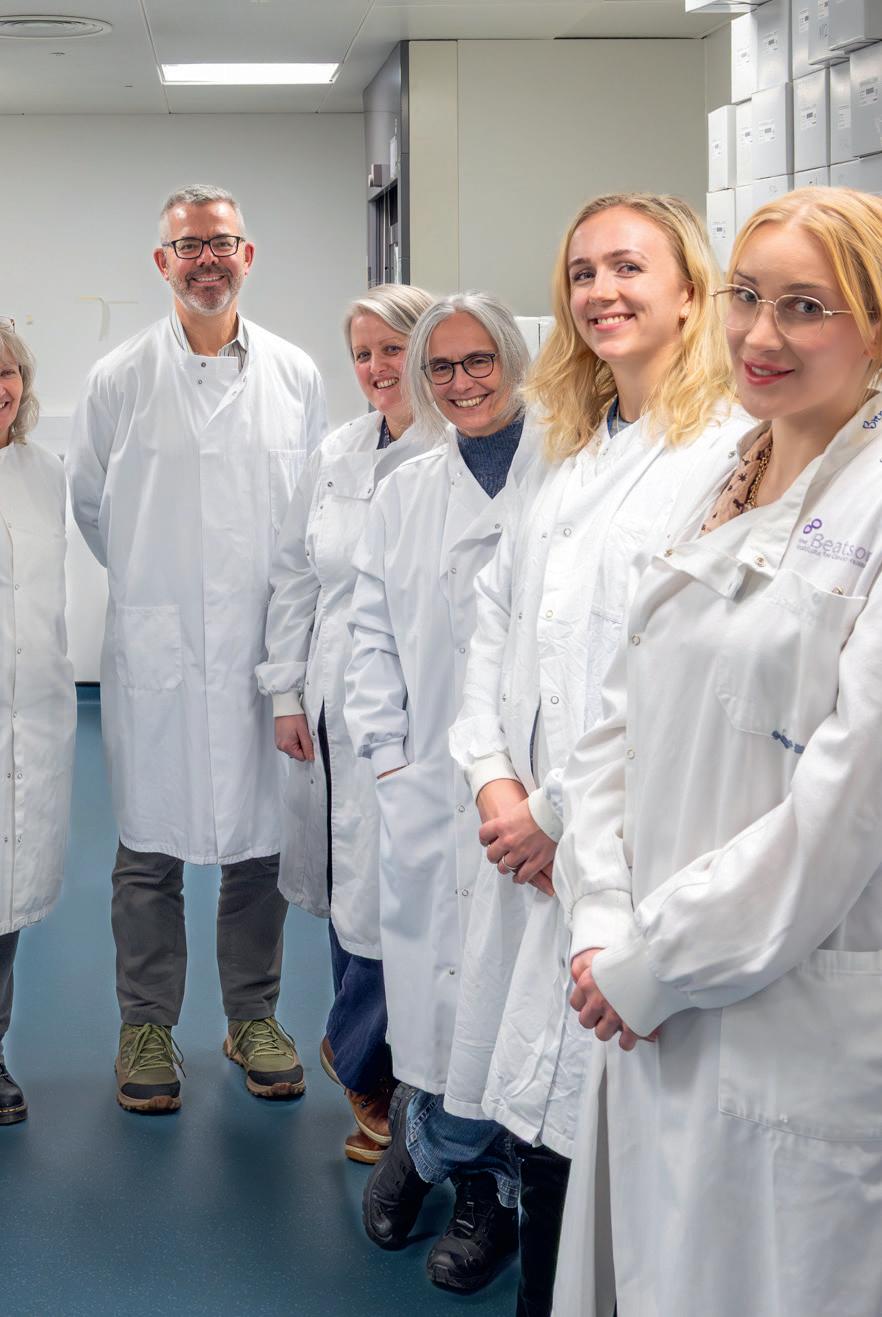
Our free reserves at the last year end were £2.6 million and this year have increased to £3 million
Our increased income allowed us to increase research expenditure, and we were delighted to award a record level of research grants of £3.7 million, beating our previous highest level of £3.4 million in the previous year.
We awarded a new grant to the University of Nottingham of £1.4 million and grants to ongoing partners the Universities of Plymouth, Queen Mary London and Imperial College London of about £500,000 each. Funding also continued to the Universities of Edinburgh and Glasgow, amounting to £170,000, and to our Funded Initiatives of £180,000.
Of the grants awarded to date, £2.6 million was paid during the year (2024: £2.3 million), with £6.2 million remaining committed for future payments, of which nearly £4.6 million is payable within 12 months.
In order to drive and maintain the national investment in research into brain tumours and build on this success, we continue to invest in Campaigning and Raising Awareness and increased our spend in this area to £2.1 million compared to £1.6 million in the prior year. A further £125,000 was expended on liaison with our Member Charities and other educational activities.
Overall, the cost of generating funds during this period remained steady at £2.3 million, pleasingly the same figure as the previous year.
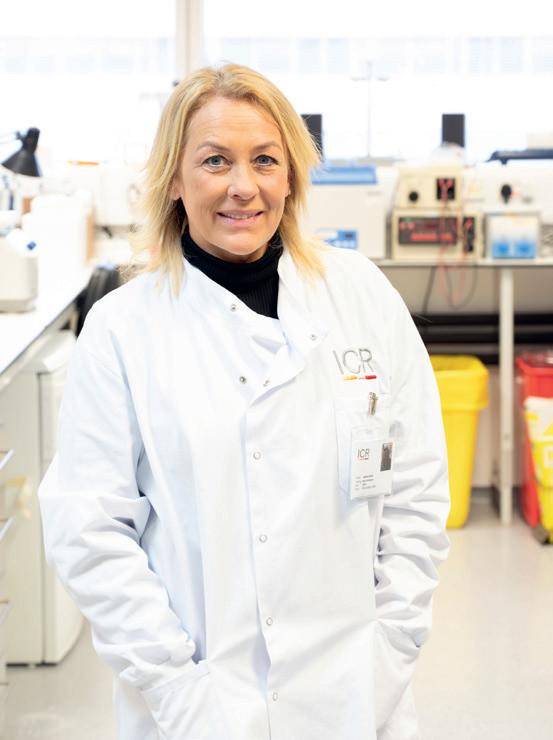
Our free reserves at the last year end were £2.6 million and this year have increased to £3 million. This figure is also considerably higher than the level we believe we need as defined in our reserves policy and the Trustees are considering the appropriate use of these funds for the long-term benefit of our beneficiaries by sustainably funding further research in the UK.
Whilst it will always be our policy to grant the maximum amount of available funds to research into brain tumours each year, it is clear from our discussions with our Centre Directors that it is necessary to balance current funding with sustainable levels for the future. Our strategy is for continued growth, rather than increased grant-funding levels in the short term, while we continue to build reserves to provide security of future grant funding.
The charts opposite illustrate our expenditure as a percentage in 2024-25 and prior year. Spending on our charitable activities was 73%.
Management and the Trustees regularly review detailed forecasts of income, expenditure and cash flows, typically projecting forward 12 months or more. The assumptions underlying the budget and forecasts are challenged, varied and tested to establish the likelihood of a range of possible outcomes including reasonable cash flow sensitivities. The forecast performance is carefully monitored against actual outcomes each month and variances are highlighted, analysed and discussed at Management and Board level.
The Trustees have reviewed cash flow forecasts for the period to 31st December 2026 and considered cash flow requirements for this period for the purposes of approving these financial statements. The cash flow forecasts indicate that the Charity will be able to pay its liabilities as they fall due for the period until at least 31st December 2026. In the event that income does not hit the projected levels, management is able to adjust discretionary expenditure to relieve any short-term cash pressures which might arise.
The Trustees have specified maintaining a minimum available cash balance of £500,000, which we have consistently attained throughout the period under review. We finished the year with £5 million in term deposits, more than £2 million in investments and £1.7 million in bank accounts.
The Trustees are, therefore, satisfied that the financial statements should be prepared on the going concern basis and have advised Management to work on the basis of a continued growth strategy with initiatives and contingencies built in. Management also focuses on building reserves that allow for sustainable research funding of our Centres and the growth of our network as we introduce new Centres, whilst also continuing to campaign for increased national investment in research into brain tumours. As a result of the performance in 2024-25, notwithstanding the award of more than £3.7 million in research grants, including £1.4 million to fund a new Centre of Excellence in Nottingham, we were able to increase unrestricted reserves to £3 million.
The Trustees, who are also directors of the charitable company (for the purposes of company law) are responsible for preparing the Trustees’ Report and the Financial Statements in accordance with applicable law and United Kingdom Accounting Standards (United Kingdom Generally Accepted Accounting Practice).
Company law requires the Trustees to prepare financial statements for each financial year which give a true and fair view of the state of affairs of the charitable company and of the incoming resources and application of resources, including the income and expenditure, of the Charity for that period. In preparing these financial statements, the Trustees are required to:
• Select suitable accounting policies and then apply them consistently
• Observe the methods and principles of the Charities SORP FRS 102
• Make judgements and estimates that are reasonable and prudent
• State whether applicable accounting standards have been followed, subject to any material departures disclosed and explained in the financial statements
• Prepare the financial statements on the going concern basis unless it is inappropriate to presume that the charitable company will continue in business
The Trustees are responsible for keeping adequate accounting records that disclose with reasonable accuracy at any time the financial position of the charitable company and enable them to ensure that the financial statements comply with the Companies Act 2006. They are also responsible for safeguarding the assets of the charitable company and hence for taking reasonable steps for the prevention and detection of fraud and other irregularities.
Insofar as the Trustees are aware:
• There is no relevant audit information of which the charitable company’s auditor is unaware
• The Trustees have taken all steps that they should to make themselves aware of any relevant audit information and to establish that the auditor is aware of that information
• The Trustees are responsible for the maintenance and integrity of the corporate and financial information included on the charitable company’s website
• Legislation in the United Kingdom governing the preparation and dissemination of financial statements may differ from legislation in other jurisdictions
Approved by the Trustees on 26th November 2025 and signed on their behalf by
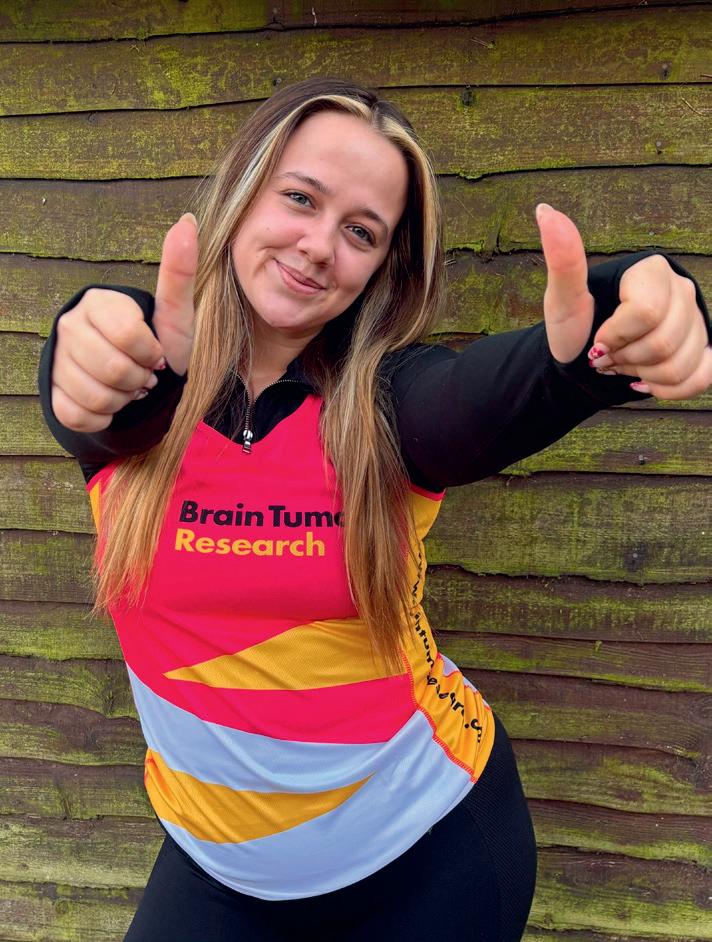
Rob Hughes, Chair of the Trustees
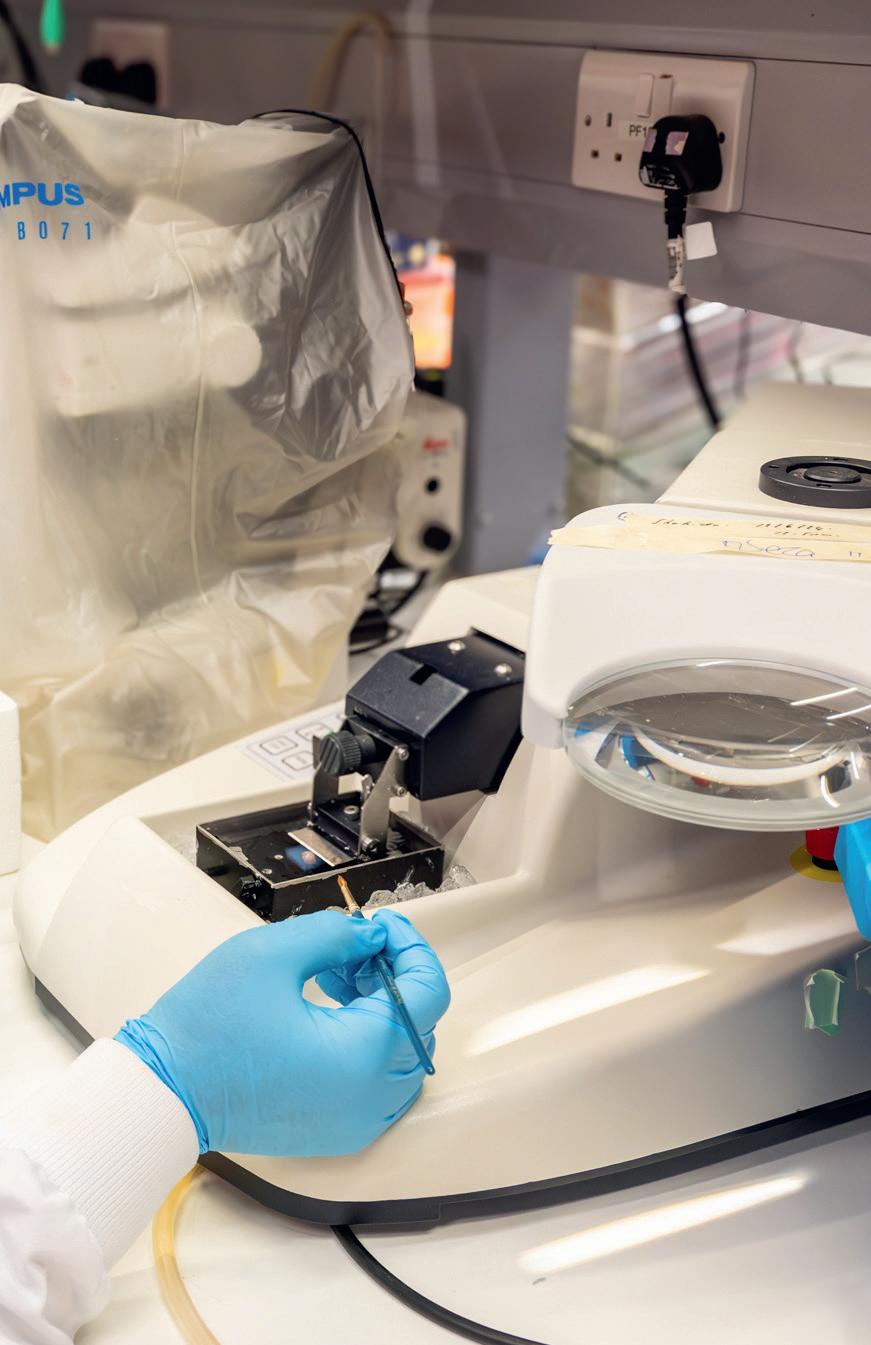
We have audited the financial statements of Brain Tumour Research (the charitable company) for the year ended 30th June 2025 which comprise the Statement of Financial Activities, Balance Sheet, Statement of Cash Flows and Notes to the Financial Statements, including significant accounting policies.
The financial reporting framework that has been applied in their preparation is applicable law and United Kingdom Accounting Standards, including FRS 102 The Financial Reporting Standard applicable in the UK and Republic of Ireland (United Kingdom Generally Accepted Accounting Practice).
In our opinion, the financial statements:
• Give a true and fair view of the state of the charitable company’s affairs as at 30th June 2025 and of its incoming
We conducted our audit in accordance with International Standards on Auditing (UK) (ISAs (UK)) and applicable law. Our responsibilities under those standards are further described in the Auditor’s Responsibilities for the Audit of the Financial Statements section of our Report. We are independent of the charitable company in accordance with the ethical requirements that are relevant to our audit of the financial statements in the UK, including the FRC’s Ethical Standard and we have fulfilled our other ethical responsibilities in accordance with these requirements. We believe that the audit evidence we have obtained is sufficient and appropriate to provide a basis for our opinion.
resources and application of resources, including its income and expenditure, for the year then ended
• Have been properly prepared in accordance with United Kingdom Generally Accepted Accounting Practice
• Have been prepared in accordance with the requirements of the Companies Act 2006, the Charities and Trustee Investment (Scotland) Act 2005 and regulation 8 of the Charities Accounts (Scotland) Regulations 2006 (as amended)
In auditing the financial statements, we have concluded that the Trustees’ use of the going concern basis of accounting in the preparation of the financial statements is appropriate.
Based on the work we have performed, we have not identified any material uncertainties relating to events or conditions that, individually or collectively, may cast significant doubt on Brain Tumour Research’s ability to continue as a going concern for a period of at least 12 months from when the financial statements are authorised for issue.
Our responsibilities and the responsibilities of the Trustees with respect to going concern are described in the relevant sections of this Report.
The other information comprises the information included in the Trustees’ Annual Report, other than the financial statements and our auditor’s report thereon. The Trustees are responsible for the other information contained within the Annual Report. Our opinion on the financial statements does not cover the other information and, except to the extent otherwise explicitly stated in our Report, we do not express any form of assurance conclusion thereon. Our responsibility is to read the other information and, in doing so, consider whether the other information is materially inconsistent with the financial statements, or our knowledge obtained in the course of the audit, or otherwise appears to be materially misstated. If we identify such material inconsistencies or apparent material misstatements, we are required to determine whether this gives rise to a material misstatement in the financial statements themselves. If, based on the work we have performed, we conclude that there is a material misstatement of this other information, we are required to report that fact.
We have nothing to report in this regard.
Prescribed by the Companies Act 2006
In our opinion, based on the work undertaken in the course of the audit:
• The information given in the Trustees’ Annual Report for the financial year for which the financial statements are prepared is consistent with the financial statements
• The Trustees’ Annual Report has been prepared in accordance with applicable legal requirements
Matters on Which we are Required to Report by Exception
In the light of the knowledge and understanding of the charitable company and its environment obtained in the course
of the audit, we have not identified material misstatements in the Trustees’ Annual Report. We have nothing to report in respect of the following matters in relation to which the Companies Act 2006 and the Charities Accounts (Scotland) Regulations 2006 (as amended) require us to report to you if, in our opinion:
• Adequate accounting records have not been kept, or returns adequate for our audit have not been received from branches not visited by us
• The financial statements are not in agreement with the accounting records and returns
• Certain disclosures of Trustees’ remuneration specified by law are not made
• We have not received all the information and explanations we require for our audit
As explained more fully in the Statement of Trustees’ Responsibilities set out in the Trustees’ Annual Report, the Trustees (who are also the Directors of the charitable company for the purposes of company law) are responsible for the preparation of the financial statements and for being satisfied that they give a true and fair view, and for such internal control as the Trustees determine is necessary to enable the preparation of financial statements that are free from material misstatement, whether due to fraud or error.
In preparing the financial statements, the Trustees are responsible for assessing the charitable company’s ability to continue as a going concern, disclosing, as applicable, matters related to going concern and using the going concern basis of accounting unless the Trustees either intend to liquidate the charitable company or to cease operations, or have no realistic alternative but to do so.

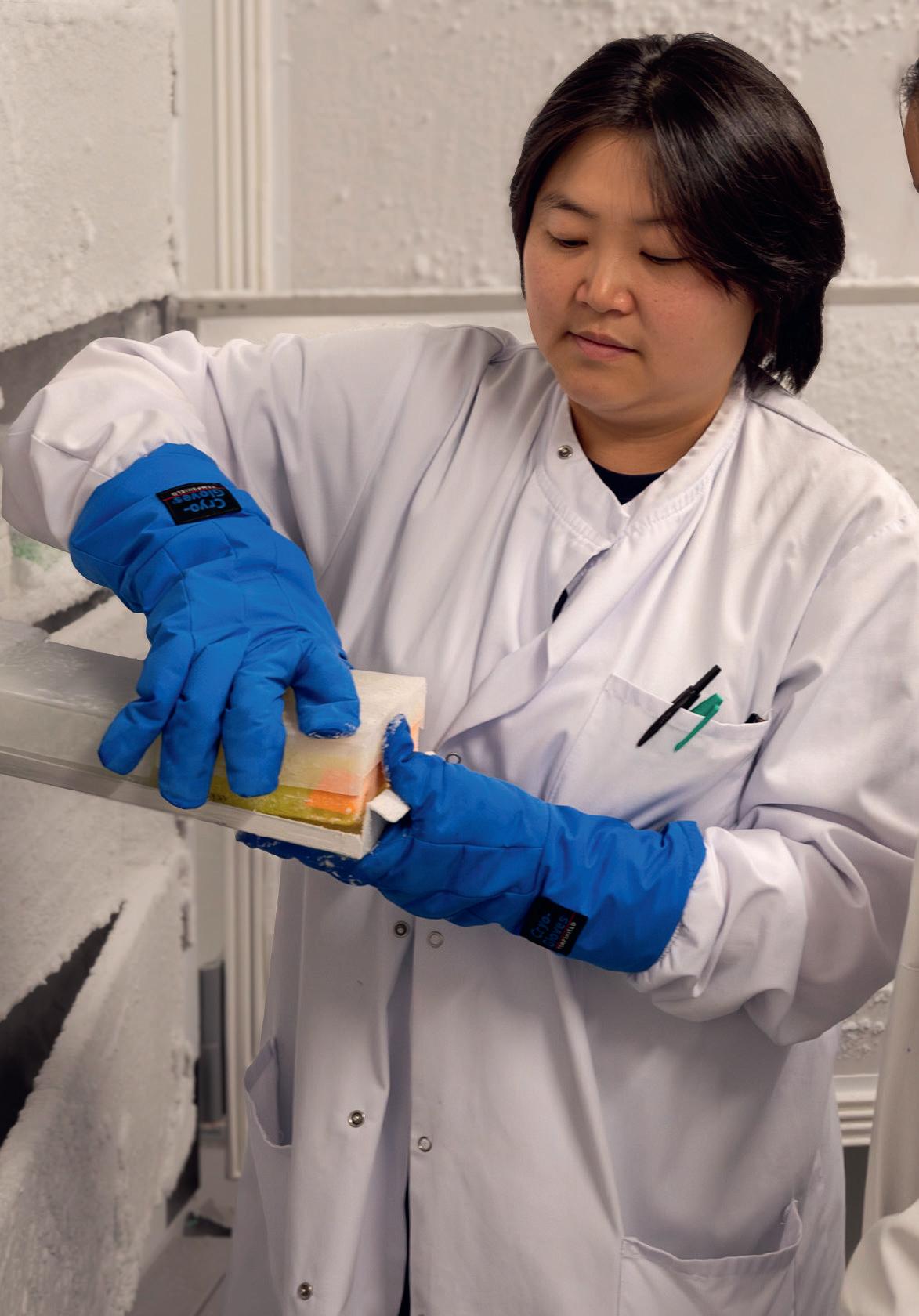
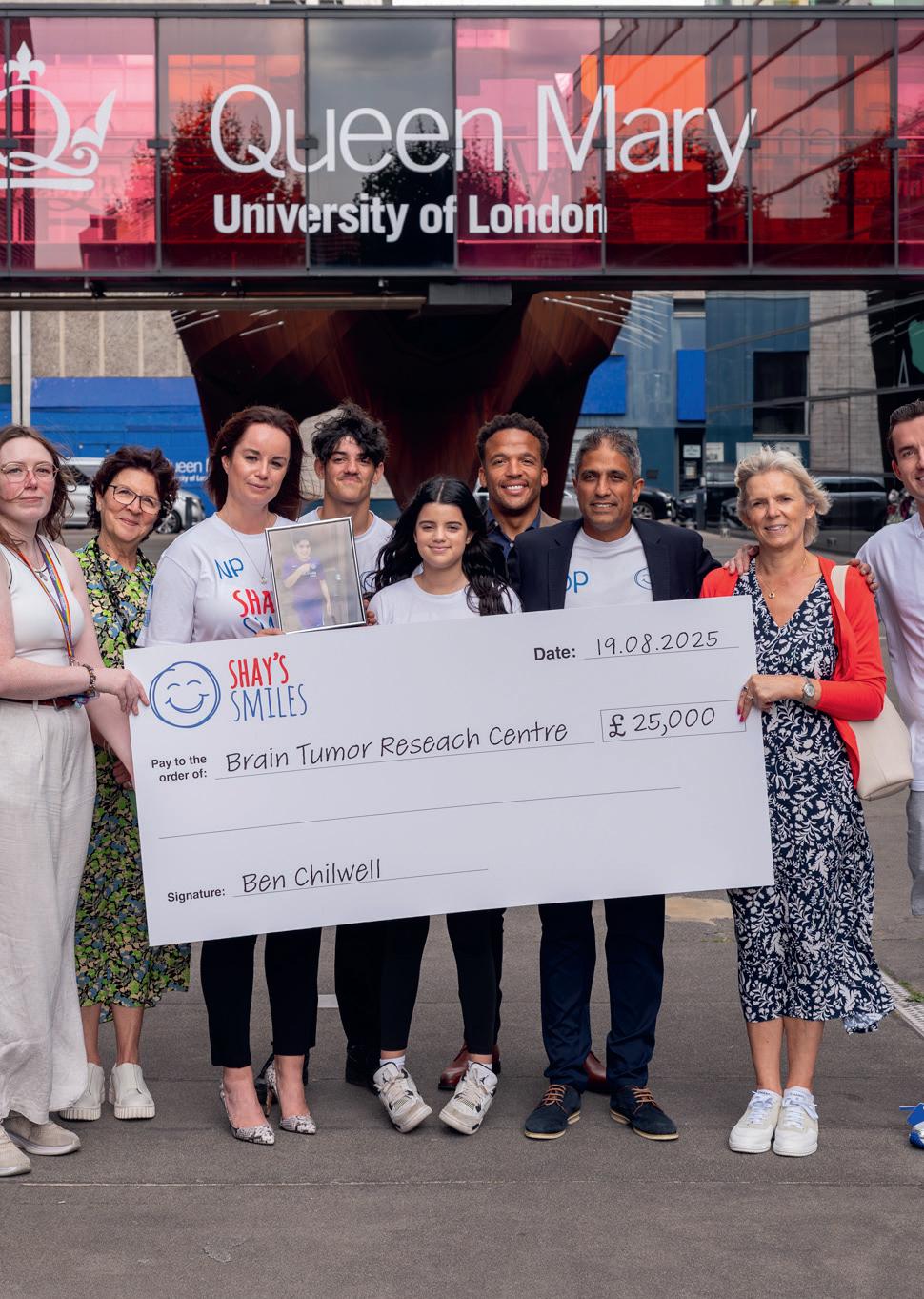
Our objectives are to obtain reasonable assurance about whether the financial statements as a whole are free from material misstatement, whether due to fraud or error, and to issue an auditor’s report that includes our opinion. Reasonable assurance is a high level of assurance but is not a guarantee that an audit conducted in accordance with ISAs (UK) will always detect a material misstatement when it exists. Misstatements can arise from fraud or error and are considered material if, individually or in aggregate, they could reasonably be expected to influence the economic decisions of users taken on the basis of these financial statements.
As part of an audit in accordance with ISAs (UK) we exercise professional judgement and maintain professional scepticism throughout the audit.
We also:
• Identify and assess the risks of material misstatement of the financial statements, whether due to fraud or error, design and perform audit procedures responsive to those risks, and obtain audit evidence that is sufficient and appropriate to provide a basis for our opinion. The risk of not detecting a material misstatement resulting from fraud is higher than for one resulting from error, as fraud may involve collusion, forgery, intentional omissions, misrepresentations, or the override of internal control
• Obtain an understanding of internal control relevant to the audit in order to design audit procedures that are appropriate in the circumstances, but not for the purposes of expressing an opinion on the effectiveness of the charitable company’s internal control
• Evaluate the appropriateness of accounting policies used and the reasonableness of accounting estimates and related disclosures made by the Trustees
• Conclude on the appropriateness of the Trustees’ use of the going concern basis of accounting and, based on the audit evidence obtained, whether a material uncertainty exists related to events or conditions that may cast significant doubt on the charitable company’s
ability to continue as a going concern. If we conclude that a material uncertainty exists, we are required to draw attention in our auditor’s report to the related disclosures in the financial statements or, if such disclosures are inadequate, to modify our opinion. Our conclusions are based on the audit evidence obtained up to the date of our auditor’s report. However, future events or conditions may cause the charitable company to cease to continue as a going concern
• Evaluate the overall presentation, structure and content of the financial statements, including the disclosures, and whether the financial statements represent the underlying transactions and events in a manner that achieves fair presentation
We communicate with those charged with governance regarding, among other matters, the planned scope and timing of the audit and significant audit findings, including any significant deficiencies in internal control that we identify during our audit.
Explanation as to What Extent the Audit was Considered Capable of Detecting Irregularities, Including Fraud
Irregularities, including fraud, are instances of non-compliance with laws and regulations. We design procedures in line with our responsibilities, outlined above, to detect material misstatements in respect of irregularities, including fraud. The extent to which our procedures are capable of detecting irregularities, including fraud is detailed below.
The objectives of our audit in respect of fraud, are to identify and assess the risks of material misstatement of the financial statements due to fraud; to obtain sufficient appropriate audit evidence regarding the assessed risks of material misstatement due to fraud, through designing and implementing appropriate responses to those assessed risks; and to respond appropriately to instances of fraud or suspected fraud identified during the audit. However, the primary responsibility for the prevention and detection of fraud rests with both management and those charged with governance of the charitable company.
Our approach was as follows:
• We obtained an understanding of the legal and regulatory requirements applicable to the charitable company and considered that the most significant are the Companies Act 2006, the Charities and Trustee Investment (Scotland) Act 2005 and regulation 8 of the Charities Accounts (Scotland) Regulations 2006 (as amended), the Charities Act 2011 and 2022, the Charities Statement of Recommended Practice (SORP), and UK financial reporting standards as issued by the Financial Reporting Council
• We obtained an understanding of how the charitable company complies with these requirements by discussions with management and those charged with governance
• We assessed the risk of material misstatement of the financial statements, including the risk of material misstatement due to fraud and how it might occur, by holding discussions with management and those charged with governance
• We inquired of management and those charged with governance as to any known instances of noncompliance or suspected noncompliance with laws and regulations
• Based on this understanding, we designed specific appropriate audit procedures to identify instances of noncompliance with laws and regulations. This included making enquiries of management and those charged with governance and obtaining additional corroborative evidence as required
There are inherent limitations in the audit procedures described above. We are less likely to become aware of instances of non-compliance with laws and regulations that are not closely related to events and transactions reflected in the financial statements. Also, the risk of not detecting a material misstatement due to fraud is higher than the risk of not detecting one resulting from error, as fraud may involve deliberate concealment by, for example, forgery or intentional misrepresentations, or through collusion.
A further description of our responsibilities is available on the Financial Reporting Council’s website at www.frc.org.uk/ auditorsresponsibilities. This description forms part of our Auditor’s Report.
This Report is made solely to the charitable company’s members as a body, in accordance with Chapter 3 of Part 16 of the Companies Act 2006 and section 44(1) (c) of the Charities and Trustee Investment (Scotland) Act 2005. Our audit work has been undertaken so that we might state to the charitable company’s members those matters we are required to state to them in an auditor’s report and for no other purpose. To the fullest extent permitted by law, we do not accept or assume responsibility to anyone other than the charitable company and the charitable company’s members as a body, for our audit work, for this Report, or for the opinions we have formed.
Roger Ogden, Senior Statutory Auditor
27th November 2025
for and on behalf of Moore Kingston Smith LLP Chartered Accountants, Statutory Auditor
4 Victoria Square, St Albans, Hertfordshire AL1 3TF
Moore Kingston Smith LLP is eligible to act as auditor in terms of section 1212 of the Companies Act 2006
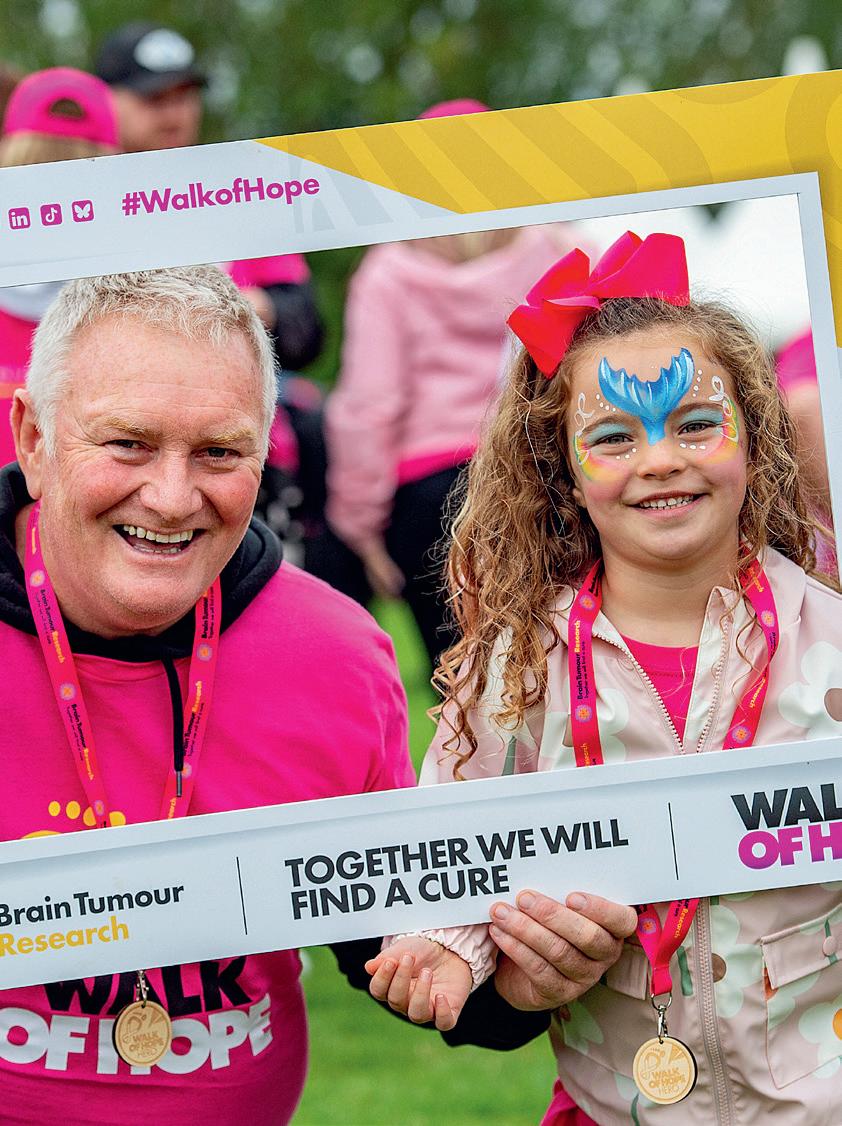
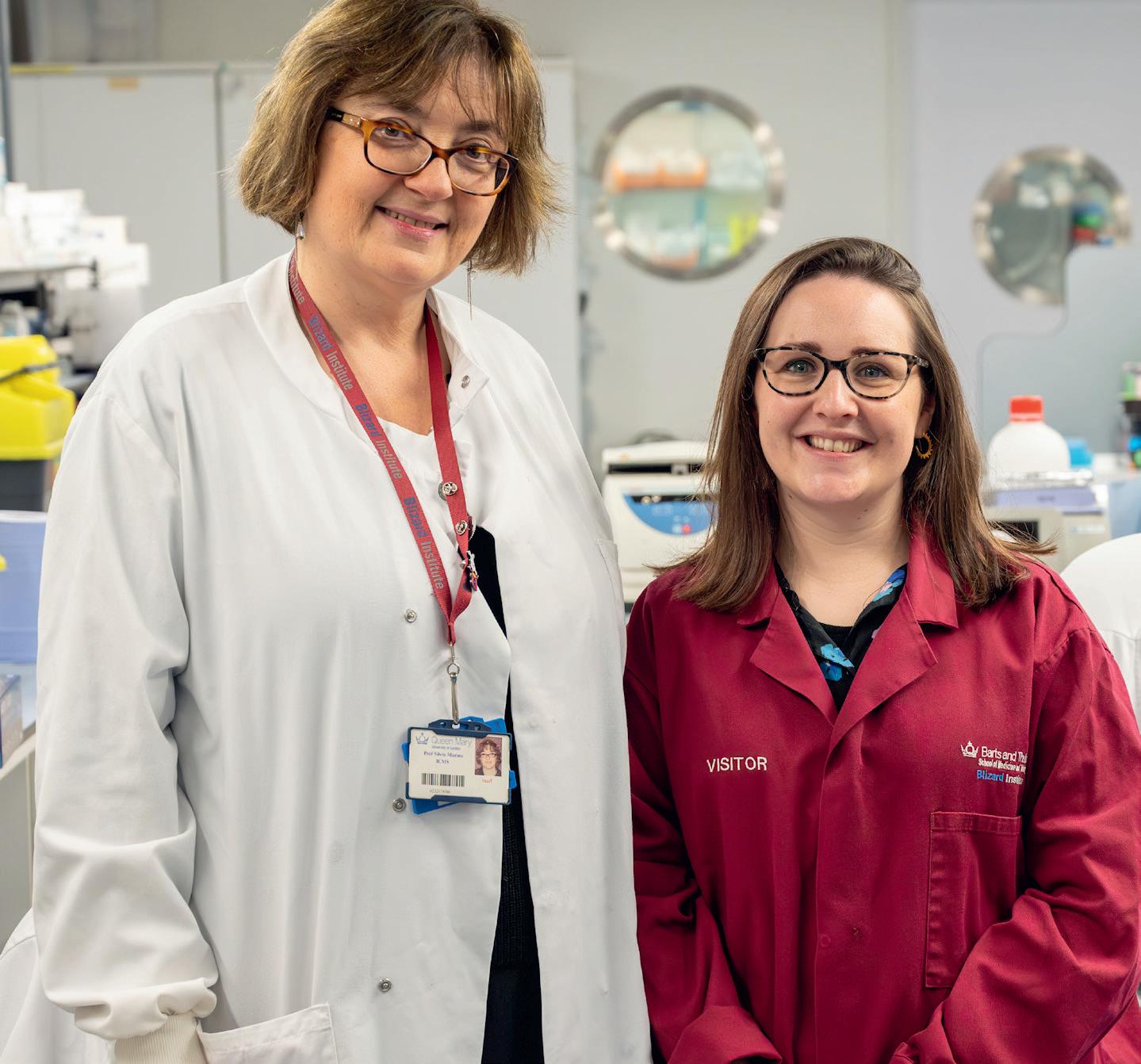
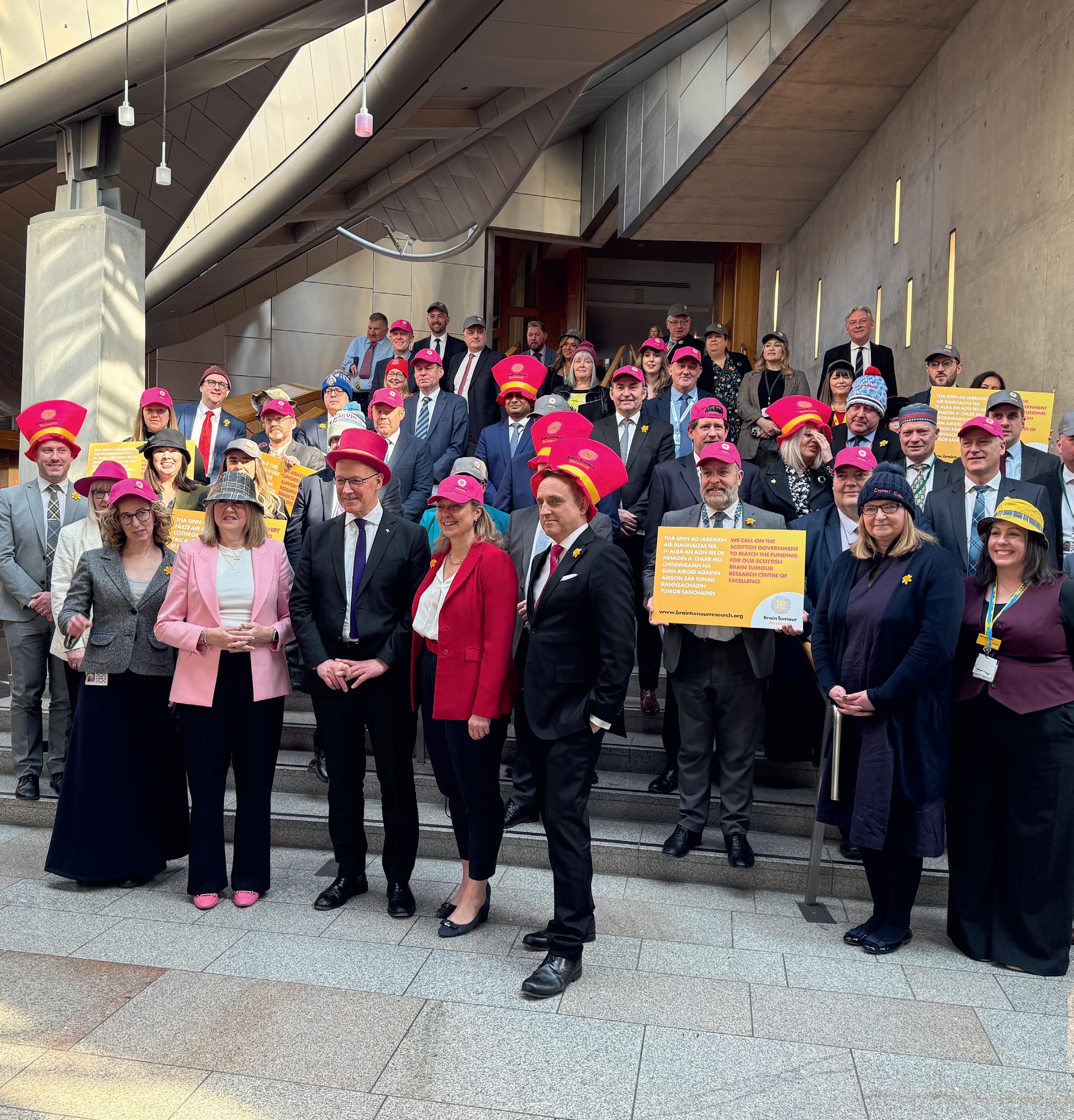
for the Year Ended 30th June 2025
Reconciliation of
as at 30th June 2025
for the Year Ended 30th June 2025
Disposals of investments 503,367
Gain in value of disposed investment (3,367)
Net cash (used in) investing activities (5,041,632) (2,016,526)
in cash and cash equivalents in the year (3,806,325) (744,422)
6,243,078
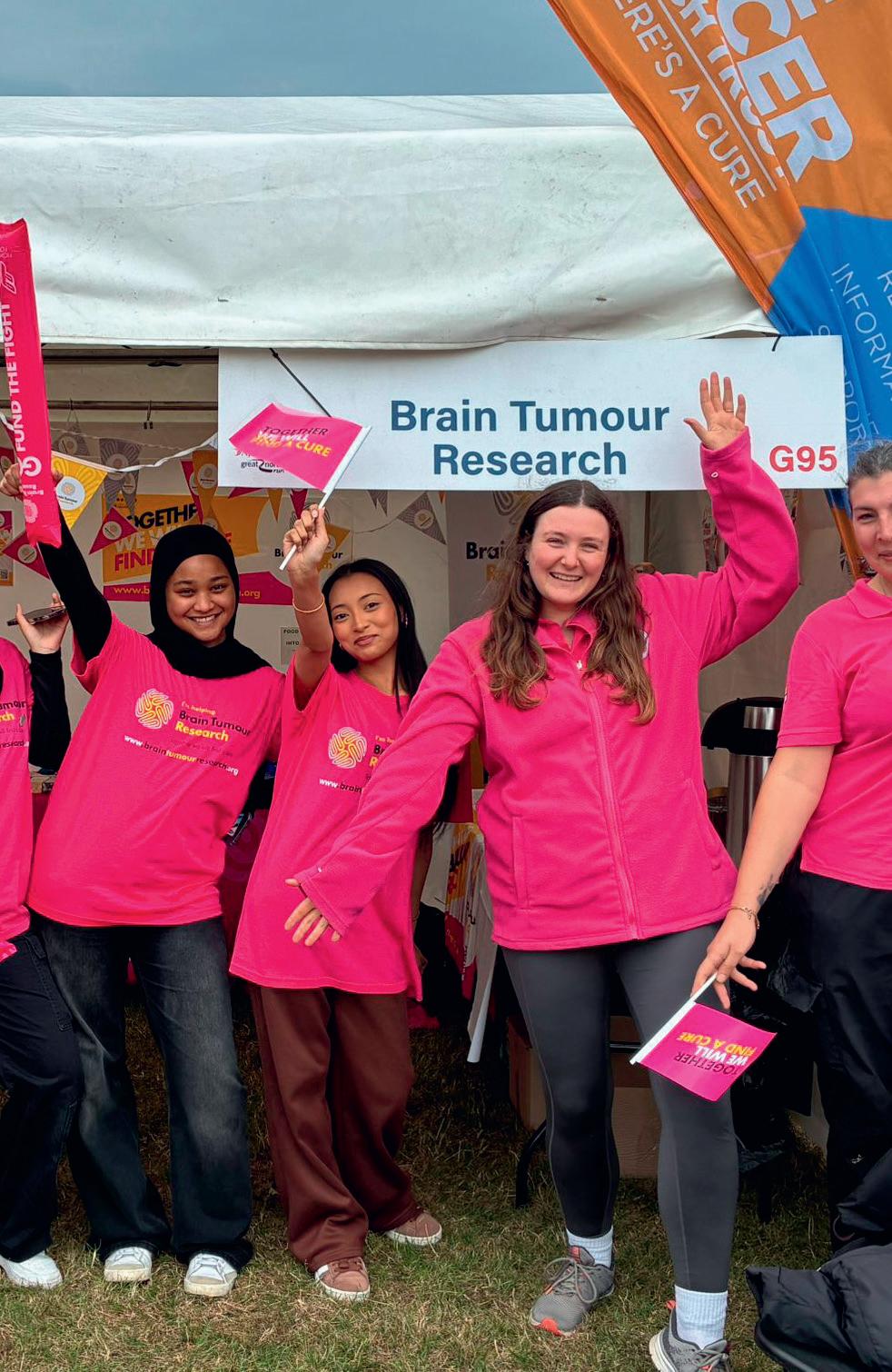
Brain Tumour Research is a charitable company limited by guarantee and is incorporated in the United Kingdom. The registered office address and principal place of business is Suite 37, Shenley Pavilions, Chalkdell Drive, Shenley Wood, Milton Keynes, MK5 6LB.
The financial statements have been prepared in accordance with Accounting and Reporting by Charities: Statement of Recommended Practice applicable to charities preparing their accounts in accordance with the Financial Reporting Standard applicable in the UK and Republic of Ireland (FRS 102) – (Charities SORP FRS 102), the Financial Reporting Standard applicable in the UK and Republic of Ireland and the Companies Act 2006.
All figures are presented in sterling and rounded to the nearest pound.
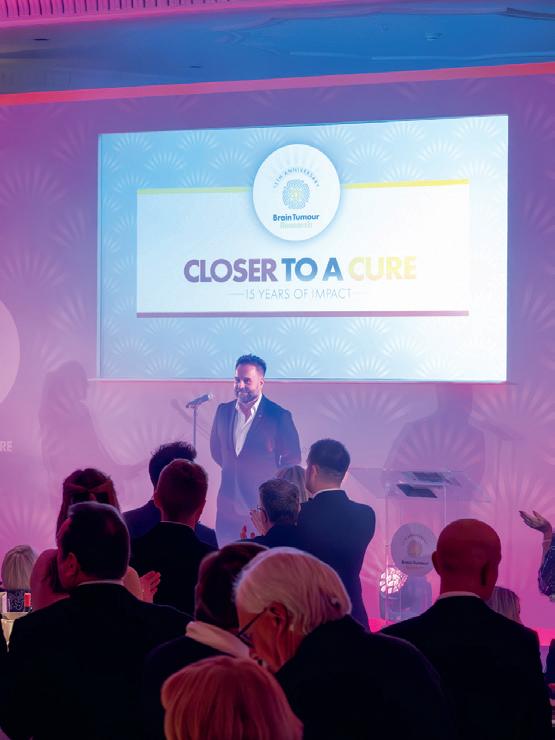
The accounts have been prepared on the historical cost basis with the exception of listed investments which are included at market value, and in accordance with the applicable United Kingdom accounting standards.
In applying the financial reporting framework, the Trustees have made a number of subjective judgements, for example in respect of significant accounting estimates. Estimates and judgements are continually evaluated and are based on historical experience and other factors, including expectations of future events that are believed to be reasonable under the circumstances. The nature of the estimation means the actual outcomes could differ from those estimates. Any significant estimates and judgements affecting these financial statements are detailed within the relevant accounting policy below.
The Trustees are required to make estimates in respect of legacy income. The basis of recognition is provided within the income accounting policy below.
The charitable company meets the definition of a public benefit entity under FRS 102.
The Charity’s charitable and fundraising activities, along with the operating environment, performance and prospects are set out on pages 7 to 35 in the body of the Annual Report.
Management and the Trustees regularly review detailed forecasts of income, expenditure and cash flows, regularly projecting forward 12 months or more. The assumptions underlying the budget and forecasts are challenged, varied, and tested to establish the likelihood of a range of possible outcomes including reasonable cash flow sensitivities. The expected figures are carefully monitored against actual outcomes each month and variances are highlighted, analysed and discussed at Management and Board level.
The Trustees have reviewed cash flow forecasts for the period to 31st December 2026 and considered cash flow requirements for the period to 31st December 2026 for the purposes of approving these financial statements.
The cash flow forecasts indicate that the Charity will be able to pay its debts as they fall due for the period until at least 31st December 2026. In the event that income does not hit the projected levels, management is able to adjust discretionary expenditure to relieve any short-term cash pressures which might arise. The Trustees have specified maintaining a minimum cash balance of £500,000. Management will monitor income and expenditure and ensure that payments are managed to achieve this level.
The Trustees are, therefore, satisfied that the financial statements should be prepared on the going concern basis.
Income is recognised when the Charity has entitlement to the funds, any performance conditions attached to the income have been met, it is probable that the income will be received and that the amount can be measured reliably.
Income from grants is recognised when the Charity has entitlement to the funds, any performance conditions attached to the grants have been met, it is probable that the income will be received, and the amount can be measured reliably and is not deferred.
For legacies, entitlement is taken as the earlier of the date on which either: the Charity is aware that probate has been granted, the estate has been finalised and notification has been made by the executor(s) to the Charity that a distribution will be made, or when a distribution is received from the estate. Receipt of a legacy, in whole or in part, is only considered probable when the amount can be measured reliably and the Charity has been notified of the executor’s intention to make a distribution. Where legacies have been notified to the Charity, or the Charity is aware of the granting of probate, and the criteria for income recognition have not been met, then the legacy is treated as a contingent asset and disclosed if material. Life interest legacy income is recognised at the date of death of the life interest provided the other recognition criteria are satisfied.
Income received in advance of the provision of a specified service is deferred until the criteria for income recognition are met.
Donated professional services and donated facilities are recognised as income when the Charity has control over the item or received the service, any conditions associated with the donation have been met, the receipt of economic benefit from the use by the Charity of the item is probable and that economic benefit can be measured reliably. In accordance with the Charities SORP (FRS 102), volunteer time is not recognised so please refer to the Trustees’ Annual Report for more information about their contribution.
On receipt, donated gifts, professional services and donated facilities are recognised on the basis of the value of the gift to the Charity which is the amount the Charity would have been willing to pay to obtain services or facilities of equivalent economic benefit on the open market; a corresponding amount is then recognised in expenditure in the period of receipt.
Interest on funds held on deposit is included when receivable and the amount can be measured reliably by the Charity; this is normally upon notification of the interest paid or payable by the bank.
Income from other trading activities comprises Challenge events, Campaigns, Merchandise and Online Fundraising. The income is recognised when received. Income from a charitable fundraising event is recognised in the year in which the event takes place. Income received for an event taking place in a future period is deferred.
Restricted funds are to be used for specific purposes as laid down by the donor. Expenditure which meets these criteria is charged to the fund.
Unrestricted funds are donations and other incoming resources received or generated for the charitable purposes.
Designated funds are unrestricted funds earmarked by the Trustees for particular purposes.
Expenditure is recognised once there is a legal or constructive obligation to make a payment to a third party, it is probable that settlement will be required, and the amount of the obligation can be measured reliably. Expenditure is classified under the following activity headings:
• Costs of raising funds relate to the costs incurred by the Charity in inducing third parties to make voluntary contributions to it, as well as the cost of any activities with a fundraising purpose
• Expenditure on charitable activities includes the costs of grants made to research institutions, lobbying and PR activities and other educational activities undertaken to further the purposes of the Charity and their associated support costs
Irrecoverable VAT is charged as a cost against the activity for which the expenditure was incurred.
Resources expended are allocated to the particular activity where the cost relates directly to that activity. However, the cost of overall direction and administration of each activity, comprising the salary and overhead costs of the central function, is apportioned on the basis set out in note 4.
Governance costs are the costs associated with the governance arrangements of the Charity. These costs are associated with constitutional and statutory requirements and include any costs associated with the strategic management of the Charity’s activities.
Grants payable are recognised in the statement of financial activities on the date when an award letter is issued to the recipient when there are only general conditions attached to the grant. Grants paid before the conditions have been met are deferred.
Rental charges are charged on a straightline basis over the term of the lease.
Items of equipment are generally capitalised where the purchase price exceeds £250. Depreciation costs are allocated to activities on the basis of the use of the related assets in those activities. Assets are reviewed for impairment if circumstances indicate their carrying value may exceed their net realisable value and value in use.
Fixed assets include laptops, PCs, software and furniture.
Where fixed assets have been revalued, any excess between the revalued amount and the historic cost of the asset will be shown as a revaluation reserve in the balance sheet.
Depreciation is provided at rates calculated to write down the cost of each asset to its estimated residual value over its expected useful life. The depreciation rates in use are as follows:
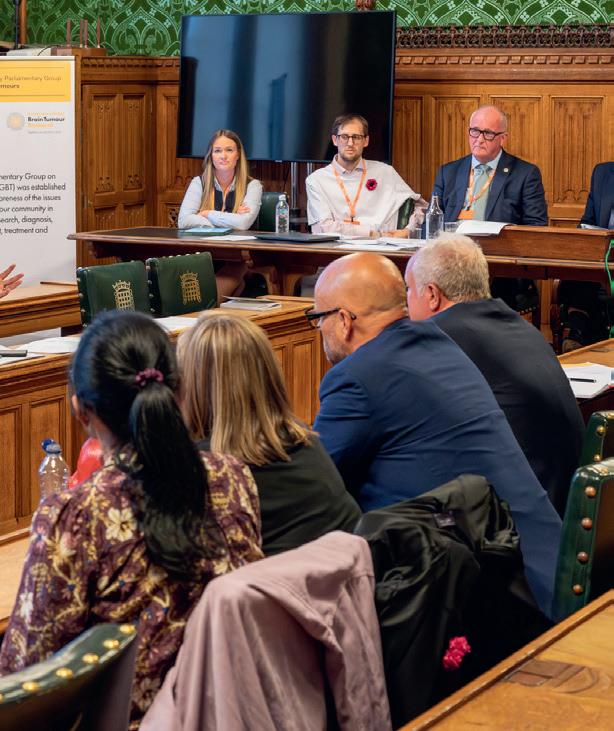
Investments are a form of basic financial instrument and are initially recognised at their transaction value and subsequently measured at their fair value as at the balance sheet date using the closing quoted market price. Any change in fair value will be recognised in the statement of financial activities and any excess of fair value over the historic cost of the investments will be shown as a fair value reserve in the balance sheet. Investment gains and losses, whether realised or unrealised, are combined and shown in the heading “Net gains/(losses) on investments” in the statement of financial activities. The Charity does not acquire put options, derivatives or other complex financial instruments.
Stocks are stated at the lower of cost and net realisable value. In general, cost is determined on a first in, first out basis and includes transport and handling costs. Net realisable value is the price at which stocks can be sold in the normal course of business after allowing for the costs of realisation. Provision is made where necessary for obsolete, slow-moving and defective stocks. Donated items of stock, held for distribution or resale, are recognised at fair value which is the amount the charity would have been willing to pay for the items on the open market.
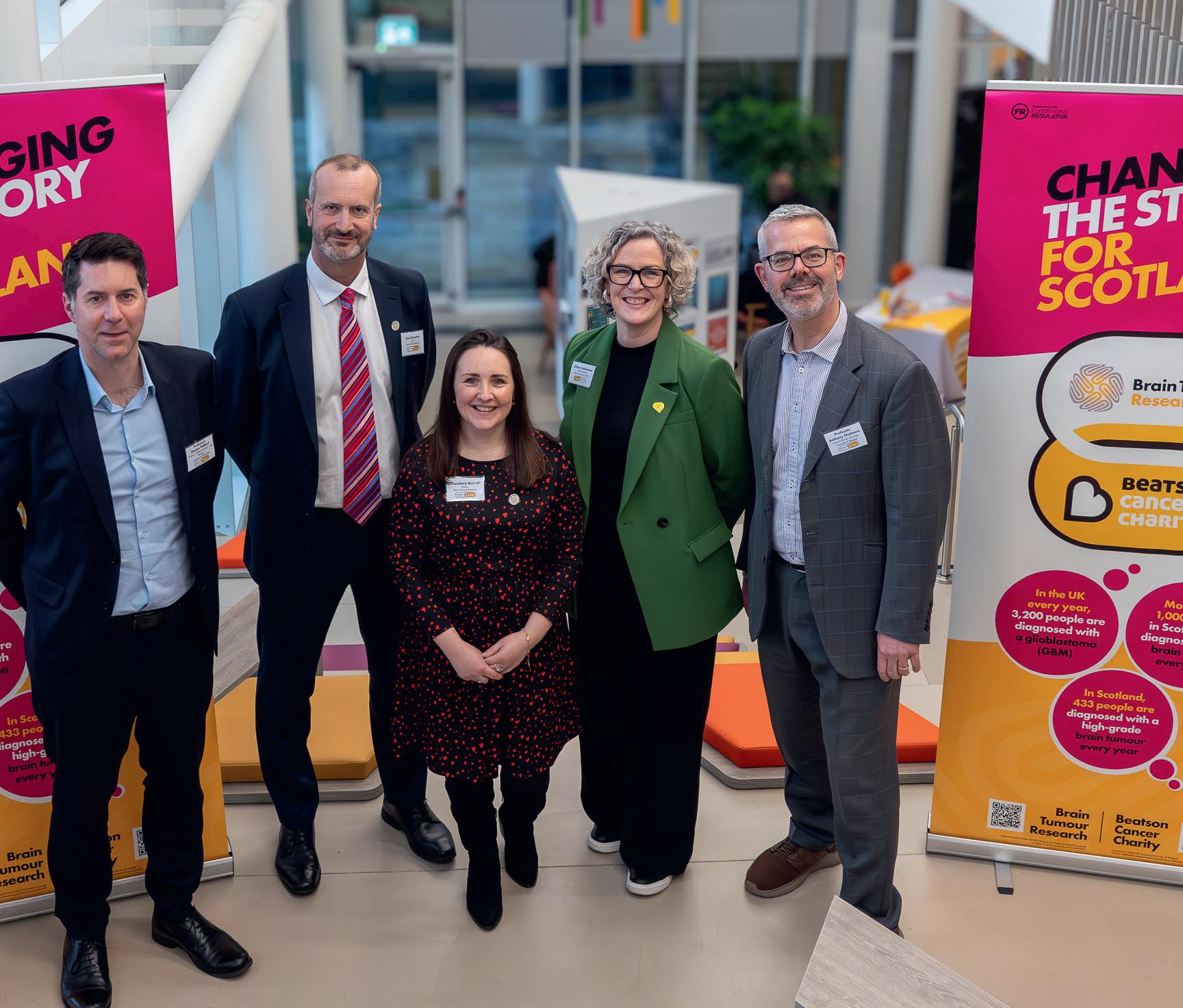
Trade and other debtors are recognised at the settlement amount due after any trade discount offered. Prepayments are valued at the amount prepaid net of any trade discounts due.
Cash at bank and cash in hand includes cash and short-term highly liquid investments with a short maturity of three months or less from the date of acquisition or opening of the deposit or similar account.
Creditors and provisions are recognised where the Charity has a present obligation resulting from a past event that will probably result in the transfer of funds to a third party and the amount due to settle the obligation can be measured or estimated reliably. Creditors and provisions are normally recognised at their settlement amount after allowing for any trade discounts due. A provision is used when there is uncertainty over the amount or timing of the liability.
The Charity only has financial assets and financial liabilities of a kind that qualify as basic financial instruments. Basic financial instruments are initially recognised at transaction value and subsequently measured at their settlement value.
The charitable company operates a defined contribution pension scheme. The scheme is funded partly by contributions from the employees and from the Charity. Such contributions are held and administered completely independently of the charitable company’s finances. The contributions are made by the Charity and are accounted for on an accruals basis.
All Trustees donate their time spent running the Charity on a voluntary basis and do not receive remuneration for their work but are entitled to reimbursement for any expenses incurred in carrying out their duties.
The nature of our income from Campaigns and Online Fundraising has evolved over the years and we have made the judgement that it is now better categorised as fundraising income within note 2 above. The historical comparatives have not been restated.
and governance costs have been apportioned based on estimated usage as a proportion of
Support and governance costs have been apportioned based on estimated usage as a proportion of directly attributable expenditure.
in the
carried forward
Grants committed in the year and the grant commitment carried forward at 30th June 2025 comprised:
* The figures for the grants paid and carried forward figures for Imperial College London and the Institute for Cancer Research in the last set of accounts (for 2023-24) were incorrectly stated by the same, but opposite amounts. The overall total of grants paid and grants carried forward were correct. The brought forward figures for the two Centres have been corrected in the table above.
7. Net income for the year
This is stated after charging:
remuneration (excluding VAT):
8. Analysis of staff costs, trustee remuneration and expenses, and the cost of key management personnel
Staff costs were as follows:
During the year there were termination payments to three individuals. As of the year end £28,215 was outstanding.
The following number of employees received employee benefits (excluding employer pension costs and employers’ national insurance) during the year between:
The total employee benefits including pension contributions and employer’s national insurance of the key management personnel were £485,970 (2024:£460,844).
The Charity Trustees were not paid and did not receive any other benefits from employment with the Charity in this year or last year.
No Trustee received reimbursement of expenses incurred during the year (2024: £nil).
There
Investments are revalued at market value at the balance sheet date and any unrealised gain or loss is taken to the Statement of Financial Activities. Investments are intended to be available at short notice for use by the Charity in its charitable activities.
All investments are carried at their fair value. Investment in equities and fixed interest securities are all traded in quoted public markets, primarily the London Stock Exchange. Holdings in common investment funds, unit trusts and open-ended investment companies are at the bid price. The basis of fair value for quoted investments is equivalent to the market value, using the bid price. Asset sales and purchases are recognised at the date of trade at cost (that is their transaction value).
The significance of financial instruments to the ongoing financial sustainability of the Charity is considered in the financial review and investment policy and performance sections of the Trustees’ Annual Report.
The main risk to the Charity from financial instruments lies in the combination of uncertain investment markets and volatility in yield. Liquidity risk is anticipated to be low as all assets are traded. The Charity’s investments are mainly traded in markets with good liquidity and high trading volumes. The Charity has no material investment holdings in markets subject to exchange controls or trading restrictions.
The Charity manages these investment risks by using well respected investment funds designed for Charities that are featured in industry publications as amonsg the top long-term performers and operating an investment policy that provides for a high degree of diversification of holdings within investment asset classes that are quoted on recognised stock exchanges. The Charity does not make use of derivatives and similar complex financial instruments as it takes the view that investments are held for their longer term yield total return and historic studies of quoted financial instruments have shown that volatility in any particular five year period will normally be corrected.
Stock comprises merchandise for resale such as running vests, cycling jerseys, caps, t-shirts, brooches and Christmas cards.
15. Debtors: amounts recoverable within
17. Creditors: amounts falling
19a. Analysis of net assets between funds (current year)
19b. Analysis of net assets between funds (prior year)
Restricted funds
To support the research grants made to specific academic institutions:
3,073,071
Purposes of restricted funds
Our restricted funds are to support the research grants made to the academic institutions named by the fund. The Childhood Cancer Appeal was an appeal we ran during the year specifically for this type of research.
Restricted funds
To support the research grants made to specific academic institutions:
University of Southampton
Queen Mary University of London
Purposes of restricted funds
Our restricted funds are to support the research grants made to the academic institutions named by the fund.
(15,000)
(118,730)
(847,353)
(947,699)
2,680,334
The “Early Career Researchers” fund represents funding again received from UK Research and Innovation (UKRI) to support the funding of researchers early in their career following the COVID-19 epidemic. We support such researchers across all of the academic institutions we fund.
The “Research Programmes” fund represents funding received from various donors to directly support research grants without specifying a particular grantee.
/
/
The charity’s total future minimum lease payments (including current service charge commitments) under non-cancellable operating leases is as follows for each of the following periods:
The figures for last year have been restated since they were incorrect.
The charity is a company limited by guarantee and has no share capital. The liability of each member in the event of winding up is limited to £1.
In addition to legacy income recognised in the SOFA, the Charity had been notified of 8 residuary legacies (2024: 1) with a total estimated value of £419,000 (2024: £90,000). These legacies do not satisfy the criteria relating to the probability and/or reliable estimate required by our accounting policy to recognise the income during the year. These legacies are therefore disclosed here as contingent assets.
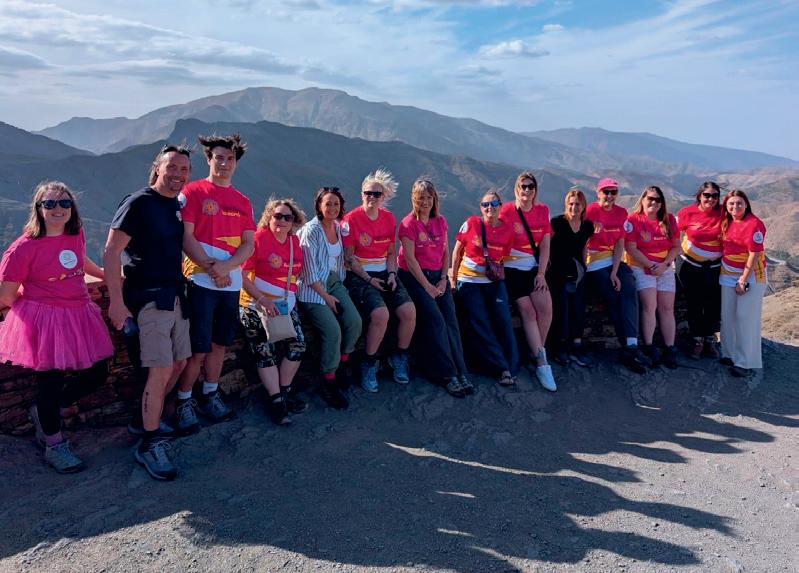
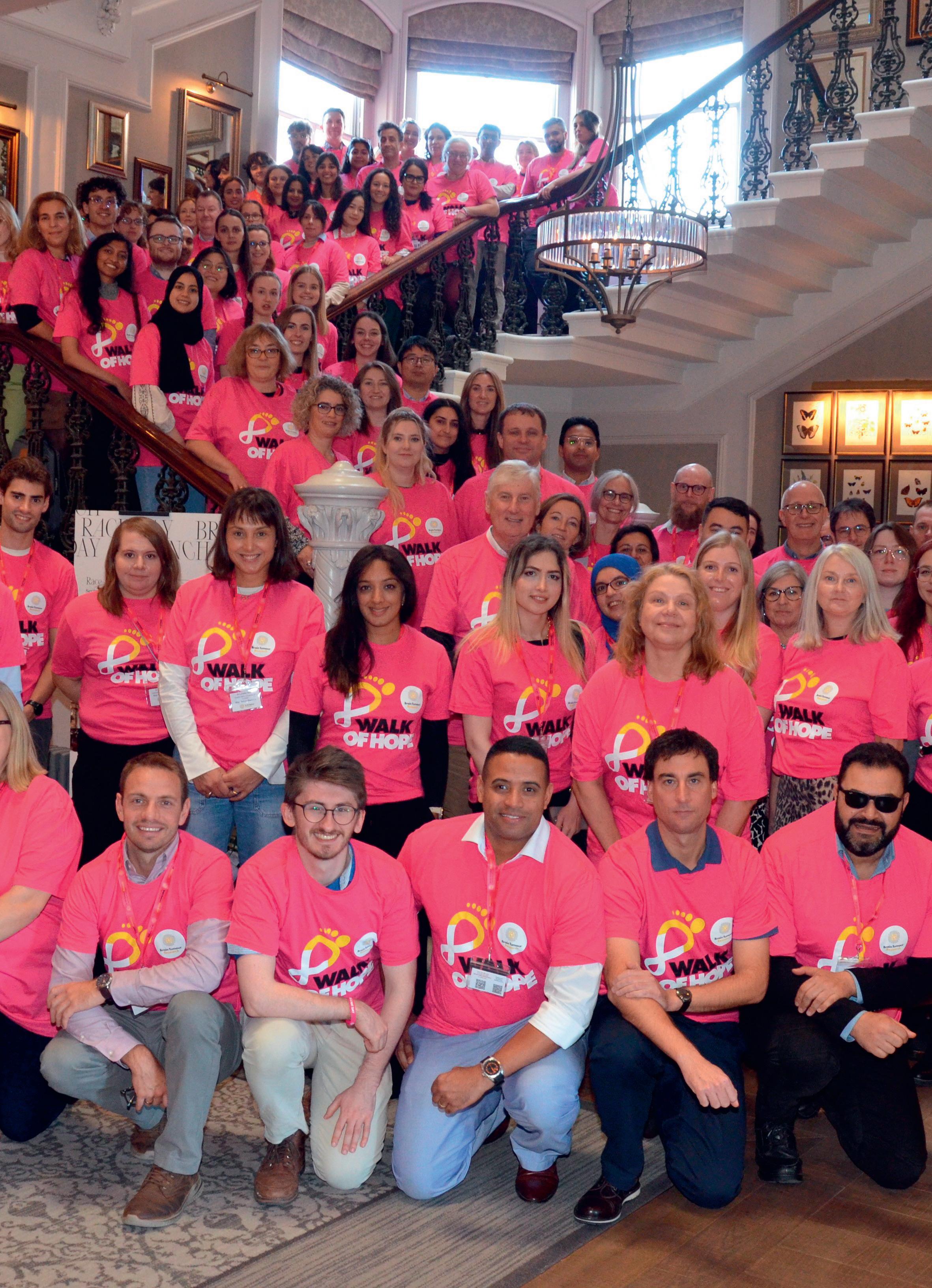
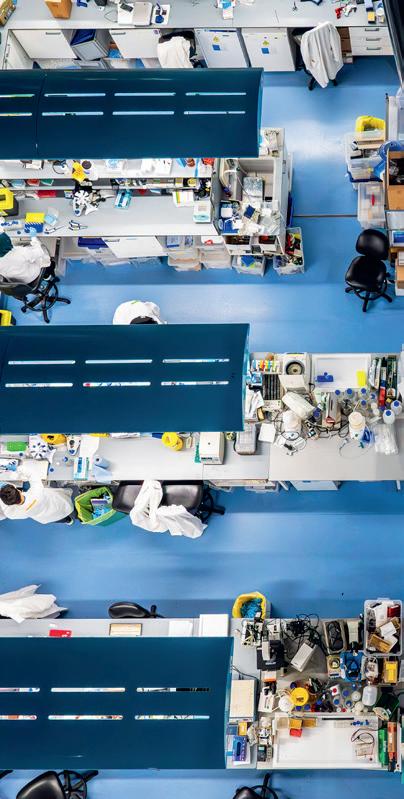
Brain Tumour Research
Suite 37, Shenley Pavilions
Chalkdell Drive, Shenley Wood
Milton Keynes MK5 6LB
Phone: 01908 867200
Web: www.braintumourresearch.org
Email: info@braintumourresearch.org
Brain Tumour Research – Registered Charity 1153487 (England and Wales) and SC046840 (Scotland) Company Limited by Guarantee 08570737.