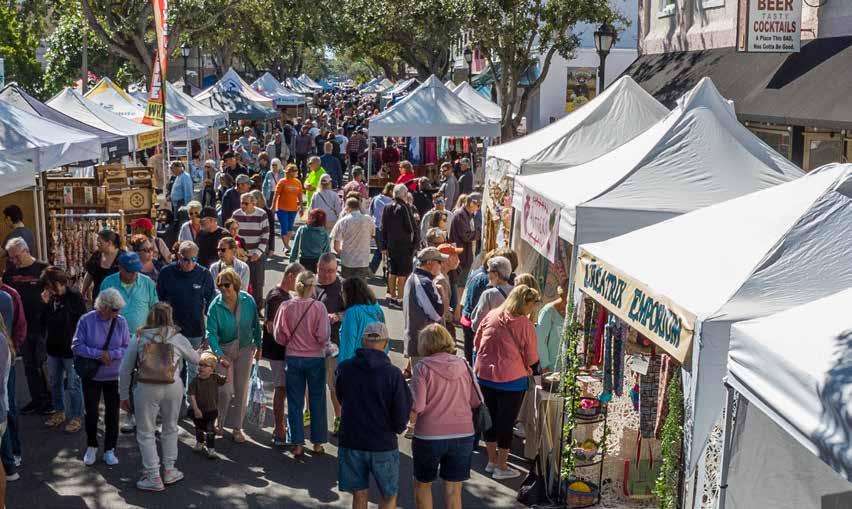
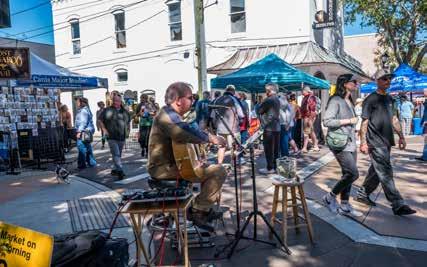
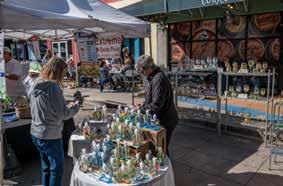
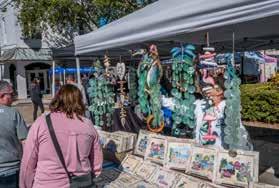
Bradenton Public Market Photo Essay by David X Tejada
Written
I would be remiss if I didn’t give a heartfelt shout out to Dru Love, owner of Blessed and Distressed. As many may have heard, Blessed and Distressed will be closing its doors at the end of March.
Dru has been such an incredible supporter of this magazine. In fact, she is the only advertiser who has graced the pages of every single issue of Bradenton Magazine. That kind of loyalty and belief in what we are building is something I will never take for granted.
One of my favorite traditions has been personally dropping off each new issue to her shop. I’m always greeted with a warm smile and genuine enthusiasm. If customers are in the store when I arrive, she never misses a chance to say, “Do you know who this is? This is the creator of our beautiful Bradenton Magazine.” She always makes me smile — and many times, laugh out loud.
Dru has always been a champion of small and local businesses. If you’ve ever stepped into her shop, you know she curated it with heart. And if she didn’t have exactly what you were looking for, she was quick to recommend another local spot that might. That’s the kind of community spirit that makes our town so special.
I encourage everyone to stop in, say hello, and let Dru know how much she and her shop have meant to our community. Let her know she will be missed.
I know I will miss you, Dru.
With gratitude,
Paula Wright Publisher
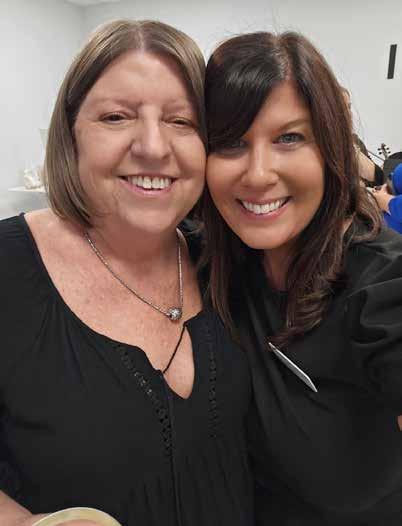
Dru Love, Owner of Blessed and Distressed, and Paula Wright at the Bradenton Magazine’s Office Grand Opening.
Donna Grossman
WRITTEN BY EMMA HARTMAN
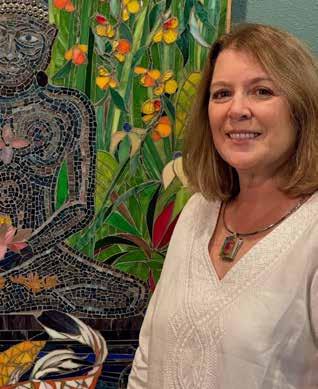
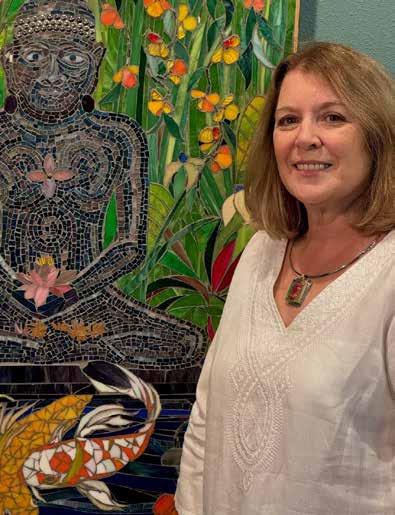
Donna Grossman loves to sit and watch the sky. Her home in Palma Sola overlooks Robinson Preserve, and she spends time each day watching the herons glide gracefully above the mangroves, the white pelicans swirl in their loose formations, and the migratory birds appear, disappear, and return. Just like the instinctual patterns of the birds she loves to observe, Grossman’s life has been guided not by a linear path, but by a series of departures and arrivals and an unspoken trust in change.
Originally from Long Island, Grossman underwent a migration of her own a few years ago. She and her husband lived the snowbird life—ferrying between north and south with the seasons— living on Anna Maria Island until their forever home was built in Palma Sola in 2018. “I traded one island for another,” she said with her characteristic ease, as though change were less a disruption than a continuation.
Today, Grossman is a full-time artist specializing in the delicate craft of glass mosaics. But her path there was anything but singular. Guided by a perennial curiosity, she flexed her creative muscles early as a window display designer for Macy’s before pivoting to a career in aerospace. When her son was born, she transitioned again, this time to creating upcycled, bespoke teddy bears for a family-owned company. What began as a part-time role quickly grew into something much larger.
She later became a master gardener, spending many years in gardening and landscape design until an injury forced her to hang up her shears earlier than she had hoped. The physical limits that closed one chapter ultimately redirected her toward art, where her instinct for pattern, patience, and transformation found a new and lasting form.
Grossman has the rare ability to view the close of a phase through a lens of serendipitous opportunity rather than mourning. It was a simple question from an Italian sculptor she met at the end of her gardening career, “What would you really love to do now?”, that prompted her to answer, “I’d love to draw and paint.” Thus began her journey into oil painting. Grossman trained classically in the discipline and discovered an immense talent that had remained largely untapped for much of her life.
Grossman’s oil painting became so accomplished that she was invited to teach beginners at an atelier in St. James, where she discovered a new love for teaching. “People were very intimidated by classical design and by the word ‘atelier,’” she said. “I thought, ‘no, I can teach you. It doesn’t matter how young or old you are. We can do this, and we can have fun!’”
That openness to discovery did not stop in the classroom. Grossman is a lifelong island-dweller who has always loved being surrounded by water, but it was the shift in color she experienced when she traded Long Island for the Gulf Coast that brought a new wave of inspiration to her work. It was during a sit-and-sip mosaics class that she discovered a vibrant new medium capable of capturing her growing fascination with the bright hues of her new home.
After learning the basics of mosaic-making in the course, Grossman continued to hone her skills on her own. Powered by a love of light and color, she began gravitating toward the more intricate and translucent medium of glass. She connected with a fellow artist who sold her scrap glass and converted her garage into a studio. As the pandemic took hold, Grossman suddenly found herself with the time and space to fully immerse herself in her newest pursuit.
Grossman likens her process of creating glass mosaics to assembling a jigsaw puzzle. She begins with a vision, sketching a design that serves as the foundation for the work, then cuts and shapes each piece of glass to fit her blueprint. It is her inherent curiosity, not just about imagery, but about the material itself, that guides the process and allows her to discover the distinct qualities of each piece of glass and how it can be used to realize her vision.
“Some glass will splinter for me,” she said. “If I’m creating feathers on a bird, I’ll use that natural quality. Other glass is iridescent. When you look at it one way it’s green, another it’s blue. I love that. If I’m making a dragonfly, the glass lets me create a transparent, iridescent wing. It’s impressionistic, but it’s still true to the nature of the subject.”
Grossman’s inspiration is as expansive as her interests. Alongside the natural forms that appear in her work, she draws deeply from literature, fables, and religious symbolism, returning again and again to stories that explore morality, wonder, and the human condition. In one piece, mirrored fragments are embedded to evoke the concept of eternity, inviting the viewer to quite literally see themselves within the work. In another, more than 60 animals are concealed among mountains and rivers, a meditation on balance and the interplay of yin and yang. Her pieces are not meant to be taken in at a glance. They ask the viewer to linger, interpret, and feel.
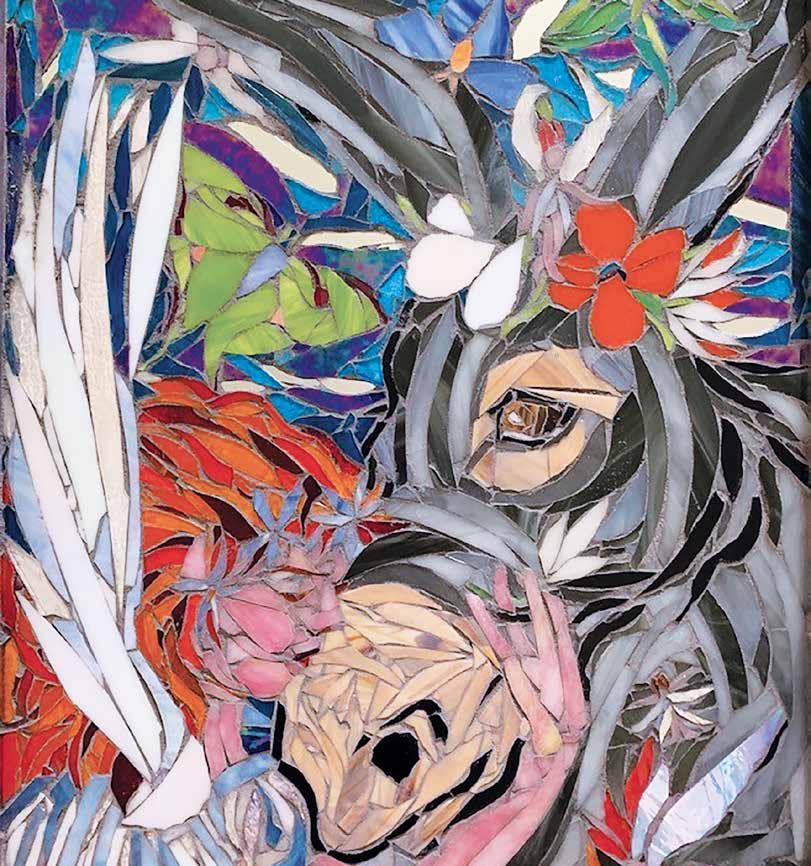
The piece that appears on this edition’s cover is inspired by Grossman’s love of literature. Titled A Midsummer Night’s Dream, the work depicts the Fairy Queen Titania embracing the hapless Nick Bottom, offering Grossman’s own wistful interpretation of Shakespeare’s playful meditation on illusion, desire, and metamorphosis. It is a theme that resonates beyond the work itself, and one that has quietly shaped the course of Grossman’s own life.
“I just kept going and going,” Grossman said of her winding creative journey. “Without sounding too hokey, a window always opened. A door always opened. Whenever a chapter was done, that new chapter was always there. And I’ve just been so fortunate because I’ve loved everything that I’ve done.”
Grossman’s work can be found in several locations in Manatee County. Smaller pieces are currently available at Blessed and Distressed, which will sadly be open for only a short time longer, as well as at Blue Flamingo, where an expanded selection of both small and large works will be available. Larger pieces can also be seen at Artist’s Haven on Holmes Beach. While her work can be viewed online on Instagram, @donnagrossmanpaints, the true character of her mosaics is best experienced in person, where light, texture, and reflection shift subtly with each step and lingering glance.
PUBLISHER + EDITOR IN CHIEF
PAULA WRIGHT
GRAPHIC DESIGN
Roxanne Clapp
COPY EDITOR + PROOFREADER
Kendra Gemma
COVER
Donna Grossman
940 Manatee Avenue West
Bradenton, FL 34205 www.BradentonMag.com
ADVERTISING
Toni Lyon
Toni@BradentonMag.com
CONTRIBUTING WRITERS, ARTISTS, AND PHOTOGRAPHERS
Kelly Stilwell, Kendra Gemma, Liz Reed, Emma Hartman, Shelly West, David X Tejada, Beth Deyo, Lisa Neff
Bradenton Magazine promotes Manatee County and All Our Neighbors.
SUBSCRIBE
BradentonMag.com/subscribe
The Dose. FREE Weekly Newsletter
Bradenton Business Magazine
More Than a Pretty View
You’re Due for a Visit to The Waterfront Restaurant
WRITTEN BY KELLY STILWELL
As usual, I asked my husband what he wanted to do for his birthday. It’s a yearly ritual for us both. My answer is usually a destination that involves packing a large suitcase and getting on a plane for many hours. If it’s a special birthday, he might say yes, but more than likely, he will just roll his eyes and buy me a book about the place I wanted to go.
My husband’s answer is always local, and this time it was Anna Maria Island. He loves the beach and believes in supporting local. What’s not to love? We do, after all, live in paradise.
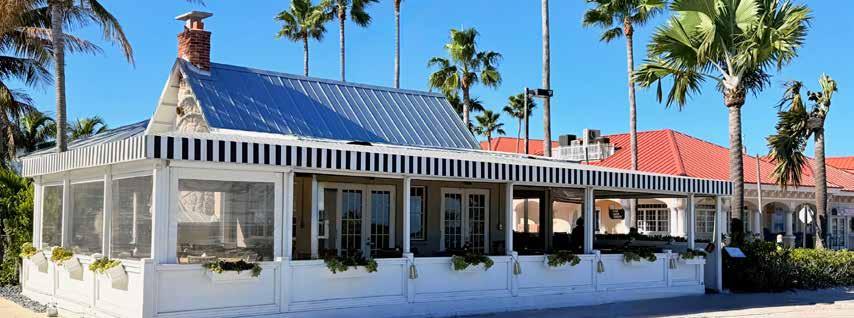
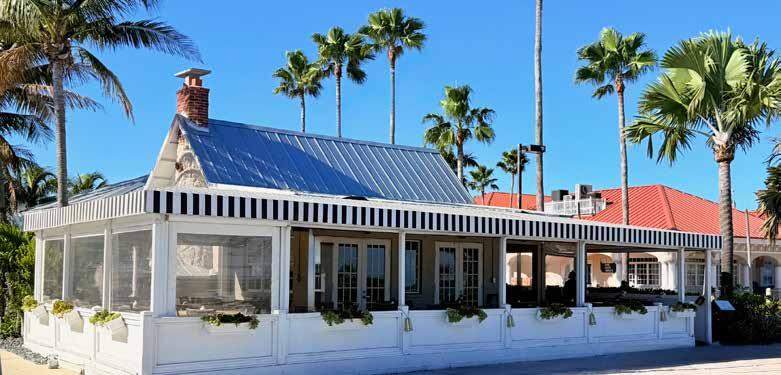
So, we headed to AMI with no real plans except hitting the beach and having lunch. Where to eat is a very big decision in our house. Fresh seafood is always at the top of our list, so we decided to go to The Waterfront Restaurant. Between the many choices of fresh local fish and the creatively curated wine list, it was a very good choice.
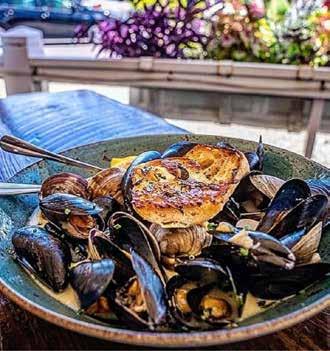
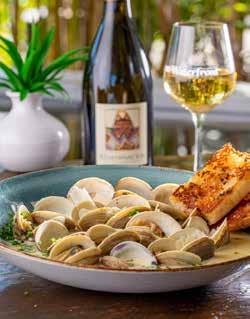
We decided to sit outside as it was a beautiful day. While my husband chose our wine, I was on the hunt for an appetizer. I could smell something wonderful coming out of the kitchen, and I was hungry. We decided to share the Steamer Bowl of PEI mussels and clams with tomato basil sauce.
Tip: If you also have a hard time choosing, they will allow you to mix the two. Both were perfectly prepared, and we used the toasted bread to sop up every last ounce of the sauce.
My husband loves a good Caesar salad and devoured The Waterfront’s version, with their homemade Caesar dressing. And if there is fresh local grouper on the menu, he has to have it, preferably blackened. The Grouper Tacos were heavenly, lightly blackened and topped with a crunchy jicama slaw. Yes, I had a bite.
I had seen the Harvest Beet Salad pass by on the way to another table, and I knew right then what I would be ordering. It’s a mix of arugula, roasted beets, candied walnuts, pear, and goat cheese, and I chose to top it with perfectly seasoned grouper. It was delicious.
If you’re not a fan of seafood, don’t worry. The menu at The Waterfront has something for everyone. Choose from appetizers like Baked Brie or the Chef’s Board featuring a daily charcuterie and cheese platter with a baguette and accompaniments. For entrees, try the New York Strip or Pork Tenderloin, both served with house potato and a seasonal vegetable. View the lunch and dinner menus on the website. The bar serves amazing craft cocktails, beer, and wine, and has a great beach vibe.
I rarely order dessert, but my husband is another story. In fact, he rarely does not order dessert. This day would be different as we were so full we decided we could not eat another bite. That was until he saw the Key Lime Pie on the menu. I told him not to look, but it was his birthday. And it was pretty incredible. Yes, I had a bite.
You’ll find The Waterfront Restaurant at 111 S. Bay Blvd., right across from the beach, on Anna Maria Island. Hours are 11 a.m. until 9 p.m. Sunday through Thursday, closing at 10 p.m. on Friday and Saturday.
See the back cover photo of The Waterfront Restaurant’s Seasonal Old Fashioned featuring Blanton’s bourbon, smoked bacon & maple elixir, black walnut bitters, peated scotch cherries, and a sizzling cinnamon stick.
Start-Up Circle
Building Bradenton’s Next Wave of Small Businesses
WRITTEN BY SHELLY WEST
When the pandemic hit in 2020, the small business community in Manatee County felt the shock first—and in many ways, the deepest. For Realize Bradenton, that moment clarified an urgent community need: if local recovery were going to be strong, it would have to include entrepreneurs who were ready to adapt, rebuild, and lead.
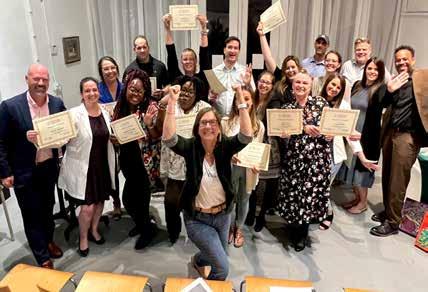
That’s what sparked Start-Up Circle, a free, structured business and project planning course designed to help early-stage entrepreneurs move from ideas to reality with a plan they can actually use. “In 2020 during the pandemic, Realize Bradenton pursued grant funding specifically for small business support,” said Kristie Kindstrom, Realize Bradenton Events Manager and Start-Up Circle Coordinator. “A grant was secured, and the first Start-Up Circle was formed and facilitated in 2021 with 10 local entrepreneurs together on Zoom!”
Today, Start-Up Circle’s goal is simple—and surprisingly rare: help participants leave with a completed business plan that reflects the real demands of running a business day-to-day. The curriculum is organized in three practical parts: an Organizational Plan (licenses, legal, budgeting), a Financial Plan (costs, sales, profit, and cash flow), and a Marketing Plan (research, competition, pricing, goals, and financing). But the “aha” moments, Kindstrom said, usually hit when the numbers stop feeling abstract.
“Really when they dig into their financials and understand how to assess viability, it’s usually the first time they can really see the future,” she explained. That clarity often leads to the biggest post-graduation adjustments: pricing and scope. Many participants realize they underestimated true costs or set prices too low for sustainable margins. Others discover they’re offering too many options—and learn that focus can be the fastest path to growth.
While the financial part can feel intimidating at first, Kindstrom says it’s often the most critical discovery. Marketing, on the other hand, is where the energy spikes— especially once participants realize it’s not just social media and promotion. It’s strategy. It’s positioning. It’s the plan behind the posts. And it’s commonly overlooked.
One of the program’s most powerful features may be the part that can’t be printed in a workbook: the cohort itself. With classes typically capped around 17 participants and rooted in local experience, the environment becomes both practical and personal. “Cohort learning is the secret sauce to the whole program,” Kindstrom said. “At the end, they are all like family and become each other’s greatest advocates.”
That sense of momentum culminates in a signature moment called the “Koi Pond” presentation—where each participant has five minutes to present their business plan (creativity encouraged) to local advocates who provide feedback and, often, real opportunities.
Start-Up Circle’s impact is measurable: 10 cohorts and more than 150 entrepreneurs have graduated so far. But Kindstrom defines success less by the number of businesses launched and more by the moment a participant sees their business clearly—especially if the math reveals hard truths. Sometimes, success means a pivot. Sometimes it means a complete stop. “That moment when the math is telling a story, good or bad, and they understand what they need to do next—that is success,” she said.
In the end, Start-Up Circle is about creating confident, informed business owners who understand what they’re building—and what it will take to keep it standing. As Kindstrom often reminds participants: “If not you, then who?”
Want to take your idea seriously this year? Keep an eye on Realize Bradenton for the next Start-Up Circle cohort and consider visiting the Bradenton Public Market to meet local makers, see what’s selling, and get inspired by the kinds of small businesses shaping our community— one smart plan at a time.
Anthony’s Cooling - Heating - Electrical
A Legacy of Trust Built One Home at a Time
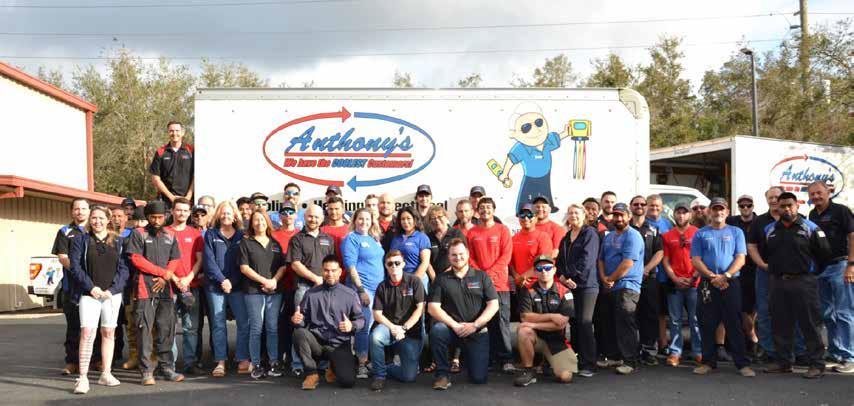
In an industry often defined by urgency, complexity, and high customer anxiety, Anthony’s Cooling-Heating-Electrical has distinguished itself through something far more enduring than equipment or technology: trust. Since opening its doors in 1988, the company has grown from a local HVAC operation into a full-service cooling, heating, and electrical provider, while maintaining a reputation rooted in integrity, transparency, and craftsmanship.
For nearly four decades, homeowners across the region have relied on Anthony’s not just to restore comfort, but to provide clarity in moments when it matters most—during heat waves, cold snaps, power failures, and system breakdowns that disrupt daily life. The company’s guiding principle is captured succinctly in its long-standing slogan: “You don’t need new until we say you do.” It is a promise that runs counter to the high-pressure sales tactics that have become all too common in the trades—and one that has earned Anthony’s enduring loyalty from its customers.
Built on Service, Strengthened by Values
Anthony’s Cooling-Heating-Electrical was founded with a simple mission: do honest work, treat customers fairly, and stand behind every recommendation. As a veteran-owned business, the company has a culture that reflects the discipline, accountability, and service mindset instilled by military experience. Those values continue to shape daily operations, from technician training and customer communication to long-term planning and leadership development.
What began as a small HVAC company has steadily evolved in response to customer needs. Over time, Anthony’s expanded its capabilities to include full electrical services, allowing homeowners to work with a single, trusted provider for many of the most critical systems in their homes. Today, the company operates with a team of approximately 55 skilled professionals—a growth achieved not through rapid expansion or acquisition, but through consistency, referrals, and repeat business.
Expertise Without Pressure
Few situations are more stressful for a homeowner than being told a major system has failed. Anthony’s approach in those moments is deliberate and measured. Technicians are trained to diagnose thoroughly, explain findings clearly, and present options—not ultimatums. Repairs are prioritized whenever feasible, and system replacement is recommended only when it is genuinely in the customer’s best interest.
This philosophy is not merely a marketing position; it is embedded in the company’s training and accountability systems. Performance is measured not just by sales metrics, but by customer satisfaction, long-term system performance, and adherence to ethical standards. The result is a service experience that feels consultative rather than transactional.
Customers frequently cite this approach in reviews and referrals, noting that Anthony’s technicians take the time to educate, answer questions, and respect budgets. In an industry where skepticism is common, this transparency has become a defining differentiator.
Comprehensive Home Comfort Solutions
Anthony’s Cooling-Heating-Electrical offers a full spectrum of residential services designed to keep homes safe, efficient, and comfortable year-round. HVAC services include system design, installation, repair, and maintenance for air conditioning, heating, heat pumps, and indoor air quality solutions. On the electrical side, the company provides panel upgrades, wiring, lighting, surge protection, and troubleshooting—services increasingly critical as homes become more energy-dependent and technologically complex.
By offering both HVAC and electrical services under one roof, Anthony’s eliminates coordination challenges for homeowners and ensures systems are designed to work together efficiently. This integrated approach is particularly valuable in older homes, where electrical capacity and HVAC demands must be carefully balanced.
Preventative maintenance also plays a central role in the company’s service model. Regular inspections and tune-ups help customers avoid unexpected breakdowns, extend equipment life, and reduce energy costs. This proactive mindset reinforces Anthony’s belief that the best service call is often the one that prevents a crisis altogether.
Investing in People, Not Just
Equipment
Behind every successful service company is a strong team, and Anthony’s places a premium on recruiting, training, and retaining top talent. Technicians and electricians receive ongoing education to stay current with evolving codes, technologies, and best practices. Just as importantly, they are trained in communication—how to listen, explain, and guide customers through decisions with professionalism and respect.
This investment in people has helped create a stable workforce in an industry known for high turnover. Many team members build long-term careers at Anthony’s, developing relationships with customers who request them by name. That continuity strengthens trust and reinforces the company’s reputation as a reliable, community-based business rather than a faceless service provider.
Anthony’s Cool School: Investing in the Future of the Trades
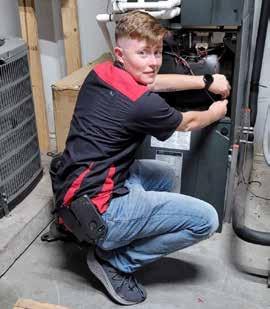
A cornerstone of Anthony’s longterm vision is Anthony’s Cool School, licensed by the State of Florida it is an in-house training and development program designed to cultivate the next generation of HVAC and electrical professionals.
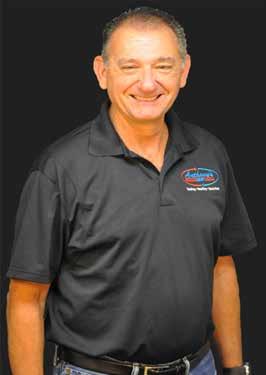
Mike Zeppi, Owner
Recognizing the industry-wide shortage of skilled labor, Cool School provides hands-on technical training, mentorship, and real-world experience for new technicians entering the field. Participants learn not only system diagnostics and installation best practices, but also customer communication, safety standards, and the company’s core values. By developing talent internally, Anthony’s ensures consistent service quality while creating meaningful career pathways for individuals seeking long-term opportunities in the skilled trades.
A Reputation Earned Over Time
Anthony’s Cooling-Heating-Electrical has grown alongside the communities it serves, supporting local families, businesses, and initiatives along the way. Its success has never been driven by aggressive advertising or short-term promotions, but by word-of-mouth recommendations built on decades of consistent performance.
As energy efficiency standards evolve and homeowners seek smarter, more resilient homes, Anthony’s continues to adapt—embracing new technologies while remaining grounded in the principles that defined its founding. The company’s leadership understands that growth is sustainable only when it aligns with values, and that reputation, once earned, must be protected every day.
Looking Ahead
As Anthony’s approaches four decades in business, the focus remains clear: continue serving customers with honesty, invest in the next generation of skilled trades professionals, and remain a trusted authority in home comfort and electrical solutions. The tools may change, and technology will continue to advance, but the company’s core belief remains unchanged—that doing what is right for the customer is the most powerful business strategy of all.
In an industry where homeowners often feel uncertain and vulnerable, Anthony’s Cooling-Heating-Electrical stands as a steady presence—experienced, principled, and committed to comfort without compromise.
Terra Ceia Island
Where Time Slows and History Still Lives
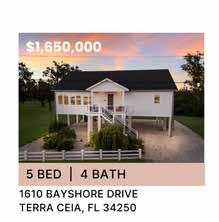
There are places in Florida that feel carefully preserved—not as attractions, but as ways of life. Seen from above, Terra Ceia Island reveals itself as a quiet ribbon of land edged by water and mangroves, a place shaped as much by geography as by intention. Tucked quietly along the waters of Tampa Bay, this small island has resisted the rush to become something louder or faster, choosing instead to remain rooted in its history, its community, and its natural surroundings.
Long before bridges and paved roads connected it to the mainland, Terra Ceia was home to Indigenous peoples who understood the rhythm of the land and water. Later, fishing families, farmers, and boat builders shaped the island into a working waterfront community. That legacy remains visible today—not as nostalgia, but as continuity. The island has evolved, but it has never lost its sense of place.
Life here moves at a different pace. Quiet streets wind past palms and historic homes. Mornings often begin on the water, whether casting a line from a private dock, paddling through mangrove-lined shallows, or simply watching the light change across the bay. Dolphins surface nearby, birds settle into the mangroves, and the sounds of traffic feel worlds away.
What draws people to Terra Ceia isn’t spectacle—it’s simplicity. Days unfold naturally: boating across calm waters, kayaking through hidden inlets, fishing at dawn, or biking beneath open skies. Evenings are reserved for sunsets that stretch endlessly across the horizon, followed by quiet dinners outdoors and conversations that linger.
The island’s architectural character reflects its values. Elevated coastal homes are designed for both resilience and grace, blending classic Florida forms with modern comfort. Porches, balconies, and gathering spaces encourage time outside, reinforcing the connection between home, land, and water.
Despite its tranquility, Terra Ceia remains deeply connected to the surrounding region. Nearby communities offer local dining, markets, and cultural events, while the island itself retains a distinctly residential, close-knit feel. Neighbors know one another. Privacy is respected. Peace is not advertised—it is simply understood.
For those who find themselves here, Terra Ceia offers something increasingly rare: a sense of calm that feels genuine, not curated. It is a place where history is honored, nature sets the pace, and daily life feels intentional. It’s not a destination designed to impress, but one that quietly stays with you long after you leave.
On Terra Ceia Island, time doesn’t stop—but it does slow enough to be noticed.
For those drawn to this way of life, opportunities to call Terra Ceia Island home are rare and meaningful.
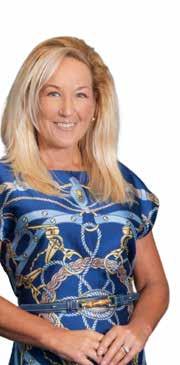
Written by Shellie Young, a Florida-based Realtor specializing in luxury waterfront and
island
properties.
She currently has two residences available on Terra Ceia Island, one of Florida’s most quietly treasured waterfront settings.
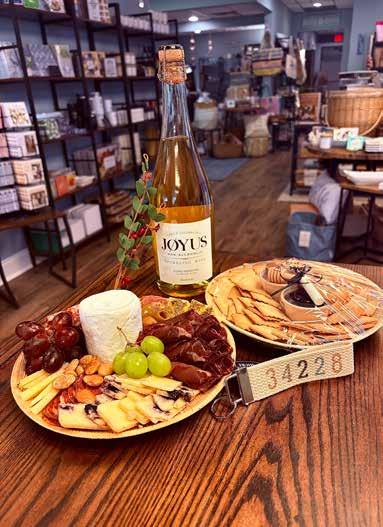
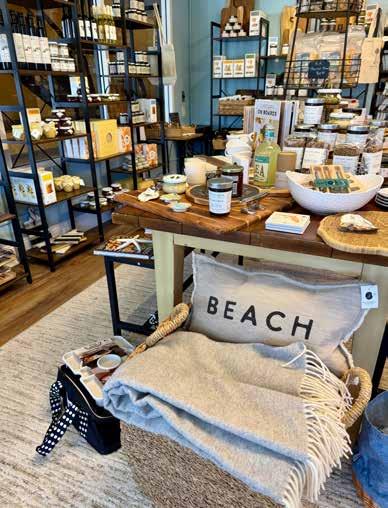
Though you will find a handful of shops on Longboat Key, and more shopping options just 15 minutes away in St. Armands Circle, there is nothing like Longboat Key Provisions. Forgot something at home? Need a hostess gift? Think of it as a grab-and-go stop for island life. The knowledgeable staff is ready to help you find just what you need. But fair warning, this is the kind of shop where you stop in for one thing and leave planning an impromptu gathering because they made it so darn easy.
In addition to home essentials, the shop carries artisanal snacks like jams, jellies, spreads, and crackers. You can pick up a charcuterie board to take home or straight to the beach. Last-minute guests? Not a problem. Longboat Key Provisions always has premade boards on hand. You can also request something special or order a larger board for a family gathering or party. And speaking of parties, who hasn’t remembered at the last minute that they said they’d bring an appetizer? Pick up a baguette and a jar of Sundried Tomato Bread Dip and you’re set. Go the extra mile and arrange it on one of their pretty wood boards or serving dishes.
For those vacationing on Longboat Key, just think about how nice it would be to stop by and pick up a board to have for dinner that first night, making it easy to enjoy your time and not spend it in the kitchen. The shop also carries small-batch craft sodas and mocktails. Think of Longboat Key Provisions as your first stop when arriving. This shop takes you from “What’s for dinner?” to “We’re having a sunset picnic.”
New Gift Shop with a Foodie Twist Welcome to
Longboat Key Provisions
WRITTEN BY KELLY STILWELL
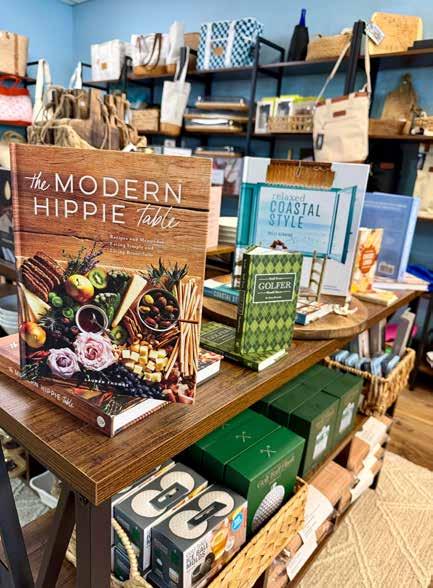
Tucked inside a strip center off Gulf of Mexico Drive is a coastal gift shop and gourmet market designed for those who love cooking and food. The shelves are stocked with curated finds like kitchen tools and gadgets, cookbooks, gift ideas, and beach-themed decor. I could spend hours just browsing. Aptly named Longboat Key Provisions, the shop has only been open since December 19, but it’s already gaining a regular following. Step inside and it’s immediately clear why they describe themselves as “Tastefully Designed. Visually Divine.”
Owner Jason Bond is excited to bring something new to Longboat Key. Planning a special date night or even a marriage proposal? Bond shared with me that he’s planning to offer a complete set-up and tear-down of customized picnics. Who doesn’t love having one less thing to do? Meet your family or friends at the beach and have dinner waiting.
They offfer premium bagged ground or whole bean coffee and tea with some baked options from Mikayla Klauber of Mikayla Bakes. Enjoy her sourdough, baguettes and chocolate toffee cookies!
Visit Longboat Key Provisions in the Centre Shops at 5370 Gulf of Mexico Dr. on Longboat Key. Maybe I’ll see you there. I’ll be the one popping in for just a snack and leaving with enough food to feed a small but very well-fed book club. And probably a new cookbook, too.
Jason Bond, Owner, and his mother Donna DeLuca
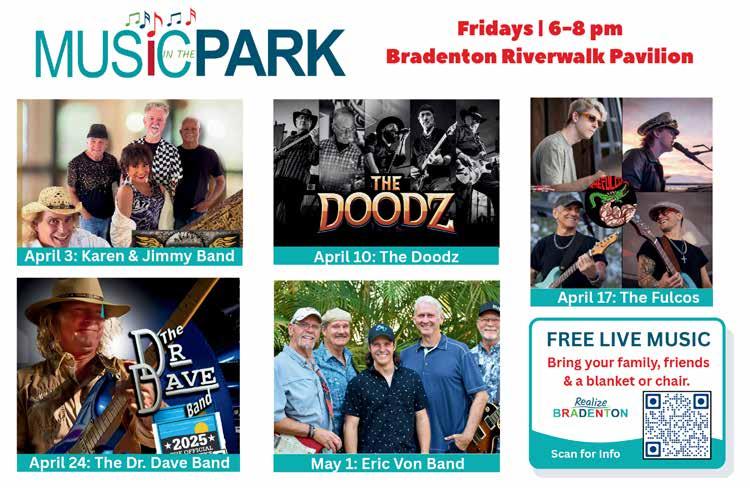
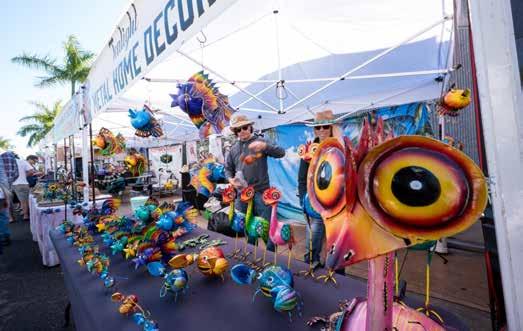
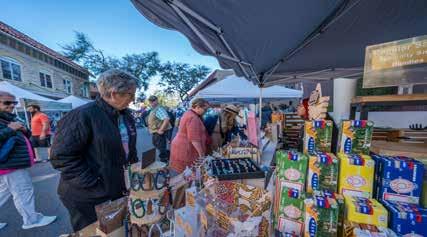
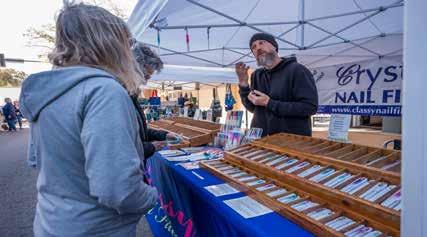
Bradenton Public Market, presented by Realize Bradenton, brings people together to support local entrepreneurs, artists, and musicians.
The Market is held on Saturdays, October through May, from 9 a.m. to 2 p.m., on Old Main Street in downtown Bradenton.
Photo Essay By David X Tejada, Tejada Photography, Inc
Built to Last
A Local Manufacturing Success Story
WRITTEN BY SHELLY WEST
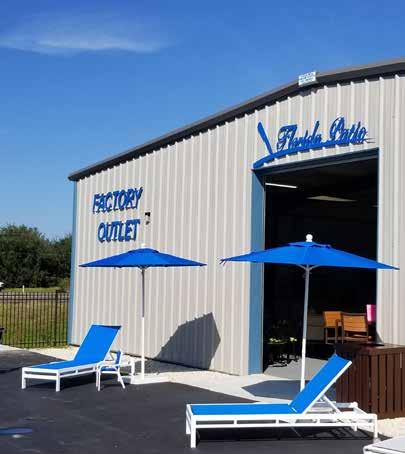
For nearly three decades, Florida Patio has quietly been doing something rare in today’s marketplace: building outdoor furniture right here at home.
Long before “shop local” and “sustainable sourcing” became popular phrases, this Palmetto-based company was already living it. With approximately 90 local employees and a reputation that reaches from backyard patios to major theme parks and resort chains, Florida Patio has grown into one of the area’s most impactful manufacturers—without ever losing sight of its roots.
“We love the fact that all of our employees are local and that we are helping our local economy,” said Gregory Rehorn, National Sales & Marketing Manager for Florida Patio Furniture Inc. “At one point, Florida Patio was the largest non-seasonal employer in the area, and today we’re still one of the top local employers.”
Unlike many outdoor furniture brands that rely on imports and long supply chains, Florida Patio manufactures its products on site. Frames are welded in-house. Finishes are applied in-house. Cushions and components are assembled in-house. That local control does more than create jobs—it allows the company to manage lead times and maintain consistent quality.
It also means their products are built specifically for Florida living.
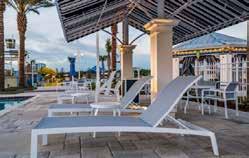
Each piece is finished with a marine-grade polyester powder coat designed to resist corrosion from salt air and sun exposure. Stainless steel hardware prevents rust. These choices are intentional and practical, created with the Gulf Coast climate in mind.
Florida Patio isn’t just a place of employment—it’s a place where people learn skilled trades. New employees are trained internally and given opportunities to move into higher-paying positions such as welding and finishing.
That investment in people has created a team that stays.
“Many of our employees have been with us long-term and are considered family,” Rehorn shared. The company also contributes to local schools and businesses, strengthening its ties to the community beyond its own walls.
One of Florida Patio’s most unique offerings is its refinishing department. Instead of replacing worn furniture, customers can restore what they already have—for about 60 percent of the cost of buying new.
A Sustainable Approach That Makes Sense
“Scrapped furniture is only worth pennies,” Rehorn noted. Extending the life of existing products significantly reduces waste while saving customers money.
The company also makes a point to source materials as locally as possible, proudly noting that they do not import materials from overseas when regional vendors can supply what they need. This reduces freight miles while supporting other local and regional businesses.
Florida Patio operates on a wholesale pricing model, avoiding traditional retail markups that can inflate prices by 60 percent or more. The result is commercial-grade, high-quality furniture offered at prices that remain accessible to homeowners, businesses, and hospitality groups alike.
This balance of quality and affordability has earned Florida Patio an impressive client list, including Disney, SeaWorld, Universal Studios, and major hotel and resort chains.
As the company looks ahead, growth is on the horizon. Florida Patio recently acquired another furniture company with significant property in Sarasota. The move will allow for expanded production capacity, additional buildings, and even shorter lead times.
“The goal is to increase our production power, lower lead times, and continue to grow while creating more local jobs,” Rehorn explained.
Despite its growth and regional reach, Florida Patio’s identity remains firmly tied to the community.
“Florida Patio has continued to grow each year because of our quality and unmatched customer service,” Rehorn said. “We pride ourselves on how well we compensate and care for our employees.”
In an era when so much manufacturing has moved overseas, Florida Patio stands as a reminder that local craftsmanship, local jobs, and local pride still matter—and can still thrive.
The Florida Patio Showroom is currently located in Palmetto at 2500 US-41 Business North. Check out the website at: www.floridapatio.net
438 acres at Mossy Island Ranch near Myakka City and 1,045 acres at Thundercloud Ranch near Parrish, both active cattle operations that also contain significant natural habitat. Image Courtesy Manatee County
Why Conservation Matters
WRITTEN BY KENDRA GEMMA
As Manatee County continues to grow and welcome new residents, it’s imperative that some of the land is conserved for current and future generations. Luckily, more than 67,000 acres (and counting!) are permanently protected through federal, state, and local land purchases, as well as private conservation easements.
You might be asking yourself “Why do we need to preserve so much land? Who benefits and why?”
If you’ve ever spent time in a Manatee County preserve or state park, you’ve enjoyed the rewards of conservation efforts. Places like Terra Ceia Preserve State Park exist because of the investment and foresight of agencies like Southwest Florida Water Management District and Florida Department of Environmental Protection. The next time you go kayaking or hiking, you can thank them and the others who have purchased and manage the land.
Not an outdoorsy person? Conservation also touches our daily lives and those of the plants and animals who live here.
Water, maybe unsurprisingly, is greatly impacted by the environment, and it affects it at the same time. Our water quality is protected by conservation efforts, which also mitigate flooding and prevent soil erosion.
There are financial benefits, too. By hindering overdevelopment, the preservation of land protects property values. Plus, Manatee County attracts ecotourists who come here to explore our natural habitats and many businesses – from hotels to restaurants to tour guides – profit from these adventurous visitors.
Local and migratory animals and native plants thrive in ecosystems that contain a variety of habitats, and many of our preservation areas fit the bill. The 530-acre Rye Preserve in Parrish, for instance, is home to sand pine scrub, xeric oak scrub, oak hammocks, and the river community. And Bradenton’s Robinson Preserve has a diverse ecosystem of salt marshes, mangroves, tidal creeks, and coastal wetlands. These are just two examples of many in our county.
Recent Acquisitions
Some of Manatee County’s preserves date back decades, but conservation continues today. In 2025, the following three parcels of land were bought by different types of entities:
Manatee County acquired 68 acres along the Manatee River. Called the Crooked River Preserve, it will convert from a former cattle ranch to a recreational area. The county also has plans to restore and enhance the creeks and wetlands.
In October 2025, Big Waters Land Trust, based in Osprey, announced its purchase of 13 acres of land next to Crane Park on the Myakka River. Upland and wetland areas are now protected, along with their inhabitants, including sandhill cranes and gopher tortoises.
Rattlesnake Key, comprised of mangrove islands and underwater land, was purchased last December by a private company that says it will preserve the 724acre property and practice responsible stewardship.
Conservation matters for us and future generations of Floridians—humans, animals, and plants alike. Thankfully, something is being done to protect the lands and water that make our state and county special.
Designed for a Life Well Lived
Home is where life happens in the in-between moments. The quiet coffee before the day begins. The conversations that linger after dinner. The way sunlight moves through a room you’ve grown to love. A truly luxurious home doesn’t announce itself loudly – it supports these moments effortlessly, shaping the rhythm of everyday life without demanding attention.
Along Florida’s West Coast, Homes by WestBay has built its reputation on this understanding. Recently named Bradenton’s Best Builder, the company’s recognition reflects more than accolades or square footage. It speaks to a consistent philosophy: homes should be designed around real lives, evolving needs, and the way people actually want to live.
“Being recognized as Bradenton’s Best is an accomplishment years in the making,” said Dee Crescini, Division Manager and Vice President of Design. “It solidifies our commitment to families and to superior design and craftsmanship.”
That commitment shows up not in fleeting trends, but in homes that continue to feel right long after move-in day.
Homes That Start with How You Live
Every Homes by WestBay floorplan begins with a deceptively simple question: how will this space be used? From there, design choices follow function, not the other way around. Kitchens open naturally into great rooms, inviting conversation rather than isolating it. Living spaces are generous without feeling oversized, flexible enough for everyday routines and meaningful gatherings alike.
The result is a sense of flow — rooms that connect intuitively and encourage movement, interaction, and comfort. Indoor and outdoor living are thoughtfully integrated, reflecting the Florida lifestyle without forcing it. A covered lanai becomes an extension of the living room. Sliding doors dissolve boundaries between inside and out. Sunshine, fresh air, and privacy coexist easily.
Luxury here isn’t about excess. It’s about intention. Spaces are designed to work well on their own and even better together, creating homes that feel personal, livable, and timeless.
A Builder Shaped by Its Surroundings
Homes by WestBay’s approach extends beyond individual homes to the communities they help shape. From Parrish and Lakewood Ranch to Venice and Bradenton, the company builds in places where people want to put down roots. Communities are not just addresses on a map, but neighborhoods with character, access, and a sense of belonging.
These communities are thoughtfully planned, with green spaces, trails, and amenities that encourage residents to slow down and connect. Evening walks are part of daily life. Neighbors become familiar. Everyday conveniences are close without the feeling of being crowded.
It’s an ecosystem designed to support how people live now — and how they’ll want to live years from now.
Redefining What Luxury Means
Luxury today looks different from how it once did. It’s no longer about having the most, but about having what matters to each individual. Homes by WestBay recognizes that modern homeowners value craftsmanship, longevity, and the ability to make a space their own.
Through Homes by WestBay’s 6,500-sq.-ft Design Studio, the personalization process becomes collaborative rather than overwhelming. Homeowners can see and feel materials, compare finishes, and explore options with guidance from experienced designers. The Design Studio Wishlist portal allows buyers to shortlist preferences before finalizing selections before their design appointment, creating clarity and confidence throughout the process.
This level of customization ensures that no two homes feel the same inside — even within the same community. Whether it’s a statement kitchen, a private backyard retreat, or a thoughtfully designed entryway, each detail reflects the homeowner’s priorities rather than a predetermined aesthetic.
Homes range from the $500,000s to over $3 million, offering a broad spectrum of options while maintaining a consistent standard of quality and craft. Regardless of size or price point, the goal remains the same: a home that feels elevated without feeling restrictive.
Where the Philosophy Comes to Life
In communities like Star Farms at Lakewood Ranch, the Homes by WestBay philosophy is especially tangible. Here, luxury single-family residences are designed to support both relaxation and connection, balancing privacy with shared experiences.
The Masterpiece Series at Lakewood Ranch exemplifies this approach. Starting at more than 3,000 square feet, these homes are expansive without being excessive. Features like fireplaces, wet bars, and outdoor kitchens are available as unexpected options, allowing homeowners to tailor their space to how they actually entertain and unwind. Homes are also solar-ready and energy efficient, reflecting a forward-thinking approach to long-term living.
Beyond the homes themselves, the community offers curated amenities and greenways that encourage residents to make the most of each day. Scenic trails, resort-style pools, and refined club spaces create opportunities to gather or relax as desired. A dedicated Lifestyle Director helps bring the community connection and engagement to life, making it easy to take part in events, activities, and clubs without feeling obligated.
Recognition Earned Over Time
Being voted Bradenton’s Best Builder is an honor, but for Homes by WestBay, it’s also a responsibility. Awards matter most when they reflect homeowner experiences. This recognition is rooted in trust built over years: promises kept, details handled carefully, and luxury that holds its worth.
Transparency and communication play a significant role in that trust. Buyers aren’t simply handed keys; they’re guided through a process designed to be clear, thoughtful, and respectful of their investment. It’s why so many homeowners recommend Homes by WestBay to friends and family — not because they were sold on a vision, but because they’re living in it.
Homes That Grow with You
Florida’s West Coast continues to change, attracting new residents and evolving lifestyles. Through that growth, Homes by WestBay remains focused on what doesn’t change: the need for homes that support real life.
The best homes aren’t defined by their first impression alone.
They’re measured by how they feel during quiet mornings, busy seasons, and milestone moments. They grow alongside the people who live in them, offering comfort, flexibility, and a sense of belonging year after year.
Homes by WestBay builds with the belief that a home should welcome you in, bring people together, and give life room to unfold naturally. Because true luxury isn’t just about how a home looks on day one — it’s about how it feels every day after.
For more information on the homes and communities Homes by WestBay builds, visit homesbywestbay.com or call/text 813-438-3838
Building Great Futures Since 1946
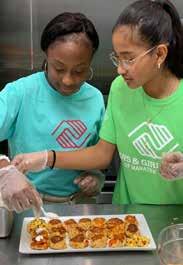
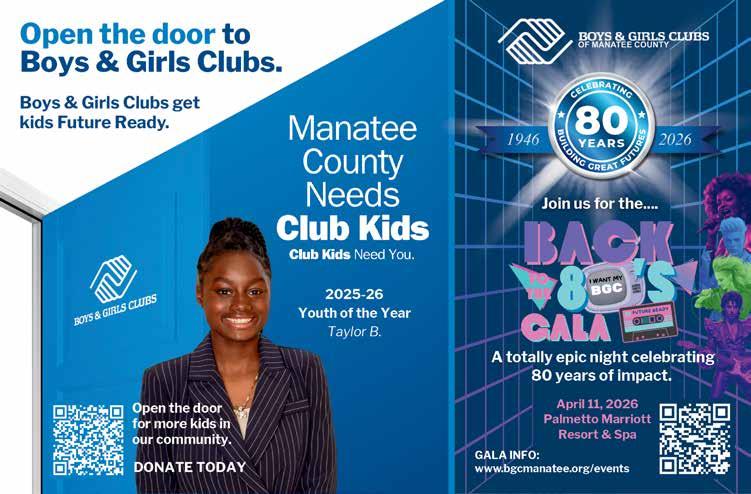
The Boys & Girls Clubs of Manatee Turns 80
WRITTEN BY Beth Deyo
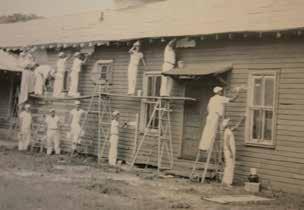
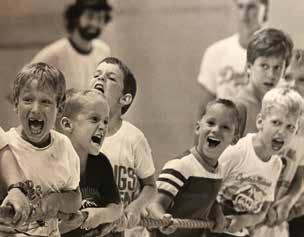
The Boys & Girls Clubs of Manatee County got its start in an old wood-frame building that had been used as a field house for major league baseball teams training in Bradenton. It didn’t look like much from the outside, but for generations of Manatee County kids, those humble beginnings were the start of something life-changing.
As the Clubs expanded over the years, they became a place where a future sheriff learned about leadership, a state senator built the confidence to serve, a mayor found his voice, and thousands of kids discovered they were capable of more than they ever imagined.
Over the past 80 years, the Boys & Girls Clubs of Manatee County have transformed countless young lives, proving what’s possible when kids are given a safe space to dream, explore, and discover who they’re meant to be.
A Look Back at the Past
The story began in 1946, when the Bradenton Kiwanis Club set out to solve a common problem: How do we give our local kids a safe place to spend their time after school? Inspired by the Boys Club of America, they set out to create a similar experience in Manatee County.
Initially, the space was far from fancy, but it didn’t need to be. What mattered was that kids had a place to go, adults who cared, and activities that kept them engaged.
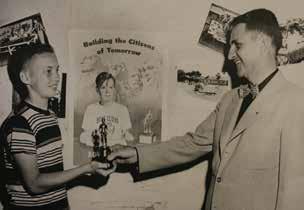
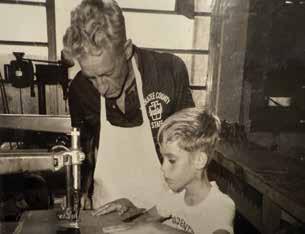
In the early days, “Club Kids” often spent their afternoons boxing, jumping on the trampoline, learning woodshop, and even practicing marksmanship out on the gun range. There was also baseball, basketball, and other activities that offered structure and taught the value of teamwork and discipline.
In the 1960s, the Club expanded, opening new locations in Palmetto and Bayshore Gardens in Bradenton, which was replaced by a new facility and renamed the DeSoto Boys’ Club in 1968.
For a full 46 years, the Clubs “belonged to the boys.” But in 1992, the Clubs finally opened their doors to girls, officially becoming the Boys & Girls Clubs of Manatee County.
Timeline: 80 Years of Impact
1946 – Boys’ Club of Manatee County opens in February in an old wood-frame clubhouse on Ninth Street, made possible by the Bradenton Kiwanis Club.
1951 – Kiwanis Club constructs a gymnasium at the Bradenton Boys’ Club.
1960 – Palmetto branch opens in November in a small frame building.
1965 – Bayshore Club opens in a loaned storefront at Bayshore Gardens Shopping Center.
1968 – DeSoto Boys’ Club opens at 53rd Avenue and 34th Street W, replacing the Bayshore Club.
1971 – New Palmetto branch built to replace the original 1960 building.
1992 – “The Girl Invasion”—Clubs officially become Boys & Girls Clubs of Manatee County.
2003 – Harllee Middle School becomes the first schoolbased Club.
2010 – New Palmetto Club opens, replacing the 1971 facility.
2019 – Brand-new DeSoto Boys & Girls Club opens its doors.
2026 – Celebrating 80 years of building great futures. The Clubs currently serve 2,500+ young people at five locations.
The Next Generation
In 2003, Harllee Middle School became the first school-based Club location. Today, three schoolbased Clubs operate at Daughtrey, Rogers Garden-Bullock, and Oneco elementary schools.
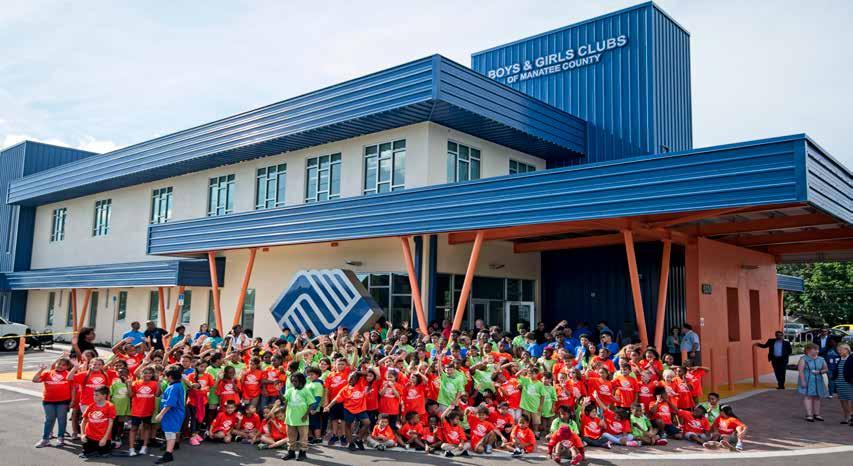
In 2010, a brand-new Palmetto Club opened, replacing the 1971 building. Then, in 2019, came the crown jewel: the state-of-the-art DeSoto Boys & Girls Club that literally made kids gasp when they walked in.
President and CEO Dawn Stanhope remembers that moment vividly. “It was so impactful to see the kids walk in and marvel at every inch of the building,” she said. They kept asking the staff, “Is this all for us?”
The answer was yes. All of it, every inch of intentional design, every program, every opportunity, existed for them.
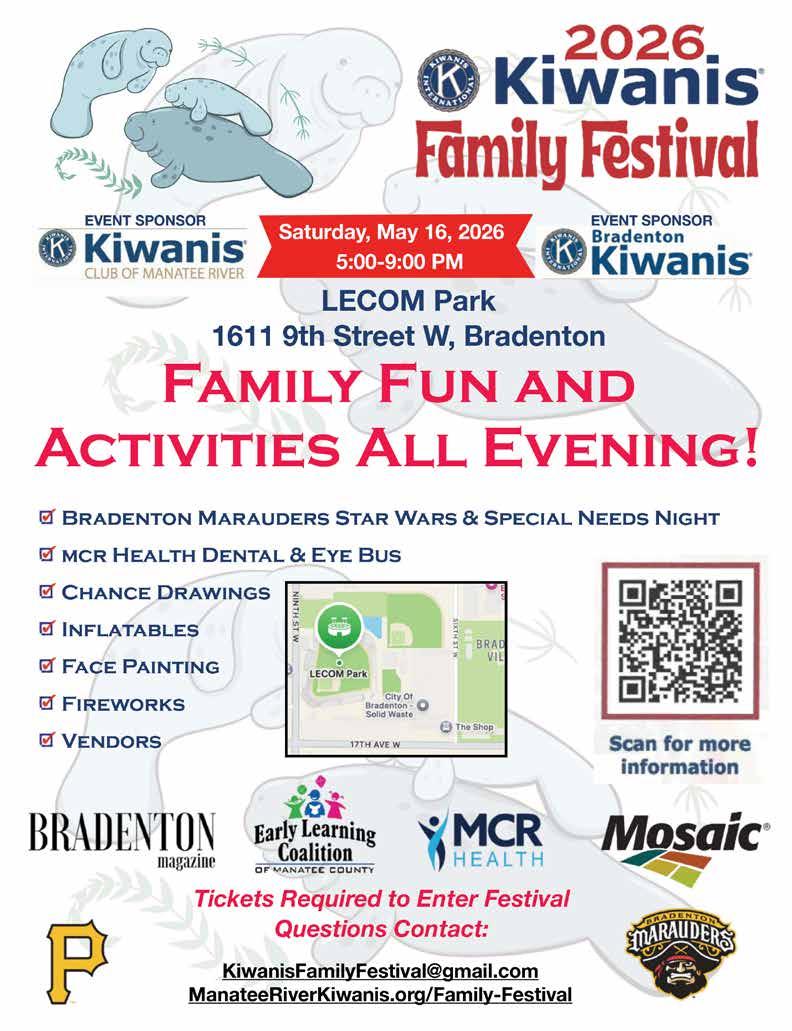
Over the years, the partnerships have deepened, too. The baseball program culminates each season with an all-star competition among the five Clubs, played at LECOM Park on the professional field with players from the Bradenton Marauders coaching and guiding the kids. The Pirates and Marauders organizations have given back to the Clubs for decades, showing the kids firsthand that their community is invested in their success.
Meeting Kids Where They Are
Many things have changed over the past 80 years, but the Clubs’ mission remains the same: to give all kids the ability to reach their full potential as productive, caring, and responsible citizens.
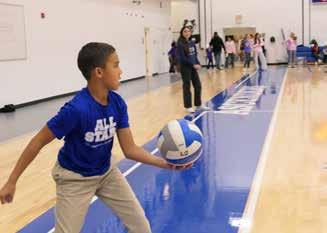
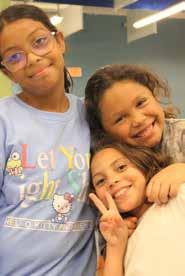
On any given day, Club programs might help kids learn critical life skills, become better leaders, or explore future career opportunities. But they also get the chance to just be kids – playing, creating, laughing, making friends, and building memories in a place where they’ll always feel welcome.
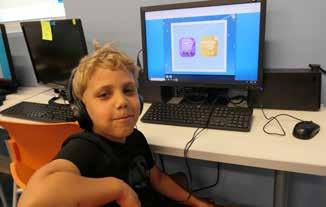
“The model works well because the kids are at the center of it,” Stanhope explained. “Instead of forcing outdated programs, we stay relevant by asking the kids what they actually want to do, what interests them, and what gets them excited about learning.”
Mental health support has also become a major focus. The Clubs partner with trained, credentialed professionals who provide tools and strategies for kids dealing with challenges that previous generations never faced.
“Providing a sense of security, safety, and love is at the heart of what we do,” Stanhope said. For kids navigating tough situations at home or school, the Clubs provide consistency, with adults who show up for them day after day, and year after year.
The Proof Is in the People
You don’t have to look far to find solid proof of the Clubs’ positive impact. Gene Brown attended from 1975 to 1985 and is currently the Mayor of the City of Bradenton. Omar Edwards, a Club Kid from 1979 to 1989, is now Associate Director of Strategic Planning Initiatives for the School District of Manatee County. Florida State Senator Jim Boyd attended the Club in 1966, and Retired Manatee County Sheriff W. Brad Steube attended from 1963 through 1969.
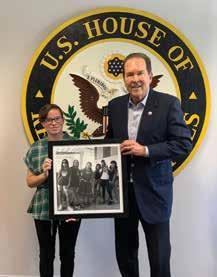
And then there’s Sam, a shy girl who faced many challenges, including severe bullying, poverty, and homelessness. Through her time in the Club, she discovered a passion for art, which led to eight collaborative art exhibits, a Congressional Art Competition first-place award, and a full scholarship to Ringling College of Art and Design.
“My participation with the Boys & Girls Clubs changed my life and made my goals a possibility,” Sam wrote in her college essay. “These amazing experiences have made me stronger and have made me realize this is just the beginning of my story.”
These are just a few of the Clubs’ success stories. They aren’t coincidences. And they’re not lucky breaks. They’re the result of what happens when you show kids what’s possible and help them shape their futures.
Join the Celebration
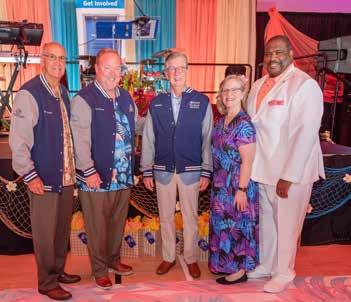
The Boys & Girls Clubs of Manatee County is marking this 80th anniversary with two signature events. The Back to the 80’s Gala will be held on April 11 at the Palmetto Marriott Resort & Spa, and the Keeping Kids Safe Golf Invitational takes place September 28 at The Ritz-Carlton Members Golf Club. Visit BGCManatee.org/events to learn more.
Spring for Impact
Imagine the impact of helping a Manatee County student become the first in their family to graduate from college.
At Take Stock in Children of Manatee County, education is more than a goal—it’s a pathway out of poverty. With the support of our community, students facing financial hardship gain the tools, guidance, and opportunity to succeed.
Through one-on-one mentorship, college readiness support, and post-secondary scholarships, Take Stock Manatee empowers students to stay on track from middle school through college graduation. Since 1996, more than 1,100 scholarships have been awarded—opening doors to higher education and long-term stability for students and their families.
Your investment supports more than tuition. It helps cover essential needs like technology, housing, and other barriers that too often stand between students and their degrees.
This spring, plant the seeds of possibility. Support a future. Change a life.
Scan the QR code to donate or mentor today and help a student achieve their dream of college graduation.
Learn more at manateetakestock.org
Pirates return in February to friendly confines of LECOM Park
WRITTEN BY LISA NIFF
The Pittsburgh Pirates settle in Bradenton in February to capture hearts, build momentum, and train for the long season ahead.
And boosters of the Bucs will pack LECOM Park, 1611 Ninth St. W., seeking autographs, savoring hot dogs, basking in the return of spring ball, and hoping the preseason preparation propels their team through the regular season — and into October.
Yes, the 2026 spring training season begins in late February and Bradenton will welcome the Pirates to LECOM for just over a month of America’s favorite pastime.
Spring training in Florida dates back more than a century to 1888, when the Washington Nationals trained in Jacksonville for the regular season. Bradenton’s field was built in 1923 and the Pirates — the sixth Major League team to call Bradenton home — arrived in 1969.
The team comes to condition bodies, hone skills, test strategies, and create chemistry.
The business communities and government leadership welcome spring training, an economic driver not just for the Bradenton area but across the Sunshine State with an estimated annual economic impact of $687 million, according to the Florida Sports Foundation.
As for the fans, they turn out for a tradition that involves seeing the major competition and big-league ball players in intimate ballparks.
“Spring training is one of the best times of the year for fans to get autographs” said Jeff Podobnik, the Pirates’ vice president for Florida/Dominican operations,.
He added a tip: “Make sure you get to the park right when the gates open and head down by the home clubhouse in right field. We created an autograph zone for the fans right as the players are coming and going out of the clubhouse.”
Major League Baseball’s preseason opens Feb. 20 with a couple of games. On Feb. 21, MLB’s full rooster of teams in Arizona’s Cactus and Florida’s Grapefruit leagues play.
Under the direction of manager Don Kelly, the Pirates open spring training Feb. 21 in Sarasota, against the Baltimore Orioles, and then return to Bradenton for the home opener.
“We are excited to kick off the spring training season at LECOM Park on Sunday, Feb. 22 versus the Tampa Bay Rays,” said Podobnik. “The following day, we host the New York Yankees.”
The Pirates’ spring-training schedule consists of 31 games, 16 of them at LECOM.
Homestands include a game against the St. Louis Cardinals March 5 — the first time hosting them since 1998, Podobnik said.
Next up, on March 6, the Pirates take on the Philadelphia Phillies. “Always a great matchup,” Podobnik noted.
Photos Courtesy of the Pittsburgh Pirates
Highlighting the short season will be matchups between MLB clubs and international teams preparing for the 2026 World Baseball Classic. On March 3, the Pirates will host Team Colombia, marking their fourth all-time matchup against a World Baseball Classic team. Previous opponents included the Netherlands in 2009, Spain in 2013, and Dominican Republic in 2017.
Another highlight is the annual Spring Breakout game that serves as a prospect showcase. The Detroit Tigers prospects take on the Pirates prospects at LECOM on March 20.
“We hosted the first-ever spring breakout game in 2024,” Podobnik said. “This year’s game includes potential matchups of MLB’s Nos. 1 and 2 prospects Konnor Griffin (Pirates) and Kevin McGonigle (Tigers).”
The Pirates play the Houston Astros on St. Patrick’s Day at LECOM and end the spring season hosting the Atlanta Braves on March 23. “We finish the season with six home games in seven days,” said Podobnik.
All that spring play leads to March 26 — MLB’s Opening Day — with a 14-game slate, including the Pirates facing the Mets in New York.
Not all Pirates depart Bradenton at spring training’s end. The team maintains a year-round presence in the city.
“The Florida operations staff, Bradenton Marauders staff, and several player development staff all live in the Bradenton area,” Podobnik said. “We believe in giving back to our community. Several of the staff sit on community boards, nonprofits, and other groups in the Bradenton area.”
He added that Bradenton Marauders and their mascot Marty attended 130 events in 2025. The Marauders are the Pirates’ Single-A affiliate and, when spring training ends, their season begins. The team opens its regular season on the road April 2, playing the Dunedin Blue Jays. The first homestand begins April 7, with a six-game series versus the Palm Beach Cardinals.
Altogether, the Marauders’ regular season features 66 home games, a summer of baseball, and community fun that concludes with a six-game series against the Lakeland Flying Tigers Sept. 1-Sept. 6.
The summer schedule also includes continued work to improve and expand the experience at Ninth Street West and 13th Avenue West in Bradenton, as the City Park Project moves forward to create a hub for economic and recreational activities.
Plans call for expanding LECOM Park to include a third field, additional parking and facilities, along with a public park, concession and market space, public art, and areas for after-school and community programs.
The project partnership involves the city of Bradenton, Manatee County, the School District of Manatee, and the Police Athletic League, and the targeted completion date is mid-2028.
“The next stage is to complete stormwater design and begin construction on that portion of the project, which will prepare the site for vertical construction,” said Tiffany K. Shadik, Bradenton’s public information manager.
The construction on stormwater improvements is planned to begin after spring training concludes,so spring at LECOM Park is all about sunshine, sliders, and spring training.
“We are excited to welcome the Pittsburgh Pirates back to Bradenton,” Shadik said. “Spring training brings visitors to our community, supports local businesses, and gives both residents and visitors the opportunity to enjoy everything Bradenton has to offer.”
For tickets and information:
LECOM Park is at 1611 Ninth St. W., Bradenton.
For more about Pirates spring training, including ticket details, go to mlb.com/pirates/spring-training or call 941-747-3031.
For more about Marauders baseball, go to bradentonmarauders.com or call 941-747-3031.
Spring training: By the numbers
The Florida Grapefruit League hosts 15 Major League Baseball teams. In 2025, 1,448,778 fans attended 231 Florida spring training games, for an average of 6,272 fans per game, according to the Florida Sports Foundation.
At Bradenton’s LECOM Park in 2025, the Pirates played 15 games for a total attendance of 86,124, averaging 5,742 fans per game. The largest crowd, 7,568, attended the March 22 game when Pirates played the Baltimore Orioles. Since 2000, 37,180,383 fans have attended spring training games in Florida.
Del Couch Foundation Where Talent Gets a Real Chance to Grow
WRITTEN BY SHELLY WEST
Walk into Del Couch’s office in Bradenton and you quickly realize he isn’t interested in cookie-cutter talent pipelines. He’s interested in people—especially young artists—finding their own voice and learning how to protect it.
Through the Del Couch Foundation, Couch and his team help students and aspiring performers explore music in a way that feels personal, practical, and creatively free. The foundation works with young musicians from across the community, and Couch is clear about why that matters: most traditional music programs have to follow strict guidelines. His work is different. “We deal with each student individually on a creative basis,” he explained. “You come in, you want to learn this, this, and this—that’s what you learn.”
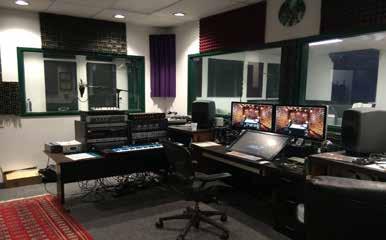
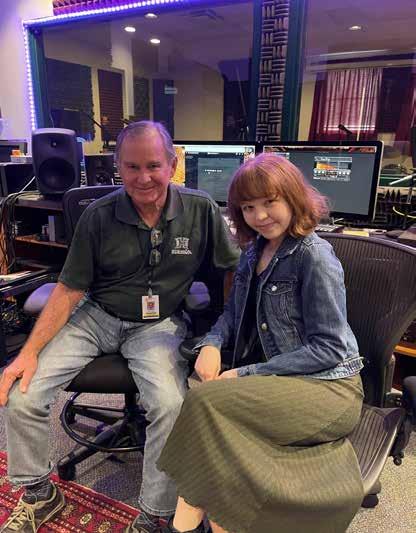
A cornerstone of the foundation’s impact is Couch’s long-standing studio partnership at Manatee School for the Arts, which he has been running for 11 years. The studio gives students hands-on access to real-world recording and production in an environment designed to meet them where they are—whether they’re learning an instrument, writing songs, building stage confidence, or diving into audio engineering and commercial music.
Couch has seen what happens when students are mentored with both skill and honesty. Some have gone on to build significant momentum, including recognizable names like Sam Woolf, who began working with Couch as a young teen and became a hometown favorite during his run on American Idol. Another is Bella Garland, a rising songwriter whose path has included major songwriting recognition and collaborations—an example, Couch says, of what can happen when a student’s creativity is taken seriously and guided the right way.
But one lesson Couch returns to again and again is simple: creativity can’t thrive when it’s controlled. He described moments where a student’s talent unlocked the second pressure stepped out of the room—when a parent stepped aside and the artist finally sang the way they truly felt the song. “You’ve got to let the students develop their creativity,” he said. “That’s the secret to the whole thing.”
The foundation’s work also includes the practical support many families don’t expect, which is access to instruments and gear through community donations. From guitars and amps to drum sets—and even rare, high-end instruments that students can use in the studio—Couch sees every donation as a way to remove barriers for the right kid at the right moment.
If you have a child (or you are the adult) with a spark for music, don’t wait for the “perfect time” or the “perfect plan.” Reach out, schedule a visit, and step into the studio environment for a conversation. And if you have instruments sitting unused in a closet or garage, consider donating them—your forgotten guitar or keyboard could be the exact reason someone else finally gets to begin.
For more information visit: delcouchmusicedfoundation.org
Del Couch and Bella Garland
Spirits of Ybor City
WRITTEN BY LIZ REED
Ybor City was founded in 1886 by Vincent Martinez Ybor. American tariffs on imported cigars and political trouble in Cuba made the cigar companies move to America, making Ybor the cigar capital of the world. This attracted thousands of Cuban, Spanish, and Italian immigrants to a multi-ethnic community.
The decline in the cigar industry due to the Great Depression, which brought lack of sales, and the new machines doing the rolling caused businesses and people to leave the area.
The workers who stayed behind asked for more money as hand-rolling was a craft that a machine could never do. The workers went looking for help to have someone back them. That’s when the mafia really moved in. With Tampa being within nine miles, it opened a whole new area. The Ybor Mafia controlled the gambling and bootlegging. They especially ran “La Bolita,” a numbers game from prohibition and on. The “dean of Tampa’s underworld,” Charlie Wall ran the mafia from the late 1800s to the 1950s, controlling everything from elections to the numbers game.
During this time, he was involved in a turf war with Ignazio Antinori. The Era of Blood ended with the death of Antinori and several other gangsters.
This gave Santo Trafficante, Sr., the chance to move in and take over the mafia. He said he was going to spare Charlie Wall’s life. But did he? In April of 1955, Charlie was found in his home, his head beaten in by a baseball bat and his throat slit ear to ear. Santo Trafficante, Jr., took over after his father. He became one of the most powerful mob bosses in the U.S.
Today Ybor has changed. Little shops and restaurants abound and let’s not forget the roosters wandering around the streets. But when the skies turn dark, the spirits come out.
Charlie Wall
The Cuban Club is supposed to be one of America’s most haunted buildings. You’ll find an array of spirits from the lady in the white gown who is seen through the building to “Little Jimmy” who drowned. People also hear phantom piano music, and there was a tragic suicide that happened on stage. Spirits of old club members are heard carrying on conversations.
JC Newman Cigar Factory is another hot spot to find the spirits. Security and staff have reported seeing orbs of lights, strange sensations, and the feeling of the old workers still doing their jobs.
Spooky Easy Lounge has its own spirit that likes to hide out in the downstairs women’s bathroom. It likes to come out and give you a scare when you’re in there.
Centro Espanol is haunted by the spirit of a man who died trying to break open the safe in 1908.
At the Florida Brewery, the tallest building in Ybor, two guests drank too much and got into an agreement over beer. One of the young men suffered serious head injuries and ended up dying. His spirit is said to still be there. Objects move on their own, slight breezes are felt like someone walking past you, and, when it’s quiet, you may hear a voice in Spanish, and a little drunk still yelling about the beer.
The Don Vincente Inn was built in 1890.One of oldest building in Ybor, it was dubbed “Hotel Hell” the Travel Channel. In all the years this building has stood, it has seen a lot of deaths. There are reports of lights flickering on and off, footsteps are heard when no one is around, and faucets turn off and on.
Room 302 seems to be the most active. An apparition of a man is seen standing at the foot of the bed. The most famous ghost is Jose Luis Avellanal, son of Dr. Avellanal. When the Inn was a medical clinic, Dr. Avellanal worked there, mostly to treat the people his son had injured. Legend says that his son impersonated his father and performed fatal procedures. He would use the underground tunnels to dispose of bodies and take them to the incinerator.
Don’t forget all the gangsters who were killed and are still wandering around. Keep an eye out when passing someone on the street. You never know if it’s the spirit of a gangster out and about for the night.
I hope you go on a tour one night and visit some of these hot spots and have a chat with a spirit or two.
LIZ REED, CO-FOUNDER OF PSOBFL AUTHOR OF HAUNTED MANATEE COUNTY OWNER OF DOWNTOWN BRADENTON GHOST WALK paranormalsocietyofbradenton.wordpress.com
Quarterly Catch-Up
WRITTEN BY SHELLY WEST
The first quarter of the year brought a mix of progress, community pride, and big-picture conversations across the Bradenton area—from waterfront stewardship and local government updates to new parks, schools, and initiatives designed to support families. Here’s a quick look at a few of the most notable developments shaping the region as 2026 got underway.
Cruise Port Proposed
One of the biggest civic conversations early this year centered on a proposed cruise terminal concept near the Sunshine Skyway Bridge. The idea quickly drew public attention because of its potential ripple effects—everything from traffic and infrastructure questions to what a new cruise operation could mean for the surrounding waters and nearby communities.
As the proposal entered the public arena, residents, environmental advocates, and local leaders voiced concerns and asked for clarity on how such a project would be evaluated. The discussion set the tone for a year in which growth pressures and waterfront stewardship remain front-and-center across Manatee County.
It Takes a Village
Cortez launched a new community education initiative, It Takes a Village, designed to spotlight the link between a healthy estuary, sustainable seafood, and Cortez’s historic working waterfront. The effort is rolling out practical, visitor-friendly tools—bilingual signage, restaurant table cards, walking guides, and a new web page—to help locals and tourists understand how everyday actions can protect Sarasota Bay.
The initiative was introduced during Cortez: Coffee, Culture & Conservation on January 31, where the community gathered to learn more about the project and its goals. The program also included a guided visit to the restored FISH Preserve, highlighting the ongoing work to improve habitat, expand public access, and protect the coastline through long-term community stewardship.
Hidden Harbor Park Opens in Parrish
Parrish welcomed a new recreational space as Hidden Harbor Park opened, giving families and outdoor enthusiasts a fresh place to spend time outside. The park includes a playground, sand volleyball courts, walking paths, and a pump track built for riders of different ages and skill levels—an especially exciting addition for the area’s growing number of active families.
The park is located across from the Fort Hamer Boat Ramp, making it a convenient stop for residents who already frequent the riverfront. Temporary restrooms are available while the permanent facilities move through final permitting.
Manatee County Breaks Ground on New Lakewood Ranch-area High School
In a visible sign of East County’s continued growth, the School District of Manatee County broke ground on a new high school in the Lakewood Ranch area. The campus—described as the district’s eighth high school—represents one of the most significant education expansion moves underway as enrollment continues to rise.
For many families, the groundbreaking felt like a milestone moment: planning turning into progress, and progress turning into real capacity. As construction begins, the project is expected to shape everything from future zoning conversations to traffic patterns and community development around nearby neighborhoods.
Harbor58 Continues Progress
A local housing initiative focused on young adults transitioning out of foster care continued moving forward this quarter. The effort is designed to address a difficult gap—what happens when teens reach adulthood and suddenly need stability, housing, and support without the built-in safety net many peers still have.
In early 2026, the project remained in an active development phase, reflecting sustained momentum around building solutions that are both practical and compassionate. It’s an example of how community investment isn’t only about roads and buildings—it’s also about the systems that help young people build a foundation for adulthood.
Connected Manatee Helps Stabilize Families
A new community initiative launched this quarter with a simple goal: help families stay housed and supported before a crisis disrupts a child’s education. Connected Manatee, introduced by Turning Points, is designed to meet families where they already are—through schools—so getting help feels accessible and immediate rather than overwhelming.
The pilot focuses on early intervention and practical support, including guidance through available resources, help to navigate benefits, and assistance aimed at preventing eviction when possible. By keeping families stable, the program also helps students keep routines intact, showing up, staying engaged, and continuing to learn without the added stress of sudden displacement.
Spirit of Manatee Honorees Announced
Spirit of Manatee highlights the people quietly strengthening our community.
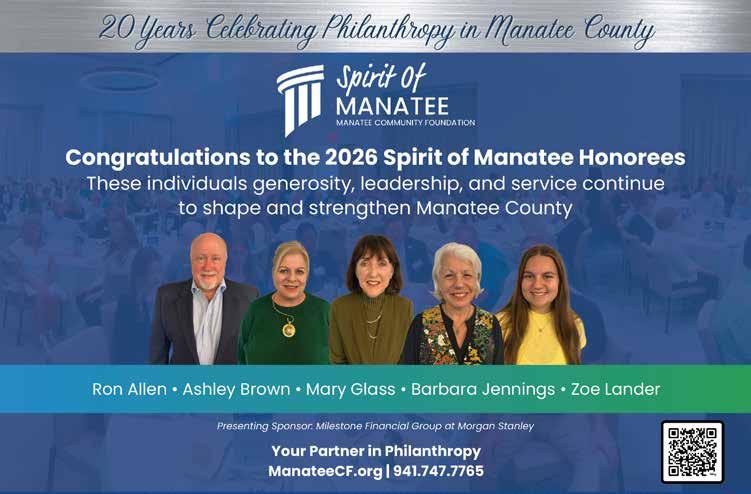
In January, Manatee Community Foundation announced the Spirit of Manatee honorees—recognizing local individuals for service, leadership, and long-running commitment to improving life across Manatee County. The annual honor spotlights a range of impact, from nonprofit leadership and civic involvement to youth volunteerism, celebrating the kind of steady “show up and help” spirit that keeps a growing community connected.
Readers can view the full list of 2026 recipients and award categories on the Foundation’s website under Spirit of Manatee, where the honorees are posted alongside event details for the annual celebration (held this year in late March).