Architect with a musical background, seeking an internship to apply my design and problem-solving skills. My experience in music has enhanced my ability to create userfocused experiences and I am eager to grow in a dynamic, hands-on setting.
CLEMSON UNIVERSITY | Clemson, SC
B.A. Architecture
B.A. Performing Arts—Trumpet
GPA: 3.97/4.00
189 Credits Completed
KING GEORGE HIGH SCHOOL | King George, VA
Advanced Studies Diploma
Commonwealth Governor’s School
GPA: 4.4/4.0
FIRST BAPTIST CHURCH OF CLEMSON | Clemson, SC
Music Intern - Lead Trumpet
Lead trumpet of a 30 member choral/instrumental ensemble with weekly, hour-long performances for a 300+ member congregation. Developed strong organizational and leadership skills while collaborating with team members to deliver high-quality performances. Applied creativity and problem-solving abilities in performance arrangements and logistics, enhancing the sermon experience.
WOODSTOCK GARDENS | King George, VA
Design, Production, and Vendor
Design and manage website and marketing materials for family-owned business. Handle cash and digital transactions of 60+ customers weekly, manage inventory of 150+ plants, and foster relationship building at weekly farmers’ markets. Curate plant selections, ensuring quality and growth, and overseeing day-to-day operations.
LEADERSHIP & PROFESSIONAL DEVELOPMENT
CLEMSON UNIVERSITY SYMPHONY ORCHESTRA | Clemson, SC
Leadership Team
Direct a team of 5 members and independently design, organize, lead, and manage concert and rehearsal events, including lobby design, children’s art projects, team-building activities, and charitable service events. Concert events attracted younger concertgoers, raising attendance by nearly 25%. Coordinate with production team for concert needs and stage organization, streamlining concert flow. Demonstrate success in fundraising, advertising, library management, and arts administration.
Principal Trumpet - Brass Section Leader
Lead sectionals and head musical direction. Work with other section leaders to address rehearsal needs, maintain performance standard, and mediate between the ensemble and director. Utilize collaborative leadership to create an expressive musical performance for 80 musicians.
BARCELONA ARCHITECTURE CENTER | Barcelona, Spain
Study Abroad
HONORS & AWARDS
SKILLS
Completed coursework in Barcelonian history and culture and building technologies. Collaborated with Spanish architects to analyze, synthesize, and contextualize Barcelonian Architecture within modern and historical climates. Exercised problem-solving skills and gained global awareness in adapting and navigating new culture.
TAU SIGMA DELTA ARCHITECTURE HONORS
PRESIDENT’S LIST
VINCENT SCHOLARSHIP ENDOWMENT
CLEMSON UNIVERSITY TIGER BAND ASSOCIATION SCHOLARSHIP
JANSEN FAMILY ENDOWMENT
MU BETA PSI MUSIC AWARD
Adaptability
Creative Problem Solving
Communication
Initiative
Resilience
Advanced Trumpet
Advanced Music Theory
Intermediate Piano
SOFTWARE
Rhinoceros
3D | Advanced
Adobe Illustrator | Proficient
Adobe InDesign | Proficient
Adobe Photoshop | Proficient
AutoCAD | Proficient
Musescore | Proficient
Adobe Audition | Beginner
D5 Render | Beginner
Grasshopper | Beginner
Revit | Beginner
FABRICATION
3D Printing
Cement Casting
Hand Sketching
Lasercutting
MIG Welding
SPECIAL CLASSES
Acoustics
I am an architect, but I was a musician first. Music is composed with respect to the venue it will fill—hip hop is written for a car stereo and arias are written for Gothic cathedrals. In this same way, architecture must be designed with user experiences in mind. After all, architecture is the manifestation of how we shape our world. Long after we lay in the earth, the built footprint we leave will carry on our legacy. Architects must create a narrative worthy of such dignity.
Everything I have created takes shape from the lens of someone who breathes life into a sheet of paper dotted with ink. I create tailored experiences. From the strength of a note when voicing a chord to managing pitch tendencies within the context of entire symphonies, every detail must be considered and given due importance, able to both stand alone and blend harmoniously into the existing texture.
Architecture is a symphony; It’s a beautiful adventure for the senses—one that will last for a long time.
“Architecture is frozen music. The building the sound, the space we occupy the silence.”
-Johann Wolfgang von Goethe
01 02 CULTURAL WATER PROMENADE CLEMSON DOWNS BRIDGE
WATERFRONT REVITALIZATION HEALING HELENE BARCELONA, CATALONIA, SPAIN CLEMSON, SC
OBJECT STUDY ARTS CENTER
IMAGINARY CAYCE, SC
01CULTURAL WATER PROMENADE
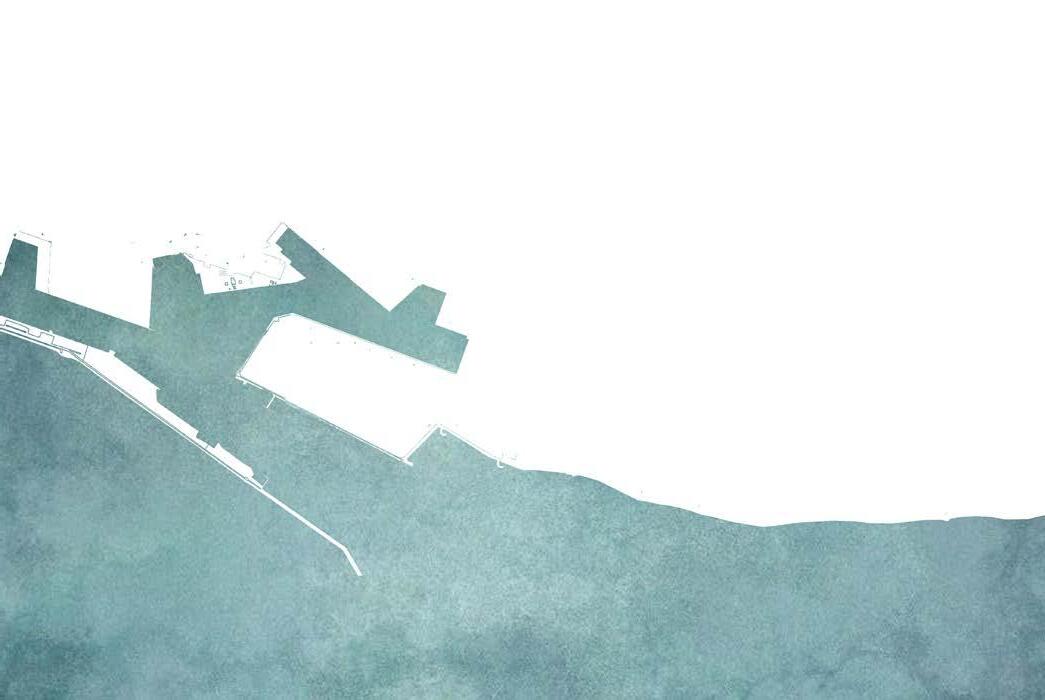
Barcelona’s coastline is ephemeral. The currents of the Mediterranean Sea remove at least 30,000 m3 of sand annually along a 4.5 km coast. If not for a series of breakwaters, this number would be much greater. As it stands, these breakwaters function only as an artificial resistance to the forces of nature. What if we could design a secondary use for these structures? Is there a beneficial program that revitalizes and reimagines the coastline? How could we not only give permanence to the beach but also connect with the ancient city?
INTRAMETROPOLITAN WATER MANIPULATION
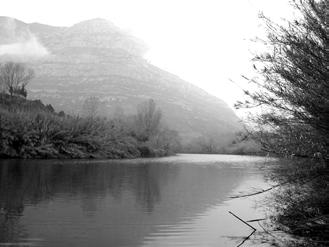
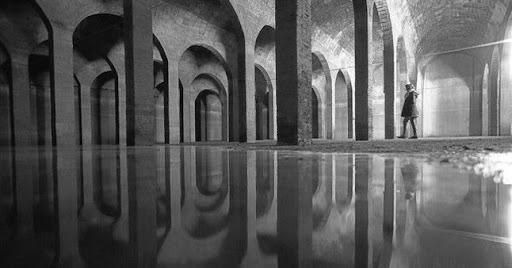
Water has shaped the identity of Barcelona. From historic Roman Aqueducts to medieval irrigation systems to Barcelona’s Modern Metro System to the development of the coastline, Barcelona has always held a strong connection to water. When studying the relationship between aquifers and ornamental fountains, we discovered a lack of congruence between the two entities. Instead, the fountains are powered with potable city water. As Barcelona has an arid climate and extensive drought seasons, we must question whether decoration is a responsible use of a limited resource. How can we use architecture to rewrite the idea of a fountain and frame water with a sustainable and environmentally conscious design?
1. Surface River
2. Delta Sediment
3. Ornamental Fountain
4. Subterranean River
5. Rec Comtal Irrigation
Subterranean River
Ornamental Fountain
Delta Sediment
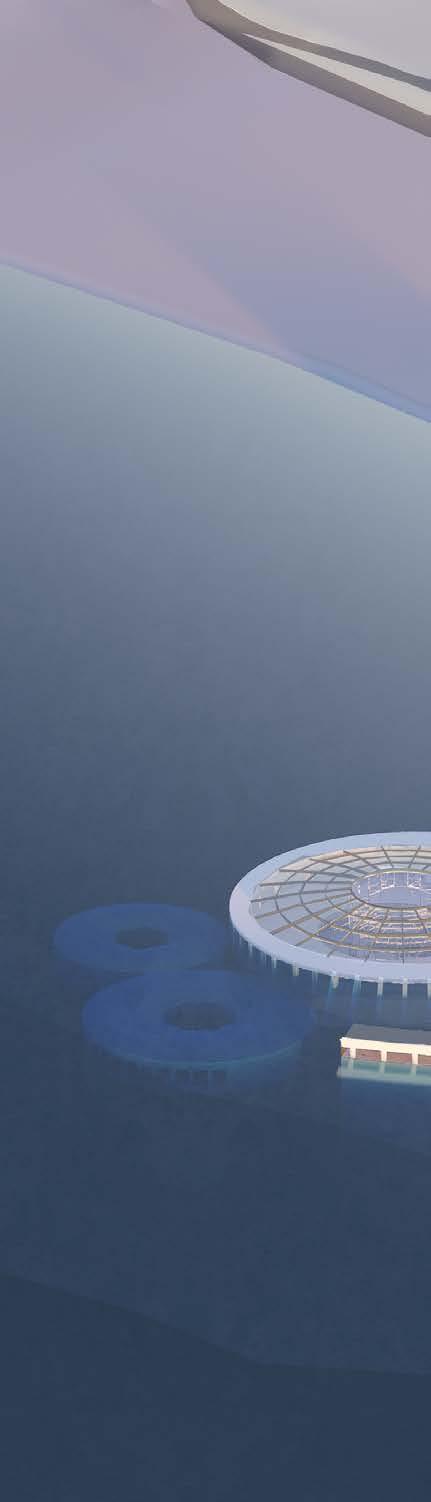
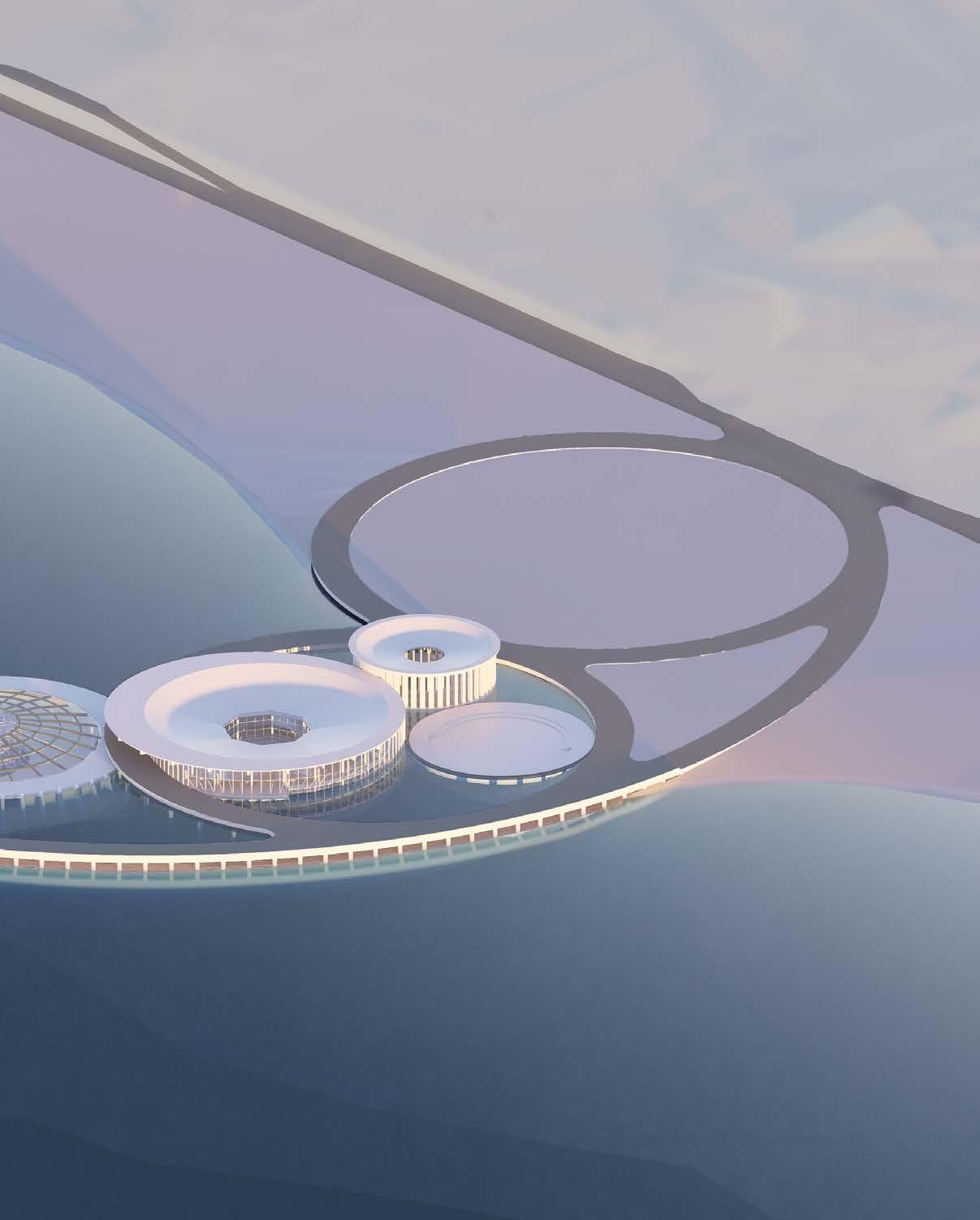
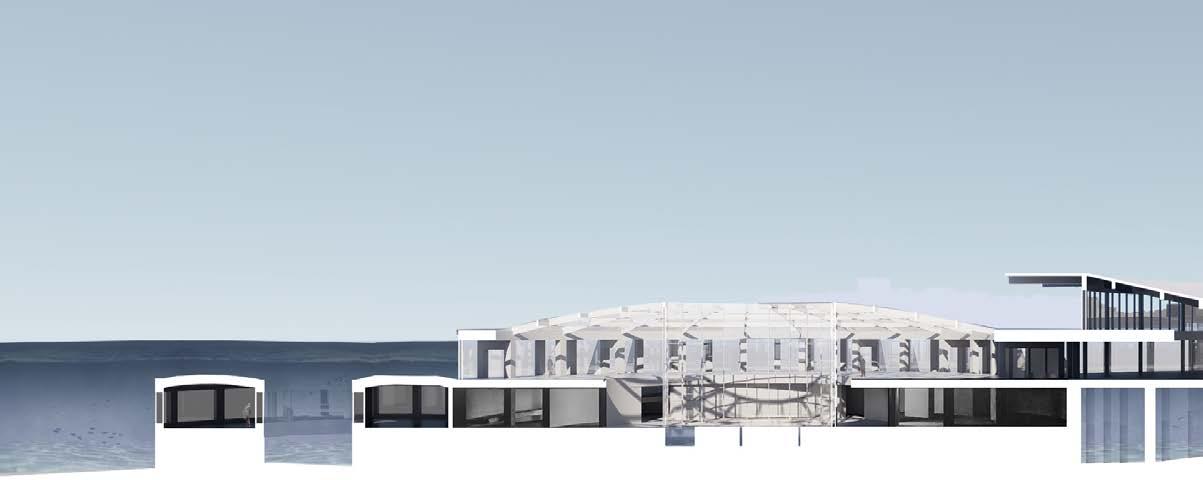
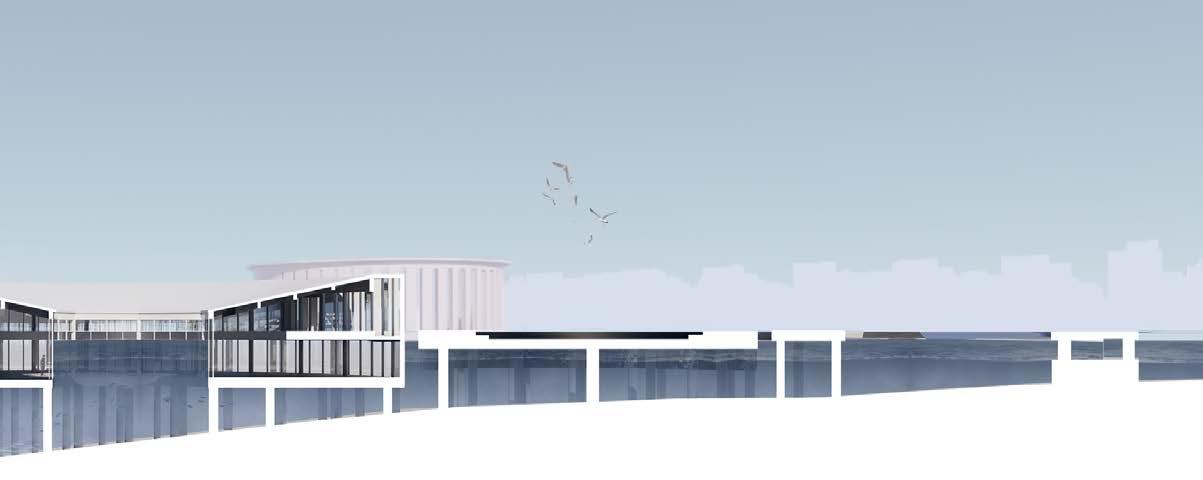
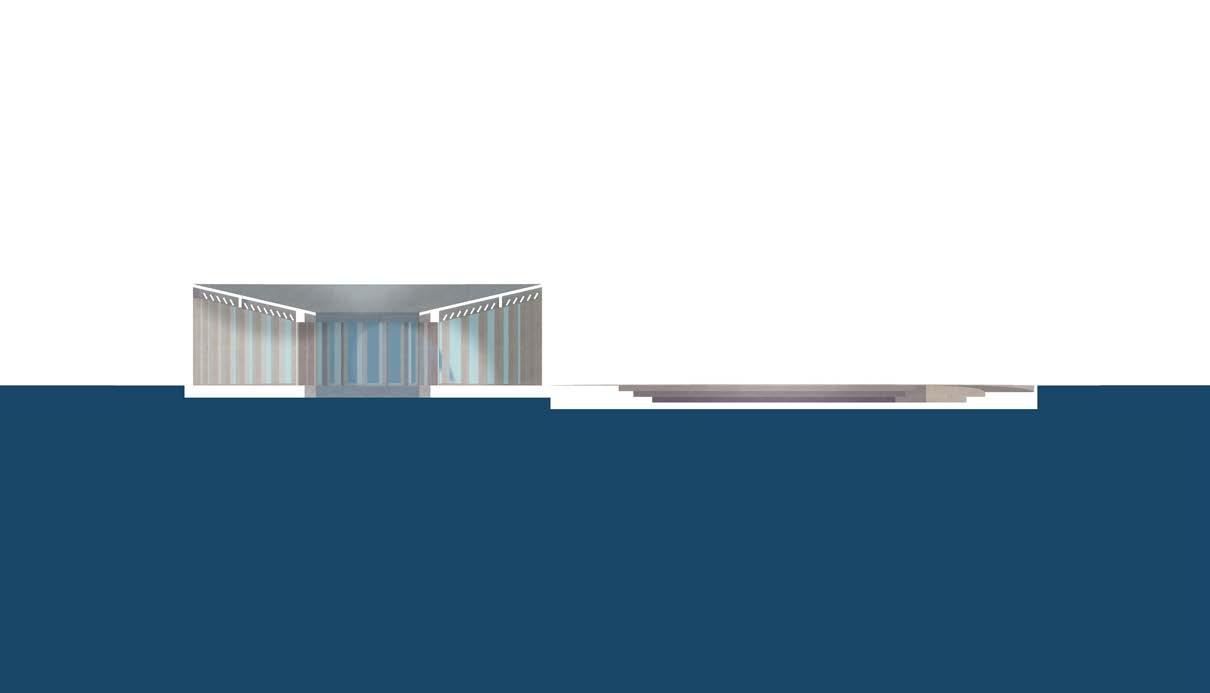
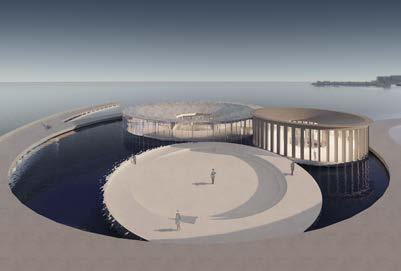
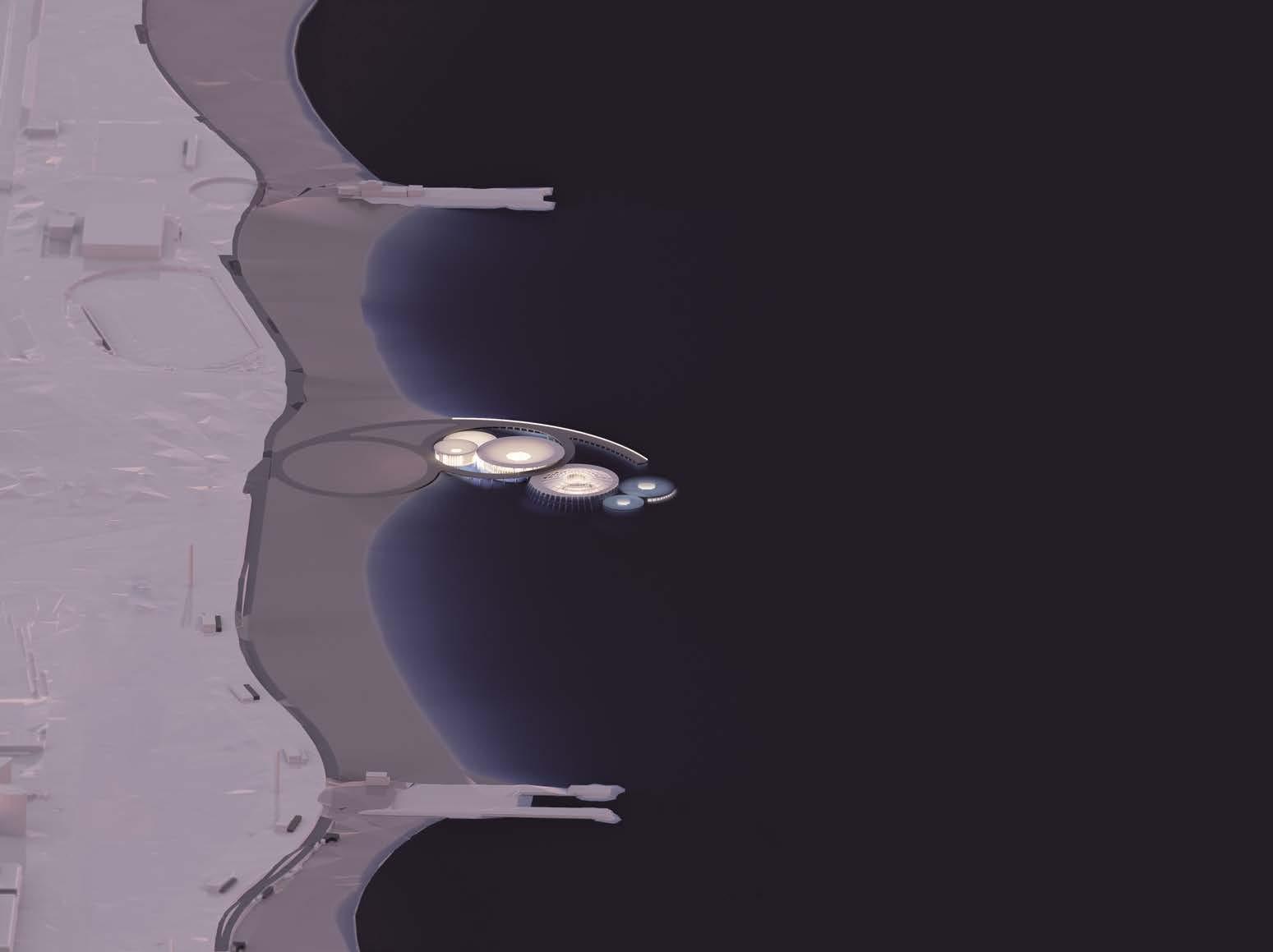
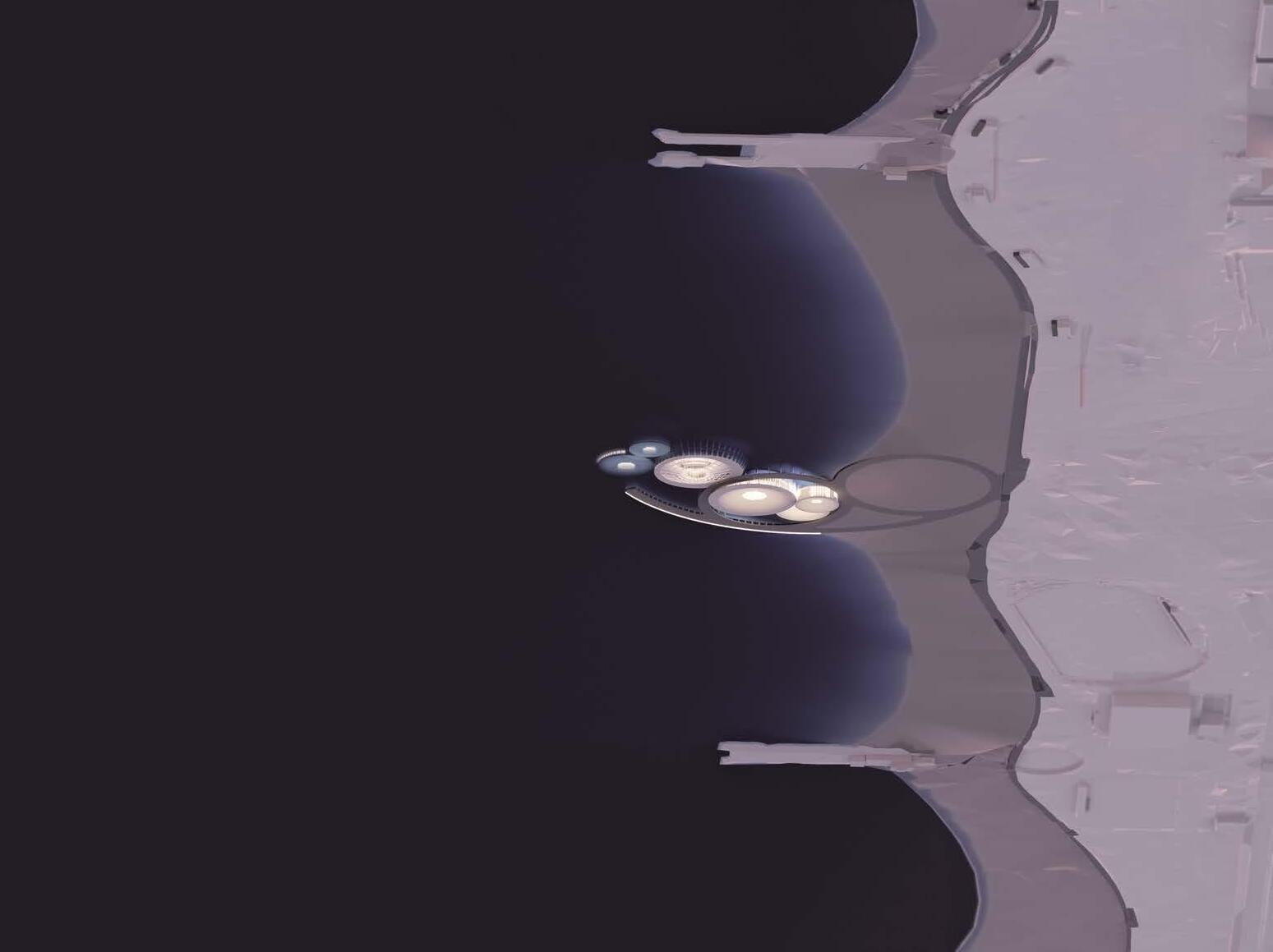
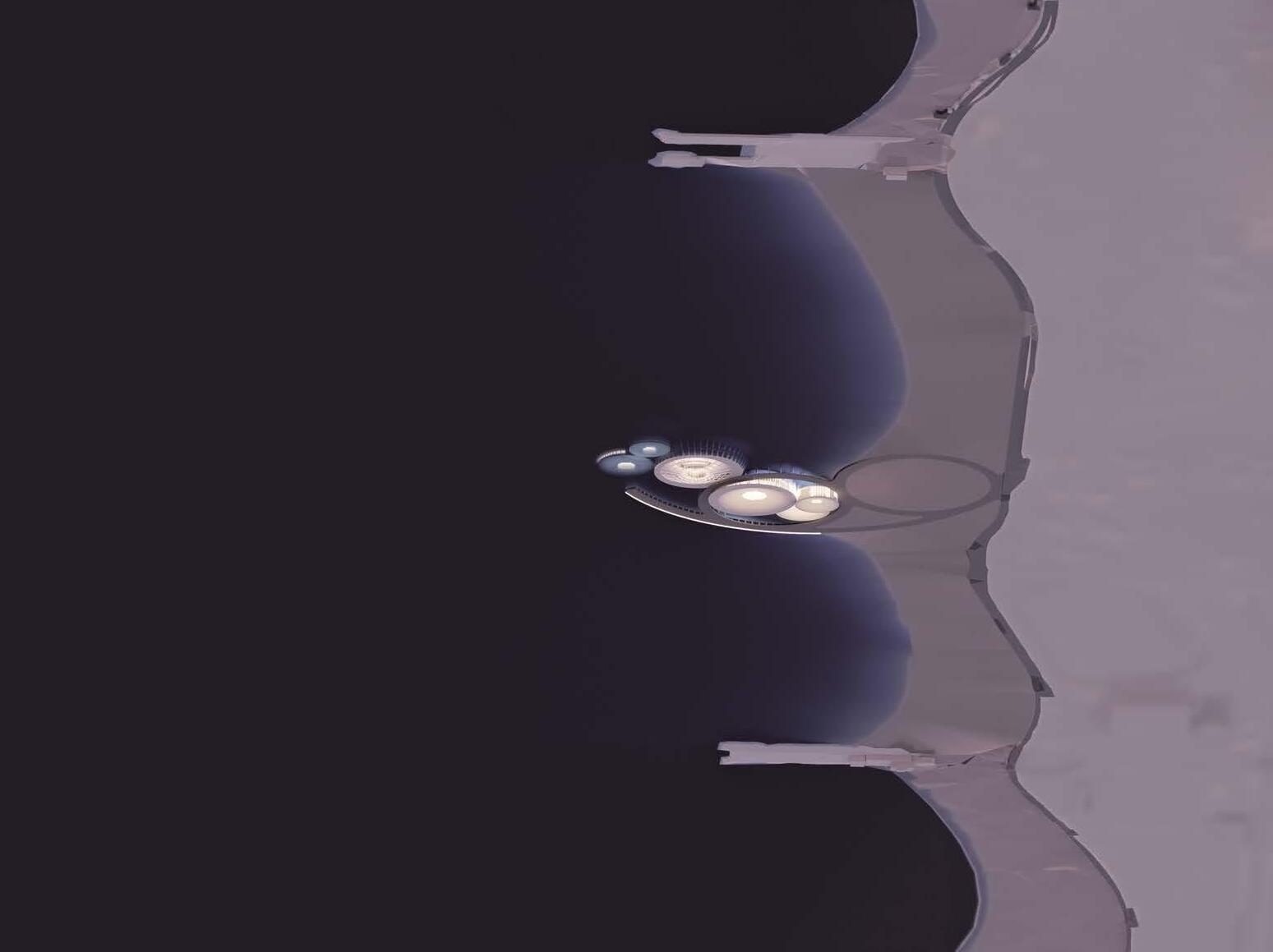
This project creates a continuous and uninterrupted circulation path along the shore that rewrites the relationship between man and water: we move instead of the sea, subverting the power balance of the sea’s destruction of the shore. The breakwater shape is a response to the currents of the Mediterranean, creating a stillwater pool that protects the center, allowing for the experience of submersing yourself into the sea through the cultural center.
San Vicente Sandstone
Dark, deep gray, durable stone with many natural aggregates and inclusions from the province of Barcelona
Pink Sandstone Soft in color but sturdy in finish. Sandstone from Montjuic Mountain in Barcelona used to clad the interior ramp, highlighting the circulatory path
Fritted Glass
Glass with 40% frit inclusion, allowing for abundant natural light while limiting solar heat gain in the Summer months
Double Fiberglass Shell with Ribs
Roof Collar
Buttresses
Shear Wall
Spanish granite with a unique structure of bluish gray feldspar and white quartz mimicking the caustic patterns of light refracting through water
Montjuic Sandstone
Sandstone from Montjuic Mountain noted for its warm ochre and sandygray tones, used in iconically Catalonian and Barcelonian structures
Bioconcrete
Inert, carbon sequestering “living concrete.” Uses bacteria in biodegradable capsules to self-heal. More sustainable and durable than traditional concrete
Column and Beam
Glass Curtain Wall
Breakwater
Azul Aran
AMBIENCE
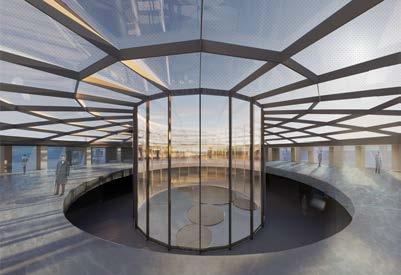
The first building is a 15 meter radius impluvium with an entrance lobby and space for administrative duties. It features a permanent art installation: Water running over the
roof and into a pool in the atrium, creating visual interest, a lightfiltering screen, as well as a central draft for ventilation. Connected to Building 1 are an exterior
amphitheater (Building 2) and Building 3, the first large exhibition space.
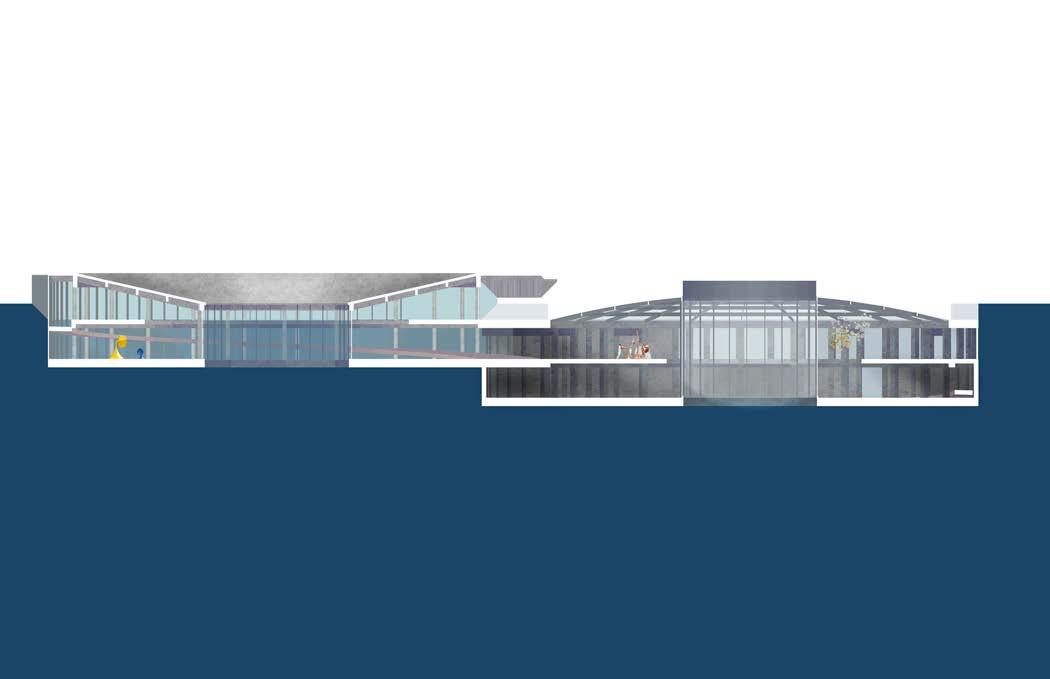
B3 and B4 are an impluvium and a displuviatum—a dome sloped away from the central atrium. They are designed as reprogrammable spaces and house most of the functions of a cultural center: exhibition, observation, and education spaces. Both have an exterior radius of 32 meters, an interior atrium with a radius of 9 meters, and include a 3-meter-wide ramp that functions
as the main circulation axis between the two spaces. The first of the two volumes features a column and beam structure with cantilevering beams on a radial column grid, encased by a glass curtain wall. The second is a dual system, comprising a main structure of columns and beams supporting shear walls, and secondary structures of a roof collar and buttresses. The massive glass
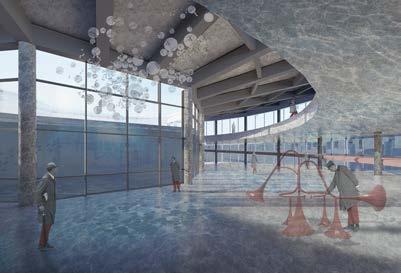
dome exerts outward forces on the roof collar, counteracting the inward push of water. B3 is the first sunken building and begins to experience the conditions of being within the sea and sky: water and pools for filtering and reflecting light, thermal buffering from the sea, and the ambiance of the sea in the lulling of currents on the exterior walls.
VENTILATION
AMBIENCE
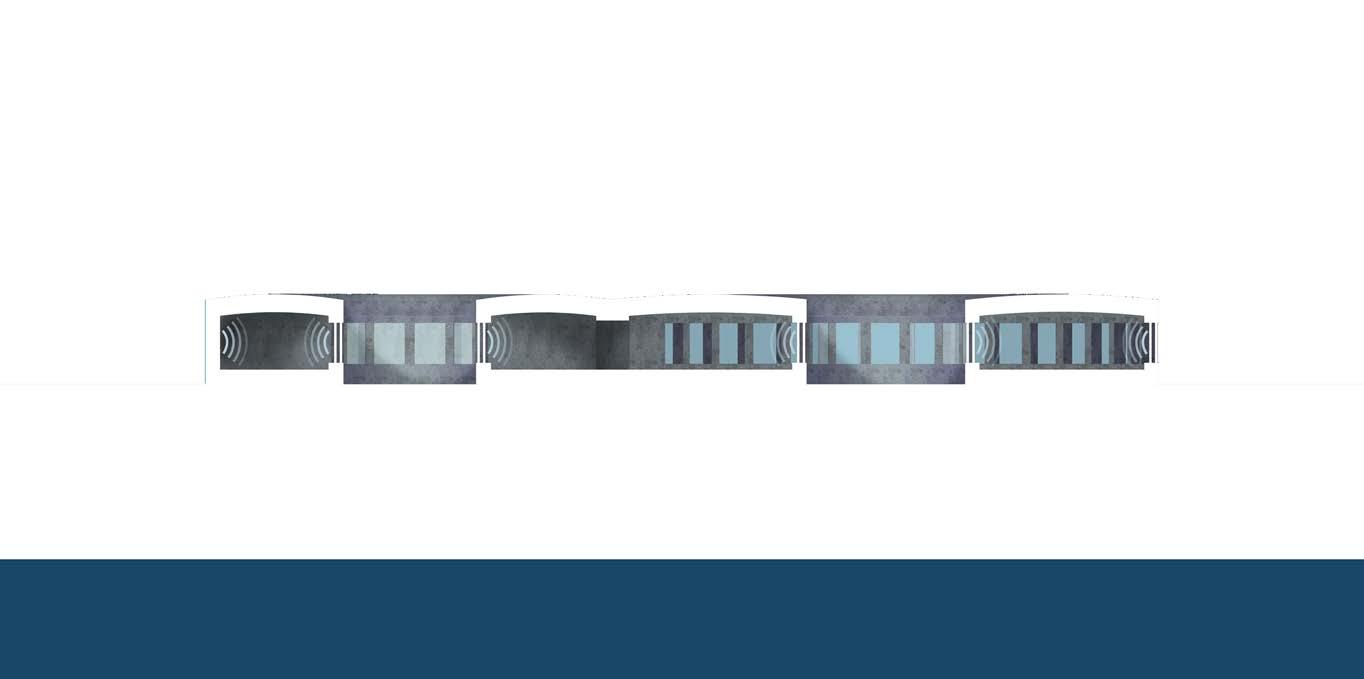
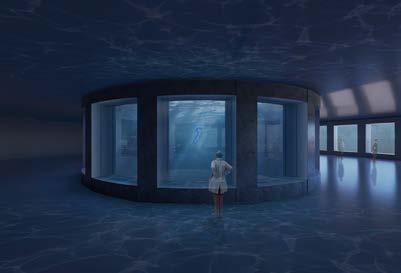
The last two volumes are exhibition spaces inspired by boat hulls, completely submerged and consisting of a double fiberglass shell with 1-meter ribs, allowing
for prefabrication and sinking the fully constructed masses during construction. Buildings 5 and 6 are the only fully submerged spaces, experiencing the most dramatic
effects of light filtration, thermal buffering, and acoustic ambiance from currents against the double drum walls.
As you descend through the building, light diminishes, temperatures drop, and the force of the sea becomes evident. Through progressively more powerful structures and colder, darker materials, the cultural center mirrors the pressure of water.
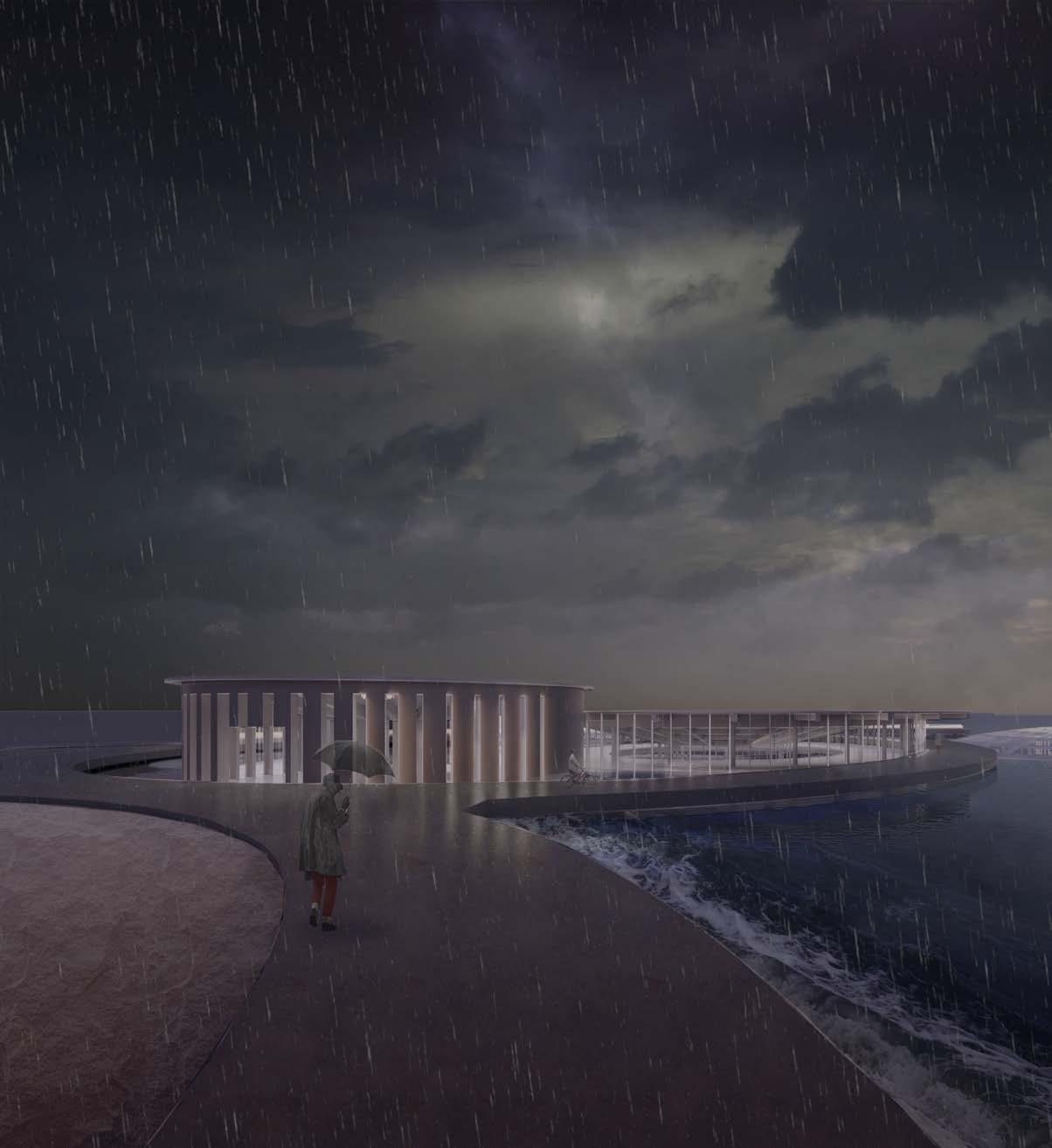
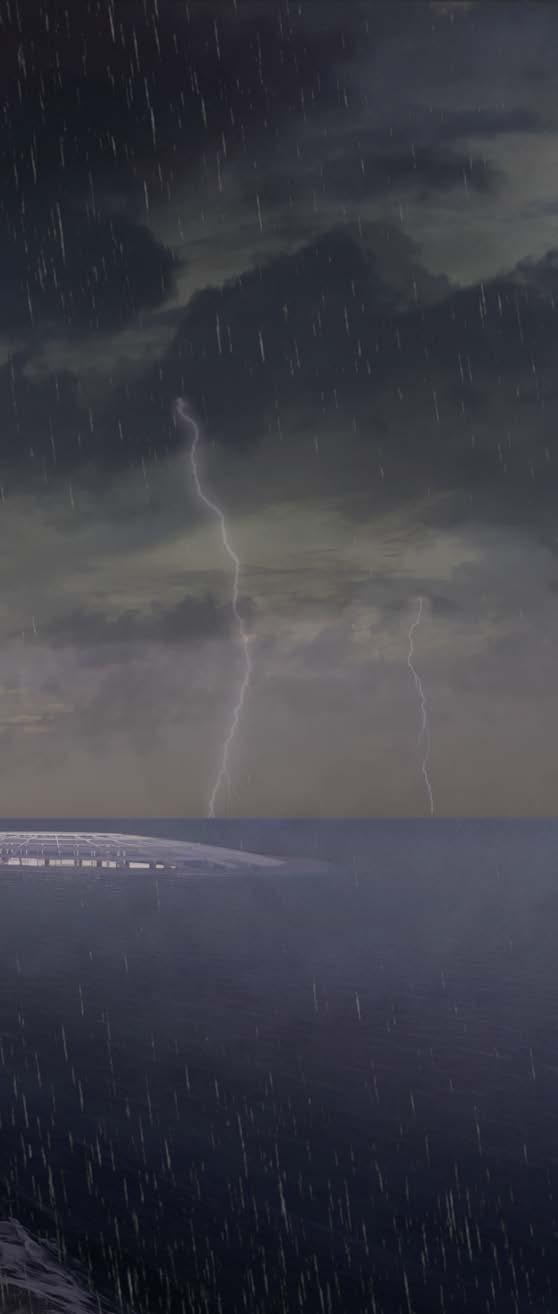
Even when the ambiance of the sea rages into turbulent currents, brilliant flashes of light, and booming thunder, the building acts as a frame for the natural environment. Despite the variability of the sky and sea, the cultural center remains steadfast—a gradient of light and dark, emerged and submerged, and man and water.
At night, the center becomes a lantern, projecting artificial light and warmth, illuminating the Mediterranean Sea, becoming a new frame for the marine environment and a new promenade for coastal connection.
02 CLEMSON DOWNS BRIDGE
STUDIO DAN HARDING
CLEMSON, SC
HEALING HURRICANE HELENE SPRING 2025
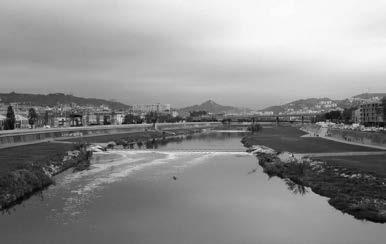
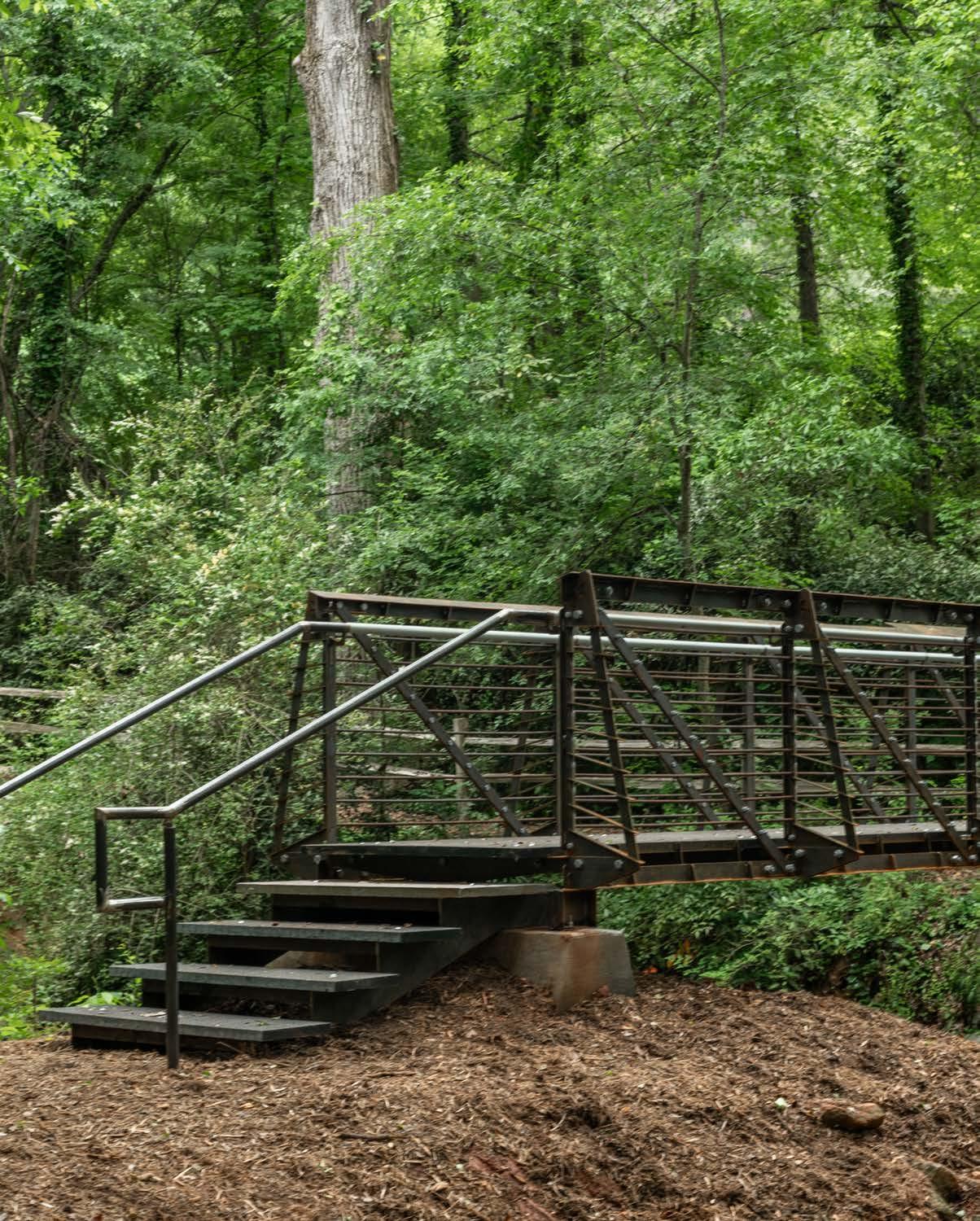
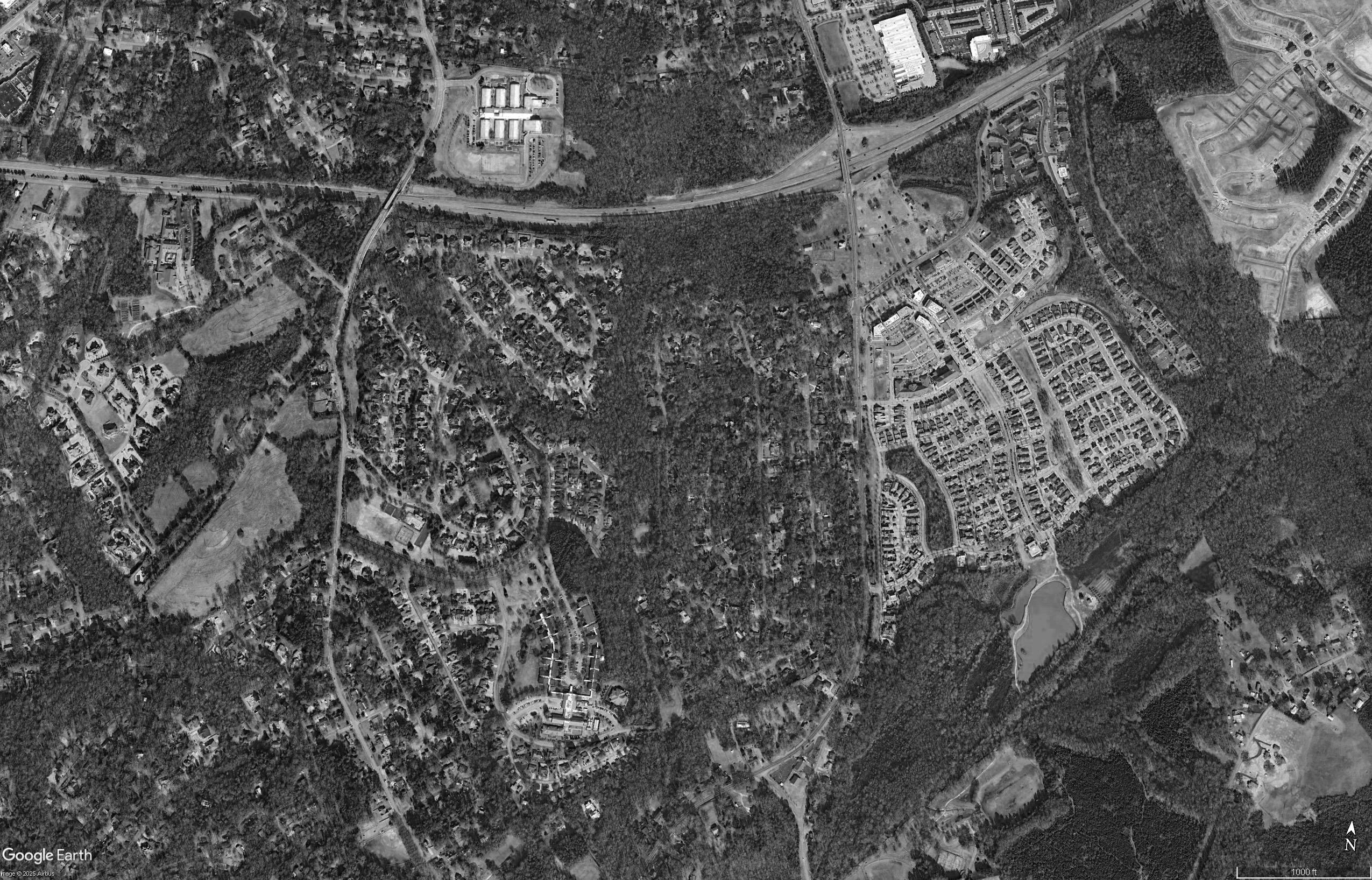
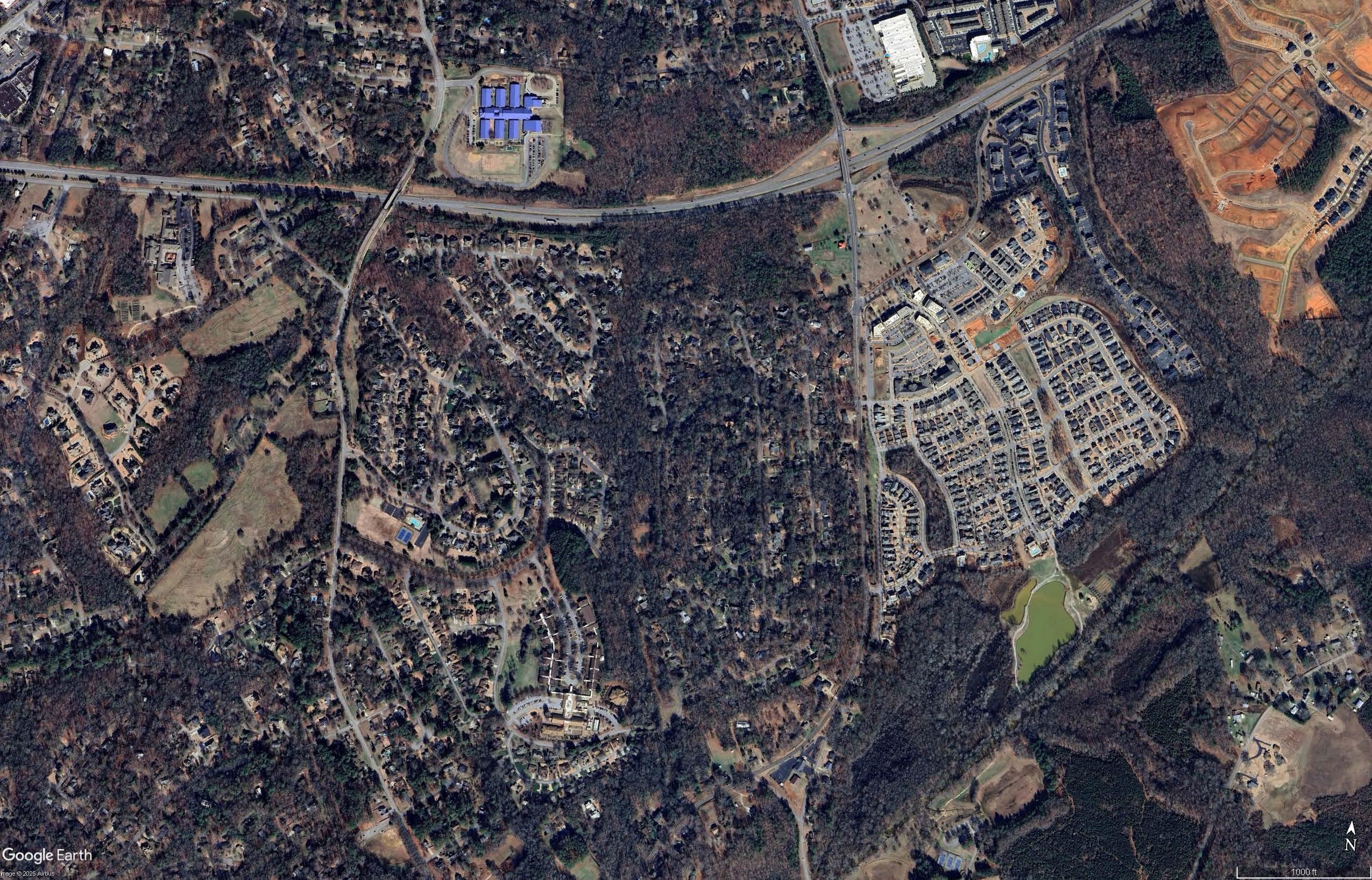
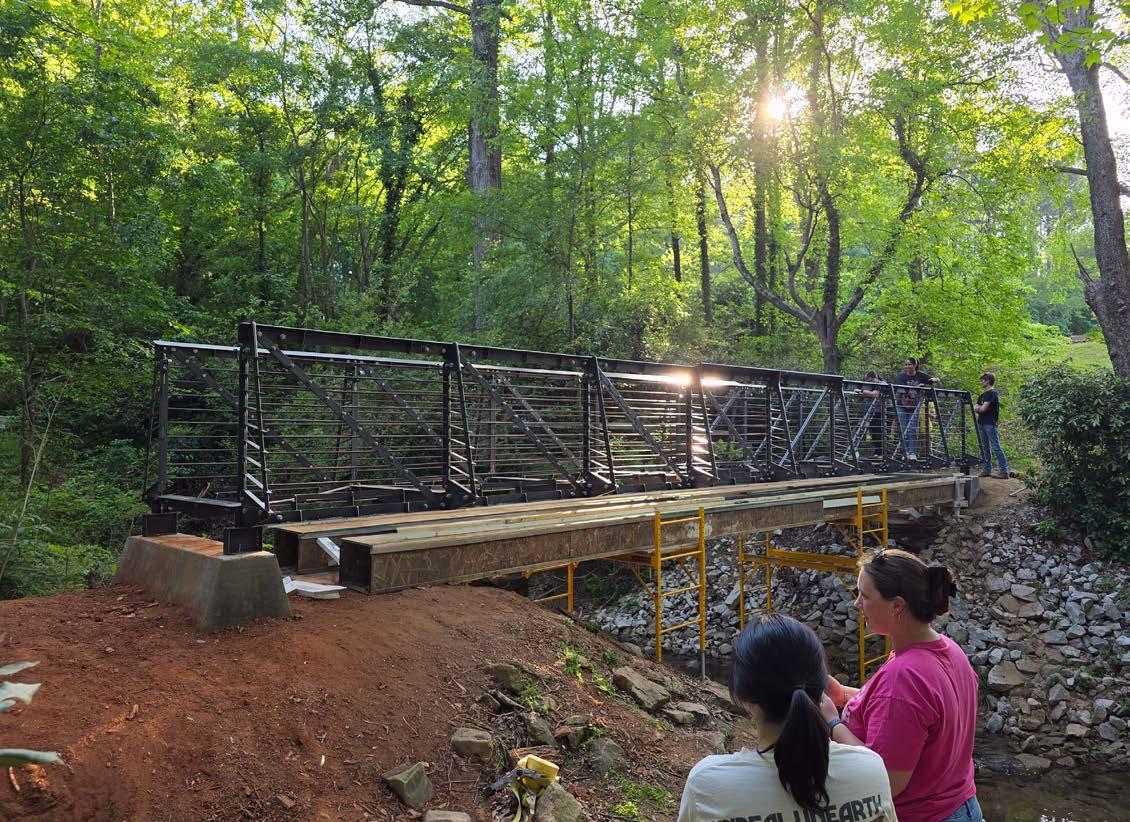
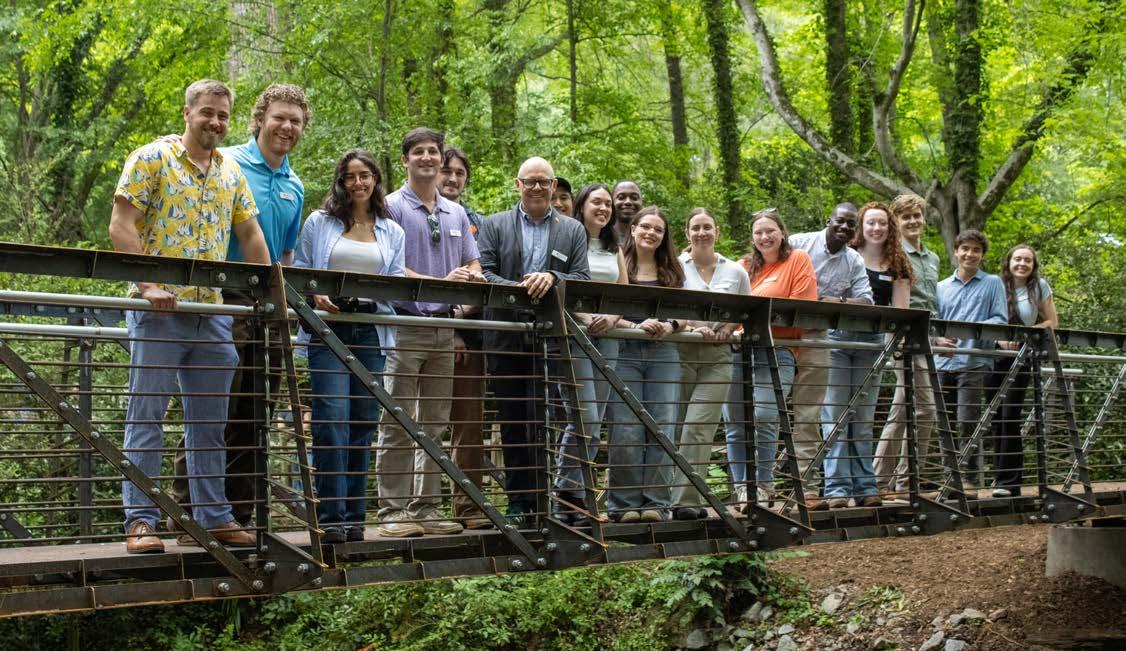
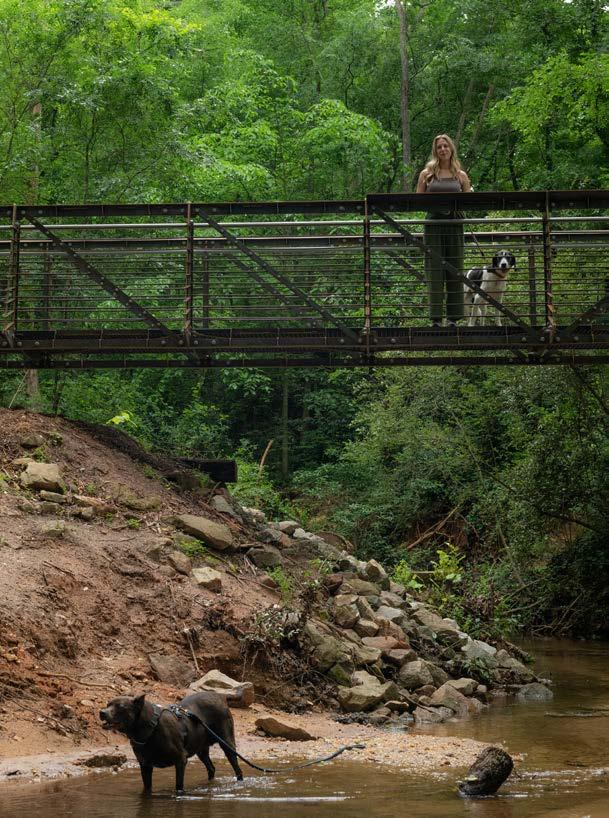
Hurricane Helene devastated Upstate South Carolina in September 2025, leaving many communities upended. Clemson Downs, a retirement community located ten minutes from campus, was one such neighborhood—a primary walking path was severed after a fallen tree destroyed a bridge. We were allowed to Heal Helene by designing and constructing a 40-foot bridge, restoring our local community.
EARL ANDERSON PARK
CLEMSON DOWNS
CAMELOT
CLEMSON DOWNS
CAMELOT
SITE CONTEXT
The site is located in a park between a senior living community—Clemson Downs, for whom the bridge was built—and a family-focused subdivision along a prominent walking trail frequented by children traveling to the local Elementary school. The design had to be built with consideration to all ages and a wide range of mobility access with suitable safety features.
PRELIMINARY DESIGN 1
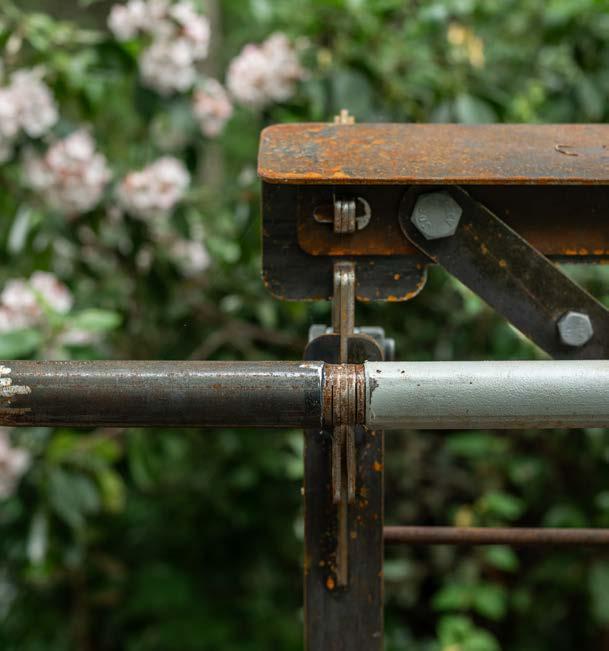
Our studio began working in teams of four, a mix of graduate and undergraduate students. Our first design featured a tapered design with a gradual incline, encouraging pedestrians to gather at the center while naturally slowing down cyclists at the entrances. Constructed with a Howe Truss, the bridge integrates steel handrails that double as a musical element. Metal rods, welded at the base but free to move at the top, produce sound, adding an interactive auditory experience to the structure.
PRELIMINARY DESIGN 2
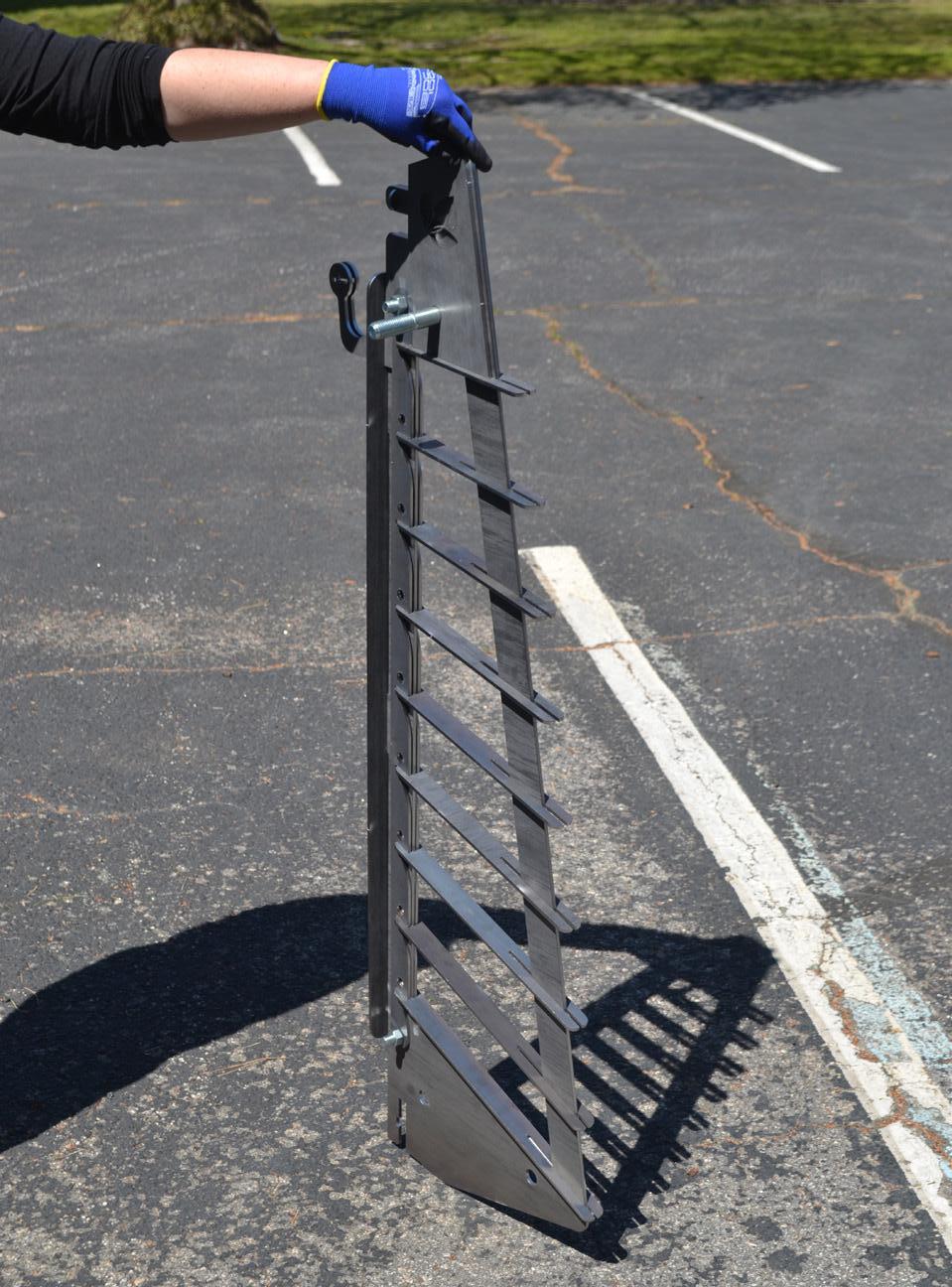
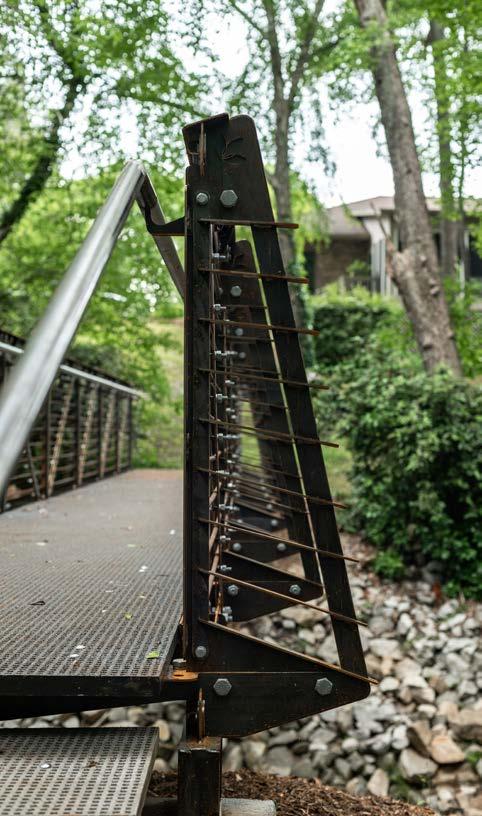
We next moved into a team of eight. This design uses a Howe truss system with kickers serving as bracing members to enhance structural stability by reducing buckling. We proposed waterjetting the Clemson Downs logo into the kickers, creating a pattern and reducing weight by removing excess material. We also proposed to write the story of the bridge and Clemson Downs along the handrails, adding a narrative element that celebrates the bridge’s purpose and connection to its community.
FINAL DESIGN
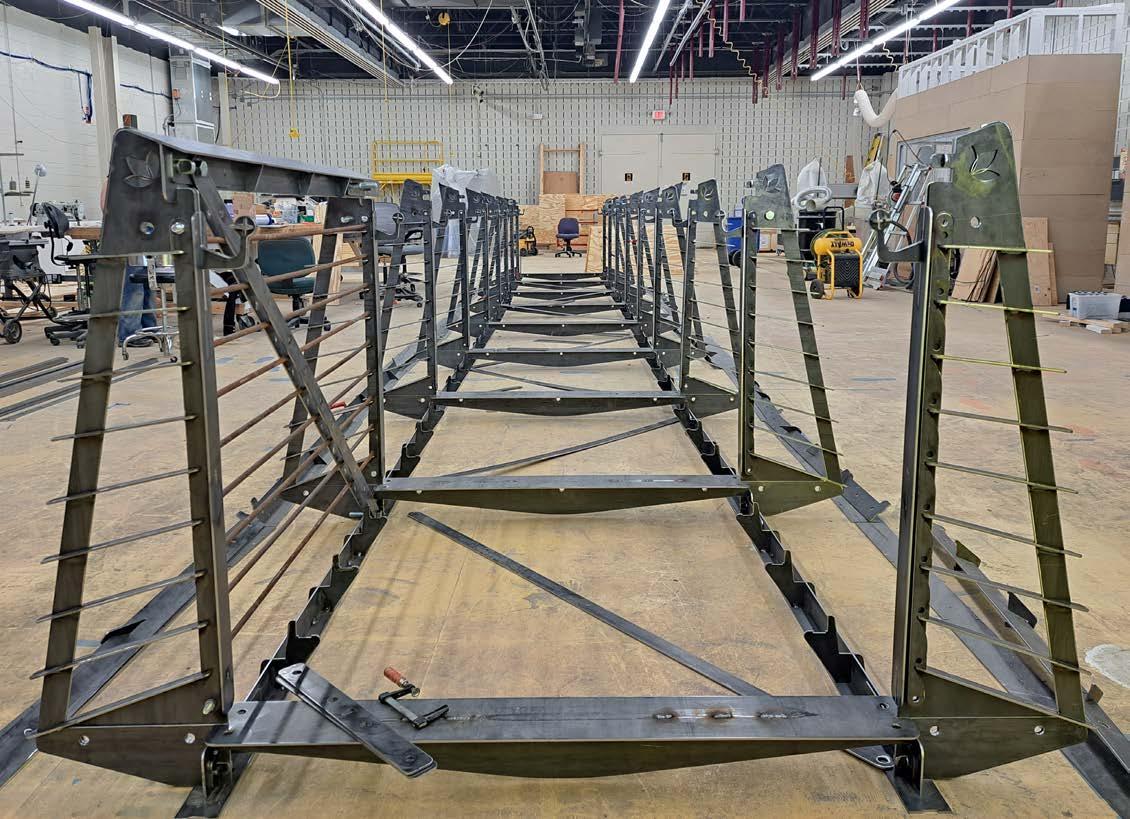
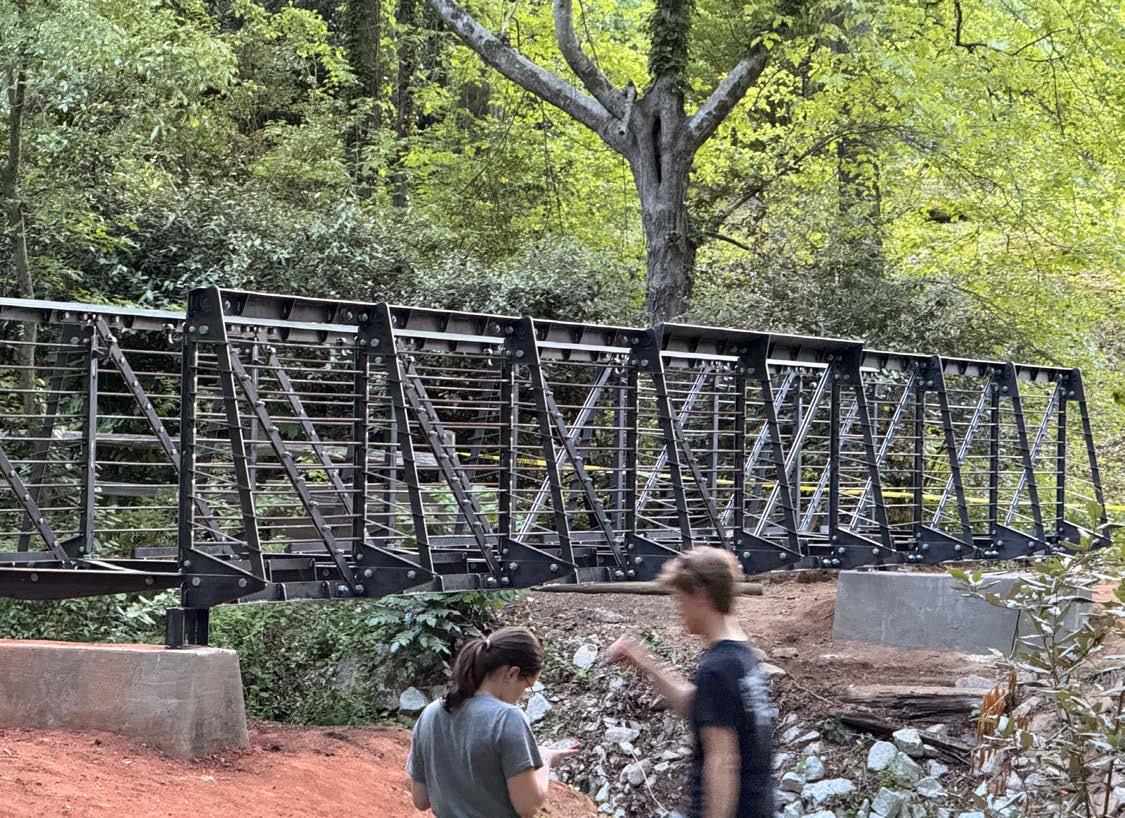
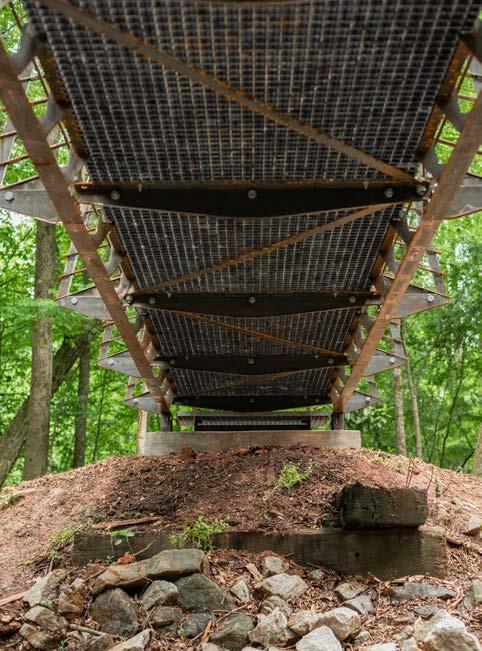
For ease of construction, we designed the bridge as a system of modular components: kickers, struts, and joists. These assemblies could be joined and welded off-site then carried on-site and set atop concrete piers eliminating the need of heavy machinery during the construction process.
CONSTRUCTION
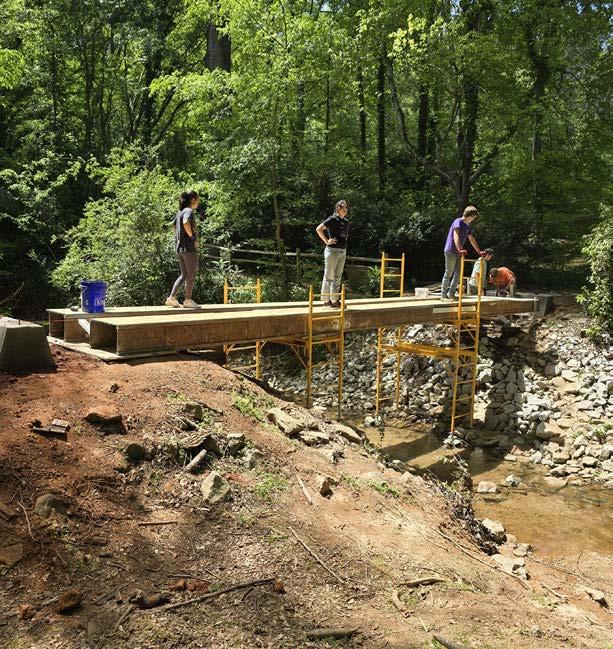
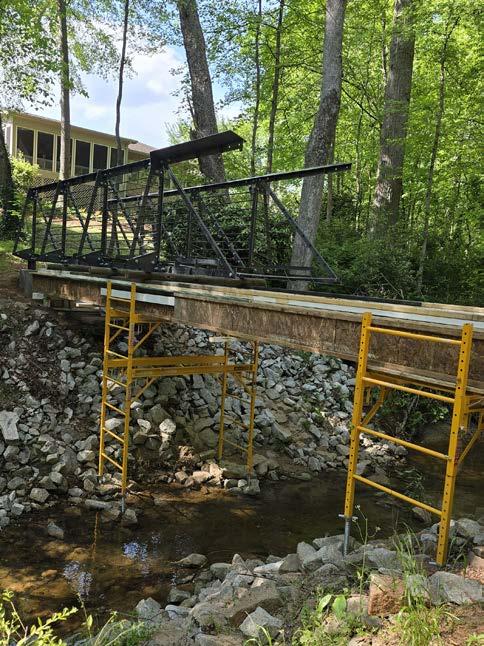
We began dry fitting and welding in an off-site construction lab before splitting the bridge in two halves, bringing it to the site by truck, and moving it into position atop a series of scaffolding and concrete foundations.
03
TERRAFOLD ARTS CENTER
CAYCE, SC
SPRING 2024
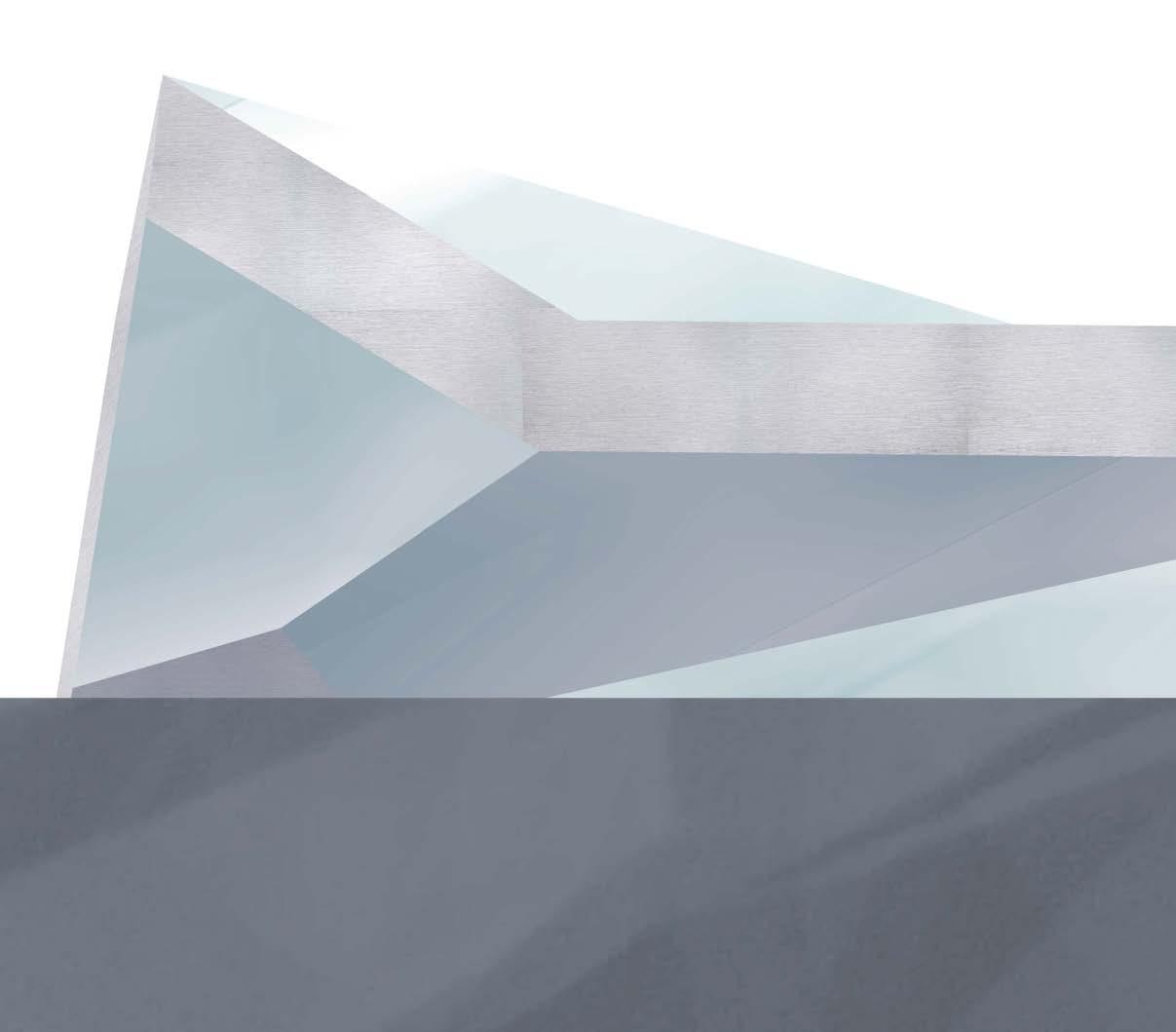
Cayce is a town known for granite quarries located in the middle of South Carolina, just south of Columbia. Cayce’s current direction is to revitalize the arts district, inviting new voices and directions while honoring the town’s heritage. This project aims to serve both the general public and invited artists, meeting the mayor’s mission, “previtalization: the art of what’s possible.”
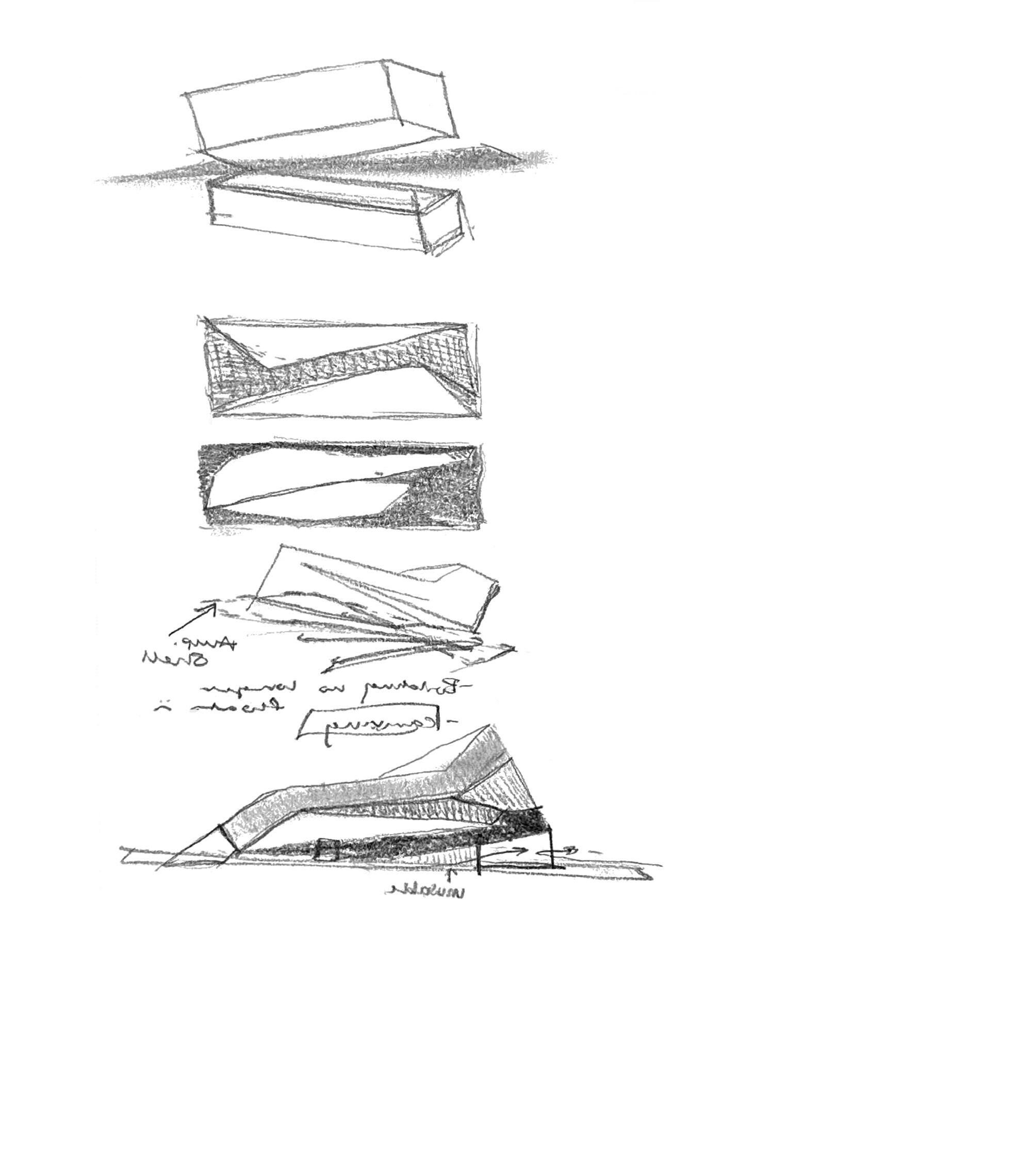
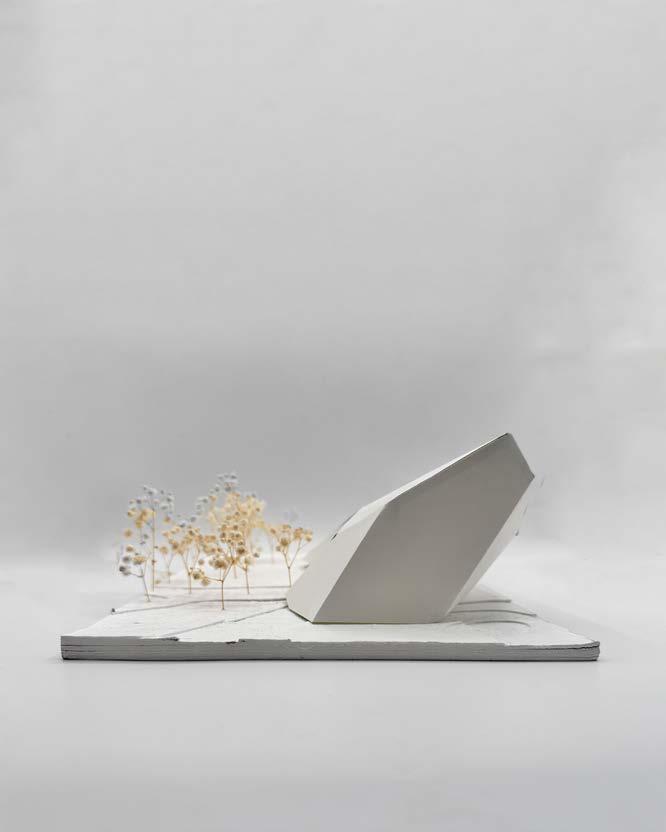
Taking inspiration from the Hirshhorn Museum and Sculpture Garden in Washington, D.C., This museum had specific programmatic requirements, including a performance theatre, gallery space, artist studios, an exterior amphitheater, and more.
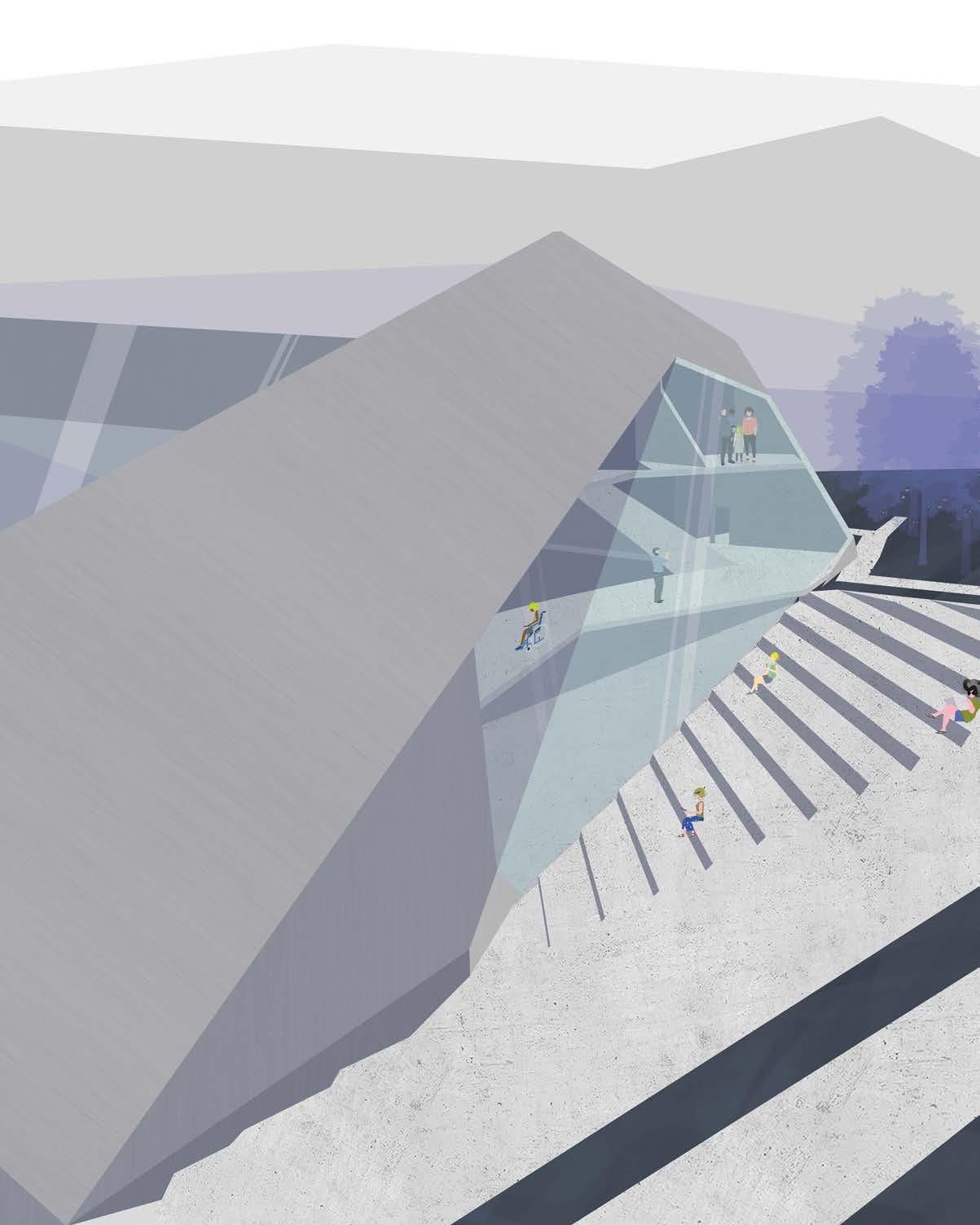
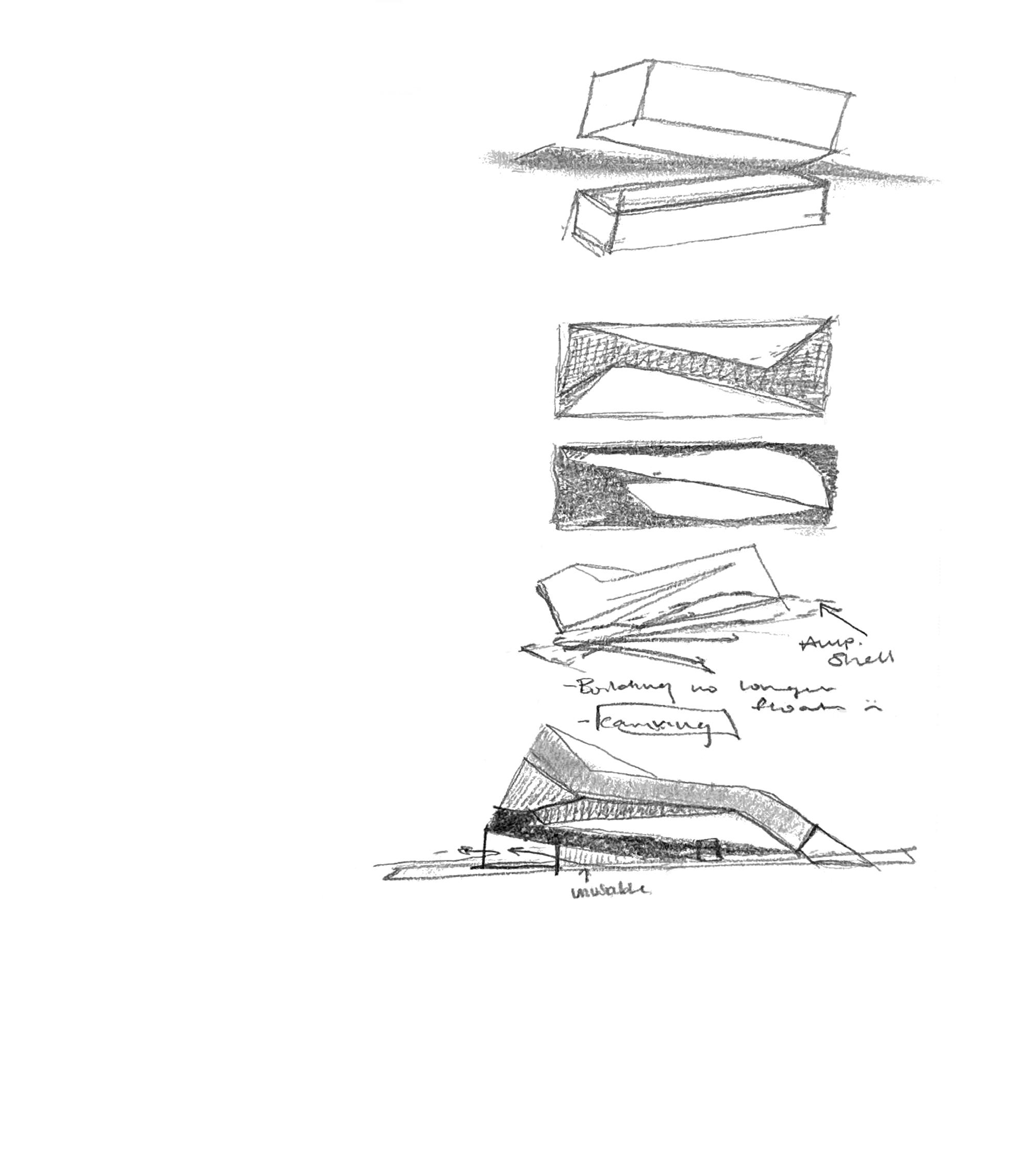
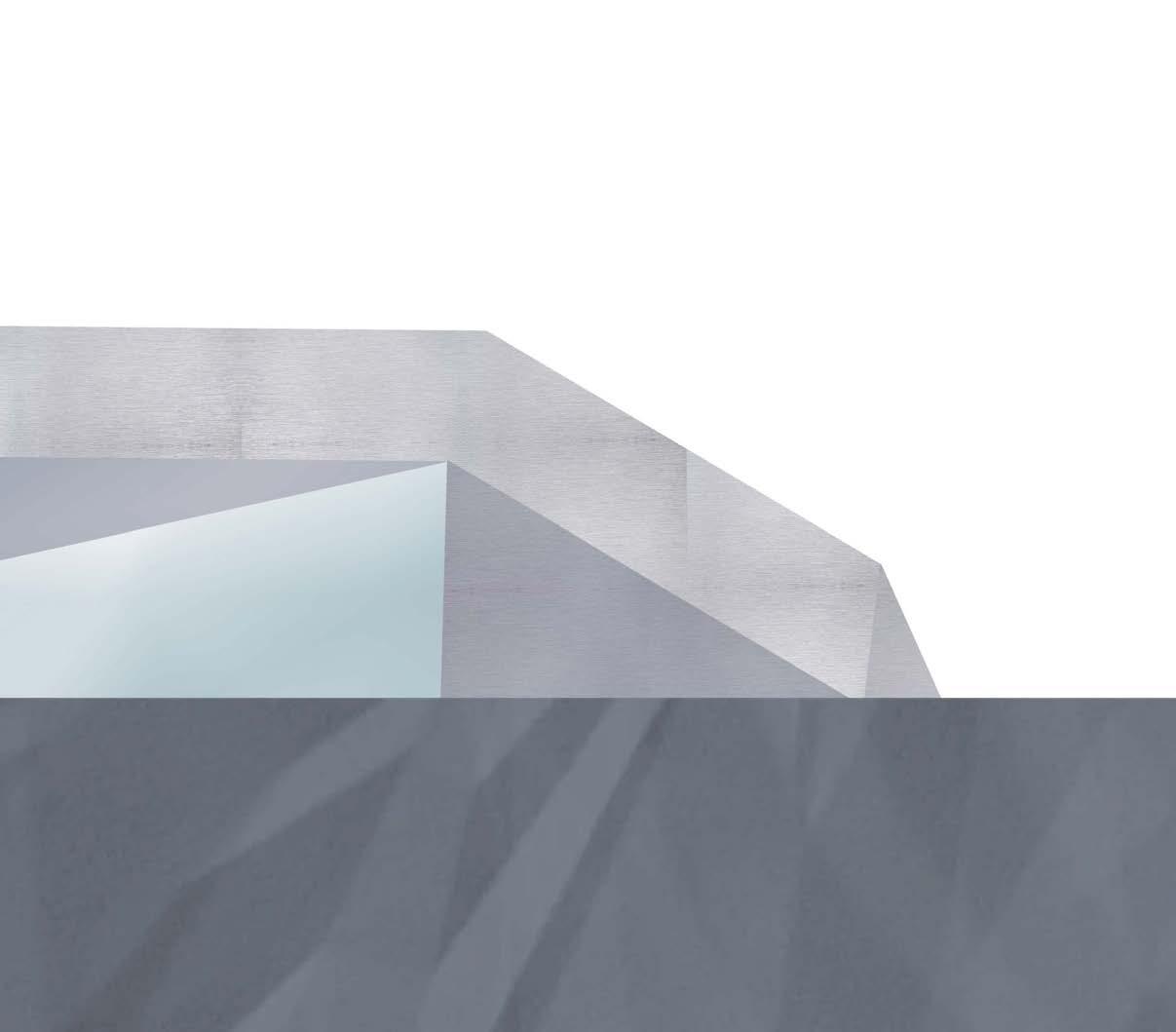
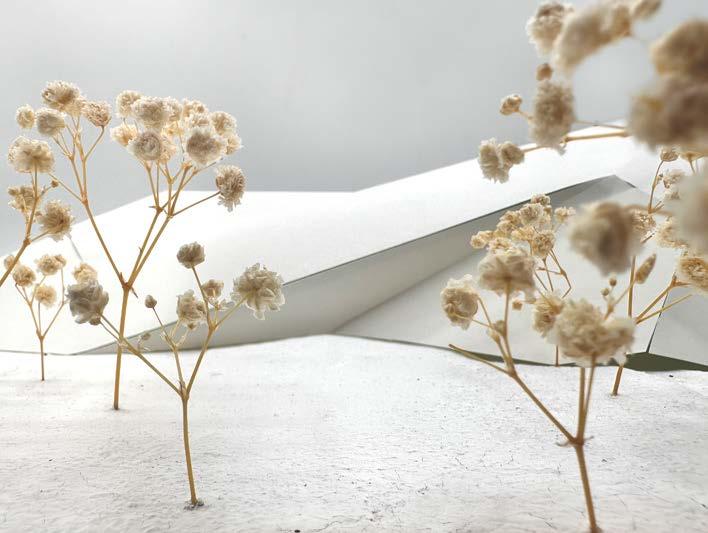
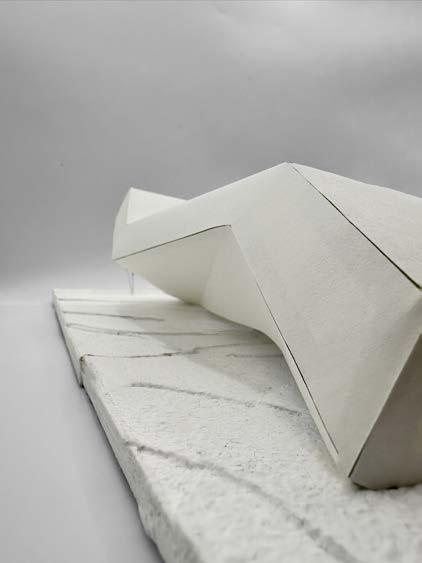
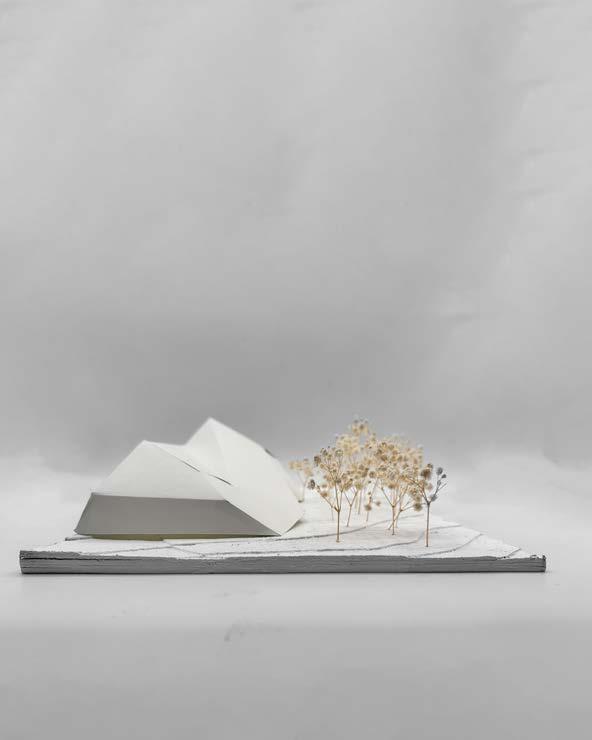
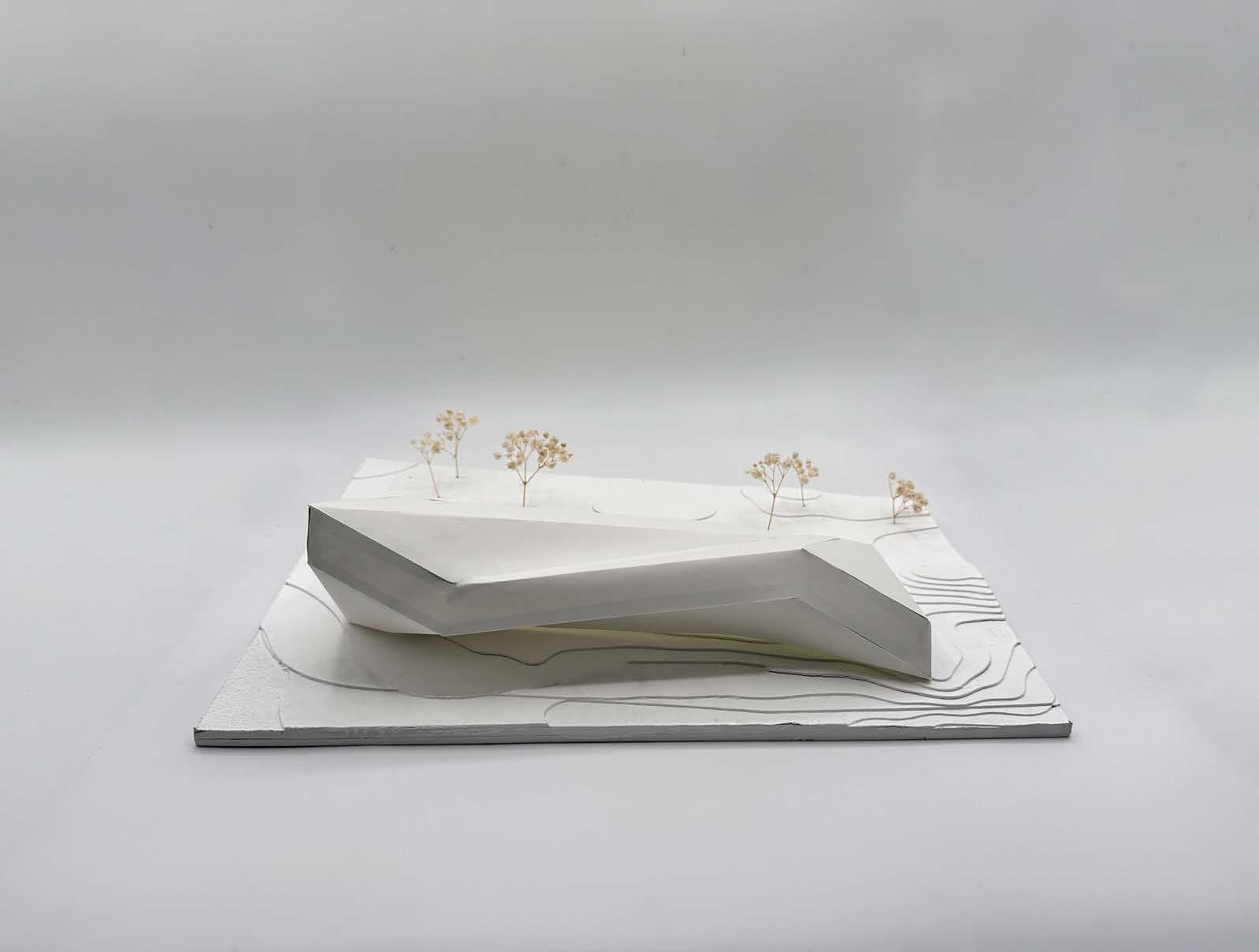
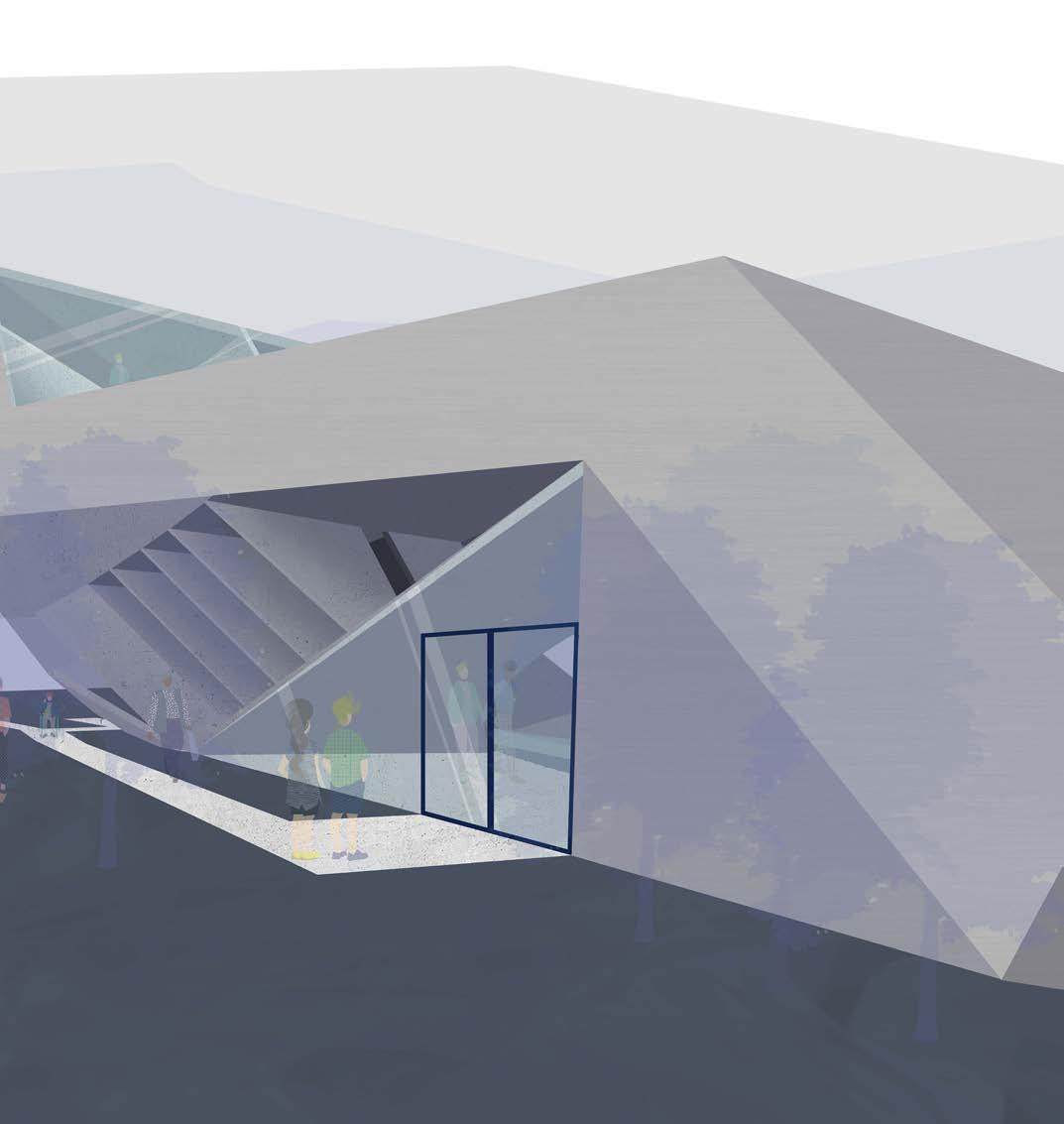
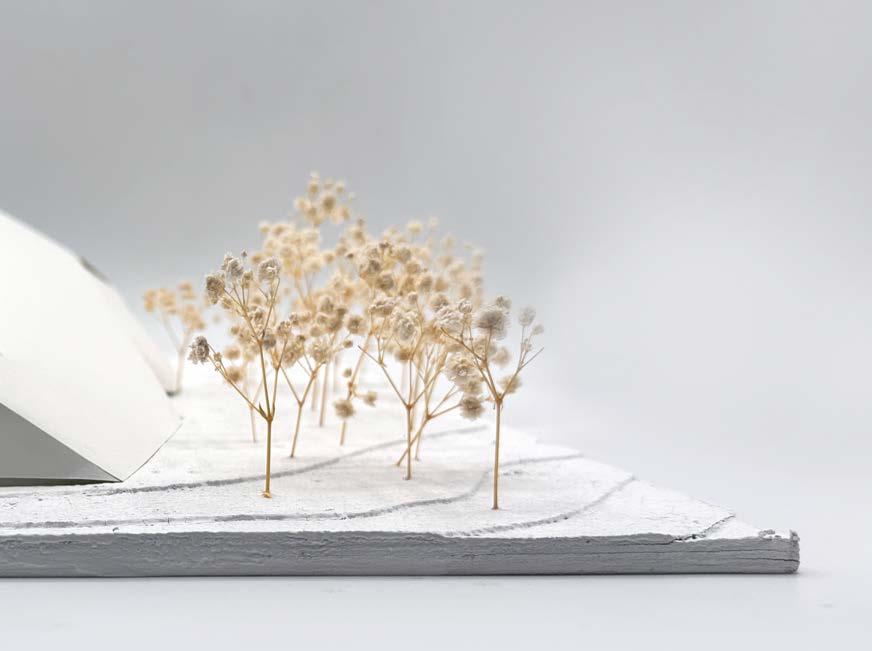
Given the simple geometry of these massing models, the ground condition quickly became the most important concept in this project. Not only does this building touch ground, it fractures it, creating an amphitheater by extending the geometries of a carved section and an overhang awning through a cantilevering arm.
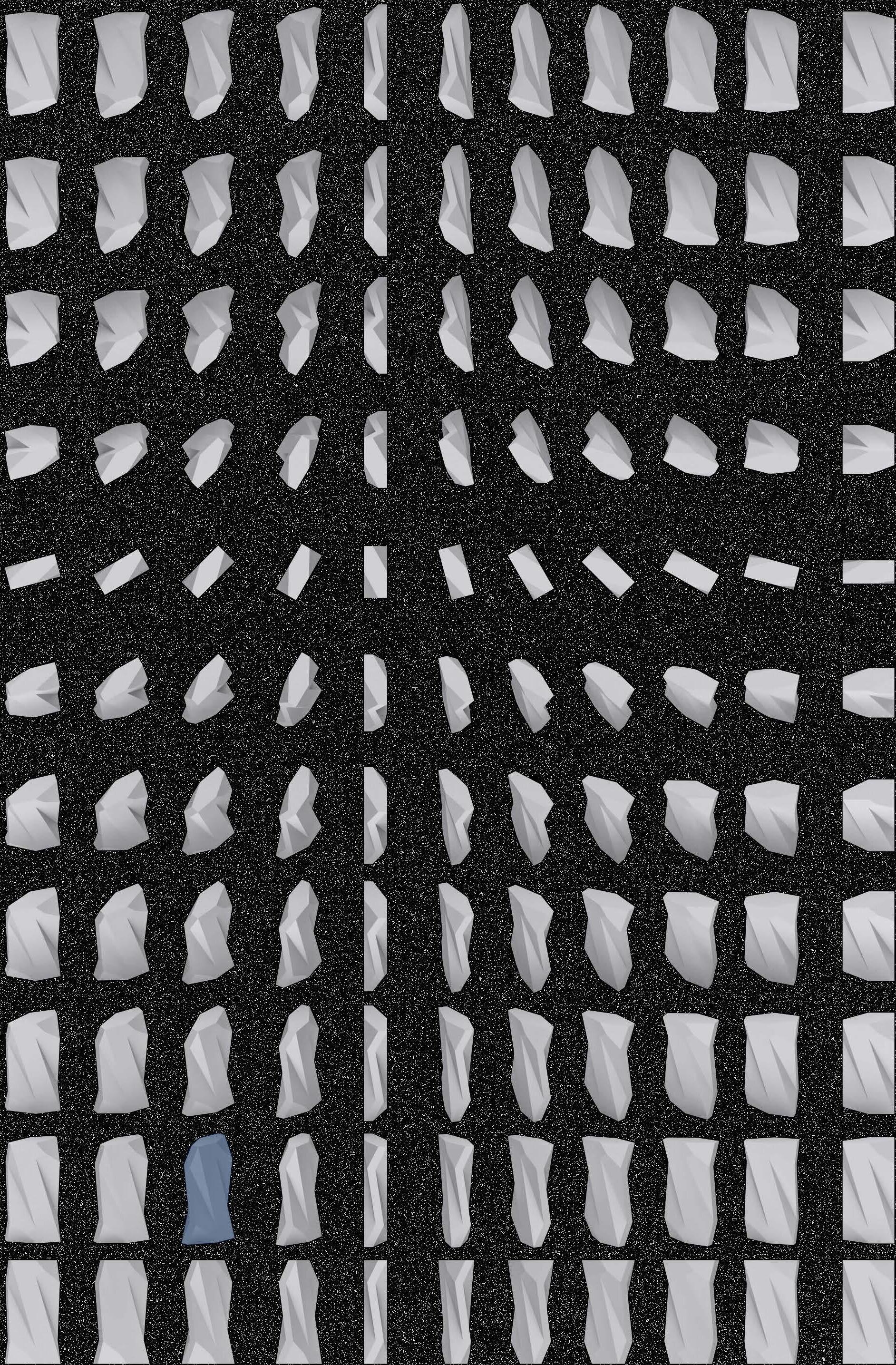
This array is an exploration of every rotation possible, in both the x and y direction, by 15°increments. After analysis, the selected massing had enough vertical height to create a functional covered area while being shallow enough and rotated correctly to create an amphitheater through boolean operations with the ground, resulting in a fractal site referencing Cayce’s historic quarries. CARVE
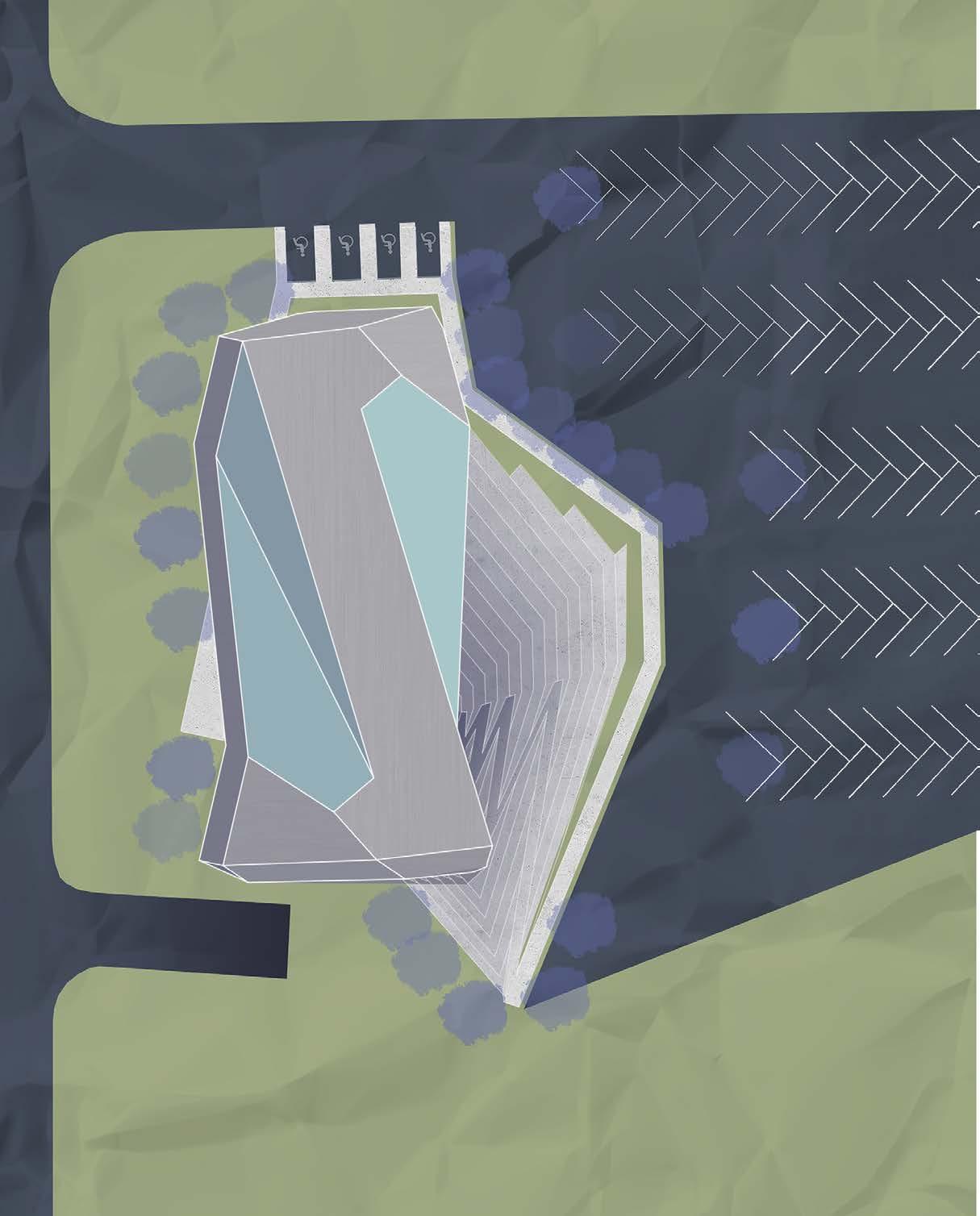
Rigid angles quickly became the defining language of this design, manifesting a site dominated by sharp geometries. An oversized representation of a parking lot helps to ground the site and add scale, underscoring the monumental quality of the building. Enhancing the museum-like character of the center, wherever form was removed, the facade was replaced with glazing, allowing for an almost excessive use of natural light that permeates the interior and creates an inviting atmosphere. In plan, the amphitheater extends geometric guidelines from the main building, further exaggerating the importance of form as it interacts with the site, creating a cohesive visual language that unites each element in purposeful alignment and draws visitors through the space in a structured yet dynamic flow, inviting exploration and engagement with the architecture.
A. Entrance
B. Stairs
C. Restrooms
D. Mechanical Space
E. Box Office
F. Sound Room
G. Theater (Stage)
H. Exhibit
I. Practice Room/Rehearsal Space
J. Artist Studio
K. Kitchen
L. Dining Area
M. Gift Shop
N. Classroom
O. Office
P. Copy/Break Area
By the very nature of this design—a carved rectangular prism—a heavy horizontal language emerged. The weight of the ground-embedded form is juxtaposed against a lighterthan-air cantilever, offering balance to an otherwise heavy structure. The section cut emphasizes the horizontal nature with the floor plans highlighting the carved shape of the building, dipping into subtracted space and launching off of raised areas. Floor designs were created with artist needs in mind: practice rooms feature nonparallel geometries to eliminate standing waves and increase sound quality.
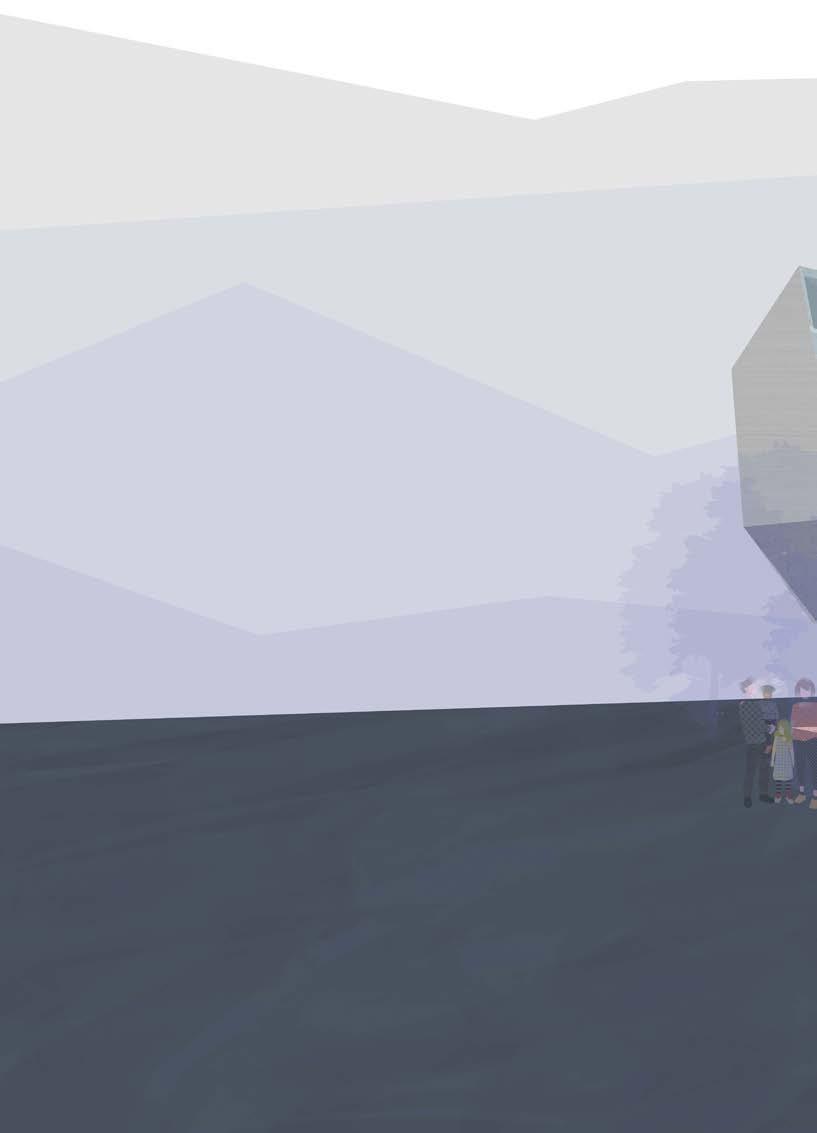
Entrance Render
04 TRUMPET OBJECT STUDY
IMAGINARY SPRING 2023
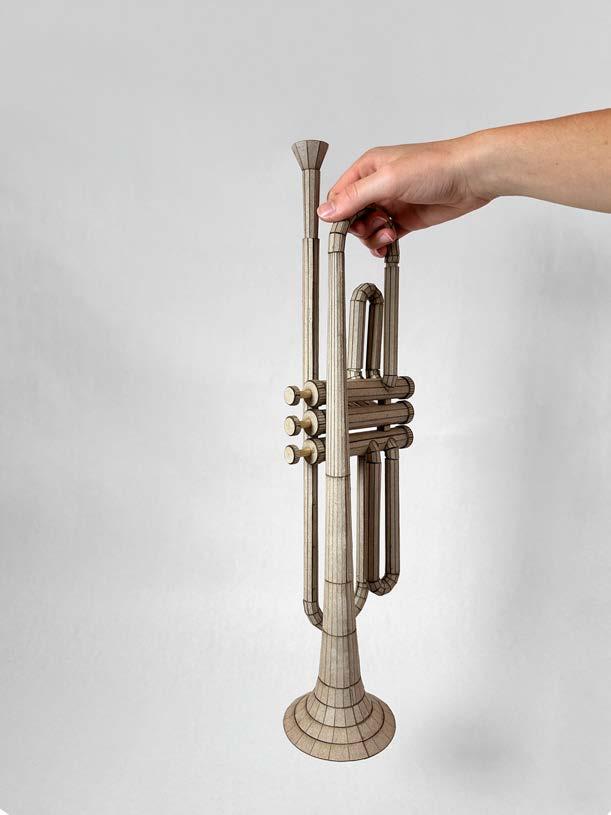
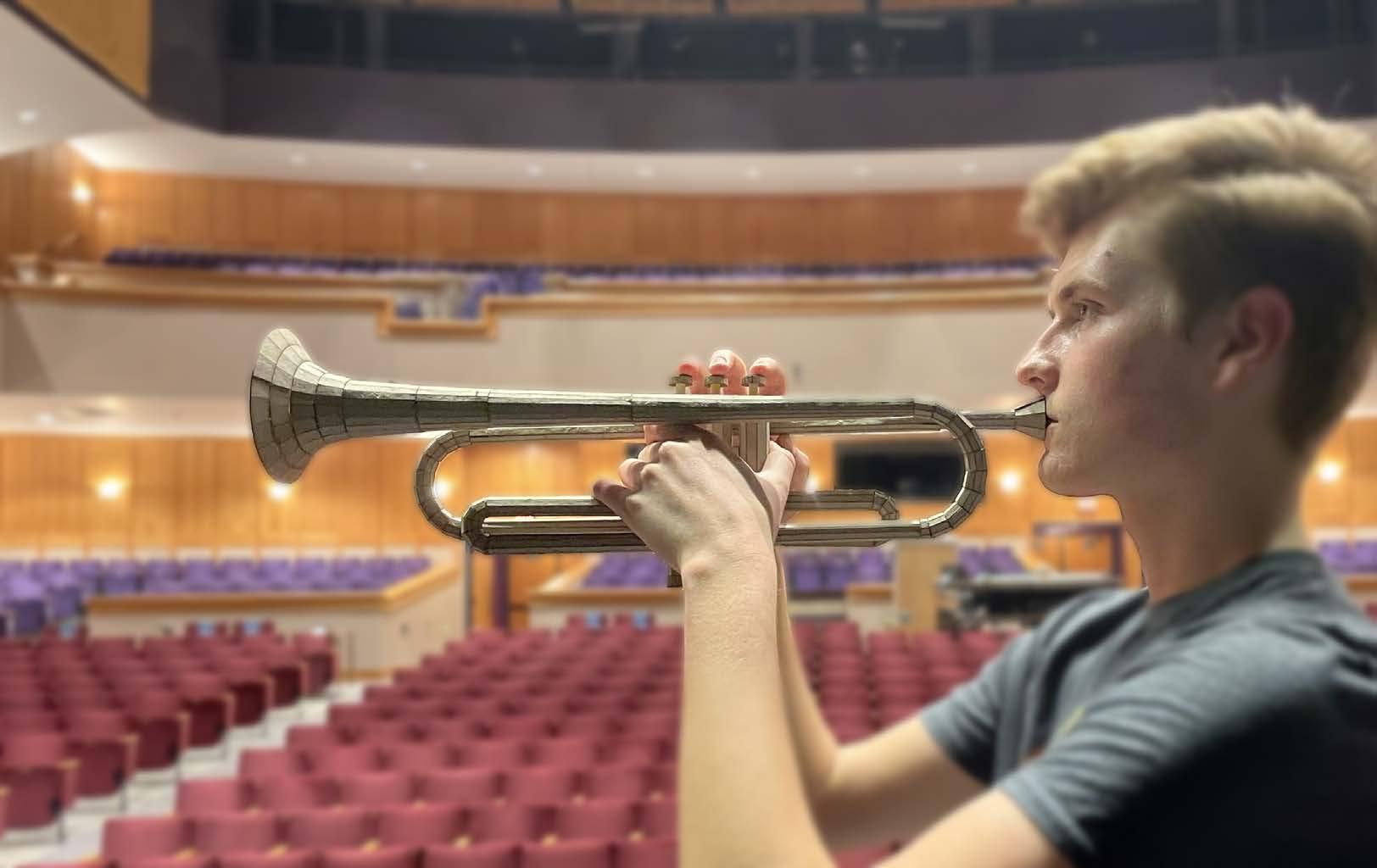
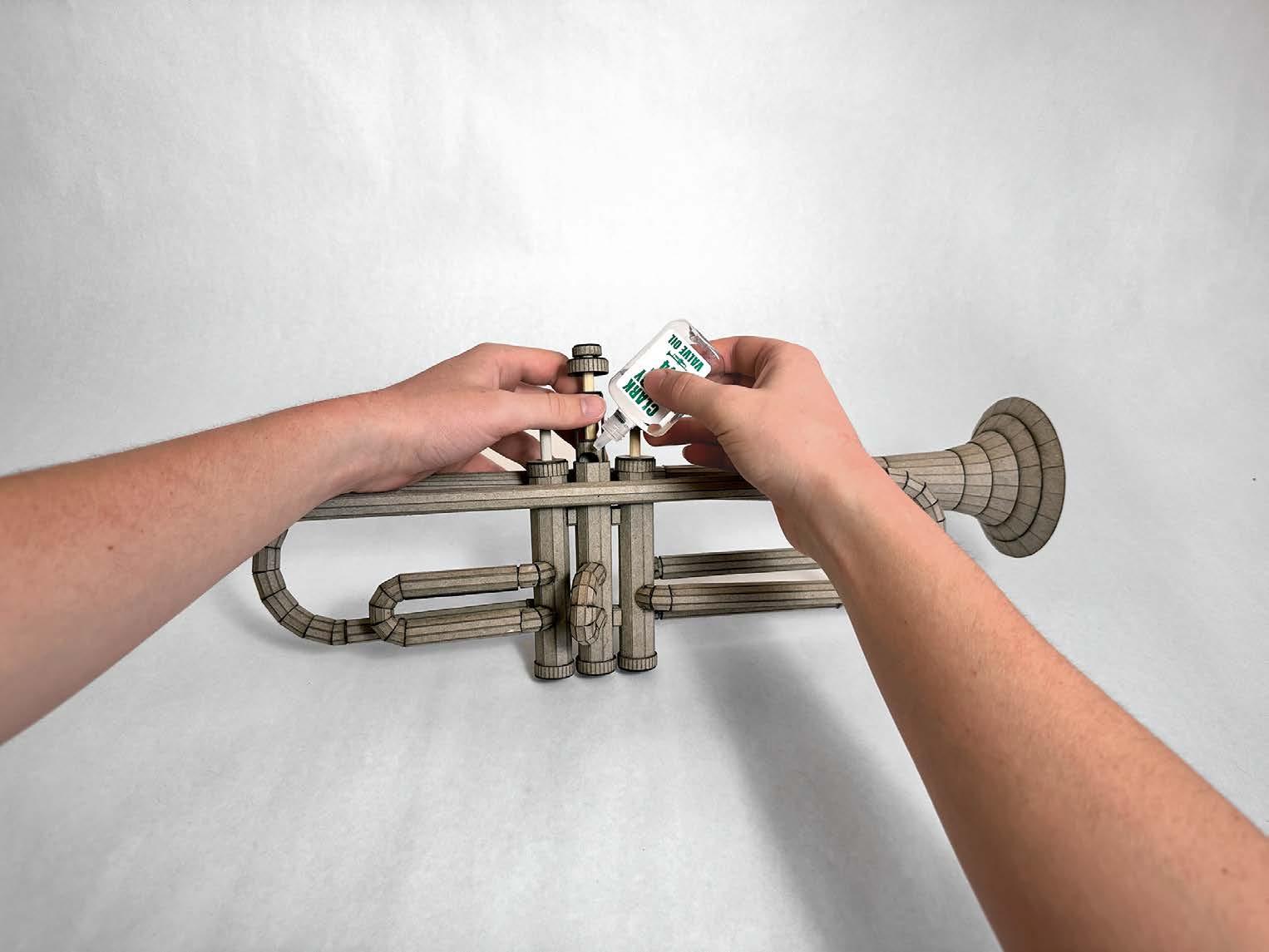
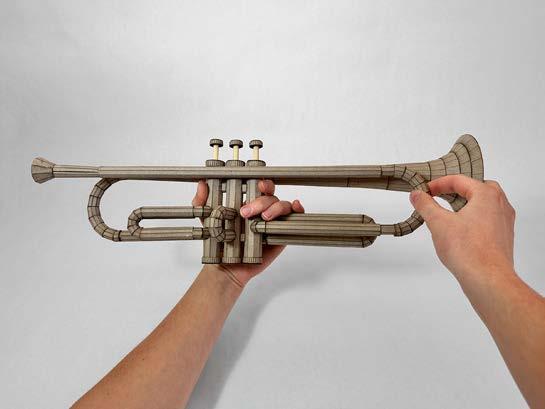
This project dealt with physically and digitally modeling an object that moves. Studying the trumpet brought insights into the geometrical relationships between slides and valve parts, which is how the trumpet is able to produce different pitches.
Physically modeling the trumpet demanded meticulous attention to detail, revealing the geometric relationships essential to its design. The second valve slide is half the length of the first, while their combined length equals that of the third, corresponding to adjustments in pitch by a half step, whole step, and minor third, respectively. This linear correlation between slide length and pitch modulation is vital to the instrument’s playability, enabling pitch adjustments and tonal control. Through this model, these proportional relationships became clearer, offering insight into sound production and the structure of the instrument.
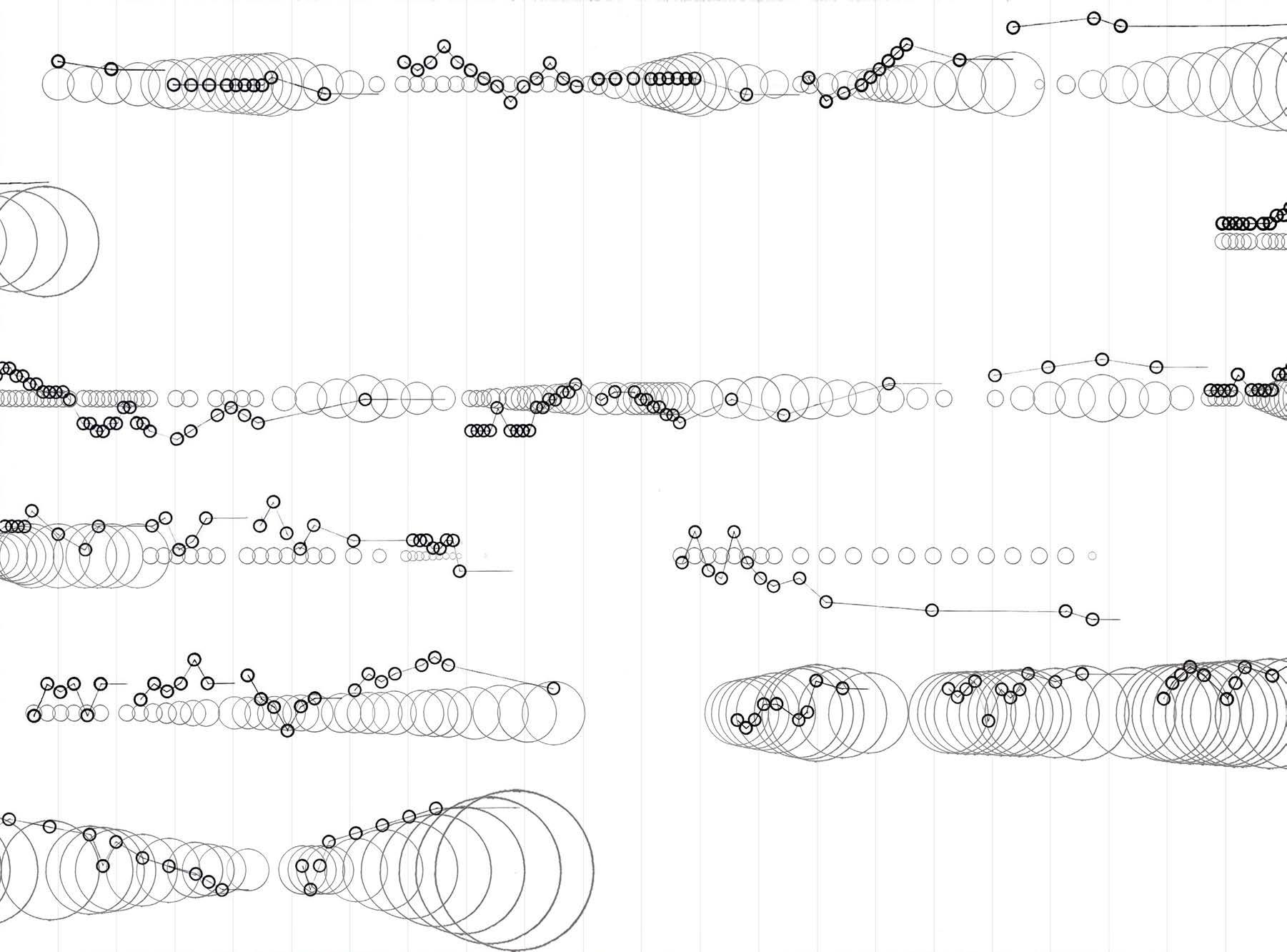
MOTION DIAGRAM
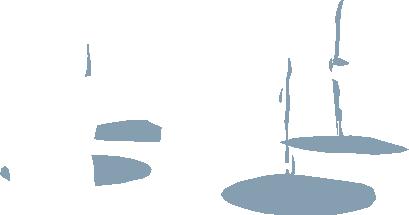
Rather than documenting the motion of the trumpet in a literal way, such as slides or spring-loaded valves, I chose to show the motion of the trumpet through a piece
of music. This diagram visually represents m.40-104 of Eric Ewazen’s Sonata for Trumpet and Piano. Each vertical line is a measure, the darker circles represent
pitches, and the thinner circles show the shape, texture, and characteristics of the musical line.