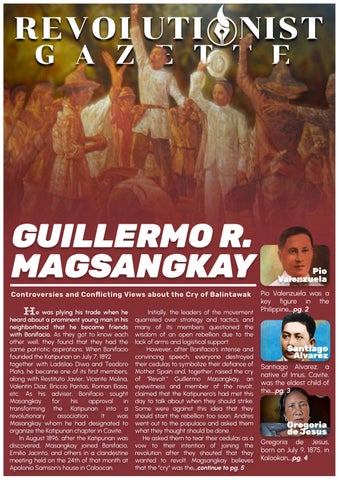


He was plying his trade when he heard about a prominent young man in his neighborhood that he became friends with Bonifacio. As they got to know each other well, they found that they had the same patriotic aspirations. When Bonifacio founded the Katipunan on July 7, 1892 together with Ladislao Diwa and Teodoro Plata, he became one of its first members, along with Restituto Javier, Vicente Molina, Valentin Diaz, Briccio Pantas, Roman Basa, etc. As his adviser, Bonifacio sought Masangkay for his approval in transforming the Katipunan into a revolutionary association. It was Masangkay whom he had designated to organize the Katipunan chapter in Cavite.
In August 1896, after the Katipunan was discovered, Masangkay joined Bonifacio, Emilio Jacinto, and others in a clandestine meeting held on the 24th of that month at Apolonio Samson's house in Caloocan.
Initially, the leaders of the movement quarreled over strategy and tactics, and many of its members questioned the wisdom of an open rebellion due to the lack of arms and logistical support.


Pio Valenzuela was a key figure in the Philippine...pg. 2
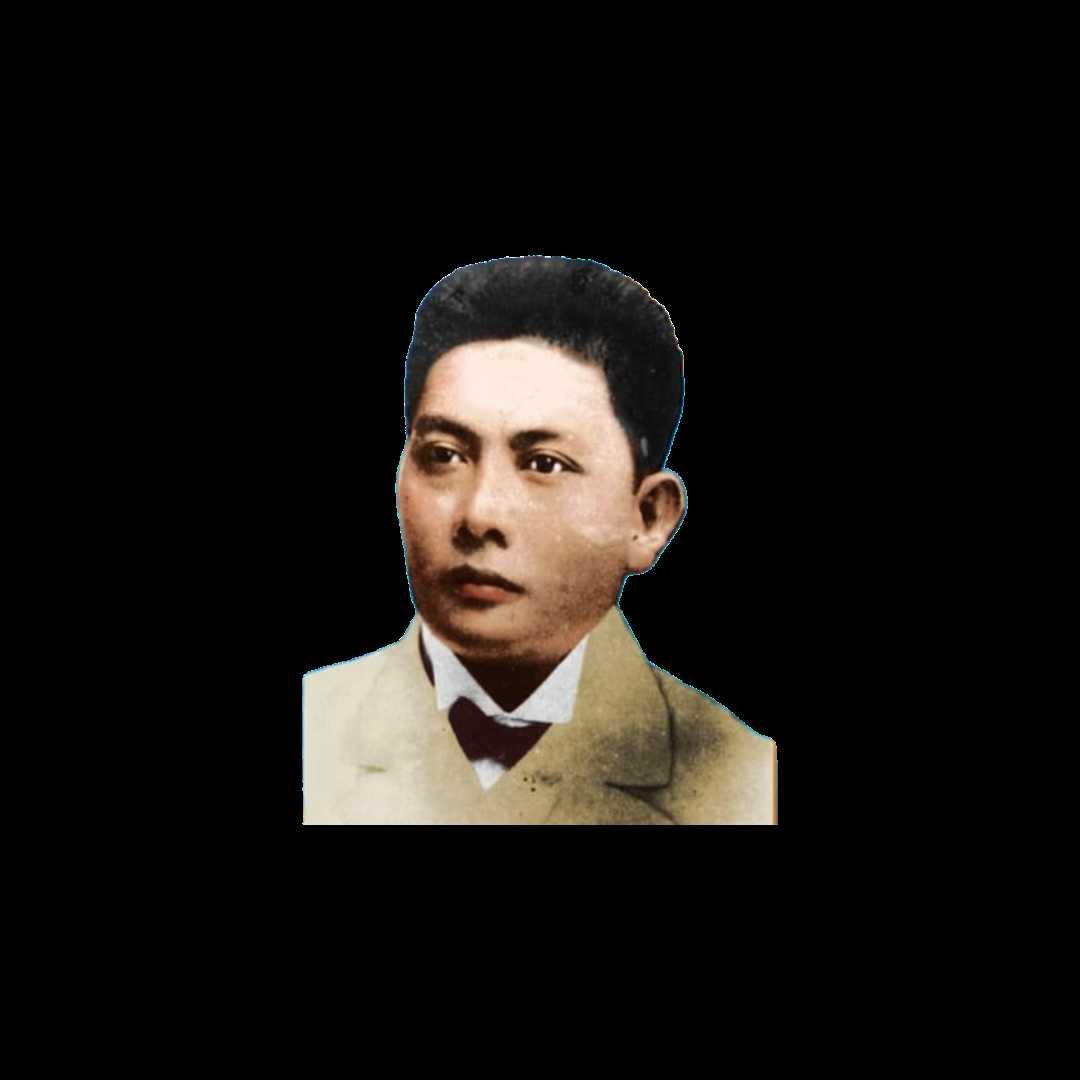
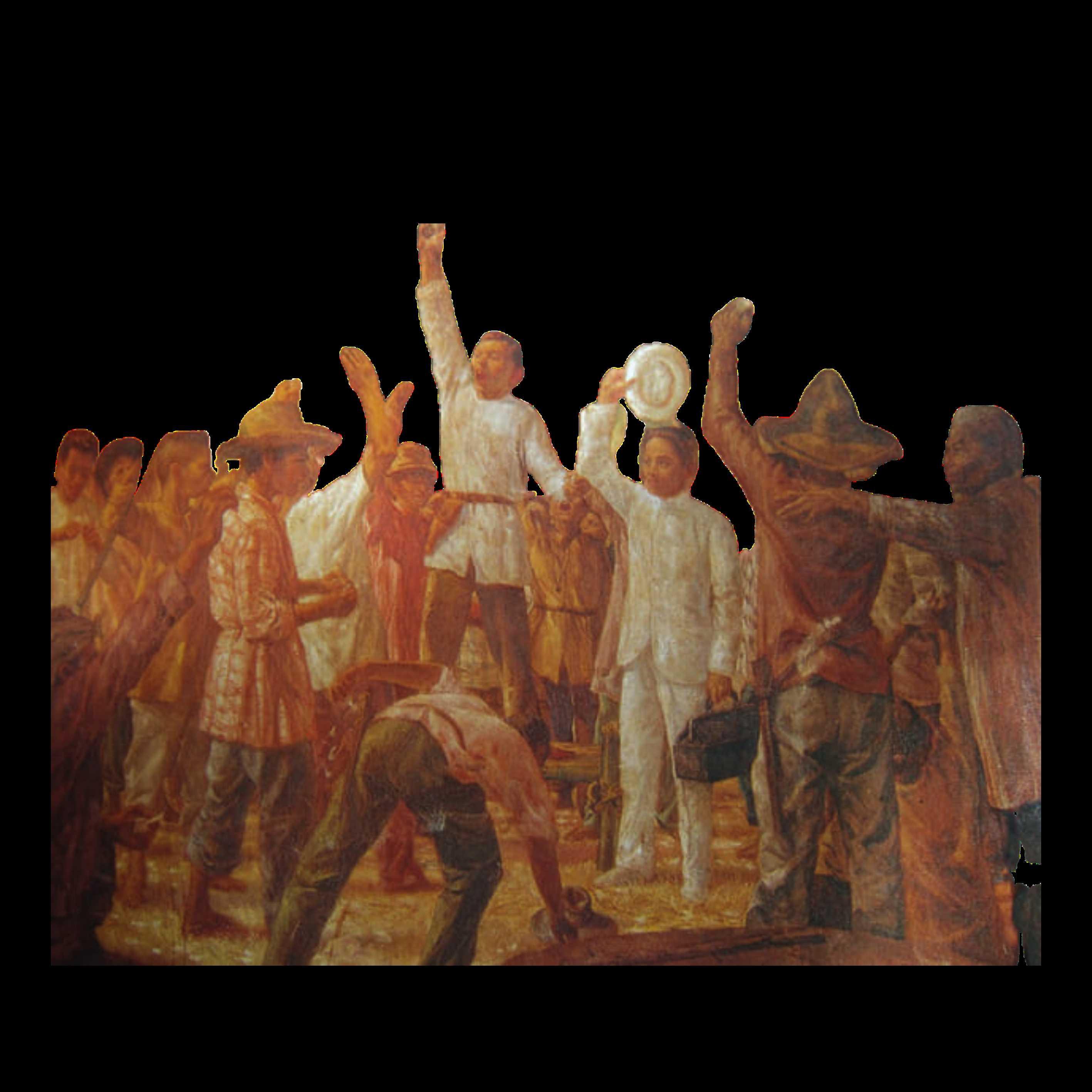
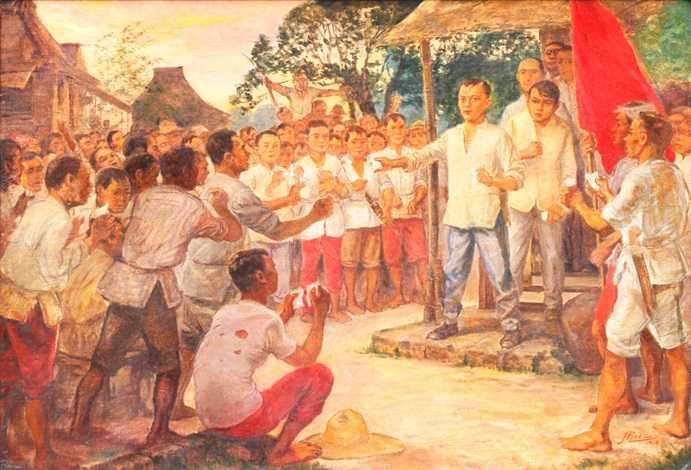
However, after Bonifacio's intense and convincing speech, everyone destroyed their cedulas to symbolize their defiance of Mother Spain and, together, raised the cry of "Revolt." Guillermo Masangkay, an eyewitness and member of the revolt, claimed that the Katipunero's had met this day to talk about when they should strike. Some were against this idea that they should start the rebellion too soon. Andres went out to the populace and asked them what they thought should be done.
He asked them to tear their cedulas as a vow to their intention of joining the revolution after they shouted that they wanted to revolt. Magsangkay believes that the "cry" was the...continue to pg. 5

Santiago Alvarez, a native of Imus, Cavite, was the eldest child of the...pg. 3
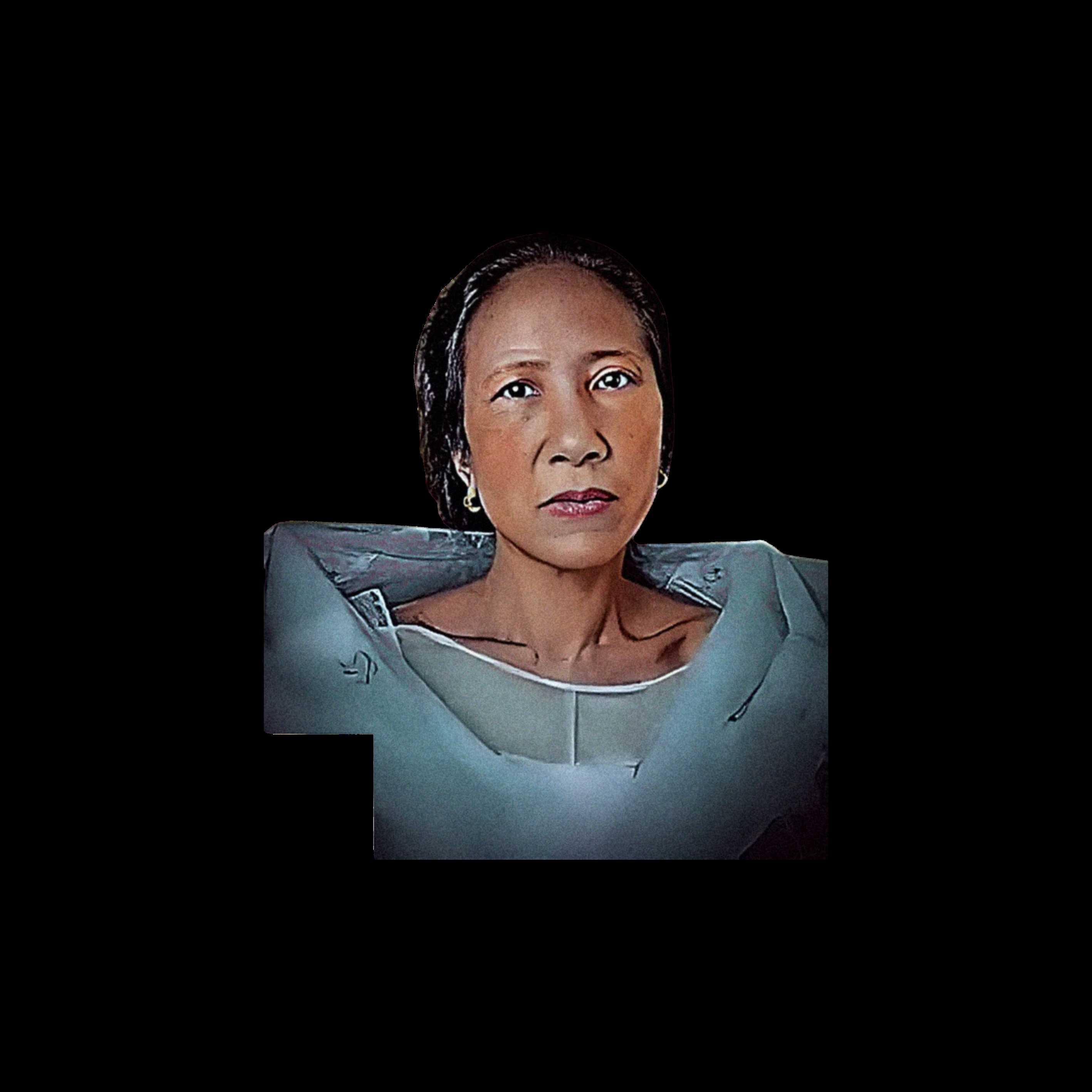

Gregoria de Jesus, born on July 9, 1875, in Kalookan...pg. 4 Gregoria de Jesus



COLIMBINO, BJ A.
MIRANDA, JANSSEN RAINIER M.
WRITER/S:
ASIS, Julius Michael Aventurado, John Maru Bamba, Mohammed Bin Khalilfa. BIGLETE, RYSAL COLIMBINO, BJ A. COSICO, Jazzlyn Eunice De Guzman, Hannah Bea A.
ESPLAGO, KIMCYRUS
Ladignon Nadine G. MIRANDA, JANSSEN RAINIER M. Moreno Keizel Ann B. Nishi, Aivan P.


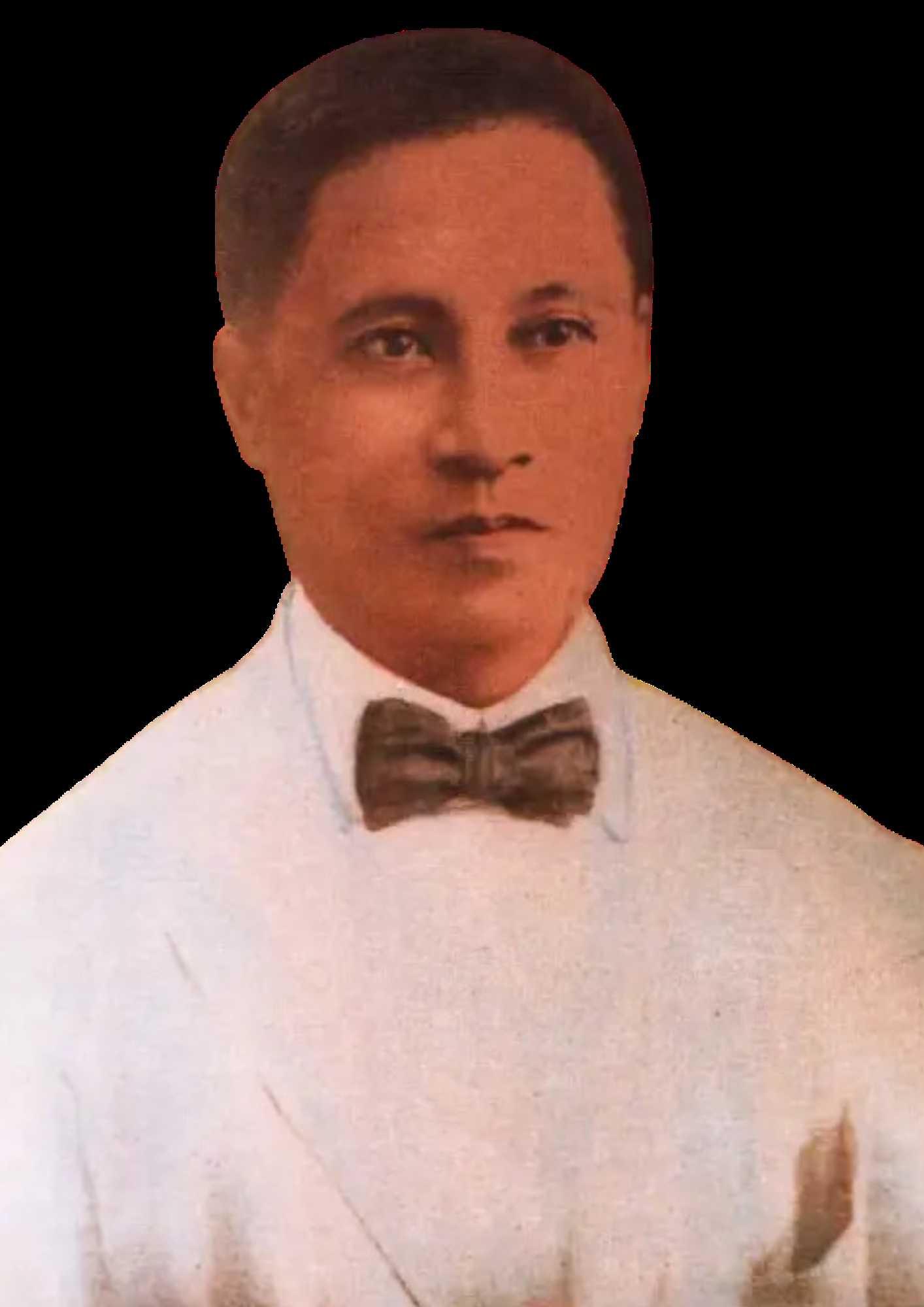

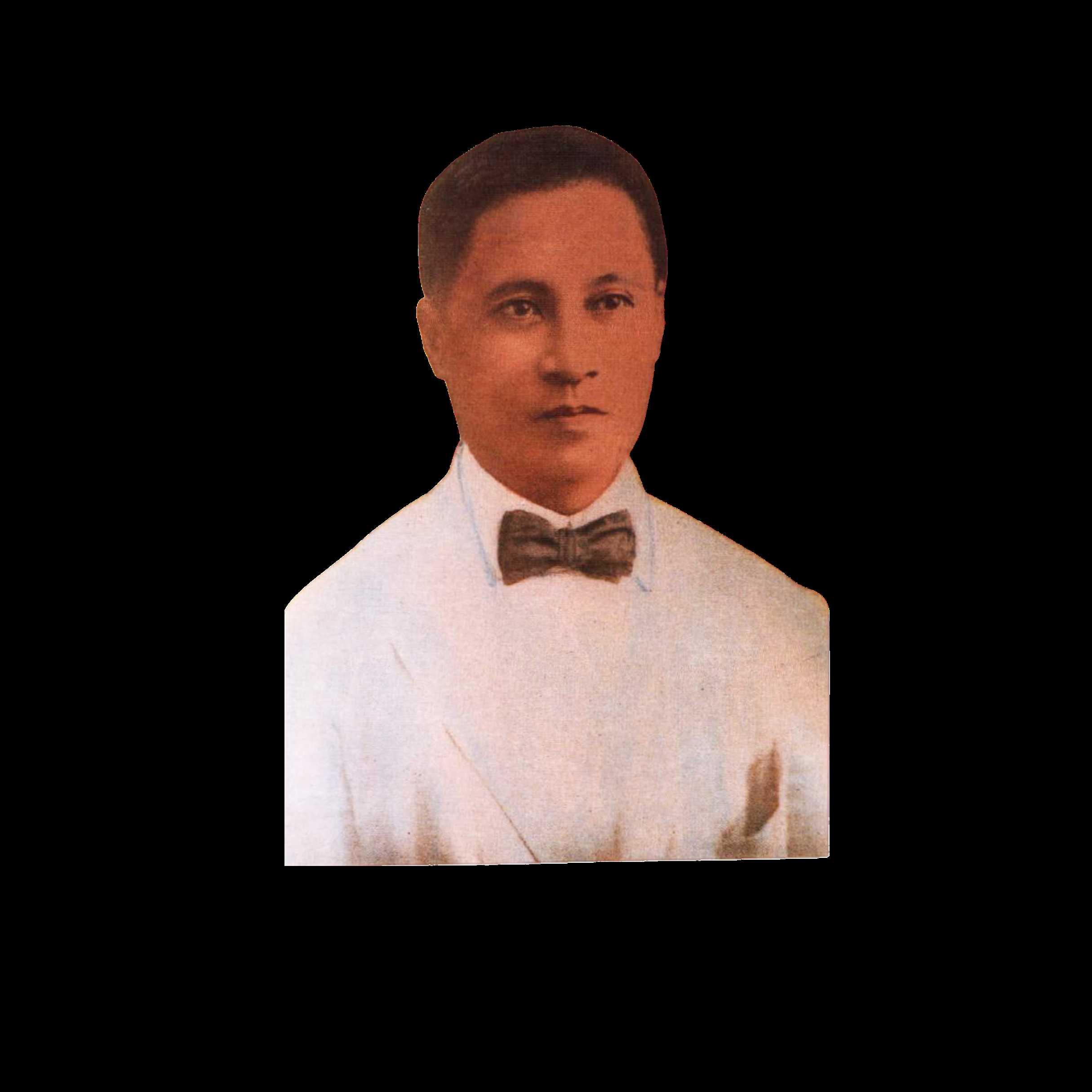
Pio Valenzuela was a key figure in the Philippine Revolution against Spain, and his role in the Cry of Pugad Lawin is particularly notable. On August 23, 1896, Katipunan members gathered at the house of Apolonio Samson in Kangkong, where they decided to tear their cedulas, a bold move that marked their defiance against Spanish rule. Valenzuela recalled the excitement and bravery of the people, who were determined to fight for freedom despite lacking sufficient weapons or supplies. Although there's some debate about the exact location and date, with Valenzuela initially stating it happened on August 23 at Pugad Lawin in Pasong Tamo, and later revising it to August 26 at Juan
Ramos' house in Sitio Gulod, Pugad Lawin

This pivotal event sparked the revolution, and Valenzuela's account highlights the unity and spirit of the revolutionaries. In 1928, he even commemorated the Cry at Pasong Tamo with fellow well known KKK veterans Gregoria de Jesus, Briccio Pantas, and the brothers Alfonso and Cipriano Pacheco, standing at the exact spot where 1,000 bolos were stored before being used in the famous cry. Despite the differences in details, Valenzuela's story showcases the courage and determination of the Katipunan members who fought for Philippine independence.
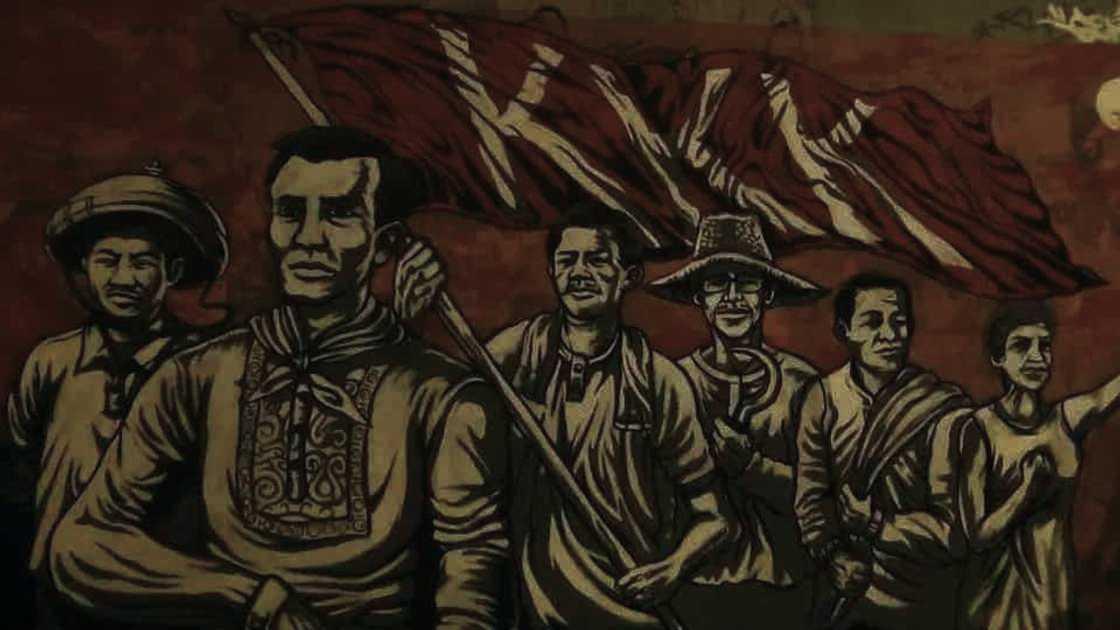


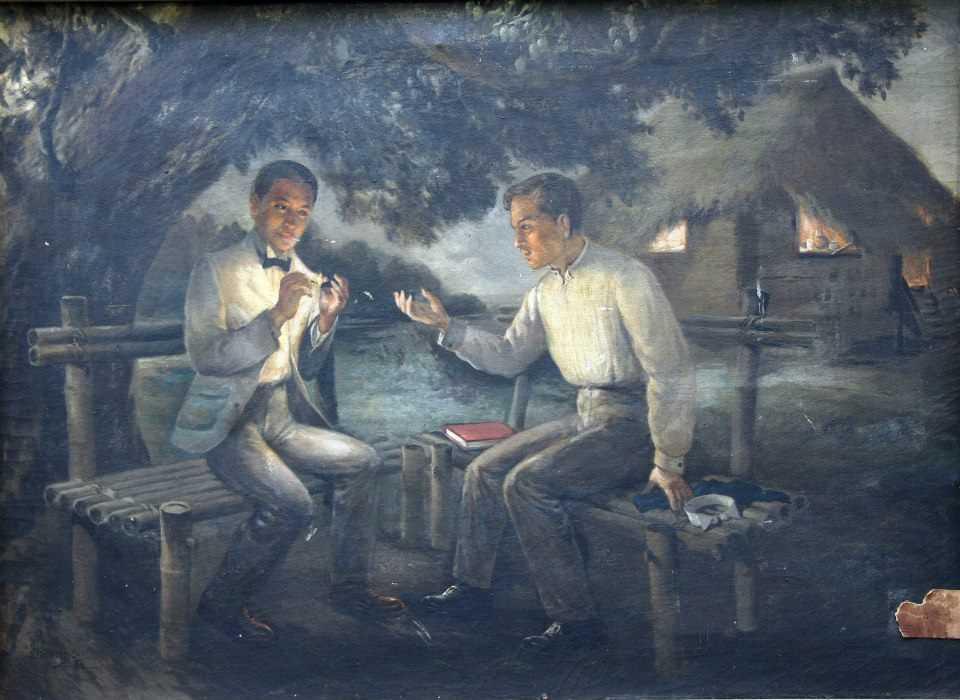
Santiago Alvarez, a native of Imus, Cavite, was the eldest child of the revolutionary general Mariano Alvarez and Nicolasa Virata. After his birth, his family immediately moved to Tierra Alta, Cavite. This was where he got his early education at the age of seven under Sr. Antonio Dacon. He was later transferred to another private school in Cavite Nuevo, where Don Ignacio Vilocillo was his teacher. His parents wanted him to become a teacher so he was sent to Manila and enrolled at a school near Camba Street in Tondo Manila he was headed by Don Macario Hernandez but with the revolution happening his studies were interrupted after the revolution in 1896 he unrolled at University of Santo Tomas but later transferred to the Colegio de San Juan de Letran where he obtained a Bachelor of Arts, then he took up law at Liceo de Manila.
Santiago Alvarez's "Ang Katipunan at Paghihimagsik, 1927" forms one of the most significant firsthand accounts of the Philippine Revolution. Despite having composed his story decades after the event, Alvarez claims to have built it upon documents provided by the early leaders and fighters of the Katipunan. But ironically, internal evidence reveals that his account of the fateful conference on August 24, 1896, which had already ushered in the beginning of the revolution, comprises information he gathered from Ramon Bernardo. Bernardo was among the most prominent
members of the Pandacan Katipunan who first-hand got involved in the incidents that led to the "Cry of Balintawak."
This reliance on Bernardo's testimony significantly tags his memoirs to the historical setting. His critical perspective as one of the key figures in the revolution affords us a very important glimpse into the Katipuneros' concerns, strategies, and emotions in this defining moment of their battle for independence. Knowing this source allows us to appreciate its possible biases and limitations.
The most important, in fact, though, is that however engrossing Alvarez's memoirs of the Philippine Revolution are, they must be made with critical sense, peering for personal biases and the fact of time elapsing. They're best viewed through the sources and context of his narrative; this will be our path to a more nuanced understanding of the historical events he describes.


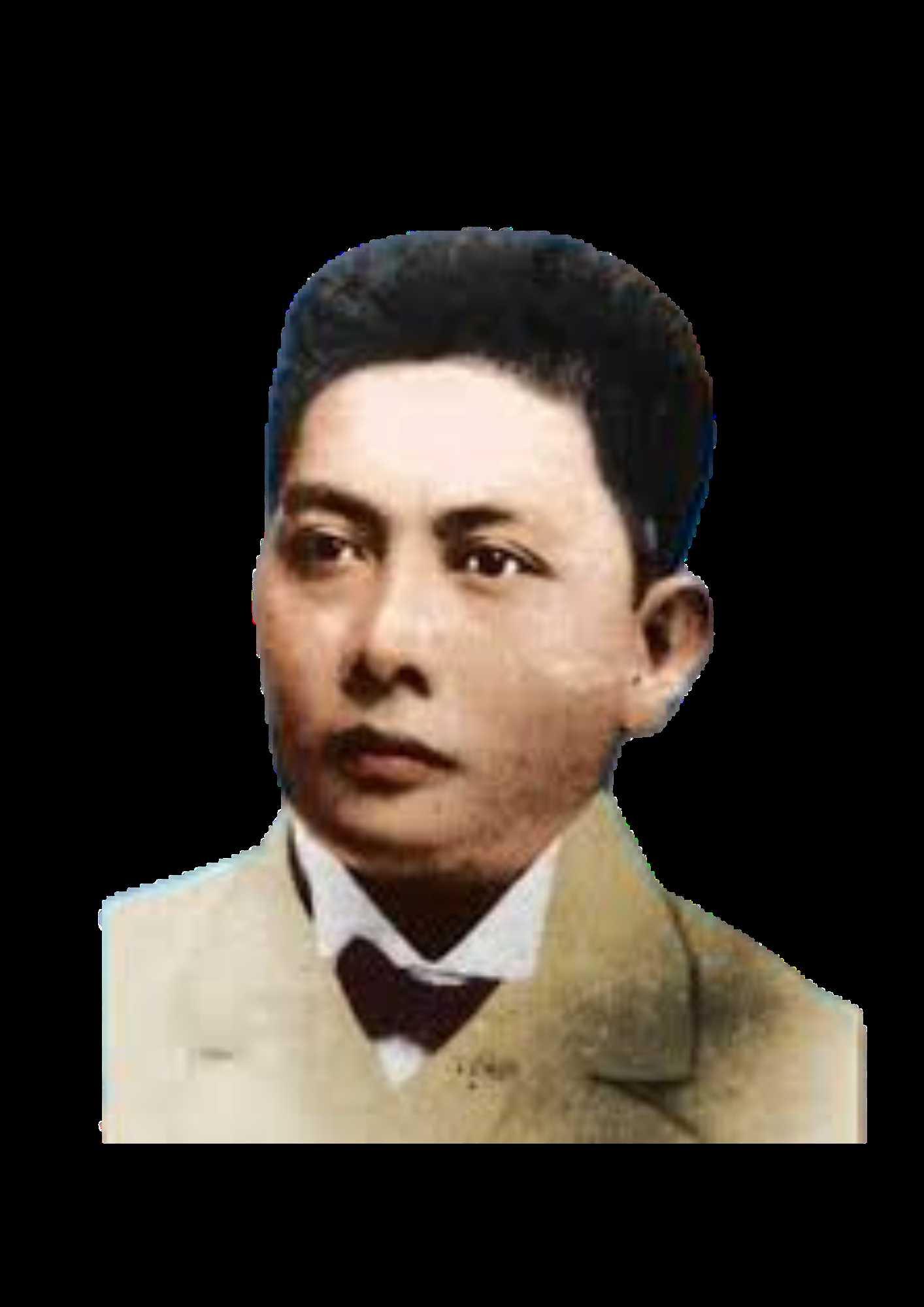



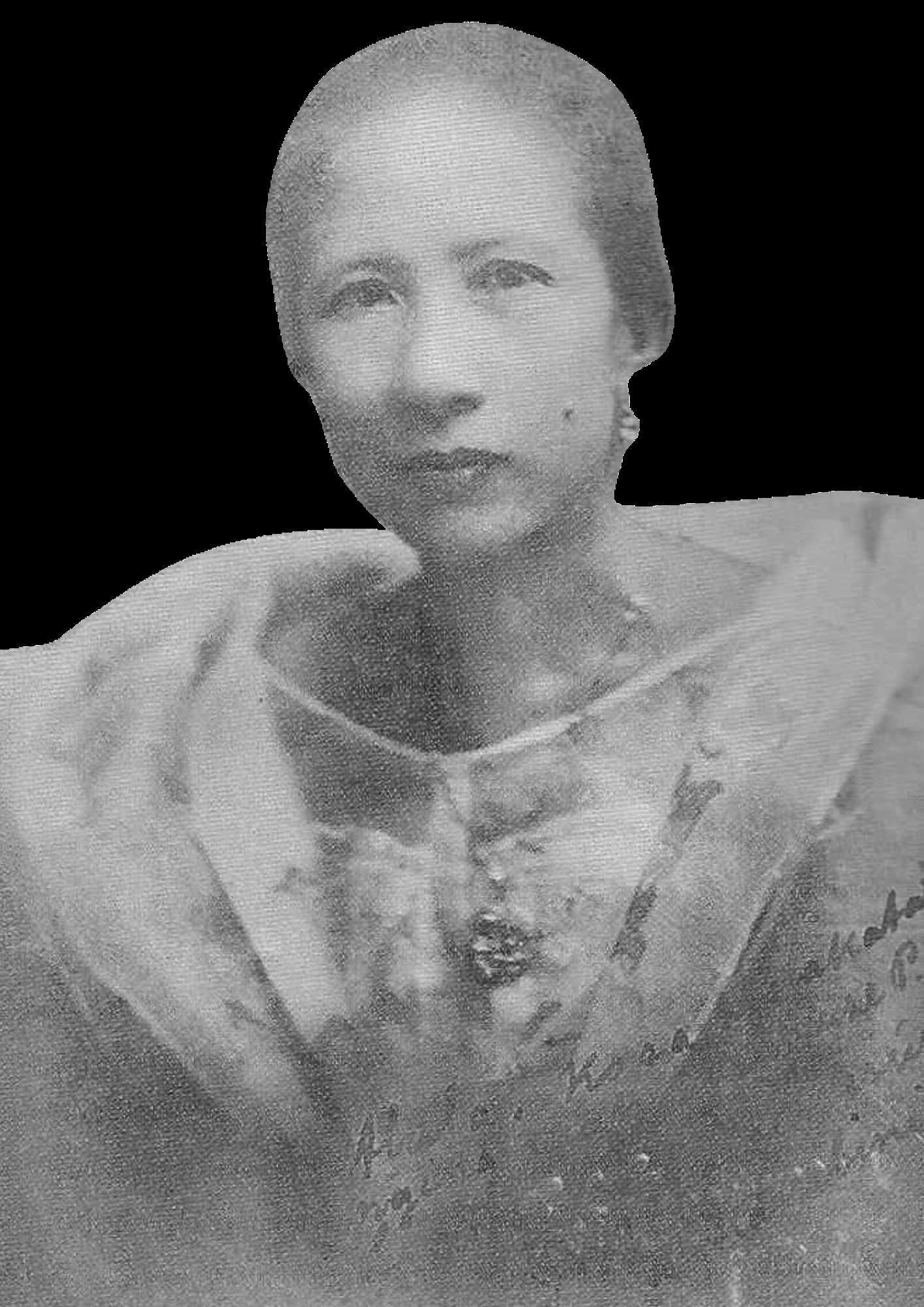
Gregoria de Jesus, born on July 9, 1875, in Kalookan, is remembered as one of the most significant women in the history of the Philippine Revolution. She is best known for her role in the Katipunan, the revolutionary society that fought for Philippine independence from Spanish rule. Gregoria’s involvement went beyond being the wife of Andres Bonifacio, the founder of the Katipunan. She became a key figure in the revolution, demonstrating courage, resourcefulness, and unwavering dedication to the cause of freedom.
Gregoria's involvement in the revolution began shortly after she married Bonifacio. As the "muse" of the Katipunan, she not only supported her husband but also took an active role in the revolution. She was present during the Cry of Pugadlawin, a crucial event on August 23, 1896, which marked the formal start of the Philippine Revolution. The Cry is when the Katipuneros decided to openly rebel against Spanish colonial rule, symbolized by the tearing of their cedulas, or tax certificates, as a gesture of defiance. While Gregoria was not directly involved in the fighting, her role was vital. She helped care for the wounded and played an important part in supporting the fighters through practical means, such as organizing supplies and offering moral support to the revolutionaries.
In addition to her emotional and logistical support, Gregoria was deeply involved in organizing the Katipunan’s efforts. She helped with the distribution of weapons, ammunition, and provisions, ensuring the revolutionaries had the resources they needed. Her
bravery in supporting these activities, even as a woman in a patriarchal society, was a testament to her strength and commitment to the revolutionary cause.
Following Bonifacio’s death in May 1897, Gregoria faced enormous personal tragedy. Her husband was executed by rival factions within the revolution, a blow that shook the movement and her own resolve. However, Gregoria did not let this defeat her. Instead, she continued to be a strong supporter of the revolution, advocating for justice in the wake of Bonifacio’s death. She remained involved with the revolutionary leaders, helping to maintain unity among the fighters and pushing for the continuation of the struggle for independence. After the revolution, Gregoria married Julian Geronimo and lived a more private life. Yet, her contributions to the revolution were never forgotten. She is remembered not only for her close relationship with Bonifacio but also for her own significant contributions to the Philippine struggle for independence. Gregoria de Jesus passed away on March 15, 1943, but her legacy lives on as a symbol of resilience, courage, and dedication to the Filipino people's fight for freedom. Her story remains an inspiration, showing that women, too, played a vital and active role in the country's struggle for independence.


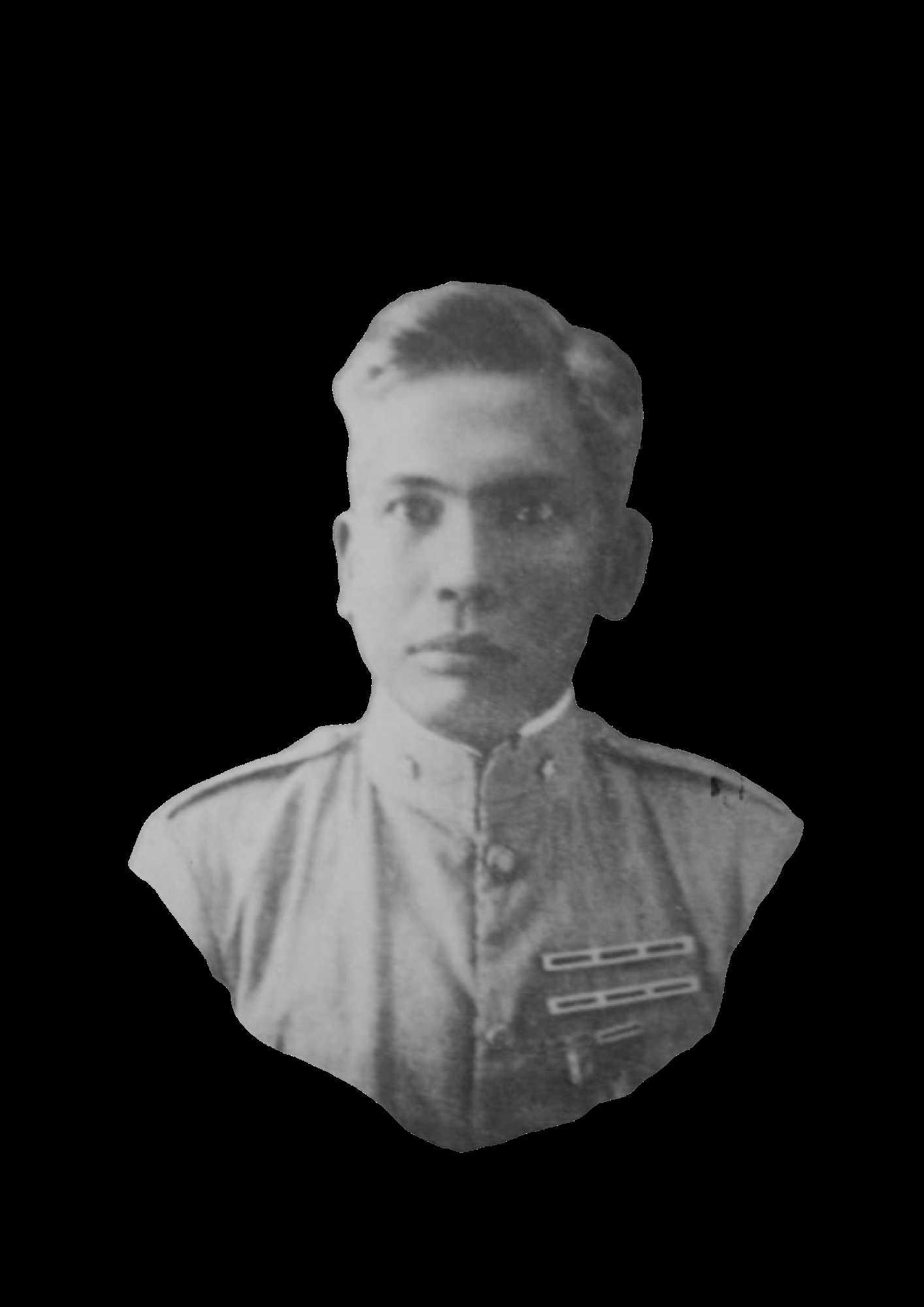







Mangasay pg.1... cedula being torn, the instant the Filipino people united to escape the colonizers' clutches. Masangkay was with Bonifacio in April 1896 at the Bernardo Carpia Cave on Mt. Tapusi, San Mateo, Rizal. It was the site originally chosen for the start of the uprising, not Balintawak. However, it was abandoned because of its remoteness from the town. Nonetheless, it was in there that Bonifacio, Masangkay, and Emilio Jacinto planned the attack in Manila.
Newly appointed general, Masangkay was tasked by Bonifacio to lead one of the groups that assaulted the city.
On August 26th, a big meeting was held in Balintawak, at the house of Apolonio Samson, then cabeza of that barrio of Caloocan. Among those who attended, I remember, were Bonifacio, Emilio Jacinto, Aguedo del Rosario, Tomas Remigio, Briccio Pantas, Teodoro Plata, Pio Valenzuela, Enrique Pacheco, and Francisco Carreon. They were all leaders of the Katipunan and composed the board of directors of the organization. Delegates from Bulacan, Cabanatuan, Cavite, and Morang were also present.
At about nine o'clock in the

At about nine o'clock in the morning of August 26, the meeting was opened with Andres Bonifacio presiding and Emilio Jacinto acting as secretary.
The purpose was to discuss when the uprising was to take place.
Teodoro Plata, Briccio Pantas, and Pio Valenzuela were all opposed to starting the revolution too early.
Andres Bonifacio, sensing that he would lose the discussion then, left the session hall and talked to the people, who were waiting outside for the result of the meeting of the leaders.
Masangkay was brought to San Juan de Dios Hospital for treatment.
After being confined there for three days, Masangkay, dressed as a woman, surreptitiously left the hospital and went into hiding.
With the restoration of peace, Masangkay returned home and was reunited with his wife, Romana Noriel of Cavite, and their 12 children.
Since then, he also lived a simple life, attending to the growing family business and his children's education. He died on May 30, 1963

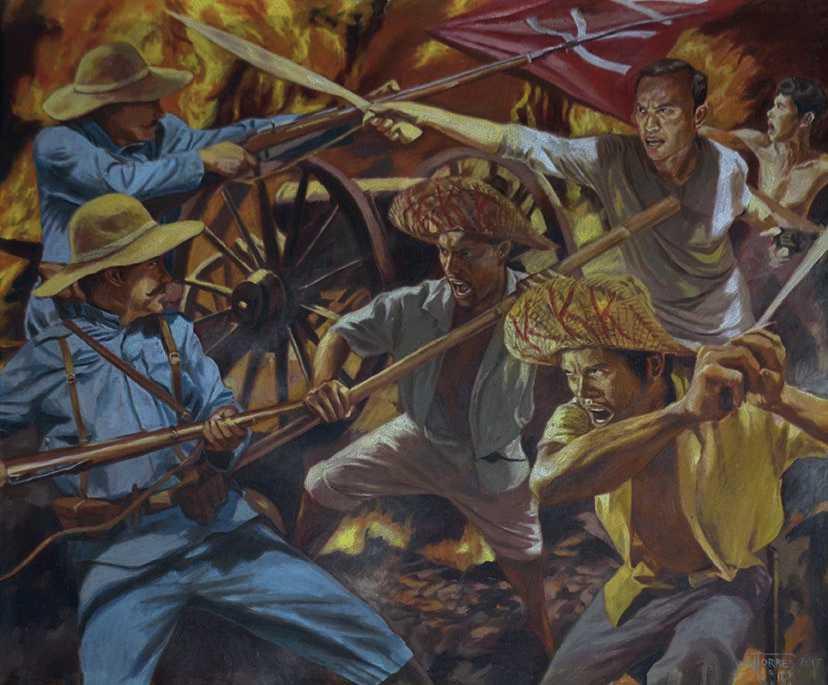
The first confrontation of the Philippine Revolution—an unpredictable battle between the revolutionary Katipunan and the Spanish colonial forces of the Guardia Civil, clouded by conflicting reports and shifting testimonies. Most contemporary sources and veteran accounts place the battle on August 26, 1896, near the settlements of Banlat and Pasong Tamo, but other records present a different timeline, illustrating the confusion of this chaotic period.
On the Spanish side, Olegario Diaz, a commander of the Guardia Civil Veterana, wrote in his October 1896 report that the first encounter took place in the fields of Caloocan on August 24. His version differs from that of Governor General Ramon Blanco, who, in his Memoria to the Spanish Senate in 1897, stated
Controversies and Conflicting Views about the Cry of Balintawak
that the clash happened on August 25 near Pasong Tamo. Interestingly, Blanco’s own report contained a contradiction: an annex listed the skirmish date as August 26, adding to the confusion. This inconsistency reflects the broader disarray within the Spanish colonial administration, struggling to understand and respond to the sudden uprising. Despite the contradictory testimonies, contemporary newspaper reports offer a clearer picture. El Comercio, a major Manila publication, reported on August 27, 1896, that a detachment of thirty Guardia Civil had encountered a group of rebels—referred to malhechores —in Caloocan on the previous afternoon, August 26. The following day, the paper published a
telegram f rom Colonel Francisco Pintos, a Guardia Civil officer, who confirmed that he had led a column to the site of yesterday’s encounter, f urther reinforcing the August 26 timeline
An essential piece of evidence comes f rom a report by the newspaper El Español, which included a sketch map titled “Croquis de las operaciones practicadas.” This rough map traces the route taken by the Guardia Civil on August 26, marking a key point where Teniente Ros ordered his men to form a defensive square against a potential attack. The location noted on the map corresponds with the accounts of Katipunan members who recalled fighting near what is now Tandang Sora.