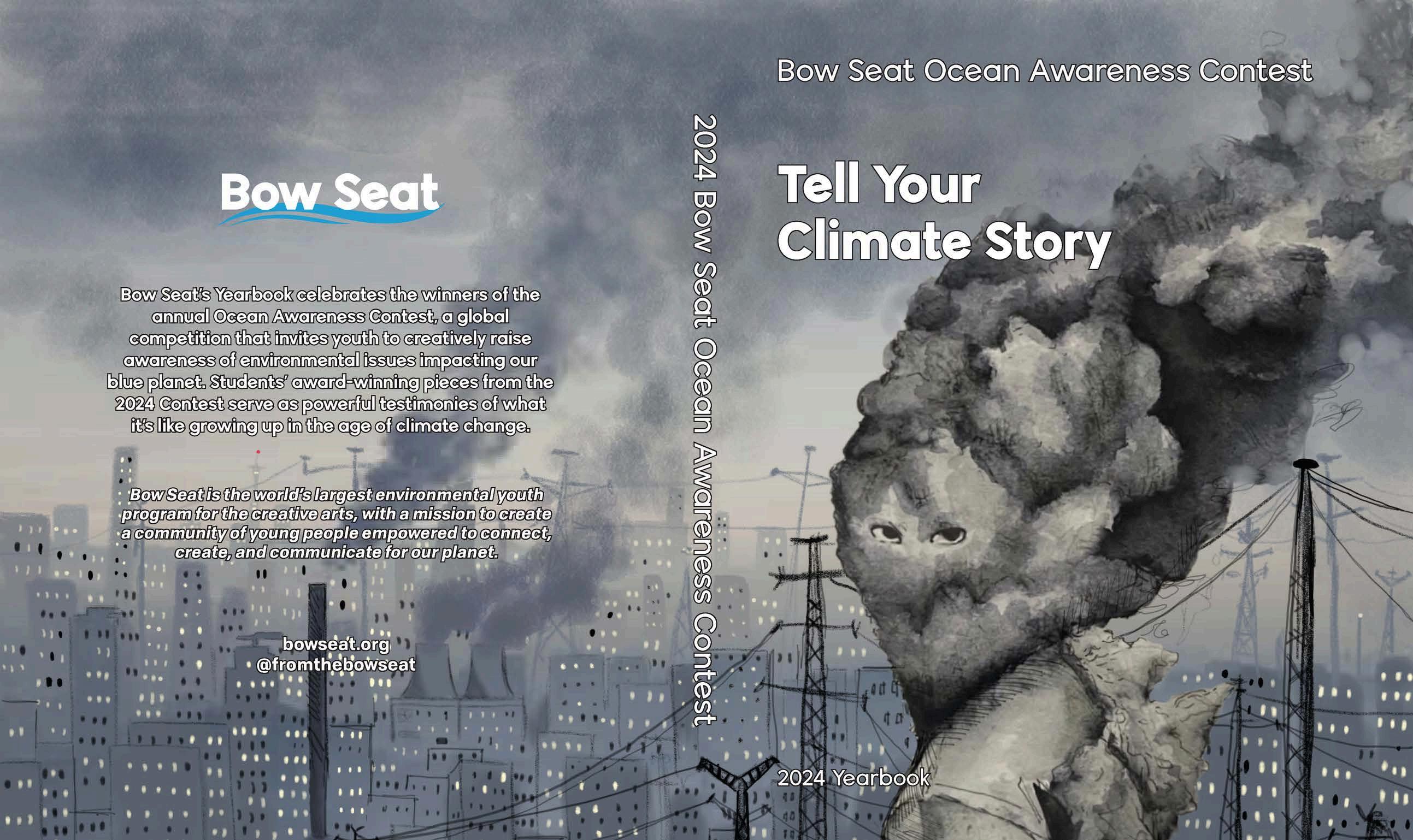
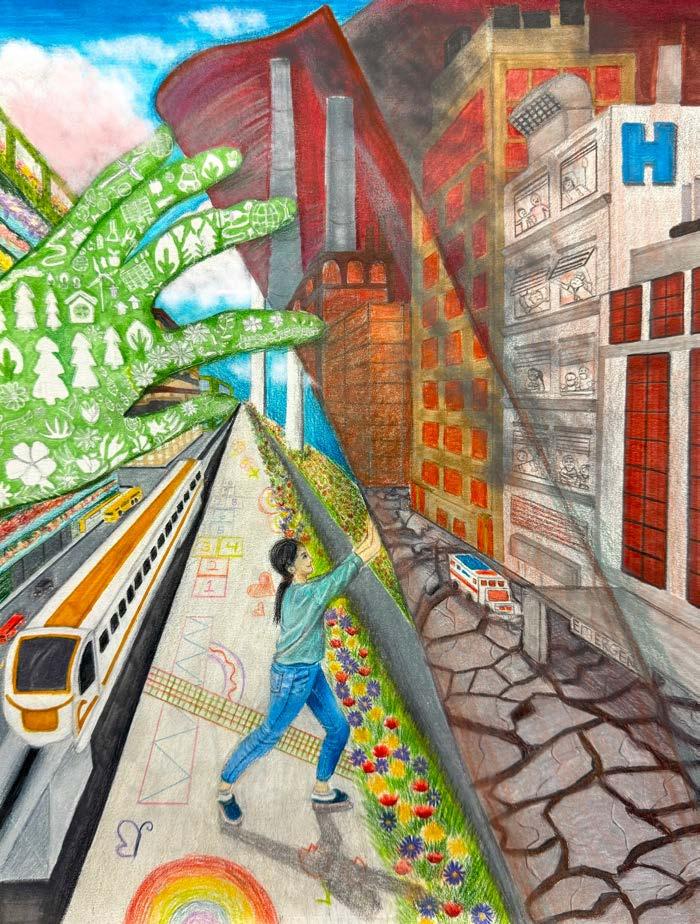
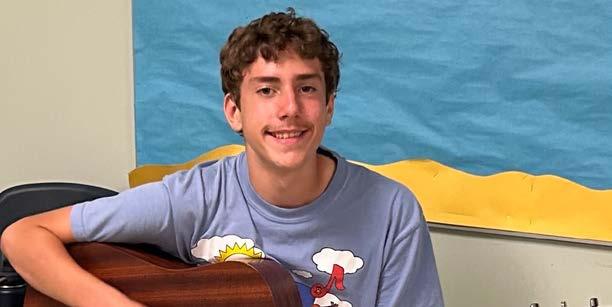
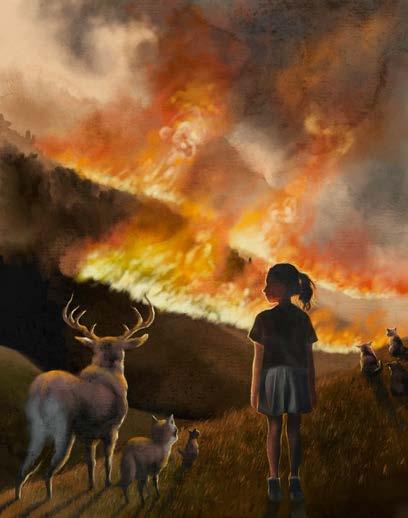
Cover art: “Just Me”, Jeeho Choi Alvarado, 14 (Puebla, Mexico)
designed by Ainsley Cunningham and Susan Tang
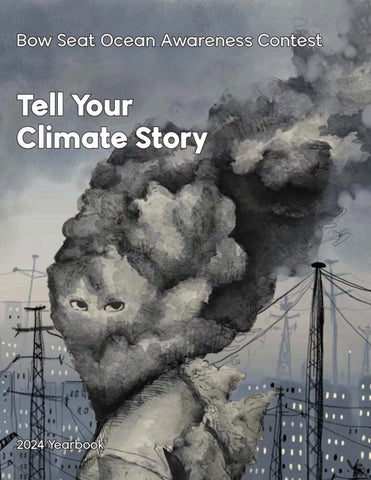
Cover art: “Just Me”, Jeeho Choi Alvarado, 14 (Puebla, Mexico)
designed by Ainsley Cunningham and Susan Tang
Bow Seat Ocean Awareness Programs (Bow Seat) is the world’s largest environmental youth program for the creative arts, with a mission to to create a community of young people empowered to connect, create, and communicate for our planet.
For more than a decade, Bow Seat’s flagship educational program—the annual Ocean Awareness Contest—has invited youth to explore the connections between human activities and the health of our blue planet through visual and performing arts, creative writing, film, and multimedia. Over 38,000 middle and high school students from all 50 U.S. states and 142 countries have participated in the program, which has introduced them to issues such as climate change, plastic pollution, water justice, and endangered species. We have awarded over $780,000 in scholarships to Contest winners.

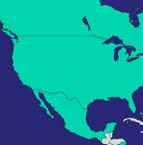

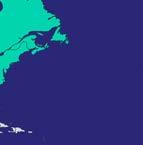
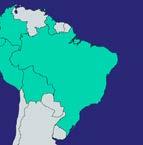
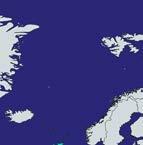
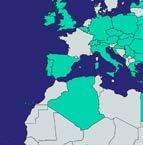
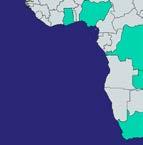

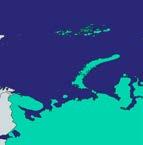
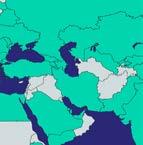
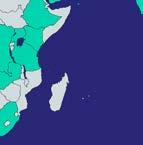

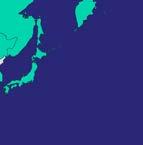
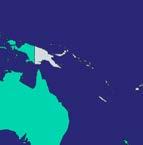

More than 5,200 students from 83 countries and all 50 U.S. states participated in the 2024 Ocean Awareness Contest
We expand the reach of student work by featuring their pieces in our online Gallery, and through exhibitions, film screenings, workshops, presentations, and social media. This provides a special opportunity to showcase teens’ individual skills while also leveraging the strength of their collective voices to raise awareness of environmental issues among broader communities.
For many students, participating in the Contest is a stepping stone into the world of civic and environmental engagement. The artistic process is a means for them to investigate knowledge and feelings about issues, as well as a way to find and share their voice. It shapes their attitudes about their own power to make a difference and gives them the courage to speak up about the changes they want to see for their community and for their future. Inspired by their experience with the Contest, many program alumni take on leadership roles in school or local environmental projects, or join global initiatives like Bow Seat’s Future Blue Youth Council (FBYC). The FBYC is a diverse group of Contest alumni from around the world who work together to advance Bow Seat’s mission and to empower their fellow peers to advocate for our blue planet.
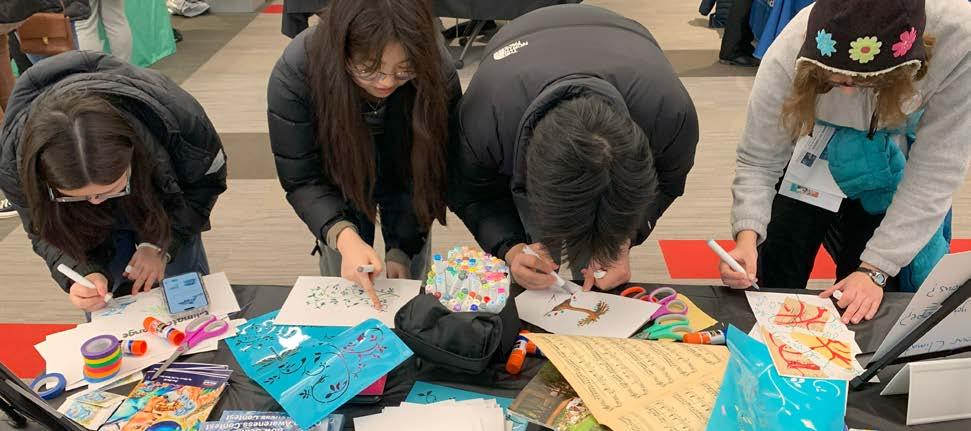
LINDA CABOT
JESS LEFFLER
JEREMY PIVOR
SUSAN TANG

Founder
Senior
AJAY SAWANT THE BOW SEAT CREW
& President
Vice President
Partnership & Youth Engagement Director Contest Program Director
Social Media Director

We all experience climate change differently depending on where we live. As global temperatures rise, our weather patterns change, causing heat waves, drought, flooding, hurricanes, and more. While Kenya endured a fifth year of drought, Pakistan experienced unprecedented floods. Wildfires in Canada and the US have become a regular summer occurrence, but for islands in the Pacific, like Kiribati, sea level rise threatens their land and freshwater resources.
Perhaps you did not get any snow days last year due to an uncharacteristically warm winter, or you couldn’t go to the beach due to harmful algal blooms. Maybe your favorite animal is at risk of losing its habitat, or your favorite foods are becoming harder to find at the grocery store. These are all symptoms of climate change.
Your climate story does not have to be a catastrophe, like extreme weather or wildfi res. You can focus on how climate change is altering how you eat, play sports, or make vacation plans. You can celebrate climate solutions in your community or initiatives that you have participated in, or share how you fi nd strength and inspiration in our changing world.
These are all part of your climate story. It can be cathartic to express your feelings about climate change, and we hope you will fi nd community and realize that other people around the world are experiencing and feeling some of the same things you are.
“Thebestwayoutisalwaysthrough”
–RobertFrost
As we face unprecedented times, this simple quote feels like a guidepost as we all work together through to a better, more equitable, and more sustainable world. As always, I am buoyed and inspired by our Bow Seat participants’ passion, talent, and empathy.
This year’s Contest theme, Tell Your Climate Story, generated over five thousand powerful personal narratives and creative artworks depicting how climate change has gravely affected our lives. Our students demonstrated how wildfires, droughts, floods, storms, and temperatures have dramatically increased and are impacting all living beings in alarming ways. The Bow Seat crew and team of 80 judges want to thank all our participants for their courage, creativity, and honesty as they created these personal and compelling works of art, poetry, prose, film, music, dance, and more. Reviewing these submissions was an incredibly moving experience, and they have formed a new collection of persuasive climate knowing and witnessing.
And while we congratulate the 2025 Bow Seat winners, we also applaud and recognize all the young people who submitted this year to Tell Your Climate Story and became part of our “contest movement”. To all our participants, learning to share one’s voice and creative works is a crucial, life-affirming practice whether
you are a “contest winner” or not. Always keep exploring and sharing your creativity and see what blooms. All together, you have made a noticeable impact – our large community demonstrates a powerful reflection of youth environmental activism. Being in this together is what drives change. Community matters. Now more than ever, we need each other.
In closing, we understand the frustration, disappointment, and deep despair of political leaders not taking action on the environment, human suffering, climate, healthcare, and justice. Likewise, we know the power of activism, and I take inspiration from long-standing social justice and civil rights movements with their capacity to endure and respond to changing and challenging landscapes. We at Bow Seat hear you, we see you, and we want to be there for you. We are now starting a Letters to Bow Seat program where you can email us any individual thoughts and questions and we can help guide you to relevant opportunities and resources or just be a listening friend. Please do reach out to us at letterstobowseat@ bowseat.org.
In community,
Since its launch in 2012, the Ocean Awareness Contest has been more than a competition—it is also an interdisciplinary environmental education platform. To support students’ participation in the Contest, we curate an online Resource Studio—using artwork, journalistic media, primary scientific literature, interactive quizzes, and more—to help them learn about environmental issues. The Resource Studio also provides lesson plans, classroom activities, and suggested reading to help educators incorporate the Contest into their classrooms and meet important educational standards across disciplines. In addition, we host webinars that explore conservation and creative advocacy topics with guest artists, scientists, and activists.
The Contest has also evolved into a global community of like-minded peers and supportive adults working together to advocate for a healthy and sustainable future. It is a safe space where youth are encouraged to voice their questions, concerns, and hopes. Knowing that they are a part of this community strengthens them, inspires them to learn more, and ignites them to take action.
The first Ocean Awareness Contest received approximately 70 submissions; in 2024, over 5,200 students participated. The impressive trajectory and growth of the Contest demonstrate young people’s desires to use their voices to speak out on behalf of our blue planet and to make positive change for our society.
For more than a decade, the Contest has helped to build a strong conservation ethic among youth and strengthen critical skills such as communication, critical thinking, and global awareness. According to feedback surveys from the 2024 Contest:
76%
REPORTED THAT THE PROGRAM INCREASED THEIR KNOWLEDGE OF CLIMATE CHANGE
70%
REPORTED THAT THE PROGRAM IMPACTED THEIR WORLDVIEW AND BEHAVIOR 86% REPORTED THAT CREATING SOMETHING HELPED THEM CONNECT WITH CLIMATE CHANGE
80%
REPORTED THAT THE PROGRAM INCREASED THEIR CONFIDENCE IN CREATIVE SKILLS
Results from educator feedback surveys corroborate the findings from the participant surveys, demonstrating that the Contest is an effective tool for increasing students’ interest in and knowledge of environmental issues, and for strengthening their desire to make a difference in the world.
Beyond these numbers, the true impact of the Ocean Awareness Contest is best described by Bow Seat students and other members of our community. We often hear how participating in the Contest opened students’ eyes to environmental issues facing their communities, impelled them to make conservation-friendly behavior changes in their daily lives, and inspired them to advocate for change beyond themselves.
THIS EXPERIENCE has heightened my awareness of the fragility of our planet and the importance of taking proactive steps to protect and preserve it. I have become more mindful of my individual actions and their collective impact on the environment. From reducing my carbon footprint to advocating for sustainable practices in my community, I have been inspired to take concrete steps towards positive change.
- 2024 CONTEST PARTICIPANT
MY STUDENTS WENT from having no knowledge or desire to learn about the climate change to having conversations with their families and other teachers about what we can do to combat climate change. They were inspired by past winners and topics and I love to see them excel in the arts.
- 2024 CONTEST SPONSOR
WHAT BOW SEAT DOES every year through its contest is to compile some of the most urgent, stirring, and powerful work about the climate crisis being written. That it comes from students across the country is nothing short of extraordinary. Not only are the stakes communicated compellingly in the poems contained herein, but also a sense of hope, for which I cannot commend these impassioned writers enough.
- CHRISTOPHER KONDRICH, NATIONAL POETRY SERIES-WINNING AUTHOR & 2024 CONTEST JUDGE
BY MY STUDENT sharing with me her essay and her passion for the environment, it inspired me to contemplate and reflect on how the effects of climate change can be obvious or subtle. And these changes, no matter the degree of impact, are intertwined. Moreover, by sponsoring my student, I have been more proactive in finding ways in my daily life to combat the negative repercussions of climate change.
- 2024 CONTEST SPONSOR
BEING A PART of Bow Seat Ocean Awareness Programs has not only expanded my understanding of environmental challenges but has also inspired me to take action. Reflecting on my journey, I’ve gained a deeper appreciation for the interconnectedness of our planet and the importance of youth involvement in environmental activism. It’s empowering to know that through creativity, we can make a meaningful difference.
- 2024 CONTEST PARTICIPANT
ITHOROUGHLY LOVE getting lost in the beautiful artwork each year and getting inspired by a generation of talented and environmentally aware young people.
- BRIAN SKERRY, NATIONAL GEOGRAPHIC EXPLORER & 2024 CONTEST JUDGE
THE MORE YOUNG PEOPLE learn about environmental problems, the sooner they realise that the problems are real and not hypothetical, the more chances we have to change the world for the better. Raising awareness among the young generation makes me hopeful.
- 2024 CONTEST SPONSOR
I NEVER CONSIDERED the climate crisis as being of any importance to me, but by researching about an event that took place in my own country, I realized that the issues are a lot closer to home and we should strive to prevent such disastrous events from happening again.
- 2024 CONTEST PARTICIPANT

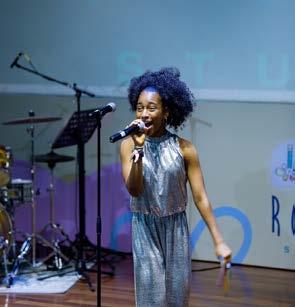
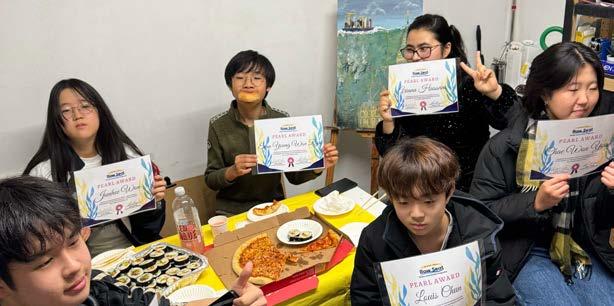
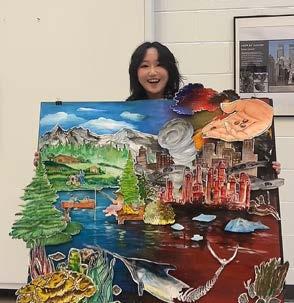
Over 500 participants in the 2024 Contest were awarded nearly $80,000 in scholarships for their artistic achievement and effectiveness in raising awareness and inspiring action around climate change. This is a vital part of our programming—recognizing young artists validates their work and empowers them to continue advocating for our blue planet.
We All Rise Prize
As part of Bow Seat’s long-term effort to increase the diversity of our program participants, we sponsor the We All Rise Prize, awards totaling $5,000 specifically for youth in the U.S. who self-identify as Black, Indigenous, and/or Latine. A total of 10 awards were presented to students whose entries demonstrated notable artistic achievement in their chosen category, selected by a representative judging committee.
A partnership with poet, activist, and educator Tayllor Johnson, the Voice of the Sea Award recognized two spoken word poetry submissions at the Gold-level in each age division. Voice of the Sea Award
Selected by National Geographic photographer Brian Skerry, the Ocean Soul Award recognized a visual art submission in each age division whose work captures the “soul” of the ocean.
• Bay State Award — Celebrated the creative young artists from Bow Seat’s home state
• Hometown Award — Recognized talented students from Boston
• South Coast, Cape & Islands Award, sponsored by the Island Foundation — Honored participants from the South Coast of Massachusetts, Cape Cod, Martha’s Vineyard, or Nantucket
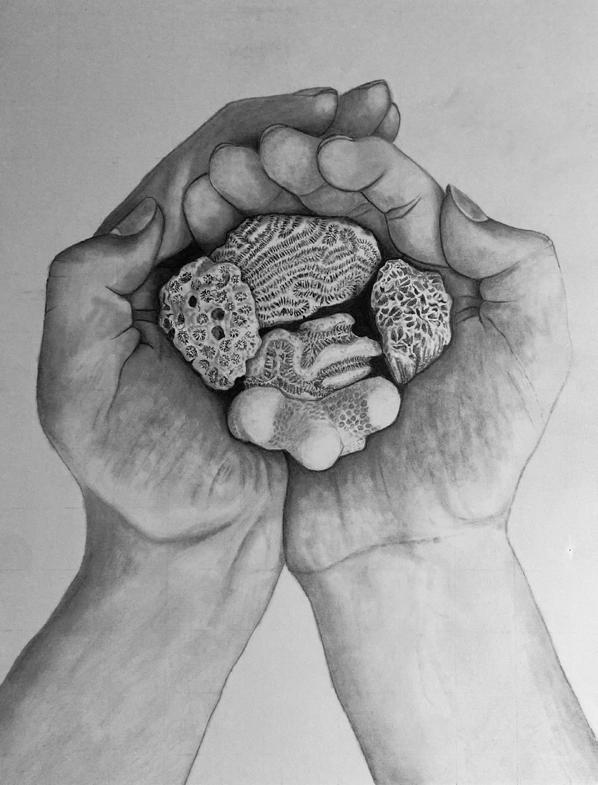
“PARADISE LOST”, ELEANOR ROSENTHAL, 17 (UNITED STATES) SOUTH COAST, CAPE & ISLANDS AWARD WINNER
SINCE 2011, Bow Seat has awarded more than $70,000 to educators who effectively used the Contest to teach students about environmental issues and to empower them to be stewards of our blue planet, while meeting important educational standards. We are thrilled to recognize the most effective of these teachers with the 2024 Educator Innovation Awards!
NATURAL SCIENCES TEACHER,
SEKOLAH MENENGAH PERTAMA (SMP)
YAYASAN SAMA (SAMA FOUNDATION
JUNIOR HIGH SCHOOL) (INDONESIA)
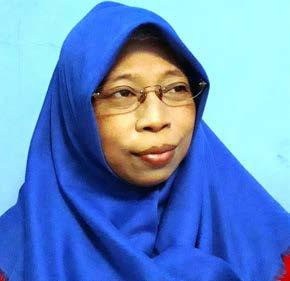
Umi brought the Contest into her classroom by adopting content from Bow Seat’s Resource Studio into her curriculum, replacing one that was inadequate, inaccurate, and not comprehensive in discussing climate change issues. Being from a community experiencing catastrophic sea level rise, Umi wanted to give her students as much information and knowledge as possible about climate change so they could best deal with it.
Before this, we and all members of our community only worked alone without anyone else caring about us in the midst of our destruction due to climate change. Now, on the ruins of our destruction, the Bow Seat Ocean Awareness Programs has enchanted us into a phoenix that flies as high as possible to welcome the brightest future for our community. Thank you very much Bow Seat Ocean Awareness Programs!
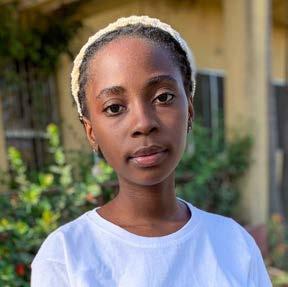
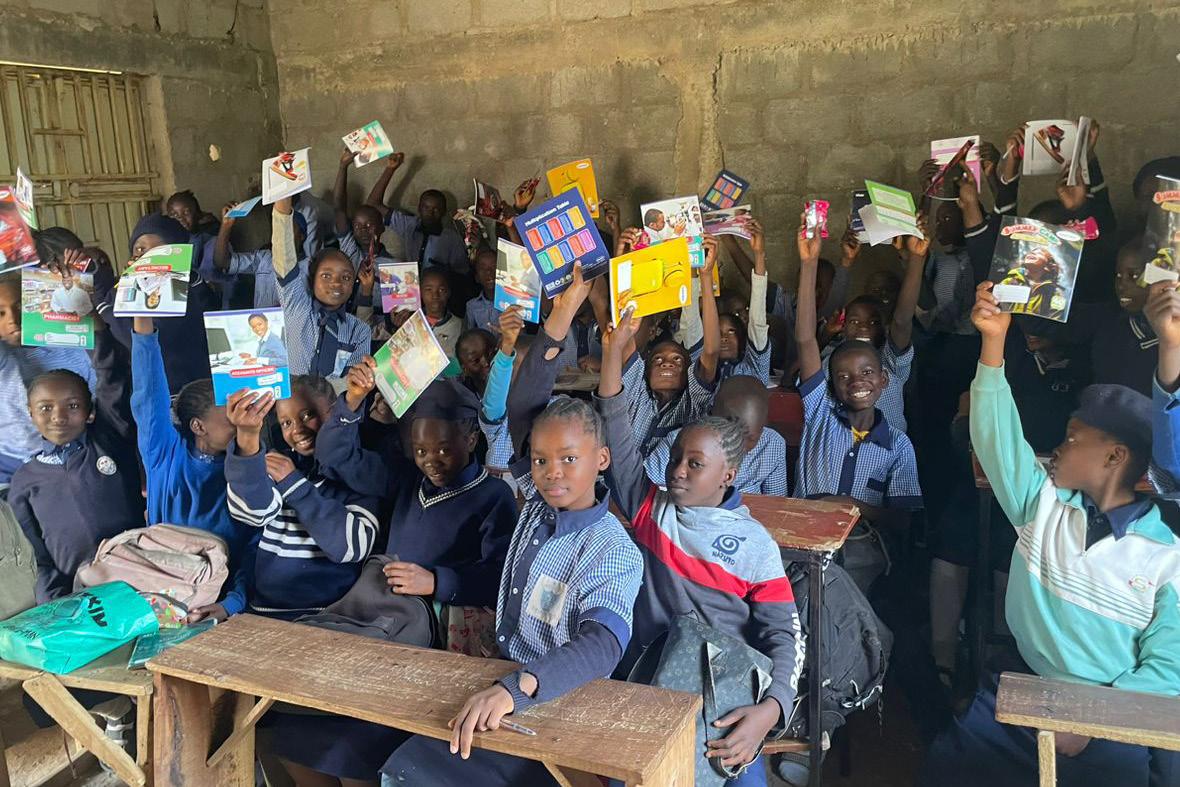
Keren-happuch led a series of weekly workshops where she taught students about climate change and its environmental impacts. She introduced the Ocean Awareness Contest to them as a way to share their climate stories through art. Being from a rural and landlocked area in Nigeria, Keren-happuch’s students had little prior knowledge about climate change and the oceans. Through these workshops and participating in the Contest, she found that her students increased their knowledge about climate and ocean issues.
I am beyond honoured to be selected for an Educator Innovation Award. I enjoyed the opportunity to bring this contest to my students. This has shaped my work and experience as a climate advocate and I hope that more young people will be motivated to create positive solutions to environmental issues.
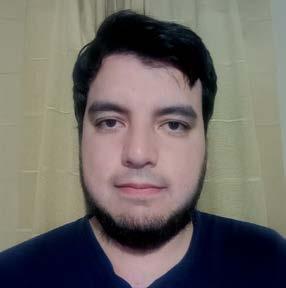
ART TEACHER, ESCUELA EXPERIMENTAL PROA CON ÉNFASIS EN TECNOLOGÍAS DE LA INFORMACIÓN Y LA COMUNICACIÓN
Eduardo used the Ocean Awareness Contest to inspire his students to combine creative expression with climate advocacy, building on their interest and past success in environmentalthemed competitions. He collaborated with teachers across subjects, integrating research, discussions, and interdisciplinary projects to deepen students’ understanding of climate change. By making participation optional and encouraging peer motivation, Eduardo fostered a supportive environment that gradually involved more students. His efforts not only empowered students to create impactful art but also established a lasting tradition of environmental awareness and creativity within the school.
I think that winning this award means that it is not impossible to be recognized if you work hard at your goal. And it will be an example for my students that it is not in vain to dedicate time and energy to a competition, even though in our country the possibility of winning a prize seems remote, if you believe in your abilities and try, you will be closer to achieving it.
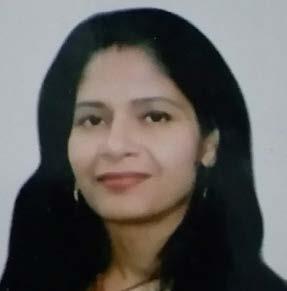
BIOLOGY TEACHER, HOD SCIENCE & GREEN SCHOOL PROGRAM COORDINATOR, NAVY CHILDREN SCHOOL, KARWAR (INDIA)
Dr. Singh leveraged the Ocean Awareness Contest to deepen her students’ understanding of ocean conservation and inspire environmental stewardship. She incorporated ocean-related topics into her lessons, used WhatsApp to share videos with students and parents, and facilitated discussions to expand the impact of her efforts. She has engaged her students in poster-making, poetry-writing, quizzes, and beach clean-ups.
Reflecting on this honour bring up feelings of pride and validation, as it will signify me recognition from my peers and community highlighting the value of my work. I am also feeling motivated to continue exploring innovative practices and to share my insights with others, empowering both students and fellow educators.
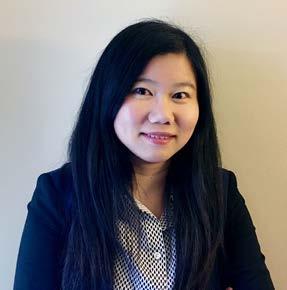
Caroline introduced the Ocean Awareness Contest as a transformative learning opportunity, encouraging her students to combine art with environmental storytelling. By drawing inspiration from the effects of climate change on San Francisco, students explored interdisciplinary themes through research and creative expression, blending art, social studies, and science. Caroline personalized their learning with tailored drawing schedules and guided them in experimenting with diverse materials like UV resin, clay, and even trash, resulting in authentic, environmentally themed artwork. This project heightened students’ environmental awareness, nurtured their creativity, and deepened their understanding of climate change’s local and global impacts.
“ “
I feel incredibly honored that the efforts my students and I put in together have been recognized. This achievement further motivates me to continue guiding and encouraging my current and future students to learn about and engage with ocean conservation issues. Through art competitions, they can express their ideas and showcase their amazing artwork, making a meaningful contribution to raising awareness about the ocean environment.
This special recognition celebrates a teacher (in this case, a group of teachers!) who exemplifi es creativity and stewardship in their work with young people in Massachusetts. The award package includes a $250 classroom grant.
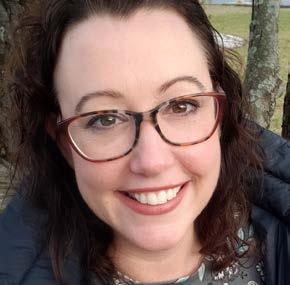
CO-ADVISOR, FRAMINGHAM HIGH SCHOOL
ENVIRONMENTAL AWARENESS CLUB (FRAMINGHAM, MASSACHUSETTS )
CO-ADVISOR, FRAMINGHAM HIGH SCHOOL
ENVIRONMENTAL AWARENESS CLUB (FRAMINGHAM, MASSACHUSETTS )
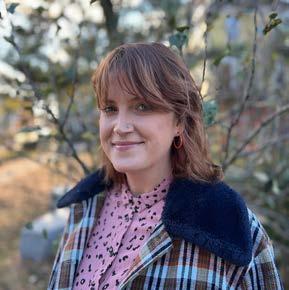
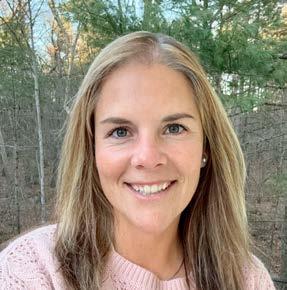
ART TEACHER, FRAMINGHAM HIGH SCHOOL (FRAMINGHAM, MASSACHUSETTS )
Led by Rebecca Maynard, Emily Rathmell, and Katie Lee Mansfi eld, Framingham High School’s Environmental Awareness Club collaborated with the Art Department to create an immersive art installation highlighting critical climate issues. Over fi ve months, 53 students researched topics like coral bleaching and invasive species, using recycled materials to design large-scale sculptures, murals, and interactive exhibits. The exhibition educated the Framingham community, including fi fth graders who visited through district-sponsored fi eld trips, sparking dialogue and inspiring younger students to become environmental advocates. With widespread community support, media coverage, and plans to share their model with other educators, the project demonstrated the transformative power of art in fostering climate awareness and action.
“Being selected for the Educator Innovation Award is an incredible honor, especially because it celebrates the power of interdisciplinary collaboration. This year, I had the unique opportunity to partner with science teachers, merging our fields to challenge both ourselves and our students to think creatively and critically. It was inspiring to see students bring scientific concepts to life through visual storytelling, sculpture, and interactive pieces. Visitors to the exhibition didn’t just learn about these topics — they experienced them through thought-provoking art. I am deeply grateful for the recognition of this work.
— Katie Lee Mansfield
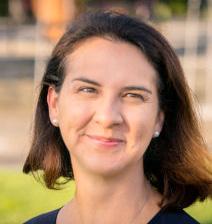

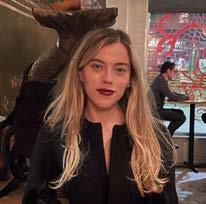
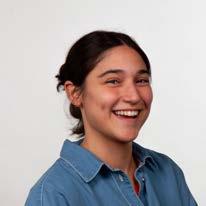
Carolina is an Assistant Professor in Landscape Architecture and Regional Planning at the University of Massachusetts Amherst. As a public artist, she engages in transdisciplinary collaborations to create innovative art installations designed to increase public engagement with climate change.
Linda, founder and president of Bow Seat, is a visual artist and poet who credits a lifetime of sailing for her love of the ocean. She has been recognized as a Global Changemaker Honoree by New England International Donors for her long-term commitment to restoring the ocean’s ecosystems.
Previously serving as a Policy & Advocacy Intern at Women
Working for Oceans, Erin played an integral role in growing the organization’s social media presence. She curated impactful call-to-action social media posts, drawing from her thorough research of marine science literature.
ALUMNI JUDGE
Ely is a multidisciplinary artist, Bow Seat alumna/judge/ friend! She graduated from The University of Texas at Austin in 2021 with a BFA in Studio Art and is a full-time Art Director at Havas Chicago.
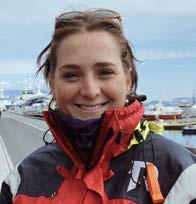
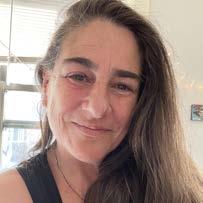
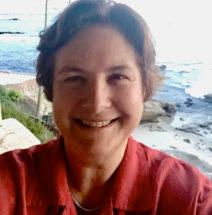
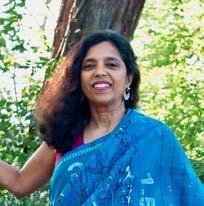
Amy is an environmental artist, writer, and researcher from Providence, Rhode Island. Her current Thomas J. Watson Fellowship explores the intersection of art and the environment around the world.
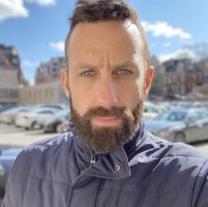
Ari is a contemporary artist based in Boston’s Fort Point neighborhood. His work consists of multimedia works, which cover a broad spectrum of topics, styles, and materials. His art resides in collections spanning the globe and has been shown throughout Boston and beyond, including being featured at the Museum of Fine Arts.
Dara is a political illustrator, art educator, and art activist who continuously uses her artwork to advocate awareness in the world.
Following a career as a biologist—first as an academic and then an administrator—Nigella has combined her passion for the environment and science with photography. Nigella is presently a visiting scientist at the Center for Ecosystem Sentinels at the University of Washington.
Monica Jahan Bose is a Bangladeshi-American artist and climate activist whose work spans painting, printmaking, film, performance, and installation. Her socially engaged work highlights the intersection of climate, racial, gender, and economic injustice through co-created workshops, art actions, and temporary installations and performances.
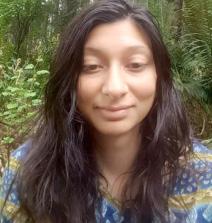
Sofia sits among many worlds: art, science, writing, conservation, nature education. She has a BSc in Environmental Science (Carleton University) and MSc in Marine Biology (James Cook University) and has spent 5 years conducting marine and aquatic research. She is also a self-taught artist who works and brings conservation science to life through infographics (wiseart.net).
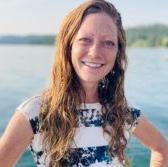
Nadine is a mixed-media artist and Art Teacher in Maui, Hawaii. Previously, she taught Environmental Art at The Island School and intermittently lived aboard a sailboat in The Bahamas. This experience heightened her passion for ocean conservation and art advocacy.
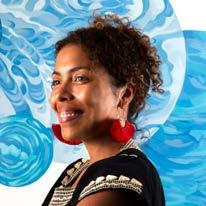
A Dominican-American visual whose community-centered murals form connections across disciplines and cultural boundaries. Silvia uses joy as an act of resistance and celebration through her vibrant murals world-wide.
Free’s current work pulls inspiration from his childhood experience of moving to America as a refugee and experiencing this country as an outsider. He loves that he belongs to multiple cultures because it helps him weave together distant narratives and create a final product that feels both foreign and familiar.
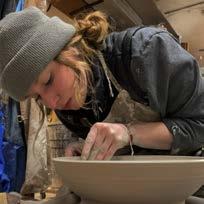
ALUMNI JUDGE
Mackenzie is a recent graduate of College of the Atlantic, where she focused on pottery and marine sciences. Currently, she sells her own work and teaches children and adults pottery at Gorham Arts Alliance.
Stephen Mishol is an Associate Professor in the Department of Art and Design at the University of Massachusetts Lowell. He received his Bachelor of Fine Arts and Master of Fine Arts degree in Painting from the Massachusetts College of Art.
Holly is a Marine Research Associate IV at the University of Rhode Island’s Graduate School of Oceanography. Her work involves the development, coordination, and promotion of interactive ocean science websites, public outreach and science communication programs, and ocean science community events and workshops.
Lisa is an architect, artist, and environmental activist. A graduate of Columbia University and University of Pennsylvania, she has practiced as an architect and taught at Rhode Island School of Design (RISD).
Griffin is a digital artist and AI researcher at the Rhode Island School of Design (RISD). His work explores how technology is changing artmaking, as well as what separates humans, animals, and machines.
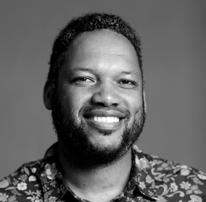
As Artists For Humanity’s (AFH’s) Co-Founder and Managing Director of Programs, Jason creates opportunities to engage and mentor teen artists and their artistic mentors, advancing AFH’s programmatic goals while building long-term creative connections.
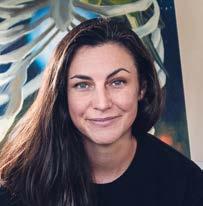
Sophy Tuttle is an English-born American muralist, and installation artist. Her work celebrates nature and creates new narratives that explore regenerative culture-building among humans and all other forms of life.
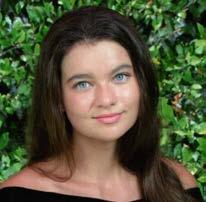
Gwenan is a rising junior at USC double majoring in animation and human biology with a minor in marine science. She was the recipient of the Gold Award in the Senior division of the 2019 Ocean Awareness Contest.
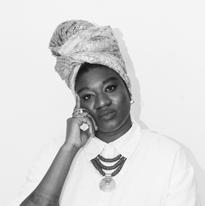
Dzidzor (pronounced Jee-Joh) is a Ga-Ewe folklore, performing artist, writer, and curator. Dzidzor’s style of call and response, sound collage combines poetry, storytelling and sound as a way to usher the audience in an experience of being present in their bodies.
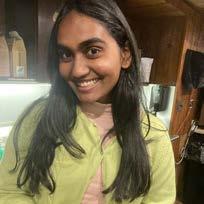
Akhila is an octopus lover and storyteller from Phoenix, AZ. Her poetry won a Gold Award in the Ocean Awareness Contest and has been featured by Greenpeace USA, The Ocean Project, Joppa Flats Education Center, among others. She is a student at Princeton University.
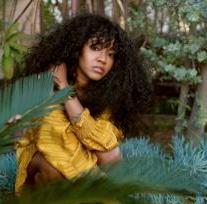
Shauna is the author of the poetry collection Cape Verdean Blues (University of Pittsburgh Press, 2018). Her poems have appeared or are forthcoming in The New Yorker, Ploughshares, Boston Review, AGNI, Iowa Review, Virginia Quarterly Review, Poetry Society of America, PBS Newshour, and others.
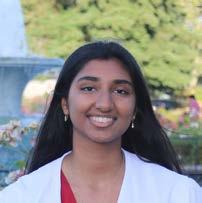
Maithreyi is an incoming undergraduate student from the Bay Area whose work has been recognized by Bow Seat, The Poetry Society, and the Scholastic Writing Awards, among others. In her free time, she likes reading, going on walks, and trying new food.
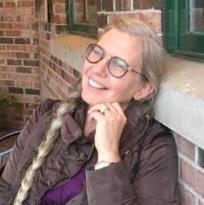
Mary is the author of five full-length books of poetry and her work has appeared in AGNI, On the Seawall, phoebe, Plume, Salamander, Salt Hill, Seneca Review, and elsewhere. A board member of the New England Poetry Club, she teaches at the Massachusetts College of Pharmacy and Health Sciences in Boston.
Linda, founder and president of Bow Seat, is a visual artist and poet who credits a lifetime of sailing for her love of the ocean. She has been recognized as a Global Changemaker Honoree by New England International Donors for her long-term commitment to restoring the ocean’s ecosystems.
Previously serving as a Policy & Advocacy Intern at Women Working for Oceans, Erin played an integral role in growing the organization’s social media presence. She curated impactful callto-action social media posts, drawing from her thorough research of marine science literature.
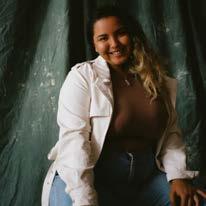
Michelle Garcia Fresco is a Dominican poet and performer. Her writing is inspired by the women in her family, racial injustices in America, loss, and mental health. Her work has appeared in WBUR/ The Artery, Tinderbox Poetry, the Rising Phoenix, and won the Stirling Spoons “2020: Identity in America” Contest.
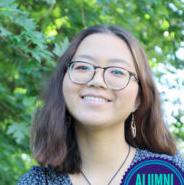
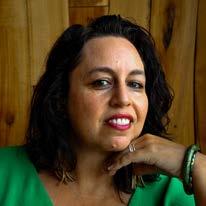
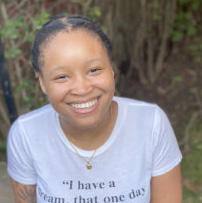
Kelly X. Hui is a fiction writer and abolitionist community organizer. A Luminarts fellow, she received the 2023 Adroit Prize for Prose, selected by Ocean Vuong, and recently turned down the 2024 PEN/Dau Short Story Prize for Emerging Writers in solidarity with Palestine and the Palestinian liberation struggle.
Jennifer’s poetry collections include OBJECT LESSON (Lily Books) and THE FOOL (Big Table). She’s also released the teaching resource OBJECT LESSON: A GUIDE TO WRITING POETRY (Lily Books). Jennifer lives in Massachusetts and is the program manager of 24PearlStreet.
Tayllor is a poet, writer, educator, performer, activist, and founder of Sisterhood (verb), Inc. A published poet, she has been writing and performing her poetry and written works for over 15 years. She has been featured in museum exhibits in New York and California and has published in several anthologies.
Christopher is the author of Valuing (University of Georgia Press, 2019), selected by Jericho Brown as a winner of the National Poetry Series, by Library Journal as a Best Poetry Book of 2019. An associate editor for 32 Poems, he teaches for Eastern Oregon University’s low-residency MFA program.
Sharon is a teacher, editor, and author. Her collection of short stories, ShatteredFossils, is published by Guernica Editions. She is interested in closing that ever-widening breach between our natural habitat and the urban, where many of us find ourselves.
ALUMNI JUDGE
Cynthia is an undergraduate at Harvard College whose writing has been recognized by Bow Seat, Bennington College, the National Scholastic Art and Writing Awards, and YoungArts. She enjoys painting watercolors in her free time, and has a soft spot for cold, rocky New England beaches.
ALUMNI JUDGE
Duy Quang is from Hanoi, Vietnam. His poems have been published in American Poetry Review, AAWW, diaCRITICS, among others. He is the author of the chapbook Journals to (Story Factory, 2019).
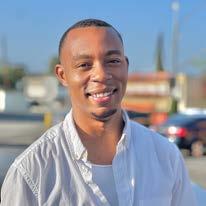
Brooklyn born and raised, Ademola is a singer, poet, writer, educator, and activist. Having taught for over 7 years, Ademola utilizes his skills to create a conscious, critical, and creative experience for students, keeping in mind his mission to give voice to truth and power to justice. Currently, Ademola is working on his debut album while being a DEI and education consultant.
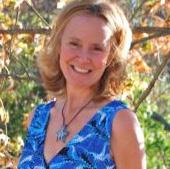
Laura has a passion for the ocean and what it can teach us. She is a poet/writer, public speaker and supporter of youth to boldly know and save the wilds. She is the founder and executive director of Ocean Matters, a nonprofit that supports youth in being stewards for the marine environment through service.
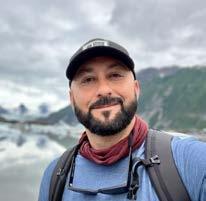
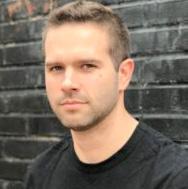
Craig Santos Perez is a Pacific Islander from Guam. He is the author of seven books of poetry and the co-editor of nine anthologies.
Wesley is the author of SUBWOOFER (New Issues, 2017). He has taught writing, rhetoric, and literature for many universities and other venues, including the National Gallery of Art, Grub Street Writer’s Workshop, and Upward Bound programs. He teaches at Howard University.
Born in Belfast, Northern Ireland, and raised in Boston, Massachusetts, Oisín is a writer, educator, and poet. Their work has appeared in WBUR, Massachusetts Review, Boston Art Review, and elsewhere.
Griffin is a digital artist and AI researcher at the Rhode Island School of Design (RISD). His work explores how technology is changing artmaking, as well as what separates humans, animals, and machines.
ALUMNI JUDGE
A previous Poetry Gold winner and Future Blue Youth Council member, Nuan Ning is an avid lover of the literary arts and harbors a passion for ocean conservation. She is excited to begin her undergraduate studies in English Language and Literature at the University of Oxford in the fall of 2024.
Karen comes to ocean awareness through history and science. She has practiced historical ecology at the University of New Hampshire and the University of Massachusetts, Amherst, and currently researches, writes and edits in western Massachusetts.
ALUMNI JUDGE
Dhruv is a passionate advocate for child rights and climate justice from Uttarakhand, India. He uses emotive writing to bring the unique climate stories of children from climate-exposed and marginalized communities to light.
Abbey Cahill is a Boston based artist, writer, and environmentalist. She is the founding editor of the Quinobequin Review, a seasonal collection of art and writing inspired by the Charles River Watershed. She has a degree in English and creative writing from Dartmouth College.
Eric has seen firsthand how early engagement with the ocean can lead to a lifelong commitment to protecting it. He served as Bow Seat’s Contest Program Director from 2021-2023 and now brings public programs to the Harvard Museums of Science & Culture in Cambridge, MA.
Liz is the author of of the award-winning Ocean Country: One Woman’s Voyage from Peril to Hope in her Quest to Save the Seas and Talking Politics: Choosing the President in the Television Age. An accomplished public speaker, she speaks to audiences in a wide range of settings, such as the Commonwealth Club, The New York Times Building, and the New England Aquarium.
Kayla (she/they) is a Filipina-American creative writing consultant and teacher at GrubStreet. She is also a social justice activist, focusing on the intersection of labor, immigration, gender-based violence, and human rights. They have been published in [PANK] Magazine, miniskirt magazine, and Okay Donkey; and nominated for the Pushcart Prize in Creative Nonfiction.
After graduating from Colby College, where she majored in Biology and Environmental Studies, Melinda worked on a schooner in Newport, RI. Most recently, she worked for the Marine Conservation Action Fund at the New England Aquarium.
Rick is a sixth and seventh grade English teacher at the Dedham Country Day School in Dedham, MA. Though more of a hiker and fresh-water person, he has frequent contact with the ocean when he visits family on Cape Cod and Jamestown, RI, where he enjoys kayaking, paddleboarding, and boating.
Sarah is the Founding Director of The 51 Percent Project, a climate communication initiative at Boston University’s Institute for Sustainable Energy. She holds faculty appointments at Boston University’s College of Communication and at the Graduate Program in Urban Biogeoscience & Environmental Health.
ALUMNI JUDGE
Cara is a senior at Middlebury College, pursing a double major in Environmental Policy and Creative Writing. She received the Gold Award for Prose from Bow Seat’s Contest in 2017. Her Honors thesis at Middlebury also focused on the ocean and the relationship between water and language.
Anna is a student at the University of Chicago studying Political Science and Public Policy. She is passionate about the intersection of political advocacy, environmental issues, and creative writing. Anna won the Ocean Awareness Contest’s Silver Award in Senior Prose in 2018, and an Honorable Mention in Junior Poetry in 2016.
Nakia is a prolific writer and educator, who has authored three books, co-written a podcast, and published articles in various media outlets including the Boston Globe, Fodor’s Travel, and CRWN Magazine. She was a Teaching Fellow at GrubStreet in 2023, where she taught and mentored writers and fostered a culture of learning and collaboration.
Eson’ work has appeared in Sycamore Review, Stories from the Stage, and more. She is the recipient of The Studios at MASSMoCA Writing Residency, a NJ Council on the Arts Fellowship, and the David B. Saunders Prize for Creative Nonfiction. She serves as the Director of Community Engagement at GrubStreet.
ALUMNI JUDGE
Jennie is a freshman at Northeastern University, currently majoring in Journalism and English. She has always been passionate about environmental issues, and she received the Gold Award in the Creative Writing Category for the 2023 Bow Seat Ocean Awareness Contest.

Sharon is a teacher, editor, and author. Her collection of short stories, ShatteredFossils, is published by Guernica Editions. She is interested in closing that ever-widening breach between our natural habitat and the urban, where many of us find ourselves.
ALUMNI JUDGE
Cynthia is an undergraduate at Harvard College whose writing has been recognized by Bow Seat, Bennington College, the National Scholastic Art and Writing Awards, and YoungArts. She enjoys painting watercolors in her free time, and has a soft spot for cold, rocky New England beaches.
Megan is a writer and educator pursuing an M.S. in Environmental Writing & Education. She has five years of experience teaching at the high school level, including two years at The Island School in the Bahamas where she worked with student groups to survey beach plastic and raise awareness of plastic pollution.
Ashira is a freelance writer based between Sofia, Bulgaria and Tallahassee, Florida. Her reporting on environmental issues and the arts has been published by PBS NewsHour, Boston Art Review, and Artforum, and she writes for the Our Daily Planet newsletter.
ALUMNI JUDGE
An English and Italian double major at Wellesley College, Sylvia hopes to create stories that spur climate action and encourage ocean conversation. Sylvia was a Girls Who Invest Scholar and prose reader for Bodega Magazine and has received a Gold Award in the Ocean Awareness Contest.

Jeremy is Bow Seat’s Director of Partnership & Youth Engagement has worked for over a decade in environmental conservation, international climate change diplomacy, and public health. Jeremy received an MS from the UC Berkeley School of Public Health’s Joint Medical Program.
slandie is a Haitian-born writer who tests the boundaries of literary landscapes. She uses language to probe, dissect, reimagine, engender distinct worlds and empowering realities. Her work has appeared in L’Union Suite, GRLSQUASH, Boston Art Review, and The Caribbean Writer.
Born in Belfast, Northern Ireland, and raised in Boston, Massachusetts, Oisín is a writer, educator, and poet. Their work has appeared in WBUR, Massachusetts Review, Boston Art Review, and elsewhere.
Jonathan is a writer and freelance copyeditor raised between Boston, Massachusetts, and Johannesburg, South Africa. His work has been published in Calaloo Journal, Boston Art Review, Harvard Divinity Bulletin, and elsewhere, and has been nominated for a Pushcart Prize.
Maya is a writer of speculative fiction, holding a B.A. Honors in Creative Writing from Brown University. As a fundraiser for 826 Boston, she is passionate about the impact writing has on young people who are exploring their identities and finding their voices.
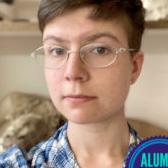
Daria recently graduated Swarthmore College with a degree in Biology and English Literature. Their hobbies include hiking, swing dance and LARPing; they can often be found in the mountains collecting data for field biology research.
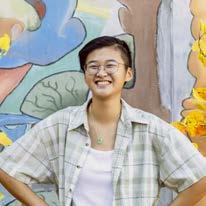
Susan is Bow Seat’s current Contest Program Director. After graduating from Brown University with a B.S. in Environmental Science and Urban Studies, Susan worked on the Public Art team at the Rose Kennedy Greenway Conservancy.
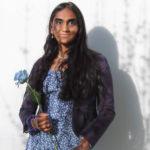
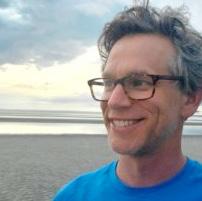
An award-winning reporter and documentary filmmaker, David has covered war in the Balkans, unrest in Latin America, national security issues in Washington D.C., and terrorism in New York and Boston. David now covers environmental issues for The Boston Globe, focusing mainly on climate change.
Eric has seen firsthand how early engagement with the ocean can lead to a lifelong commitment to protecting it. He served as Bow Seat’s Contest Program Director from 2021-2023 and now brings public programs to the Harvard Museums of Science & Culture in Cambridge, MA.
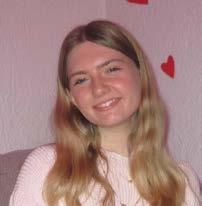
ALUMNI JUDGE
Sydney is a Computer Science and Film, Television, and Media major in her senior year at the University of Michigan. A Contest alumna, she is interested in learning about and educating others on climate change and other pressing issues threatening the environment.
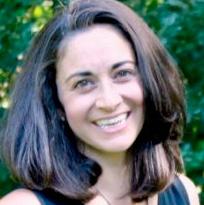
Nicolle is Group Account Director at GYK Antler, a full-service, creative ad agency with offices in Boston and Manchester, New Hampshire. She brings over 10 years of experience in global marketing, with a particular emphasis on effectively using storytelling to drive action.
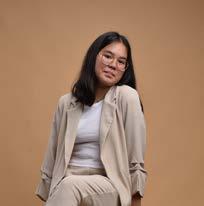

ALUMNI JUDGE
Malika is an incoming university student majoring in Business, Informatics, and Marketing. She is a professional video editor for various international companies and also enjoys making videos for fun. She’s currently working as a content creator for a global educational company impacting 6000+ on TikTok.
Megan is a writer and educator pursuing an M.S. in Environmental Writing & Education. She has five years of experience teaching at the high school level, including two years at The Island School in the Bahamas where she worked with student groups to survey beach plastic and raise awareness of plastic pollution.
Hanji Chang is a Taiwanese-Korean painter, illustrator, graphic designer, and animator. She also teaches animation at Maine College of Art. Andy O’Brien is a Rockland, Maine-based writer, voice actor, and co-founder of O’Chang Comics and Puckerbrush Animation. He is also the communications director for the Maine AFL-CIO. Hanji and Andy co-founded Puckerbrush Animation, which produces the popular “Temp Tales” cartoon series as well as educational and commercial animations.
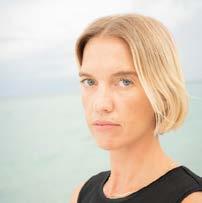
Georgia Stockwell is a film director, visual anthropologist and marine conservation communicator exploring relationships between marine ecosystems and coastal cultures. In addition to filmmaking, Georgia works with NOAA Fisheries SERO on community engagement strategy for the critically endangered North Atlantic Right Whale.
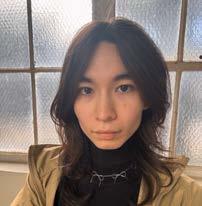
ALUMNI JUDGE
Kai is a Los Angeles-based composer/performer whose work spans concert, film, and interdisciplinary projects. Their music blends improvisation, electronics, and site-specific elements, often exploring sound’s relationship to space and memory. They have received awards from Bow Seat and SOCAN and commissions from the London Sinfonietta.
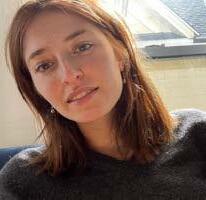
ALUMNI JUDGE
Saoirse is a singer-songwriter from San Francisco, California. After graduating from Wesleyan University with a degree in Anthropology and Writing, she moved to Ireland for six months. She is now based in San Francisco and works as a studio manager at Whipsaw.
Brooklyn born and raised, Ademola is a singer, poet, writer, educator, and activist. Having taught for over 7 years, Ademola utilizes his skills to create a conscious, critical, and creative experience for students, keeping in mind his mission to give voice to truth and power to justice. Currently, Ademola is working on his debut album while being a DEI and education consultant.
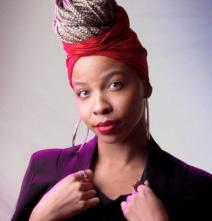
Warrior and healer. Tender and unbreakable. Destiny “Divine” Polk is an Afro-Indigenous choreographer and producer, multidisciplinary artist, community organizer/space holder, art educator and founder of art-activist platform Radical Black Girl.

ALUMNI JUDGE
Caitlin Roberts is a performer, dancer, and choreographer originally from Anchorage, Alaska! She recently graduated with a BA in dance from Loyola Marymount University. She kicked off her professional dance career by performing in the Super Bowl LVI Halftime Show and dancing in parades with Disneyland Entertainment!

ALUMNI JUDGE
Kellen is an artist and musician from Phoenix, Arizona. He graduated in 2023 from Stanford University with a B.S. in Human Biology and a Minor in Computer Science. He is now a medical student at Weill Cornell Medicine in New York City, where he hopes to integrate art, medicine, and technology to design innovative solutions for human health.
Susan is Bow Seat’s current Contest Program Director. After graduating from Brown University with a B.S. in Environmental Science and Urban Studies, Susan worked on the Public Art team at the Rose Kennedy Greenway Conservancy.


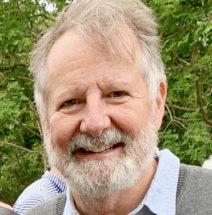

Sam lives in Chilmark, MA, on Martha’s Vineyard and in Cambridge, MA. He worked for more than three decades in public radio at WBUR in Boston overseeing the news and content.
Aileen is a student at MIT majoring in computer science. She started programming in fifth grade, where she was immediately drawn to the endless possibilities of using coding to help people. She is eager to share her knowledge while also helping the environment. Aileen served as Bow Seat’s Digital Design and Web Development Intern in 2022.

Yuzuna is a student pursuing a B.S. in Environmental Science with an emphasis in Atmospheric and Oceanic Sciences, alongside a minor in Geospatial Information Systems & Technology. Yuzuna is a previous Contest winner as well as a former member of the Future Blue Youth Council.
Alvin is an undergraduate at Yale University, interested in studying applications of computer science from his bioinformatics research to develop games that raise awareness of climate change. In his free time, he enjoys going on runs on local nature trails.

Trevor lives and works in Central Pennsylvania, where he is an avid advocate for the outdoors. Trevor is the co-founder and managing partner of Cross & Crown, a digital agency committed to helping their clients educate, advocate, and thrive in a digital world.




In the summer of 2021, when I was twelve, my family and I were forced to leave Los Angeles and seek shelter in my cousin’s distant home. The Hungry wildfire struck just as I returned from vacation, leaving us no chance to say goodbye to my childhood house. Thousands of buildings were abandoned, and unemployment rose by 5%, severely impacting my father among many others. This experience underscored the drastic impact of climate change on our lives. Through my art piece, I aim to express how climate change accelerates global warming, particularly through wildfires that devastate both human and animal lives. The smoke from these fires pollutes the air, causing a 10% increase in hospital admissions and undoing years of air quality improvements. While climate change negatively impacts humans, our contributions to carbon dioxide emissions exacerbate the problem, heating the atmosphere and fueling more wildfires. My art display comments on the role of humans in the wildfire crisis, both as victims and catalysts. As I spend my summers volunteering by picking up trash in neighborhood waterways, removing invasive plant species at Crystal Cove State Park, and raising funds for hydration backpacks for wildfire search and rescue operations, I am acutely aware of how quickly nature is being polluted and destroyed by wildfires. Animal habitats are ruined, and geographical landmarks are completely altered. Before natural areas are lost, I hope to warn people about the detrimental imprints humans leave and inspire others to improve the environments they cherish. By including a life-sized, systematically proportioned portrait of myself, I represent human efforts in my volunteer community aiding in post-wildfire restoration. The act of rooting burned buildings out of the ground shows our determination to combat the effects of global warming; the net emphasizes the entanglement of humans in this issue. Through this visual narrative, I hope to inspire others to take action and protect our environment for future generations.

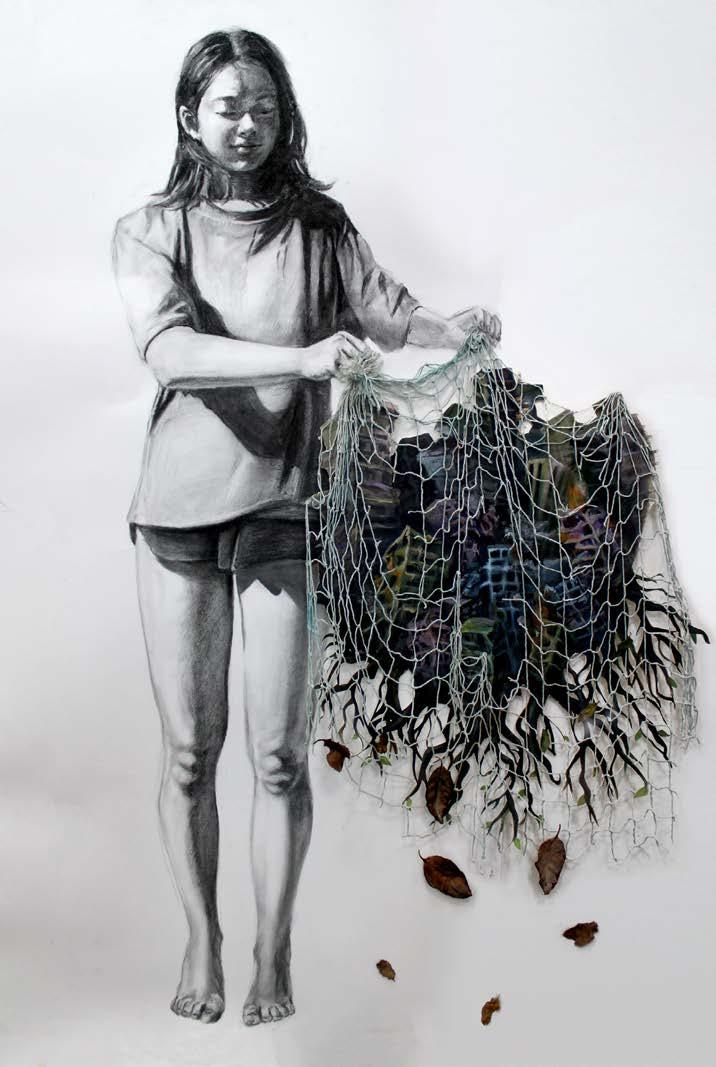
Reclaiming Nature
17
As inhabitants of Earth, it is our responsibility to preserve our planet’s climate not only for humans but other existing organisms and ecosystems. So far, our efforts to do so have been poor, and it appears that future generations of humanity will be burdened with this grave duty. My piece was heavily inspired by this concept and aims to criticize society for its ignorance toward the ongoing climate crisis. As someone living in South Korea, the notifications I would receive about the terrible air quality were regular. In fact, it would be a rare and celebratory occasion for the air quality to be at healthy levels. However, this was not normal, and it shouldn’t be. I find the arts to be a form of self-expression; it is a facet for me to communicate my concerns on the issues I am passionate about. As I researched climate change, exposing myself to the frequent images of ice melting in the Arctic and the panicked behaviors of victimized animals, experiencing the irregular weather and climate patterns, and educating myself on the severity of the crisis, I became more compelled to use visual art as a means to not only spread awareness but also have a lasting impact on viewers. I want the viewers of my artwork to feel an obligatory responsibility to start taking action on the climate crisis. I want them to picture the coming youth that will have to clean up after the mess of their predecessors. Currently, I am the leader of my high school’s Global Issues Network club and we consistently plan lessons and workshops addressing ubiquitous issues such as climate change. I will continue to encourage the people around me to give more attention to the climate crisis through campaigns and events that engage multiple individuals.
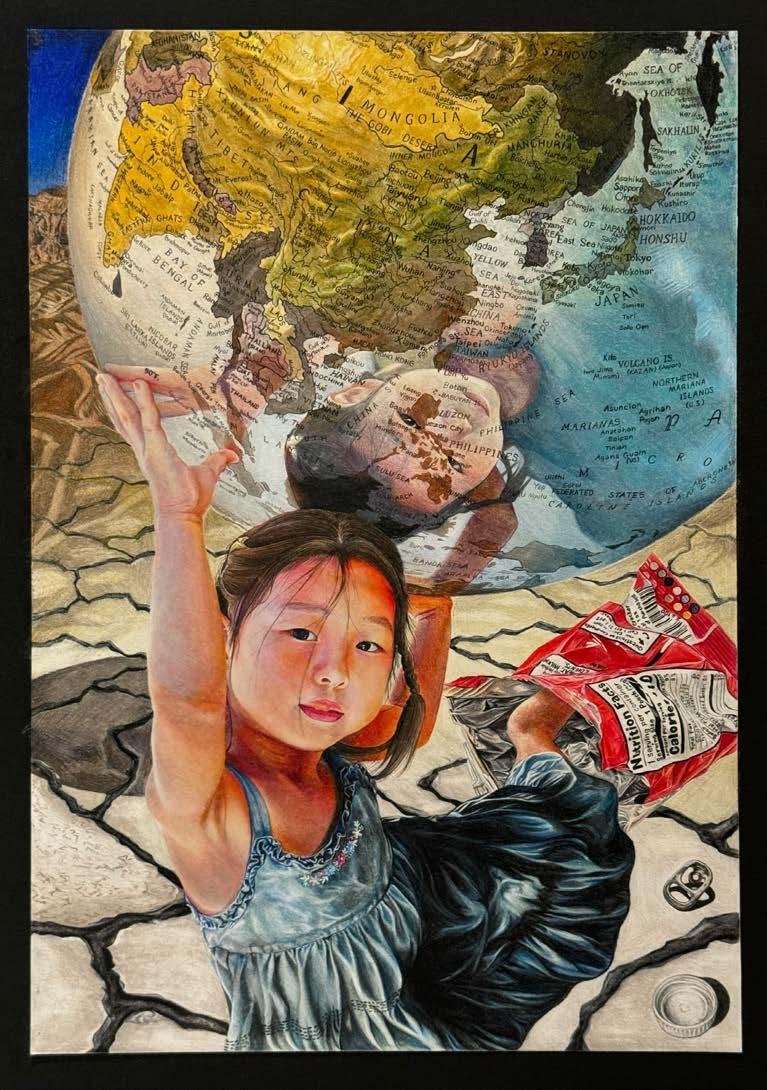
Colored pencil
JERICHO, NY, UNITED STATES
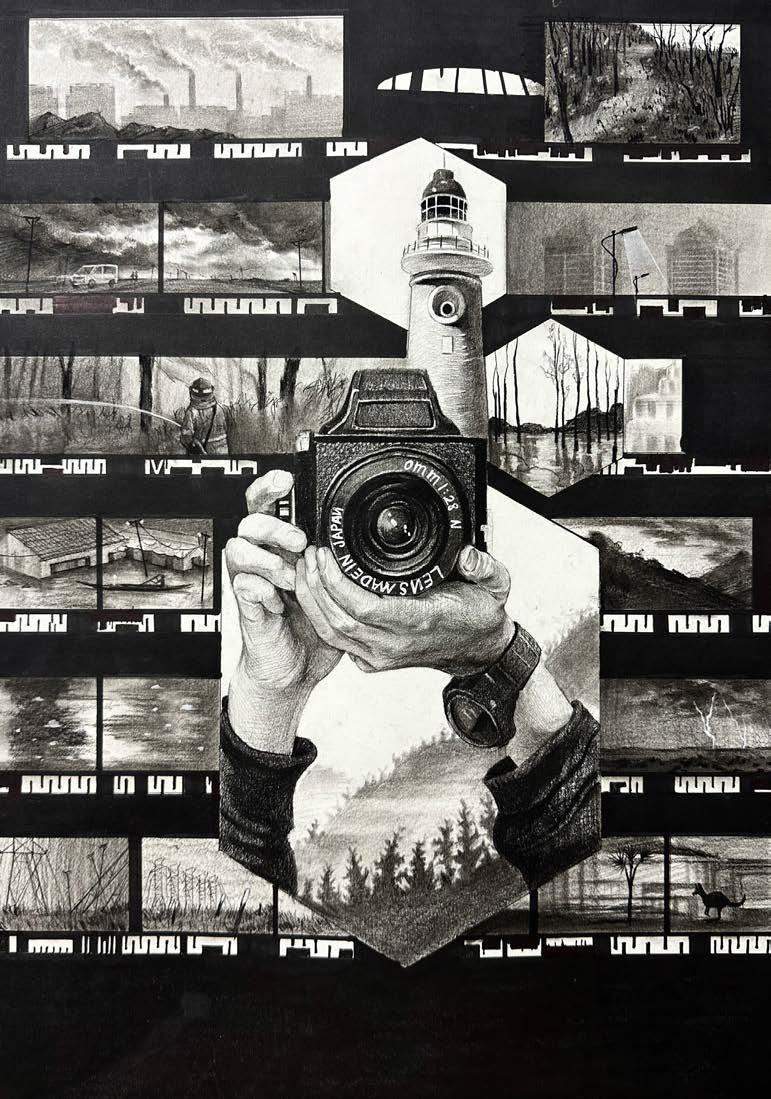
reating this piece allowed me to document our changing climate and its effects on different environments through my passion for photography. The process began with researching various landscapes impacted by climate change, using examples from different places around the world and illustrating diverse effects. I knew I wanted the camera to be the focal point of my piece. By depicting a camera capturing these moments, I aimed to convey both the urgency of the issue and a sense of hope. The lighthouse symbolizes hope and guidance. Through this exploration, I learned that my artistic expression could evoke powerful emotions and inspire others to reflect on and address climate change.
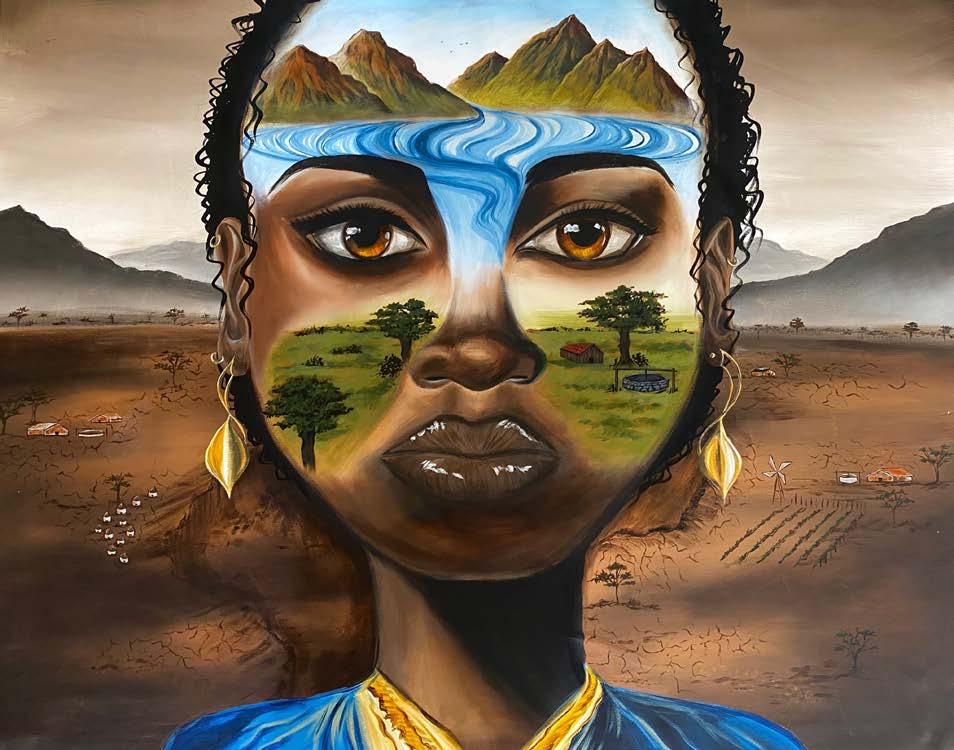
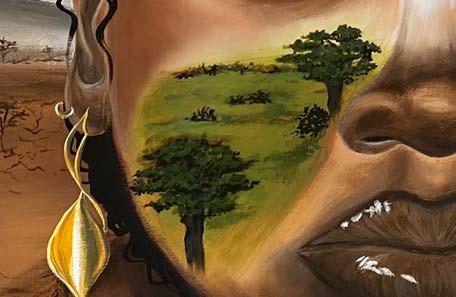
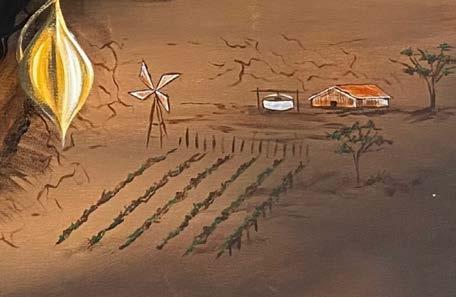
s a young, self-taught artist in South Africa, I meet new people who share their experiences with me, and I draw inspiration from their stories to express them through my art. One such story came from my nanny. She spoke of the challenges her family faced as farmers in Limpopo. They endure daily struggles to ensure the survival of their crops amidst the heavy droughts and arid climates of South Africa. Their efforts to produce crops during these bone-dry conditions often result in ruined harvests. My nanny’s story showed the hardships that South African farmers go through to put food on my plate everyday. My painting is born from the reality of my country, South Africa’s struggle with droughts and unpredictable rainfall. My country suffers from a dry climate that takes away our food and water. Despite these difficulties, our dedicated farmers work tirelessly to provide for all of us. The woman in my painting symbolises the unwavering strength and perseverance of our farmers; she embodies the spirit of resilience. Beyond the cracked land, lonely houses, and dried up plants; her face reflects a land we dream of everyday. A land with clean rivers, and luscious, green mountains. Through her gaze, we glimpse the landscape we wish to cherish, one that can provide for our children. Researching climate change helped me reflect on my country’s climate story and what the world should collectively do, like initiating modern farming techniques (greenhouse farming and drip irrigation). This contest has given me a humble opportunity to express my dream of defeating the adverse effects of climate change. With the help of my community, I will continue to raise awareness through my art. I believe that ‘art’ is a symbol of ‘belief’ and ‘passion’ to bring positive change. My message for you all is to take a small step towards climate change by volunteering, initiating community-drives, and using your special talents to rescue our beloved planet.
ABRONZE AWARD
AGE 17
IRVINE, CA, UNITED STATES
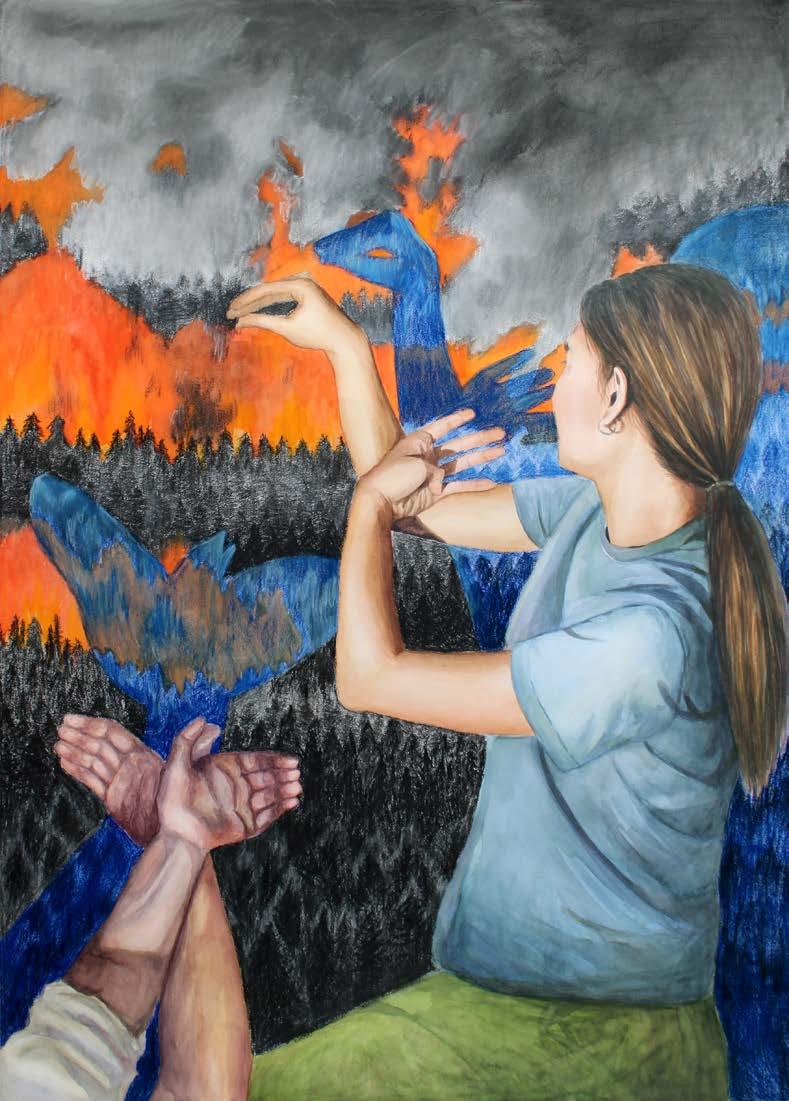
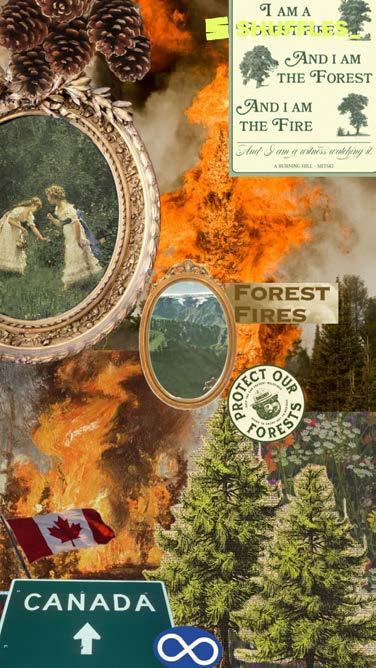
s I delved into my personal experience with climate change, I found myself reflecting on the impact it has had on my community, specifically an experience I vividly remember from October 26, 2020. On that day I received an alert to evacuate my home due to a fast-spreading wildfire encroaching on my neighborhood. Outside of my living room window, I could see a tinted orange sky with a huge cloud of billowing smoke. The scene was absolutely surreal and truly revealed to me the compounding effects of climate change in our everyday lives. This fire mirrored the fiery scenes happening in Australia during the same time period where the wildfires destroyed ecosystems and endangered species. After my 4 day evacuation, I came home to ashes and burnt trees surrounding both my home and school. In channeling my reflections into artistic expression I wanted to communicate the impact climate change, specifically wildfires, has on the environment. When I thought about these fires the first animals I thought about were birds. In my art, I drew 2 different birds represented through shadow puppets to reflect how wildfires impact the animals living in the ecosystem. The bottom bird has its wings spread, trying to flee from the scene, while the top bird is accepting its fate. To contrast the fire and the figures, I used charcoal to create a smoky and dark background, looking almost like a battle scene. The contrast between light and shadow from the shadow puppets evokes both hope and despair and resilience and surrender. Through this artistic endeavor I have learned about how climate change impacts so many aspects of our life. It not only heightens the frequency of wildfires but it also impacts a plethora of natural disasters, making them more prevalent and intense. Through my artwork I hope to alert the viewers of the detrimental effect wildfires have on the environment and urge the global community to work towards a more sustainable and green future.
Watercolor, charcoal
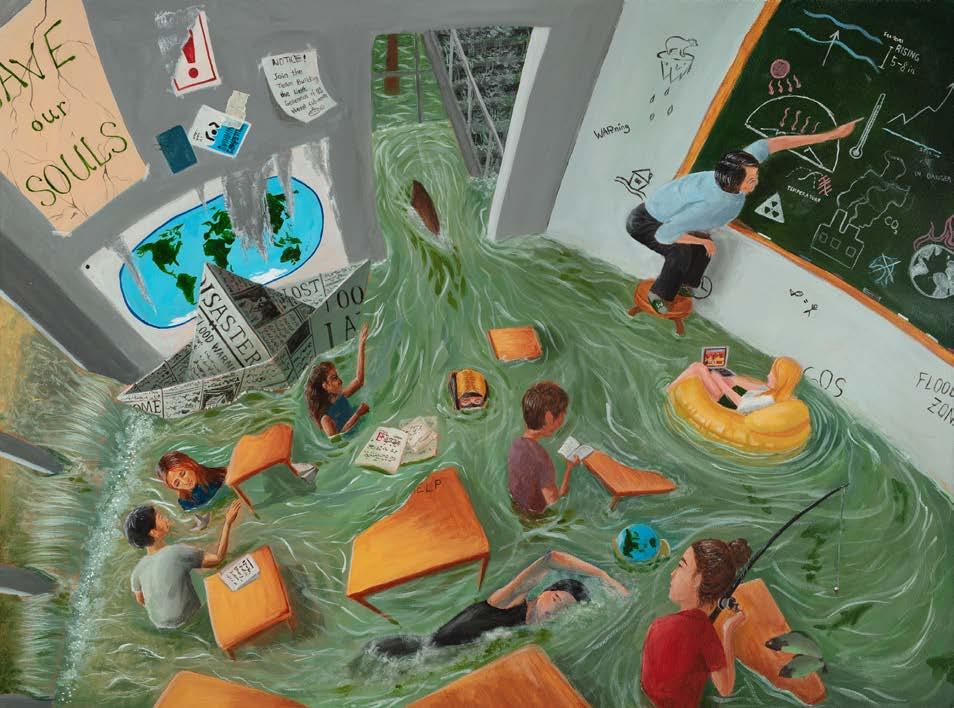
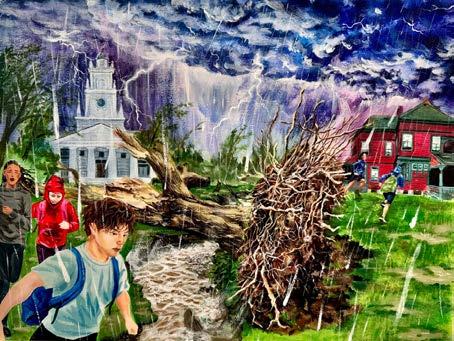
his year, in contrast to previous years, our school has seen more floods.
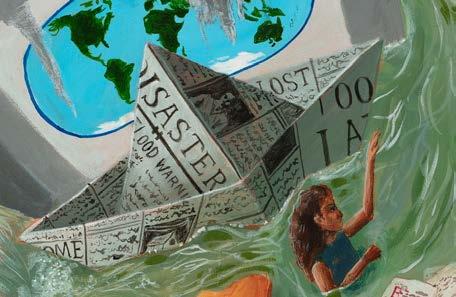
After doing a lot of study, I learned that flooding is a result of climate change, which gave me the idea to paint and share Earth’s disregarded warnings. I started out only thinking about solutions, but I quickly realized the importance of spreading awareness of the results of climate change. Growing up in Korea, I learned to recycle, which deeply ingrained environmental responsibility in me. My goal is to raise awareness of collective mistakes and motivate others to save our planet for future generations.
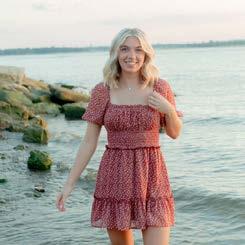
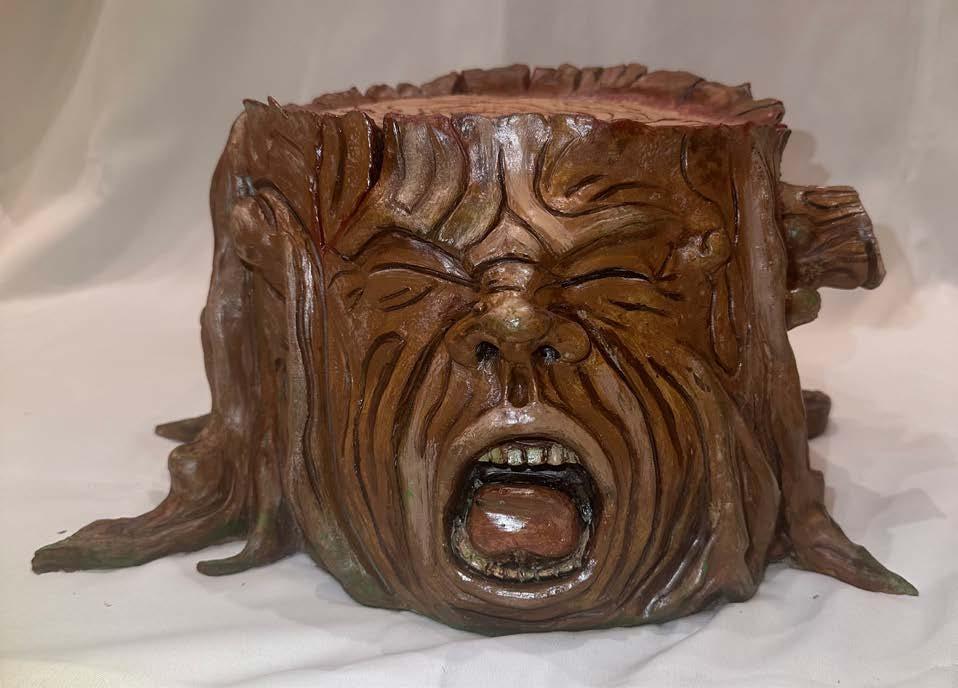
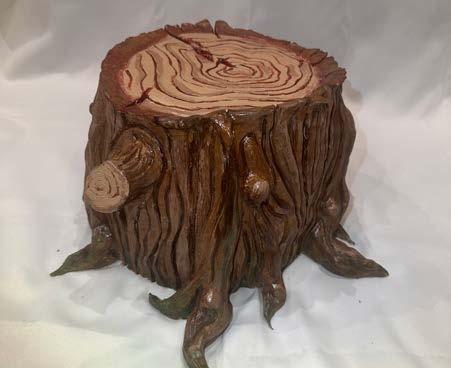
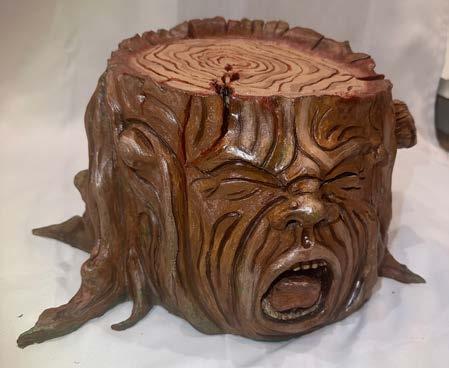
come from a long-line of lumberjacks, up in west Michigan my Grandfather and Dad owned and collected hardwoods; cutting down trees was always supposed to be a normal for me. It was hard watching these beautiful organisms crumble to a stump, and it never settled right with me the way they were always left rooted in the ground. This left me inspired to create a piece that truly shows the emotions I feel the trees endure when being left to die. It was a hard pill to swallow, but I know getting the chance to possibly spread awareness about such a heavy topic may bring some ease. Trees play a huge role in climate change, as the continuous decrease in greens impact the amount of oxygen and carbon dioxide in our atmosphere. Deforestation causes more than 10% of Earth’s global warming, and loss of forests is the effects of releasing carbon dioxide and other greenhouse gases. What some lumberjack companies have begun to do in response to these statistics, is the take a tree plant a tree process. For every tree that is chopped down for purposes, they will make it a point to plant a new one elsewhere. While this may not solve all of our deforestation problems, it will most definitely slow the process of climate change and global warming. With the use of air-drying clay, I formed a realistic stump formation. I then began to sculpt out a screaming face with the look of distress. My end result was for it to be an old but thriving forest tree with its life cut short. It is in agony with dried blood on it’s ever-story telling rings. I hope my clay sculpture inspires others to spread concern and empathy for the ongoing tree genocide resulting in our atmosphere’s evolution to resolution.
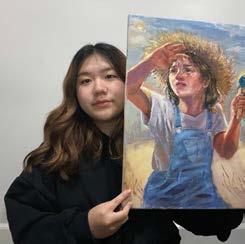
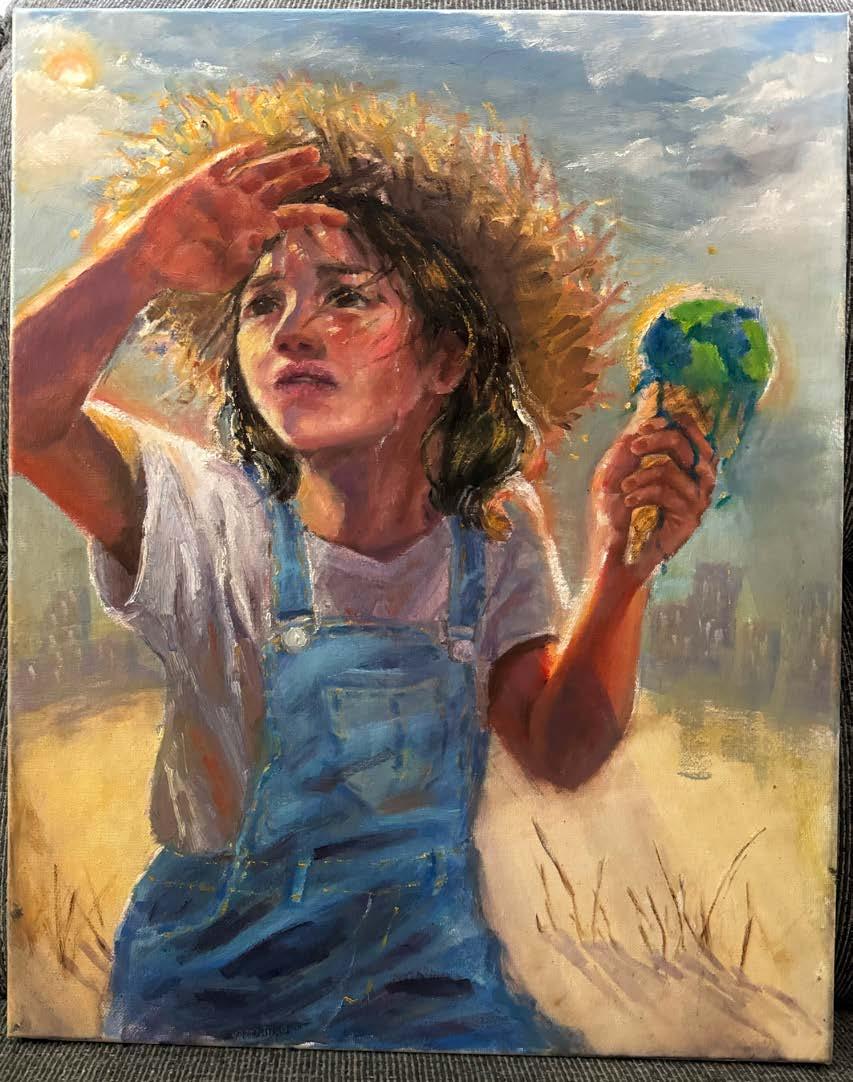
hroughout my entire process of brainstorming, I only think of one climate story that has affected my life a lot, and that is the increasing heat, year after year. I was inspired by the highly concerning pace of Earth’s average temperature rising annually, and also learn a lot throughout this research process. What I really wanted to show in my art was the consequences of us contributing to global warming. For example, to a kid it might just be as simple as “the weather is so hot that my ice cream melted before I finished!”. A deeper meaning would be the metaphor I’ve included in my drawing: the world is melting in our hands. The literal melting Earth in the girl’s hand symbolizes the rapid changes our planet is undergoing, and her expression of concern reflects the anxiety many of us feel about the future, including me. I hope viewers are encouraged to reflect on their own contributions to climate change and are inspired to take action. Because of us and our actions, the Earth is melting at a rapid pace. I am not the best at public speaking and I tend to go numb in front of crowds, but if I can express how I truly felt through a form of art I hope my impact will still be something. Through this project, I learned that we are the most direct causes of global warming and climate change because of the greenhouse gases we emit. I also learned that my artwork contribution can spark courage and raise awareness as well as advocating for climate change.
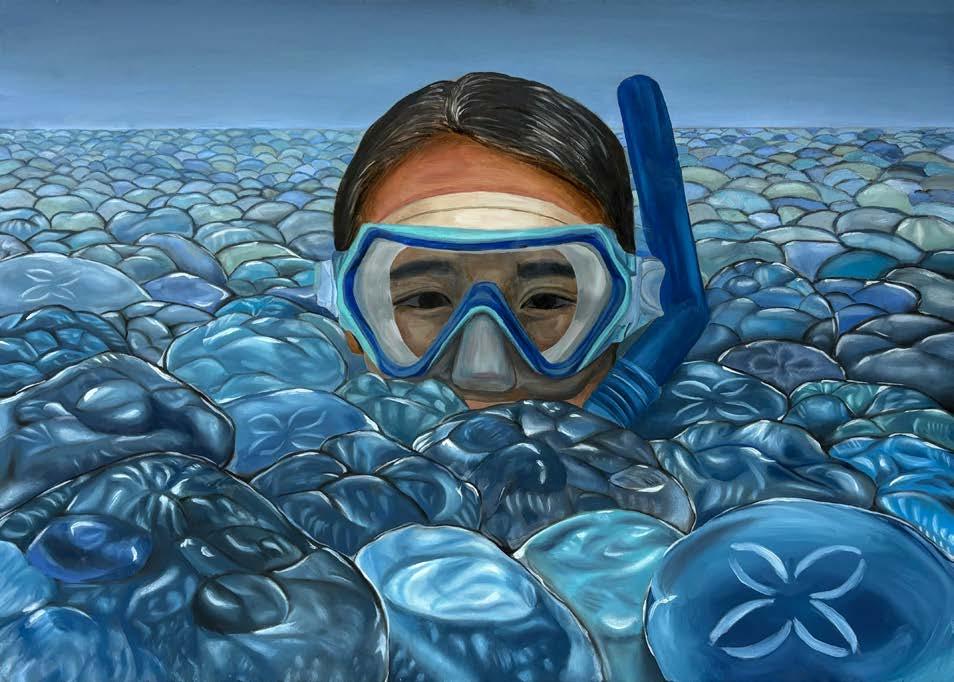
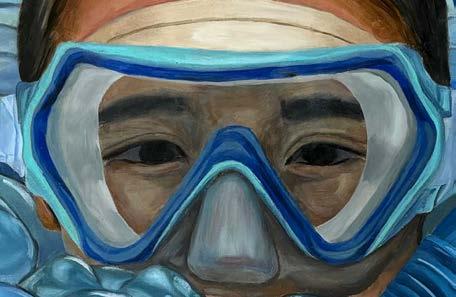
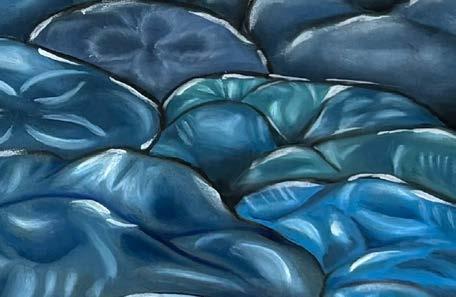
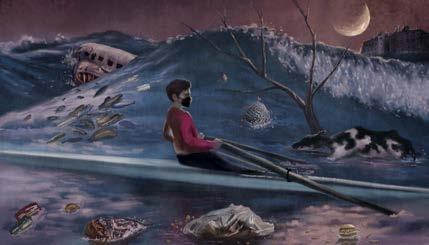
Living on Jeju Island, I am aware of the changes in our local marine environment. In the last three years, there has been a noticeable increase in the jellyfish population on the beach near my home. From research, I found out that this phenomenon is due to rising ocean temperatures, which create a warmer and more hospitable environment for jellyfish. The idea of a snorkeler surrounded by jellyfish emerged from my observations and experiences, aiming to visually represent the direct impact of climate change on our ecosystem. My painting captures a snorkeler immersed in a sea of jellyfish, symbolizing the rise in jellyfish populations around Jeju Island. In this painting, the snorkeler is the representative of humanity’s direct encounter with the consequences of climate change. As the snorkeler navigates through a sea of jellyfish, it reflects our immersion in the environmental changes brought about by rising temperatures. The snorkelling gear, typically associated with exploring vibrant marine life, here is a useless tool as the mass jellyfish chokes and suffocates the snorkeler, implying that any advanced technology could not rescue humans from climate change. Through my artwork, I aim to evoke a sense of urgency and personal connection, urging viewers to recognize and address the pressing climate issues that affect not only marine life but also our own experiences and future.
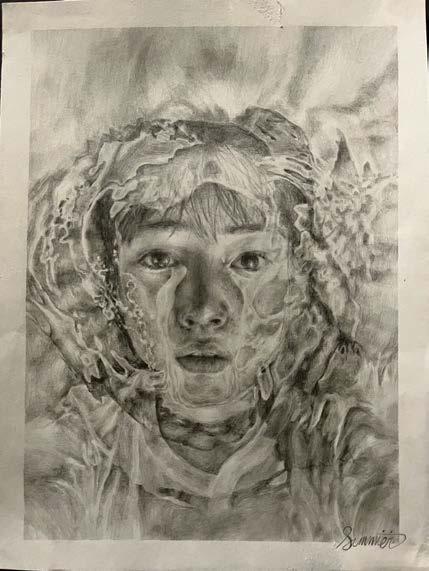

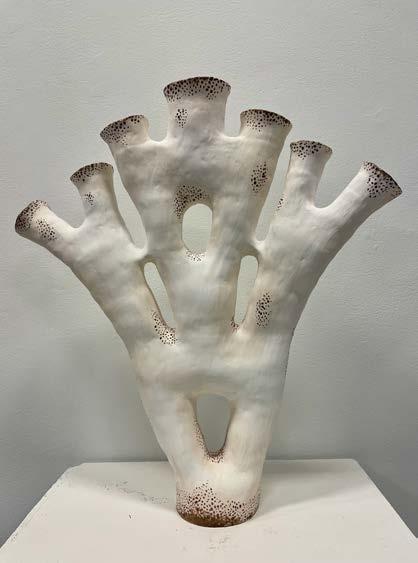
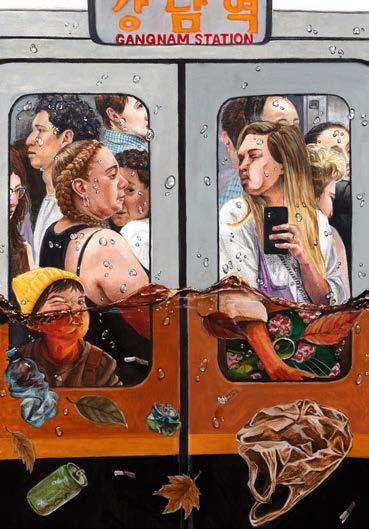

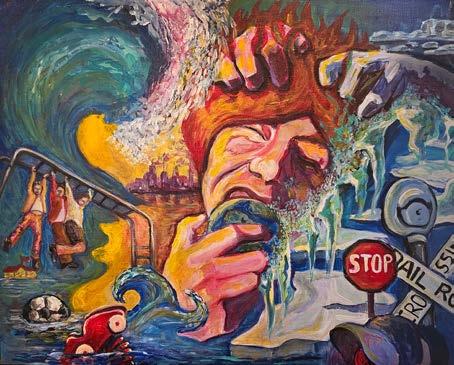

Honorable Mentions, continued

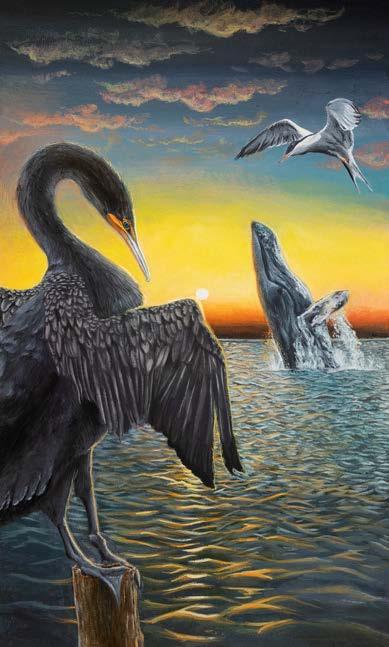
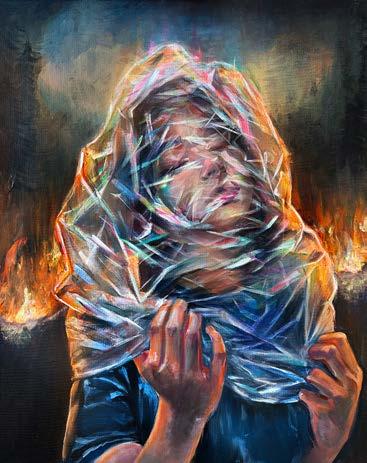
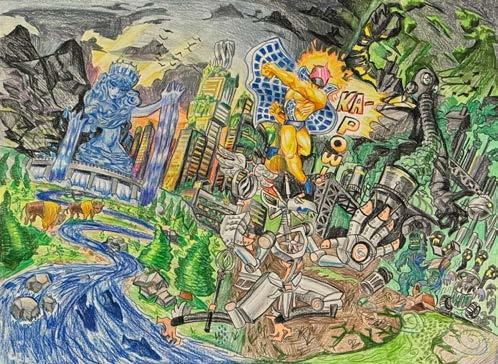
Blissless Ignorance
Angelina Wang (Princeton, NJ)
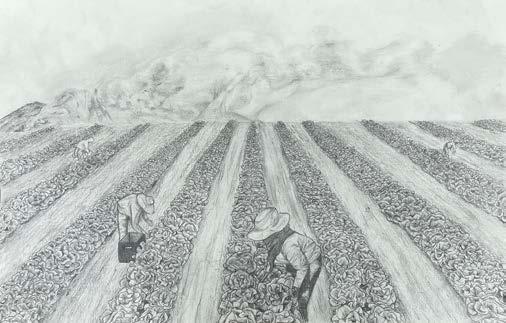
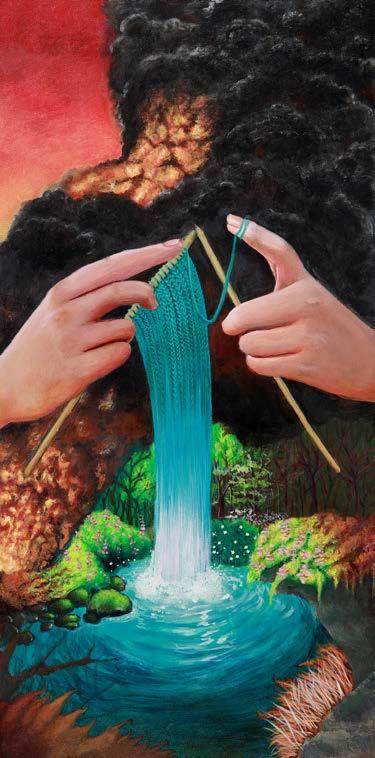
We’re In This Together!
Diego Rafael Ruiz-Lopez (Prosper, TX)
Honorable Mentions, continued
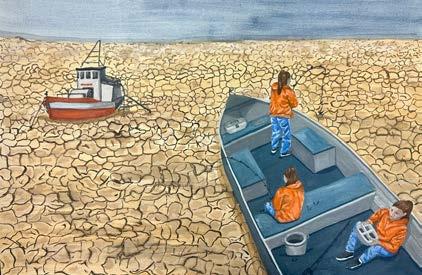
All Drained Out
Anya Schultz (Los Altos, CA)
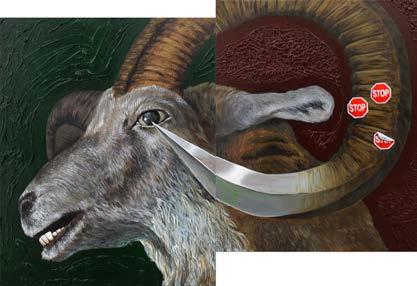
Ram Diptych
Tony Bui (Huntington Beach, CA)
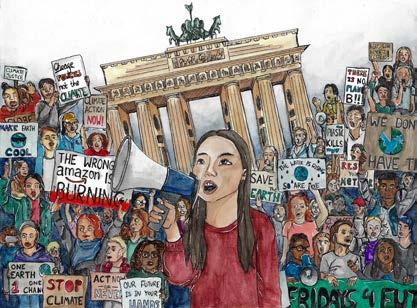
Around the Brandenburg Gate
ZiQing Li (Berlin, Germany)
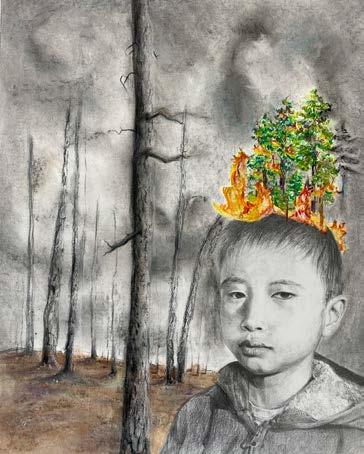
Caution! Extreme Heat Danger
Emerson Chang (Palo Alto, CA)
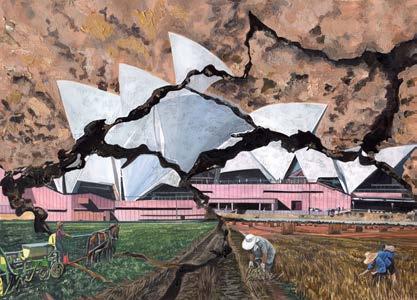
Alvin Kim (Seogwipo-si, Republic of Korea)
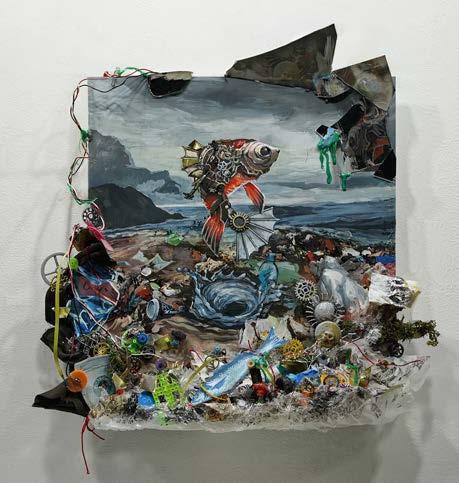
Land-ful-filling Prophecy
Heyon Choi (Andover, MA)
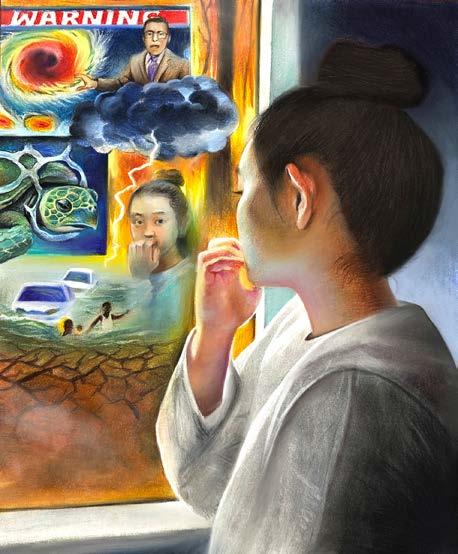
Anxious For The Future
Hongbi Cho (Tenafly, NJ)
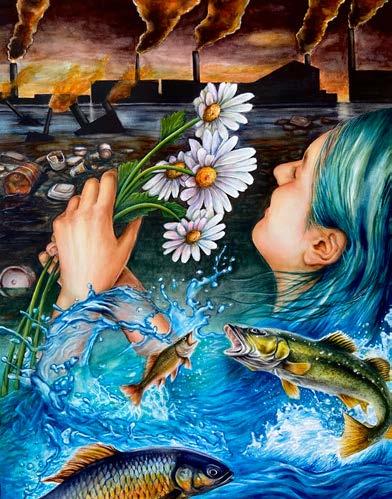
Hope in the Midst of Our Plight
Chloe Jeong (McLean, VA)
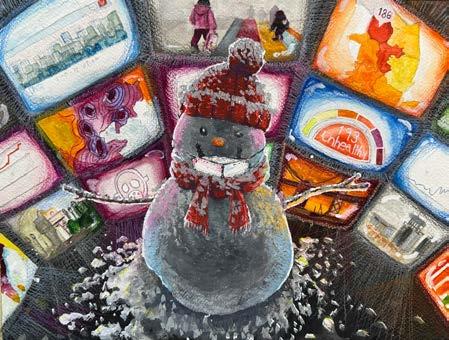
Honorable Mentions, continued
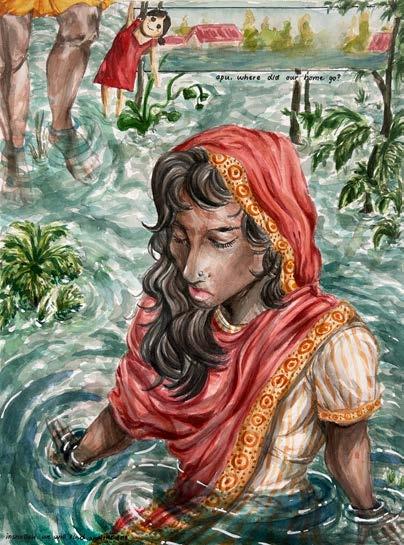
Instability
Enaya Habib (Santa Clara, CA)
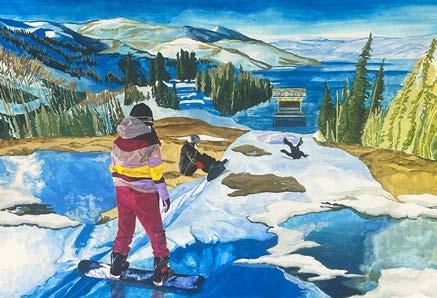
Unfamiliar Winter
Joo Hyun Hong (Seoul, Republic of Korea)
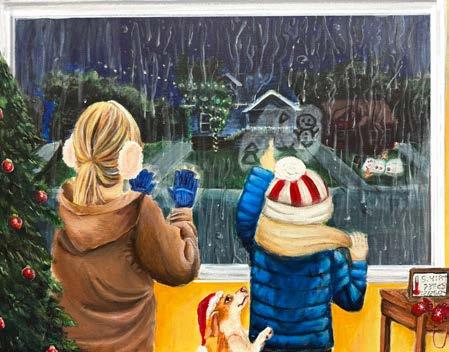
Melting Dreams
Irene Zheng (Lexington, MA)
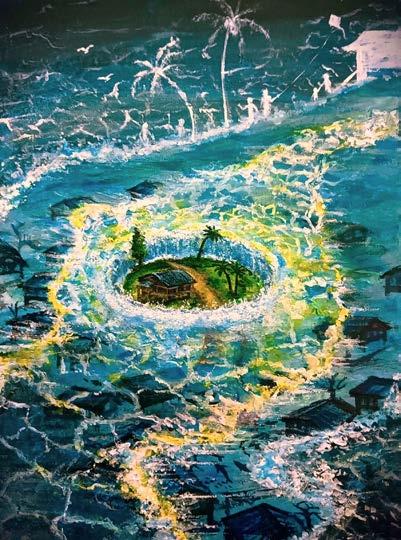
My Hometown: Glimmer of Memories
Rafi Rahman (Banda Aceh, Indonesia)
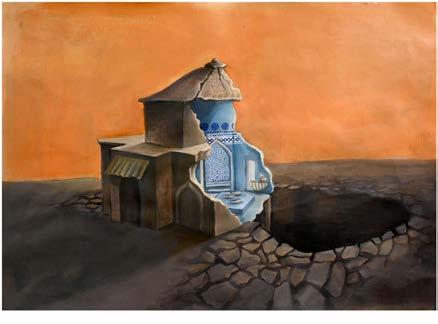
Architectural Erosion: The Demise of Culture
Mina Ceylan (İstanbul, Türkiye)
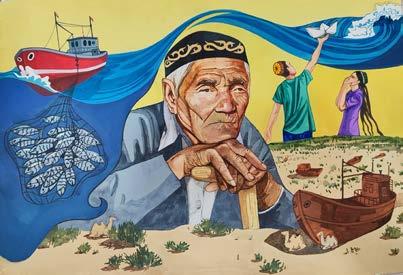
Cemetery of ships
Karina Xudoynazarova (Termiz, Uzbekistan)
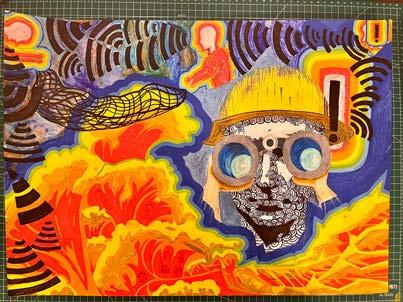
I came, I saw, I spread, We conquered
Sijie Ji (Spring, TX)
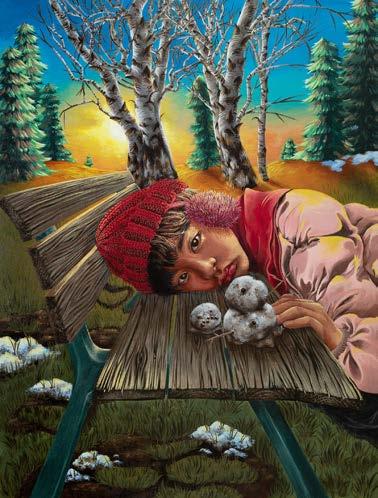
Mudman Emily Lee (Orangeburg, NY)
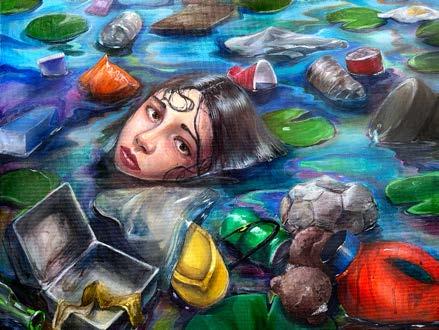
Our Contaminated Future Ashley Chen (Glen Rock, NJ)
23RD CENTURY NOAH’S ARK
Amy Ziyu Wang (Beijing, China)
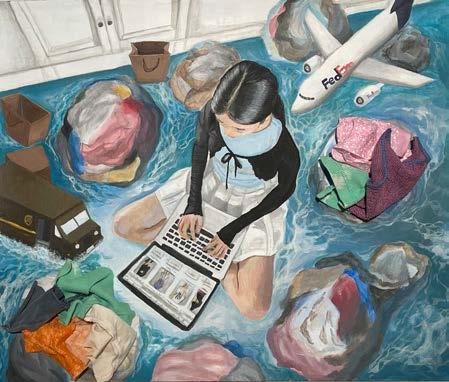
The Garment Overload Bridge
Angelina Choi (Irvine, CA)
Threads of Destruction
Brooklyn Shields (New Albany, IN)
Beneath the Surface
Chaerin Yoon (Irvine, CA)
Trash Circles Back To The Table
Chaeyoon Kim (Ridgewood, NJ)
The Day
Chanhyeok Kwak (Seoul, Republic of Korea)
Black Tide of Taean
Chong Min (Seoul, Republic of Korea)
The Tears of Nature
Christina Mink (Dix Hills, NY)
Salmon Fishing
Clara Yoo (Langley, Canada)
Vanishing Greens
Elaine Yang (Vancouver, Canada)

Lost & Wanted: The Pristine Sea - Last Seen Before Pollution Took Over
Emily Kim (Seoul, Republic of Korea)
Wings of Waste
Ethan Hong (Tenafly, NJ)
Footsteps in the Red Tide
Eva Park (Los Angeles, CA)
Electricity Out
Flora Kweon (Irvine, CA)
Fast Fashion, Shortcut to Pollution
Hannah Myung (Tyrone, PA)
Fragility
Harin Yi (Fort Lee, NJ)
Fragile Harvest
Jamie Song (Incheon, Republic of Korea)
A Cycle of Change
Jessica Wu (Lexington, MA)
Submerged World
Jeyi Park (Seoul, Republic of Korea)
The Season of Sorrowful
Blooms
Jihoo Hyun (San Diego, CA)
SOS (SAVE OUR SNOW)
Joanna Zhao (Lexington, MA)
Balancing Act
Jocelyn Chen (Lexington, MA)
Today’s Aral Sea
Jumanazarova Raxila (Takhtakupir, Uzbekistan)
Burning Memories
Katelyn Wong (Irvine, CA)
Echos of Change: My Climate
Narrative
Kelly Yeon-Jung Choi (Seoul, Republic of Korea)
Anthropocene
Keyun Xiao (Ladera Ranch, CA)
A Polluted World
Lucy Liu (Irvine, CA)
Sea Of Memories
Michal Ilyayve (Vaughn, Canada)
Deep Blue Home
Naomi Wu (Auckland, New Zealand)
Ski Trip?!
Olivia Chen (Taipei, Taiwan)
Vanishing Memories
Rena Jun (Glenview, IL)
Chaos’ Closet
Sarah Ang (Los Altos, CA)
Mother of Africa
Shiloh Bemiah (Johannesburg, South Africa)
Sky Lantern
Shuo Liu (Auckland, New Zealand)
One Step At A Time
Sophia Kao (Lexington, MA)
Milky Way
Sophia Ou (Palo Alto, CA)
Pollution in a Bottle
Sophie Bowring (Mooresville, NC)
Bluejay Nest
Svea Van de Velde (New York, NY)
Allergy Season
Xin Lu (Claremont, CA)
Death of Venus
Zachary Yun (Anaheim, CA)
Sunken Street: A Call for Climate Action
Zion Choi (Seogwipo-si, Republic of Korea)




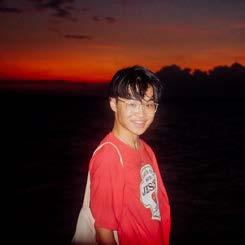
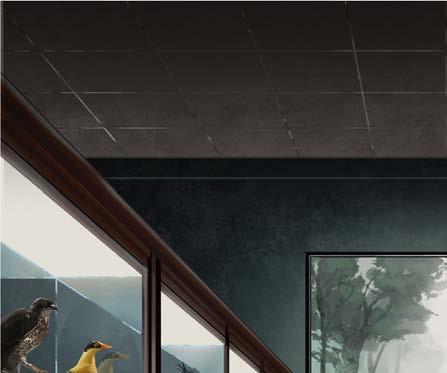
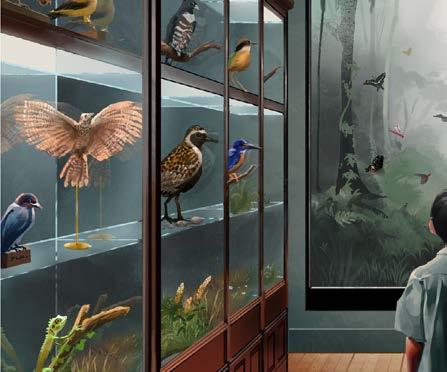
his piece was inspired by the loss of a forest I would pass by on my daily walk home. Zoned as “Residential” for development since 2003, Dover Forest was home to 158 species of animals and 120 plant species, including critically endangered ones. A nationally debated decision by the Housing Board, 50,000 residents campaigned and signed a petition to protect one of the remaining secondary forests in Singapore’s concrete jungle. Ultimately, however, the forest was cleared this year. Every day now as I walk home, I see ghosts of what once was: the bee-eaters and woodpeckers that used to flit by, the dragonflies and butterflies that hosted gatherings over the walkways, and the once lush trees, now replaced with orange barricades, concrete bags and barren soil. While deforestation is only one of many factors driving climate change, human negligence, and our governments’ attitudes towards the climate crisis have remained mostly unchanged. I wanted to symbolically capture the ghost town that was once Dover Forest, as well as the universal feelings of climate anxiety and grief in the painting. As key indicators of species richness and ecosystem health, and being a birder, I knew from the initial stages that I wanted to decorate the scene with birds. The museum setting is meant to symbolise childhood -- a moment frozen in time and space, and a place of comfort and continuity. At the same time, it also symbolises death, a mausoleum of lifeless husks. The taxidermied animals in my piece are all migratory or local residents, such as the Malayan coral snake, or the endangered straw-headed bulbul that our country has been a stronghold for -- they represent wildlife lost to human hands and actions, like how an animal must die before it can be preserved. I wanted to use an Asian child as the central figure not just to represent myself, but also to bring out the inner child in the viewer, reminiscing about the wildlife that once was; a scene separated from us, in the 2D plane of the painting. This piece is meant to be poignant yet hopeful. While it starkly portrays the losses of climate change, the painting isn’t just meant to be a portal to the past -- it’s a portal to the future too! Progress can only come with systemic change, but I still believe that if we continue to put pressure collectively on our global leaders to recognise the importance of climate change to us, we can slowly restore our environments and the graveyards all around us -- let the ghosts that once were, be again.

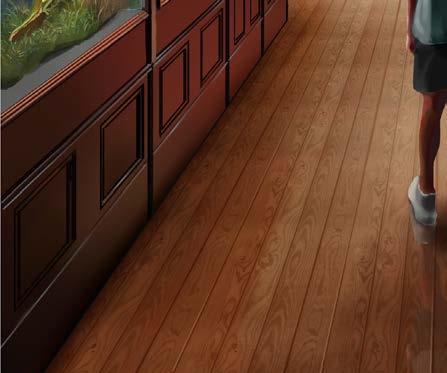
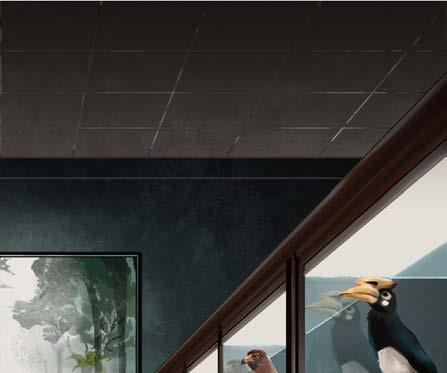
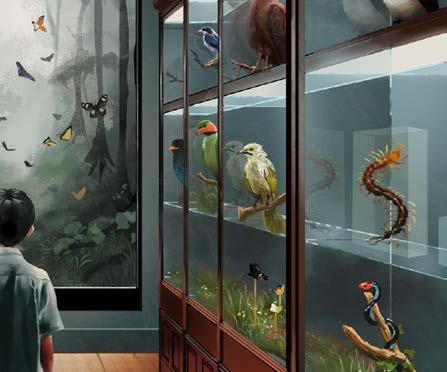
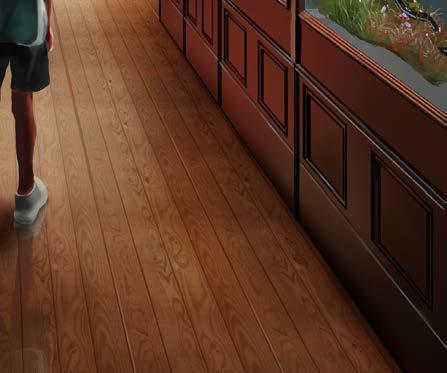

AGE 15
GRAPEVINE, TX, UNITED STATES
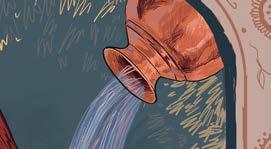
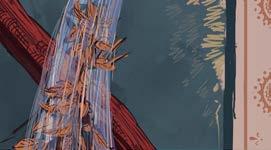
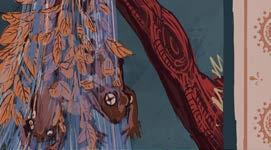
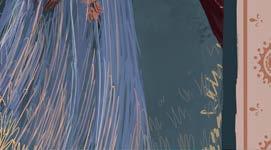
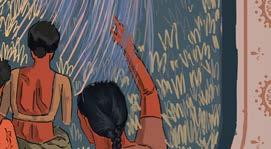
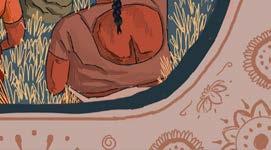
My submission encompasses my relatives struggle back in India to obtain water for farming, with drought consistently affecting their crop yields due to the effects of climate change. At home, I would frequently hear my dad talking with my Grandma, speaking of how the ‘varsham” or rain was constantly being pushed back, as temperatures soared. This led me to think of the village in India my dad is from and how they would deal with a lack of rain, from a cultural and religious standpoint. I asked my dad what rituals were performed to alleviate the dire conditions, and his answer surprised me. He described a “puja” where people would tie a toad to a stick along with leaves, march around his village, and pour water on the toad. He described this as symbolic of rains returning to the fields and allowing the plants to grow again. Though this “solution” is not scientifically plausible, it shows my experience with climate change, more specifically how this phenomena affects my culture. My submission attempts to portray this experience, and it acts as a direct representation of this “toad puja”. Within my piece the stick is angled diagonally, two toads and grass is tied to this stick, with water being poured from a basin in the top right corner. This water subsequently falls from the toad into the hands of the women seated in a dry field, representing the return of the rain, and the end of the drought. I use oranges throughout my piece to portray the lifelessness of the land, and emphasize the blue of the water, as it is what gives life and support the livelihoods of the farmers. My message to my viewers is that human condition, more specifically culture, is also greatly affected by climate change beyond just nature. Supporting a sense of community, whether it may be religious or not, is what allows us to tackle the bigger issues of the world, namely climate change.






SILVER AWARD
AGE 16
BRIER, WA, UNITED STATES
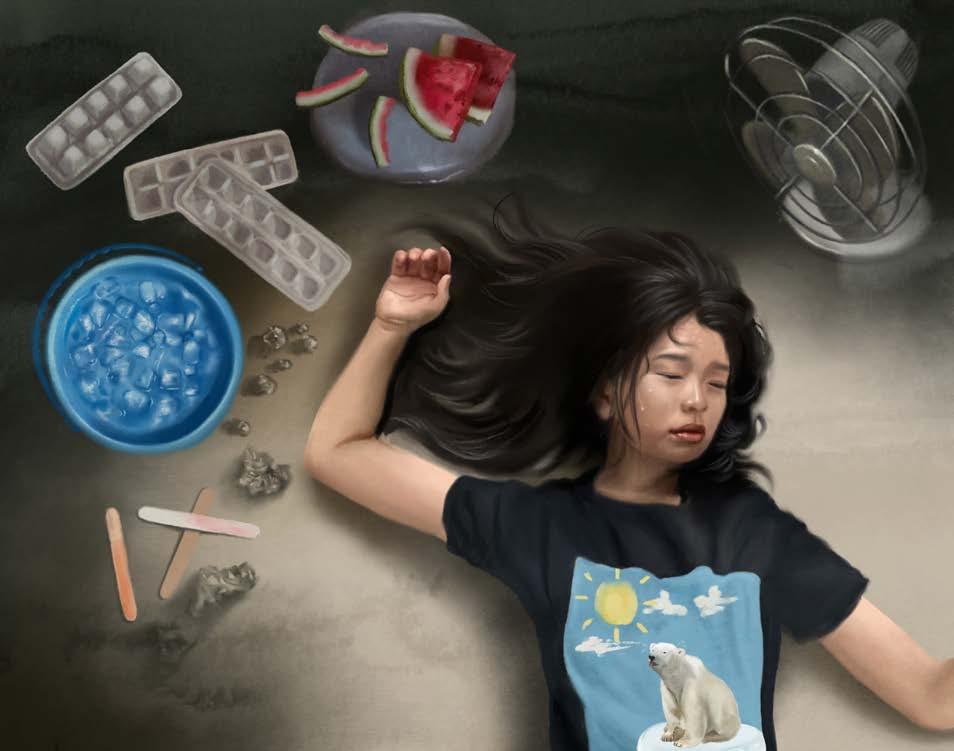
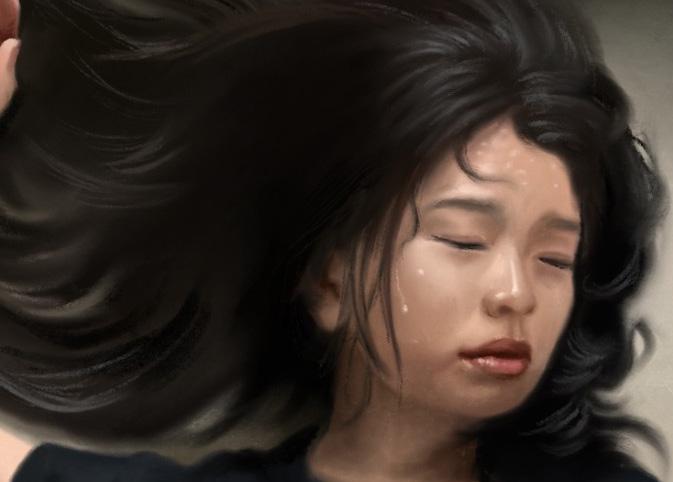
Living in Seattle, I’ve witnessed dramatic climate changes, with summers becoming exhaustingly hot. My digital painting captures this experience by combining a photo of myself with objects symbolizing cooling down, set against a dark background to highlight the central figure. I strived to make the viewers feel the scorching heat and empathize with the struggles depicted in the drawing. Through stronger facial expressions, my goal was for the audience to connect with the piece on a sensory level, feeling the heat’s intensity and the urgent need for relief. Through this project, I have become more aware of the specific impacts of climate change on my local environment. In Seattle, the increasing heatwaves and shifting weather patterns are just a microcosm of what is happening globally. This realization has deepened my appreciation for the delicate balance of our ecosystems and the profound changes they are undergoing. By visually articulating my personal experiences and observations, I aimed to make the abstract realities of climate change more tangible and relatable for others.



HSILVER AWARD
18
TOMBALL, TX, UNITED STATES
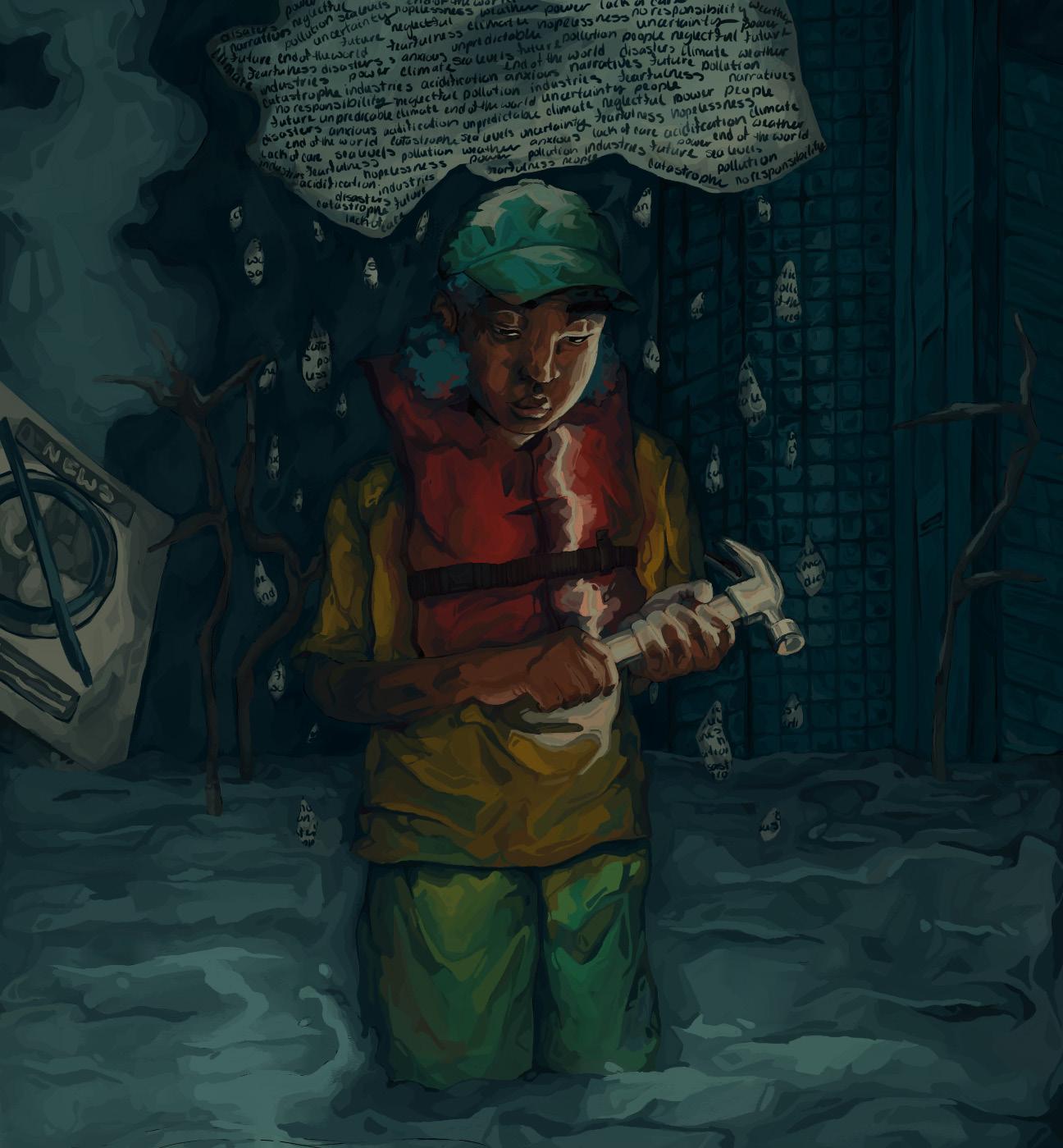
urricane Harvey was a story that many people have heard, but it was an experience for me. The people harmed by the event, the high cost of damages, and the number of homes ravaged as going to school and seeing parts through the driveway flooded disturbed me. Now hurricanes are becoming more frequent and dangerous today because of the main cause: climate change. Climate change is a consequence of our actions making our weather unpredictable, causing rising sea levels, and acidification of oceans. We have the power to change ourselves for our benefit even though the world can be cruel. As a result, I wanted to indicate this message by giving color to the person and giving focus to the hammer because, despite the damages from Hurricane Harvey, Houston came together as a community to actively rebuild from the catastrophe. Additionally, it gives the idea of the importance and courage of choosing to make a change. Climate change effects from news and articles led me to become fearful of another hurricane worse than Hurricane Harvey. I learned that my fear was from climate doomism. My fears for the future of the end of the world allowed my anxiety to take hold of me. This experience contributed to the mood I wanted to convey by the shades of blue in the background. The usage of smoke pollution and buildings being indicators of human supremacy for neglect of the lasting impact of climate change, and the representation of the fear from powerful people and industries massively contributing to the climate change crisis causing hopelessness in change. The billboard is a media outlet because of how news addressing climate change fuels narratives of the end of the world. Lastly, for the clouds for my thought process and experience encountering climate doomism.
BRONZE AWARD
AGE 17
MOUNTAIN VIEW, CA, UNITED STATES
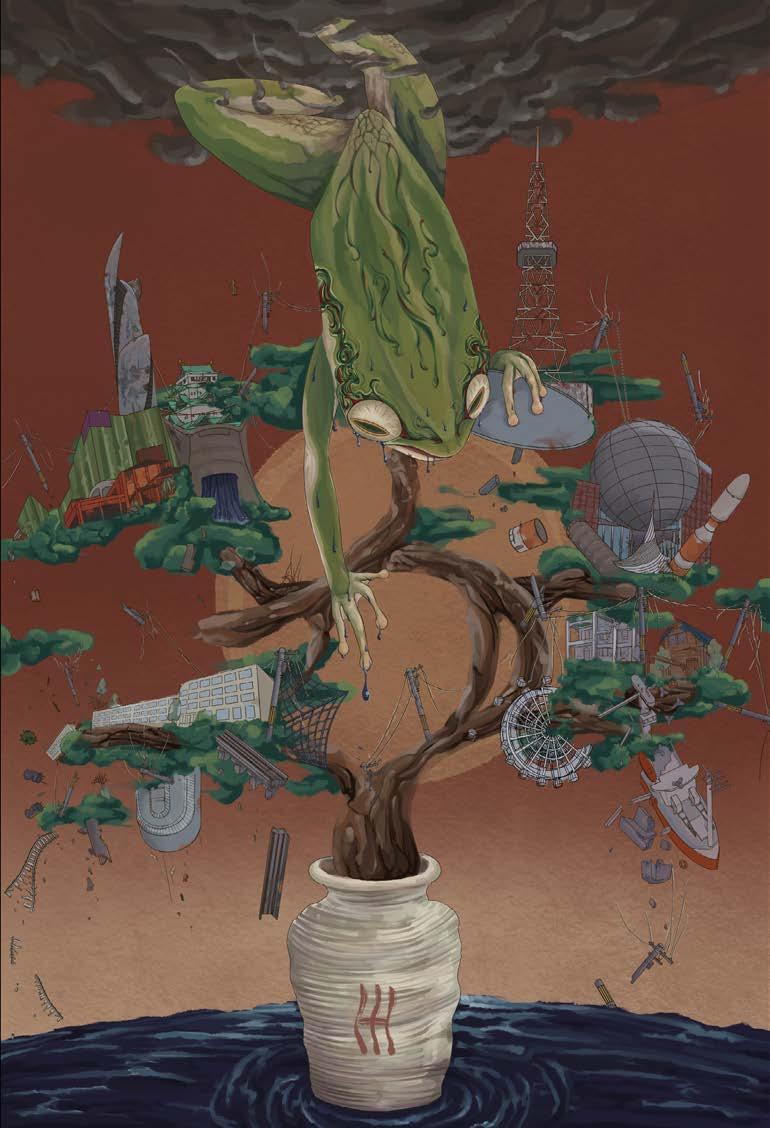
Climate change is often described as “a matter of protection.” Many interpret this phrase in the context of environmental conservation, but I possess no maturity to engage with such a profound and significant cause. Having spent my entire childhood in Nagoya, Japan, a city bordered by the vast Pacific Ocean, nothing concerns me but the possibility of my hometown, chained to my fond memories, being submerged by the devastating effects of climate change. Through my exploration of the Ocean Awareness Contest, I gained deeper knowledge about the relationship between global warming and sea level rise; I learned that greenhouse gas emission is the prominent cause of the Earth’s rapid temperature rise, which melts ice glaciers and lifts the sea level. Although I am aware that planting trees can reduce greenhouse gasses, I am like a frog in a well, ignorant of any expertise, yet I indeed feel the UV light burning my skin and the rising temperature squeezing sweat out of me. All this vulnerable frog can do is water saplings with his steamed sweat, hoping that his small act of dedication will one day lift and protect his homeland.
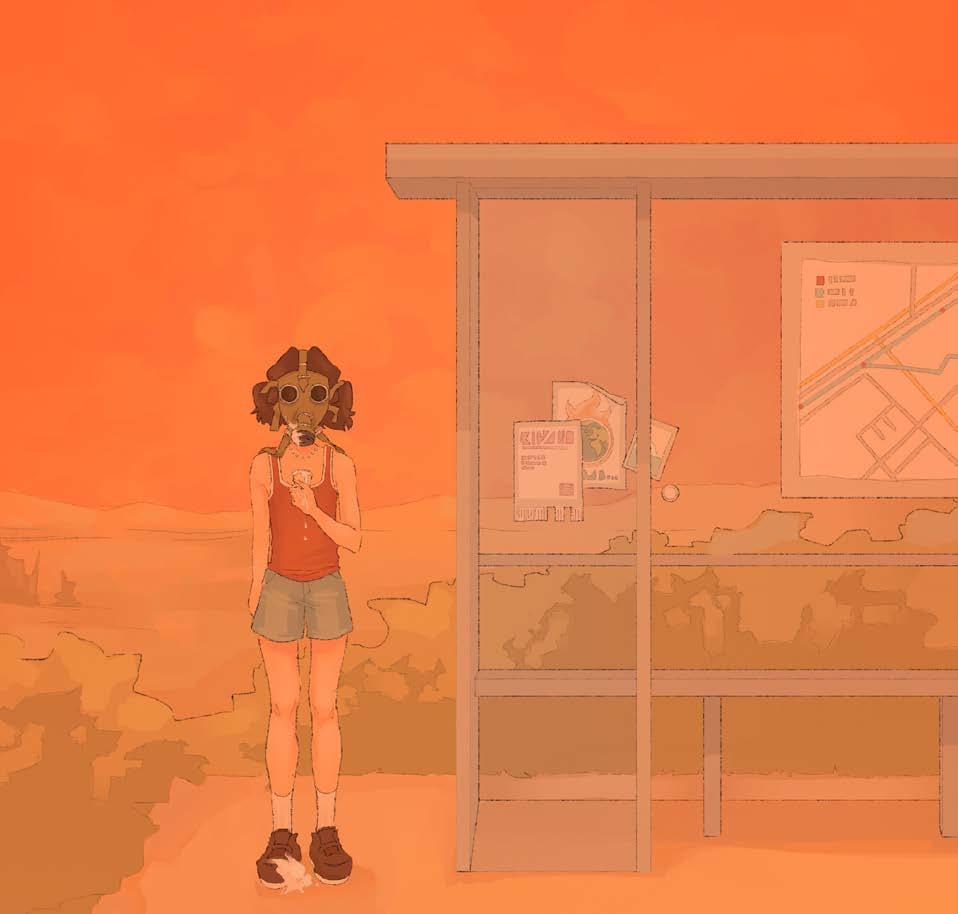
remember growing up in love with the blue skies and smooth air that occupied the land outside my home- the clouds were white and the wind crisp like a linen taut over the hill’s sweet yellow grass. But one cool night I went to sleep and I woke to our red California hills on fire, the sky alive and bleeding. The fire chased my family down the mountains- 4.3 million acres of California burned in 2020 alone. There was no rain that season. This digital painting was inspired by the red sky and the heat that came with the california wildfires of 2020. Fortunately, nothing of mine was lost, though thousands of other families can’t say the same, over 10 thousand houses burned. The dry grass and cracking dirt spread the fire quicker than it could be contained, and by the way things are going, such conditions will only worsen. These massive fires released 127 million megatons of greenhouse gasses, and PM 2.5 emissions surged up to 38 times their average. At the beginning of the year, I could only wonder if anything I, a singular sixteen year old girl, could do would matter. However, as time wore on, the more I learned, I was inspired. I joined my school’s green team, cut down on my meat consumption, and have limited my yearly purchases of non necessities. There are many issues with our modern world, politically, economically, and socially, but none of that will matter if we don’t have a world at all. In 2020 my whole world was on fire, and there was nothing I knew how to do that could have put it out. I don’t want to be complicit, especially when no one has to be.
Is It Hot In Here?
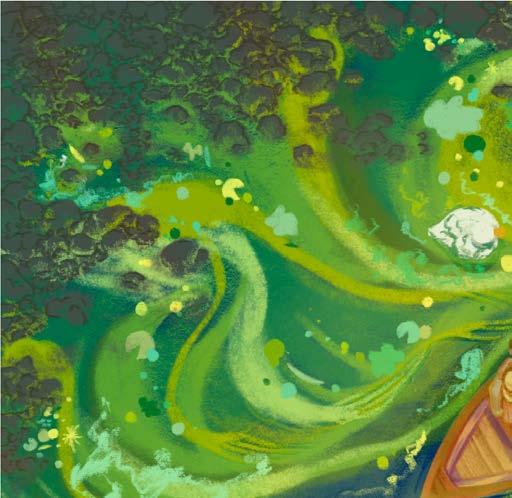
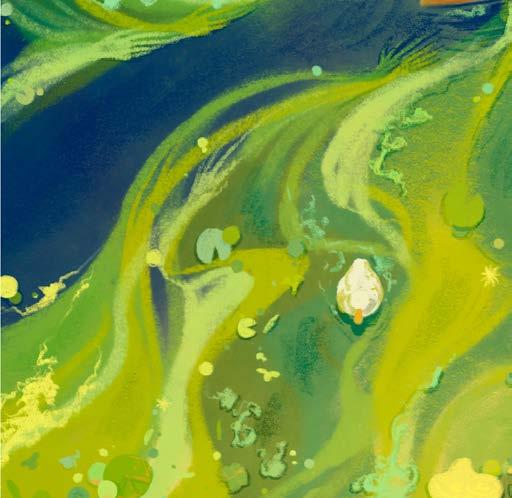
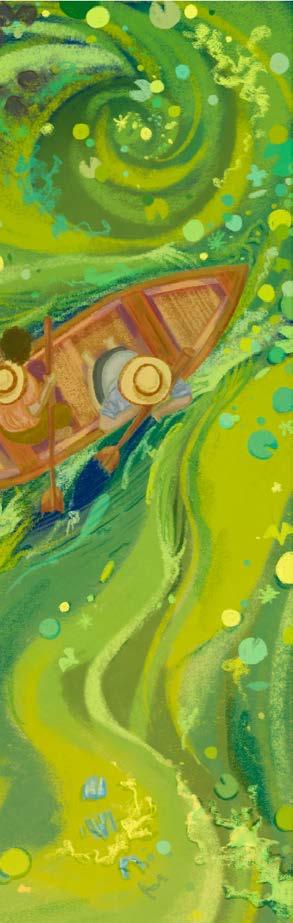
My inspiration for this artwork came from an outdoor education trip to Chungju Lake. While kayaking, I noticed thick, green layers on the water that created an unpleasant smell. At the time, I didn’t know what it was. Although I was disappointed that I couldn’t swim in the lake because of it, I immediately knew that it was unhealthy, looking at the gloopiness that clung to rocks and surfaces invading the environment. Later in my science class, I learned about eutrophication and realized that what I had seen was an algal bloom. This helped me gain awareness of the negative environmental impacts of nutrient overloading in bodies of water. My goal was to create a visually appealing piece that delivers a strong message about algal blooms. I wanted my artwork to capture viewers’ attention and make them curious about the environmental challenges we face. Researching climate change taught me about the ‘overfeeding’ of algae due to excess nutrients from human activities and the impact of natural phenomena such as sluggish water circulation and extreme weather events. Beyond individual actions like recycling, I plan to engage in more community initiatives that help these environmental issues. For example, participated in a local beach clean-up, helping to reduce plastic pollution in the ocean. By working together, we can make a bigger impact and help tackle climate change more effectively.




PEARL AWARD
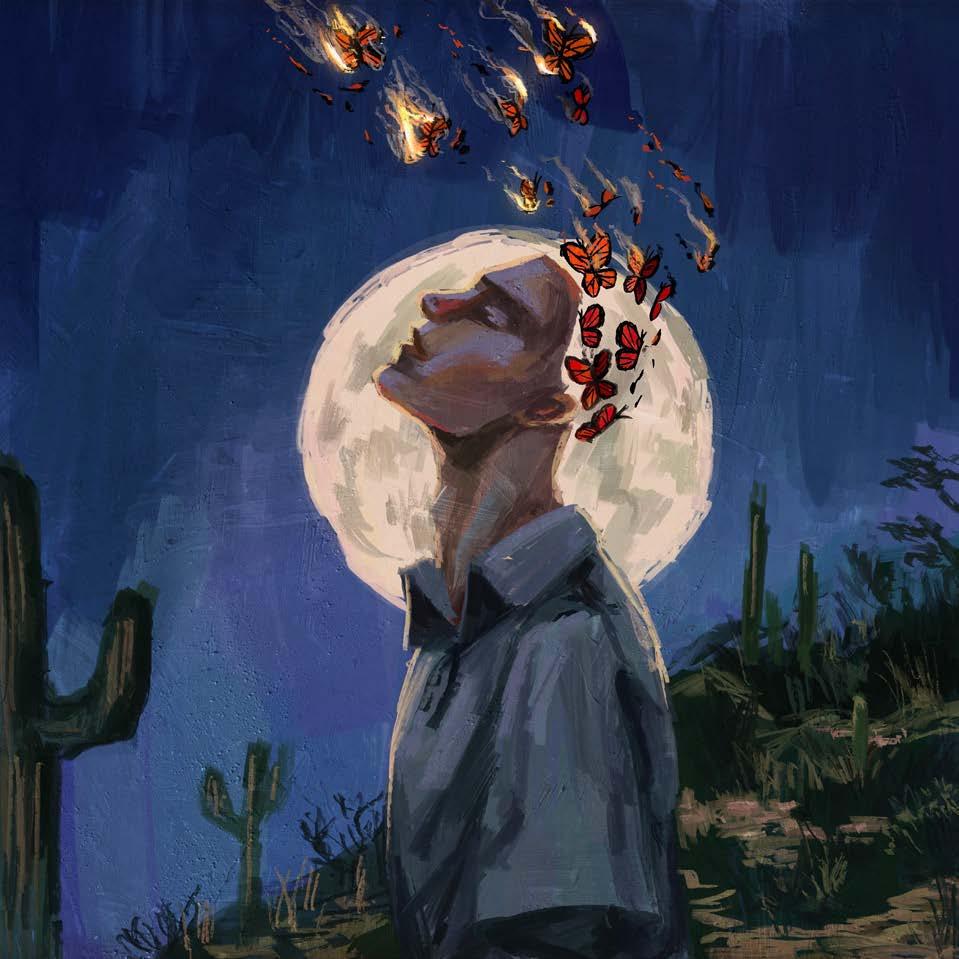
Upon moving to Arizona from Minnesota years ago, I have witnessed firsthand the effects that climate change has wrought upon my home. The infamously scorching desert heat has only been getting hotter. The already crucial water reserves have only been depleting faster. More species have migrated or disappeared from previously biodiverse environments. The effects of increasing global temperatures caused by climate change on Arizona are clear and continue to harm humans and wildlife alike. These clear signs inspired my creative process to make a digital painting that encapsulated my personal experience with climate change in Arizona. In my painting, titled “Scorched,” I symbolized the personal experience of a hot summer night, exacerbated by global warming. In this painting, I also symbolized the loss of biodiversity in Arizona’s ecosystems through the burning and scattering butterflies, representing the loss of natural beauty in the landscape. Furthermore, the burning butterflies represent the increasing rate of extinction for many species that rely on the night as their only respite from the heat. In addition, the abstract construction of the butterflies as a part of the subject’s head symbolizes the interconnectedness of humans with their environments’ fellow species. Climate change has proved that humans are inseparable from the world they inhabit, and as biodiversity decreases due to global warming, it is humans who must shoulder the responsibility of preventing these disastrous effects. The message of the artwork is to encourage people to collectively prevent habitat destruction through measures such as water conservation and reducing their carbon footprints, in order to prevent harm to humans and other beloved species alike.
From Ashes to Action
Canada)
WA)

















Lillian Ao-Ieong (Las Vegas, NV)

Protect
Draining Away
Zhao (Mercer Island, WA)

Our Future
Catherine Chen (Centreville, VA)
Alabama Heat
Catherine Song (Auburn, AL)
Flight of Imagination
Daniel Kim (Menlo Park, CA)
Sunken City
Hyunwoo Bang (Jeju, Republic of Korea)
Melting
Jayden Choe (Ballwin, MO)
Eleven Years in the Backyard
Kate Balogh (San Marcos, CA)
Where There’s Smoke There’s Fire
Linda Wang (Sunnyvale, CA)

Foreign Summers
Tingye Yu (Surrey, Canada)
The World’s Dreams
Vidyamurti Bano (Bekasi, Indonesia)
Earth Song
Yimeng Duan (Nanjing, China)
Smokey Horizons
Zara Khan (Great Falls, VA)
Worst Summer Ever!
Zarin Ogarrow (London, United Kingdom)
Thirsting
Ziyi He (Beijing, China)
Our World
Karen Recinos Rivera (Somerville, MA)

Washed Away
Brandon Hanaoka (Seattle, WA)






ROCKVILLE, MD, UNITED STATES
When I think about climate change, I’m reminded of how all the biodiversity, natural landscapes, and atmosphere is in our hands. My most precious memories come from the treasures of this planet—morning hikes, swimming in lake holes, and skiing down the mountains. Taking care of the Earth, the oceans, the forests around us is similar to caring for our wellbeing and mental health. I wanted to express the urgency that our climate change journey and story is a part of our everyday lives and actions—it lies in every meal. It’s found in the greenery of our neighborhoods, the bird’s nest beside the tree, and our water bottles. Passionate in advocating for incorporating efficient food waste systems and healthy food diets, I’m grateful to use poetry as a medium of expressing my most vulnerable and meaningful relationships, moments, and emotion of living. By growing a more sustainable world, we are guiding our bodies and the Earth’s atmosphere to recovery—we will glow green.
After I recovered from an asthma attack, I thought I was immortal: no limit to my body temperature, face pale as whitecaps collapsing onto sandshore. I diagnose
Thursday’s tornado warning as Tuvula’s last breath and stop using my inhaler, birdsong wilting away like rainforest green— endangered colors. How the Rubber Tree falls in silence and suffocation. This planet is burning out of air. In Little Hunting Creek, fast food coupons inside the stomach of a plastic bag. At Costco, Mama buys wholesale blueberries, too sore from bending into heating curves. We remember how she used to name tomatoes by their size— taiyang , sun, sweet privilege of a balanced meal. Flower pots paint our balcony, and I just want another midday snack, strawberries in my hands, every seed to seed, first touch of juice and juice, from fruit to flower. I want something that lasts longer than the lifespan of kerosene, like Giant Penguins and Wakatobi Sunbirds and even apple cores in compost bins. I want healing to grow from this soil, gardens sleeping in school classrooms, playgrounds, raised medians—seedlings. Before loss is synonymous to this memory of first snowfall, I will meditate as the ocean closes its eyes—deep breathing.
Translations: taiyang – sun
rowing up in Cresskill, New Jersey, I observed firsthand the severe repercussions of climate change manifested in the persistent floods that impacted our community. These personal encounters motivated me to communicate my narrative and enhance awareness regarding the critical need to address climate change. The amalgamation of my personal encounters and the aspiration to enact change guided my artistic process. I am drawn to the arts due to their ability to serve as a potent platform for conveying intricate emotions and concepts, rendering significant messages such as those concerning climate change more accessible and influential. The process of crafting this creation evoked sentiments of nostalgia, sorrow, and optimism. Revisiting the floods and their consequences was challenging, yet it also fortified my resolve to contribute to constructive transformation. The act of producing the artwork proved to be a therapeutic journey, enabling me to channel my emotions into a purposeful outlet. My communication to the audience is that climate change is not a remote menace but an immediate reality that impacts us all. Through my narrative, I aspire to motivate others to take action, both individually and collectively, to safeguard our planet for forthcoming generations.

“Fragments of a Flooded Youth” by Victor Hsu, continued
AGE 18
ARLINGTON, VA, UNITED STATES
rowing up, I was familiar with ghazals as expressions of love and loss, but it was the work of Kashmiri-American poet Agha Shahid Ali that inspired me to see the ghazal as a form of resistance. By using this traditional poetic form, I aimed to explore the deep sense of loss and longing intertwined with the suffering in my home-state of Punjab caused by droughts, floods, predatoryloans, and governmental-neglect. This ghazal serves not only as a lament for the current state of Punjab but also as a call for recognition and change, capturing the resilience and pain of its people.
In Punjab’s arms, rivers weep dry under moons’ cold scythe tonight, Fields parch as echoes of sorrow seep through life’s sieve tonight.
Beneath cracked skies, where once flowed life in veins of five rivers, Farmers’ sighs pierce the silence, haunted by death’s reprieve tonight.
Drought-worn earth, crumbling prayers left unanswered, desolate, Crops wither, loans drown dreams in shadows where souls grieve tonight.
Floods rage as nature’s anger sweeps through land’s open wounds, Lives swept away, hopes drowned, in a turbulent heave tonight.
In court of neglect, brown hands plead, unseen, unheard, unseen, Governments turn blind eyes; justice hides, hearts deceive tonight.
Bodies line fields, a morbid harvest sown by debt’s cruel hand, Ghosts of farmers wander lost, where promises misweave tonight.
Beneath indifferent stars, brown skins bear the weight of scorn, As Punjab’s heart bleeds silent tears, cruel heavens reprieve tonight.
Witness the world’s apathy, their gaze cold and distant, white, Punjab’s agony is wrapped in shadows, as they cleave tonight.
AGE 16
HONG KONG
Iwas inspired to write this piece after going on a walk one morning and hearing, well… nothing. No birds, none at all. It was eerie, in a way—nothing stirred, nothing sang, and the silence of it all made me think of a world where such nihility ran rampant, where nothing of nature remained. Sometimes, I think it can be difficult to grasp the enormity of climate change, to understand the extent to which it impacts our lives; but time and distance shouldn’t make us complacent. Rising sea levels, heat waves, wildfires, extinctions—I wanted to address all of these issues in a way that would depict the road we’re heading down, both as a global community and as individuals. As such, I would say that this poem is part provocation and part reflection; a tribute to life’s often overlooked features. For me, it is a reflection of climate change in my life. There are allusions to birds and words and wintry celebrations because they are the things I see disappearing—whether it’s now or soon. Through poetry, I wanted to show how these disappearances would affect us: no more birds, Thanksgiving turkey, the phrase ‘cluck my tongue’. No more hot chocolate. No more winter. However, I also wanted to show that there’s still time for change. Writing this piece made me truly reflect on my actions: what was I doing to tackle this issue? Could I be doing more? The answer is yes. After all, even small changes make a difference.
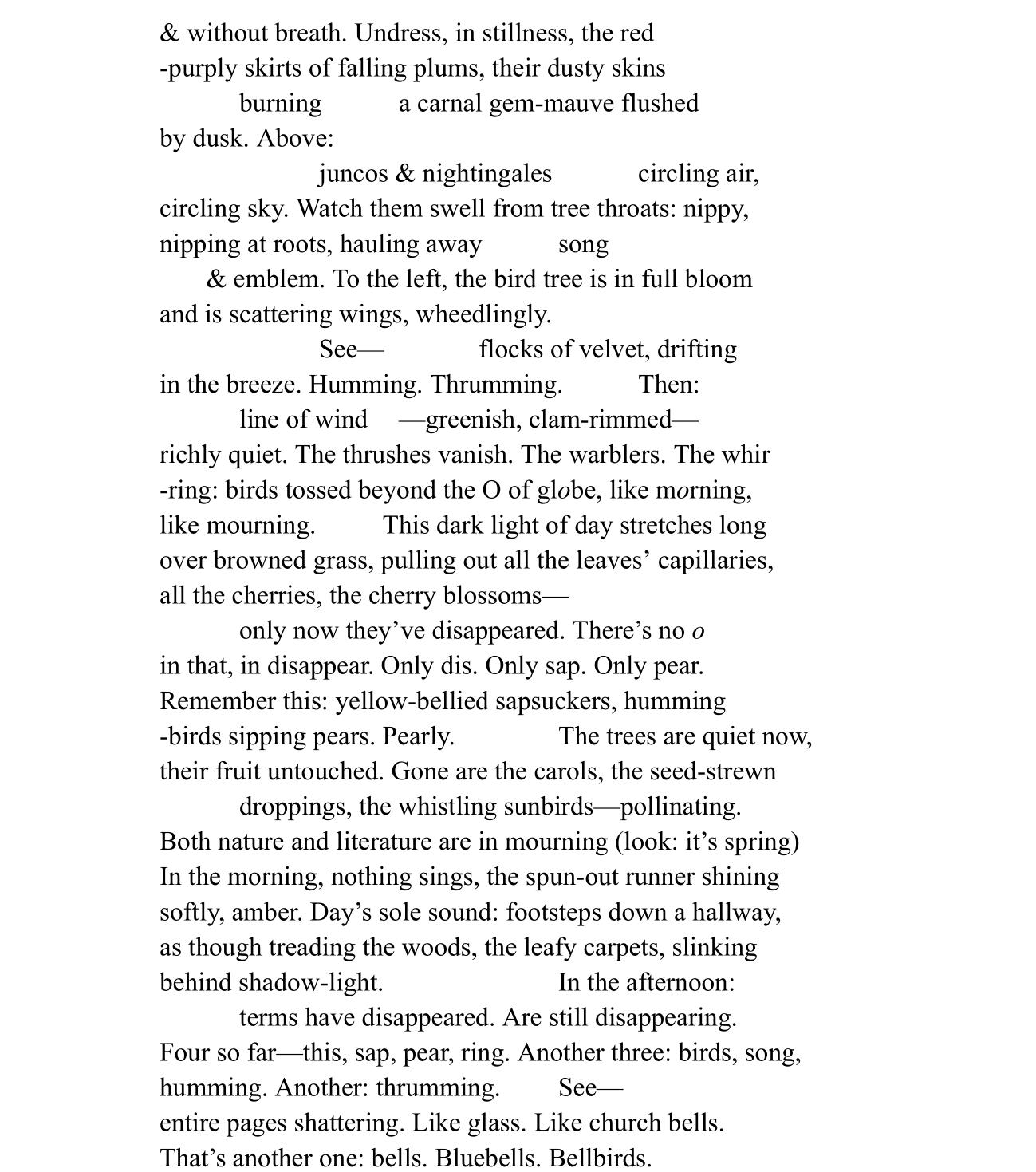

“Songbird

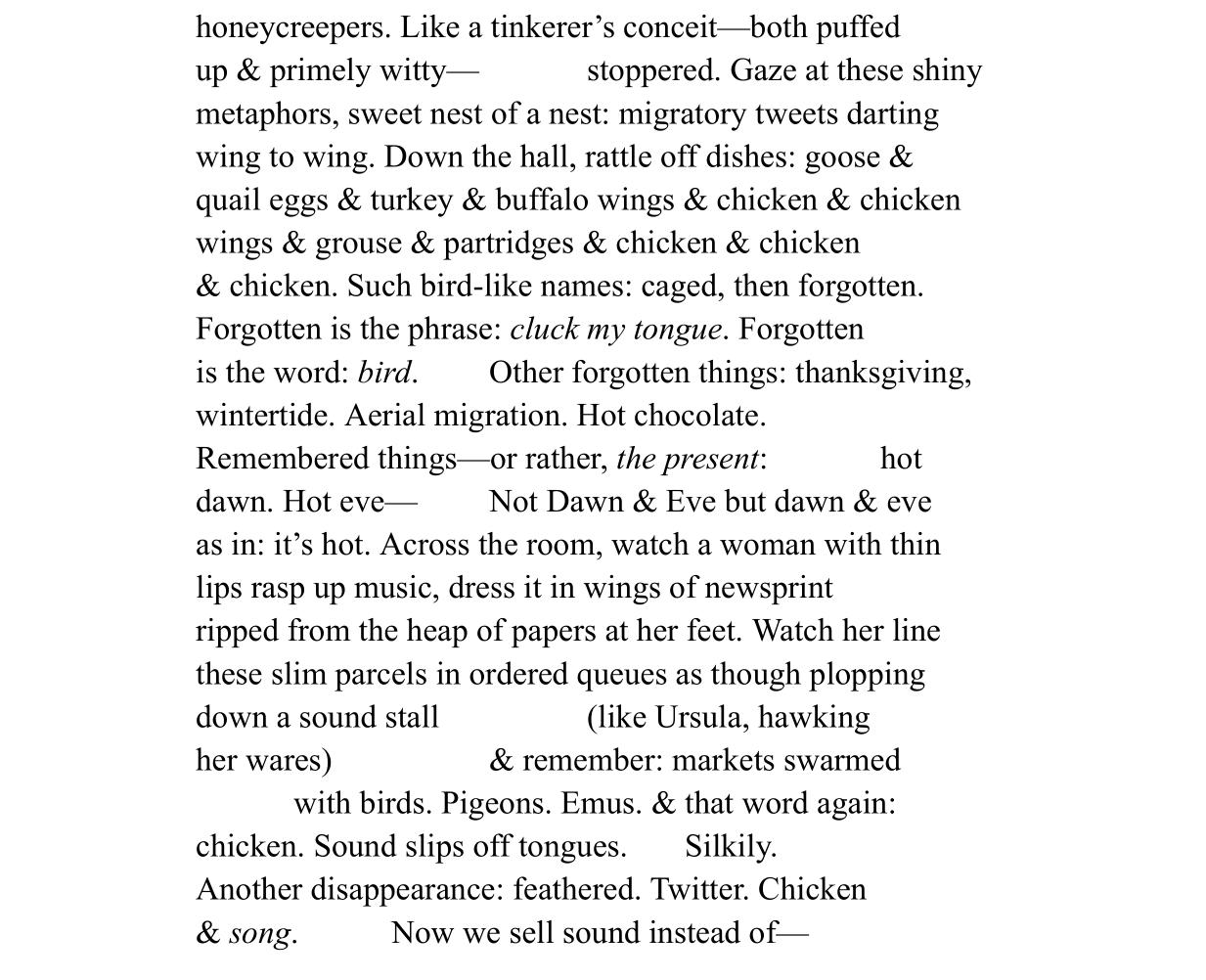
IBRONZE AWARD
n the past few months, Punjab — and South Asia as a whole — has experienced one of the greatest heat waves that has been seen in living memory. I am from Punjab, the state the British had the great honor of carving into two nations with the blood-soaked scythe of a colonist’s hand. Today, a majority of its land is in Pakistan, with the other portion making up a sizable portion of India (from which I am). The heat wave has made the effects of this relationship on India’s treatment of Punjab, especially during climate emergencies, quite clear. In the past few years, the increasing temperatures globally have rendered Indians and Pakistanis particularly vulnerable to the effects of climate change, with dozens upon dozens of deaths during the summer season being attributed to heat stroke. But this latest wave seems to be worse than them all, with more than 60 deaths being recorded in the north of India. Where Punjab is. As both nations rise in power and desperately try to prepare for the upcoming climate crisis, their disputes center on a state they both have potential claim to: Punjab. Thus, there is a concerted effort to deprive citizens of their connections on other sides of the border, rendering the very land into a sign of fundamental conflict. In a time where Punjab’s location could make it so very vulnerable to the effects of the climate crisis — I’m terrified. And when treaties such as the Indus Waters Treaty are signed, seemingly with the intent of preserving the possible water sources for both countries in this crisis, the effect is felt most heavily by those who live in Punjab. Punjabis who live on the other side of the border and stray into Indian waters are kept prisoner for many years, and the same goes for Punjabis straying over from the Indian side to the Pakistani. As the fears and tensions of both nationalism and impending crises grow on both sides of the border, it us Punjabis who will inevitably be the most affected. From being cut off from relatives both on this border or the other, to the continuous impact of climate change on our crumbling infrastructure; we are vulnerable. When I crafted this poem, with its trembling, twisting structure and continuous references to the divides that occupy my life — all of which begin with the division of my homeland — I thought back to my family’s tale of the partition. Of the rivers in which women chose to be drowned rather than risk assault and the way they fought over drinking water was fought over to a breath’s cusp. As I see climate change accelerate and tensions rise between Pakistan and India, I cannot help but fear a similar fate. And that is the fate whose downfalls I have tried so desperately to illustrate in this poem: how a border wields its very violence against those it is supposed to protect. As we hurtle towards a future, shapeless and undefined in everything but the sheer possibility of disaster, sometimes what is required is reaching out the ocean’s distance away — and holding on.
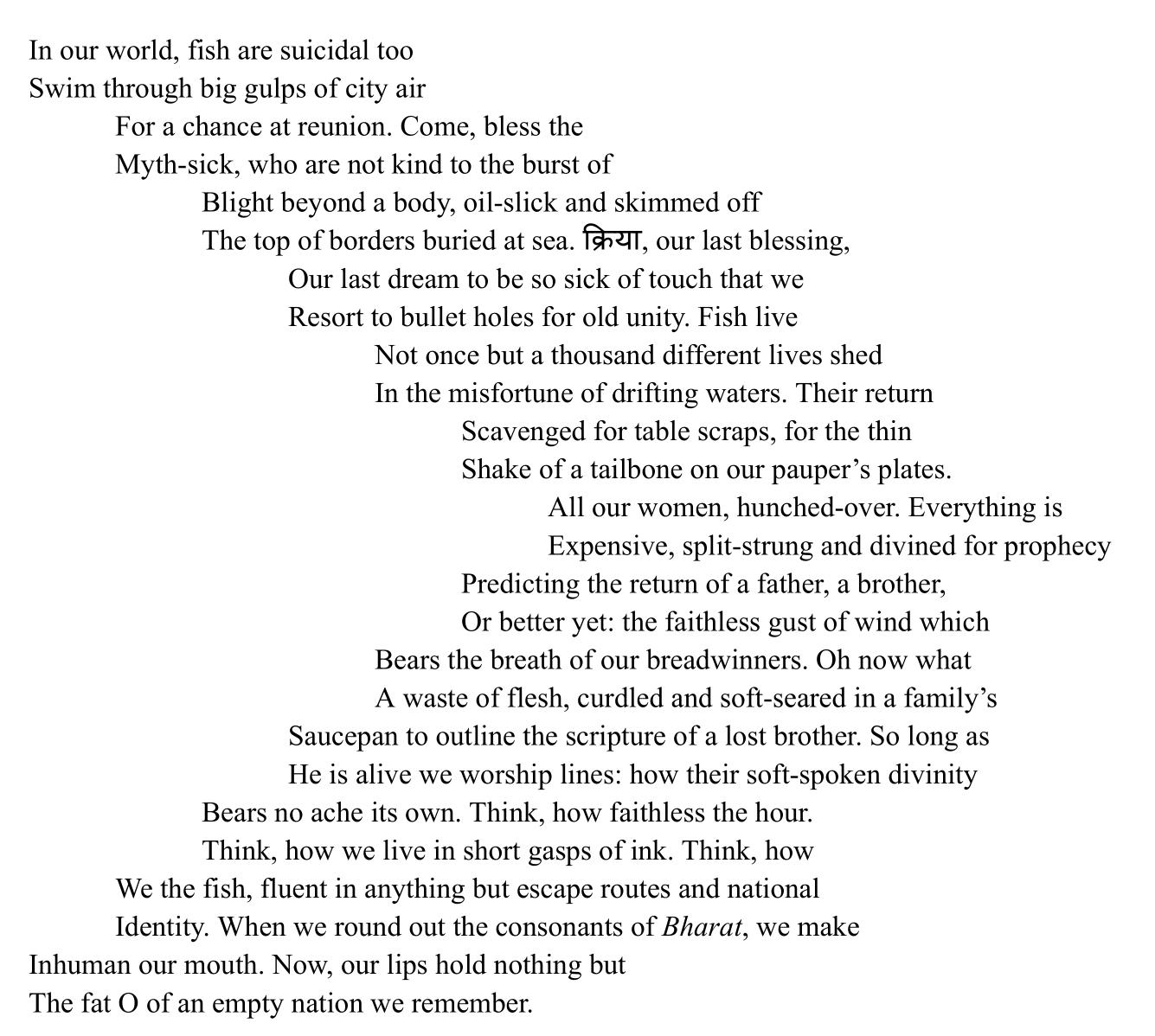
Idecided to focus on my surroundings in the Houston area. I grew up walking to the Brazos River a few minutes away from my home and taking strolls with my family along its winding trail. As the floods and runoff have shaped my neighborhood, and the river itself has become dark and green with pollution, I have stopped going. My reflection of this once-beloved river fueled me to write a poem about my climate change story, with the Brazos River serving as a central symbol of the change that has shaped my surroundings. Furthermore, I made the decision to shape my poem in an hourglass form to represent how we are running out of time to find a solution to climate change. The hourglass represents the sands of time that we are trying to gain back. My hope is that after reading my poem, people will start to be more thoughtful of how their surroundings, especially the oceans and bodies of water near them, are deeply affected by their individual actions. BRONZE AWARD
16
CHLOE WENG
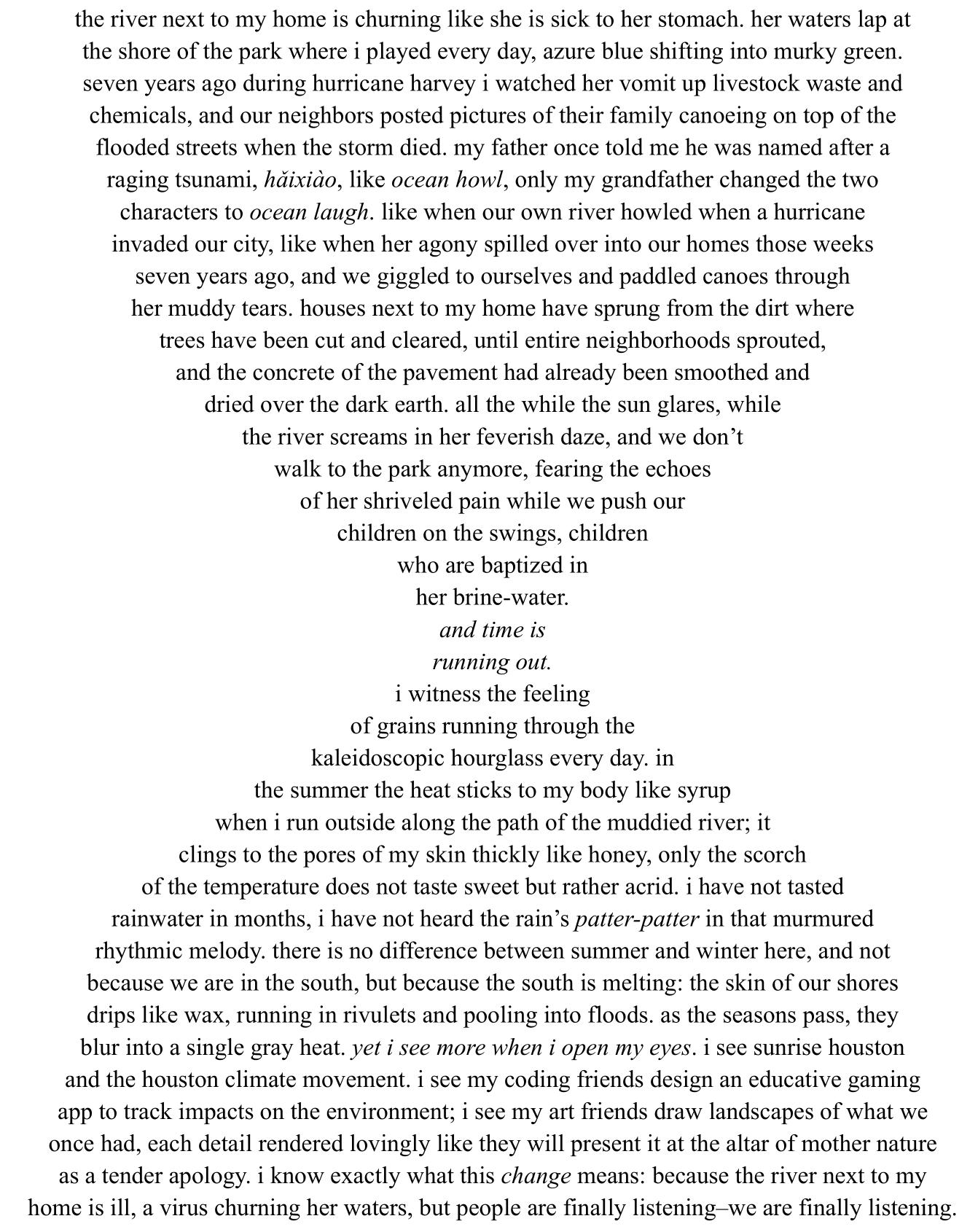
PEARL AWARD
AGE 16
ORLAND PARK, IL, UNITED STATES
I’ve been drawn to whales since the end of 2023. As a result, I’ve written more pieces about the ocean in the past year than I can count, however, none tackled climate change, and I’ve always felt I’ve missed a key part of whales because of it. My interest in climate change was sparked by the alarming inconsistent heat and weather I began to notice in the last weeks of school. For almost two weeks it hailed and rained in my 8th hour class and stopped by 3:00 like clockwork. The streets were littered with dead cicadas and the traffic from the unprecedented weather was constant. I slept worse at night from the heat, and my older sister’s allergies were greater than they’ve ever been—I had never been affected by pollen but this year it’s smell was pungent and irritating. I researched and discovered almost all of it (among other concerning human health risks) could be linked to global warming. It made me extremely hopeless and almost weakened my faith. I began to (slightly obsessively...) add the environment to all my duaa. Poetry and the arts have always moved me in ways simple facts have not. They drive me to action rather than despair. I was inspired by the tale of Prophet Jonah and parallel stories like Moby Dick, that contain the physical and symbolic idea of being swallowed by a whale. Both were written in times where the sea was seen as larger than life and impossible to bring down. I believe as the ocean is harmed more by climate change, previously towering creatures like whales have been suppressed under our power, and subsequently, our owed protection. My goal with this piece is to highlight the parallels between the effects of climate change on individuals and on marine life. I hope to demonstrate that there is no consequence of climate change that is isolated.
LEENA AHMAD
There is a whale in my stomach, it circles in familiar acid, heat quietly burning holes in its fins, stretches my skin to my ribs, corners my heart till it drums to the tidal rush, off-beat and— Quickening, it steals my breath before it reaches my lungs, rams its battered head onto my side until I hear my blood— Thickening, the starfish
in my throat suctions its way up, leaps out and into my sister’s jaw, leaves cruel reminders of spring, grasps deadly— Heat on their limbs, taunts her as pollen glitters in beautiful— Suffocation, the ray
in my eyes keeps them open, brushes its barb against my lashes till they pool, overflow with the water it clings to, desperate— Need the window closed, lest the sun seep its way through stained glass blame, if the ray had fingers, I know where he’d point, he makes use of his eyes and burns my retinas, stares me— Awake, the pelican
in my car is incessantly awake, breaks through my windows, in and out and in and— Out the door they yell, she swoops, beak rife with glaring— Red light, cars honk in violent rage, she shields her eggs, shells— Thin fabric, thin hats, scalps singe under traffic heat, she watches her island— Dissipate, constructions workers slowly retreat, she cries as if to— Say, “Sorry for the delay,” They say, “ The weather is out of control,” they say, “ The weather is out of control.”
PEARL AWARD
AGE 16
SEOUL, REPUBLIC OF KOREA
Visiting Jeju Island, an island in South Korea has become a treasured family tradition that I mark on my calendars each year. Within Jeju Island, I had a favorite spot that I always returned to; a dainty patch of the most beautiful, vibrant pink hydrangeas that were located next to a cozy cafe. However, during my visit last year, I was heartbroken to discover the flowers all wilted, most of them were brown and decaying. With a bit of inquiry, I soon learned that the deteriorating soil conditions and the increase in temperature and rain due to global warming had rendered the environment inhospitable for the blooms. Witnessing the tangible havoc climate change had brought upon the flower patches struck fear to my heart as it forced me to confront the reality I had been willing to be untrue. The profound despair I felt of losing something that had been so much of a valuable memory to me evoked me to express my grief down on paper, but I felt a peculiar guilt of trying to articulate the lives of the flowers through the perspective of someone who, like all humans, has contributed to the very climate change responsible for their suffering. Instead, I tried to imagine what it would have been like for the flowers in their last moments, especially the final flower who was left standing as climate change caused by humans ravaged them. Through the writing of my poem, I was able to comprehend the very harm we had been inflicting senselessly indiscriminately across nature which I had shied away from thinking about before, fearful that my reflection on the consequences of climate change would lead to the discovery of the true extent of how much humans had wrecked the planet, and how very real the hundreds of statistics that glared at me from billboards, headlines and instagram posts actually were. I wish for my readers, who may share similar concerns or fears, to be able to place themselves in the shoes of such defenseless organisms, as I believe in the end, it will be our unique weapon, empathy, which will be able to catalyze change.
There is only me now. Leeching the lonely soil. Making it thirst. Pounding belts of sun rake across me. Tender piano-fingers of rain caught in my teeth. Centuries back, a field of us knotted in the soil. The sun dangled over the horizon just to watch us wake, the leaves caught whispers.

Now I’m the only wet kiss on the gray Earth. My fear keeps me alive, but kills everything I know. Seeds of fear. Can’t stop multiplying. Curl over myself. Knock at ground. Try to nustle back in. I spit color.
Congealed pink gushes down my stem, shimmies to cracked crust, stains fuschia. My hands don’t run red. I let my wounds sputter.
No answer.
t was through a group poem for a Gen Z Mental Health Summit at UCLA that I
first learned about the crisis in the Democratic Republic of Congo. I was shocked that such horrific labor practices have persisted and that the cobalt was mined for objects that I use every day, including my phone and computer. Upon further research, I found that this issue was directly involved with climate change. Increased reliance on electric and renewable energy helps to reduce greenhouse gas emissions, but cobalt is also necessary for lithium-ion batteries in electric vehicles and photovoltaic batteries in solar panels. Many raw materials are obtained through intensive labor practices that infringe upon human rights. As a consumer in the United States who has solar panels and owns an electric vehicle, it is my responsibility to understand the effects of my purchases, both the environmental and social. As an artist, I am also committed to advocating for those left unheard and using my voice to spread awareness. The poem then emerged. I know that it is ultimately through legislation and policy that the conditions in Congo can be improved, but I hope that my words allow others to consider the climate situation as a whole and that the issue won’t perpetuate. It does not have to be a question of human rights or a sustainable earth, but the former must be protected in pursuit of the latter and I believe there is a solution that can address both effectively. Learning about the children in Congo allowed me to deeply appreciate the opportunities I have with education and the arts and I hope that through my career, I can create space for them to pursue their passions too.
OLIVIA LE

The earth’s body discovered children’s bodies between her ligaments. Incident evolved to infection, she asks why we made artificial arteries to disrupt her rhythms, why her organs of ore made obituaries, why some make the article and but not all— 1 in 10 children are victims of labor.
Cuffed by the copper belt of central Africa, these supply chains detain children who can’t bite their nails in class when the lithium under them is lethal, when 1 in 3 will never go to school. Learn the inhale could incise upon entry into the labyrinth from larynx to lung.
Suffocate under a system in which electric vehicles won’t exhale nitrogen but exhaust children.
Carbon emissions reduced by consumers who considered the consequences of rising temperatures and tides so purchased solar panels and Teslas and what did I know of the metals and minerals that made them, of the children that scraped them from earth’s intestines. The earth doesn’t want children’s blood in her veins, pulsing through wires in the great circuit of mankind where clean energy might not be made by clean hands. Companies compete for the cheapest labor to profit off the climate crisis. Accused and acquitted, who’s accountable? Who’s guilty but the kids who would do the right thing if America wasn’t always a riddle, A dilemma of sustainability and split skulls, of smokestacks or spent souls. Save the earth at the cost of Congo, Madagascar, Jharkhand. What if there’s always another secret? What if the solution wastes another century? We only have one earth, but isn’t every child worth the whole world too?
AGE 16
HONOLULU, HI, UNITED STATES
Delicately balancing on my surfboard between sets, I am hit with the stark contrast. The sun glistens off the infinite shades of turquoise, swells leading to the uniform pale of sand then, just a few feet away, every shade of gray concrete, cracking sea walls that guard the endless hotels of Waikiki. I am told of different times – when earth nurtured man, and in turn, man deified earth. Since ancient times, Hawaiians were innately connected to the sea. The legend is that while fishing with his brothers, demigod Maui used his mystical hook to pull the islands out from the sea. I wonder, now, what the ocean and land would say to us. I imagine the anger, the frustration, the despair – if only the Earth had a voice and it could remind us, that it beats too.
I was born out of trickery
Hooked by Maui, lies told to his brothers
To pull, huki, huki, with all their might
Breaking through the surface of the moana
They see not fish, but me
Severed from my reality
I was finally free
I could breathe
I was born
I was growing bigger each day
Molten limbs of lava, exploding orbs of light
Inching, creeping, stretching into the endless abyss
Flowing, streaming, weaving down slopes and valleys
Reaching desperately
Reaching for something
Reaching for someone
The abyss freezes my advances
I was growing
I was beautiful, seeds sprouting from my back
A home, a hale of life
My hair grew vines of green
Fruit oozing juices sweeter than a child’s soul
Island oasis attracting visitors of all shapes and sizes
Some came on wings, some on waves, some by wind
A beacon of lush emerald, shining in vast hues of blue
Though no human had set eyes on me
I was beautiful
Then, they arrived
Navigators of the horizon, canoes pierce through rolling swells
Haunting chants of native isles
From shoreline hamlets to lo’i, percolating with taro
Building, farming, thriving
Centuries of protected harmony
Shrouded in loneliness no longer
I was beautiful
They had arrived
“Pana
Nō Ka Honua (The Earth Beats Too)” by Asa Shimizu, continued
I was at peace, providing for my people
Stewards, they cared for me in return
Mālama they said, pūlama they said
Suddenly the foreigners appeared
A stunning cloud jutting majestically from the horizon
Bringing men in lavish fashion, armed with fancy sticks
My people called them gods – akua
I was at peace
I would be at peace no longer
They swarmed in droves
Disease lay siege on my ‘ ohana
Tattered striped cloths strewn atop my crown
Glorious days no longer
My people had fallen
To their ghastly sticks and putrid metal
I presided, a hale for the murderers of my people
The tragedy only just begun
They came in droves
Like my people, I am desecrated
My trees, putrid rot
My birds, silenced to extinction
My coral, bleached of color
My fish, suffocated by poison
My streams, iridescent of oil
My body used only for transport
My beaches used only as backdrop
I remain, desecrated
I am hideous
Your desire for more, always more, abuses me
And in turn, my paucity abuses you
For hunger is only ever satisfied
When one realizes they were never actually hungry
I am hideous
But I don’t have to be
Born out of trickery, I am the ‘ āina
My heart beats too
PEARL AWARD
AGE 17
LAS VEGAS, NV, UNITED STATES
Ihave always had an interest in anatomy and biological sciences, so I took inspiration for my poem from the similarities between climate change’s effect on the earth and a pathogenic illness’ effect on the body. I wanted to emphasize the great danger posed to the planet by turning a blind eye on the harmful effects of climate change, much like how illness poses a threat to the health of a human. Additionally, I was also inspired and hopeful when learning about the scientific discoveries and solutions that are aiding the fight against climate change and global warming, which I expressed as the immune system in my poem. The message of my poem is that it is only through persistent fighters and advocates of climate change that we will be able to sustain our planet’s resources to secure the future of the next generation. In order to tackle climate change, communities can work together to support initiatives to help our environment. These ideas can range from supporting local legislation for environmental limits, to carpooling to work or school each day. If enough people take small steps to reduce their carbon footprint, a big impact will be made in helping to heal our suffering planet.
HANNAH VUONG

I am your plague, I am your penance
I am your earth, I am your mother
The carbon and ozone stings my eyes until I can no longer see
Suffocating my heat chapped lips
But what little oxygen slips into my lungs
Become those who care, who think, who create.
While blood boils to fever and wildfires rage across my skin
No arm or leg or continent or country spared
Their knees and ice caps melting
Yet, the people I hold in my hands inter lace and cooperate
To construct new lightbulbs in my head that are not built on fossils like before
I am drowning everyone; 6-8 inches in 100 years
The salt sweat bleaching my hair and my reefs
But my gut births a new culture
Of aqua- and perma- and agri
That will slowly repair my broken systems
And a little girl who sits on my left pinky toe
Perishes like the crops, and the water, and the animals In the flood that her father said was not a problem While his car started the storm that swept away their sofa
The rainbow does not come
But my heart still beats as the grassroots take hold As communities garden and grow together
Scientists will surge new energy through my veins That will pulse for all eternity Happening too little, too slowly
I am your heaven, your home Fight for me: my last breath is yours.

Salt-Water Song
Aliyah Majeed-Hall (Arlington, VA)
Are We Dead Yet?
Amara Nwuneli (Lagos, Nigeria)
Far from Right
Derek Jiu (Houston, TX)
complementary colors
Emily Fang (Pennington, NJ)
I Will Bring Infinity Back to You, My Ocean
Isabelle Cox-Garleanu (Frontenac, MO)
steps to a summer night’s sleep
Kashifah Hossain (Troy, MI)
Flush and Flame
Madeleine Bingley (Hatfield, PA)
i used to dream in color
Nethanya Fonseka (Macomb, MI)
To the Bone
Noelle Mello (Kailua, HI)
Echoes of Chennai
Pooja Sree Murugakannan (Chennai, India)
symptoms of the smoke
Rachel Ha (Albertson, NY)
in and out
Saskia (Nitika) Coossa (Bolton, Canada)
Beneath the Canopy: Echoes of Tomorrow
Sebastian Nosenzo (Sao Paulo, Brazil)
Fragments of a Flooded Youth
Victor Hsu (Cresskill, NJ)
xindian floods
Amanda Yu (Foster City, CA)
Irreplaceable Marine Beauty
Isabela Robledo, Katy, TX
“Today Was the Last Beautiful Day On Earth”

Smoke Screen
Two Voices One Symphony
Natalie Shin (San Jose, CA)
Mahvish Shah, Karachi, Pakistan
My Grandma Washed Away
a love letter to the ocean
Ella Choi (Seoul, Republic of Korea)
Libby Riggs, Haddam, CT
Thin Ice
Esha Dalal (Ahmedabad, India)
strawberry daiquiris & plastic porridge
Mother Ocean
ShengYao Liu, Lake Oswego, OR
Olivia Richardson Feldman (Oakland, CA)
The Perseverance of the Sunset Sea
The Ocean is Rising and so am I Priya DuBois (Wellesley, MA)
Ocean, a verb
Kaitlyn Cui, Irvine, CA
Daniel Saravia-Varela, Miami, FL
Broken
Hallie Dong (Pittsburgh, PA)
Congratulations: Successfully Achieved!
Keren-happuch Garba, Zaria, Nigeria
Let’s Knock Climate Change Down
Janessa Montilla (Plantation, FL)
Take My Hand, You Are in Love
Audrey Sioeng, Arcadia, CA
burning skin & golden tears.
Kiahn Cochran (Leesburg, VA)
El Guaire, Long-Lost Dreamer, Summer Bummer
Homeland Bucket of Grass
Gabriela Vivolo, Orlando, FL
Liora Yustein (Decatur, GA)
Tides Turned
euphemisms for the water cycle
Renee Zhao (Delta, Canada)
Annie Wu, Chicago, IL
AADMI
Sahima Mittal (New Delhi, India)
A Fisherman Addresses Some Sea God
Daniel Liu, Orlando, FL
Galaxies Apart
Sarah Saxena (Mumbai, India)
The Texas Freeze of 2021
Sohum Punj (Colleyville, TX)
Those Who Were Washed Away
Nadia Khan, Waterloo, Canada
A Lament for Tomorrow’s Harvest
Maryam Wazwaz (Fremont, CA)
The Great Barrier Reef is Dead
Tiffany Wang (Pittsburgh, PA)
Sylvi Stein, New York, NY
Flower?
Dissolving Dreams
Nagaella Province (Waltham, MA)
Ray Zhang, Troy, MI
Path Through the Sky
William Goodwin (Boston, MA)
Hopes Amongst the Haunted
The Evolution of Water
My Life
Jeah Kim, Carmel, CA
Natina Richards-Smith (Bronx, NY)
Yara Cartagena (Gainesville, FL)
The Spirals
Zeenat Shaikh (Pune, India)
Death to the Man-Child
Abigail Sears (Salvisa, KY)
The Sound of Hope
Advith Suggala, Asmit Padhy, & Agrim Vishnoi (Frisco, TX)
Upon the Banks of Han
David Koo (Honolulu, HI)
The Overflow
Eryn Hiraki (Mililani, HI)
A Mother and Her Children
Eun Hye (Grace) Kwak (Appleton, WI)
Heart
Giselle Urbina (Miami, FL)
us humans / our earth
Grace Koo (Fremont, CA)
Sorry, Mom
Guo (Joy) Chen (Princeton, NJ)
Echoes of Our Dying Creek
Joyce Cheung (Cupertino, CA)
The December Disaster
Katherin Rebbeca (Chennai, India)

who mothers nature?
Kathy Bui (Morrow, GA)
Today: For the Future and the Past
Keegan Martyn & Hyrum Horita (Honolulu, HI)
Once Upon a Time
Nicole Um (Van Nuys, CA)
Far Away / The Peach State / Rot
Owen Breiding (Lilburn, GA)
The Memory of Snow
Qiuen Yu (Princeton, NJ)
Monster in my Meadow
Rachel Chen (Chino Hills, CA)
Nature’s Distress
Sanabhi Gupta (Kathmandu, Nepal)
I miss the winter.
Sofia Perez (Bronx, NY)
the rising tide
Vageesh Ramaswamy (Buffalo Grove, IL)
Flower?
Nagaella Province (Waltham, MA)

Path Through the Sky
William Goodwin (Boston, MA)
Climate Change in Massachusetts

Elaine Farias, Ryan Huynh, Hasina Whittaker, & Annie Wong (Boston, MA)




My decade-long commitment as a Girl Scout has led me to become more cognizant of climate issues and given me a greater sense of our society’s impact on the planet, positive and negative. It was in Scouts that I learned many of the “hymns” I highlight in my story, lessons that I have tried to live by. The awareness I gained through the program also caused me to continue my investment into making the world a better place, as Scout Law calls for me to do, when many others stand by, unsure of how they can take on such daunting tasks. This knowledge has had the unfortunate consequence of ensuring that I, along with many others, have the burden of understanding what could and should have been done to protect the climate, and suffering as we witness drastic changes of degradation rather than preservation by powers out of our individual or even collective hands. This contest granted me a sort of permission to channel my frustrations and fears into something more productive than restless nights and depressive spirals. As I writer, I am conscious of the power my voice--written or otherwise--has to influence the world around me, and that is what I hope to accomplish by entering into this contest. I believe that my story as well as those of the billions of others who have been affected by climate change have the potential to aid in the battles conservationists have been fighting for longer than I have been alive. I sincerely hope that if enough people tell their climate change story, then we can persuade those who fight against us that the science is real and so are the dangers that imminently threaten our existence as we currently know it. Our lives have already been impacted by climate change, and our voices can enable us to overcome the obstacles to a sustainable life on Earth. Now is the time to rise up against the governments and corporations who have ignored this plight for years. Now is the time to take a stand and use our strengths to reckon with these forces, because they are not undefeatable. Now is the time to show the world that this generation will not be idle in the struggle for what will very soon become our very lives.
I never went to church, temple, or mosque; I am not religious, but I’ve learned plenty of hymns to my own creators—Earth and Nature. Reduce, reuse, recycle. Turn off lights when you leave the room. Don’t leave the water running while you brush your teeth. Leave no trace.
I have been absorbing these lessons since my teachers were telling me about the alphabet and adding. They are so ingrained into me that they’re akin to manners or customs, not just some conditioned behavior or lifestyle choice. In some way or another, I have never not been fighting for our planet, fighting for our future. I just didn’t always realize how close that future would be.
I remember how much it used to snow. When I would get in my snowpants to wait for the bus so that I could sled. I nearly slid right into the road in front of the bus once, at my old house. I remember standing in wait for the bus, cheeks rosy, as it struggled through the snow. Drawing on the bus’s frosty windows, ignoring the poor, flustered driver’s reprimands. I remember the excitement of a snow day. No school! No school! No school! I remember coming into middle school extremely late one day because the bus had such a challenging time getting to the school through the snow and ice; I only caught the last five minutes of forty of my first class. I heard stories about buses getting stuck, and kids getting blueberry pancakes from friendly neighbors. I remember ski club having to cancel trips because it was too cold, not too warm. I remember the bus skidding on a steep hill because we were ahead of the plow, and the road had not been cleared for hours. I used to hear them all the time in the winter months, pushing and salting and clearing and protecting. Snow delays. Snow days. Cold days. No school, no school, no school.
I remember Halloweens where I was filled with unbridled rage about having to wear a winter jacket over my costume even though I would be freezing otherwise. I remember begrudgingly obeying my mother in the name of free candy, walking around the neighborhood in heavy, warm boots and a puffy parka, my witch dress just barely visible. I remember shivering anyway, as the cold nipped my cheeks.
I remember when I would wake up on Christmas day to a bright, snowy lawn whose sparkle shone as bright as my joy on that merry holiday. I remember my brother and Grandma betting on whether there would be snow, and how often the one who believed in a snowy Christmas was right. I remember always hoping for a white Christmas; I grew up in New York, why shouldn’t—why wouldn’t—there be snow in December, almost January at that?
Then it was wind days. Fierce storms sending sticks at the house like spears;

“Hymns and Prayers” by Arianna Knolla, continued
massive branches tumbling out of the sky. I remember a power outage at the transportation office caused school to be cancelled. No school! No school! No school! I remember having an extra day of classes one year when we used up all our snow days and then some because of snowstorms and spring gales. Fewer and fewer days off in winter. More, stronger storms in the supposedly sunny springtime. Trees swaying ominously in the backyard, bending and breaking. Arching aggressively one way then snapping back the other. What if they fall? What if they fall? What if they fall? I remember hiding in the basement family room when a tornado touched down a few hours away from us. Gathering the pets, sitting on the cement floor. Running to the bathroom in case danger was close—though it never was. The only time a tornado has come anywhere near my home in upstate New York in the almost two decades I have been alive, or at least that I can recall. We don’t have tornado drills in upstate New York, but I still lived through one, minor as it was, something I never would have seen coming.
I remember Halloweens that were cold and wet with rain instead of snow. Trudging through puddled streets and muddy yards while wrestling with carrying an umbrella at the same time as my candy bucket and getting wet anyway. I remember how there were always fewer people, and no one was as happy. I remember how all that rain, rain, rain took away from the celebration more than biting snow ever could.
I remember when Christmas Eve was the only big snowstorm that winter; one blizzardy day in all three months. How the yard being coated in several inches of sticky snow was the result of a storm that cancelled fun festivities and froze the pipes in the small ‘apartment’ above the rest of our house, not a movie-worthy scene of childlike holiday spirit. I remember the one storm that winter worthy of a snow day falling over break, when already there was no school, no school, no school.
Next was the heat. The constant ‘record highs’ and burning sun. I remember Halloweens where I ended up with the light jacket I brought tied around my waist since I didn’t need it, even after dark, worrying it would fall off and be lost in the night. I remember heat induced nausea as thirty people tried to dance and sing together under blistering stage lights in 80-degree weather in April. In mid-April, when only a handful of years ago, we would have been worried about a late frost or even a snowstorm. I remember bringing a lunchbox filled with nothing but ice packs so no one would throw up or suffer a heat stroke. We were all sweat-soaked and sickly each day after the three-hour rehearsals and shows, and not able to do anything about the lack of A/C or horrendous conditions. I remember how much
water I drank, despite my normal bad hydration habits, because I needed its relief so desperately.
More recently came the smoke. I remember coughing and choking. The sky turned orange, and not the photogenic sunset kind. An ugly kind. The kind that threatened: beware—I am toxic. We tried wearing masks, but we still could not breathe. My mom wheezed, unable to fight her mild asthma in the haze that surrounded us. I wished for a smoke day, no school, no school, no school, but one did not come. No matter that we had not had a snow day; there had not been weather to merit one. No matter that we had not had a wind day; there had not been weather to merit one. It was just as bad at home as it was at school, anyway. It was just as bad the next day, anyway. I remember as we all stalked the weather apps, watching the air quality degrade and degrade and degrade. We likened it to the apocalypse, yet we did not fear the end because we knew it had been a long time coming. That choking smoke, in our face. In our hair. In our eyes, our nose, our throat. Choking, choking, choking.
Now it’s just mud. Flood. Rain, rain, rain. School day after school day, campus open and classes active. Squelching grass. Dirty boots. Freezing rain but still just rain, rain, rain. Rivers bursting their banks in January from snowmelt and rainfall, as if spring had come three months early. Constant puddles that only grew as winter progressed, with no sign of freezing over. The nearby creek crossing the road, making the local park a hazard to drive through. I remember walking with my dad, walking past a river as it started to rain. It rained, rained, rained, and it was refreshing in the summer heat, until we got back to that trail and realized it had flooded over. All that rain, rain, rain making the river rise several inches over the path, soaking our feet through our socks and shoes. Now there are rainstorms in February as I drive to work, muddying my shoes in the damp grass instead of stumbling over snowbanks.
This is the future that as a child I thought I would not see for decades if at all in my lifetime. For so long, I felt so separated from the impending climate crises facing our planet Earth that I hoped to mitigate by sticking to my hymns but did not properly fear. Now, I can only pray to whoever is listening that we will go beyond those hymns, because now they are not enough. Maybe even when I first learned reduce, reuse, recycle; turn off the lights and don’t leave the water running; leave no trace, it was already too little, too late. Now it certainly is. The old psalms will not help us now. We need new hymns. Rather, we need to listen to the hymns that have been taught to us, but that we chose not to follow because it hardly seemed necessary then. They are now.
Now, I cry myself to sleep over the instability of our world. The unsustainability of society as it stands. Fearing the uncertainty of just when it will collapse because we
“Hymns and Prayers” by Arianna Knolla, continued
already know how. Now, I am haunted by the Earth’s tears as she weeps for us and for herself, as we rip her apart. Drain her lifeforce. How soon until humanity goes extinct? How soon until there is nothing left for us here but ash and parched soil? How soon until we are gone from here forever, and where will we have gone then? Now, I am hopelessly adrift, burdened with the knowledge of humanity’s greed and powerless on my own to stop this out-of-control tide before it washes us off our planet and out of our homes permanently. Now, I can only beg that maybe we can overcome selfishness and stupidity but dread because maybe we won’t because we haven’t yet.
My hymns used to reassure me that I was doing my part. They offer me no such comfort now. I did my part, and it did nothing. And what larger part can I play now? The people with the strength and weapons to battle this beast of our own making have not. They have not listened to scientists. They have not listened to advocates, and they have not listened to the communities they are supposed to protect. Why would they listen to me? What can one voice add when they are deaf to the pleas of millions already?
My generation grew up surrounded by these hymns that I have lived by since childhood. Many of us sent wishes or prayers that things would be well, back when we were naive enough to think humanity could be compassionate to the planet. Now all we have left are unfulfilled promises, empty hymns and forgotten prayers.
SILVER AWARD
AGE 18
SEOUL, REPUBLIC OF KOREA
Living on the small island of Jeju, the ocean of Jeju was one of my favorite things on the island. The distinct rocky, black coast, the astonishingly blue water, and the Haenyeos—the proud cultural heritage of Jeju island—have always given me pride in the fact that I am living on this island. One day, I got a chance to visit the Haenyeo Museum of Jeju, where I could experience the life of a Haenyeo and learn about their culture. The experience was rather devastating. I learned that behind the beautiful seawater, the Jeju Ocean was completely losing its liveliness—losing its seaweed, fish, and Haenyeos—its whole value. However, it is also where I heard the stories of Haenyeos trying to protect their ocean—especially about the young Haenyeos who started a YouTube channel advertising the beauty of Haenyeos and the Jeju ocean. It was perhaps the first time that I became truly aware of the serious problem of global warming. Our greed was destroying the ocean; it was taking away the home of Haenyeos. Now, I am sharing the story of Haenyeos in this contest. I hope that the readers also get to learn to not be tempted to take the Mulsum— the sudden greed that leads to the permanent destruction of our beautiful ocean—the eternal home of our hearts.
CHAERIN KIM
As I hear the rhythmic waves echo and feel the salty sea breeze pass through my weathered hair, I know I am ready to start today’s journey. I wipe my swimming goggles with a piece of mugwort, take a deep breath, and plunge into the turquoise ocean—my beautiful, sacred Jeju ocean—as deep as 10 meters under sea level. I see vibrant coral reefs and Hijiki swaying gently with water movement. If I uncover the thick layers of Hijiki, the conches and abalones hidden behind the layers show their faces. I collect some of those shy creatures while shaking off the brushy seaweed that wraps around my legs—then, gasp. “Be careful not to be greedy,” I say to myself. I breathe in and out, taking the goggles off with a massive dump of Hijiki in my hands.
“Ms. Kim, are you ready? Quick, we’ve got a long day ahead,” called Park, the second oldest Haenyeo in our small town on the island of Jeju. “Coming,” I replied. “Will we be able to catch any Hijiki longer than a meter today?” Park’s response was a stark reminder of the changes we’ve witnessed. “You know we haven’t seen them since 10 years ago” (Yi et al., 2021). With a heavy heart, I wiped my swimming goggles with a piece of mugwort and took a deep breath. The journey remained the same, but the ocean, my beautiful, beautiful ocean, had changed.
I can’t forget the scene: gray, stony reefs as far as the eye can see. The conches are no longer timid; they roam around the rocky pillars, exposed without the protective covering of long seaweed branches and Hijiki. Amidst the monochrome, some vibrant tropical fish catch the eye, yet these elegant creatures were absent a decade ago. These new exotic species from the warm Pacific Ocean have displaced Jeju’s native inhabitants, completely transforming the ocean floor. The significant decline in seaweed, Hijiki, abalones, and other indigenous creatures is evidence of this change (Guha, 2022). The Haenyeos can perceive it more clearly than anyone else. We not only harvest but also monitor and maintain the marine ecosystem. We are the primary indicators of the ocean’s condition, where we gather and live; we are the sea’s closest friends and family. And we, the Haenyeos, witness the slow demise of the Jeju Ocean (Hatfield and Hong, 2019). The once vibrant and lively Jeju Ocean is fading into history. That day, we were unaware of the exact cause.
I vividly recall the day a researcher from the National Institute of Fisheries Science visited our town. He explained that the rising ocean temperature, attributed to global warming, has caused significant changes. The ocean’s internal heat has increased, with the water temperature rising from about 10 zettajoules in 1960 to 360 zettajoules in 2023, marking the highest ocean
temperature ever recorded. This increase is due to the ocean absorbing 90% of the heat trapped by greenhouse gases in recent decades. The warmer waters have introduced new subtropical species into the Jeju ocean, displacing native creatures and altering the seafloor habitat. This process has been termed “ocean desertification” (European Environment Agency, 2024). Global warming is the primary cause of these changes in the Jeju Ocean, jeopardizing the native species and the traditional Haenyeo way of life.
I can recall the day I learned the art of Muljil from my grandmother, our town’s oldest and most renowned Haenyeo. My mother, aunts, and friends are all part of this community, passed down through generations. When I caught my first abalone in the sea, my grandmother embraced me and said, ‘Now, you are part of our community’s next generation, sweetheart. Please continue our beautiful journey and pass it on to your children.’ She always emphasized that Haenyeos are crucial for the health and welfare of Jeju Island. For centuries, we have provided traditional food sources to local communities and become a secure base for the people in the town. Today, we also attract tourists to Jeju, allowing them to experience the Haenyeo culture and try out Muljil in a safe environment. However, despite their fascination with our practices, many visitors may need to be made aware of the risks that are faced by the Haenyeos (Hatfield and Hong, 2019).
There are approximately 4000 Haenyeos on Jeju Island and other small islands near Korea. However, out of the 4000 Haenyeos, only thirty are from the new generation who have come to learn the actual job (Kang, 2023). This small number suggests that we may be the last generation of the Haenyeo society. It’s not surprising considering that the job is becoming increasingly dangerous with little reward, making it unattractive to young people. This decline in the number of Haenyeos could significantly impact the cultural welfare of the communities in Jeju and mainland Korea, as well as the country’s economic health (Hatfield and Hong, 2019).
The Haenyeos have established strict sustainability practices to support the health and sustainability of oceanic natural resources. These rules are well documented and strictly enforced, with a placard in the Haenyeo Museum displaying them prominently (Hatfield and Hong, 2019).
One, Jeju Haenyeos regulate the breeding of marine resources for each fishing village society.
Two, to guarantee their sustainable income, they have specific regulations on harvest.
Three, if any Haenyeo violate the regulation, the entire village is prohibited from diving into the sea (Haenyeo Museum, 2014).
“Mulsum: the Symbol of Endless Desire” by Chaerin Kim, continued
These efforts have allowed us to protect our environment and continue our longstanding collection and gathering practices. We are also working to mitigate the effects of global warming on our community. Without the Haenyeos, these practices would not be upheld, and the value and vitality of the Jeju Ocean would be at risk. We are dedicated to protecting our oceans from the threats of climate change, and we are grateful for the support we have received from our allies.
Young researchers have come to the island, aiming to help recover the damaged sea ecosystem. They have been planting new seaweed to absorb carbon dioxide from the water and protect small sea creatures like conches. They also aim to remove the invasive sea urchins that eat up marine plants (Yi et al., 2021).
And, most importantly, the young Haenyeos.
“ Halmoni, stop catching flies there alone! Come see! The ocean looks so pretty in this camera, right?” One of the newest Haenyeos who came into the town— determined to learn the Haenyeo practices—pushed a small camera in front of my eyes. The beautiful conches and seaweed making a swirl inside the emerald sway of water—yes, it is beautiful—I said, startled. When was the last time I truly appreciated the beautiful Jeju ocean?
“I am planning to make a YouTube channel uploading videos about the Haenyeo practices and the species we collect in Jeju ocean. Halmoni, don’t forget to click ‘like’ on the video, so that more people can watch it. I think this will help increase the awareness of global warming. Who would want to see the beautiful Jeju ocean losing its light? We are the only ones who can do it—we are Haenyeos, the daughters of the ocean.”
The primary principle in Muljil is to be aware of Mulsum, which means breathing underwater. Haenyeos can stay in the sea during Muljil without equipment by breathing. Each person has different limits in holding their breath. However, we are not always free from the desire to go beyond our breath to have more and faster than others. This ‘greed’ makes us forget our limitations and traps us in the sea. When you cannot control that desire and go beyond your breath, the breath you ‘eat’ is the Mulsum. Therefore, Mulsum symbolizes uncontrolled desire, which Haenyeos are most afraid of. Thus, the first thing seniors warn about while teaching Muljil is to be careful of Mulsum. They add, “Don’t be greedy; once you get greedy and exceed your limit, the sea can swallow you, but if you control your greed, the sea will give you everything like a godmother” (Lee, 2015).
The ocean gave us everything—until our greed controlled us by burning nearly 500 exajoules of fossil fuel each year (Ritchie and Rosado, 2017). Now, it is time for us to beware of the Mulsum—the greed that eventually leads to death.
he tornado that hit my community was a profound inspiration for my work. The devastation and subsequent resilience displayed by my neighbors moved me profoundly and motivated me to use my voice to highlight the impacts of climate change on communities like mine. I wanted to tell a story that was personal yet resonant with broader climate issues, weaving my experience with environmental research to create a narrative that could inspire action and awareness. One of my artworks, ‘Resilience in the Storm ‘, depicts the tornado’s aftermath and the community’s strength, visually representing this narrative. The process of creating my story was both cathartic and empowering. Writing about the tornado and its aftermath brought back intense memories and reinforced my sense of resilience and hope. It was a reminder of the strength within my community and myself. Storytelling became a way to process and transform these experiences into a call for action. My message is about resilience and the crucial role of community in the face of climate change. I want viewers to understand that climate change is not an abstract concept; it is happening here and now, affecting real people. We all have a vital role in addressing this crisis, and by working together, we can create significant change. My story is a call to action, inspiring others to act individually and collectively to protect our planet.
AZIRIA MASON
Growing up in Greenwood, Mississippi, I’ve always connected deeply to the land. My ancestors worked this soil, endured the blazing sun and torrential rains, and found ways to thrive despite the odds. But over the past few years, something has changed. The weather has become more unpredictable and extreme, and the impacts of climate change have become a personal reality for me and my community. My name is Aziria Mason, and I am a 17-year-old Black girl living in the heart of the Mississippi Delta. Our town is small, with a close-knit community where everyone knows each other. We’ve always faced our share of challenges, but nothing prepared us for the tornado that tore through our lives last spring. It was a warm April afternoon, and the sky had an eerie, greenish hue I’d never seen before. My grandmother, Julie, always said that when the sky turns green, it signifies trouble. As the wind picked up, I could feel a sense of unease growing in my chest. We’d had tornado warnings before, but something about this felt different. The fear and uncertainty were palpable, and I couldn’t help but wonder if this was the new normal. I was home with my younger brother, Micheal, when the sirens started blaring. We quickly grabbed our emergency kit and rushed to the storm cellar, as My grandmother Julie had taught us. As we huddled together in the dark, we could hear the roar of the tornado approaching. It sounded like a freight train, loud and unstoppable. The walls of our house shook, and I prayed harder than I ever had in my life. When the storm finally passed, we emerged from the cellar to find our world upside down. Our home was in ruins, trees were uprooted, and power lines were down. The streets were littered with debris, and the once-familiar landscape was almost unrecognizable. It was a scene of devastation that I’d only ever seen on the news, and now it was our reality.
In the aftermath of the tornado, our community rallied together like never before. Neighbors lent a helping hand, sharing food, water, and comfort. Despite the devastation, a spirit of resilience and determination permeated the air. We were not going to let this storm break us. This unity, this resilience, is what gives me hope for our future. As we rebuilt our lives, I couldn’t help but think about how climate change affected us. The Mississippi Delta, already vulnerable to flooding, is experiencing more frequent and severe storms due to climate change. Tornadoes have always been a part of life in the South, but scientists say they are becoming more frequent and intense due to the changing climate. Rising temperatures and shifting weather patterns create the perfect conditions for these deadly storms. My journey of understanding and action began. I delved into research, learning about the greenhouse gases from burning fossil fuels that trap
heat in the atmosphere, leading to more extreme weather events. I read about the melting polar ice caps, rising sea levels, and the devastating wildfires out West. It was overwhelming, but it ignited a fire in me to take action. This journey, this fire, is what I hope will inspire you to join me.
Inspired by what I learned, I helped put a group of young people dedicated to raising awareness about climate change and pushing for solutions to help the community out. The alliance became more than just a group-it was a community that supported and encouraged me. We organized community cleanups, planted trees, and held educational workshops. We even contacted local officials to advocate for policies to make our town more resilient to future storms. Through our collective efforts, we were making a difference. One of our most impactful initiatives was the creation of a community garden. It not only provided fresh, healthy food for our neighbors but also helped reduce our carbon footprint. Plants absorb carbon dioxide, one of the leading greenhouse gases, and release oxygen. By growing our own food, we were also cutting down on the emissions associated with transporting produce from far away. This is a small step, but it’s a step in the right direction. Your individual actions, no matter how small, can make a difference. I also started a blog to share our experiences and inspire others to take action. I wrote about the tornado, our recovery, and the steps we were taking to fight climate change. I shared stories of hope and resilience, highlighting our community’s strength and youth activism’s power. Through my writing, I wanted to show that we could make a difference even in the face of immense challenges.As I delved deeper into my climate activism, I found strength in my heritage. My ancestors faced unimaginable hardships, from slavery to segregation, yet they persevered. They fought for their rights and built a better future for their descendants. I realized this same resilience was in my blood, giving me the courage to keep pushing for change.
I often talked with My grandmother about what I was learning and doing. She told me stories about how our family had always relied on the land, understood the seasons, and respected nature. She reminded me that we are stewards of this earth and are responsible for protecting it for future generations. Her wisdom and guidance were instrumental in shaping my understanding of climate change and resilience. My grandmother’s wisdom guided me as I navigated the challenges of climate activism. She taught me that while the fight might be hard, giving up was not an option. We had to keep going, not just for ourselves but for those who came before us and those who would go after. The challenges were many-from convincing local officials to take climate change seriously to organizing community events with limited resourcesbut we were determined to make a difference. As I stand on the brink of adulthood, I am hopeful and anxious about the future. Climate change is one of the biggest challenges that humanity has ever faced, and the stakes are incredibly high. But I believe in the power of young people to drive change. We are inheriting this planet, and it’s up to us to take bold, decisive action.
“The Tornado and Our Resilience: A Climate Story” by Aziria Mason, continued
Through my experiences, I’ve learned that solutions to climate change are not just about reducing emissions or planting trees. They’re about building more robust, more resilient communities. They address social and economic inequalities and ensure everyone can access clean air, water, and energy. They’re about fostering a deep connection to the natural world and understanding that we are all part of a larger ecosystem. The tornado that ripped through Greenwood was a wake-up call but also brought our community closer together. It showed us that we are capable of incredible resilience and that when we work together, we can overcome the most daunting challenges. As we rebuild, we are restoring what was lost and creating a better, more sustainable future. By sharing my story, I hope to inspire others to take action. Whether it’s joining a local climate group, starting a community garden, or learning more about the issues, every little bit helps. Individual actions, like reducing your carbon footprint or advocating for sustainable practices, can have a significant impact. Together, we can create a world where people and the planet can thrive. This is my climate story, and it is just the beginning.
Culinary heritage has always inspired me because it connects me to my cultural roots, traditions, and history and tickles my taste buds! Thus, as I type, our food systems and people are being threatened by war. While olive trees grow in an arid and harsh environment, they can only withstand so much. Though food transcends places and borders, culinary heritage is threatened by war, which accelerates climate change, causing me to lose my appetite. So today, I offer humanity an olive branch in hopes of peace, prosperity, and a cease-fire as we lose human lives and ecosystems face their demise.
ZEYNEP ORTAKÖYLÜOĞLU
Each summer, my family embarks on a journey down the Gebze-İzmir Motorway to my mother’s hometown of Izmir, Turkey. The four-hour trip is lengthy, yet never dull, as my eyes gaze upon scenic landscapes and captivating sights and sounds that allow my imagination to roam and stay free from boredom. As the hours pass, my excitement peaks when we pass by the majestic olive tree groves, and their silvery leaves captivate me as they shimmer in the sunlight. Immediately, my father reminds me of the tree’s cultural significance, healing properties, and promises of good health. Seeing the olive trees reminds me of how these agricultural marvels are part of Turkey’s rich culinary heritage and beautiful land.
In fact, my family’s deep love for olives is obvious when we travel during the summer months. My dad always pays homage to the Kavlak (famous olive oil producer) flagship store on at least one of our travel pit-stops. I am always amazed by the liters of olive oil canisters holding liquid gold stacked to the roof. Everyone who passes by knows about that store; it supplies us with our yearly oil stock for breakfast, lunch, and dinner throughout Turkey and worldwide.
In the summer of 2023, when we arrived at my cousin’s house, she greeted us with the most delicious breakfast. The table looked like a surrealist piece of art, with glasses of tea set around, colorful produce, farm-fresh eggs with orange yolks, organic cheese from a local farm, and a plate full of ink-black, glistening olives. The table is full of chitter-chatter and plans for the coming week when suddenly, the morning news on the TV in the background mentions that since 1967, more than 800,000 Palestinians’ olive trees have been illegally uprooted by the Israeli authority. (Anadolu Ajansı) Instantly, I noted a grimace on my father’s face for three reasons: He is an olive oil connoisseur, recognizes the economic importance of the olive trees that yield olives, and makes oil and even soap. Quickly, my aunt chimed in, gave her ten cents’ worth, and stated that such a provocative action and micro-aggression of destroying agriculture was meant to exert power and destroy farming heritage and antiquity. Also, she predicted that it would lead to bigger things, and she was not wrong.
Fast-forward to the present. Each morning, as I pop olives into my mouth, I can’t help but think that a people, land, and olive oil that was once known as a universal symbol of peace are now under imminent threat, and it is not just the trees and their ecosystems that are threatened. Worldwide, natural disasters are increasing rapidly because of human habits, and the military complex causes
one horrible habit during wartime that increases significantly during combat.
Whether it is jet fuel or carpet bombing, our worldwide militaries leave a high carbon footprint and are some of the biggest polluters to our planet. Scientists now estimate that more than 281,000 tons of carbon dioxide were produced by Israel’s ground bombardment and ground invasion of Gaza in only the first two months of the war. (Inside Climate News) That is bigger than the annual carbon footprint of more than 20 of the world’s most climate-vulnerable nations. (Lakhani) Not only do innocent civilians lose their lives, but combat also decimates ecosystems and biodiversity. Deforestation increases greatly during war, due to armed or criminal gangs taking advantage of the collapse of management systems, as well as locals relying on charcoal and wood for fuel (Conflict and Environment Observatory).
Furthermore, water, soil, and air suffer from contamination. Land mines and other explosives used in wars restrict access to agricultural land and cause the soil to pollute. After major conflicts, military scrap contaminates groundwater severely, causing severe health risks for the locals. (Conflict and Environment Observatory) The final stage results in forced migration, which adds another burden to the global environment and communities, leads to an ecocide, and gains recognition as a war crime. The BBC states how forced migration can lead to overgrazing, water shortage, and water pollution. (BBC) We have now entered an era of human and climate insecurity. What started as merely the removal of centuries-old olive groves has turned into a humanitarian and climate crisis.
So the next time you eat olives and cook with the liquid gold known as olive oil, realize that this precious commodity reduces heart disease and improves brain function and overall well-being. Adjacently, olive trees are a unique habitat for animal species in arid environments. Most importantly, people throughout the Middle East have intertwined olive oil in their roots and have battled environmental disruption and human threats. The strong roots of the olive trees and the hands that cultivate them continue to symbolize the resistance and resilience needed to withstand and thwart climate change. People commonly know that agriculture tethers them to their land and nurtures wisdom that they inherit and the human exchange at global tables for everyone to savor.

’ve always loved living in California, after immigrating here at barely six years old. But I’m also aware that it isn’t as ideal and perfect as it was portrayed in media- that life here isn’t all movie stars and Hollywood. Considering that summer was starting soon, I also knew that it meant the beginning of wildfire season was approaching, and wanted to base my submission around it. I wanted to elaborate on a more specific effect of climate change that had affected my life personally, rather than broadly discussing too many things that I wasn’t as informed about. As I was reflecting on my own experiences to write this, I realized that I had come across so many events involving fires and fire safety that I already knew everything I wanted to incorporate, which was a slight mood-killer. My submission is meant to bring attention to how small events can be a sign of a bigger problem, and that we should all be working together to solve the main underlying issue. I hope that everyone can join together to combat climate change, even if it only starts with lowering energy use and taking public transportation.
At an unidentifiable point in my life, it became normalized to see flames. Once spring began to ebb away, fires were expected to gladly take its place among the dry branches.
That was simply the way things were, in always too-sunny Southern California. Concrete would become too hot for bare feet to bear, ice cream would melt faster than you could lick away, and plumes of smoke would litter the horizon. Those were merely the telltale signs of summer, signs that long days spent in stuffy classrooms had finally come to an end.
The rapid introduction of fires wasn’t necessarily a hard truth to have to come to terms with. I already knew that summers seemed to get longer and hotter each year. Obviously, something had to happen from it. Fires were a logical effect, one I could acknowledge and accept.
If your house was burning down, what three things would you save? It’s a strictly hypothetical question, meant as a throwaway icebreaker asked to get shy children to open up. It’s a worst-case scenario, a what if? to mull over for a minute or two at best. No one truly expects to be caught in such a situation- so the answer is always given with a grin and a touch of foolishness: my phone, a charger, and a snack!
But with each new summer and each new drought, the hypothetical becomes less and less imaginary. The possibility of the worst-case scenario grows, and the question of what to save becomes more essential to answer. In the actual moment, there will be no time for consideration; no time to determine what holds the most significance in our lives. Instead, the question becomes answered ahead of time, and a premeditated plan of action is drilled into our heads long before the first spark catches.
For me, my three things are simple. My cat, my phone, and what little amount of money I own. Nothing else is worth the extra smoke I will undoubtedly inhale, the extra minutes I spend in perilous danger. The phone and money are simple: I leave my phone charging every night, and the money is kept in a wallet on my desk.
But my greatest fear is my cat’s natural reaction. I fear that she will only see red and yellow and death, and run upstairs to somewhere I can’t reach- somewhere only the fires will have a long enough grasp for. I worry that she will be punished for what humanity has done- that she will be the one to face the flames, and not the ones who put down the kindling.
“The Golden State’s Golden Flames” by Ellie Hong, continued
Such situations should have remained in the realm of the fictional. But each new year only grows more dangerous, as the atmosphere heats and the grounds dry out.
And yet, we only seem to care less and less. The slow death of our planet has become standard, barely even a secondary thought to most. Our own personal and shallow issues outweigh the earth’s significant ones, and the consequences of them are becoming deadly.
One day in August, I woke up from a sweat-soaked dream to a noxiously yellow sky and a burning red sun. Centuries ago, it would’ve been considered a sign of an upcoming apocalypse, a sign that the end of times was near. The cue to clasp your hands together and pray, for the prophecies of a scorched earth was coming true.
For me, it was merely something to snap a picture of. Something to send to a group chat, to briefly marvel over and applaud Mother Nature for. Isn’t it crazy, what smoke can do to the sky? I would forget about it the very next day.
The next year, an extreme heatwave cut out the power to my school, plunging all 2500 students into tongue-parching darkness. Every one of us had been complaining about the heat since the very start of the day. It was only the cherry on top of a melted sundae.
Administration ended the day early, dismissing us back to the safe havens of our houses. It wasn’t safe, allowing us high schoolers to be taught without any air conditioning in such a severe heatwave. I was just giddy that after school color guard practice had been canceled.
Eleven months ago, the school fire alarm went off during lunch time. Not a single person reacted, and no one even made an attempt to evacuate or get into the safe zone. The fire alarm going off was almost a weekly routine- everyone assumed it couldn’t be serious.
The principal himself had to make an announcement, clarifying that actual smoke had been detected on campus and we all had to safely move onto the football field. Even then, we all just laughed about it, completely unworried about the potential dangers.
Nine months ago, my friend’s neighborhood was evacuated. All of its residents were forced to quietly pack a bag and leave — leave before the crackling fires a
handful of miles away could come too close. The fires never did reach his home.
He returned back home before the week had even ended, returned to a street where the faint smell of smoke still tainted the stagnant air. In the end, the fire had only been an inconvenience; a bump in the road to make him late to school.
We all assume that a catastrophe won’t happen to us. We know the threat is there, but live in the delusion that it will avoid our inner circles- that we are somehow safe. If it isn’t my house burning, the fire doesn’t exist. If the smoke is not filling my lungs, I don’t need to pick up the water.
But at high enough temperatures, fire can melt through even the strongest of steels. Fire burns even if you choose to look away, and flames are uncaring of what they’re consuming.
One day, we will crane our heads outside to marvel at a faraway light show, and the fire will be on our doorsteps. Our faces will fall, and we will turn to finally turn down the temperature, but it will be far too late. No amount of annoyance or buckets of water thrown will be enough to quash down the monster of our own making.
The earth is already turning vengeful for what we have done to it, and we shouldn’t pretend that it is the one in the wrong. It is our responsibility to apologize – to step off of the tanning beds and extend the shade to further than ever before.
Time is running out, and it will soon be too hot for any amount of money to soothe the wounds we have inflicted.
IBRONZE AWARD
BROOKLINE, MA, UNITED STATES
’ve written climate stories before, more geared to a speech angle and have learned the basic structure of establishing your personal story, how bad the crisis is, and how we can all fix it together. I used that vague structure to write this but focused more on the personal and sensory details and memories that define my relationship with my grandmother and her house. It was really nice to reflect on my connection to her and the land that I’ve known forever. My message is pretty personal telling my story of climate involvement but I hope it encourages other people to think about their connection to our land and how they care for it. I’ve learned that the biggest action on climate requires a lot of political will and power to accomplish things. I will continue to be involved in climate organizations like Sunrise and JYCM in college and plan to continue my political involvement. I’m going to be in Canada for college so I’m looking forward to learning how to effectively make change there.
The most connected I’ve felt to the environment is at my grandmother’s house. It’s in upstate New York, in a “hamlet” called Round Top after the Catskill Mountains right next to it. Her house is on a dirt road that doesn’t exist on Google Maps – the pin just drops on a green patch. Every room in her house is etched permanently in my mind: the green tile in her kitchen, the sun-bleached couch upstairs, the shelves and shelves of books and photos. The air in her house is full of stories: seeing Joan Baez and Bob Dylan live in 1963, being kicked off of the Navajo reservation she was teaching at for being too radical, living down the street from members of the Symbionese Liberation Army in Berkeley, and writing the chapter about venereal diseases in Our Bodies, Ourselves. I became rooted in the strong beliefs and activism that are what makes my grandmother the person she is. She likes to say that a lot of traits skipped a generation, from her, over my dad, to me. We have a similar way of thinking and doing, and we both can’t resist the satisfaction of foraging for mushrooms or digging in the dirt for potatoes. I learned to drive on her dirt roads in a crash mix between a golf cart and a very very small pickup truck: it doesn’t have power steering and can’t go more than fifteen miles per hour. My memories best memories there are all outside: harvesting vegetables in her garden, picking wild berries, making jam, walking around the pond down the road, or seeing bear cubs near the dumpster. This is the country, completely divorced from my everyday life in Brookline. In my mind, I always naïvely believed Round Top would be there forever with my grandmother, her garden, and every piece of landscape I remember since I could remember things. In my mind, Round Top would always be there for me to go back to. Obviously I know my grandmother won’t be there forever, but I always thought that the land would stay the same.
However, I’m not five anymore. I can see what’s happening right in front of me: severe storms, long droughts, and high heat. We haven’t had a real snow storm in years, summers are hotter and hotter, and every rain storm feels apocalyptic. Round Top may not be the same forever. My cousin is a farmer half an hour from Round Top, and last year her entire fruit crop was decimated by inordinately high rain levels and late frosts. Those wild berries might not flourish like they did three years ago. The pond might begin to dry up or overflow. The bear cubs might not survive if there isn’t enough food for them. Things already feel different. The land feels like it is holding its breath, waiting for our next move.
It’s easy to feel hopeless in such an existential crisis. Maybe we should just enjoy being outside while it lasts and then forget about it. Even if I wanted to, I don’t think I could do that. Round Top feels foundational to my being. I couldn’t leave it behind if I wanted to. While it’s hardly the only reason I care about the climate, my experience at my grandmother’s house is integral to how I think about my environment and
“Round Top, New York: My Climate Origins” by Sarah Mautner-Mazlen, continued
climate. I’ve been involved in climate work since fifth grade, when my teacher started a club to reduce plastic waste at our elementary school. I organized a school walkout for climate in conjunction with the broader climate strikes happening in seventh grade. I got involved with the Sunrise Movement and the Jewish Youth Climate Movement. I’ve helped organize actions that shut down the investment firm BlackRock and worked on mobilizing my community ot fight hard for climate action. I’ve worked on a variety of political campaigns and for different political organizations, all with the fundamental goal of addressing the climate crisis. In everything I have done, climate has been essential because, in my opinion, how can we attempt to fix other problems when we have the largest existential crisis facing humanity ever looming over our shoulders. For me, inaction was never an option. I needed to act and feel as though I was doing something, even if it was small, to help out. I think I would have felt a need to be politically active even if the climate was not as big of an issue. In case you haven’t noticed, we have a lot of things to work on. Within climate work, we can address lots of other problems such as racial and economic disparities in society. I have really internalized what my family implicitly taught me: when there is a moment of mass movement and crisis, why would you not be involved? My grandmother wacs part of the anti-war, civil rights, and feminist left in the 1960s and 1970s, my grandfather, along with other doctors, published lists of safe abortion clinics before Roe V. Wade, and my mother advocated for nuclear disarmament when all-out nuclear holocaust seemed like a real possibility. To be raised on stories of the Black Panther Constitutional Convention, the March on Washington, massive anti-nuclear weapon protests, and countless phone calls for various candidates, there is no other option but to be involved. Political organizing and activism practically felt like my birthright, and a needed one, in the contest of the climate crisis. Getting involved just felt right, like a necessary and obvious progression of my life.
It’s really hard to feel like we can have an impact on this gigantic crisis, but I know, when I’m sick and tired of fighting so hard for something that seems impossible, I go back to where it all started. I think of the rolling hills and endless trees, the smell of good food spiraling out from the house, and the rollicking stretches of garden full of snakes and garlic and lavender. I feel the sun beating onto my face as I weed and cut and harvest. I hear laughing around the kitchen sink, music radiating across the yard, and stories being passed down with reverence. Round Top taught me how to be brave of bears (they’re more scared of you than you are of them!), how to find the right kind of mushrooms (there’s a book, and don’t eat anything you’re unsure about), and what it meant to create a community space
outdoors (everyone must be fed and have somewhere comfortable to sit). This place will change. Leaves will fall, rocks will erode, and buildings will be consumed by the earth. I’m going to fight like hell to keep it that way, in the timeline of nature and not the timeline of fossil fuel corporations.

When Fear Becomes Hope
Minna Xu (Great Falls, VA)
From a Clean Energy Opponent to a Clean Energy Advocate: A Story About My Grandfather
John Liu (St. Paul, MN)
What the Deer Know
Lucia Means (Denver, CO)
My Grandfather’s Notebook
Rylee Ahn (North Andover, MA)


The Sky Turned Yellow
Madeline Chang (Sunnyvale, CA)
The Resolution
Samuel Levinger (Miami, FL)
Monopoly
Sooan Kim (Gill, MA)
Nova Sophia de Koter (Tarpon Springs, FL)

I Kept Writing: My Journey With Storytelling as Climate Action
Victoria Bogatz (Bellevue, NE)
Lessons from a Fishbowl
William Kim (Frisco, TX)
Unfrozen
Yiu Sum Tam (Hong Kong)




The
film tells the story of my hometown, Chiang Mai, once cherished for its delightful transition from winter to summer, which is now infamous as the smoke season. The heavenly city I knew has transformed into a version of hell. Mountains are swallowed by the haze, and the vibrant city streets are eerily silent as people are warned to stay indoors. Climate change has resulted in extended dry seasons and more frequent wildfires, stretching the smoke season to over four months. The air pollution has severely affected the local economy, which depends heavily on tourism. My family’s bike tour business has come to a halt. More importantly, it has profoundly impacted residents’ lives. The health repercussions are dire, with rising rates of respiratory illnesses. Air pollution doesn’t discriminate, but its impact is disproportionate. Some can shield themselves, while others who lack access to protective equipment remain vulnerable. While government policies such as the Clean Air Acts have moved slowly, we cannot afford to wait for help. I founded ‘Beyond The Village,’ a nonprofit dedicated to ensuring that everyone, regardless of their means, can breathe easily and safely. Although a First Aid solution to the complex climate change problem, this low-cost remedy empowers the community to take care of themselves and their families. Through our fundraising efforts, we provide free equipment and installation assistance, specifically targeting schools and healthcare centers in remote mountain areas, home to many hill tribes. Through this journey, being part of a strong, collaborative network where everyone brings their expertise to tackle this issue together fills me with optimism. I have met professors who innovate, meteorologists who advise on controlled burns, scholars developing water management strategies, villagers creating firebreaks, and even poets who narrate our collective struggles and hopes. As humble individuals, we have the power to make a positive impact on our surroundings. In Chiang Mai, we strive for clearer skies, driven by our deep love for the land.

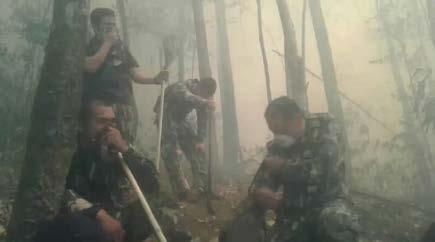
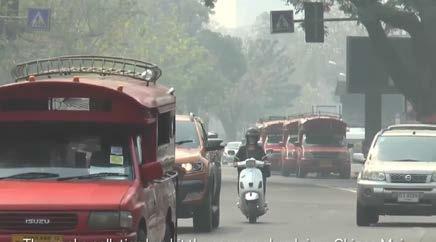
SILVER AWARD
SOMERVILLE, MA, UNITED STATES
My
film came from a place of frustration. This Spring, I noticed that many of my plants seemed to be wilting. It’s a hobby I’ve had for years---tropical plant keeping---but as I sifted through their pots and felt oversaturated soil squeeze through my fingers, I knew that the increased rainfall we’d had throughout the year was the culprit. It was a strange feeling, seeing climate change directly affecting my hobbies. Instead of a vague, looming threat on the TV, it was tangible to me: I was seeing its affects firsthand. I could no longer continue to raise tropical plants, something I’ve poured my heart into for so long, because of the new excess of rain---which I had just learned was a direct result of increasing atmospheric temperatures. So I created a film to express my feelings. I chose to represent the loss of my hobby as the overarching narrative of the movie---grounding the more technical aspects of climate change in a human-centric and recognizable way. It can be easy to brush off climate change as “something that doesn’t affect me right now”, but it is not necessarily true. Even little things like plant-keeping, things that we hold on to for comfort, can be affected by the shifting climate. You don’t have to live in a high-risk area or work in weather to see it happening. In the creation of the film, I wanted to broadcast this realization that I had over the Spring. It affects all of us. I hope my film will inspire other people of the younger generation to express their own stories about the climate. I hope it will shed light on some of the lesser talked-about aspects of climate change: the smaller things that are affected, like the plants around us. And I hope I can recruit others to the cause as well, helping each other to create movies and art that highlights some of these aspects. Film is inherently such a collaborative medium---and with a group of people who feel just as strongly as I do about climate change, I think we can make a difference.


AR,
his project is a short film with a mix between stop motion and digital animation. It talks about the effects of climate change in El Salvador, which is the country where I was born. My inspiration was in two parts. I was first inspired by my dad’s stories about how as a child he had to put a winter coat on to go to school because of the low temperatures that my country had. That was 37 years ago and there have been big changes in the climate since then. The second layer of my inspiration is that I am originally from El Salvador and I moved to Arkansas in the USA a little less than two years ago. I have been learning English in my school here and I have been learning many other things like science, history, and art as well. One day, I noticed that both my home flag and the flag of the USA have blue in them. I researched the meaning of the blue and learned that for El Salvador, the two blue stripes stand for the sky and for the ocean. For the blue of the American flag, it represents vigilance, perseverance, and justice. These things combined together in my mind as the perfect combination for talking about how climate change affects the two parts and two places of my own story. It is here that I found my title for my video: Azul Por Azul, or Blue for Blue. By using vigilance, and perseverance to fight for climate justice, we can fight to restore the blues of our sky and oceans. Making this short film made me realize that as society we need to change our habits so that we can save our planet for future generations. I don’t want my children or grandchildren to have to deal with a world full of contamination and other climate change problems like those in this video which were caused by our generation and past generations. People often see and feel the negative side effects of climate change but not the causes. This video, and the additional similar ones I want to make with research and information specific to individual countries representing the heritage of our local population, will help to show how these things come to be, how they impact our homelands, and what we can do to prevent and reverse them. No one can do it all, but we can all do something. By taking action here in Arkansas, as well as in the places where we come from, we can take steps as individuals and also work together as a local and global community to reverse the climate clock.

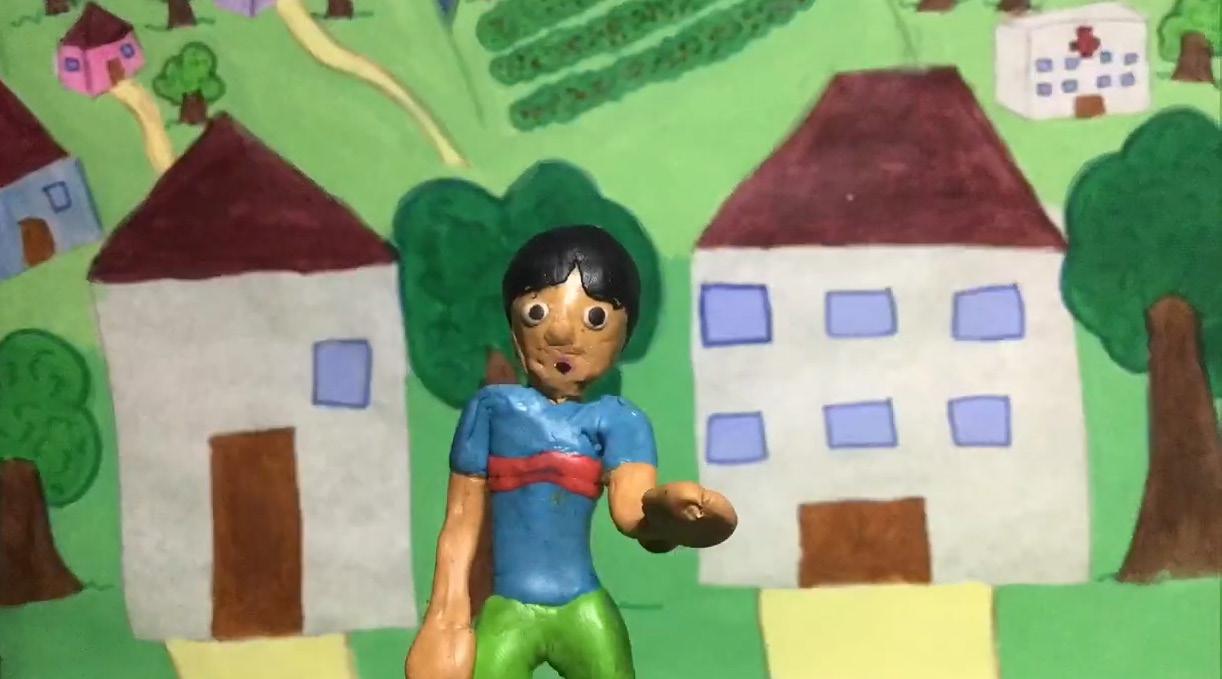
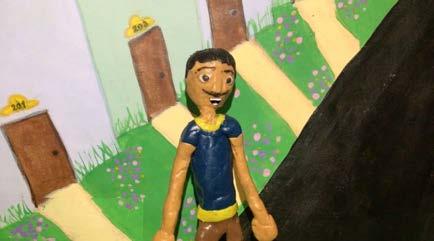
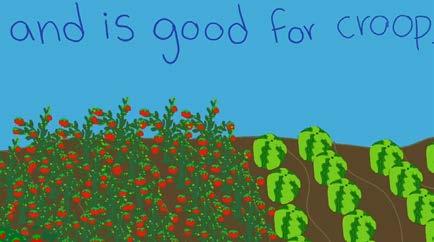
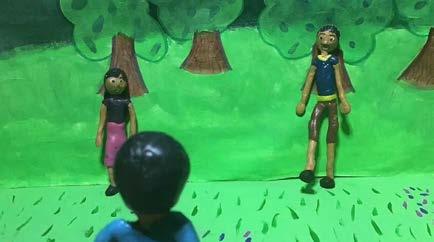
18
BUFORD, GA, UNITED STATES
reating this animation has been such a joy. I have been learning to animate since I was placed in a digital media class my junior year. It opened so many doors to new projects I can do and work on. Creating this animation made me feel so many different things. I am distraught at the damage that is being done to the coral reefs and so intensely mad at all the creatures humans have already caused to lose their lives. Possibly even before we learn of their existence. I have become way more invested and connected to the struggles of the Earth, and not just like someone watching from a distance. I feel like I can actually make a difference. I completed this entire animation despite my personal struggles as well as a ton of technological issues that kept popping up. I now know I can accomplish hard things, even during times when I am struggling really hard to keep going on with life itself. I remembered my passion for life sciences and realized that I want to keep making animations and maybe even illustrated science books that make learning fun for others. I am invigorated at the thought of jump-starting new changes that can help make the Earth healthy again. It means so much to me that doing all this might help anyone struggling with cancers or anything else. I have learned so much throughout creating this video. There are so many different ocean creatures I didn’t know about, and somehow despite which ocean they live in they are still affected by climate change. My message to anyone who sees this video is to do your best to help out. Speak up and spread the word, even if it’s not the way that people typically do it. Find a way to use your talents or passion to make a difference for the better in the environment.

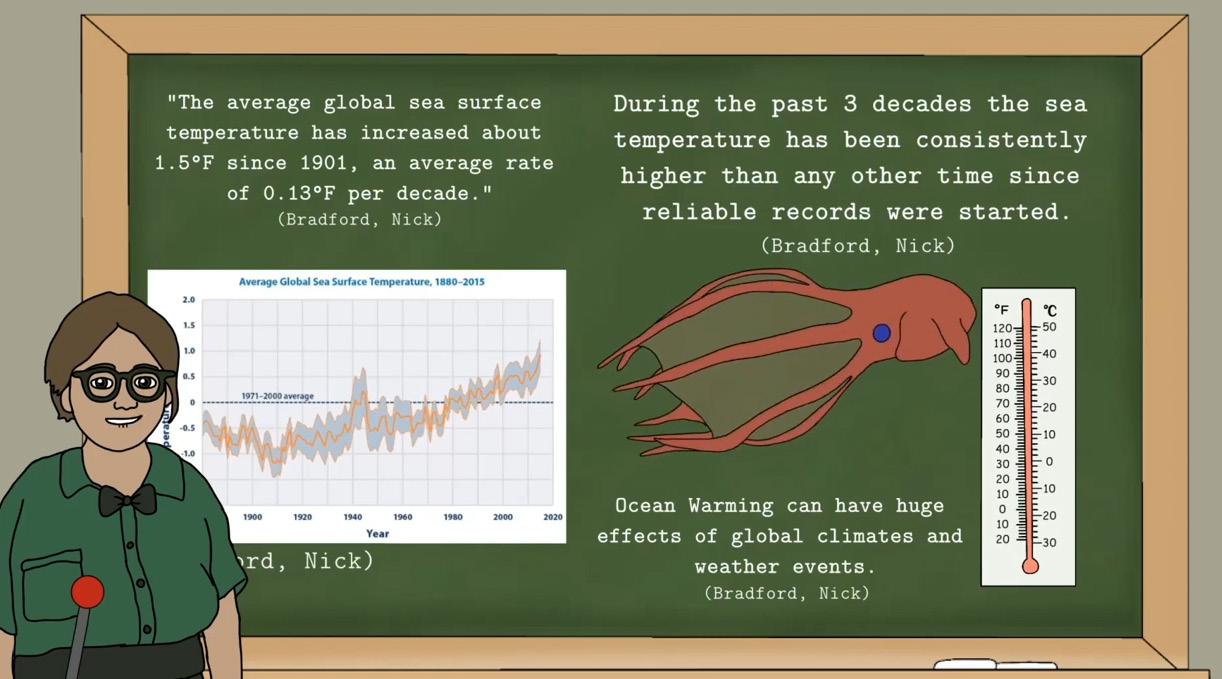
Behind Your Screens
Amara Nwuneli (Lagos, Nigeria)
Exploring Nature Reserve: Clam Garden
Daniel Chen, Chengyi Li, Olivia Hai Lai Jiao, Li Ya Jin, Shangxuan Yang, & Naifu Xu (Vancouver, Canada)
Save Marine Life and Combat Climate Change
Nigel Tranquilino (Stanley, NC)
You Don’t Feel It
Rihanna Maria Lobo (Bengaluru, India)
This Is The Ordinary Approach To Climate Change
Vy Phan (Hanoi, Vietnam)
Thawing horizons
Zhamila Khassen & Samira Uzurova (Almaty, Kazakhstan)

The Sound of Nature
August Kim & Lining You (Pebble Beach, CA)
One Town at a Time
Caeley Gale, Macy Kent, & Angela
Hickson (Shrewsbury, MA)
CHOKING - A Plastic Pollution
Dance Narrative
Daniel Binchang Bako (New Karu, Nigeria)
A Speckle of Spirit
Elaine Lin (Stafford, TX)
Rain, Floods, and Plant-keeping
Inigo Hare (Somerville, MA)

Mason’s Climate Story
Mason Morris (San Francisco, CA)
Bouncing Back
Qinyan (Callie) Cai & Ziru (Josephine)
Li (McLean, VA)
Floods and Global Warming
Ryan Oh (Seoul, Republic of Korea)
California Dreaming
Sage Park (San Diego, CA)
Global Warning
Savannah Chun (Dallas, TX)
A Fading Rainbow
Tara Helton (Algonquin, IL)





n the fall of 2012, when I was in elementary school, Superstorm Sandy struck my home, Long Island, New York. Our cooler ocean temperatures usually protected us by weakening storms before they made landfall, so actual hurricanes were a rare occurrence. Long Island has been in the crosshairs of hurricanes before. My parents tell stories of Hurricane Gloria in the 1980s when they were kids. Sandy, was my first hurricane experience. According the the National Weather Service, Sandy was the second costliest Atlantic Hurricane on record, second only to Hurricane Katrina. When I wrote this parody, I included my perceptions as an elementary school child. The parts about school being closed, streets being too unsafe for trick or treating, the rabbits seeking shelter, were what I noticed at the time. After the storm, 90% of Long Island was without electricity. We were among the lucky 10% with power, and lots of family moved in with us for the coming days and weeks until their power was restored. Also in this parody, I included some recollections of my parents that were not obvious to me as a young child. They remember gas shortages due to New York Harbor being closed, only being able to buy gas on odd and even days and waiting on line at gas stations only to be told they ran out. They also recall the devastating images on television of entire neighborhoods washed away and the neighborhood of Breezy Point that entirely burned to the ground because the roads were too flooded for fire trucks to arrive. I was shielded from these images. Now that I am older, the most striking realization I have had about Hurricane Sandy is that this type of catastrophic weather event could happen here. I have seen footage of devastating storms in other places and while tragic, I lived with a sense of security that it doesn’t happen where I live. Hurricanes rarely strike Long Island and if they do, the damage is relatively minimal. Now, with rising seas, storm surge is regular threat when a tropical storm or even a Nor’Easter crosses our path. With our warmer ocean temperatures, stronger storms are making landfall more often and with devastating effects as our aging infrastructure was not built to withstand this new normal. I love to sing and perform and recently played Wednesday Addams in my school’s production of The Addams Family, where I sang the song, “Pulled”. I started writing parodies during the COVID-19 quarantine. For me it is more of an engaging way to express myself than a typical essay.


Parody written and performed by
AnnaBelle Deaner
Original song: Pulled from The Addams Family Musical, written by Andrew Lippa
The TV news warns of impending danger. A storm approaching that we can’t ignore.
The name on every mind is all the same now. Sandy’s here, at our door. Suddenly, the sky begins to darken. Bunny rabbits run away and hide. Rain starts falling, wind picks up it’s starting, And I think I know why.
The climate’s pulled in a new direction. And I don’t like it.
No, I don’t like it.
The climate’s pulled in a new direction. Warming temperatures spawn Rising seas, stronger storms
“Pulled: A Parody about Hurricane Sandy’s Effect on Long Island” by AnnaBelle Deaner, continued
And the world that I know can’t withstand this new norm.
God! What do we do?
Pulled, Pulled, Pulled
Mother nature now seems like a stranger.
Thrashing every structure in her path.
Storm surge is a clear and present danger.
Once quiet streets feel her wrath.
The climate’s pulled in a new direction.
And I don’t like it,
No, I don’t like it.
It’s being pulled in a new direction.
Never thought I would see storms like this come to me.
I see things that before I’d just seen on TV.
It’s frighteningly true.
Pulled, pulled, pulled
Neighborhoods in total darkness.
Trees are down and blocking streets.
Boats replacing cars to access areas left undersea.
School is closed another day.
Cars lined up at gas stations.
New York Harbor’s closed to ships, so limited supplies get in.
Family moving in with us.
They don’t have electricity.
Halloween’s a day away
And it’s not safe to trick or treat!
The climate’s pulled in a new direction. If we don’t make changes, we’ll be endangered.
The climate’s pulled in a new direction.
We can’t stay in the dark
And ignore every spark.
It’s our problem right here on Long Island, New York. So, we must raise our voice.
Inaction can’t be our choice.
The climate’s pulled in a new direction.

o Be Blown Away” is a self-choreographed dance piece reflecting my personal journey through Hurricane Harvey, which hit Houston, Texas in 2017. I was nine years old at the time, and almost immediately after I first heard the news from my parents, my school shut down for weeks in fear of the impending severe weather. Confined to my home, I watched in fear as the sky darkened with angry gray clouds and relentless sheets of rain poured down from above. Every day, the eerie sirens of severe weather alerts on my parents’ phones screeched as they warned us about flash floods and imminent thunderstorms. It became oddly normal to hear daily updates and see shared images of buildings and homes that have been destroyed beyond repair by the hurricane. As a little girl, I felt lost and helpless amongst all this chaos. I found myself looking out the window every day singing “Rain, Rain, Go Away” over and over again, clinging to the childish hope that the nursery rhyme could work its magic and keep the hurricane from tearing apart my city. Recently, the inclement weather in Houston made me once again recall the devastation during Hurricane Harvey. Now that I am older, I understand that this fearsome weather is not caused by angry, crying cloud fairies, but by climate change and excessive CO2 in our atmosphere. It breaks my heart to see the way we are carelessly destroying our planet and Mother Nature, who has sacrificed so much to allow for our growth. Why can’t we as a society, turn our focus away from profit and trends, and instead work to patch up the deep wounds our actions have inflicted on Mother Nature’s skin? This dance piece captures the anxiety and distress hurricanes impose on coastal citizens. It is a call to action, urging us to change our ways of life so we can mitigate the destruction caused by such terrible storms.
JESSICA WANG

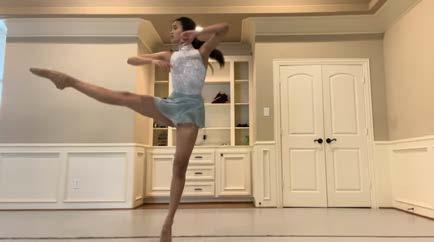
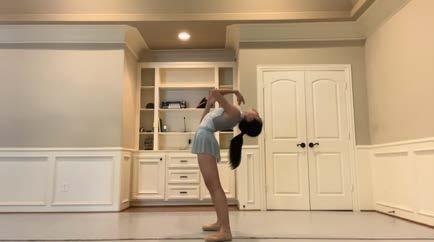
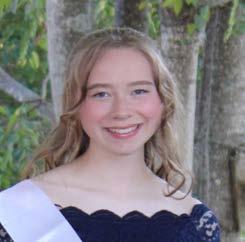
AGE 16
his original song “Worsen by the Day” expresses the growing issues and effects the world is facing due to climate change. The song also expresses my own experiences on how climate change has created my own fears and anxiety surrounding the planet’s health. I hope this song spreads more awareness to the harmful effects of climate change and urges more individuals to take action. I plan to dedicate my life to continuing to advocate for the planet, and I plan to use music as a platform to do so. I encourage others to find the things they are passionate about and use their talents and voices to create positive change. I believe that with passion and perseverance the effects of climate change can be reduced and we can continue to create a safer planet and a brighter future for all.

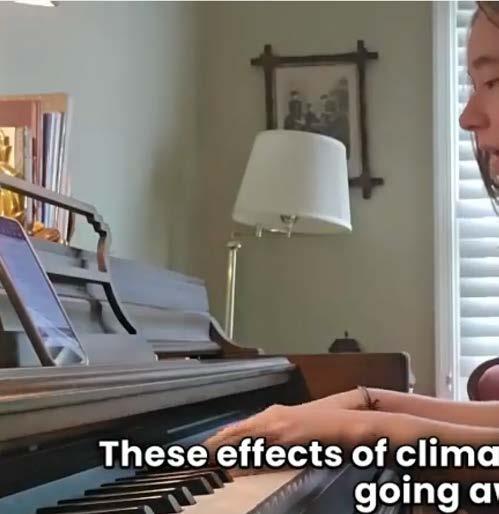
Stills:
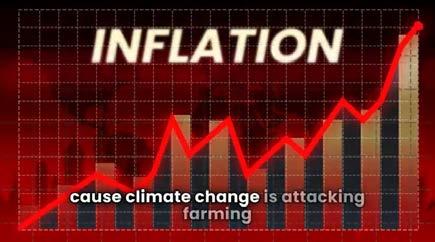
BRONZE AWARD
AGE 16
Iwas always fond of marine animals so endangered species was my first idea for “My Climate Story”. In Cyprus, where I live, you can sometimes see a turtle while walking near the sea, swimming or diving and there are multiple beaches where turtles nest. So I feel that turtles are important for me personally and for the community. I decided to research more about turtles in Cyprus and was devastated by struggles which climate change brings to them. The first part of my music piece is cheerful, illustrating the beauty of Cyprus marine life which often brings me positive emotions in my everyday life. Then the key changes to minor, the second part is slow and only violin plays, with a monotonous lower tone. This part provides the most information about effects of climate change on turtle species for the listener in the form of short facts so the listener can reflect on them. The final part represents the fight of the ocean and humans with climate change. An active and continuous fight. The piece ends on an open chord which is neither major nor minor meaning that we haven’t reached the end, but we are only in the beginning, with more actions to be done now and in the future.
EKATERINA RUDENKO
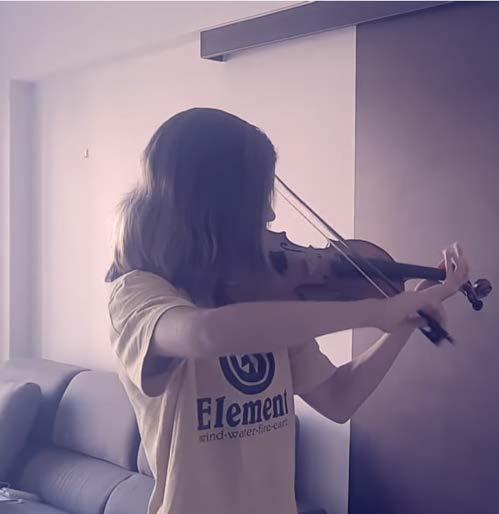

Stills:
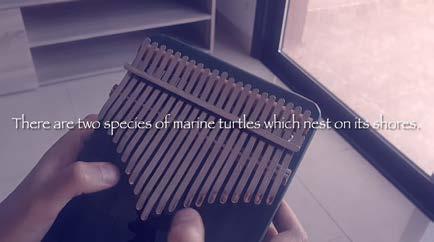

Project Ohio by Abdul-Jabar
Abdul-Jabar Ogunlana (Obetz, OH)
Dry Days in The Garden City: Bengaluru’s Water Woes
Adiva Agarwal, Ayrah Hussain, Aastha Das Gupta, Ishita
Tyagi, Kaniesha Mittal, Ishi Pandey, Anushree Kandari, & Laipubam Margarita Devi (New Delhi, India)
What would you do? Sierra Meadows
Annabelle Miin & Anastasia Miin (Saratoga, CA)
Poisoned Oxygen
Madison Woods (Metuchen, NJ)
Waves of Hope
Pasit Wattanalekhawong (Bangkok/Windsor, Thailand)
Slipping Away
Sahithi Chunduri (Alpharetta, GA)
Abyssal Vision
Vincent Couto (Fairhaven, MA)



what are you waiting for
Eric Liu (Bloomfield Hills, MI)
and the swallow
Eva Marcelia (Issaquah, WA)
Where Have All The Mussels Gone?
Lori Agbabian (San Francisco, CA)
My Home
Olivia Peacock (Miami Beach, FL)
Year by Year
Sahana Kumar (Irving, TX)
Coast to Coast
Tatum Akimoto-Albarado (Honolulu, HI)
The Fire Within Us
Timur Sharipov (Waialua, HI)
Give Them a Voice
Tristyn Murray (Oakville, Canada)




Iobserved that simulation games are usually interesting, and people often feels a sense of achievement when they build something on their own. Besides, with a simulation game, people can understand the difficulty of doing something, and learn knowledge about it. Therefore, I decided to make a simulation game, presenting the serious problem of global warming to people. When doing this project, I looked for information about global warming online, and learned some impressing data: A city like New York and Shanghai produces more than 190 million tons of CO2 annually, which is about 500 000 kilo tons every day. Currently, average global temperature is about 17 °C , about 1.5 °C higher than that in 19th Century. However, a save temperature that prevents sea surface from rising should be lower than 13 °C. Eventually, I set my game’s goal to controlling average temperature of a single city to 5 °C, and set the emission of CO2 of factories and residences based of the researches.


Project Description: This is a game that simulates a city. Players will operate this city and try to keep the average temperature there within a given range. This game also presents a story that emphasizes the seriousness of global warming, and encourages players to protect the environment. A more detailed tutorial is included in the game.
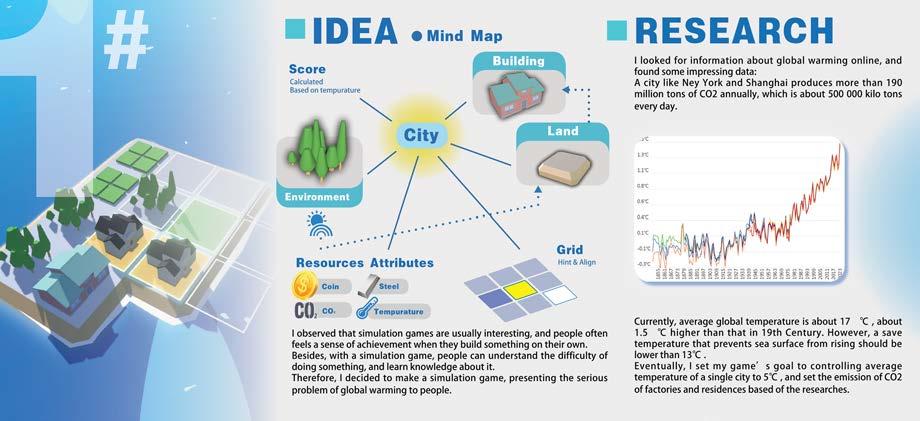
“Island
FRAMINGHAM, MA, UNITED STATES
Elementary students were able to step inside the immersive exhibit and hear from their older peers about the effects climate change has on MetroWest Boston and abroad. “We are the ones that are going to grow up and we’re going to live with these higher temperatures,” Framingham High junior Hiranmayi Narasimhan told the MetroWest Daily News. “So we need to make sure that our world is livable and we maintain the biodiversity that we have today.” Behind the scenes, the gallery came together through a collaboration between science and arts students. Senior Carly Nestor explained that through the collaboration, art pieces included giant water hyacinths, vines, chicks, sea life and even a car with functional headlights. The gallery also featured projections and sound. The exhibition was open for two weeks and as folks experienced it, word of mouth traveled, bringing in countless groups and community members. This exhibition has brought a new sense of community urgency towards the improvement of our climate. The immense interests and energy around this collaboration is evidence of the dire need for community art projects and opportunities to educate through artmaking and conversation.
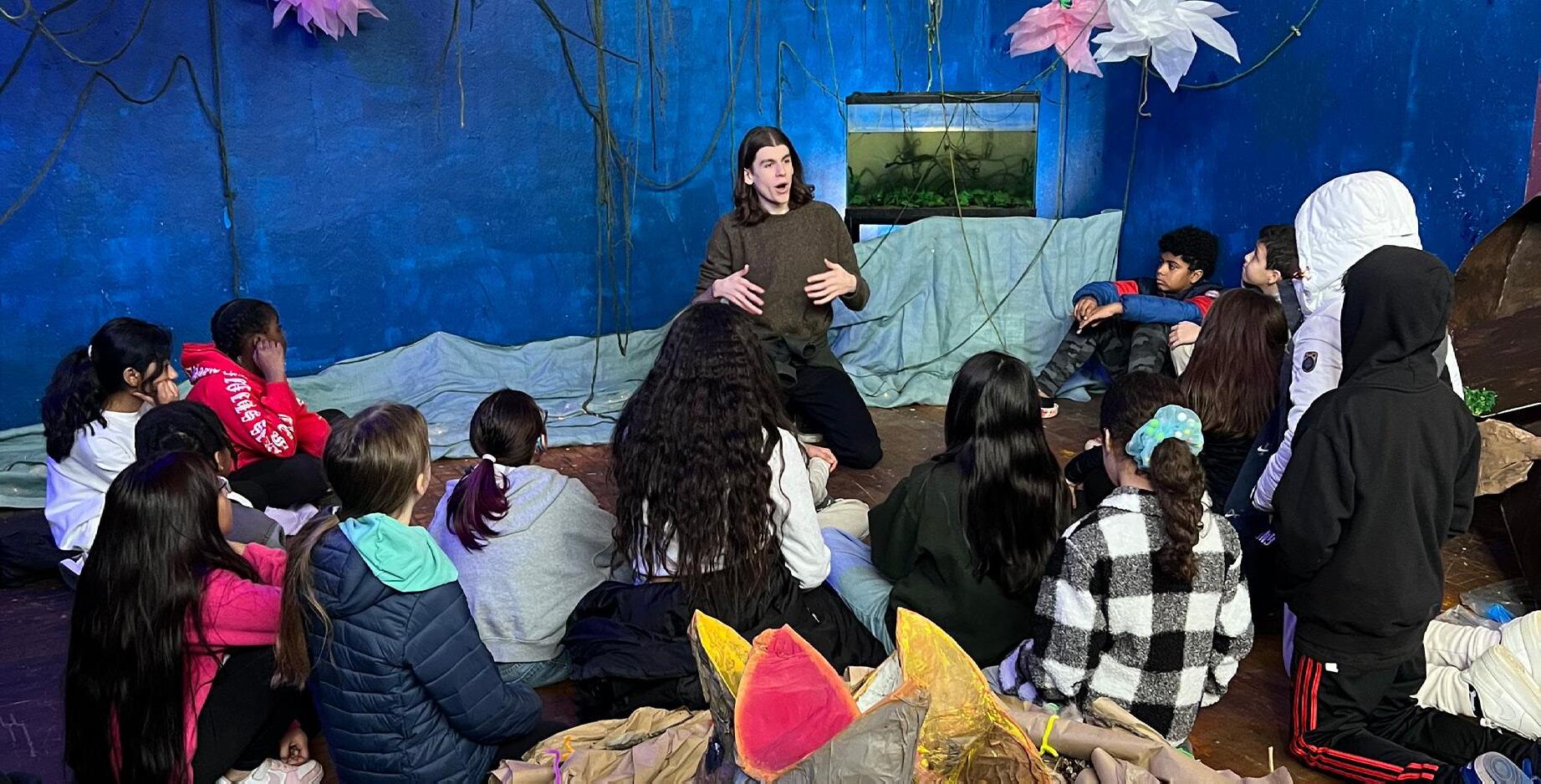

Project Description: The Framingham High School Environmental Awareness Club, led by Rebecca Maynard and Emily Rathmell, has focused on bringing public attention to climate issues since its inception. This year, they collaborated with the Framingham High School Art Department, led by Katie Lee Mansfield, to use artistic media to raise awareness and bring their project to life. Students from the Environmental Awareness Club worked closely with students from the FHS Art Department to brainstorm and research key environmental issues, conceptualize a large scale art installation, and execute its conception at Project B Gallery in the Saxonville Mills Contemporary Art space in Framingham, MA. The mission of this project was to create an interactive, multimedia art installation where the Framingham community members could learn and be inspired by this project, resulting in real change for our collective future. This project highlighted four critical climate crises within Framingham and beyond. The issues researched were: invasive aquatic plants, flooding, coral bleaching, and local bird species’ decline. Fifty-three students broke into four teams to transform the gallery, highlighting the four separate environmental issues. The final installation showcased large scale sculptures made from recycled materials, painted wall murals, ceramic coral, an interactive touch tank, video projection, audio, and
information graphics and take-aways that supplemented the learning experience. Alongside the art exhibition, students developed interactive lessons to teach ten 5th grade classes about these important topics. The district supported this initiative and sponsored field trips for multiple schools to visit the exhibition during the school day. During each field trip, high school students presented their lessons to the 5th graders. This sparked important conversation around these challenging topics and each student left with concrete ways that they can help spread change and awareness. The development of this project took five months, including research, project planning, community outsourcing, and artwork development. The opening night of the exhibition brought hundreds of community members to visit and tour the installation. The mayor of Framingham, the Framingham Public Schools superintendent, along with multiple community stakeholders were in attendance. Students and teachers were also interviewed by local community television and radio stations.
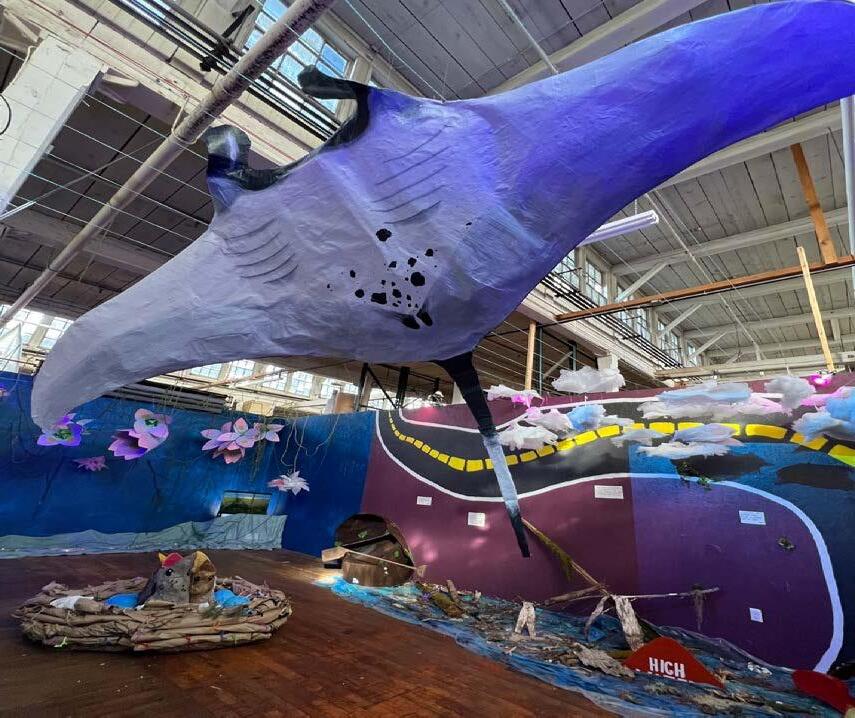
BOSTON, MA, UNITED STATES
As an Indigenous person, my community has been the first-hand witness of environmental injustice, members of my community unequally carrying the burden for the actions of our whole nation.. Despite having one of the most regulated fisheries in the world, the US has not been immune to the effects of overfishing. The collapse of the Atlantic cod fishery in the 1990s is one of the most commonly cited examples in the world of overfishing and its economic, social and cultural implications. This is especially true in coastal and many Indigenous communities. Harvesting large amounts of fish and seafood kills lots of other marine life, including juvenile fish, corals and other bottom-feeding organisms. The result is a huge domino effect on the marine ecosystem; overfishing the Atlantic Cod results in an increased amount of shellfish, which causes a decrease in algae population, disrupting the entire balance of the ocean. This is what inspired me to create MarineMatch, advocating for the communities across North America that have been disproportionately impacted by overfishing, and fighting for the conservation of our oceans. White doing research, I felt sad learning about how overfishing had already taken a toll on our marine ecosystem. Despite all this, I was left with hope that we had time to still counter overfishing and prevent more damage from being done, fighting the billions of people across the world and relying on the ocean. Originally, I hoped that a few local fishers would download MarineMatch and be able to use it to identify their catch to promote sustainable practices. My main goal was to fight overfishing by providing fishers a tool to identify endangered species of fish within split-seconds, providing recent information which follows local laws and regulations. By knowing what species are illegal to catch, as well as quotas and length regulations on specific species, fishers are more informed about sustainability fish in American waters. On top of this, MarineMatch allows users to learn more about their fish through the discovery page, helping to fuel education and advocacy around the environment by building connections with users. MarineMatch started off as a crazy idea in my head, but hundreds of people have heard about it just by having the courage to start and share my perspective of the ocean.
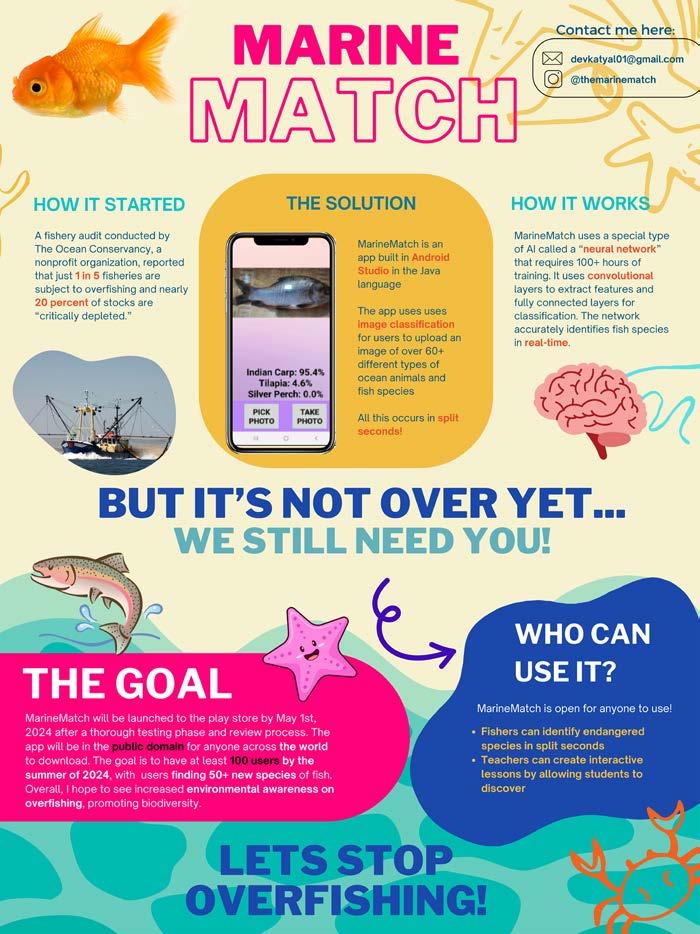

Project Description: Overfishing is a huge problem across the world, and it has personally impacted my own community; this is what led MarineMatch to be born. Surprisingly, overfishing is not always intentional; new fishers often mistake endangered species for accepted catch, or perhaps are unable to recognize the species and decide to keep it. This motivated me to create MarineMatch, an app built in Android Studio in the Java language which uses image classification for users to identify 60+ different types of ocean animals and fish species.
“MarineMatch”
by Dev Katyal, continued
This was possible through a TensorFlow Lite deep-learning model with 100+ hours of training! The app classifies the image via an image recognition algorithm from the convolutional neural network, determining the species of the ocean creature and displaying it from the user – all within just split seconds. MarineMatch makes sure there is no excuse for irresponsible practices; fishers can easily identify the species of the fish and make responsible decisions! Through this project, 10 local fishers have already been able to contribute to sustainable fishing practices; being able to make informed decisions on whether to catch or release fish – maintaining the biodiversity of our waters. I really hope more people across North America can use MarineMatch, whether that be fishers, school students or even people passionate about ocean conservation. Additionally, I have linked an Instagram post for MarineMatch that also gives instructions on how to use the app: https://www.instagram.com/p/C3_TtqOJHw_/?img_index=4
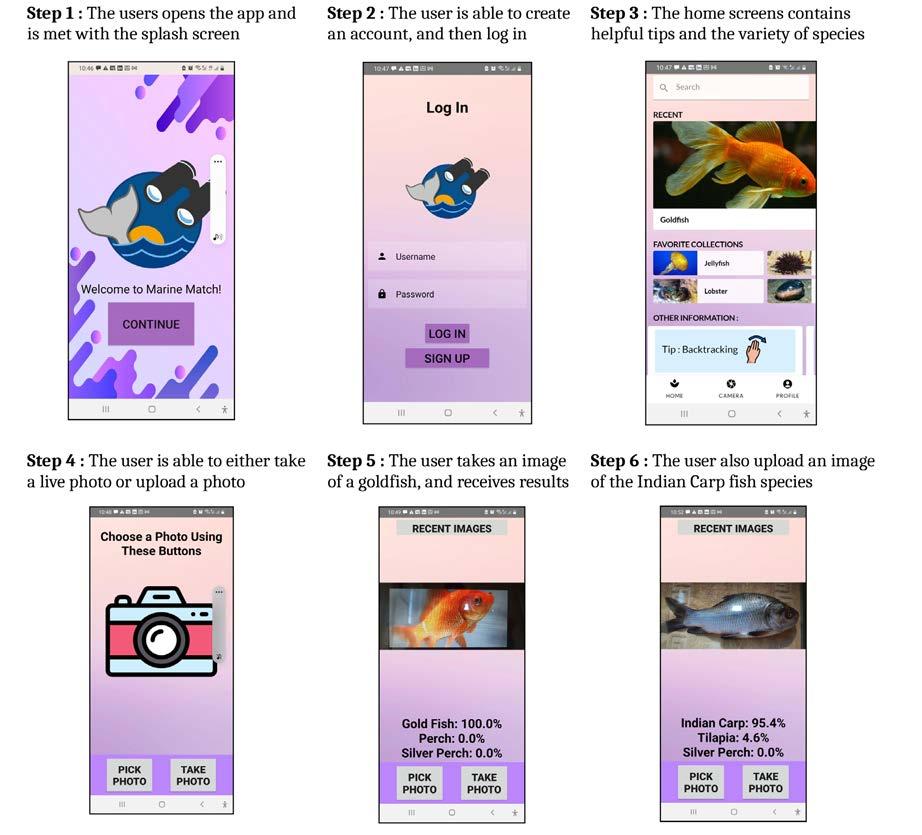
iving in Shenzhen, a coastal city in southeastern China, I am surrounded by lush greenery and a community with a strong environmental consciousness. Our local environmental stories often focus not on stopping pollution, but on improving already good practices. One of the significant issues in my country is our energy structure. Fossil fuels are gradually decreasing, while wind and other clean energies are becoming more prominent. In coastal areas, offshore wind energy is a unique form of renewable energy. My connection with wind power began in my childhood. I vividly remember a visit to an offshore wind farm that left a deep impression on me. The sight of the massive turbines harnessing the power of the wind fascinated me and sparked my interest in renewable energy. This spectacular scene left a lasting impression on me, leading me to follow the development of wind power in my area closely. However, I realized that many people are still unfamiliar with this method of power generation. Thus, I chose the dissemination and continuation of offshore wind energy as my theme for this project. Initially, I envisioned creating a topographic sandbox, but I realized that this approach was rather dull and wouldn’t effectively convey my environmental viewpoint or inspire change. Therefore, I decided to create an interactive installation that would allow viewers to participate in the creation process, making the piece more dynamic and engaging.

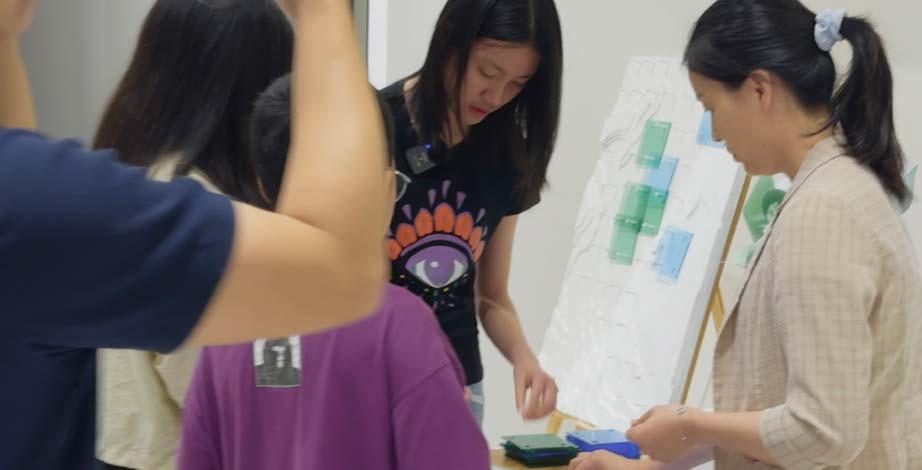
SHIQING WENG
Project Description: My project is an offline event. I created a website to showcase the entire process from conception to realization. By clicking on the web link, you can see a full record of my events that includes text, images, and videos.
First Light
Anna Leventon (Greenwich, CT)
My Role in the Climate Crisis: A Visual Journey
Chujia Yang (Shenzhen, China)
A Week’s Worth of Runs
Grace Fujii (Honolulu, HI)
The Eye of Future
Molly Wang (Guangdong Province, Zhuhai, China)
Mini-Apolis: A 3D Model Of Minneapolis
Olivia Zirbel & Madelynn Banas (Savage, MN)
Econlimate
Ziyi Wang (Chandler, AZ)
MarineMatch
Dev Katyal (Boston, MA)



Diving Deeper
Annalise Davies & Avani Bhat (Raleigh, NC)
Flood Prevention and Action AR Goggles UI
Jiwoo (Alice) Yoon (Seoul, Republic of Korea)
Pacific Kelp Forest Crisis
Luke Scherrer (Glendale, CA)
Canadian Connection: Wildfires and Climate Change
Mila Scholz (Vancouver, Canada)
Healthy You, Healthy Planet, Healthy Budget
Palma Gorman (Kihei, HI)
Typhoon Mawar of Guam
Sujeong Lee, Aiden Choi, Myeongseo Kim, Kyoung Un Park, Joanne Lee, Jaeyoung Jay Park, Hankyol Kim, Andrew Chi, Dayun Irene Park, Minchan Kwon, Hyojin Yun, Hyejin Yun, Sumin Kim, & Sujeong Lee (Tamuning, Guam)
World HEART Initiative
Taylor Gushee (New York City, NY)
Polar Bear Adventure - My Climate Story
Tracy Wang (Toronto, Canada)
Stooping Club
William Chui (Oakland, CA)
future glaciers
Yidan Ma (Xi’an, China)



o this very day, Millions of children in unseen parts of the world are forced to flee their homes and lose their most valued possessions as a result of Climate destruction. This piece captures a little girl floating in the ocean inside a shabby cardboard mailbox to illuminate the stranded realities of these children in silent suffering. The mailbox used as the girl’s escape boat is shipped off to ‘home’; however, the desolate reality is that in most cases, there is no promising ‘home’ for children like her to return to or newly settle down in. In this way, my artwork expresses the raw reality of Mother Nature’s most despairing children. Being an avid advocator for these children surviving on the fringes of society, integrating this interest of mine with new knowledge on the Climate was very eye opening. I love art for this expressive aspect to it: it becomes a magnifier for your voice. This is why I believe that we all should explore ways to spread our message on Climate Change and destruction.
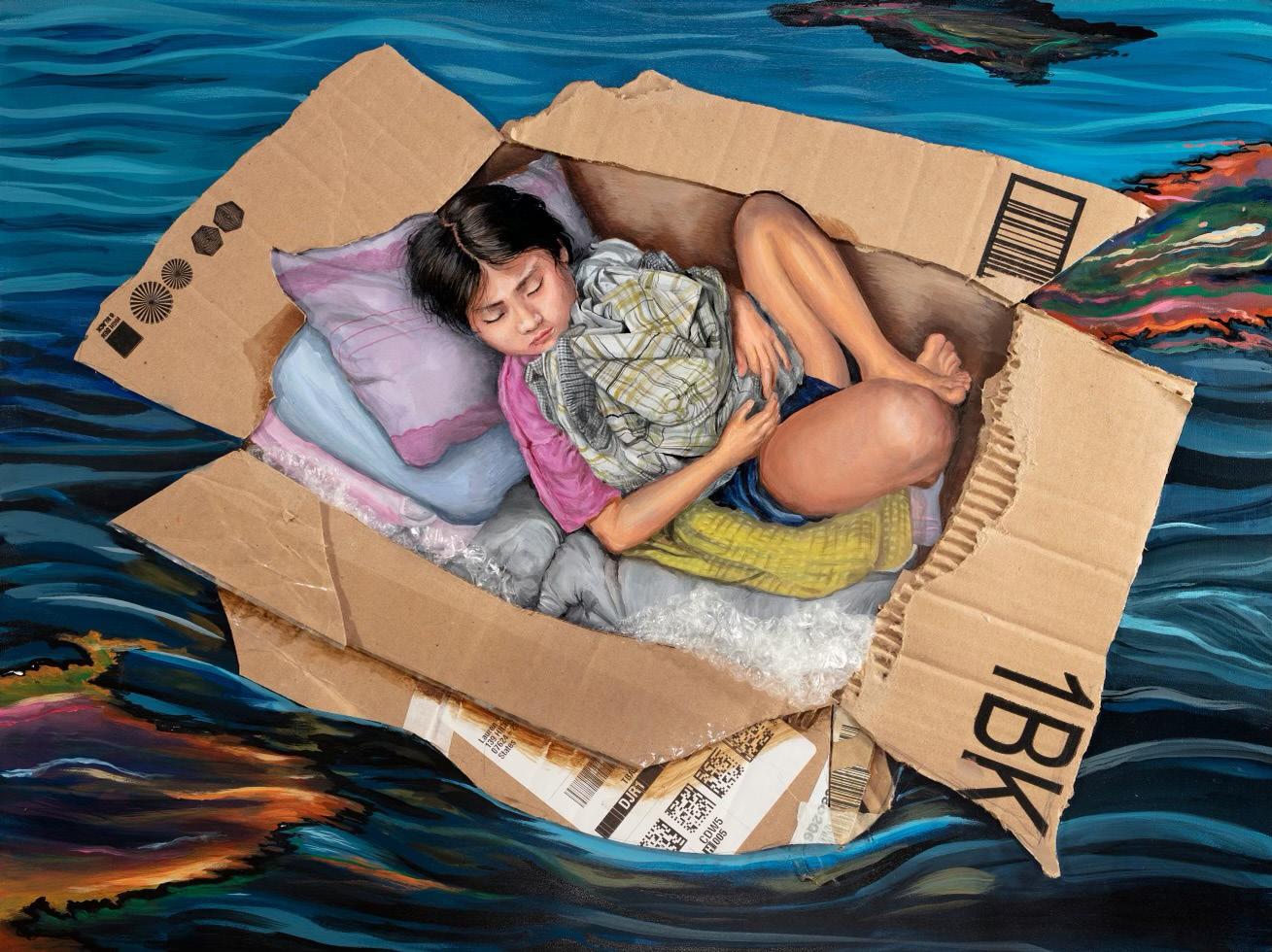
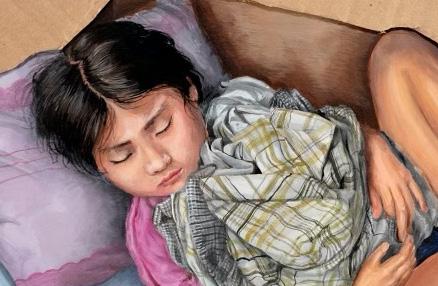
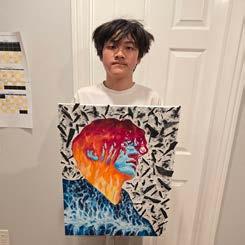
iving in California, I have witnessed countless wildfires throughout my life. I’ve watched my friends lose their homes and have to evacuate from the very places they’ve known their whole lives. Yet, the idea of wildfires happening and hurting the biodiversity around me is so normalized because of how often it happens. Through my painting, I want to raise awareness about the extent of the dangers of wildfires. The person in the piece represents me with the fiery colors symbolizing the impact that wildfires have made on me. Through my experiences, I’ve developed a greater appreciation for the firefighters who have helped my community and have developed a desire to also contribute to my community. The charcoal in the background of my piece represents the ash and smoke I’ve witnessed firsthand in my neighborhood. As it was a sight I will never forget, I also hoped to emphasize the air pollution that can occur through the suffocating soot. There are red teardrops on my face which represent the built up sadness I felt for others over the years. This contrasts the blue water coming from my chest which is used to extinguish the constant fires. The waters represent my respect for the efforts that go into putting out these wildfires every year. Wildfires transformed from a pain for me and my loved ones into a source of motivation to raise awareness for these causes. I’ve seen firsthand how it harms my community and in an effort to reduce wildfires, I hope my painting tells a story of how detrimental climate change is in creating harmful events.
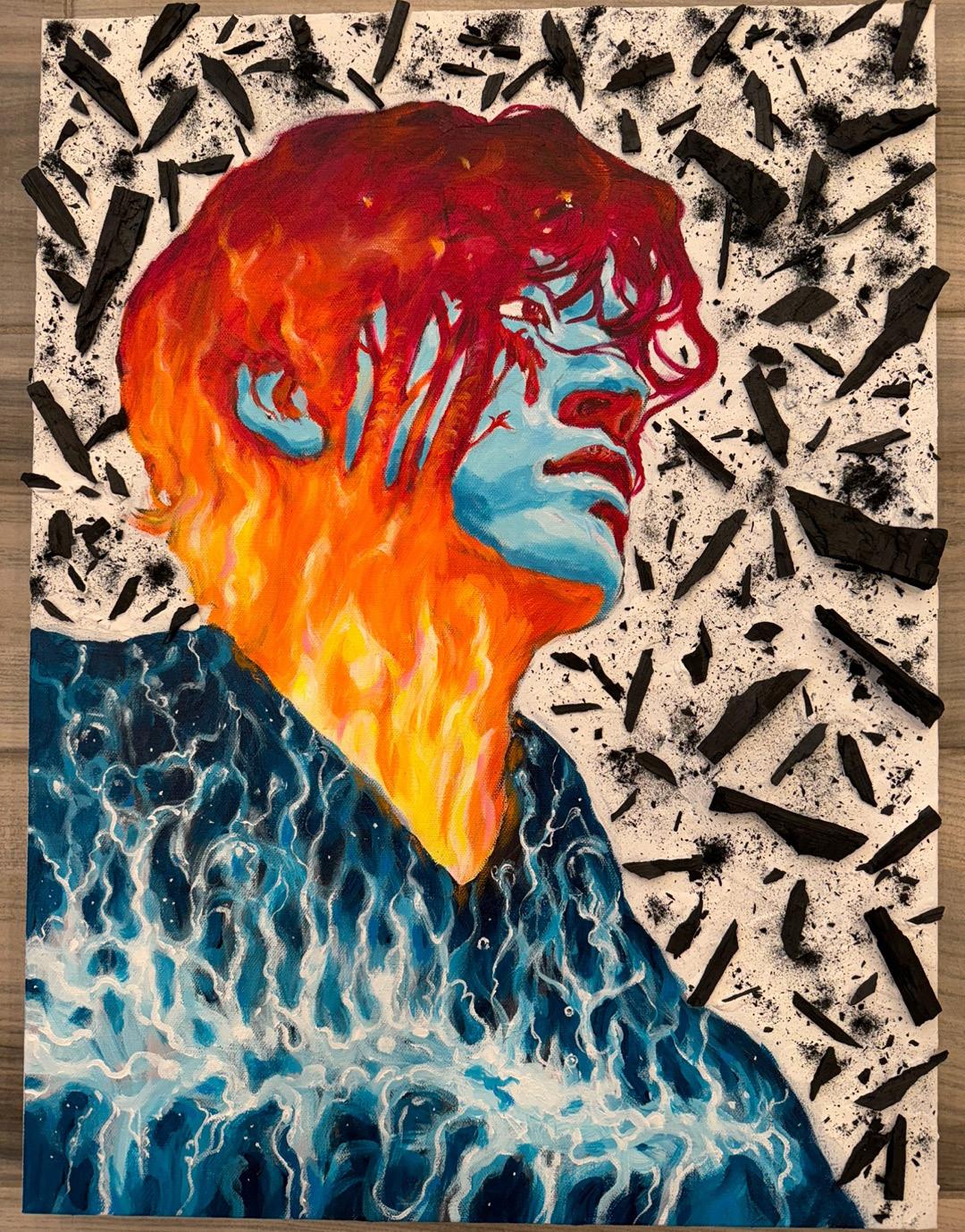
he inspiration behind my work is from my experiences every year around Christmas time. Every year I would hope for snow on Christmas in order to see that magical “White Christmas”. However, year after year I would feel more disappointed due to the lack of snow from the higher temperatures of global warming. In order to spread awareness on climate change, I have created this artwork to showcase my disappointment to others and show that we should not wait any longer to stop climate change. In my artwork there are many details that show the effects of global warming and climate change, the kids playing around while eating ice cream, the green leaves of the trees, the gecko, and the date of Christmas Eve. They show that even in the middle of winter on Christmas Eve, the temperature has risen to a point that kids can go outside and eat ice cream, trees no longer have to shed their leaves, and animals who once could never survive the cold of winter can survive. In order to symbolize the disappointment of me never having a snowy Christmas again, the girl in my drawing stares at her snowflake and ice reflection in the window, her hopes of what she wanted Christmas to be. Although in my artwork I showcase a small little change of a green Christmas, I have realized that small changes like these will add up in the future to change the world we know as it is. That is why we need to start spreading awareness of climate change and start working together to prevent climate change even more.
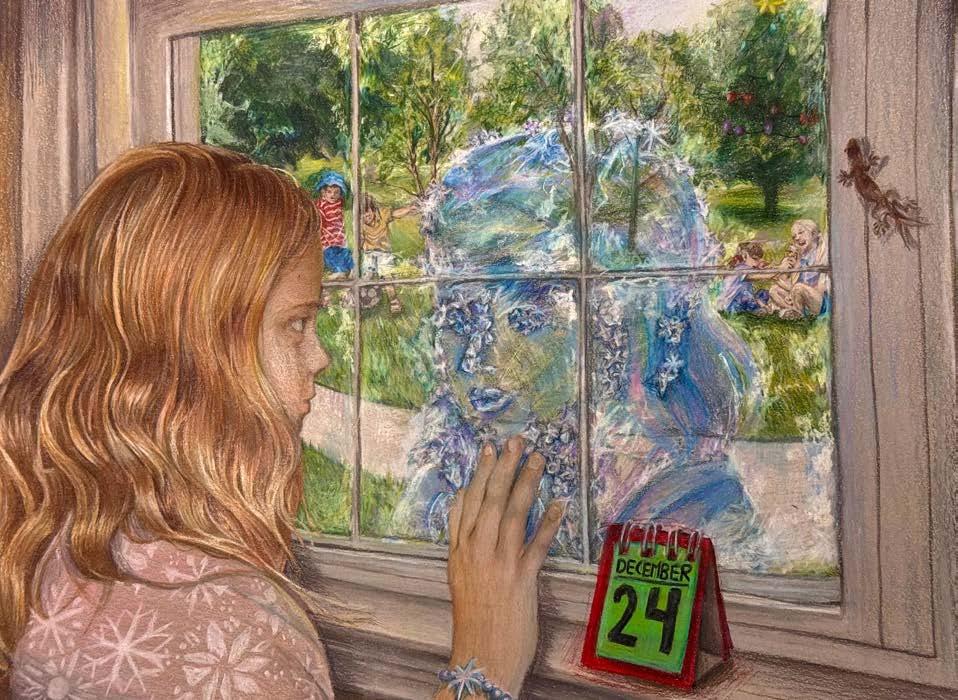
Green Christmas
Colored pencil
was originally inspired by social media, and its toxic influence on adolescents. As I grew up, the people around me, including myself, began to become more consumed in social media. Social media can have positive effects but oftentimes, in order to gain popularity, much of its content has a negative influence on its audience. As excessive amounts of social media use becomes normalized, people lose focus on the major issues that encapsulates our generation, climate change. The message I intended to express was that lack of awareness will only burn down our society further; social media makes people lose sight of true problems and makes them think only about themselves, leading to devastating consequences for the environment. While researching climate change, I have learnt the impacts of greenhouse gasses on our environment; greenhouse gasses may be produced in many ways including factory emissions and forest fires. The extensive production of these gasses, such as CO2, can cause problems such as the greenhouse effect where light that is reflected off of the Earth is reflected again and comes back down to the Earth, eventually raising global temperatures. I believe that a step that our community can take to go against climate change is for everyone to educate themselves about climate change and get a true understanding of why so many people are adamant on making a change.
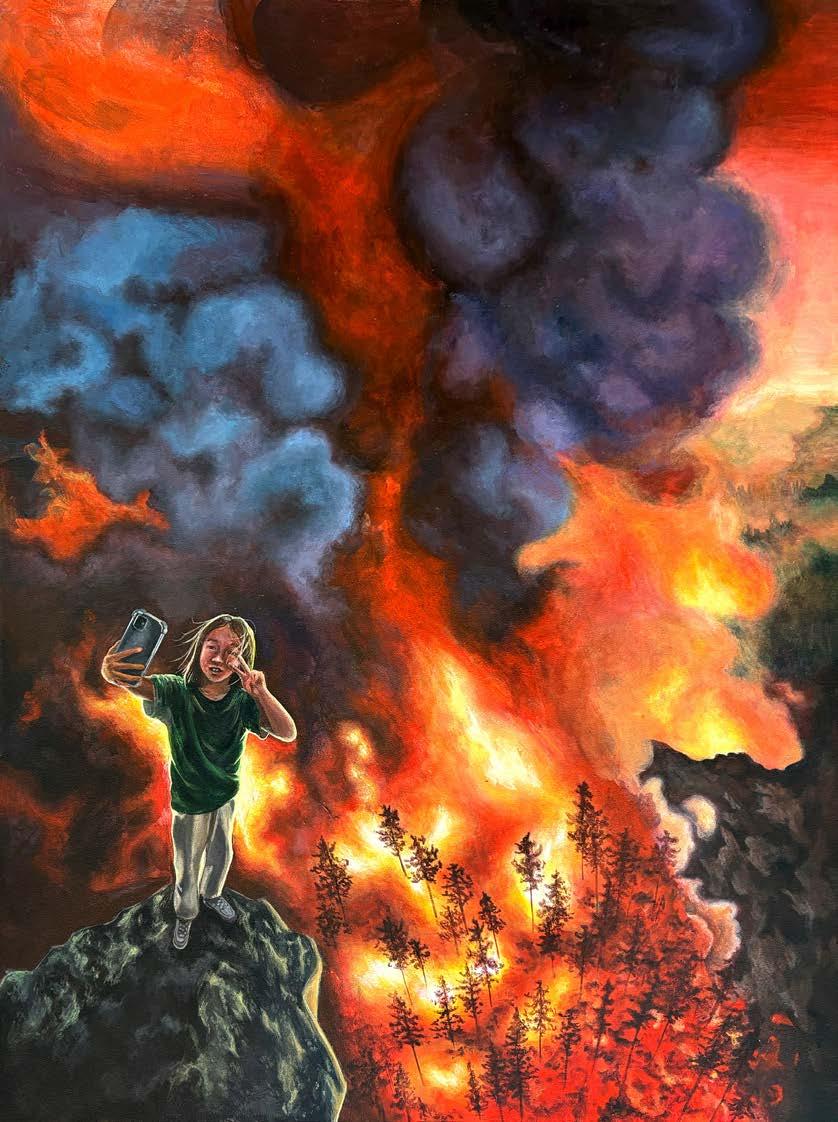
FL, UNITED STATES
esolation, dismalness, and death were the descriptors of the view that awaited me. Disappointment, distress, and determination were my emotions in response to it. Why? Humanity has polluted the planet, from sea trenches to mountain summits. Desensitized by the constant climate change, people do not realize its deadly perils. As a Floridian, my community experiences warming waters, ocean acidification, unbearable heat, frequent flooding, retreating shores, increased severity of storms, and more due to skyrocketing climates. Therefore, traveling up north was desirable. At the peak of snowfall, I attempted to go skiing for the first time. I dressed in thick winter clothes, which is depicted in my artwork. I had assumed snow would be abundant, so I was horrified to see the opposite. Due to the humancaused climate crisis, the scarce snow there was all artificially made. 2023 was recorded to be the hottest year, with some places experiencing a fourth of their historical average snowfall. The Northern Hemisphere’s snowpacks have tremendously decreased over the past decades, and I witnessed the receding snow. Only twenty-four years ago, natural snow was still on the mountains, represented by the sign in my piece. To the viewers of my artwork, I want to convey what will happen if humankind does not address climate change. Remarkable, snowy mountains will turn into barren, desert hills. Lush, green forests will turn into lifeless, bleak sticks. Sunny, azure skies will turn into a foul, toxic haze teeming with greenhouse gases. Those were only a few environmental issues depicted in my piece. For the consequences grow endlessly, with biomes collapsing and all the planet’s inhabitants suffering from its effects. Therefore, I want to encourage people to stop going with the flow, for it leads to a sea of destruction. It is not too late to make a difference; presently, it is needed more than ever. The change should start now.
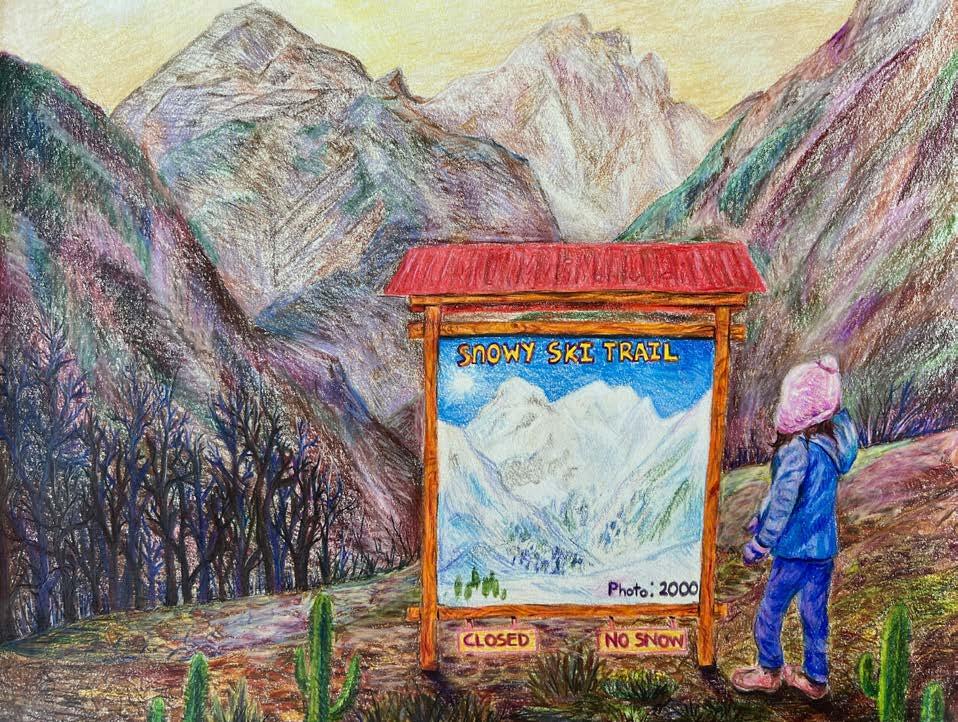
Colored pencils
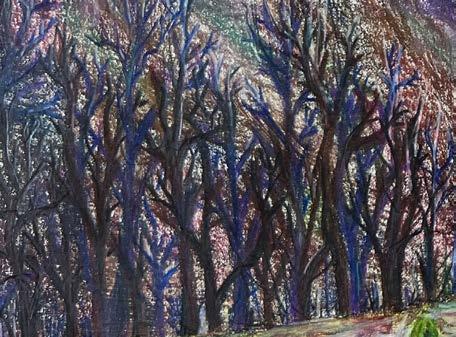
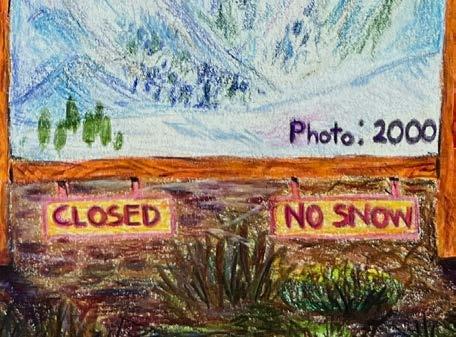
Ilive in the nation of South Korea, a busy country moving at a speedy pace, which made it challenging for me to notice the gradual changes in our environment. The tall buildings and the constant glow of the neon signs of our city had blinded my eyes and resulted in my ignorance of the current state of our world. Once my eyes were open, I began to look around for evidence of climate change. The first place that came to my mind was my family album; I observed a photo of me during one summer’s day standing happily in front of my house less than four years ago. Back then, Korea’s summers were never as hot as they are now, clearly a gradual yet detrimental change in our community. It was then when I learned that climate change didn’t necessarily reveal its true effects in dramatic ways, such as ice glaciers melting in the North Pole or sea levels rising. To visualize the pure shock that I felt once I saw how climate change has crept up on my community, I decided to name my artwork “Invisible Changes” to highlight how climate change weaves itself into the fabric of our daily lives, often without any of us realizing it. In contrast to the current figure of me standing in the center of the artwork enduring the desertification and extreme weathers, my younger self illustrated in the photo album is happy, carefree, and safe from the harsh effects of global warming. My artwork serves as a call to awareness and action, urging people to recognize and address the environmental shifts happening around us before they become irreversible. Just like the old Korean saying goes, “Little droplets of rain will soak your clothes,” it is crucial to keep in mind that tiny changes can build up to become major shifts in the environment.
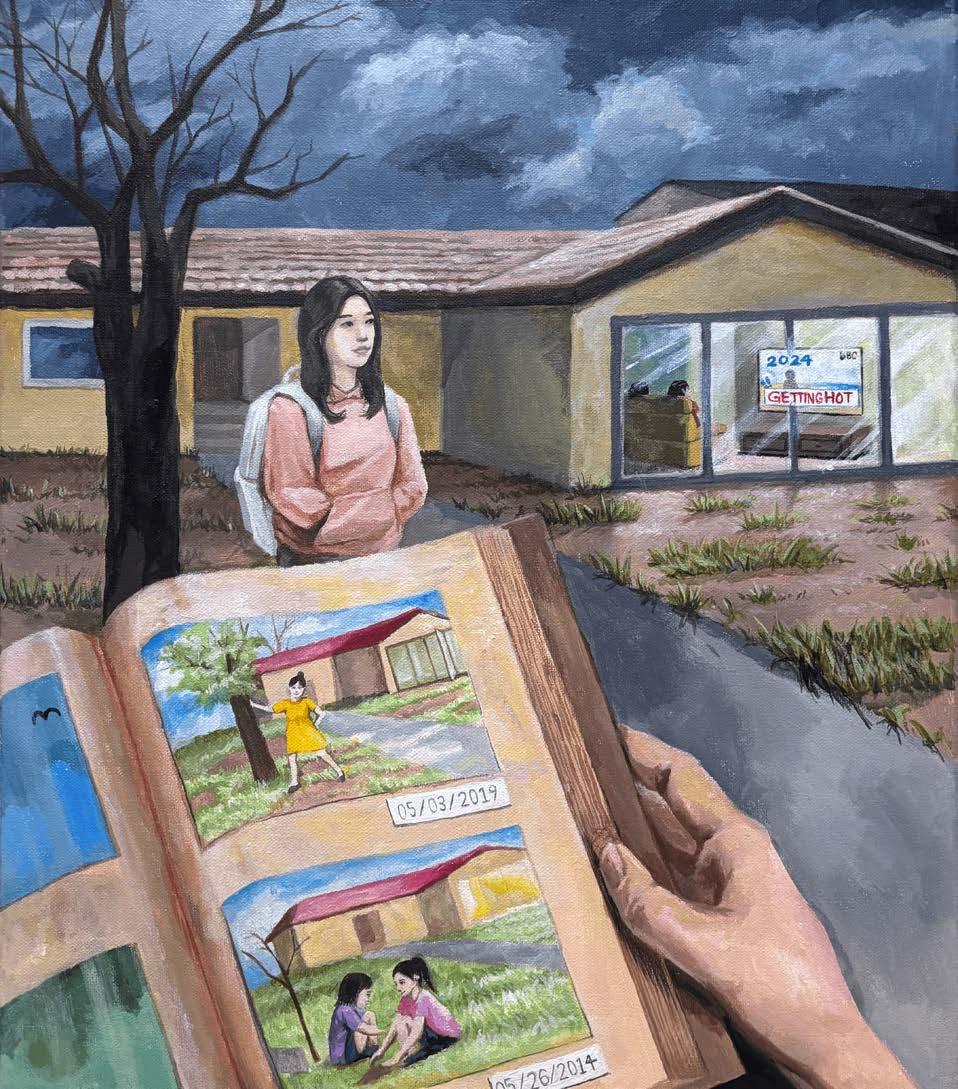
SAN DIEGO, CA, UNITED STATES
My story is the reality of my and society’s response to climate change. I wanted to show the issues of climate change in a relatable and familiar way, from our daily lives. The setting of my artwork, the bus, is a place that is familiar to many individuals. Therefore, the awareness towards the impact of climate change will increase. The catastrophe outside the window is my hometown, San Diego. San Diego has been experiencing an increase in flooding as sea level rise and extreme precipitation. The summer days of San Diego has been pouring, rather than its typical hot summer. The person in my artwork represents me and the society’s ignoring behavior towards climate change. Though we hear the warnings of the danger of climate change, yet most of us just move on thinking it will not affect us. But the reality is that we have overlooked that the danger is approaching. Though the dangers has flooded until it wets up to our feet, we are still stepping on the warnings and ignoring the issues as if it will never harm our future and today.
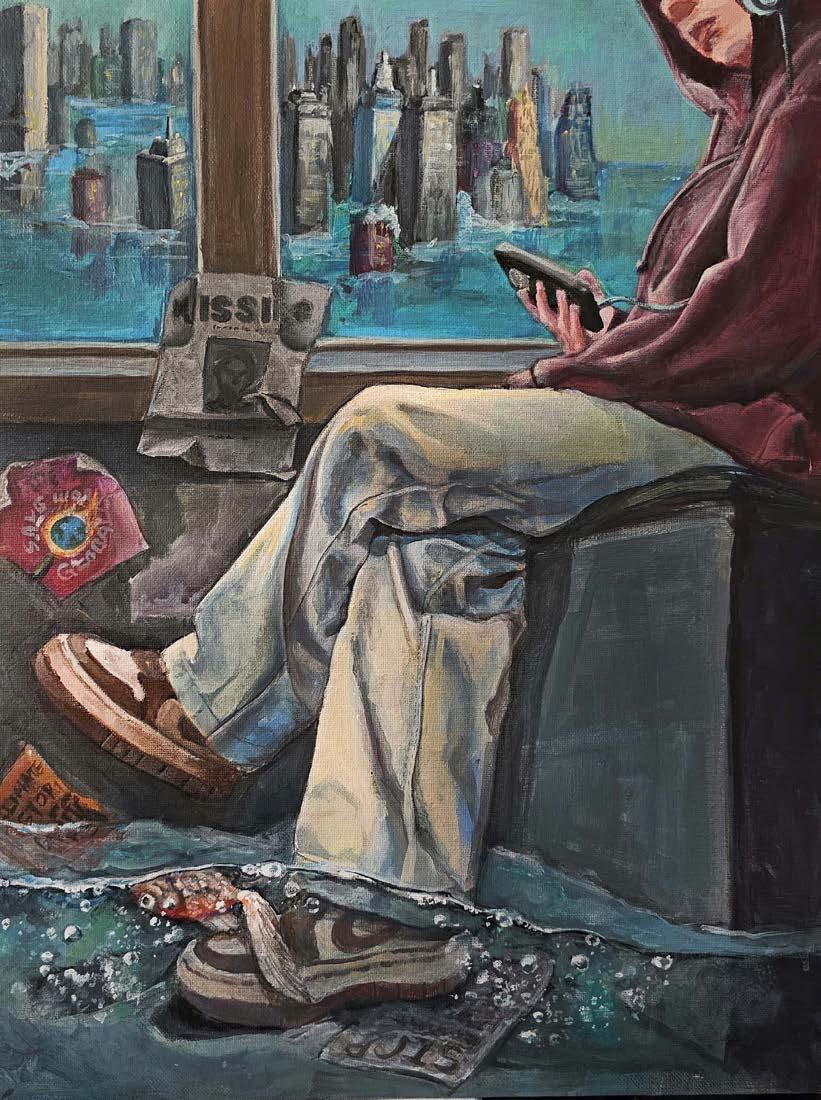
13
VIENNA, VA, UNITED STATES
had heard about climate change for most of my life but never experienced it first hand, until last year. The school day was almost over when it was suddenly announced that we could not go outside for our own safety. Smoke from a wildfire in Canada had traveled down to the US, affecting our air quality. From then on, everyone started sending each other news articles and pictures of the smoke. Every day, I checked the air quality in different areas of the country and worried about what was going on around me. In my painting, I am surrounded by text messages and images from the incident, representing the chaos I felt during the situation. Through my piece, I wanted to show how climate change impacts people socially and mentally. I believe that if we all think about how climate change impacts us personally, we can work on finding a solution together as a whole.
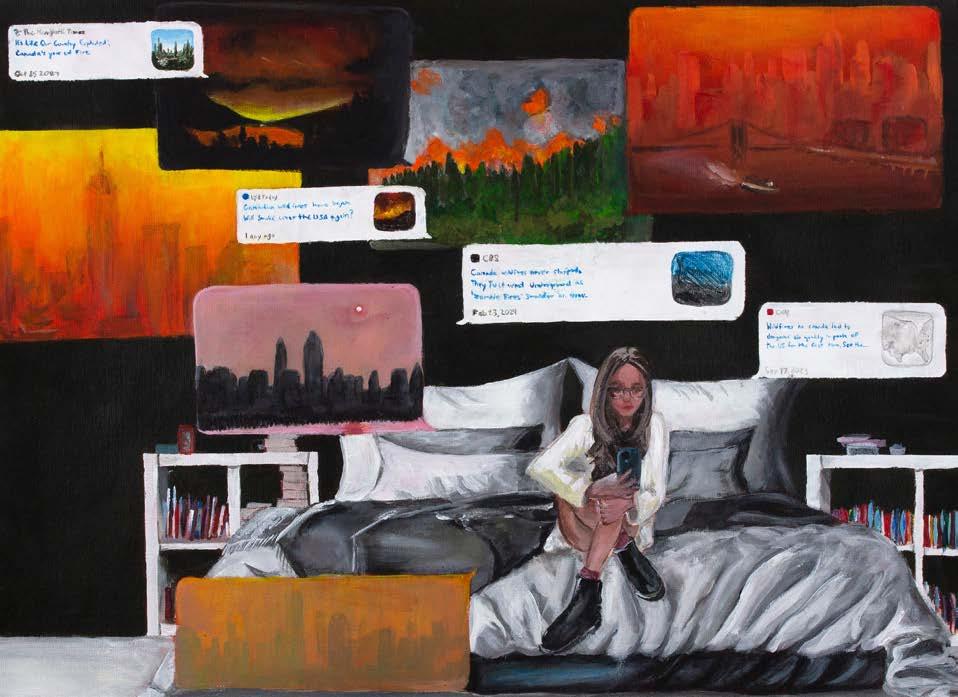
PEARL AWARD
LONDON, UNITED KINGDOM
This work was created after six children (aged 11 to 14, attending different schools but living in the same area), gathered together and talked a lot about the climate crisis in London, the area where we live. The UK faces many problems due to climate impacts, of which the problems we were most aware of being sea level risings and flooding. In England, even a little bit of rain makes it difficult to go to school because all the roads would become blocked. We thought about this problem extensively and came up with various ideas. Eventually, we agreed that even if the flood comes, the climate issue will not go away and people will continue to live life as if it were the new norm. We gathered our various ideas and divided roles to complete the painting, expressed our parts, and also portrayed the various problems we had in our own parts. Ariana created the flood water and the sky, the colour of the background is musky and very dark to show how bad the flooding is and how it ruins the whole world. Louis and Evan chose to draw their favourite iconic buildings of London, such as the Big Ben and the London Eye. They came up with the idea that even if the city was submerged in floods, it would still be turned into an underwater attraction. Chaewon and Junhee thought the underwater tourists of this piece represent how in our near future, our society may delude themselves into thinking ‘this is what’s reality and normal now’, when in truth, climate change is what’s wasting away our precious planet yet not enough is being done to prevent it. DoYune, who drew the garbage and ‘floating city’ boat, refleced that the daily dispose of garbage could significantly damage London’s environment in the long term. If we all allow this to continue, we may face major consequences with flooding.
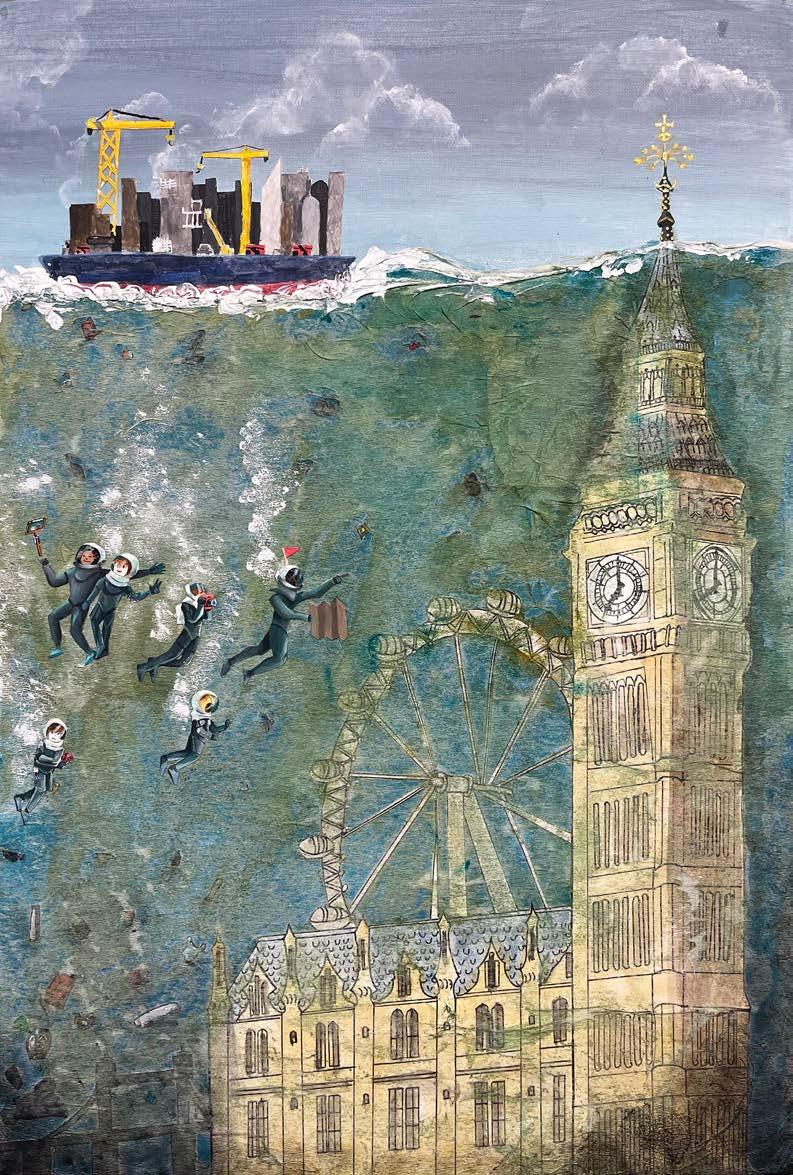
High on Kalopsia (delusion that things are better than they are)
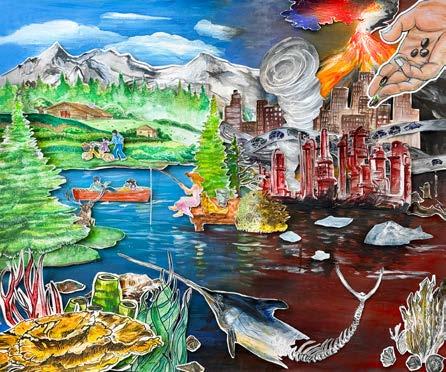
Peace and
Chudi Ding (Vancouver, Canada)

Trash homes
Claire Kim (Calgary, Canada)
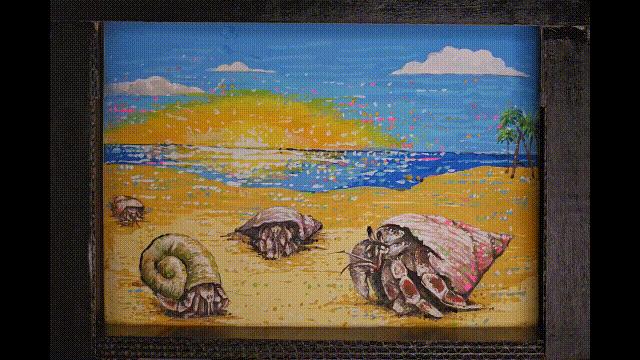
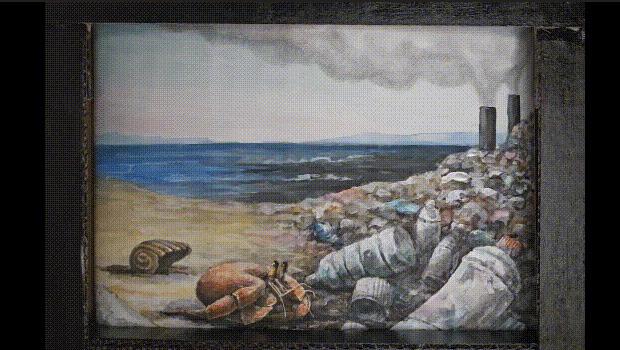
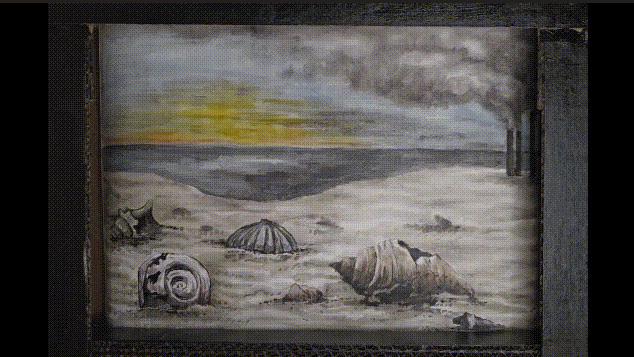
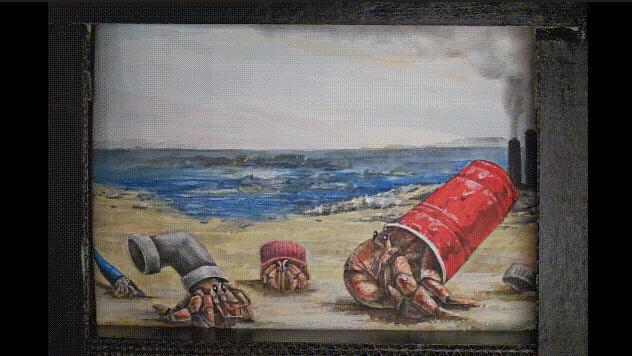
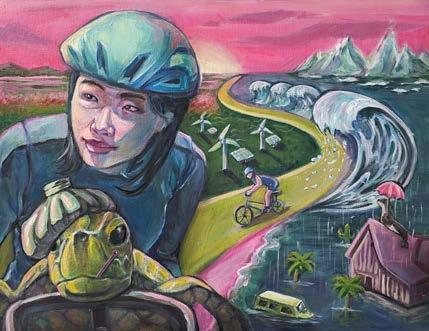
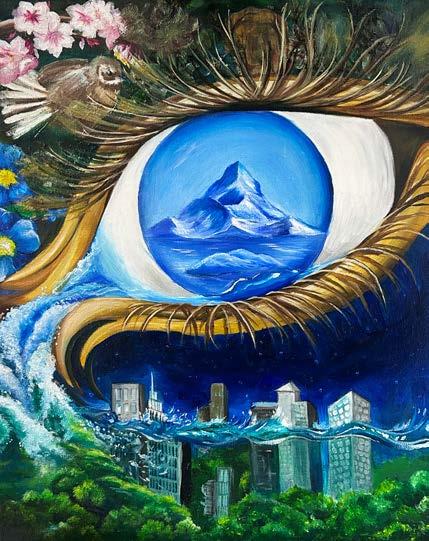
City Submerged
Ashley Gan (Auckland, New Zealand)
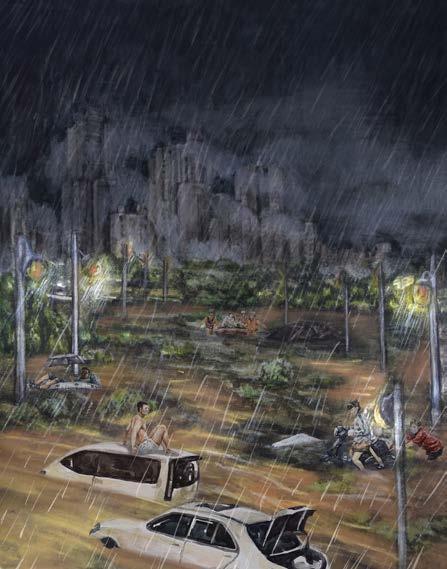
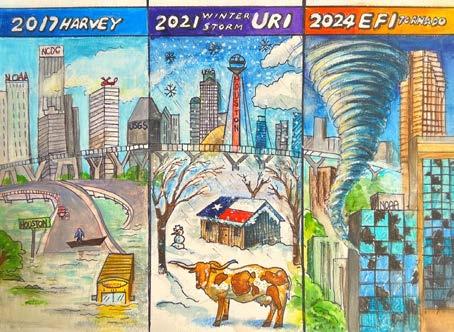
Texas’s extreme weather Trilogy
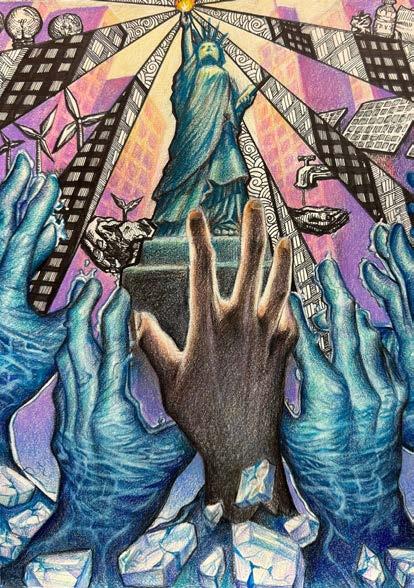
Tides of Change
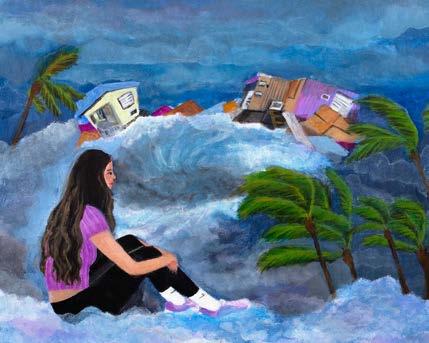
Remembering a Disaster

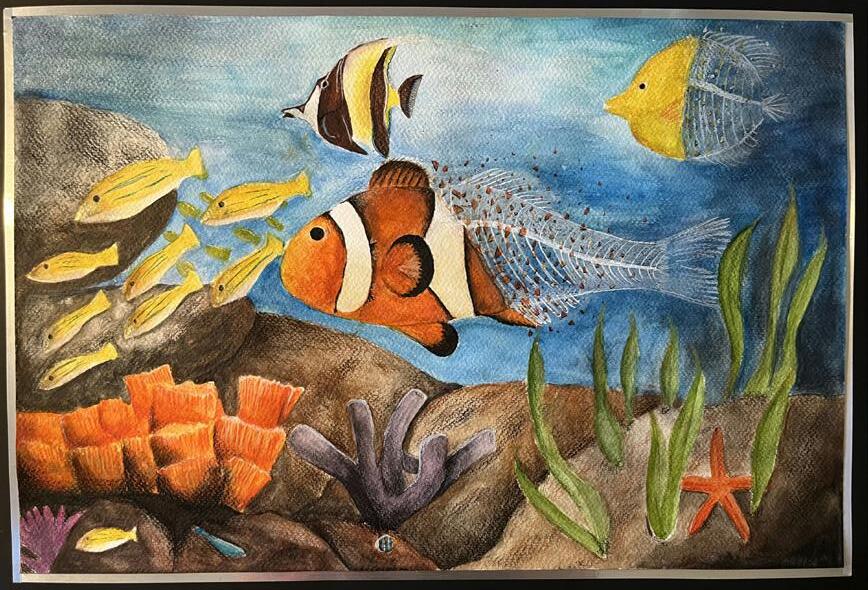
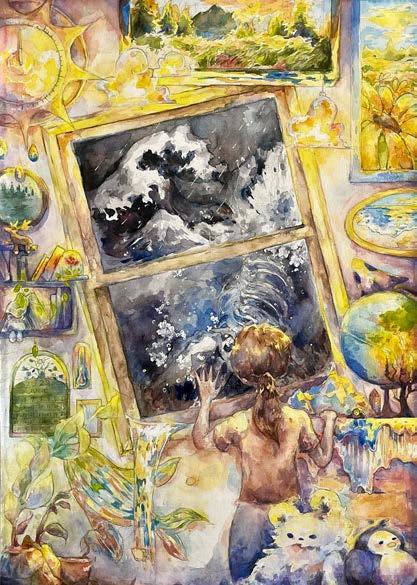
Reflections of Wonder
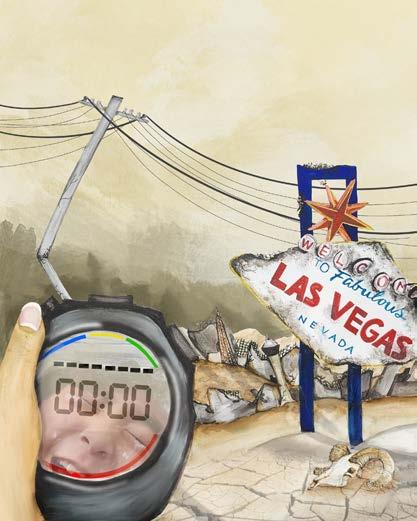
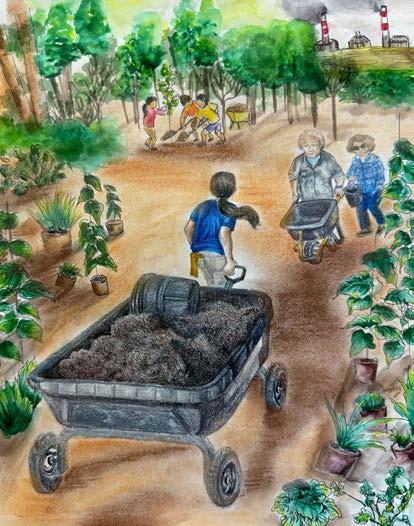
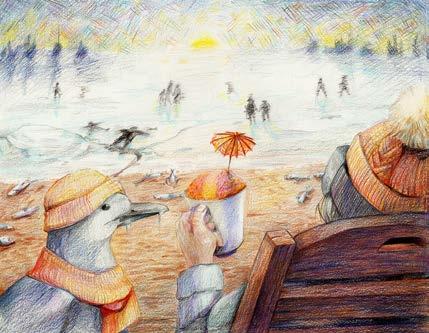
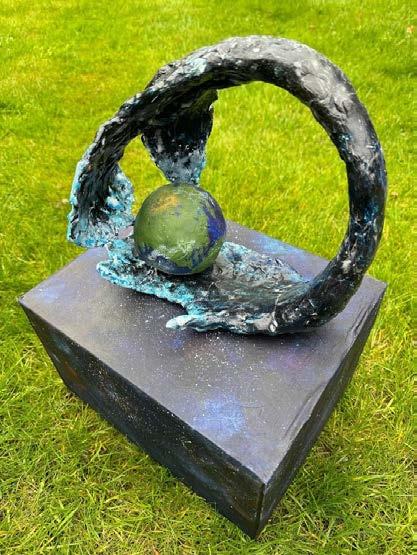
United Kingdom)
Honorable Mentions, continued
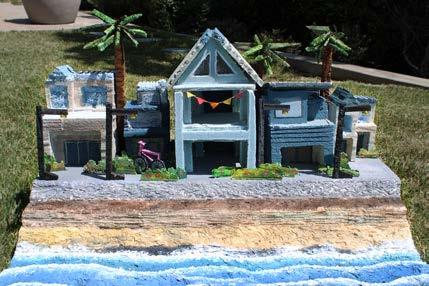
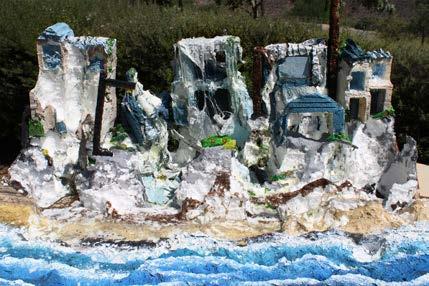
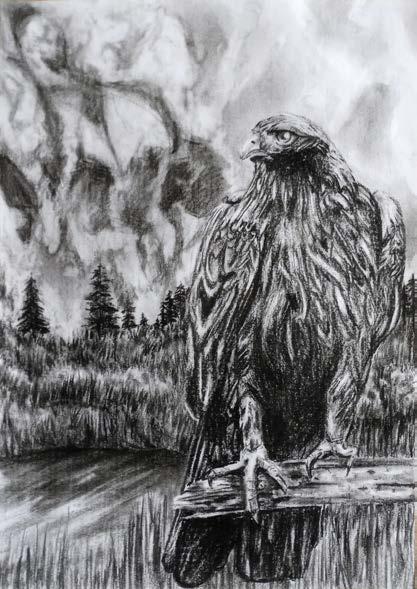
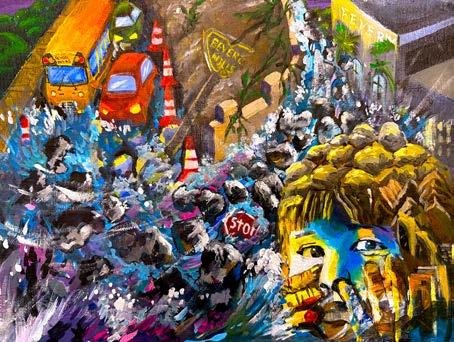
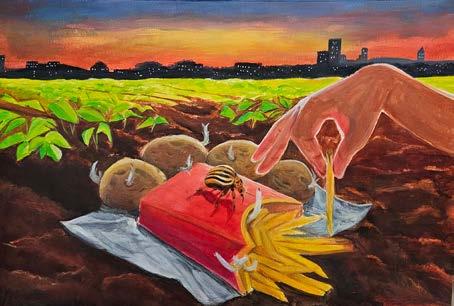
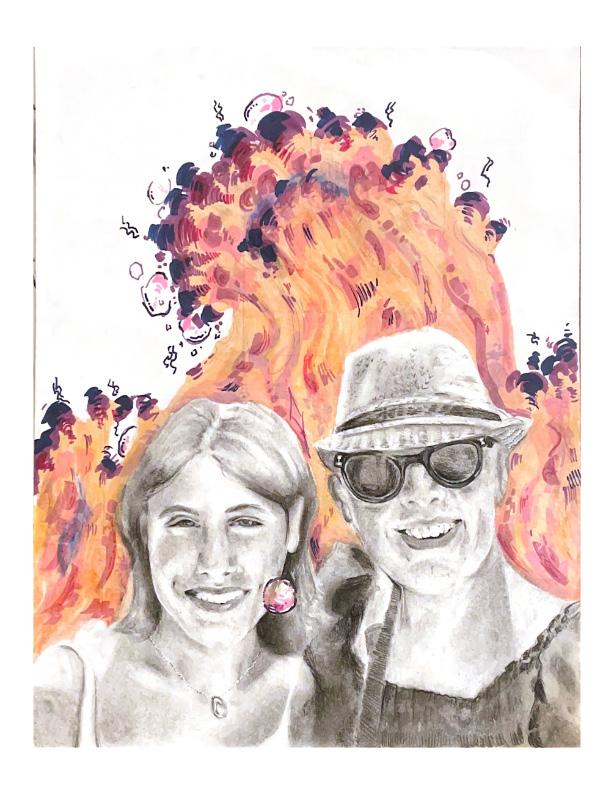
Crashing Destruction
Melina Kyriakopoulos (Princeton Junction, NJ)
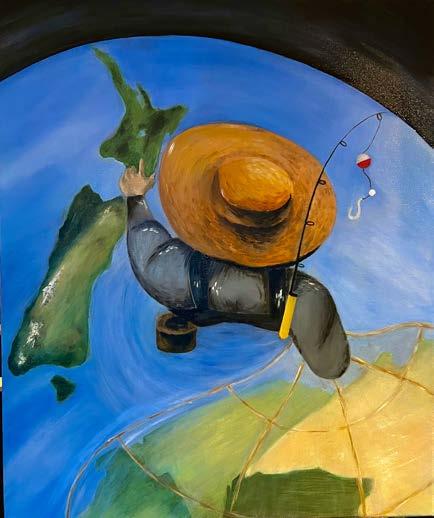
Trawling across the world
Ye (Auckland, New Zealand)
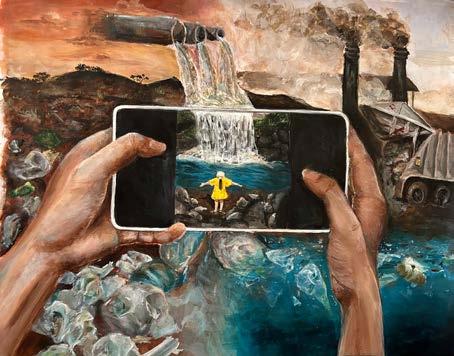
A Glimpse Into the Past
NJ)
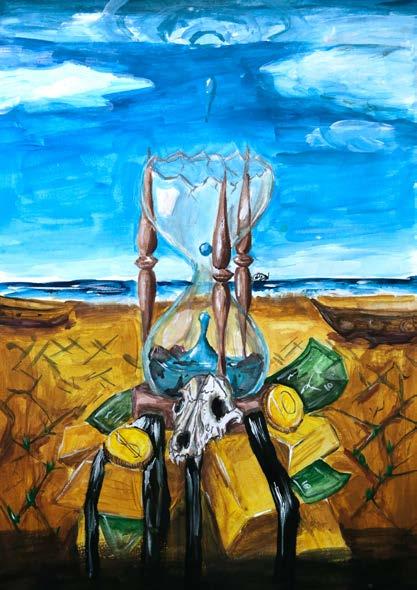
Climate change and its consequences on the Caspian Sea
Aisulu Bekzat (Aktau, Kazakhstan)
Snow globe cart
Amy Kim (Irvine, CA)
Mama Crab
Ash Roy (Raynham, MA)
Wash Away the Pain
Charlotte Woo (South Riding, VA)
Shambles
Chloe Ha (Basking Ridge, NJ)
Rapid Climate Change
Chloe Zeng (Millbrae, CA)
The description of my art work
GaoYuan Deng (Shanghai, China)
There is no Planet-B

GurAsees Singh, Baani Sawhney, Ayaan Goel, Shivraj Singh
Sekhon, Prishaa Talwar, Aryan
Singh Suman, & Avik Bansal (Chandigarh, India)
Pearl-lution
Hailey Kim (Fort Lee, NJ)
The Ocean’s Plight
Hayeon Rah (Irvine, CA)
The Invisible Change
Marcus Choi (Vancouver, Canada)
Flooded Auckland City
Mina Lee (Auckland, New Zealand)
A basket of fruits
Suji Han (Langley, Canada)
Tides of Change
Evelyn Tian (Newton, MA)
Ocean Awareness project
June Liu (Boston, MA)
Climate’s Orphan
Jeong-Won Namgung (Cresskill, NJ)





’m inspired by Artists Simon Prades and Yang Yongliang. Simon Prades’ impactful message and Yang Yong-yang’s dystopian natural pollution struck me in a surprising and powerful way. When I was young I saw a famous artists drawing, and thought I want to make that kind of drawing and I start to take a class when I was 12 or 13. I want to tell everyone that if they can save the gas and electricities, it might be hard but little by little it will be better. I’m trying too and I wish world can be better. I learned that we have to take care about it, it won’t be that easy to make people to recycle or take care of energies and etc. If I have a chance for it, I’ll might try it because it’s very pleasure to try some kind of those things.
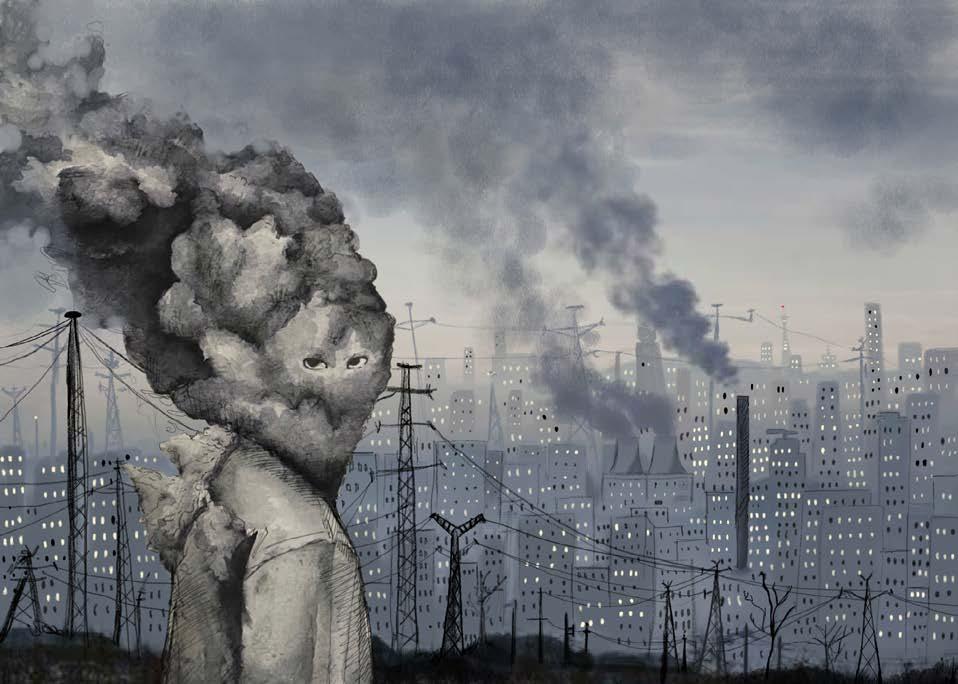
Climate change can cause a disarray of day to day problems amongst people’s lives, starting from food scarcity to extreme weathers. However, we often forget about our pets whom are just as exposed to this as we are. In my Nevada community, temperatures have risen drastically, leading to a growing population of fleas and ticks. This warm climate has fostered the spread of contagious diseases, creating hazardous conditions for our animal friends. While waiting in my local animal hospital of Nevada, I noticed that nearly every cat and dog were itching uncontrollably, showing obvious signs of fleas and ticks. I feel exceedingly compassionate towards animals and I want to make sure that not only are we focusing towards our personal climate change experiences, but to also give an ounce of empathy towards our pets. This inspired to create my piece, raising awareness for all the pets that are currently facing the undeserved consequences of climate change. I depicted pets walking in the oppressive summer heat, with insects crawling around from left to right. The dog shown in the front of my piece is none but my own that is currently battling Lyme disease and undergoing a relentless course of antibiotics. I am interested in the arts not only for self expression but to also tell a heartfelt story that can turn the heads of the audience. While climate change is our own fault and responsibility to deal with, it is unjust that our pets should have to suffer in silence. This is why I will go above and beyond to encourage owners in my community of maintaining pet hygiene and purchasing flea and tick treatment all year round.
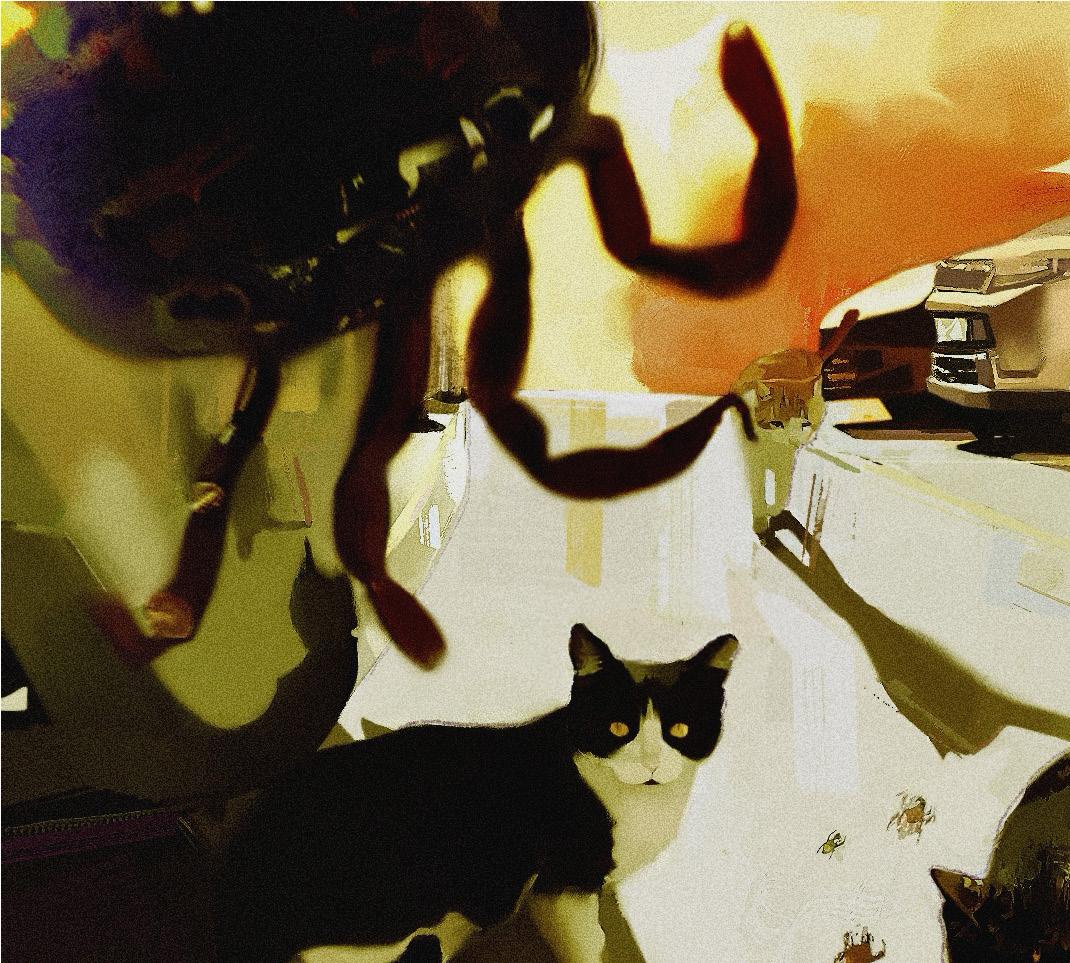
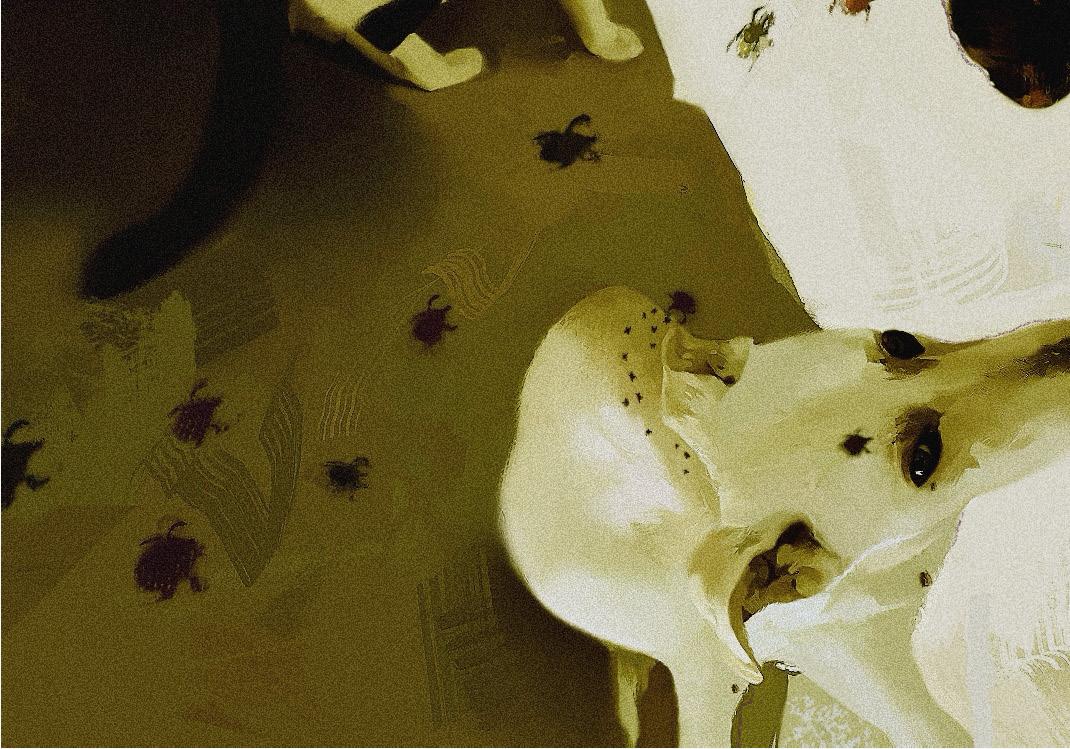

13
MCLEAN, VA, UNITED STATES
My piece, “Core of the Problem”, depicts three animals, the majestic tiger, the bald eagle, and the giant panda, each symbolizing a specific country: the tiger representing India, the bald eagle standing for the United States, and the giant panda signifying China. My thorough research has led me to conclude that the United States, India, and China are the primary contributors to global warming due to their extensive greenhouse gas emissions and extreme energy consumption patterns. In the center of the artwork, I have illustrated the big three animals heating the Earth and the 8 billion people inhabiting this planet, symbolizing that the core of global warming stems from these major contributors: the United States, India, and China, with the entire population punished for their actions. To conclude, the background features a fiery scene with sparks flying, representing the intensity and urgency of the current global warming crisis in various parts of the world.
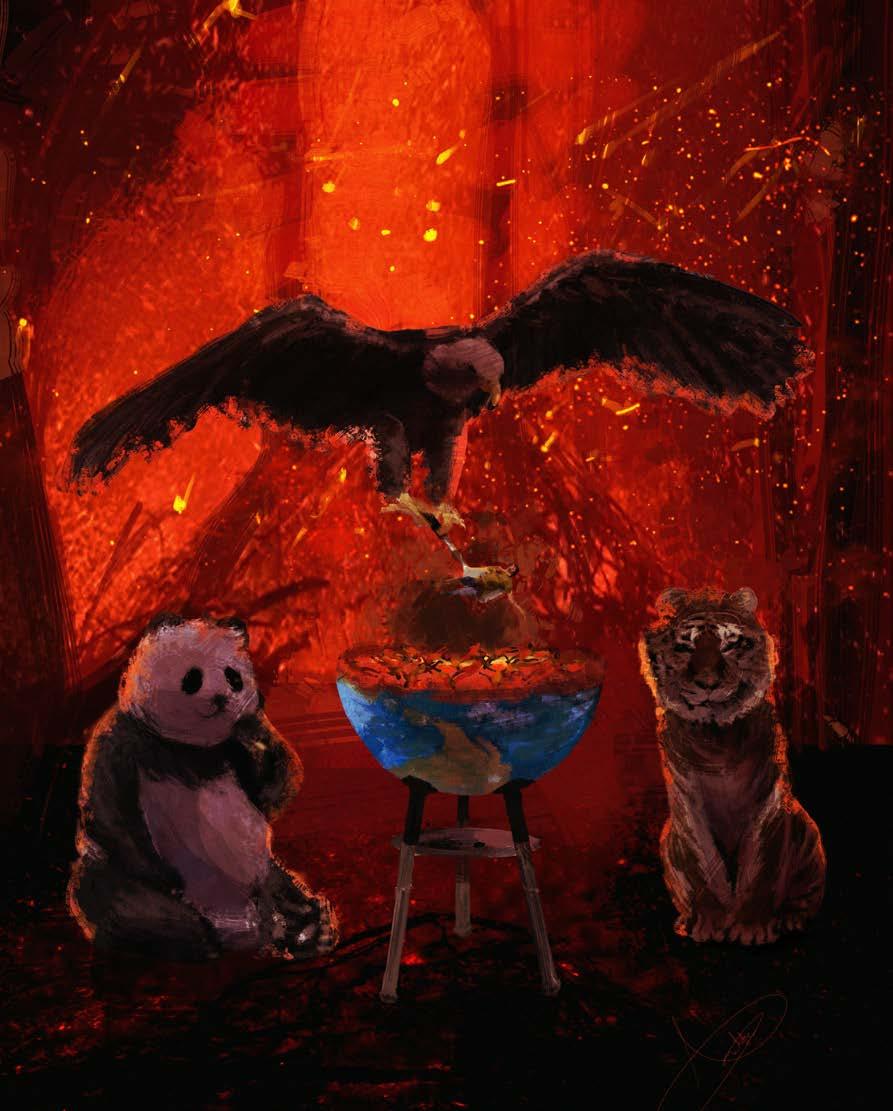
he seasons are changing. It didn’t snow this year. No amount of spoons tucked carefully under pillows or childish hopes could pry a snow-day from the clutches of climate change. In fact, as our climate warms rapidly, so do our winters-- by 3.8 degrees Fahrenheit, to be exact. Where I live, this increase in temperature means snow will melt into rain before it even hits Earth, making an already rainy Washington into a daily shower. This Winter, I felt a lot like a little kid. Constantly peering out of windows, looking up at the sky, and pleading for snow. I have depicted this feeling in my artwork, with two kids in thick snow clothes in juxtaposition with the warmth of their environment, one of them looking sadly toward the sky. In the background, we see a dark patch of the beach, but with ice in the ocean. A girl sits there, small and curled up-- a representation of the ice of winter, slowly shrinking and fading away. Winter is more important to life on Earth than we think, playing a crucial role in the life cycles of plants and animals, replenishing Earth’s freshwater, and maintaining the ice that acts as a protective shield on Earth, reflecting excess heat into space, and as a key habitat. The seasons are changing. Winter is turning into summer and summer... is turning into an even hotter summer. Every year, little children wish for a snow day on Christmas. The role of bringing back our winters rests solely on us, and simply hoping isn’t going to change anything. We need to take action by reducing the emission of excess greenhouse gases into the air, since they’re responsible for trapping the Sun’s heat in Earth’s atmosphere. Saving electricity, reducing water and food waste, and recycling when you can are all different methods that can be implemented. We have everything to lose if we don’t change, and everything to gain if we do.
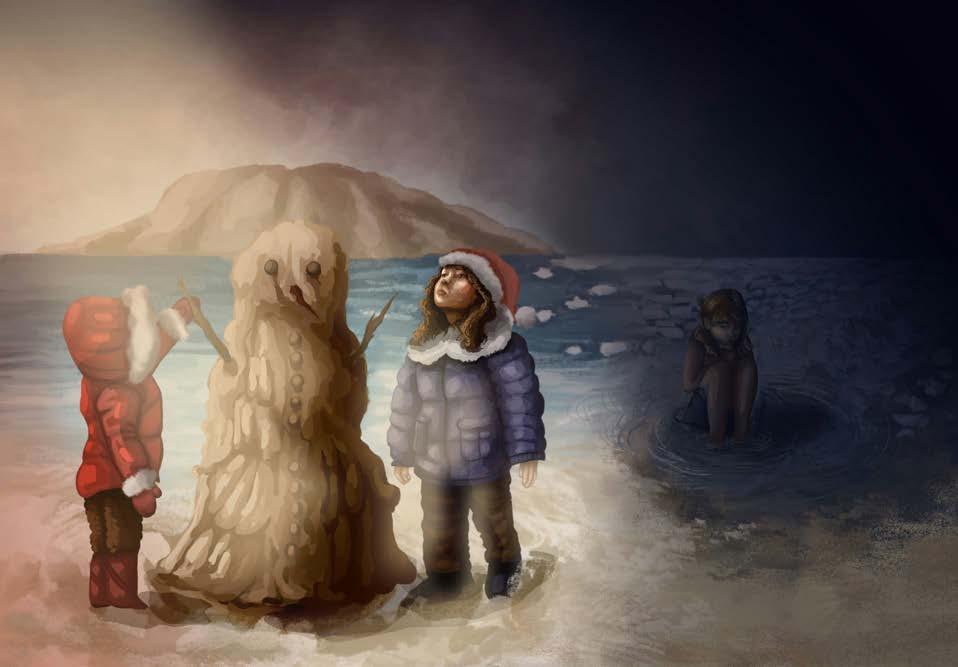
AWARD
NEW YORK CITY, NY, UNITED STATES
Iwas inspired to create this animation because of my personal experience. When I was in elementary school it always snowed heavily and I loved making snowmen, snowball fights, snow angels, and almost anything to do with snow. However as I got older, I haven’t really been able to have fun with snow at all. It rarely snows much and even if it did, it would be gone the next day. I guess maybe it’s the nostalgia that snow brings me and all the fun memories I’ve had but with the way the world is headed, I might never see snow again. I don’t want my children to feel the same way which is why I dedicated my time to creating this artwork as a tribute to my feelings on climate change. My message to the viewers is to step out of your comfort zone. I haven’t done something as big as this but I love taking challenges and this was nothing different. You have nothing to lose, if anything, you get to gain more experience, be more courageous and of course a profile for yourself. Use your talents, your skills, and your passion to build your reputation and help your community! I have learned that climate change is something so dangerous but is so disregarded. Flowers are blooming in Antarctica and while it was in news headlines, it only lasted for about a week or two. It raises the question that if we only shed light on climate change when something major happens, what if it’s too late? There are many who don’t care for the dangers so it is important to actively show the effects and solutions of climate change while we still can.
Iwas inspired to draw The Burning Night after recalling the effects that the 2023 Canadian wildfires had on myself and millions of other residents. The fires, which spread at unprecedented rates due to climate-induced droughts, forced over 185,000 people to flee from their homes. Although the actual fires were miles away from my home in Philadelphia, Pennsylvania, one night my family saw the sky turn bright red and orange, with heavy smoke causing us to start coughing heavily. Although this was the first time my family had experienced such heavy air pollution, unhealthy living conditions like these are the terrible realities for millions of people worldwide. More critically, the drastic expansion of climate change threatens for these conditions to become a daily worry for all of humanity within the next half century. In my submission, I parody the iconic painting The Starry Night by Vincent Van Gogh, striking a chord between beauty and disaster. I replace the painting’s town with Philadelphia’s skyline and add signs of climate change, such as flooding, smoke, and deforestation. Most notable is the color contrast with Van Gogh’s painting: instead of a calming blue color pallet, much of my artwork is based off a burning reddish-orange. This detail not only refers back to my experiences last year but also highlights the destructive character of global warming towards both nature and humanity. The city of Philadelphia in my artwork lacks color besides white and black, which is done to highlight its specialness to me and humankind’s blank vulnerability to climate change’s wrath. I complement a vivid moon with solar panels and wind turbines to show a glimmer of hope for a reformed future through clean energy. I hope to use my art talent to share my passion for Earth’s natural beauty and the fight against destructive global warming.
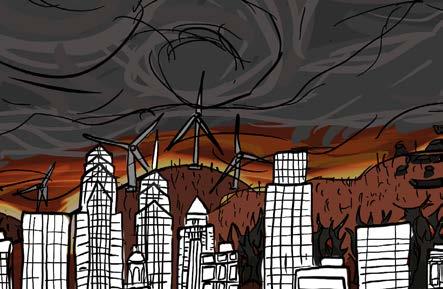

AGE 13
In my art piece, I wanted to express the physical and dangerous effect of climate change in a realistic way. My personal experience was when there was a wildfire near my city, to the point where I could not go outside due to the thick smoke. This inspired my creative process, and guided me into making the effects of the fire as close as possible. While creating my piece, I felt a little down, seeing the terrible effects of mankind. While I was researching climate change, I learned how much people do not care for the climate enough to just do one small thing. Trash is in the wrong places, it’s thrown on the ground, and is all over the ocean. This made me realize how important it is to help contribute to save the climate. This piece encourages that message, and shows the audience the drastic dangers of climate change. I am interested in the arts because of my sister, who worked hard day to night painting, sketching, and working on competitions. She inspires me to keep drawing to reach how far she has achieved today. By working on the art and researching about the topic of climate change, I learned to engage in more climate related activities like organized clean ups in my community. I learned a lot while producing “Ashes of Mankind” and it has improved my understanding of the significance of climate change.
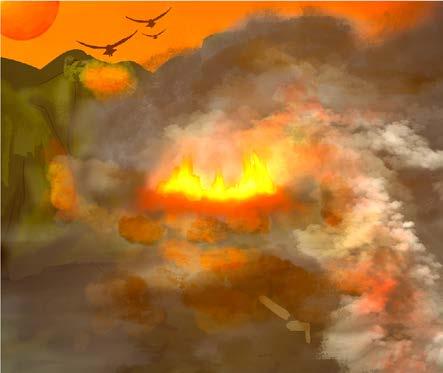
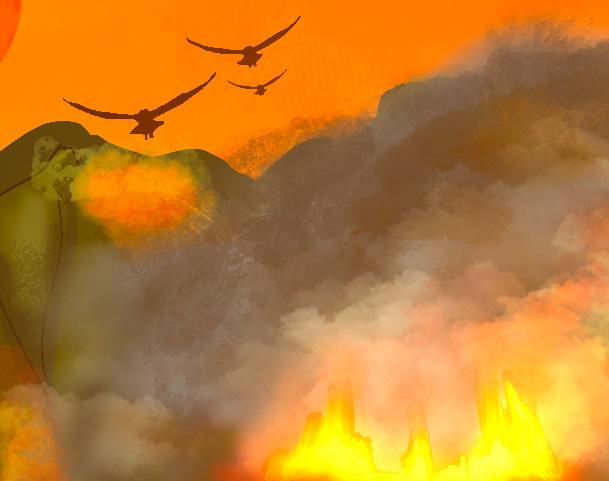







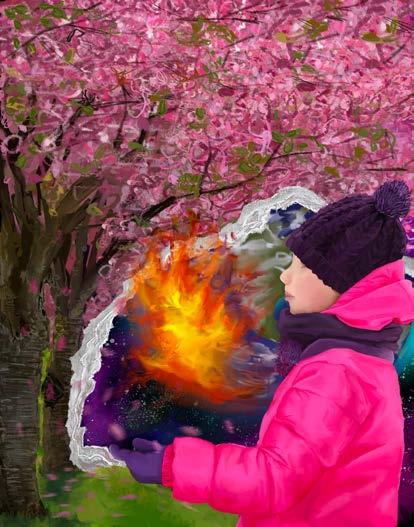
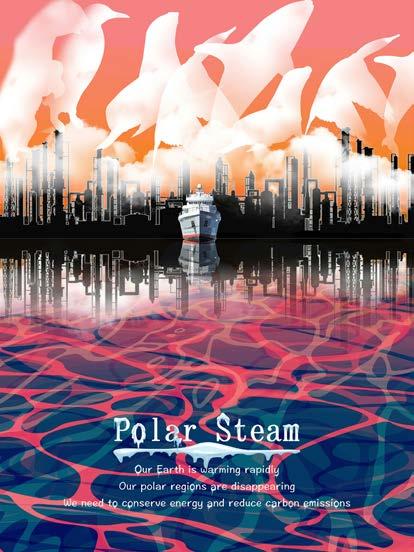
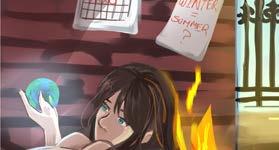
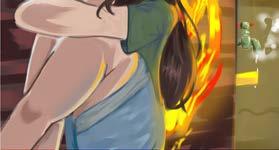

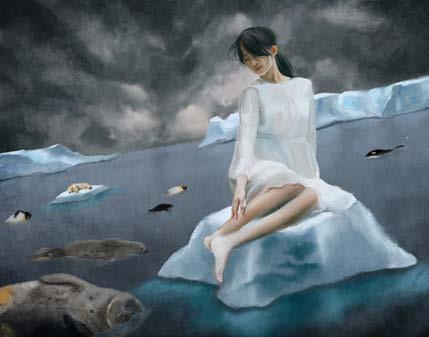
The Worst Nightmare

Ocean Conservation
Chloe Bi (Hong Kong)
Ads and Billboards “Save the Animals”
Jeeah Lee (Seoul, Republic of Korea)
Temperature’s Toll: Witness the Collapse
Jessica Huang (Xiamen, China)
Living Stories
Juliana Pan (Bellevue, WA)
Boiled Innocence
Sara Gu (West Vancouver, Canada)




or most of my life, I have understood without truly understanding the existence of climate change, in the same way that you hear without truly hearing a constant hum of background noise. It wasn’t until I learned that my hometown was at severe risk of flooding that I began to view climate change as an actual problem. Over the years, I have watched the impacts of our collective actions in real time—back during distance learning, the sky turned red from wildfire smoke. Our sea wall was raised two years ago, blocking all views of the ocean. Last year, school was closed after a nearby city flooded. All these events have contributed to my growing feelings of fear, frustration, and guilt. In this poem, I wanted to share, as honestly as possible, my perspective on and experience with climate change. Often, I feel too small and too powerless to do anything. While writing this piece, I found a plethora of reasons to give up hope for our planet. There seemed to be too many people who did not care and too few who did. However, the more I searched, the more I found stories of people who were creating change. I learned about students who were creating community gardens and advocating for less plastic at schools. I learned that I, too, could make a difference. Now, I have my own compost bin at home, and I speak both passionately and often with my family and friends about climate change. In the future, I hope to use my voice and my art to inspire others in my community to take steps towards change, too.
three things i want to give you to make sure that tomorrow is not too late for my hometown
i. // a newspaper article from five years ago, titled “foster city may be underwater by 2050” (i underlined may three times, so my little sister wouldn’t be scared) // i swallow the words with the sick fascination my cousin has when he pokes at the dying beetles in our yard. startling trends and rising sea levels sting my throat and i think i should take the grape tylenol my parents give me when i’m sick. i would tilt my head back until i could count the ceiling panels as i waited from the last drop of medicine to slip onto my tongue— i wanted more, always more, even back then. but my lawn is more gray than green and having too much water is an impossibility, so i flip past the concern to the sunday funnies. in my mind, the beetle slumps underneath the stare of its loveless god. as my cousin’s prodding continues, the imaginary me looks away, pretending that that delicate speck of consciousness isn’t dying, dying, dead.
ii. // a polaroid i took of the ocean when i realized i owed her an apology // soon, our sea wall will be raised onto this dirt trial i stand on. but for now, i stare at the sea foam chained to the boulders that line the coast. the blood of the sea-turned-junkyard leaves a dark stain the color of cellophane-wrapped regret. the ocean unleashes wave after wave of liquid fury at the rocks, punching their jagged edges—yet another victim paying the price for our crimes. i run the one-point-four miles home. i think: when the sea rushes through the cracks in the wall we’d molded with our blind fists full of buts and what-ifs, we will have to move so quick our mistakes can’t catch up to us. i think: i have to run to faster—faster—faster—my lungs shudder as i breathe in shards of cellophane and my shins throb with acid and i wonder if, when the time comes, i will be fast enough to outrun the truth.
iii. // my heart, pounding with hope at 178 beats per minute // my heart thrums with possibility more than it does with the ache of exhaustion. i tip my head back to the sky and hold on to the last drops of salvation, remember? long walks and sleeping cars feel like a rubber band finally released of tension. i make a compost bin of an old home depot bucket, use the soil for the cacti garden i planted last summer. the plants glow in the sunlight and
“three things i want to give you to make sure that tomorrow is not too late for my hometown” by Emily Ma, continued
i watch beetles skitter around, brimming with life. so as the waves kiss bruises against our sea wall, my heart whispers foolishly, beautifully, unrelentingly, maybe, maybe, maybe—
GOLD AWARD
AGE 14
NEWTOWN, CT, UNITED STATES
Writing is a form of expression with words, and I aim to use this powerful tool for environmental activism. Words are tremendously powerful for me to express my climate story, influence others, and make lasting change. Canadian wildfires caused by climate change, which fuel warmer-than-average temperatures and drought conditions, impacted my community approximately 1 year ago. This significantly impacted my climate story. This manifestation of climate change created a sense of feeling trapped. Everyone stayed inside and avoided any time spent outside, in what should be fresh air. In my community, the skies were dark, with thick orange haze for days. This climate change impact could be seen, but often what is occurring is quiet, like a silent story that we have to remind ourselves to hear. Maintaining wild spaces and trees are absolutely vital to clean air and absorbing carbon in the carbon cycle, from all of the industrially created carbon dioxide. Trees are incredibly important as a carbon sink, but when the Earth is home to 3 trillion trees, it can be hard to see the impact of cutting down just one. For this reason, I chose to write on a more personal level, from the perspective of a tree. This poem is inspired by my story of a specific tree that I had a strong connection to. When I learned that this tree was going to be chopped down, I was grief-stricken. I originally wrote this poem to express my specific story by memorializing this tree. But more importantly, this poem has an activist slant that can inspire a broader impact in saving trees in the future. I hope my poem will help to show the world that each individual tree is precious, and every time a tree is cut down, its stories are lost. In my writing, I hope to have an emotional, yet positive, connection with the reader and listener. My art demonstrates how critical it is to understand the deeper story and often unseen significance of how trees impact our invisible atmosphere and, in turn, our climate.
HAYDEN HUGHES

Within me are stories.
I hold a tale for each leaf and each limb and each tale that was told once before.
Each ring is the cover of the previous, and a chronicle of its own. A burly branch, singed and tattered, its dust jacket battered, is so old it no longer ages.
So a newborn branch crawls up, using the sky as a stake, then plummets… like a fountain suspended.
My eyes are concealed, but I see others ambling past, with no more than a glance.
But occasionally, one strays to the shade of my boughs and looks up, as if begging for a story.
I imagine their thoughts darting around on the wings of butterflies until I begin to storytell, smiling invisibly. Then the butterflies perch, tucking their thoughts between their wings while my confidant stares, entranced.
My stories, carried by the crisp woody wind, woven in whispers. Until, one day… a group in yellow approaches.
Instinctually, I contemplate which tale to tell. Their indifferent eyes reveal they did not come to listen, but rather to bind my last story. Sobs pour up from my roots, a gushing torrent that flows until the ground seems dry…
Frantically, I search for someone who will listen to my final story. Your familiar gaze, your desperate tears slow my own, as I recall the stories entrusted to you. Memories manifest in my final turbulent plea: Tell my stories.
My boughs will forever cradle you with warm shade. Now you hold a tale for each leaf and each limb and each tale that was told once before. Slowly, deliberately, they saw through ring after ring. My body heaves and grieves with the throbbing loss of tale after tale. Did they remember? Within me are stories.
hen I started to write my poem, I wanted to speak about the luxuries we have, and the ones we are losing. Lakes that my friend’s parents used to go to are now dried up. Creeks that had a rich history of fish migrations and wildlife are dried up or overflowing due to drastic changes in temperature. Forests with trees that roamed tall are burnt up, like grasslands that deer once grazed upon. Writing the poem brought a sense of clarity and understanding for the things we take as granted. I strongly felt that we must do everything in our power to preserve the things that may even seem trivial to us, because in future generations, they will only be ghosts of a forgotten past. After reaching out with my community and the nature in my neighborhood more, I have learned an important lesson: nothing in nature is permanent, so don’t take the environment you were born in for granted. This message, which I hope the readers of this reflection will internalize as well, is what caused me to stop lingering in my room, procrastinating or being apathetic to the world around me. We are not the purveyors of salvation for nature, but humble peasants. We must work together to prevent climate change because it is not just a loss for nature, but misery for out future world.
It’s scorching here in California
The stagnant smoke
Lingering in the air
As fire warnings
And heat wave warnings
Blare silently
Through popups on my screen
I never really made many connections with nature
But I wonder what it was like
To see the lake your dad took you to fish and swim in
All dried up with fish bones and clam shells
eerily dotting the barren ground like a graveyard of memories
And the forests that your mom might have taken you to To picnic under the shade
Burnt to ashes, desecrated by wildfires
One of the few major forests left are sequoias
Strong and permanent, they say
Fire resistant and impregnable
But how long will they last?
When water is drying up
And fires widespread?
The demand for fuel, ever so high?
The luxuries I enjoy now
Are fleeting
They may become
The ones the future never sees
Unrequited; lost to ashes
Climate change is not limited to its statistics, nor to a prophetic, syncopated hymn of numbers. We too often conceive climate change as a scientific phenomenon (which it is), while subtly dehumanizing its real effects. This poem was inspired by the smog crisis in urban India, where my extended family lives. A smoky, acrid haze can completely envelop these cities, in which the Air Quality Index (AQI) exceeds 500. Visible from space, these large-scale “smog seasons” have shortened the average Delhi resident’s life expectancy by approximately 11.9 years. This is not just a problem for the Delhi atmosphere, but rather a very real problem that exists in families, bloodlines, and the quiet hum of hospital bedrooms. Peaking each winter, air pollution brings on a climate-change-fueled respiratory crisis, so when discussing smog, we must address the perspectives of real families. I see poetry as the humanizer. When we write poems, we suffuse a portrait with emotion. In “smog ghazals in transposition,” I didn’t want to list off percentages – we know the statistical impact all too well. I wanted to enjoin religion in India with very real spikes (20%) in Delhi’s reported public health. Weaving in references to Hindu mythology, these ghazals configure God as crying. Hinduism proclaims God to be ubiquitous, so when smog chokes the air, we must ask for forgiveness. We must both ask for forgiveness and act in it. Sometimes, we only have our prayers – but environmental activism must not end with our hymns, but rather channel them into active, socially-relevant change. Even when God is crying in the sky, suffocating in the dense smog, we can still heal our climate.
After Delhi, India
my ammamma is splayed out on this city’s splitting backbone, sun-baptized ground. her palms cradling the curl of a black deity,
fetal positioned. this is the land where hymns arch their bodies through the clouds, stretch their limbs & yawn & where Gods are Delhi’s breaths. we were all born prayers, inhales whittled into boys, boys whittled into their smog-born mothers. above, I hear God
coughing out the prayers we held close to our chests. the atmosphere draping all our sins, gold-plated pins, the saree of a crying goddess.
in this city I hear the word sin and cannot distinguish it from son, from the g ending of smog, my ammamma’s lungs filled, God-ridden & each breath a comma.
*
when my amma was born her body was comma-shaped, crescent. held in her mother’s cracked palms. black-mouthed, a fetus-kissed God
swallowed her first vowels. each inhale exchanged with her mother’s mother: you are only your lungs and the flesh they inhabit, the Gods
your mother taught you with her breath. one day, all her creation myths will be lodged in an alveolus, commas will rest their heads like light-headed gods on a blue mattress. hospital bedsheets like Ganga’s limbs lapping around, humming to each monotone beep. I know amma never stopped loving God, never stopped speaking with her full & open chest. how a mother can split in two, cleave her ribcage, I watch two become four, eight, sixteen. no God, no body. the doctor’s hymn: no.
“smog ghazals in transposition” by Rishi Janakiraman, continued *
in this country I am at the temple & knelt, chafed, kajal unspooling out the statue’s fisheyes. praying for every breath in Delhi, the goddess encircled. she traces every mother in my body’s fault lines, DNA unfolding for every inherited bend, every inhalation. every atmosphere’s God-torn dress in her hands. I am still a comma in this life, still a fetus for creation. the comma-shaped mothers in my bloodline – a garland made of death. God, can’t you see the train of brown bodies eclipsing the sky? in the time it took to write this poem did you know a thousand more have boarded? God,
I am asking you forgive me. your children’s whirling incense in the clouds, God, we cannot dry your tears any longer.
your holy air, I don’t know how much longer it can suffocate when these prayers no longer spill like open wounds. God— *
I am asking you. please. please. please.
IBRONZE AWARD
14
CA, UNITED STATES
remember the California lightning fires of 2020, and there have been some recently too. The air outside would be cloudy and charged and I would swear up and down that an unpleasant smell accompanied it. It wasn’t petrichor, it was musty and annoying and it followed me around the whole entire day. Then I heard about the fires, and I wasn’t surprised. California is prone to temperamental weather and most of all, wildfires. Where I lived, we could never see the fire, we could only smell the smoke. But the lightning went on for days, and I carried the smell with me for days. I’ve lived in Cali for all my life, and the subject my poem addresses is California’s climate. The weather here is far from consistent, and I’ve been noticing it for a long time. There’s a song called “California Dreamin” and I just wanted people to be aware that California isn’t some kind of place with perfect weather all the time. Climate change did that to us, or maybe we did that to us.
SOPHIA LUO
darling, you know you are suffering from your disease.
i’m not sure if you’ve heard the quips of me and my friends we walk to school asking about the weather, joking about your mood swings.
because clouds give way to sun and sun gives way to clouds and rain gives way to drought and drought gives way to rain and you are not consistent.
the seasons blend together during our time together and i couldn’t really breathe without smelling lightning.

i’d be watching tv with my mom and smell a thunderstorm, sour petrichor, and i could already smell the smoke.
i think you’re a little bit like me, constantly unstable and oscillating.
darling, i can’t function in a way that doesn’t make me seem crazy. “you’re acting a little erratic.”
did we drive you crazy? did we wring all the sanity out of you? are we toxic in our neglect, ignorance, are we dying because we pumped poison into your air?
are you sick because we forced it into your veins?
our inheritance is a legacy of death, disease, and broken things.
13
SOUTHBOROUGH, MA, UNITED STATES
n summer 2023, Hurricane Idalia hit Florida and destroyed my grandparents’ home. As a preteen who would play in her paddle pool all summer long, experiencing this second-hand loss and trauma, alongside horrific news reports and months of uncertainty, was terrifying. My climate story is my grandparent’s experience of loss, and my shifting perception towards climate change’s destruction on a global and personal level. My family’s tragedies are what most inspire me to take preventive action against nature’s unforgiving capabilities. I wrote this poem and recorded its spoken word version because free-verse poetry enables me to reflect the extreme weather upon which the piece is based. It is structured into one long, monologue-type stanza with continual enjambment and caesura to physically capture the frenzied, uncontained water my grandma had to face. It opens with my summertime ‘paddle pool,’ a metaphor that juxtaposes the wild storm surge of Hurricane Idalia and displays two simultaneous manifestations of water in which dynamically differ. At that time, I wasn’t exactly told what was happening. My poem is based on hindsight, retrospect, and extensive research on how global warming impacts hurricanes now. As my grandparents lost their beloved memories to floods and surreal storms, these parallels between climate change and hurricanes are proven evident and pernicious. Most notably in the poem, I chose to prioritize my grandma: Mamani. Despite battling Stage I Breast Cancer, she single handedly raised me during my early childhood, cooking nostalgic stews and driving me to after-school programs and cheering on my every achievement. She poured every dime and ounce of sweat into fulfilling the American dream just to re-encounter undeserved hardship and respond with, “life is tough, my Bache.” In honor of Mamani’s resilience, I incorporate the sounds of her ‘lightly sighing’ to reflect mixed emotions: relief after her safe arrival in Massachusetts but grief over a flooded home that held many first time traditions and memories, all instantly gone. Nothing will be the same, but things will heal. This is why my final two lines stress the importance of loved ones’ support during phases of recovery and rebirth. I know that my grandparents left pieces of themselves behind in a torn up Florida, what I describe as a “ heart sunken within ruins and stones.’ Though, I hope that mine and my parents’ continual love will ‘fill half the cracks’ as we move on with our wondrous lives.

The ripples of tap water are now still, contained. Rubber ducks float languidly beneath the ritual of sweet summer, a privilege I’d never thought to praise, while miles down the Eastern seaboard in Tampa Bay, a bitter surge spreads high with might, its levels rising, tearing homes and palms apart. Its calming eye stares from within a cyclone circling calamity around, threatening those with ancient eyes that gleam, the paragons of sacrifice in worrisome weather. Grandma, Mamani, in reckless waves watches laborious dimes drop down the drain, floorboards wrecked, streets flooded wet, spirals of wind and moistened air. Transferred heat from sea to land stirs up storms for hours on end. Canoes of rescue teams arrive, and
“In the Wake of Hurricane Idalia” by Sophia Zarrinkoub, continued
Mamani inches step by step, fleeing north to a patch of homely grass beside the paddle pool where I relax. Bache, come here!
I hear Mamani gently demand. She strokes my unblemished hands, “I’ll stay a while,” and lightly sighs. Until a while becomes forever, her home now a shelter borrowed & unknown. Familial love fills half the cracks of a heart sunken within ruins and stones.
TPEARL AWARD
AGE 14
CARLISLE, PA, UNITED STATES
his piece was inspired by my lifelong experience with climate change and the difficulties I have faced even trying to convince classmates and acquaintances that it exists in the first place. My inspiration for this piece started when I thought about my relationship with climate change and how it is largely connected to raising awareness, advocating, working to even get people to believe in this catastrophe. It’s a shocking and unfortunate truth but the fact is that, if no one believes its real, then how can we even start to solve it. This poem allowed me to work through those feelings, work through the idea that all the talk in the world isn’t making a difference. Oftentimes, it seems like there is no point in hoping anymore, no point in trying to make a difference because we’re not getting anywhere. Sometimes it feels like my voice, our voices, are so insignificant that nothing we say could matter. This poem was my way of overcoming those feelings and realizing that we can never give up hope. We need to continue to work hard. The message that I want to convey with this piece is that no matter what happens, we cannot give up on this earth that has given us so much. We cannot stop hoping, stop working, let the enormity of the issue overwhelm us. It all starts with one word, one action, one decision. We can and will make a difference. Climate change is not the end, if we work together, it can be our beginning.
OPEARL AWARD
14
LAHAINA, HI, UNITED STATES
n August 8th, my town, Lahaina, was engulfed in flames. Over a hundred lives were lost, and thousands of buildings, businesses, and homes crumbled to nothing but ash. Though my home did not burn, countless of my friends, teachers, and coaches lost their homes to the fire. Wildfires have become increasingly prominent due to global warming, and the rising temperatures (and therefore dryness of the island) are attributed to the unprecedented enormity of the fire. The destruction brought by it was unfathomable, but even so, I wanted to create a poem that has subtle themes of hope in it. I decided to write about the Banyan tree - an iconic symbol of Lahaina - and use the metaphor of a trees’ roots and compared it to my own roots in Lahaina. Though the Banyan tree did burn, it is still alive, just as the memories of Lahaina are. I hope that my poem will convey the importance of climate action by bringing to light the destruction yet the hope for the future I have witnessed through the Lahaina wildfire.
The roots entangle in the ground
Thick as the ribbons of friendship That have laced my childhood Strong as the cement That paved Front Street
As the roots stretch deep into the ground
The ribbons, in turn, weave And plant firmly in the safehouse, the glimmering gold treasure chest Beholding my powerful possession Potentially eternal, but perpetually threatening to flee
It is in the memories
That refuse to subdue to –To cave, and release the coveted key Into the deathly, withered hands of forgetfulness
It is in the roots, planted firmly, entangled in the ground Which wards away the plague of forgetfulness And that forever perpetuates Lahaina
he worlds that I create and write about inside my mind have been my favorite escapes when the world gets harsh, and my mind needs a rabbit hole to jump down. My climate story is supposed to be a small window into my soul. Just words that flow out of my mind. I try to show people how alone it can feel to see every drastic change happening on the earth and have no one talk about it. My goal is to help people feel seen with my words and hope they get through to someone and be the wonderful escape they have been to me. Though this piece is rather depressing, it reflects my inner thoughts about the crisis, and I hope that someone can read this and feel a little less alone.
I have been tasked to tell my climate story, my story is not tragic, but stories should always be told.
I have never lost a loved one in the growing tides or the crashing floods that are ripping people apart.
I have never experienced that burning sensation in one’s throat and that sick dryness in my mouth when water is lacking.
I have never been trapped behind walls of roaring fire in my own country, slowly burning to a pile of ash and memories.
I have never felt air being forcefully ripped from my lungs as cold water presses onto me, slowly killing me through the panic ravaging through my body.
I have never had to flee my country.
My home.
I have felt smaller things. Smaller painful things.
Things that haunt me.
Things that I desperately attempt to shrug off, trying to be rid of this creature clamped to my soul.
But its claws dig into my skin, perched firmly.
Like a heavy shadow constantly draped over my consciousness. Every little thought.
Like when it snows, that little voice interrupts my elation. It won’t last.
It’s all dying.
That’s what it always says, as if it were a broken disc. Going on, and on, and on.
Like when my chest clamps at each photo I see.
When the Po River dried up.
When it stopped snowing in London.
When the lake stopped freezing during the misty winters.
And that heart clenching feeling has a friend. Both of whom weigh down on my back throughout my day.
Keeping me up at night.
The guilt.
Each time I use a plastic product I get that familiar sinking feeling in my stomach. To me it’s just a stone in my gut. Dragging me down.
Though I’m drowning in my own guilt, how many fish are reaching the sky, stomachs up.
Motionless.
Full lives discarded because I chose to buy a biscuit enveloped in that lethal material.
To me, it’s just a feeling.
Similar to dread, though perhaps I am dreading future events. Because each time I get into the car that little creature protests, squirming about. You’re helping the world crumble.
You’re part of the problem.
It’s your fault.
The creature is right of course.
It’s as if the earth is sending its guardians.
Sent in an attempt to preserve itself.
Does everyone have these creatures perched on their backs?
Am I the only one writhing in torment?
Sobs wracking my body in a darkened room.
Do I act like I do only because of the dark guardians on my back?
Does everyone feel like throwing up as they stare at their ceilings whilst they try to sleep?
Why were they sent to me?
Is it just me?
Am I alone?
I’m sorry, Mother Nature.
I’m sorry, Earth. I really am.
I’m trying. I promise.
As climate change occurs, the world suffers
Adrian Plotnikow (Pembroke Pines, FL)
The Bull
Angelina Zhang (Irvine, CA)
I can’t hear the ocean’s cries…
Evelyn Anderson (San Diego, CA)
Within Me Are Stories
Hayden Hughes (Newtown, CT)
Swim Fish, Swim!
Hiranga Bandara Suraweera (Kandy, Sri Lanka)

Dear Smoke
Lucile Orr (Los Altos, CA)
A voice from the heart of the middle east
Mahshid Ghasemi (Isfahan, Islamic Republic Of Iran)
voicemails
Meghna Rajesh (Lexington, MA) as above, so below
Shannon Seng (Singapore)
We Rise
Valerie Fan (Markham, Canada)

Unashamed
Aarush Kolli (Waterford, VA)
The Heights of Pride
Abigail Lan (Dubai, United Arab Emirates)
The Ocean in the Air
Boson Bai (Hong Kong)
The Mother and the Sisters
Iris Wesley (Pleasant Hill, CA)
Winter Nostalgia
Jane Luo (Hong Kong)
Scenario of Nature’s Adverse Patterns
Josephine Lee (Seoul, Republic of Korea)
Lebron is our sunshine
Logan Pauna & Adam Gerulis (Prior Lake, MN)
Peridot Eyes
Meheru Alaspure (Pune, India)
Under the Tranquil Sky
Miyako Blackerby-Yamada (Tokyo, Japan)
My Leaking dream
Peniel C Eze (Jos, Nigeria)
Final Thoughts of an Octopus
Rohan Packer (Istanbul, Türkiye)
An apology to the other billions of species of Earth.
Sayeh Hajinazar (Vestal, NY)
Lifeline
Soeun Lee (Tenafly, NJ)
Viviparous
Claire You (Fair Lawn, NJ)
Holacanthus bermudensis
Eva Duarte (Pembroke Pines, FL)
An Arctic Ballad
Ingrid Tang (Beijing, China)
dead men
Jiwoo An (San Diego, CA)
If I Burn Fuel, Do I Kill A Creature?
Kate Winchell (Hockessin, DE)
Mother Nature’s Hands
Marely Lopez (Las Vegas, NV)

To Love and To Lose
Niyantra Mohan Babu (San Jose, CA)
Pines’ Resilience
Ogheneyoma Okotogbo (Pembroke Pines, FL)
it’s happening now
Riddhima Das (Redmond, WA)
BORN WITH A TASK
Shing Yui (Lucas) Chen (Shanghai, China)
Team Trees
Ted Huang (Shenzhen, China)
Change and Hope
Tommy Liu (Arcadia, CA)
Yana Kulkarni (Dover, MA)




reating my submission for the Bow Seat Competition allowed me to reflect deeply and learn more about climate change. During a phone call with my grandparents, they mentioned the heat records in Latur being broken every single year. They reminded me of a drought that had occurred in India when I visited seven years ago. This memory inspired me to write about pressing issues like droughts and water shortages in small cities that are often ignored or overlooked. In this story, I illustrated the contrast between the abundance of water I had taken for granted in California and the scarcity faced by the people in Latur. Additionally, my research increased my understanding of weather patterns and climate change, making me more aware of the importance of conserving natural resources. Throughout my journey of writing my story for this competition, I have gained a stronger appreciation for the simple aspects of life. I believe that the power of storytelling connects our society, and I hope to inspire greater awareness about climate change and the impact of our actions on the environment.
Several years have passed since I visited my grandparents’ house in Latur, India: a small town where my Dad and generations before him grew up. As my six-yearold self took a breath of the hot, rich Indian air, the sounds of bustling streets and honking cars filled my ears. Above me, darkness crept into the corners of the evening sky.
My family and I walked into the house, and a smile grew on my face as the scents of Indian spices greeted us. Stepping into the kitchen, I watched my grandmother intricately roll dough to make rotis. Once finished, she served the rotis with various curries. However, before I could eat I saw dozens of pots and pans stacked on top of one another in the sink and on the floor. Dazzled by the food, I ignored the strange scene and began to eat. Tangy, spicy, flavors burst into my mouth, and I quickly devoured my entire plate.
Later, my grandfather took me from room to room, and suddenly, I noticed more pots scattered around the house, filled with gallons of water. Full of questions, I could not understand why there was so much water everywhere. Confused yet curious, I asked my grandfather in Marathi, my mother tongue, about it:
“Why are there pots with water everywhere?”
He looked at me with an odd face, a mixture of fondness and shock, admiring my innocence about the world outside of America.
“Tomorrow at 7:00 AM, I will show you the magic train. For now, it’s time to go to bed.” That night, eager anticipation filled me while I tried to sleep. As I drifted off, I slept with excitement.
The next morning, I woke up early to the sounds of honking cars and the smell of freshly brewed chai. I quickly got dressed and rushed to meet my grandfather outside.
After twenty minutes of navigating through the buzzing streets of Latur, we finally arrived to see hundreds of women wearing colorful saris, hundreds of men wearing kurtas, hundreds of signs written in Marathi, and hundreds of tracks forming the railway.
I wandered around, examining my surroundings as my eyebrows furrowed with thought. But still, “Why are we here?” I asked, puzzled.
“The Magic Train” by Anusha Kotalwar, continued
Suddenly I heard a distant rumble and the loud noise of a ringing bell. The ground seemed to vibrate, and suddenly, a train approached. It was a majestic sight of enormous pale green barrels set against the arid land. My eyes followed its path as I watched it slow down like a graceful serpent. People began to gather around, rushing with pots, pans, buckets, and containers in their hands.
“There.” My grandfather pointed to the train, his eyes twinkling, “That’s why we’re here.”
“What about it? Why is everyone surrounding it?” I asked, curiously.
“Latur has been facing a severe drought, and this is the magic train called the Jaldoot, which means ‘water messenger.’ It brings water to the city. The dams that provide drinking water have dried up, so we get water only once every ten to twelve days” (“First Water” 0:00:40).
Although that day I did not truly realize what my grandfather was trying to explain to me, I knew it was a significant problem, and that the water supply was depleting. At home in California, I could get water from the sink every single day, and I always took long showers without another thought. How did I never know that people were facing such problems? And how did droughts even begin? I pondered, worriedly.
Noticing my puzzled expression, my grandfather explained further: “Some things are changing on our planet. One big change is that it’s getting warmer. This change is called climate change, which affects the weather. Some places might get more rain than before, while others might get less rain. It is called a drought when it does not rain enough for a long time. Latur has not seen rain for the past 3 years” (Biswas).
While he was speaking, I noticed more people rushing to gather around the train, filling pots and barrels with water from the pipes. Their faces began to soften with relief like the train was a miracle. Women balanced pots on their heads, children holding small containers, and men with large barrels. The scene was full of activity as everyone worked together to collect as much water as possible before the train departed.
That day, I realized that the true miracle was not the train, but the water.
limate change alters our physical experiences, such as the way we eat, the way we’re entertained, the way we attain our joy, but it also alters the way we think. It changes our perception of what is considered “normal” and what is considered not, and over time, all our realities become fantasies. We tend to lose the ability to distinguish between what is truly abnormal and what’s not, as climate change surrounds us day by day like an omnipresent blanket of “normality,” especially to the younger age groups who have never experienced a world with less climate change problems. The numbing of that ability is a horrendous thing, as it will indicate that climate change has stripped our ability to live, remember, and experience the wonders of a clean world. As my parents told me their memories in the New Year, like they did every year, I noticed myself fantasizing and imagining their vivid memories instead of connecting with them, as I had been stripped of the opportunity to do so by climate change. They felt more like a scene out of a fairytale than history, and it got me wondering if about fifty years from now, my experiences would no longer seem realistic to the future generations too. My research helped me understand how truly gruesome the climate consequences in my own memories were. Ocean acidification, increasing temperature levels, severe particle pollution were not things that I had originally thought were embedded in my memories, but my research helped me realize they were. This deepened my passion to revive what the world used to be and stop what it is becoming regarding the climate. I hope my writing, my story, will help others realize that their stories are too precious to be forgotten or discontinued to the next generation. That we must fight climate change to help continue what used to be a wonderful world and let future generations experience that wonder.
NAYOON LEE
Winter (Gyeoul)
“Saehaebok mani batala. Tteooleuneun haeleul bomyunsuh bok batgil balanda.”
“I wish you the best of New Year’s luck. Let the rising sun give you good luck.”
I gazed out into the sky as my Appa spoke the words, the sky painted red, orange, and yellow. The ocean was as still as my palm, like it was ready to help what was above shine. And so it did: a bright penny in the center rose slowly into the perfectly round circle of hope. My eyes burned at the sight, but I wouldn’t look away, for the calling of the New Year had drawn me in. For the calling of Saehae had drawn me in.
The New Year was a special time. A time of rejoicing. A time of reflection. A time of rebirth. My parents would tell me stories in the New Year, simply to take me and my sister into their stories, stories reflected upon the still ocean. Stories that seemed almost magical–surreal. Snow so clear and abundant you could eat it falling from the sky. Flowers so clean you could suck the sweet honey and run it across your mouth. Oh, not a single pedestrian would be wearing a mask, for there was no minuscule lung-clogging dust floating around your face each day.
Then they would tell me those stories were true. I’d smile, pretending to believe them, but it wouldn’t matter. They couldn’t see my smile under my mask anyway.
It was a vivid memory of spring almost three years ago. Warmth embraced me like a heavy blanket as I stepped outside, heading to school hand-in-hand with my older sister as we climbed up the hill. I’d like to say that was the part that made the memory so vivid, but it wasn’t.
A flashing, circular light was stuck in the exterior walls of our school. You’d see it as soon as you walked up that long, long hill–the sign that warned you each day of how much ultrafine dust floated blindly around under our eyes. Particle pollution caused by wildfires and combustion, which were ultimately provoked because climate change worsened dry conditions. Somedays, it would be green. A great, clear day. Somedays, it would be red. That day, it was red. Almost instinctively we put on the masks we had in our grips and headed up the school.
Quite a normal school, and quite a normal day, if you would have to call it so. Quite normal, for me, at least. I hadn’t thought much of it until I moved away to a place of clearer skies and healthier air, and that is the greatest fear in me that I haven’t even noticed before. The fear that one day, the children of my children, or maybe even I, will lose the memory of all that is clear and start to call this sight “normal.”
“Umma, why can’t I play in the sand?”
Grains of sand trickled out of my fingers, leaving a tingling sensation as my mother brushed them off me. I didn’t understand. The beach was our thing. Sitting under the rays of the golden sun, splashing in the cool flow of the ocean, and trying to run across the swallowing sand with no feeling of gravity but the soft pillows of sand tickling our feet.
And the sand castles. They were the best part. Molding wet sand into sculptures like I was Michelangelo for a day. Umma, my mother, was telling me I couldn’t do that anymore.
“The sand is dangerous,” she warned, ushering me out. “It’s full of plastic. Stay out of the water too. Unsafe things called algal blooms might grow. We have to be careful nowadays.”
At the time, I didn’t care that climate change impacted ocean acidification, or that plastic degradation in oceans would emit large amounts of GHGs and advance global warming. I only wanted to play. I stared longingly at the sand, only to find something glimmering in the sand. A seashell. If I couldn’t play in the sand, I could gaze at beautiful seashells!
I trudged through the sand, excitedly hurrying over to find it, only to have disappointment fill me. The seashell was broken. It was green, too, and sharp at the sides.
The seashell was also not a seashell. It was broken plastic.
Fall (Ga-Eul)
The leaves were baked golden, splashes of red and yellow here and there as I looked out onto the highway. It was a beautiful afternoon, about a year ago, and truly nothing could stop it.
I squinted my eyes as I passed an odd-looking tree. The colors weren’t red. They
“Hope for No Stories” by Nayoon Lee, continued weren’t orange, brown, or yellow either. In fact, they were jet black. The leaves were oddly broad and flappy, reflecting off the light like the tree was glowing.
I moved closer to the strange tree, only to be mortified by what was before me. The tree was certainly a tree, but it had trash bags for leaves. Junk was sprawled around the small patch of dry grass. A beautiful tree that once sucked up carbon dioxide, a gas that grew the problem of climate change, was damaged. At that very moment, I had seen a junk tree, not labeled for how asymmetrical it was, but labeled because it was truly full of junk.
Winter (Gye-Ul)
I stared out into the horizon once more, memories reflecting upon the still, still water. Another year of life, another year of fighting climate change. My eyes burned from the sun, but I could not look away, as climate change had taken away all four seasons and so I had to look up at the sun to hope. Even to this day, I must hope. Hope that it will not come to a day when I’ll be telling my children stories. Hope I won’t tell them stories of playing in the sand, stories of colorful leaves, and stories of seeing the New Year’s sun. For if it comes to it, I will tell them the stories and they will smile at me, pretending to believe me, but I will not be able to see their smiles under their dark, pointed masks.
AGE 11
REPUBLIC OF KOREA
At first, I struggled to think of a personal climate story because I felt like climate change wasn’t affecting me drastically in my daily life. That’s when a thought struck me. If I can’t write about my own climate story, why not write about my country’s climate story? South Korea’s fine dust levels are severe. All Koreans know this. This problem of my country then inspired me to write about a fictional story in which a girl loses a loved one because of fine dust and climate change. I tried hard to incorporate the effects of climate change into my fine dust-based story, and in the end, I wrote a story of a girl who loses her one and only caretaker who is nostalgic about the past when the Earth was cleaner and healthier.
My grandmother once told me. It used to be that whenever people opened their bedroom windows, they would slowly inhale the bracing breeze of the fresh morning air. It used to be that whenever people gazed outside, they would see the entirety of the lofty skyscrapers, reaching towards the sky like proud daggers. It used to be that whenever people went for strolls early in the morning, the peace and stillness would be welcoming.
Not anymore. Now, when I open my bedroom window, I smell acrid odors of smoke. Now, when I take a look outside, I see half daggers shrouded by ominous clouds. Now, when I think of going on morning strolls, I hesitate, because of the daunting and unpredictable weather forecasts.
This morning, as I wake up, I strain my eyes to see through the hazy gray fog blanketing the city’s skyline as if some mighty force had smoked a bundle of cigars throughout the night. The ashen sky dismally greets me as I look out the glass windows of my apartment building.
Trudging out of the house to go to school, I reach into my bag and take out a mask labeled KF94, a long-established ritual in Korea by now. Even before the pandemic hit, we were used to wearing face masks. Covering half of my face, I feel a rush of relief and a sense of protection. Although the walk to school takes only ten minutes, my eyes sting from the acerbic tickle caused by the invisible fine dust particles hovering about the city skyline of Seoul. The ten-minute walk feels like an hour, as the mask is even more suffocating on an intensely warm April morning.
“Because of the hazardous air quality and unusually high temperature, outdoor break is canceled today.” My teacher apathetically announces as soon as I walk into the classroom. Not unusual. Outdoor breaks have been canceled more often these days. A few kids groan, some roll their eyes, and others seem indifferent to this typical declaration.
After seven hours of classes stuck indoors, school finally releases us, and instead of going to the park or the playground to play more, I instantly walk back home, once again shielding my precious respiratory system with a single piece of fabric.
“ Halmoni!” My senile grandmother greets me with a gentle smile as she opens the front door; she has been my primary caretaker since my parents got divorced
when I was three years old.
“Aga, help yourself to some apples.” My Halmoni still calls me aga, a word for “baby” in Korean although I’m attending high school in a few months. I sit at the table across from my Halmoni and give her a look of gratitude.
“Cough, cough.” Suddenly, Halmoni lets out a series of raspy coughs. She covers her mouth with her wrinkly hand and smothers the noise. The coughing does not stop, and Halmoni grasps her chest, her eyes tightly shut.
“Halmoni! Are you okay?” I run over to her and hold her body so that she doesn’t fall. Halmoni waves her hand, signaling me to go away.
“I’m fine, aga. I think I just caught a cold.”
Halmoni’s been coughing a lot lately, which is why I am very worried.
I sprint to the kitchen to boil her a cup of yuja tea. Halmoni used to boil me yuja tea, a type of traditional citrus tea, whenever I caught a cold. Cautiously, I hand Halmoni a cup of warm tea.
Her gaze is warm and glittery; with a closer glimpse, I sense the tears swelling up in the rims of her eyes.
“You are growing up so fast! I would’ve never imagined the day my granddaughter would ever be old enough to care for her old Halmoni…”
She looks down into her tea staring at her reflection for a moment. Plop. A teardrop creates ripples that temporarily distort Halmoni’s mirror image.
“Time flies…”
I faintly smile at her, but deep inside, I know she is very ill. No cold lasts that long.
That night, I cannot sleep due to the incessant coughing of Halmoni tormenting not only my ears but also my heart.
Out of nowhere, an ominous black whirlwind of dust swirls into my room and covers my face. I can’t breathe. I can’t see. Dark wraiths of clouds swirl around the buildings, drawing an insidious veil over the city skyline. The scorching atmosphere around me makes it feel like the sky is on fire. What’s happening? The Earth seems no longer safe.
“Halmoni Used to Say” by Claire Seoyoon Park, continued
I open my eyes and jolt out of bed. Was it a dream?
Seeking comfort from the ominous nightmare, I rush into Halmoni’s room. The raspy coughs have come to an end.
“Halmoni?”
My own personal experiences with local weather changes last year inspired my work. It was very startling to see and served as a stark reminder of the climate crisis. I’ve always been an avid reader, and somewhere down the line, I decided I wanted to write the stories I wanted to read, but that no one else would tell. The process of writing makes me really happy, to see something in my mind come to life on paper. The process of writing this piece made me feel rather somber and sad, but also hopeful, since I know something can be done. My message to readers of my writing is that the climate crisis can be fixed, but only if we all do our part and petition our governments to do theirs. In my community, we can take steps to create petitions for climate change action, create education programs to teach others, and engage in community efforts such as creating rain gardens to limit run-off into the local bay.
MELINDA LIU
It was the last day of school, and there was fire in the sky.
It was the day school let out for summer, four quarters worth of pain disappearing into the warm air. It was the day that I would leave for Sweden, and I had two hours before we packed the car and headed to the airport.
The day felt unreal, like a dream, the way the last day of school always did. It had been a whirlwind of yearbook signing and tearful goodbyes from our teachers. I sat through it all numbly, half-mournful, half-excited.
Seventh grade had been by far the best year of middle school so far. I finally had friends, and I had finally gotten comfortable with the school. It all felt new and fresh enough to be exciting, but familiar enough to feel like home.
And next year, I would be in eighth grade, and it would be my last year. I was excited for high school, of course, with the two-floored building and probably some cute boys. Still, I felt like I had just shaken off elementary school, and I was supposed to get over middle school now, too?
On the news, I saw the pictures of the Canadian wildfires. They looked terrible. Gigantic swaths of forest burning. From the air, they looked like tiny patches, maybe as big as my neighborhood.
But people lived there. And so did animals and plants. Now, it was all a big, thick blanket of dust.
I couldn’t fathom that, or even begin to relate. I lived in Maryland, a sleepy little state on the East Coast where nothing ever happened.
All on the news, I had heard of more disasters. Volcanoes in Iceland, floods in Pakistan, heatwaves in China, and everything in between (Ramirez, CNN, 2023). Even close to home, the cherry blossoms in DC had bloomed earlier than ever before recorded (Cherry Blossom Watch, 2023).
I was worried. It felt like the world was ending. It always had, for as long as I had been alive. Climate change, wars, political crises… I had watched the Capitol riots on live TV, after all. But this was different.
For the first time, the fact that the world as we knew it might end when I was alive was as real as the smoky air I breathed in that day. I called it the poisonous air jokingly, and at school, we made jokes about Canada finally sticking it to us Americans. It was our way of rationalizing it, of trying to make it seem normal.
But I had been alive for twelve years at that point, and I had never seen anything like this. From the looks on teachers’ faces as they told us recess would be indoors that day, I knew they hadn’t either. And they had been alive for a lot longer than I had.
The sky had a strange haze to it. I couldn’t put it in writing then, and I can’t now, either. It was like nothing I had ever seen.
Saying goodbye to my friends for the summer and boarding the bus, clutching my heavy viola case, I felt like I was in the opening scene of an post-apocalyptic movie. The scene that was set in the long-ago year of 2023, telling the audience how the world had come to look like the ruins that would be shown next. I breathed into my shirt as much as I could.
Sweden awaited, so after waving goodbye to my friends, I headed home. The smoky gray of the sky loomed overhead. The air hurt my lungs. I don’t know if it really did, or if I imagined it, but in any case, I was glad when I got home.
Immediately, I closed all the windows. Ah. That was much better.
I searched up world news, like I do every day. I like to stay on top of what happens on planet Earth. Burning trees and flooded streets were splattered all over the front page. I scrolled through an article that contained the week in pictures.
All kinds of sickening sights, including a New York City sky that was completely blood red (Gabriel, FOX, 2023). I wasn’t religious and never had been, but it looked something like how I imagined Hell.
I wanted to do something about it. What, was I just supposed to sit by while my planet burned and died? This was where I lived, and where I would live for the rest of my life. Even if Elon Musk did terraform Mars, I knew I could never leave behind the place I was born to rot while I started a new life.
I felt so powerless. What could I do, anyway? I was just a kid. I could barely pass Algebra, let alone save the planet. Then I thought of Greta Thunberg in Sweden, not much older than I was when she started her advocacy, protesting and even getting arrested because she wanted change (Foster, Sebastian, CNN, 2023).
“Fire in the Sky” by Melinda Liu, continued I couldn’t do that. But maybe I could start somewhere.
As I did a final check of all my bags and my mom yelled at me to hurry up before we missed my flight, I stood in my room and glanced back at the window.
There was fire in the sky.
AGE 14
hen I was little, my grandmother used to tell me stories of her childhood on a little island in the heart of Asia. These elaborate tales of daring fishermen fighting to catch fish in a stormy sea or nostalgic stories of frolicking on the beach and drinking fresh fish soup reveal a region bursting with culture and liveliness. As I dove further and further into Penghu’s traditions and landmarks, I uncovered an abundant part of my past that I never knew about before. For instance, my research accompanied a broader understanding of Taiwanese Hokkien, which is a colloquial, everyday language spoken by my grandmother and many other Taiwanese seniors. In addition, much of the imagery in the story comes from a translation of my great aunt’s testimony, which was written in Chinese. Besides culture, I’ve also learned about Penghu’s failing endurance through war, poverty, depopulation, and, perhaps most devastating: climate change. My awareness drove home the proximity of climate change. No longer something only seen in the news and taught in school, climate change became a tangible and measurable threat to this significant part of my past. Even worse, climate change isn’t caused by a demonic power or a select few; it is the culmination of humanity’s environmental abuse and neglect in the past century. Fortunately, it is not too late for humanity to stall climate change while we pursue a sustainable future. According to Kurzgesagt, humans have already avoided an apocalyptic ending at 4 degrees of warming and continue fighting against pollution. With these hopeful trends in mind, it is definite that humanity has the potential to stop climate change, surpassing pessimistic expectations and pursuing a better future for every living creature on our precious planet. By uniting as a species, we can turn our gift of innovation towards preserving the wondrous world for ourselves, our children, and everything on Earth.
YUN JEN YEH
“Let Grandma tell you a story. You can hear all about Penghu, where I grew up.”
As they both situated themselves, Grandma began, her voice flowing and ebbing like the grace and strength of waves on a sandy shore. When she was only a child, she and her six siblings lived in Penghu, a chain of islands just off the coast of the main island of Taiwan.
When Grandma was a child on the islands, Penghu was caught in an intense Chinese civil war between the Republic of China and the People’s Republic of China. Many American troops were sent to the islands to manage the conflict and were often seen marching along the streets in their well-pressed uniforms. Despite the destruction and instability around the island, Grandma fondly recalled the bubbly sodas and candy American soldiers often gave her, adding a sweet twist to her day.
Recalling the daily adventures of her childhood, Grandma reminisced, “Every day after school, we chased the white waves down the beach while the cool seawater cleansed our faces and the gentle sea breeze was our air conditioner.” Nearby, sheep would lounge on their backs in the shadow of cacti while Chinese crested terns soaring high in the sky looked down on the island from overhead. Resembling a pair of hands, the island’s unique shape was a loving mother’s heart silently supporting those that called it home. Cradled in the hands of Mother Nature, the island gave every living being in its care an equal opportunity to thrive, challenging their ability to survive and adapt without malice. With only the sky and sea for company, the people on Grandma’s island led simple lives, relying on the waters of the Taiwan Strait for survival.
In winter, the naturally exposed islands were buffeted by monstrous winds, bending trees and houses to their will like a master puppeteer. As a small island with limited resources, fishermen must brave harsh winter winds and summer heat to feed their families. Nevertheless, Grandma recalls, “The awe-inspiring winter wind cannot break the will of the Hujing people, who venture out to sea and fight, fight with platinum fish, and fight for three meals.”
Despite the harsh conditions, Grandma’s voice filled with wonder as she painted the picture of towering vertical layers of basalt standing resolute, placed by Mother Nature for her statue garden. The fishermen built the magnificent twin heart weir of Chimei, made from thousands of stacked stones and surrounded by dazzling blue water.
However, the clear waters of Grandma’s hometown faded into memory when she reached adulthood. Hoping for better opportunities in the industrial main island, Grandma’s family had abandoned their life in Penghu. Yet, even now Grandma still keeps in touch with her friends and relatives in Penghu, going back to buy fresh fish and hua chi wuan (squid balls) to enjoy. Lost in memories, her face mirrored the nostalgic expression of a retired sailor yearning for the cool sea air.
Sadly, Penghu now faces decline, especially for fishermen. Under the extreme conditions brought on by climate change, the once bountiful sea has become temperamental, interchanging between icy cold and simmering warmth and wreaking havoc on the local marine life. Recounting the many stories of struggle, Grandma described how fishermen and cultivators have been unable to match yields from years before severe climate change. Just 6 years ago, an ice intrusion in Penghu decimated schools of fish, starving the fishermen of their income. Grandma lamented, “All throughout the year, we used to find herds of sea urchins scattered amongst the coral. But now, urchins are scarce, only appearing for two months every year.” Furthermore, a local favorite, nori seaweed has also become harder to cultivate, having been devoured by increased populations of tiny fish. As a result, many families were forced to leave the islands with only elderly fishermen remaining to keep Penghu’s ancient fishing practices alive. Soon, there will be no one left.
Grandma sighed and stared pensively into the ceiling. After a moment of thoughtful silence, she lamented, “Before long, Penghu will be swallowed up by the sea. You must keep the memory of your ancestral home alive.”
My Storm Story: Reincarnated
Issie Wee (Hanoi, Vietnam)
Kashmala’s River
Georgia Higgs (Aix-en-Provence, France)
The Grand Canyon
Christabelle Kirkham (Carlisle, PA)
Where’s the Water?
Isabella Zuazua (Murrieta, CA)


My Climate Story: No Longer a Distant Tale
Aisha Mehta (Gurugram, India)
Extinguished Fire, Unextinguished Spirits
Lars Jimin Han (Dublin, CA)
My Garden, My Hope, Our Future
Sarah Zhou (Los Altos, CA)
It’s Not Normal
Tiarn Sripongtanakul (Bangkok, Thailand)
Passive Homes, Passive Earth
Mingchen H. (Boston, MA)
My Journey
Chloe Mao (Boxborough, MA)





ur eyes are the lenses by which we see the world. In the environment we live in today, our perception of the world is distorted, and we feel desensitized to people’s loss. Our communities are losing connection, and we cannot come to terms with our changing environment. Time is just but a method of warning for us to wake up, and move past the numbers, the data, and the statistics. While making this film, I always tried to listen to real people, and see each data set as a person, a community, and an experience. I also furthered my interests in animation and design. I utilized stop motion animation software, and tried to pose a realistic feeling in my film. Throughout this process I learned how to better my perspective, and research effectively. Although, in the West we don’t have much exposure to the long term effects of climate disasters. Many third world countries live with the consequences of natural disasters indefinitely. Our society is very resilient because we have the resources and the infrastructure to move forward. But it is up to us to provide these countries support, and educate ourselves about how our actions can cause climate disasters abroad. Through this opportunity I honed my animation skills using the resources available to me, and learned how to make a difference with the resources you have. It might take years and if not centuries for us to finally win our battle against global warming. But much like the creative process, climate solutions all start with individual involvement, and build into a product that is used for the betterment of mankind.

ince I was very young, I have been passionate about science and art. I feel that they are very related. For a year and a half I have been the founder of an organization called De a Pokito por Puerto Rico where I educate about caring for the environment and especially avoiding plastic pollution of our oceans. Imagining that in the future the air, soil and water bodies may be contaminated; imagining shortages of food and clean water and that access to energy is so poor that blackouts are constant not only worries and saddens me a lot, but it invites me to reflect and take action. Although many people believe that youth is lost, many of us are concerned and are working hard to reverse the impact. That is why when I remember my story and how through my example others have taken action, I feel satisfied and happy. I have learned that climate change can occur due to natural causes, but human action is accelerating this process. If each family includes in its values the care of our natural resources, we will make a big difference. Every action counts. From something as simple as replacing bottled water with thermos to participating in beach cleanups or joining organizations committed to caring for the environment. I want people to understand that if we do not take action today, it will be more complicated tomorrow. It’s our right to live in a healthy world, but it’s in our hands to ensure a sustainable future for us and our future generations. Little by little we can make a change!

My name is Pauline Tony and I am 11 years old. I am from Kiribati, a country some consider the poster child for climate impact. I was fortunate enough to be invited to work with my cousin alongside a group of American college students who traveled from Chicago to Kiribati to teach video production to local youth. The purpose of this is to teach us how we can share our stories with the world. My message to viewers is clear, time is running out, but with the world coming together, we can work to protect vulnerable regions like Kiribati. Many people are making lots of noise about this problem, but what is needed is action and action now, before it’s too late. Beyond recycling, I’m engaged in community projects and doing what I can to share my message with others so that we in Kiribati will be heard. We are not giving up and we want others to join us in fighting back so our beautiful country will be here for generations to come. Sharing our stories with the world through organizations like this is valuable and now that we have the skill and means to do so, we will be sharing more of our stories in as many ways as possible.
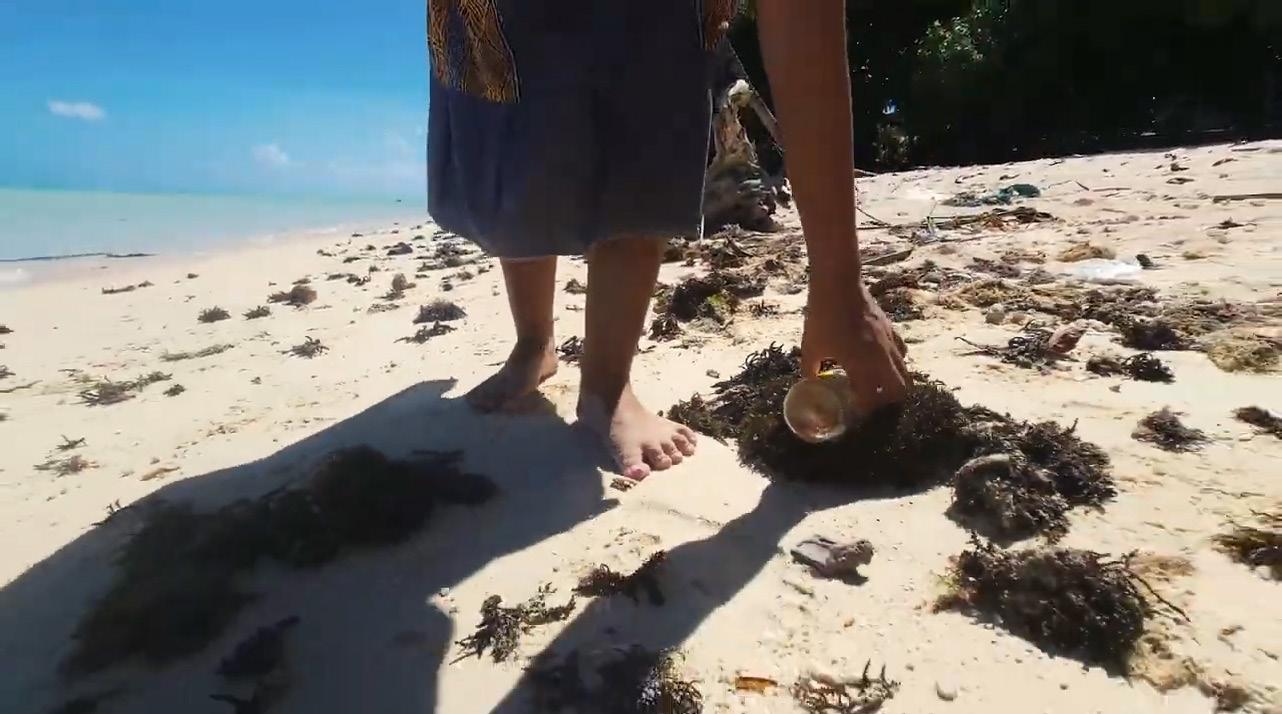

Stills: Turn the Noise Down
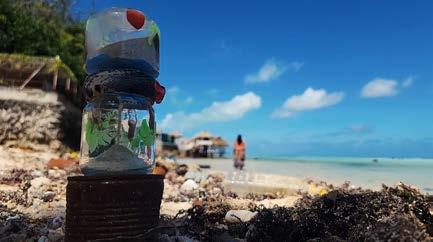
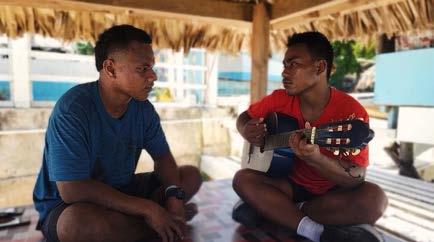
Saving Spongebob
Alyssa Mohamed Iqbal, Annabelle Eng Kah Yee, Regan
Preyakshna, Vasanth Yazhini, & Yu Hang (Singapore)
Our Kuleana
Jungwon (Eva) Choi (Honolulu, HI)
Forest Fires Film
Vera Korshunkova (Limassol, Cyprus)
A Drastic Difference
Xavier Zhang (Cerritos, CA)


OUR Climate Story
Amir Daiyrov (Almaty, Kazakhstan)
Hydro’s Overcast
Cathy Pham (Houston, TX)
Beyond the Hole: Why the Ozone Layer is No Longer a Hot Issue
Junsung Lee (Seoul, Republic of Korea)
The story of two children and the story of us all
Minsol Kim (Goyang-si, Republic of Korea)
Me in Wonderland
Queenie Wu (Vancouver, Canada)


any around the globe have surely heard stories that reflect on the memories from their predecessors, whether that may be parents, educators, or others. While these fantastical memories are music to our ears, our climate has come to a point that we will never be able to relive those wonders or pass them on to future generations. There is no doubt that the clean environment past generations had been fortunate enough to live through has been stripped away by the vile hands of climate change, and unironically, the vile hands of human impact. Current and future generations have been deprived of experiencing a clean world. My original song “Back in My Day” has taken inspiration from this, noting that even in my community, my life, climate change has made our current environment vastly more toxic than the generations before. The words “dread the day I’ll say ‘back in my day’” refer to this topic. Writing the lyrics and melody of the song only provoked more passion of saving our climate, throwing in lyrical phrases such as “horizon’s end” and “billion costs” to represent the endless crisis of sea levels rising and the cost of a billion innocent lives. I have always been captivated by art’s ability to express one’s thoughts to the world, so I will continue to present my knowledge, passion, and words of encouragement in expos and discussions with my community. I hope my voice will encourage others as well to fight climate change and strive for a healthy world that future generations can enjoy too.
[Verse]
When sun rose another year passed
Love is in the air, bright hopes in the mood
I’d remember stories of my past
So mymemories could be viewed
Stories of white blankets of snow
No acidity to toxic quantities
Building snowmans and letting love show
Wasn’t it great back then?
Nowadays, a problem of my own appeared
No snow in the middle of December?
All the fun and joy we’ve always known
Can you even remember?
[Pre-chorus]
It’s funny how realities all become fantasies
Factories melted away all the snow
“We are deaf to your pleas,” no, you are just ignoring them
“Sweep it under a rug,” well I hope that’s not the case, cause

“Back in My Day” by Nayoon Lee, continued
[Chorus]
Now amillion thoughts
Are flooding over my head
Now abillion costs
Are lighting up the forest
Of my hopes and dreams of ever seeing horizon’s end, And I dread the day I’ll say “back in my day”
[Verse 2]
When sun rose another year passed
Peace in ocean’s lines, love in the cool breeze
I’d remember stories of my past
So myworld could hear my pleas
Stories of flurries of leaves
Colorful swirls painting the fall introduction
All I could see were beautiful trees
Trees that sucked up GHGs
Nowadays, a problem of my own appeared
Trash bags for leaves in the middle of the road?
I hoped for trees and their splendid leave
But sadly as it seems, all I saw was a dying junk tree,
[Pre-chorus]
It’s funny how realities all become fantasies, A dying tree is no more carbon absorbed, I can’t see the stars no more ‘cause plastic makes more GHGs, And every time a tree dies the seas rise and so,
[Chorus]
Now amillion thoughts
Are flooding over my head
Now abillion costs
Are lighting up the forest
Of my hopes and dreams of ever seeing horizon’s end, And I dread the day I’ll say “back in my day”
[Bridge]
There’s still hope in our lives though
Save energy, let’s make it all grow
Fight the monster we have made “Don’t be afraid,” I am unafraid ‘cause!
[Chorus]
I still hope a million thoughts, Won’t flood over my heads, I still hope, we’ll make progress, And we’ll protect our forest, Of our hopes and dreams of ever seeing horizon’s end, And it won’t come to the day I’ll say “back in my day”
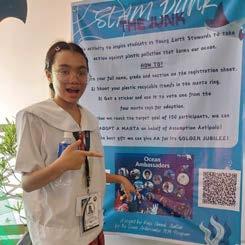
hrough the process of writing this song, I went back to my first vivid memory of seeing strong emotions of fear and worry when typhoon Haiyan hit our country, the Philippines. It made me think about the things that I can do even at this young age. When I looked at my community, I get inspired by the kids in our church who were committed to respond to the Laudato Si call of caring for our common home under the guidance of Father Dan. I felt more hopeful that together with our generation, we can work together and help fight climate change so through this song, I hope to show the world how small kids can commit to protect our nature and hopefully, they can inspire more groups to also organize themselves for a community action. Our collective action will give us a better tomorrow, and through my song, I hope that people will also find hope that things can be better and be inspired to do more. As an Ocean Ambassador of Manta Trust, I aim to raise awareness and continue the work that I do in promoting ocean literacy through arts or music because they are the language of the heart.
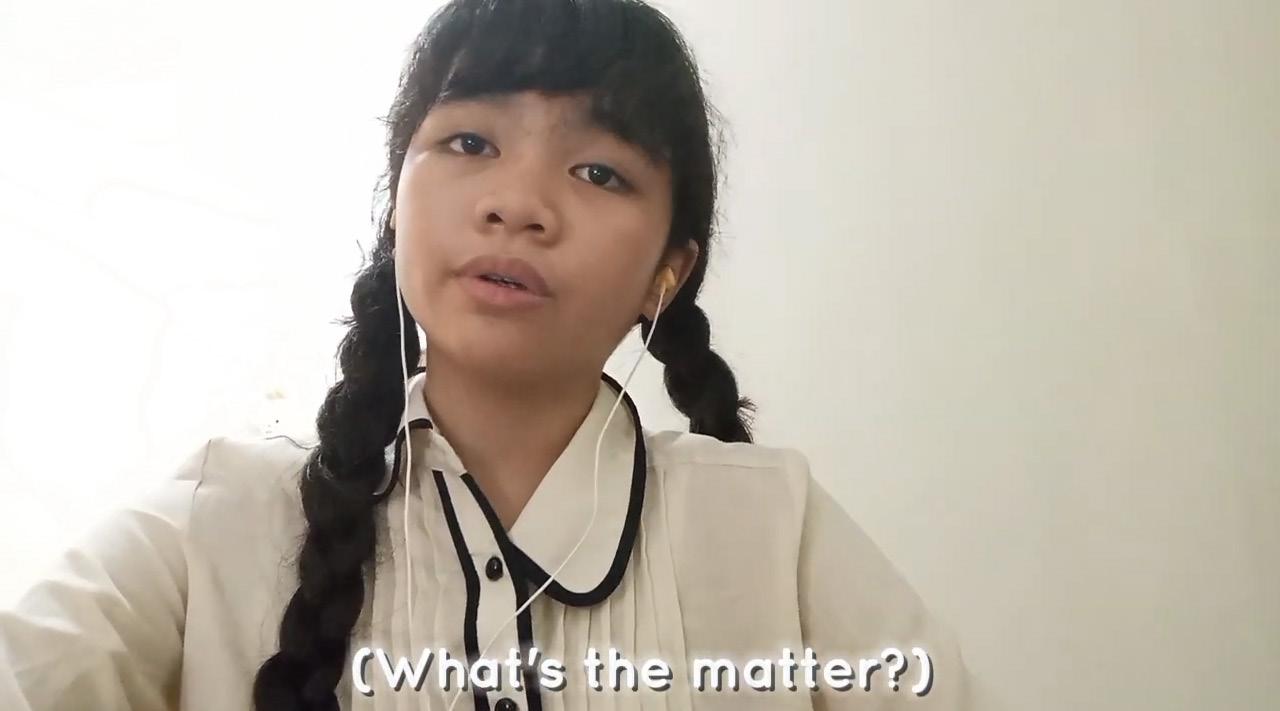
(to the tune of Paraiso by Smokey Mountain)
I heard his voice crying and I wonder… It must be our future on his mind…
I asked my mother, what’s the matter?
“Ha-i-yan, the wrath it brought back home… Storm surge and extreme floods, Swept those homes, dreams and lives.”
Then we met young climate refugees Whose homes they had to leave and flee
A place where they build up their dreams
But then all has been gone…
Since then, I learned what we can do together Though young, to protect our Mother Earth
Such as keeping our coasts and ocean healthy
Clean from waste, free from ocean acidity, Better lifestyle choices such as solar energy.

“For Tomorrow” by Kinjo
Hannah Acallar,
continued
Like the kids in my community, planting trees
Recycling, backyard gardening
Grow own food, learn about ocean literacy, heeding to ‘Laudato Si.’
CHORUS:
For tomorrow….Let’s all work hand in hand
For tomorrow….For ocean and our land
For tomorrow…Give our world another chance
So that then those who will come after us…will still get to enjoy the nature we had. What we need is just a small little sacrifice, FOR OUR WORLD…
ood morning, Hell!” This was the news I woke up to two years ago when the skies in my hometown, San Francisco, turned an apocalyptic orange as wildfires raged on. Then came the restrictions: children cannot go out to play, adults were advised against outdoor exercise, and older people were warned to stay indoors. That’s when it hit me - climate change is real! This drove me to read up about problems such as ozone hole, carbon increase, and fossil fuels, while I also started reading about what we can do to combat them: sustainable living, community clean ups, and increasing green areas. My submission tells the story of wildfires in California and the impact that it had on our lives. The dance begins by showing how fire and smoke is spreading, and that people are struggling while ordinary life is disrupted. Masks become essential, sick people keep getting sicker, and children become confined indoors. The middle of the dance focuses on bringing everyone together and planting more trees to symbolize unity in action. Finally, the dance ends by showing that with everyone making an effort to save the environment, we can make a change. This is emphasized by movements showing rain coming down and clearing the wildfires, which helps reverse climate change and makes our world a better place. In our beautiful planet, where the consequences of doing nothing are incredibly high, I hope my submission shows that arts can play an important role in encouraging people to work towards a resilient future.
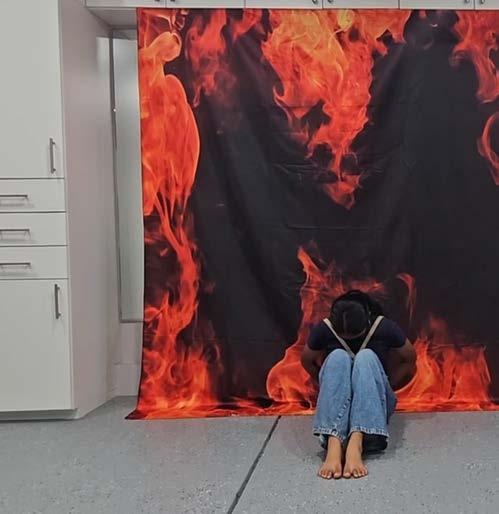
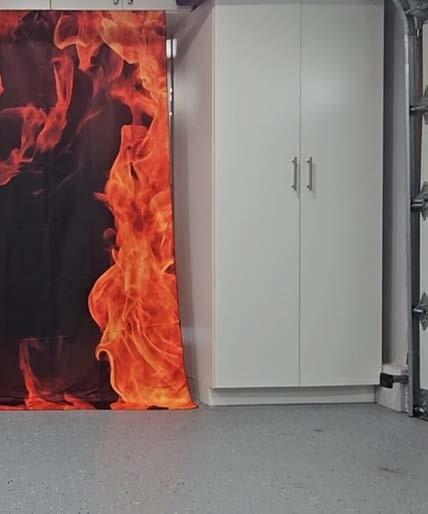

GOLD BRONZEAWARDAWARD
The subconscious wonder of a collective global phobia, climate change, has been blurring the lines of fear and reality. The first memory of oceans I had was one where I sat on a dock, head on my papa’s shoulders, enjoying the last glimpse of a falling sun. Legs, dangling from the wood, swirling the water. Now, as I look upon the same dock, wanting to relive that memory, I see only its submerged corpse under the rocking waves of stenching, murky water. This is the tangible result of sea levels rising, an event of direct correlation with climate change. The potential of memories and lives washed away is becoming more and more of a looming threat, with fear becoming the main drive and motivation for climate change awareness projects. I chose to represent the ominous dread that looms over coastal communities within my piece as I, as well as the generations to follow in my hometown, are some of the most directly influenced lives. The constant shadow of fear that towers over the future of uncertainty for citizens like me is projected through the movements showcasing upward struggle as plastic (the props used in this film are all biofriendly) engulfs and at last, drowns me. The mix of beauty and elegance in ballet with the cruel yet harsh reality of “death by a thousand waves” truly brings out the contrast of what the world would be with just small steps of climate change initiatives.

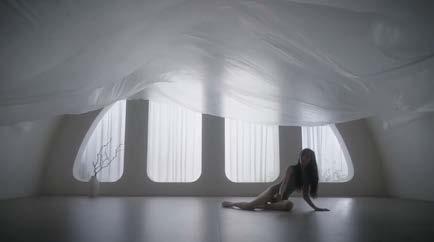
Rescue
Ciel Ha (Bellevue, WA)
William’s Last Wish
Kate Wong, Carlos Qiao, Atanasius Nathanael Rayner
Kusumah, Samarth Vashishtha, Bridget Yas De Jesus Tambis, Chloe The Muryadi, Zuriel Khaifer Diator, Adriana
Katya Husen, & Richard Chang (Jakarta, Indonesia)
Unveiled - A DMZ Rêverie
Michael Noh (Seoul, Republic of Korea)
Dance of Demise
Qiara Ahmad, William Huang, Liam Romero, Jay Huang, Joy Cha, & Oliver Cheng (Tangerang, Indonesia)
Drowned City (a Viva La Vida parody)
Ritu Maiti (Houston, TX)
Go Natural
Simone Rankin (Brambleton, VA)


Songs of the Silenced
Christabelle Kirkham (Carlisle, PA)
Playing the song of Shahnaz with the dulcimer
Ghazal Golshan (Jam, Islamic Republic Of Iran)
Children - The Earth’s Defenders
Manya Harsha (Bengaluru, India)
Helping Hand
Vivien Zou (Beijing, China)
Hope
Yunong (Dora) Lang (Singapore)


y work on creating the organization 3 Degrees and a website for it was inspired by a devastating event in the local community where my family currently resides. In Geoje, droughts are rare in the winter and spring, with rainfall being very common; this makes Geoje an agricultural paradise. However, in the past two years, things have been different; there have been droughts, with the one two years ago being the worst drought in 50 years. Food production lowered, and demand was still high, making the price of daily staples such as rice skyrocket in price. Although this did not heavily impact my family, it did impact people in need. After these events, I connected what I learned in school about climate change with these droughts; these droughts were not natural but rather were caused by humans. I was shocked that we are about to reach a global warming of 1.5 degrees Celsius before 2028, which could cause “extreme heatwaves, extreme rainfall events, and droughts; reductions in ice sheets, sea ice, and glaciers; accelerating sea level rise and ocean heating,” according to the World Meteorological Organization. In addition, I learned that it is possible that we could reach global warming of 3 degrees Celsius before 2100, which will cause irreversible damage to Earth that would make Earth impossible to reside in. This shocked me; as a 14-yearold, I would be 90 years old in 2100; it is possible that I will witness a dystopian Earth if global warming continues to accelerate at this route. By finding 3 Degrees, I wanted to inform people about the potential dangers we could face in the future and how global warming is not linear; if the temperature increases by the same amount it has, which is 1 degree Celsius, the effects will drastically increase. By creating this project, I was proud of myself for taking ideas into action, something that I struggle with. However, I also felt and still feel worried about the future of the Earth; as I am more knowledgeable in the study of global warming thanks to the research I did for the 3 Degrees project, I now understand how drastically global warming can affect our community. I found this quote I heard since I was young very inspiring, and I want to share this quote with viewers of my website and participants of my initiative, “Now is the best time to take action.”
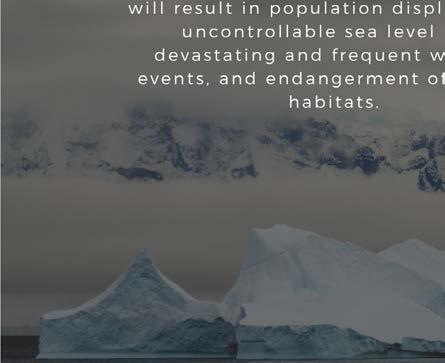


3 Degrees
Project Description: The website “3 Degrees” is an informative and fundraising organization that aims to halt global warming before it is too late. The 3 degrees symbolize a point where global warming damage could not be reversed. By providing information regarding global warming and the different effects it has with corresponding temperature increases, I want to help people be aware
“3 Degrees” by Oliver Choi, continued
of what damage has been caused so far and what is to come. I started this organization after witnessing the effects of global warming in the community where my parents reside; as there were droughts, daily staples became harder to purchase, and people in need were unable to supply themselves with food. A program that helped mitigate this issue is the “Electric Hot Pot” program, a part of the #GoElectric initiative; by using electricity instead of gas, I aimed to create a safe environment for elderly people and the entire Earth as a whole. Below are the instructions for the website in specific. When you first enter the website 3-degrees.org, you will be at the home page of the website. There are four pages you can see on the top right bar: Home, #GoElectric, Sources, and Contact. When you scroll down on the Home menu, you will see the effects when the Earth warms by 3 degrees. The mission statement follows, and there is a short description of

what global warming is. Then, there is a slideshow for the causes and effects of global warming. You can use the arrows on the left and right to look at different causes and effects when the temperature increases by a certain amount. There is an explanation of why global warming is not linear when you click the button “Learn More” below. You will then see a revolutionizing energy section, which directs to the #GoElectric page. At the bottom, you can click the “Take the Quiz” button to take a quiz on global warming. The #GoElectric page explains what the #GoElectric initiative is and the reasoning behind why I participated and initiated this campaign. There are some statistics and a link to a donation platform I created to fund electric hot pots for the local community. Then, you can learn about some steps you can take to “electrify” your life. The sources page lists the sources used in MLA 8 format. You can contact me by filling out the form in the contacts page.

Iwas inspired by Arbor Day in kindergarten, I was still very young and didn’t know the significance of planting trees, but after I grew up, I realized that trees do a lot for human beings. I wanted to make more people aware of this. I am interested in art because in the process of creating art, I can often learn a lot of new knowledge and diversified methods of expression. And I can empathize with the audience and myself through some of these means of expression. In addition, there are many elements and ways of communication in art. It is possible for more people to understand it accurately without reading the words. The biggest feeling I got from the activity was that everyone was very friendly and good at learning. I think the event went well. The audience was also very willing to listen to me. My work mainly conveyed to the audience the causes of global warming, the dangers of global warming and what we can do about it. I learned about the causes and effects of global warming and how it can be slowed down. And I learned how to make visual posters and how to organize a science fair. I will be doing an annual Arbor Day event with the community, which will be massive. And make with the community to urge people to go green.

Project Description: My work is an event where all the activities are recorded in a PowerPoint. What can we do under the heatwave?
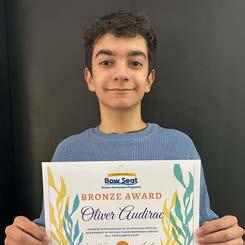
IBRONZE AWARD
was inspired to do this work when I realized that in my school we have wildflower corridors. At the time, I didn’t know what they were for, so I asked my Agriculture teacher (yes, we have that subject at school!). She explained to me the importance of urban gardens and I was amazed. She also offered to take care of the garden with her for the rest of the school year. Not only did we take care of the bees with this action, but we also formed a friendship. I continued to be interested in this topic and discovered that Puebla is one of the states where more honey is produced and more ornamental flowers are grown. This production depends entirely on bees and that motivated me even more to continue working to save them. This year has been the hottest in the history of the state of Puebla. We have had extreme heat and a severe drought that we have never had before. This area normally has a lot of rain from March onwards, but now, we are in June, and we have not seen a drop of rain. This situation affects everyone very much, both people, animals and vegetation. In particular, bees are very much affected by climate change, as their habitat and food sources are destroyed. I am very concerned about this situation and would like to do more to help them. I know there are many actions to take as a community. Specifically, to take care of the bees we can plant native flowers and herbs in parks, schools, homes, work areas and public spaces. This allows bees to pollinate despite being in urban areas. Another simple action is to put water fountains or bowls in all gardens for bees to hydrate (this will also help birds). Buying local and organic food, as well as stopping the use of pesticides are other simple actions we can do to help climate change. The message I want to get across with my app is that we can all do many things to help bees. That’s what being a Bee Buddy is all about. I truly believe that our generation can help mitigate climate change. It requires a lot of people working towards this goal but we can do it. I’m optimistic about it!


Project Description: My project is a mobile app called Bee Buddy. It’s designed to inform people, especially children, about the importance of bees. I hope it creates awareness about how climate change is affecting their livelihood. It also gives people tips on how to help bees and allows them to report a bee emergency. People can also solve a quiz on my app, so that they get the chance to learn in a fun way. My idea is that the app will keep growing and have more games in the future. The process to make this project started when I did some research and decided what type of artwork I could make. I wanted to create an app prototype on Figma because it’s easy to use and I had just learned it at school. First, I started working on the name, colors and logo of the app. I decided that Bee Buddy is a friendly and catchy name, and it also means that all of us should be kind to bees and their habitats. The app has a short intro of 4 screens. After going through the intro, people arrive to the home screen, which has 6 sections: 1. Why bees are important 2. Climate change – big crisis 3. How you can help 4. Report a bee emergency 5. Take the bee quiz 6. Be a Bee Buddy
Tell Your Fungi Story
Cowboy Yang (Shenzhen, China)
Ocean Guardians
Ioki Kubo & Takeshi Nishikawa (Tokyo, Japan)
My Environmental Box
May Lu (China)
Sustainable Food Production
Nicole Haragutchi (Saint Augustine, FL)
Tell Your Climate Story
Yanran Lu (Shenzhen, China)

Korea)




As part of Bow Seat’s long-term effort to increase the diversity of our program participants, we sponsor the We All Rise Prize, awards of $500 specifically for youth in the U.S. who self-identify as Black, Indigenous, and/or Latine.
A total of 13 awards were presented to students whose entries demonstrated notable artistic achievement in their chosen category, selected by a representative judging committee. WeAllRisePrize
$15,000inOceanAwarenessContest awardsforBlack,Indigenous,&Latine participantsfromtheU.S.
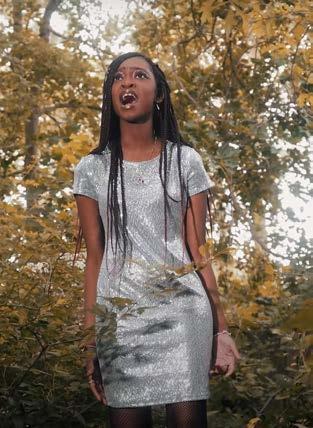
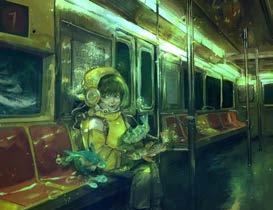

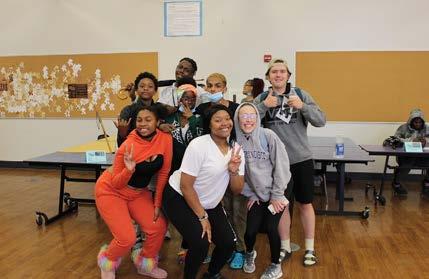
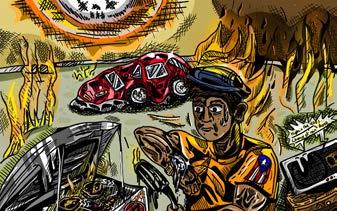
Learnmore:bowseat.org/contest–@fromthebowseat

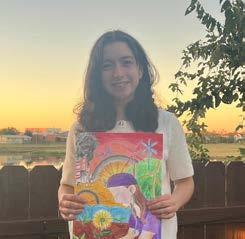
hen creating “There is still Hope” I came to contemplate that the climate crisis needs a solution, a cure. Just as doctors cure patients, we too can do the same for the Earth. While creating this drawing, I thought that, yes, the climate crisis has never been worse. But I also came to appreciate all the solutions we have thought of. We are not alone; there is still hope. With the inventions made by renewable energy engineers and our efforts in spreading awareness, we will soon be able to eliminate carbon usage, making our carbon footprint fade away. Now, being aware of the climate crisis, I will use my talents to spread awareness of climate change.
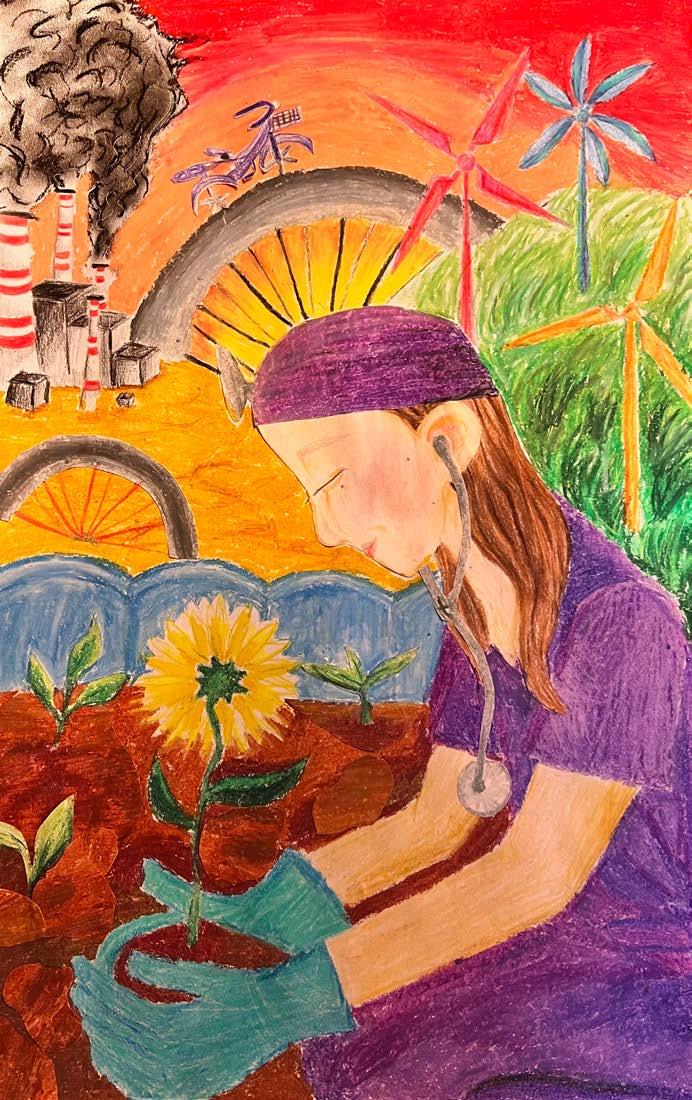
y family comes from multiple generations of migrant farm workers, which Latinos call braceros. My grandpa always loved to be around nature and didn’t mind working in the fields. So he moved my grandma, my mom and her siblings to Chino, California, which was an agricultural town. He worked picking strawberries and cabbages alongside Latino and Asian migrant workers. And during the summer my mom and her siblings would work in the strawberry fields with their neighbors. Climate change has increasingly impacted farm workers’ health, 78% which are Hispanic or Latino, mostly of Mexican heritage. Agricultural workers are 35 times more likely to die from heat related stress than workers in other occupations. As the climate warms, it causes more dramatic heat temperatures and drought, and harvest season is starting to collide more with wildfire season. Exposure to wildfire smoke can escalate underlying respiratory problems such as asthma and is linked to heart attacks, strokes, and lung cancer. Many of these workers have had limited information or access on how to protect themselves from the smoke or don’t even realize they are putting themselves at risk. Many workers are also not able to miss work since it’s their only source of income and the income depends on how much they are able to harvest. Because my family has a history and experience with working in the fields it was important for me to spread awareness about this issue. My mom likes to say that migrant workers are like the bees of the economy and are the closest thing to working with the earth to produce our food. So what affects them is going to have a ripple effect. As climate change affects the workers by making them sick and decreasing the amount of jobs due to crop loss, it’s also going to affect the people that consume the food.
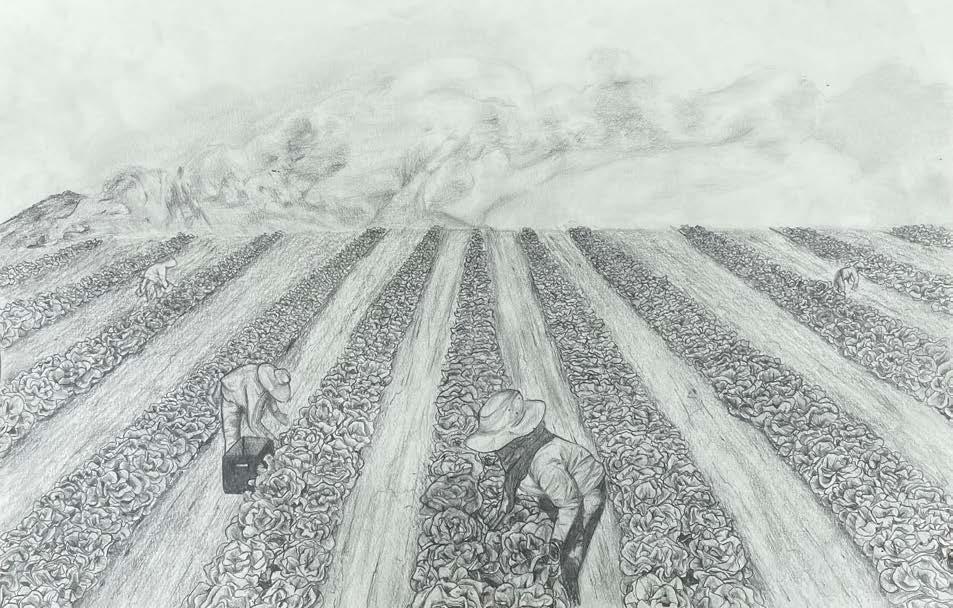
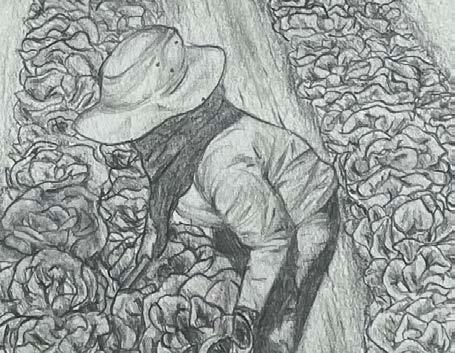
urricane Harvey was a story that many people have heard, but it was an experience for me. The people harmed by the event, the high cost of damages, and the number of homes ravaged as going to school and seeing parts through the driveway flooded disturbed me. Now hurricanes are becoming more frequent and dangerous today because of the main cause: climate change. Climate change is a consequence of our actions making our weather unpredictable, causing rising sea levels, and acidification of oceans. We have the power to change ourselves for our benefit even though the world can be cruel. As a result, I wanted to indicate this message by giving color to the person and giving focus to the hammer because, despite the damages from Hurricane Harvey, Houston came together as a community to actively rebuild from the catastrophe. Additionally, it gives the idea of the importance and courage of choosing to make a change. Climate change effects from news and articles led me to become fearful of another hurricane worse than Hurricane Harvey. I learned that my fear was from climate doomism. My fears for the future of the end of the world allowed my anxiety to take hold of me. This experience contributed to the mood I wanted to convey by the shades of blue in the background. The usage of smoke pollution and buildings being indicators of human supremacy for neglect of the lasting impact of climate change, and the representation of the fear from powerful people and industries massively contributing to the climate change crisis causing hopelessness in change. The billboard is a media outlet because of how news addressing climate change fuels narratives of the end of the world. Lastly, for the clouds for my thought process and experience encountering climate doomism.
he history of the sea holds profound significance for African Americans. My thoughts of the ocean is that it’s a symbol of both suffering and survival and that it has been central to the African American diaspora’s narrative. During the transatlantic slave trade, the sea was a passage of pain, carrying millions from their homelands to unknown shores. Despite the problems which occurred, the strength of those who went across the ocean had set up the foundation for future generations to come. To this day, the ocean still continues to play an important role, but climate changes are setting new problems that we have to overcome. Rising sea levels, ocean acidification, and pollution greatly impact coastal communities, many of which are predominately African Americans. These changes threaten homes, livelihoods, and health , making the fight against climate change critical. As a black teenager today, understanding the ocean’s historical and current significance is essential. Knowing of this history can inspire a sense of duty to lead in combating climate change. The ocean’s story fuels the drive to create a future where the seas are protected and this persistently continues.
Beneath the waves, deep and wide, lies a tale that the ocean cannot hide. The whispers and cries of ancestors, carried by the sea, their strength and courage, passed down to me.
From shores where dreams were born and dreams were shattered, to lands where freedom’s light finally mattered. In this safe place, the music of the ocean whispered to me, a symphony full of elegance and grace.
We can undoubtedly persevere, if we have hope and courage, while the seas rise and the storms intensifies, surely, we will have a bright future with shiny blue oceans as magnificent as the heavens above.
Our past was forged on these watery plains, with sweat and tears, with losses and gains. Yet in these depths, we find our power, to stand strong together, to face this hour.
The ocean’s might, both friend and foe, teaches us the way we need to grow. In unity and love, we find our stride, to protect these waters, to turn the tide.
As black youth, our future intertwined, with the health of the sea, with humankind. We’ll lead the charge, with voices clear, to safeguard the planet, to cherish what’s dear.
The ocean’s call, we heed with pride, to heal the world, to turn the tide. For in its depths, our history lies, a source of strength as we arise.
16
TULSA, OK, UNITED STATES
reating ‘requiem’ was difficult as it was one of the few poems I wrote from an emotional place inside of my heart. I was most inspired by metaphors for the Earth and using emotions and pain as a metaphor for climate change. I felt a deep sense of sadness in my heart while writing this, as I compared it and referenced it to many other emotional things I’ve had to witness in life. It hurts because everything I wrote was so raw and real from just my real feelings, I wrote most of it without thinking of a guideline or a rhyme, just purely me. I really want people to understand the pain that the Earth must feel from things like climate change, and how there are humans here that fuel the destruction of the Earth and just watch. I really urge you all to immerse yourself inside of the poem and (even if you don’t like it) just think about the Earth in everything you do and think of any potential consequences that could occur. Join a club dedicated to being sustainable, participate in programs helping the environment, etc. :)

I love you like the earth—even when you are broken, battered, bruised.
I still love you like the earth—resilient even when tattered hands find solace upon your temple. You endure all that has been cast upon you, hazy mind, yet you give what you can. Sweet, dripping fruit even when the cold threatens to whisk you away, turn you to nothing—a sign of your love. Body aching, skin screaming, you weep silently like a child holding onto a hand that will never see life again. Dry skin brings conflagration upon your mind even your tears cannot extinguish it, naked you stand, ready to face it all. The monsters stand before you, watch you fall, dismiss you, abasing, step on you like a creaky floorboard not yet replaced, never fixed but they bemoan. If you are the old wavering house, then they stand to be the owners. Resolute, but to them, you have already served its purpose, you are nothing but a tool to them as long as they live. The tortured ballerina—prayers dance off your tongue like you were Tchaikovsky. Your prayers are not ignored, the masses now hear you. Training Cechetti, we see your bones twisting, straining, stretching. The pain you held within for so long, it all comes undone. The opaque window finally opens, spreading it to those who watched and stared. Apologies fall from your lips but no more, you tried to save us from yourself. Like a broken wine glass, consequences you stain apologetically. It was not you who tipped it; you cannot be at blame. Summer continues relinquishing its reign, taunting winter, whose rule began to wane. Hurricanes disparage our homes, could things ever be the same? Experiences you gave me, blocking off the amorous sea. They still meant nothing, if it weren’t you, I couldn’t see. I stand now, kneeling before you.
I will always love you like the earth—even when it hurts, I vow now to protect you, even with no hue.
y work was inspired by the song “&” by the indie rock band “Tally Hall”. I am interested in writing because I love reading and telling stories. I feel that a story is a way to share your deepest ideas and create a world in your mind to share with others. The feeling that writing rose in me was this sense of creativity brought about by listening to music which gave me ideas on what to write. My message to viewers of my artwork is that the man is you, and me, and everybody. The man represents humanity and how humans feel about climate change and how we experience it. The repetition of “and” may seem unusual at first, but it is intended to seem so at first, and eventually culminate in the description of all of the consequences in one list. After doing research on climate change I learned that we could have stopped this generations ago. We’ve known for so long and it is kind of terrifying how people just didn’t care. Actions I will engage with in my community is working together to cut carbon emissions.
The man walked down a long and winding road, nearly as old as he. And this was noteworthy only for the fact that the man had watched those who built the road and seen their forefathers and seen the beginning and only now did he fear the end. A thousand generations of suffering and love and life and happiness and error had left the man tired, and he saw what only one like him could see.
We return to our man and see him merely 5 generations into his world. He walks among the simplest of man, the simplest of beasts, and the oldest of the glaciers. He shudders in the cold, the oppressing frost of the ice chilling him to his core. It can’t get any worse than this, the man thinks. His thoughts are rapidly readjusted when he hears a roar from a bear of white, and runs as fast as he can away.
We see our man sitting in a city of marble recently enjoying the fruits of conquest and rapid modernization. A city with the finest engineers where the wealthy have heated floors and aqueducts bring water to all. The fruits of civilization are clear to all, and he enjoys the beauty and splendor. The man smiled happily. He walked down a long and winding road, newly paved.
Much later, our man sits in the office of an inventor, a man he respects and trusts. “Thomas,” says our man, “It’s not ready.” “It is,” says The Inventor tiredly. Our man sighs, the bags under his eyes visible, and rambles on, far into the night and until the first of sunlight shown in the sky, and he storms out of the building, furious at his compatriot.
Our man stands in front of a factory, watching as it hums away, powered by the engine he helped create. He regrets the fight that destroyed his relationship with his friend and resolves to visit him. He walks off to the office of that old friend, ignoring the smokestacks pouring black smoke into the air.
Our man reads a scientific paper written on the other side of the world by a man he will never meet. He scoffed at the mad ideas, some pseudoscientific ramble about “greenhouse gasses” and the warming of the planet. He alone knows the true extent of how important the factories and trains and such that keep the modern world churning along.
Our man stands in the city of Detroit, watching in amusement as a young inventor takes an “automobile” for a joyride down the city’s streets. When the inventor stops he flags him down. “What is it powered by?” he asks, bemused. “Gasoline!” Responds the chipper young fellow.
“And“ by Andrew Fernandez, continued
Plastic, petrochemicals, oil rigs, coal, and all things that fuel the modern world our man now enjoys. He looks among skyscrapers of cement, glass, materials formed by processes that pour noxious gas into a once pristine atmosphere.
Our man stands in a once lush forest, ruined by flame and ax and wrath of man. He wonders if the company that fueled this endeavor would continue if they saw the destruction he did. His doubt grows and grows.
Our man sits in a boat, filled with scientific minds on its way to a spot of the sea that seems arbitrary, reading a magazine about a hole in the ozone layer, and wipes some sweat off his brow. The autumn cold had left the man sooner than usual. And suddenly, the ship stops. Our man peeks over his magazine and immediately regrets it, his eyes and nostrils assaulted by the sight and smell of a giant patch of garbage.
Our man stands on the shore of a coastal city, on a street consumed by the sea. No simple flood, no mere tide change, but a process that happened gradually, slowly, and by the time it was noticed, it was ignored and dismissed by politicians too busy with satisfying the people who lobbied (bribed) them and doing whatever they wanted. For the man watched the development of a system designed to benefit those at the top in the short term, and would cause the life of the world to slip away.
He stands on ice, once as far as sight, and sees a flower. This symbol of beauty is seen by the man as a thing of pure horror. For if the ice has receded this far, what shall happen next?
Our man stares at the news of the past year with headlines like “Record Breaking Heat in Tallahassee, Record Breaking Heat In Canada, Record Breaking Heat In India”, and as he reads headlines like this for nearly an hour, a new pattern starts to emerge. “ Heat Record Smashed for 6th Time in 2 Years” and “New Drinking Game, “Take a Shot Every Time A Heat Record is Broken”, Causes Liver Failure Worldwide” and “Record Breaking Heat Events No Longer Even Rare.”
Our man stands in a rally, filled with people claiming that all that he has seen is fake.
Our man once more stands on cracking ice, the chunk he stands on floating away from an ever shrinking land mass. He hears the cries of a white bear, much like
the one he once ran from, the ice it lives on is nearly all gone.
Our tired old man walks down the long and winding road, seeking a place at its end. But as he walks, he cannot see the place he walks too. Instead, he sees the ocean, the old road leading into it. And as he thinks of the world he helped create, a world filled with waste and a burning world and a world scorched by the sin and wrath of man. A world where there will soon be more plastic than fish in the sea and our blood is filled with microplastics. The cars we use and the infrastructure that is built around them destroy the environment. And faced with a scorched and battered and bruised and burning and flooding world, he walks forth, into the sea.
he tornado that hit my community was a profound inspiration for my work. The devastation and subsequent resilience displayed by my neighbors moved me profoundly and motivated me to use my voice to highlight the impacts of climate change on communities like mine. I wanted to tell a story that was personal yet resonant with broader climate issues, weaving my experience with environmental research to create a narrative that could inspire action and awareness. One of my artworks, ‘Resilience in the Storm ‘, depicts the tornado’s aftermath and the community’s strength, visually representing this narrative. The process of creating my story was both cathartic and empowering. Writing about the tornado and its aftermath brought back intense memories and reinforced my sense of resilience and hope. It was a reminder of the strength within my community and myself. Storytelling became a way to process and transform these experiences into a call for action. My message is about resilience and the crucial role of community in the face of climate change. I want viewers to understand that climate change is not an abstract concept; it is happening here and now, affecting real people. We all have a vital role in addressing this crisis, and by working together, we can create significant change. My story is a call to action, inspiring others to act individually and collectively to protect our planet.
Growing up in Greenwood, Mississippi, I’ve always connected deeply to the land. My ancestors worked this soil, endured the blazing sun and torrential rains, and found ways to thrive despite the odds. But over the past few years, something has changed. The weather has become more unpredictable and extreme, and the impacts of climate change have become a personal reality for me and my community. My name is Aziria Mason, and I am a 17-year-old Black girl living in the heart of the Mississippi Delta. Our town is small, with a close-knit community where everyone knows each other. We’ve always faced our share of challenges, but nothing prepared us for the tornado that tore through our lives last spring. It was a warm April afternoon, and the sky had an eerie, greenish hue I’d never seen before. My grandmother, Julie, always said that when the sky turns green, it signifies trouble. As the wind picked up, I could feel a sense of unease growing in my chest. We’d had tornado warnings before, but something about this felt different. The fear and uncertainty were palpable, and I couldn’t help but wonder if this was the new normal. I was home with my younger brother, Micheal, when the sirens started blaring. We quickly grabbed our emergency kit and rushed to the storm cellar, as My grandmother Julie had taught us. As we huddled together in the dark, we could hear the roar of the tornado approaching. It sounded like a freight train, loud and unstoppable. The walls of our house shook, and I prayed harder than I ever had in my life. When the storm finally passed, we emerged from the cellar to find our world upside down. Our home was in ruins, trees were uprooted, and power lines were down. The streets were littered with debris, and the once-familiar landscape was almost unrecognizable. It was a scene of devastation that I’d only ever seen on the news, and now it was our reality.
In the aftermath of the tornado, our community rallied together like never before. Neighbors lent a helping hand, sharing food, water, and comfort. Despite the devastation, a spirit of resilience and determination permeated the air. We were not going to let this storm break us. This unity, this resilience, is what gives me hope for our future. As we rebuilt our lives, I couldn’t help but think about how climate change affected us. The Mississippi Delta, already vulnerable to flooding, is experiencing more frequent and severe storms due to climate change. Tornadoes have always been a part of life in the South, but scientists say they are becoming more frequent and intense due to the changing climate. Rising temperatures and shifting weather patterns create the perfect conditions for these deadly storms. My journey of understanding and action began. I delved into research, learning about the greenhouse gases from burning fossil fuels that trap heat in the atmosphere, leading to more extreme weather events. I read about the melting polar ice caps, rising sea levels, and the devastating wildfires out West. It was overwhelming, but it ignited a fire in me to take action. This journey, this fire, is what I hope will inspire you to join me.
“The Tornado and Our Resilience: A Climate Story“ by Aziria Mason, continued
Inspired by what I learned, I helped put a group of young people dedicated to raising awareness about climate change and pushing for solutions to help the community out. The alliance became more than just a group-it was a community that supported and encouraged me. We organized community cleanups, planted trees, and held educational workshops. We even contacted local officials to advocate for policies to make our town more resilient to future storms. Through our collective efforts, we were making a difference. One of our most impactful initiatives was the creation of a community garden. It not only provided fresh, healthy food for our neighbors but also helped reduce our carbon footprint. Plants absorb carbon dioxide, one of the leading greenhouse gases, and release oxygen. By growing our own food, we were also cutting down on the emissions associated with transporting produce from far away. This is a small step, but it’s a step in the right direction. Your individual actions, no matter how small, can make a difference. I also started a blog to share our experiences and inspire others to take action. I wrote about the tornado, our recovery, and the steps we were taking to fight climate change. I shared stories of hope and resilience, highlighting our community’s strength and youth activism’s power. Through my writing, I wanted to show that we could make a difference even in the face of immense challenges. As I delved deeper into my climate activism, I found strength in my heritage. My ancestors faced unimaginable hardships, from slavery to segregation, yet they persevered. They fought for their rights and built a better future for their descendants. I realized this same resilience was in my blood, giving me the courage to keep pushing for change.
I often talked with My grandmother about what I was learning and doing. She told me stories about how our family had always relied on the land, understood the seasons, and respected nature. She reminded me that we are stewards of this earth and are responsible for protecting it for future generations. Her wisdom and guidance were instrumental in shaping my understanding of climate change and resilience. My grandmother’s wisdom guided me as I navigated the challenges of climate activism. She taught me that while the fight might be hard, giving up was not an option. We had to keep going, not just for ourselves but for those who came before us and those who would go after. The challenges were manyfrom convincing local officials to take climate change seriously to organizing community events with limited resources-but we were determined to make a difference. As I stand on the brink of adulthood, I am hopeful and anxious about the future. Climate change is one of the biggest challenges that humanity has ever faced, and the stakes are incredibly high. But I believe in the power of young people to drive change. We are inheriting this planet, and it’s up to us to take bold, decisive action.
Through my experiences, I’ve learned that solutions to climate change are not just about reducing emissions or planting trees. They’re about building more robust, more resilient communities. They address social and economic inequalities and ensure everyone can access clean air, water, and energy. They’re about fostering a deep connection to the natural world and understanding that we are all part of a larger ecosystem. The tornado that ripped through Greenwood was a wake-up call but also brought our community closer together. It showed us that we are capable of incredible resilience and that when we work together, we can overcome the most daunting challenges. As we rebuild, we are restoring what was lost and creating a better, more sustainable future. By sharing my story, I hope to inspire others to take action. Whether it’s joining a local climate group, starting a community garden, or learning more about the issues, every little bit helps. Individual actions, like reducing your carbon footprint or advocating for sustainable practices, can have a significant impact. Together, we can create a world where people and the planet can thrive. This is my climate story, and it is just the beginning.
hroughout my youth I have always been influenced by the indigenous traditions and stories passed down from generation to generation from my different tribes such as the Aquinnah Wampanoag, Ute Indian Tribe, and Hunkpapa Lakota. Although the oil industry in Utah is far from the ocean, the emissions released still affect the world all around us. While writing this essay I reflected back on my ancestors and the previous generations that have lived before me and how drastically different the earth was. Although change takes time, I believe that my generation can help break barriers and help fix the climate crisis that affects the world all around us. Throughout my time attending Wasatch Academy I have been able to create connections throughout the student body via multiple leadership roles I have upheld such as being the vice president of Wasatch Academy’s student council as well as the president of Sustainability Council. As my generation has been deeply impacted by the Covid-19 pandemic, one of the few ways that we are able to come together as one is through connection in our education, as well as how we give back to our community. Through my leadership I have worked with my school’s student body to build the outline of a greenhouse and start the creation of a community garden. The Lakota philosophy Mitakuye Oyasin, which translates to “We are all connected”, teaches that all of us on the earth are connected as one in different ways. Whether plants, humans, or animals, all things are sacred life and should be treated as one.
I’m sitting in the passenger seat of my father’s truck as we drive through the dry backroads of Utah during summer. We’re surrounded by the natural beauty of my ancestor’s homeland: sage and rabbitbrush dot the foothills of the Uintah Mountains. Oil rigs, some dead and some alive, clash with nature as their obnoxious metal poles penetrate the ground. I build up the courage to ask my father a question I’ve had on my mind for a long time. “Why is the Ute tribe a huge supplier for the oil industry when our ancestors practiced taking care of Mother Earth!?”
My father’s lips curl into a frown, and with a deep sigh, he proceeds to explain how, in order for the Ute tribe to provide for its members, the tribe must take advantage of the resources that lay deep within the earth. Finding his statement ironic, I wonder why this type of business is so prevalent in today’s world.
In 1881, the Northern Indian Utes were moved into the Uintah Mountains. Former Governor Frederick Pitkin coined the phrase “The Utes Must Go!” He advocated for their relocation, and the US Army marched them to northeastern Utah, a dry desert deemed uninhabitable for anything, including humans. Little did the colonizers know that they’d moved the Utes onto a jackpot of liquid gold: oil and natural gas reserves scattered throughout the reservation. Oil and gas development began on tribal lands in the 1940s, and the industry became profitable in the 1970s. That led to a significant impact on the tribe’s economy. Today, rigs are found across the reservation, pumping oil from the earth every single minute.
I’m aware that almost everything in our economy relies on oil; however I detest this business as it’s a direct result of the forced relocation of my people, the Utes. This ideology has led to the destruction of our Mother Earth. I’m not afraid to speak up, especially when it comes to topics that affect tribal communities. For the most part, my father does not agree with me when it comes to my stance on tribal oil.
I come from a braided lineage of three Native American tribes that were impacted mightily by colonization: the Wampanoag, Ute, and Hunkpapha Lakota nations. Each tribe connected deeply to the Earth. When I was a child, my mother told me about my Lakota ancestors. They shared and cared for one another, not for reward or personal gain—the belief in community as a top priority is the essence of Oyate (meaning “the people” or “the nation”) culture. It’s our responsibility as Lakota people not to be greedy, but to see all things as equal on this earth and to treat everything with respect.
In the truck with my father, thinking about my tribe’s history, I glance at my reflection
“Indigenous Oil and My Vision for the Future“ by Ryder Cuch, continued in the side-view mirror. My eyes shift to the window, and the landscape blurs. Our voices rise and overlap as every statement’s piercing echo fills the vehicle. A silence falls as the argument dies down. The silence provides solace, and I ponder how all of my people’s tribal lands, cultures, languages, and spiritual practices throughout the US were almost obliterated as a result of mass destruction of the earth for the sake of personal gain and profit.
Deep down, I know that the spirit of my people will not be destroyed. Asking my father—and others—“Why?!” is a step towards decolonization and a return to more indigenous perspectives and ways of living. I understand that despite the damage caused by years of colonization, as well as the intergenerational struggles within indigenous communities, my generation can continue to mend our relationship with the earth and her peoples. My effort to protect the land to support future generations may seem like a small step to some, but my continual advocacy and action on behalf of Mother Earth will leave a critical lasting legacy.
I thought a lot about what I would like to be writing about, and I realized that writing about what has happened recently in my home country would be great. I have always been interested in writing, but not just because I enjoy it. Everything I have written to date has been with the intention of passing on messages that would be useful in some way. What I would like to get across with what I have written today is that we should be trying to think more about our actions against nature and against ourselves. A conscious act of help and respect for our surroundings can mean a lot in the future, for generations to come. My work is a demonstration not only of my concern about the climate and disasters, but a demonstration of the concern of a few people around the world. I’m very grateful for the opportunity to participate. I could see that, like me, there are people who are trying to contribute to the good, even with small gestures. What I feel now is a pure and gratifying feeling. I hope that one day, everyone will be able to experience it.
VICTORIA CARVALHO ARAUJO
It was like a sudden nightmare. For many, a divine condemnation, a nontraditional discovery. One day, people were having dinners and lunches with their families, playing with their dogs, and enjoying themselves in the middle of the streets. And the next, they were desperate for help as the floodwaters rose higher and higher.
What I once knew as my home, my comfort, was destroyed. Even with an overwhelming pain in my heart, I was one of the thousands of people who left their homes over the course of the days. It was painful, but what could anyone do in the midst of a tragedy?
It started with an unusual downpour, filling the river more than usual. Everyone thought that it would soon pass and that nothing bad would happen. But one truth that many of us refuse to accept is that nature has always been and always will be unpredictable. A consequence of the damage that many have caused. Soon, the floods began, destroying houses one by one, closing the stores my friends loved to go to, and waking me up from my most innocent and sincere dreams.
We were lucky to be able to walk the streets when there was still time. Even though the water was up to my knees, and my father had to calm me down in the midst of my worries. It was lucky, because later on, the devastation was such that boats had to be used, and what had once been an independent escape became an endless series of rescues. An endless series of questions about why people had to be going through this, a complete indignation.
I was mentally in a loop of questions. Whether my family and I would be okay, whether my friends were getting the same chance as me to go to a safer place, and whether the animals were being cared for too. Some considered it silly to worry about animals in the middle of a catastrophe, but it wasn’t their fault. Who was responsible? Of course it wasn’t the nature itself. Nature just desires to follow its own course. But us, people, with its devasting nature, thinking only about winning benefits advantages in their favor to enrich themselves, even at the cost of their own lives or those of others. Like a river, diverting from its course because it has nowhere else to run, flooding forests, and seeking to continue its course whatever the cost. Nature charges, man suffers, animals die, fish can’t survive, and food poisons. The world is in the throes of a catastrophe dug up by men all over the planet, and few people are fighting against time to help those who
have been hurt. Most people disdain to talk about politics, but it starts from our earliest years, when respect comes first. And since we are disrespecting nature, I think, what will become of future generations? What they will reap. Man wants to robotize life on planet earth, but he forgets that robots depend on the human mind. In the future, will artificial intelligence override man with reason, dignity, character and mutual respect? Thoughts like these were running around my mind, making me drown in a ocean of questions and answers, who I didn’t knew if were right or not.
The days after the first one were long. Every day, we received news of people who had disappeared, or of more people who had to leave their homes and seek shelter elsewhere. Books, which I loved so much, were underwater, destroyed. Children lost their beloved toys, and even souls were lost in the confusion.
Every day, everything seemed to get worse instead of better. As I hugged my knees on the floor of a shelter, I heard other desperate people arriving. Confused faces looking for family members, others looking for any cloth that could be used as clothing instead of wet rags, and most importantly: the search for a solution.
And the search for a solution made me think, why not before? Everyone knew about climate change; everyone knew it was a risk. But did blindness make us delay anything that could have been done to help? Or was there no solution at all?
While everyone was racing against time for a solution now, I could only think of the more than 2 million people who suffered from the floods and losses in those days.
AR, UNITED STATES
his project is a short film with a mix between stop motion and digital animation. It talks about the effects of climate change in El Salvador, which is the country where I was born. My inspiration was in two parts. I was first inspired by my dad’s stories about how as a child he had to put a winter coat on to go to school because of the low temperatures that my country had. That was 37 years ago and there have been big changes in the climate since then. The second layer of my inspiration is that I am originally from El Salvador and I moved to Arkansas in the USA a little less than two years ago. I have been learning English in my school here and I have been learning many other things like science, history, and art as well. One day, I noticed that both my home flag and the flag of the USA have blue in them. I researched the meaning of the blue and learned that for El Salvador, the two blue stripes stand for the sky and for the ocean. For the blue of the American flag, it represents vigilance, perseverance, and justice. These things combined together in my mind as the perfect combination for talking about how climate change affects the two parts and two places of my own story. It is here that I found my title for my video: Azul Por Azul, or Blue for Blue. By using vigilance, and perseverance to fight for climate justice, we can fight to restore the blues of our sky and oceans. Making this short film made me realize that as society we need to change our habits so that we can save our planet for future generations. I don’t want my children or grandchildren to have to deal with a world full of contamination and other climate change problems like those in this video which were caused by our generation and past generations. People often see and feel the negative side effects of climate change but not the causes. This video, and the additional similar ones I want to make with research and information specific to individual countries representing the heritage of our local population, will help to show how these things come to be, how they impact our homelands, and what we can do to prevent and reverse them. No one can do it all, but we can all do something. By taking action here in Arkansas, as well as in the places where we come from, we can take steps as individuals and also work together as a local and global community to reverse the climate clock.
AGE 15
OBETZ, OH, UNITED STATES
eeing the increasing effects of climate change in Ohio, like more tornadoes, floods, and heatwaves, inspired me. I wanted to use music to address these issues because it’s a powerful way to connect with people. Mixing old-school rap with modern hip-hop, I aimed to create a song that makes people think and feel deeply about climate change. Creating this song made me feel both frustrated and hopeful. Frustrated by the lack of action from some leaders, but hopeful that through music, we can motivate people to demand real change. Writing the lyrics helped me turn my concerns into something positive and impactful. My message is that climate change is real and urgent. We need to hold our leaders accountable and push for strong policies to fight climate change. It’s time for action, not just words, to protect our environment and future generations. Together, we can build a movement for real change.
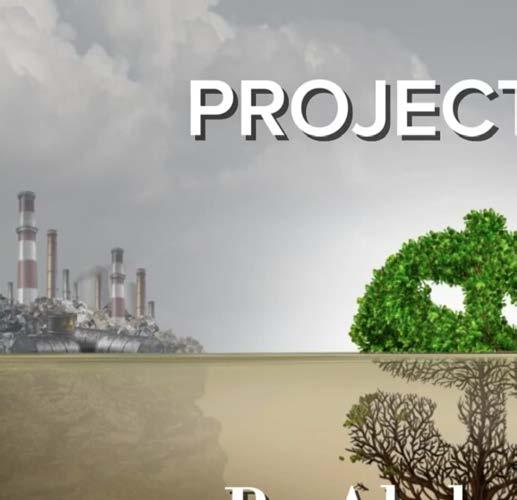


In 2022, Buffalo, NY experienced a racially motivated mass shooting that claimed ten lives as well as a Blizzard that claimed 47 lives. In 2023, we experienced air quality pollution from the wildfires in Canada. Not only was our community being impacted by violence, but by our own climate change reality. We needed to heal by “telling our story”. Our creative process with poetry, drawing, writing, speaking and sharing allowed us to tell our story and experiences in a therapeutic way. This contest helped us to create space and sharing that we didn’t realize we needed until we did it.

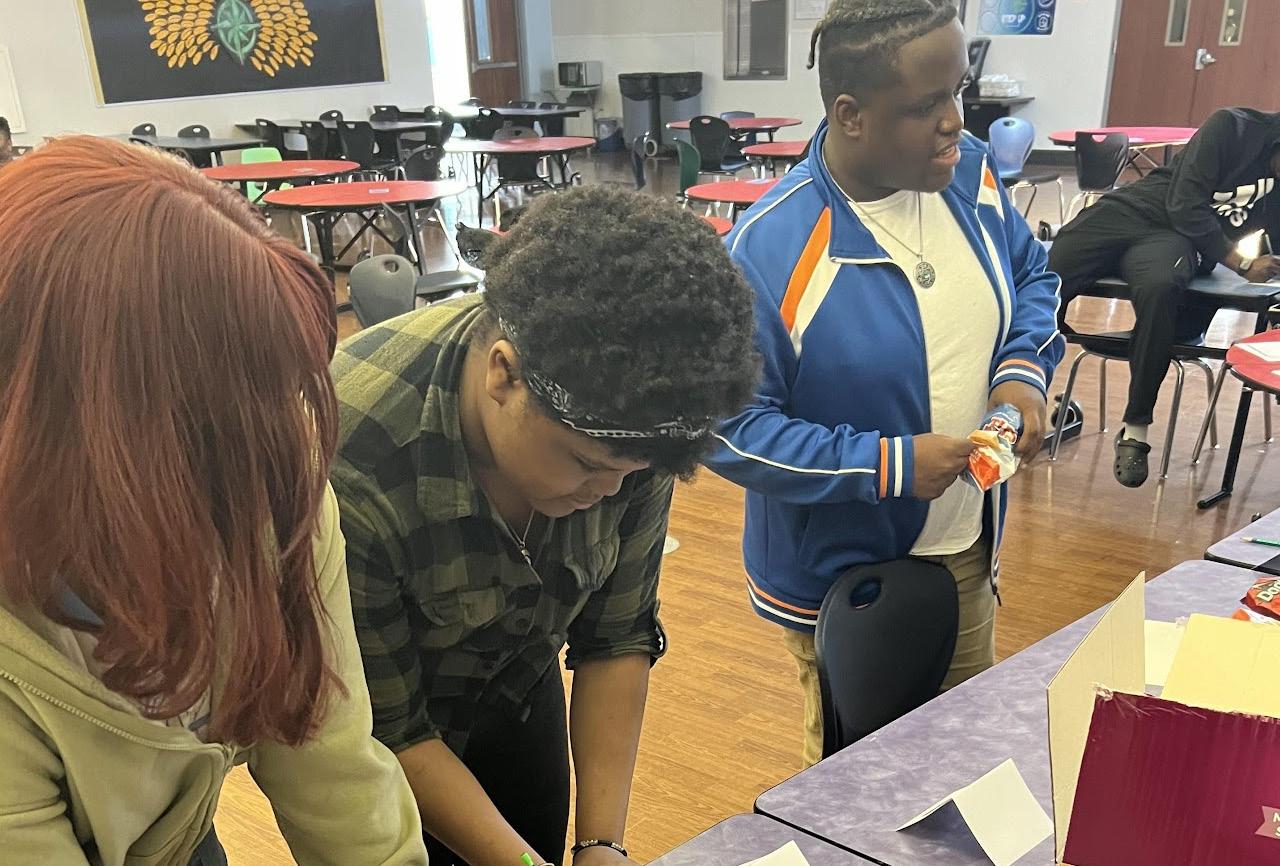
Project Description: The Problematic Climate Project is an interactive performance installation designed to create community space that allows students to engage with poetry, music, art, drawing, discussions, and personal experiences with climate change. The Problematic Climate Project featured an event called the Problematic Climate Open Mic. The Problematic Climate Open Mic provided a platform for students and members of the community to tell and share their stories, drawings, and experiences impacted by climate change. The Open Mic also featured a Snack & Story Station and a Draw & Drink Bar. CREATIVE INTERACTIVE COMPONENTS: The Snack & Story Station encouraged participants to “Tell their climate story” by writing how climate change has personally impacted them. After they completed their story, they used their writing to redeem snacks from the Snack & Story Station. The Draw & Drink Bar encouraged participants to “Tell their climate story” by drawing how climate change has personally impacted them. After they completed their drawing, they used their art to redeem drinks from the Draw & Drink Bar. Participants were also told that their drawings might be included in our Poetic Climate Coloring Book. The Poetic Climate Story Coloring Book features poems, drawings, designs, and
“The Problematic Climate Project” by Emeline Ishimwe, Jason Walter, and Hannah Armstrong, continued
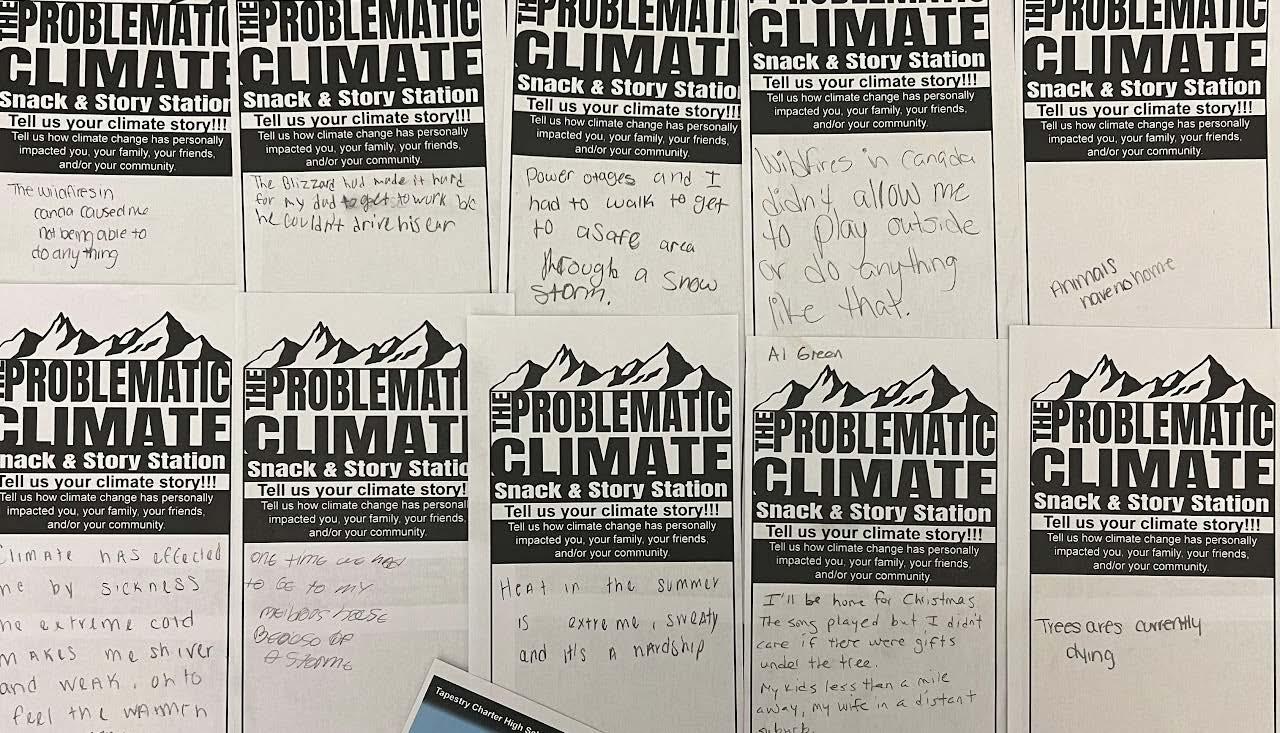
graphic collages inspired by their personal experiences with Climate Change. The Poetic Climate Story Coloring Book also includes original poems and drawings from the Problematic Climate Open Mic and the Tapestry Charter High School Community. The Poetic Climate Story Coloring Book will be donated to the Grant Street Neighborhood Center which is run by People United for Sustainable Housing (PUSH Buffalo).
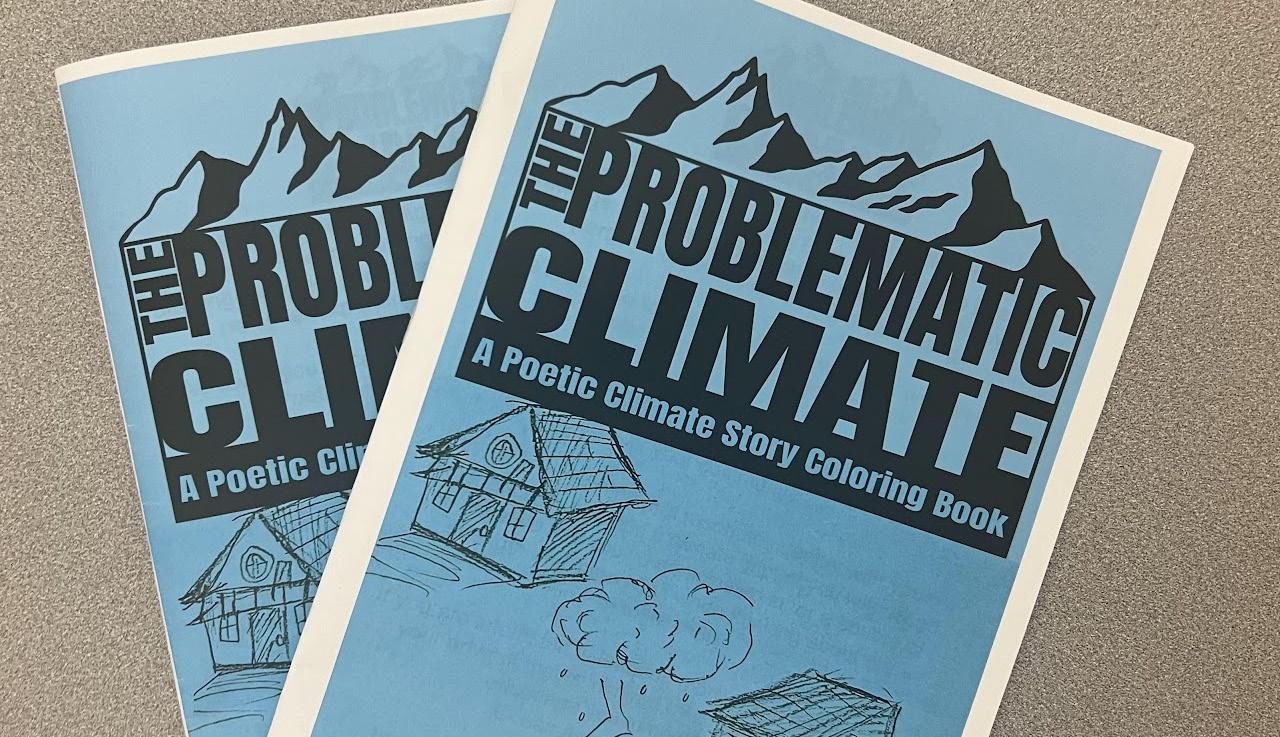
AGE 13
SPRING, TX, UNITED STATES
hile thinking of what to do I was immediately set on doing a podcast because I thought it would be something I’m good at. At school I’m on the news crew so talking on camera wouldn’t be anything new to me. I enjoy using my voice to make a change or to stand up for something so this was the right choice. While in the car I listened to a lot of call-in talk shows to see how they generally flowed. And I hope I did a good job of mimicking that. The first caller shows some of my experiences with climate change since I live in Texas. I wanted to focus specifically on how much everything was warming. In the first caller, the warming affected the storms and in the second caller, it affected their weather. I hope that after listening people will try to think more about how their actions affect the climate. Hopefully, they will use some of the advice I gave them. To try and plant, not drive as much, order less oneday shipping on Amazon and support their local non-profits.
Podcast Description: The medium for my project is a call-in talk show to help people with their questions about the Earth. In the talk show, anyone can call and ask a question about the Earth and I will try to answer with my best educated facts. The podcast goes into detail on how we can help our communities thrive through simple actions. The podcast talks about the rising temperatures of the Earth and how we can help in an engaging, fun and casual way. FAITH DUCKSWORTH

BOW Seat believes in the value of collaboration to confront the threats facing our blue planet, and we are proud to work with a global network of partners to deepen our collective impact.
American Repertory Theater
Big Blue & You
Black in Marine Science
Conservation Law Foundation
Cool Science
EarthEcho International
Fondation pour la Protection de la Biodiversité Marine
Girl Scouts of the Green and White Mountains
Gulf of Maine Marine Education Association
Hopkinton Center for the Arts
Huntsman Marine Science Centre
Massachusetts Environmental Educator Society
Massachusetts Marine Educators
Menino Arts Center
National Marine Educators Association
New England Aquarium
New England Ocean Science Education Collaborative
North American Association for Environmental Educators
Ocean Matters
PangeaSeed Foundation
Peabody Essex Museum
Planetary Health Alliance
Queer Brown Vegan
Shared Habitat Earth
UNESCO Decade of Ocean Science for Sustainable Development
World Ocean Day
Youth Ocean Conservation Summit
TO all of our Contest participants, sponsors, judges, partners, and community members: we appreciate your creativity, inspiration, care, and perseverance!
If you would like to support our efforts to uplift the next generation of creative environmental leaders, please scan the QR code to learn how you can make a donation, sponsor a Contest award, or shop student artwork.





We also encourage you to spread the word about the Ocean Awareness Contest by sharing this opportunity with the creative and ocean-loving teens you know.
WWW.BOWSEAT.ORG @fromthebowseat