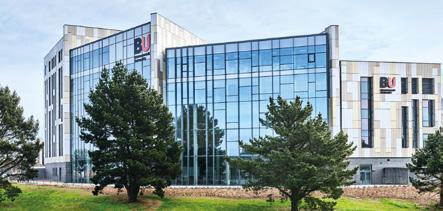
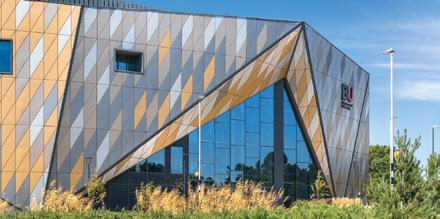
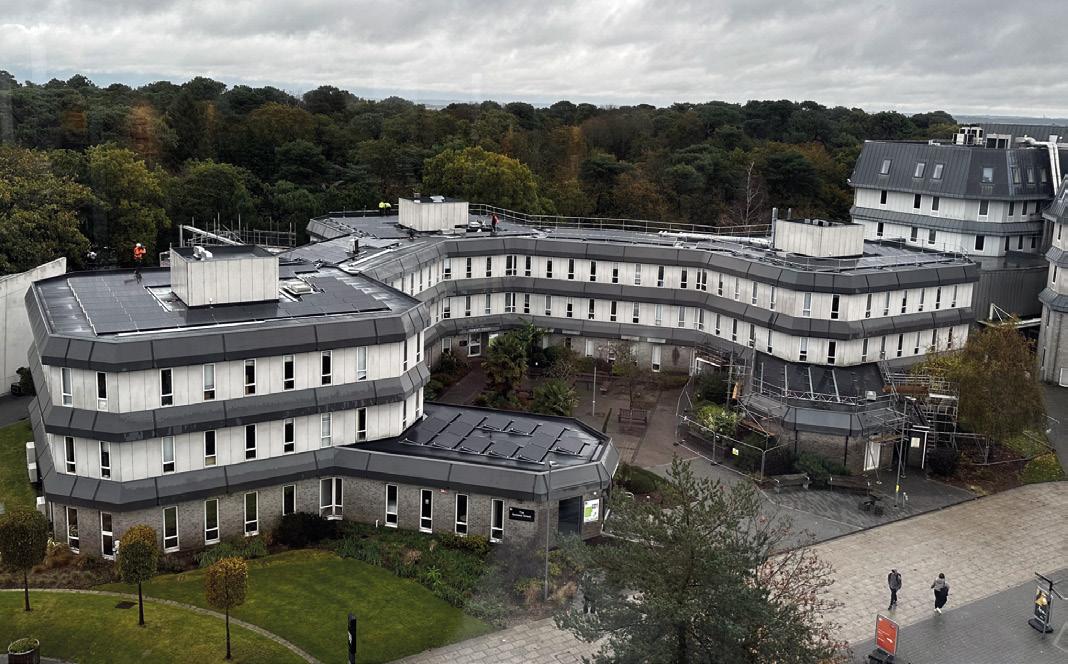
BGB Bournemouth Gateway Building (BU building on Lansdowne Campus)
BMS Building management system
BEMS Building energy management system
Biomass boiler A heating system that generates heat from biomass e.g. woodchip
BREEAM Building Research Establishment Environmental Assessment Method; a standard for sustainable construction
BU Bournemouth University
Carbon factors Factors that convert activity data into estimated greenhouse gas emissions data. The DEFRA carbon factors to be used for each reporting year are within the latest version published before the reporting year. The carbon factors used for the 2024/25 report are the DEFRA GHG conversion factors published 8 July 2024
CECAP Bournemouth University’s Climate & Ecological Crisis Action Plan to reach net zero emissions and embed environmental action across the university by 2030/31
(t) CO2e (kg) CO2e (tonnes of) or (kilograms of) Carbon Dioxide (CO2) equivalent; the concentration of CO2 that would cause the same level of warming as a given type and concentration of greenhouse gas
DEFRA UK Government Department for Environment, Food and Rural Affairs
DH Dorset House (BU building on Talbot Campus)
EAUC Environmental Association of Universities and Colleges
EEMS Environmental and Energy Management System, BU is certified to both ISO14001 and ISO50001
ESD Education for Sustainable Development
FTE Full Time Equivalent staff or student number
GIA Gross internal area; the total footprint area of all BU’s buildings minus the widths of the walls in metres squared (m2)
GHG Greenhouse gases
GSHP Ground source heat pump
kWh and MWh Kilowatt-hour and megawatt-hour
LED Light-emitting diode; a low energy lightbulb
Abbreviation Definition
LCP
Local Climate Partnership (for Dorset and BCP area)
LPG Liquified petroleum gas
Locationbased reporting
Marketbased reporting
NbS
Net zero emissions
The location-based method calculates the emissions from electricity use based on the average emission intensity of the power grid we are using. Meaning we use the UK grid emission factor published by DEFRA.
Calculates the emissions from the electricity a company purchases. The market-based method is intended to support the use and reporting of green energy tariffs via Renewable Energy Certificates (REC) and Guarantees of Origin (REGO).
Nature-based solutions; solutions to climate and ecological challenges that provide benefits to both nature and humans
Reducing gross emissions and then offsetting any residual emissions until the amount released is equal to the amount removed from the atmosphere
NPU Nature Positive Universities is a network of 500 universities working together to promote nature on campuses, in supply chains and within cities and communities
PGB Poole Gateway Building (BU building on Talbot Campus)
Standardised Carbon Emissions Framework by the EAUC released in January 2023
Emissions from activities under an organisation's direct control such as those from gas boilers, fleet vehicles and on-site refrigerant leakage
Emissions from energy purchased for an organisation’s operations
Emissions from activities not directly controlled by an organisation such as those from the products we buy, commuting and waste disposal
Single-occupancy vehicles, used typically to describe driving in a car alone
Students’ Union at Bournemouth University
TC Talbot Campus
UN SDGs United Nations Sustainable Development Goals
Introduction
Bournemouth University’s (BU) Climate and Ecological Crisis Action Plan (CECAP) is our response to mitigate our contribution to the negative environmental, social, and economic impacts that encompass the climate and ecological crisis and adapt to its impacts. This report is our annual progress update for the 2024/25 academic year. It is structured against our eight objectives and identifies both areas of progress and of improvement.
We report our actual greenhouse gas emissions (GHG) for 2024/25 against our targets for all scopes. This reporting year, we have decreased our overall emissions by around 2,212 tCO2e (34%) compared to our baseline year of 2018/19 which is strong progress against our target of 50% reduction by 2030/31. We continue to make steps to tackle the key challenge of decarbonising our heat with the removal of aging gas boilers at Dorset House and replacement with electrically powered Air Source Heat Pump technology. Where ASHP technology has been unsuitable modern efficient boilers have been used (including for our Sir Micheal Cobham Library). The automatic meter reading system has been replaced giving us improved visibility of our utilities consumption and helps us identify wasted energy
Our vision
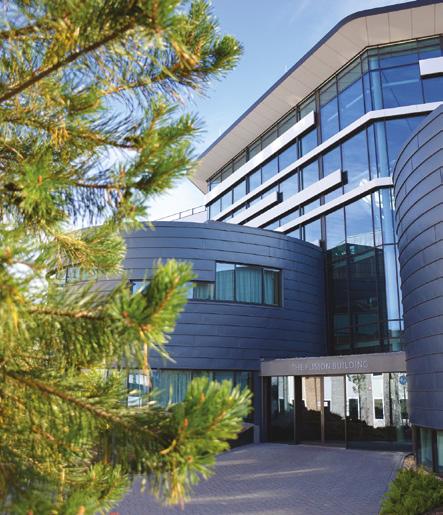
more quickly. We have completed the upgrade to the heating distribution circuits in Christchurch House and installed two new passive cooling units in IT comms rooms in the Fusion building. We continue to work with teams across the university to lower emissions, improve biodiversity and address all areas of the climate and ecological crisis.
This report aims to inform our students, staff and community about the efforts we are making and results of our efforts to reduce our emissions. It shows how everyone across BU needs to play a part in reducing their own carbon emissions so that together we can avoid the worst impacts of climate change.
Our net zero emissions vision is a BU community that recognises the need to live in harmony with the natural world to protect the survival and wellbeing of all communities and takes action to enrich society for the benefit of people and planet.
The vision and our CECAP aim to support the achievement of the 17 UN Sustainable Development Goals (SDGs). You can read more about how BU are working to address all of the 17 goals in our SDG progress report which is shared on the BU website.
I am proud of our continued work in sustainability as we take our responsibility to the environment seriously. This report outlines the progress we’ve made towards our goals, and I am pleased to see the recognition given to us for our efforts in national and international league tables, such as placing 6th in the UK in the People and Planet University League table. Such accolades are based on action, and I’m pleased to see progress as we’ve continued to reduce single-use plastics on campus, driven forward our rainwater harvesting initiatives and supported education programmes linked to carbon literacy. One such programme, the carbon literacy for healthcare certification for students entering the healthcare sector, has been a real success as we’ve been able to educate students on environmental initiatives alongside their studies. It is fantastic to see our continued progress in reducing carbon emissions and our efforts to decarbonise our estate and reduce waste. These efforts will only succeed if we work as a whole community to take action, and my thanks go to all staff and students who have worked so hard, and changed their own behaviours, to help us achieve these ambitious goals. I hope you will share my sense of pride as you read this report.
Professor Alison Honour Vice-Chancellor and Chief Executive Officer Bournemouth University
This has been another successful year where Bournemouth University has demonstrated the power of collective action in responding to the climate and ecological crisis. Together we have deepened sustainability in our education, research, community engagement and campus operations, showing what is possible when an entire university community works with purpose and imagination. These achievements reaffirm sustainability as a defining strength for BU and provide a springboard for our new strategy BU2035 and commitment to maintaining BU as a leading university for sustainability in the UK and globally.
Thorsen Dean Research, Innovation And Enterprise, and Chair of the Bournemouth University Sustainability Committee
Einar
Summary of progress against net zero emissions target
Our aim:
across all three scopes and net zero greenhouse gas emissions by 2030/31
How we’re doing:
across GHG sources currently being measured against the 2018/19 base year.
We have completed six years since our baseline of 2018/19 and we have seen substantial efforts to reduce emissions over this time, particularly in electricity from renewable sources on campus, infrastructure to support active travel and electric vehicles and in embedding the UN SDGs in our teaching.
We have also seen a big decrease in our scope 3 emissions related to business travel. But there is much more to do if we are to reach our ambitious goal of 50% reduction in emissions by 2030/31 on our journey to net zero. This year we have gained operational insight into how our new Air Source Heat Pump system works in practice which will help us to plan future projects.
We are again pleased to see carbon emissions from flights reduce further compared to last year. We are pleased that our scope 1 emissions have decreased slightly since last year by 3.4%, partly due to all but one of our fleet vehicles now running on electricity. Although we have reduced since last year, we are still behind our target for scope 1 emissions significantly and this has been impacted by our biomass system being out of commission for much of this year. This highlights the challenges of operating renewable energy systems on site which we grapple with as our biomass reaches the end of its operational life over the next five years.
We continue to use our CECAP action plan as it maps out our route to become a net zero emissions university with environmental sustainability embedded across its operations, teaching and research. To implement the plan, 95 actions have been identified across 15 themes. Our progress is tracked through our CECAP Group and reported to the Sustainability Committee. A summary view of our progress to date is below, and more detail is provided in Appendix 2:
In 2018/19 BU’s GHG emissions across scopes 1 and 2 and measurable parts of scope 3 were recorded as 6,723 tonnes of carbon emissions dioxide equivalent (tCO2e) for the year.
In 2024/25 this reduced to 4,453 tCO2e and this is a 7% reduction since last year.
Actual GHG emissions (tCO2e) 2024/25 versus SBT targets to 2030/31 using location-based reporting
Our target for Scope 1 emissions was missed, but targets for Scope 2, Scope 3 and overall emissions reduction were met.
Emissions reductions from the base year in
Reductions continue this year on scope 2 emissions, where we have exceeded our 30% reduction target, and achieved a reduction of 36% compared to our 2018/19 baseline. This is due to a number of reasons:
• A reduction in electricity consumption across most buildings due to small energy efficiency projects, changes to equipment run-time hours and the continued optimisation of controls.
• An increase in renewable electricity produced on campus due to the new additional capability of the Dorset House solar PV and there was a 17% increase in sun hours (242 more hours) compared to 2023/24 sun hours.
We report our emissions using location-based reporting, therefore even though we did purchase 100% Zero Carbon electricity this year we do not report electricity emissions as zero. If we were to report using market-based reporting our electricity emissions would not be counted. You can see a comparison of this at the end of Appendix 1.
There has been a decrease of 3.4% in our scope 1 emissions compared to last year. But this isn’t enough to meet the
32% reduction target for scope 1, as we only achieved a 19% reduction in emissions compared to the baseline year. Fleet vehicle emissions have decreased 15% against the baseline year and a 21% decrease against last year. This is mainly due to all but one BU vehicles now running on electricity. There was a 7% increase in LPG used at Chapel Gate and this year our natural gas usage for residential purposes in our Student Village decreased 5% but is still 2% above the baseline year level.
We met the reduction target for our scope 3 emissions this year, achieving a reduction of 41% against a target of 15% compared to baseline emissions. We have seen a reduction in business travel flight emissions from 731 tCO2e in 2023/24 to 634 tCO2e in 2024/25 with rail and bus fleet emissions decreasing compared to the figures reported last year. There is also a large reduction in waste emissions which is mainly due to a large reduction in the carbon factors provided by DEFRA. Operational & construction waste volumes were lower compared to the previous year. Open Day travel emissions decreased by 32% compared to last year.
Sources of emissions
The chart below shows the changes in the sources of GHG emissions in the base year compared to 2024/25. For further details, see the Emissions report in appendix 1. We have reported residential emissions separately and these are labelled below as ‘Student Village’ as this is the only student accommodation which is operated by BU. The rest are owned by third parties so are not included in our carbon emissions reporting as we don’t have control over the operational management of these buildings.
Reaching net zero
As we work towards a net zero position, we are focused on reducing our emissions by 50% across all three scopes. This reduction is firmly our priority for the six years until the end of 2030/31. In 2030/31 it is our current plan to use offsetting to purchase certified carbon credits to enable us to be a net zero university. This will account for the remaining emissions and is in line with our Science Based Targets. Although we are developing our approach to offsetting, our focus now is firmly on reducing our emissions and delivering the measures identified in our CECAP Full Plan. These carbon reduction measures are summarised in the table below and our progress explained. Our focus remains on being efficient with resources. Each project we undertake has to be carefully considered and the business case approved internally. We consider the return on investment and balance carbon and cost in each case.
Summary of the measures we are focused on to reach net zero greenhouse gas emissions
Number Measure Progress
1 Energy Conservation Measures (ECMs)
2 Heat Switch moving away from natural gas fired heat provision
We continue to conserve energy with LED replacements this year in smaller areas such as plant rooms and storage rooms. We continue to adjust the Building Management System to reduce energy and align with building usage to avoid waste.
We have developed a Heat Decarbonisation Plan and have removed gas boilers in Dorset House and replaced these with air source heat pumps. A new solar thermal system has been added at Chapel Gate to reduce gas used for hot water.
3 Cloud Data Centre IT have confirmed that the data centre can’t currently be moved to cloud. Therefore, focus is on reducing energy consumption of data centres. We are seeing reducing energy consumption in data centres due to replaced server equipment and better monitoring through the Sustainable IT group.
4 Solar PV installation We have over 789kWp of solar PV capacity on site. Investigations for the Student Village have been completed and are currently being considered.
5 Flights We have seen a reduction in flights this year, and we continue to encourage the use of rail over domestic flights where possible. Staff can find more advice in our published sustainable travel guidance which helps staff evaluate whether they should travel and find lower emission travel modes.
6 Electric Vehicle fleet 90% of our BU fleet is electric and we only have one diesel vehicle left, which is a Luton Van for moving furniture. This year we have made progress with more fleet vehicles being replaced with electric. This excludes grounds vehicles such as tractors.
7 Low emission buses In 2023 we refreshed our buses with the most efficient diesels available, and we plan to explore low emission or electric buses when our contract is up for renewal after 2026. Our bus usage has remained high which will have displaced travel in other modes.
Top 5 achievements
1
Pledging to be a Nature Positive Uni and engaging students and
staff with nature
We are excited to have taken the next step in our journey to support nature by pledging to be a Nature Positive University (NPU), alongside 500 other educational institutions across the world. This means we have pledged to prevent harm, protect and restore species and ecosystems that are affected by BU and its activities, and we want to further develop our actions and work together with other institutions to promote nature on our campuses, in our supply chains and within our local community.
We have been taking action to support biodiversity across our estate for many years through initiatives such as tree and wildflower planting, and installing bird and bat boxes as part of our Biodiversity Policy. We hope that being part of the Nature Positive Universities network will help us build on this foundation, spark new ideas, and strengthen our efforts to take action for nature. You can read more about this in Objective 3.
Did you know rainwater harvesting is used to flush our toilets in the Fusion Building, Poole Gateway Building and Bournemouth Gateway Building?
2 Rainwater harvesting communications campaign
We are proud to have rainwater harvesting systems in three of our buildings, but we felt that awareness of these systems was low. In response we decided to design a campaign to raise awareness of the systems and the amount of water which we capture every year. We produced stickers to display in toilet areas and posters to enable staff and students to easily find out about this step to reducing the impact of our activities on the environment.
These toilets use water from rainwater har vesting
Bournemouth University Sustainability Team
Find out more at
3
Reducing single use plastic purchased on campus
Guided by the waste hierarchy and the principles of the circular economy, this year we have focused on how we can support our students, staff and the community to stop generating waste at the source. We have created specific schemes which are designed to make a practical difference in reducing the single use plastic that our students, staff and visitors buy while on campus.
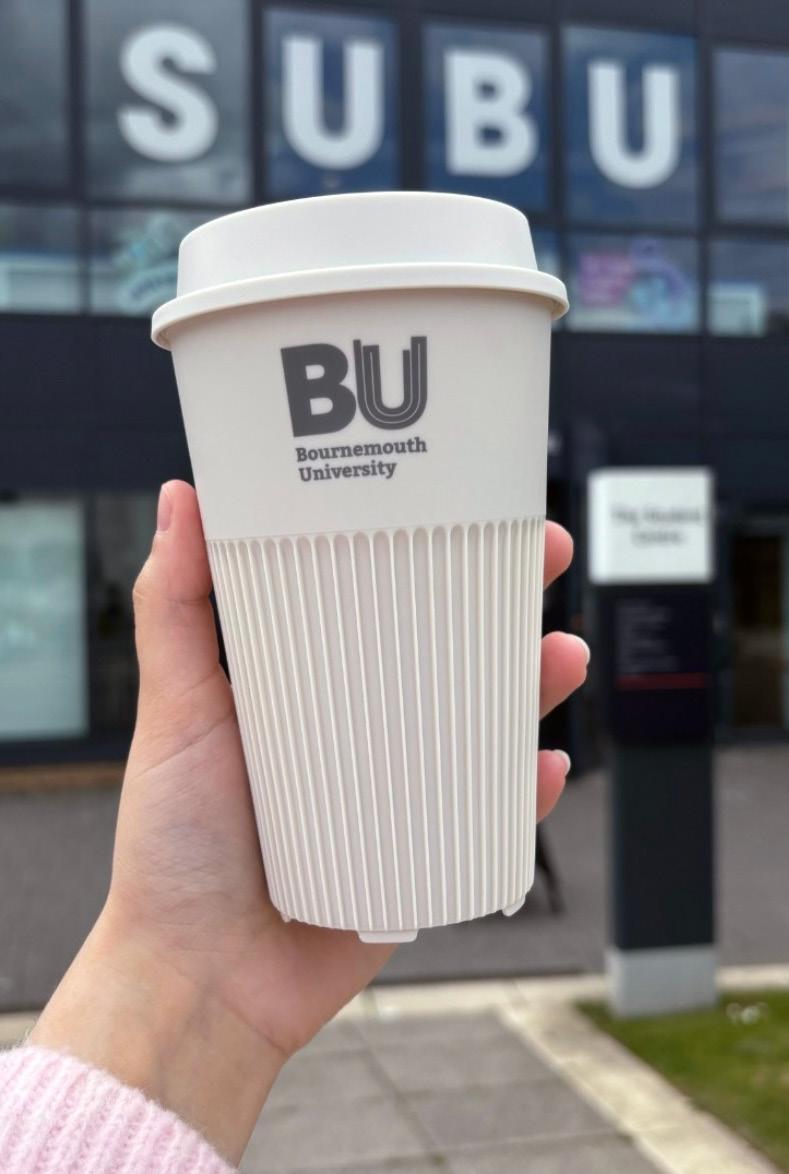
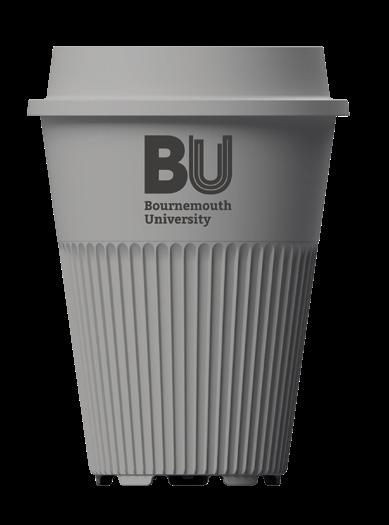
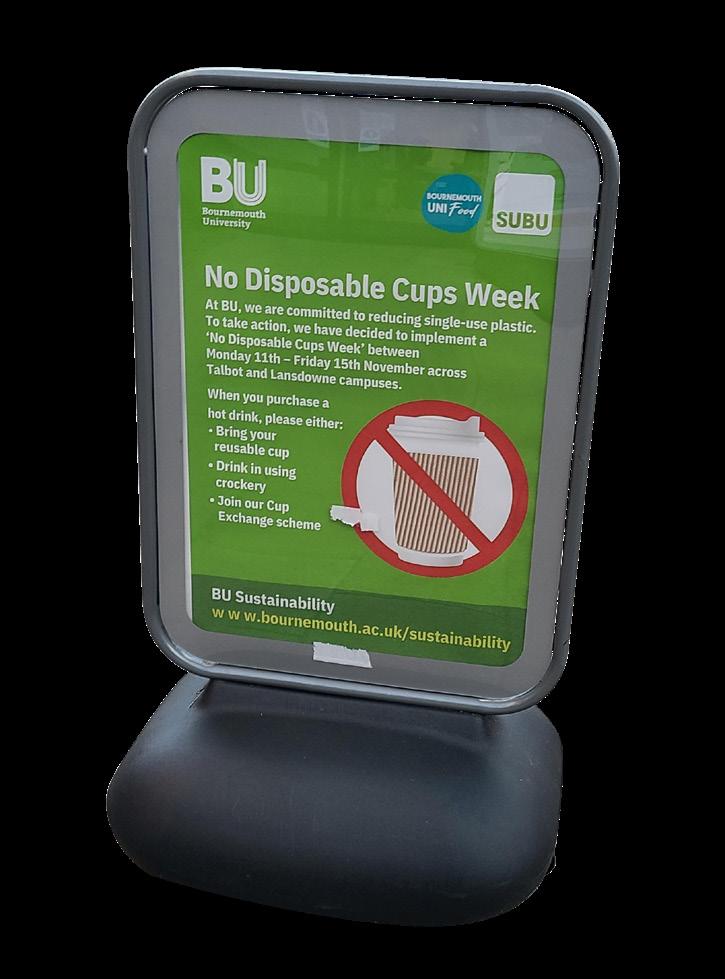
We decided to target the difficult item of disposable coffee cups. Although they look like paper cups, they are coated in plastic which makes them difficult to recycle in dry mixed recycling. We have focused on helping students and staff to avoid needing to buy a disposable cup. We have required customers to pay an extra 30p for a disposable cup for many years and we of course encourage drinking in with crockery, but we now have a circular system for cup rental. We have named this the ‘Cup Exchange Scheme’ and it helps by offering a convenient alternative cup. Customers can purchase a drink in a BU-branded reusable cup, return the used cup to a catering outlet in exchange for a token, and use that token next time to receive another clean reusable cup. To support this scheme, we launched ‘No Disposable Cups Week’ where we refused the sale of disposable cups to nudge people to either drink-in, bring their own cup, or join our Cup Exchange Scheme.
We also continue to deliver on our promise as a Refill Campus by promoting our 45 brightly coloured water refill points to encourage people to refill their own reusable water bottle rather than buying single use plastic, and we have expanded this to include signage near water bottles to let people know that a refill point is nearby, to encourage them to use that instead of buying water bottles.
4
Carbon Literacy for Healthcare
BU is a Bronze Carbon Literate Educator (CLE), and as part of this we are committed to embedding climate education and action into our teaching to support a cultural shift toward a lowcarbon society.
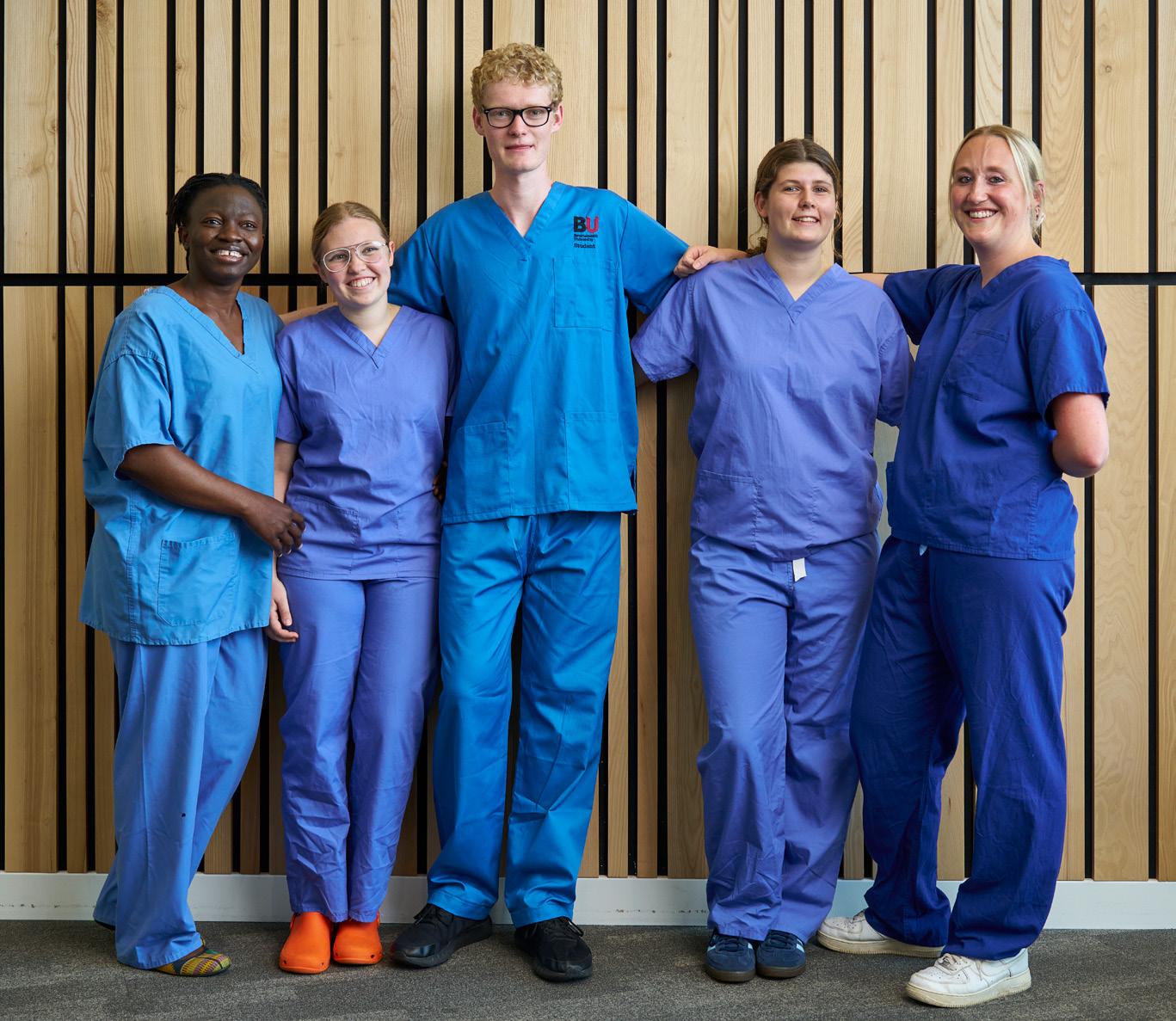
This year, we took that commitment one step further by rolling out the new Carbon Literacy for Healthcare toolkit, which is designed specifically for students and staff entering the healthcare sector. This course explores the critical link between climate change and healthcare, and how healthcare professionals can contribute to shaping a low carbon NHS that delivers exceptional care while safeguarding the health of future generations. This is excellent training for students who will be entering the healthcare sector after their degree qualifications with BU.
5Increasing our output of renewable energy from solar energy
It is fantastic to see strong performance from our on-campus solar PV systems this year. We now have 11 arrays which gives us an installed peak capacity of 788kW with a total of 2152 solar panels across Talbot and Lansdowne campuses. This year we were able to meet 8% of our total electricity needs from these solar panels which is a 1% increase from last year. The amount of electricity produced on site increased from 629.2 MWh to 702.7 MWh in 24/25. It was a sunnier spring and summer which helped us to generate more electricity, and the positioning of our new Dorset House array is optimal resulting in a very good output last year.
We are keen raise awareness among our students and staff of the amount of electricity we generate and provide links on our website to see the live data. Links are included in the picture below.
Number of modules (panels): 84
kWp: 95.2
Number
Poole House: Facilities block roof
kWp: 145.44
Number of modules (panels): 404
Edge monitoring
Jurassic House: Roof kWp: 22.4
Number of modules (panels): 56
Edge monitoring
Poole House: Tower kWp: 103.89
Number of modules (panels): 263 Solar Edge monitoring
Dorset House: Roof kWp: 80
Number of modules (panels): 236 Solar Edge monitoring
Fusion Building: Roof
of modules (panels): 276 Sunny Portal
Poole Gateway Building: Gantry above roof kWp: 108
Number of modules (panels): 300 Solar Edge monitoring
Poole House: Waste compound roof kWp: 41.4
Number of modules (panels): 120
Student Centre: South façade kWp: 27.47
Poole House: Bus Hub roof (solar glass) kWp: 16.38
To summarise our progress in numbers this table shows where we are against our KPIs for 2024/25
Reduction in GHG emissions across all scopes. Progress towards net zero.
kg CO2e per m2
per GIA across Scope 1 and Scope 2
by 2024/25, 50% by 2030/31
kgCO2e per m2 by 2025/26
On campus heat from renewable and low carbon sources No target in place
of total energy from renewable, low carbon and Zero Carbon purchased energy
of courses align to the UN SDGs
of units at each level of all programmes to have content which addresses the climate and ecological crisis
by 2025 academic year Top 2% Ranking against institutions in the Times Higher Education (THE) Impact Rankings 2024
Bournemouth
Objective 1: Demonstrating sustainable leadership
We aim to demonstrate sustainable leadership both internally and within the community. This means embedding the responsibility for climate action within all relevant policies and committees and ensuring that our procedures and reward processes recognise this priority.
We also hope to be a regional leader, supporting our local community and sector to act collaboratively, innovatively, and effectively to address the climate and ecological crisis.
It is our objective that staff across the University will align our governance structures with addressing the crisis and then commit to their implementation, even when facing challenges.
ISO14001 and ISO50001
Our Environmental and Energy Management System is the foundation of our university-wide work to embed environmental action and make continuous improvement every year. We are certified to EcoCampus Platinum level, and we are one of only a handful of universities to be externally certified to both ISO14001 and ISO50001 for environmental and energy management, respectively. The focus of ISO50001 particularly has in recent years helped us to secure the data we need to understand and target energy improvements and support business cases for investment. We continue to be externally audited annually, with combined audits for both environment and energy.
How the Sustainability Committee works
Our Sustainability Committee is responsible for our Environment and Energy Management System and reports directly into the University Executive Team. Committee members represent academic faculties, our students and Students Union, our staff unions as well as essential functions of IT, Procurement, Marketing & Communications and Estates. As a team the Committee works to challenge each other and provide a formal place to share sustainability leadership across BU. The committee reviews and approves all our environmental policies and proposals are regularly brought for support. We encourage student presentations to the committee to help us stay close to student ideas and feedback.
Working groups
Reporting to the Sustainability Committee we have working groups including the CECAP group, Biodiversity group, Sustainable IT group, Travel Plan Implementation Group and Fairtrade Group. Students and staff can join these working groups by getting in touch with sustainability@ bournemouth.ac.uk. This year we have made progress in the CECAP group to support development of our heat decarbonisation approach. Our Sustainable IT group have been working to track against our target of a 15% reduction in power consumption in our data centres to achieve by 25/26 (compared to 22/23) and so far, there has been a 14% reduction as of July 2025. Our Biodiversity Group were responsible for making our pledge to be a Nature Positive University and worked to deliver engagement projects for students and staff including using the iNaturalist app. Our Travel Plan Implementation Group have been developing a new Travel Plan to launch from next year to continue our progress to support active and sustainable travel.
Local climate partnerships
We continue to work with organisations in the Bournemouth, Christchurch and Poole (BCP) area and in the wider Dorset region to support each other on our sustainability journeys. We have continued to support BCP Council as a stakeholder in their Local Area Energy Plan (LAEP) which we look forward to seeing published in 2025. And we continue to be part of the Dorset Public Sector Decarbonisation and Ecology Group which has a public sector focus and as part of this group we are exploring collating a joint carbon footprint to see the joined up impact of our activities and identify how we can work together for improvements.
New Coastal Energy Partnership
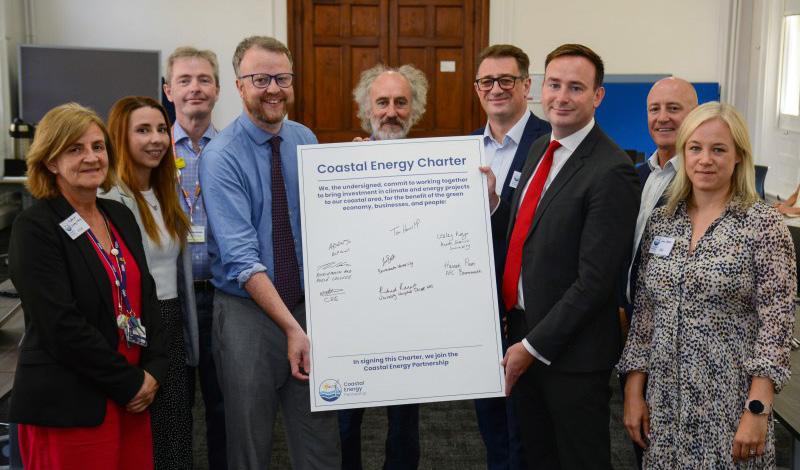
It has been exciting to be a founding partner of the Coastal Energy Partnership which aims to bring clean energy investment into our coastal region. Bournemouth University, alongside key leaders and regional businesses, signed a Charter to commit to work together to attract new funding, cut emissions and promote the region as an area of opportunity for energy and sustainability projects. The partnership has been convened by Tom Hayes, MP for Bournemouth East and other signatories include BCP council, University Hospitals Dorset, Bournemouth & Poole College, Health Sciences University and AFC Bournemouth. Read more in this article
Working with University Hospitals Dorset (UHD) for Climate Action
We have been close partners with UHD for several years and are increasingly working together to integrate sustainability across our organisations. We have continued to build links between the BU CECAP and UHD’s Green Plan.
Student Sustainability Council –get your voice heard
Our BU Student Sustainability Council brings together students from a variety of courses. This year they have provided a consistent stream of feedback on how we can better manage our approach to sustainability issues. The council act as student sustainability champions at BU, meeting regularly to discuss ideas, and take part in our Climate Fresk and Carbon Literacy training. The group has scope for students to pursue their own sustainability interests and find ways to work together to make change. We also launched a LinkedIn page for the council to help share progress and enable the student members to display their work with the council on their profiles to boost employability.
If you are a student interested in joining, please email: sustainability@bournemouth.ac.uk
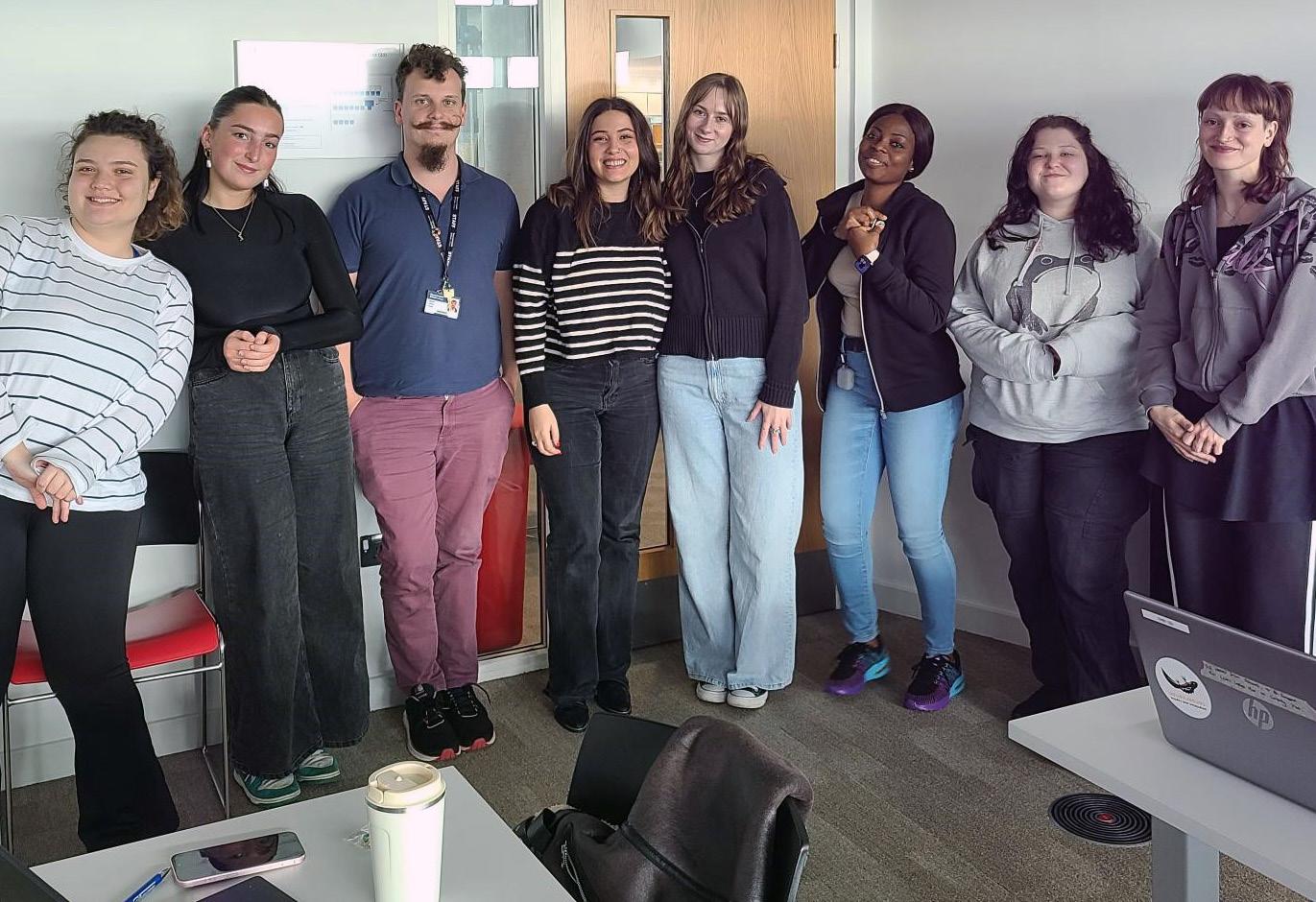
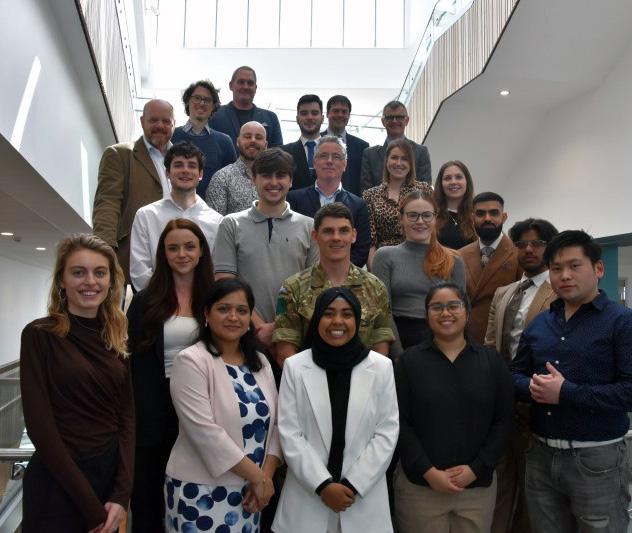
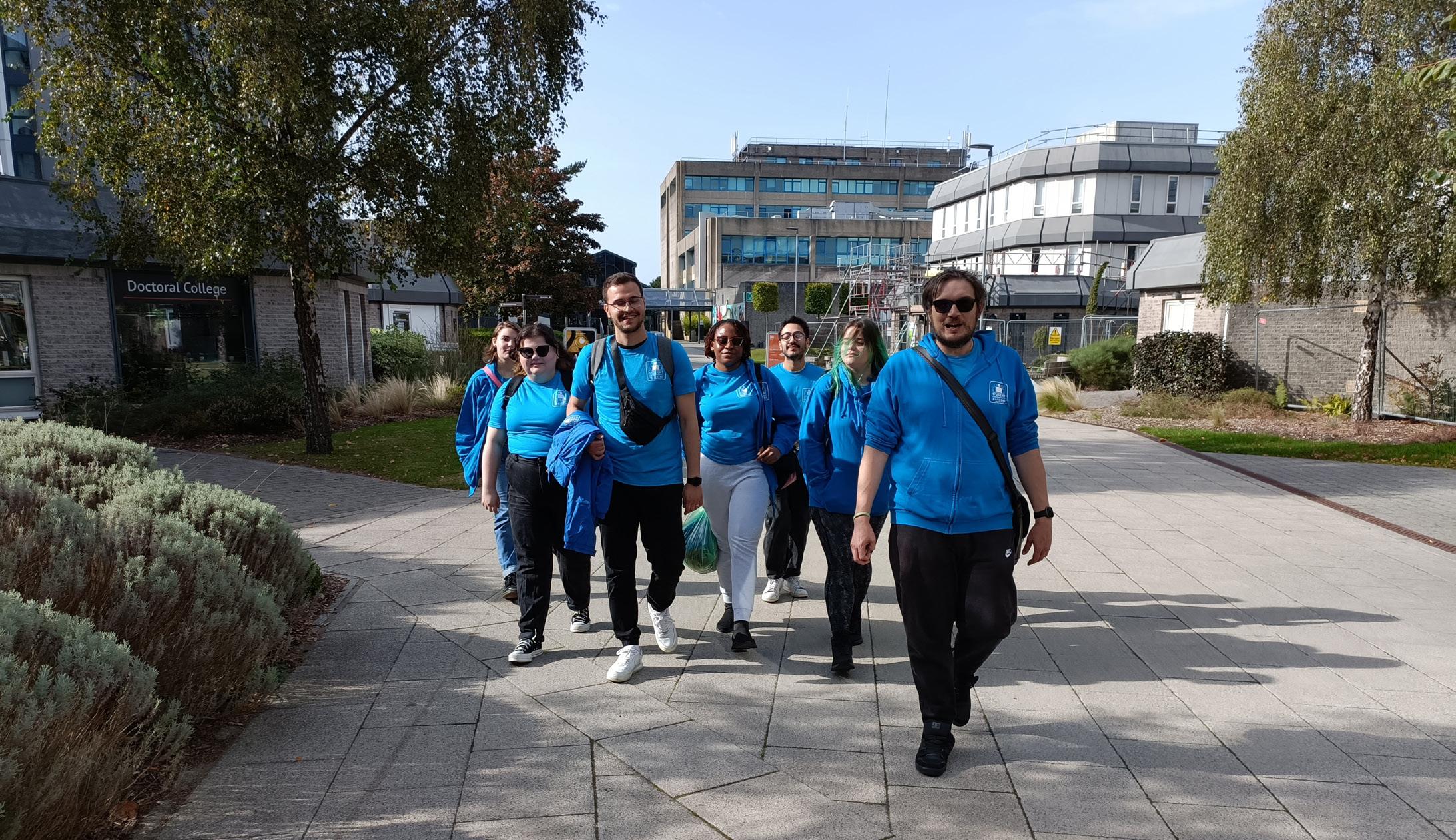
BU Student Sustainability Council members, Irmak Kuluk, Robyn Bailey, Nathan Auger, Esma Turkmani, Hannah Ireland, Martha Davis, Faith Murray, and Jodie Gaskell.
Objective 2: Aligning education and research with our climate response
We aim for our education and research to both align with the crisis through course content, research outcomes and the way we deliver these.
Education
Target: all programmes to include the climate and ecological crisis in at least one unit per level (year) by 2025/26. In 2024, we repeated our comprehensive mapping to measure how many of our courses align to the climate & ecological crisis. Overall, 69% of our programmes included content around the climate & ecological crisis at every year of study, as per the CECAP aim. Of note, 84% and 77% of our programmes in the BU Business School and Faculty of Science & Technology, respectively, achieved this aim. Our target was to reach 100% by 2025/26.
69% 91% courses aligned to climate and ecological crisis at every level programmes aligned to the climate and ecological crisis
To support our academics to achieve this aim, we continued to use a bespoke area on Brightspace, our academic portal, with resources, training and guidance for academics. This space is used to share case studies of embedding the climate & ecological crisis across the whole university, and during course re-validation to ensure that it is embedded at every level. The Sustainability Academic Network also host termly meetings to network, share case studies, and give advice to fellow academics.
Bournemouth University Business School example:
Dr Phyllis Alexander, an Associate Professor in Accounting and Taxation, ensures all her teaching incorporates the climate crisis and sustainability given its professional and societal importance. Taxation is a powerful policy tool that can incentivise sustainable practices, discourage carbonintensive activities, and support green innovation, therefore today's accountants need a high-level understanding of the implications of sustainability and to integrate them into financial analysis. By integrating these themes, students develop a deeper understanding of how fiscal policy can address climate challenges, promote social responsibility, and drive equitable transitions to low-carbon economies.
Dr Phyllis Alexander said, “Our graduates, regardless of course-discipline, ought to realise their potential in driving a cultural shift towards resilience and sustainability for their future employers. It is gratifying to see sparks of passion in students debating current and proposed environmental tax policies.”
Research
BU academics are working to further understanding and awareness of how we can most effectively tackle the climate and ecological crisis and support our global ecosystems. Here are some of the research projects we have been part of in the past academic year:
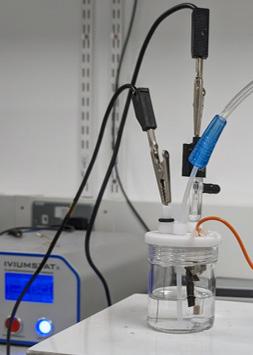
OcenGen: PhD student startup project pioneering green hydrogen production
A team of forward-thinking researchers from BU are breaking new ground in the sustainable energy sector. Founded by PhD researcher Shadeepa Karunarathne, OcenGen focuses on developing next-generation low-cost, high-performance electrocatalysts to support green hydrogen production.
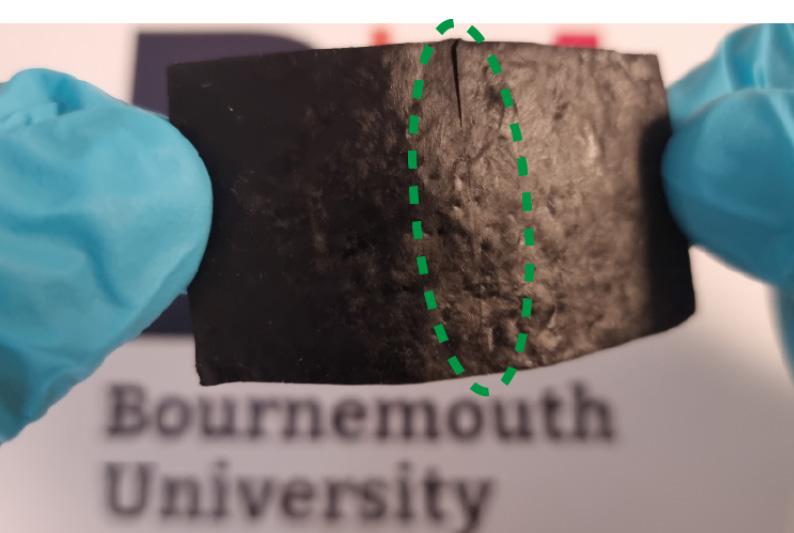
Self-repairing plastics close the loop in a circular economy by reducing the need for replacement.
Self-repairing plastic: developing plastic that can fix itself
A research team led by BU have developed a new type of plastic that can self-heal after it has been cracked or broken. They achieved this by mixing a material called MXene with various other chemicals to create a healing agent with glue-like properties, and added it to plastic samples. The healing agent sits dormant like a gel until the plastic is broken, and it is exposed to the humidity in the atmosphere, at which point it is activated and bonds the broken sections back together.
This advancement could pave the way to a broad range of new devices that could last longer by repairing themselves, which will contribute to a reduction in plastic waste.
Dr Amor Abdelkader, Associate Professor in Advanced Materials said, “We are following the same process as Mother Nature - when you cut your finger, the blood will initially solidify to cover the crack until the skin tissue seals it, and that is what we are doing with our plastics”.
Central to OcenGen’s innovation is the development of advanced electrocatalytic materials using earthabundant transition metals, designed to work efficiently under mildly alkaline and seawater conditions. This makes the technology an ideal fit for Anion Exchange Membrane (AEM) electrolysers, offering a costeffective and scalable alternative to the Proton Exchange Membrane (PEM) systems, which rely on expensive and scarce metals.
Producing hydrogen using seawater offers a clear pathway for offshore and coastal applications.
This innovative project has been selected to join Cohort 8 at Conception X, a UK-based program that helps PhD students become deep tech entrepreneurs by supporting them in transforming their research into startup ventures.
Shadeepa said “This marks a significant milestone in translating our laboratory research into commercial reality. Our catalyst technology has the potential to revolutionise the green hydrogen sector by reducing material costs and enabling large-scale, sustainable hydrogen generation”.
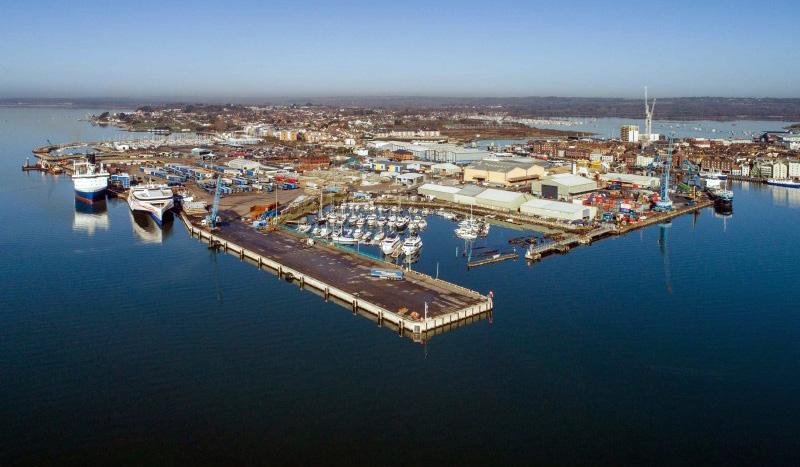
Decarbonising the Port of Poole: a roadmap for reaching net zero by 2050
Academics from the BU Business School have contributed research and strategic expertise towards the development of a Decarbonisation Plan for the Port of Poole.
This plan, developed by Poole Harbour Commissioners (PHC) in collaboration with BU, tenants on the Port Estate, BCP Council, and Royal HaskoningDHV, sets out a roadmap to achieving net zero by 2050. Baseline emissions calculations revealed that marine vessel emissions contributed to approximately 70% of total emissions, followed by buildings, road traffic, and port operations. Therefore, key actions incorporated into the plan include the adoption of alternative fuels, electrification of port operations, and improvements in energy efficiency. It also places emphasis on collaboration with local stakeholders.
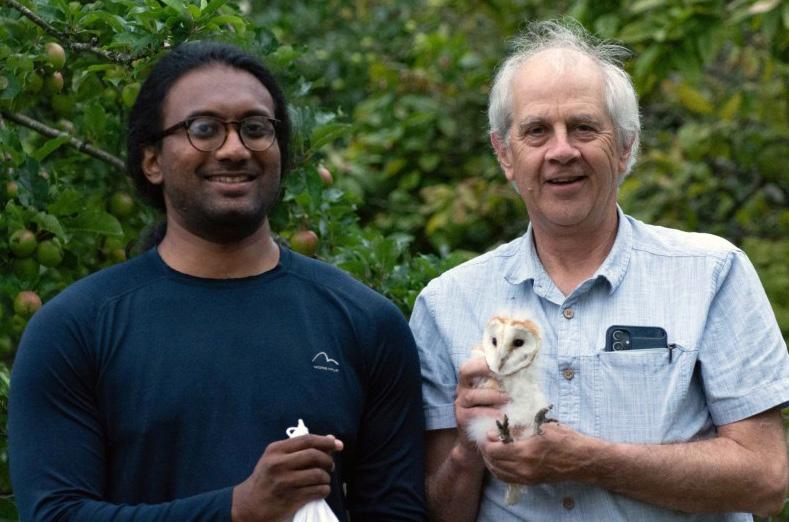
AI technology for conservation: tracking baby barn owls
PhD student Kavisha Jayathunge has been working alongside Brian Cresswell, a biologist-turnedelectronics engineer, to develop an AI model to monitor the breeding success of barn owls in Dorset.
The model works by calculating the number of owls in the vicinity by distinguishing between their individual calls. The distinctions in sounds cannot be heard by the human ear, however the technology is able to pick out the differences in frequency and indicate the number of birds, as well as each individual bird’s identity. The long-term aim of the project is to develop the technology so that volunteers and conservationists can take their audio recorders out into nature to
CECAP actions addressed: ES1.1, BH2.3, DI1.1
The Port of Poole is a significant contributor to the regional economy. Reaching net zero will require careful planning, coordination, and accountability.
Dr Mili Shrivastava, Deputy Head of the Centre for Sustainable Business Transformations at BU, said “This project at the Port of Poole showcases the power of collaboration and a shared commitment to decarbonisation”.
capture the sounds of hissing owlets at their nests.
Kavisha said, “By making barn owl nest monitoring more scalable and
less invasive, we hope this project can contribute to better long-term outcomes for the species”.
Bringing AI and ecology together shows that technology can be used for good.
Practice
Hacking 4 Sustainability: students solve real-life sustainability problems in the Ministry of Defence
For the fourth consecutive year, our Business & Management students have had the opportunity to create new solutions to real-world challenges for the Ministry of Defence (MoD), as part of the Hacking 4 Sustainability module.
This year, the students were tasked with interviewing more than 60 MoD personnel to guide recommendations for modernising training and education delivery for defence. One MoD challenge sponsor said, “The Royal Marines pride themselves on high standards, and appropriate recruitment in critical. This work will act as a springboard for us to develop our thinking and evolve our recruitment methods in the future”.
Dr Mili Shrivastava, unit leader for this module said, “For students, it’s more than a unit - it’s a hands-on experience that builds real employability. For partners, it’s a chance to collaborate with the next generation of strategic thinkers and innovators”.
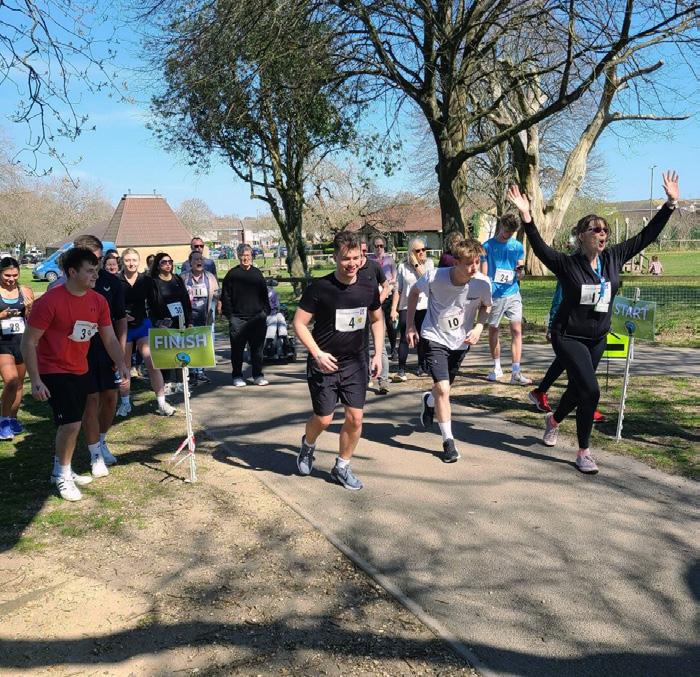
Sport Management students coordinate a Fairtrade Fun Run to raise money for Fairtrade BU have been a Fairtrade University since 2006. In 2024, we recertified as the only 3-star Fairtrade University in the UK. This year, two of our Sports Management students led the organisation of a Fairtrade Fun Run at Slades Farm next to our Talbot Campus, with support from the BU Sustainability Team, SportBU, the Student’s Union, and the Fairtrade Foundation.
The event was attended by a mix of students and staff. The top three winners received a Fairtrade hamper filled with Fairtrade goodies, put together and donated by our catering provider Chartwells.
This enabled a cohort of our students that would not typically explore the topic of ethical consumption under their field of study, to learn about Fairtrade. It also gave them the opportunity to use their passion and unique skill set in sport and event management to raise awareness of Fairtrade and social justice issues.
Students from the Faculty of Science & Technology use our campus as a living lab
Level 5 students studying Geography, Environmental Science, Ecology and Wildlife Conservation, Biological Science and Anthropology are given the task of creating and implementing a real project on campus to help progress BU’s sustainability objectives, as part of their Environmental & Societal challenges unit.
The BU Sustainability Team act as the client, providing a campus tour for the students and an overview of the sustainability challenges we face at BU to help set the scene. The students are then asked to choose a key sustainability topic and develop a project or campaign to address it.
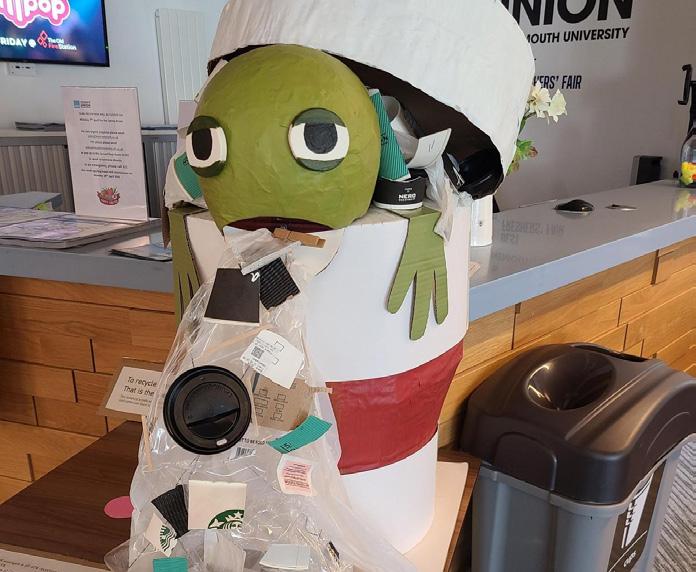
Ecology & Wildlife Conservation student, Rupert Abbott led their team on the creation of a ‘coffee cup monster’ art display, designed to raise awareness of the issues associated with disposable coffee cups. The structure was positioned in our Student Centre, and students were surveyed after a few weeks of having it displayed to identify any behaviour changes.
MBA students explore how BU can improve the sustainability of our banking and future investments
The banking and finance sector can contribute significantly to climate change by providing financial support and investing in the fossil fuel industry. BU does not have any investments at the moment, so we do not need to ‘divest’ away from fossil fuels, however some of our cash could be used in a better way. Our MBA students were given a project brief to provide recommendations for how BU can better invest its cash to avoid supporting fossil fuel extraction and to support more environmental and socially sustainable activities. The students were encouraged to reference BU’s Ethical Investment and Banking Policy, and to evaluate the sustainability reporting of a UK bank. They were also provided with resources from SOS UK to learn about this topic.
We are preparing our BU Business School students to tackle today’s pressing challenges.
The Fairtrade Fun Run raised £140 for the Fairtrade Foundation.
Students created a coffee cup monster to communicate that disposable cups cannot be recycled on campus.
Objective 3: Implementing nature-based solutions
Our CECAP actions include identifying opportunities to support nature, encouraging students and staff to connect with nature and incorporating nature into education and research.
This year, we made our pledge as a Nature Positive University. This means we have pledged to prevent harm, protect and restore species and ecosystems that are affected by BU and its activities, and we want to further develop our actions and work together with other institutions to promote nature on our campuses, in our supply chains and within our local community.
Ecological surveys
Since we carried out ecological surveys in summer 2022, we have continued to implement the recommendations for improvement across all our campuses. The species found in the surveys were added to the NBN atlas for the public to freely access.
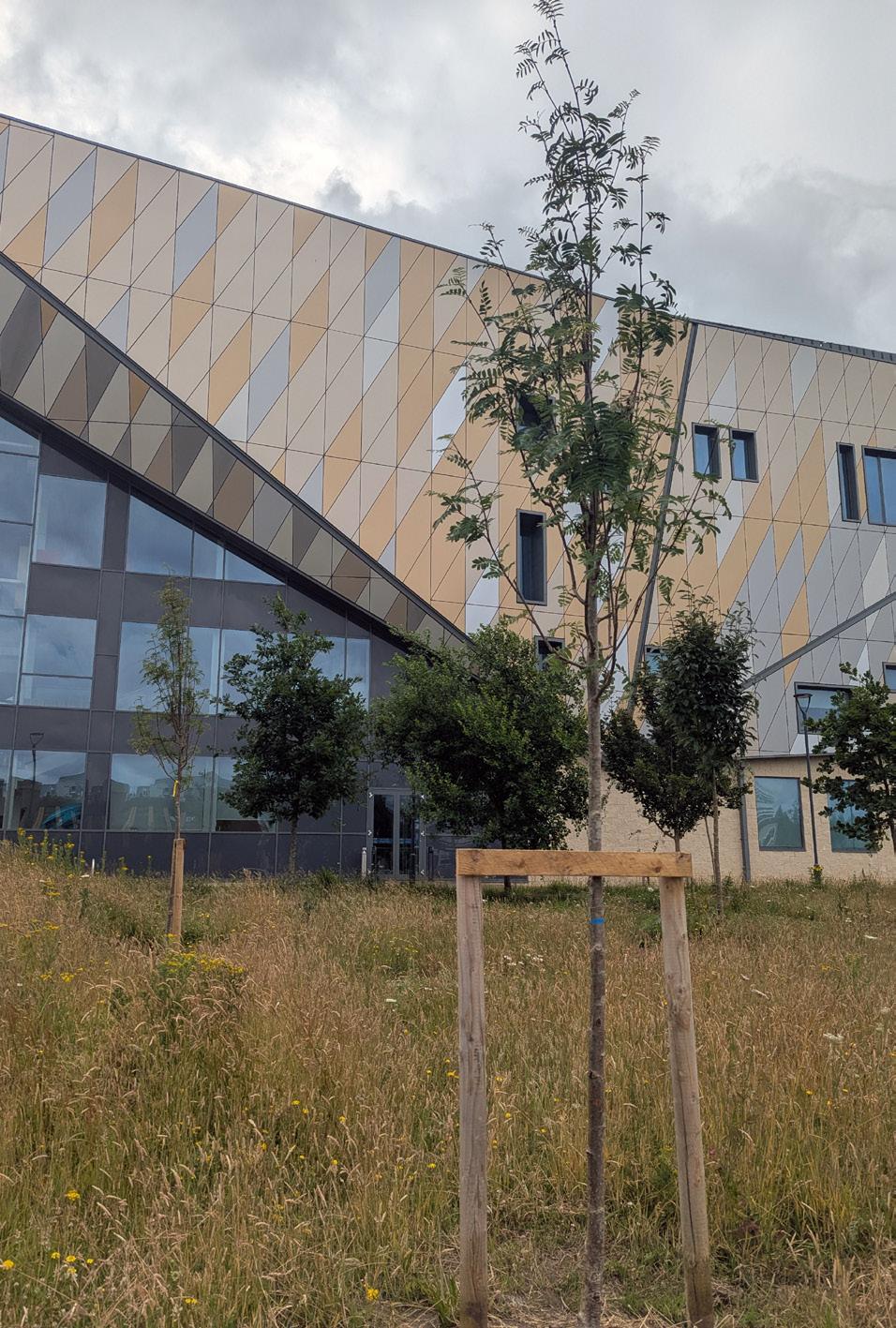
This year, BU funded the planting of five new Rowan trees in front of Poole Gateway Building on our Talbot Campus. This species was chosen to meet the recommendations from our ecological surveys.
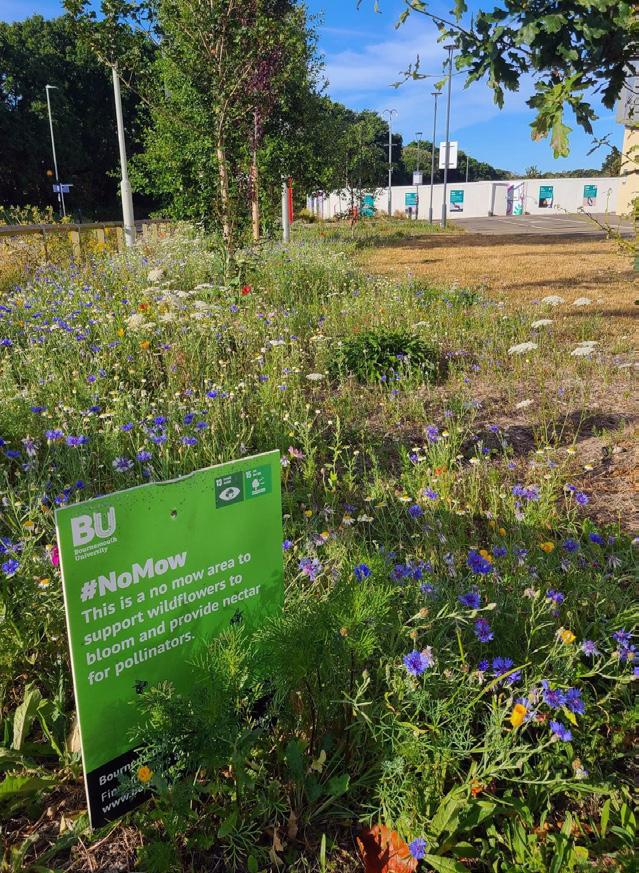
#NoMowMay
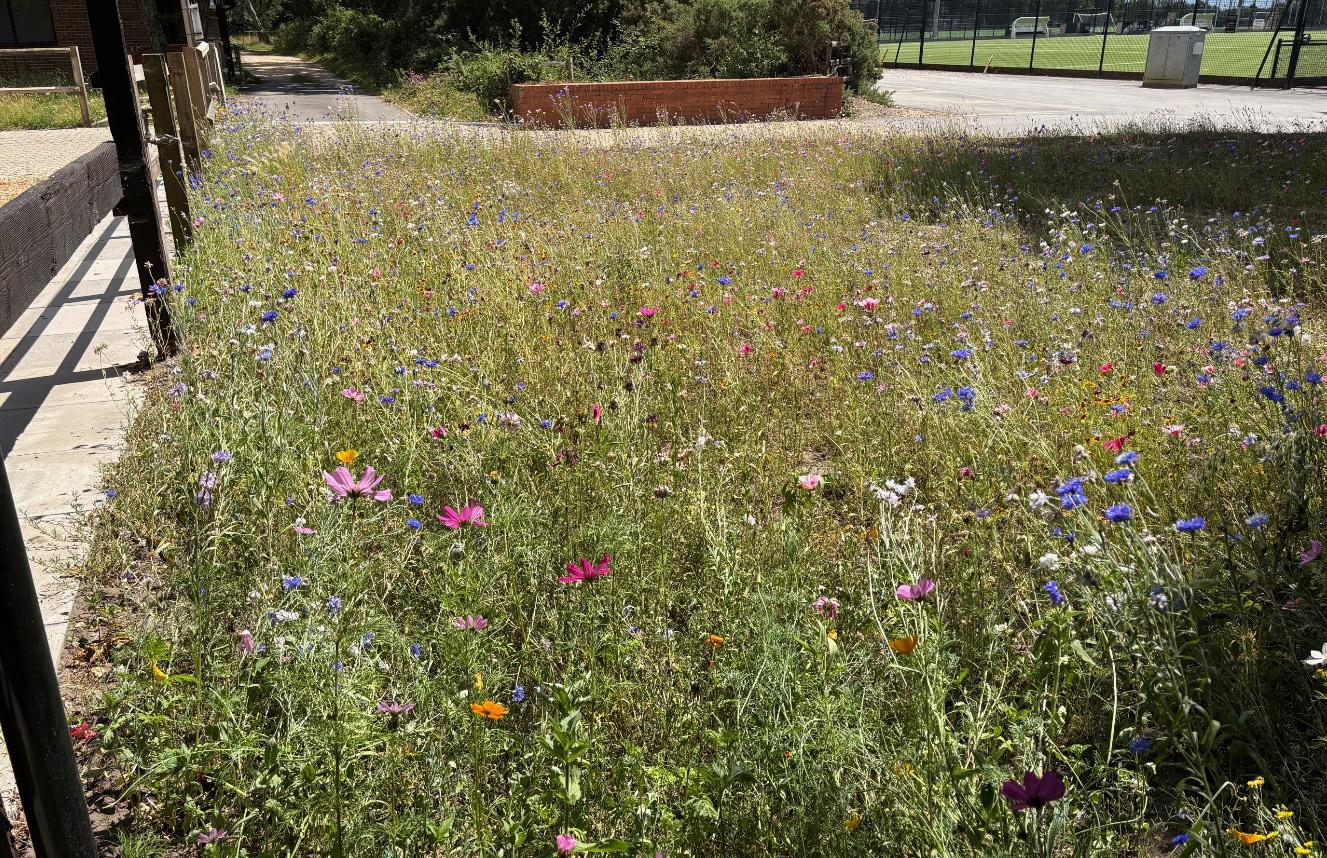
Once again, over 50% of our campus was allocated for No Mow May. This national campaign, led by Plantlife, encourages individuals and companies to leave areas un-mowed during May to support wildflowers to grow and better support pollinators. We have planted wildflowers at both ends of our Talbot Campus for our students, staff, and visitors to enjoy as the arrive at BU for the day. We have also planted wildflowers at our Chapel Gate sports site for our community to enjoy while participating in sport activities. Find out more about the nature connection area on the Chapel Gate here
We plant wildflowers to support pollinators and our community well-being.
We
Some of our new Rowan trees!
plant wildflowers to support pollinators and our community well-being.
The BU BioBlitz!
This year, we have been exploring how technology can be used to encourage connection with nature. We have had our campus mapped by the Campus Biodiversity Network, which means that any plant and animal species spotted on our Talbot, Lansdowne and Chapel Gate campuses can be recorded on a map and identified using the iNaturalist app.
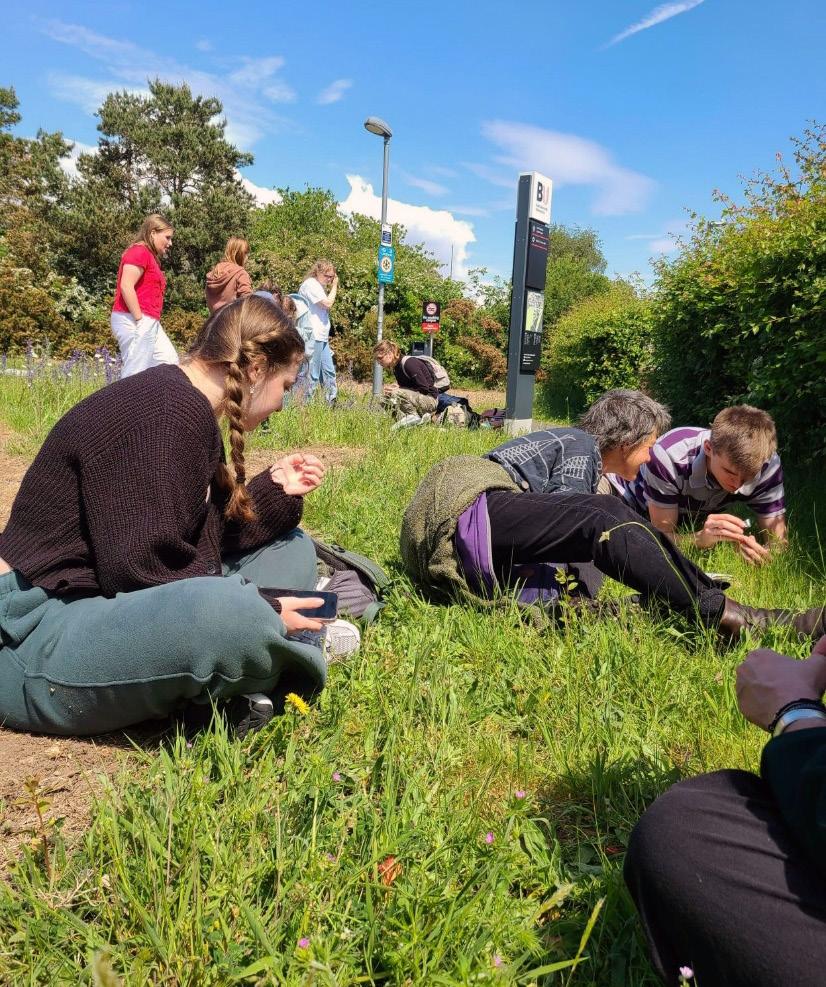
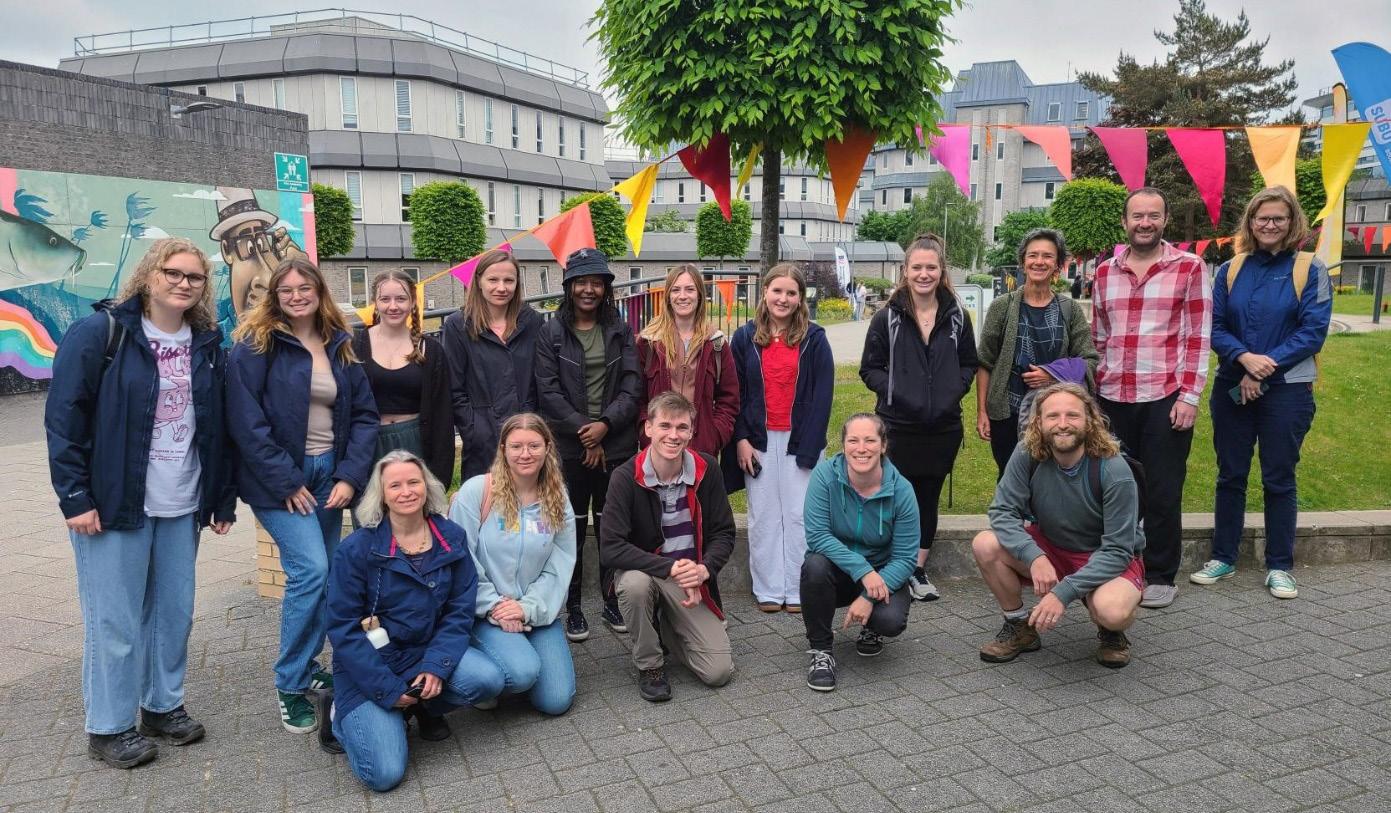
In May 2025, we ran our first BU BioBlitz to encourage our students and staff to record as many species on our campus as possible with a set time period using iNaturalist. Academic experts from the Faculty of Science & Technology coordinated a series of wildlife surveys to uncover a broader variety of species, and help our students to learn new fieldwork techniques.
174 Number of species identified during the BioBlitz 2025
Anyone in the community can download the iNaturalist app and contribute to this living record of our campus biodiversity. You can learn about the different species found on our campuses by visiting our Bournemouth University iNaturalist Project page
Students and staff in the BU BioBlitz team!
Our students learning new wildlife-surveying techniques from academic experts.
Growing food on campus
This year, we have seen a surge in food growing initiatives across our campus designed to produce nutritious food and feed our community in a sustainable, resourceful way.
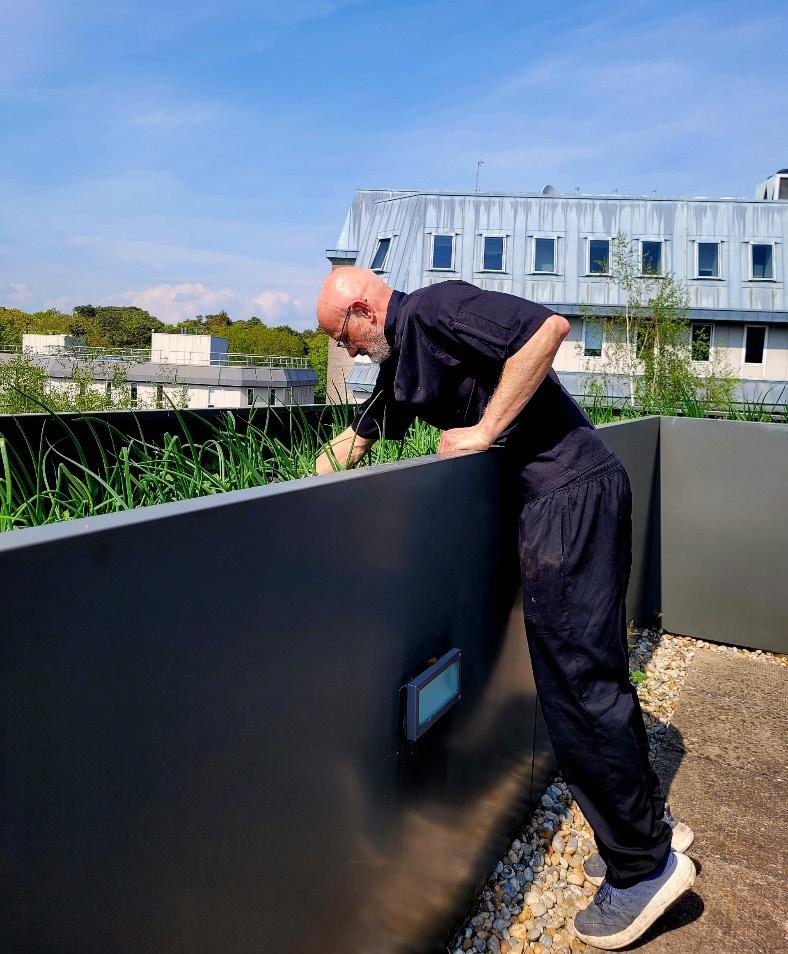
Our catering provider, Chartwells, have planted a new herb and vegetable patch in the raised beds on the roof terraces of the Fusion Building at Talbot Campus. The Head Chef and the team have planted onions, garlic, carrots and mint, which will be used as ingredients in recipes sold in the building. In addition, some of the compost used to enrich the soil comes from an on-site composter, which uses food waste produced on campus.
Chartwells Head Chef, John Barrow, said, “With the ever-changing world around us and consumption going up every day, it’s great to be able to use nature to bring down waste and grow food at the same time, something I hope will become more common in the future with other food businesses”.
Using compost for growing food is a great example of how you can turn waste into a resource.
All produce grown in the garden will be used to supply the SUBU Community Kitchen - a place for students in need to access nutritious food.
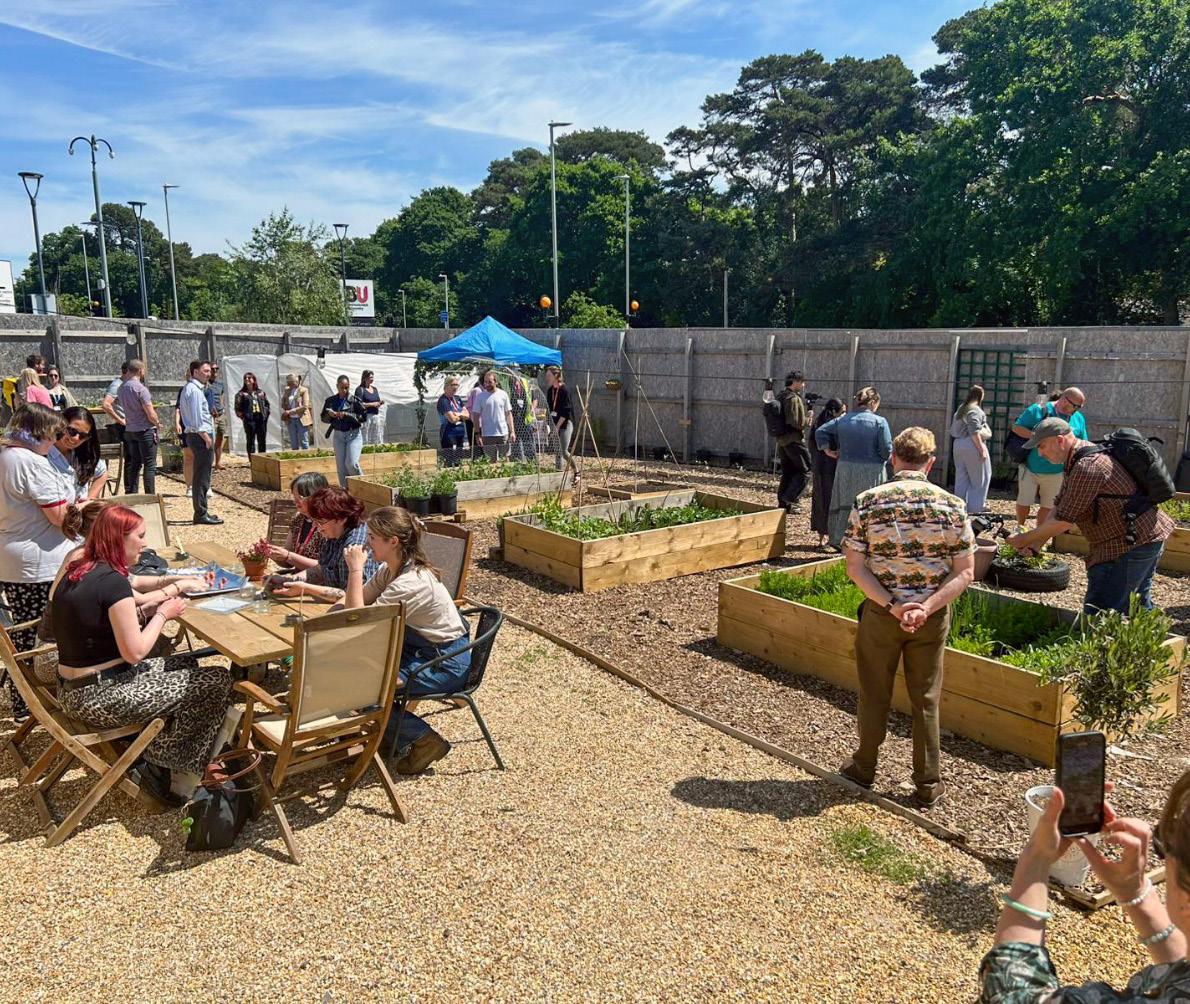
BU Students' Union have developed a new Community Garden on our Talbot Campus, supported by grants from BU Estates and support from the local community.
This project has seen the transformation of an unused plot of land into a thriving space for growing fresh, seasonal, and chemical-free fruit and vegetables, and for our students, staff and the community to learn food growing skills. Drop-in volunteering sessions are available for anyone in the community to gain some experience and help to maintain the garden.
SUBU Advice and Support Manager and driver of the Community Garden project, Chloe Lockett said, “By opening the allotment we are taking a proactive step toward creating a more resilient and supportive campus environment”.
Our pledge as a Nature Positive University
This year, we have taken the next step in our journey to support nature by joining 500 other educational institutions to pledge to be a Nature Positive University (NPU). The NPU was founded by UNEP and University of Oxford in partnership with the United Nations Decade on Ecosystem Restoration.
For BU, this means we have pledged to prevent harm, protect and restore species and ecosystems that are affected by BU and its activities, and we want to further develop our actions and work together with other institutions to promote nature on our campuses, in our supply chains and within our local community.
Rainwater harvesting
Wildlife cameras to support nature connection
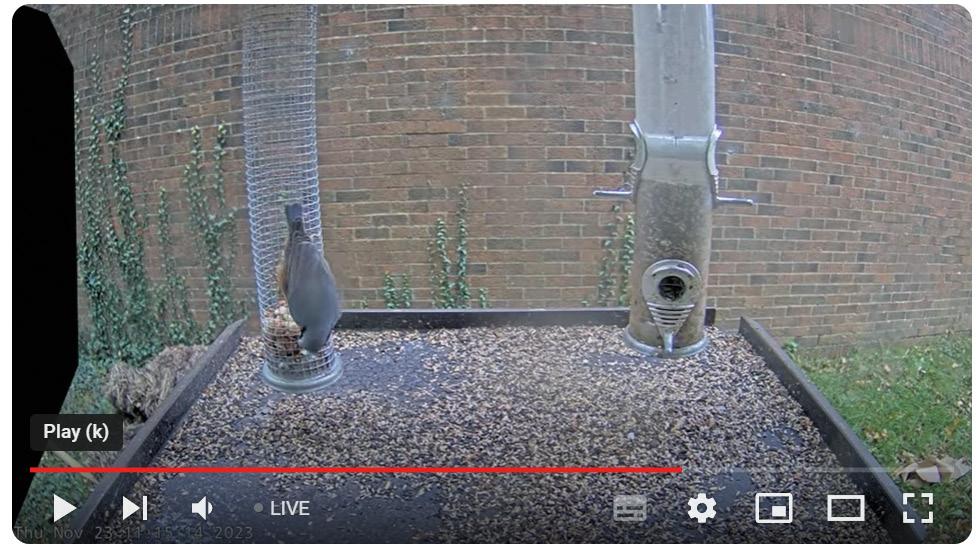
We continue to monitor the bird feeding station with a camera at our sports campus Chapel Gate. You can access the live stream from this camera and see birds coming and going from your computer screen.
Video snapshot from our live bird feeding station at our sports campus.
In 2024-25, 946,737 litres of water were collected from rainwater harvesting in Poole Gateway Building, Bournemouth Gateway Building and the Fusion Building. This is a decrease of 28% compared to last year and corresponds to the 2024/25 year having had lower rainfall (-32%) compared to 2023/24 as well as some technical issues with the systems.
CECAP actions addressed:
Objective 4: Reducing GHG emissions through engagement and behaviour change
We aim to mobilise the BU community to actively engage with and support our CECAP objectives by developing and implementing a range of inspiring and educational opportunities. Parts of our carbon footprint are heavily determined by student and staff behaviours so we are improving our campuses to make sure sustainable options are easier, more accessible, and more attractive so they can use their choices to make a difference.
Sustainable food
Our catering provider, Chartwells, has been awarded the 3-star Food Made Good Award by the Sustainable Restaurant Association. The award recognises excellence across three key pillars: sourcing, society, and the environment. Chartwells has also introduced a Carbon Labelling system on campus, using A–E ratings and a traffic light colour scheme aligned with the EAT-Lancet Commission’s global carbon budget. This helps our community better understand the carbon impact of the hot food options available at BU.
In 2025, Chartwells took further steps to encourage more sustainable food choices on campus. They matched the price of plant-based milks with dairy milk and supported the global Veganuary campaign by offering discounted vegan smoothies and food items and promoting the Veganuary workplace challenge to staff.
Fairtrade University
We are proud to be the only university in the UK to have achieved the Fairtrade Award 3 stars for the Fairtrade Universities & Colleges (FTUC) scheme for the 2022-24 cohort, ran by SOS-UK and the Fairtrade Foundation. This award recognises the commitment and actions of BU and our Students’ Union to embed Fairtrade and ethical practices into our procurement, our curriculum, and research. We have also hosted a series of events and campaigns during this period to raise awareness of Fairtrade, including a Fairtrade Fun Run and a chocolate tasting with Tony’s Chocoloneys.
Waste: our approach
At BU, we acknowledge that recycling is important, however we choose to focus more on preventing the creation of waste in the first place. To reflect this commitment, we focus on the action to reduce waste produced per person (WS1.4). Our target is to produce less than 20kg of operational and residential waste per FTE per year (this excludes construction activities).
Our total waste produced on campus, in our Student Village, and from construction activities was 371.1 tonnes. This is a 28.5% decrease from last year (518.7 tonnes in 2023-24), primarily due to a reduction in construction activity.
To break this down, our waste produced on-campus was 288.5 tonnes and we recycled 60% of it. In our Student Village, we produced 41.9 tonnes and recycled 50.5% of it. For our construction activities, we produced 40.7 tonnes and recycled 93.7% of it.
In 2024-25, we achieved 15.1kg waste per FTE/year which is below our target of 20kg/FTE. But compared with last year this is a small increase (14.6kg FTE/year in 2023-24). Despite having a lower staff and student numbers for the year 2024-25, we didn’t see a corresponding reduction in the amount of waste produced on campus.
371.1 tonnes 15.1kg 62.2% of waste produced of waste produced per FTE per year (excluding construction) recycling rate
Food waste
Chartwells continue their work to reduce food waste by using Too Good To Go, a food-sharing scheme redistributes unwanted food items that would go to waste for a reduced price. Food waste produced in our kitchens on campus that cannot be redistributed is fed into our on-site composter, which uses heat and rotation to create nutrient-rich compost used on BU grounds. All remaining food waste is sent to an anaerobic digestion facility in Dorset, Hampshire, or West Sussex.
This year, the UK government introduced new Simpler Recycling legislation to make recycling easier and more consistent across the country. As part of this, our students living in the Student Village were required to begin separating out their food waste. To support this transition, we provided new food caddies with clear signage and hosted a campus information stand to raise awareness and answer student questions.
25.7 tonnes 1.6 tonnes 2,625 meals Of waste food waste sent for anaerobic digestion Of food waste composted on-site Re-distributed since joining Too Good To Go
Prevention
The waste hierarchy teaches us that preventing waste is more efficient and sustainable than having to deal with it after is has been created. Guided by this philosophy and the principles of a circular economy, we have worked closely with our catering provider, Chartwells, to develop and implement our own Cup Exchange Scheme. How does it work? Customers join the scheme for just £3.95 and receive their drink in a BU-branded reusable cup. When finished, they hand the dirty cup back to the café for washing, in exchange for a token. Next time they buy a drink, they swap the token at the point of purchase in exchange for another reusable cup. This scheme helps to reduce the sales of disposable coffee cups.
This year, we introduced our ‘No Disposable Cups Week’ initiative to encourage students, staff, and visitors to drink in, bring a reusable cup, or take part in our Cup Exchange Scheme. For one week, three times a year, our café teams do not offer disposable cups wherever possible. This approach prompts customers to reconsider their habits and to consider
the alternative, more sustainable options available on campus. The impact of No Disposable Cups Week has varied throughout the year. When the initiative was first trialled in June 2024, only 12% of drinks were served in disposable cups — a significant improvement from 88% during the same week in June 2023. This success is likely linked to the quieter summer period, when fewer students are on campus and being the first time we tried this approach it had a very big symbolic impact. During term time, with higher footfall, implementing the initiative becomes more challenging and this trend is reflected in our data. Moving forward, we’re exploring ways to strengthen the delivery of No Disposable Cups Week during busier times, to ensure the initiative remains practical and impactful year-round.
Disposable and non-disposable cups sales during No Disposable Cups Week in 2024-25, compared with 2023-24
To encourage our staff and students to bring their own reusable water bottles, we partnered with City to Sea CIC to become the first ‘Refill Campus’, signifying our commitment to ridding our campus of single-use plastic. We have also branded our 45 free water refill points with bright, eyecatching artwork to make them easy to find on campus.
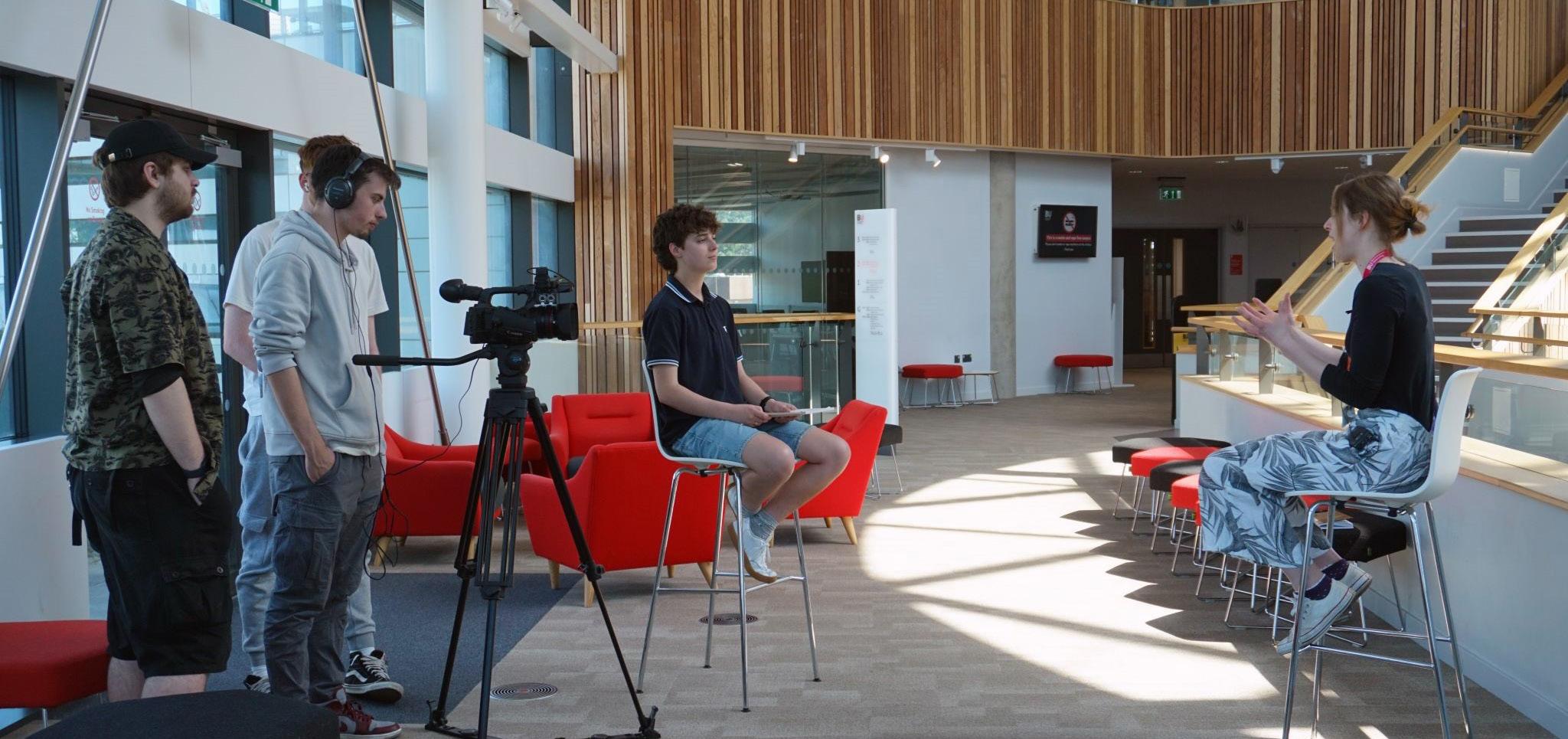
Media Production students produced a short documentary to raise awareness of SDG 6: Clean Water & Sanitation, featuring our Refill Campus.
Reuse
We have a variety of systems, partnerships, and schemes in place at BU that enable us to redistribute our unwanted resources for reuse and support our community.
SUBU’s Big Give is an annual sustainability campaign which collects and donates unwanted student items to charities before they move out. This year, the Big Give collected over 4,259 bags of unwanted items which were donated to the British Heart Foundation, raising £16,290. During freshers fair, the charity come back onto campus to resell donated items. This raised an additional £976.
Our library books that no longer serve a purpose to our students or staff are collected by Anybook, who collect,
4,259 bags
store and sell the books onto others. Most of our unwanted IT equipment is collected by Stone Technologies Ltd, who refurbish and redistribute electrical items. This year, we worked with Stone to coordinate an IT amnesty to give our students and staff the opportunity to drop-off their unwanted IT equipment from home.
We also donate our unwanted furniture to local organisations and schools, including the Samaritans, AIM Community, Wimborne Town Football Club, Twynham School, and St Aldhelm’s School. All recipients were highly grateful for the donations.
£17,266 6.21 tonnes
Collected and donated as part of the Big Give Raised for charity as a result of the Big Give Of IT equipment re-distributed for re-use
12.9 tonnes 5 cycle hoops 70kg of books
Of furniture donated to local schools and organisations
Donated to a local school Sold for re-use through AnyBook
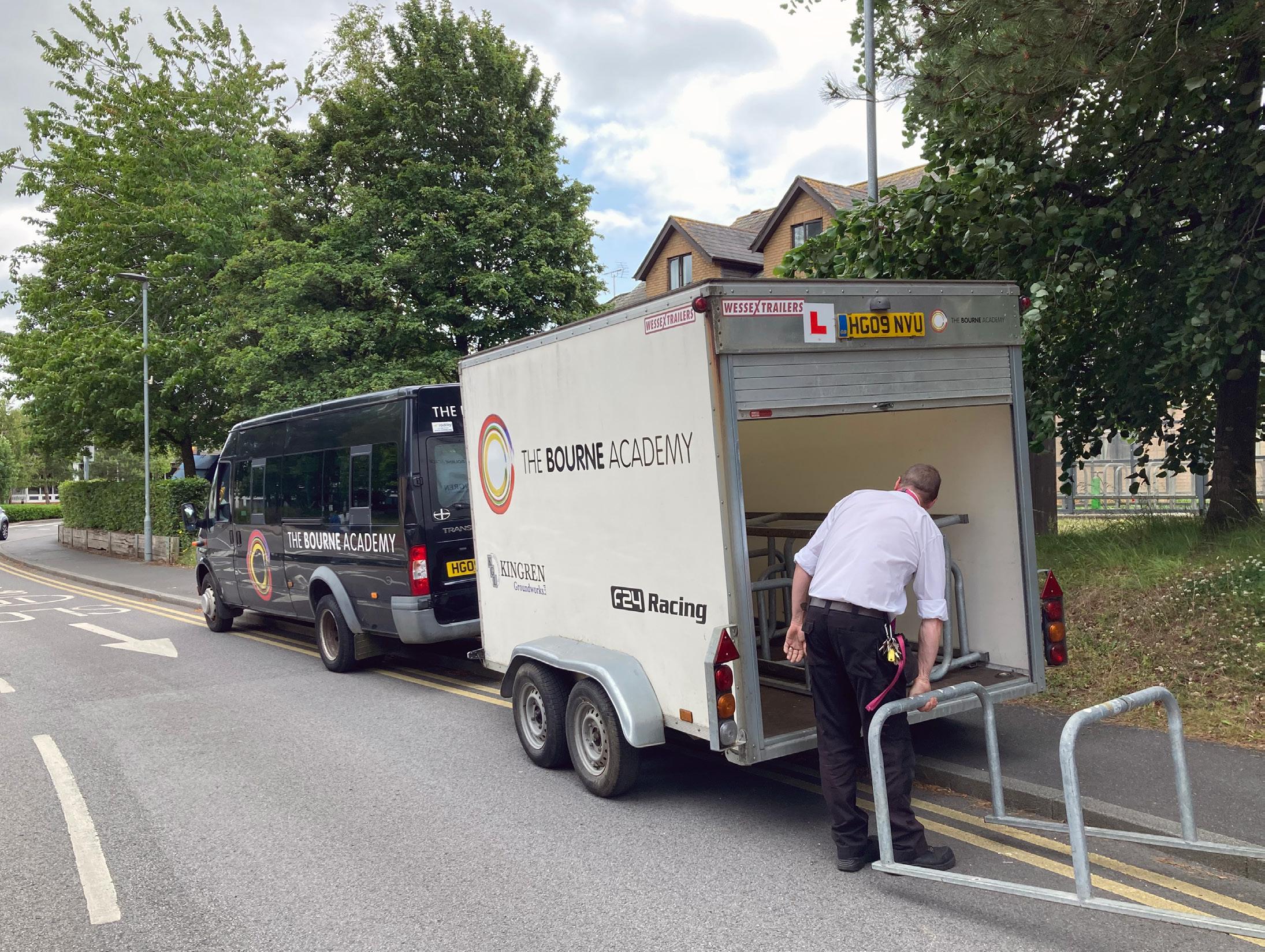
We donated 5 old cycle hoops from our Student Village cycle compound to The Bourne Academy school in Bournemouth. This will help to support more pupils to cycle to school in the local area.
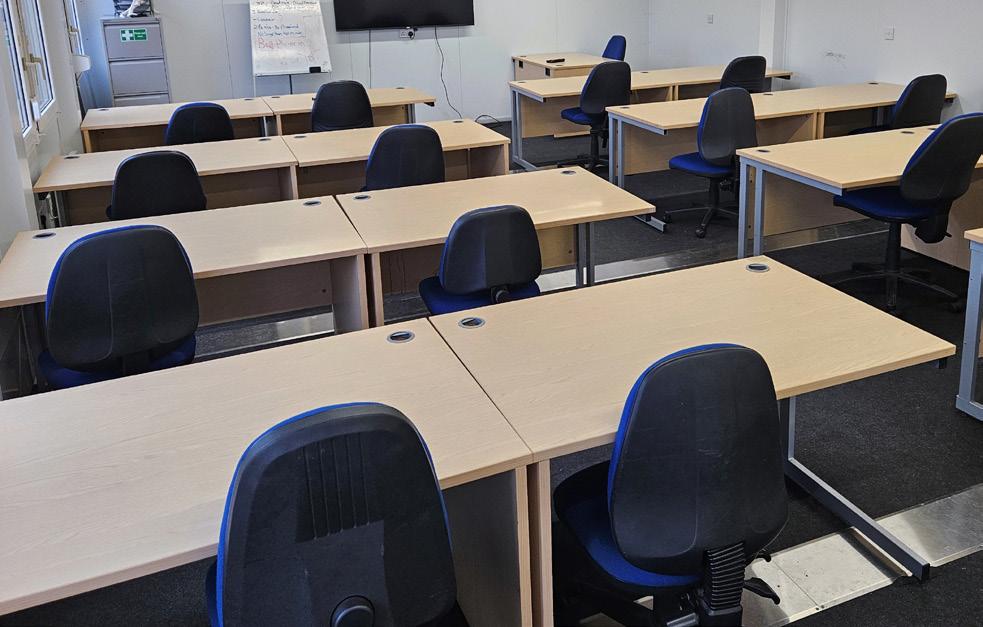
By donating our unused furniture to local schools, we are supporting school staff to improve the teaching spaces offered to their pupils.
Recycling and waste-to-energy
Suez process our non-recyclables which are collected are sent to a waste-to-energy facility for incineration. Estate waste such as wood and metal are collected separately for recycling. Mixed recyclables are sent to a materials recycling facility in Bristol where they are sorted and processed. The only waste sent to landfill is around 5% of construction materials which are non-recyclable or recoverable. In addition to our core waste streams, we recycle sweet wrappers, crisp packets, stationary, and stamps through Terracycle.
Our bin signage has been thoughtfully designed to help reduce bin contamination. This year, we focused on aligning campus signage with the signage used in student accommodation by introducing bin stickers that feature consistent imagery and messaging across both areas. By creating a more unified approach, we aim to make it easier for students in our Student Village to understand what goes in each bin, which should help to reduce contamination and improve recycling rates.
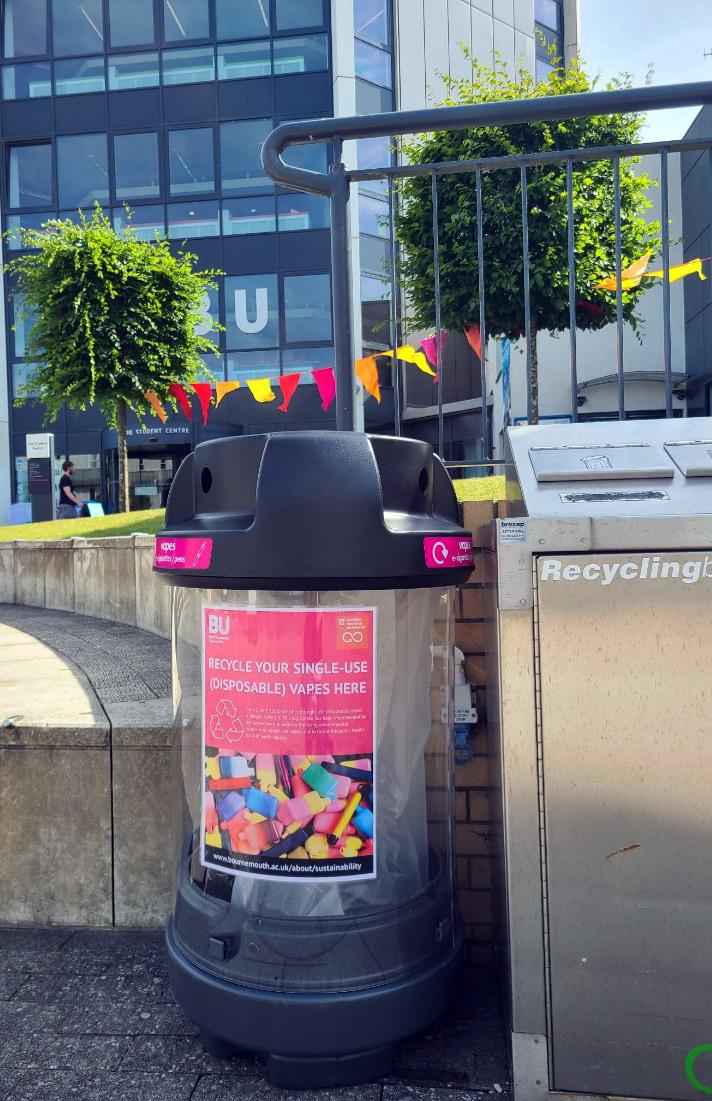
This summer, we installed a new vape bin to give our students, staff and visitors the chance to responsibly dispose their single-use vapes on campus. This supports the new UK legislation banning the sale of single-use vapes from June 2025. A group of students from the Life & Environmental Sciences department completed a Living Lab project to establish the optimal positioning for vape bins on campus. They conducted a survey involving both students and staff, and produced a map of campus showing 6 potential locations based on the results. This map was used to determine the current location of our new vape bin.
SUBU Recycling Roadshow
All vapes collected on campus will be sent to the Approved Authorized Treatment Facility (AATF) in Huddersfield, where they can be recycled using specialized WEEE (Waste Electrical and Electronic Equipment) recycling services for material recovery.
This campaign aims to help students understand how to recycle both in halls and for when they move into private accommodation. The Roadshows are supported by the community wardens. Community Warden Scheme is run by SUBU, BU and AUB and supported by Bournemouth Borough Council. The Wardens are a team of students paid to work each week, patrolling the main student roads in Winton, Wallisdown and Charminster.
Our Community Wardens support students to settle into the local community.
Engagement
Carbon Literacy Training
We have been accredited as a Bronze Carbon Literate Educator (CLE) by the Carbon Literacy Project, highlighting our continued commitment to deliver the training for students, staff and alumni to educate our BU community about the climate crisis. This one-day course has a specific BU focus to share what we are doing to mitigate and adapt to climate change and requires participants to make actionable pledges to reduce their carbon footprint, both as an individual and within a wider group. In 2024-25, we trained 28 students and 25 staff members to be Carbon Literate.
This year, we rolled out the new Carbon Literacy for Healthcare toolkit that is designed specifically for students and staff entering the healthcare sector, to our Operating Department Practice students. This course explores the critical link between climate change and healthcare, and how staff can contribute to shaping a low carbon NHS that delivers exceptional care while safeguarding the health of future generations.
Climate Fresk Workshop
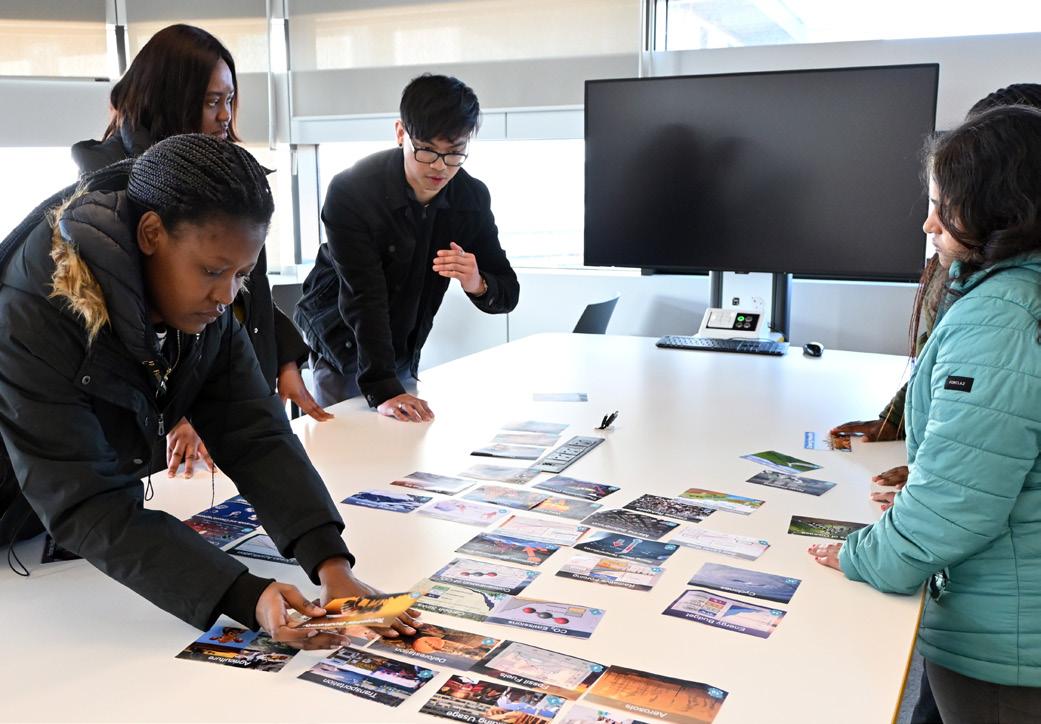
The Climate Fresk workshop is a science-based, interactive workshop that simplifies the climate science produced by the Intergovernmental Panel on Climate Change. This workshop has been integrated into the BU Employability Skills Programme, students’ courses, and used as a team-building activity for staff away days. We continue to encourage our staff to become facilitators themselves, so they can deliver the workshop to their students.
This year, we delivered six Climate Fresk workshops, engaging 83 students and 6 staff members. In addition, we hosted two public Climate Fresk workshops to build capacity for climate action within the local community, which attracted 33 participants from the general public.
Climate Assemblies
Our termly BU Climate Assemblies provide an important platform for our students and staff to learn about what BU are doing to address the climate and ecological crisis, and importantly, the opportunity to voice their own perspectives and provide recommendations for how we can improve.
One of this year’s Climate Assemblies focused on the increasingly important topic of sustainable finance and banking. We discussed the role of the finance sector in driving climate change and social injustice, explored BU’s Ethical Investment and Banking Policy, and looked at how universities can influence change through responsible investment and banking. Using the University of Cambridge and their work to develop a sustainable ‘financial space’ for institutions to put their money into as a case study, we examined how institutions can help shape a more sustainable financial system.
Our students and staff put forward a range of recommendations. These included introducing finance sessions during student inductions with a focus on budgeting and ethical finance, seeking opportunities to invest in the local community and student-led start-ups, and to continue supporting the University of Cambridge to help influence banks by showing them we are serious about this issue.
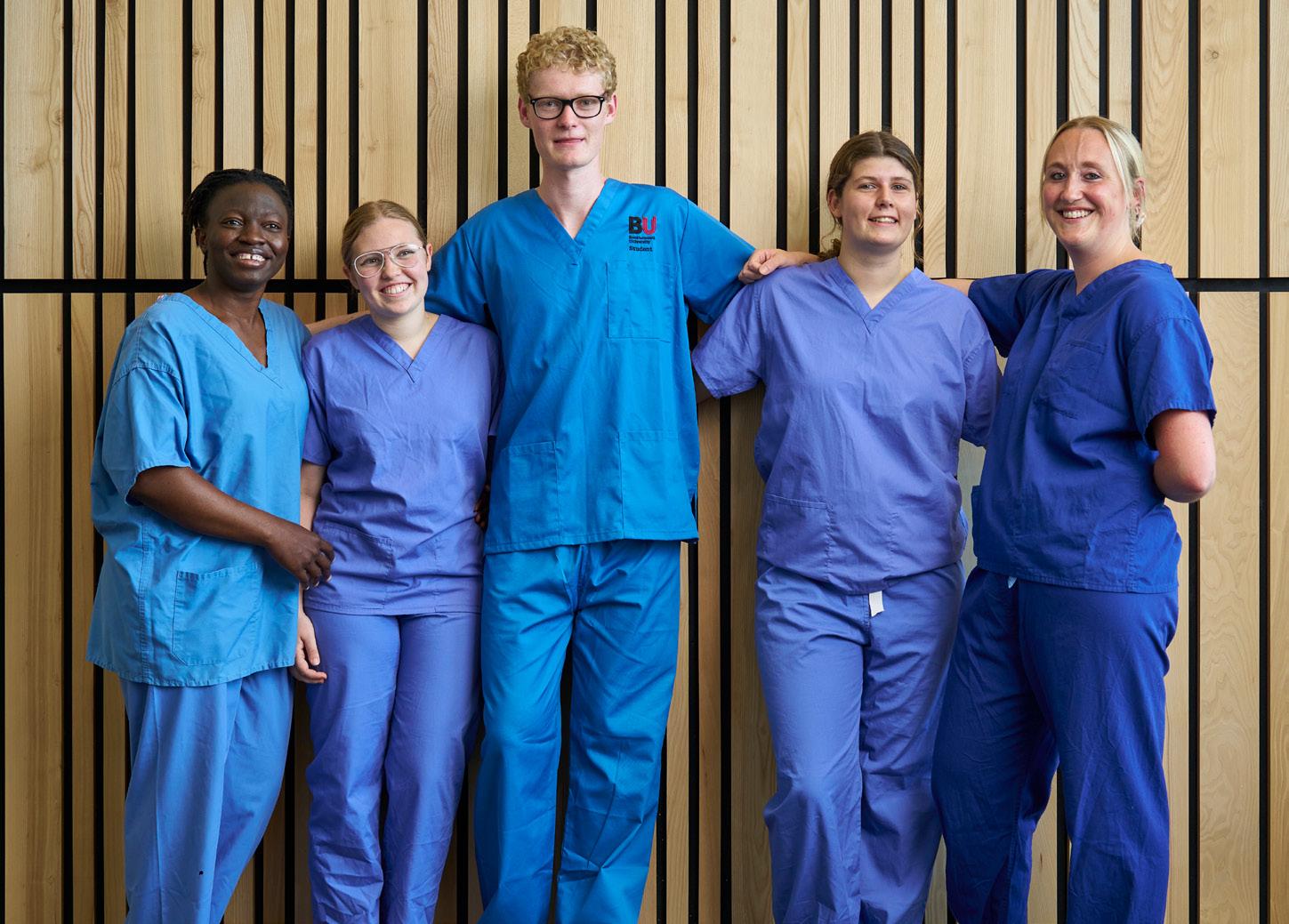
We are preparing our students to support a net zero NHS.
The Climate Fresk workshop is a valuable tool for helping our students to develop the knowledge, skills and motivation needed to take climate action.
Supporting student sustainability research
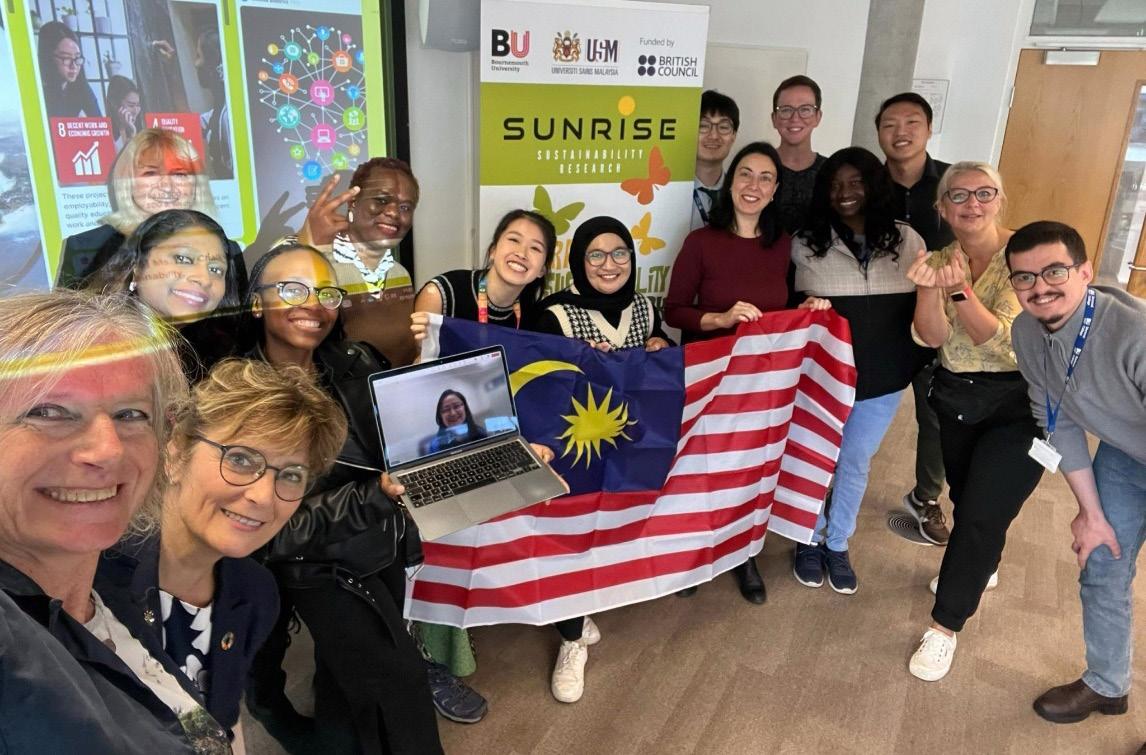
In collaboration with Newcastle University and Cardiff University, BU has developed a postgraduate researcher (PGR) network - SPROUT PGR Sustainability Collective. This has created a community of PGR researchers who come together for a series of events across the year, to share their research and how it relates to the UN Sustainable Development Goals.
Funded by the British Council, the Supporting University Network for Research in Sustainability Engagement (SUNRISE) project also aims to build capacity for
Green Week and Climate Action Week
We continue to support SUBU’s Green Week, which takes place in November. This year, we offered a Climate Fresk workshop, the Carbon Literacy training, and a nature connection session at Slades Farm across the road from our Talbot Campus to our students.
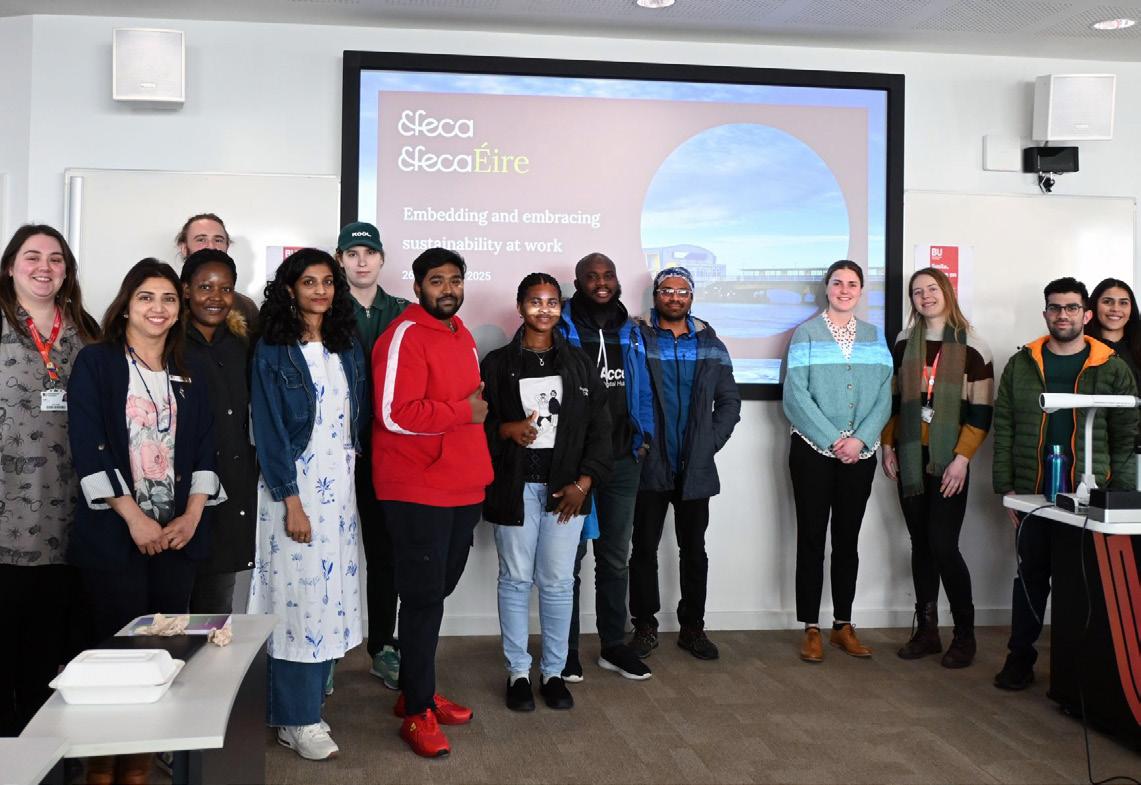
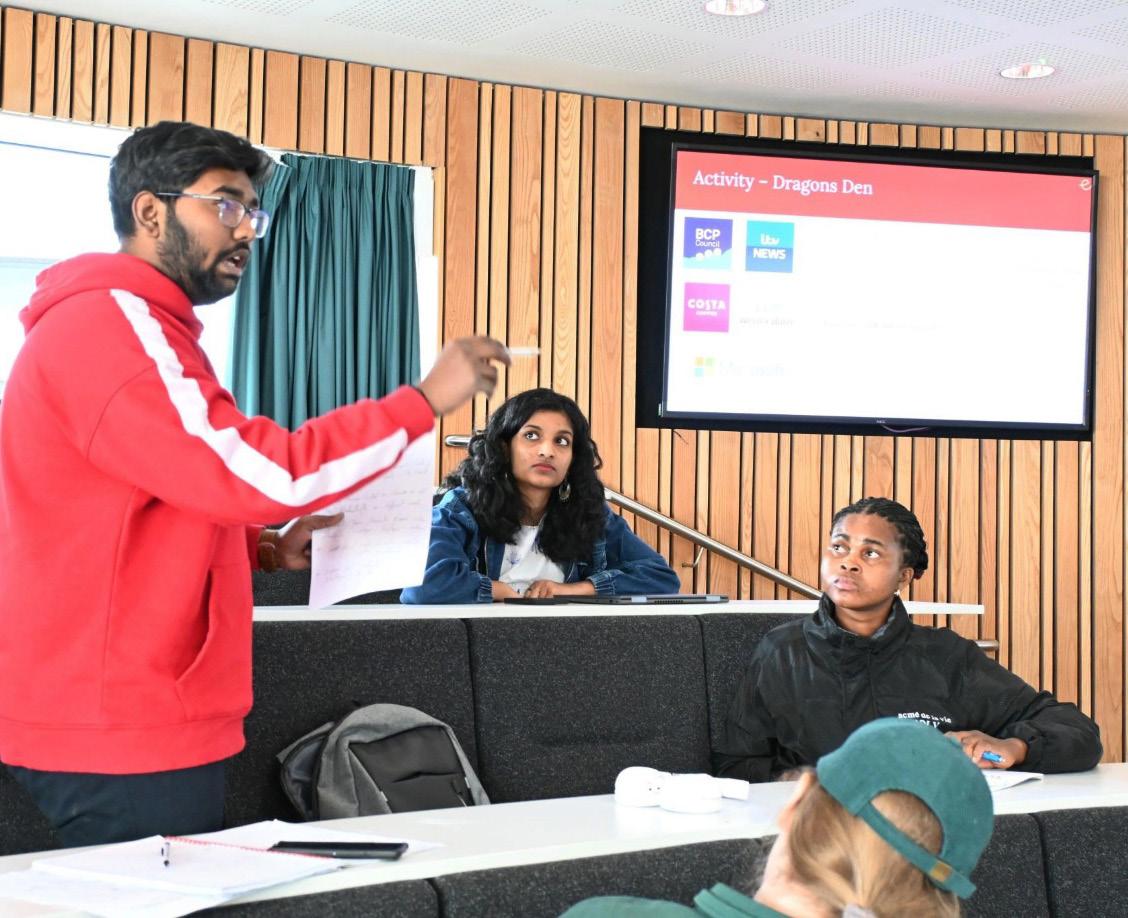
In March 2025, we once gain hosted our Climate Action Month as an opportunity for students, staff and the broader community to get involved in taking action for climate change. In addition to our usual schedule of workshops, we collaborated with Efeca; a Dorset-based consultancy specialising in responsible sourcing to deliver an ‘Embedding and embracing sustainability at work’ workshop through BU’s Employability Skills Programme. During the workshop, students took part in a Dragon’s Denstyle activity, exploring how organisations relevant to their field of study could embed sustainability into their operations. They also reflected on the key qualities and competencies that define an effective sustainability professional.
We also launched our new ‘My Climate Action’ webinar series to create a collaborative, informal space for our staff to come together to learn about how we can take climate action both at work and at home. The first session focussed on ‘energy management at home’. Members of the BU Estates team shared their expertise, personal experiences, and the challenges of installing solar panels, electric vehicle (EV) chargers, and how to manage energy use in a flat. Attendees also contributed their own insights and had the chance to ask questions.
sustainability research. This collaboration between BU and Universiti Sains Malaysia (USM) enables students from both universities to present their research findings during online conference events, organised and hosted by our Events Management students.
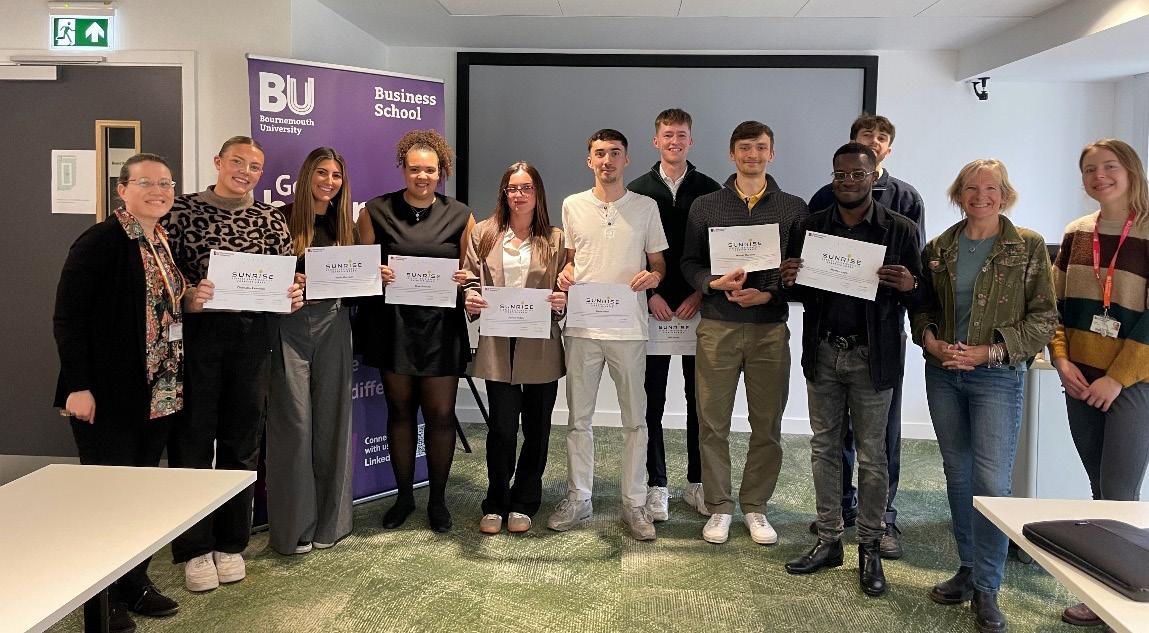
The SUNRISE project also initiated the SUNRISE Student Sustainability Champion Award, which recognises students’ contributions to sustainability while studying at BU. This year, the BU Business School hosted a small awards ceremony to congratulate some of our students who received the award.
By creating the space for students to network with others from across the world, we are helping both BU and USM students to develop new ideas and perspectives through the lens of sustainability.
Students nominated by their lecturers for the SUNRISE Student Sustainability Champion Award receive a certificate to show their future employers.
Students pitched ideas to each other on how to embed sustainability into an organisation of their choice.
Sustainability Screenings
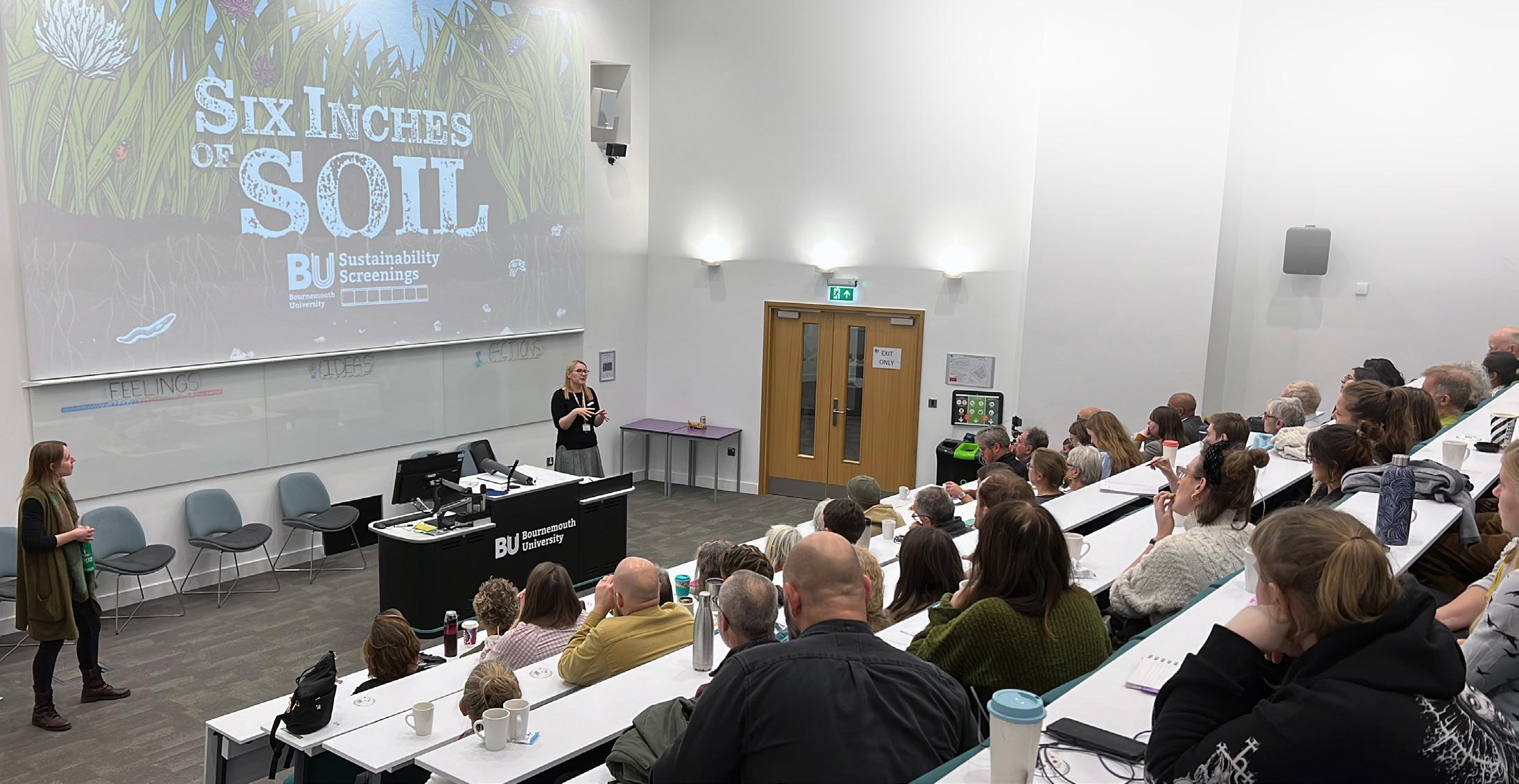
This year, we launched we launched our new Sustainability Screenings series, which aims to bring our students, staff, and the community together to progress the UN Sustainable Development Goals by using film as a tool to educate and inspire meaningful action.
These events include the screening of a film that addresses a sustainability issue, a showcase of local organisations and charities that are working to address this issue, and a panel discussion with contributors from the film, BU academics with relevant expertise, and other knowledgeable individuals. In November, we screened the film Six Inches of Soil, which tells the story of three British farmers standing up against the industrial food system, and transforming the way they produce food through regenerative agriculture. In March, we screened Chasing the Sun; a film about the power of the bicycle to improve public health, build community, and tackle climate change.
Our Sustainability Screenings series attract a diverse audience including local businesses, charities, community groups, NHS staff, BU students and staff, and members of the public.
BU Green Teams
The BU Green Teams (BGT) certification is a BU scheme designed to support and reward staff who are helping BU to achieve its targets set out in the CECAP. The scheme starts with a group of staff making a collective commitment to reduce their environmental impact. This is followed by the completion of up to 35 activities, categorised into: leadership, energy, travel, stuff, food, and connect. Teams can achieve up to 100 points, and become either a Bronze, Silver, or Gold certified team.
This year, our Academic Services department continued to work hard on their certification by adding a new session to their schedule of Academic Skills workshops; ‘Being a Sustainable Student at BU’. This session provides an overview of sustainability at BU and explores how students can contribute to sustainability through their academic work. If you are a member of staff and you would like to join the BU Green Teams certification scheme, please email sustainability@bournemouth.ac.uk
Sustainable commuting travel
Sustainable travel events and engagement
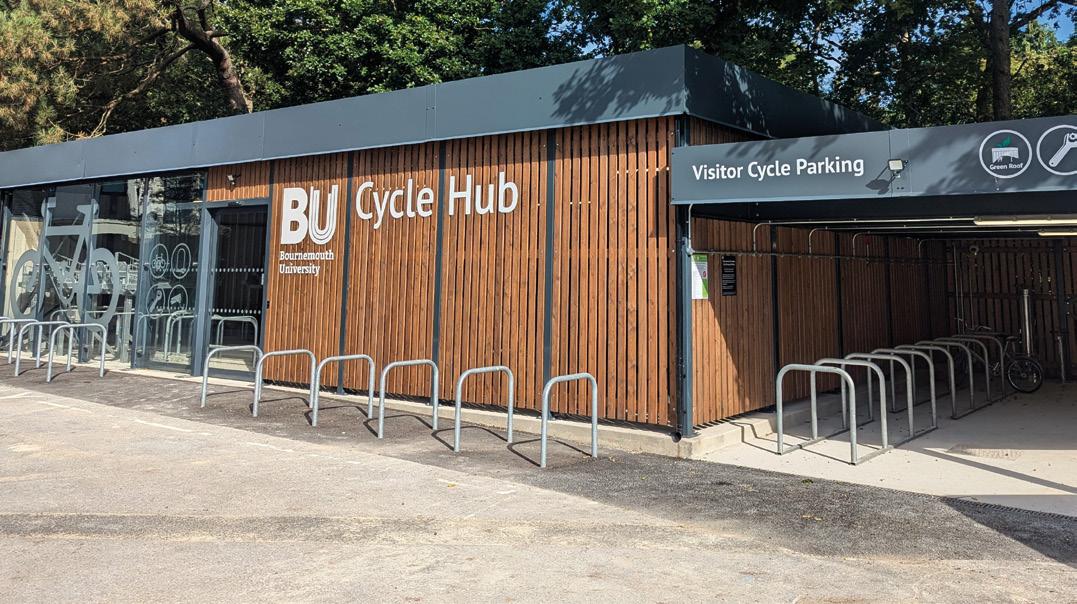
We continue to host our usual array of events to promote active travel. This includes the promotion of the ‘Be Safe/Be Seen’ and the ‘6 reasons to cycle’ campaigns, and supporting National Cycle to Work Day and National Bike Month in May.
Our ‘Big Bike Fair’ in March was supported by our Cycle to Work scheme provider Cycle Solutions, Synchgo, the Bournemouth Central Neighbourhood Policing Team, and our Bike Doctor. Members of Bournemouth, Christchurch and Poole (BCP) Council also came along to share their new Virtual Reality (VR) Immersive Cycle Training technology with our students, which teaches important cycling and observational skills using ipads.
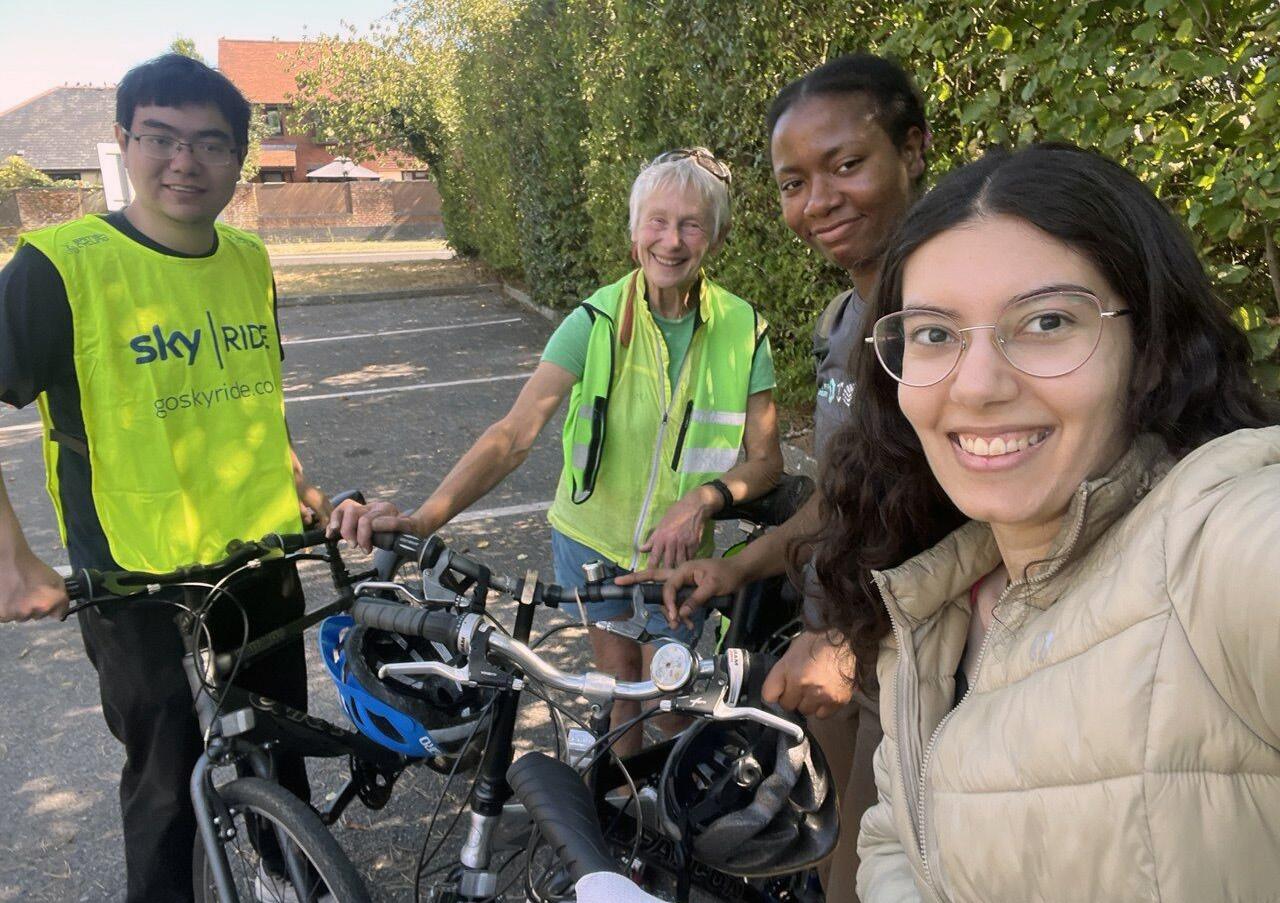
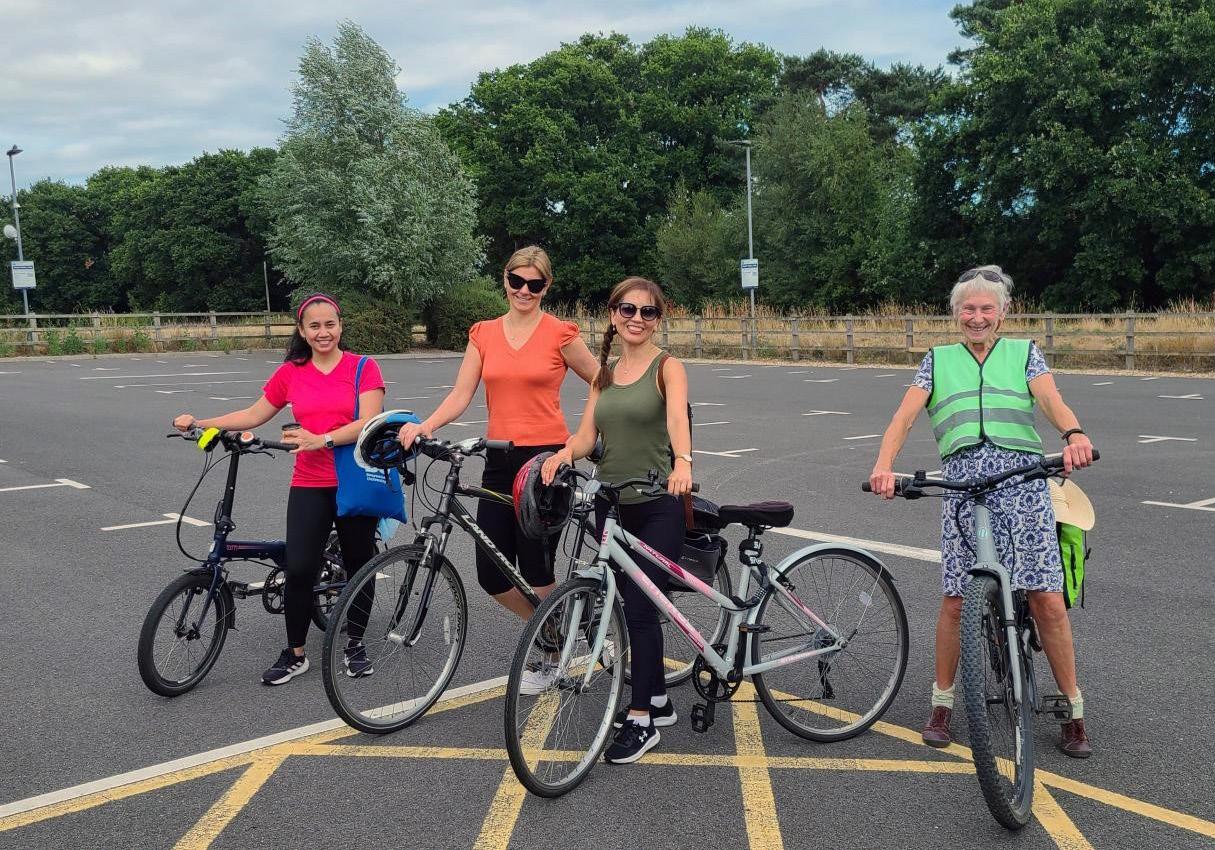
This year, we offered free cycle training to our students, staff and members of the public to support them to feel safer and more confident riding a bike. This training was funded by Active Travel England as part of the Big Bike Revival by Cycling UK, and delivered by local cycling instructor from CycleWise, Dilys Gartside.
BU student Sara Ale Yassin, who completed the cycle training said, “This session was a fantastic opportunity to connect with like-minded people who value their health, finances, and environment impact. Our led cycle ride around the city’s cycle lanes reinforced my view that cycling has huge potential as a public health promotion activity, but only if it’s supported by strong policies and safer cycling lanes”.
Schemes
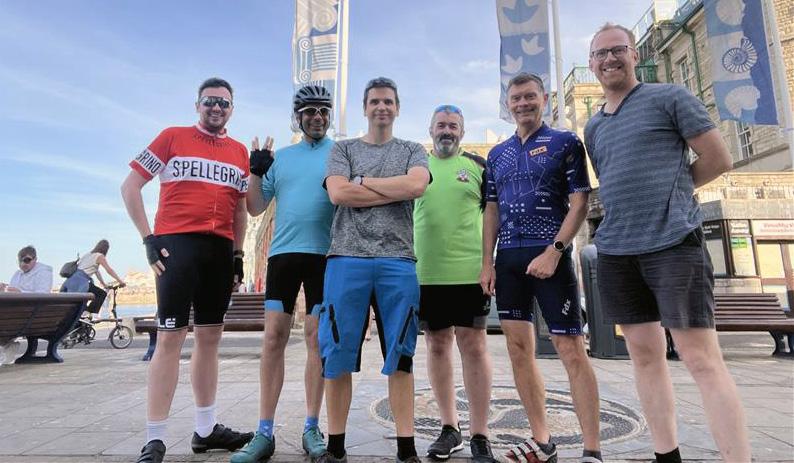
Our BU Bicycle User Group (BUBUG) now has over 130 members, made up of staff and students from across BU. The community teams page has grown since its creation and allows members to share experiences, give each other tips and suggestions, provide feedback to the Transport Team and raise issues or concerns. In July, the BUBUG organised a social bike ride to the Purbecks, where they enjoyed a meal of fish and chips together in Swanage after the ride.
If you are a BU staff member and would like to join our cycling community, please email travel@bournemouth.ac.uk.
The Cycle to Work scheme was used by 19 staff between August 2024 – July 2025 which had a combined value of £30,380.80.
In 2021, we joined the Love to Ride platform to encourage more staff to take up cycling.
In 2023, 3,206 rides were completed and in 2024, this rose to 4,672, equivalent to 27,350 miles cycled.
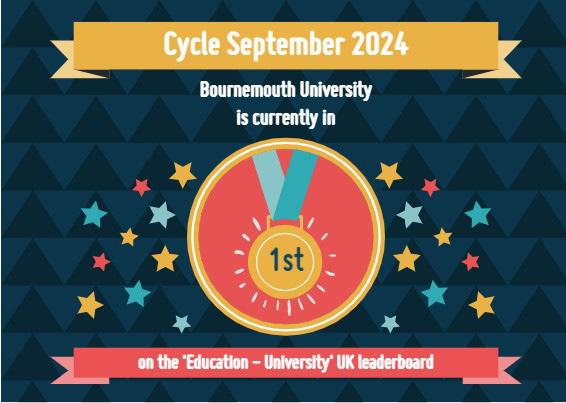
Bournemouth University came 1st place in the Education University UK leaderboard in the Cycle September Challenge 2024!
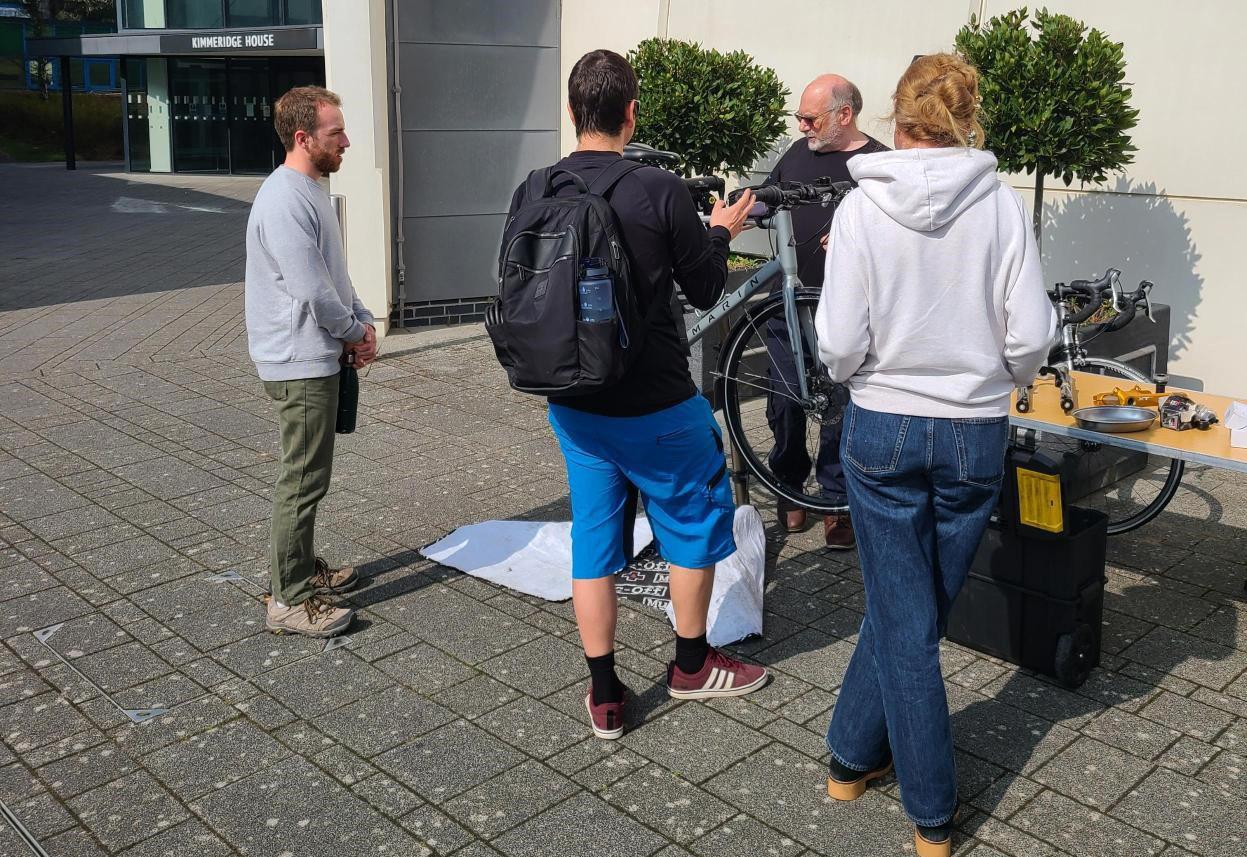
We continued our free Bike Doctor Sessions: running fortnightly to provide free bike services to students and staff. Between August 2024 – July 2025, the bike doctor services approximately 200 bikes. The Bike doctor also ran a free bike maintenance workshop for our staff to learn basic skills for fixing their bike as part of the Big Bike Fair.
Participants of the cycle training learnt the importance of using your whole body when making observations on a bike, like an owl would move, to communicate more effectively with other roads users.
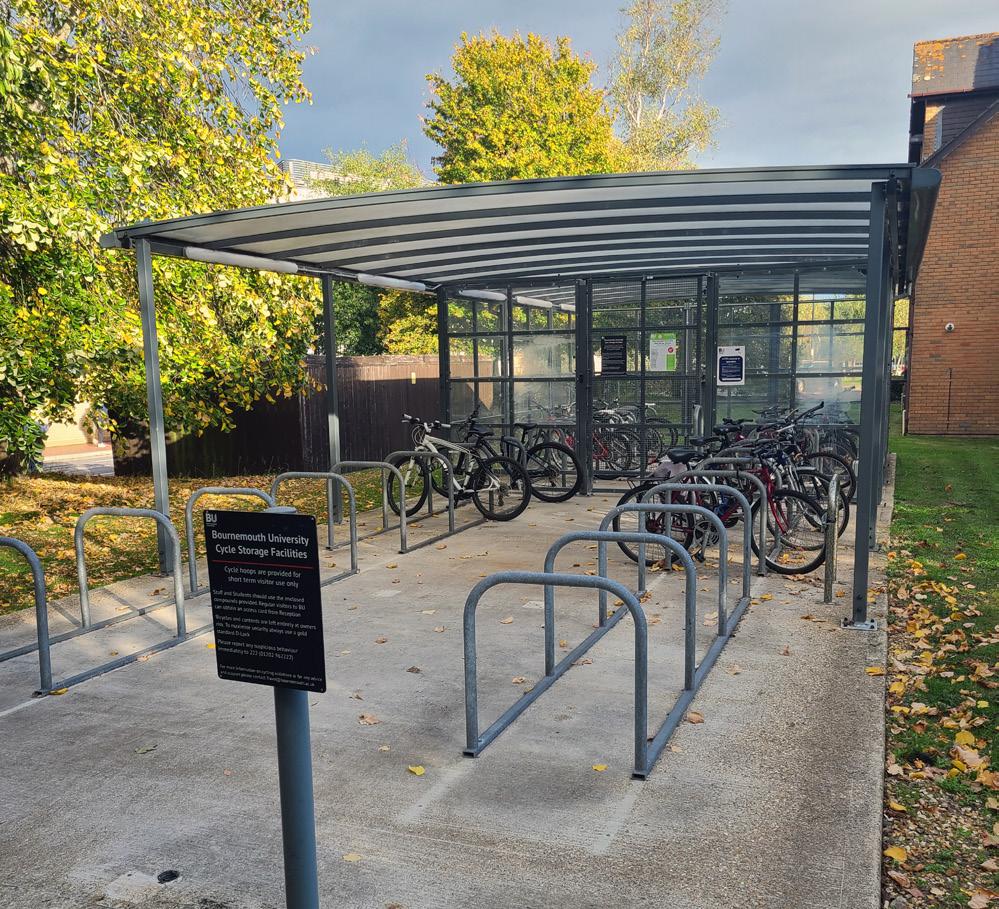
BU fund the Bike Doctor to provide free servicing of bikes for staff and students. Dates are published at our cycle compounds.
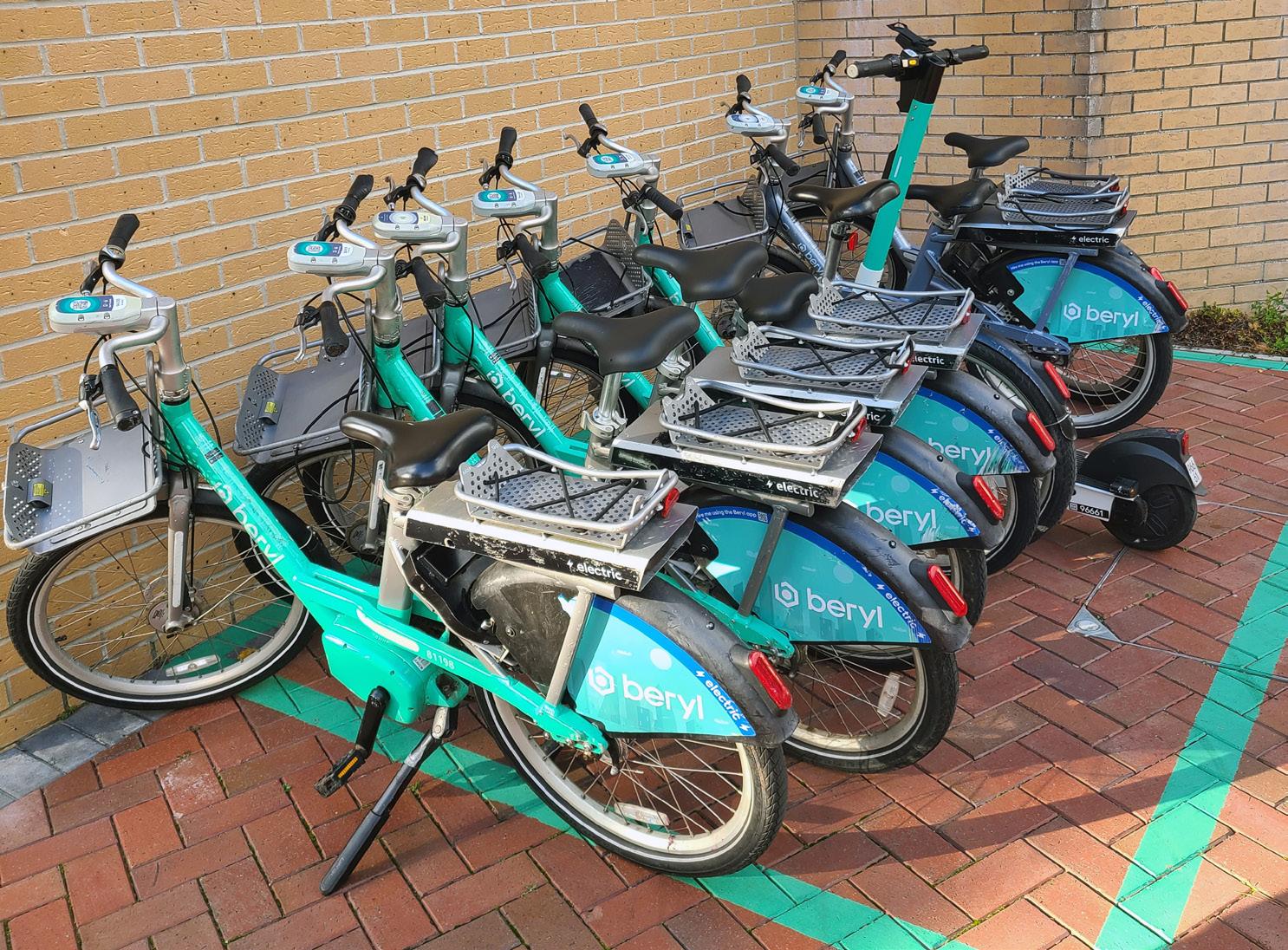
We continued to support our local bike share scheme Beryl Bikes through our partnership agreement including purchasing £5,000 worth of Beryl minutes for students to claim. For 25/26 students can download the Beryl App and use the code 100BU with their BU student email address to get started (limited number of codes available). Staff can also access free codes by emailing travel@bournemouth.ac.uk. We have bays on campus to drop off and pick up a Beryl bike. This year we had 566 users with a Bournemouth University email address, with each user making an average of 19 journeys over the year. Collectively, this amounted to 10,609 journeys, covering 30,768km and taking 2,832 hours. We encourage you to try this fantastic scheme.
Travel Plan progress
Join Beryl to get access to bikes and e-scooters on campus and in the BCP area.
The revised Travel Plan was launched in 2019 and includes campus-specific single occupancy vehicle (SOV) targets for both staff and students. The 2023/24 commuter travel surveys showed an increase in staff using SOV (up from 42% in 2012 to 57%) which has increased from 53% the year before. We did not carry out a new survey in 2024/25.
It was our target for SOV use to fall below 37% by 2025 however as we did not carry out the travel survey in 2025 we have to rely on the data from the previous year. This means we did not meet our target and the main reasons for this is a lack of progress due to the covid-19 pandemic and more car parking permits being issued due to staff on grades 1-5 being given free permits to help with the cost of living.
We have begun work on a new Travel Plan and this will be published in 25-26. It will include refreshed actions and targets to move us forward. We are committed to sustainable travel and plan to continue to offer our successful active travel schemes, Unibus service and continue to develop our campus facilities to support more active, public and shared travel.
Sustainable business travel
We continue to encourage staff to follow the BU Staff Business Travel Sustainability Guidance. This document aims to provide recommendations on when, why, and how staff should travel for business purposes through information and tools to support practices that address sustainability by reducing greenhouse gas emissions and supporting equality. Business travel is any travel associated with university work including, meetings, conferences, training, teaching and research. The guidance does not cover commuter travel or travel between campuses, as these are the focus of our Travel Plan.
The guidance is built around the Tyndall Centre Sustainable Travel Decision Tree which aims to identify low-carbon travel alternatives and maximize the benefits of travel emissions. Our guidance breaks this down and helps staff to reduce the impact of their travel. We share the guidance on our staff intranet and also on our website for external parties to view to help share best practice.
Visit w ww.bournemouth.ac.uk/about/sustainability/travel-transport
Objective 5: Rapidly reduce GHG emissions through technology solutions
Objective 6: Implementing net zero carbon capital development
Core to our CECAP is reducing our emissions by 50% by 2030/31 against our 2018/19 baseline. Achieving this includes implementing projects across all activities which reduce our emissions. This requires renewable energy and water technologies, optimising building energy and water use, and moving from gas to electricity for heat and hot water.
The CECAP is embedded into our Estates Development planning and budgets. This enabled us to continue investing in technology to reduce our GHG emissions and make plans for further decarbonisation over the period to 2025 with a £1.25m investment of BU funds being made. This is supported by external funding from the Low Carbon Skills Fund (£99k) and the Public Sector Decarbonisation Fund (£493k).
Technology and energy in 2024-25
Dorset House Air Source Heat Pumps (ASHP)
How it performed
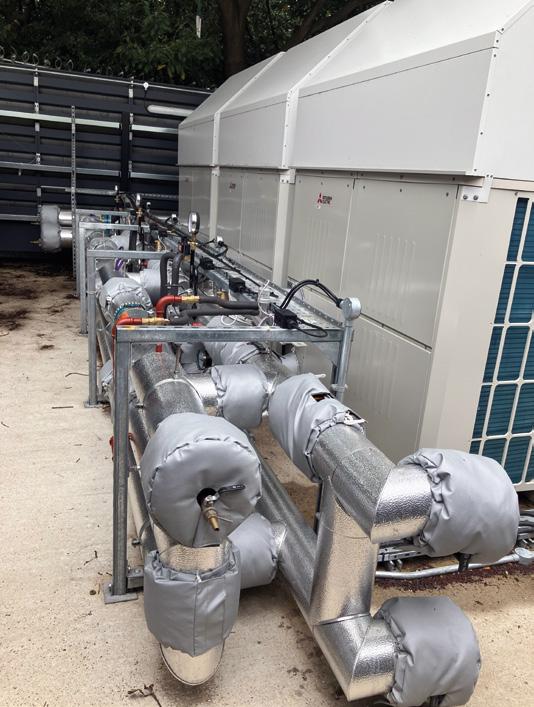
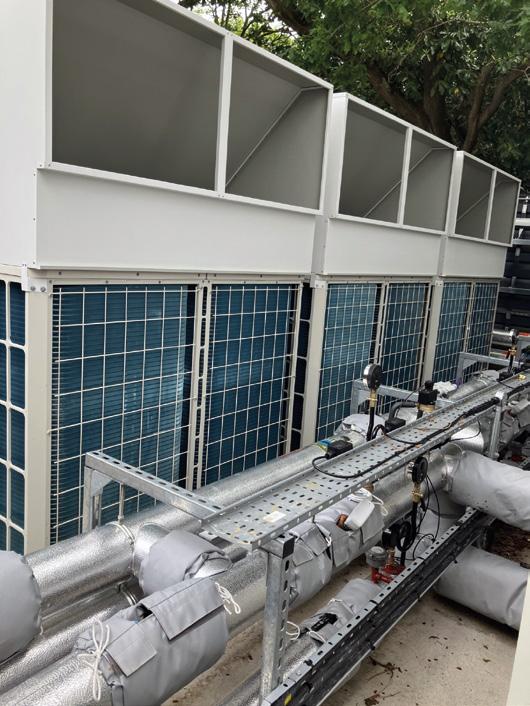
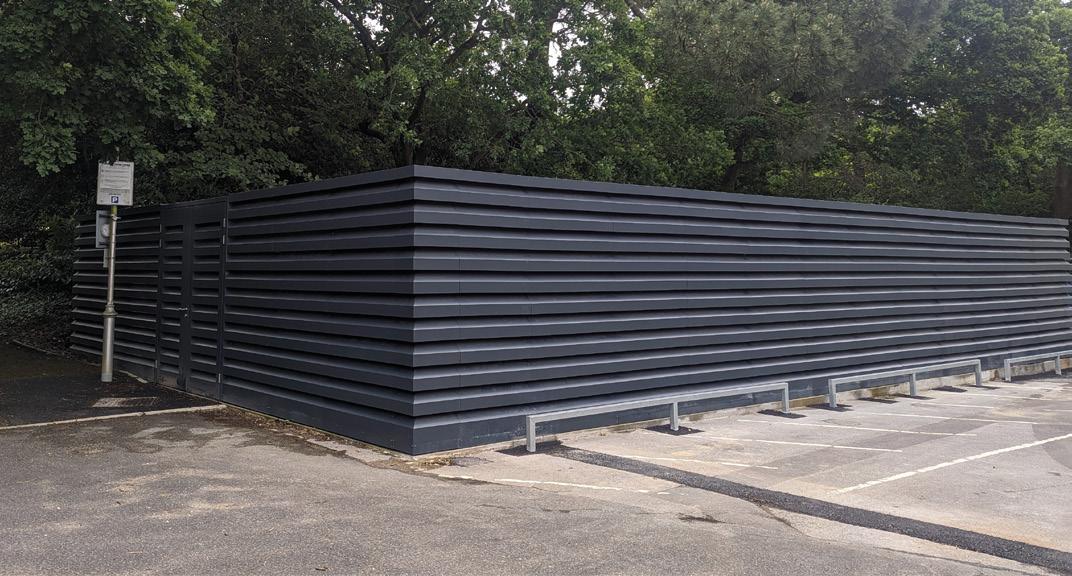
In 2024 we completed the replacement of 3 gas boilers and hot water provision in Dorset House with Air to water Source Heat Pumps. This is the first full retrofit of its type for BU where we installed nine new 33.4kW heat pumps capable of achieving 70oC in a new purpose-built acoustically controlled compound. With an efficiency of over 200% each unit could provide over 80kW of heat with 33 kW of electricity.
The systems performance over the 2024/25 heating season has been monitored and has resulted in a total reduction of 29.53 tCO2e. This is inclusive of the electric and solar PV generation for the building. The emissions saved from the removal of gas alone was 61.79 tCO2e. The overall seasonal efficiency of the system was 2.03 achieving just over 200% as expected even with some technical issues mid-winter. For 2025/26 heating season we shall be looking at small adjustments to further improve the efficiency of the system. Further to this the carbon factors associated to grid electricity for 2025 has dropped significantly and will provide further reductions in emissions compared to natural gas.
This project was part funded by the University and part through the UK Government's Public Sector Decarbonisation Scheme (PSDS).
Watch this video to find out more about the new system
Air source heat pumps that provide renewable heat for Dorset House.
The new heat pump compound at Dorset House.
Solar PV array for Dorset House
In October 2023, we added a new solar array at Dorset House on the Talbot Campus. This system which comprises of 192 panels generated 75,646kWh of renewable energy this year. The generated energy saved 17.05 tCO2e during the 2024/25 period, equivalent to running the Student Centre or the Student Village for 5 months. Dorset House solar PV system accounted for 11% of the total electricity generated onsite from solar PV.
This was the 9th array to be installed on the Talbot Campus and 11th across BU, and during the summer periods Dorset House operated using 100% solar energy generated throughout the day.
Chapel Gate Solar thermal – performance
For the 2024/25 year we recorded the generation our 4th Solar Thermal system at Chapel Gate. The system provided 726kWh of renewable hot water for use in the main club house. This is lower than expected and further investigations in the underperformance is required. The system production of renewable heat still reduced the use of LPG onsite and saved over 155 kg CO2e for the year.
national gas grid.
Continued to replace lighting with LED low energy lighting
It is now a standard procedure to replace any relevant lighting with LED low energy lighting. Over the past year there has been no major lighting upgrade project, but we continue to replace light fittings across the University with LEDs in smaller areas. Most of these were in plant rooms and storerooms. Work is underway on 2 larger upgrade projects where lighting is due to be upgraded as the phase out of fluorescent lighting continues.
Revolving Green Fund – The final year
This funding has been utilised by BU for 15 years and ended in March 2025. With a total initial fund of £250,000 (£50,000 from BU) many energy saving projects have been completed with the savings reinvested back to enable
further projects. Since the initial fund BU have reinvested over £1.17M and completing 100 projects since its first project in February 2010. Read more about the success of this scheme in this article on the Salix website. The final project completed using this fund was for the replacement of the heating circuits and controls in Christchurch House.
Christchurch House heating circuit upgrade
In November 2024 the heating circuits and control system were upgraded to improve efficiency and internal comfort. This involved changing the existing constant temperature heating circuits (+70oC) to new variable temperature heating circuits (+35 – +65 oC). This change with the upgraded controls and addition of 14 new space temperature sensors enables the circuits to automatic adjust the temperatures depending on the external and internal temperatures.
Although the new system has not fully operated for the whole of the heating season an absolute reduction of 20% in energy and 10 tCO2e has been recorded. Adjusted for the full period using the previous year's data a 5% energy reduction and 3 tCO2e minimum has been achieved. Continued monitoring and adjustments will continue to maximise efficiency of the new system.
Passive cooling
Two new passive cooling units have been installed in the IT comms rooms in the Fusion Building. These systems use the ambient air outside of the room rather than mechanical air conditioning.
The 192 solar PV panels on the roof of Dorset House.
Solar PV (DH-E-13)
Main electric (DH-E-01)
24hr profile of Dorset House Energy showing the PV generation (kWh).
The system reduces demand for LPG fossil fuel gas at our sports campus which is not connected to the
Encouraging cycling with our Cycle Hub at Talbot Campus
We have been very pleased to see students and staff using our new Cycle Hub at Talbot Campus. This is located behind Dorset House and it is directly accessible from the Wallisdown Road. The compound has space for 197 bikes including space for adapted bikes and cargo bikes. It has a Beryl Bike bay next to the compound so that bikes can be rented by the minute to get around the area.
Inside the compound is double tier racking to make the most of the space, and the new compound is well lit and securely locked. It includes space for visitors as well as air and tools to help with bike maintenance. We are very grateful for the grant we received from BCP Council which helped fund the double tier racking.
The Sustainable IT working group have continued to meet termly to address sustainable IT issues and support delivery of the Sustainable IT Policy. We have been tracking energy consumption against the objective set by the Director of IT to achieve a 15% reduction in power consumption of IT equipment in data centres each year to 2025/26.
Current data suggests that metered BU data centres and comms rooms are responsible for 10% of our total electricity use (grid & Solar). Data from 2024/25 showed the data centre in Jurassic House used 562MWh (down from 610MWh last year) and in Studland House, 231MWh (down from 233MWh). The data for August 24 to July 25 shows reductions in energy consumption with Jurassic House consuming 9.7% less electricity and Studland House 1.2% less than 2023/24. This is a continued reduction because of technology improvements and consolidation of equipment by our IT services team.
All IT users are encouraged to follow the Sustainable IT Policy including switching off monitor screens and ensuring IT equipment goes into standby mode when not in use.
New bike compound for the Student Village
This year we have relocated a cycle compound to our Student Village on Talbot Campus that was previously located at our Bournemouth Gateway Building. This now provides a higher quality bike store and we are pleased that old child sized bike stands were donated to a local school, read more about this in the waste section. CECAP actions addressed:
IT1.2
Operational energy management
In 2024/25 we continued to closely monitor our energy and water consumption. This allowed us to spot and address any usage anomalies and identify opportunities to reduce operational energy consumption using the new software solution for the Automatic Meter Reading (AMR) that has been integrated to the Building Management System (BMS) creating a BEMS. The work involves the monitoring of data streams from over 530 physical meters across the university and many virtual meters within the software system.
This year we have continued to improve controls through the Building Management System so that ventilation and heating setpoints and run times are more aligned with building opening hours. We continue to analyse the effects of changes to building usage and can use this to determine which spaces are more energy and cost effective to use for various events or teaching spaces.
The Energy Team meet regularly with maintenance and IT to discuss energy and water consumption patterns and identify potential energy reduction projects and operational strategies. This collaborative approach not only maximizes energy savings but also promotes a culture of continuous improvement and sustainability throughout the organisation.
You can find this facility behind Dorset House and it is directly accessible from Wallisdown Road.
Technology plans for 2025/26 and beyond
Heat decarbonisation of Talbot Campus
We have completed the first project as identified by our Heat Decarbonisation Plan. The performance has been monitored closely and evaluated in terms of electricity consumption, heat output, carbon and cost. Now that we have more understanding of installation and operational costs these will be used for future projects, we will be looking for funding sources and for the most efficient way to achieve decarbonisation of heat. Small changes to the controls on the ASHP will be implemented with continued monitoring the data we will evaluate whether further efficiencies have been achieved.
Upgrading cooling for the Studland House data centre
This coming year we will be replacing the cooling for the data centre to a more efficient and modulated system. Currently there are 2 large systems, and they will be replaced with 4 smaller systems providing resilience should a failure occur. This will improve efficiency as it requires less refrigerant by quantity (24kgs > 14.4kgs) and will be using new lower GWP refrigerants (R32). The change in refrigerant reduces the CO2e content by 33 tonnes. The system is estimated to save approximately 19-20% in energy and 3.8 tCO2e.
Replacement of the faulty GSHP unit in BGB
The GSHP in BGB comprises of two units and one of these units needs to be replaced. The system has been running at 50% and the replacement of the second unit will bring the system back to full working order. This additional 200,000 kWh of renewable heat could reduce natural gas emissions by 33 tCO2e.
Overhauling the biomass
The biomass boiler since installation has saved a total of 1,371 tCO2e. The boiler provides heating and hot water for Poole House in addition to gas boilers. Now aging (13 years) we are overhauling the biomass to put it in the best position to continue saving carbon emissions whilst we look at replacement options around 2030. This overhaul should ensure that we achieve the maximum efficiency from the system along with improving its reliability. We will continue to source the fuel and return the ash locally to and from the New Forest. Deliveries will also continue using a local haulage company.
Solar PV
This coming year we shall continue exploring where more solar PV could be installed. As mentioned within this report the Student Village within our Talbot Campus has been investigated. Working within the limited spaces we have left due to the continued work of adding solar PV to our existing buildings, further work in identifying potential opportunities across other sites or buildings.
Passive cooling systems in comms rooms
Work shall continue with the installation of energy conservation measures including replacing lighting with LEDs. Many of these will continue to be smaller areas with a strong focus on upgrading larger areas located with the Fusion Building and the Student Centre. Data is an essential part of energy management and further improvements will be implemented across the university with either new additional metering or upgrades to older meters to more modern smart meters. An area of focus will be the Student Village where we are hoping to improve data energy at a property level. The use of this energy data will allow further analysis of the building services that could identify further Building Management System improvements to ensure optimal efficiency and reductions throughout the coming year.
Smart campus
We already have much of the foundation of a smart campus with our Building Management System enabling us to closely control HVAC (heating, ventilation, air conditioning) equipment remotely. We have this year installed a trial system in two of our buildings to focus on gathering occupancy data using sensors. This trial aims to provide insight into the actual occupancy of teaching spaces versus the occupancy planned in our timetable. This will help us better utilise our spaces and make future changes.
Onsite renewable generation
We have worked hard on our renewable generation on site this year. Unfortunately, our total onsite energy generation decreased this year by 160,919 kWh. The failure of the biomass resulted in a 457,325 kWh drop in its generation.
All other onsite generation increased this year, and the addition of the new Air Source Heat Pump provided 200,300 kWh of heat. Onsite renewable energy and low carbon technologies contributed 8% of our electricity and 14% for heating our buildings. This is a 1% increase for electricity and a 1% decrease for heat compared to last year. The amount of electricity produced on site increased from 629.2 MWh to 702.7 MWh. Since our baseline year our solar panels have produced 3,744,000 kWh of clean renewable energy. This would be enough energy to run the Fusion Building for over 7 years and does not include the 470,000-kWh produced over the previous 7 years prior to the CECAP baseline year.
Low carbon and renewable generation (kWh) by year
2,500,000
2,000,000
Generation per year (kWh)
1,500,000
Biomass generation (kWh)
Solar thermal generation (kWh)
GSHP generation (kWh)
Emissions avoided from renewable and low carbon on-site generation
The below chart shows the emissions avoided from electricity generation on site (solar PV) and low carbon heat sources (ground and air source heat pumps and biomass) each year since 2018/19.
Emissions avoided from renewable and low carbon on-site generation (tCO2e)
This graph accounts for the electricity consumption of heat pumps, to give the net emissions saved based on the heat output of the heat pumps. The biomass emissions recorded accounts for the net emissions saved by subtracting the scope 1 biomass emissions from the emissions saved from gas. As well as the emissions avoided from low carbon and renewable energy generation, emissions avoided from rainwater collection has been included. The graph highlights the impact of the biomass not operating correctly and increase of onsite solar generation.
Objective 7: Managing climate change risk
BU’s Climate Change Risk Register sits within our Environment and Energy Management System and documents the risks posed to our operations because of climate change. As these risks become more common it is vital that we progress mitigation and adaptation measures via our CECAP whilst also further embedding understanding of these risks across BU.
Our Climate Change Risk Register includes a range of scenarios including extreme flooding events, hot weather events, low temperature incidents, wildfires, failure of national/regional electricity, gas, water supply and IT infrastructure, failure/disruption of supply chains and infectious diseases. It includes details of the impact and mitigation measures as well as the adaptations required in the short, medium and long term. All these risks feed across the CECAP: for example, adaptation to the risk of Extreme Flooding Events is aligned with our building standards where all new builds must include rainwater harvesting. Similarly for hot weather events our Biodiversity Group have been considering opportunities for tree planting, building shading through canopies and other window shading techniques to reduce impact on campus users.
Climate change risk on the BU Corporate Risk Register
In recognition of the serious impact that the Climate and Ecological Crisis will have on BU, we have added the risk onto the main BU Corporate risk register. This means it will be considered at the highest levels of leadership. The wording used links Sustainability, Environment and Climate Change and enables the risk to be considered alongside other corporate risks, so that appropriate planning is in place to mitigate risk and realise opportunities.
Learning across the university sector
BU are members of the EAUC Managing Climate Risk Community of Practice. This is a place for universities to share their work around climate risk and learn from each other. This year Lois Betts, BU Sustainability Manager has attended online workshops with other universities. This has included feeding our experiences into the AUDE Climate Change Adaptation and Resilience Guide which was published in August 2025. This guide identifies that: ‘Universities in southern and eastern England, and the southern part of Wales, are expected to experience the greatest increase in very dry summers.’
In fact we are already seeing this with a very dry summer this year causing issues with grass and trees suffering in the dry weather.
AFRICAB: building resilience in Sierra Leone
Our Disaster Management Centre continued its Driving African Building in Disaster Management (AFRICAB) project based in West Africa, which aims to meet the urgent needs of African disaster managers and stakeholders; including the ability to detect and understand deficiencies in their disaster management systems. The project seeks to enhance the governance of disaster risk and enable disaster management frameworks to function more efficiently.
The project has been based on constructive cooperation with disaster management partners in Sierra Leone, including the newly created National Disaster Management Agency (NDMA) and Freetown City Council (FCC), and involved extensive field research and practitioner engagement.
The project, led by Professor Lee Miles, has had numerous positive impacts. At the national level, the AFRICAB Report
Sharing our experiences adapting to climate change is important as a University sector.
included eight thematic areas and 27 key recommendations for national policymakers and stakeholders. The report was endorsed by Chief Minister Jacob Jusu Saffa and Director General of NDMA, Lt Gen (Rtd) Brima Sesay. The AFRICAB Report also led to the development of the National Disaster Management Agency Service Charter 2023, and has been highly utilised by wide stakeholders including Freetown City Council (FCC) in the of development of new Standard Operating Procedures for Emergencies and Disasters covering Freetown’s major urban dumpsites, and Freetown’s first ever Climate Action Strategy, launched by FCC in February 2023.
AFRICAB was recognised by the Association to Advance Collegiate Schools of Business (AACSB), the world’s largest association of Business Schools, as an Innovation That Inspires for 2023. This scheme recognises initiatives conducted by Business Schools that have an impact across the globe. The project was also profiled in a 2024 issue of the UK Resilience Lessons Digest, published by the UK Cabinet Office and the Emergency Planning College, focusing on the lessons learnt through the work in Sierra Leone.
In 2025, BU support the NDMA in constructing three Service Delivery Charter signposts and one billboard, as part of the AFRICAB project. This infrastructure will serve as a vital communication tool, ensuring that citizens understand NDMA’s role in disaster preparedness, emergency response, and recovery efforts.
The Evaluating Local Disaster Management in Sierra Leone (EVALDIS), which builds upon the co-operation of AFRICAB, provides a contemporary research evaluation of the existing state of disaster management within provinces, districts, wards, and local communities.
EVALDIS involves input from 259 stakeholders, as well as provincial, district and local disaster managers, climate change/ action officers, members of Community Disaster Management Committees (CDMCs), tribal chiefs and volunteers. The EVALDIS report was endorsed by the Government of Sierra Leone to ensure that leaders are as equipped as possible to deal with disasters and build resilience. In 2024, the findings and methodology of EVALDIS were incorporated into a national disaster management constitution across Sierra Leone, encompassing wards across all 16 districts and five provinces of the country and potentially covering over 8.4 million people.
CECAP actions addressed: ES1.1, GO1.2, GO1.14.
Objective 8: Data management and reporting
The software solution for the Automatic Meter Reading (AMR) has been integrated to the Building Management System (BMS) creating a Building Energy Management System (BEMS). The IQ Energy software collects data streams from over 530 physical meters across the university as well as many virtual meters within the software system.
The system is integrated with our Trend IQ Vision system by adding IQ Energy software. The facility teams also record manual reads of billing meters that are taken each month.
The IQ Energy software provides detailed information about where and when energy is consumed or generated with alarms provided should the energy move beyond a set tolerance. As this system forms part of the existing BMS which has more than 20,000 data points, it is starting to provide the foundations for a more analytical system that eventually will be able to intelligently understand the links between operations and usage. The AMR system forms part of our system for data capture described below.
In order to make informed decisions we work hard to have a robust system for data capture and reporting which we are continually improving. Our Environmental and Energy Management System (EEMS) is externally certified to ISO14001 and ISO50001.
Emissions and energy usage is reported monthly and is annually reviewed by the Sustainability Committee. The annual ISO50001 Energy Review assesses the impact of variables such as estates size or weather on our energy usage and identifies areas of Significant Energy Use at the building, user or equipment level, and Opportunities for Improvement which are used to set targets, objectives and to identify potential projects. For key areas, including waste and transport, environmental targets and monitoring are embedded into contract standards to ensure we can gather and monitor this information.
In addition to the monthly reports provided for the Estates Senior Management Team, we provide monthly reporting to target specific user groups on campus. Monthly energy and water consumption reports are now provided for the IT department (covering data centres and comms rooms), SUBU (covering the student union-run buildings), Chartwells (covering the catering outlets and kitchens on campus) and our sports campus at Chapel Gate. Providing these stakeholders with insight into where and how they use energy and water is the first step in supporting them to efficiently use and reduce their consumption and track the impact of any changes they make to their operations.
Energy
Measuring
• Direct manual meter reads
• Automatic meter reading (half hourly data)
• Financial data (invoices).
Waste, food and procurement
• Pay-by-weight automatic monitoring
• Visual waste audits
• Contract meetings with suppliers
• Sales information from catering outlets.
Travel
• Annual travel survey
• Direct data on journeys made from UNIBUS contract
• Automatic business travel booking data
• Student open day travel data.
Monitoring
SmartSpaces alarms
Invoice and manual data validated in Systems Link software
Weekly data review for energy by Sustainability & Energy Analyst
Monthly contract meetings
Annual reporting to Sustainability Committee.
Analysis
Monthly reports produced and reported at Estates Senior Management Team meetings
Monthly reports provided for targeted user groups
Annual ISO50001 energy review
Identification of significant energy users
Identification of opportunities for improvement
Targets and objective-setting
Energy projects and estate changes
CECAP Annual Report created.
External
reporting
Estates Management Return (EMR)
HESA, the Higher Education Statistics Agency, collate and publish environmental information from the Estates management record data returned by universities across the UK. We submit annually to the EMR data across categories including buildings and space, energy, emissions and waste, and transport. You can see all the published information on the HESA website
Times Higher Education (THE) Impact Rankings (SDG Report)
THE Impact Rankings assess universities contributions to the UN Sustainable Development Goals and forms a global benchmark. BU has submitted data to the Ranking since its launch in 2019 and for the past three iterations have done so for all 17 SDGs. The Ranking asks for data across our operational practice, education and research impact. It covers areas such as governance, environmental management, student support, equality and access activity and collaborative, impactful research. You can read the 2024 methodology here
People & Planet University League
People & Planet’s University League is the only comprehensive and independent league table of UK universities ranked by environmental and ethical performance. It is compiled annually by the UK’s largest student campaigning network, People & Planet. The League table uses information on our website to address its criteria, so we do not formally need to report to it. Nonetheless, we annually take stock of its reporting and review it at the Sustainability Committee to address areas it highlights for improvement. You can find the latest League table here
Sustainable Development Goals Accord
We have signed up to the SDG Accord: a sector-wide commitment to supporting the SDGs within our institutions. We contribute annually to the SDG Accord reporting which asks us to reflect on the SDGs we have been, and plan to be, taking the most action on and to share areas of best practise to support other institutions to further their own action. Collaboration is a key part of achieving and support these global goals effectively.
Race
to Zero
Powered by the UN Environment Programme, EAUC & Second Nature - Race to Zero is a global campaign to rally leadership and action in the education sector. Since we’ve pledged as part of this scheme to reach net zero emissions as soon as possible, this report also represents our annual update on the actions we are taking towards this target.
Nature Positive Universities
We are now pledged to be a Nature Positive University and will share reporting on our progress over the coming years.
Next steps
Last year we shared our seven priorities for 2024-25 and we would like to share our progress with these as a summary in the table below:
Our campus
We said:
We said we were reviewing whether we can add solar PV to our Student Village. As this is a leased building not owned outright by BU this is more challenging.
We said that in 24/25 we would be improving Christchurch House to change the heating circuits from a constant temperature to a variable temperature. This was predicted to save around 17t CO2e per year based on saving 94,300kWh’s of natural gas.
We said we would be closely monitoring the performance of the Dorset House heat pumps to consider carbon, cost and comfort for building users to determine whether we should continue this approach for other buildings.
We said we would continue to implement that recommendations from the ecological surveys.
We did:
We completed an assessment of the cost and benefit of adding solar PV onto the roofs of the houses in our Student Village. This is a possible project but is currently on hold while we discuss the longer-term leases of with our landlord for this location.
We have changed the heating circuits in Christchurch House to a variable temperature system and we are pleased to see this is reducing the amount of natural gas we have used.
We have monitored the performance of our Dorset House air source heat pump project and are pleased that the operational costs are not significantly more than before, but the carbon saving has been substantial over 64t CO2e.
We have continued to plant trees and have planted a further 7 trees on campus as recommended in our plans.
Next steps:
In 25/26 we do not have any solar PV projects planned. We continue to look at ideas and look for funding to support future projects and hope to update further next year on our next project.
We will continue to monitor our new heating system in Christchurch House and also in Dorset House to see how much gas we are able to save. This will inform our approach to heat decarbonisation of buildings in the future.
We will continue to implement the recommendations.
Our people
We said:
We will create more student opportunities and said we would launch the ‘Sustainability Screenings’ and continue to offer Carbon Literacy and Climate Fresk.
We will repeat our university wide mapping of course alignment to climate crisis and UN SDGs.
We said we would work to calculate the carbon footprint of what we buy and we hoped to implement improved methods next year.
We did:
We did launch our ‘Sustainability Screenings’ and this brought together a new community from outside BU to discuss important sustainability topics after watching a film.
We have continued to develop the BU Student Sustainability Council for students to have their voices heard and offered this as a student volunteering opportunity.
We continued to offer Carbon Literacy training and Climate Fresk for staff and students and became an accredited Carbon Literate Educator (CLE).
We completed this mapping to identify that two-thirds of courses include the climate crisis in their content.
For the first time we reported our procurement emissions recorded on the HESCET tool through the Estates Management Return (EMR) to HESA.
Next steps:
We will continue to offer certified training like Carbon Literacy and expand use of Climate Fresk to embed this into courses.
We will further develop our sustainability focused activities for students to enhance their experience at BU.
We are pausing our mapping exercise for 25/26 while we go through a strategic planning phase for BU2035.
We haven’t made as much progress as we would have liked in gaining insight into the carbon emissions of our supply chain. In 25/26 we will repeat the process of using HESCET data for EMR and we will focus on our auditing of key suppliers for our Ecocampus as well as our Sustainable Procurement Policy implementation.
Appendix 1: Emissions Report
Executive Summary
The purpose of this appendix is to provide transparent accounting for the GHG emissions reported in the CECAP report including the scope, boundaries, data sources and activities currently included in the reporting.
BU follows written guidance for the calculation of the GHG emissions footprint to align reporting more closely with best practice. This is to support objective 8 of the CECAP and several of the data management CECAP actions. The main sources for this work were the CECAP, the Greenhouse Gas Protocol’s Corporate Accounting and Reporting Standard and the UK government’s Environmental Reporting Guidelines. For the reporting of LPG (Liquefied Petroleum Gas) financial data has been used for the carbon emissions and energy data.
In 2018/19, BU’s GHG emissions across all scopes were 6,721 tonnes of carbon dioxide equivalent (tCO2e) for the year. This year the total is 4,453 tCO2e
1: Emissions by year
1+2
Table
Introduction
Principles
The aim of this report is to align BU’s GHG emissions reporting to best practices (e.g. the Greenhouse Gas Protocol’s Corporate Accounting and Reporting Standard and the UK government’s Environmental Reporting Guidelines) and improve data management along the following principles (based on the GHG’s standard):
• Relevance: the inclusion of appropriate sources that reflect the emissions of BU and supports decision making by BU
• Completeness: an inventory of GHG sources that covers as much of the GHG emissions produced by BU as possible
• Consistency: the use of consistent data sources and calculations with any changes made to methods, activities or boundaries documented
• Transparency: the recording of data sources for audit and addressing all issues clearly in reports
• Accuracy: the reduction of estimates and uncertainties around emissions amounts by collection of the appropriate data.
Boundaries
The CECAP recommends the use of the UK Government Environmental Reporting Guidelines to define organisational boundaries. As per Annex A of the Reporting Guidelines (and noted in the CECAP) BU is using an operational control boundary. Under the operational control approach, a company accounts for 100% of emissions from operations over which it or one of its subsidiaries has operational control. This allows BU to measure and control
emissions that the organisation can take steps to reduce. The GHG standard notes that having operational control “does not mean that a company necessarily has authority to make all decisions concerning an operation. Operational control does mean that a company has the authority to introduce and implement its operating policies.”
Reporting dates and base year
This report covers the year 1 August 2024 to 31 July 2025. The base year is 1 August 2018 to 31 July 2019. BU’s actual emissions targets are SBT targets created with the SBTi tool V1.1 “well below 2 degrees” model.
Operational boundary and scopes
In order to fully account for BU’s GHG emissions and identify future opportunities for reduction, activities across scopes 1, 2 and 3 need to be accurately recorded. Scope 1 to 3 are defined in Table 3. Methods of data collection and calculation of emissions have been defined for each emissions source that BU reports on (see Emissions by Source for 2024/25 section, below).
Scopes 1 and 2 are currently recorded fully and the table indicates which areas of Scope 3 are only partially recorded, or not recorded at all. BU is working to expand the inventory of scope 3 activities that are being reported to align with Standardised Carbon Emissions Framework (SCEF) which was released as part of a larger roadmap EAUC in January 2023. In particular, we are working to calculate emissions from purchased goods and services and these have been identified as a priority, given the likely amount of emissions and the opportunity for BU to engage with suppliers to reduce these significantly.
Table 2: Targets (tCO2e) by year
Scope Direct/ Indirect
Scope 1 Direct Emissions associated with sources that are owned or controlled by the reporting organisation.
Scope 2 Indirect Emissions from generation of purchased energy.
Scope 3 Indirect 1. Upstream emissions from activities that occur from sources not owned or controlled by the reporting organisation.
1. Natural Gas
Fleet
3. Refrigerants & research-based f-gas
4. Other Fuels
5. Land-related emissions and livestock Land and livestock N/A Methane
1. Purchased Electricity Grid electricity Yes 2. Purchased Renewable Energy
3. Heat & Steam
electricity
Heating / steam N/A
1. Purchased goods and services e.g. emissions from procurement/purchasing. Water Currently not reported except water and wastewater Wastewater
2. Capital Goods: Construction, refurbishment etc Currently not reported
3. Fuel and energy related activities not included in scopes 1 & 2
4. Upstream transport and distribution e.g. delivery of goods to site
Electricity transmission and distribution
Electricity transmission and distribution included. Wellto-tank for LPG not included
Fuel for transportation of goods to the institution Currently not reported
5. Waste generated in operations Disposal and treatment of waste, recycling and wastewater Yes
6. Business travel Rail Rail and flights included. Grey fleet, coach travel, ferry travel and vehicle hire currently excluded. Open Day travel included Flight
Open Day travel
7. Employee and student commuting, staff homeworking UNIBUS fleet
UNIBUS fleet included, other modes and homeworking are not
8. Upstream leased assets Leased buildings and vehicles No
Scope Direct/ Indirect
2. Downstream emissions from activities that occur from sources not owned or controlled by the reporting organisation.
9. Downstream transport and distribution UK and international student travel, student accommodation No
10. Processing of sold products No
11. Use of sold products No
12. End of life treatment for sold products No
13. Downstream leased assets Leased buildings and vehicles, land-use No
14. Franchises No
15. Investments (can include pensions) No
Scope 1 and Scope 2
Natural Gas
Data management:
The BU Sustainability Team (Energy Manager / Carbon Reduction & Energy Officer) are responsible for recording the natural gas data. This is recorded in the SystemsLink Energy Manager software as part of the ISO50001 certified Environment and Energy Management System (EEMS).
Data sources:
1. Preferred data source: direct manual reads of all billing level meters as recorded by the BU Facilities Team and/ or the Sustainability team,
2. If the preferred data source is not available for all or part of the estate, Automatic Meter Reading (AMR) data either from BU’s AMR system or the utility supplier will be used,
3. If the AMR data is unreliable or incomplete for all or part of the estate, financial (billing) data may be used.
Gas consumption (kWh) by year for the BU Estate
Calculation:
1. Meter readings (in m3 or ft3) are converted to kWh.
2. The kWh total for the year is converted to tCO2e using carbon factors from DEFRA (the kgCO2e factor for natural gas conversion from gross CV). The version of the DEFRA carbon factors to be used is the last version published before the start of the reporting year.
3. The Natural Gas consumption from residential (student accommodation in the BU Student Village) and nonresidential sources has been separated.
Natural
Natural Gas GHG emissions (tCO2e) by year for the BU Estate
Results in 2024/25:
Gas (Non-Residential)
Gas (Residential)
1,187 tCO2e, a decrease from the baseline year (1,240 tCO2e). There has been an overall decrease in Natural gas consumption of 3.7% and a decrease in GHG emissions of 4.2% from the baseline year to this reporting year.
Non-residential emissions have decreased by 5.6%, whereas residential emissions (from the Student Village) have increased by 1.8% from the baseline year.
Compared to 2023/24 Non-residential emissions have decreased by 1.9%, residential emissions (from the Student Village) have decreased by 4.9%
Natural gas is one of the main heating fuels for the BU Estate. Since the baseline year, the BU Estate has increased in size, which increases the heat demand. Weather can have a significant impact on consumption. Onsite and renewable generation has decreased the consumption of gas; since the baseline year. The operation and monitoring of the BMS and AMR systems as part of the ISO50001 Energy Management System has helped reduce gas consumption.
LPG (Liquefied Petroleum Gas)
Data management:
The BU Sustainability Team (Energy Manager / Carbon Reduction & Energy Officer) is responsible for recording the LPG data. This is recorded in the SystemsLink Energy Manager software as part of the ISO50001 certified Environment and Energy Management System (EEMS).
Data sources:
1. Preferred data source: direct manual reads of all billing level meters as recorded by the Chapel Gate Operations Manager and/ or the Sustainability team,
2. If the meter readings are unreliable or incomplete for all or part of the estate, financial (billing) data may be used.
Calculation:
1. Delivery amount in litres are recorded, or meter readings (in m3) are converted to kWh.
2. The litres delivered or kWh total for the year is converted to tCO2e using carbon factors from DEFRA. The version of
the DEFRA carbon factors to be used is the last version published before the start of the reporting year.
Results in 2024/25:
78.35 tCO2e, an increase from the baseline year (66.34 tCO2e)
LPG is the heating, hot water and catering fuel for the Chapel Gate Sports ground because the site is not connected to the natural gas network. Chapel Gate was not within the BU Estate in 2018/19 (the baseline year) but financial data was used to include it in the baseline emissions totals. Consumption of LPG has increased by 15% since the baseline year an increase of emissions of 18% (the increase in emissions is higher than the consumption difference due to differences in the carbon emissions factors published for those years. Consumption and emissions have increased 7.4% in 2024/25 compared to 2023/24. The increase in consumption is due to the increased use of the site.
LPG consumption (kWh) by year for the BU Estate
Biomass (non-CO2 only)
Data management:
The BU Sustainability Team (Energy Manager / Carbon Reduction & Energy Officer) is responsible for recording the biomass data. This is recorded in the SystemsLink Energy Manager software as part of the ISO50001 certified Environment and Energy Management System (EEMS).
Data sources:
1. Preferred data source: AMR from the primary heat meter (generation) of the biomass boiler.
2. If the AMR is incomplete or unreliable, a meter read (taken quarterly or annually) can be used.
Calculation:
1. The AMR records the usage in kWh.
2. The kWh total for the year is converted to tCO2e (non-CO2 only) using carbon factors from DEFRA (the kgCO2e factor for woodchip biomass). The version of the DEFRA carbon factors to be used is the last version published before the start of the reporting year.
Biomass generation (kWh) by year for the BU Estate
1,000,000
3. The non-CO2 factor is used due to the lifecycle of the woodchip; during the life of the trees that the woodchip is derived from, as much CO2 is removed from the atmosphere as is added from its combustion.
Results in 2024/25: 3.79 tCO2e, a decrease from the baseline year (7.95 tCO2e).
The biomass boiler in Poole House is responsible for low carbon generation of heat; it is carbon dioxide neutral as growing the trees for the woodchip removes as much CO2 as is emitted into the atmosphere from its combustion. However, there are other GHG gases released into the atmosphere during combustion, so it is not carbon dioxide equivalent neutral. The decreased generation (51% compared to the baseline year and 68% compared to last year) is due to technical issues with the operation of the biomass. Although the resulting emissions relating to the biomass had decreased this heat was needed to be replaced with the increase in natural gas.
Scope 1 Biomass GHG emissions (tCO2e) by year for the BU Estate
Fleet
Data management:
Vehicles directly owned by the university for transport
• Diesel, petrol and hybrid vehicles
a. The BU Sustainability Team (Travel and Transport Manager) are responsible for recording the mileage, fuel and cost data for the four diesel fleet vehicles and one petrol hybrid we have as reported by the users of the vehicles. This is recorded in an Excel worksheet and held in the university’s internal computer drives.
• Electric vehicles
b. The electricity used to charge the eight fleet EVs are reported as part of the scope 2 grid electricity emissions (fleet vehicles are charged on site). There is a recommendation to separate this out in future reporting.
Grounds vehicles
The BU Sustainability Team fuel and cost data for the grounds vehicles as reported by the users of the vehicles. This is recorded in an Excel worksheet and held in the university’s internal computer drives.
Data sources:
Vehicles directly owned by the university for transport
• Diesel, petrol and hybrid vehicles
1. Preferred data source: litres of petrol or diesel purchased.
2. If the preferred data source is not available, mileage data per vehicle is recorded.
Grounds vehicles
1. Litres of petrol or diesel purchased.
Calculation:
Vehicles directly owned by the university for transport
• Diesel and petrol vehicles
1. Litres of fuel totalled for the year is converted to tCO2e using carbon factors from DEFRA (the kgCO2e factor for diesel or petrol fuel). The version of the DEFRA carbon factors to be used is the last version published before the start of the reporting year.
2. Alternatively, if mileage data is used, passenger vehicle emissions factors are used, based on the size of the vehicle (small, medium, larger or average based on engine size).
Grounds vehicles
1. Litres of fuel totalled for the year is converted to tCO2e using carbon factors from DEFRA (the kgCO2e factor for diesel or petrol fuel). The version of the DEFRA carbon factors to be used is the last version published before the start of the reporting year.
Results in 2024/25
16.60tCO2e, a decrease from the baseline year (19.5tCO2e).
Emissions of fleet vehicles for transport of staff has decreased from 19.5tCO2e to 2.23tCO2e. This reflects the replacement of diesel and petrol vehicles with electric vehicles (these are mostly charged on site and are therefore reflected in the Scope 2 emissions totals).
Grounds vehicles (operated at Chapel Gate) has increased from 10.75tCO2e to 14.37tCO2e in 2024/25 against the baseline year and decreased from 17.21tCO2e in 2023/24. The grounds vehicles account for 87% of the fleet emission.
F gas (fugitive emissions)
Data management:
The contractor for refrigeration maintenance provides an annual report that includes the type of refrigerant and amounts lost to leaks.
Data sources:
Leaks from refrigeration in kg and type of refrigerant as recorded by contractor.
Global Warming Potential information for refrigerants (from DEFRA).
F Gas GHG emissions (tCO2e) by year for the BU Estate
Calculation:
• Leaks: total refrigerant lost in in kg
• Leak tests: total refrigerant added minus total refrigerant removed in kg
• Kilograms of each leak or leak test totalled for the year is converted to tCO2e using GWP from DEFRA. The version of the DEFRA carbon factors to be used is the last version published before the start of the reporting year.
Results in 2024/25:
40.55 tCO2e, a decrease from the baseline year (309 tCO2e). Year on year this has decreased 31% compared to 2023/24. The large base year amount was due to the result of 3 large leaks from air conditioning units occurring on Talbot Campus, which was an anomaly.
Electricity
Data management:
The BU Sustainability Team (Energy Manager / Carbon Reduction & Energy Officer) is responsible for recording the electricity data. This is recorded in the SystemsLink Energy Manager software as part of the ISO50001 certified Environment and Energy Management System (EEMS).
Data sources:
1. Preferred data source: direct manual reads of all billing level meters as recorded by the Facilities Team and/ or the Sustainability Team.
2. If the meter readings are unreliable or incomplete for all or part of the estate, financial (billing) data may be used.
Calculation:
1. Meter readings are converted to kWh.
2. The kWh total for the year is converted to tCO2e using carbon factors from DEFRA (the kgCO2e conversion factor for electricity generation). The version of the DEFRA carbon factors to be used is the last version published before the start of the reporting year.
3. The DEFRA factor used will be for the consumption amount only; the Transport and Distribution amount will be recorded in Scope 3.
4. BU purchases Zero Carbon electricity, however the GHG reporting is from a location based (based on the grid emissions), not market based (based the electricity purchased). This may be reviewed if future electricity purchases are made as part of a Power Purchase Agreement.
5. The electricity consumption from residential (student accommodation in the BU Student Village) and non-residential sources has been separated. Electricity consumption (kWh) by year for the BU Estate
Results in 2024/25: 1694.25 tCO2e, a decrease from the baseline year (2,661.77 tCO2e)
Consumption of grid electricity has decreased 13% overall since the baseline year (a decrease of 13% in non-residential buildings and 15% in the residential estate (Student Village). This reduction is despite an increase in estate size, and is due to the investment in newer, more efficient buildings and energy projects. Approximately 42% of the reduction in mains consumption is due to addition Solar PV arrays which have generated 133% electricity in 24/25 compared to 18/19.
Emissions from grid electricity have reduced 36% since the baseline year (36% in non-residential buildings, 38% in the Student Village). The reduction is higher than the decrease in consumption due to a slight decrease in carbon emissions factors during that period.
Compared to last year, consumption of grid electricity and emissions have decreased 3.4% year-on-year.
In 2024/25 we changed the purchase of electricity from REGO backed green tariffs to a Zero Carbon for Business tariff. This still means that 100% of our electricity comes from zero carbon sources. However, we continue to report our grid electricity emissions using the emission factors from the national grid (location-based reporting).
Scope 3
Electricity transmission and distribution
Data management:
The BU Sustainability Team (Energy Manager / Carbon Reduction & Energy Officer) is responsible for recording the electricity data. This is recorded in the SystemsLink Energy Manager software as part of the ISO50001 certified Environment and Energy Management System (EEMS).
Data sources:
The kWh total will be recorded as per the purchased electricity in Scope 2.
Calculation:
The kWh total for the year is converted to tCO2e using carbon factors from DEFRA (the kgCO2e conversion factor for electricity transmission and distribution). The version of the DEFRA carbon factors to be used is the last version published before the start of the reporting year.
Results in 2024/25:
151.63 tCO2e, a decrease from the baseline year (266.90 tCO2e).
Similar to the consumption emissions for electricity in Scope 2, the reduction in emissions from transport and distribution are due to lower DEFRA carbon factors, increased on-site renewable generation and other development and energy projects.
UNIBUS travel
Data sources:
1. Provided by UNIBUS (litres of fuel).
2. DEFRA carbon factors. The version of the DEFRA carbon factors to be used is the last version published before the start of the reporting year.
Results in 2024/25:
418.91 tCO2e, an increase from the baseline year (391 tCO2e). Year on year this has decreased 0.7% from 422.02 tCO2e compared to 2023/24.
The emissions for the bus fleet reduced slightly compared to last year but has increased by 7% compared to the baseline year, partly explained due to the addition of the U5 service to our Chapel Gate sport site. Overall passenger numbers for 2024/25 have decreased by 9.4% compared to last year but remain high. This bus travel will have displaced passengers from more polluting forms of transport. When full commuting data is included in scope 3 in future, a more accurate and holistic accounting of staff and student commuting will be reported on. UNIBUS
Flights business travel
Data sources:
1. Provided by Select Travel (miles).
2. DEFRA carbon factors. The version of the DEFRA carbon factors to be used is the last version published before the start of the reporting year.
Results in 2024/25: 633.96 tCO2e, a decrease from the baseline year (1,426.40 tCO2e).
The number of flights taken decreased from 458 last year to 448 for business travel this year. Of the 448 flights taken 52 (32 within mainland UK) were domestic compared to 56 (28 within mainland UK) domestic flights in 2023/24. There has been a decrease of emissions of 56% since the baseline year and 13% since last year.
Rail business travel
Data sources:
1. Provided by Select Travel (miles).
2. DEFRA carbon factors. The version of the DEFRA carbon factors to be used is the last version published before the start of the reporting year.
Results in 2024/25: 12.24 tCO2e, a decrease from the baseline year (31.80 tCO2e).
Rail travel has decreased year-on-year with an emissions reduction of 26% and a 62% decrease from the baseline year. The number of train journeys has increased this year from 1,366 last year to 1,520 this year.
Water and wastewater
Data sources:
1. Manual meter reads (m3), where manual reads are unavailable, financial data is used.
2. DEFRA carbon factors. The version of the DEFRA carbon factors to be used is the last version published before the start of the reporting year.
Results in 2024/25:
Water: 6.36 tCO2e, a decrease from the baseline year (17.19 tCO2e).
Wastewater: 6.77 tCO2e a decrease from the baseline year (31.16 tCO2e)
Emissions from water have reduced 63% from the baseline year. The consumption of mains water has increased 7.8% during the same period. The reason that the emissions reduction is greater than that of the consumption is due to a large decrease in emissions factors during that time (this occurred in 2021 and can be seen in the data since 2021/22). Water consumption has decreased due to the investment into new buildings, allowing the exit of older buildings which were less water efficient.
Operational waste
Data sources:
1. Waste weights are provided by waste contractors.
2. DEFRA carbon factors. The version of the DEFRA carbon factors to be used is the last version published before the start of the reporting year.
Operational waste tonnage (tonnes) by year for the BU Estate
Results in 2024/25: 2.19 tCO2e, a decrease from the baseline year (8.9 tCO2e).
This is a decrease of 75.4% from the baseline and a decrease of 67.9% compared to last year. Our operational waste tonnage has remained very similar since last year; however, our operational waste emissions have decreased considerably. This is due to a reduction in the carbon factor figure for waste provided by DEFRA.
Operational waste GHG emissions (tCO2e) by year for the BU Estate
Construction waste Data sources:
1. Waste weights are provided by construction contractors.
2. DEFRA carbon factors. The version of the DEFRA carbon factors to be used is the last version published before the start of the reporting year.
Construction waste tonnage (tonnes) by year for the BU Estate
Results in 2024/25: 1.46 tCO2e, an decrease from the baseline year (3.30 tCO2e).
This is a decrease of 55.8% from the baseline and a 67.8% decrease compared to last year. Construction waste emissions are dependent on the amount and type of construction activity that takes place each year. There has been no new build projects since 2019/20, and there have been very few capital development refurbishment / improvement projects this year.
Open Day travel
Data management:
The BU Sustainability Team (Sustainability Support Officer/ Travel & Transport Manager) is responsible for recording the commuting data for Open Days. This is recorded in an internal I-drive folder.
Data sources:
The data is collated by the UK Recruitment and Outreach team using information voluntarily provided by attendees for this purpose.
Calculation:
1. An algorithm is used to convert postcode data into distance travelled (km) using a linear estimate. The mode of transport (e.g. car, public transport) is then converted to tCO2e using carbon factors from DEFRA (the kgCO2e conversion factor for Passenger Vehicles) using their average type figures. The version of the DEFRA carbon factors to be used is the last version published before the start of the reporting year.
2. Where mode of transport is not included, it is assumed the attendee travelled by car. Where the postcode is not included, an average emissions figure is assumed.
Results in 2024/25: 199.26 tCO2e, a decrease from the baseline year (278.6 tCO2e).
Our open day emissions are a reflection of the attendance at open days, and the distance and mode travelled by attendees. There has been a 28.5% decrease in emissions from the baseline year and a 31.7% decrease from last year.
Our data shows that of the 5,901 journeys made (a reduction of 25.7% compared to 2023-24), 4,324 people drove, 744 used public transport, and 833 did not declare their method of transport (an increase from just 397 who did not declare this in 2023-24). The average journey length for 2024-25 was 68.5 miles (a decrease of 5.7% since last year). These factors will have an impact on our emissions.
Market-based reporting
In order to show a comparison we have included the graph below to show our emissions if we were to use the market based reporting approach. BU invest in zero carbon tariffs, therefore if we were to use market based reporting our emissions would be as below. We feel that our approach of using location-based reporting is the right method, as we recognise there are challenges with tariffs such as zero carbon and REGO and they can only have limited impact. We are exploring the use of Power Purchase Agreements (PPAs) which have a clearer link to driving true additionality in the renewable energy sector. We are committed to our approach which focuses on reduction in overall energy consumed and addition of renewable energy sources on site.
Appendix 2: CECAP Action Progress Report
The CECAP maps out our route to cutting our emissions by half and aligning with the BU2025 plan which puts sustainability at the heart of the university’s strategic aims: it commits us to taking a leading position on our environmental impact and to support our students and staff to take a responsible approach to sustainable development.
In order to implement the CECAP, 95 actions have been identified across 15 themes. All actions have been assigned a facilitator and a person or team responsible, as well as a timeline: if the start date is yet to be reached, an action may be noted as ‘not started’. A dashboard and actions summary allows us to report progress, including to the CECAP Group and Sustainability Committee. This year action EB3.1 has been removed as it relates to providing a centralised cooling provision at Talbot Campus which is not deemed practical.
This theme recognises that to meaningfully and robustly embed our response to the climate and ecological crisis, our governance structures must support the response across all aspects of BU life.
GO1.1
Climate focus for BU2025 refresh
GO1.2 Review policy framework to ensure all policies respond to the crisis
GO1.3 Reappraise departmental key performance indicators Not started
GO1.4 Review, and amend as appropriate, the Academic Career Framework Not started
GO1.5 Make individuals explicitly responsible - adopt goal alignment
GO1.6 Review existing controls on development and research funds On track
GO1.7 Create a body to oversee the purchase of carbon offsets
GO1.8 Agree effective carbon price to inform offsetting strategy and project viability
GO1.9 Adopt polluter pays principles for certain activities
GO1.10 Rename and extend the remit of the CMP Group and Sustainability Team to cover all emissions sources
GO1.11 Include relevant areas of the response in the TORs of all committees
GO1.12 Implement a staff and student assembly
GO1.13 Revise governance to support a reduction in the environmental impact of research
GO1.14 Ensure the climate and ecological crisis is included on BU risk register
Behaviour change
This theme is focused on mobilising the entire BU community to support our response to the crisis.
BH1.1 Create a CECAP charter that all staff must sign up to
BH1.2 Develop and implement crisis literacy training
BH1.5 Enhance and promote existing mechanisms to reward pro-environmental behaviour
BH2.2 Ongoing annual communication and engagement plan
BH2.3 Sustainability team to work with other departments and teams to engage students in the crisis response
Education for sustainable development and research
This theme is focused on embedding the climate and ecological crisis and broader sustainability into our curricula and research.
ES1.1 Continue to align programmes with the SDGs and include the climate and ecological crisis in all levels of programmes in the indicative content of at least one unit per level by 2022/23
ES1.2 Continue to align research with SDGs and investigate reporting of research aligned to CEC
ES1.3 Continue and develop staff-focused behaviour change initiatives
ES1.4 Develop a Living Labs programme to support the CECAP On track
Adaptation and resilience
Many of the recommendations which might have been included here have been embedded in other areas, although the issue of staff understanding the need to have their own response to climate and ecological challenges is highlighted by this theme.
AR1.1 Support staff to develop personal resilience plans
Capital projects
This theme focuses on the impact of major building projects but also considers how other large capital investments can support the climate and ecological crisis response.
NB1.1 New builds that respond to the climate and ecological crisis
NB1.3 Enhance effectiveness of minor works programme to address the climate and ecological crisis
NB1.4 Maximise the carbon benefit of large-scale refurbishments
NB1.5 Prioritise nature-based solutions
Existing buildings
This theme focuses on reducing the amount of energy it takes to run our buildings by improving the efficiency of their systems and making sure we use the buildings as efficiently as possible.
EB1.1 Roll-out LED lighting to all BU buildings
EB1.2 Continue with RGF projects as they are identified
EB1.3 Carry out estate-wide energy focused BMS audit
EB1.4 Optimisation of new gateway buildings
EB1.5 Poole House smoke vent compressor
EB1.6 Fan and pump replacements, and control enhancements
EB1.7 Consider options to enhance PPM and reactive maintenance impact
EB1.8 Upgrade Talbot Campus transformers
EB2.1 Identify buildings to trial replacement of gas boilers with heat pumps
EB2.2 Identify opportunities to reduce space heating system
EB6.3
EB6.4
This theme focuses on both individual actions and supply chain engagement to reduce waste generation and improve recycling rates.
WS1.1 Focus on reducing supplier packaging
WS1.2 Net zero carbon waste contract
WS1.3 Increase and maintain recycling rate – removed this action as focus should be on reducing total waste per person as in WS1.4
WS1.4 Reduce total non C&D/residential waste produced to 20kg/FTE
WS2.1 Improve collection of construction and demolition waste data
WS2.2 Set stringent targets on construction waste
This theme focuses on how we can reduce our impact through food offerings across BU.
Reduce food impact
This theme focuses on reducing the energy demand of IT equipment and associated infrastructure and encouraging efficient use by looking at the provision of low energy IT equipment and infrastructure and adopting behaviour change techniques to reduce energy demand.
IT1.4 Relocation of SH data centre to cloud - CHANGE TO: Reduce our onsite data centre requirement
energy consumption (which could include changes to SH data centre)
This theme looks at how we can maximise our generation of renewable energy on site (especially through the use of photovoltaics) to decarbonise the energy we use and provide resilience in our energy system.
Gather data on carbon (and potentially wider environmental) credentials of suppliers
This theme focuses on improving our ability to act effectively through better data, target setting, and taking steps to align our reporting with best practice over time.
Ref Title
BH2.1 Developing a baseline of Scope 3 carbon emissions and setting a target for carbon reduction On track
RP1.1 Align reporting with best practice Completed
RP1.2 Enhance metering systems On track
RP1.3 Align with best practice climate related disclosures in financial reporting Not started
RP1.4 Improve data capture On track
RP1.5 Improve data management On track
RP1.6 Set additional targets where appropriate On track
Diversity and inclusion
This theme focuses on the need to include people from all backgrounds in the response to the climate and ecological crisis.
DI 1.1 People from all backgrounds are fully included in the CECAP On track
DI 1.2 Develop initiatives that actively diversify the environmental sector On track