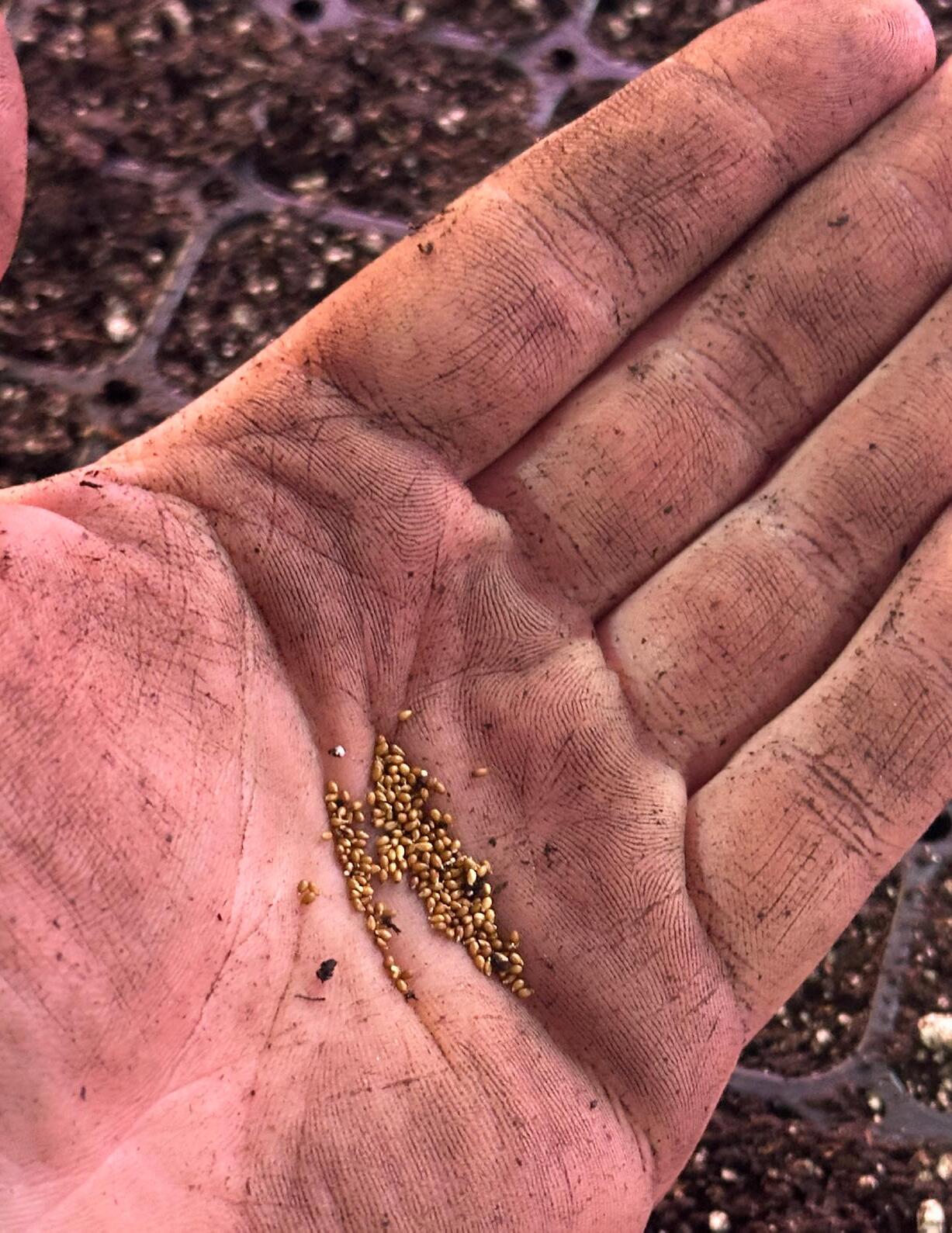
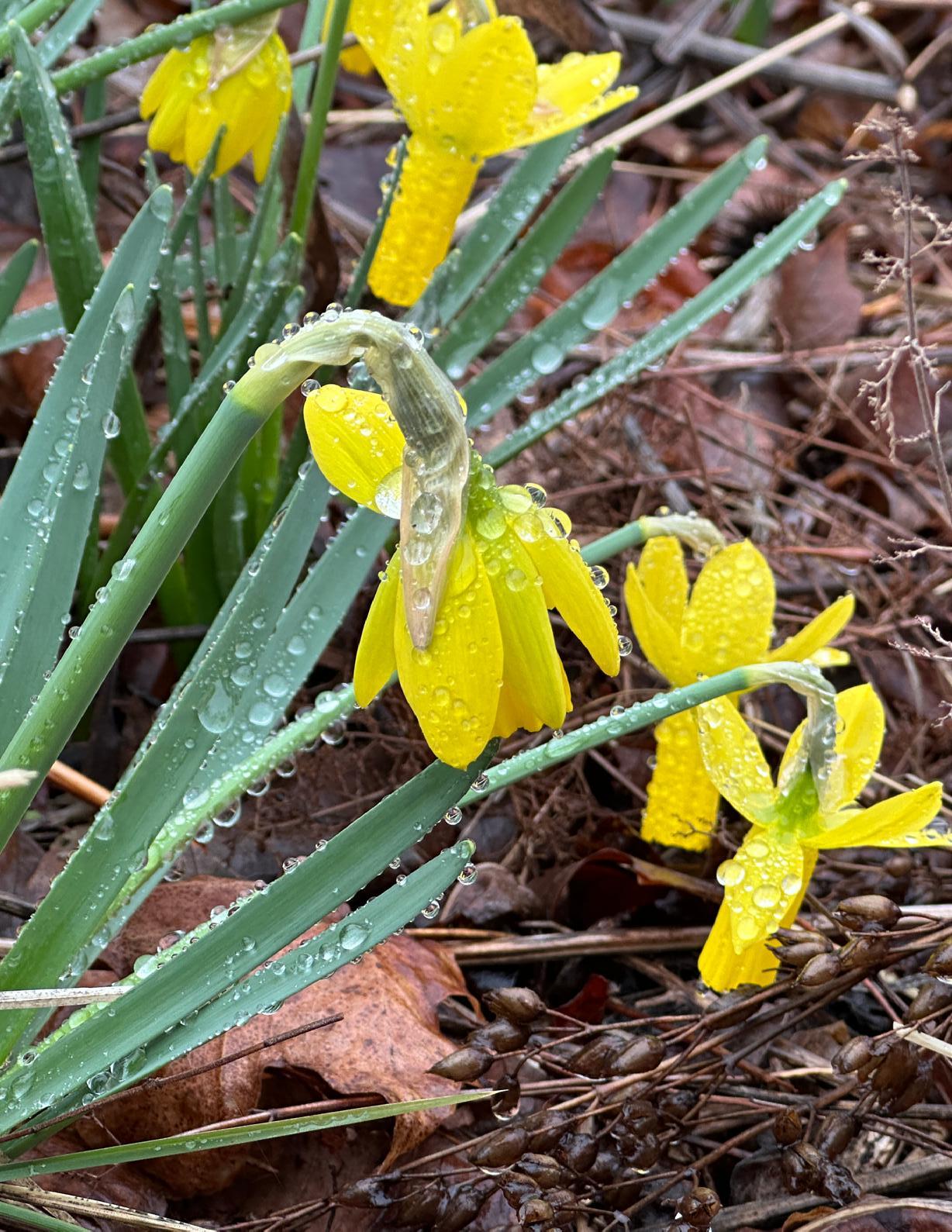
are of winter afternoons sitting at the kitchen table, seed catalogs spread out in front of me, covering nearly every square inch.
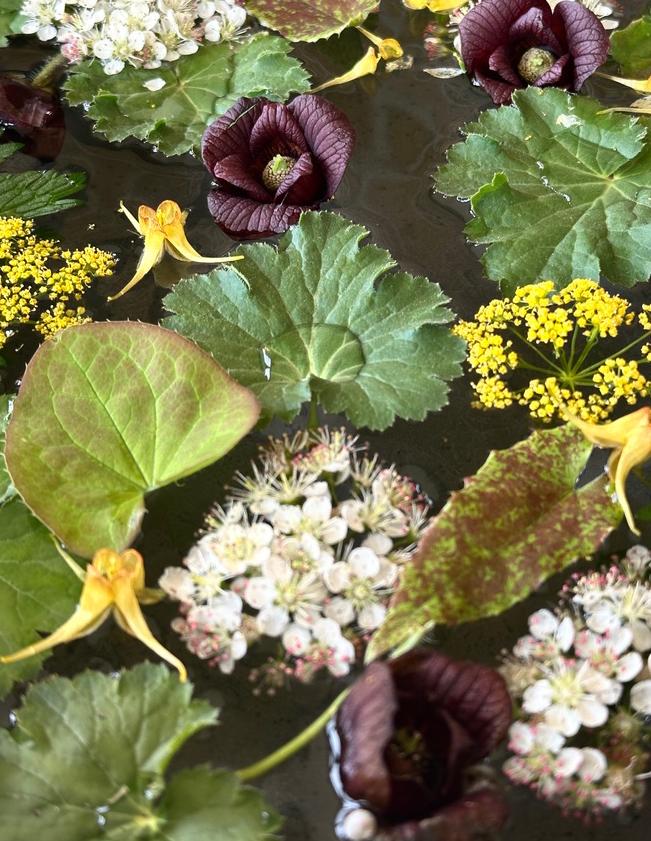
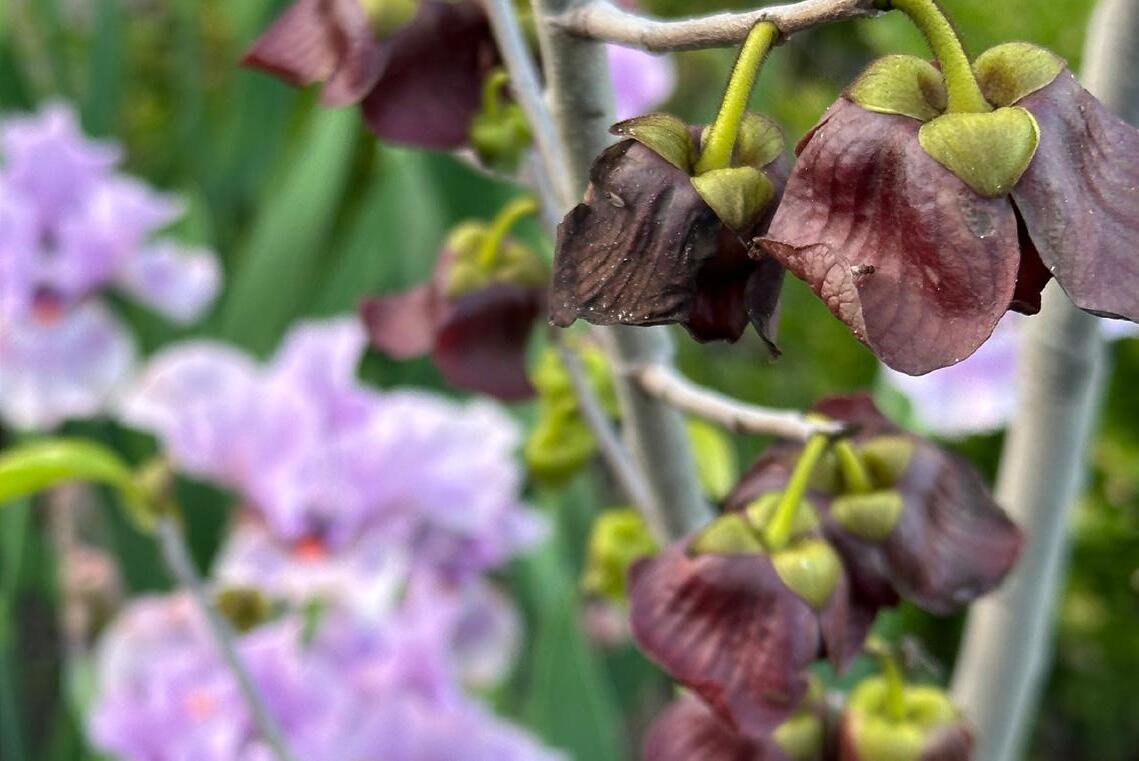
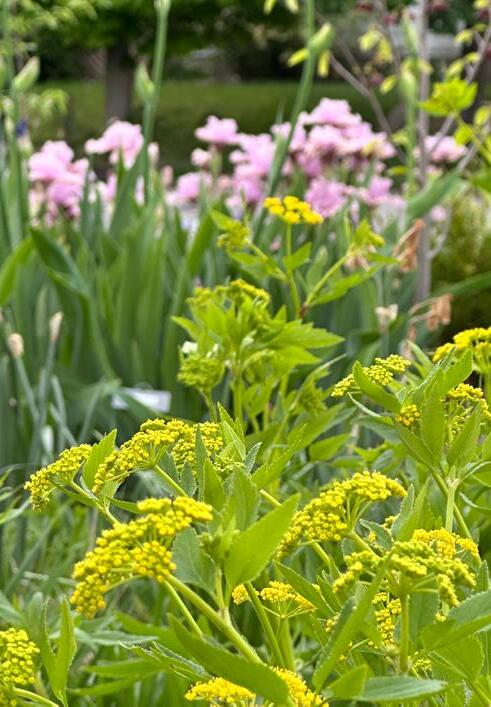
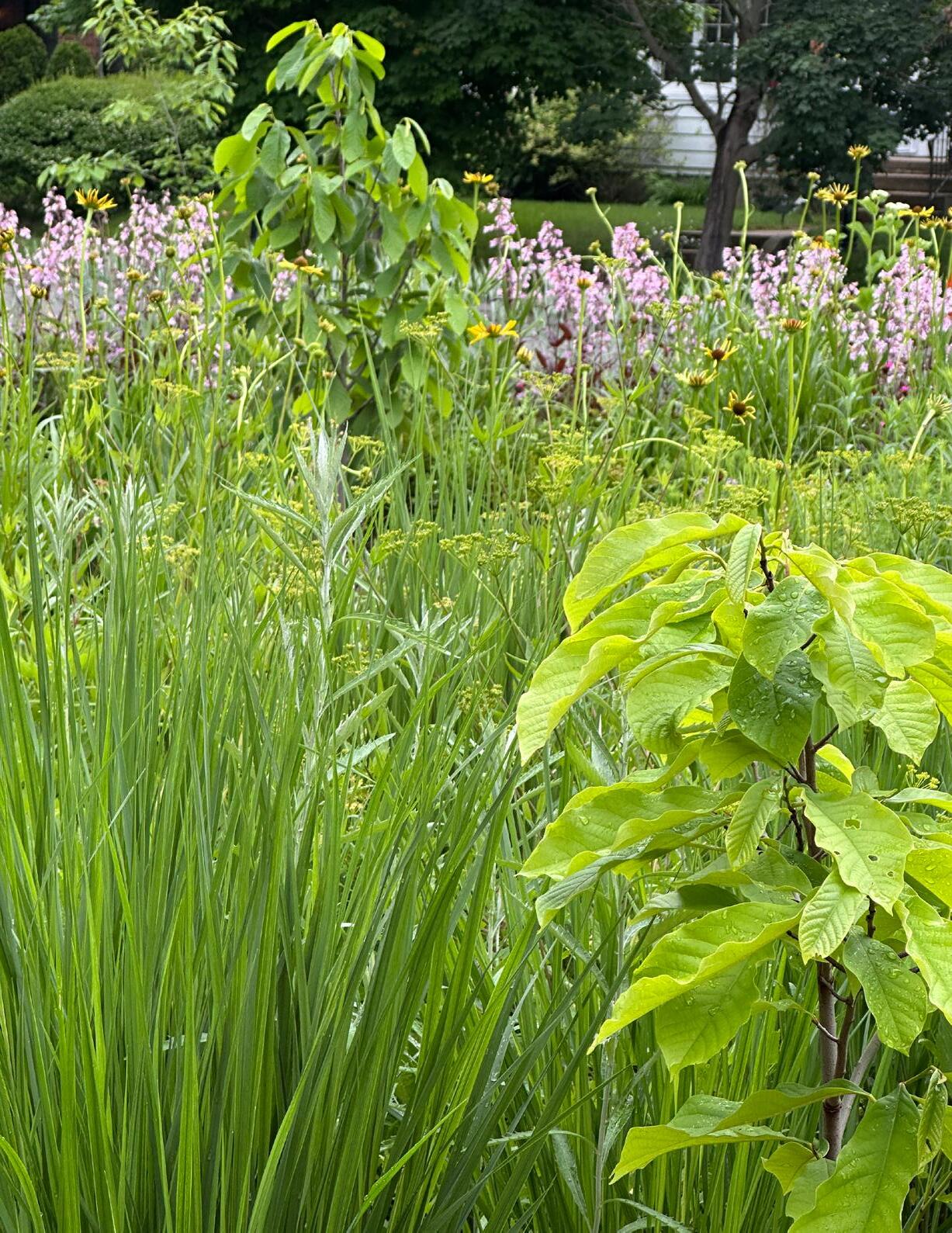
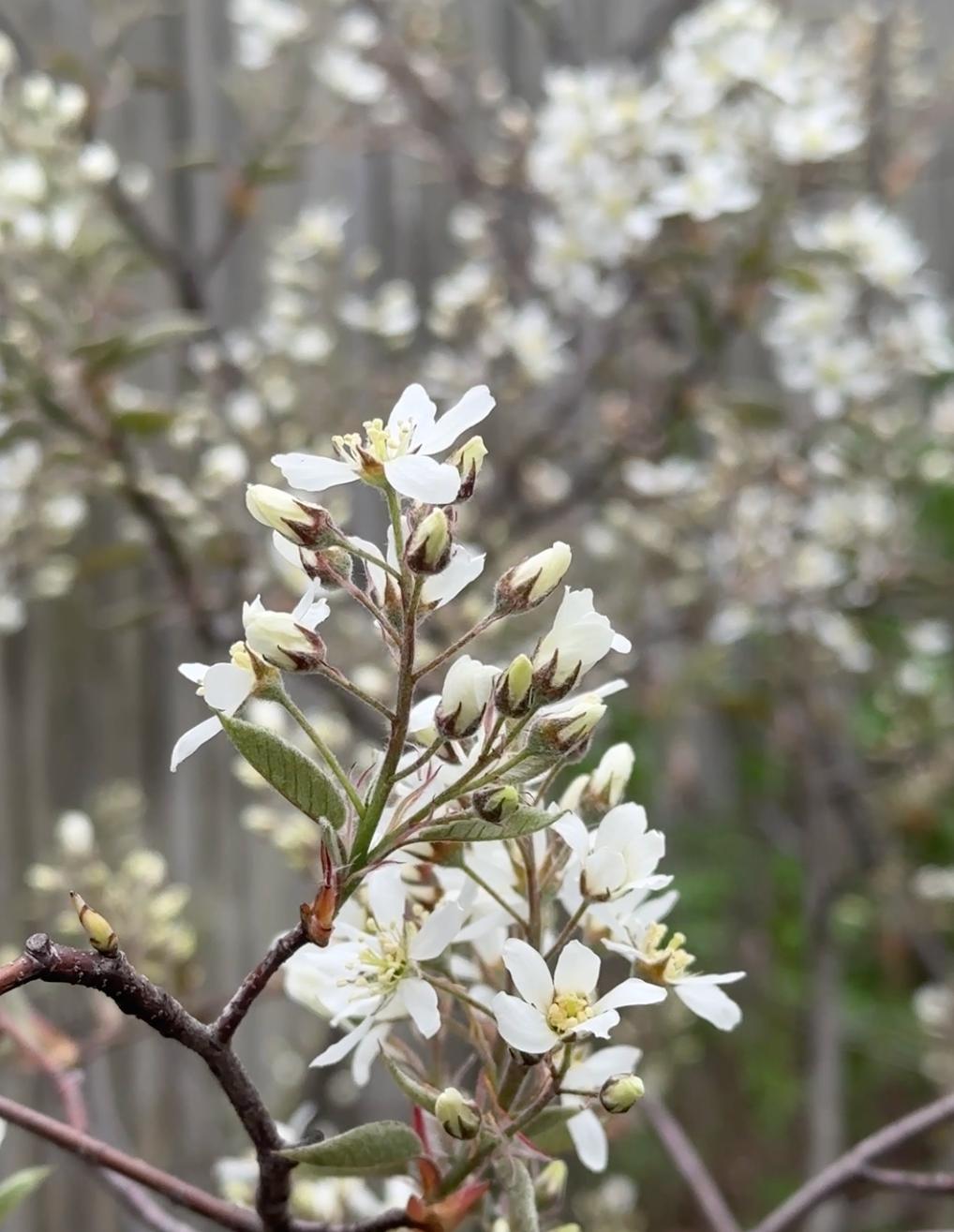
Cover: May 6, 2025 | A mid-spring assemblage of flowers and foliage, a mixture of native and climateappropriate plants, perennials, trees, and shrubs. Ingredients include; flowers of Asimina triloba, Paw Paw; flowers of Aronia melanocarpa, Black Chokeberry; Epimedium leaves and flowers; the golden umbels of Zizia aurea, Golden Alexanders; Heuchera richardosnii, with Prairie Alum Root, clamshell-like leaves.
Back in those days and before online shopping,
I would meticulously hand-write each season’s order on the paper form enclosed with each catalog, indicating product names, SKUs, and quantities. The forms were then totaled, a check enclosed, sealed, and mailed in. Fingers crossed the seed company still had in-stock what I was hoping to grow that year by the time my order was received.
I never knew for sure what would arrive from the wishlist until a plump package of seeds arrived a few weeks later. Every day after school I’d rush to the mailbox in the hope of finding a simple brown paper padded envelope stuffed with seeds, always far more than I could or would be able to grow. (I’m sure some of you can relate.)
We’ve come a long way since then... or have we?
I hold fond nostalgia for those years: the intentional planning (no such thing as late-night impulse seed ordering), the quiet anticipation, and the excitement of a season about to begin. I miss the analog of it all: flipping through a catalog and reading the descriptions of each plant, hand-writing the orders, and popping them into the mail with a hope and prayer.
A lot has changed since then, although one thing remains constant: receiving a package of seeds in the mail in January is still one of the best feelings ever.
This feeling - this nostalgia - is the idea behind SUPERBLOOM .
Flipping through a plant catalog is where it all begins. There’s something new to discover on every page - a new story, a new curiosity. These catalogs are driven by the seasons and guided by the whims and experience of plant curators and keepers on a simple mission of growing something beautiful and worthy of sharing with someone else. They bring joy, hope, comfort, and possibility.
Botany & Co. celebrates five years in 2026, and I’m continuing to reflect on how we started, where we’ve been, and where we’re going. Empowering more people to grow more plants in more places remains at the center of my focus. As I continue to search for ways to grow that idea forward, and as I sit with and attempt to recapture my own nostalgia, this feels like the time to try our own version. Enter, SUPERBLOOM.
As with all new things, learning is the primary goal: for me, for you, for all of us.
I have a lot of hopes for SUPERBLOOM . I hope it embodies a sense of wonder and curiosity. I hope it imparts knowledge. I hope it inspires creativity and empowers you to plant boldly.
Part catalog, part magazine, part research report, and ALL Botany & Co., this first SUPERBLOOM is another adventure and experiment in this journey of loving, growing, and sharing exceptional plants and owning a local & independent business. I hope it inspires and empowers you to grow more plants in your place.
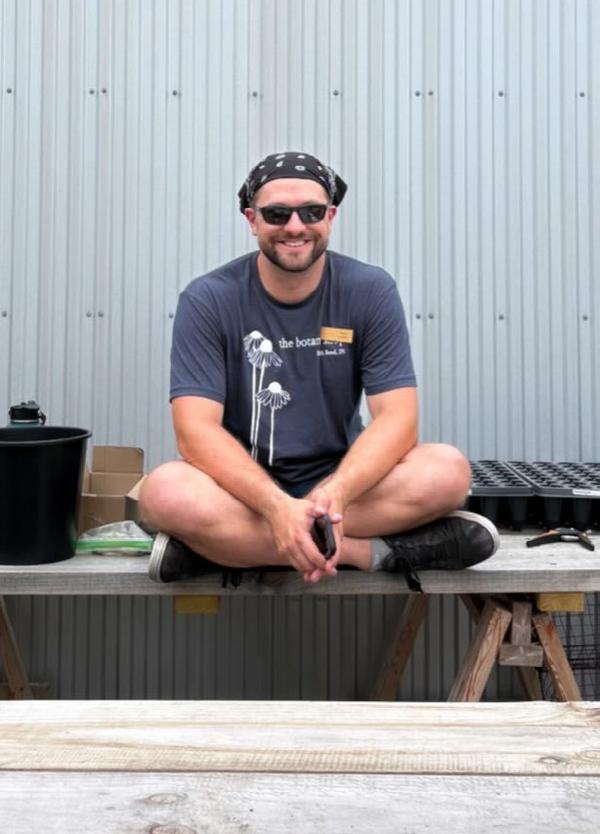
Ben | Botany & Co. Founder & Farmer
SUPERBLOOM
THE MICRO NURSERY THE PLANT TRIALS
Discovering new plants by growing them in our own garden.
To be clear, “new” in this context means “new to me.” Growing a plant is the best way to come to know it - its behavior, its preferences, its likes and dislikes. Watching, listening, observing, tendingall of these actions connect us more deeply to the plants around us.
The plants that pass muster (typically grown for at least two years) will head to The Lot this year. Grown by us, and known by us.
Learn more of the story on page 24.
The next logical step.
If I’ve been cultivating a trial garden these past few years... then what? How do we actually share these plants with, well, all of you?
While we are surrounded by and source from some truly phenomenal wholesale nurseries, the things in the trial gardens just aren’t available at scale. If our goal is to share them, then we need to figure that part out, too.
You’ll also see changes in The Lot itself this year as we work on building out a new nursery holding area where the works-in-progress will grow and bulk up until they’re ready to take home. You’ll be able to sneak a peek at what’s cookin’ every time you visit.
This was one of the highlights of 2025.
I’ve been dreaming of sharing plugs in a retail space since 2018. Believe it or not, this is the “big idea” that launched Botany way back in the beginning, before we’d even landed back in South Bend. This idea has been churning for a hot minute. To see it come to life in 2025 brought so much joy.
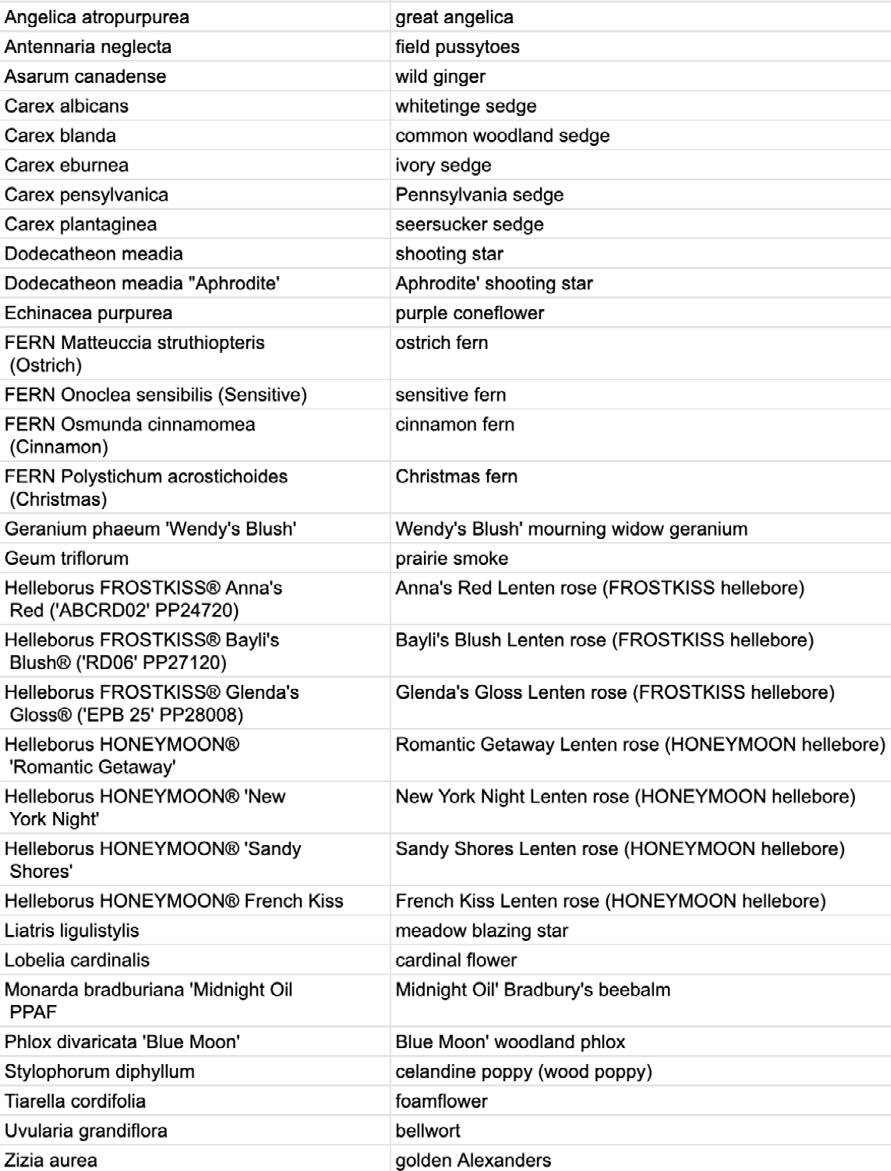
We heard your positive feedback, and I’m excited that The Bar will be back this year, and it will be our biggest offering yet in terms of the number of different plants. Here’s the spring 2026 plant list.
The Plug Bar will open for online preorders Monday, March 16 at 9a.
THE PLUG BAR
It’s almost time to talk about them.
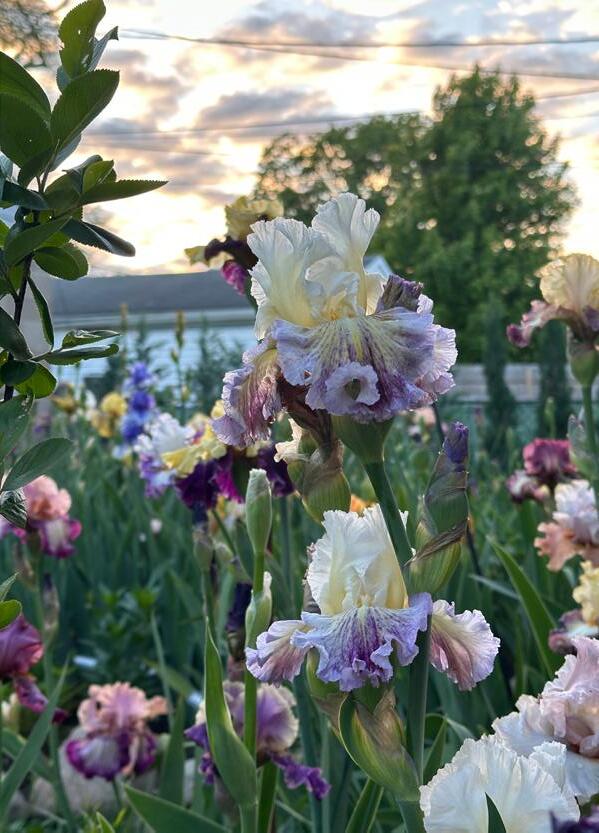
From the very beginning, there have been Iris.
No, really. Iris was the first word I learned to spell, before my own name. (According to my parents.)
I’ve always been captivated by this plant, and in many ways they were my “gateway plant” to the gardener I am today. Some of my happiest memories are of visiting Iris farms or seeing collections at public gardens in full bloom.
Here’s the thing: those places don’t exist here anymore. I miss them. I miss that memory, that experience: and especially, the fragrance. They’re actually what inspired the SUPERBLOOM nomenclature.
I’ll share more about this collection in June. In the meantime, a small collection of potted specimens will be available in The Lot this spring.
THE IRIS
The Lot makes possible a future beyond lawns.
It’s a space that fills me with hope and allows me to dream about how we can continue to share the experience of changing conventional lawns into something that I would argue is far better: a garden. Knowledge is power, so in early 2026 I shared Botany & Co.’s new Lawn Conversion Library.
The Library is a collection of resources meant to empower you with information and confidence to plant boldly.
A new tool rental program to support larger projects is coming spring 2026.
Need help narrowing down your spring plant list?
Let’s chat! It’s my sincere joy to connect people to new plants, and everything I’ve curated for The Lot Next Door are things I know well.
Wisdom to live by: right plant, right place.
If you need helping figuring out what this means in your place, I’d love to help. I’m starting with some virtual sessions in early March if you’d like to get a head start, and in-person reservations will be available later this spring.
MARKET SEASON LUMINOUS
Growing community.
I always dreamed The Lot could double as a community space, along with an outdoor plant shop and nursery. Last year we put this to the test with a full season of public markets.
We’ve already released information for this year’s market season. If you’re interested in becoming a vendor, you can apply and learn what you need to know here.
Vendor applications will open on a rolling basis throughout the year as we move through the seasons. All dates and details are now online.
I hope you’ll plan to join us as a vendor, a shopper, a neighbor, or all of the above.
Monday, December 21, 2026
This signature celebration of the Winter Solstice, the longest night of the year, will return in 2026.
Our first offering in 2025 was nothing short of magical, and we were filled with gratitude and hope thanks to your positive response. You can revisit some highlights and reflections here.
Early-access tickets will drop on Monday, September 7 at 9a. We expect this event will reach capacity this year. If you’d like to join us, save the date, set a calendar alert, set an alarm, whatever your jam.
You can look forward to another magical twilight evening in The Lot Next Door filled with plenty of magic, heart, cheer, and tranquility.
GREEN SEASON 2026 CALENDAR
March 2 | SUPERBLOOM Release
March 16 | SPRING PREORDER
Enjoy 10% off for Customer Appreciation Week, online only, March 16-18
March 28 | WORKING WEEKEND Community, we need your help! Learn more and sign up on the next page.
April 12 | Preorder Closes
April 18 | OPENING DAY
+ Spring Garden & Antique Market
May 10 | Mother’s Day
June 27 | PLANT PRIDE
Spring Drop
Early Summer Drop
Last chance to shop in person until Autumn.
Last day to shop for the 2026 growing season.
Block Party & Market
IRIS PREORDER
Opens July 6 | Online Only
The Lot is closed for summer break, June 28 - August 28. Autumn Drop + Luminous Tickets
August 29 | OPENING DAY
+ Fall Garden & Antique Market
October 17 | Last Day Open
The Lot is closed for holiday flip, October 18 - November 20.
THE HOLIDAY LOT
Nov 21 & Dec 5 | HOLIDAY MARKETS
December 21 | LUMINOUS
Open for trees, branches, twigs, wreaths, garlands, and more; November 21 - December 13
As always, it takes a village - now, perhaps, more than ever.
WORKING WEEKEND
Saturday, March 28, 8:30a - 2p
By now I hope you have April 18 on your calendar as the opening day of The Lot Next Door. It’s a big lift getting this space ready for the season, and at this critical time of year: community, we need your help.
Inspired by Hootons Walled Nursery across the pond in the UK, I’m hosting our first-ever Working Weekend on Saturday, March 28. We’re calling in reinforcements to help us bring the pieces together and be ready to welcome our entire community in just a few weeks for the next season of The Lot.
I hope around 10 helpers will join us for the day. We’ll break into teams, and make short work of a long (and ever-growing) punch list.
The tasks before us range from building shelves, planting a new hedge, tidying plantings and (wait for it) moving the camper! (This one will be fun!) You’ll burn a few calories and meet some new friends and neighbors, and go home with a sense of accomplishment for a job well-done, all while helping a local, independent business bring to life a space for our entire community to discover and love.
Good vibes only.
What to Expect
Plan to arrive by 8:30a for a quick orientation + coffee and pastries by Counterspell.
We’ll dig in around 9a and break for lunch catered by A Bit with Mee around 11:30. After lunch, we’ll finish any remaining projects and my hope is that we’ll wrap up by 2p. If weather permits, we might have a nice little bonfire to celebrate our hard work and hang out for a few.
I’ll send details regarding parking and any other lastminutes notes a day or so in advance. (Also it won’t rain and there will be sunshine…)
We’ll provide the tools including work gloves, along with morning refreshments and lunch. Please bring your own hat, filled water bottle, and sunscreen.
Anyone who pitches in will also receive a $50 gift card.
As always, it takes a villagenow, perhaps, more than ever.
SIGN UP HERE
into the MEADOW
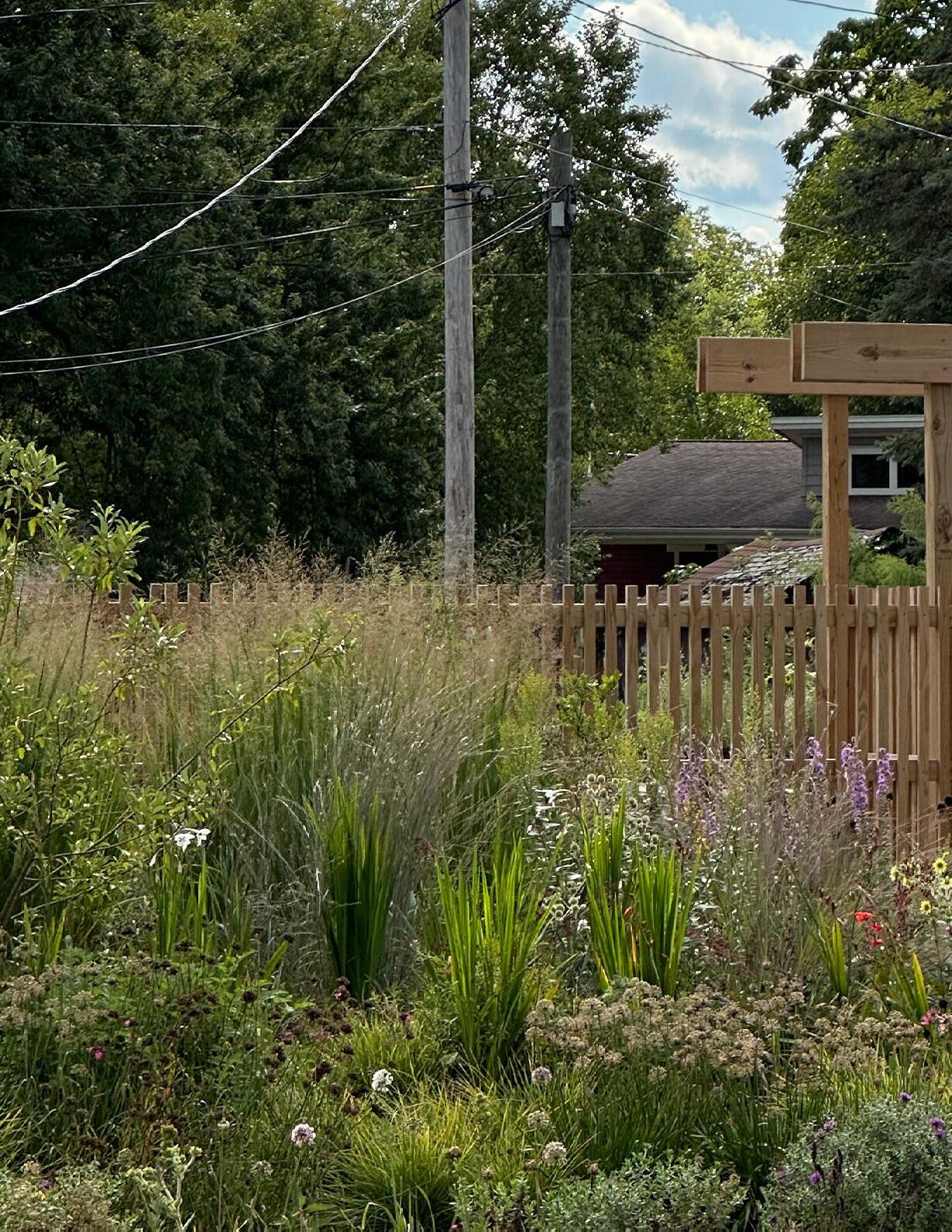
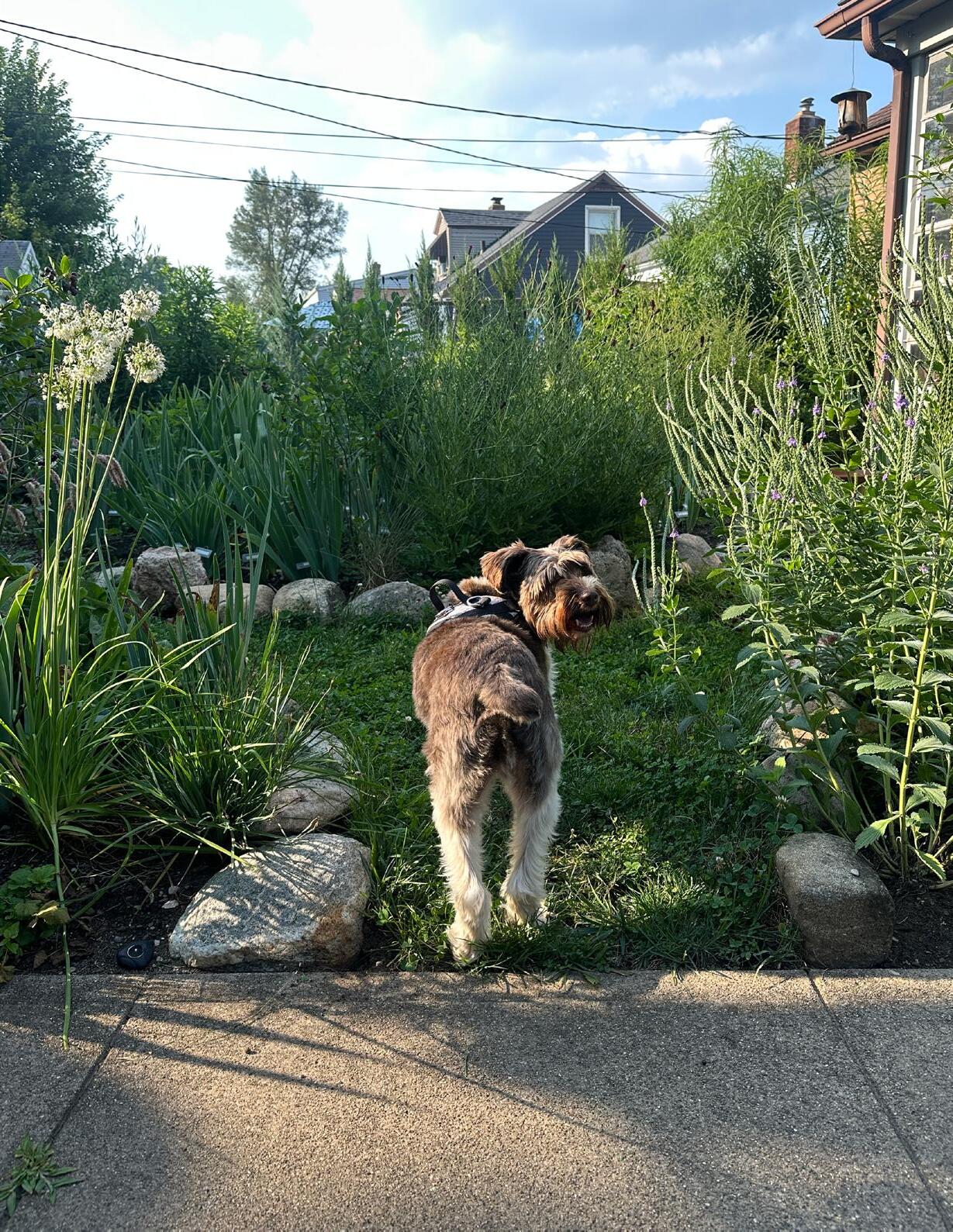
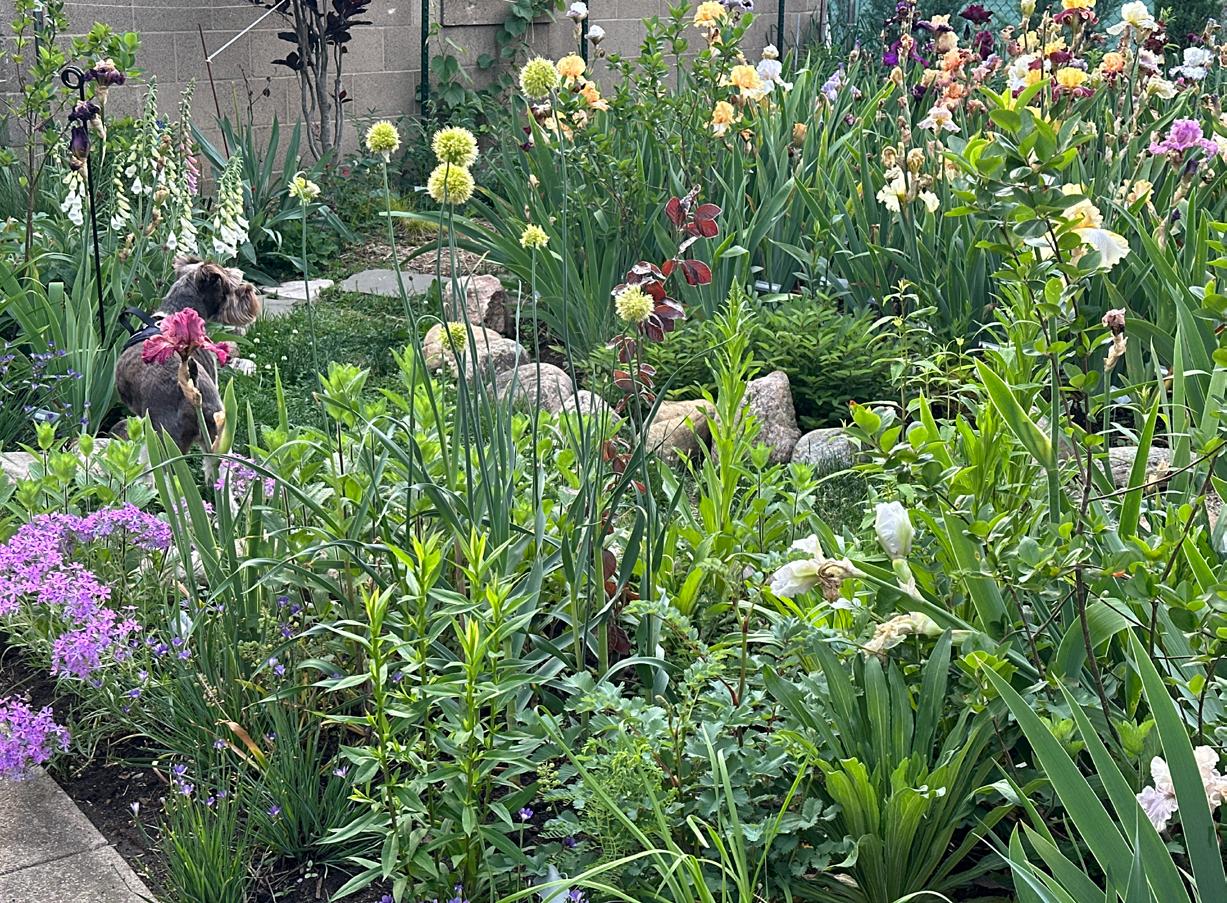
I’ve been transforming our urban lawn into a meadow garden since 2021.
Earlier this year I wrote a blog post about this journey, including some of the lessons learned along the way and “this is how it started” photos. It’s a good read.
For SUPERBLOOM, I wanted to do something a little different.
This article isn’t about the making of the meadow.
It’s about living within it.
Surrounded by it, immersed in it, enclosed and protected by it.
It’s about the view from the inside looking out, rather than the opposite, which is how most gardens are shared. (Read: our cultural fascination with curb appeal and instant gratification, often at the expense of a gardener’s experience.)
This collection of thoughts and images is from the gardener on hands and knees, looking out a window, making notes for the future, and discovering the latest joy-filled surprise.
It’s a journey of being present coupled with methodical, intentional movements.
Of all the lessons learned and discoveries made in this place and through this process, the realization that this work is as much about cultivating ourselves as it is our spaces, is perhaps the most meaningful.
Let’s dig in.
Ingredients:
(1) Euphorbia corollata, Flowering Spurge
(2) Heuchera richardsonii, Prairie Alumroot
(3) Dalea purpurea, Purple Prairie Clover
(4) Artemisia ludoviciana, White Sagebrush
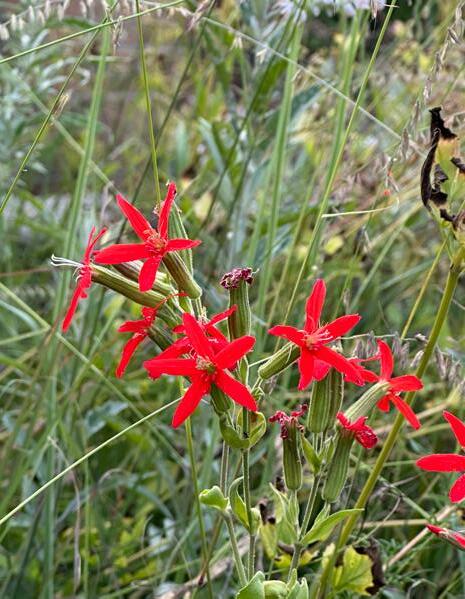
Silene regia, Royal Catchfly
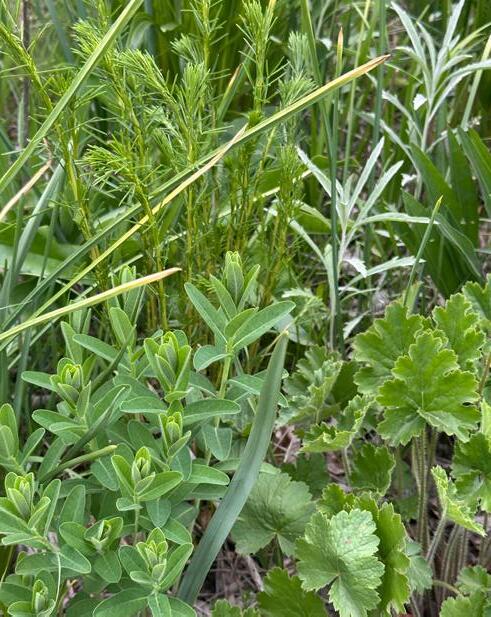
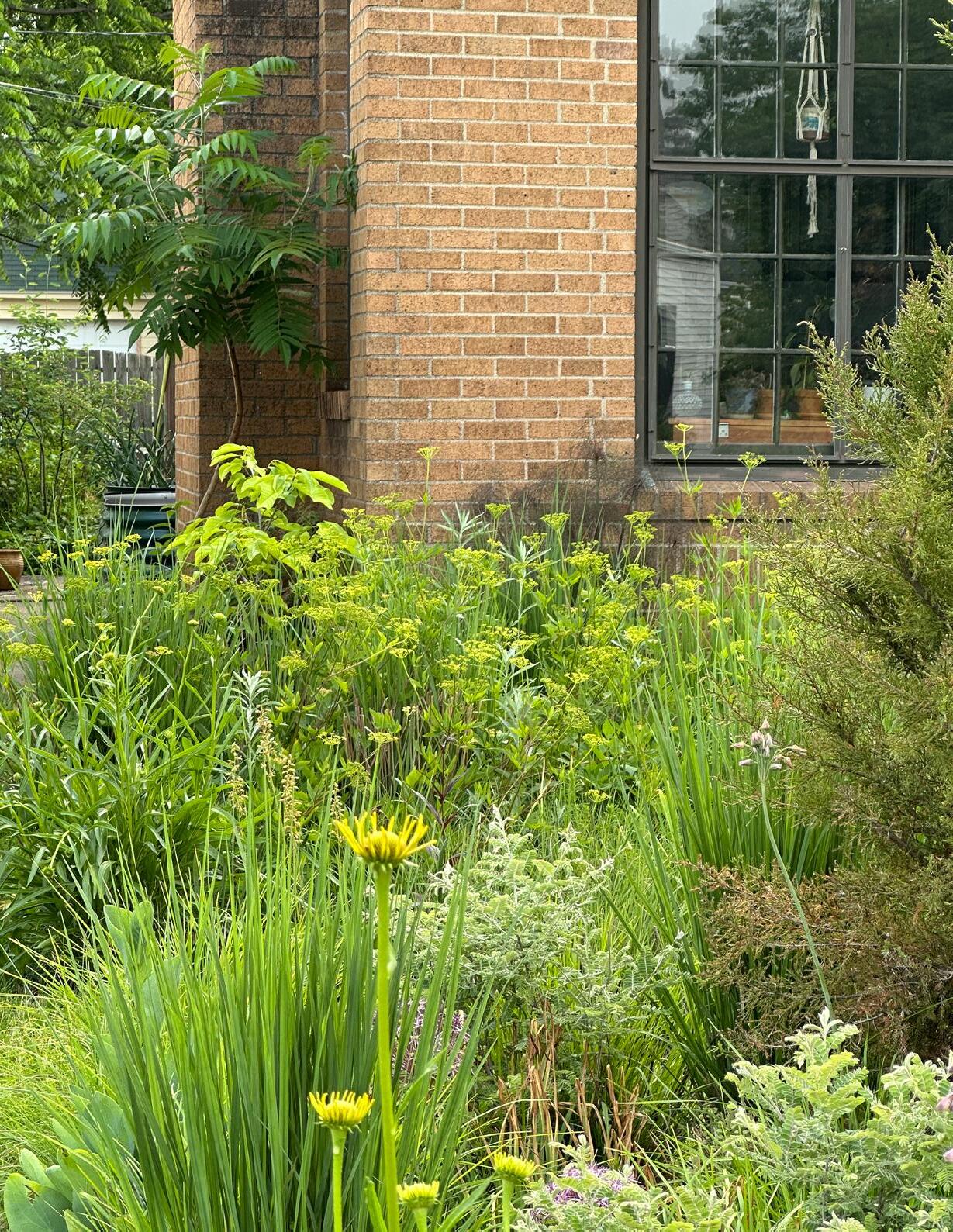
Above: May 27, 2025 | No flowers yet, and foliage is doing most of the lift in terms of visual interest.
July 26, 2025 | One of my favorite late-summer moments, this area of the meadow has matured to require almost no inputs. Each year the complexity and layers grow more intriguing.
May 13, 2025 | An unanticipated combination: the velvet purple Paw Paw flowers pair wonderfully with the Iris growing below.
Ingredients: flowers of Asimina triloba, Paw Paw in foreground; flowers of Iris ‘Western Sage’ in background. (Below) Zizia aurea, Golden Alexanders with the same Iris in the background. A shift of about 6’ in perspective.
on shifting PERSPECTIVE
I’m a sucker for good texture. If I could share any bit of wisdom with an aspiring planting designer, it would be to embrace texture and form before color as an essential consideration.
These images capture the dynamic change and recombination of ingredients that can occur by taking just a few steps one way or another.
I love to crouch down for a plant’s-eye-view.
The best gardens are composed in layers, both horizontal and vertical, and these images illustrate that concept in a wonderful way.
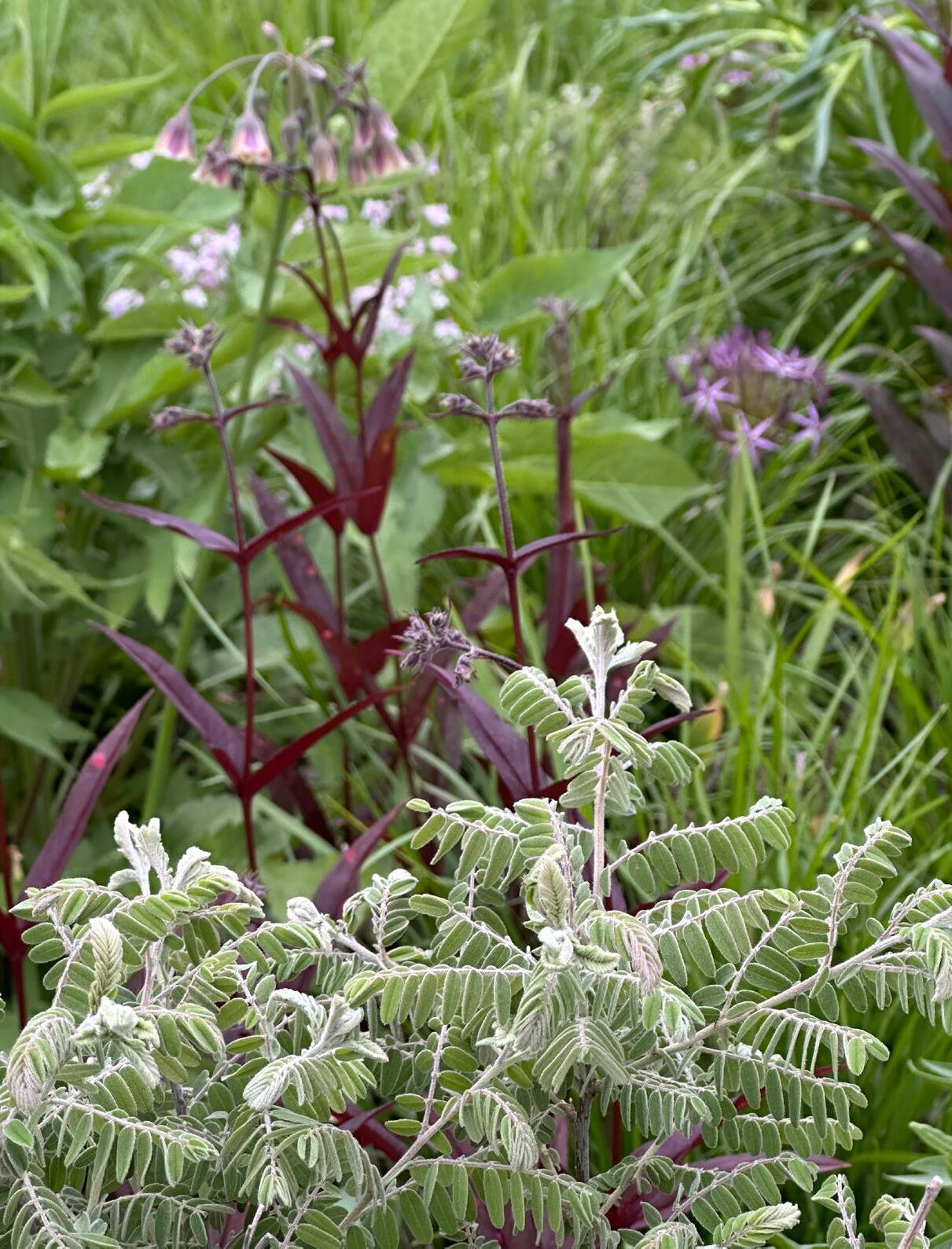
Every season I’ve added new layers: this year the Amorpha canascens and Allium christophii were new arrivals in the earlysummer planting on the opposite page.
Diversity and complexity are essential.
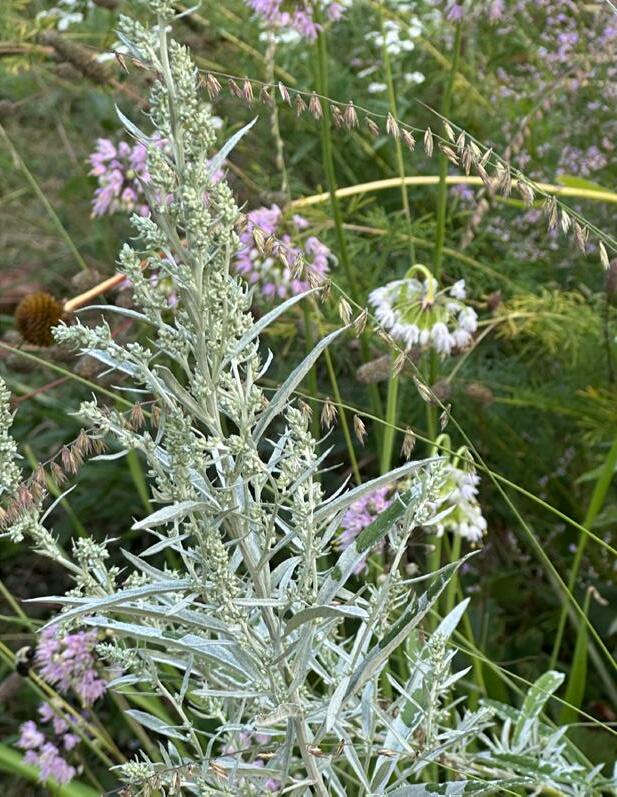
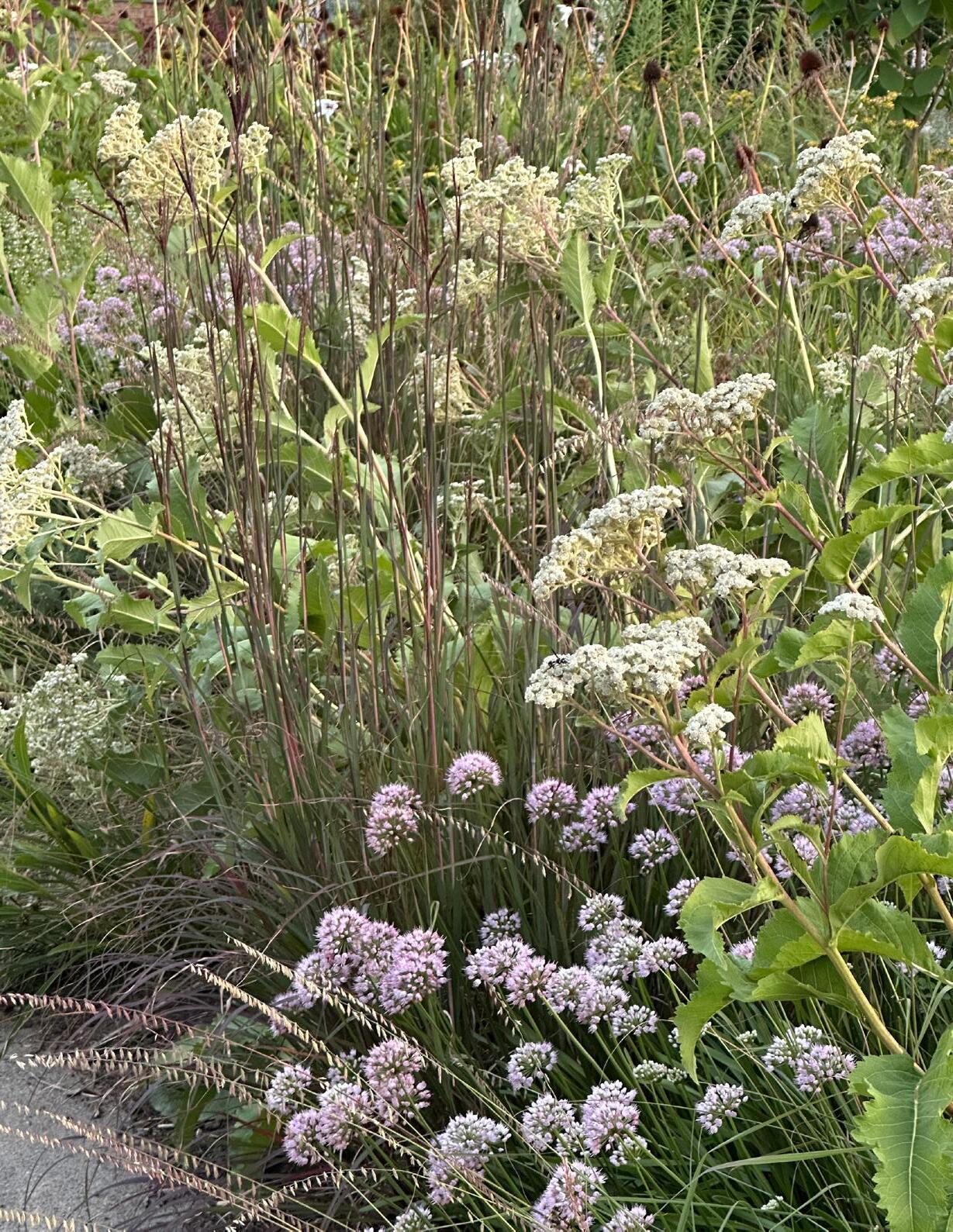
June 8, 2025 | Texture matches color as an essential design element in this vignette of full-sun, drought-tolerant plants.
In 2025 I set an intention to redefine my relationship with social media. In full honesty, if I could have quit it entirely, I would. At least, that’s where I was a year ago.
I quickly realized a few things. The first being that stepping away entirely just wasn’t realistic given how it’s become an important platform for Botany & Co. to communicate and connect with our community.
What might a rebalance look like?
June 8, 2025 | Texture matches color as an essential design element in this vignette of full-sun, drought-tolerant plants.
Ingredients
(1) Amorpha canascens, Leadplant
(2) Nectaroscordum siculum, Sicilian Honey Garlic
(3) Panicum ‘Northwind’ Switchgrass
(4) Artemisia ludoviciana, White Sagebrush
(5) Zizia aurea, Golden Alexanders
(6) Foeniculum vulgare var. purpurea, Bronze Fennel
(7) A rare view through to the back garden when the gate is open.
Selections include Asimina triloba, Rhus typhina, and Amelanchier laevis. 1 2 3 4 5 6 7
“Create more than you consume.”
This became a mantra in 2025, and it’s entirely flipped my relationship to social media. Here’s how.
It’s re-directed my energy to the present. I pay closer attention to the movements I’m making and the things that are happening around me. In many ways, it feels like tuning in is a means to cut through the “noise.” (My brain can be a loud place sometimes...)
I began to use Instagram’s story highlights feature to group, sort, and organize key spaces and ideas as they came to the surface through documentation and sharing. Edges quickly became one of them.
Why edgesdomatter?
Ultimately, this lesson of the garden reinforces the idea that edges are meant to be knit together.
Edges are where the disturbance happens. It’s often where living beings enter and exit communities and ecosystems. It’s where transitions happen and energy changes form.
Edges are opportunities to learn and to listen.
Nature is not a fan of exposed soil. Exposed soil is like an open wound, with its precious topsoil and organic matter like blood: life sustaining & vital.
To be protected and nurtured at all costs.
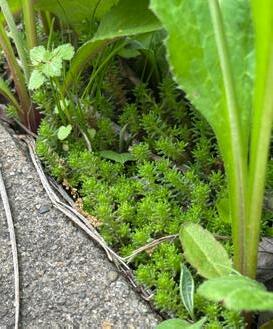
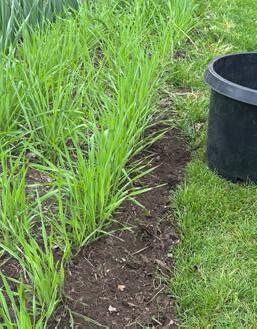
I came to notice that I spent what feels like an outsized amount of time keeping up with the many edges in this garden, from sidewalks to turf and beside the harsh corners of houses, all begging to be softened and stabilized.
The best part in figuring out the edge is discovering the plants that are perfectly suited for the job. Right plant, right place.
Edges will continue to be a theme through 2026, and when the online Plug Bar opens on March 16, you’ll see a way to filter this year’s many offerings to those that are well-equipped for this curious and unique niche.
the JUNE superbloom
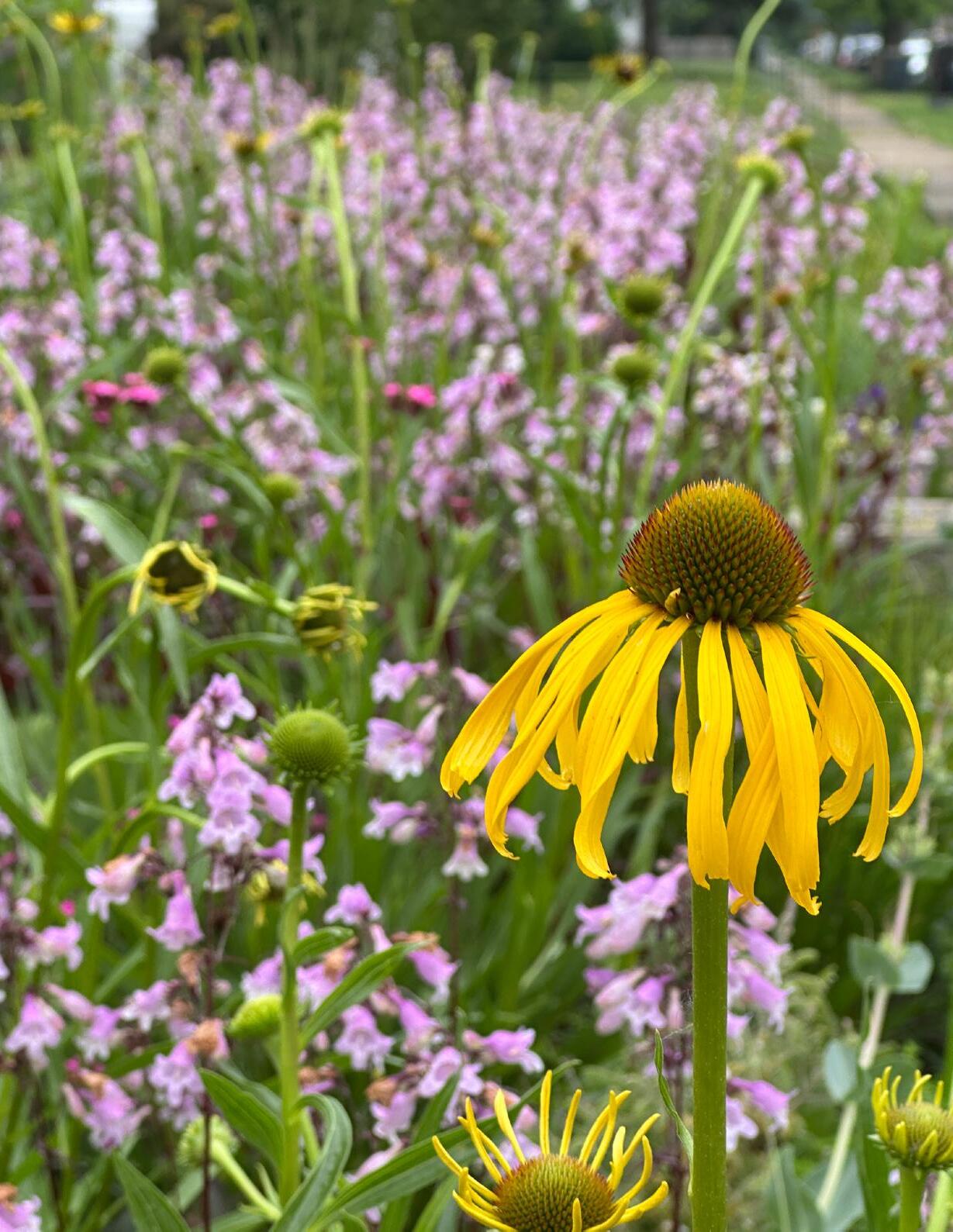
Early June marks a turning point in the front meadow. Spring is a fairly calm season that begins to change quickly as the days grow warmer and longer, pushing forward the first major superbloom of the season.
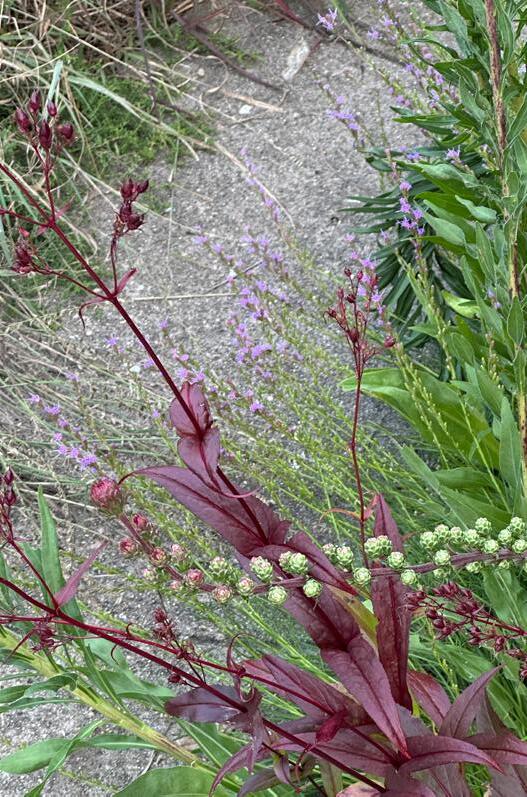
Three plants dominate the stage in these weeks: Penstemon ‘Pocahontas’, Echinacea paradoxa, and Dianthus carthusianorum. A match-up meant to be.
There are still plenty of flowers yet to come later in the year, but this moment has become the full-throated announcement of summer’s arrival.
All planted with plugs starting in 2021.
PLANT TRIALS
the best of 2025
searching for superbloom moments
This garden has been many things since early 2021.
First, it was a very temporary glimpse of The Field. I carved out planting rows with clean, 90-degree corners with beds of equal distance and depth. That garden barely got off the ground before the lawn conversion service took off that autumn and the space was subsumed as a holding yard.
If you’ve ever incubated a business in your home, I know you can understand what this felt like.
Welcome to the Trial Garden
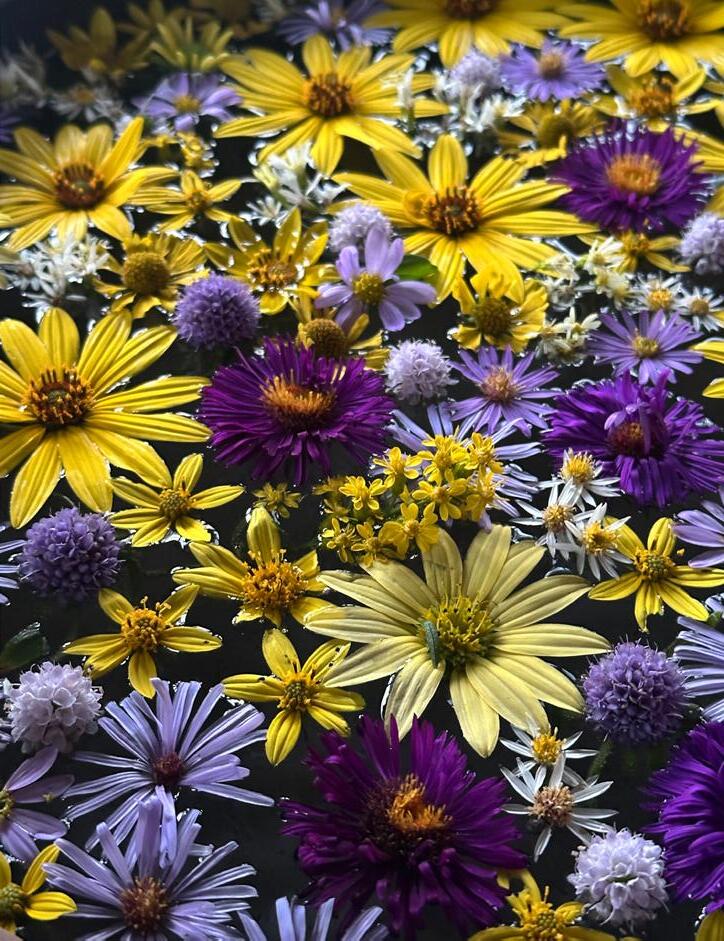
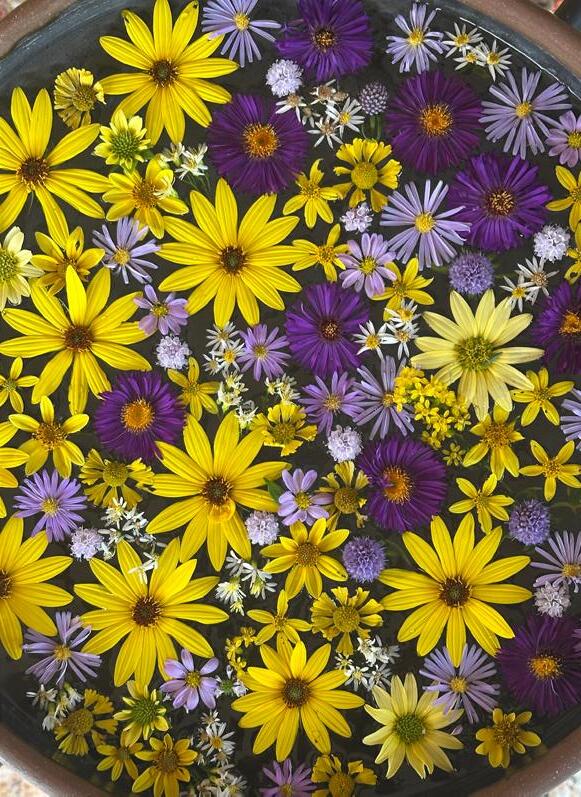
A floating flower arrangement of some late-season trial garden favorites including Helianthus, Asters, Succisia, Succisella, Solidago, Kalimeris, and Eurybia.
I rolled out nursery fabric, covering and compacting the ground as I came and went every day, watering by hand each and every night. The soil was suffocating and starving underneath.
In 2024 things began to shift, and I was able to relocate the holding area to the side of our house. Still close to home, just not right in the backyard. In 2025, I made the decision for us to hit an indefinite pause on our lawn conversion service, and thus the holding area was retired.
At last, I could begin to create a garden here.
This garden has become a space to explore new plants and test new ideas.
Every garden is an experiment to some degree, and this one is no different. Without setting out to do so, this back yard has now unwittingly incubated three distinct businesses in Botany & Co.’s history.
First, the lawn conversion and holding area. Then, elements of The Field began to appear: “beautifully productive” growing with a focus on ingredients.
The trial garden was emerging along with The Field. Now that I had space again, I was eager to fill it with new treasures. This is when the Iris collection began to expand rapidly.
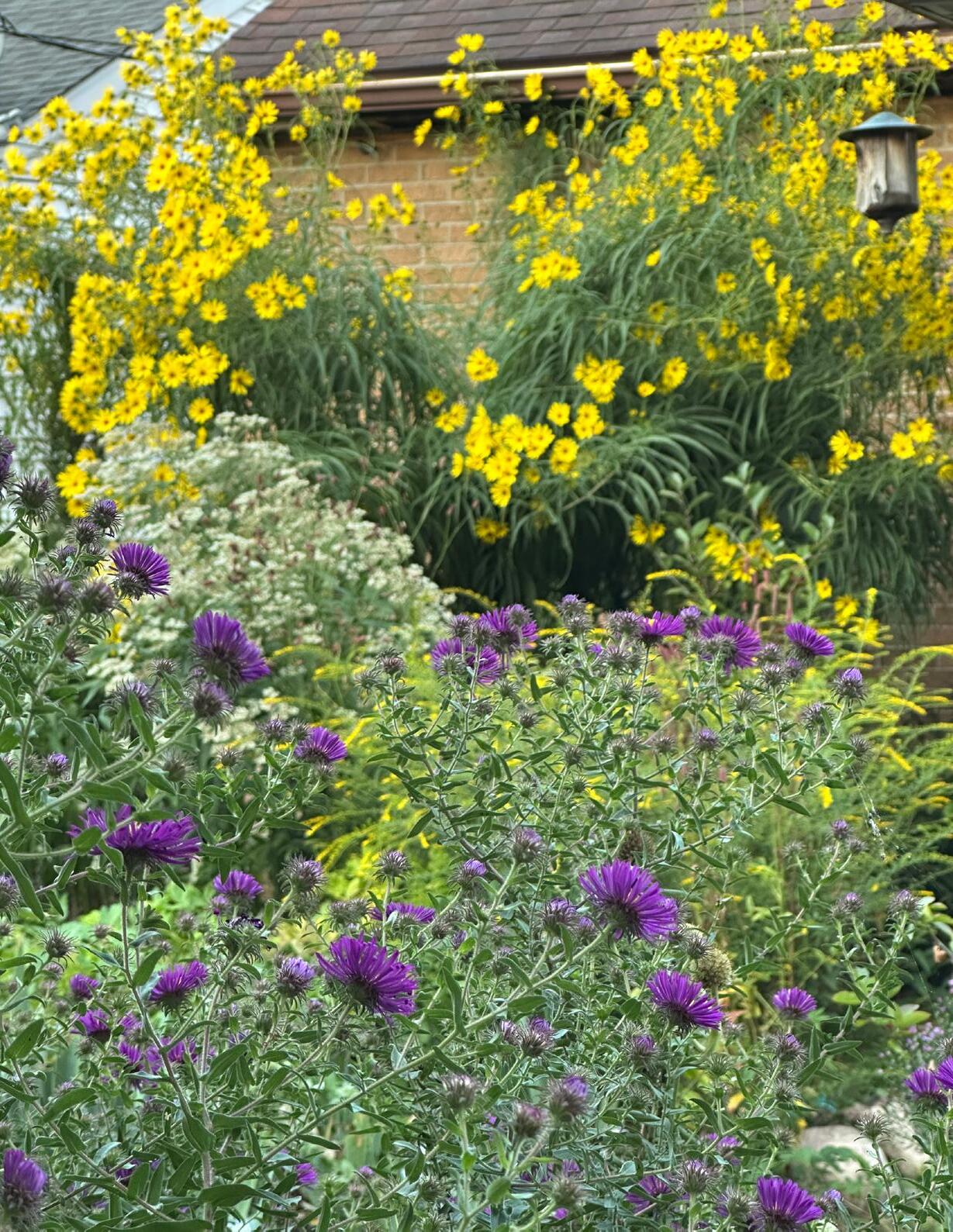
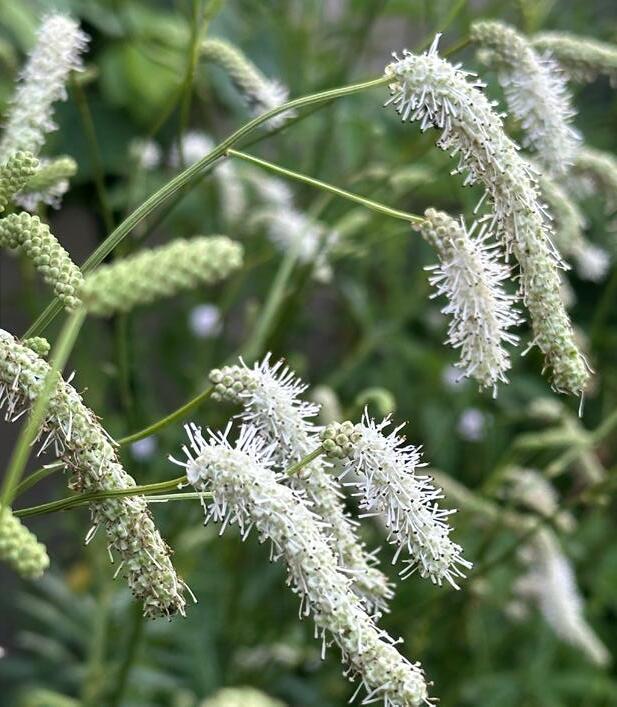
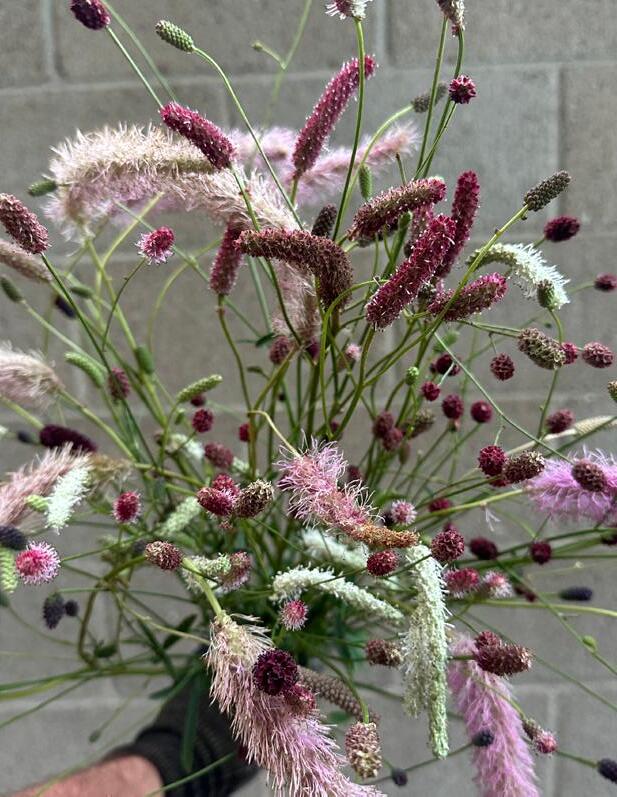
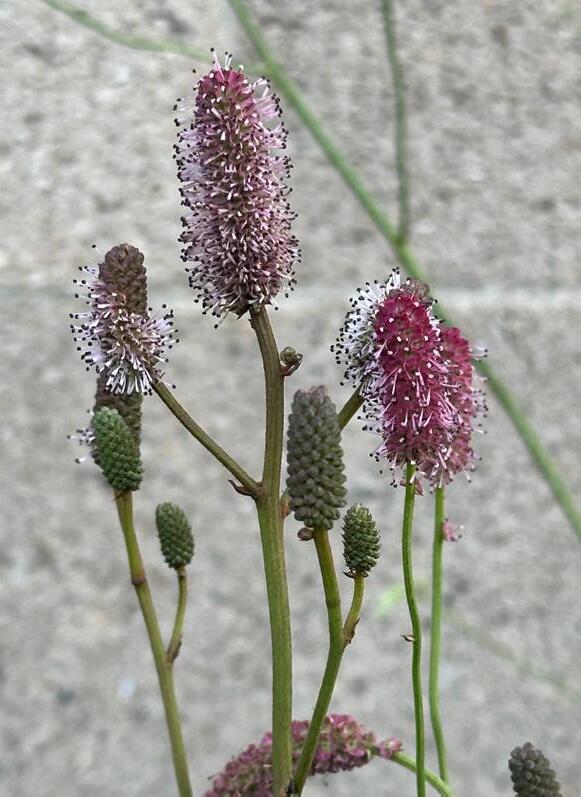
I’ve been developing collections of Sanguisorba (Burnet), Asters (multiple species), Solidago (Goldenrod) and Helianthus (Perennial Sunflowers). I’ve also been exploring heritage Chrysanthemums. (Those need another year to cook, at least.)
With the Iris dominating early summer (above), the other genera peak in high summer through Autumn. This is the time of year I crave a finale-like energy without having to do a ton of gardening, thanks to the summer heat and exhaustion.
I’ve been on a quest to bring together as many lateseason gems as possible. I have an especially keen interest in the tall, whimsical, and wild-spirited selections. So much of modern plant breeding selects for “compact/neat/tidy” and while I can respect that to a point, eventually it just becomes a little boring and even a little plastic. We can do better.
meet the SANGUISORBA
Of all the genera in the collection, Sanguisorba are one of my absolute favorites.
Sanguisorba sp. | It’s the first plant I decided to intentionally collect here, and I’m up to eleven distinct varieties - they aren’t easy to come by!
There’s nothing quite like their flowers. Fuzzy, playful caterpillar-like composite blooms range from ivory and burgundy to velvet purple, and pink in many tones: hot, bubblegum, and electric.
I’ll be testing out some new propagation techniques this spring, and if successful, you can look forward to a few Sanguisorba arriving on the Plug Bar in the early summer drop.
notify me when available
meet the ARONIA
You won’t regret planting this one.
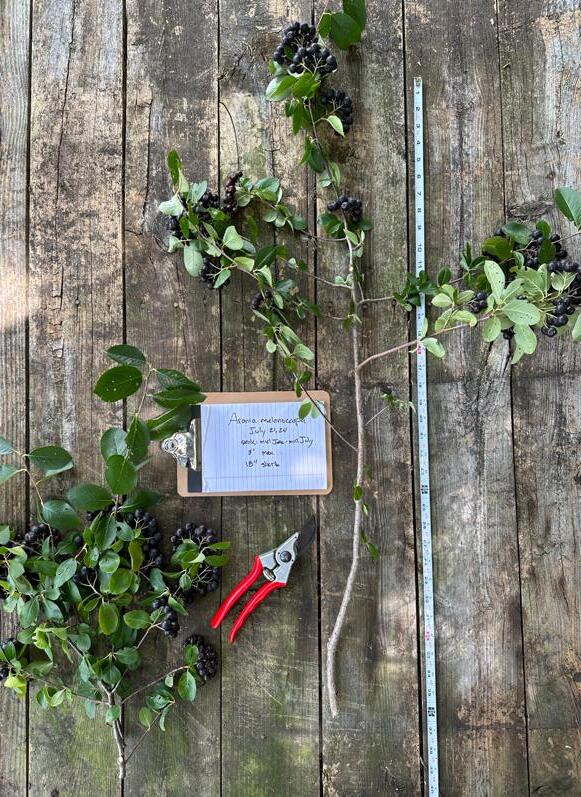
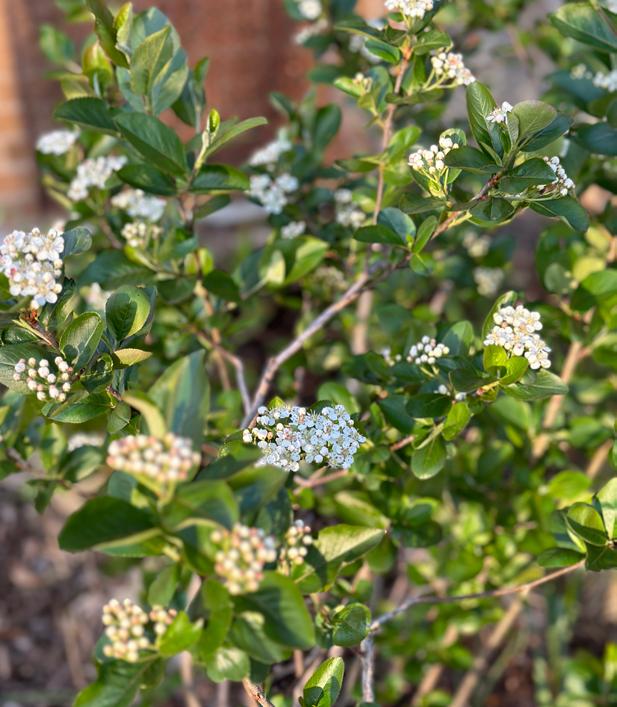
Aronia melanocarpa | One of my favorite native smallscale shrubs, Aronia has a multi-branching, open-habit. Clusters of cheerfully fragrant white flowers emerge in spring, loved by pollinators, with handsome deep purpleblack berries in late summer/early autumn.
Berries are edible and need to be cooked down to remove tanins. Excellent for preserves and syrups, and “superfruit” qualities to rival blueberries.
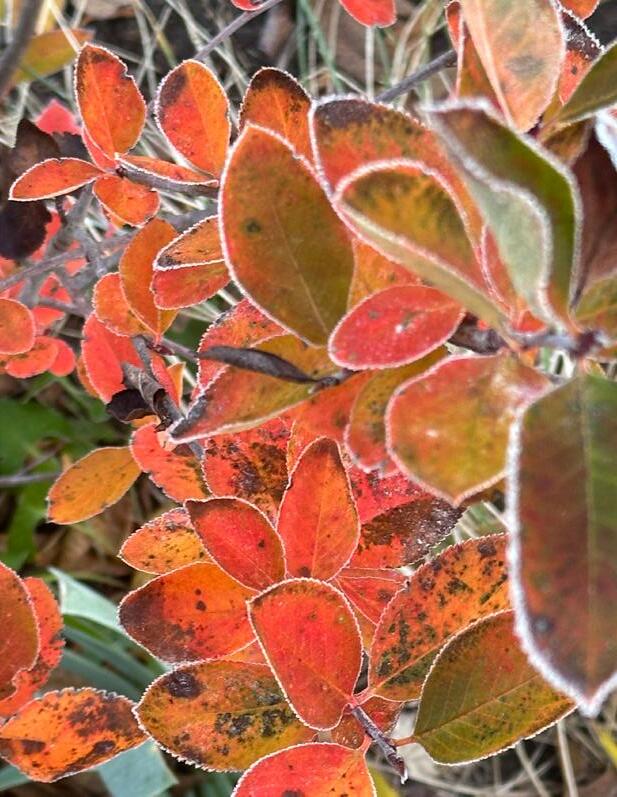
Exceptional fall color. Excellent in all seasons. Self-fertile and will set fruit with only one plant. A great replacement for Burning Bush.
Available in the Spring Drop
meet the HELIANTHUS
These impressive perennial sunflowers need space and support. Trust me - they’re worth it.
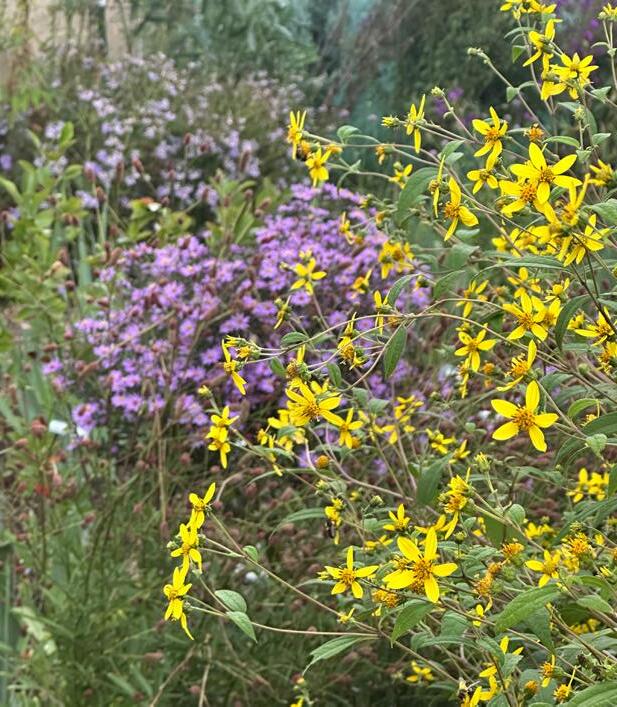
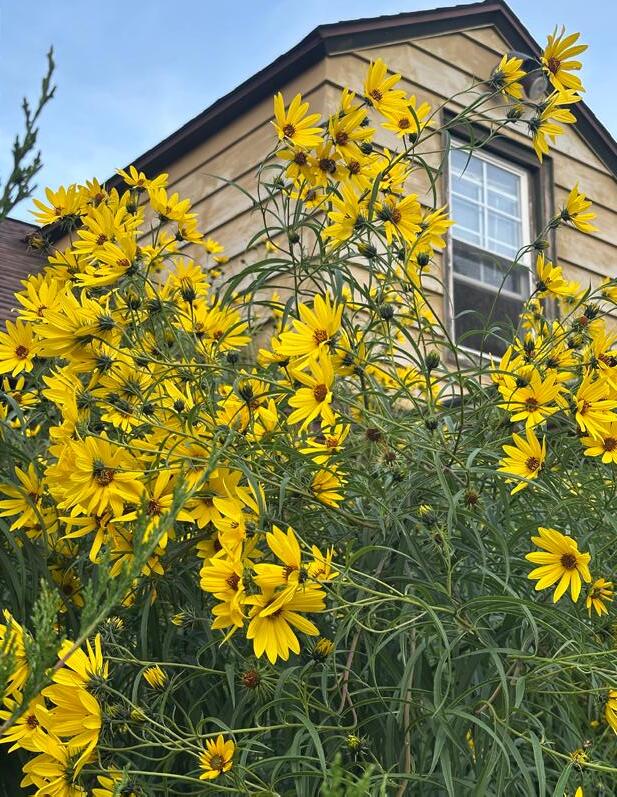
Helianthus sp. | Flowering in late summer through autumn, a single plant will produce hundreds of bright yellow flowers, a boon to late-season pollinators in a hurry to stock away enough food before winter. They also make great cut flowers.
Some have grown as tall as the roof line of our house, at least 12’. Others are a more demure 4-5’ tall. They bloom at the same time as many fall asters and some of the Sanguisorba, too.
One of my favorite things to do when they’re in flower is to move a garden chair underneath the canopy of flowers and just listen to the dozens of bumblebees puttering away with joy and purpose. notify me when available
meet the ARTEMISIA
An essential pollinator plant with sass.
Artemisia ludoviciana |My top tip when growing this one: add it to an established, densly-planted garden. And remember the adage: right plant, right place.
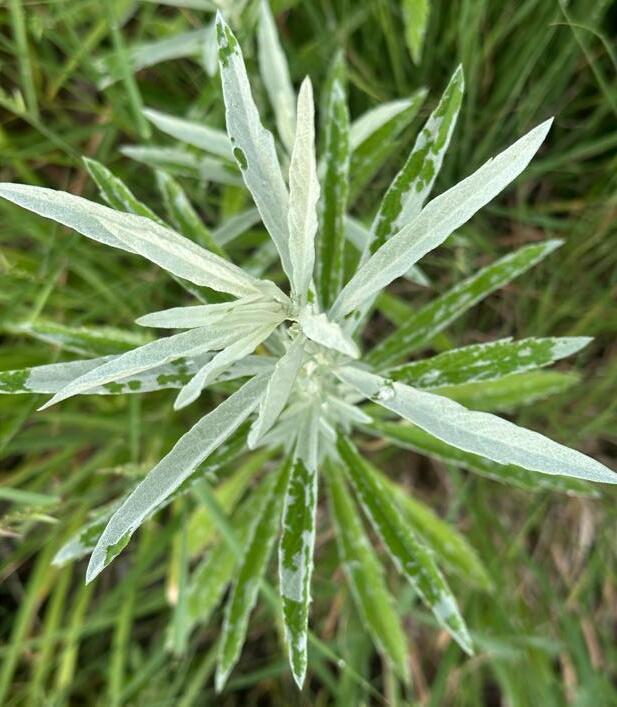
This plant spreads quickly via underground stems, and will pop up many inches away from wherever you first planted it. It’s best in a naturalized and designed meadow which will help keep it in check. Personally, I love the pops of silver leaves showing through (below).
By mid-summer, you’ll notice the leaves begin to change color, from silver to deep green. This is the work of solitary bees, harvesting the silver fuzz for nesting material. Even if you don’t see them in action, you’ll notice the after party: and, it’s a very good thing to see.
notify me when available
meet the SALVIA
A resilient plant for the fall garden.
Salvia azurea |Lean & well-draining sandy soil, in full-sun. If any of these sound like your space, make room for this one.
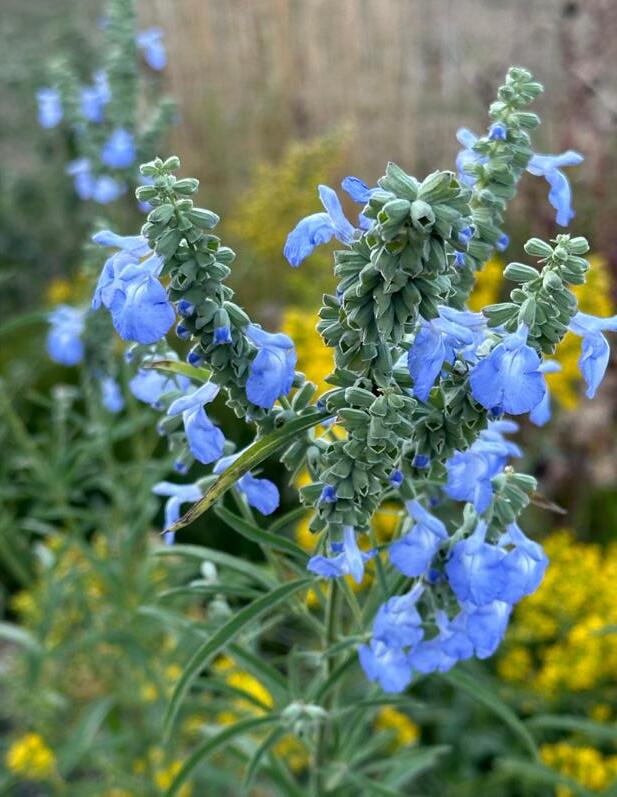
Flowering in September-October, slender, long stems (4-5’ tall in some years) bear abundant clusters of azureblue flowers, loved by pollinators searching for lateseason sustenance.
Extremely drought-tolerant once established, I recommend giving it the “Chelsea Chop” around mid-late May, removing the top 4-6” of growth from each stem. This will encourage side branching, reduce flopping, and dramatically increase the number of flowers.
notify me when available
PETRICHOR it smells like CANDLE PREORDER
SPRING with a touch of
Meet the Maker
Elyse Chilton is the founder and creative force behind Sky Apothecary LLC in South Bend, a small business dedicated to intentional living.
COMING SOON to the Near Northwest Neighborhood
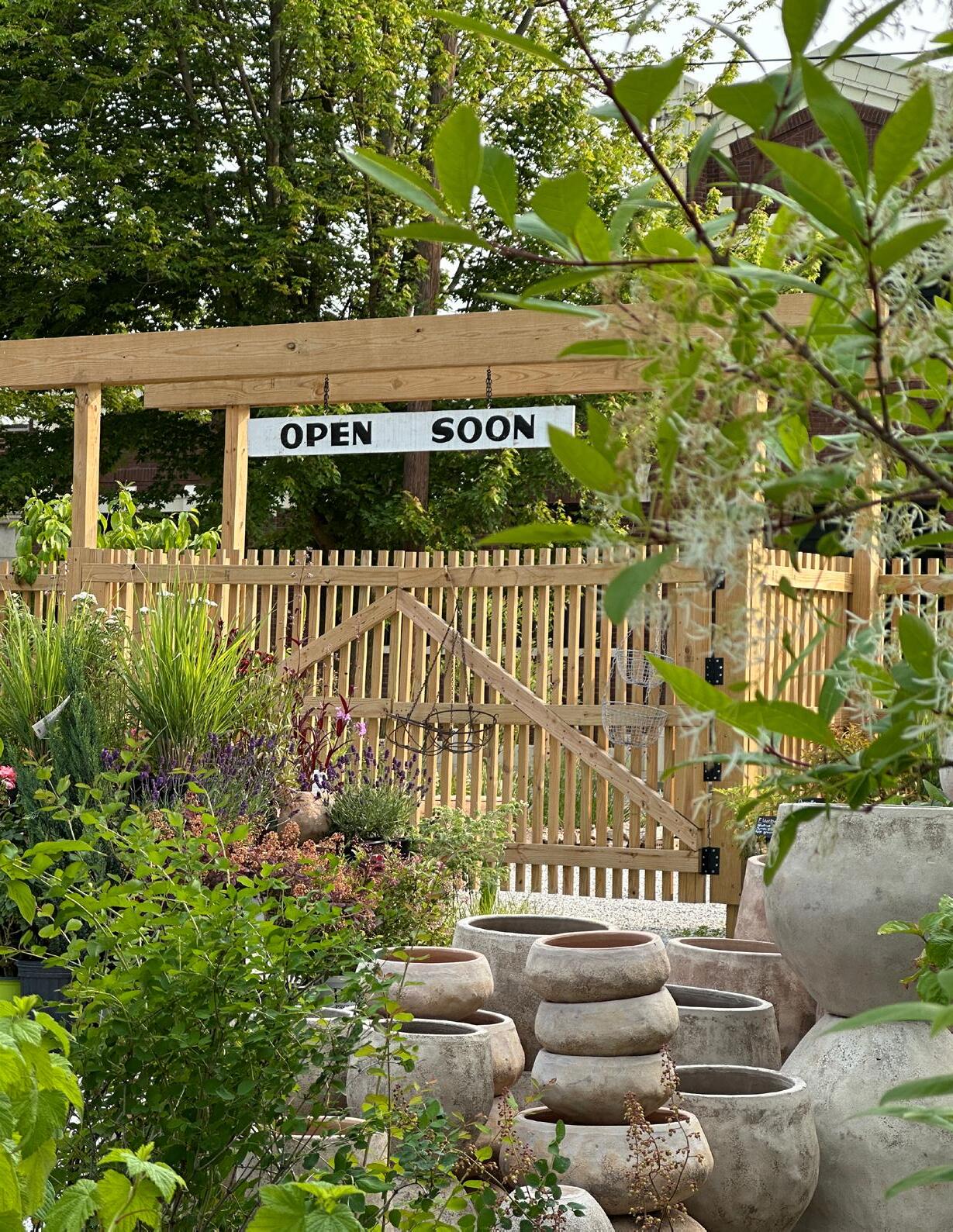
Elyse will be opening her first permanent retail location for Sky Apothecary later this spring as part of Alchemy Healing Arts, opening soon inside Portage Place (the Ward Building) across the street from Botany & Co.
COMING UP MAY 9
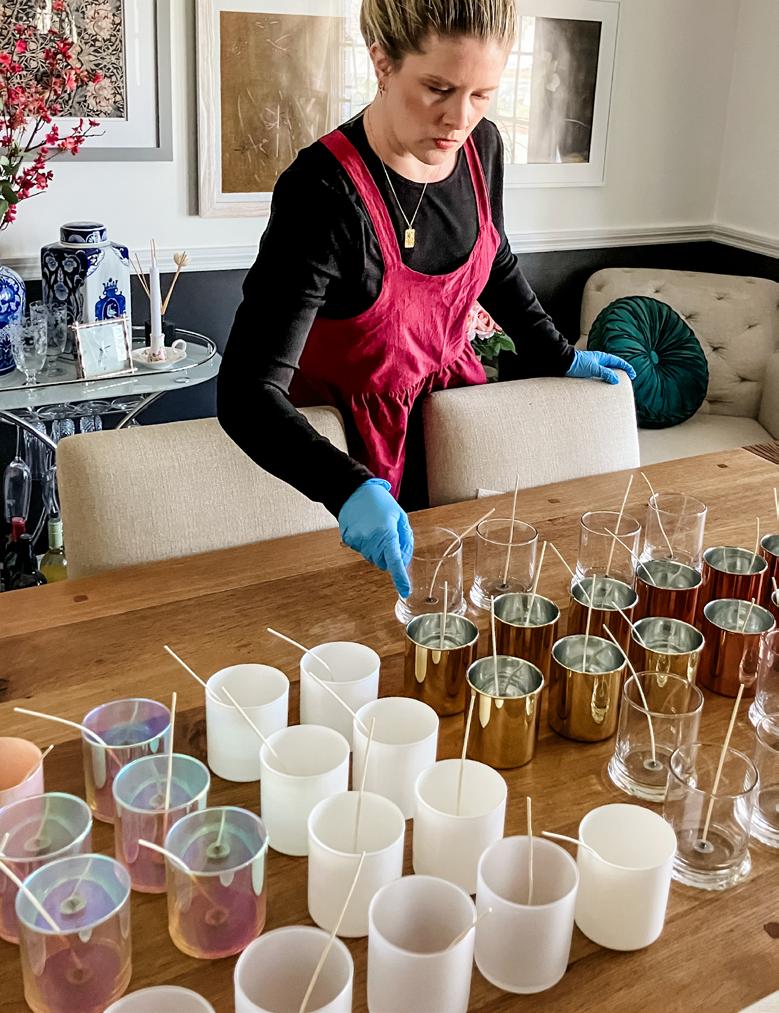
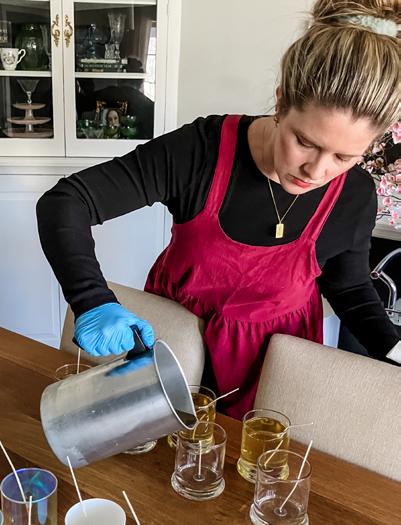
Elyse has been making candles since 2019. At the time, she and her husband Marcus, along with their son Grey, were living in Chicago. She had another business, Grey and Gold Designs, where she made gemstone jewelry.
Inspired by the birth of their daughter, Sky, she decided to explore a curiosity for candle making and fragrance.
Candles were never intended to be part of her business. But after
IT’S BACK!
several friends offered to buy some of her first creations, she began adding them to her offerings.
When their family moved to South Bend in 2021, that’s when Sky Apothecary came to be. Elyse began collaborating with other local businesses including Botany, Bend Yoga, and Counterspell Cafe, and attending community artisan markets throughout the year.
Elyse’s candles, along with her jewelry work, Tarot, and sound
Your Favorite Candle
available for preorder beginning March 16
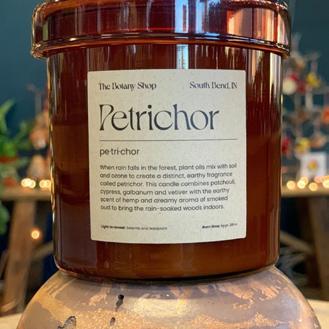
Petrichor
WHEN RAIN FALLS IN THE FOREST, plant oils mix with soil and ozone to create a distinct, earthy fragrance called petrichor. This candle combines patchouli, cypress, galbanum and vetiver with the earthy scent of hemp and dreamy aroma of smoked oud to bring the rainsoaked woods indoors.
bath practice, have inspired Sky Apothecary to evolve into a lifestyle brand.
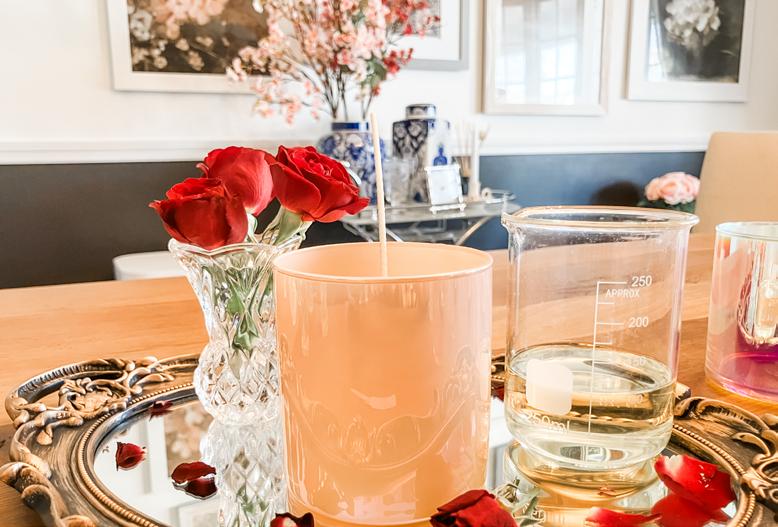
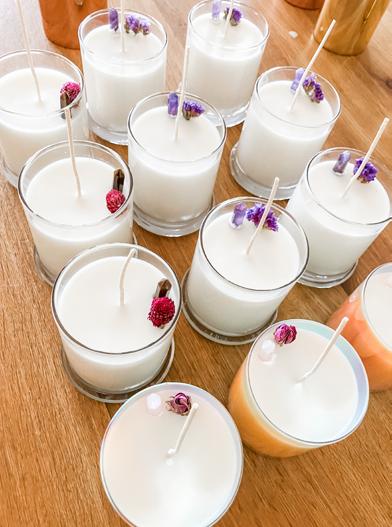
Today, Sky Apothecary invites you to step into a magical world where every candle is a handcrafted work of art. Elyse combines natural botanicals and genuine crystals to create a stunning aesthetic.
Sky Apothecary candles are more than just a source of light; they’re an experience.
and introducing
Vernal
BE SWEPT AWAY TO A GARDEN EXPLODING IN FULL BLOOM with this new fresh, Botanical Garden fragrance: subtle notes of green florals with a heart of lilac, rose, and jasmine. If you’re looking for a beautiful floral fragrance that will transform into bursting bouquets, this is it. This fragrance is infused with natural essential oils, including ylang ylang.
What started as a passion for hand-poured candles and gemstone jewelry has blossomed in Sky Apothecary.
Elyse’s heart is in the South Bend community, and as she looks to the future, she’s thrilled to grow into the new space with Alchemy Healing Arts at Portage Place.
Whether it’s through sound bath, the guidance of Tarot reading, or the simple ritual of lighting a candle, she’s excited to grow into to her next chapter, bringing these rituals to more people while staying true to the local spirit that started it all.
PLANT LIST the SPRING DROP
The Online Shop opens for your spring preorders beginning Monday, March 16. Enjoy 10% off when you order between March 16-18. Preorders will be accepted through Sunday, April 12 with pickup beginning April 18.
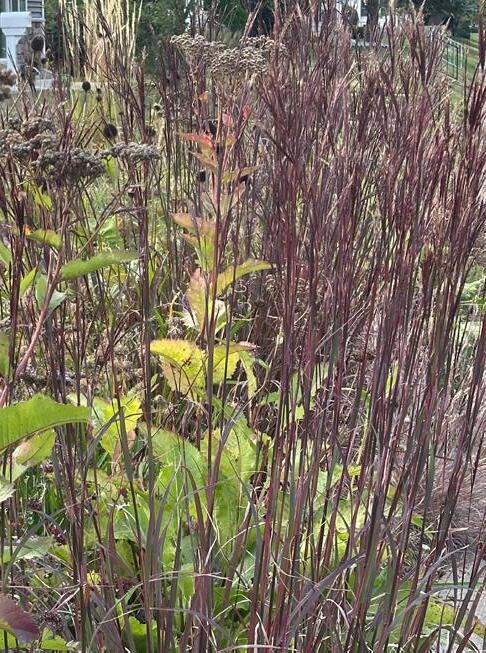
August 14 2025 | Andropogon ‘Blackhawks’ is a late-summer standout in the front meadow. Roughly 5’ tall with beautiful yellow flowers, the red color intensifies heading in to autumn. Resilient and easy to grow.
Ingredients
the 2026 plant of the year
Each year, the Perennial Plant Association chooses a hardy, reliable plant as the Plant of the Year. Past recipients include some of my favorites: Mountain Mint, Pycnanthemum muticum (2025), Calamint, Calamintha nepeta ssp. nepeta (2021) Butterfly Weed, Asclepias tuberosa (2017) and Northwind Switchgrass, Panicum virgatum ‘Northwind’ (2014). We have all four growing in and around Botany & Co. in the display gardens.
This year’s honoree is a selection of our native Big Bluestem, also from one of my favorite plant growers and breeders. Brent Horvath of Intrinsic Perennials, based in Hebron, IL, has a great eye for plants, especially native selections. Everything he introduces has been an exceptional plant in my own gardening. (see left)
Andropogon gerardii ‘Blackhawks’
Blackhawks Big Bluestem
To celebrate a new season of growing, the spring preorder, and Blackhawks, anyone who places a preorder of $25 or more will get a free Blackhawks plug as a special thank you!
If you’d like to order more, you can do that, too!
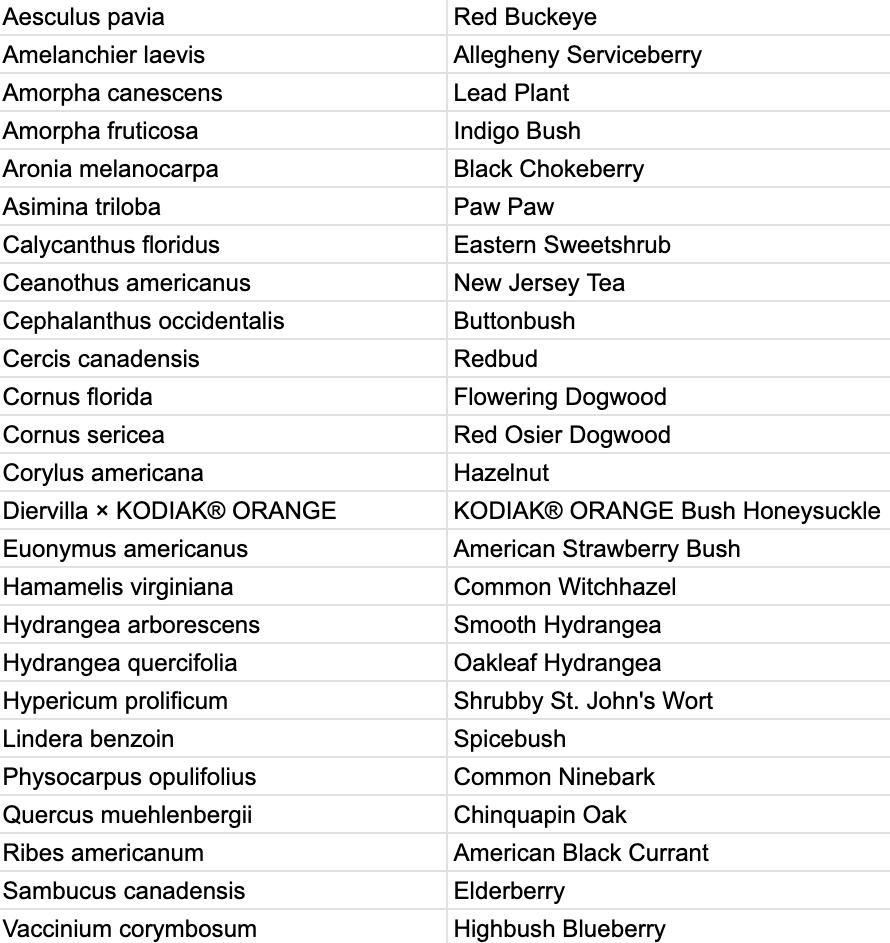
Shrubs & Trees
Most trees & shrubs range from $45 - $70ea. All offerings in the spring drop are 3-gal pots. ! denotes a first-time Botany & Co. offering
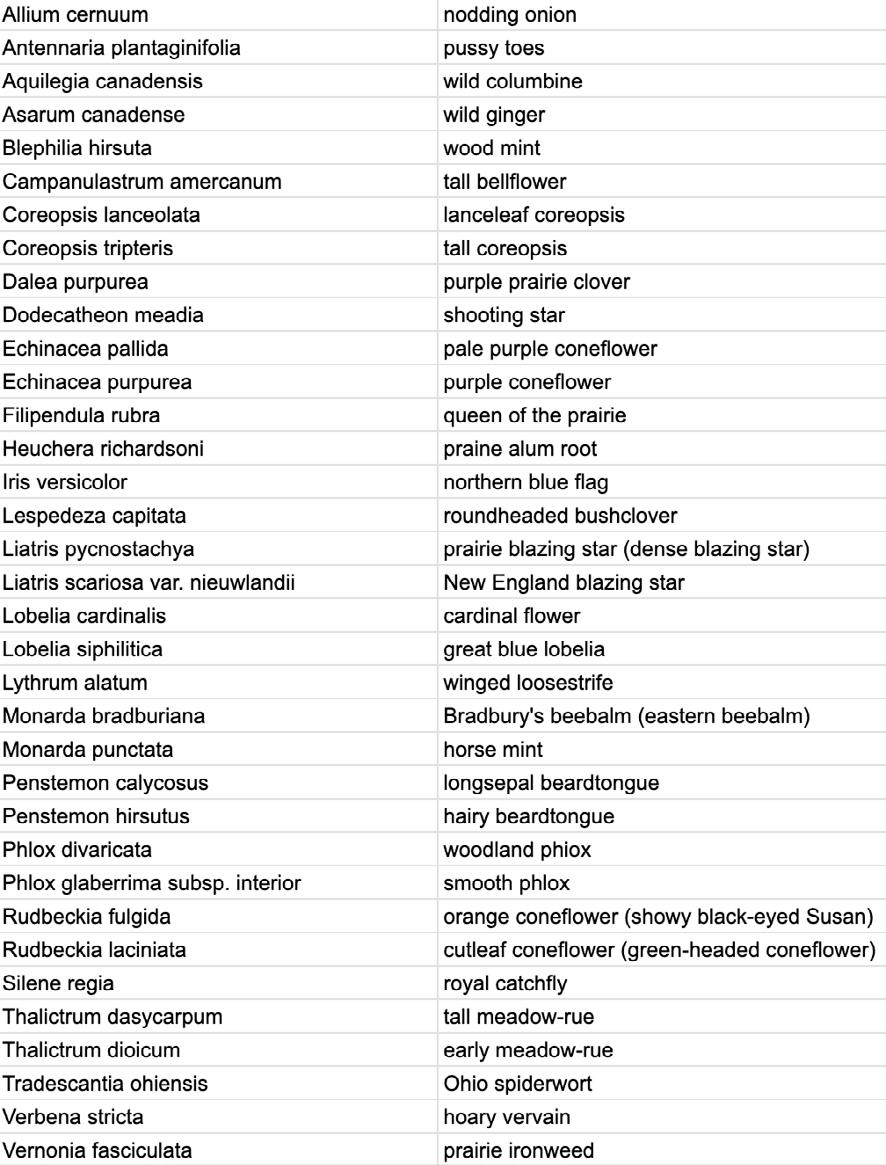
The Plug Bar
Most plugs are $5.
* denotes a premium plug at $7. ! denotes a first-time Botany & Co. offering All Plug Bar plants are native. Mix and match, no minimums.
Perennials
Most plants are 1 or 2-gal size, a few are quarts. Prices range $15-$49. ! denotes a first-time Botany & Co. offering A mixture of native, native cultivars, and climate appropriate plants.
Final Thoughts
Inviting friends into a space I cultivate, curate, and manage is an honor and sincere joy.
Growing something beautiful to share with someone else is my calling. And empowering the next person to do the same in their own place and in their own way simply follows naturally.
For the first decade of my professional life, that manifested as a career in public gardens, those living museums on a mission to conserve and protect our natural and cultural commonwealth.
For the decade before that, however, it manifested in a different way.
It was several years of community plant swap events, organized from 8th grade through early undergrad. My dad helped me host them each year at his recycling technology business in North Liberty, a few miles south of South Bend. The swap later moved to the new, purposefully-built library in North Liberty, a branch of the St. Joseph County Public Library where my mom was serving as Assistant Director at the time. It’s thanks to her that library exists, in the town where they both grew up.
It was also the “field” behind my dad’s shop, a 2-acre area where teenage Ben got to propagate with total abandon, and zero intention. A place where I learned there’s serious dopamine in gorgeous plants growing in rows with a simple intention of sharing them.
Then it was several months of the Michiana Horticulture Alliance, something I attempted to organize from a distance while an undergrad at Purdue studying landscape architecture and public horticulture.
Since 2021, it’s manifested as Botany & Co. (and if you’re reading this, chances are you know what comes next.)
Through every iteration, my parents allowed me to be and explore and discover who I am, what I love, and what I’m meant to do. They instilled a love for South Bend in me in the best way: by simply living here. Staying here.
As The Lot and The Field have continued to find their way these past few years, the same could be said for me. For the longest time, I’ve felt like building Botany was like chasing a childhood memory: recreating the happiest moments where I felt most calm, at ease, grounded, and peaceful.
And, here’s the wild part.
I think it might actually be happening? Only now, it doesn’t feel like chasing a memory so much as growing into the future.
My great grandparents were farmer-florists and local and independent business owners in North Liberty. Their greenhouses were long gone before I arrived, and one of the last remaining icons rests above the backdoor in my parents kitchen, a handpainted sign reading, “Whitmer’s Greenhouse.” I think about them often in this journey.
If genetic memory is a thing, I think I’ve been experiencing it a lot.
Today, my parents are both retired, and they’ve each fallen in to a part of the Botany rhythm. I’m realizing they’re continuing to do what they always have: loving on this place we call home.