D E A D P I X E L A N D T H E D A T A C O L L E C T O R : A N I N T E R V I E W W I T H A R T I S T P A P S O U L E Y E F A L L
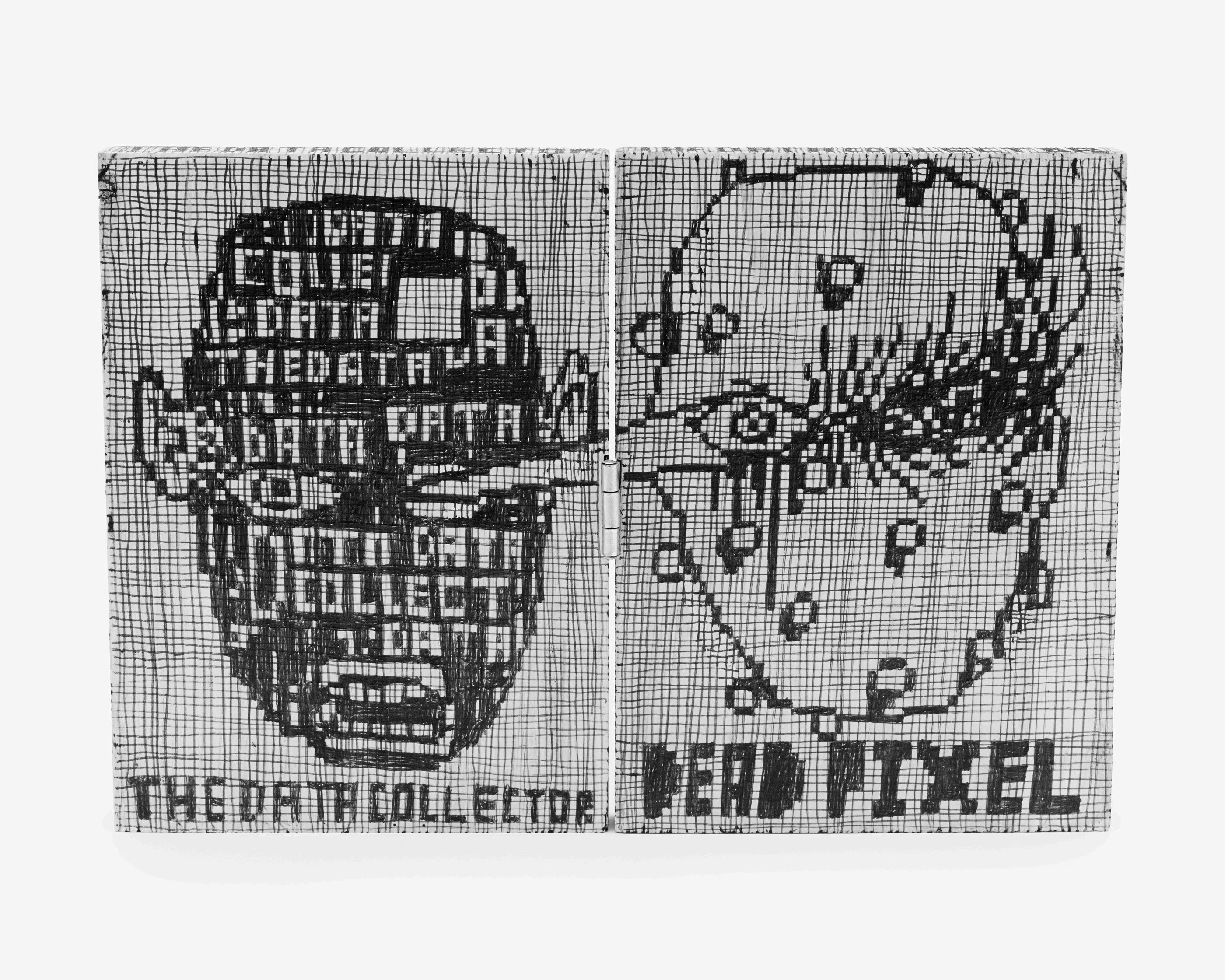
Artist and comic book illustrator Pap Souleye Fall creates work that emerges from the world of “DEAD PIXEL,” an ongoing story they developed, which reveals itself through installation, performance, drawing, sculpture, and video I invited Souleye Fall to exhibit new work that builds on the “DEAD PIXEL” saga as part of our List Projects exhibition series Ahead of their show (on view July 30 – November 29), I sat down with Souleye Fall to talk about their perspective on art and comics
Marina Caron: Can you talk about how your work as a comic book artist enters into your visual/installation art?
Pap Souleye Fall: I really take seriously the comic aspect of my work, because that’s where all of it started How I conceptualize art in general comes from how comics are made the research part of it, and then following through with characters and world-building
When I started my first comic, “Oblivion Rouge, I was part of all these comic communities that were having political conversations about representation, queerness accessibility things that I wanted to talk about in my work Making comics made me feel like I was
participating in these larger conversations about comics and our stories, you know? I found in the comic sphere and the comic space another way to contextualize the work, as a strategy to not be so attached to the history of art meaning the history of Western art
There’s always this conversation and I look at it conceptually and critically among Black people and people of African descent about how we push forward our stories We see that the rest of the world has for a long time dictated our stories These conversations that I have online are really at the center of my practice, in terms of how I think about strategy context and conceptualization That sort of unfolds in “DEAD PIXEL,” which is my version of approaching this question
MC: Can you tell us more about the “DEAD PIXEL” narrative and how it informs or generates your installations?
PSF: The nonlinear story of “DEAD PIXEL” comes out little by little In the beginning, I wanted a chapter to come out each time I did a show Then, once I got into making the wooden books in my installations it started to land in terms of how I wanted people to interact with it The books spoke to the sort of intimacy of comics and narrative
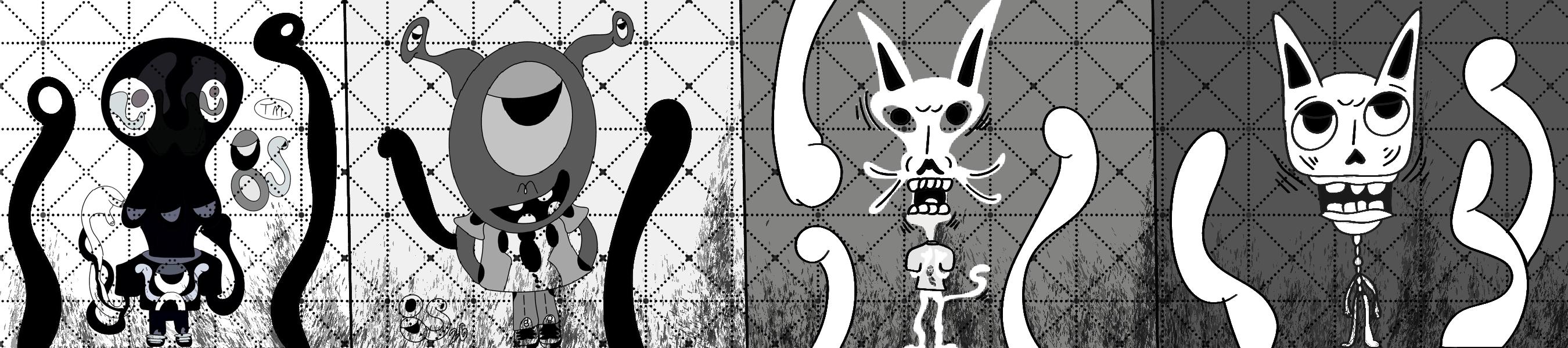
Essentially, the spiritual ability of the protagonist, DEAD PIXEL, is green screen DEAD PIXEL is able to mask and disappear, but also be completely visible The story developed when THE DATA COLLECTOR appeared
or
I don’t know how it happened for real I was drawing and was like, “What is that?” I just kept drawing, and it started to make sense That’s how it usually happens in comics, too When you ’ re working on something, these ideas develop, and you start building these characters
DEAD PIXEL and THE DATA COLLECTOR, they’re both part of this digital realm, and THE DATA COLLECTOR is chasing DEAD PIXEL I actually don’t know what happened between them Maybe they were friends before? But DEAD PIXEL was willingly giving all these offerings his eyes ears mouth his skin He was offering touch; he was offering everything And then when he realized there was no reciprocation, DEAD PIXEL hid his nose
THE DATA COLLECTOR is constantly running around trying to take DEAD PIXEL’s nose to retrieve this final sense
Because, I’m assuming, THE DATA COLLECTOR wants to be whole in some way, and he feels unwhole or empty And DEAD PIXEL doesn’t want to give that up But sometimes I wonder if they’re maybe the same person
MC: What are you working on in this show at the List specifically?
PSF: I’m slowly developing what the library will look like, the DEAD PIXEL and THE DATA COLLECTOR library I have maybe one hundred books, which is not enough I’ve got to have, like, ten thousand Like, a whole room you walk into
I’m also working on this idea of an endless digestive system of digital space and
– MARINA CARON
p y
Courtesy of the artist and Garth Greenan Gallery, New York
MOONBAR
I walked into Moonbar a little upset
My landlord had just called me out on my hoard of used and long-empty cans bagged in the basement, a task I had been putting off for ages; work was slow and familiar, and I have been craving a bite of fresh seafood I see fresh seafood every day, but it’s always just out of my reach
So I turned up at Moonbar It’s an easy 5-minute walk from Arlington Station, tucked beneath Mooncusser, the main restaurant serving a high-end tasting menu focused on local and in-season seafood
While Mooncusser plays to the classic, fine-dining, coursed-out meal crowd, Moonbar takes those same fundamentals, same ingredients, and Indian-palette inspirations, and pares it down to the choose-your-ownadventure environment you would expect from a bar
A tasting menu can feel intimidating, especially if you haven't experienced one before or are looking for a quick drink and something to hold you over for the night Moonbar perfectly bridges the gap between high-end and approachability
Their cocktail and dinner menus rotate often, mirroring the traditional practices we would see at a restaurant on a scale comparable to the one upstairs Still, the bar atmosphere fills that welcoming and casual expectation with ease
It’s moody and comfortable in Moonbar, with deep royal blues, yellow feathers on the walls and pink velvet cushions talking you through the entryway I don’t feel like a stranger when I ask for a spot for one, which is a big thing for me As a chronic solo dinner, drinker, whatever, I HATE feeling out of place
On this sweet Wednesday night, an after-work drink was a necessity for me I sat on my fuchsia stool, hung my bag on an under-bartop hook (a detail I devour every time I find it) and settled in
I have been loving pisco lately; candidly, from seeing it all over hot and upcoming cocktail menus When I saw Suyo pisco on the menu at Ciao Mami, it was an instant order You get this lovely herbal aroma from the redveined sorrel leaf on top, and the strawberry wasabi cordial in the drink itself was layered and complex enough to hold its own against the pisco It was gone much too soon, leaving me with an empty glass and a happy buzz
Dinner turned out to be raw, marinated halibut with chopped tomatillo and avocado, scooped up with these big half-moon blue corn tortilla chips House-made chips should be a given when paired with food like this, and I always love when I can tell without even needing to ask Their unique shape gave them away, but that fresh crack on the first bite and the falling-off-the-chip salt sealed the deal
I followed up with pork and crab curry
Typically when I think of curry I think of a big, deep bowl– soup style Another excellent nod to the elevated service trickling down from upstairs to Moonbar was the gorgeous flat plate unveiling of this curry The low-walled, wide dish let me see into every bite I was going to love and want more of The English peas were bright and snappy, and I truly could not get those spoonfuls of classic turmeric-coconut paired with the surprising crab my way quick enough
I certainly left happier than when I came in, which I believe should be the goal of any establishment seeking to provide genuine, worthwhile service Moonbar is cozy; it's special and exciting, but it still has the chill factor a good bar should and it’s honestly the perfect spot if you want to dip your toes into upscale dining without feeling too intimidated or put off
Cheers! Go to Moonbar!
KAY BAILEY
“WE NEED BOLDER PEOPLE WITHIN THESE SEATS OF POWER”
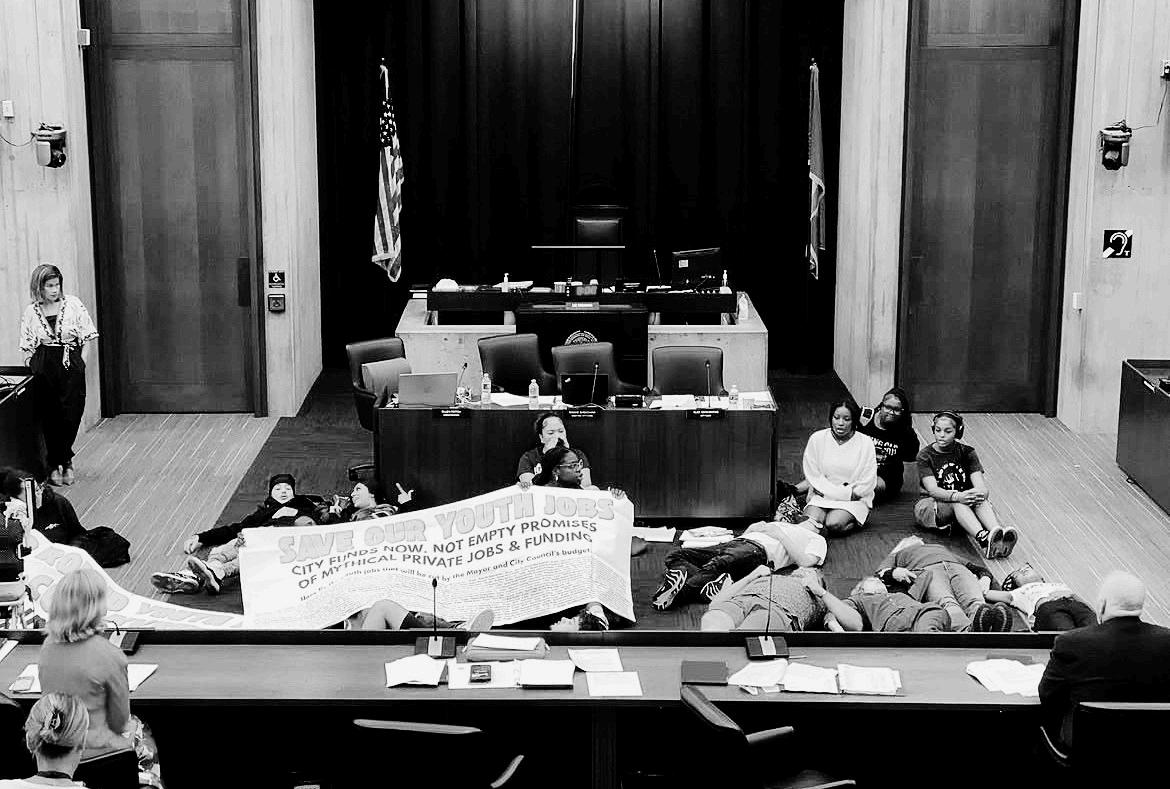
A Boston City Council meeting on June 11 ended in the arrests of eight protesters following an organized demonstration and ‘die-in’ protest to oppose Mayor Michelle Wu’s $4 9 billion budget plan for the 2027 Fiscal Year
Members and supporters of Youth Justice and Power Union (YJPU) called for the Boston City Council to reject Mayor Wu’s budget and fully restore funding to Boston city grant programs The programs cut in Wu’s budget plan address everything from affordable housing and youth jobs to food access and support for immigrant and elderly communities
“This was the Council’s final chance to reject the budget,” said Vikiana PetitHomme, one of the arrested “We wanted to show the Councilors that if we were willing to put our bodies on the line they should have the courage to put their fear of the Mayor aside to stand with us in this moment ”
Petit-Homme, 24, is the editor-in-chief of Guerilla Magazine and a longtime community organizer with the Dudley Street Neighborhood Initiative and Better Budget Alliance She said the protest was the culmination of weeks of organizing to build pressure and ensure the Council knew its constituents were watching She added that legal proceedings are working as a tool to prevent a vote to reject the budget from taking effect Petit-Homme said there were multiple “backdoor conversations” among councilors while the protest was taking place
“We really felt motivated to disrupt and to make sure that they continue to hear that we want a reject vote to take place and we want that budget rejected and that we were not leaving until the budget was rejected,” PetitHomme said “They felt way more comfortable arresting us than actually doing their job ”
During the over two hours demonstrators were active in City Hall, they were warned by both City Council President Liz Breadon and Boston Police Department officers that failing to vacate City Hall would result in an arrest The eight arrested ranged in age, but encompassed no minors
“We follow the young people's direction, but they know that it's more than just them,” Petit-Homme said “They have adults and elders who are watching out for them and who will put their bodies on the line to make sure that their futures are protected ”
Detained protesters were taken to the D-4 Back Bay Police Department, charged with trespassing, and released shortly before 11 p m on June 11
Following the protests and arrests councilors debated amendments to the proposed budget and voted 12-1 to approve more than $11 million in revisions On June 17, Wu sent a letter to City Council members rejecting $1 4 million of those revisions
In the weeks since her arrest, PetitHomme said she is grateful that the City Council has amended the budget and restored partial funding for certain programs, but it is nowhere near enough
She also expressed disappointment that Councilors Ruthzee Louijeune and Henry Santana, who had previously aligned with YJPU, had instead sided with Mayor Wu
“We need bolder people within these seats of power We also need more funding into things like our city's participatory budgeting,” she said
Petit-Homme said all levels of government are failing Boston Where the Trump Administration has been outwardly hostile to black and brown communities she said that state and local leaders need to be more creative with the tools at their disposal to meet the needs of the community
Though Boston is not alone in having to reduce spending due to cuts in federal aid and a worsening economy, the city sits on $2 billion in reserves that could soften the blow but lacks the political will to do so PetitHomme said
“This is a social emergency, whether [Wu] wants to recognize it or not I can't think of a better time to open up those coffers than when we are being attacked by our own government ”
IT’S A HILL HOUSE SUMMER
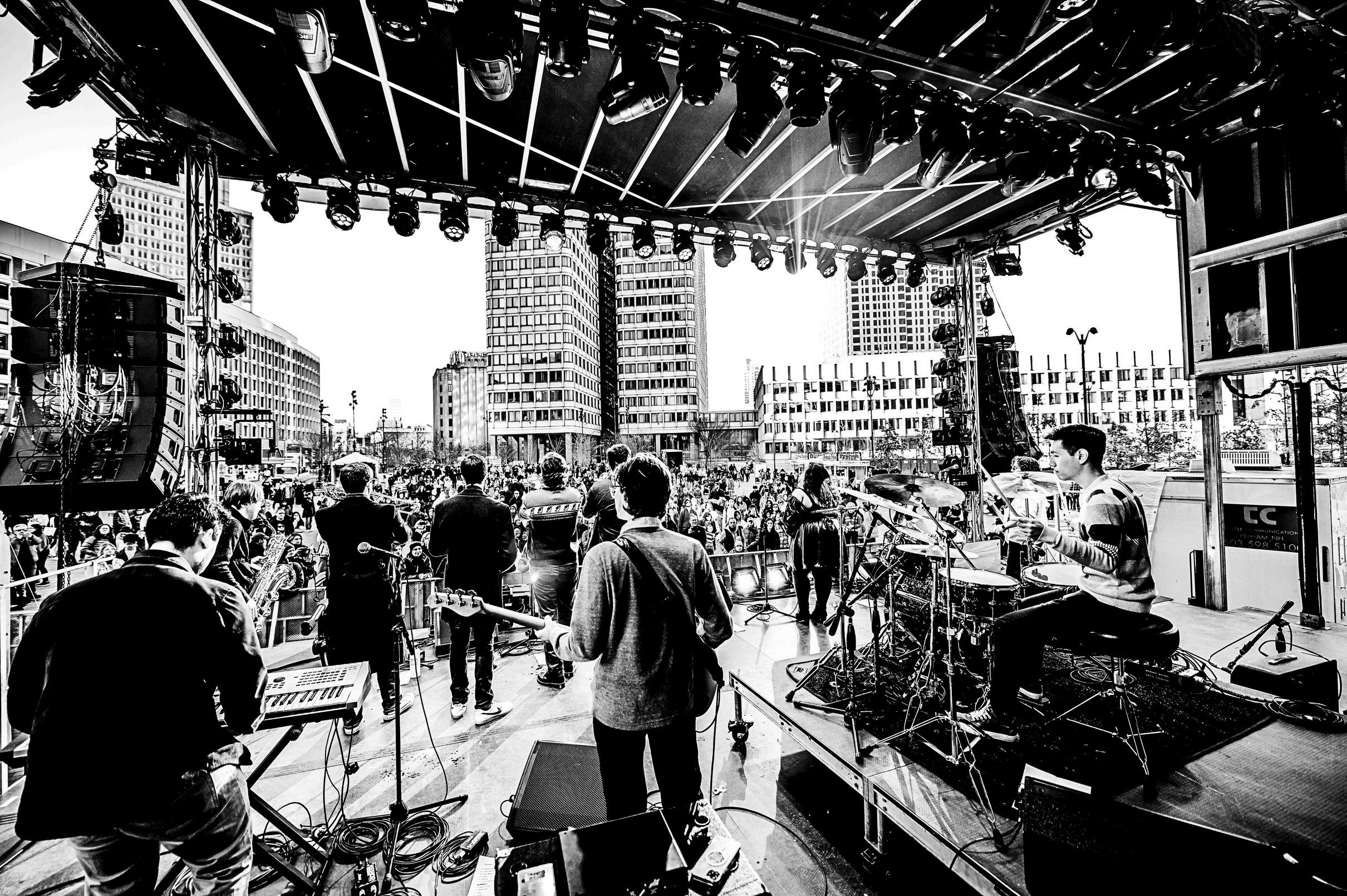
Wrangling nine recently graduated engineering students into a band seems nearly impossible – but when those nine people love the music they play (and each other), it's not so difficult after all
What began as a brass band at Worcester Polytechnic Institute, Hill House The Band officially formed in 2022 with the addition of vocalist Dilce Elisa Rounding it out with keys, trumpet, saxophone, trombone, bass, drums, and guitar, the band thrives playing bright funky pop music
“Tommy texted me, ‘Hey, do you want to be in a band?’ I was like, I can't do this I'm gonna go be an engineer Engineers don't play music ” Elisa recalled “Once it was presented to me that there are people who also want to be engineers who do music on the side, there was this bright shiny light at the end of the tunnel ”
“That day when I decided to go and text people, if I ended up picking someone else I'm pretty confident that we wouldn't be here doing this right now, ” trumpeter Tommy Kneeland added
But the journey towards that bright light hasn't been easy, or simple They have no shortage of material, but one of the group ' s biggest challenges has been getting their original songs recorded
Their latest single, “If The Shoe Fits,” produced by Leo Son and Maclin Tucker of local R&B funk outfit Bermuda Search Party, is their most confident yet Featuring electric vocals, a catchy voicemail interlude, and infectious brass lines the single marks Hill House’s signature sound
“Spell It Out For Me,” released April 18, has a more smoky aura to it, recalling the band's jazz background “Can you show me something real/ Are we playing games?/ I just wanna know the deal/ So spell it out for me, ” Elisa delivers, her voice acting as its own horn instrument
Now that they are in a groove, the band hopes to have six singles, which they already play live, recorded and released by the end of the year Then, they'll get to work on their debut EP
“We want to put together pieces of work that were made to go together ” Elisa said
“We wanted to use the fact that this is not our full-time gig as an opportunity to produce something that not only are we proud of, but that we ' ve put a lot of thought into and that actively tells the story of who we are as artists ”
As they ramp up their commitment to the group and each other, the bandmates expressed gratitude for each other
“We spent all this time in this awful thing called an engineering major, but we do it because we think that that's the tool to make the world a better place,” bassist Robbie Oleynick said
When people think about the Boston music scene most minds immediately jump to the hip-hop, indie, and hardcore artists that are steadily shaping the region’s sonic identity But for a quietly (loudly is probably the better word here) forming group, the city’s nightlife is what first pops into their heads – something that would likely confuse many of the area ’ s critics, who have long expressed their disapproval of what nightlife in Boston has to offer
“I always considered music as just being entertaining But really, in all of my time doing music with Hill House, we bring joy to people sometimes people just need to hear a song ”
For the third summer in a row, thanks to Elisa’s ceaseless emails to bookers, you can catch the band at CX Summer Nights at Cambridge Crossing on July 16
For years people have viewed nightlife in Boston as lackluster, and that’s putting it nicely Downtrodden venues, stale musical preferences, and the dreaded 2 a m bar and club closures have left a lasting negative mark on those who crave late-night endorphins, with with many wanna be revelers left waving the proverbial white flag
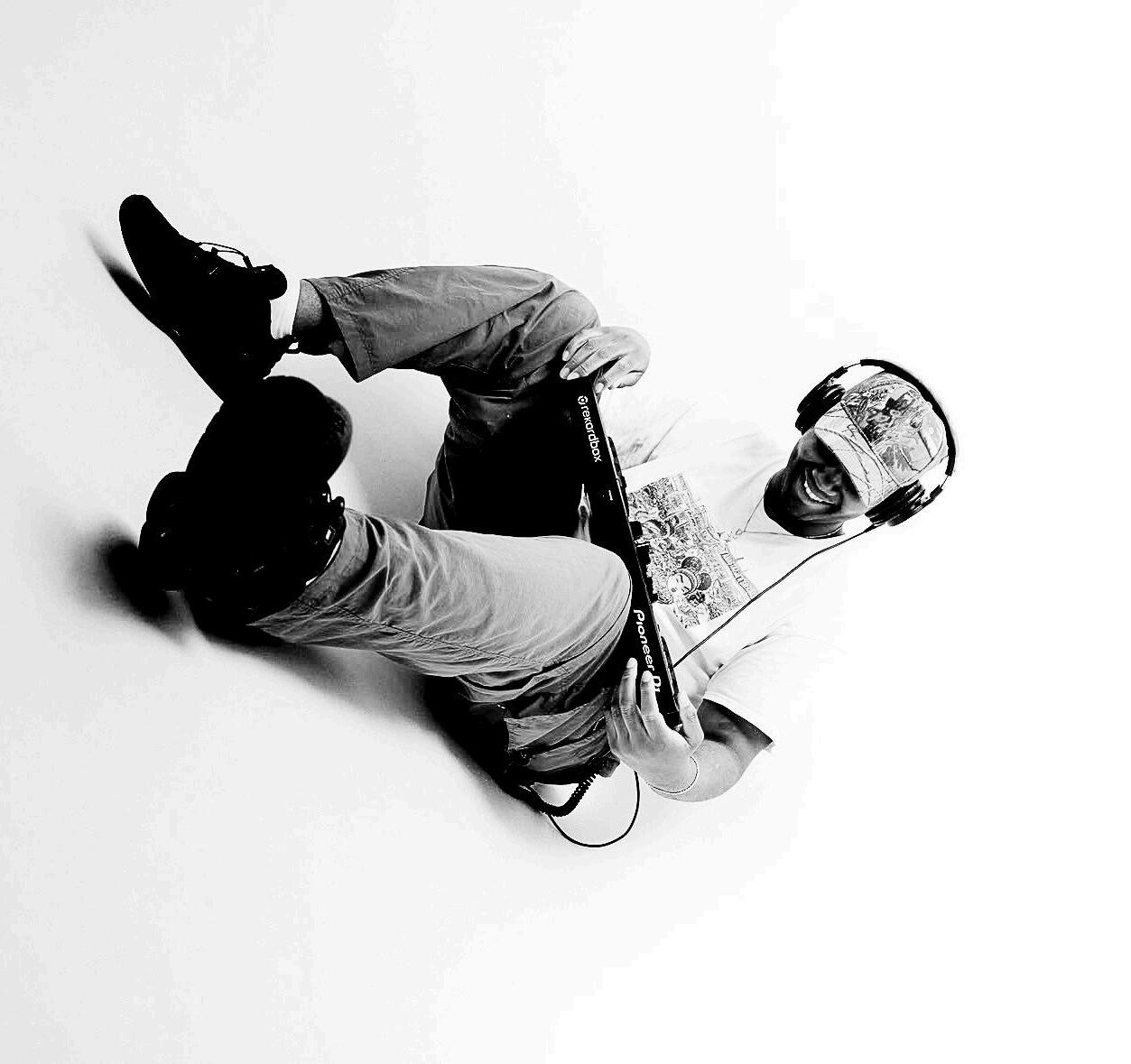
But not everyone shares this temperament There’s a shift underway, spearheaded by a new generation of Bostonians taking the decks into their own hands Thanks to the likes of the folks at RedEye, bsmnt, Mojo Boston, Votion Records; Boston is taking on a new reputation
One of the energizers behind this switch is proswervez a member of local music collective CLUB INDGO who is the creator of the DEEP/CUTT event series If you ’ ve been outside at all during the past few years, you’ll undoubtedly recognize his name from one of a slew of events that have taken place across Boston
Balancing life as a multidisciplinary creative whose pursuits span DJing songwriting, and producing, proswervez specializes in delivering sonic experiences that oscillate between catering to his own musical preferences and giving listeners the tracks they didn’t know they needed When you experience his performances live, you ’ re met with a concoction of high BPMs, unexpected, self-produced remixes to your favorite tracks, and a mirage of sweaty faces all connected by sound
While live environments are where proswervez spends most of his time these days, the Massachusetts native also makes music of his own Following a recent trip across the world to Japan, proswervez found the inspiration to bring the party into headphones on a global scale with his debut EP, ‘EDO’ Consisting of five total tracks, the EP is a quickly digestible time capsule from a travel experience that left a profound impression on proswervez ‘EDO’ is his first release since his successful debut single “BEAT GOES ON” featuring SHOshay, and builds on that popularity with a grouping of songs that sound like they should be included as a late addition to the Midnight Club 2 soundtrack Standouts include “I JUST WOKE UP IN TOKYO” and “LMK” featuring Manale, both of which offer different, albeit well-meshed, peaks into proswervez ’ s taste profiles
This project is undoubtedly a profound moment for proswervez, and is one that you should certainly give a spin if you ’ re interested in hearing what the future of Boston’s nightlife scene will sound like
7/29 BurLAUGHsque: What Could Go Wrong? A onenight-only comedic burlesque / draglesque show featuring 18 incredible local performers! Laugh your heart out @ Jacques' Cabaret 8pm 21+ $10-$20
greater Boston area @ The Foundry 18+ The deadline to apply is 7/15
7/12 NICE, A Fest Flash Day
@saidanddonetattoo for more info @ Said and Done Tattoo 10am $100-$150
7/3 Brian Huntress Album Release Show with Jo Krieger and Durvasi @ Lilypad 7:45 All Ages $20
7/4 Single All Summer Backyard party with unreleased music, food, and drinks @ One In A Trillion Entertainment 10pm 21+ $5
7/5 The Spatulas, Major Stars, Tyler & the Names, and DJ CAMPS @ Lilypad 7pm All Ages $15-$20
7/6 Déjà Imani, Teatea, Christian Inman, India The Rose, Kjade @ O'Briens Pub 7pm 21+ $10 adv, $12 dos
7/8 Future Teens Record Release Show with Snarls and Shallow Pools @ Deep Cuts Deli 7pm 18+ $20 adv, $25 dos
7/10 Tiffy, Cussing, Fataday, T-Tb @ The Jungle 8pm 21+ $10 adv, $15 dos
7/10 Playland: A Queer Affair Queer dance party with DJ Brian Halligan @ ManRay 9pm $12-$15
7/11-7/12 Cambridge Porchfest @ Cambridge 12pm-6pm All Ages FREE
7/11 Evan Greer & Her Signal Chat, Deva, Songs of Liberation, and Brain TV & Bahloul Potluck, music, and dance supporting Cambridge For Palestine divestment campaign @ Cambridge Community Center 12pm-6pm All Ages FREE
7/11 Cousin Greg, Galeer, Local Kid @ Lilypad 7:30pm9:30pm All Ages $15 adv, $18 dos
7/11 Bashment Monthly Caribbean party with dancehall, soca, and afrobeats @ Cantab Underground 10pm 21+ $10
7/12 Sado-Domestics @ The Square Root Cafe 4pm-6pm 21+ FREE
7/14 Blu & Exile with Bliss Station, Jay Cinema & Chow, Sirplus, and lilith @ Crystal Ballroom 8pm 18+ $35 m u s i c
7/18 American Ethos, The Endorphins, Weatherless @ O'Briens Pub 8pm 21+ $12 55
7/22 Khensani: Concerts In The Courtyard Series R&B and African music performance by Berklee student, singer, songwriter, and music director @ Boston Public Library (BPL) 6pm-7pm All Ages FREE
7/24-7/26 NICE, A Fest
Annual outdoor celebration of indie artists from Boston and greater New England @ Crystal Ballroom, The Rockwell, Dragon's Lair 12pm All Ages $38-$106
7/26 Zumix Summer Concert: Opaline and Beware of Denise @ Piers Park 6pm8pm All Ages FREE
7/28 Ilona Kudina's Baltic Transit Contemporary jazz with motifs of Latvian folk and LatinAmerican rhythms @ Lilypad 8pm-9:30pm All Ages $15
7/31 Ricky Cheese, Never Gonna Make It, Divorce Cake, Alfred Be Loud @ The Jungle 8pm 21+ $10 adv, $15 dos
performance
7/10 Summer Series: Global Pulse Diasporic celebration with Afrobeats Boston, Haitian and Ghanaian performers including Dzidzor and Afmohip @ Centanni Park, Multicultural Arts Center 6pm All Ages FREE
7/10 Gone Nuts! Live music and movement celebrating the strength, joy, and energy of community through tap dance @ The Huntington Theatre 6pm-7pm, 8pm-9pm All Ages $29
7/10 Yes & Everything: Joyful Warehouse Cabaret Beach themed raucous, highenergy variety show @ The Loov 8pm 21+ $20
7/17 Esh Circus Arts Spring Student Show @ Arts at the Armory 7pm-9:15pm All Ages
7/2 The Language You Cry In Film screening and conversation on ancestral memory and language @ Just Book-ish 5:30pm-7pm All Ages FREE
7/11 Cui Hu Presented by STArt Film Studios with an exclusive pre-recorded Q&A with the director @ Brattle Theatre 3pm-5pm All Ages $15
7/14 Timothy Schraeder Rodriguez With Emely Rumble: Conversion Therapy Dropout Book release celebration and conversation about faith, sexuality, and hypocrisy @ Brookline Booksmith 7pm All Ages FREE
7/16 Open Studios At Station Street Studios Make a print, enjoy a beaded earrings demonstration, and chat with working artists @ Station Street Studios 5pm-9pm All Ages FREE
7/26 Emotional Comics In The Park Playful, expressive, and cathartic drawing workshop with artist Maria Fong @ Clement G Morgan Park 12pm-1:30pm All Ages FREE
7/30-11/29 List Projects 35: Pap Souleye Fall Exhibition that furthers Fall's “DEAD PIXEL” saga with installation, drawing, and sculpture @ MIT List Visual Arts Center All Ages FREE
7/30 One Night Art School Immersive, hands-on experience exploring drawing, dance, ceramics, music, comedy, collage, and more @ Somerville Arts Engine 6pm8pm, 8pm-10pm All Ages FREE
Call for Performers
Musicians, dancers, and others to perform at the Experience
Chinatown Arts Festival @ PAO Arts Center The deadline to apply is 7/13
Open Call: Molding and Casting Artist Residencies
Residency with stipend, studio, and maker space access for artists in Cambridge and the
7/9 Negotiation Skills For An MOU With Mass Union And Todd Fry Learn about MOUs and how they bridge tenants and housing authorities for resolving issues @ Zoom 11am1pm FREE
7/10 Letter Write-in With Abolitionist Mail Project Write letters to incarcerated people in Massachusetts @ Brookline Booksmith 5:30pm8pm All Ages FREE
7/26 Talk To Press During Civil Disobedience Training with XR Boston's Media & Messaging on press talking points, press releases, and practice interviews @ Calvary Church Arlington 11am-1pm All Ages FREE
community activism
7/1 Wax & Stacks Bring your own vinyl and pick up the latest BCN hot off the press! @ Midway Cafe 9pm 21+ FREE
7/2, 7/9, 7/16, 7/23, 7/30
Queeraoke Critically acclaimed karaoke and one of the longest running queer nights in New England @ Midway Cafe 8pm 21+ $8
7/8 Free Sewcial Club
Monthly fiber arts co-working and social night All skill levels welcome @ Artisans Asylum 7pm-9pm All Ages FREE
7/11 Art @ Night Art, live music, and local vendors @ First Street Market 4pm-9pm All Ages FREE
7/11 Gash – Villain’s Ball Monster drag and gorelesque, vendors, cocktails, costume contest, and a screening of FRANKENHOOKER @ Crystal Ballroom 8pm 21+ $28
7/12-7/15 Public Boarding of Ships Explore Tall Ships berthed at various piers @ Boston Inner Harbor 10am10pm All Ages FREE
7/12 Community Crossword Puzzle independently while building community, curated by Bing Broderick and Lin Flores @ Just Book-ish 11am12:30pm All Ages FREE
7/15 Free Screen Print Shop Night Quick and easy printing activity arranged by one of the skilled instructors @ Artisans Asylum 6pm-8pm All Ages FREE
7/16 Shut Up & Write! A focused writing session to overcome procrastination and make consistent progress on projects @ Brighton Branch of the Boston Public Library 6:30pm-7:45pm All Ages FREE
7/18 Queer Artists Market Featuring 30+ local queer artists and community groups @ Summer Street Plaza 3pm7pm All Ages FREE
7/18 Chợ Đêm Night Market Vietnamese snacks, sweet treats, cultural performances, games, music, and nonstop community fun @ Boston Little Saigon 4pm-9:30pm All Ages FREE
7/21 Crystal Ballroom Movie Trivia Assemble your team and test your movie knowledge for prizes @ Crystal Ballroom 7pm All Ages FREE
7/25 Figment Boston 2026
An interactive, participatory art event @ Sylvester Baxter Riverfront Park 11am-6pm All Ages FREE
7/25 A Soft Place To Land An evening of poetry, vendors, and uplifting the work of Black women and femmes @ The Foundry 6pm-8pm All Ages
7/26 North American Indian Center of Boston Summer Beach Social @ Castle Island 12pm-5pm All Ages FREE
7/26 The Bean & Barter Market A mutual-aid space to connect, acquire resources, & participate in optional bartering with local artisans @ Constitution Beach 1pm4:30pm All Ages FREE
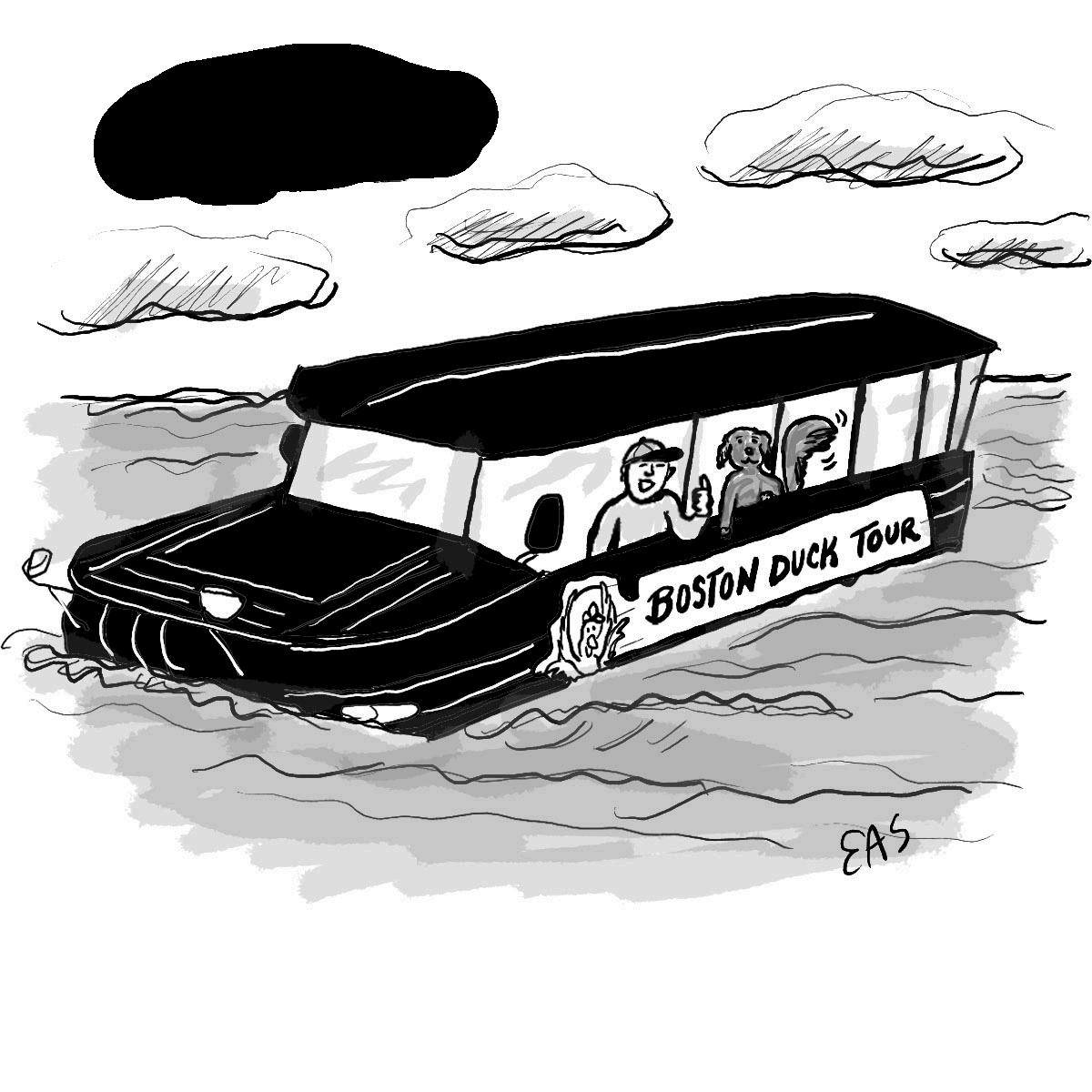
JUNE STARTED OUT KEWL, BUT HAD SUM HOT DAYS 4 SURE W/ SUM DEW PT DANKNESS LEVELS UP IN THE LO 70S BUT AFTER A STRETCH OF HAWTNESS, UR TEMPS KEWLED OFF 2 TEMPS IN THE 80S & 70S, & A REDUCED DANKNESS LEVEL @ SUM PTS W/ DANKNESS LEVELS DOWN IN THE 40S, O WOWOW BUT 1 THING U DID NOT GET A LOT OF IN JUNE – FREE WATER FROM UR WEATHER LORDS IN FAXT, ALL THAT “NICE” WEATHER IN JUNE CAUSED UR COMMONWEALTH OF MASSACHUSETTS 2 ENTER IN2 SEVERE DROUGHT, AS UR WEATHER LORDS R WITHHOLDING THEIR SPESH GIFT OF FREE WATER THIS IS WRITTEN ON JUNE 18TH BUT AS OF JUNE 18TH UR CITY OF BOSTON ONLY RCVED 0 4 INCH OF FREE WATER THE AVG 4 JUNE IN BOSTON IS 3 7 INCH UVE BEEN IN A FREE WATER DEFICIT SINCE LAST SUMMER
“BUT WAT ABOUT JULY” WELL IDK THE FEVERISH VIZIONS WICH EYE HAVE BEEN RCVING FROM UR WEATHER LORDS HAVENT BEEN AS CLEAR AS DESIRED BASICALLY EYE
THINK UR WEATHER LORDS HAVE THIS IN STORE 4 U: SICKLY WARM ABOVE AVG TEMPS & AVG FREE WATER HOPEFULLY 4 UR SAKE U GET MOAR THAN AVG FREE WATER SO THAT MAYBS U CULD BEGIN 2 CRAWL OUT OF DROUGHT
EL NINO HAS FORMED & IT IS V POWERFUL ITS JUST RAMPING UP NOW BUT ITS ALREADY NEAR RECORD HIGH TEMPS IN UR PACIFIC OCEAN IT IS GOING 2 PROBABLY IMPACT NEW ENGLAND THUSLY: SICKLY WARM TEMPS, HIGH DANKNESS LEVELS, EXTRA THUNDERBLOBS & SUMMER LIKE CONDISHES MAY PERSIST WELL IN2 UR AUTUMN, & PROVIDE A SICKLY WARM WINTER FREE WATER AROUND AVG LEVELS
U HAD IT GOOD THIS WINTER W/ AVG OR BELOW AVG TEMPS MOST OF THE TIME IN THE NORTHEAST IF U LOOKED @ A MAP OF TEMPERATURE ANOMALIES THRU THE PLANET, THE WHOLE PLANET SEEMED LIKE IT WAS ROASTING, AS THE NORTHEAST JUST CHILLED OUT ALL AVG AF U SHULD CHERISH NE BELOW AVG TEMPS U RCV FROM UR WEATHER LORDS – U DONT WHEN THE TIME WILL COME THAT U EXPERIENCE UR FINAL BELOW AVG TEMPERATURE
UR WEATHER LORDS R DRUNK ON CARBON & AS A RESULT, JUST SO DEEP IN UR DEATH SPIRAL JUST SO DEEP IN DEATH SPIRAL FASCISM U NEED 2 REPENT 2 UR WEATHER LORDS STOP UR POWERS & OLIGARX FROM DESTRUXTING U & UR PLANET
REPENT 2 UR WEATHER LORDS REPENT ––––– WEATHER MAN
Mood Board by Eight Stone
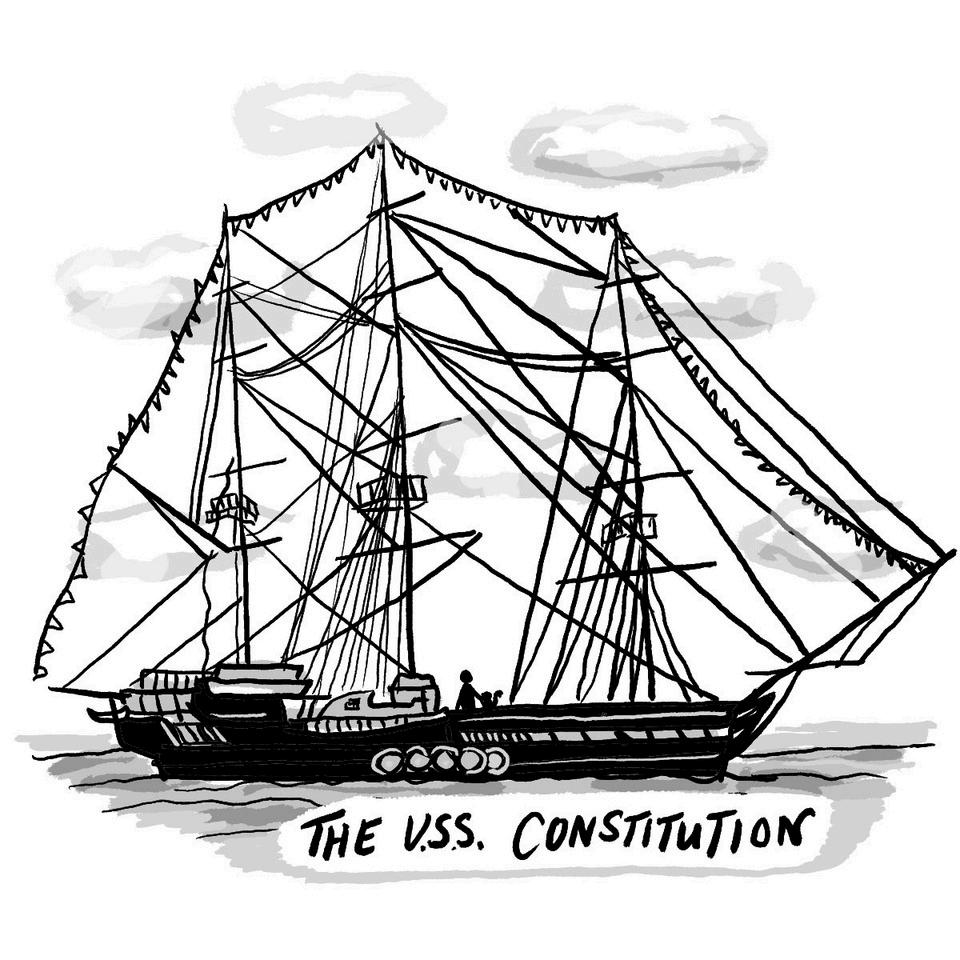
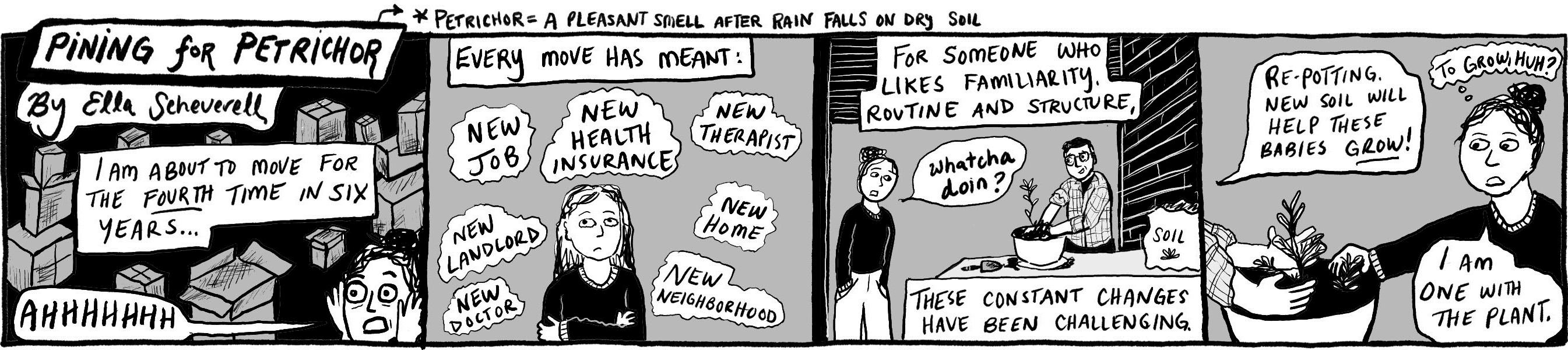
Growing Pains by Ella Scheuerell
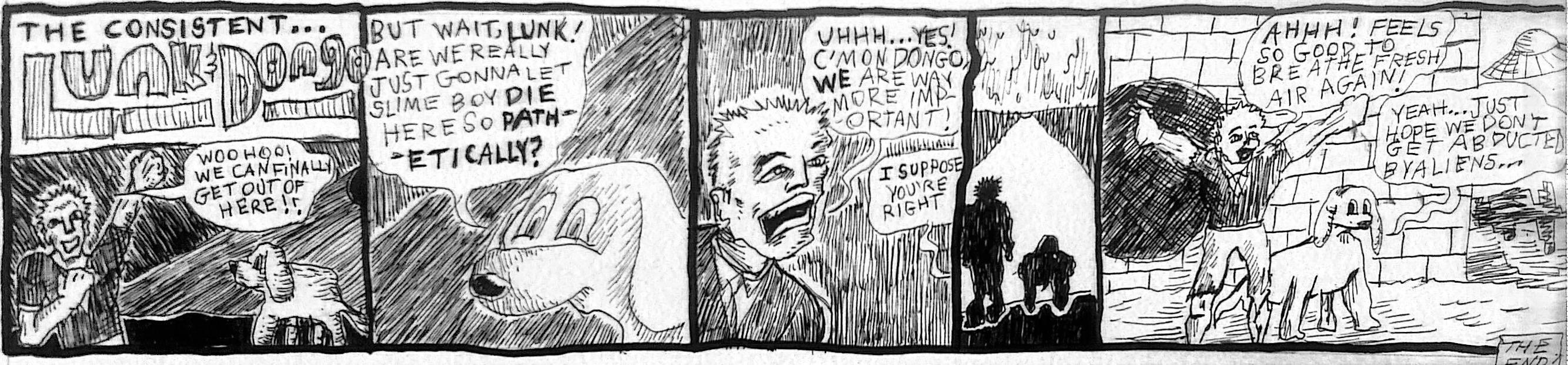
The Consistent Lunk & Dongo by Welcome Hersey
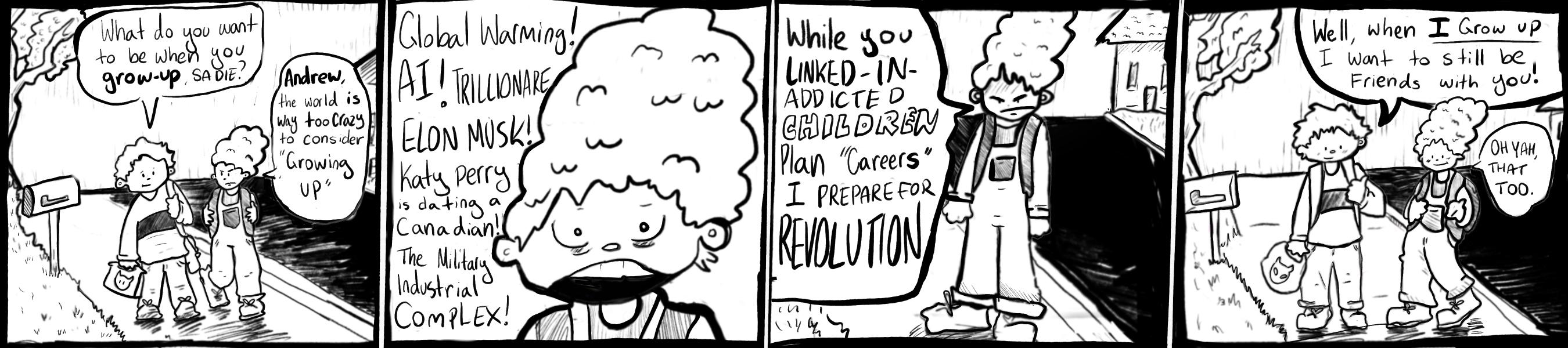
Grown Ups by Allison Moore
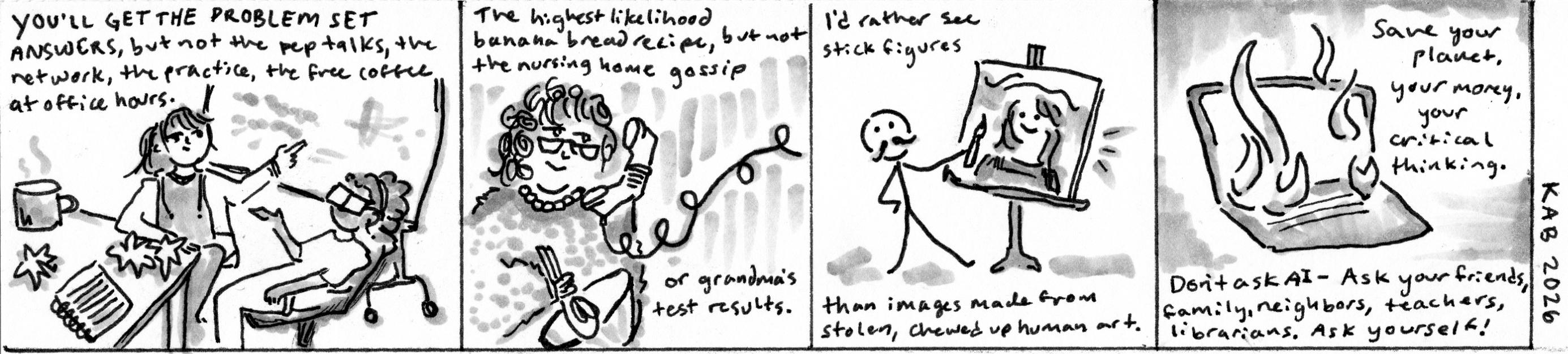
Sweet Tooth by Kate Bowers
FY27 BUDGET: NEIGHBORHOODS SCRAPE BY
City Sits on Billion Dollar Reserve Fund
The unfolding battle over Boston’s $4.9 billion fscal year 2027 budget has shifted from open policy debates into a high-stakes struggle over structural equity, racial justice, and transparency.
Following a chaotic council foor vote on June 10, a critical Special Budget Meeting on June 17, was abruptly forced into a virtual-only Zoom format—a move community advocates say effectively mutes the public right when neighborhood funding hangs in the balance.
District 4 Councilor Brian Worrell called the current chaos at City Hall a systemic imbalance of authority. Despite recent charter amendments intended to give the City Council real legislative power to reallocate funds, the reality on the ground has fallen short of true shared governance.
Worrell explained that even when the Council fghts tooth and nail to push money into vital resources like youth employment, the system allows the Mayor’s Offce to alter the fnal delivery.
“We have to make sure that we are changing so many things, so that when we are fghting... we are not only meeting the moment in that moment, but we are delivering the programs and the investments that we fought for.”
The core frustration for Black Bostonians isn't just procedural—it’s fnancial. While neighborhood initiatives like the Offce of Black Male Advancement and youth summer jobs are continually forced to fght for budget scraps, the city has nearly $2 billion in reserves.
Outside of those rainy-day , Boston holds another growing pocket of capital called "free cash," which currently sits at roughly
$600 million. All while in 2025, the city drew 71% of its budget from property taxes.
"My grandmother used to tell me this: an idle mind is a devil's playground," Worrell said, emphasizing the direct correlation between youth employment and neighborhood safety. "I am a big advocate for youth jobs... We need to make sure that we are connecting all of the talent that is in our neighborhood with all the great resources, jobs, and organizations that are out there.”
The historical data justifes the community's skepticism. District 4, historically the Blackest district in the city of Boston since its creation in 1983,was dead last in capital returns.
Worrell added that other districts frequently received more funding in a single year than District 4 received across multiple years combined.
“I do believe that it should not only be equitable, but it should be corrective,” Worrell said. “If we haven't been receiving the same amount of dollars as other districts over 20 years, then that means our public facilities are super old... and we need to make sure that we are correcting that.”
As the virtual gavel falls on this year's budget adjustments, the future of Boston depends on whether City Hall is willing to genuinely invest in its people—or if it will continue to keep the vault locked from the neighborhoods that built this city.
To stay engaged with the people and policies shaping our community, tune into The West Ward Show on WBPG-LP 102.9 FM Boston Praise Radio.
WEST WARD
5 YEARS OF NICE, A FEST
When the temperature starts hitting 90° and sunlight survives till 9:00 p.m., it’s a sure sign that NICE, a Fest season is upon us. With four years under its belt, Somerville’s premier Boston and greater New England indie festival has catapulted since its COVID-era origins. NICE has a proven 100% accuracy rate of capturing Boston’s indie pulse, evidenced by showcasing the exact artists that shape our scene.
Now, in year fve, NICE founder, Alex Pickert, has hit his stride (and it’s got a little swag to it). I got a chance to sit down with Pickert and ask him some questions that might give some insight into what 5 years of NICE actually means.
David Jubinsky (DJ): What do you know now that you wish you had known in NICE year one?
Alex Pickert (AP): That something is always going to go wrong, but it’s always going to be NICE at the end of the day because of the way the community comes together to make this thing happen…And to wear good walking shoes…there are a lot of steps back and forth between the stages.
DJ: What do you know now that you hope you remember in NICE Year Ten?
AP: That this is by and for the local scene. I don’t want this festival to turn into some big corporate slop show. I want to keep the core of the fest intact, no matter how big we make this thing, and the core is the Boston / New England DIY music community.
DJ: Your day job requires you to work with major artists who are able to pack out music halls. Why spend your personal time on up-and-coming New England artists?
DJ: While I did not grow up here, I did become an adult here and have had my whole career in booking happen here. It all started in the basements doing DIY shows,
and being a part of / giving back to this community that got me started in Live Music is really important to me.
Plus we have the greatest music scene in the world right here in New England, so why not throw a fest about it?
DJ: NICE has had legendary moments. What moment are you trying to create with NICE ‘26?
AP: I think that’s up to you, and the people attending and playing NICE ‘26 to decide. The whole thing is the moment for me. I handpicked each and every artist because they’re doing something special for the scene and with their music. Every band represents something unique and important about the New England music community. I think every set could be the moment if you choose to be there in the room. The whole fest is meant to be a choose your own adventure, and I hope everyone feels like they have a real musical adventure this year. Lots of great – I mean nice bands to check out.
MEET THE ARTIST
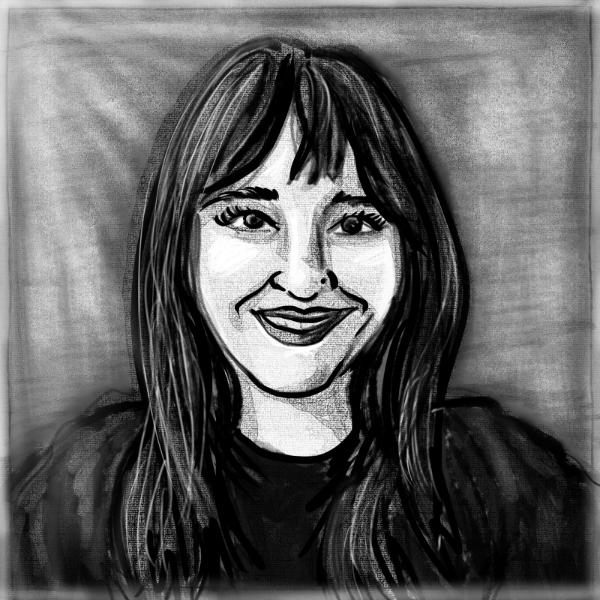
Ella Scheuerell (she/her) is a cartoonist and storyteller from the Greater Boston area. She has spent the better part of the last two decades mourning the break-up of her sixth grade all-girls band, “The Funky Weasels,” and is working on accepting the fact that she will never be as cool as she was then. She is an introvert who utilizes comics as a means of connecting with others. People enjoy reading about her anxiety and depression in her comics, which have become one of her most valuable tools in her quest to stop the stigma surrounding mental health.
Ella is a graduate of Boston University’s Masters of Fine Arts program in Visual
Narrative, which is just a fancy phrase for “comics that she sometimes uses to impress people at dinner parties.” At BU, she served on the Student Advisory Board at the BU College of Fine Arts, worked as the graduate assistant to the Chair, Professor Joel Christian Gill, and received the Constantin Alajalov scholarship. You can fnd her editorial comics in The Boston Globe, Antigravity Magazine, The Guardian, The Wall Street Journal, Eater Magazine, and more.
KEEPING IT LOCAL
1369 Coffee House’s Local Art Program
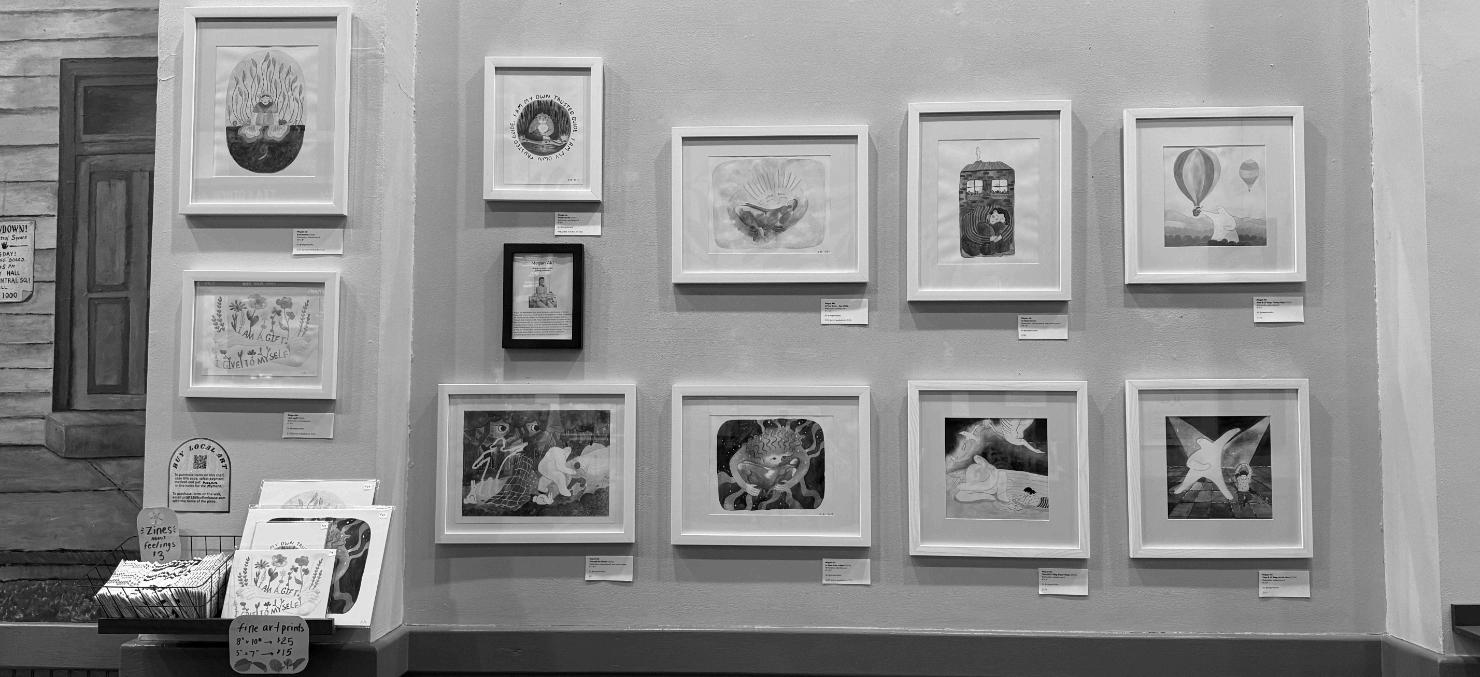
1369 Coffee House is a hub of coffee, community, and, somewhat more unexpectedly: art. Thanks to 1369’s Local Art Program, local artists—including many who have never made a sale before—have the opportunity to publicly display their work on the coffee shop’s walls and sell directly to customers.
The program in its current form has been operating for approximately ten years, thanks to artist and program curator Emma Leavitt. She frst took it over when she was working at the beloved Cambridge institution as a barista and saw a need for a more formalized process, intentionally shaping the Local Art Program into what it is today.
In 2025 alone, 70% of the 36 displayed artists made a sale, and the program saw over 300 sales made in total, resulting in $8,000 paid out to local artists. The coffee shop does not make any money off the program, ensuring all funds go directly to artists and the continuation of their work.
“Cafes play an important role in the art ecosystem, creating a more accessible avenue for selling and buying art compared to more traditional spaces,” Leavitt explained. “Especially for artists displaying or selling their work for the frst time.”
Between 1369’s two locations in Central Square and Inman Square, there are six distinct slots for showcasing artists, each lasting two months—plus a staff art spot. Behind each displayed artist there is a waiting list of about two years and a standby list for unexpected openings. Leavitt does not put up a lot of barriers when accepting applicants, and she provides guidance to artists who desire assistance when it comes to learning how to hang, price, or select art for their show.
Overall, though, it is a very self-directed process for the artists, creating a meaningful learning opportunity for many.
DAVID JUBINSKY
For Somerville-based artist Meg Aki, their ten-piece show at 1369 was the most of their art they’d ever displayed at once, and
their frst time hanging their own work, having only recently made the move to pursue their art full-time at the start of this year. This spring, 1369’s walls were adorned with Meg’s watercolor and gouache paintings, exploring themes of connection to self and trust in intuition, as well as select works from their “Theo and Little Meg” series, depicting a visual representation of anxiety and dread. “It was particularly special to have my art at the coffee shop in Central Square because that’s actually where I did a ton of networking conversations right out of undergrad,” Aki shared. “So it felt like a full circle moment.”
Multidisciplinary cultural worker payal kumar is also relatively new to showing their art. In February and March 2024, they displayed a series of prints and painted wood cut pieces, drawing inspiration from the North Indian folk art from the villages where their family is from and incorporating contemporary themes and diasporic infuences from growing up in the U.S.. “Part of this program being really accessible and working with a lot of different artists is that it’s also an opportunity to introduce different viewpoints and visual languages and cultures to the patrons of 1369 and folks in the community who are coming through,” kumar explained.
At the heart of this program is community connection, bridging the space between artists and their audiences. It intertwines artwork directly with people’s daily lives— one does not need to be intentionally seeking out art to fnd it at 1369.
“For me, a lot of why I love art-making and cultural work is because of the conversations and connections that creating allows me to have,” kumar said. “This felt like a really optimal way to really do that and just connect with people.”
MELANIE LITWIN
ELLA SCHEUERELL
NICE, a Fest makes its return from July 23 – July 26. To learn more about the fest, the lineup, and grab tickets – head to www. niceafest.com