We would like to express our deepest gratitude to the collectors who generously lent their works to the exhibition. Their trust and continued support made this project possible.
We are also sincerely thankful to the artists’ estates, whose generosity and collaboration have been essential to the realization of this project. We would also like to thank our friends and collaborators for their invaluable support: Catalina Corpas, Valia Garzón, Roberto Goizueta, Roberto Cobas, Irina Leyva, Janis Lewin, Israel Moleiro, Kate Shugert, Cristina Vives.
Finally, we would like to express our heartfelt gratitude to María Martínez-Cañas for her generosity and for opening the doors to the remarkable José Gómez Sicre Visual Archive. Research conducted within this archive has been crucial to the development of this exhibition, providing invaluable insights and enriching its scholarly foundation.
This catalogue has been made possible thanks to the generous support of Latin Art Core, the Ugarit Collection of Panama, Moche Project, and Dr. Blas Reyes.
Photo Credits
Courtesy of the Betty and Isaac Rudman Trust: p. 51
Courtesy of Dr. Blas Reyes: pp. 22, 23, 27, 29, 31
Courtesy of Christie’s New York: p. 37
Courtesy of the Capriles Cannizzaro Family Collection: pp. 30, 43, 62
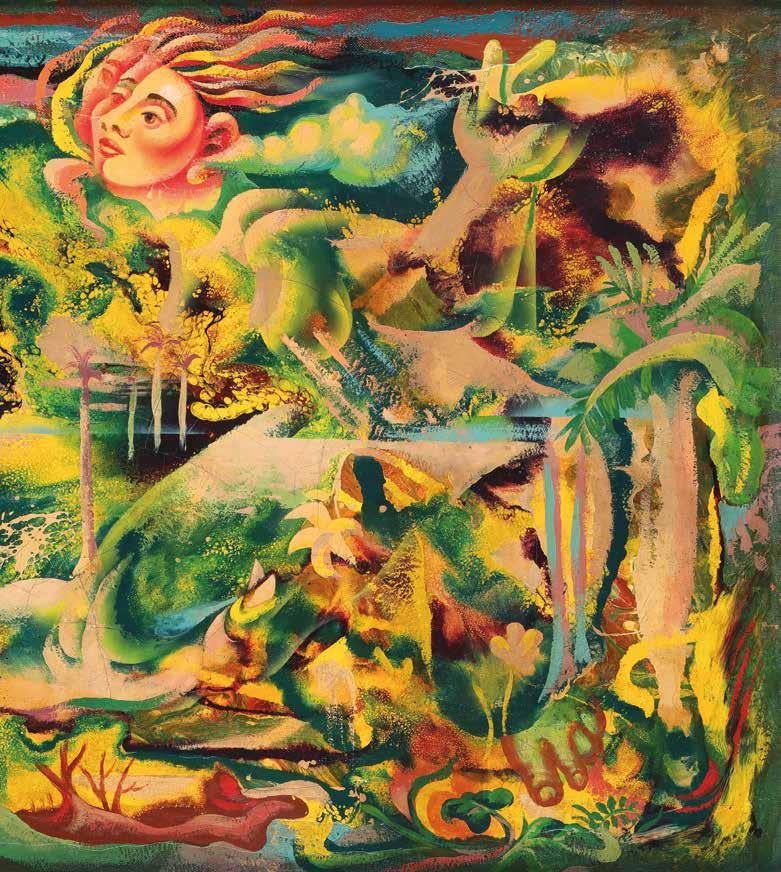
Courtesy of the Estate of Mariano Rodríguez: pp. 21, 64, 67
Cora Jean Rafe: pp. 56, 57
Evelyn Sosa: pp. 53–55
Courtesy of Latin Art Core, Miami: pp. 34, 36, 38, 39, 42, 44–49, 59, 61, 63, 65, 66, 69, 71
Joshua Emilio Hilario Mateo: pp. 28, 33, 41
Lázaro Veliz: pp. 32, 35
María Martínez-Cañas: pp. 8, 10–12, 14, 15, 17, 25
The Morgan Library & Museum, New York: p. 13
The Morgan Library & Museum. MA 5020, Box 131, Folder 02. Gift of The Pierre Matisse Foundation, 1997: p. 13
Cuban Modernism on the World Stage
In the spring of 1944, the exhibition Modern Cuban Painters opened at the Museum of Modern Art in New York, marking a turning point in the international visibility of modern Cuban art. The show brought together a generation of artists deeply engaged with European avant-gardes yet firmly grounded in their island’s cultural identity. Their work—bold, poetic, and socially aware—revealed a confident artistic language capable of placing Cuba squarely within the evolving landscape of American modernity. At a time when modern art was taking shape in the United States, Modern Cuban Painters made one thing clear: Latin American modernism was not a distant reflection, but a fully formed and independent voice.
We are profoundly grateful to the collectors and institutions whose generosity made this exhibition possible by lending exceptional works from their collections. Our sincere thanks go to the Rudman Collection, the Capriles Cannizzaro Family Collection, Dr. Fernando Valverde, Emilio and Silvia Ortiz, Latin Art Core, and Dr. Blas Reyes for their commitment to preserving, studying, and sharing modern Cuban art. Their support not only enriches this exhibition, but also underscores the vital role that thoughtful collecting plays in connecting artistic creation, cultural history, and contemporary audiences.
We also extend our heartfelt thanks to the exhibition’s curators, Elizabeth Thompson Goizueta and Cristina Figueroa. Elizabeth, beyond being a dear friend, educator, and scholar, has been a steadfast supporter of the Foundation’s work and has curated remarkable exhibitions of Cuban art in the United States. Cristina, a young and deeply committed researcher, has been an essential collaborator and the Foundation’s right hand, contributing decisively to the research and realization of this project.
In the winter of 2026, Cuban art returns to New York with renewed energy. From the growing attention to Wifredo Lam at the Museum of Modern Art, to the success of Buena Vista Social Club on Broadway, and now this exhibition at Bonhams, Cuban culture once again occupies a central place in the city’s artistic and cultural conversation.
Within this moment of historical reflection and creative vitality, the Mariano Rodríguez Foundation reaffirms its commitment to safeguarding, studying, and sharing an artistic legacy that continues to speak to the present and look toward the future, especially from a city that has long played a pivotal role in the history of modern art.
Alejandro Rodríguez
Fundación Mariano Rodríguez
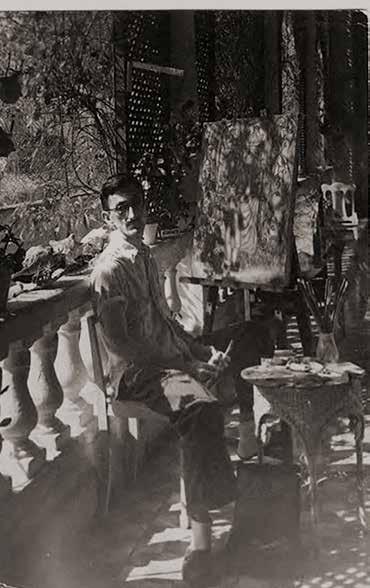
The Artists
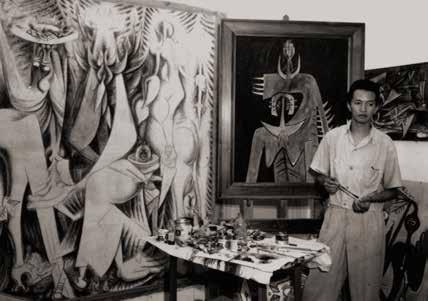
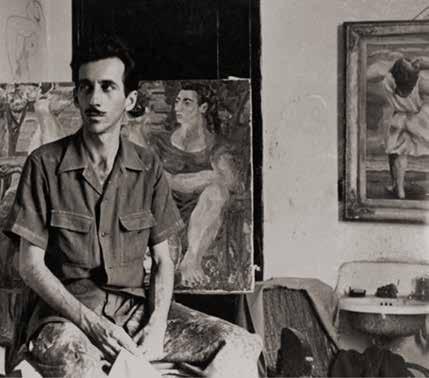
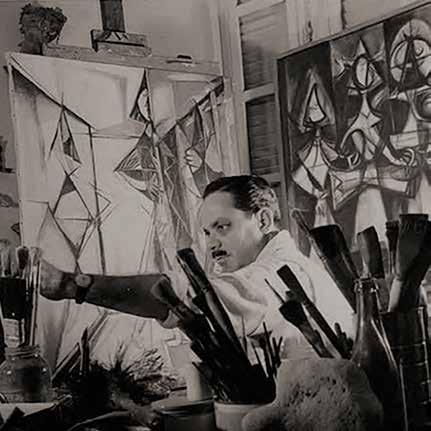
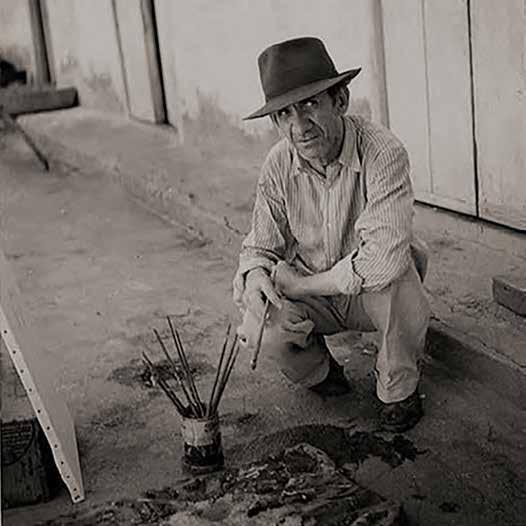
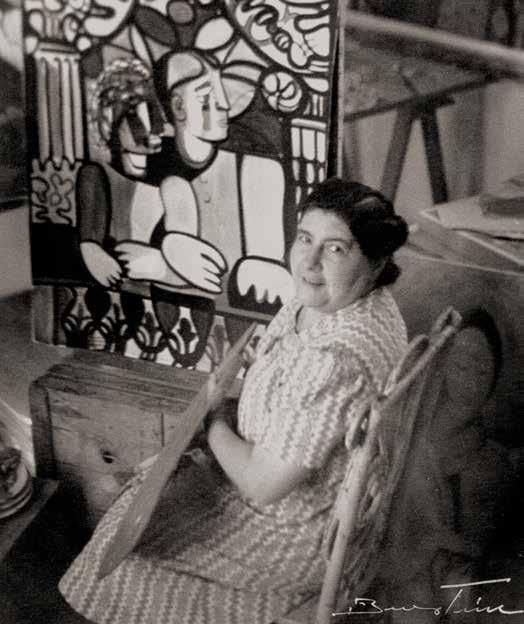
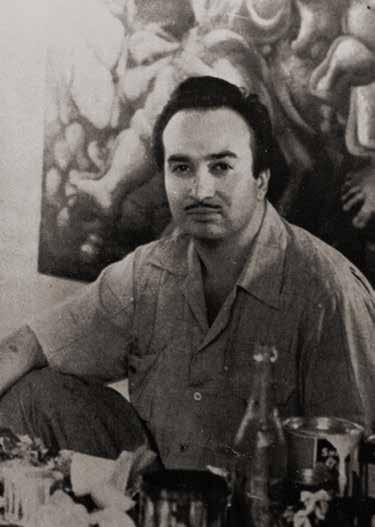
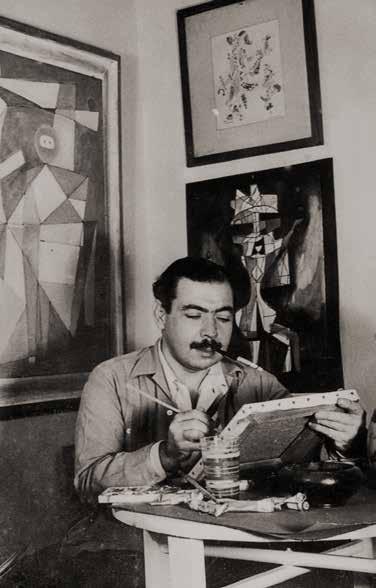
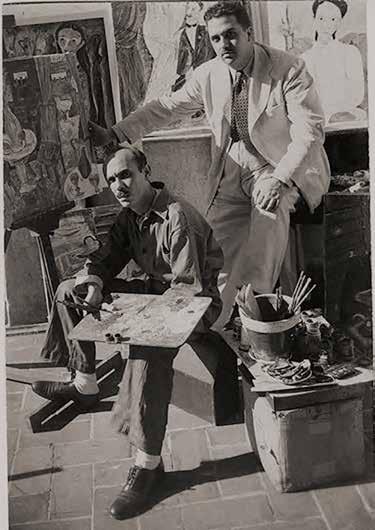
From left to right, top to bottom
Wifredo Lam in his studio, Havana, 1947. Seen in front of Le présent éternel (1944) and The Wizard of the Ocean (1947) Courtesy Eskil Lam
Fidelio Ponce in his studio, Matanzas, Cuba, 1942
Photographed painting on the floor
Photo: Edgar Kaufmann Jr. Courtesy of the José Gómez Sicre Visual Archive, Miami, FL
Mario Carreño in his studio, Havana, 1943. In the background: Fuego en el batey (1943)
Photo: Julio L. Berestein
Courtesy Centro de Información, Museo Nacional de Bellas Artes, Havana
Felipe Orlando and José Gómez Sicre in the artist’s studio, Havana, ca. 1943. In the background: Retrato de Concha (1941)
Photographer unknown Courtesy of the José Gómez Sicre Visual Archive, Miami, FL
Mariano Rodríguez in his studio, Havana, ca. 1944. Seen in front of La pecera (ca. 1942) and La paloma de la paz (1940)
Photographer unknown Courtesy Estate of Mariano Rodríguez
Luis Martínez Pedro in his studio, Havana, ca. 1949–1950 Courtesy of the José Gómez Sicre Visual Archive, Miami, FL
Amelia Peláez in her studio, Havana, ca. 1943 - 45. In the background: Los novios (1945)
Photo: Julio L. Berestein
Courtesy Centro de Información, Museo Nacional de Bellas Artes, Havana
René Portocarrero in his studio, Havana, 1950s. In the upper background: a drawing from the series Figuras para una mitología imaginaria (1943)
Photographer unknown
Courtesy Fondo Portocarrero, Museo Nacional de Bellas Artes, Havana
Cundo Bermúdez in his studio, Havana, 1943. Seen in front of Romeo y Julieta (1943)
Photo: Julio L. Berestein
Courtesy of the José Gómez Sicre Visual Archive, Miami, FL
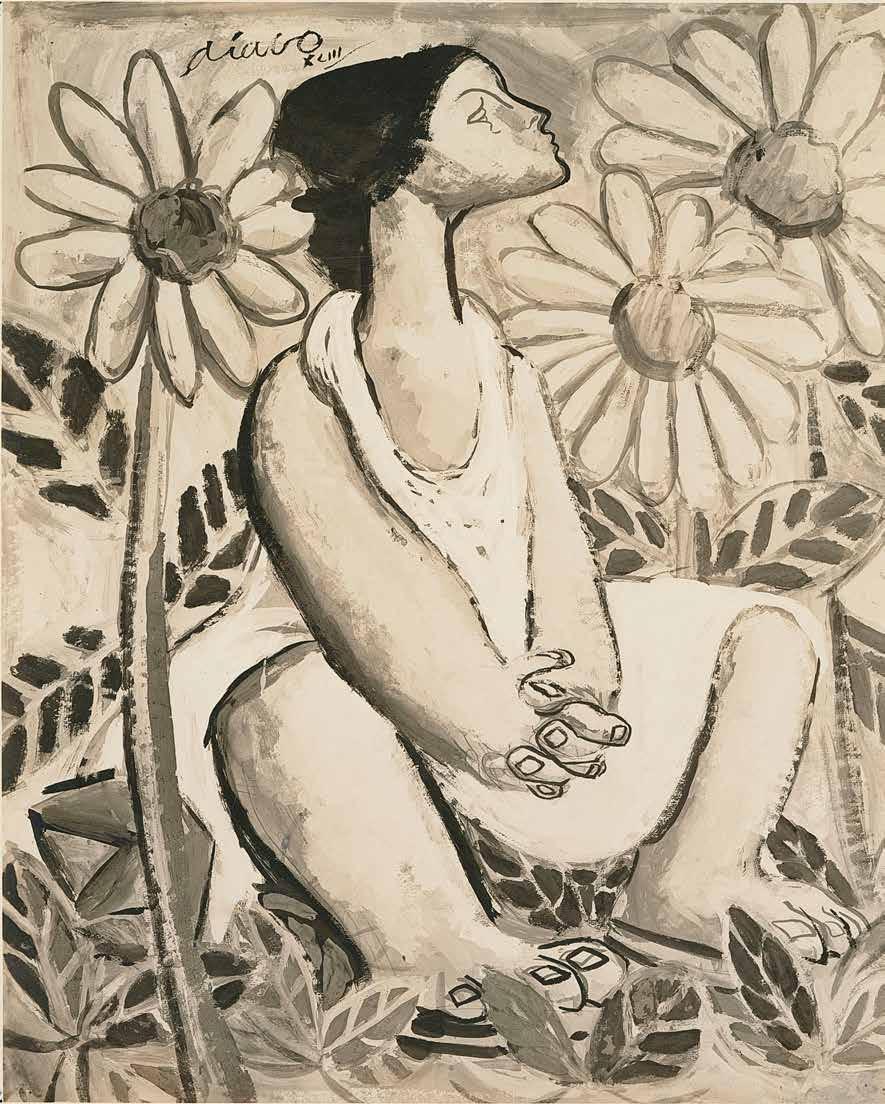
Roberto Diago
Woman with Sunflowers, 1943
Gouache, 29 7/8 × 25 1/4 in.
This work, whose current whereabouts are unknown, was the only piece by Roberto Diago included in the exhibition Modern Cuban Painters (Museum of Modern Art, New York, 1944).
Photo by Soichi Sunami
Vintage gelatin silver print, 8 ¼ × 7 ¼ in.
Courtesy of the José Gómez Sicre
Visual Archives, Miami, FL
Havana–New York: Across a Transformative Decade
By Cristina Figueroa Vives
The history of modern Cuban painting cannot be fully understood without acknowledging the transformative role played by New York during the 1940s. As the Second World War reshaped Europe’s political and cultural geography, New York emerged as an unprecedented center for artistic exchange. The migration to North America of European artists, intellectuals, dealers, and collectors fleeing Nazism transformed the city into a dynamic crossroads where modern art was redefined. In this climate of displacement and reinvention, new voices found receptive audiences. Cuban modernism gained access to a space of freedom in which the most advanced international artistic currents converged with the aesthetic and humanist aspirations shared by the global intellectual community.
By the early 1940s, New York had become both a refuge and a laboratory for artistic innovation. Galleries founded or directed by émigré dealers, including Pierre Matisse, Klaus Perls, Hugo Feigl, among others, played a crucial role in introducing European modernism to American audiences. At the same time, these spaces demonstrated an unusual openness to artistic expressions emerging beyond Europe, particularly from Latin America. Cuban artists arrived at a moment when the city was not only receptive but actively interested in new modern languages capable of expanding the canon and asserting New York’s position as the new cultural metropolis.
It should be noted, however, that the presence of Cuban avant-garde artists in New York predates the 1940s. Figures such as Carlos Enríquez, Marcelo Pogolotti, Amelia Peláez, Daniel Serra-Badué, and Enrique Riverón had already established connections with the city during the 1920s and 1930s, participating actively in its artistic and intellectual circles. Marcelo Pogolotti enrolled at the Art Students League in 1923, followed by Amelia Peláez, who received a grant to study at the same institution in 1924. Carlos Enríquez lived in New York during the period of his marriage to American artist Alice Neel in 1925. Daniel Serra-Badué gained recognition after winning First Prize in the John Wanamaker Annual Drawing Competition (1927–28) and later became the first Cuban American recipient of a fellowship from the John Simon Guggenheim Memorial Foundation in 1938. Enrique Riverón exhibited at the Delphic Studios in New York in 1936 and was an active participant in the city’s intellectual milieu.
Together, these early engagements demonstrate the modern impulse already present in Cuban art from the early years of the Republic, shaped by its social, economic, and cultural dynamics at both national and international levels. Nevertheless, it was during the 1940s that Cuban modern art experienced its true moment of consolidation and visibility, as many more Cuban painters entered New York’s artistic circuits.1
This displacement must be understood within broader geopolitical interests that generated growing institutional attention toward Latin American art, encouraged in part by initiatives of cultural diplomacy linked to the Office of Inter-American Affairs. This office was a United States government agency active during the 1940s that promoted Pan-American cooperation through cultural diplomacy. Its primary objectives were to foster hemispheric solidarity and counter the influence of the Axis powers in Latin America, while also supporting the development of commercial and cultural relations among the American republics in the interest of hemispheric defense.
Museums and galleries in New York thus began to look southward, and Cuban artists— whose work combined modernist experimentation with cultural specificity—emerged as particularly compelling interlocutors.
1 For further research and scholarship on Cuban art of the 1940s, see Elizabeth Goizueta, Susanna V. Temkin, and Cristina Figueroa, Modern Cuban Painters from Havana to New York (Fundación Mariano Rodríguez, 2024), and Alejandro Anreus, Modern Art in 1940s Cuba: Havana’s Artists, Critics, and Exhibitions (Gainesville: University Press of Florida, 2025).
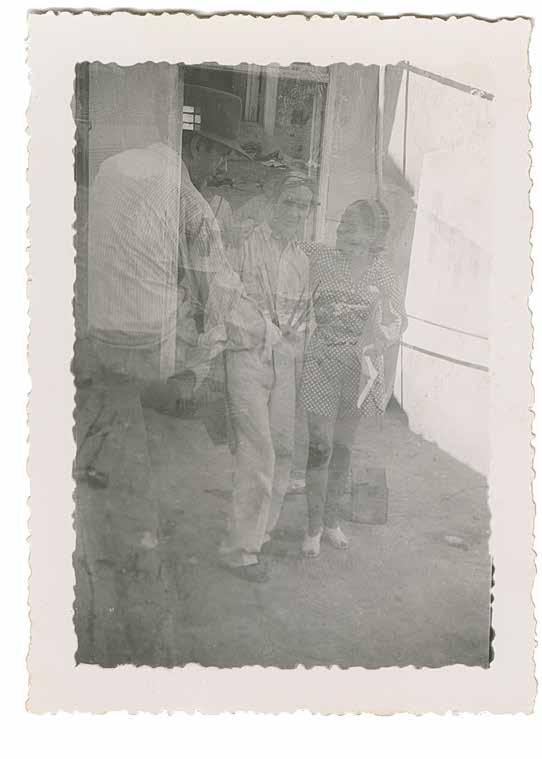
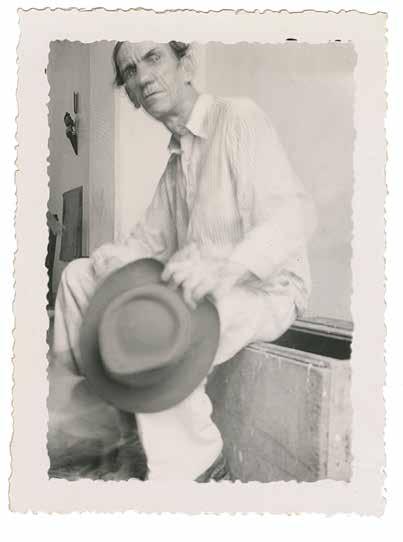
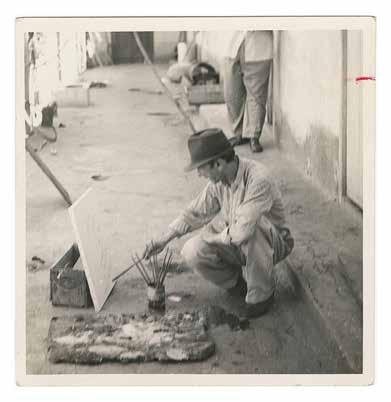
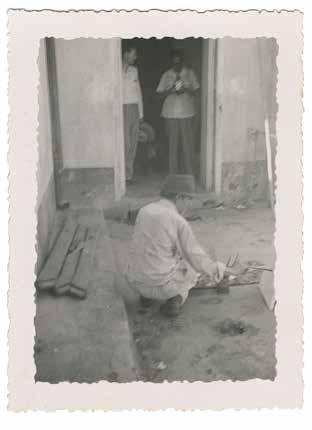
Images from the visit to Fidelio Ponce’s studio in Matanzas by Alfred H. Barr Jr., Edgar Kaufmann Jr., José Gómez Sicre, Mario Carreño, and María Luisa Gómez Mena, August, 1942. Courtesy of the José Gómez Sicre Visual Archives, Miami, FL
1. Double exposure revealing the presence of María Luisa Gómez Mena during the visit, a detail previously undocumented. Photo by José Gómez Sicre. Vintage gelatin silver print, 3 5/8 x 2 5/8 in.
2. Portrait of Fidelio Ponce, photographed by José Gómez Sicre. Vintage gelatin silver print, 3 5/8 x 2 5/8 in.
3. Fidelio Ponce, photographed by José Gómez Sicre, painting on the floor, as was his customary practice. In the background, Alfred H. Barr Jr. and Edgar Kaufmann Jr. can be seen, with Kaufmann simultaneously photographing the scene from another angle. Vintage gelatin silver print, 3 5/8 x 2 5/8 in.
4. Fidelio Ponce, photographed by Edgar Kaufmann Jr. The edge of the frame reveals José Gómez Sicre’s trousers as he takes the portrait. Vintage gelatin silver print, 4 x 3 ¾ in.
MoMA Encounters Cuba: Alfred H. Barr Jr.
A key figure in the incorporation of Cuban modern art into the New York art scene was Alfred H. Barr Jr. founding director of the Museum of Modern Art (MoMA). In August 1942, Barr traveled to Havana accompanied by Edgar Kaufmann Jr., who had recently joined the museum’s Department of Industrial Design. Guided by the young Cuban critic and curator José Gómez Sicre, Barr visited artists’ studios, private collections, and intellectual circles, encountering a scene of remarkable vitality.
Among the artists Barr met, Fidelio Ponce made a particularly profound impression. During a visit to his studio in Matanzas, Barr recognized in Ponce’s work an emotional intensity and authenticity that he would later describe as emblematic of Cuban painting in its most profound expression. Ponce, who never left Cuba, nevertheless became a central figure in the narrative of Cuban modernism’s international recognition.
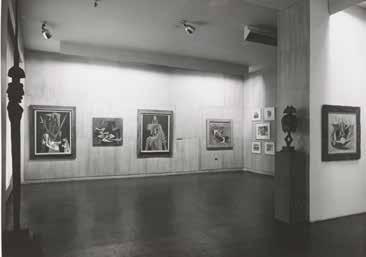
Barr’s visit planted the seed for what would become the landmark exhibition Modern Cuban Painters, organized at MoMA from March 17 to May 7, 1944. This exhibition marked the first major institutional presentation of modern Cuban art in the United States and signaled the museum’s willingness to expand its modernist narrative beyond Europe and North America.
The impact of Modern Cuban Painters was immediate and widely covered by the press. Reviewing the exhibition, The New York Times emphasized that Cuban modern art could not be reduced merely to color, instead praising the individuality and expressive range of the artists:
“The individual expressiveness of most of the painters is enough to produce a collection of stimulating variety. And if the exhibition as a whole proves stimulating to the point of intoxication, the experience leaves no subsequent hangover.”
(Edward Alden Jewell. The New York Times, March 26, 1944)
An Inside View: María Luisa Gómez Mena and José Gómez Sicre — Patronage, Vision, and Cultural Entrepreneurship
The realization of Modern Cuban Painters in 1944 would not have been possible without the decisive role of María Luisa Gómez Mena. An entrepreneur, gallerist, editor, and patron, Gómez Mena was one of the most influential advocates of Cuban modern art. In October 1942, she founded the Galería del Prado in Havana—the first private gallery in Cuba dedicated to modern art—under the direction of critic José Gómez Sicre. Although the gallery existed for only a brief period, barely two years, until late 1944, and Gómez Sicre served as director for just a few months, its cultural impact was undeniable. Through a sustained program of permanent exhibitions and group shows of the artists it represented, the gallery played a decisive role in the visibility and consolidation of modern art in Cuba.
Gómez Mena was also the editor and patron of Pintura Cubana de Hoy (Cuban Painting of Today), the first major bilingual monograph dedicated to Cuban art. 2 Published in 1944 with texts by Gómez Sicre, the book accompanied the MoMA exhibition. Functioning both as an academic resource and a promotional instrument, it presented Cuban modern art to an international audience for the first time. Beyond her curatorial and editorial work, Gómez Mena personally financed the entire cost of the MoMA exhibition at a moment when institutional resources were constrained by wartime conditions.
Equally crucial throughout the conception of the exhibition was José Gómez Sicre, whose training as a critic and curator, along with his close personal relationships with artists and cultural agents, positioned him as the true mediator and architect of the exchange. Initially acting as guide and interlocutor during Barr’s visit, Gómez Sicre quickly became the principal organizer of the MoMA exhibition, coordinating loans, logistics between Havana and New York, and influencing the final selection through his deep knowledge of the field.
Gómez Sicre’s vision extended well beyond the 1944 exhibition. His correspondence with Barr, artists, and intellectuals reveals a sustained effort to embed Cuban modernism within international circuits. In 1946, he was appointed Specialist in the Visual Arts Unit of the Pan American Union in Washington, D.C., from where he would continue to promote Latin American art for decades. 3
2 Pintura Cubana de Hoy / Cuban Painting of Today. Edited by María Luisa Gómez Mena, with texts by José Gómez Sicre and English version by H. T. Riddle, printed by Úcar, García y Cía, Havana, 1944.
3 For a more in-depth study of the figure of José Gómez Sicre, see A la memoria de José Gómez Sicre en su centenario, compiled, edited, and co-authored by José Ramón Alonso-Lorea (Edición EstudiosCulturales2003, Miami, 2016).
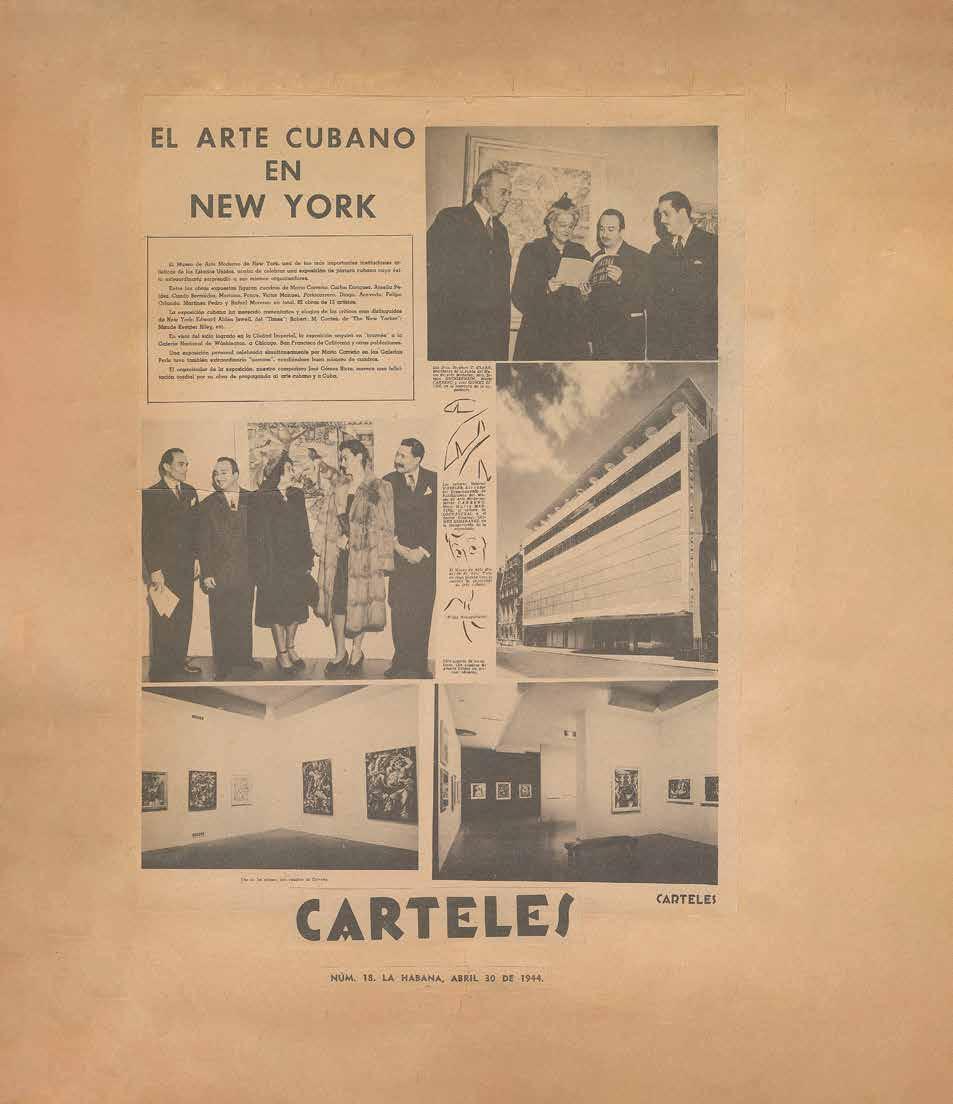
Article “El arte cubano en New York,” Carteles, April 30, 1944. Page from the José Gómez Sicre scrapbook.
Courtesy of the José Gómez Sicre Visual Archives, Miami, FL
Galleries, Émigré Dealers, and Cuban Artists in the New York Art Scene
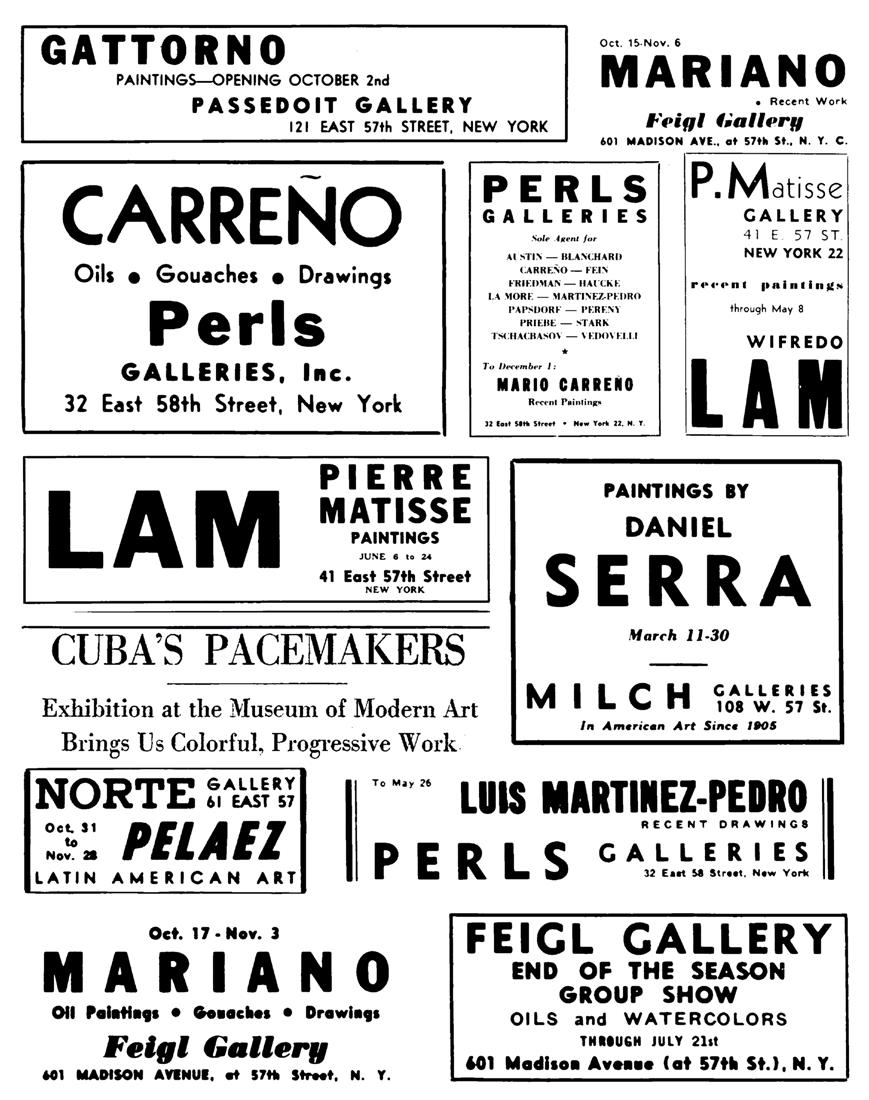
If MoMA provided institutional validation, New York galleries offered sustained visibility and market support. Klaus Perls, who emigrated from Germany in 1935, became the principal dealer for Mario Carreño, presenting multiple solo exhibitions throughout the 1940s and 1950s, beginning in 1941, well before Barr’s visit to Havana and the conception of a Cuban exhibition at MoMA. Perls also represented Luis Martínez Pedro, who held three solo exhibitions at the gallery during this decade (1945, 1947, and 1949).
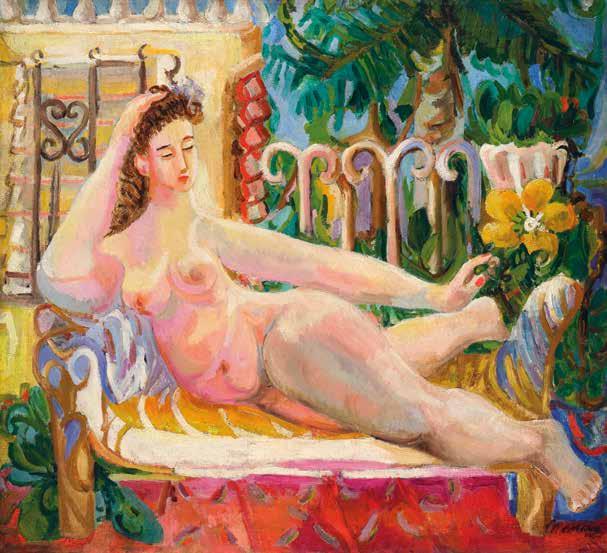
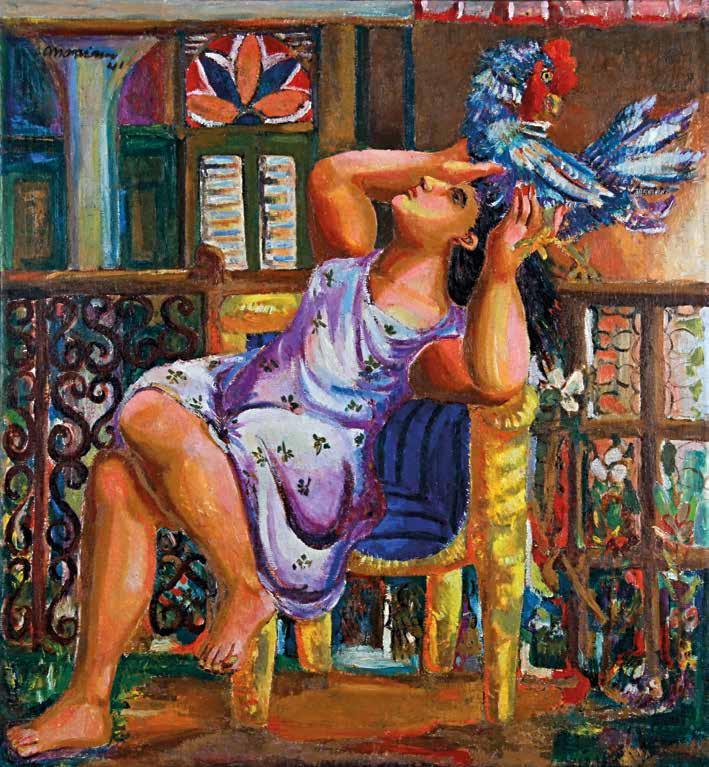
Hugo Feigl, forced to leave Prague in 1939, founded the Feigl Gallery in New York in 1942, specializing in German and French Expressionist painting while maintaining a notable openness to emerging international voices. Feigl became Mariano Rodríguez’s principal New York dealer, presenting him in multiple exhibitions beginning in the mid-1940s. Mariano first appeared at the gallery in July 1945 in the End of the Season Group Show, where his Reclining Nude in the Garden (1942) received critical praise from Art News, The Herald Tribune, and The Art Digest. That same year, he held his first solo exhibition at the Feigl Gallery, followed by further exhibitions in 1946 and 1948, consolidating his individual presence within the New York art scene through sustained critical recognition during a formative period of his career.
Julien Levy, whose gallery was a central space for Surrealism, hosted René Portocarrero’s first and only solo exhibition in New York in 1945, situating his work within an international avant-garde context. Although it was his only exhibition at the Julien Levy Gallery, it marked a decisive moment in his career and a turning point in his artistic practice during the 1940s. On this occasion, Portocarrero presented a series of gouaches centered on the theme of Brujos, characterized by strong Antillean influences and references to mythological figures.
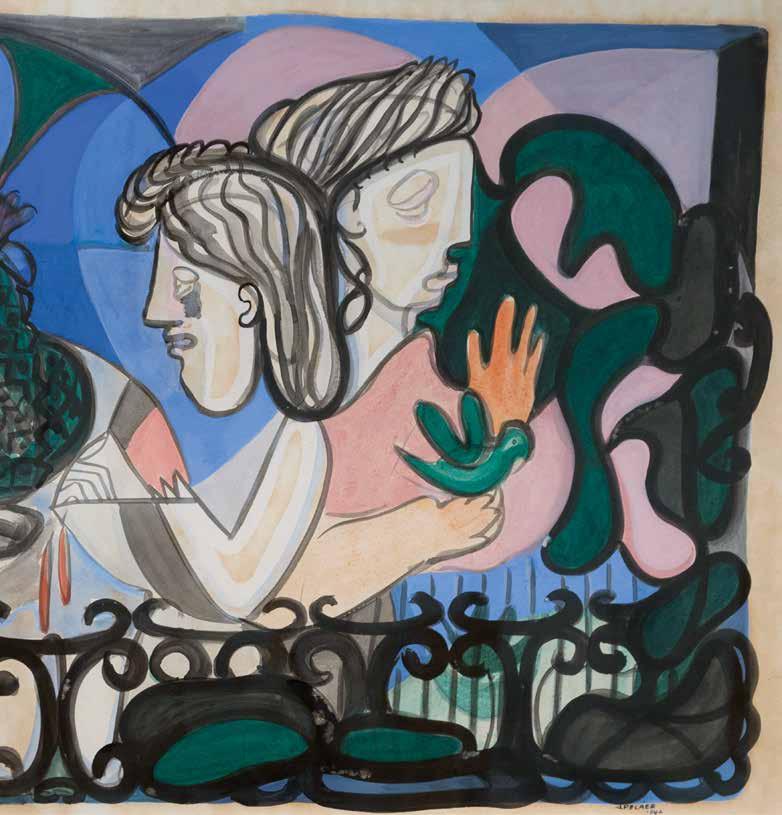
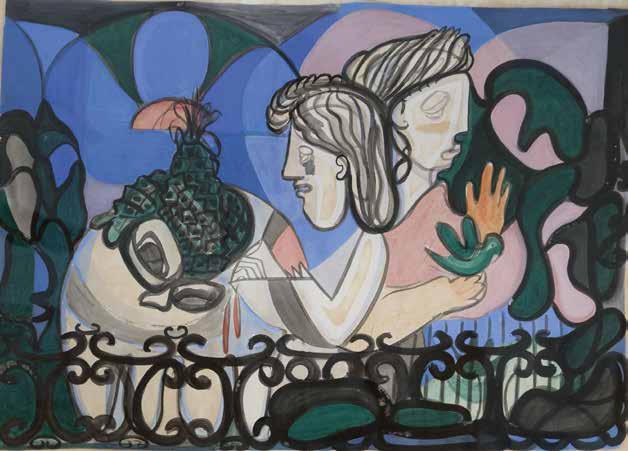
Amelia Peláez occupies a singular position within this narrative. Although she had only one solo exhibition in New York, at the Gallery Norte in 1941, her participation in MoMA’s Modern Cuban Painters exhibition in 1944 had a profound impact. As the only woman included and one of the most distinctive artists of her generation, Peláez’s work—rooted in colonial architecture, domestic space, and chromatic structure—offered a powerful alternative to dominant modernist paradigms. Her gouache The Balcony (1942) was reproduced on the cover of the exhibition bulletin, underscoring her centrality within the movement.4
Wifredo Lam: A Universal Cuban in New York
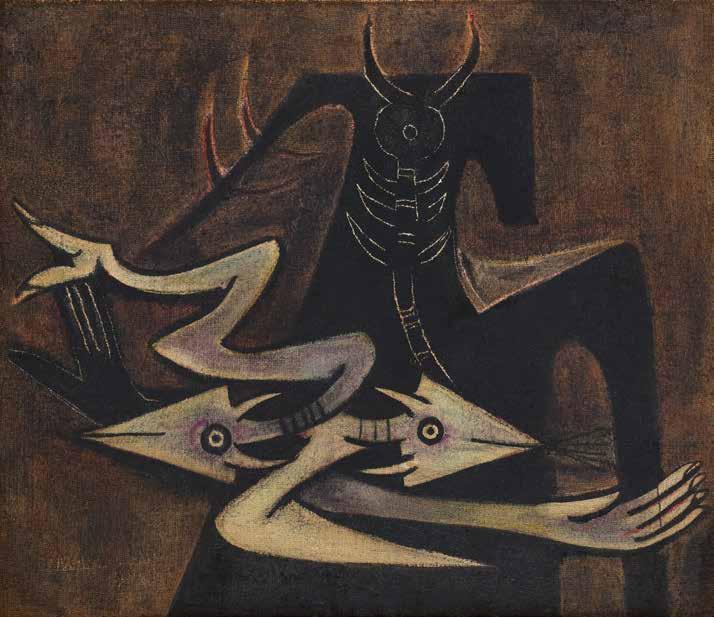
Among all Cuban artists active in New York during the 1940s, Wifredo Lam stands out as the most internationally visible and consistently exhibited. Prior to the 1944 MoMA exhibition, Lam had already entered the New York art scene through his close association with the Surrealist circle, participating in key exhibitions such as First Papers of Surrealism (1942), as well as through representation by Pierre Matisse, who became his principal dealer in the United States.
Pierre Matisse, son of Henri Matisse, played a decisive role in Lam’s career. Encouraged by André Breton, Matisse represented Lam beginning in 1942, organizing multiple solo exhibitions that established him as a central figure of modernism. Lam’s integration into Surrealist networks and his dialogue with artists such as Picasso, Breton, and Matta positioned him at the intersection of European and Afro-Caribbean modernisms. At the Pierre Matisse Gallery, Lam held four solo exhibitions throughout the decade (1942, 1944, 1945, and 1948), presenting works that synthesized Afro-Cuban cosmology, modernist form, and Surrealist poetics. These exhibitions positioned him as a truly international and multicultural artist operating between Havana, Paris, and New York.
Critical reception of Lam’s work evolved alongside his growing visibility. While early reviews often emphasized Picasso’s influence, later exhibitions—particularly in the late 1940s—recognized the originality and cultural depth of his work:
4 For a detailed account of the events and exhibitions of Cuban artists in New York during the 1940s, see Cristina Figueroa, “A Decade of Cuban Art in New York (1939–1949),” in Modern Cuban Painters from Havana to New York (Fundación Mariano Rodríguez, 2024).
Installation view of Lam’s solo exhibition, Pierre Matisse Gallery, New York, 1948, showing The Wizard of the Ocean and The Warrior. Photo Courtesy: The Morgan Library & Museum, New York.
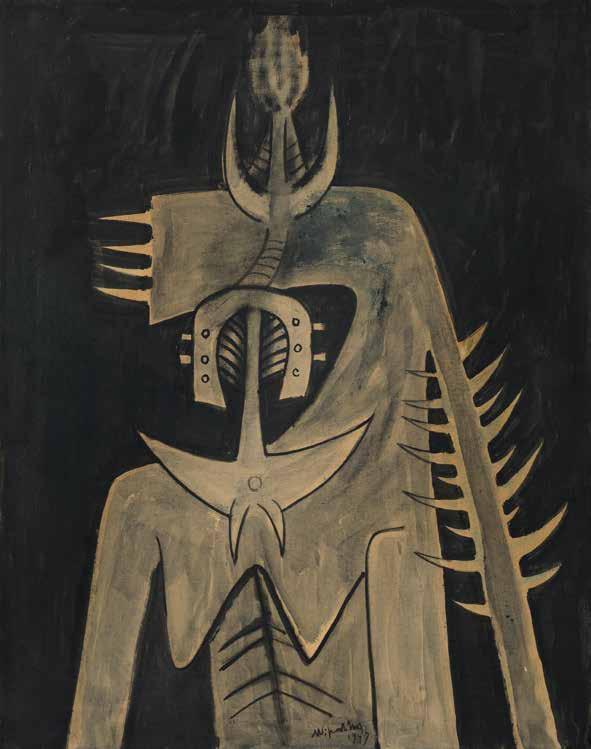
“Lam has at this point in his aesthetic journey, that ultimately reached Paris, integrated the lessons of the contemporary French masters with his native heritage… The Wizard of the Ocean is grimly stark, employing an overwhelming central form to great effect. The Warrior is marked by universal feeling.”5
His paintings came to be understood as contributions to a modernism that challenged Eurocentric frameworks.
New York as Catalyst
The present exhibition, Modern Cuban Painters from Havana to New York, underscores the importance of New York not merely as a destination but as a catalyst. The city’s galleries, museums, critics, and networks of émigrés offered Cuban artists platforms for dialogue, experimentation, and recognition at a crucial historical moment.
This exhibition materializes the homonymous volume published in 2024 by the Fundación Mariano Rodríguez to commemorate the 80th anniversary of MoMA’s Modern Cuban Painters exhibition and the publication of Pintura Cubana de Hoy, in which many of the works now on view at Bonhams were first exhibited or reproduced.
For the first time in more than eighty years, Modern Cuban Painters from Havana to New York brings together in this city a significant group of works originally shown in Modern Cuban Painters at the Museum of Modern Art in 1944, alongside others exhibited in New York galleries during the 1940s and those reproduced in the landmark catalog Pintura Cubana de Hoy An exhaustive process of research and provenance tracing, together with the generous cooperation of current owners, has made it possible for many of these works to be publicly seen again after decades.
Their reunion, complemented by additional paintings, drawings, and archival materials, offers an unprecedented opportunity to understand the richness, diversity, and ambition of Cuban modernism at a decisive historical moment.
For the first time, this exhibition presents previously unpublished materials from the José Gómez Sicre Visual Archive, including photographs, correspondence, scrapbooks, and working documents. These materials illuminate the intellectual, personal, and institutional networks that shaped the international projection of Cuban modernism and reveal the crucial role played by Gómez Sicre in forging enduring cultural connections.
Revisiting this exchange allows us to recognize the complexity and continued relevance of Cuban modern art. It also reaffirms the enduring power of artistic networks forged in moments of crisis, networks that continue to shape the history of modern art today.
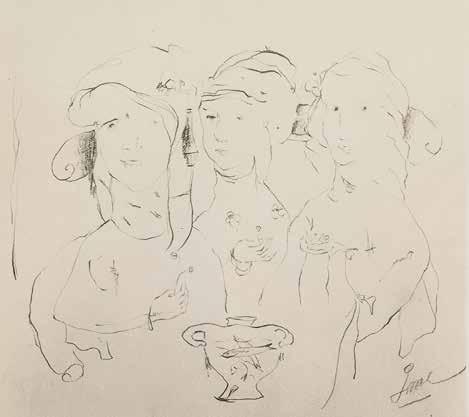
Fidelio Ponce Three Girls, 1943. Pencil, 10 x 11 in.
This drawing was included in the exhibition Modern Cuban Painters (Museum of Modern Art, New York, 1944). The work is currently part of the museum’s collection, acquired through the Inter-American Fund. Object number: 83.1944. Photo by Soichi Sunami. Vintage gelatin silver print, 10 x 8 in. Courtesy of the José Gómez Sicre Visual Archives, Miami, FL
5 Ben Wolf, “Wizards and Warriors”. The Art Digest, New York, May 1, Vol 22, Issue 15, 1948, p. 10.
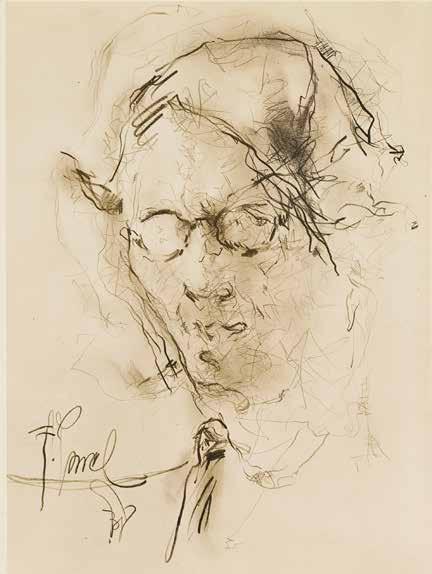
Fidelio Ponce Self-Portrait, 1941. Pencil, 9 x 6 ¾ in. This drawing was included in the exhibition Modern Cuban Painters (Museum of Modern Art, New York, 1944). Although it was executed in 1941, the artist inscribed the date 1930 to make it appear older, as revealed by José Gómez Sicre in an interview with Professor Alejandro Anreus. Photo by Soichi Sunami. Vintage gelatin silver print, 9 1/8 x 6 7/8 in. Courtesy of the José Gómez Sicre Visual Archives, Miami, FL
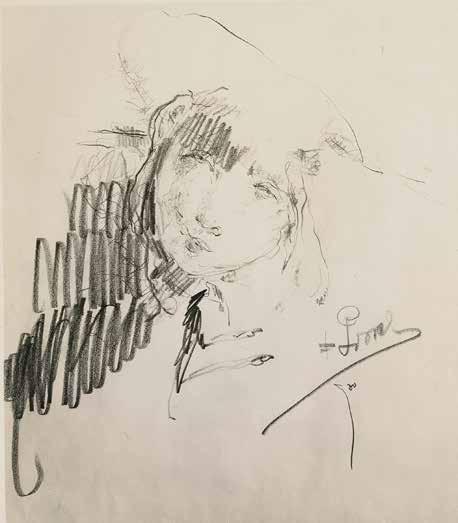
Fidelio Ponce Woman, 1930. Pencil, 12 ¾ x 11 in. This drawing was included in the exhibition Modern Cuban Painters (Museum of Modern Art, New York, 1944). The work is currently part of the museum’s collection, acquired through the Inter-American Fund. Object number: 84.1944.
Photo by Soichi Sunami. Vintage gelatin silver print, 10 x 8 in. Courtesy of the José Gómez Sicre Visual Archives, Miami, FL
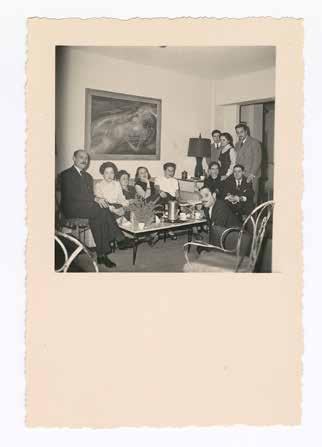
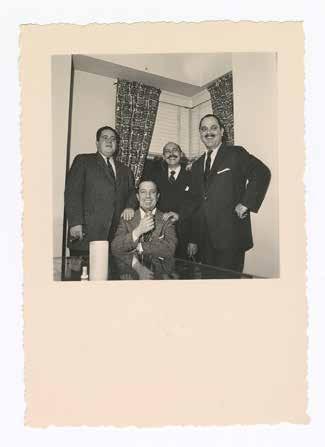
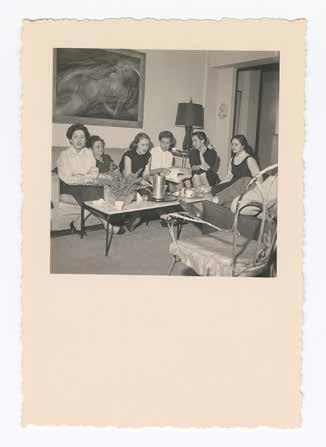
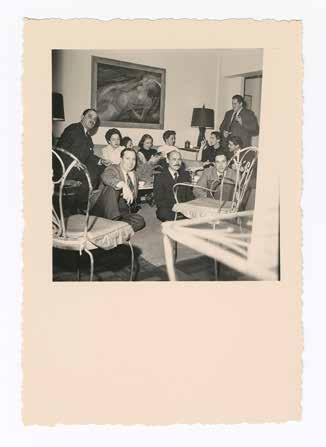
Gathering at the Home of Ramón Osuna Sr. and Lydia Plá, late 1940s early 50s. Among those present are Ramón Osuna Sr., Attaché at the Embassy of Cuba in Washington; Lydia Plá de Osuna; Ramón Osuna Jr.; Felipe Orlando and his wife, Concha Barreto; Luis Martínez Pedro and his wife, Gertrude Ludtke and José Gómez Sicre with his wife Lucía Ballarin. Visible in the background is Nude (1940) by Carlos Enríquez, a work previously exhibited in Modern Cuban Painters (Museum of Modern Art, New York, 1944). Vintage gelatin silver prints, 4 × 2 ½ in. each. Courtesy of the José Gómez Sicre Visual Archives, Miami, FL
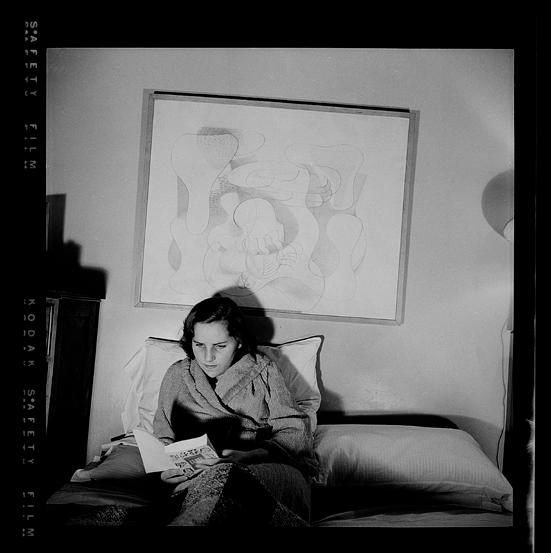
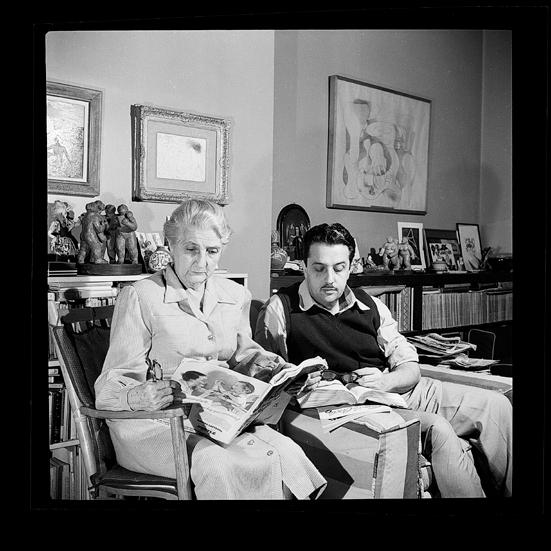
Lucía Ballarin, wife of José Gómez Sicre, with Sicre and his mother, Guillermina, in Sicre’s apartment, Washington, D.C., late 1940s–early 1950s Visible in the background is the drawing The Hand (1935) by Amelia Peláez, previously exhibited in Modern Cuban Painters (Museum of Modern Art, New York, 1944). The current whereabouts of this work are unknown. Gelatin silver contact prints, 2 ¼ × 2 ¼ in. each Courtesy of the José Gómez Sicre Visual Archives, Miami, FL
Cuban From Havana The Exhibition
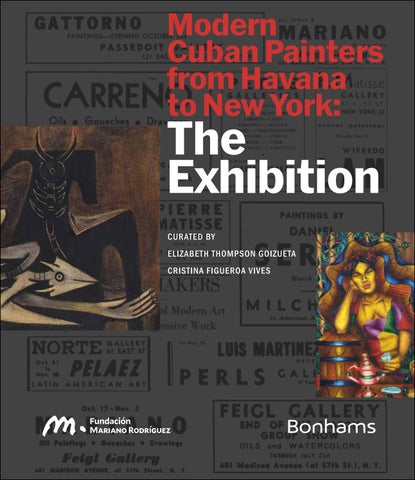
Modern Cuban Painters Havana to New York: Exhibition
Plates
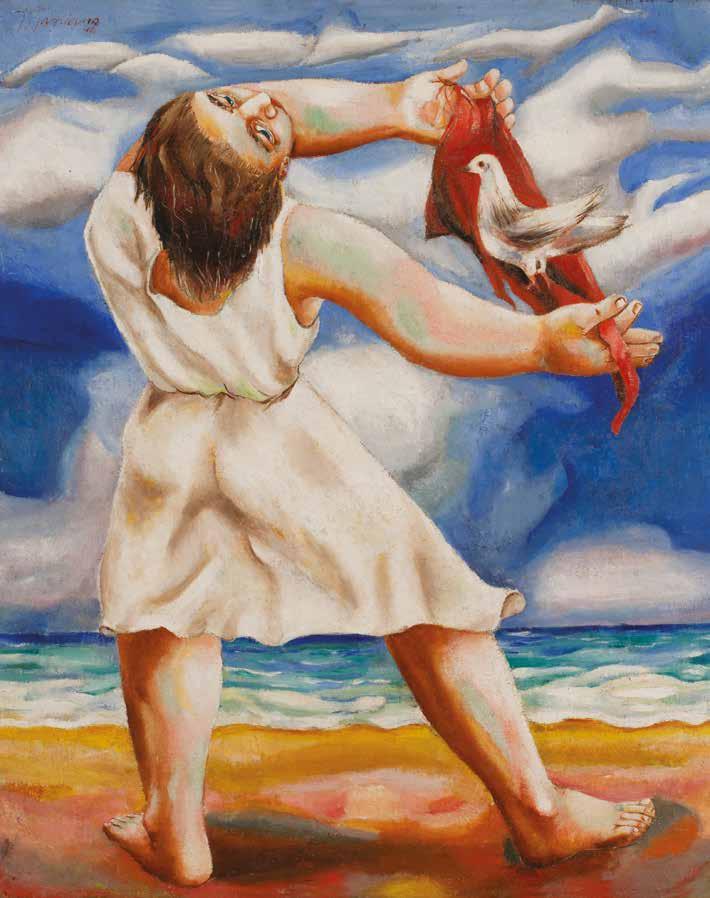
Mariano Rodríguez La Paloma de la Paz (The Dove of Peace), 1940. Oil on canvas. 29 x 24 4/5 in.
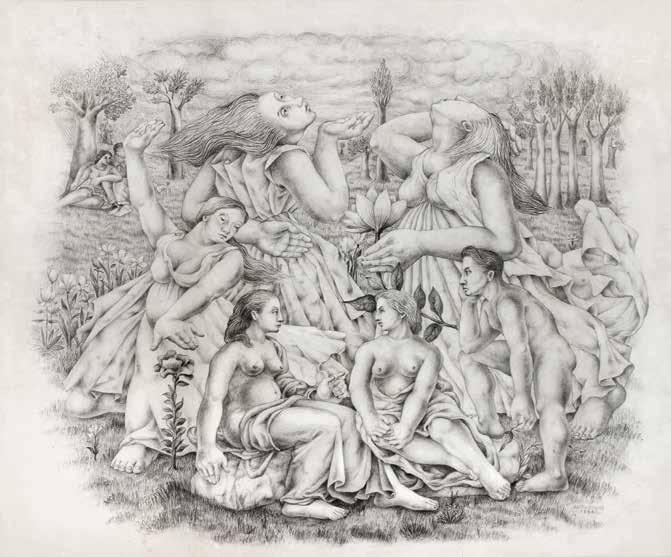
René Portocarrero Primavera (Spring), 1940. Pencil on paper, 23 x 27 ½ in. Dr. Blas Reyes Collection
Exhibited in the show Modern Cuban Painters, Museum of Modern Art, MoMA, New York, March 17- May 7, 1944.
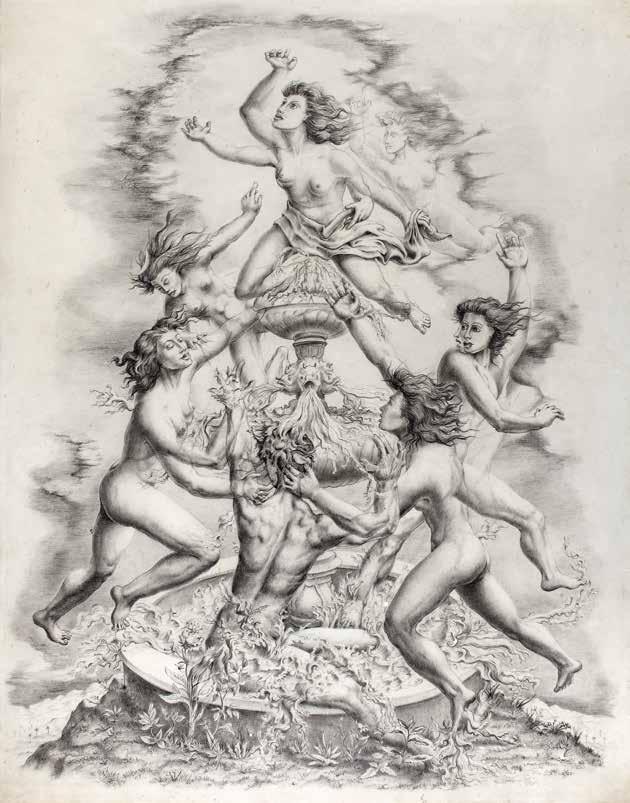
Luis Martínez Pedro La fuente (The Fountain), 1943. Pencil on paper, 28 ¼ x 21 ¾ in. Dr. Blas Reyes Collection
Exhibited in the show Modern Cuban Painters, Museum of Modern Art, MoMA, New York, March 17- May 7, 1944.
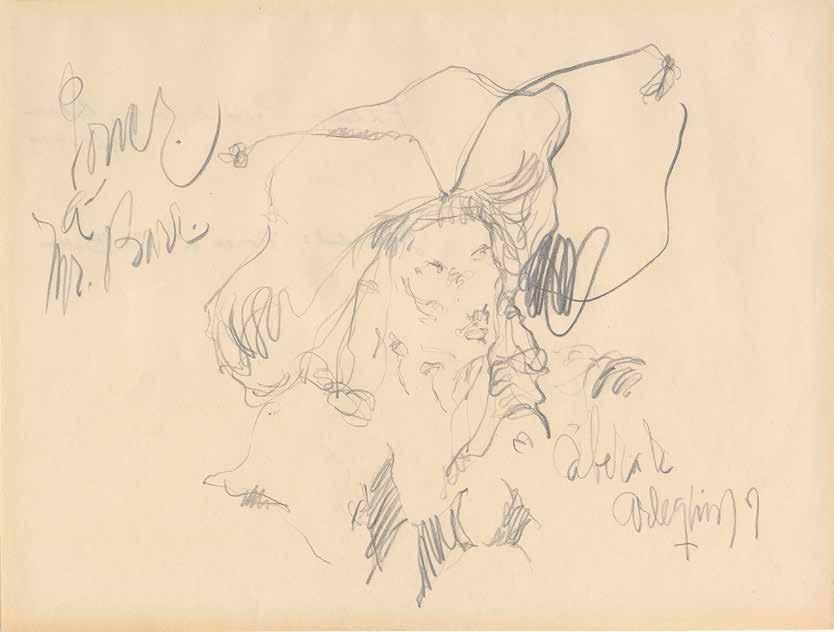
Fidelio Ponce Cabeza de Arlequín (Harlequin’s Head), ca. 1942. Pencil drawing on paper, 8 5/16 x 10 15/16 in.
María Martínez-Cañas Collection
Dedicated by the Artist to Alfred H. Barr Jr.
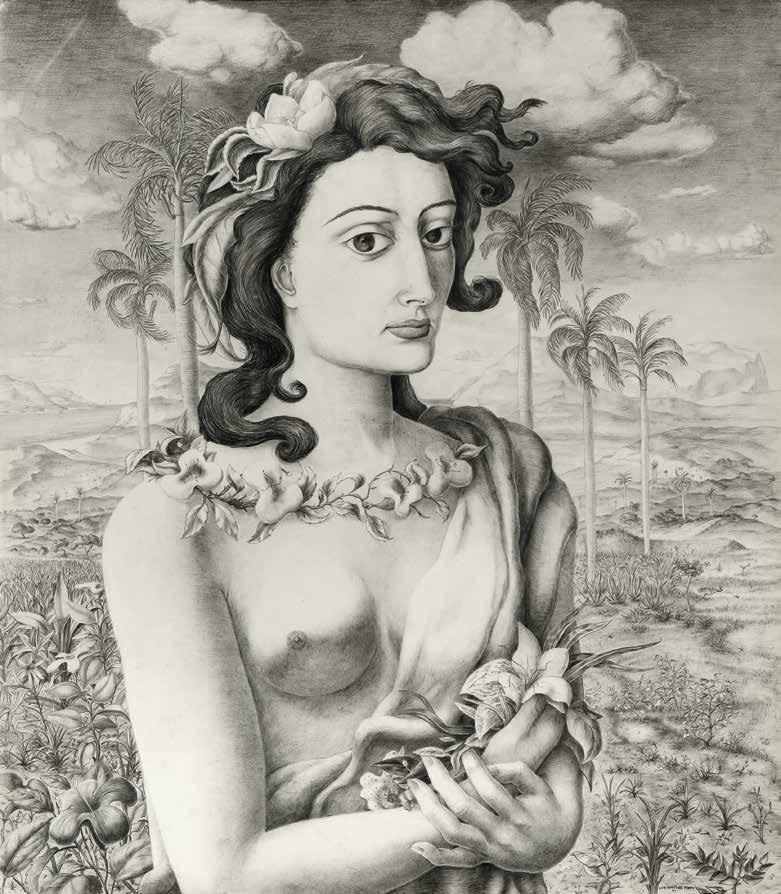
Luis Martínez Pedro Fecundidad o Retrato con paisaje cubano (Fertility or Portrait with Cuban Landscape), 1941. Pencil on paper
22 x 19 ½ in. Dr. Blas Reyes Collection
Published in Pintura Cubana de Hoy, by José Gómez Sicre, edited by María Luisa Gómez Mena, Havana, 1944.
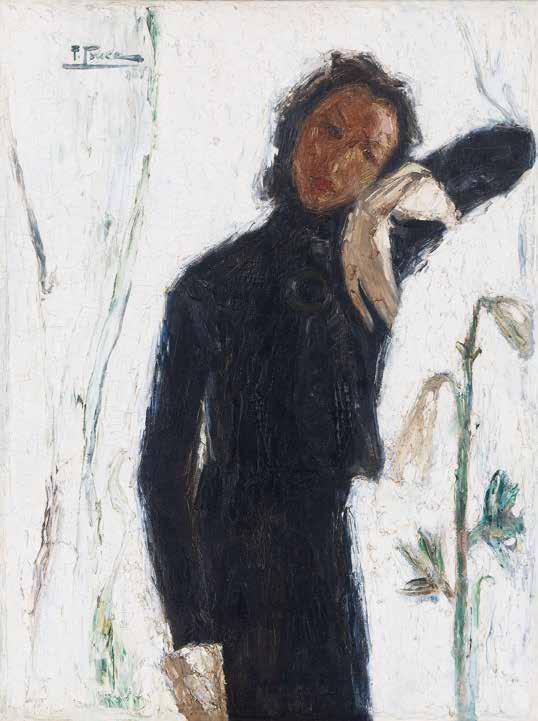
Fidelio Ponce Retrato de Rosie (Portrait of Rosie), 1935. Oil on canvas, 32 x 23 ¾ in. Isaac and Betty Rudman Trust
Published in Pintura Cubana de Hoy, by José Gómez Sicre, edited by María Luisa Gómez Mena, Havana, 1944.
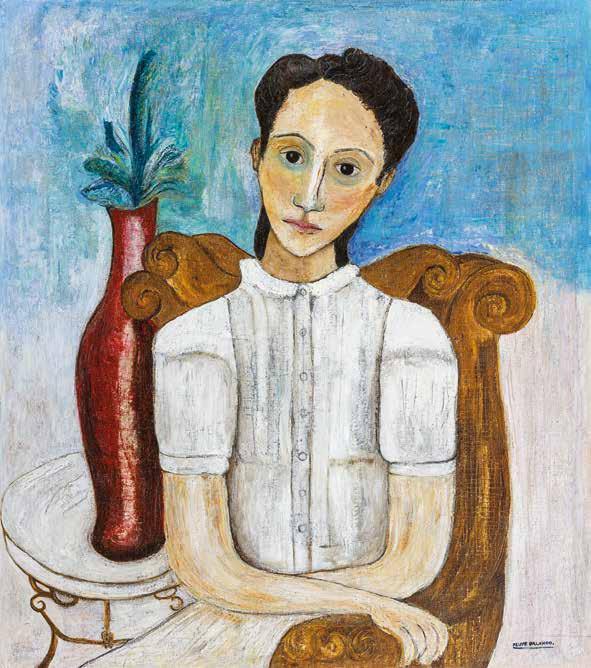
Felipe Orlando Retrato de Concha (Portrait of Concha), 1941. Oil on canvas, 26 x 23 in.
Dr. Blas Reyes Collection
Published in Pintura Cubana de Hoy, by José Gómez Sicre, edited by María Luisa Gómez Mena, Havana, 1944.
Pintura
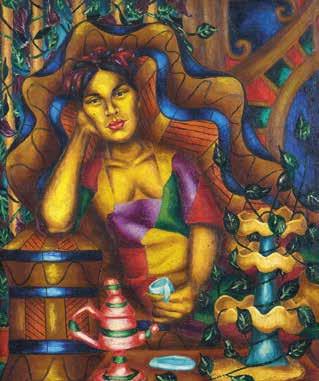
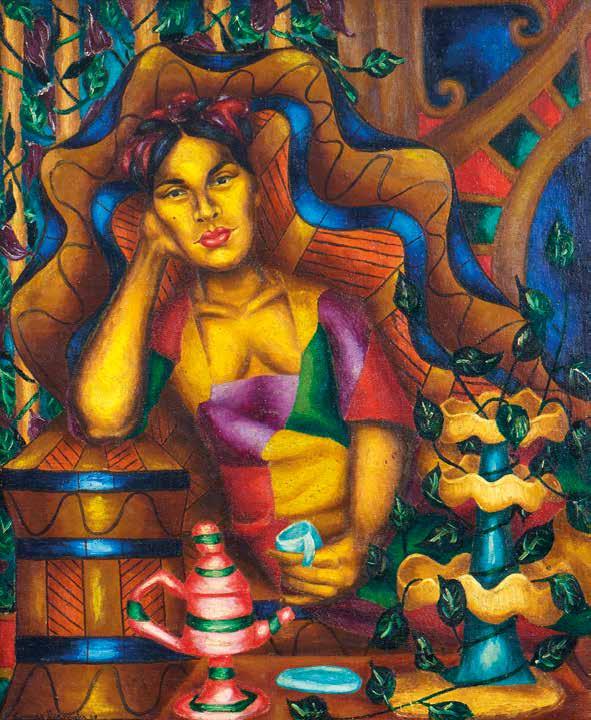
Cundo Bermúdez Retrato de María Luisa Gómez Mena (Portrait of María Luisa Gómez Mena), 1943. Oil on burlap, 29 x 23 ¾ in. Capriles Cannizzaro Family Collection
Exhibited in the show Modern Cuban Painters, Museum of Modern Art, MoMA, New York, March 17- May 7, 1944. Published in
Cubana de Hoy, by José Gómez Sicre, edited by María Luisa Gómez Mena, Havana, 1944.
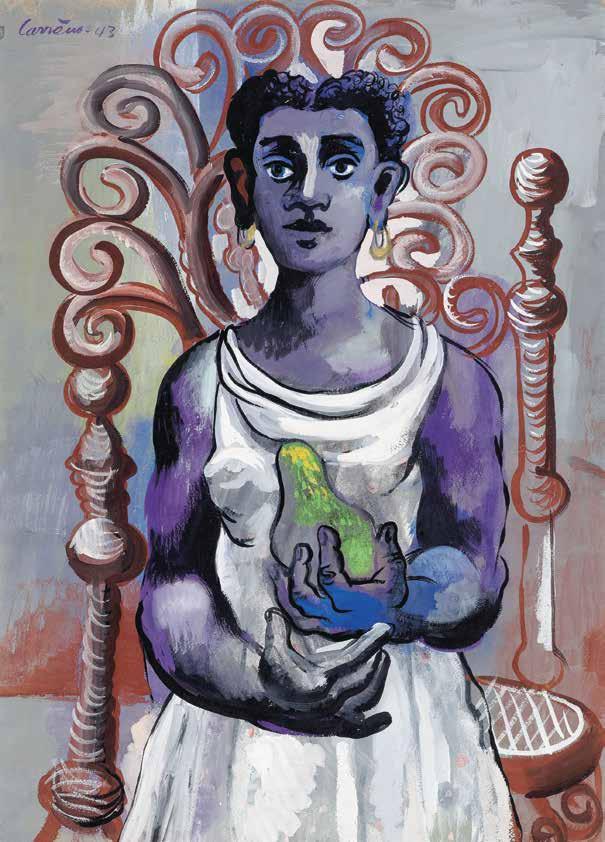
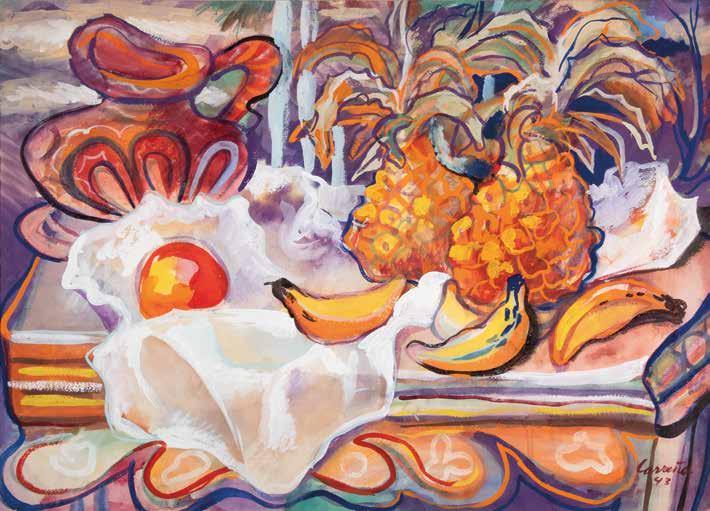
Mario Carreño Mujer con aguacate (Woman with Avocado), 1943. Gouache on paper, 30 5/8 × 22 1/8 in.
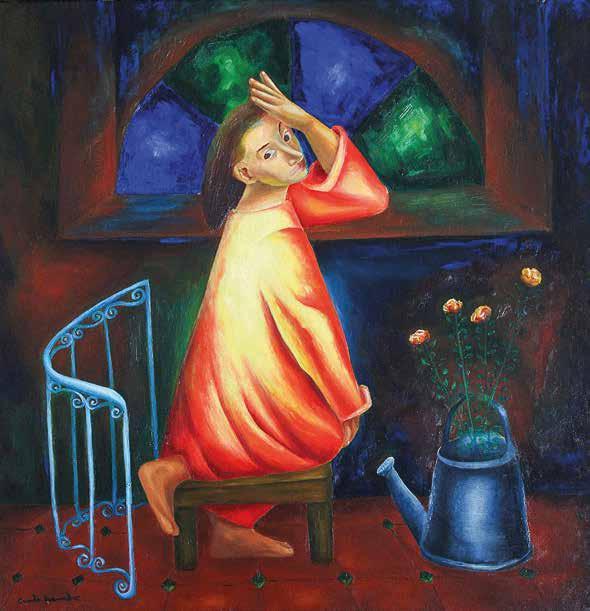
Cundo Bermúdez Girl in Pink Robe, 1940. Oil on cardboard, 19 7/8 × 19 in. Isaac and Betty Rudman Trust
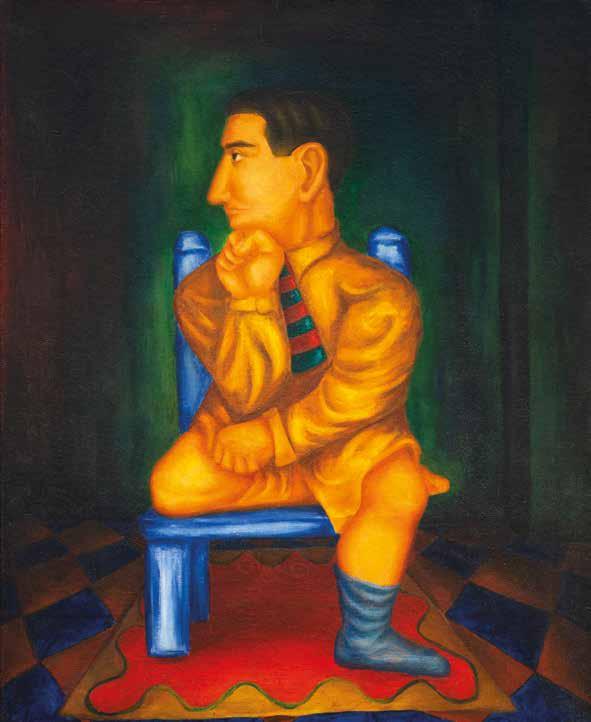
Cundo Bermúdez Hombre sentado (Seated Man), 1942. Oil on canvas, 29 ½ x 23 in. Isaac and Betty Rudman Trust Exhibited in the show Modern Cuban Painters, Museum of Modern Art, MoMA, New York, March 17- May 7, 1944.
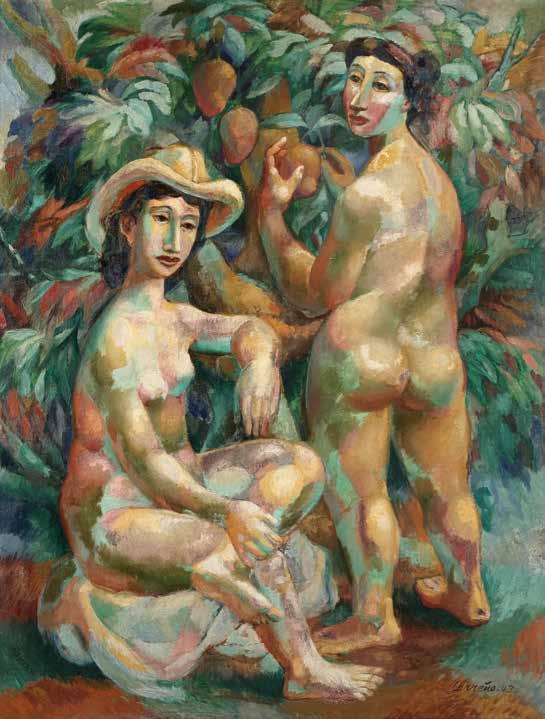
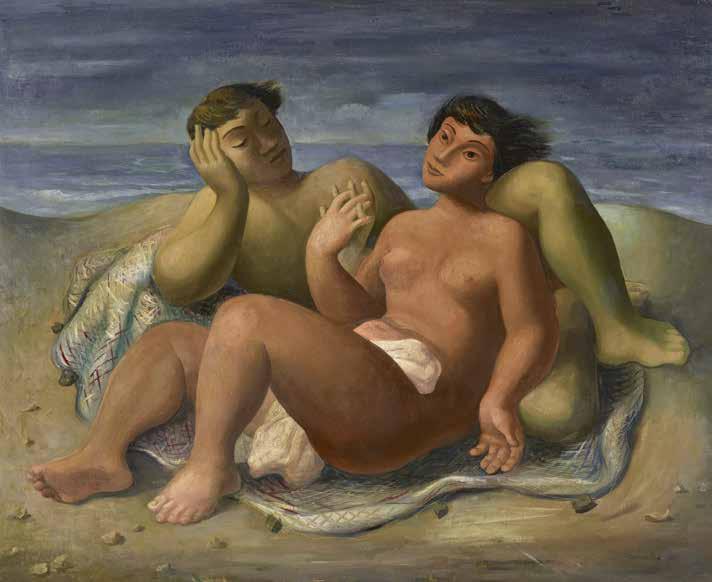
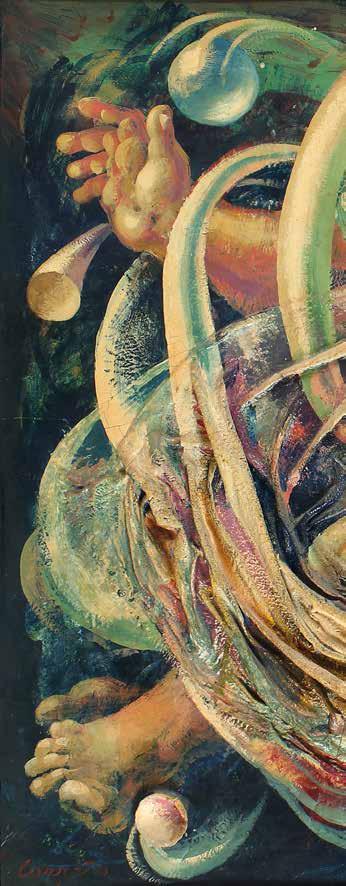
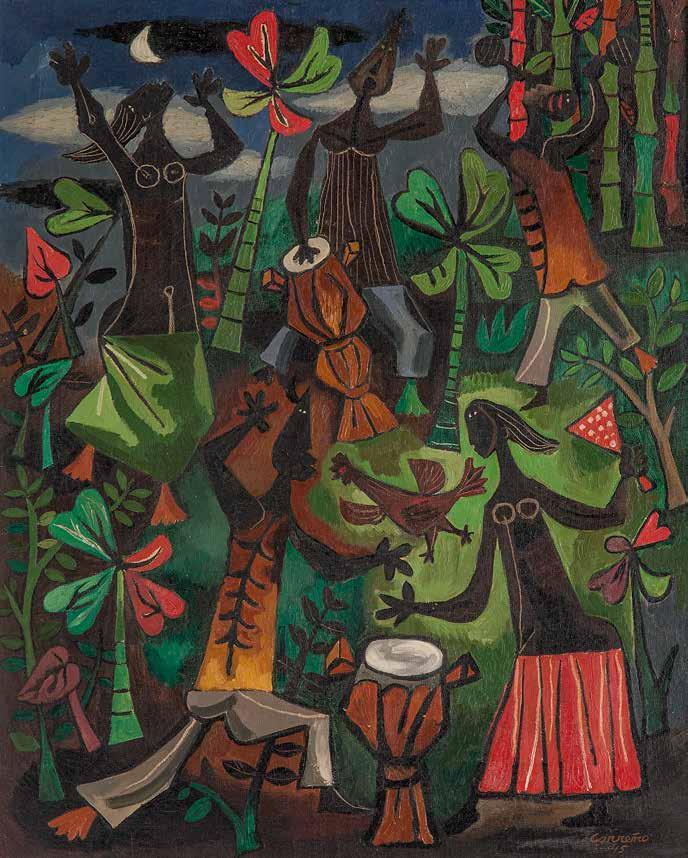
Mario Carreño Desnudos con mangos (Nudes with Mangoes), 1943. Oil on canvas, 41 x 31 ¼ in.
Latin Art Core Gallery Collection, Miami
Exhibited in Carreño’s solo show at Perls Galleries, New York, March 13 – April 15, 1944.
Published in Pintura Cubana de Hoy, by José Gómez Sicre, edited by María Luisa Gómez Mena, Havana, 1944.
2026 Artists Rights Society (ARS), New York / CREAIMAGEN, Santiago
in Pintura
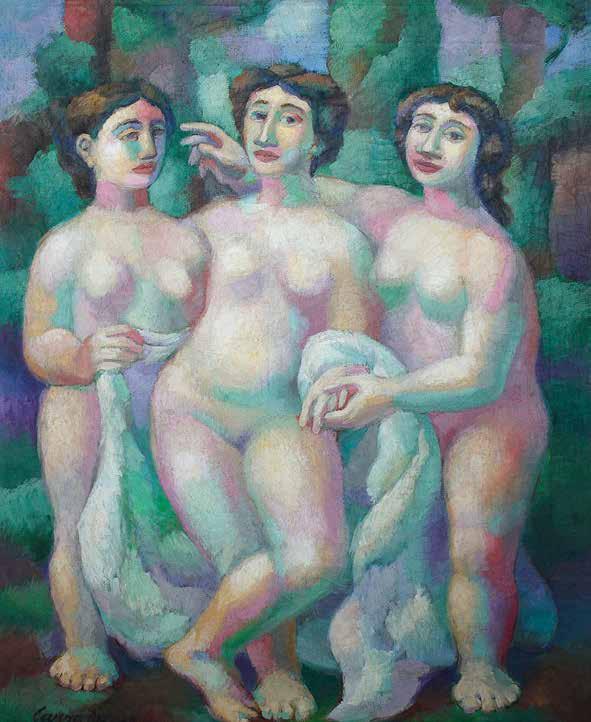
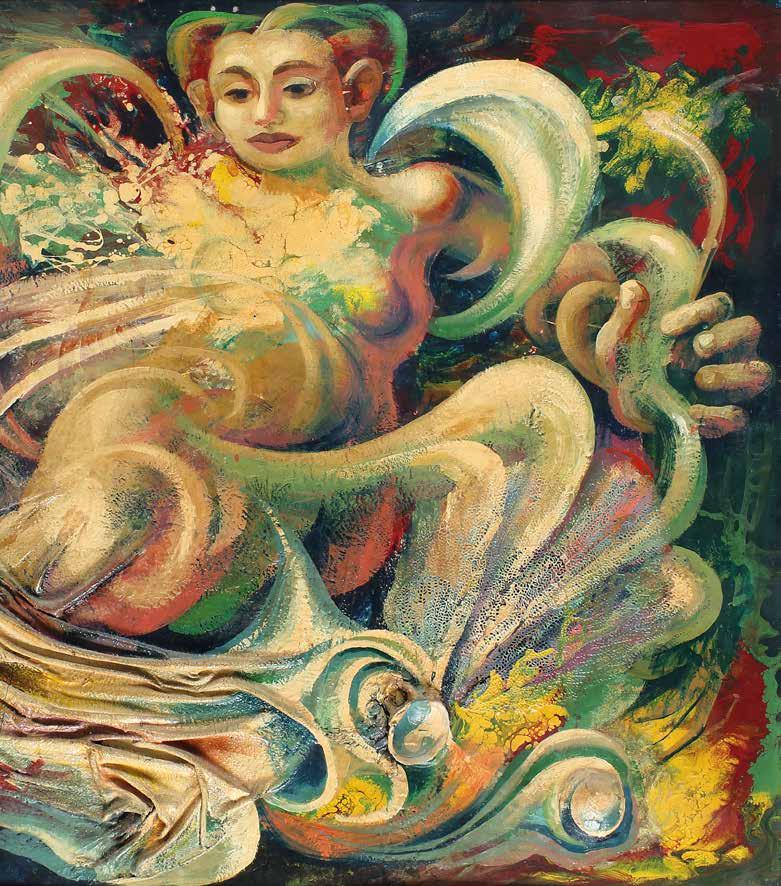
Mario Carreño Las tres gracias (The Three Graces), 1943. Oil on canvas, 29 x 23 in. Isaac and Betty Rudman Trust Exhibited in Carreño’s solo show at Perls Galleries, New York, March 13 – April 15, 1944.
Published
Cubana de Hoy, by José Gómez Sicre, edited by María Luisa Gómez Mena, Havana, 1944.
Artists Rights Society (ARS), New York / CREAIMAGEN, Santiago
Mariano Rodríguez Desnudo reclinado en el jardín (Reclining Nude in Garden), 1942. Oil on canvas, 33 x 36 in.
Latin Art Core Gallery Collection, Miami
Exhibited in the End of the Season group show at Feigl Gallery, New York, July, 1945.
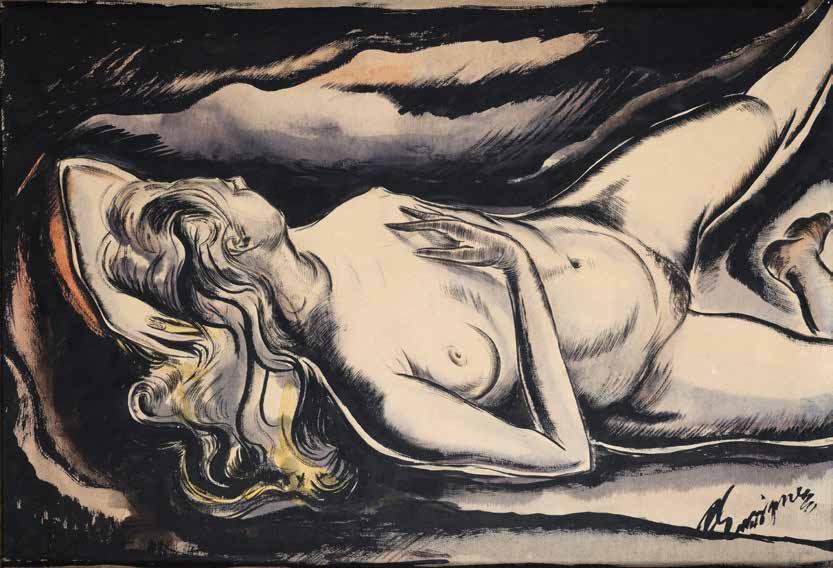
Carlos Enríquez Nude, 1940. Black ink and watercolor on paper, 9 ½ x 14 in. Claude and María Ruibal Collection
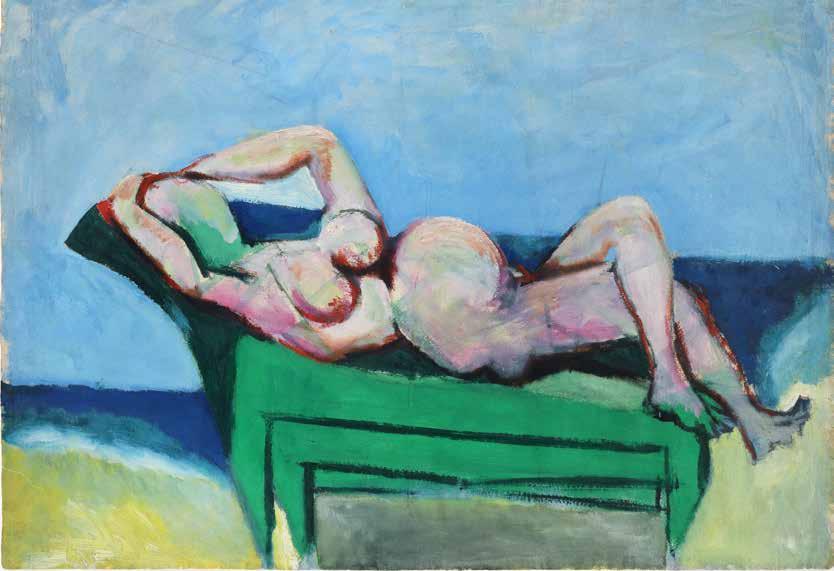
Roberto Diago. Untitled, 1947. Oil on paper, 22 x 30 in. Private Collection
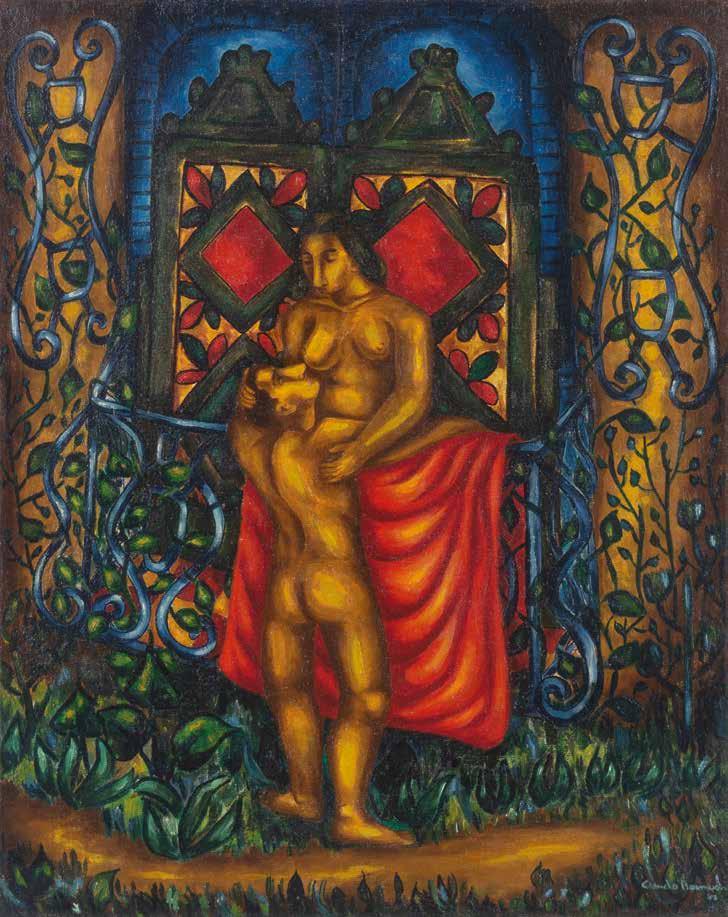
Cundo Bermúdez Romeo y Julieta (Romeo and Juliet), 1943. Oil on burlap, 27 x 22 in. Isaac and Betty Rudman Trust
Exhibited in the show Modern Cuban Painters, Museum of Modern Art, MoMA, New York, March 17- May 7, 1944.
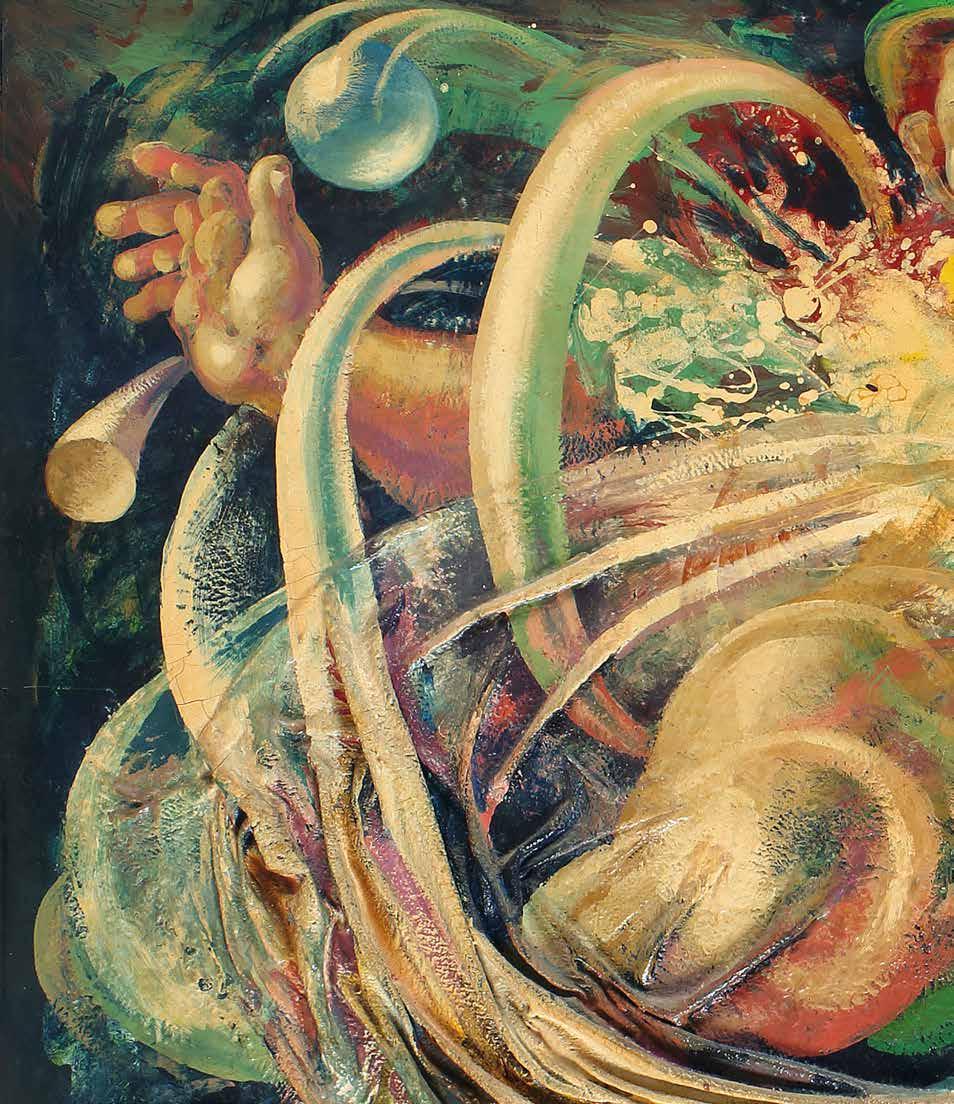
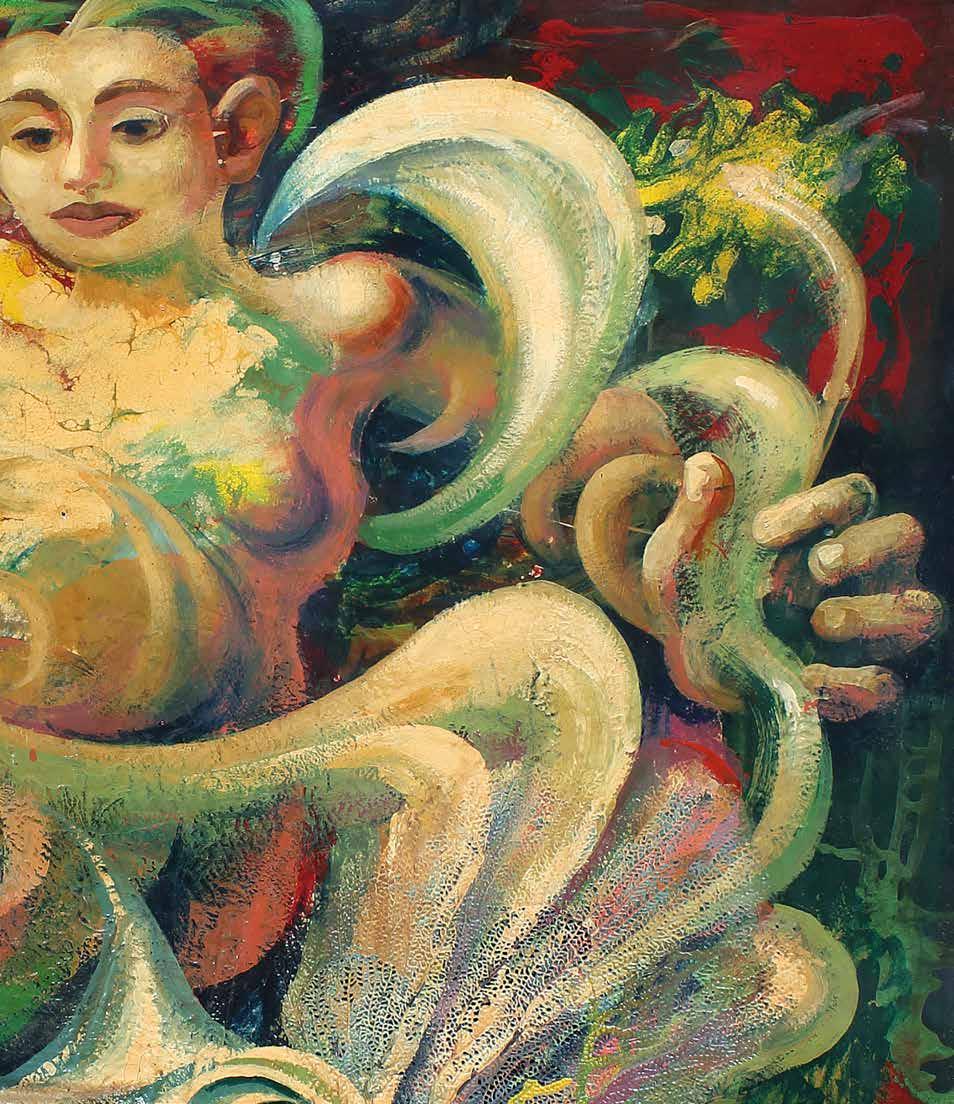
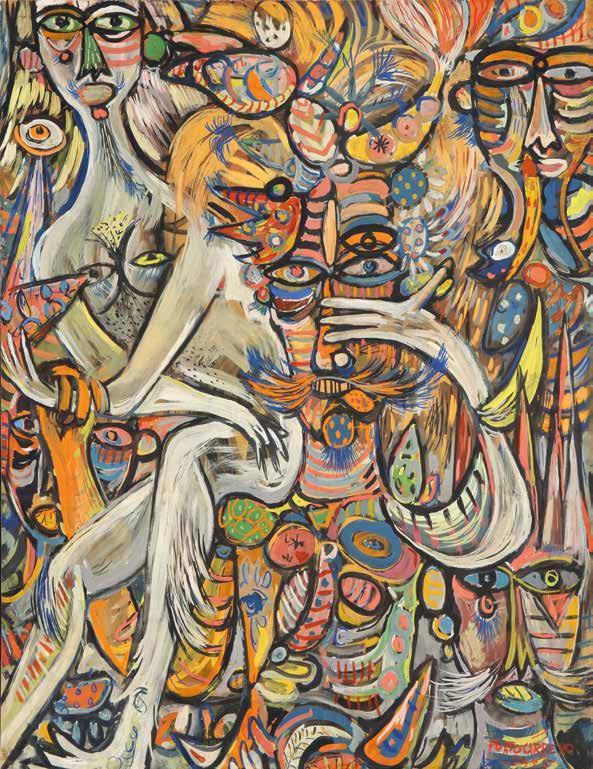
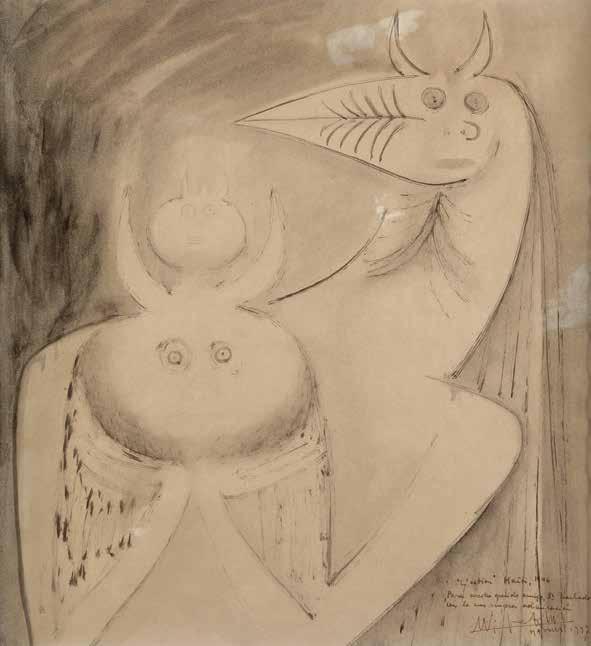
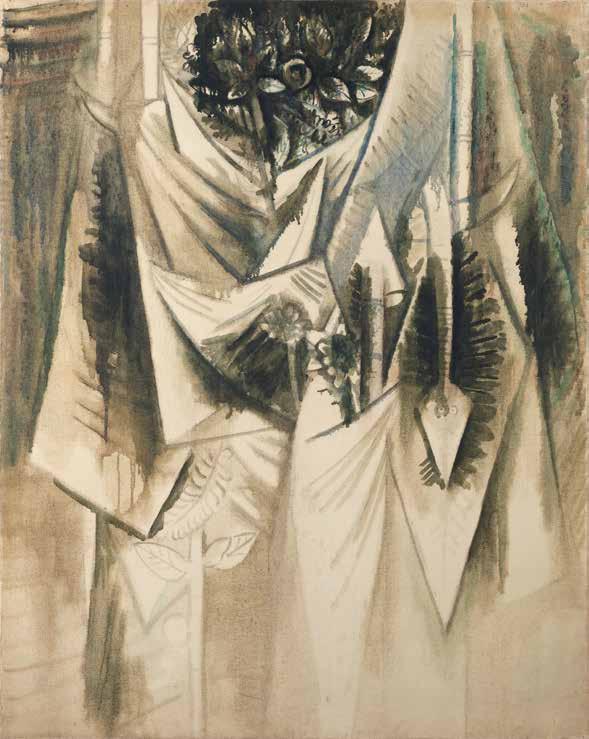
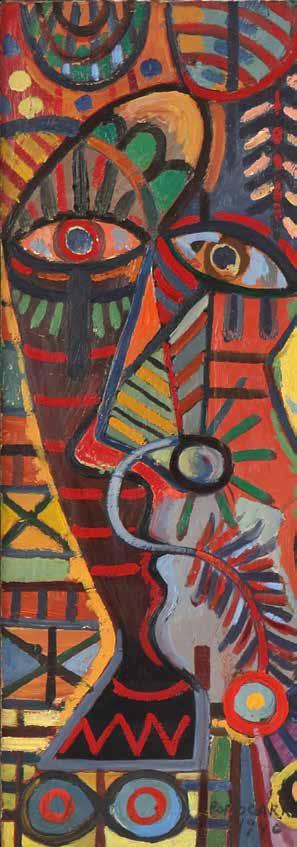
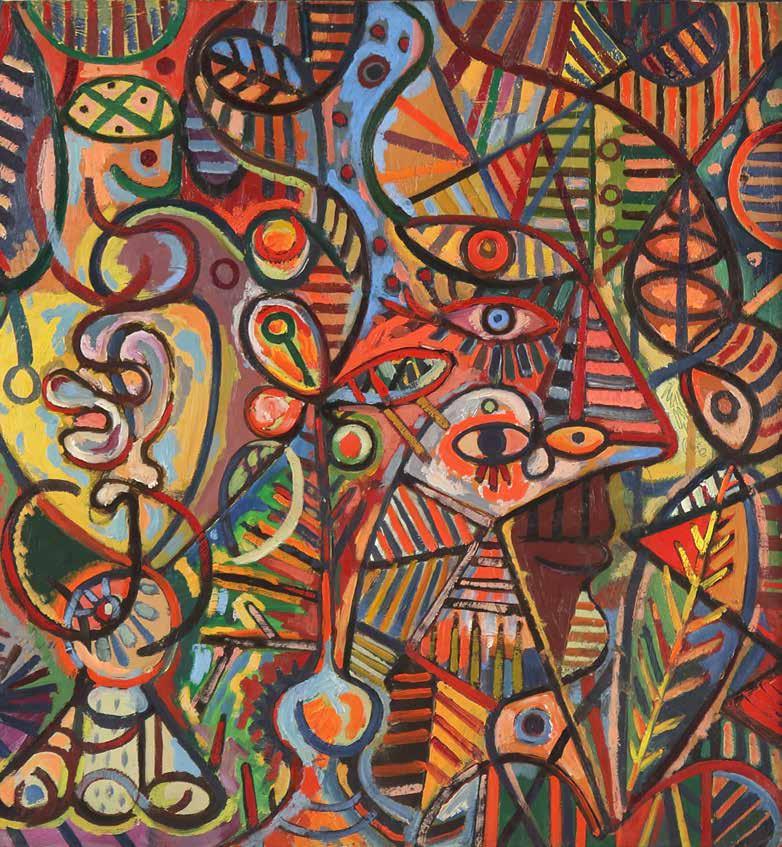
René Portocarrero Figura para una mitología imaginaria (Figure for an imaginary mythology), 1945. Gouache on paper laid on cardboard, 36 x 27 in. Private Collection
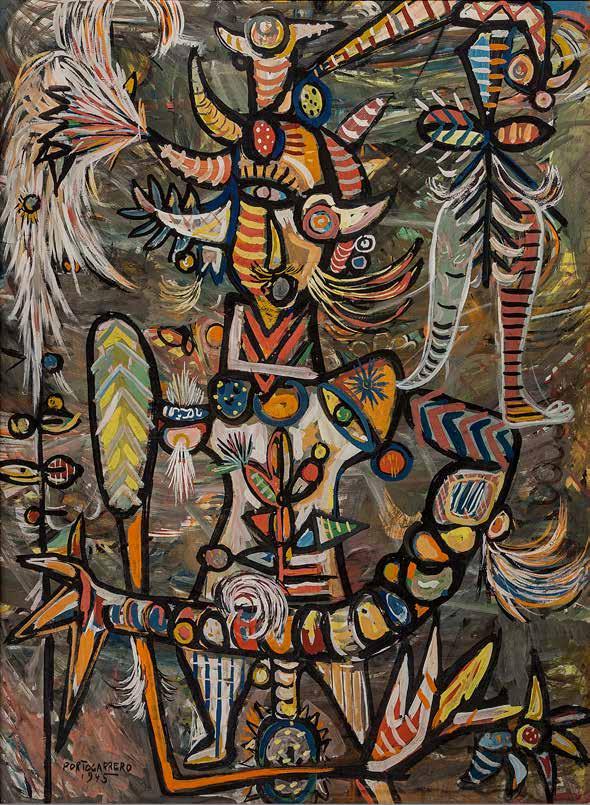
René Portocarrero Figura (Figure), 1945 Gouache on board . 39 ½ x 29 ½ in. Capriles Cannizzaro Family Collection
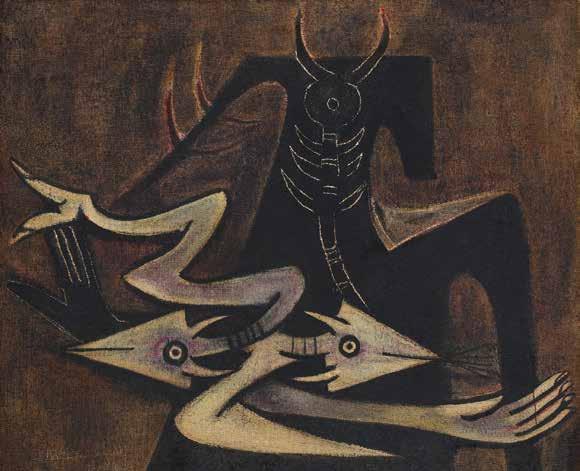
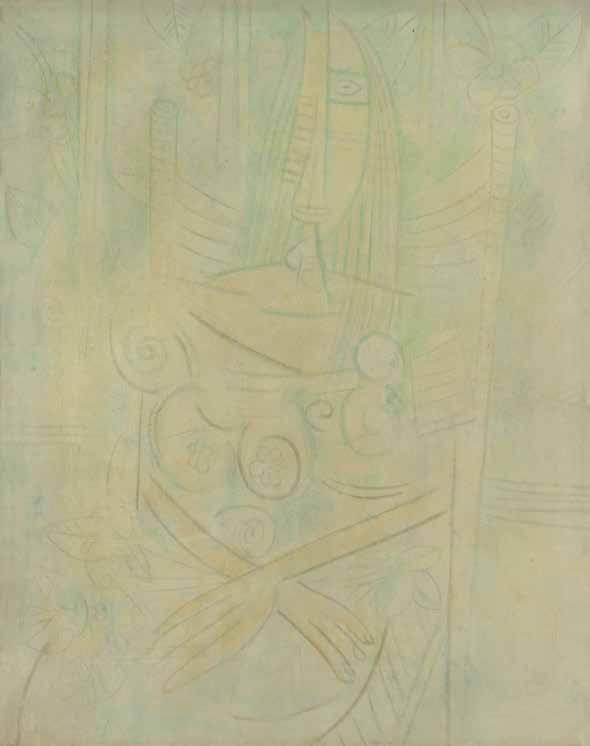
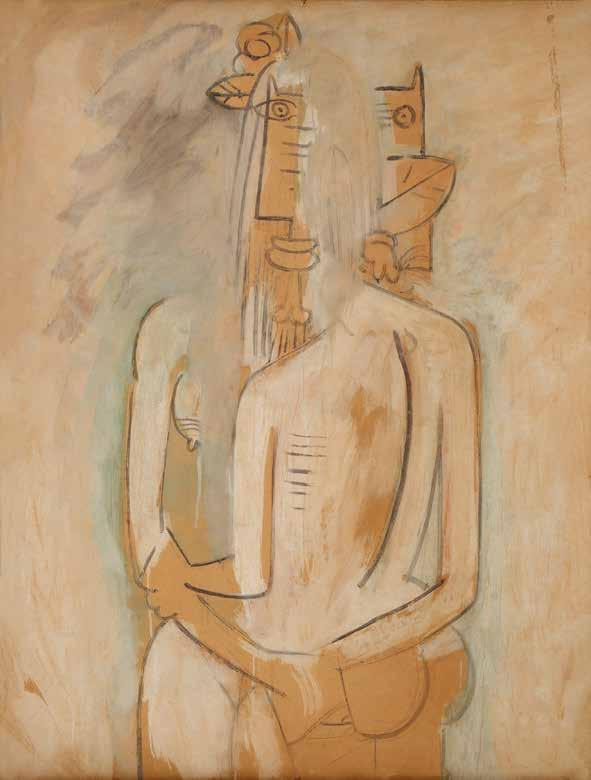
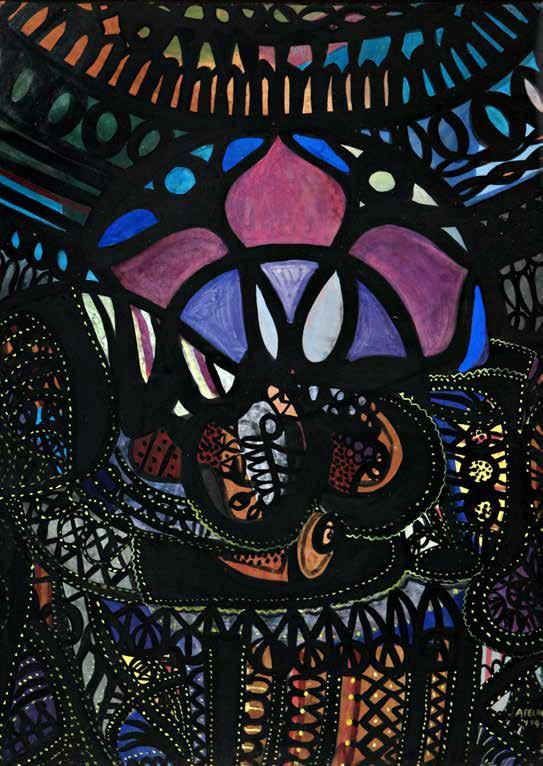
Wifredo Lam. Untitled, ca. 1942, Gouache on wax paper laid down on canvas, 42 x 33 in.
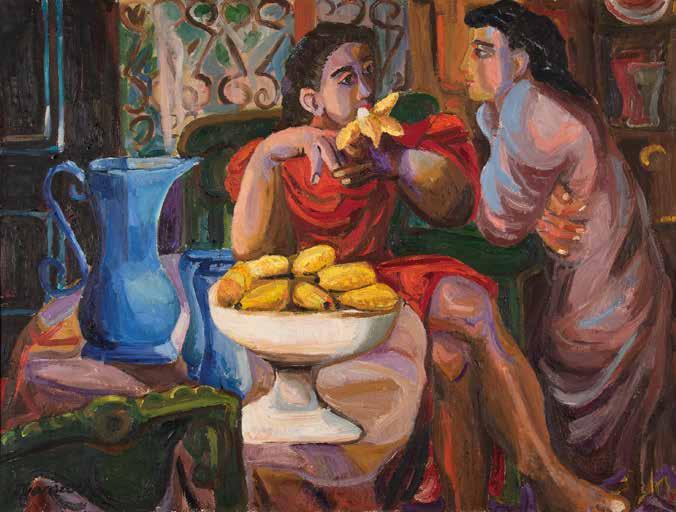
50 Fidelio Ponce Dos mujeres (Two women), ca. 1940. Oil on canvas, 23 x 28 in. Isaac and Betty Rudman Trust
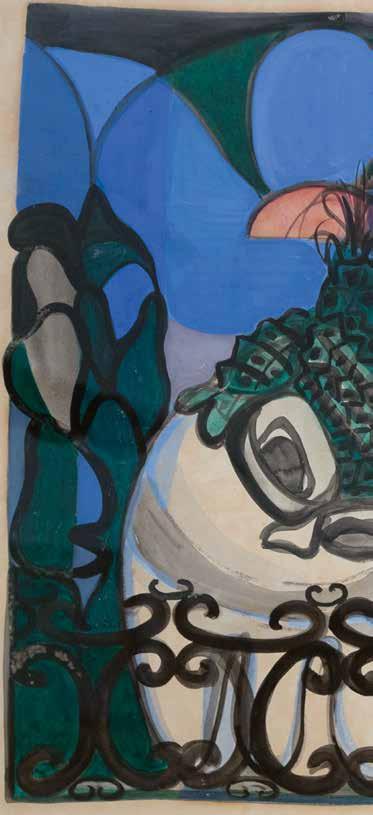
Amelia Peláez El balcón (The Balcony), 1942. Gouache on paper laid down on board, 24 x 33 in. Isaac and Betty Rudman Trust Exhibited in the show Modern Cuban Painters, Museum of Modern Art, MoMA, New York, March 17- May 7, 1944.
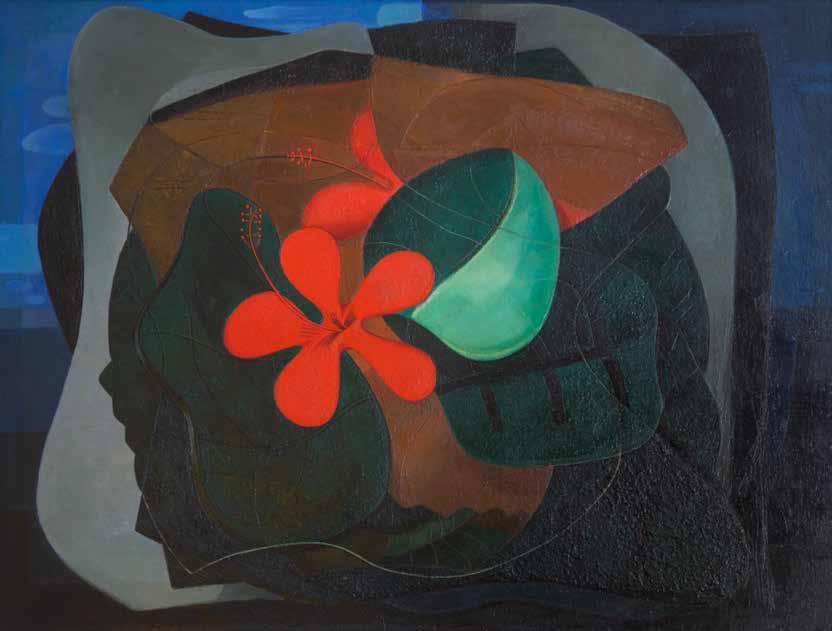
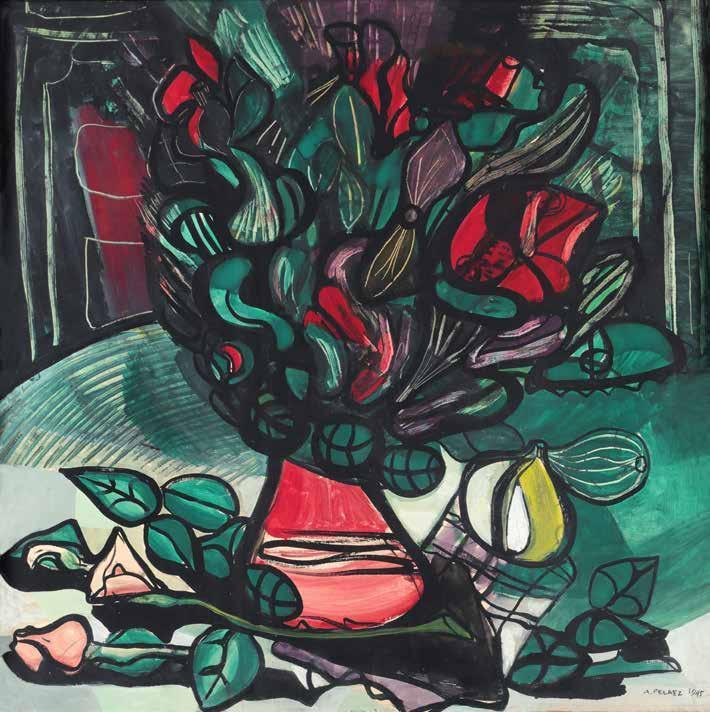
Amelia Peláez Marpacífico, 1936. Oil on canvas, 29 x 37 3/8 in. Giulio V. Blanc Collection. Courtesy of Lodovico and Margherita Blanc Exhibited in the show Modern Cuban Painters, Museum of Modern Art, MoMA, New York, March 17- May 7, 1944.
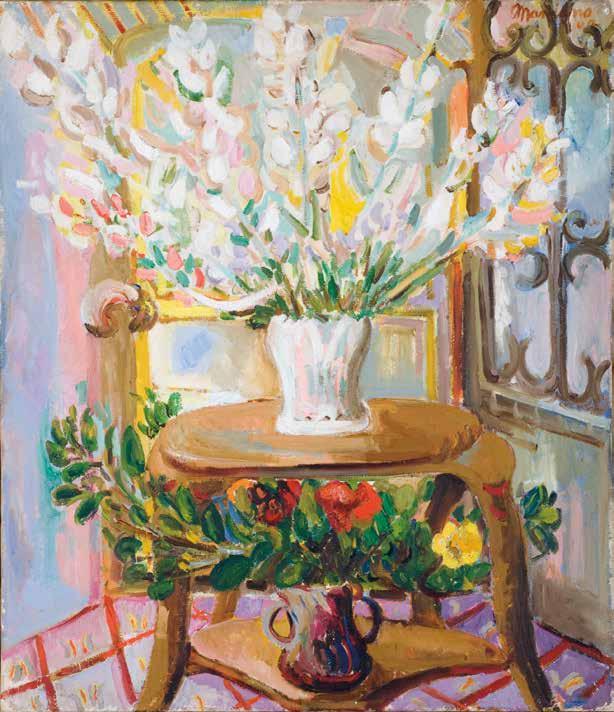
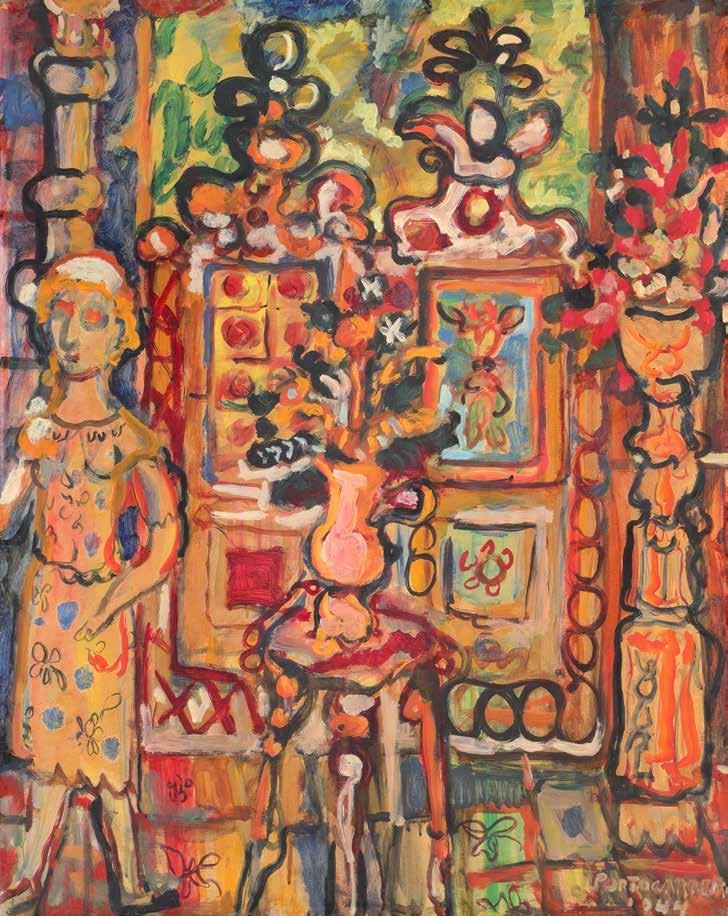
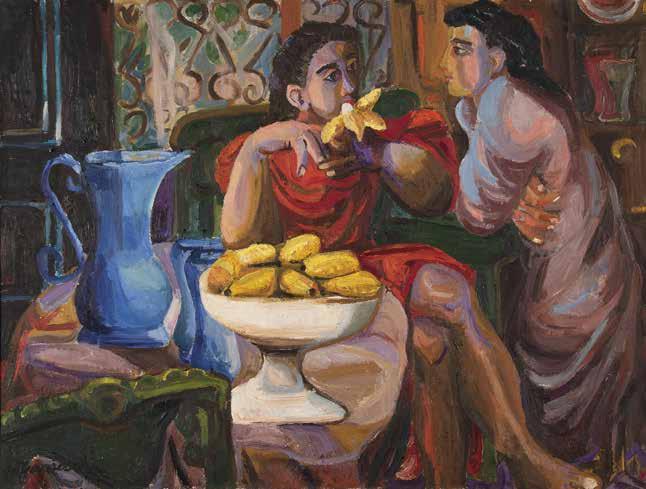
René Portocarrero. [Interior with flowered seats and pedestal table, animated by a standing woman], 1944
Mixed media on paper laid down on canvas, 9 ½ x 23 in. Latin Art Core Gallery Collection, Miami
70 René Portocarrero Gestáltica (Rhythm), 1946. Oil on board, 21 x 27 in. Dr. Fernando J. Valverde Collection
About the curators
Elizabeth Thompson Goizueta holds a B.A. and M.A. from the University of Georgia and completed doctoral coursework at the University of Salamanca, Spain. Her research and publications explore the intersections of art, literature, and culture in 20th-century Latin America and Spain. She has curated major exhibitions, including Cuenca: City of Spanish Abstraction (2019) and Esteban Lisa: The Abstract Cabinet (2017), and edited catalogs for Rafael Soriano: The Artist as Mystic (2017), Wifredo Lam: Imagining New Worlds (2014), and Matta: Making the Invisible Visible (2004). Thompson Goizueta curated Mariano: Variations on a Theme at Boston’s McMullen Museum (2021) and PAMM, Miami (2022), and authored Mariano One Hundred Masterpieces Her most recent exhibitions are The Lost Generation: Women Ceramicists and the Cuban Avant-Garde (2024), presented at the McMullen Museum and the Frost Art Museum and Agustín Fernández: The Alluring Power of Ambiguity at the Frost Art Museum. She has lectured widely across the U.S., Europe, Latin America, and the Caribbean.
Cristina Figueroa Vives holds an M.A. in Art History from the University of Havana and an M.A. in New Media from Ramón Llull University, Barcelona. She is the co-founder of the Estudio Figueroa-Vives, an independent art project based in Havana. Previously, she served as a curator at Casa de las Américas, Havana, where she curated and co-curated more than 20 exhibitions on Latin American art. Her grants and residencies include the Mondriaan Fonds (Amsterdam), the Danish Arts Foundation (Copenhagen), and the Research Program for Curators at RCAAQ (Montreal). She has presented her work at LASA congresses in New York and Barcelona, as well as at the International Committee for Museums and Collections of Modern Art (CIMAM) in Stockholm. At the nonprofit organization Fundación Mariano Rodríguez, she oversees editorial and exhibition initiatives. Currently she’s the Residency Program Director of dc art foundation, Miami.